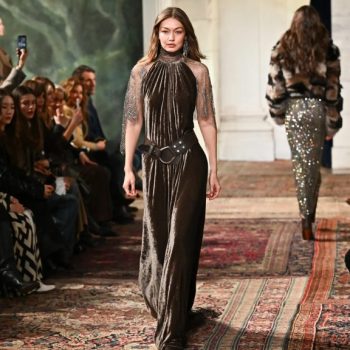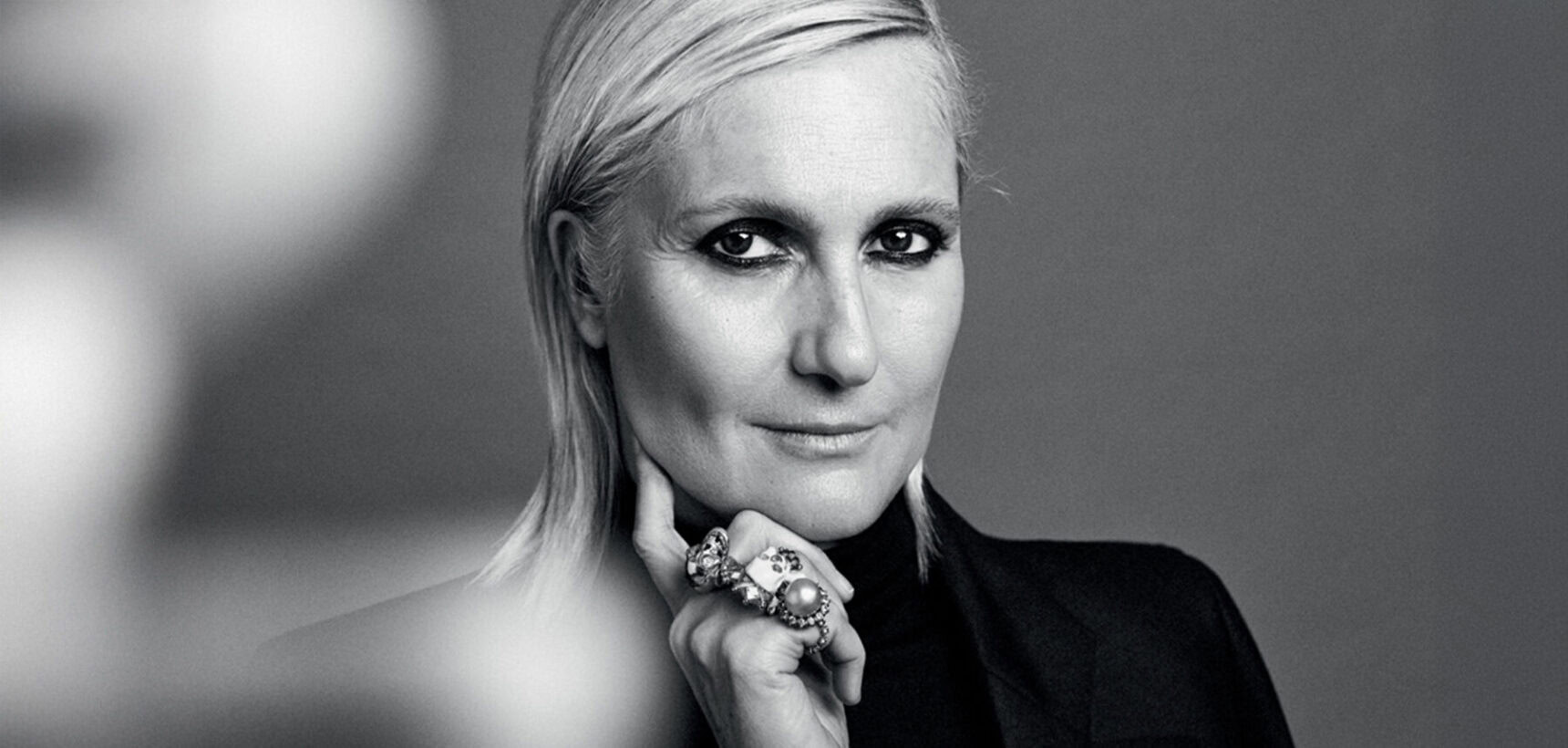
The long-awaited news is official: the Maria Grazia Chiuri Fendi appointment marks one of the most significant creative shifts in luxury fashion this decade. After nearly a decade at Dior, Chiuri returns to the Roman maison where her career began — ready to redefine Fendi’s legacy through a feminine, forward-thinking lens.
The return to Rome
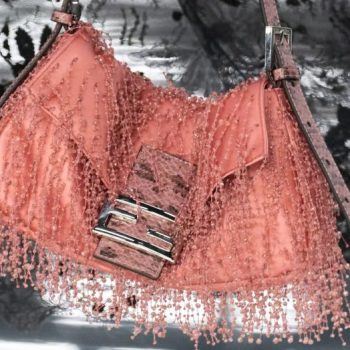
Chiuri’s relationship with Fendi traces back to 1989, when she joined the house as an accessories designer. Over the course of a decade, she developed the craft, sensibility and institutional memory that would inform her later work. Among her early contributions: collaboration with Pierpaolo Piccioli in shaping the Baguette bag, a style that would become part of Fendi’s mythology.
But in 1999, she and Piccioli left for Valentino, where their artistic partnership blossomed. At Valentino, they redefined accessories and couture, becoming co-creative directors in 2008.
Now, 26 years after departing, Chiuri returns to Fendi not as a youthful apprentice but as a seasoned auteur, fully formed and singular in vision.
A new creative architecture
What makes this appointment more than symbolic is the organizational shift it signals at Fendi. For the first time in its history, all creative direction — womenswear, menswear, couture, accessories — will be under one visionary. Fendi’s CEO, Ramón Ros, describes the move as a shift in paradigm: not simply to design collections, but to “curate a culture” around the brand.
The new structure promises “a unified visual language and long-term artistic coherence,” as the house navigates a fashion landscape marked by volatility, voice, and identity.
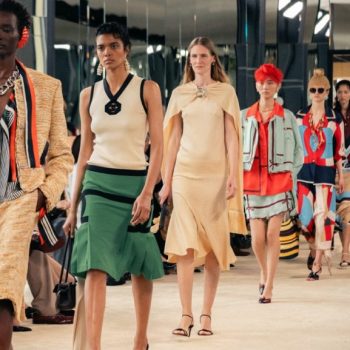
Under Chiuri, Fendi’s next seasons (women’s in February 2026; men’s and couture in June/July) will be read as more than new collections — they will be the first lines in a freshly written creative manifesto.
The weight of her legacy at Dior
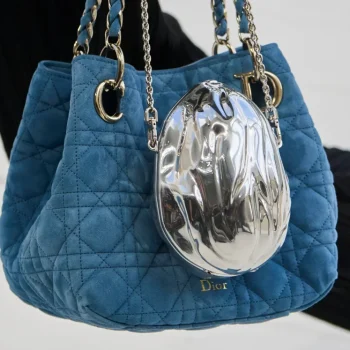
To understand the stakes at Fendi, one must reckon with what Chiuri built at Dior. In 2016, she became the first woman ever tapped to lead Dior’s women’s line — a post that had been the province of men since the house’s founding.
Her era at Dior was less about incremental tweaks and more a tonal shift: fashion wrapped in feminist inquiry. From her debut “We Should All Be Feminists” T-shirt to collaborations with female artists, she transformed Dior into a vanguard of gender-conscious luxury.
But her legacy was not merely cultural — it was commercial. Under her leadership, Dior’s couture/womenswear sales soared. HSBC data suggest that couture revenue climbed from about €2.2 billion in 2017 to €9.5 billion in 2023, though 2024 saw a modest dip to €8.7 billion.
Dior’s overall business, too, flourished: analysts and industry press often cite a 3–4x growth in brand revenue during her tenure.
When she bid farewell in May 2025 with a dramatic show in Rome, it felt less like a departure and more like a passing of a torch.
A feminine vision, recast for Fendi
If there is a thematic thread that binds Chiuri’s past to her future at Fendi, it is feminism translated through elegance. At Dior, she did not content herself with “women’s fashion” — she sought to interrogate power, identity, craft. She infused shows with art, collaboration, and stories of labor and lineage.
Fendi, from its inception, was founded by women — Adele and Edoardo Fendi’s five daughters played a pivotal role in transforming a furrier workshop into an empress of Roman couture. Chiuri has made this origin story part of her narrative: she has remarked on returning “with honor and joy … having had the privilege of beginning my career under the guidance of the house’s founders, the five sisters.”
Her design sensibility — which marries artisan touch, voice, cultural text — appears well suited to Fendi’s DNA. Her affinity for Roman heritage, local ateliers, and art-driven storytelling may prove pivotal in anchoring Fendi’s next era.
Challenges and opportunities
That said, the appointment is not without peril. Fendi has navigated recent turbulence: Kim Jones departed womenswear in October 2024, leaving Silvia Venturini Fendi, a scion of the family, to steer the brand. In September 2025, Silvia transitioned to the role of Honorary President, vacating the creative helm.
Chiuri must now synthesize legacy and innovation, balancing the heritage codes of Fendi with a modern appetite for purpose, cultural relevance, and market agility. She is perhaps the only designer in recent memory whose résumé — artisan roots, feminist writings, commercial success — aligns so closely with the moment.
Fendi’s new CEO, Ramón Ros, appointed in July 2025, is said to be seeking not just novelty but coherence. Ros believes the modern creative director must be more than a clothing architect — a cultural curator, a mirror to society.
What to watch
- The February 2026 collection in Milan will be a first public statement: a balancing act between memory and manifesto.
- Men’s and couture lines follow in June/July — their alignment under Chiuri will determine whether Fendi becomes a unified stylistic whole or hides schisms.
- Artisan collaborations and in-house workshops: Chiuri’s earliest strengths lie in knowing hands, local crafts, and embodied materiality.
- Cultural programming and activism: in an era where fashion houses speak in voices beyond clothing, Chiuri is uniquely positioned to bring voice and conscience to Fendi’s age.
Chiuri’s return to Fendi is not merely a rebound — it is a reckoning. The homecoming is freighted with memory, ambition, expectation. But if her Dior legacy taught us anything, it is that she can harvest resonance and turn it into revenue, culture, and ideas.
She arrives with the grace of a strategist, the instincts of an anthropologist, and the spirit of a feminist poet. Fendi’s next chapter, under her stewardship, may well be the most compelling one yet.