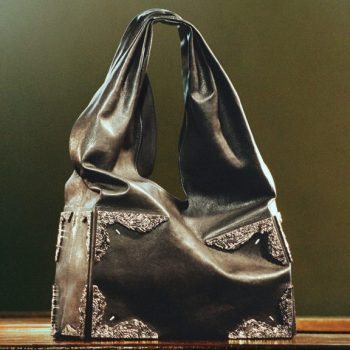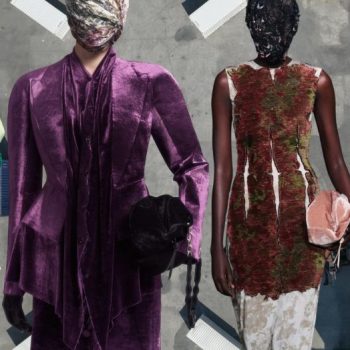
Jil Sander Fall-Winter 2026-2027 bags arrived as part of one of Milan Fashion Week’s most closely watched second acts. Simone Bellotti, who joined the house as creative director in March 2025, used his sophomore runway to move beyond first-impression minimalism and into something more emotionally layered: a vision of home, memory, tension, and return. The result was a collection that did not abandon Jil Sander’s purity. It complicated it. And that made the bags especially compelling.
Jil Sander Fall-Winter 2026-2027 bags begin with a house in transition
To understand the bags, it helps to understand the moment. Jil Sander remains one of fashion’s defining laboratories for disciplined design: founded in 1968, launched in Hamburg, and later anchored in Milan, the house built its authority on purity of line, functional elegance, and a long-term view of luxury. Its first Milan showroom opened in 1994 and became the company’s creative and operational headquarters, a fact that matters when reading this season’s emotional return to place.
Bellotti stepped into that legacy after strong notice at Bally and after a long formation that included Dolce & Gabbana, Bottega Veneta, and a 16-year stint at Gucci. That résumé matters not because it guarantees anything, but because it helps explain why his Jil Sander is already more tactile, more referential, and more interested in tension than in sterile perfection. His first season asked how much could be taken away while still leaving a personal signature. For Fall-Winter 2026-2027, the question shifted. What happens when addition, memory, and contradiction enter the room?
Who is Simone Bellotti and why this show mattered
A second show often reveals more than a debut. A debut can still feel provisional, respectful, intentionally careful. A second outing usually shows whether a designer is merely quoting a house or beginning to inhabit it. Bellotti himself framed the Fall 2026 mood around the idea of home, though not as a perfect sanctuary. He spoke of it as something more unsettled and ambivalent, shaped in part by watching Rainer Werner Fassbinder and thinking about how interiors can hold both comfort and threat. He also described the season as a move from reduction to addition, even while preserving the pleasure of contradiction.
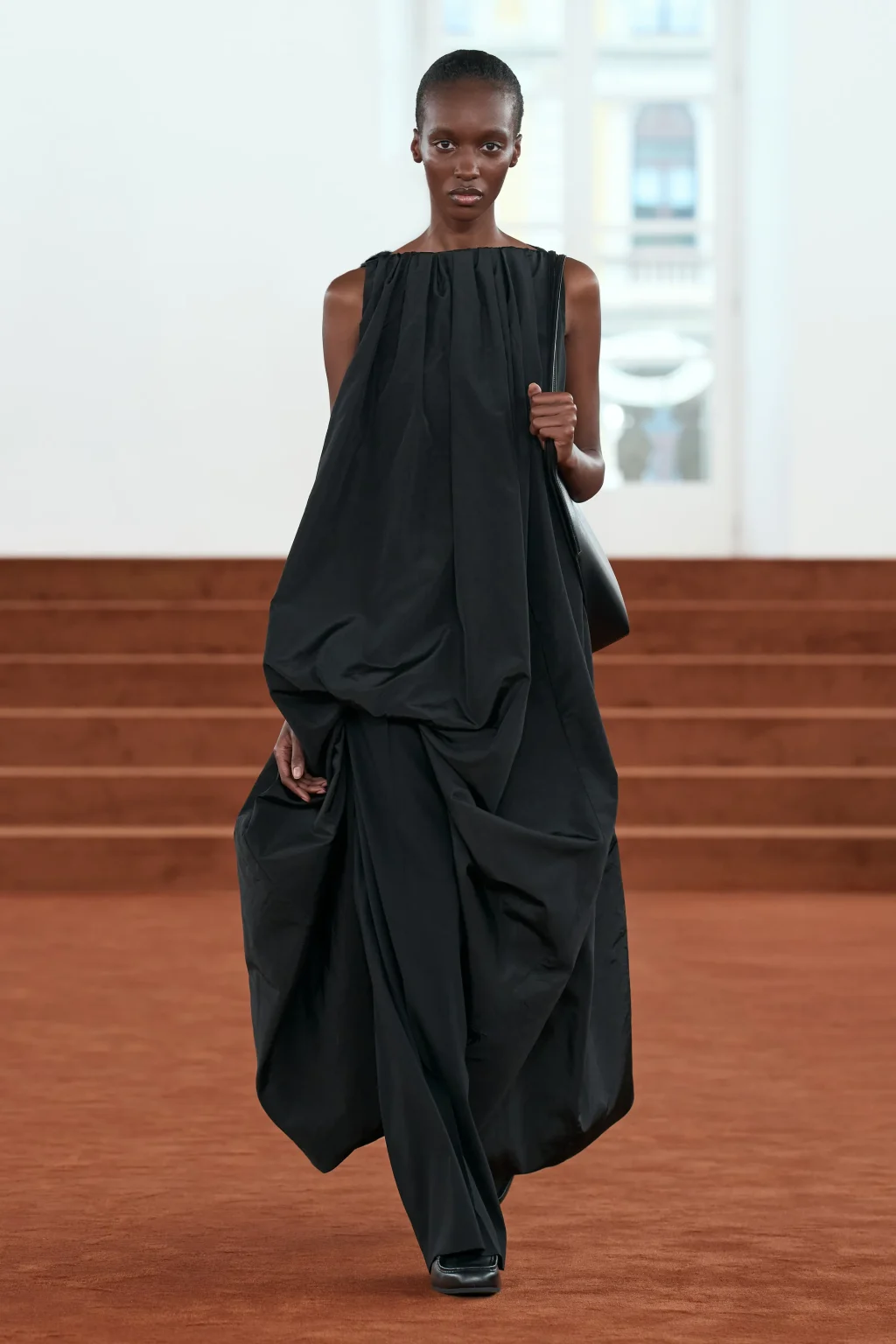
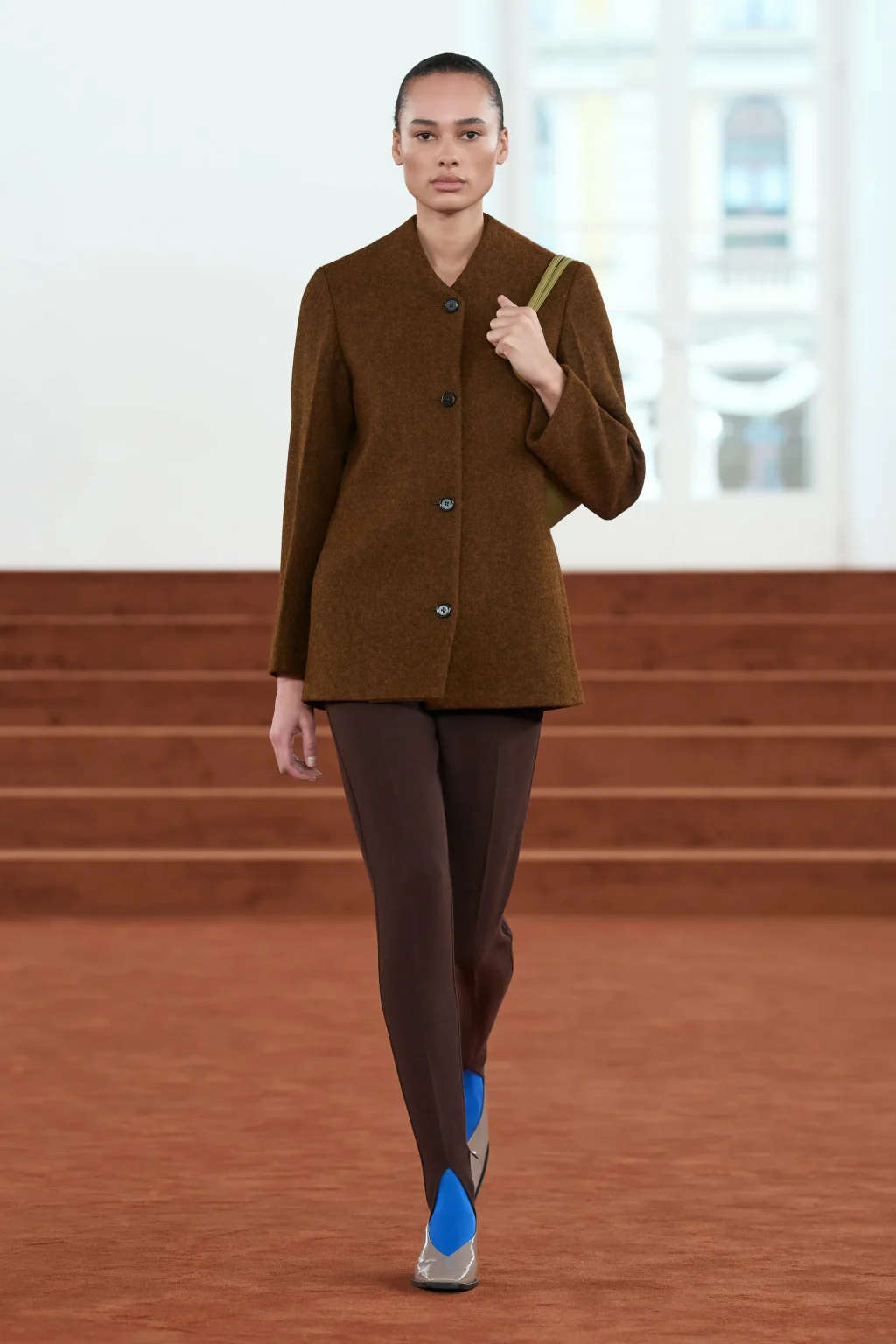
That shift matters for accessories. At Jil Sander, bags cannot simply decorate a runway. They have to argue for their existence through proportion, surface, and construction. Bellotti seems to understand that instinctively. His accessories do not scream for attention. They alter the rhythm of the silhouette.
The concept: home, memory, tension, and contradiction
The emotional architecture of the show was unusually clear. Officially, Jil Sander released “The House Above the Sea,” a text by Chiara Barzini voiced by Kim Gordon, tied directly to the Fall-Winter 2026 show. The poem circles escape, return, instability, roots, property, inheritance, and disappearance. It is not sentimental writing. It is writing about home as something possessed, lost, remembered, and re-entered with unease.
Independent coverage sharpened that reading. W Magazine described Bellotti’s sophomore collection as a “house tour,” while Vogue’s Run-Through podcast summary noted that Bellotti was exploring home not as a sanctuary, but as something emotionally double-edged. This is exactly the kind of conceptual framing that suits Jil Sander: not theatrical narrative, but controlled disturbance.
The Jil Sander Fall/Winter 2026-2027 show took place at Piazza Castello in Milan, a setting that gave Simone Bellotti’s collection an immediate sense of place. More than just a runway location, it reinforced the show’s broader themes of home, memory, and return, grounding the collection in a recognizably Milanese context.
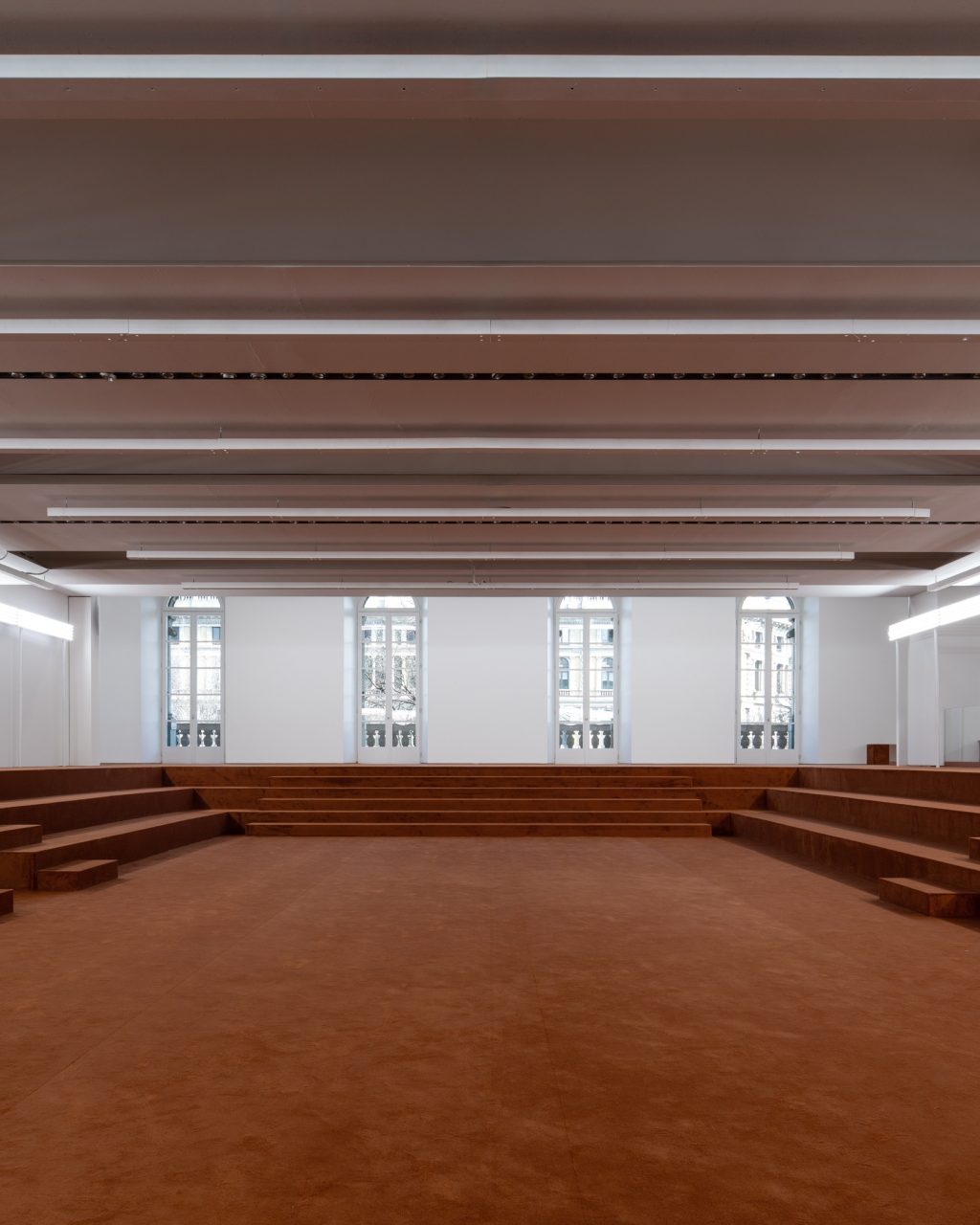
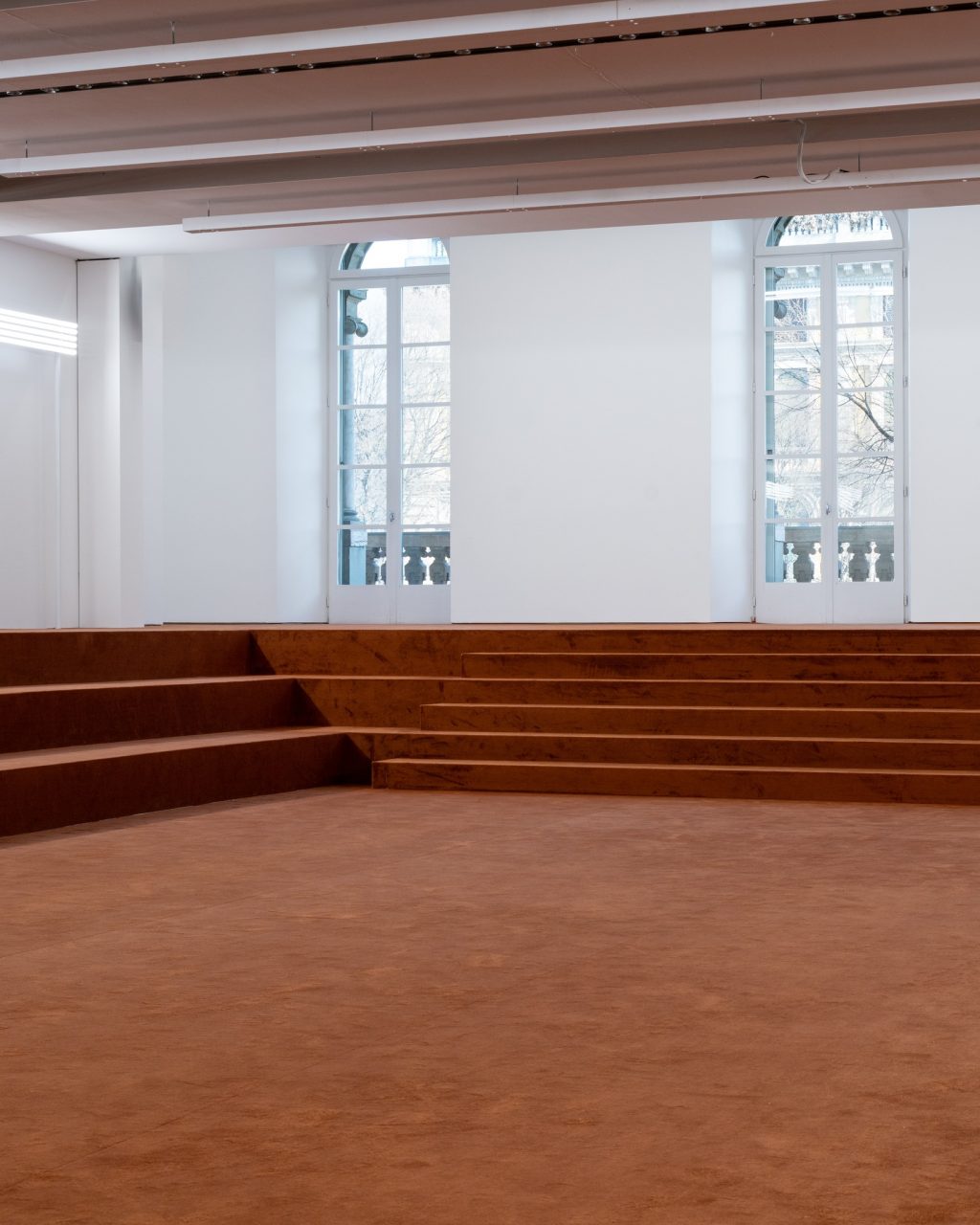
«The dialogue, at times the contradiction, between body and dress, which has agency of its own, like it wants to escape.»
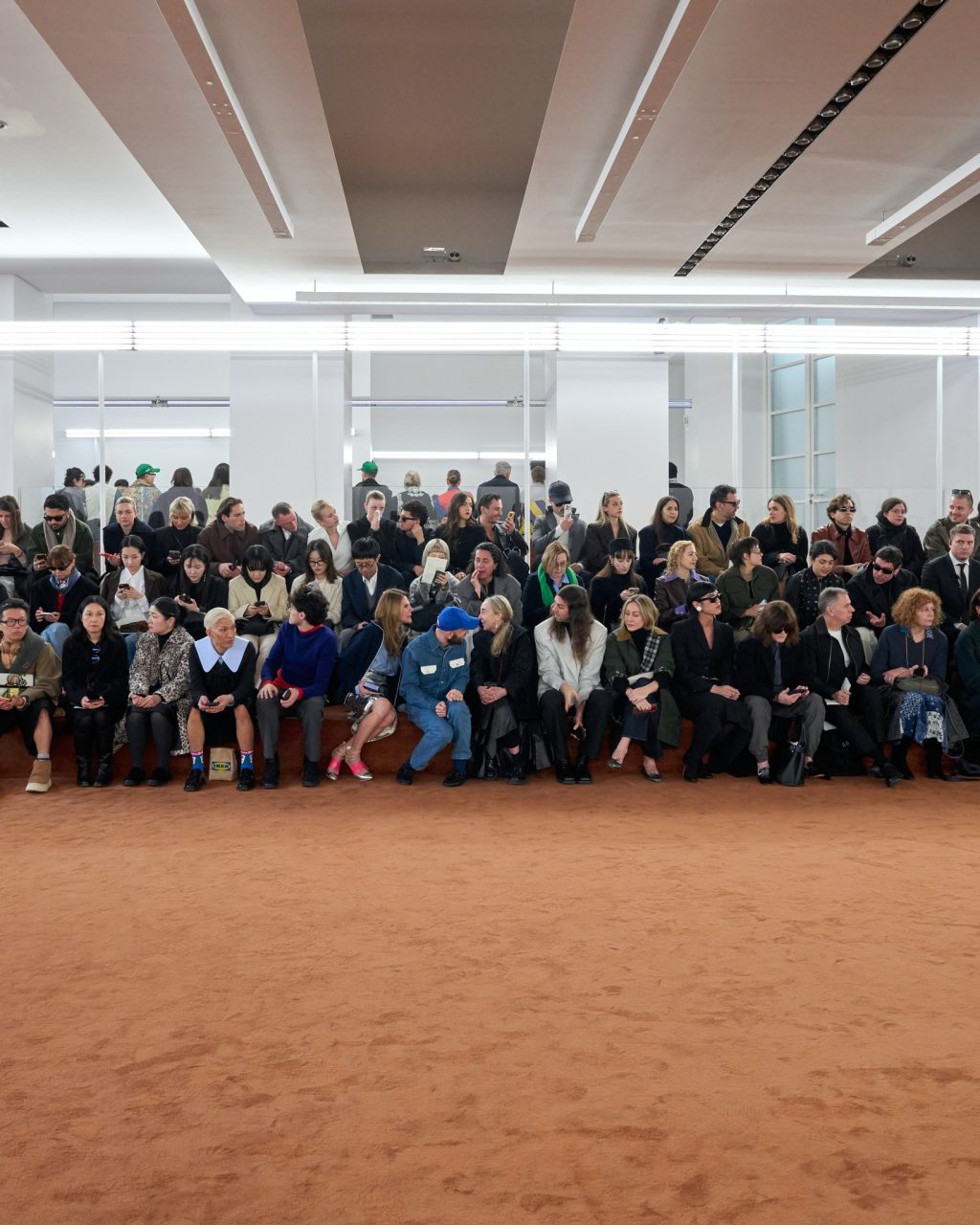
For a bags story, this is useful context. The strongest accessories here were not nostalgic props. They looked like objects shaped by rooms, thresholds, walls, corners, and addresses. They felt domestic in the deepest sense: not cozy, but inhabited.
The bags at Jil Sander Fall-Winter 2026-2027
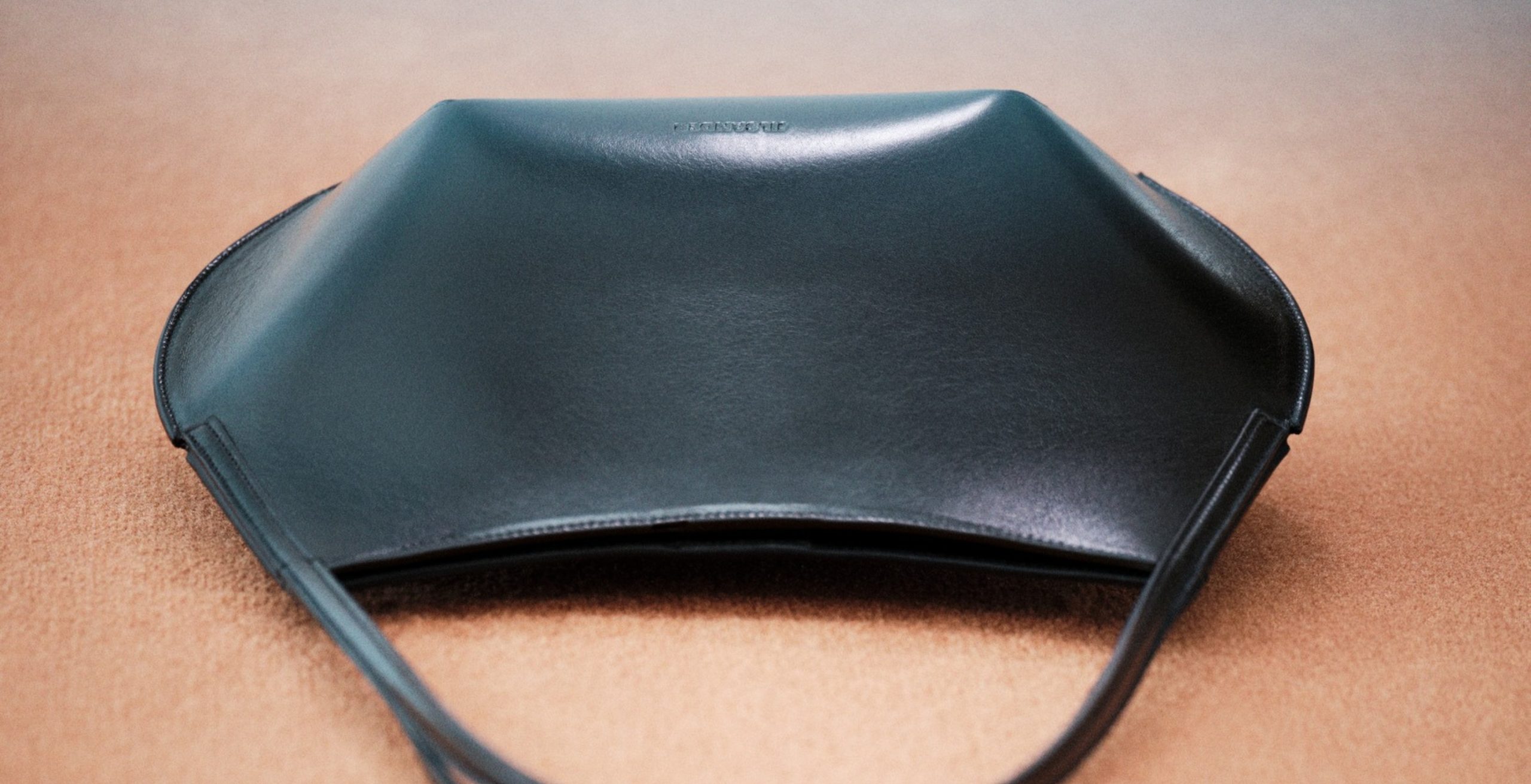
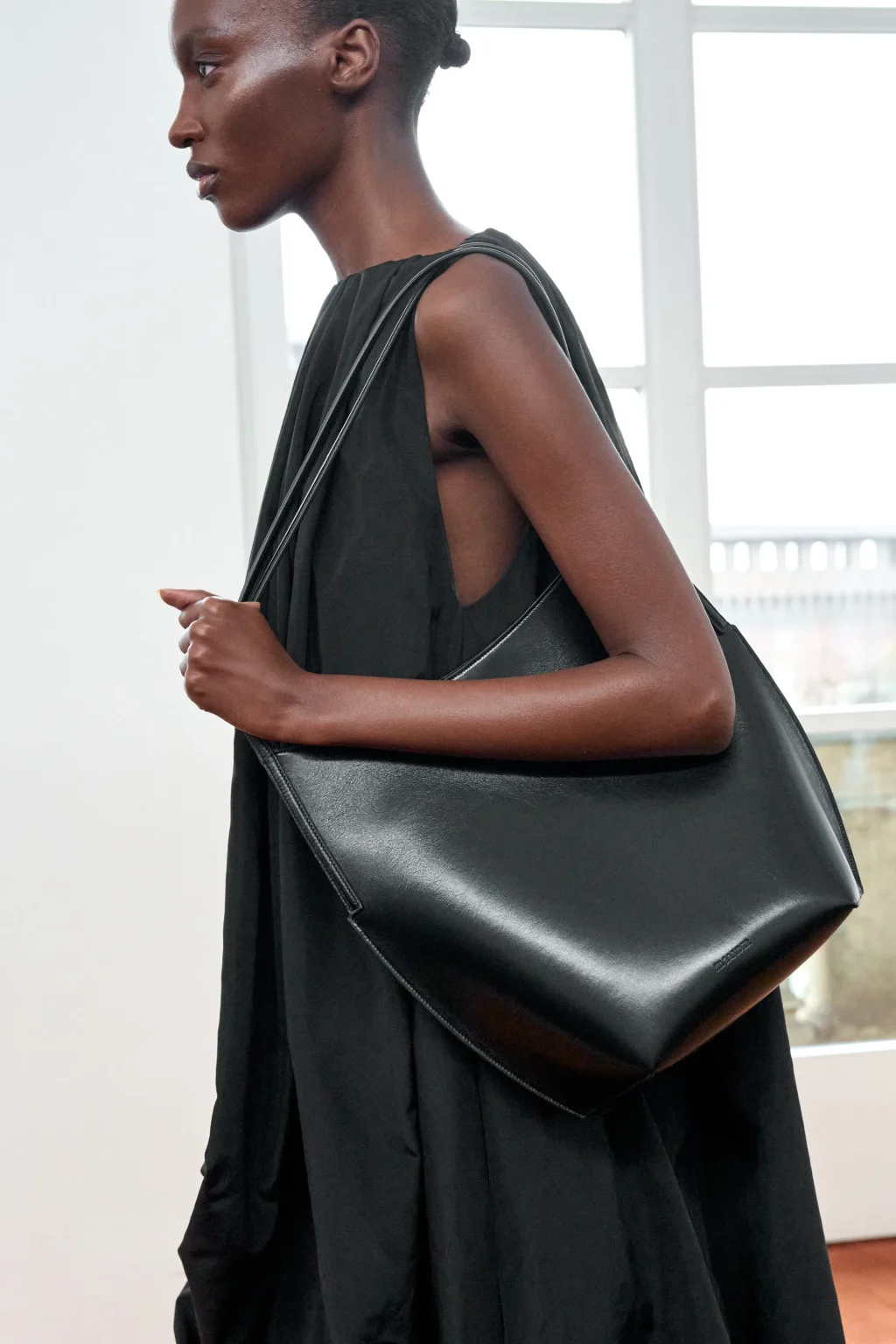
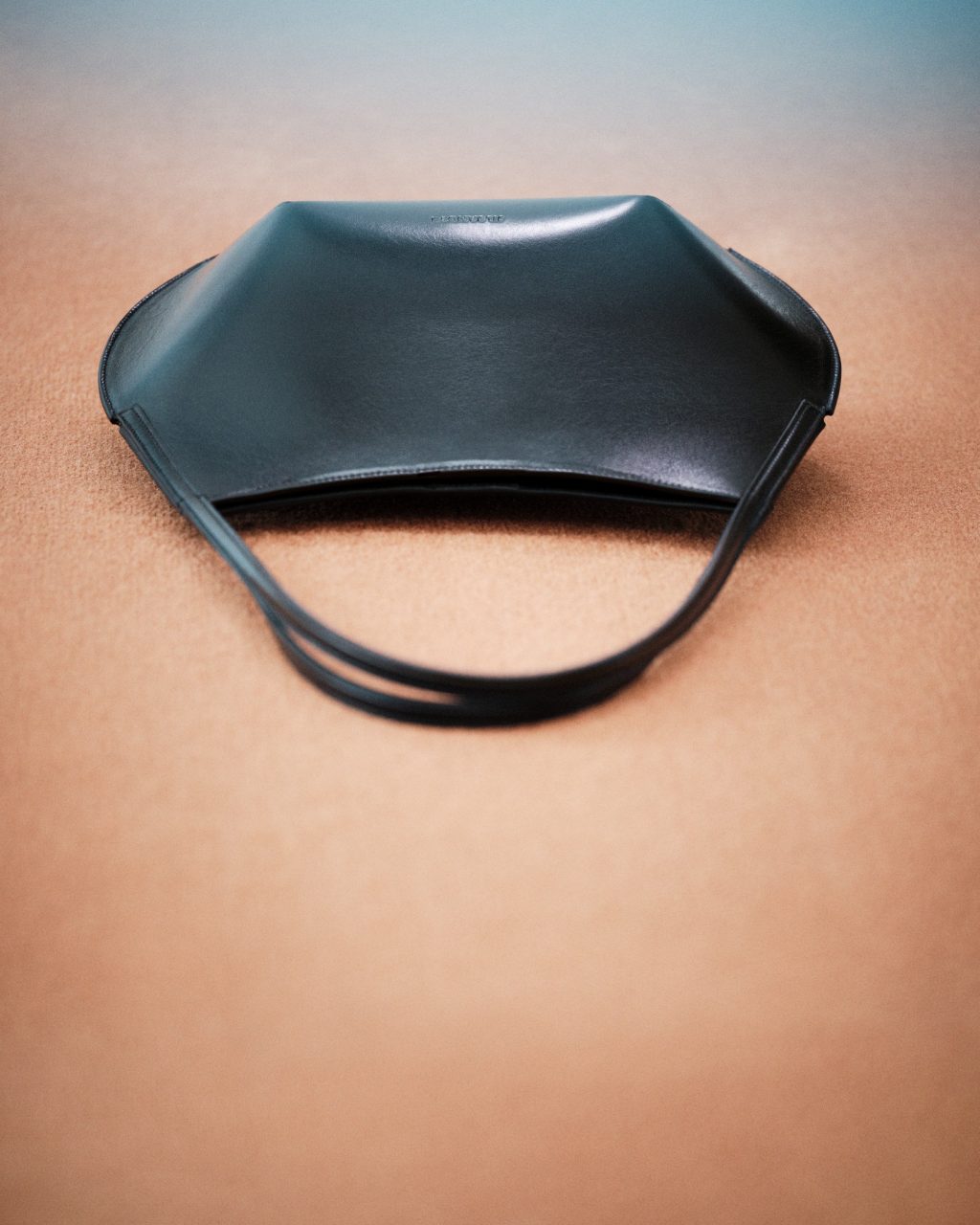
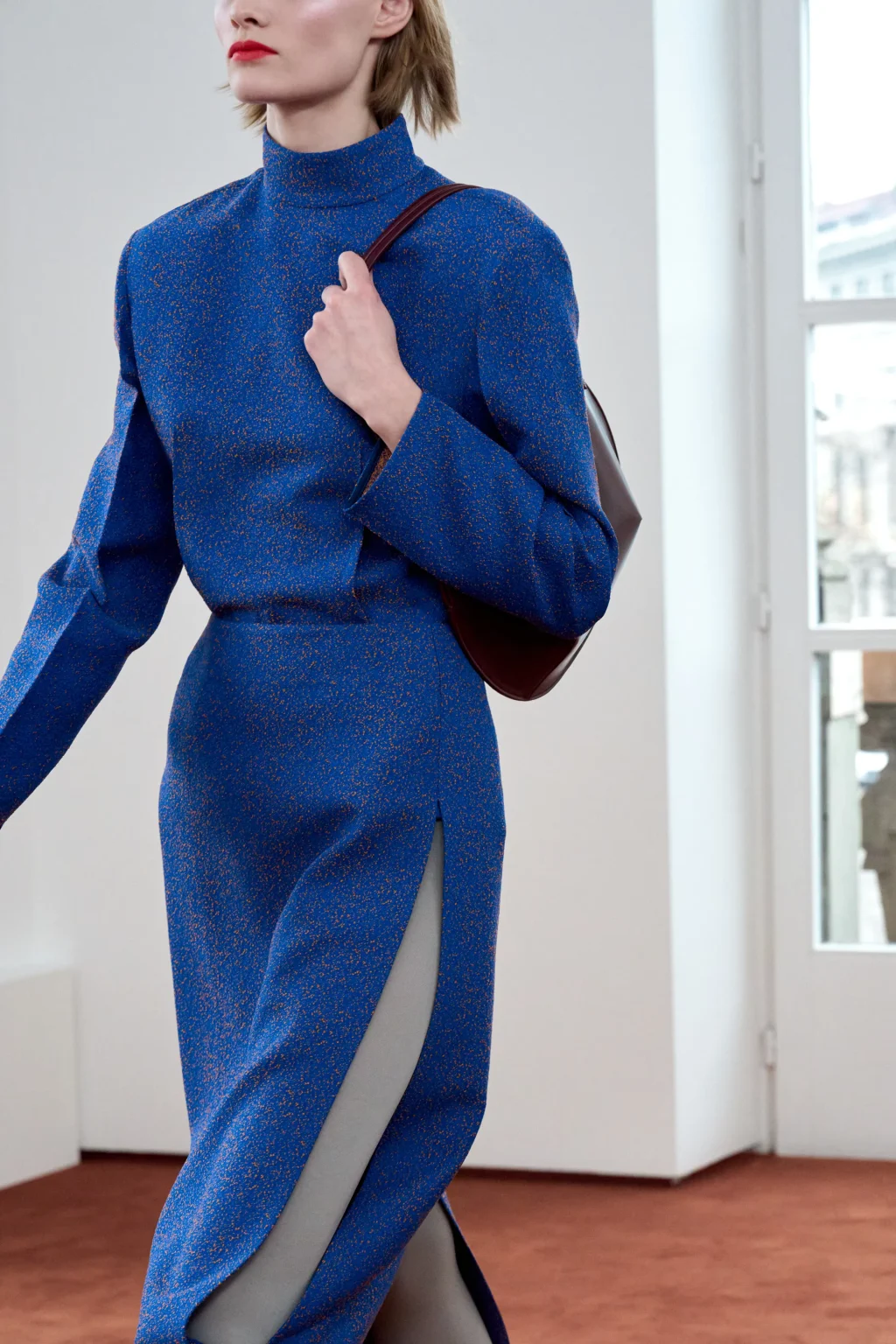
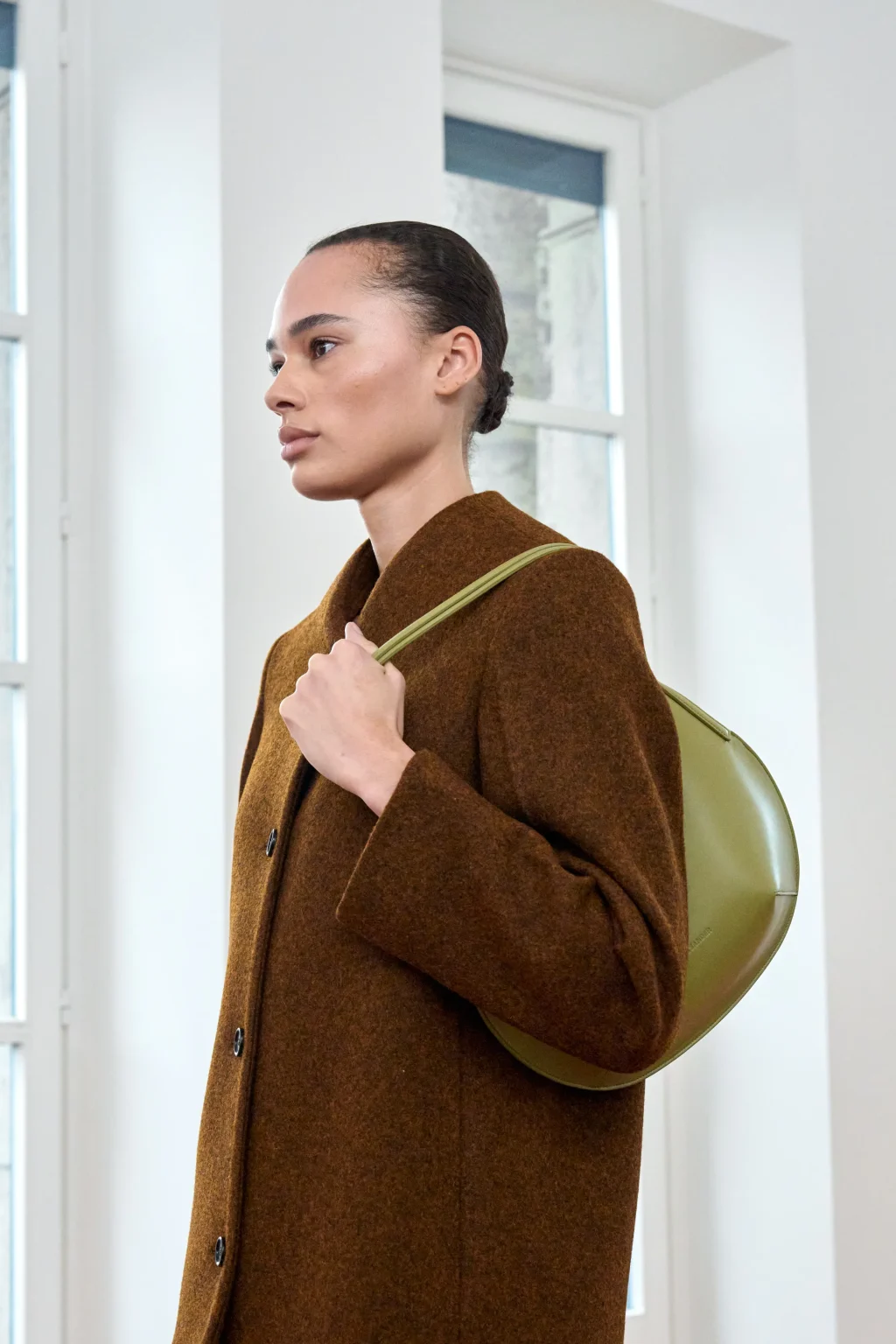
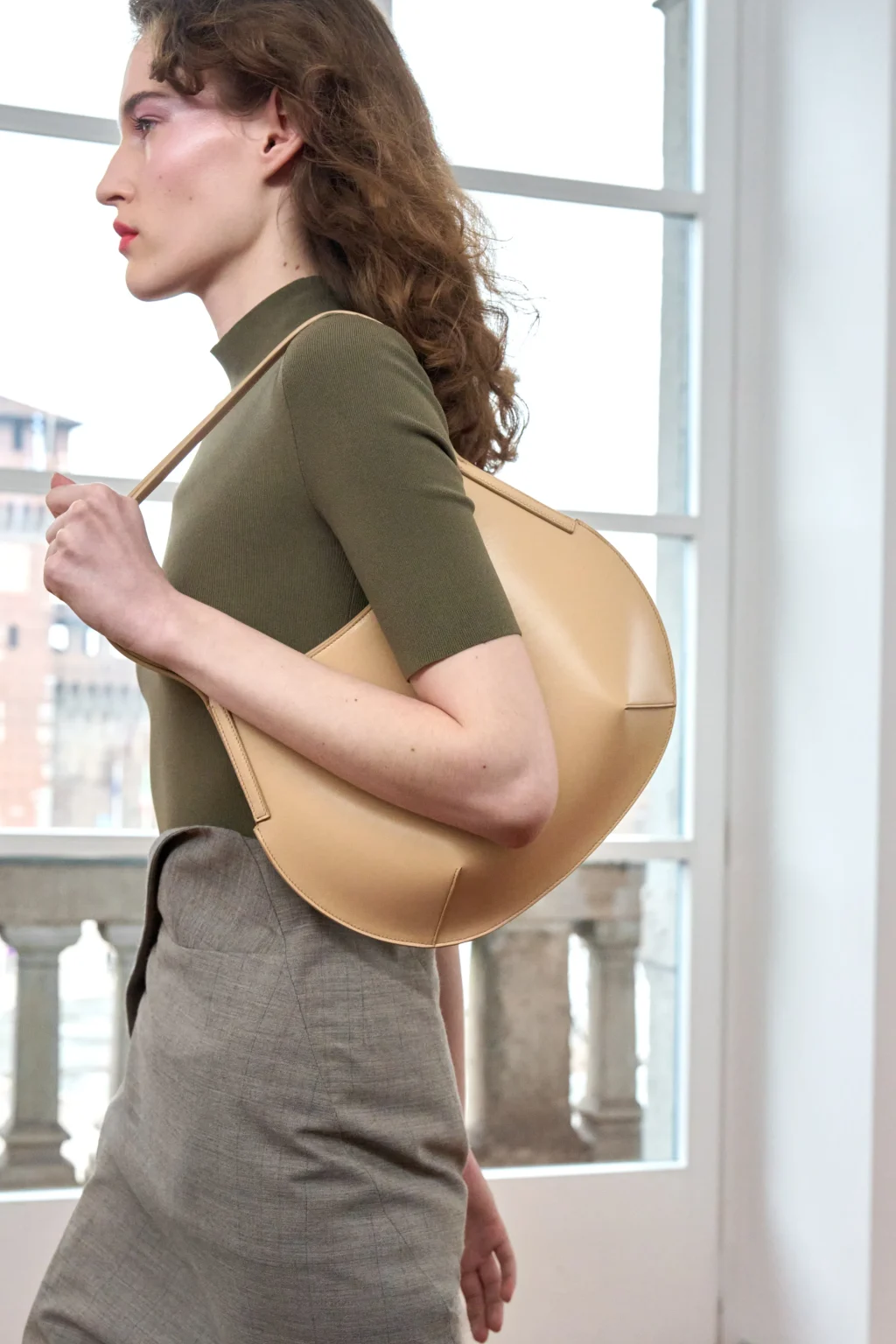
Seen across the runway details and season imagery, the bags fell into a coherent family: sculptural shoulder shapes, disciplined seams, minimal branding, and forms that felt architectural rather than decorative. The surfaces were clean, the hardware almost absent, and the emphasis landed on geometry, color, and how the bag sat against the body. Several silhouettes stood out immediately.
1. The Foro Tote
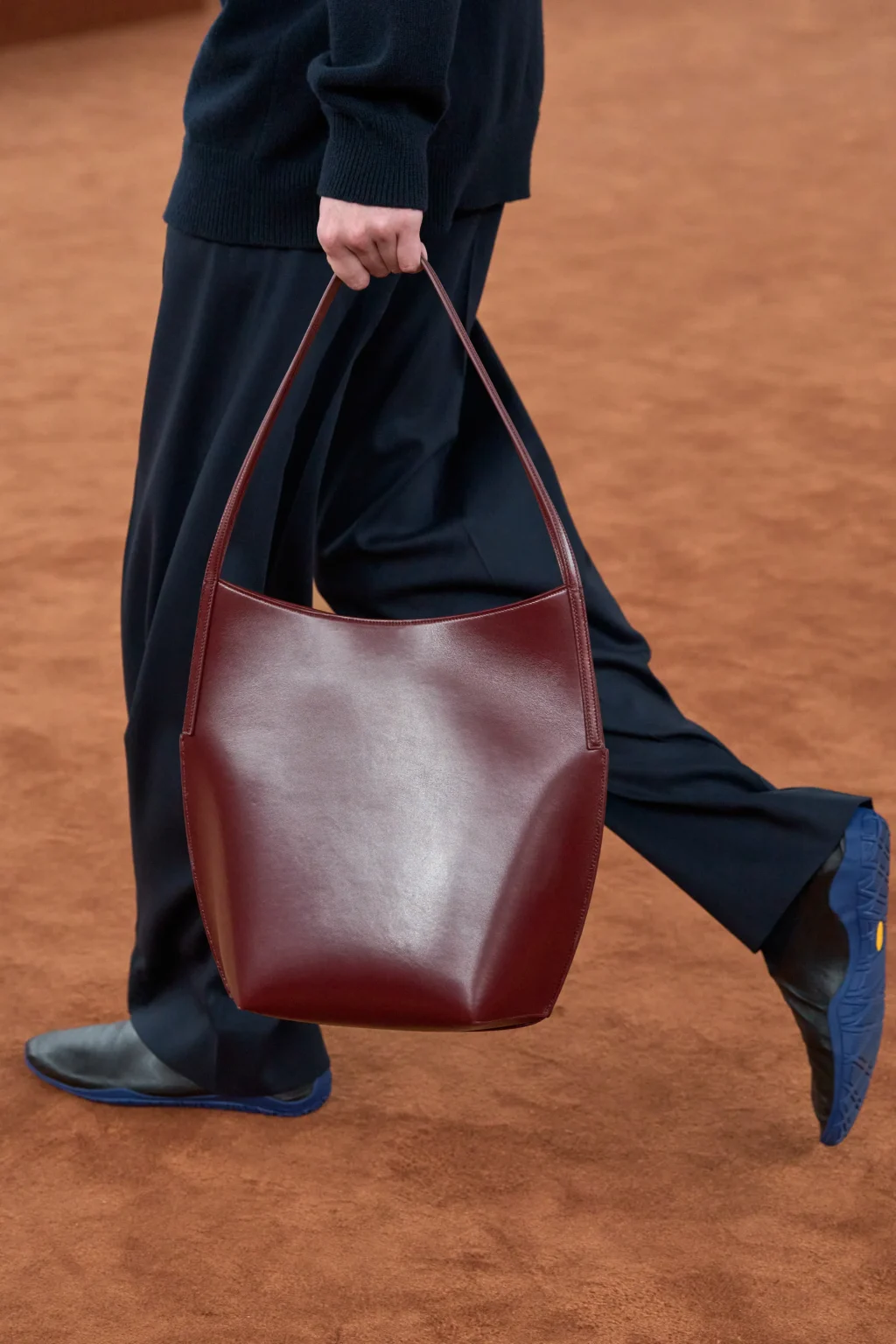
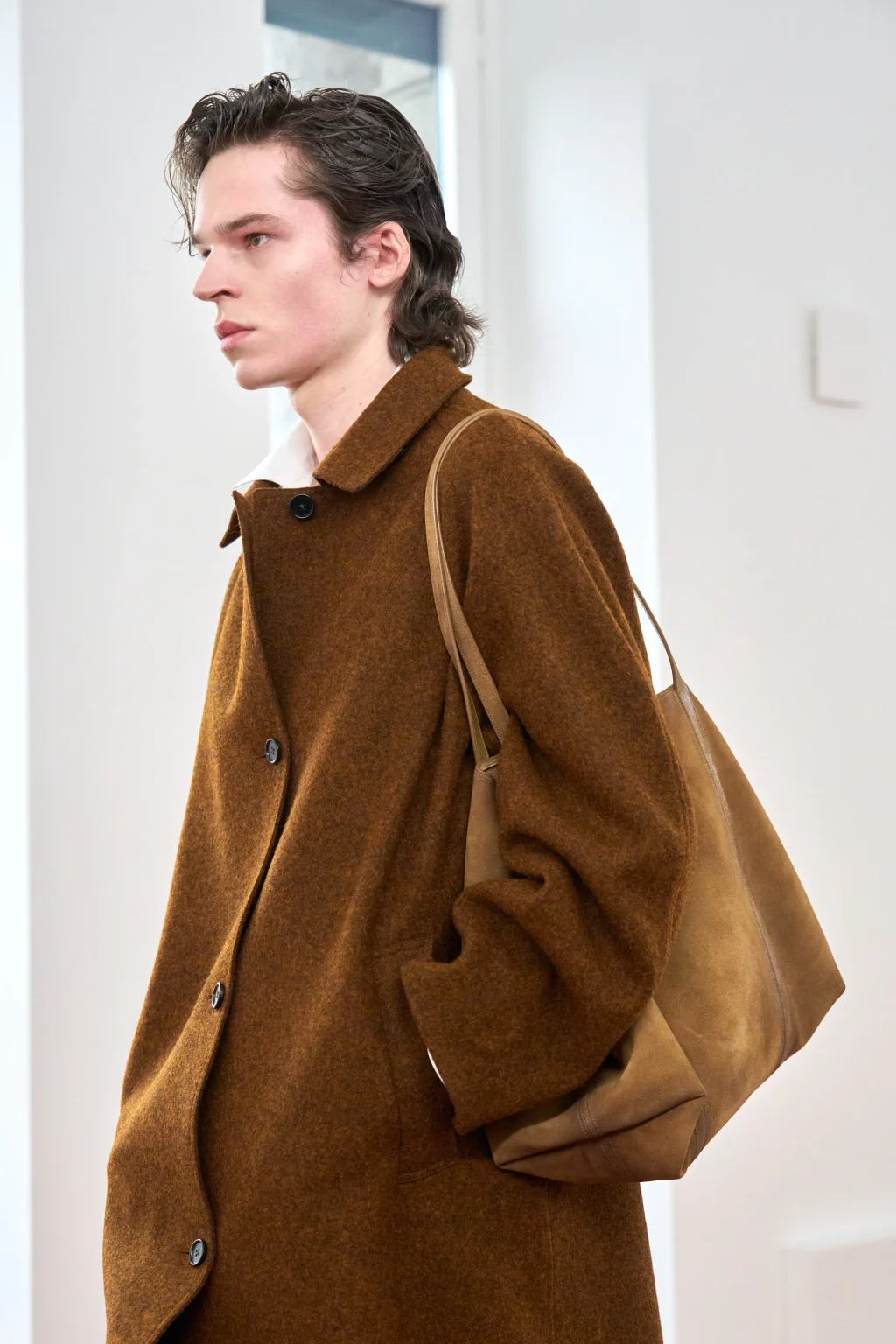
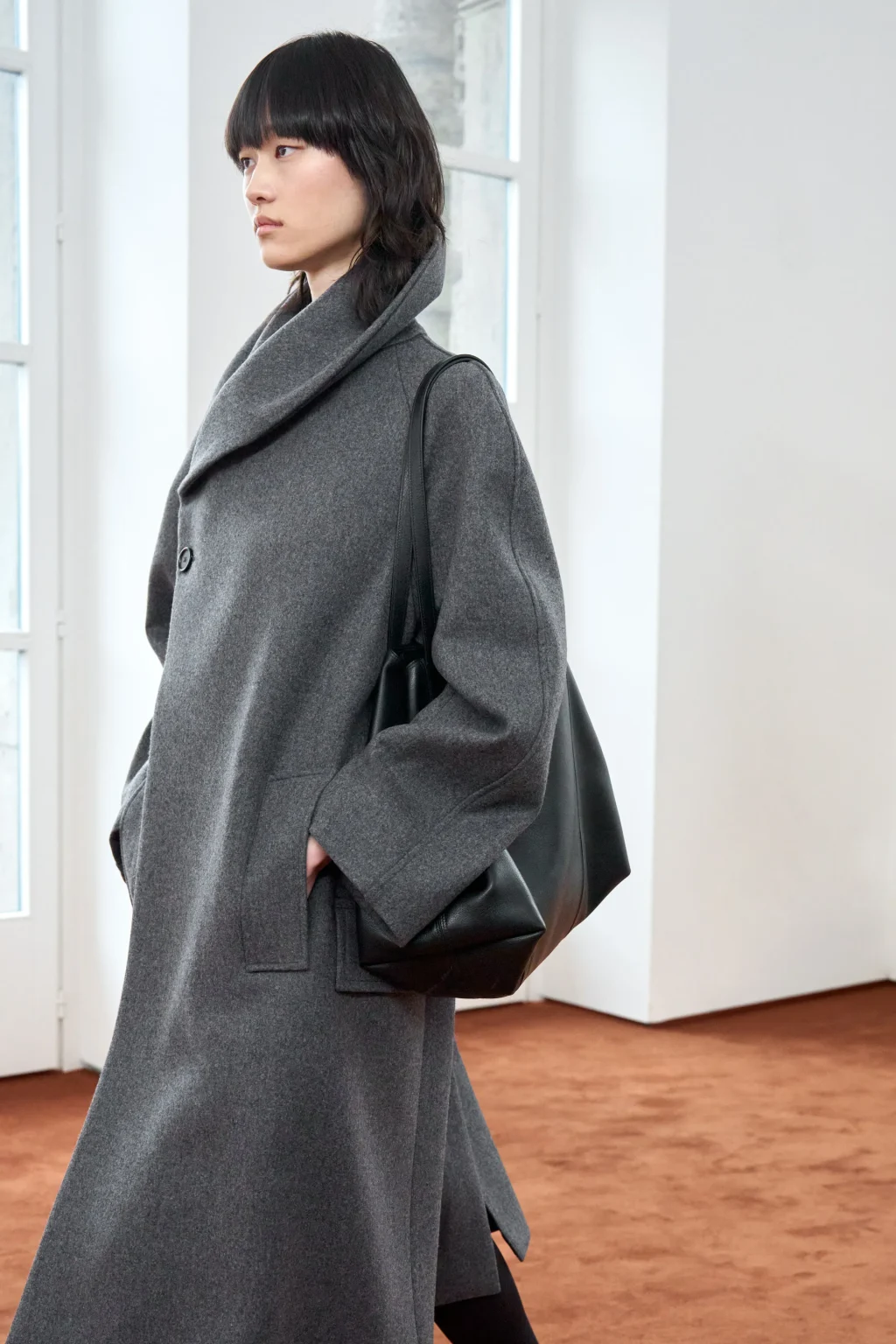
The Foro Tote deserves special attention because it feels like the collection’s most grounded and expandable daily proposition: generous, softly structured, and strong without aggression. Its name carries real weight, referencing Foro Buonaparte 71, Milan, Jil Sander’s registered office and a historic anchor of the house’s identity.
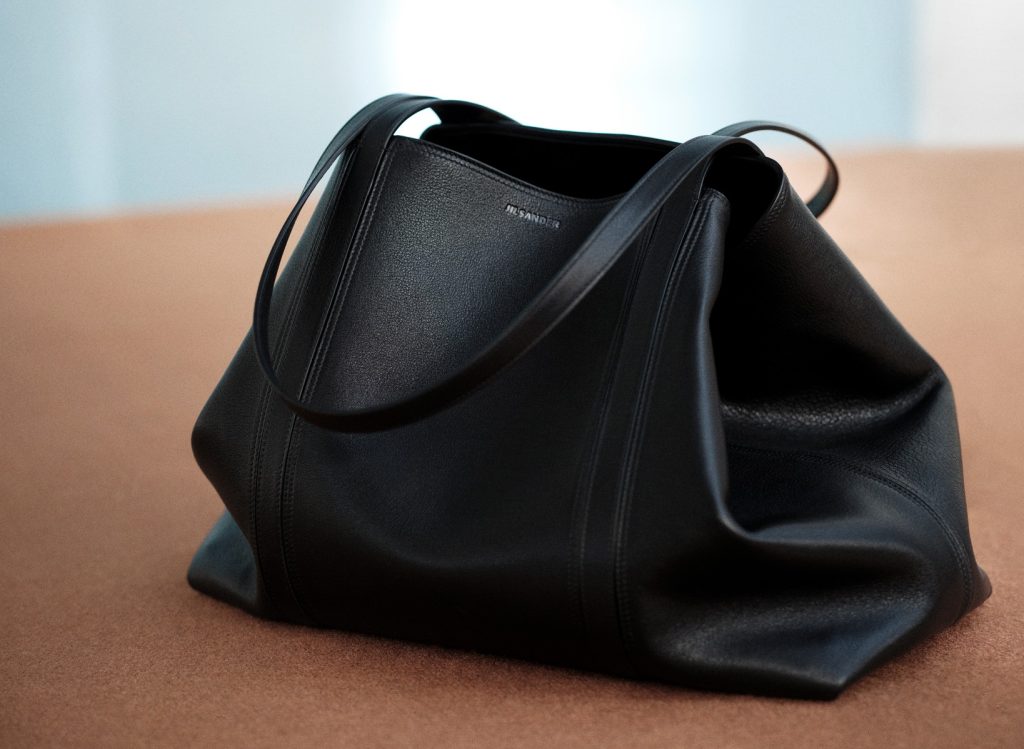
Visually, the Foro Tote looked strongest in dark polished leather tones such as black, deep navy, and burgundy. In those shades, the silhouette gained a sense of weight and authority—almost civic in presence, yet never stiff. Not corporate in the tired sense, but urban, exact, and fully adult.
2. The Monolith bag
If the Foro Tote is the season’s most livable bag, the Monolith is its most conceptual. Rigid, elongated, and almost abstract in its severity, it looked less like an accessory than a standing plane. Its structure recalled stone, column, slab, and objecthood, translating matter into line with a kind of quiet force.
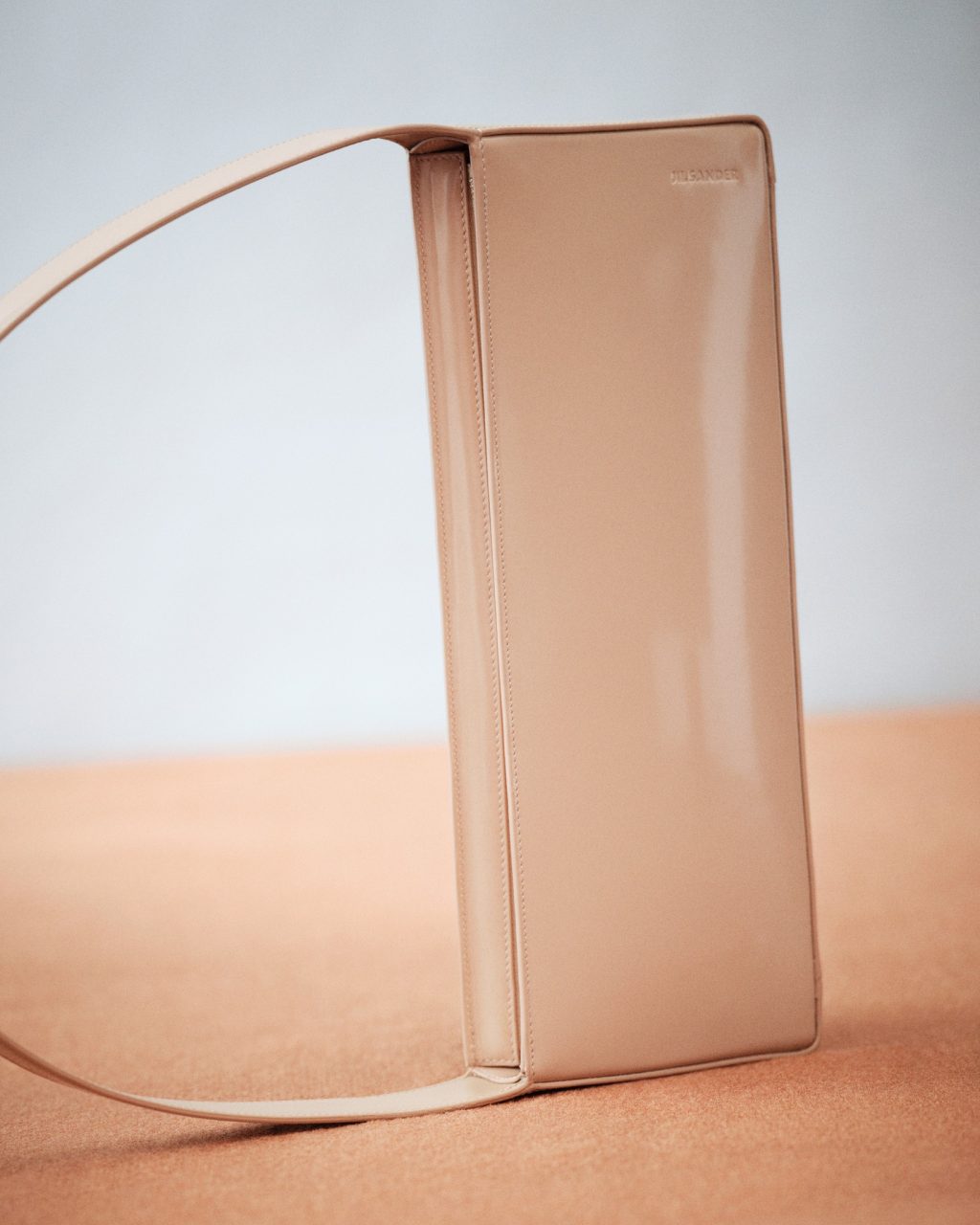
The Monolith’s power came from refusal. No fuss, no visible excess, no need to explain itself. That restraint made it feel precise rather than cold, and sculptural rather than decorative. It also fit naturally into the broader emotional logic of the show. A house is built from walls, thresholds, blocks, and load-bearing forms; the Monolith carried some of that language into accessories, turning architectural weight into a sharply resolved object.
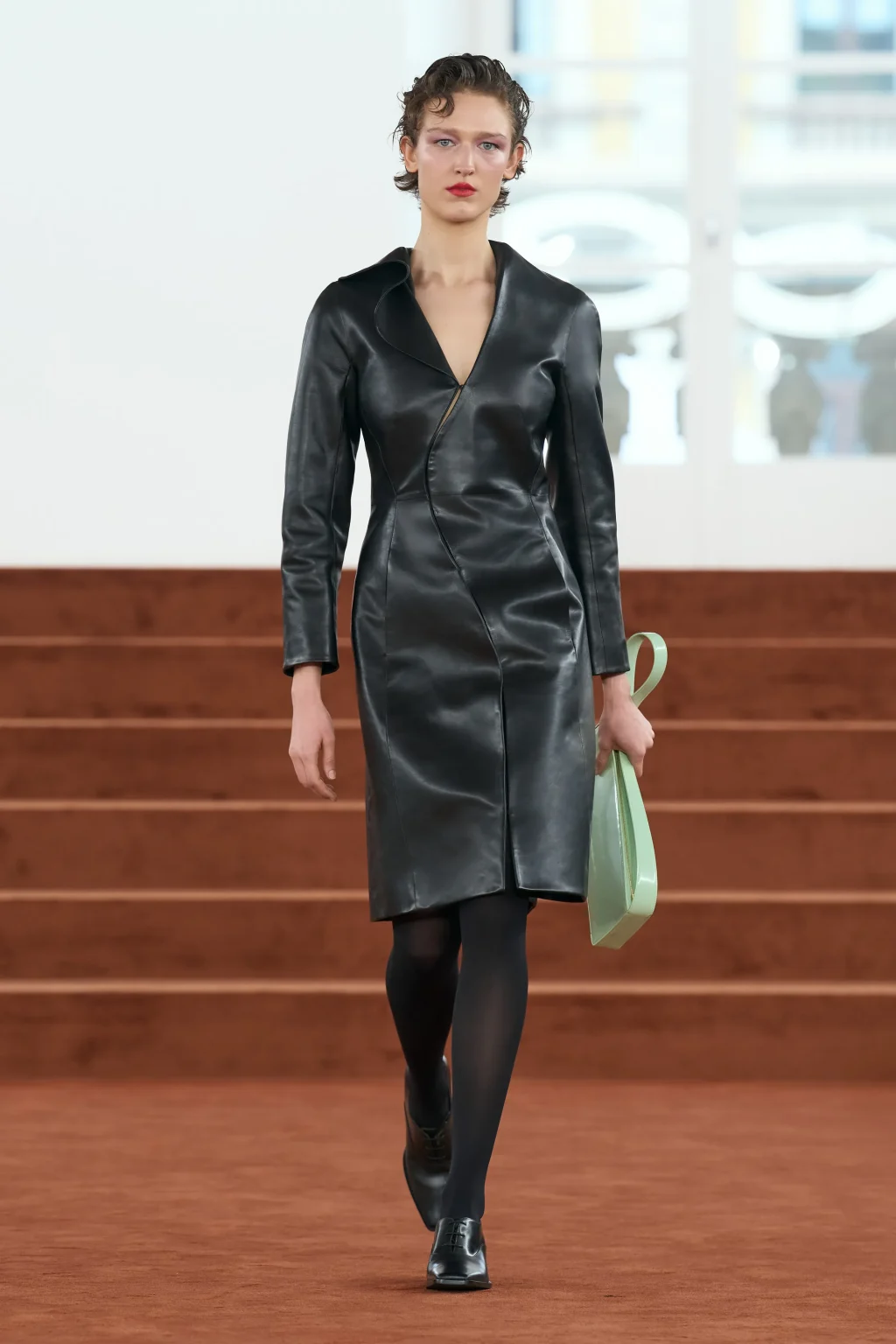
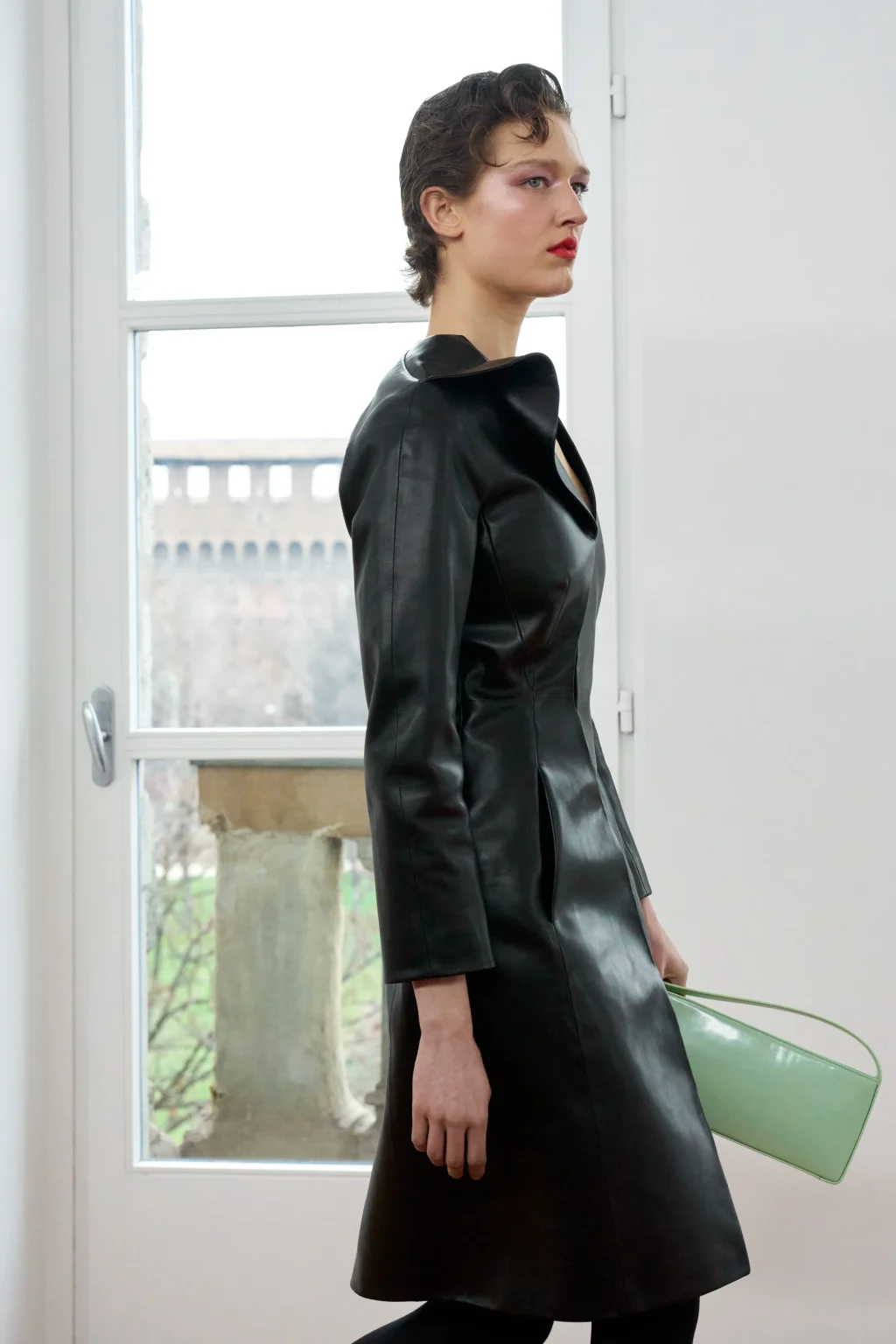
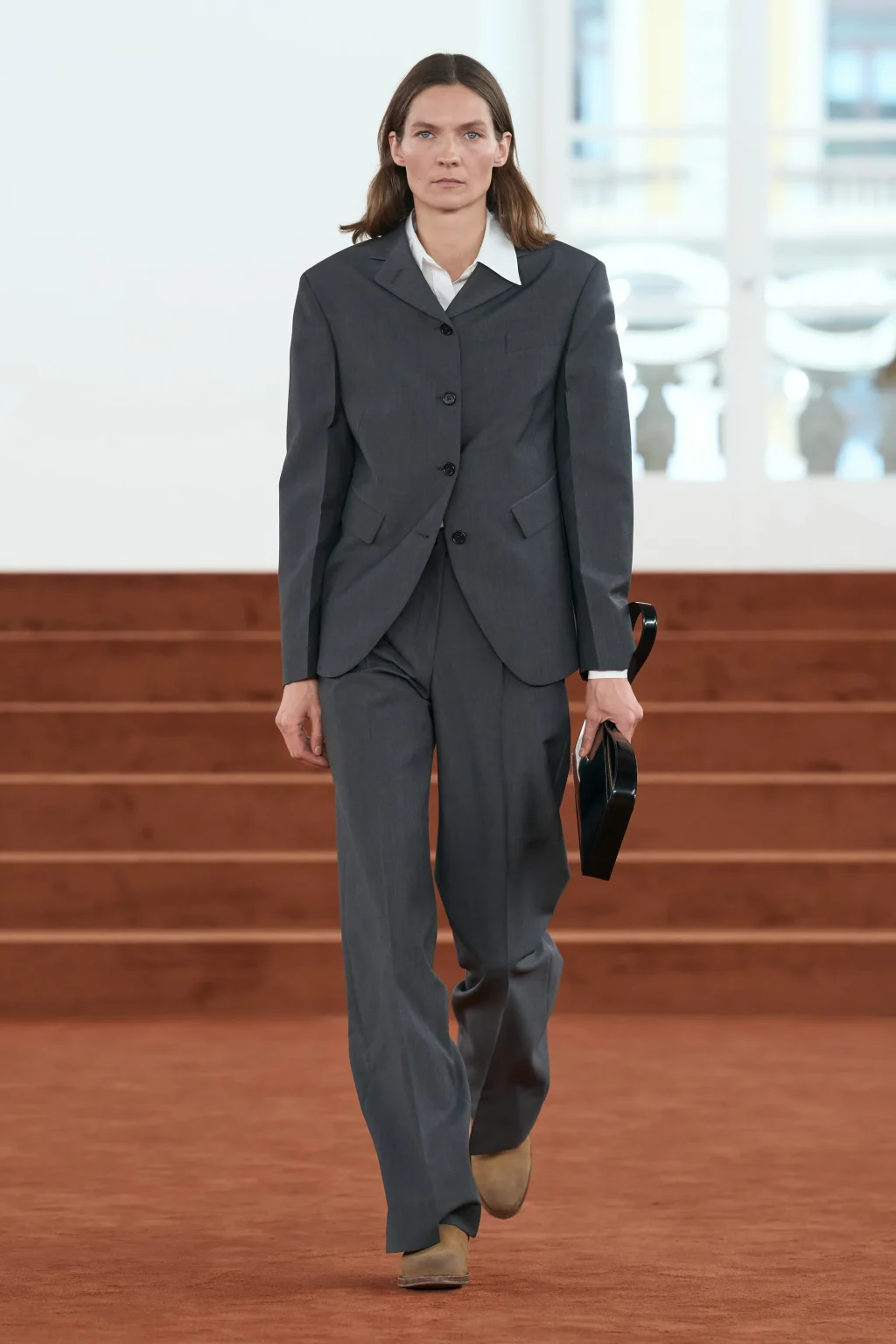
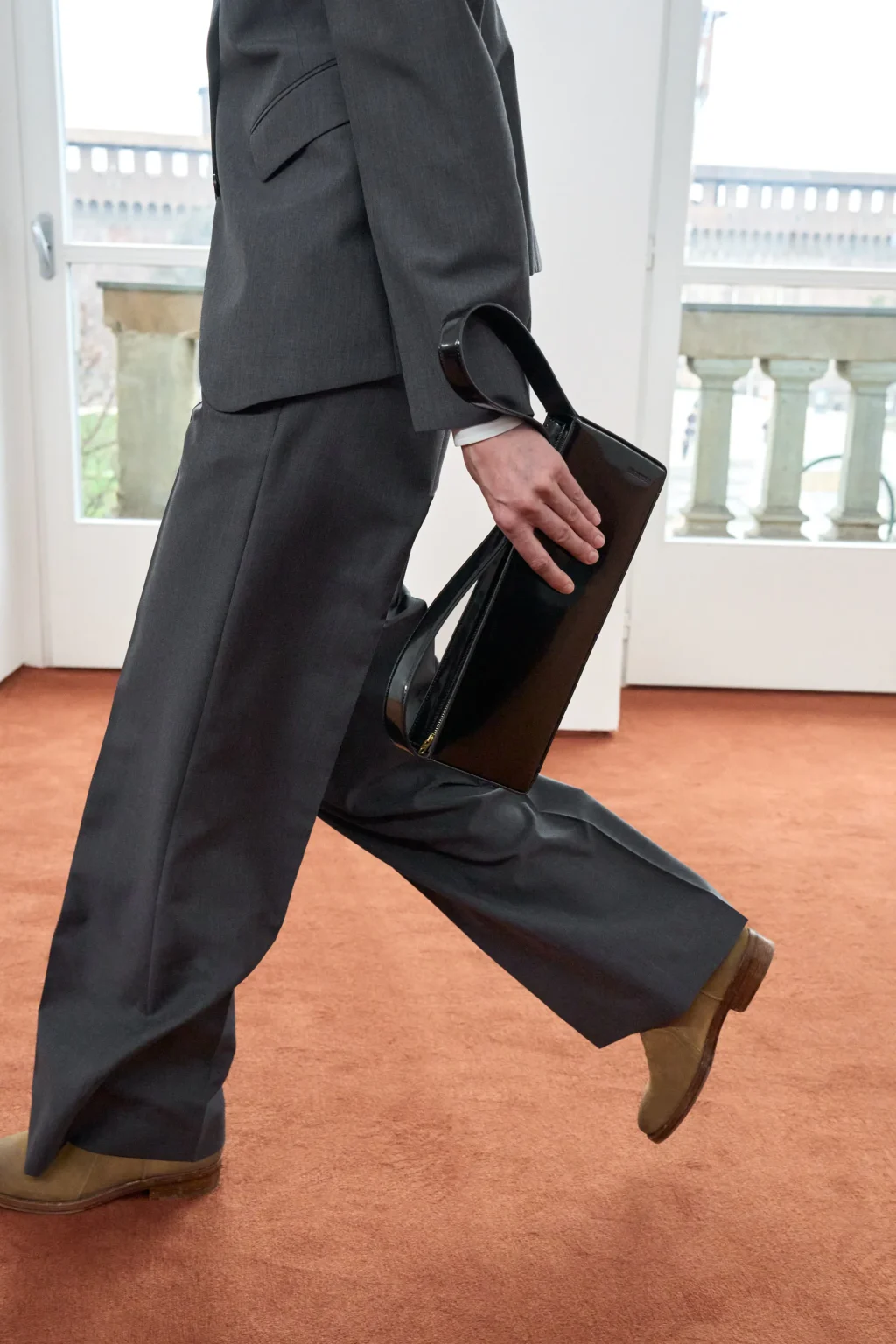
3. The Kante shoulder bag and Kante Flap shoulder bag
Then came the Kante shoulder bag and Kante Flap shoulder bag, which distilled Simone Bellotti’s interest in sharp cuts, conceptual edges, and disciplined geometry into perhaps the clearest Jil Sander statement of the season. The Kante family was the purest expression of line: bags built from angle, interruption, and compression, almost like studies in modernist drawing—a line, a break, a fold, a resolved volume.
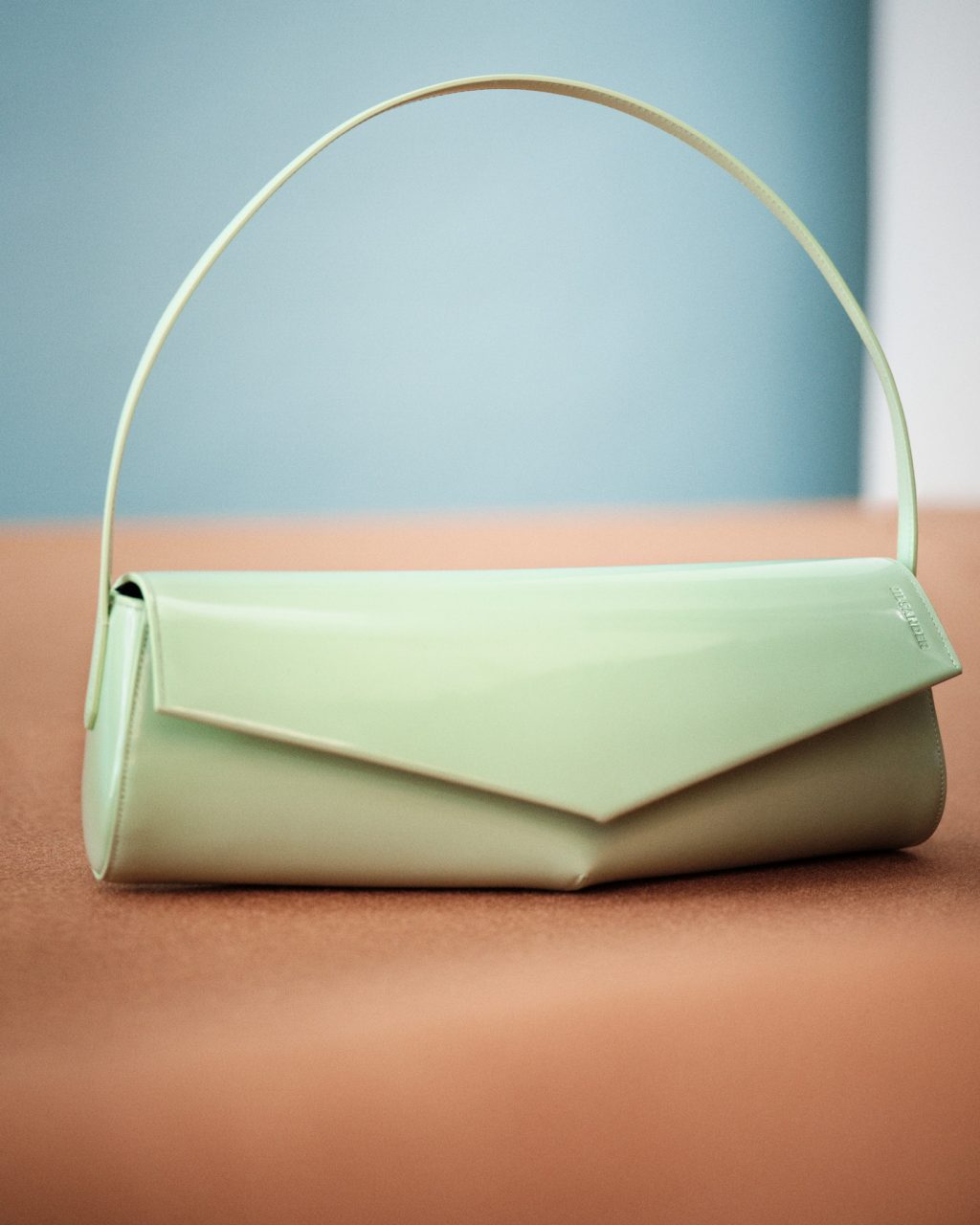
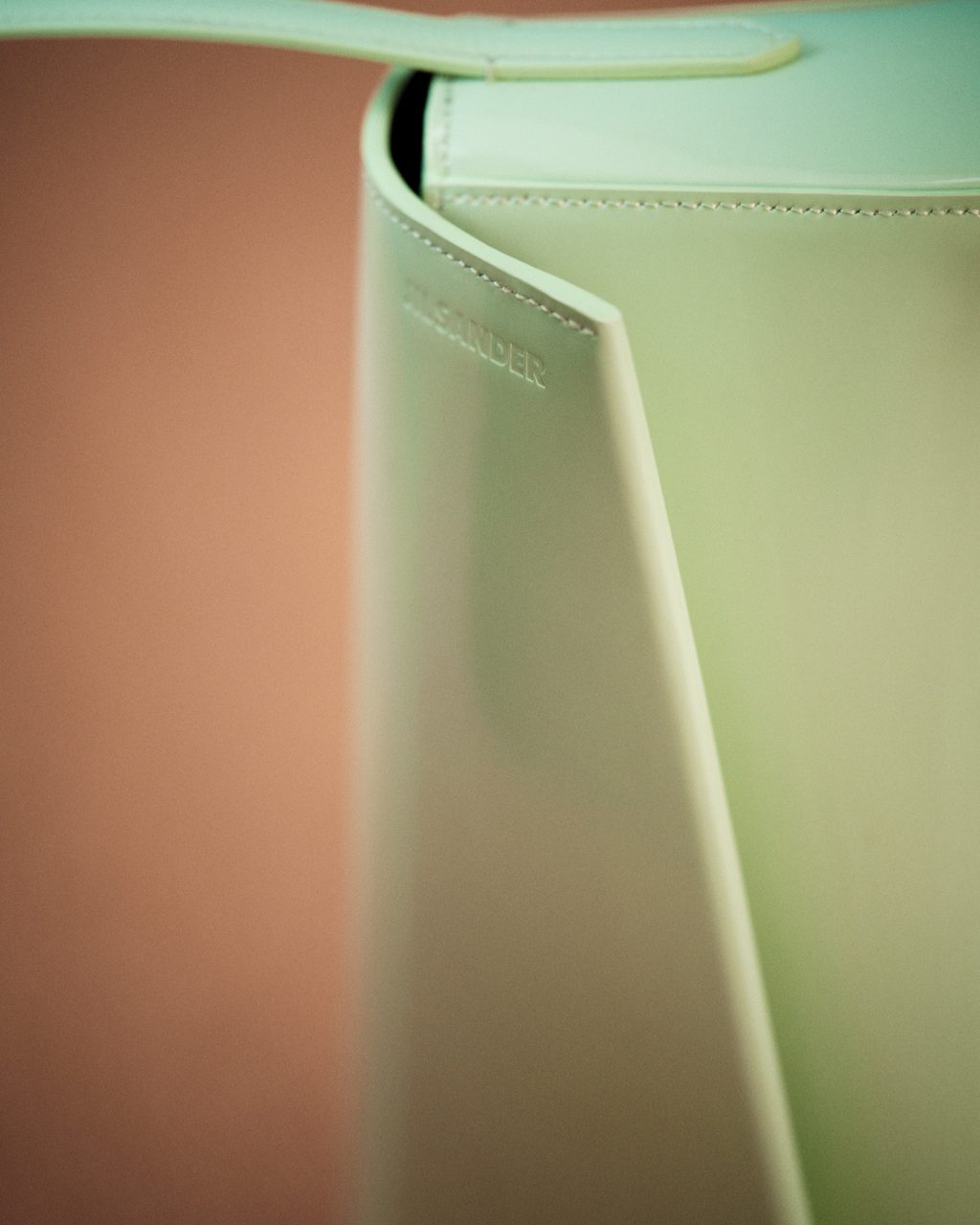
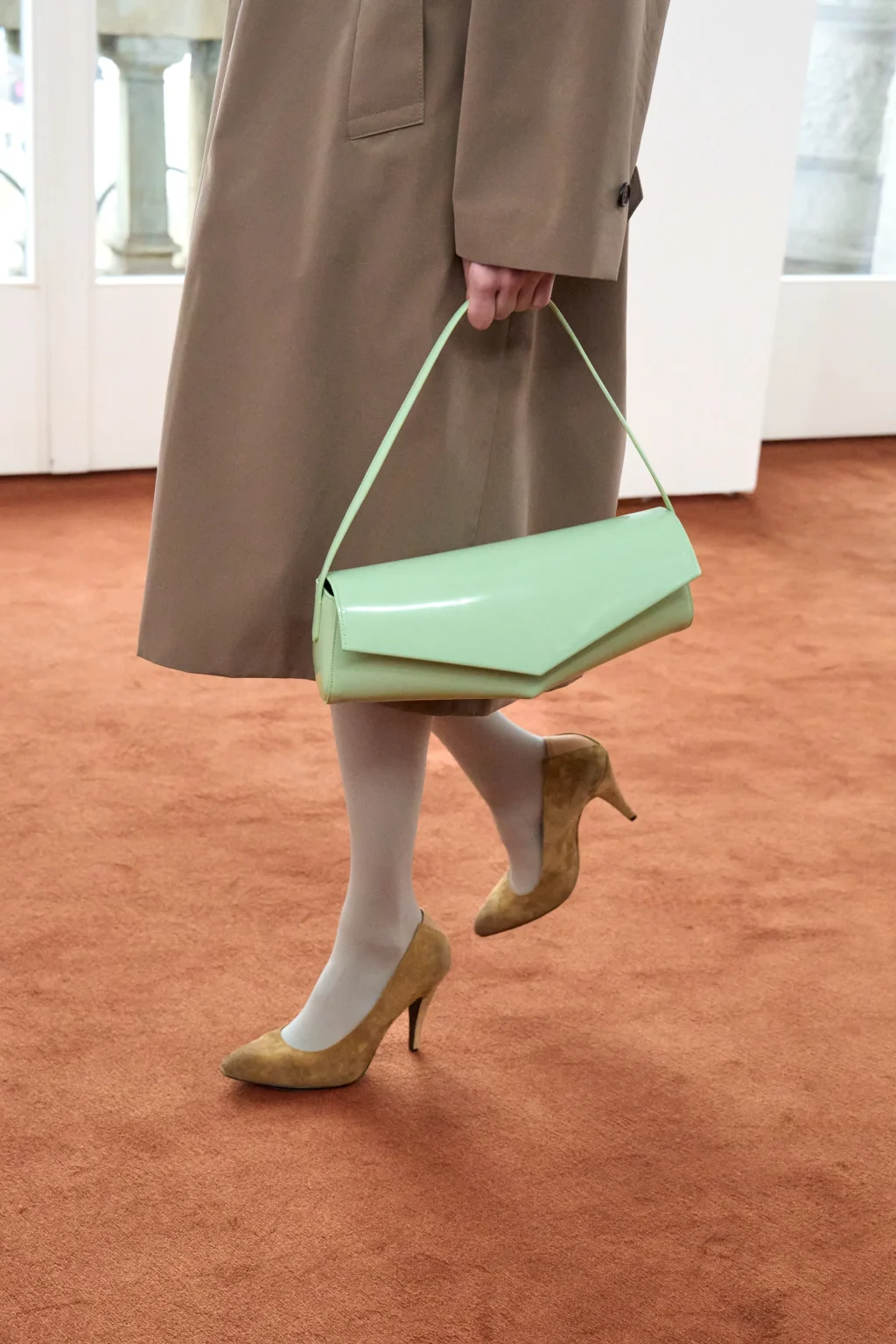
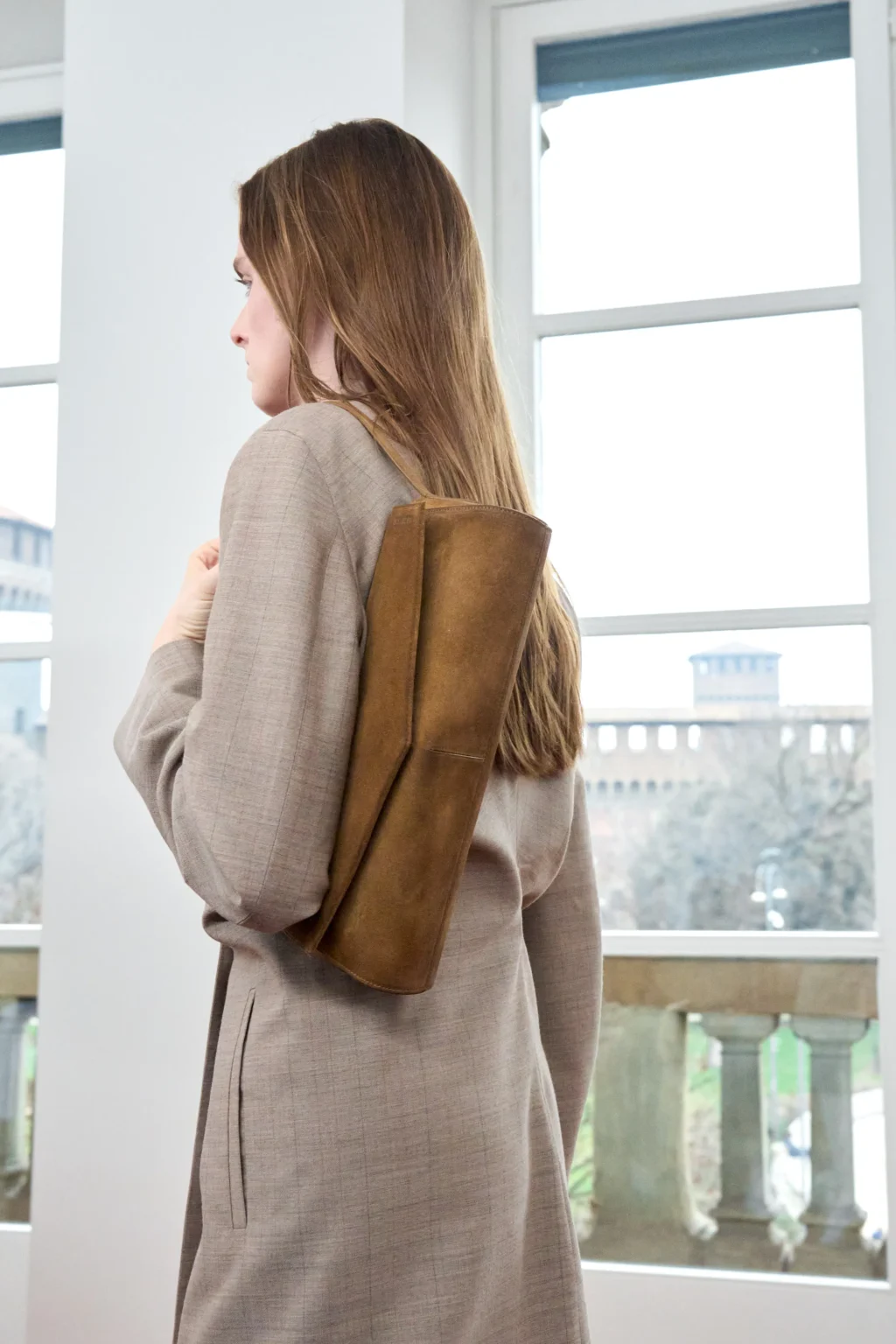
The regular Kante shoulder bag worked through angular tension and assertive cuts, while the Kante Flap introduced a sharper graphic gesture through its folded front, giving the silhouette a more explicitly architectural face. In pale pistachio green, the shape felt unexpectedly fresh: strict, but not severe; controlled, but not lifeless. This is where Bellotti was especially intelligent. He did not rely only on black to communicate rigor, but allowed color to soften and complicate the geometry without weakening its precision.
Simone Bellotti’s second Jil Sander runway did what a strong sophomore show should do: it widened the emotional and formal vocabulary of the house without severing its roots. The concept of home, the poem-led invitation, the return to a historically resonant Milan setting, and the quiet authority of the accessories all worked together. The bags were not side notes. They were among the clearest arguments the collection made.