Fendi Emily in Paris bags prove that fashion on screen is no longer just styling—it’s storyline, strategy, and product design moving in sync. Emily in Paris has always treated luxury as a character (sometimes the loudest one in the room), but Season 5 makes a sharper move: it shifts the series’ gravitational pull toward Rome and threads Fendi into the plot itself, not as a blink-and-you-miss-it handbag cameo, but as narrative scaffolding.
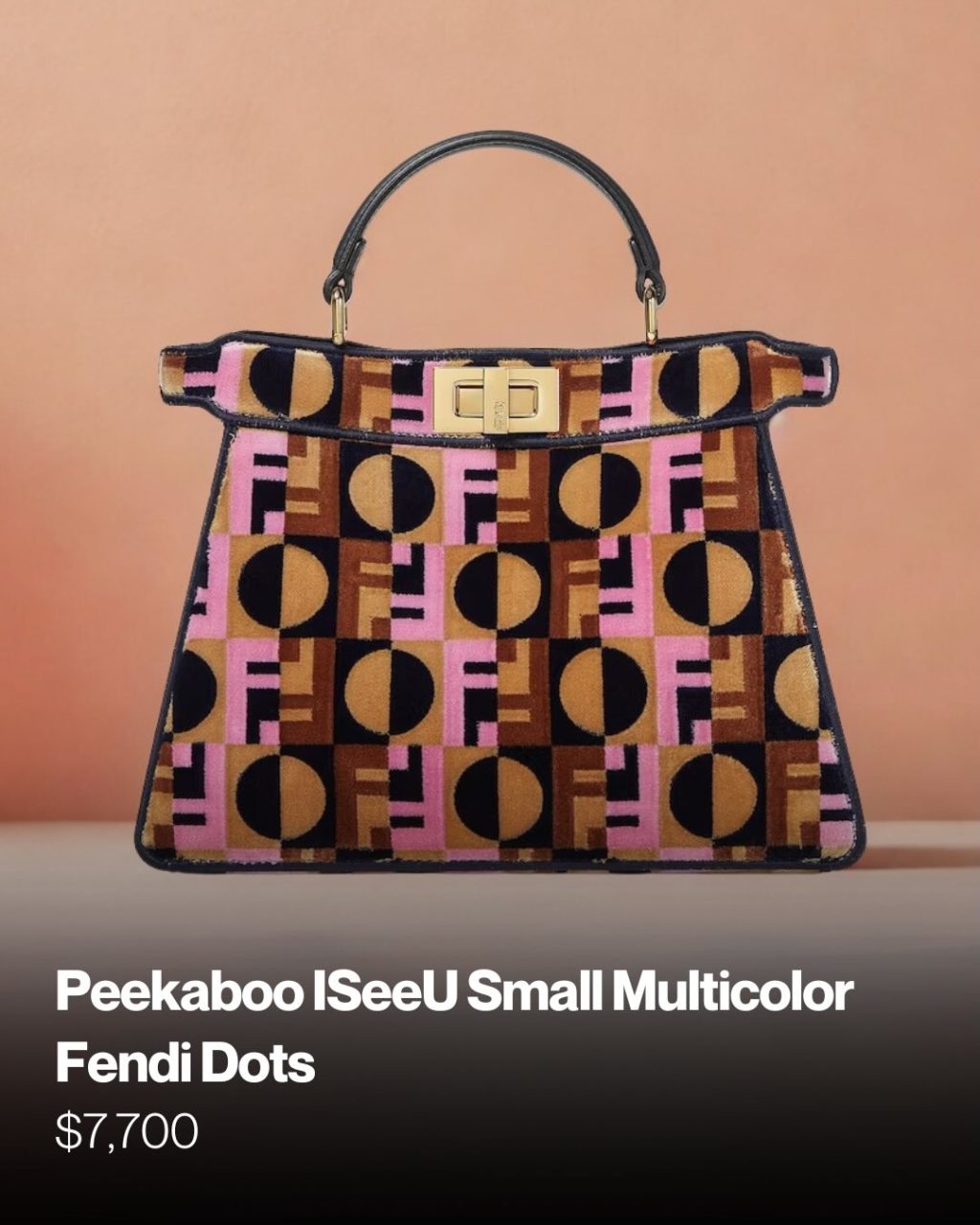
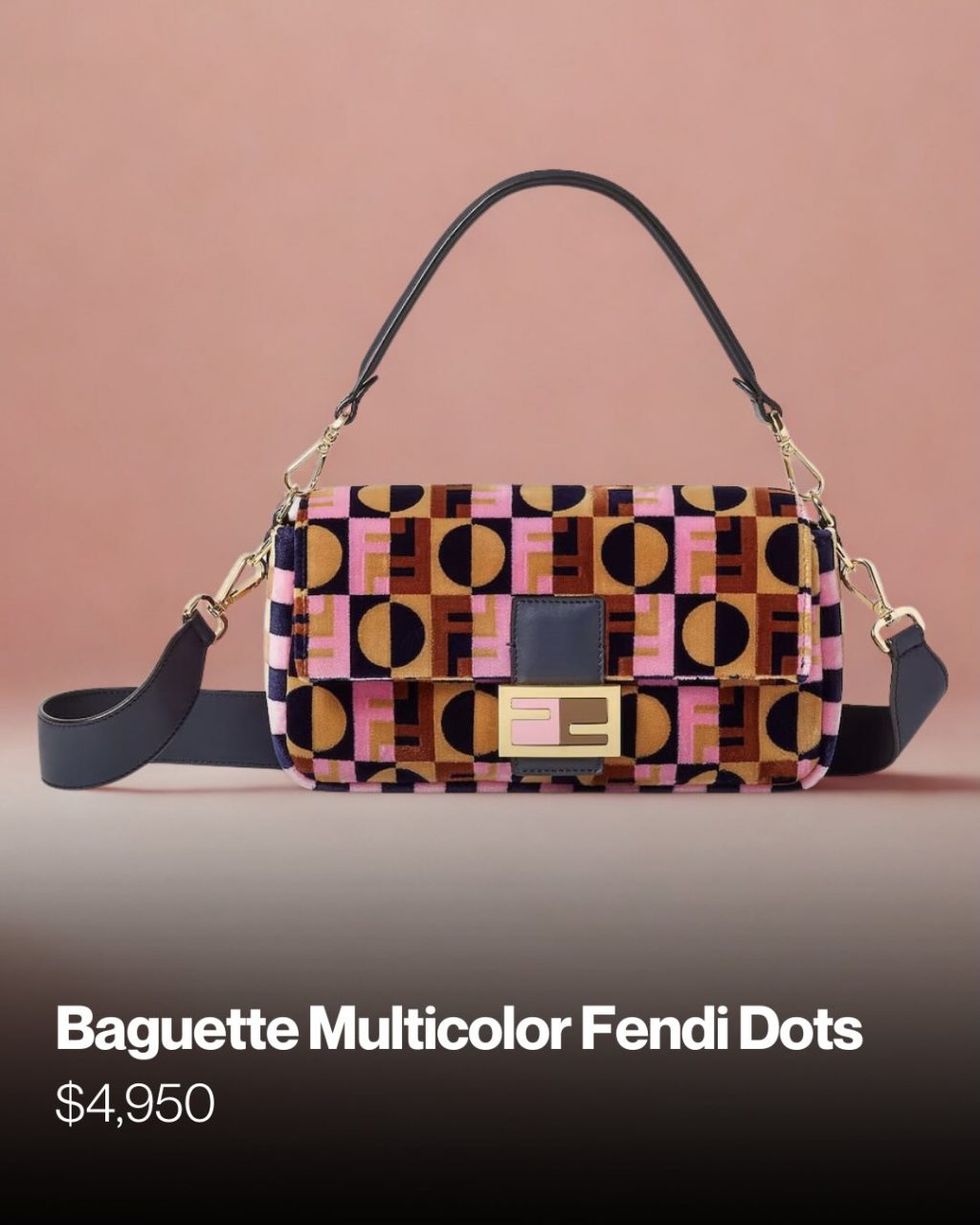
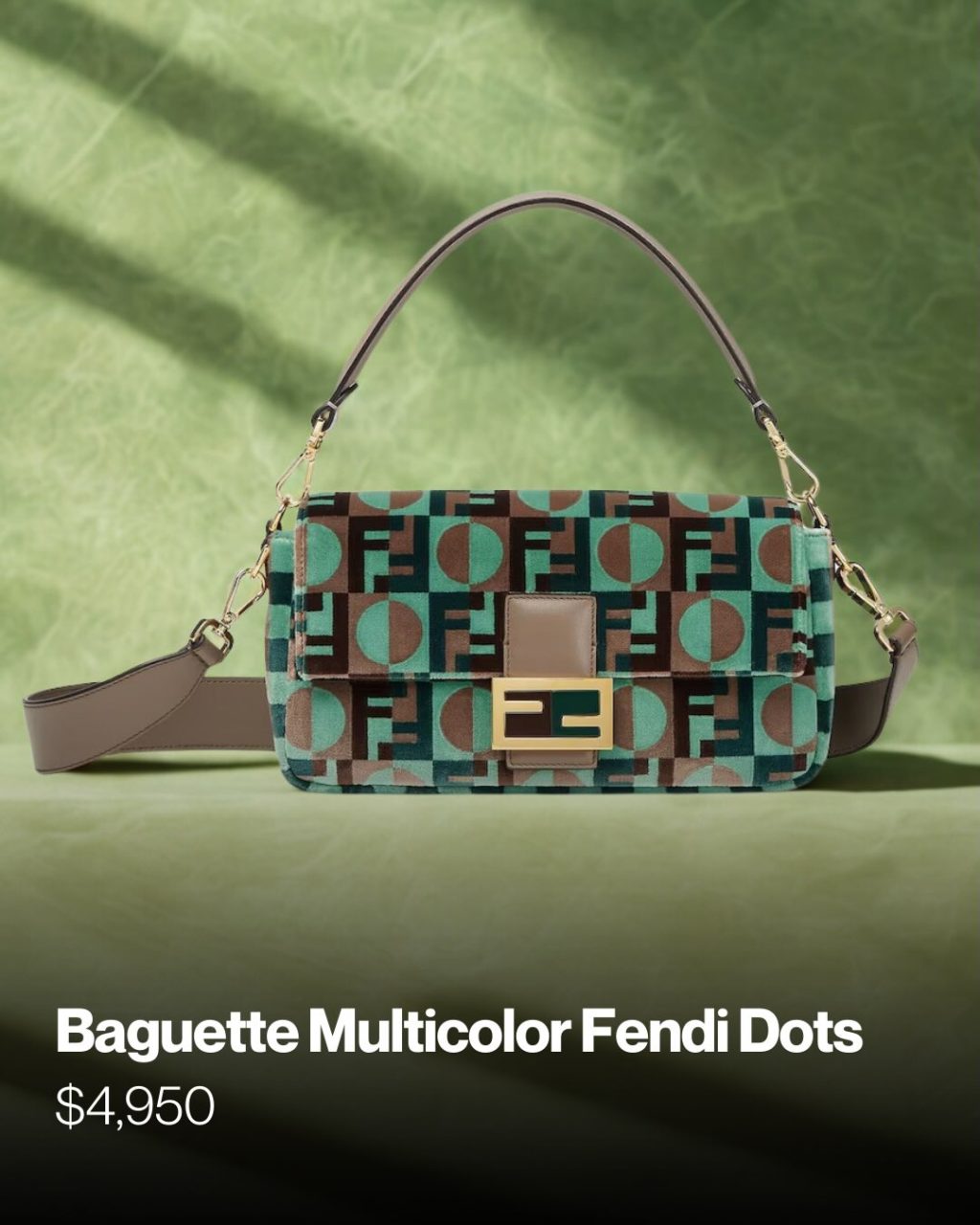
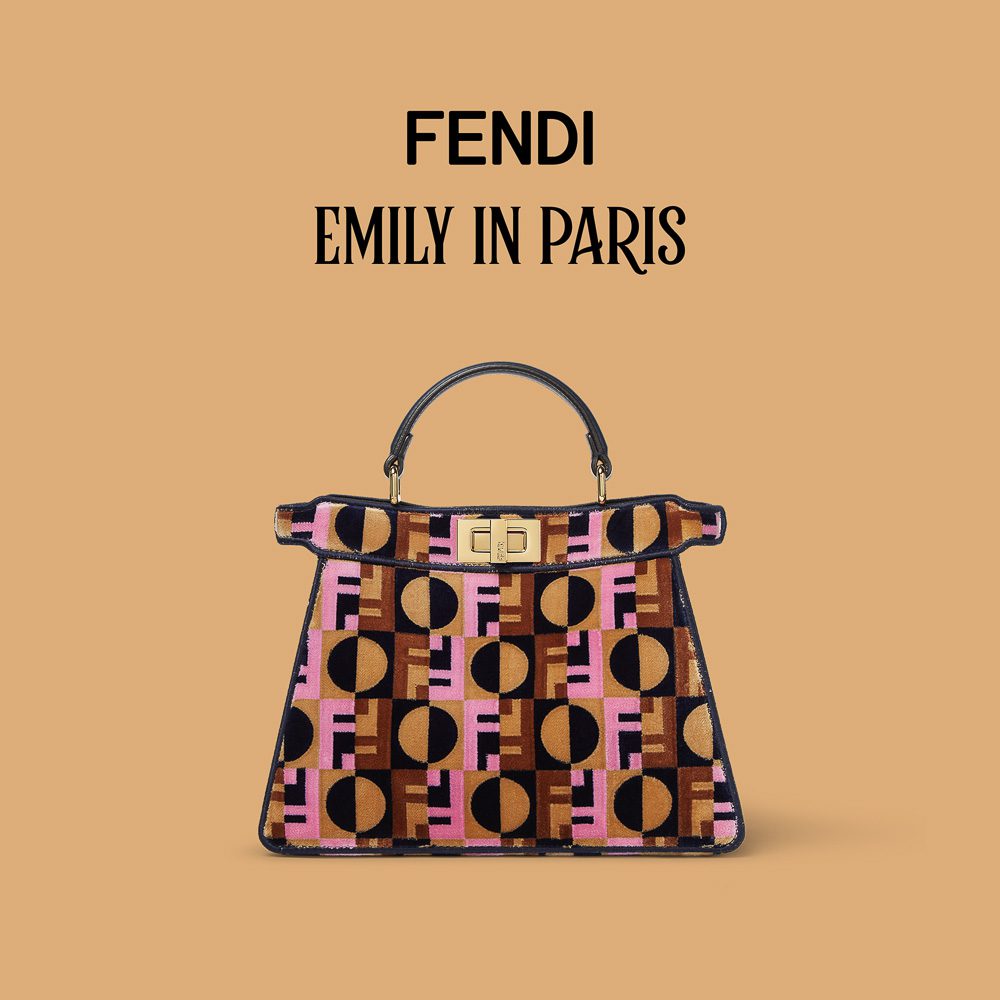
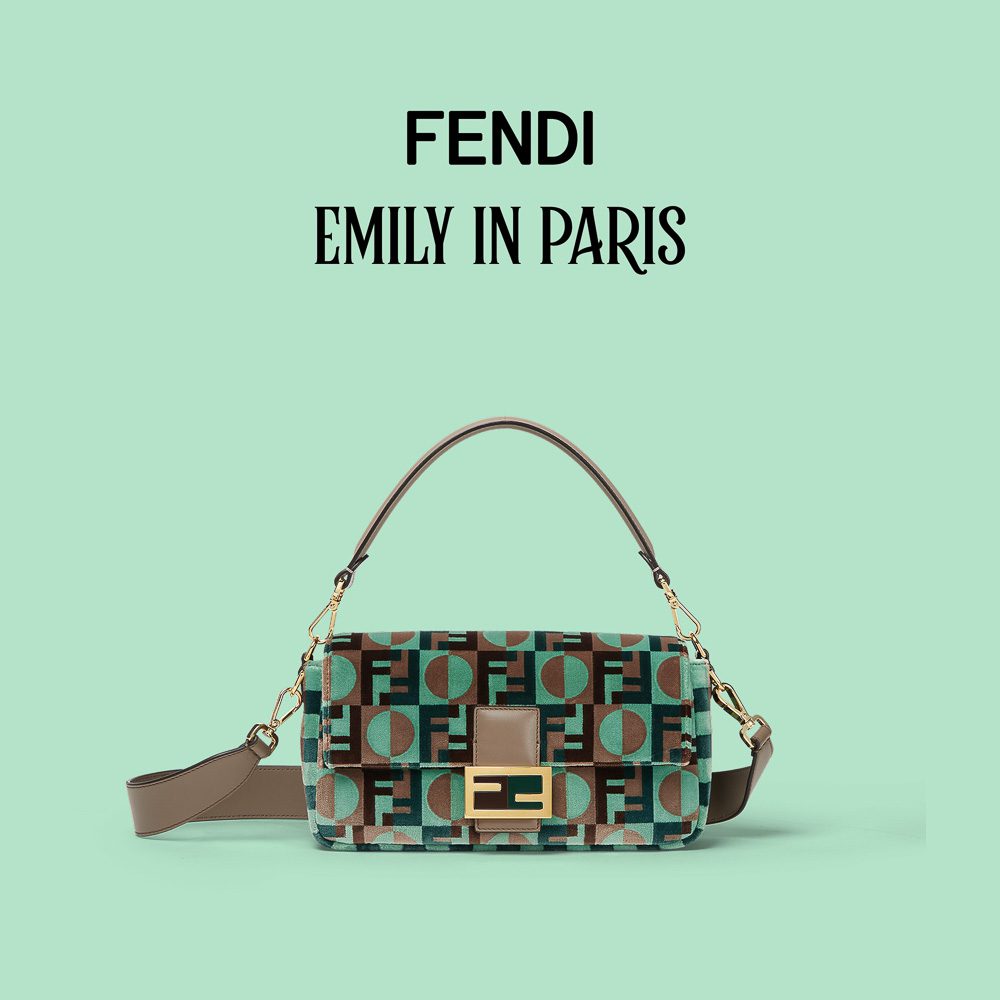
To match that on-screen momentum, Fendi released a tight, collectible capsule anchored by a single new visual language: Fendi Dots, a tapestry-effect motif that fuses the House’s FF codes with Art Deco–leaning polka-dot geometry. The capsule itself is a clean trio—two Baguette bags and one Peekaboo ISeeU Small—built for instant recognizability and repeat sightings.
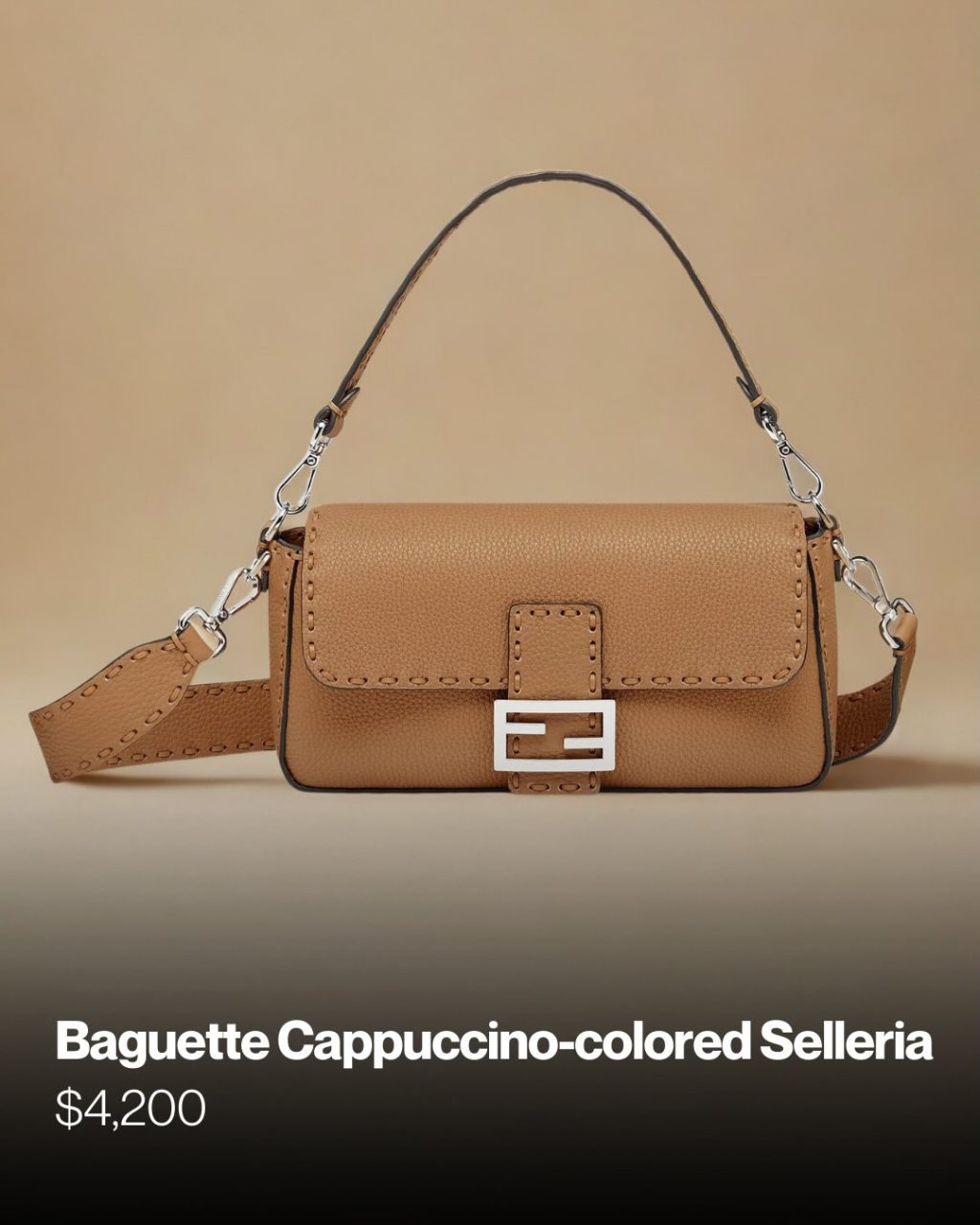
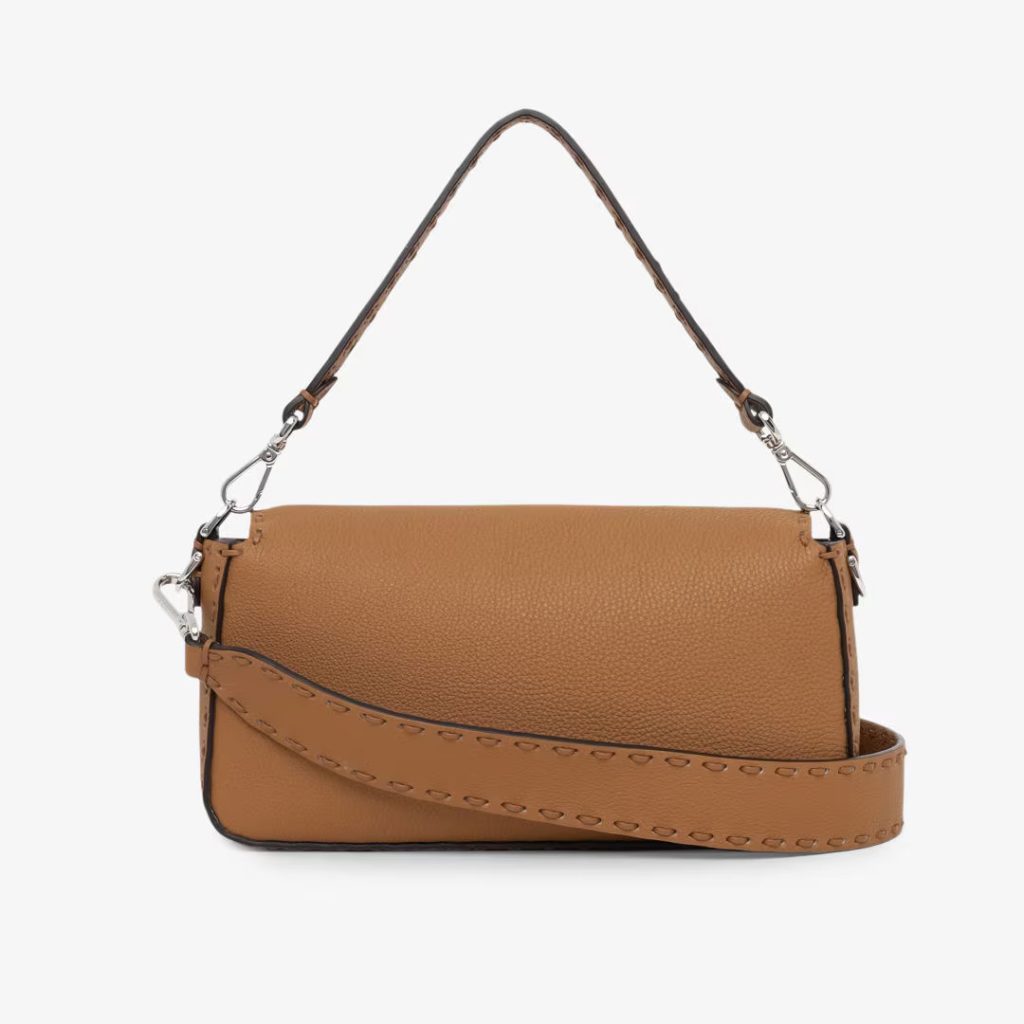
One more detail matters, because it clarifies the brand’s own hierarchy: on Fendi’s Emily in Paris edit, the House frames “Emily’s new Baguette” as the starting point for the collaboration. That “real thing” is a cappuccino Selleria Cuoio Romano leather Baguette—a quieter, craft-first counterpoint to the Dots tapestry pieces, and the most literal expression of “Fendi as Rome” in the storyline.
Crucially, the timing is intentional: Emily in Paris Season 5 landed on Netflix on December 18, 2025, and Fendi’s drop arrives in the same premiere rhythm—exactly when the series’ Fendi arc goes live.


From accessory to storyline: why this drop is different
The most telling detail isn’t even the product—it’s the plot mechanics behind it. Season 5 doesn’t simply “place” Fendi; it narrates it. The show acknowledges what modern viewers already know: everyone can spot a branded moment, everyone can clock the commercial engine, and everyone has opinions about whether it ruins immersion.
So instead of pretending product placement is invisible, Season 5 leans into the meta. Fendi becomes a conversation inside the show’s own universe—complete with the kind of “fake-but-real” tension that mirrors how viewers actually consume luxury today (screenshots, dupes, resale, authentication, and obsession all at once). The capsule then becomes the “receipt” fans can take home: not a souvenir, but an actual Fendi icon wearing a pattern that’s already been rehearsed on screen.
Rome isn’t just a backdrop—it’s a brand asset
Season 5’s relocation to Rome gives Fendi a home-field advantage that most fashion placements can only dream of. The series doesn’t simply nod to Roman luxury; it visits it. The city’s fashion addresses aren’t treated like generic “Europe” scenery—they’re part of the visual language of the season.
Fendi’s headquarters at the Palazzo della Civiltà Italiana becomes more than a landmark: it reads like a cinematic establishing shot for the brand’s identity—monumental, Roman, and unmistakably tied to place. When a show with global reach plants its heroine on that architecture, it effectively turns a brand address into a story device.
And the season’s Fendi thread plays directly into the modern anxiety around luxury legitimacy: the moment you’re inside the House’s world, you’re also confronted with the fact that not every “heritage” bag in a family story is what it claims to be. That’s exactly why this collaboration lands. It’s not just “pretty bags.” It’s a plot about what luxury means when everyone can buy the look—but not everyone can buy the thing.
The capsule, decoded: three bags, one motif — and the Baguette that sparked it
Fendi’s Emily in Paris Season 5 capsule is tight by design: **three handbags total—two Baguette styles and one Peekaboo ISeeU Small—**released in limited quantities through select boutiques and online.
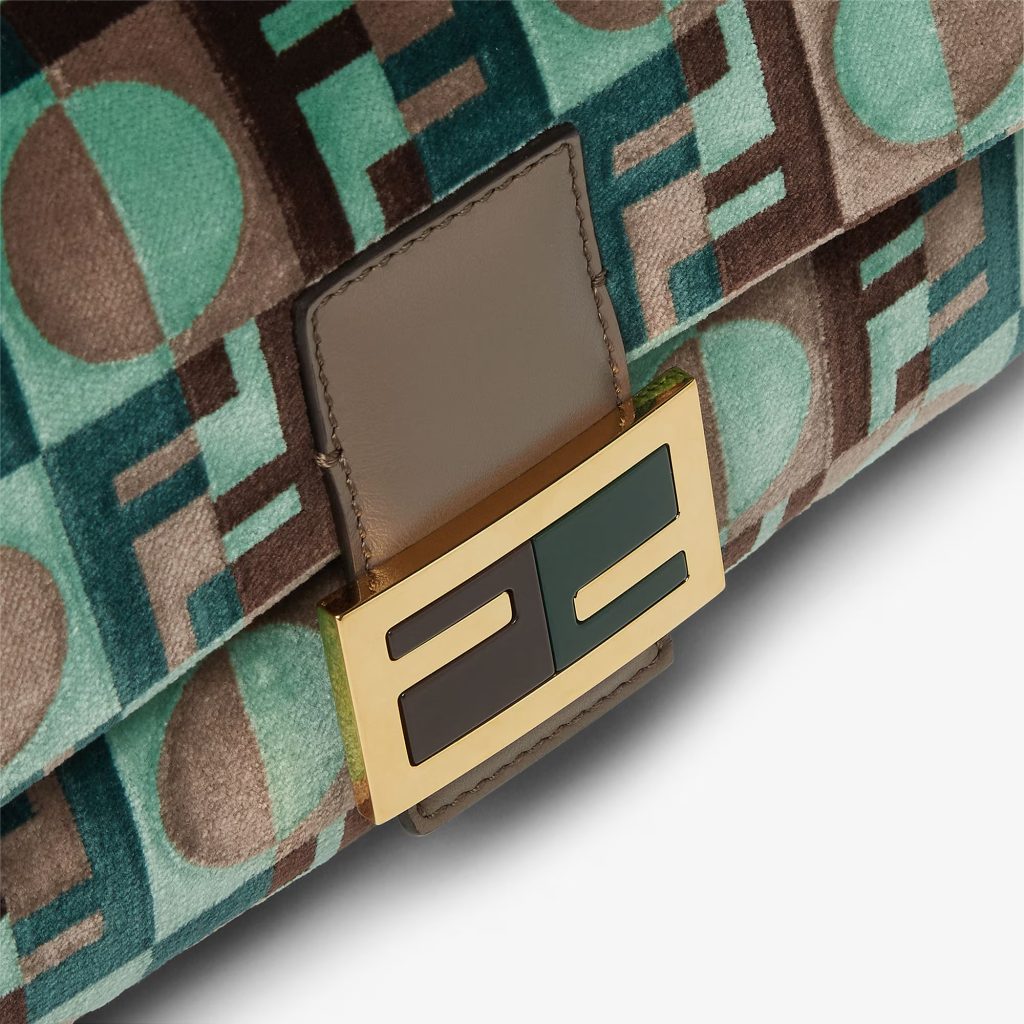
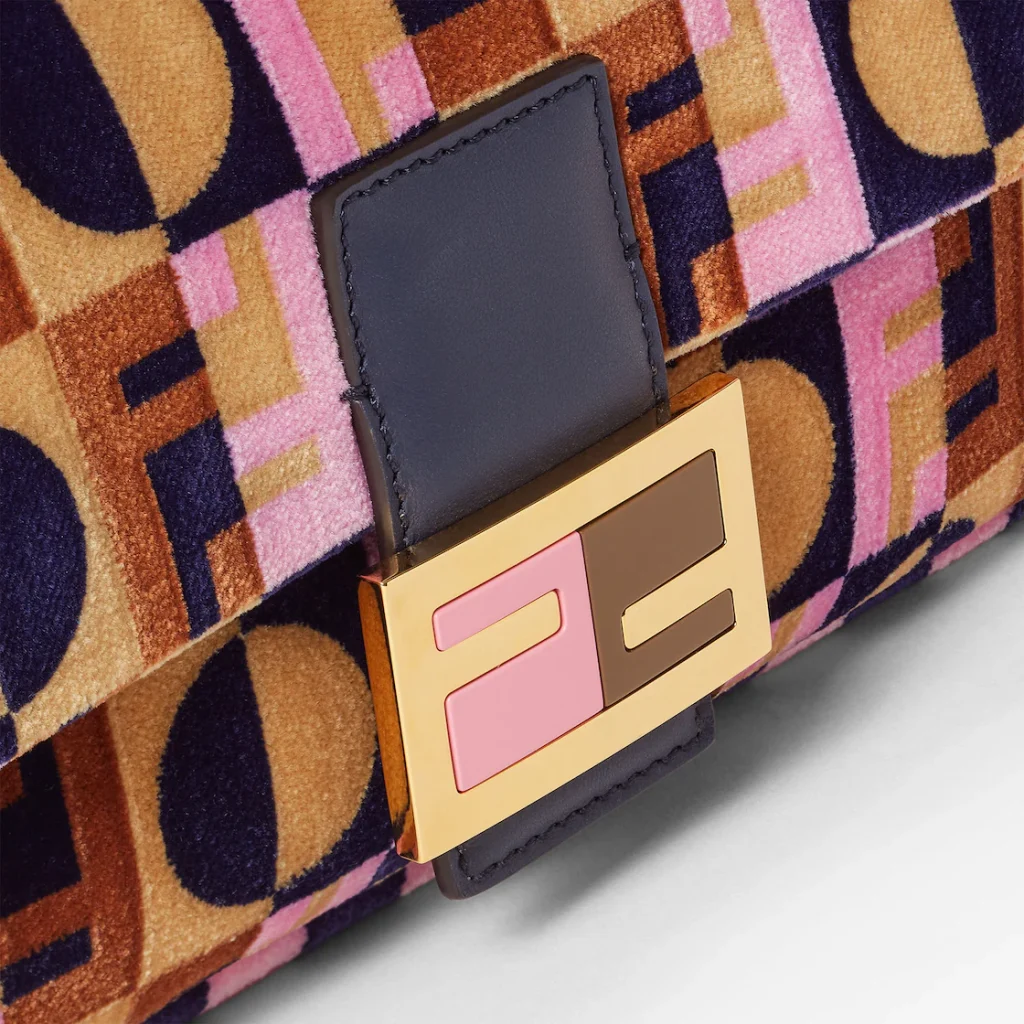
The connective tissue is the textile: a tapestry-effect fabric in the new Fendi Dots motif—a fusion of the House’s FF language with Art Deco–inspired polka-dot geometry, pitched as playful but still unmistakably Fendi. The choice doesn’t feel random, either: the series’ costume language already primes the eye for dots, making the capsule feel “pulled from the screen” rather than imposed on it.
Then there’s the brand’s own narrative add-on: “Emily’s new Baguette” in Selleria Cuoio Romano leather—the craft icon positioned as the inspiration behind the edit, even though it sits outside the Dots textile trio.
1. The Baguette (Fendi Dots capsule)
Fendi describes the medium Baguette as the iconic underarm bag introduced in 1997—famously positioned as the first modern “It” bag. That matters here because television thrives on repetition: the Baguette is a silhouette designed for the “seen it again” effect. Once a bag becomes visually legible on camera, it becomes culturally sticky. If you want the data behind the obsession, read Fendi Baguette: the most Googled vintage luxury bag of 2025.
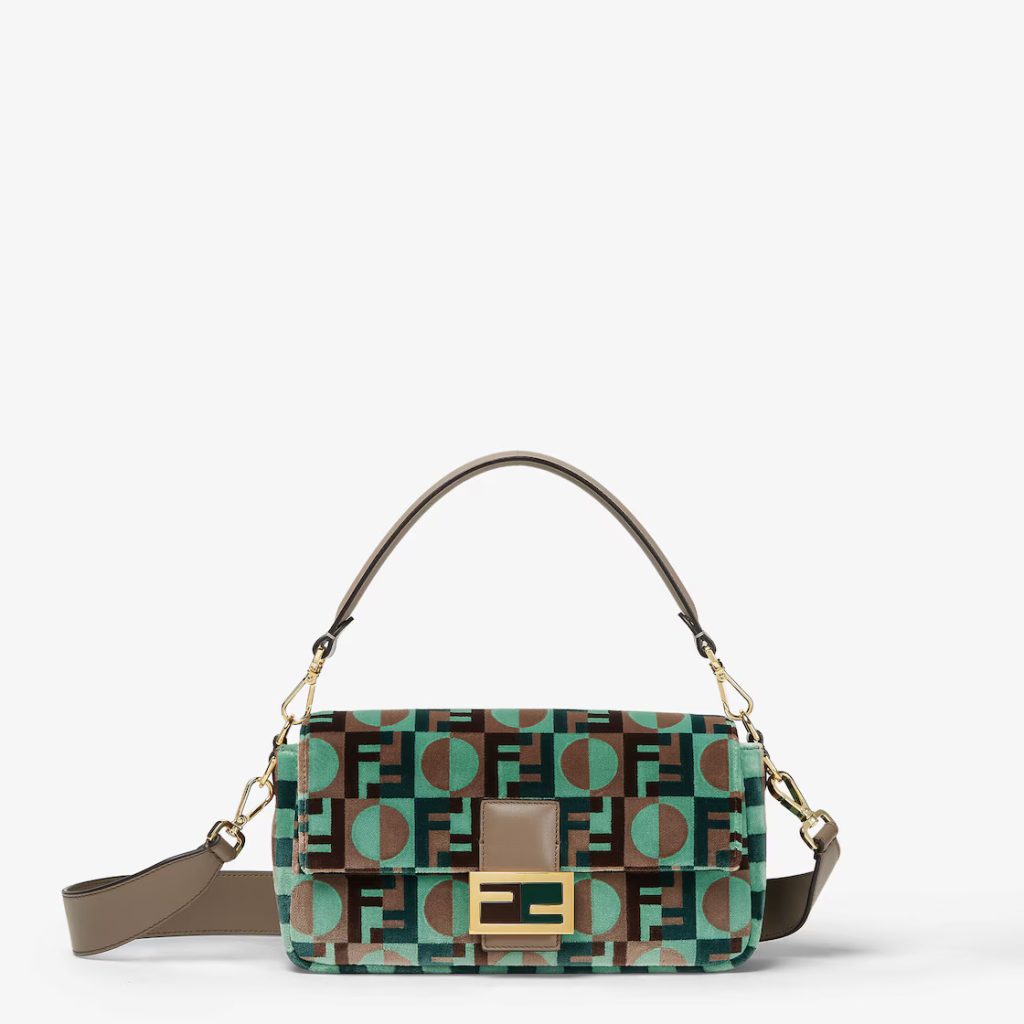
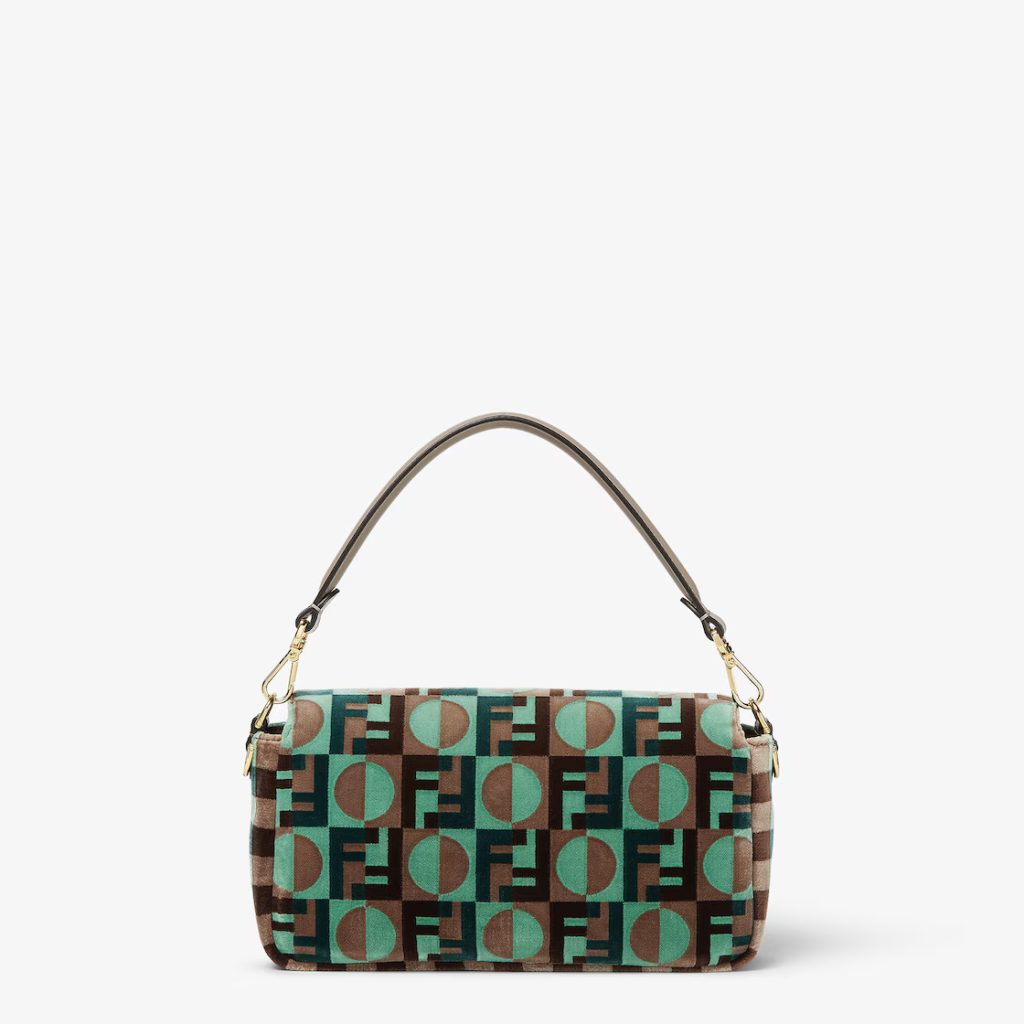
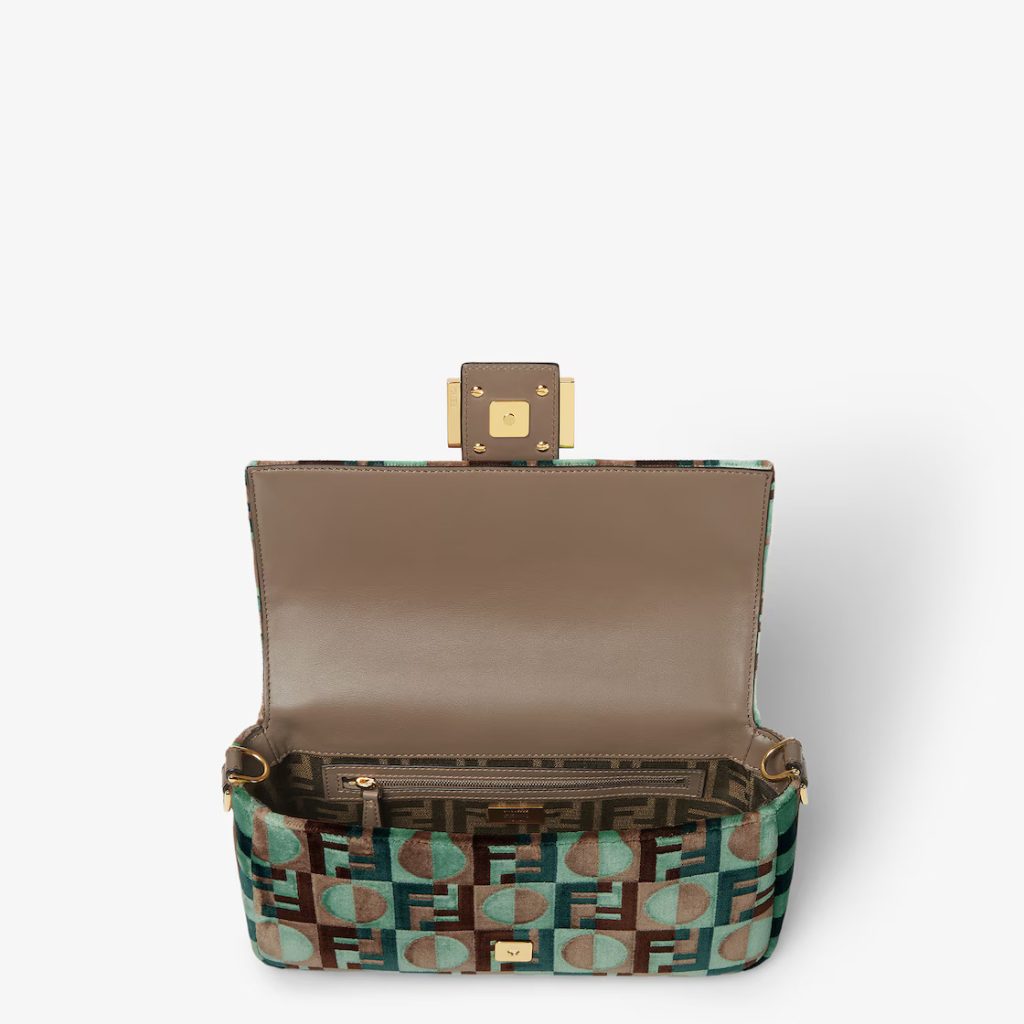
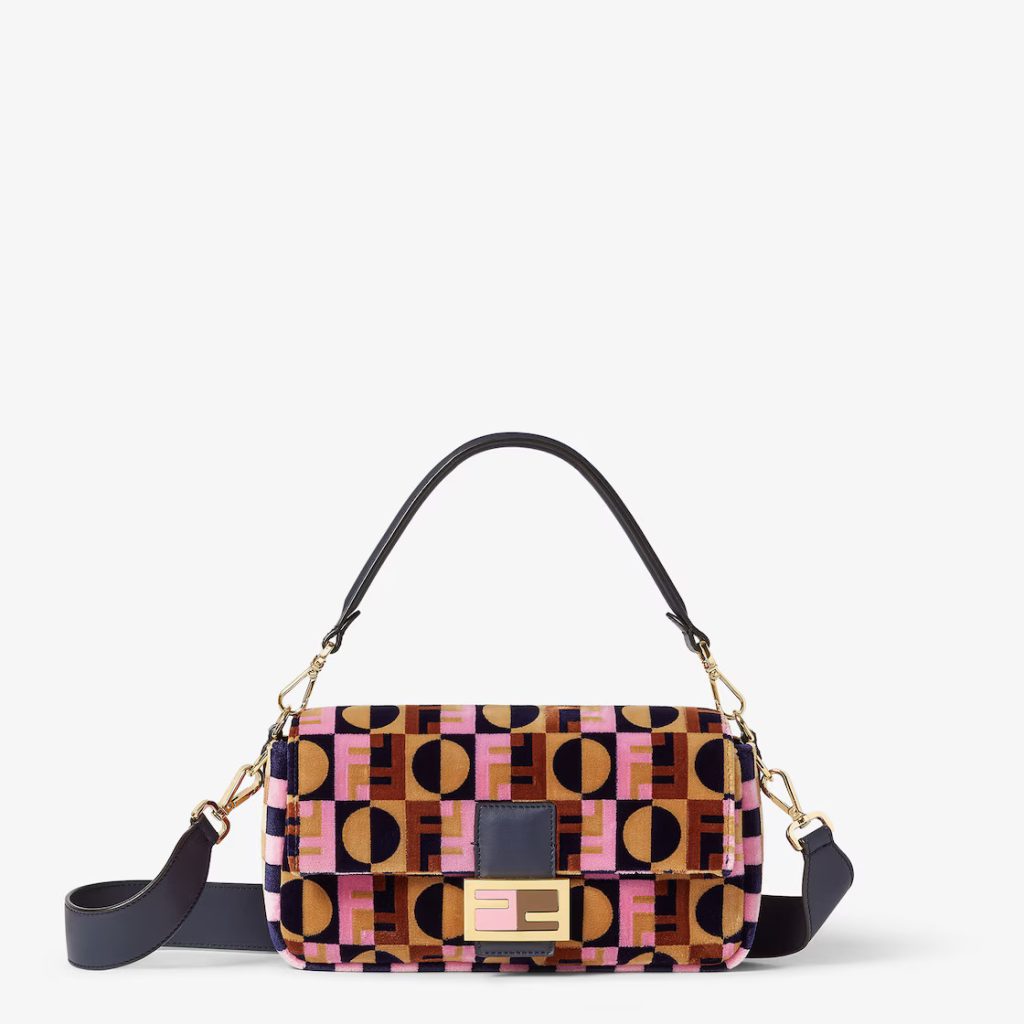
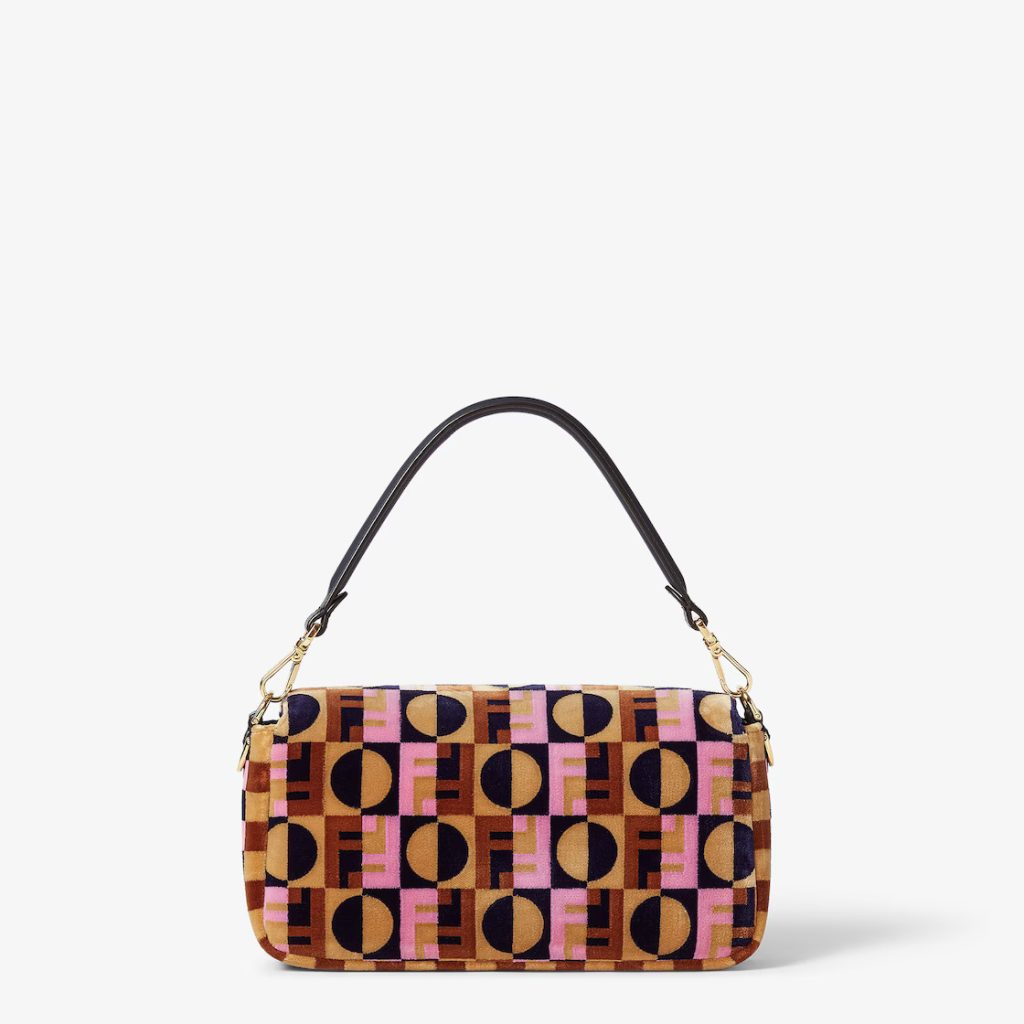
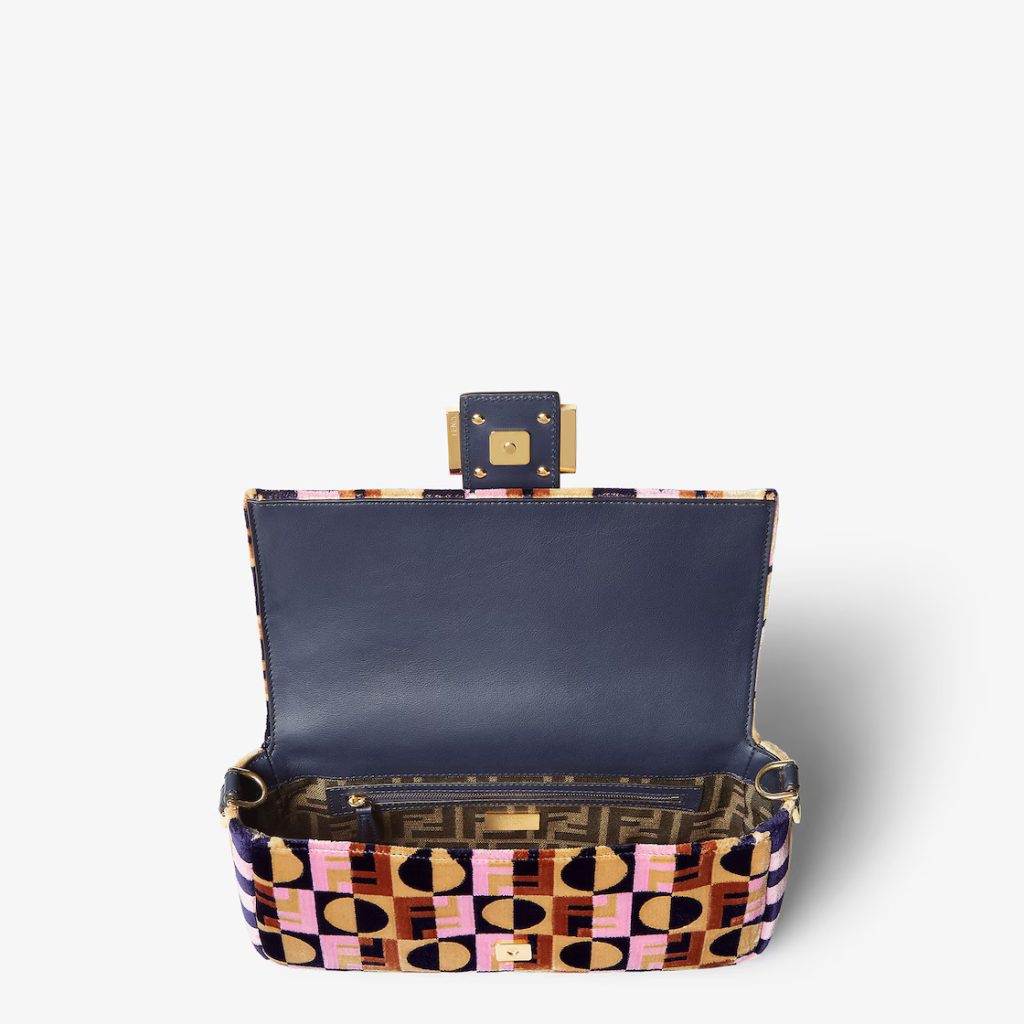
Both Fendi Dots capsule Baguettes share the same architecture: a front flap with magnetic clasp, a single internal compartment lined in the iconic tobacco-brown FF jacquard with a zipper pocket, gold-finish metalware, and detachable handle + shoulder strap for shoulder/crossbody versatility. The difference is color—and the palette choice feels very Emily: graphic, stylized, and a little postcard-perfect.
1.1 Baguette Colorway A: green family, Roman-modern energy
This version mixes the Dots tapestry in matcha green, dark green, and brown, finished with an FF clasp featuring a dark green/brown insert. The handle and shoulder strap come in dove gray calfskin, which cools the palette and makes the bag read more architectural than sweet.
Measurements stay classic medium Baguette: 27 cm (W) × 15 cm (H) × 6 cm (D)—compact, deliberate, and designed to be worn on repeat.
1.2 Baguette Colorway B: pink family, classic Emily optimism
The second version shifts the dots into pink, beige, and brown, with an FF clasp insert echoing pink and beige. The surprise is the finishing: dark blue calfskin handle and strap, which grounds the color story and keeps it from drifting into pure confection. It’s the more “Emily” option—but done in a way that still reads polished, not costume.
2. Peekaboo ISeeU
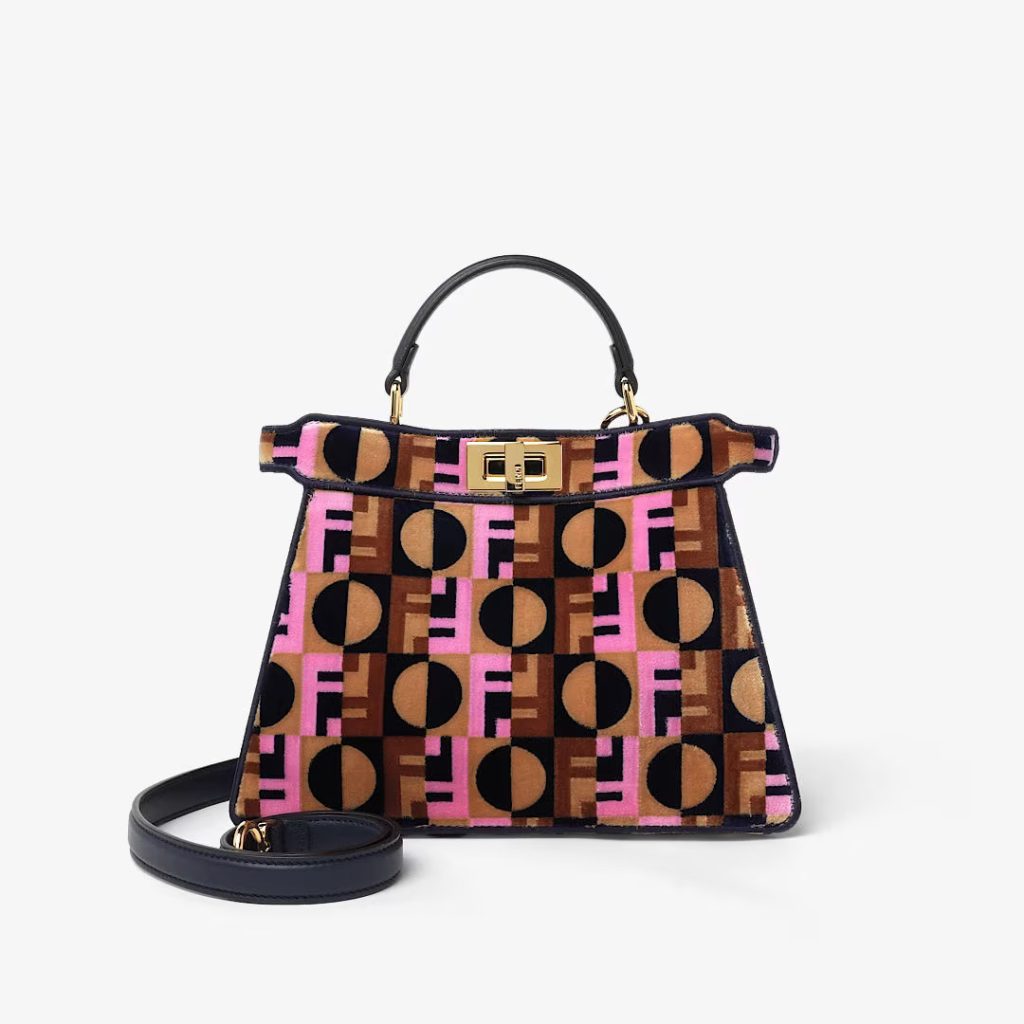
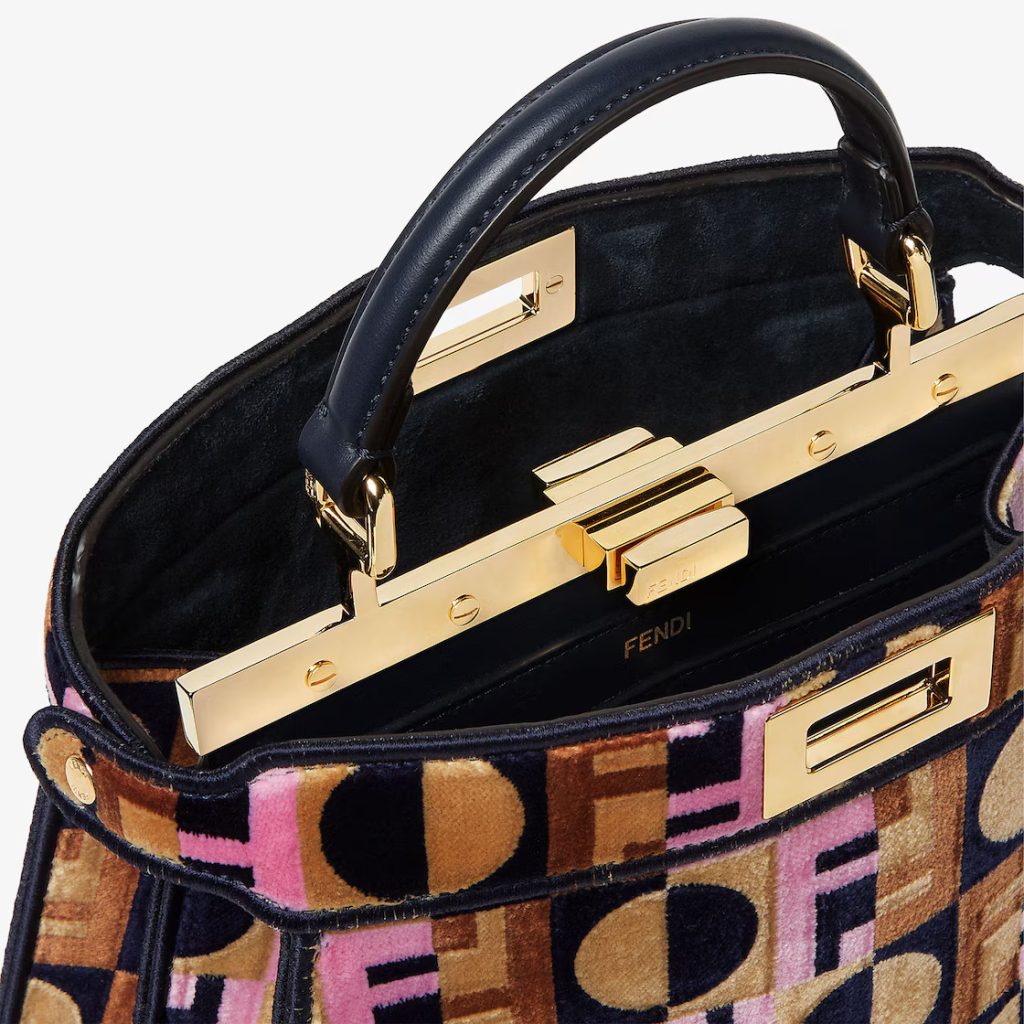
Where the Baguette is about pop-cultural clarity, the Peekaboo ISeeU Small is Fendi’s craftsmanship flex. Fendi dates the Peekaboo’s origin to 2009 and positions it as a house icon built around the “peek-a-boo” idea: what’s revealed vs concealed, outside vs inside.
In this capsule, the Peekaboo arrives in the same tapestry-effect Fendi Dots motif (in the pink/beige/brown palette), but the construction details steer it toward quiet luxury: dark blue suede lining, two internal compartments separated by a stiff partition, an inner pocket, gold-finish bar/closure hardware, and the signature twist lock on both sides. It can be carried top-handle or worn crossbody via an adjustable, detachable dark blue calfskin strap.
If the Baguette is the “episode hook,” the Peekaboo is the piece designed to outlive the binge-watch—made for collectors who want the collaboration but still prioritize longevity and structure.
3. The Selleria Cuoio Romano leather Baguette (hero piece)
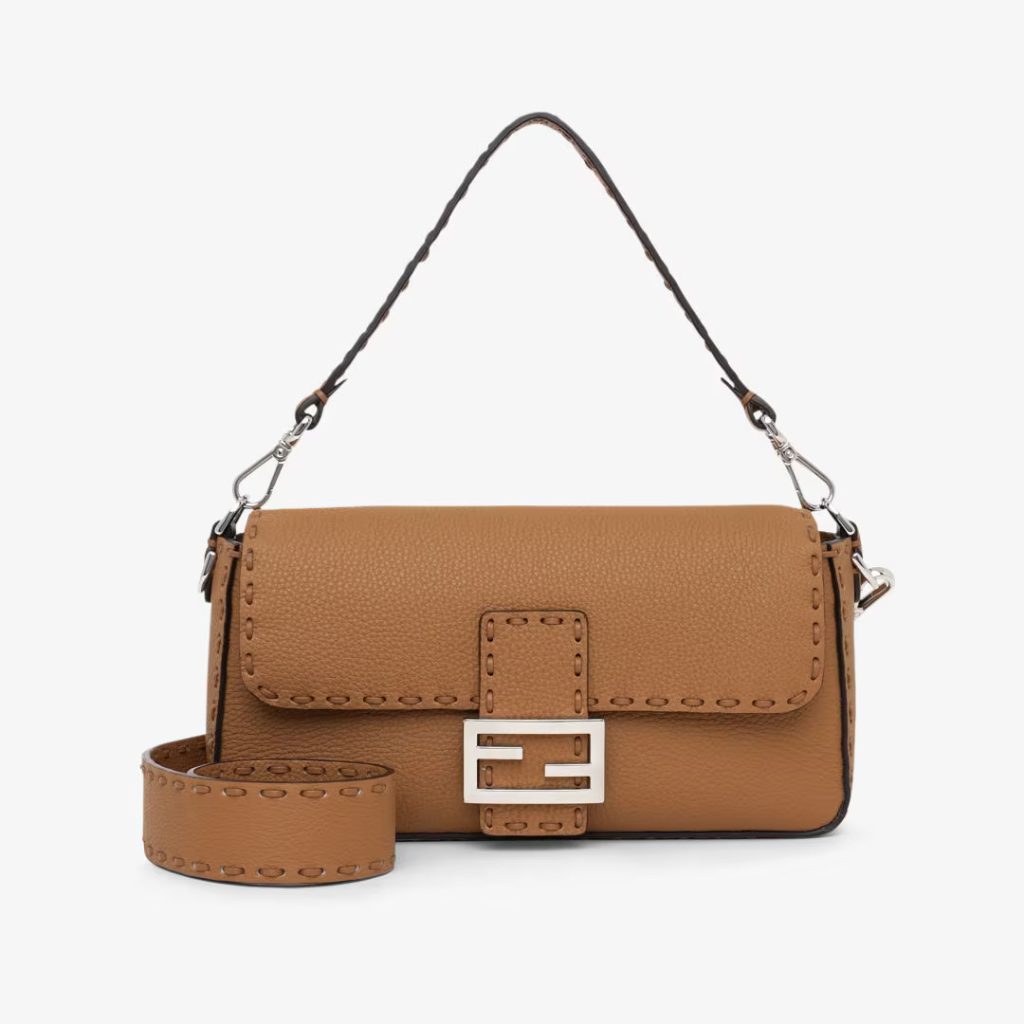
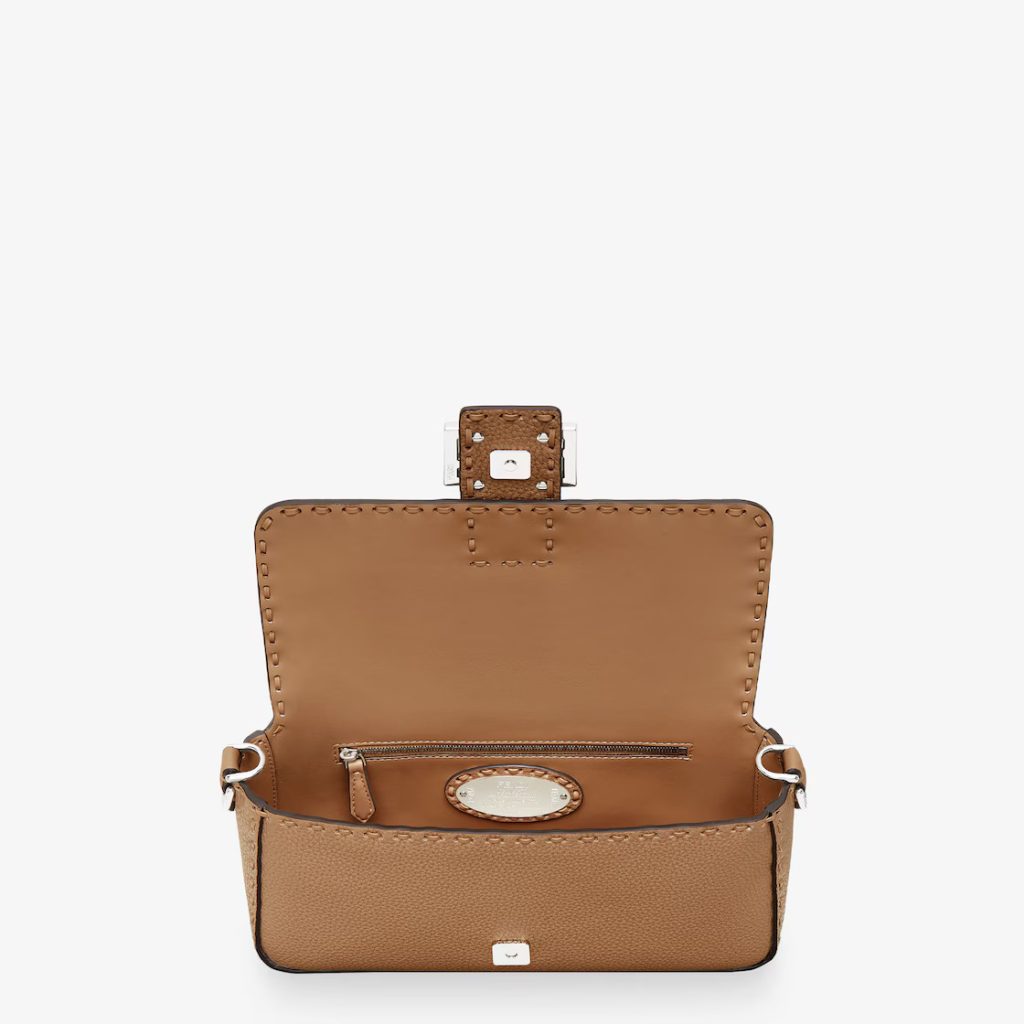
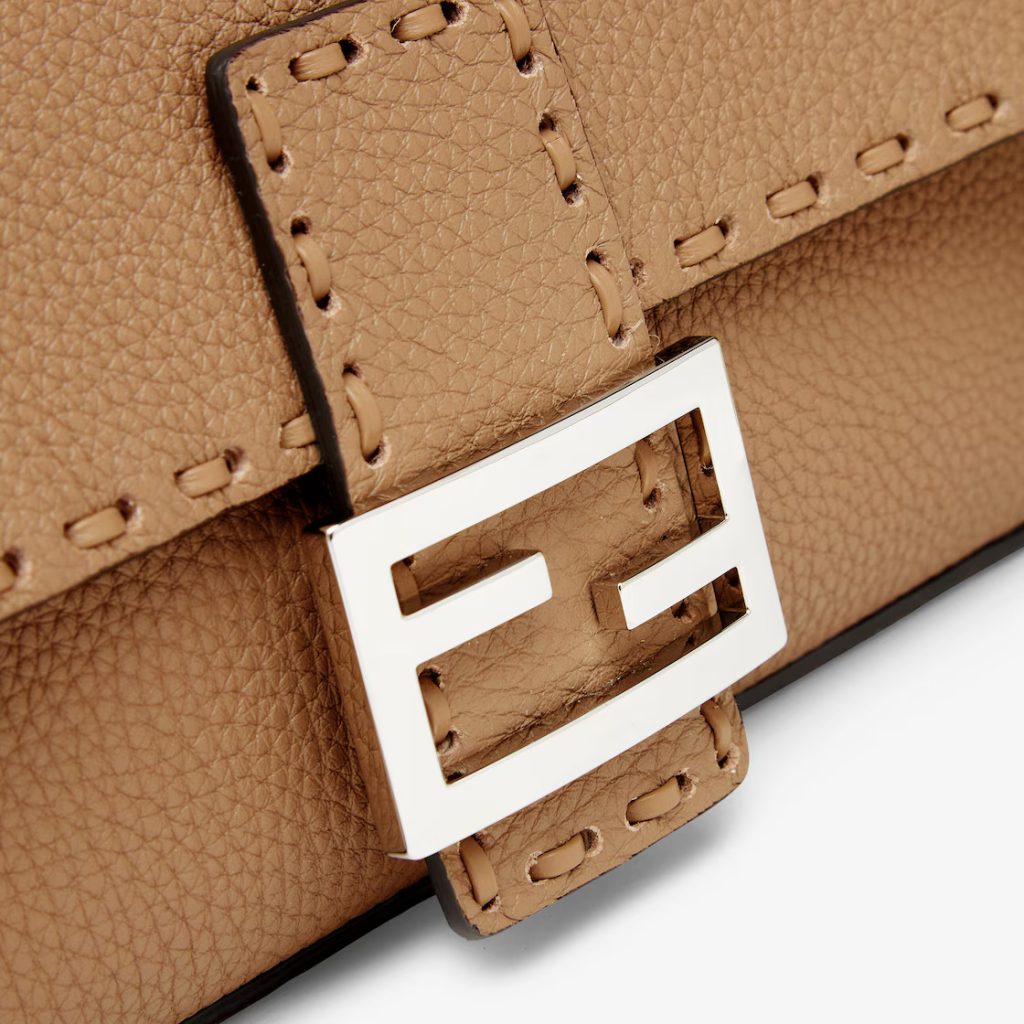
If the Dots pieces are the collectible, screen-to-street capsule, this is the hero bag behind the idea: a cappuccino Baguette in Cuoio Romano leather, finished with Selleria macro stitching—612 hand-sewn stitches, according to Fendi. Selleria isn’t decoration here; it’s the point, rooted in the House’s artisan stitching tradition dating back to 1925.
Construction-wise, it keeps the classic medium Baguette proportions (27 × 15 × 6 cm) but shifts the mood from graphic to tactile: a front flap with magnetic clasp, one internal compartment lined in calfskin with an internal zipper pocket, a silver Selleria logo plate, and palladium-finish metalware. Like the show’s own “real vs fake” tension, it reads as the ultimate proof-piece: less about pattern, more about handwork.
On Fendi’s U.S. site it lists at $4,200 and often appears sold out—which only amplifies the blink-and-you-miss-it logic of this Emily moment.
Pricing and availability: what to expect
RUSSH frames the Fendi x Emily in Paris capsule as available now in a limited release, via select Fendi boutiques globally and online—exactly the kind of distribution strategy built to create urgency rather than long consideration.
Pricing varies by market, but on Fendi’s U.S. site the signal is clear: the Fendi Dots Baguettes list at $4,950, the Peekaboo ISeeU Small at $7,700, and the Selleria Cuoio Romano leather Baguette at $4,200.
The more important point is not the number—it’s the psychology. Capsules like this are designed to compress decision time: you don’t “think about it” for months. You either buy into the moment, or you miss it.