The Dior Fall-Winter 2026-2027 Couture bags emerged on the opening day of Paris Haute Couture Week, inside a Musée Rodin reimagined as a shaded garden of tree ferns and palms, its black mirrored floor doubling every silhouette that passed over it.
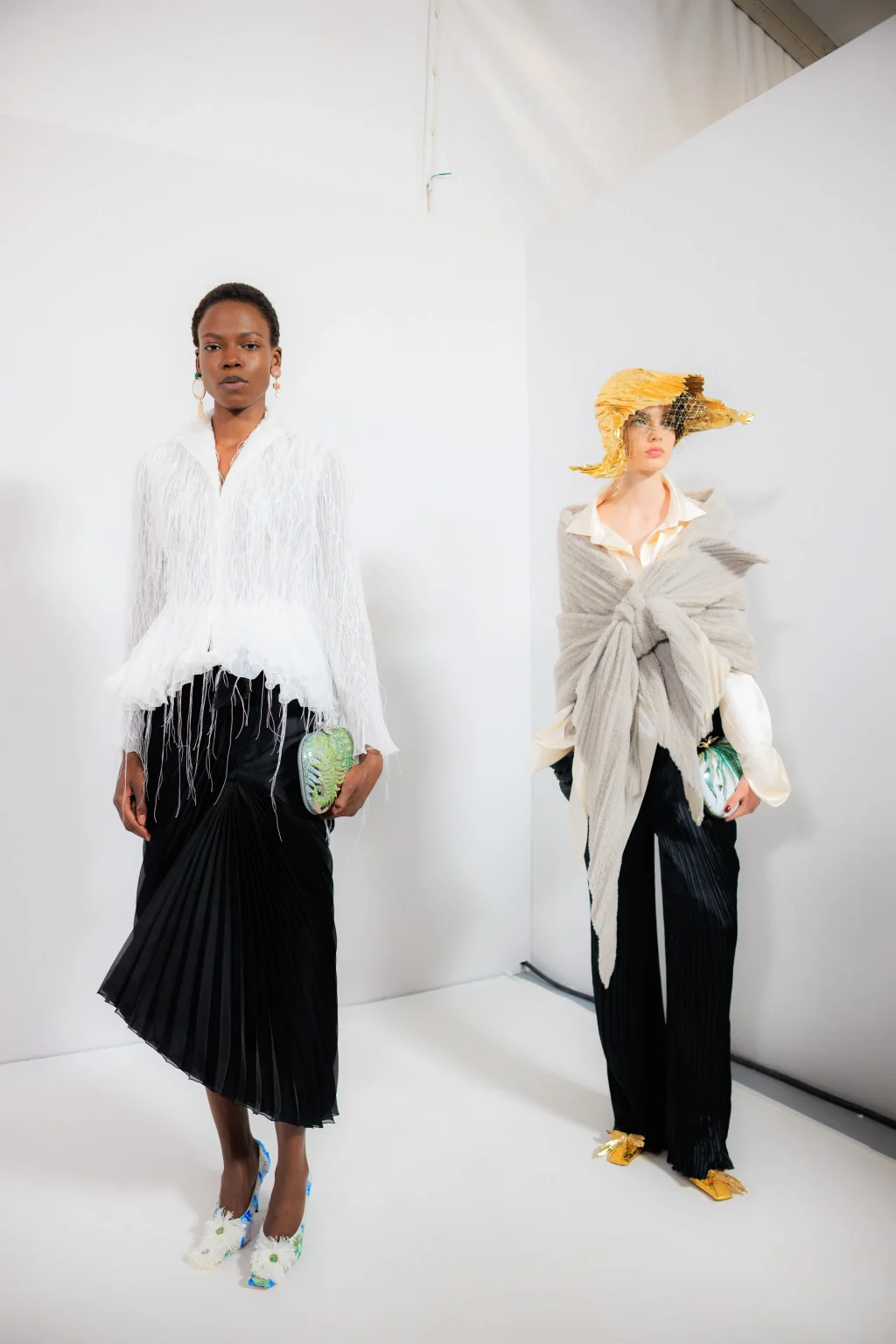
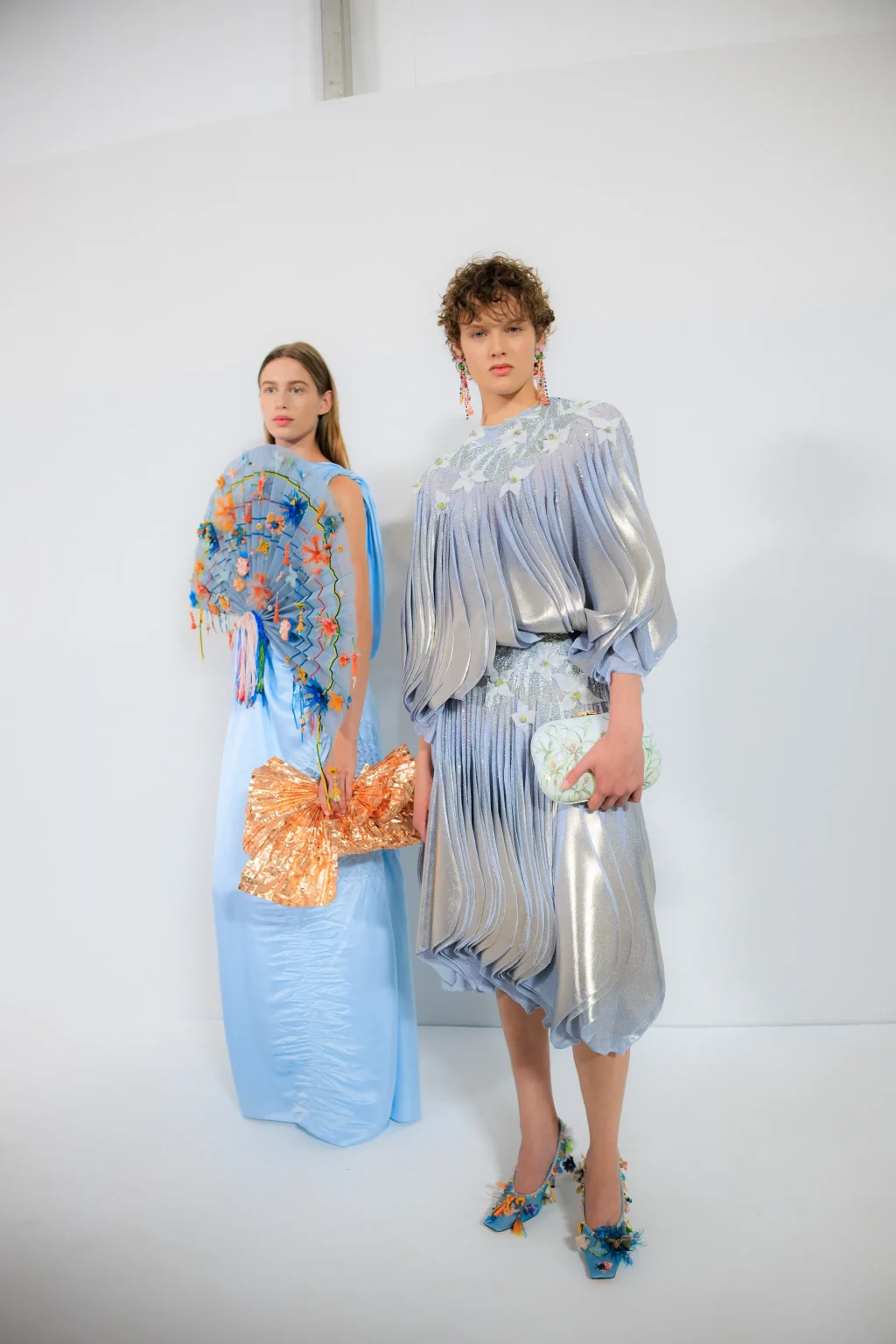
Guests found hand-pleated fans waiting on their seats — a quiet preview of a collection built almost entirely on the plissé gesture — and, by the finale, they had watched Jonathan Anderson translate the work of American sculptor Lynda Benglis into seven distinct bag propositions, four of them created in direct collaboration with the artist herself. The show also arrived only days after Anderson’s name entered a wider cultural conversation through Taylor Swift and Travis Kelce’s Dior wedding looks, giving his second haute couture outing for the house an unusually amplified spotlight.
READ ALSO Dior Cruise 2027 Bags: Jonathan Anderson’s Hollywood Dream Factory
The premise was simple and rigorous at once. Benglis’s signature works begin as flat materials — wire mesh, latex, wax — that become three-dimensional through knotting, pleating and pouring. Couture performs the same transformation on cloth. Anderson took that parallel literally: her metallised pleated mesh sculptures of 1982 through the 1990s, hand-pleated, sprayed with vaporised metal and polished, were reborn as hand-plissé worked into lamé, shearling, silk satin, denim and tulle. And because Benglis has kept a decades-long relationship with Ahmedabad in Gujarat, Anderson’s research led him deeper into Indian craft — authentic fragments of 18th-century chintz and indiennes, sourced from a specialist dealer, and green onyx carved by artisans in Jaipur. Both threads run straight through the bags.
“The collection is about looking at materiality and form from another angle. Looking at the abstraction in material, ultimately, and asking – how do you get reality from it?”
Jonathan Anderson
The Set: A Mirrored Pavilion Between Gujarat and Santa Fe
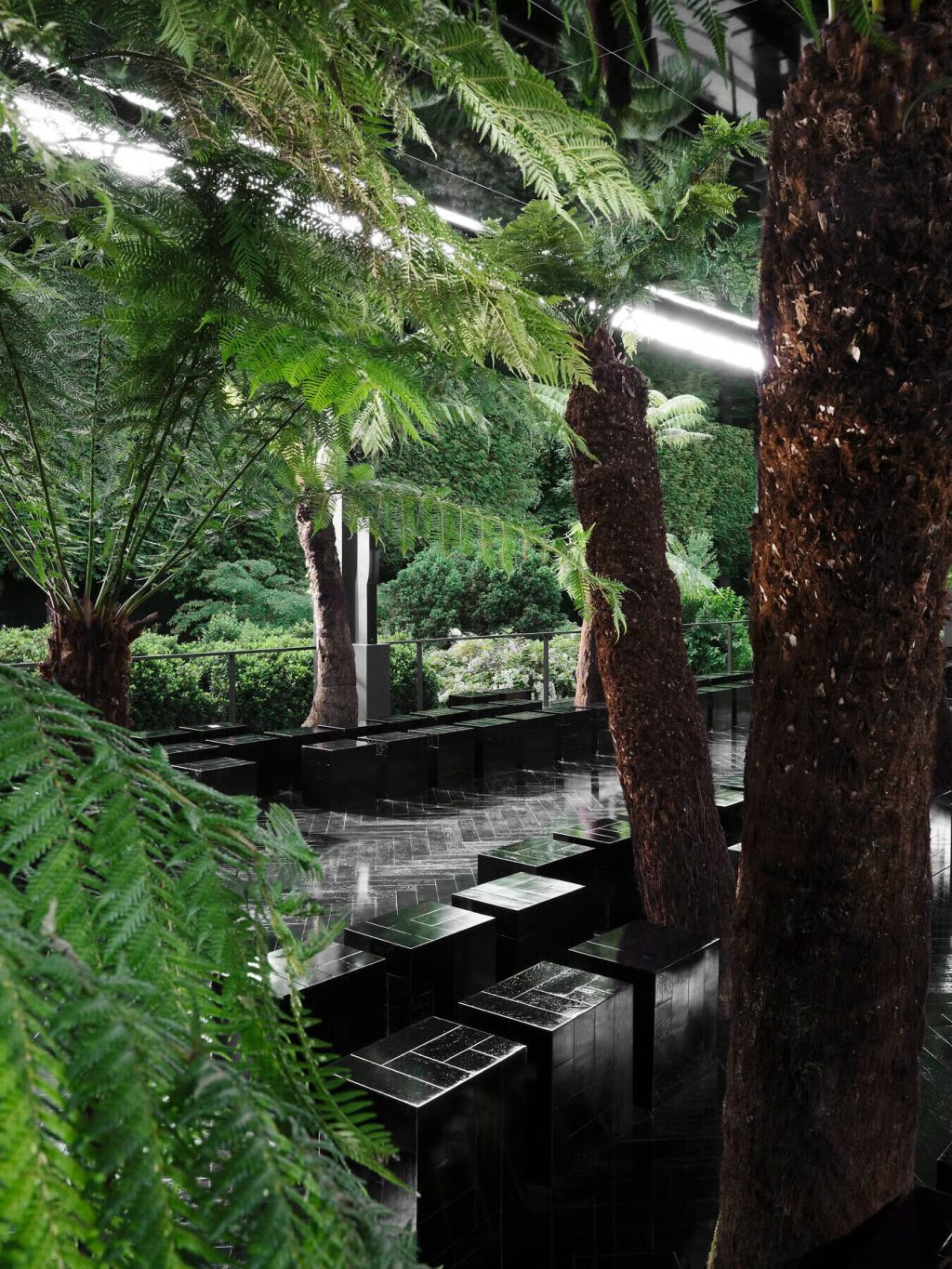
The set itself carried the collection’s geography. Built in the garden of the Musée Rodin, the long pavilion drew on the architectural culture of the two places where Lynda Benglis has lived and worked — Gujarat, India, and Santa Fe, New Mexico.
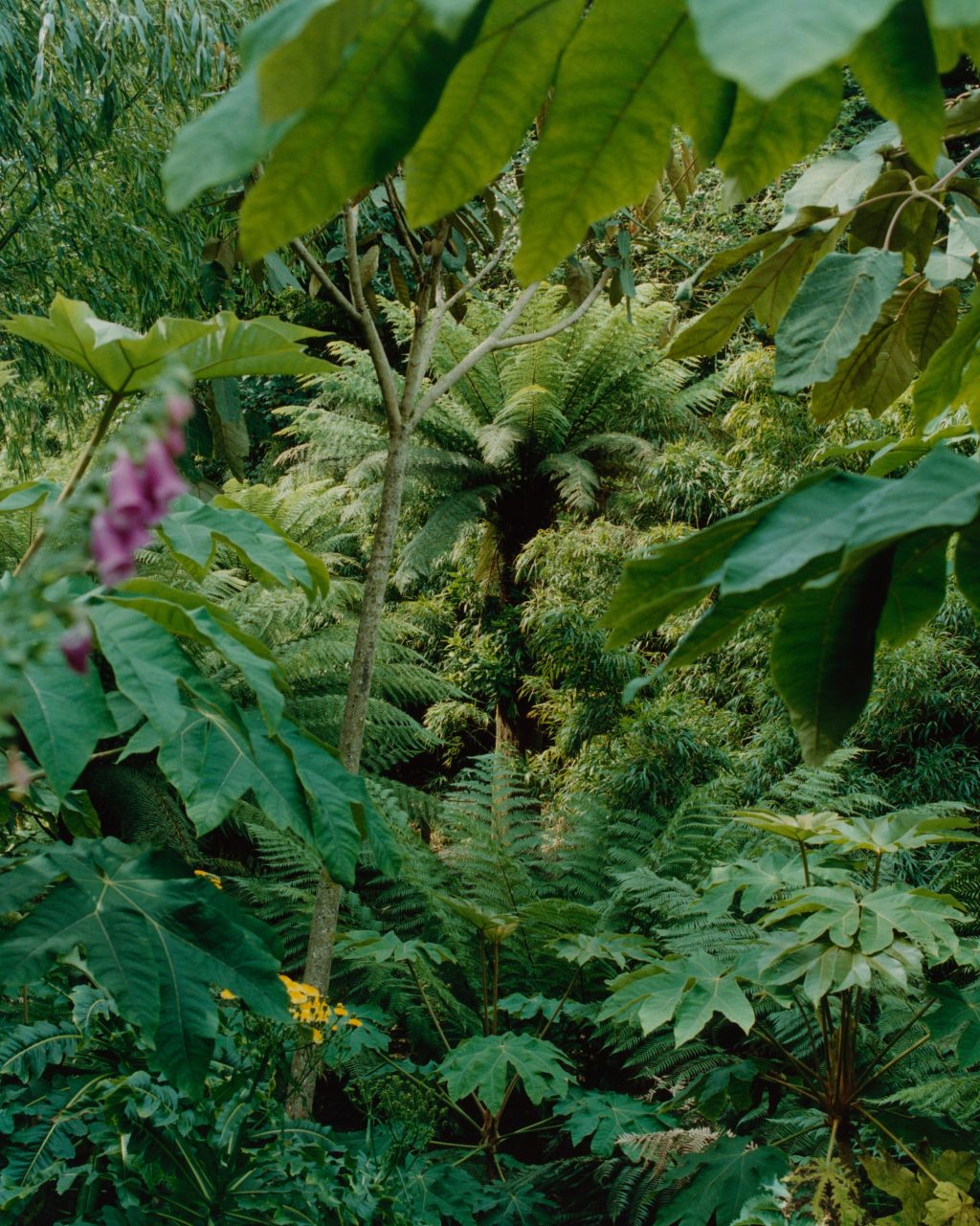
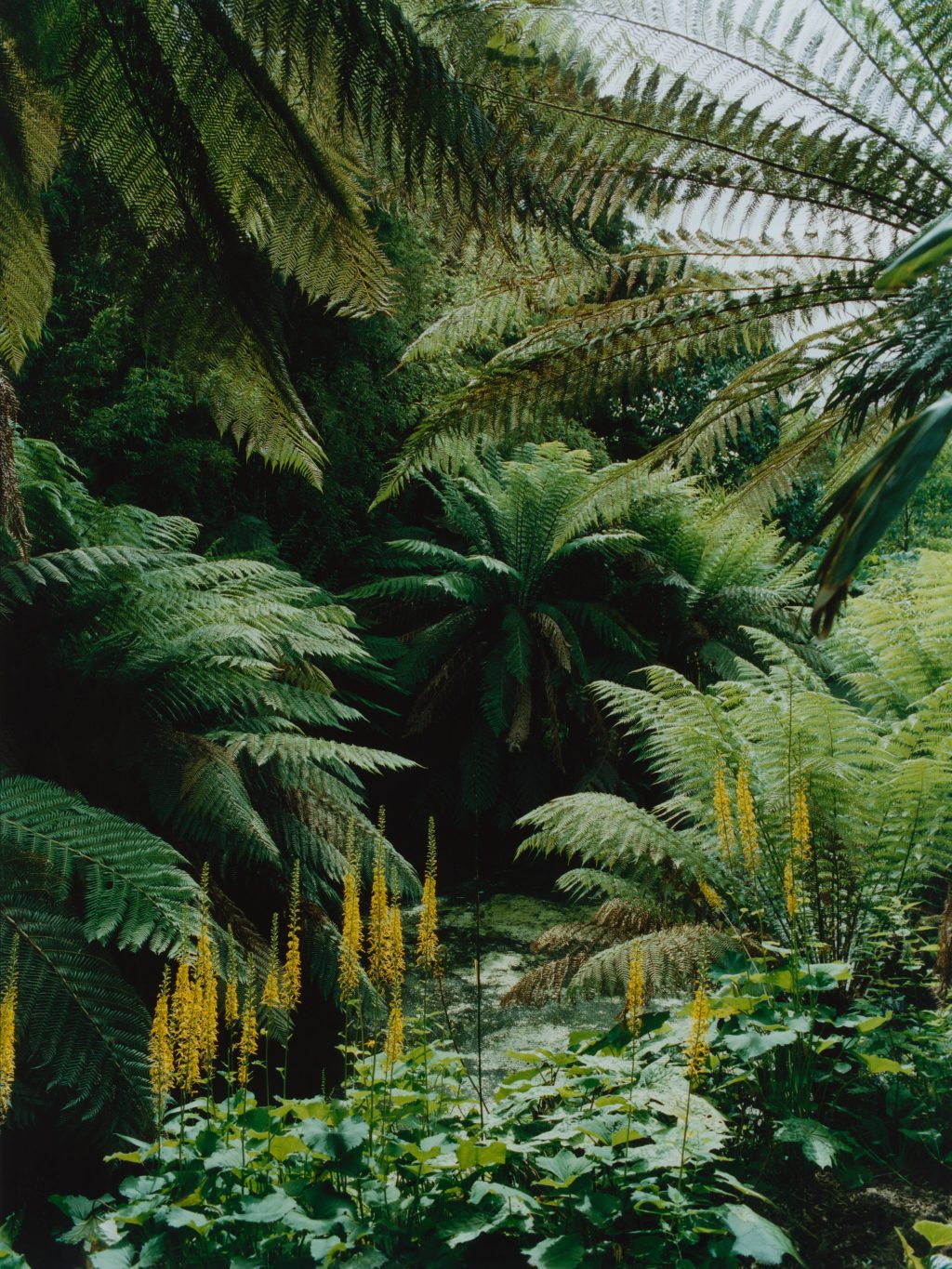
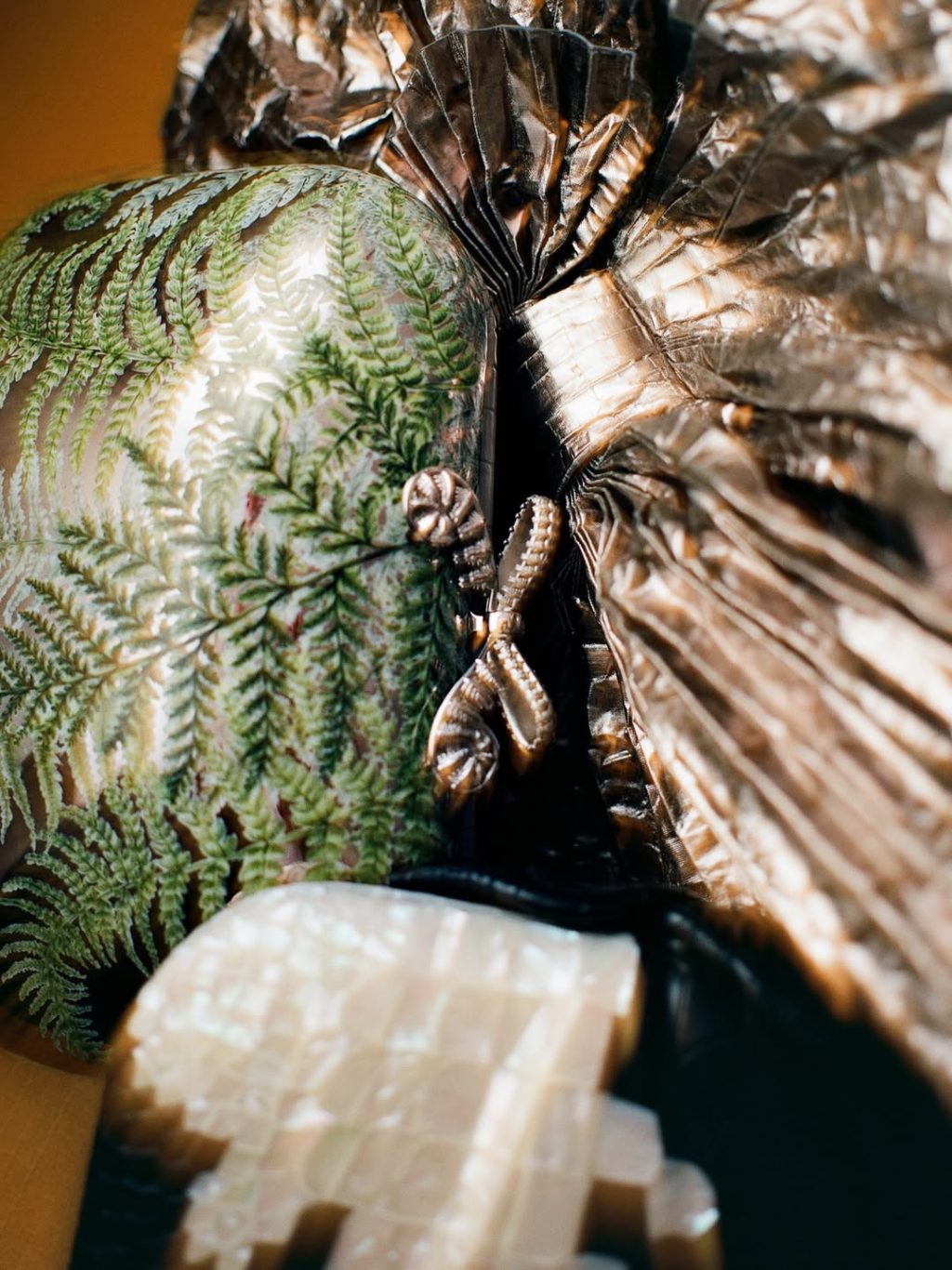
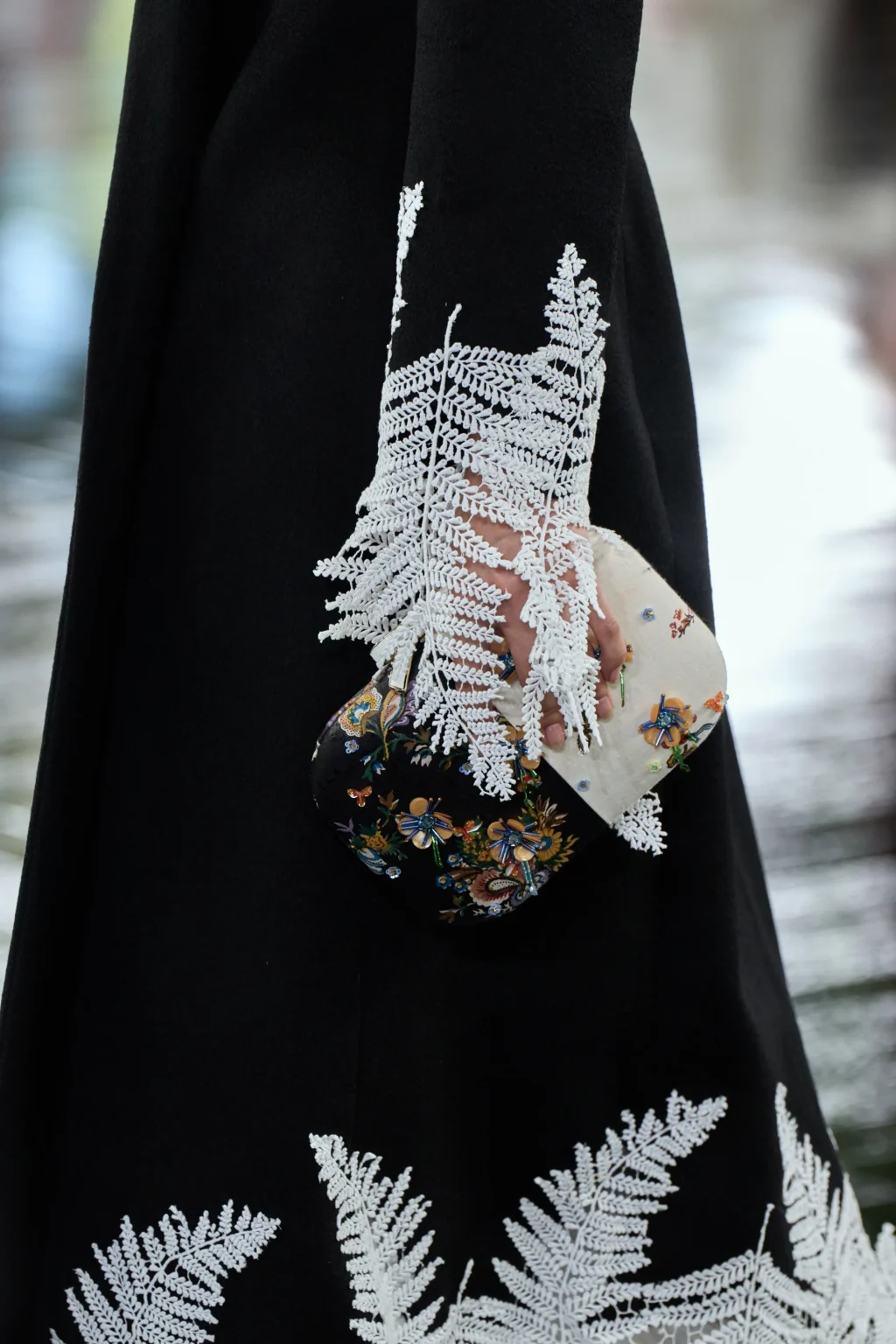
Open along its sides, it was floored in mirror-polished marquetry, with the reflective surface repeated across the ceiling and back wall so that the space seemed to extend without end, every look doubled above and below. Rows of tree ferns planted between and around the seats anticipated the fern motifs that recur throughout the collection — painted on Petit Dîner shells, rendered in mother-of-pearl on the black minaudière, embroidered in white across a closing coat.

The Dior Petit Dîner Bag: Porcelain Gardens and 18th-Century Chintz
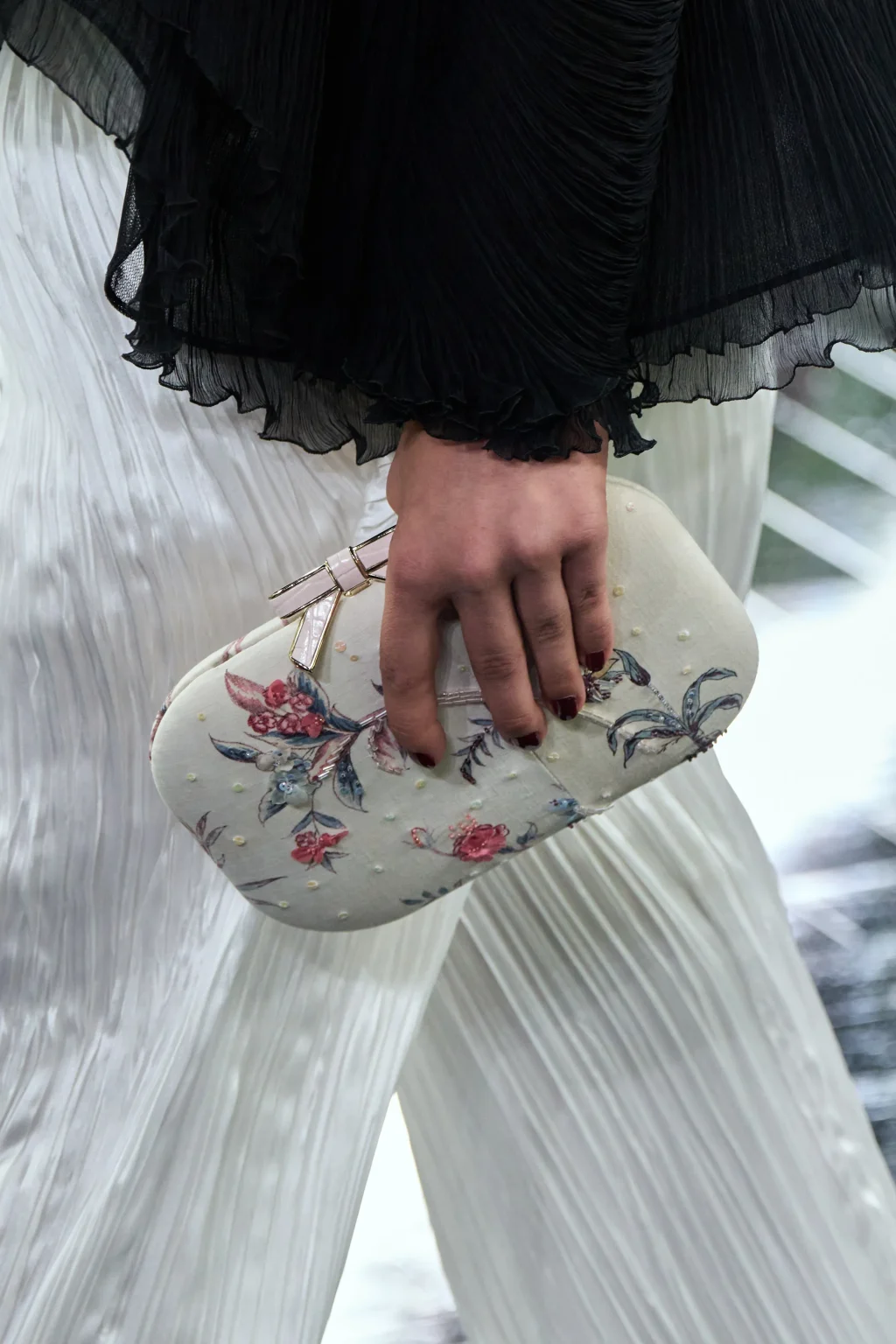
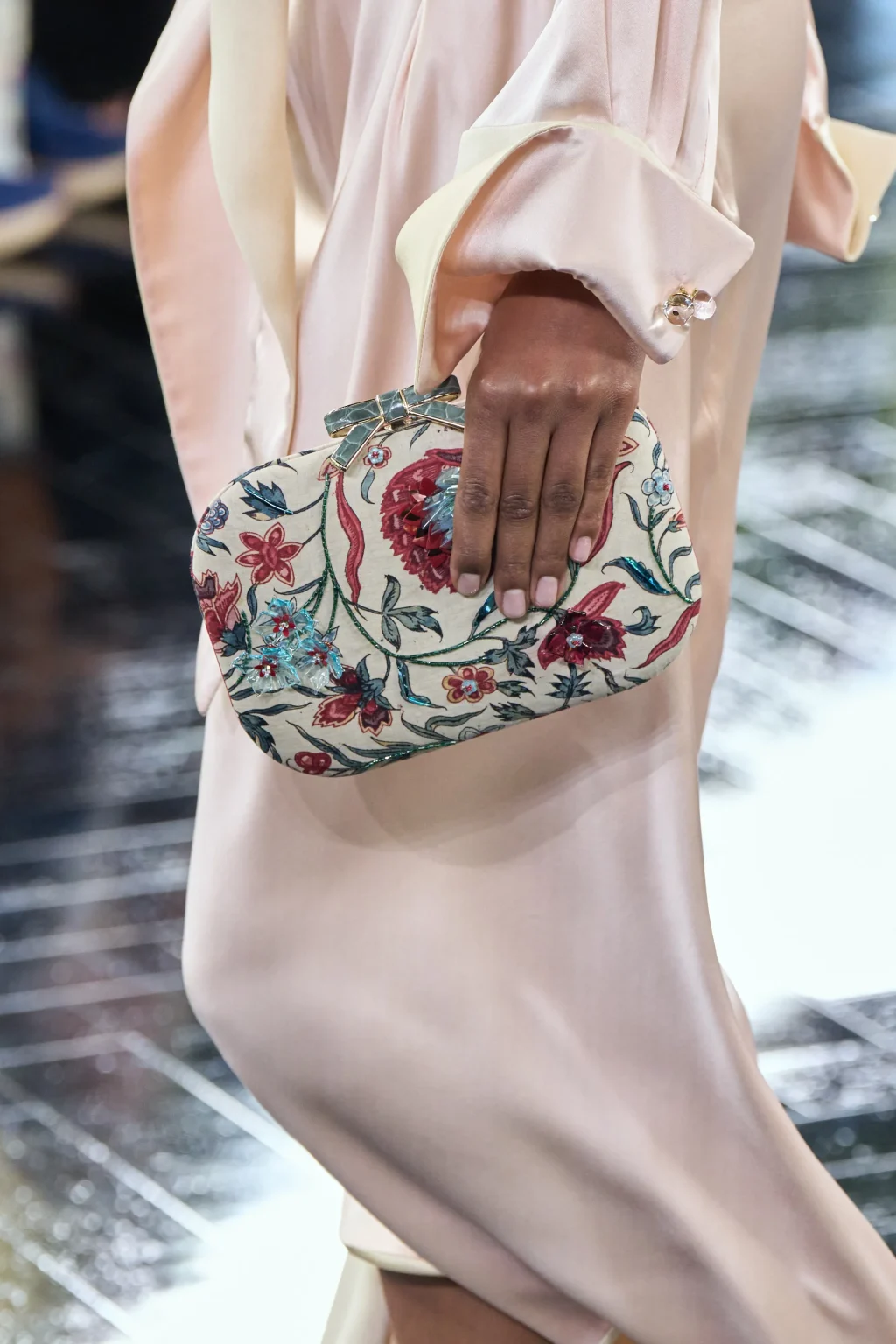
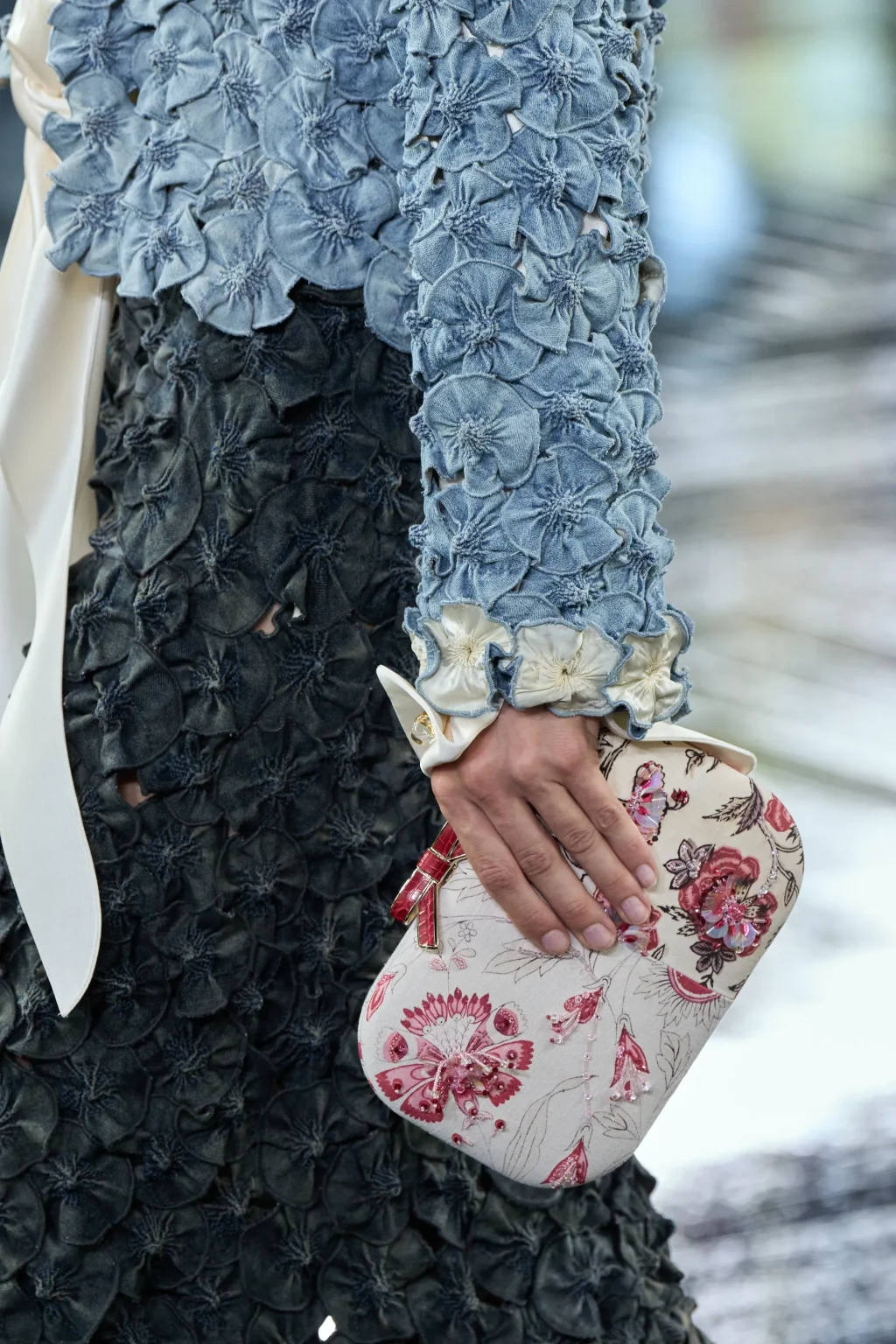
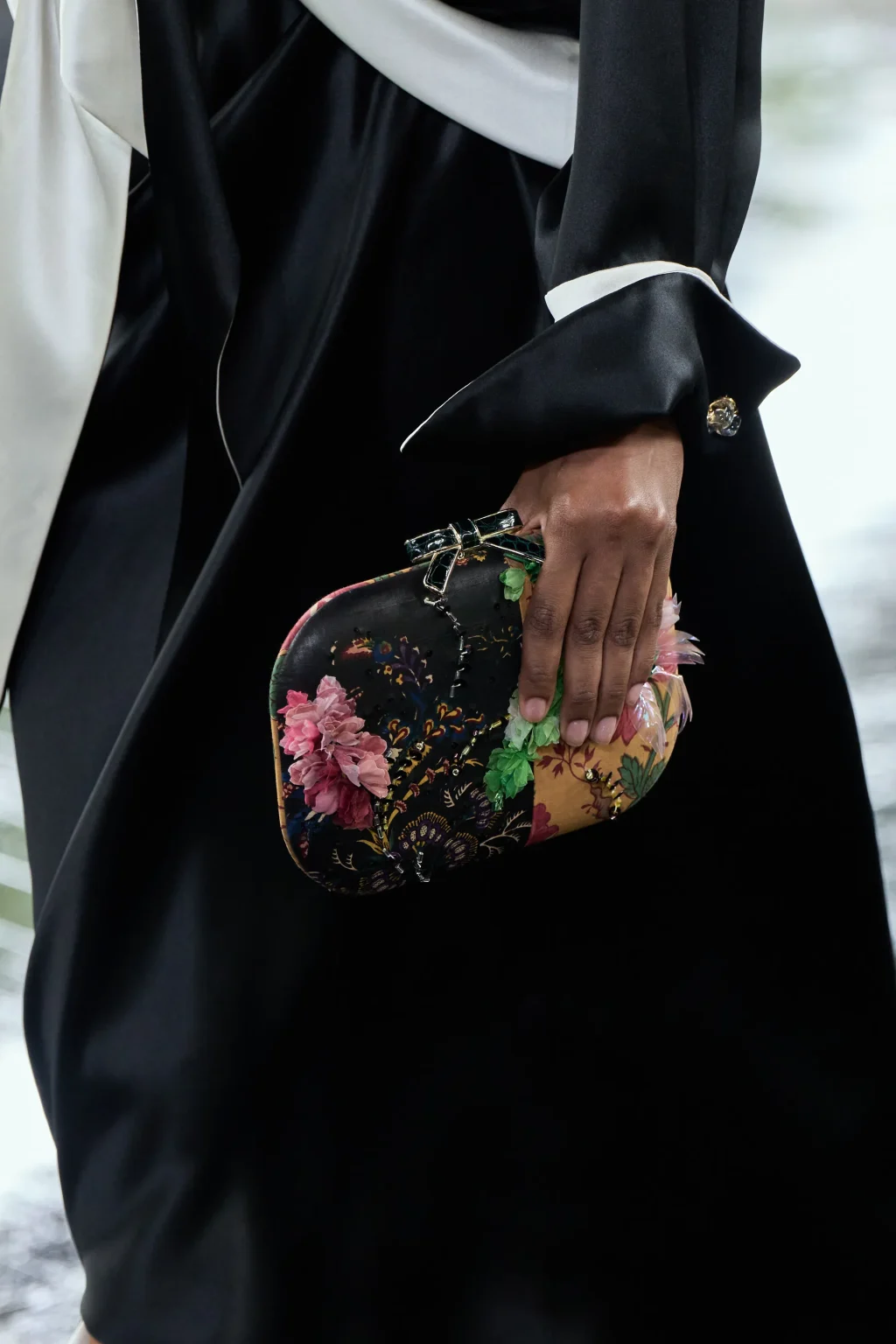
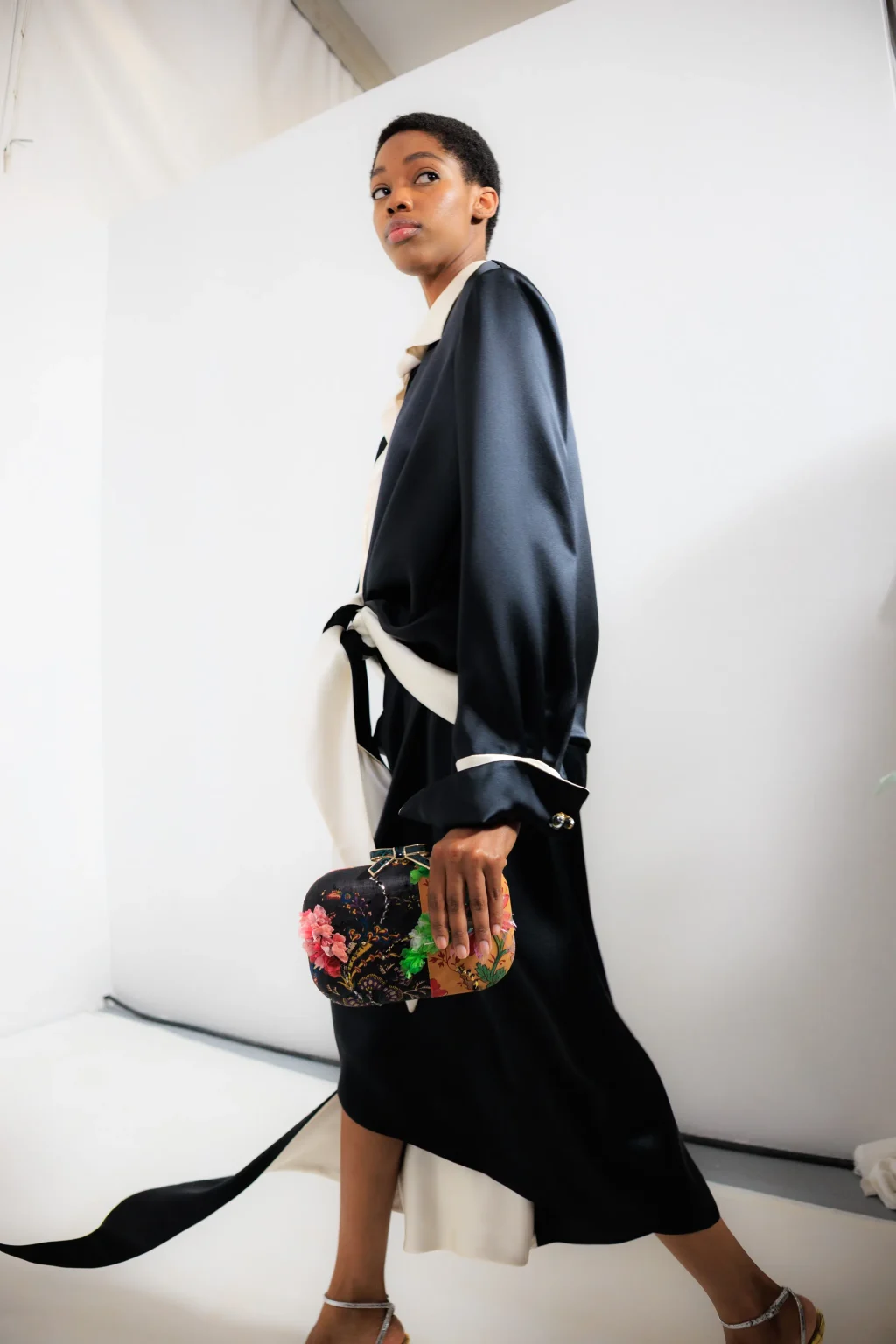
The Petit Dîner, Anderson’s rounded hard-shell minaudière with its bow clasp, carried the richest storytelling of the season across two families.
READ ALSO Dior Petit Dîner Bag: How the Cannage Raffia Minaudière Is Made
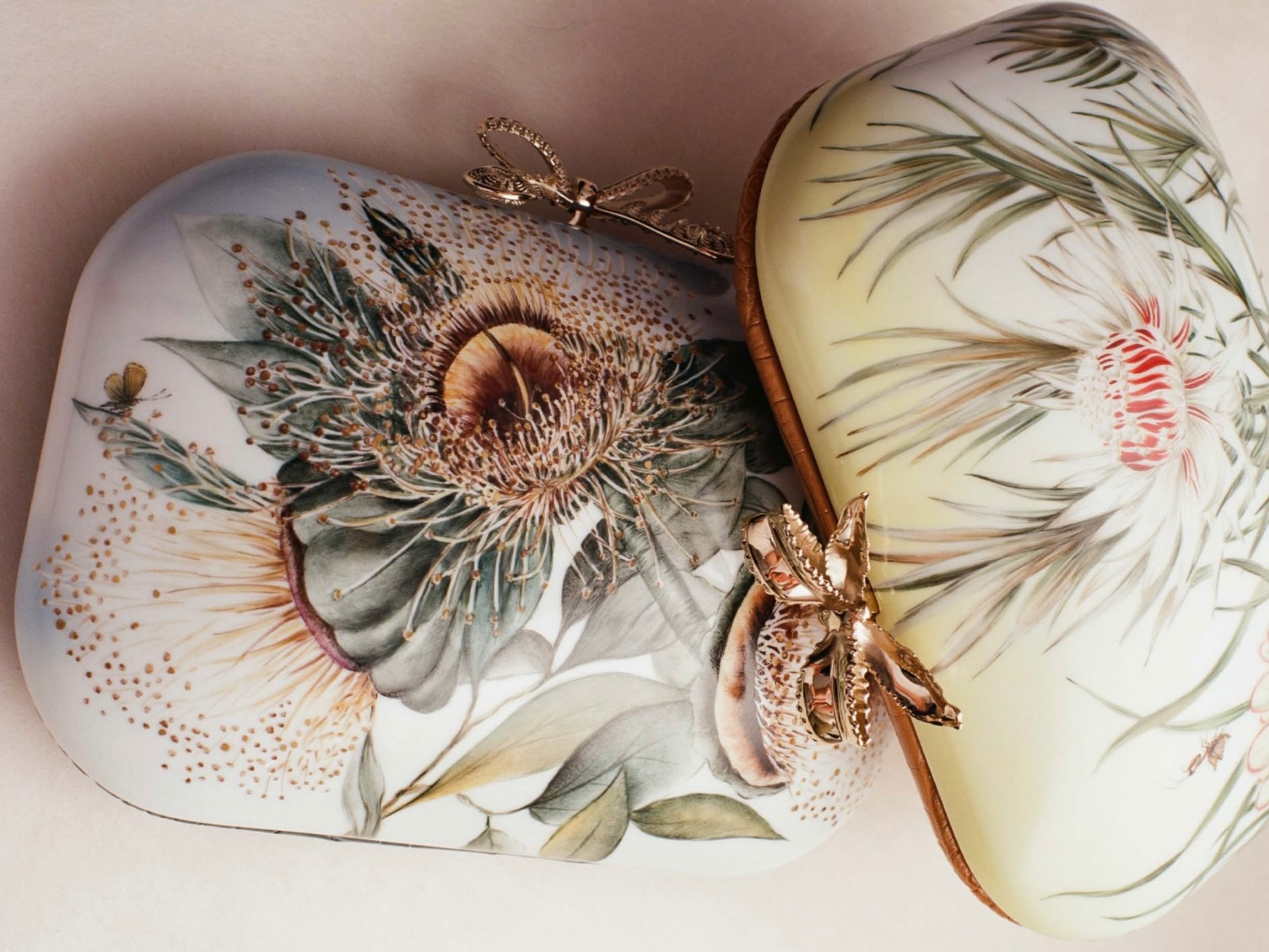
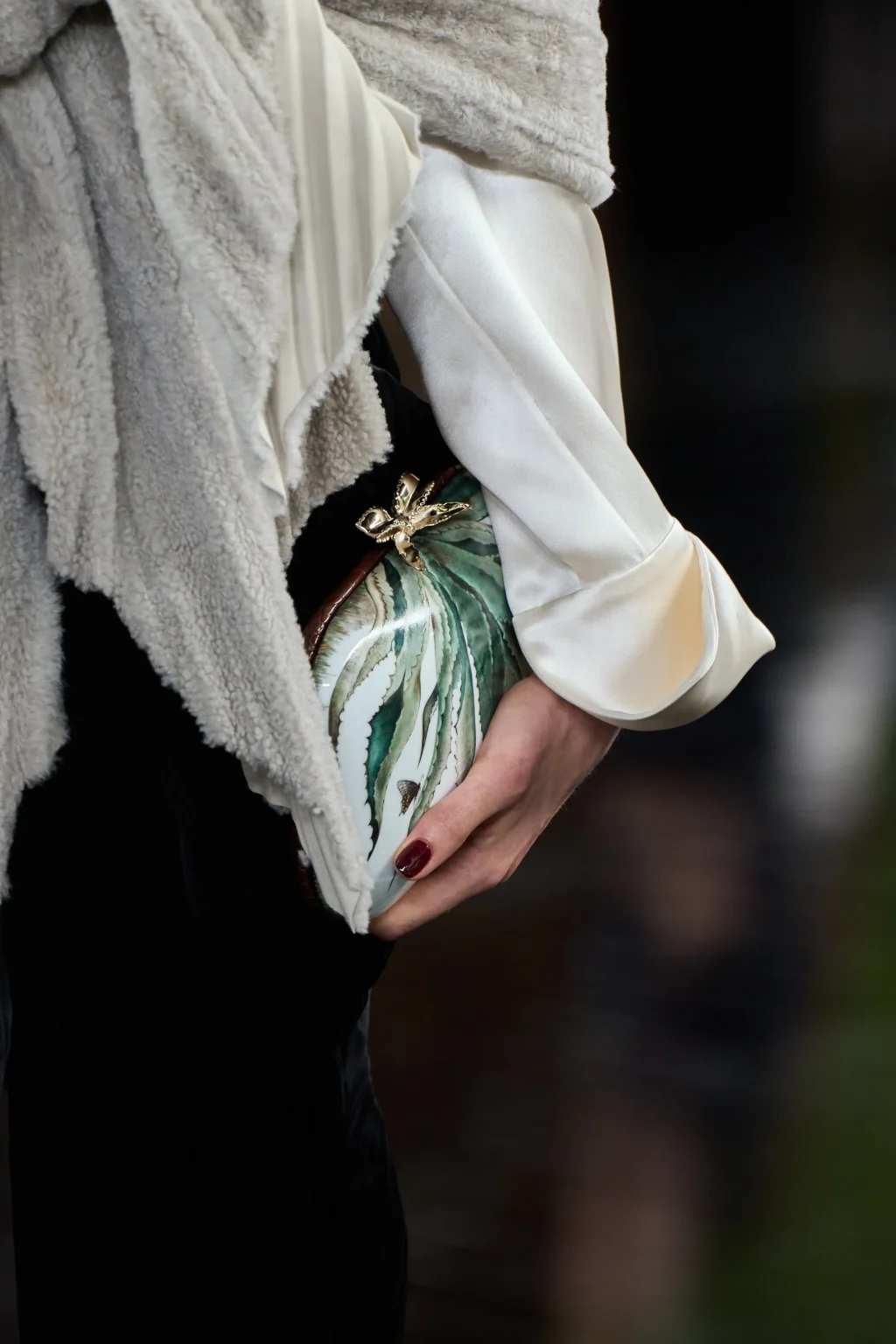
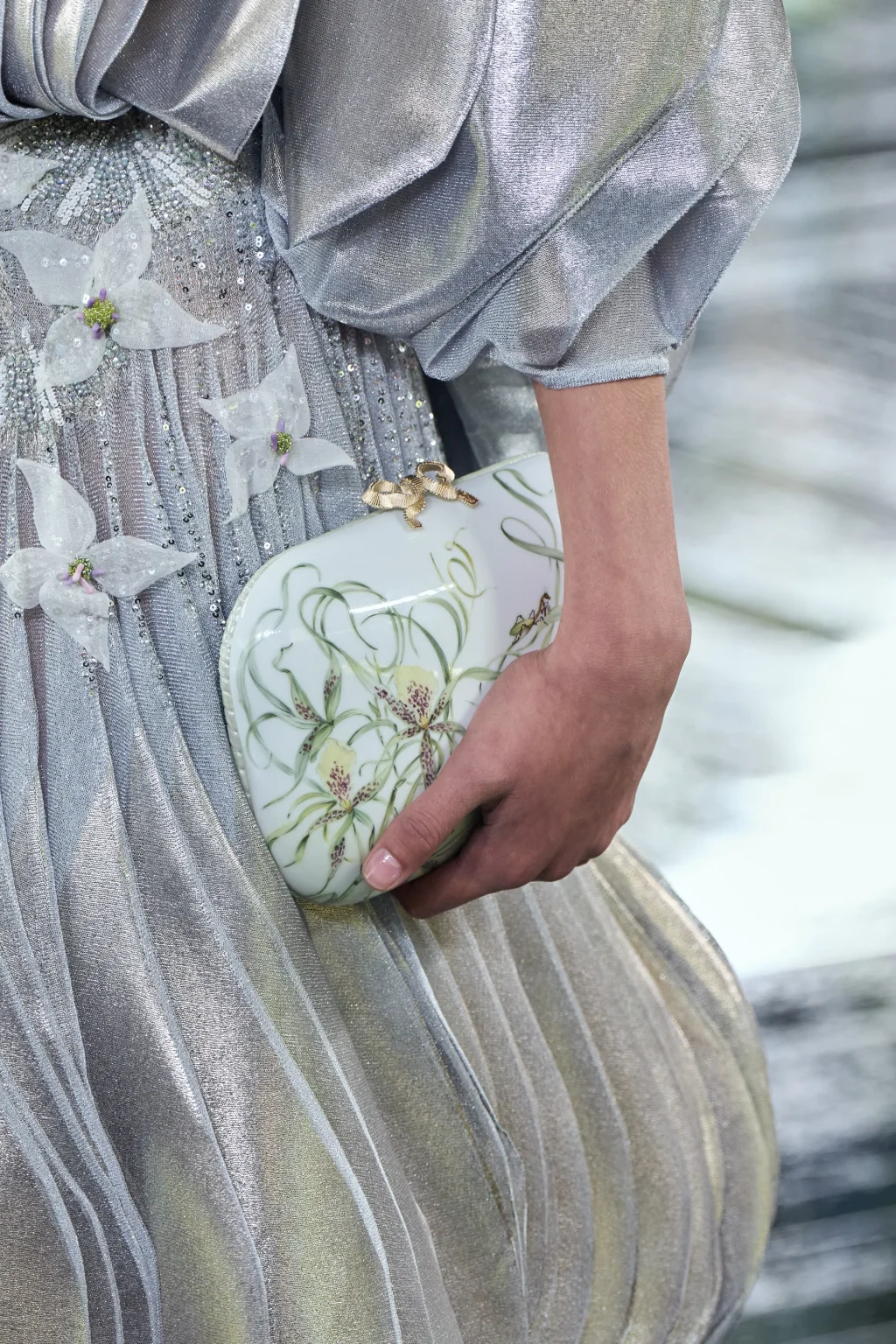
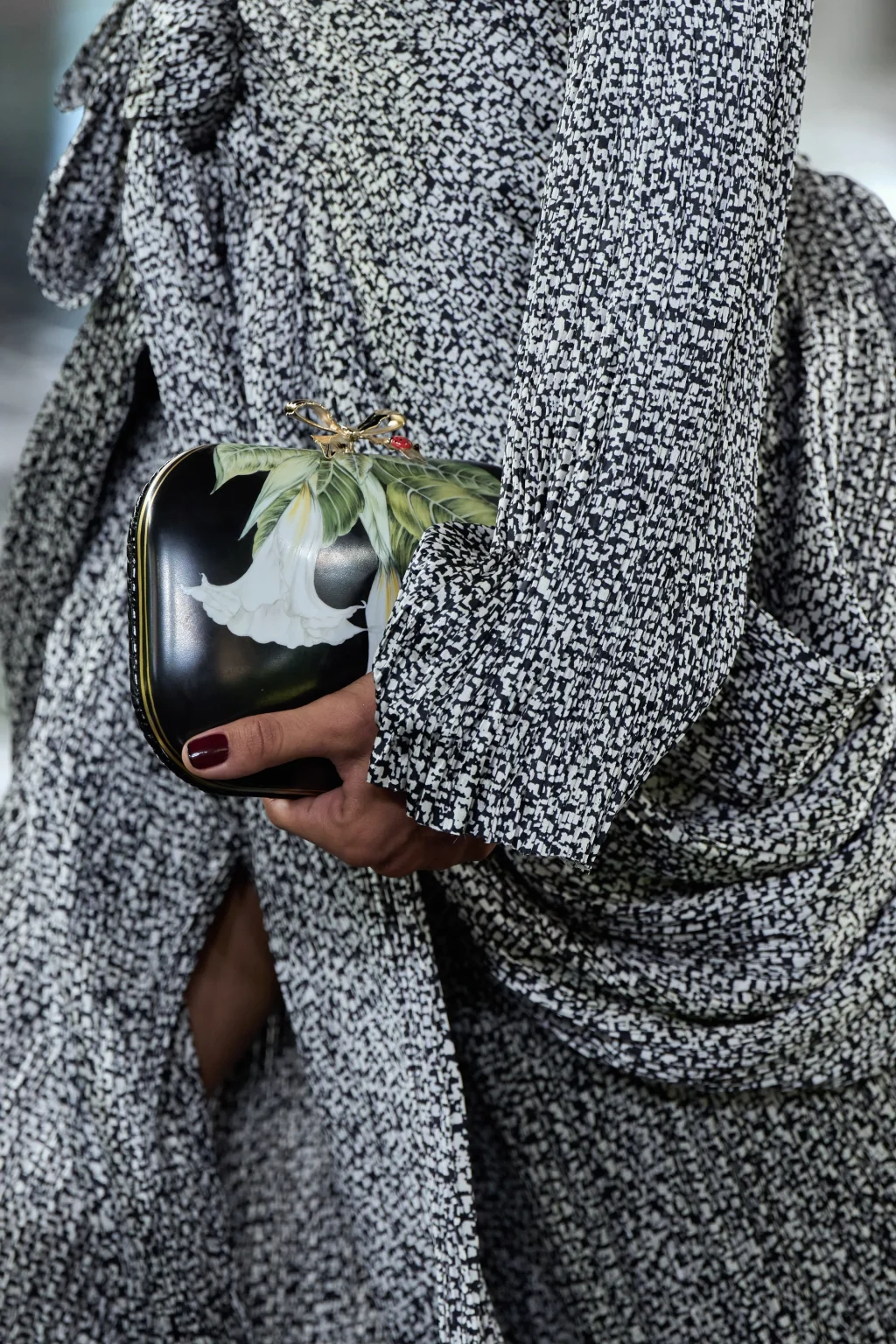
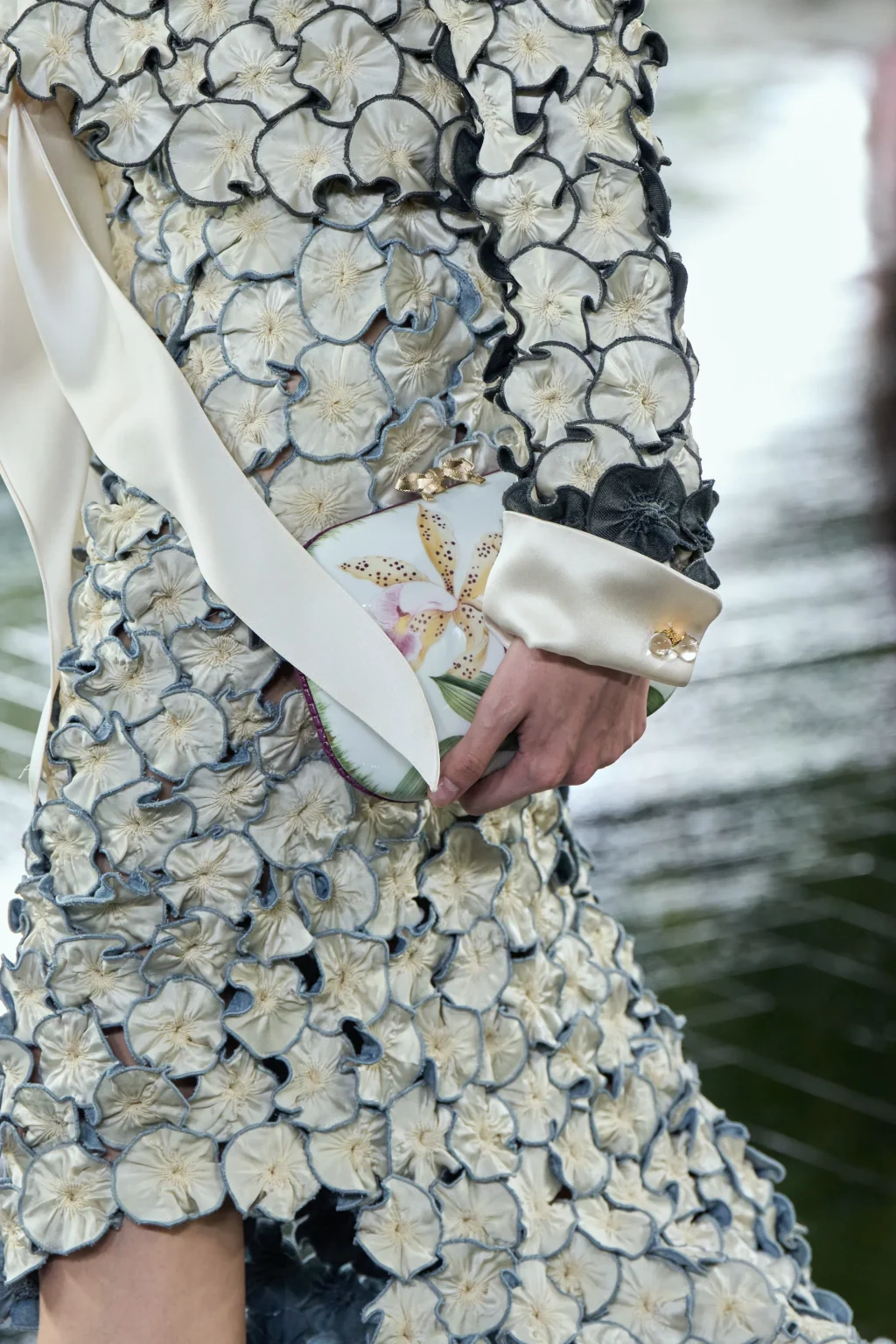
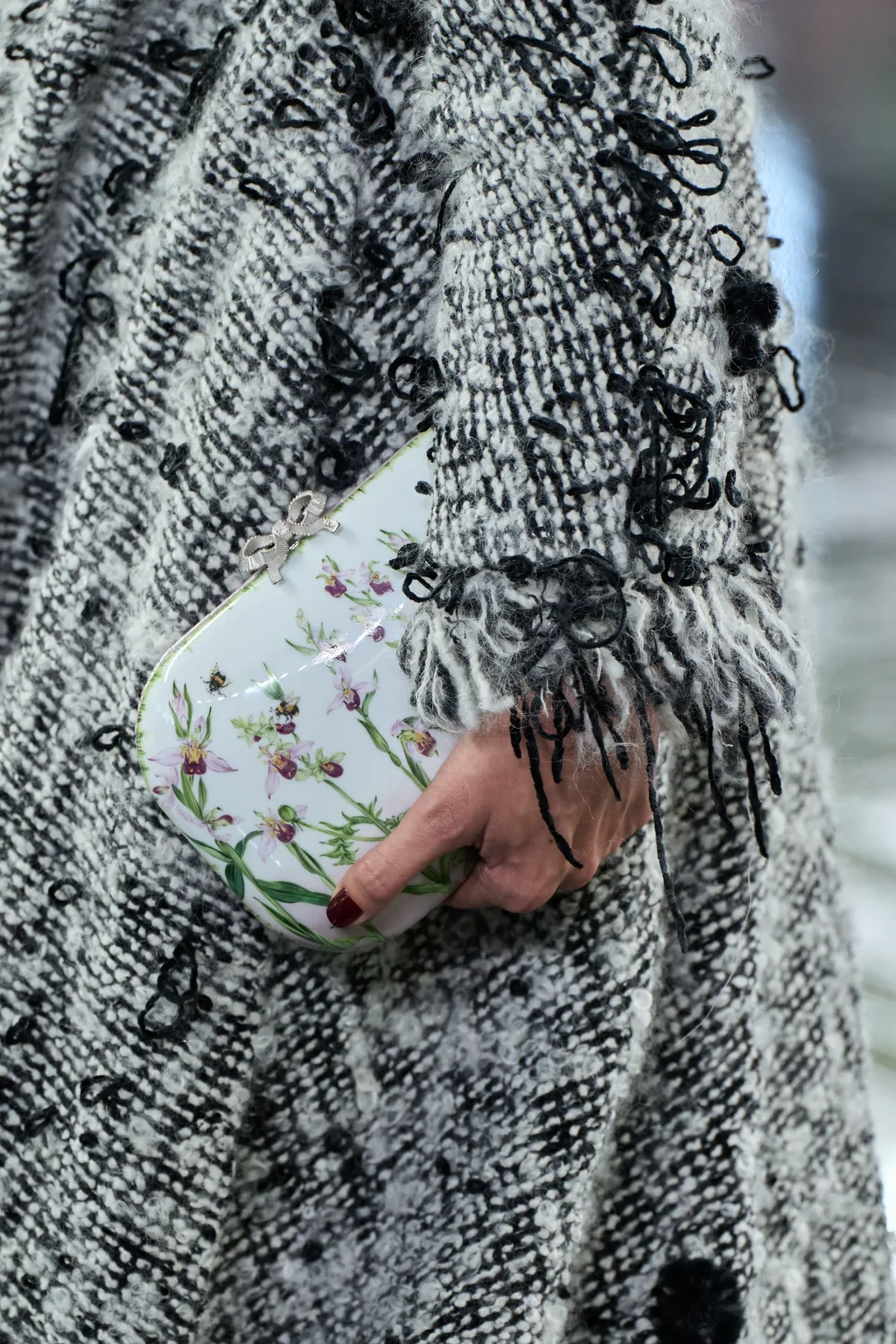
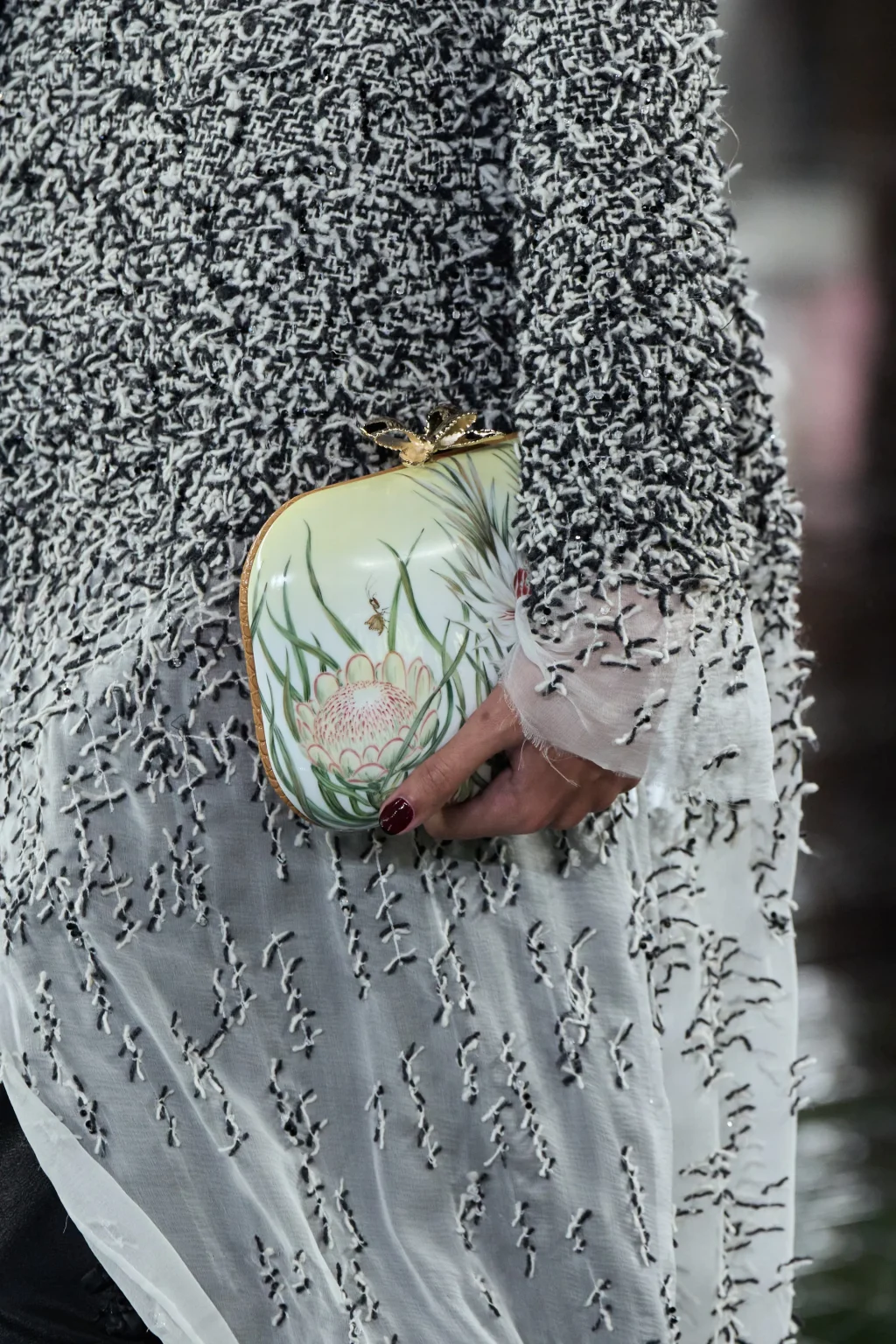
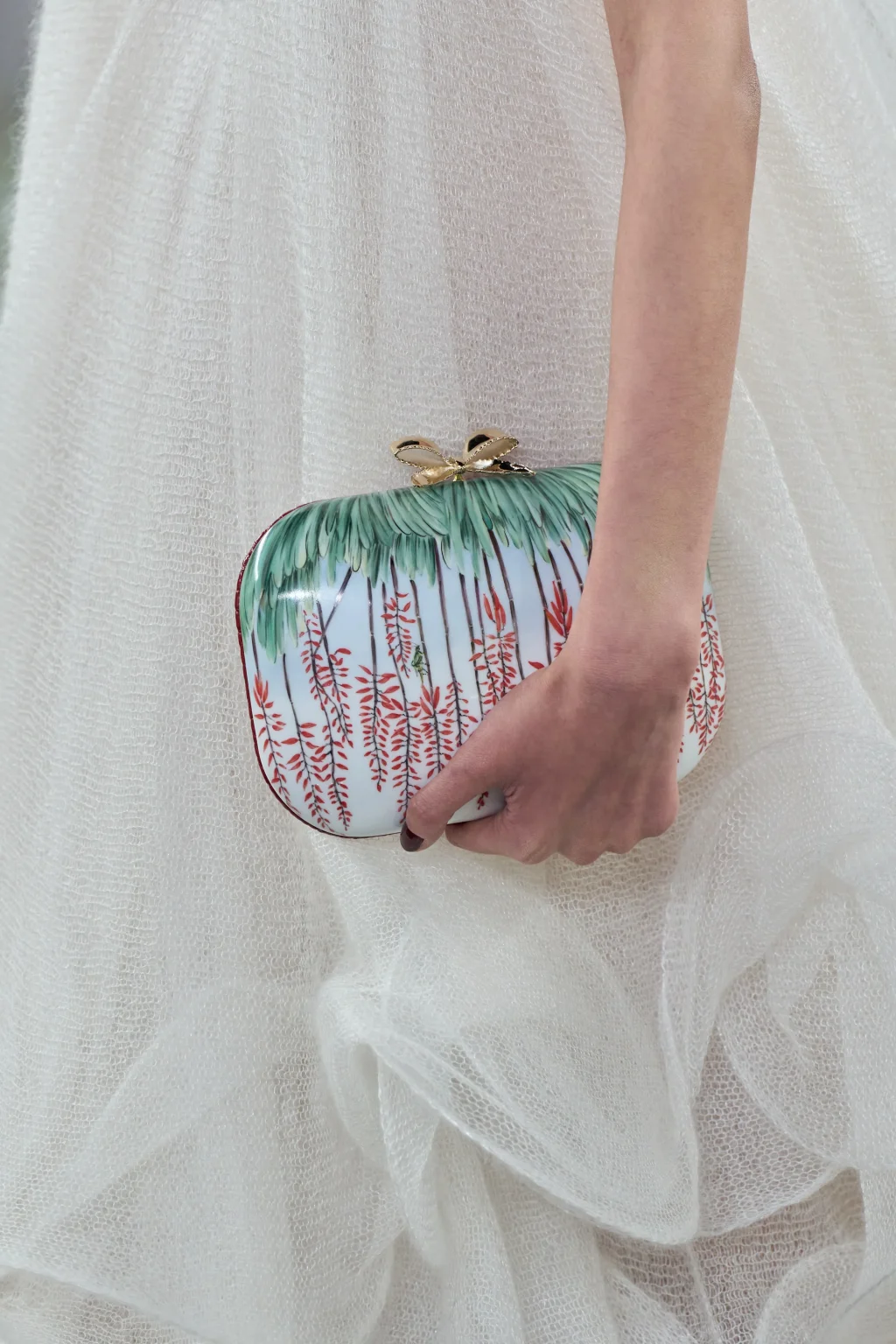
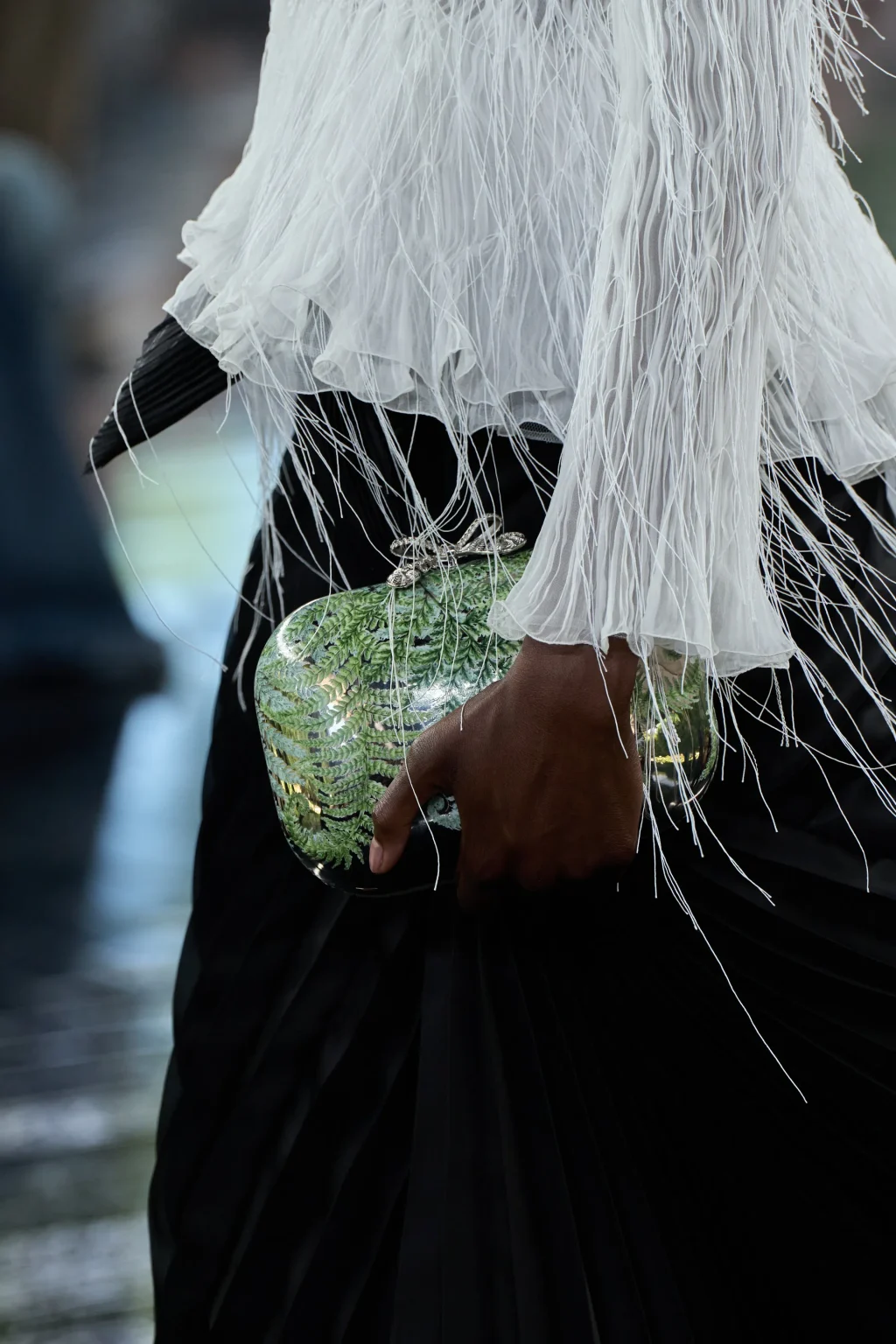
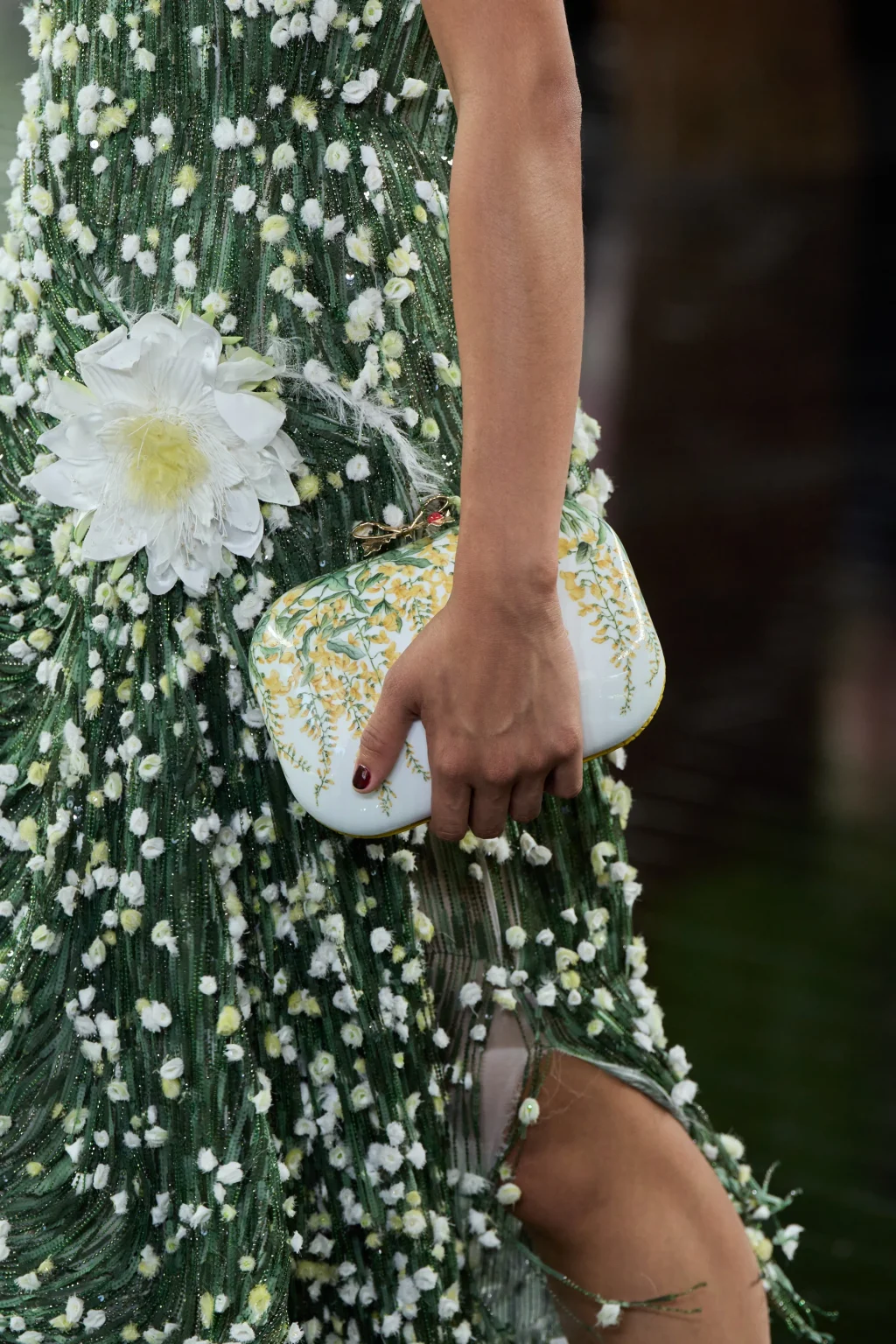
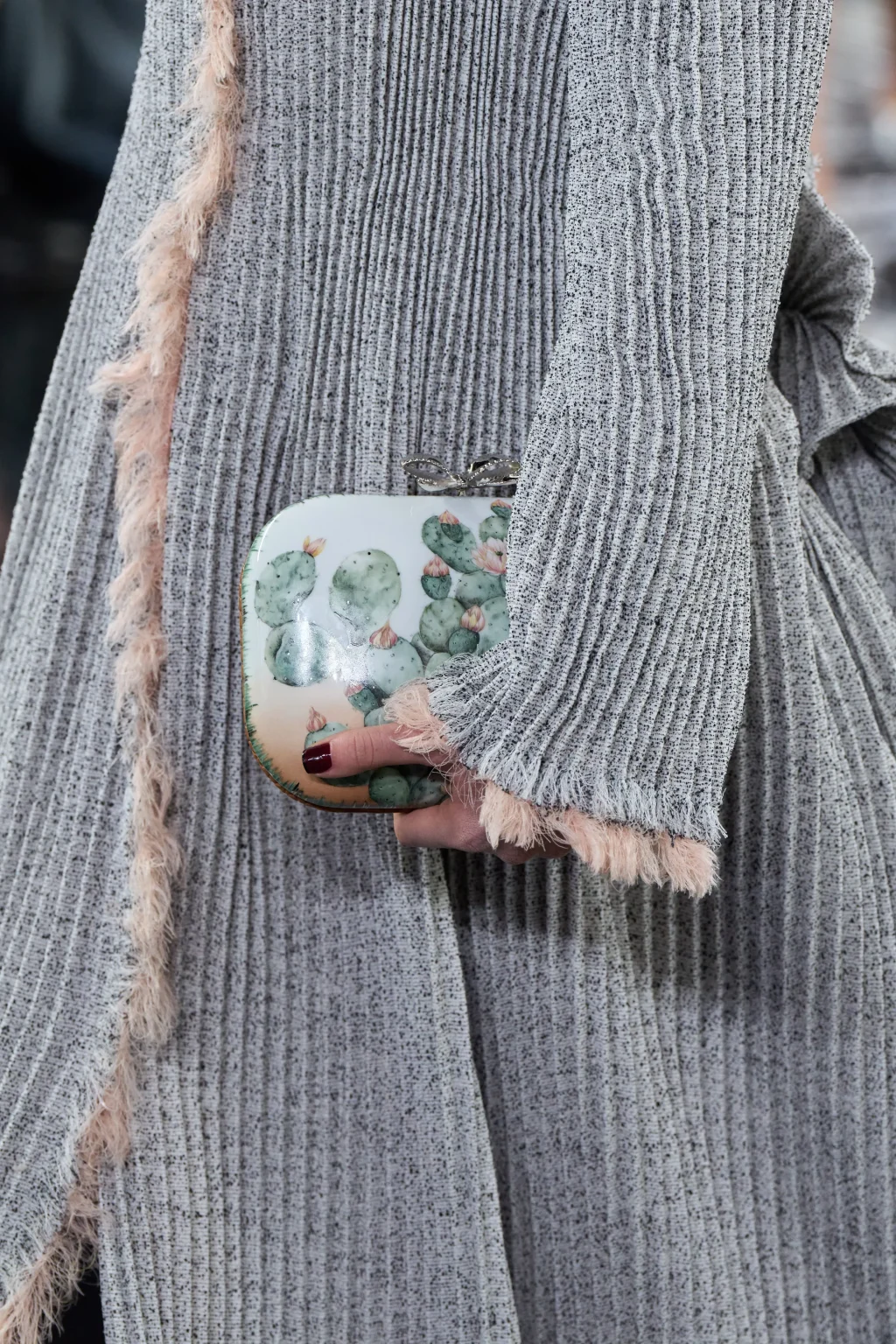
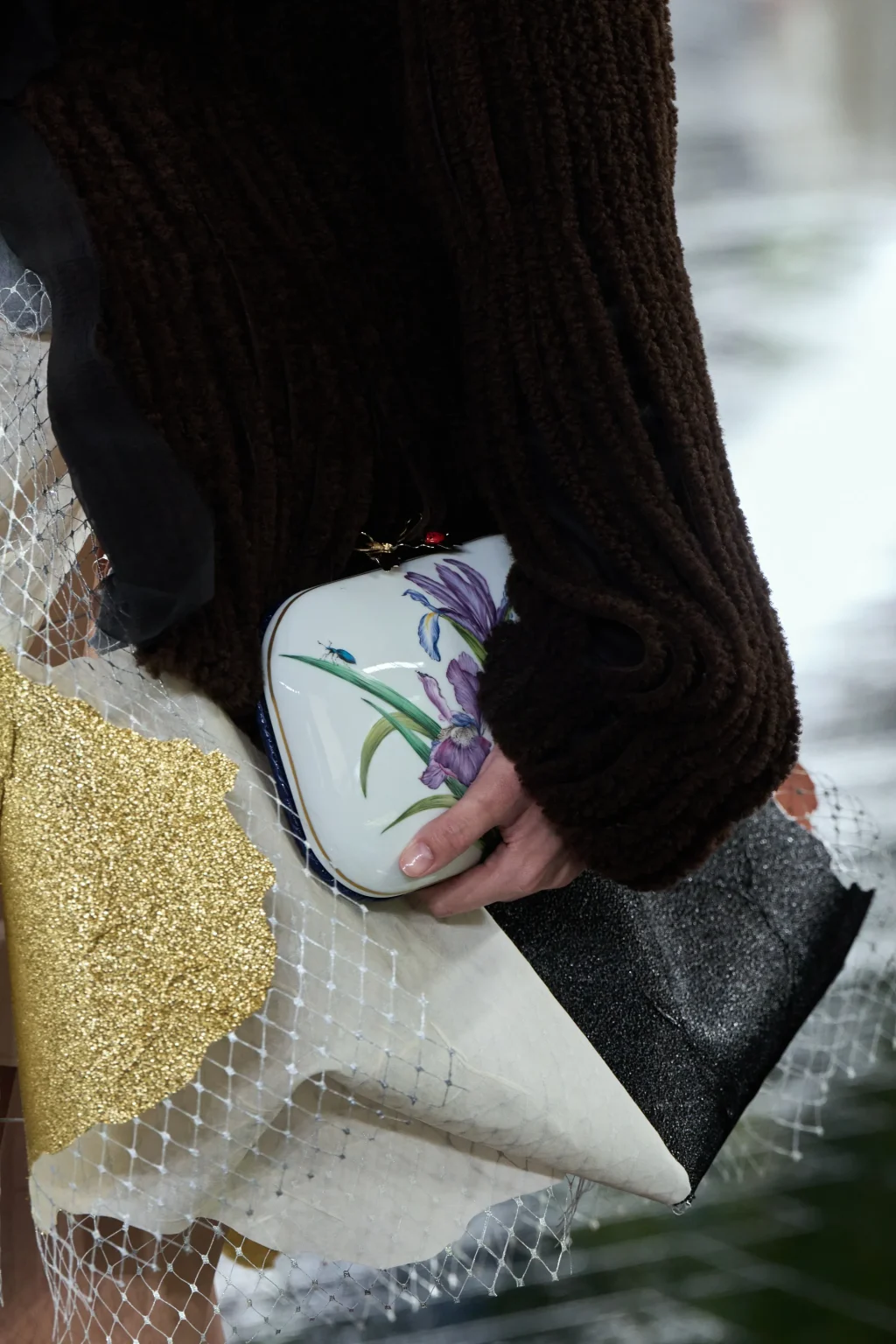
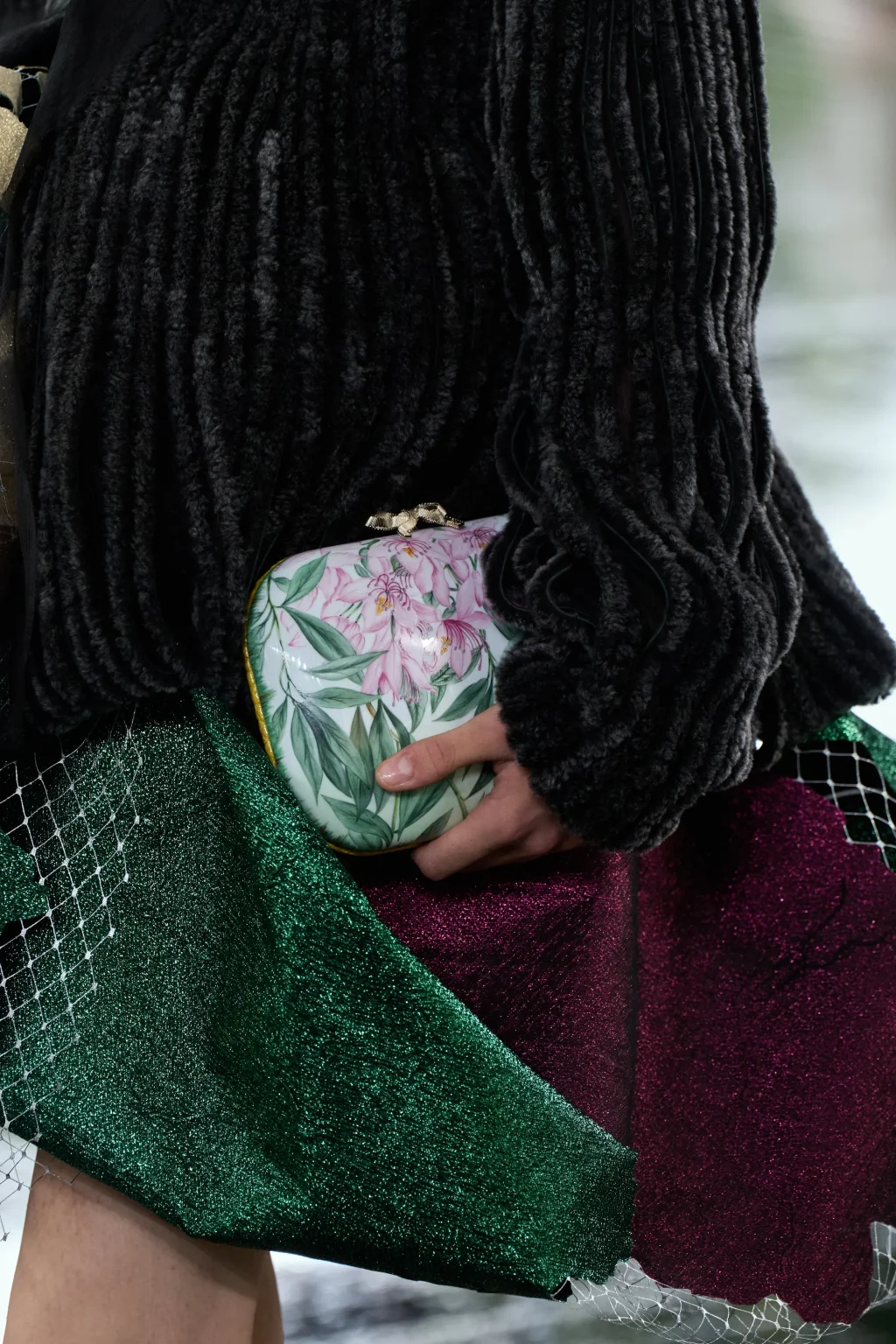
The first family is, quite literally, porcelain. Dior confirmed that these minaudières are crafted in porcelaine de Limoges — the hard-paste porcelain produced in the French city of Limoges since the 18th century — each one unique, and each hand-painted with a single flower species.
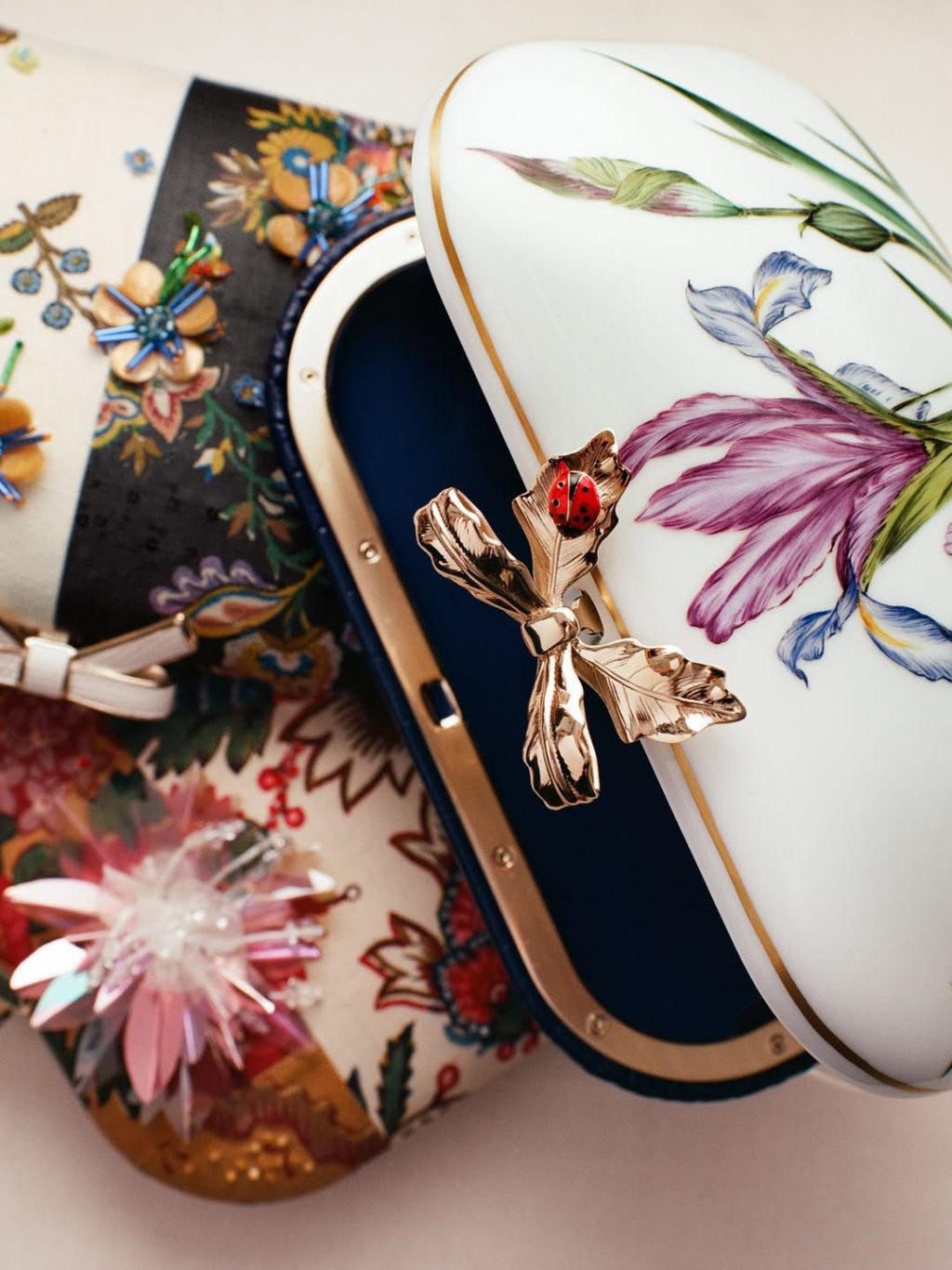
Together they map the two landscapes where Lynda Benglis has lived and worked: Santa Fe on one side, with prickly pear and euphorbia cacti among the succulents of New Mexico; Ahmedabad on the other, with spider orchids, ferns, purple irises, white brugmansia on black, laburnum in cascading yellow, a protea.
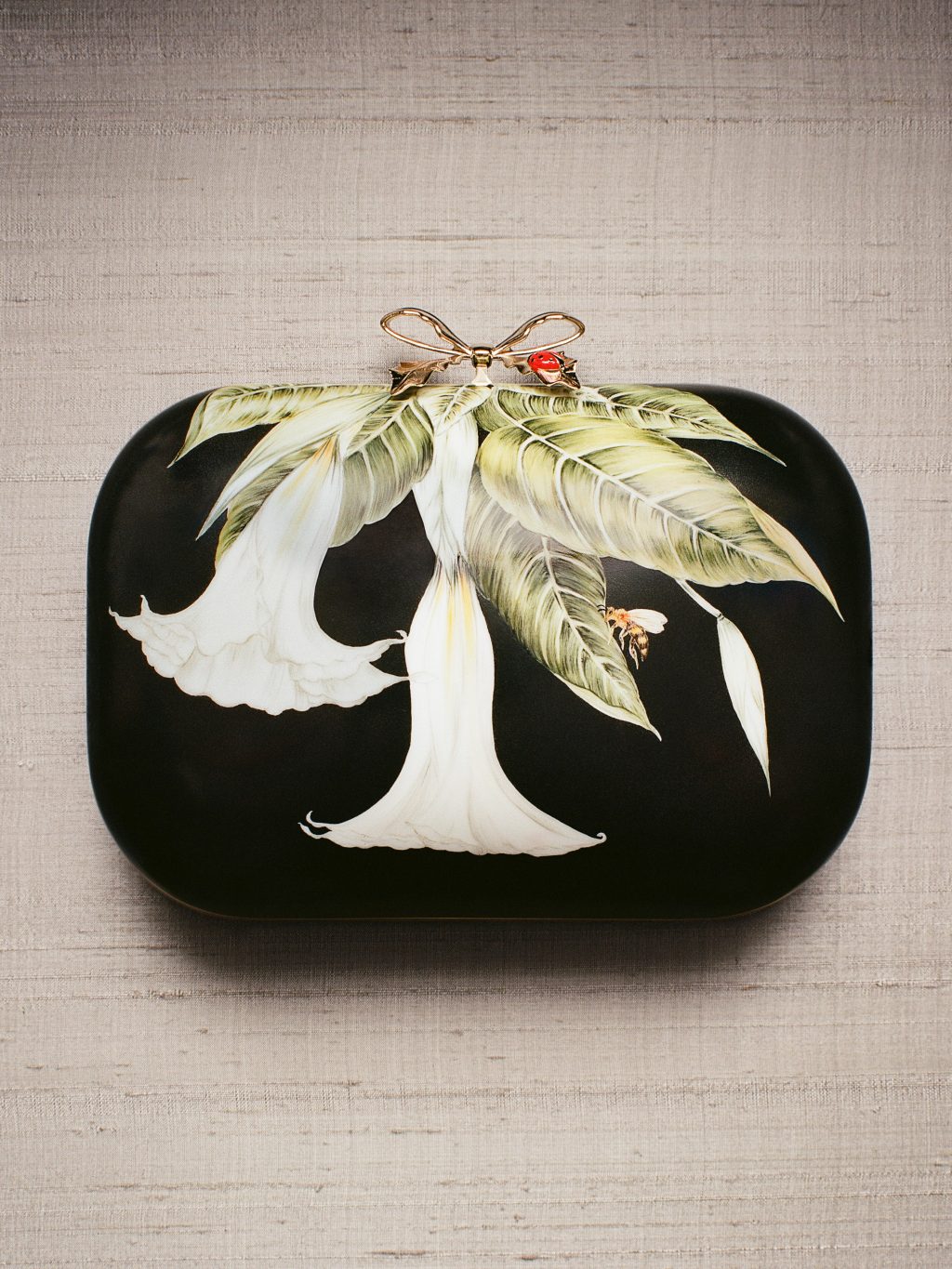
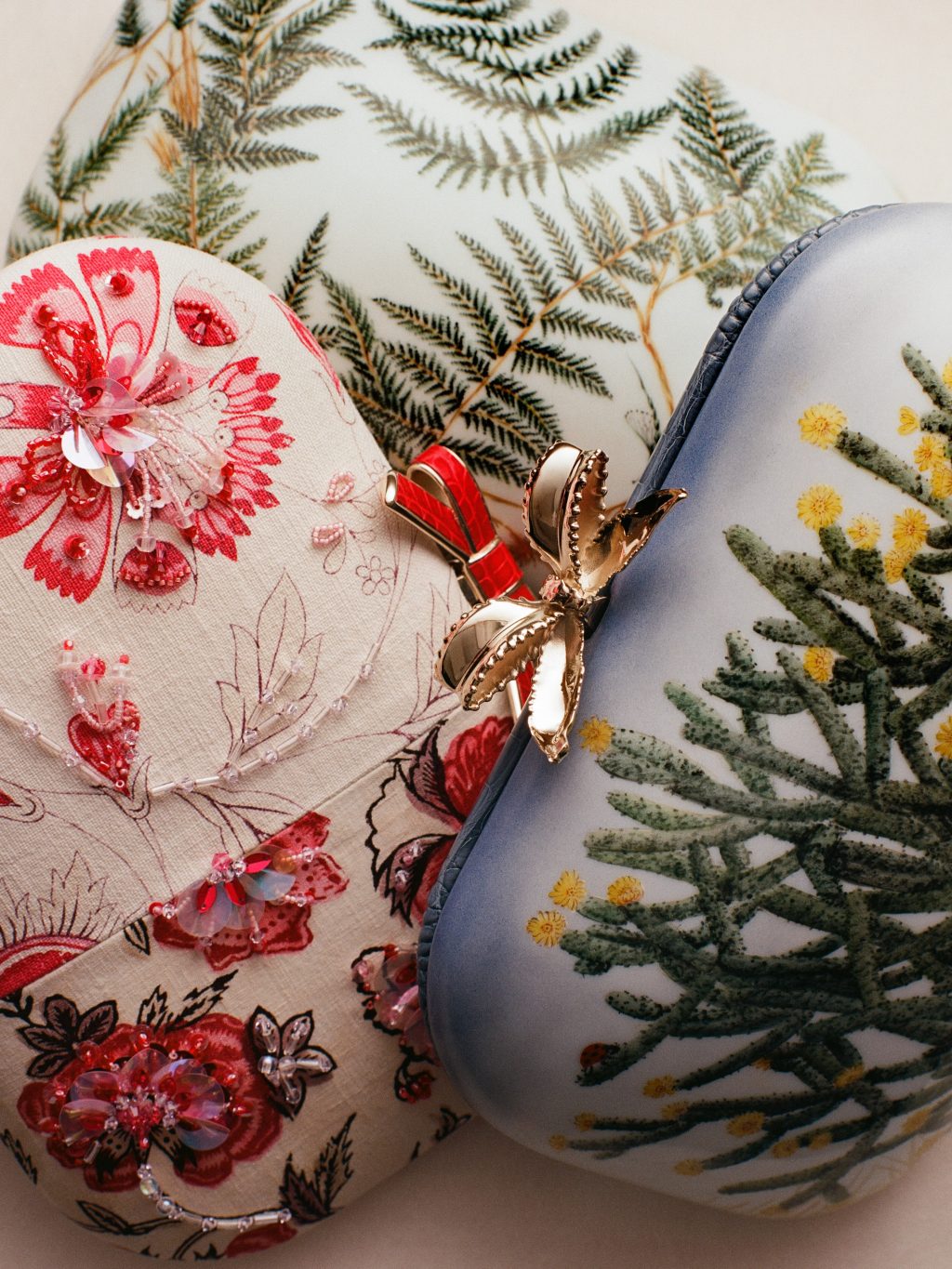
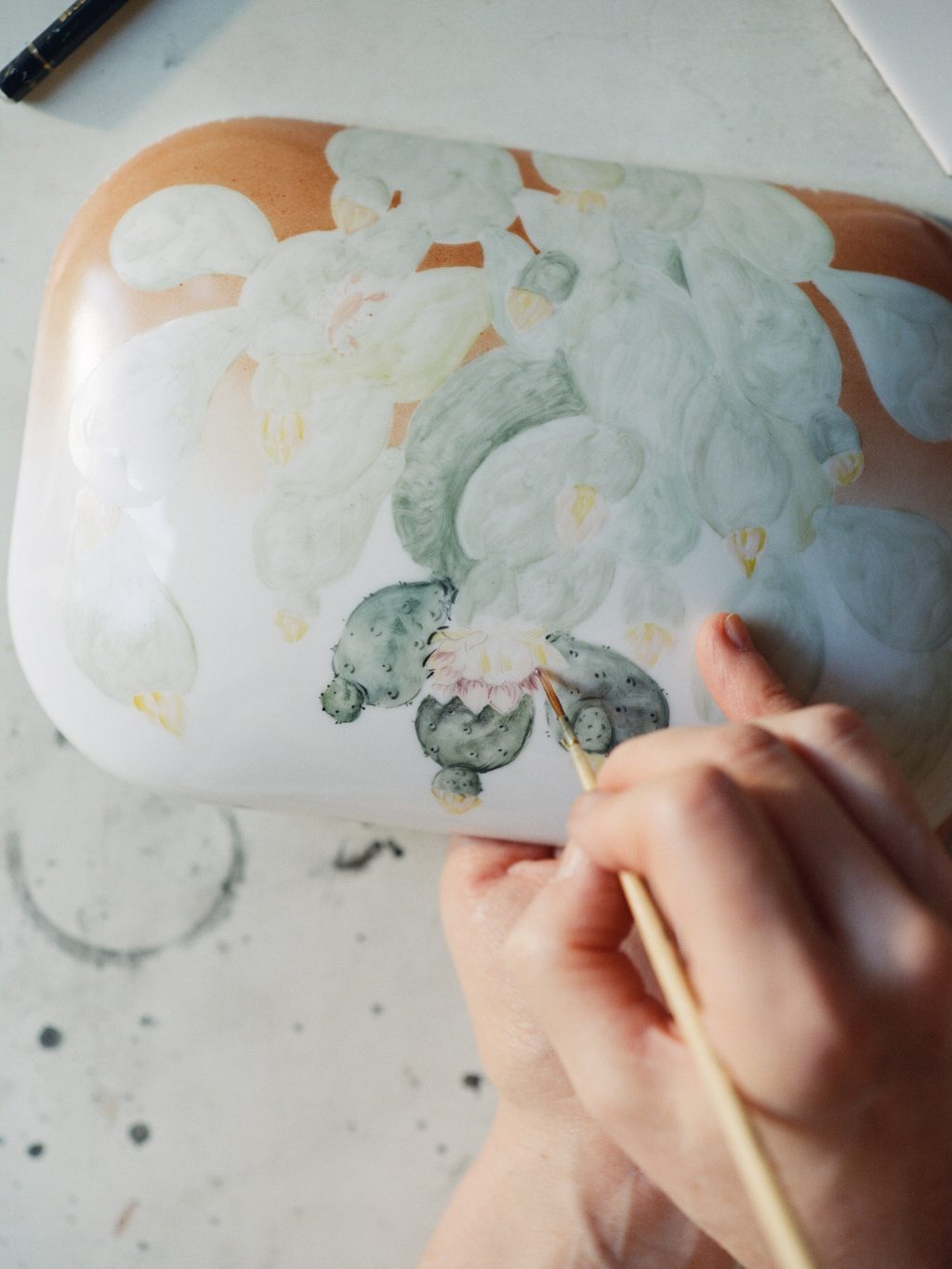
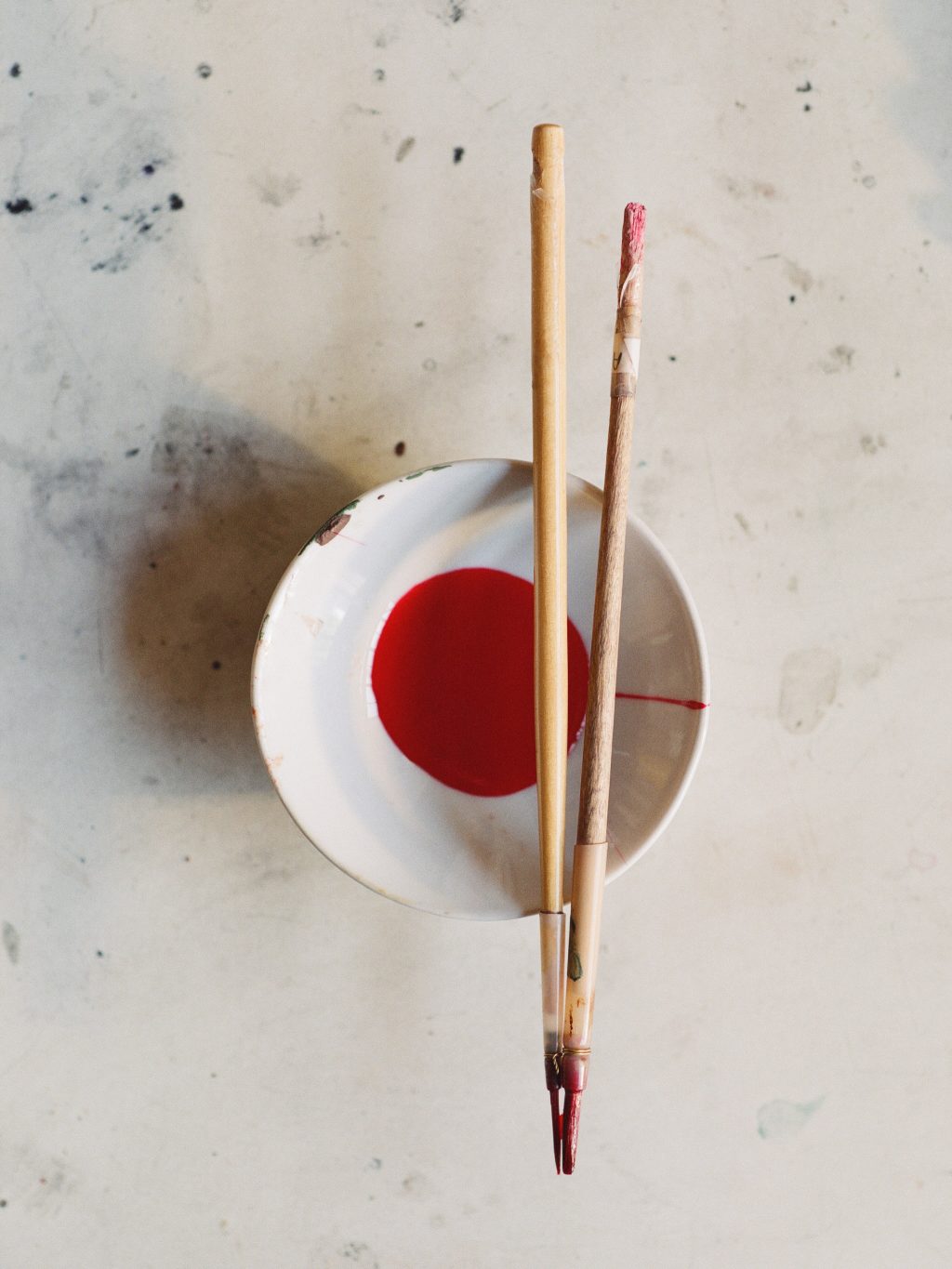
Hand-finished details complete each shell — a sliver of crocodile along the edge, a sculpted gold or silver bow at the clasp — and nearly every painted bag hides a creature: a red enamel ladybird perched on the brugmansia’s bow, a metallic blue beetle among the irises, a bee hovering beneath the trumpet flowers, a praying mantis in the orchid grass. It is savoir-faire as easter egg, and it rewards anyone who looks closely. Atelier images released by the house show the process plainly: a painter working freehand with a fine brush over the ombré porcelain shell, building each cactus pad in translucent layers.
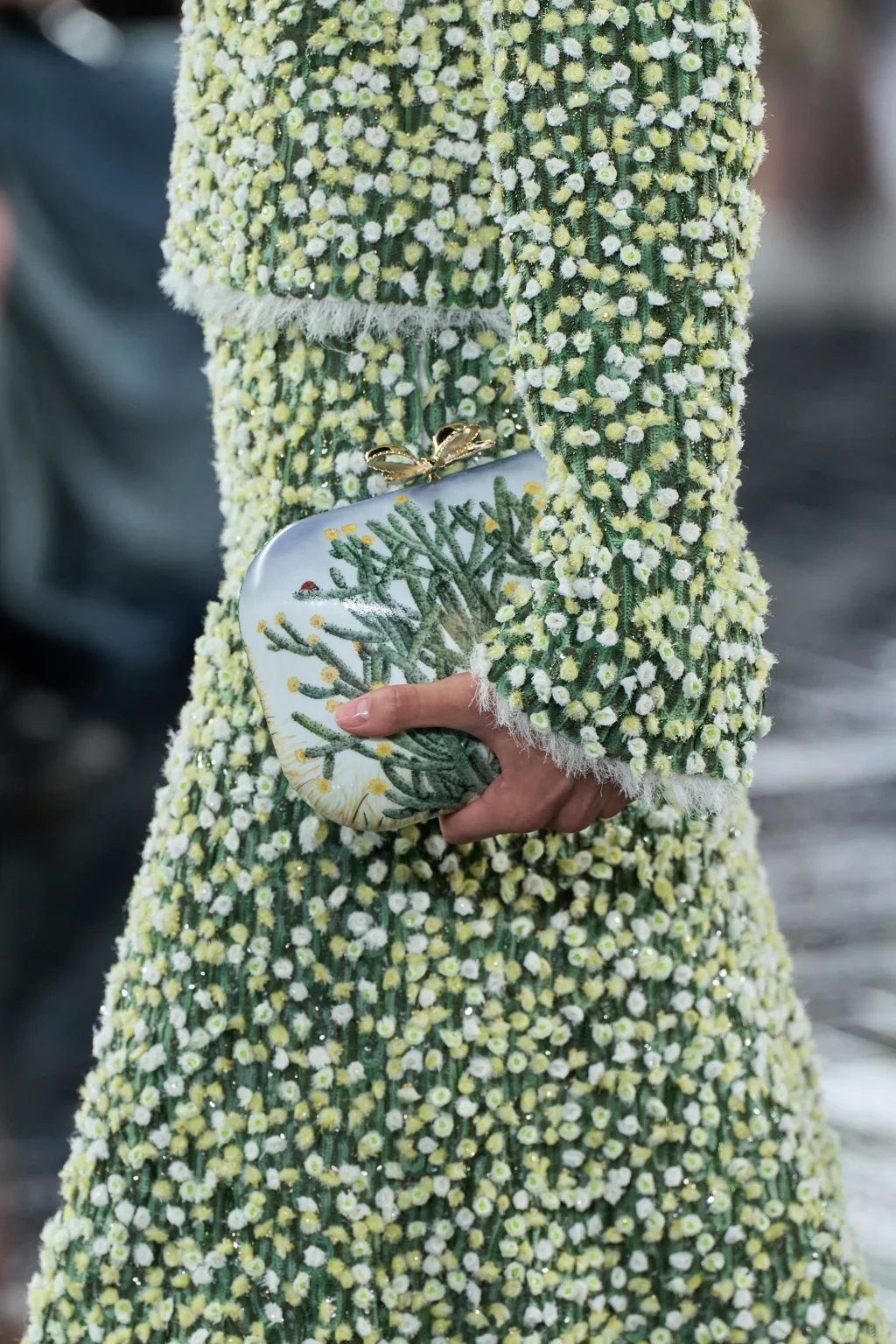
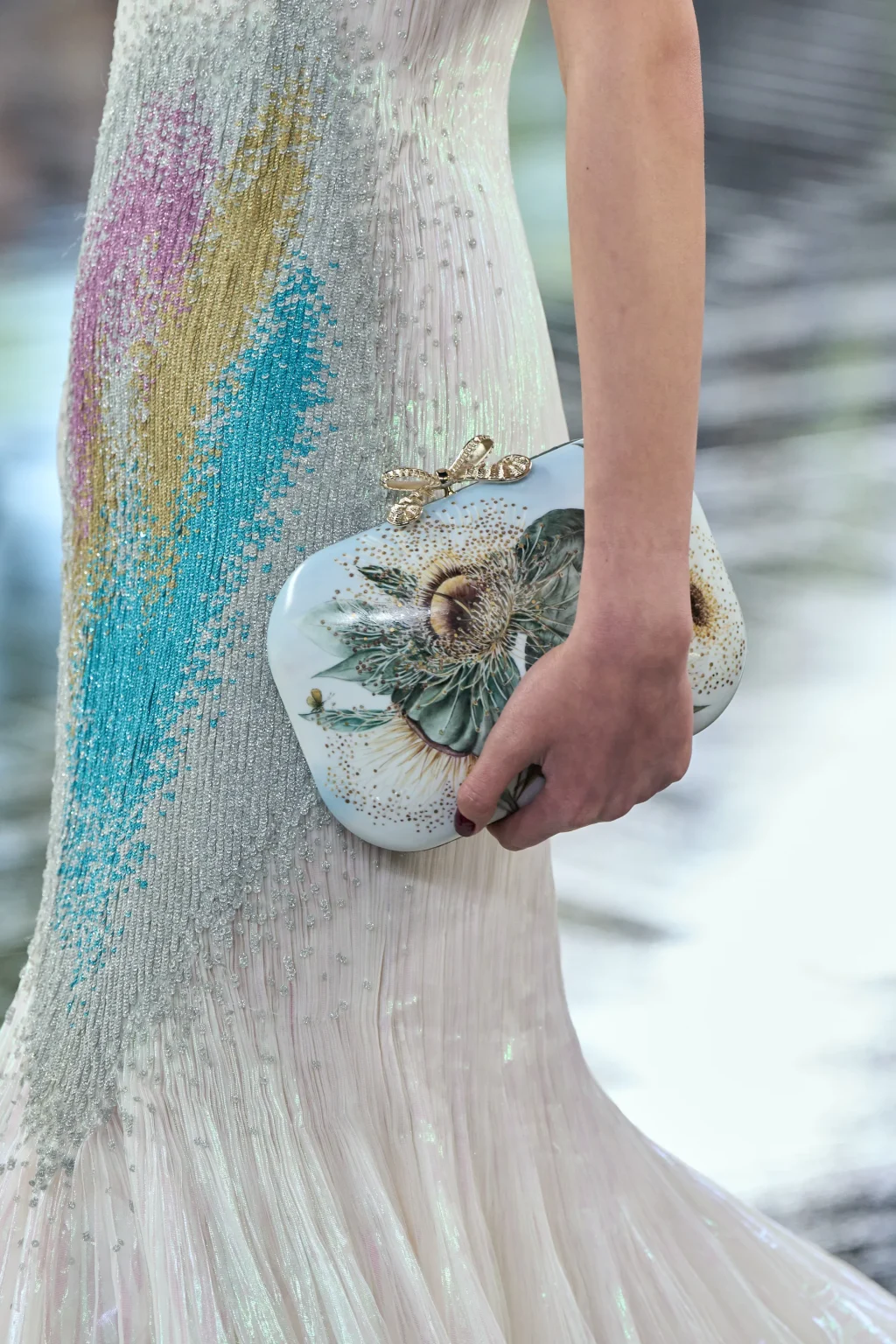
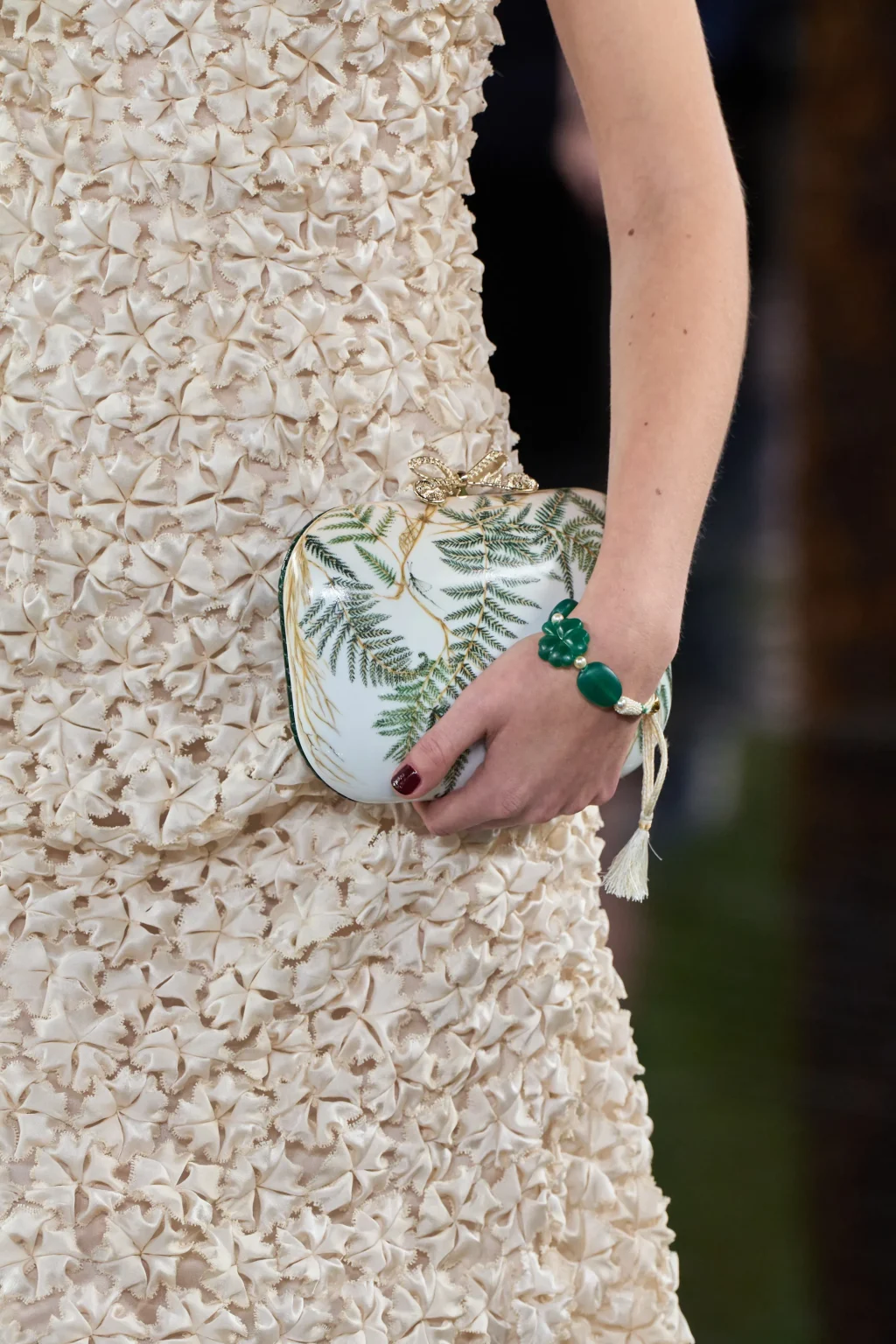
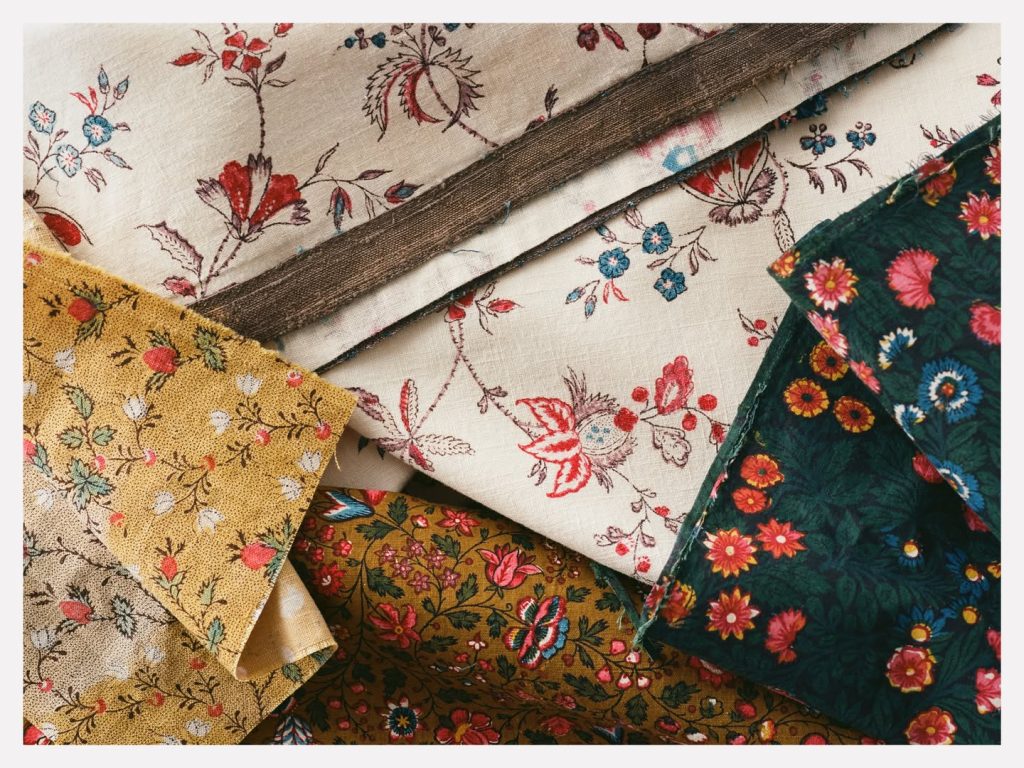
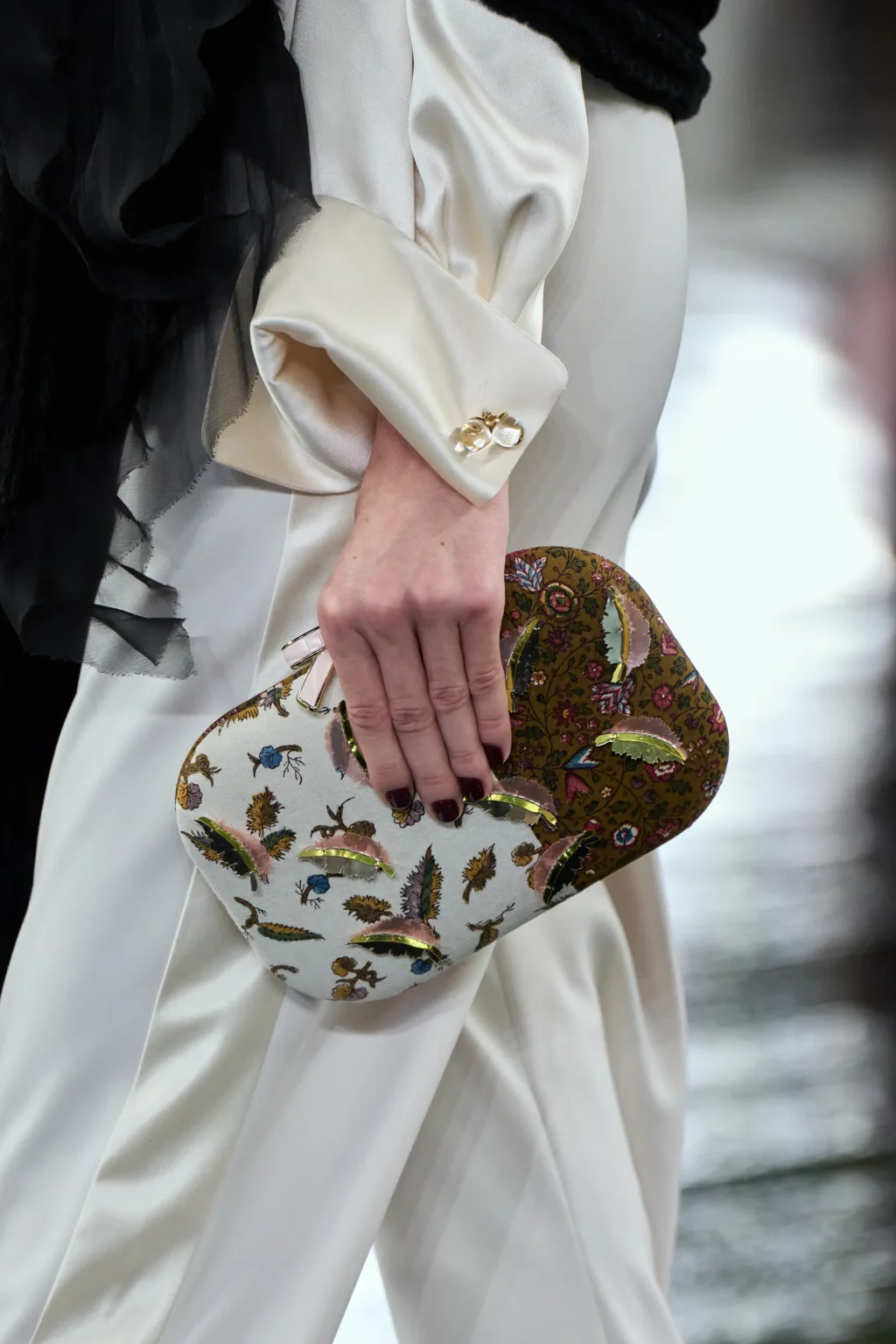
The second family is the collector’s story, and it reaches back centuries before the house itself. Chintz — the finely woven, hand-printed Indian cotton with floral motifs, a textile tradition millennia old — reshaped European fashion and decorative arts from the 16th and 17th centuries onward, a dialogue that Amin Jaffer, Director of The Al Thani Collection, describes as continuing to this day.
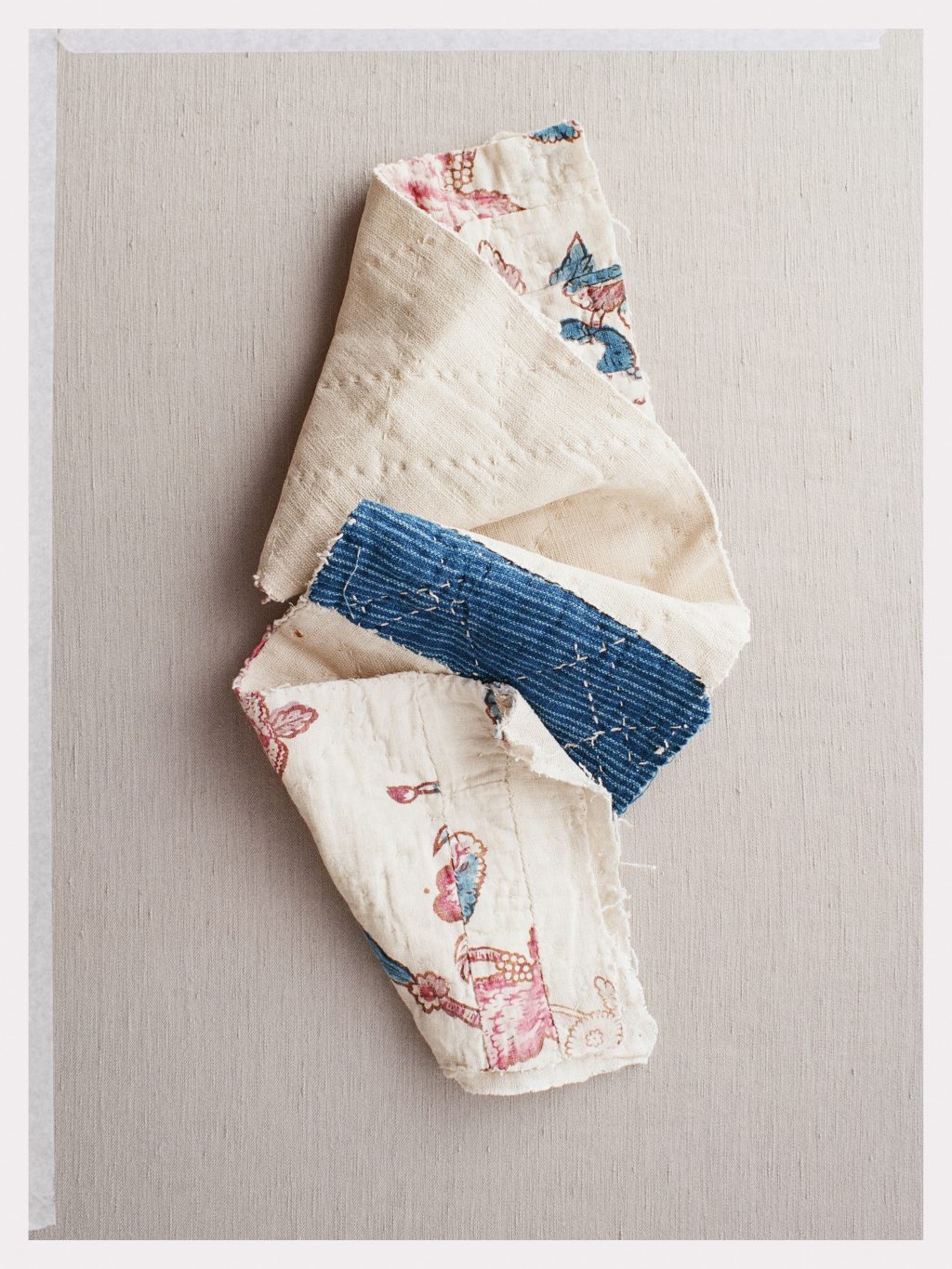
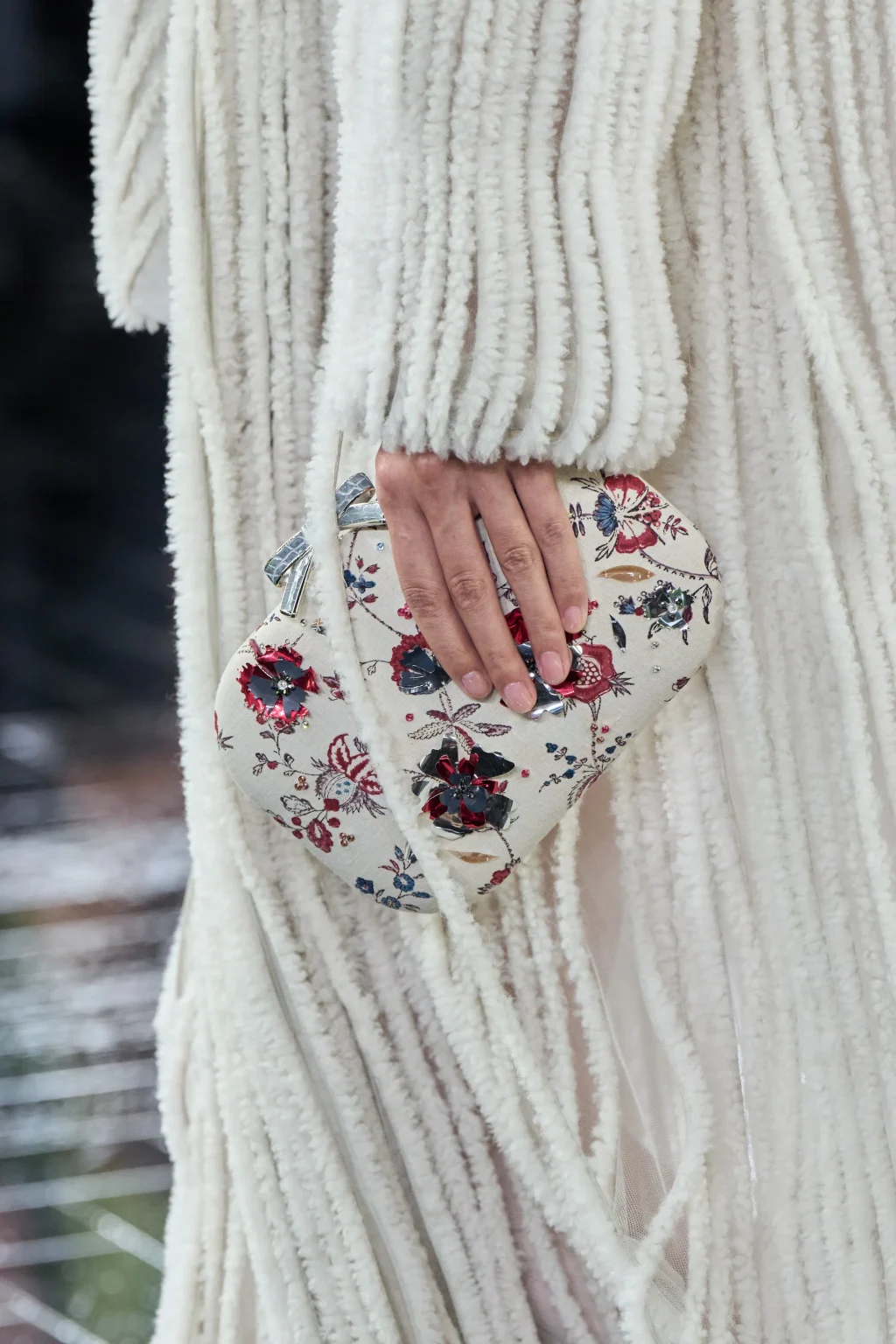
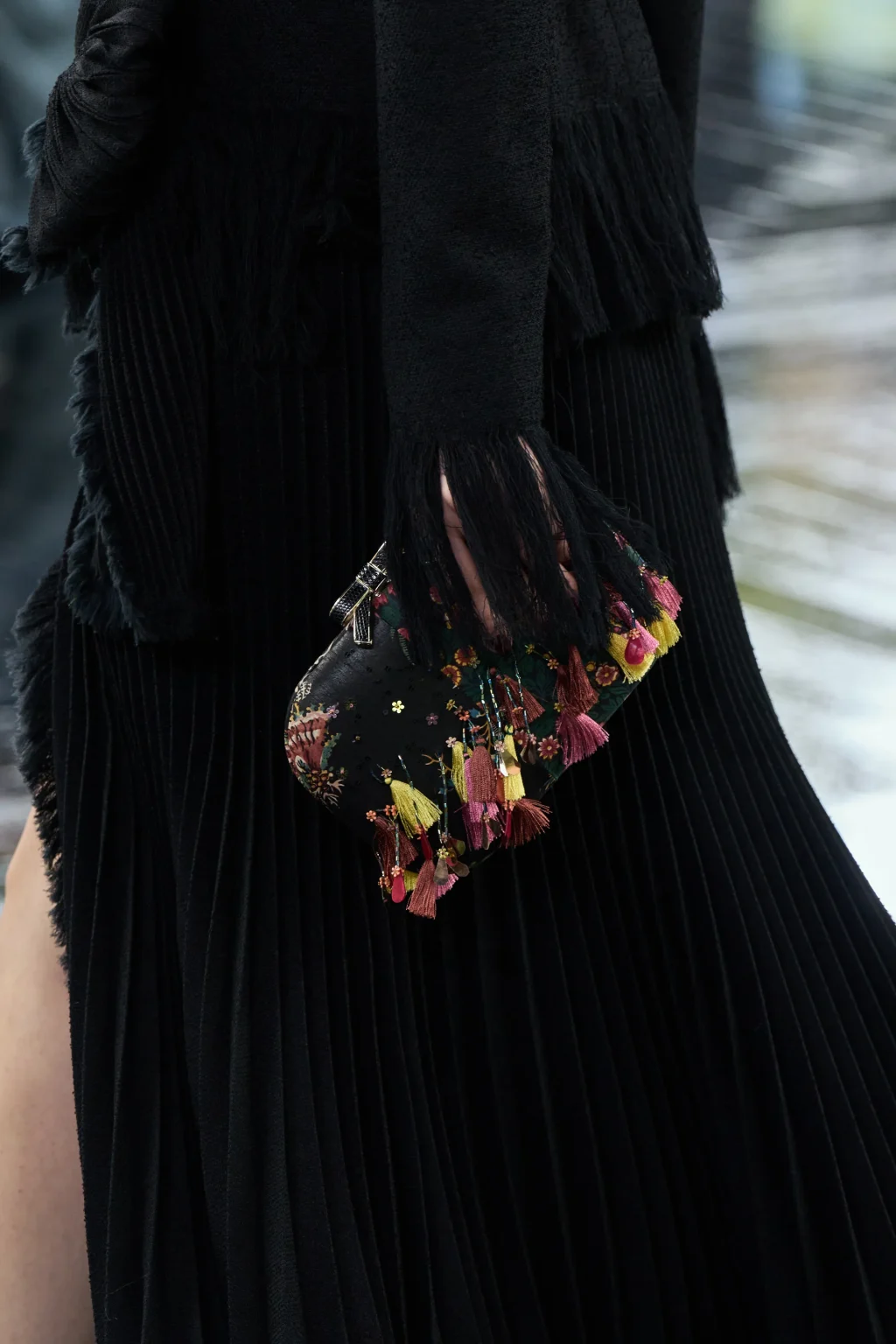
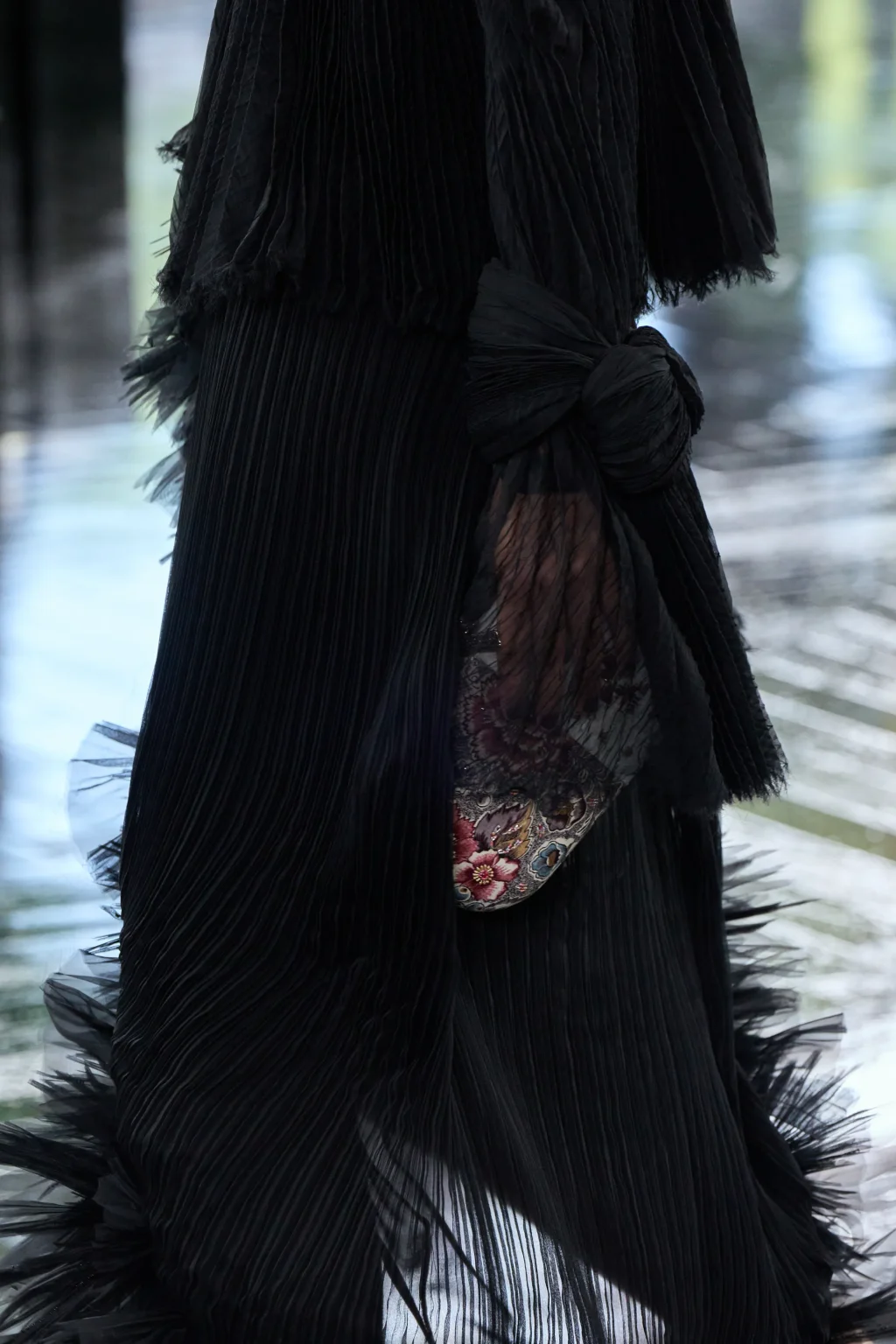
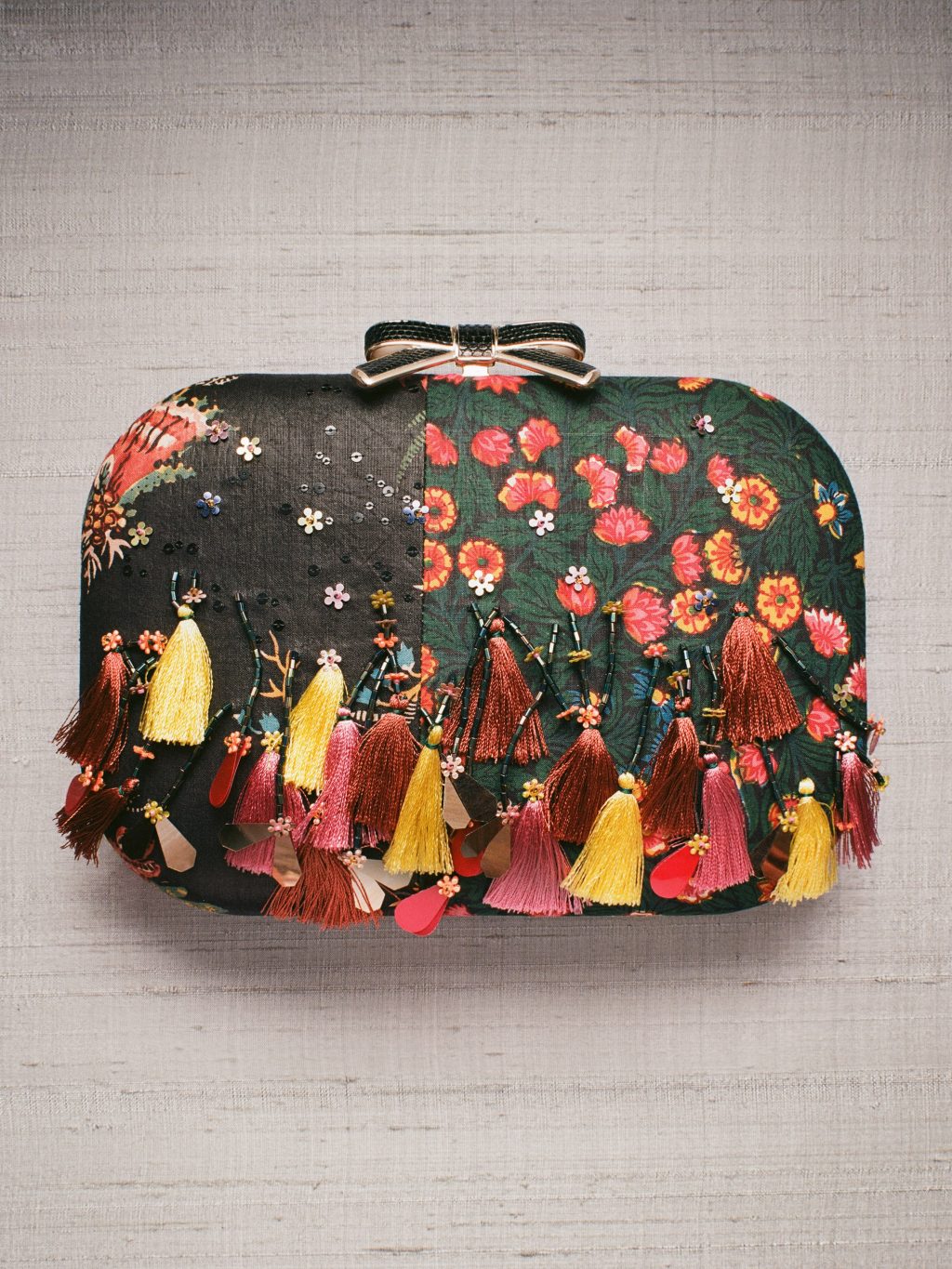
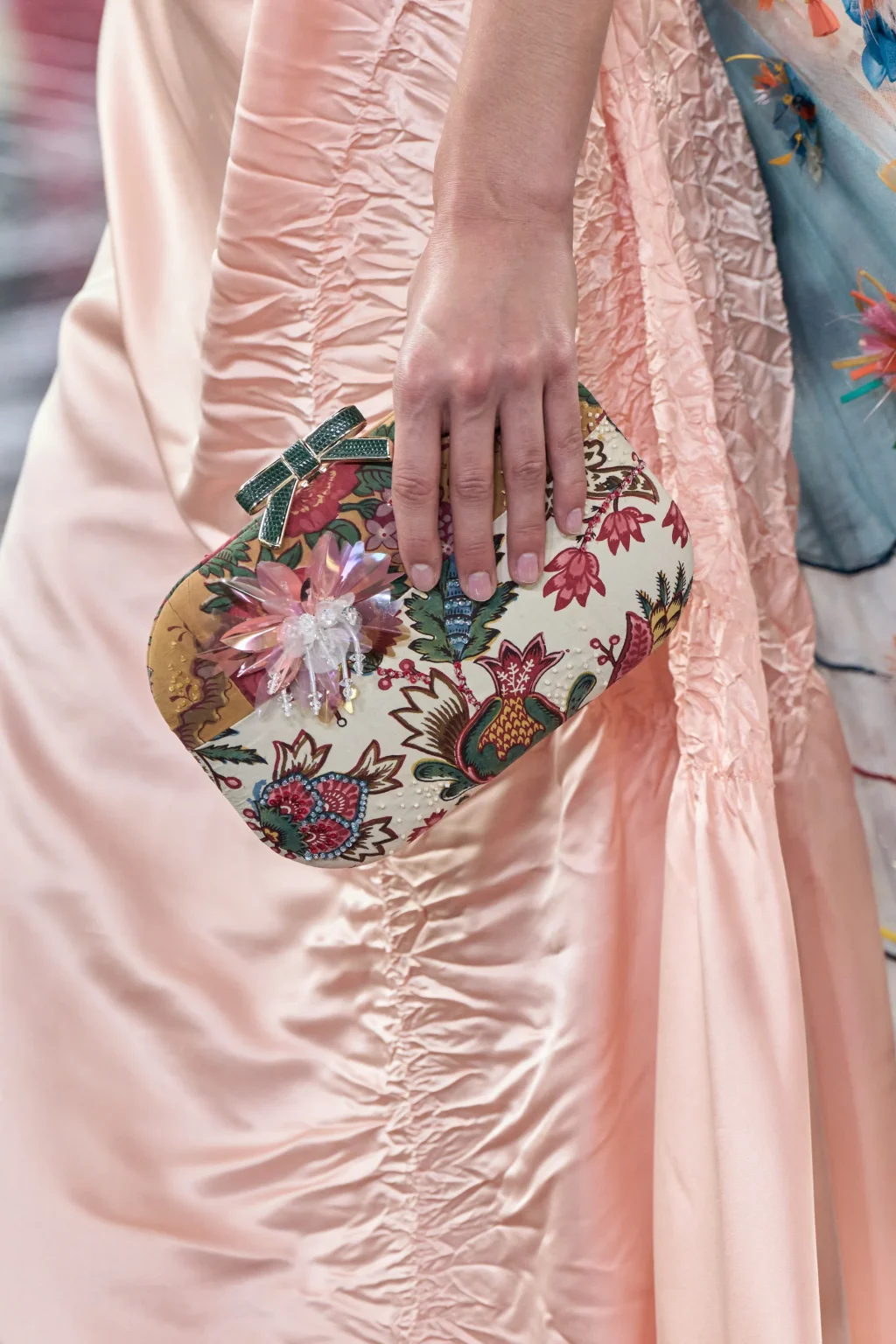
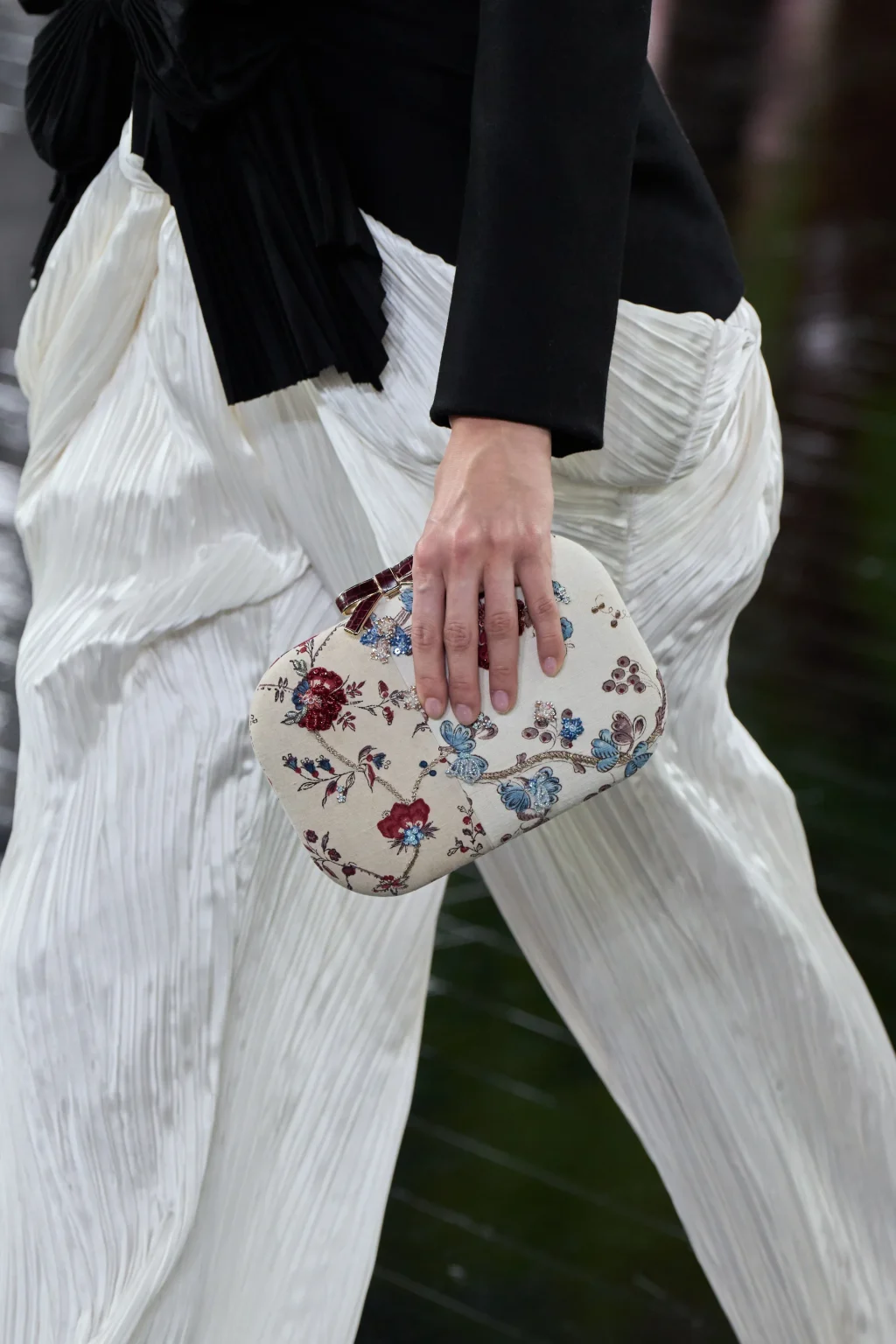
Anderson entered that dialogue through Lynda Benglis: her longstanding relationship with Ahmedabad, Gujarat, guided his research toward Indian craft itself, particularly the artisanal traditions of chintz and gemstone carving. Authentic fragments of 18th-century chintz and indiennes, sourced from a specialist dealer, were mounted onto Petit Dîner bodies, then embellished with sequinned flowers, crystal vines, silk tassels and metallic thread. Because each antique fragment is unique, Dior describes these as one-of-a-kind bags: no two chintz Petit Dîners in the show shared a surface.
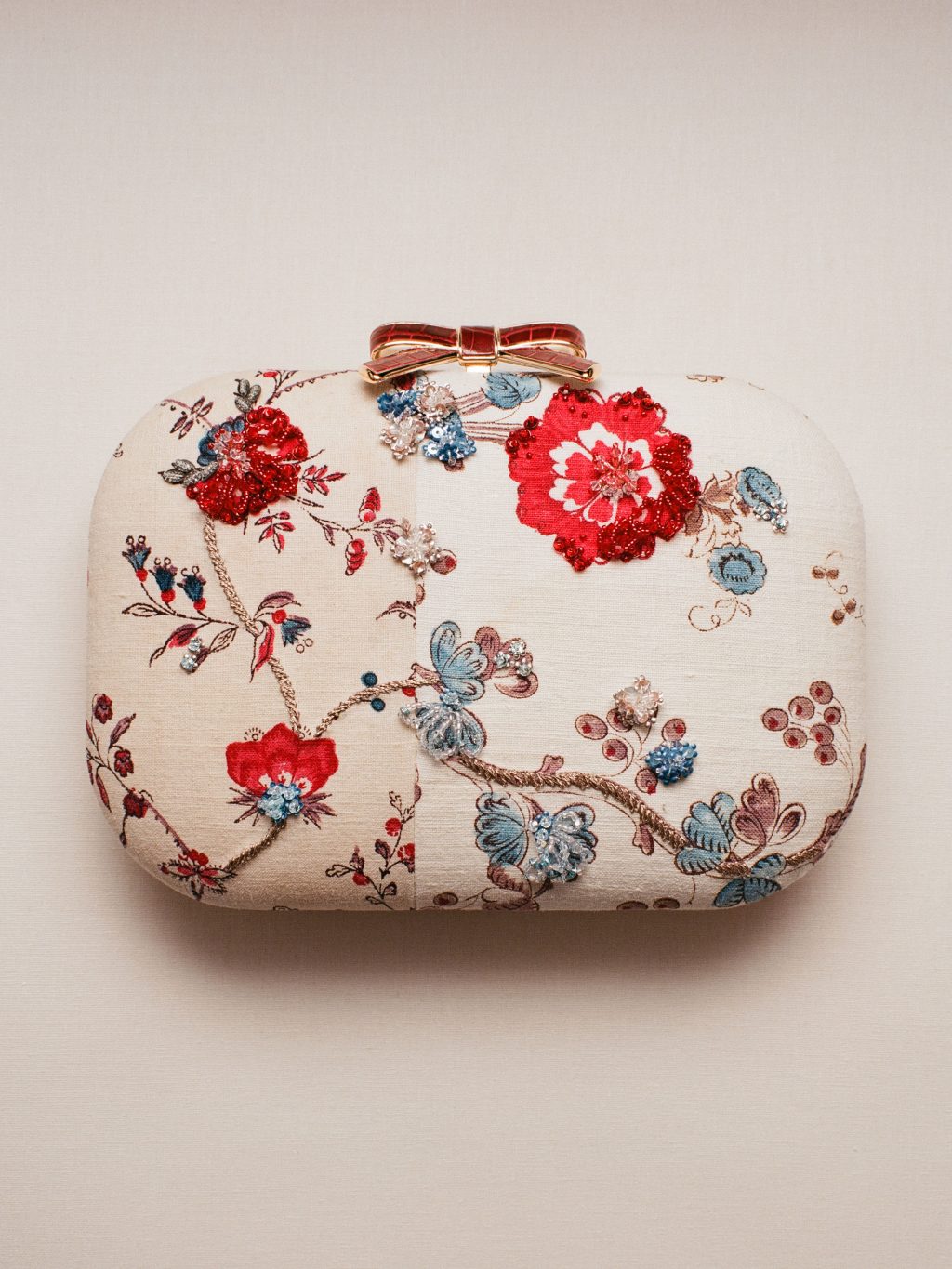
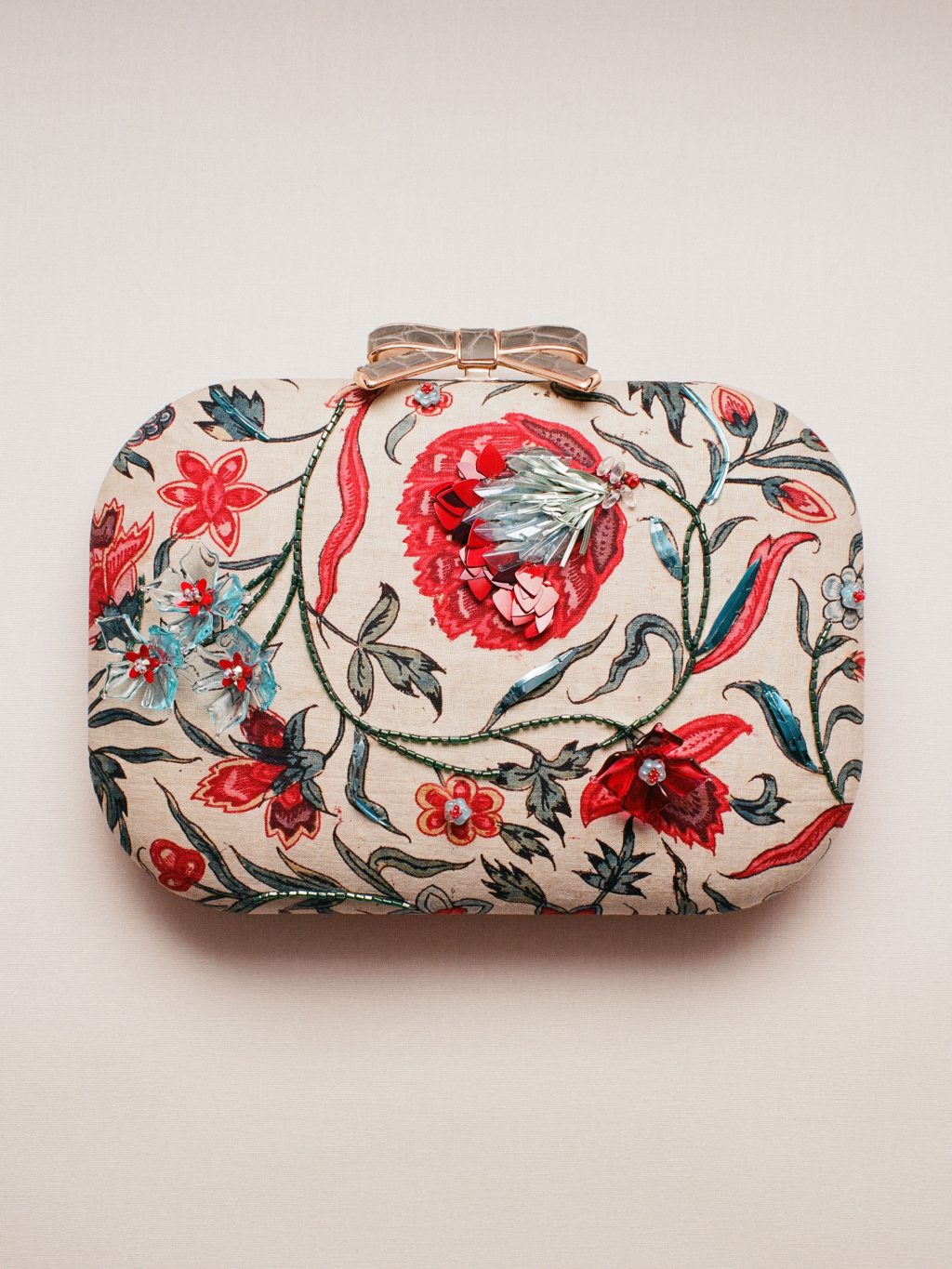
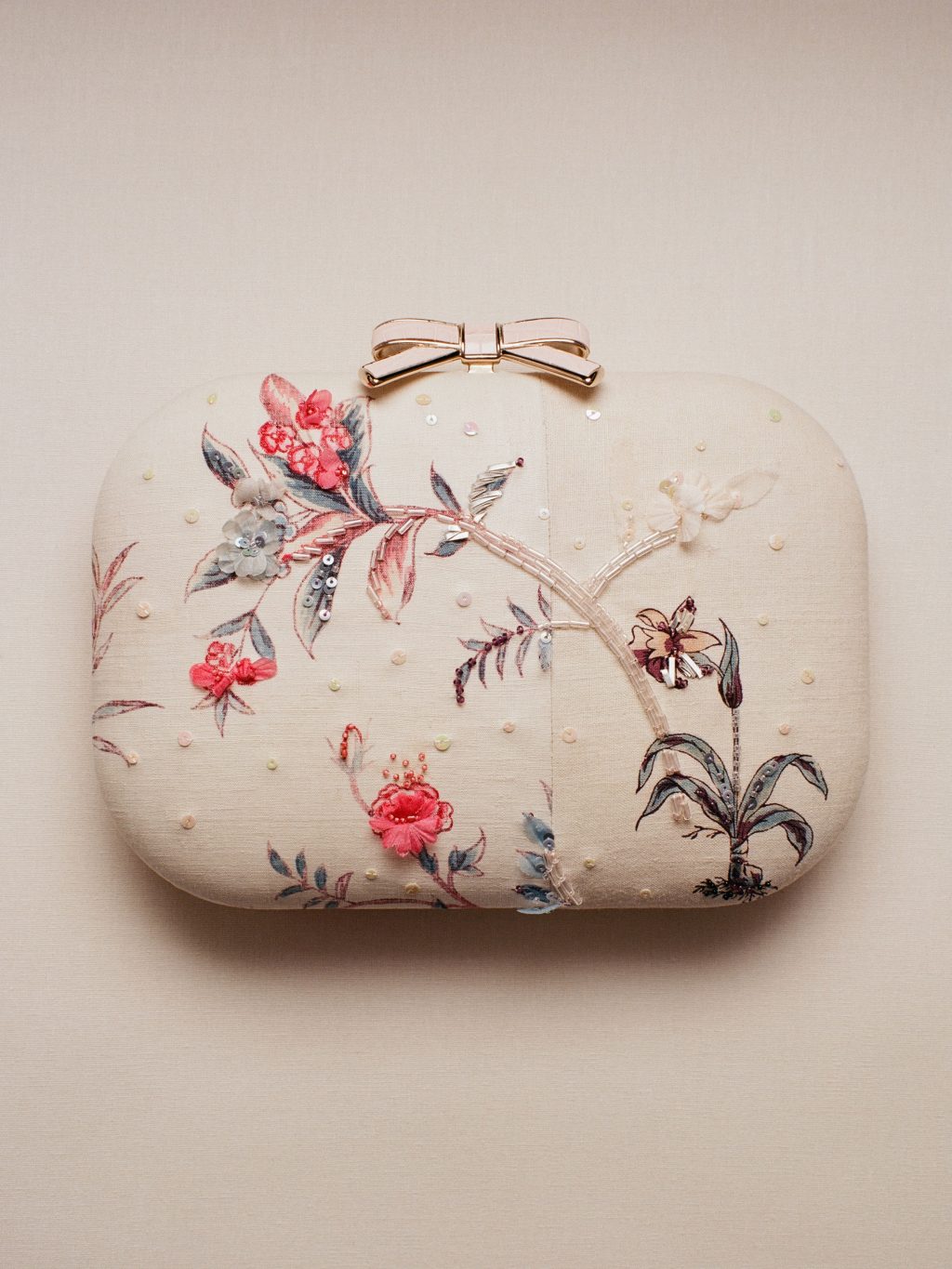
The bow clasps followed suit, wrapped in croc in pale pink, red, burgundy, grey and green — while the gemstone half of the story surfaced in the jewellery, carved by artisans in Jaipur from green onyx, a stone chosen to recall the symbolic weight of emeralds in traditional Indian ornamentation, cut into cabochons and four-leaf clovers.
The Dior Cigale Bag in Metallic Plissé and Emerald Crocodile
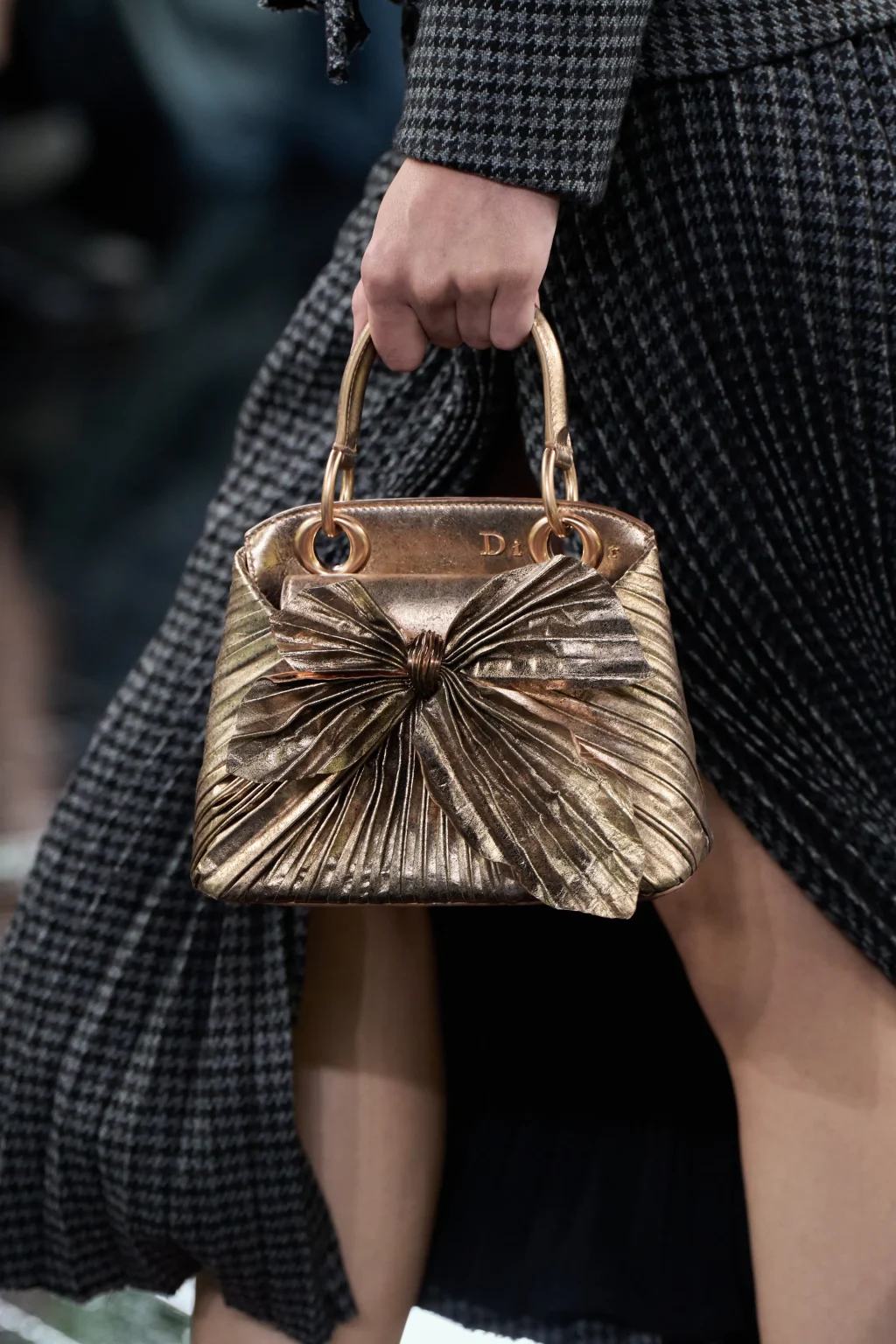
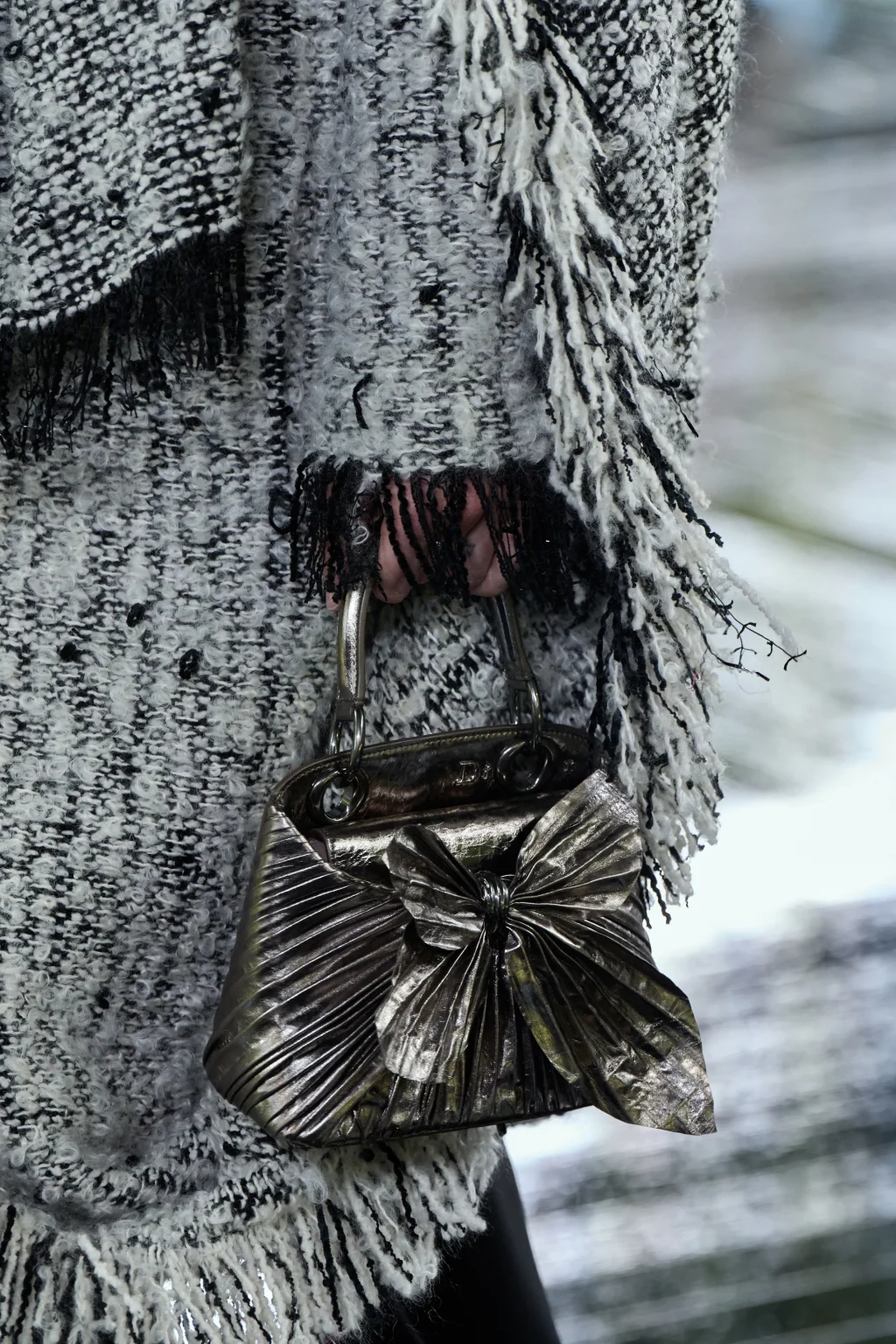
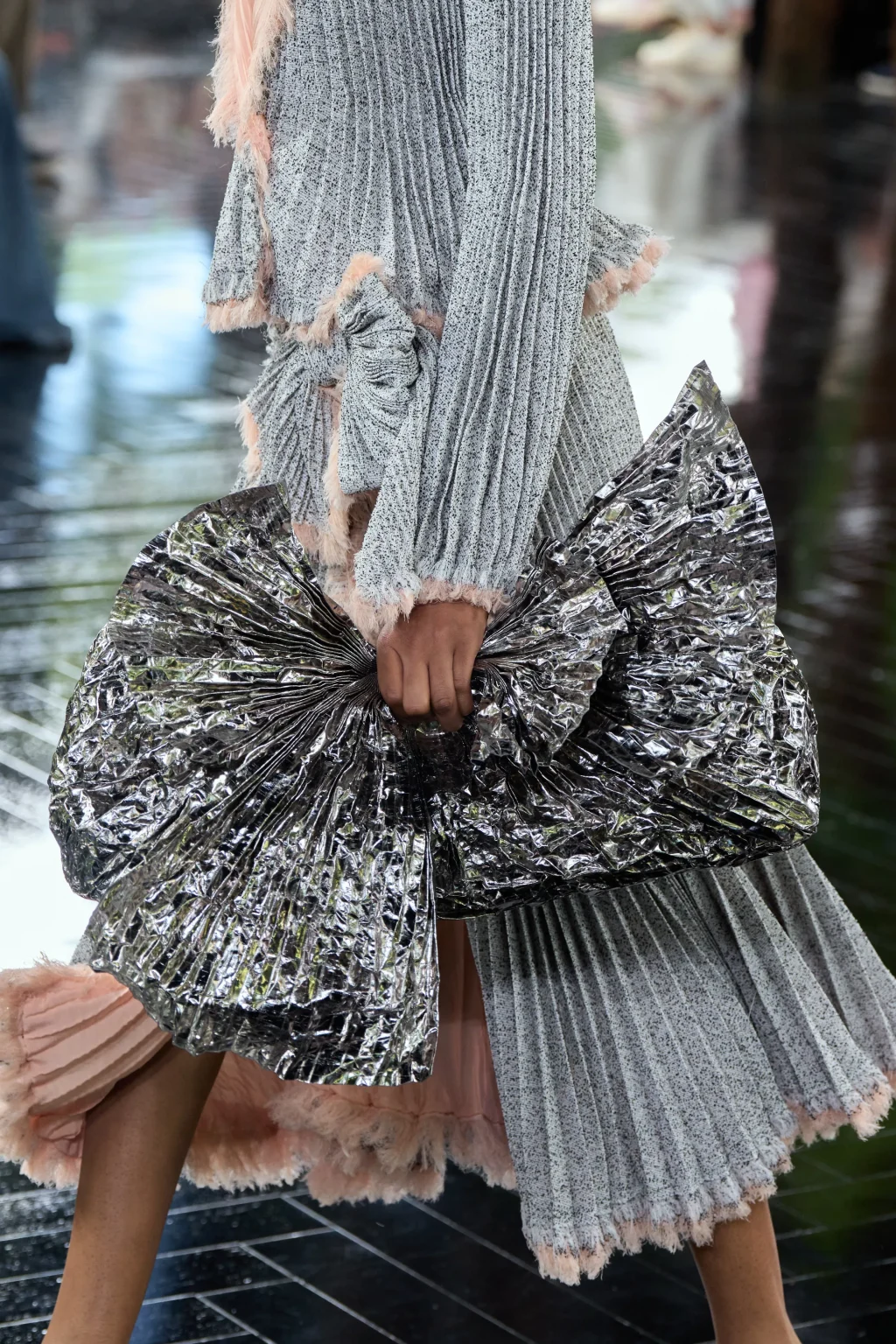
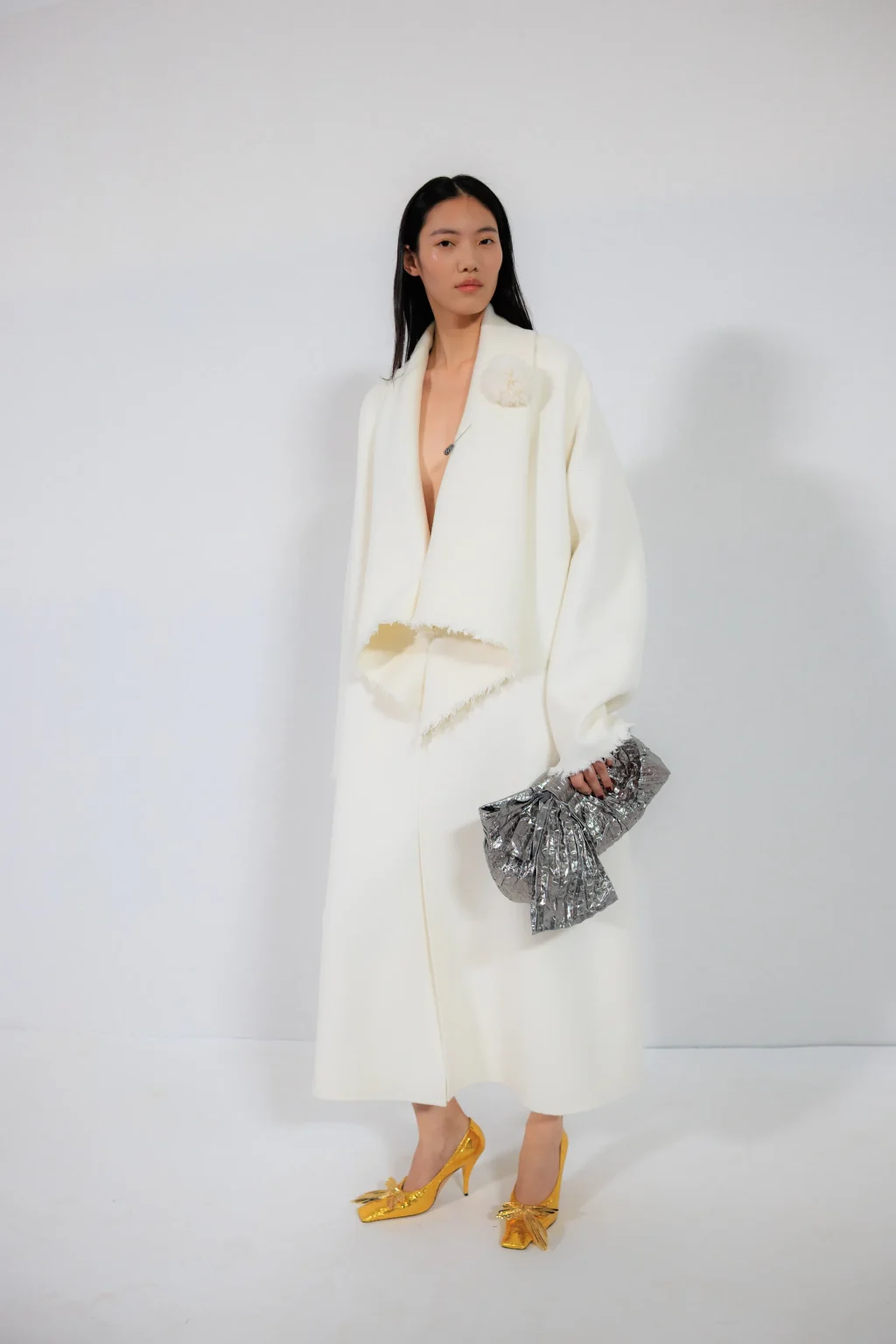
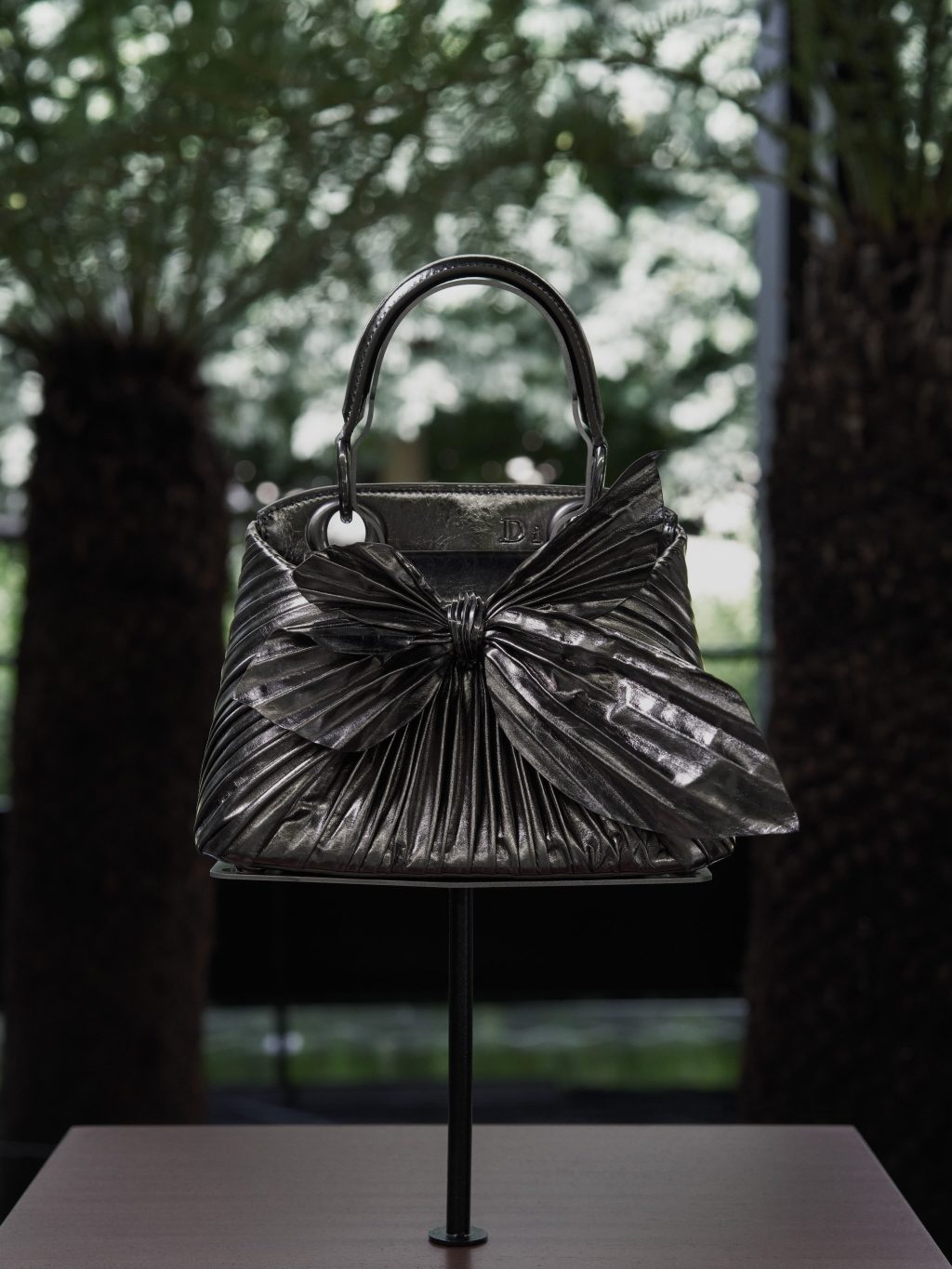
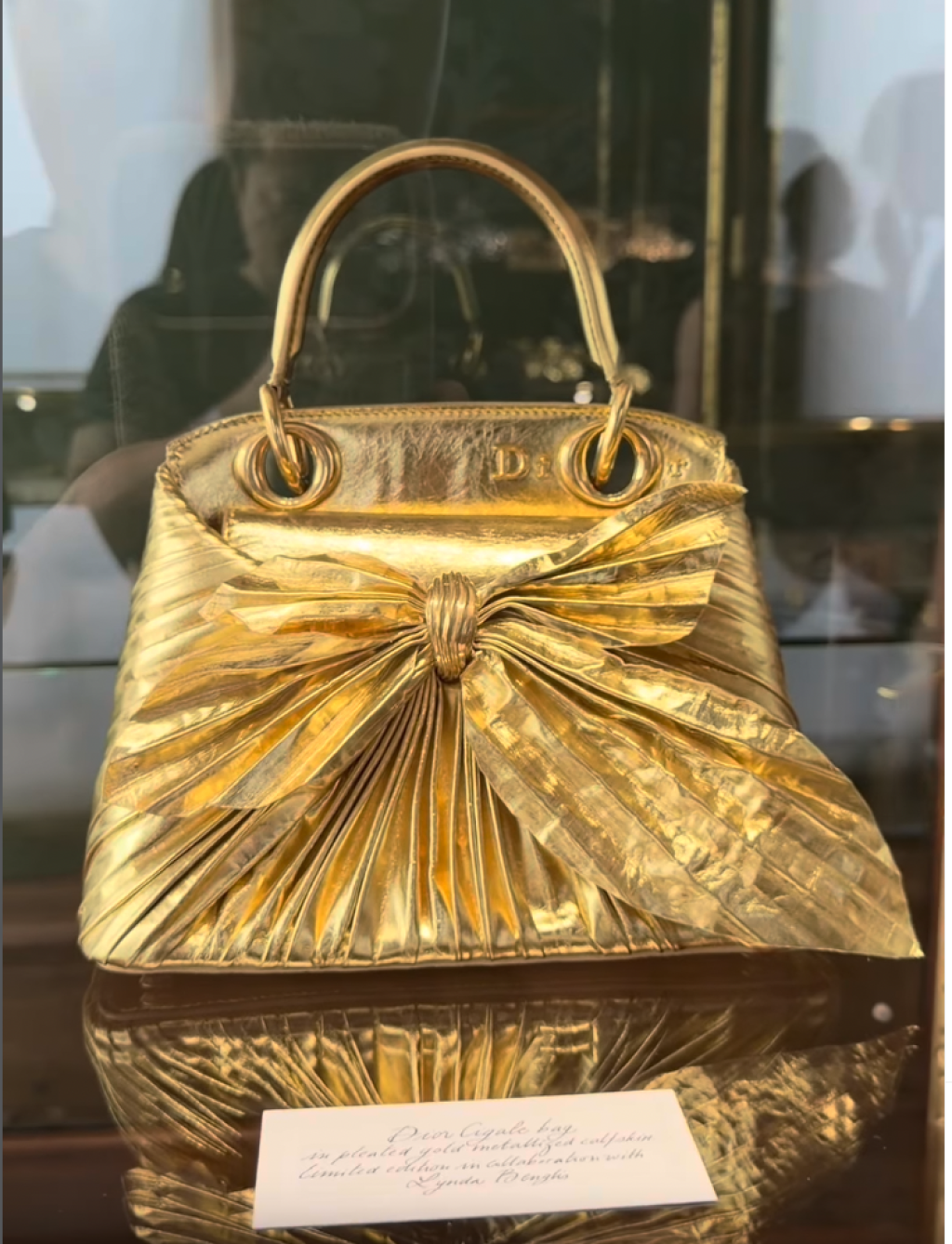
The Cigale — Anderson’s bow-front signature, named after Monsieur Dior’s 1952 “La Cigale” gown — appeared in its most couture register yet. Two metallic plissé editions, one in deep bronze-gold, one in smoked gunmetal, wrapped the entire body of the bag in hand-set pleats radiating from an oversized central bow, the metal rings and detached D-i-o-r lettering of the hardware carried over from the Lady Dior code. The finish reads as crushed metal foil, a direct echo of Benglis’s sprayed-mesh sculptures.
READ ALSO Inside the making of the Dior Cigale Bag
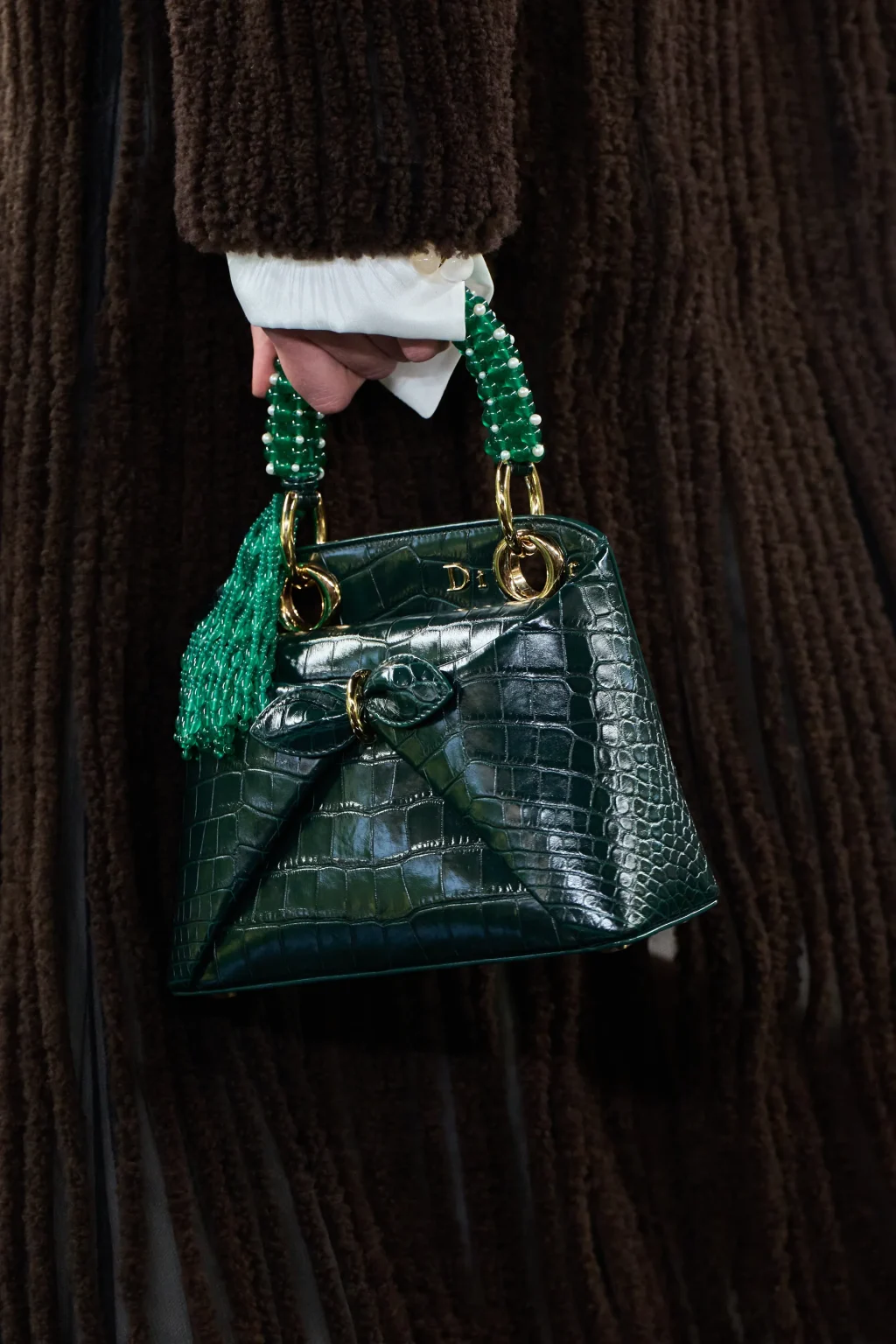
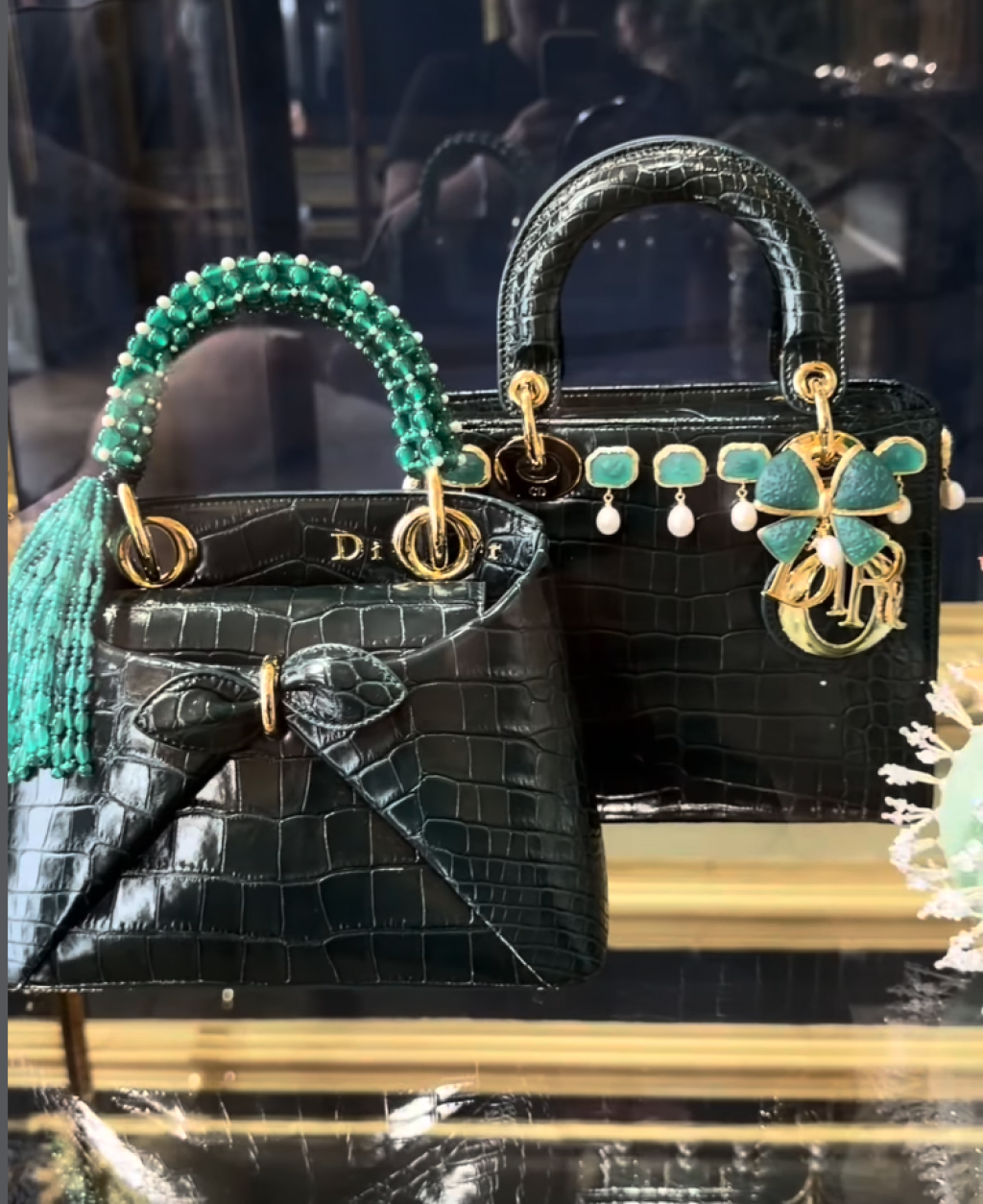
A third version pushed into exotic territory: a compact Cigale in glossy emerald croc-embossed leather, its top handle rebuilt as a string of green glass beads punctuated with pearls, finished with a cascading beaded tassel. The bag stayed recognisably Cigale — folded front, off-centre bow, jewellery-grade eyelets — while borrowing its palette from the carved green onyx of the collection’s Jaipur-made necklaces.
READ ALSO Dior Cigale Bag: Jonathan Anderson’s next quiet icon, decoded
The Dior Bow Bag: A Bow That Became the Whole Bag
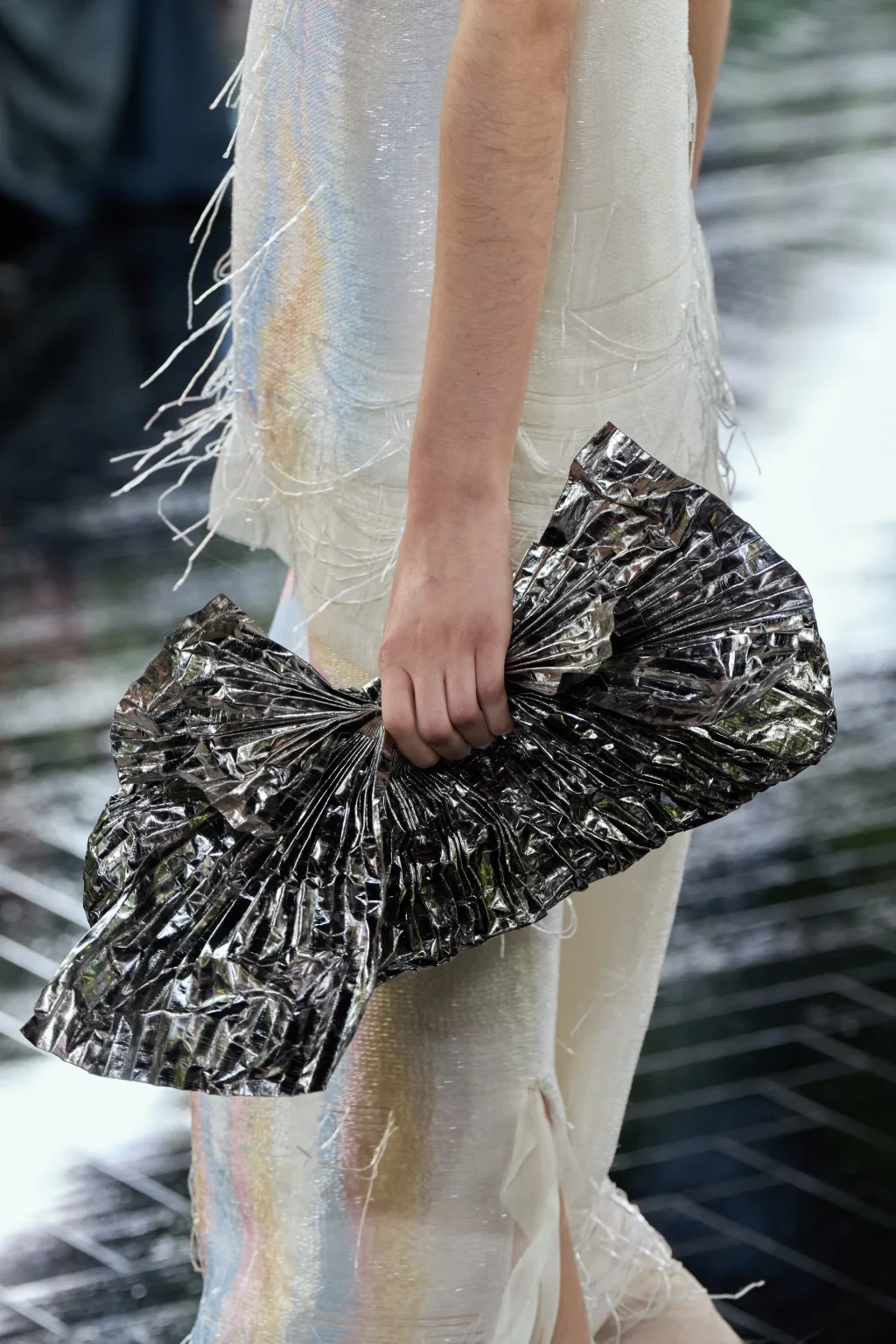
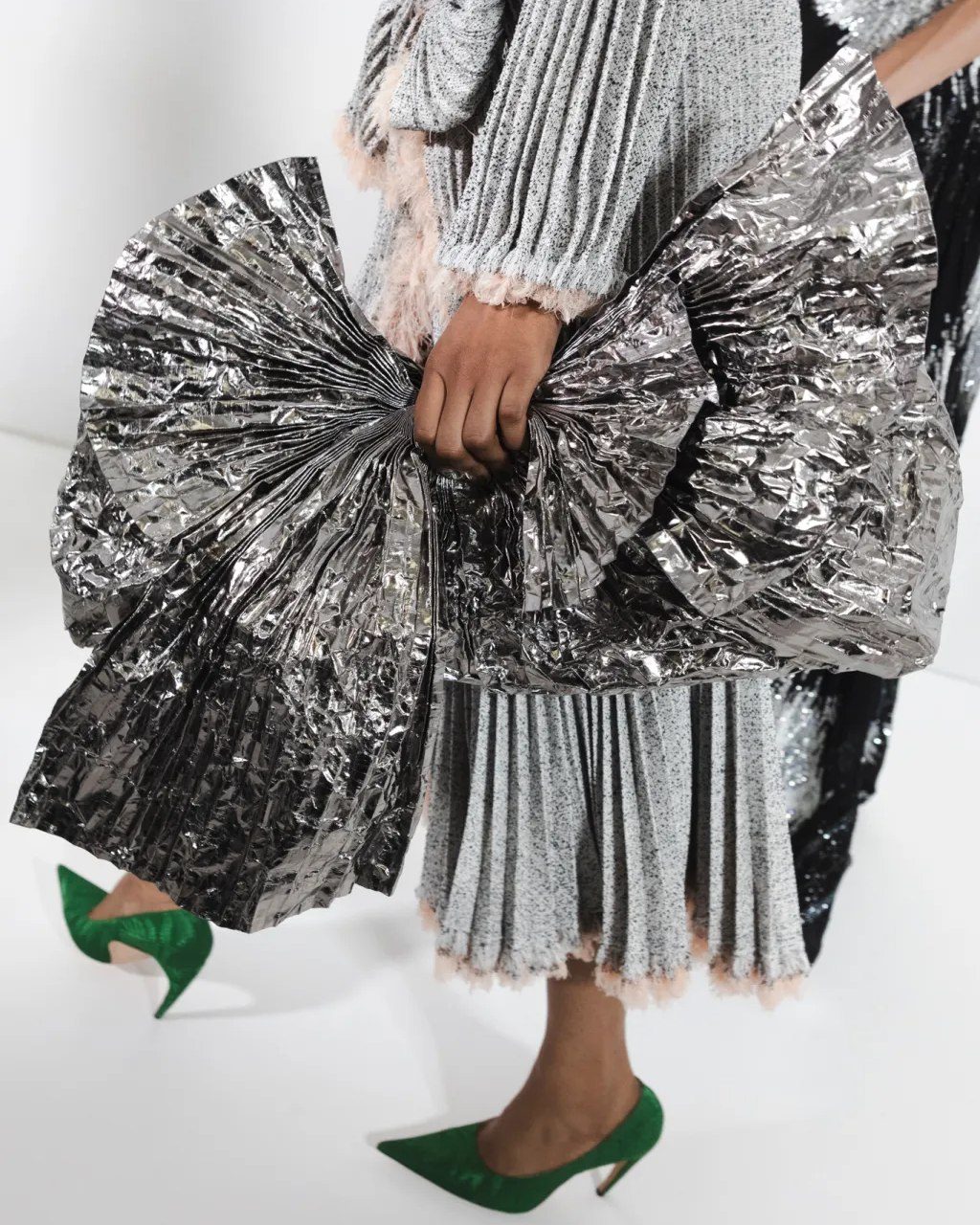
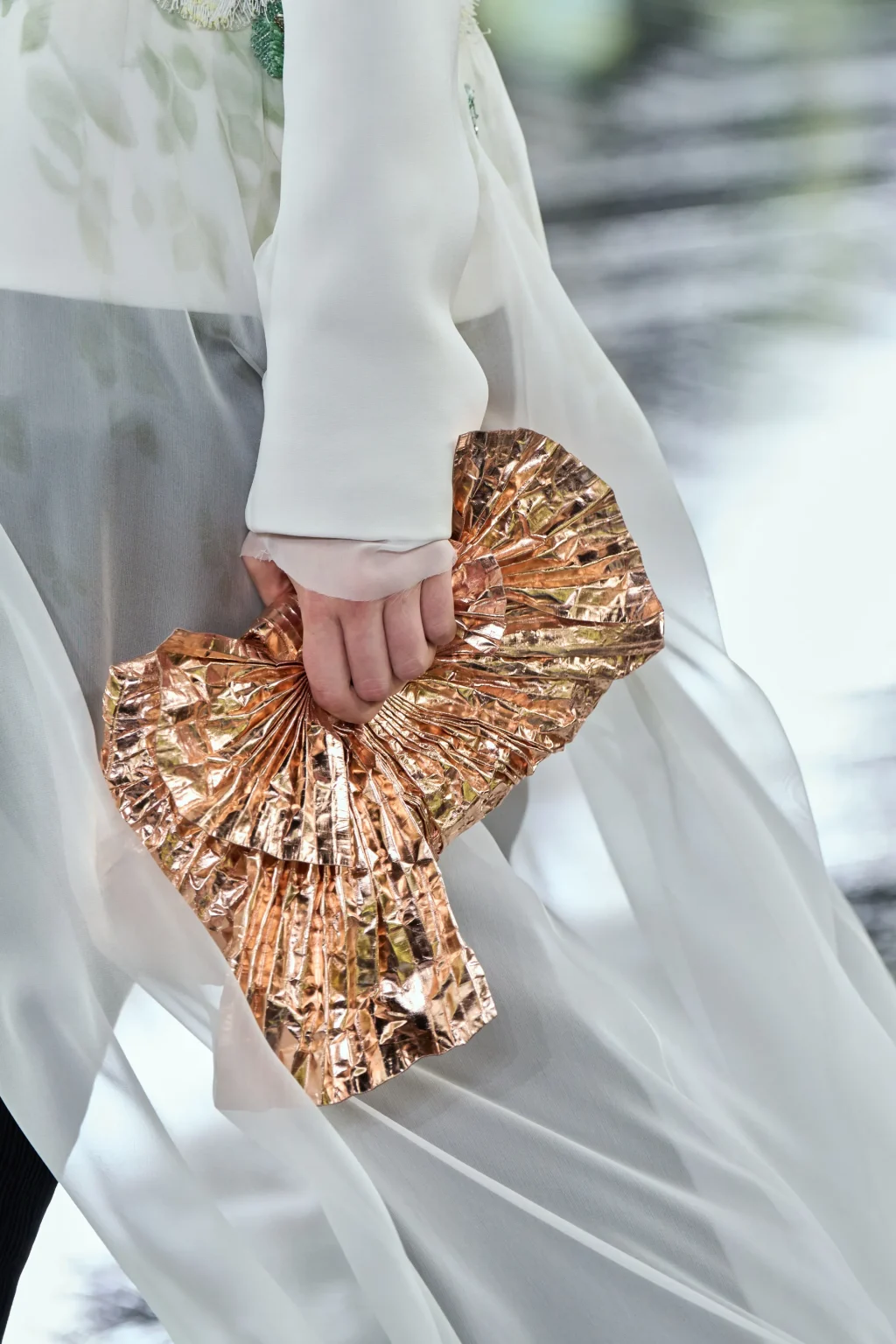
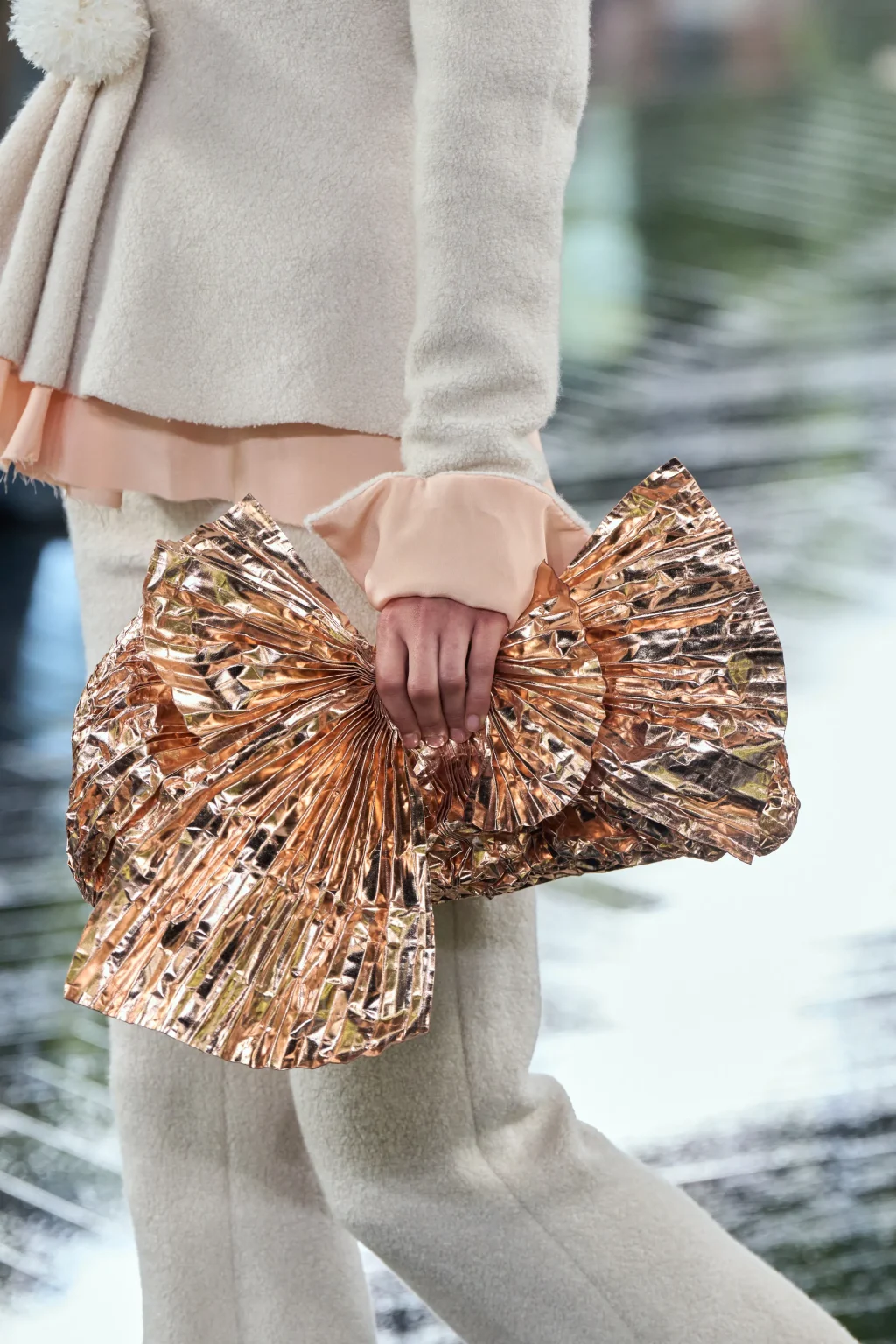
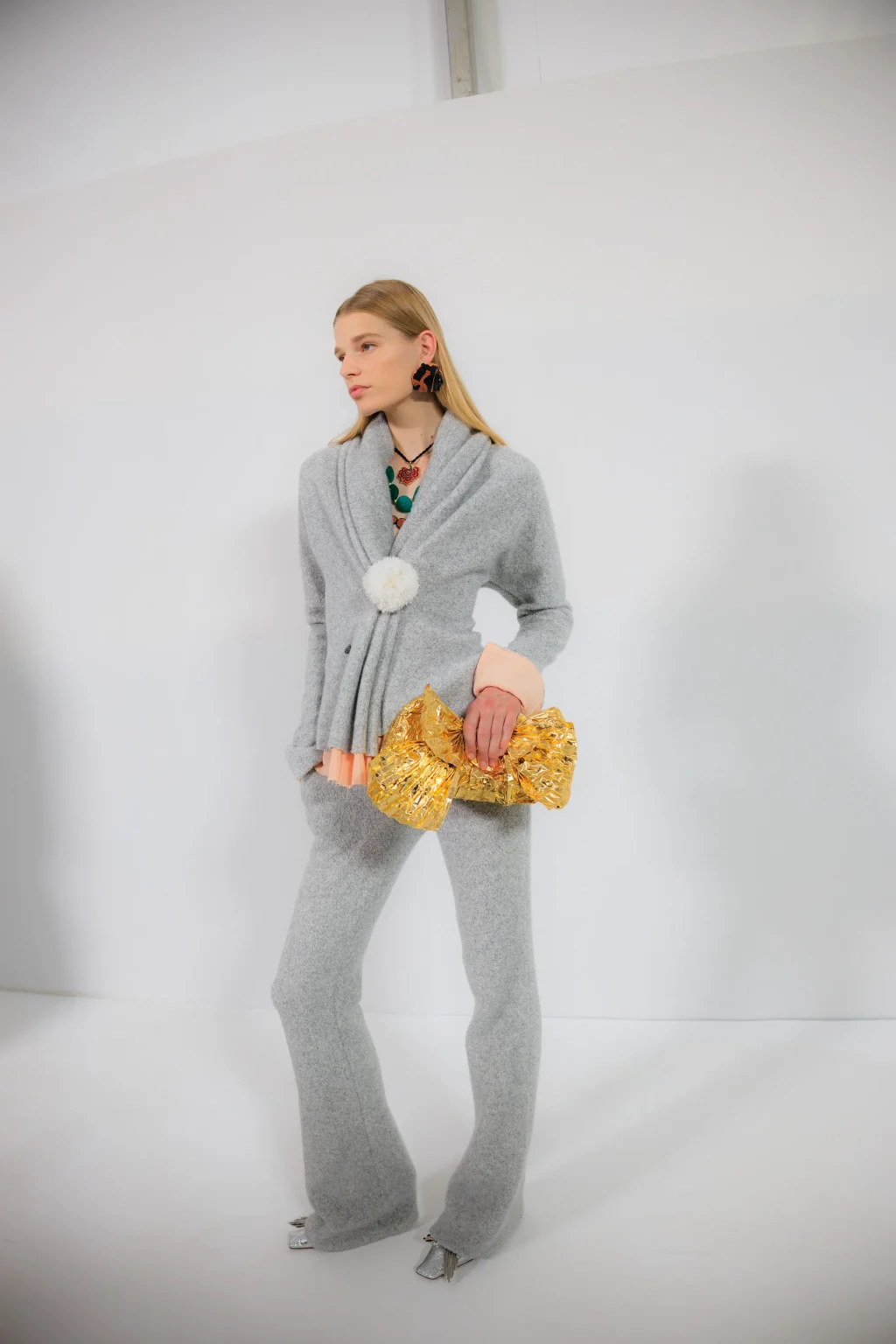
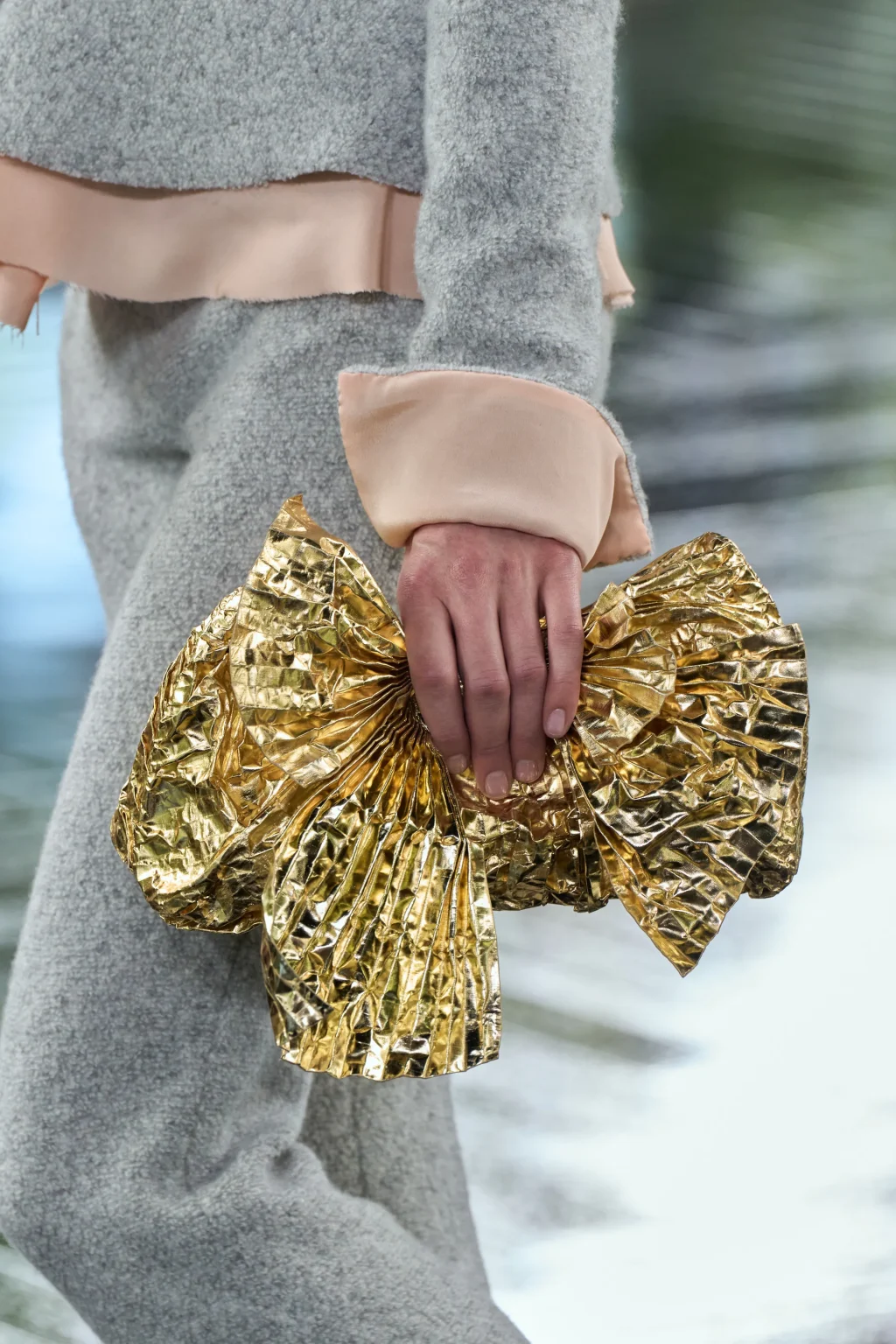
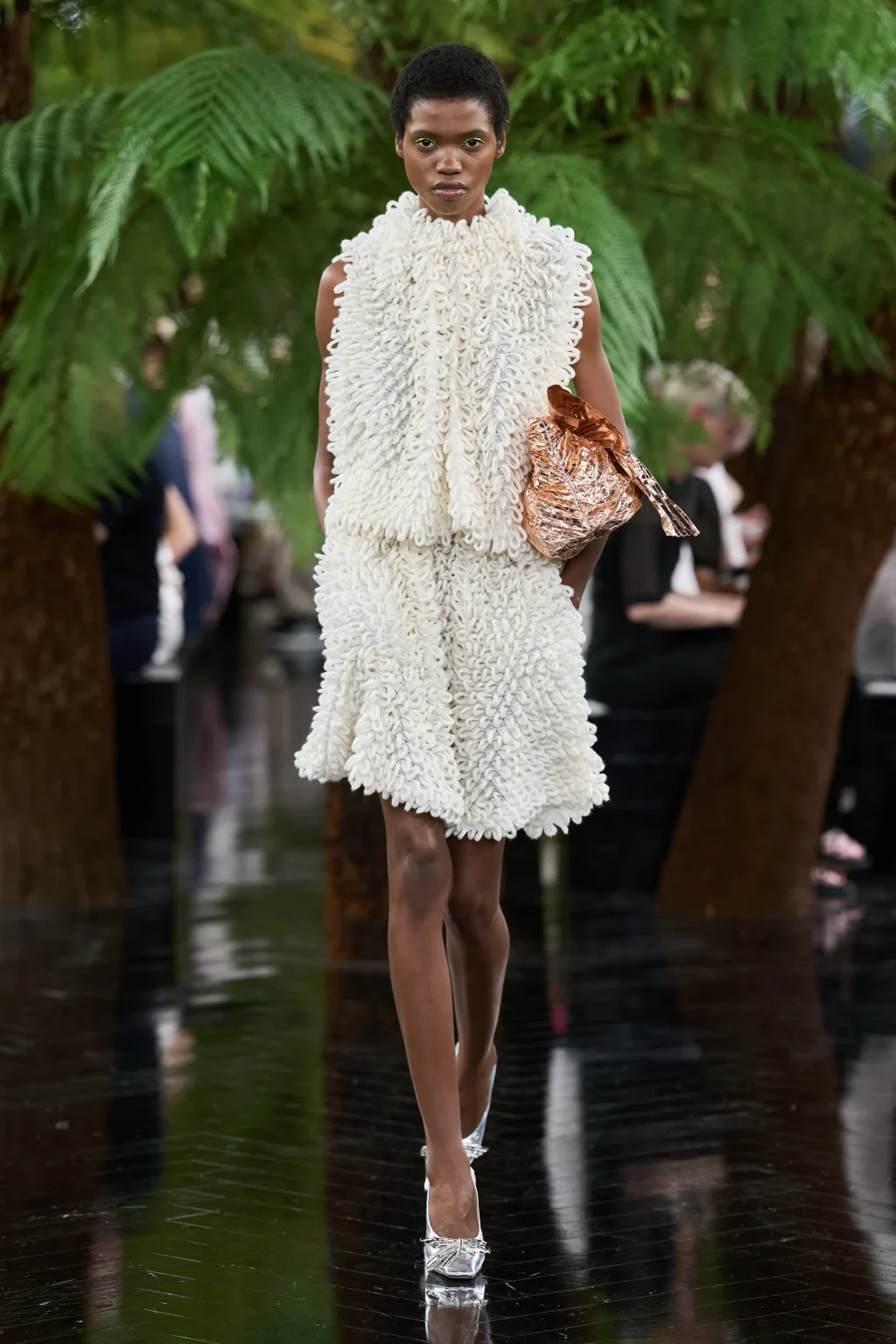
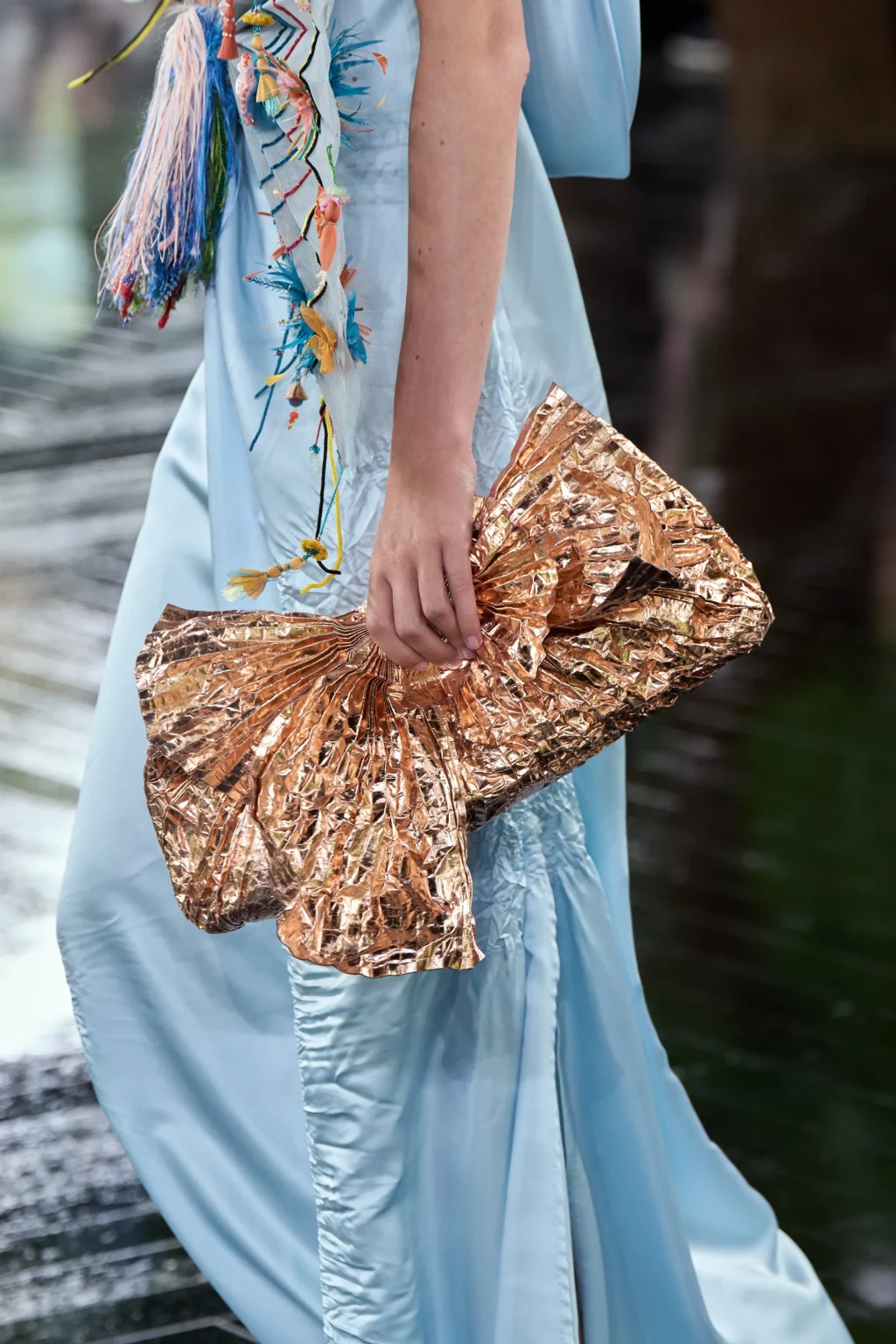
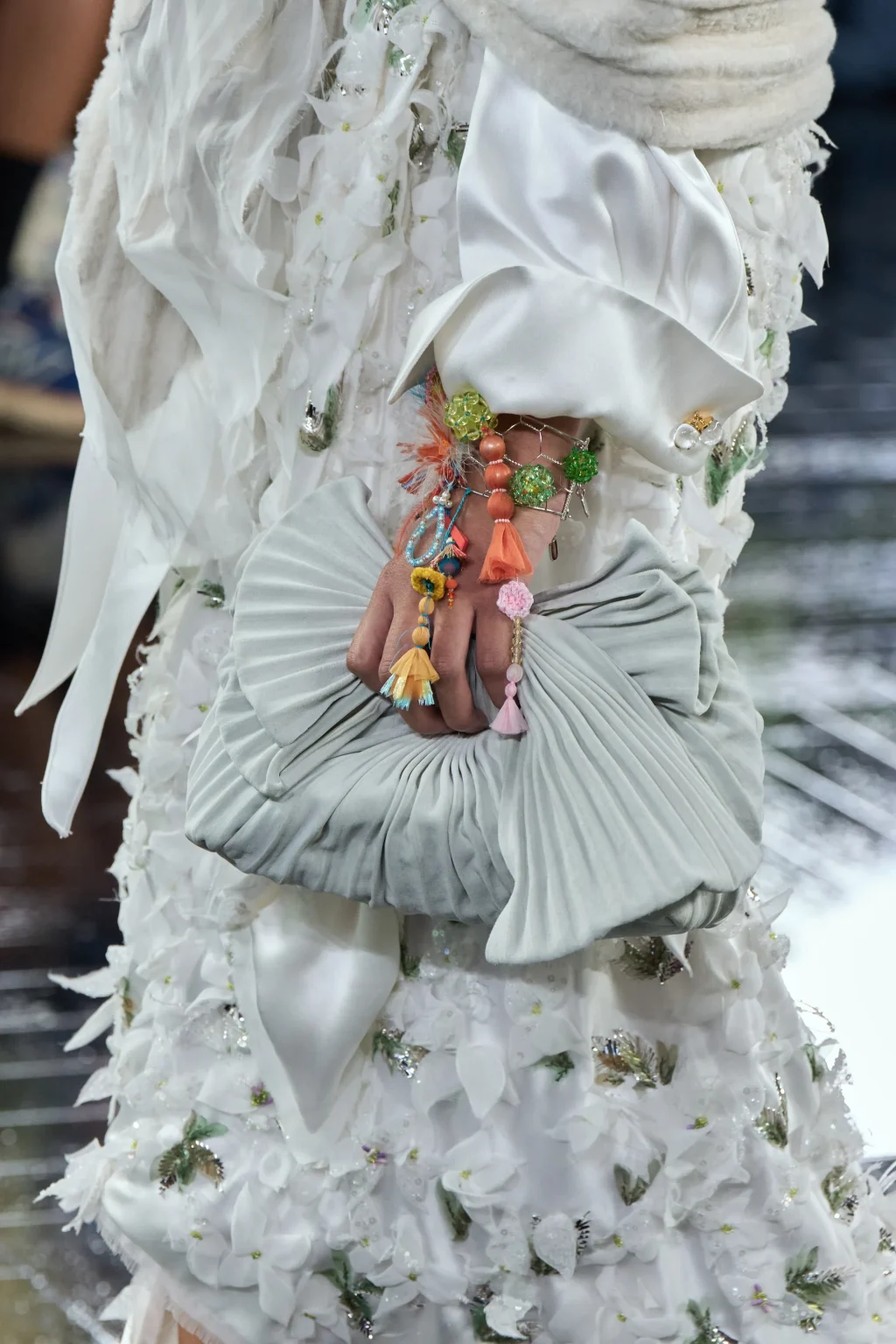
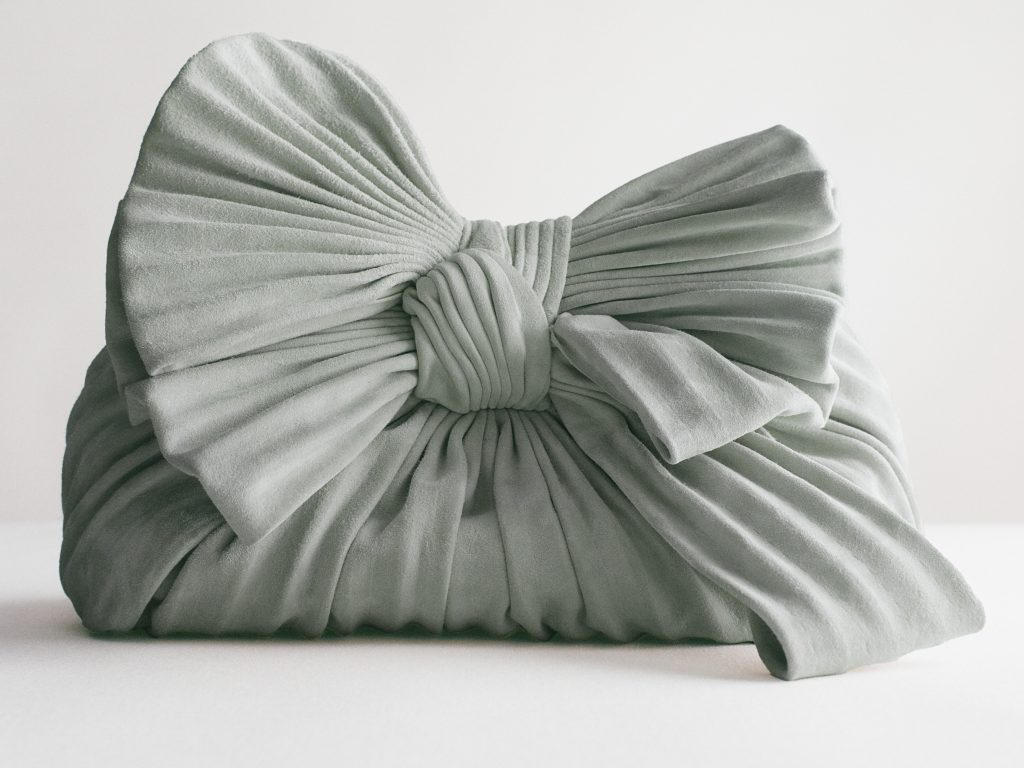
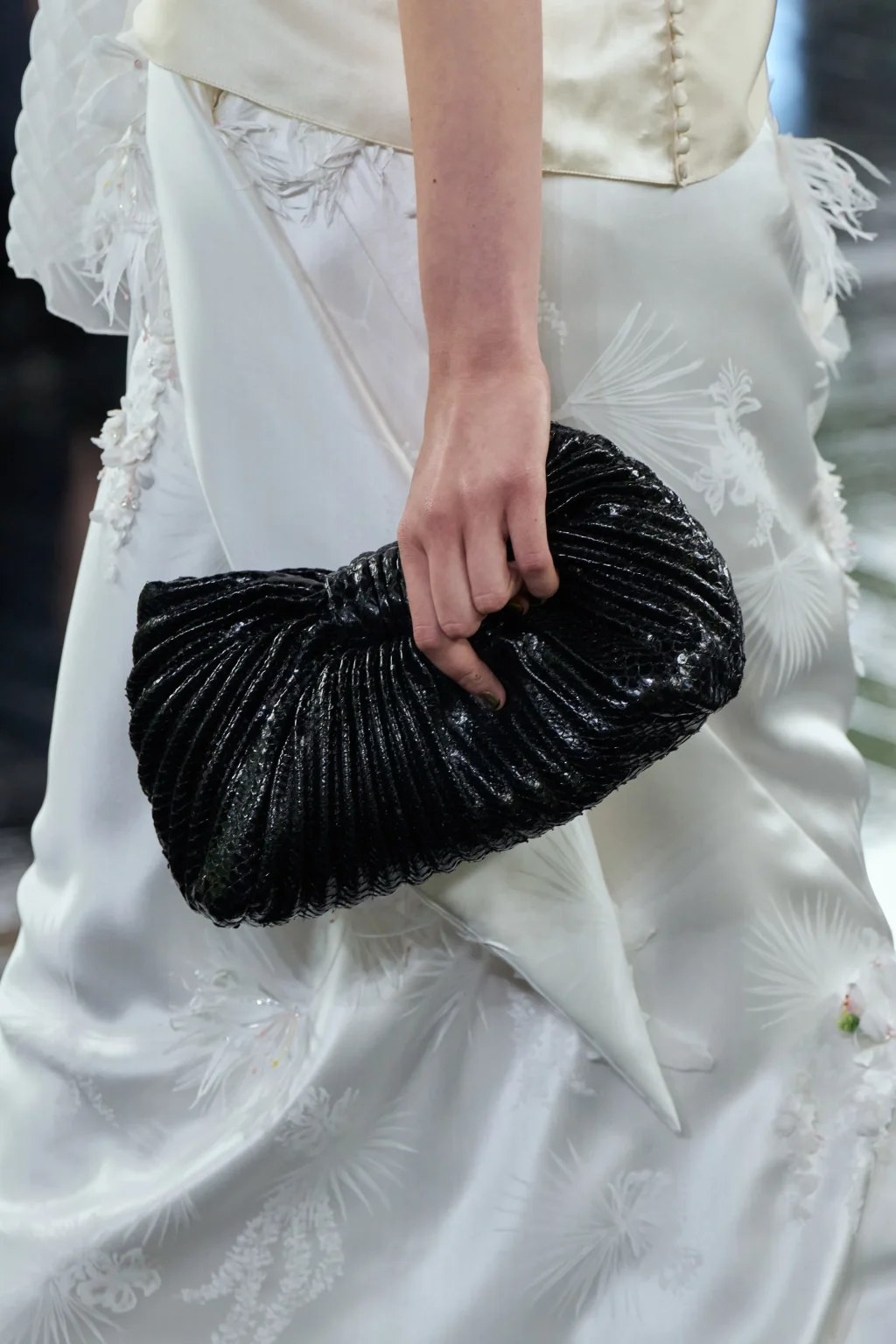
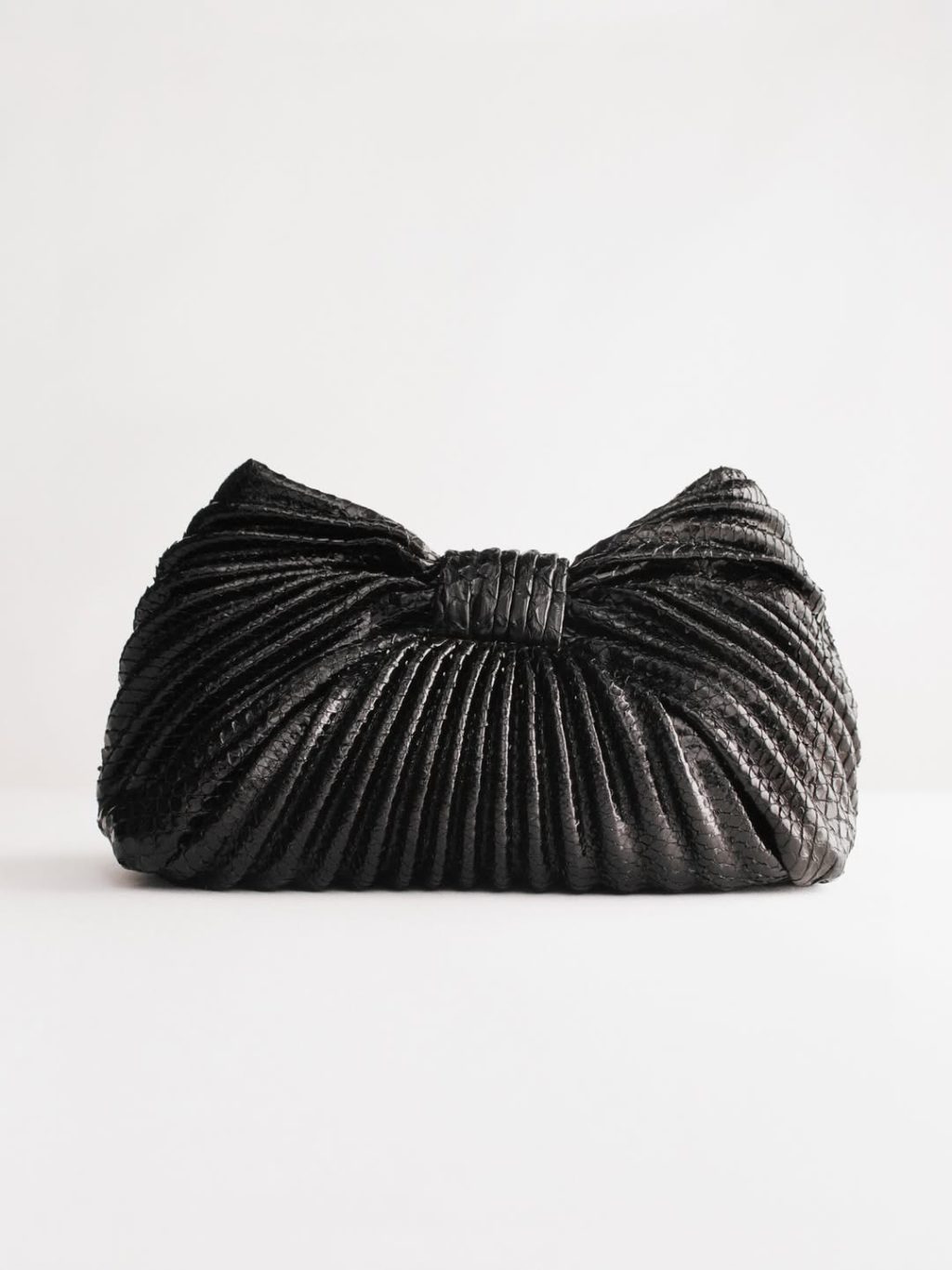
Among the four new styles co-designed with Lynda Benglis, the Dior Bow — shown on the runway as a plissé bow clutch — was the most radical. Here the bow stopped decorating the bag and became it: a huge, hand-pleated knot of crinkled lamé, gripped through its centre so the two wings fan out on either side of the fist. Silver, gold, copper and rose-gold editions ran through the show in escalating scale, from a compact clutch to a near-XL statement piece; softer variants appeared in black snakeskin plissé and a pale sage pleated fabric that twisted the same idea into a quieter pochette.
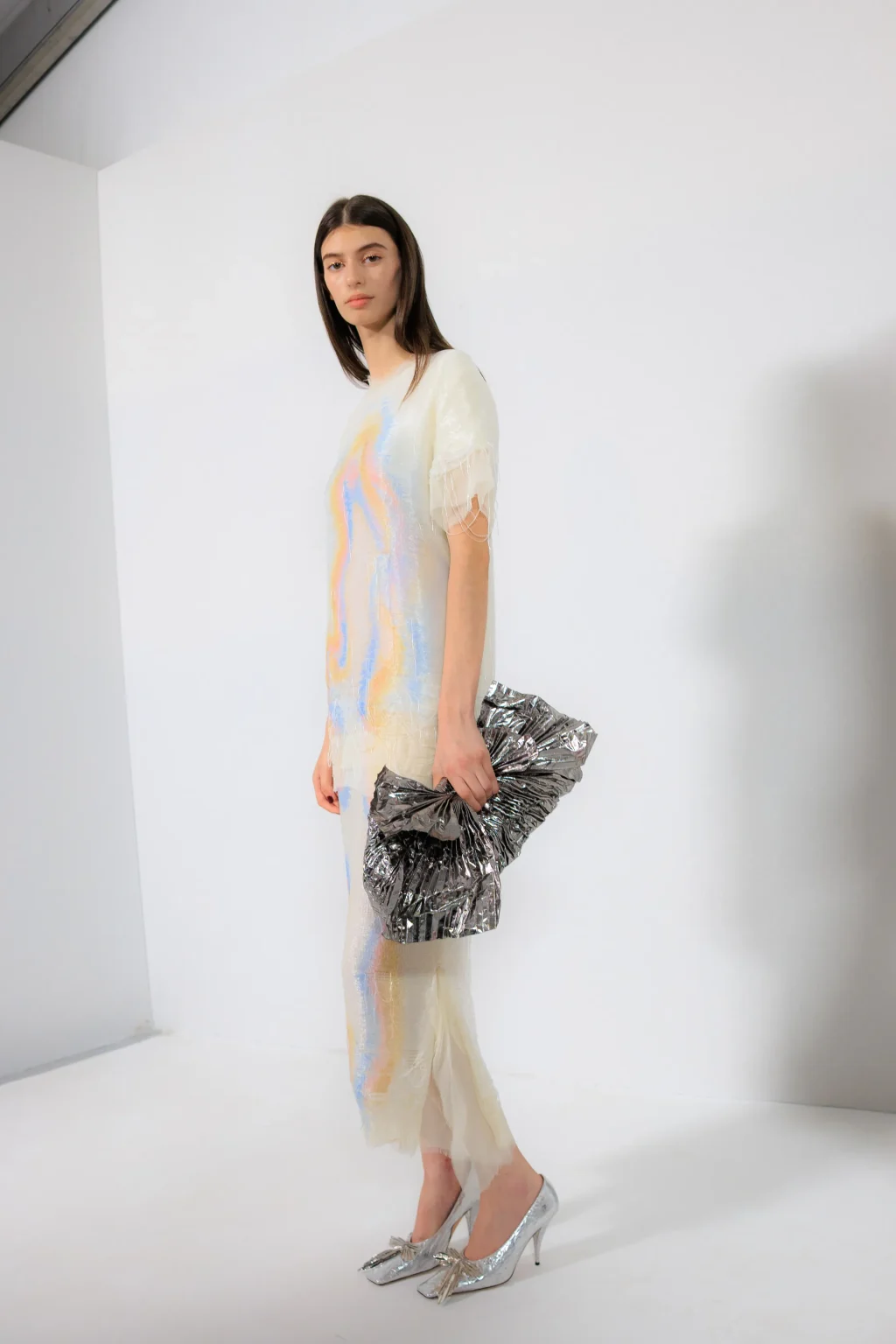
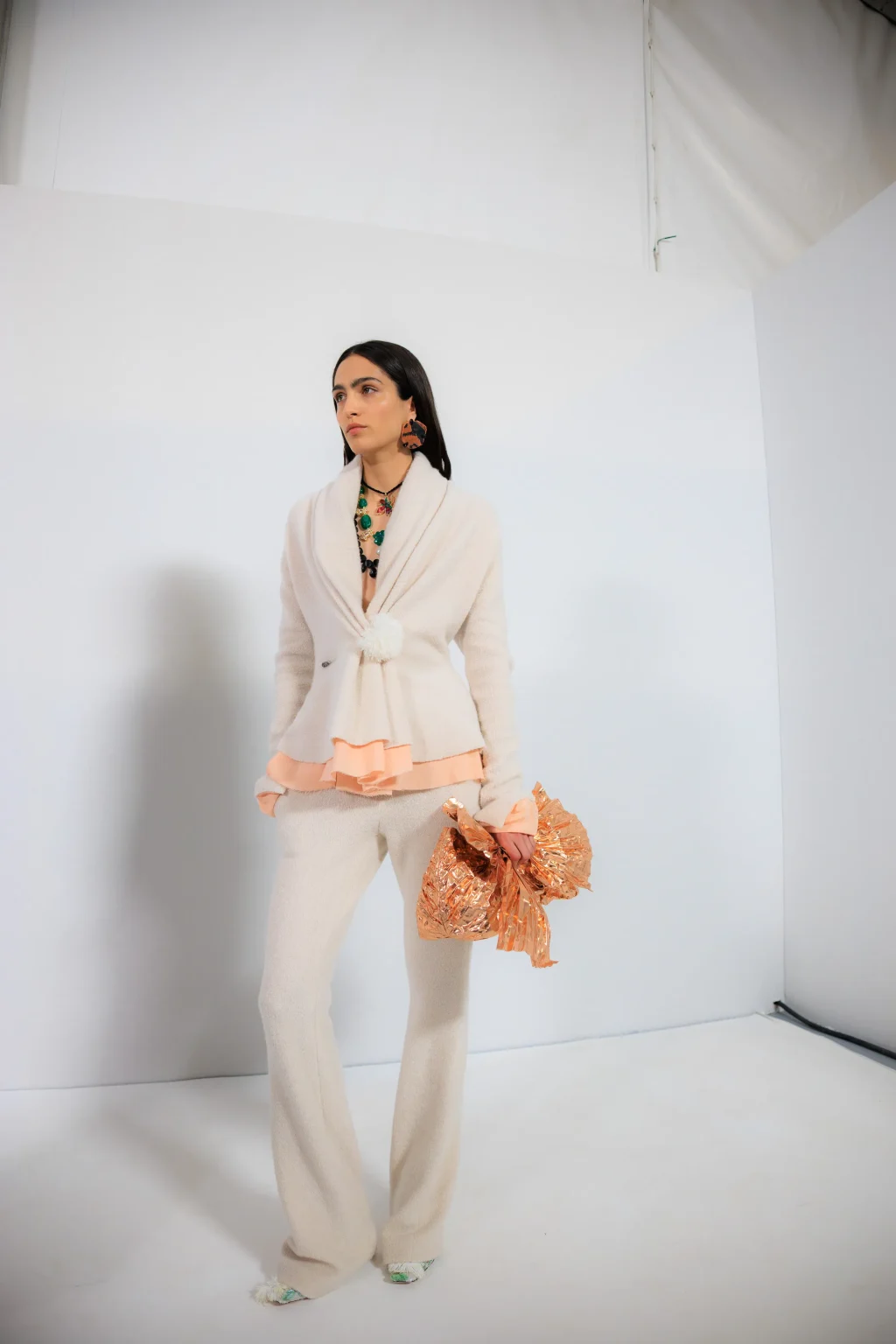
The show notes cited Benglis’s metallised pleated mesh works directly, and one of her knotted sculptures, “Goliath,” was rendered elsewhere in the collection as a silver lamé dress draped into a bow.
READ ALSO Dior Bow Bag by Jonathan Anderson: prices, sizes & colors
The Lady Dior Bag in Grass-Green Crocodile
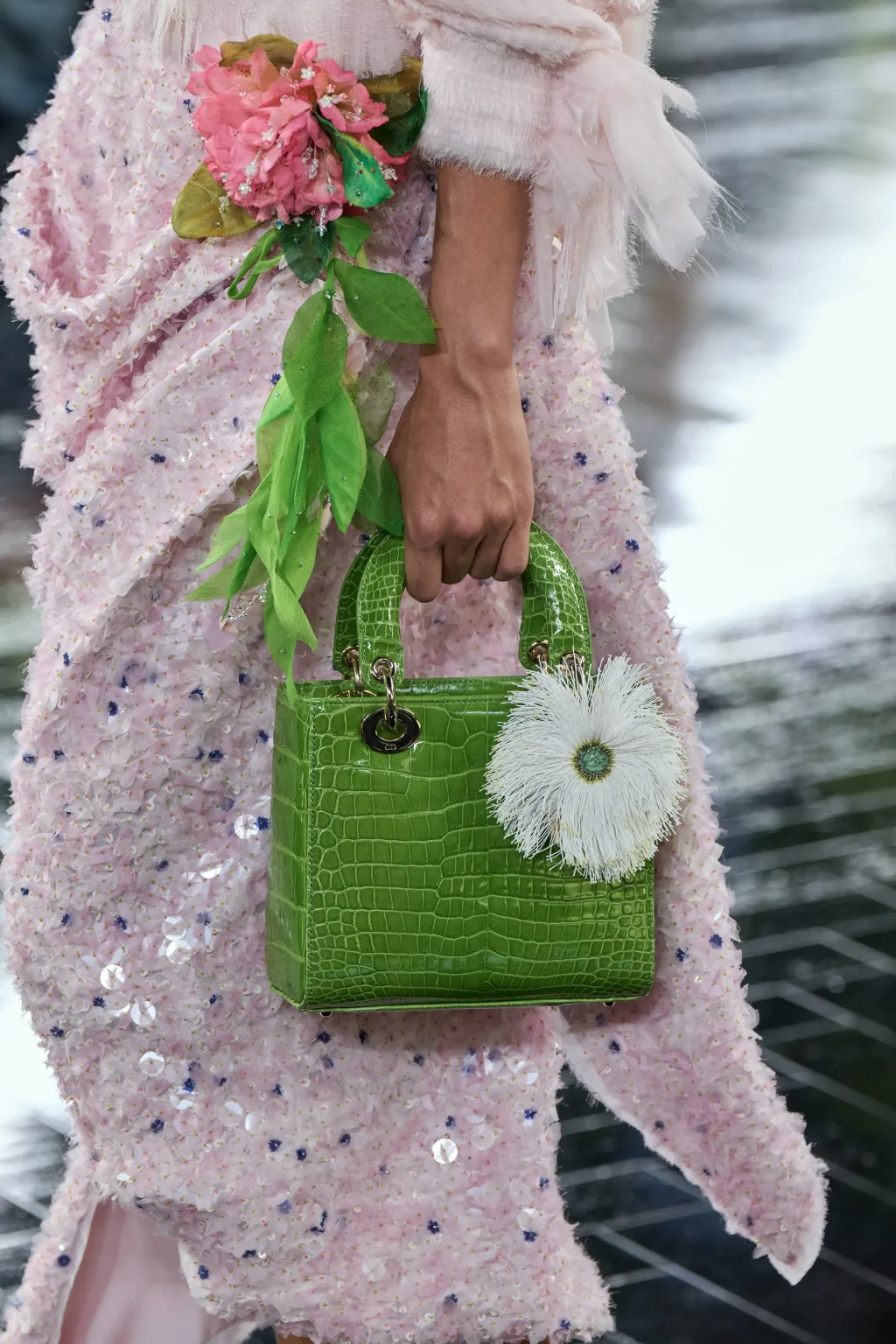
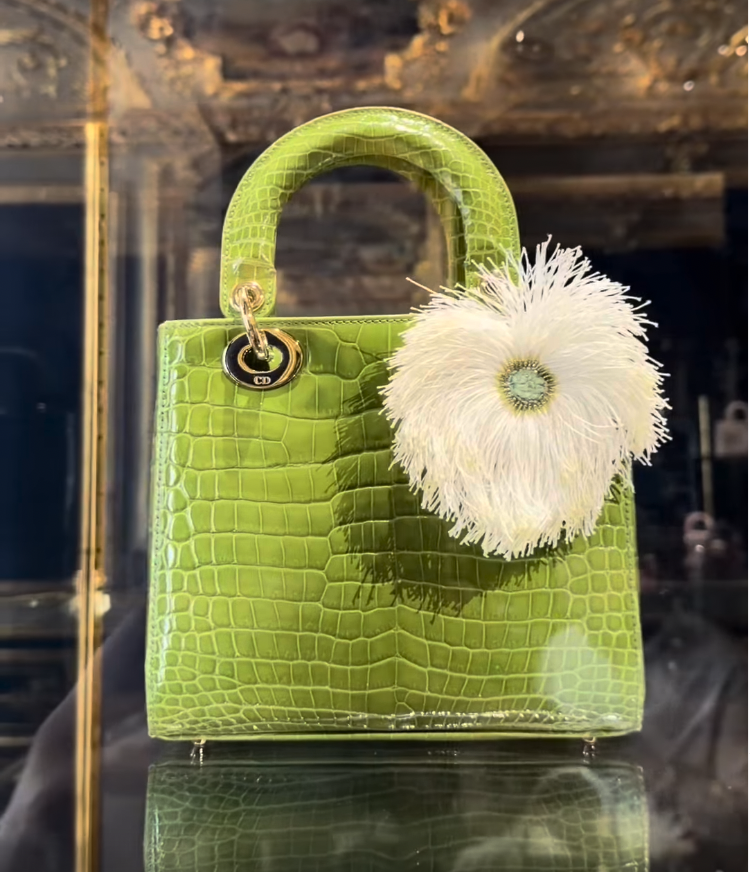
The Lady Dior appeared exactly once as itself, and it counted. A classic-proportioned bag in high-shine grass-green crocodile, pale gold hardware and D.I.O.R. charms intact, carried against a pink sequinned skirt — with a single white fringed flower charm hooked to the handle, its centre a green cabochon that nods to the Jaipur onyx.
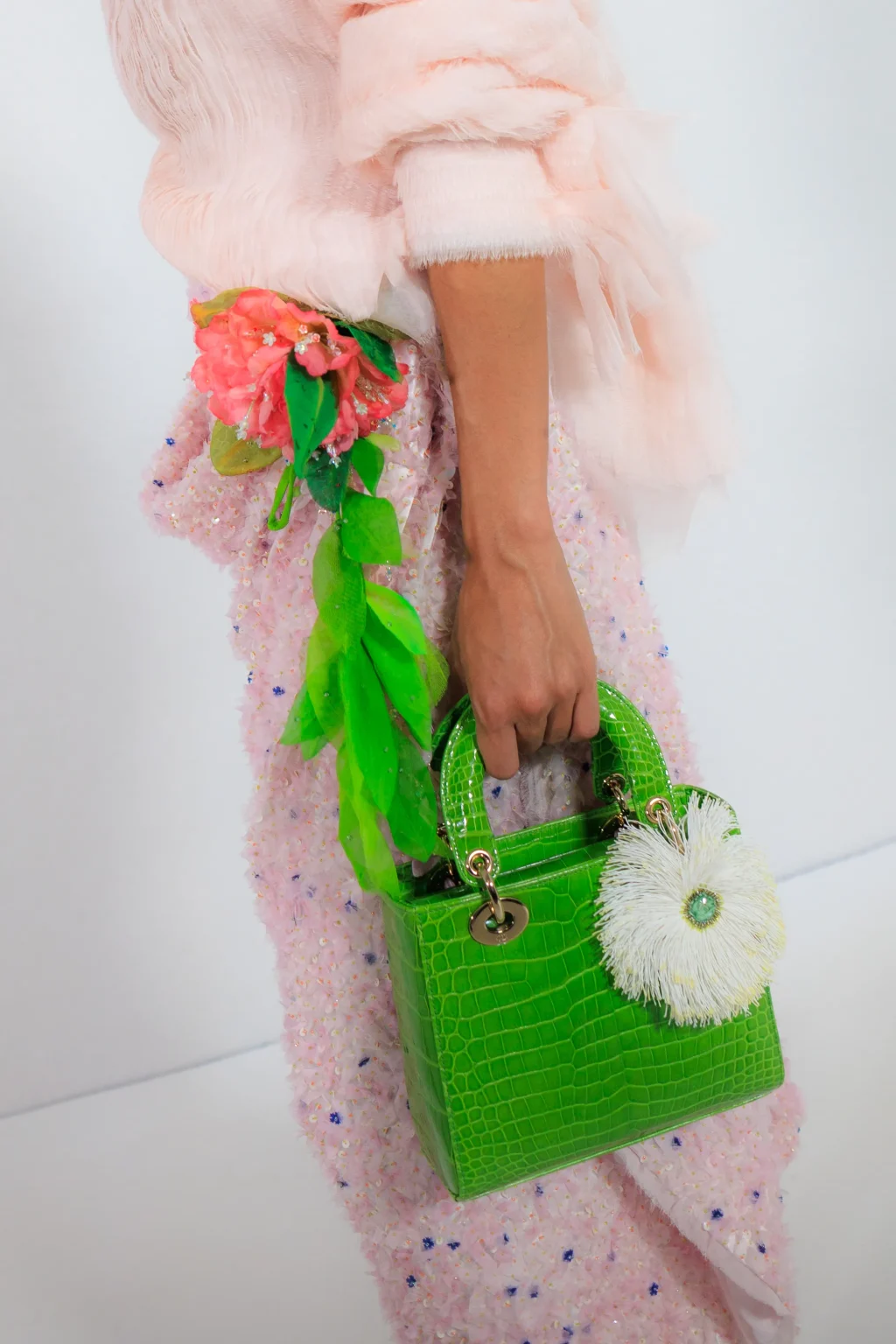
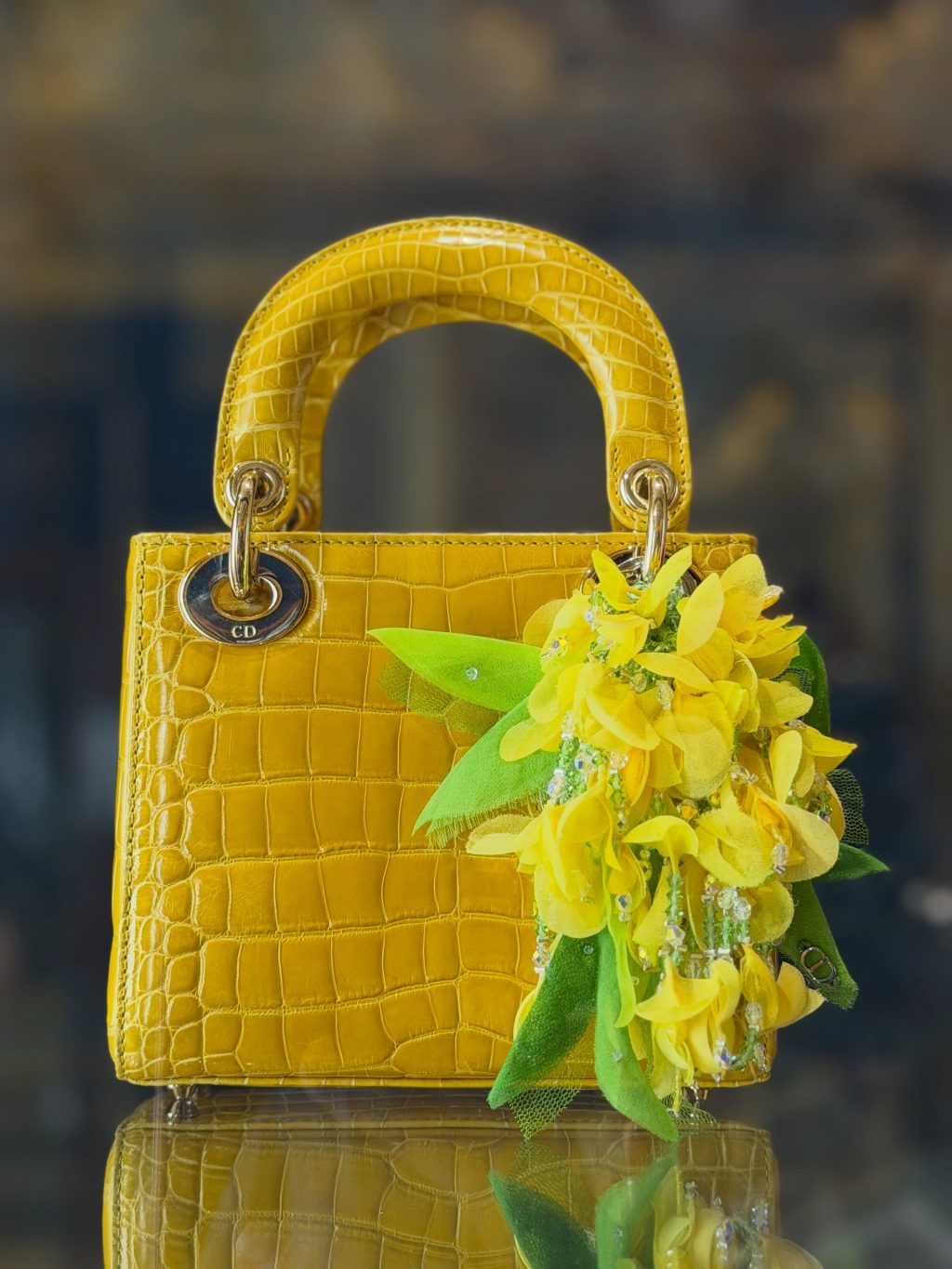
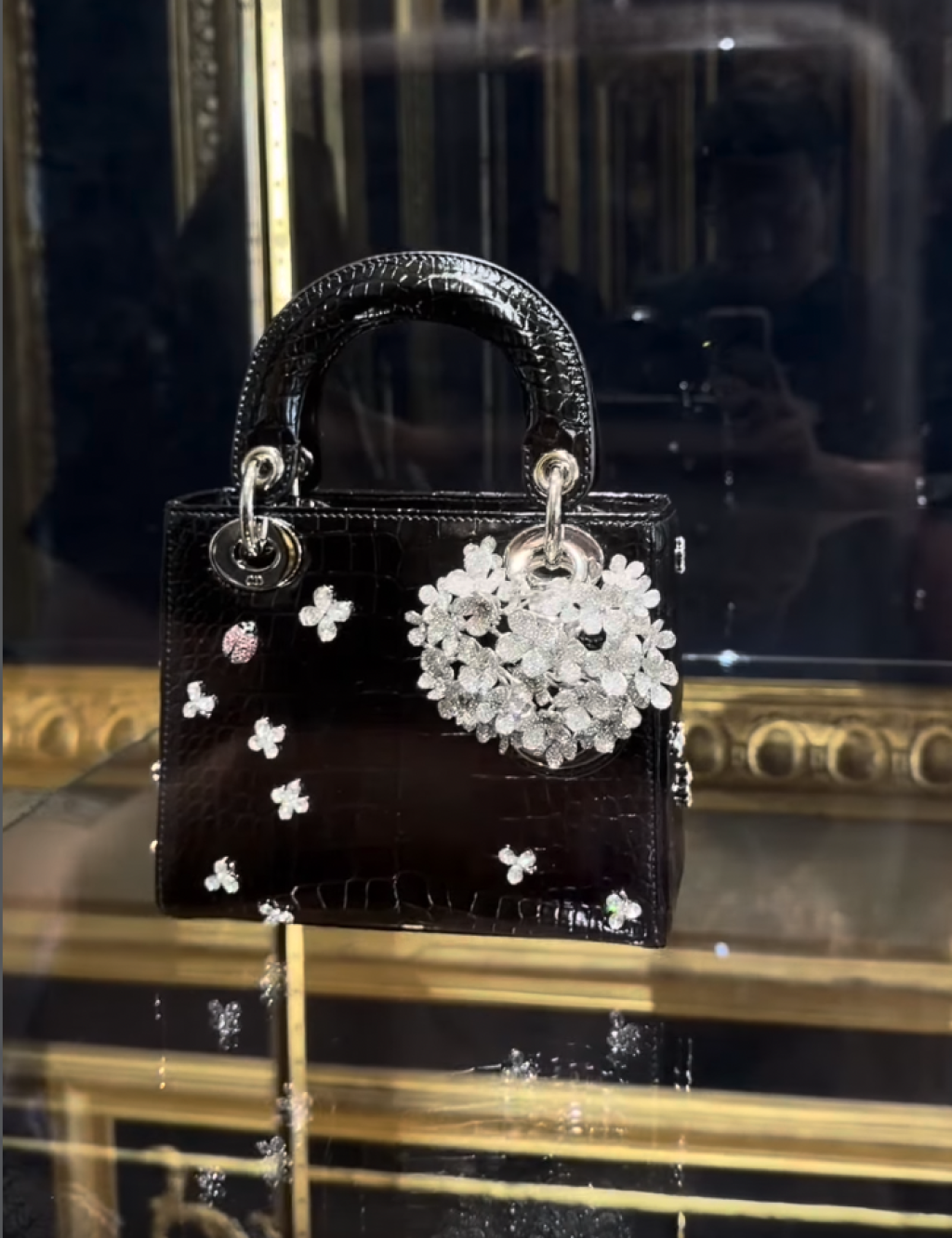
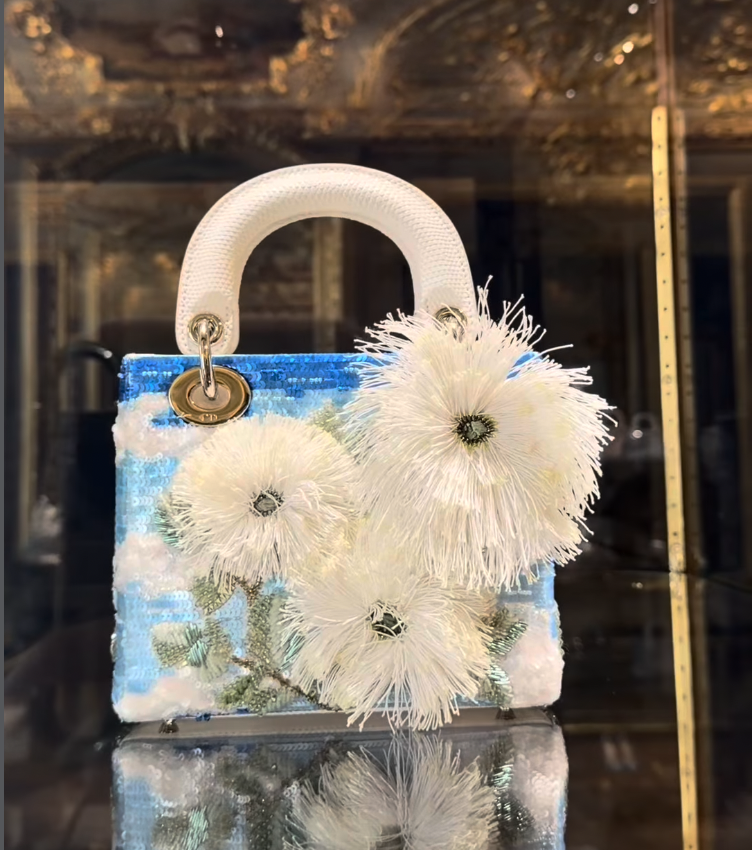
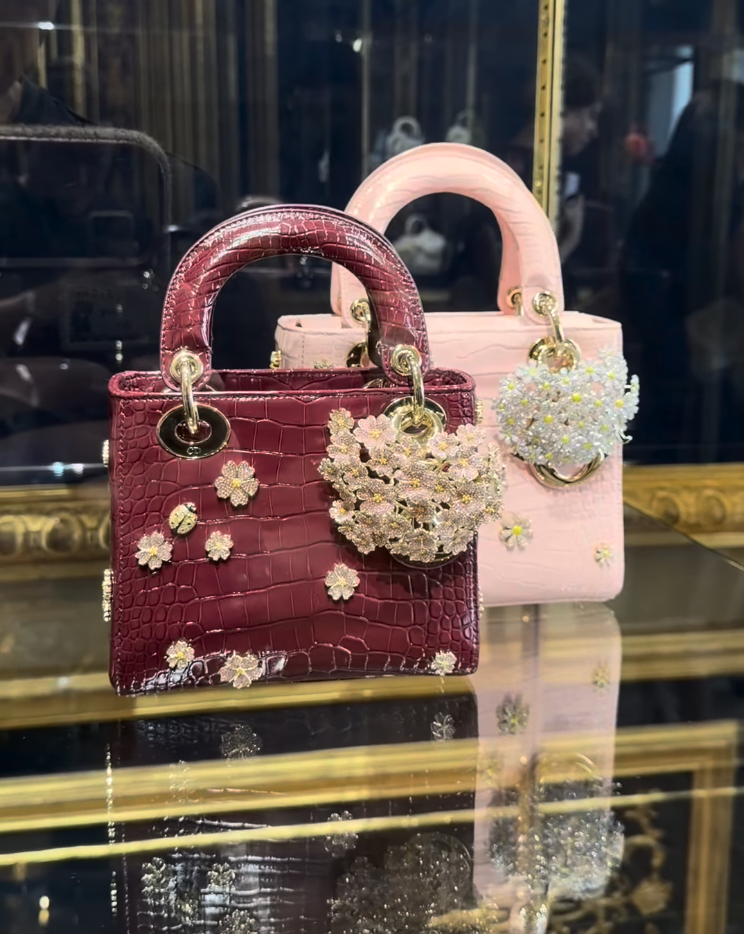
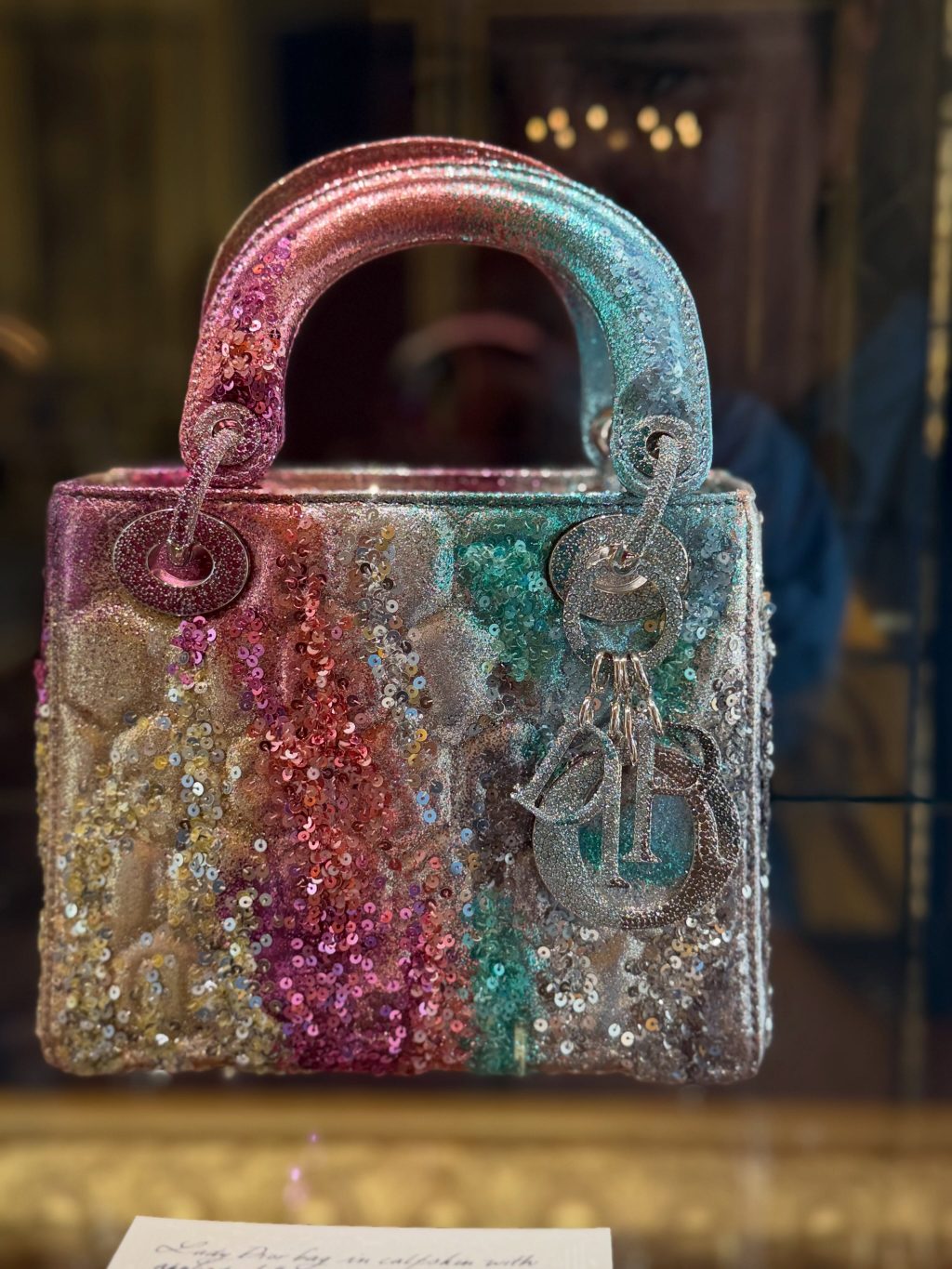
The re-see told the fuller story. Away from the runway, Dior lined up a cabinet of mini Lady Dior pieces that expanded every theme of the show.
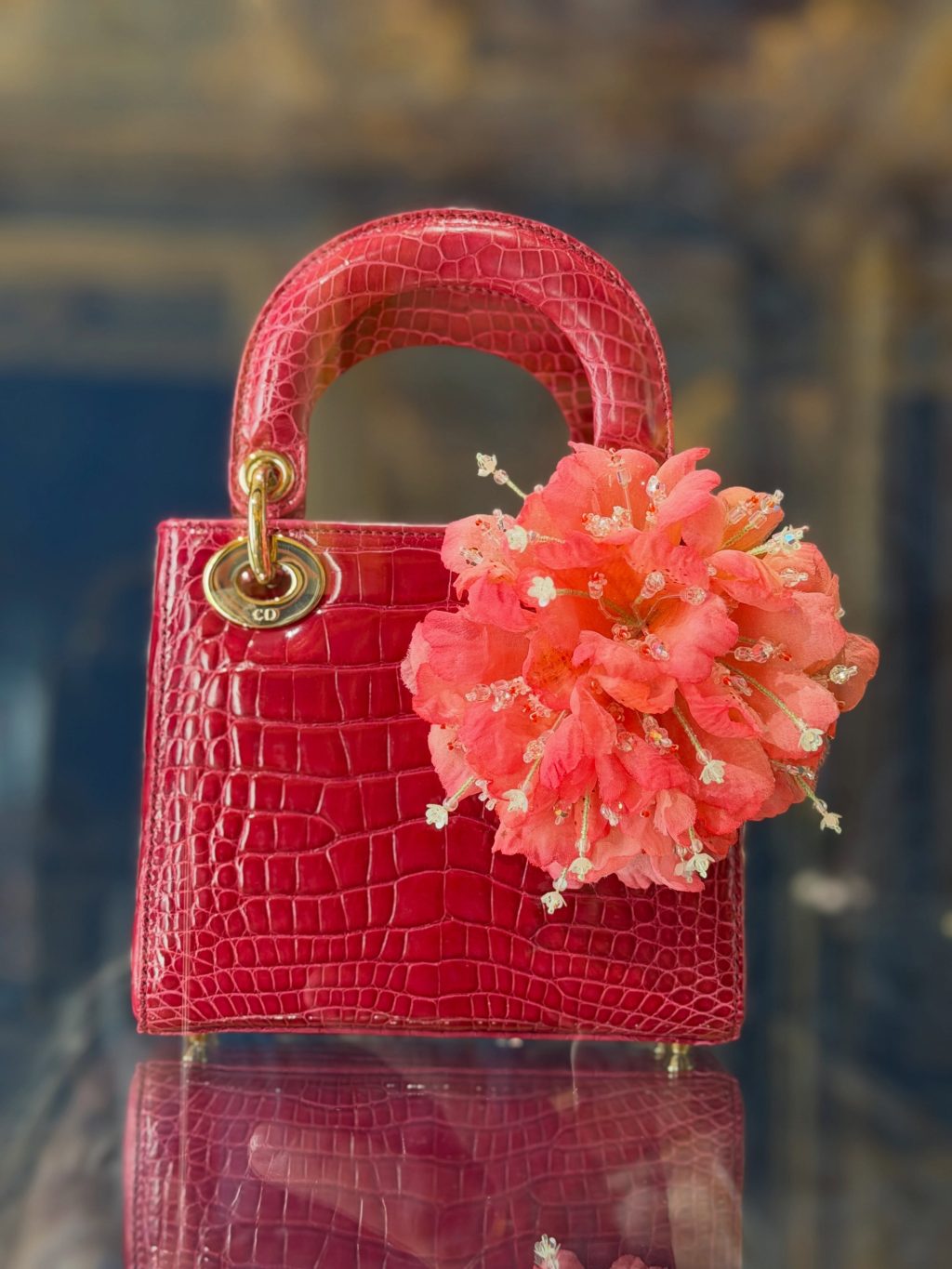
The exotics came crowned with couture flower charms: the grass-green croc from the runway, a saffron-yellow crocodile with a cascading laburnum of silk petals and crystal drops, a raspberry-red crocodile carrying a full silk peony scattered with beaded lily-of-the-valley sprigs.
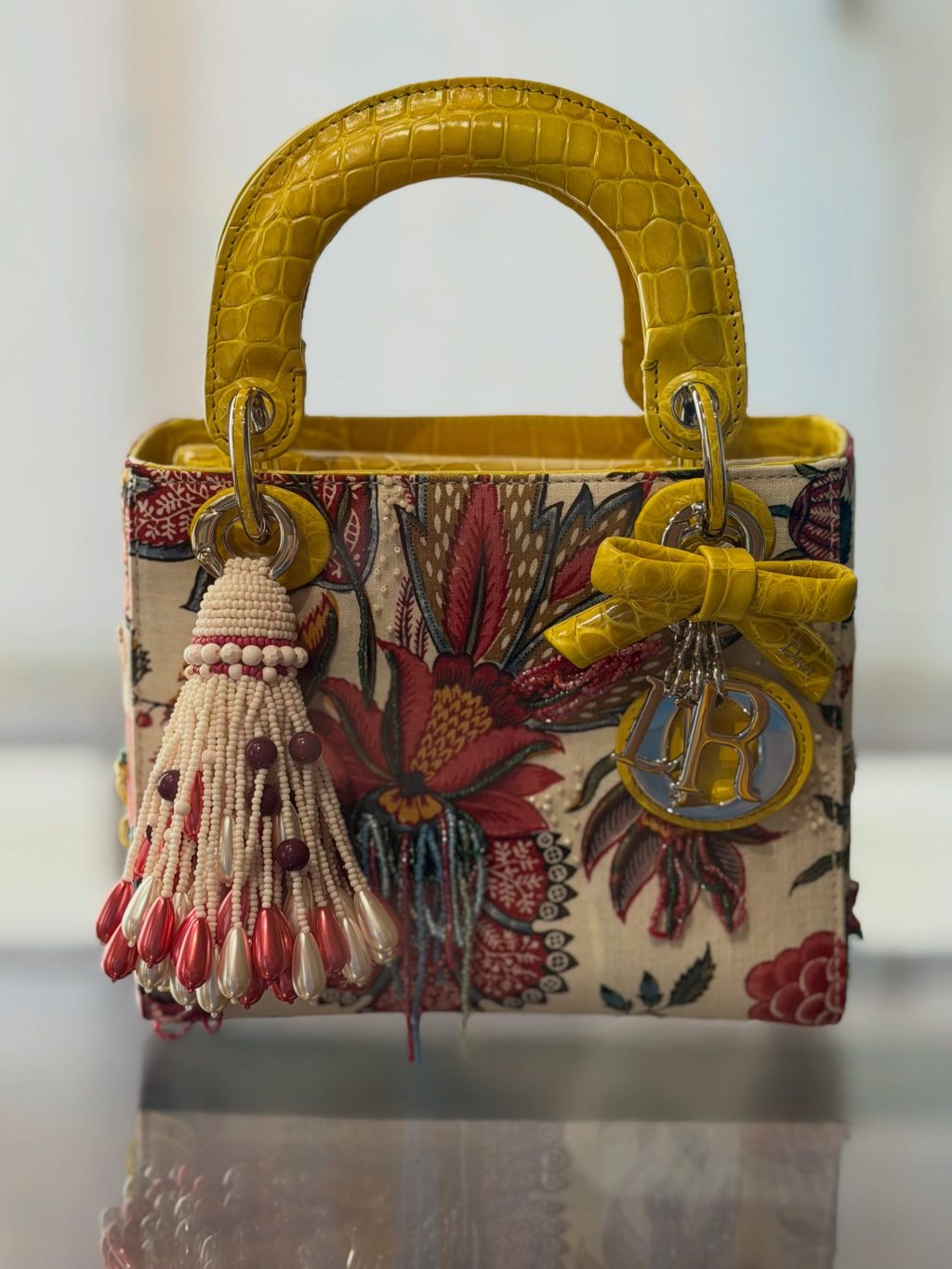
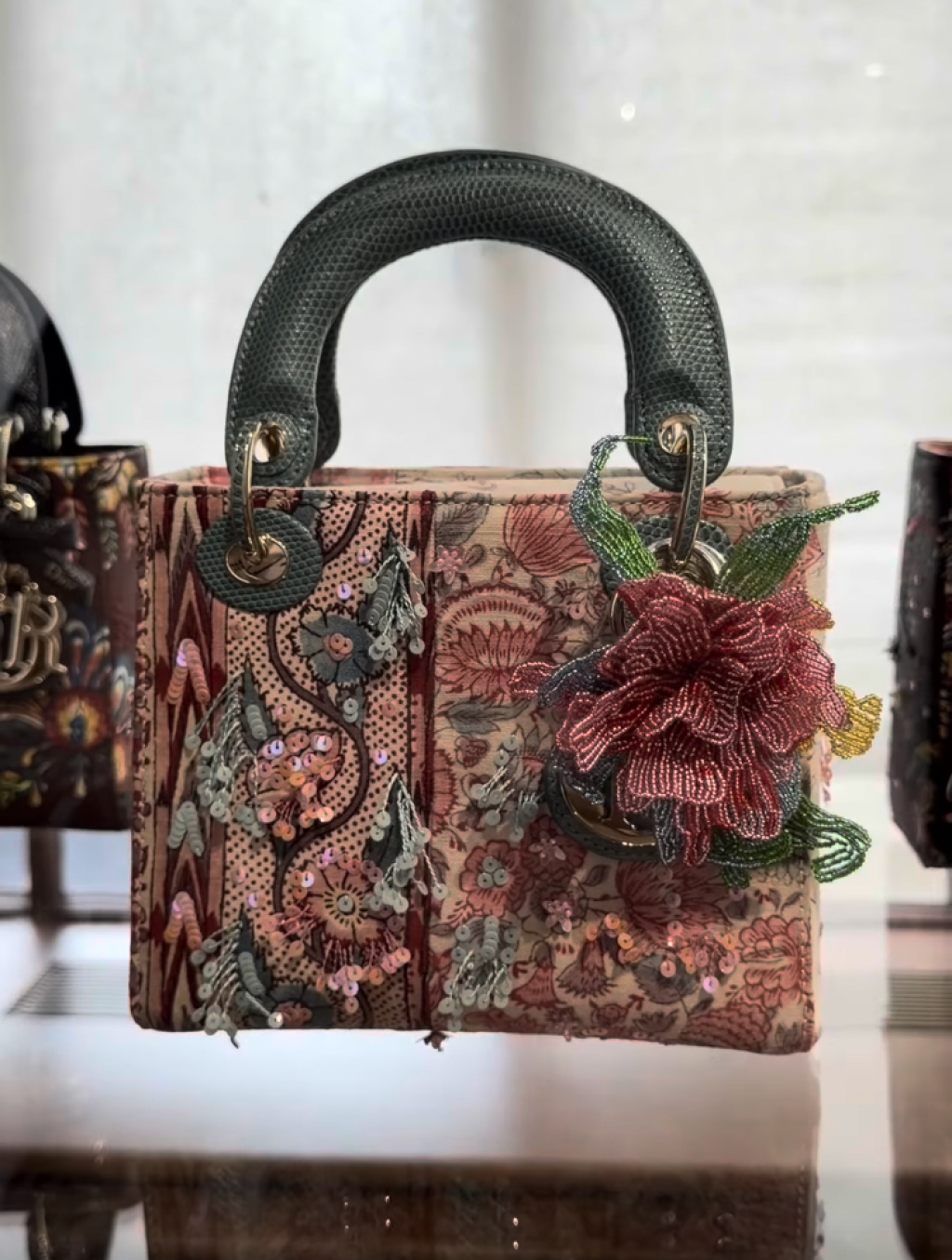
The chintz story continued with two more one-of-a-kind bags — one mounting the antique cotton on saffron croc handles with a pearl-and-bead tassel and a croc-wrapped bow, another pairing a tapestry-toned fragment with grey-green lizard handles and a rose built entirely from French beading.
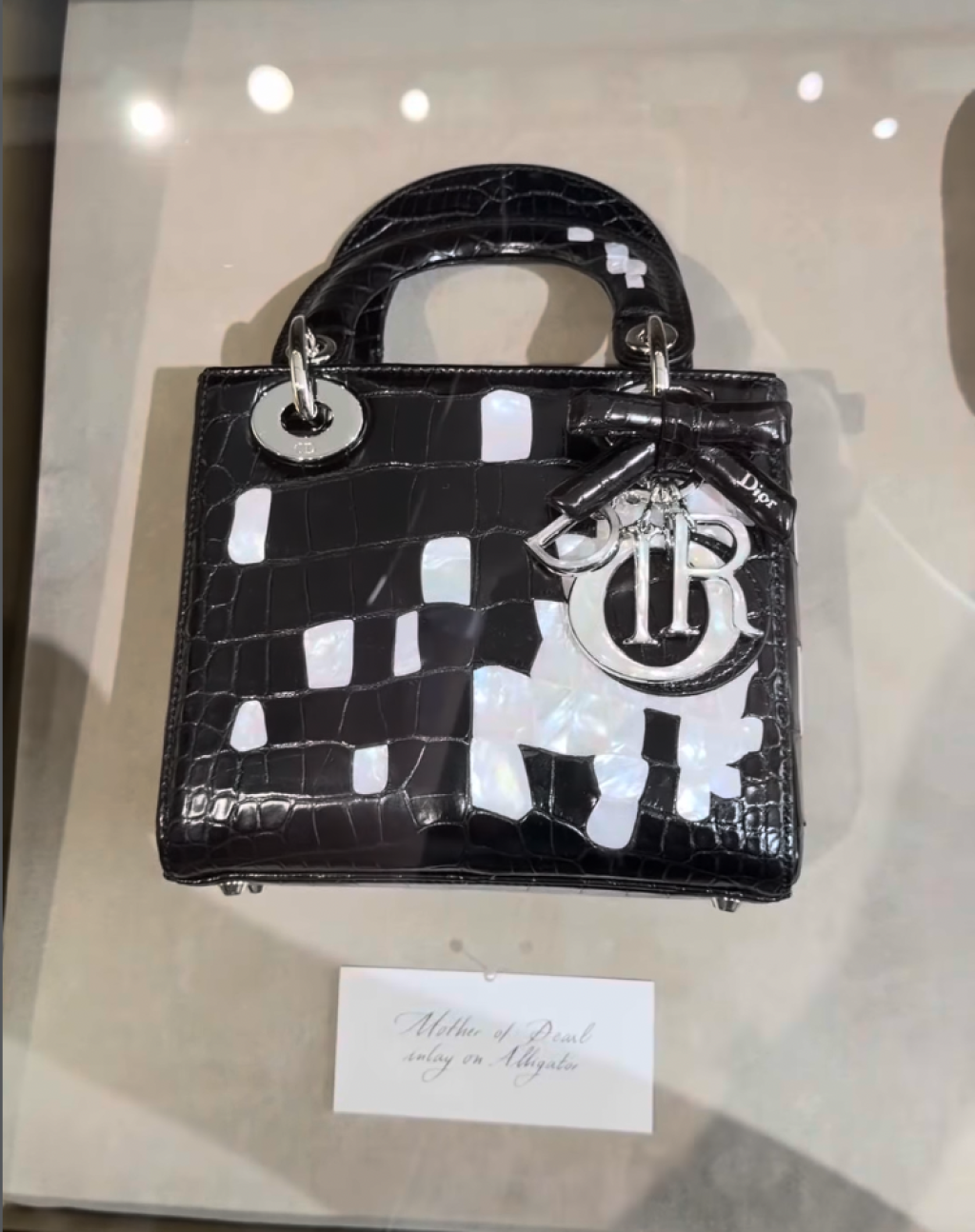
Alongside them sat the ateliers’ technical flexes: a mini in pleated, crystal-embroidered organza tied with a rhinestone-cored bow; a black alligator mini inlaid with squares of mother-of-pearl in a pixelated scatter; black, burgundy and blush croc minis dotted with pavé crystal blossoms, each hiding a tiny ladybird among the flowers; a sky-blue sequinned mini blooming with the same white fringed flowers as the runway charm; and a multicoloured showpiece in honeycomb-quilted calfskin, washed in glitter and sequins from pink through turquoise, its rings and charms fully pavé-set. Most of these will never reach a shelf — which is precisely the point of a re-see, and precisely why the Lady Dior remains couture’s most versatile canvas.
The Dior Woven Bag: A Basket Rebuilt in Glass Beads
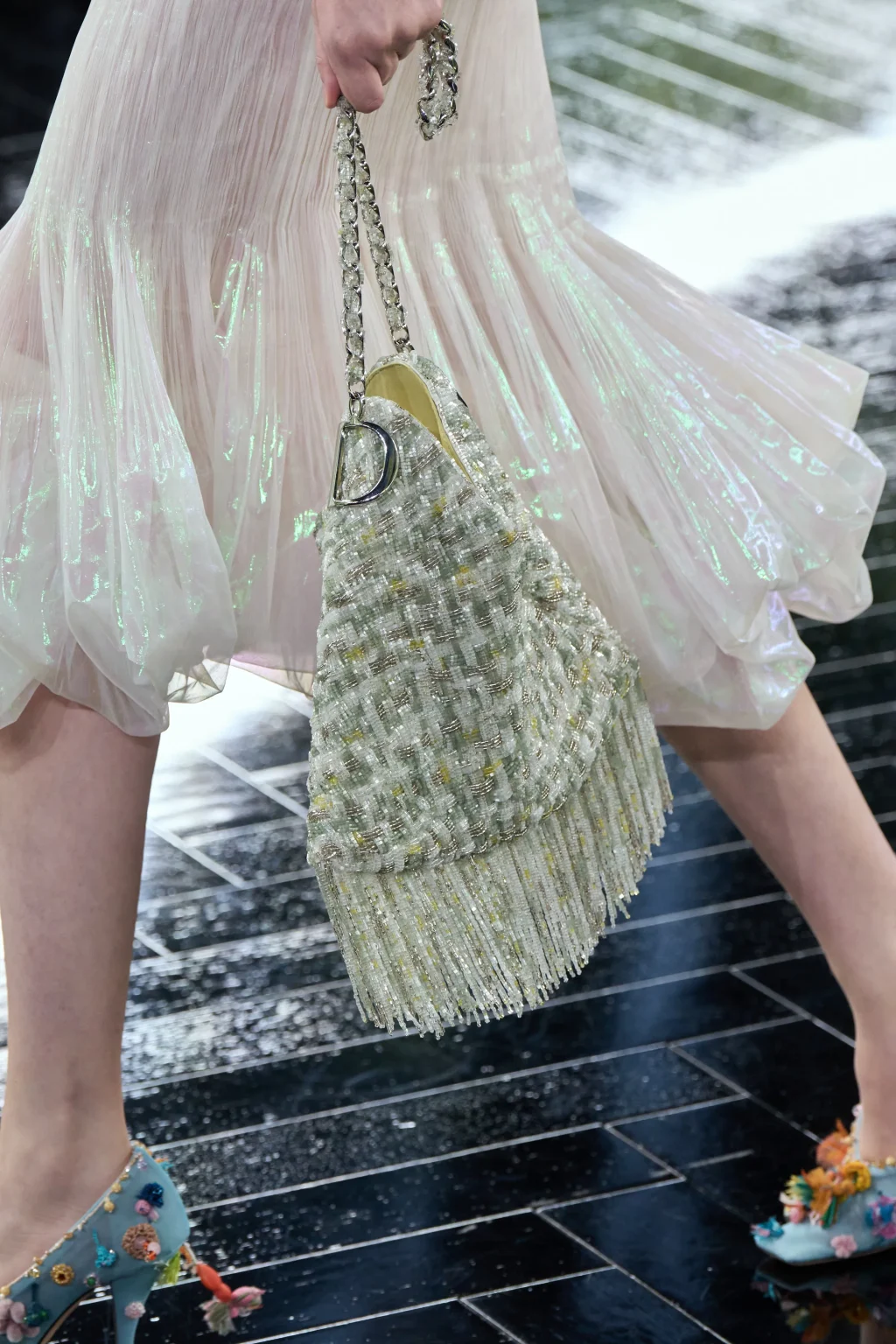
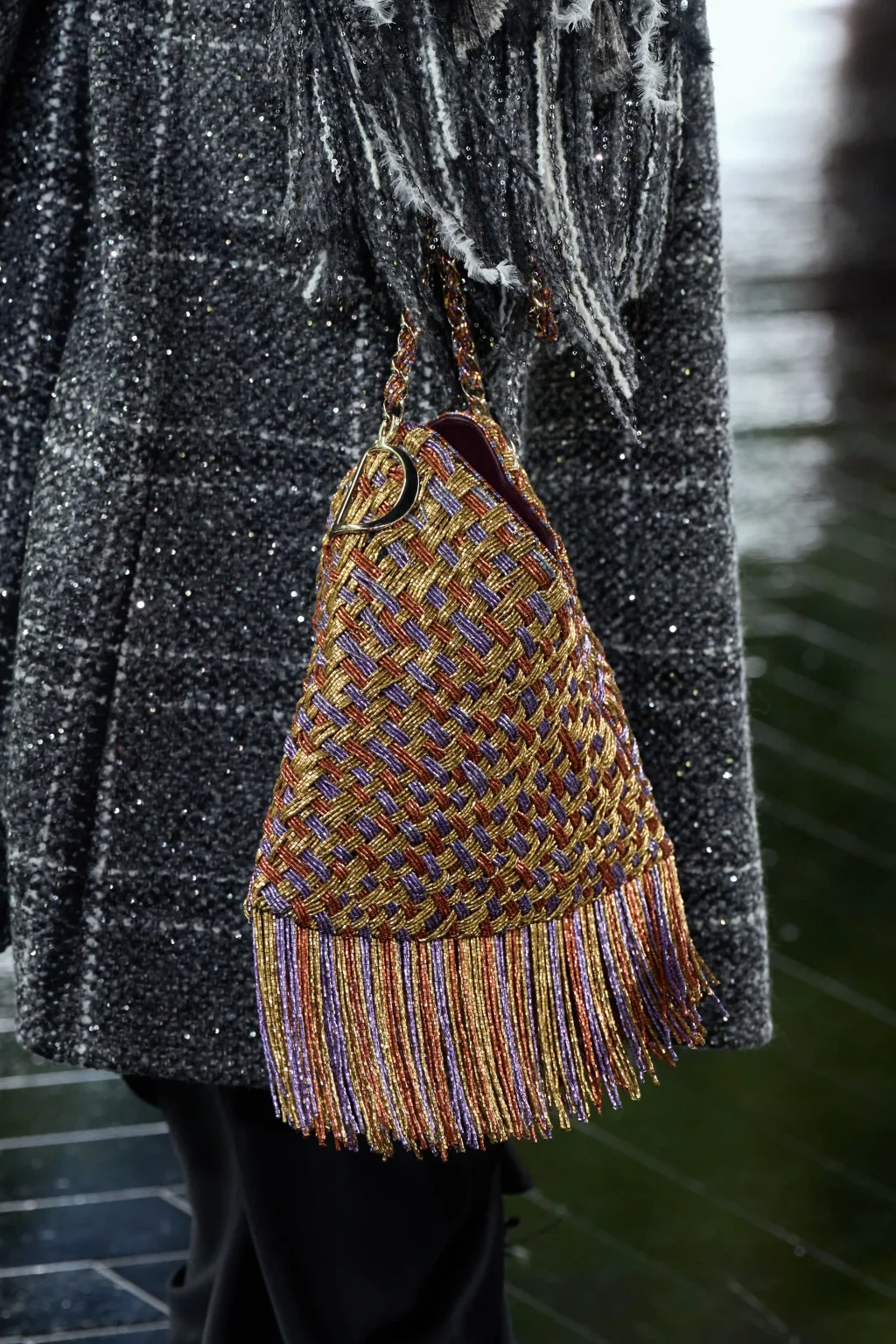
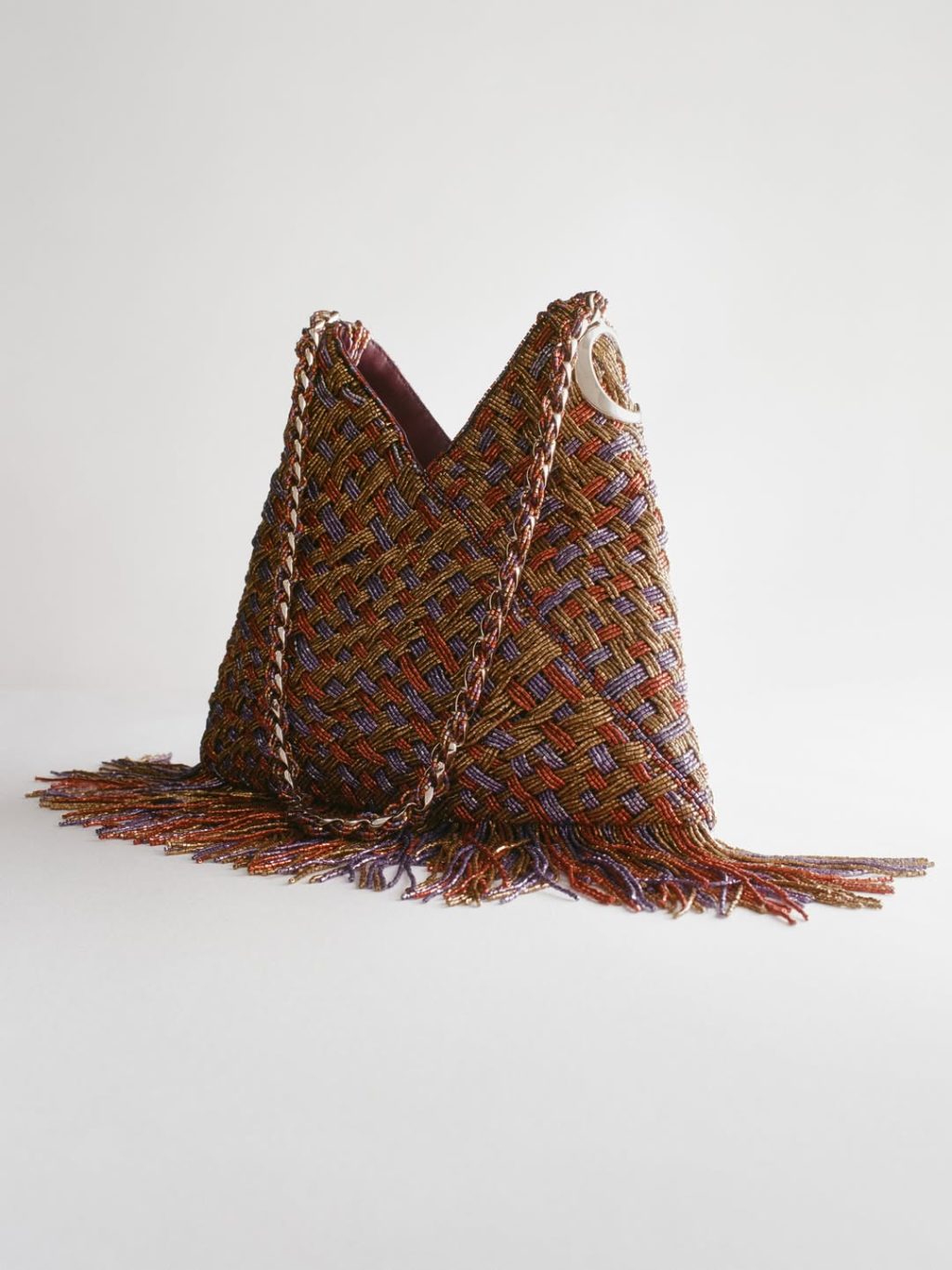
The Woven bag translated the collection’s textile obsession into pure beadwork. A slouchy, open-top hobo was woven entirely from tubular glass beads in a basketweave — one edition in sage, white, silver and yellow, another in gold, copper and lilac — with a fringe of beads swinging from the base and a bead-wrapped chain strap anchored by a single “D” charm. Where the Cigale and Bow bags are sculpture, the Woven bag is passementerie: hundreds of hours of hand-threading resolved into the most relaxed silhouette on the runway.
Dior Cactus and Armadillo Minaudières
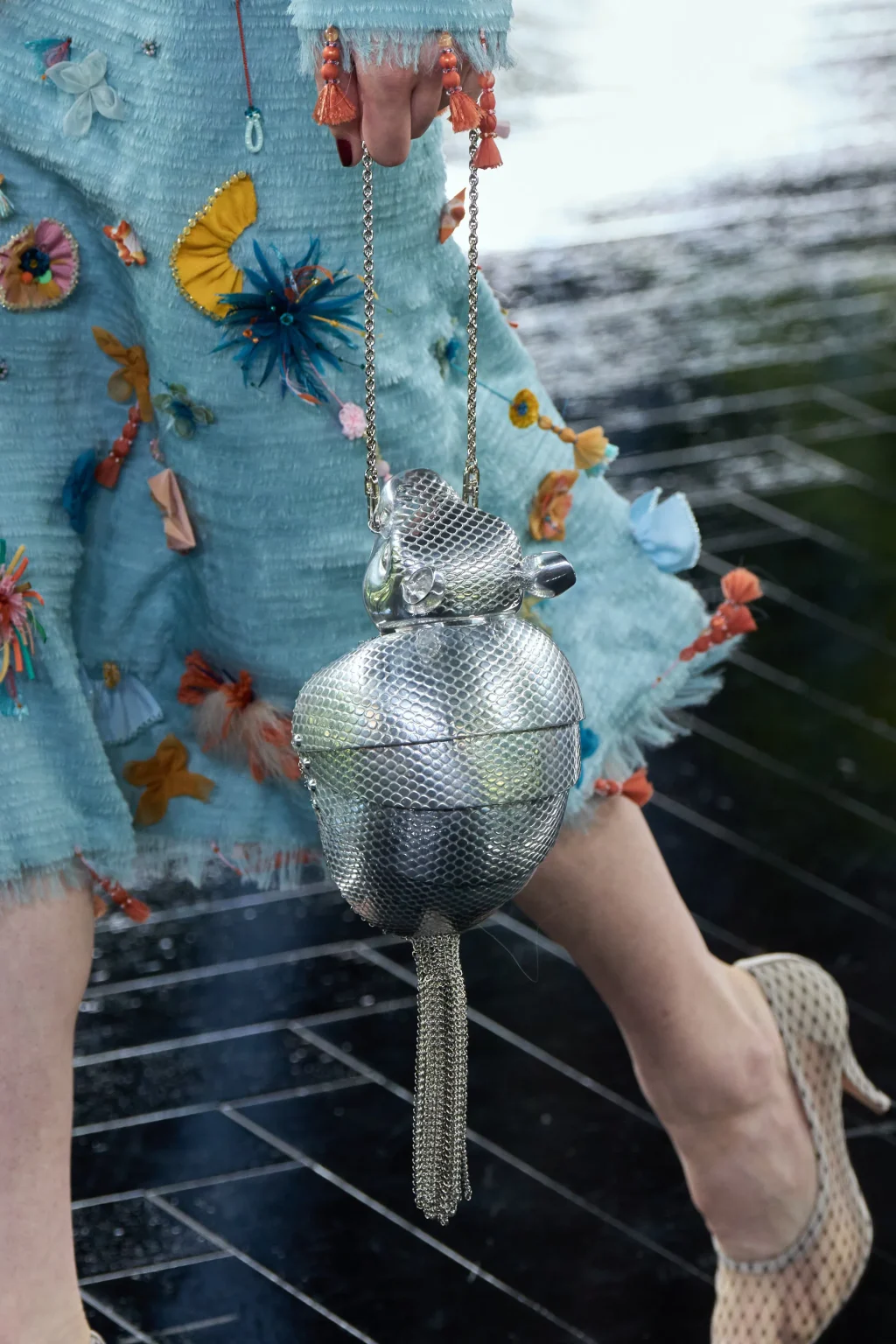
Anderson’s taste for the objet d’art minaudière — the ermine of his couture debut — continued with two creatures of the arid landscape. The armadillo minaudière, in segmented silver python-textured metal with a chainmail tail and a dainty chain strap, swung against a sky-blue embellished dress like a small piece of worn sculpture.
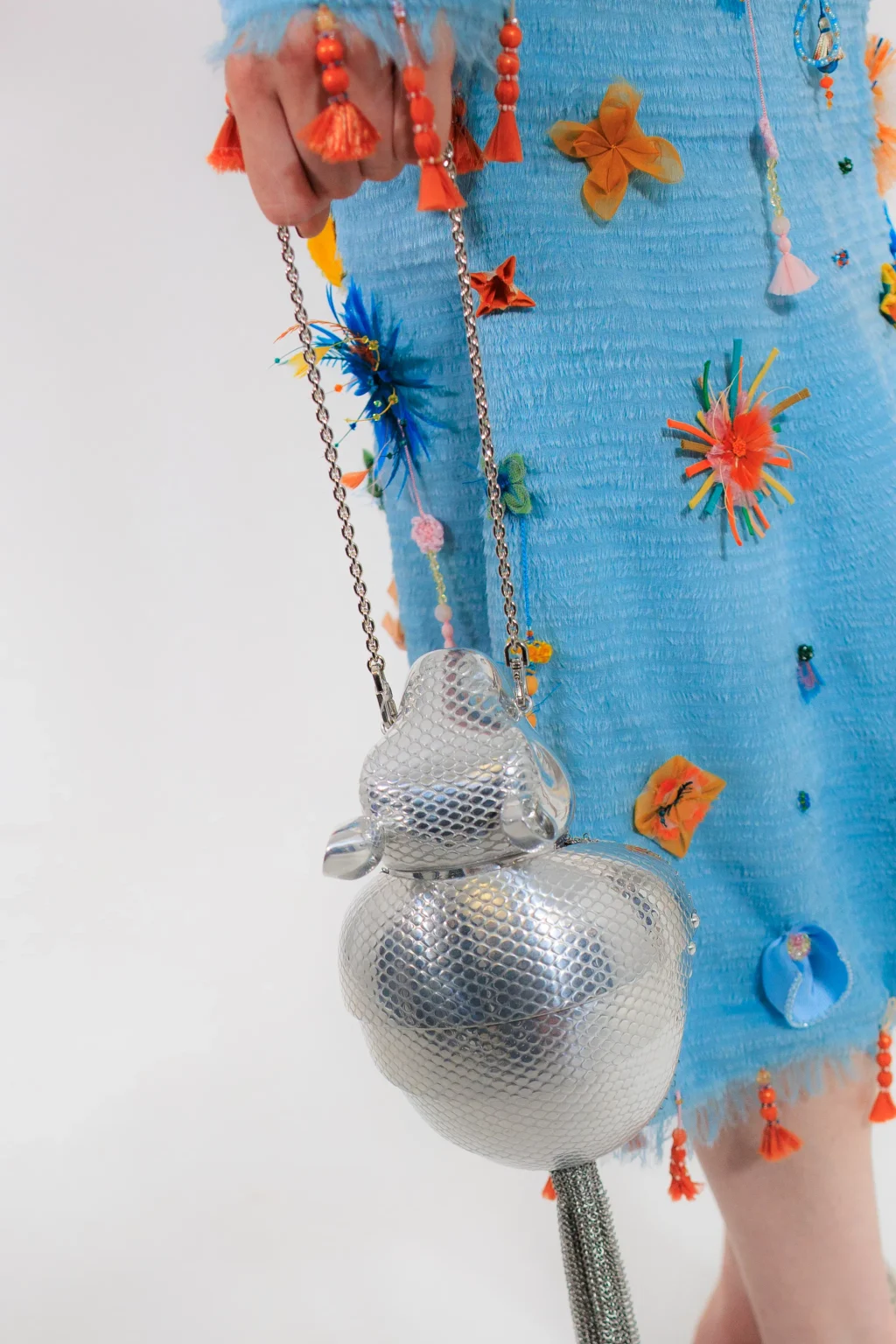
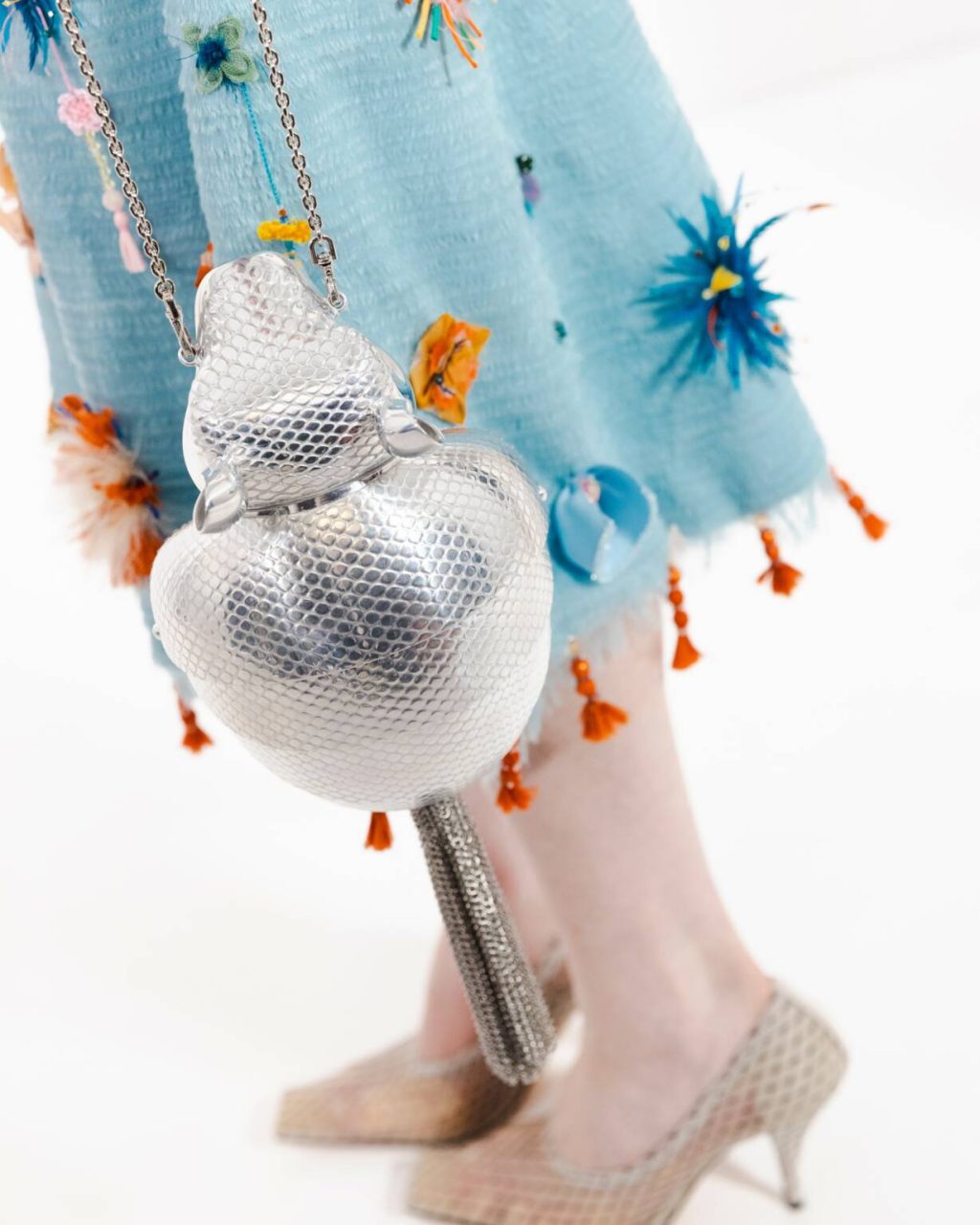
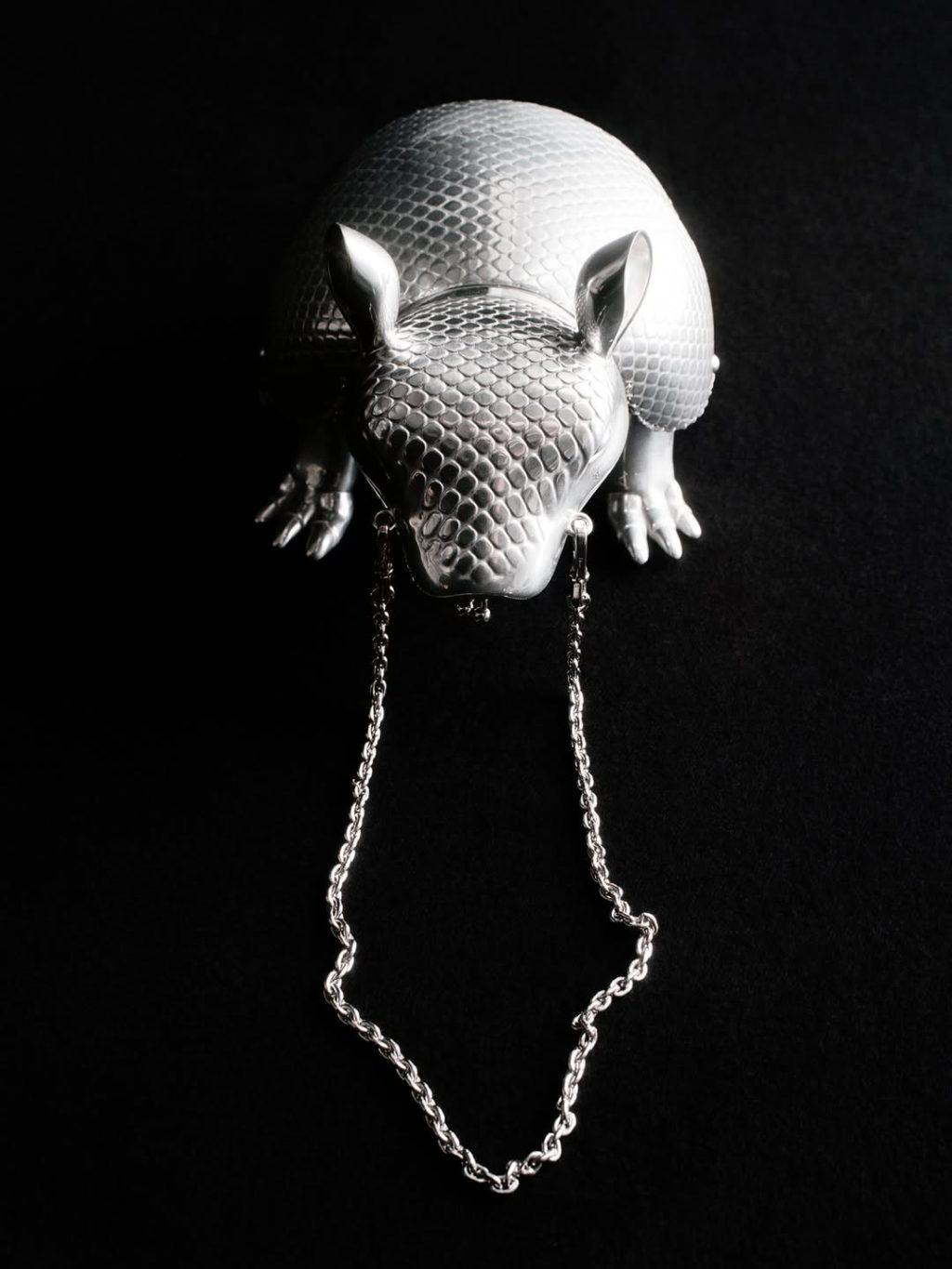
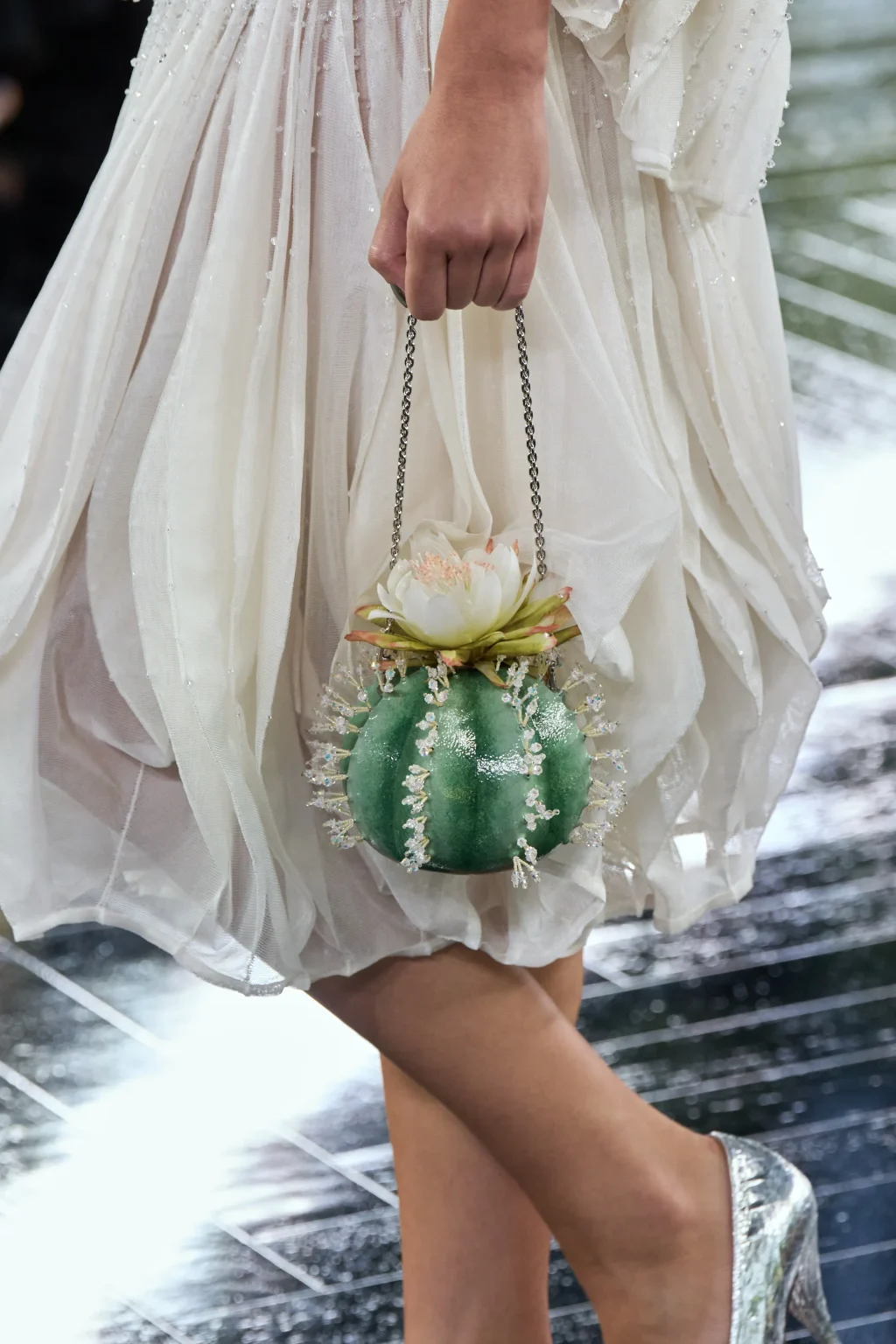
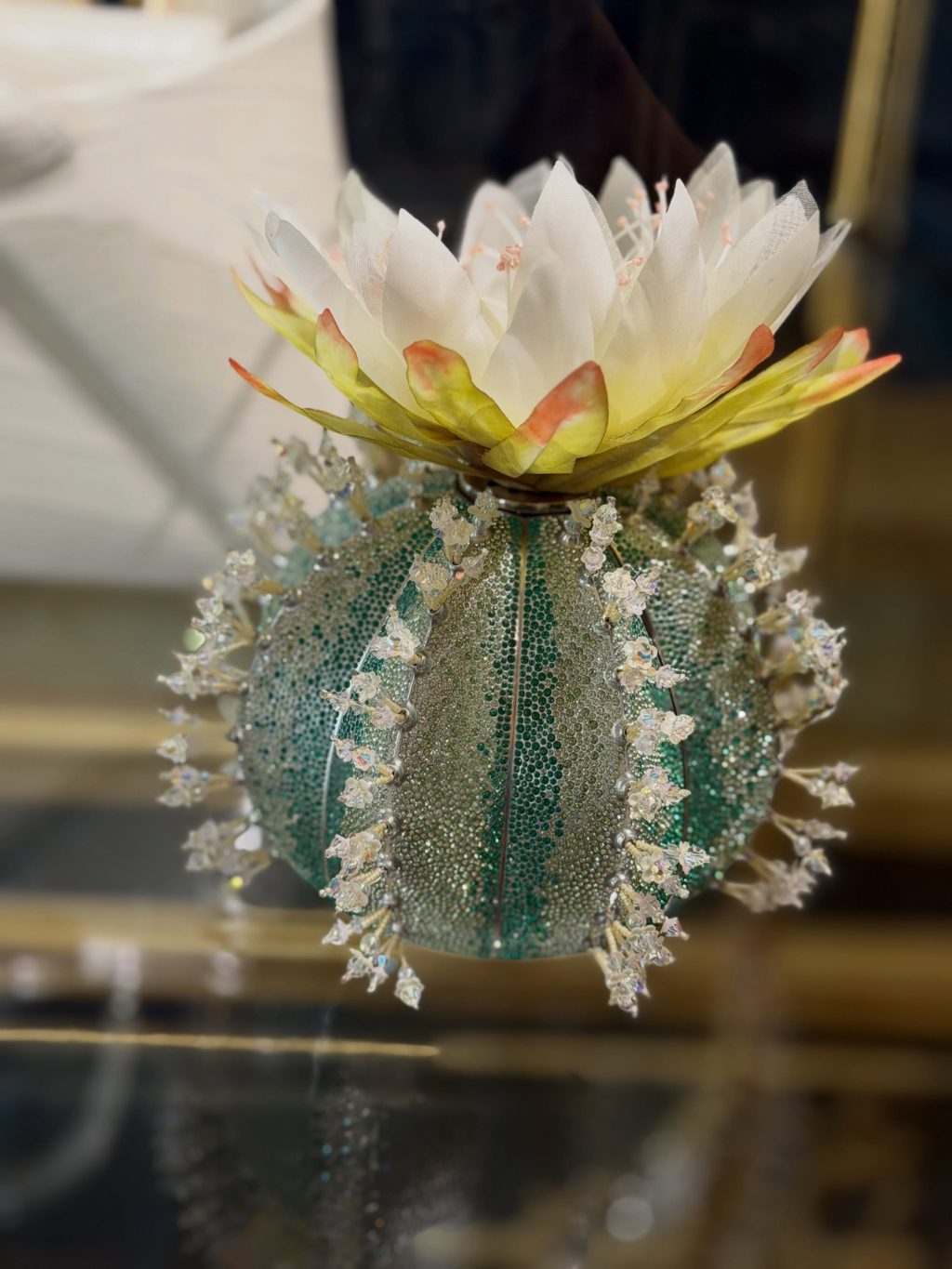
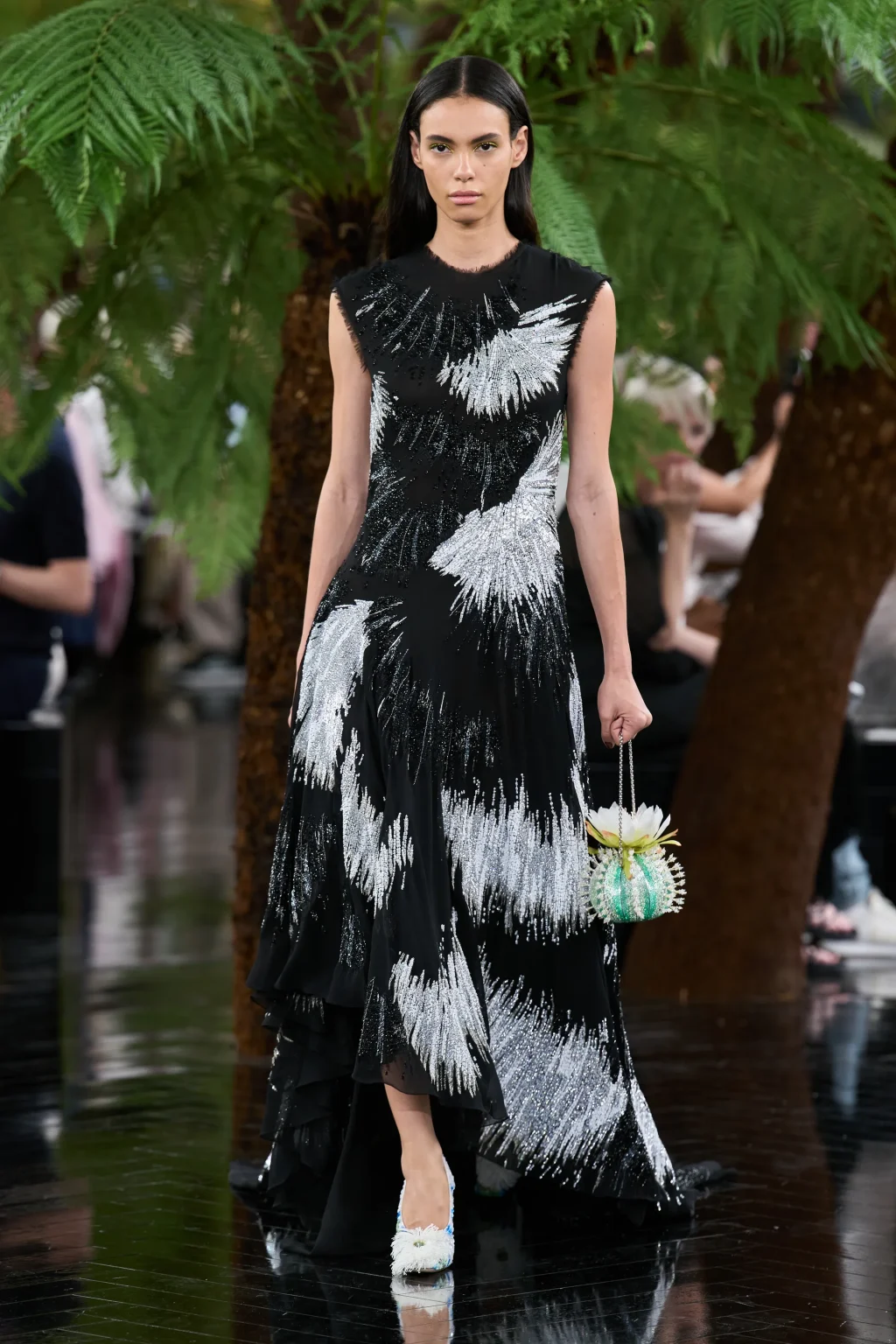
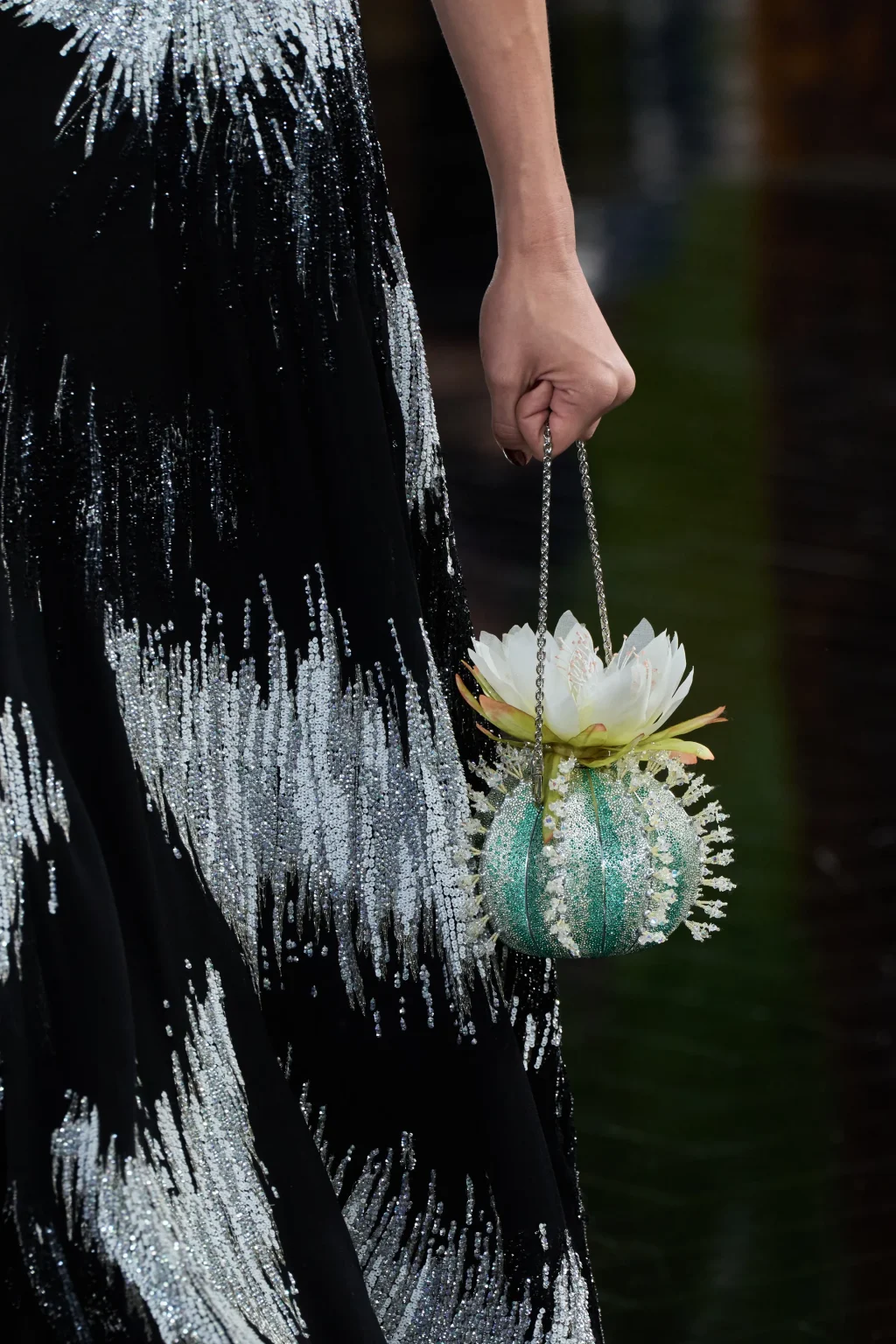
The cactus minaudières depicted barrel cacti in bloom: one in glossy enamelled green with crystal spines tracing each rib, another paved entirely in green-to-silver micro crystals, both crowned by a silk queen-of-the-night flower — the cactus that blooms for a single night a year.
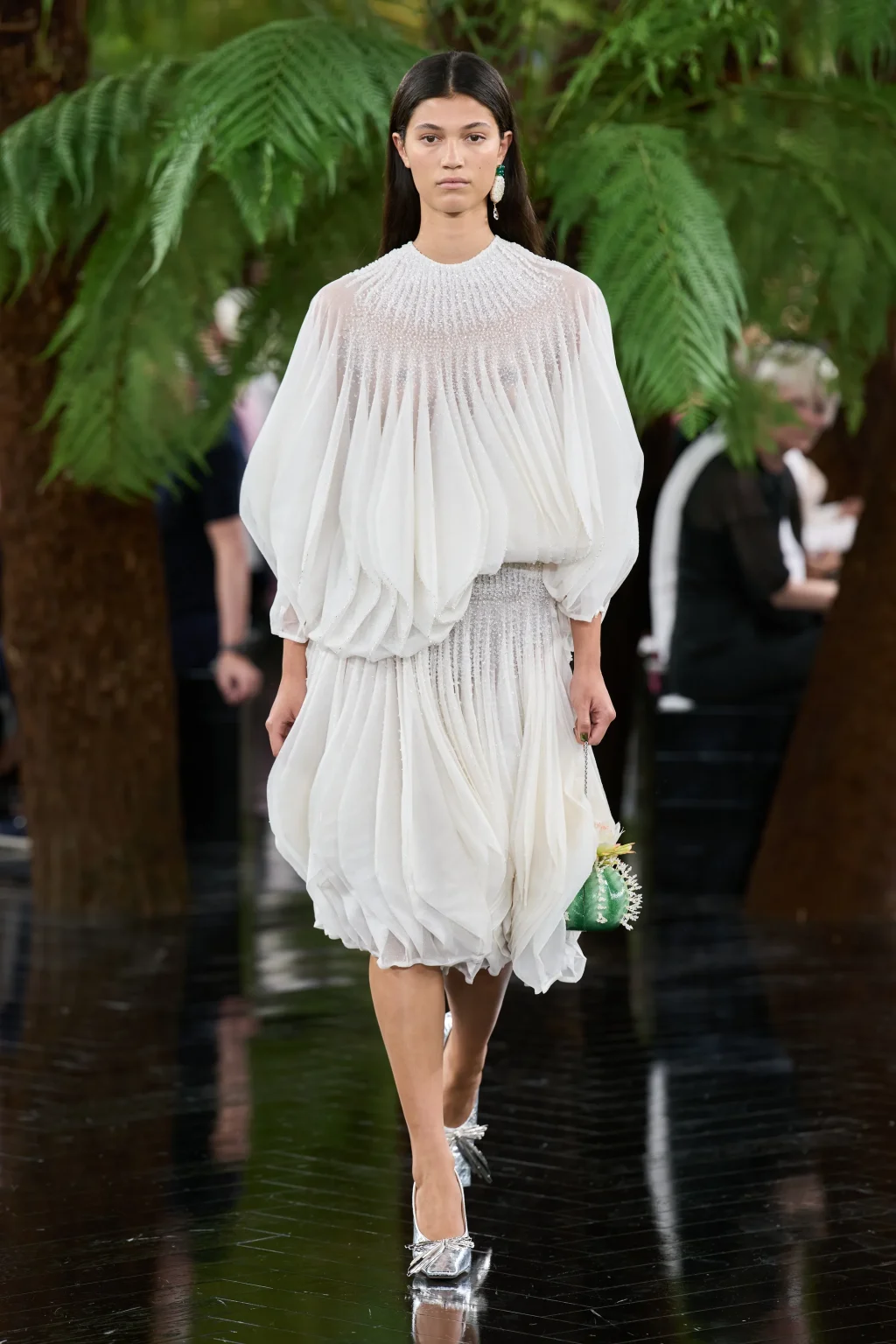
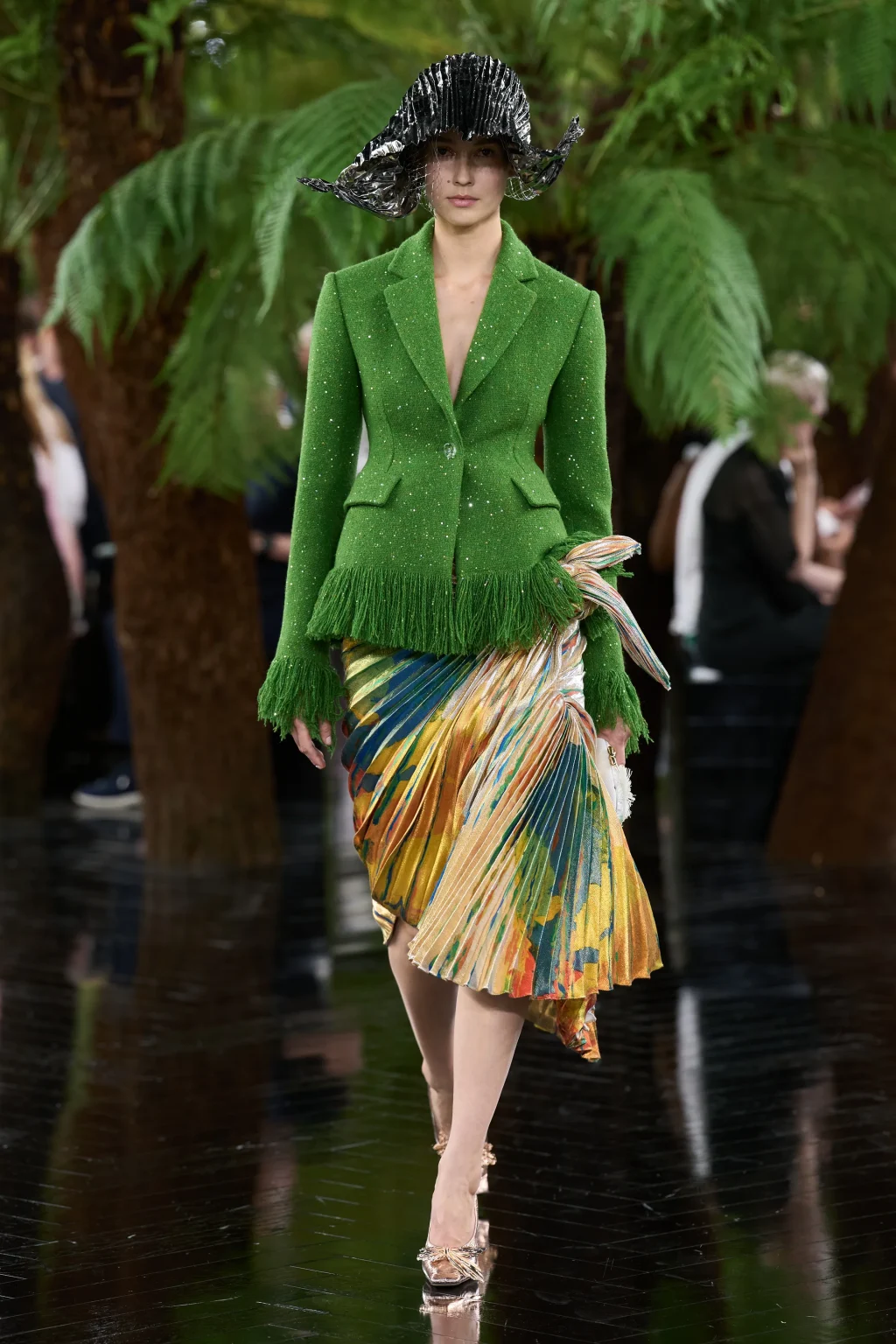
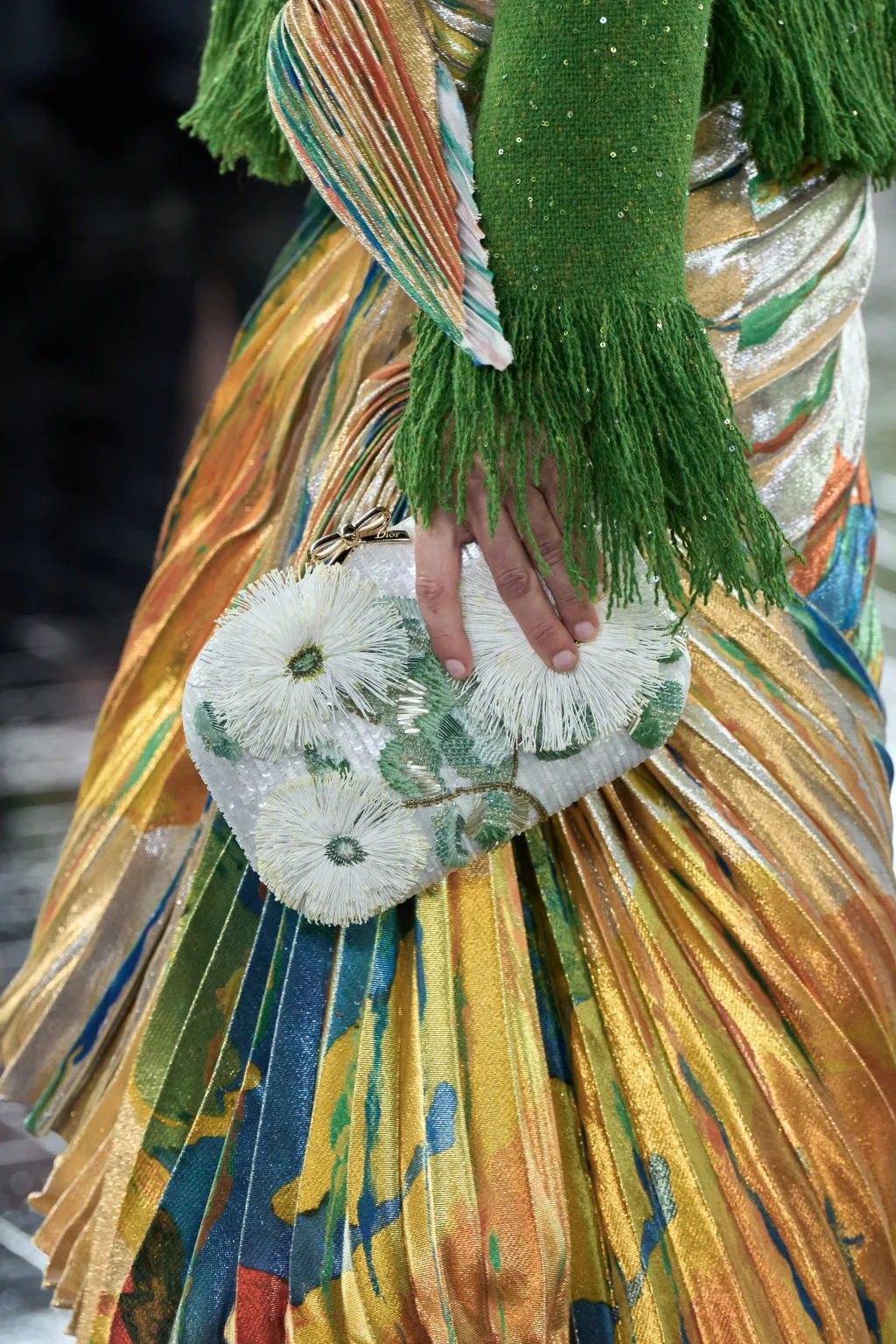
The same sculptural language continued through two softer, more decorative evening pieces. One appeared as a rounded, white floral clutch, densely embroidered with beads and finished with oversized raffia-like blossoms, their fringed petals giving the bag the tactile presence of a couture corsage.
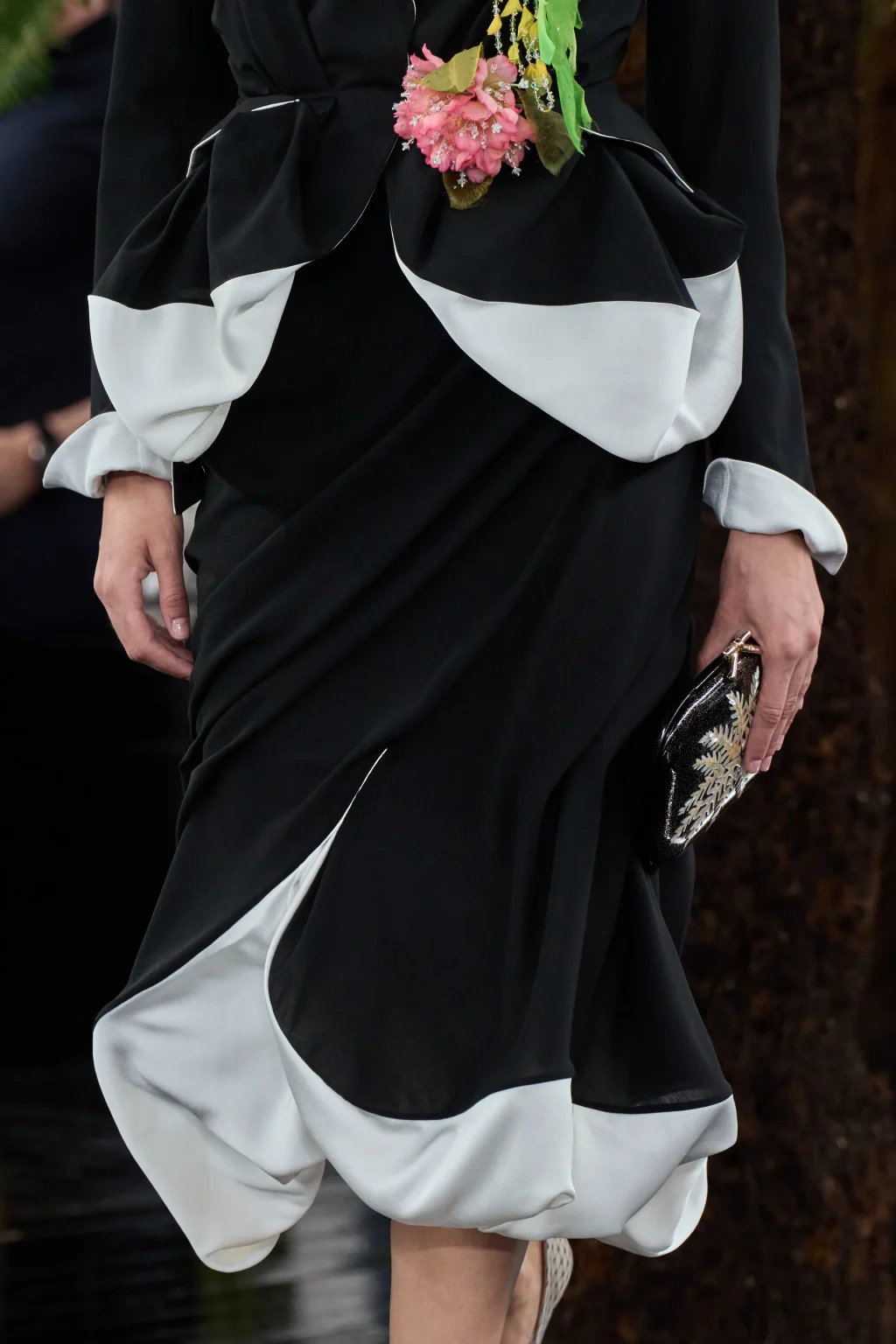
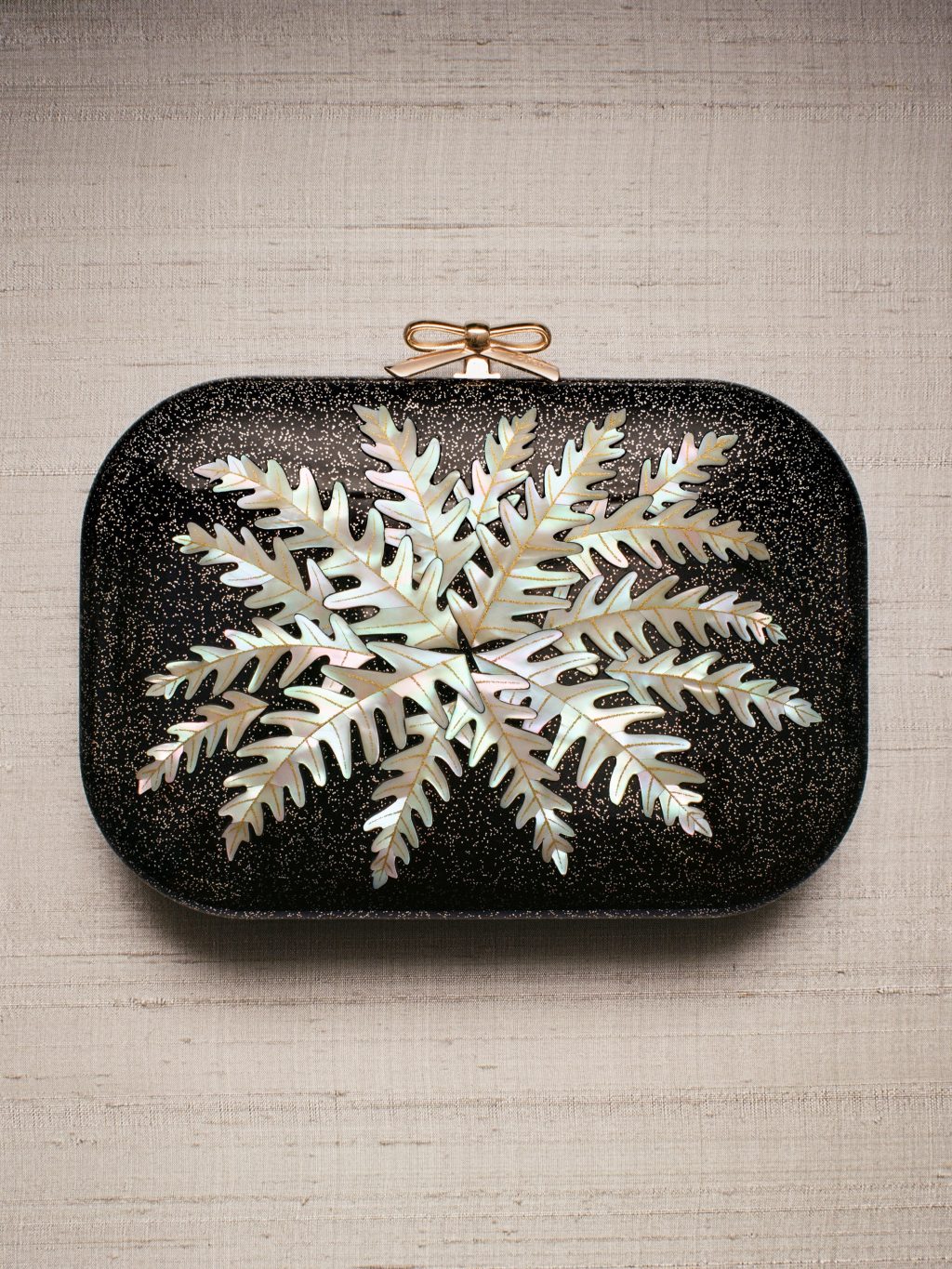
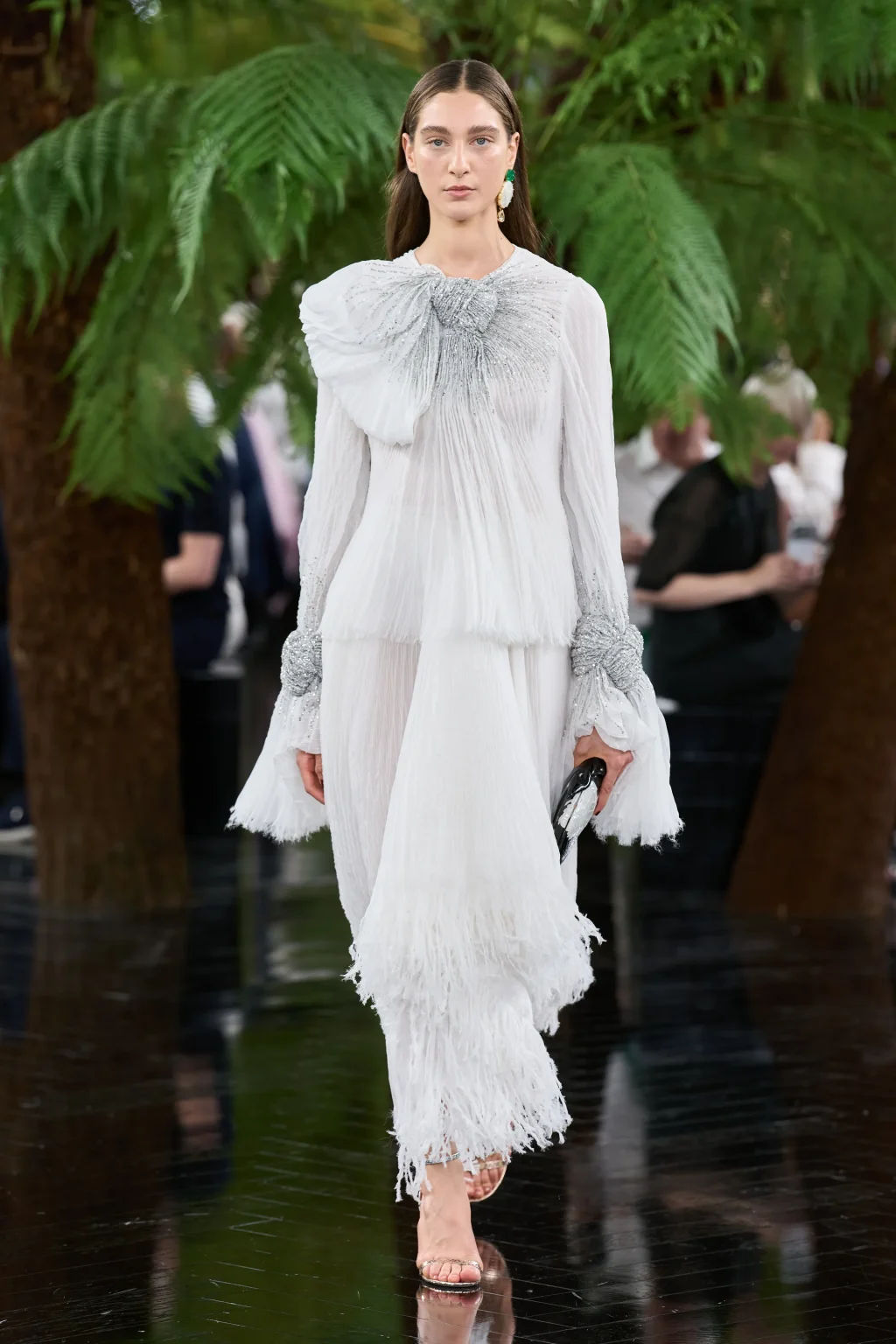
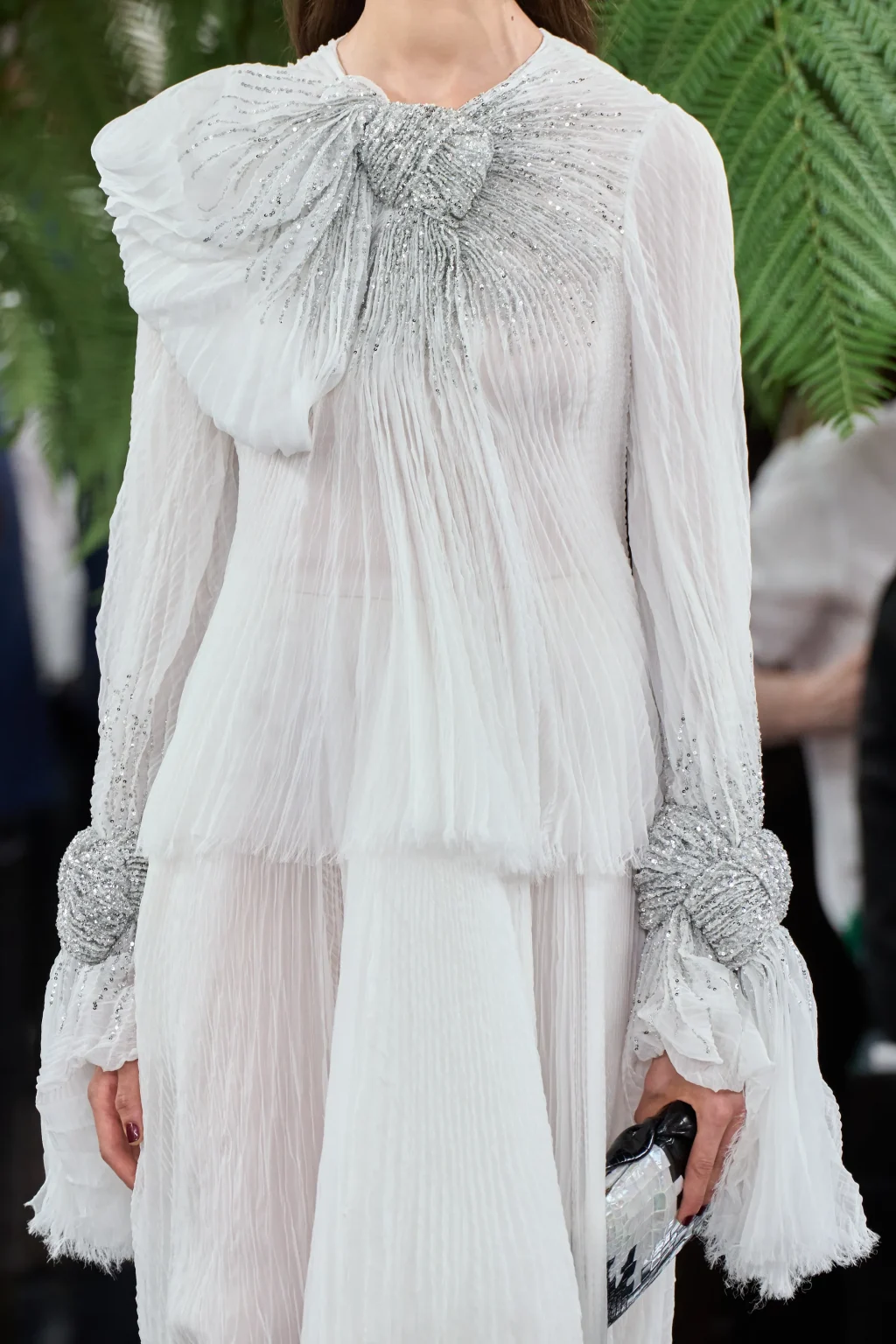
Another arrived in a compact black-and-silver format, held almost like a jewel box against a sheer white plissé dress. Its polished surface and sharp contrast made it feel closer to a classic minaudière, but still within the collection’s larger conversation between ornament, object and handwork.
Why the Dior Fall-Winter 2026 Couture Bags Matter
Taken together, the Dior Fall 2026 Couture bags sketch Anderson’s accessory doctrine with unusual clarity. Heritage silhouettes — Cigale, Lady Dior, Petit Dîner — carry the newness, while the true experiments arrive as collaborations with a living artist, credited and researched down to the archival textile fragment. For collectors, the chintz Petit Dîners are the pieces to watch: genuinely unique objects built on 300-year-old cloth. For everyone else, the metallic plissé Cigale and the Bow bag are the clearest signal of where Dior’s ready-to-wear accessories are likely heading next — the crushed-foil texture already looks inevitable.