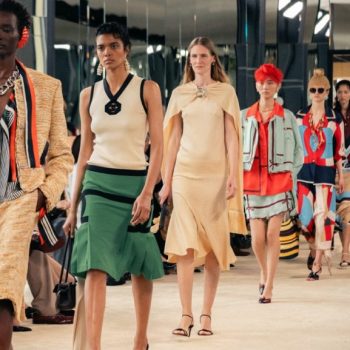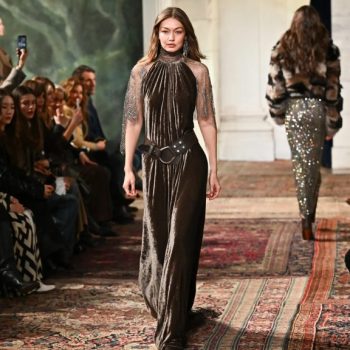
SOUND ON. With couture week and the menswear circuit now behind us, it’s the perfect moment to rewind the season—not through hemlines, but through what carried them: the music. A runway soundtrack is never just “background.” It’s pacing, psychology, and posture. It decides whether a silhouette reads as sharp or soft, whether a detail feels precious or severe, whether the room leans forward—or tunes out.
Couture, especially, lives on micro-moments: a hand-finished edge, a hidden construction, a bodice that’s engineered like architecture. The right track doesn’t compete with that craftsmanship; it frames it, giving each look a tempo and each narrative beat a landing. Menswear, meanwhile, often uses music as attitude: it can turn a simple coat into a statement, a classic suit into a provocation, a quiet palette into a mood.
Below is a curated edit of standout soundtracks from the couture and menswear shows—scores that didn’t merely accompany the collections, but shaped how we experienced them.
Video credit for the runway clips featured in this story: @opulentstylings on Instagram.
1. CHANEL — “Bitter Sweet Symphony” (Instrumental) by The Verve
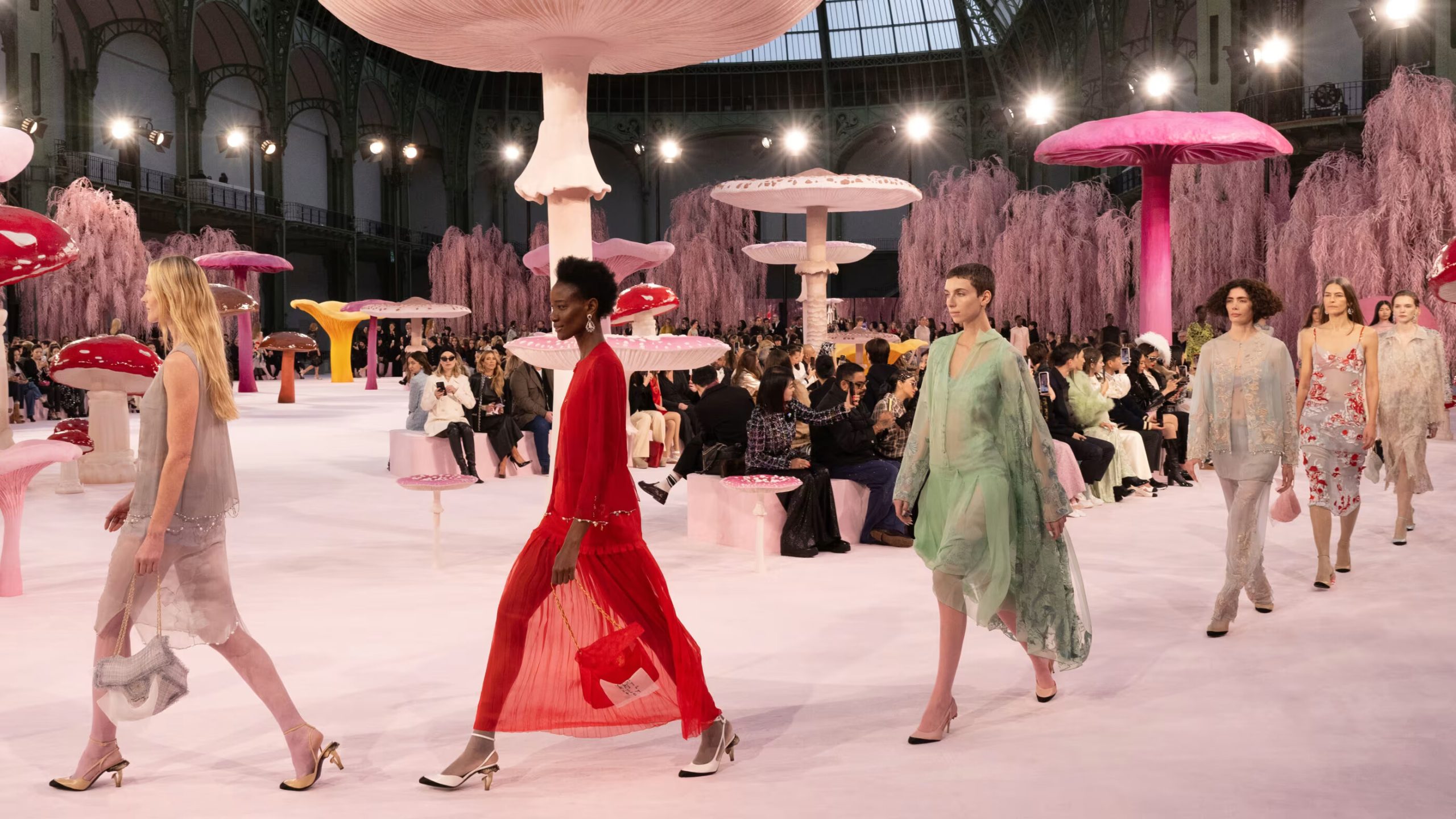
There’s something brilliantly cinematic about ending couture with a track the world already knows by heart. “Bitter Sweet Symphony” arrives with built-in emotional memory—string swell, forward motion, that ache of nostalgia—and in couture it becomes a kind of closing argument: the collection isn’t just beautiful, it’s felt. In the Grand Palais’ dreamlike garden staging (oversized, surreal, almost childlike in scale), the music reads as a sophisticated counterpoint: sweetness on the surface, a faint melancholy underneath.
What makes this choice land is its clarity. It’s not trying to be niche, obscure, or clever. It’s a clean emotional cue—one that makes the final passage feel inevitable, like the runway has been building toward that crescendo all along.
If you want the fashion proof behind the emotion, the bags tell the story best—here’s my full breakdown of the Chanel Spring 2026 Couture bags.
2. DIOR (Haute Couture) — Vivaldi, “Concerto No. 4 in F Minor”
Vivaldi in couture is a classic move—but “classic” doesn’t mean predictable. The precision of baroque composition mirrors the discipline of couture making: repetition with variation, structure with flourish, tension resolved through cadence. A concerto also carries a built-in choreography: it tells bodies when to accelerate, when to suspend, when to glide.
What’s compelling here is how the music grants the clothes a kind of authority. Strings don’t beg for attention; they claim it. And that’s exactly what couture should do—announce itself as craft at the highest level, without needing volume or spectacle to prove it.
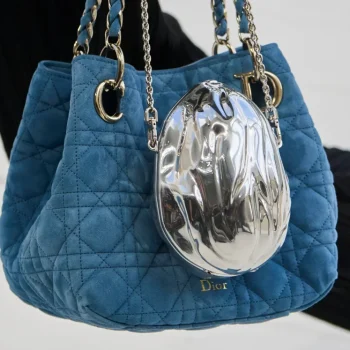
That same baroque discipline shows up in the accessories too—especially in the way Dior builds structure and softness into one object. See the full edit in my Dior Haute Couture Spring–Summer 2026 bags guide.
3. VALENTINO (Haute Couture) — Saint-Saëns, “Danse Macabre, Op. 40”
“Danse Macabre” is theatre—elegant, ominous, and irresistibly dramatic. It doesn’t just create atmosphere; it creates narrative. The piece is famous for its skeletal wit: a dance that’s seductive and unsettling at once. In couture, that duality is gold. It lets embellishment feel slightly dangerous. It lets beauty flirt with the uncanny.
Saint-Saëns also gives you a silhouette vocabulary in sound: sharp accents like cut lines, swirling strings like trains and capes, a rhythmic insistence that makes every entrance feel intentional. This is the kind of soundtrack that turns a runway into a storybook—one with shadows.
4. GEORGES HOBEIKA — “Enjoy the Silence” (Eric Whitacre Singers)
A choral interpretation of “Enjoy the Silence” is the rare remix that elevates the original into something almost sacred. The piece becomes less about pop nostalgia and more about stillness—about breath, restraint, and emotional gravity. For couture, that shift matters: it pulls the focus toward touch, texture, and the slow reveal of detail.
The genius here is the contradiction. The title promises silence, yet the choir fills the room—softly, insistently—like a living fabric. It’s a soundtrack that makes embellishment look less decorative and more devotional.
5. LOUIS VUITTON (Menswear) — “Pray for You” (new music moment featuring John Legend)
When a menswear show starts behaving like a listening session, it changes the audience’s posture. You’re not just watching clothes—you’re witnessing a cultural drop. Louis Vuitton’s menswear staging leaned into that crossover energy, with music treated as headline, not accessory.
John Legend’s involvement underscored the point: the soundtrack wasn’t simply selected, it was produced, performed, and folded into the event as part of the storytelling ecosystem. The result is a runway that feels live in the broader sense—like it’s happening across fashion, music, and celebrity culture simultaneously.
6. JACQUEMUS (Menswear) — Donna Summer, “Love to Love You Baby”
Few tracks telegraph sensuality as instantly as Donna Summer. But on a runway, this isn’t only about sex appeal—it’s about confidence. The song is rhythmic hypnosis: it stretches time, slows perception, makes movement feel deliberate. In menswear, that can be transformative. A simple silhouette suddenly looks intentional. A neutral palette becomes intimate rather than safe.
This is the kind of music choice that doesn’t “decorate” the show. It directs it—like lighting, like editing, like a camera angle.
Jacquemus always understands rhythm—music and accessories included. If you’re tracking the brand’s new silhouettes, don’t miss my Jacquemus Fall–Winter 2026 bags guide.
7. SACAI — Tears for Fears, “Everybody Wants to Rule the World”
This is nostalgia with teeth. The song arrives smooth and familiar—then the lyrics creep in, quietly political, quietly unsettling. That duality is exactly why it works for Sacai: the house lives in hybridity, in garments that look one way and behave another, in silhouettes that fuse soft and strict.
On the runway, “Everybody Wants to Rule the World” becomes a commentary without forcing one. It lets the collection stay fashion-first, while the soundtrack provides subtext: power, desire, control—the things menswear often circles even when it pretends not to.
8. PRADA (Menswear) — Suicide, “Ghost Rider”
“Ghost Rider” is industrial minimalism: repetitive, tense, slightly hostile. It creates a runway atmosphere where nothing is “pretty” by accident—where every clean line looks sharper, every proportion feels more extreme, every styling decision reads as deliberate.
Prada often thrives when it refuses warmth. This soundtrack choice is a perfect example: it doesn’t seduce you into liking the clothes. It dares you to sit with them. It turns the show into a pressure test—and that’s where Prada’s intellect shines.
9. DRIES VAN NOTEN (Menswear) — The Dave Brubeck Quartet, “Take Five”
“Take Five” is elegance without stiffness. Its off-kilter rhythm is instantly recognizable, but what makes it runway-perfect is the way it keeps moving—cool, measured, never rushed. In menswear, that kind of tempo adds maturity: it makes clothes look lived-in, not styled-to-death.
Jazz also carries a specific visual effect: it makes layering feel intentional, texture feel tactile, and color feel quieter but richer. “Take Five” doesn’t push drama. It gives the collection taste—that elusive sense of restraint that reads as confidence.