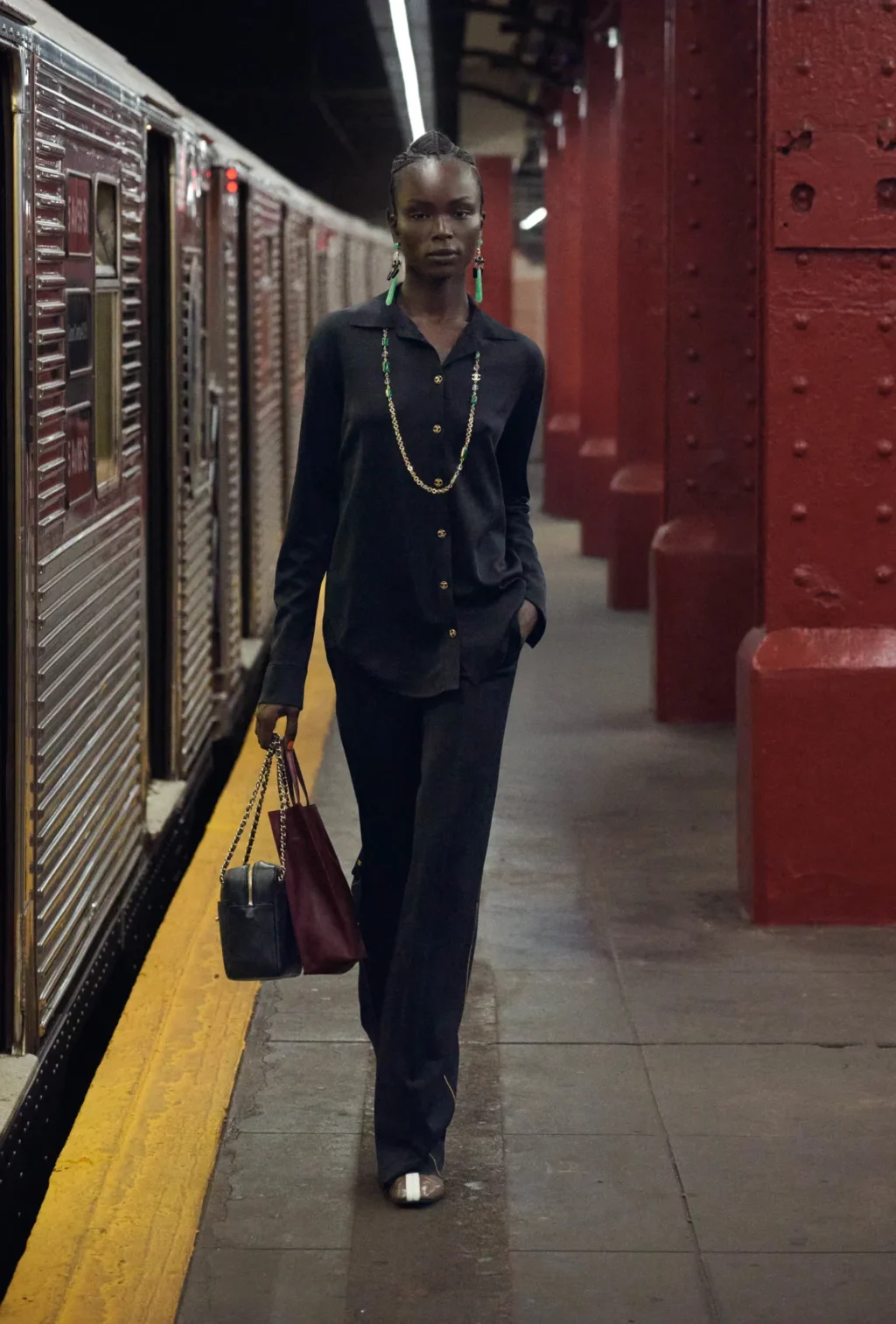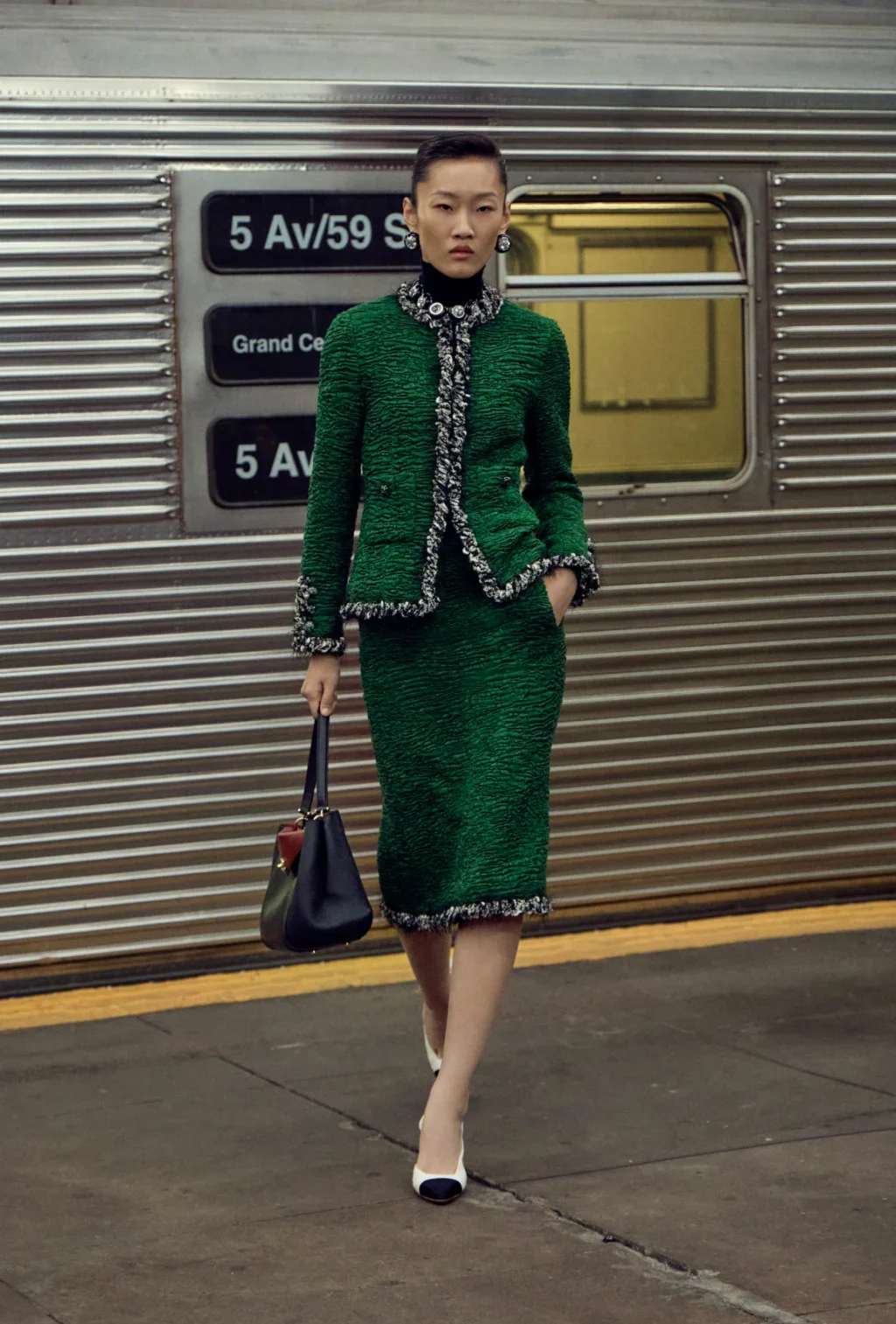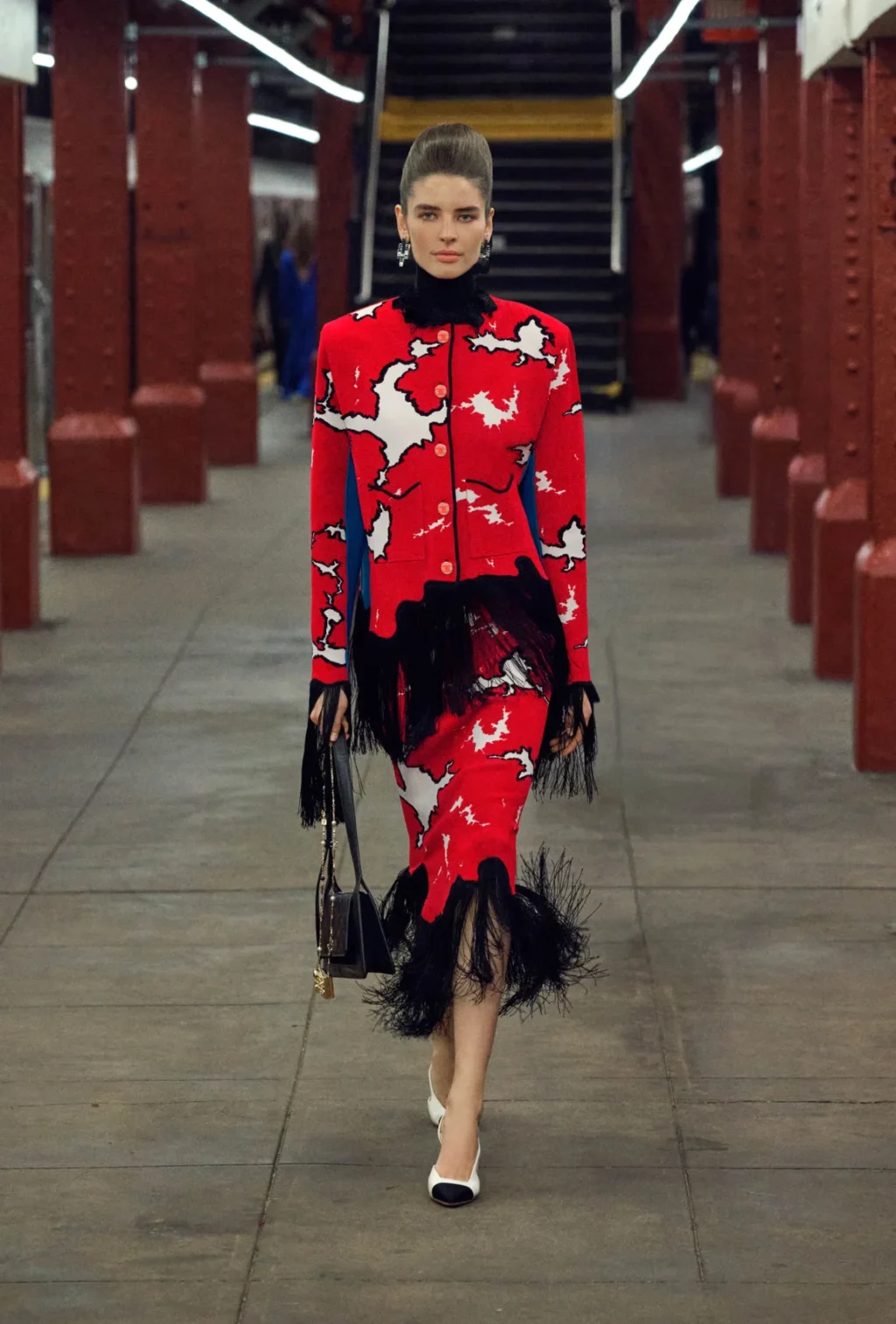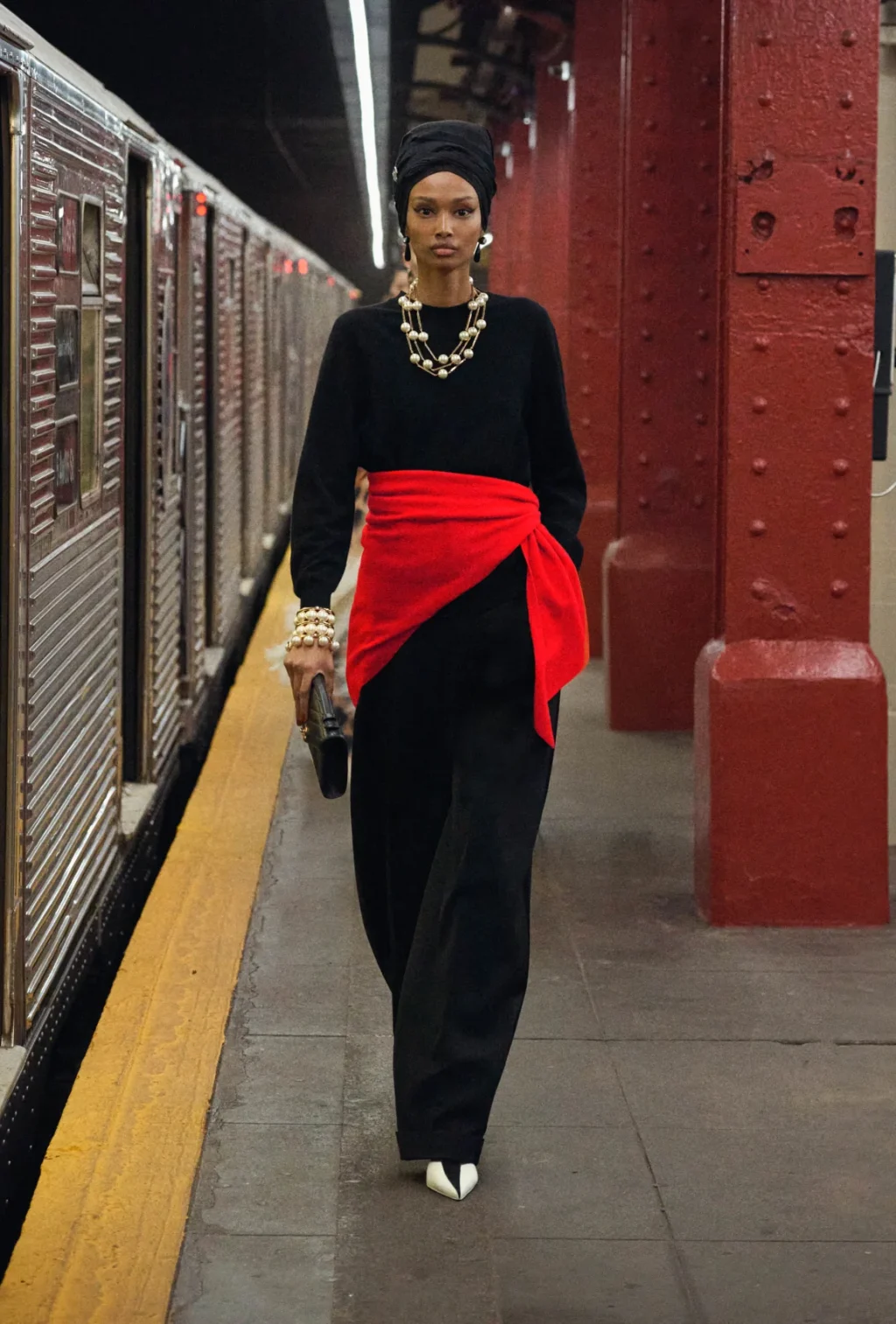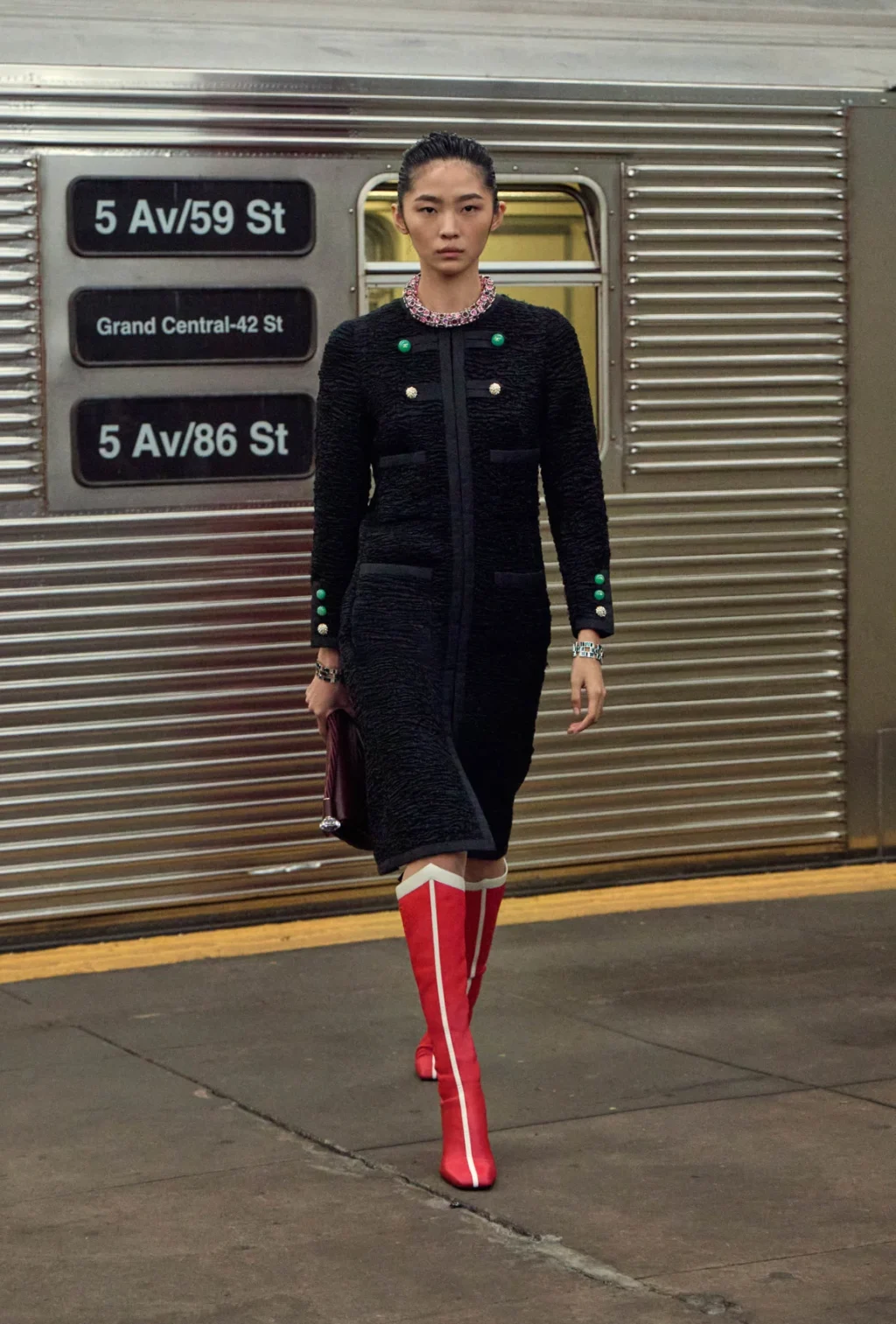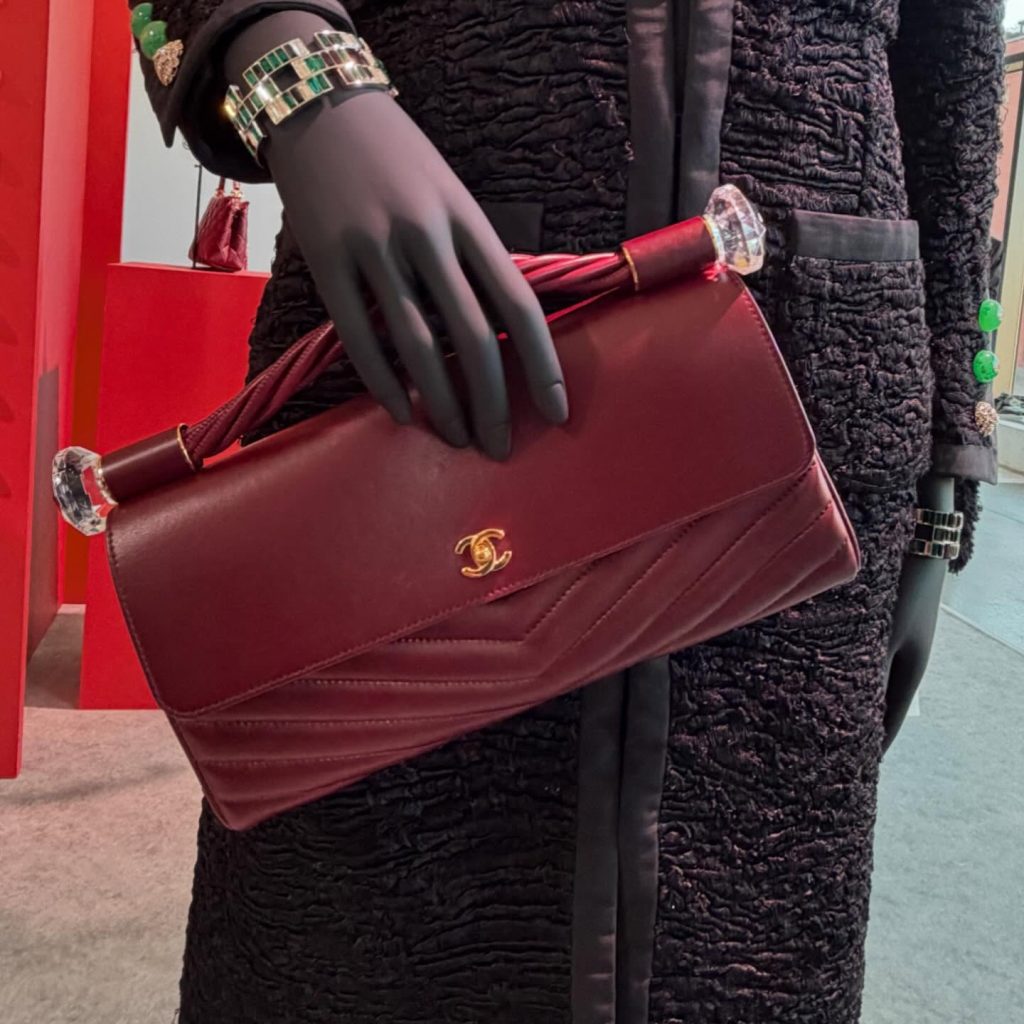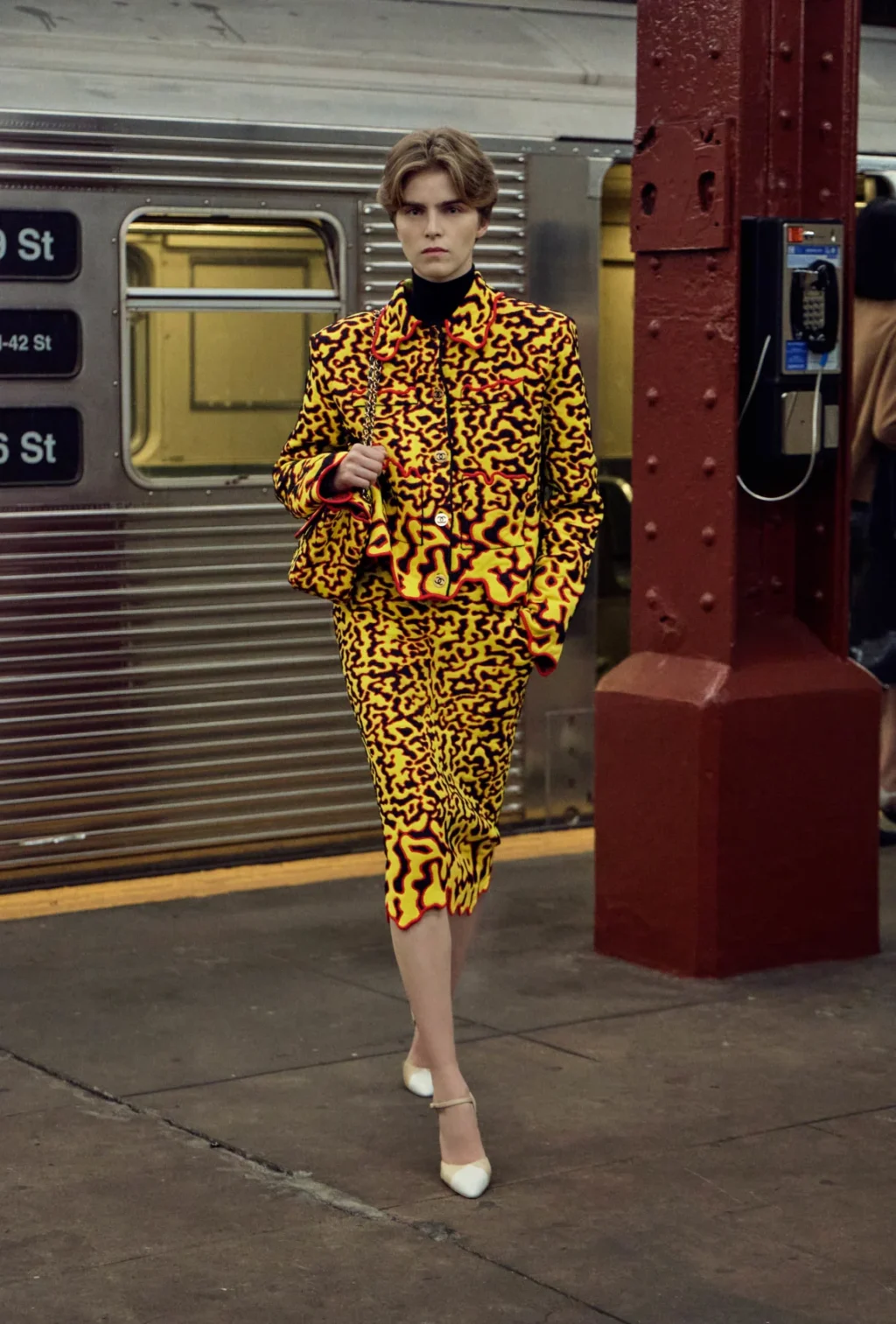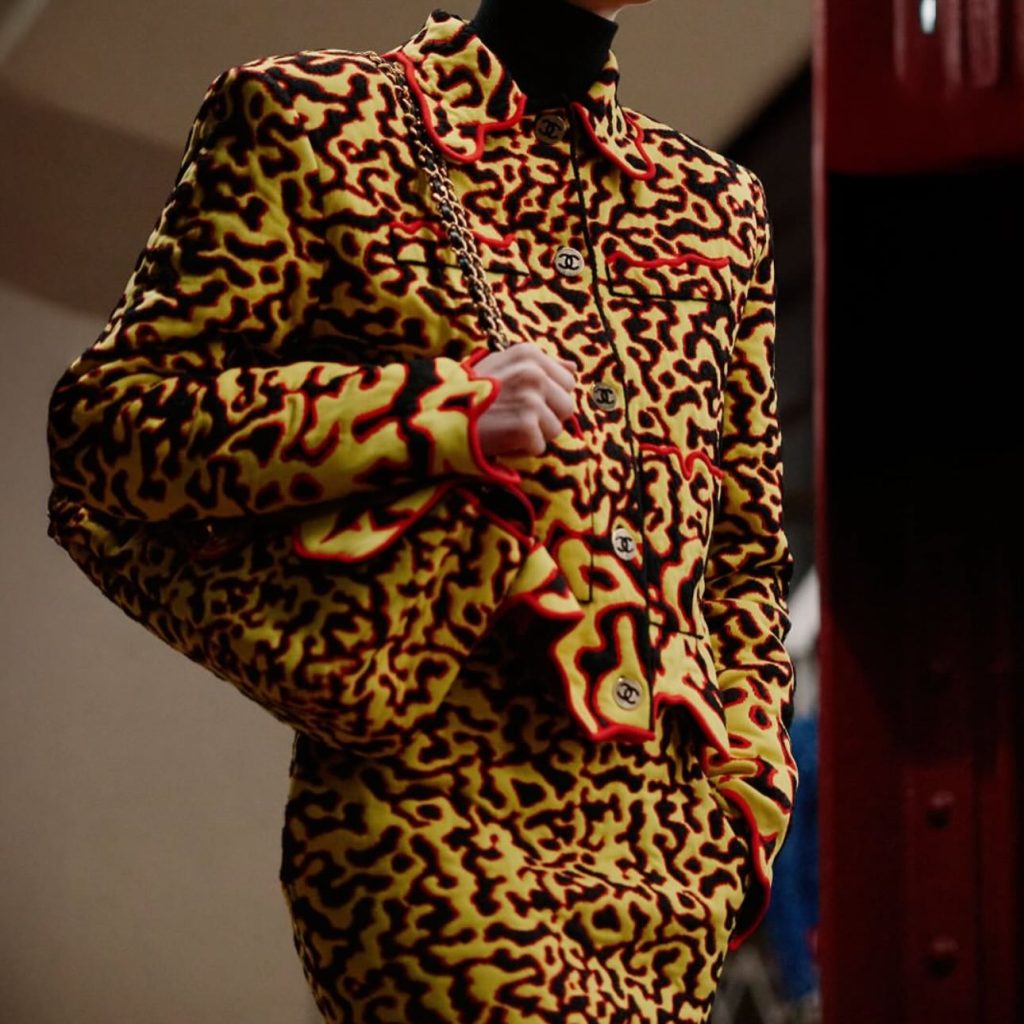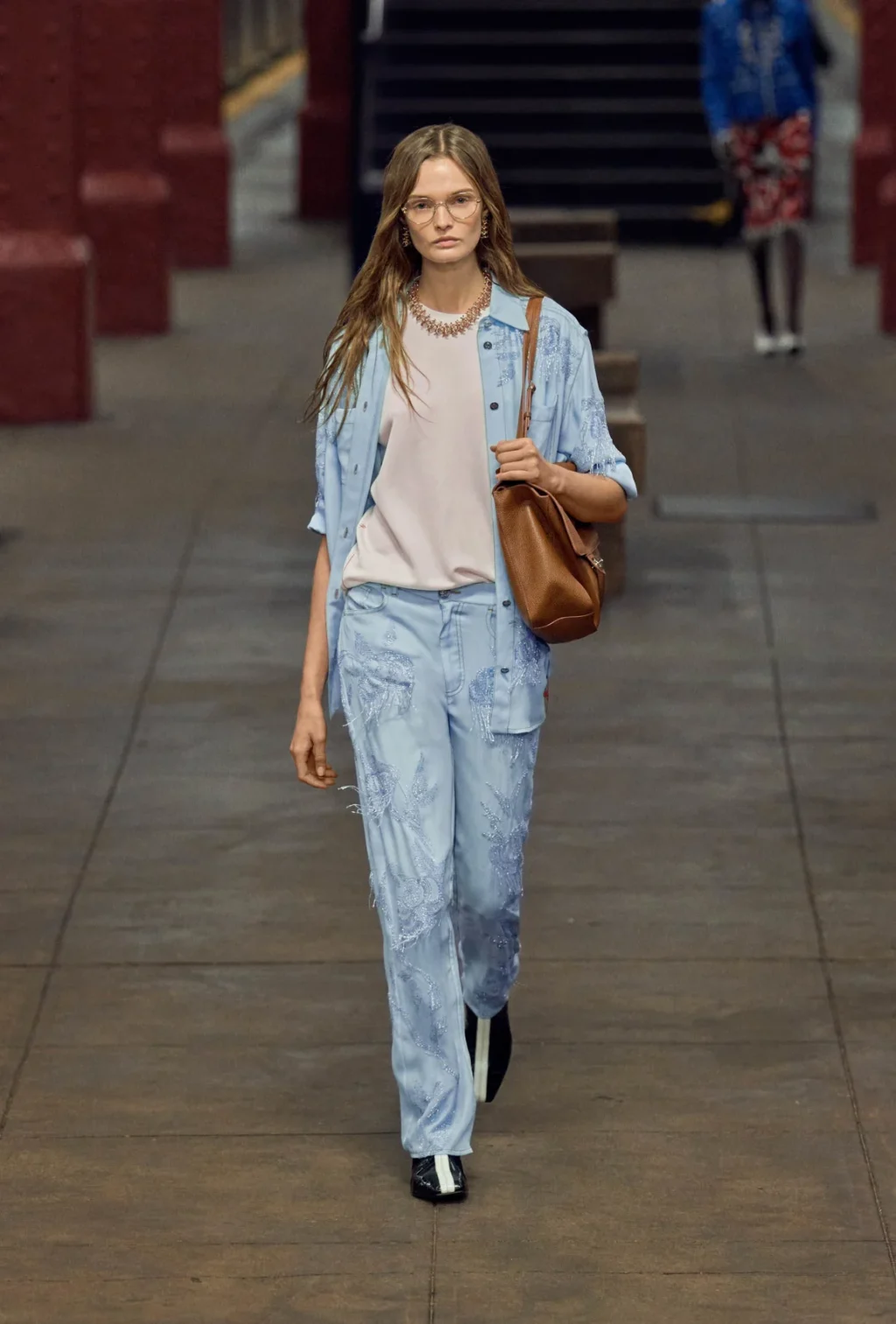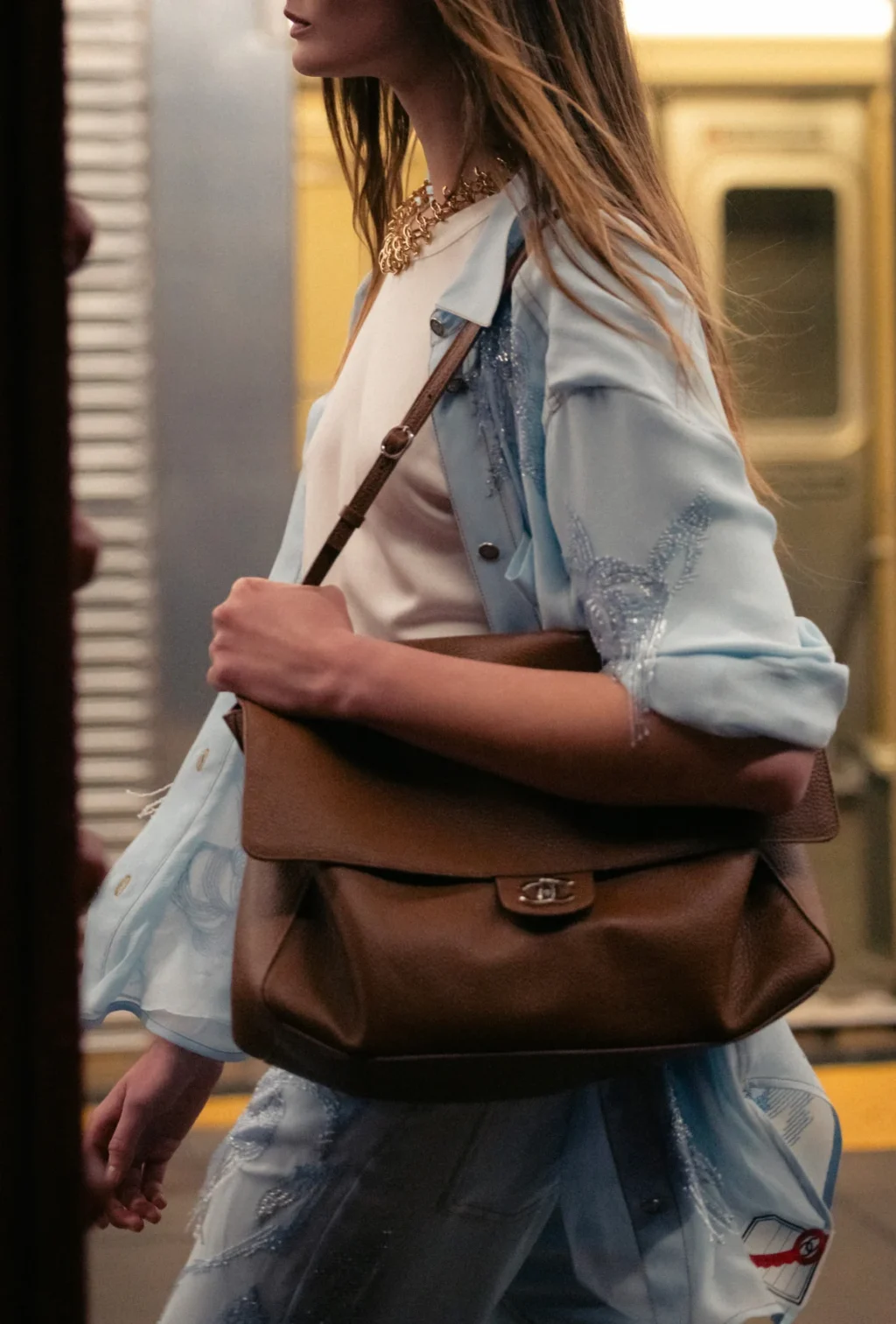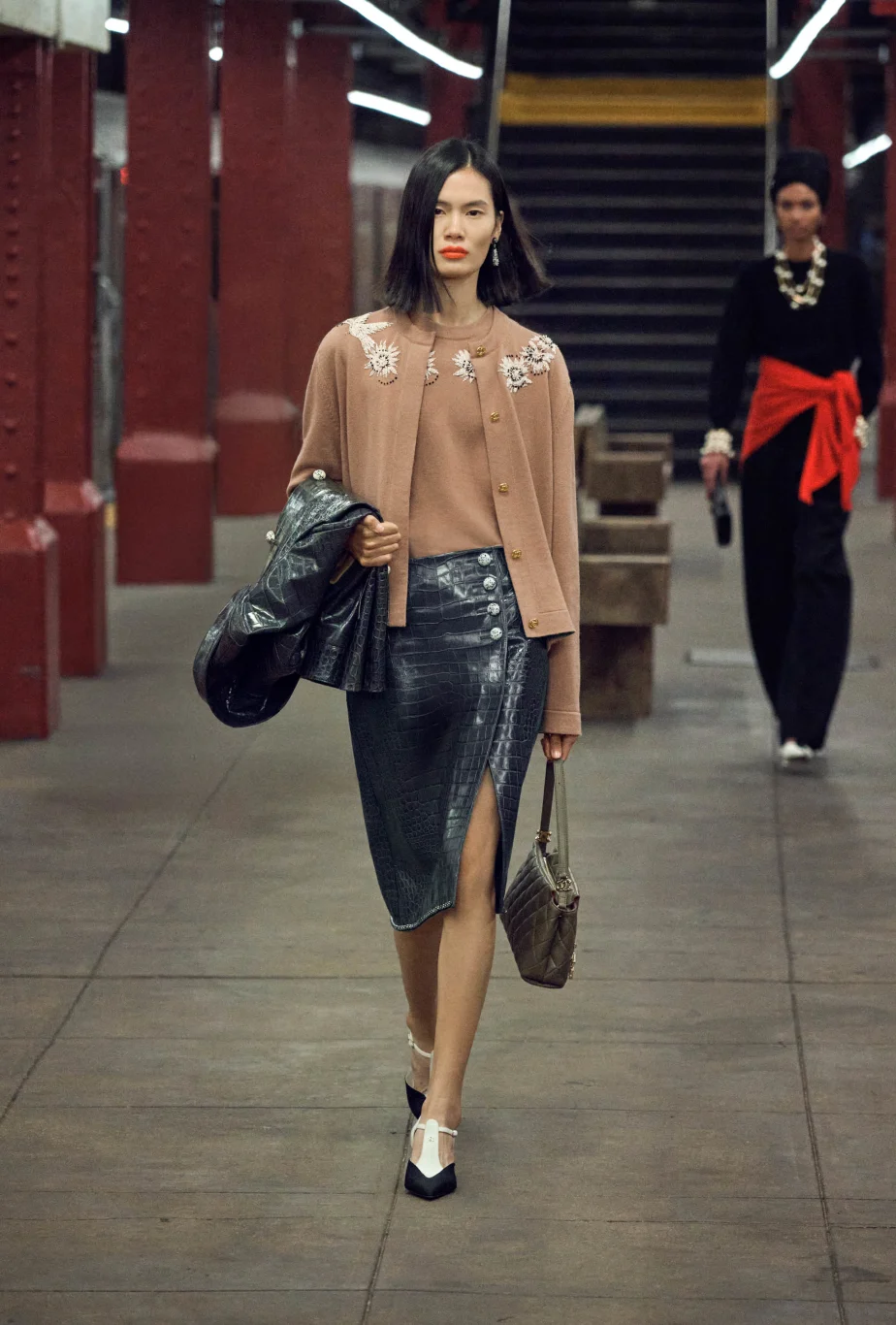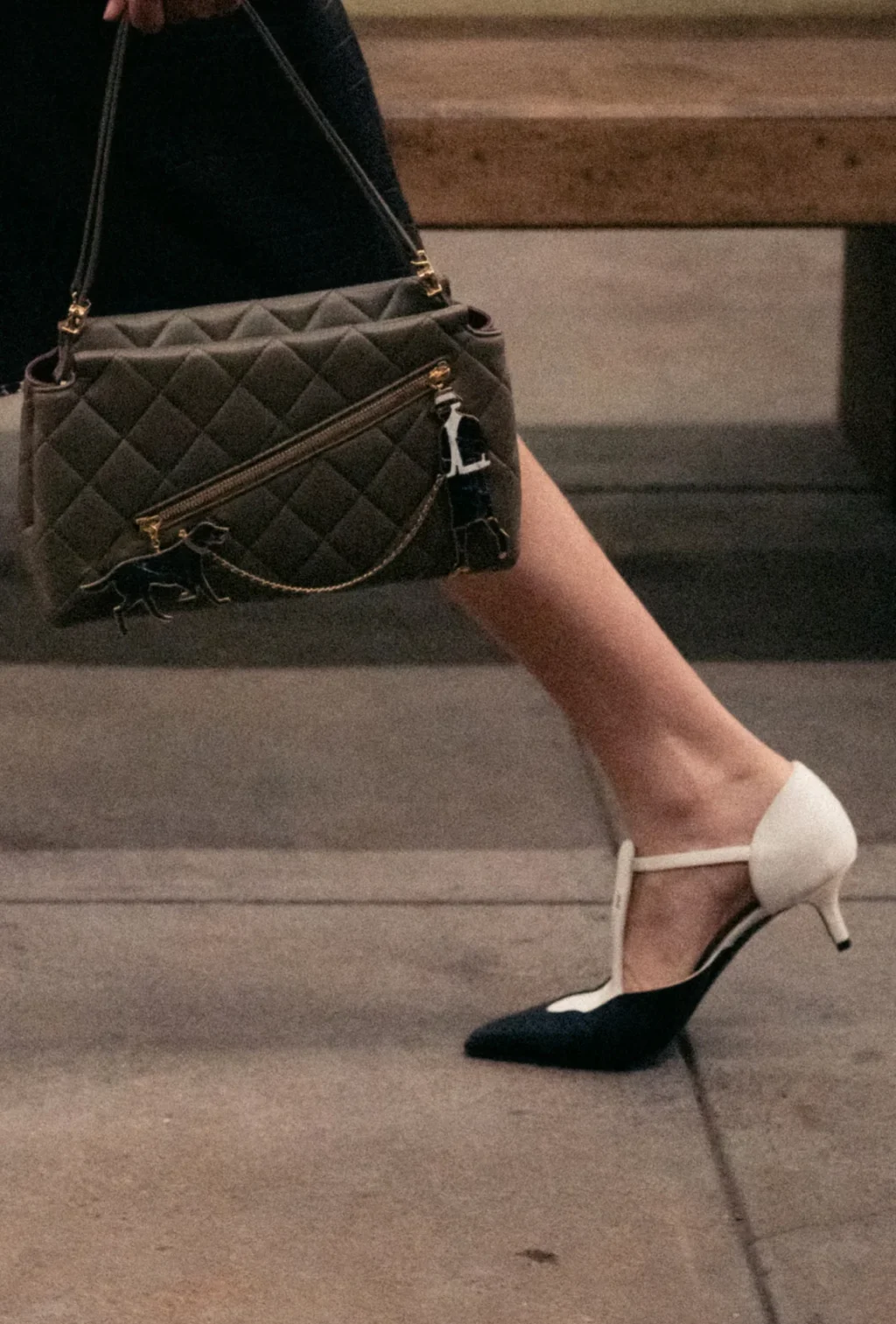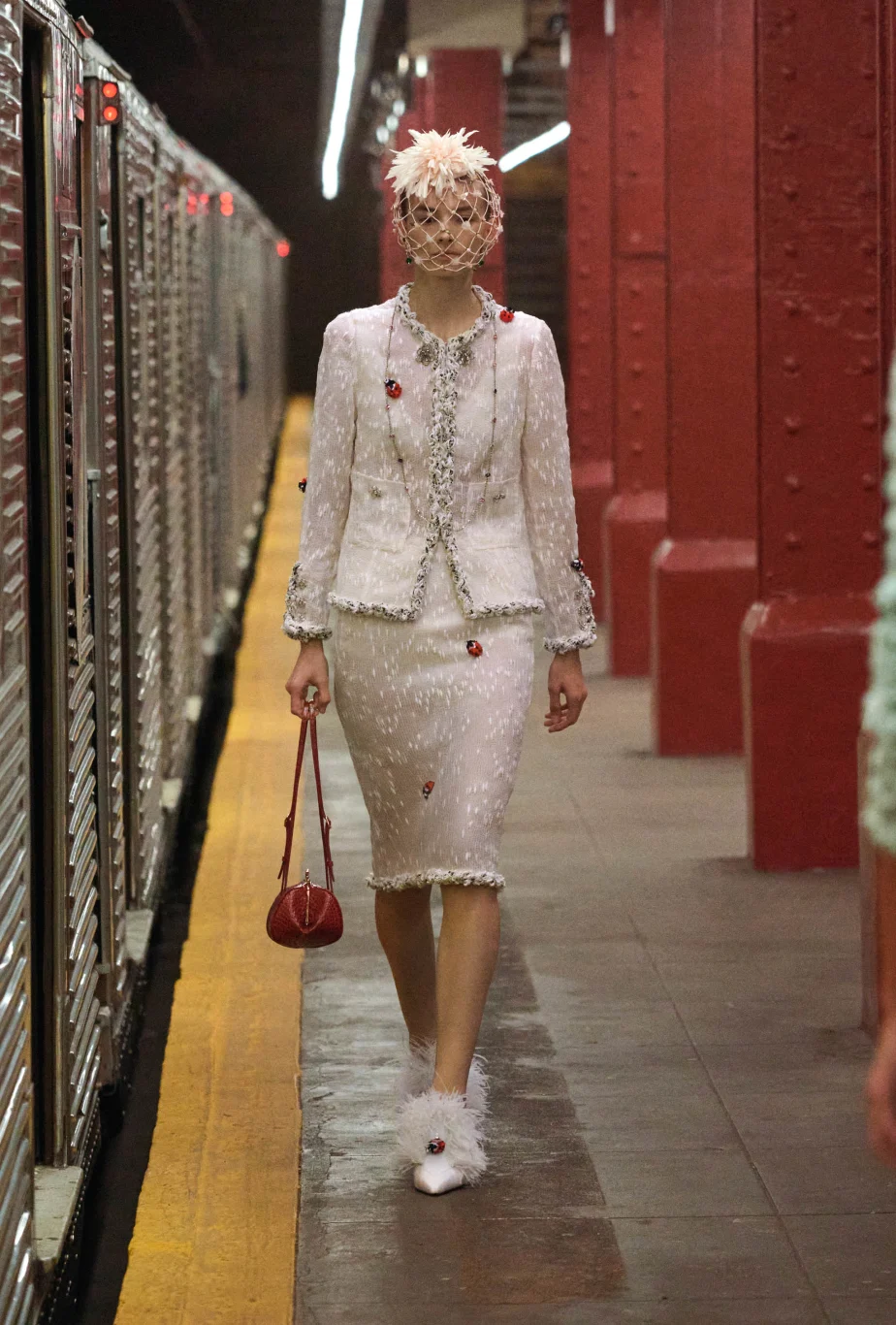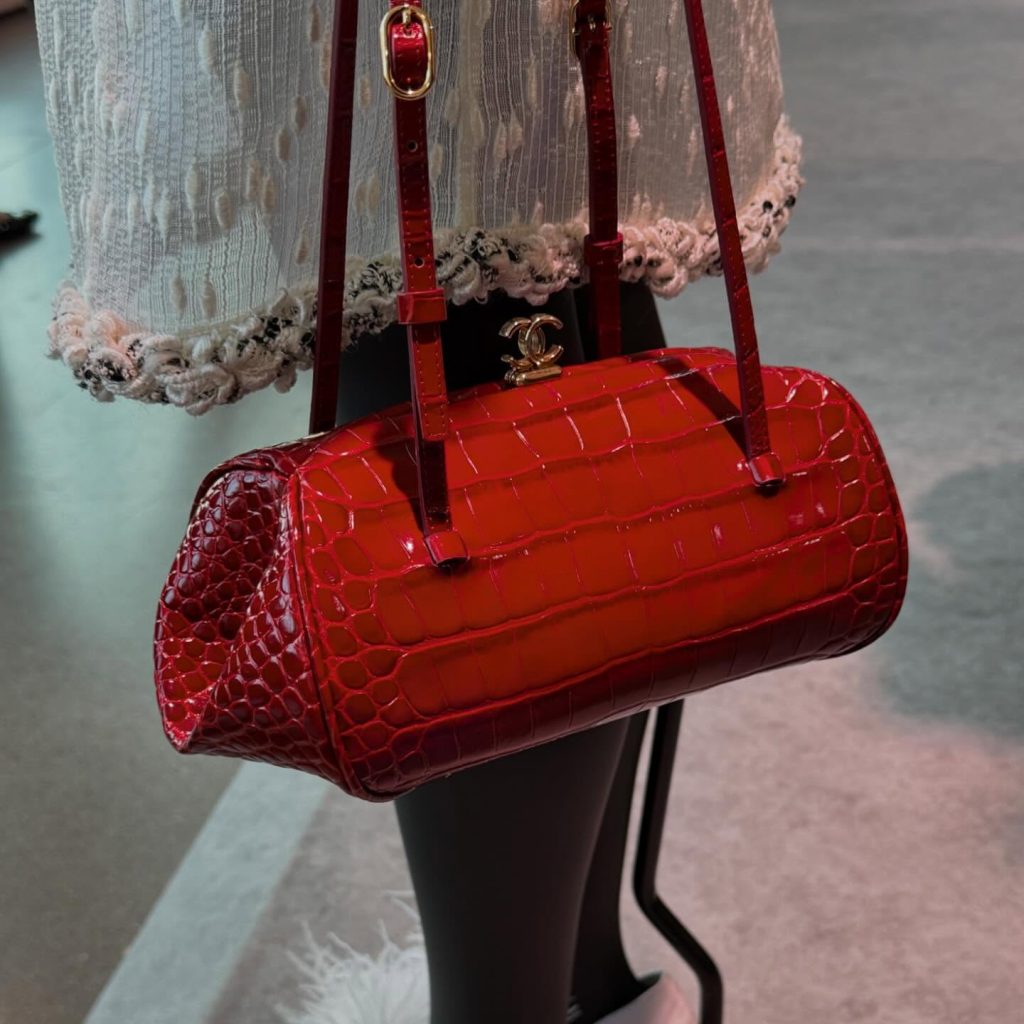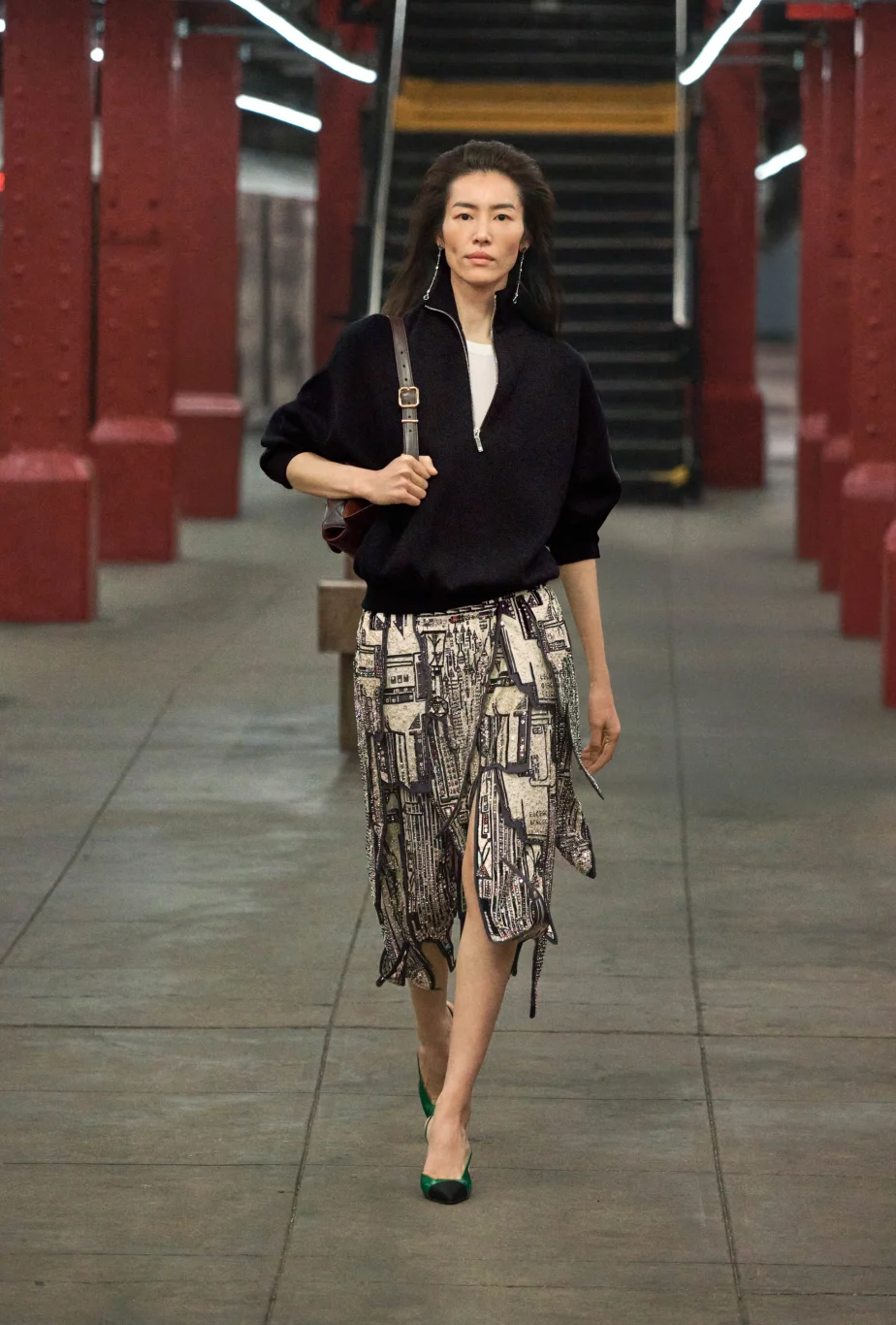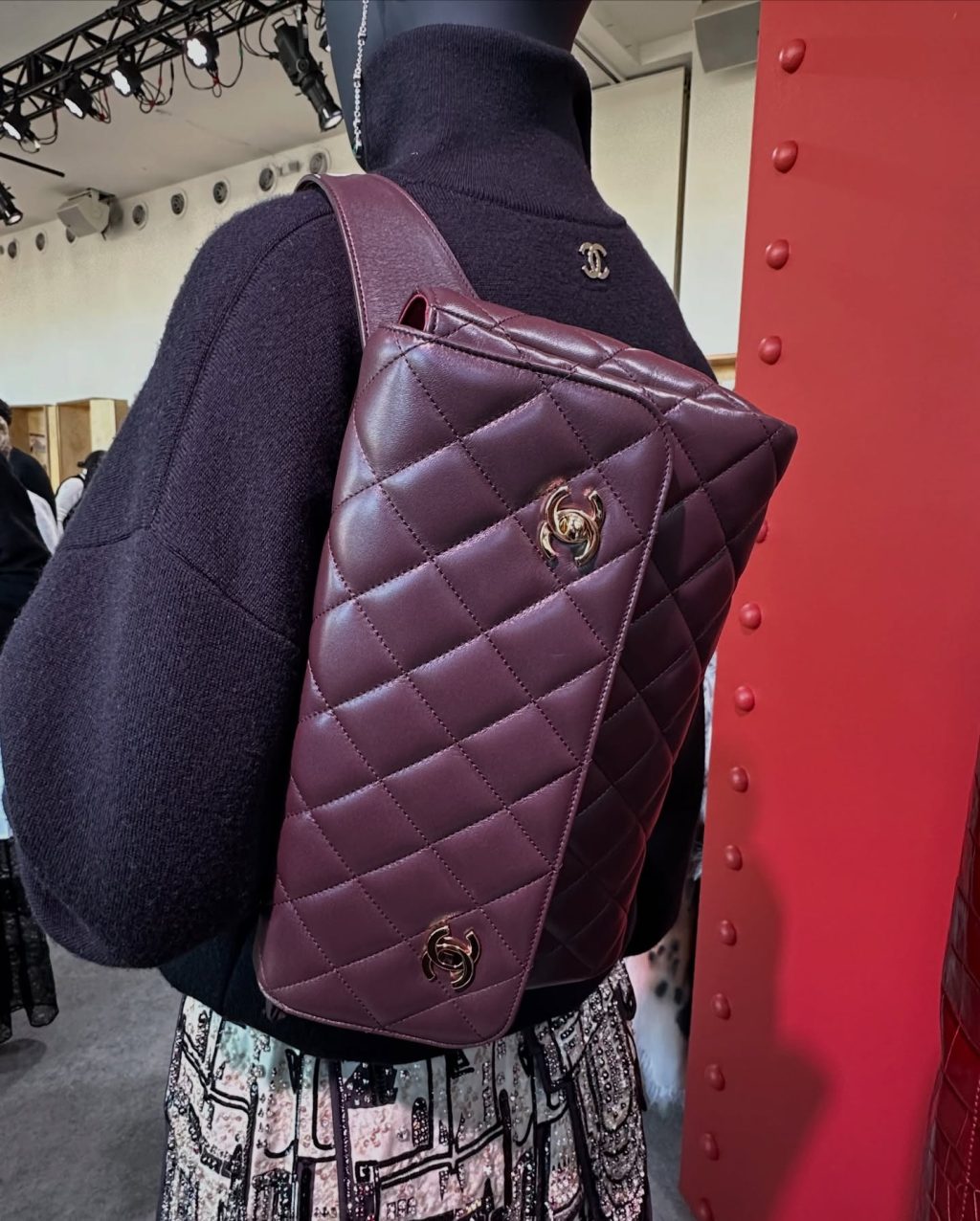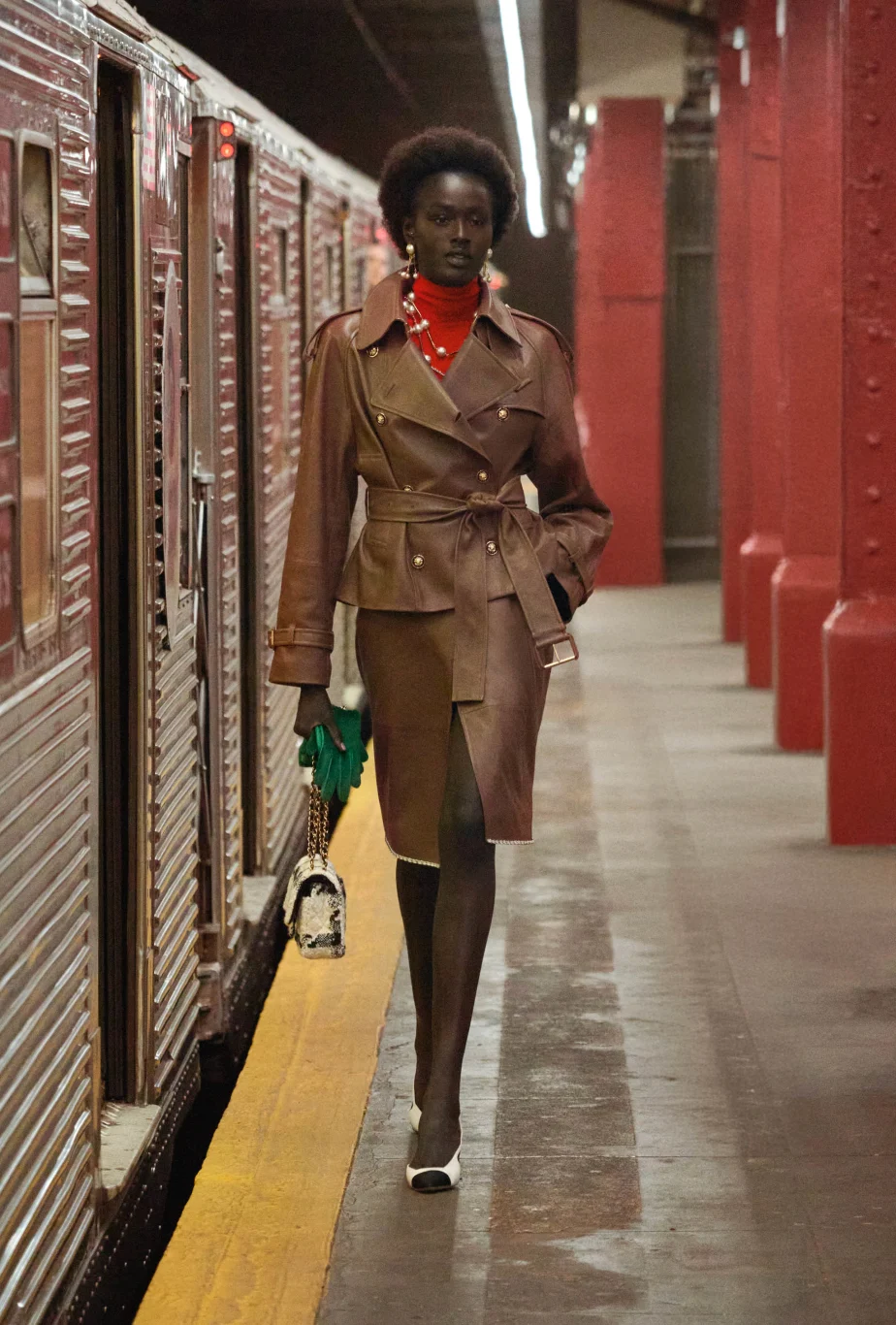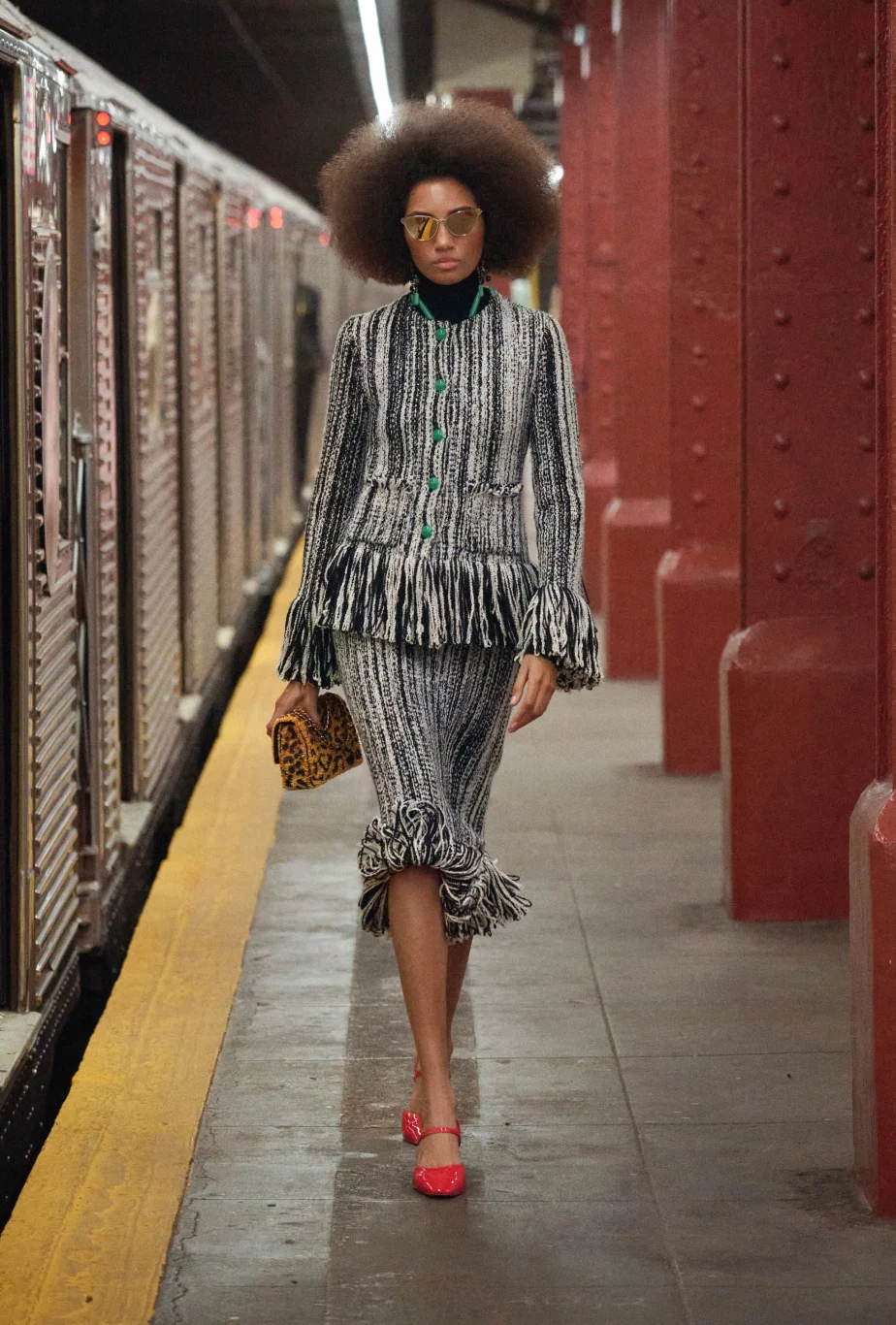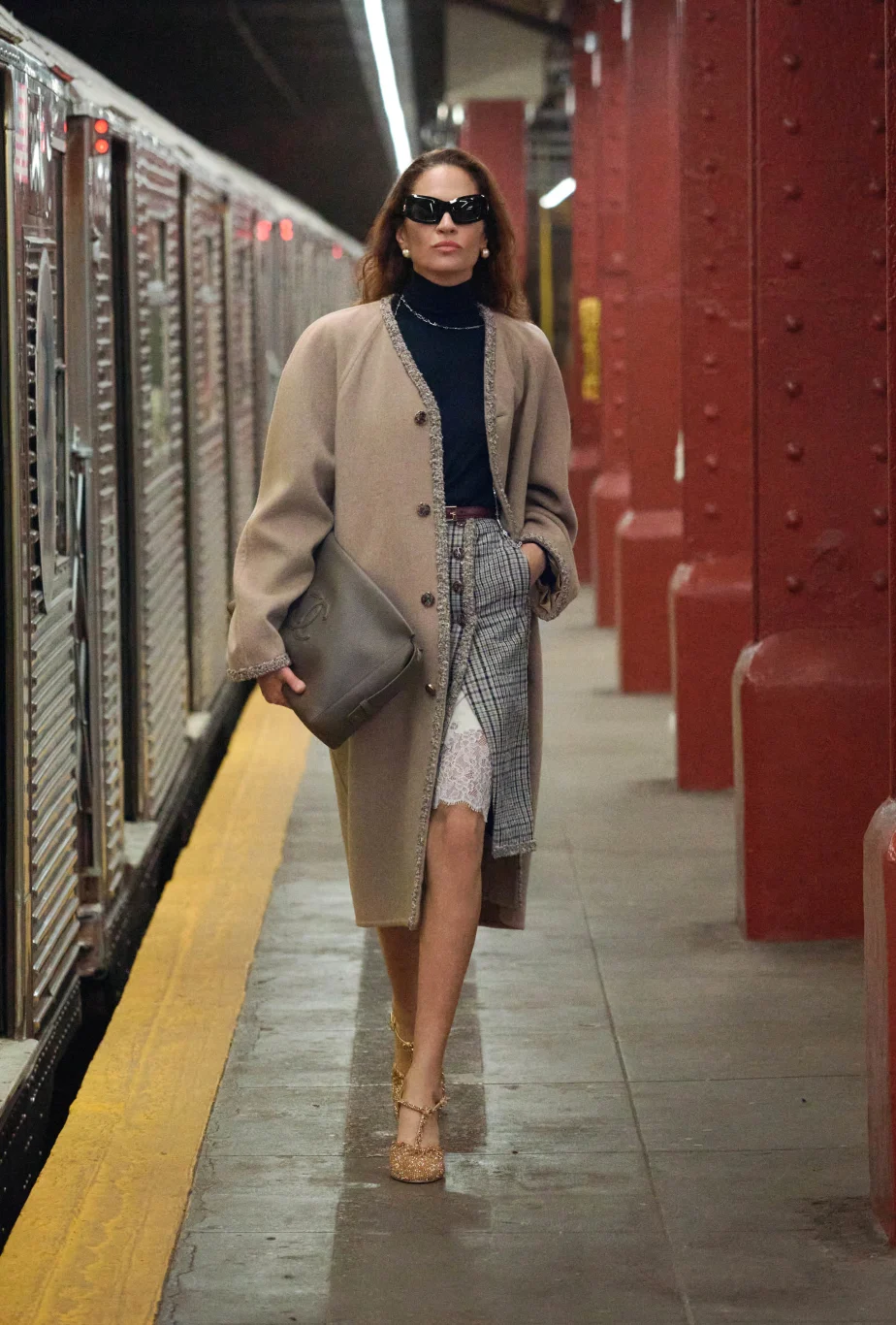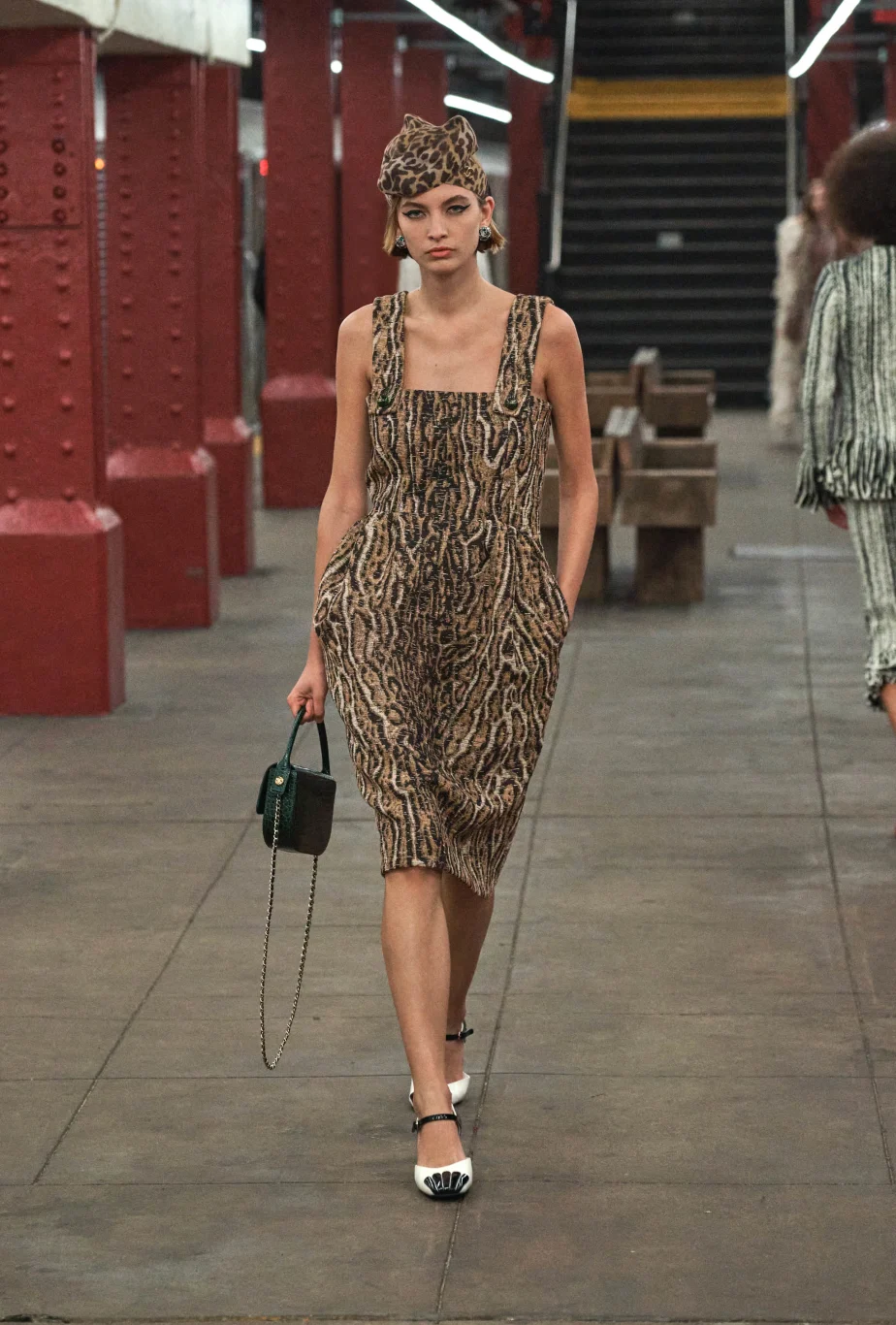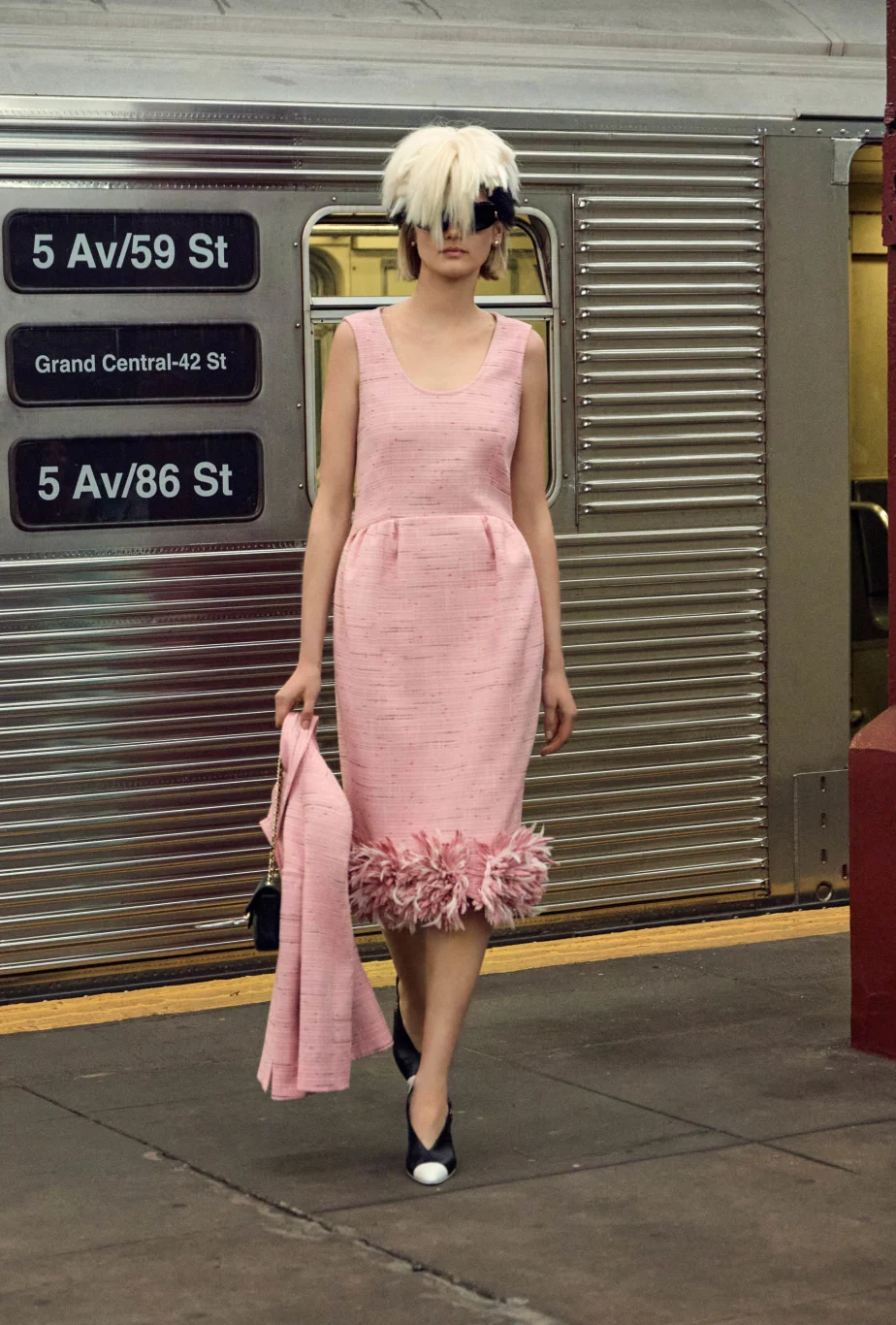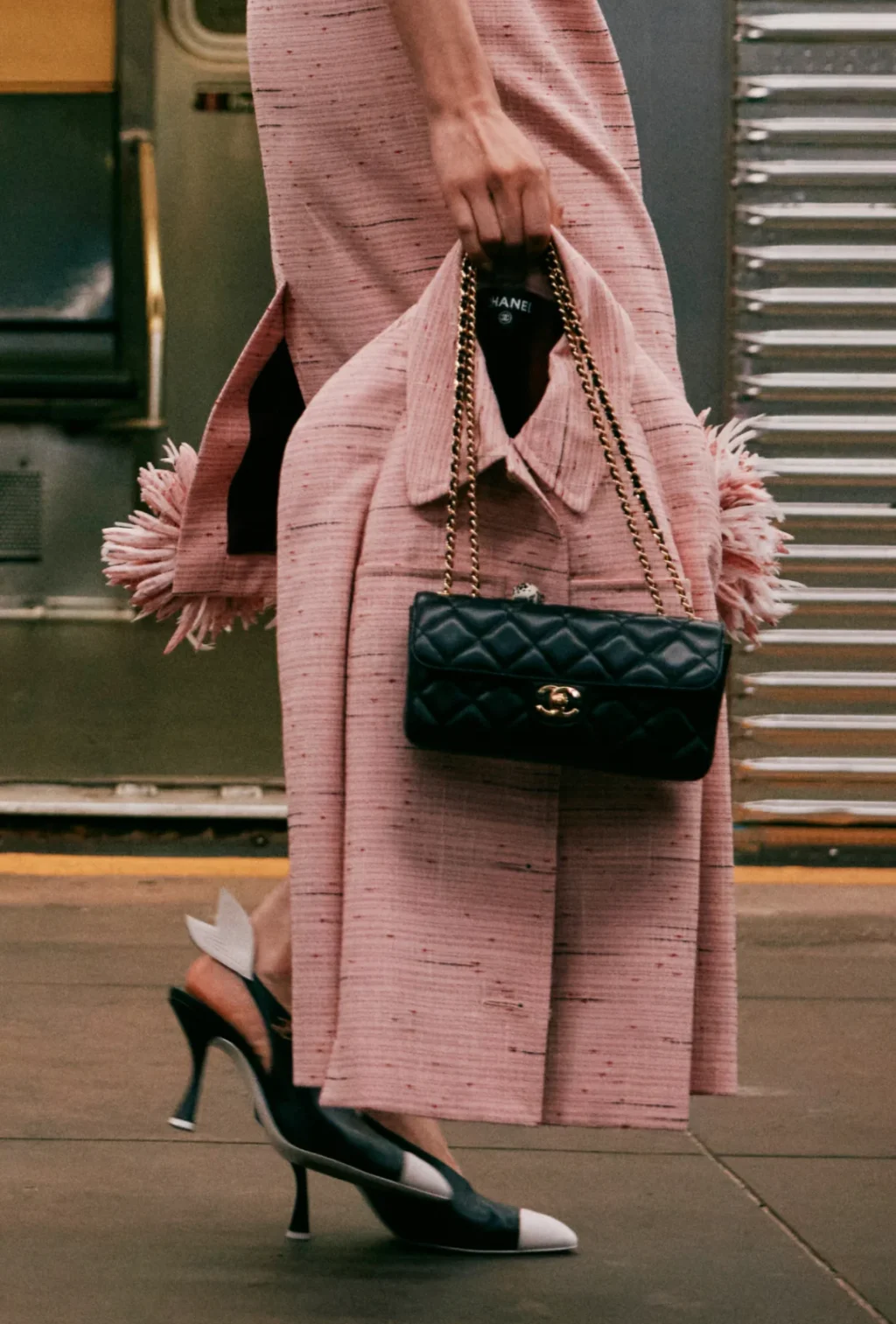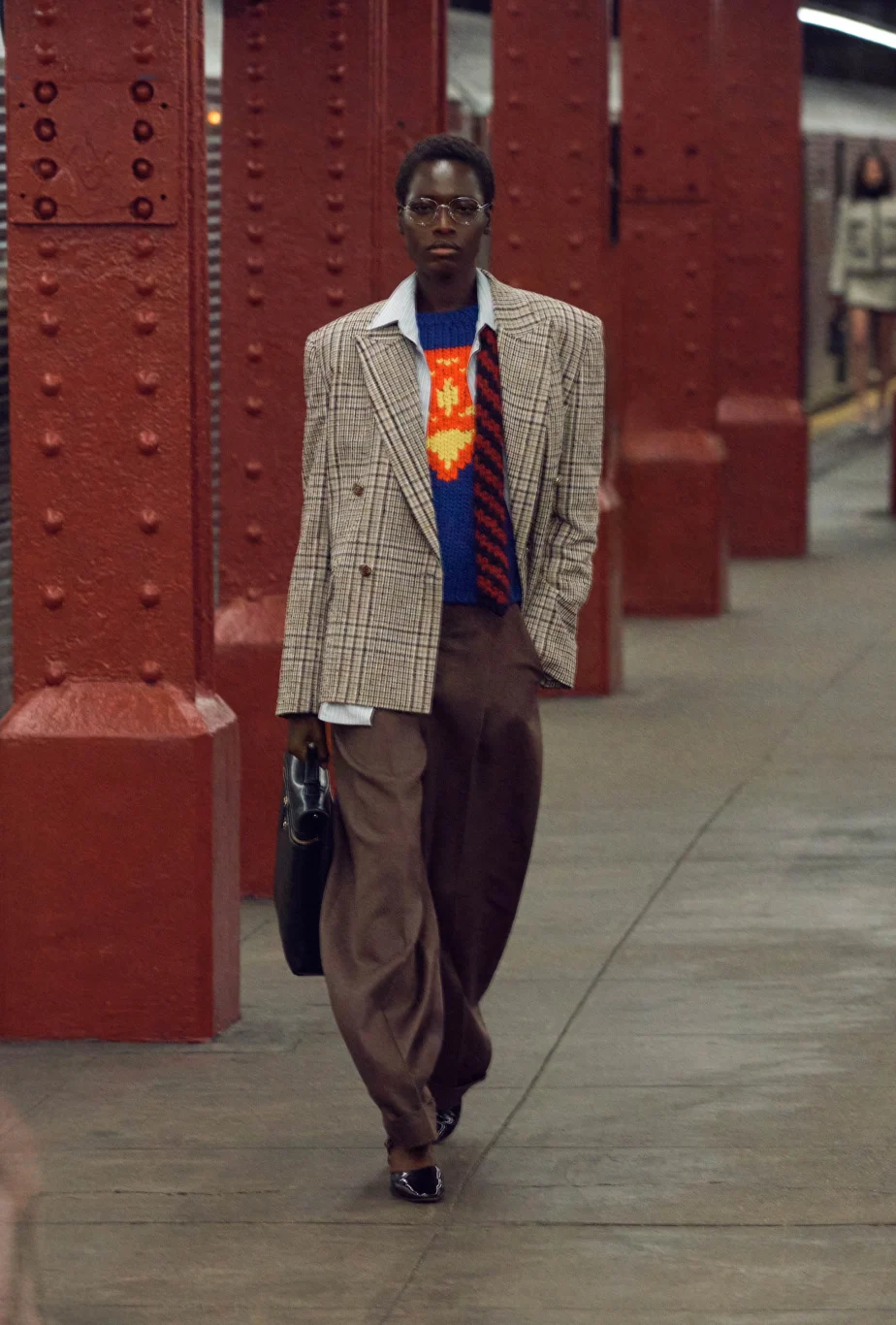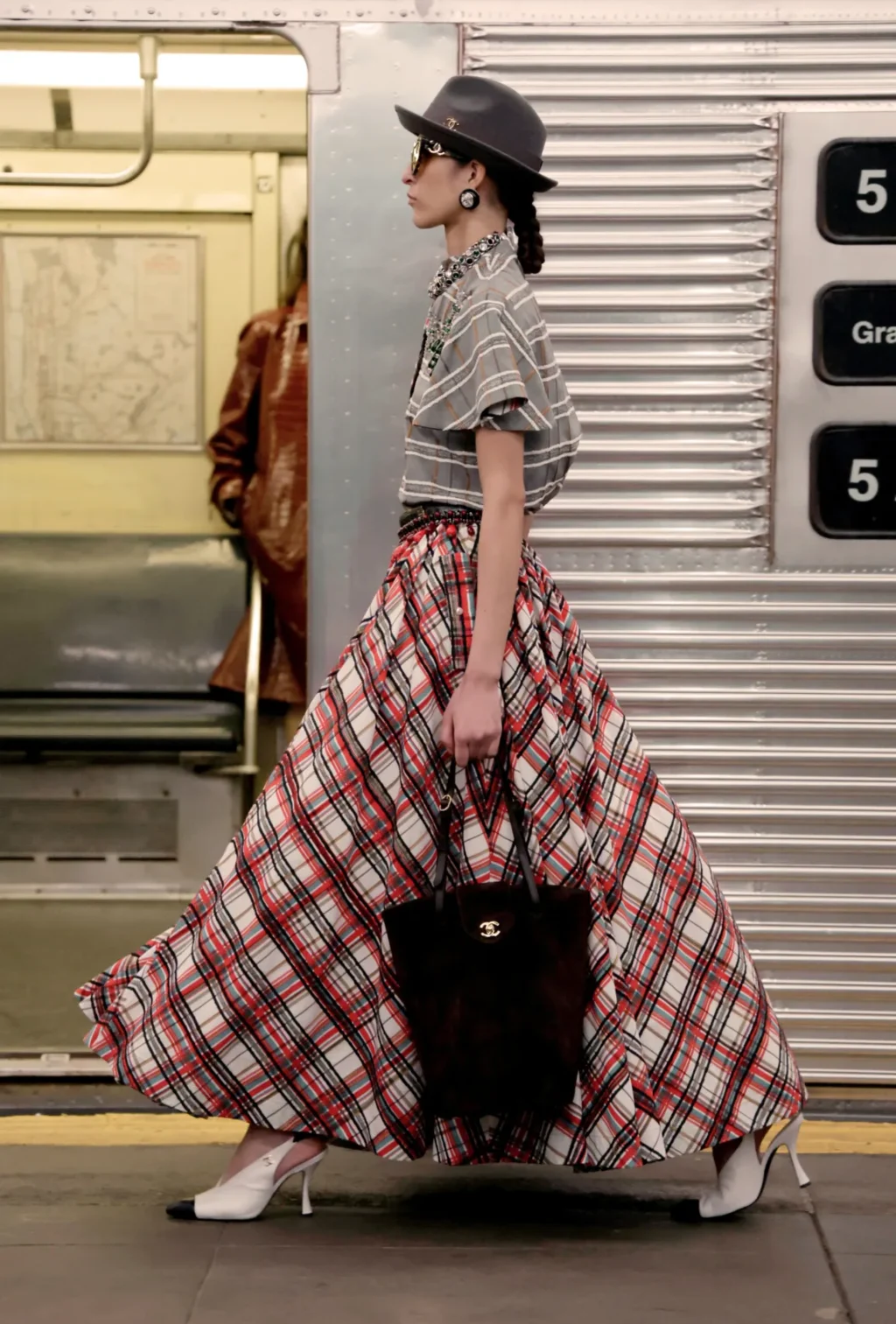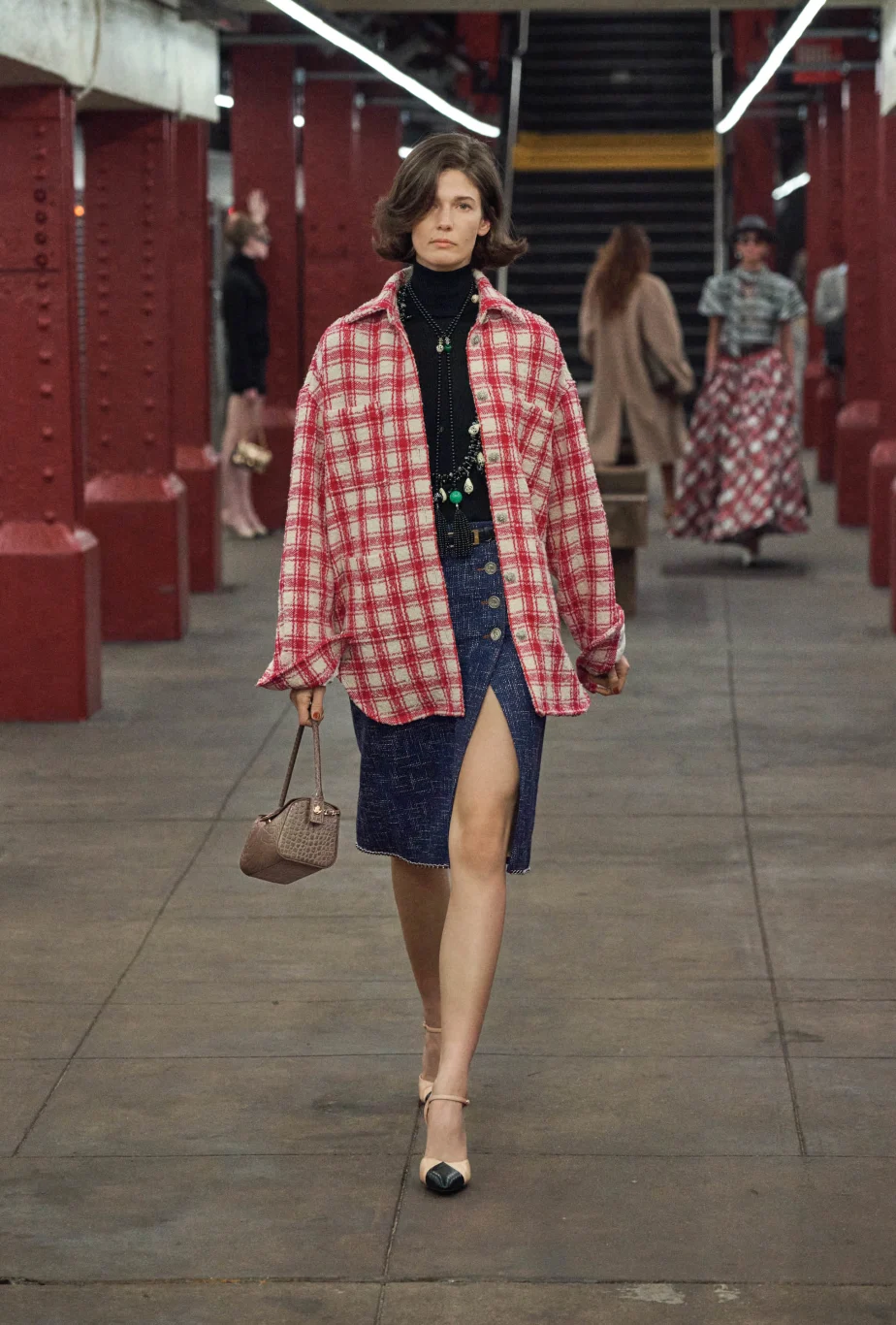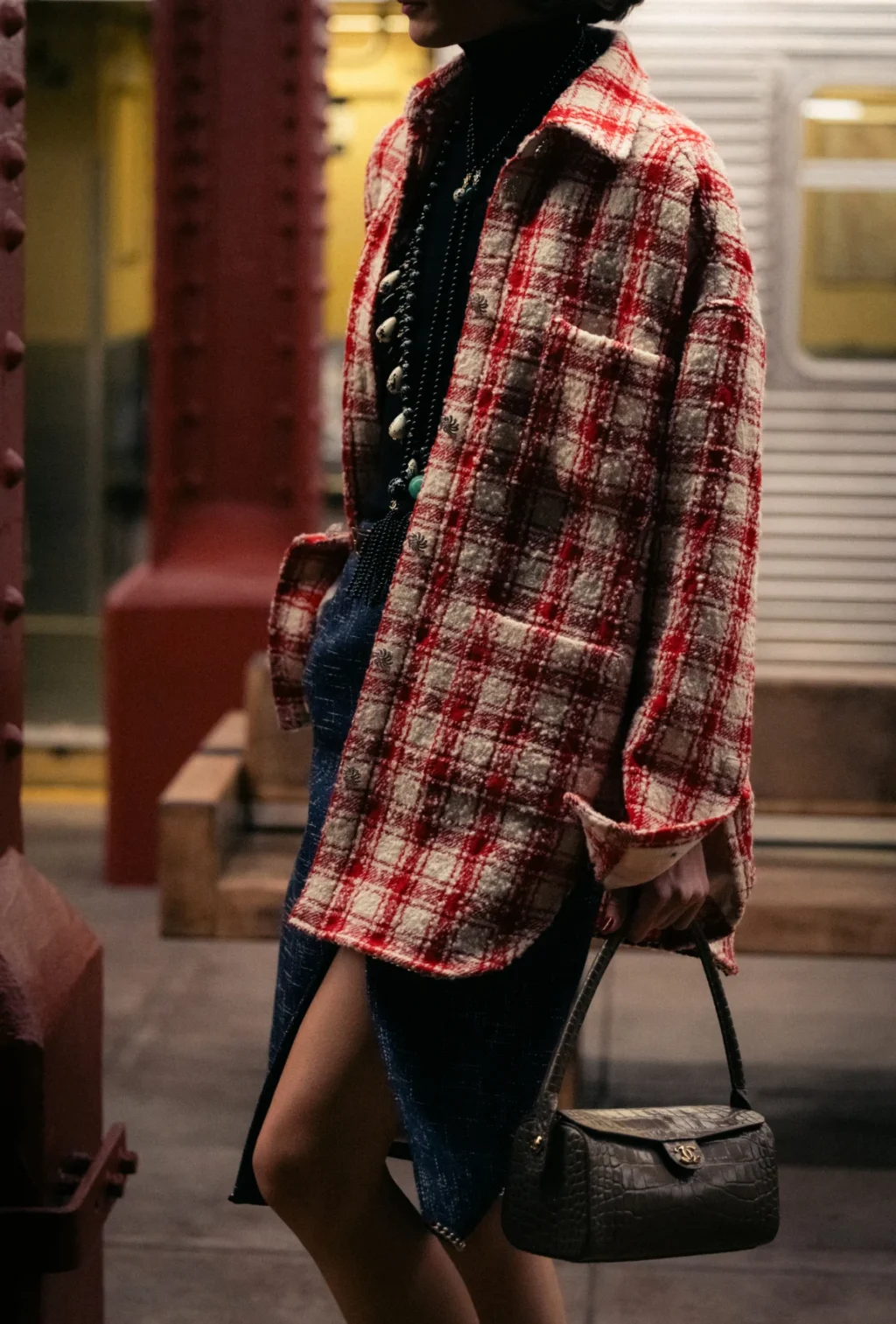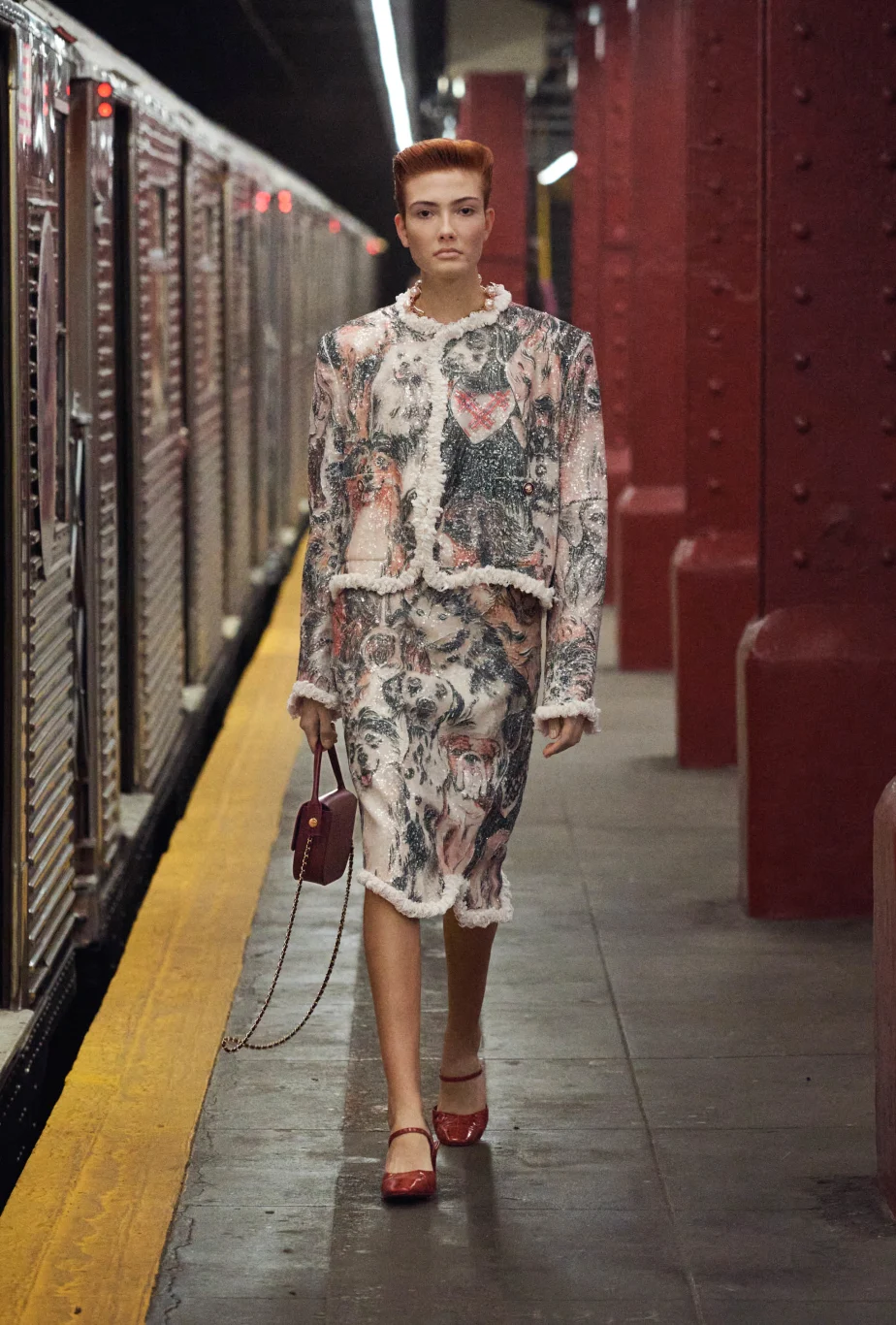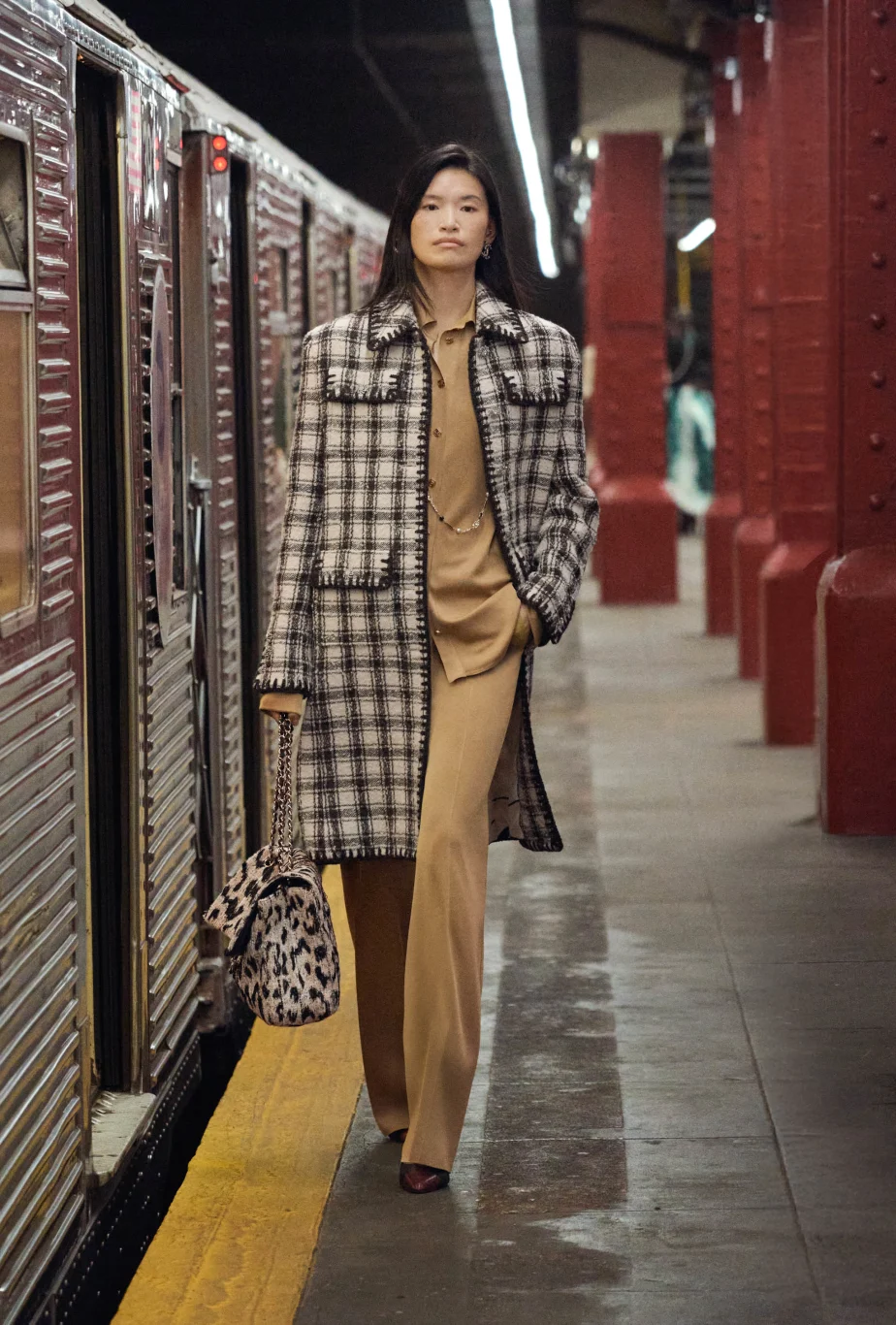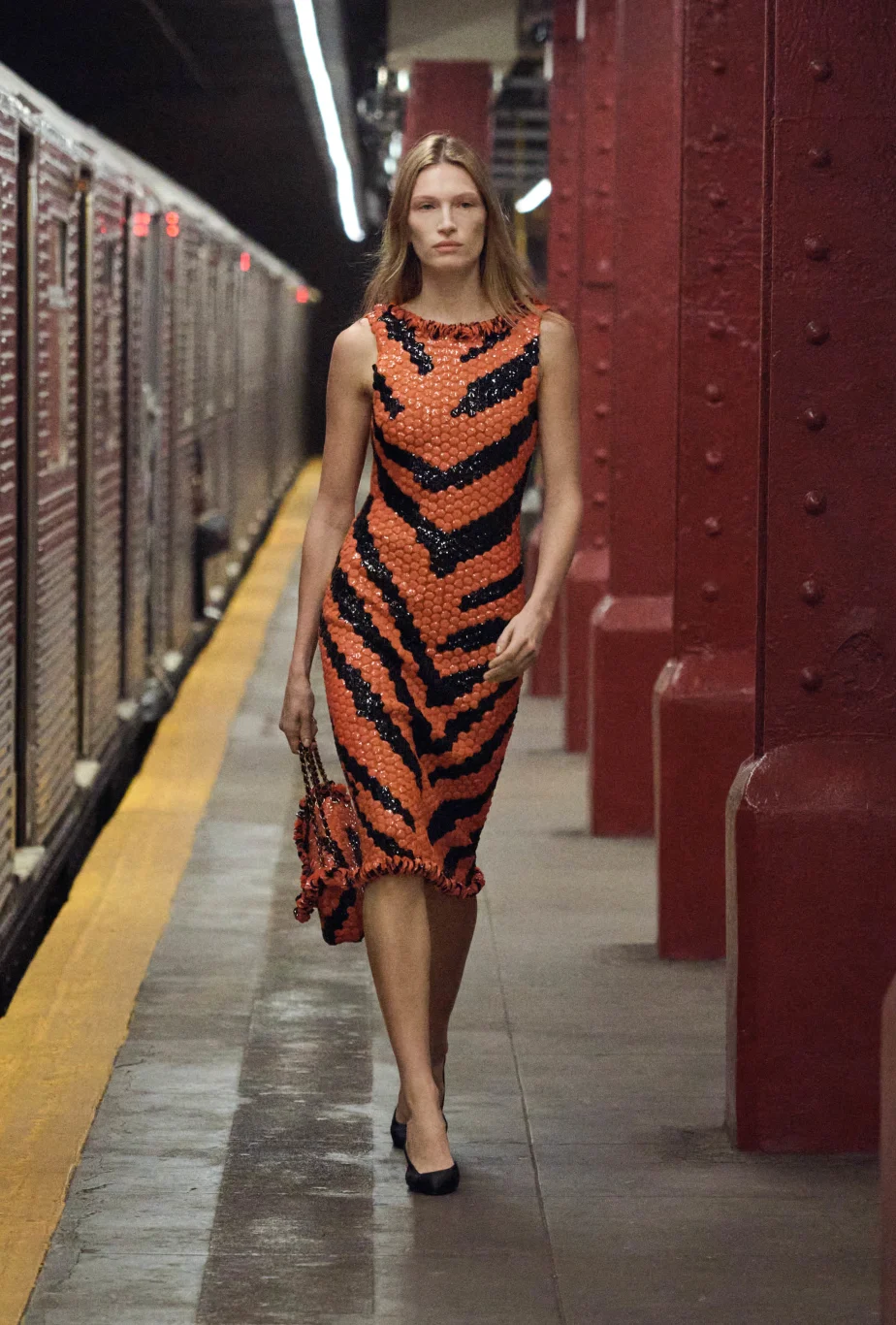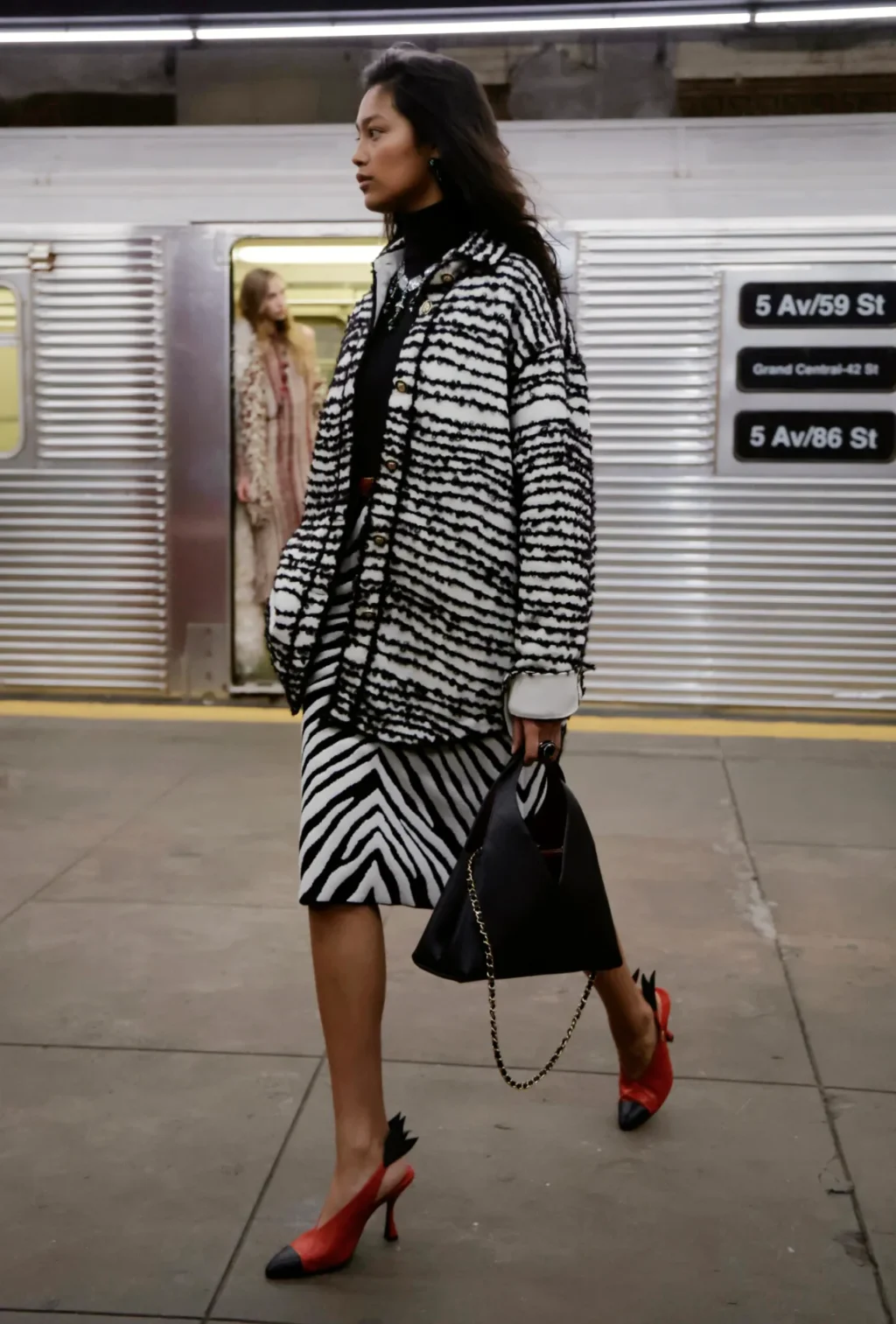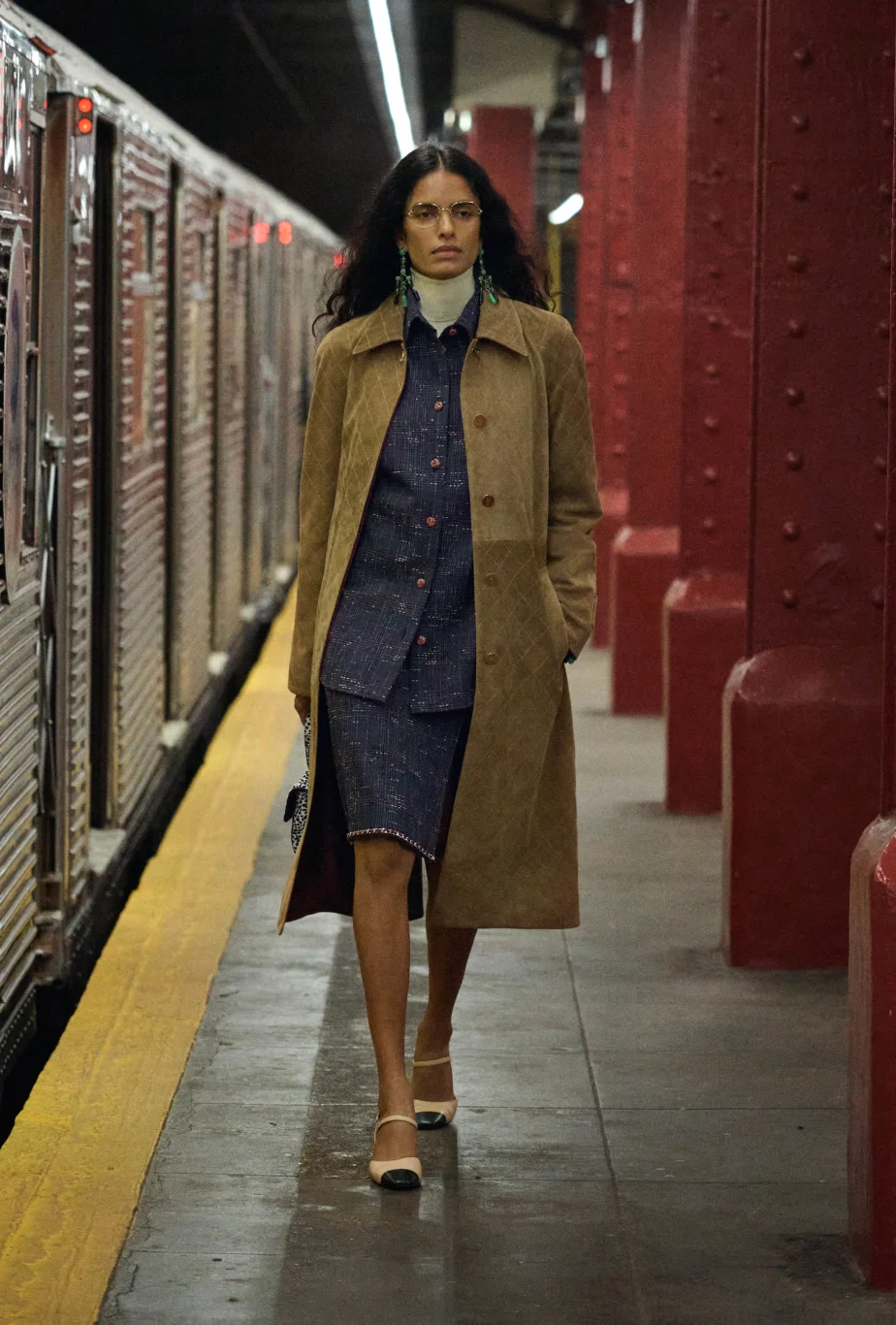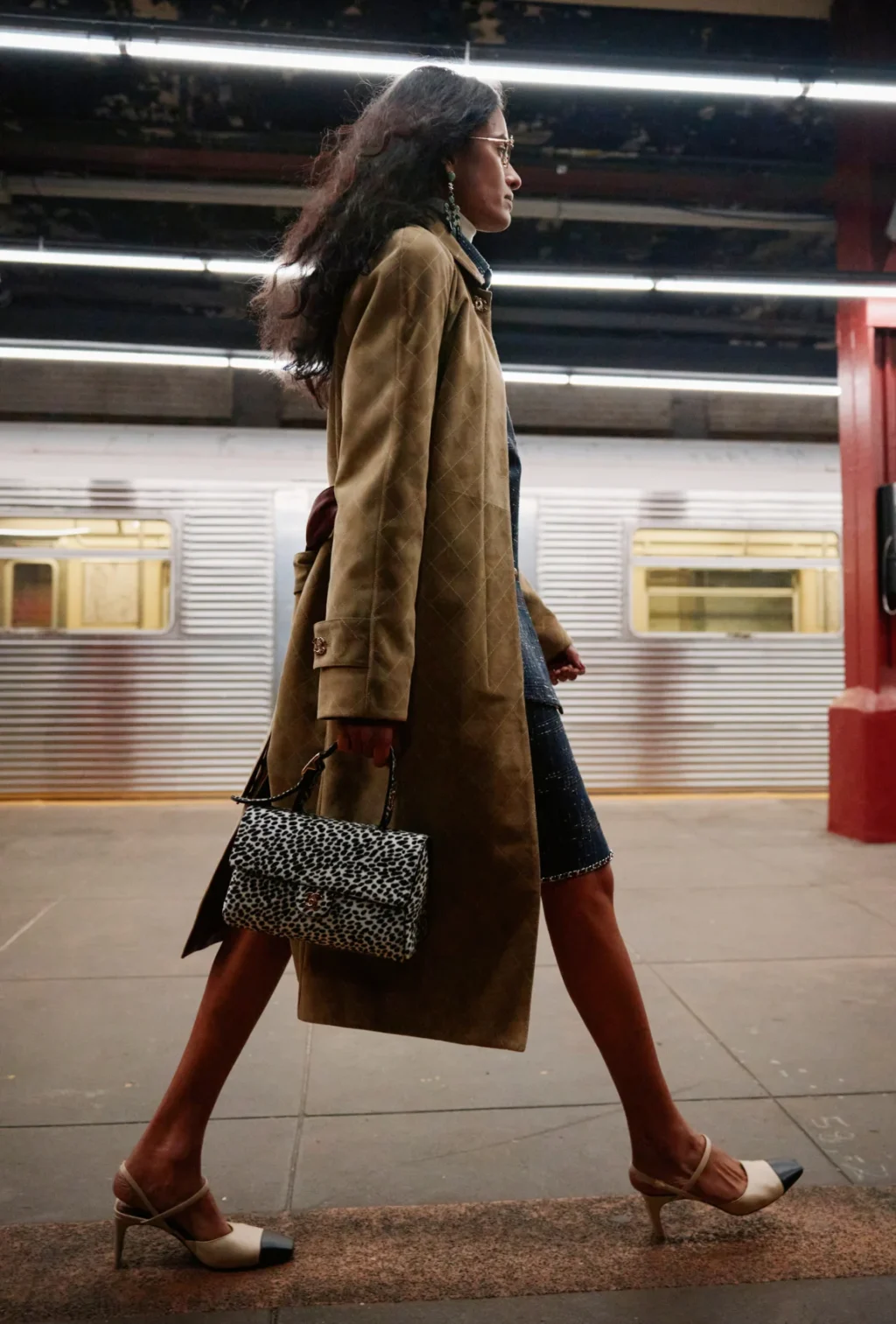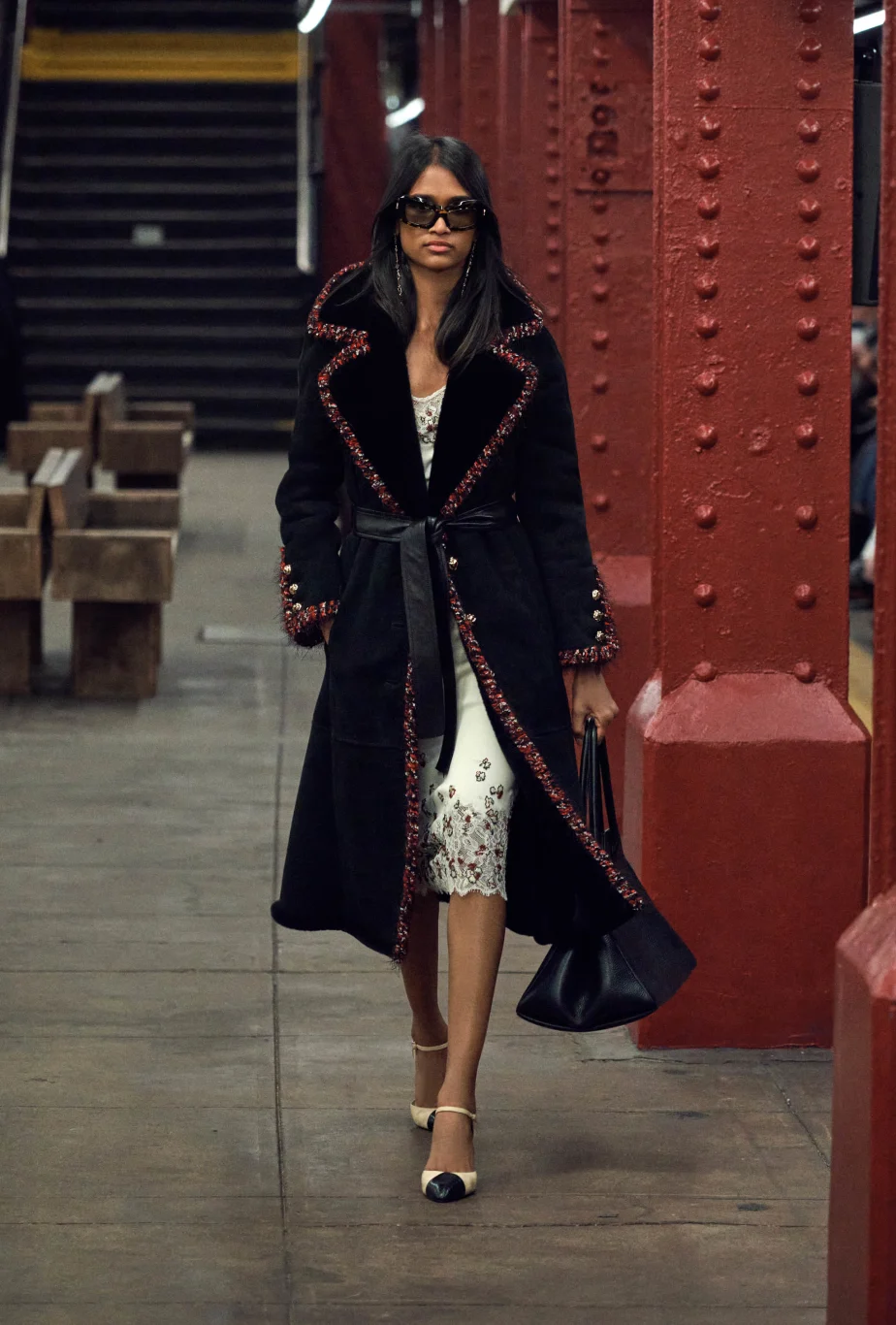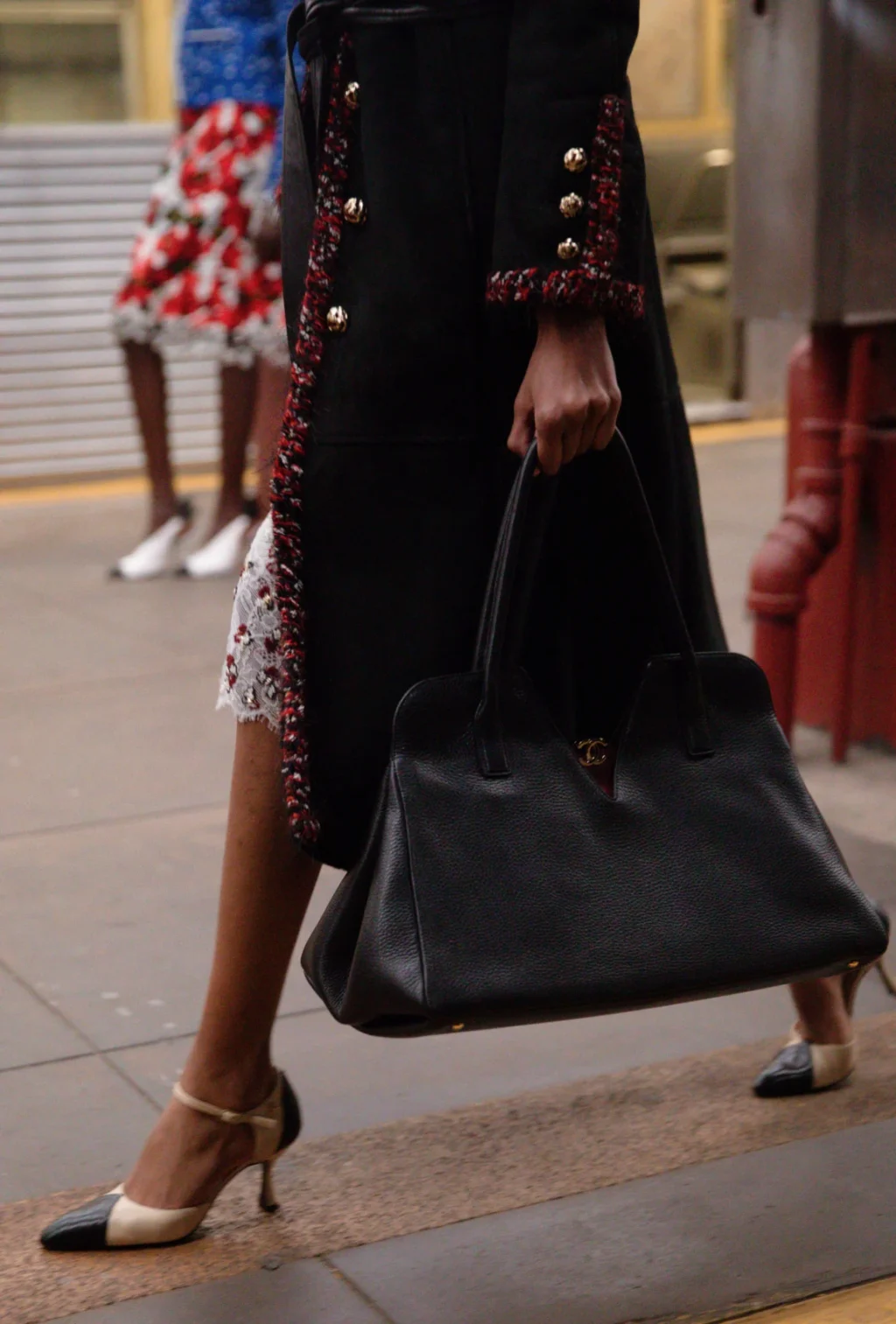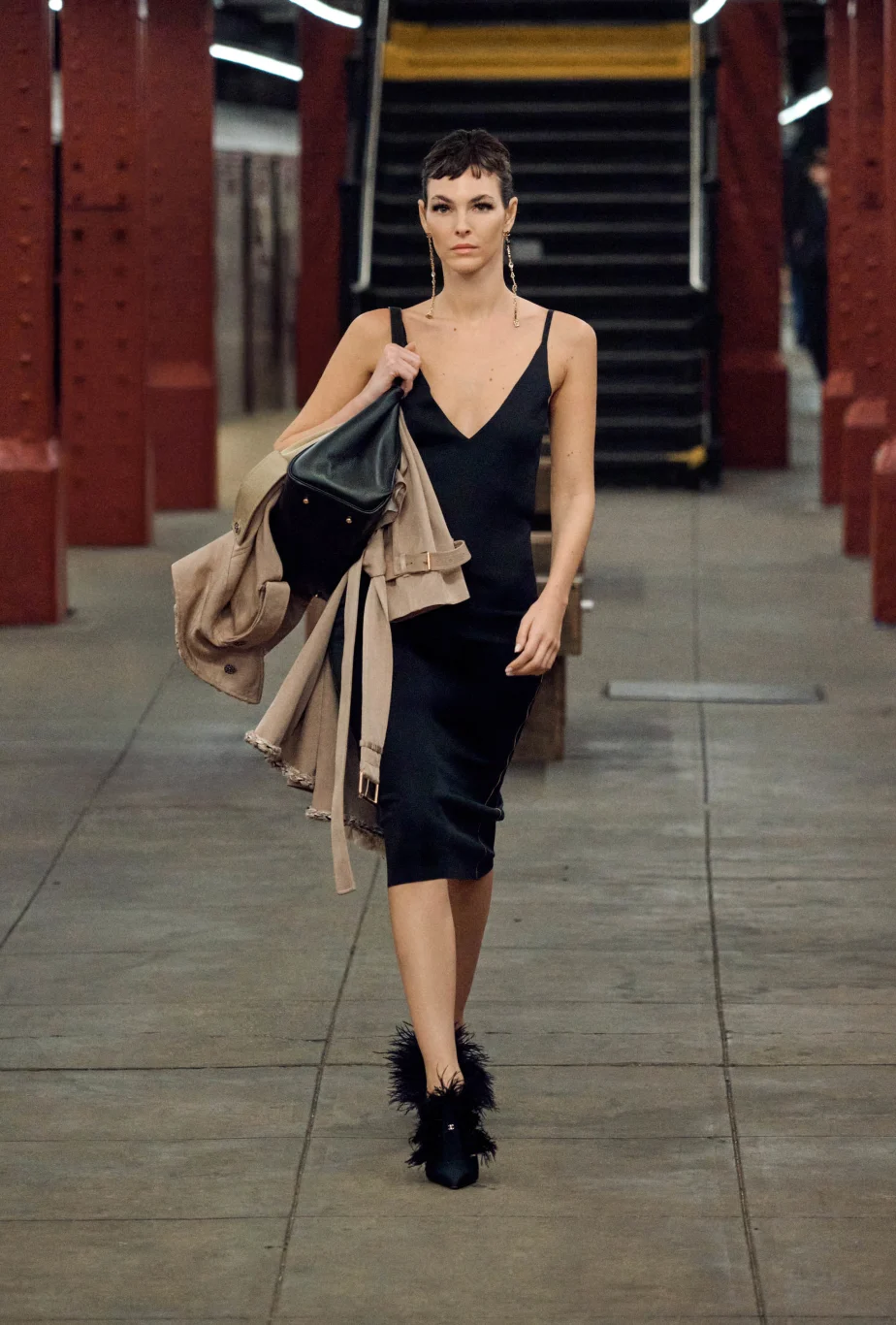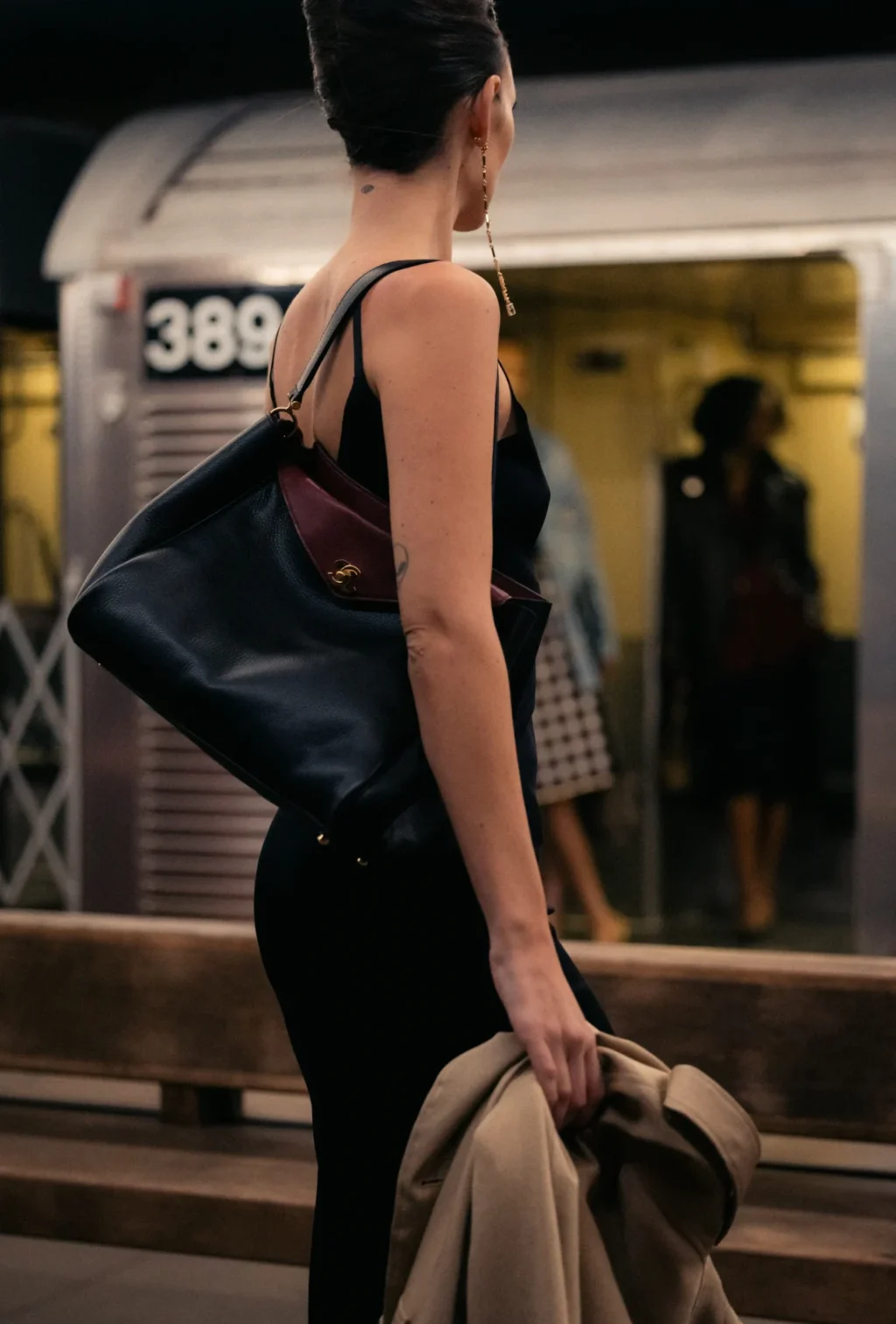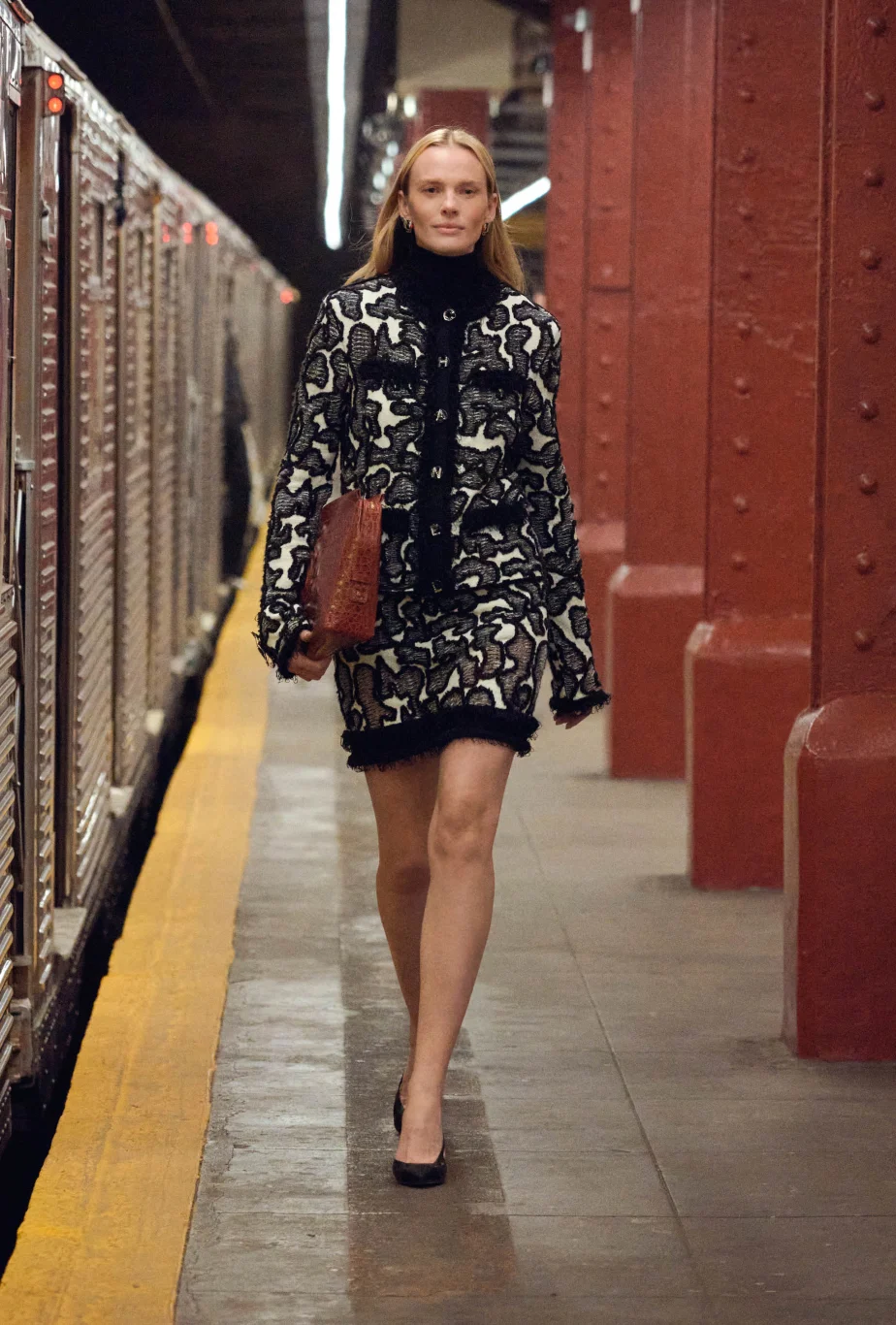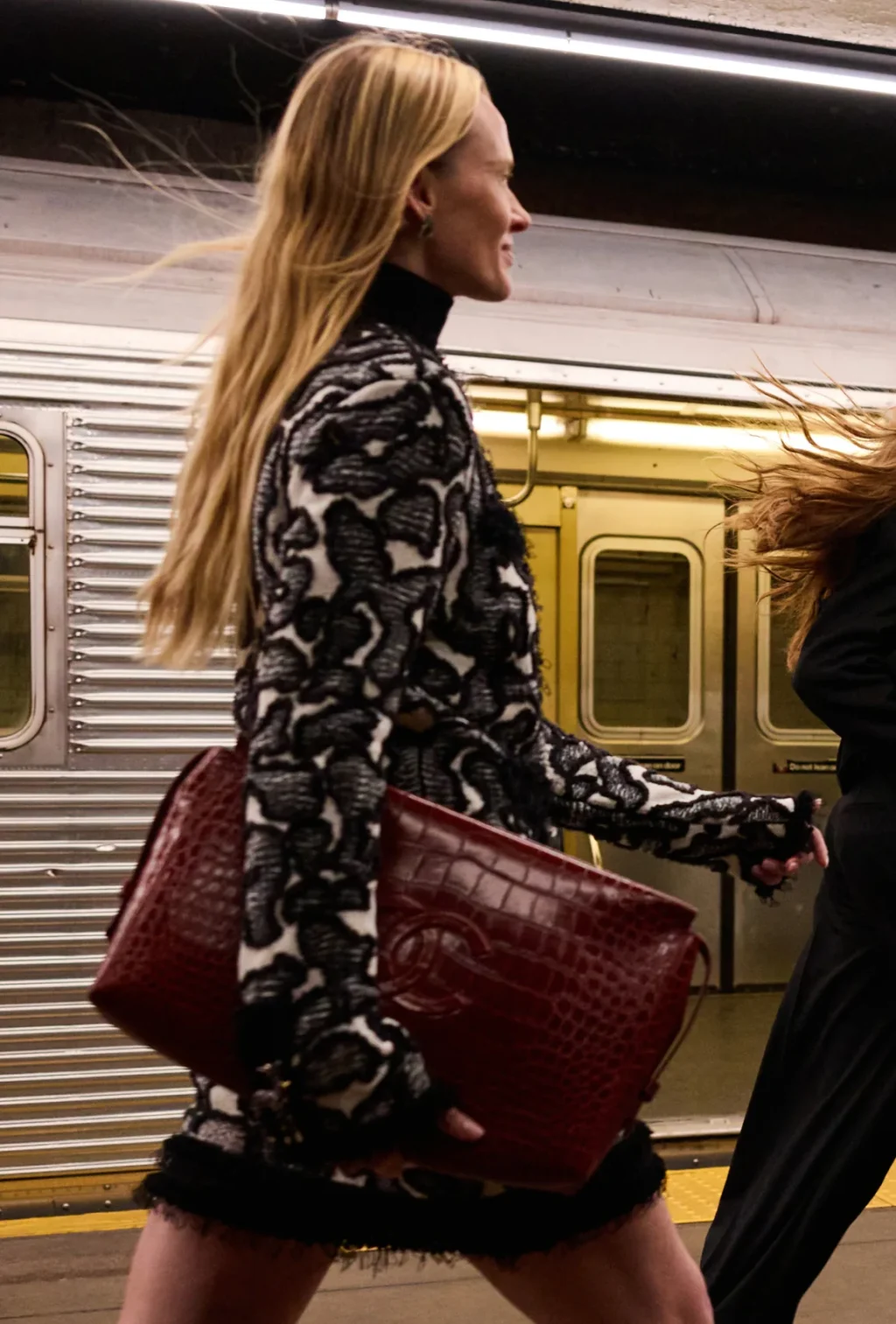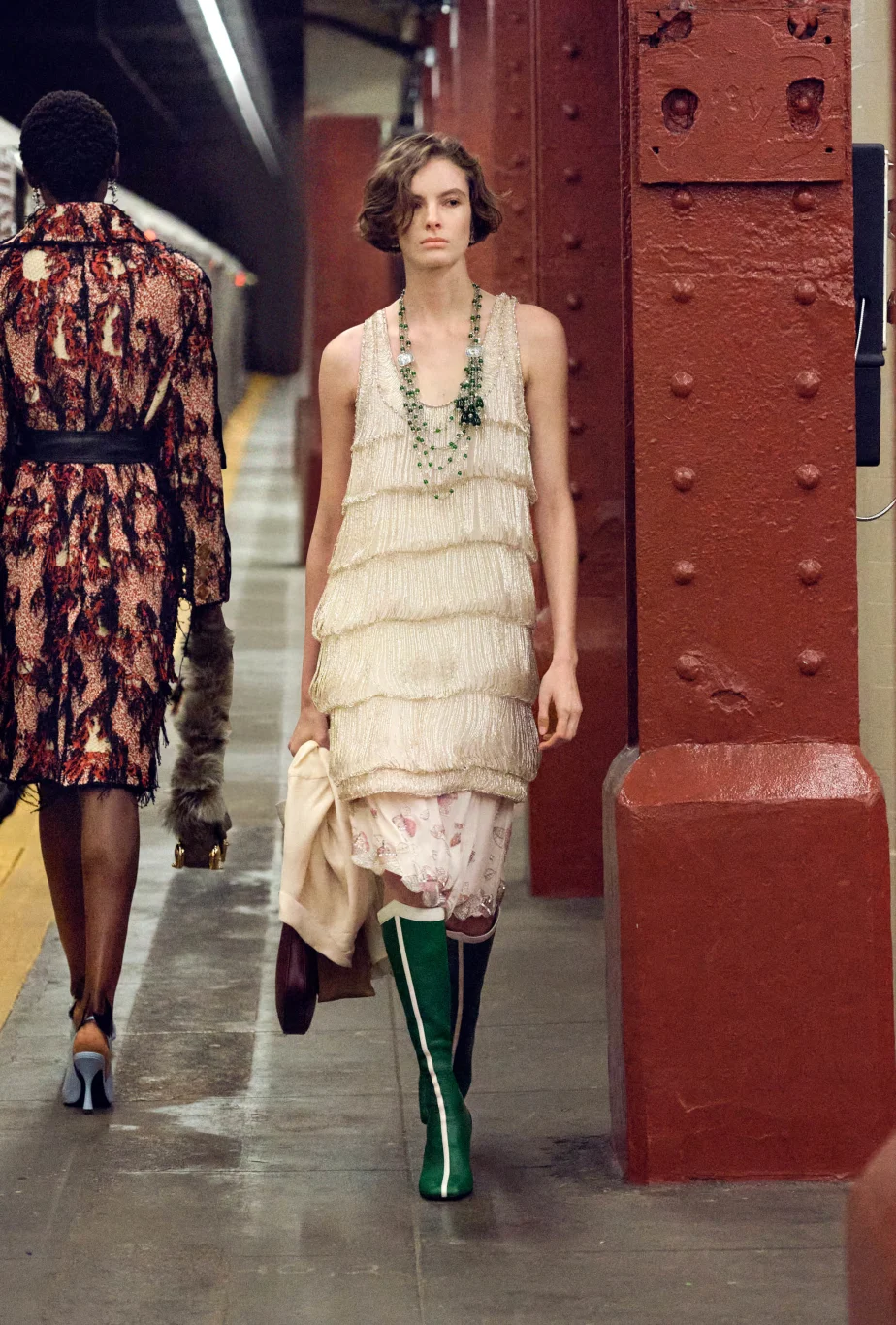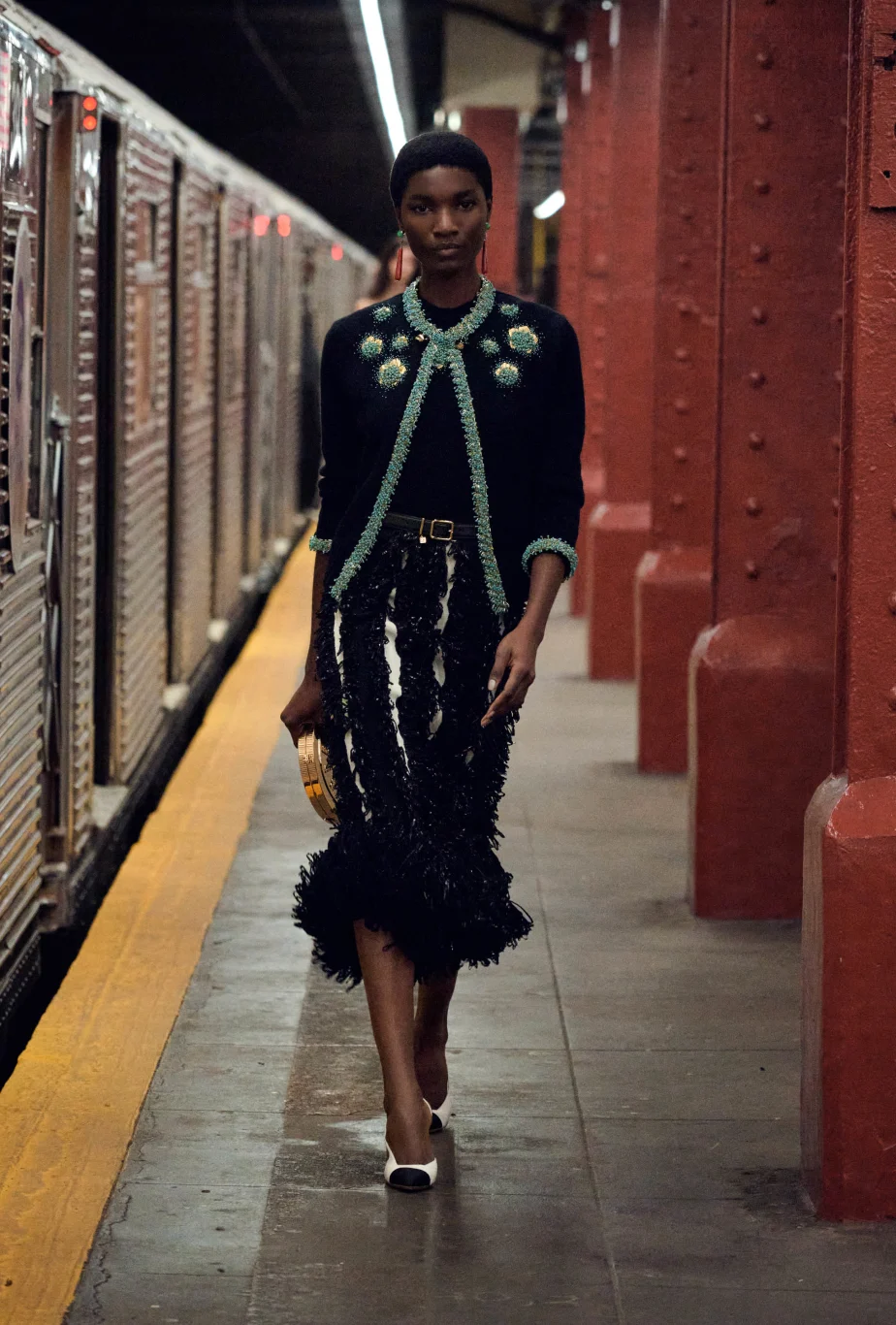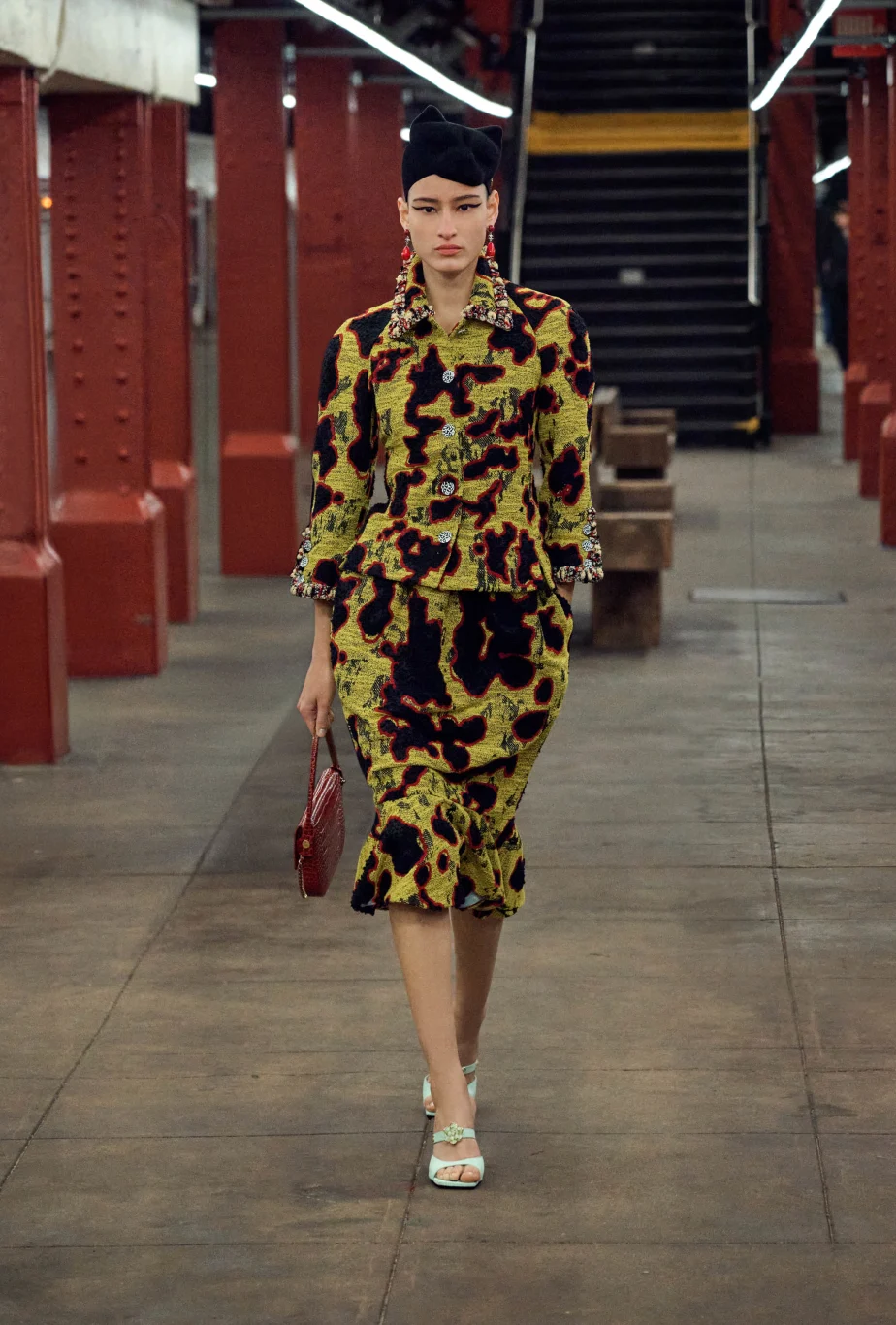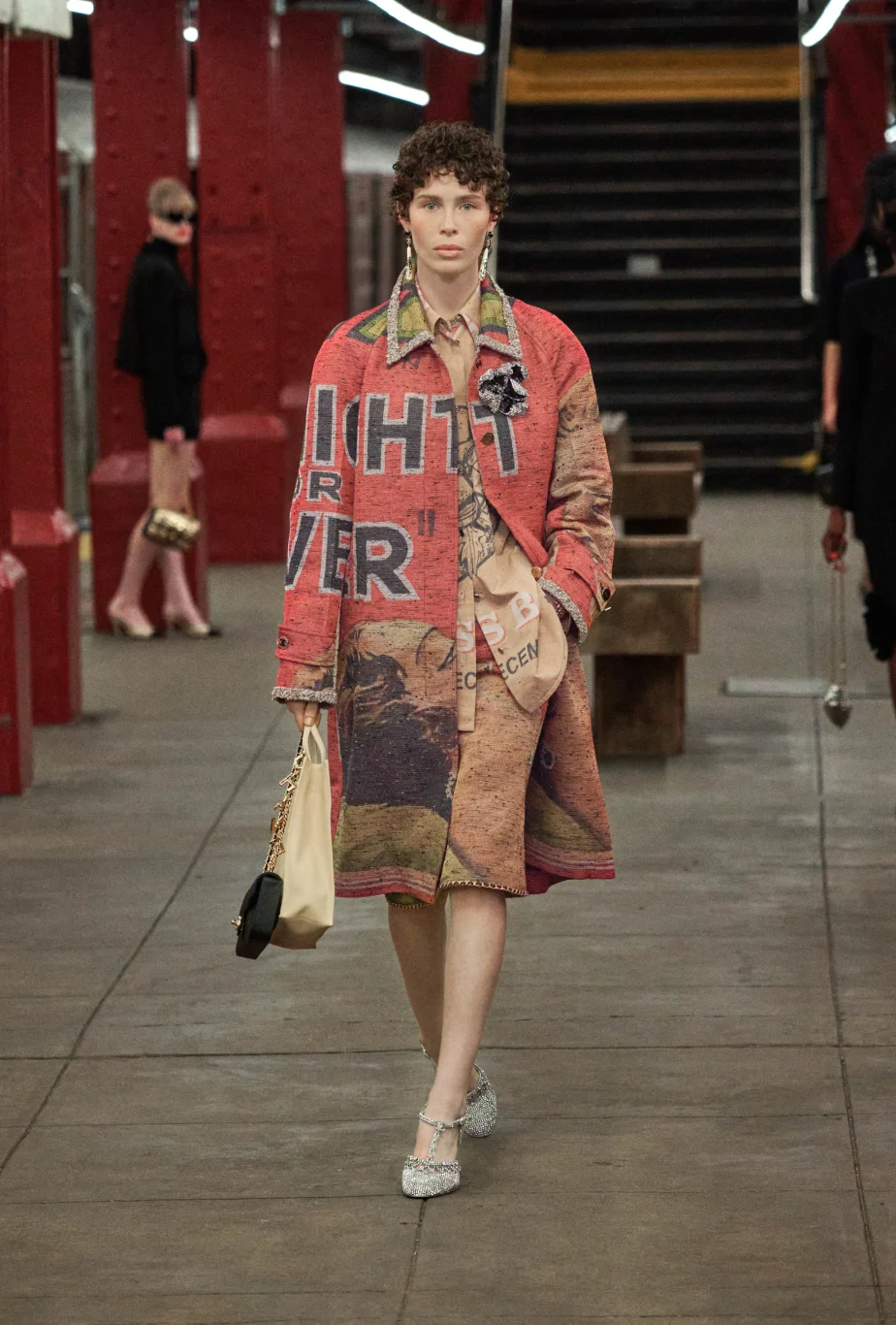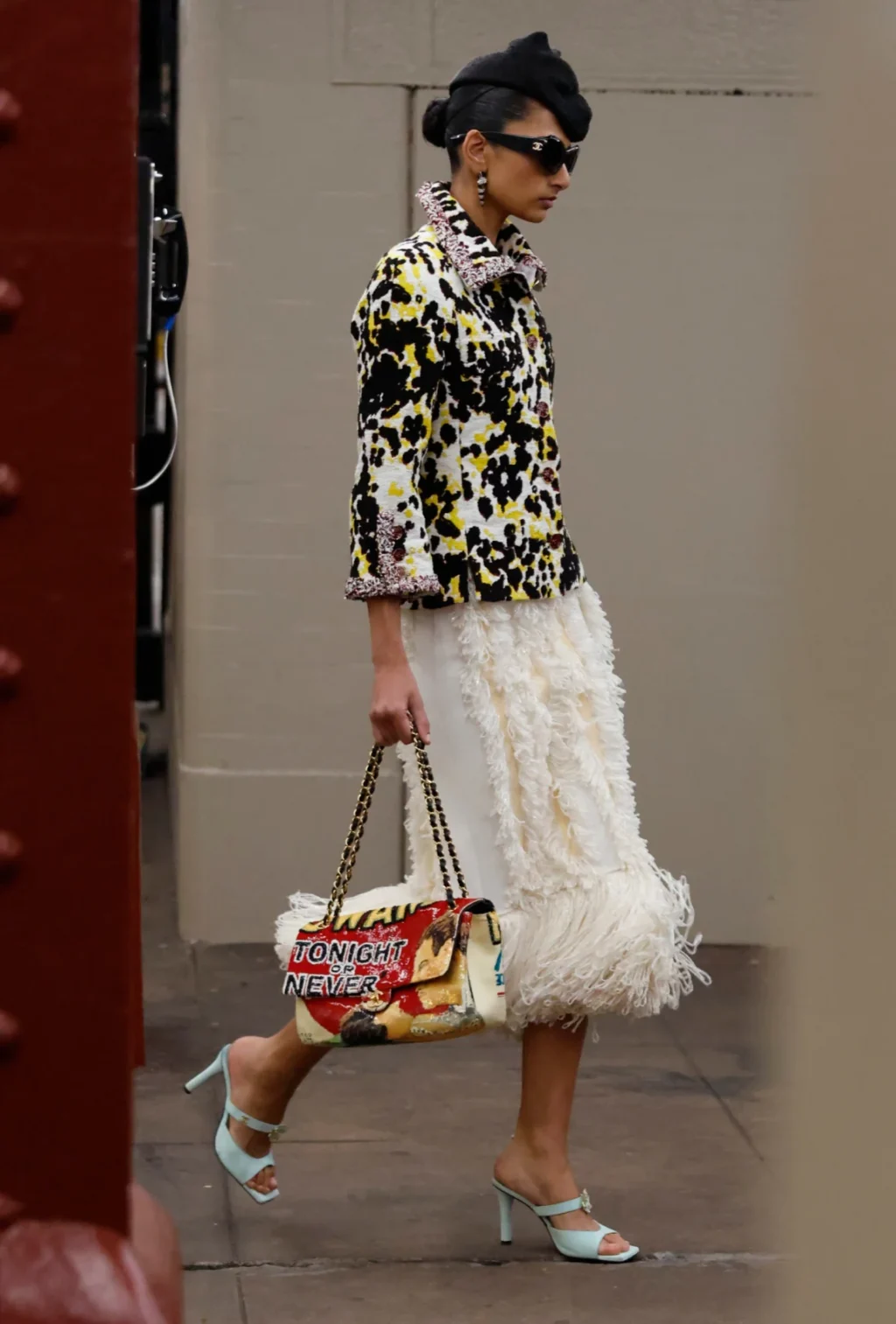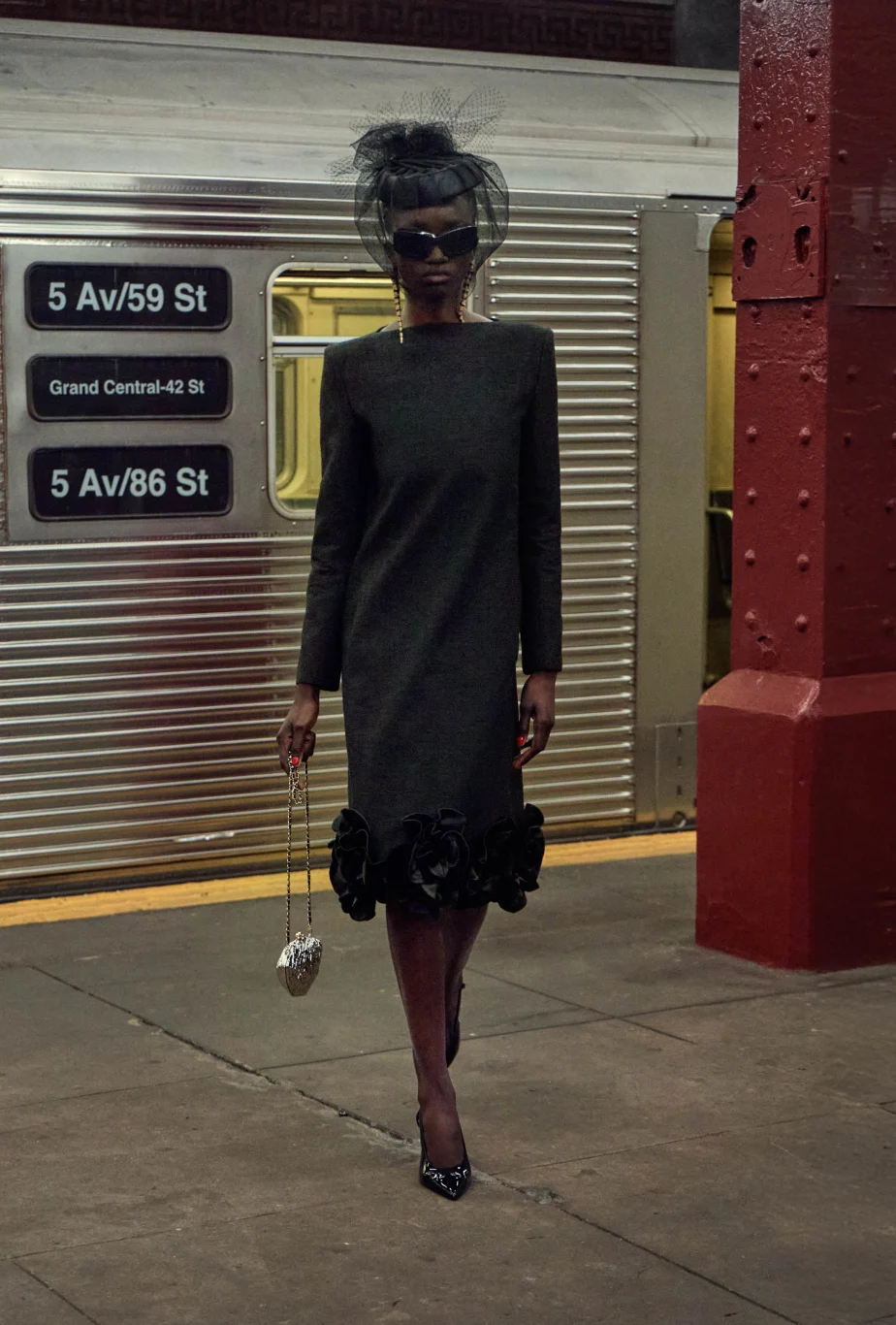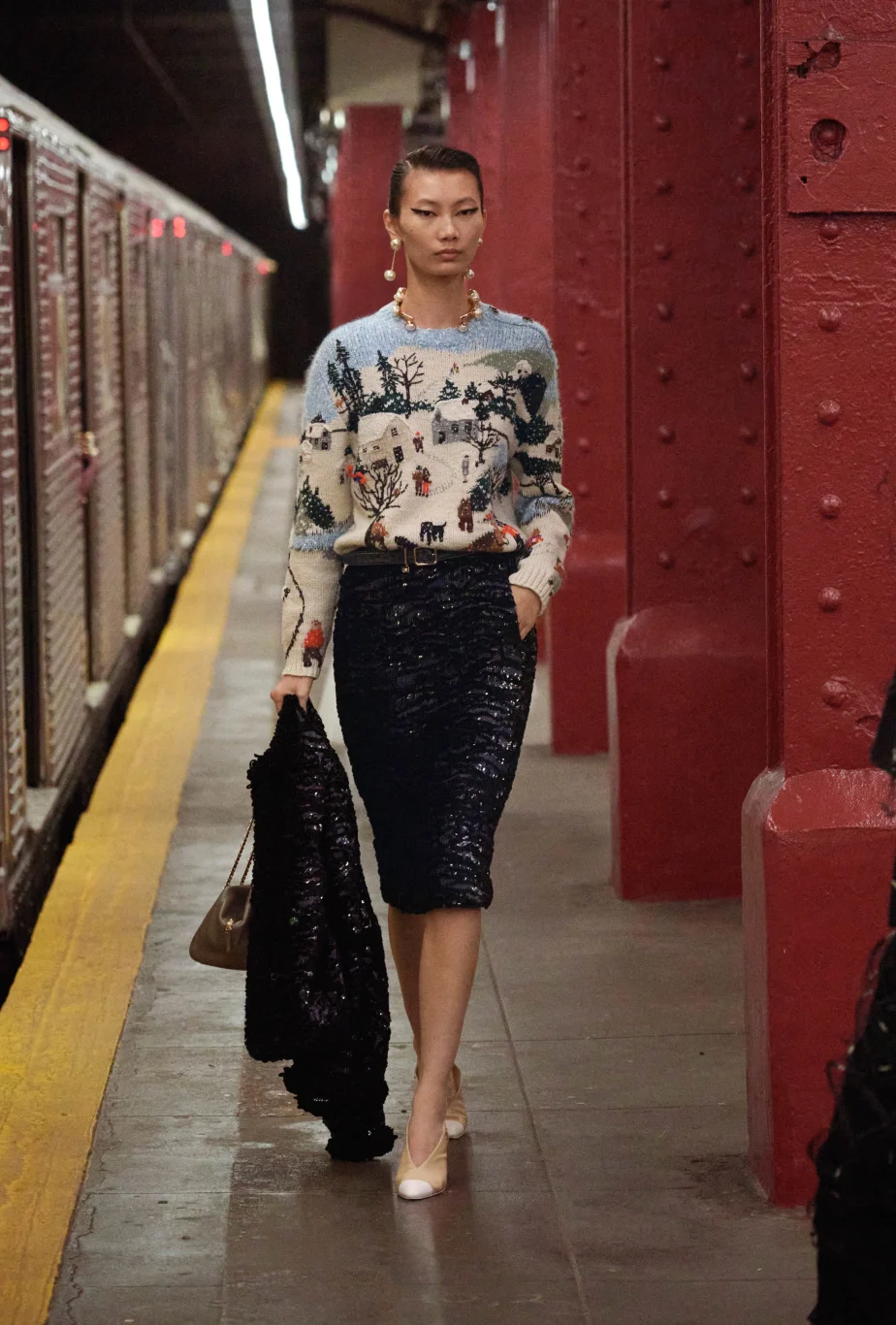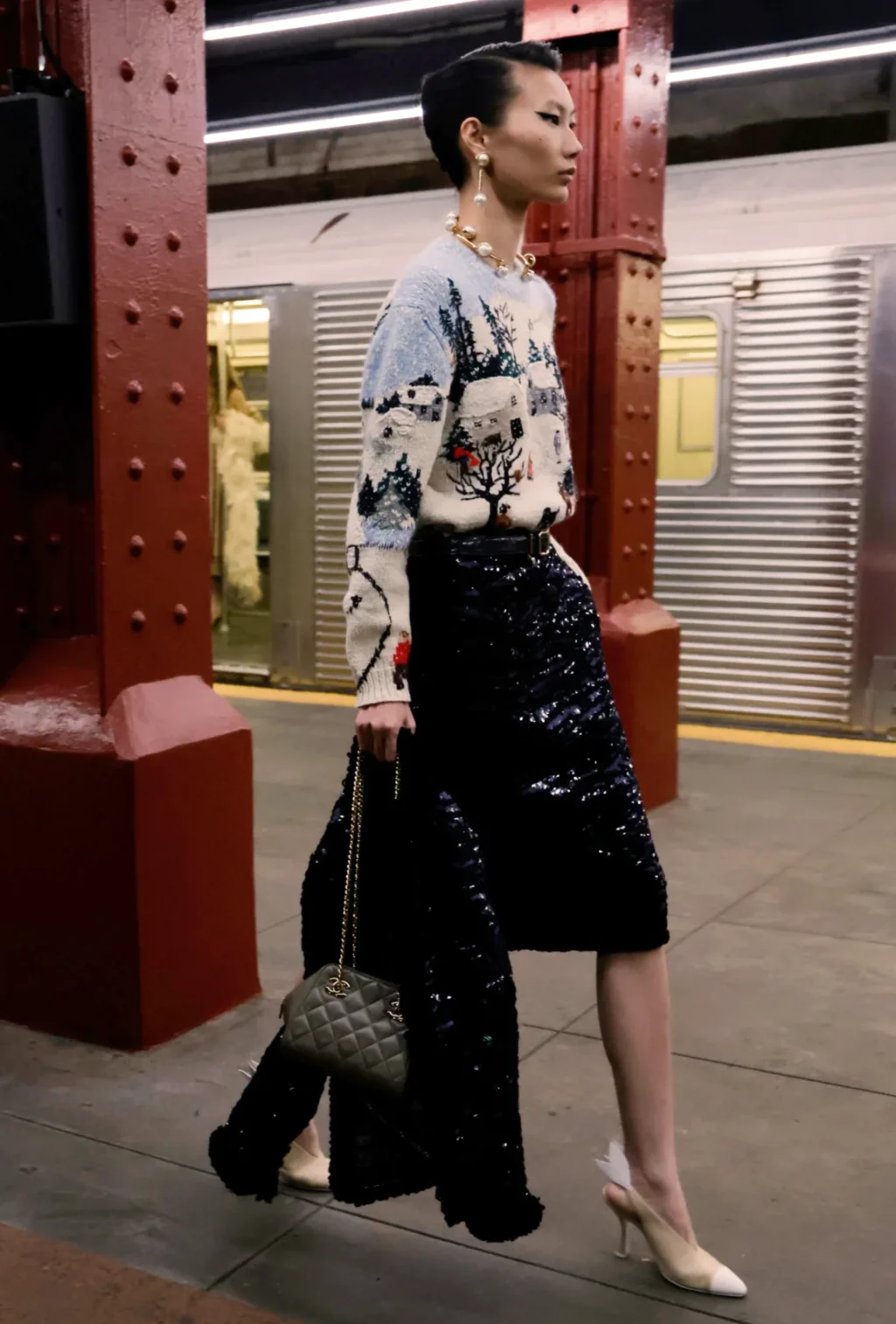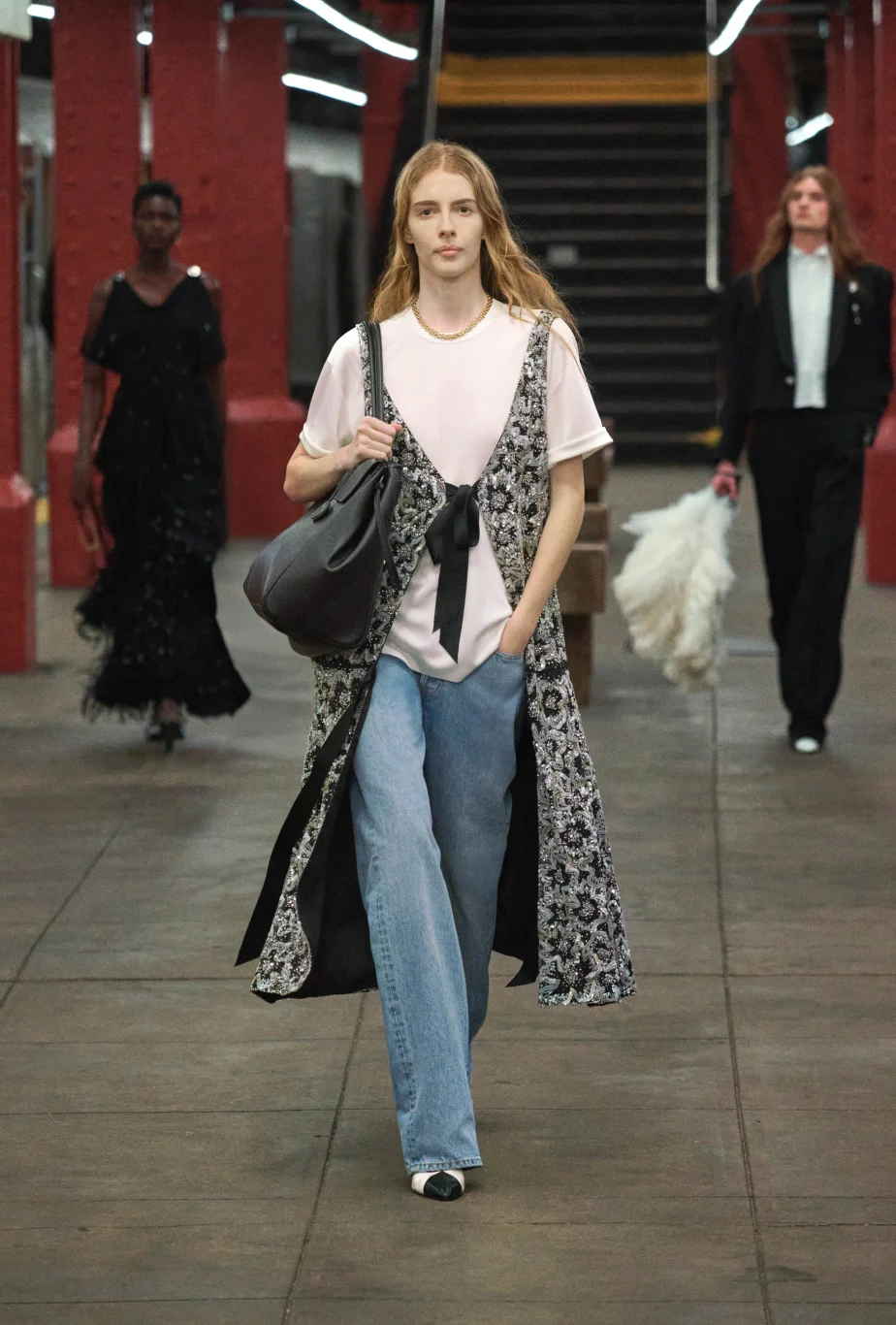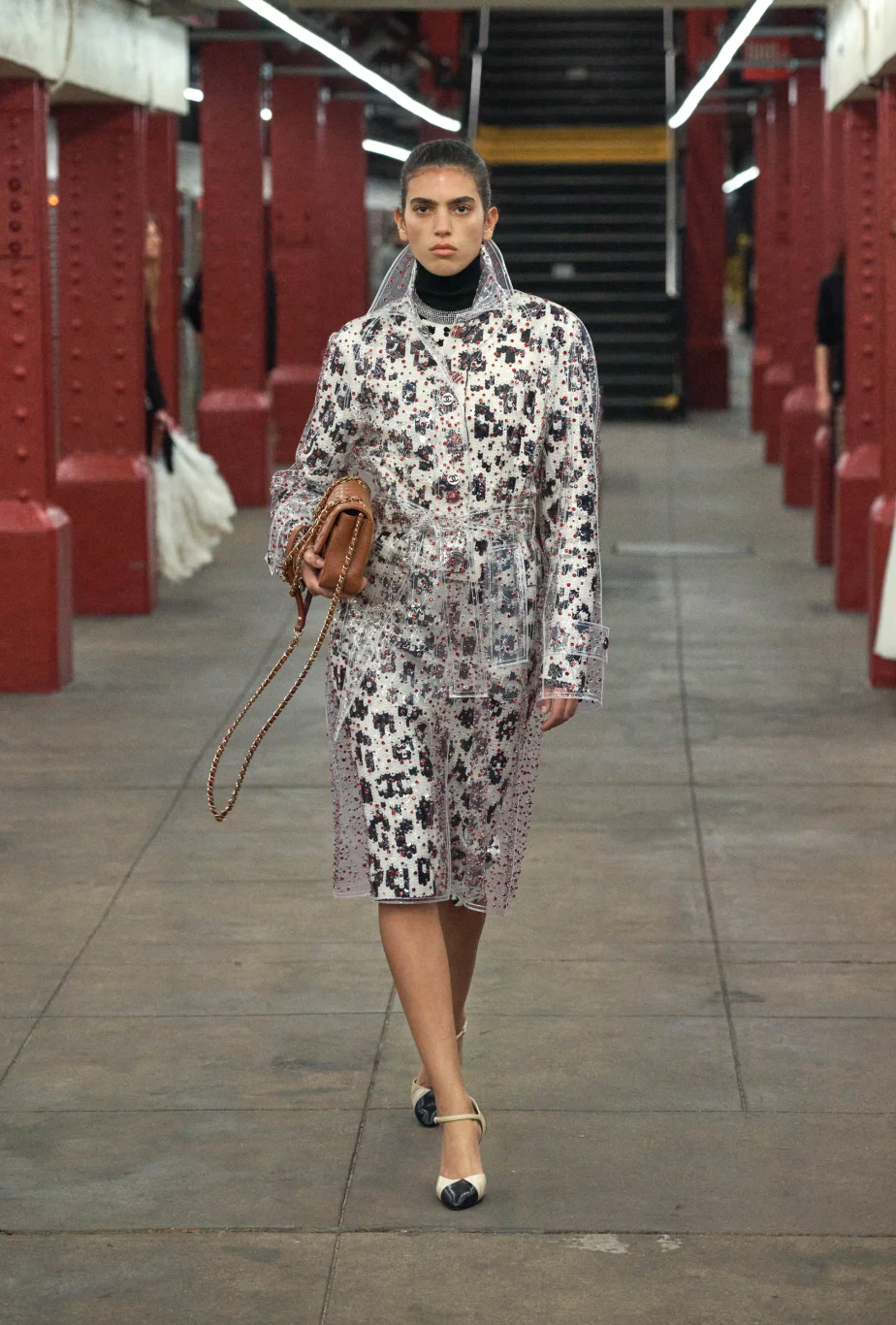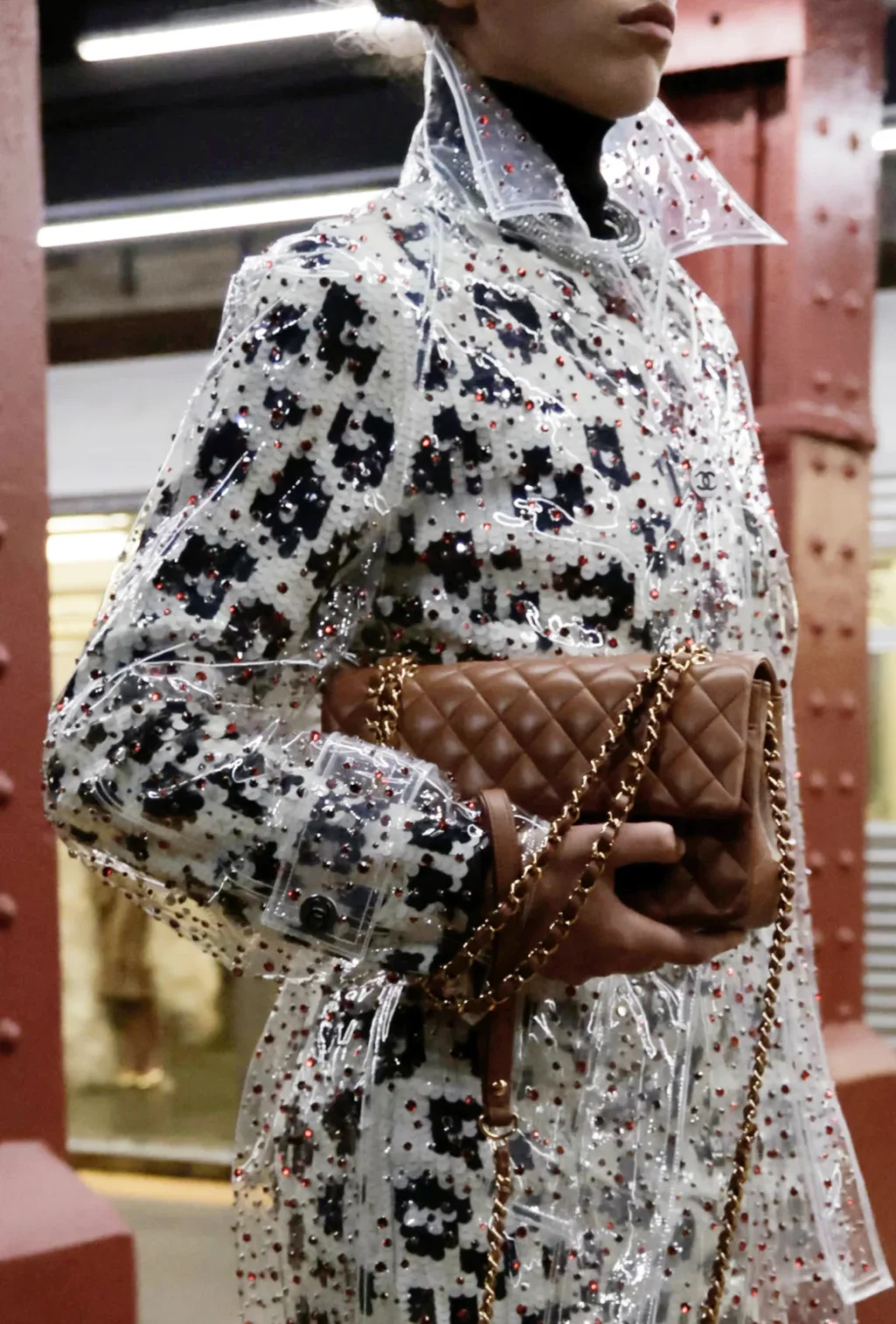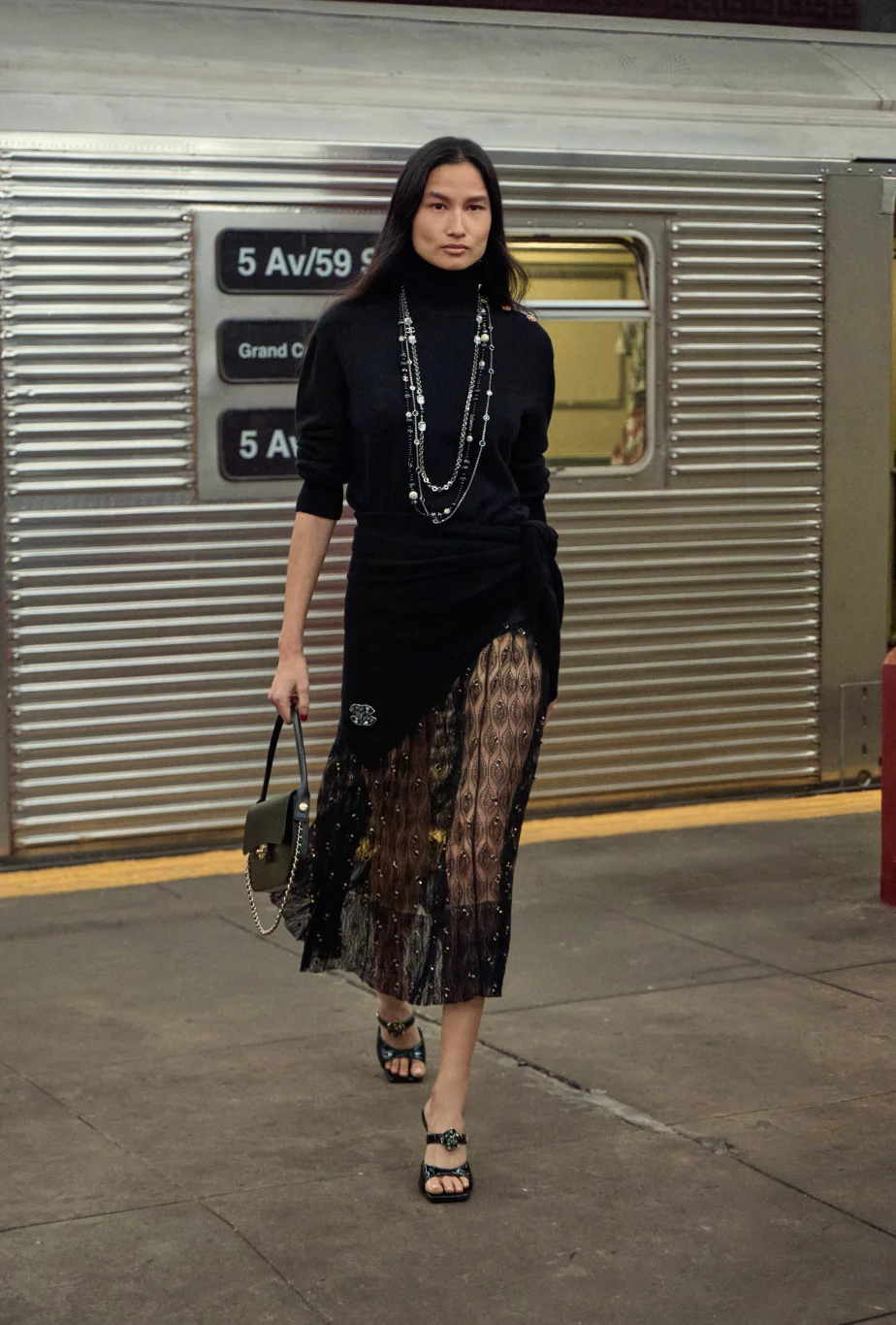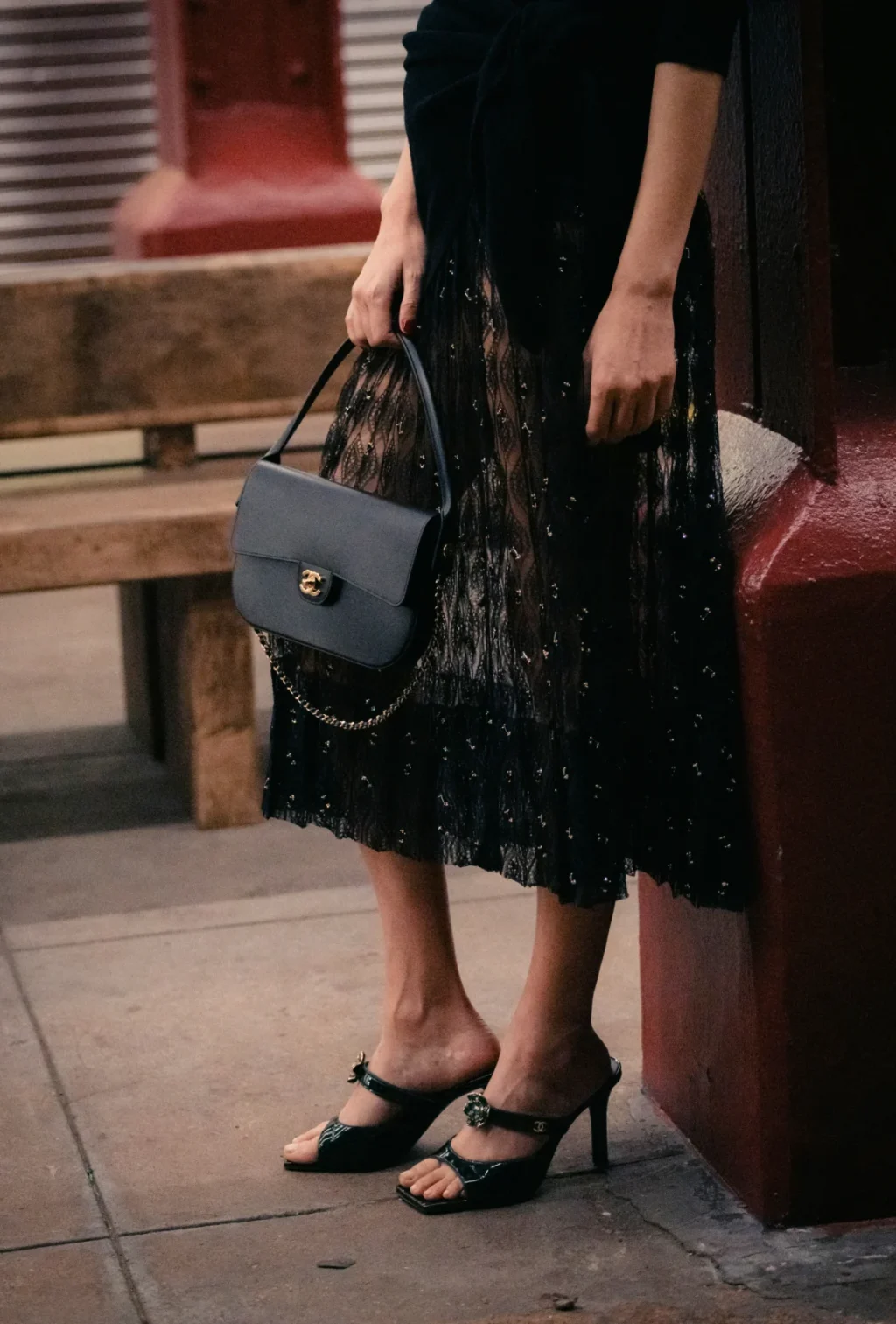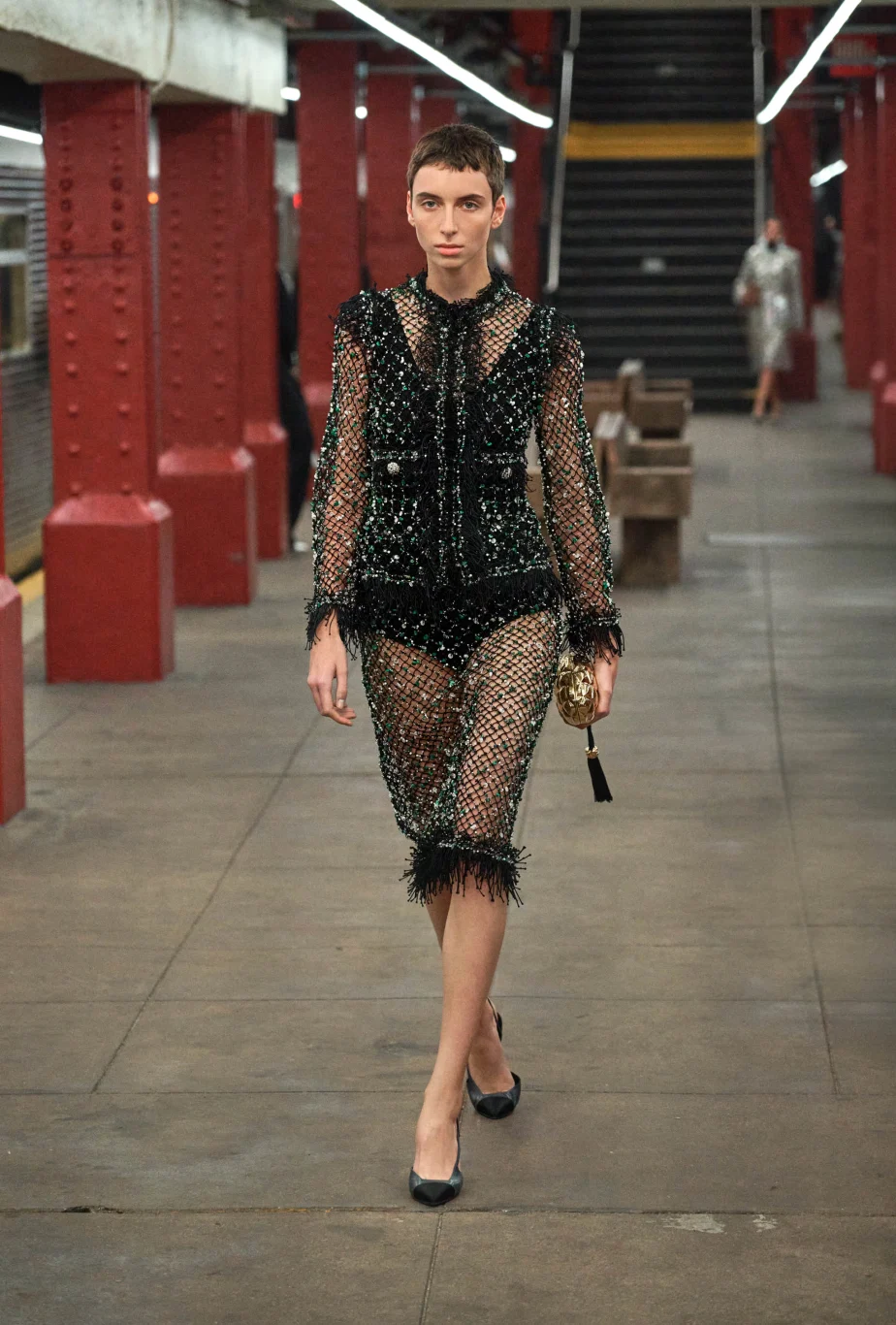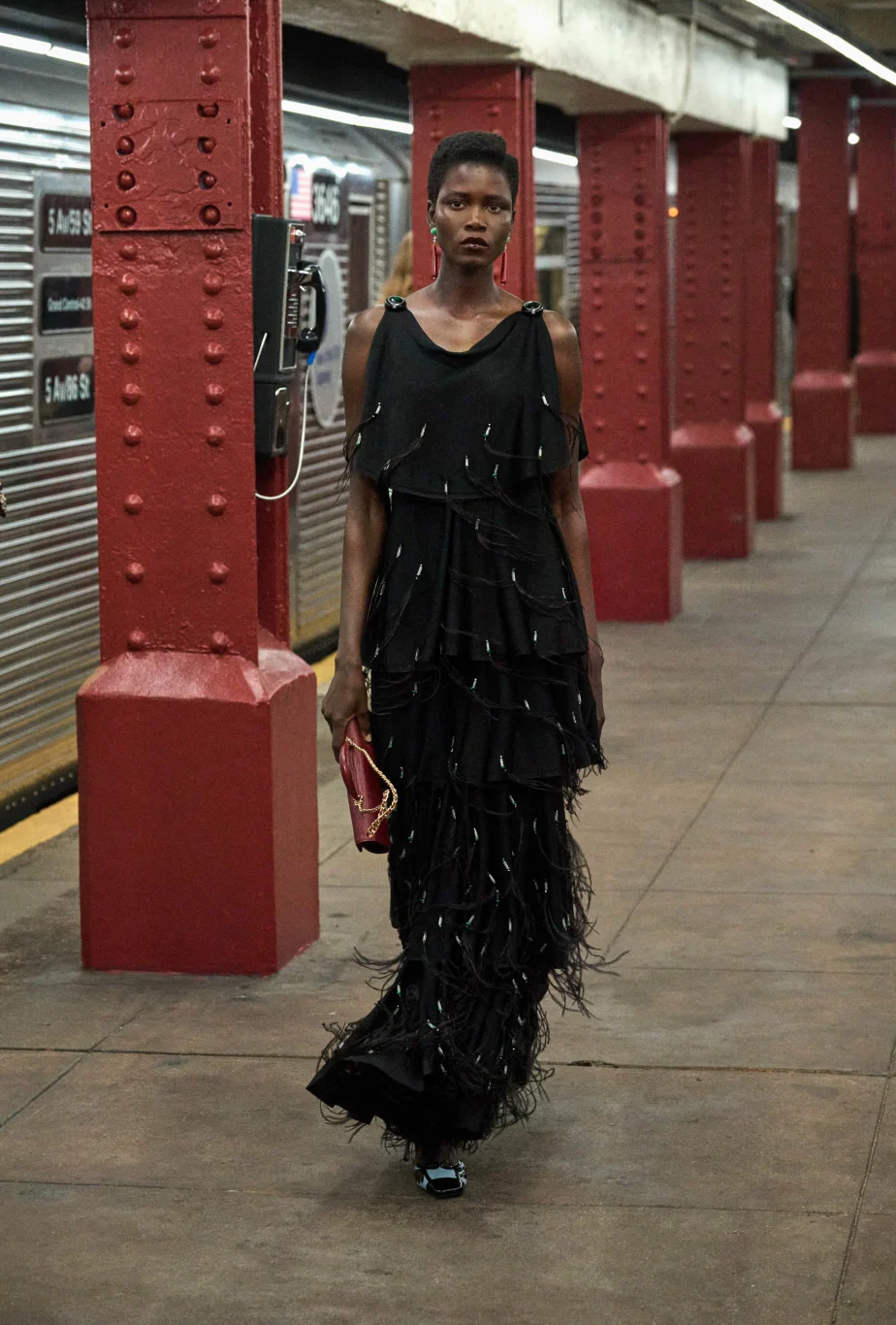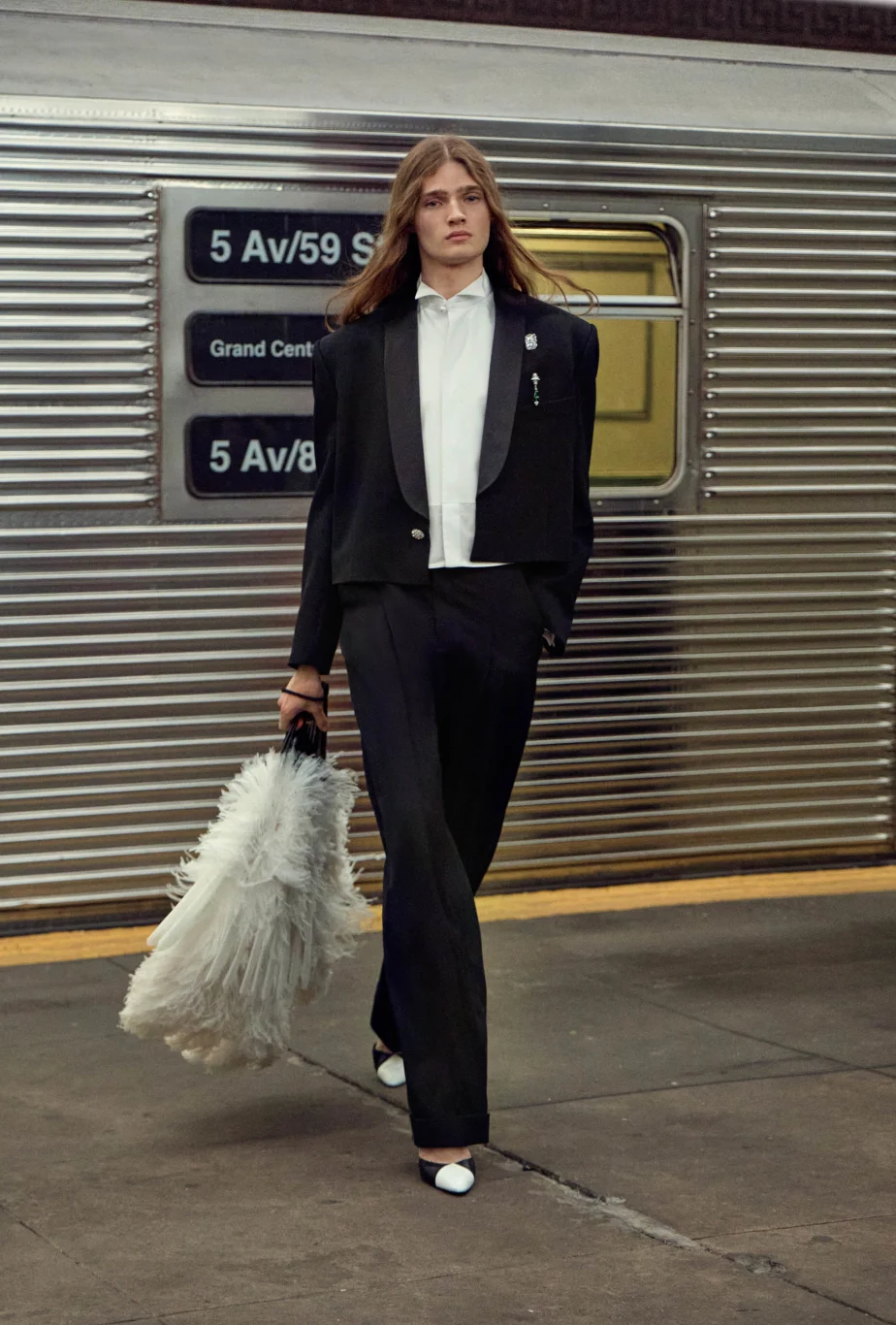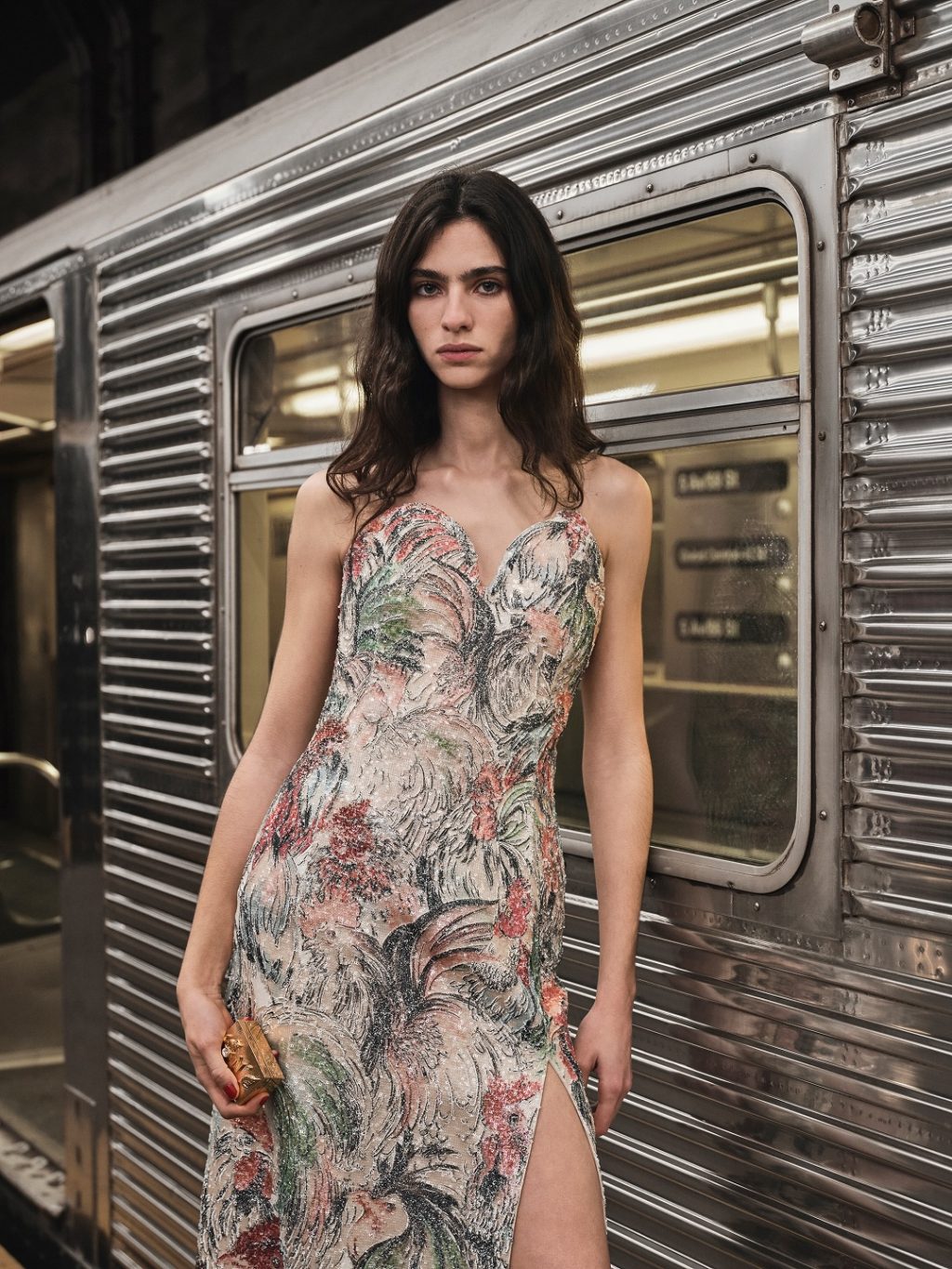
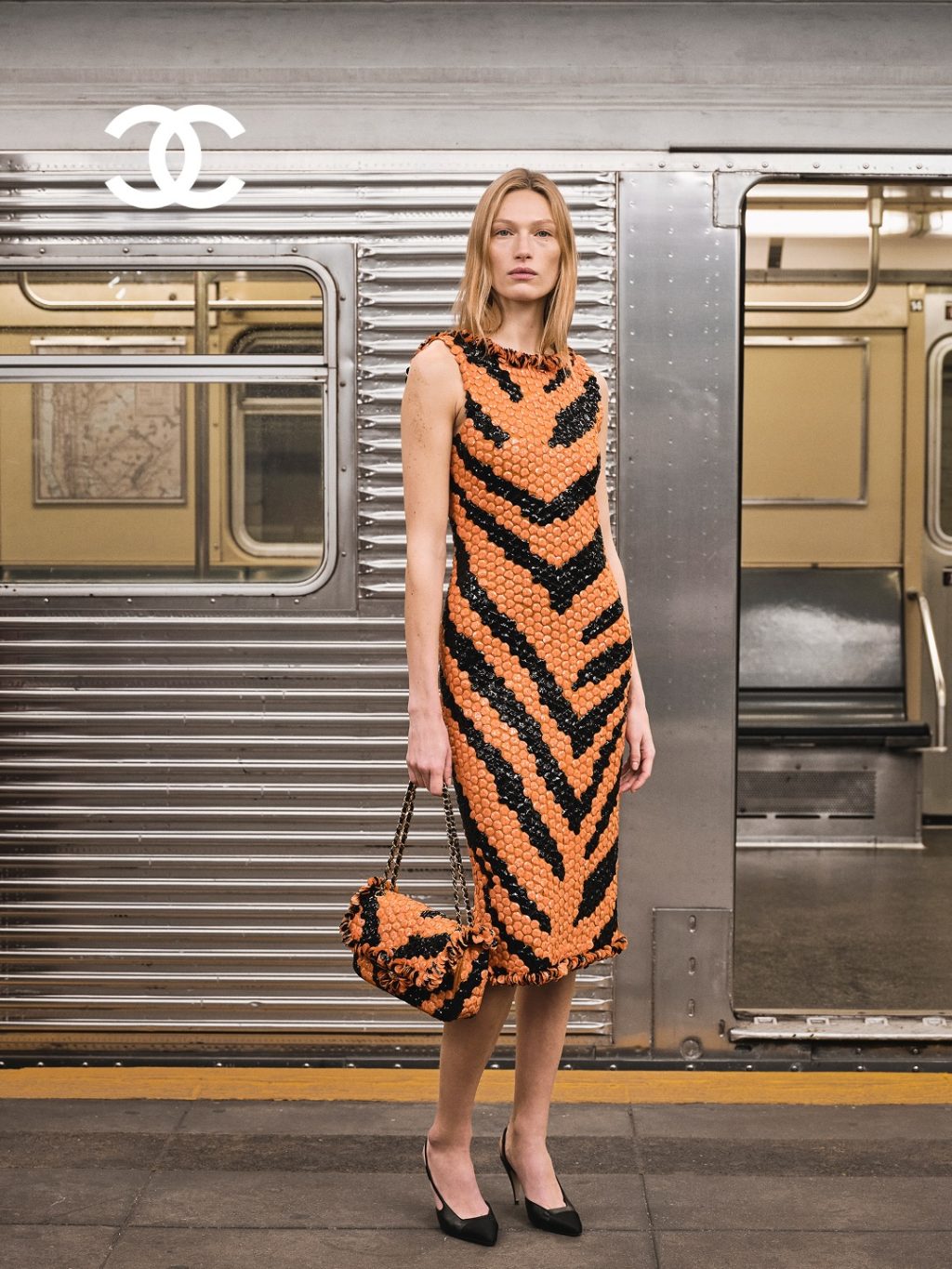
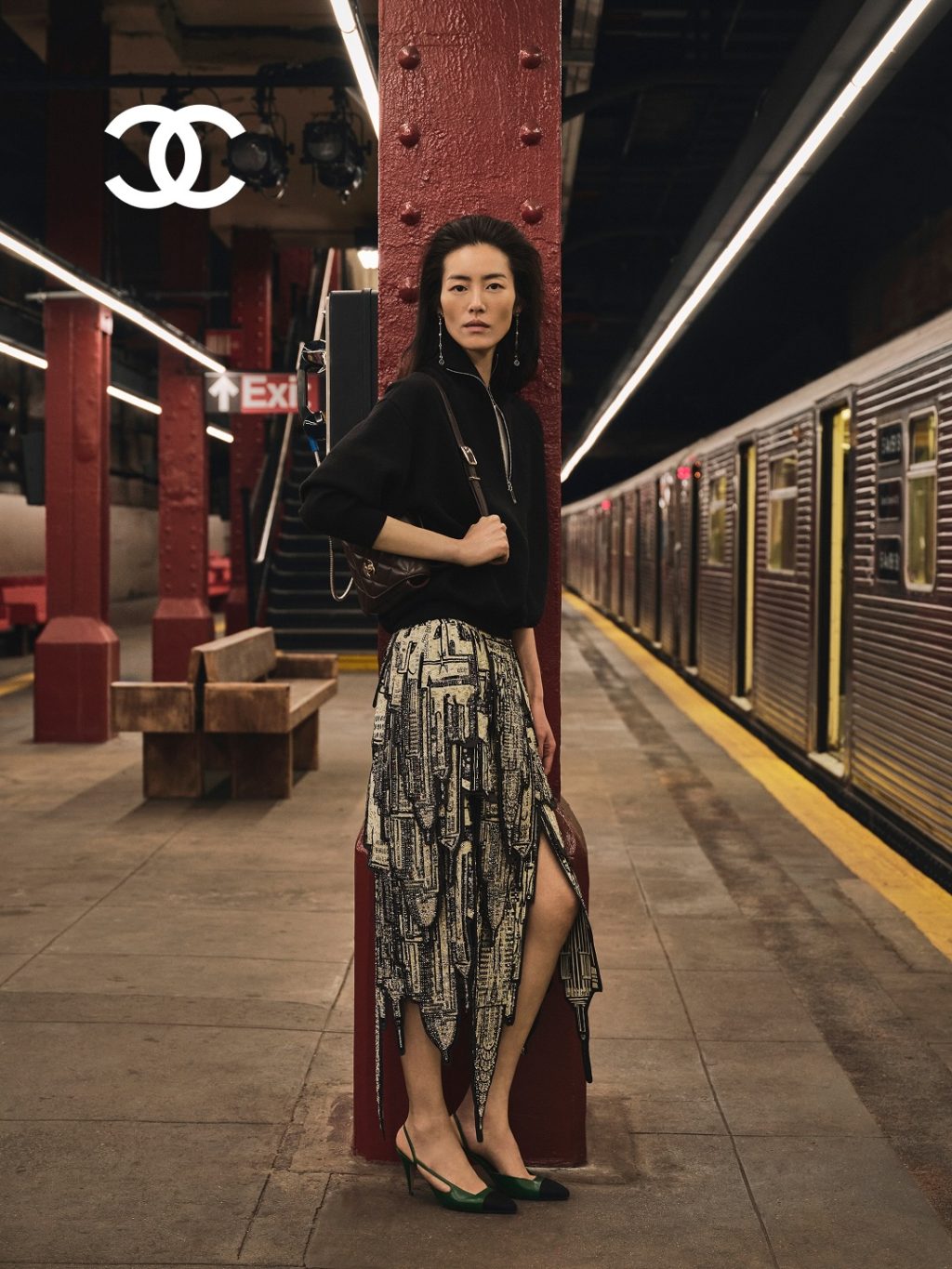
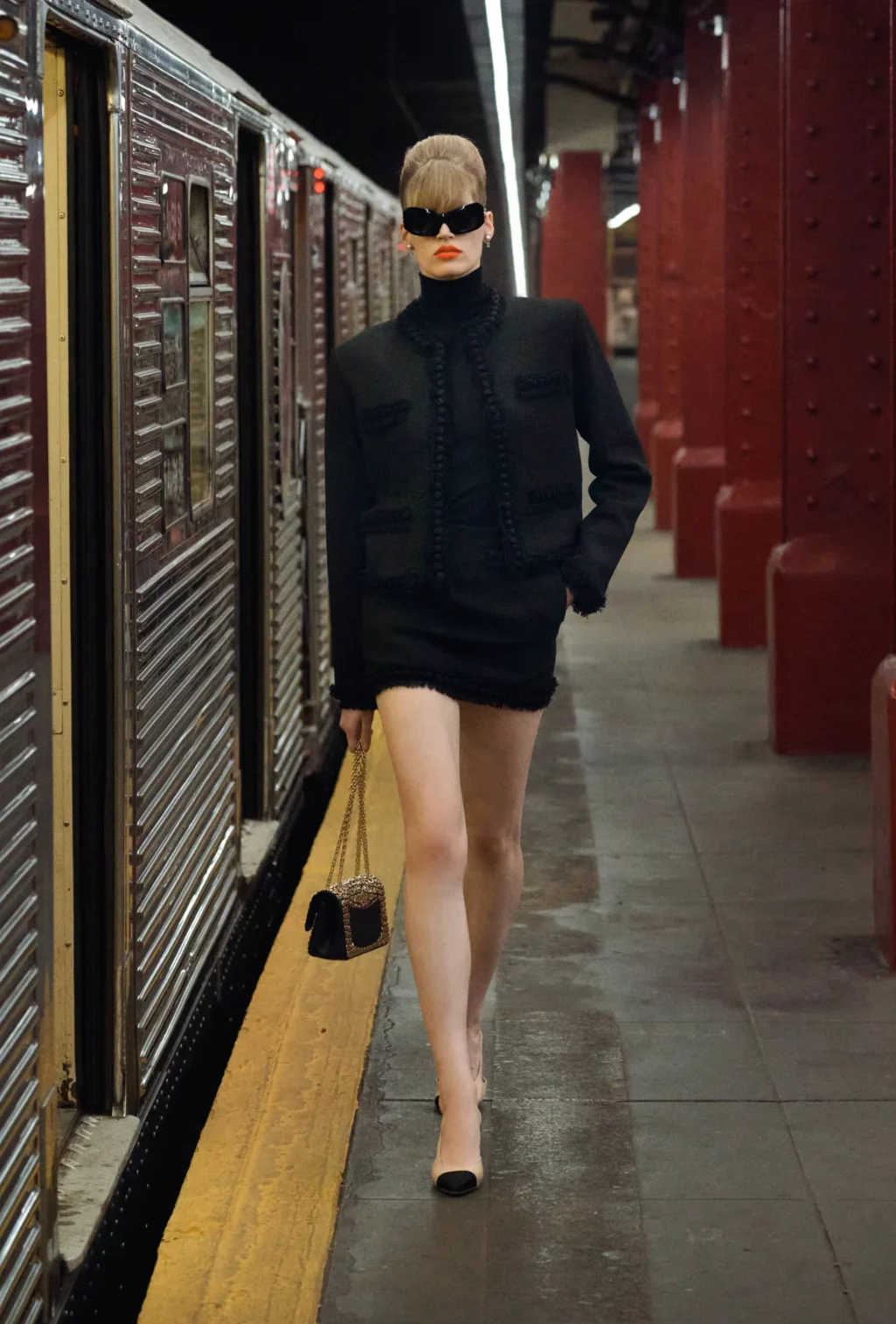
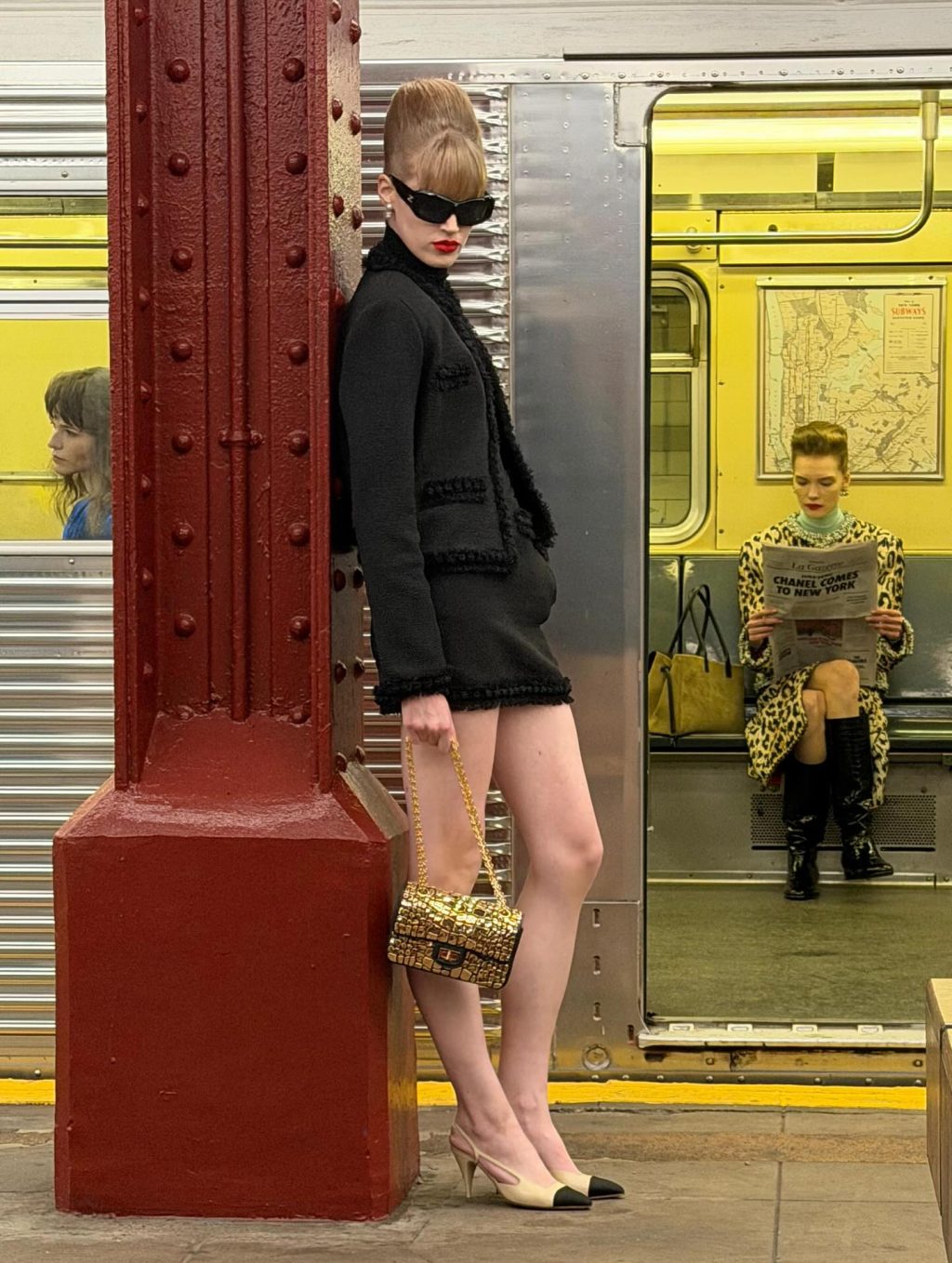
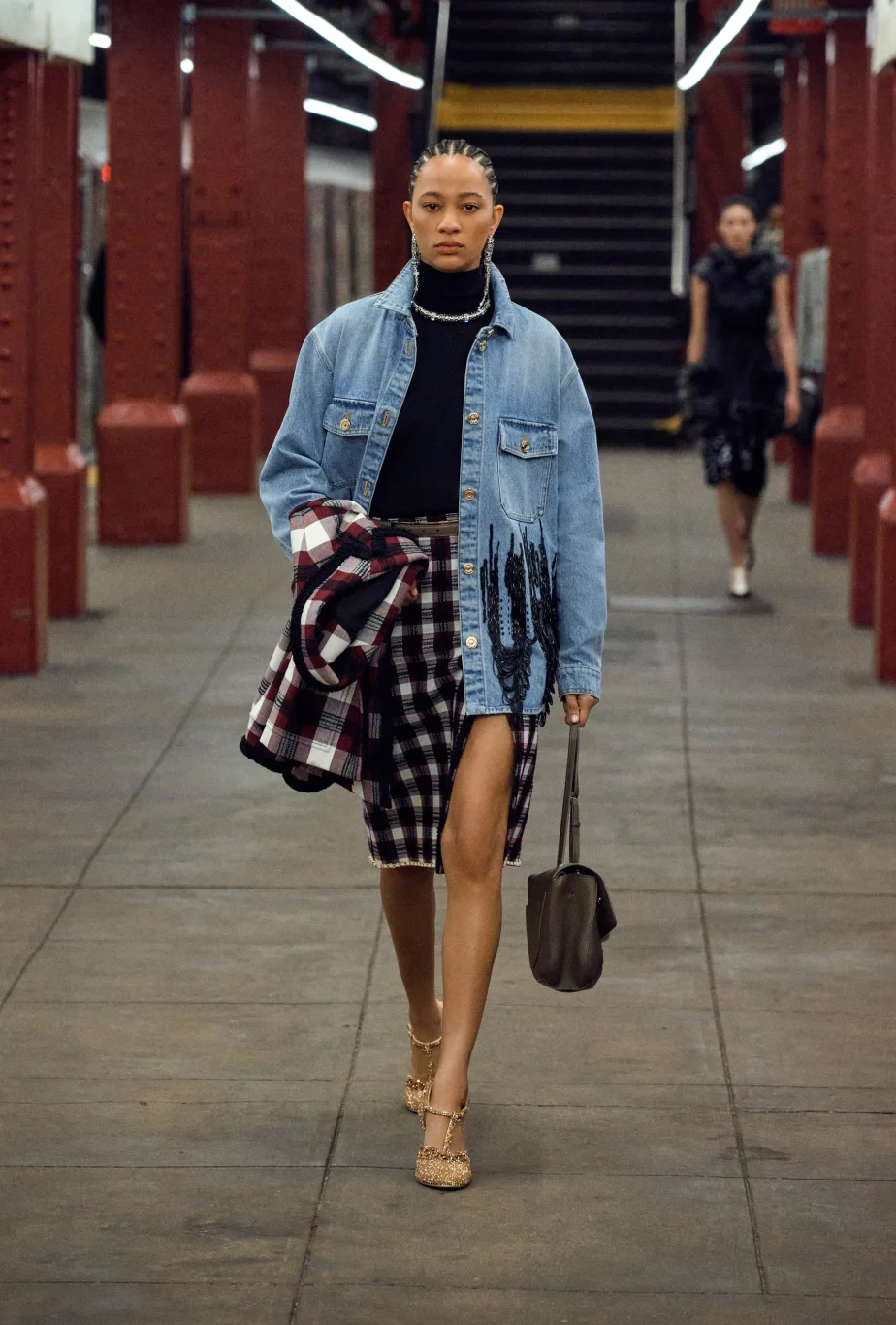
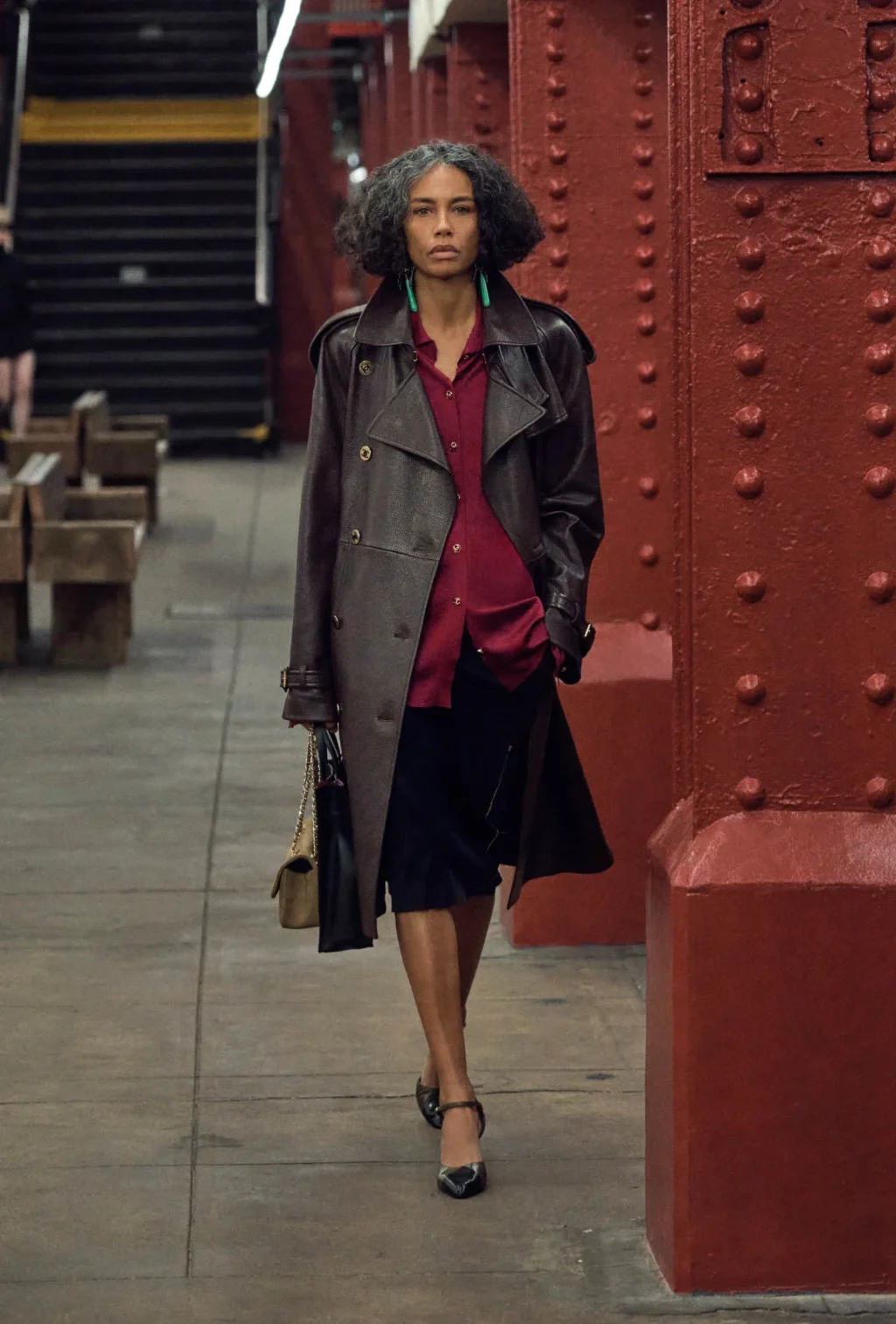
If you want a single image to define the Chanel Métiers d’Art 2026 bags, don’t picture a front row, a staircase, or a gilded salon. Picture a platform: a decommissioned New York subway station turned runway—where the everyday becomes cinematic, and the handbag becomes the clearest form of storytelling.
For the full look-by-look decoding of the cultural nods behind this subway setting, readChanel Métiers d’Art 2026 references.
That choice of setting matters, because Métiers d’Art is never just “another collection.” It’s Chanel’s annual love letter to craft—an event designed to spotlight what the House and its specialist ateliers can do when the brief isn’t “trend,” but technique. This season, the technique arrived dressed as New York: a city where style is rarely precious and always personal, and where accessories do the loudest talking.
For a closer look at the maisons behind that technique—Lesage, Lemarié, Montex, Goossens, Massaro, Maison Michel—seeThe ateliers powering Chanel Métiers d’Art 2026 in New York.
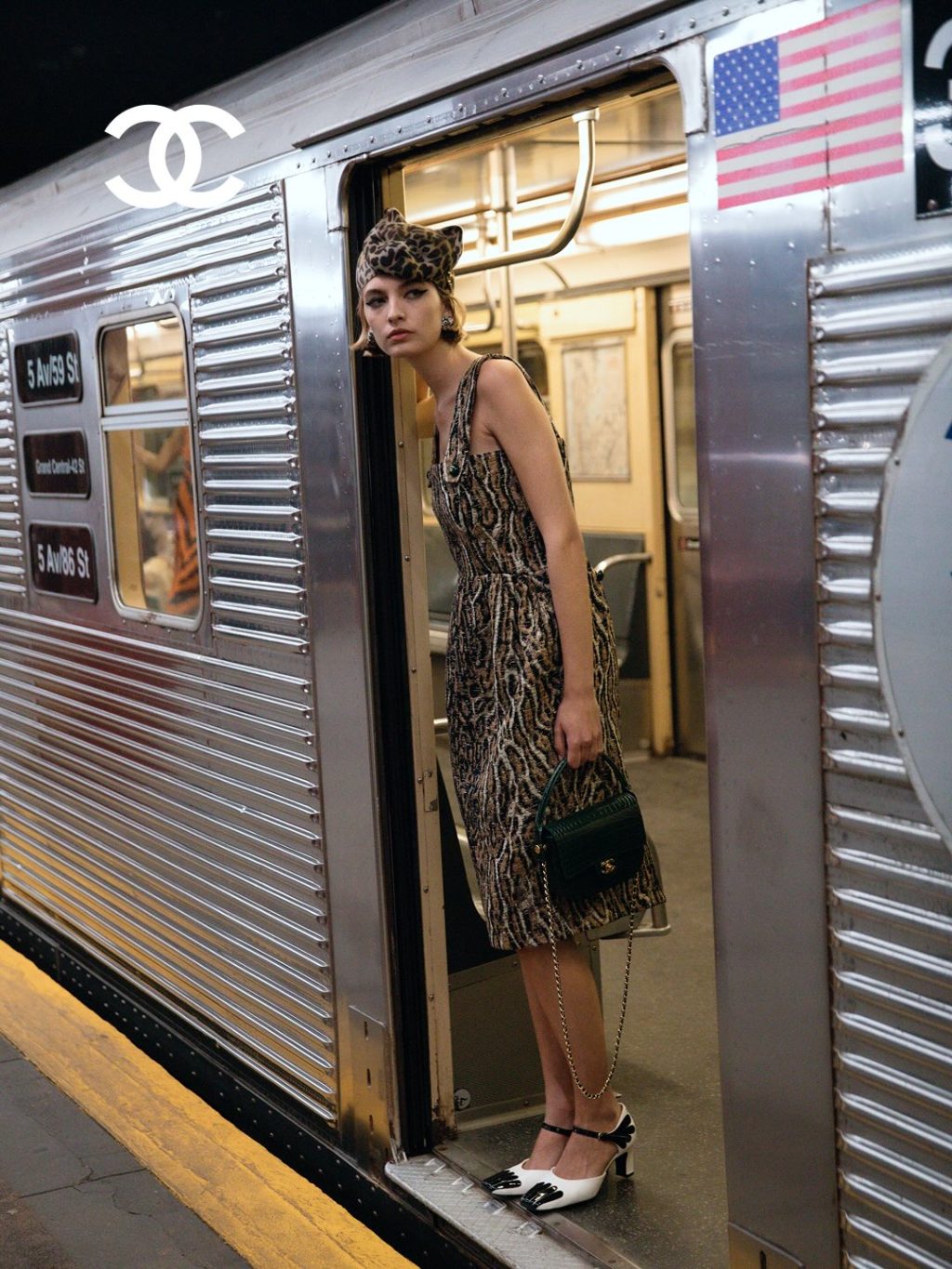
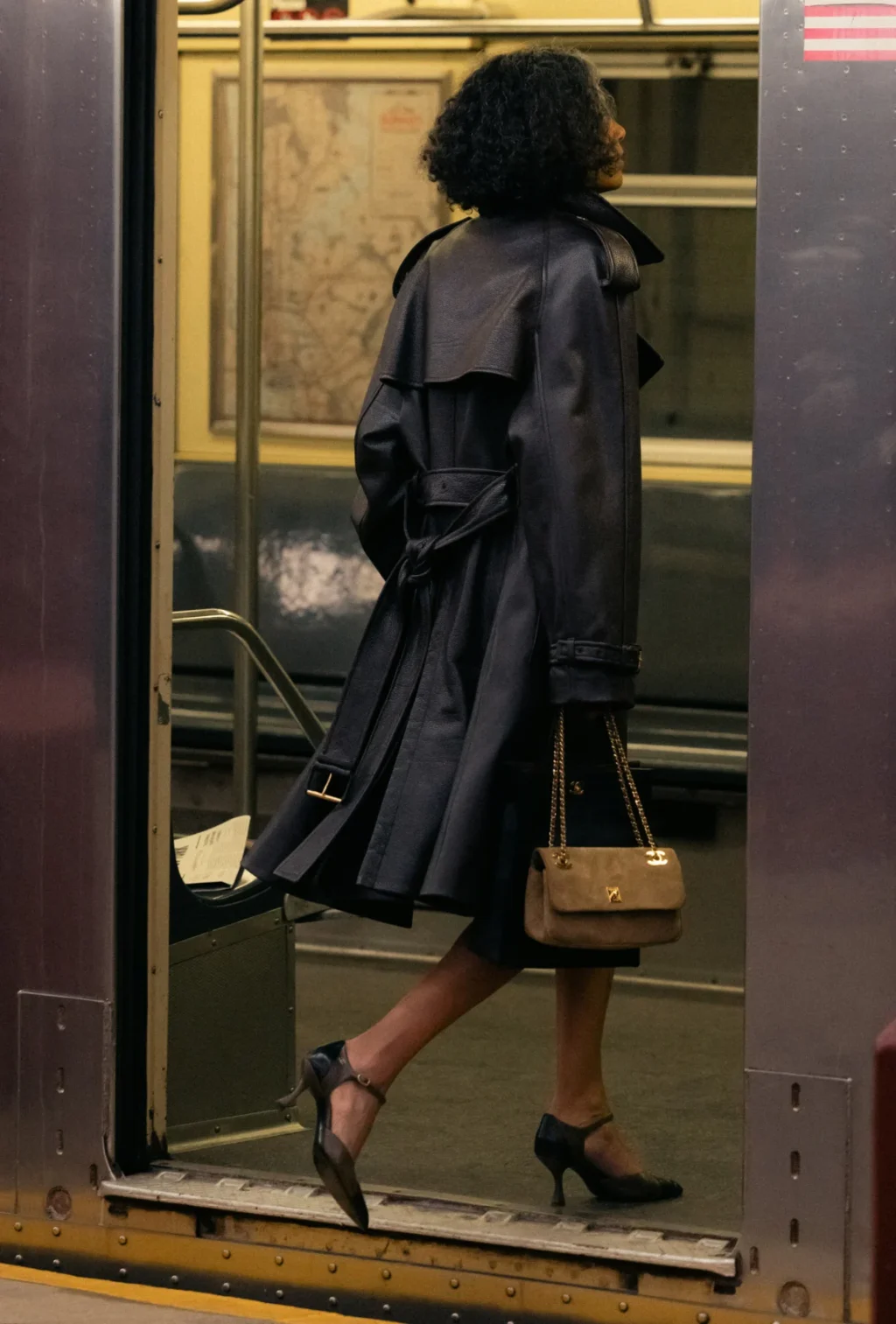
And in this show, the bags weren’t supporting characters. They were the commuters—moving the story forward, one stop at a time.
The platform as a moodboard
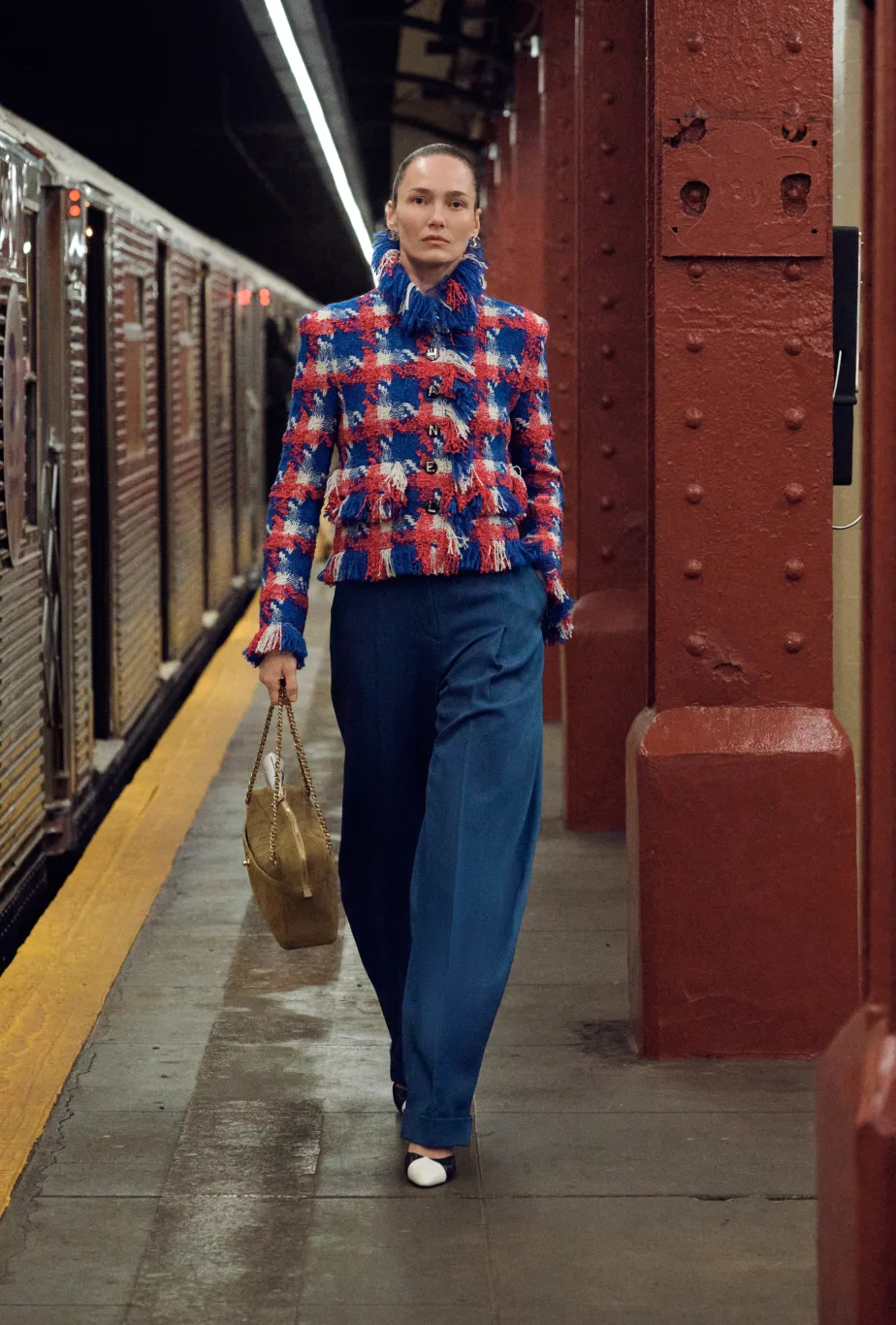
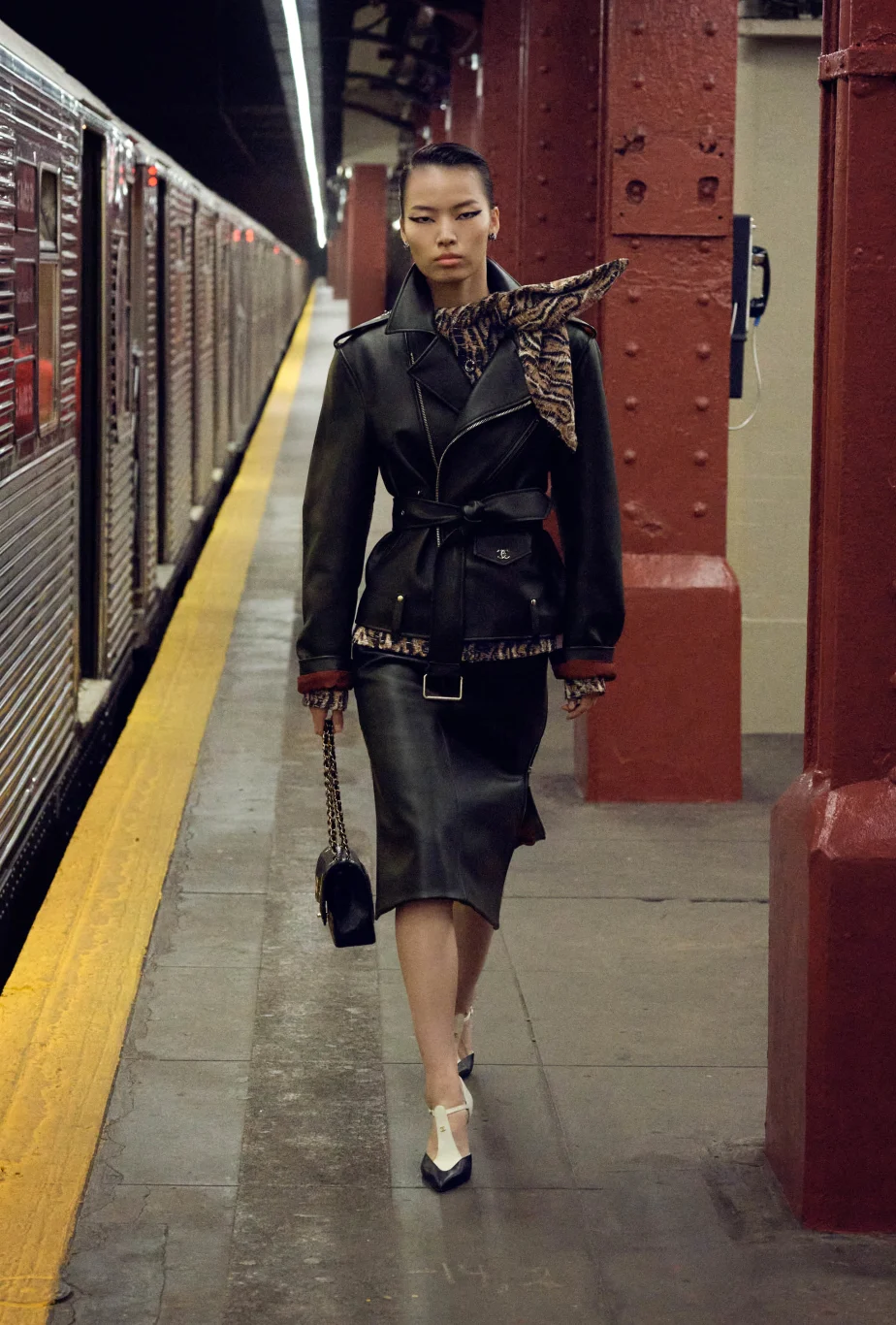
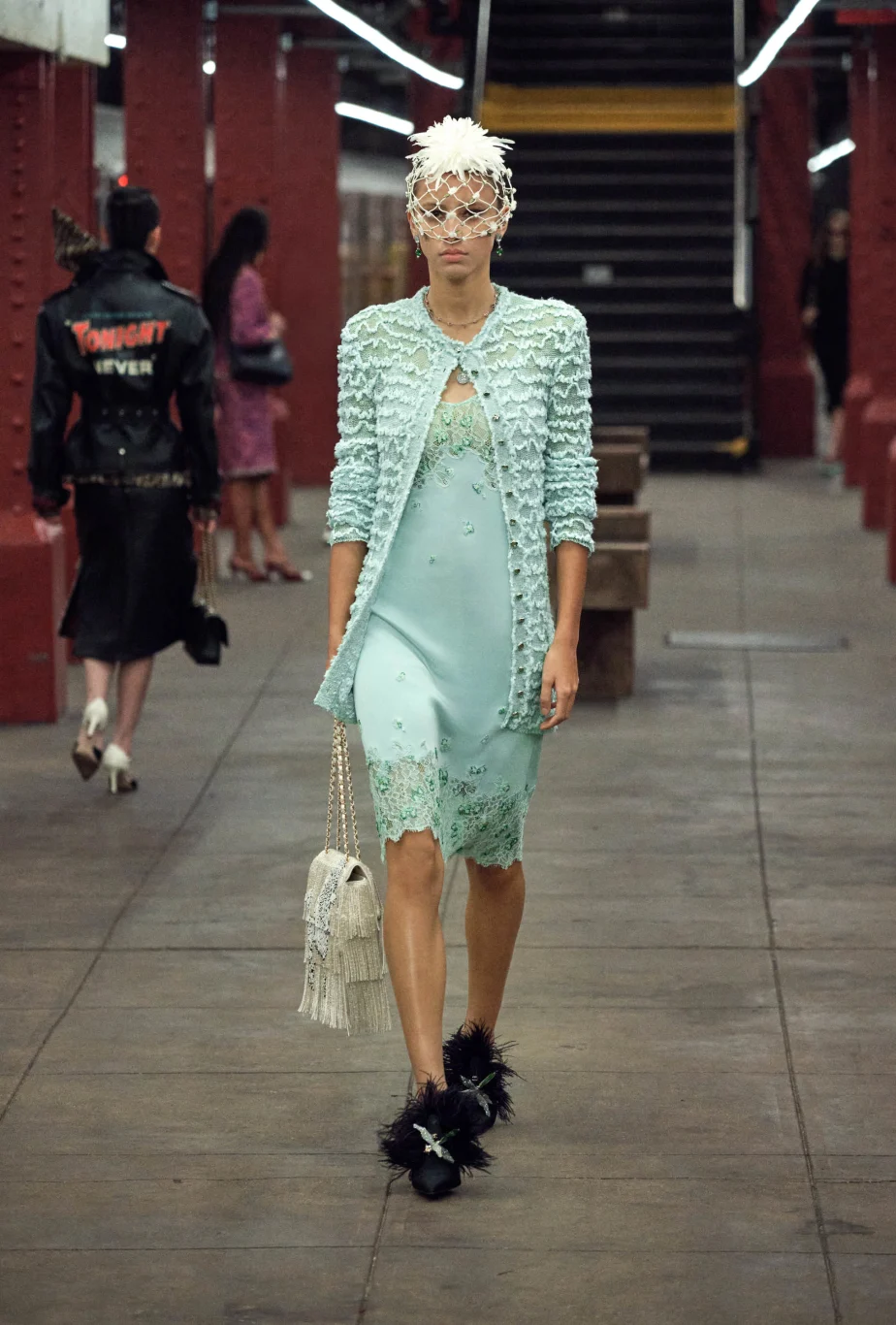
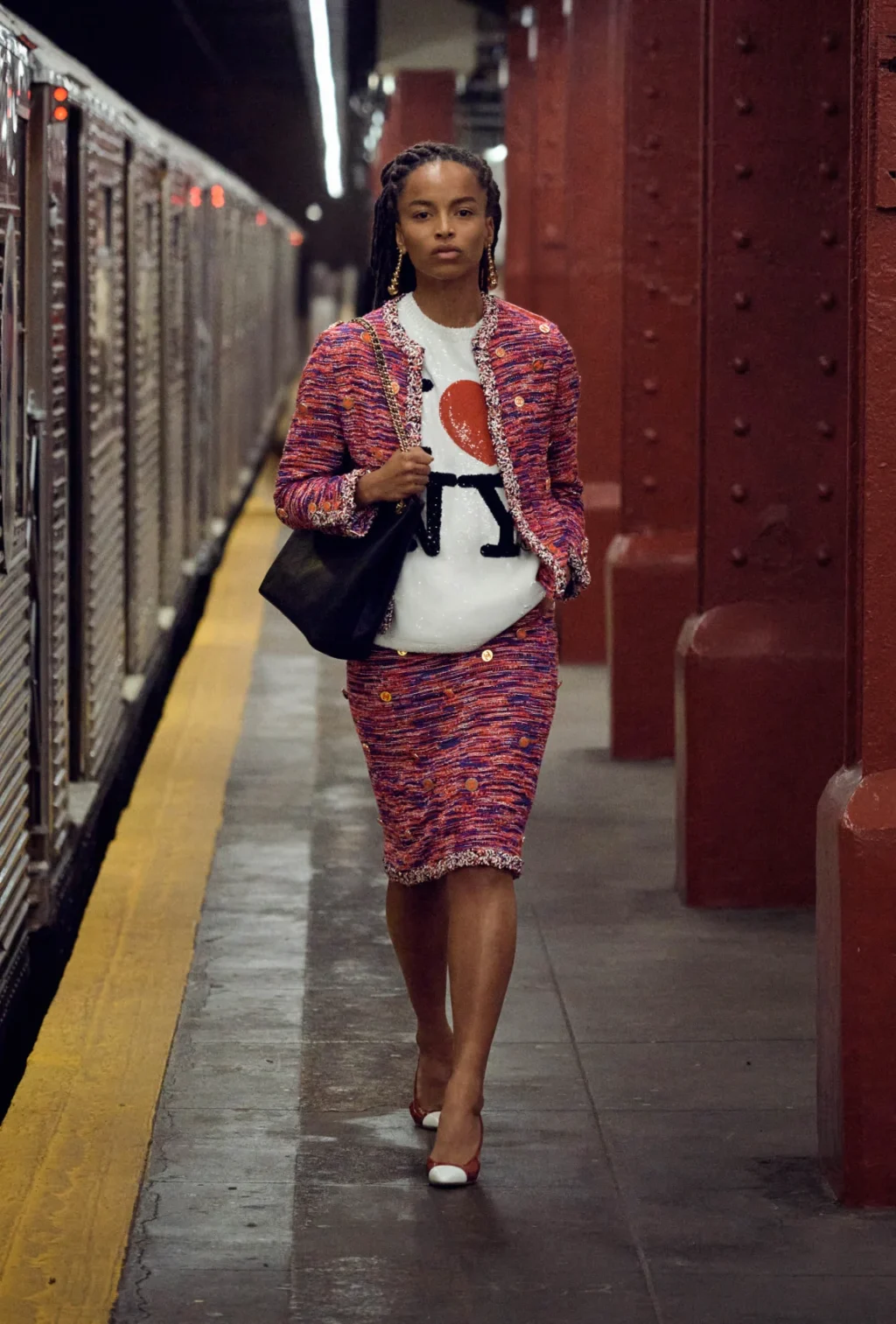
Chanel staged the Métiers d’Art show in a disused subway station in Lower Manhattan, leaning fully into the romance of New York infrastructure: tiled walls, platform edges, the sense of motion—even the idea that a crowd can feel both anonymous and intimately observed.
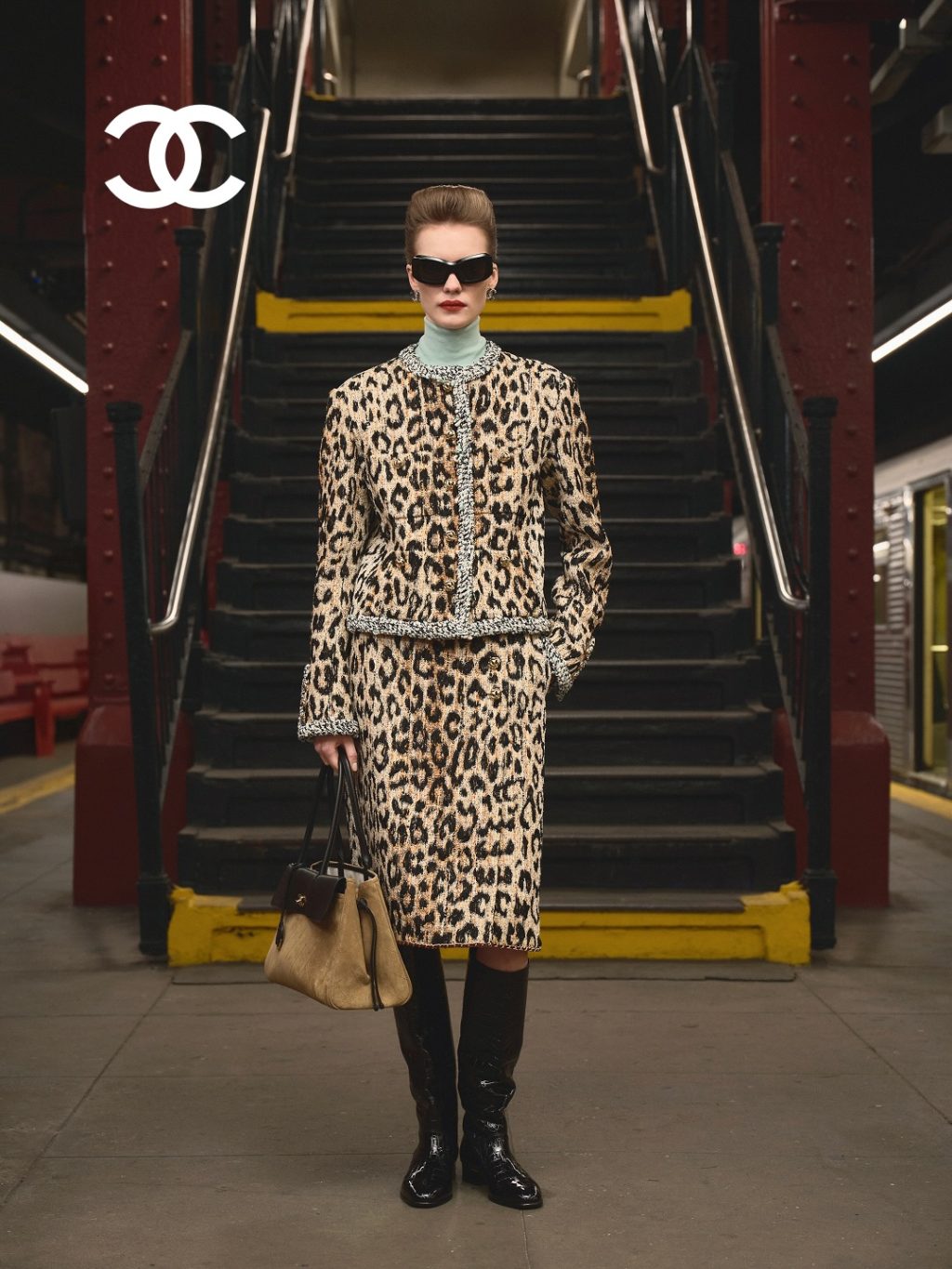
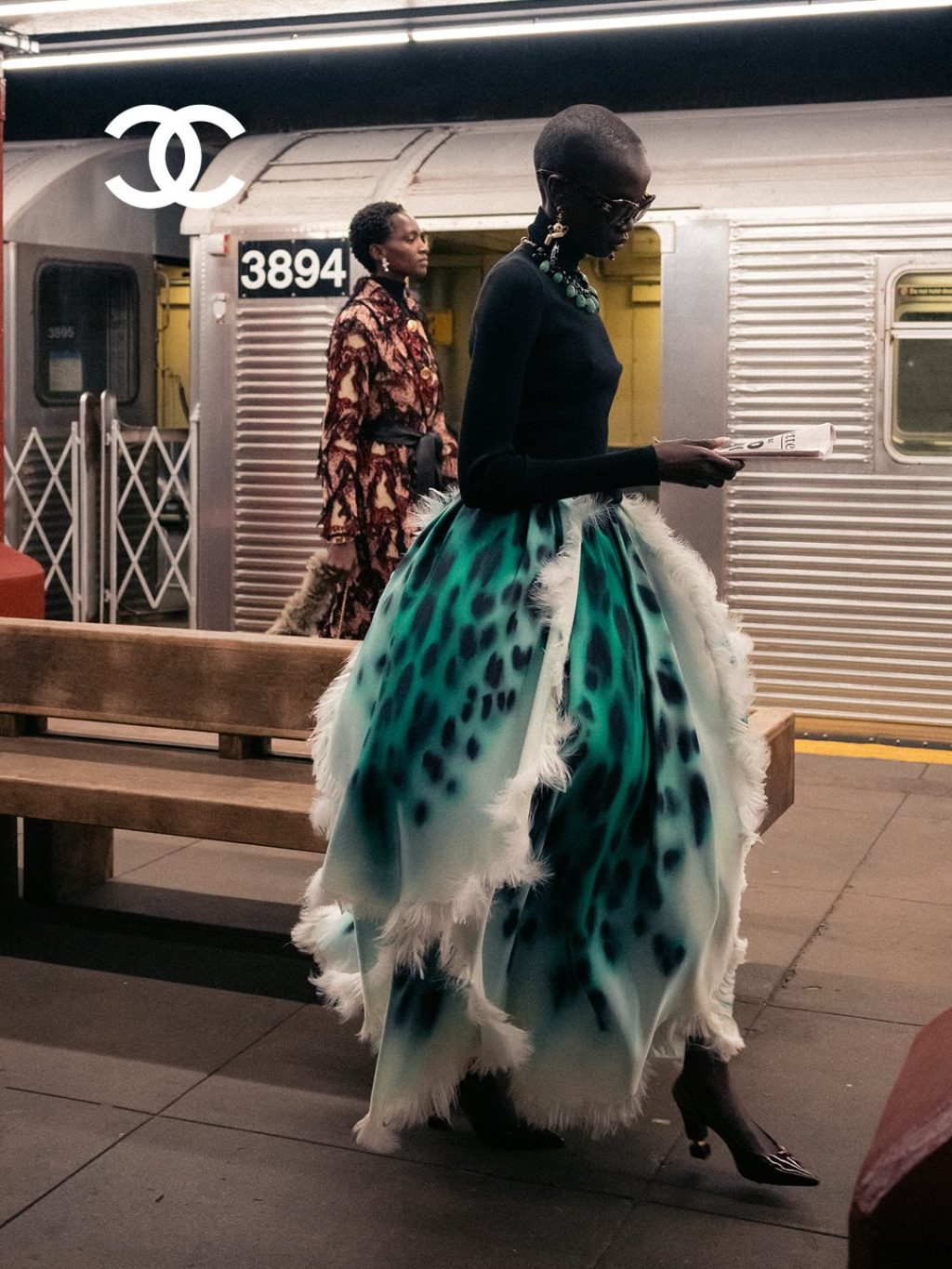
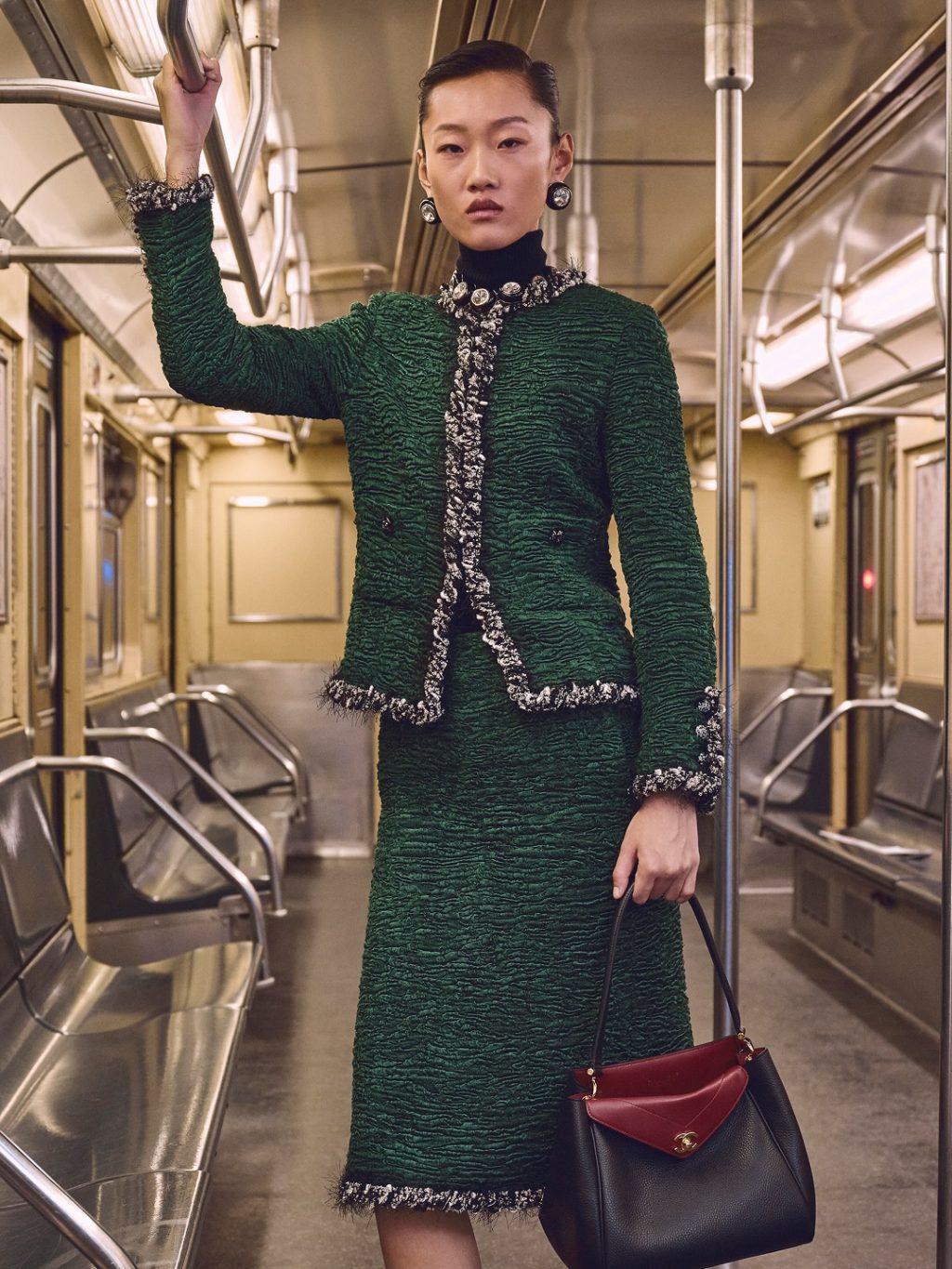
Press accounts emphasized the show’s relationship with the subway as a democratic space—an environment that “belongs to all,” the kind of place where different worlds share the same few feet of ground. That concept becomes important when you look at the accessories: the bags are built like status symbols, yes, but styled like real life—held close, worn crossbody, swung on chains that feel practical rather than ceremonial.
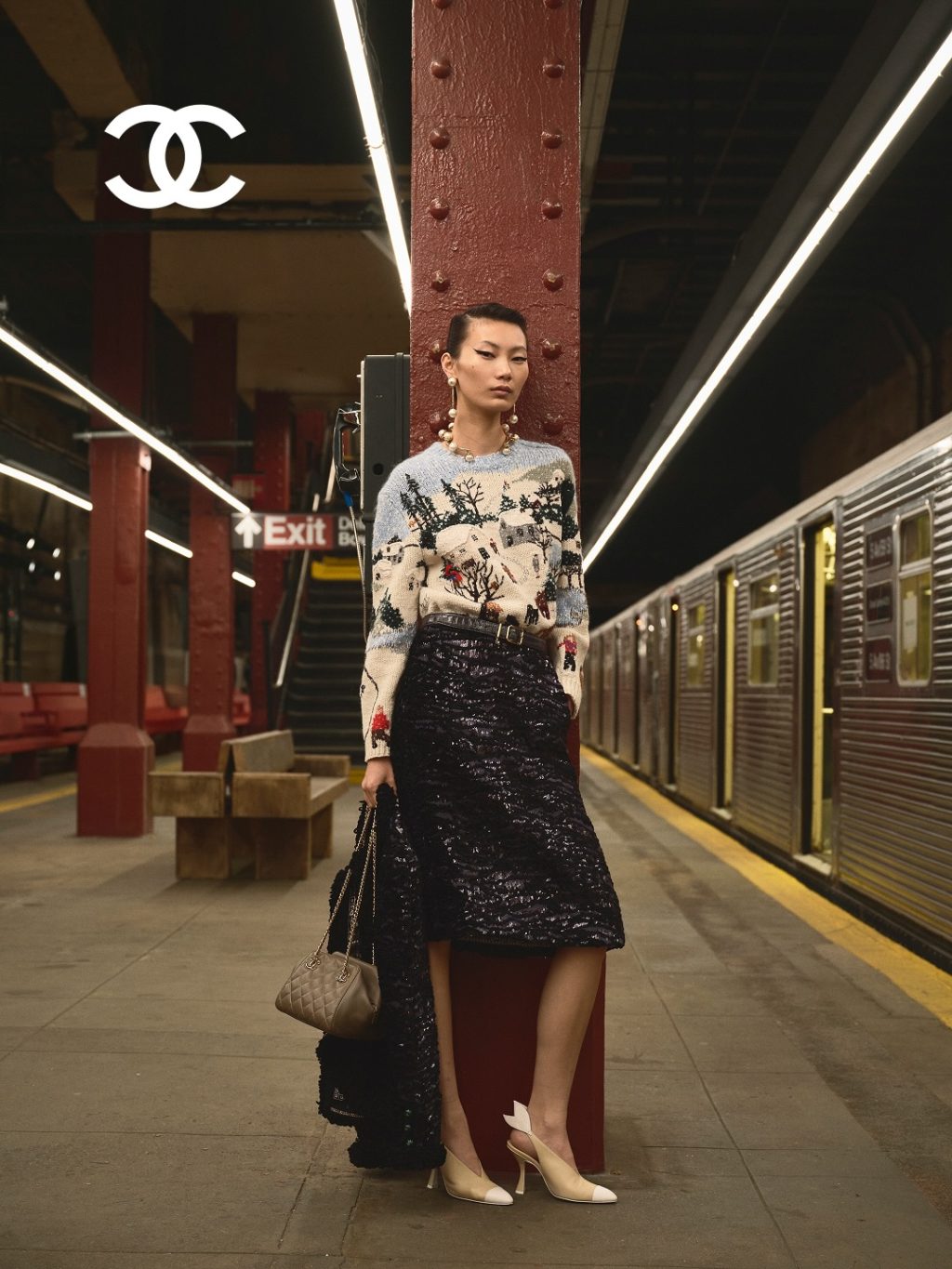
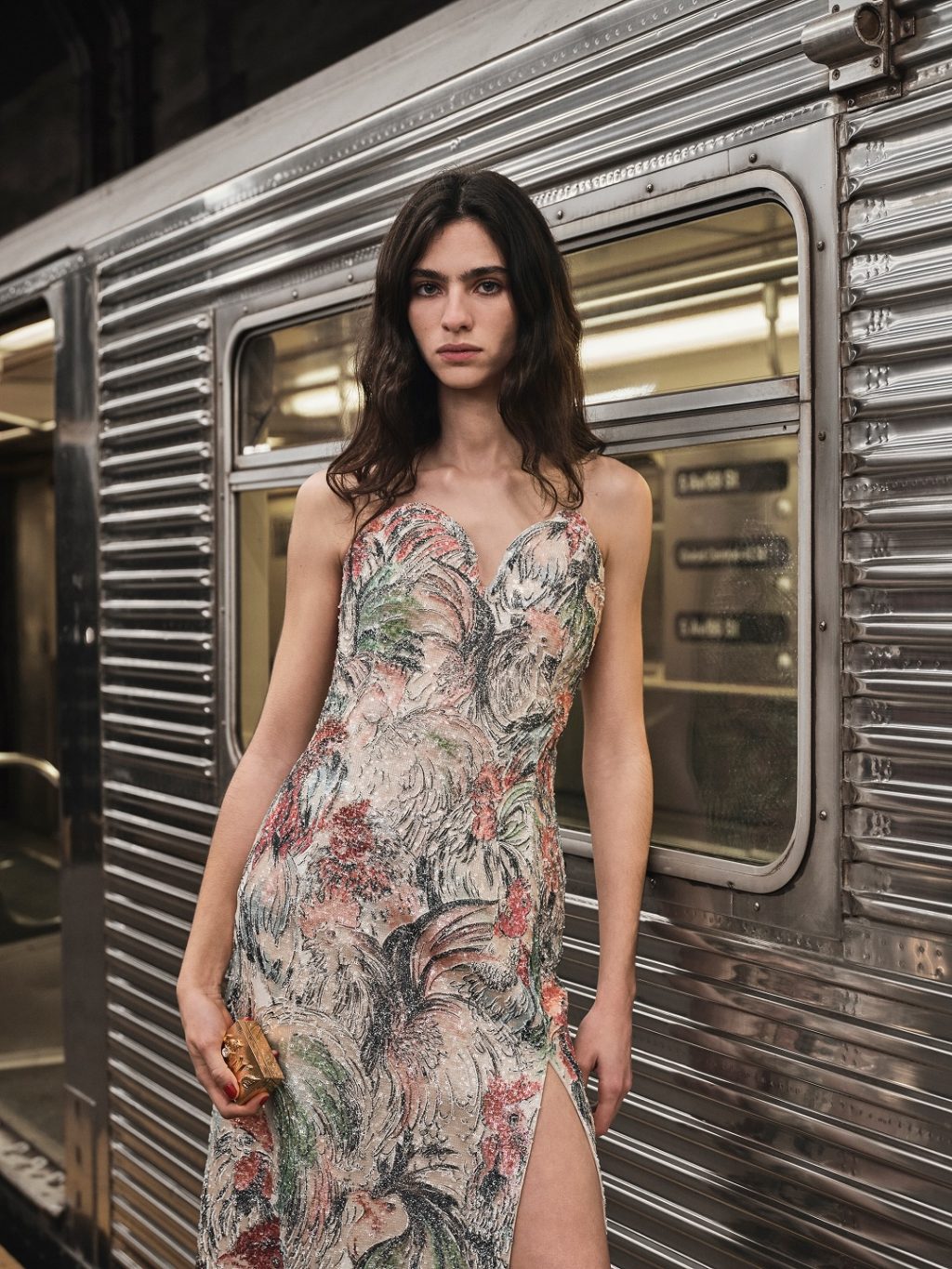
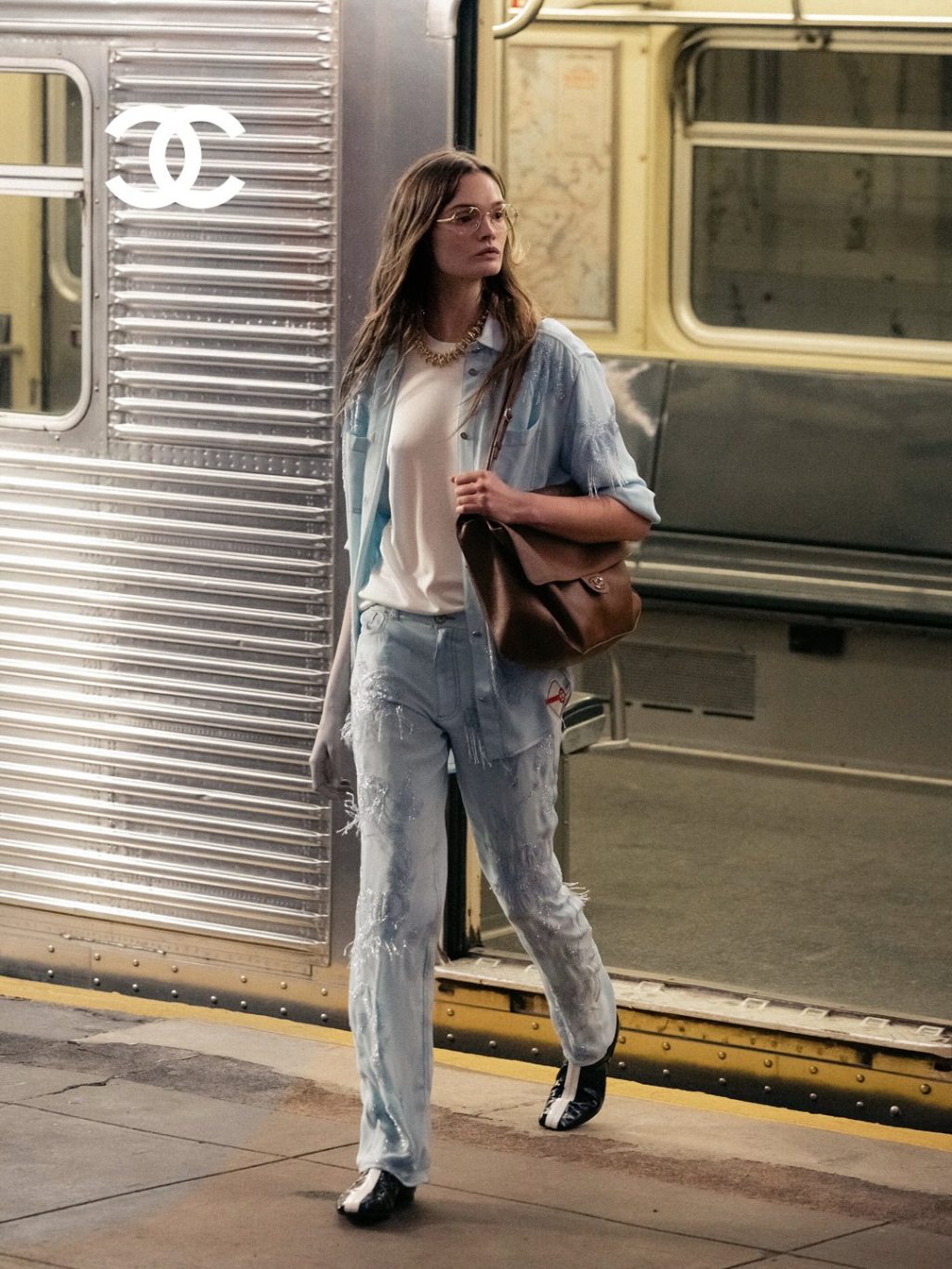
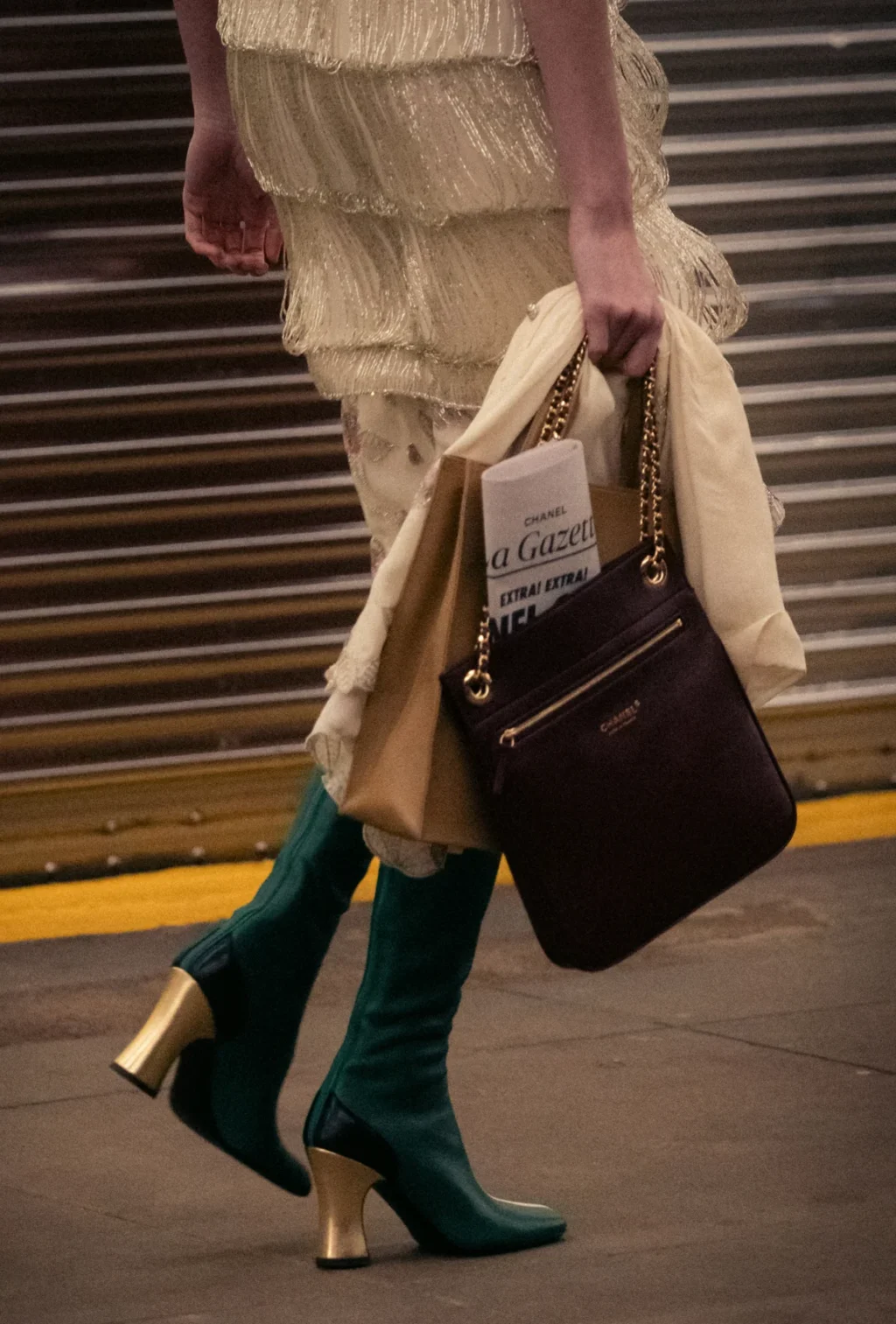
Chanel also leaned into the theatrical detail of New York. Reports described a tailored “street” atmosphere—newsstand cues, city ephemera, the type of narrative world-building the House has mastered.
What Métiers d’Art actually signals
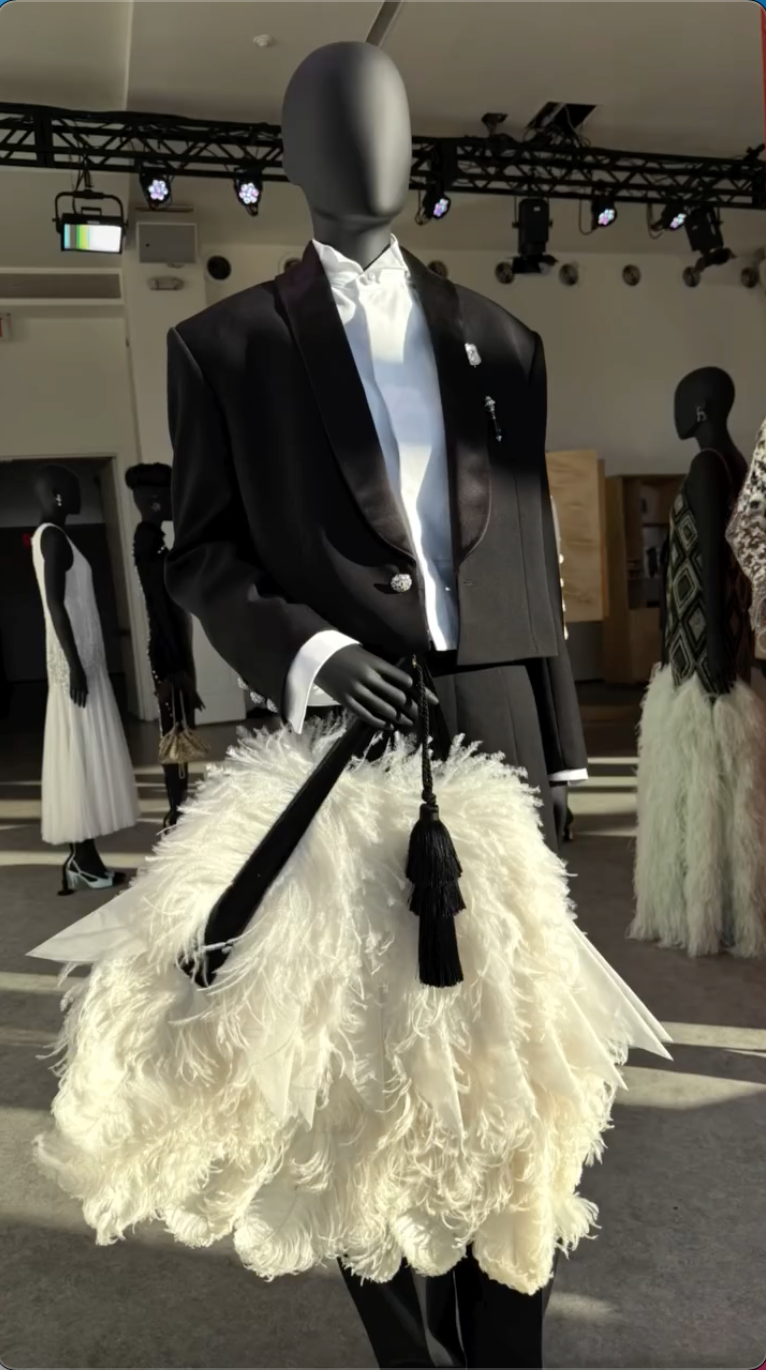
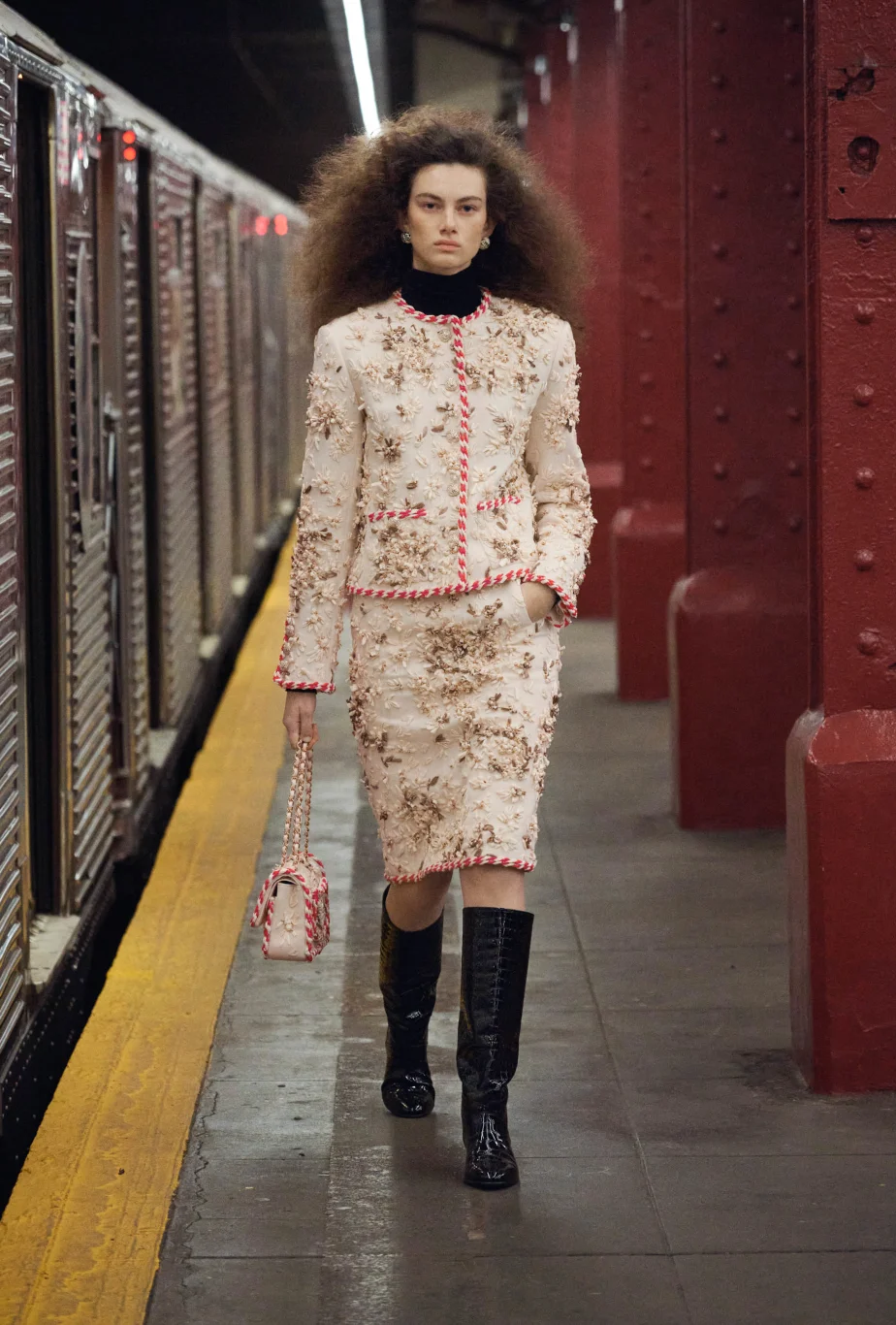
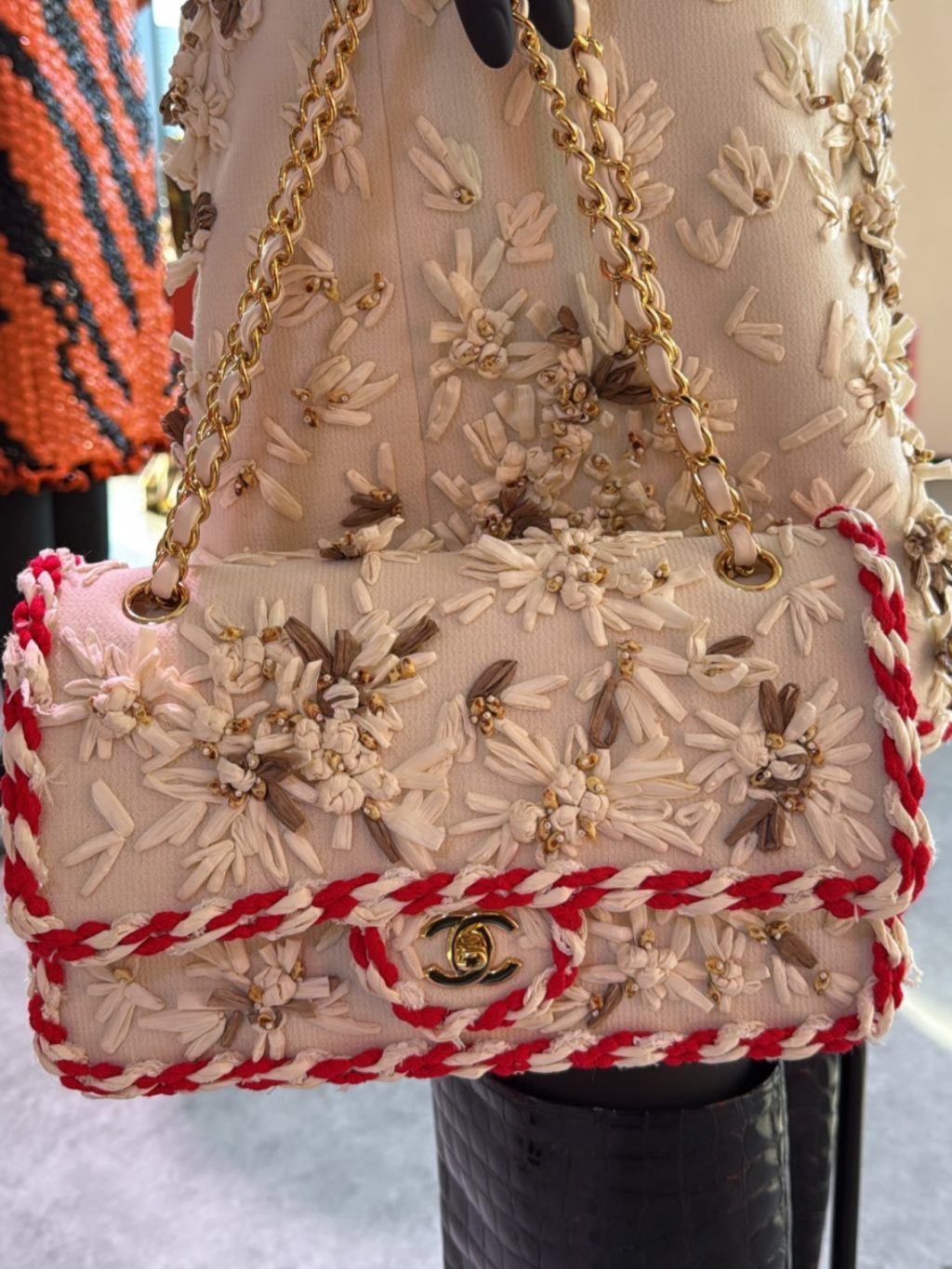
Métiers d’Art collections exist to spotlight savoir-faire—tweed, embroidery, feather work, shoemaking, leatherwork—executed at a level that can’t be summarized by a single runway photo. It’s fashion as artisanal proof.
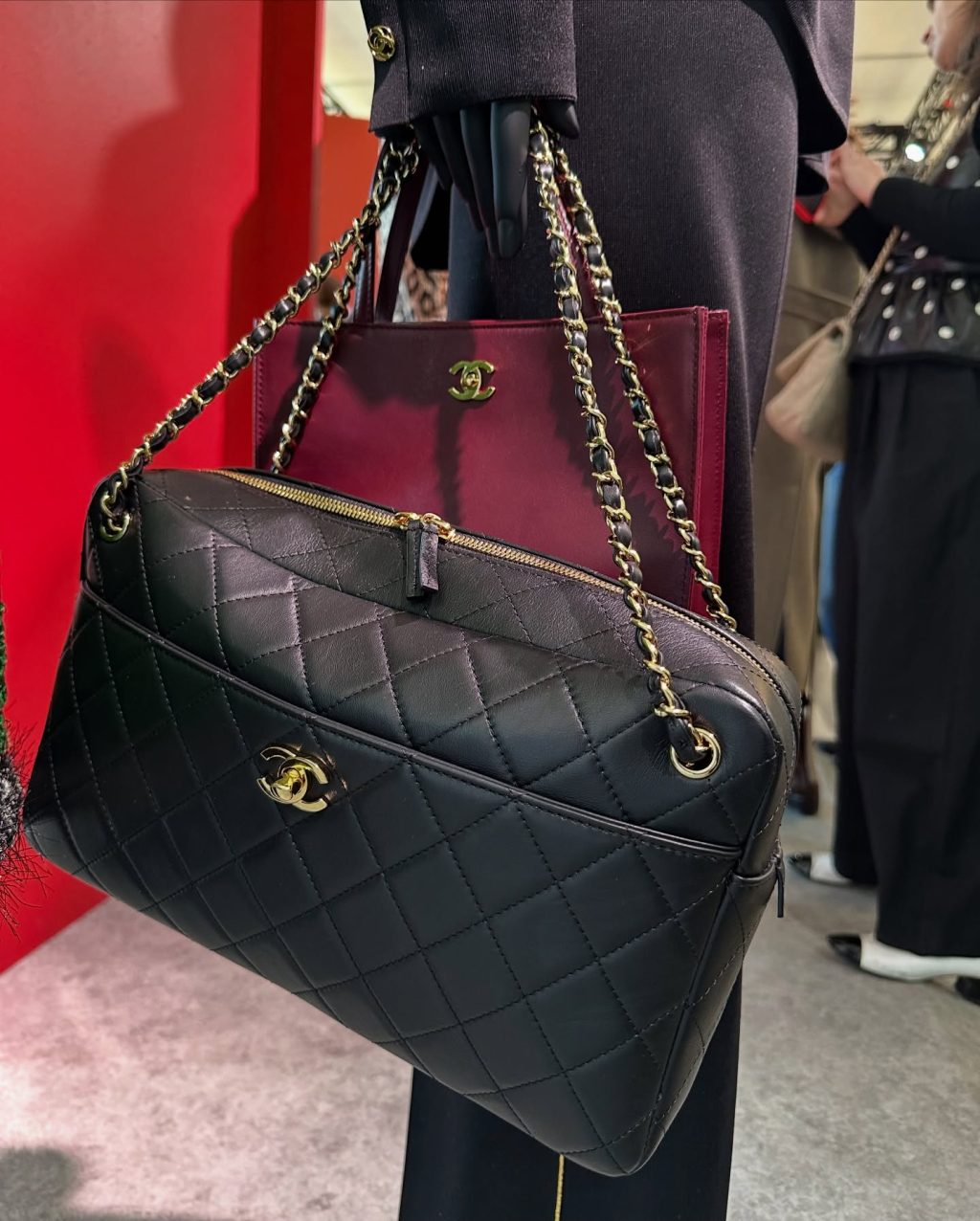
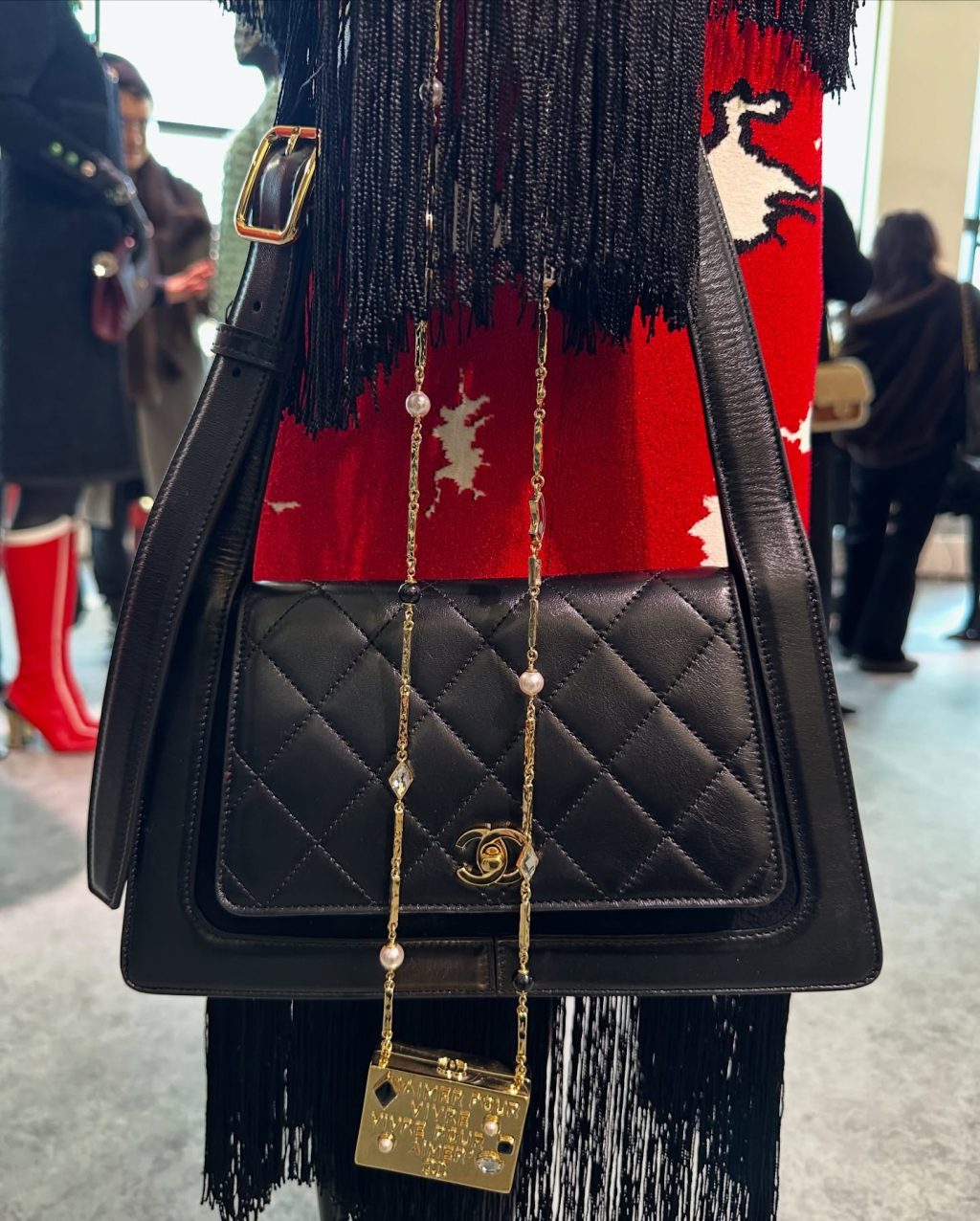
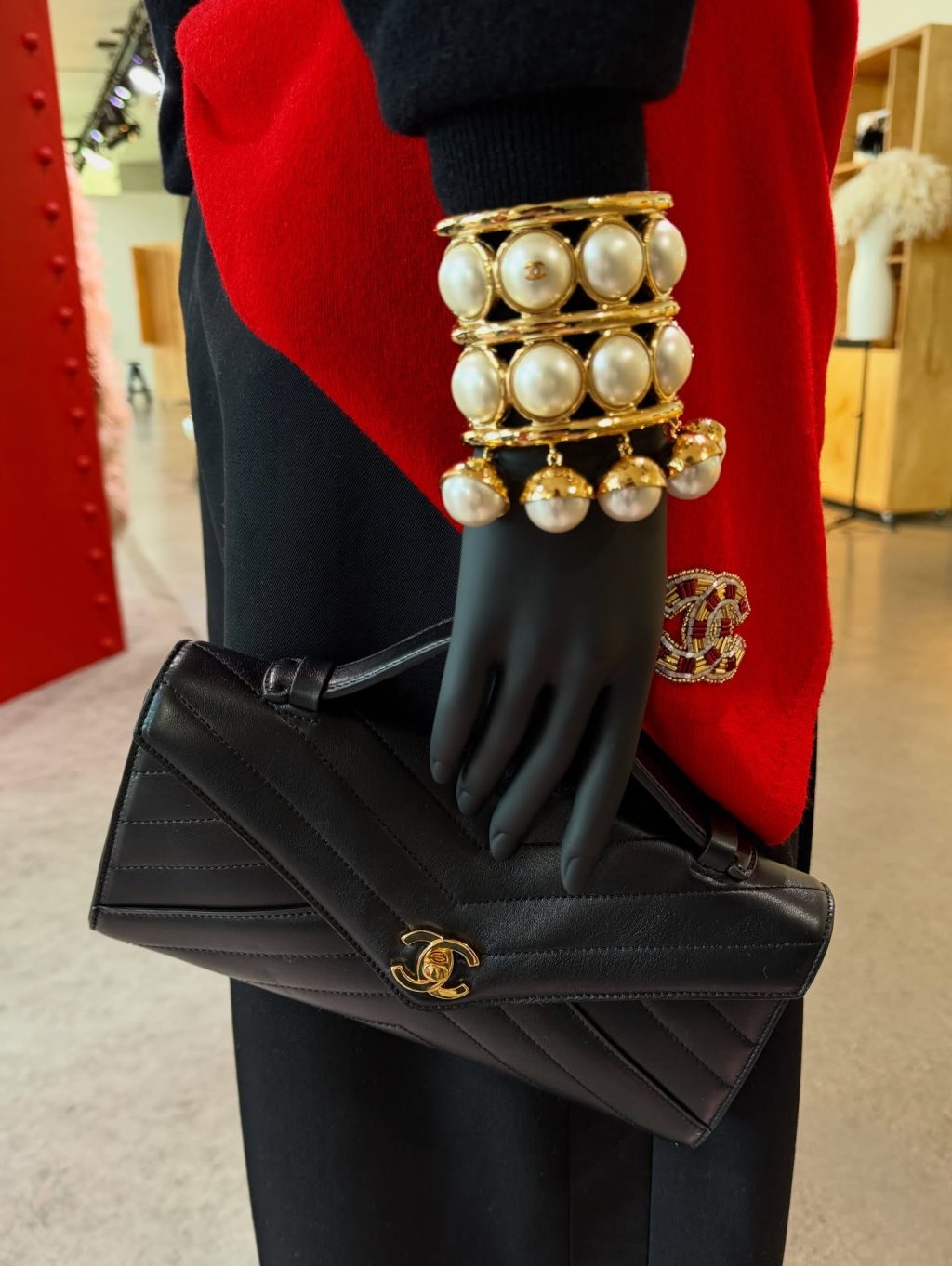
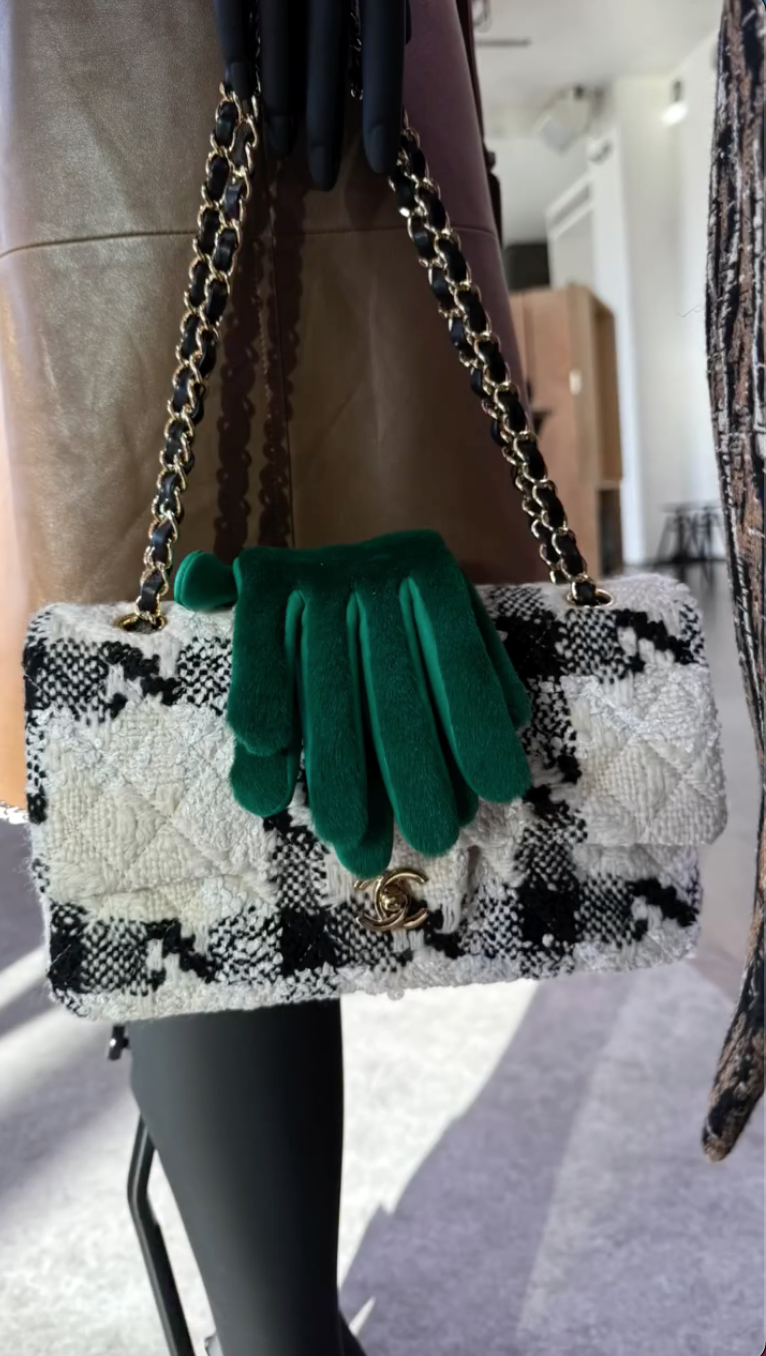
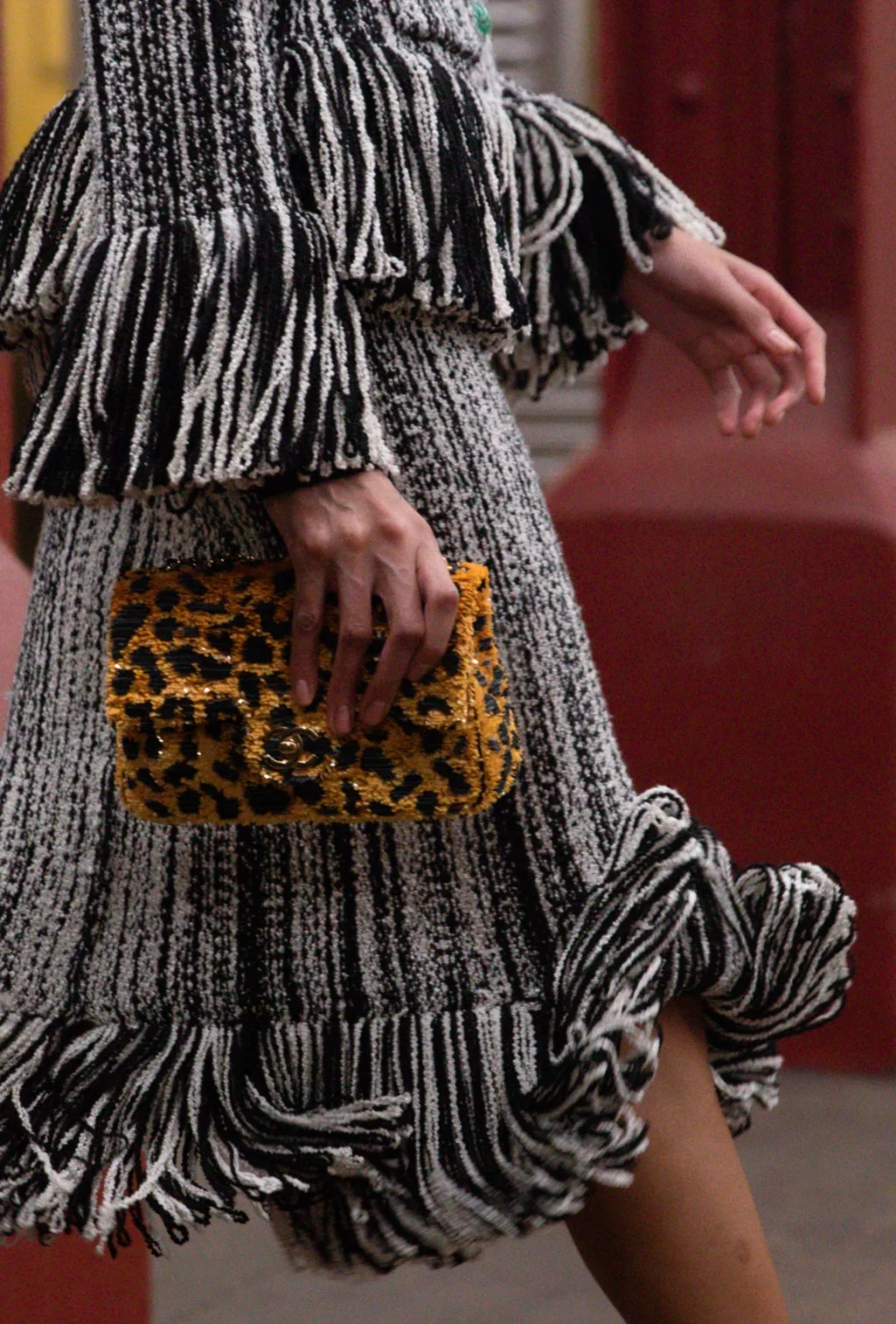
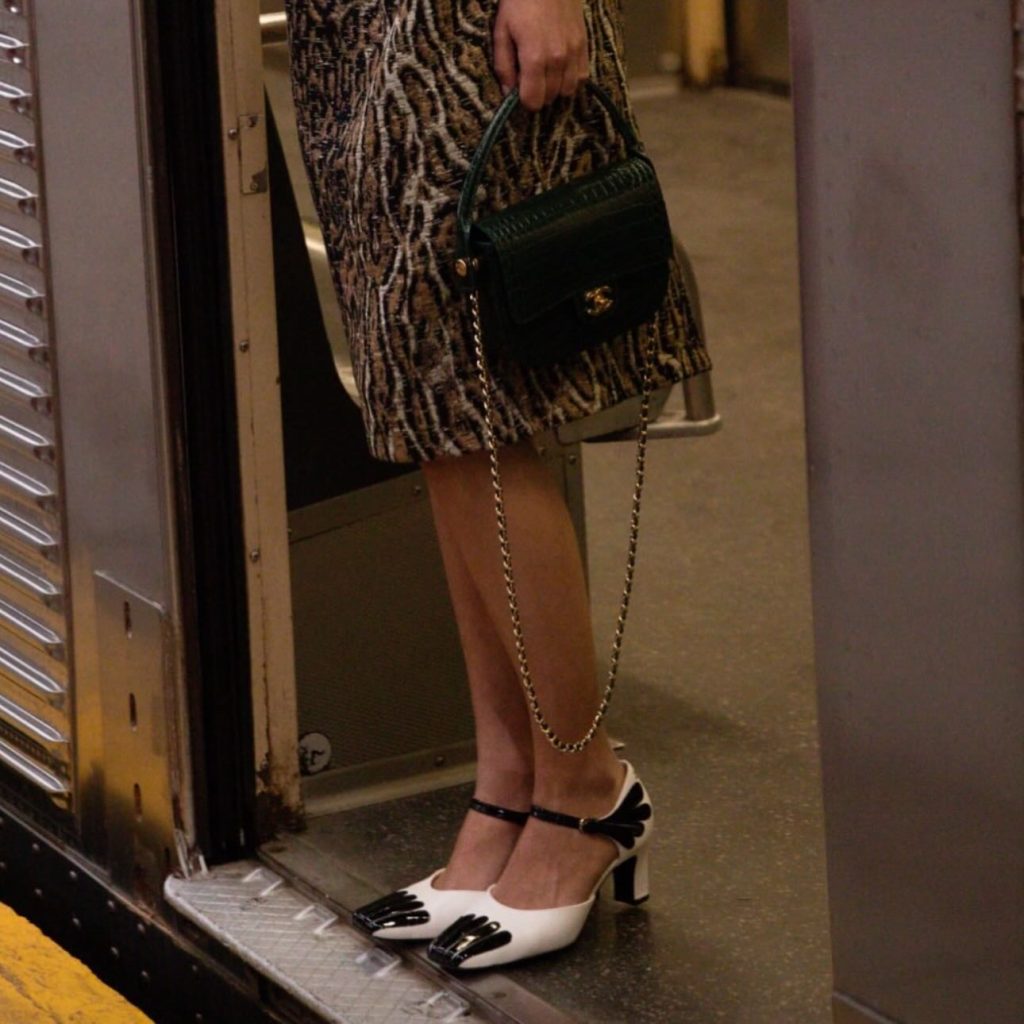
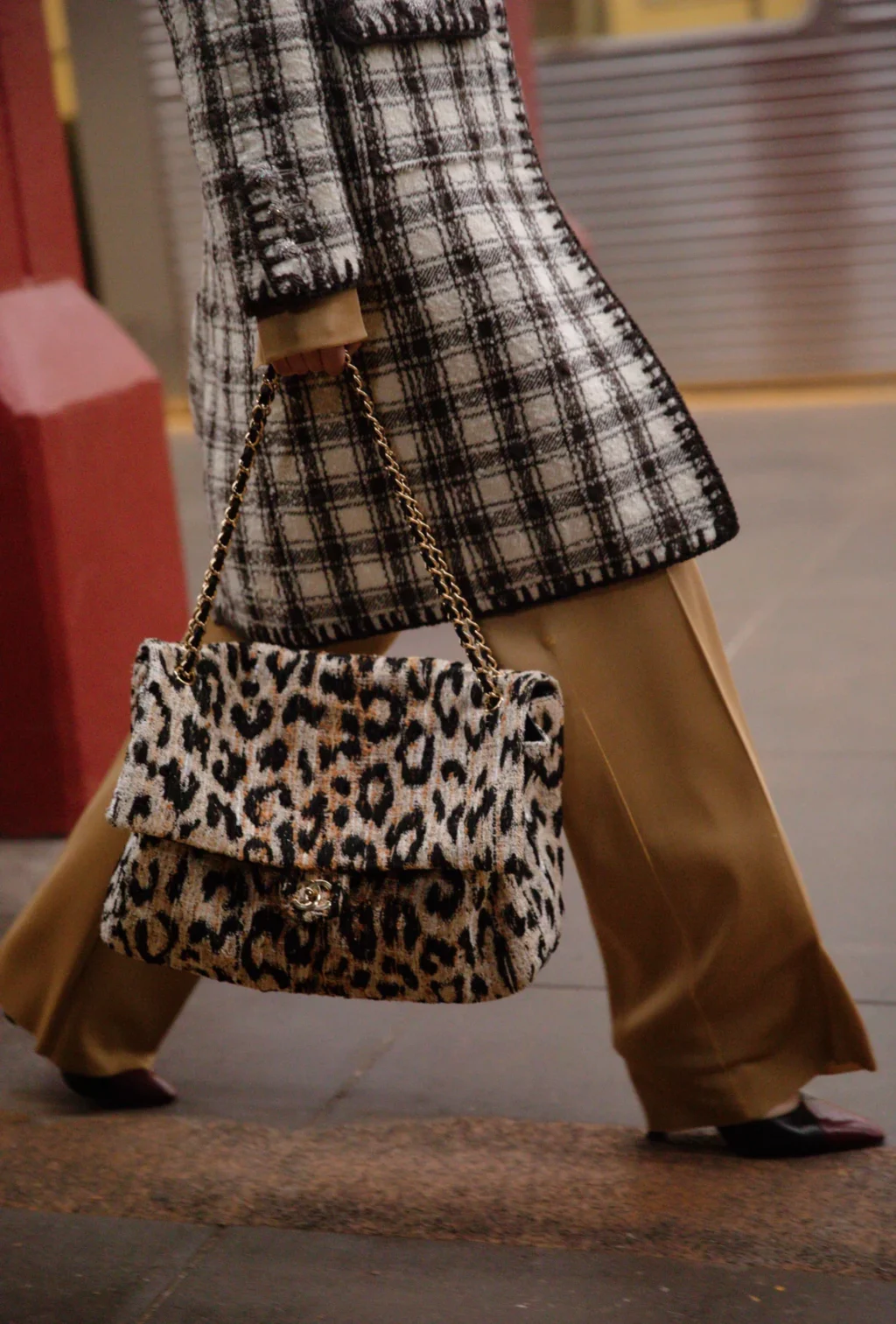
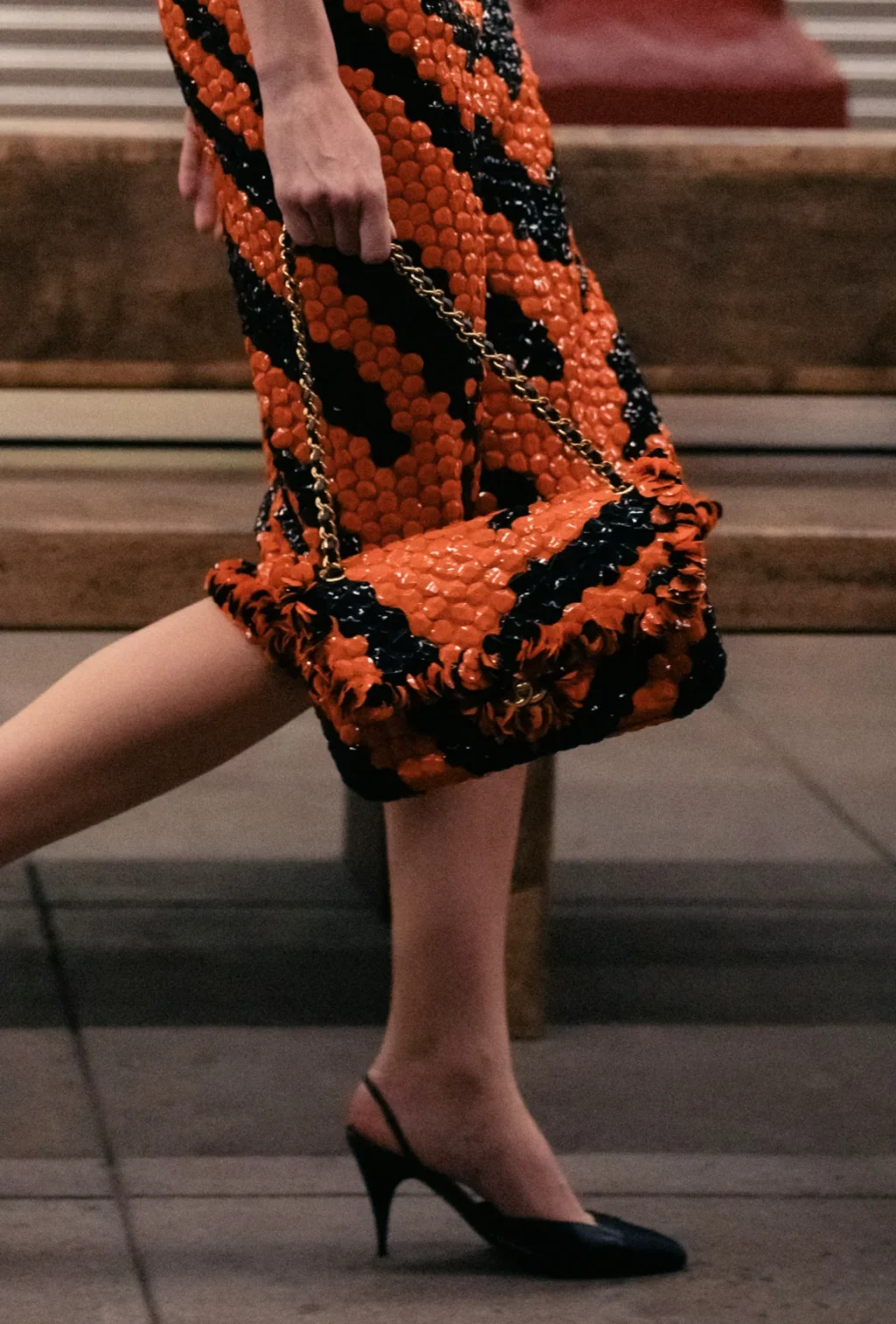
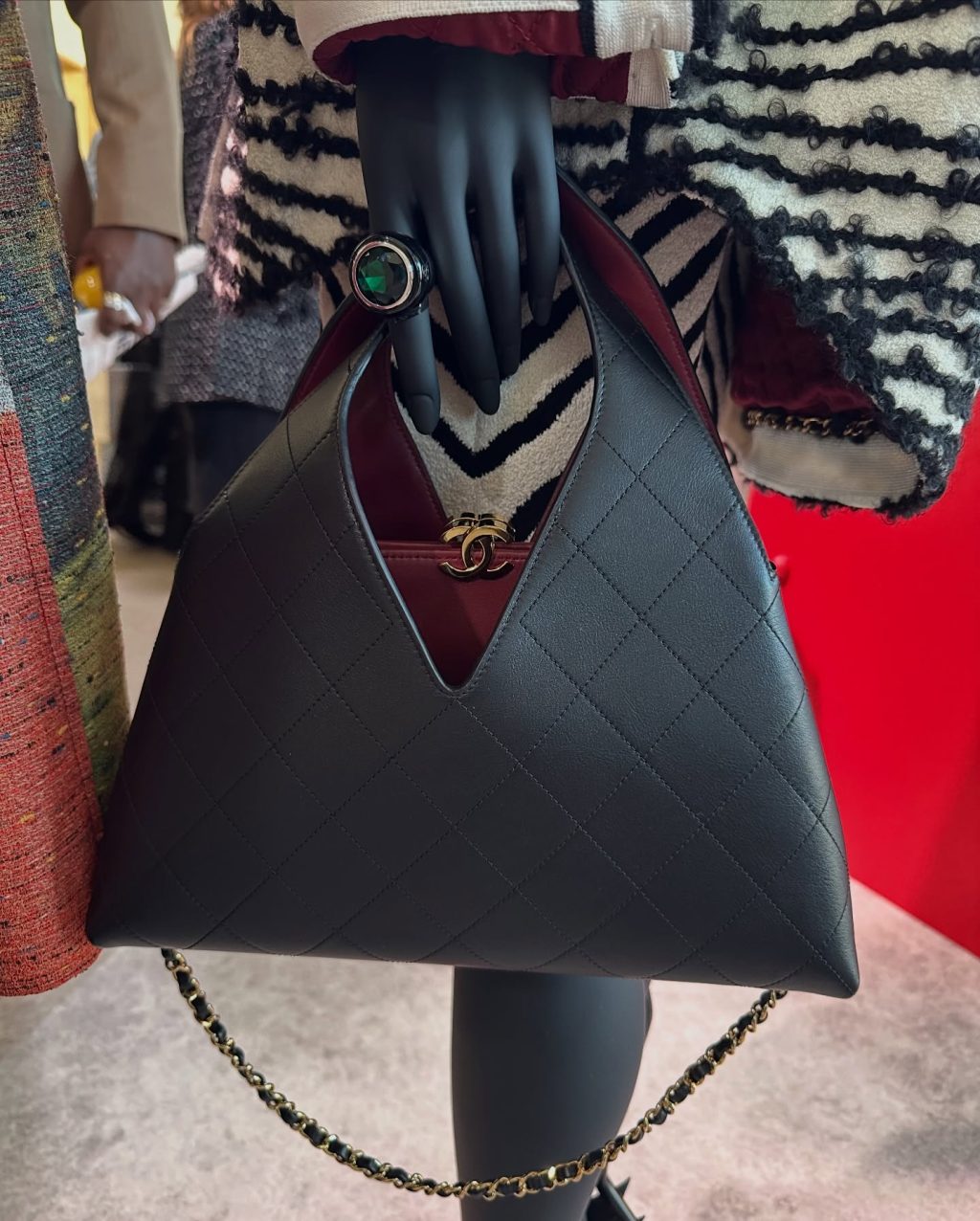
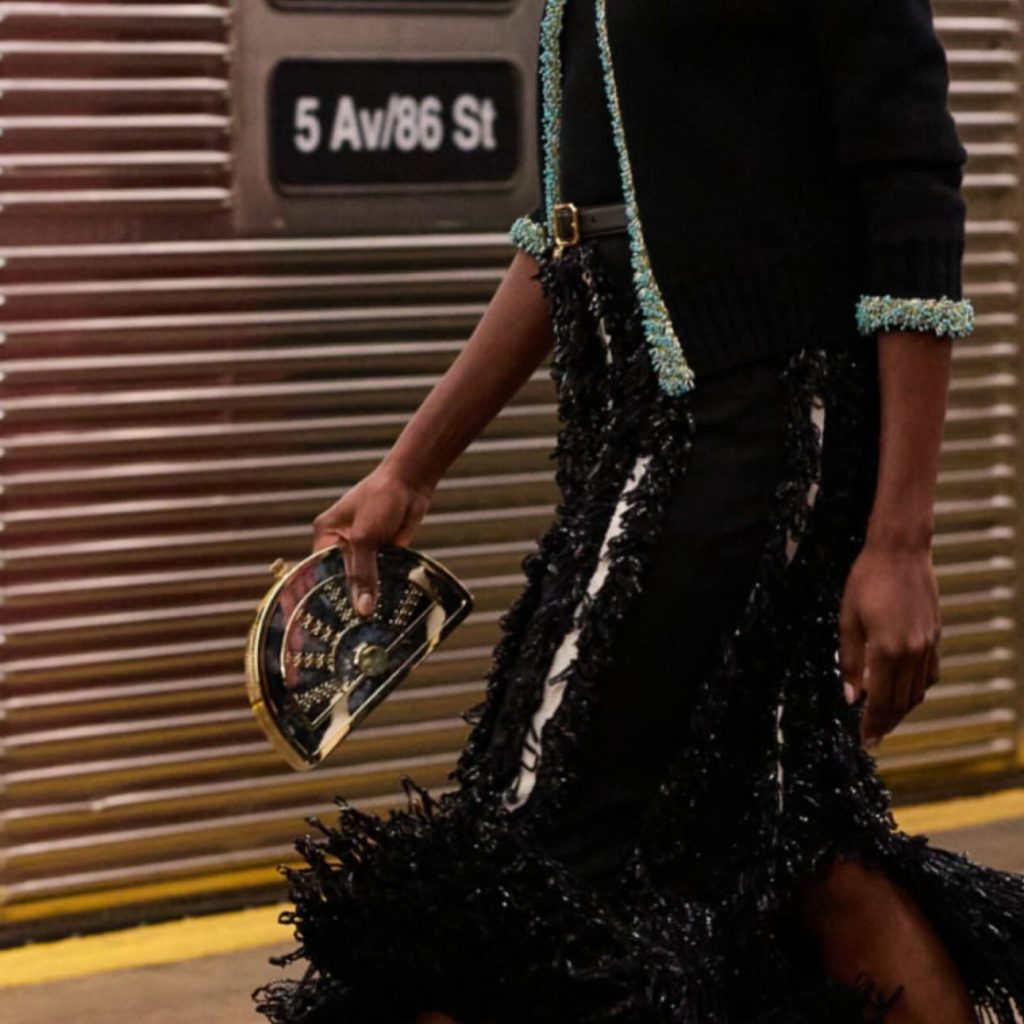
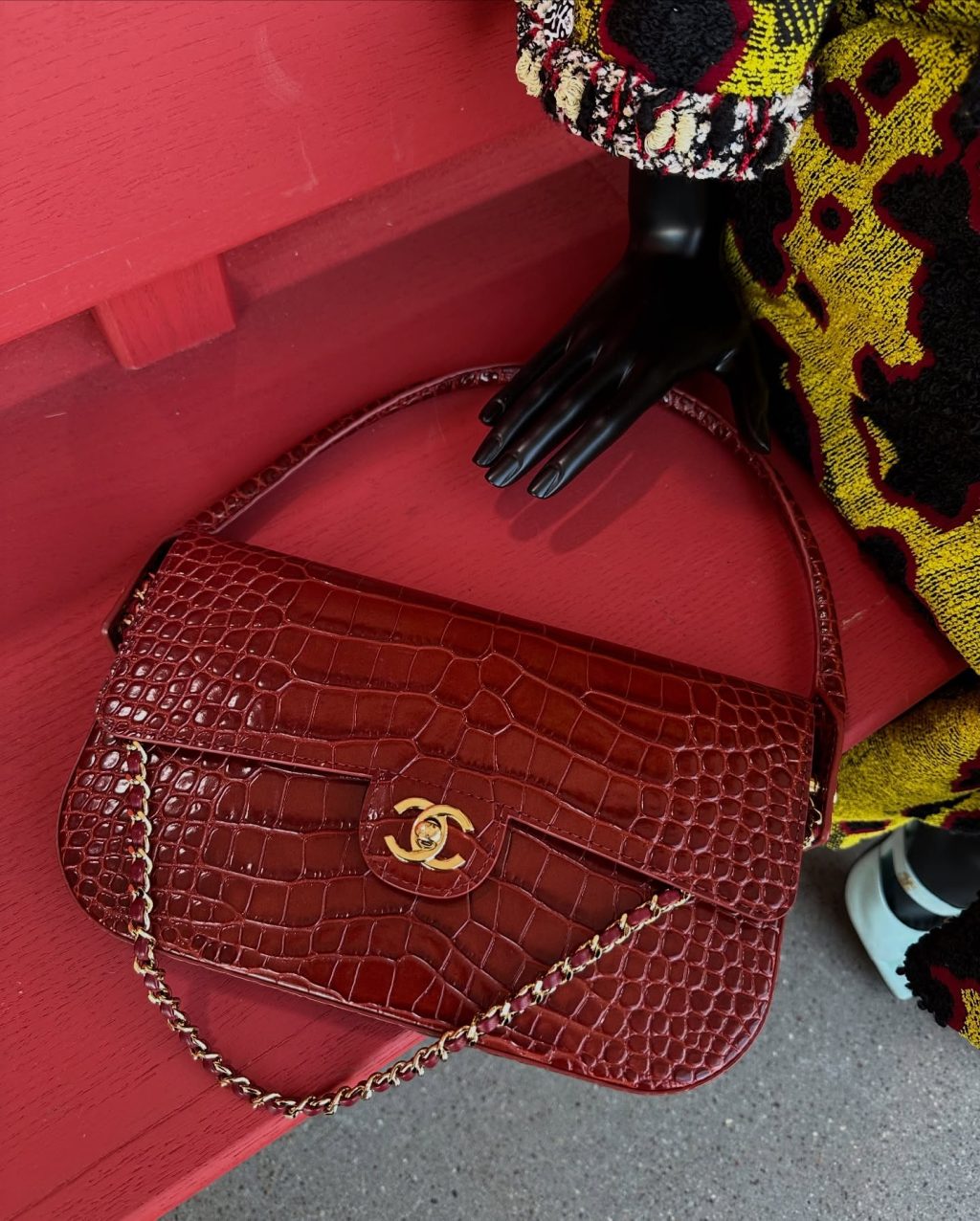
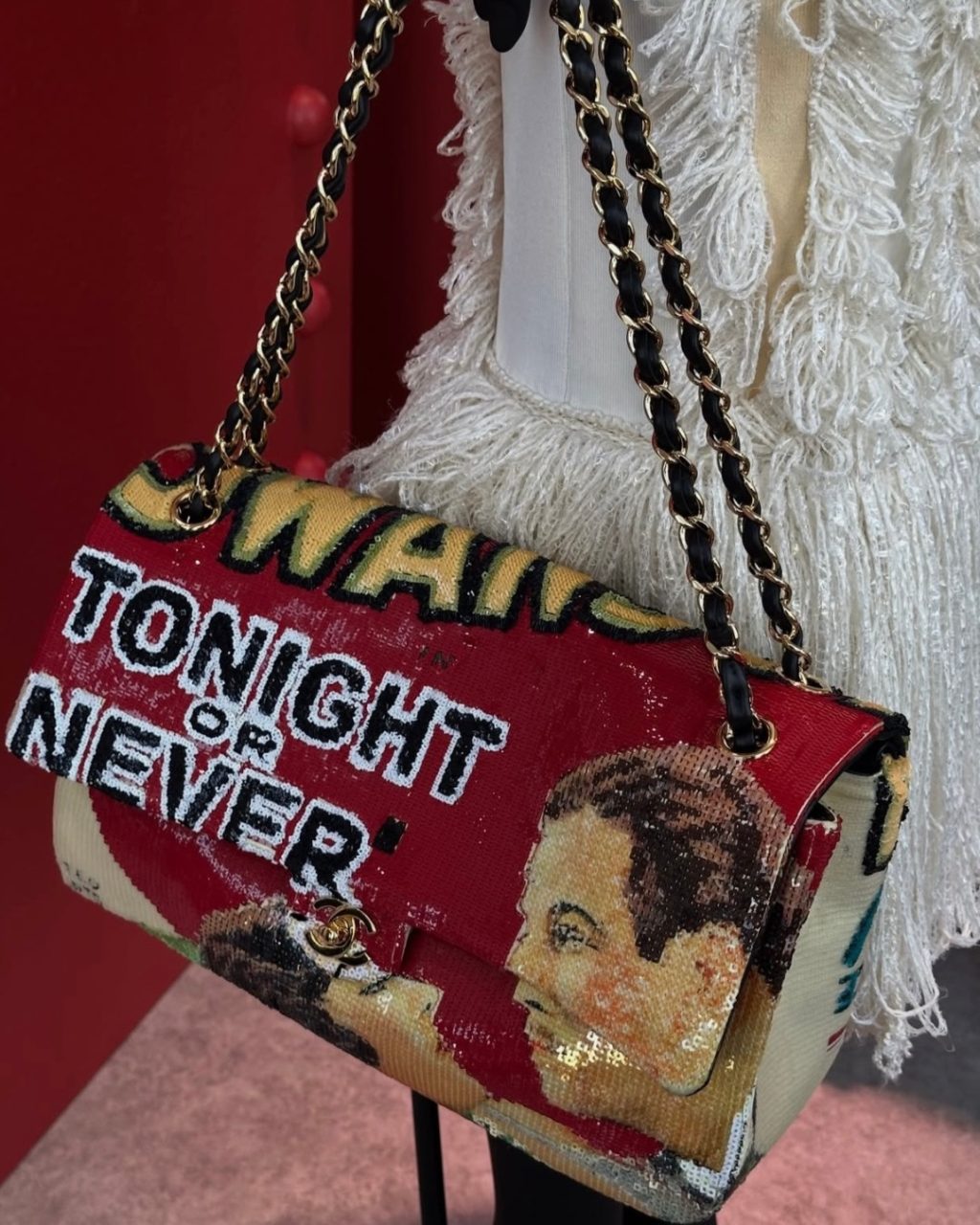
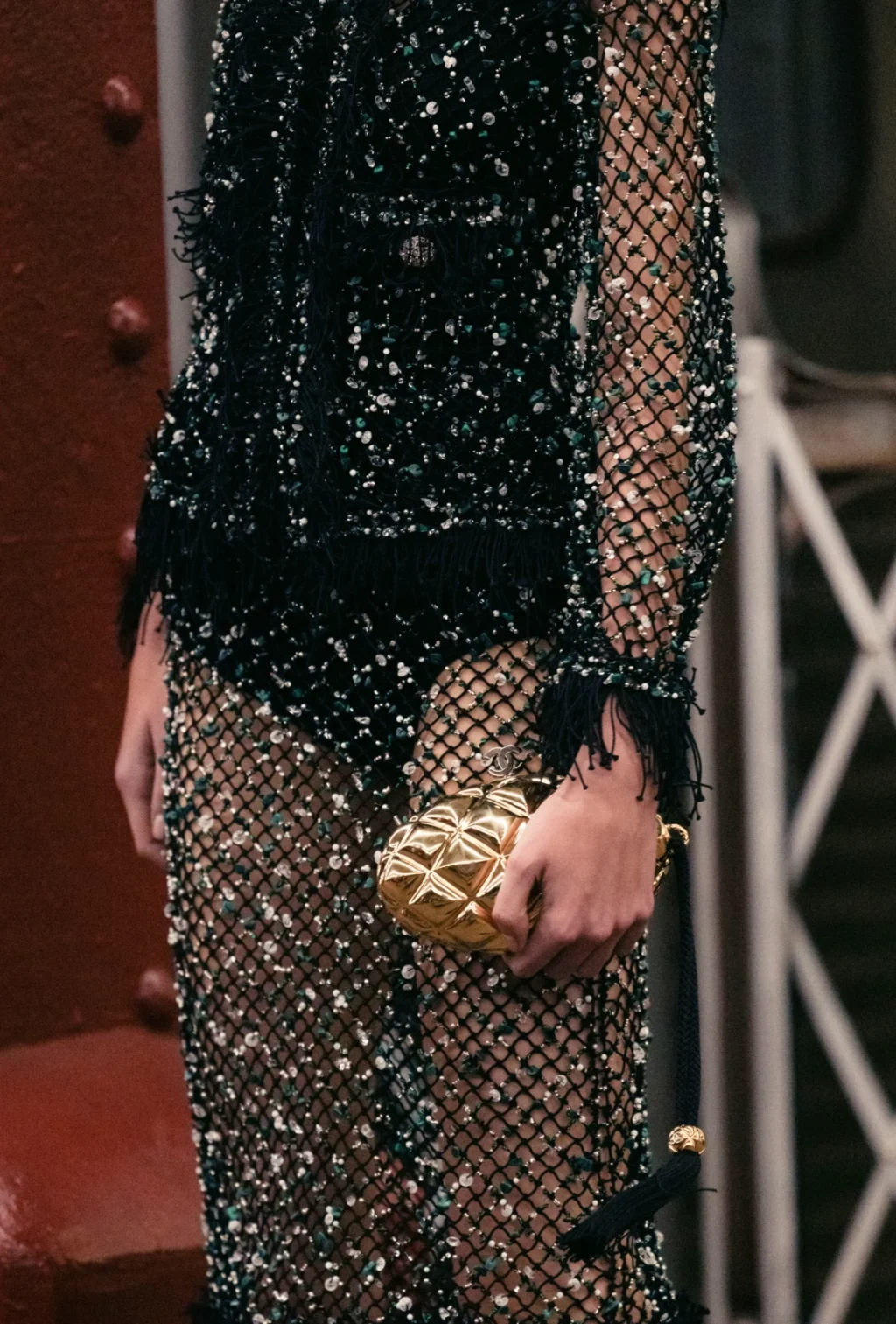
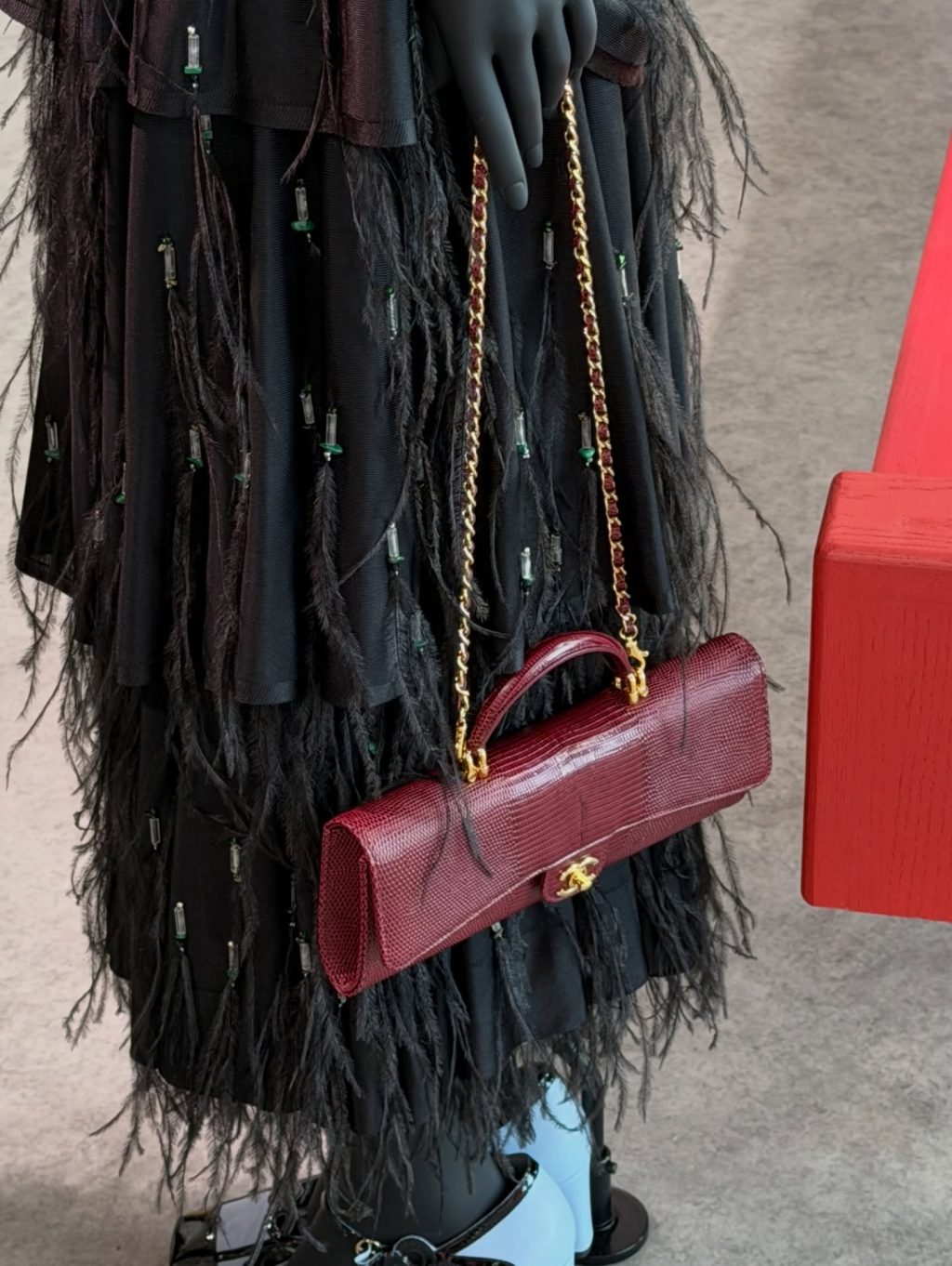
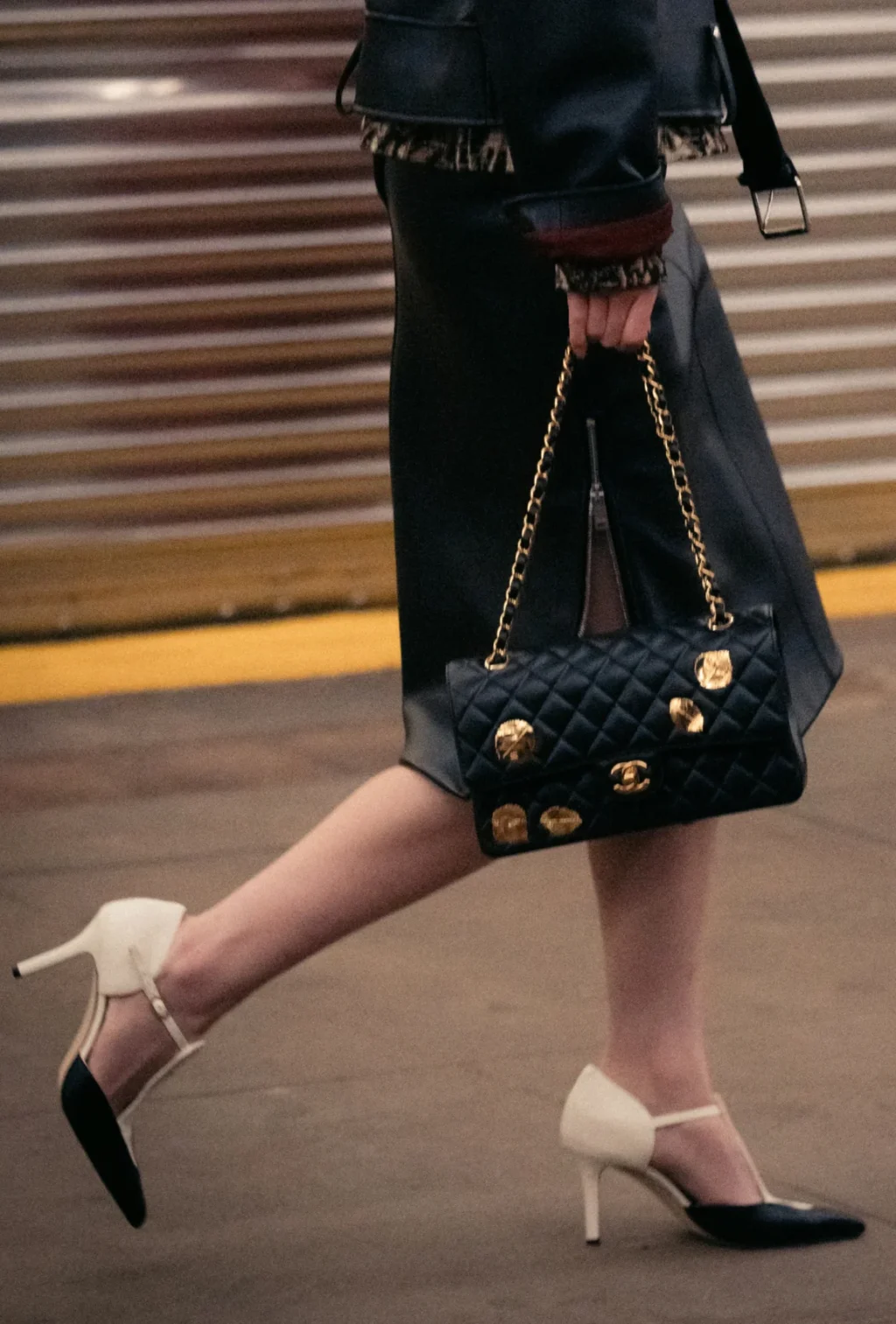
That’s why handbags are especially central in Métiers d’Art: they’re the objects where you can physically see labor. Quilting precision. Hardware engineering. Chain weight. Surface treatments. Embellishment that reads as “just sparkle” from a distance but resolves into hours of technique up close.
So when Chanel sets this collection in New York, the bags become a kind of translation device—Parisian craft rendered in a New York accent.
Bags that understand a city pace
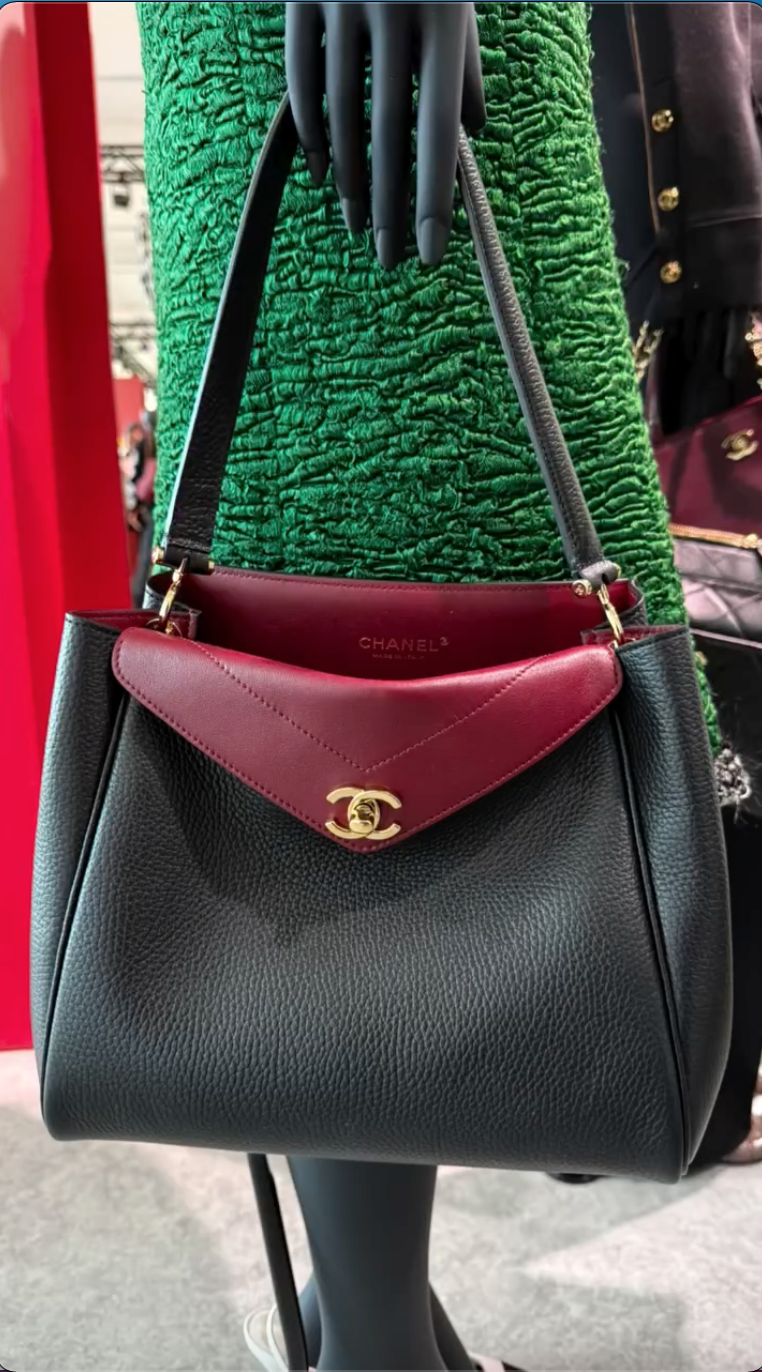
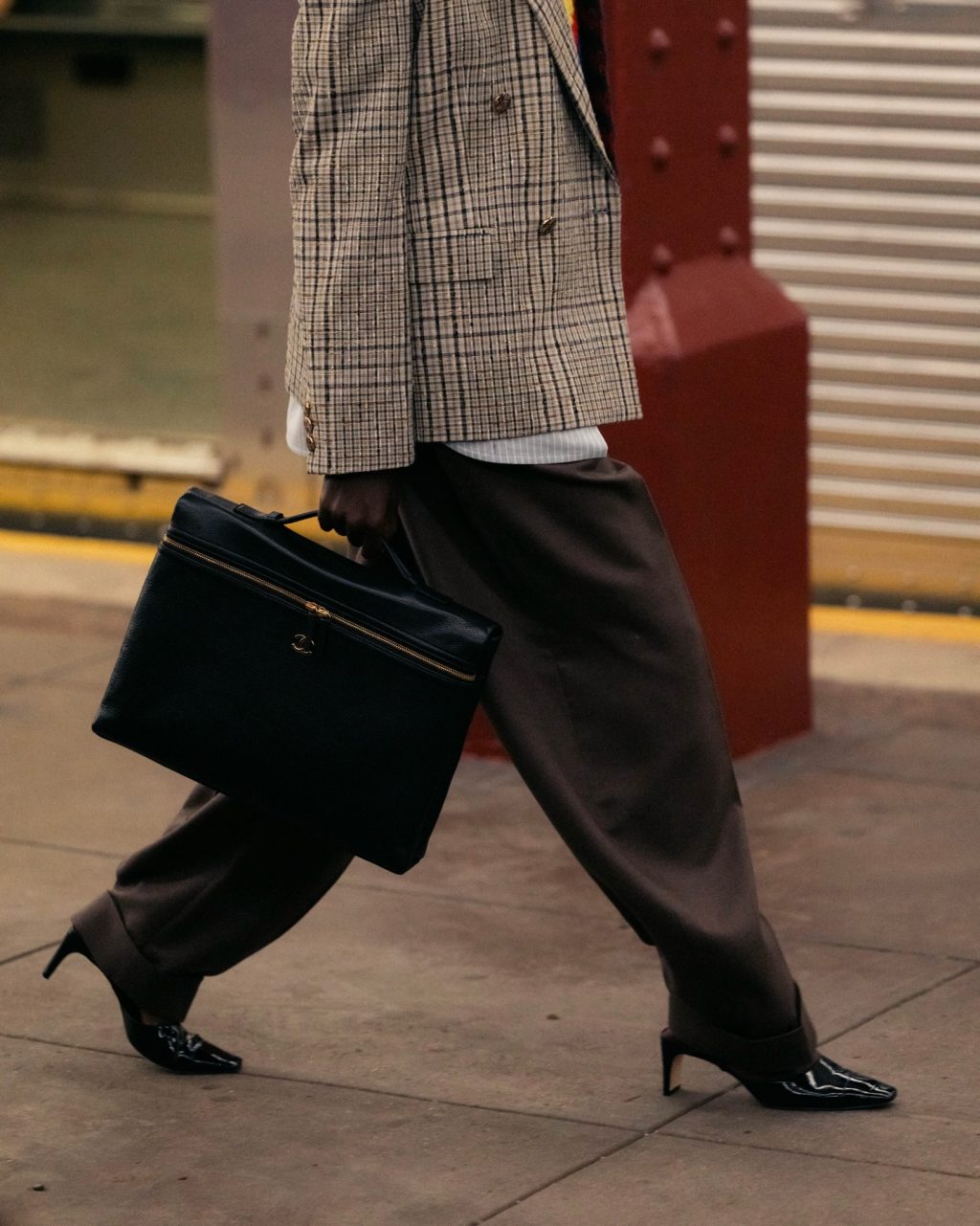
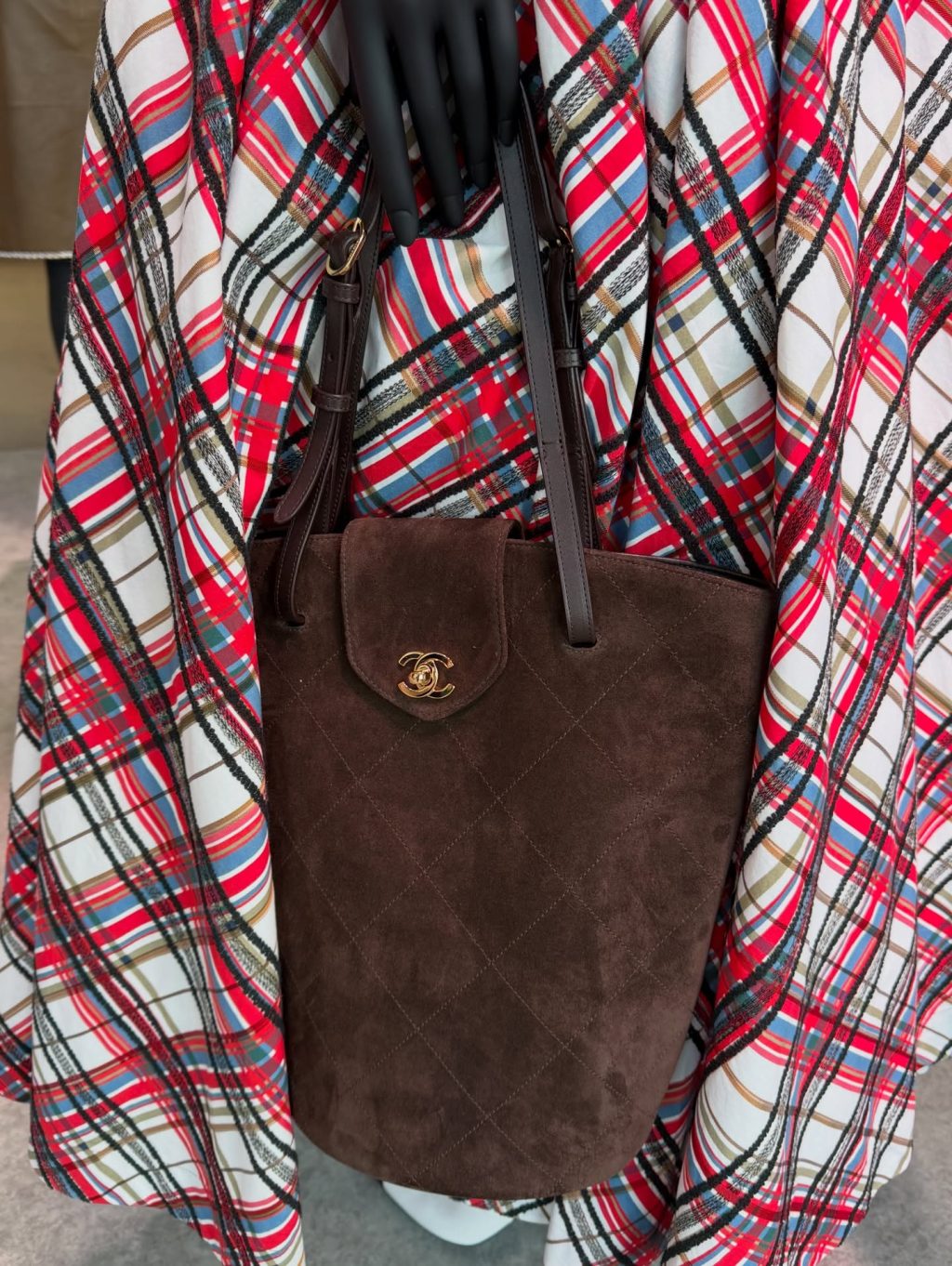
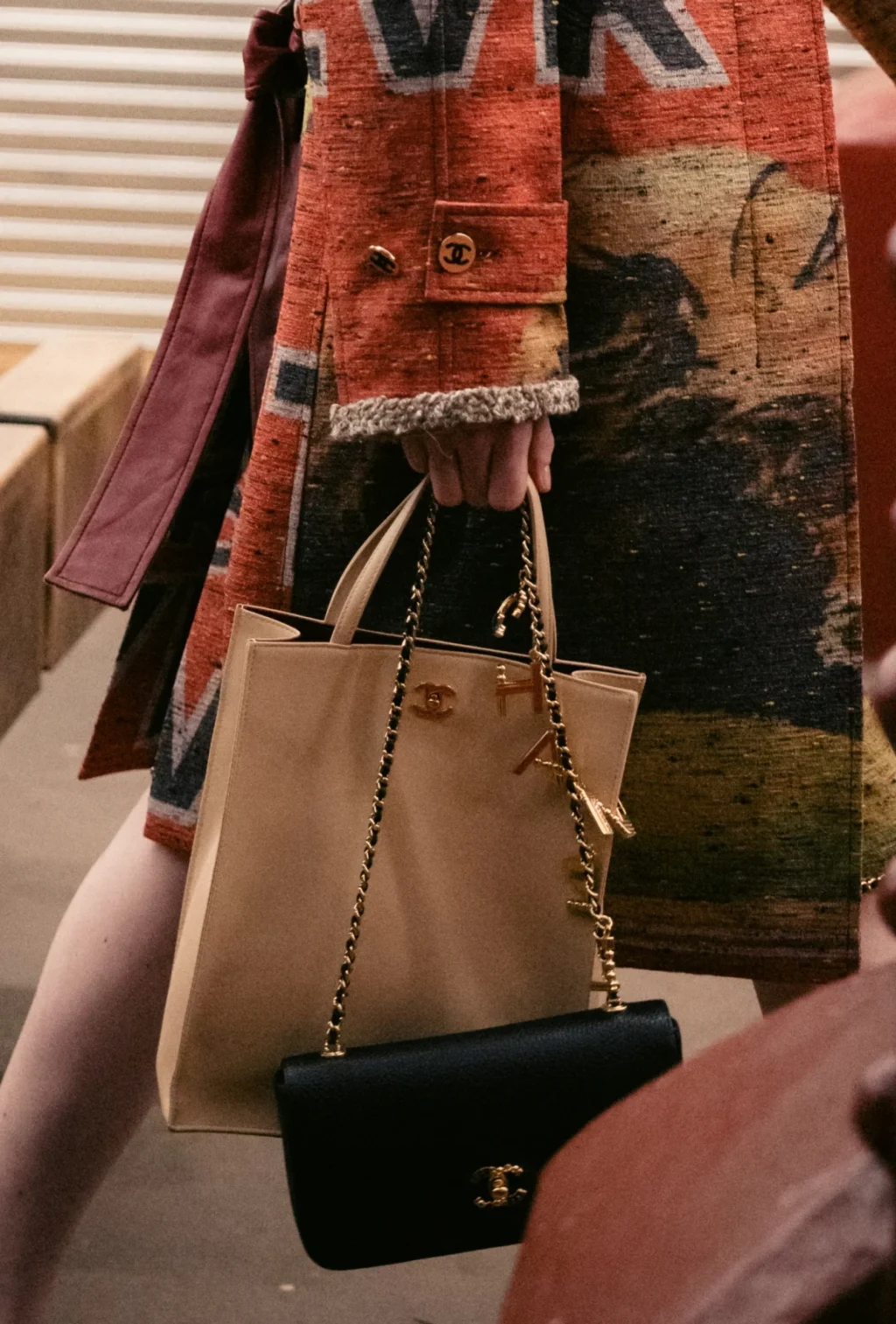
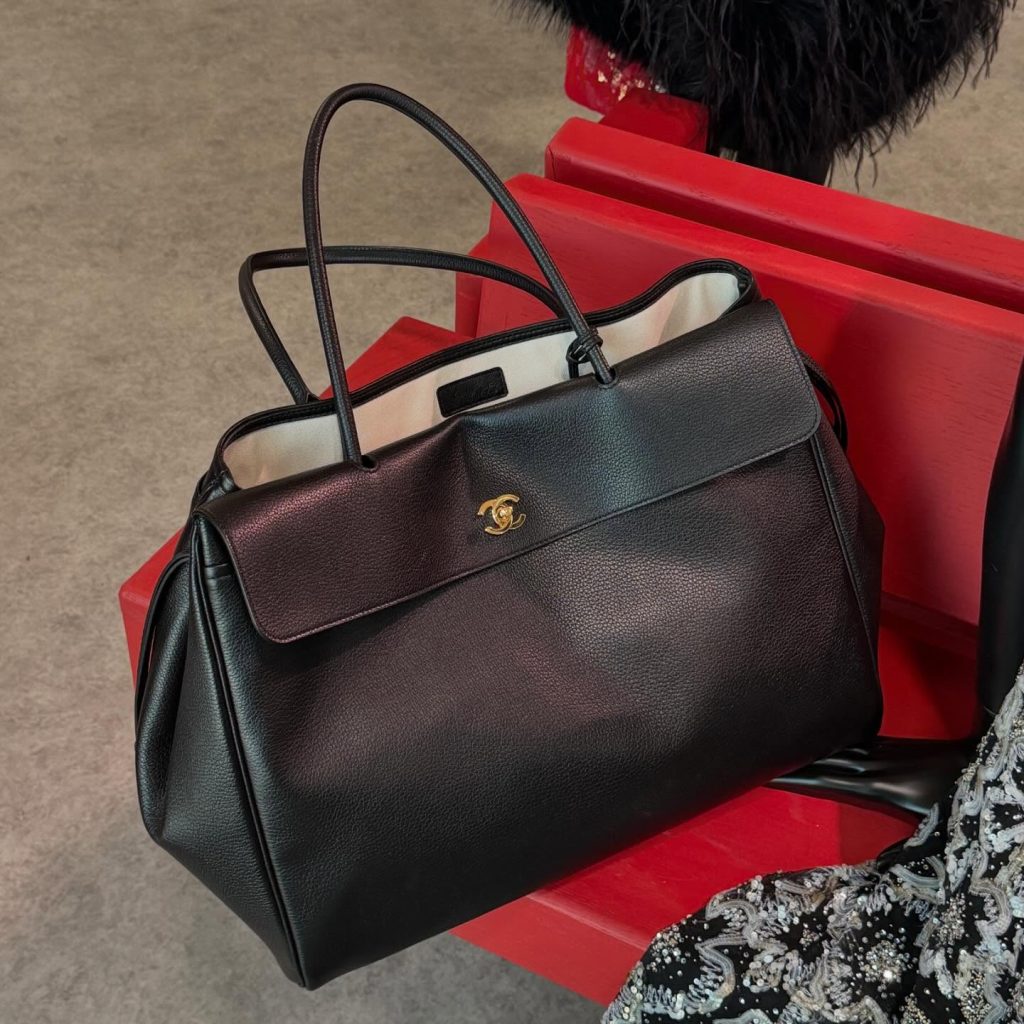
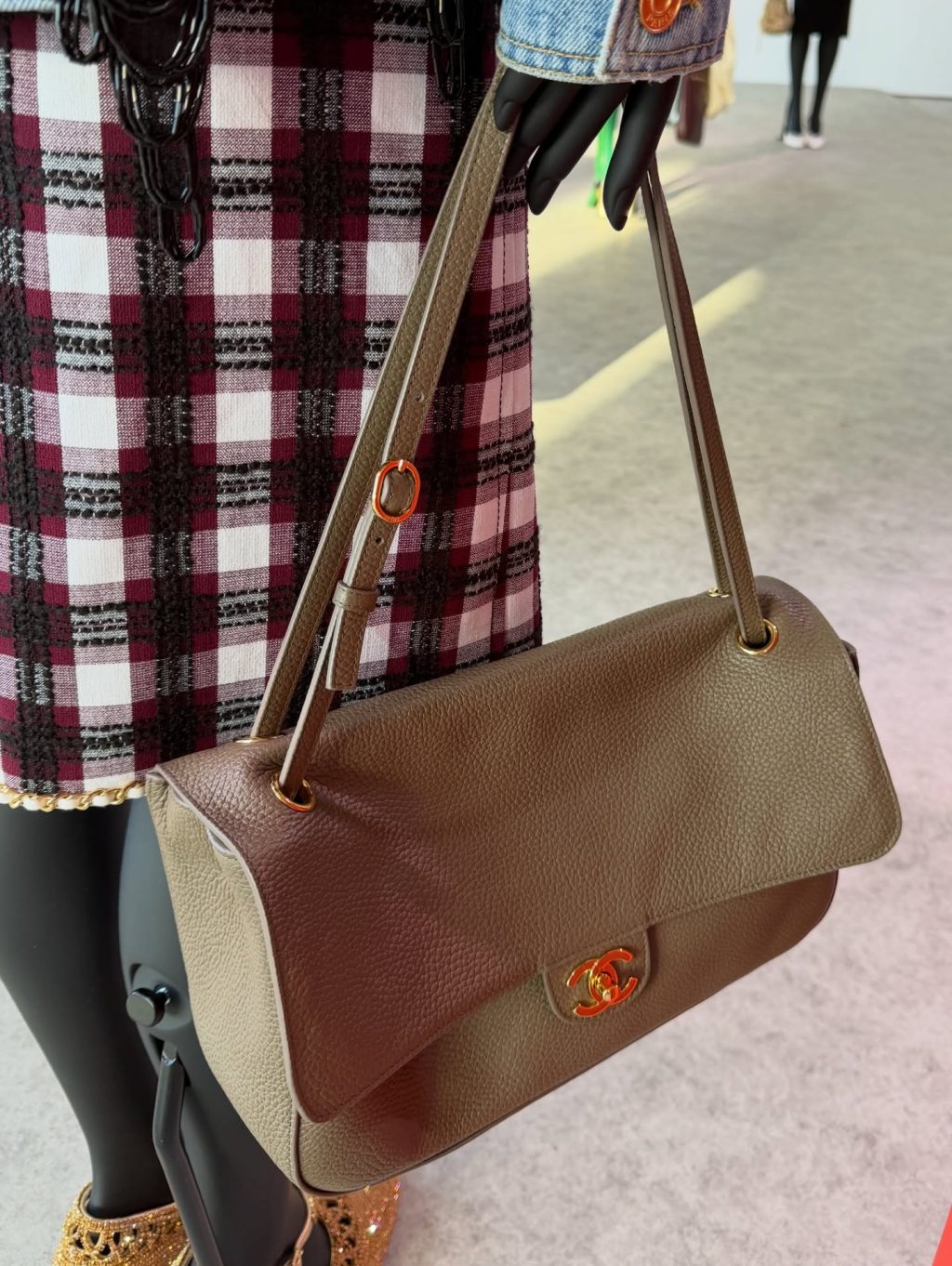
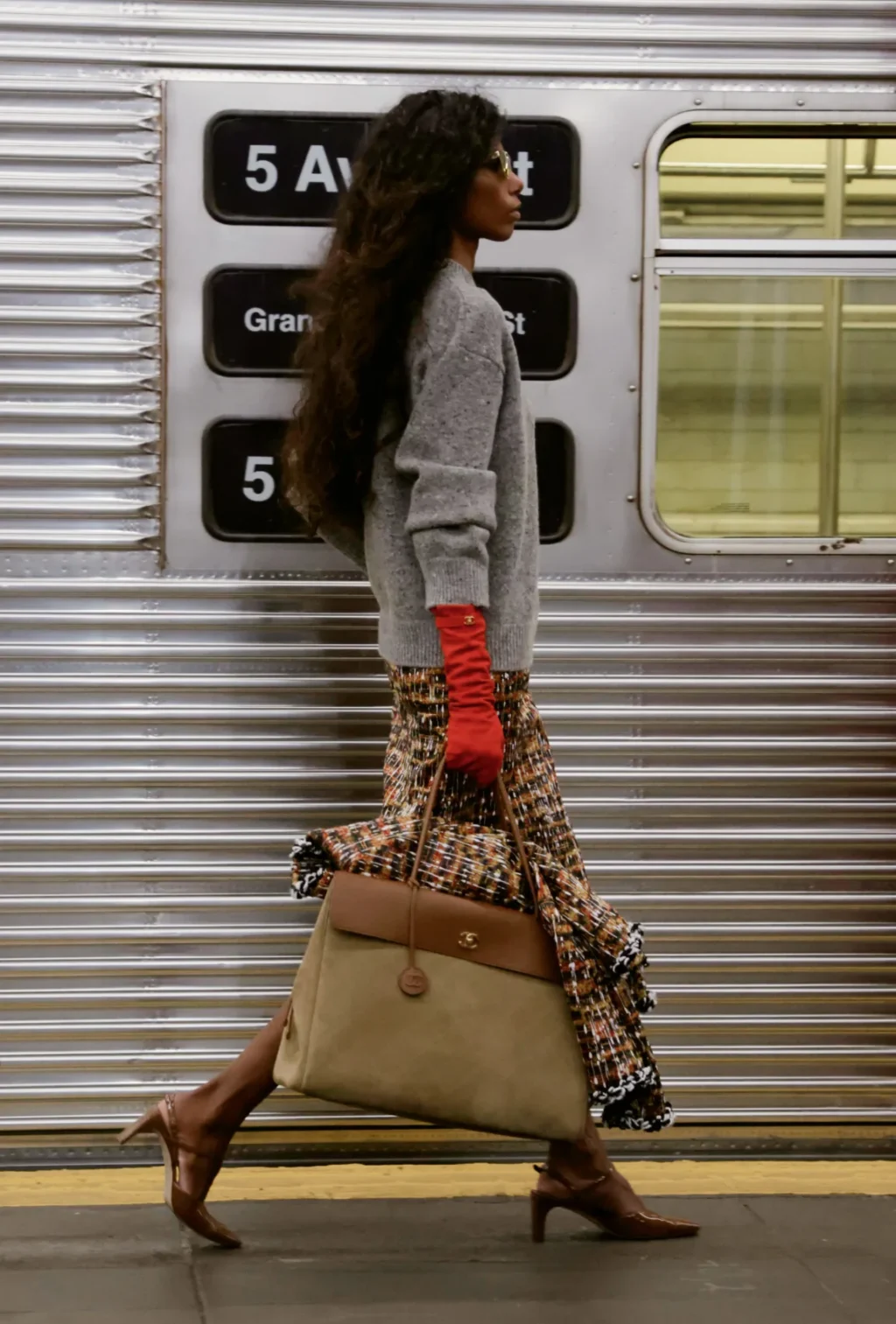
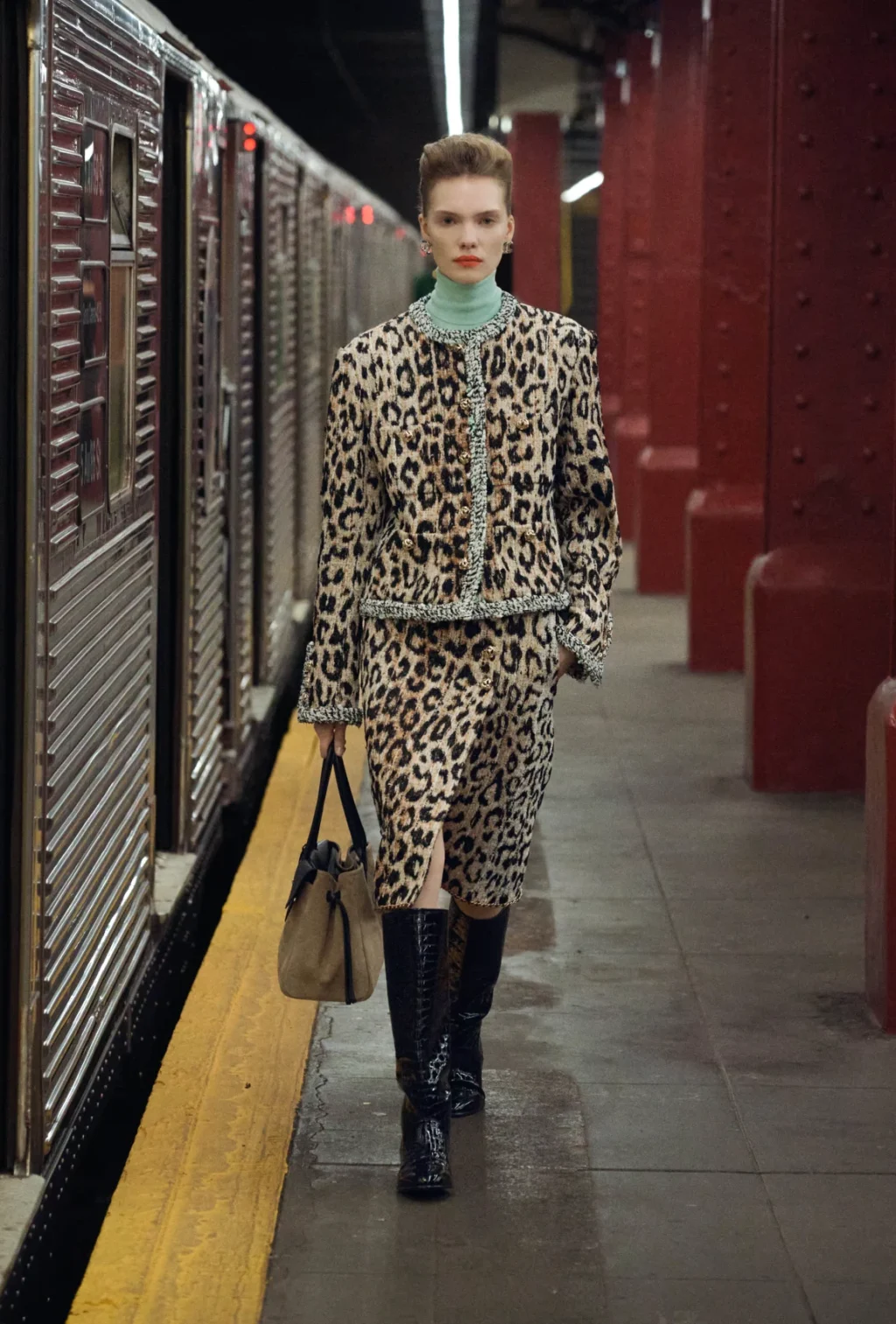
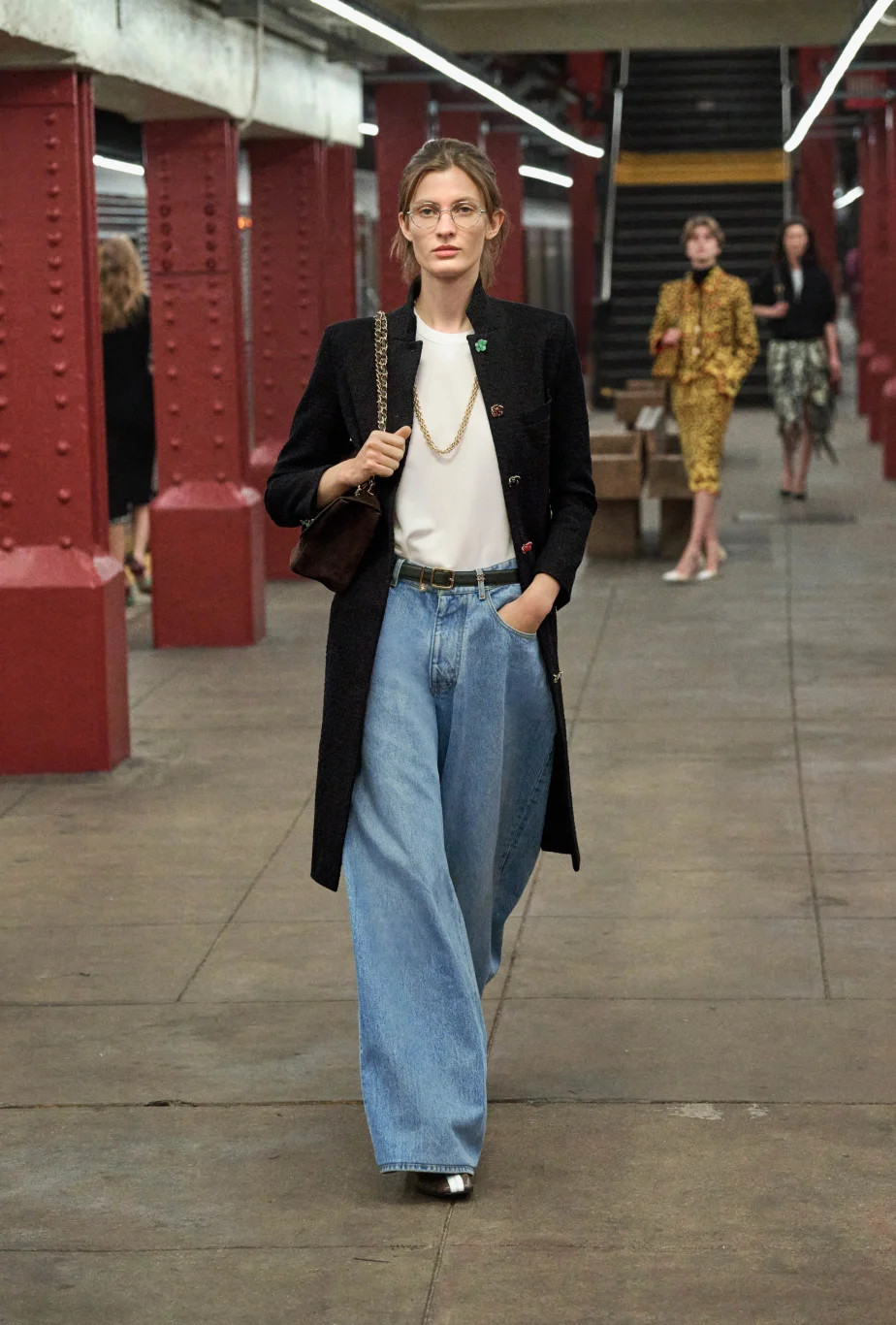
One of the clearest handbag messages from the show was utility made luxurious. Instead of treating the “day bag” as a compromise, Chanel pushed silhouettes that feel designed for movement: pieces that can carry more, sit flatter against the body, and visually match the layered styling that city dressing demands.
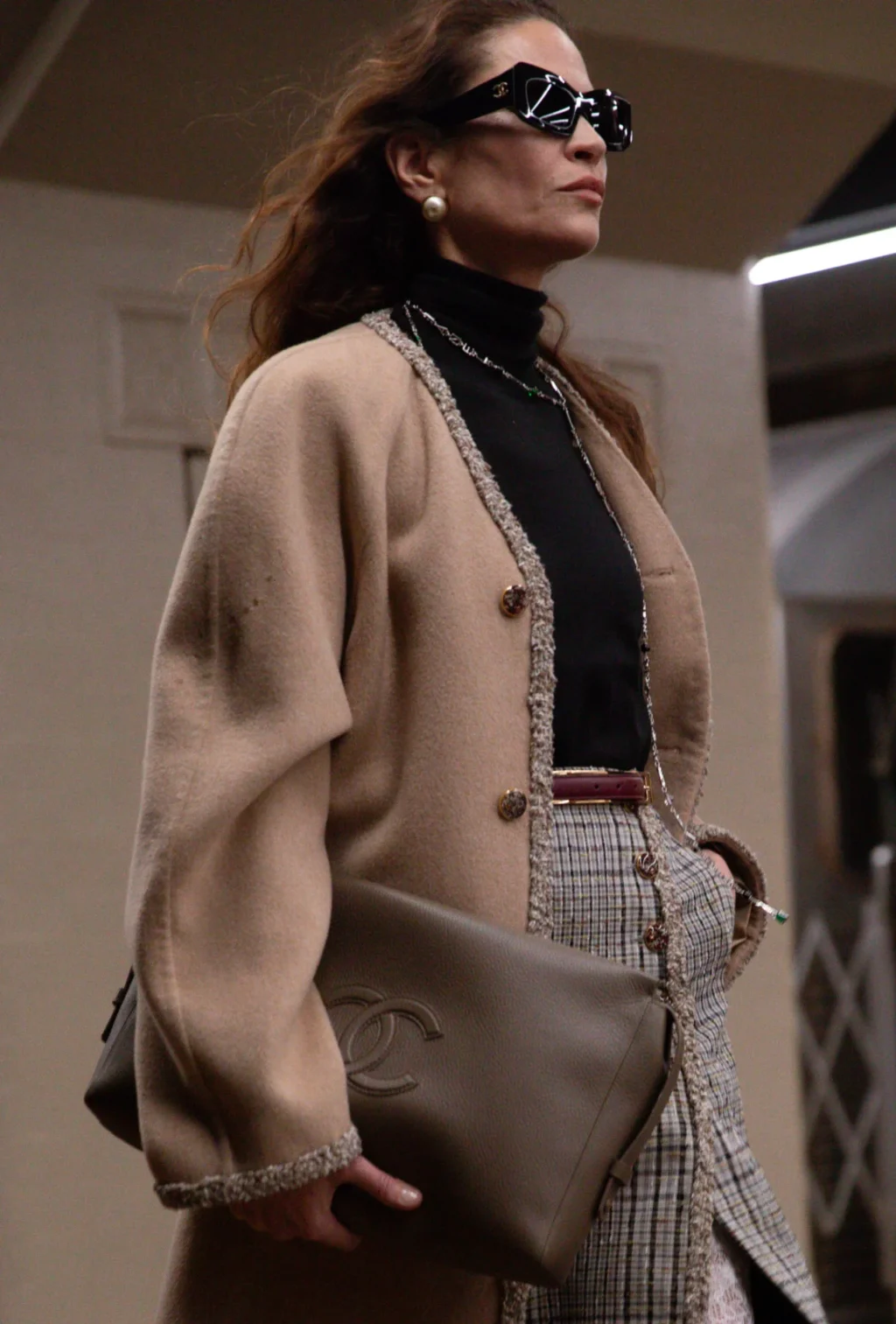
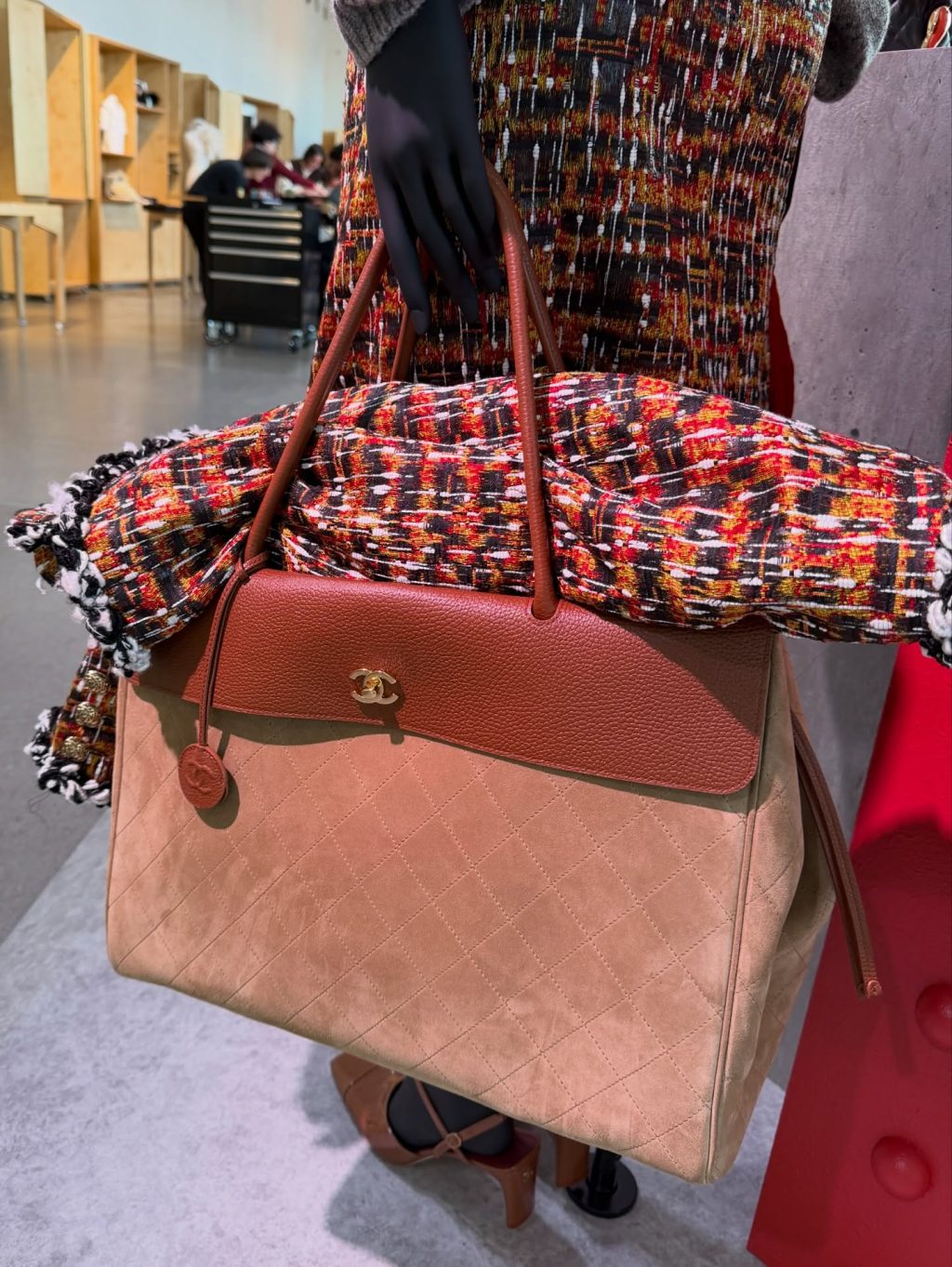
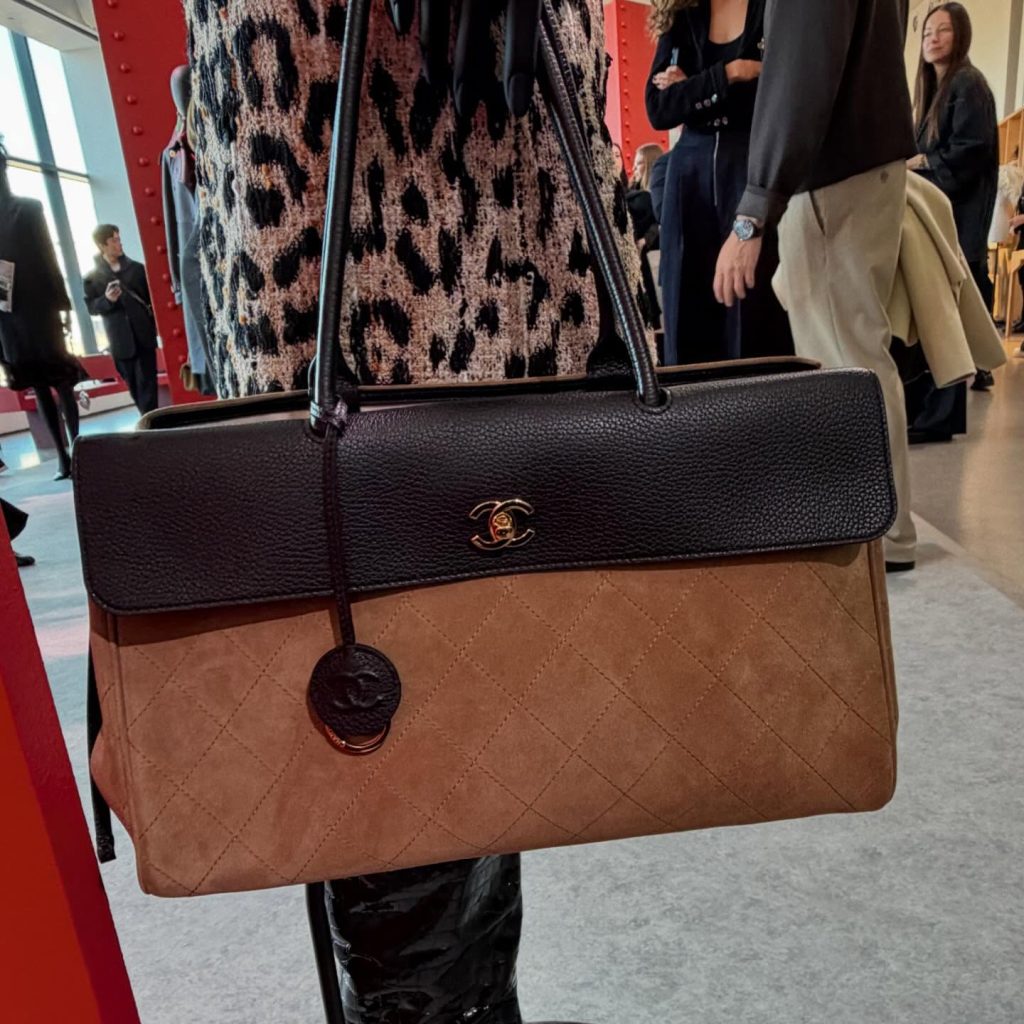
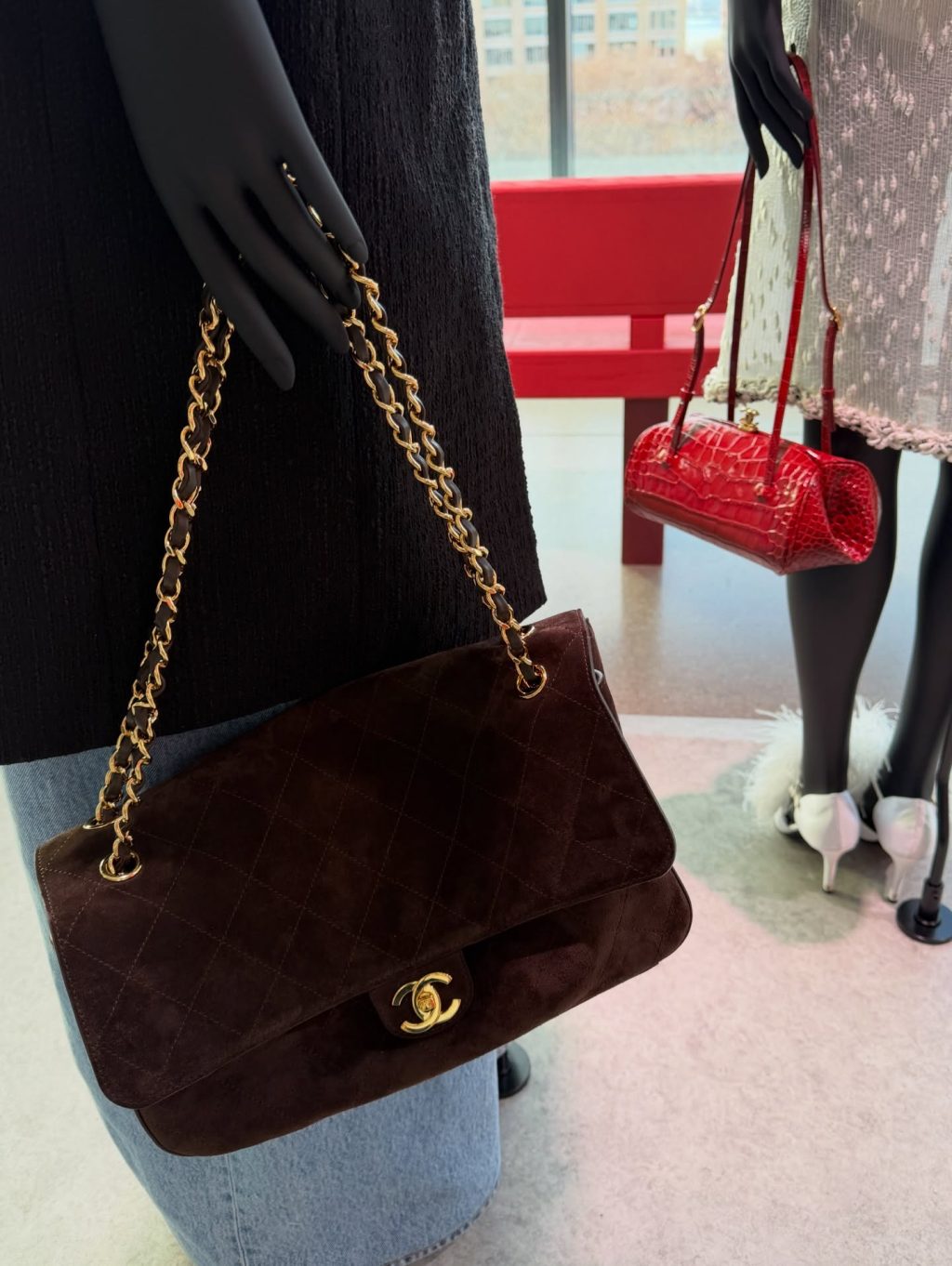
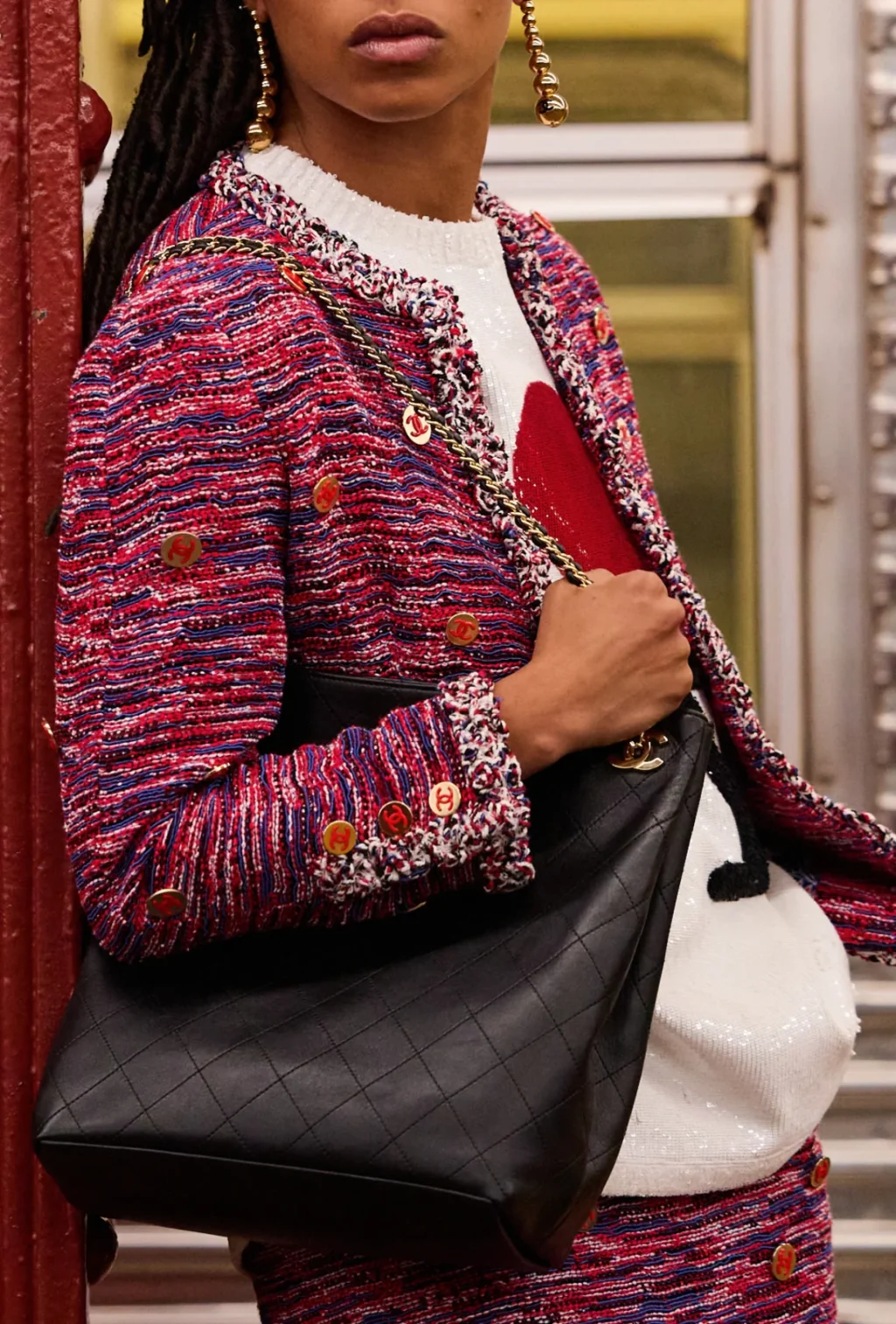
A standout in coverage was a suede-and-leather tote described as a new “commuter” bag—substantial, tactile, and intentionally grounded compared to the fantasy minaudières that tend to steal headlines. The message is subtle but strategic: Métiers d’Art can do spectacle, but it can also do wardrobe infrastructure.
This is where New York becomes more than a set—it becomes a use case. The bags aren’t asking to be carried “to dinner.” They’re asking to be carried everywhere.
How Chanel re-tuned the Flap-Bag language
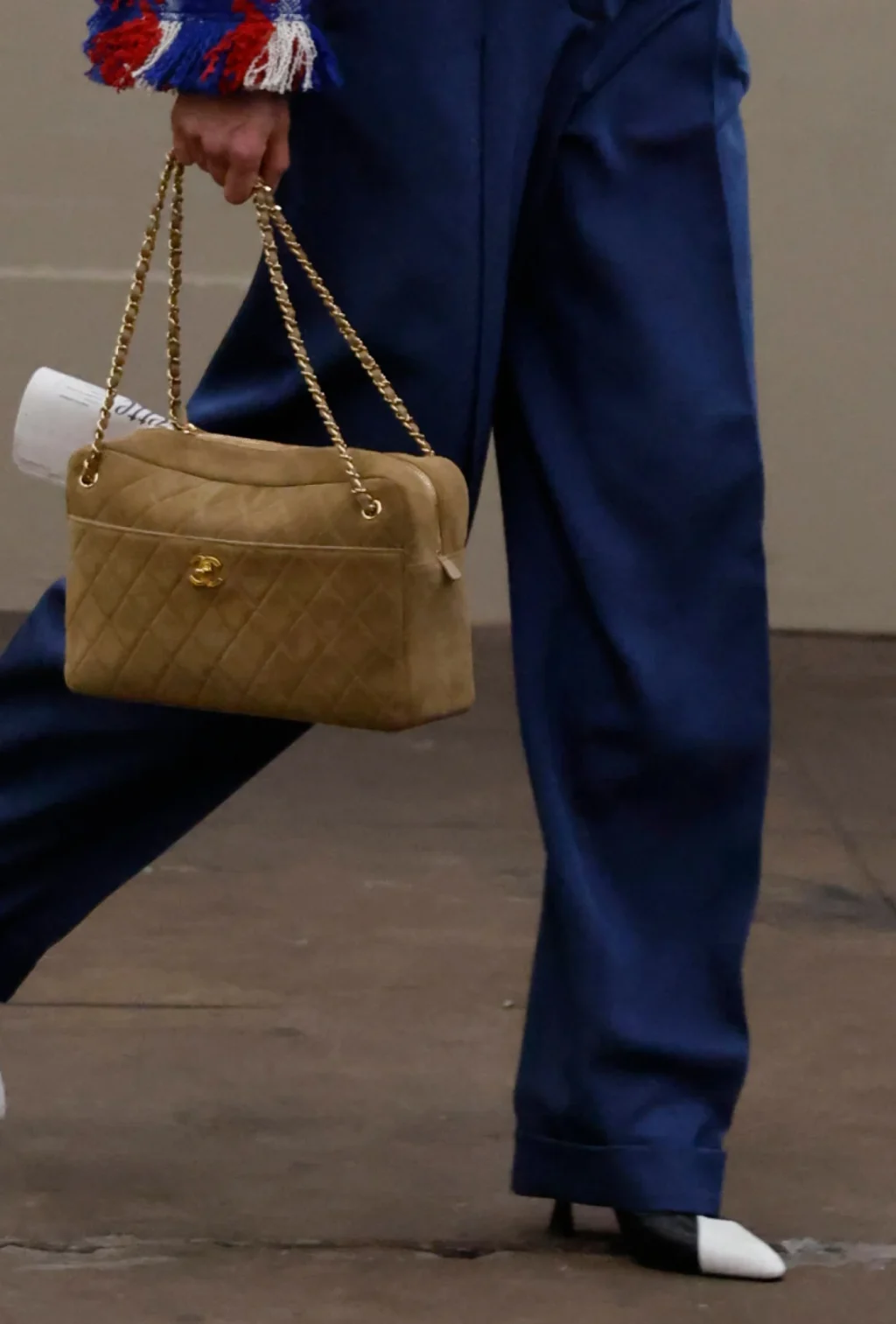
Every Métiers d’Art collection ultimately has to answer a question: what do you do with the icons? Here, Chanel didn’t discard the familiar codes; it made them feel street-smart. Chains were prominent (as always) but often felt more like hardware than jewelry—structured, intentional, a little tougher in spirit.
Coverage also highlighted details that play with function: the idea of a bag that acts like an accessory system, not a single precious object. This is a very New York instinct—people don’t “style” their bag; they use it as part of a personal uniform.
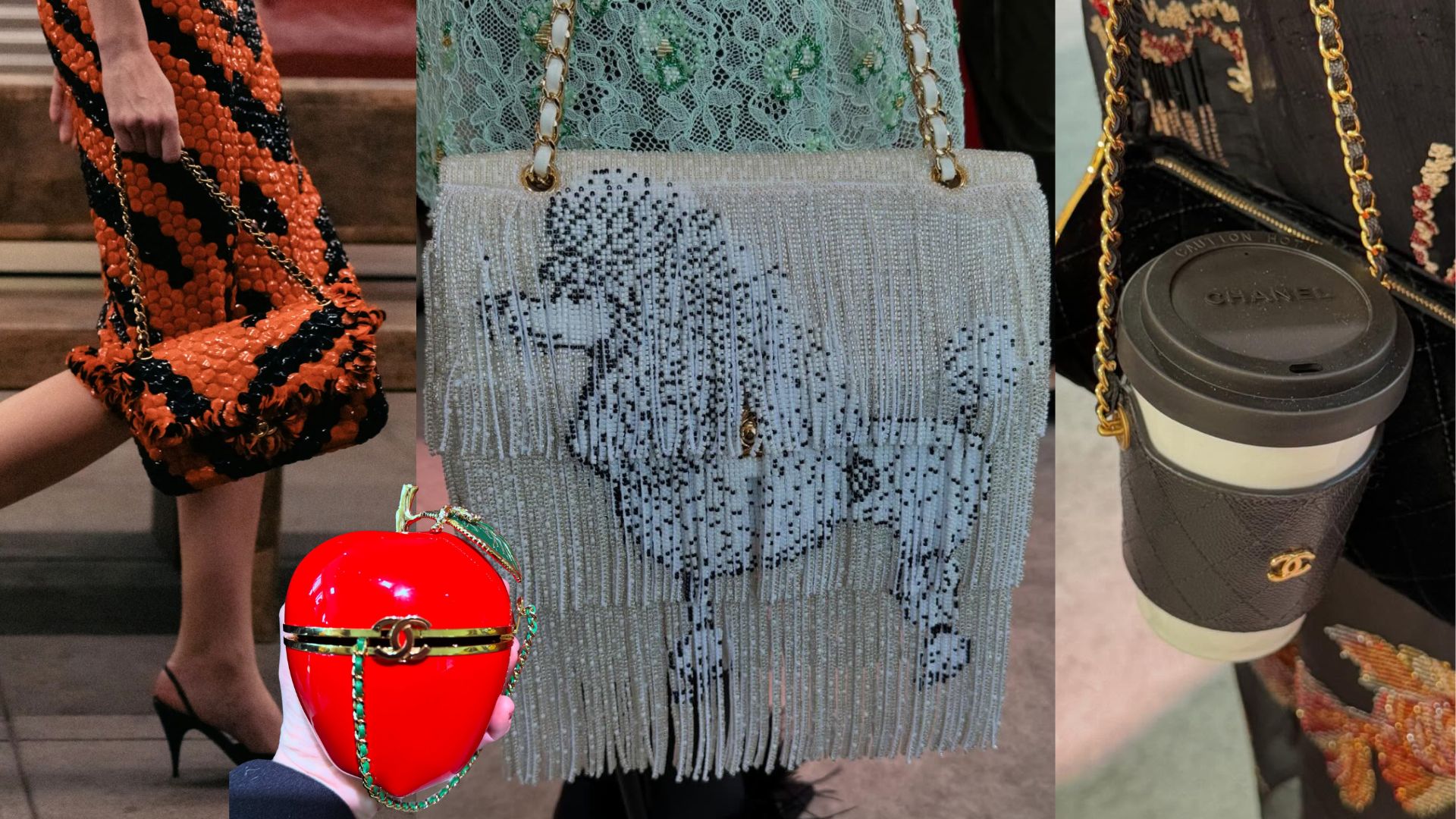
And then came the detail that captured the city’s humor: a bag moment that nods to the reality of walking around Manhattan with exactly two things in hand—your coffee and whatever else you can’t live without.
Souvenir stops—When the bag becomes the joke
A Métiers d’Art runway always includes at least a few items designed to become fashion folklore. New York delivered plenty.
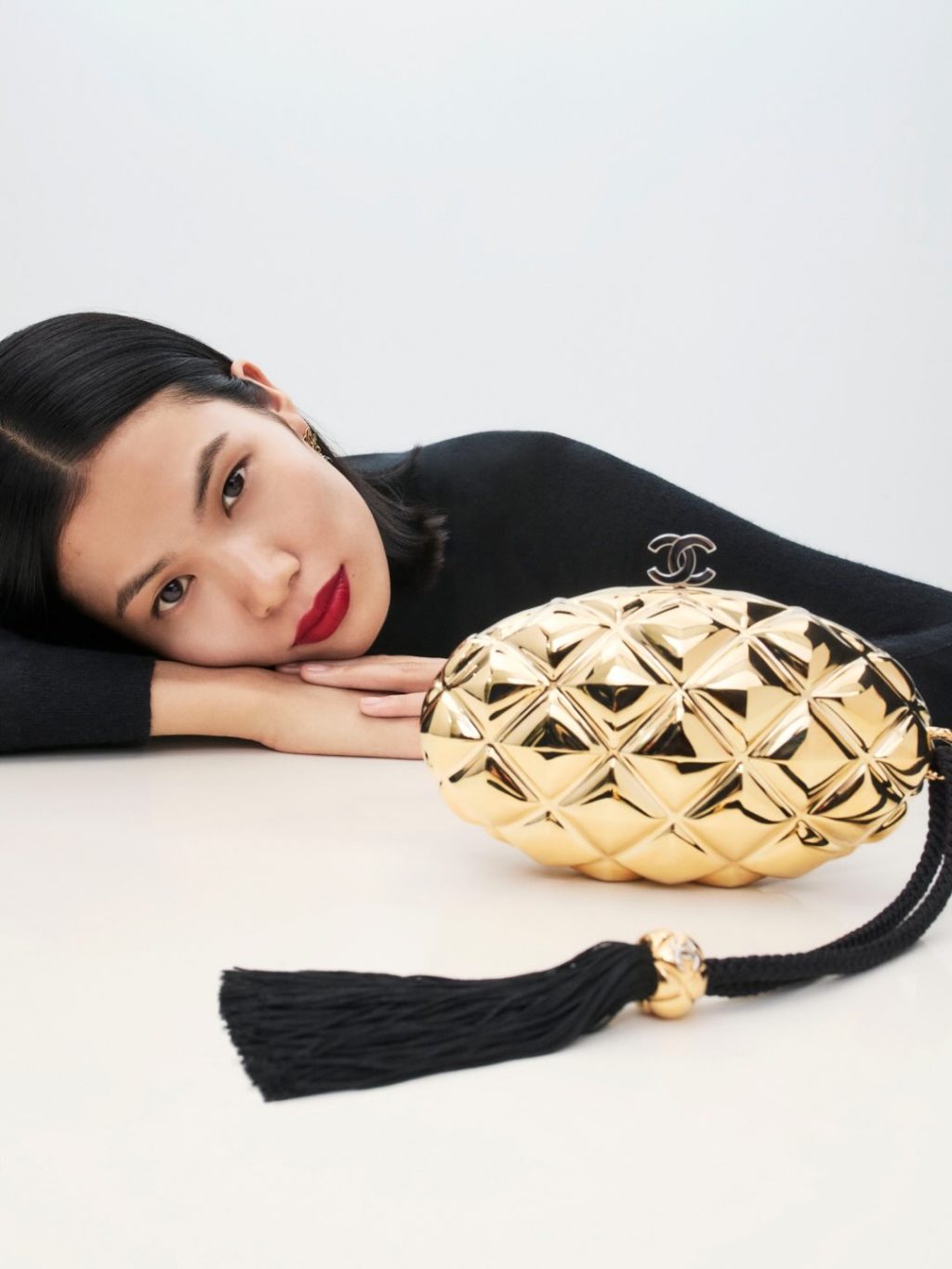
Harper’s Bazaar called out a series of playful accessories—bags included—that turned ordinary objects into Chanel-coded treasures. Among the most talked-about: a Chanel-branded coffee-cup bag and a peanut-shaped clutch, both irreverent enough to feel like a wink, but executed with the kind of finish that keeps them on the luxury side of novelty.
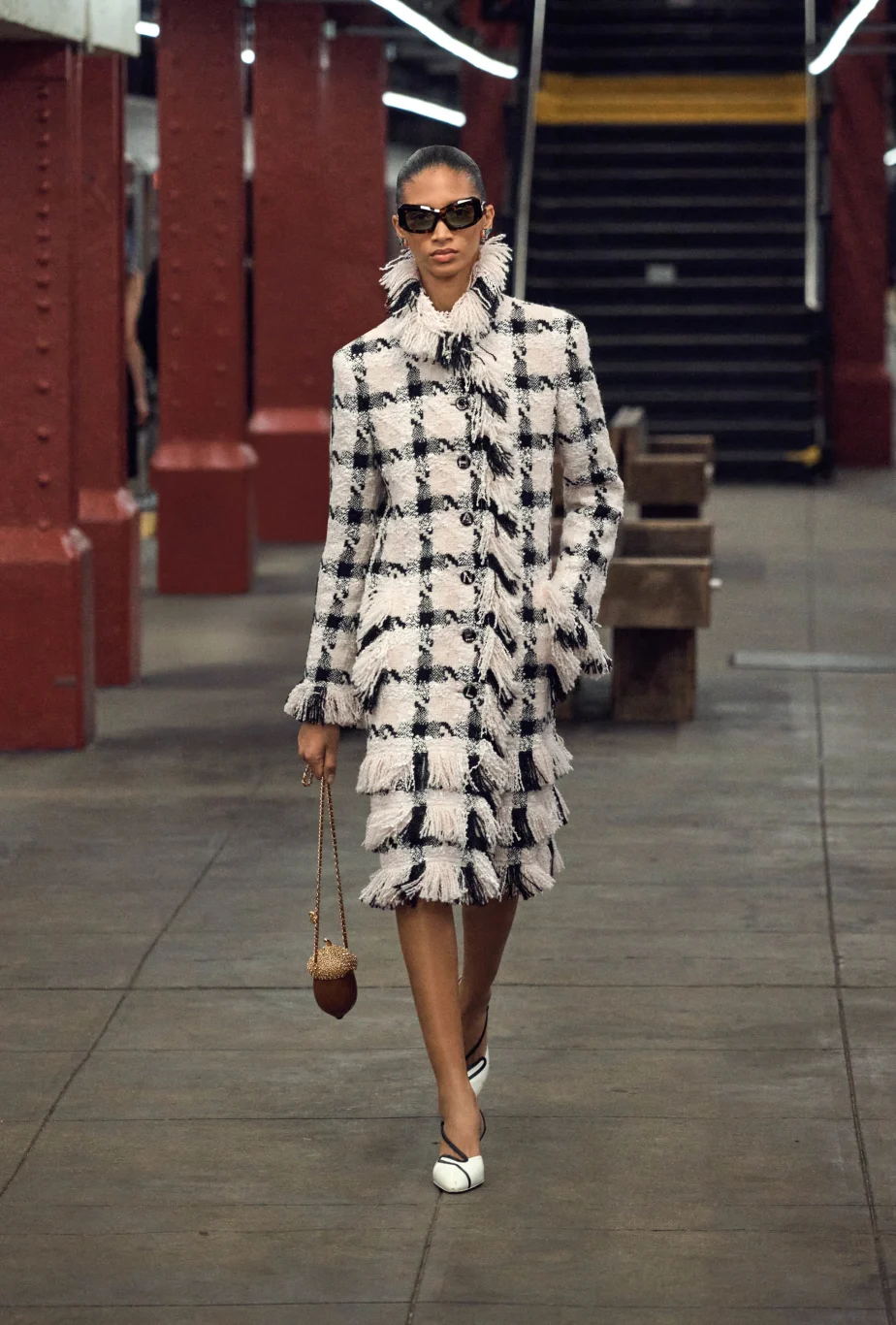
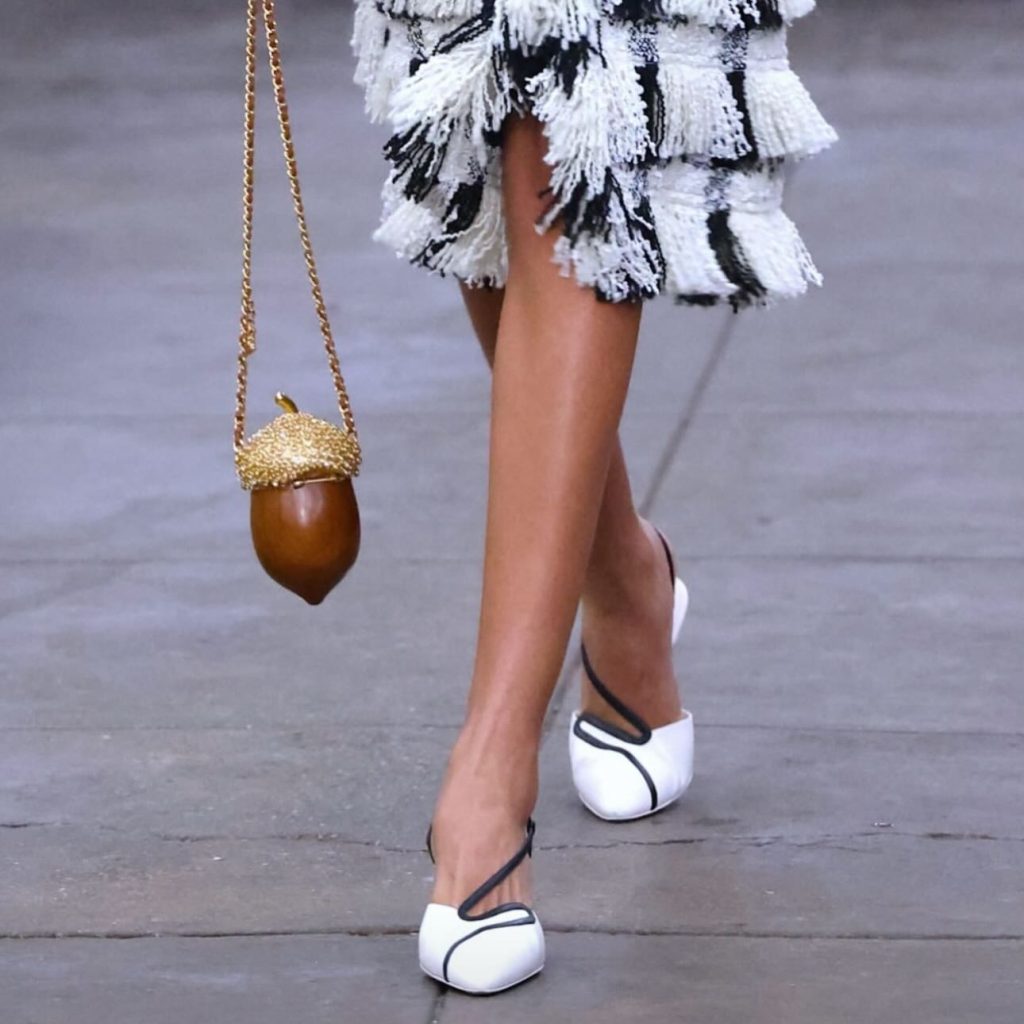
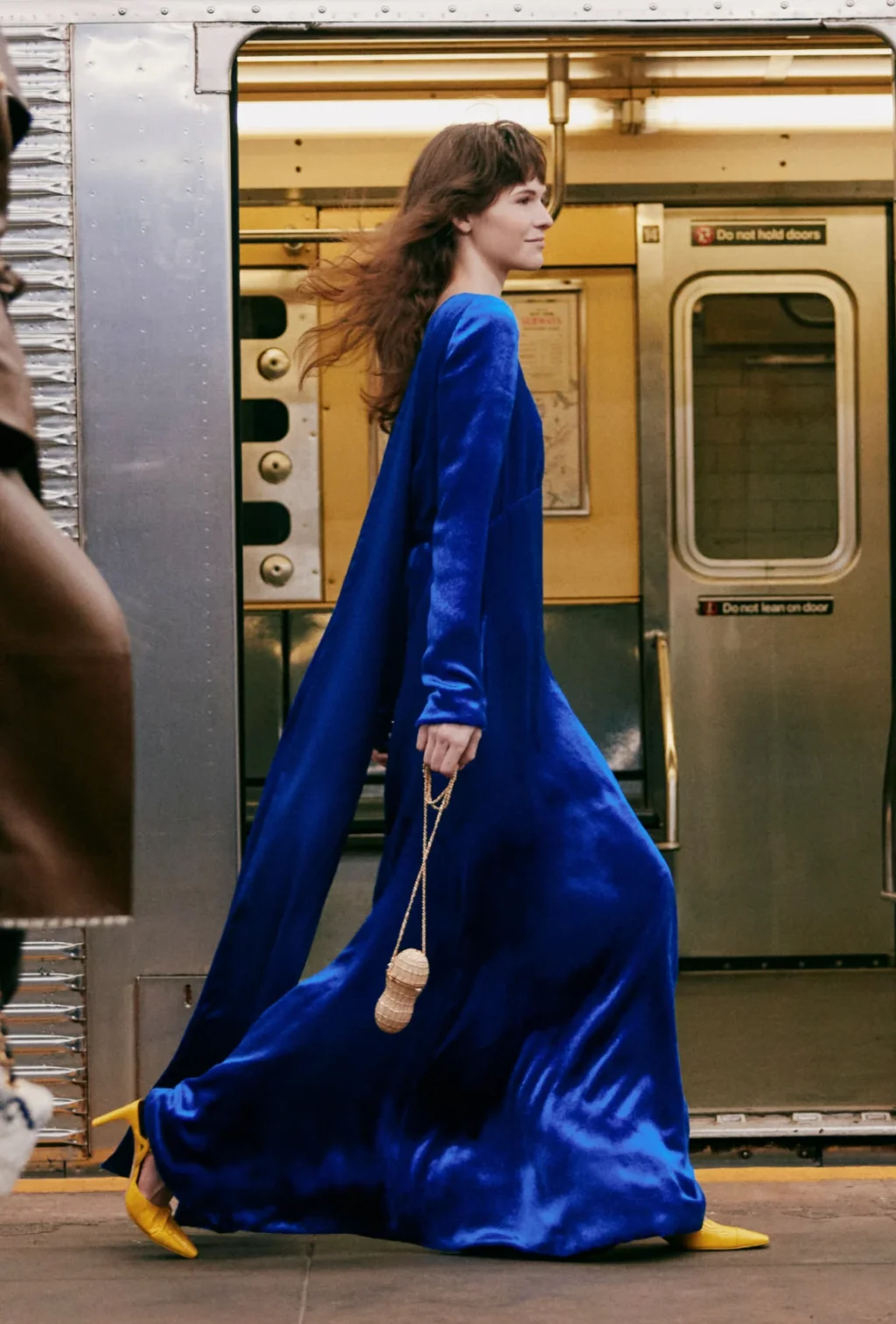
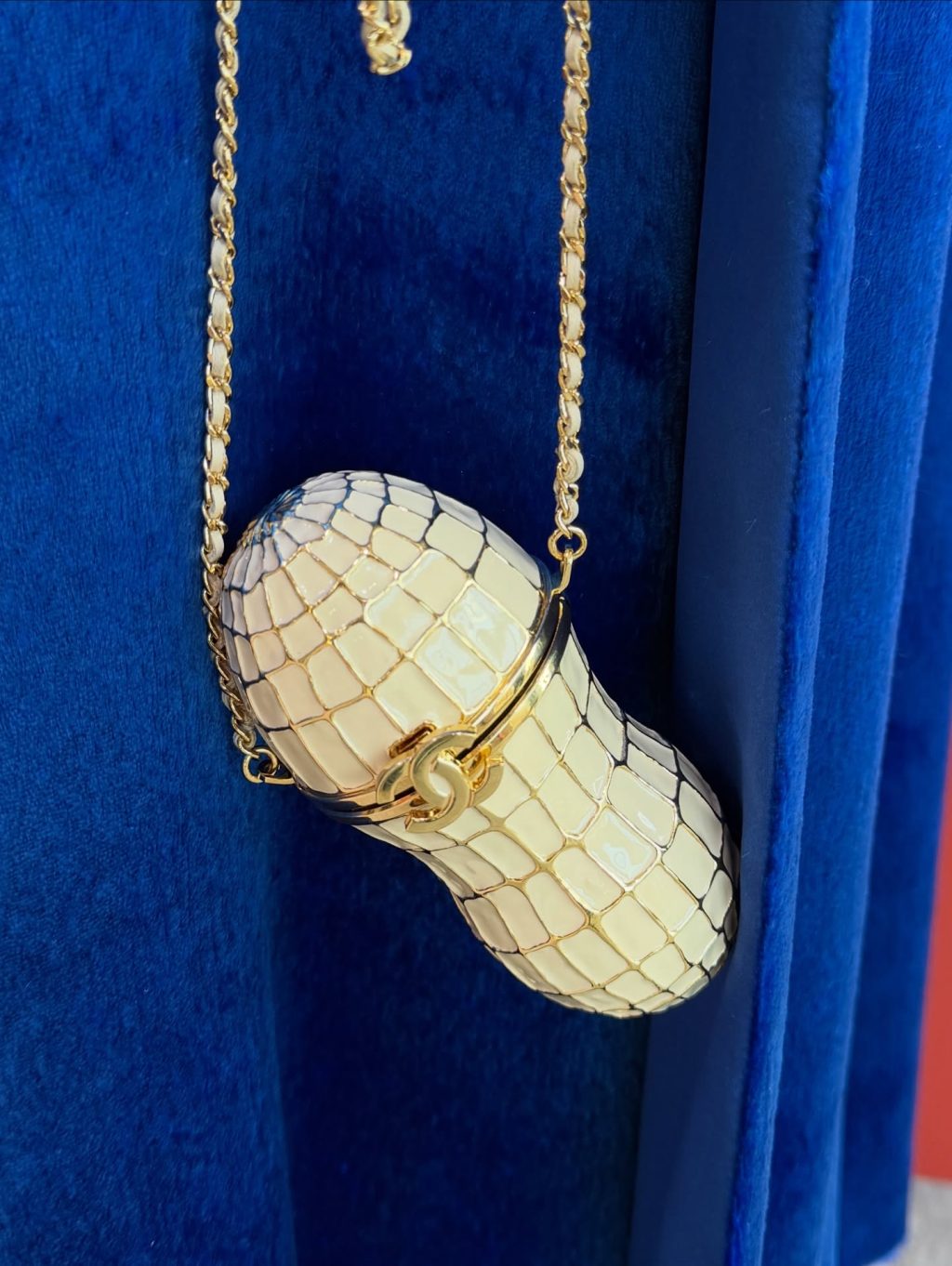
This is exactly where Chanel’s Métiers d’Art logic shines: when something is intentionally unserious, craft becomes the punchline. The joke lands because it’s made too well to dismiss.
And in New York, that sense of humor reads as realism. A coffee cup is not just a prop; it’s practically a city limb. So turning it into a bag doesn’t feel random—it feels observational.
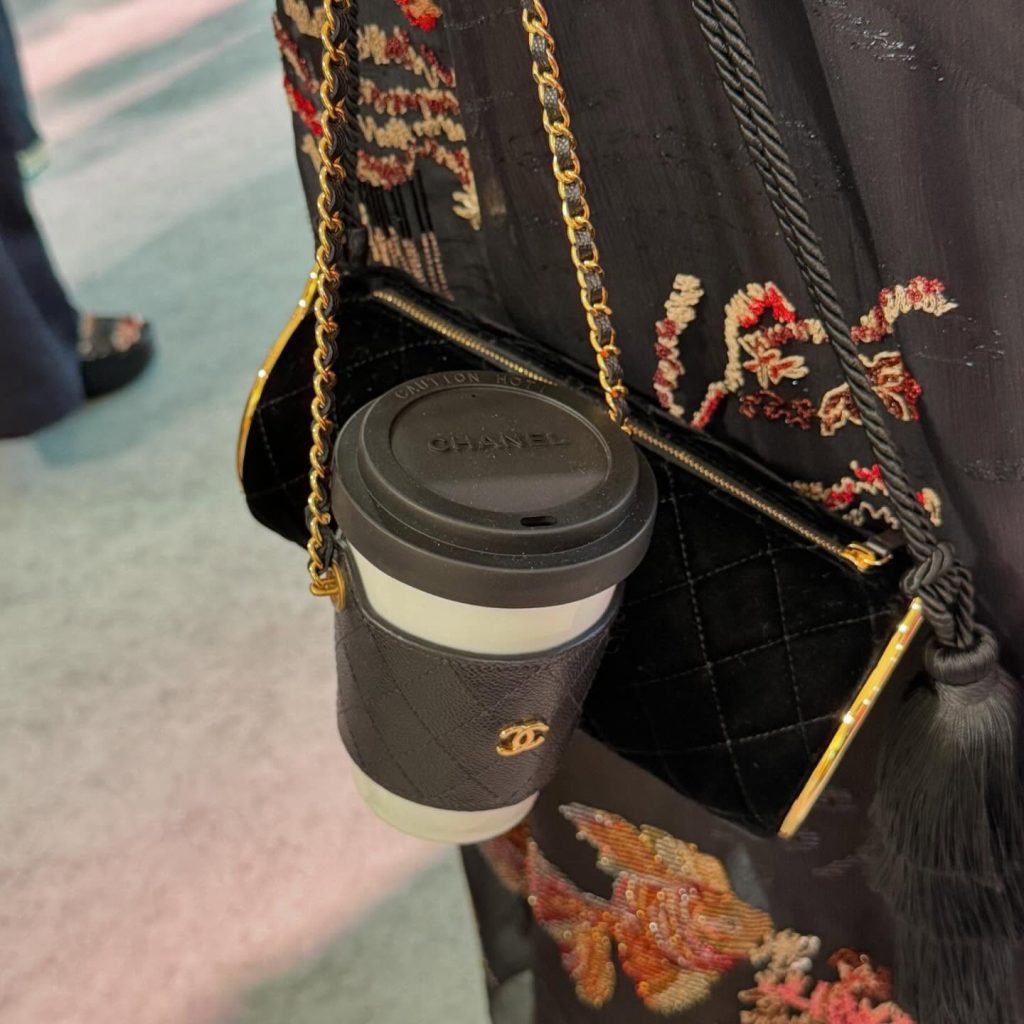
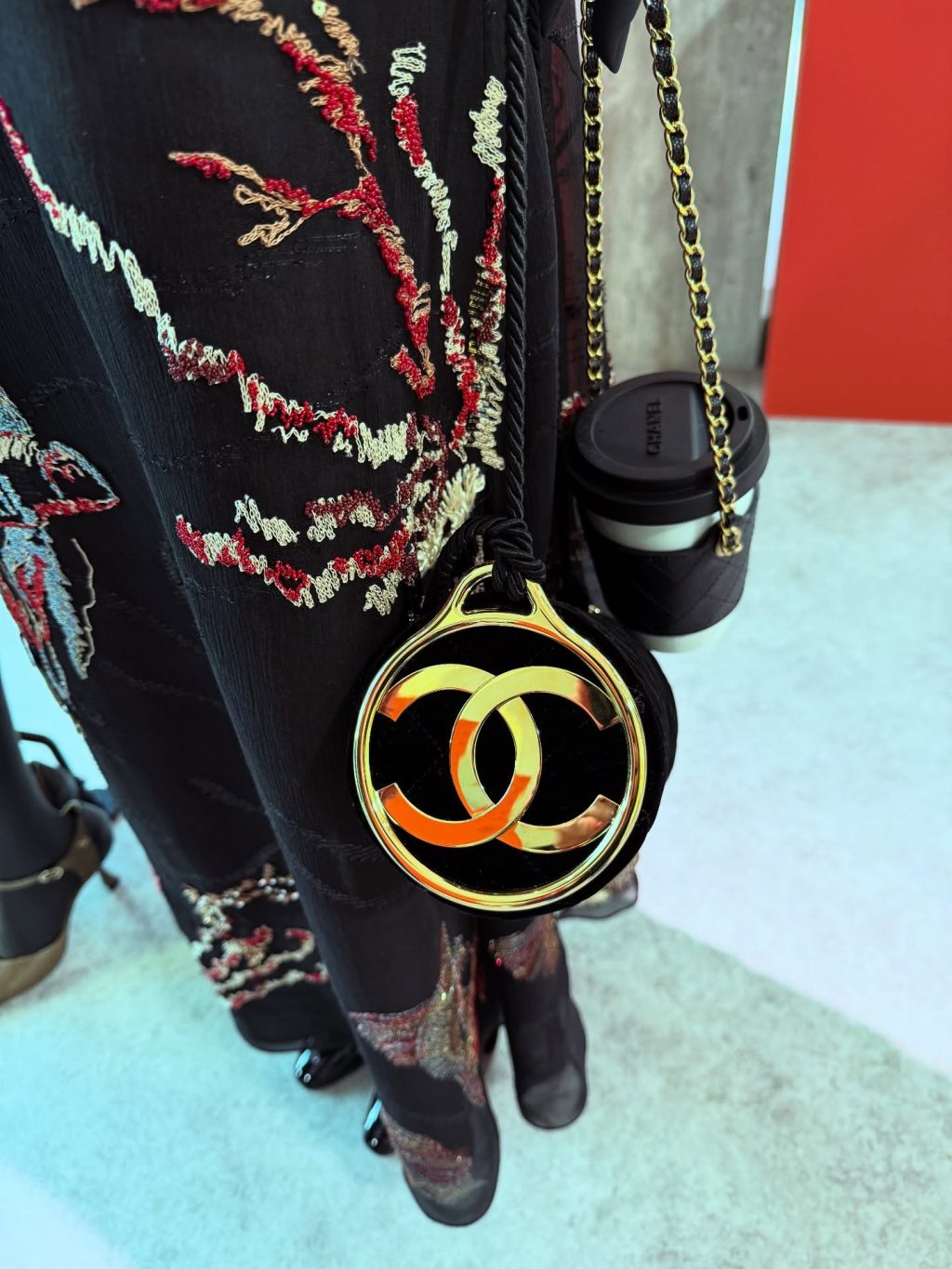
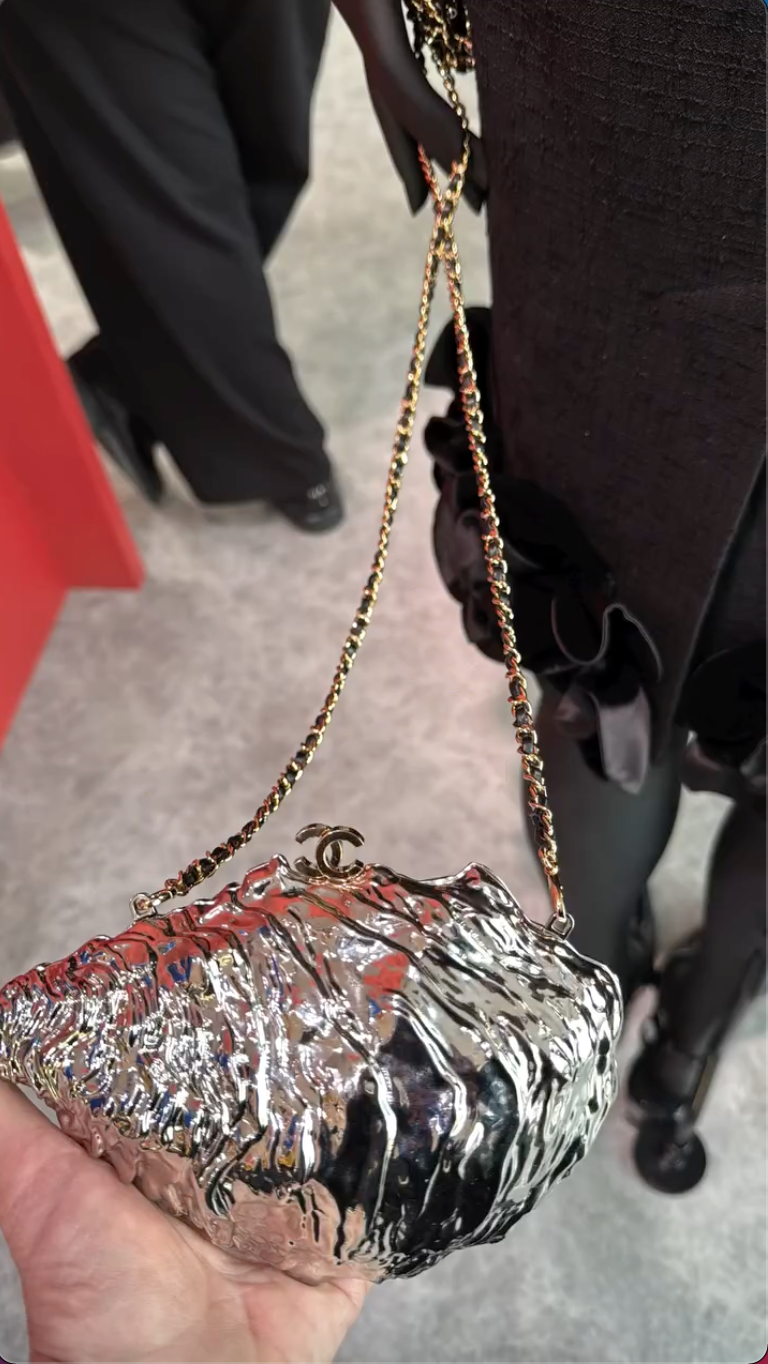
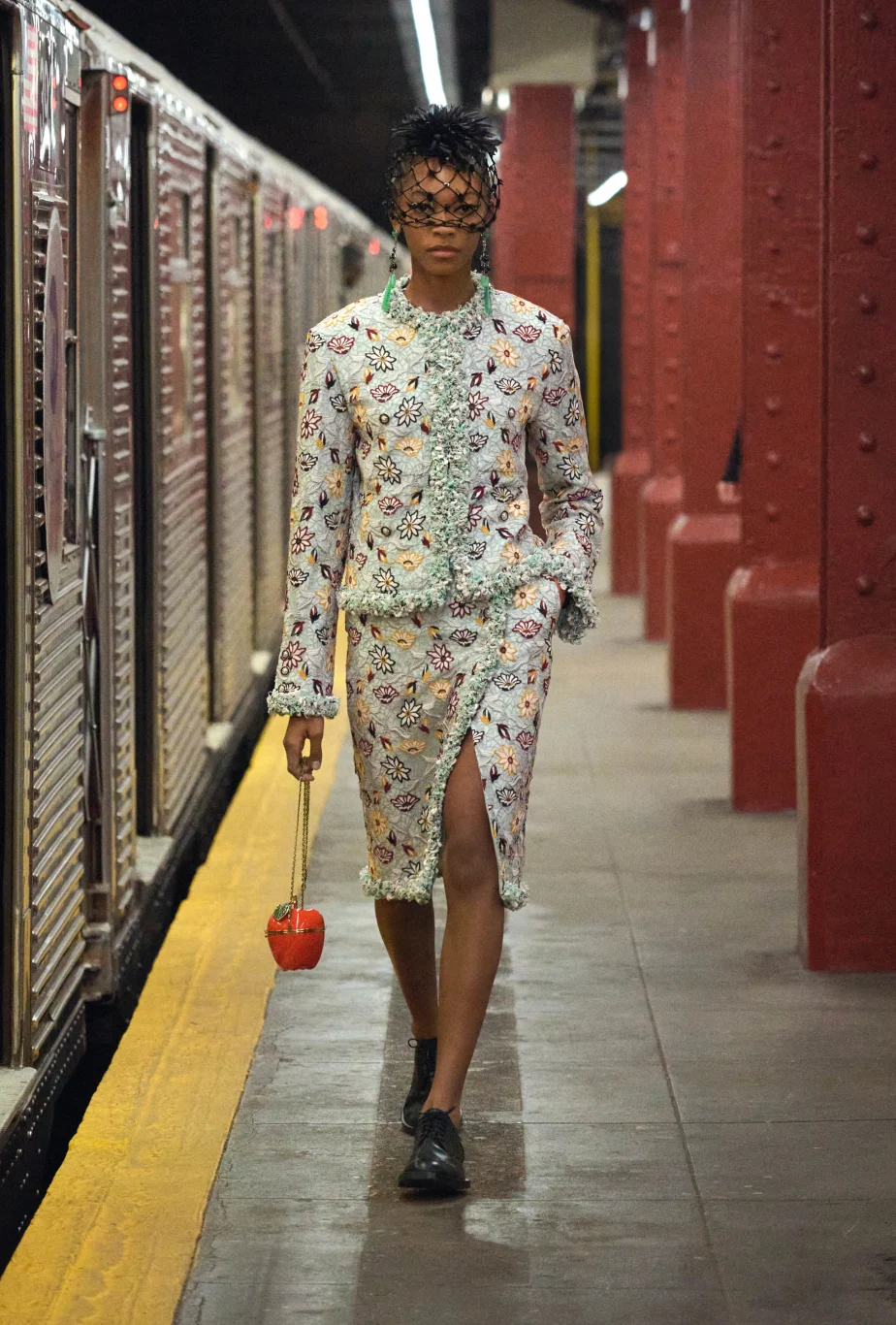
The Big Apple minaudière
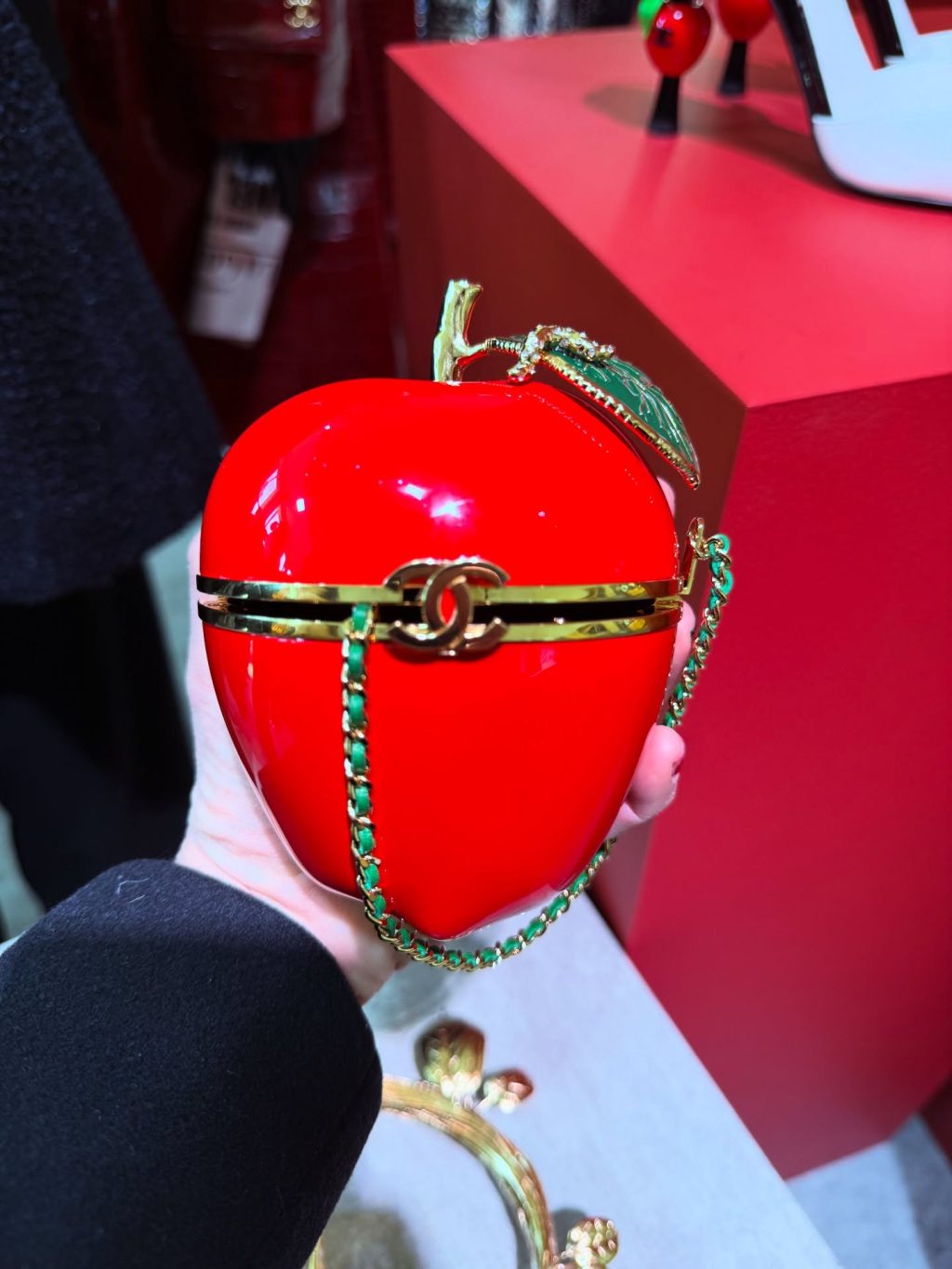
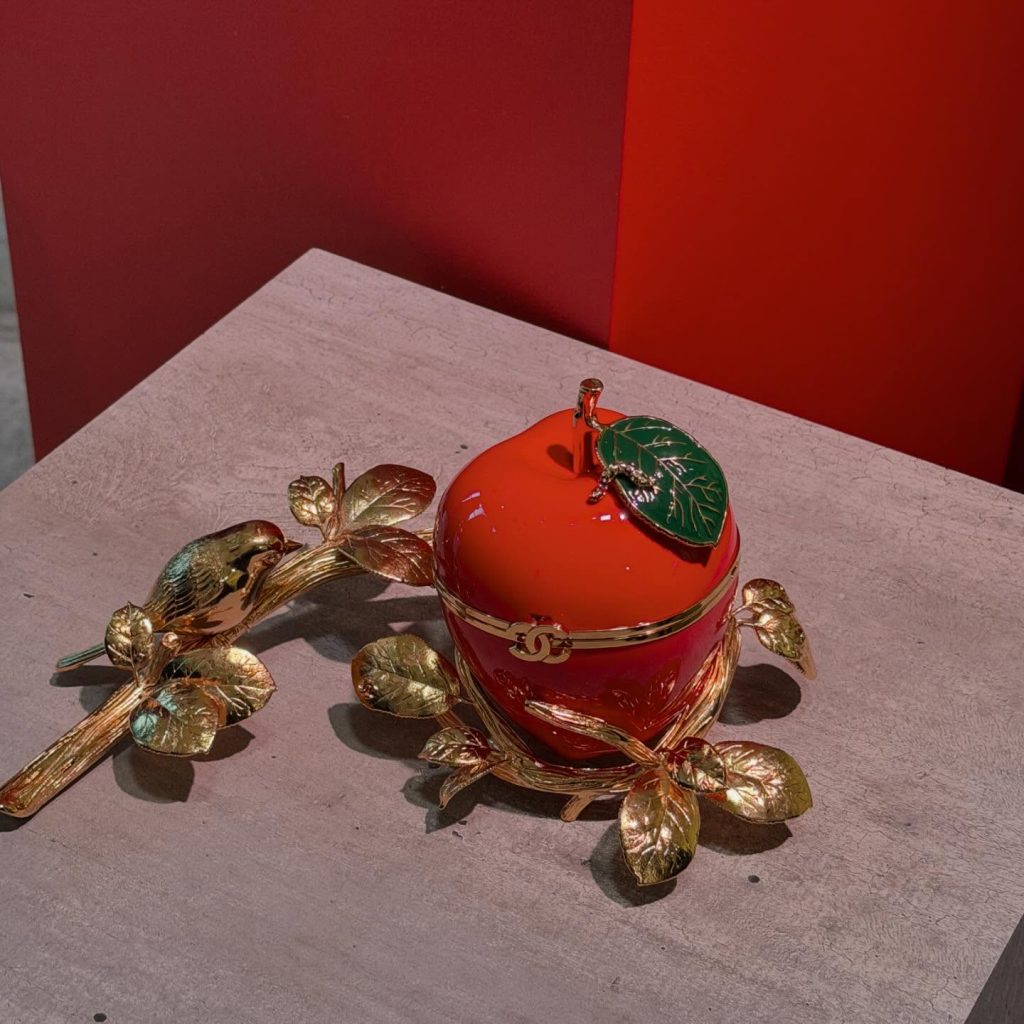
Chanel rarely misses the chance to encapsulate a host city in one standout minaudière, and New York gets the most literal treatment of all: a plump, high-gloss red apple.
The Big Apple minaudière is small, even by evening-bag standards—just enough space for cards, keys and a lipstick. A fine metal chain allows it to be worn crossbody or doubled up in hand. Gold-tone hardware and a discreet CC seal the reference: a souvenir of the night that reads more downtown art object than tourist trinket.
In a sea of sensible crossbodies and workhorse totes, this is the bag you take to a gallery opening or a late-night dinner in the Village. It doesn’t pretend to be practical; it’s there to start conversations.
The animal commuters—A menagerie with a Manhattan attitude
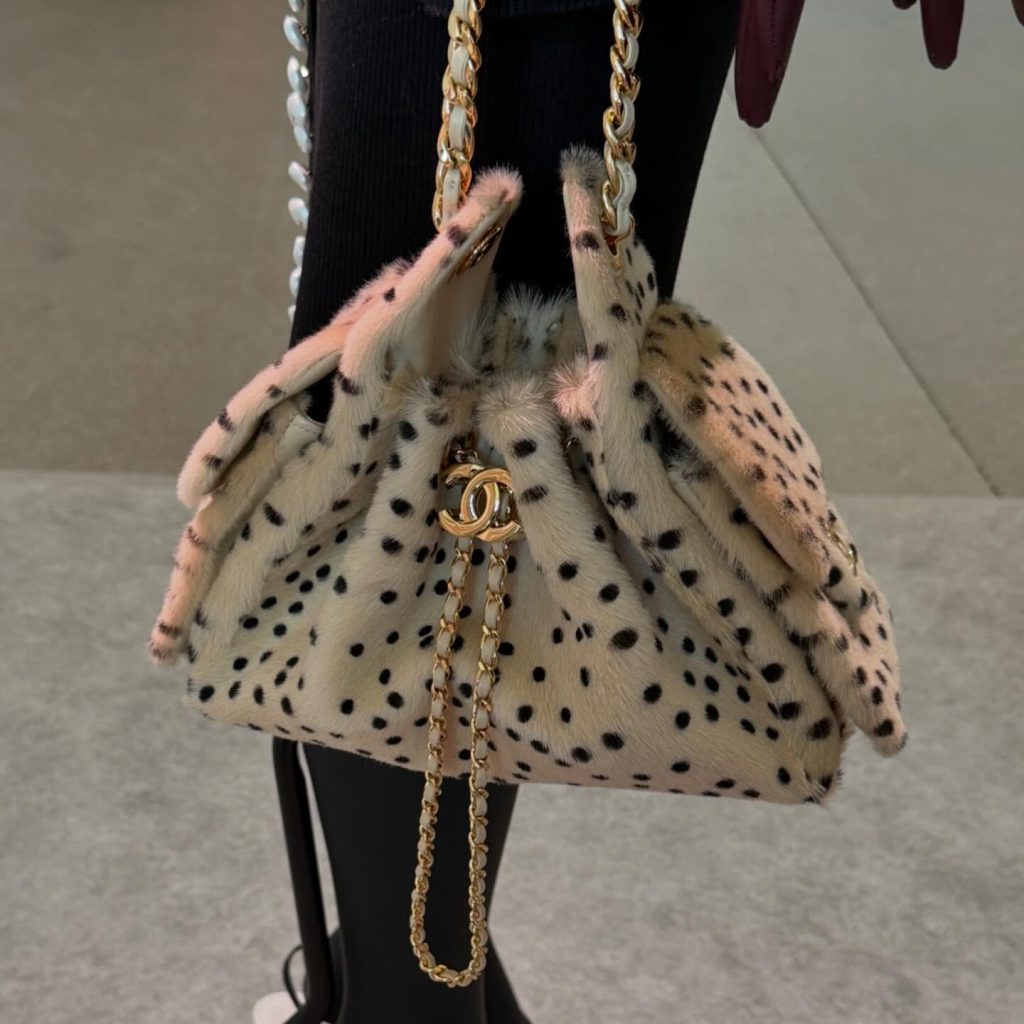
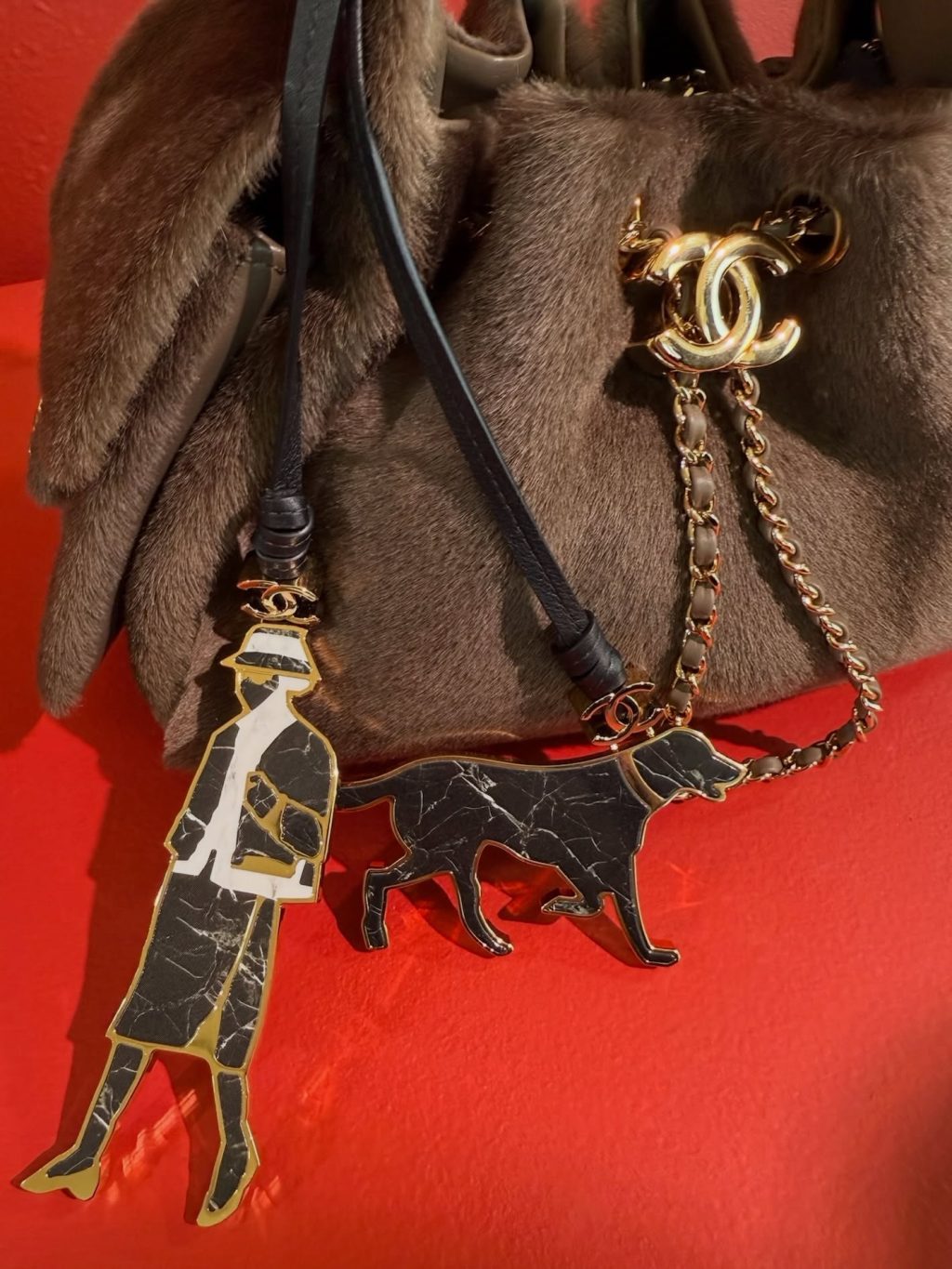
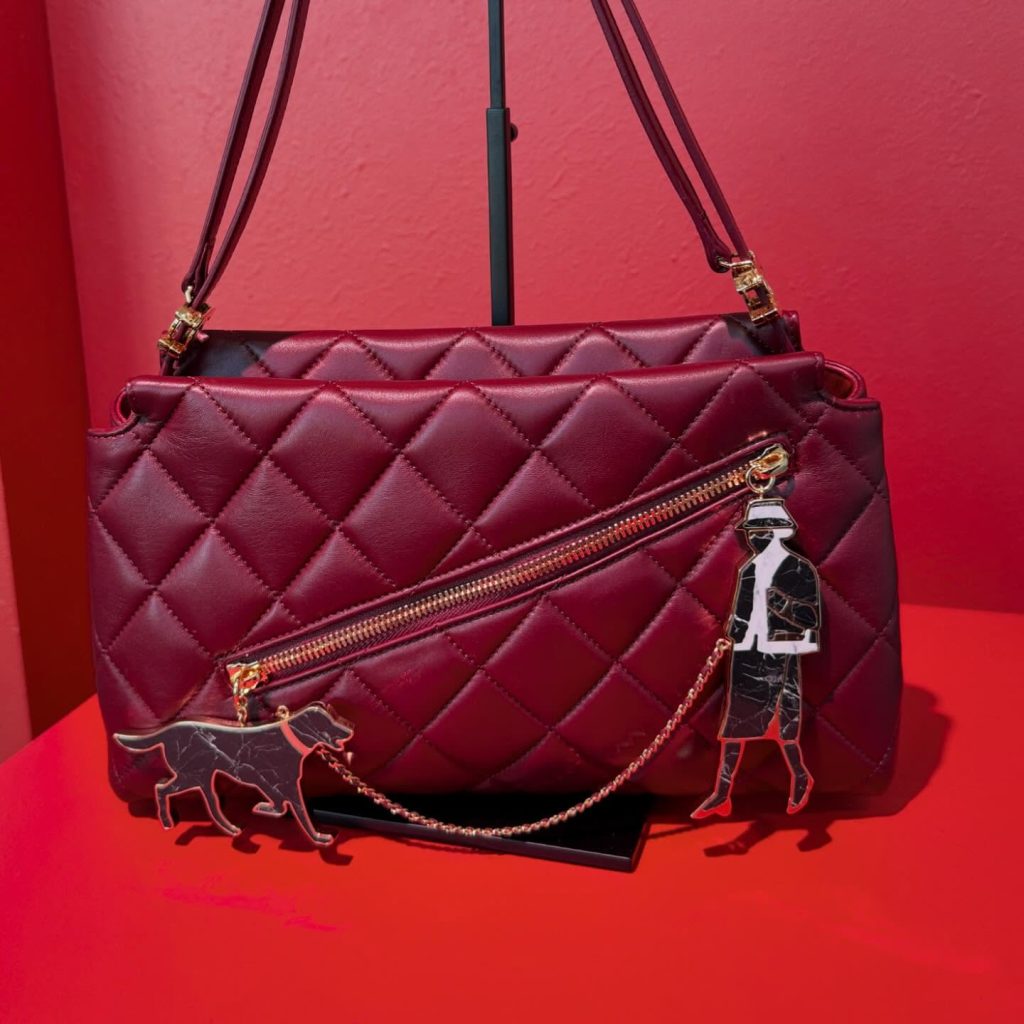
Another motif that surfaced in accessories coverage: animals—rendered as prints, shapes, and charmingly literal bag interpretations.
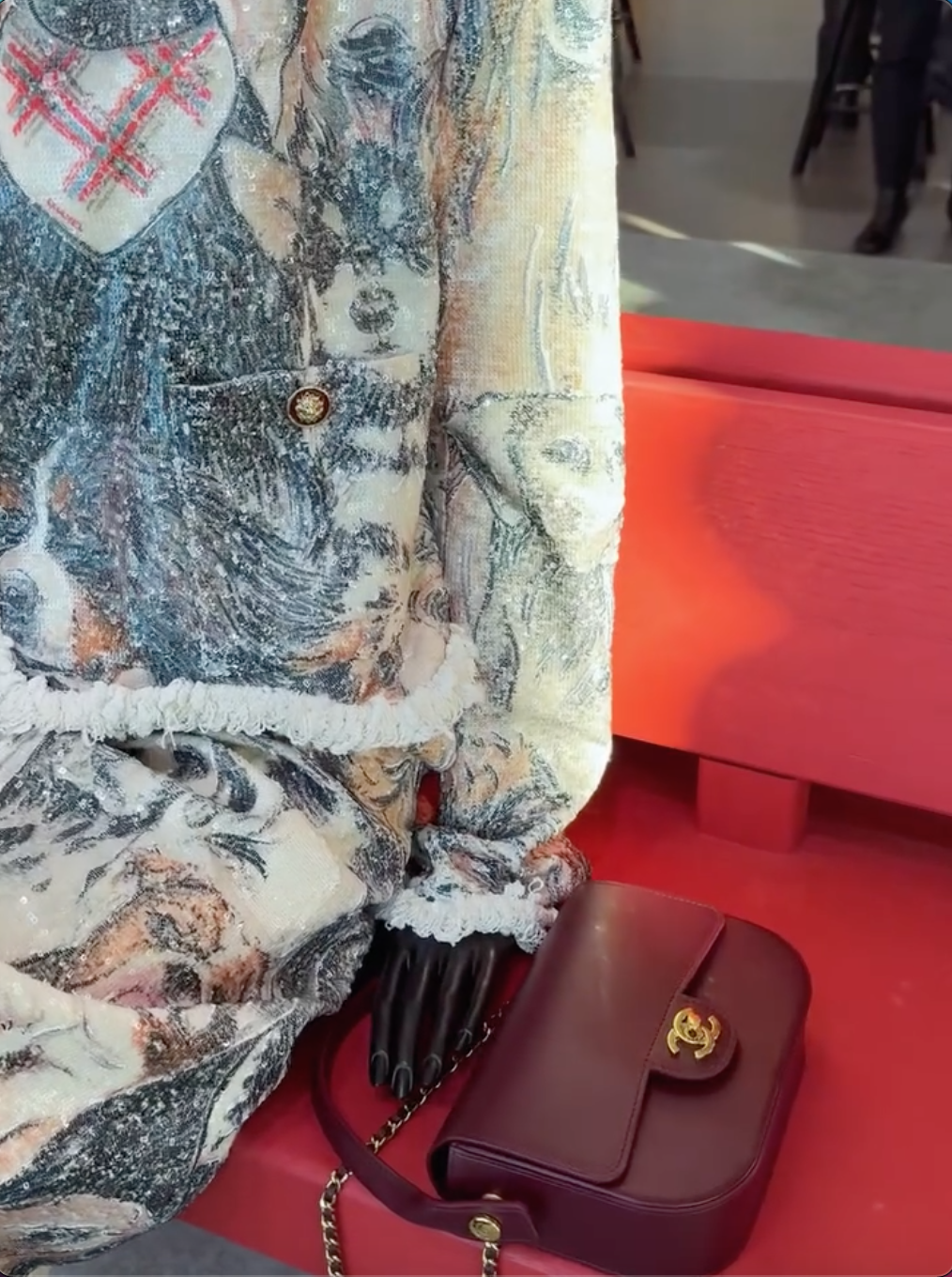
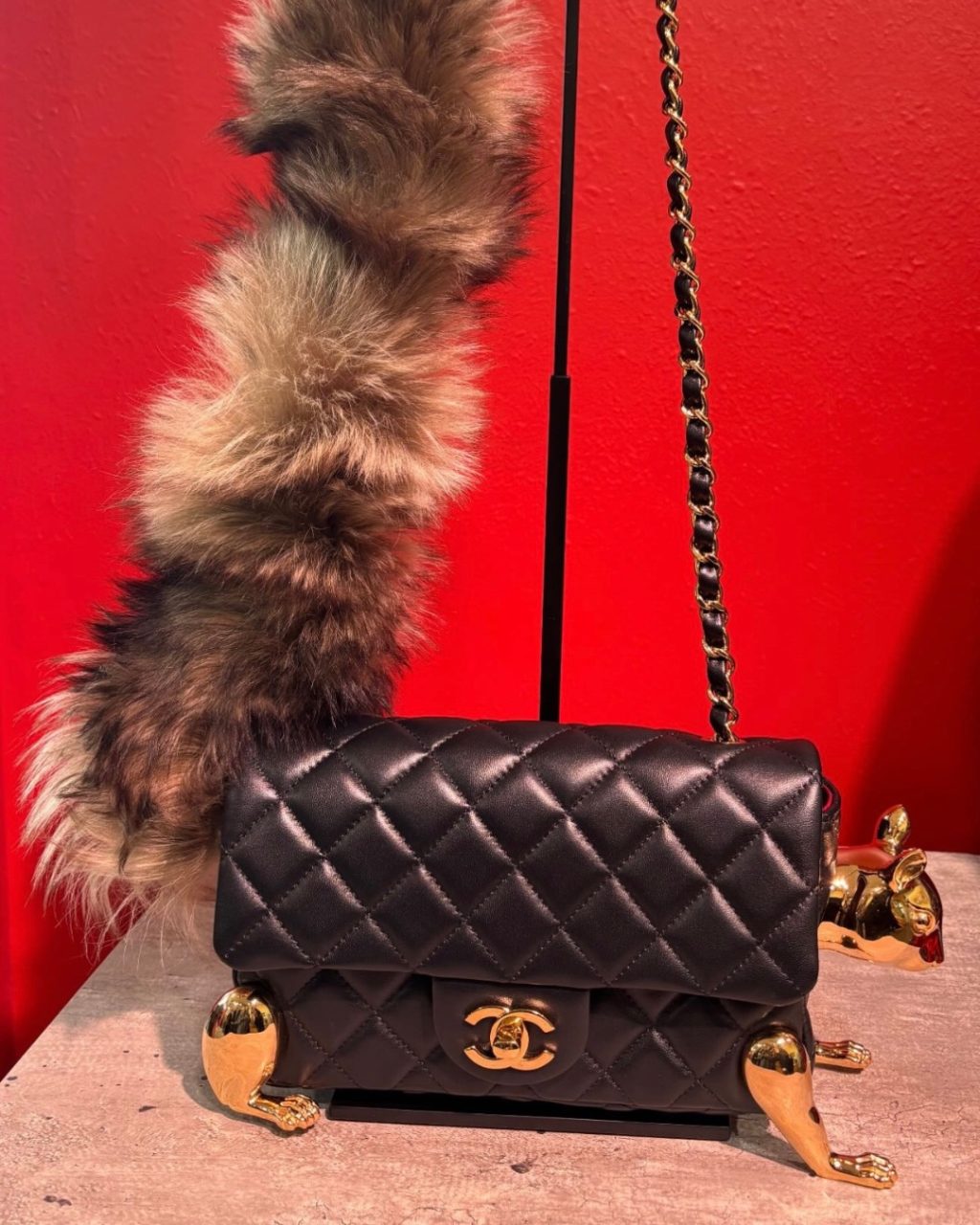
Harper’s Bazaar spotlighted a squirrel-themed flap bag, complete with a tail detail that climbs up the strap, but it didn’t stop there: the lineup also flirted with a giraffe moment—an “urban safari” twist that felt perfectly at home in New York’s stylish chaos—alongside Dalmatian-inspired bags that nod to the city’s dog-walking obsession.
This could have felt gimmicky. Instead, it read like Chanel doing what it does best: taking a cultural cliché (New Yorkers and their dogs; New Yorkers and their coffee) and upgrading it through materials, execution, and styling.
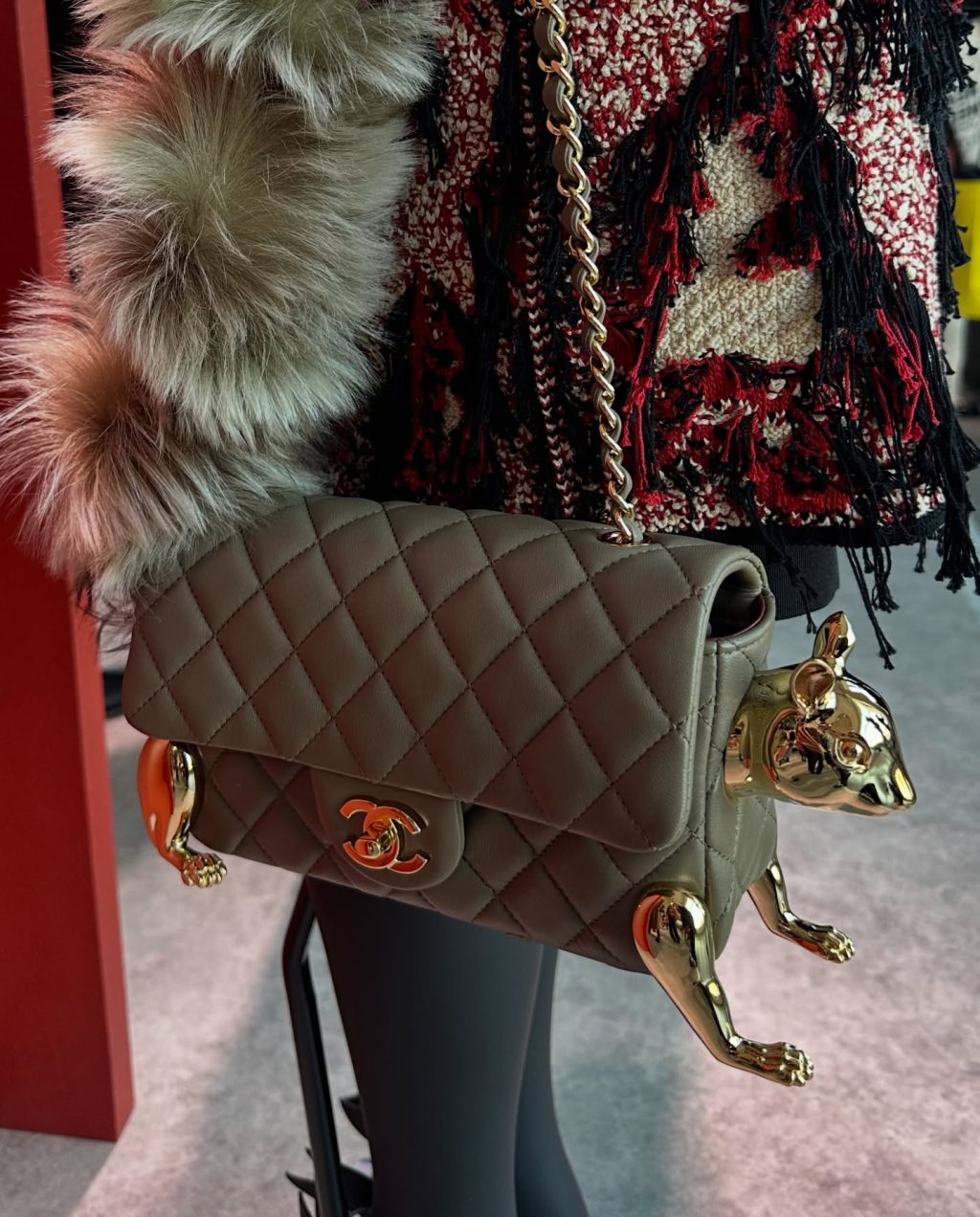
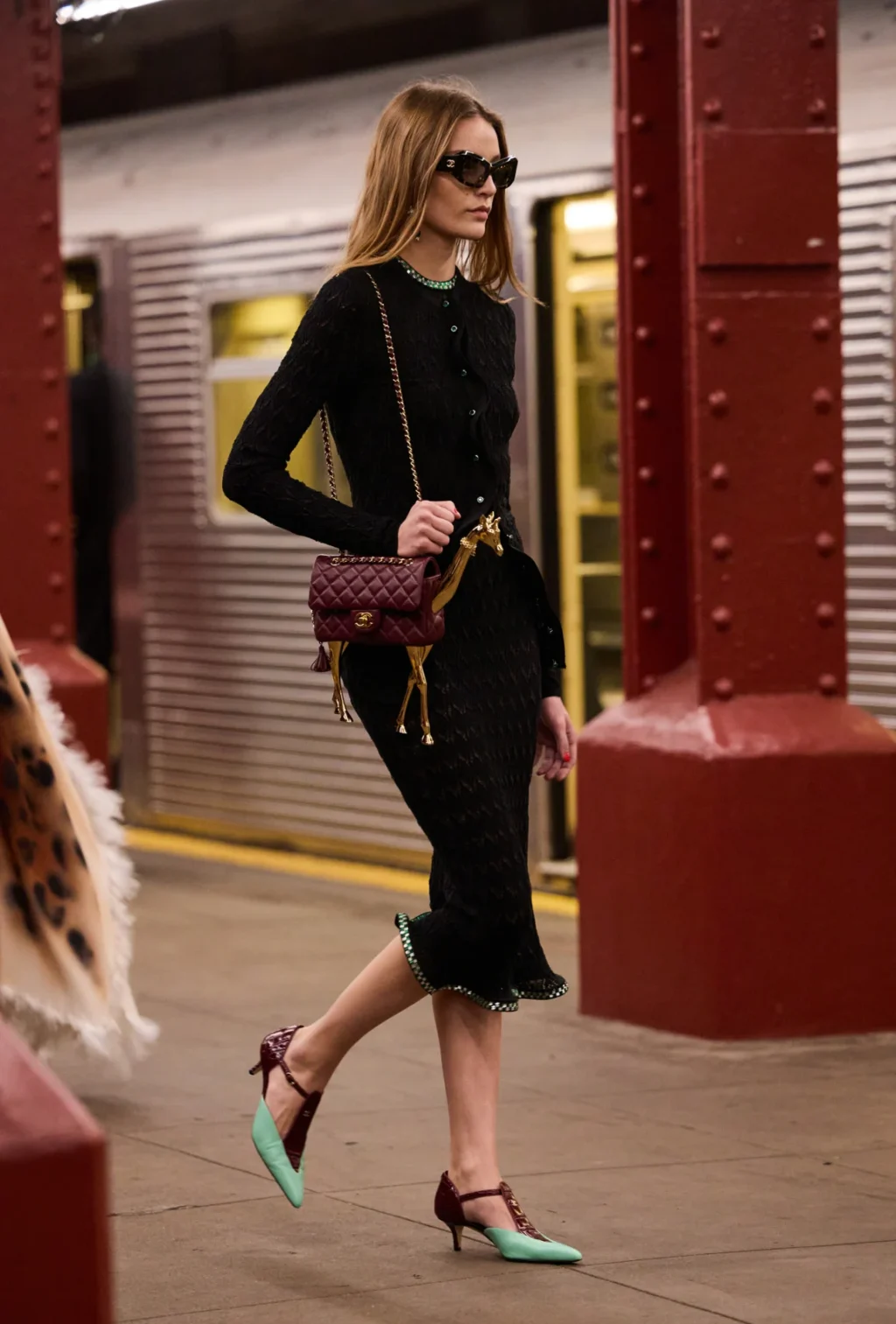
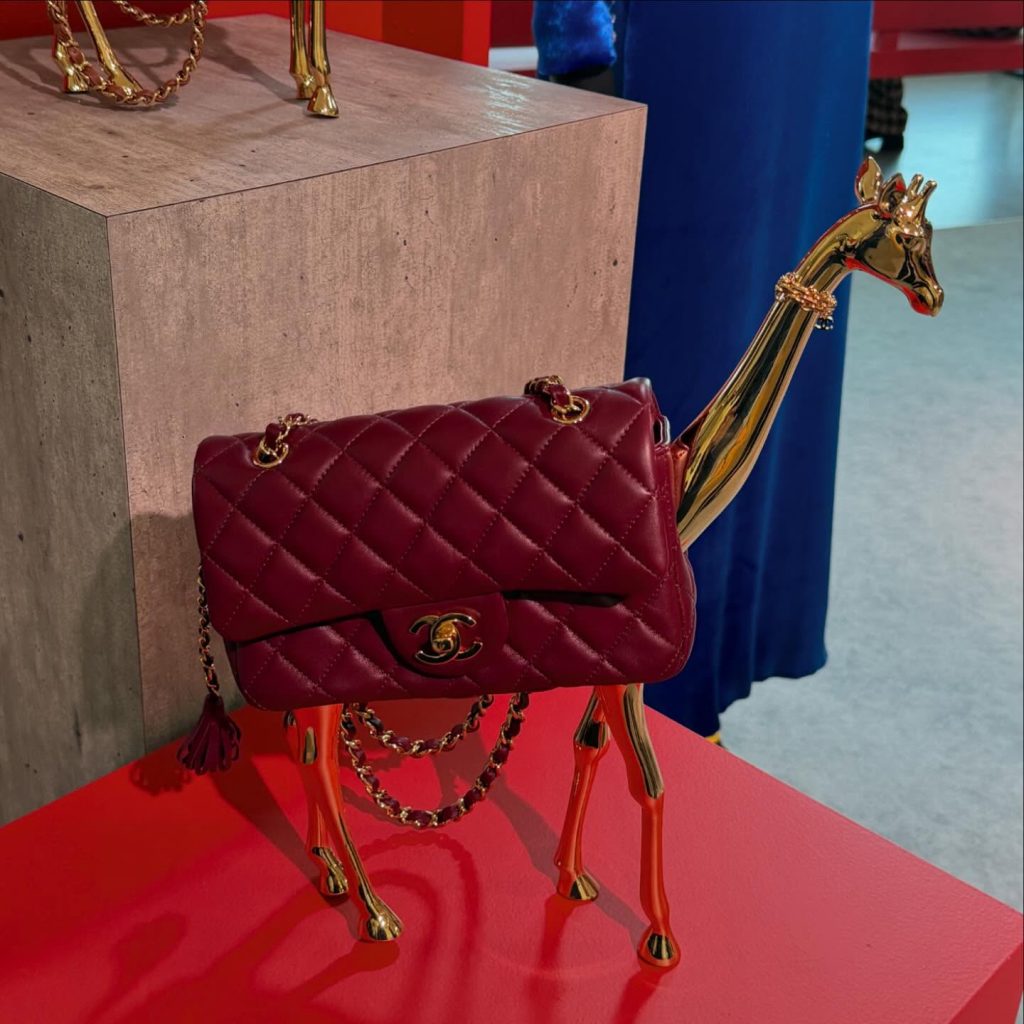
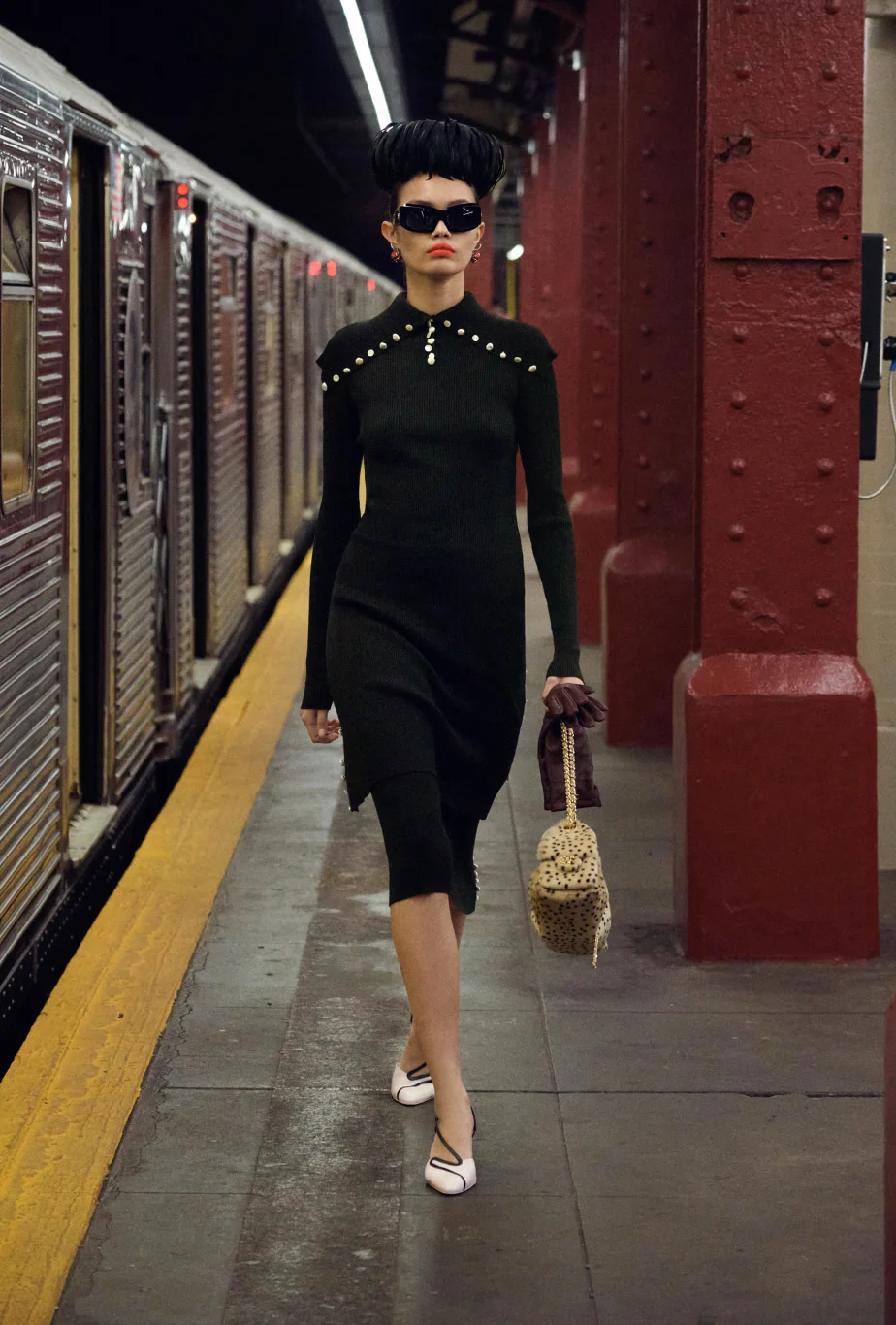
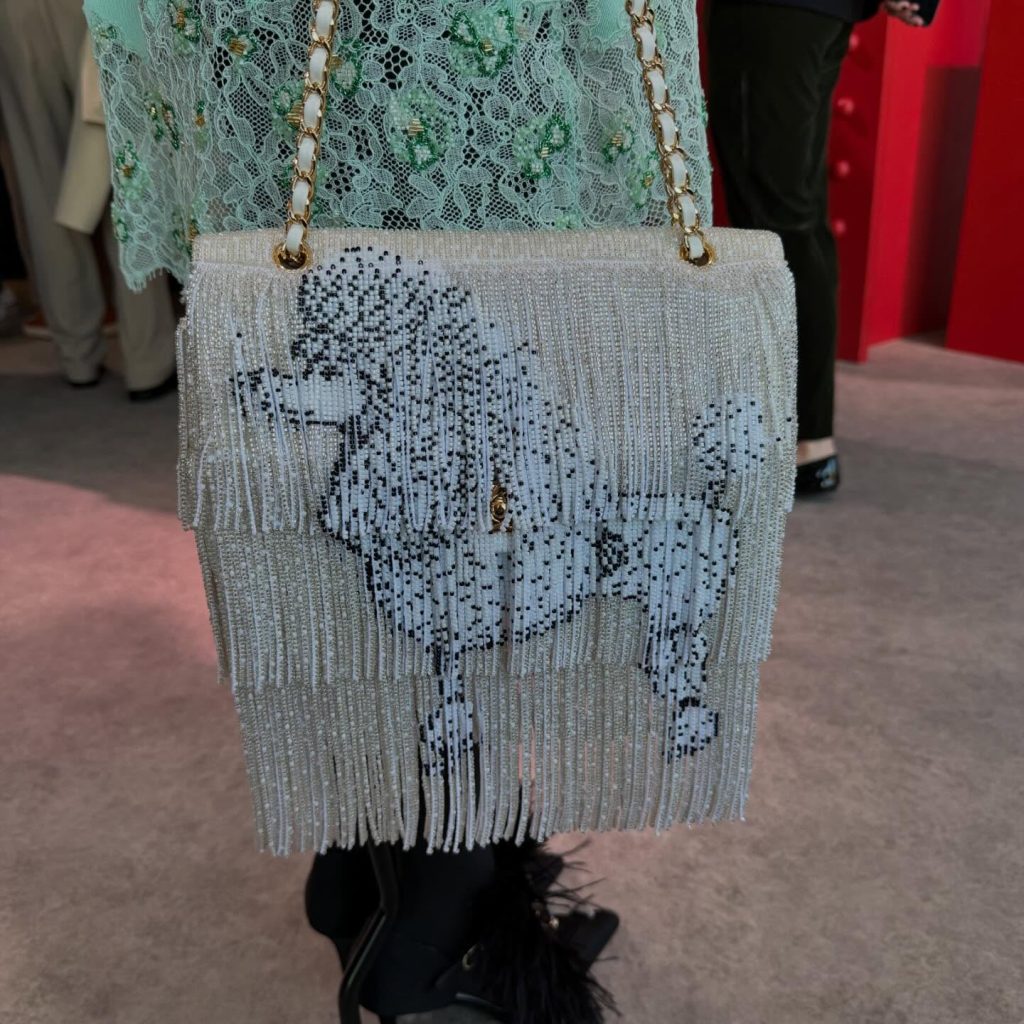
There was also a beaded poodle tote that felt like pure Chanel wit filtered through atelier-level technique: a crisp, monochrome poodle silhouette rendered in tiny seed beads, then veiled in shimmering, curtain-like fringe that moved with every step. Finished with the house-signature chain-and-leather strap, it read as both playful and painstaking—less “novelty” and more an up-close demonstration of how Métiers d’Art turns a simple motif into a tactile, kinetic object.
New York references without the tourist T-Shirt energy
There’s a fine line between “inspired by New York” and “souvenir shop.” Chanel stayed on the right side of it by embedding references as texture rather than slogan. Coverage linked the collection to Chanel’s historic relationship with the city—references to the House’s earlier New York chapters and the idea of American style as something more pragmatic, more kinetic. Even the wider accessories package echoed that: the bags weren’t drenched in obvious branding. The point wasn’t “I ♥ NY.” The point was: I move like New York.The Cinematic Layer—Why the Show Felt Like a Short Fim.
Chanel amplified the narrative with a dedicated film project tied to the collection: a Michel Gondry–directed short featuring Margaret Qualley and A$AP Rocky, built as part of the New York story world around Métiers d’Art.
That matters for handbags because Chanel understands a modern truth: bags travel through images first. The most desirable runway bags today aren’t only “best-sellers”—they’re screenshots, the accessory you remember because it starred in a scene, not because it sat on a shelf.
When you’ll actually see these bags
Chanel’s official collection pages list the Métiers d’Art 2026 show as available in boutiques from June 2026—a timeline that aligns with how Métiers d’Art pieces typically land after the runway moment.
If you’re tracking specific bags, this matters: the gap between runway and retail is where wishlists form, resellers start watching, and “seen on the show” becomes “hard to get.”
A final takeaway: the bags didn’t just match the show—they explained it
The most successful fashion settings aren’t decorative; they’re descriptive. New York’s subway is about pace, proximity, and personality—thousands of private lives moving through one shared system. Chanel turned that into handbag language: commuter-ready silhouettes, icon reworks that feel less precious, and novelty pieces that read like city observation rather than costume.
In other words, the Chanel Métiers d’Art 2026 bags weren’t simply “cute accessories from a show.” They were the thesis: craft that knows how to live.