Bottega Veneta Fall-Winter 2026–2027 bags arrive in a very Milan mood: severe at first glance, deeply tactile once you get close. Louise Trotter staged her Fall 2026 show at the brand’s headquarters in Palazzo San Fedele, and the show notes framed the collection as a dialogue between brutalism and sensuality—an idea that plays out not only in silhouette, but in surfaces, finishes, and the way accessories behave against the body.
Read also: Bottega Veneta Spring-Summer 2026 Bags Guide
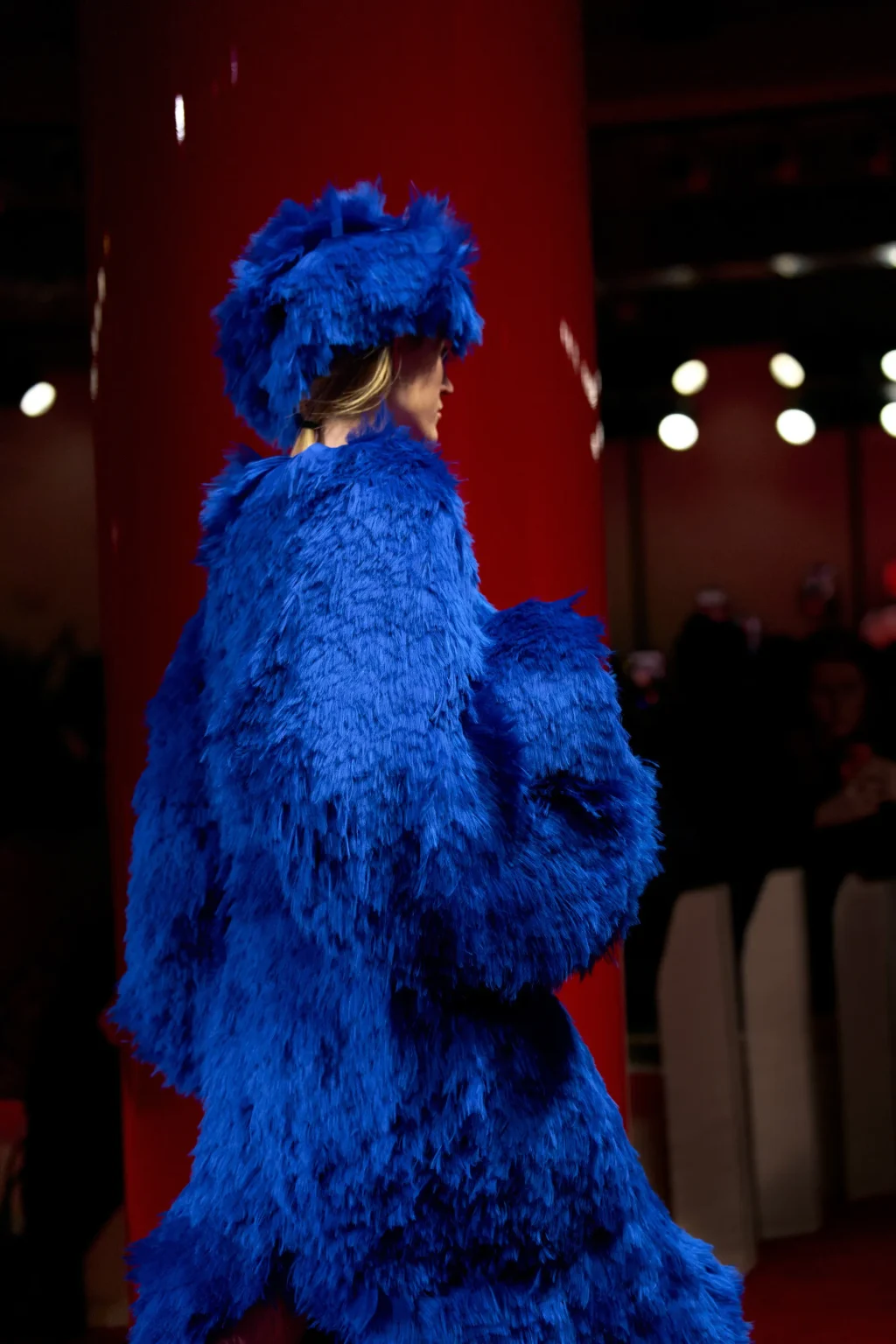
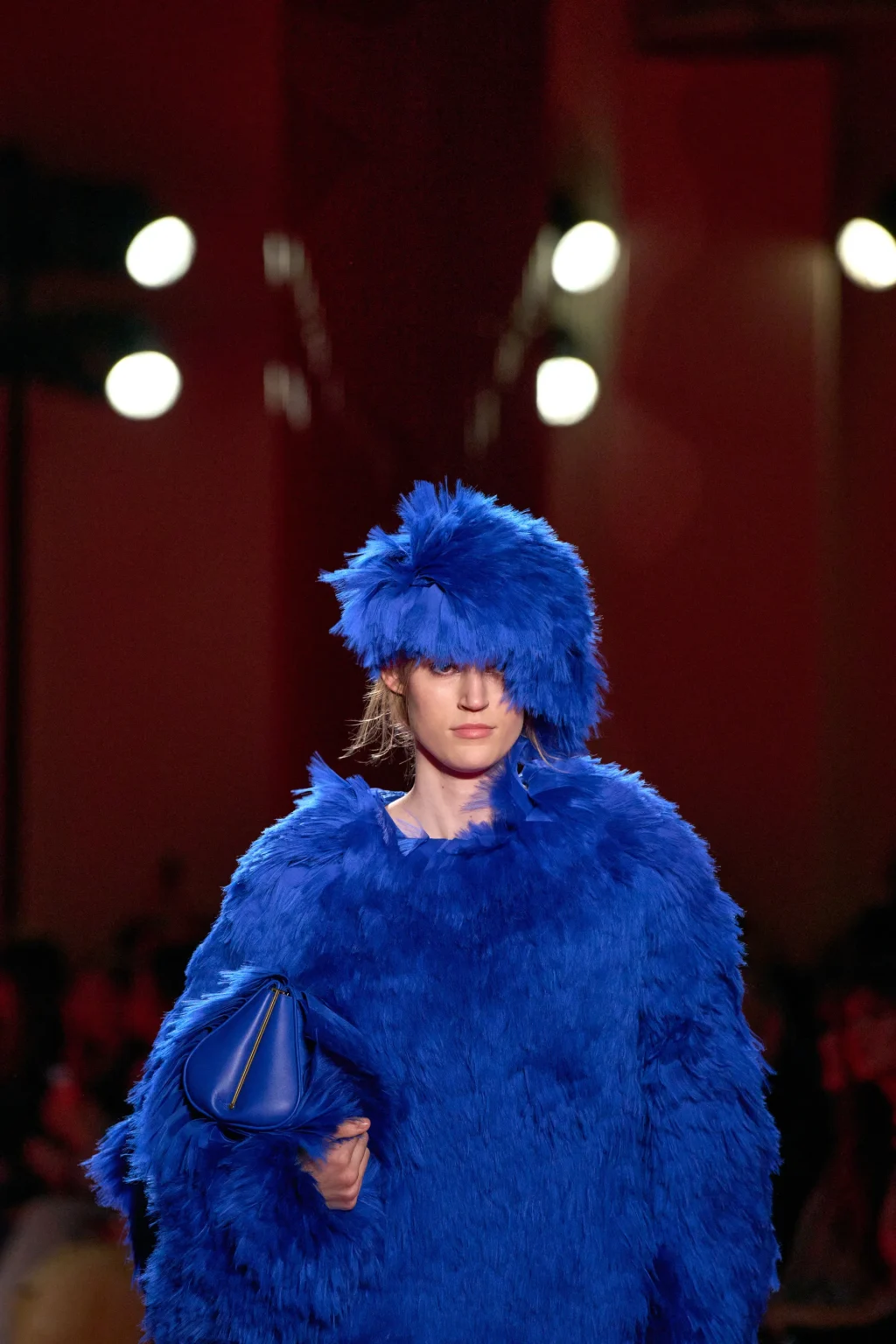
The clothing did what strong Bottega clothing does: it held shape like architecture, then softened—sometimes oddly—through material trickery. W Magazine notes the return of fiberglass pieces that mimic fur, plus silk-thread textures engineered to read like shearling. That same logic carries into the bags: familiar Bottega codes (intrecciato, leather craft, quiet luxury) pushed into new proportions, with a few deliberately disruptive gestures.
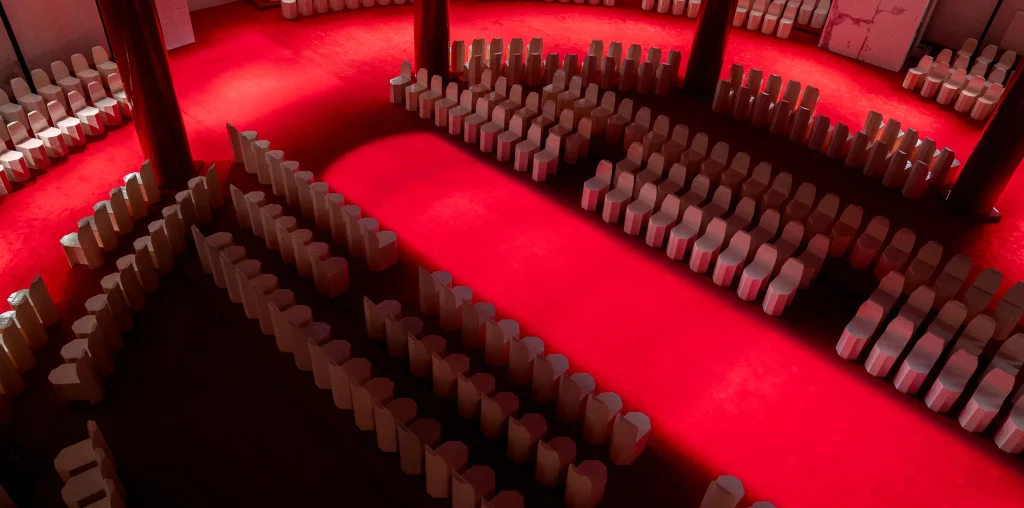
Bottega Veneta’s Fall-Winter 2026–2027 show unfolded in Palazzo San Fedele, the House’s new Milan headquarters set between La Scala and the Duomo—a location choice that immediately anchored the collection in the city’s most ceremonial geography. The space was staged as an intimate theatre: softly lit red carpets, lacquered columns, and a sculptural seating installation titled 421 chairs by British furniture designer Max Lamb.
For Creative Director Louise Trotter, the collection was framed as “the dialogue between Brutalism and sensuality”—an idea she linked directly to her lived experience of the city. British by origin and newly settled in Milan, she described the place as hard-edged on the surface, with a more private sensuality underneath—and noted how people here still truly dress up, for their community as much as for themselves.
That tension shaped the clothes from the first look: daywear archetypes reworked through considered curves and flamboyant flourishes, moving from sculpted tailoring in a somber register toward richer textures and more vibrant, pulsing color.
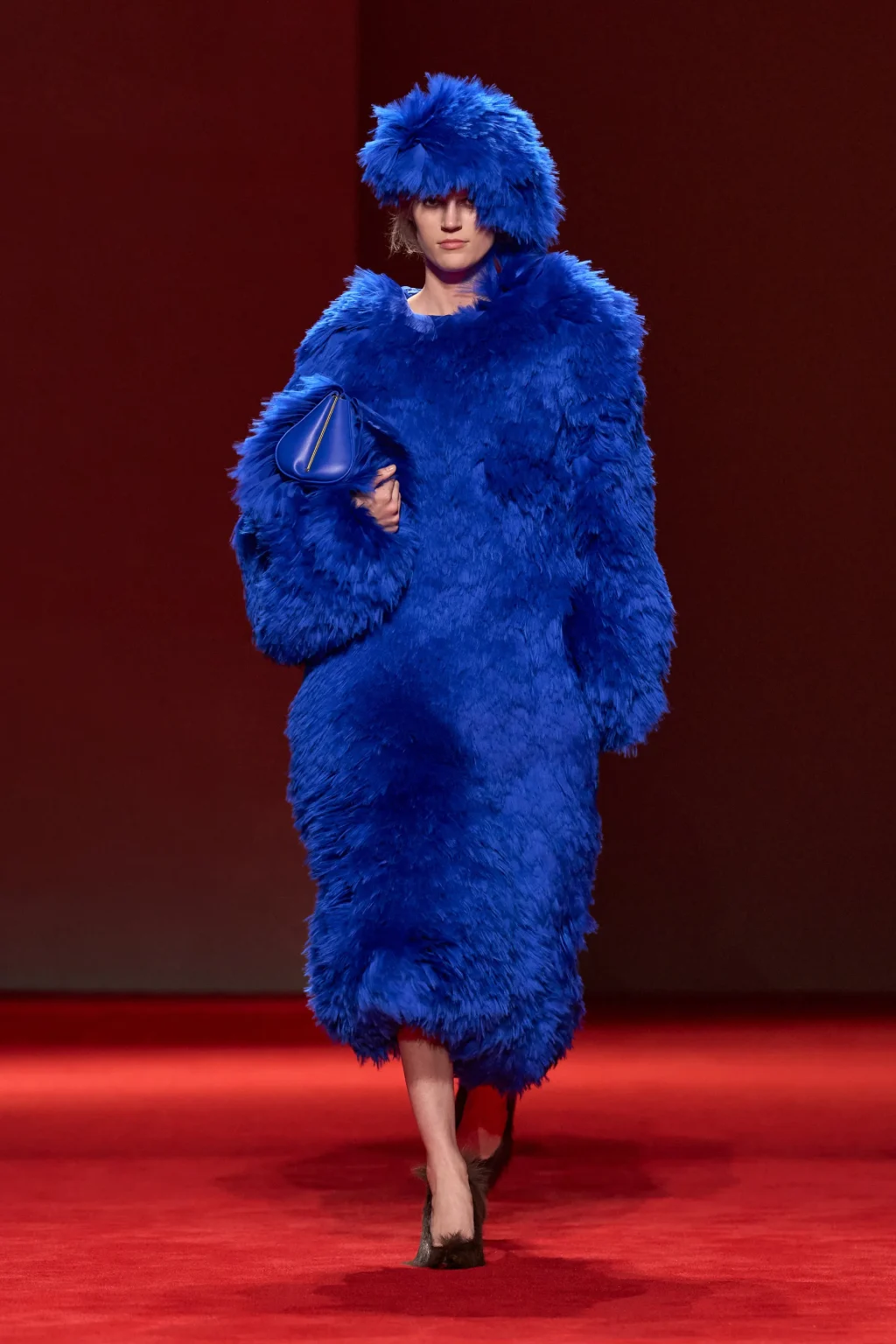
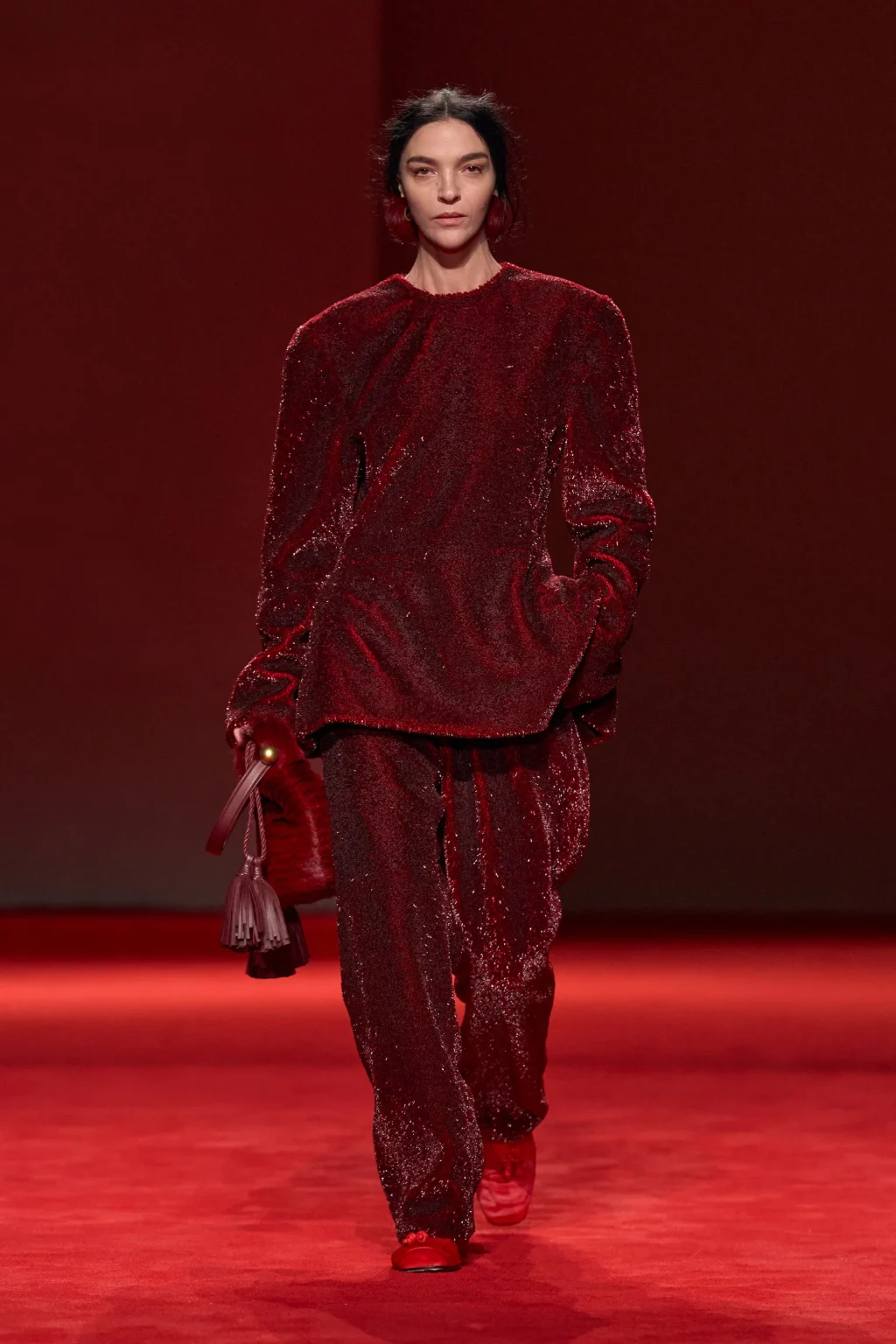
Bottega positioned the season as a dedication to craft and collaboration—“the wondrous collaboration between the heart, the mind, and the hand”—with leather, surface, and construction doing much of the storytelling.
In practice, the collection became a study in material illusion and architectural volume: familiar forms (a peacoat, a belt, a suit) transformed through unexpected finishes, tactile density, and engineered texture.
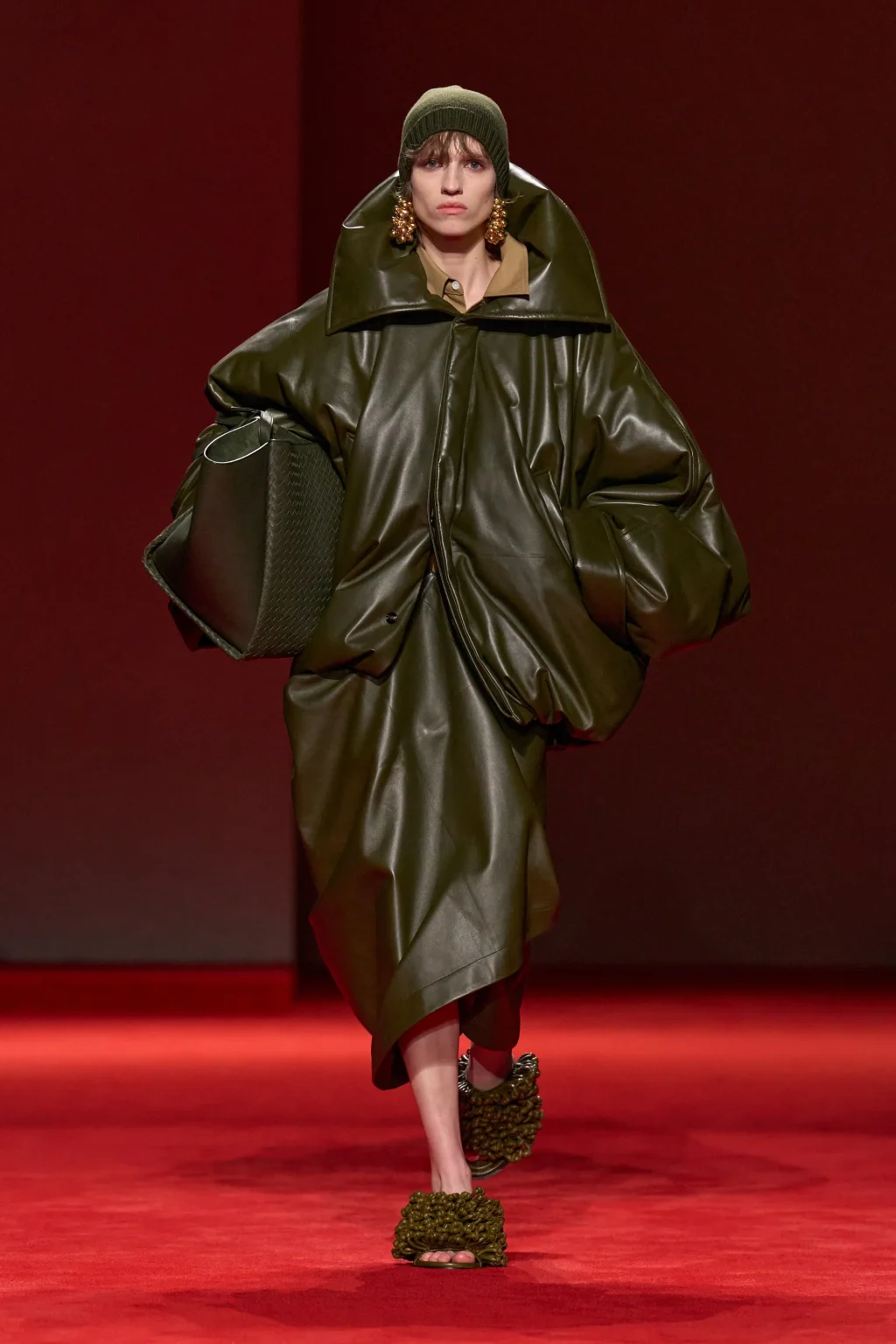
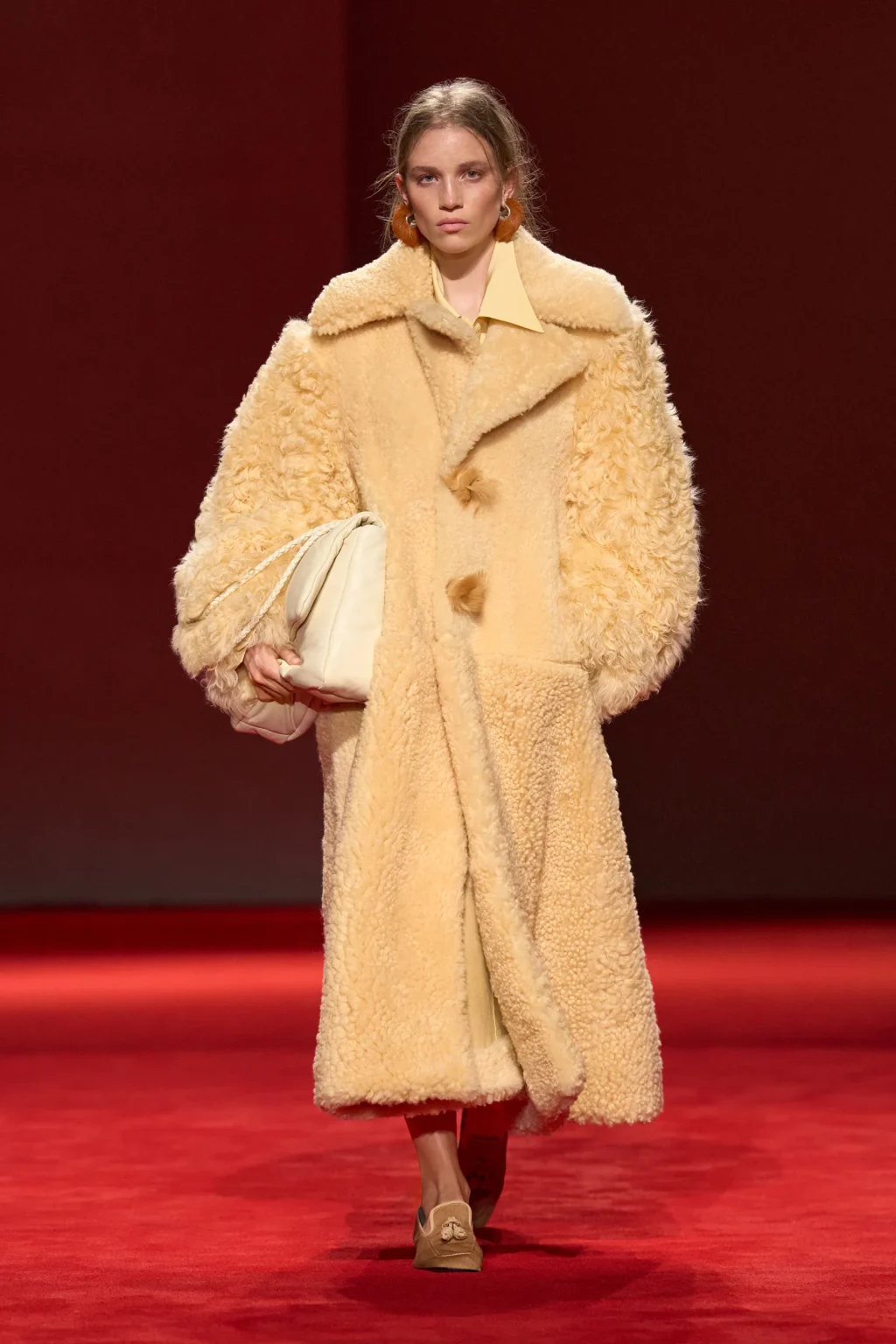
In this Bottega Veneta Fall-Winter 2026–2027 bags guide, the key story isn’t branding—it’s construction: woven codes pushed into new archetypes and new scale.
This season’s bag lineup doesn’t chase novelty through logos. It chases it through construction. You see classic Bottega weaving, yes—but refined into micro patterns, scaled into chunky panels, and applied to unexpected “everyday” archetypes: the bowling bag, the doctor bag, the vanity case, the nonna-evening pouch. And because the collection is so rooted in Milanese daywear—people who dress for themselves and their city—these bags don’t read like costumes. They read like tools, upgraded.
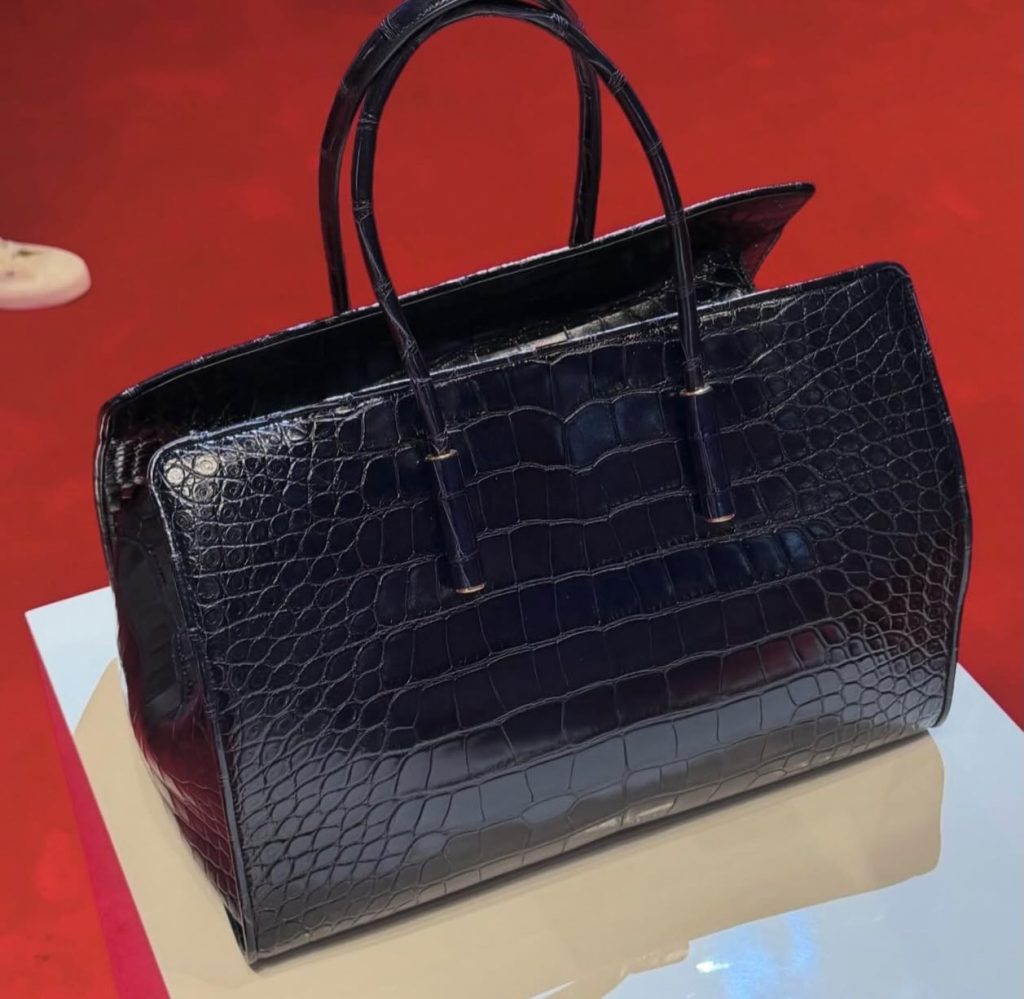
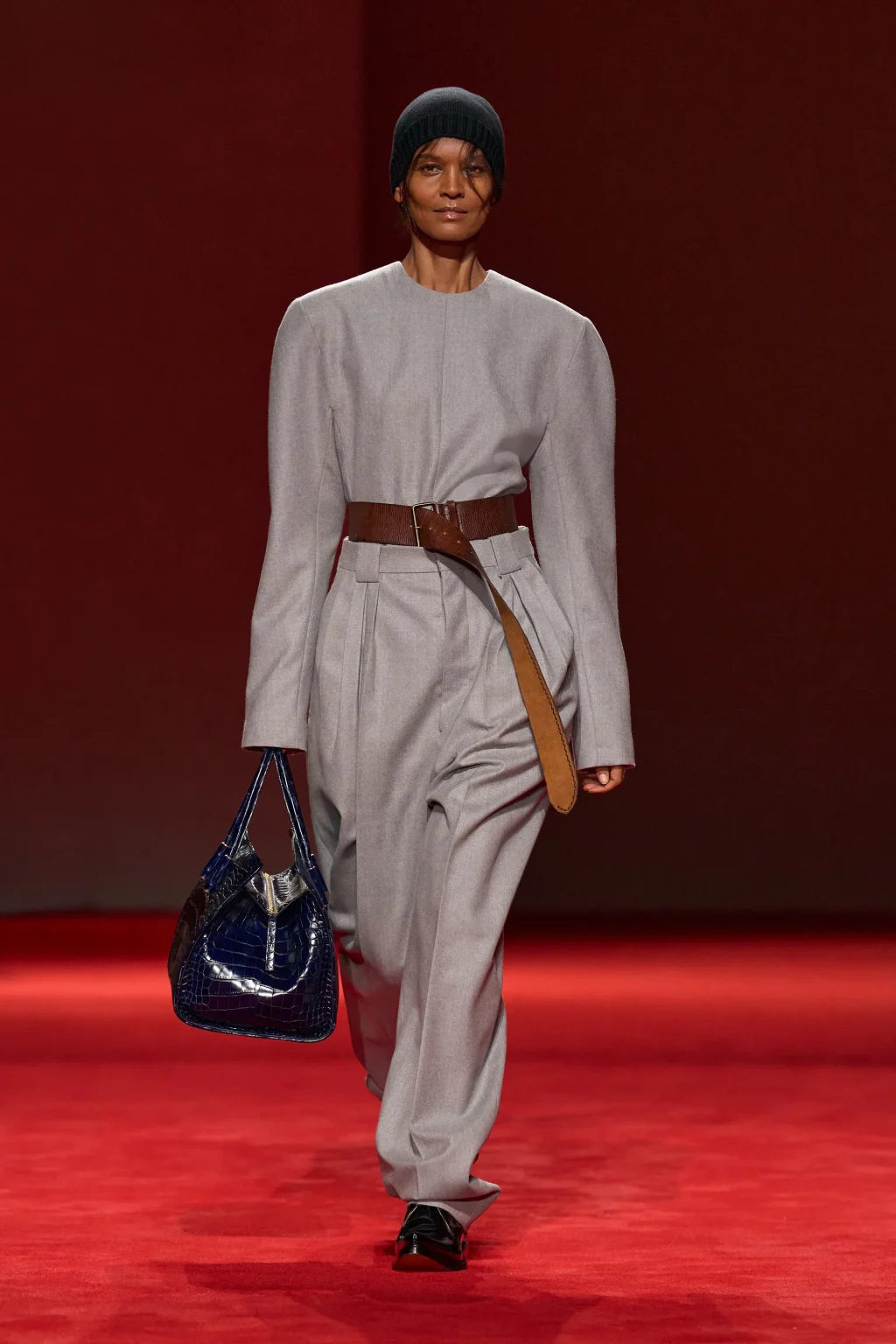
The Barbara Bag
The Barbara appears in a deep navy, high-shine finish that mimics croc: the classic barrel body looks dressier, almost “evening,” while the firm handles keep it architectural—brutalist shape, sensual surface.
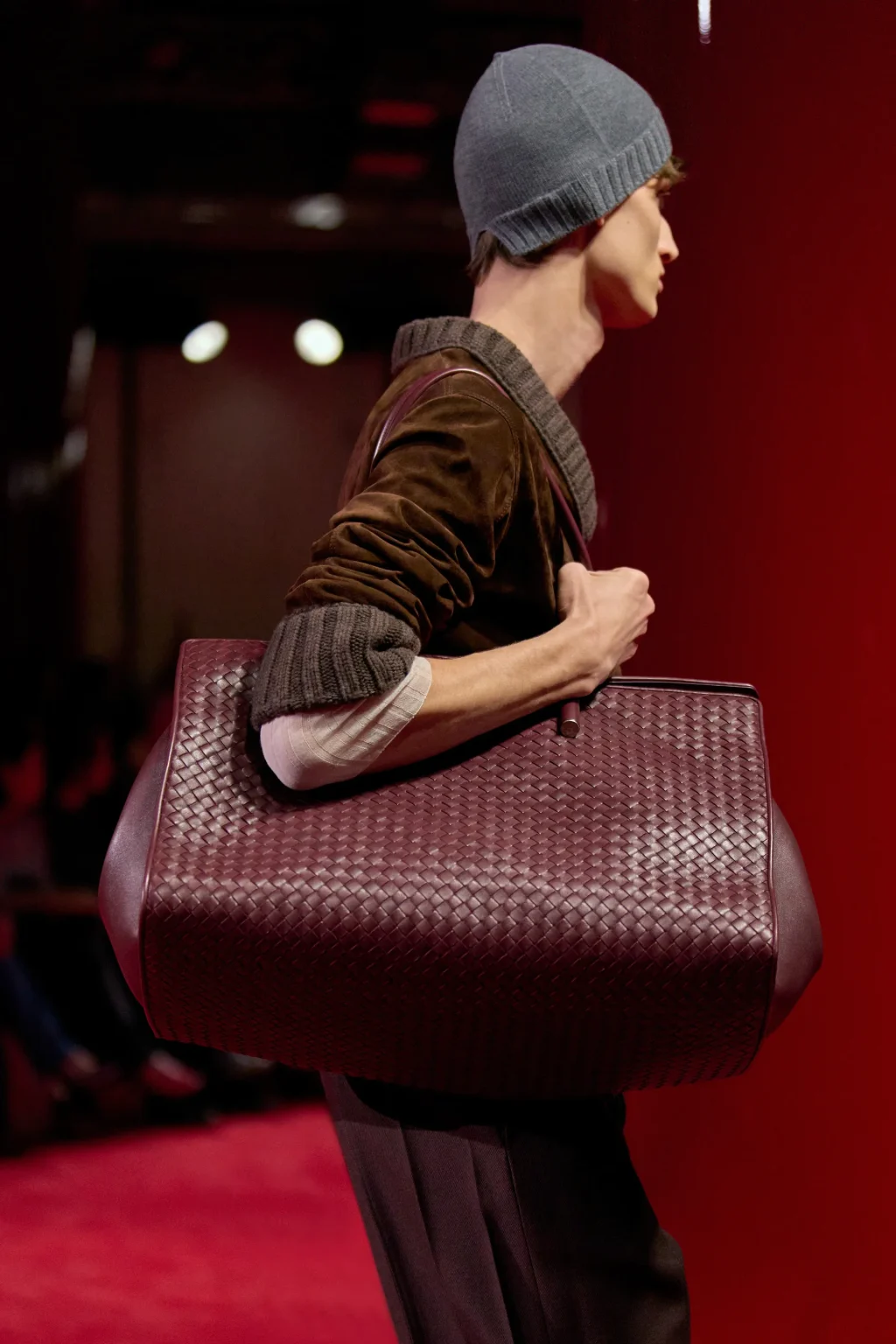
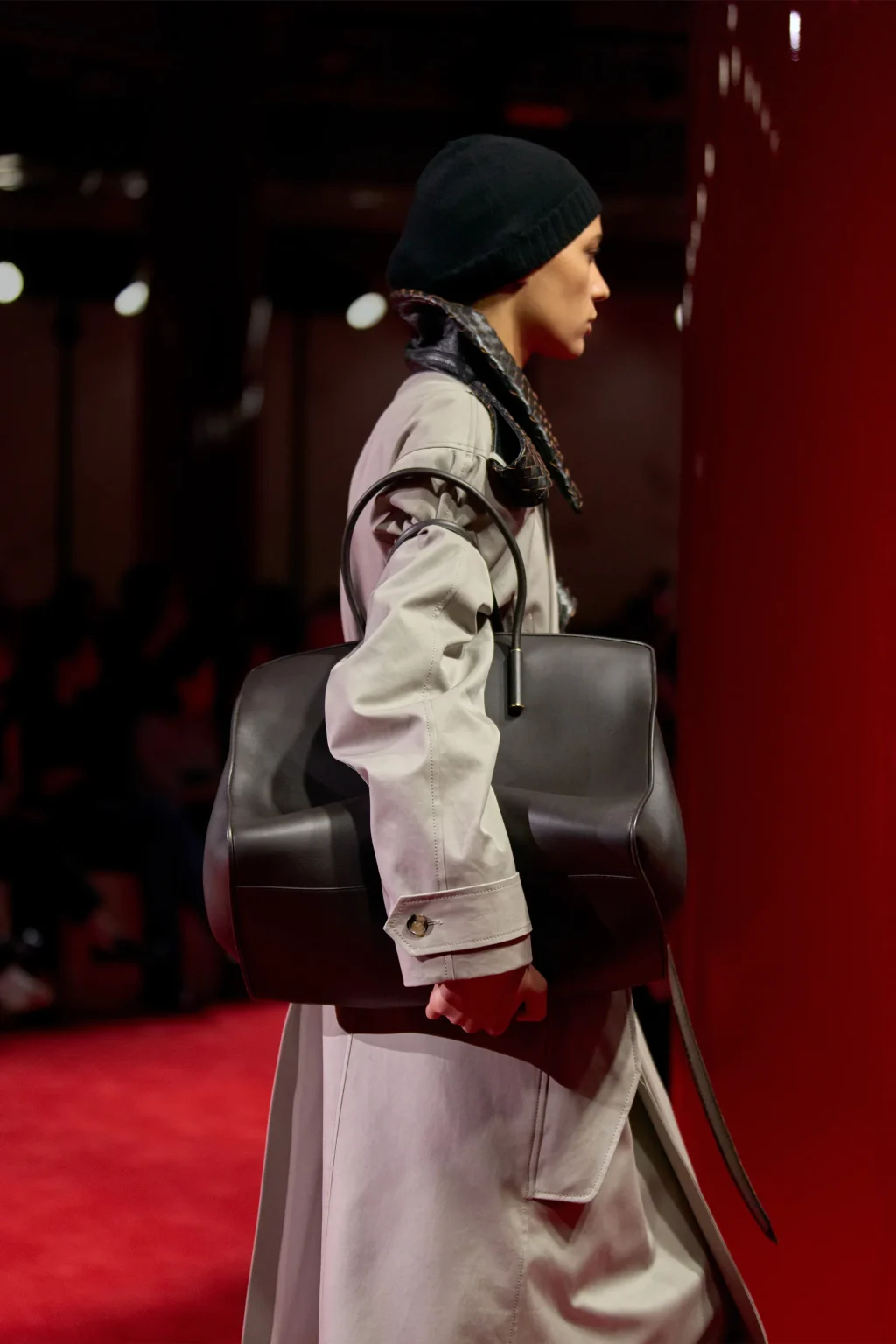
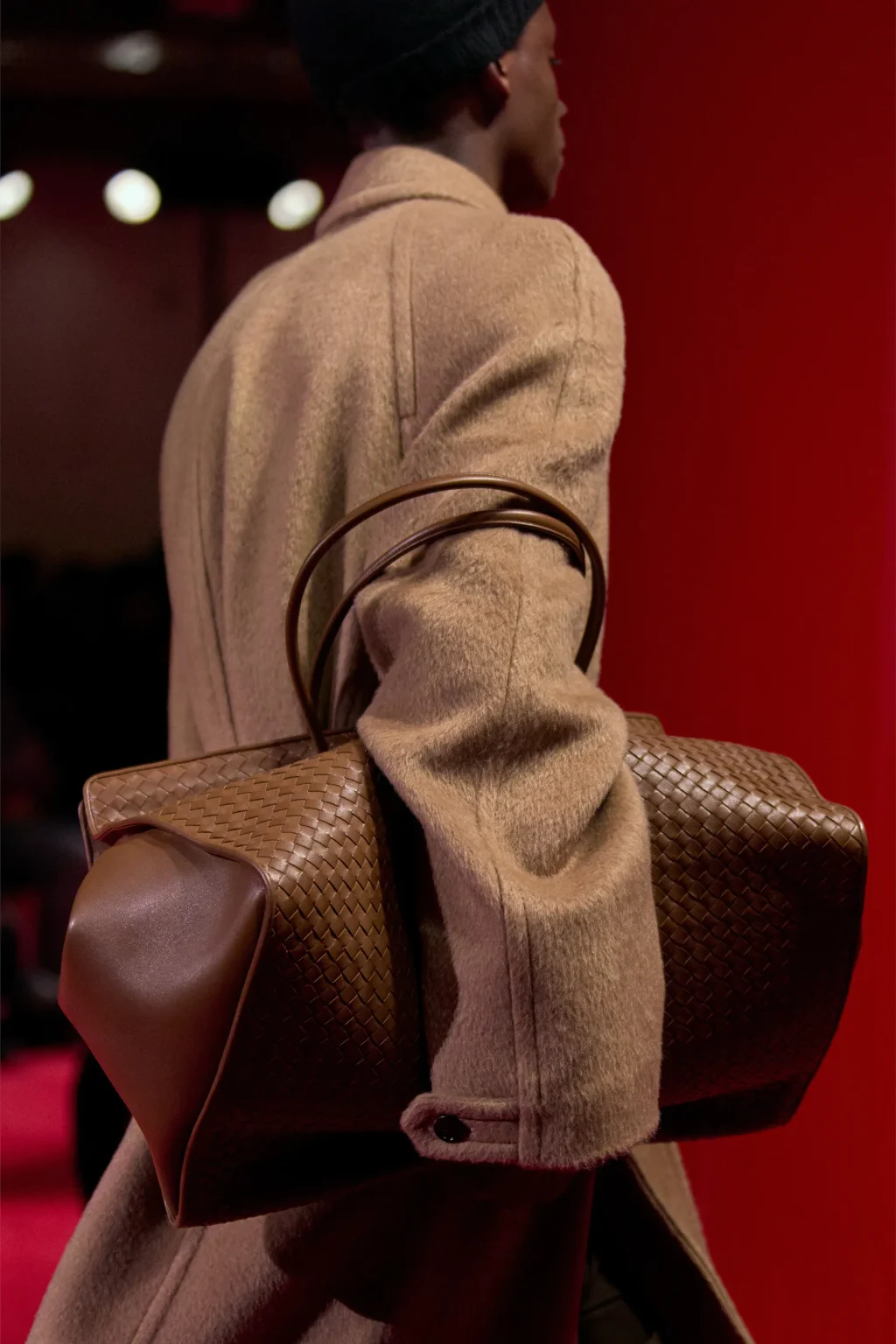
The Veneta Bag
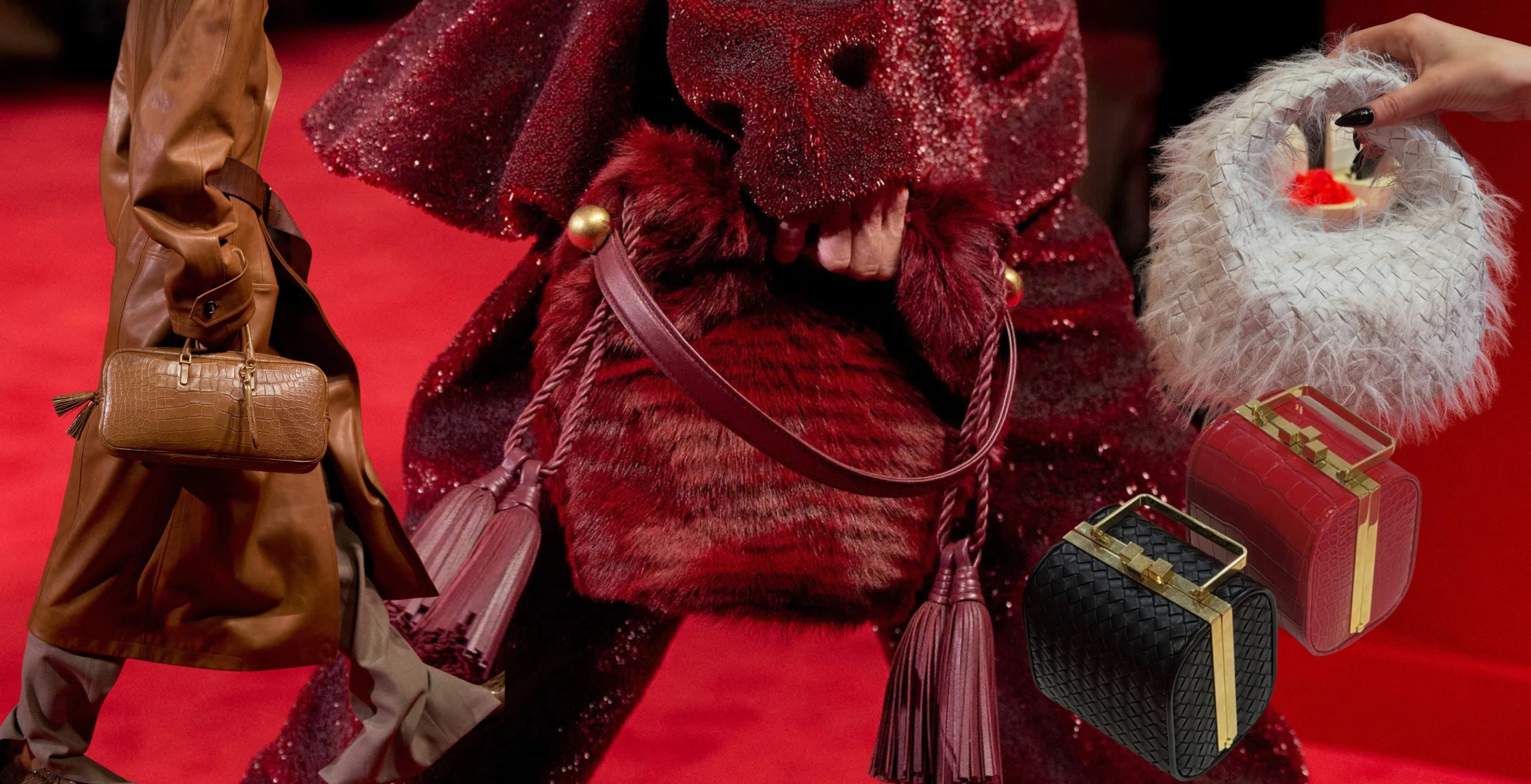
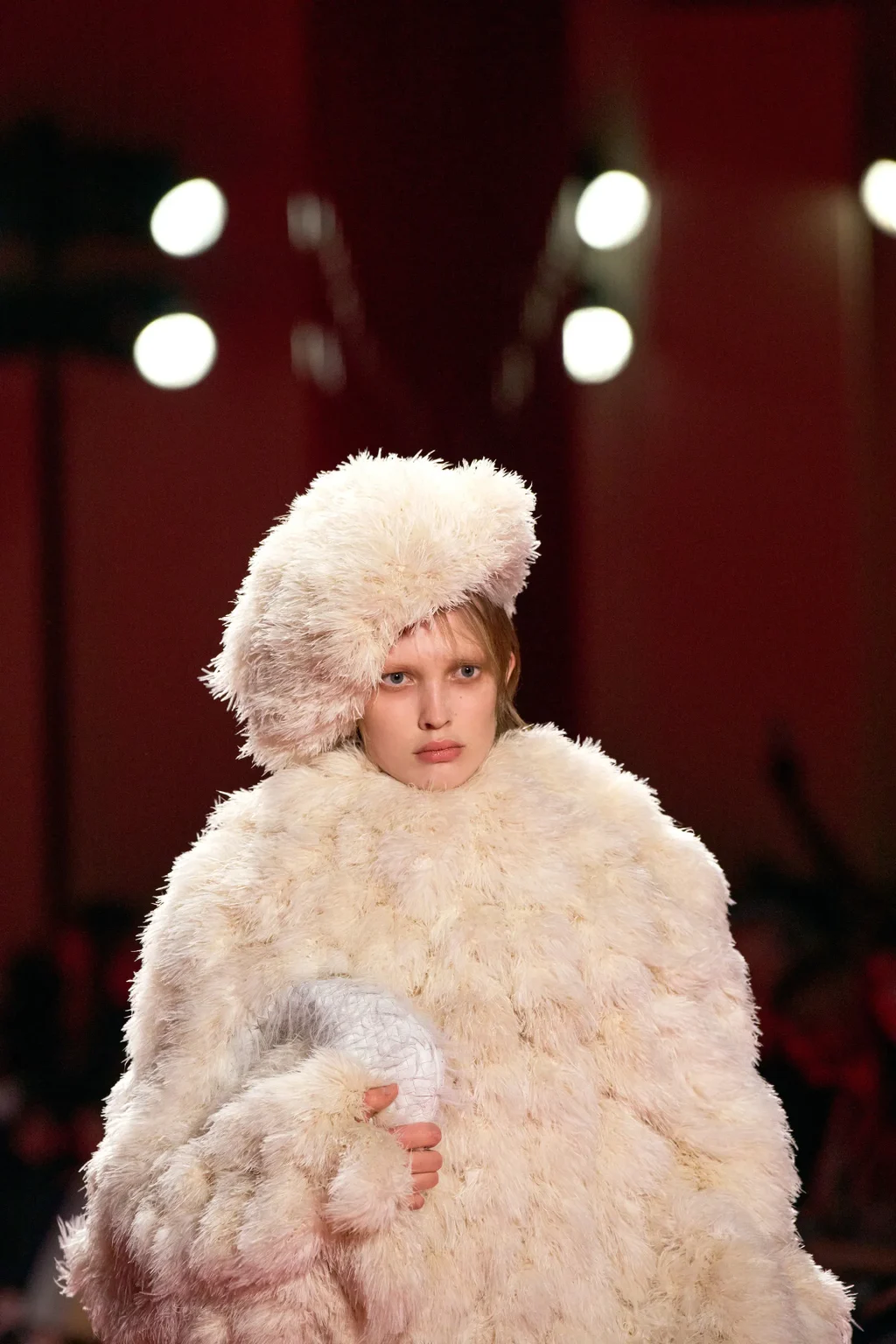
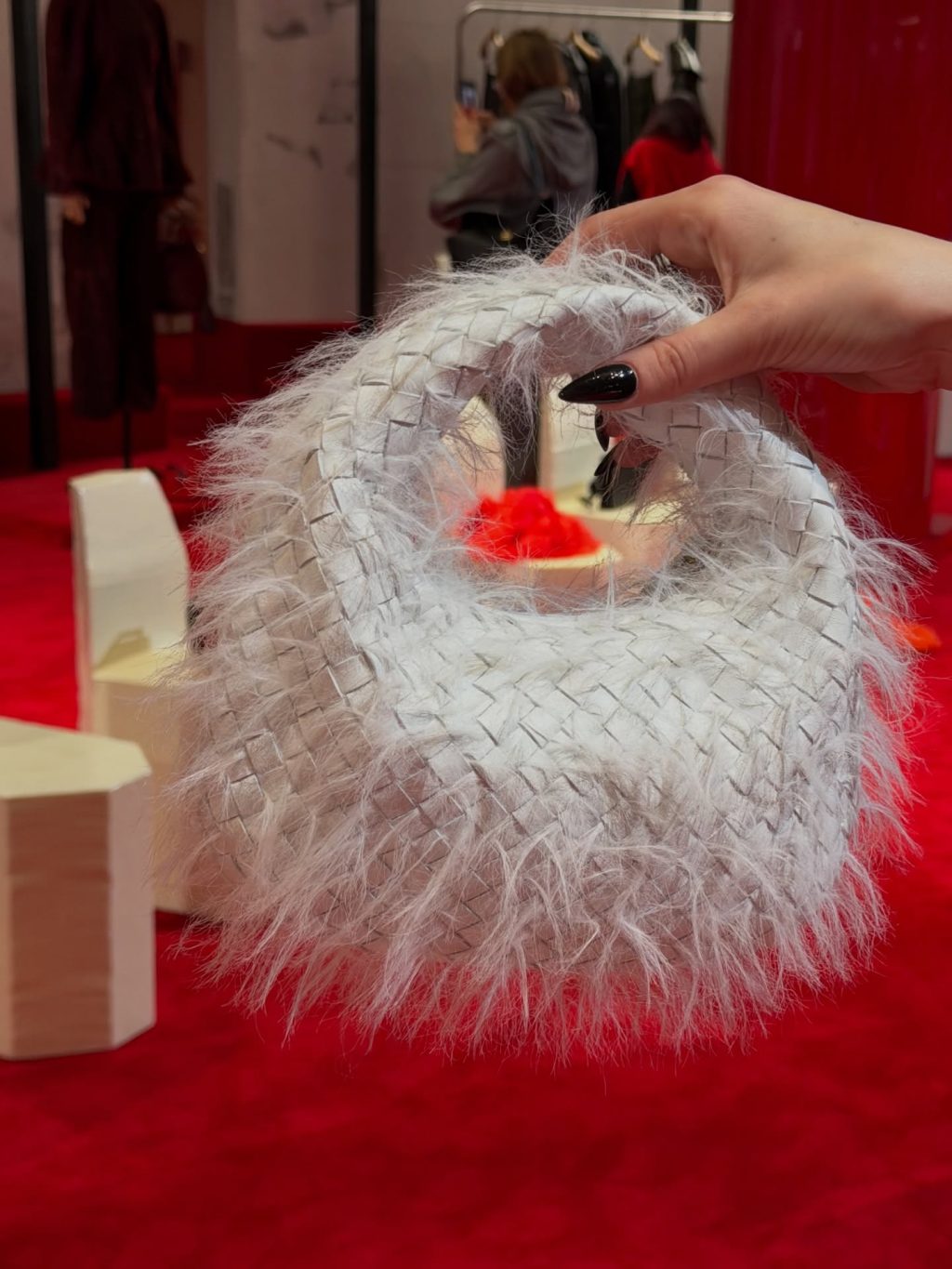
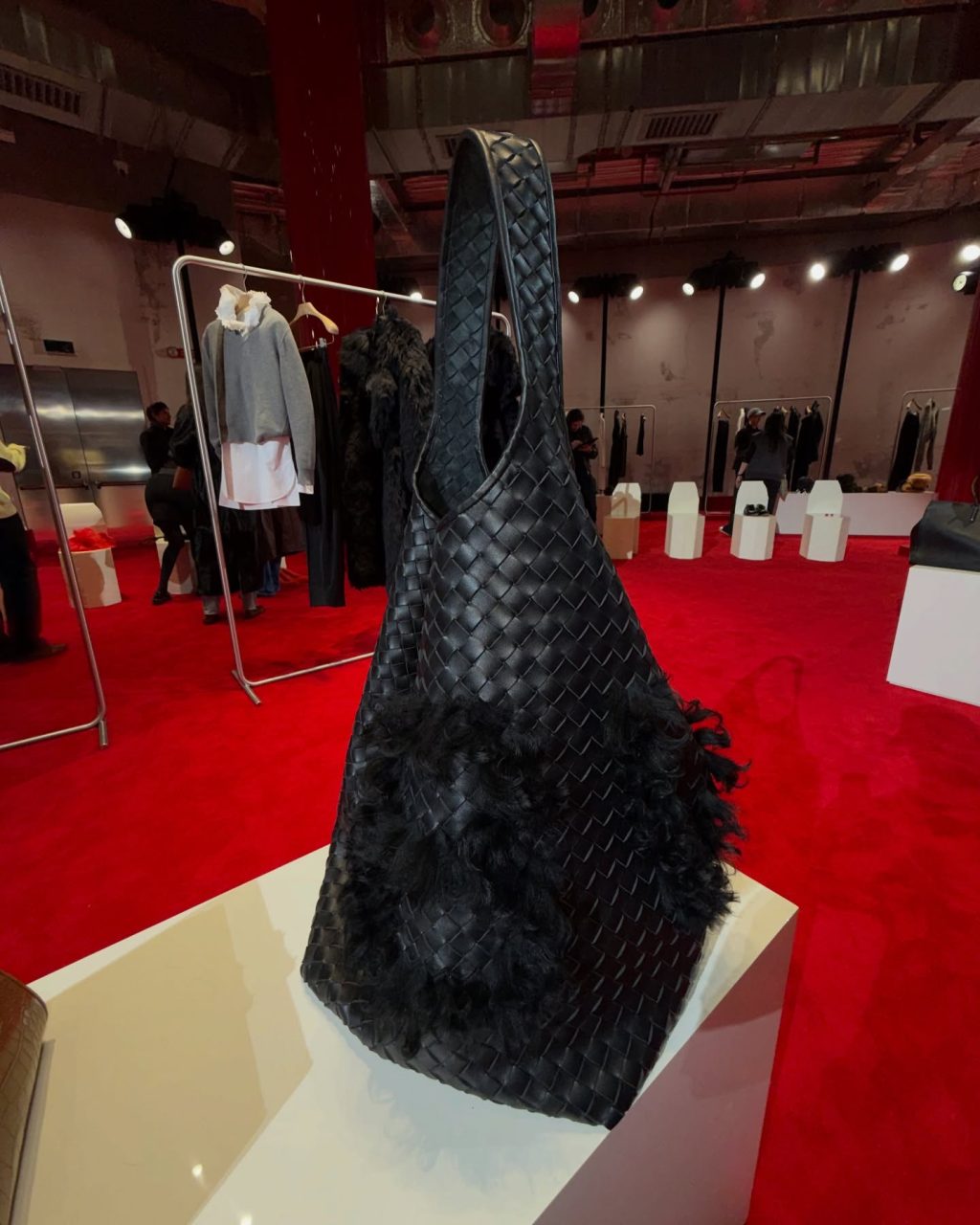
The Veneta appears as a plush, feathered / fringe-edged form (a tactile halo around the woven leather), held close like a comfort object—but styled as power dressing, not softness for softness’ sake.
The Slim Zip Top-Handle Bag
These bags read like Louise Trotter’s answer to “day-to-night” without the usual stiffness: a long, rounded cylinder silhouette with clean top handles, a zip-top finish, and Bottega’s signature intrecciato doing the heavy visual work.
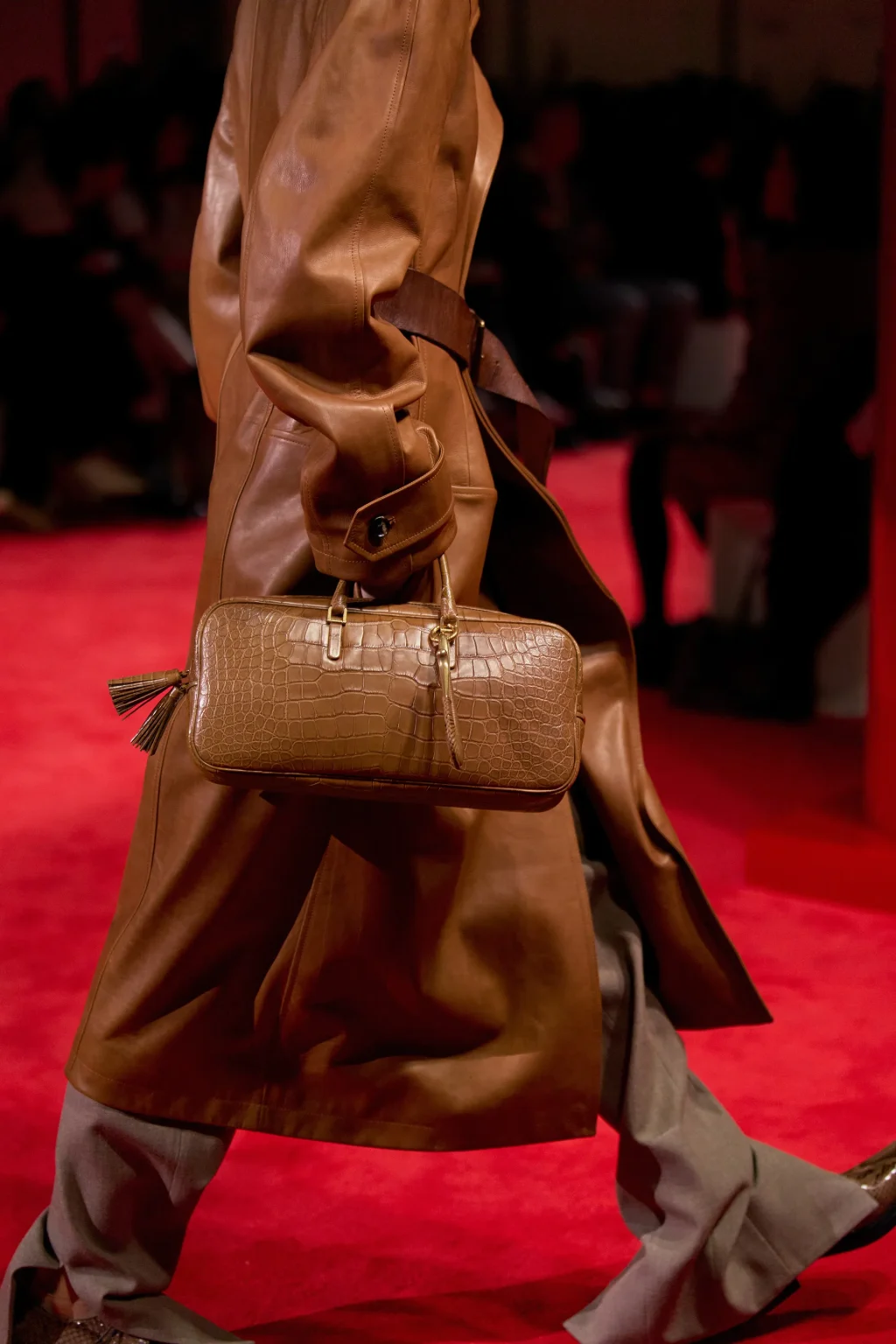
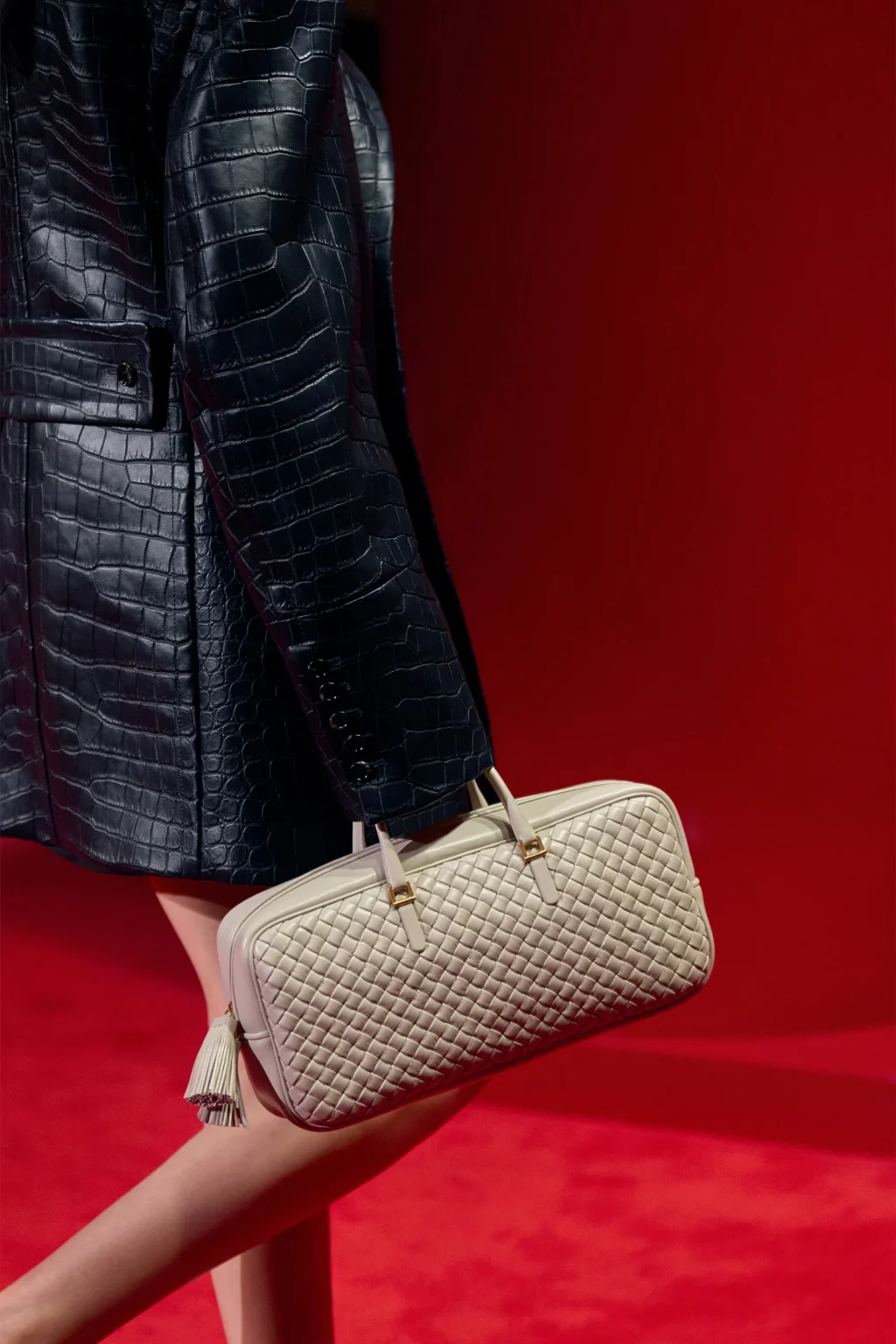
On the runway, they show up in smooth leather and tightly woven leather, sometimes with contrast side panels that emphasize the bag’s “rolled” volume.
The color story—ink/navy, graphite, soft stone, deep brown, and croc-embossed finishes—keeps the silhouette adult and Milanese: polished, practical, and instantly legible in a street-style frame.
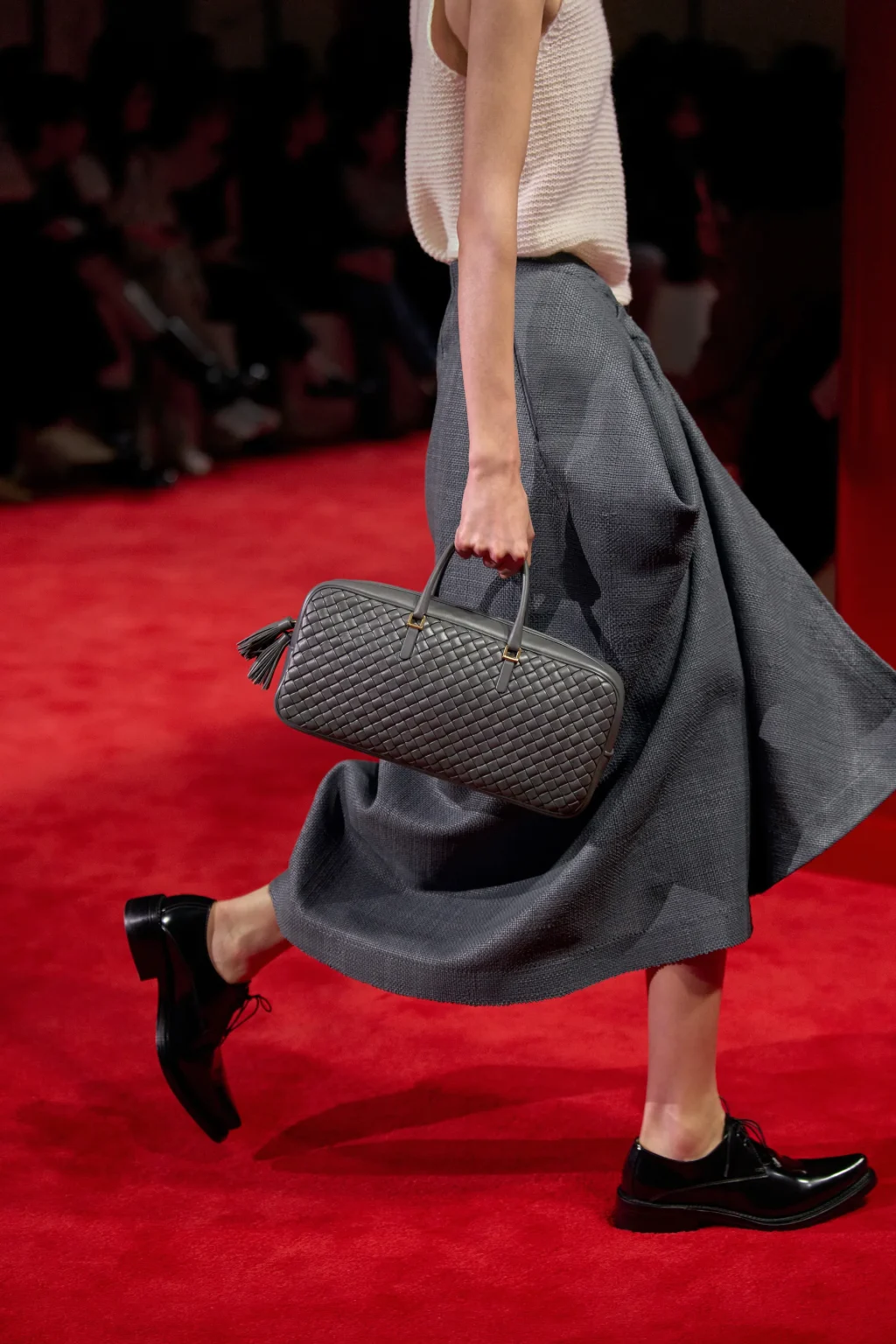
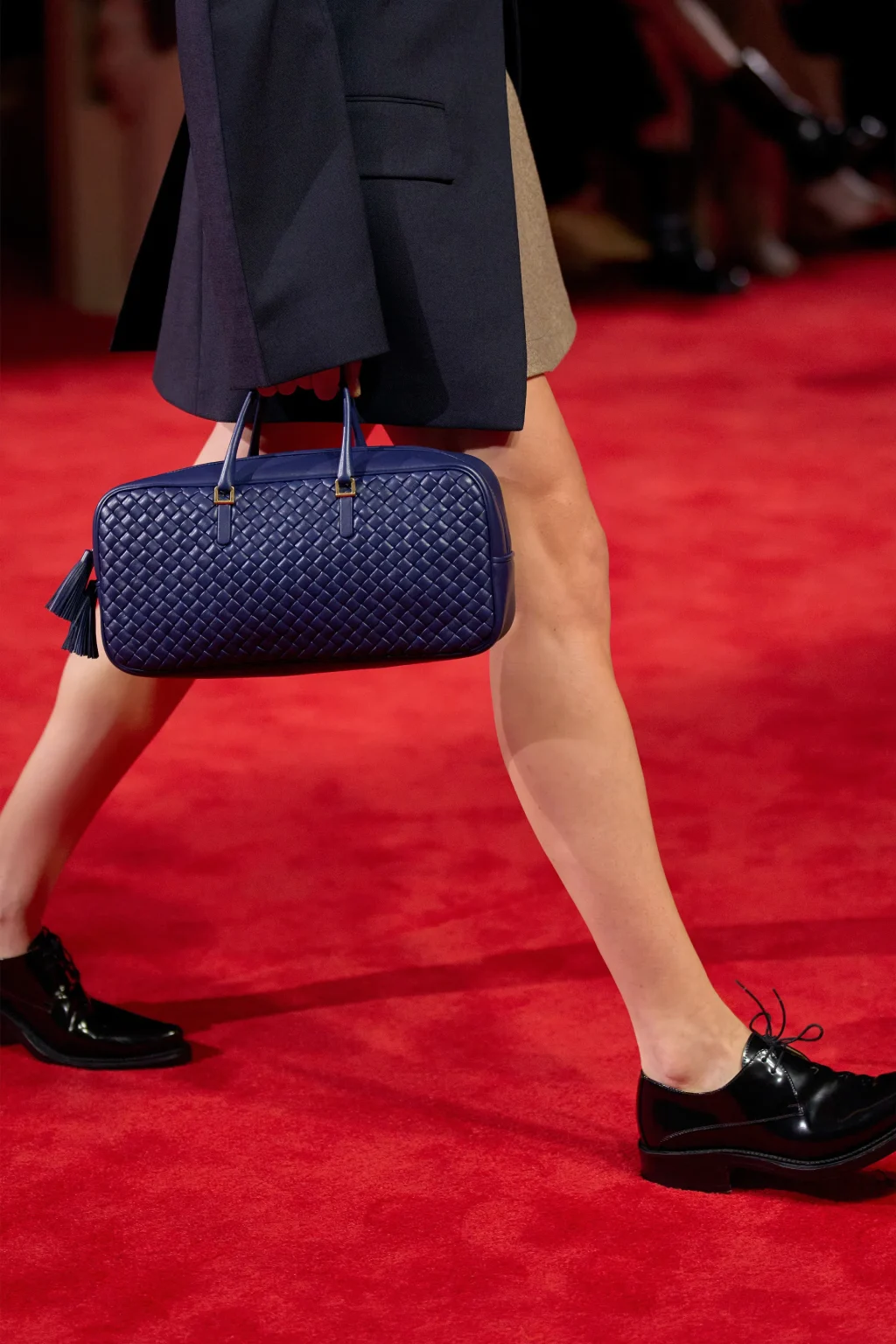
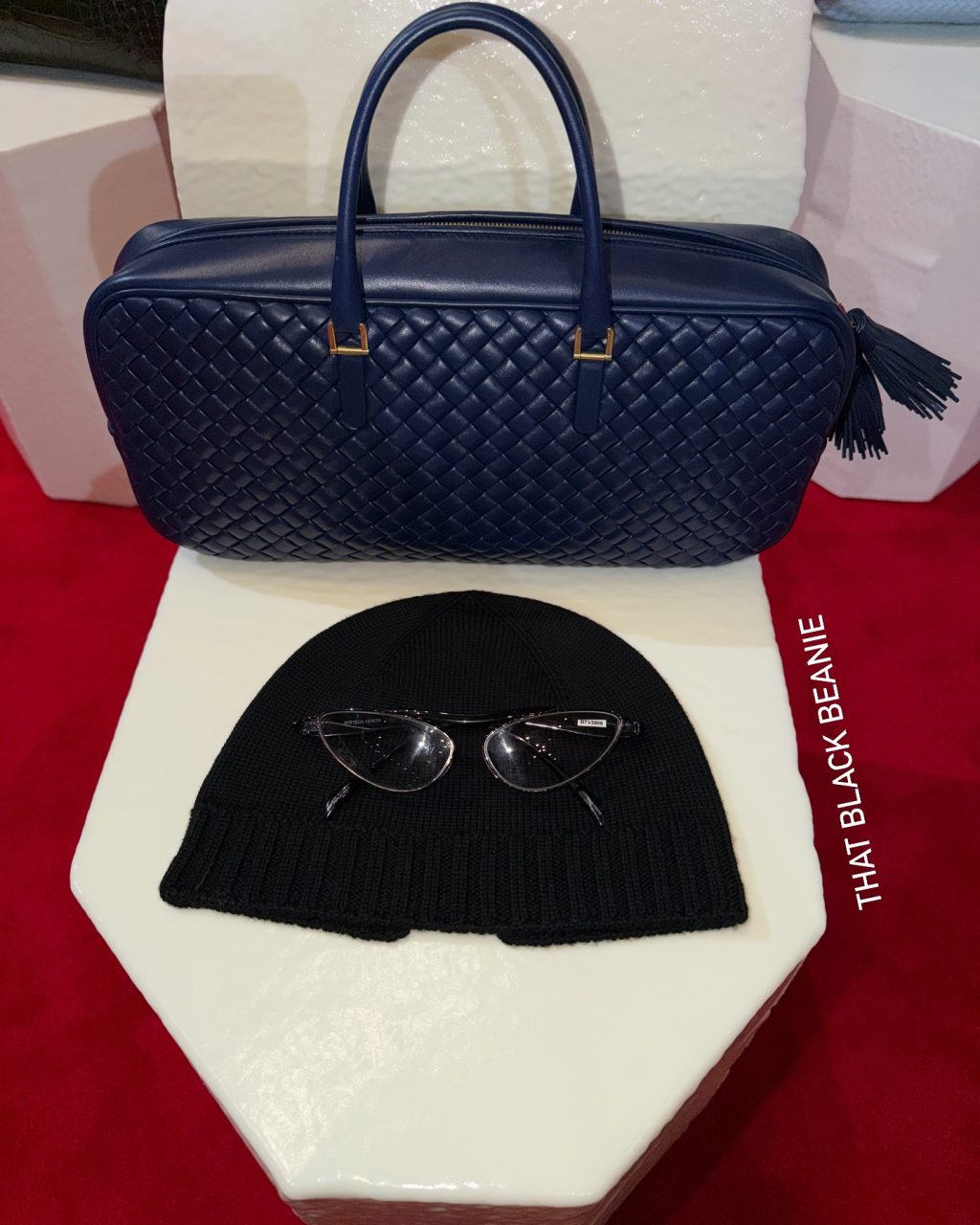
The Barrel / Bowling Top-Handle Bags
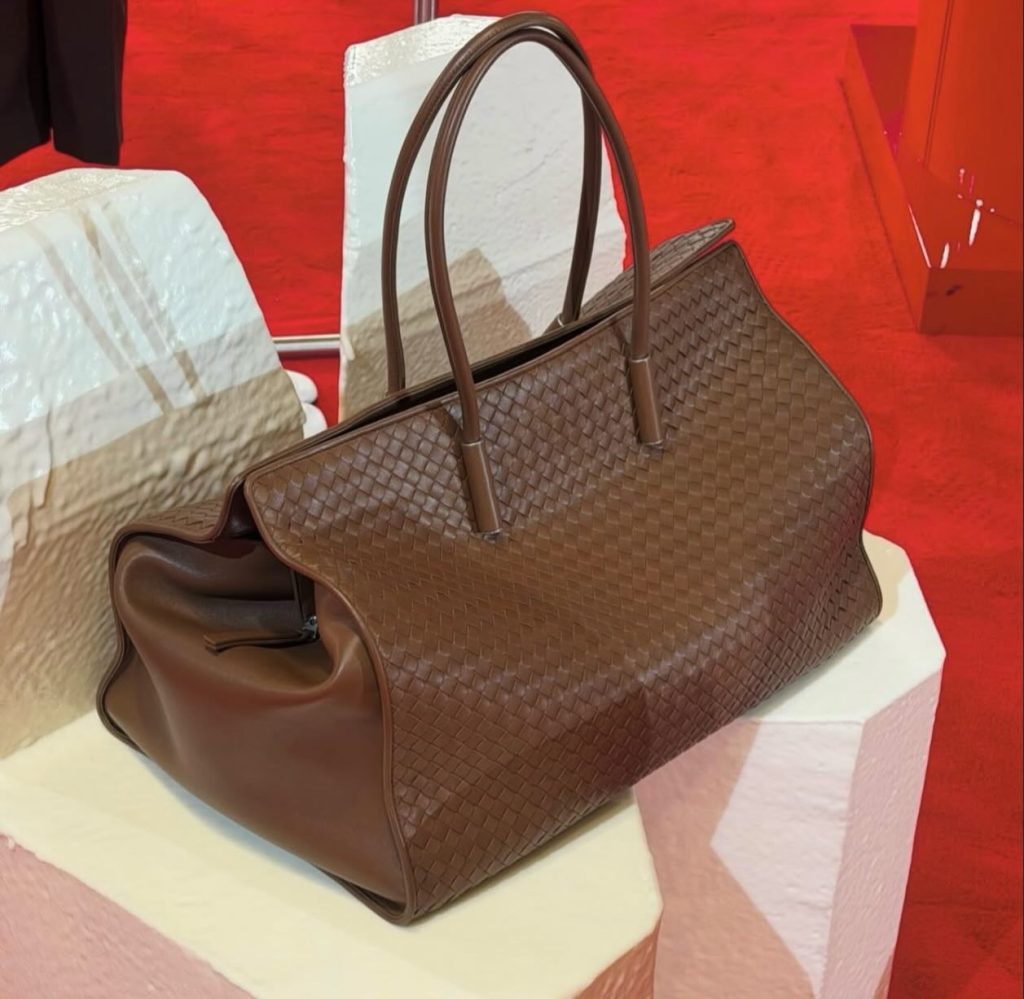
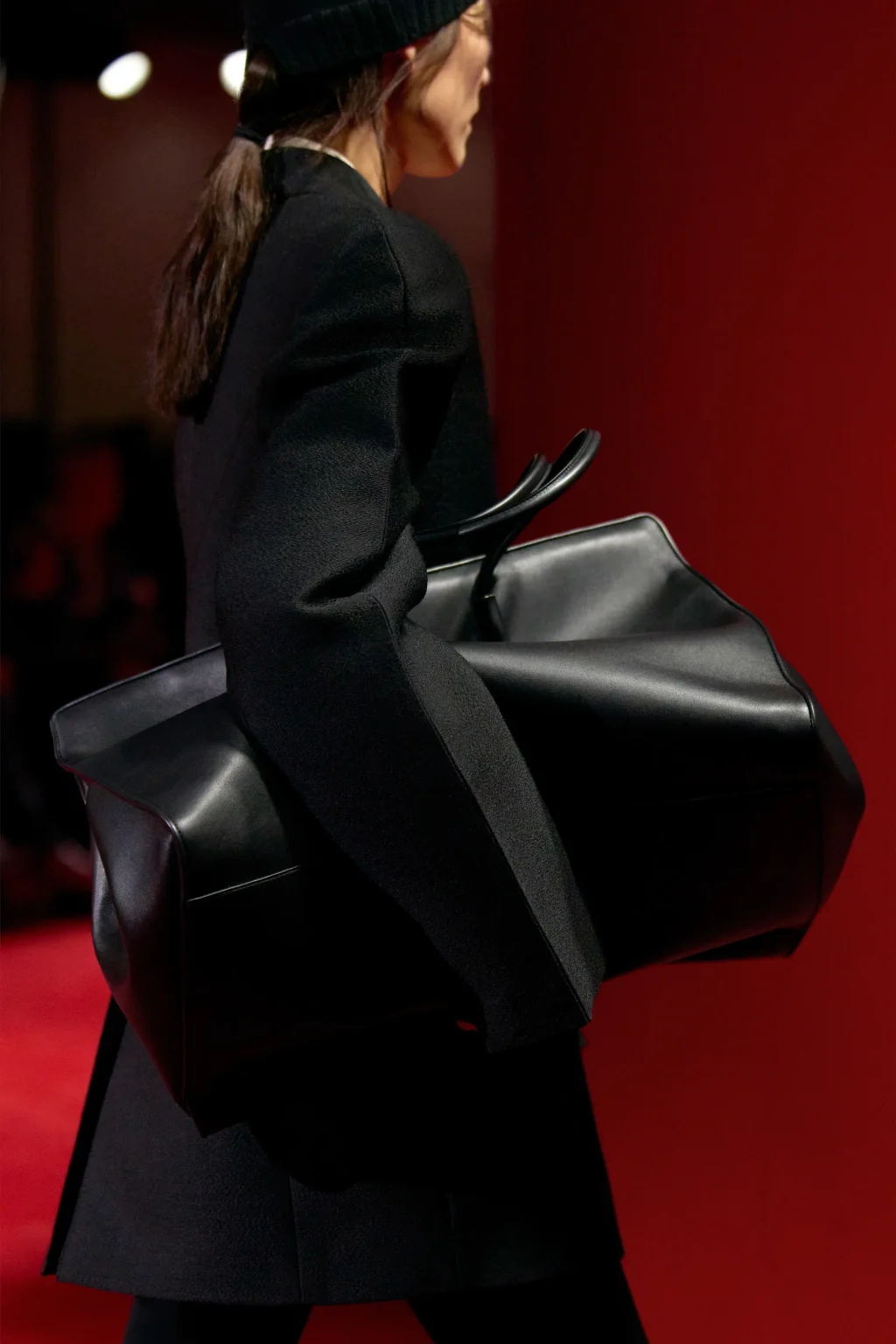
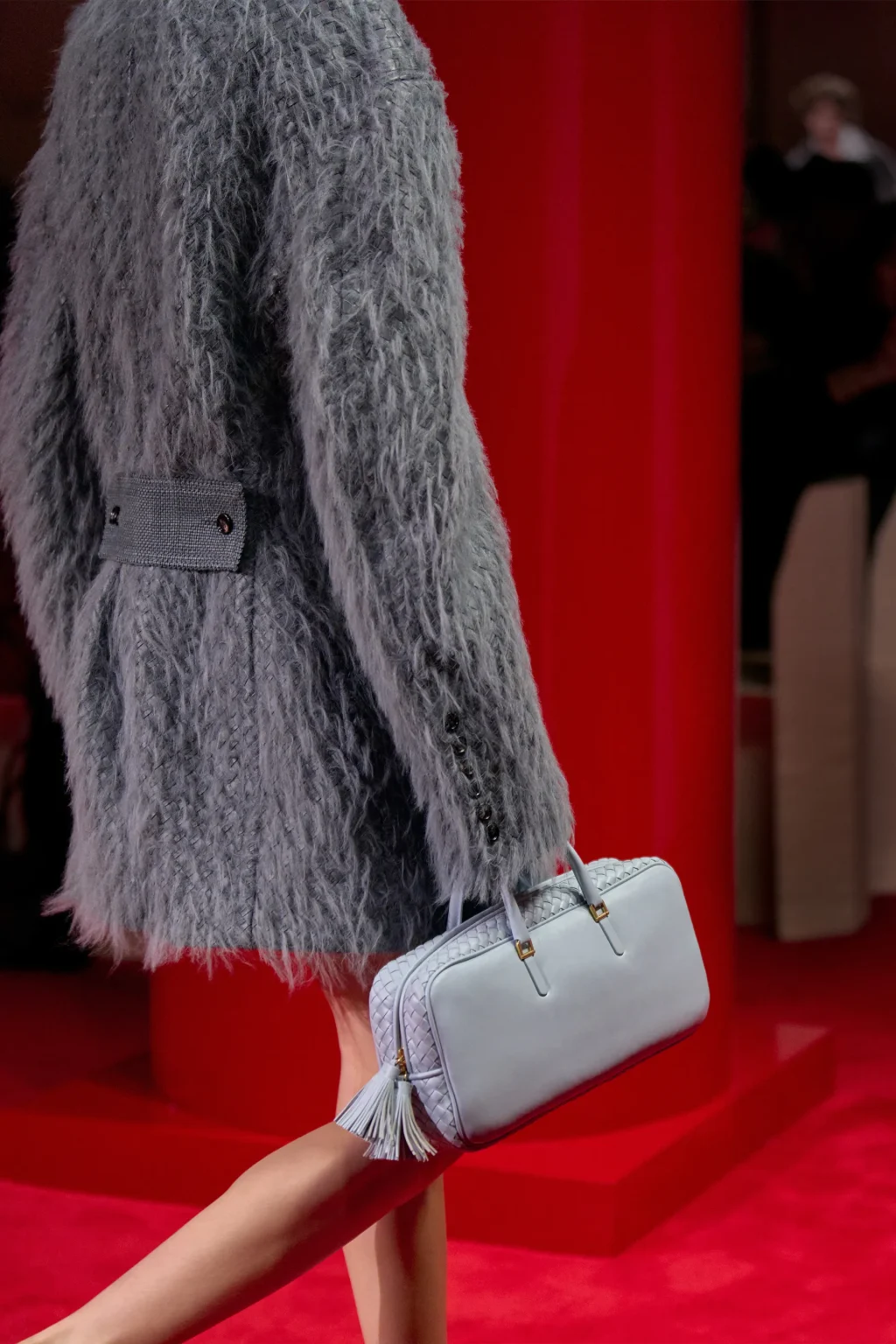
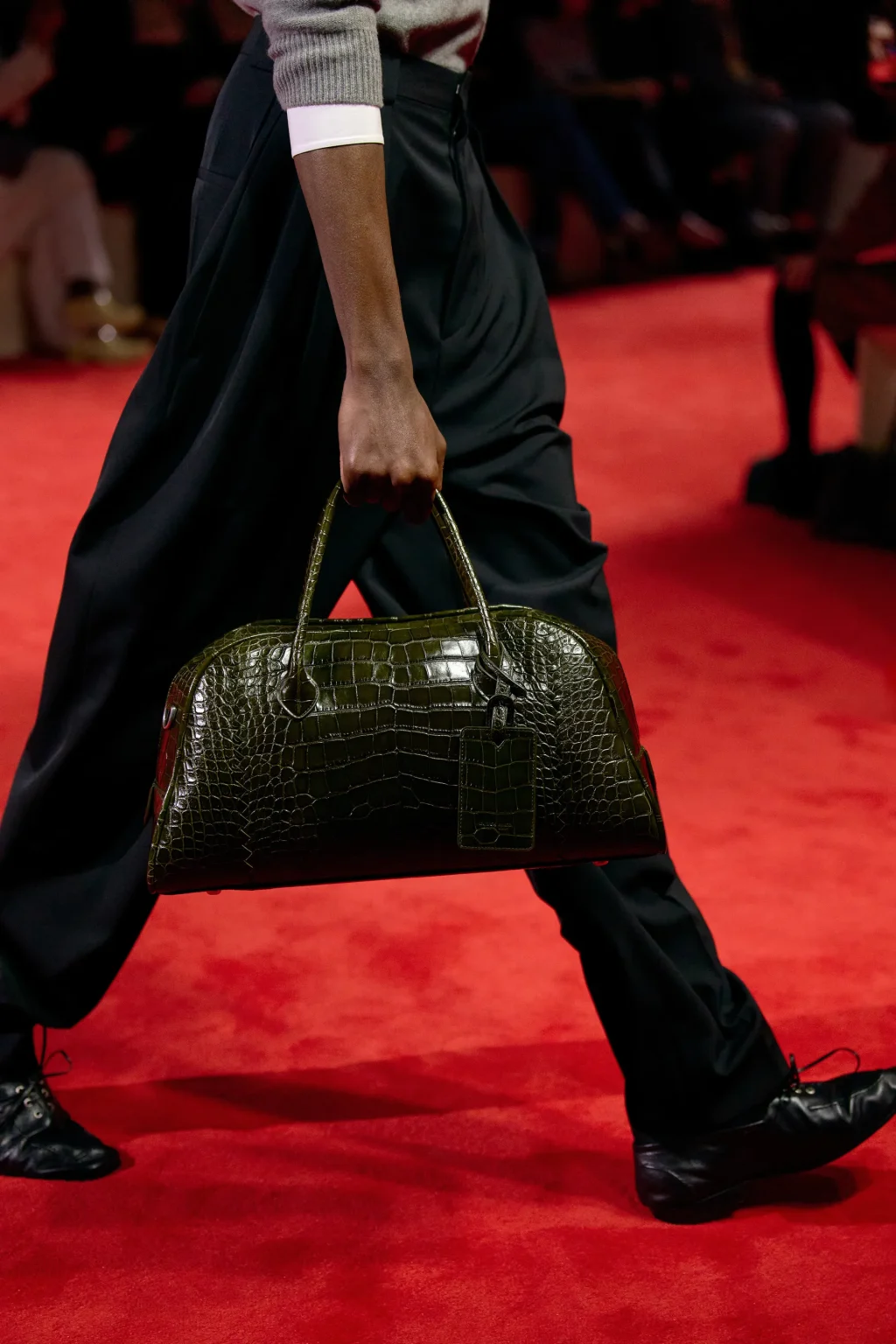
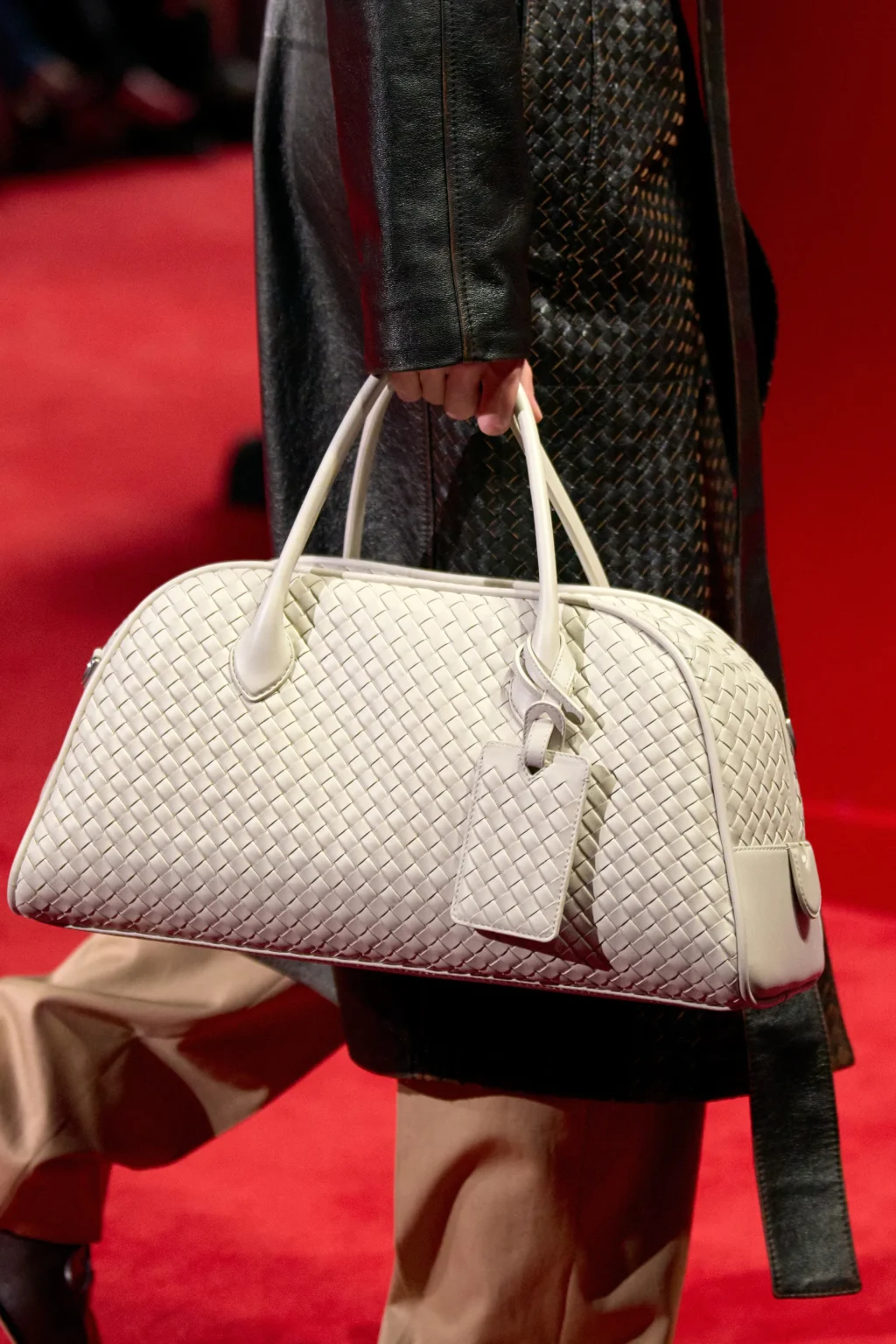
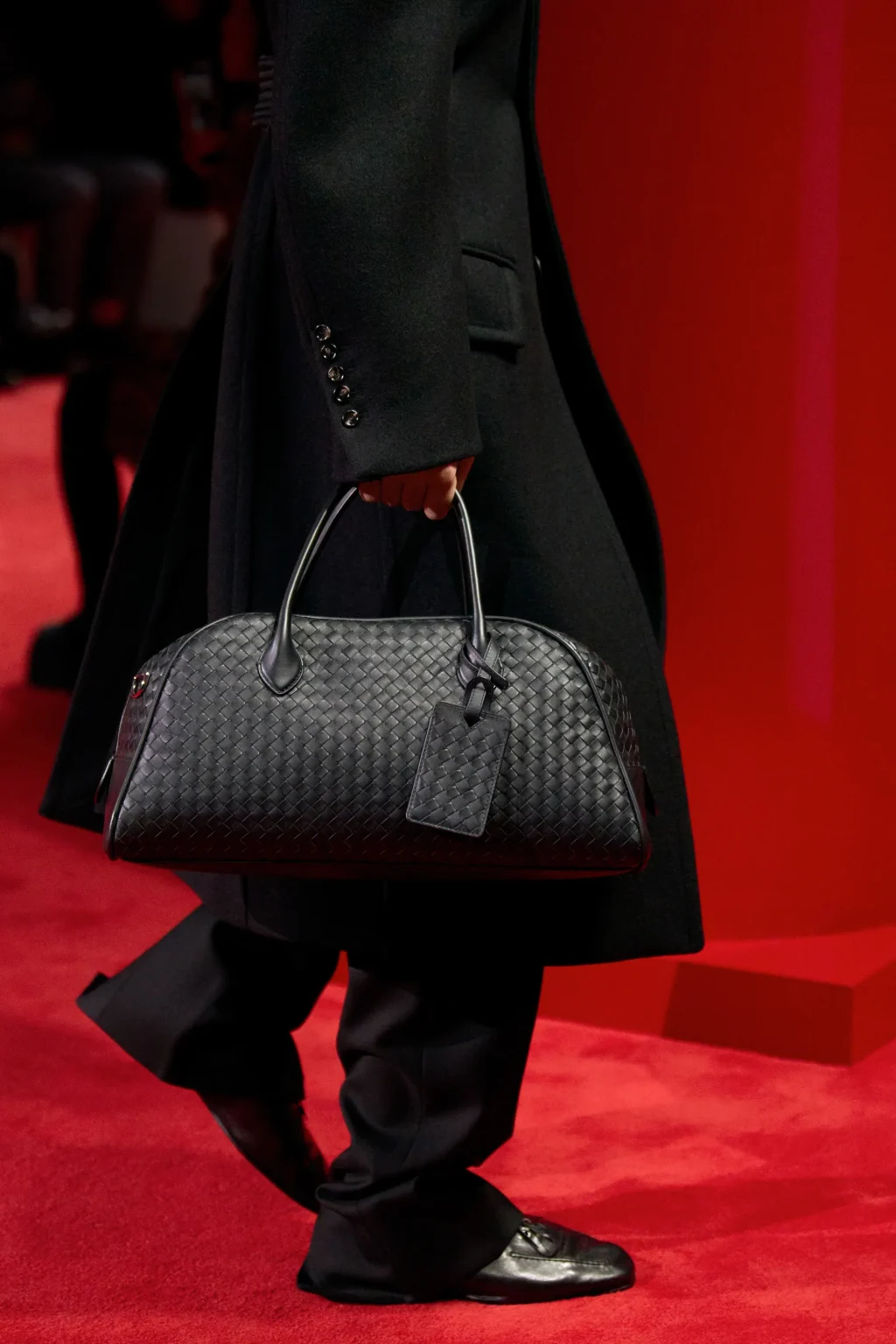
A major FW26–27 proposition is what I’d call the Intrecciato Barrel / Bowling family—structured but not stiff, elongated, and designed to move through the day without looking like office luggage.
The silhouette is boxy and rigid through the sides, with long tubular handles and a clean, minimal body that lets the construction do the talking—some versions are pure smooth leather, others are intrecciato-panelled so the House codes read from a distance.
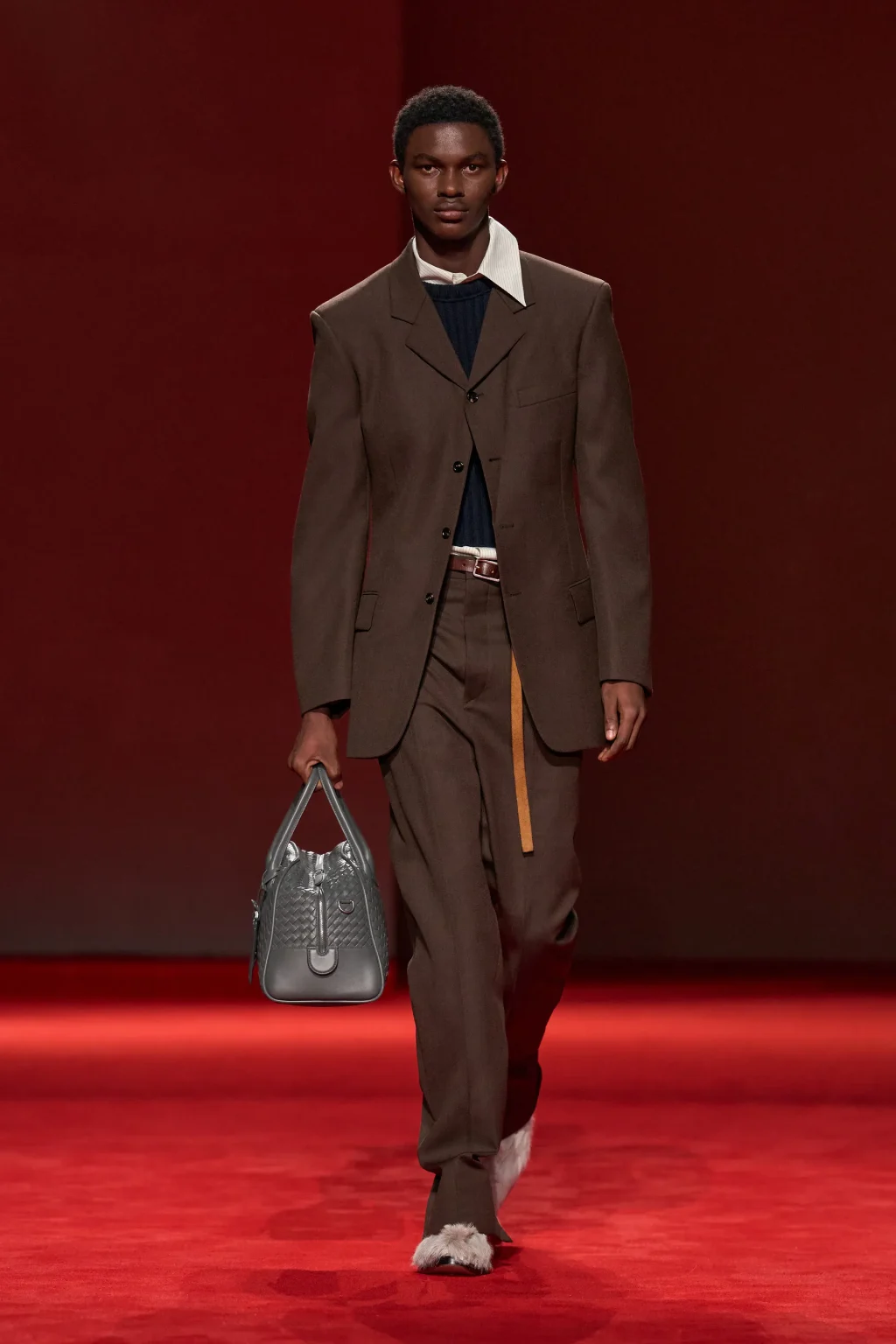
This is the kind of bag that will likely photograph extremely well on resale platforms: recognizable shape, recognizable craft, and a silhouette that reads “new” even when executed in heritage techniques.
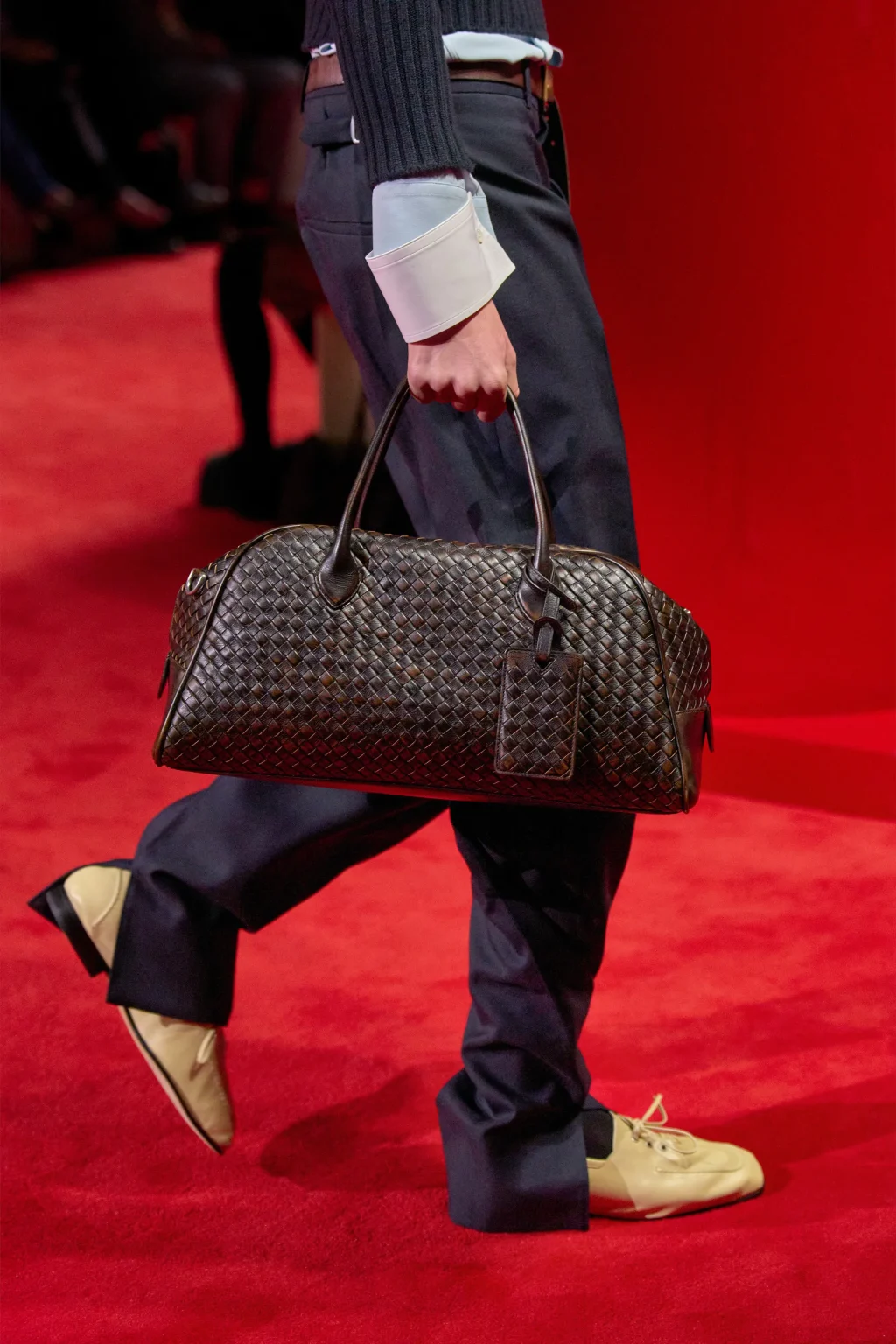
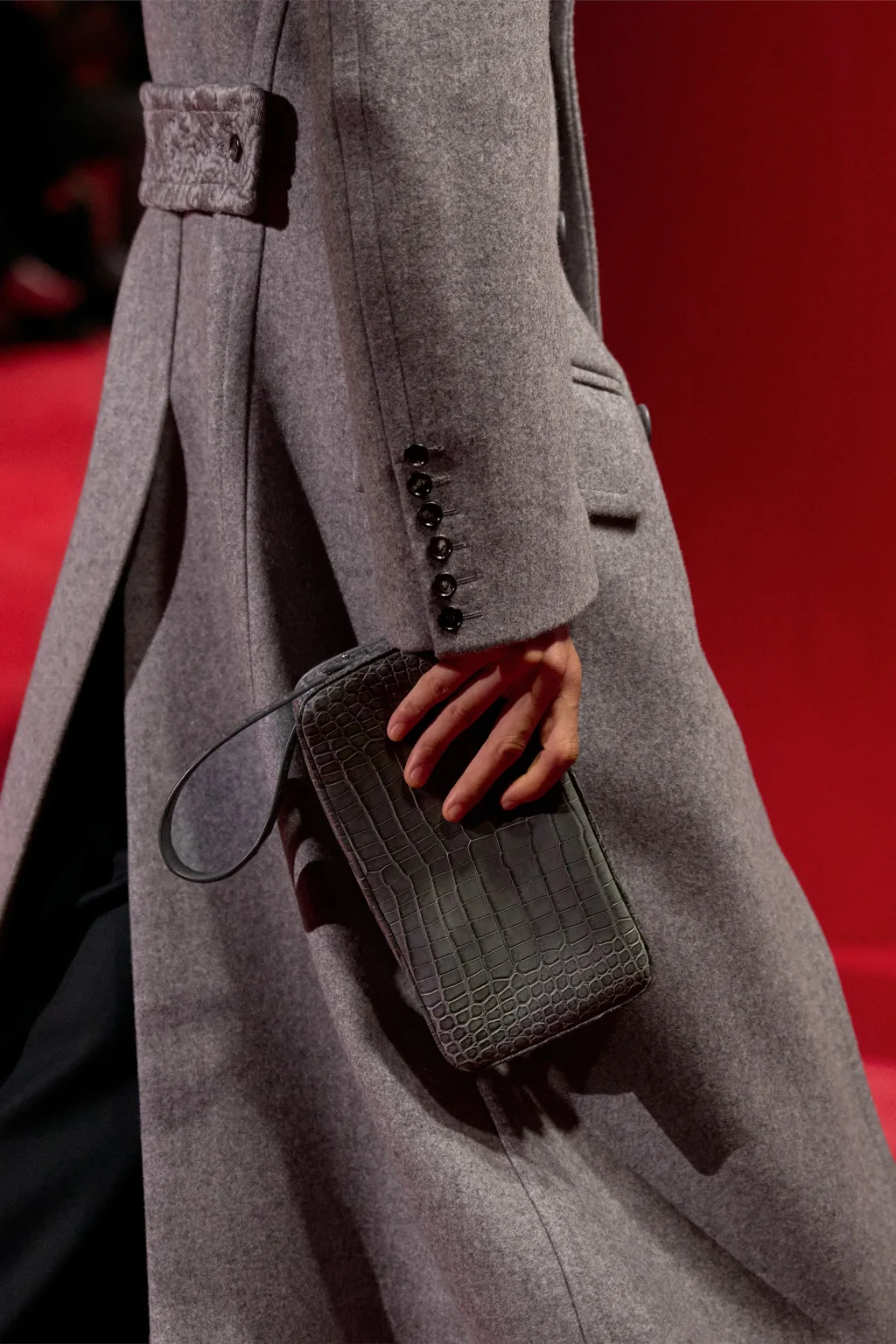
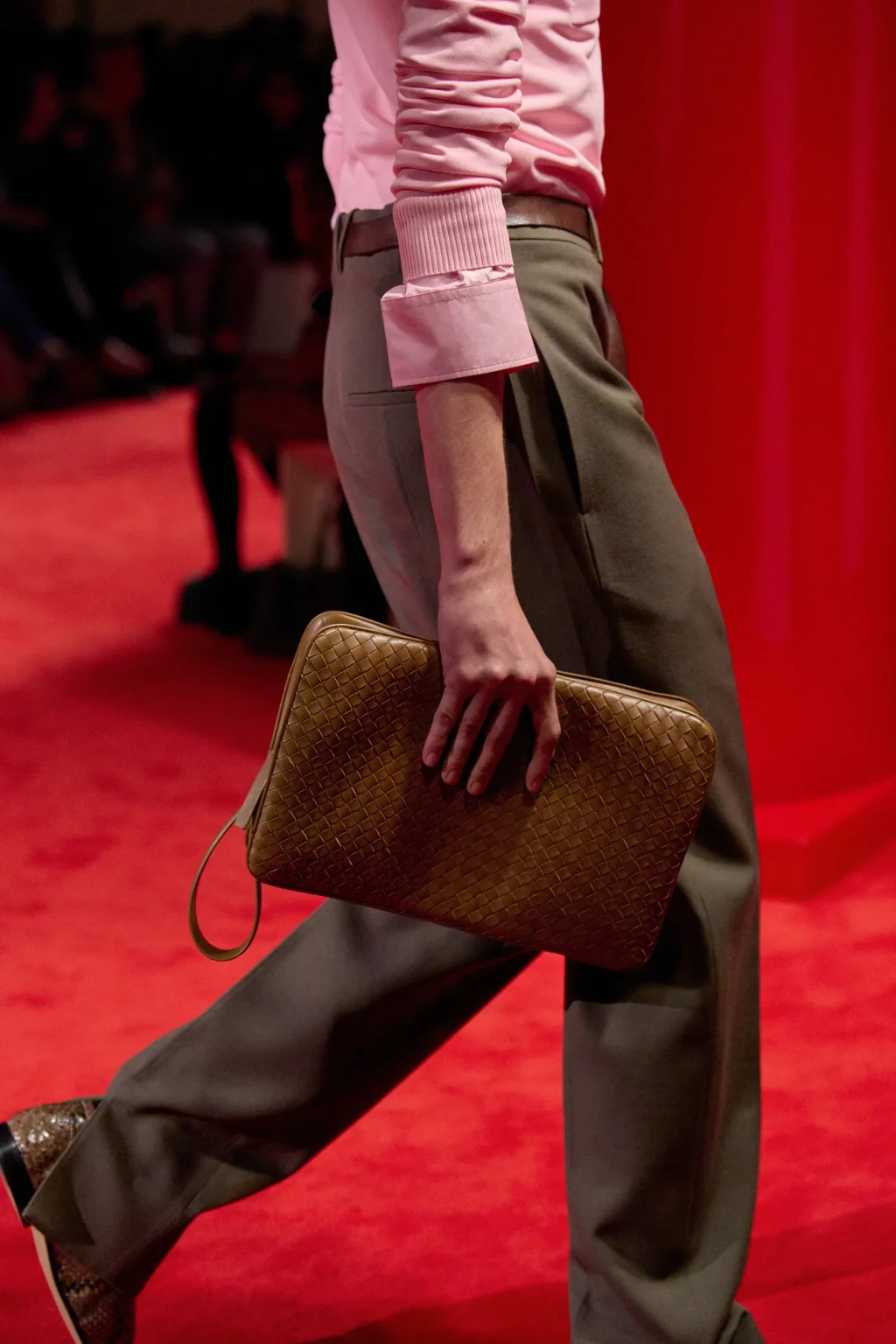
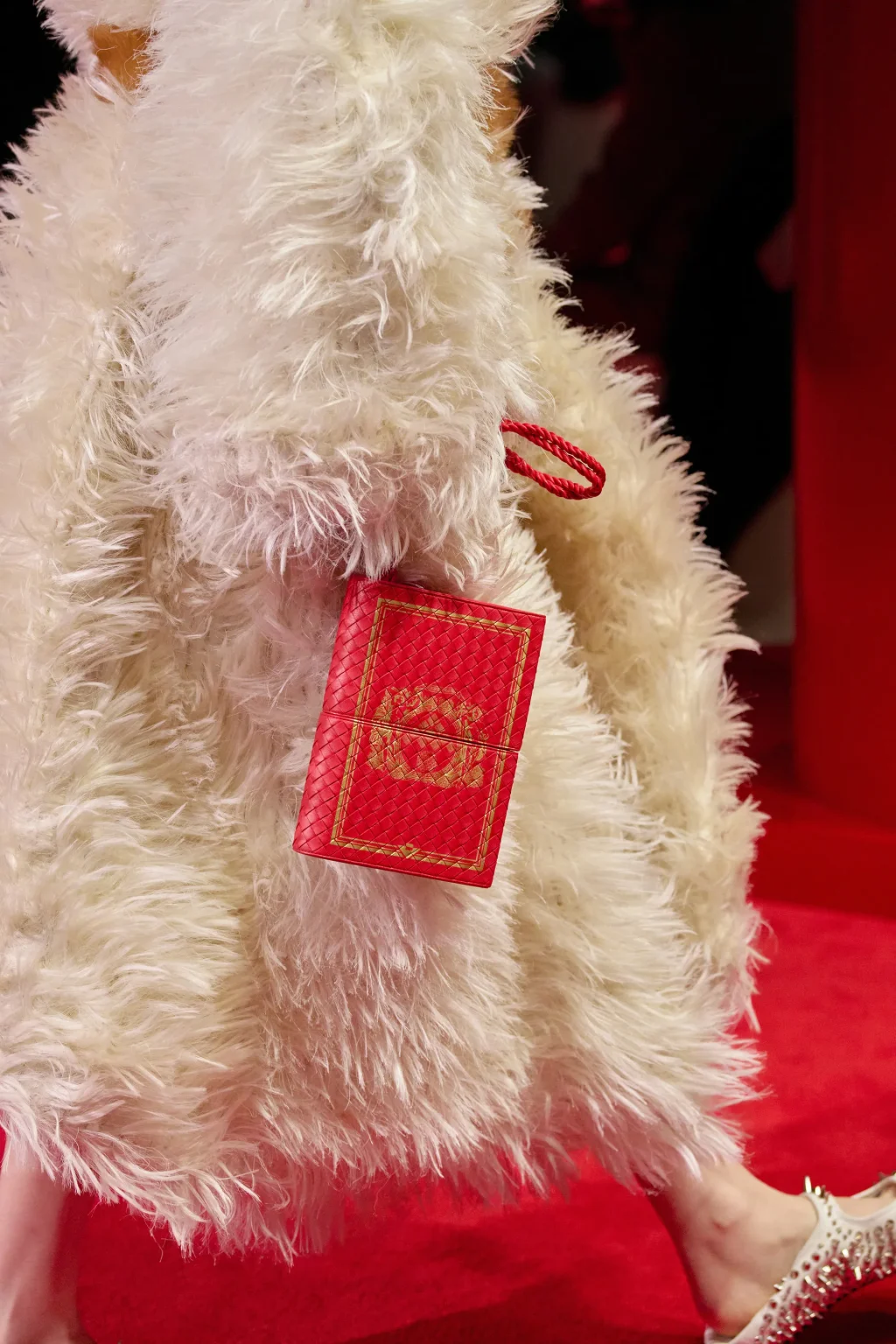
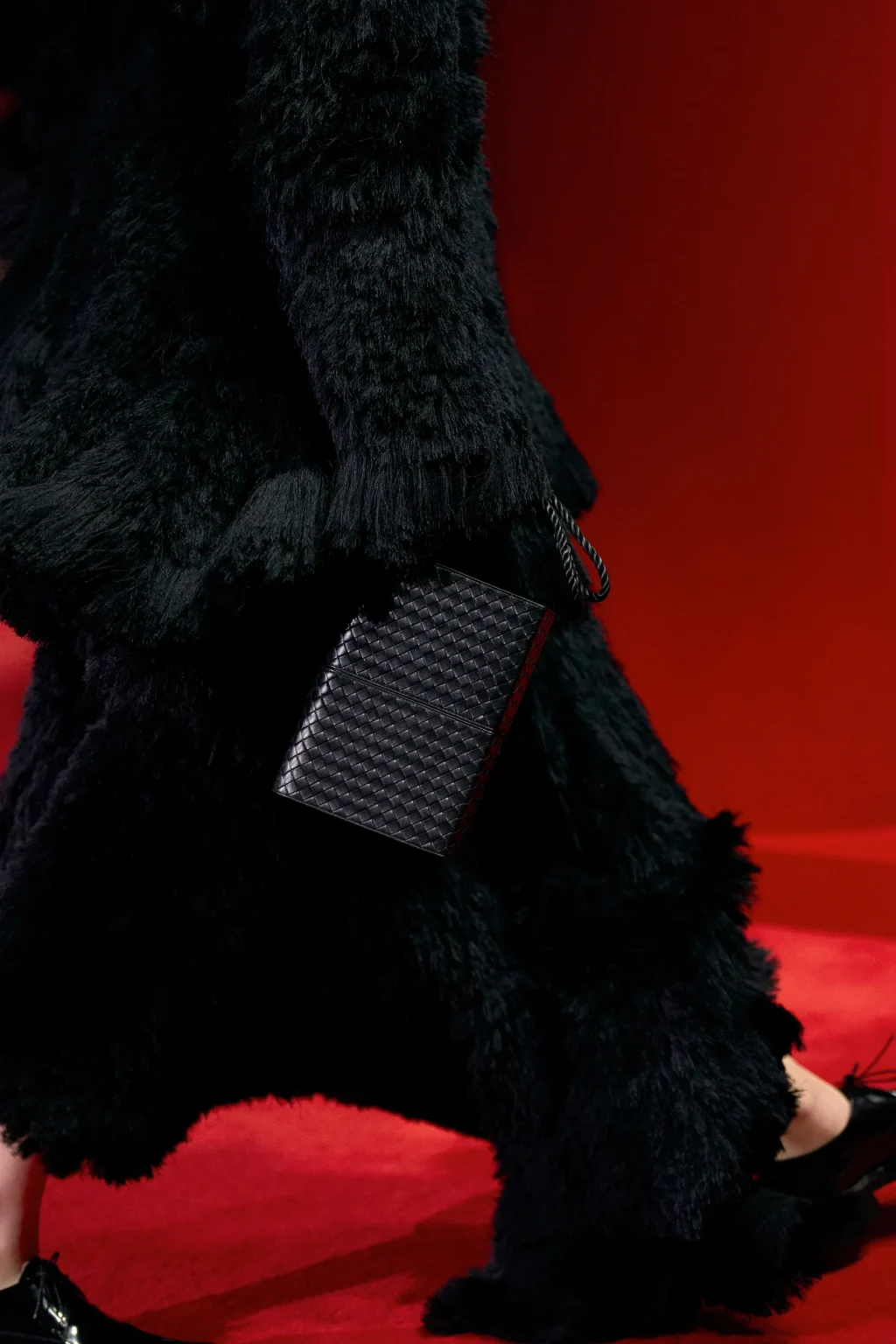
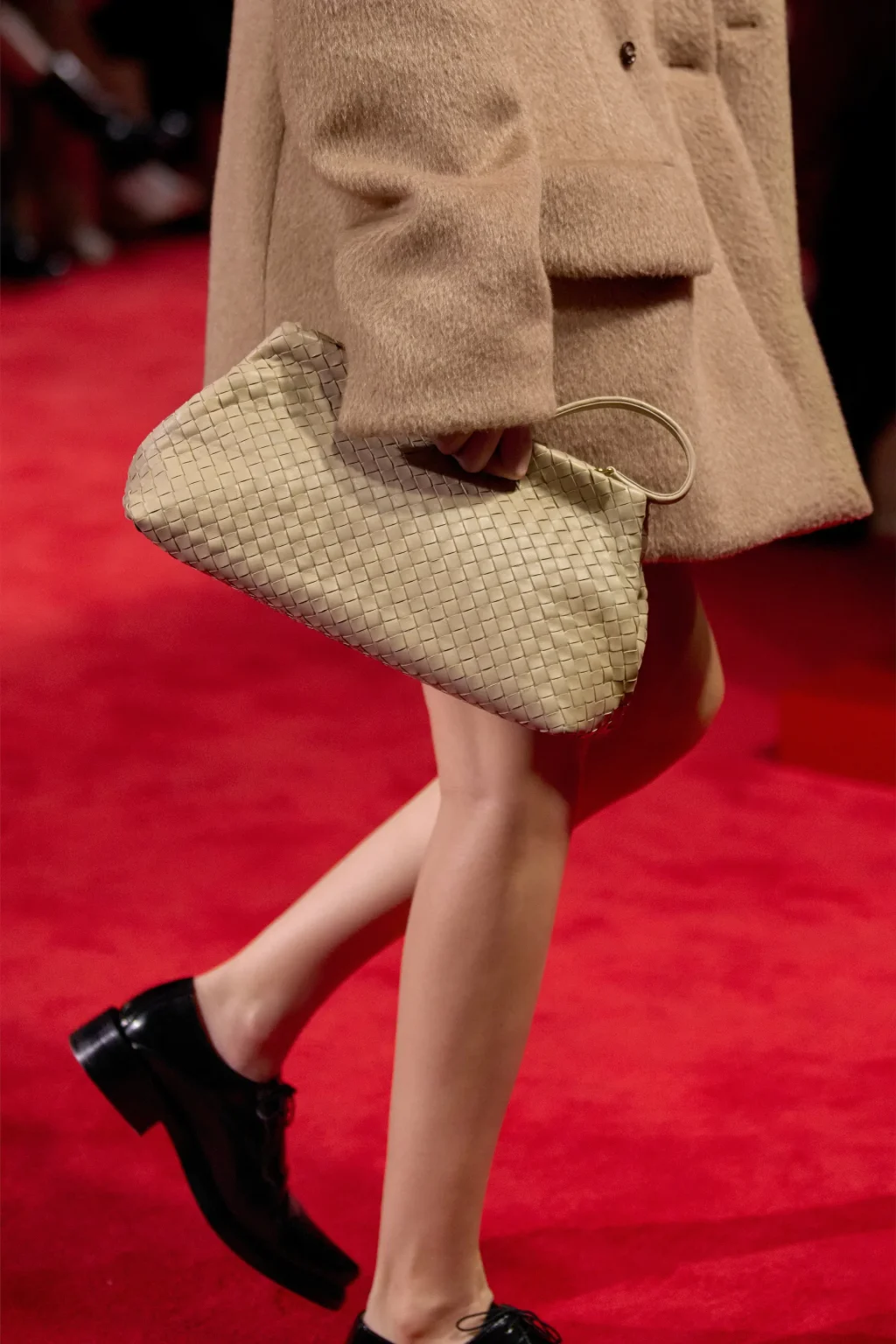
The Woven Zip Clutch (Wrist-Strap)
A clean rectangular pouch—often woven—finished with a wrist strap. It reads like a modern document case, but scaled for evening.
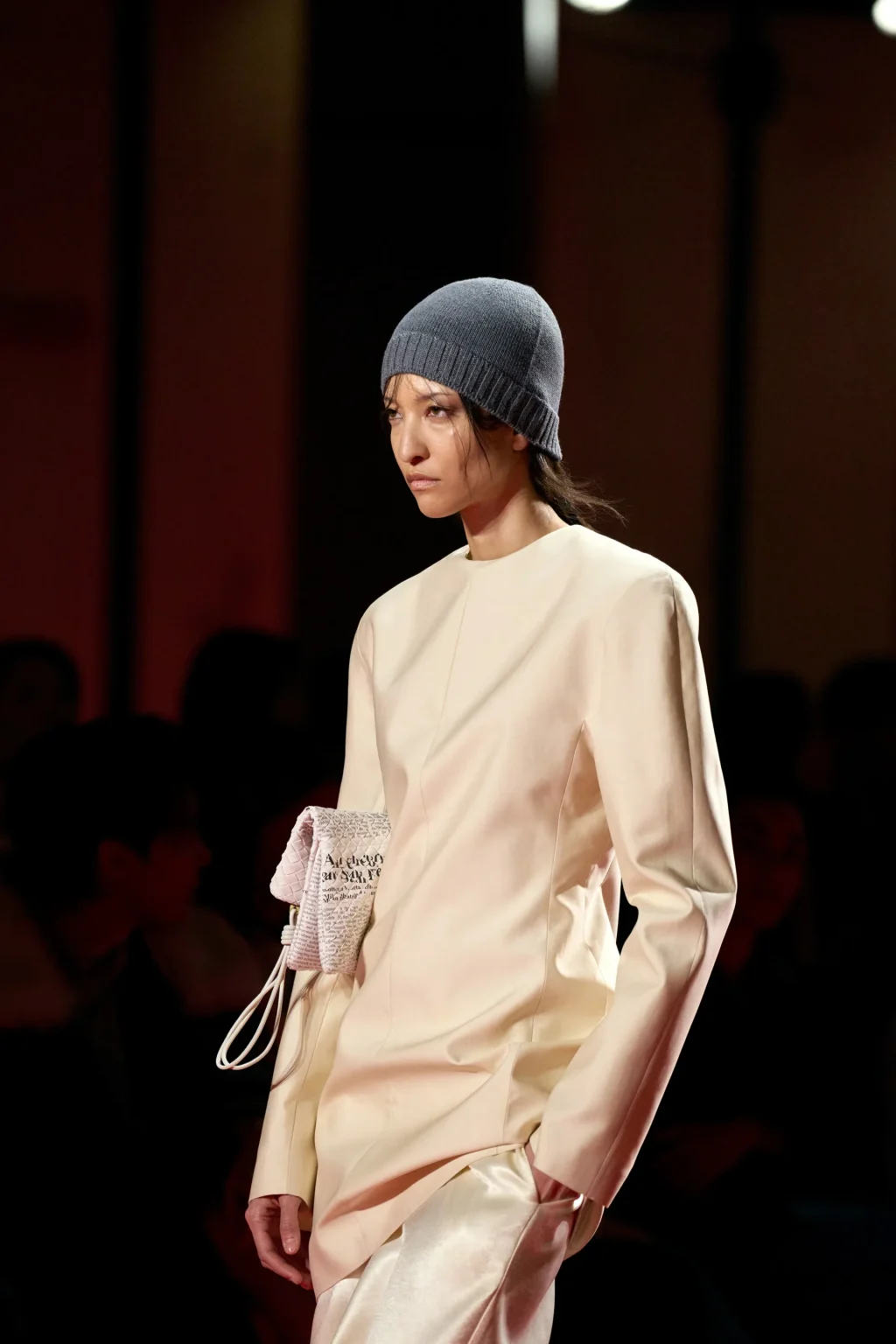
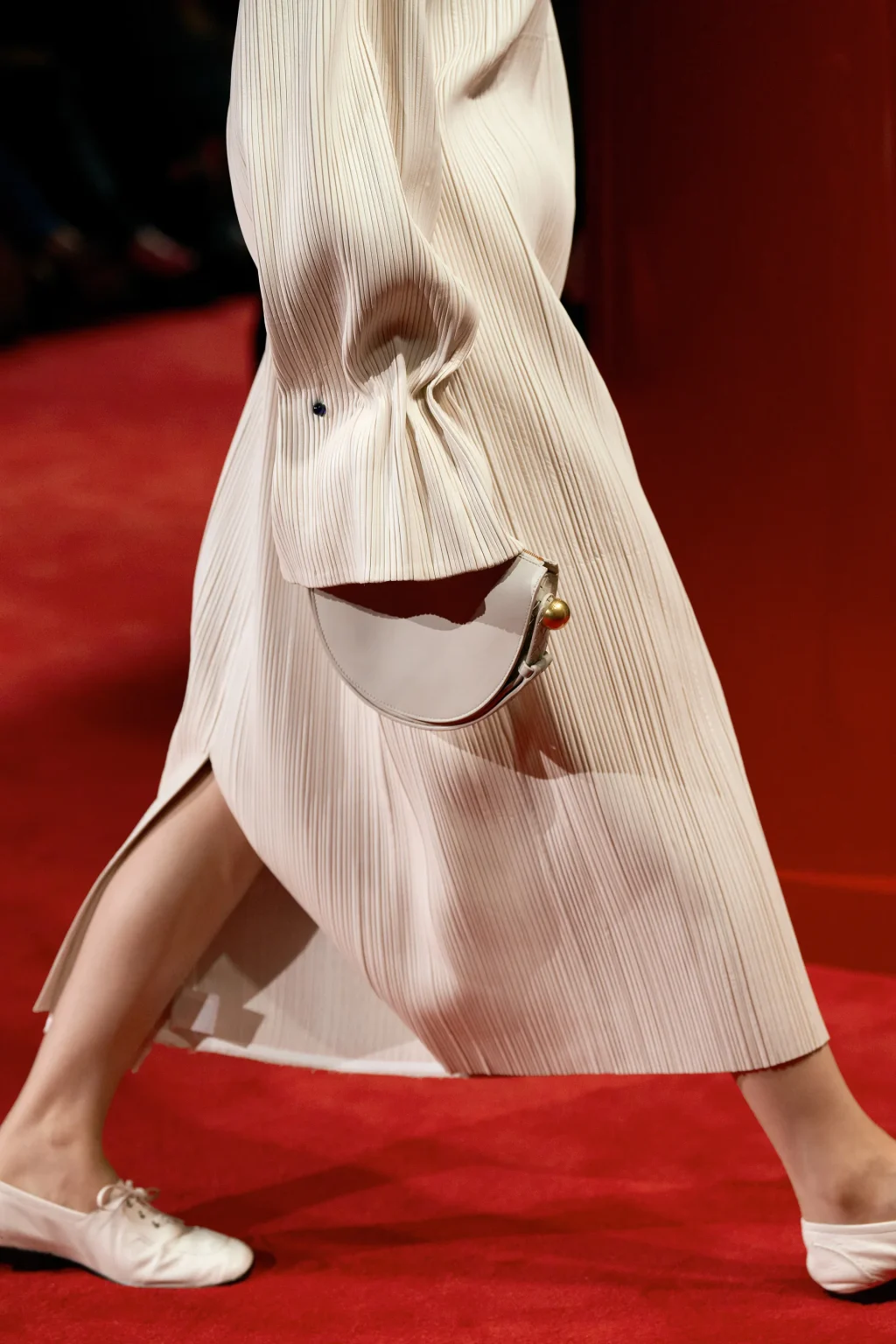
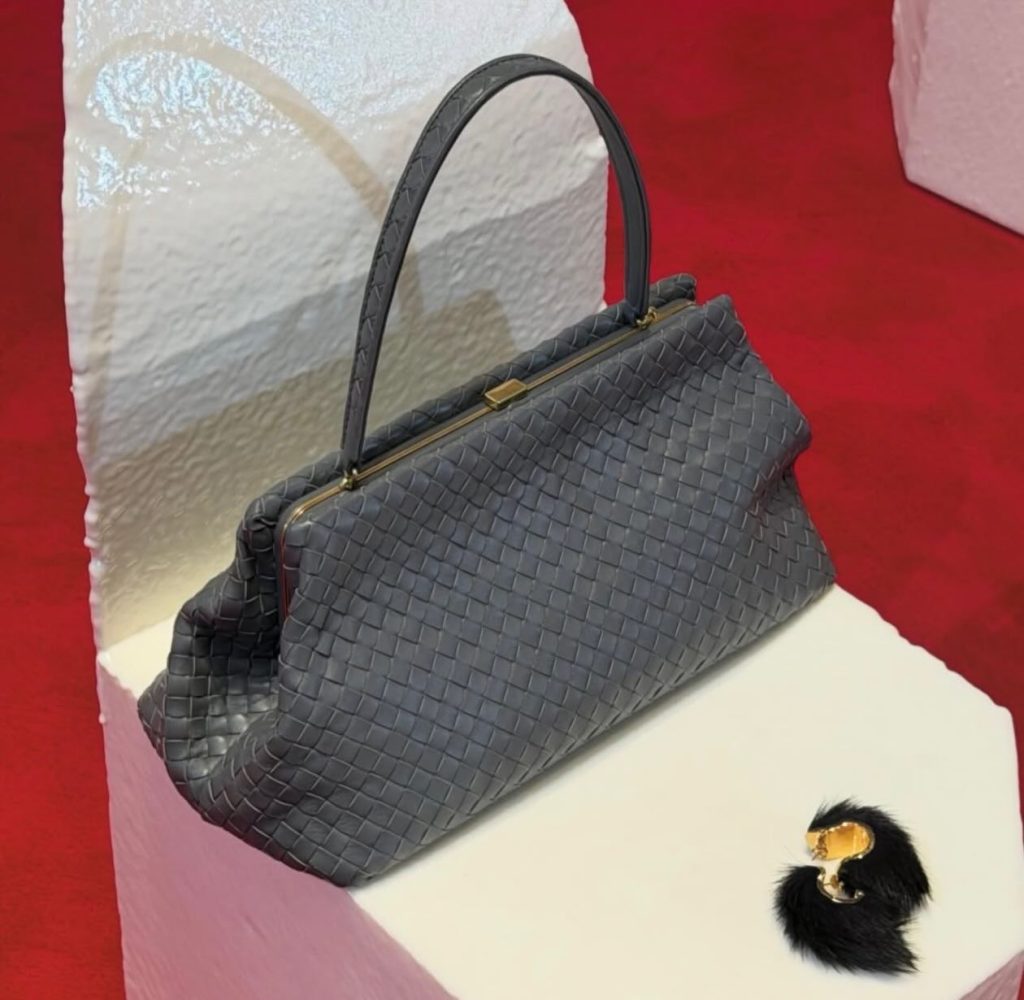
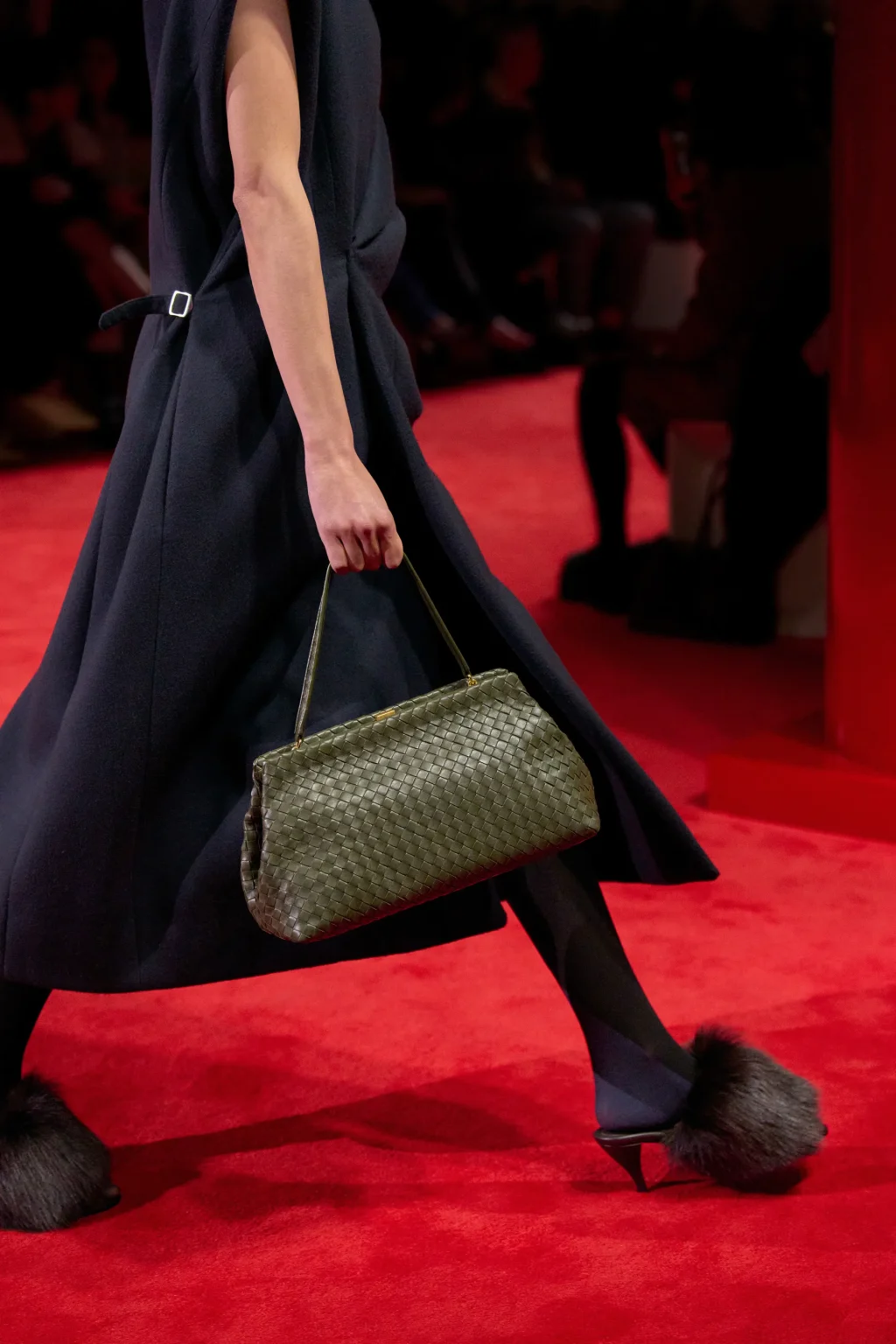
The Soft Trapezoid Bag
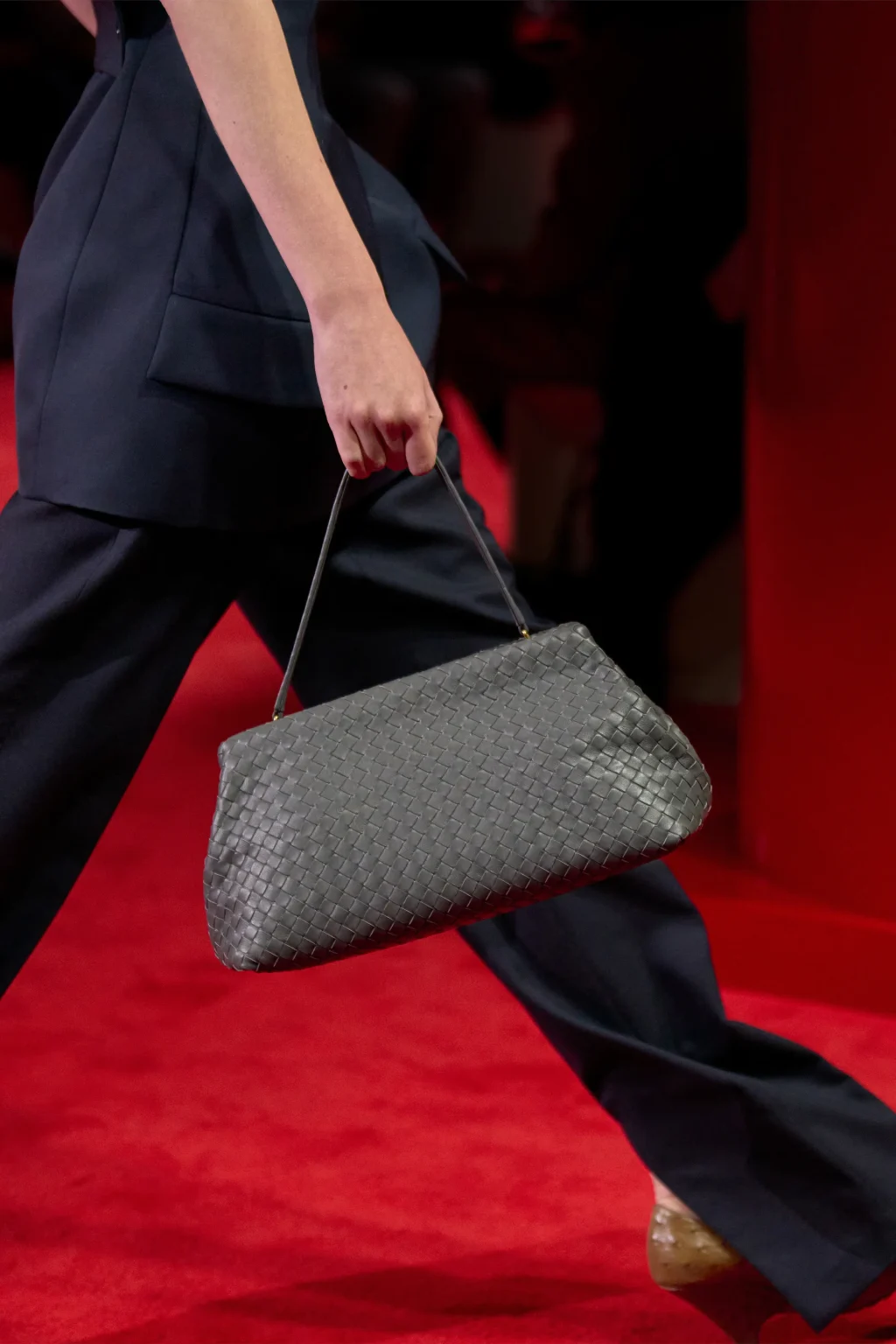
A slanted, trapezoid-like shape with a more relaxed structure—still woven, but meant to feel “carried,” not “held.” This is the silhouette that could become a sleeper hit if it’s released in versatile neutrals.
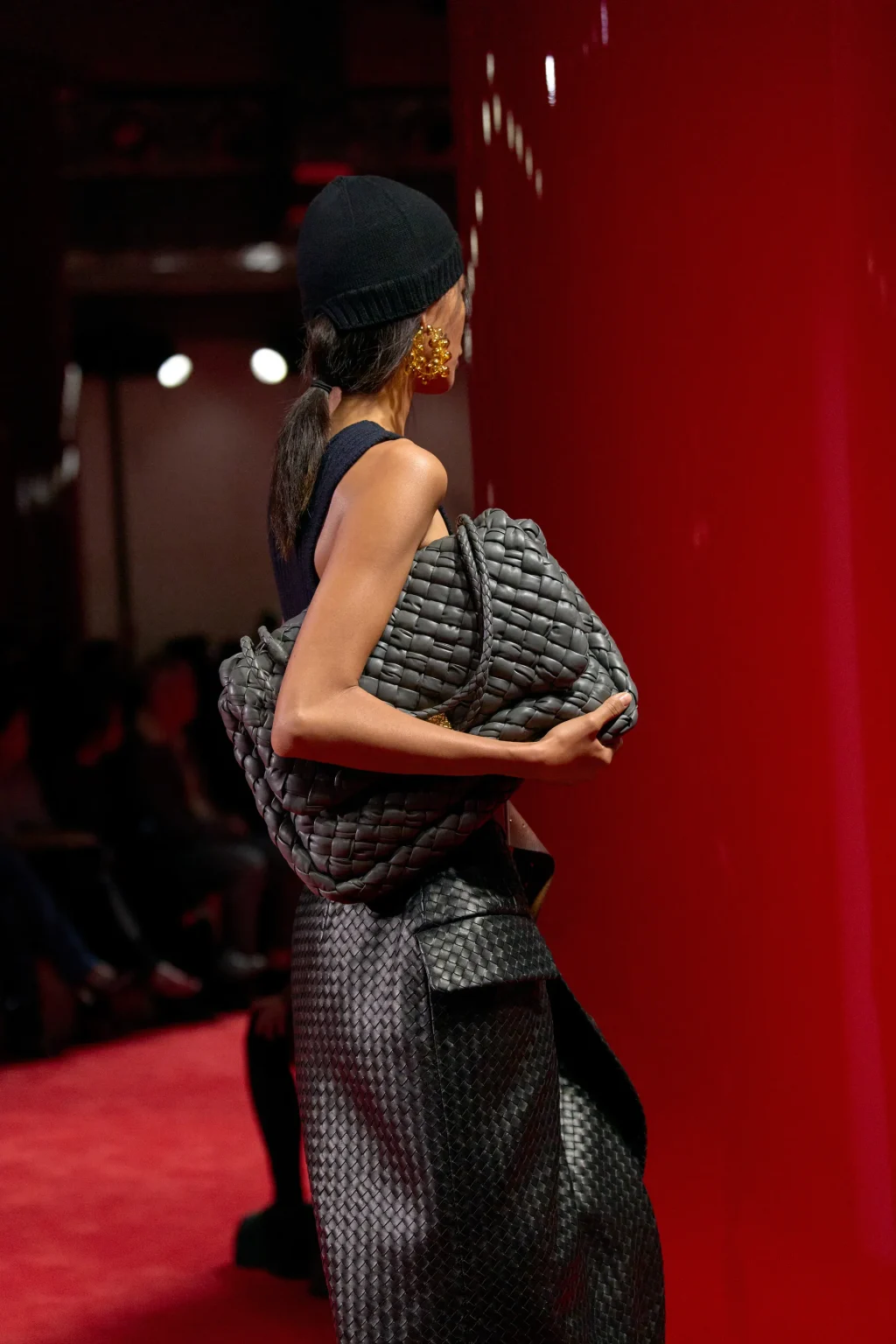
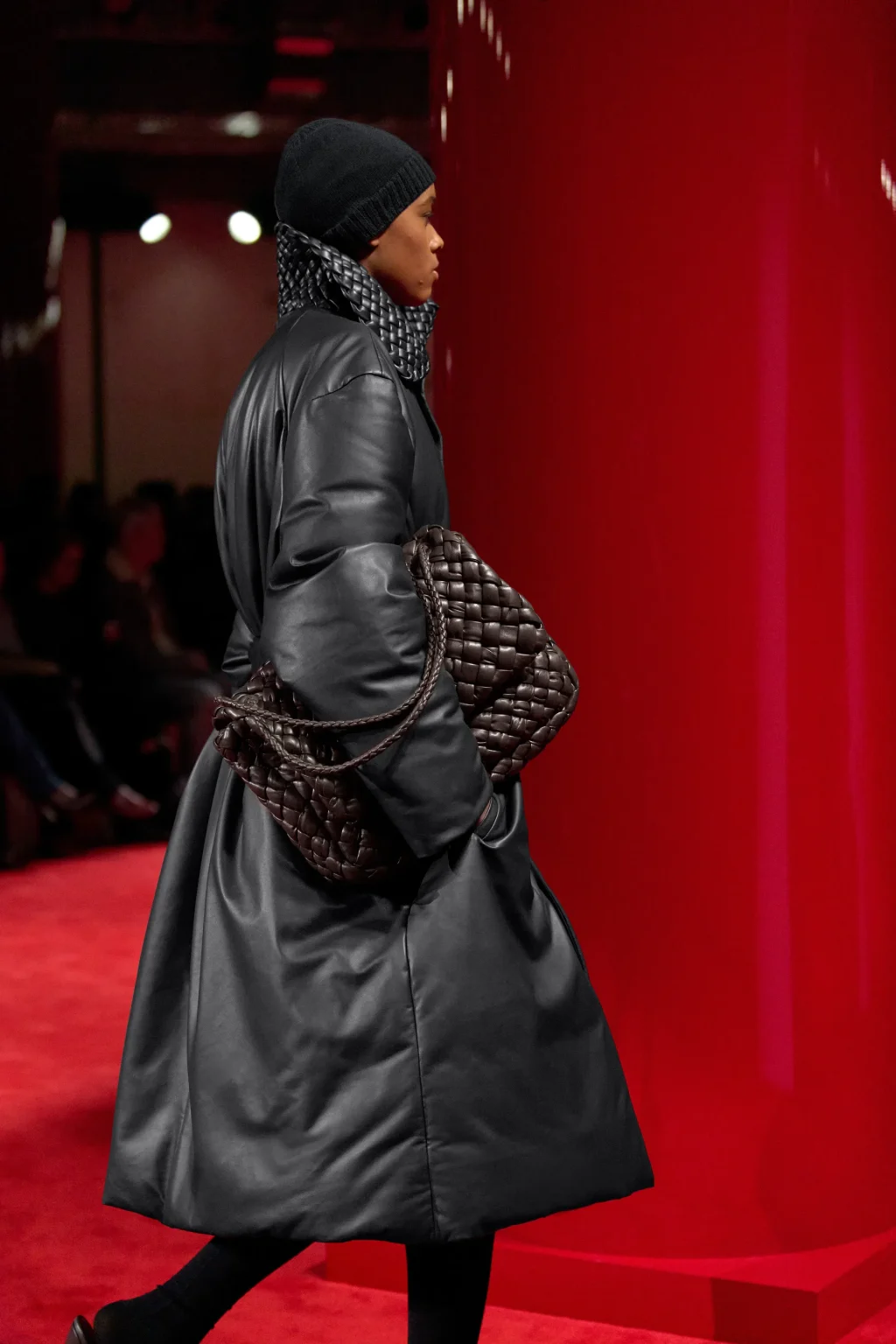
The Oversized Intrecciato “Cushion” Bag
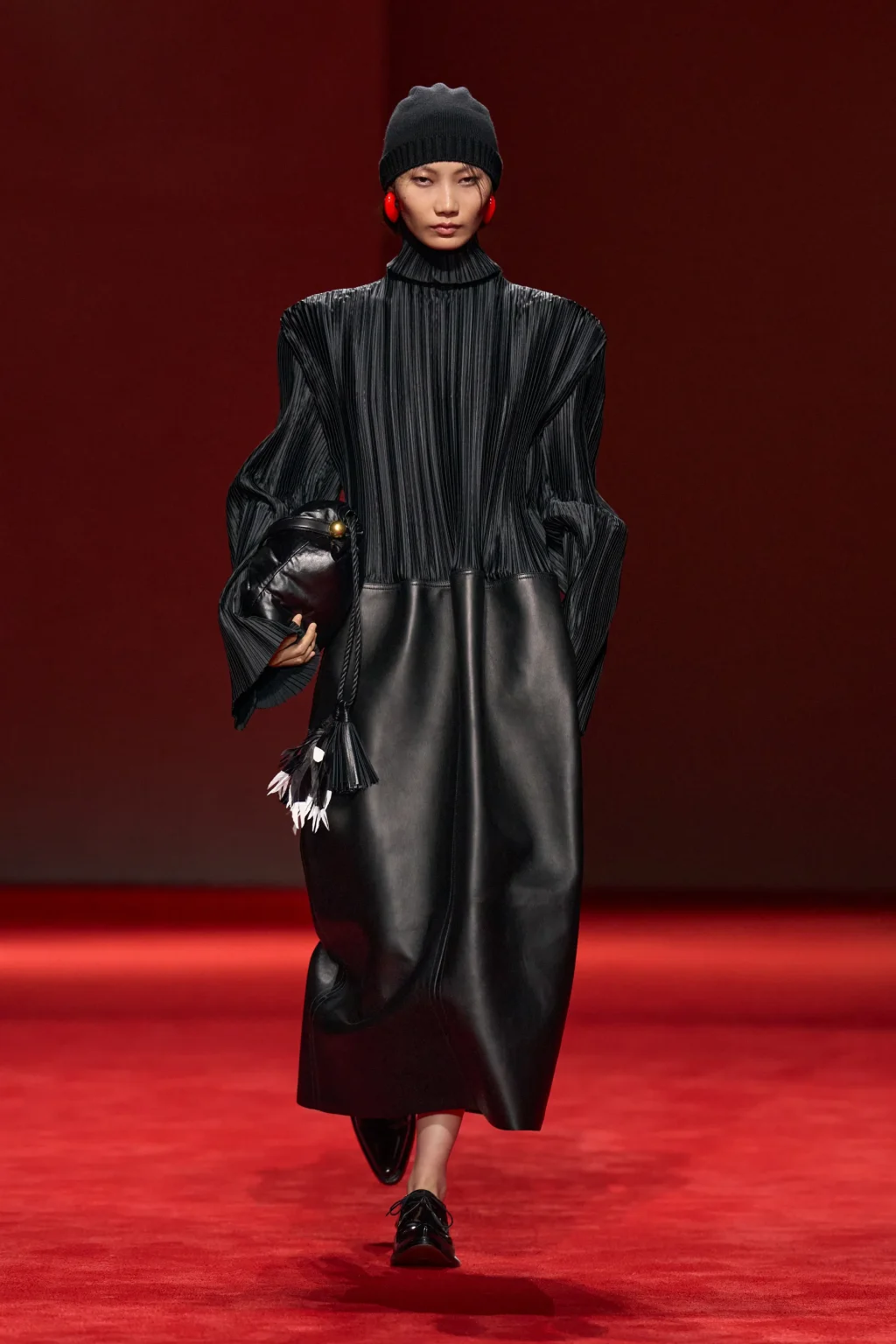
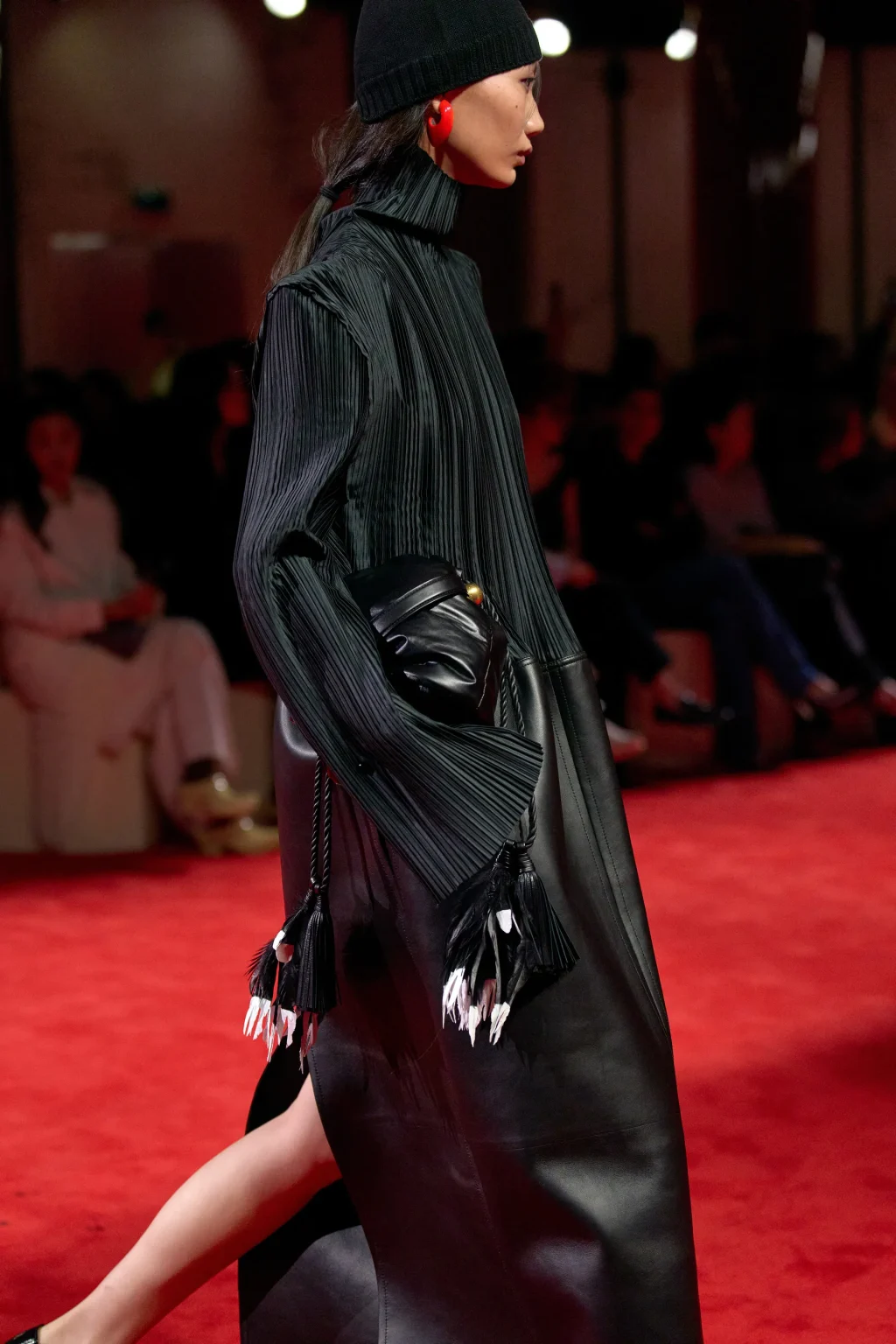
A supersized, pillowy intrecciato piece carried like a soft sculpture—tucked under the arm, with a braided cord strap that reads almost like jewelry. It’s Bottega’s brutalism-meets-sensuality idea translated into an accessory: big, tactile, and instantly recognizable on the runway.
The Cube / Vanity Box Bag
Among the soft, woven forms, the cube / box bag stands out as the season’s controlled, almost architectural punctuation.
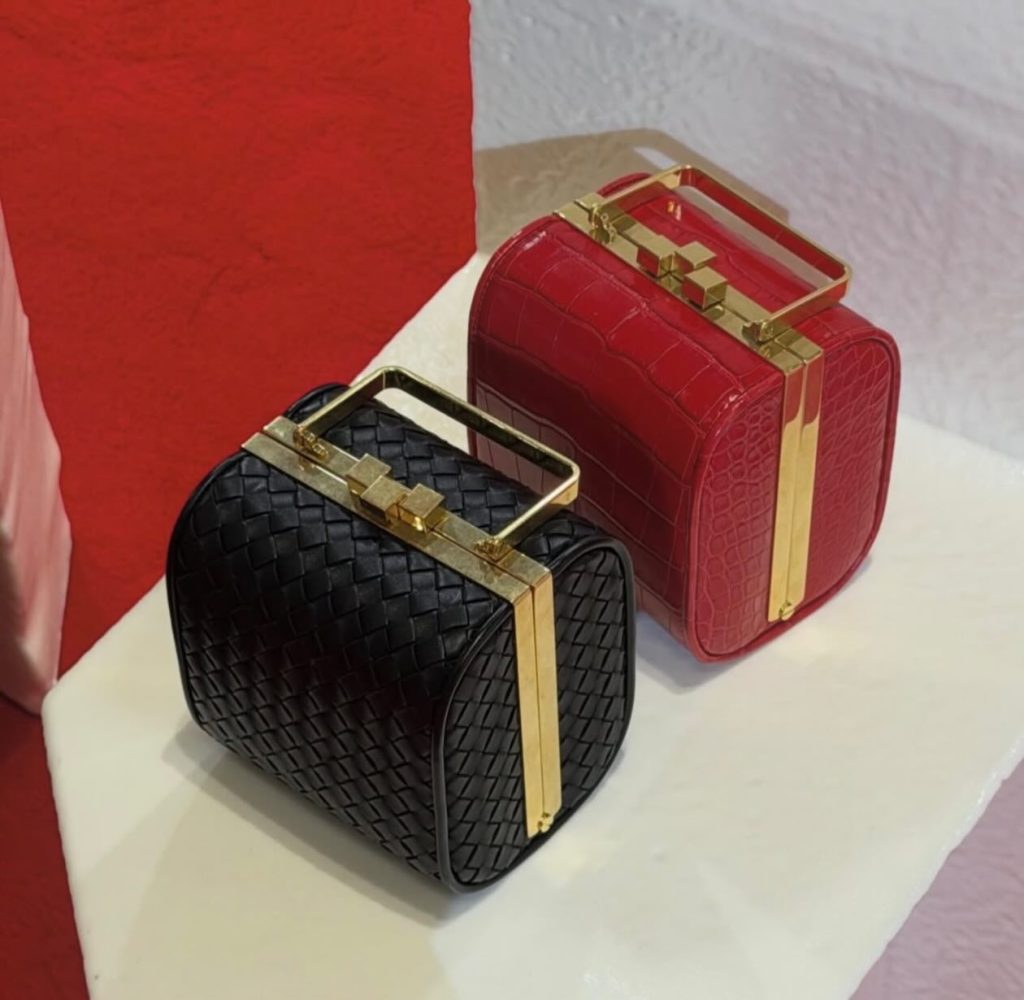
Bags appears in glossy croc-embossed finishes (red) and a woven version (black), with a bold metal frame / handle structure—very “object bag.” This is the kind of piece that often becomes editorial shorthand for a season: it’s easy to spot, easy to caption, easy to remember.
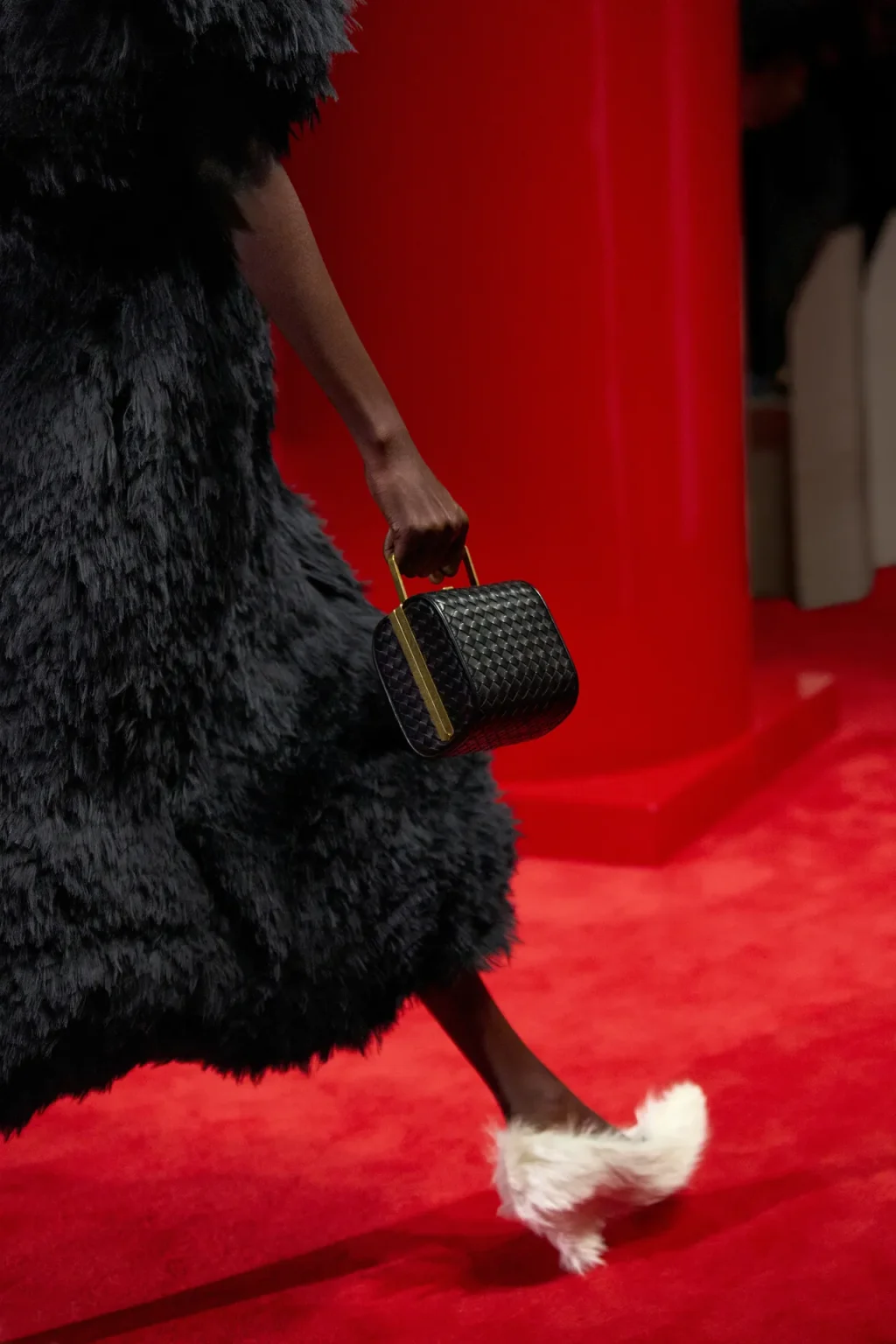
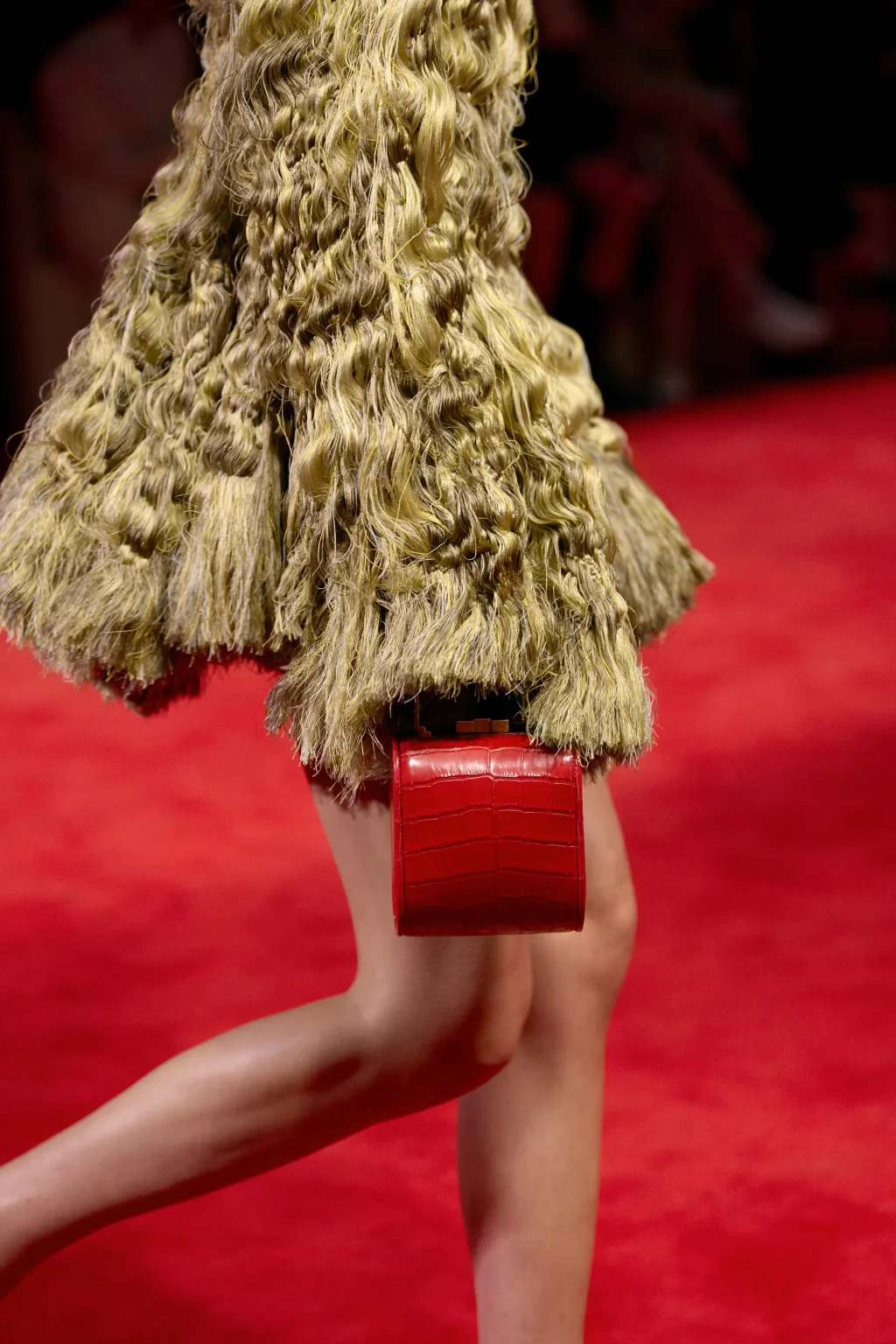
Fur Bags and Faux-Fur Illusions
The fur story is not confined to outerwear. The accessories push the same idea: texture as emotion, texture as power. W Magazine highlights the collection’s fascination with fabrics that imitate fur and the return of fiberglass pieces that evoke it.
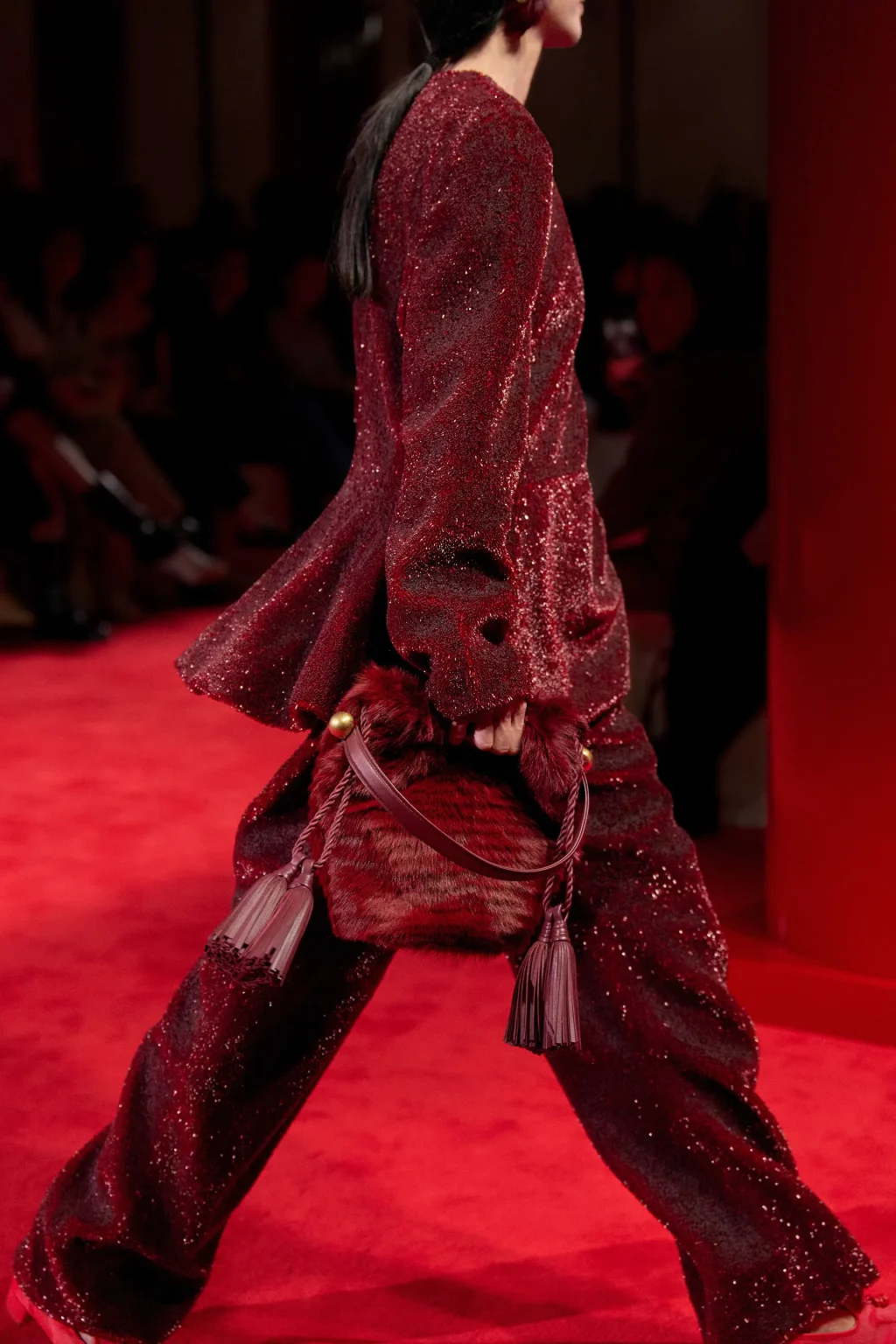
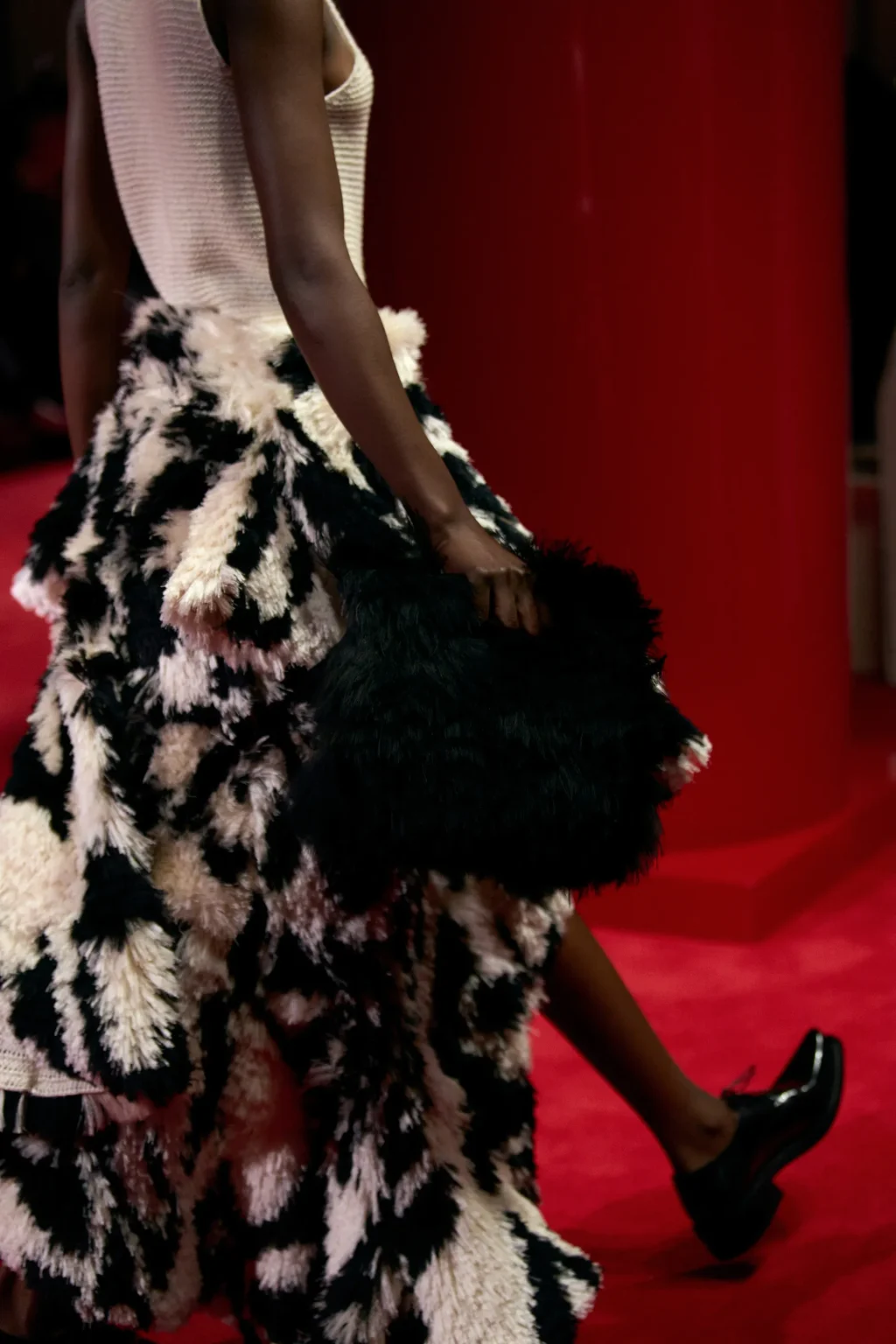
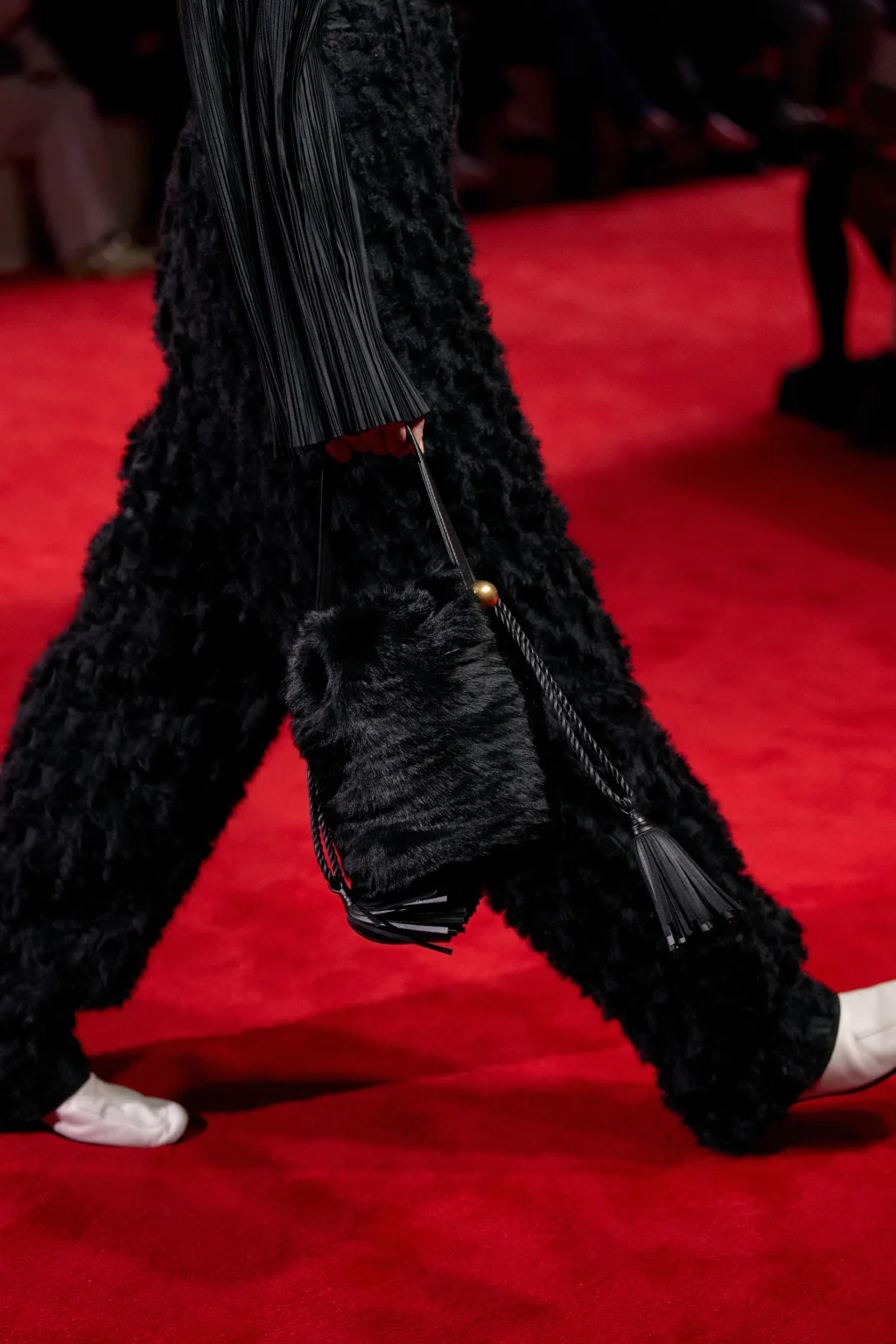
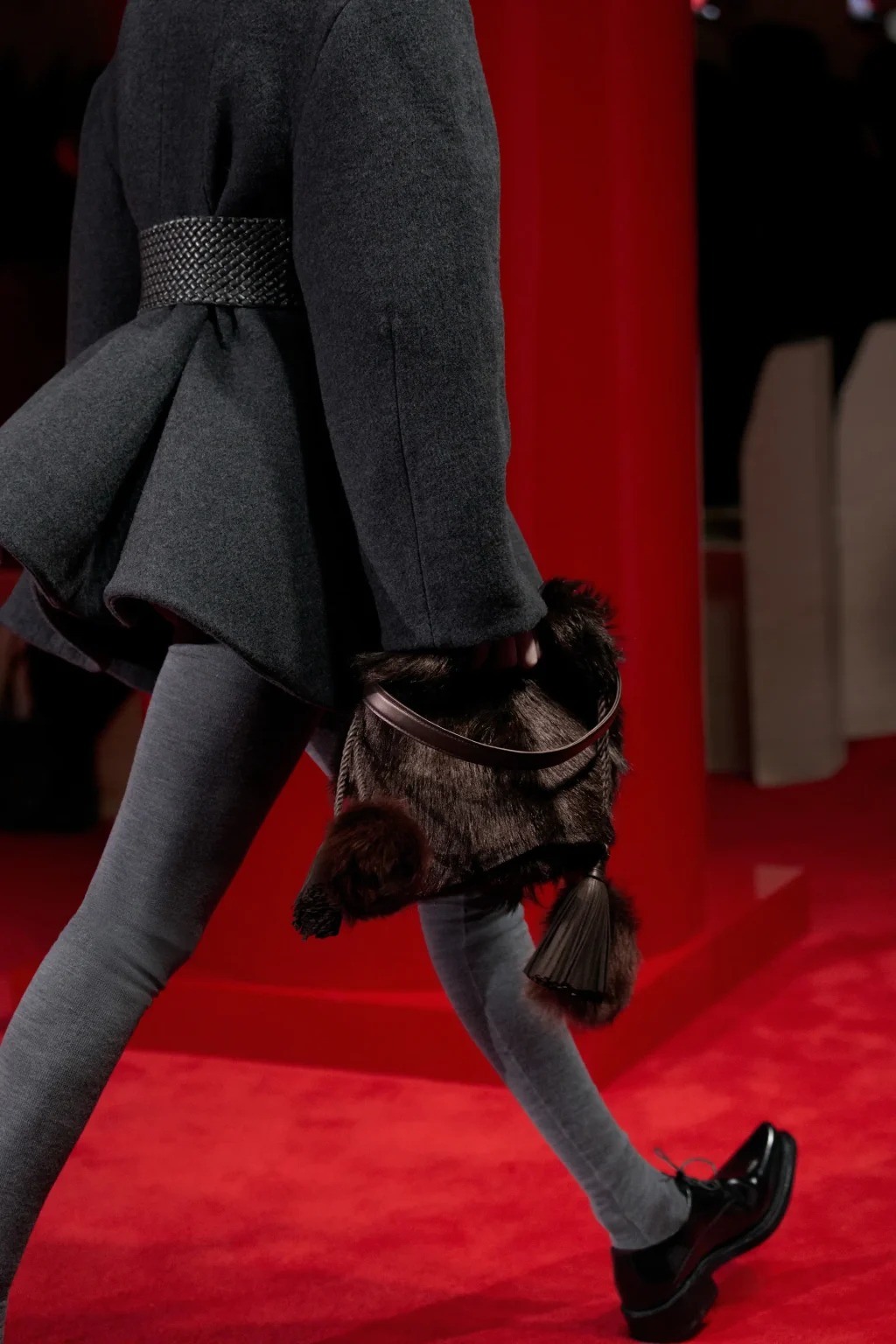
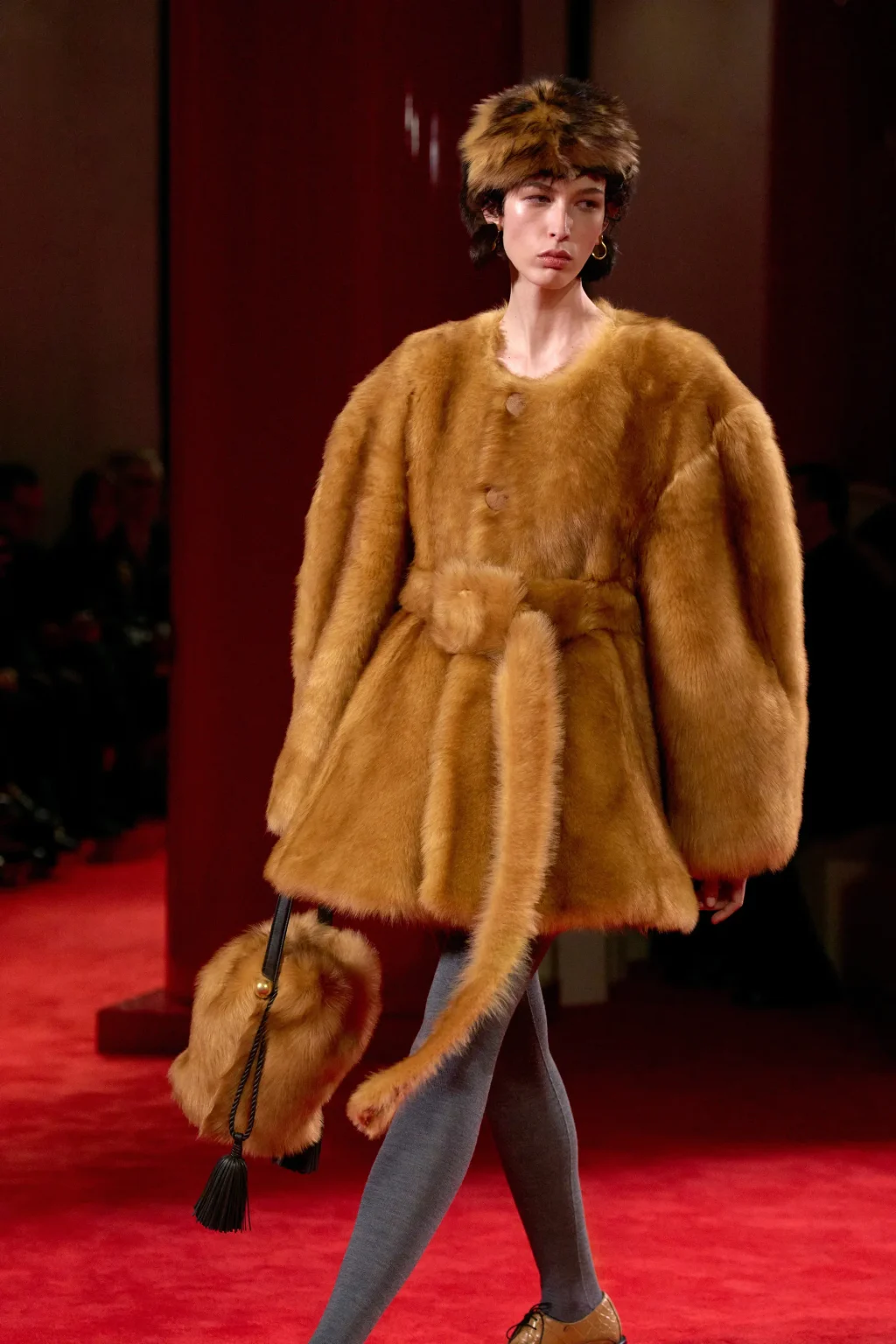
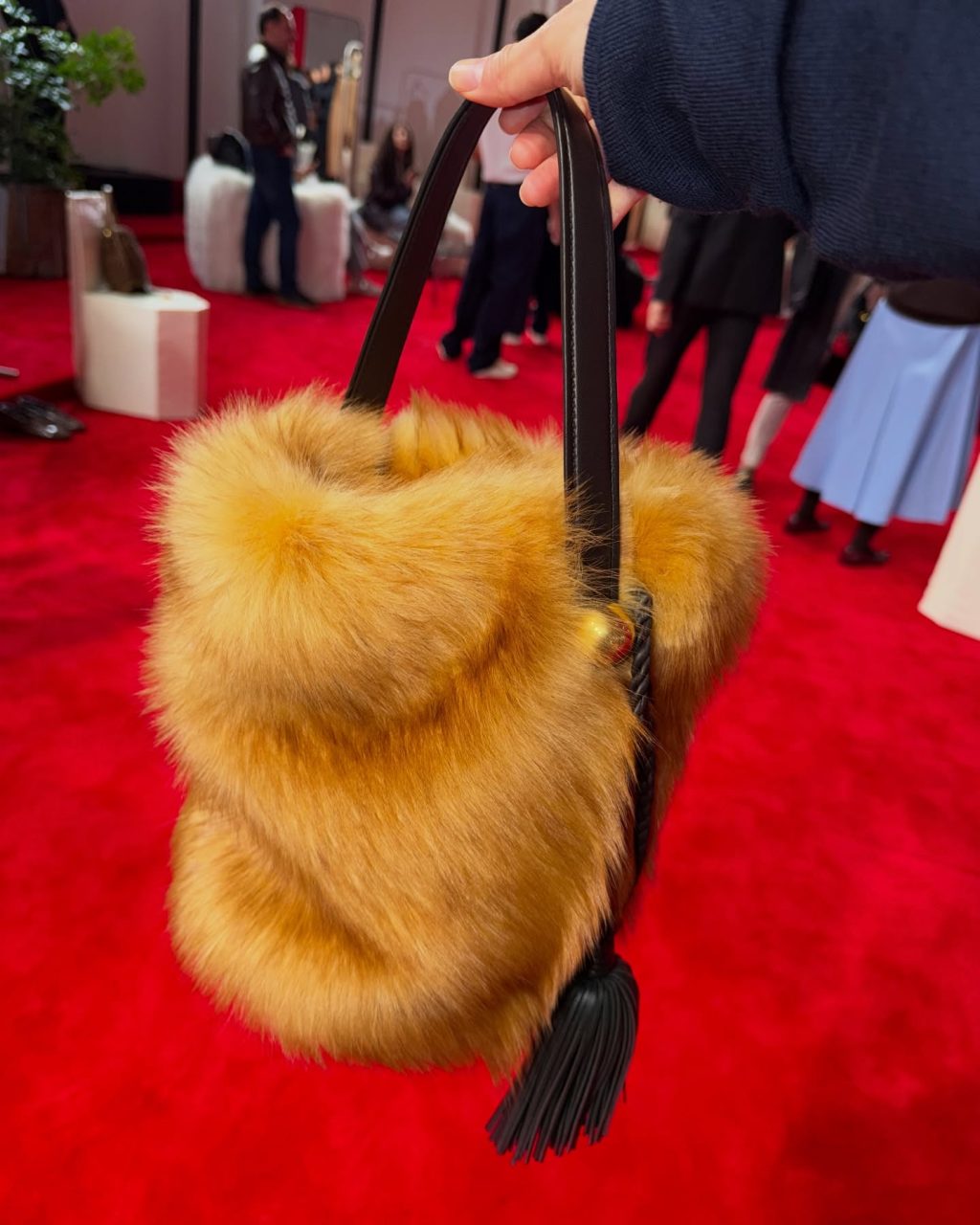
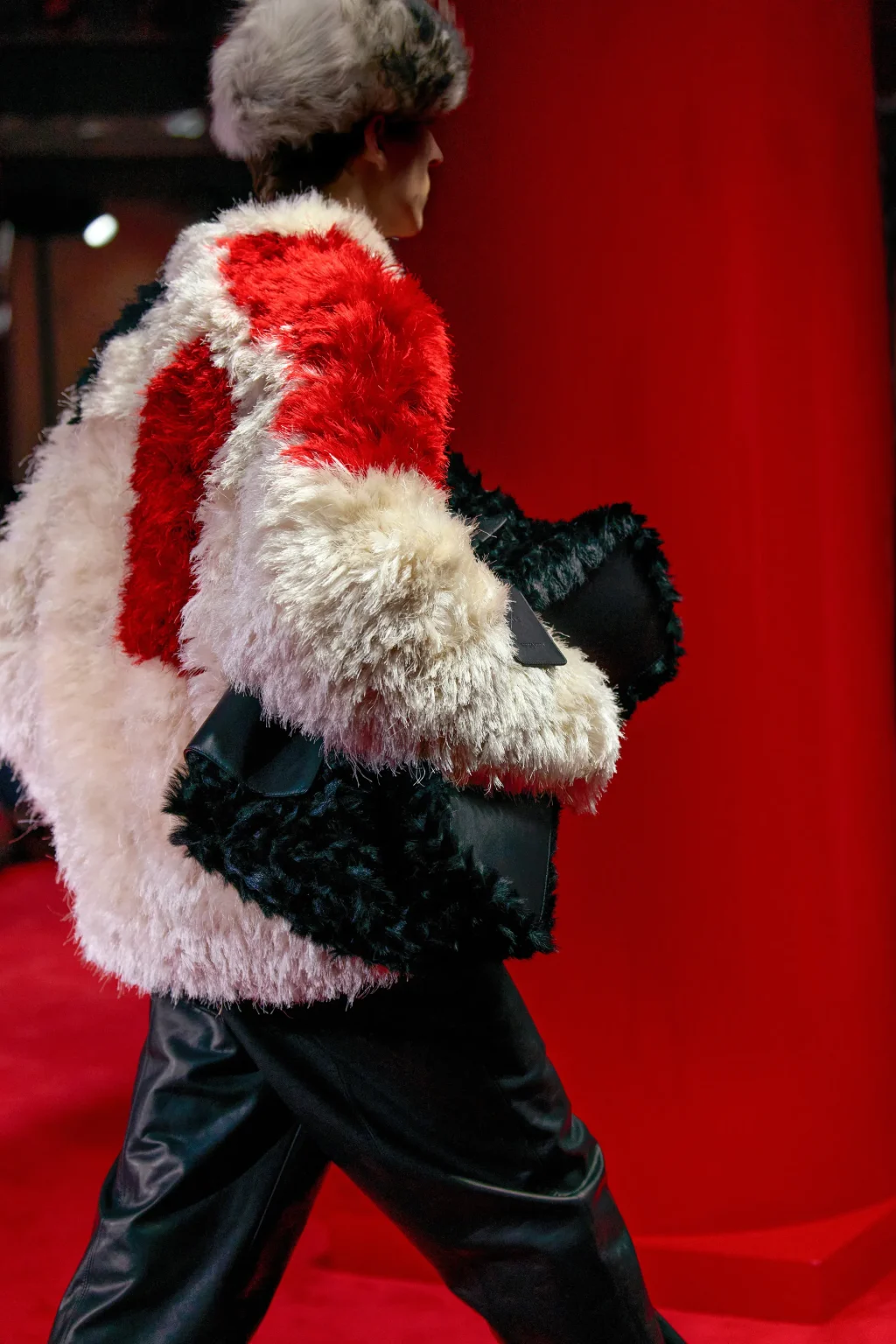
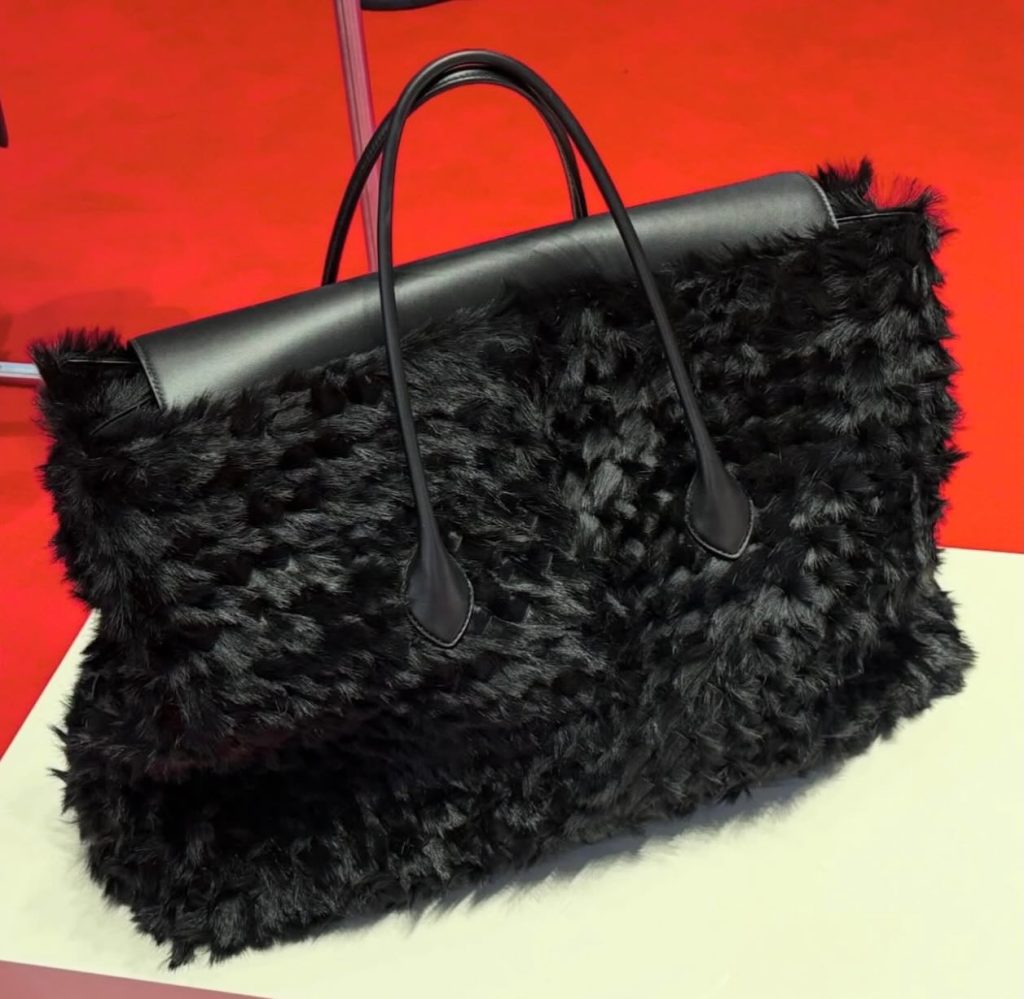
The “Plastic Shopping Bags”
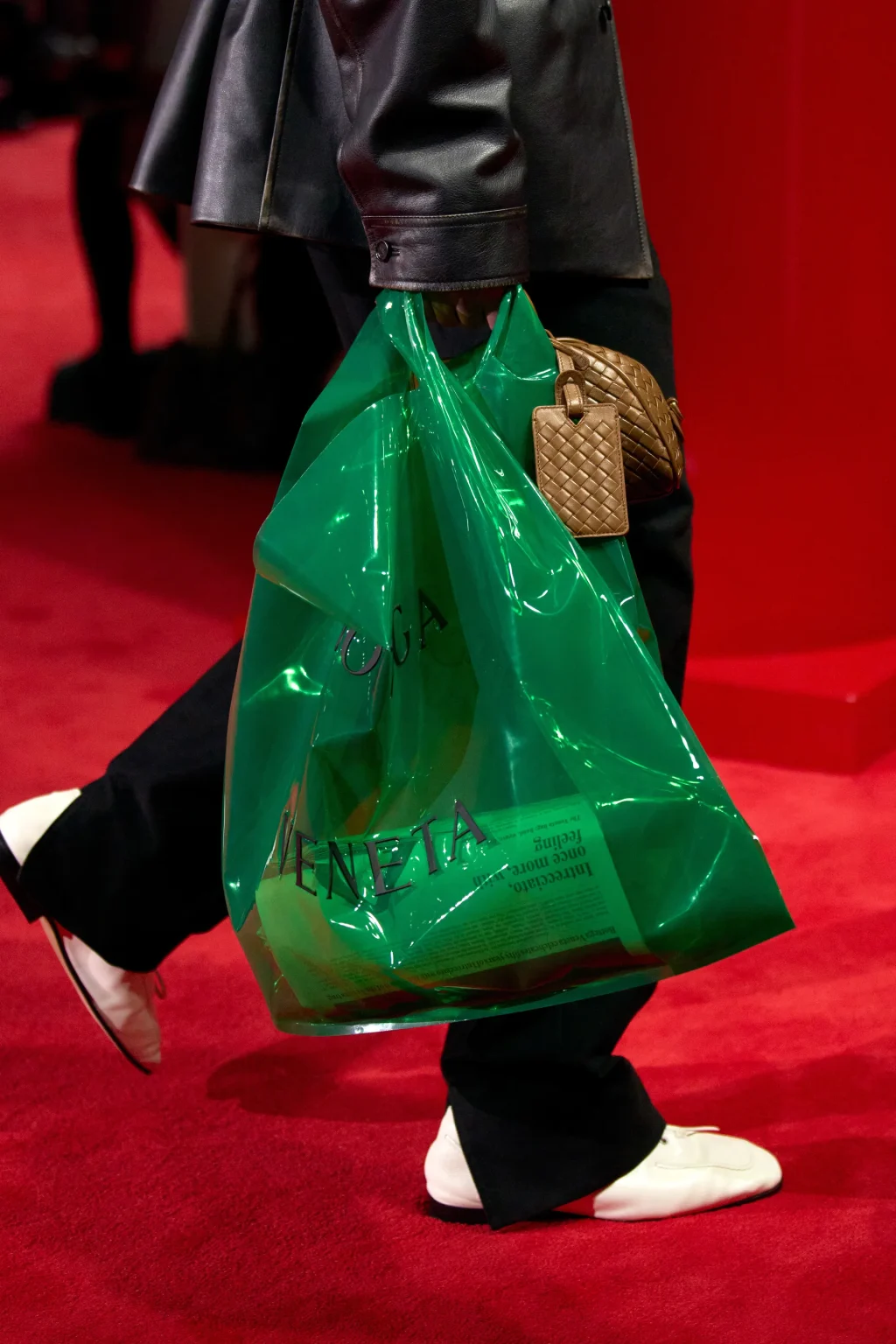
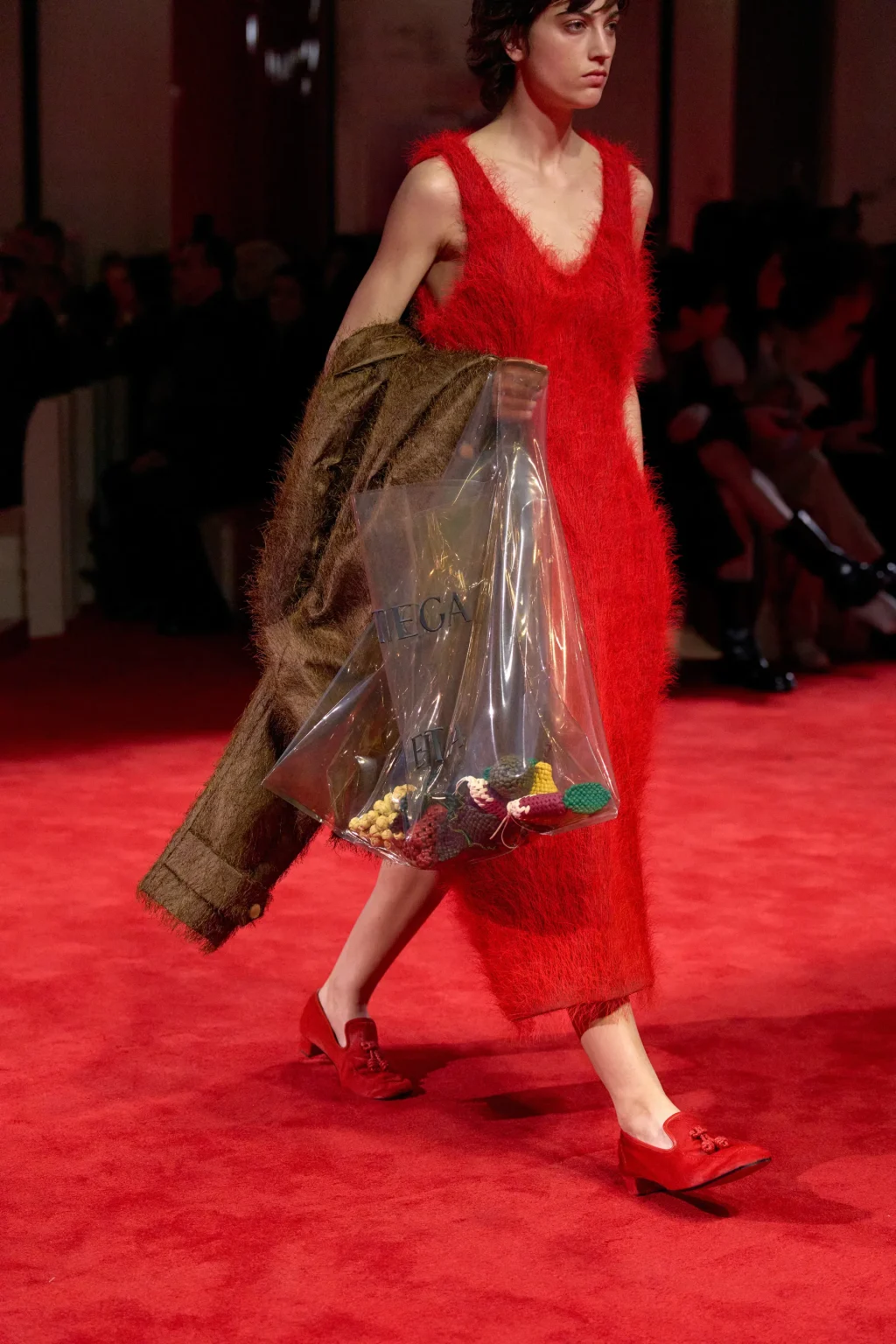
Yes, they’re there: oversized transparent / tinted plastic shopping bags carrying objects inside—one of the few moments in the show that reads as overt commentary.
In a collection so invested in craft and leather heritage, the plastic bag becomes the “wrong” object on purpose: it interrupts luxury with something disposable-looking, then forces you to stare longer. It’s also a very Milan gesture—practical, ironic, and oddly stylish when done with conviction.
The Unassigned Runway Pieces
Not every runway bag arrives with a neat retail identity—especially in a house that treats accessories like design experiments. From your “unidentified” sets, there are a few shapes worth spotlighting because they feel like future signatures:
Semi-moon shoulder bag in woven leather: a calmer, more classic cousin to the Veneta mood, but still close-to-body and sensual.
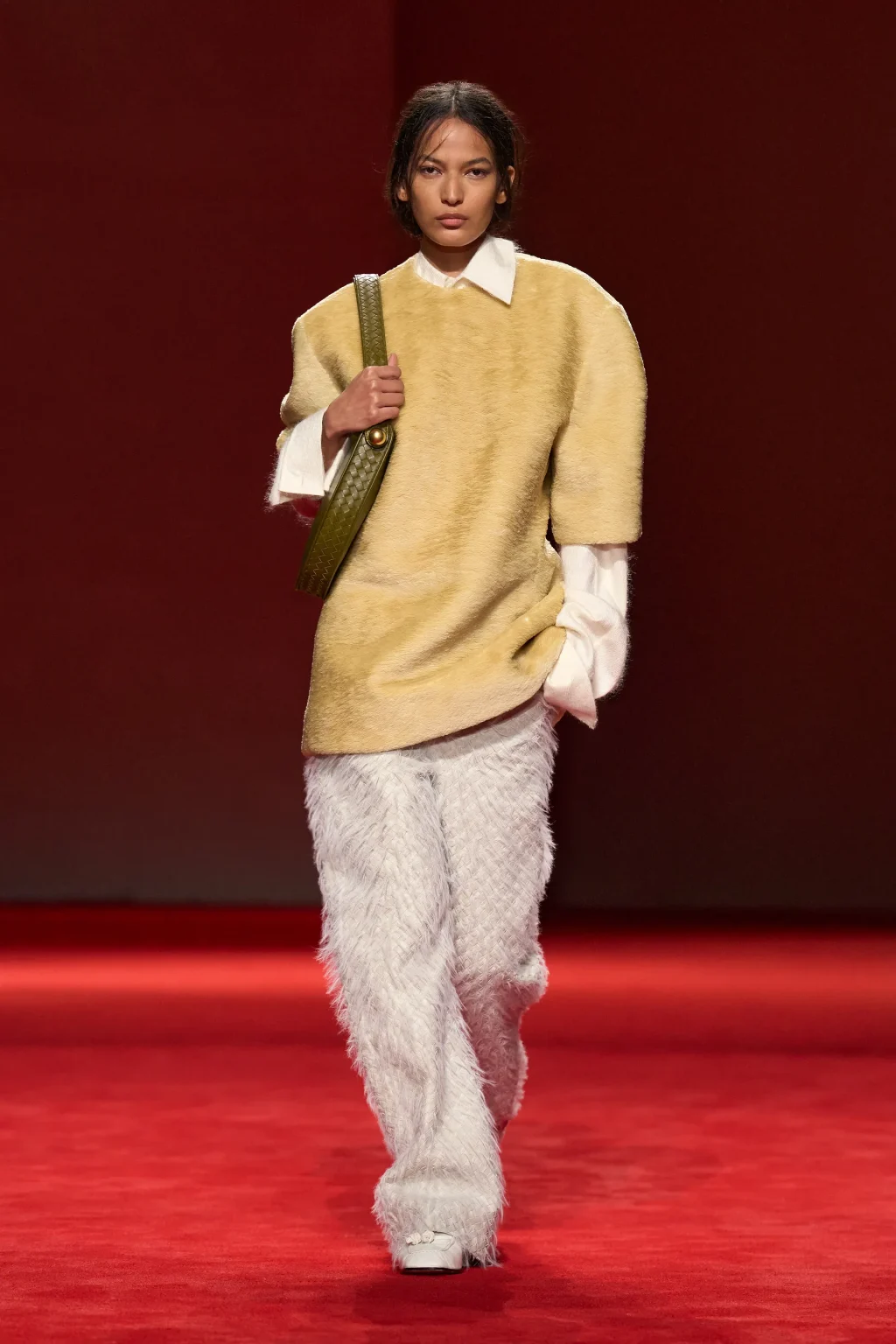
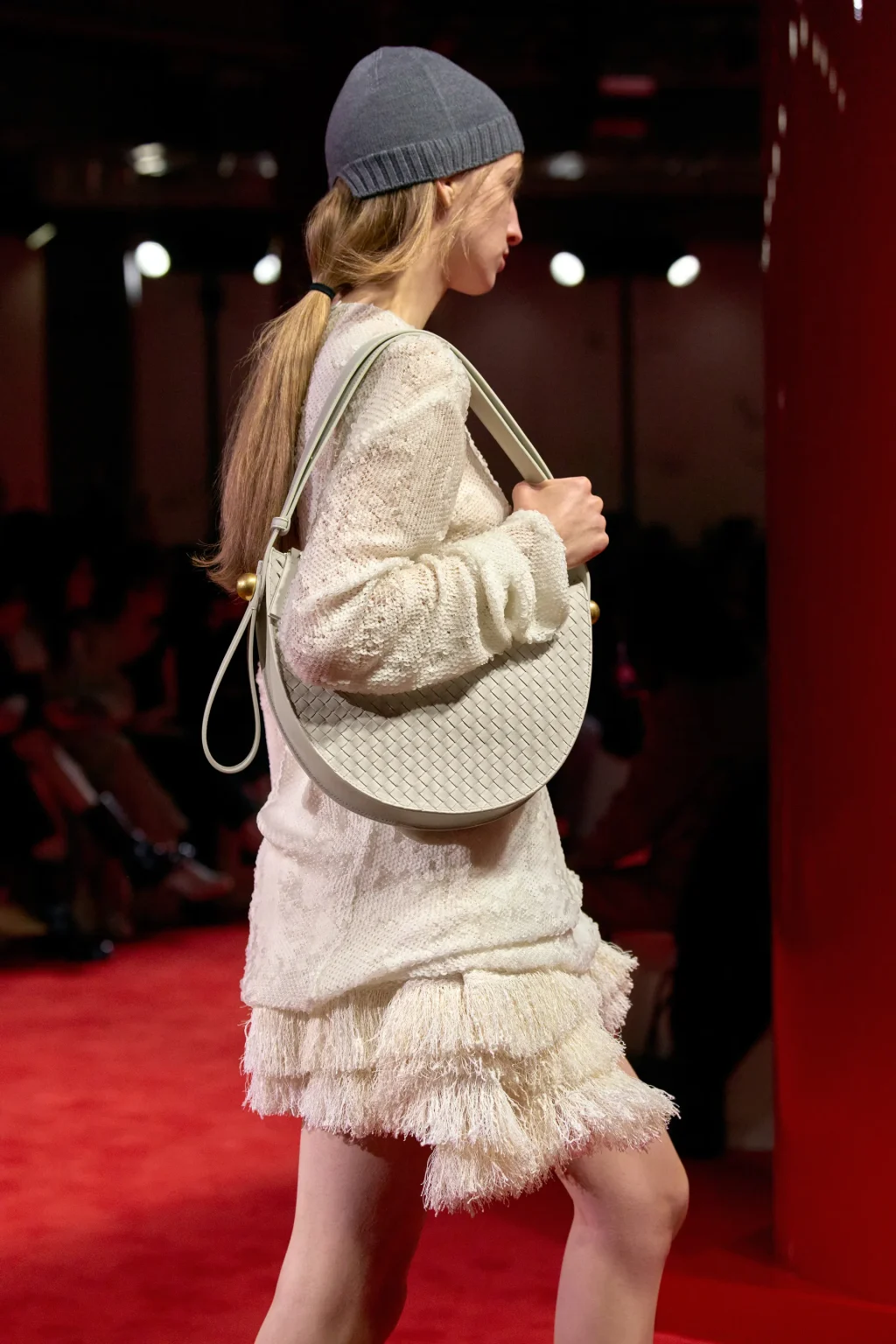
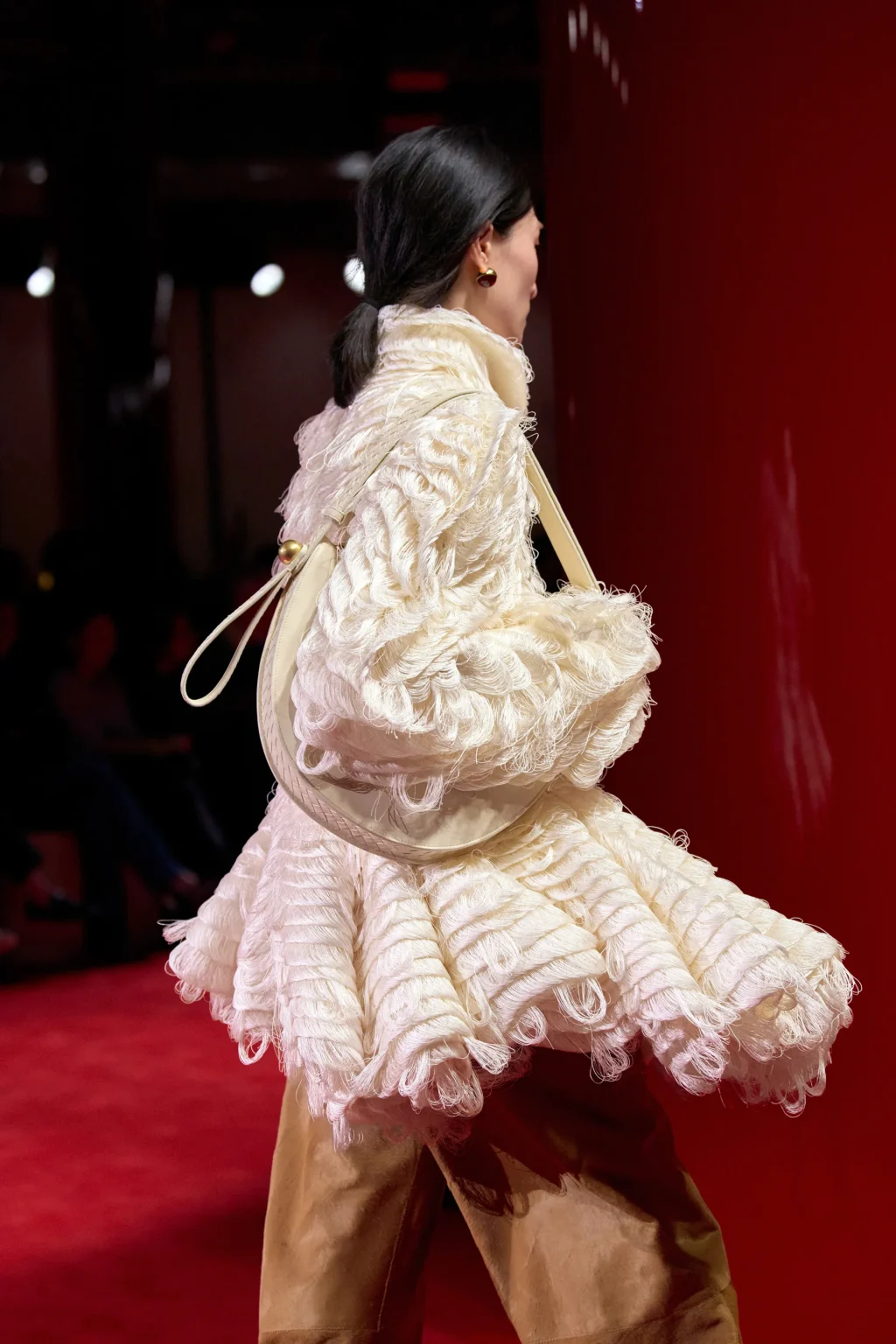
Large woven tote / shopper: minimal branding, maximal craft; if it releases, it will likely appeal to buyers who want one Bottega bag to do everything.
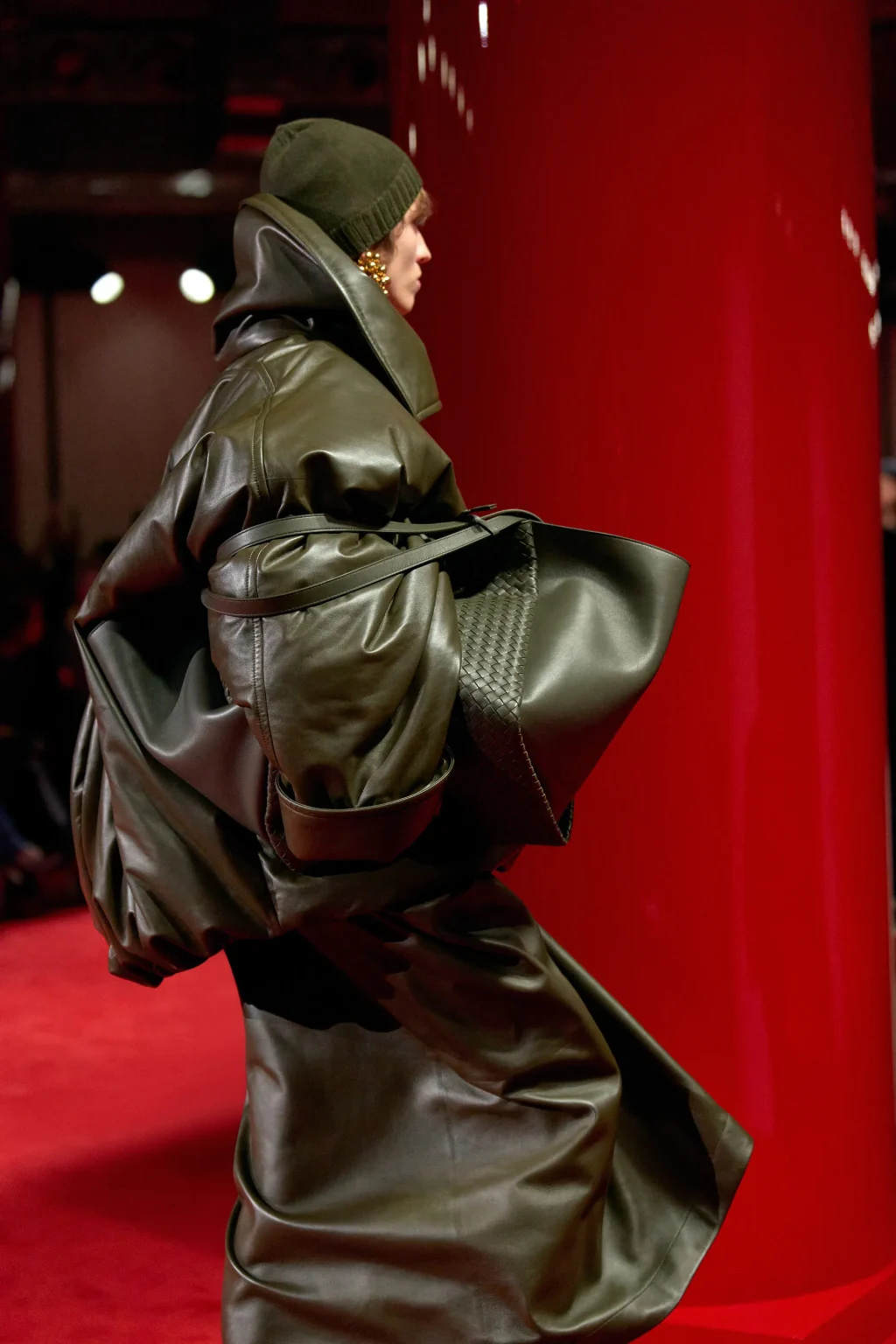
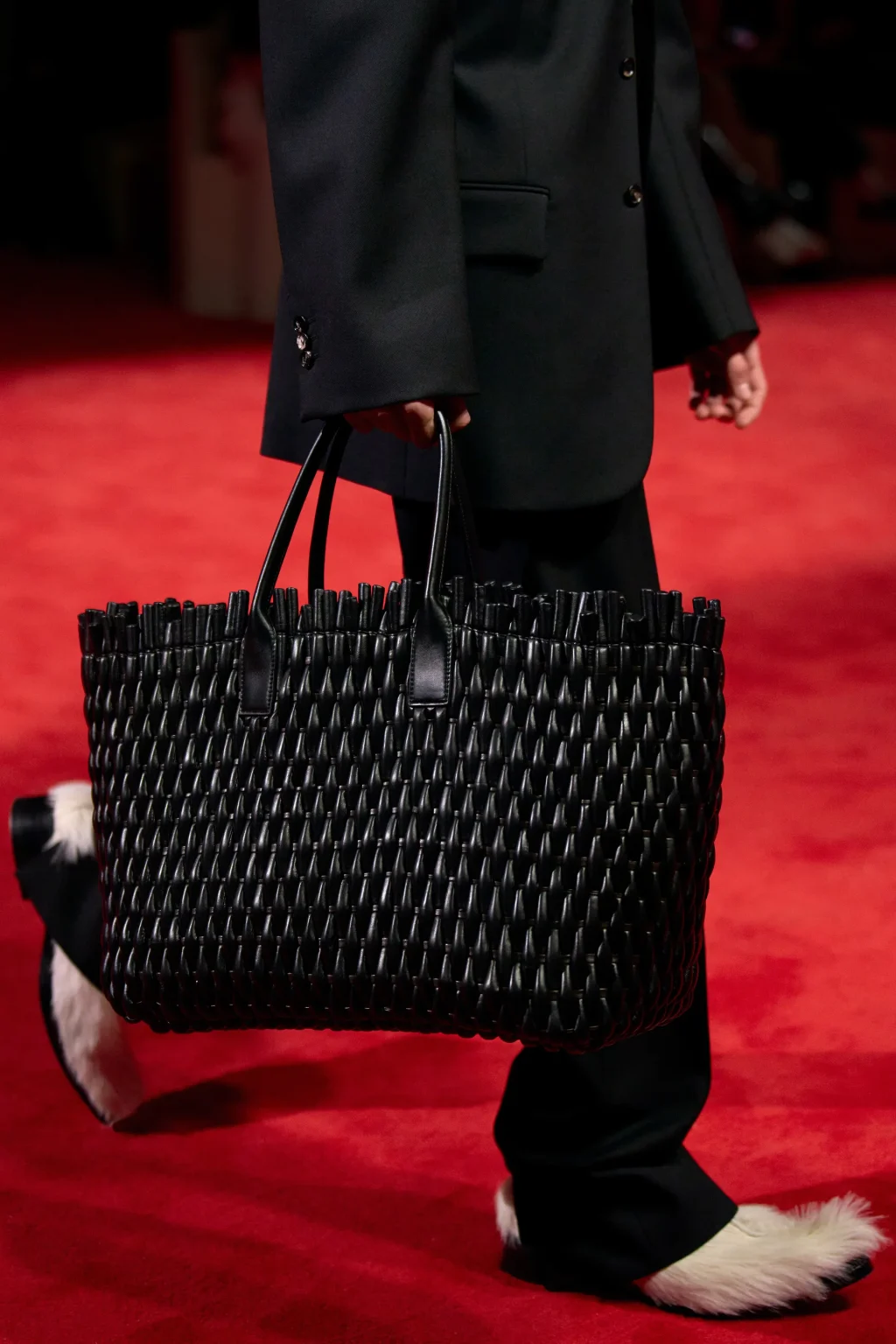
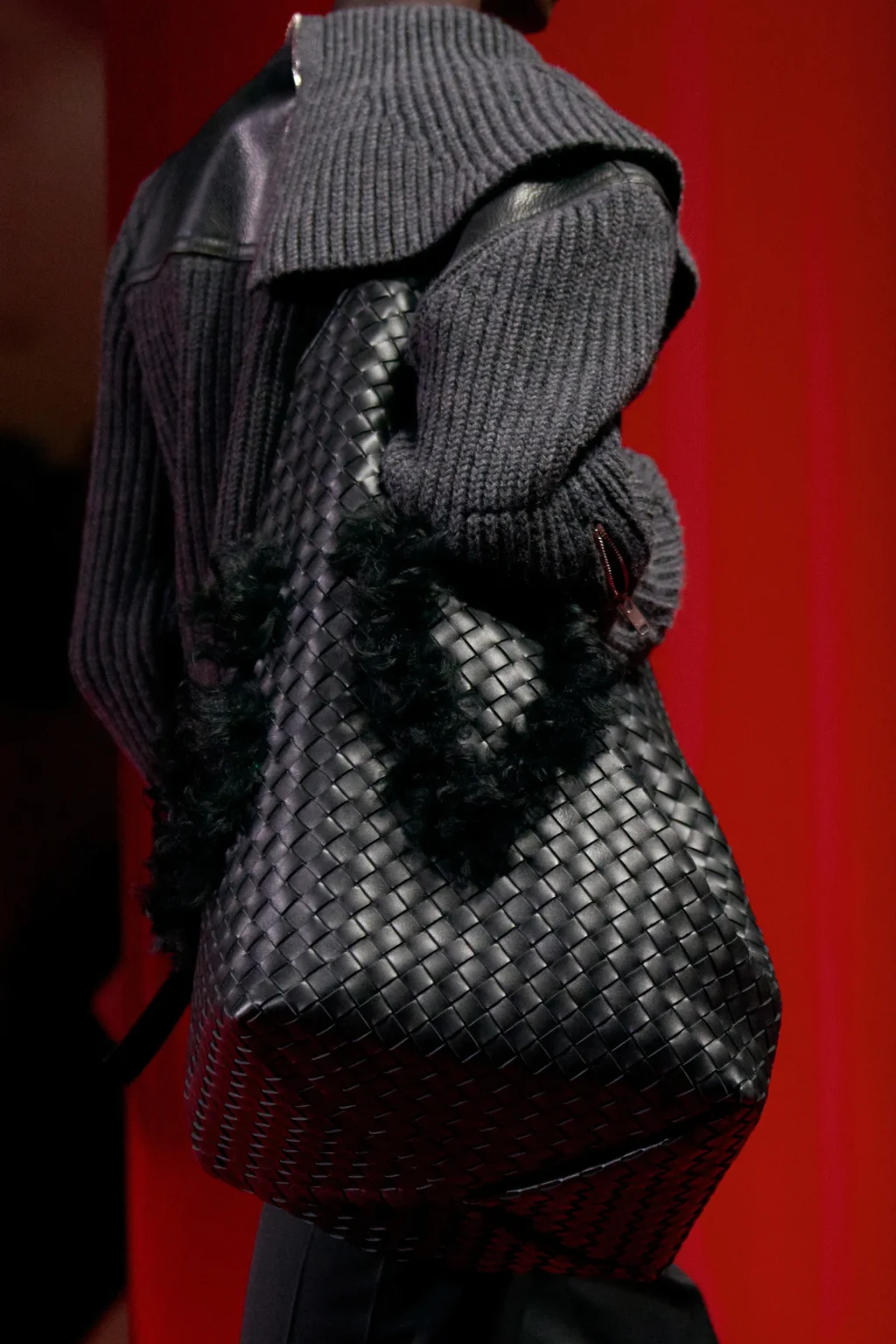
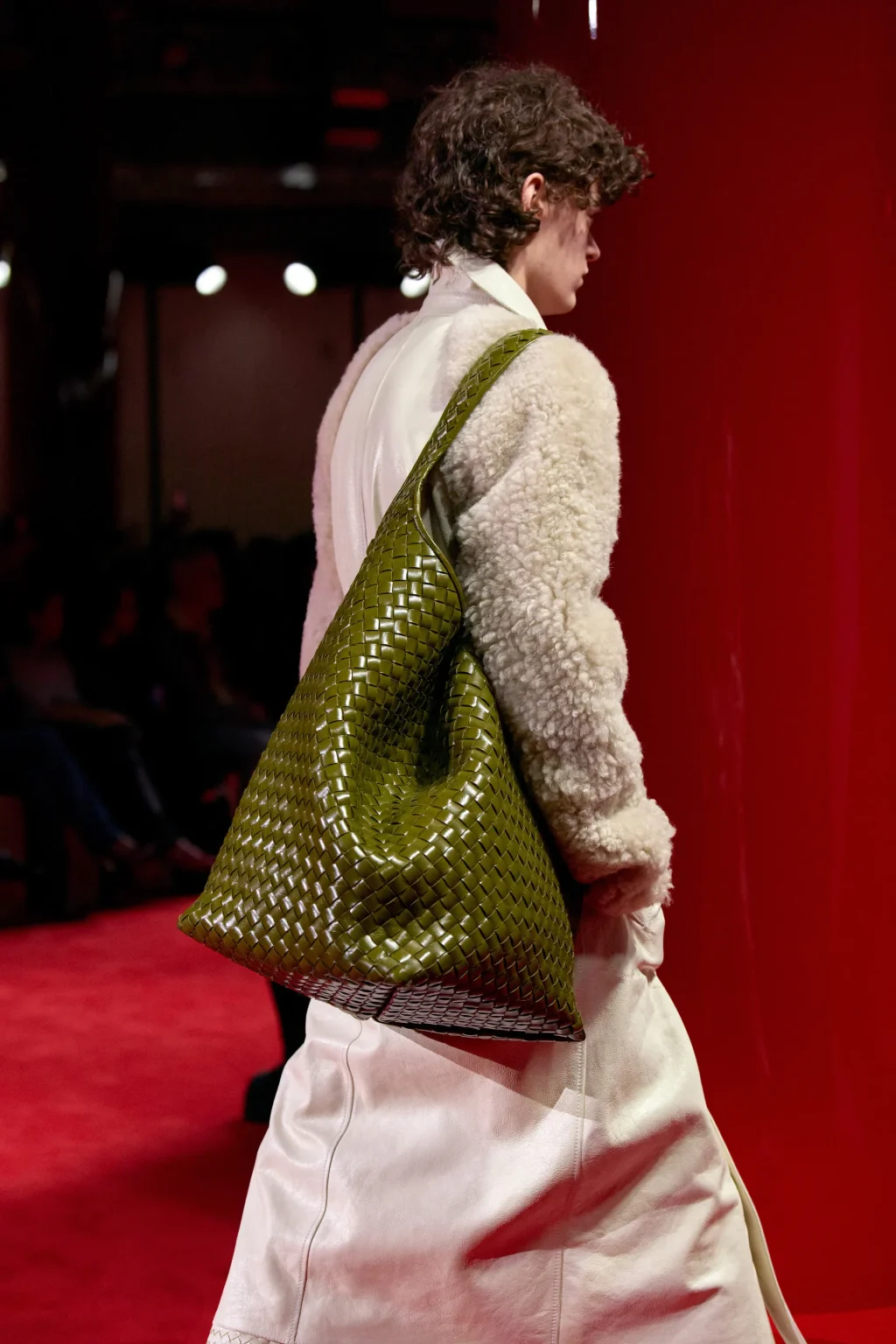
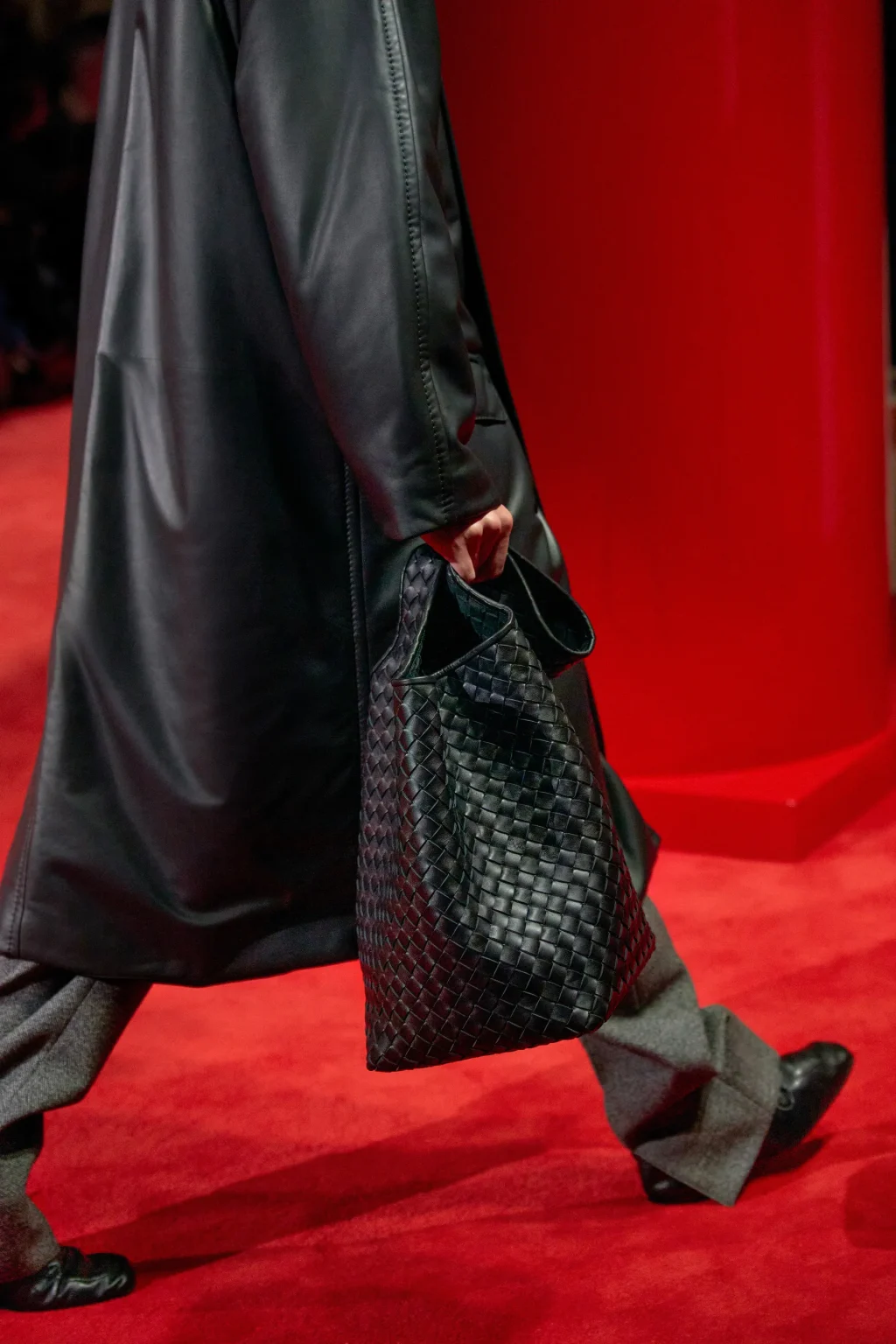
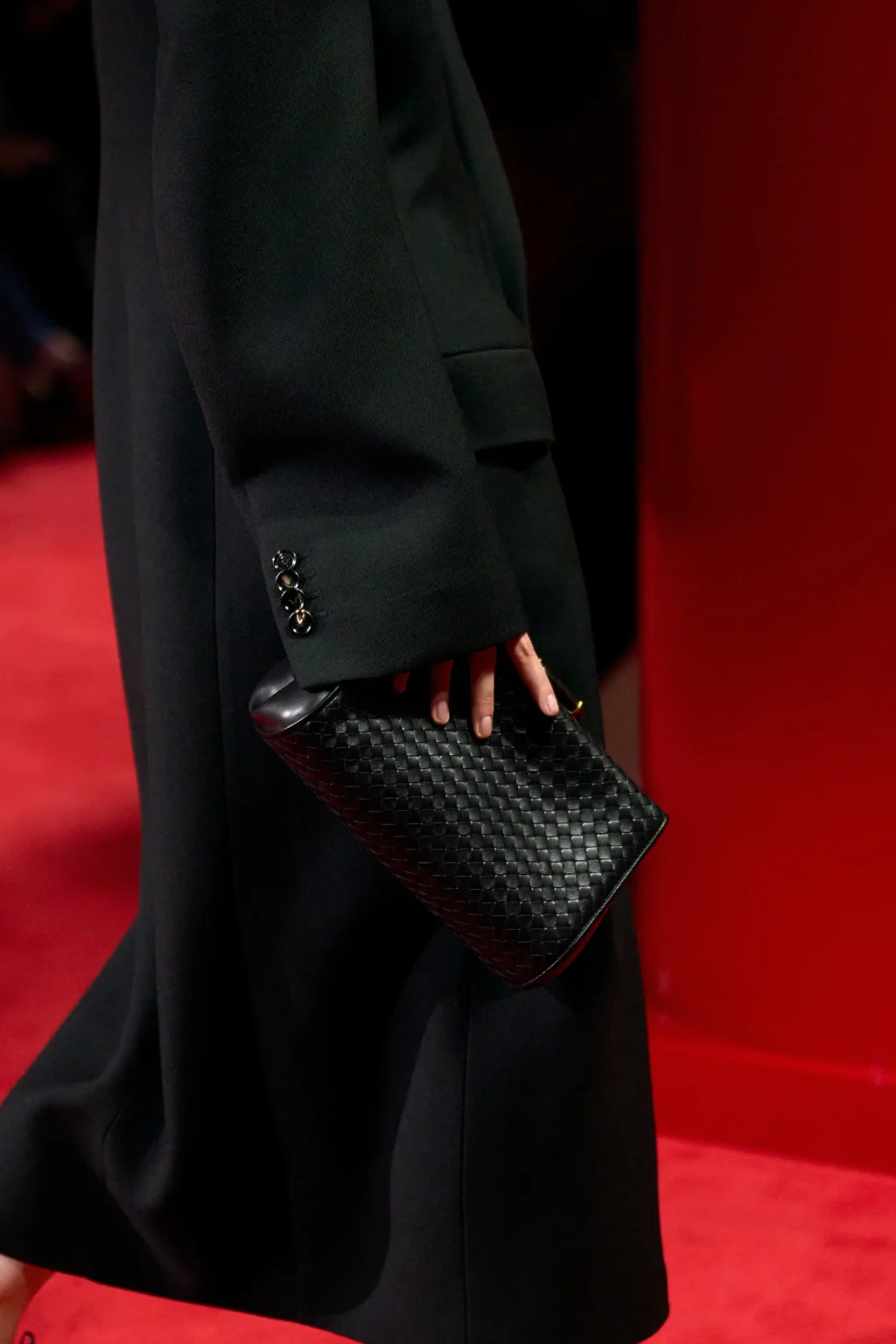
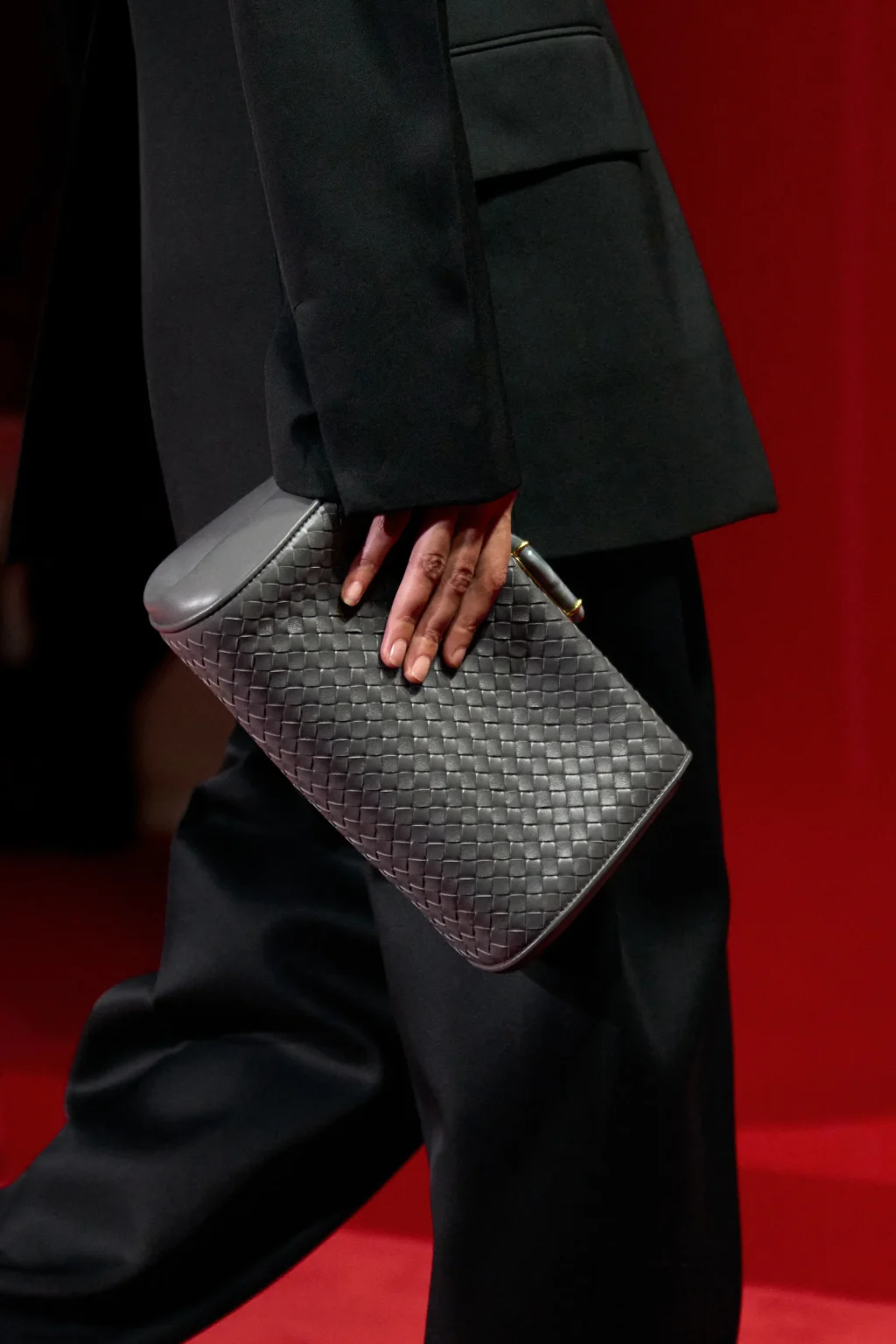
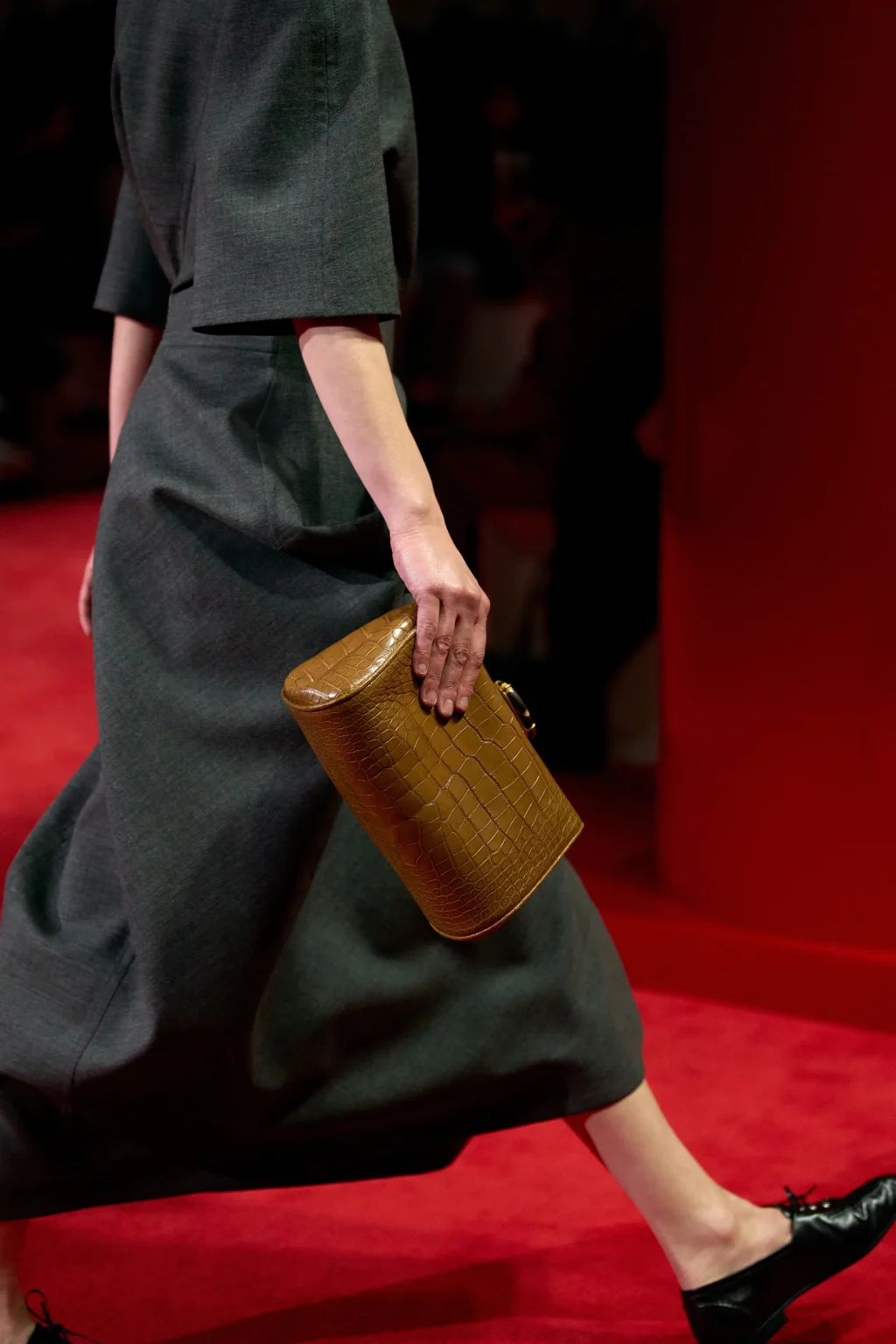
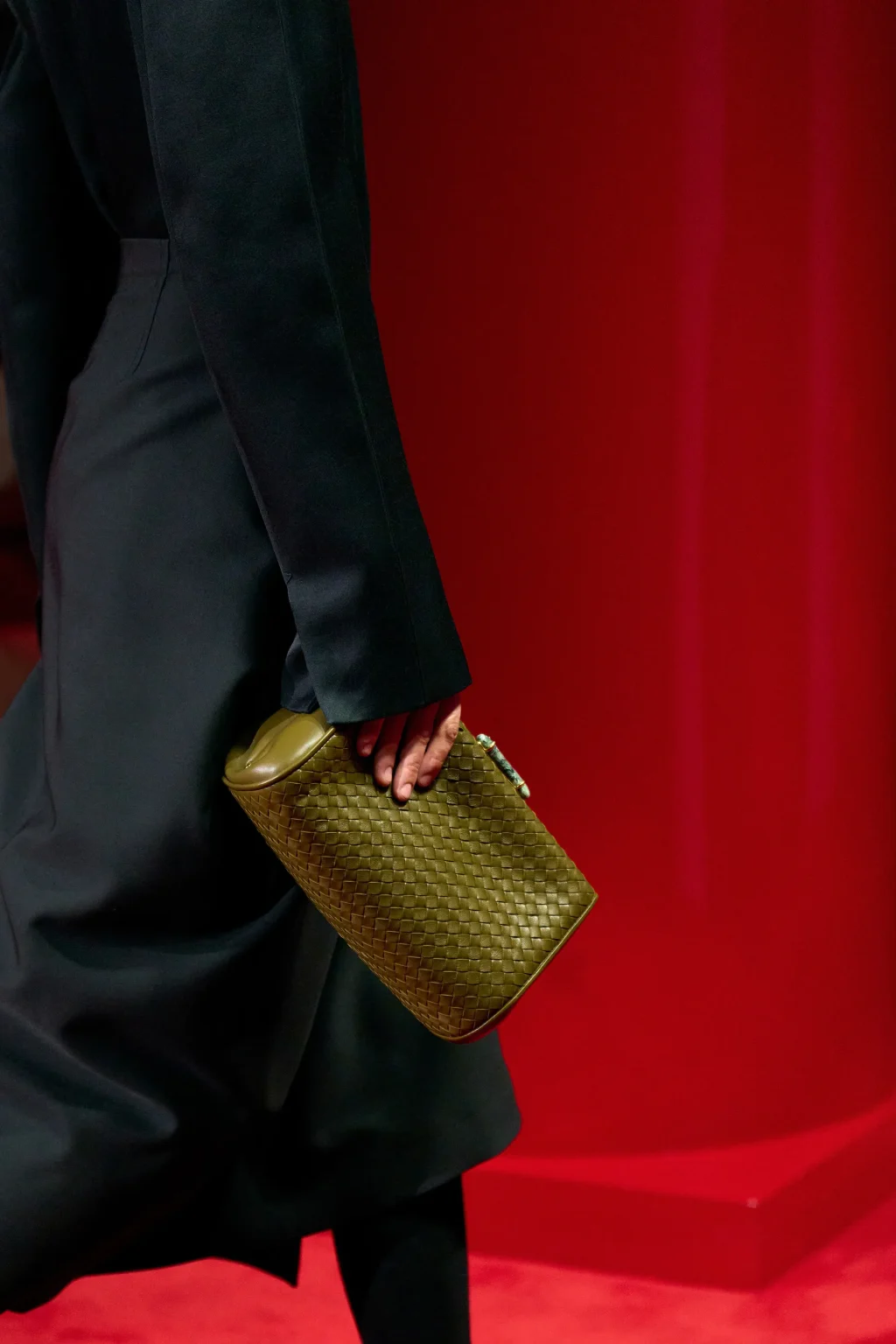
Handheld structured zip clutches. These runway clutches are pure Bottega shorthand: a rigid, architectural zip case with a smooth, almost “lid-like” top panel and a body built in tight intrecciato (black, graphite, olive).
Across all four, the design language is consistent: structured volume, tactile surface, minimal branding, and a hard line between craft (weave/embossing) and architecture (the smooth top + sharp outline).
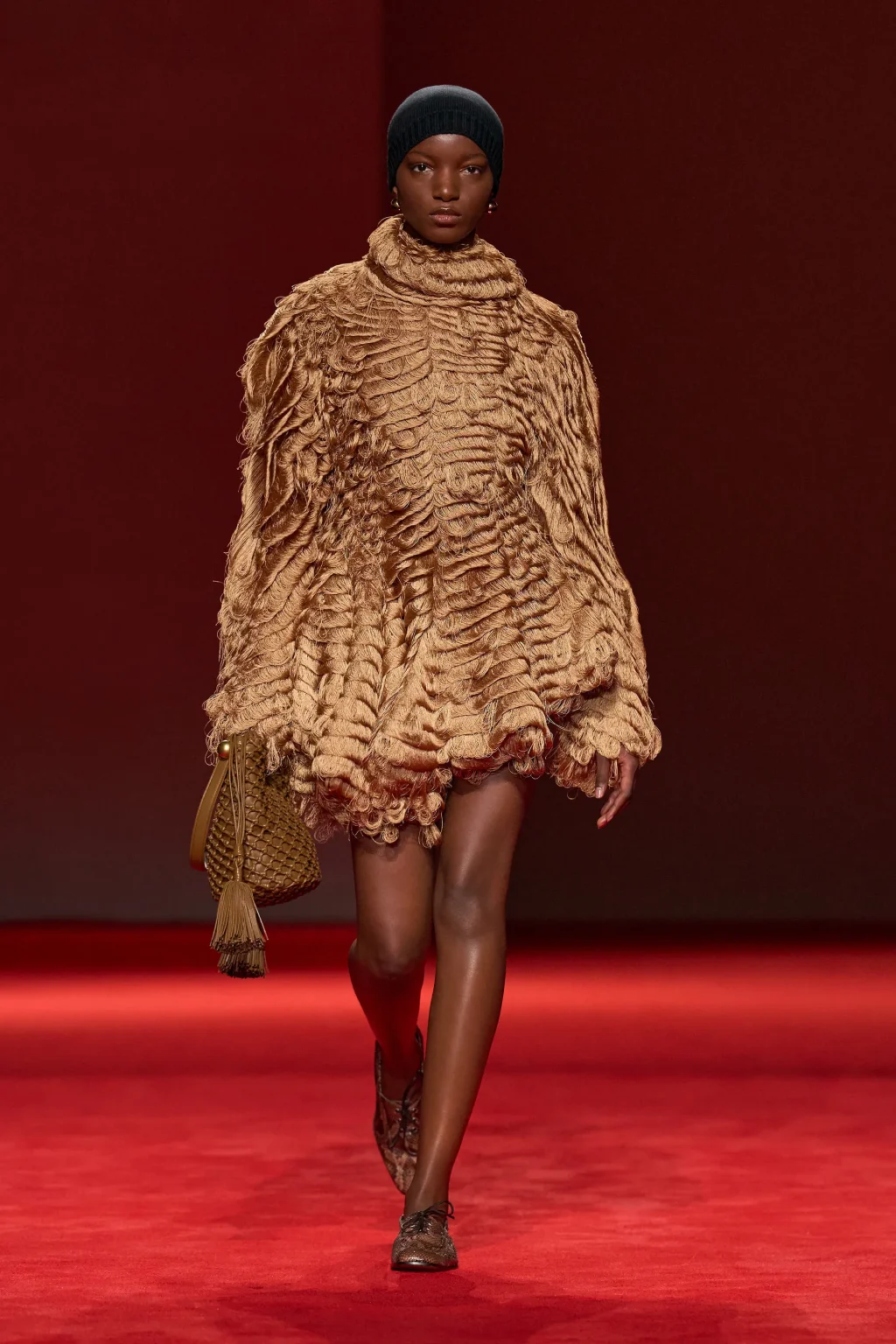
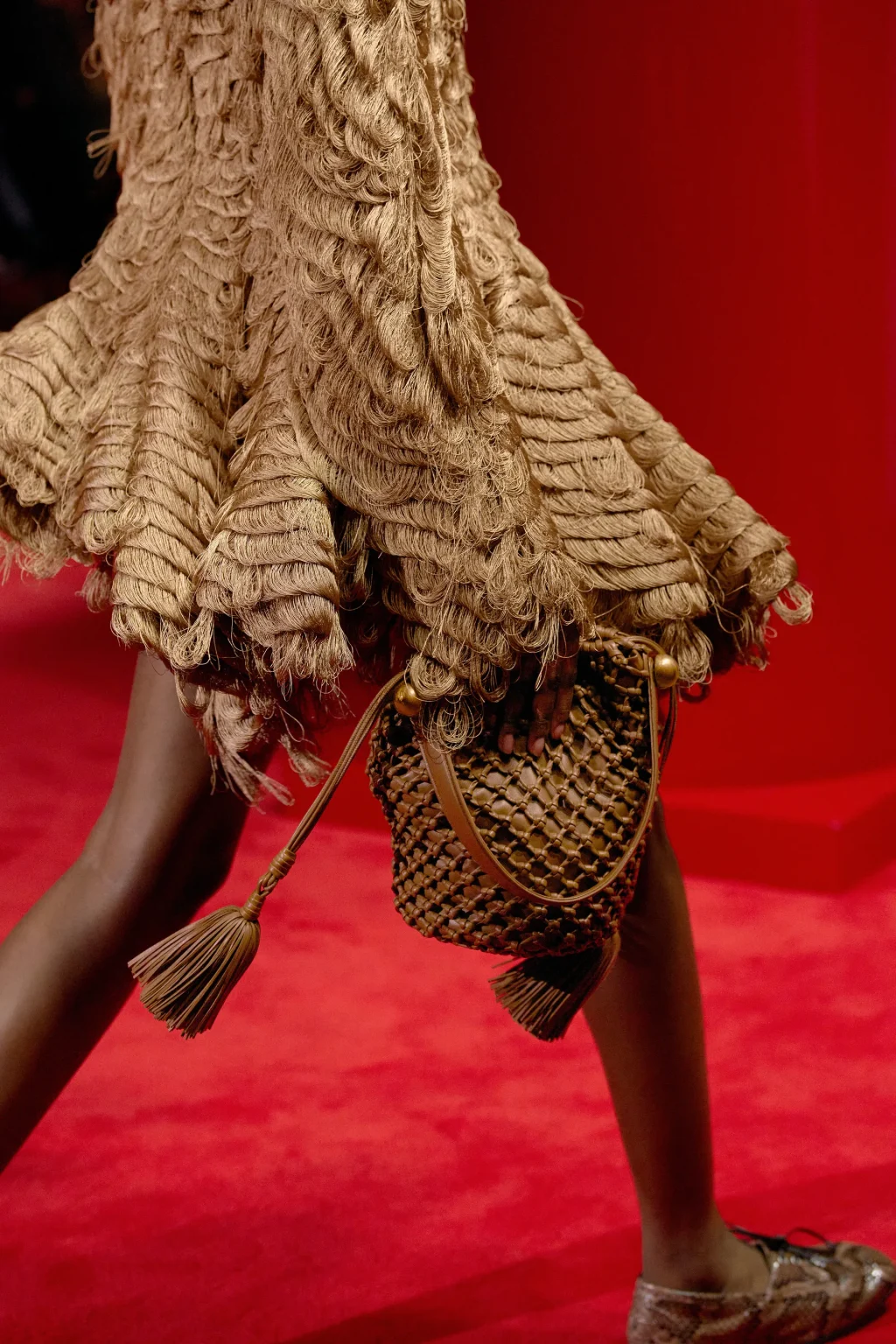
Hand-woven bucket/mini tote in warm saddle-brown—almost “basket bag,” but executed in leather with an artisanal, open weave. The silhouette is compact and upright, finished with top handles and a long tassel-ended cord that swings like a styling detail as much as a functional tie—rustic, tactile, and deliberately imperfect in the most editorial way.
Elevated work tote: a tall, structured black leather carryall with a clean, architectural body and dramatic tassel ties that drop from the sides like punctuation. It reads utilitarian at first glance, but the proportions (long, vertical, slightly severe) make it feel modern and Milanese—built for real carry, but styled like an object.