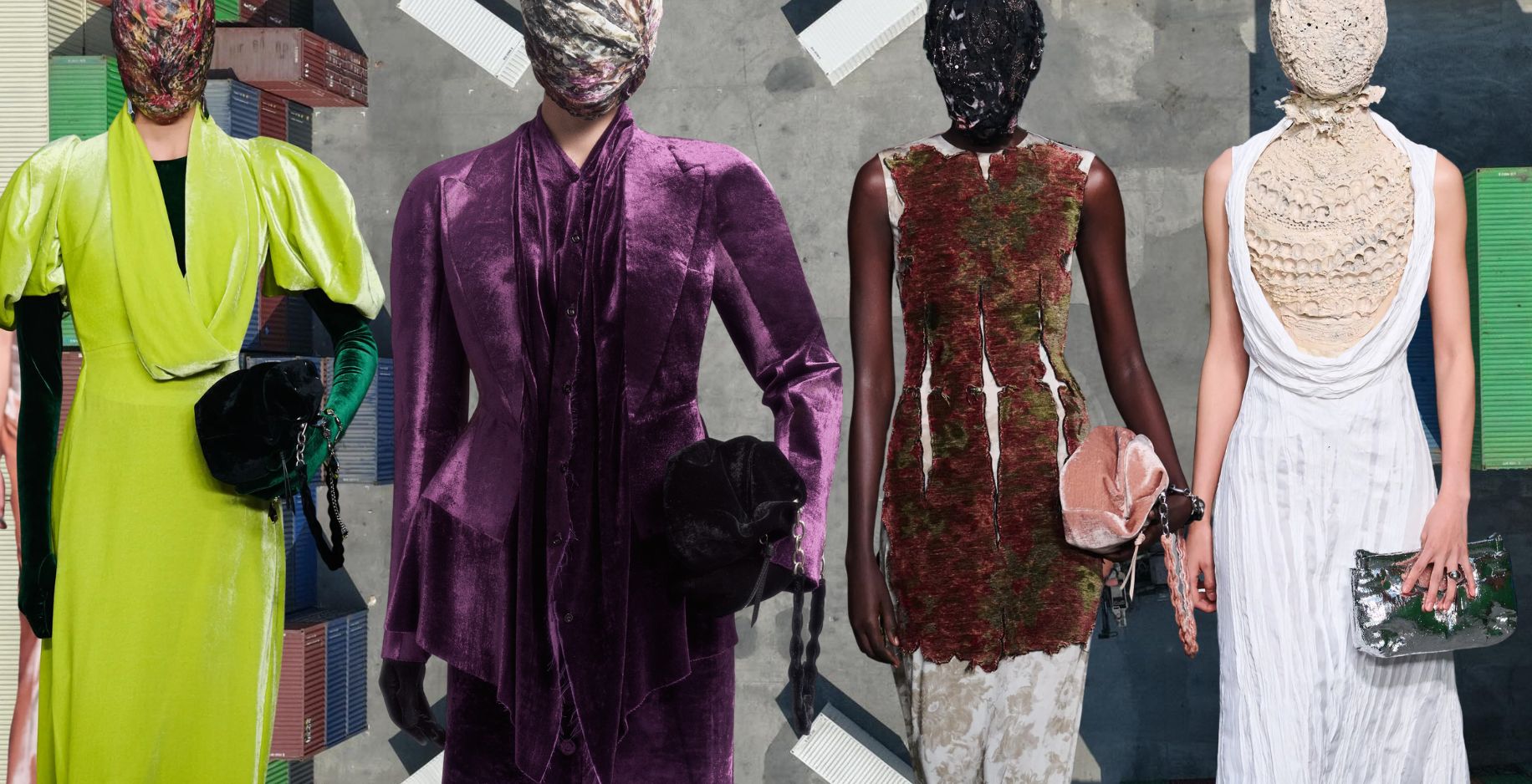
Maison Margiela Fall-Winter 2026 bags arrived inside one of the season’s most charged fashion events: Glenn Martens’s Shanghai runway for Maison Margiela, staged on April 1 as a special guest presentation of Shanghai Fashion Week. Set among stacked shipping containers, the show brought together Fall-Winter 2026 ready-to-wear and new Artisanal looks, turning the collection into a statement about movement, trade, craft, anonymity, and global ambition.
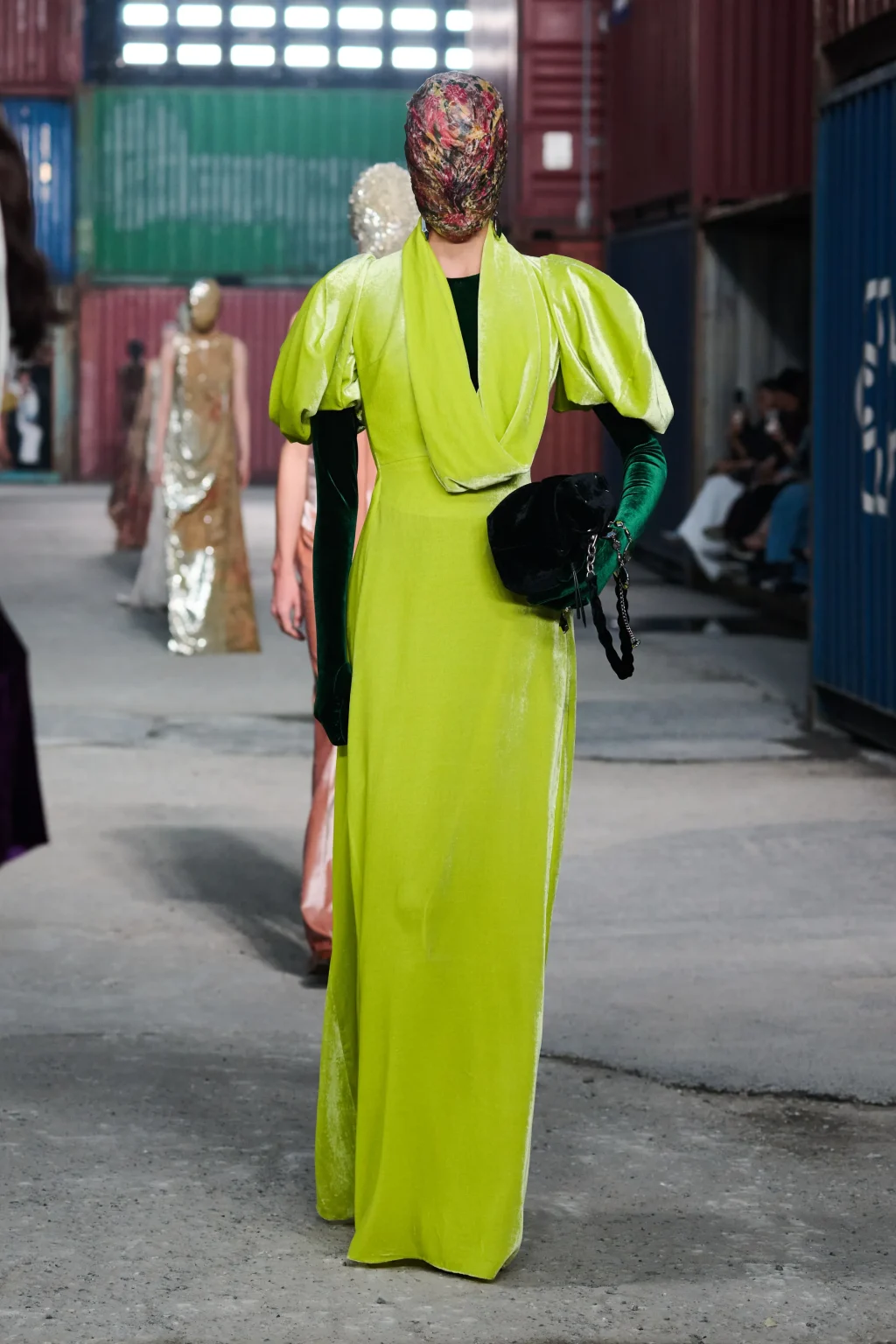
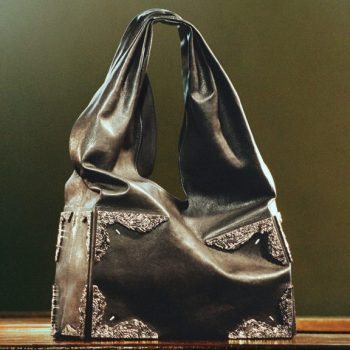
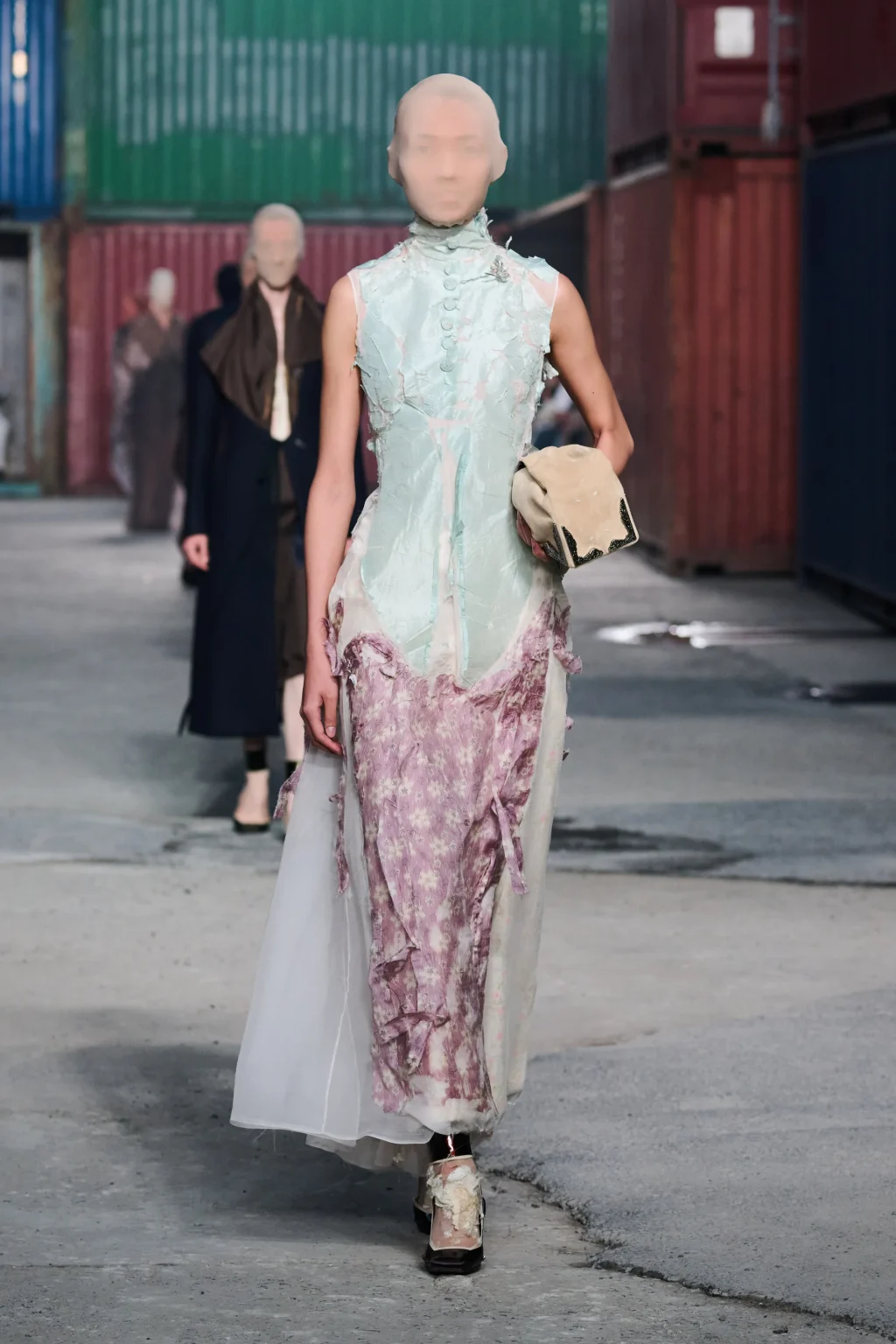
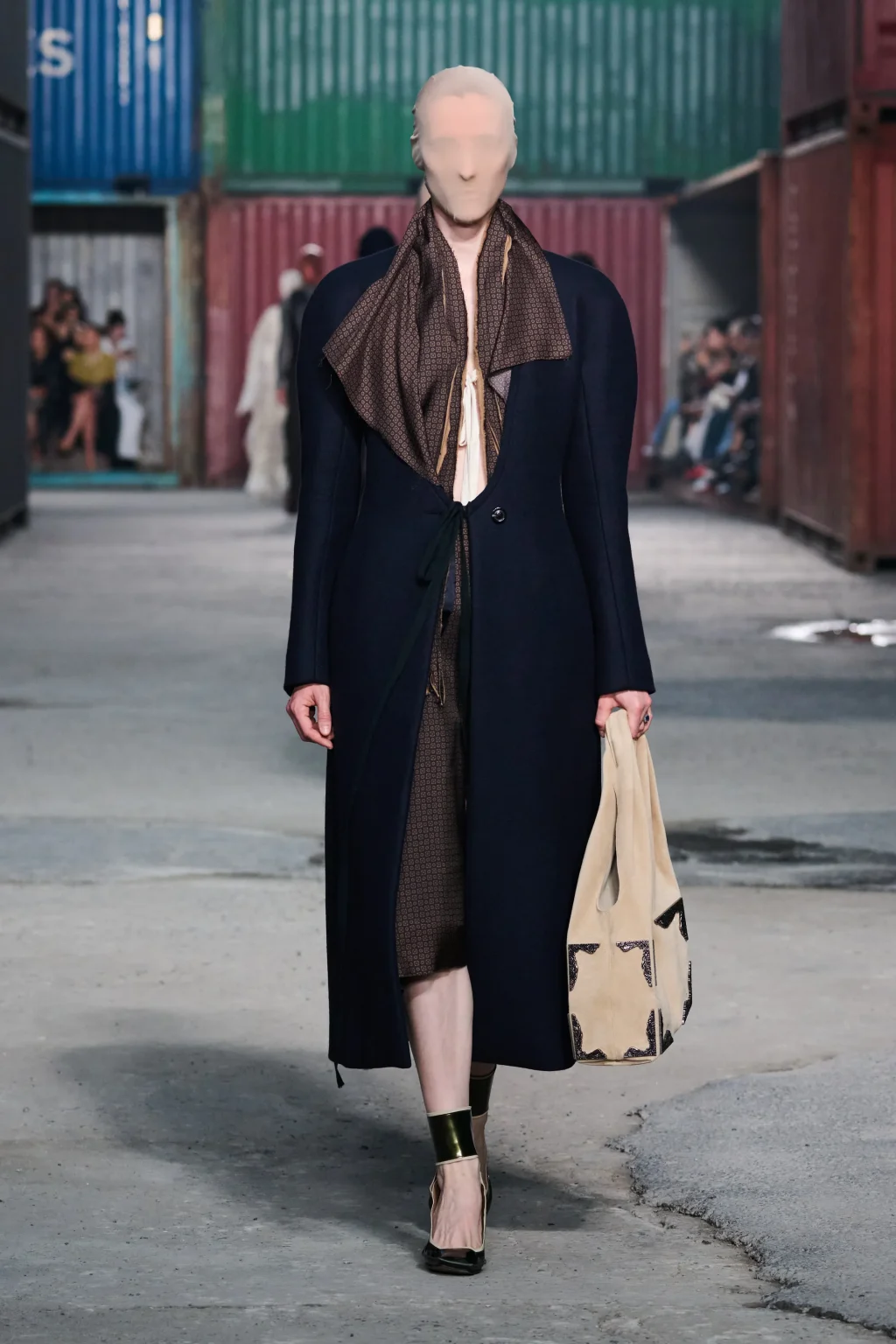
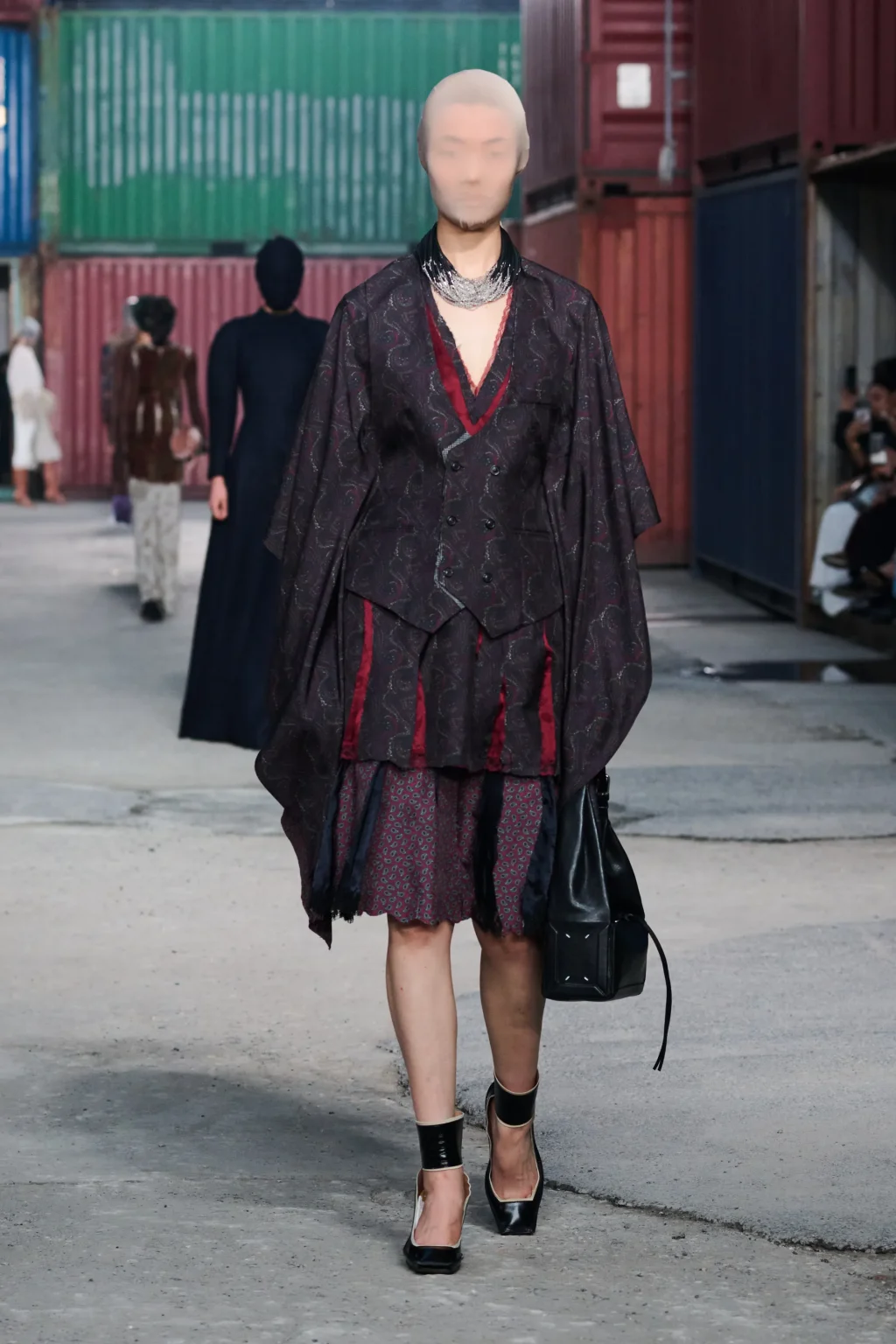
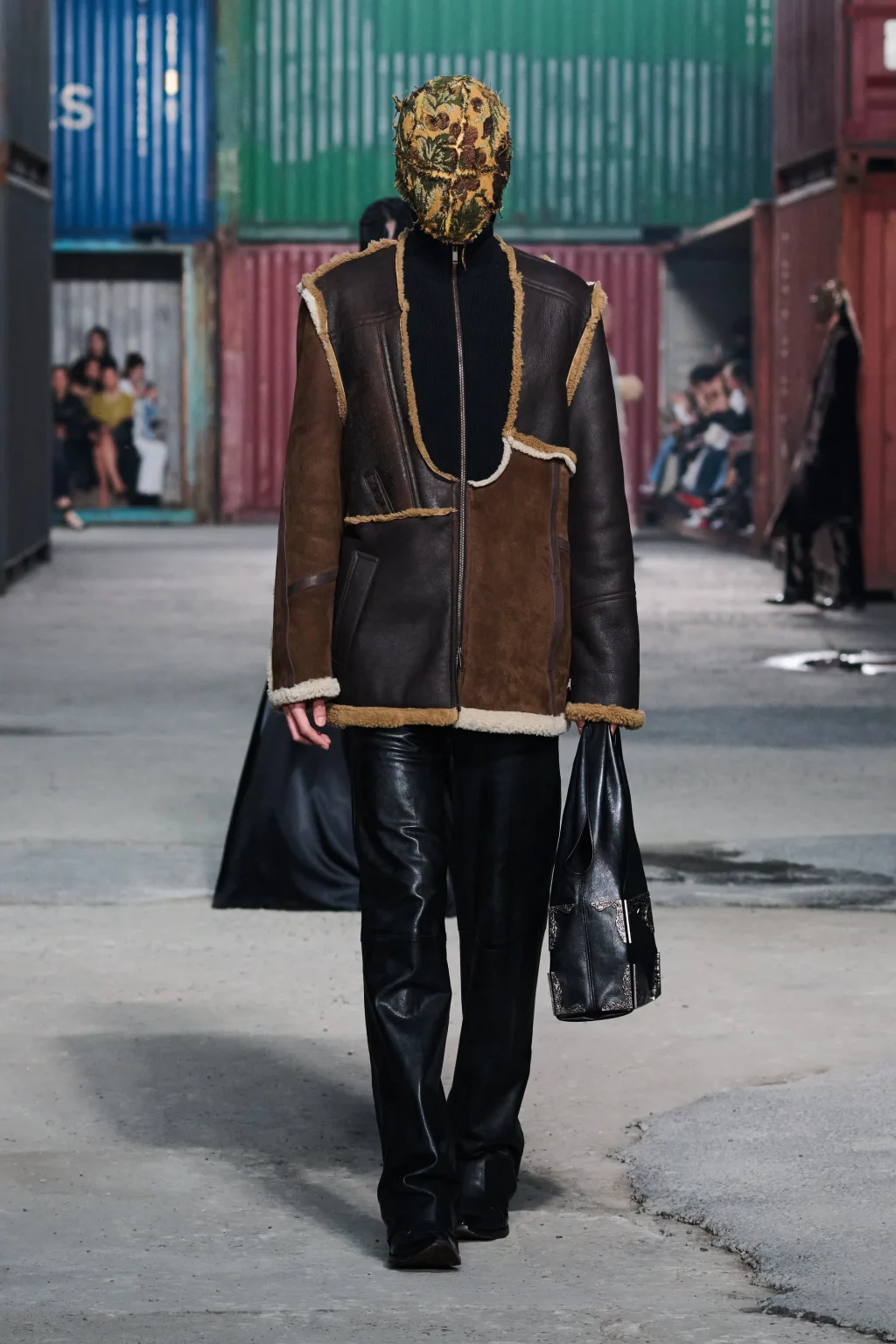
The bags themselves often appeared in partial view rather than full product-frontal clarity, which made the broader reading of the collection even more important. Martens treated bags as part of the silhouette architecture: gathered pouches tucked under the arm, soft folded clutches, relaxed leather holdalls, and slouchy carryalls that looked handled, pressed, and lived with rather than pristine or over-explained.
Why Maison Margiela chose Shanghai for Fall/Winter 2026
This was Maison Margiela’s first runway show outside Paris since the house began showing in 1988, and the move was strategic as much as symbolic. CEO Gaetano Sciuto said the Shanghai event was designed to “set a foundation,” part of a broader China initiative that extended beyond one runway into a multi-city program of exhibitions and public-facing cultural activations.
The brand’s rationale was straightforward. Margiela entered China in earnest only in 2019, has since opened 26 stores there, and still sees the market as underdeveloped relative to its potential. Sciuto said total revenues grew 9% last year, while only a small share came from China, which is precisely why the maison views the country as a major opportunity.
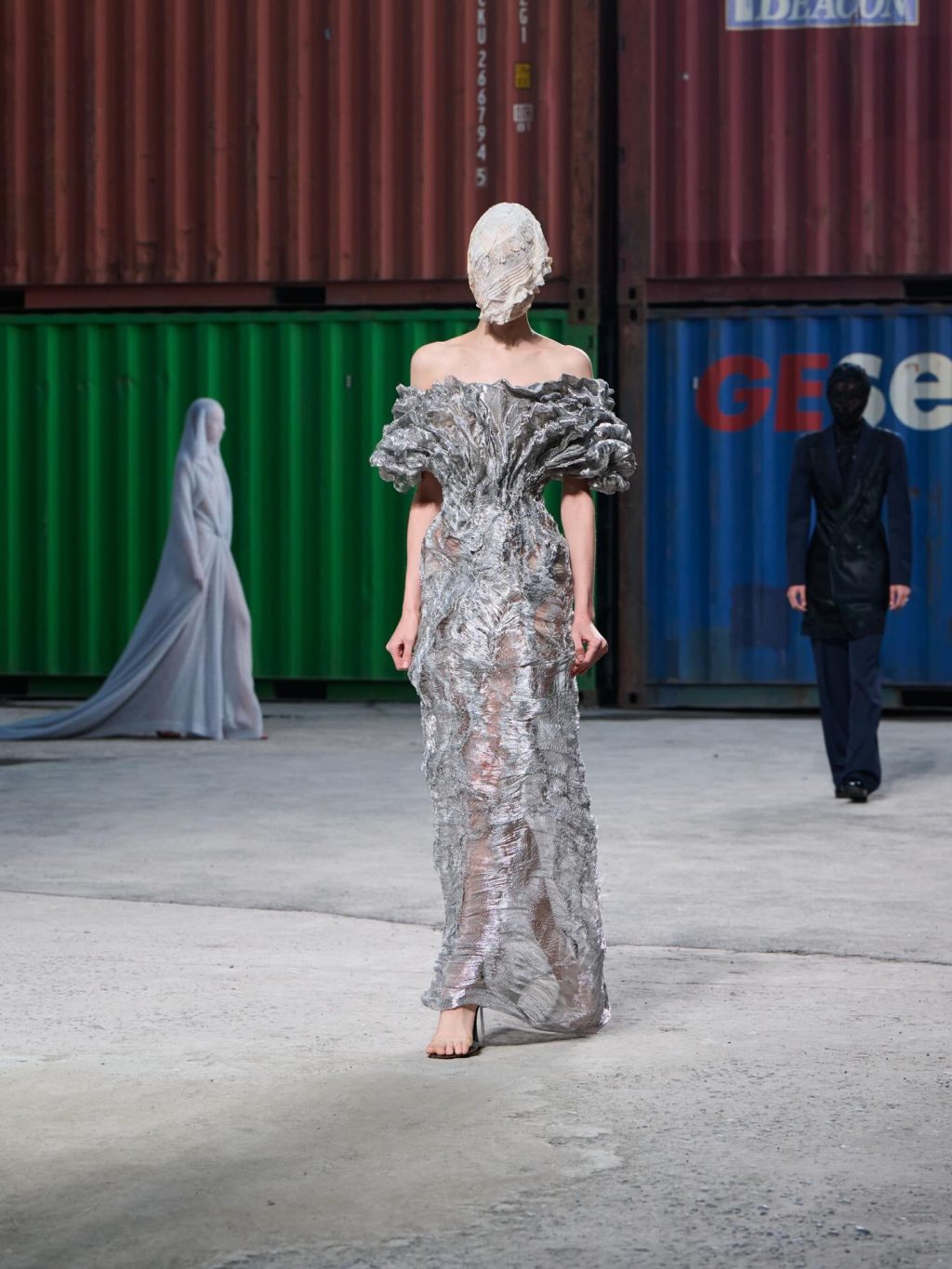
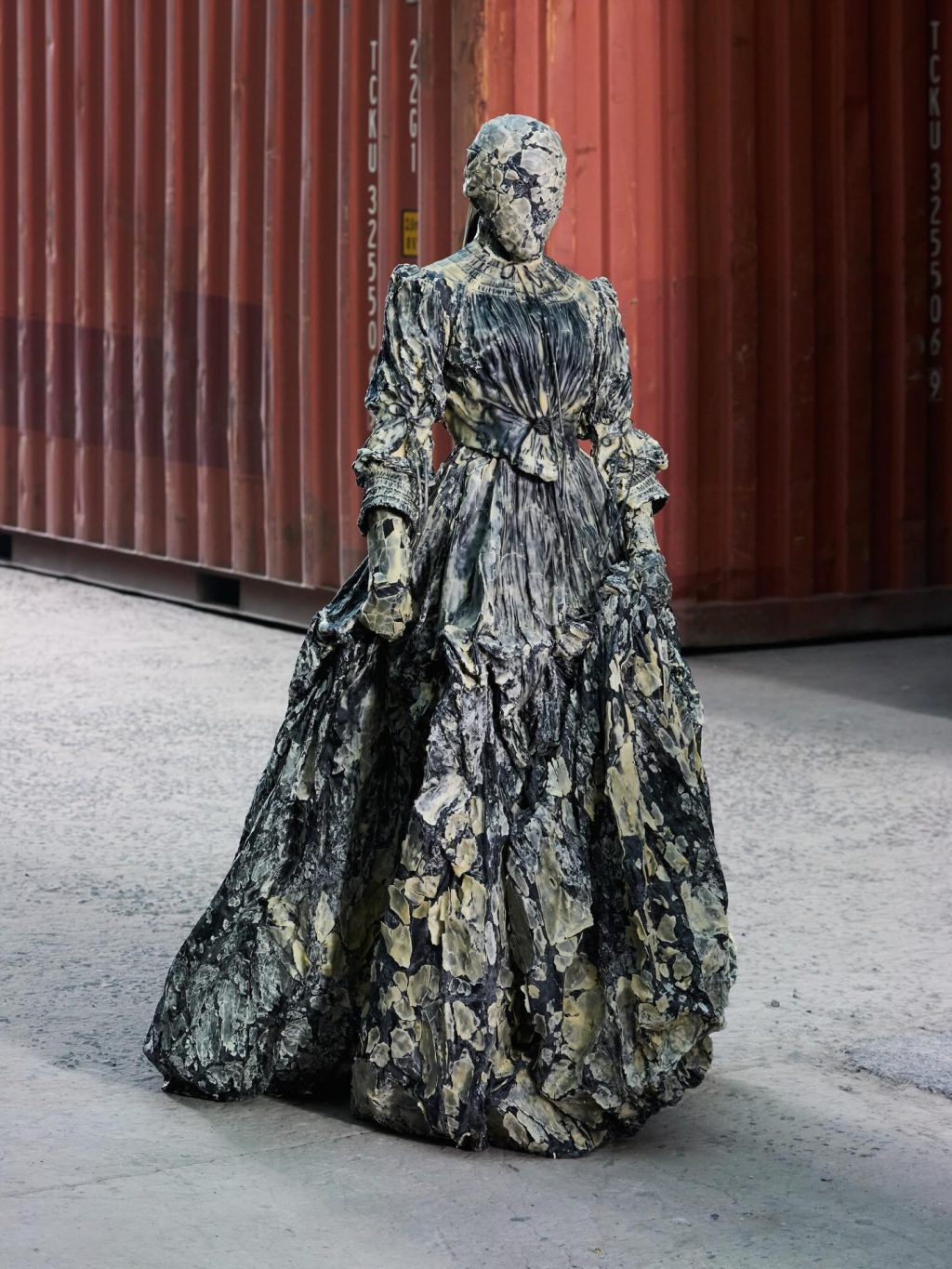
The industrial set did heavy conceptual lifting. Shipping containers immediately introduced ideas of circulation, export, freight, exchange, and passage between worlds. For Maison Margiela, that language works on multiple levels.
On one level, the set spoke to Shanghai itself: a city defined by trade, logistics, infrastructure, speed, and global movement. On another, it echoed Margiela’s own history of relocation, transformation, and recontextualization. Martens placed couture-level surfaces and distressed ready-to-wear inside a hard commercial environment, creating a productive friction between luxury and industry.
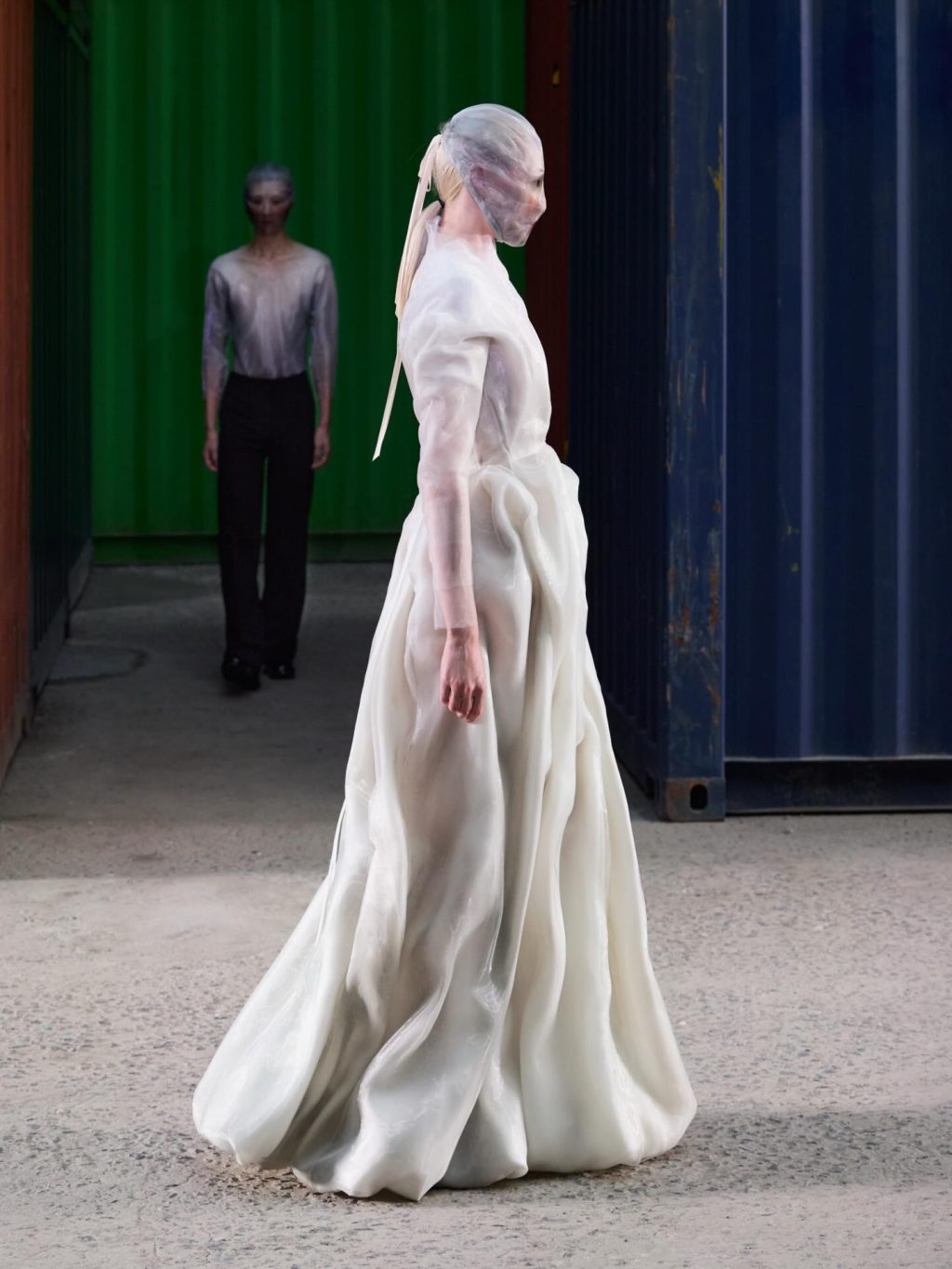
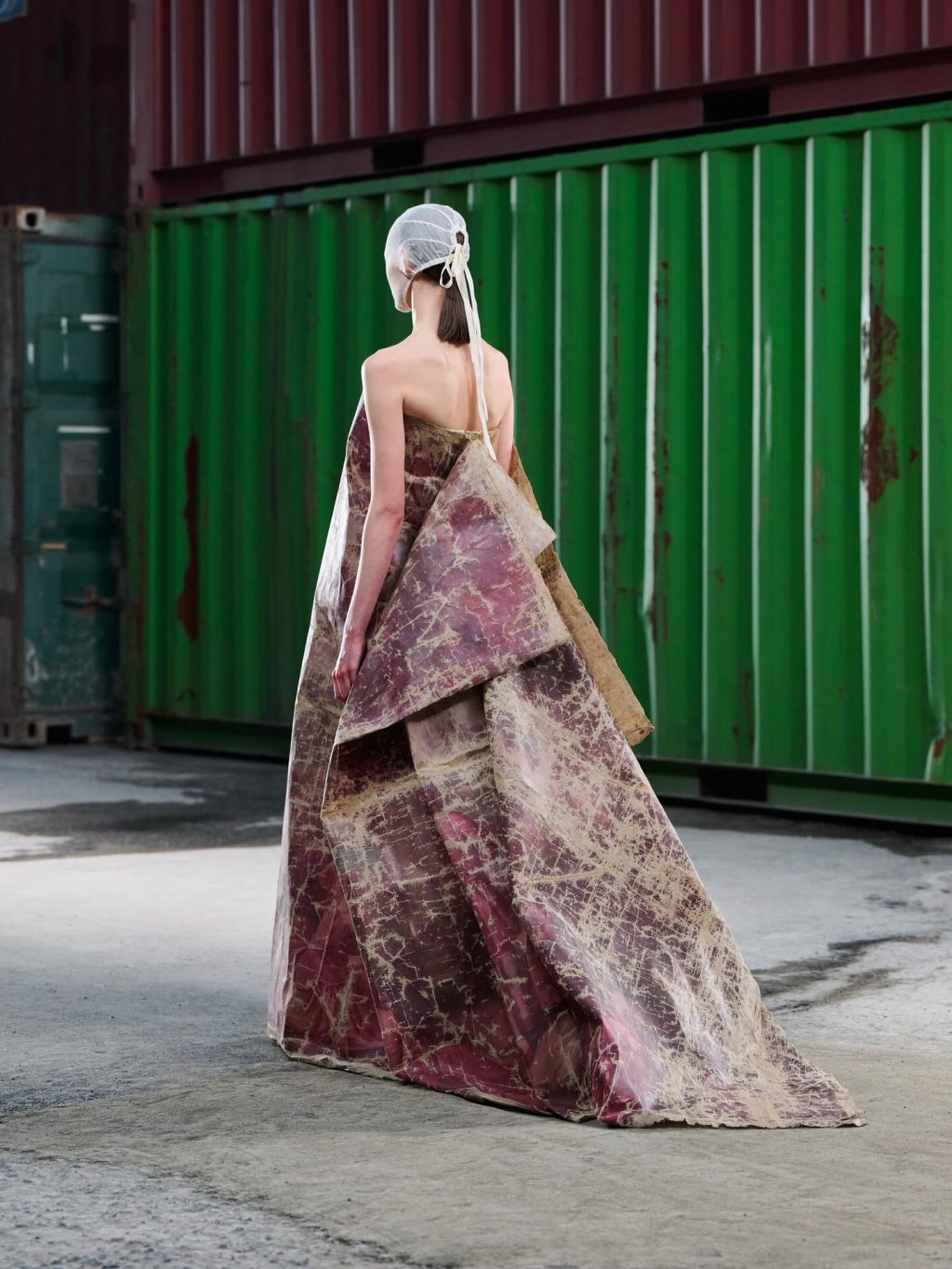
A collection split between ready-to-wear and Artisanal
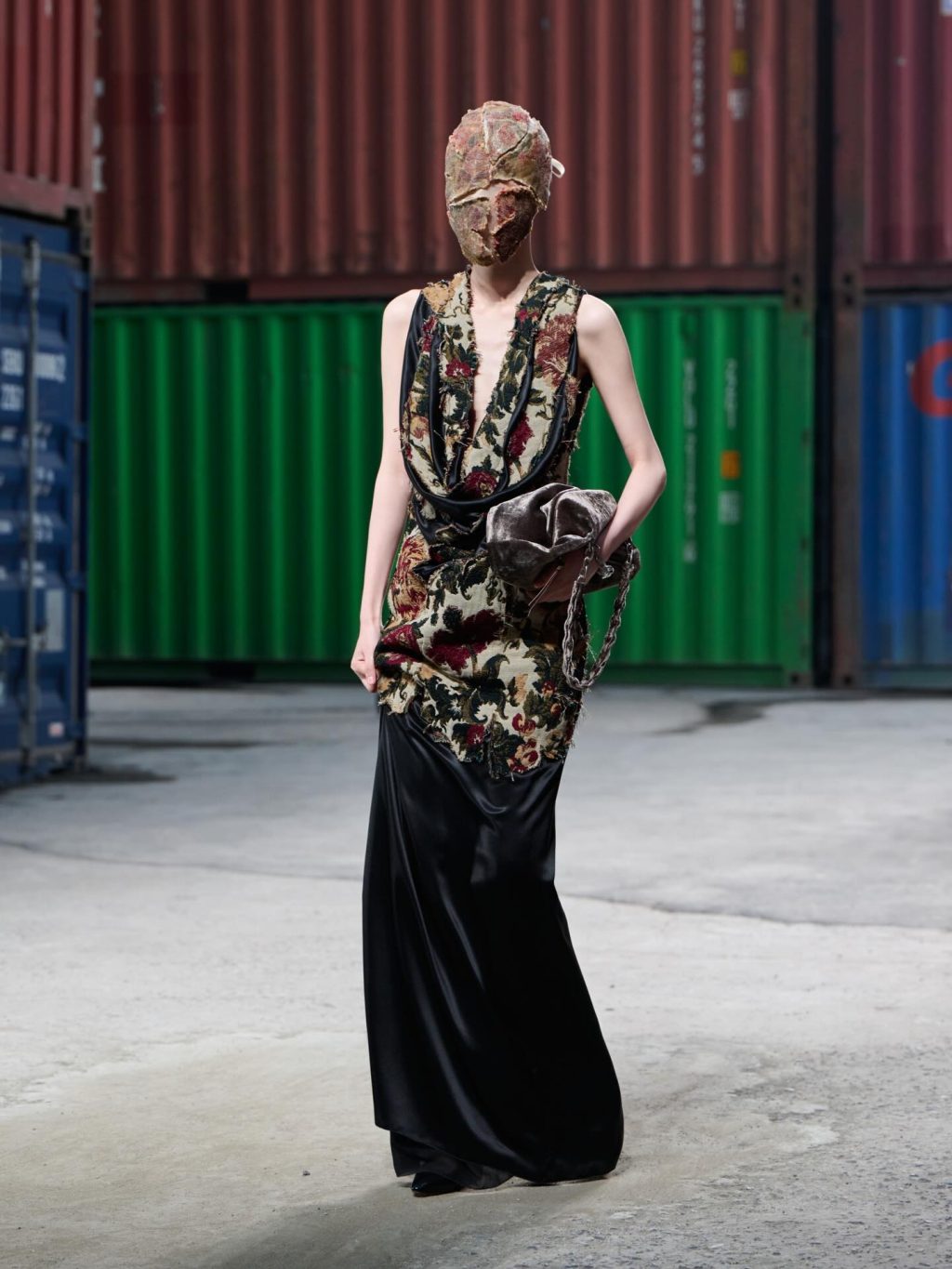
Maison Margiela’s Shanghai show mixed Martens’s latest ready-to-wear with seasonal looks from the house’s couture-level Artisanal line. That structure explains the wide visual range visible in the images: sharp tailored coats, leather pieces, elongated dresses, softened suiting, distressed florals, burnished surfaces, metallic-looking eveningwear, and porcelain-adjacent sculptural treatments all appeared within one presentation.
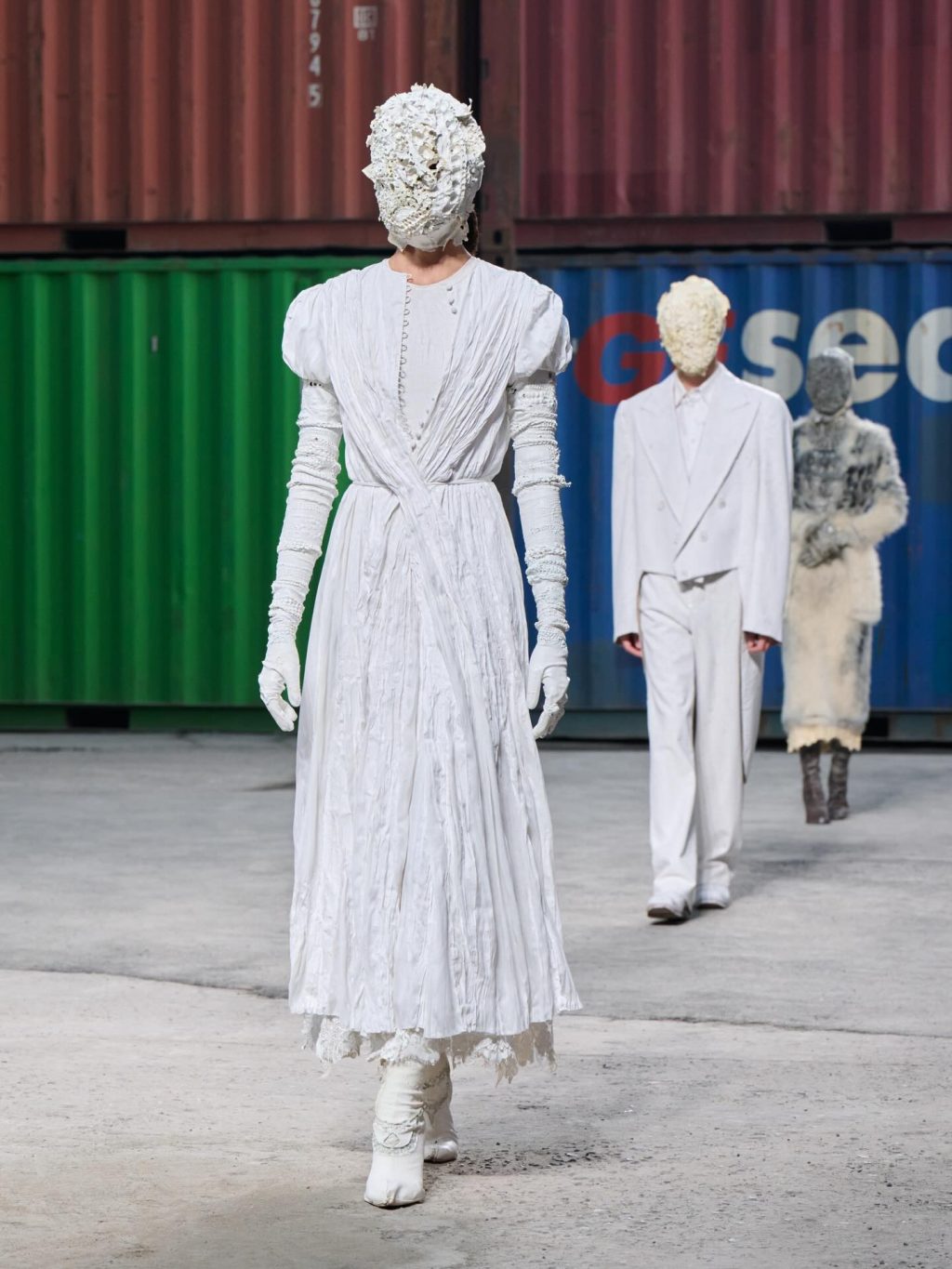
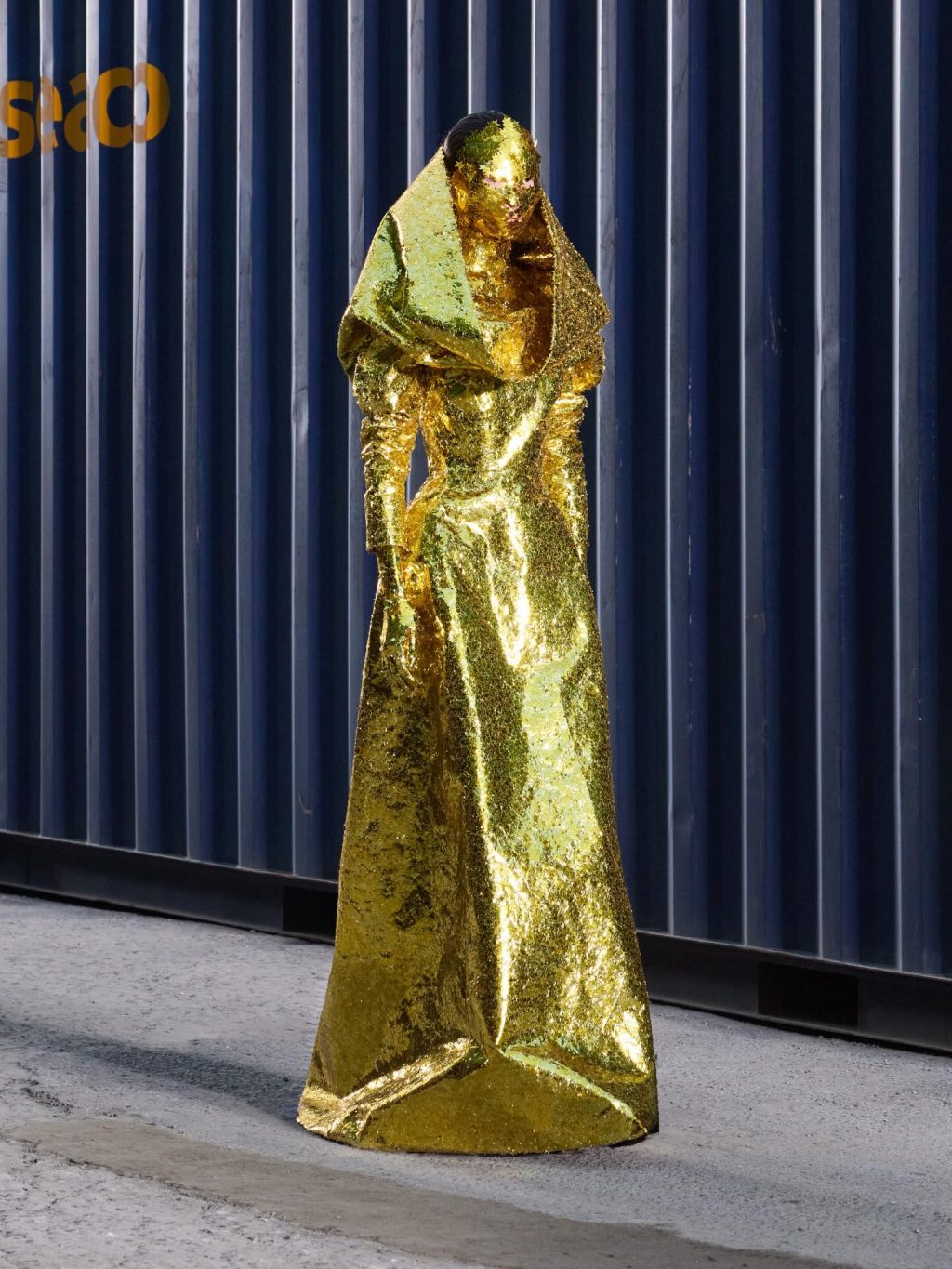
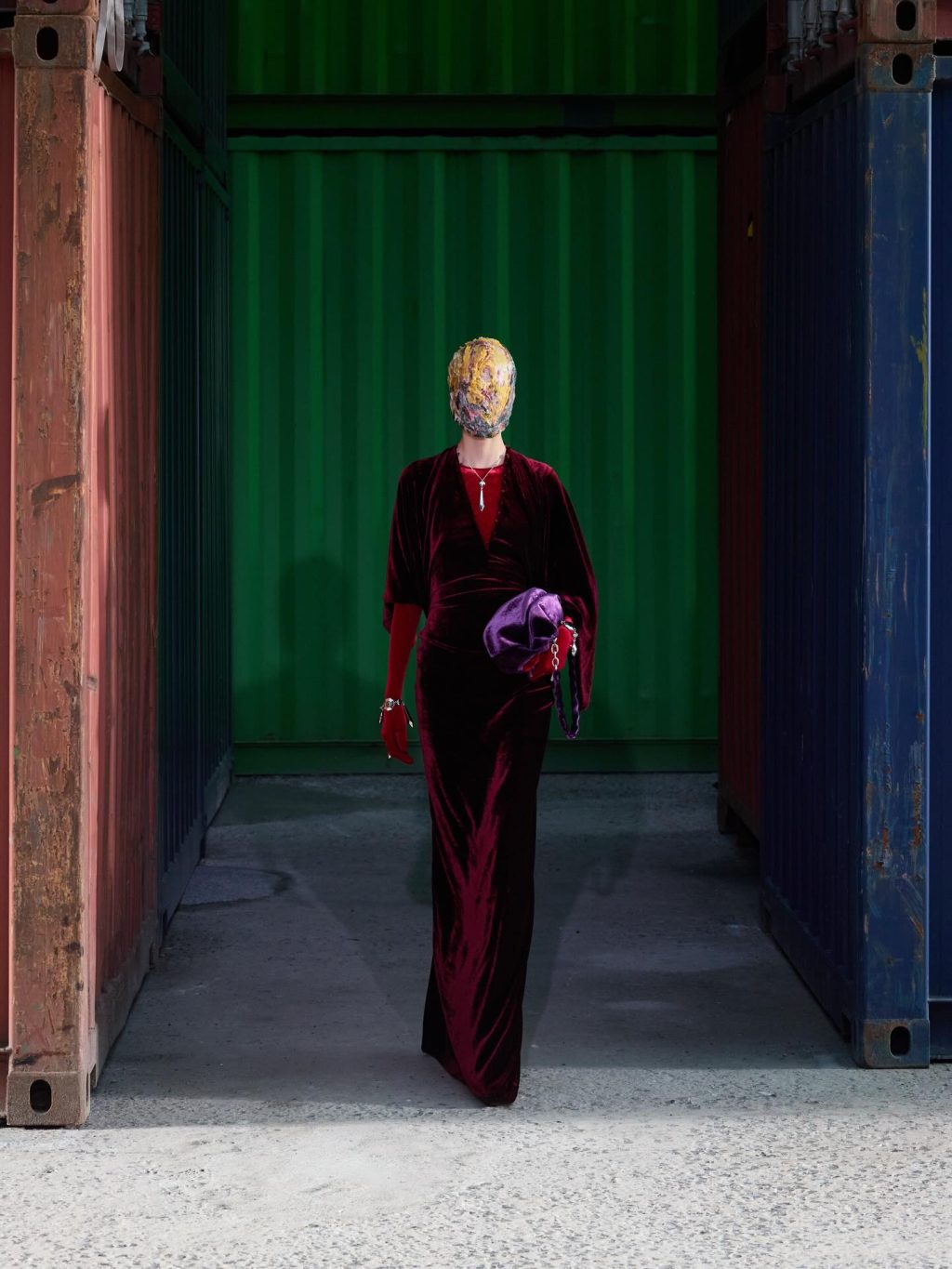
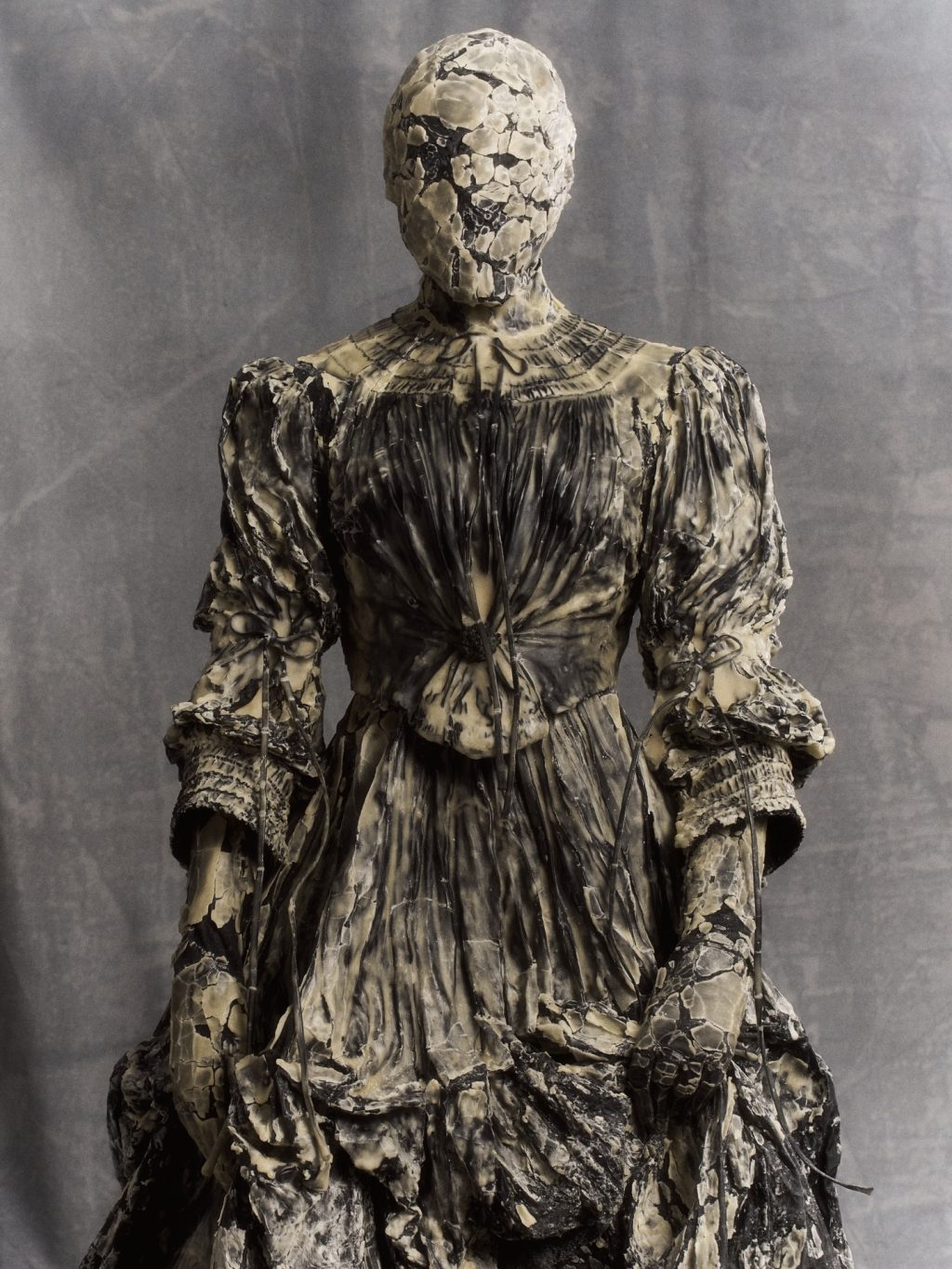
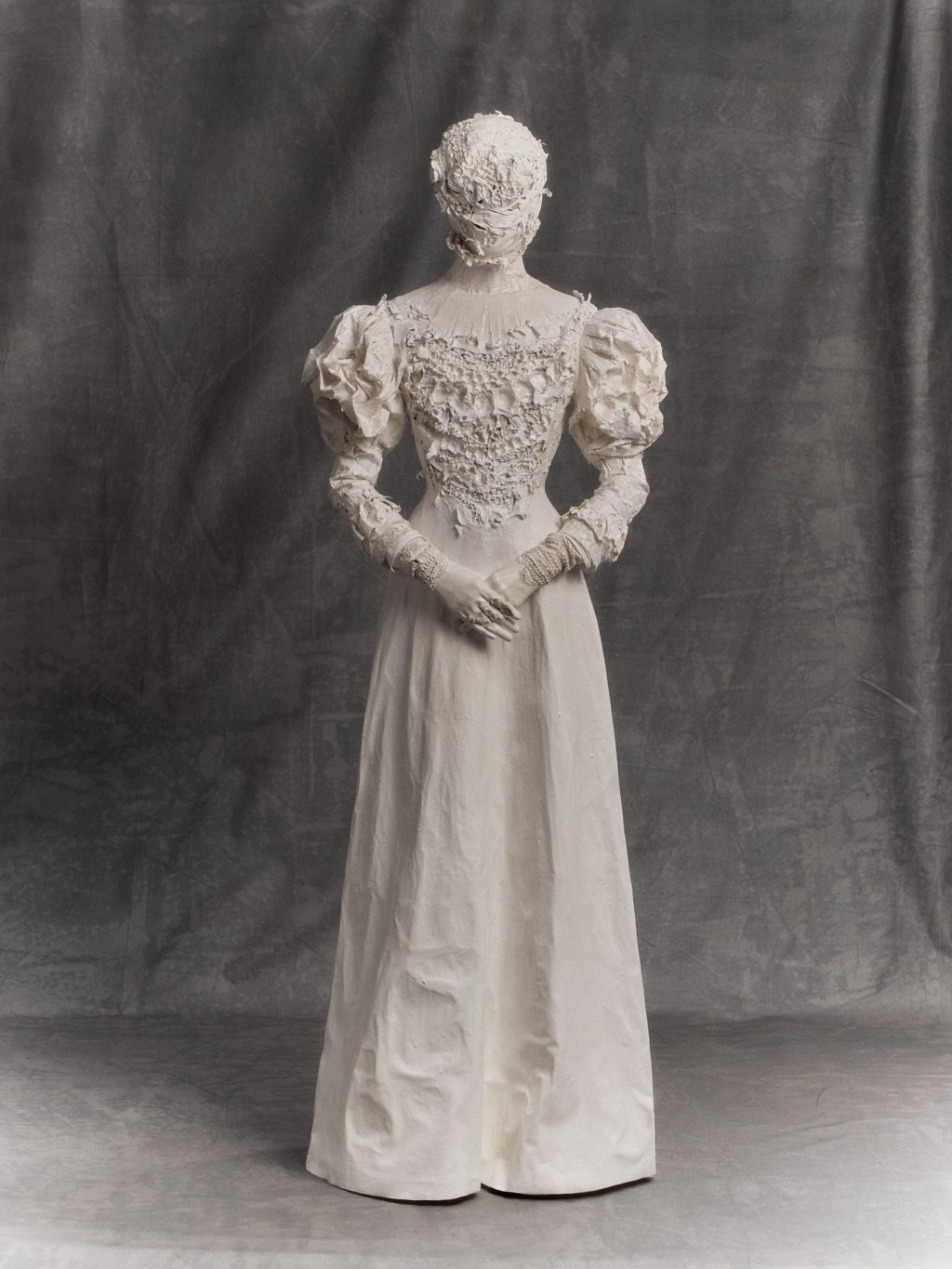
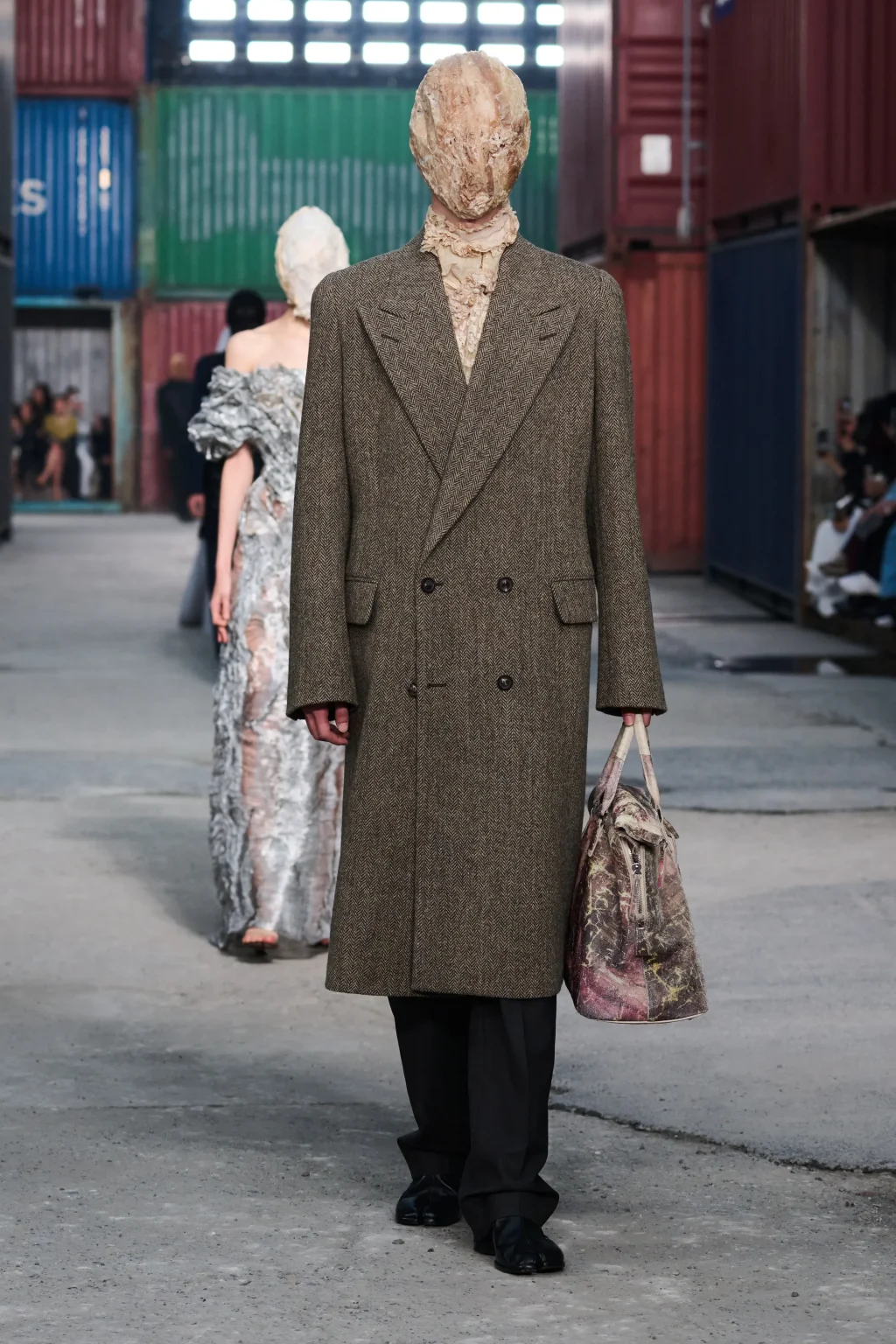
The ready-to-wear side gave the collection its grounding. There were long coats in brown herringbone, leather dresses with severe vertical lines, softened tailoring, and pieces that carried Martens’s interest in contour and tension. The Artisanal side expanded the emotional register. Here the surfaces became stranger and more theatrical: cracked white textures, sculpted head coverings, glittering masks, wax-like formations, draped velvet, and gowns that looked almost fossilized, lacquered, or cast.
The masks, the anonymity, and the Margiela signature
Every reading of this show returns to the masks, because masks remain one of Maison Margiela’s strongest historical codes. The China program after the show made that explicit too: one of the four exhibitions was devoted to the house’s history of anonymity and masks, a theme tied to Margiela since the Spring-Summer 1989 runway debut.
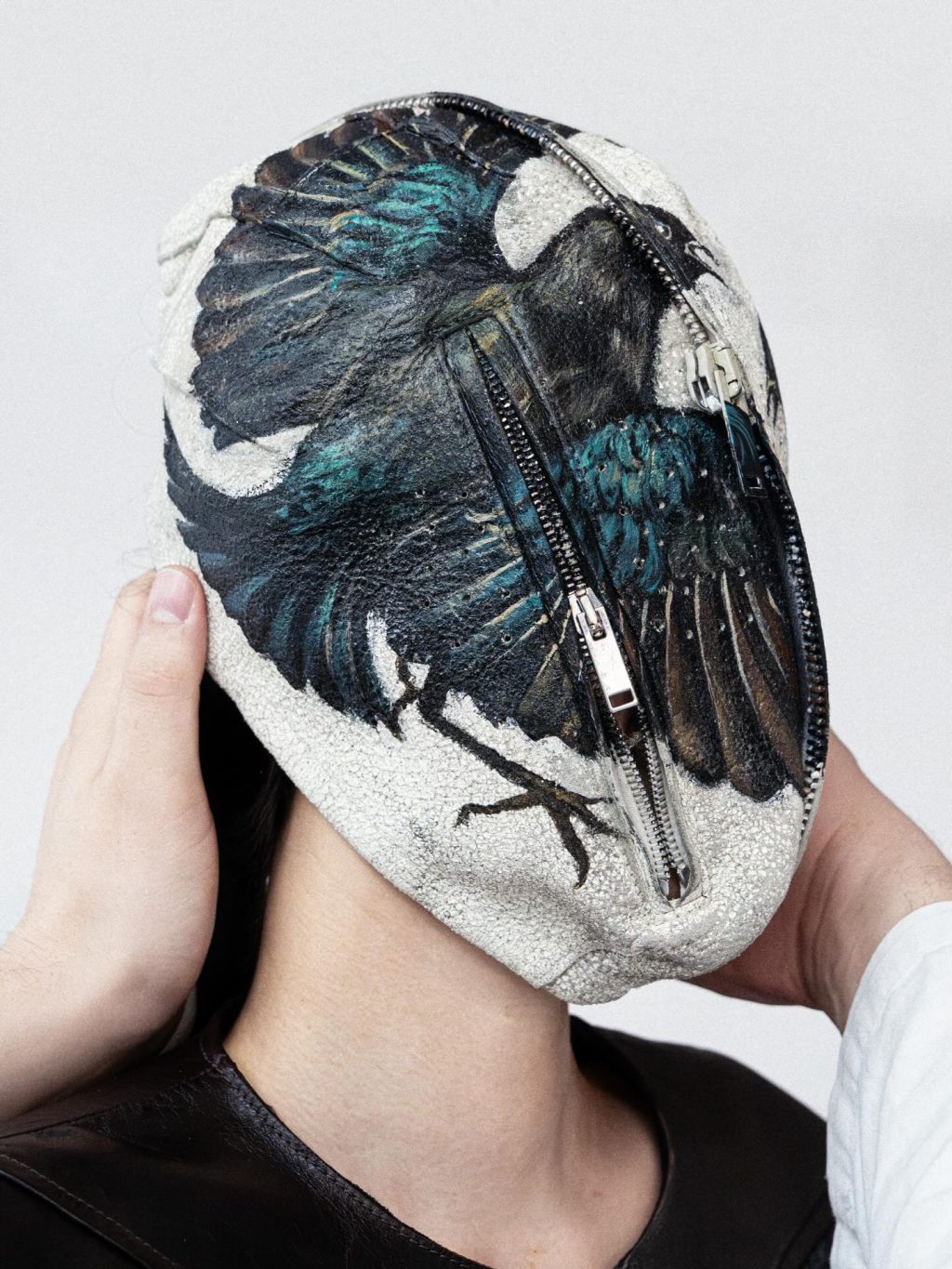

In the Shanghai images, the masks shift from pale veils to dark beaded surfaces, cracked sculptural shells, floral tapestry faces, and painterly, almost molten coverings. They unify the cast while removing the usual hierarchy of personality. The effect is powerful in runway images and especially useful in a collection where material treatment carries so much meaning. Your eye moves from face to fabric, then to silhouette, then to bag.
The bags of Maison Margiela Fall-Winter 2026
Four bag silhouettes carried the accessory narrative across the 76 looks shown in Shanghai, each appearing in multiple iterations and each treated as an extension of the collection’s material logic rather than a standalone product statement.
1. The Glam Slam
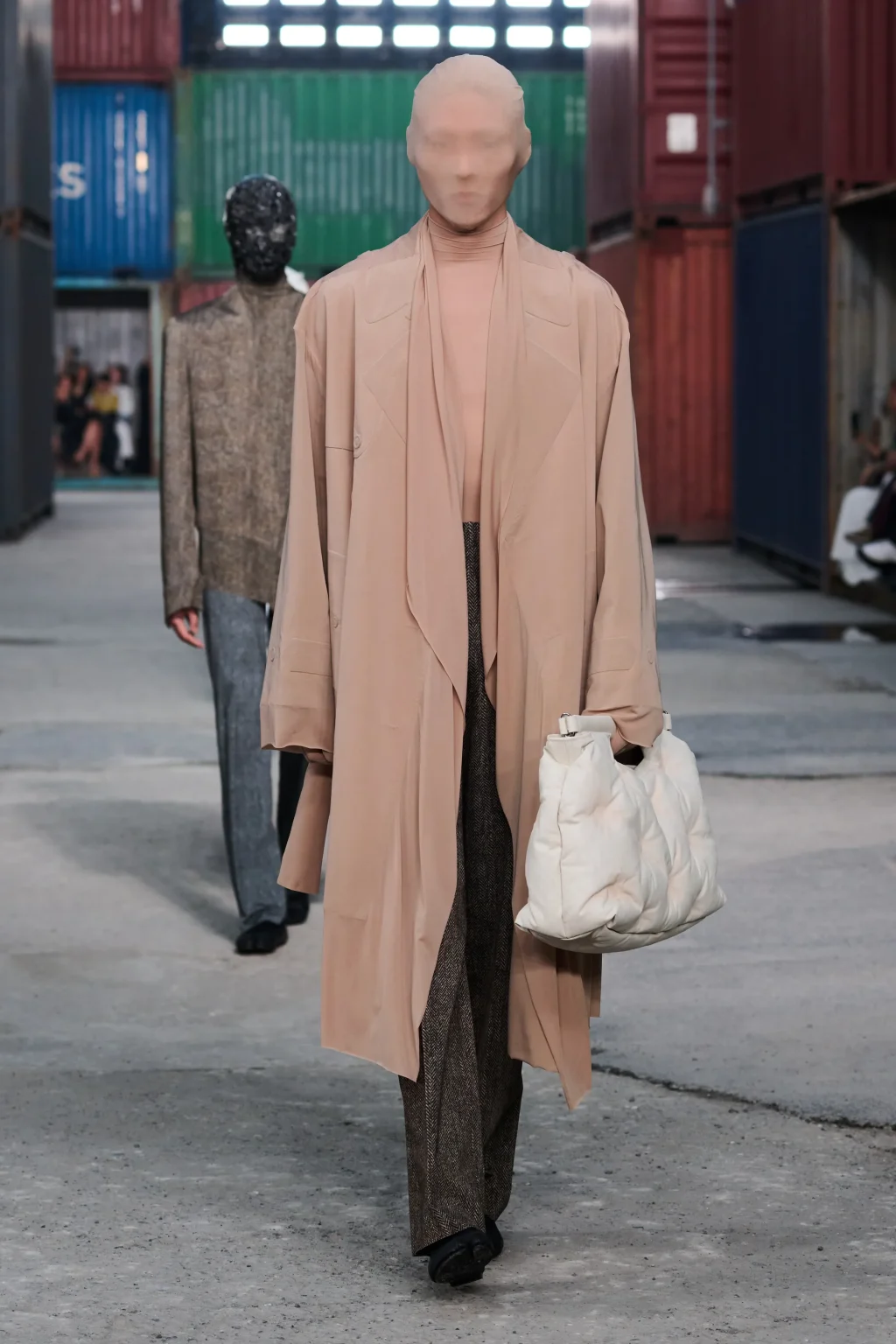
The Glam Slam opened the bag story early, appearing in three distinct finishes across the show. First in aged white, worn against a second-skin-fused trenchcoat with a nibbled-neckline sweater. Then in a treatment described in the official show notes as aged like the leather of a distressed sofa — a finish that directly mirrors the collection’s obsession with objects found, handled, and worn beyond repair.
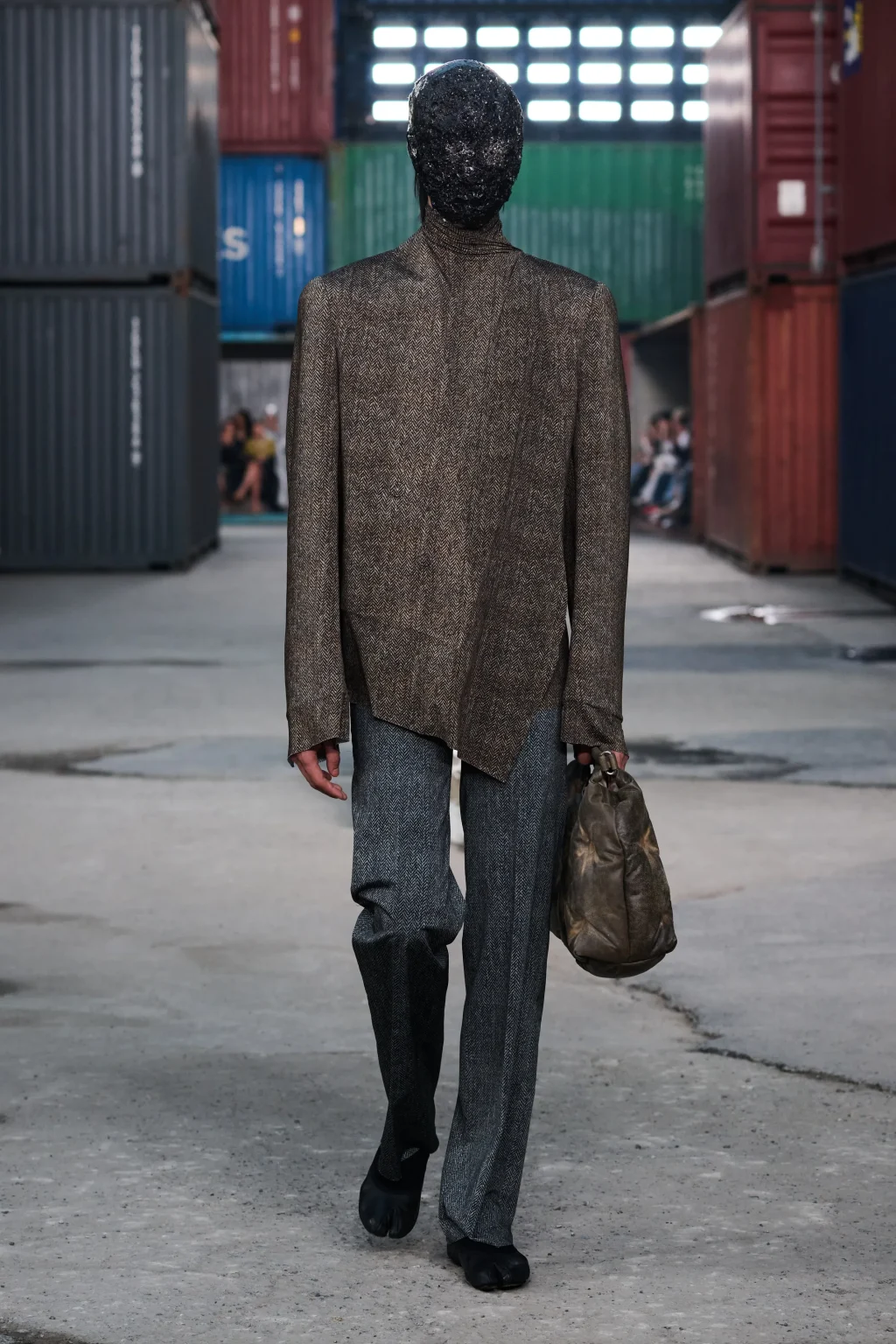
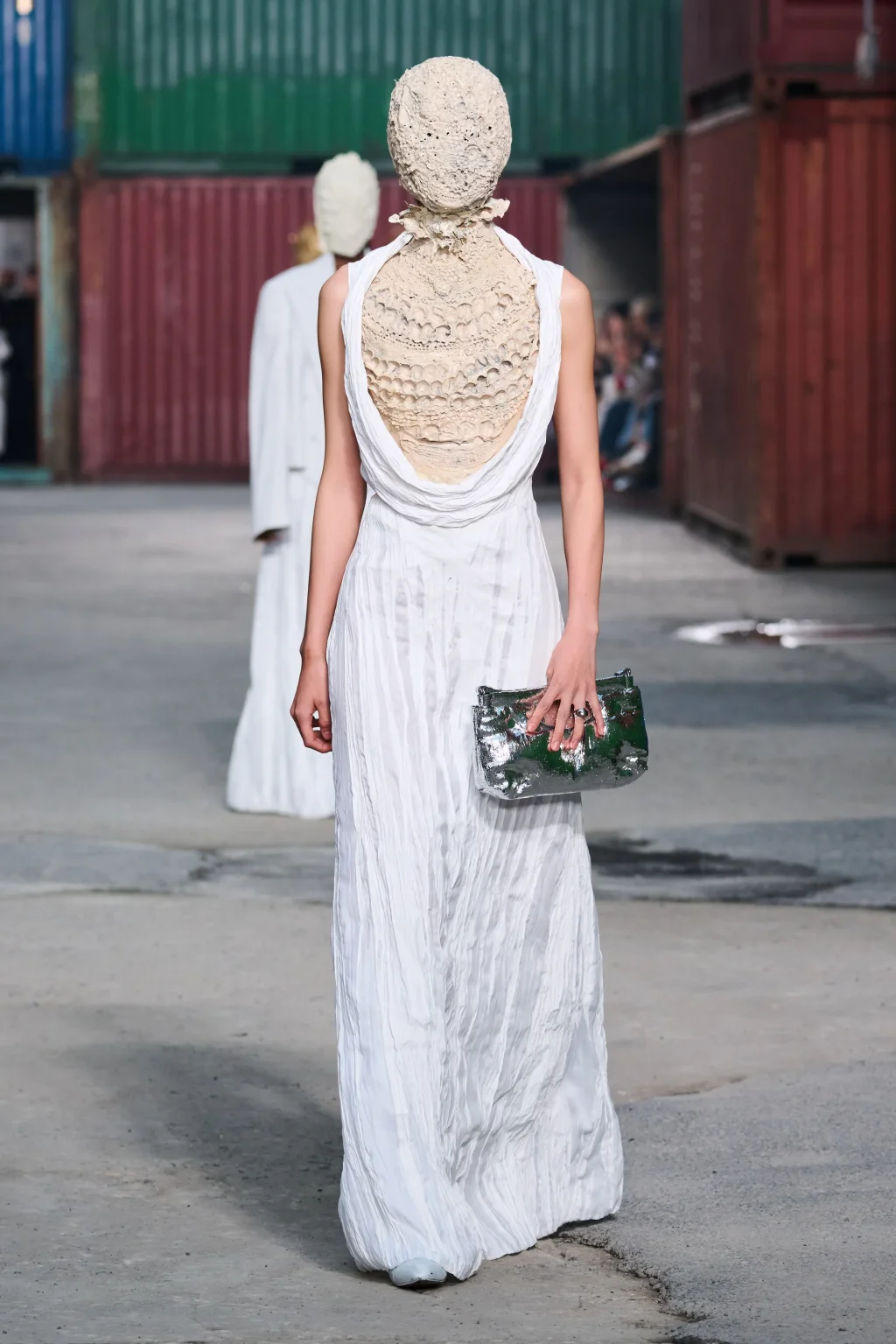
And again in broken mirror, one of the season’s recurring material signatures. Three iterations of one silhouette, all coherent within the same conceptual framework.
2. The Box Bag
was the most frequently placed accessory across the show, appearing from the early tailoring passages through to the final velvet chapter. Its finishes were deliberately varied and consistently referential: porcelain-effect trims that quoted the ceramic Artisanal dress, where real fired and shattered ceramic pieces were individually fixed to an organza underlay over 300 hours of work.
Read also: The Box Bag: Maison Margiela Finally Has a New It-Bag
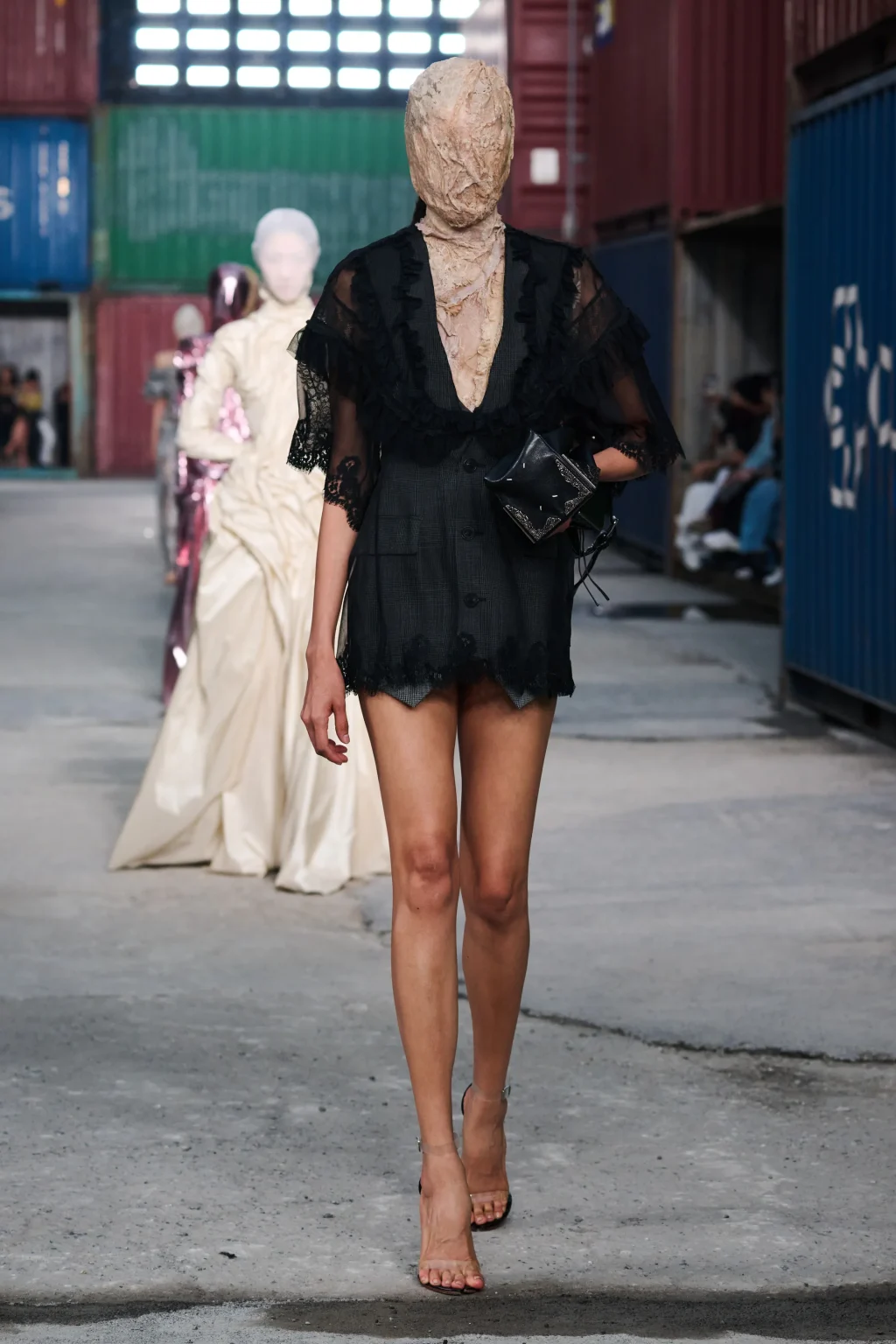
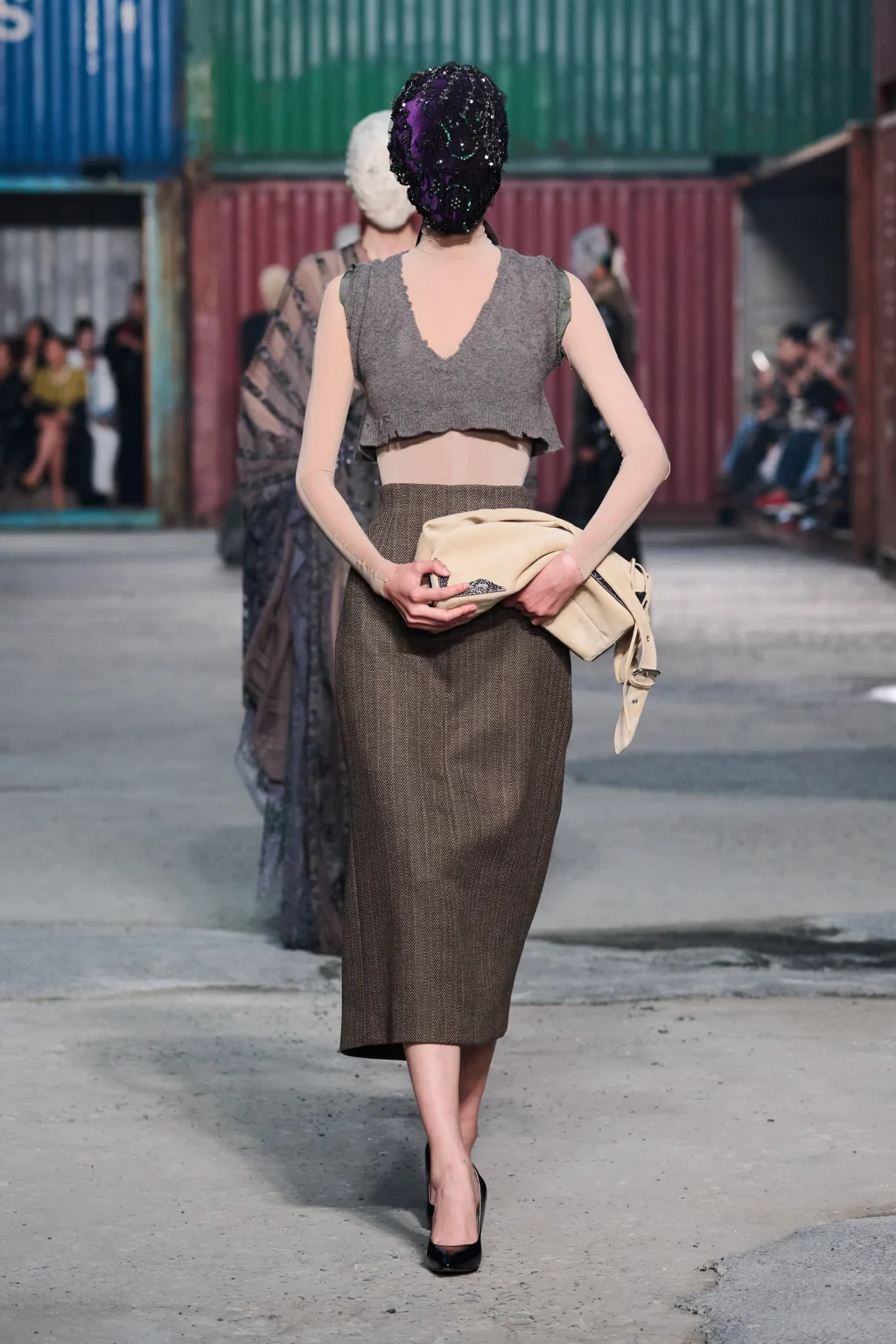
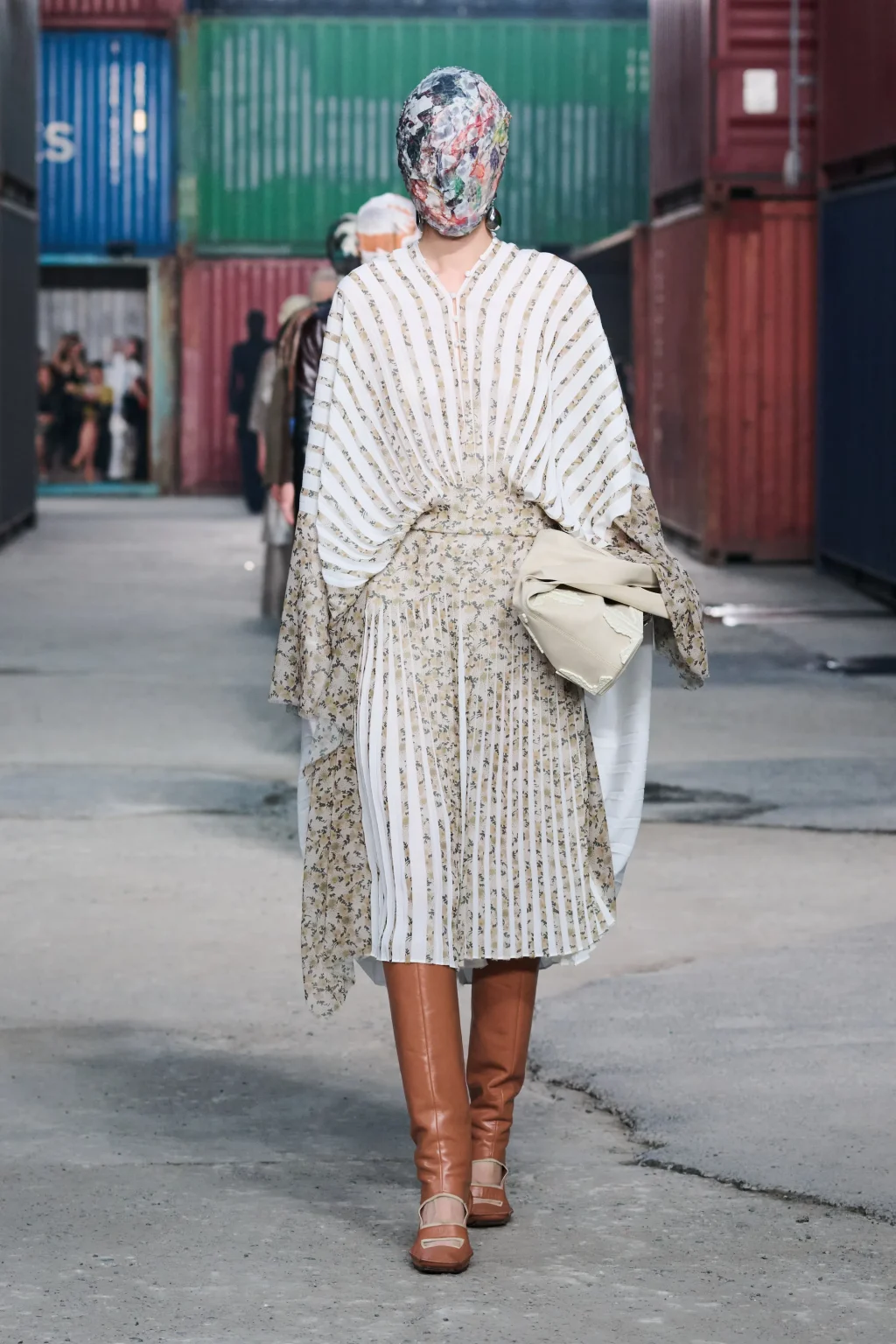
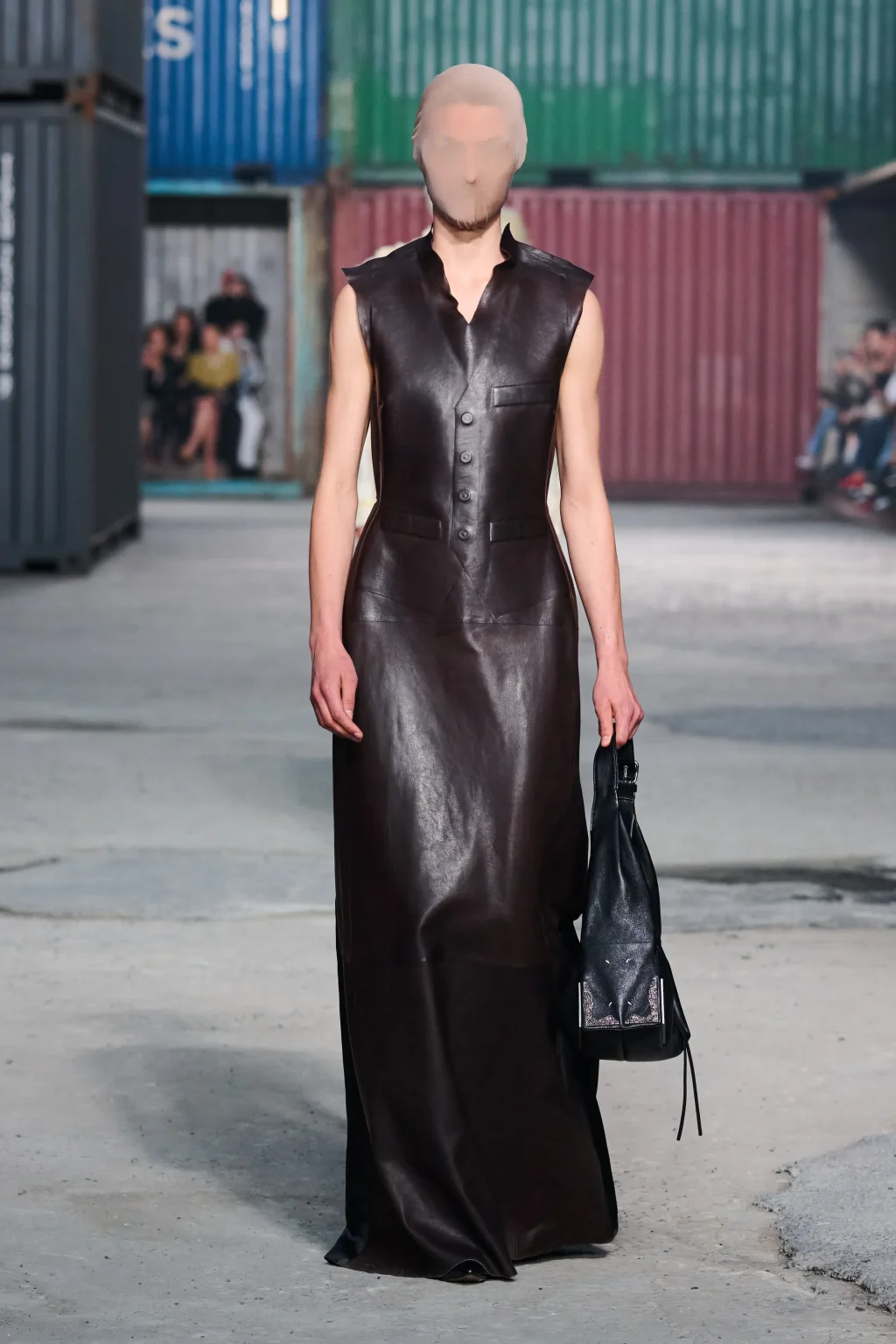
Star stickers that echoed the Artisanal gown hand-applied with over 150,000 gold stars by 34 artisans. Metal details, suede with metal trims, and chandelier-inspired hardware in later looks. The Box Bag was never treated as a neutral: every finish was a legible quote from somewhere else in the collection.
3. The 5AC
The 5AC appeared once, paired with a double-breasted tweed coat with Stockman shoulders and a plastron of redraped vintage garments. This season’s version takes tapestry prints onto a laser-cut base engineered to distress over time — the bag continues ageing after purchase, which is precisely the point. The wrapped handle references the binding technique used on vintage tennis rackets.
4. The Link bag
The Link bag is new this season, and it appeared consistently through the velvet passage of the collection. Its structure is soft, with the frame closure repositioned to the front face of the bag. The metal link chain is covered — shrink-wrapped, in Maison Margiela’s own language — in the same material as the bag body: velvet, leather, and broken mirror depending on the look.
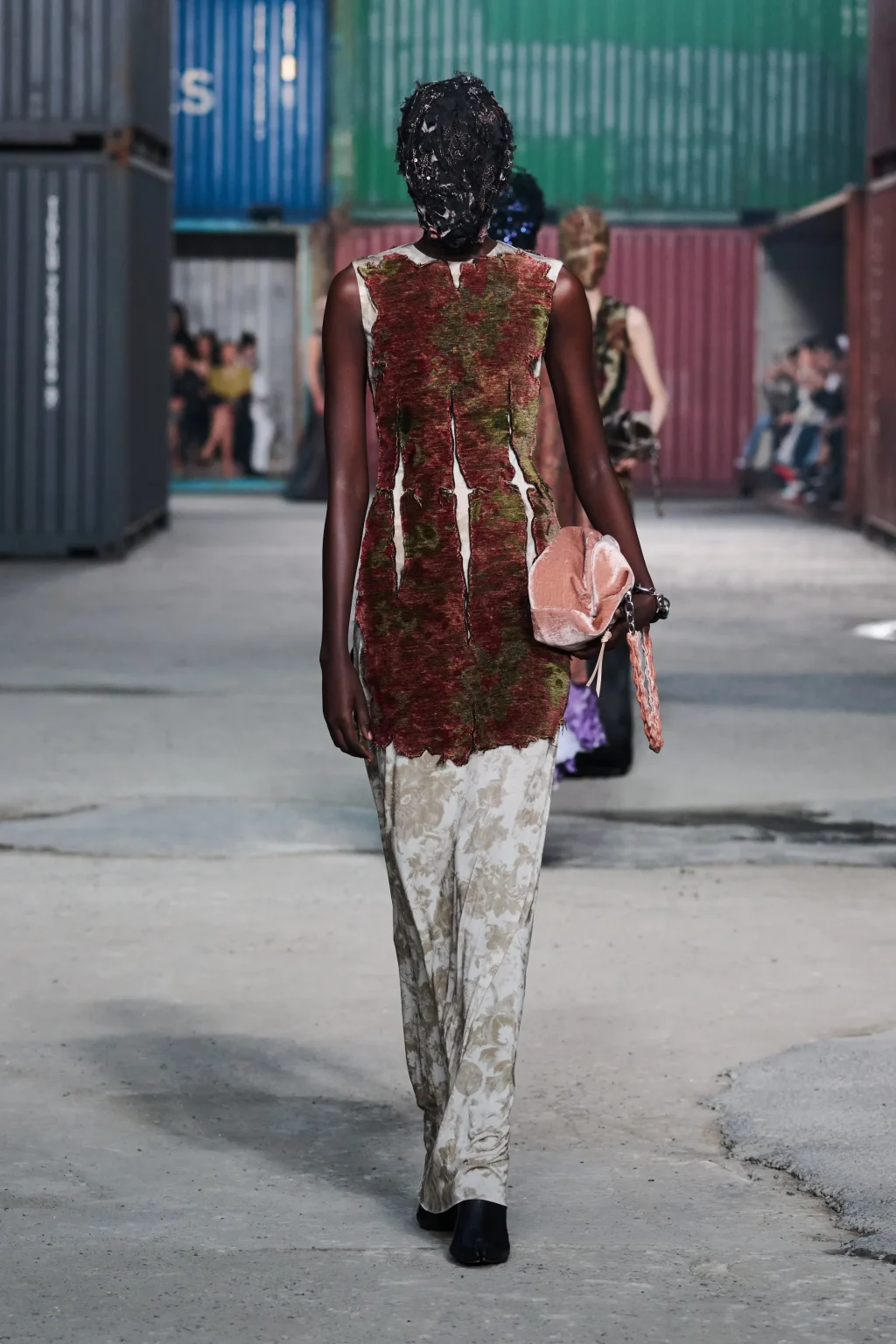
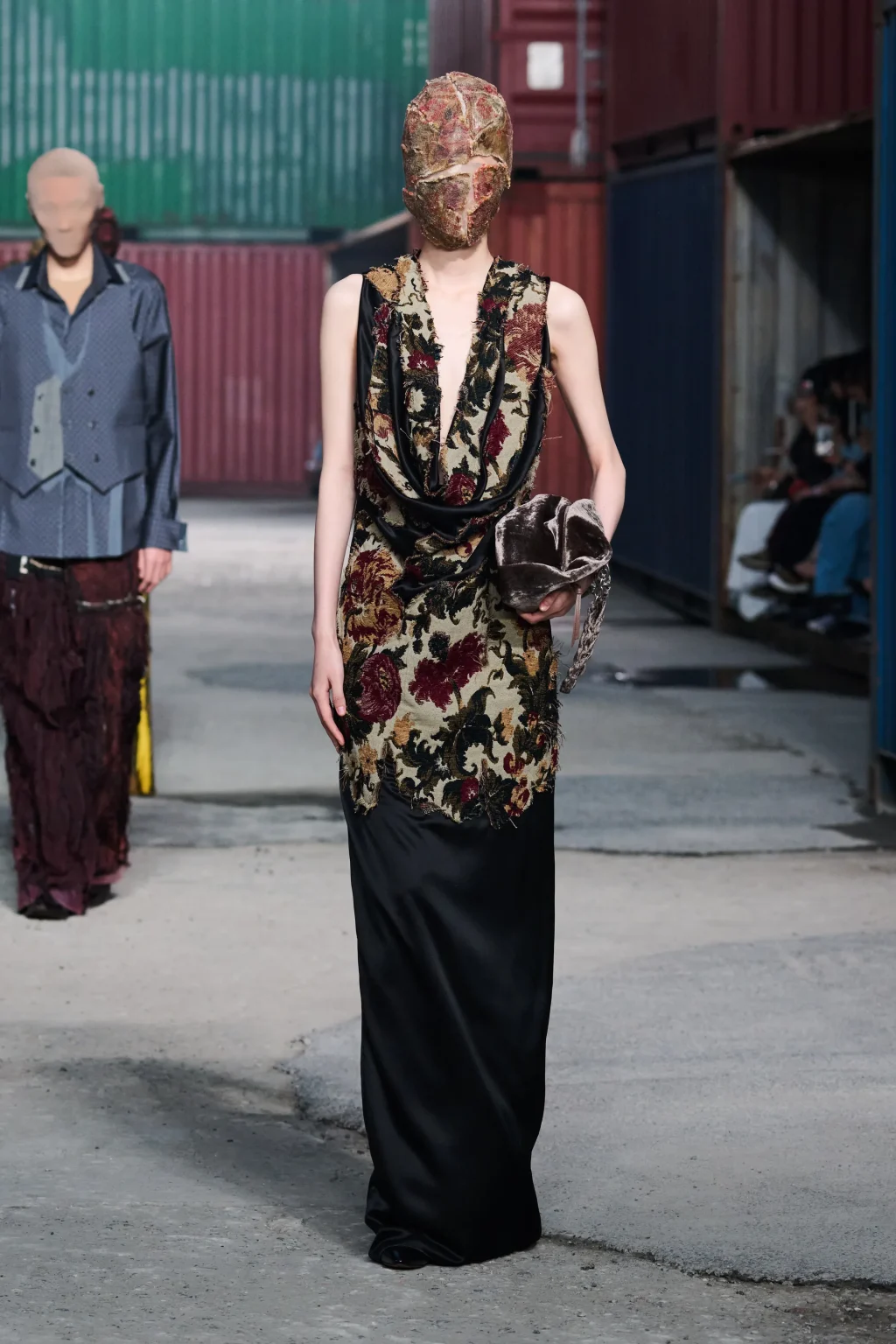
In one pairing, it appeared in purple velvet alongside chandelier-inspired jewellery and a draped velvet rectangle dress. In the tapestry and impossible-draping chapter of the show, it grounded looks where furniture fabrics had been bonded onto pre-draped dresses and cut open along the drape lines.
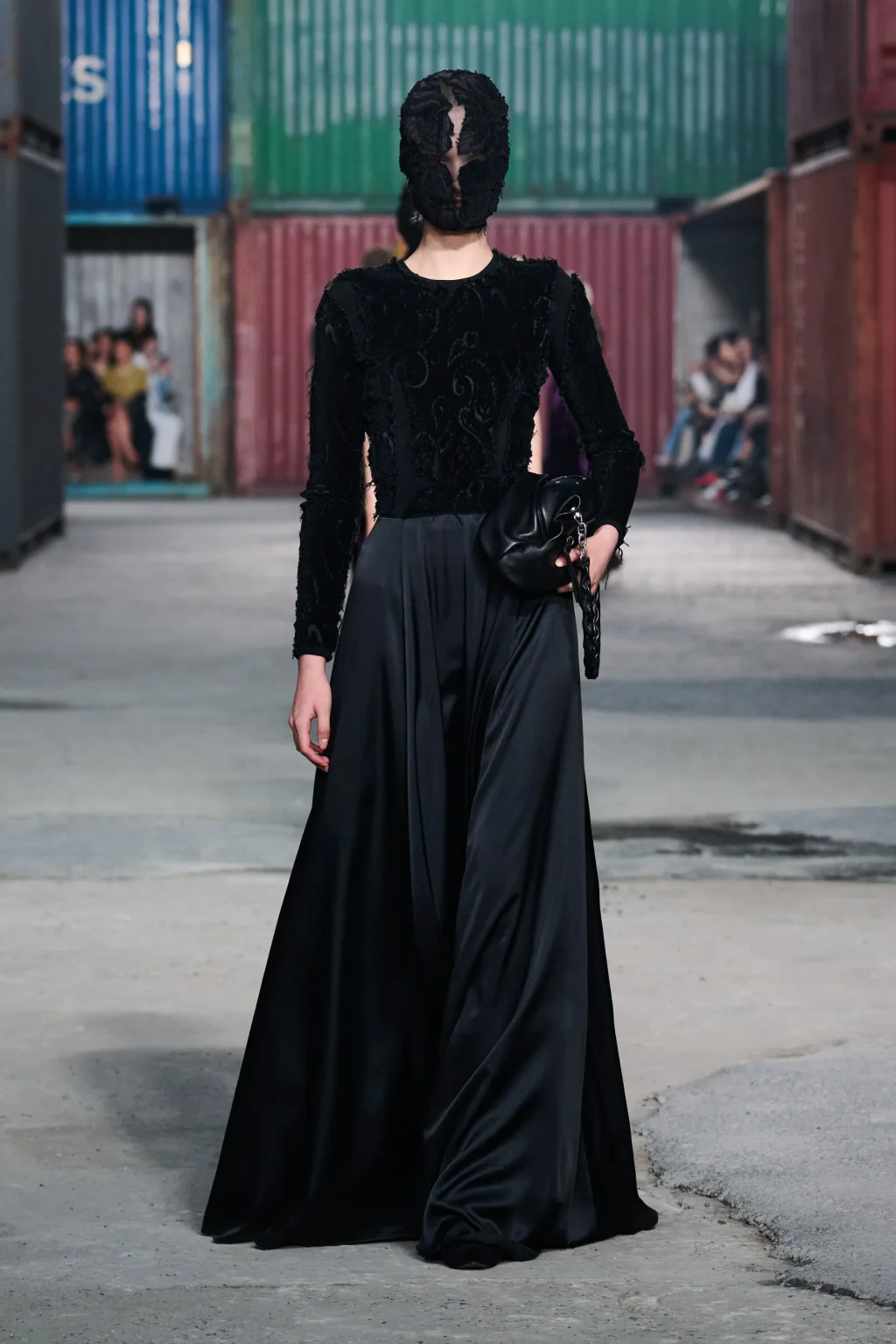
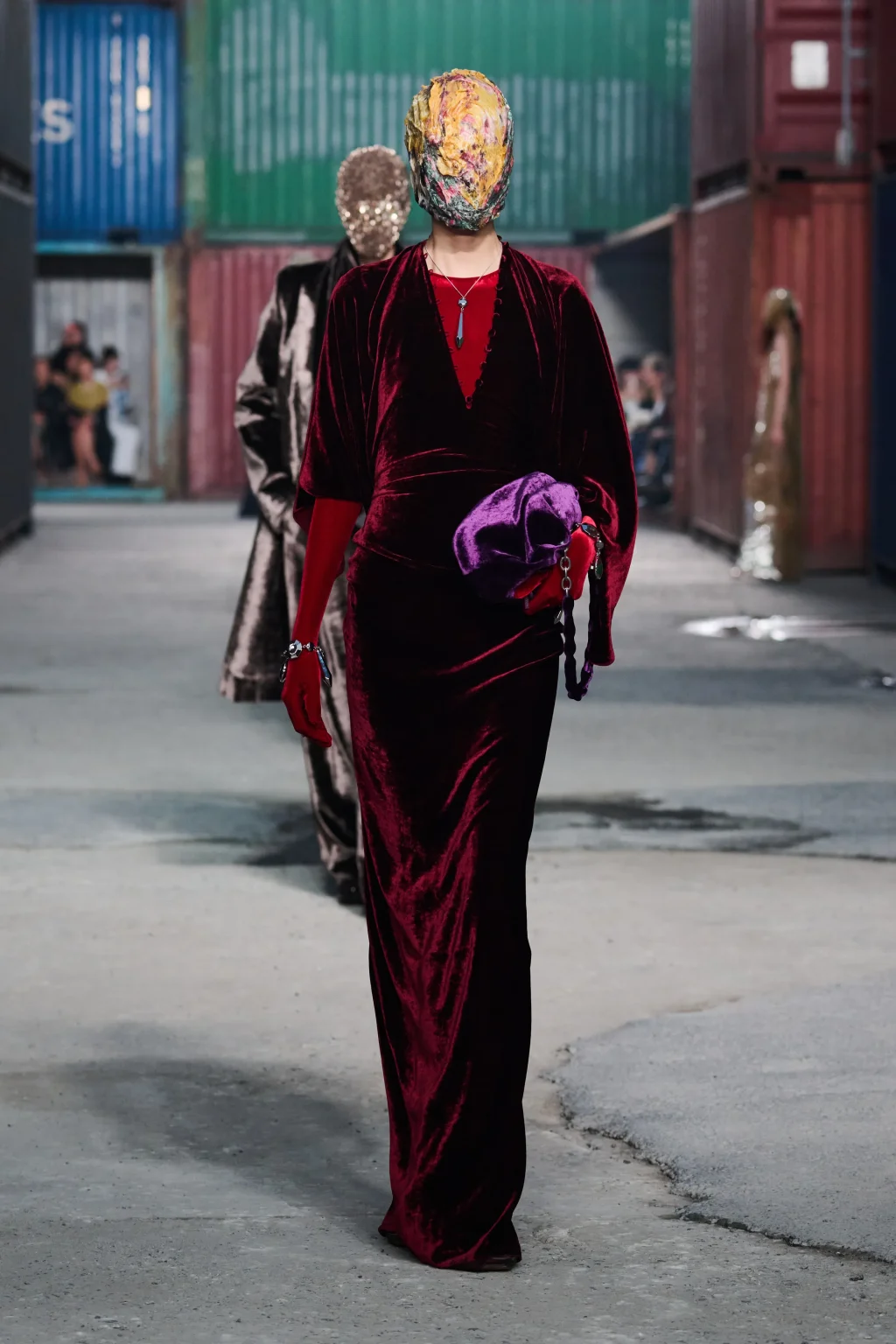
What Maison Margiela did not do this season is introduce an It bag in any conventional sense. The accessory strategy was one of repetition with variation: the same silhouettes returned across radically different material treatments, each one in dialogue with the specific look it accompanied. The Glam Slam aged like furniture. The Box Bag quoted the Artisanal pieces directly. The Link bag mirrored its own chain in the fabric of the body. In a collection where everything carried memory, the bags were no exception.