There are Birkins, and then there are the ones that make even seasoned collectors go quiet for a moment. The Hermès Birkin Patchwork is one of them — a limited edition that takes the most coveted handbag in the world and pushes it into genuine art-object territory by stitching together multiple leathers, textures, and color stories into a single, cohesive silhouette.
Read also: Hermès Index 2026: Why the Birkin Outperforms Gold
What Exactly Is the Hermès Birkin Patchwork?
The Birkin Patchwork is a limited edition variation of the iconic Birkin silhouette in which multiple different leathers — and sometimes different skin types — are combined across the exterior (and occasionally the interior) of a single bag. The effect is precisely what the name suggests: a patchwork of textures, grains, and finishes that creates a compositional richness no single material could achieve alone.
Unlike a bi-color or Special Order Birkin, which pairs two shades of the same leather, the Patchwork deliberately juxtaposes incompatible materials — smooth Porosus Crocodile next to pebbled Togo, rigid Epsom beside supple Clemence — so that each panel reads differently depending on the light, the angle, and the distance from which you look at it. It is, in the vocabulary of Hermès, a technical challenge chosen voluntarily. That kind of purposeful difficulty is at the core of what makes it collectible.
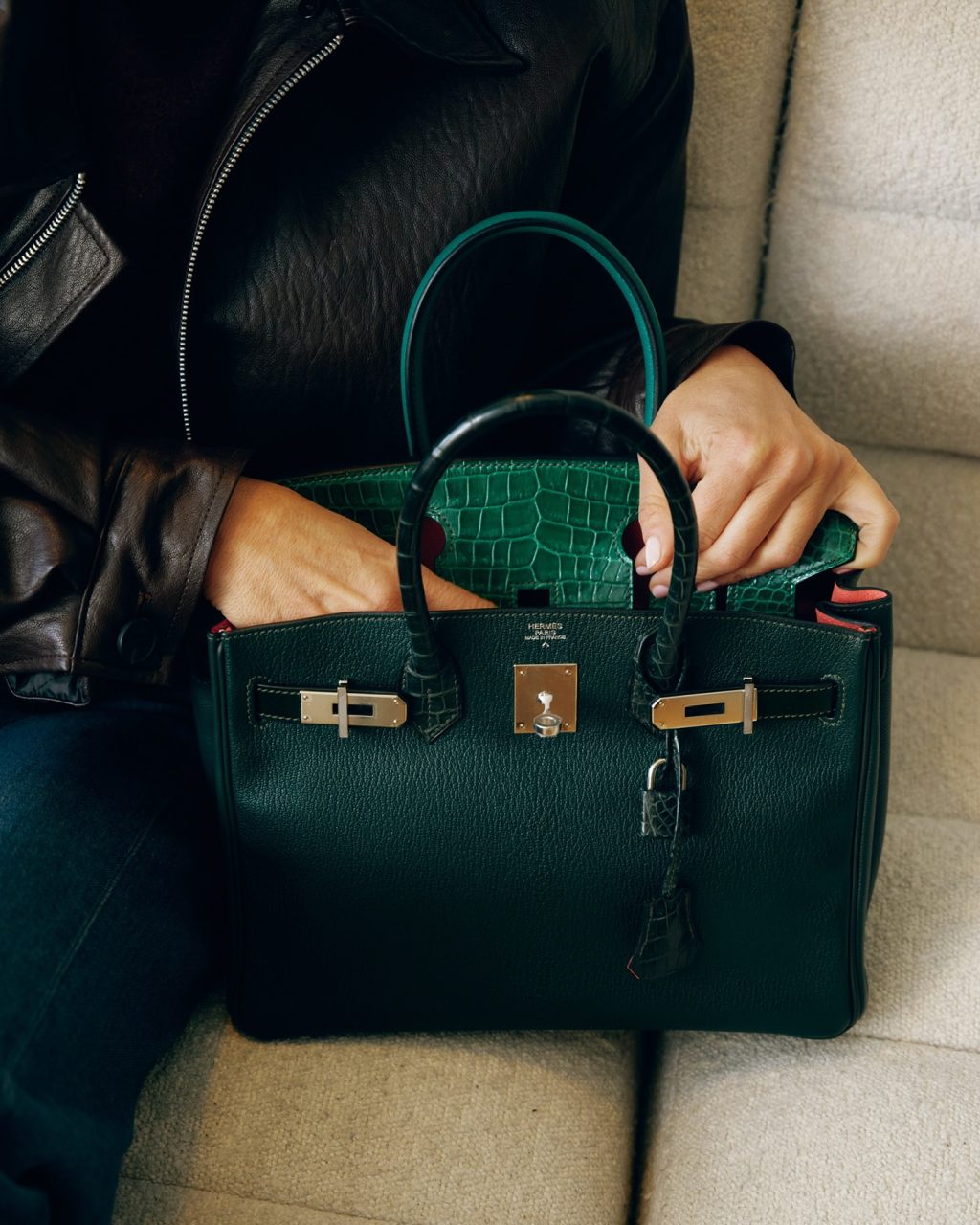
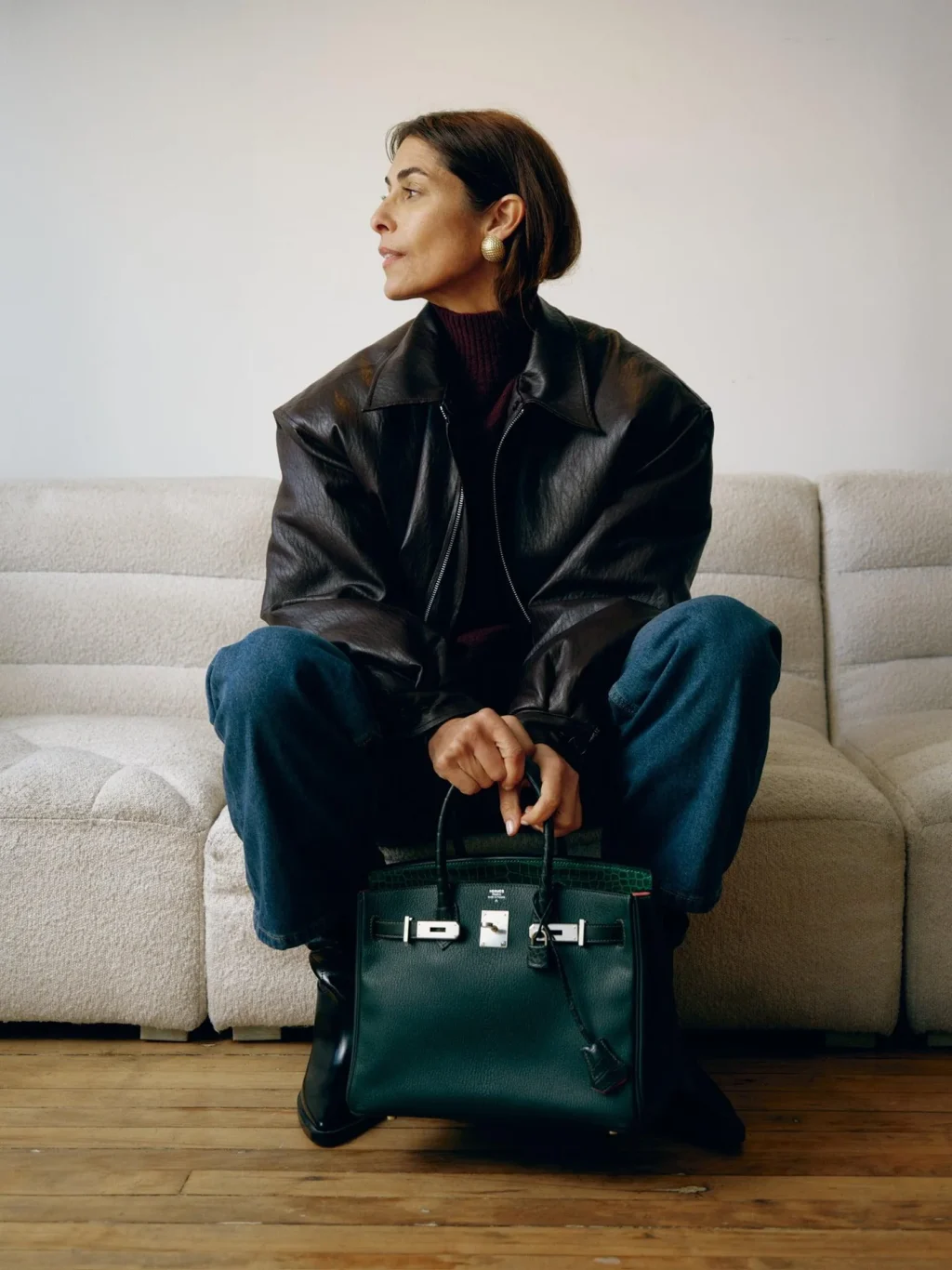
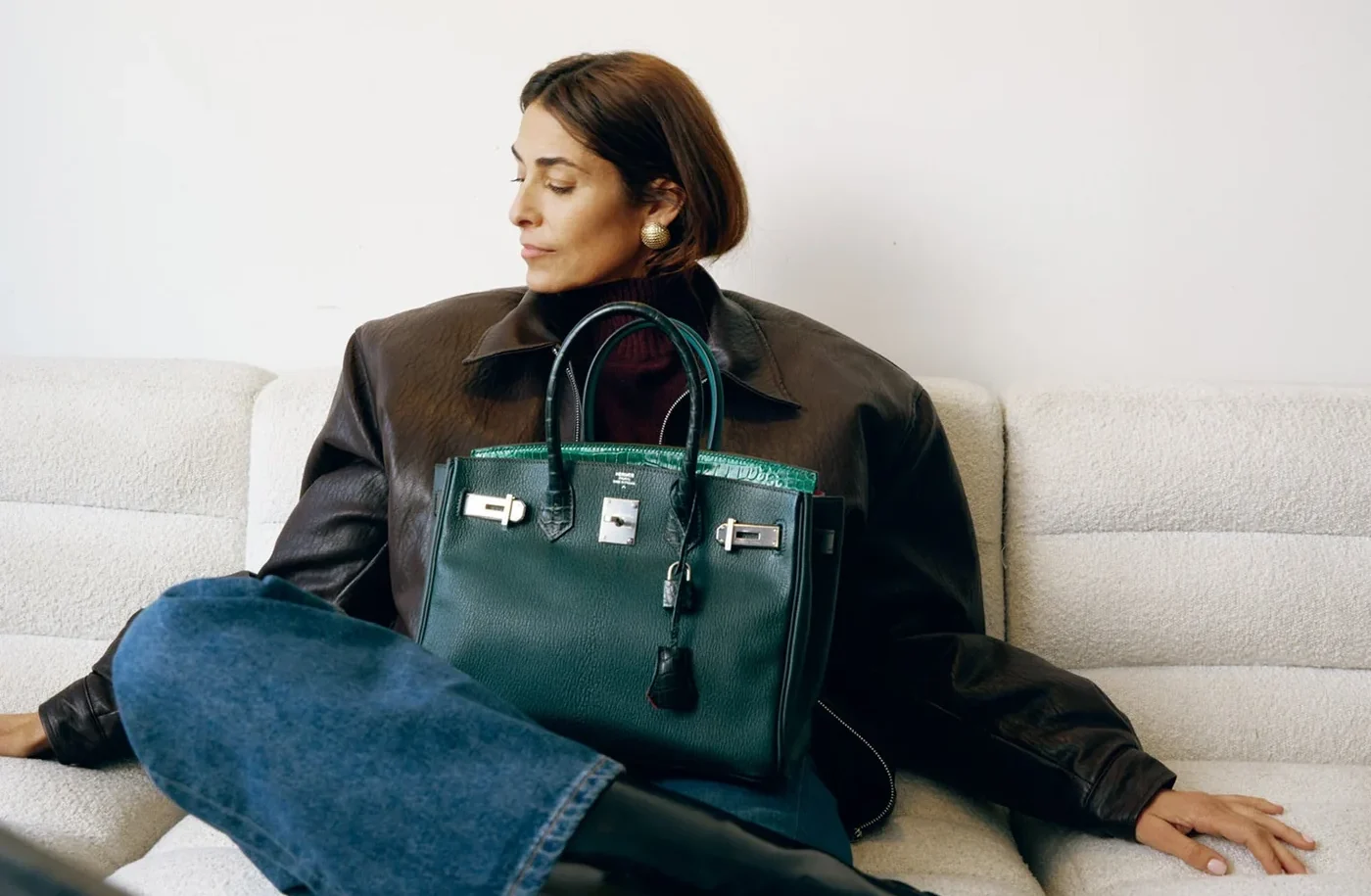
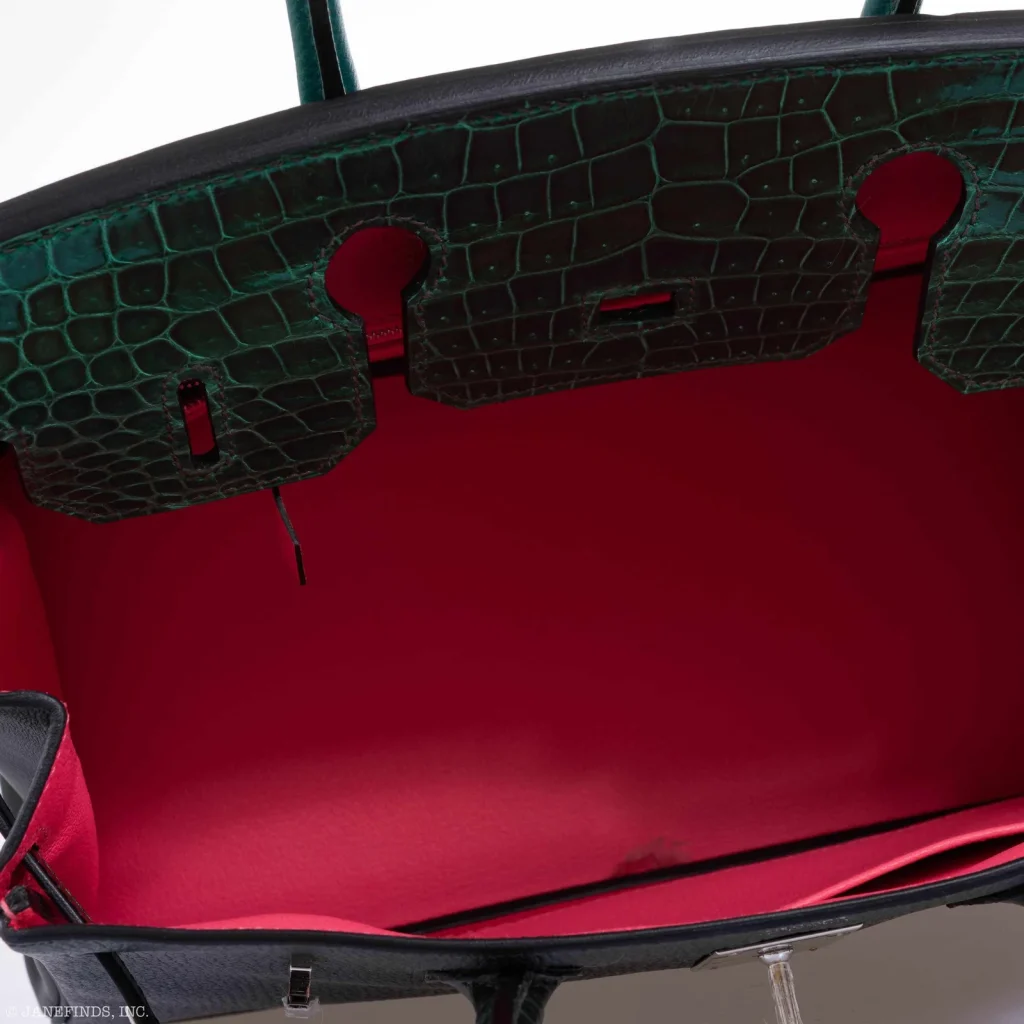
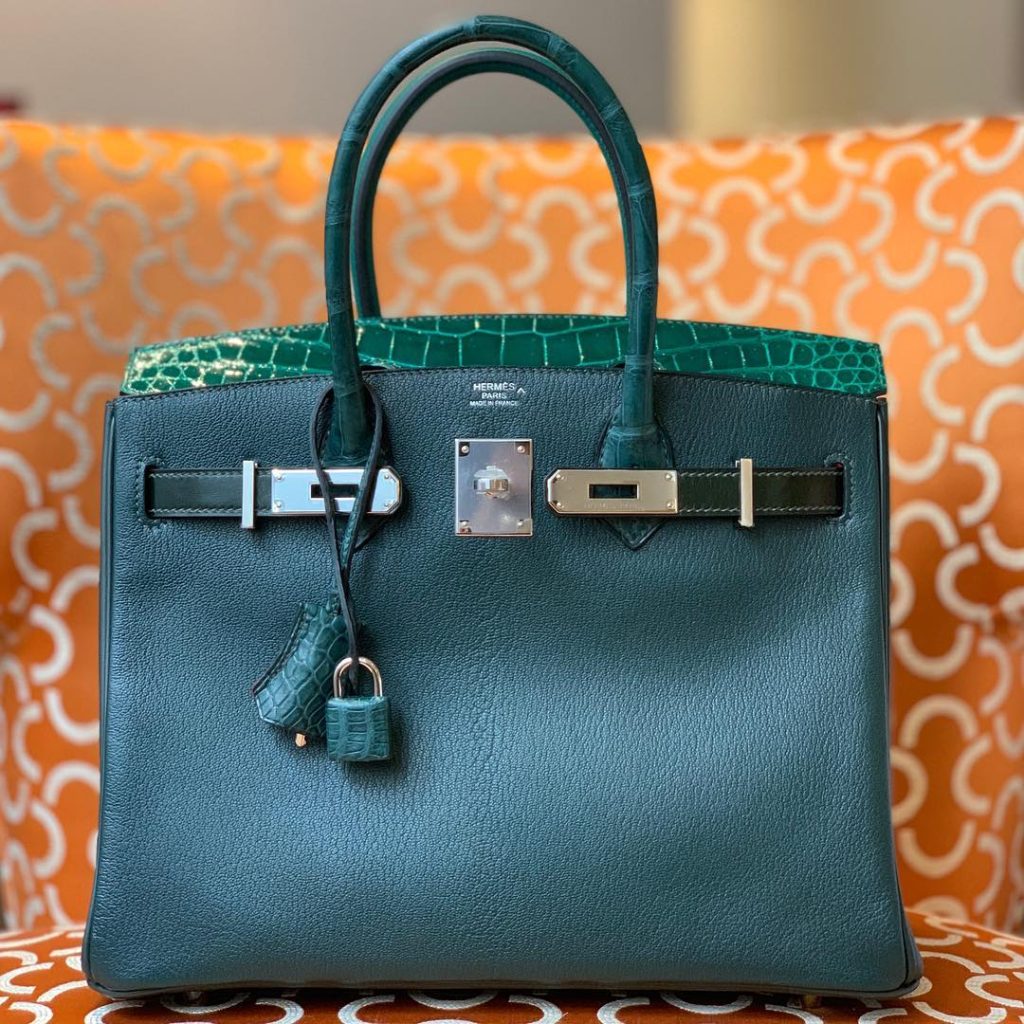
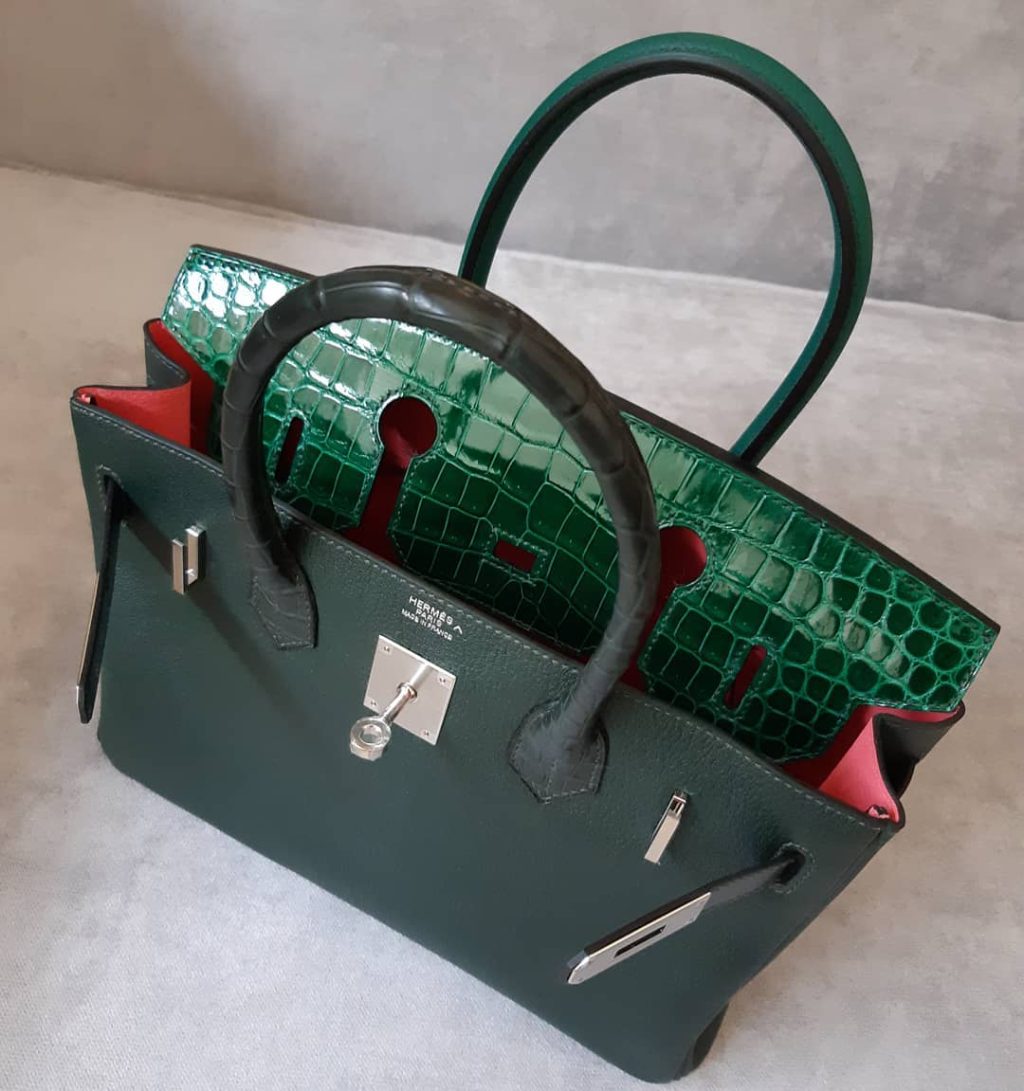
The most celebrated version of the Hermès Birkin Patchwork brings together six different leathers across five colors in a single 30cm bag. Across the exterior, four shades of green — Vert Foncé, Vert Emerald, Vert Titien, and Malachite — create a palette that feels rich, layered, and unexpectedly harmonious. Its body panels are divided among Chèvre, Epsom, Clemence, Evercolor, and Box Calf, while the flap closure is crafted from Porosus Crocodile, the rarest and most coveted skin in the Hermès universe. Inside, the bag breaks away from the green story entirely with a vivid Rose Azalée pink lining. Palladium hardware finishes the composition with a cool, precise contrast. Every detail feels intentional.
Read also: Hermès Autumn-Winter 2026 Bags: Every New Style from the Runway
A Closer Look at the Skins: Why Each Leather Was Chosen
The leather selection in the Patchwork version is not decorative randomness. Each material brings a specific visual and tactile quality to its panel.
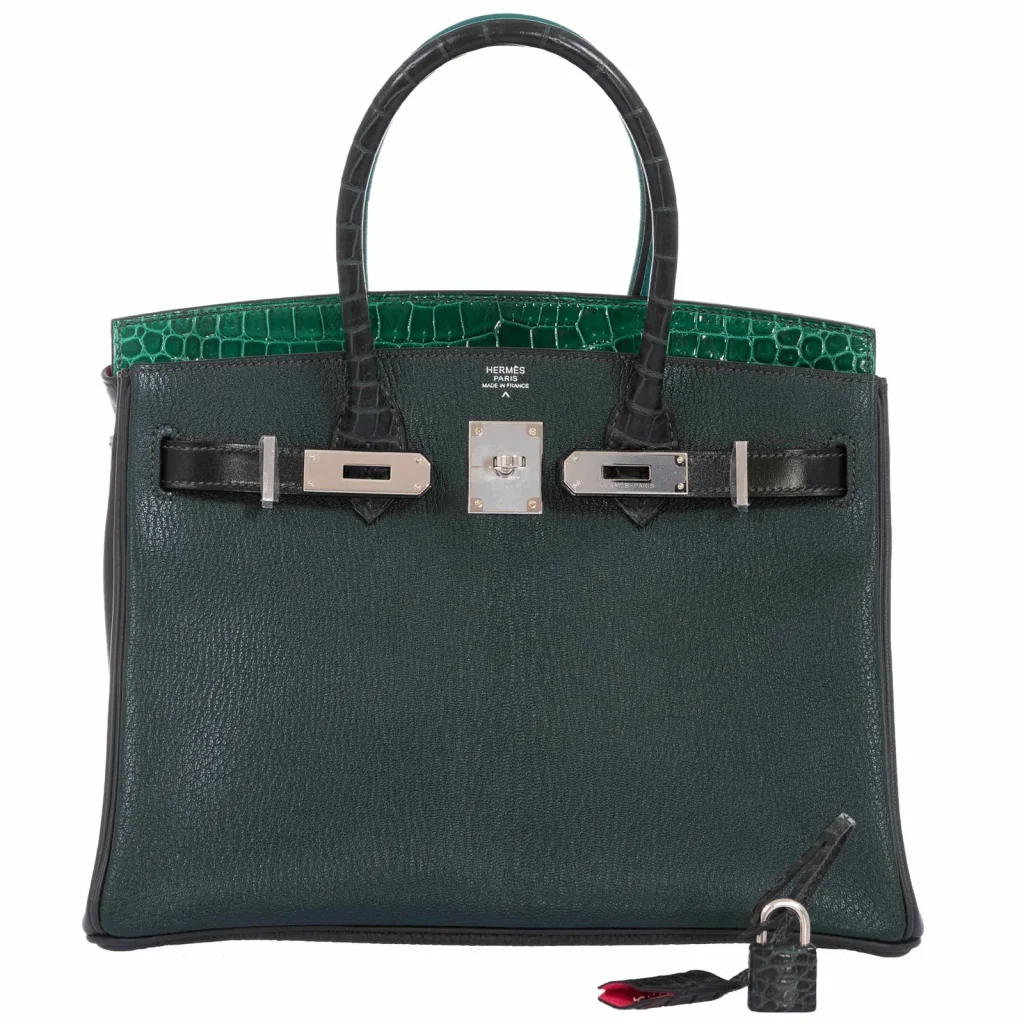
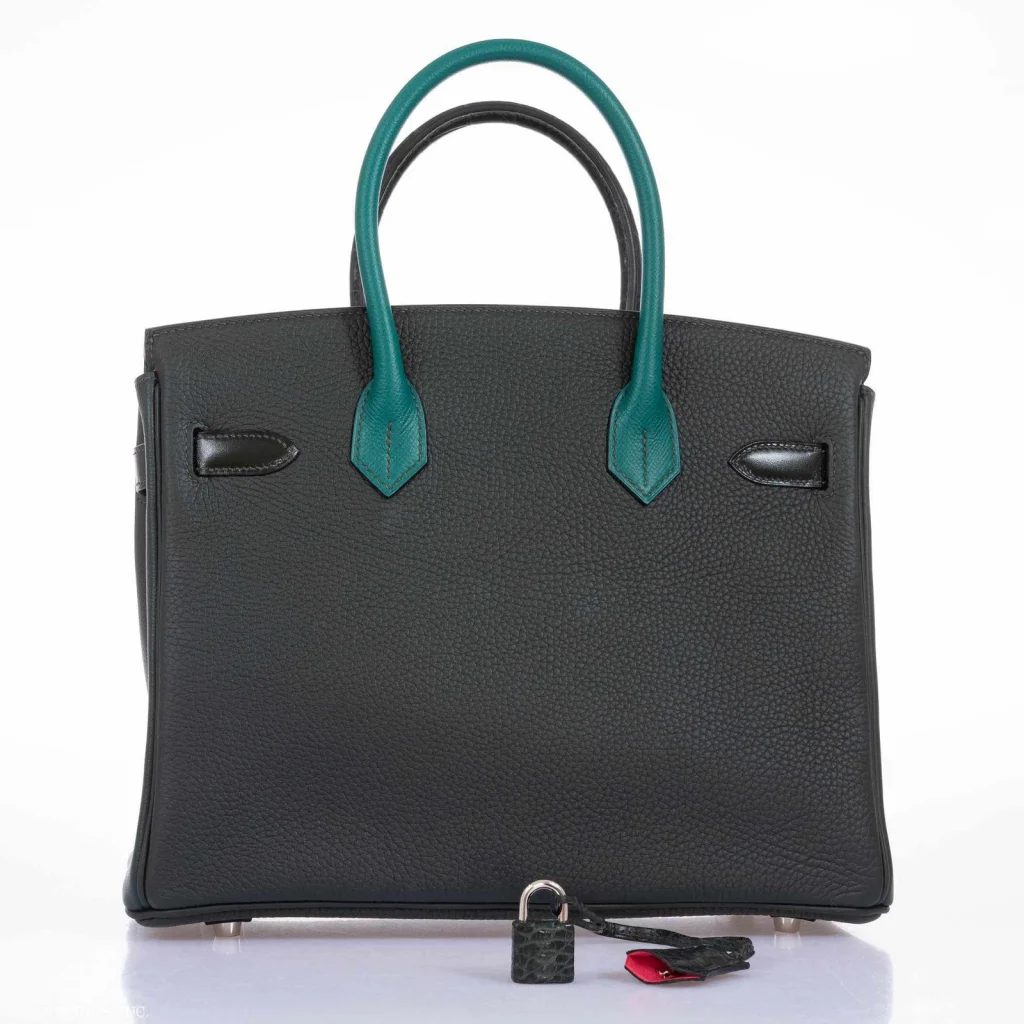
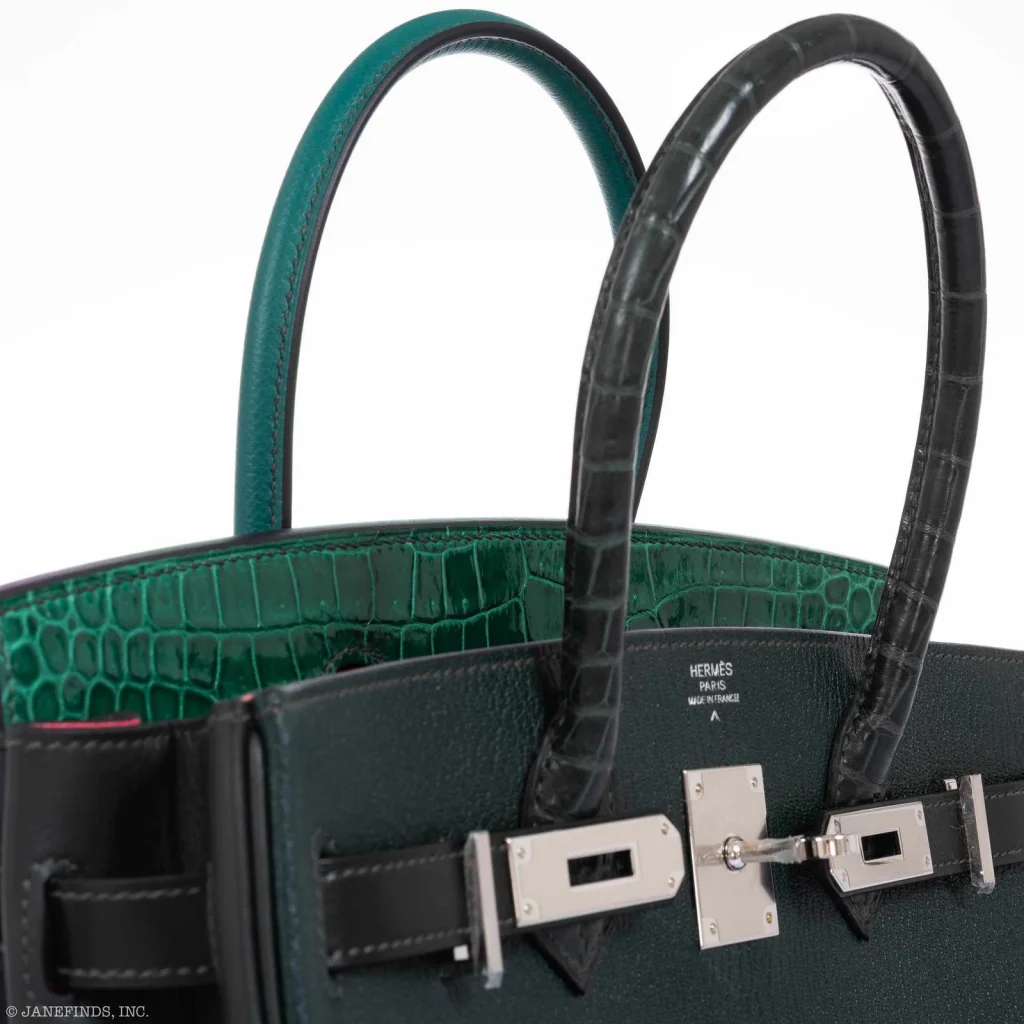
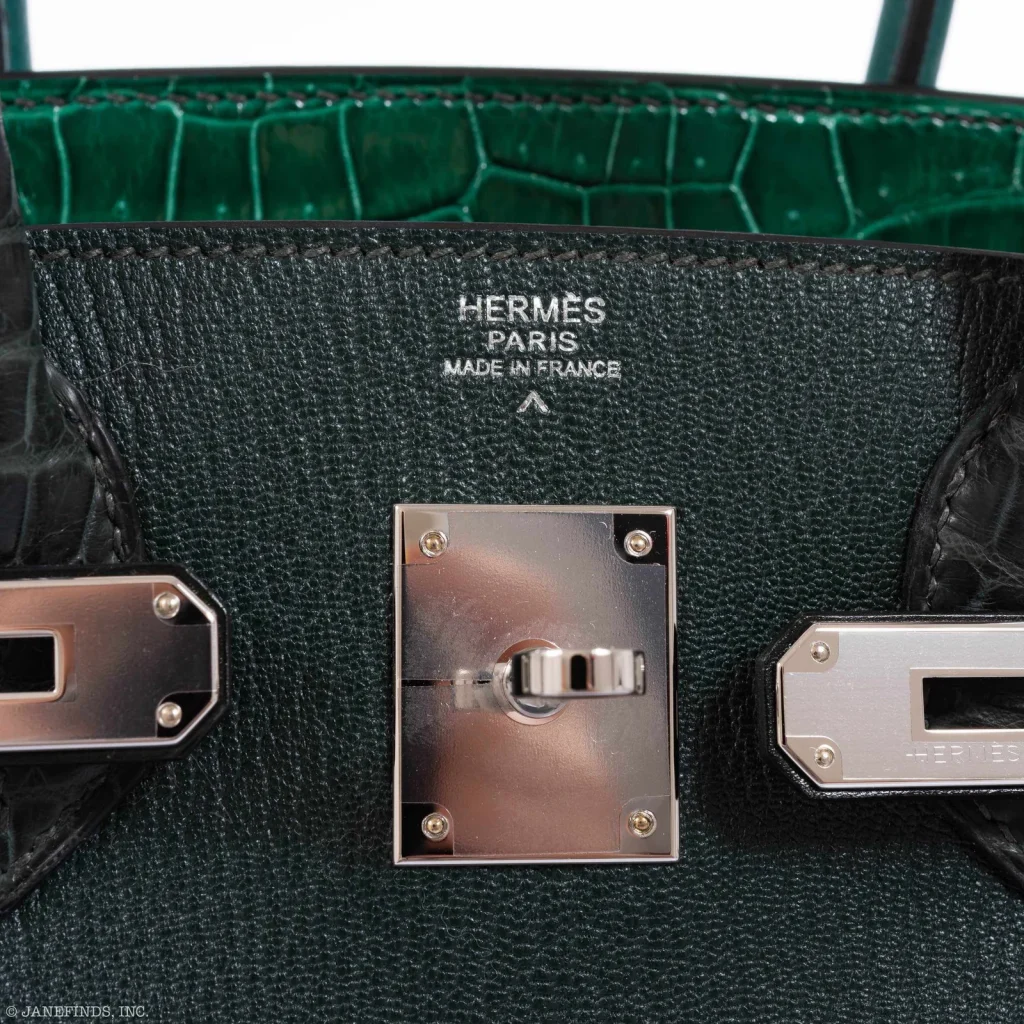
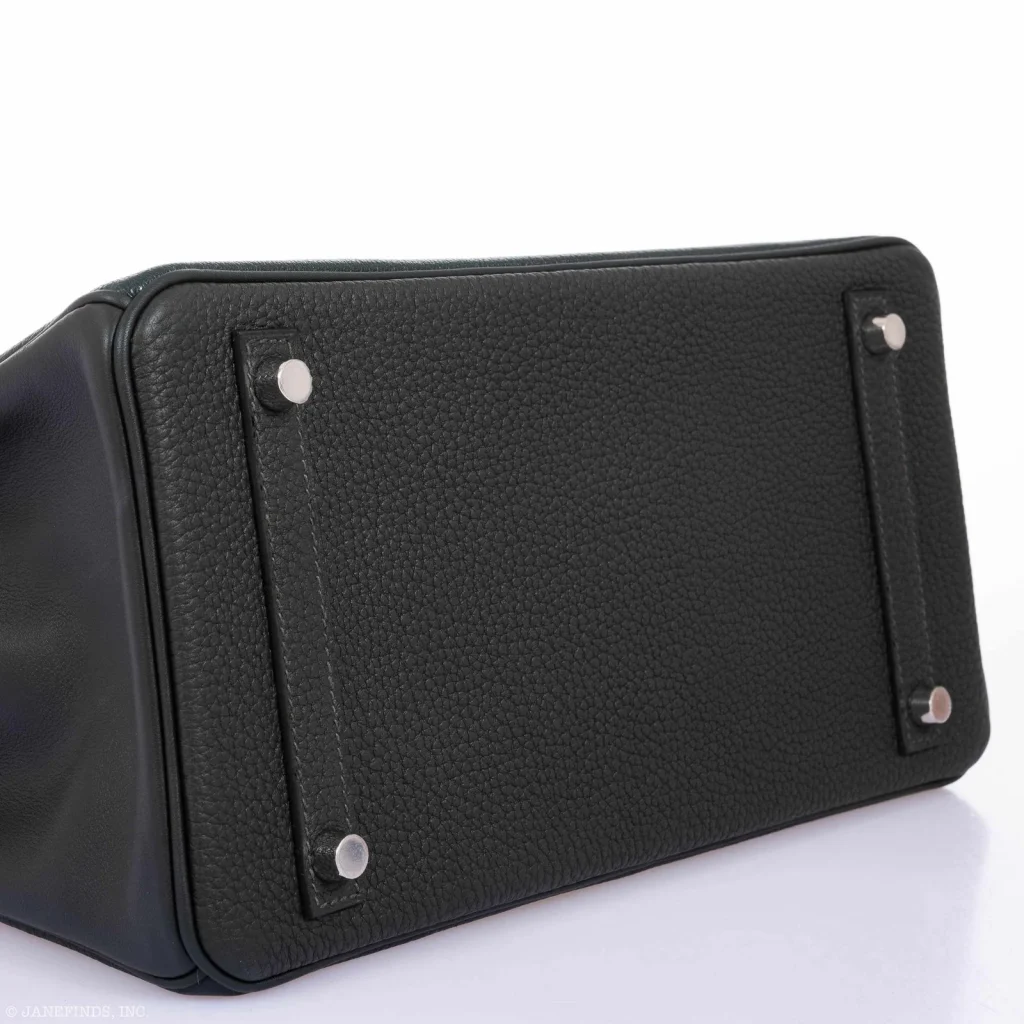
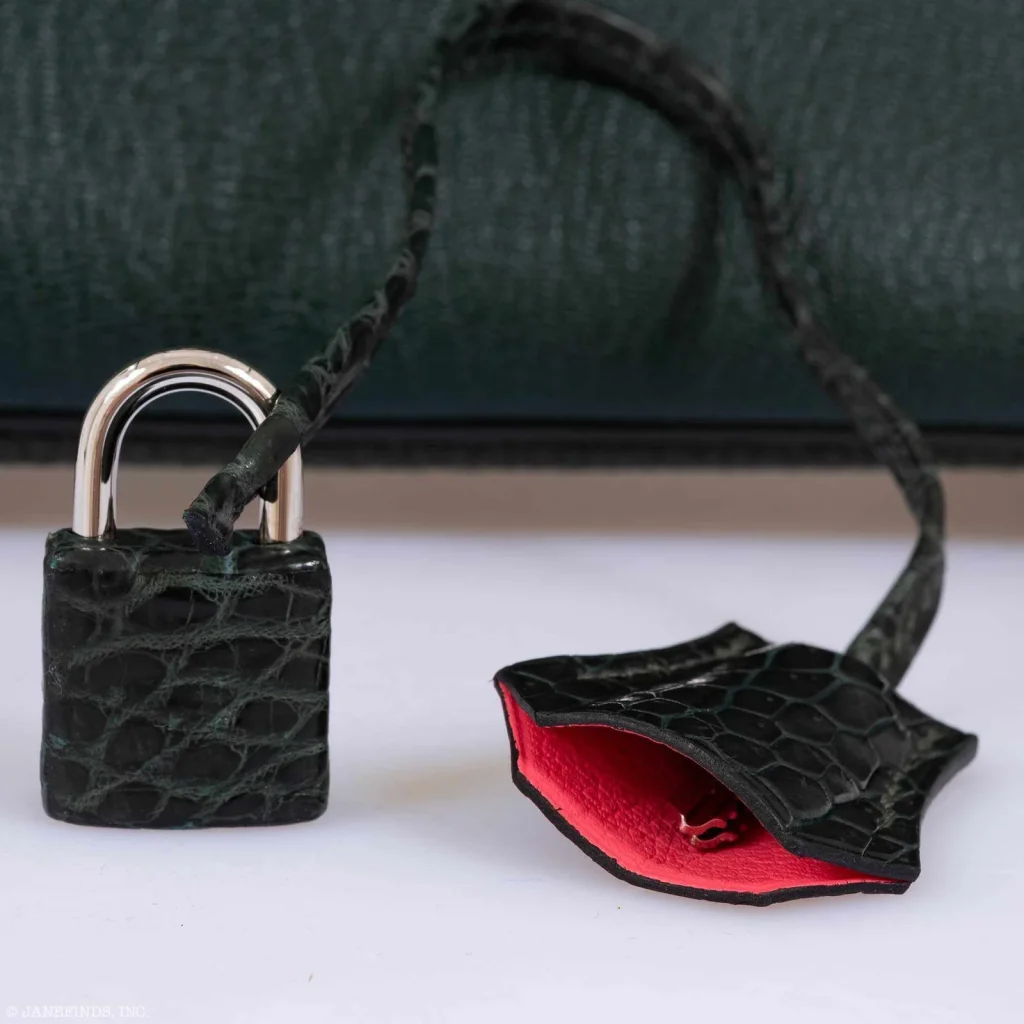
Porosus Crocodile is Hermès’ most prestigious skin. Sourced from the saltwater crocodile (Crocodylus porosus), it is distinguished by particularly small, symmetrical scales and a natural sheen that deepens to an almost lacquer-like finish in the shiny version. The scales at the belly — called the hornback — are especially prized. On the Patchwork, Porosus Crocodile forms the flap closure, giving the most visually prominent panel of the bag its most opulent material. It is a conscious hierarchy.
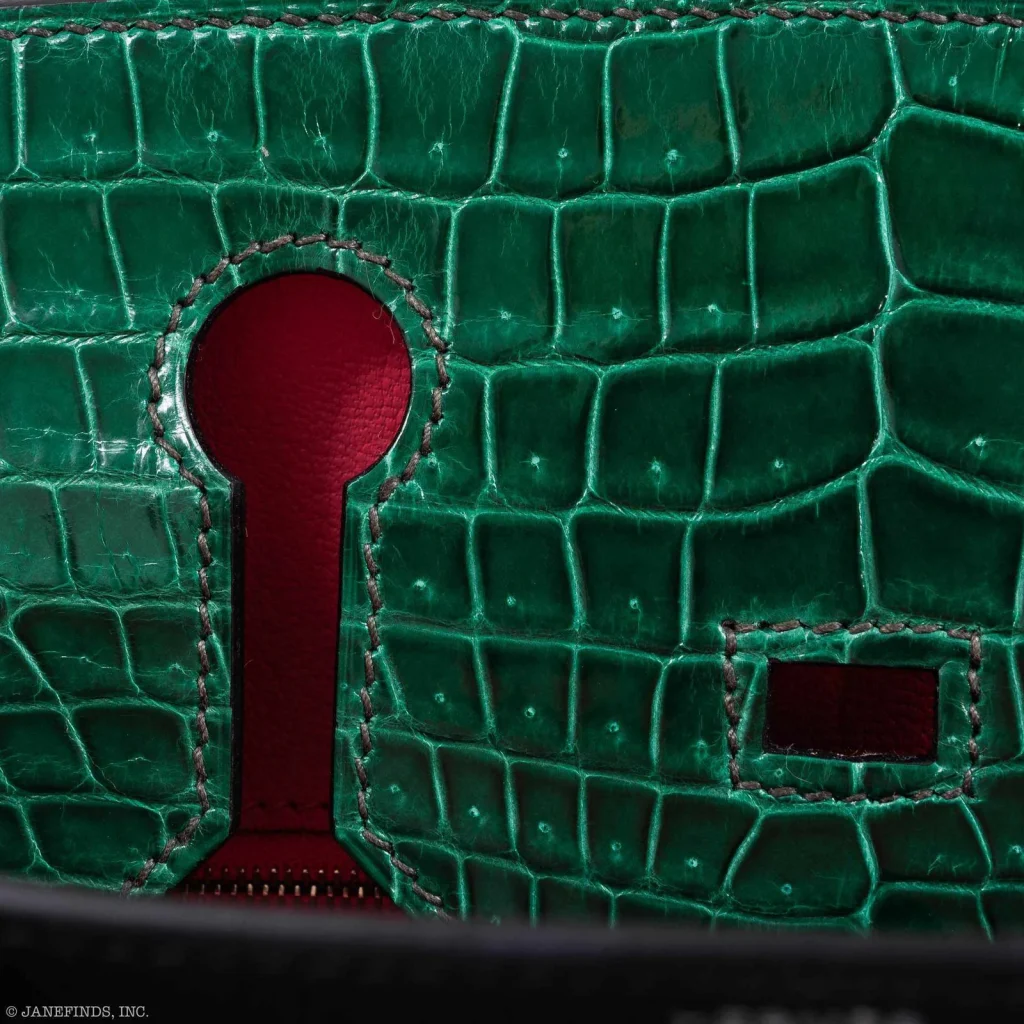
Chèvre is goatskin — fine-grained, firm, and known for its durability and distinctive micro-texture. Hermès has used Chèvre for decades, particularly for interior linings, though it appears here as an exterior panel. It holds color exceptionally well, which makes it a natural choice for the saturated greens the Patchwork uses.
Epsom is a heavily embossed calfskin that is one of Hermès’ most structured and scratch-resistant leathers. Its tight, regular grain has a slight rigidity that makes it ideal for bags that need to hold their silhouette. It is also one of the leathers most resistant to humidity and daily wear.
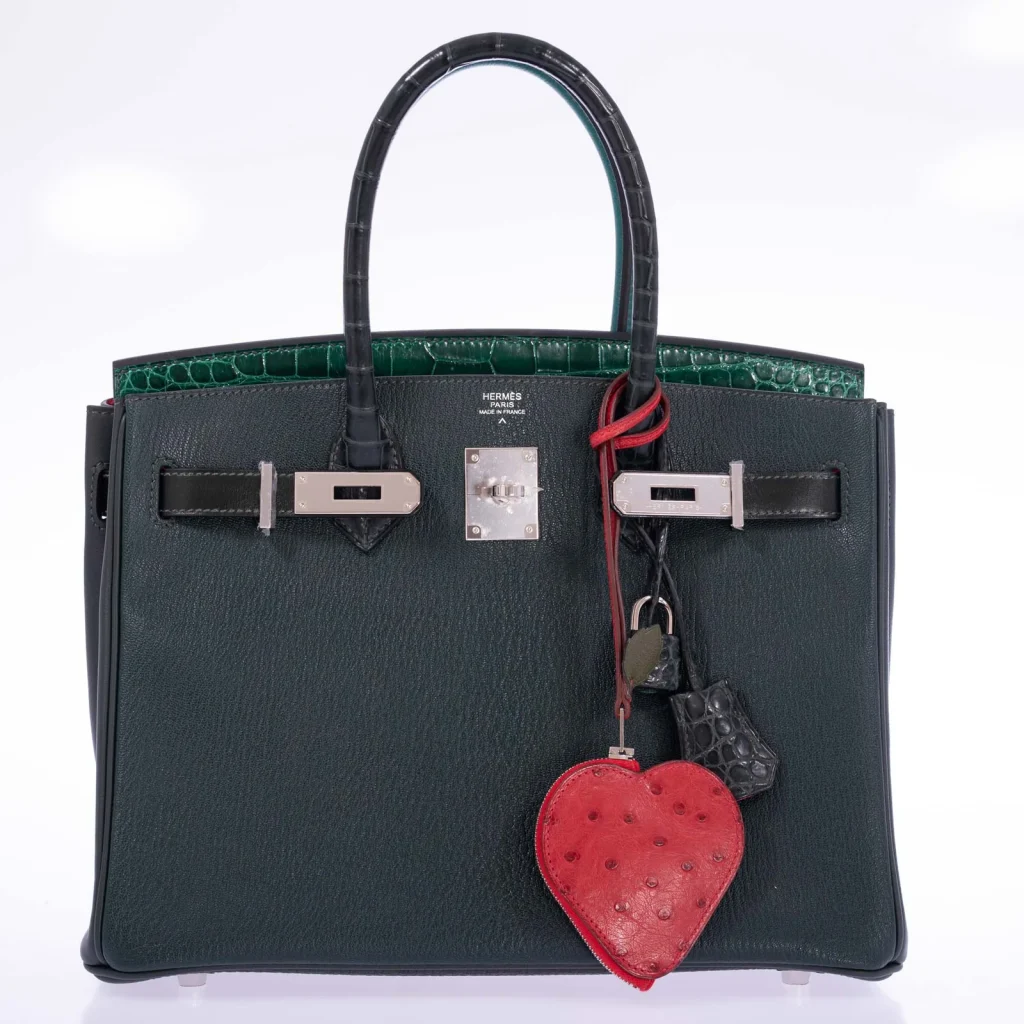
Clemence is essentially the antipode of Epsom — a supple, heavyweight calfskin with a large, soft pebble grain that gives bags a slightly relaxed, slouchy quality. Where Epsom is architectural, Clemence is organic. The contrast between the two in the Patchwork creates genuine tactile interest.
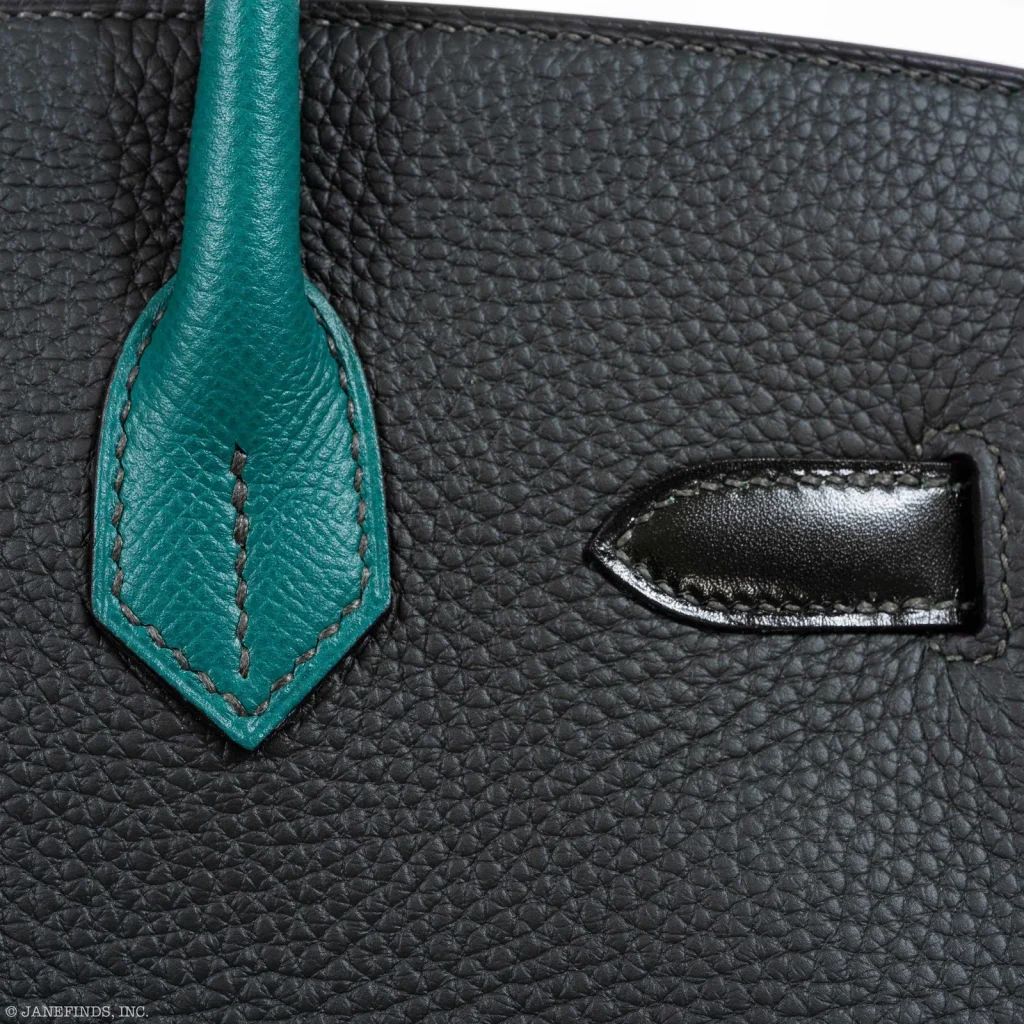
Evercolor is a more recent addition to the Hermès leather vocabulary — a grained calfskin developed specifically for its resistance to scratches, sunlight, and color fading. It has a matte finish with a fine, consistent grain.
Box Calf is perhaps the most historically significant leather in the Hermès archive. A fine-grain, smooth calfskin with a natural sheen, Box Calf was the original material of the very first Birkin in 1984 and was the dominant Hermès leather for decades. It is the most vulnerable of the six skins — it marks, scratches, and shows wear — but it is also the one that develops the most beautiful patina over time. In the Patchwork, its smooth, almost liquid surface plays off the structured grains of the other panels with particular elegance.
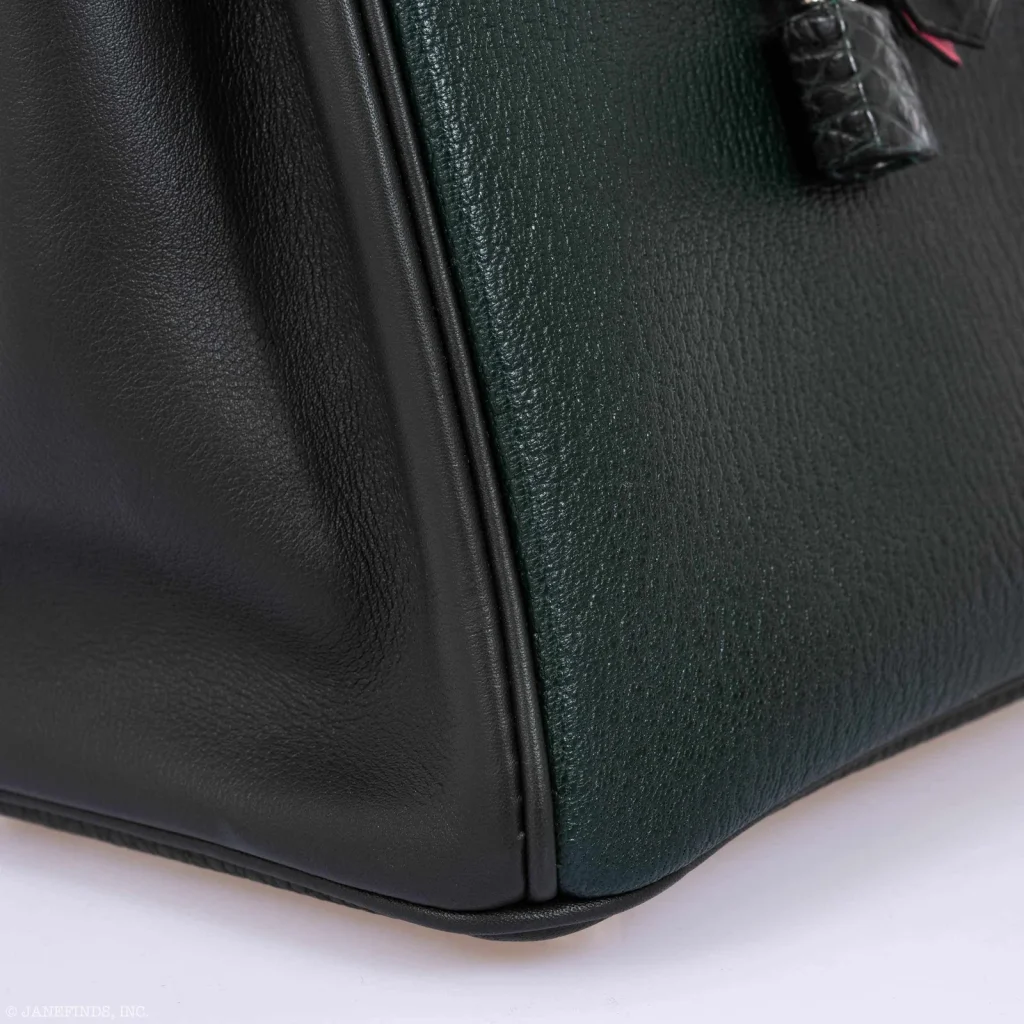
The interior lining in Rose Azalée — a bright, Barbie-adjacent pink — is done in Chèvre and provides a deliberate shock of contrast. You spend the whole time looking at the jewel-toned exterior, and then you open the bag.
Read also: Secret details about Jane Birkin’s original Birkin you should know
The Colorway: Four Shades of Green and the Logic of the Palette
The Patchwork’s exterior palette navigates four distinct greens, each with its own character and depth.
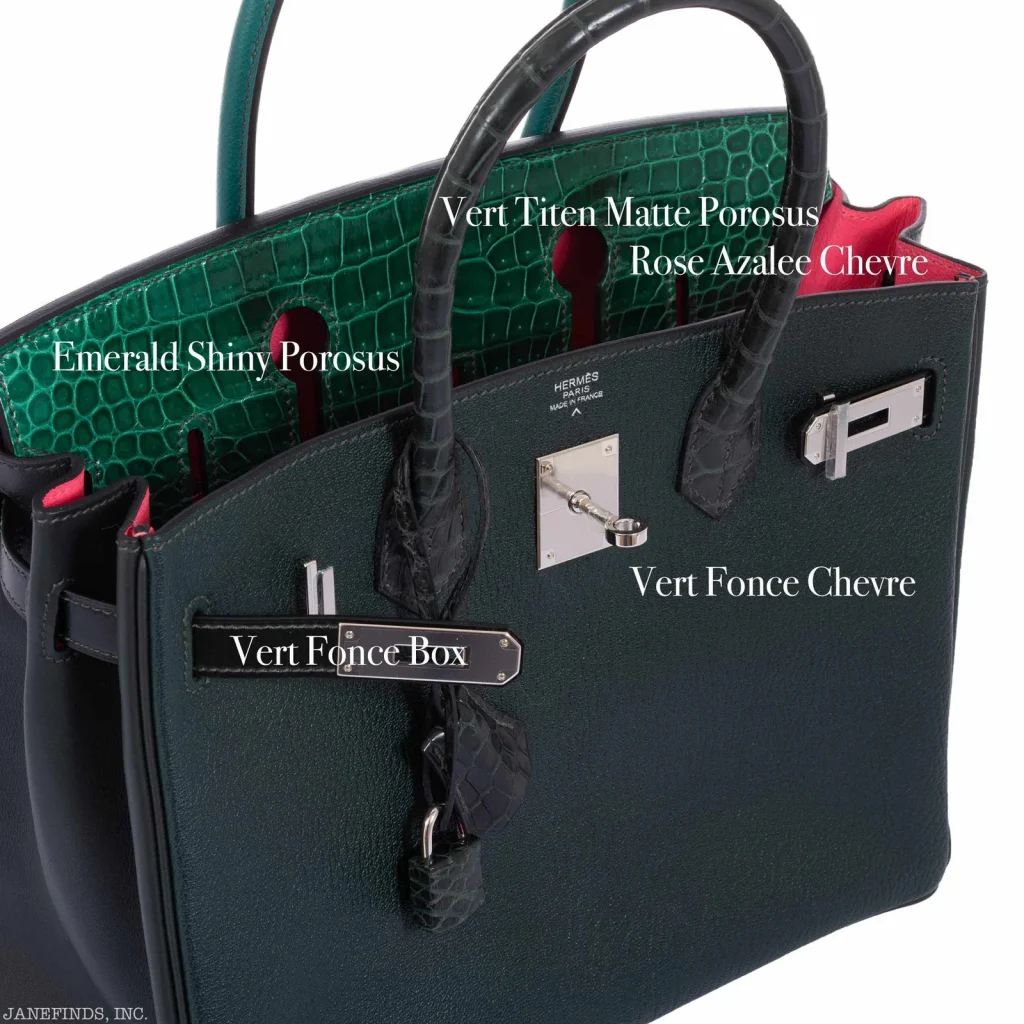
Vert Foncé is a deep forest green, rich and saturated with minimal brightness — the kind of green that reads almost black in low light.
Vert Emerald is the most straightforward of the four, a pure, jewel-toned green that gives the palette its anchoring clarity.
Vert Titien is slightly more complex — a green with warm, almost bronze undertones that shifts in different lighting conditions.
Malachite is the most distinctive, inspired by the mineral of the same name: a bold, medium green with a slightly waxy, intense quality.
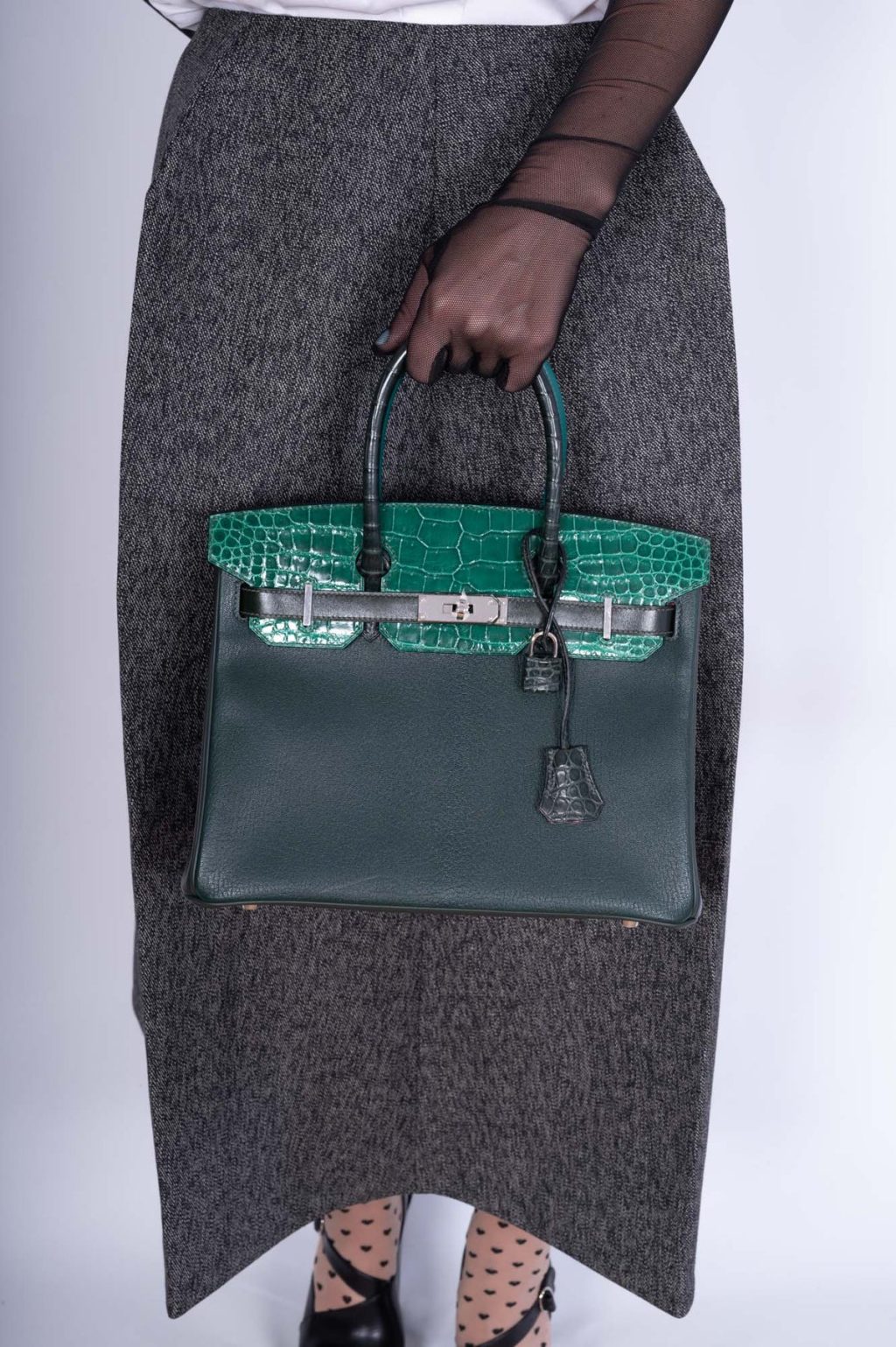
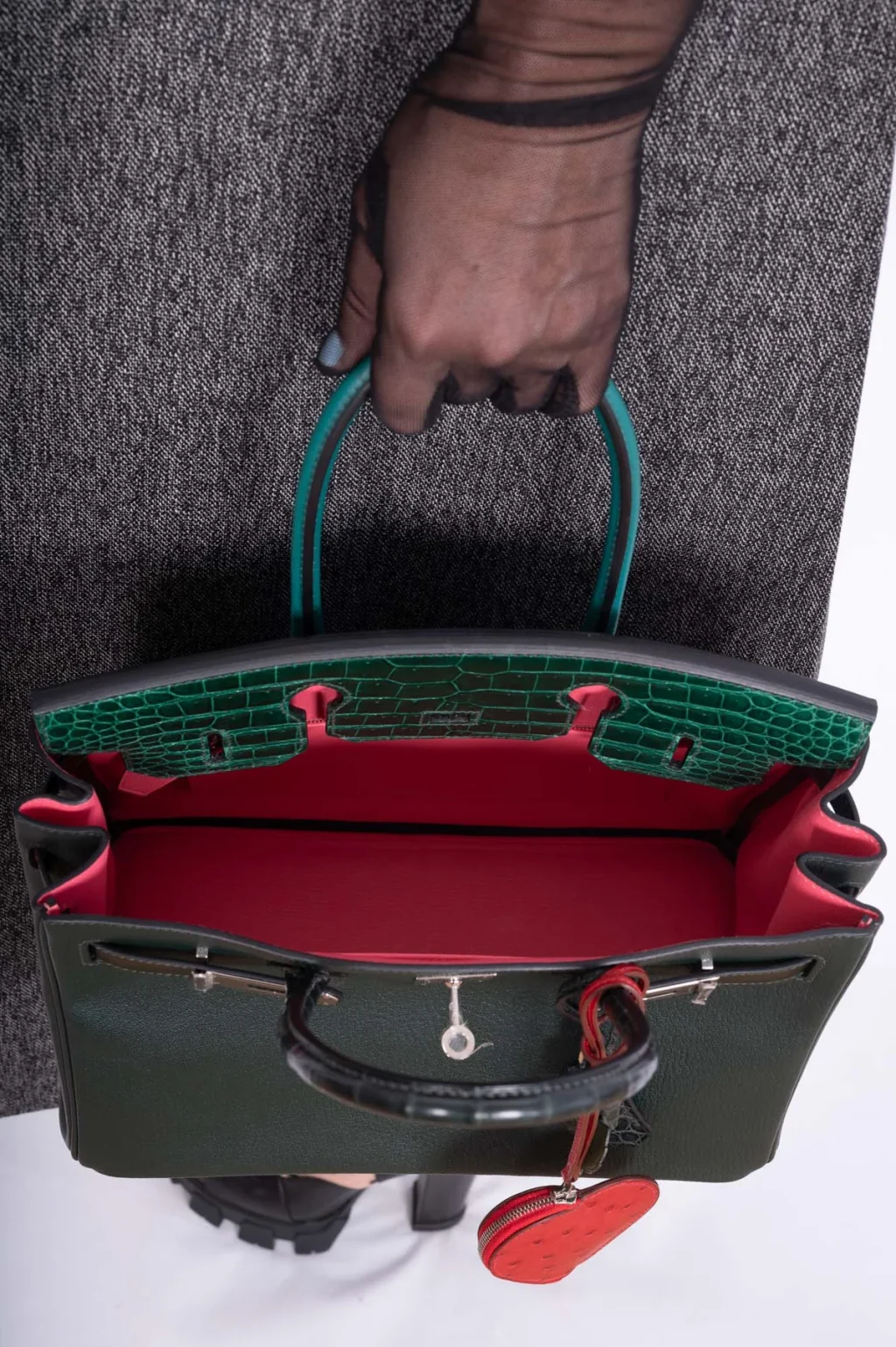
Together, these four greens achieve something that a single-color Birkin cannot: depth. The bag changes as you move it. Shadows fall differently across the panels. Different leathers catch light at different angles. It is the closest thing in leather goods to the way a cut gemstone reads differently depending on its facets.
Read also: Notable Limited-Edition Hermès Birkins: Sculptural masterpieces to covet
Rarity and Acquisition: The Reality of Getting One
The Patchwork does not appear in Hermès boutiques in the way a standard Birkin might (and even a standard Birkin is not exactly easy to acquire). Limited edition pieces of this nature are typically allocated to a boutique’s most valued long-term clients — customers with substantial purchase histories who have demonstrated both loyalty and taste.
Directly from Hermès, the process of being offered any quota bag (the internal term for Birkins and Kellys) requires establishing a meaningful purchase relationship with a specific boutique over time. Boutiques are allowed to order a limited number of Birkins each season, and the specific styles received are often not known in advance. A Patchwork, if and when one arrives at a boutique, is unlikely to sit on any shelf.
This article is part of LaForma’s ongoing coverage of significant collector pieces in the luxury market. For more on Hermès limited edition pieces, see our guide to limited edition Birkin bags.