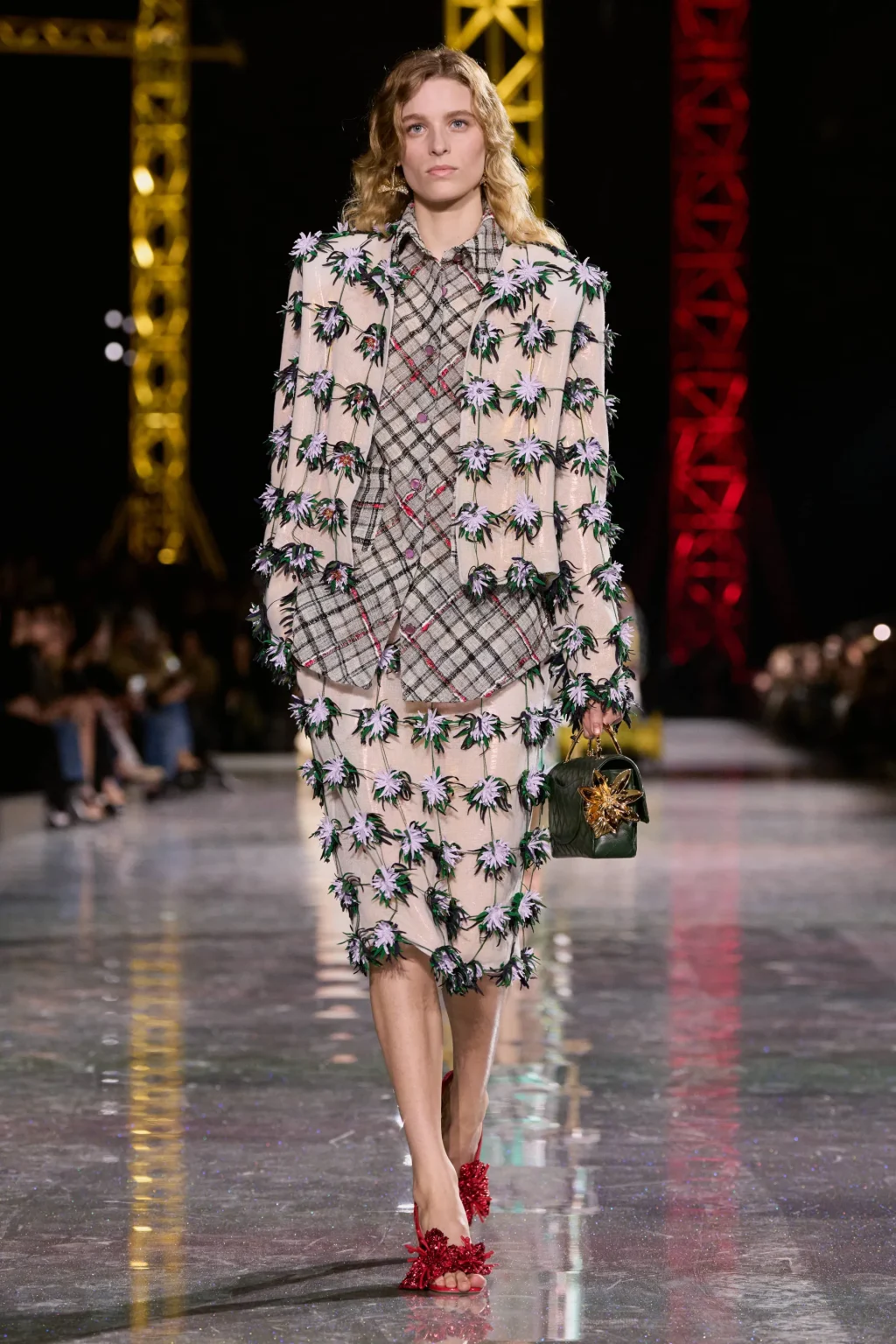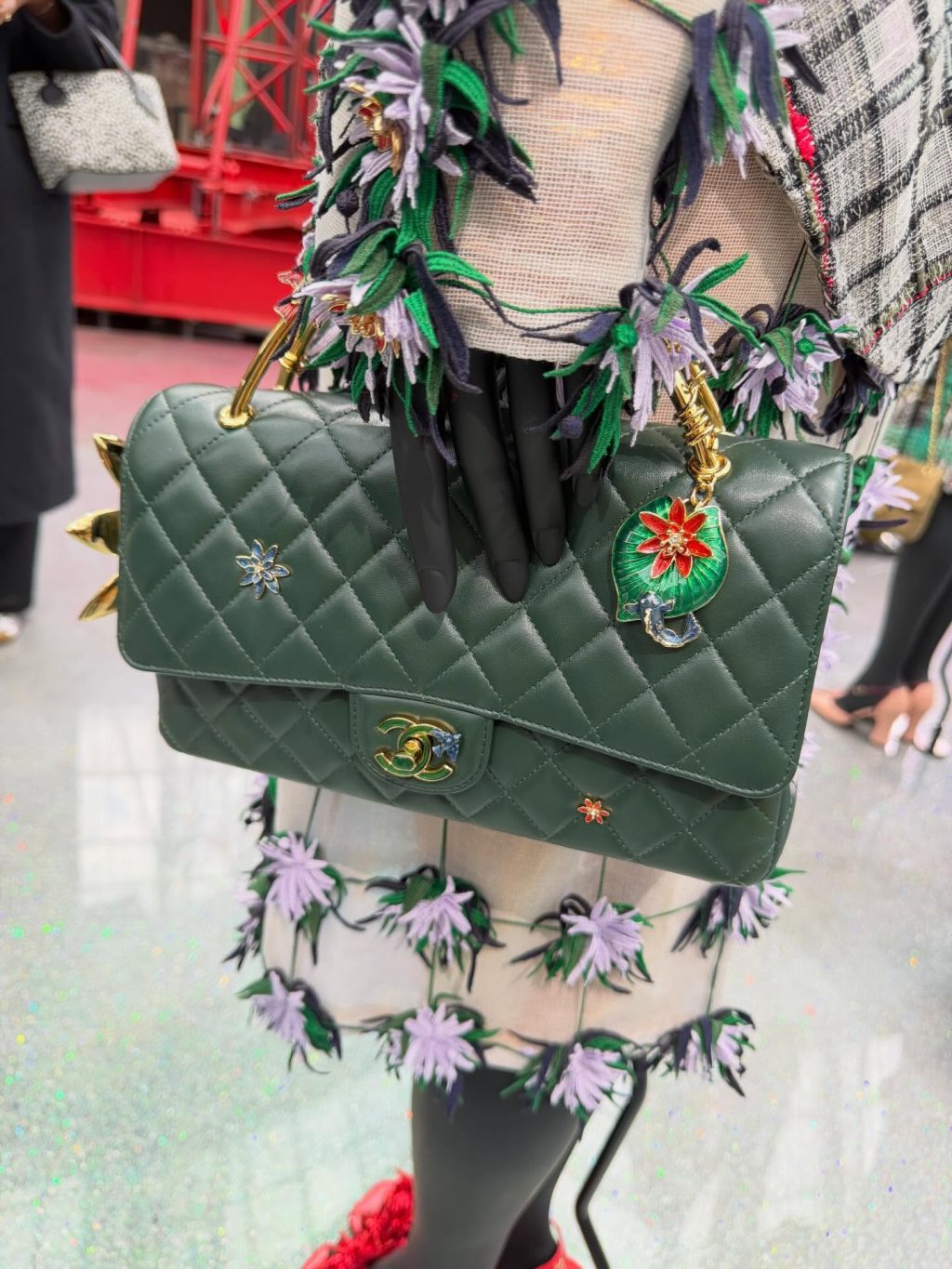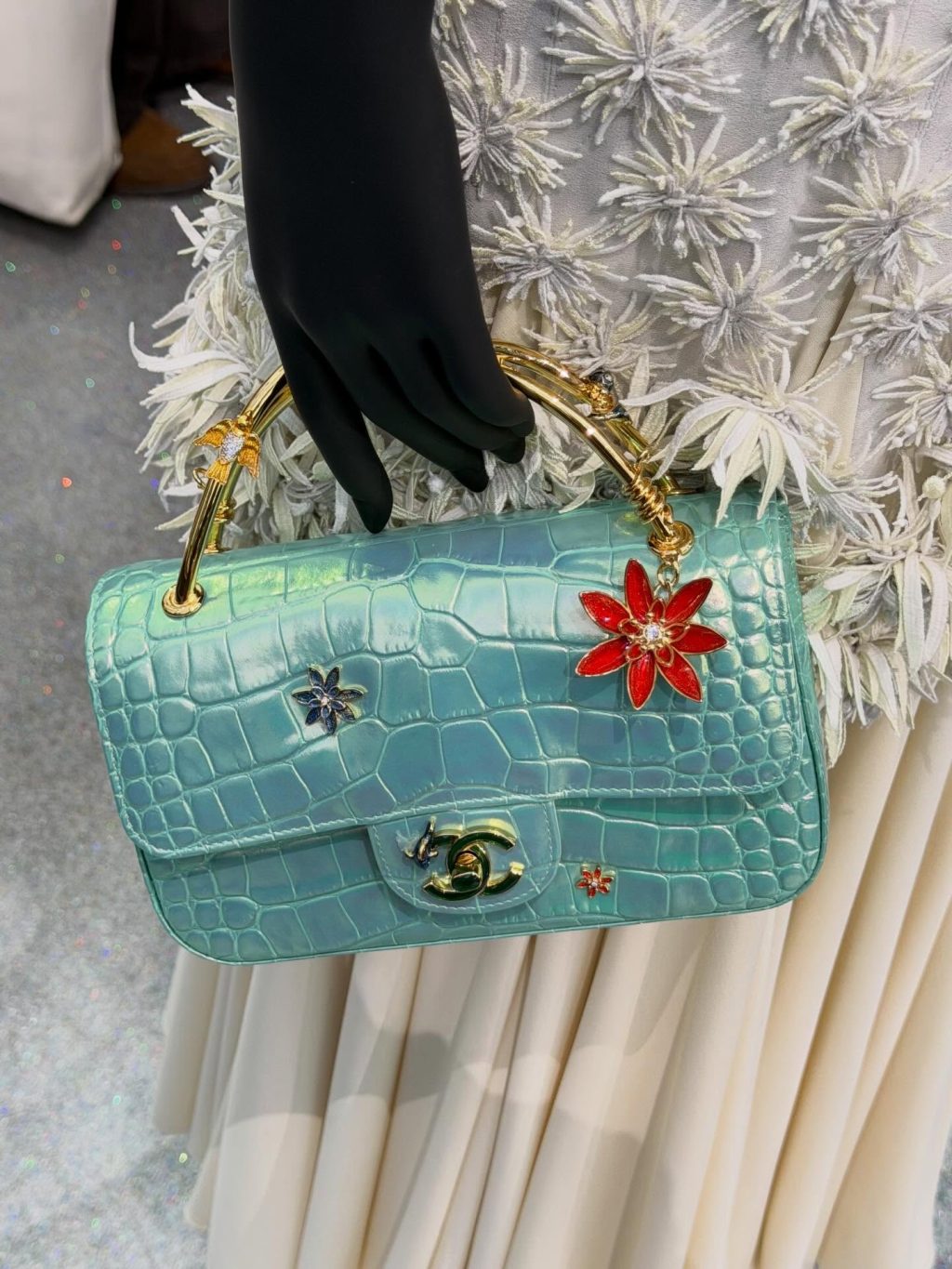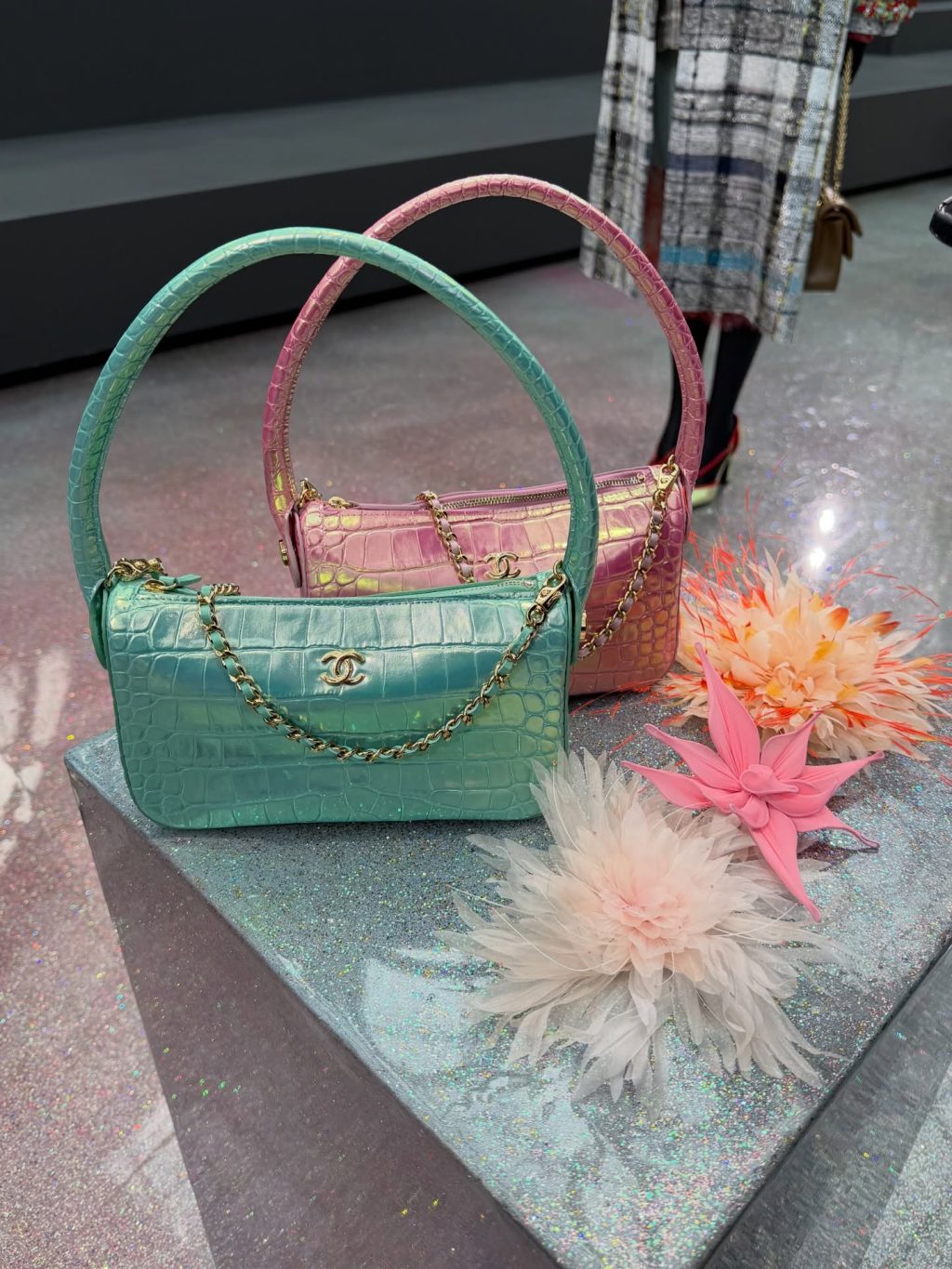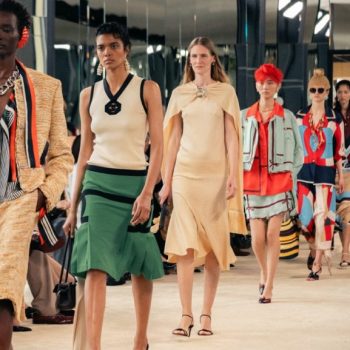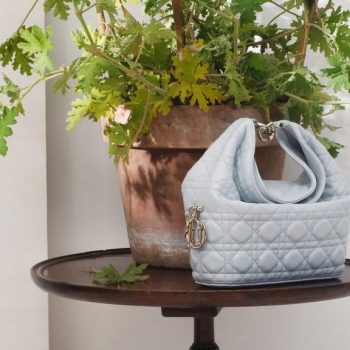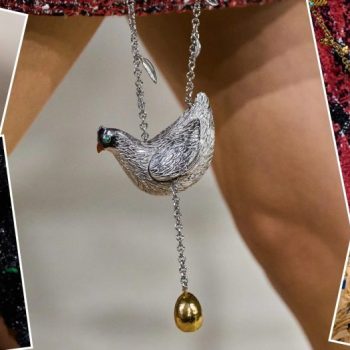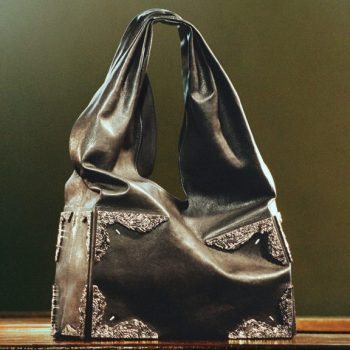
The Chanel Fall-Winter 2026-2027 bags appeared within a show that was less interested in nostalgia than in visible reconstruction. Matthieu Blazy’s second ready-to-wear collection for the house unfolded at the Grand Palais beneath a forest of colored cranes, turning the runway into something halfway between a fashion set and an active worksite. The scenography suggested a house under active revision — not demolished, not erased, but reworked in public.
READ ALSO Chanel Fall 2026 Couture Bags: The Golden Egg Hen, Sleeping Bears & Magic Beans
The collection itself was built on contrast: day and night, simplicity and iridescence, masculine tailoring and sensual fluidity. The show repeatedly returned to one core idea — transformation — often linking it to Gabrielle Chanel’s famous distinction between clothes that “crawl” and clothes that “fly,” a duality Blazy used to stage a collection that moved between function and fantasy.
The Show Concept: Construction, Proportion, Transformation
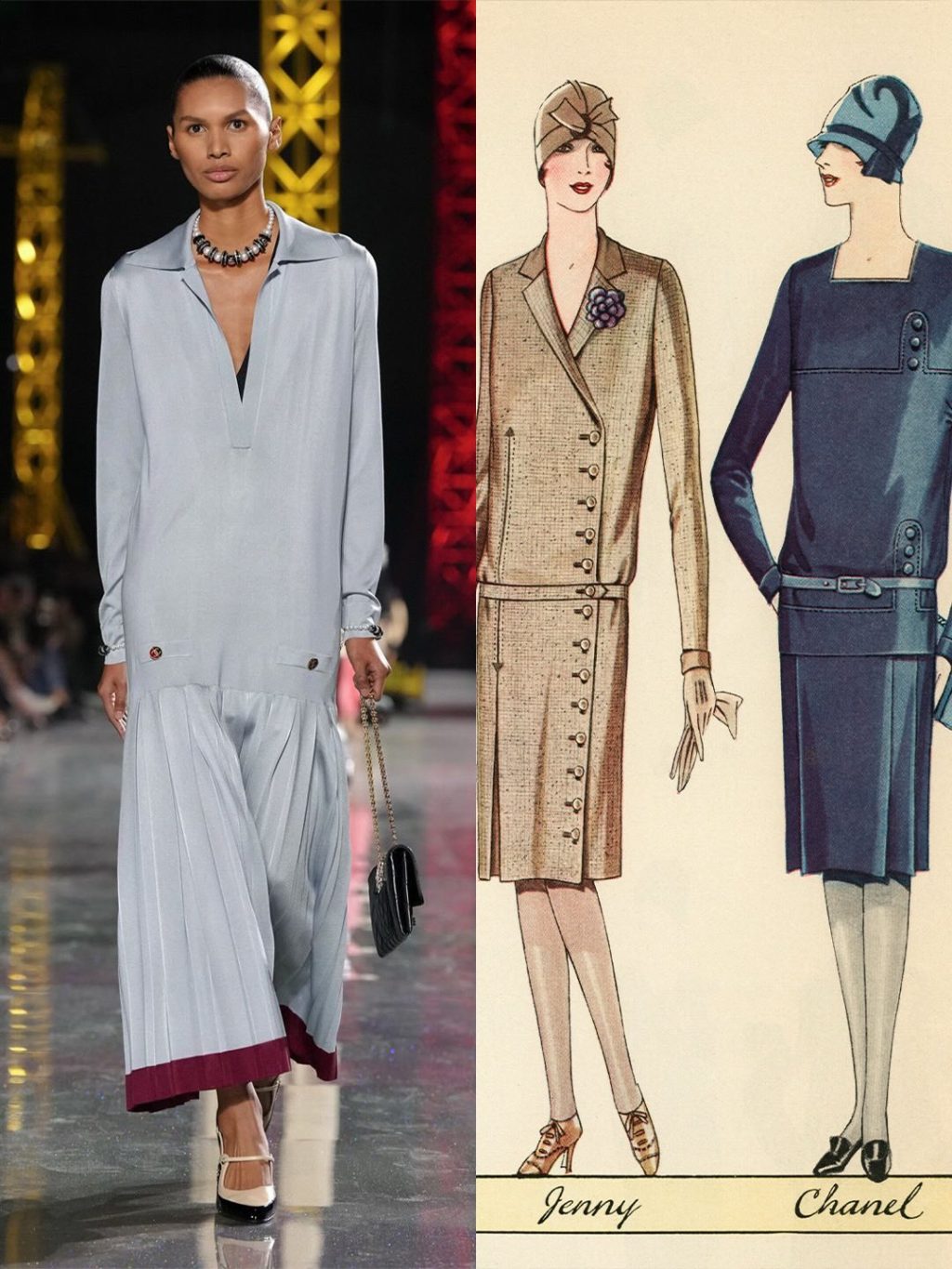
What made this Chanel outing interesting was not the desire to abandon house codes, but the desire to put them back into motion. The collection worked through lowered waistlines, elongated proportions, belts positioned at the hips, and silhouettes that seemed to shift their center of gravity downward. That is why the show felt less like a manifesto and more like a calibration. It was Chanel, but stretched, rebalanced, and made slightly unstable in a deliberate way.
The idea of construction ran through everything. It was present in the set, in the clothes, and even in the accessories. From our perspective, Blazy seemed less interested in producing a singular shock and more interested in showing how a fashion house can be adjusted in plain sight: proportion by proportion, texture by texture, code by code.
The Grand Palais Set and the Invitation
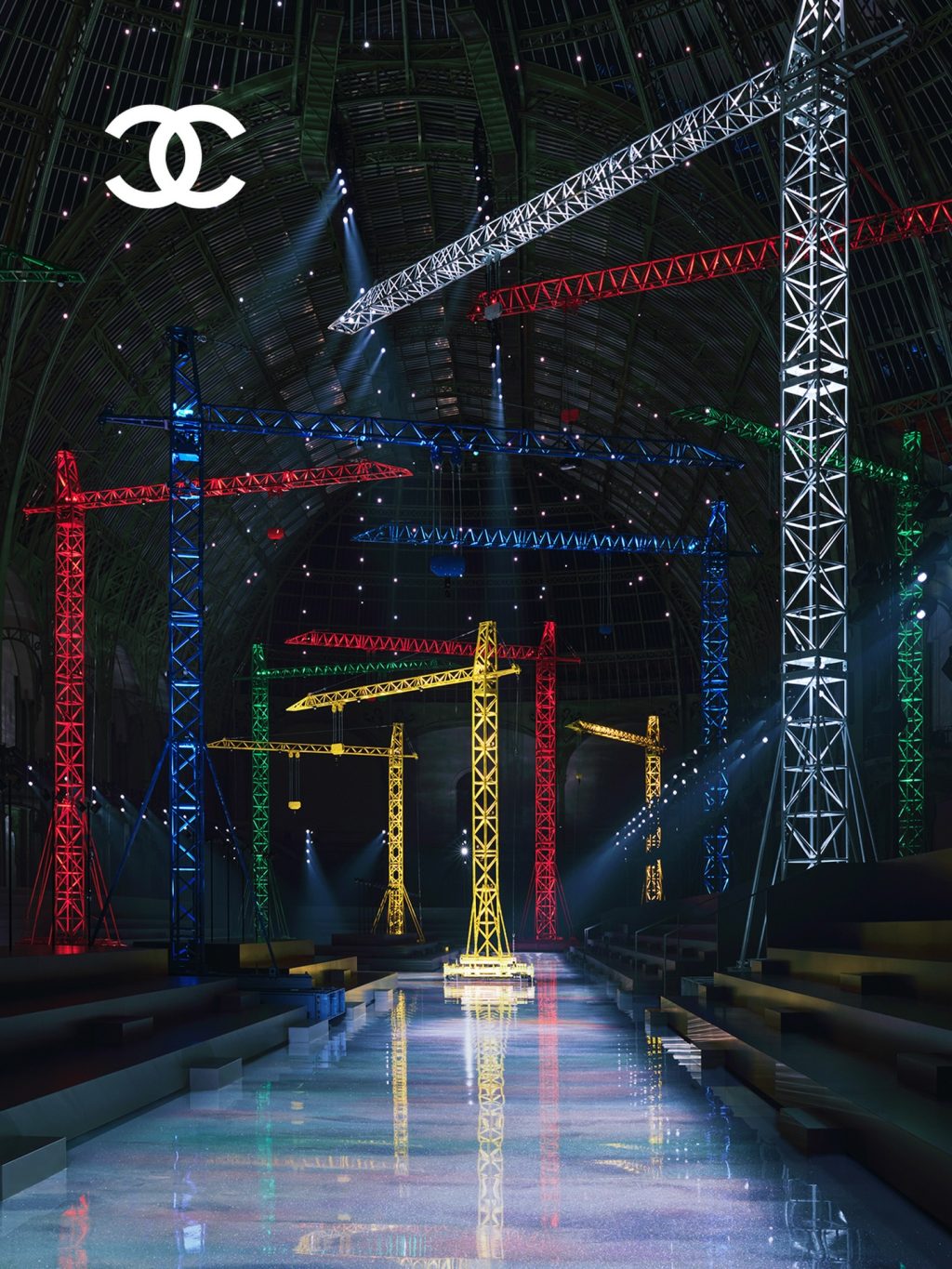
The Grand Palais nave was transformed into an industrial landscape of colored cranes and metal structures by Bureau Betak, a staging choice that pushed the show away from romantic Parisian cliché and toward a more architectural reading of Chanel.
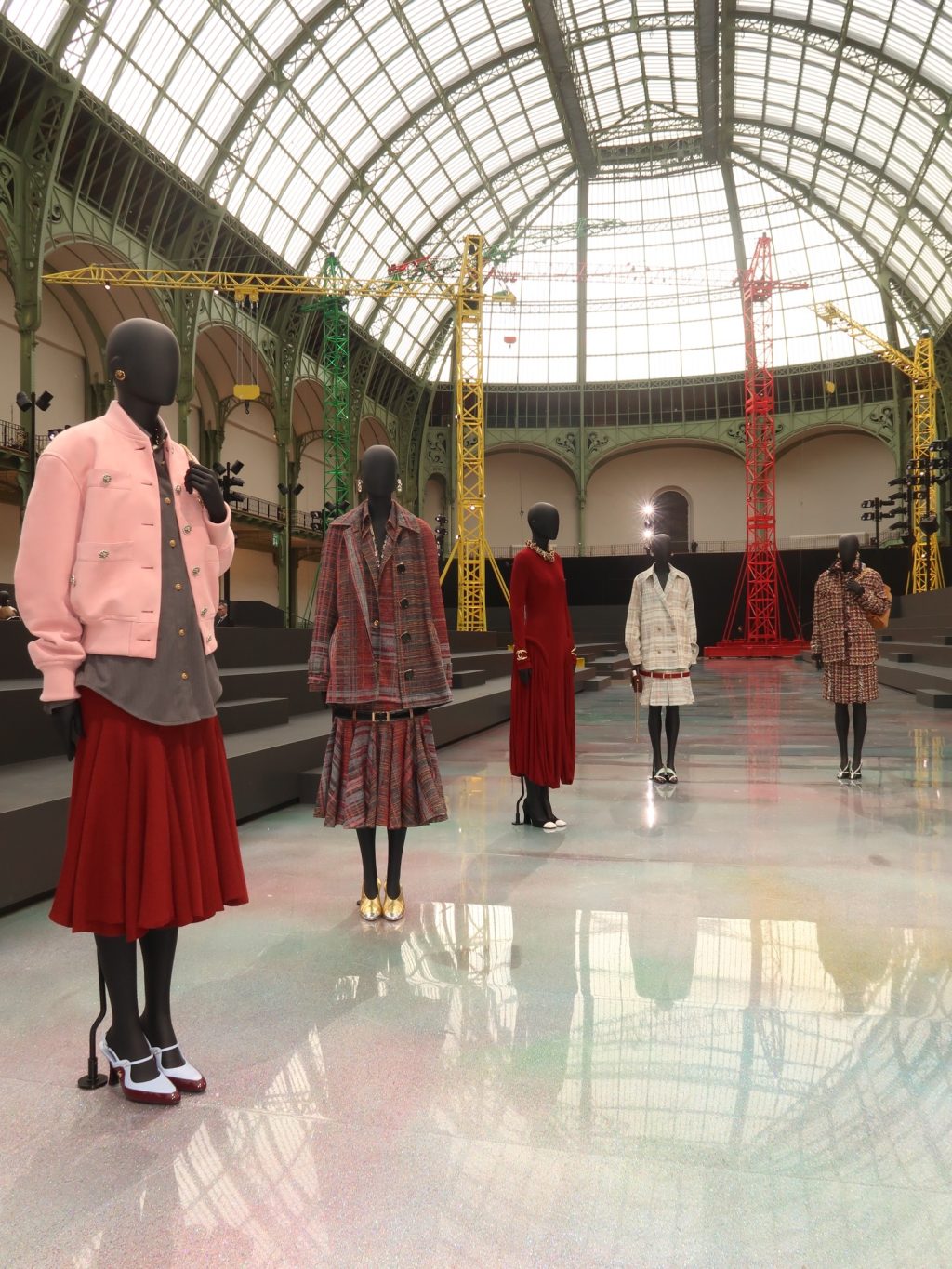
The invitation sharpened that idea further. Like Blazy’s Chanel Spring-Summer 2026 show, this season’s invite took the form of a pendant necklace, but here it was reimagined as a silver-tone folding measuring rule engraved with the show details, reinforcing the collection’s emphasis on measurement and construction.
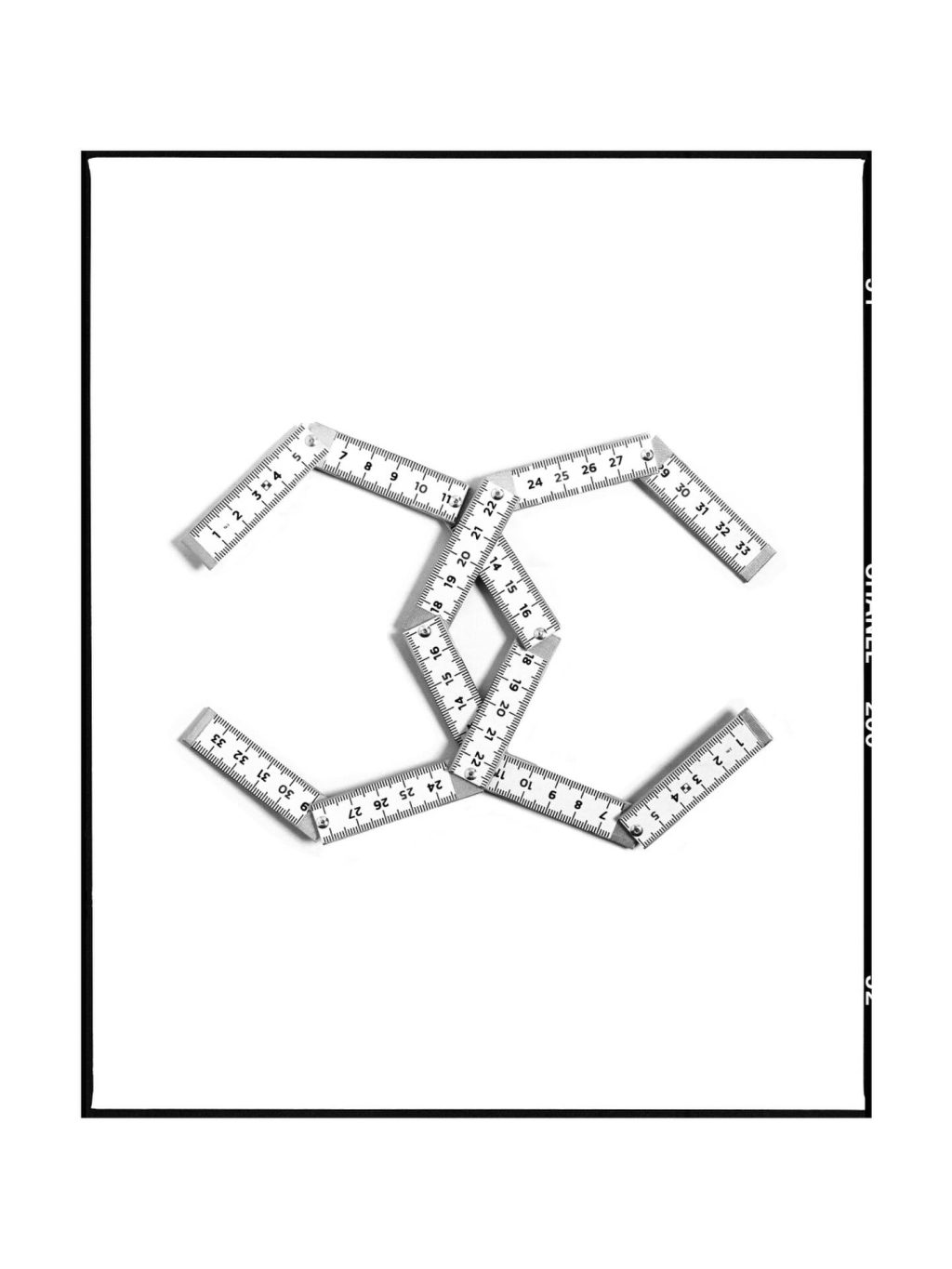
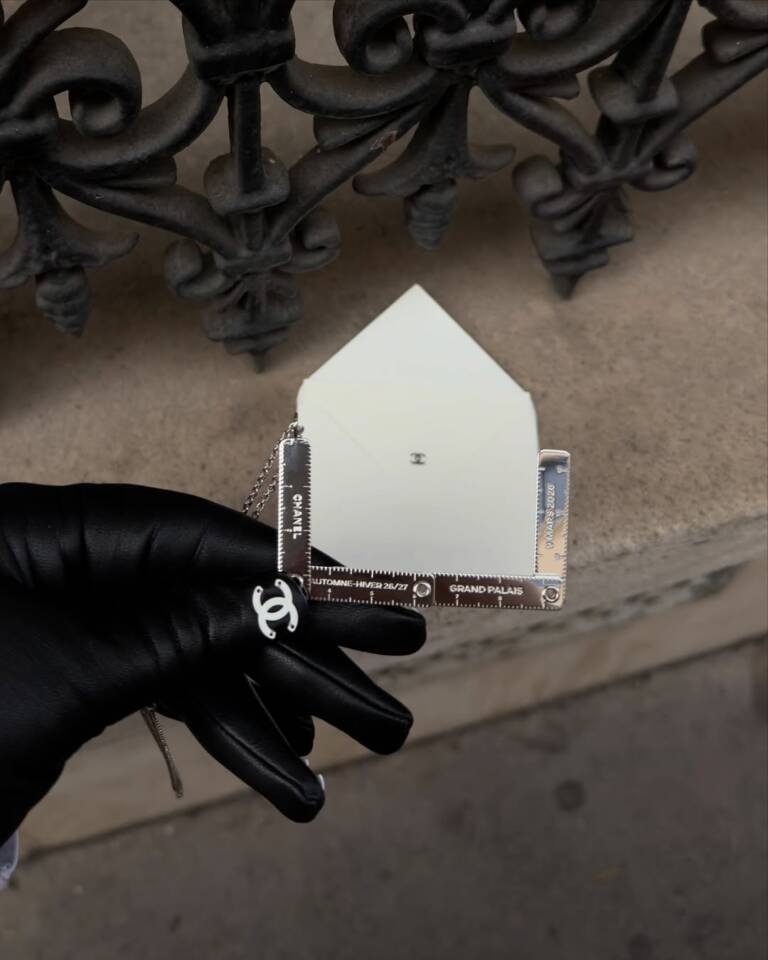
More than a clever object, it acted as an early clue to the collection’s real preoccupation: proportion, architecture, construction, and the act of measuring silhouette itself.
Matthieu Blazy’s second ready-to-wear Chanel show
This is Blazy’s second ready-to-wear Chanel collection and a further refinement of the language he began establishing in his debut period at the house. Rather than delivering a shock-to-the-system collection, he appeared to press deeper into Chanel’s codes: proportion, surface, tailoring, motion, and the tension between bourgeois polish and something more unsettled.
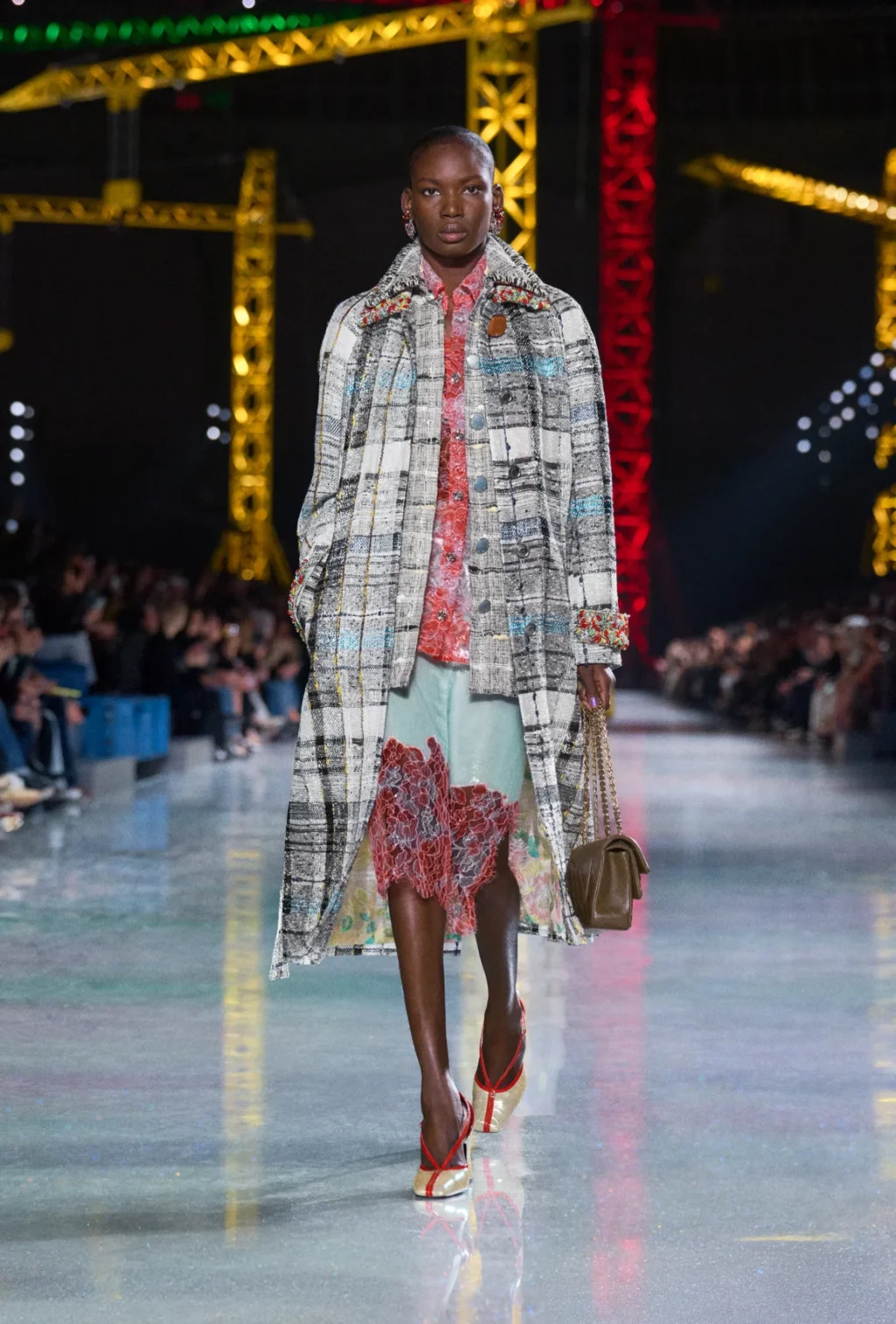
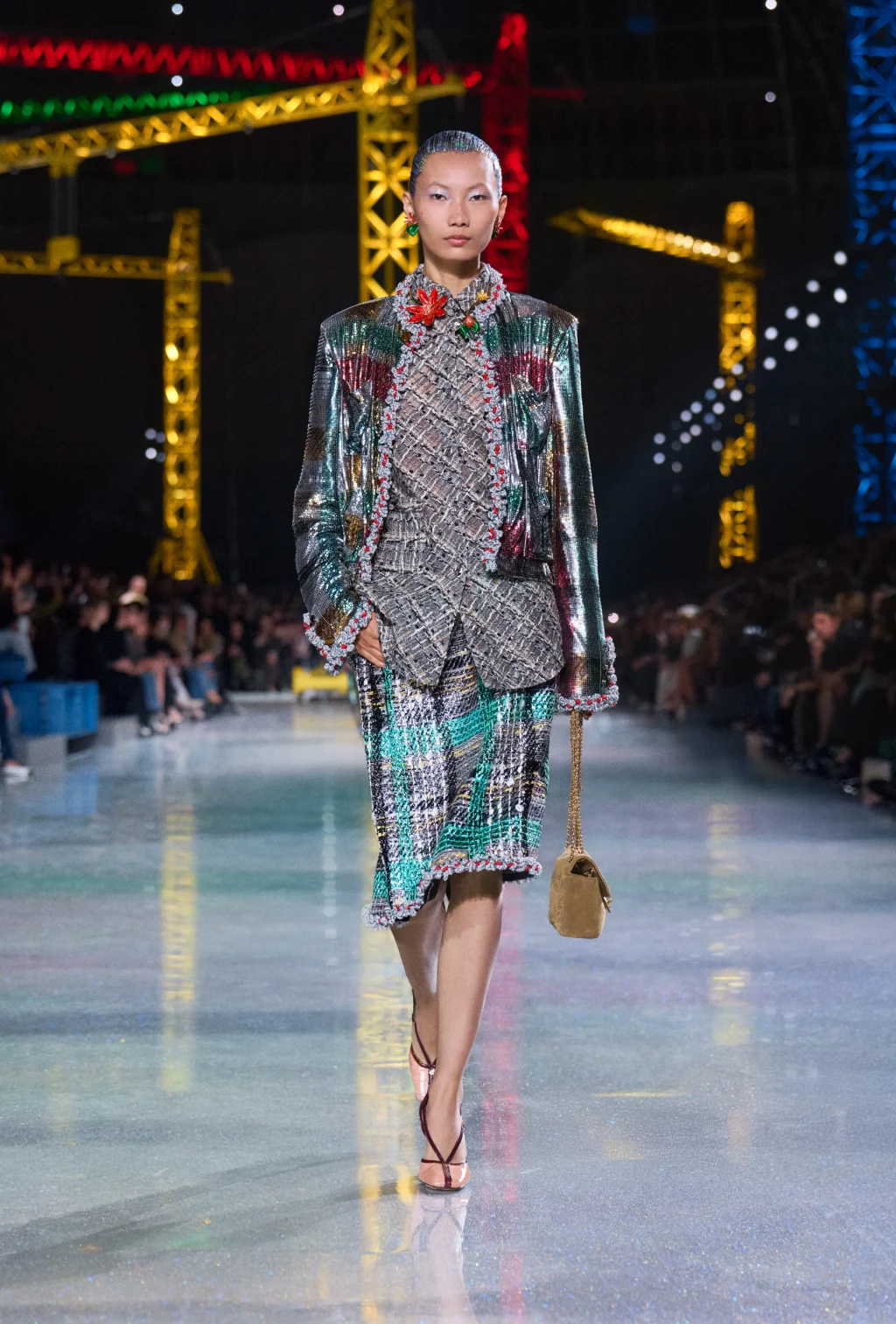
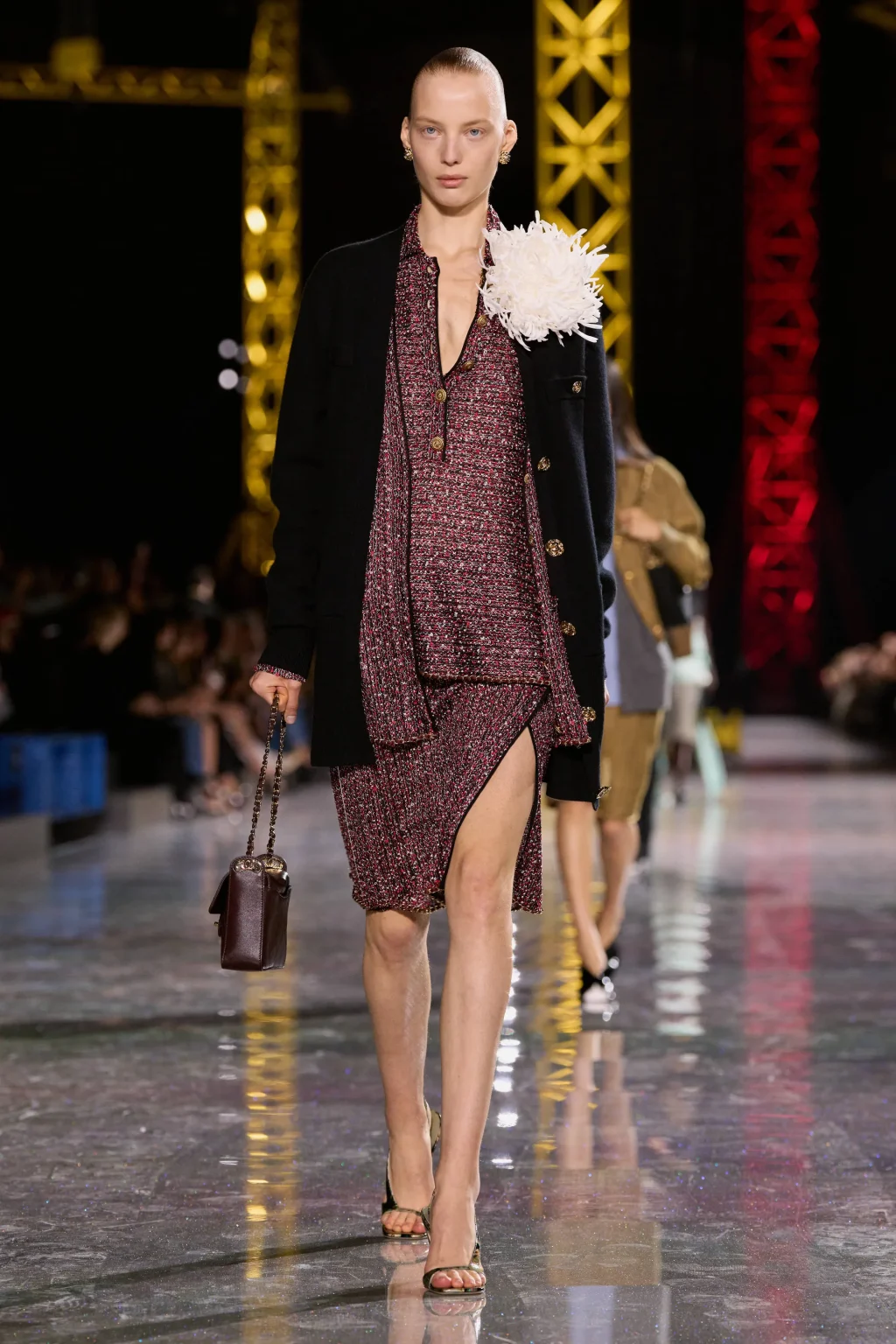
The silhouettes were elongated and often low-slung, with dropped waists and belts placed at the hips. That downward shift in proportion became one of the collection’s clearest signatures.
What defined the Chanel Fall-Winter 2026-2027 silhouette
The most important thing to understand before looking at the bags is that the collection’s silhouette was intentionally shifted downward. The hips became a visual anchor. Jackets lengthened. Cardigans relaxed. Dresses and skirts often looked as though their balance point had moved. Critics described the result as flapper-adjacent in some places, sporty in others, but consistently elongated and loosened.
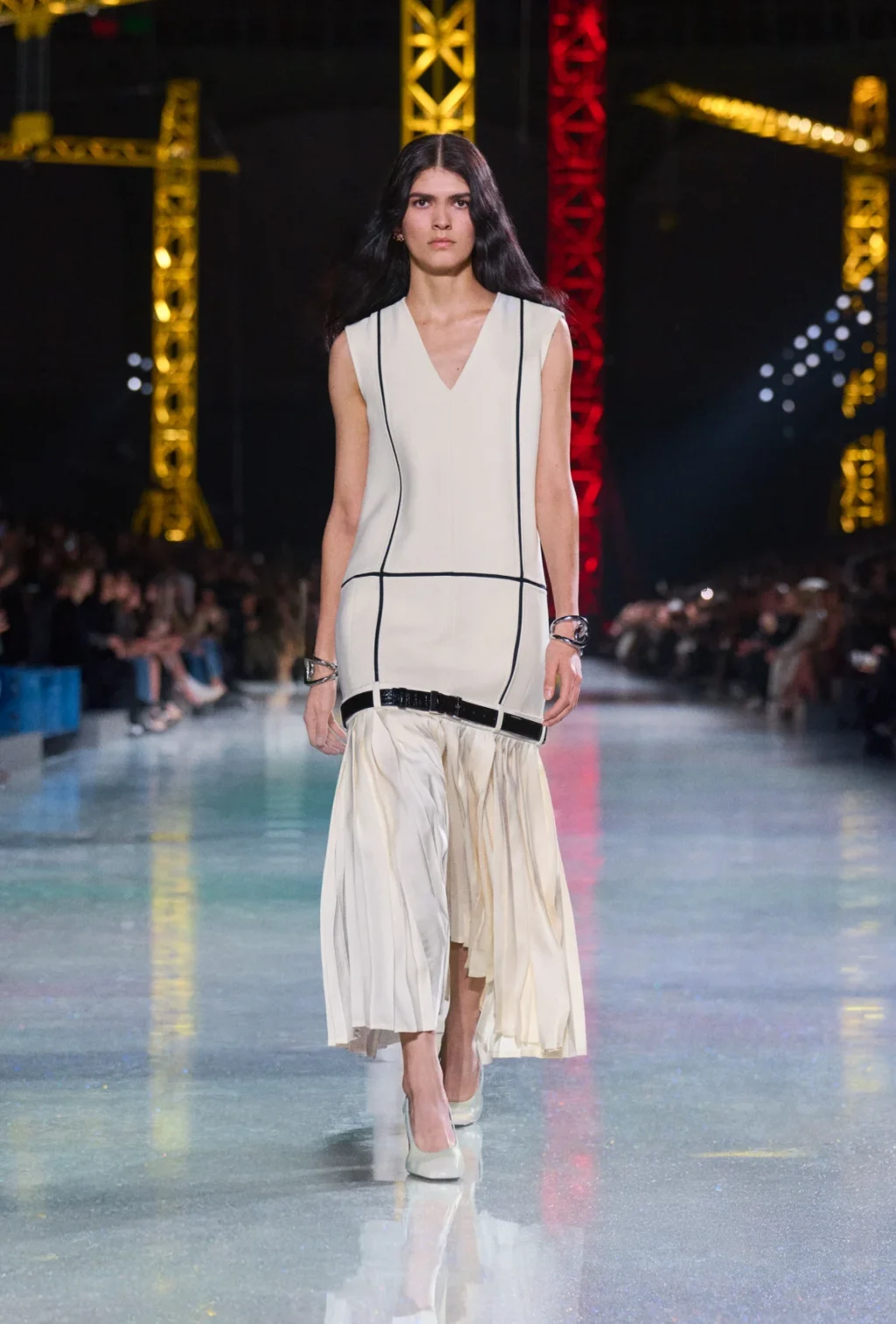
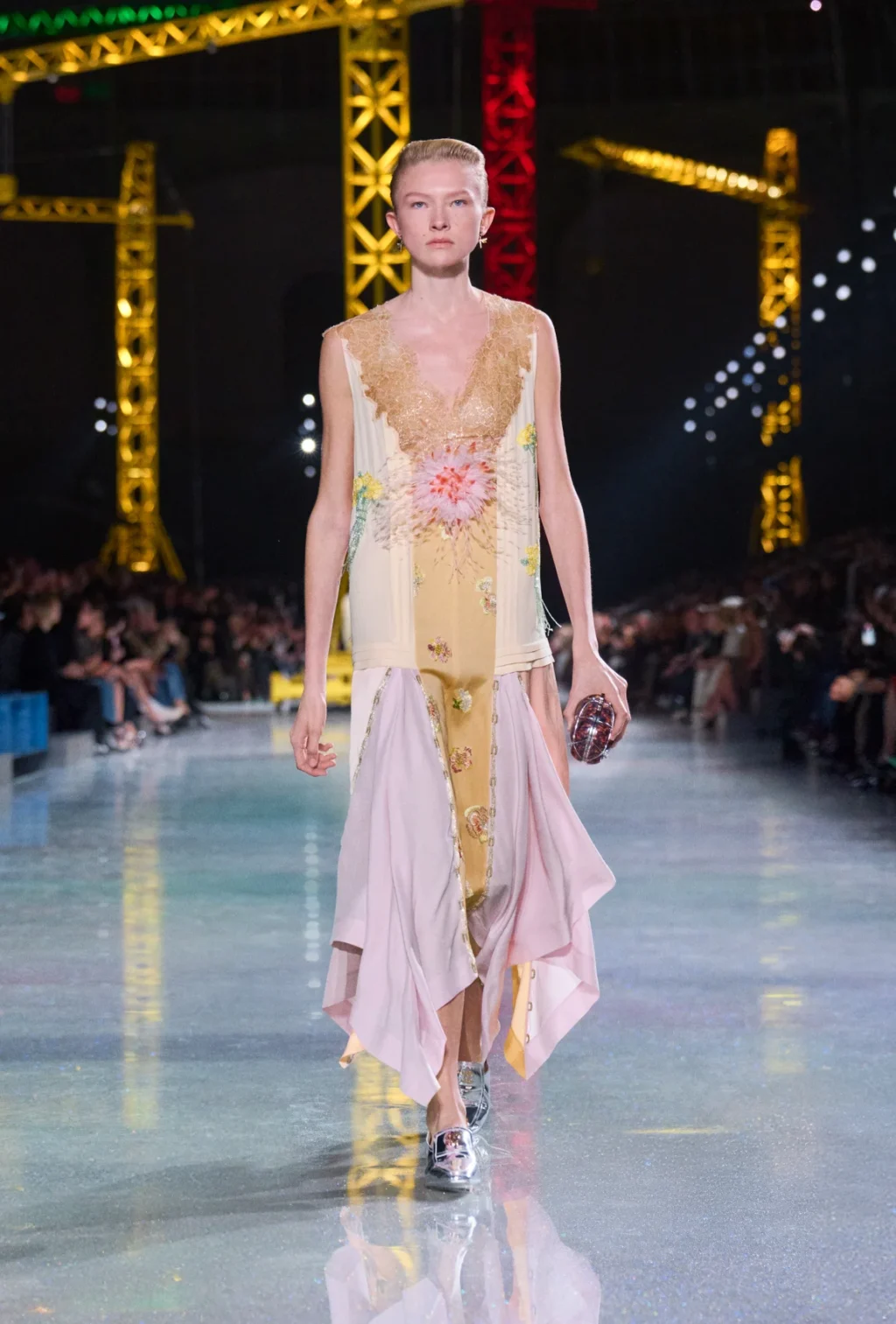
That had direct consequences for the accessories. A conventional, mid-scale flap bag would not have been enough on its own. The bags had to participate in the re-proportioning. Some became longer and narrower; others grew larger and flatter. A few turned more sculptural, even object-like, almost like punctuation marks inside a sentence of clothes.
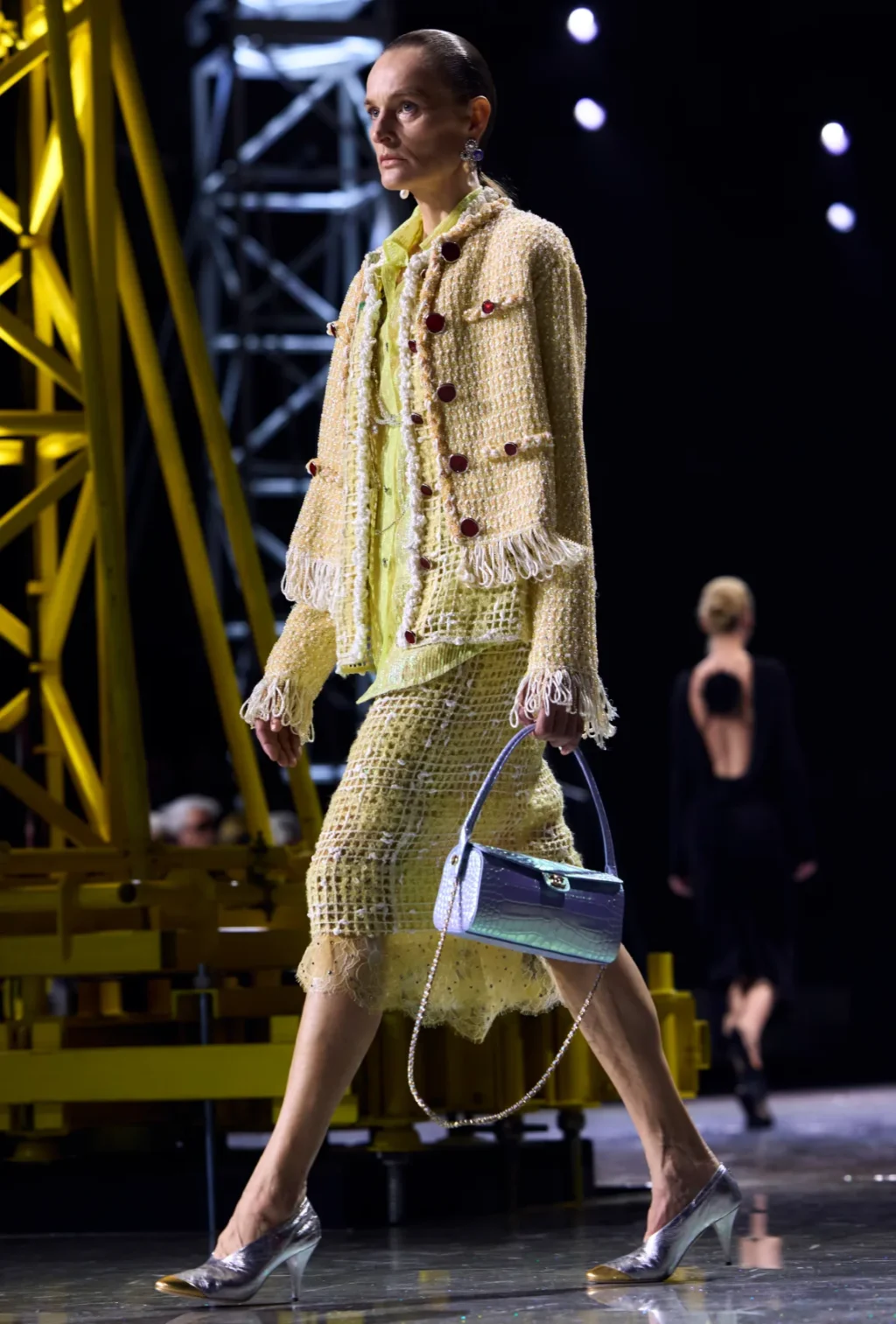
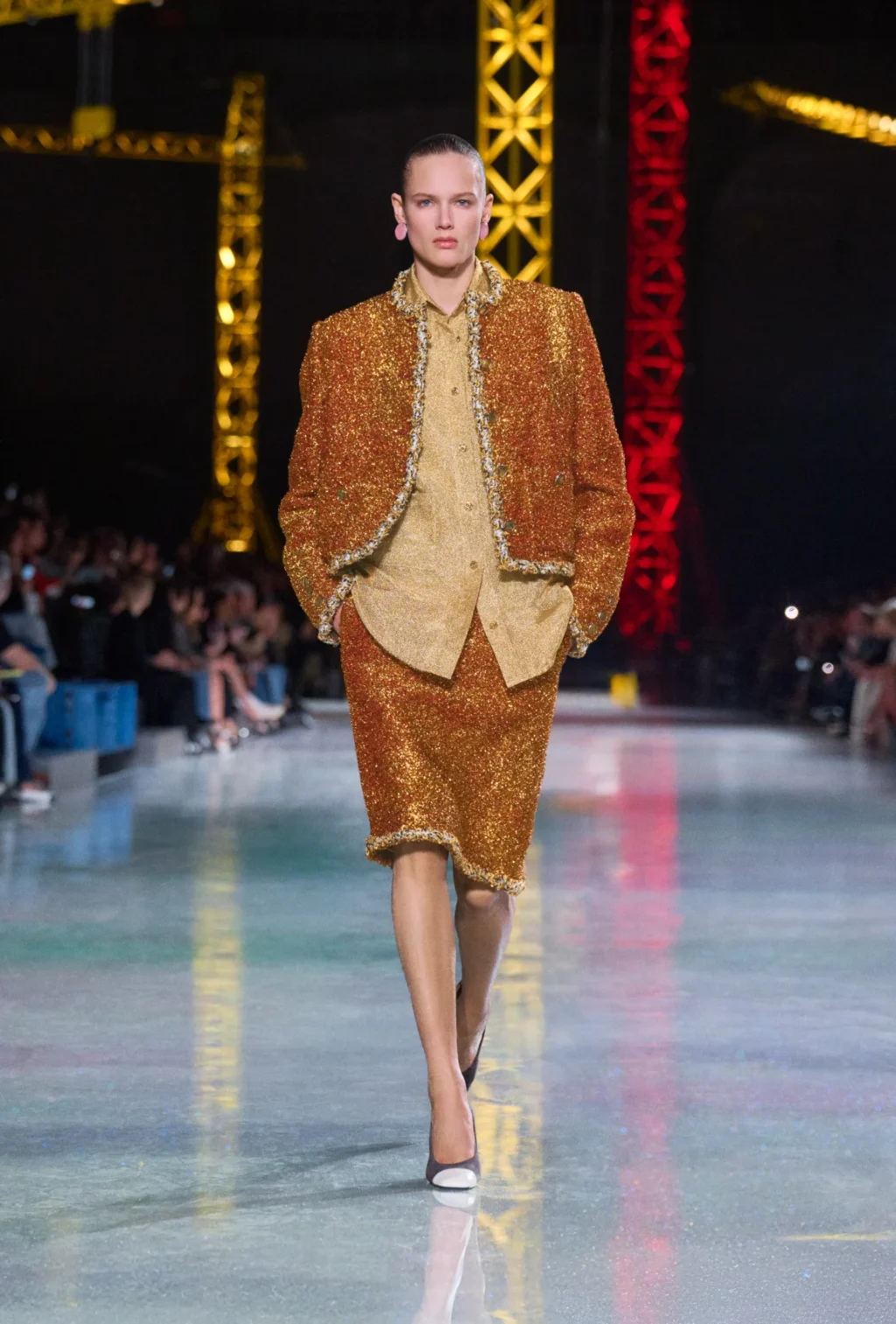
Chanel Fall-Winter 2026-2027 bags: the big picture
From the runway images, the Chanel Fall-Winter 2026-2027 bag line breaks into several clear families.
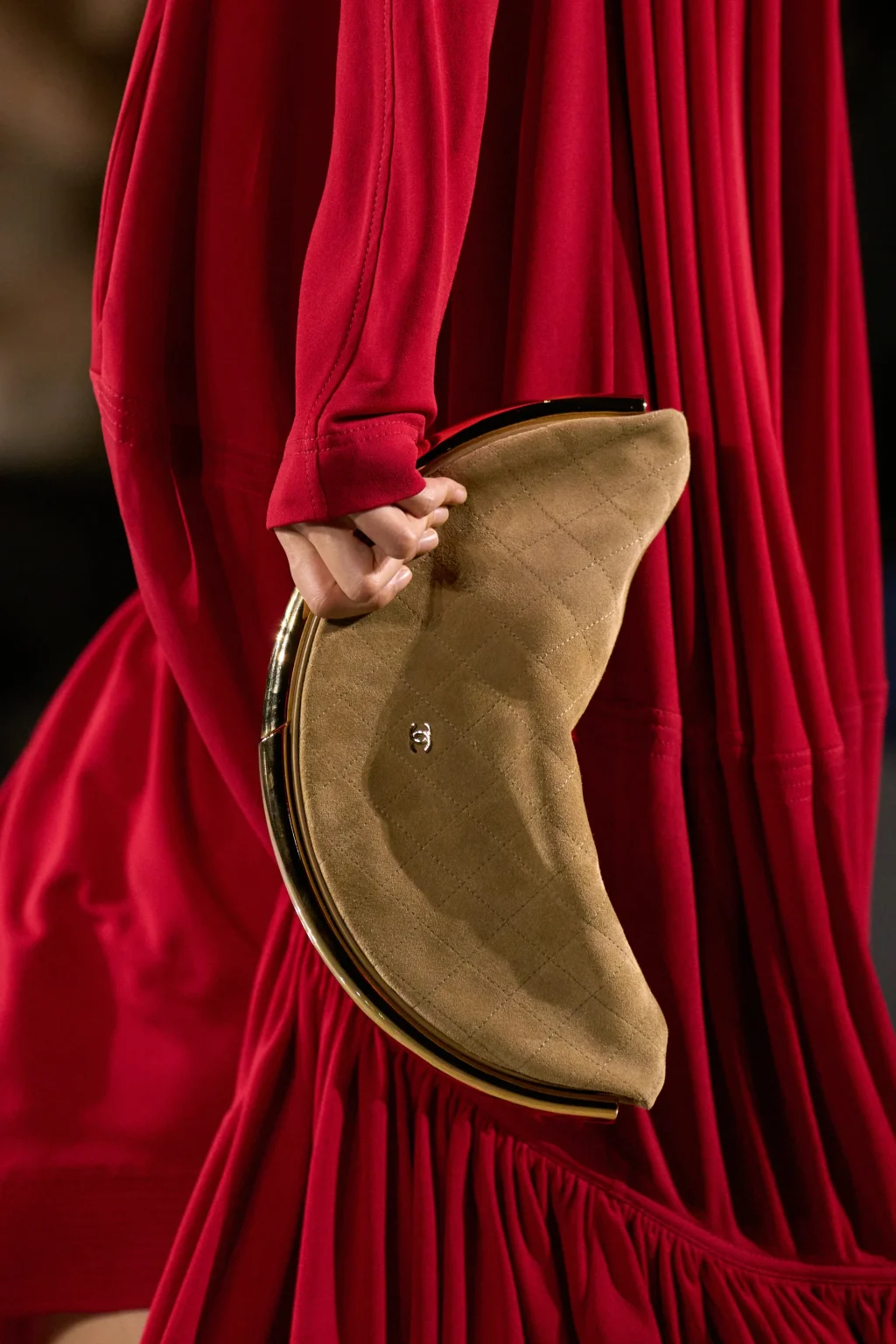
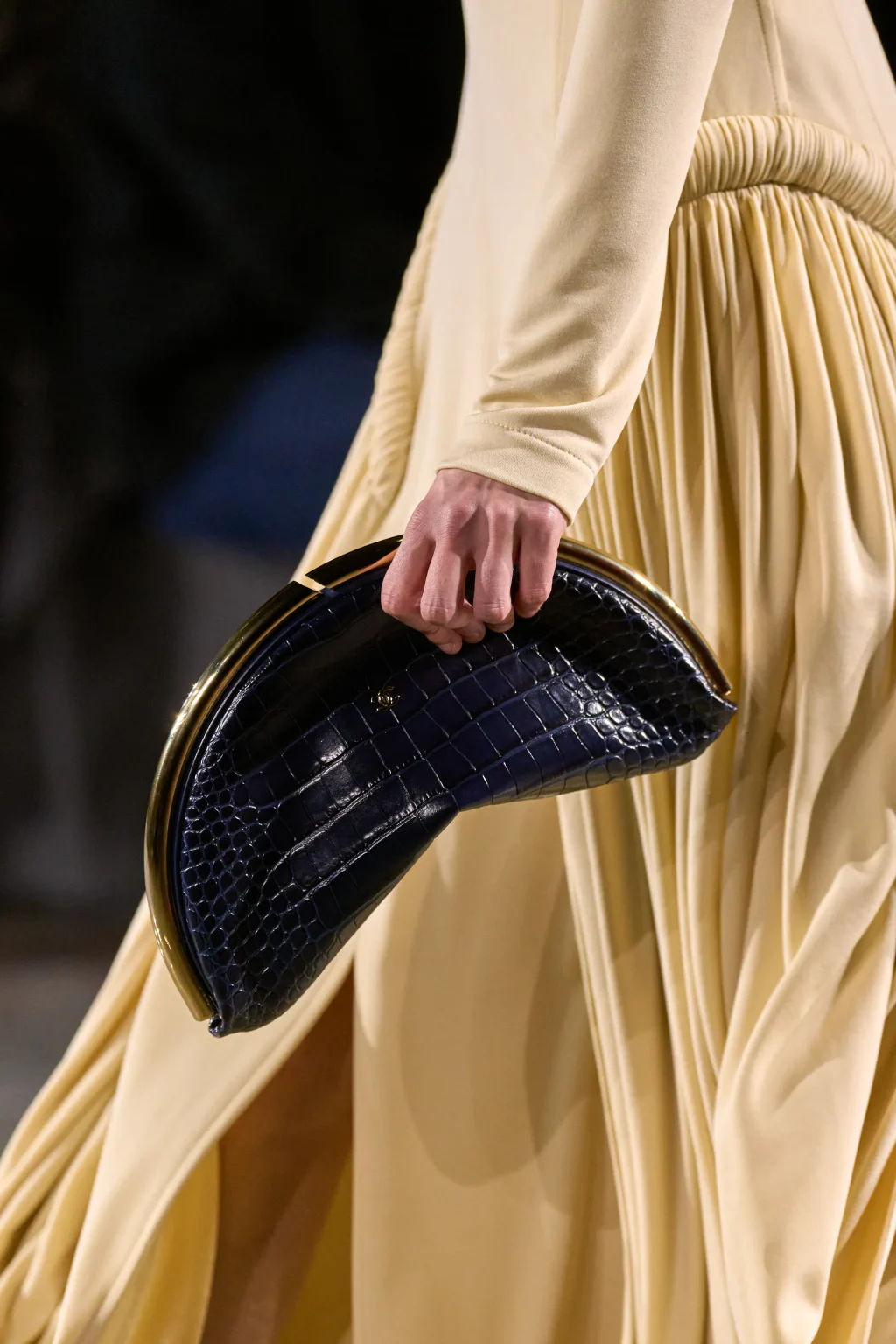
There were still classic quilted flaps, because Chanel never abandons that anchor completely. But they appeared alongside elongated rectangular pochettes, large triangular shoulder bags, croc-effect east-west top handles, slim frame clutches, novelty minaudières, soft hobos, structured day bags, buckets, shoppers, and compact jewel-like evening pieces.
What makes the handbag direction interesting is that it did not treat heritage and experimentation as opposites. Instead, Blazy seemed to ask a more useful question: what happens if a Chanel bag remains recognizably Chanel, but its scale, proportion, handle architecture, or texture is shifted far enough to feel new?
The Classics
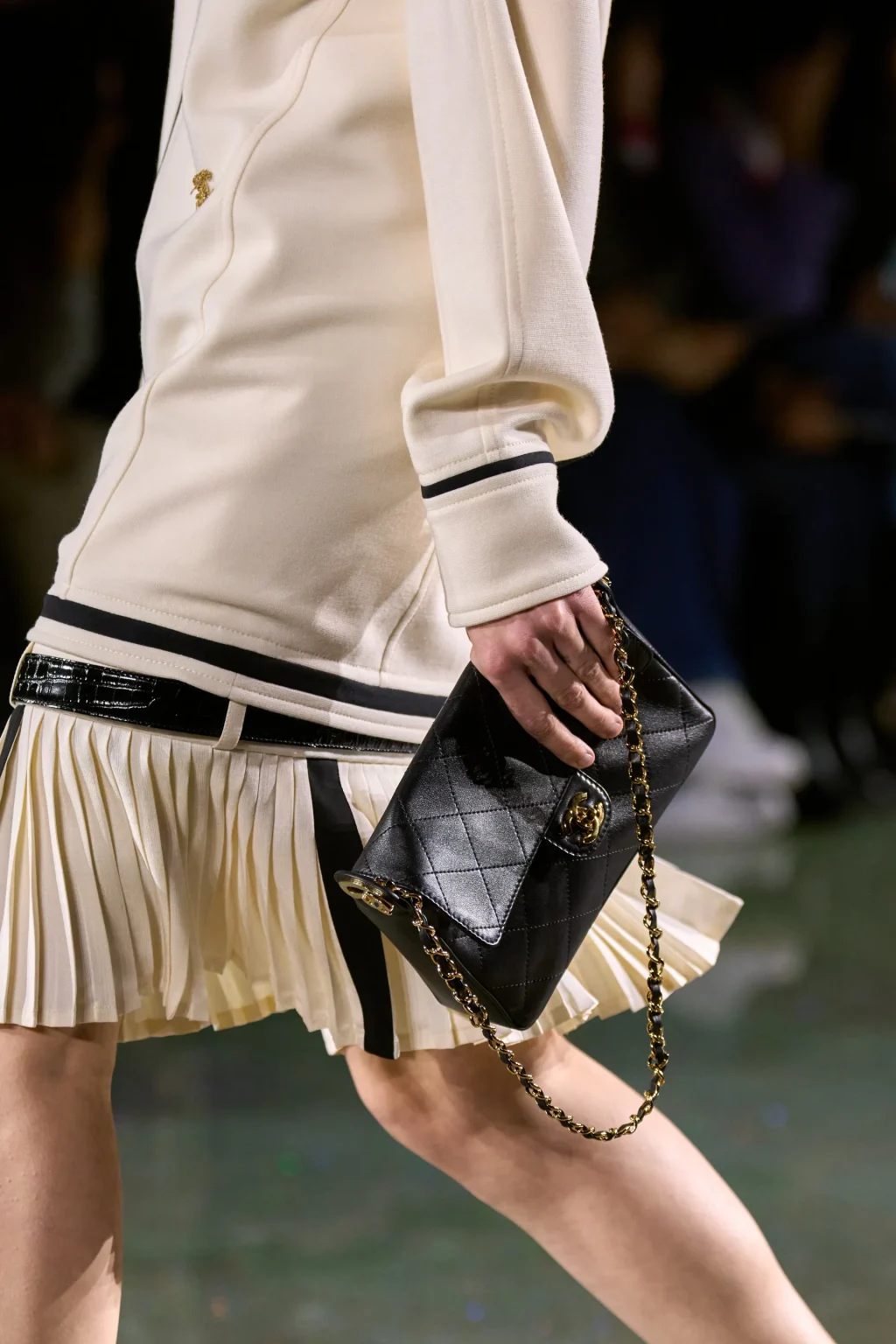
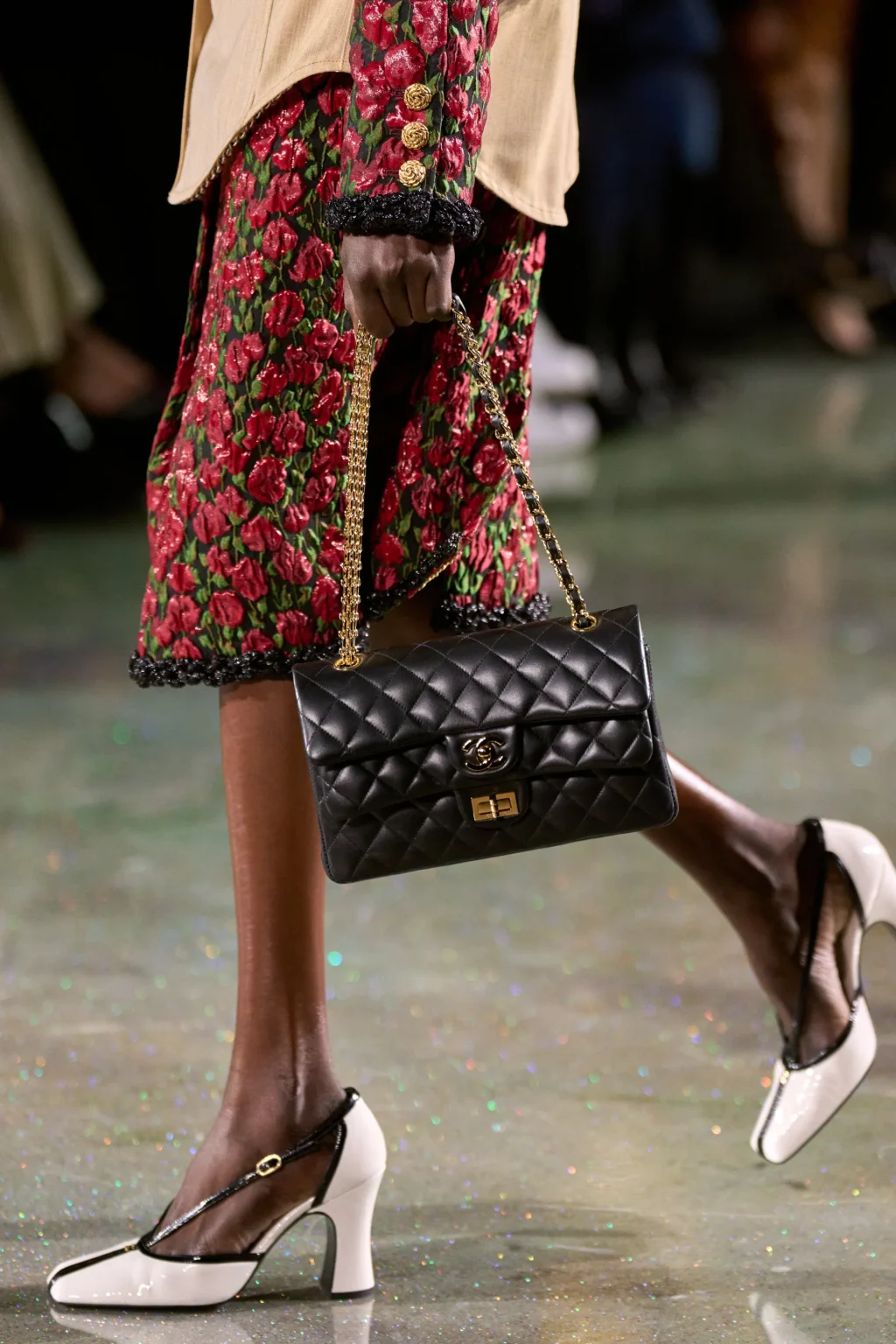
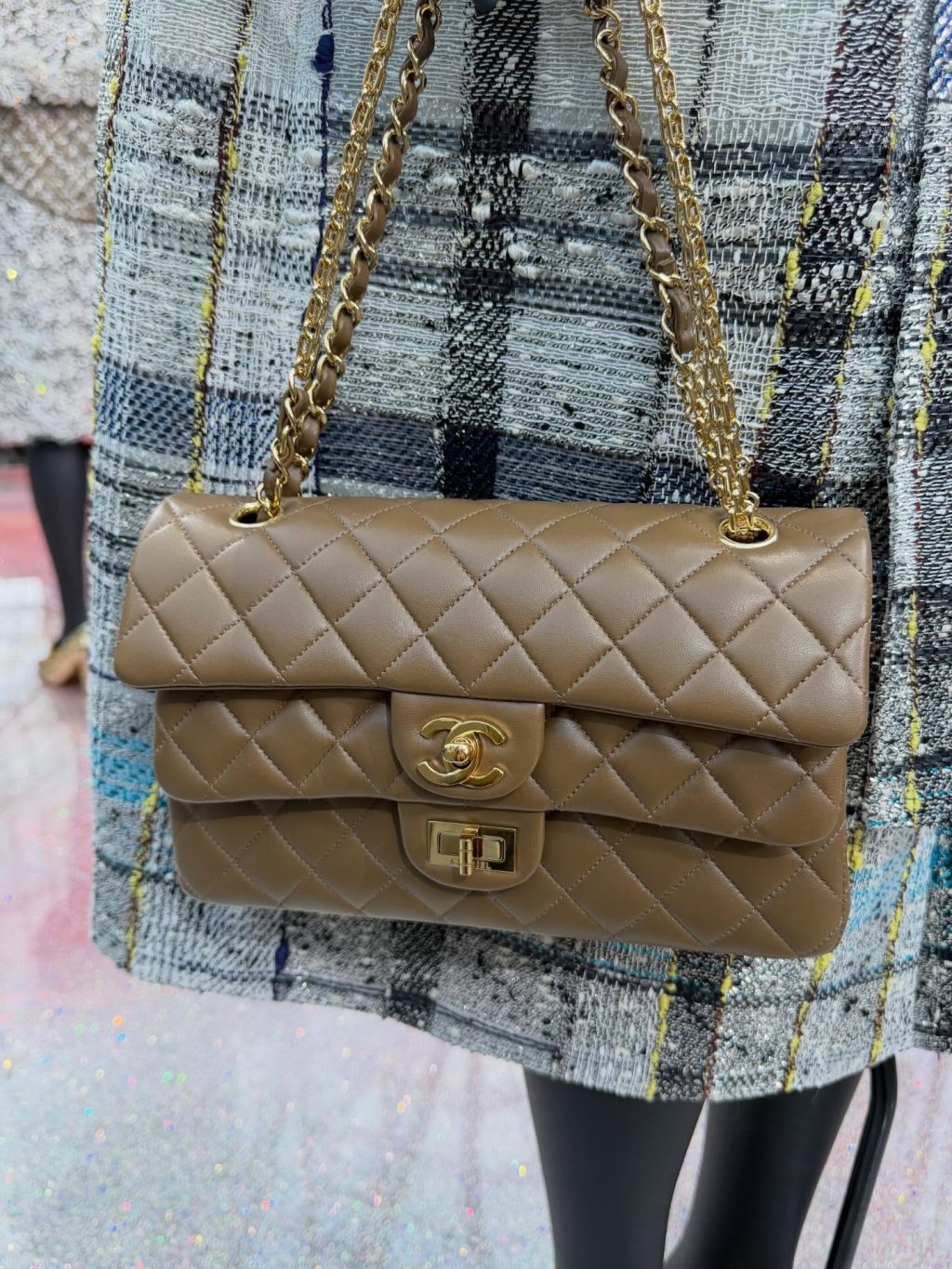
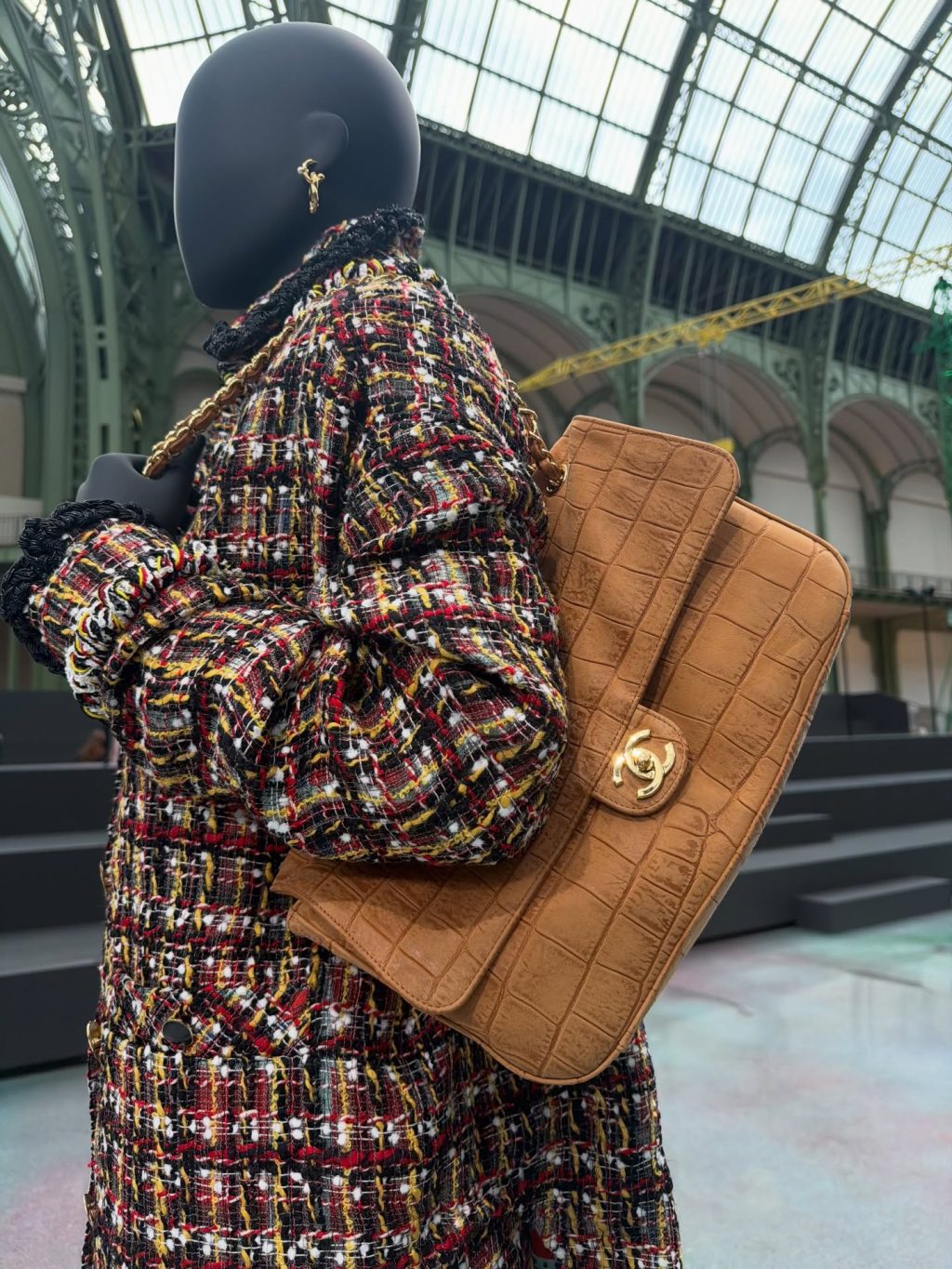
The Classic 11.12 appeared on the Chanel Fall-Winter 2026-2027 runway as a familiar house icon reinterpreted through texture rather than structure. While its signature flap silhouette remained instantly recognizable, Matthieu Blazy refreshed it through richly tactile surfaces — from tweed and embroidery to sequins and graphic black-and-white textures — allowing the bag to shift in mood without losing its identity.
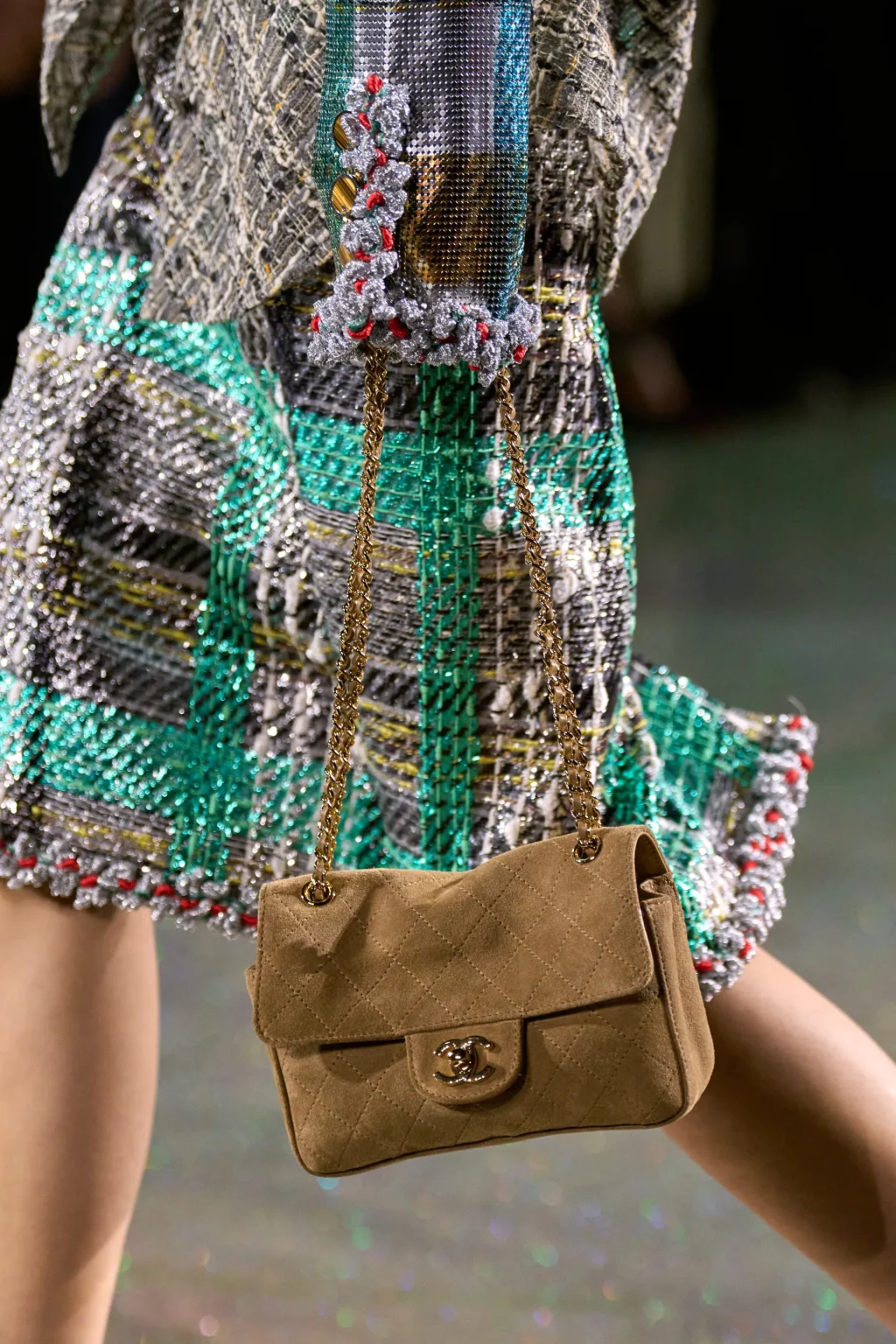
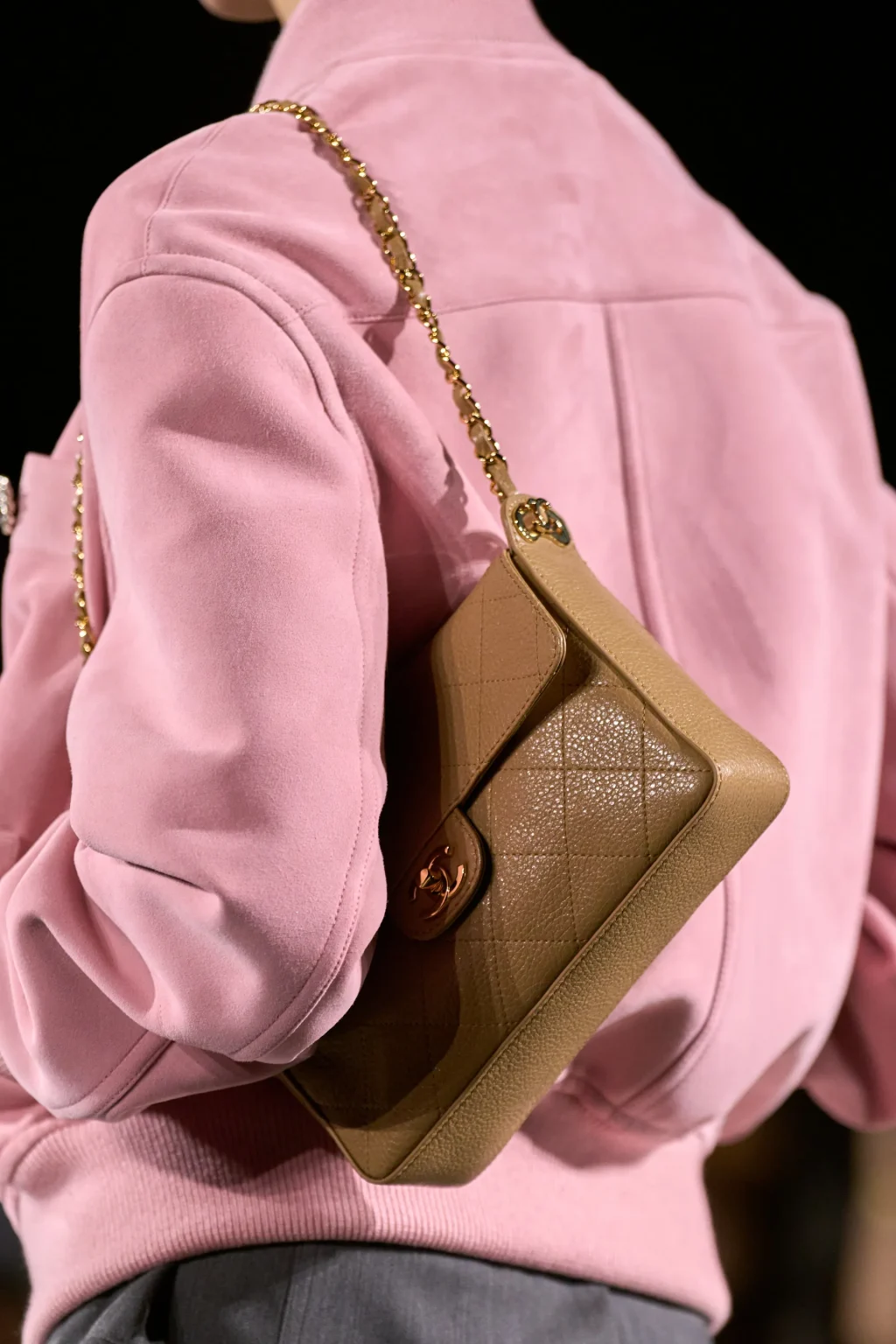
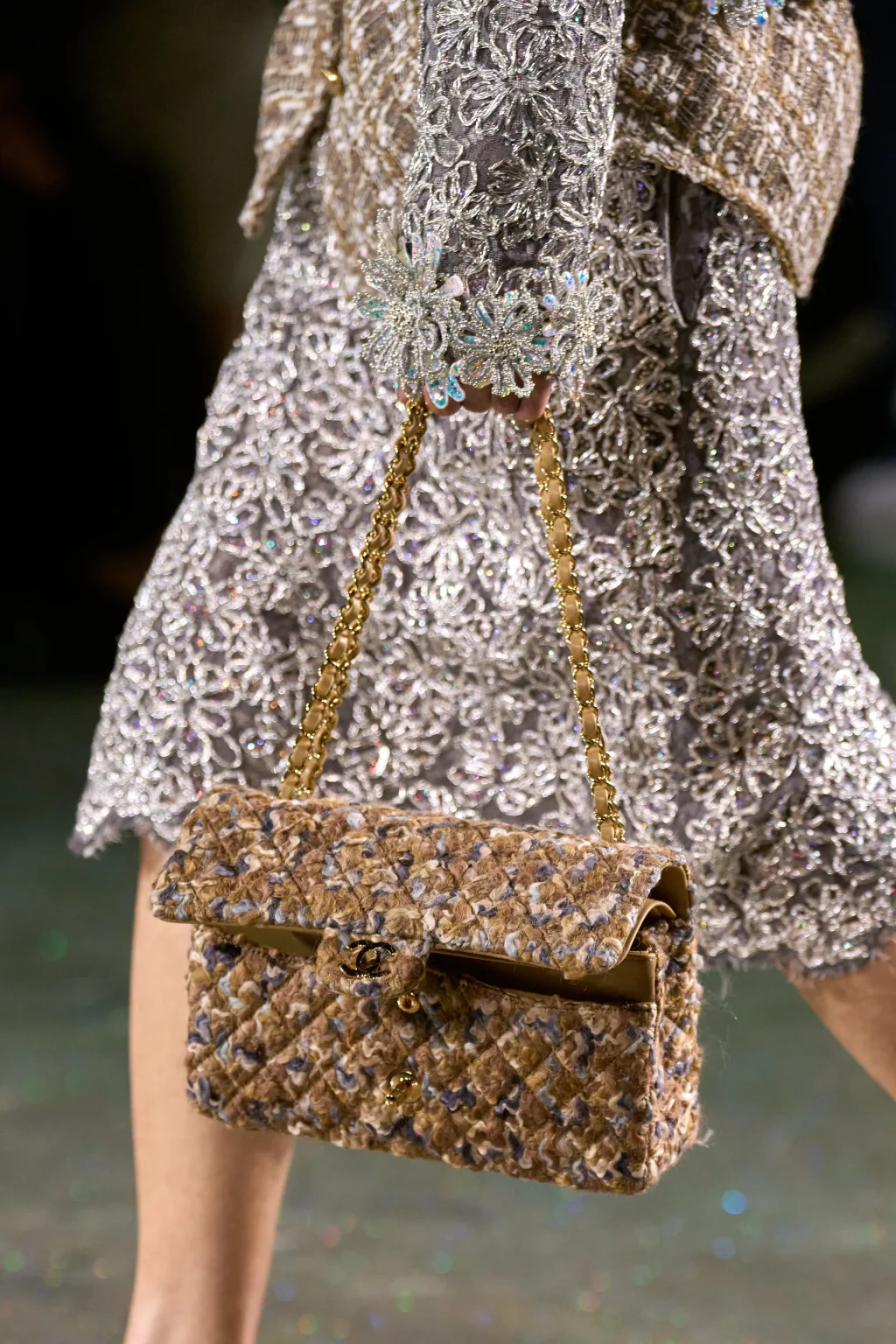
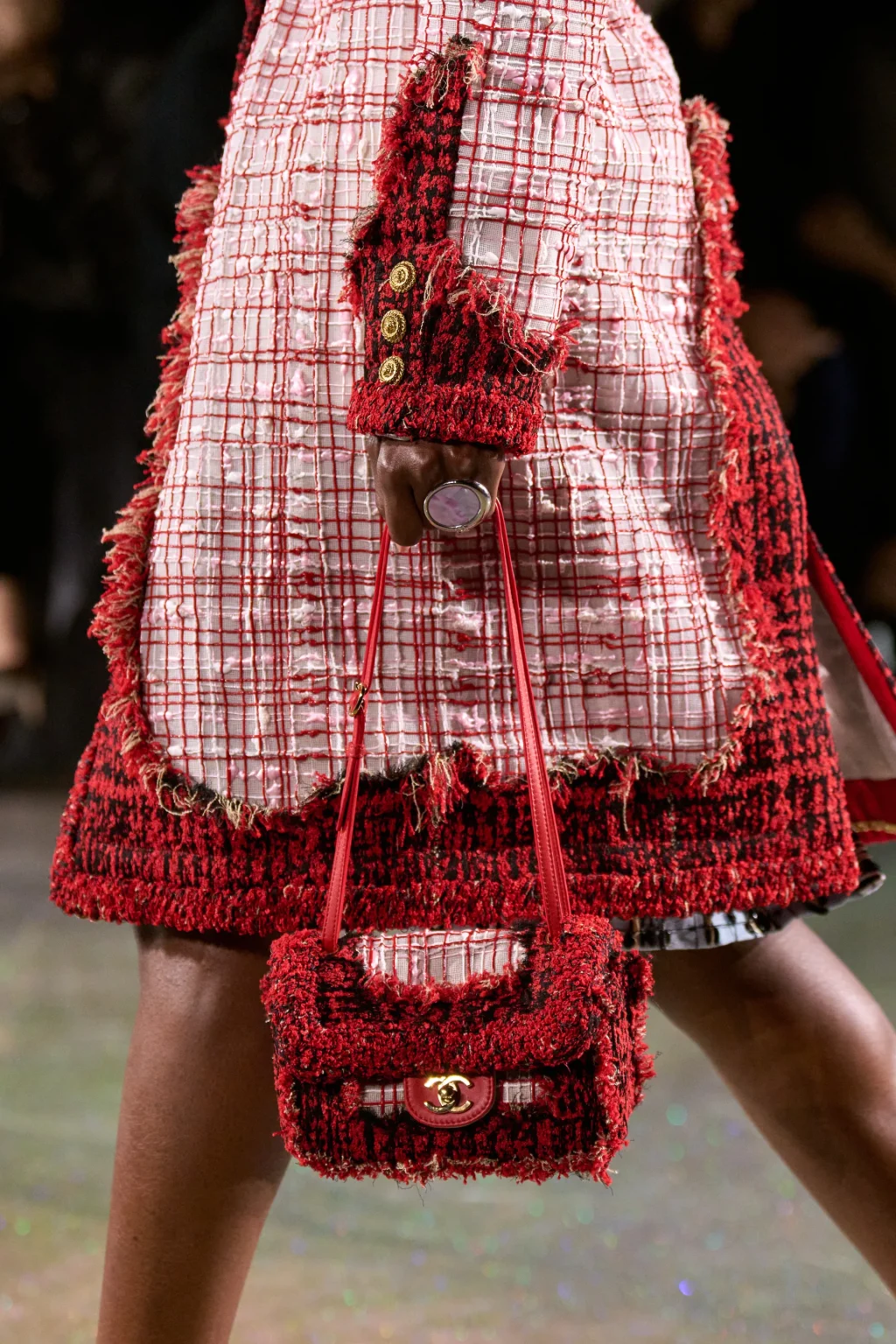
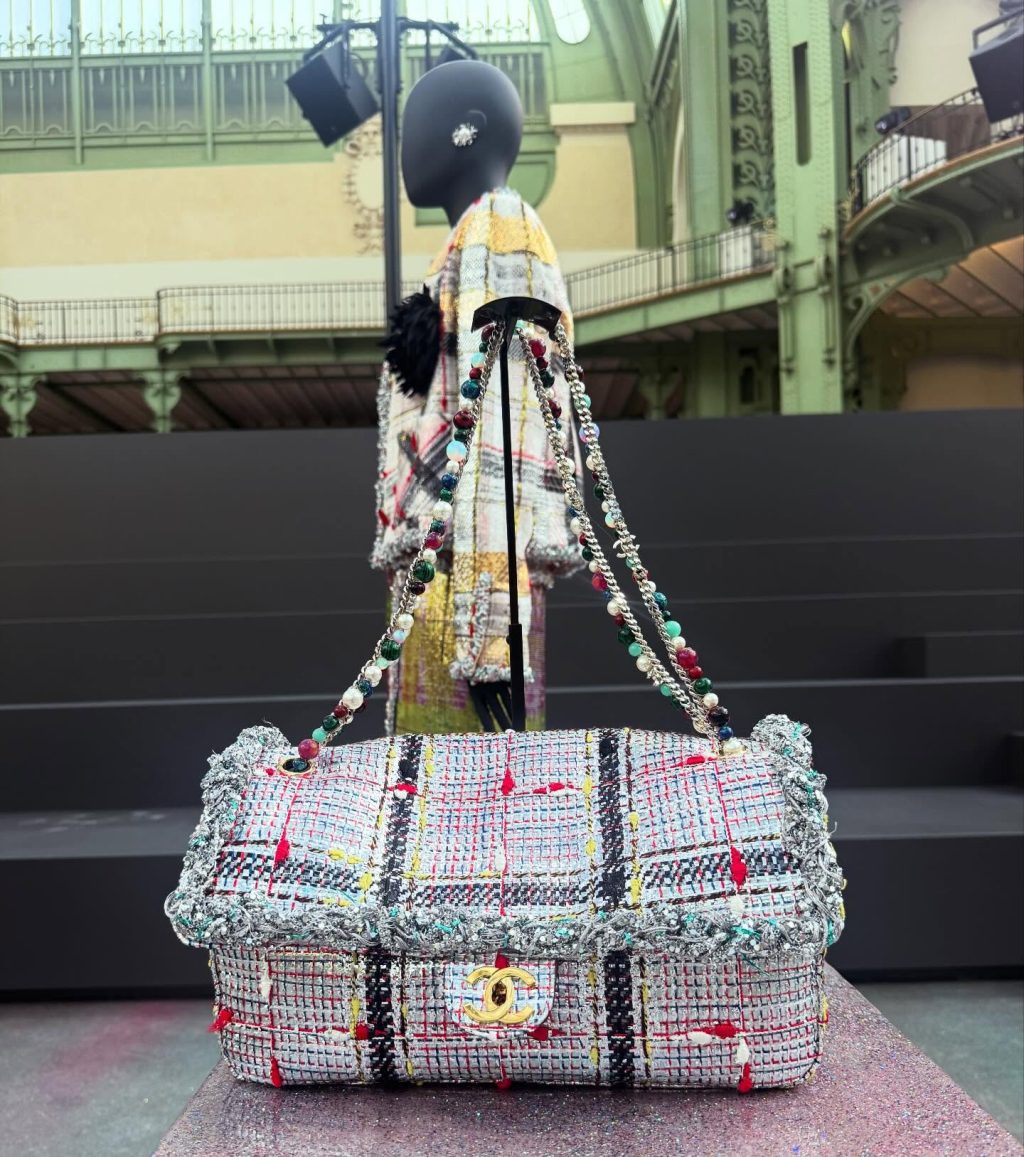
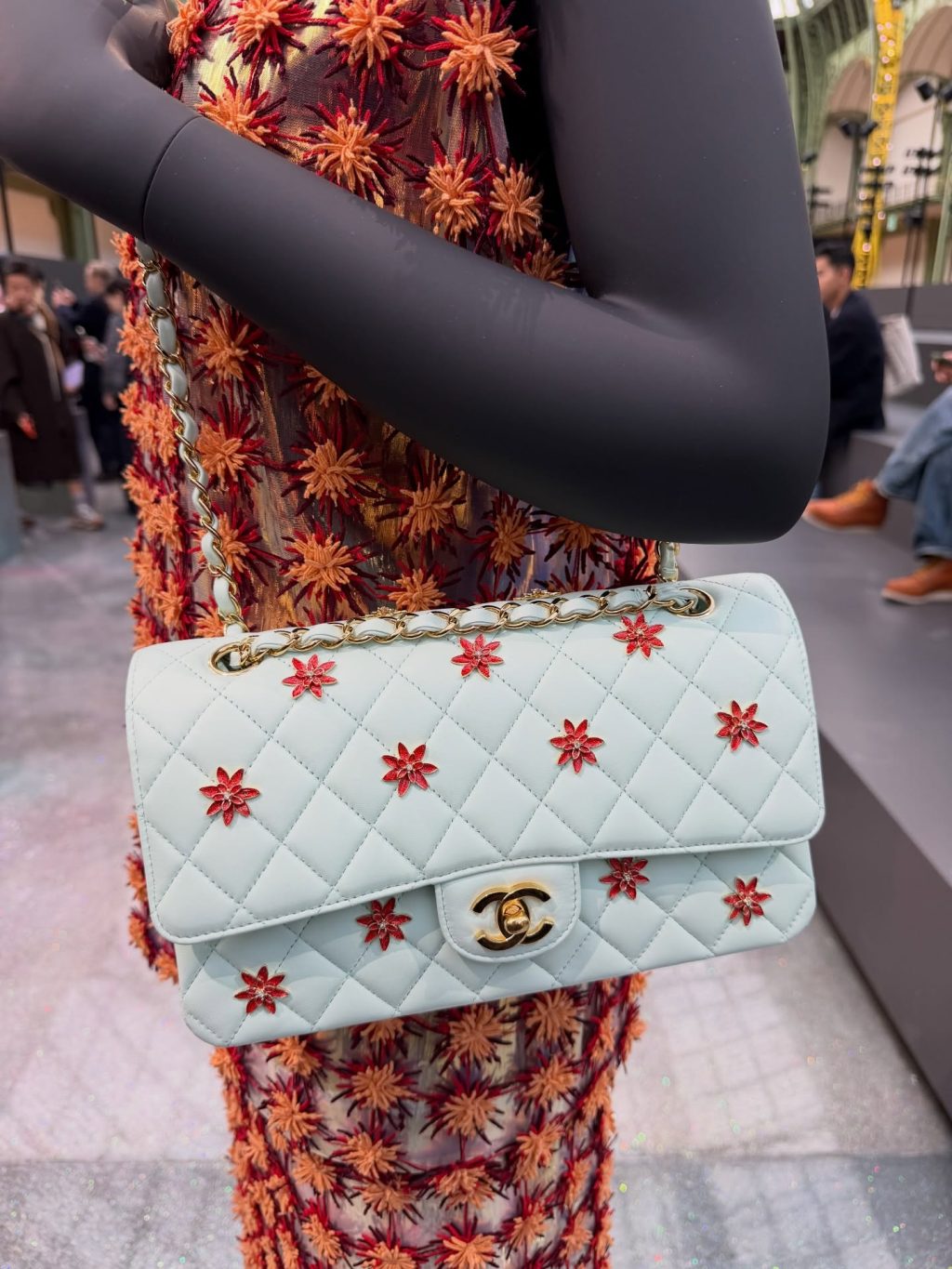
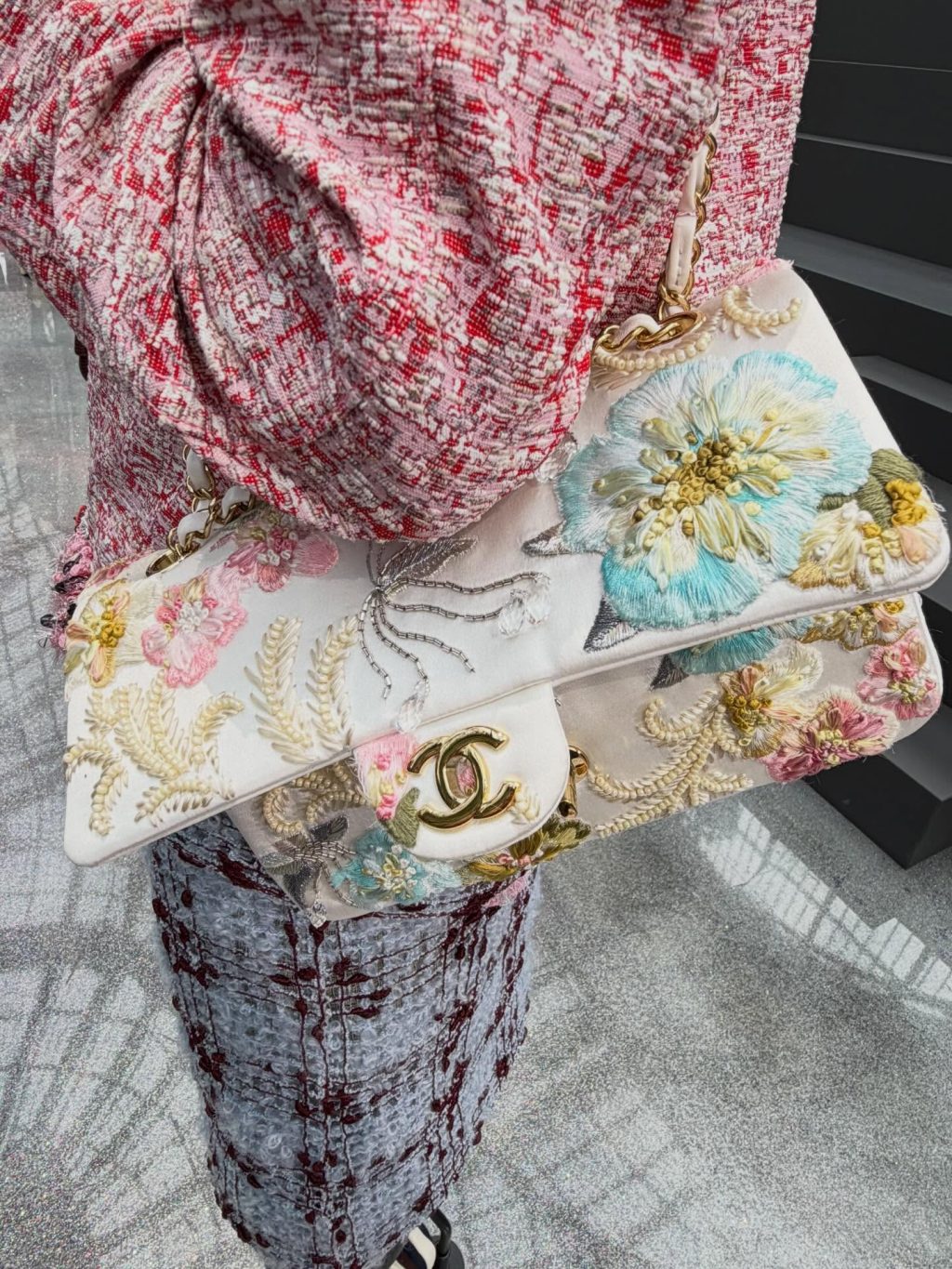
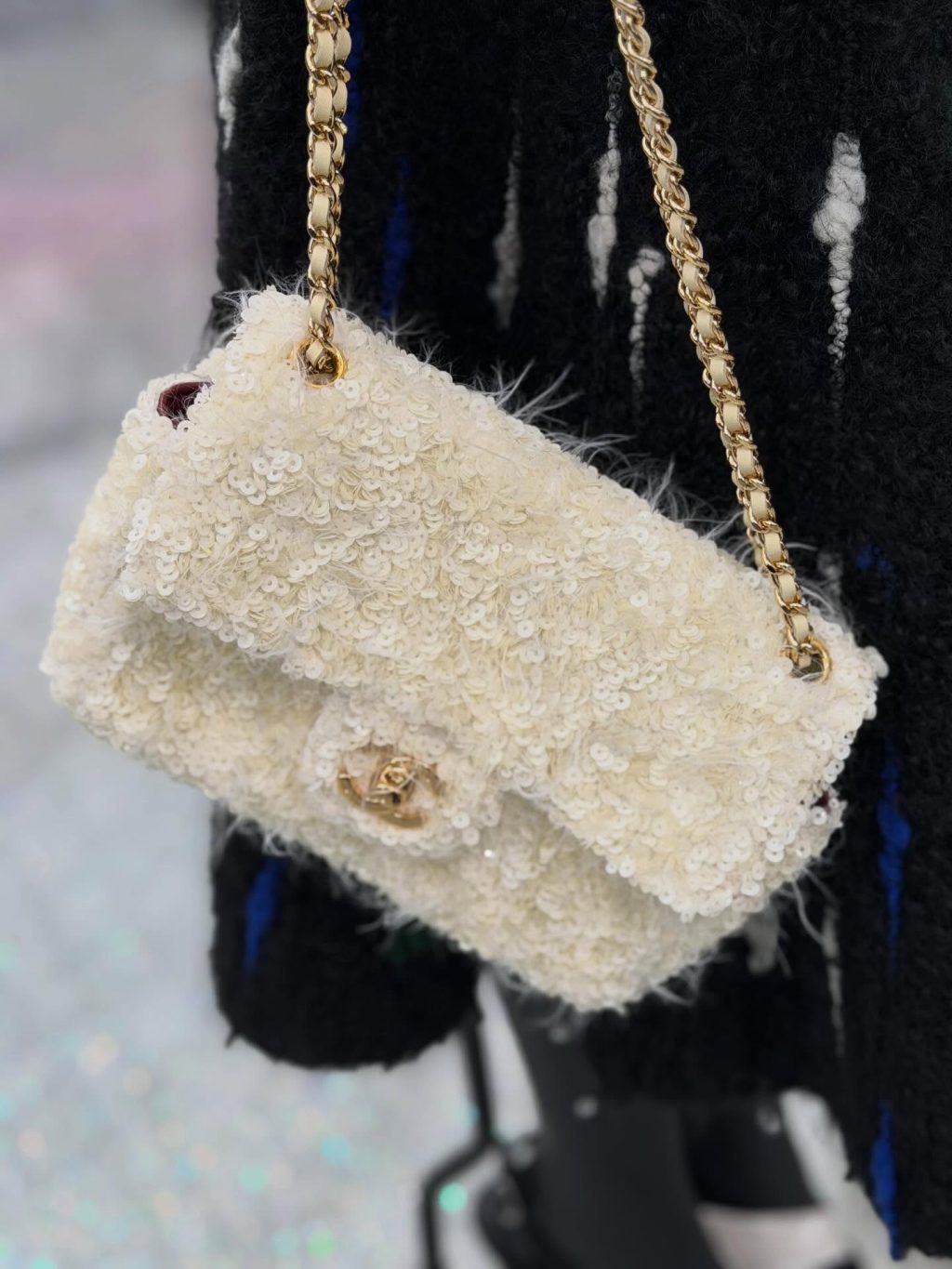
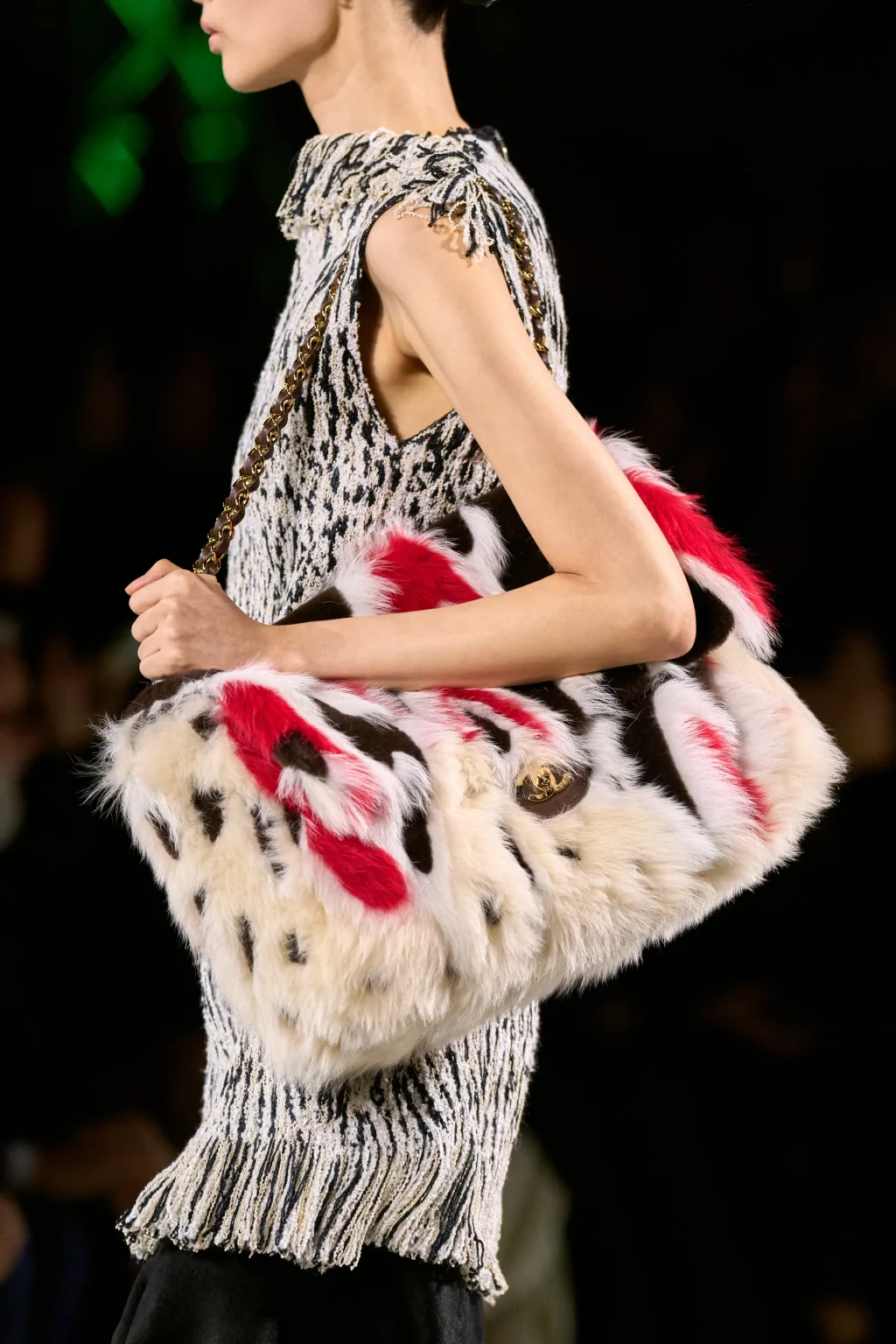
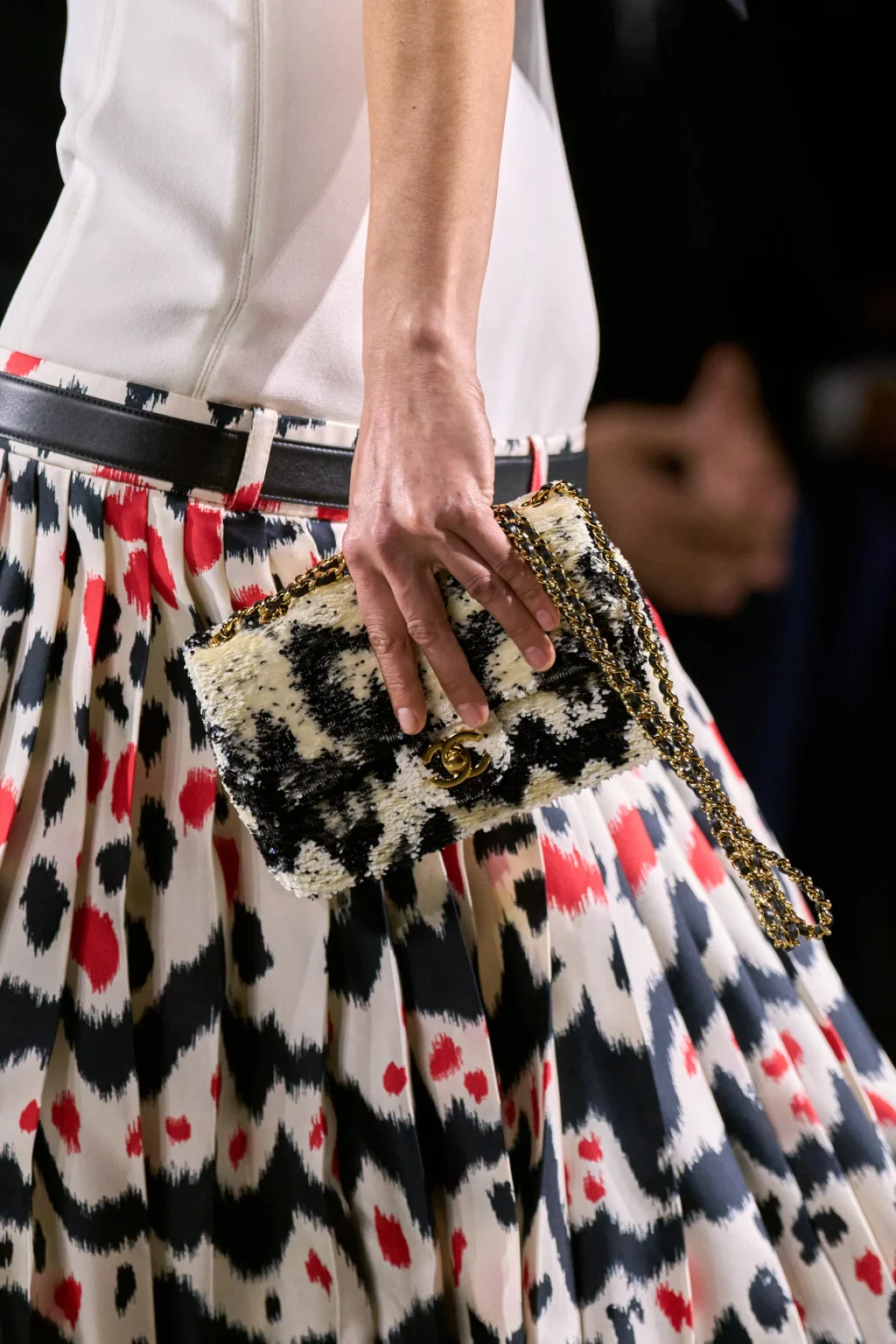
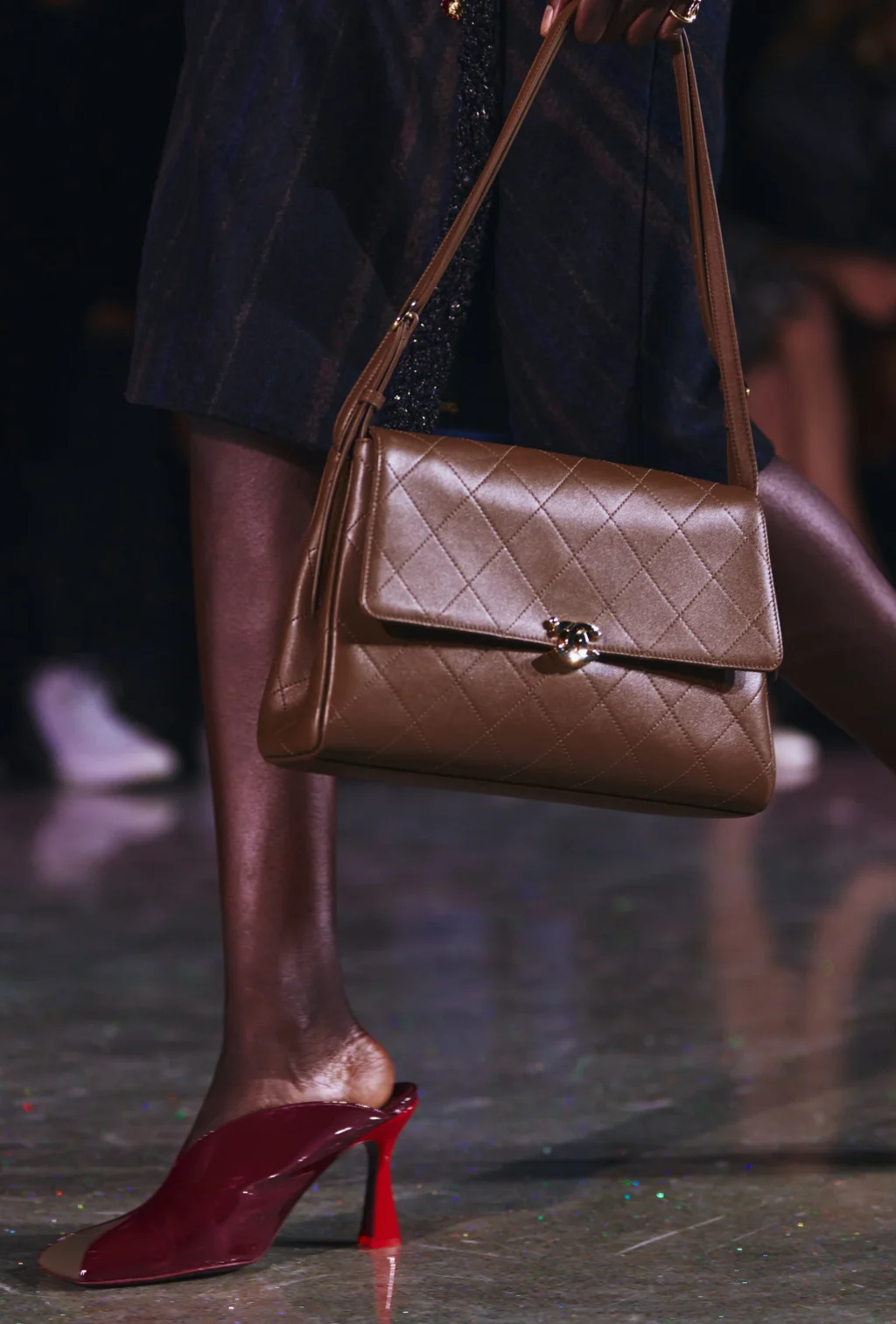
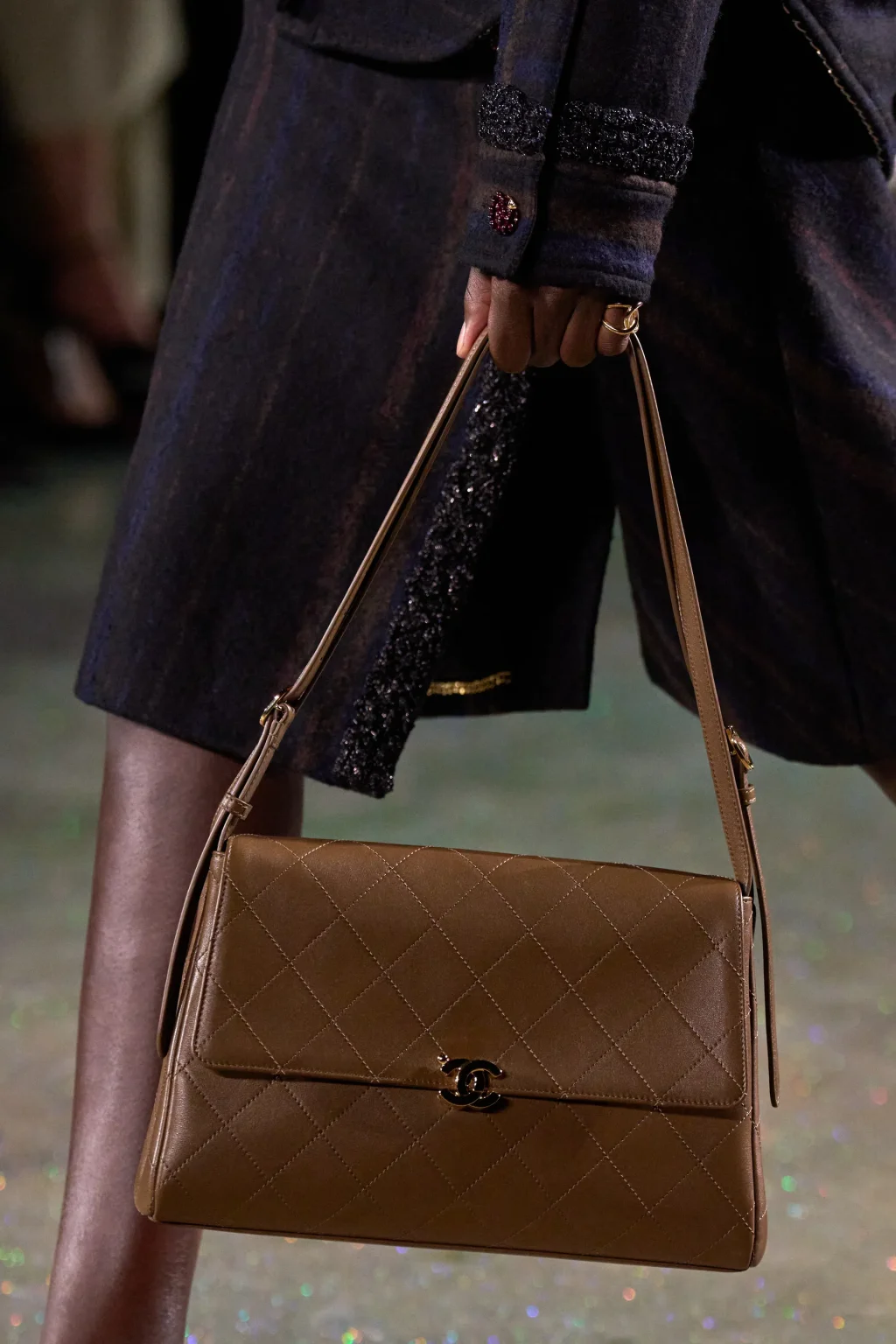
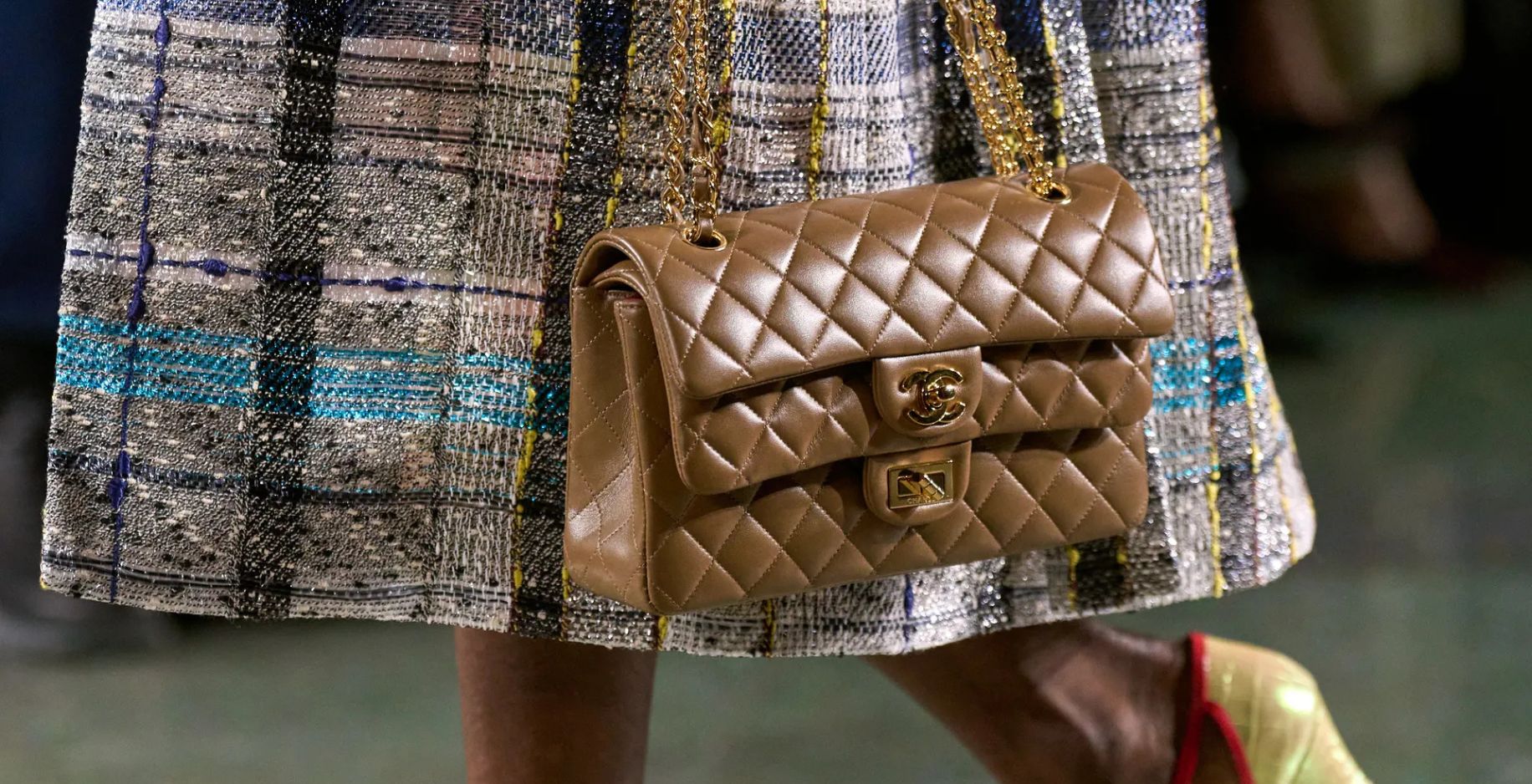
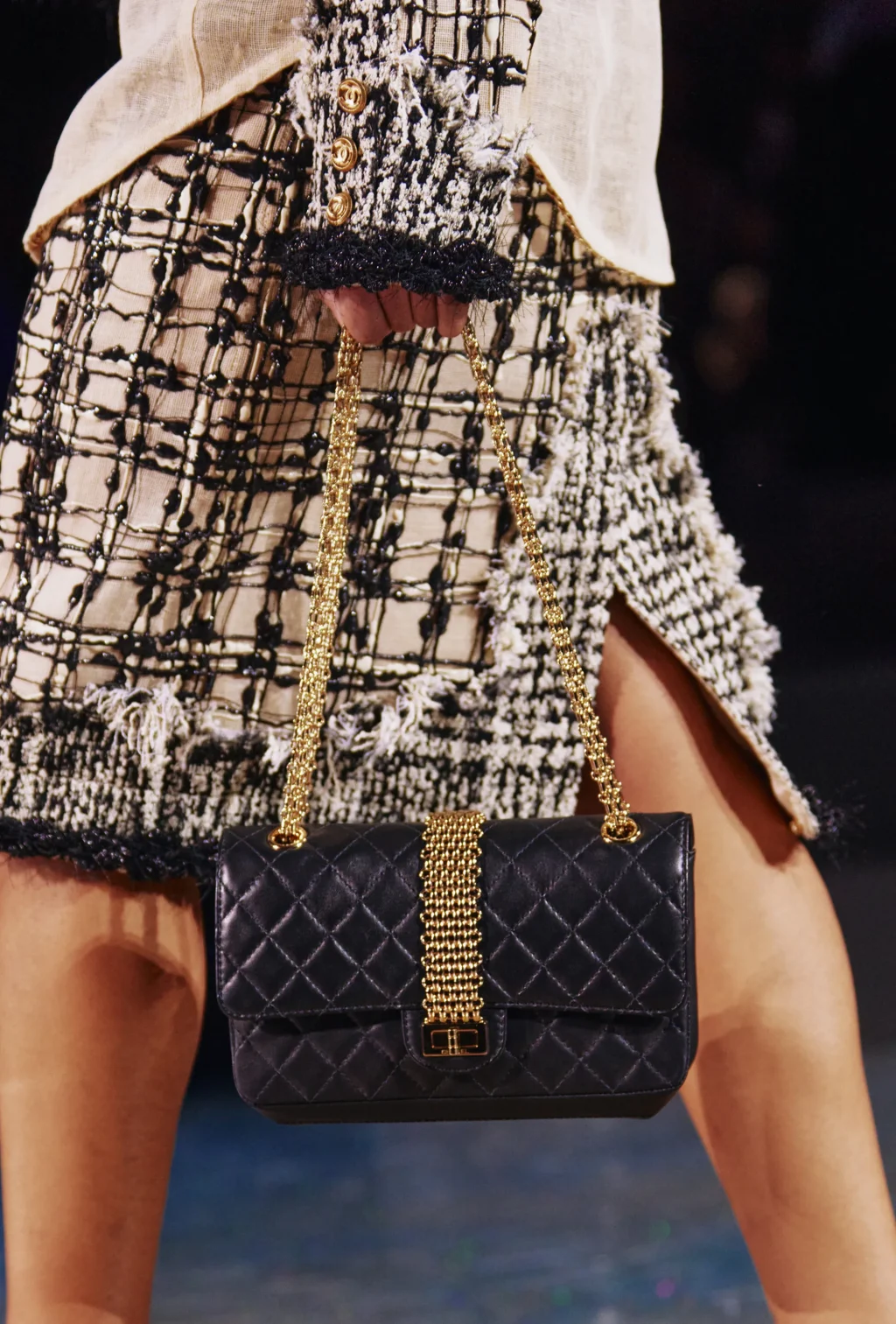
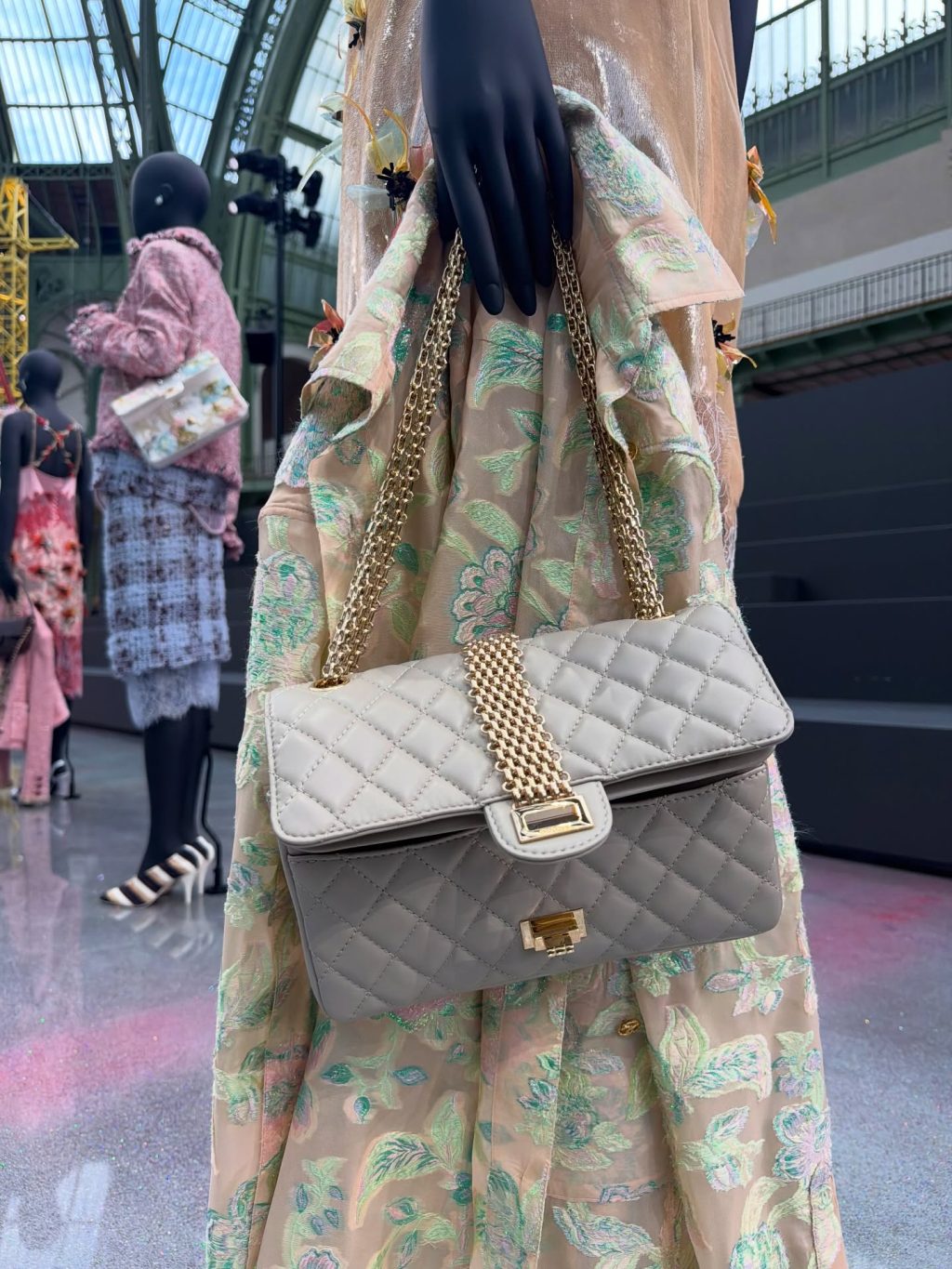
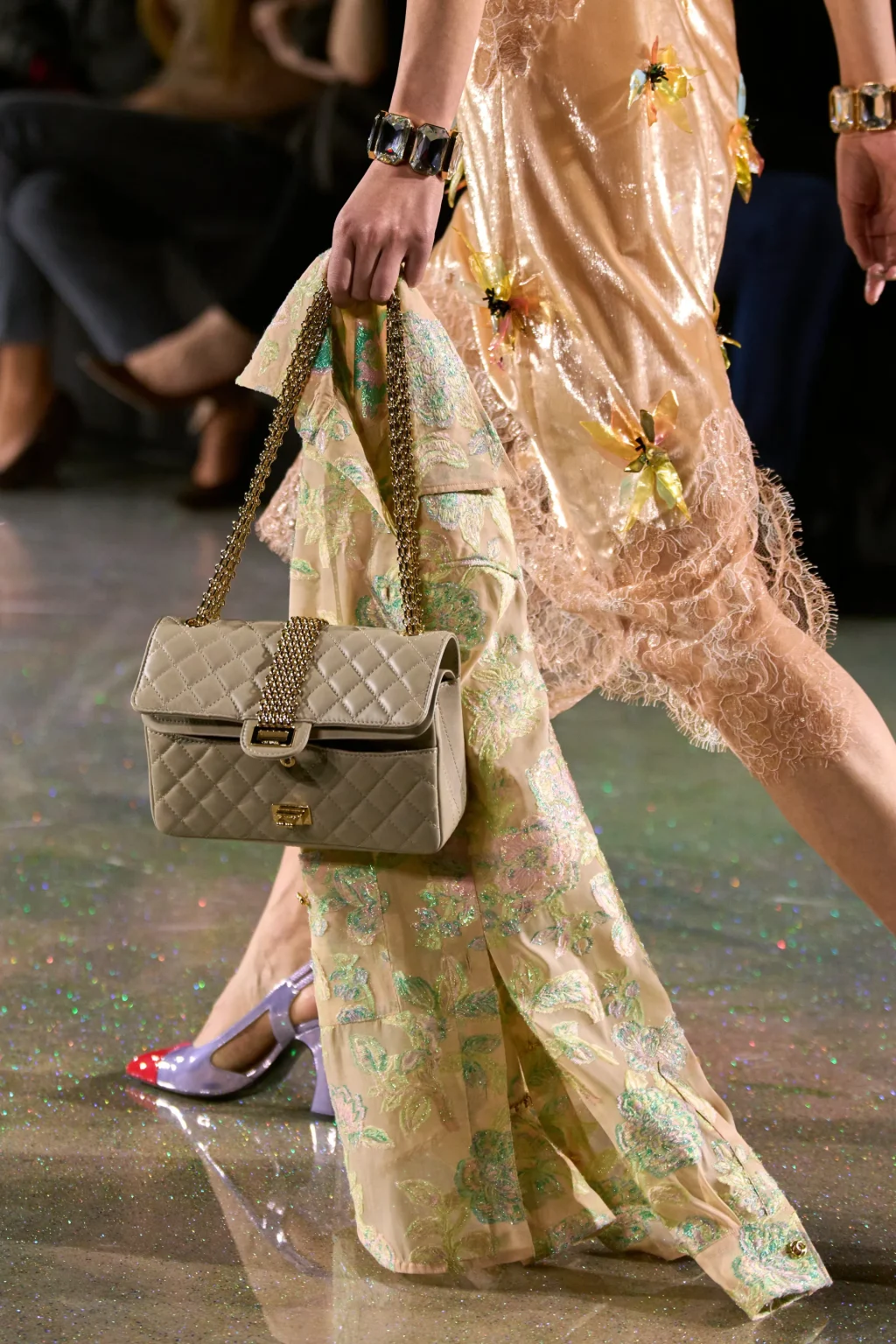
One of the more interesting handbag gestures on the Chanel Fall-Winter 2026-2027 runway was this hybrid between the Classic Flap and the 2.55. At first glance, the bags read as unmistakably Chanel through their diamond quilting, rectangular body, and chain shoulder straps, but the hardware introduced a deliberate tension between two of the house’s most recognizable archetypes.
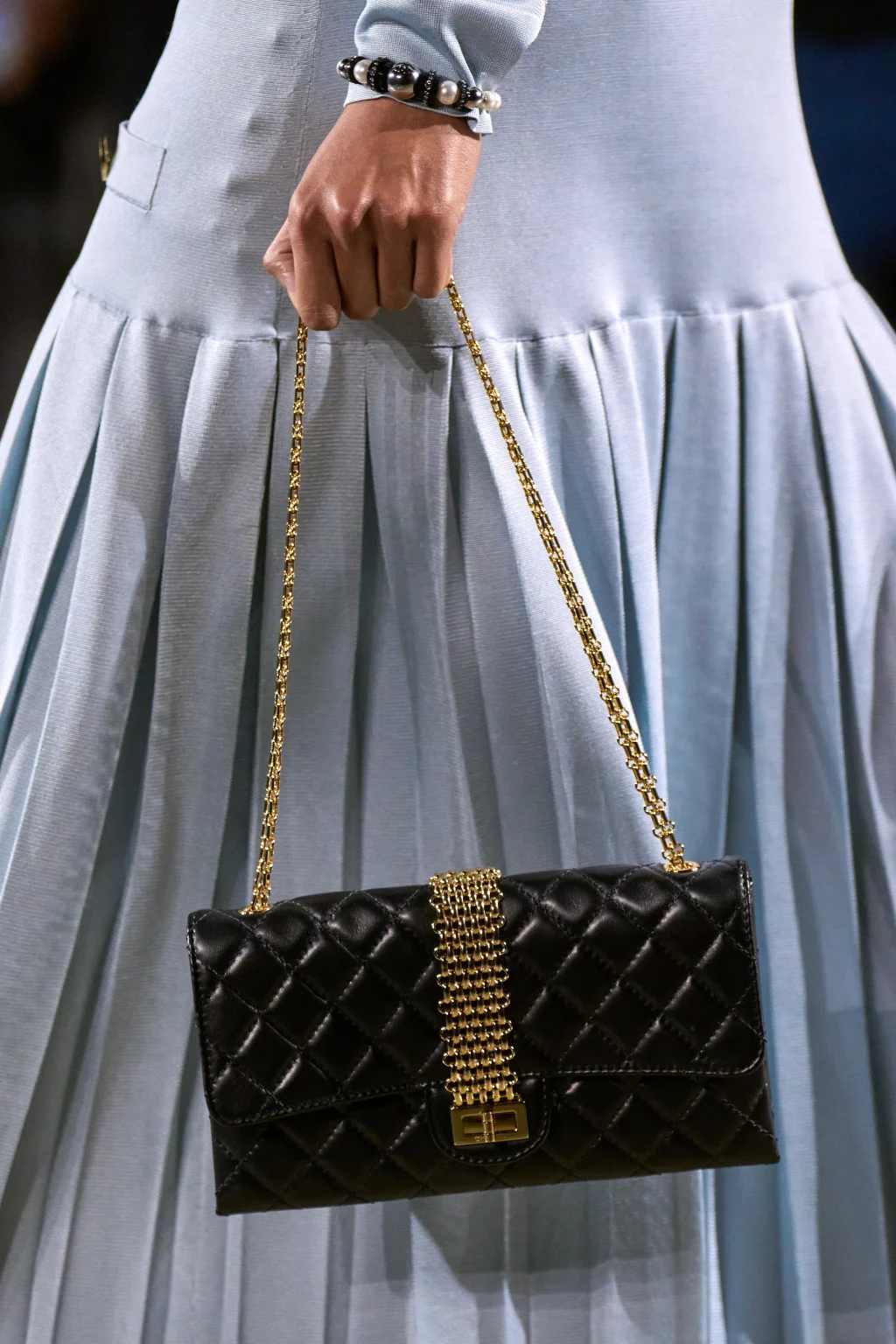
The Chanel 2.55 also appeared with a subtle but noticeable upgrade this season. Rather than radically altering the bag’s identity, Matthieu Blazy seemed to refine it through surface and hardware, preserving the familiar quilted body and long chain straps while introducing a more decorative central panel that gave the bag extra visual presence.
The long pochettes
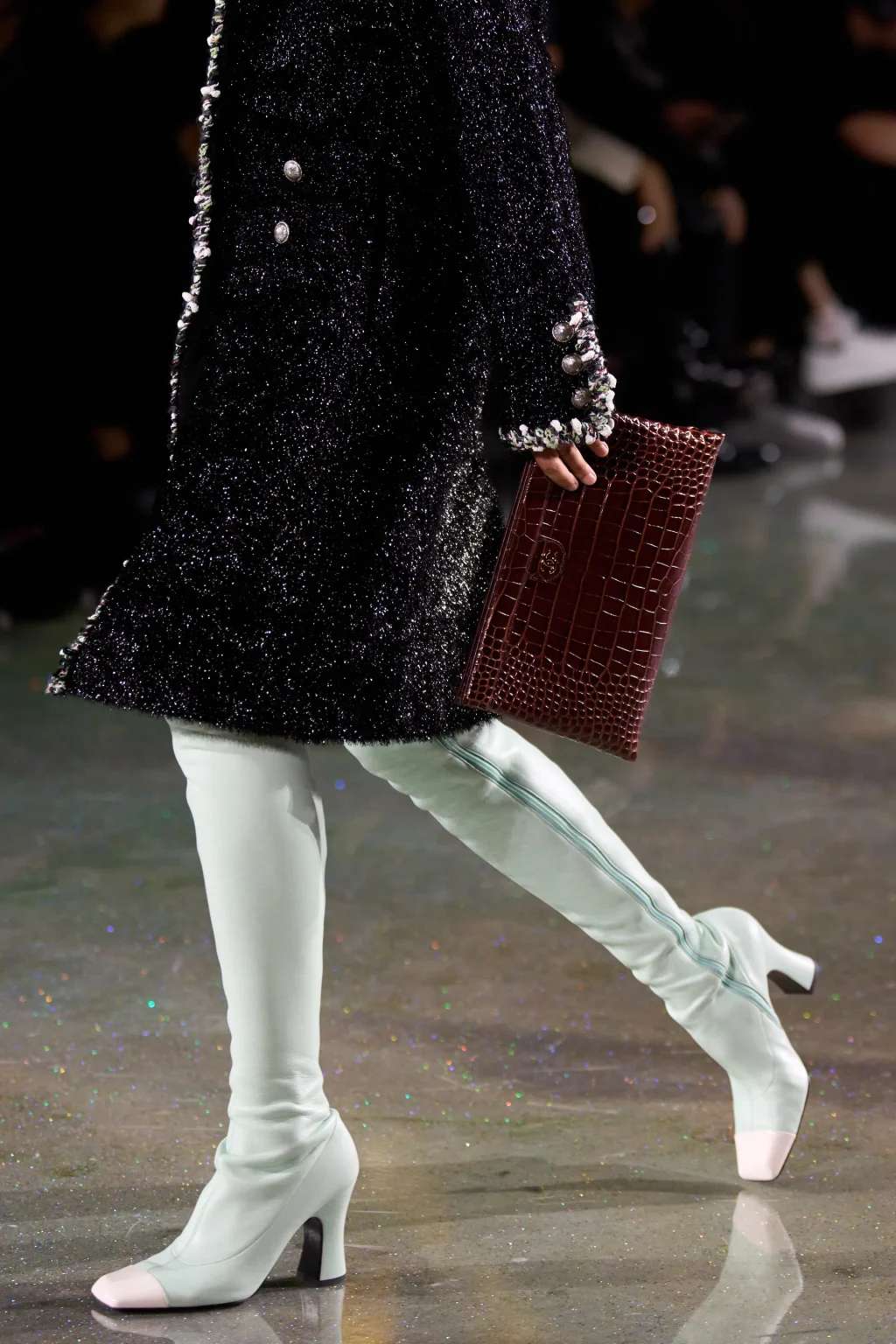
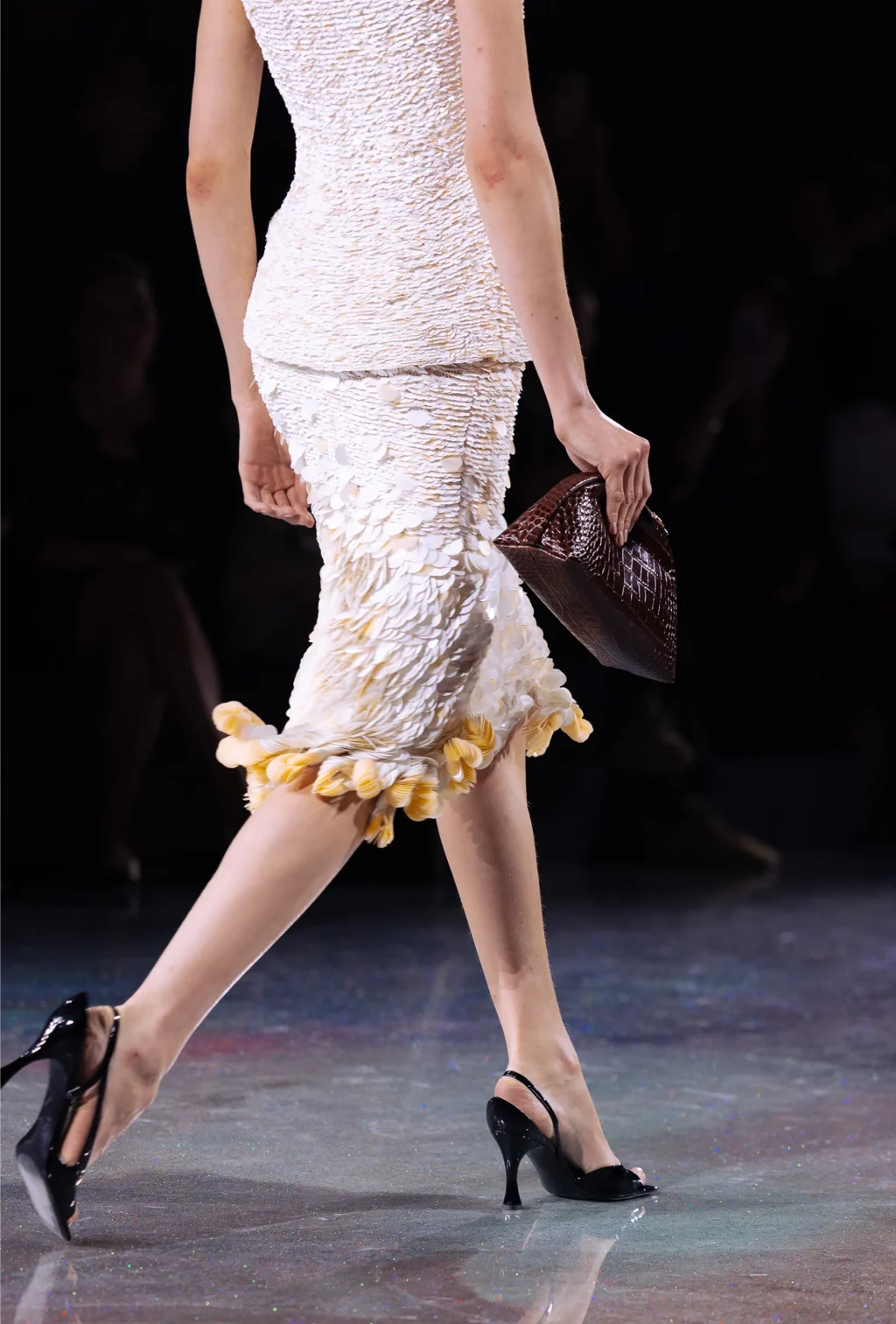
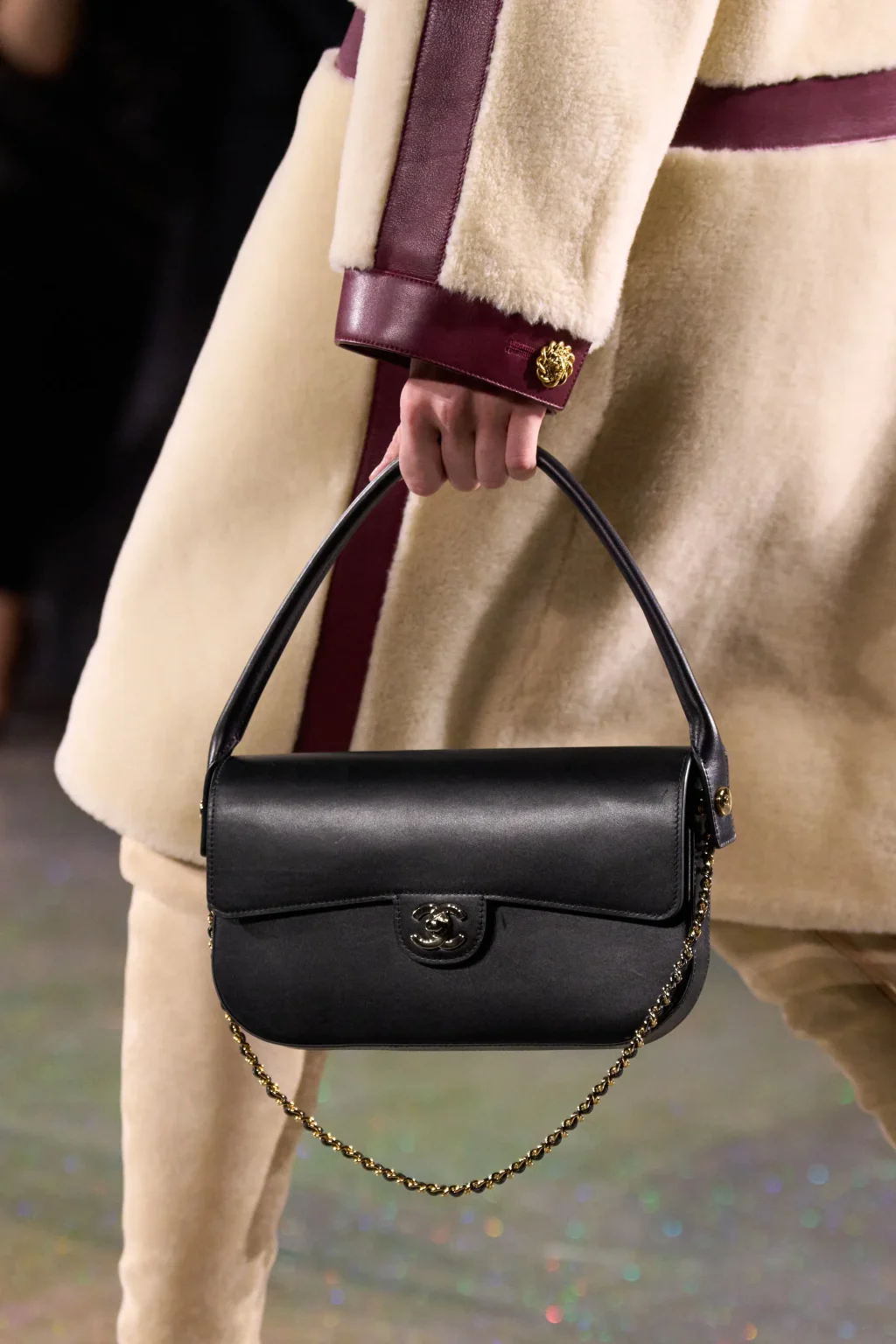
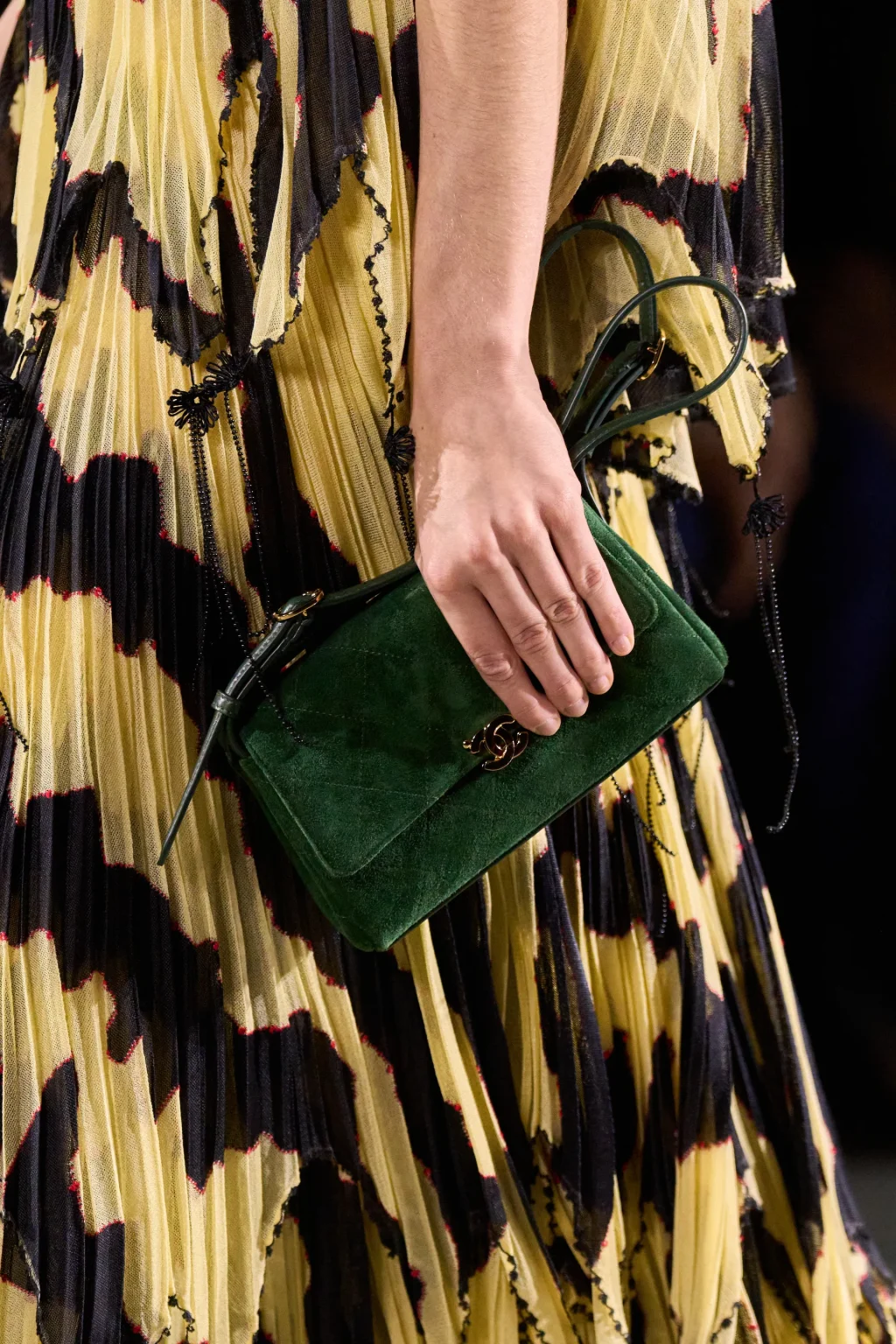
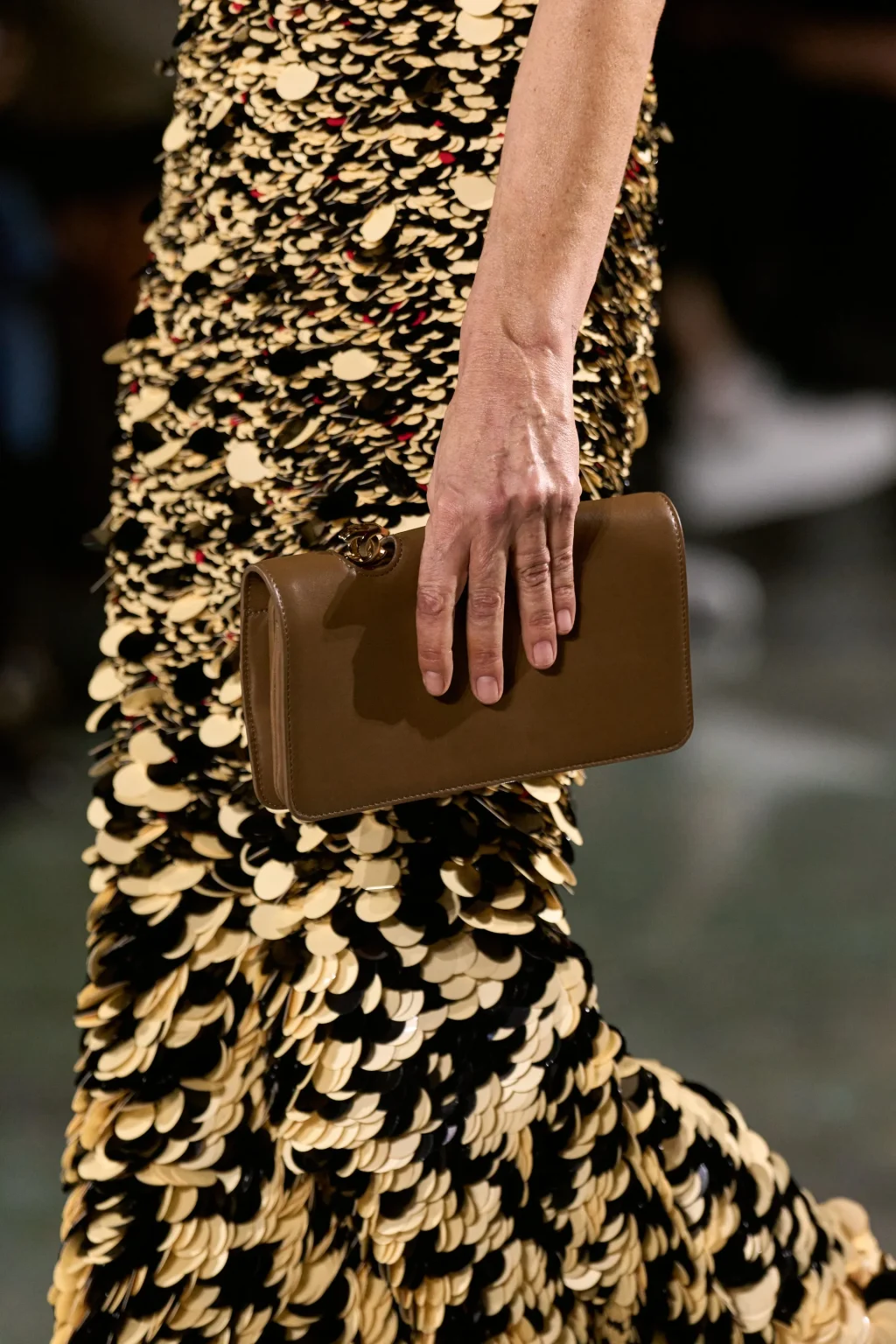
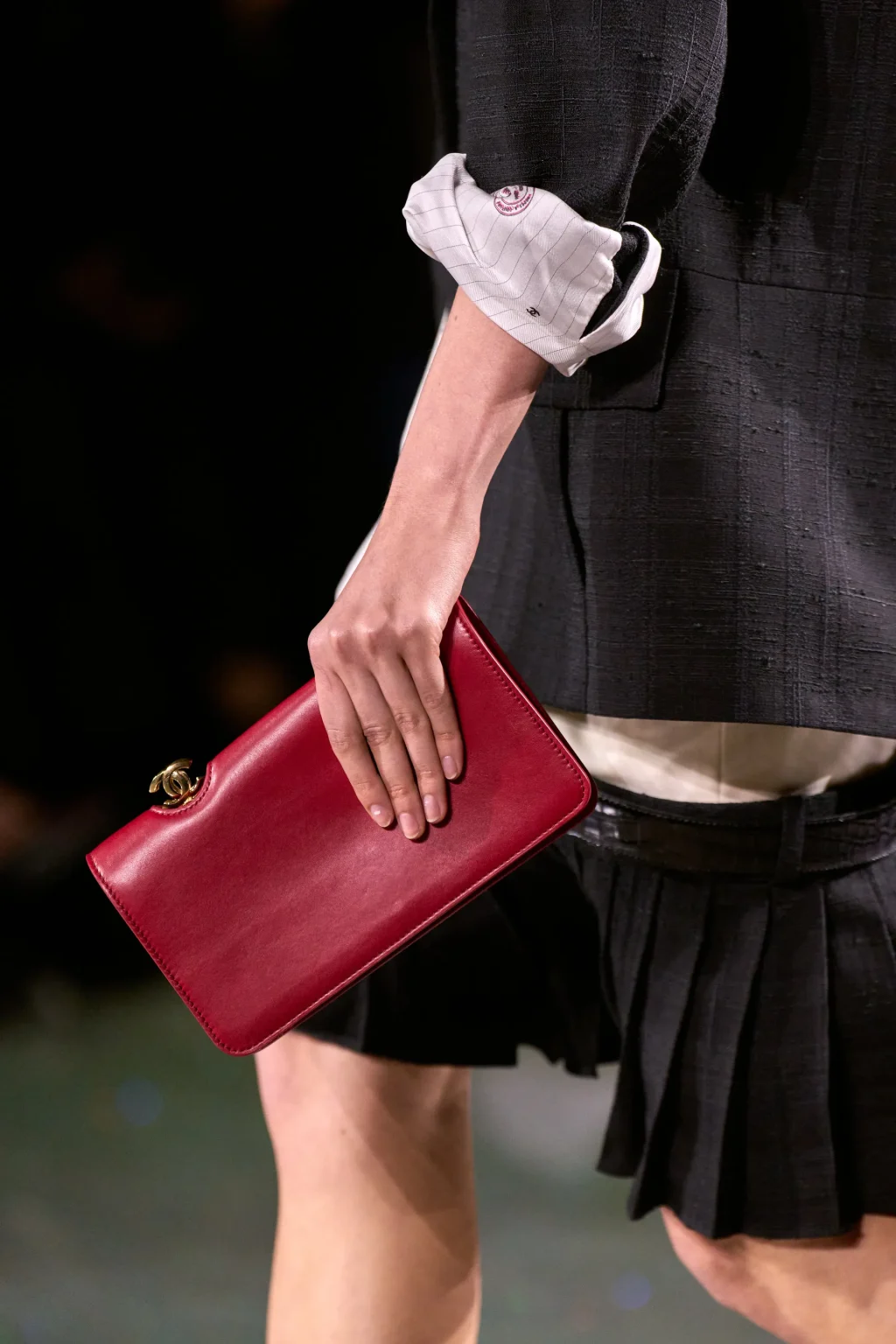
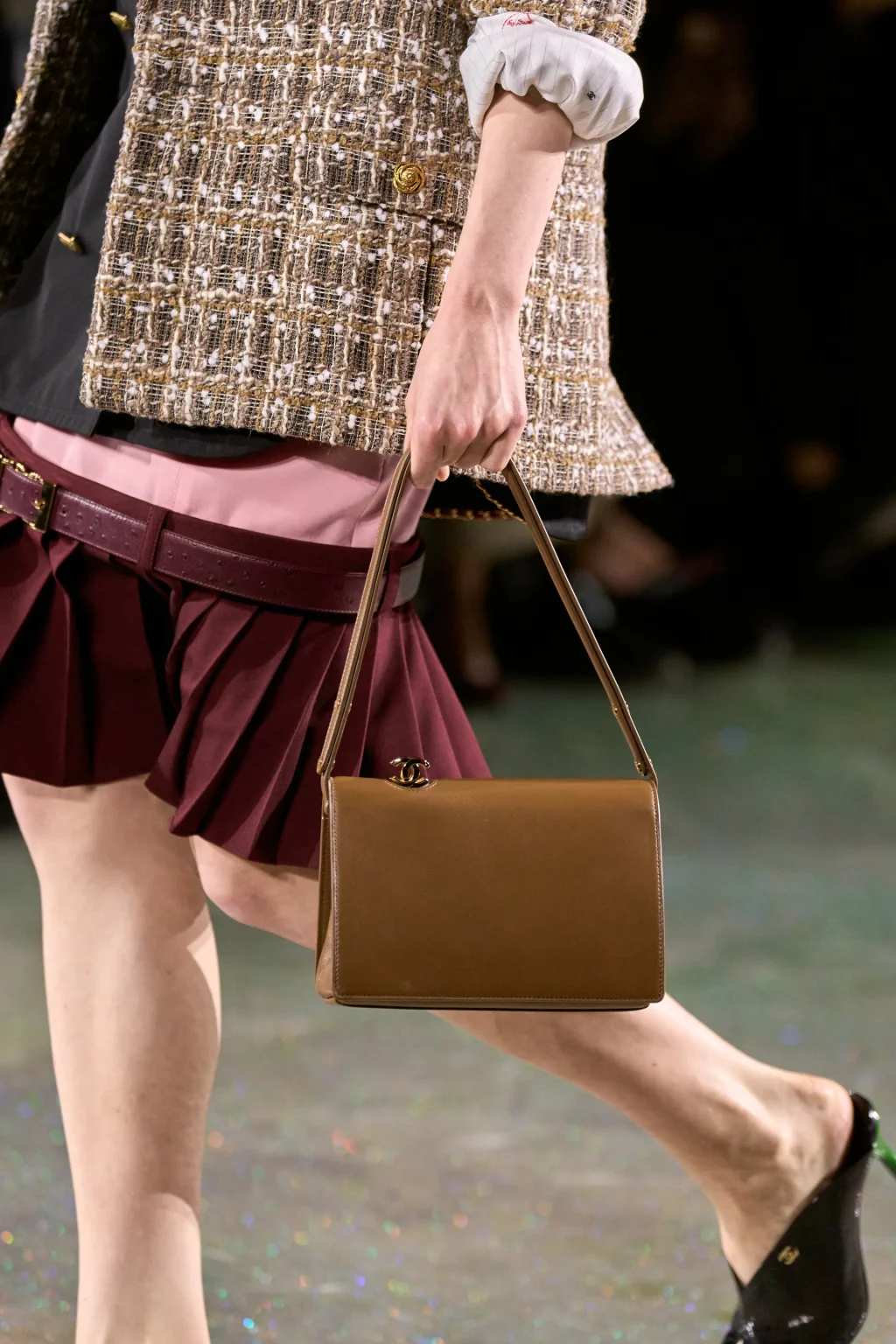
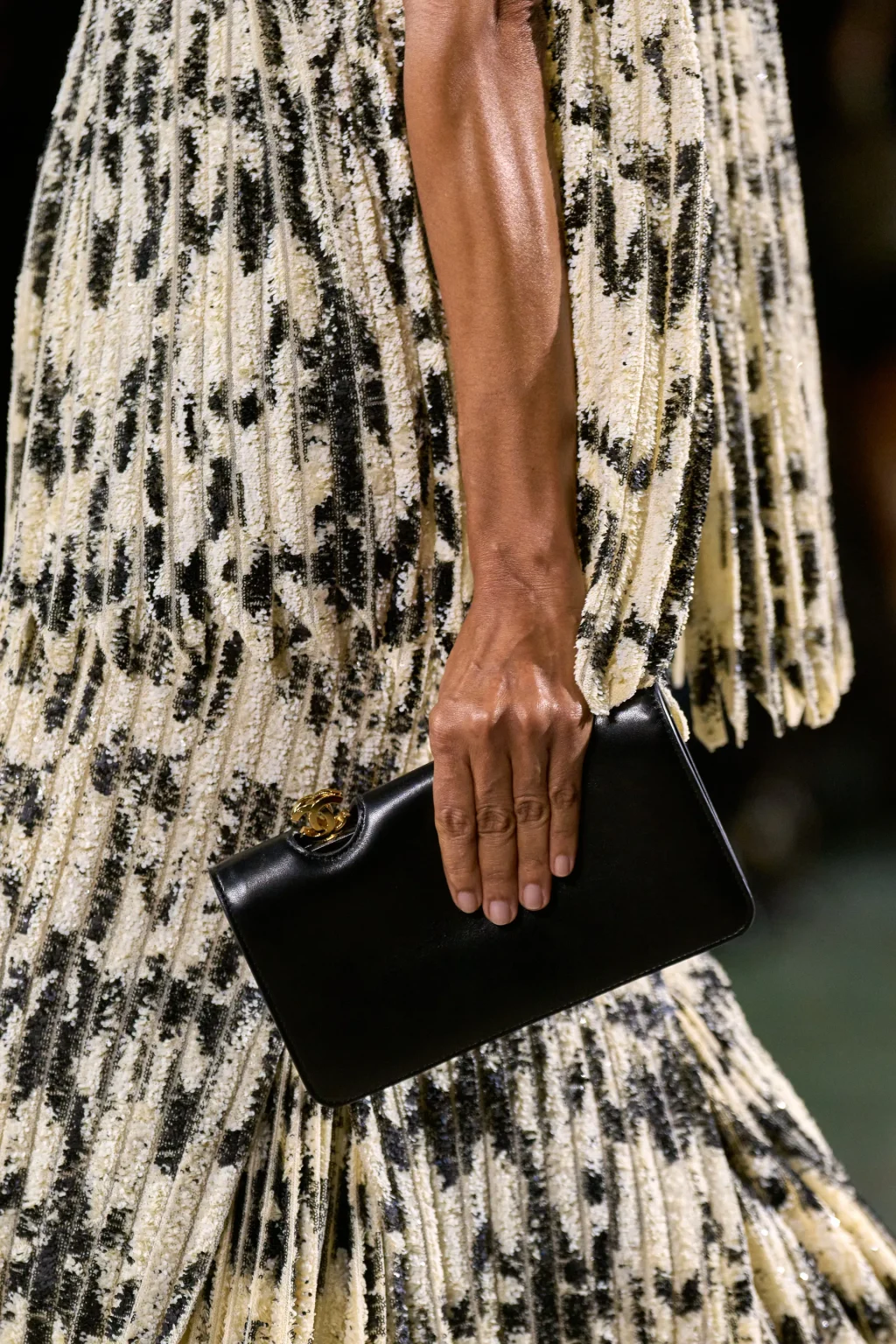
One of the strongest handbag stories of the season was the long, narrow pochette. They appeared in black, red, cognac, and green suede variations, often carried by hand rather than slung on the shoulder. The silhouette is simple, almost severe: a slim rectangle with a discreet curved cutout near the top line and restrained logo placement.
The oversized geometric shoulder bags
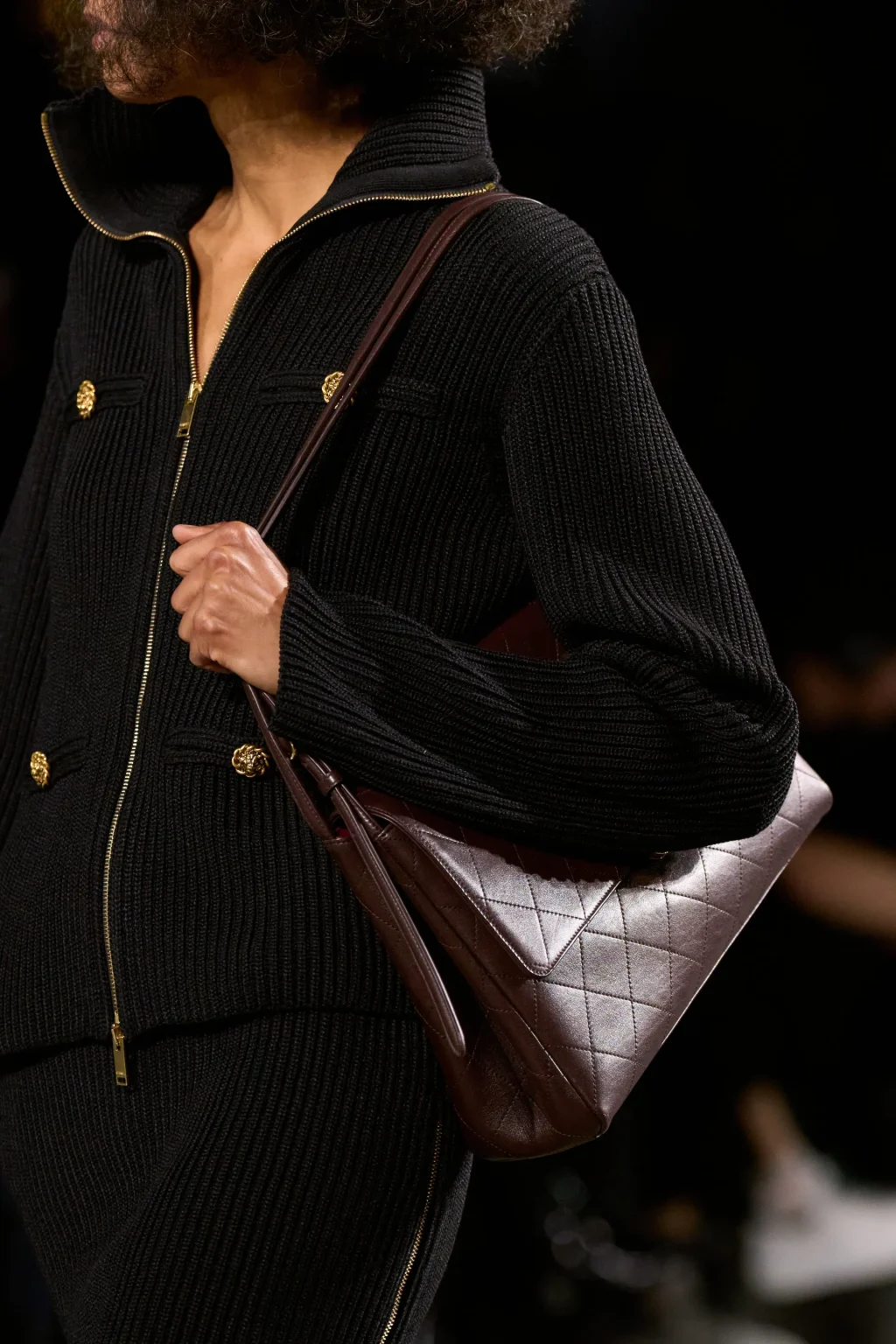
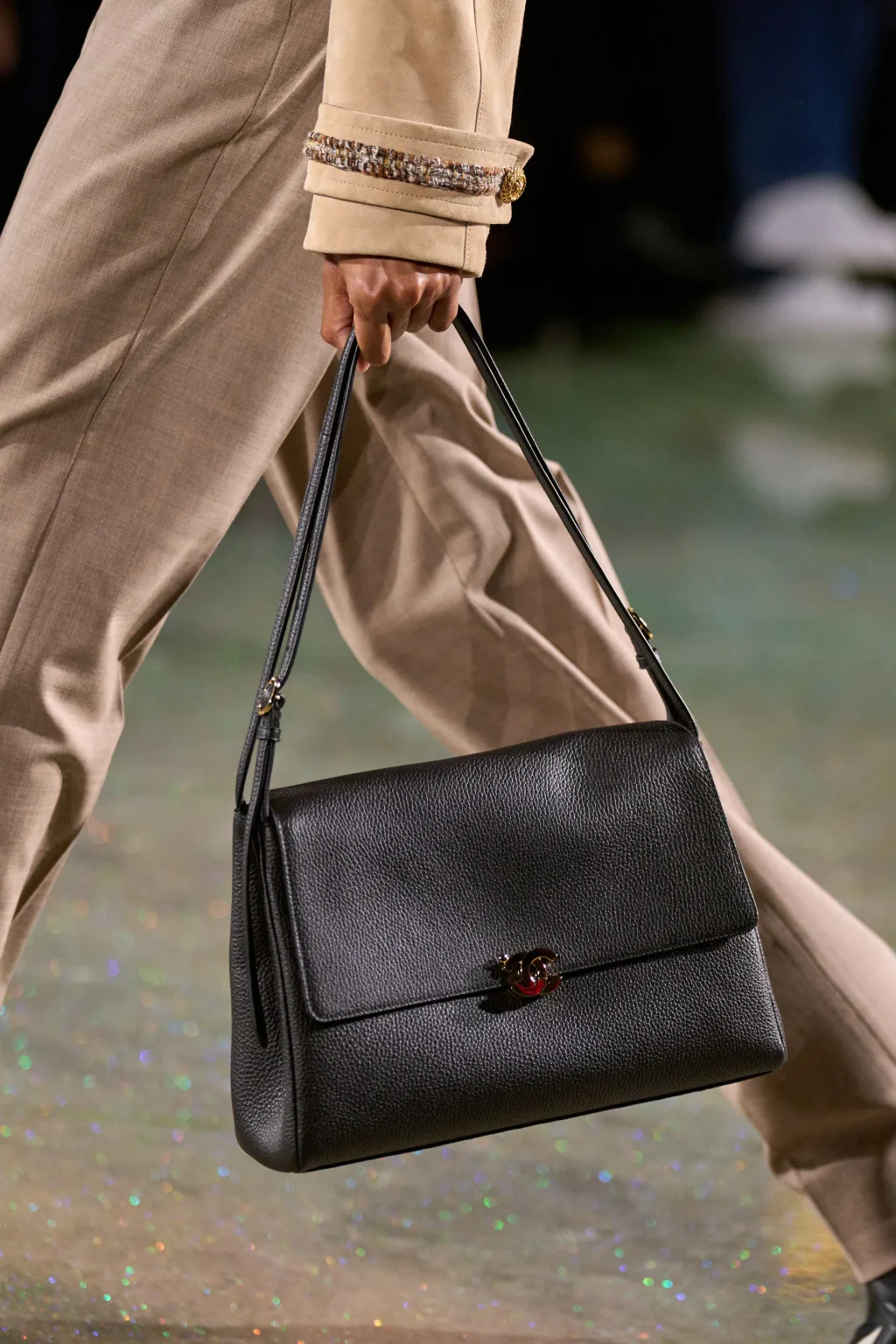
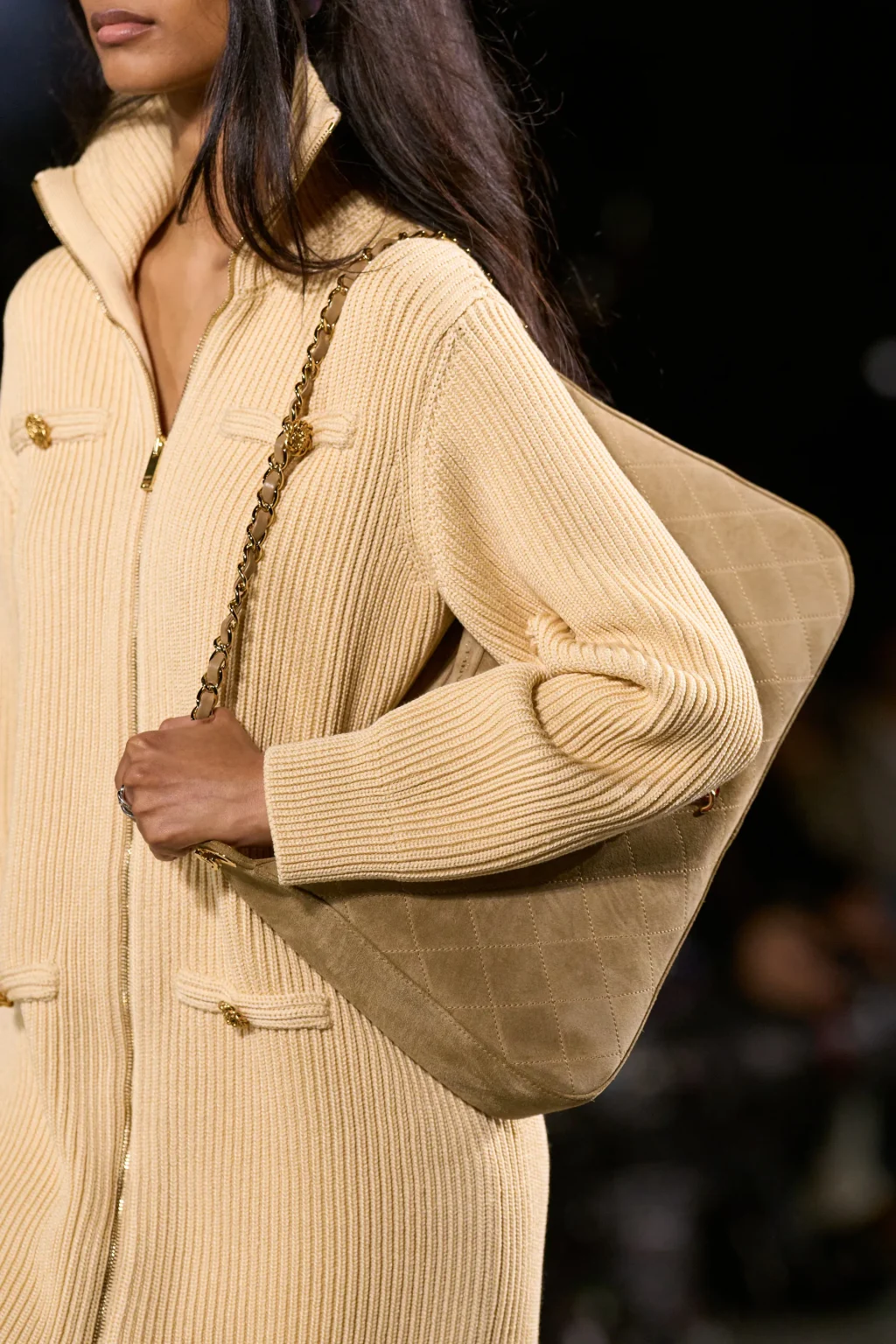
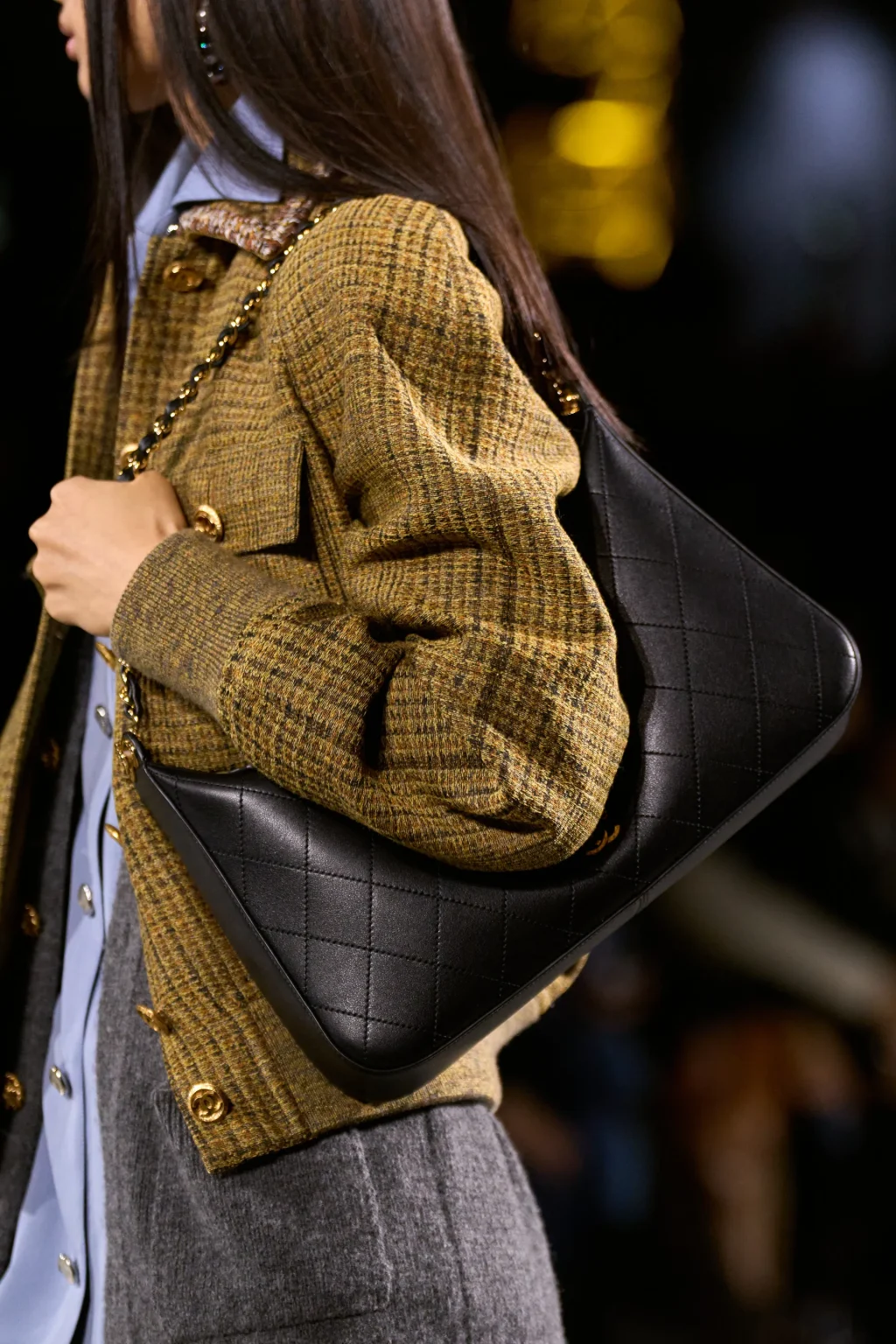
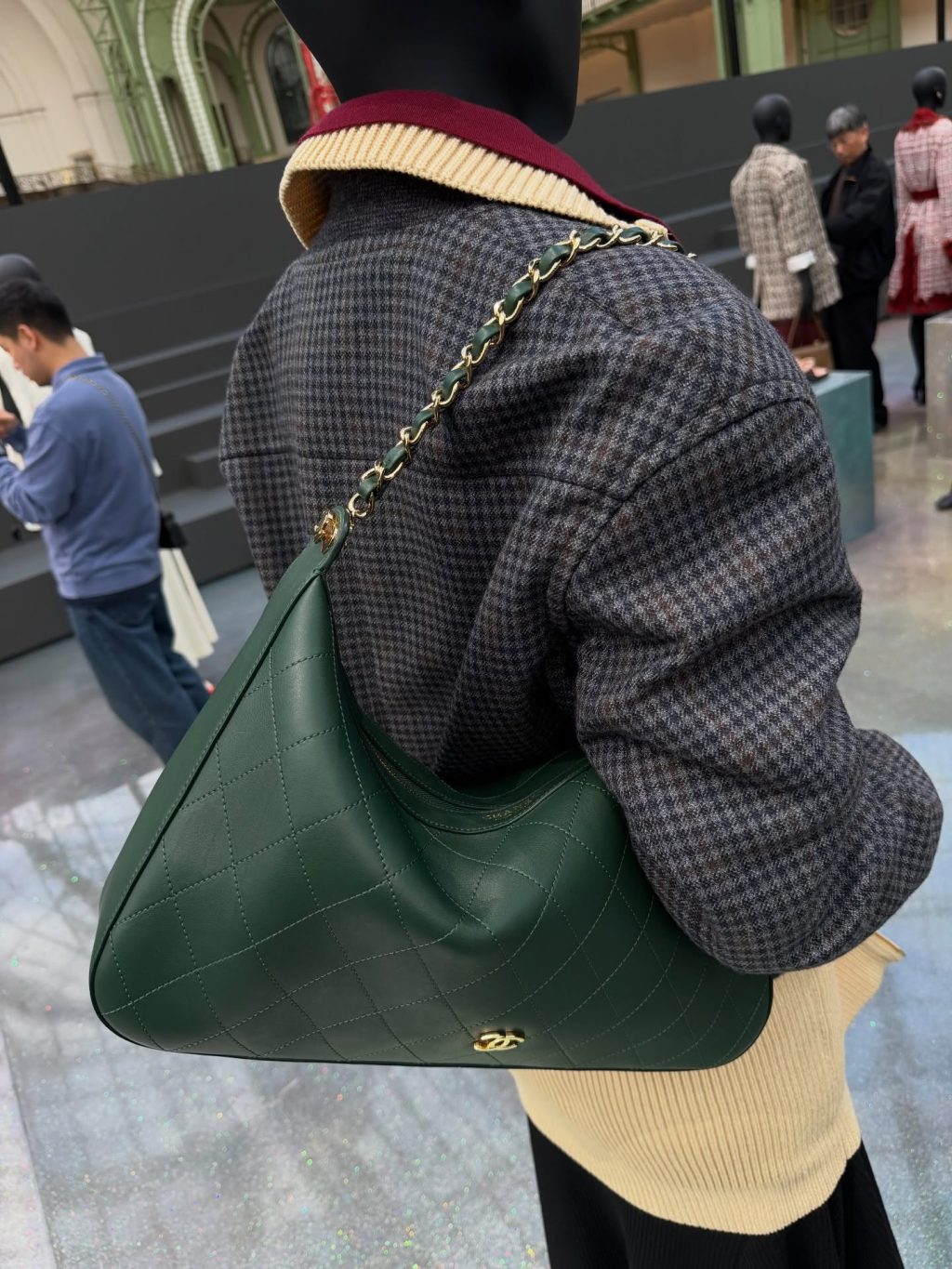
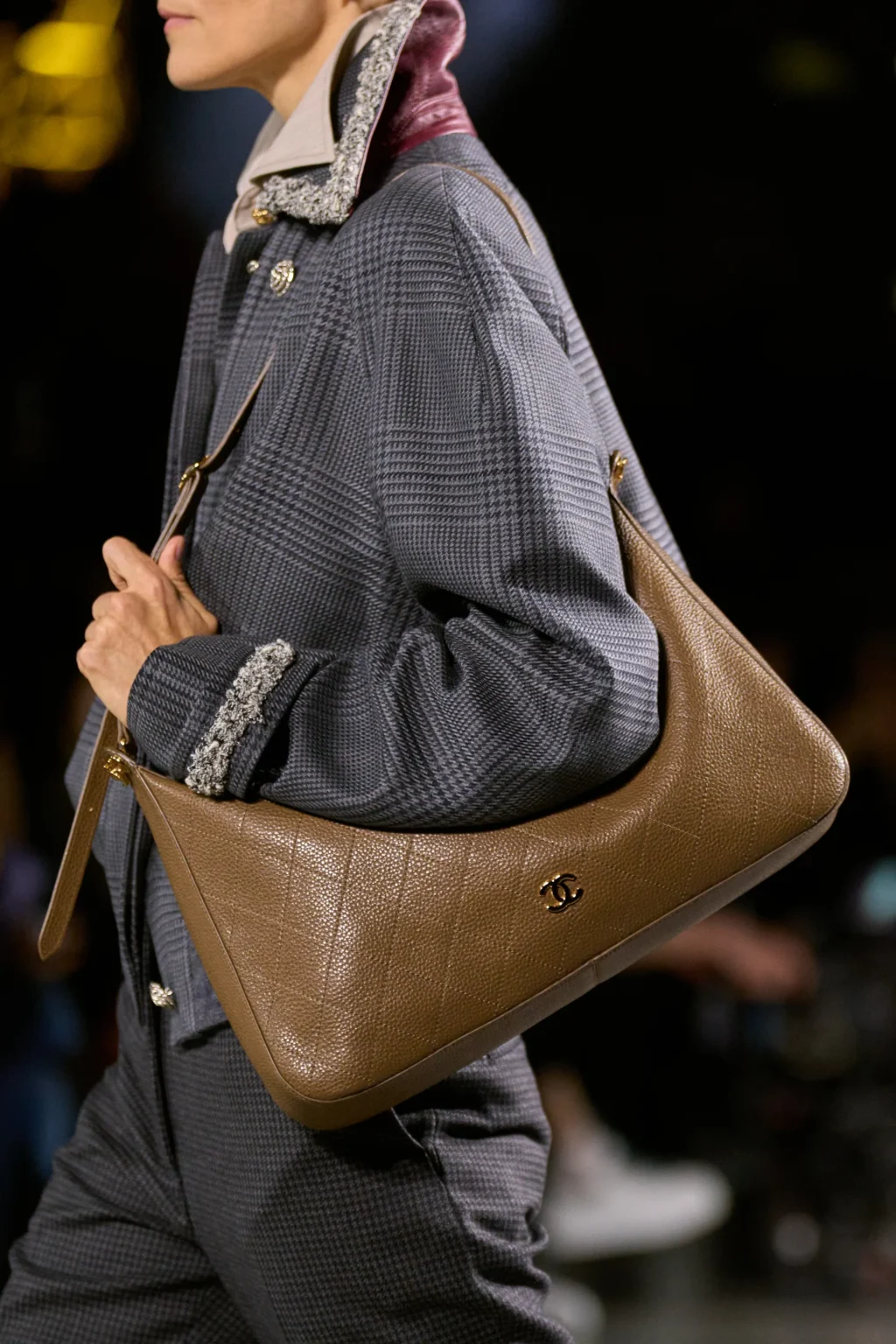
If the classic flaps were the safest part of the bag lineup, the oversized geometric shoulder bags were the clearest sign that Blazy wants to push Chanel’s proportions somewhere unfamiliar. These huge triangular or wedge-like bags appeared in black leather, beige suede, green leather, and cream-toned finishes.
The croc-effect and exotic-looking bags
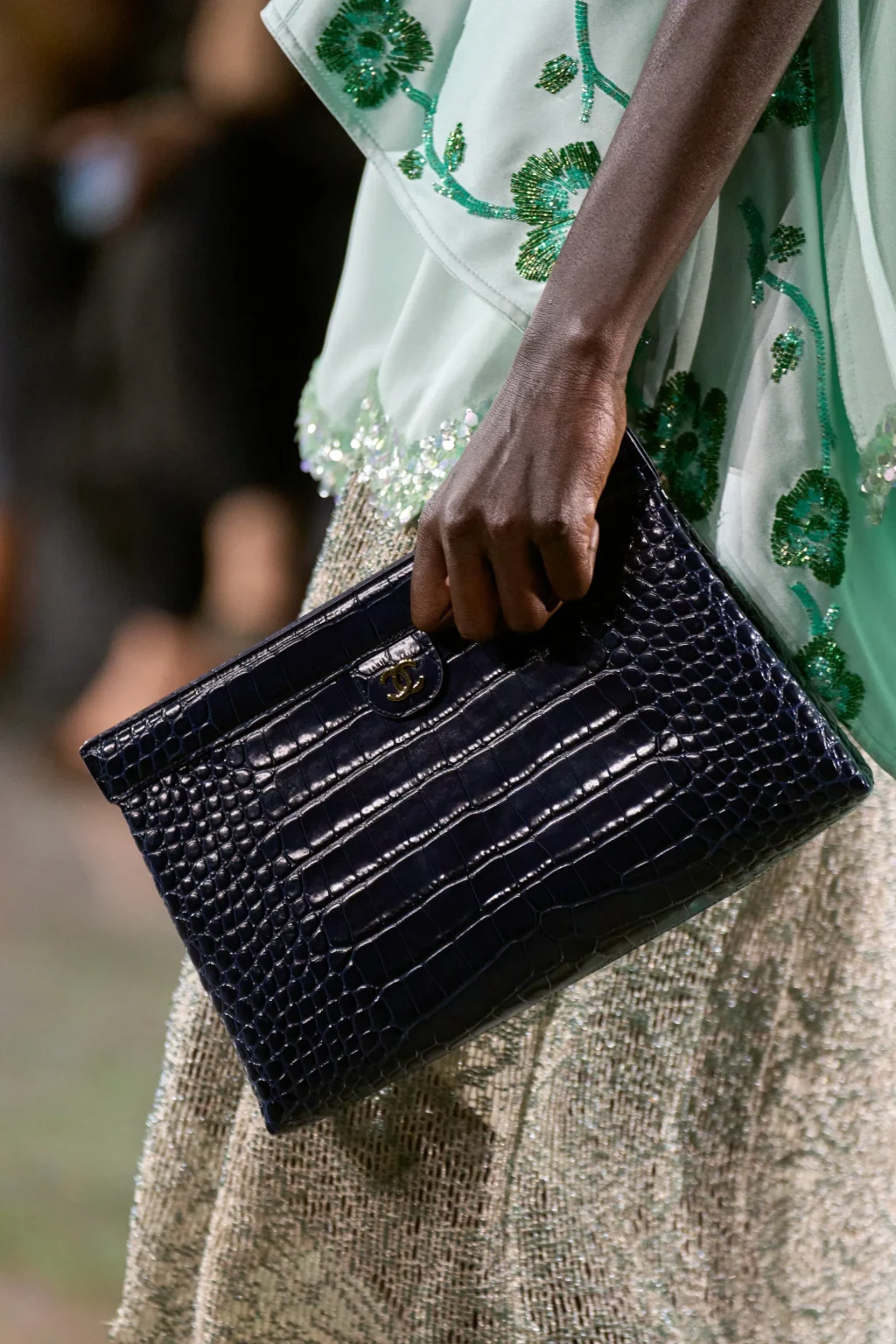
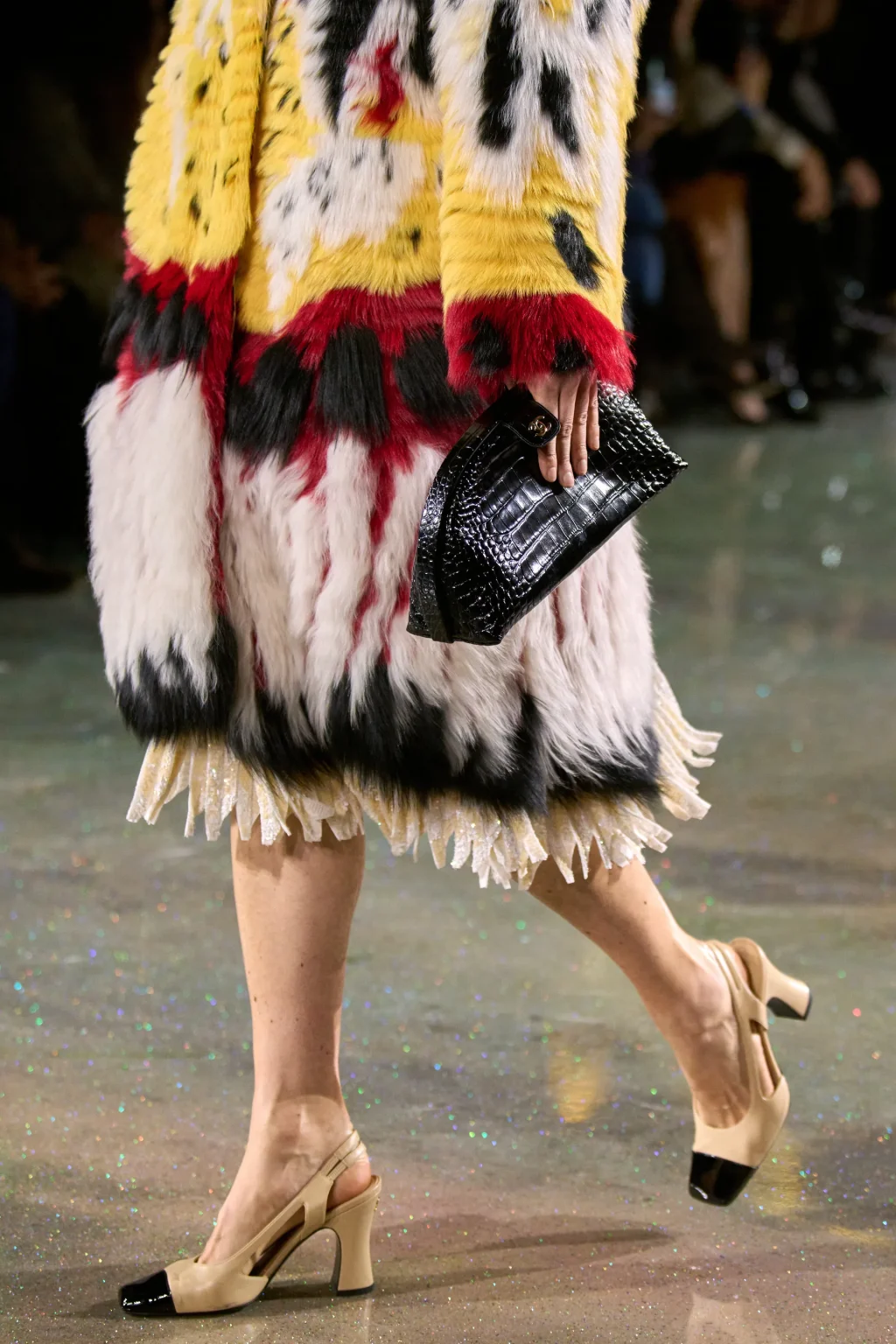
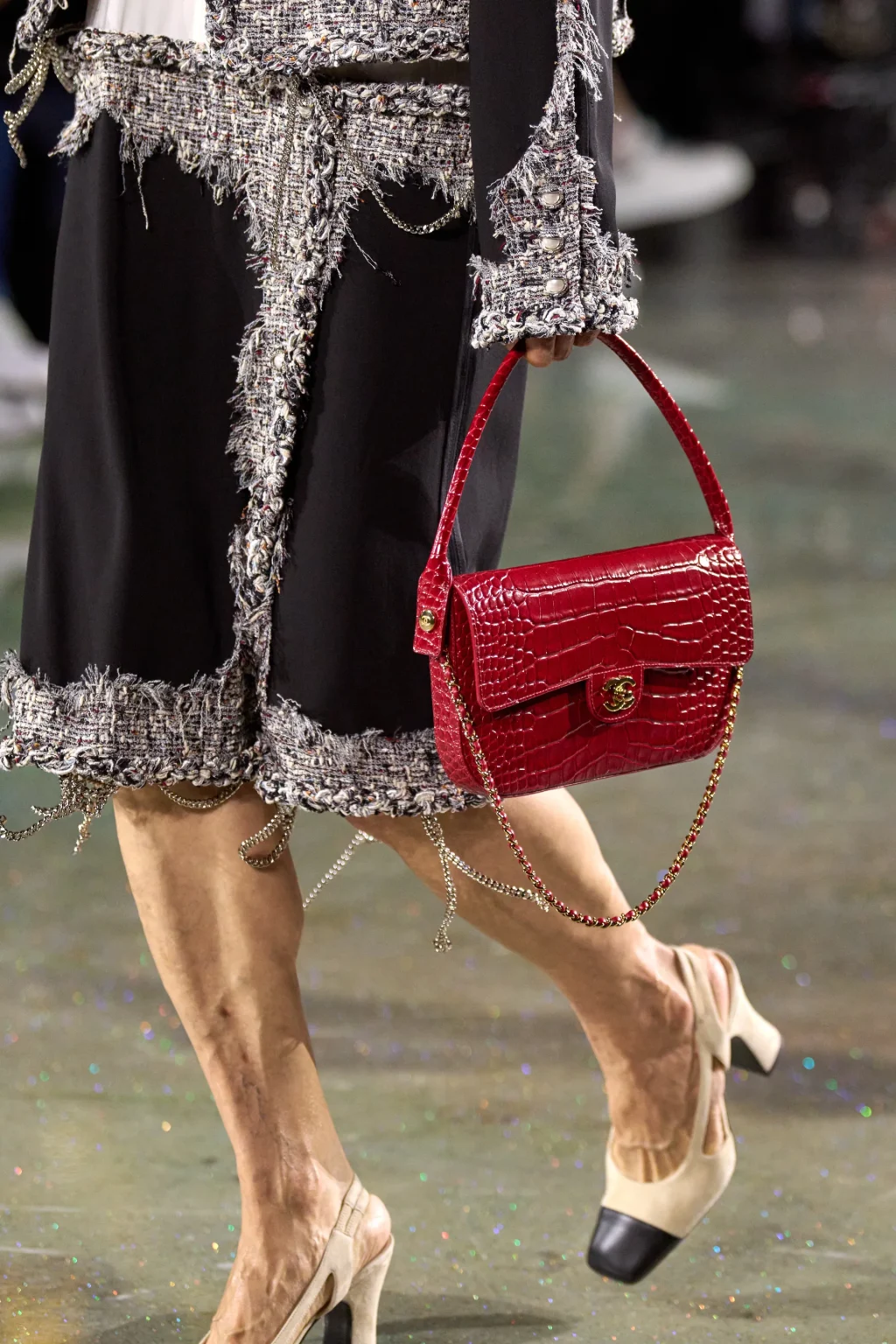
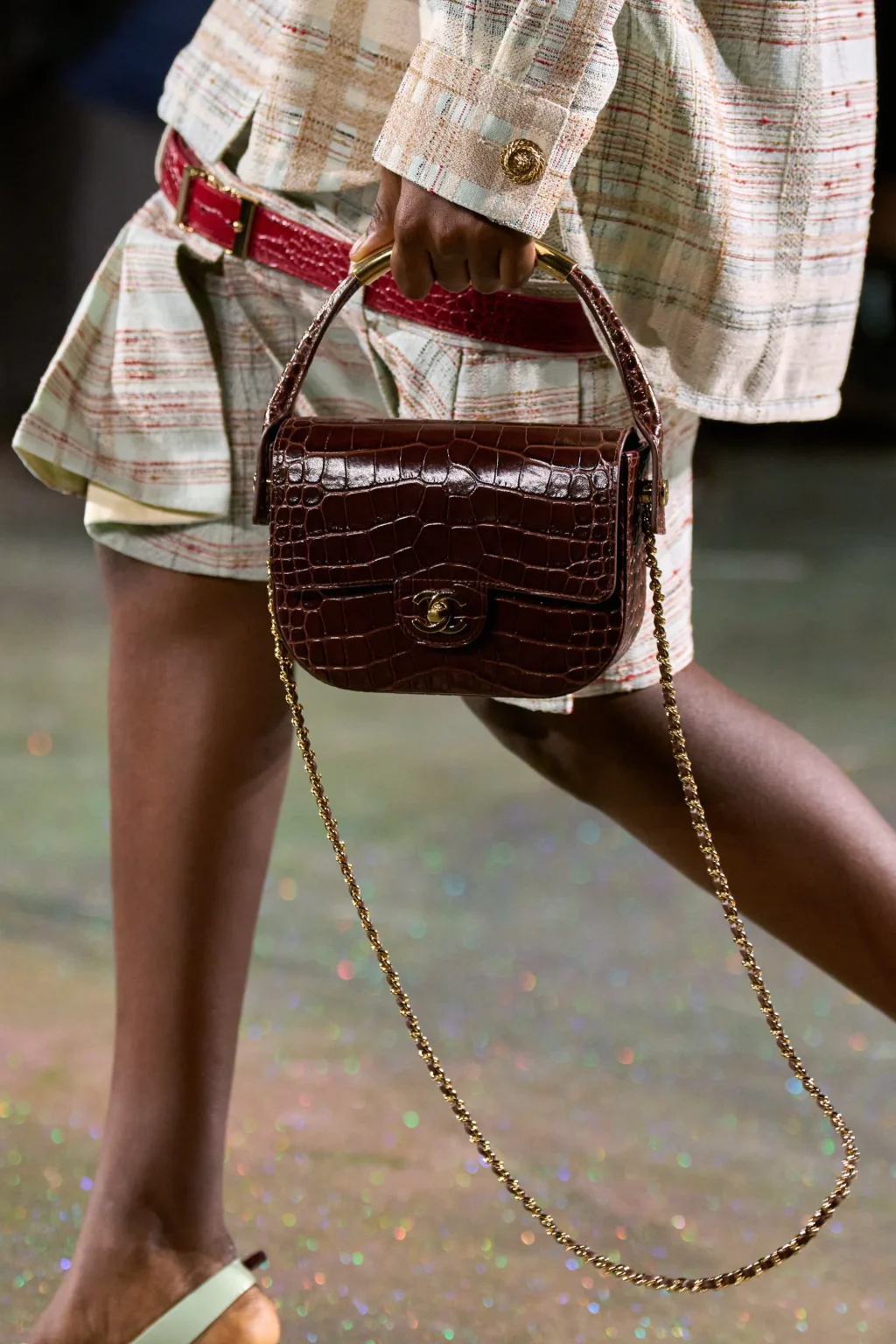
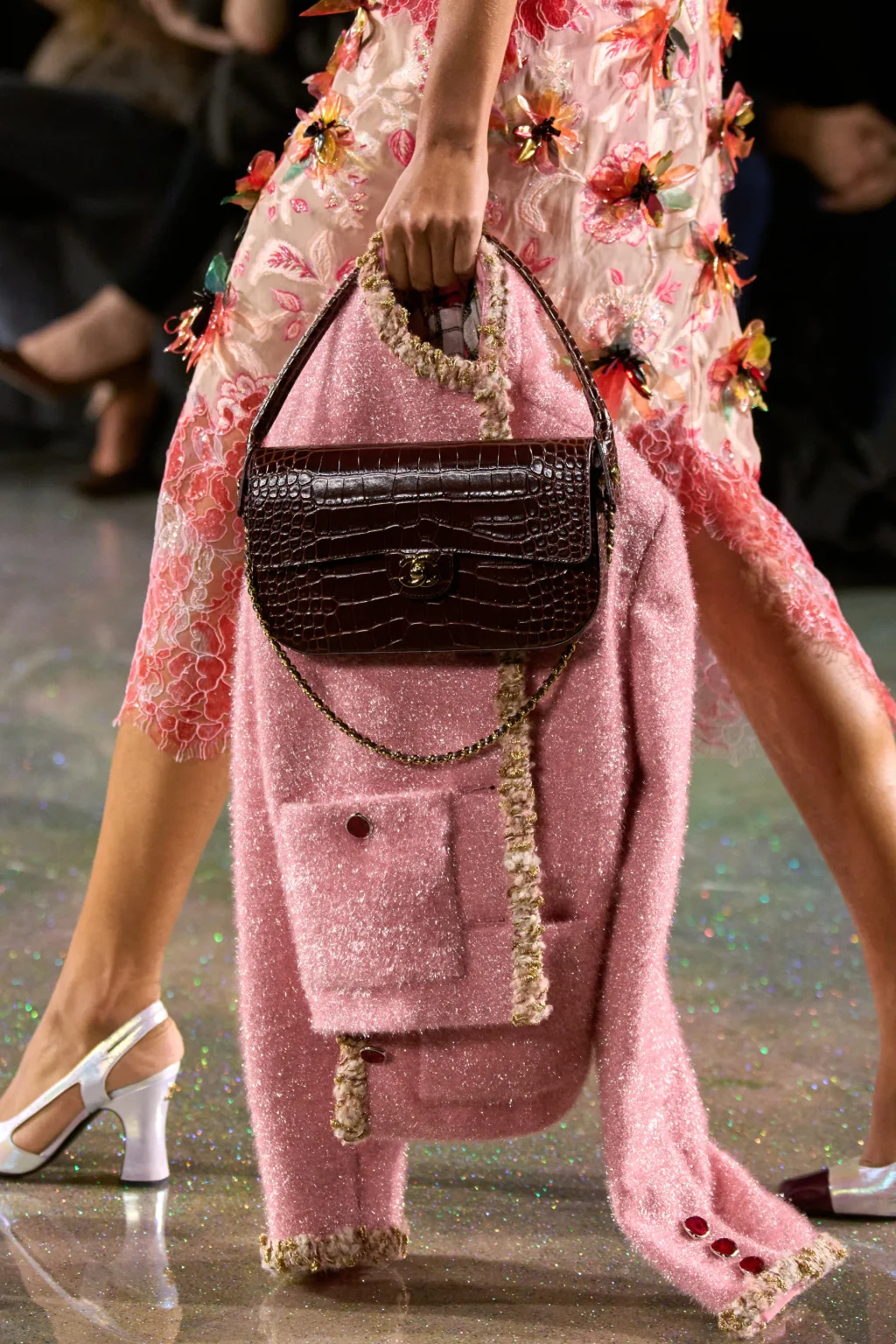
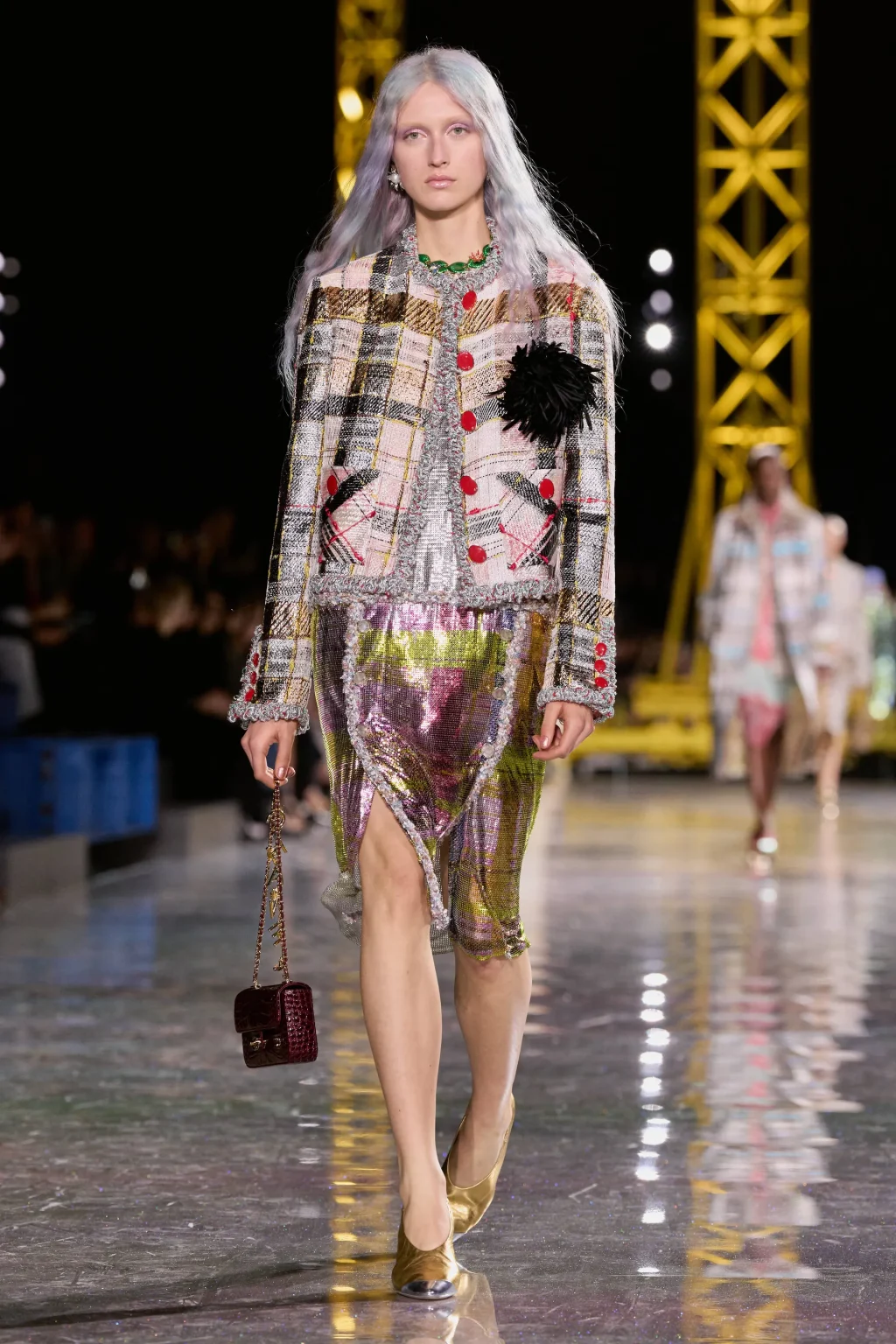
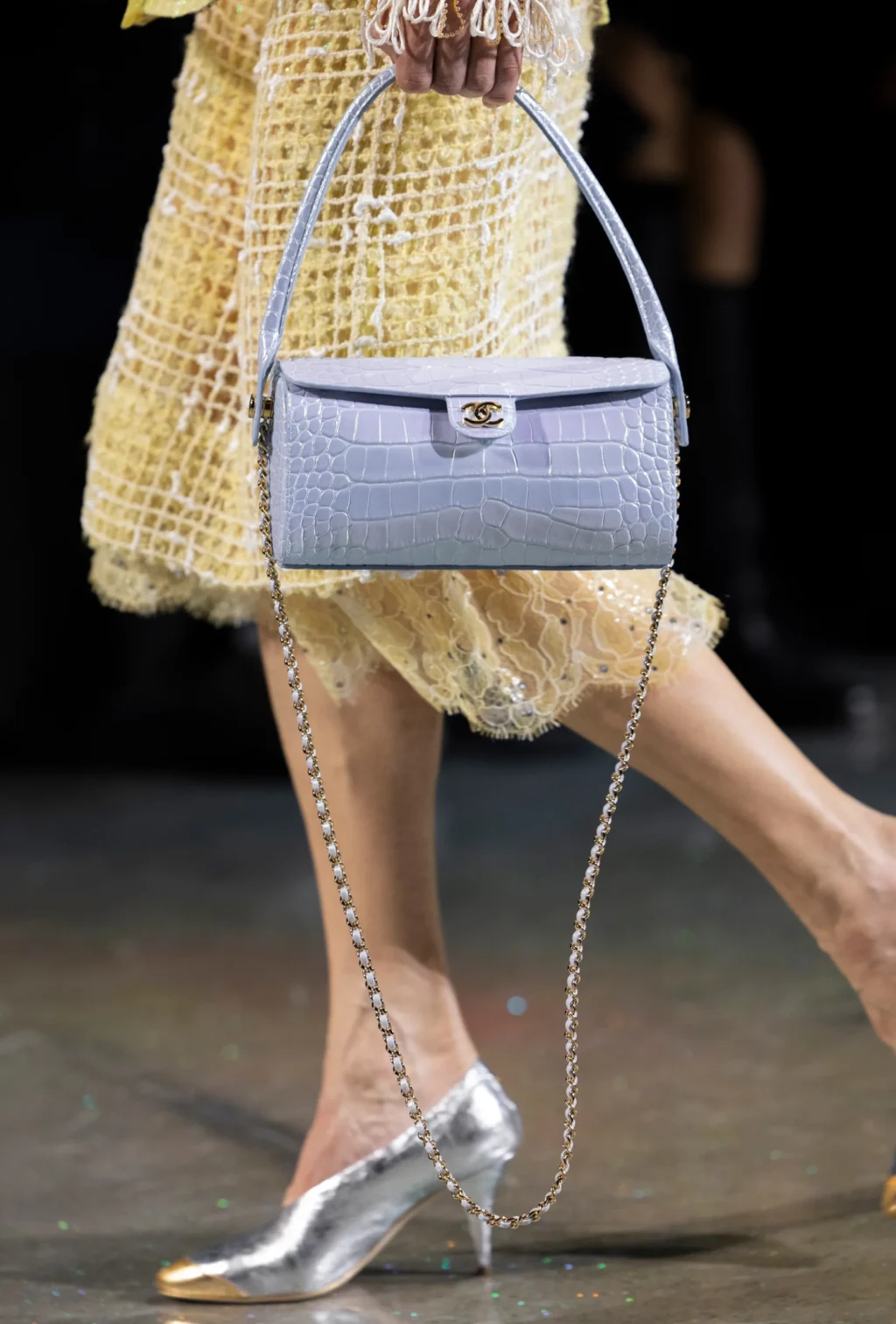
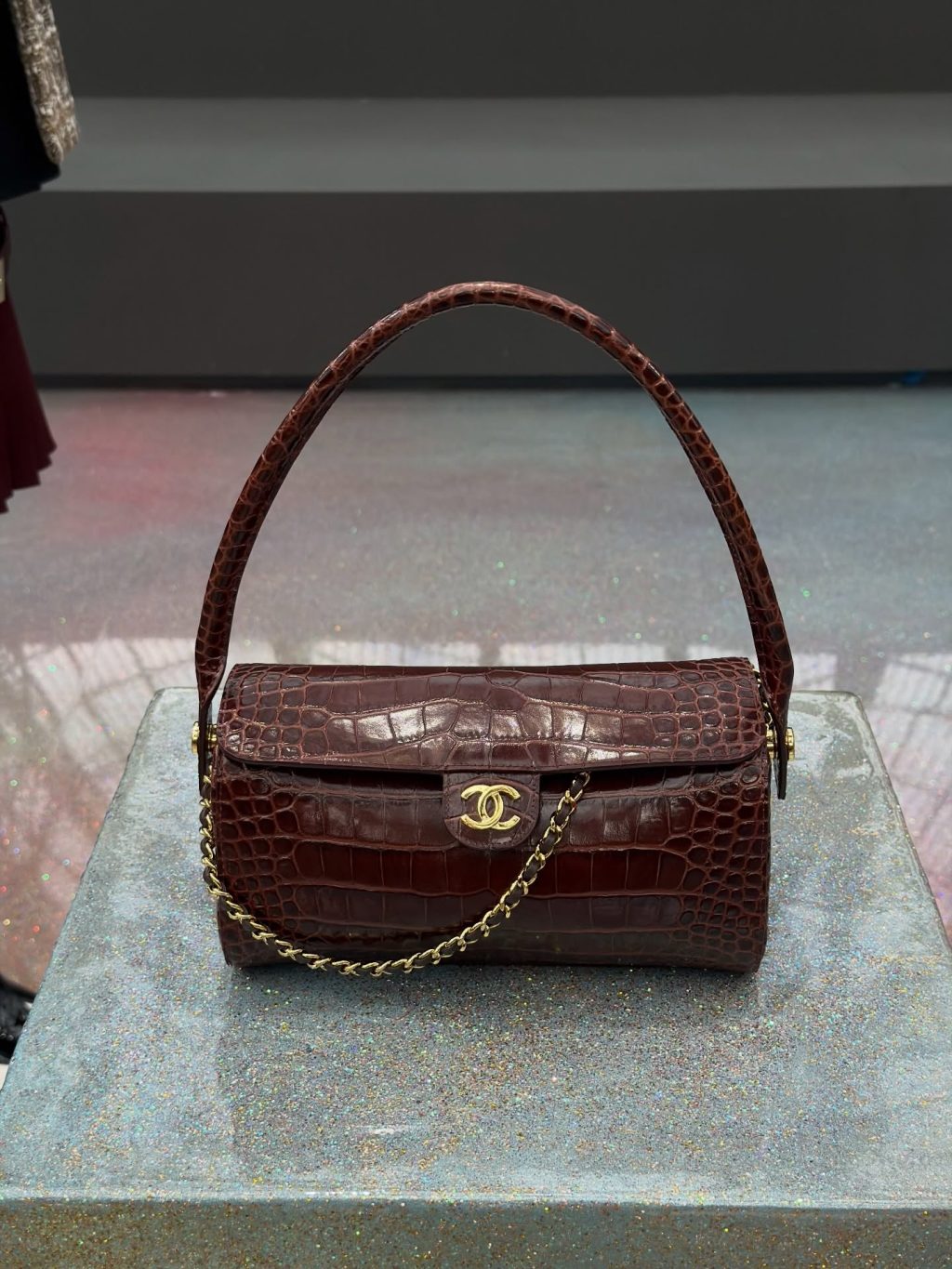
Another major story was the repeated use of croc-effect and exotic-looking finishes in deep burgundy, olive, chocolate brown, bright red, navy, and icy pastel tones. These surfaces gave the season a sharper, more polished mood.
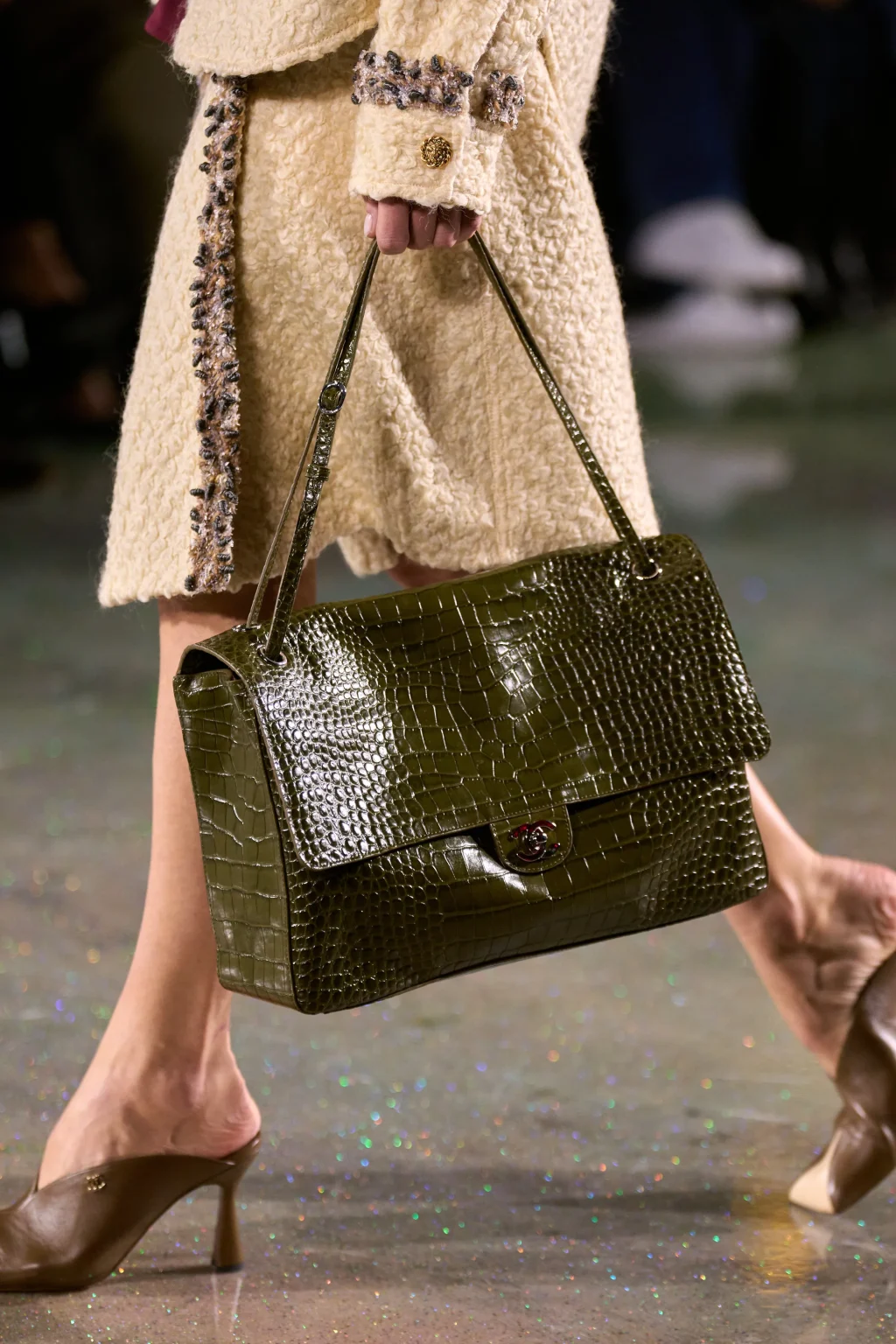
Several of the strongest runway bags used this finish: a dark burgundy structured shoulder style, red east-west bags, elongated olive flaps, navy and brown frame clutches, compact top-handle bags, and rounded shoulder pieces that looked smoother and more lacquered than the classic quilted leather Chanel universe.
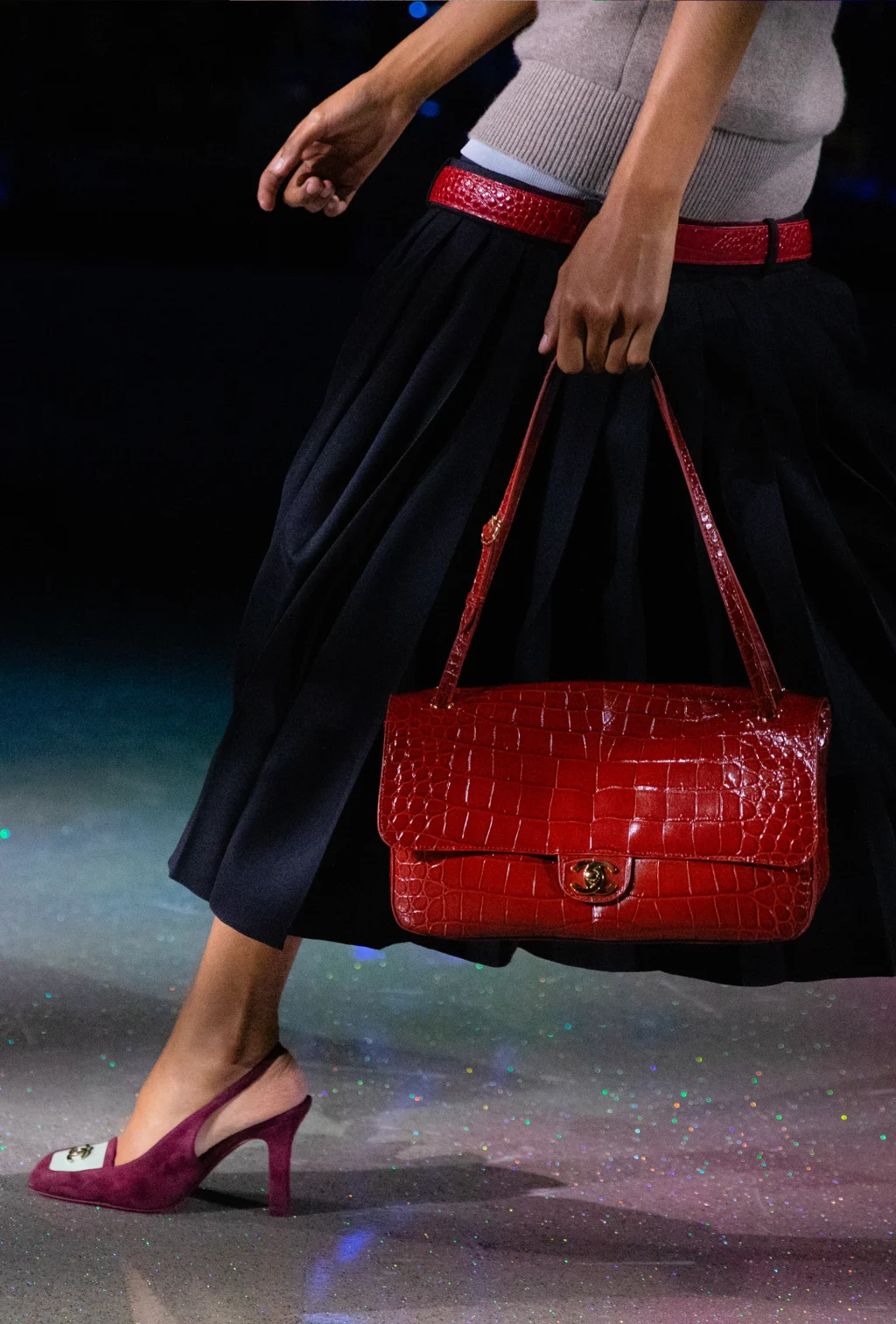
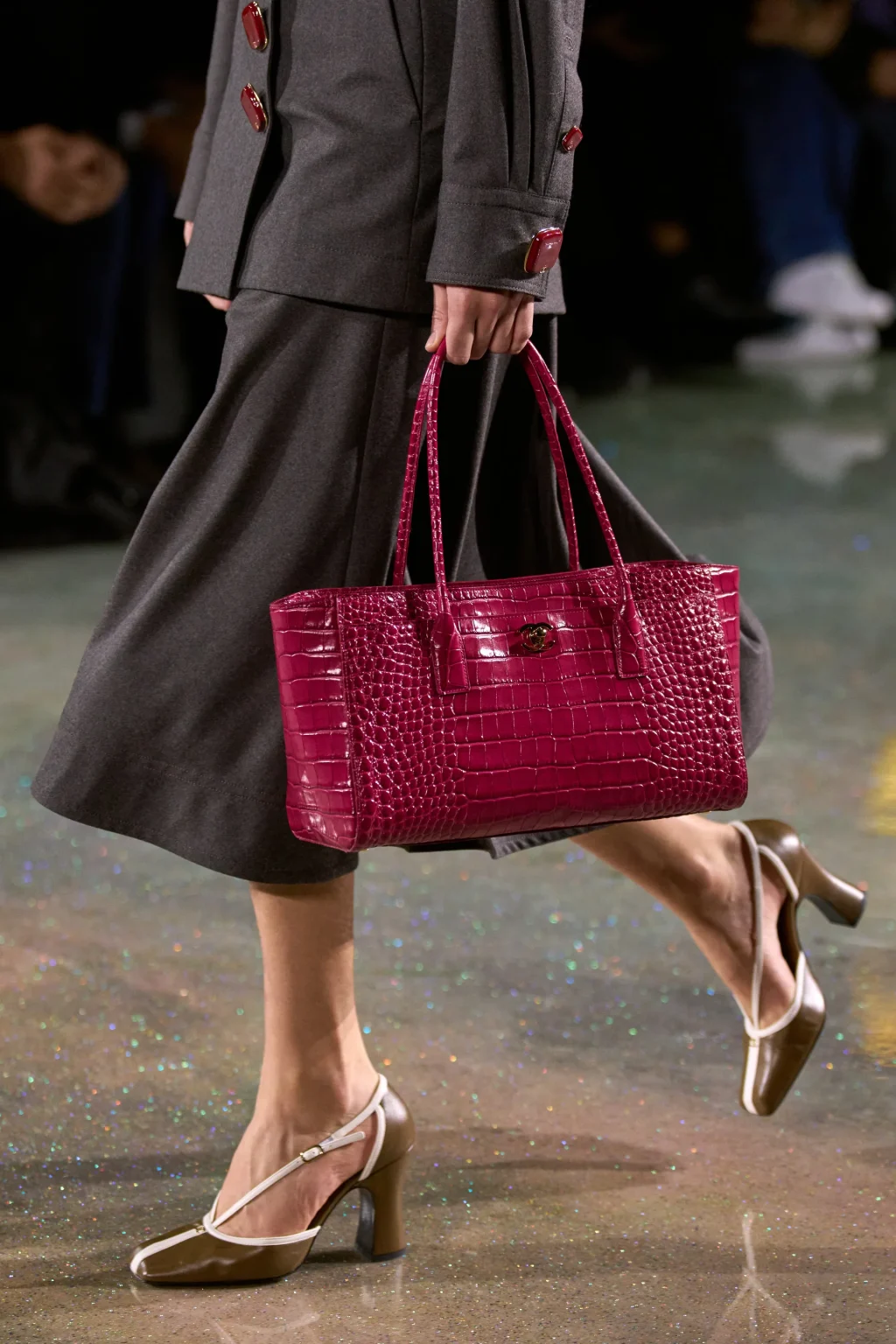
These bags matter because they move Chanel into a slightly more controlled register — less sweet, less soft-focus, and more sharply defined. When paired with the dropped-waist tailoring and stretched proportions of the clothing, they make the collection feel less decorative and more composed.
The novelty minaudières and object bags
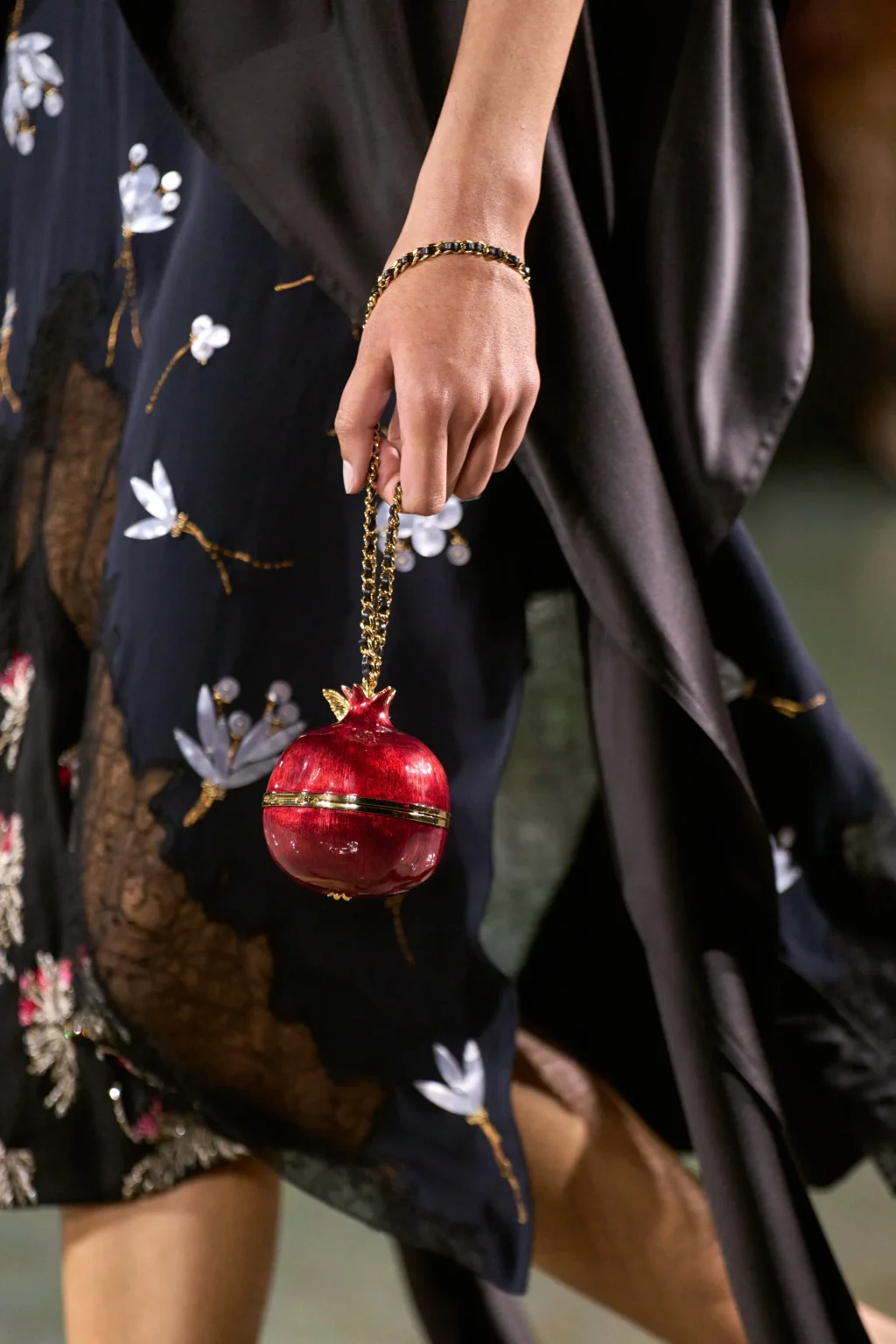
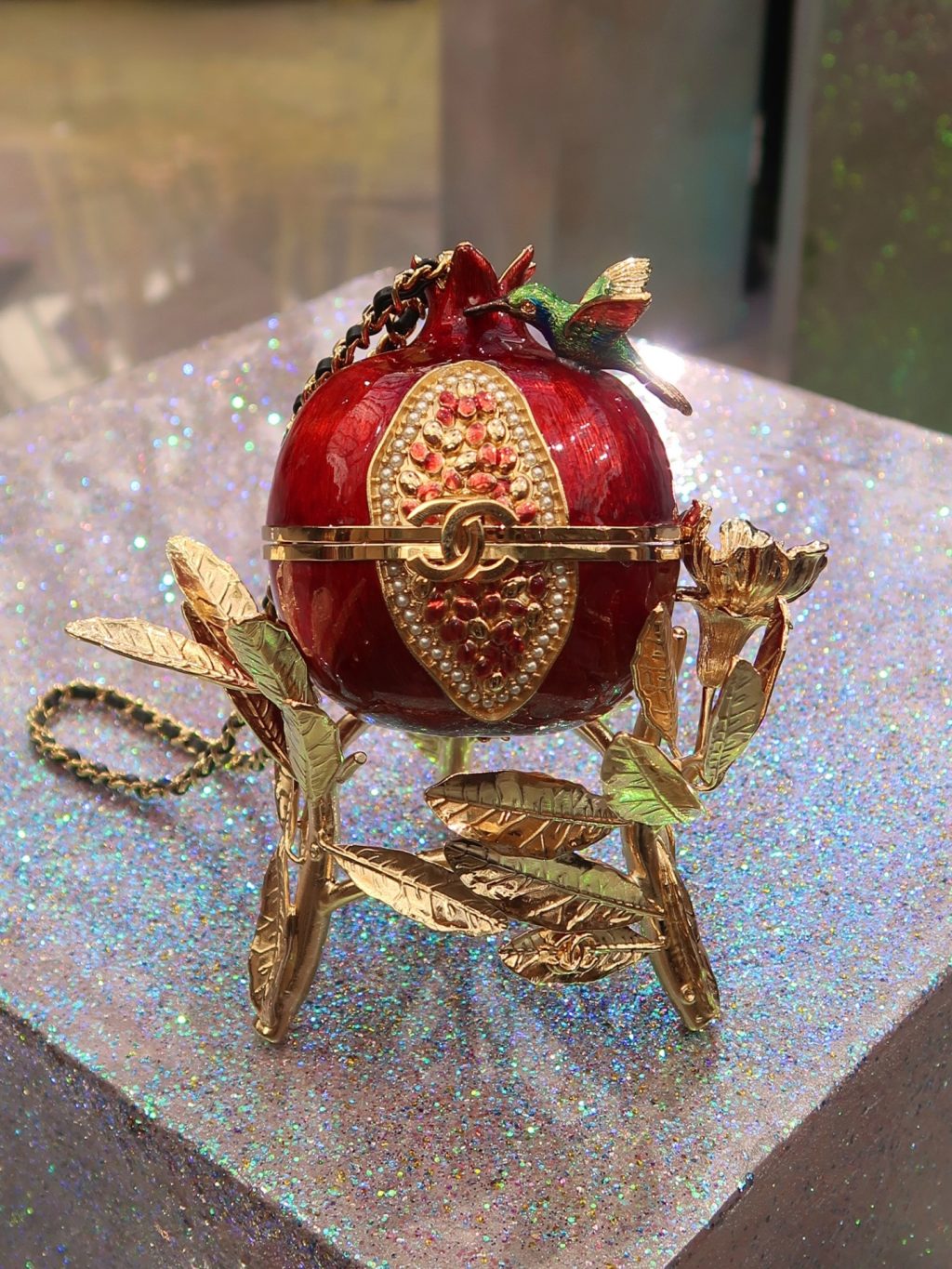
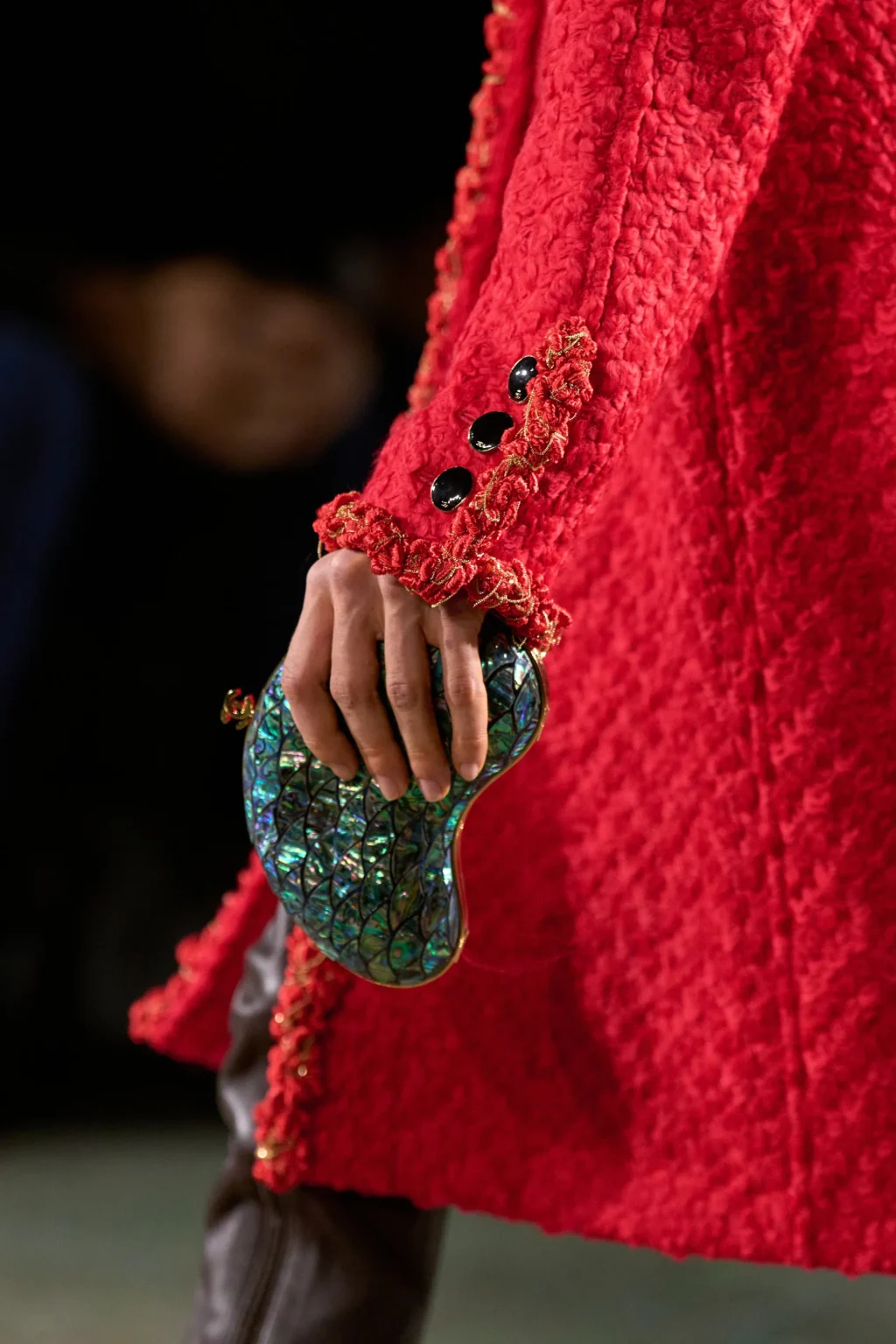
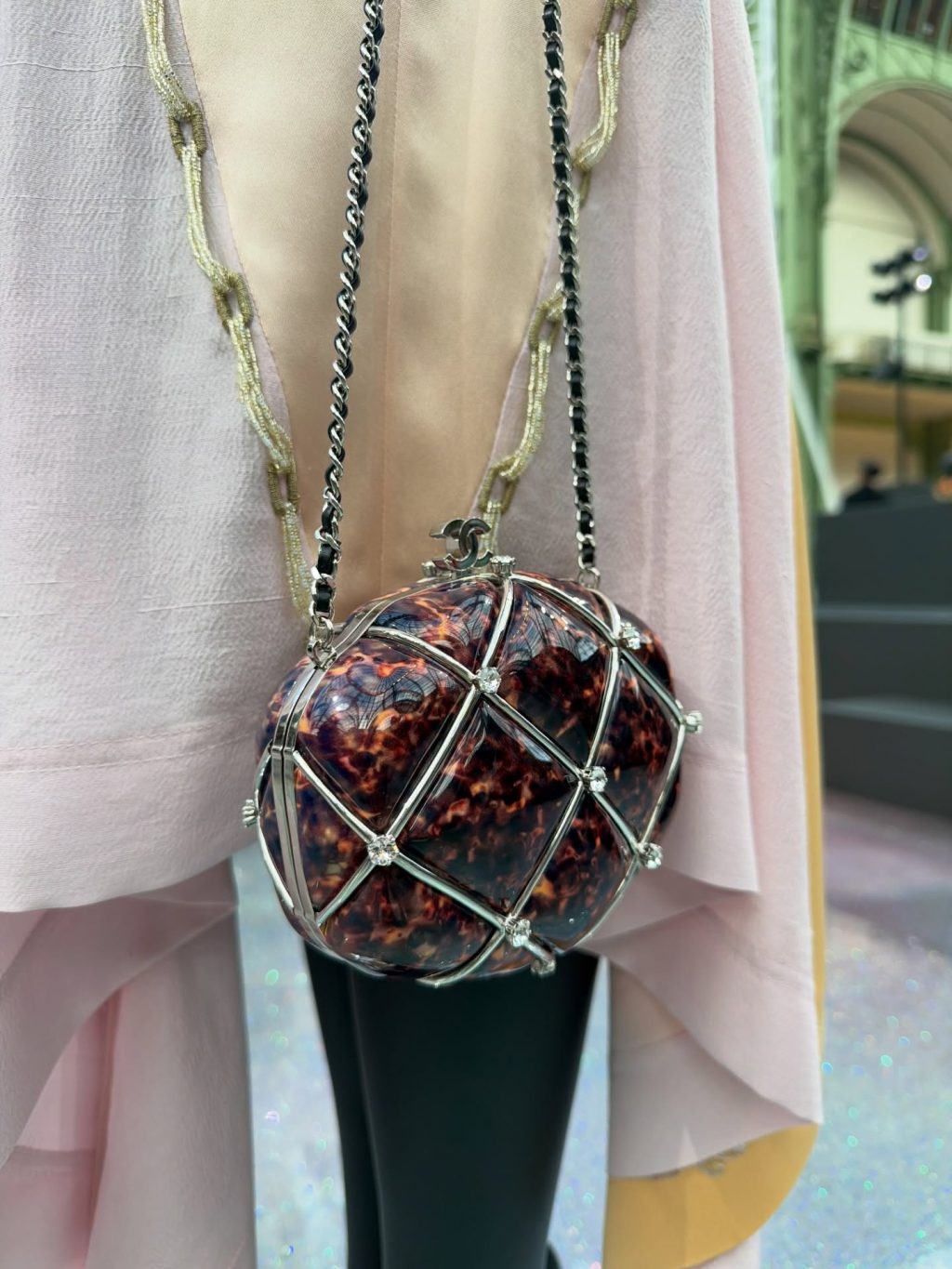
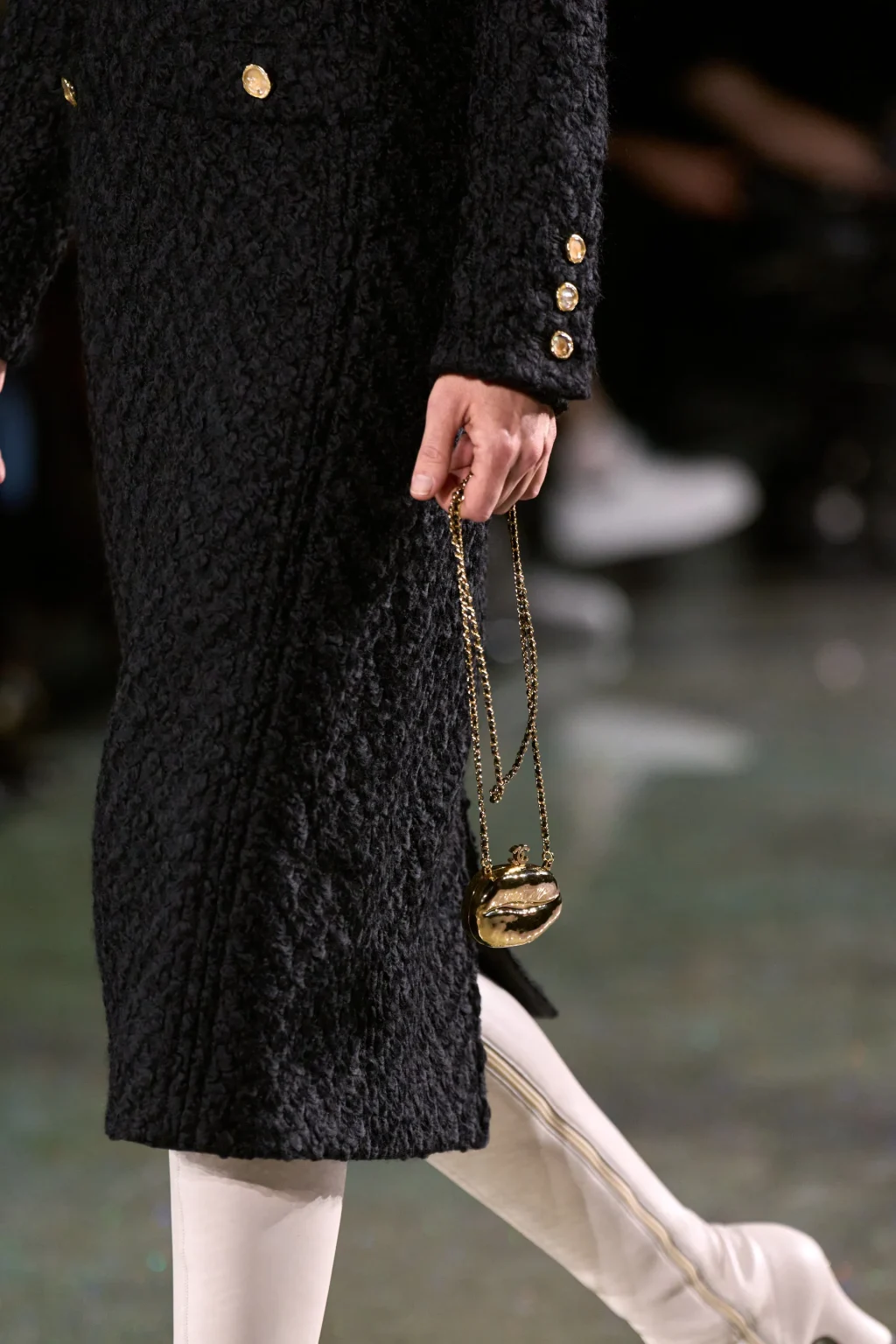
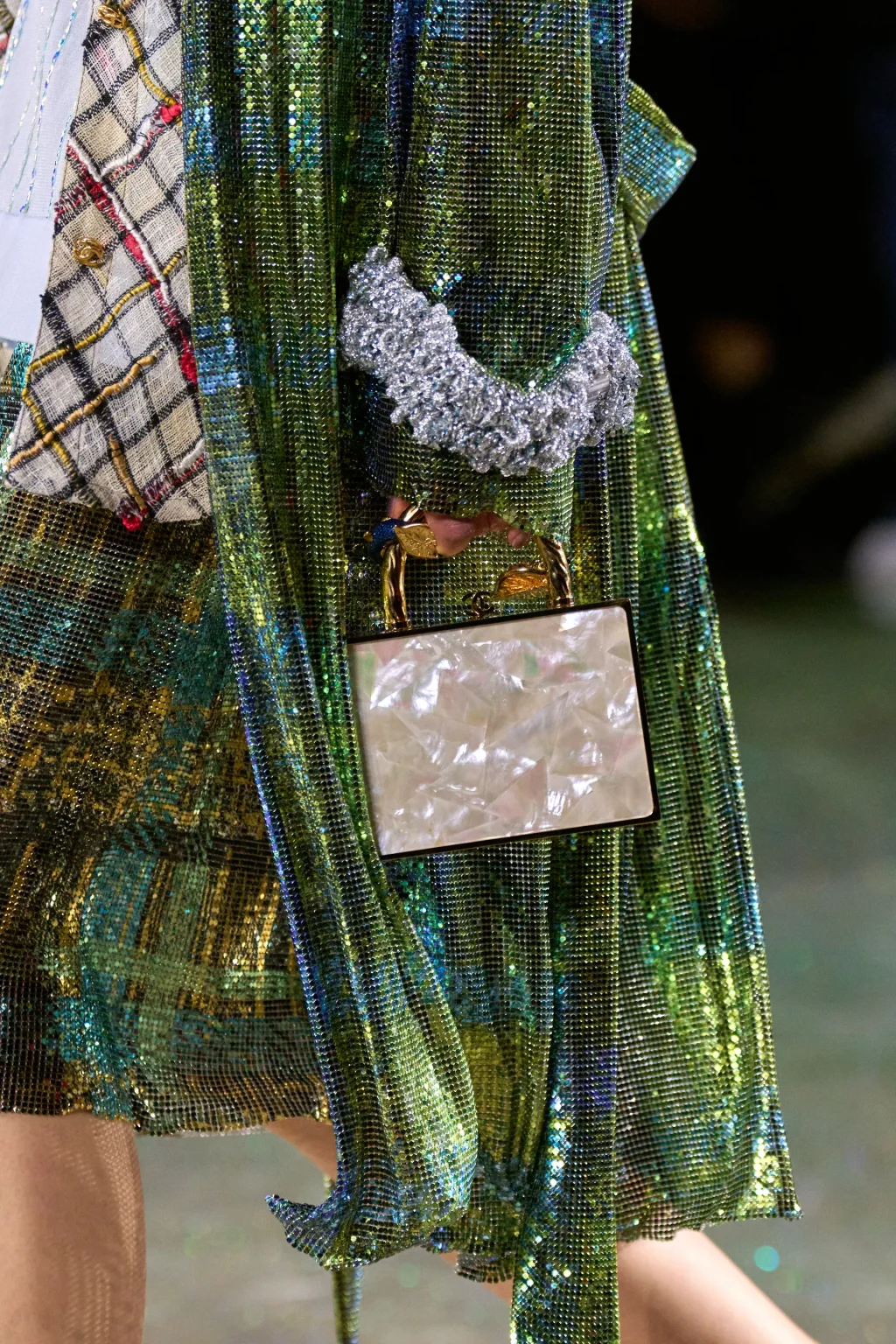
The show also included a richly theatrical cluster of novelty bags and minaudières. These included included a pomegranate-shaped minaudière, a tortoiseshell-like spherical object bag, small metallic jewel bags, a rectangular pearlescent minaudière, and other tiny accessories that function more like precious punctuation than storage.
The softer day bags: hobos, shoppers and bucket shapes
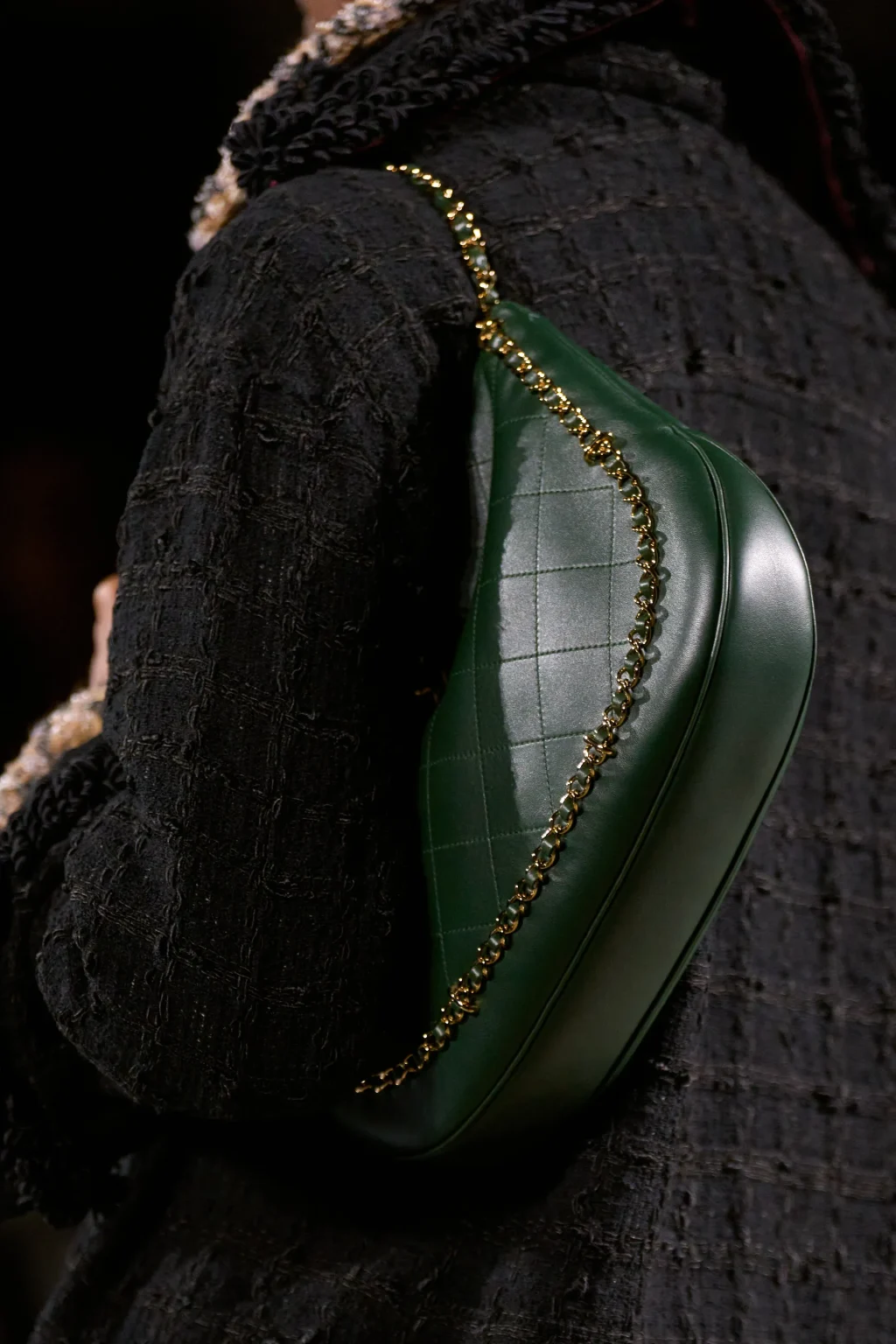
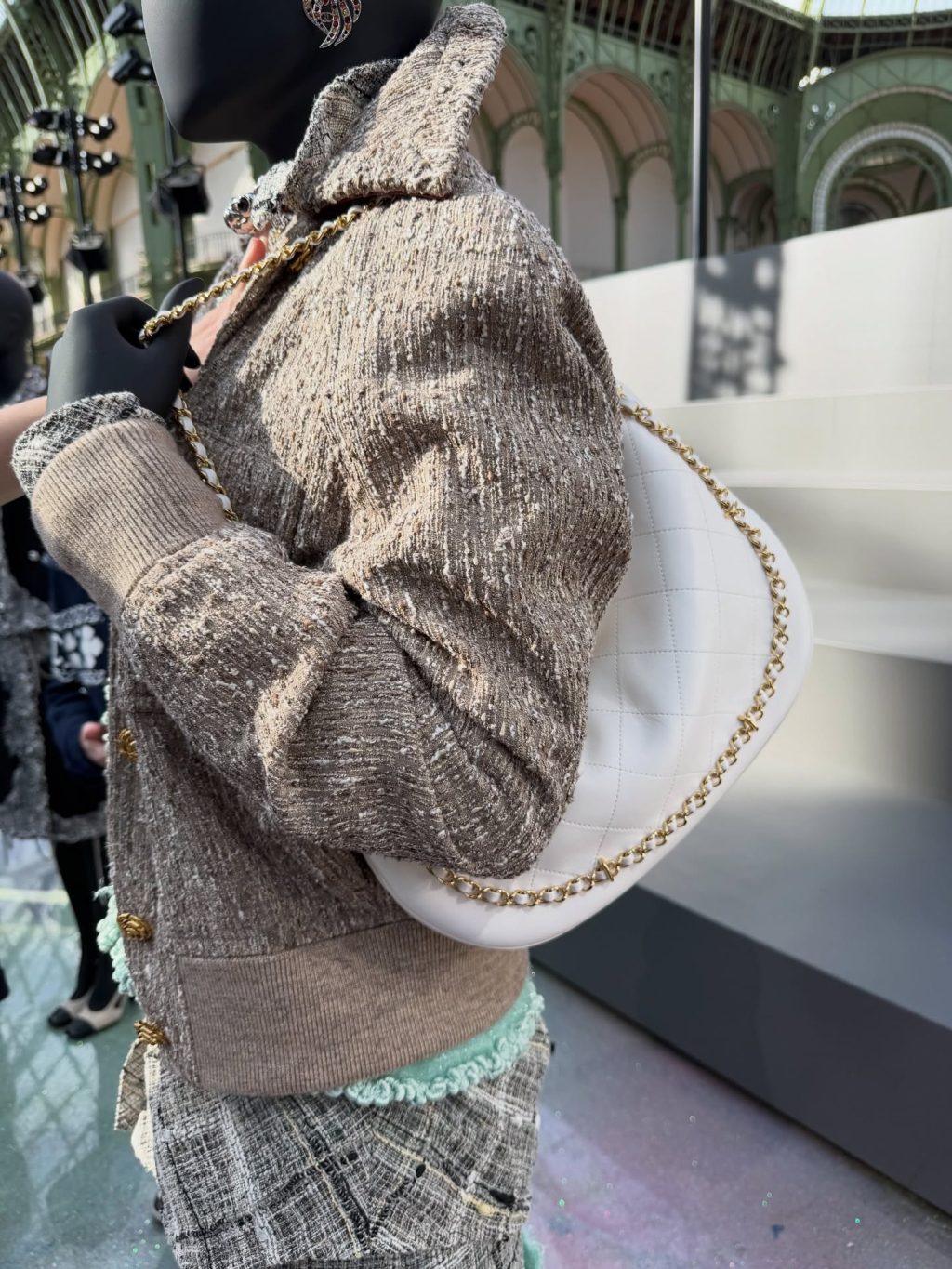
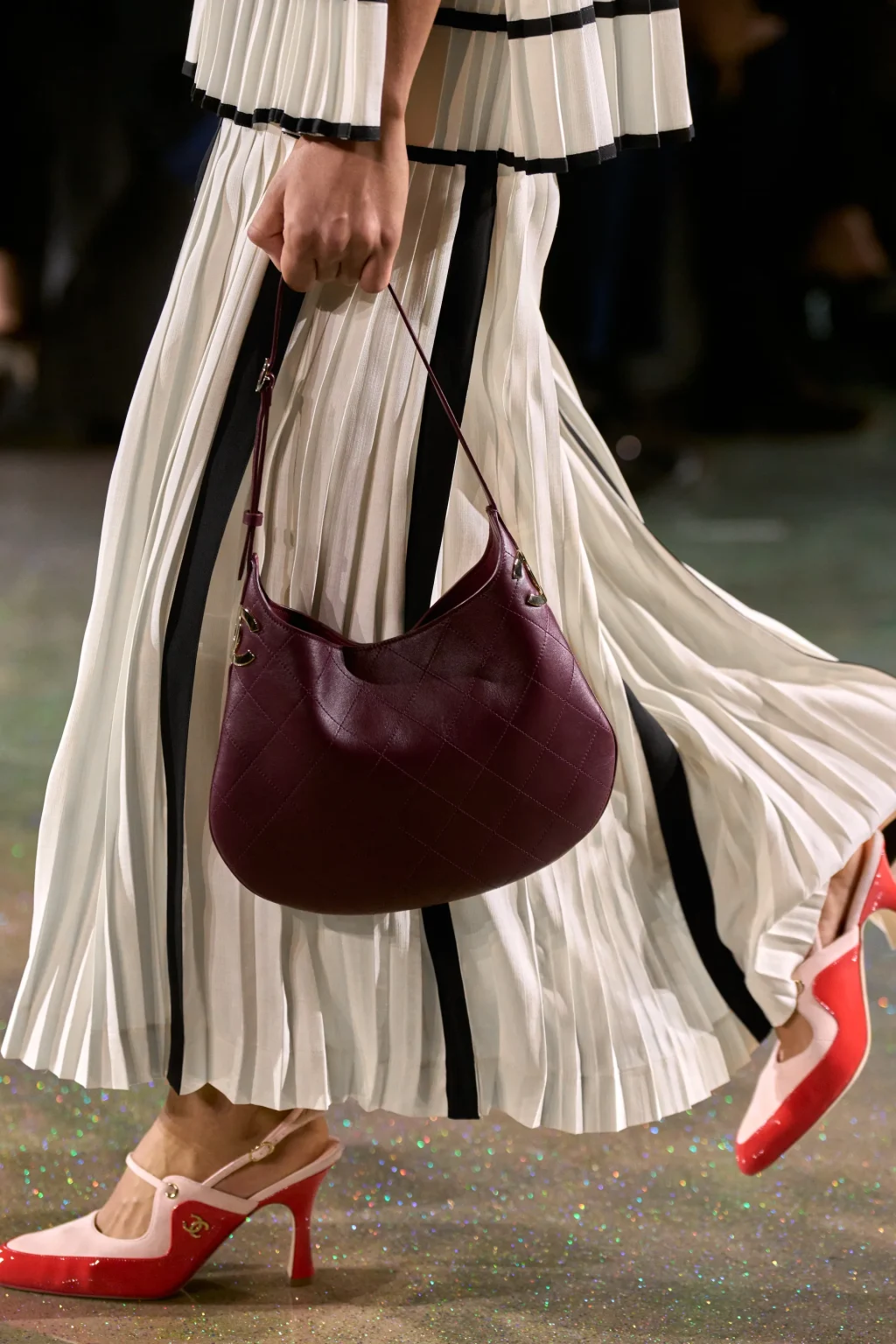
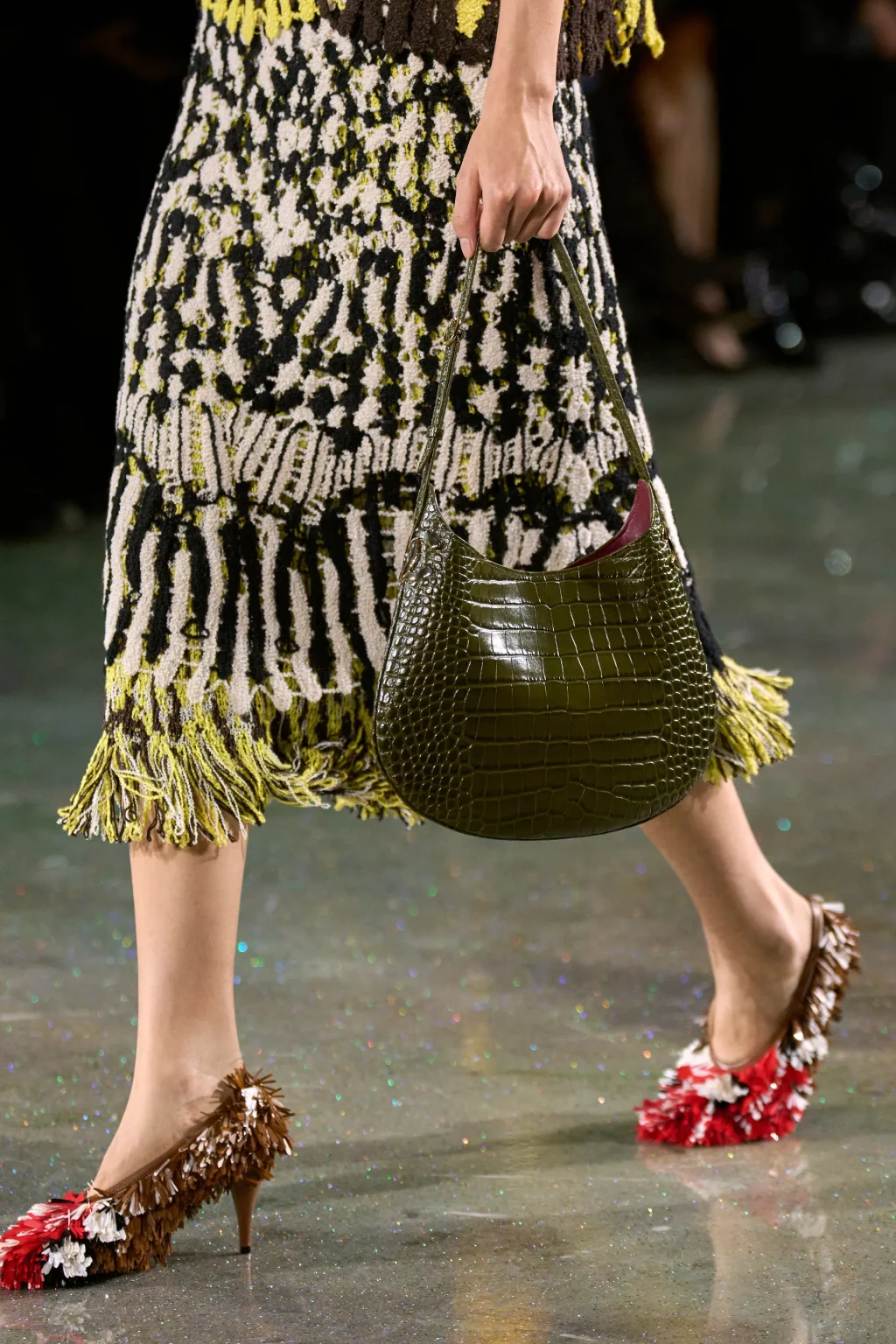
Among the most promising bags from a real-life perspective were the softer day shapes. These included a cream quilted bucket, a burgundy hobo, an olive croc-effect hobo, black grained-leather shoulder totes, and a series of day bags in black and brown.
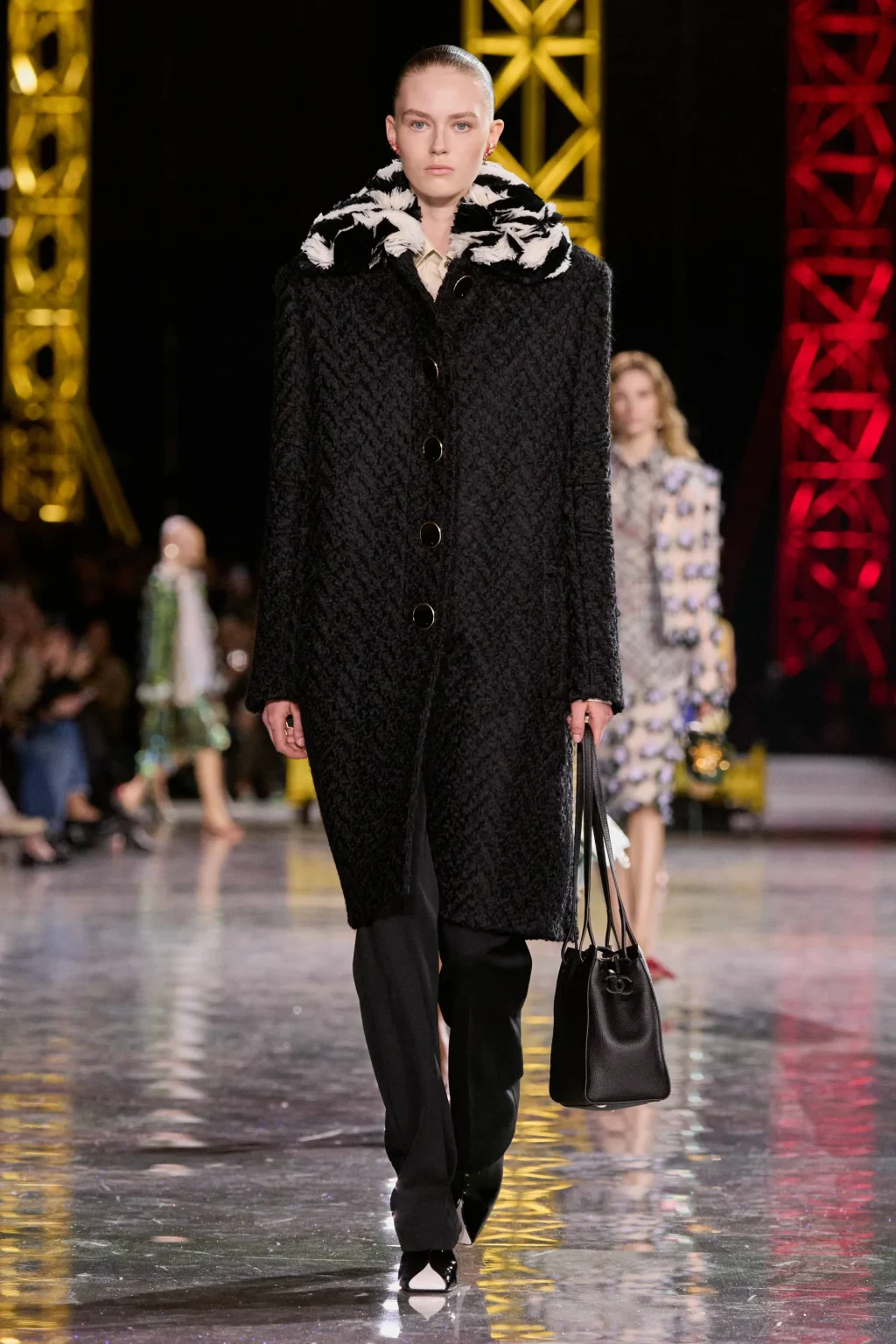
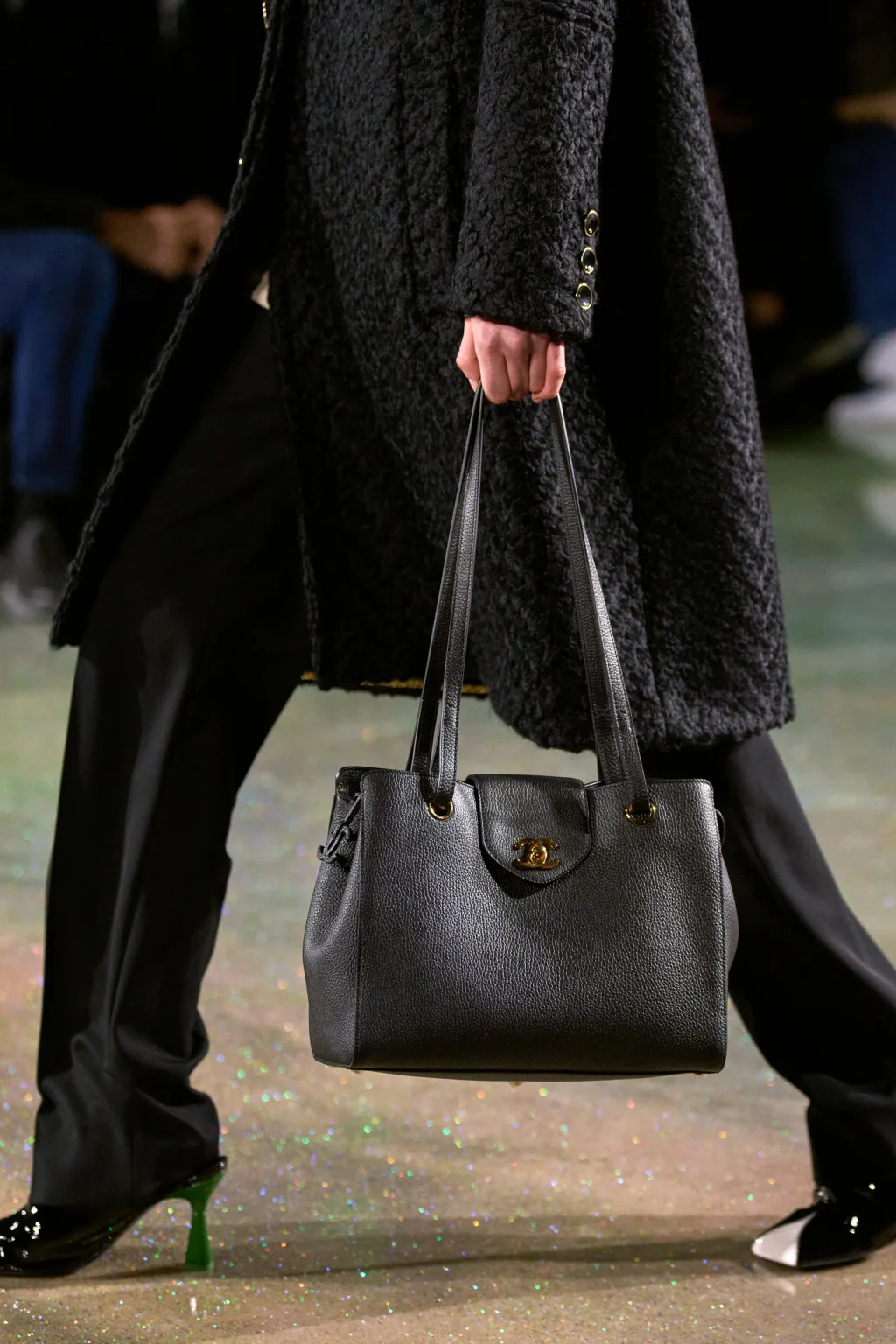
These are important because they show Chanel building not just image bags, but wardrobe bags. Some were clean and almost minimal, with discreet CC hardware and less insistence on front-facing branding. Others used chain only as a secondary accent rather than as the main structural device.
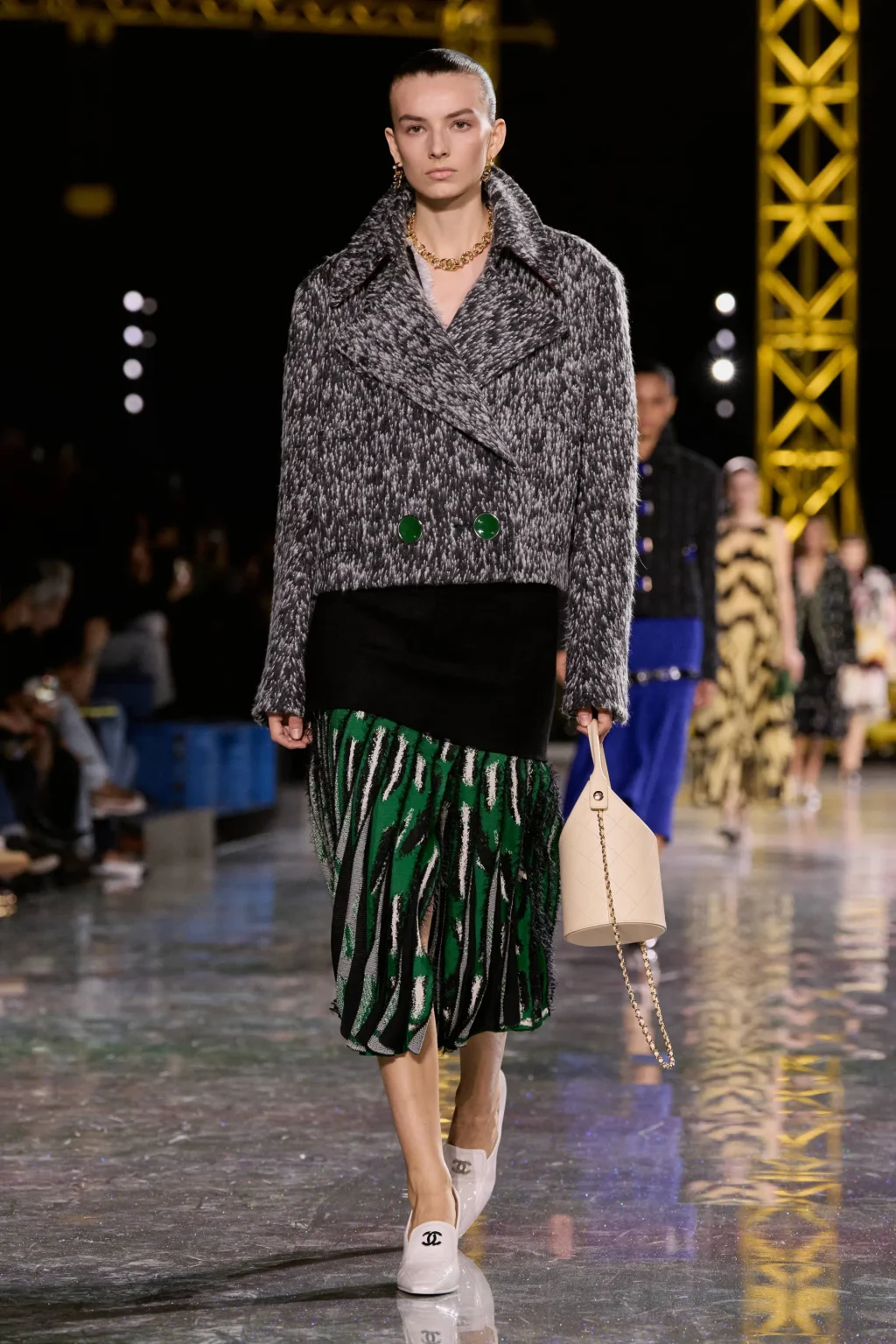
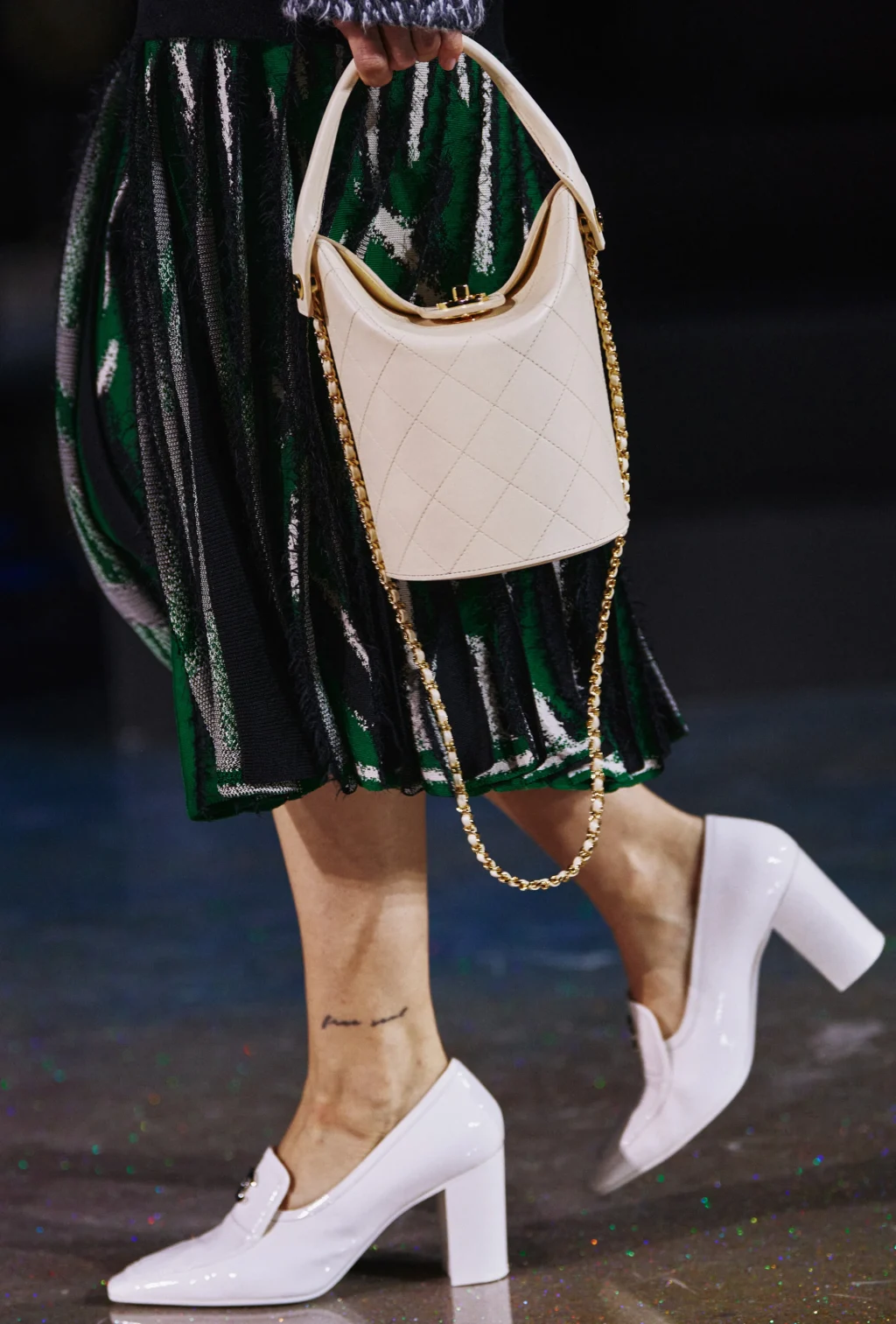
The Chanel Fall-Winter 2026-2027 bags suggest that Matthieu Blazy is beginning to define his handbag language for the house with more confidence. The lineup was broad, sometimes eccentric, occasionally theatrical, but far more considered than random. Its best pieces did not just repeat Chanel signatures. They stretched them.