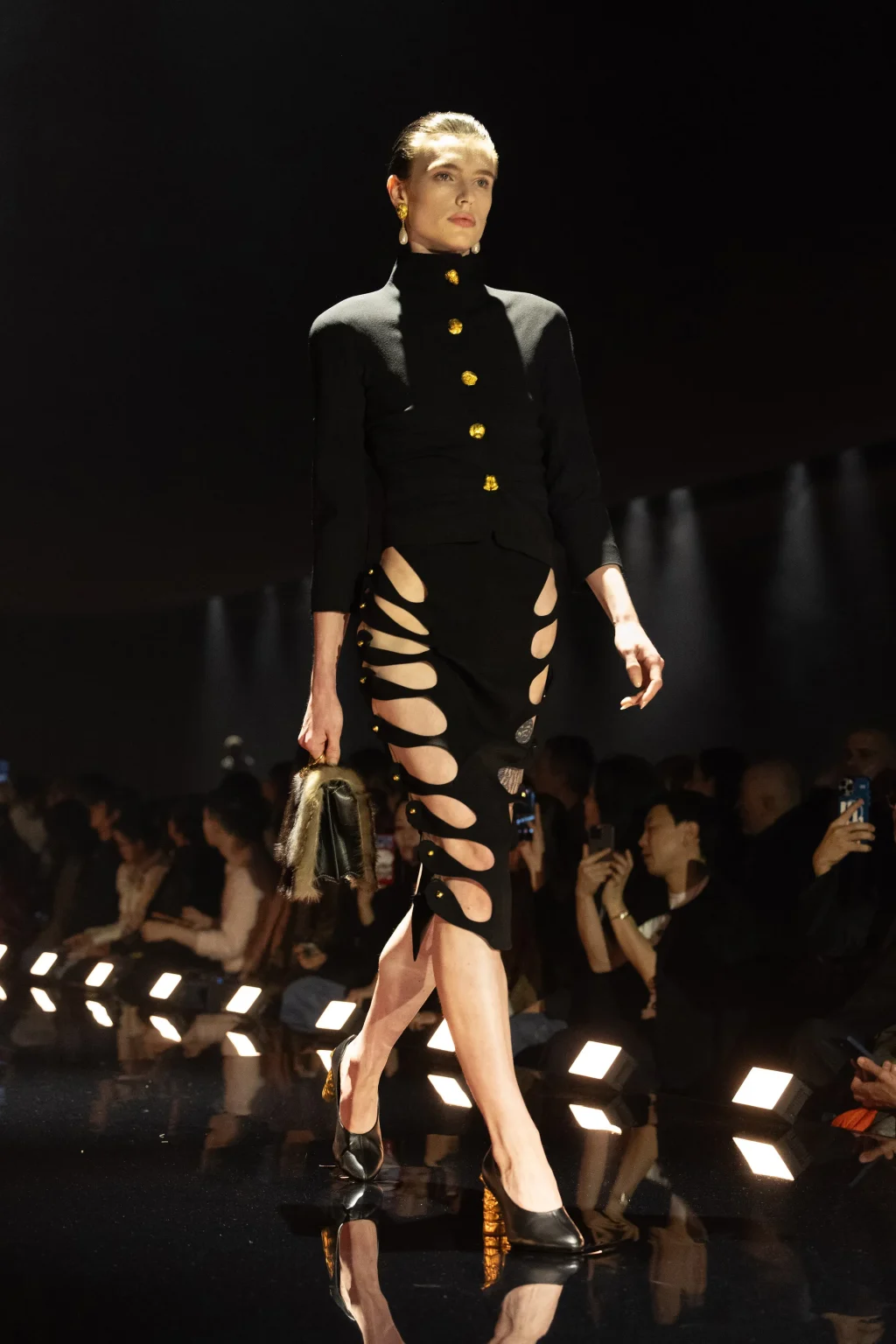
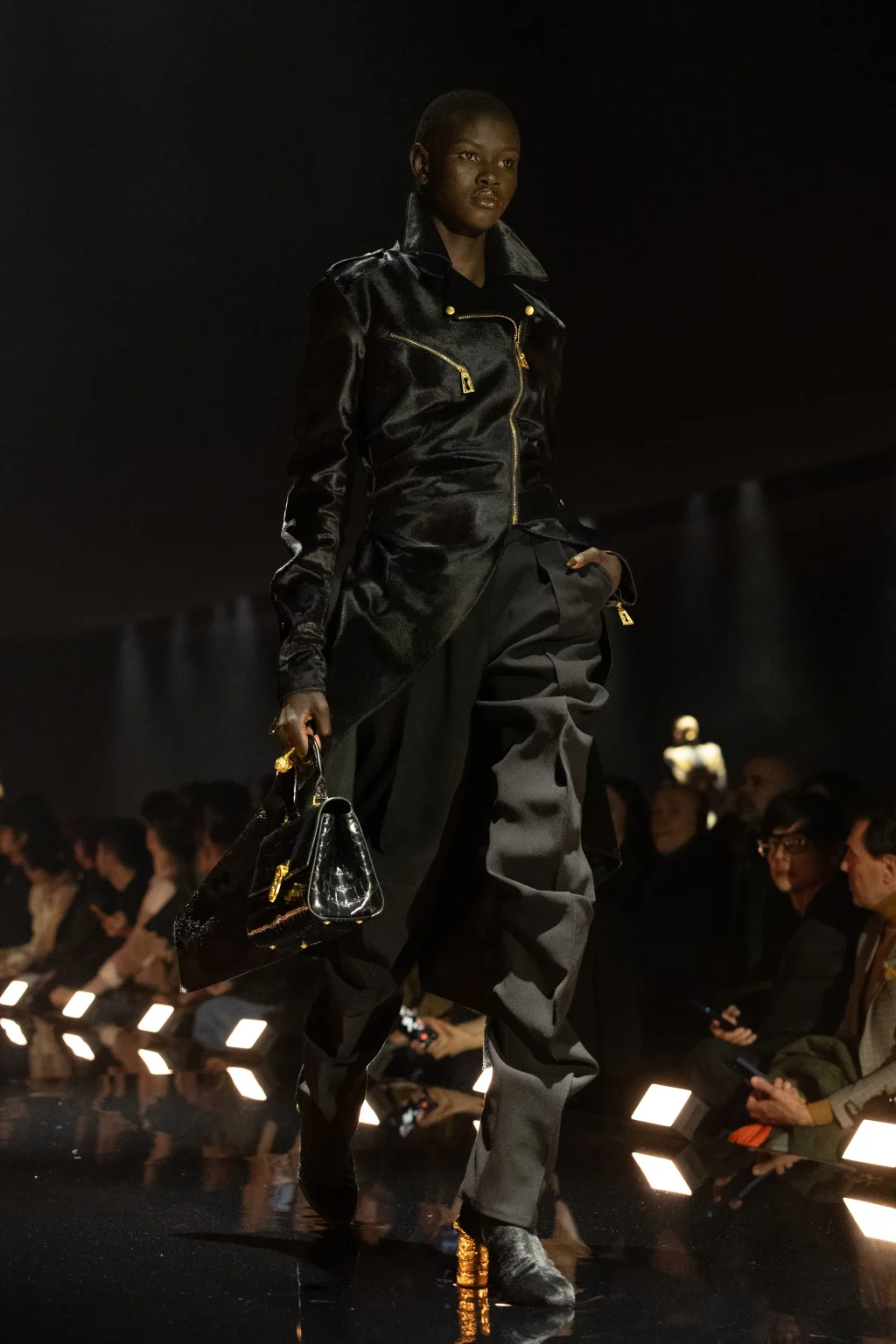
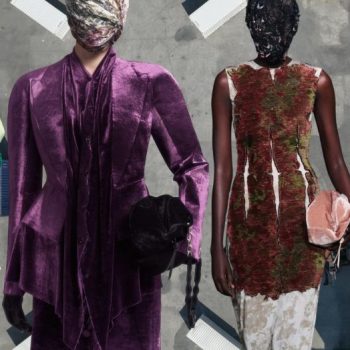
The Schiaparelli Fall-Winter 2026–2027 bags debuted as part of “The Sphinx,” Daniel Roseberry’s latest ready-to-wear collection for the Paris couture house. Presented during Paris Fashion Week, the show explored the tension that has defined Schiaparelli since its founding: fashion as both business and dream factory, object and illusion, structure and fantasy.
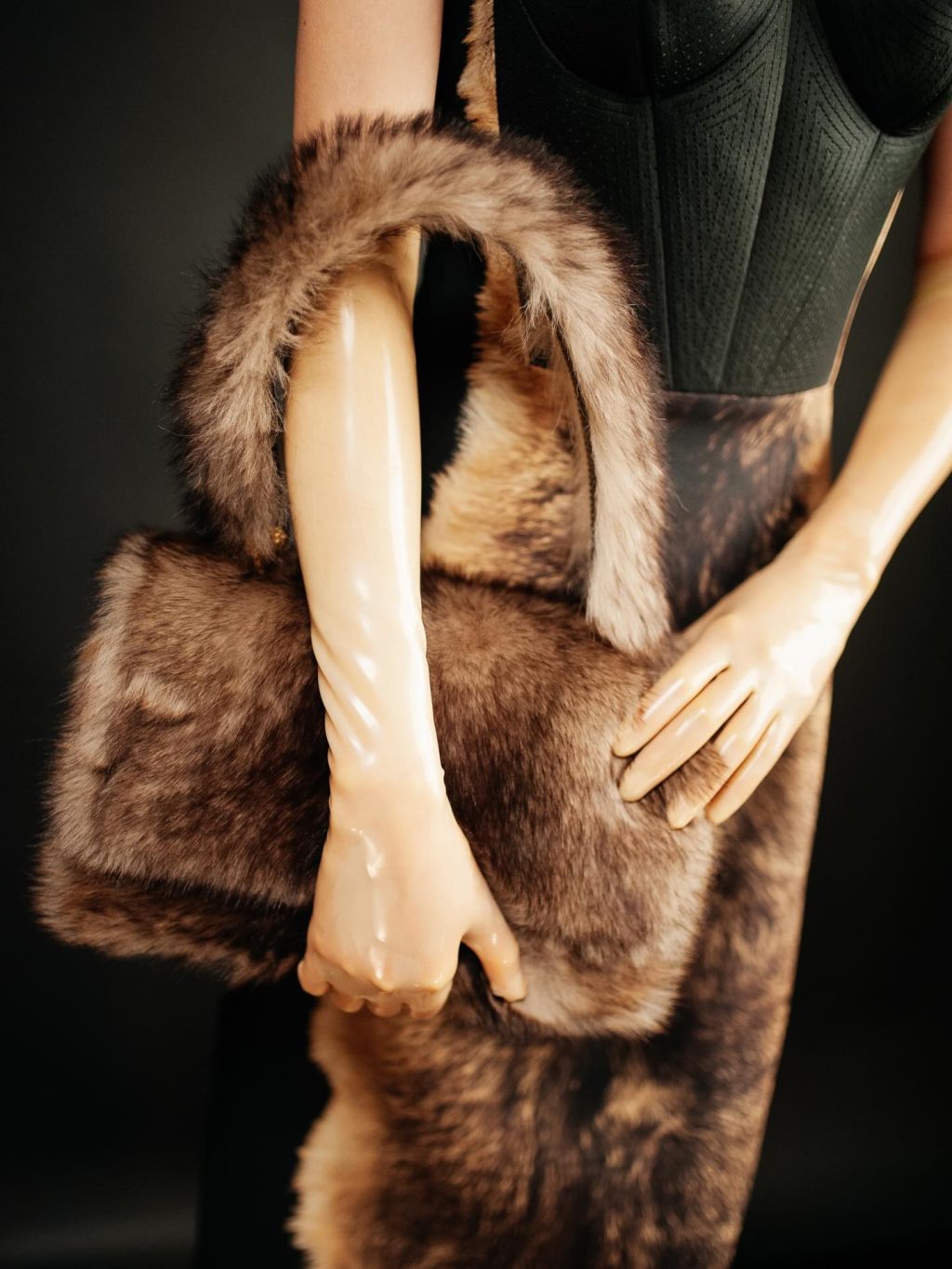
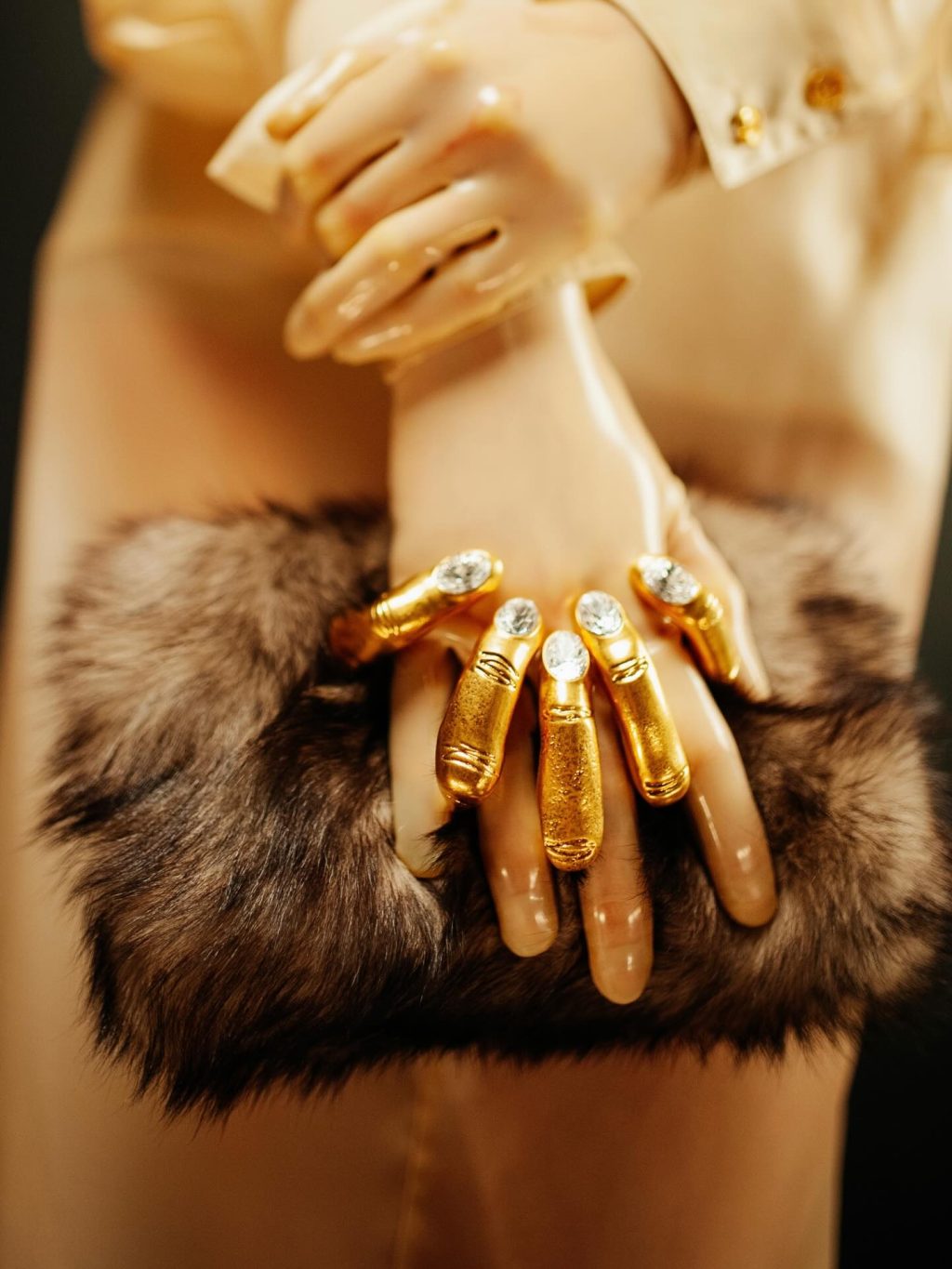
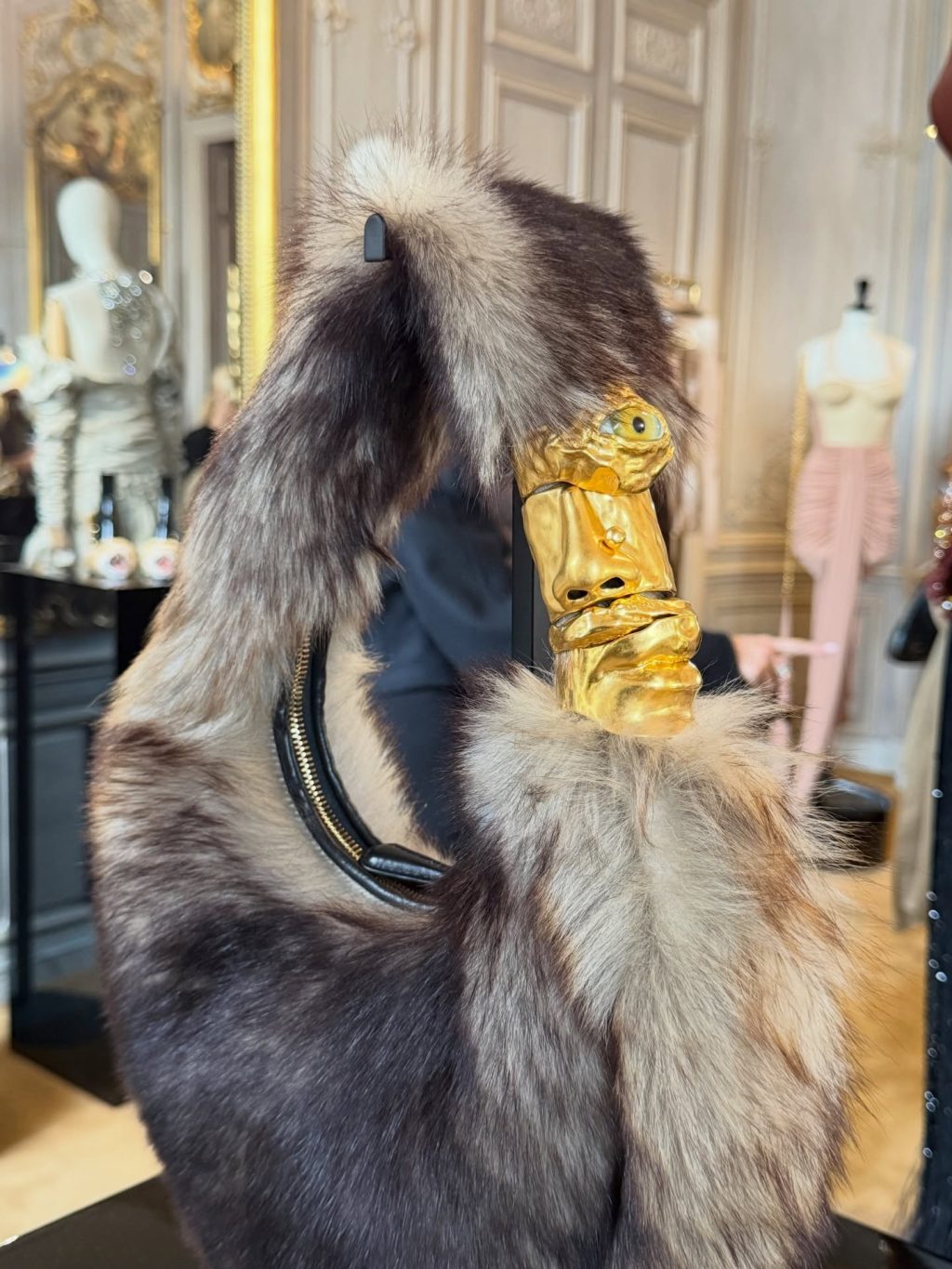
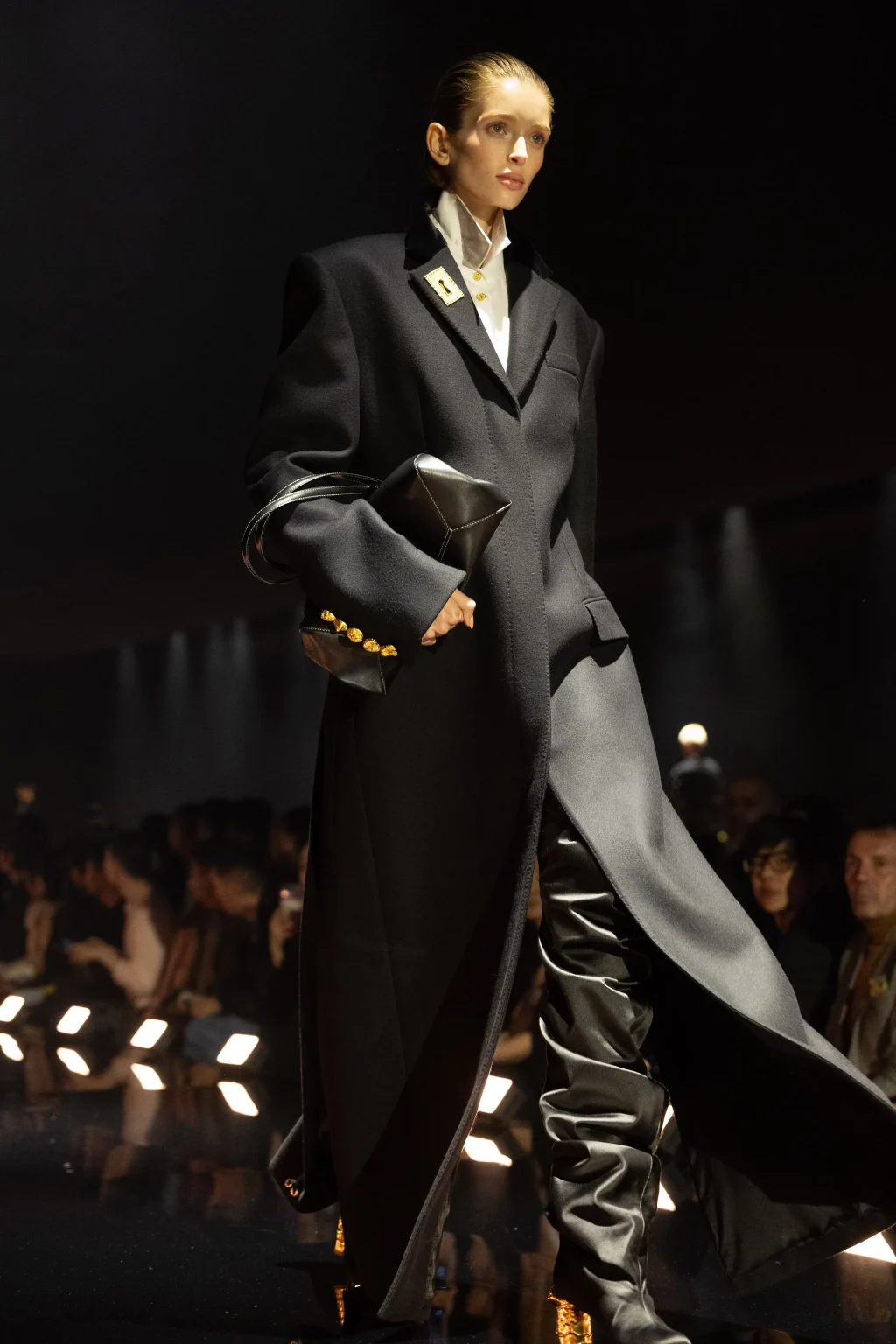
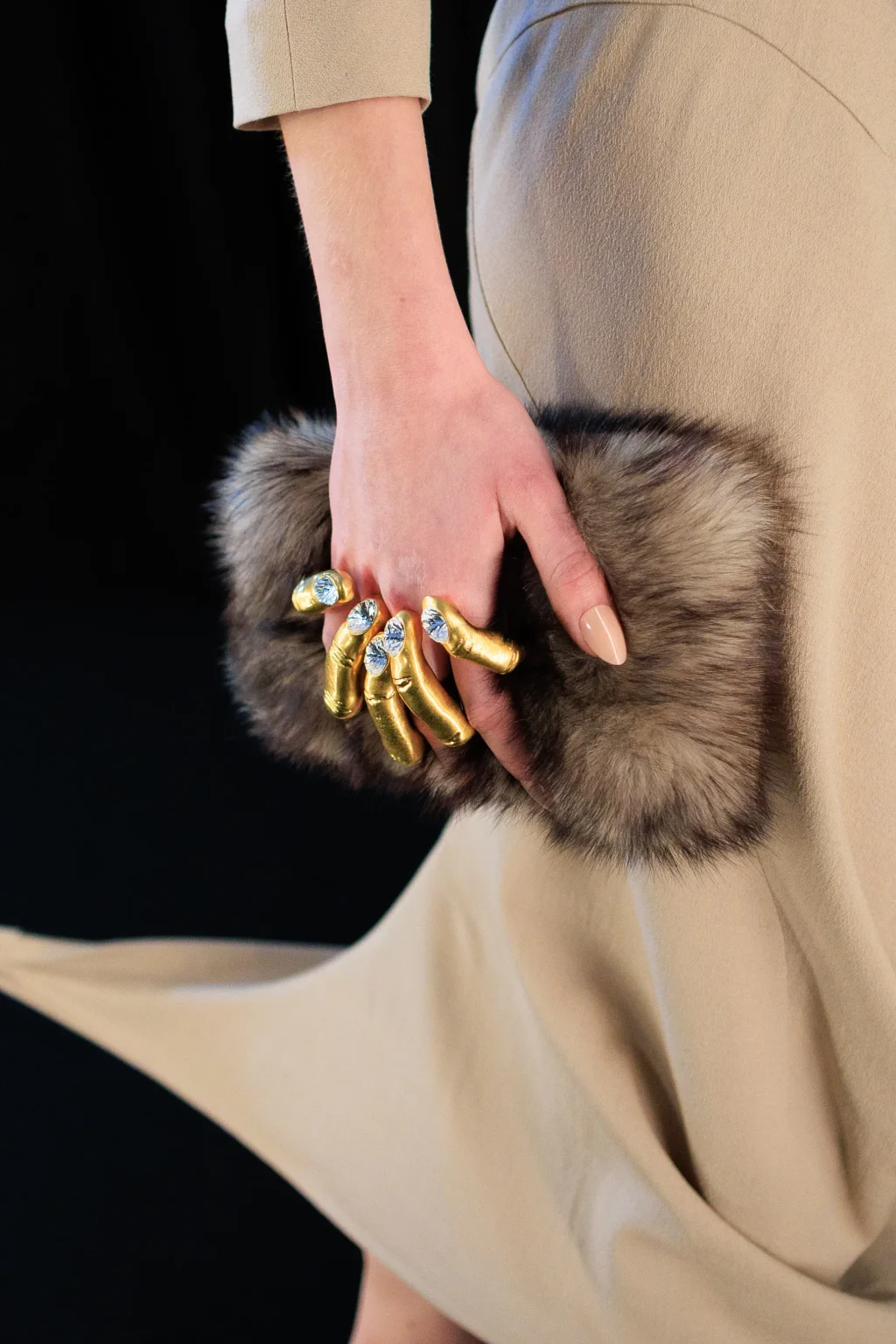
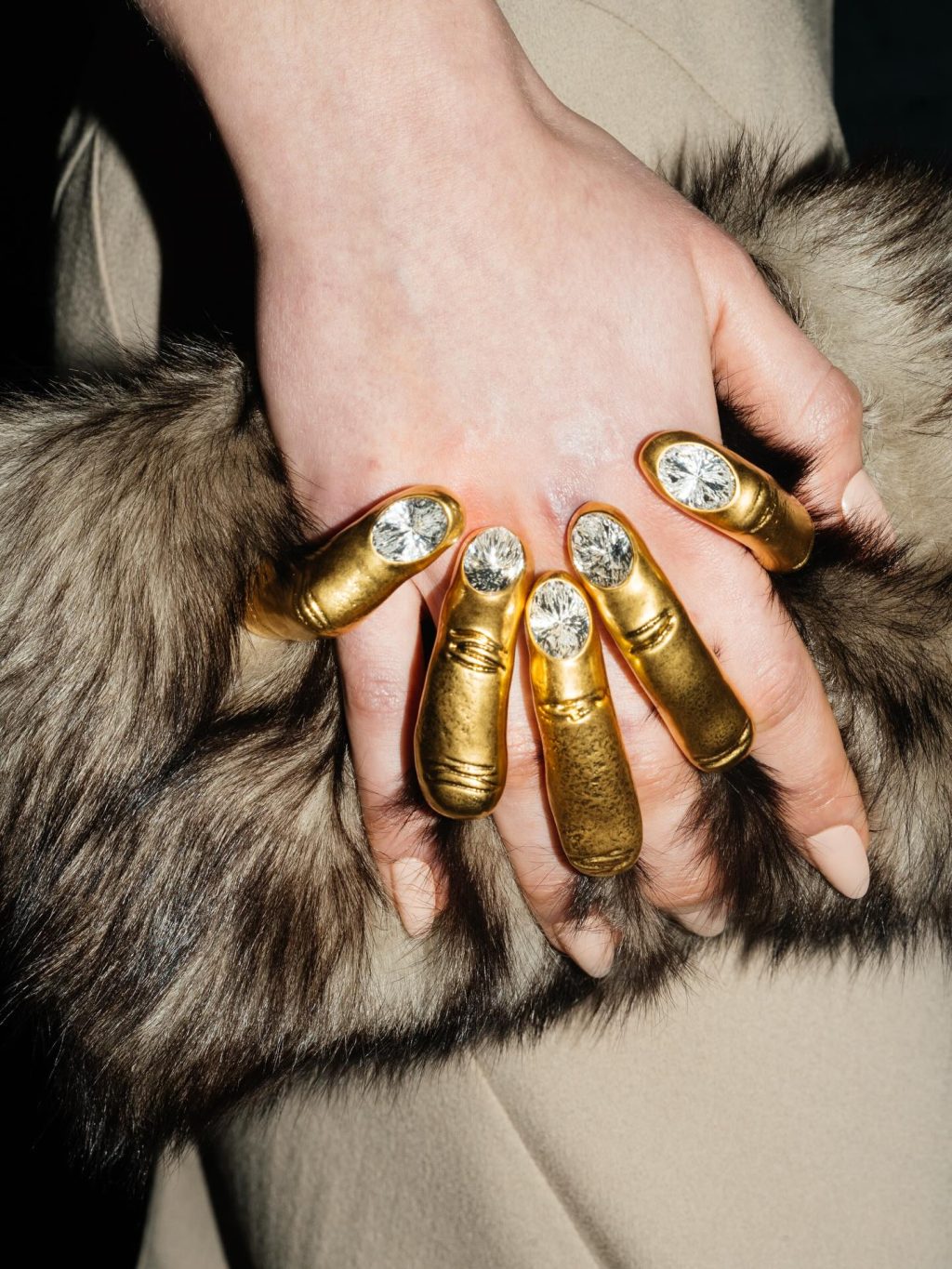
In keeping with that duality, the Schiaparelli FW26 bags moved between strict architectural shapes and surrealist ornamentation. Lamb-fur clutches grew anatomical metal fingers. Mini top-handle bags balanced on bird claws. Velvet evening bags carried sculptural bird handles. And throughout the collection, one motif appeared again and again: the keyhole.
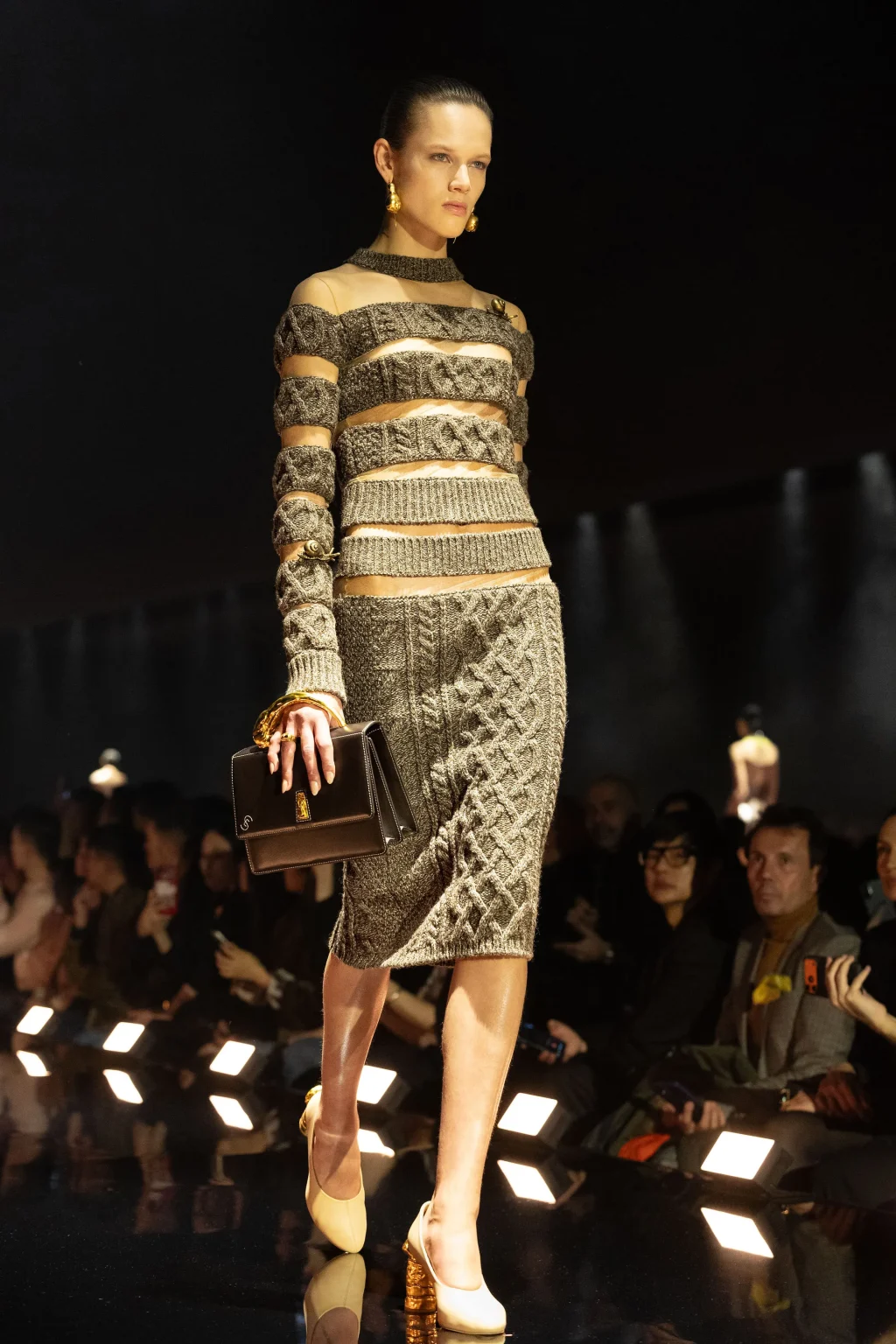
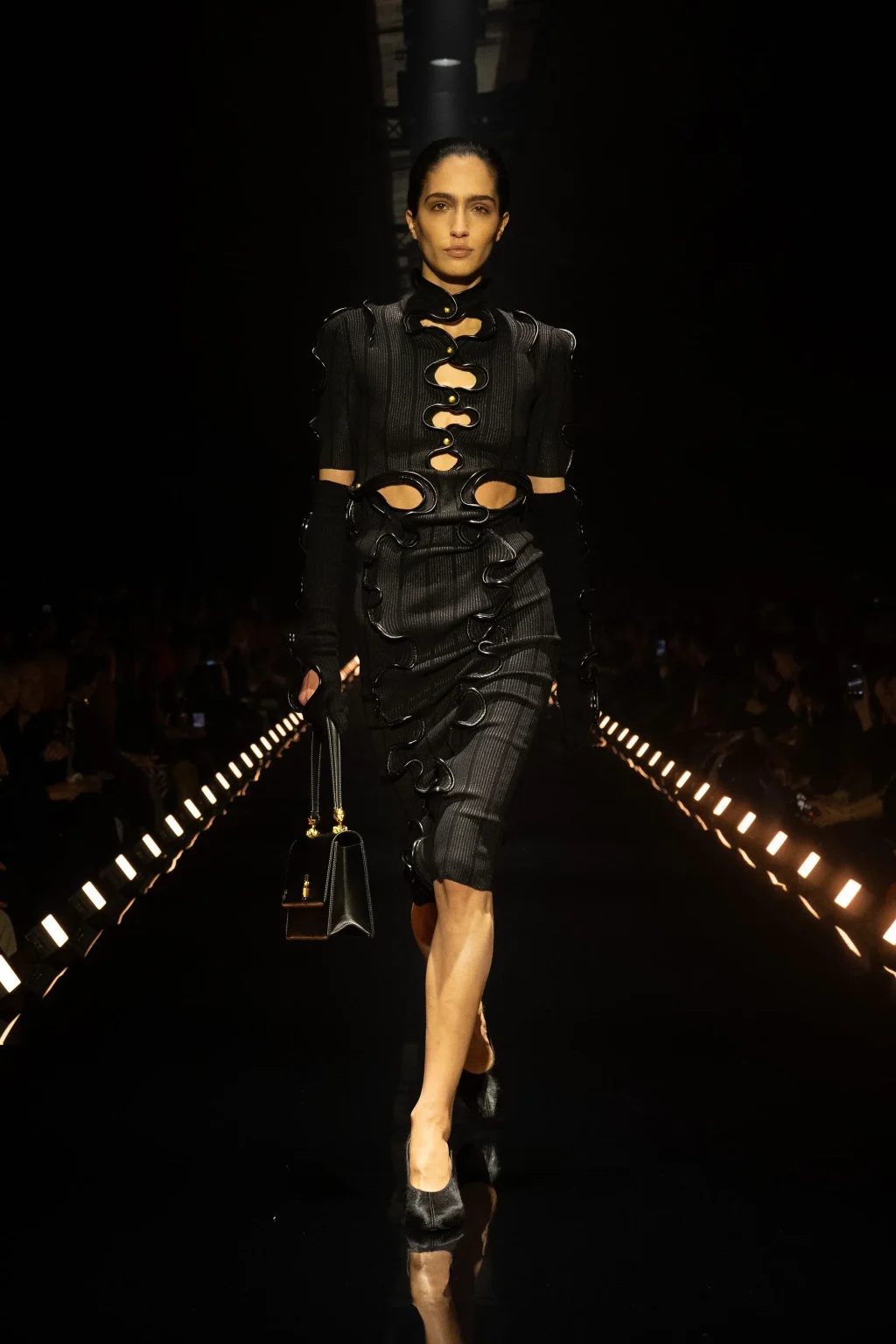
The result was a bag lineup that felt unmistakably Schiaparelli — theatrical yet wearable, rooted in the house’s surrealist history while continuing Daniel Roseberry’s ongoing project of translating Elsa Schiaparelli’s ideas for a contemporary audience.
The Context
The timing of the collection carried symbolic weight. Just weeks after the show, the Victoria & Albert Museum in London prepared to open “Schiaparelli: Fashion Becomes Art,” a major retrospective dedicated to the life and work of Elsa Schiaparelli.
The exhibition underscores a radical idea Elsa proposed nearly a century ago: fashion could be more than clothing. It could function as art, metaphor, psychology, and fantasy simultaneously.
Her garments famously challenged what fashion was supposed to be. Dresses could feature skeleton embroideries exposing the inner body. Pockets might be fitted with drawer pulls, suggesting hidden chambers of the psyche. Clothing could act as storytelling rather than simply decoration.
Daniel Roseberry’s The Sphinx collection revisits this philosophy — not by recreating archival pieces, but by exploring the tension between tradition and reinvention.
The Sphinx: A Collection Built on Contradictions
The title The Sphinx itself reflects the central theme of the collection: mystery. For Roseberry, the house’s keyhole symbol became the conceptual anchor. At first glance, it appears to be a simple geometric motif. But within the Schiaparelli vocabulary, it represents something more profound: the idea that every woman contains an unknowable interior.
Fashion, in this framework, becomes the tool through which that mystery is externalized.
Throughout the ready-to-wear lineup, contradictions shaped the silhouettes and materials:
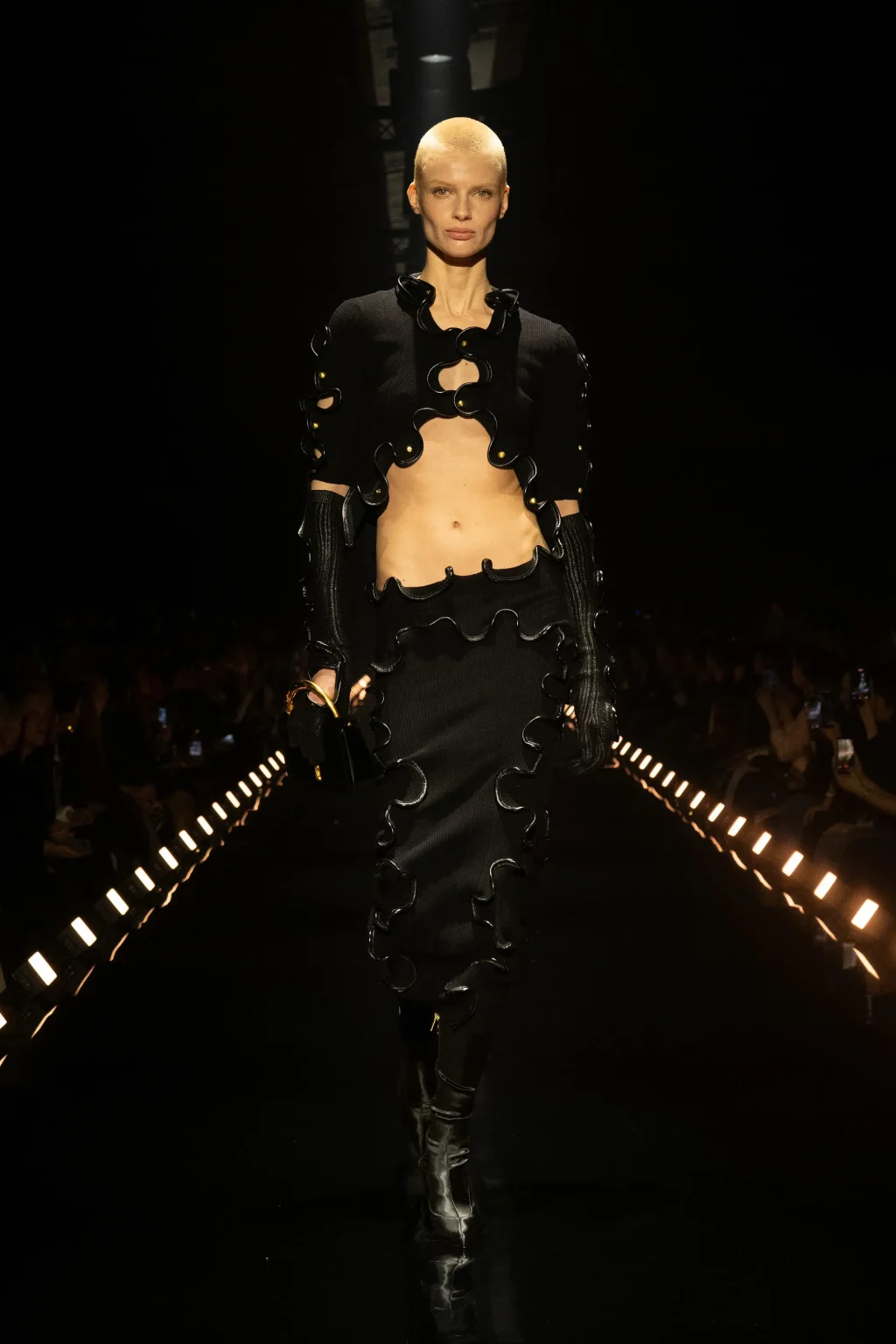
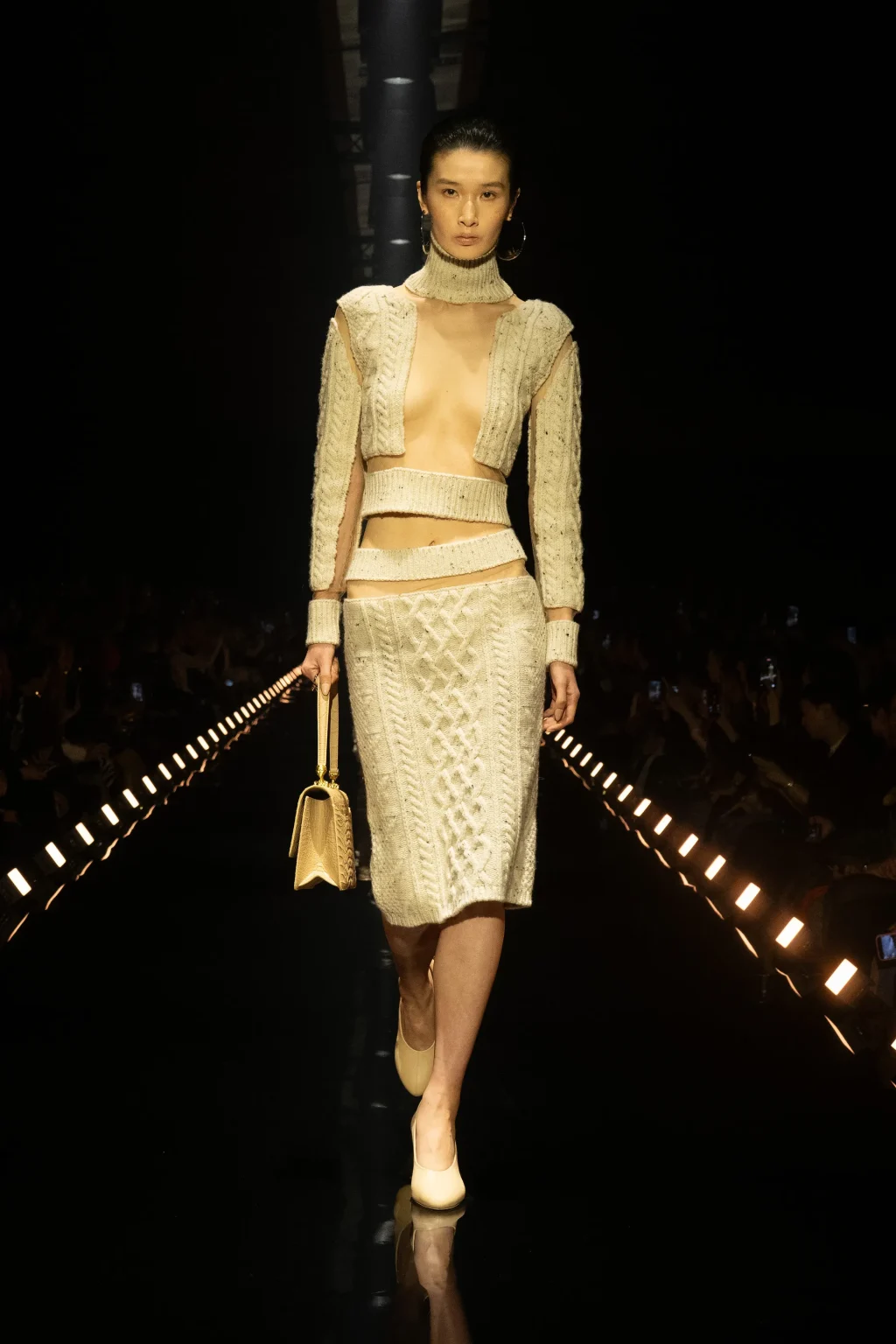
- Traditional Aran cable knitwear was sliced open with illusion tulle panels.
- Liquid plissé silk blends were laminated to create spiral garments that appeared structured yet fluid.
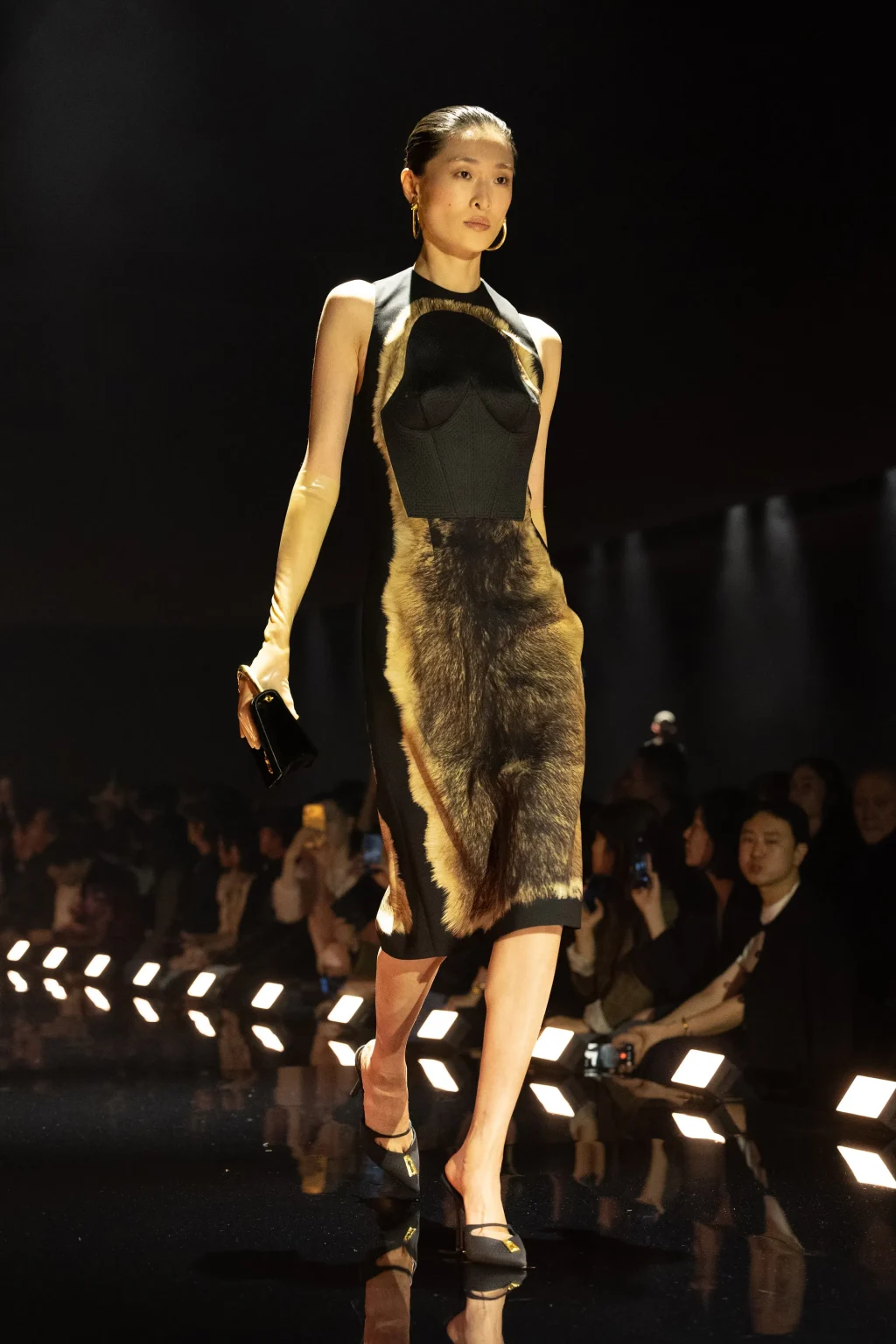
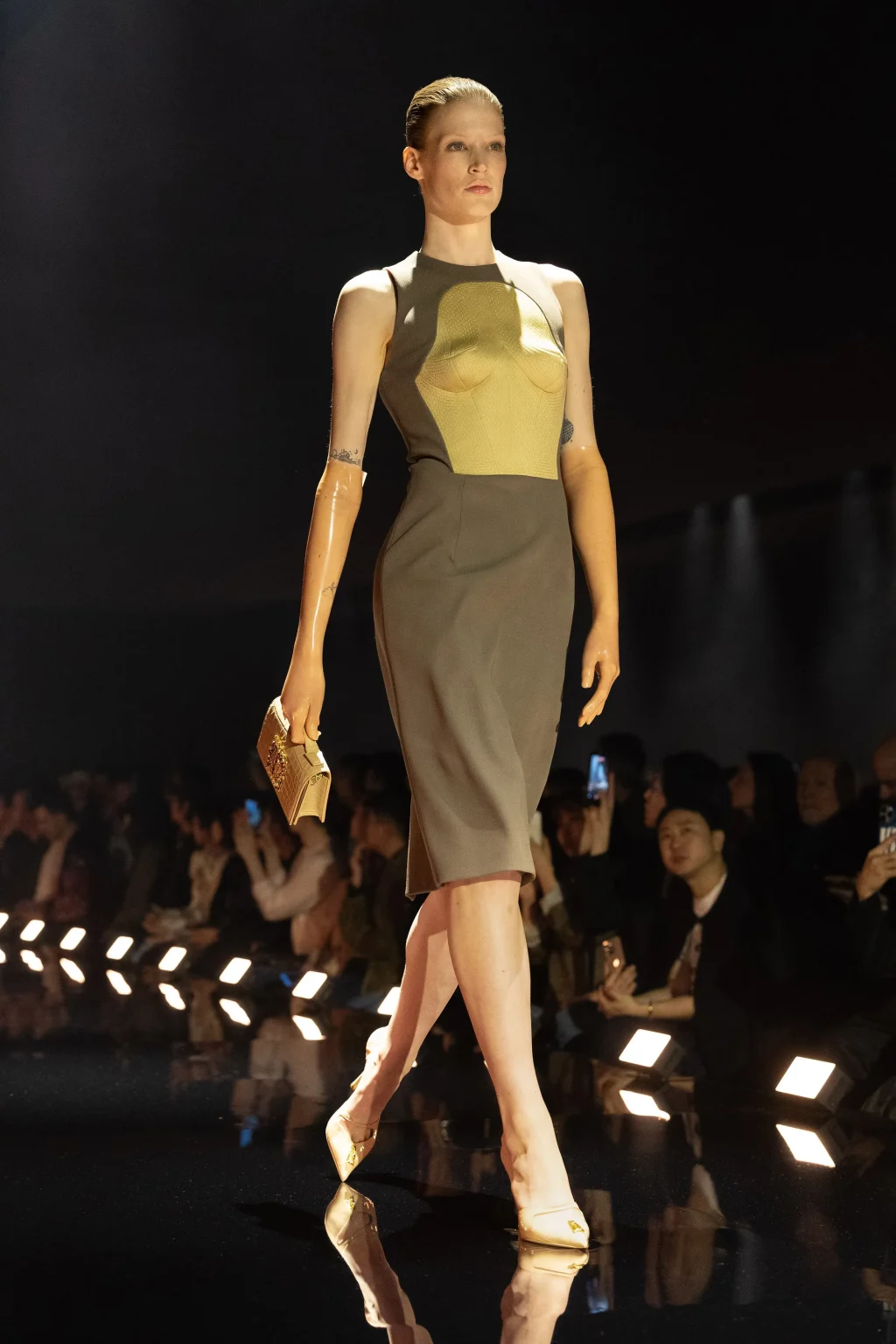
- Tailored leather-effect dresses were actually trompe-l’oeil printed wool silk.
- Performance fabrics were used to evoke authenticity — a nod to Elsa’s early embrace of jersey in couture.
Accessories followed the same philosophy. Bags appeared structured but surreal, luxurious but playful, sculptural yet functional.
Schiaparelli Fall-Winter 2026–2027 Bags
The Schiaparelli FW26 bags represent one of the house’s most diverse accessory lineups in recent seasons. Several existing signatures were expanded — most notably the Keyhole bag family — while new sculptural handles and surreal hardware pushed the designs further into the territory of collectible objects.
Materials ranged from velvet and calfskin leather to lamb fur and exotic skins, often paired with signature brass hardware cast in anatomical or animal forms.
The Keyhole Bags
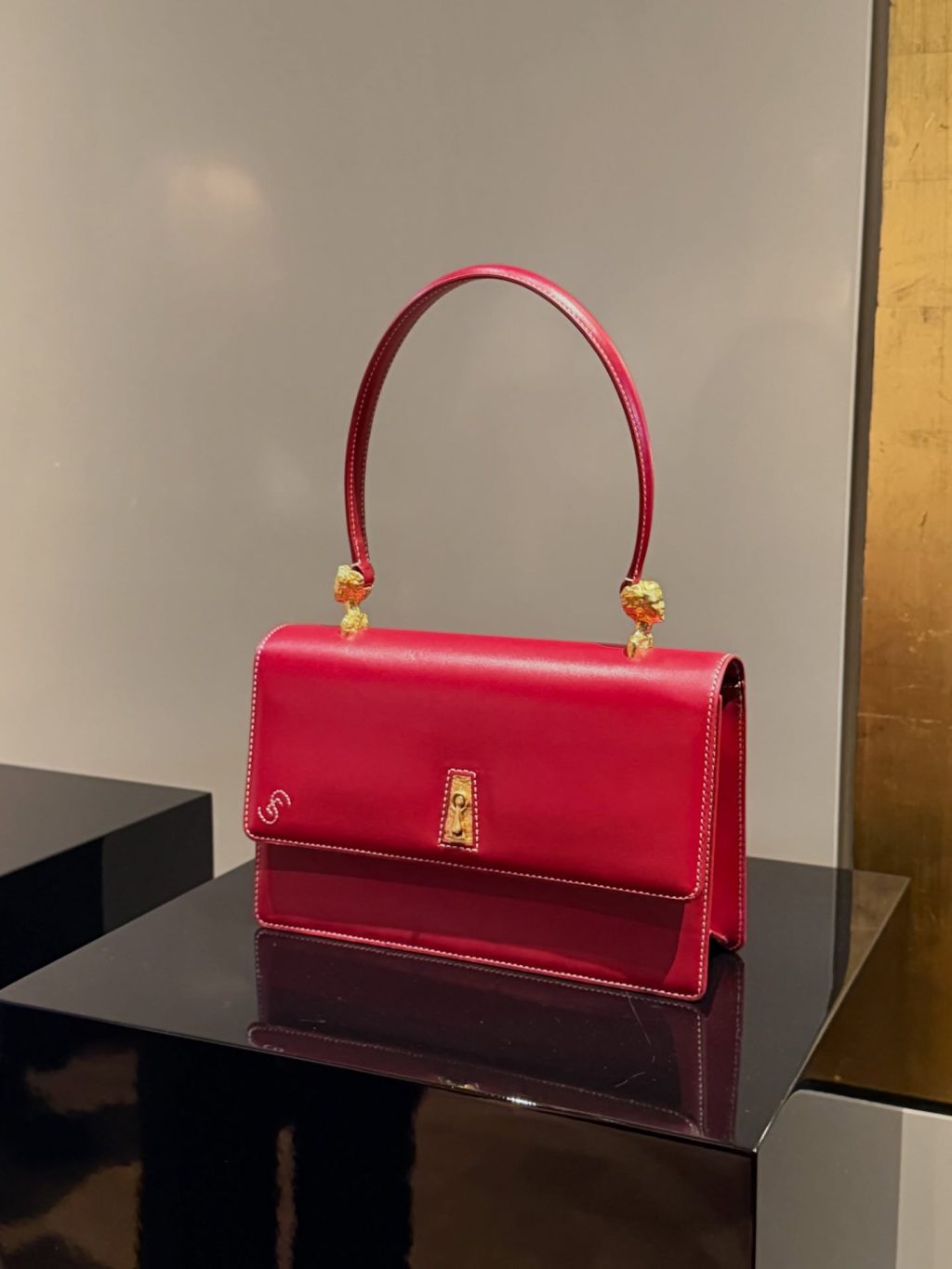
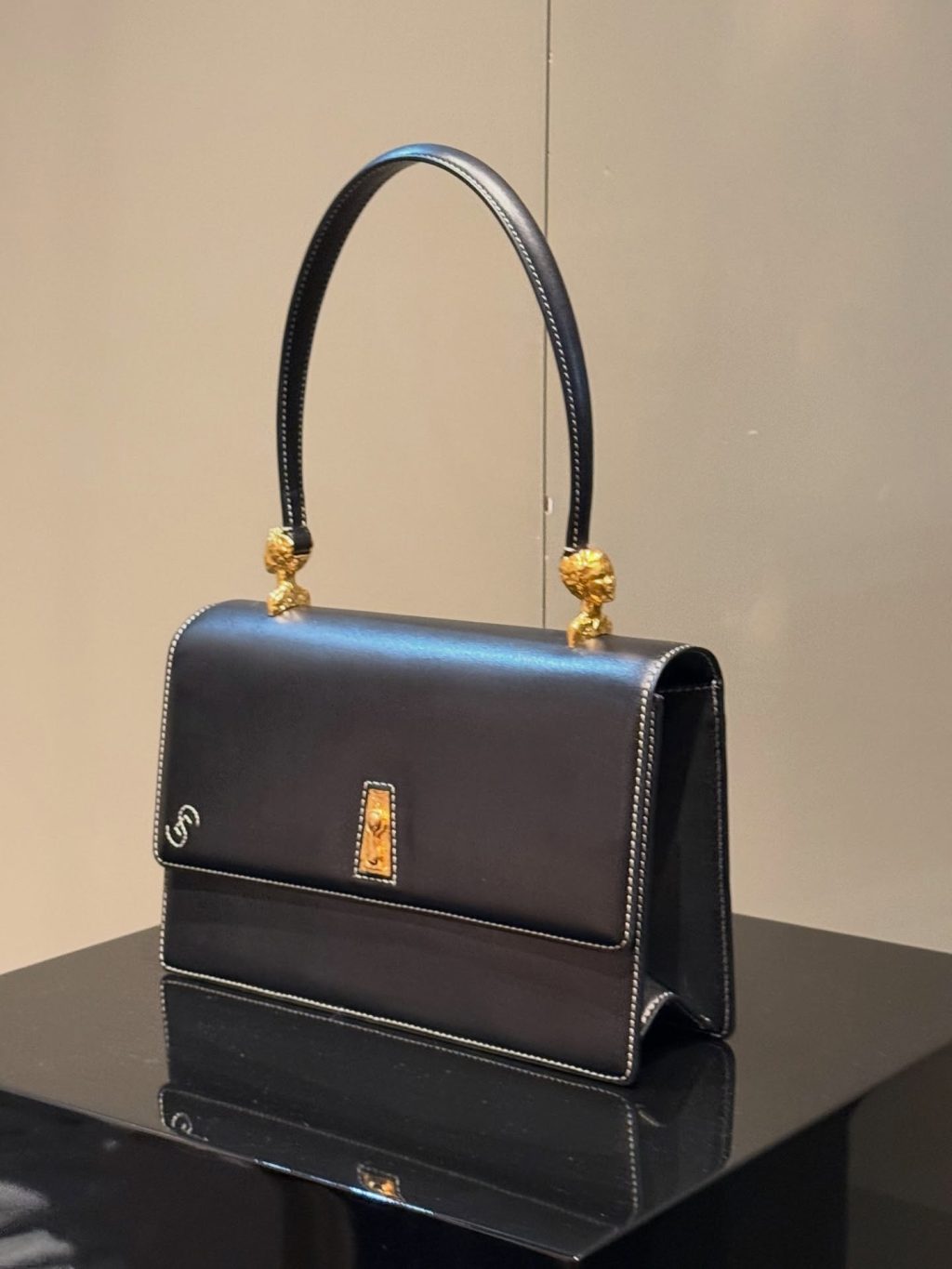
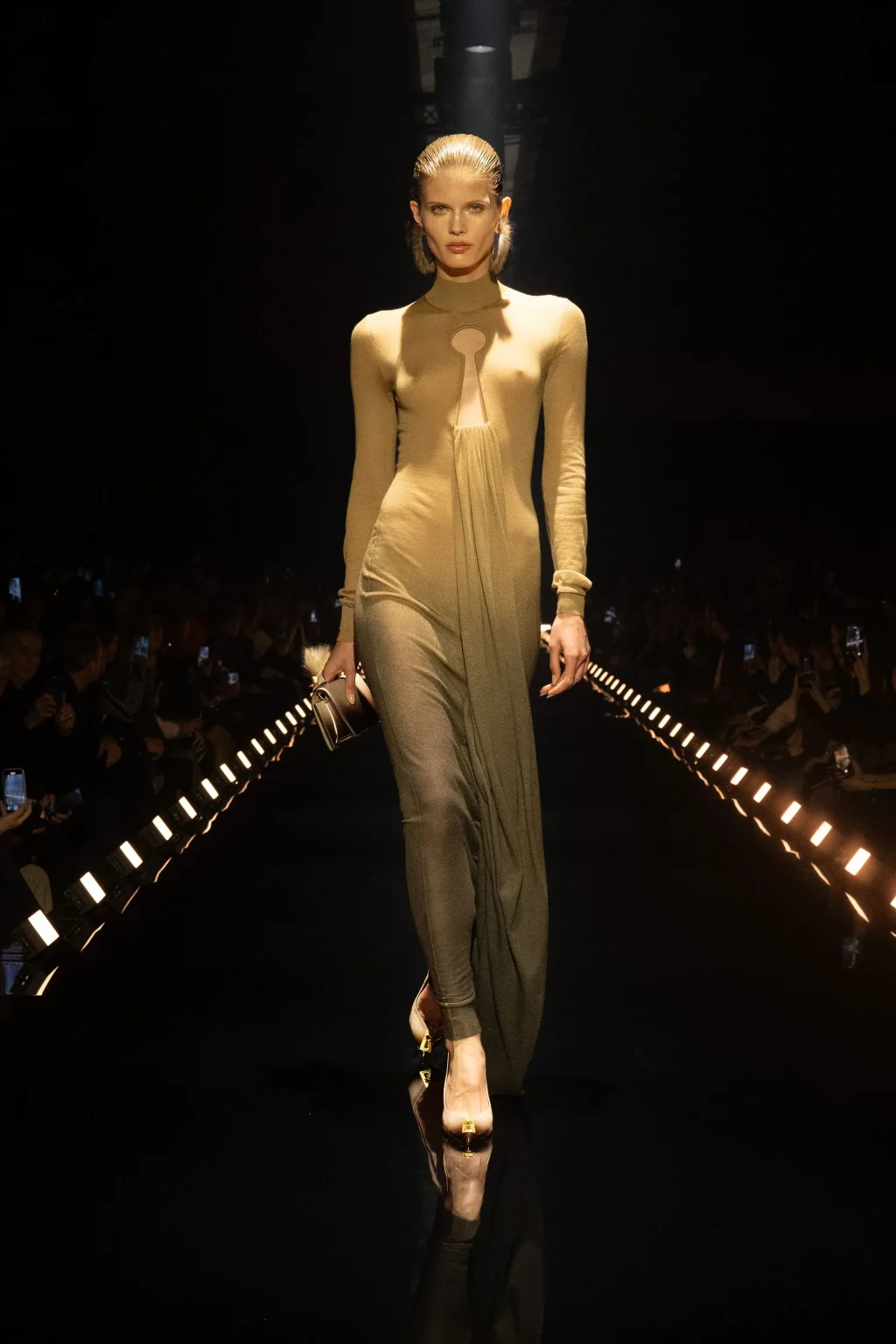
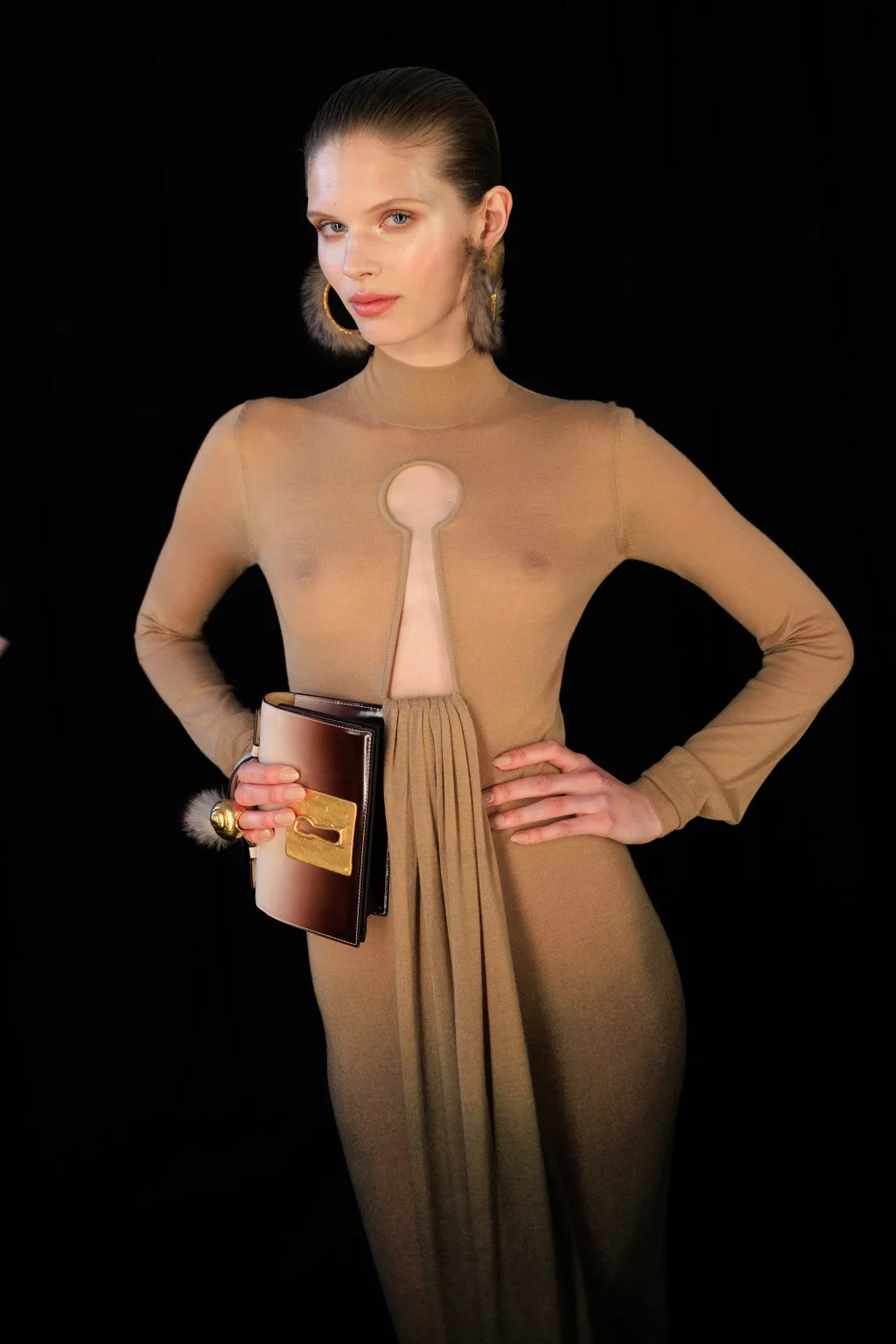
The Keyhole bag remains one of the most recognizable modern Schiaparelli accessories. Introduced in previous collections, the motif appeared throughout the FW26 lineup in multiple interpretations.
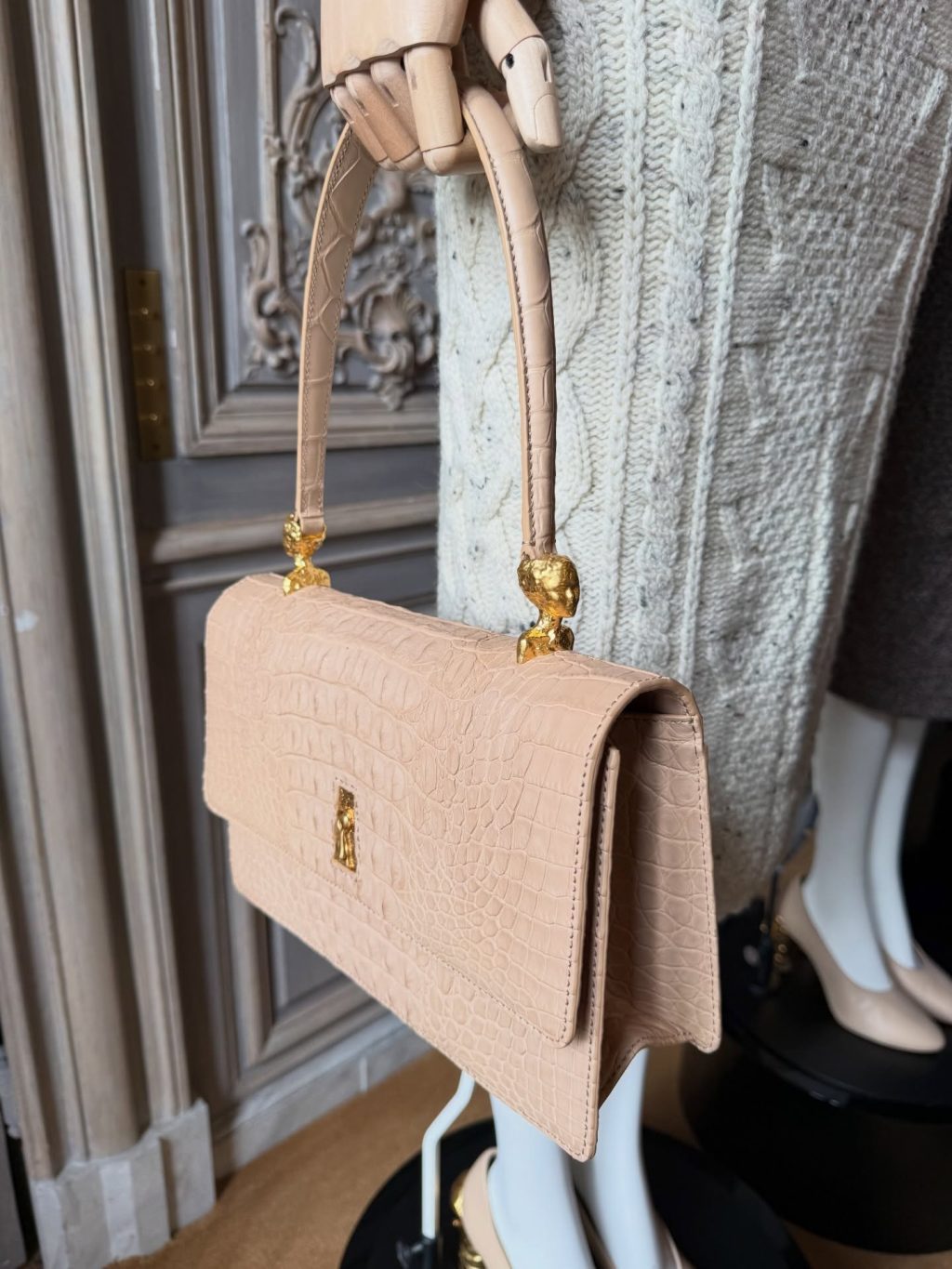
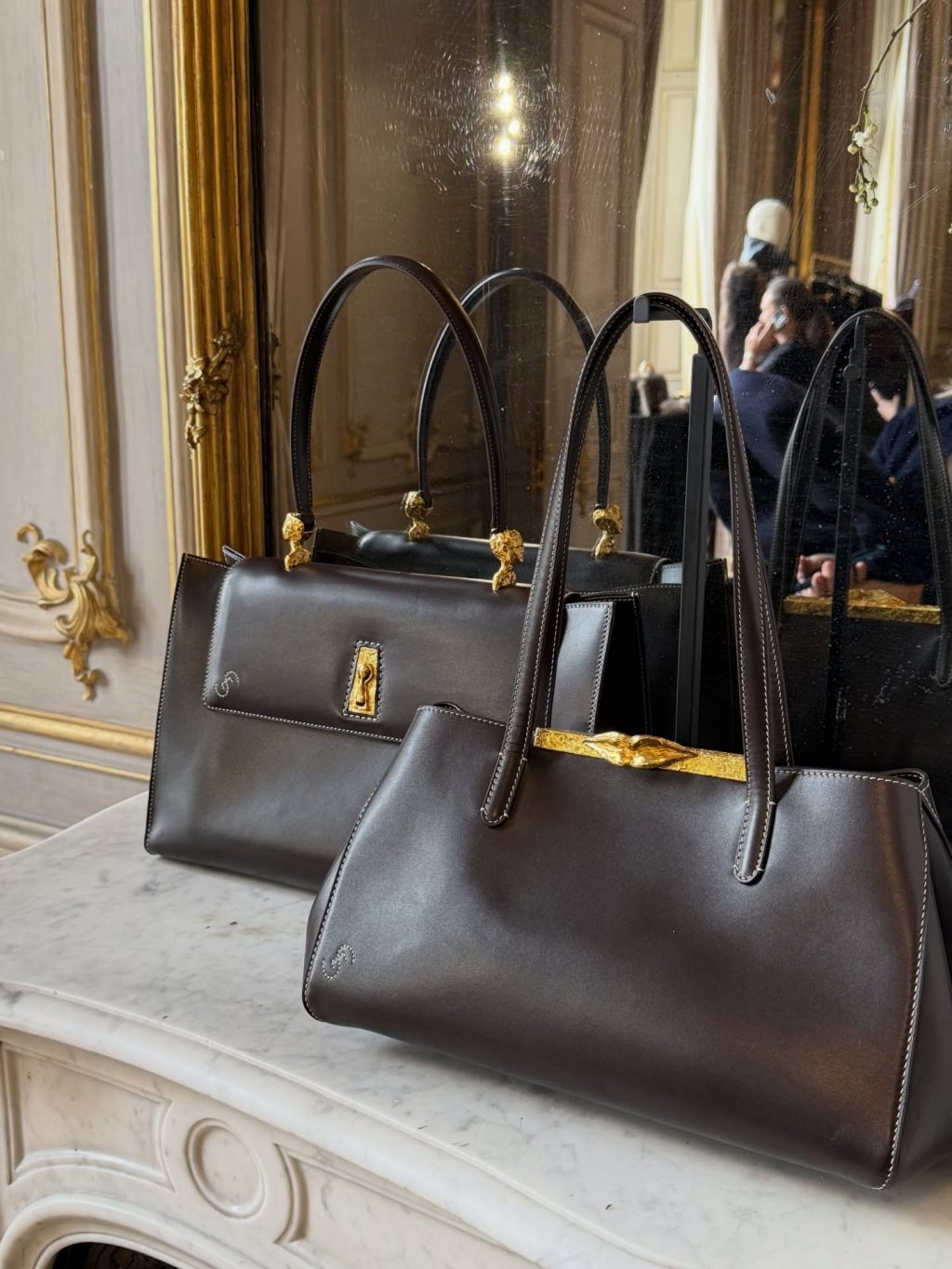
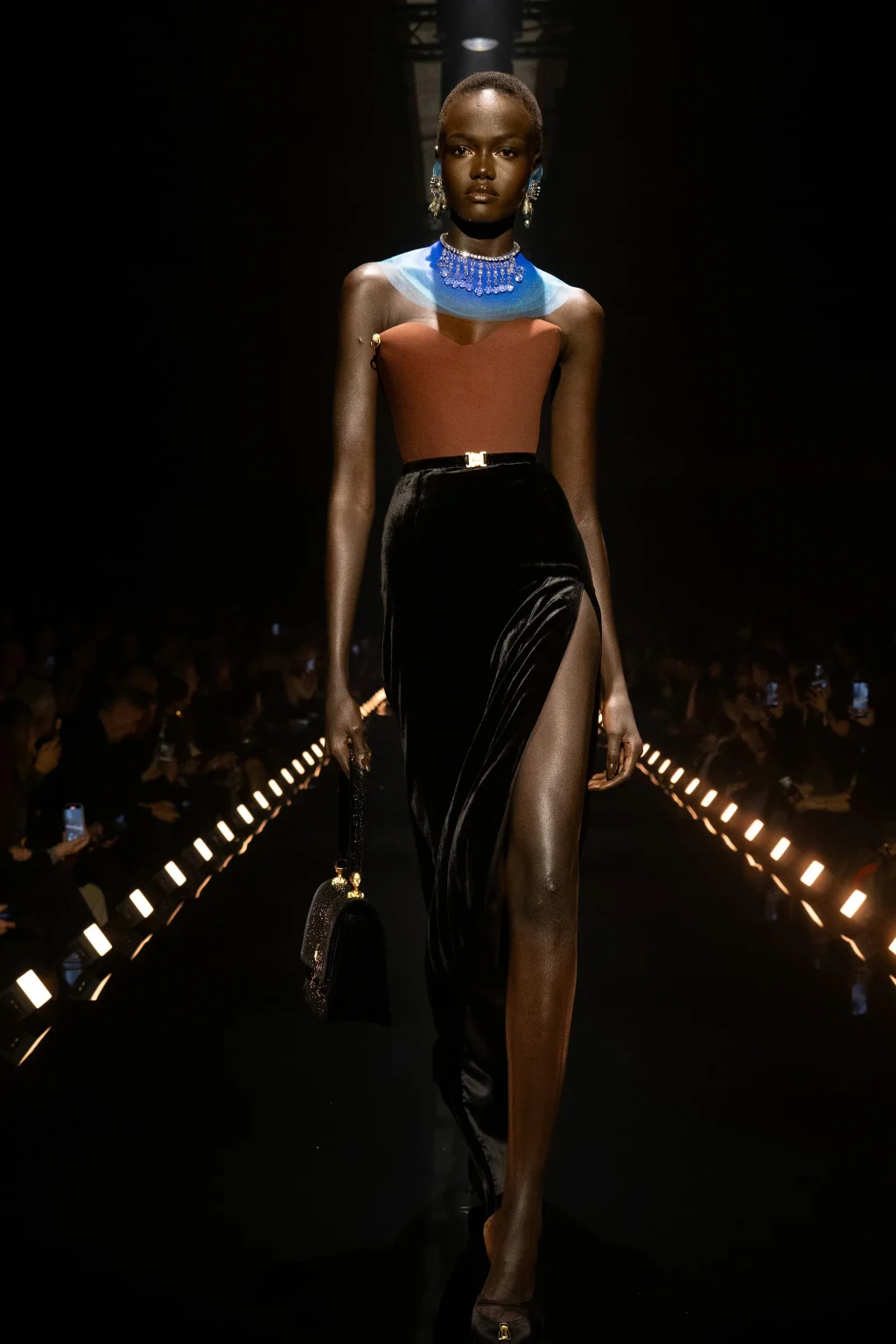
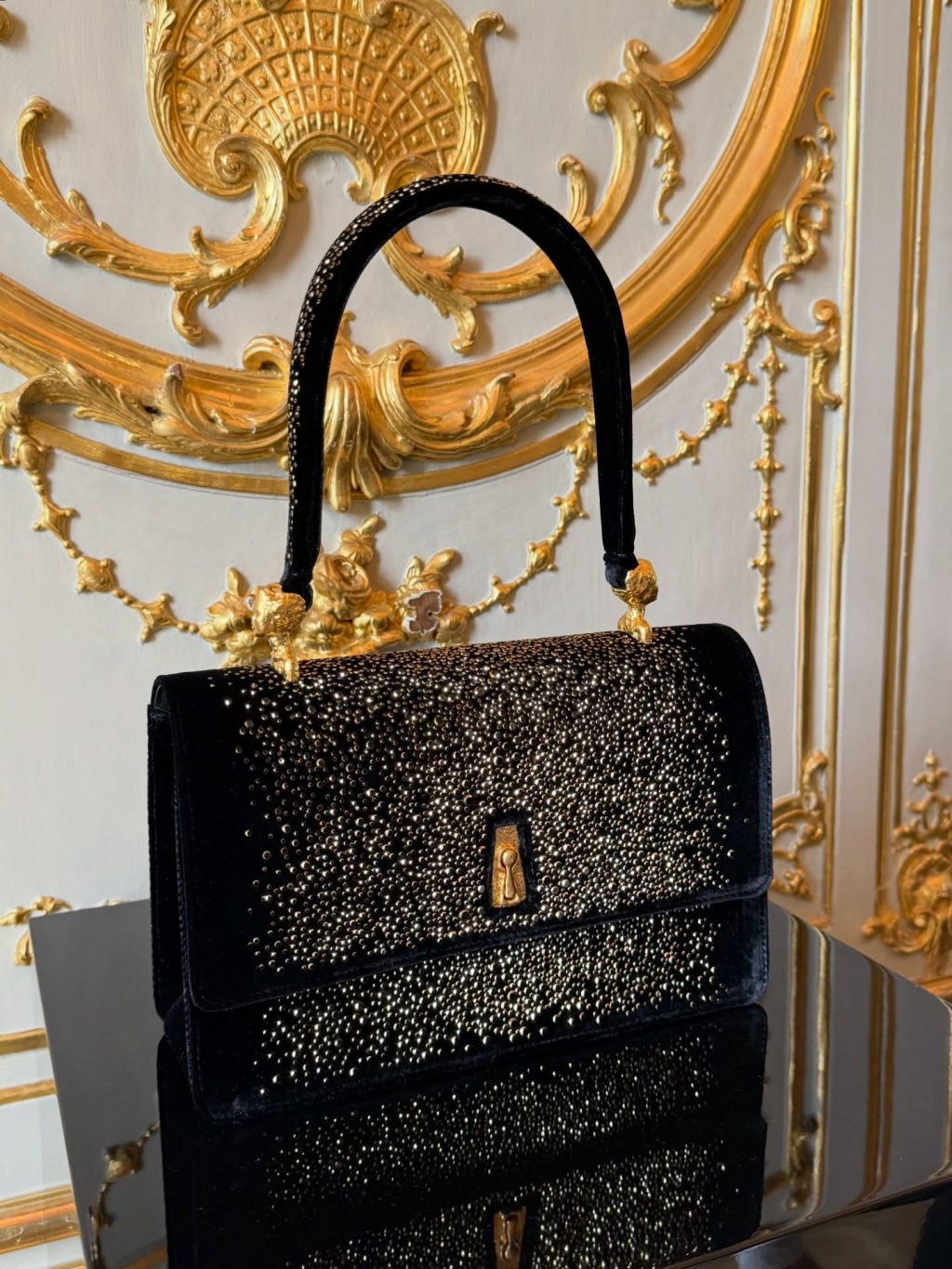
Keyhole plaques adorned velvet clutches, exotic leather bags, and small top-handle styles. On some pieces, the keyhole became a sculptural gold plate set into the flap; on others, it served as the central closure mechanism.
One standout design featured a nude alligator Keyhole clutch finished with a gold chain and a charm key, reinforcing the idea of the bag as a symbolic object rather than just an accessory.
Bird Claw and Bird Handle Bags
Elsa Schiaparelli frequently drew inspiration from the natural world, and Roseberry has continued that tradition with increasingly elaborate animal motifs.
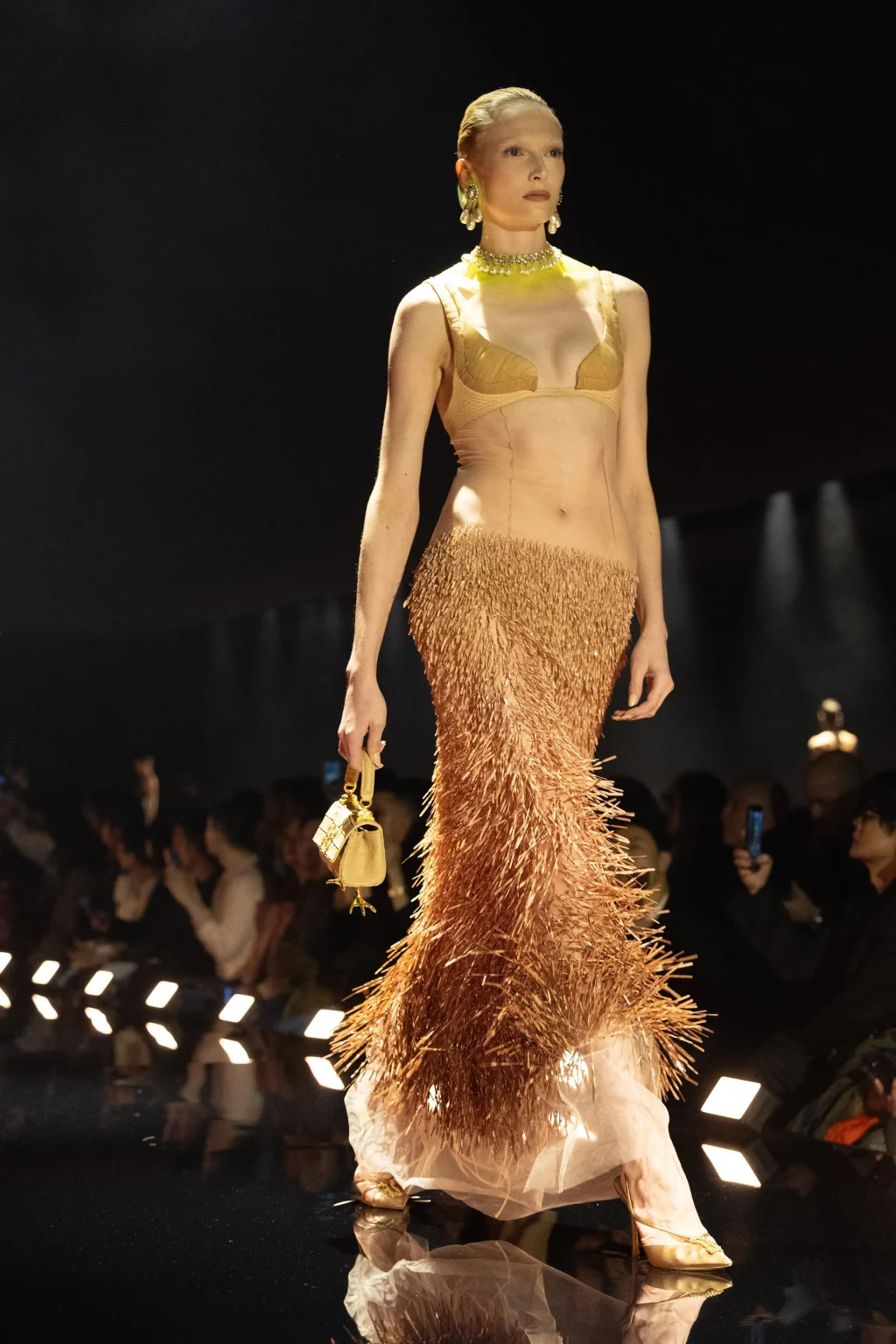
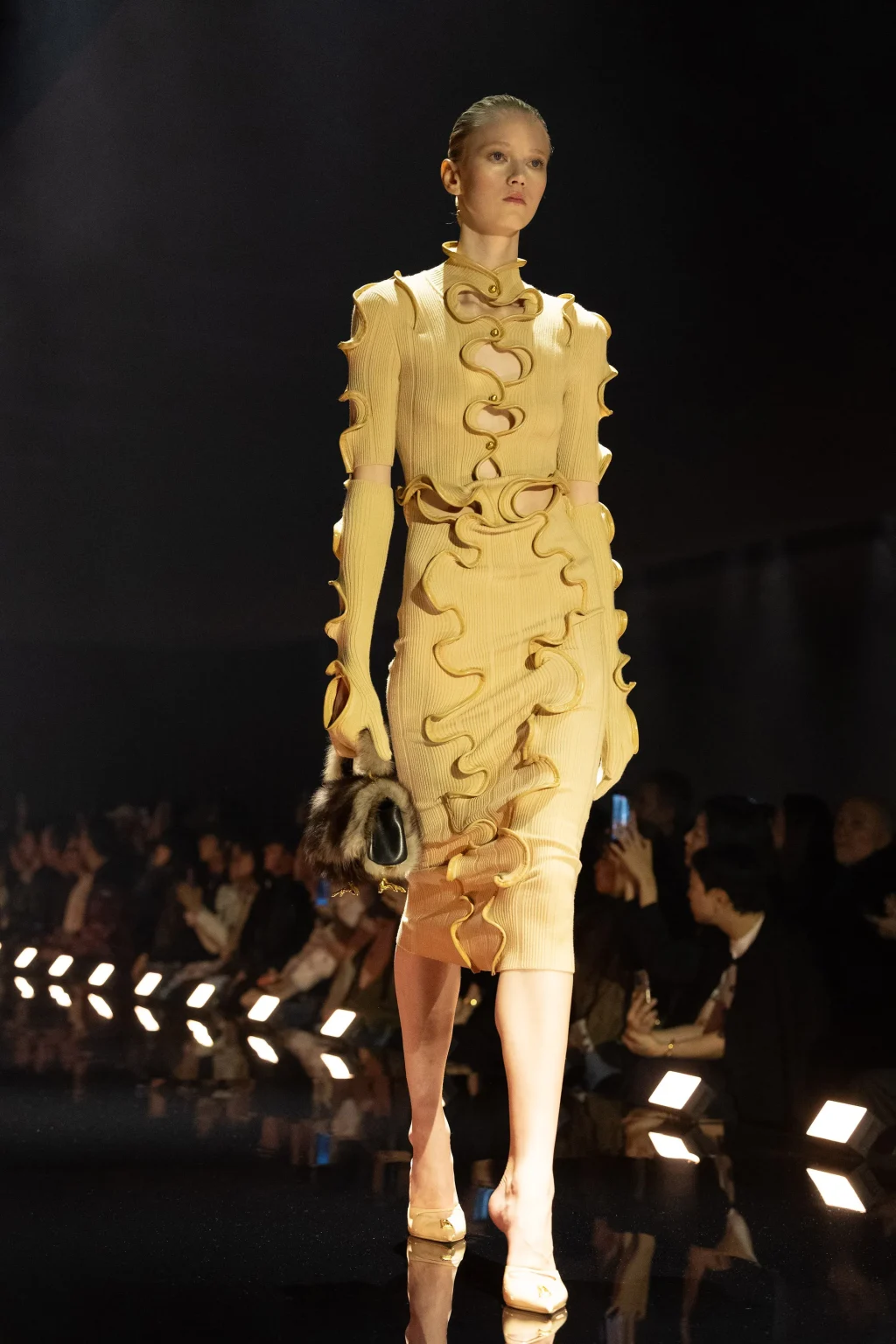
For FW26/27, the house introduced several bags featuring bird-inspired hardware:
- Mini top-handle bags resting on cast-bronze bird feet
- Crossbody styles with bird-head handles
- Velvet evening clutches topped with sculptural bird forms
These pieces blur the line between jewelry and handbag, transforming hardware into narrative sculpture.

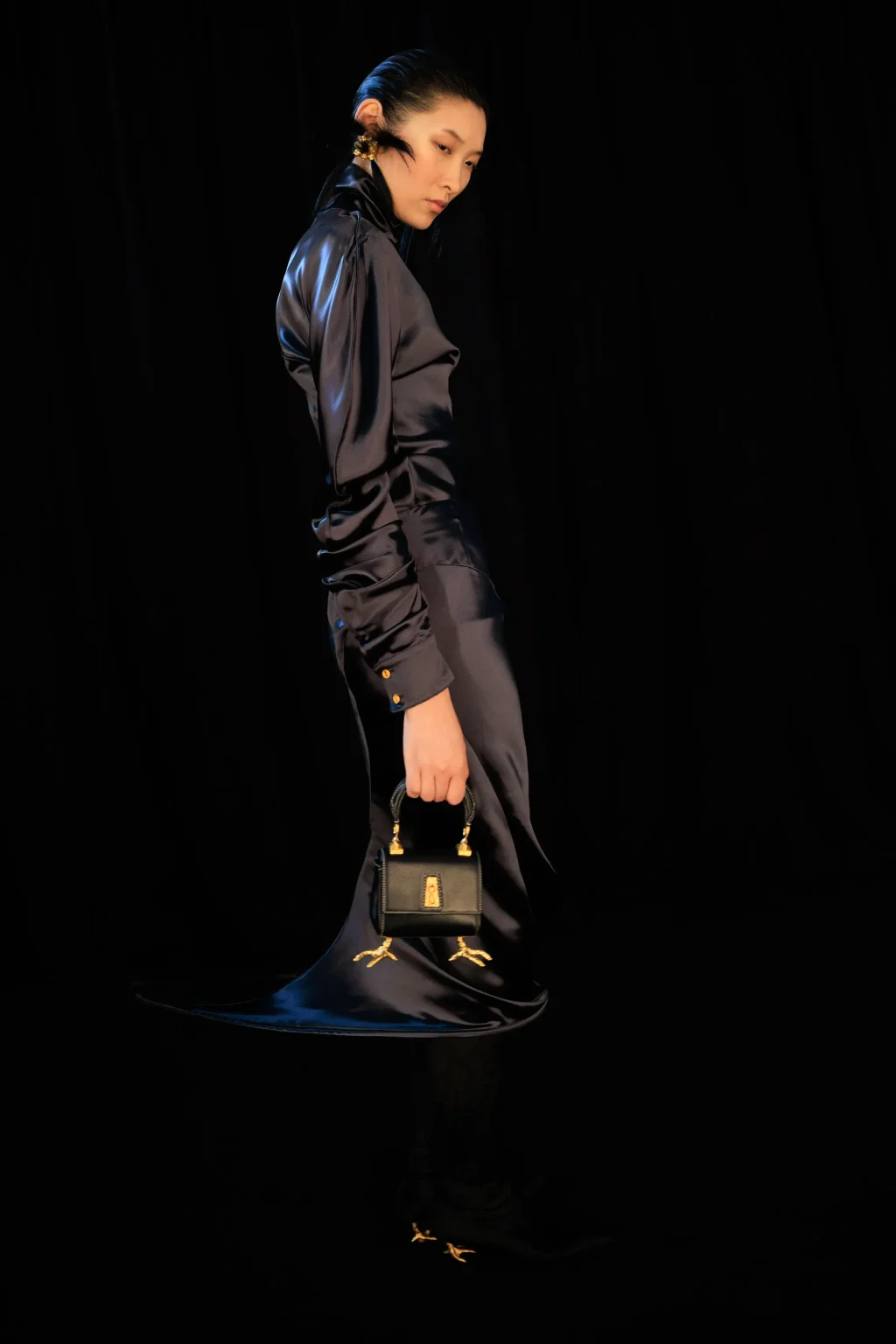
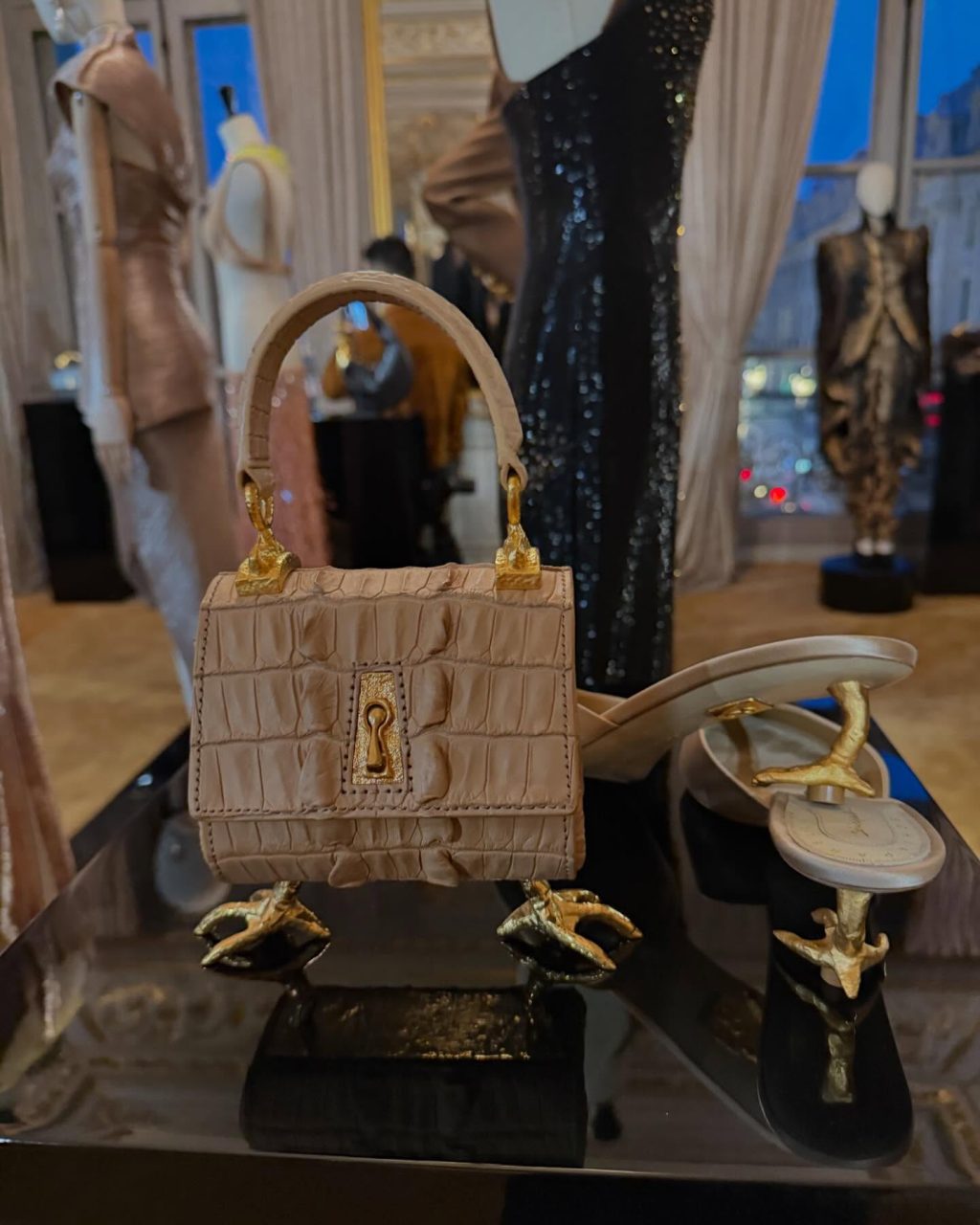
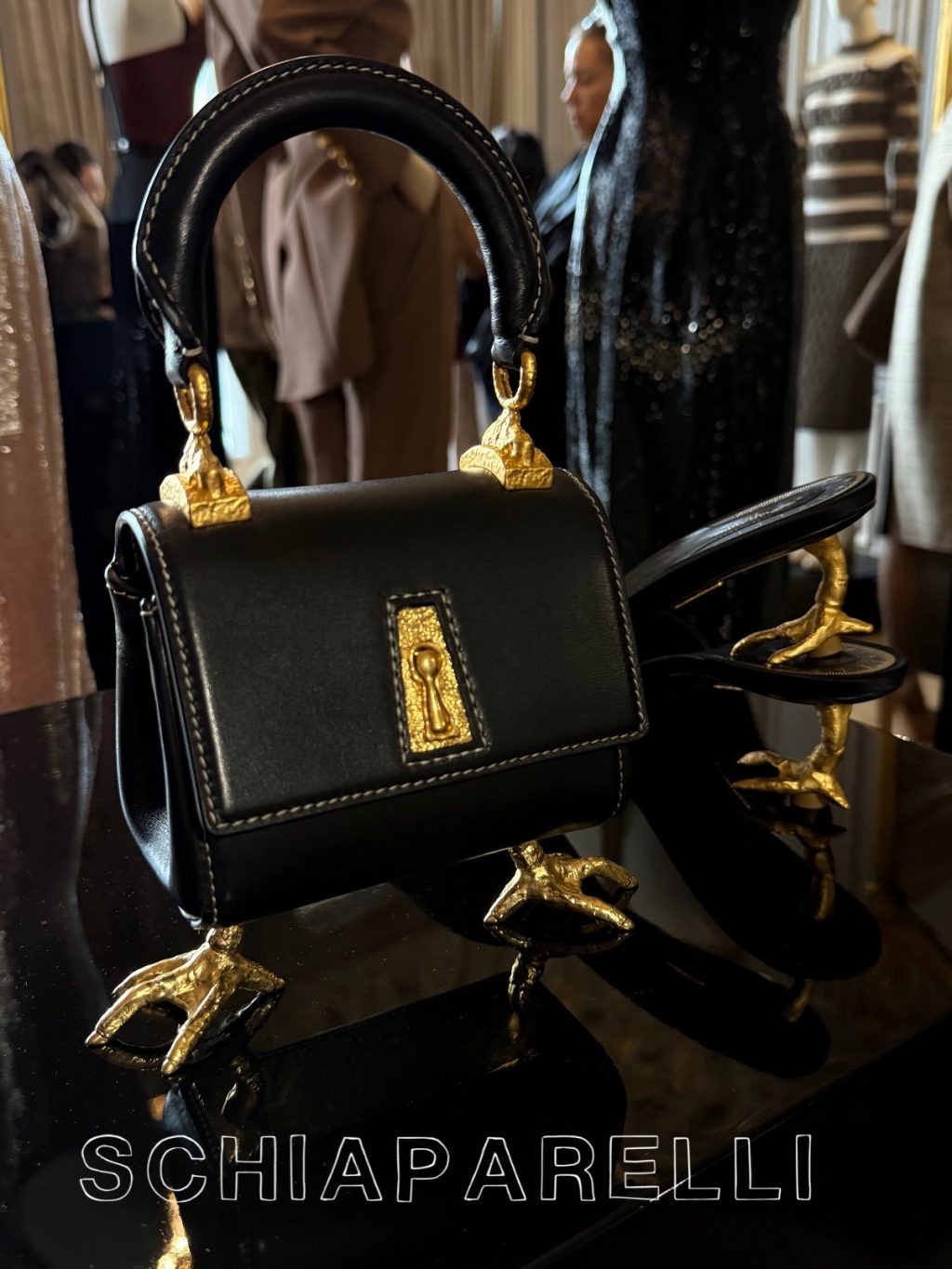
The Hand in Hand Clutches
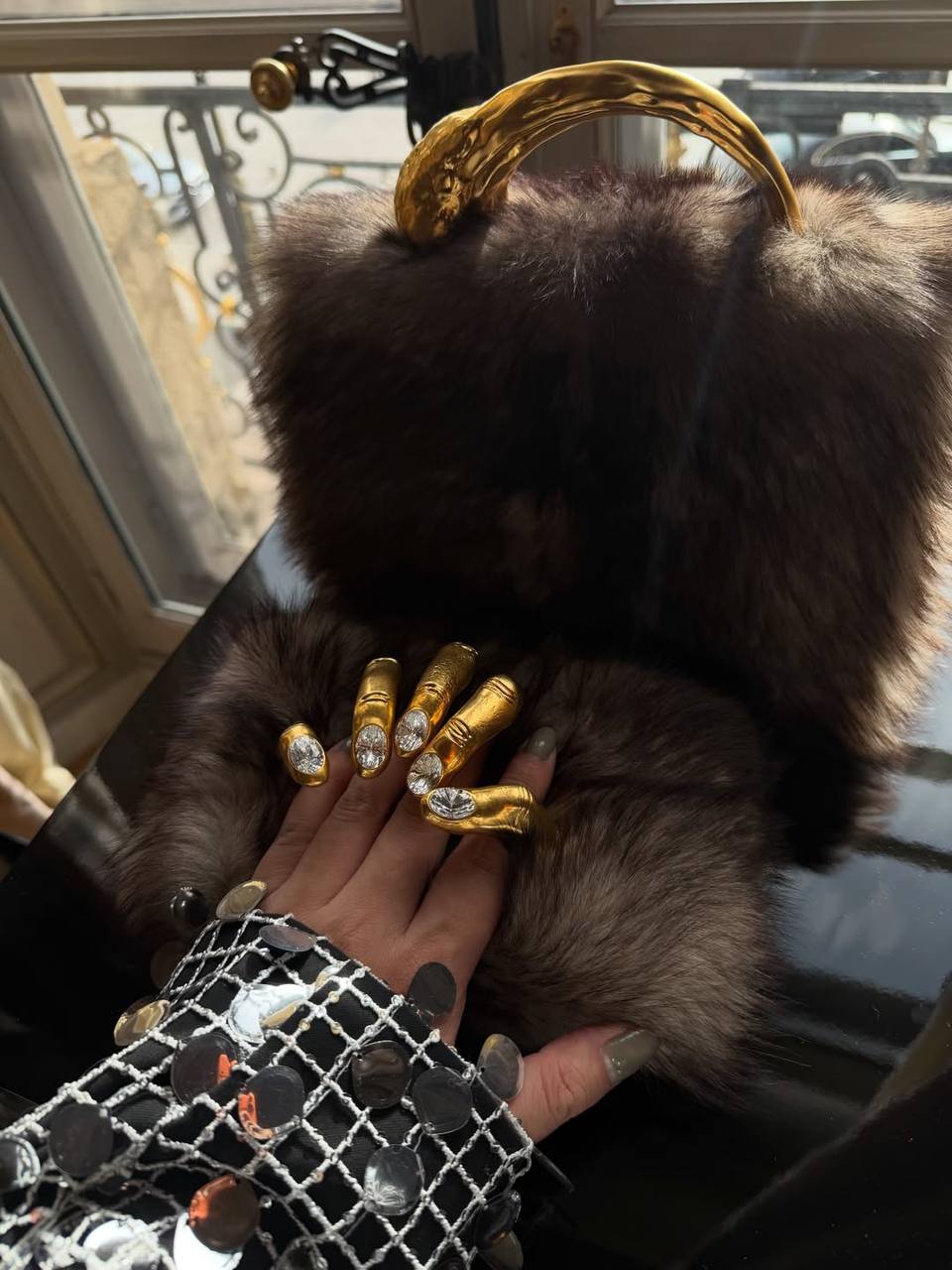
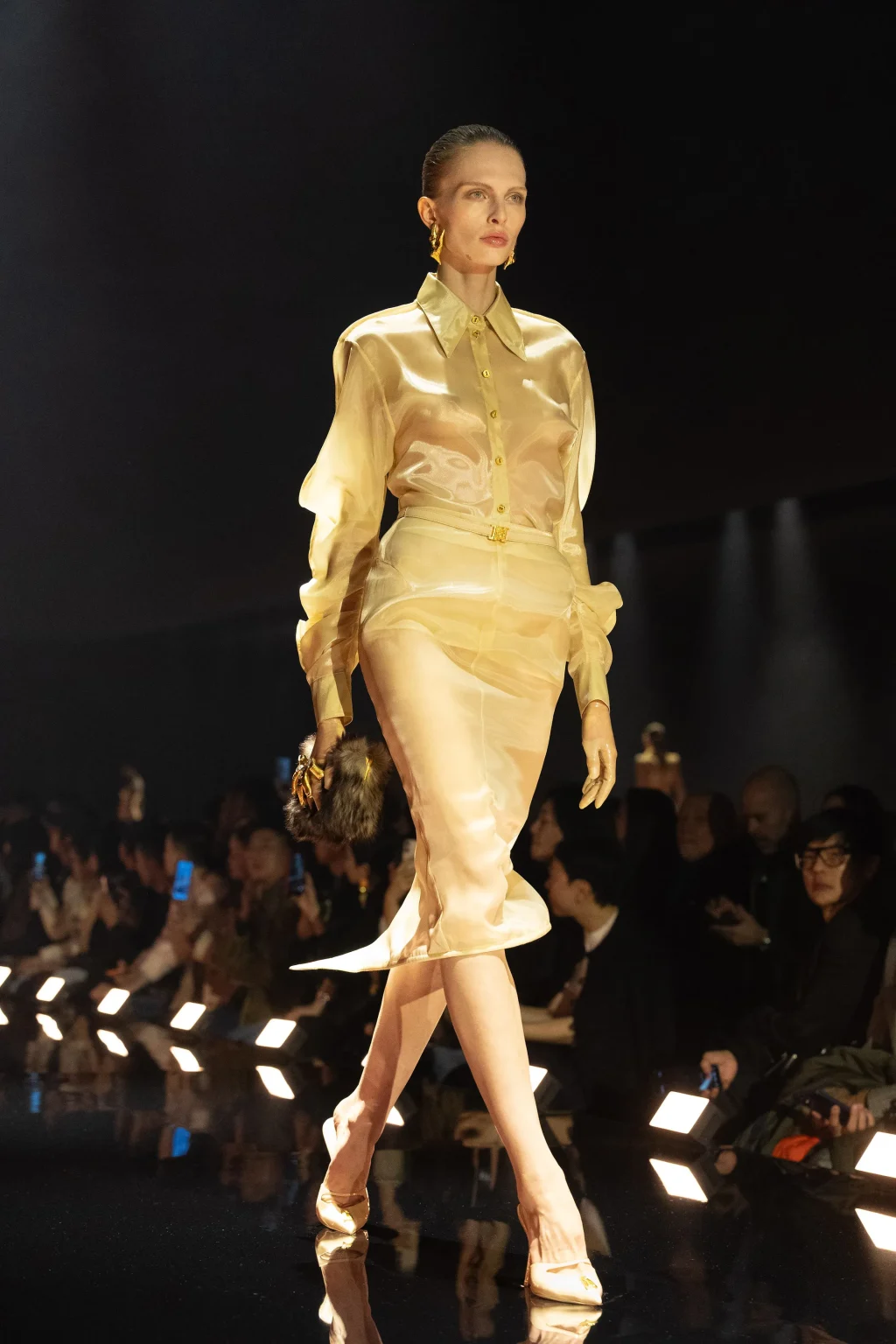
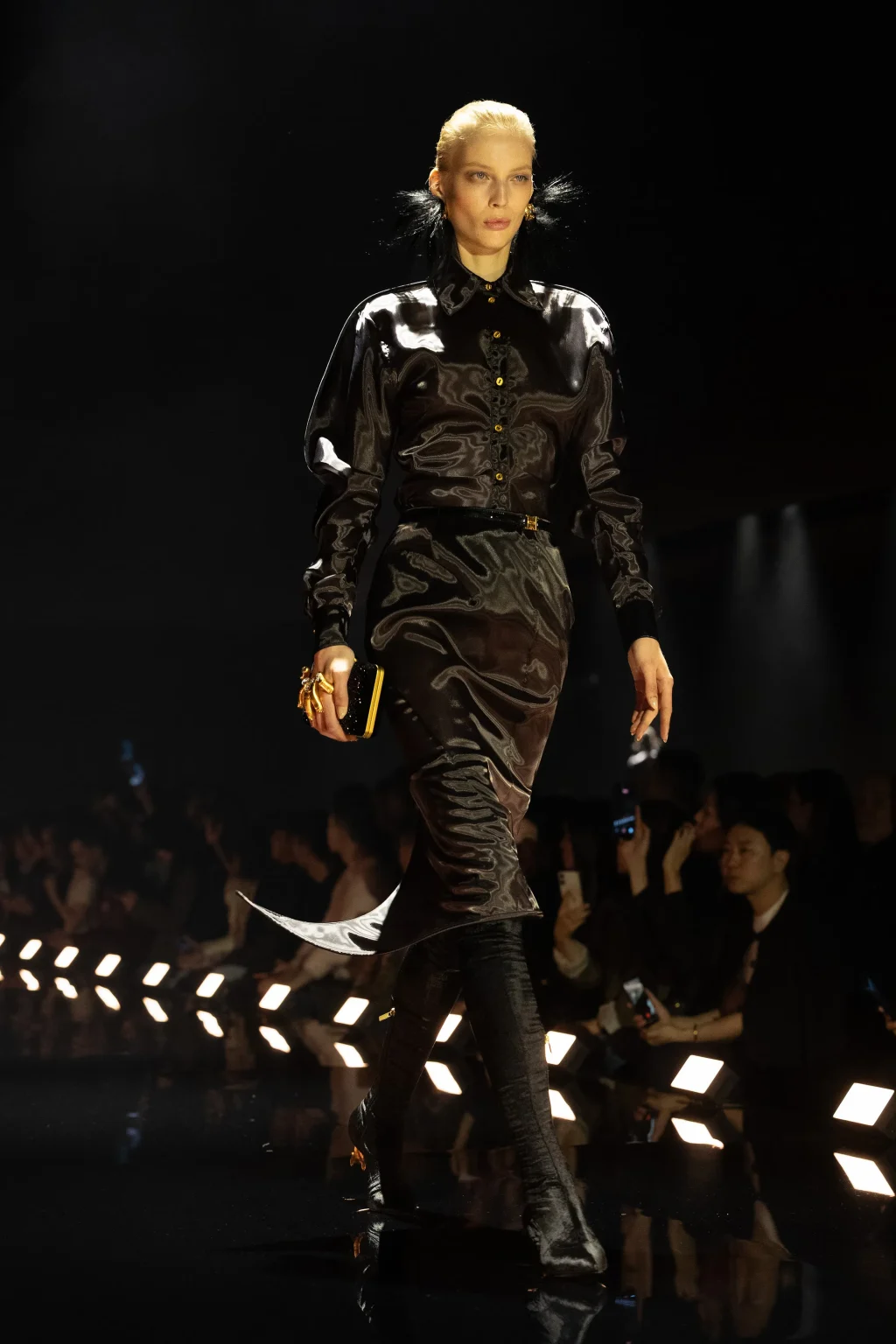
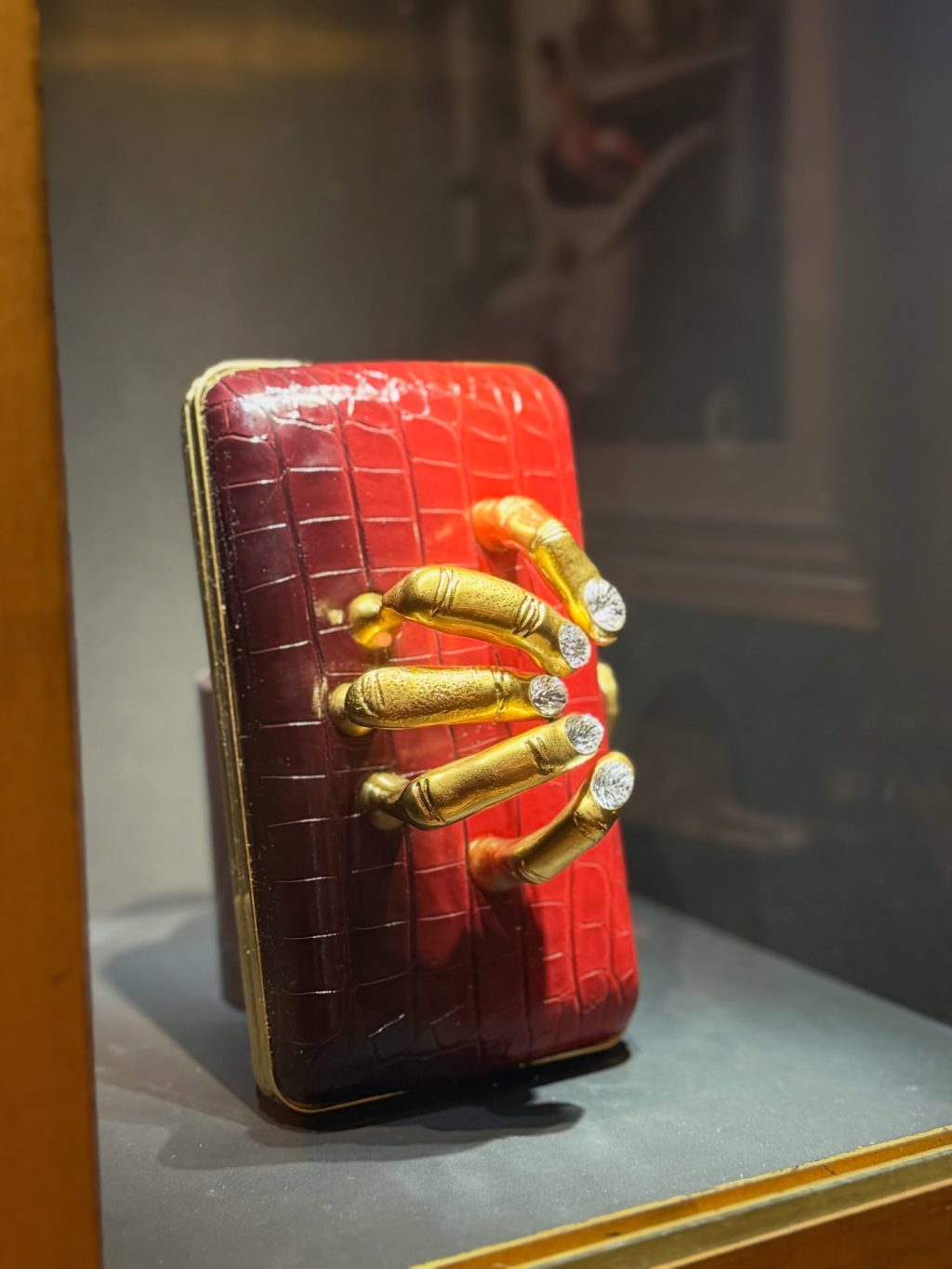
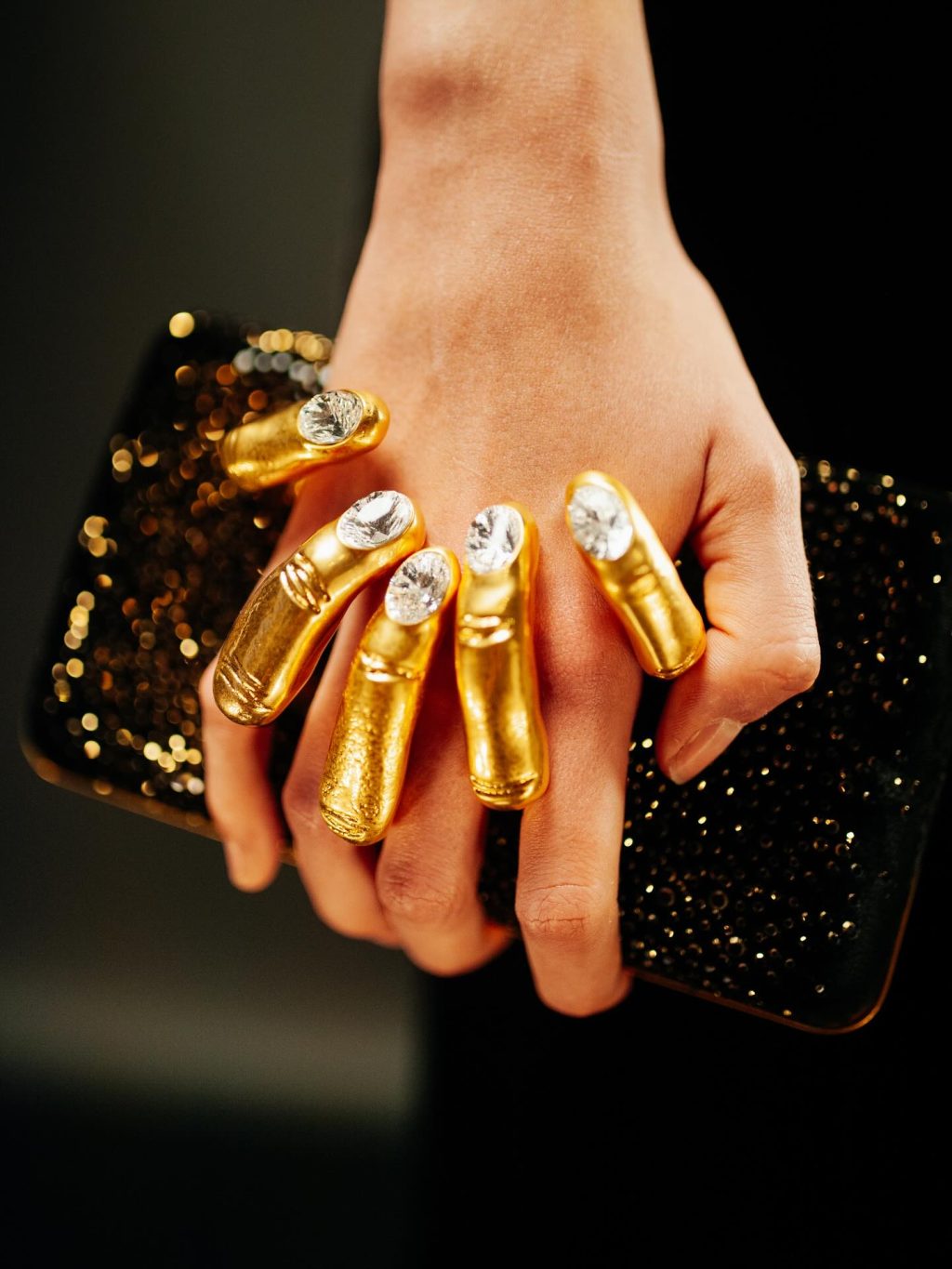
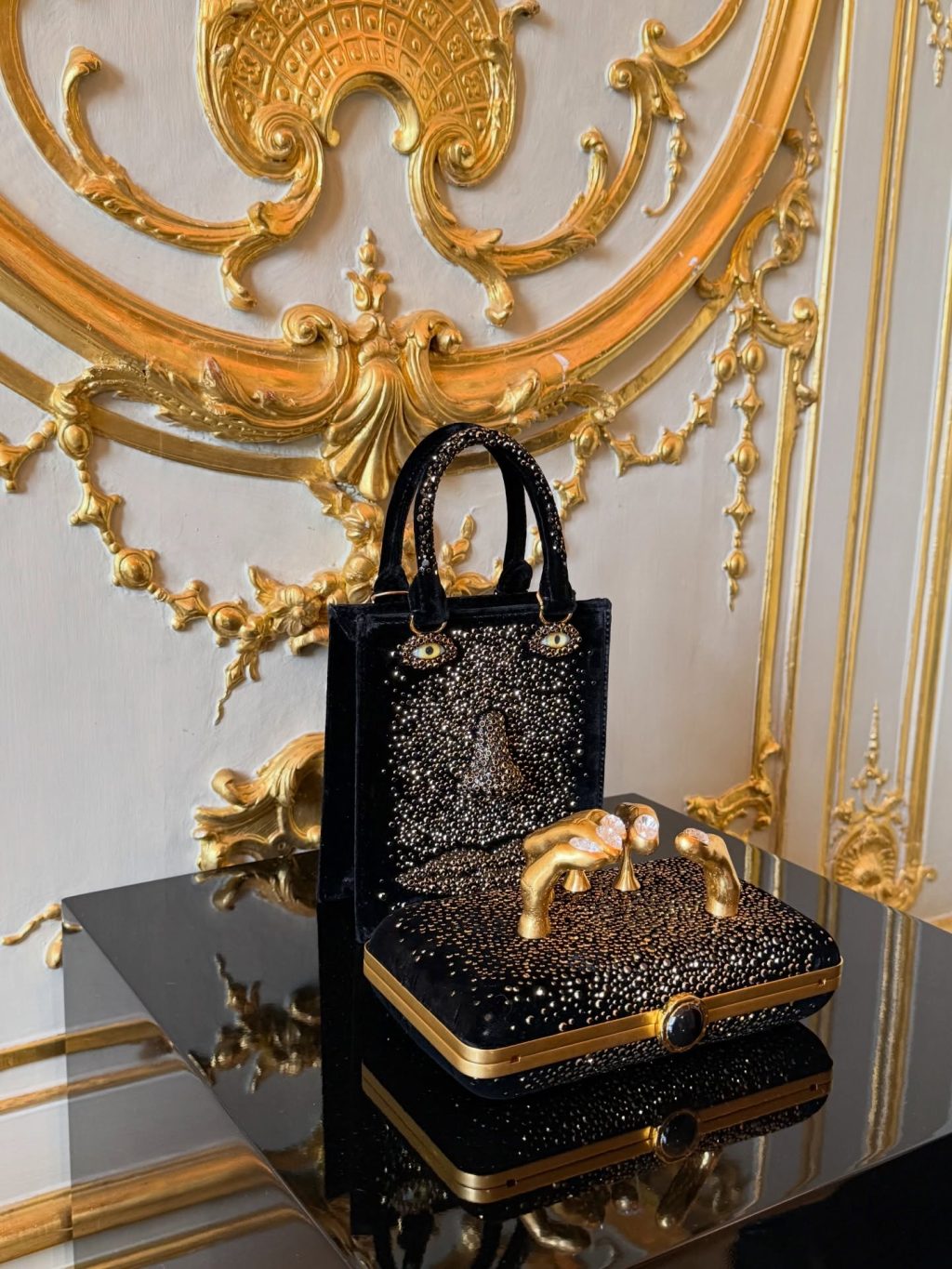
Perhaps the most surreal pieces in the collection were the Hand in Hand clutches. Constructed from lamb fur or velvet with galuchat embroidery, these clutches were decorated with hammered metal fingers set with rhinestones. The effect is intentionally uncanny: the bag appears to be held by a golden hand, even when placed on a table.
The motif echoes the house’s longstanding fascination with anatomy jewelry, a recurring theme in Roseberry’s Schiaparelli collections.
The Face Bag and Surreal Evening Pieces
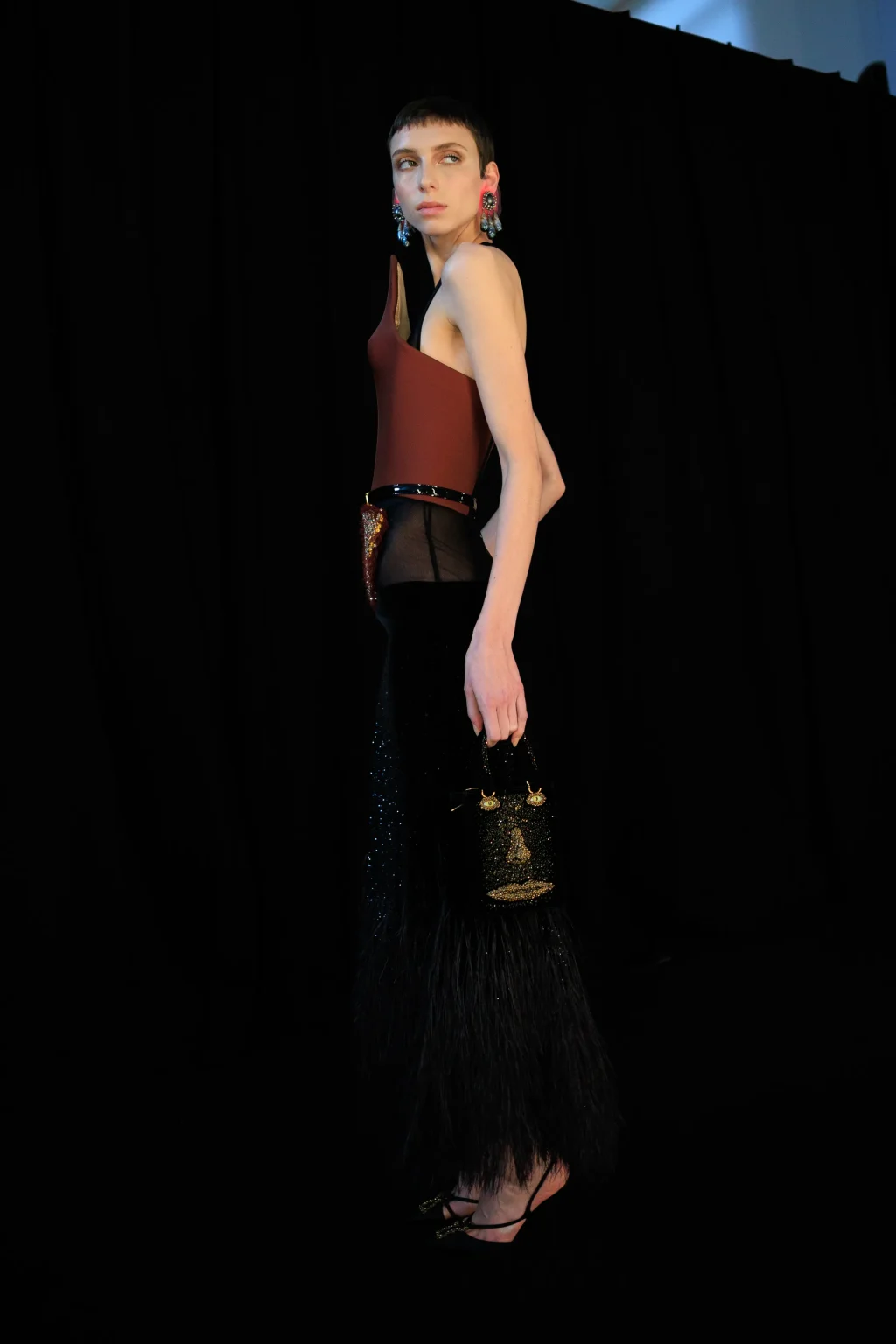
Another highlight was the Mini Face bag, a velvet design embroidered with galuchat textures and decorated with rhinestones and anatomical hardware that forms a trompe-l’oeil face.
The design references the surrealist art movement that shaped Elsa Schiaparelli’s work, where objects often carried hidden imagery visible only upon closer inspection.
In the context of modern luxury accessories, these bags operate as conversation pieces — equal parts couture craftsmanship and surrealist sculpture.
Soufflé and Top-Handle Bags
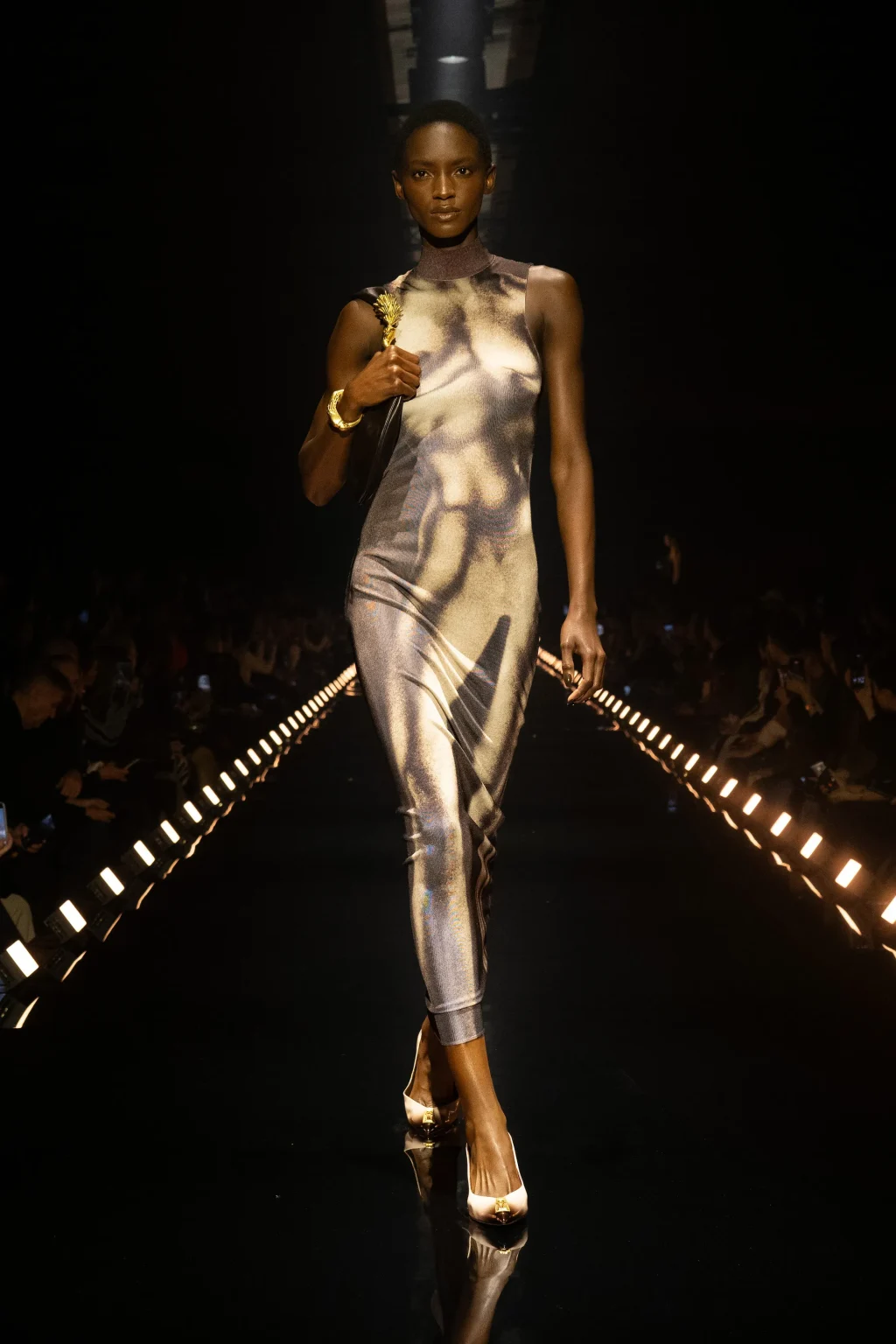
The Small Soufflé bag introduced another sculptural hardware concept: a hammered gold brass peacock head handle.
The bird motif ties back to Elsa Schiaparelli’s fascination with animals and mythological symbolism. In this case, the peacock functions almost like a piece of wearable jewelry integrated into the bag structure.
Combined with smooth calf leather and minimal branding, the design maintains an elegant silhouette despite the dramatic hardware.

Schiaparelli Bags as Surreal Objects
Across the entire lineup, the Schiaparelli Fall-Winter 2026–2027 bags reflect Daniel Roseberry’s ongoing mission: to translate surrealist art into contemporary luxury accessories.
Instead of treating bags as purely functional objects, Roseberry approaches them as small sculptures meant to move with the body.
Some pieces are overtly surreal — hands, faces, claws, and birds rendered in metal and fur. Others rely on subtle symbolism, such as the recurring keyhole motif.
Together they create a collection that feels unmistakably tied to Elsa Schiaparelli’s original vision: fashion that operates simultaneously as clothing, art, and storytelling.