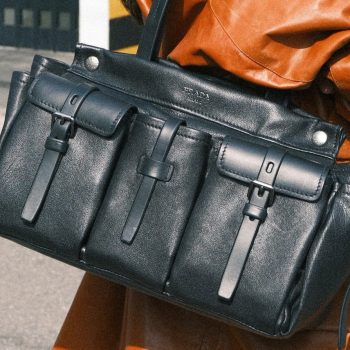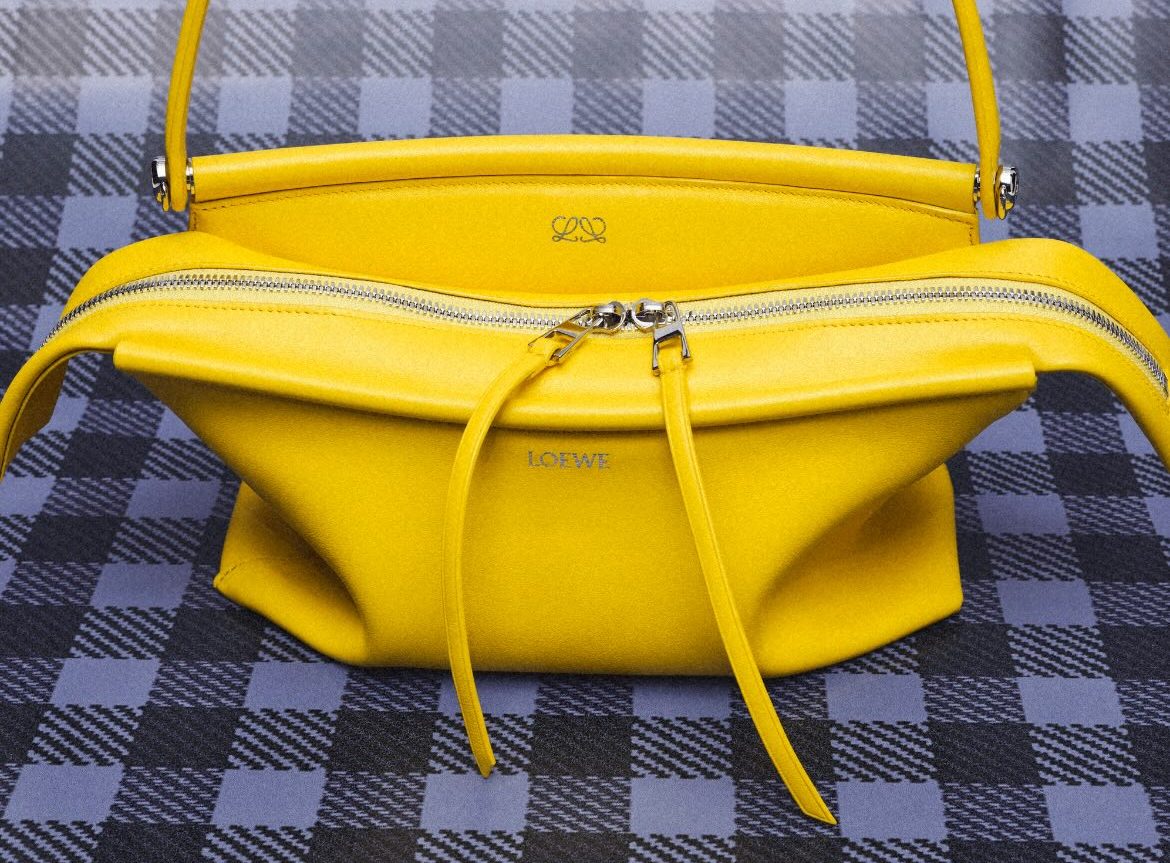
The Loewe Fall-Winter 2026–2027 bags reveal a house once again leaning into its most fundamental value: craft as a form of joyful experimentation. Presented in Paris under the creative direction of Jack McCollough and Lazaro Hernandez, the collection blends sculptural thinking, playful objects, and highly technical leatherwork. Across the runway, classic Loewe archetypes appear alongside strange little curiosities — geometric minaudières, circular pouches, exaggerated travel bags — all rooted in the brand’s ongoing fascination with making.
Read also: LOEWE Spring–Summer 2026 bags guide
Rather than simply presenting accessories as commercial items, Loewe framed the bags as extensions of the atelier itself: objects that sit somewhere between design, art, and utility.
The Show: Loewe Fall-Winter 2026 in Paris
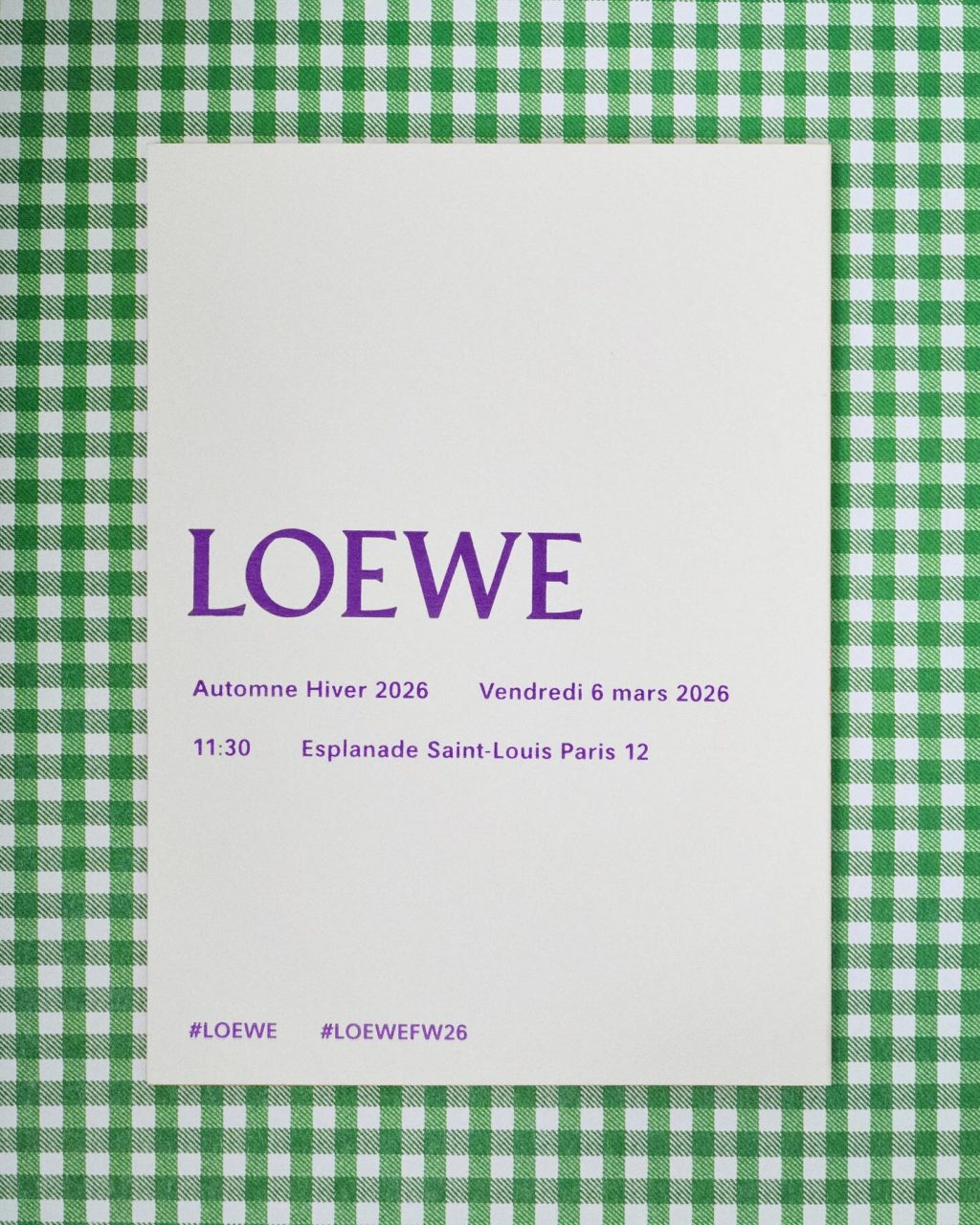
The Loewe Fall-Winter 2026 runway show took place on Friday, March 6, 2026, at 11:30 AM, at Esplanade Saint-Louis in Paris’s 12th arrondissement, near the historic Château de Vincennes.
The location carried symbolic weight. Château de Vincennes is one of the largest fortified castles in Europe, a place where centuries of French history meet monumental architecture. By staging the show nearby, Loewe created a contrast between heritage and experimentation — an old Parisian landmark juxtaposed with contemporary design thinking.
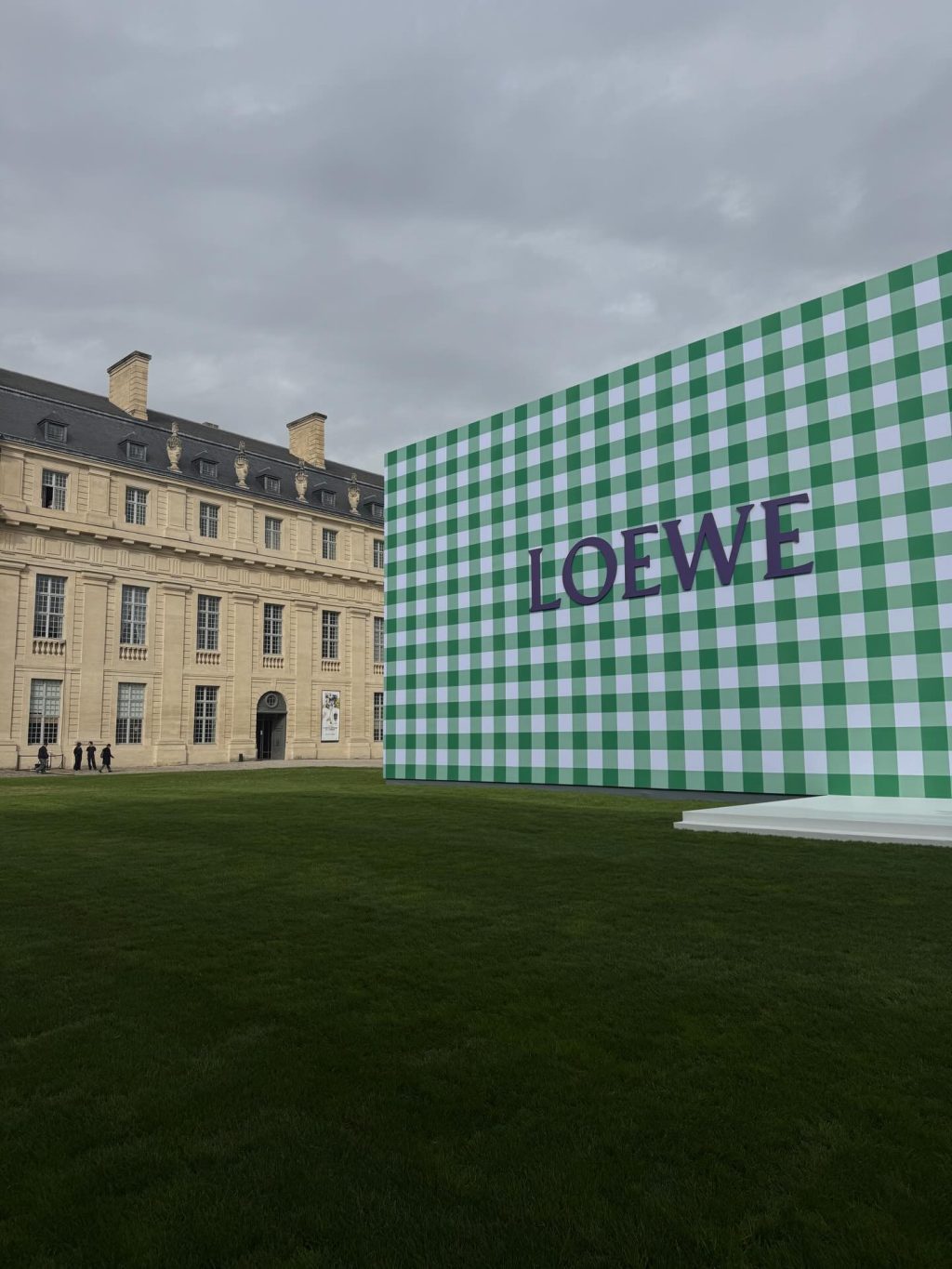
According to the house’s official statement, the starting point of the collection was surprisingly simple:
“As we began conceptualising our second collection at LOEWE, we were struck by a simple truth: for us, the act of making is, at its core, an expression of joy — an intellectual, process-driven pursuit charged with playfulness.”
— Jack McCollough and Lazaro Hernandez
That philosophy is visible across the runway: garments that appear sculpted rather than sewn, materials pushed into unusual forms, and accessories that feel almost like small design experiments brought to life.
The Invitation
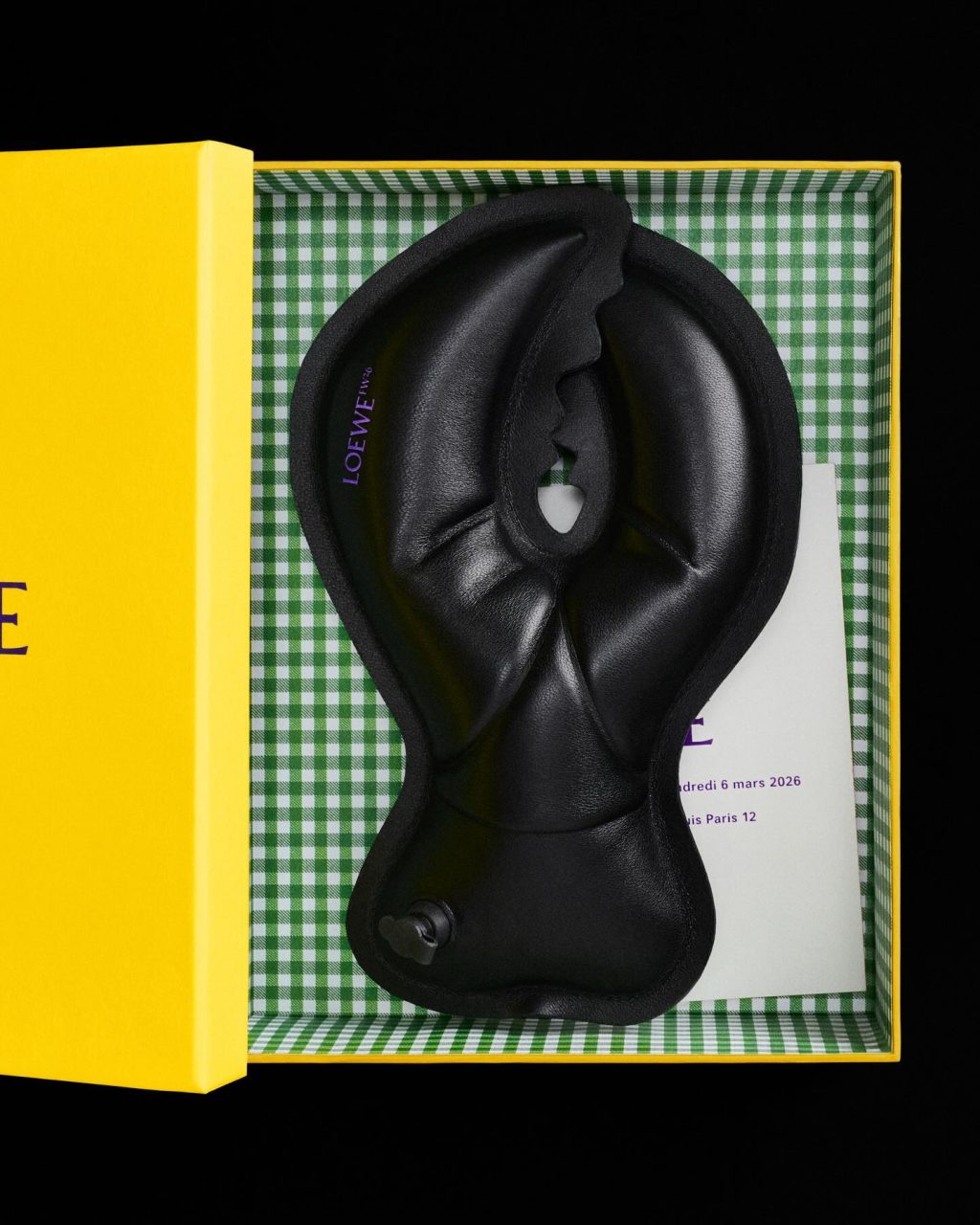
The Loewe FW26 show invitation already hinted at the collection’s playful and tactile approach. Guests received a bright yellow presentation box, lined with green gingham fabric, containing the printed invitation card. Inside the box sat a curious object: a black inflatable sculpture shaped like a stylised ear.
The ear motif was not accidental. It acted as a metaphor for listening to craft — paying attention to the subtle language of materials and making.
Art Collaboration: Cosima von Bonin
Another layer of the show’s atmosphere came from the work of Cosima von Bonin, the Cologne-based contemporary artist known for playful sculptural installations.
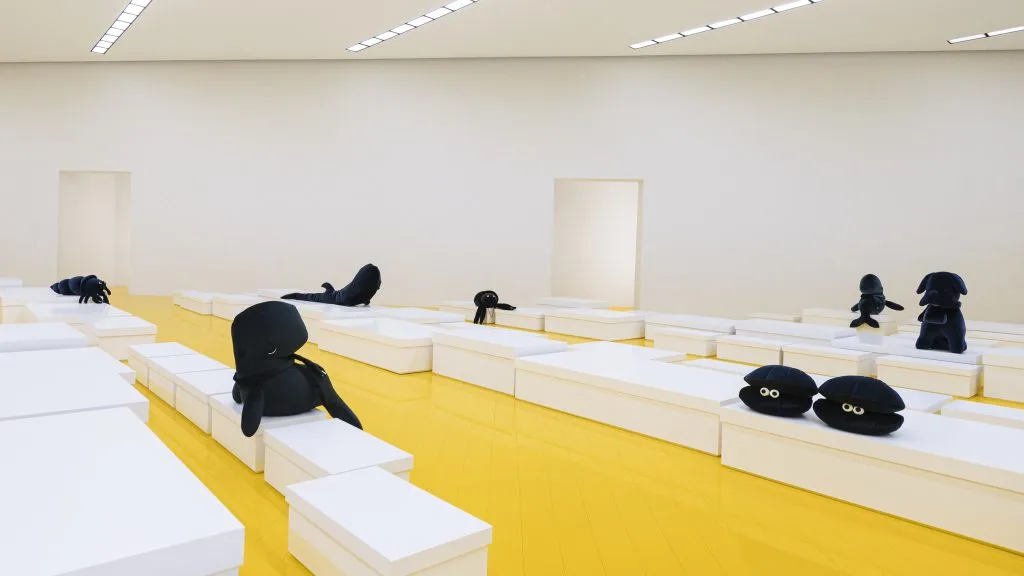
Her artworks appeared throughout the show space, becoming part of the mise-en-scène surrounding the runway. Rather than functioning as decoration, these pieces directly informed elements of the collection.
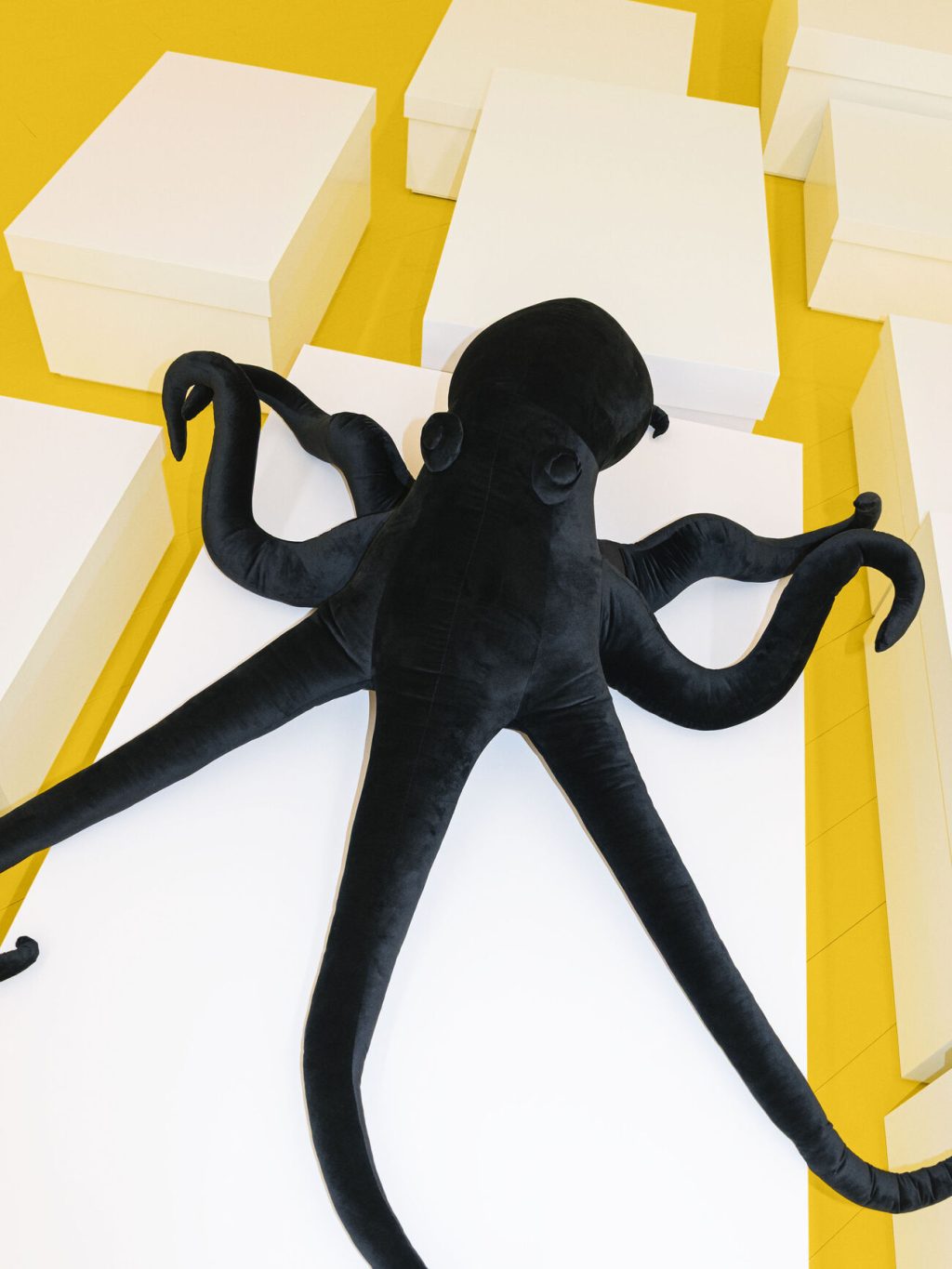
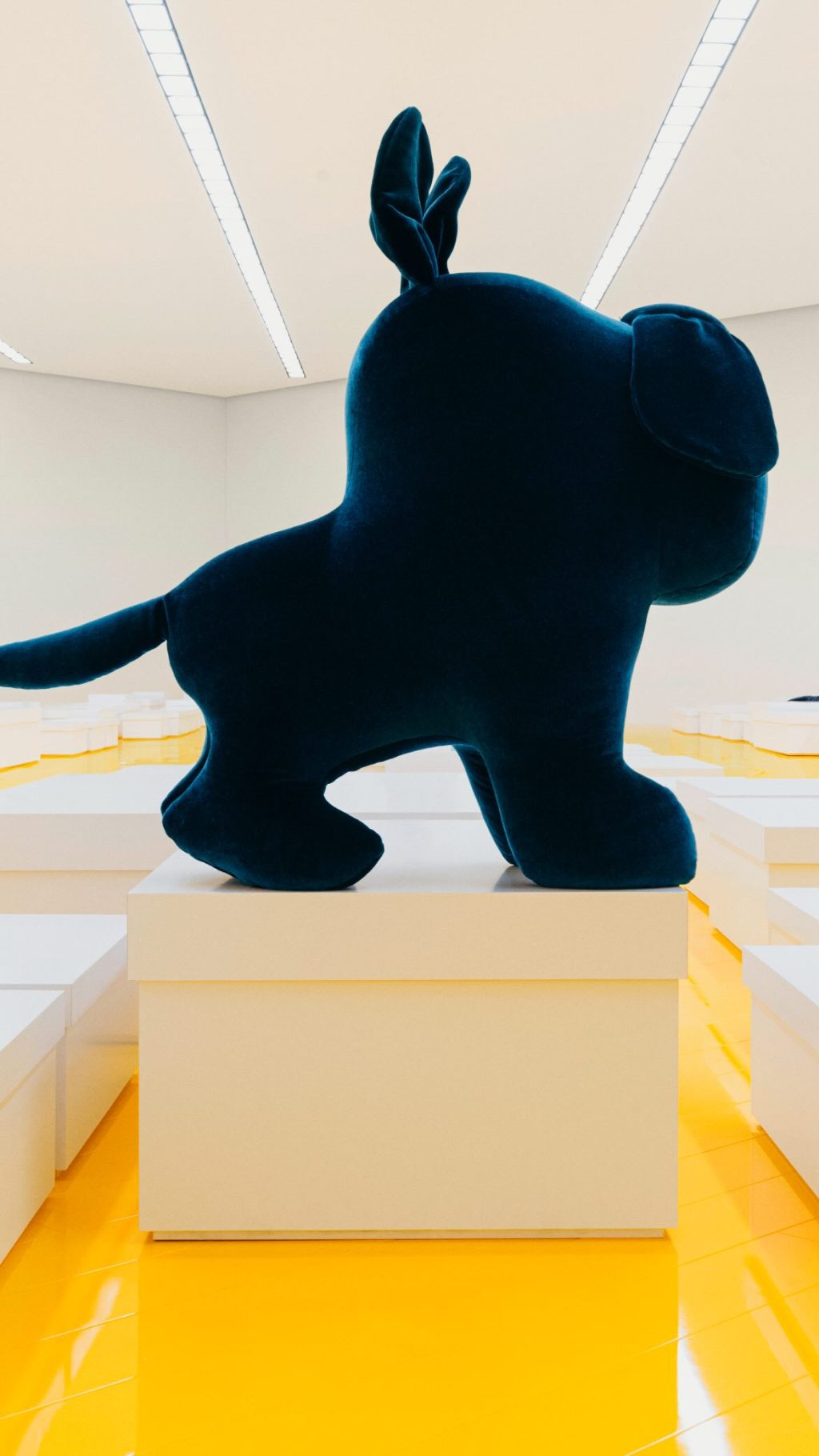
The influence of von Bonin’s work could be felt in several accessories:
- surreal charms
- playful jewelry
- exaggerated textures
- whimsical shapes that blur the line between fashion object and art object
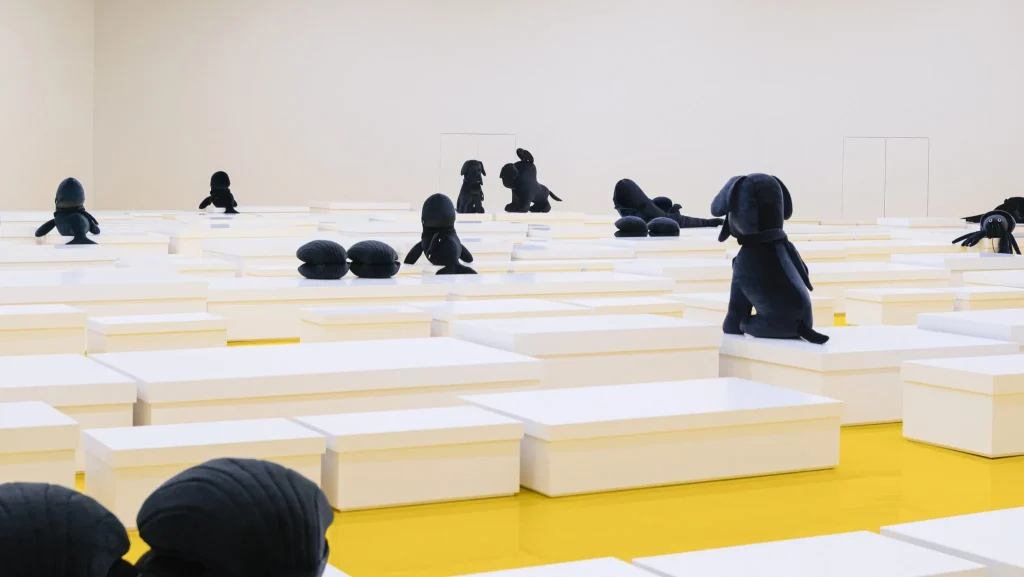
This dialogue between contemporary art and luxury craft is a recurring theme in Loewe’s design philosophy, reinforcing the brand’s position at the intersection of fashion and cultural production.
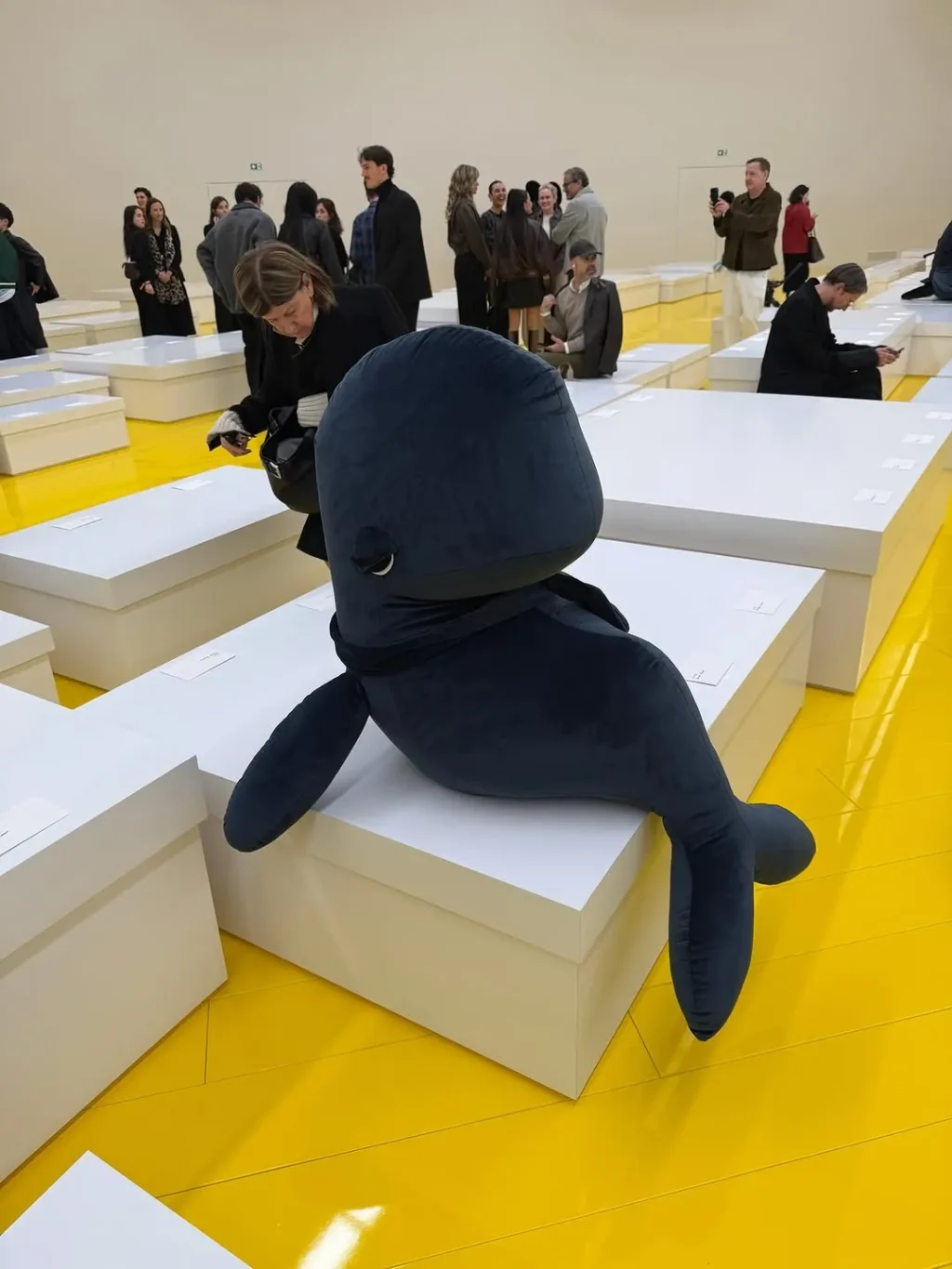
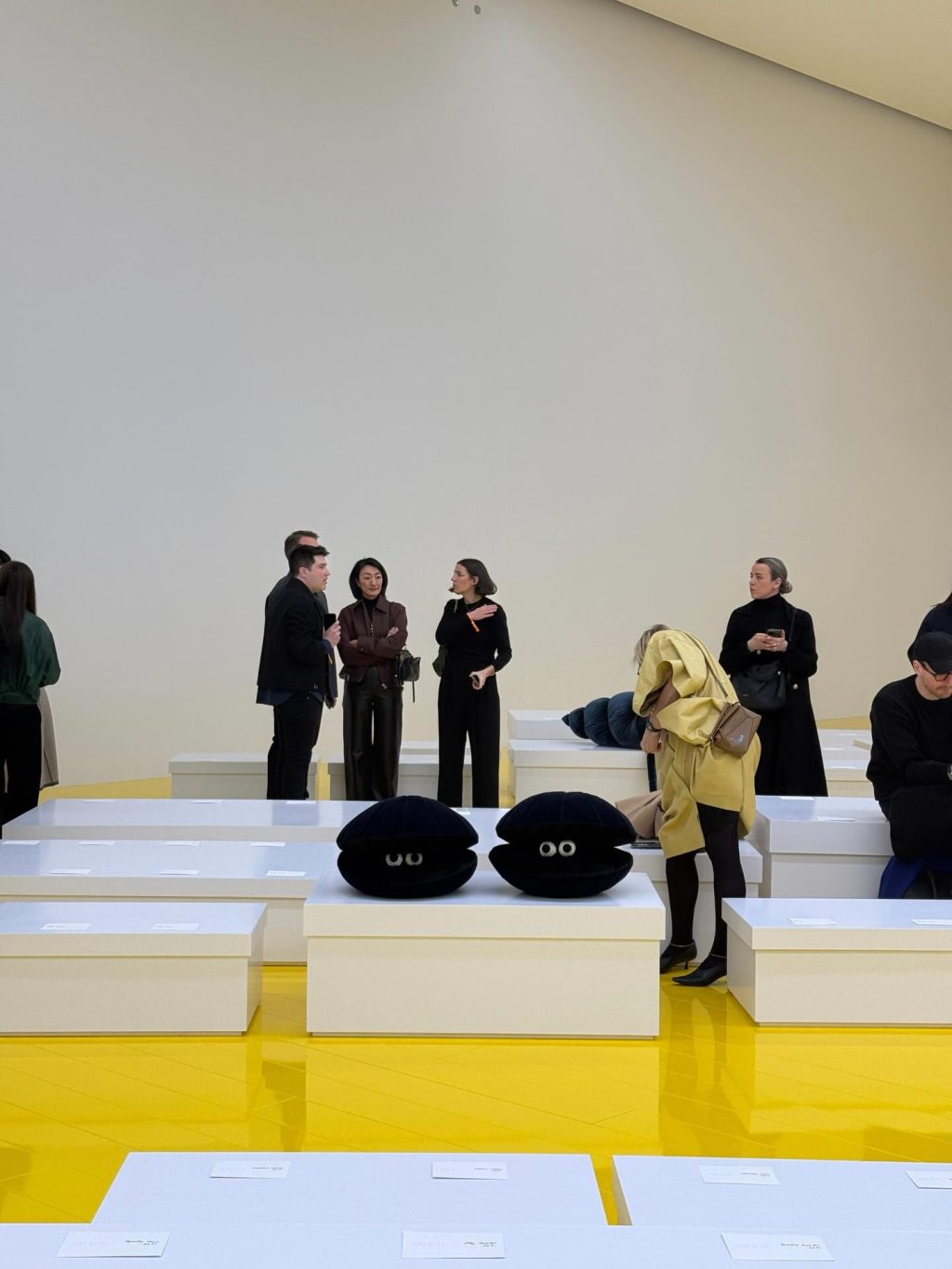
Loewe Fall-Winter 2026–2027 Bags
The Loewe Fall-Winter 2026–2027 bags move across several distinct families, balancing established house icons with sharper new propositions. Familiar Loewe signatures such as the Puzzle and Flamenco return in updated runway forms, while the Amazona 180 emerges as one of the season’s key statement bags through scale, texture, and repeated material variation.
Alongside them, Loewe introduced a new winged shoulder bag, sculptural minaudières, playful circular pouches, and a strong lineup of oversized holdalls, travel bags, and weather-ready carryalls. Together, they show a collection built around craft, distortion, and the pleasure of turning functional bags into expressive design objects.
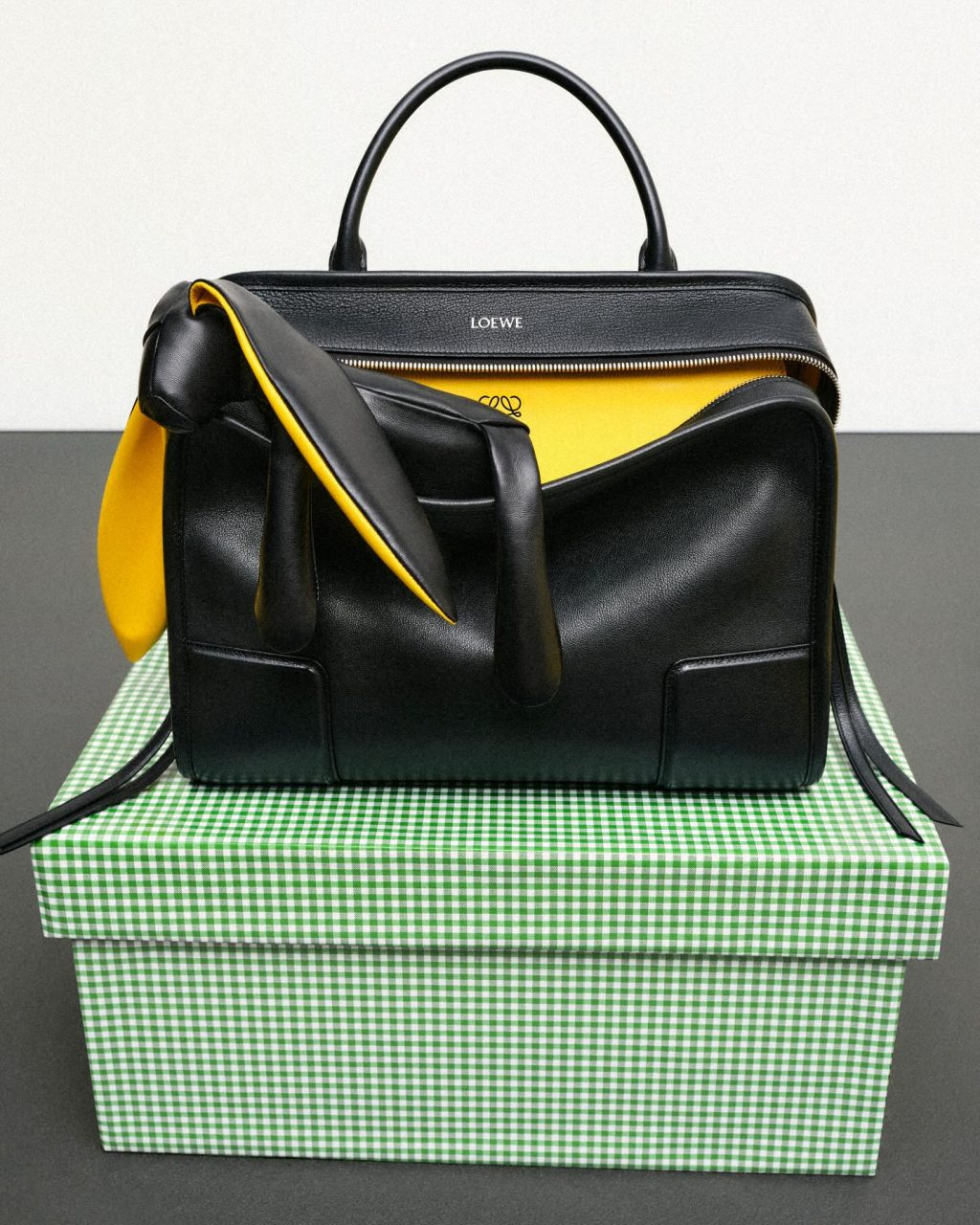
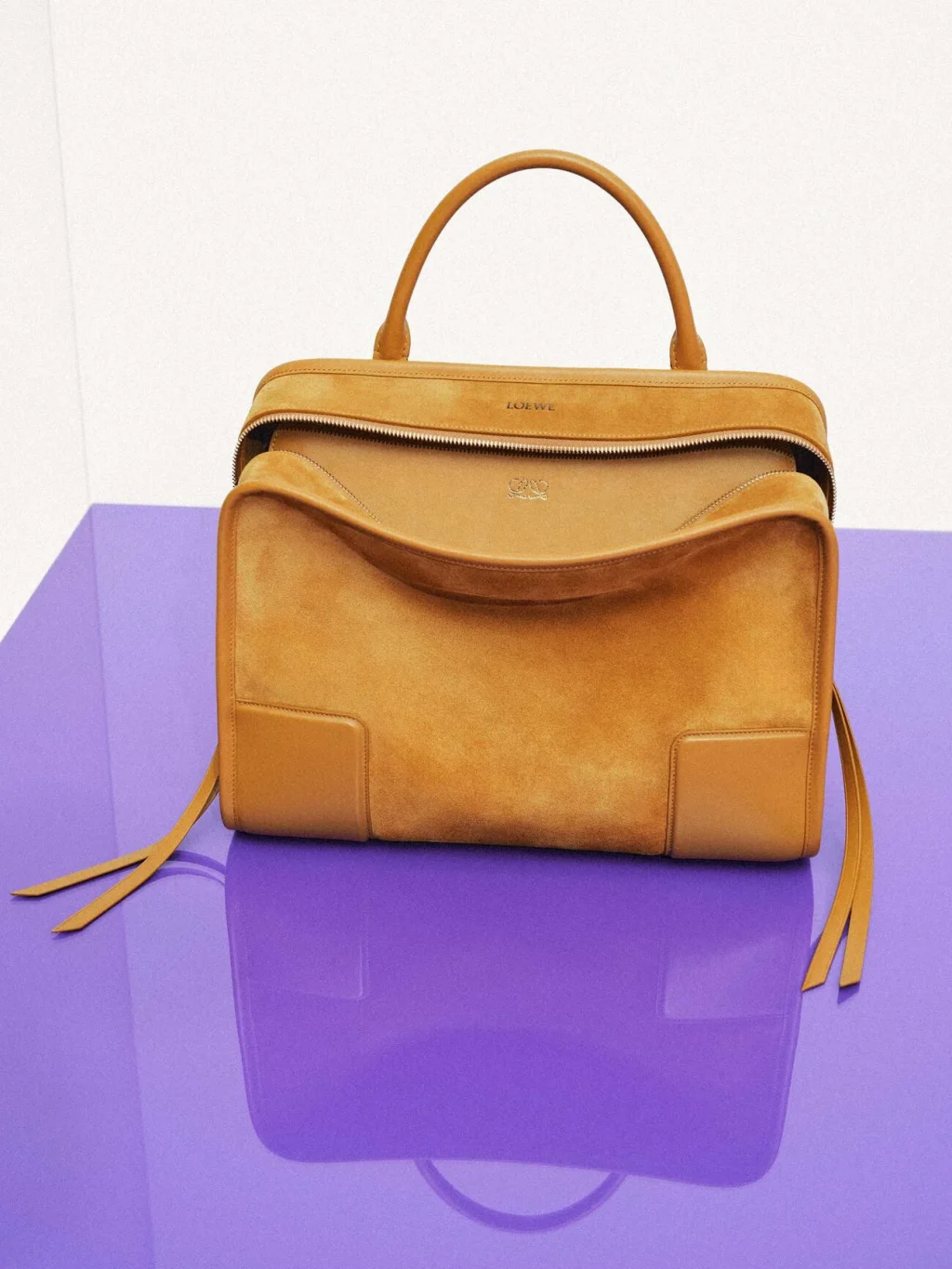
The Amazona 180 as the Season’s Soft Power Bag
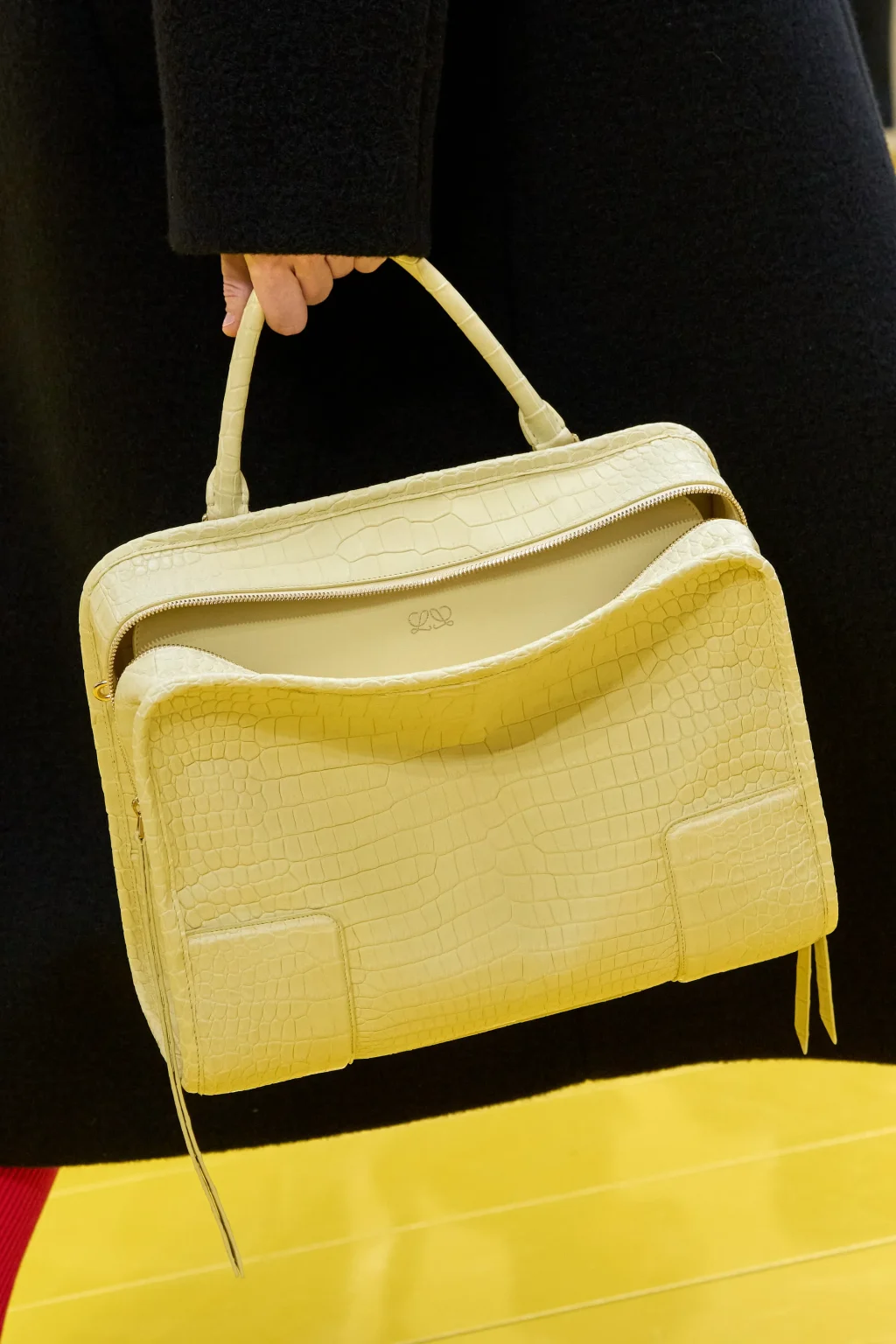
One of the most important bags in the Loewe Fall-Winter 2026–2027 bags lineup is the Amazona 180, shown in multiple runway variations that make clear it was not a background accessory, but a central proposition of the season. Loewe treated the model as a broad, horizontal, softly structured top-handle bag with a distinctly architectural presence: long tubular handles, a wide zip opening, a front compartment that folds into a curved sculptural wave, and a body that feels part travel bag, part collector object.
Read also: LOEWE Amazona 180 bag guide: Sizes, materials, colors, and what to know
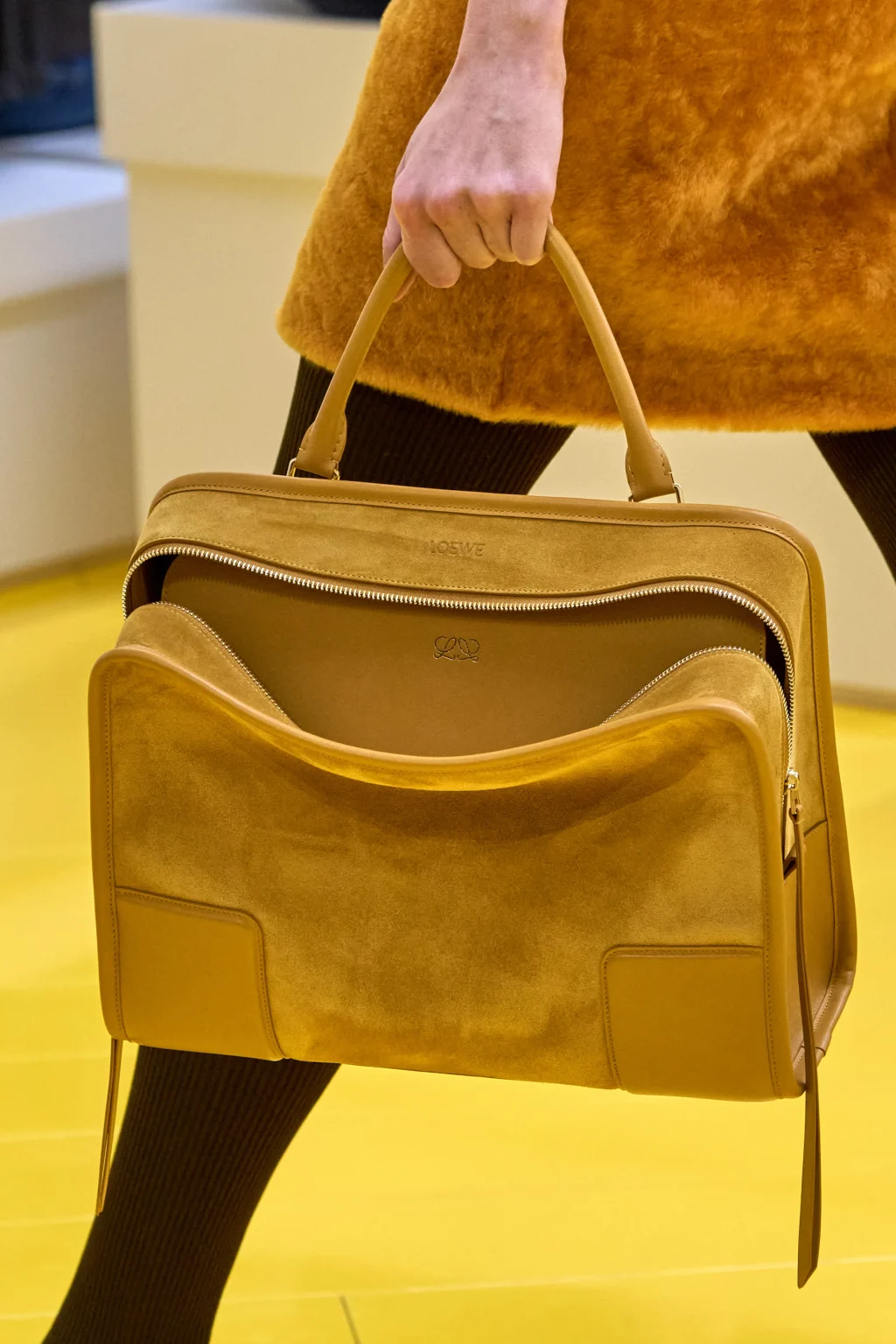
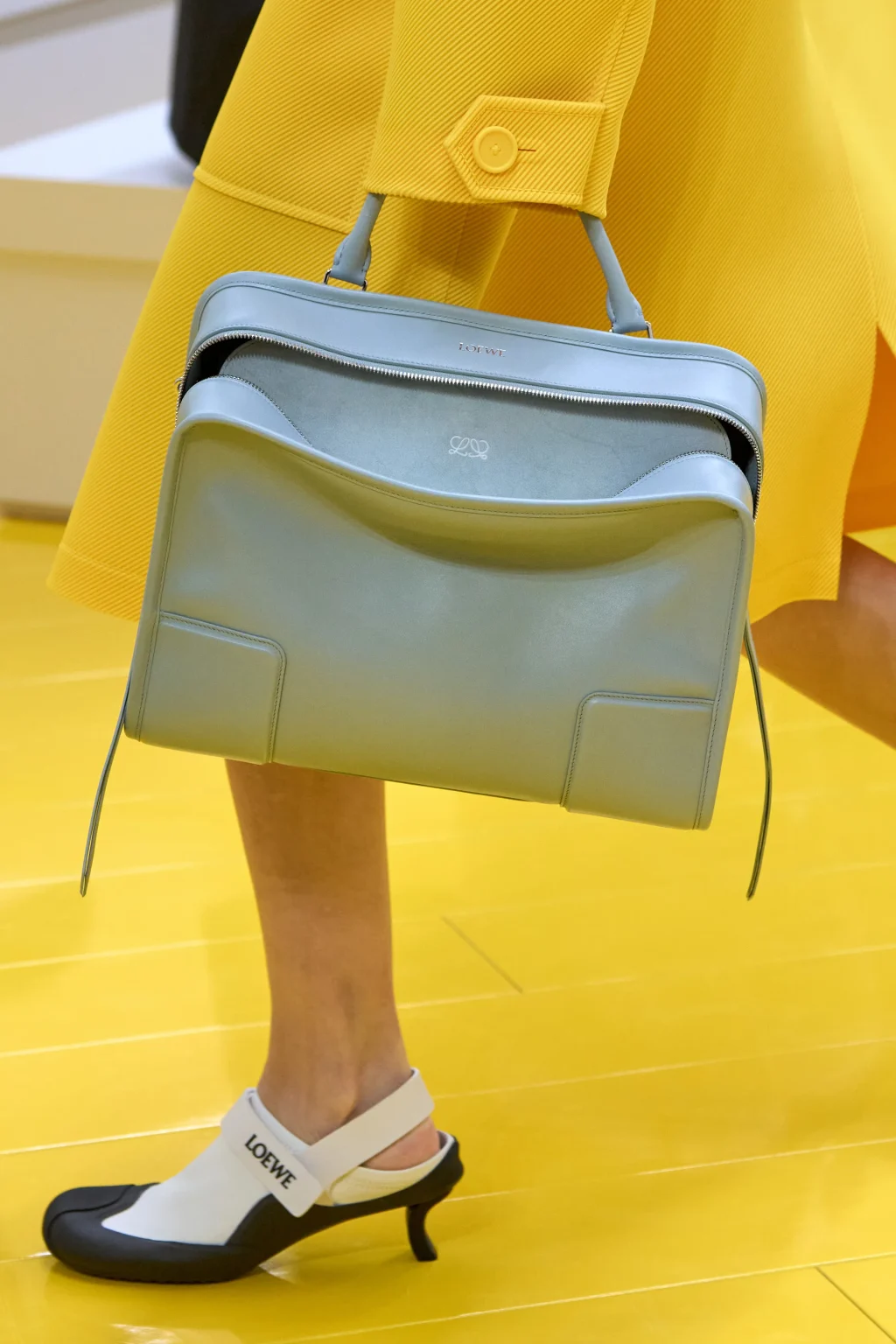
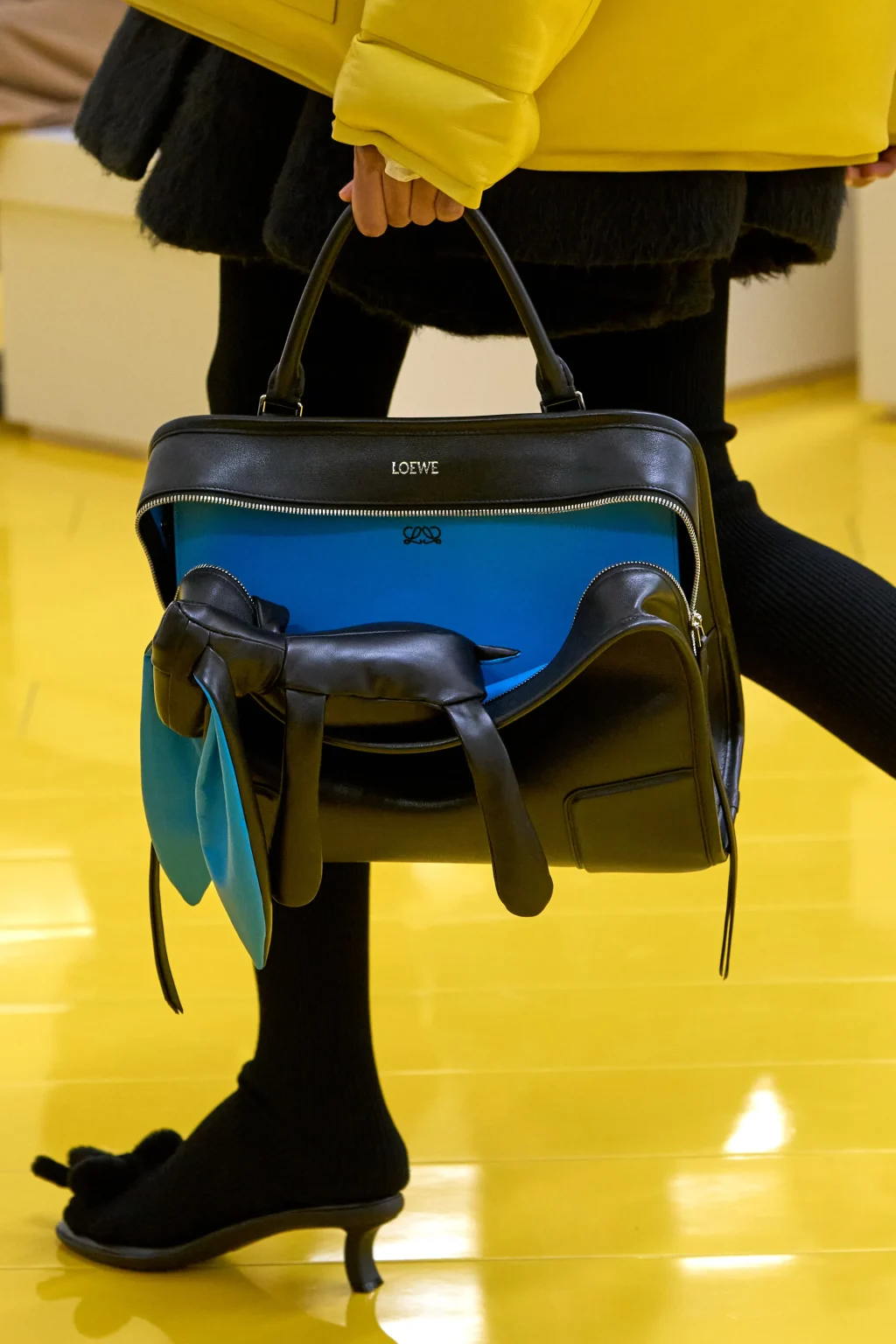
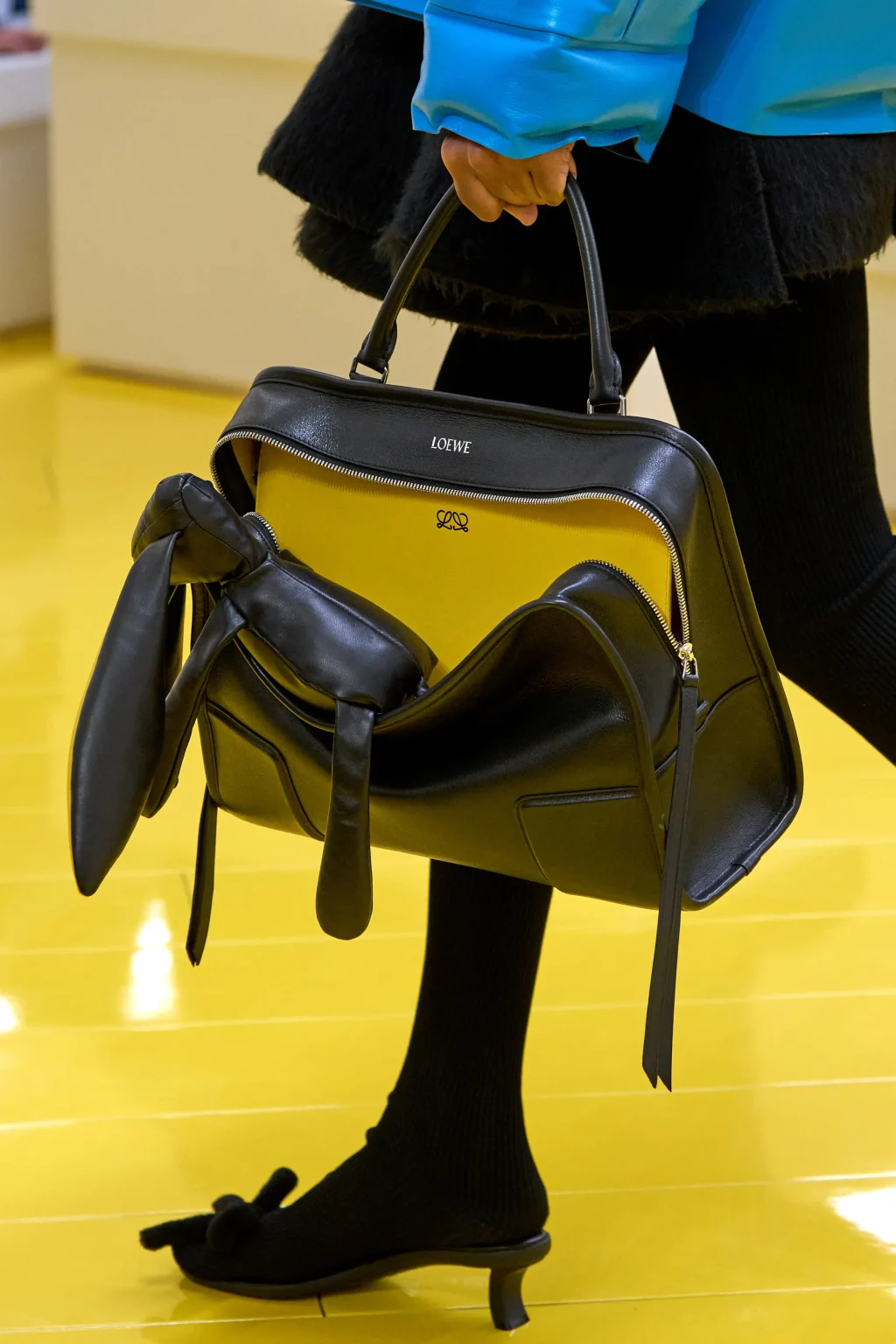
On the runway, the Amazona 180 appeared in smooth leather, suede, croc-embossed finishes, and fur-covered interpretations, as well as in high-contrast color combinations and whimsical versions featuring a soft sculptural appliqué attached across the front. That range matters. It shows Loewe using the Amazona 180 as a platform for material experimentation, moving from polished cream and butter yellow to dark espresso, glossy black, pale blue, and tactile winter textures.
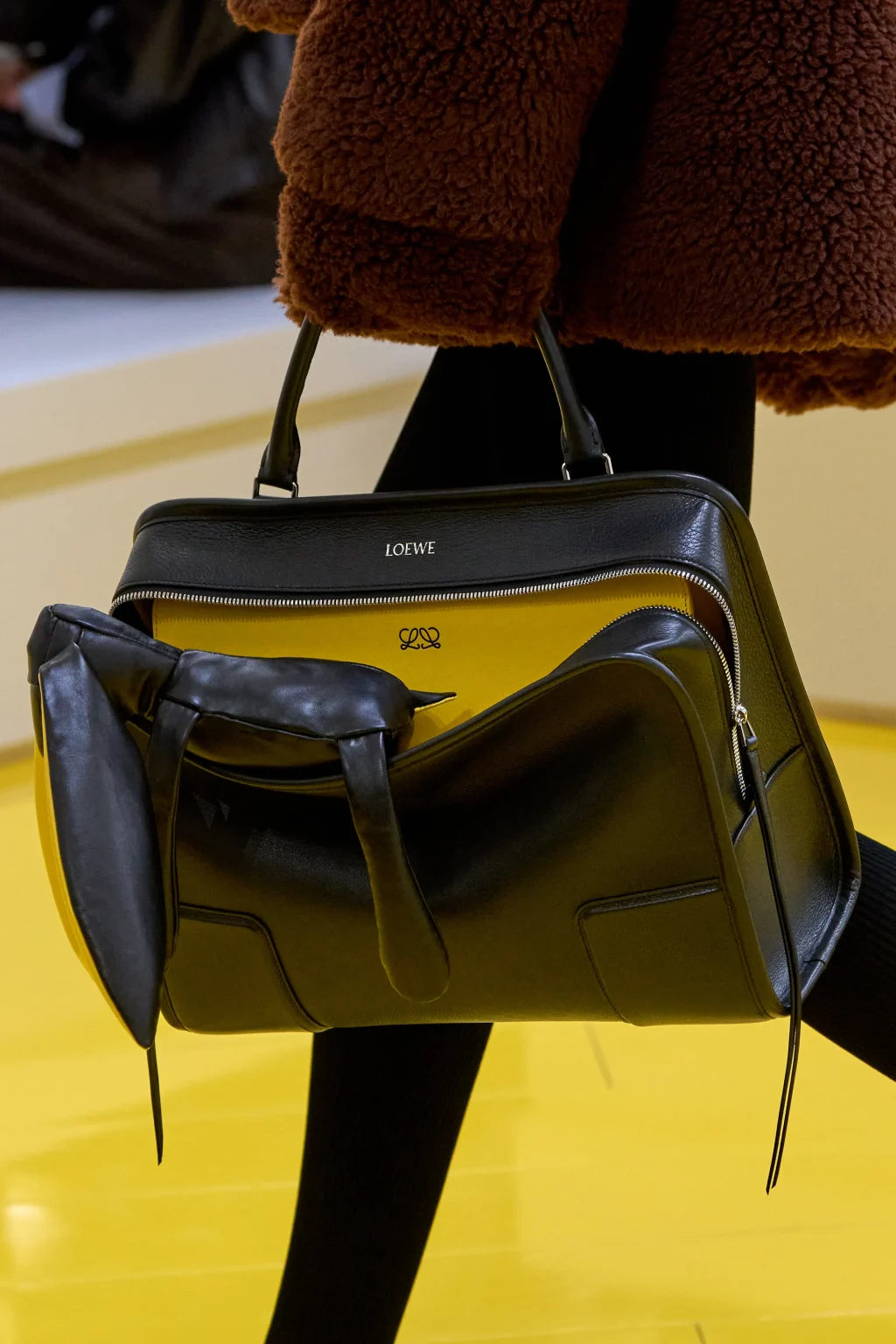
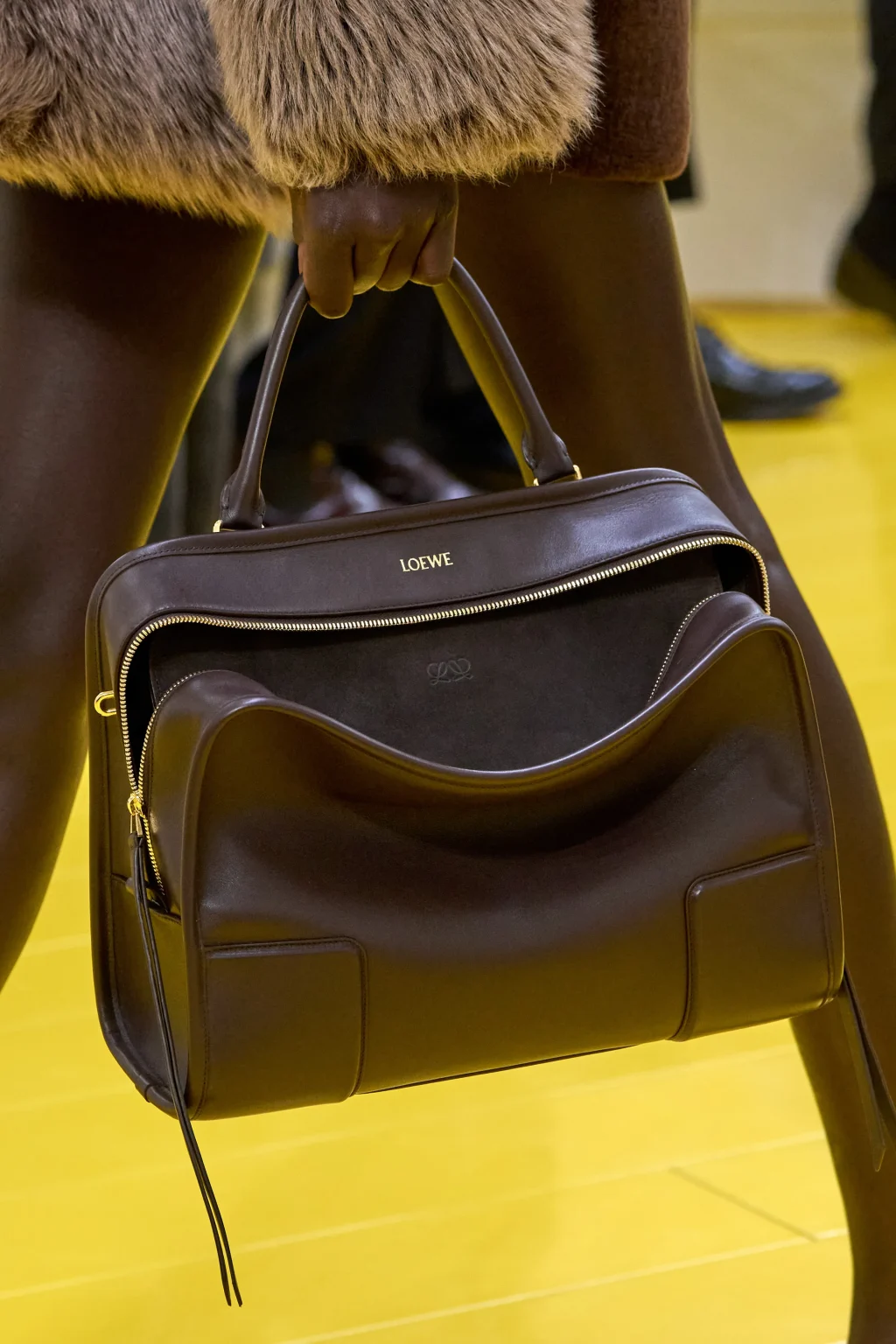
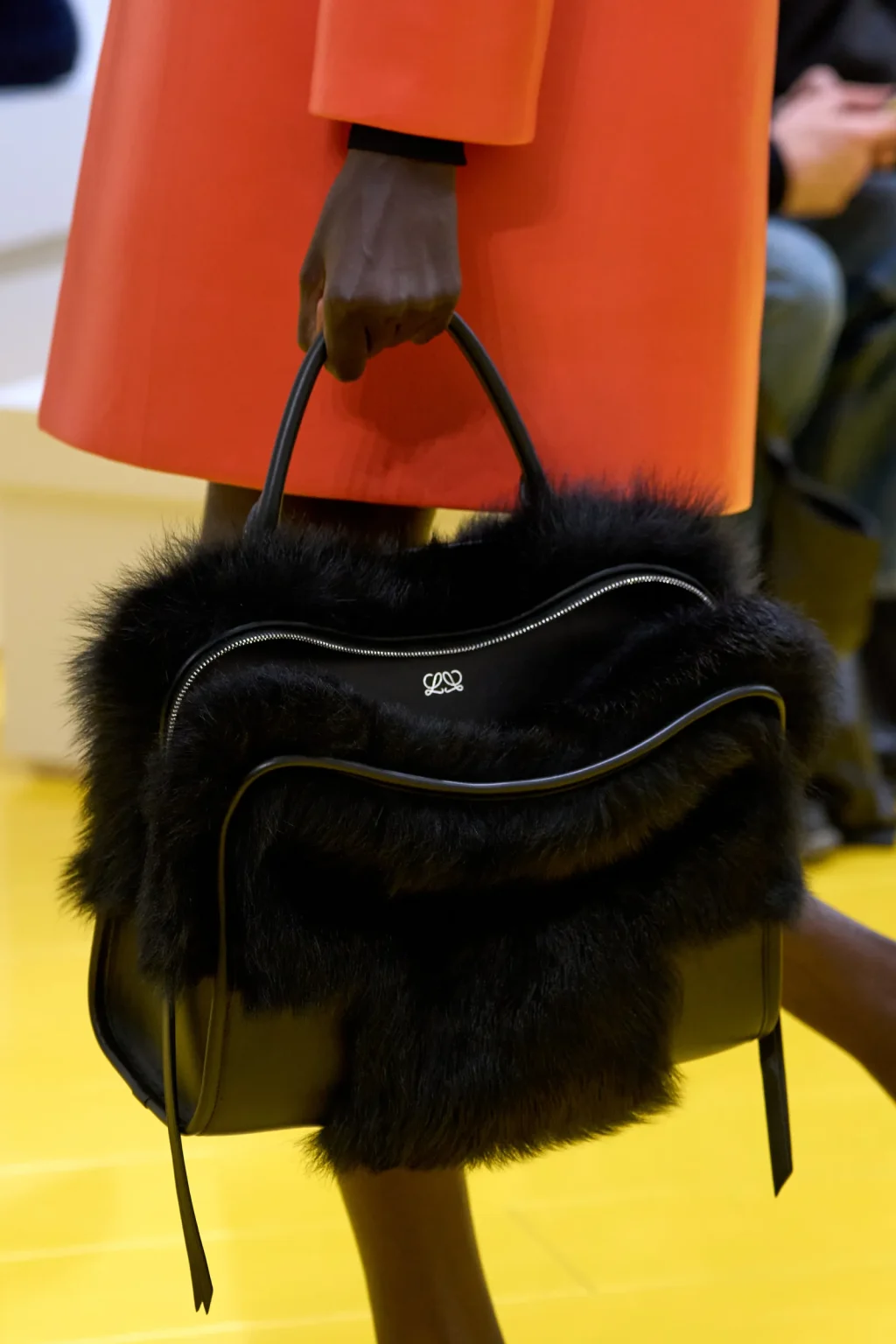
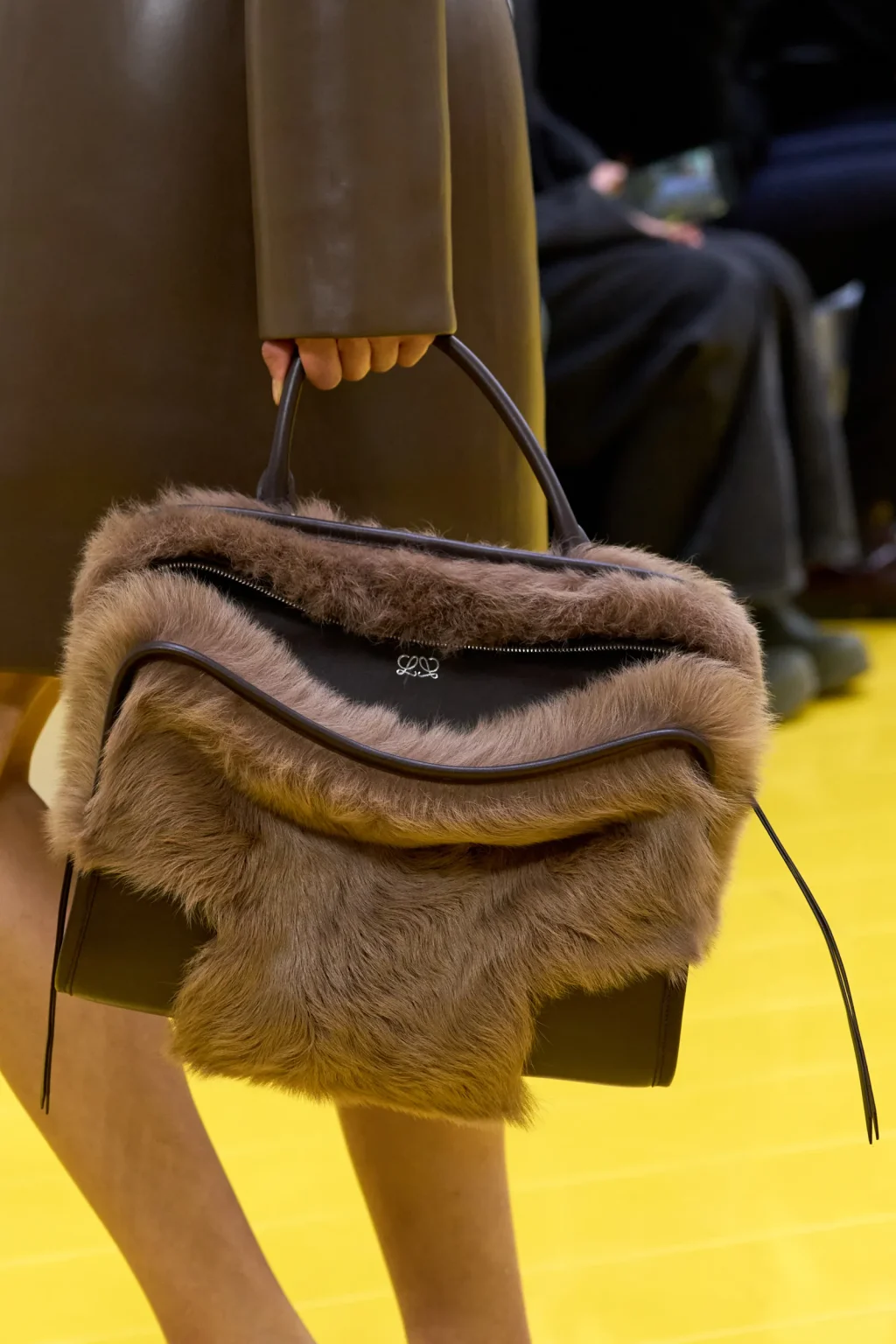
What makes the bag compelling is its balance of familiarity and distortion: it still belongs to the Amazona family, yet at this scale and with this exaggerated front structure, it feels newly strange, generous, and expressive. In the context of the season, the Amazona 180 becomes a perfect example of Loewe’s stated philosophy of joyful making — a heritage-shaped bag reimagined through volume, touch, and playful construction.
The New Winged Shoulder Bag
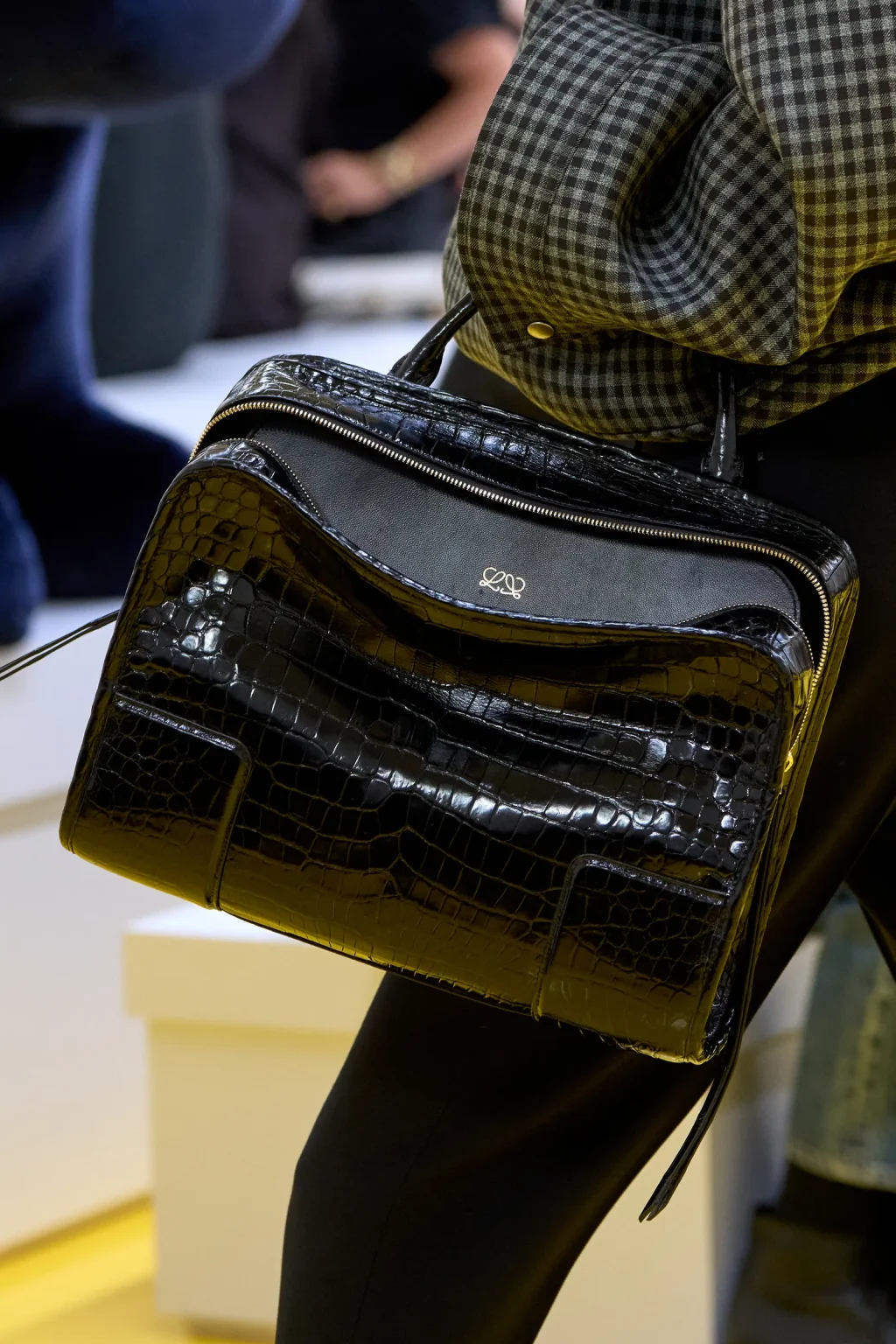
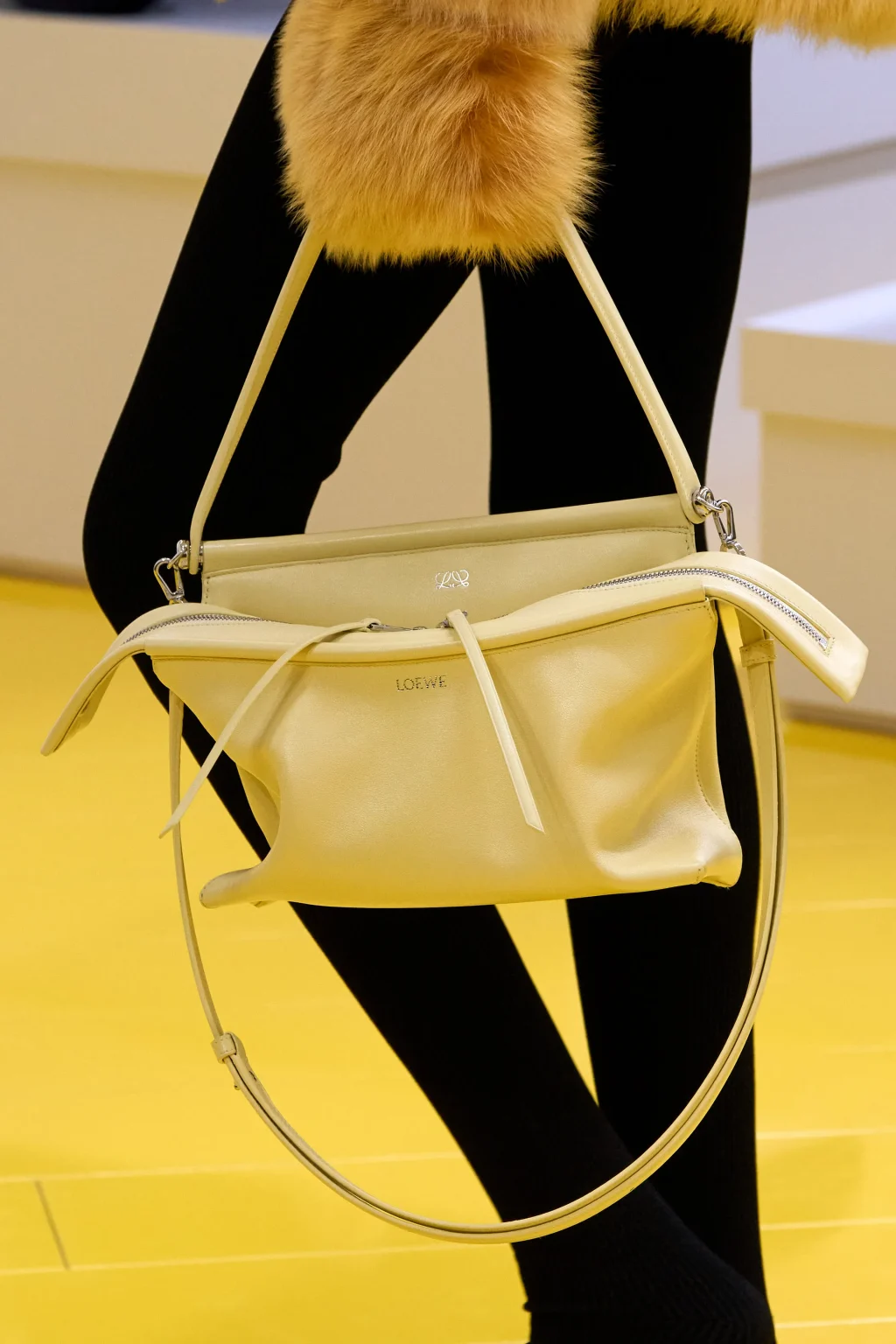
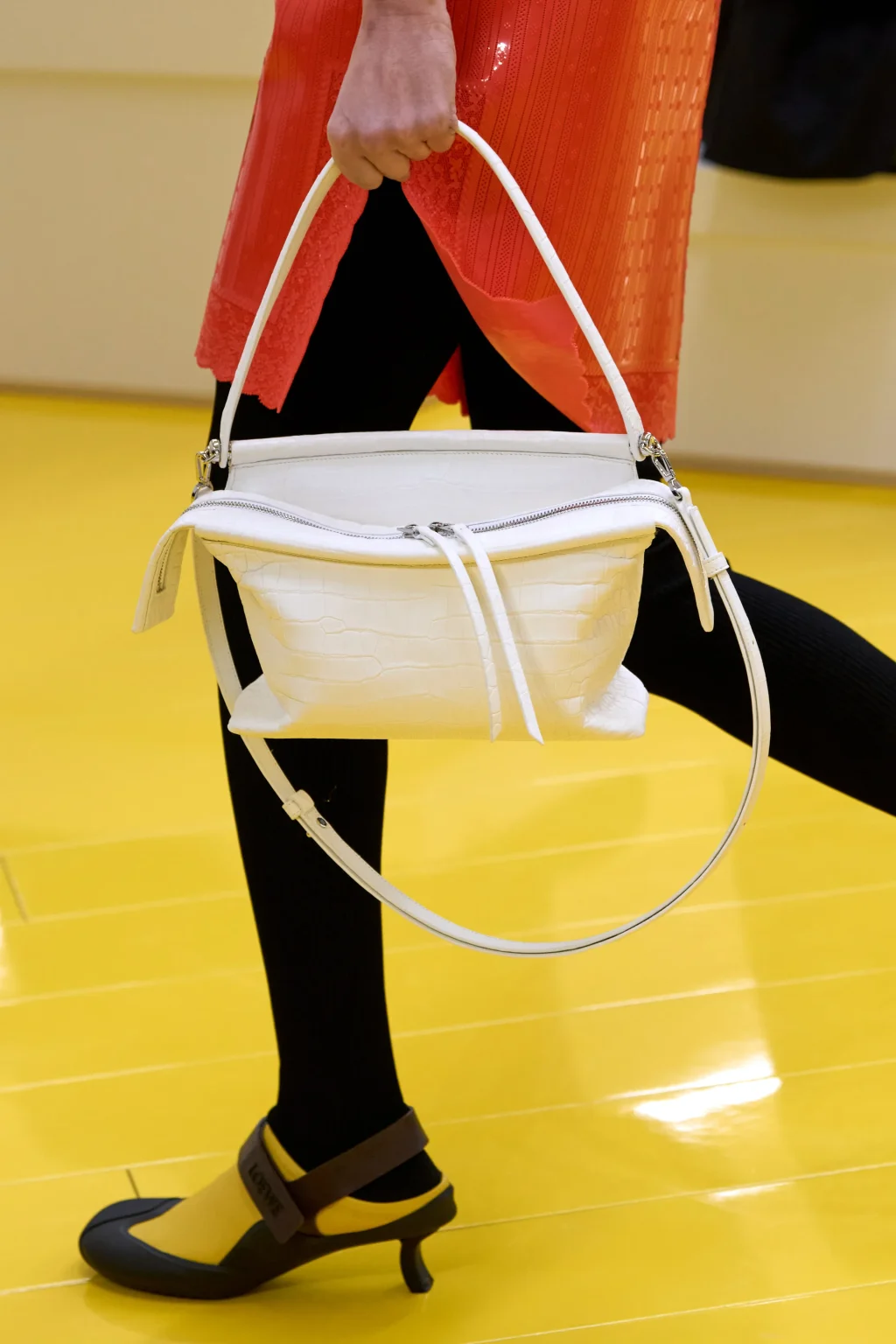
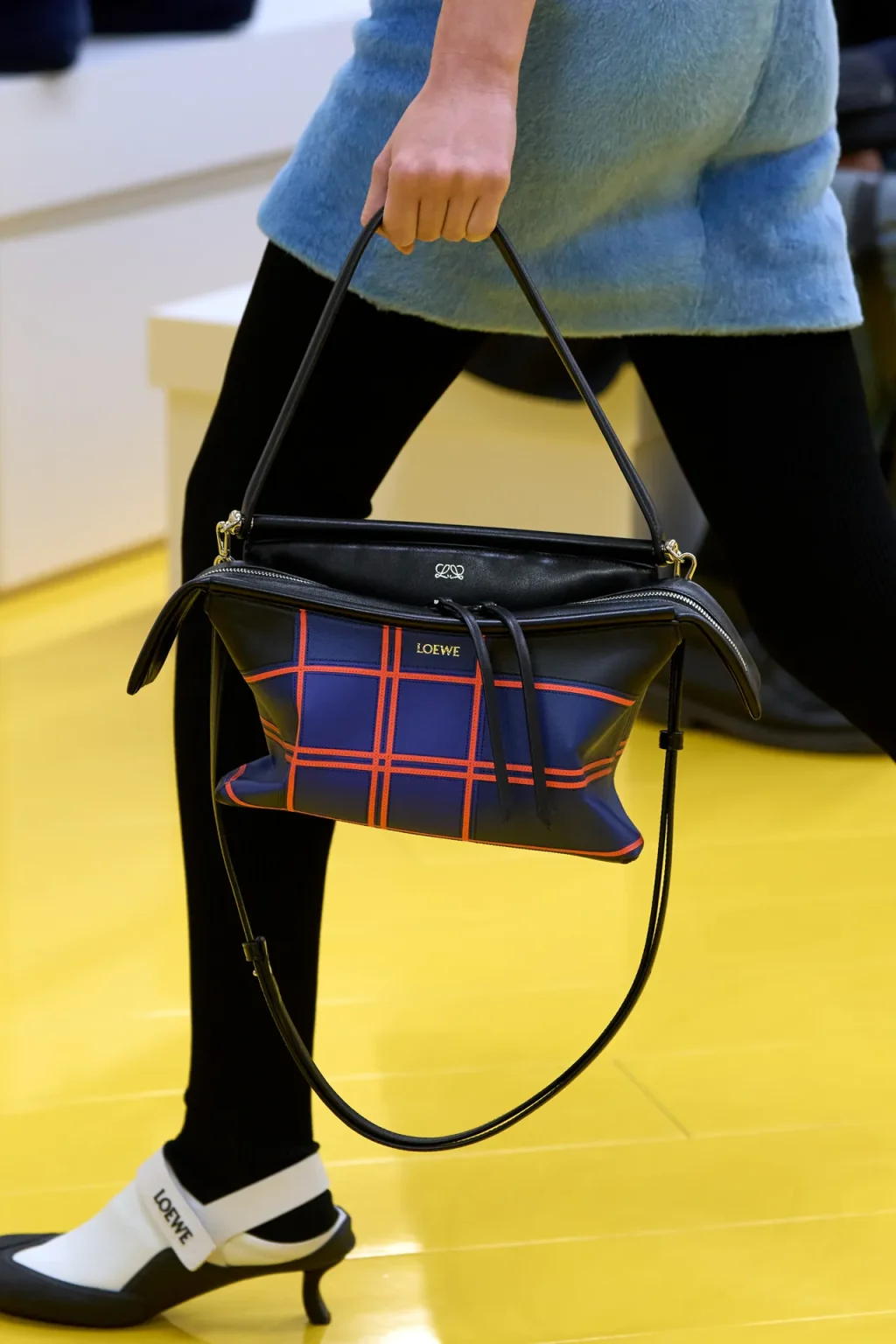
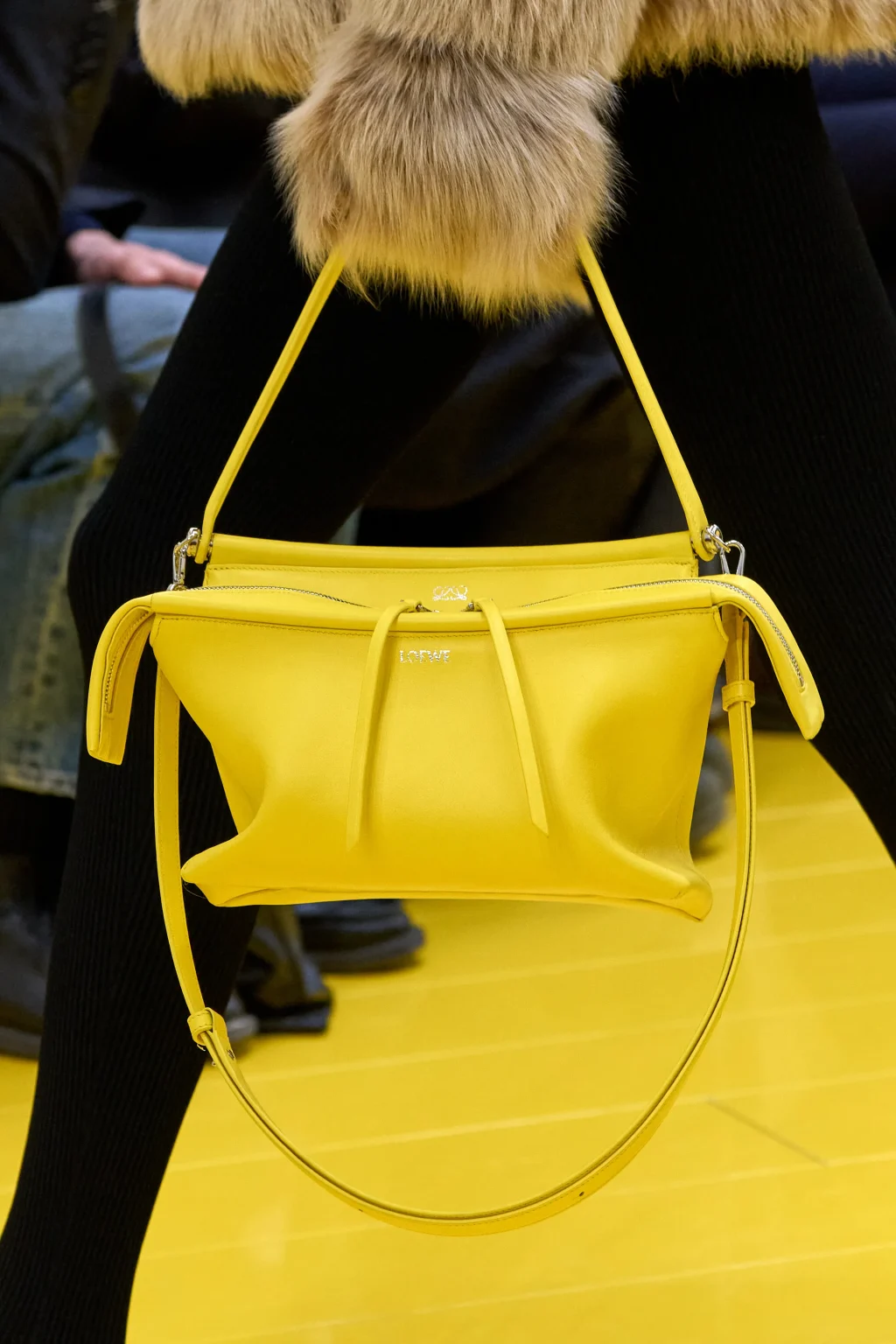
One of the most intriguing new runway bags was this compact Loewe shoulder style, which translates the collection’s broader interest in sculptural construction into a tighter, more controlled format. Seen across the runway in smooth leather, crocodile-embossed finishes, and graphic color-blocked or plaid variations, the design clearly functioned as one of the season’s recurring new shapes rather than a one-off experiment.
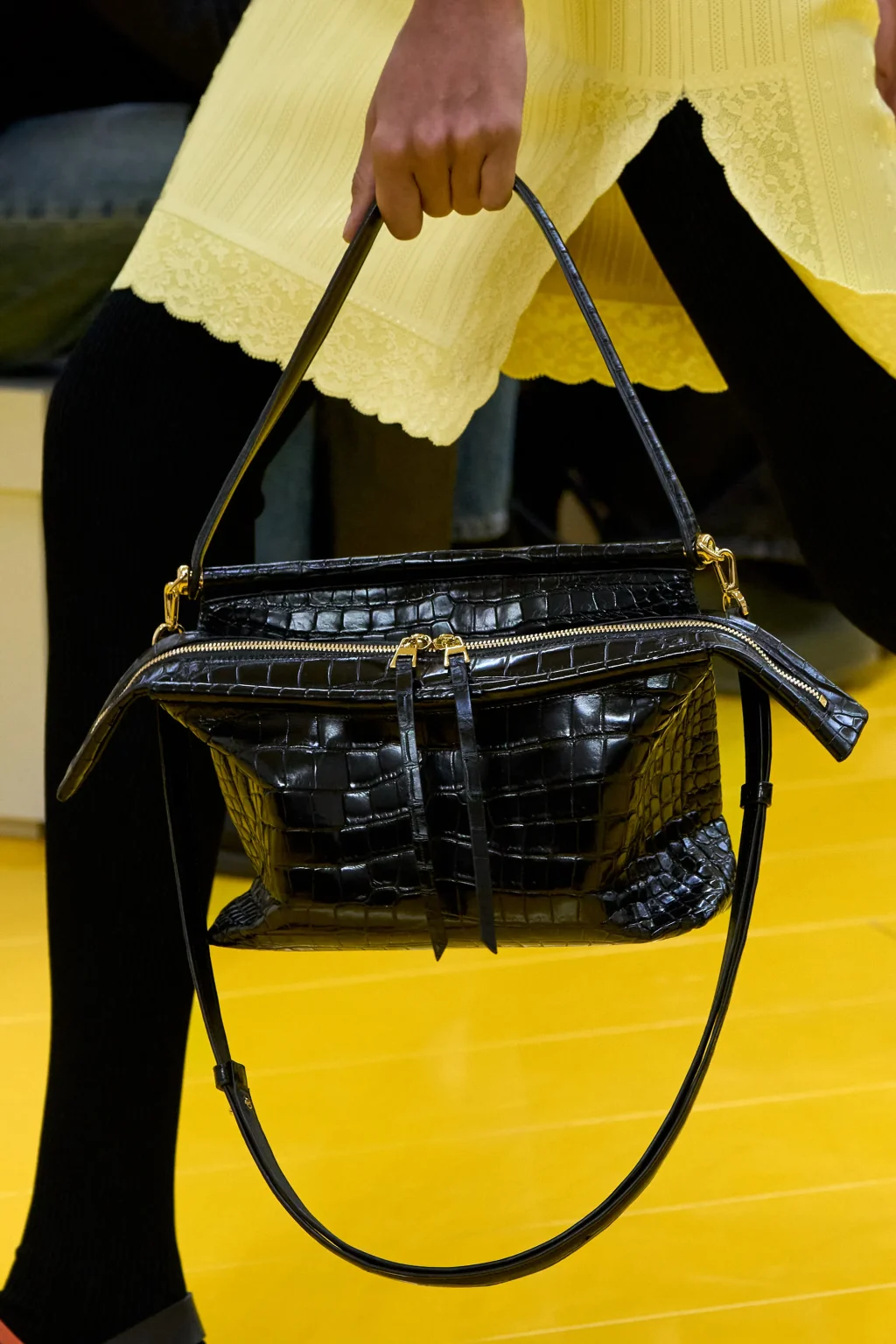
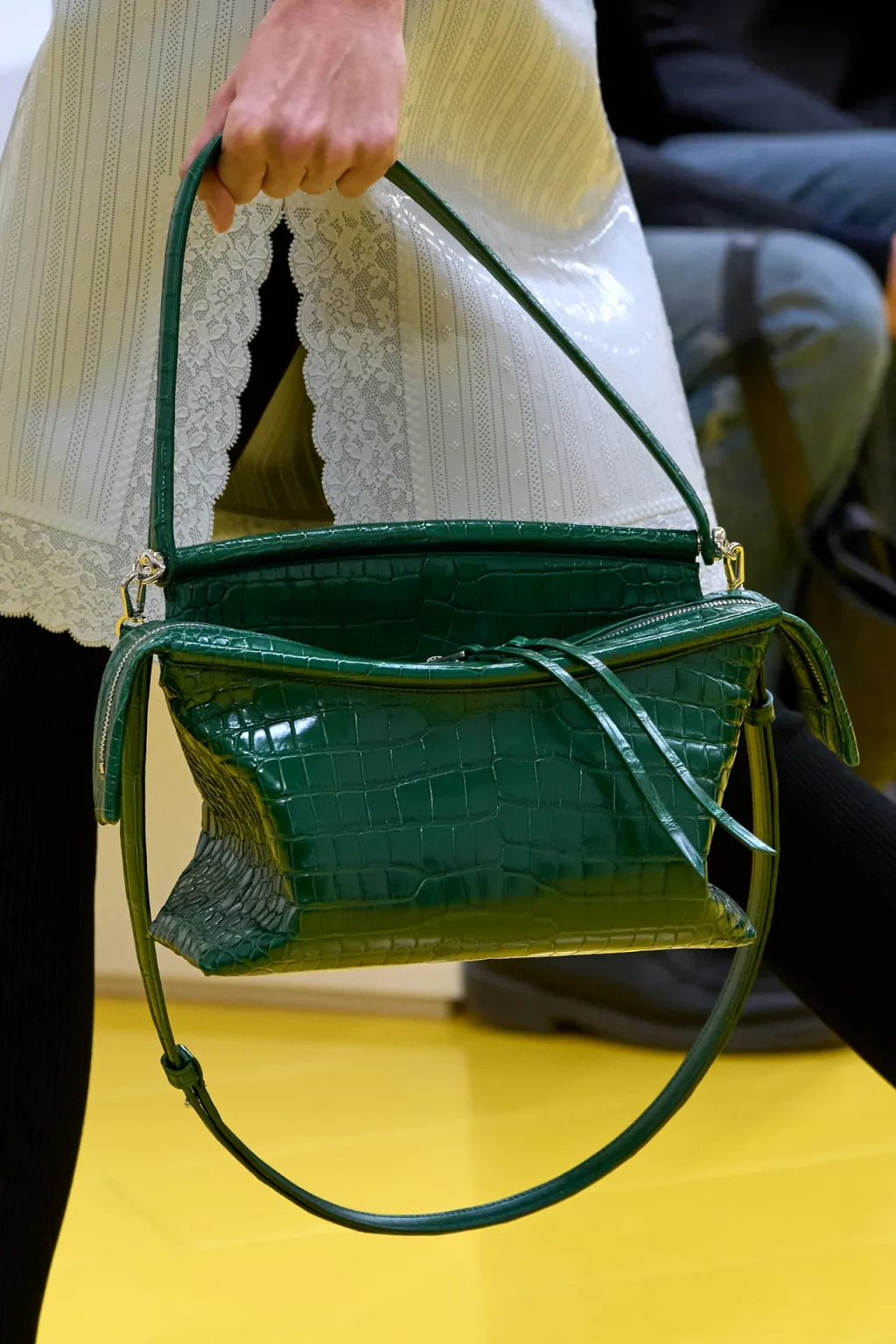
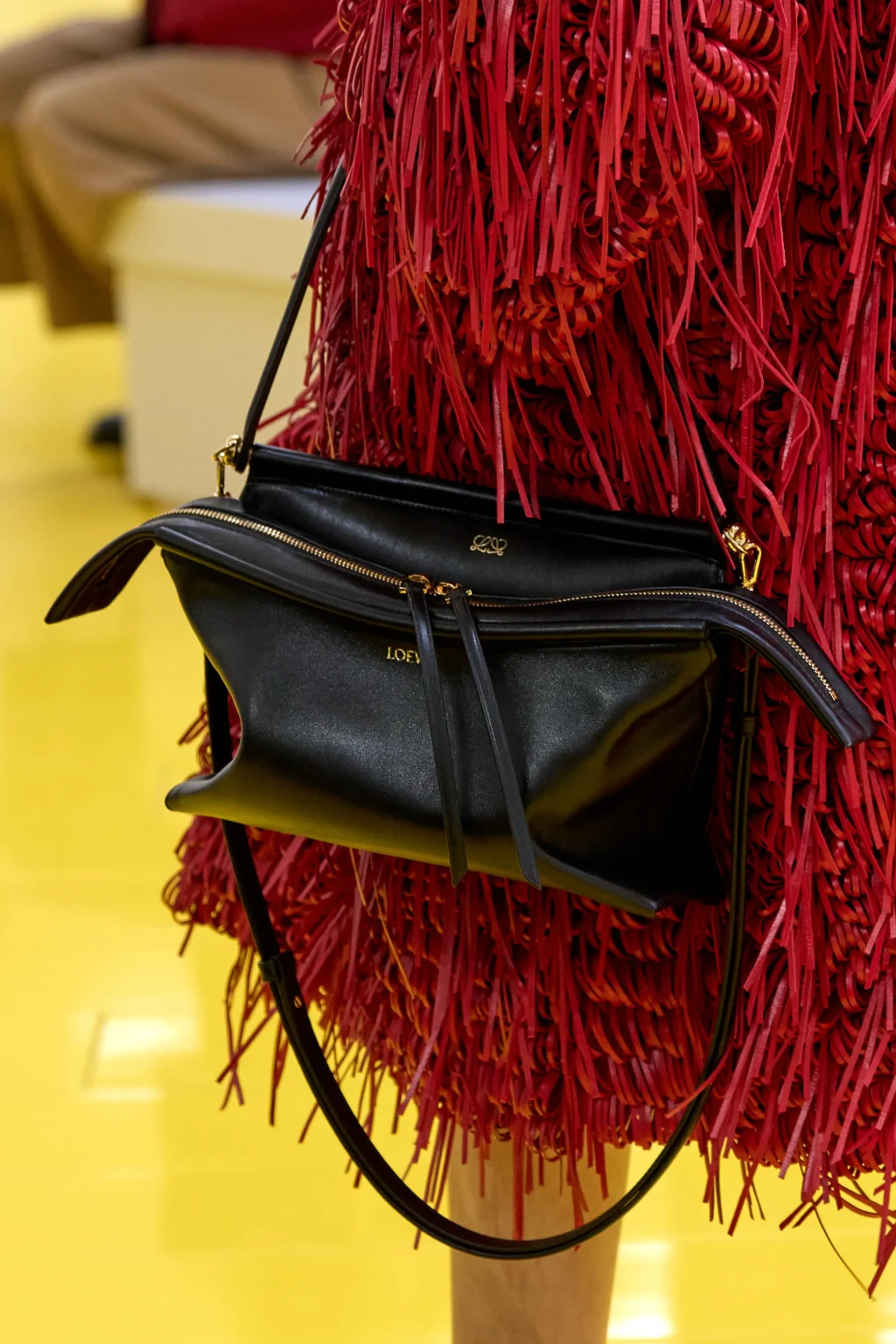
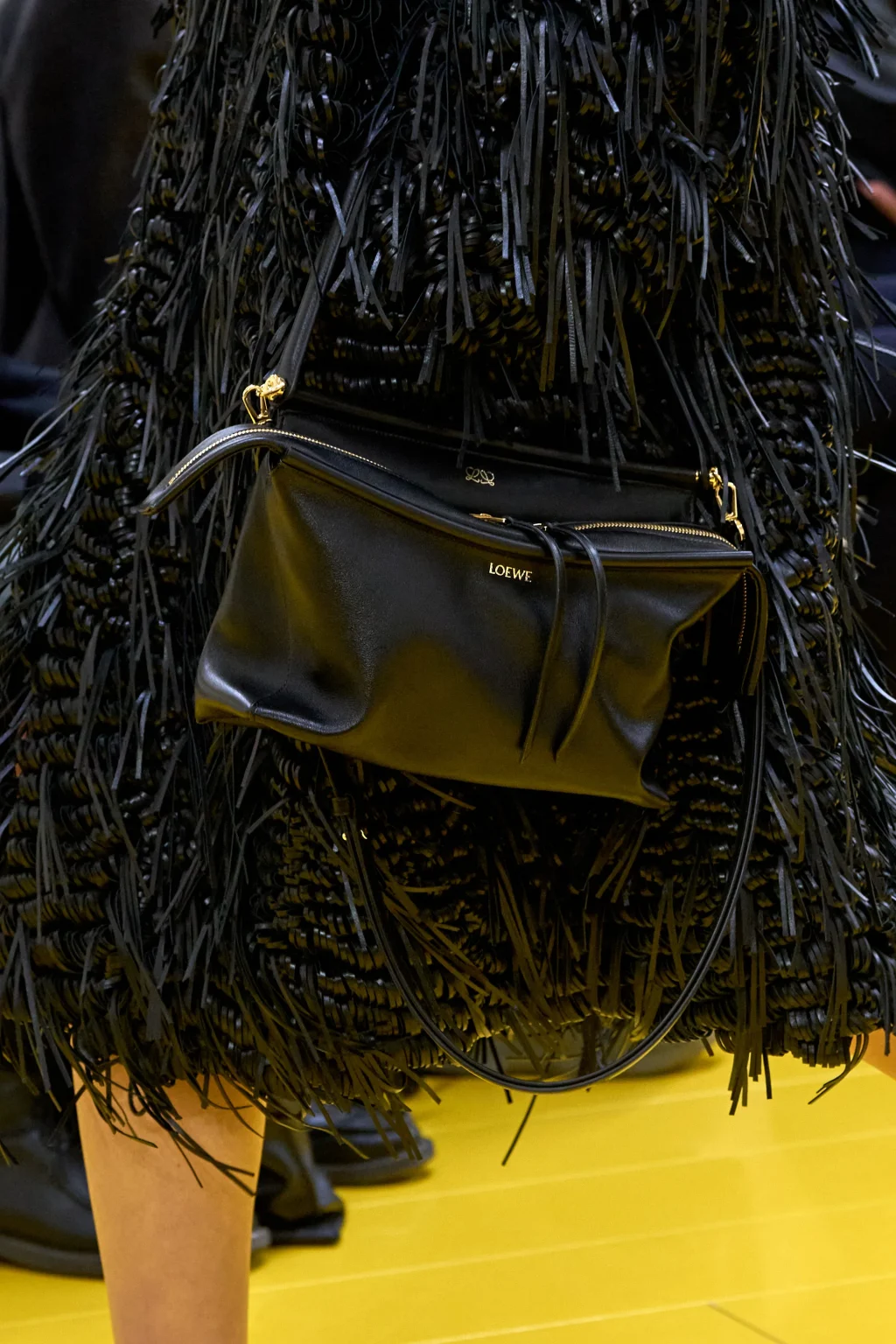
Its long strap, extended zip line, and folded wing-like edges create a silhouette that feels taut, narrow, and slightly aerodynamic, while the body contracts inward at the center before opening again across the top, giving the bag a compressed, almost hourglass-like tension. It shares some conceptual ground with the larger Amazona 180, particularly in the way volume is manipulated rather than simply contained, but this version is more distilled and more urban.
The Puzzle Bag Returns in a Sculptural Form
Few bags define modern Loewe as strongly as the Puzzle Bag, originally introduced under Jonathan Anderson and quickly becoming one of the brand’s most recognizable silhouettes.For Fall-Winter 2026–2027, the Puzzle appears in a version that emphasizes its architectural origins.
The bag’s signature geometric panel construction becomes more pronounced, with sharper folds and deeper structural creases. On the runway, the bag appears in smooth black leather, the surfaces catching the light along the angular seams.
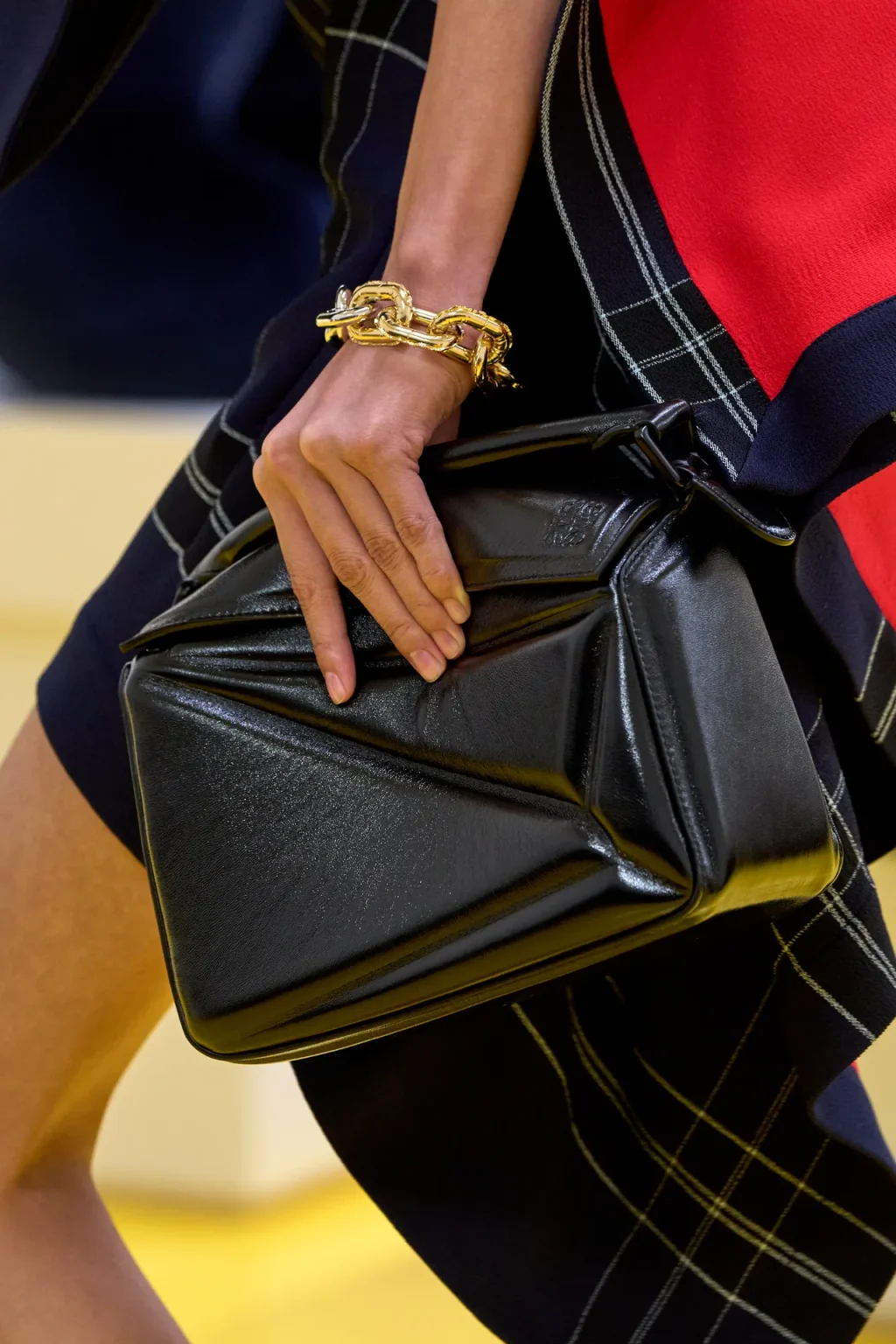
Carried as a handheld piece rather than a crossbody, the bag looks almost like a folded leather sculpture, reinforcing its conceptual origins.
Despite its artistic appearance, the Puzzle remains a highly functional bag. Its flexible structure allows it to flatten almost completely, a technical achievement that continues to distinguish it from other luxury handbags.
The Flamenco Reappears in More Experimental Forms
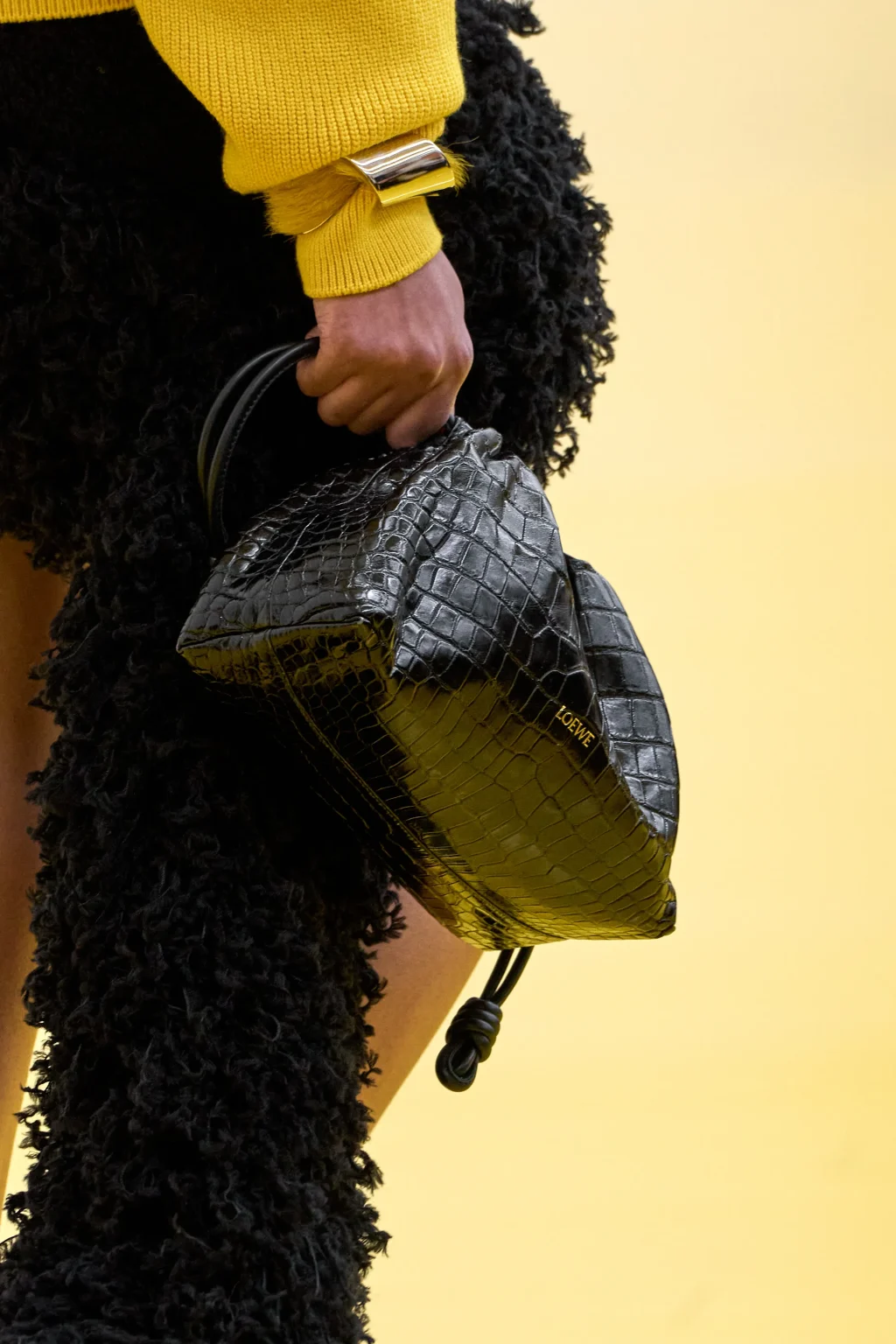
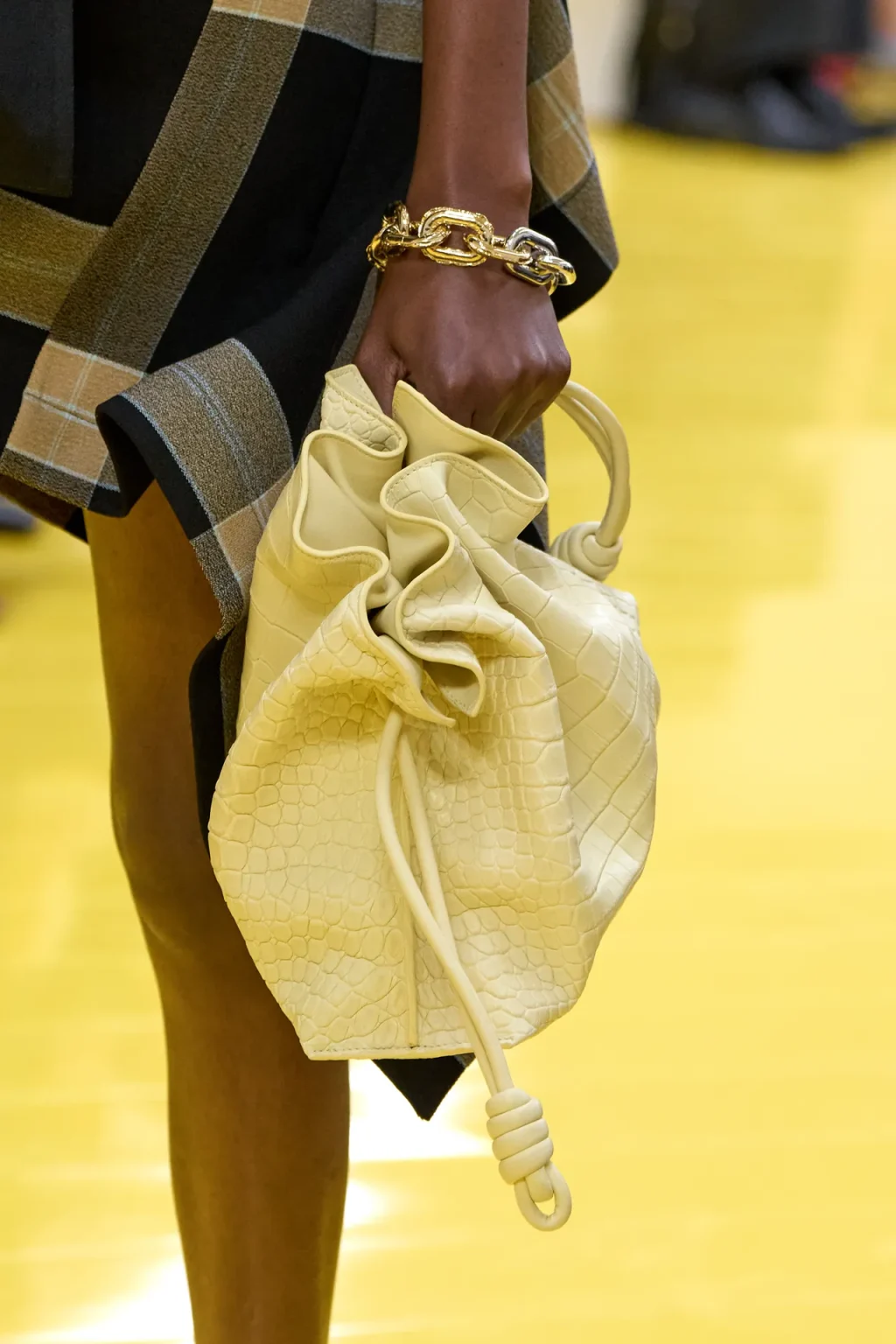
Few Loewe bags lend themselves to reinvention as naturally as the Flamenco, and in the Fall-Winter 2026–2027 collection the house used that flexibility to full effect. The silhouette appears in smooth leather, croc embossing, fur, and graphic patchwork, moving from quiet black and ivory to more theatrical runway statements.
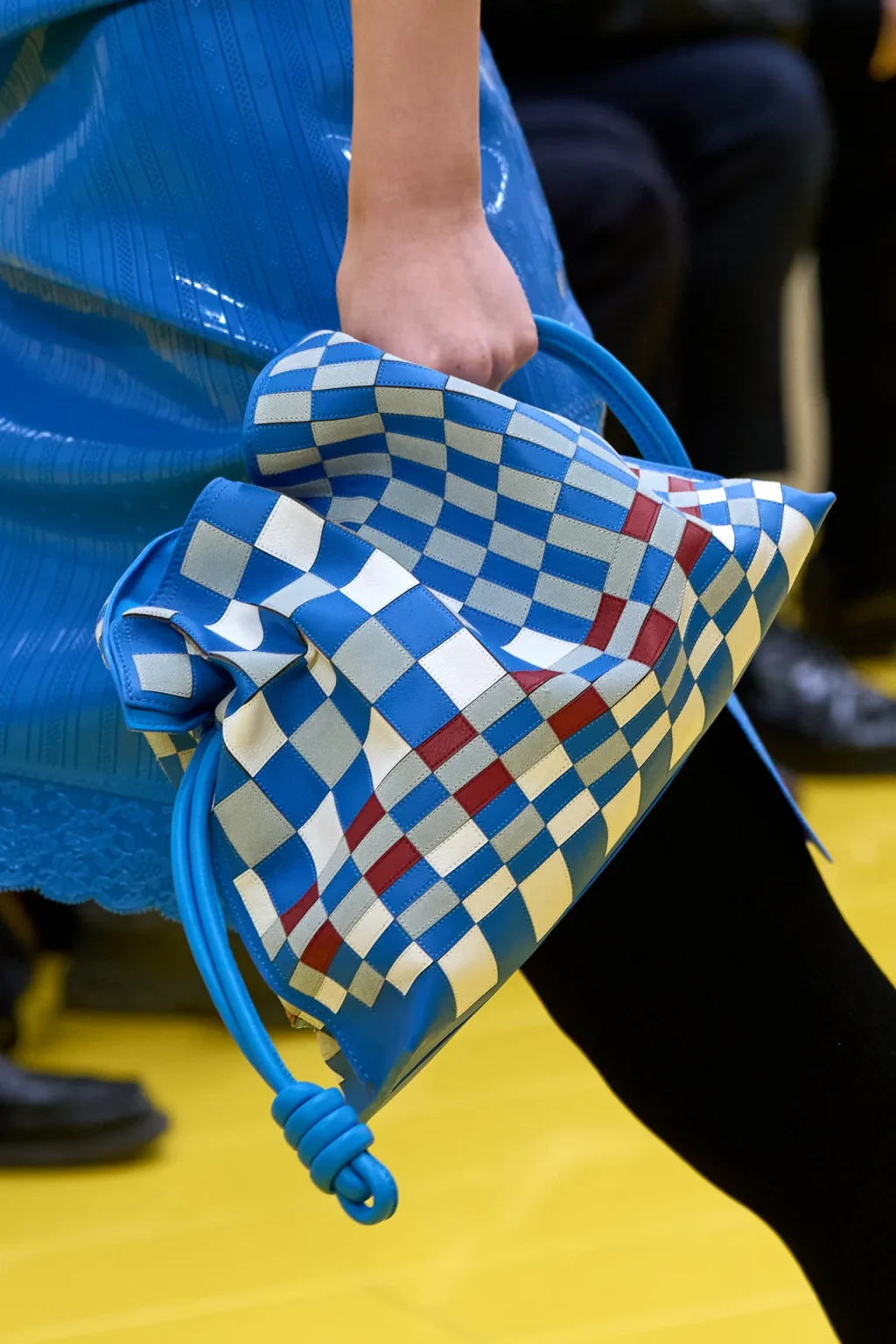
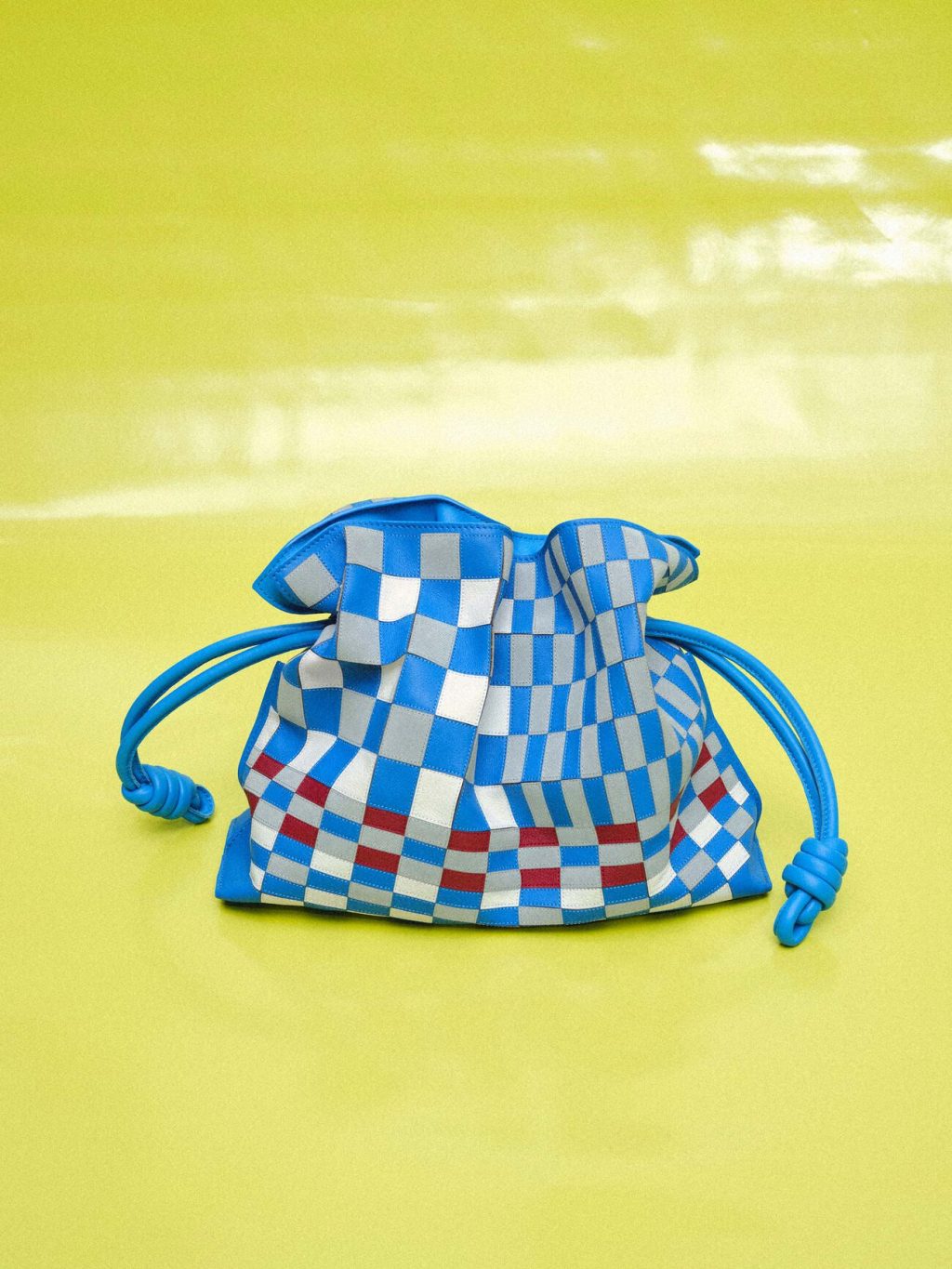
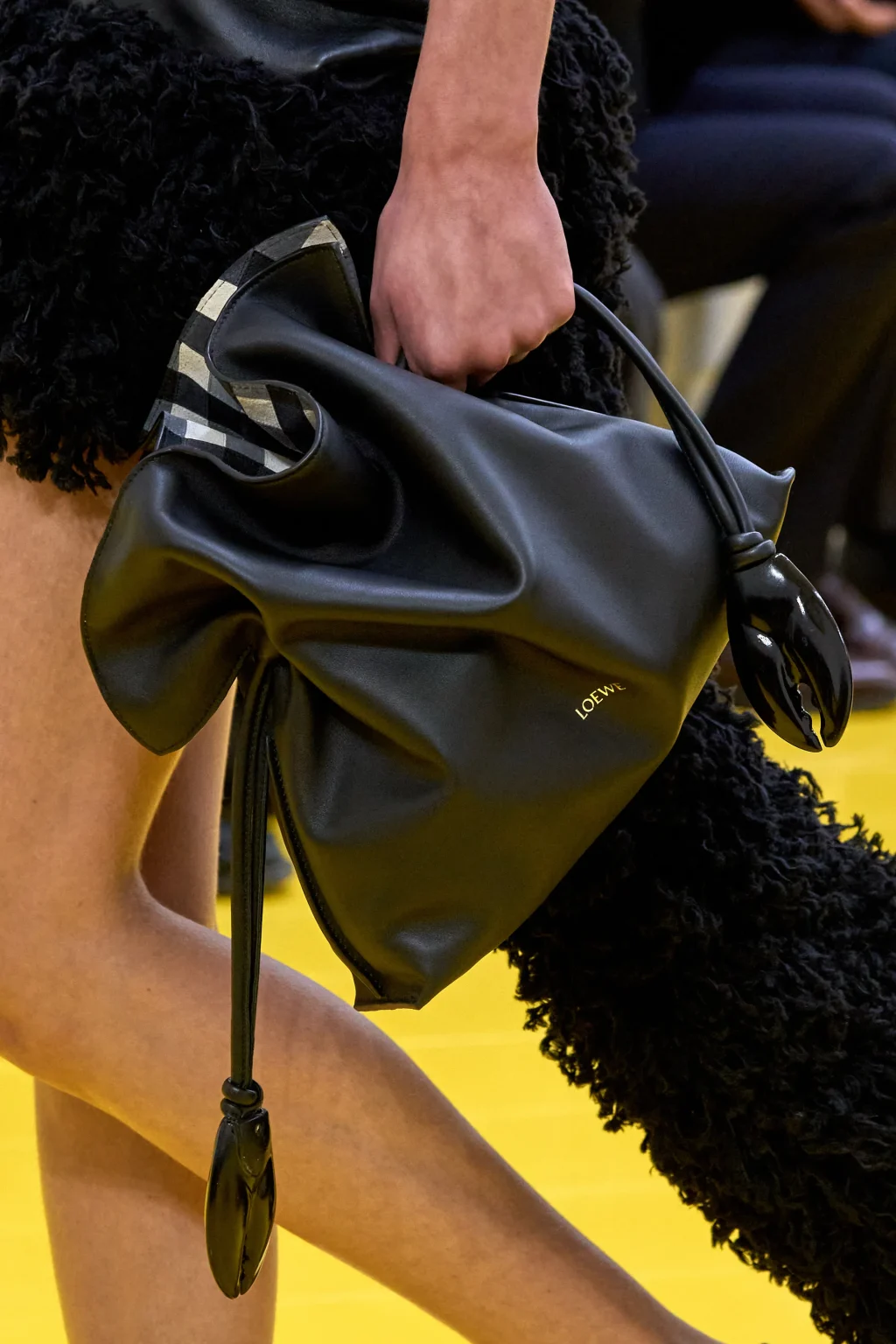
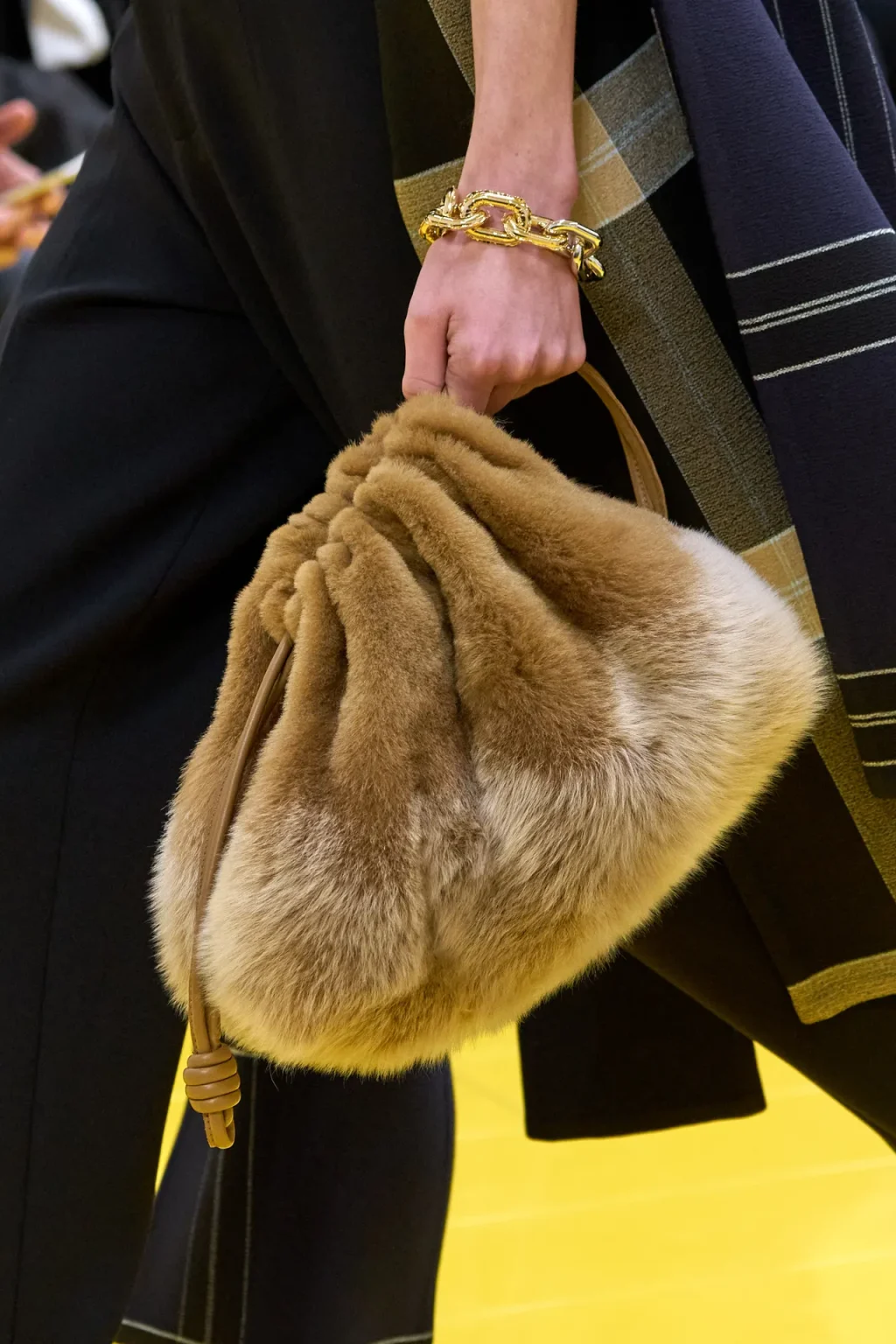
Its gathered construction and knotted cords still give it that unmistakable Flamenco ease, but here the bag feels less understated than in previous seasons. It becomes a soft canvas for texture, pattern, and exaggeration — a bag that can shift from refined to eccentric without losing coherence. In a collection built around craft, process, and playfulness, the Flamenco feels especially important because it shows how Loewe can take a familiar icon and make it look unexpectedly new.
Sculptural Minaudières and Geometric Clutches
Among the most surprising accessories in the collection were several hard minaudières shaped like small geometric objects.
These clutches resemble miniature architectural models rather than traditional handbags. Their surfaces feature marbled textures, color-blocked panels, and sharp angles, creating the impression of holding a small art piece.
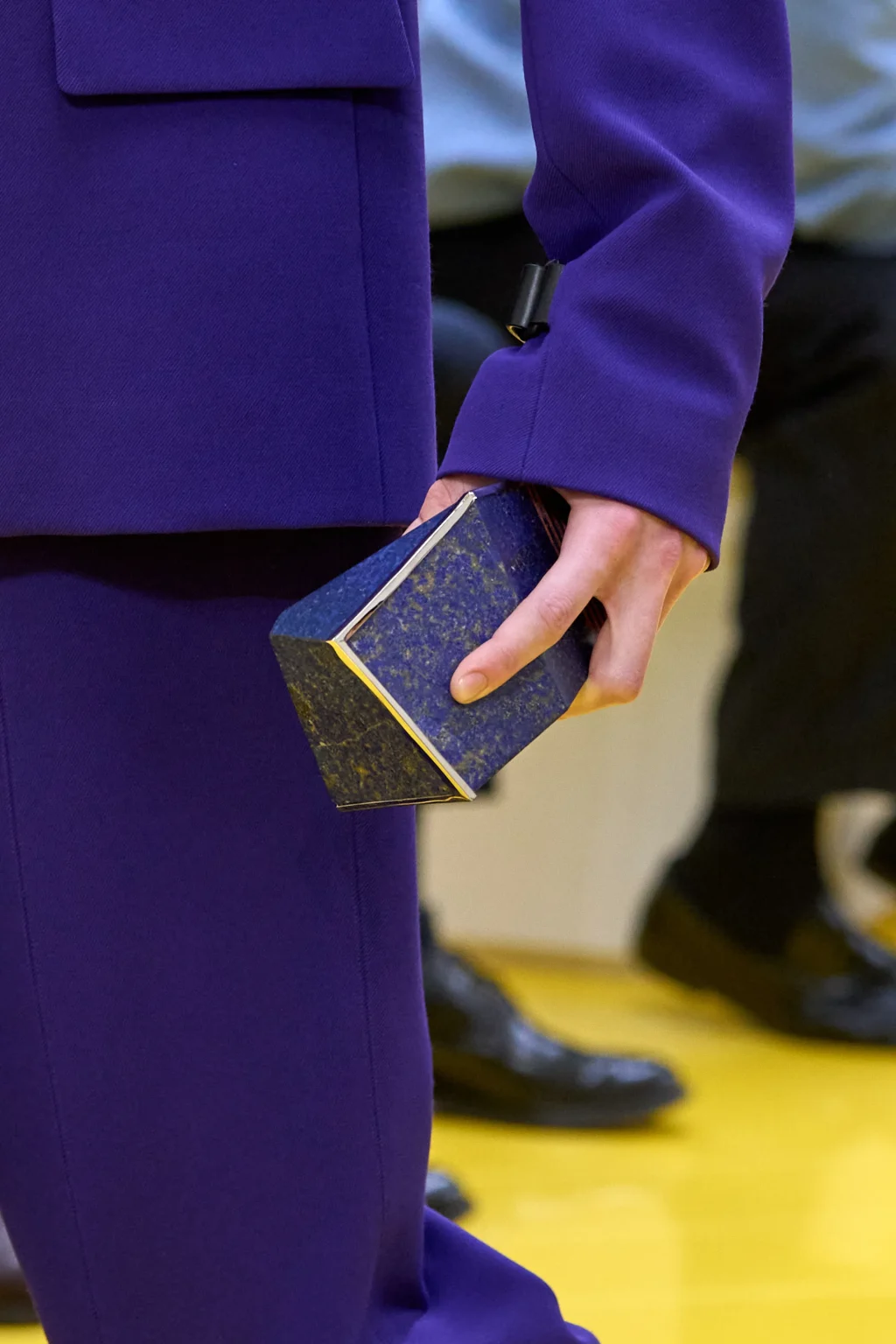
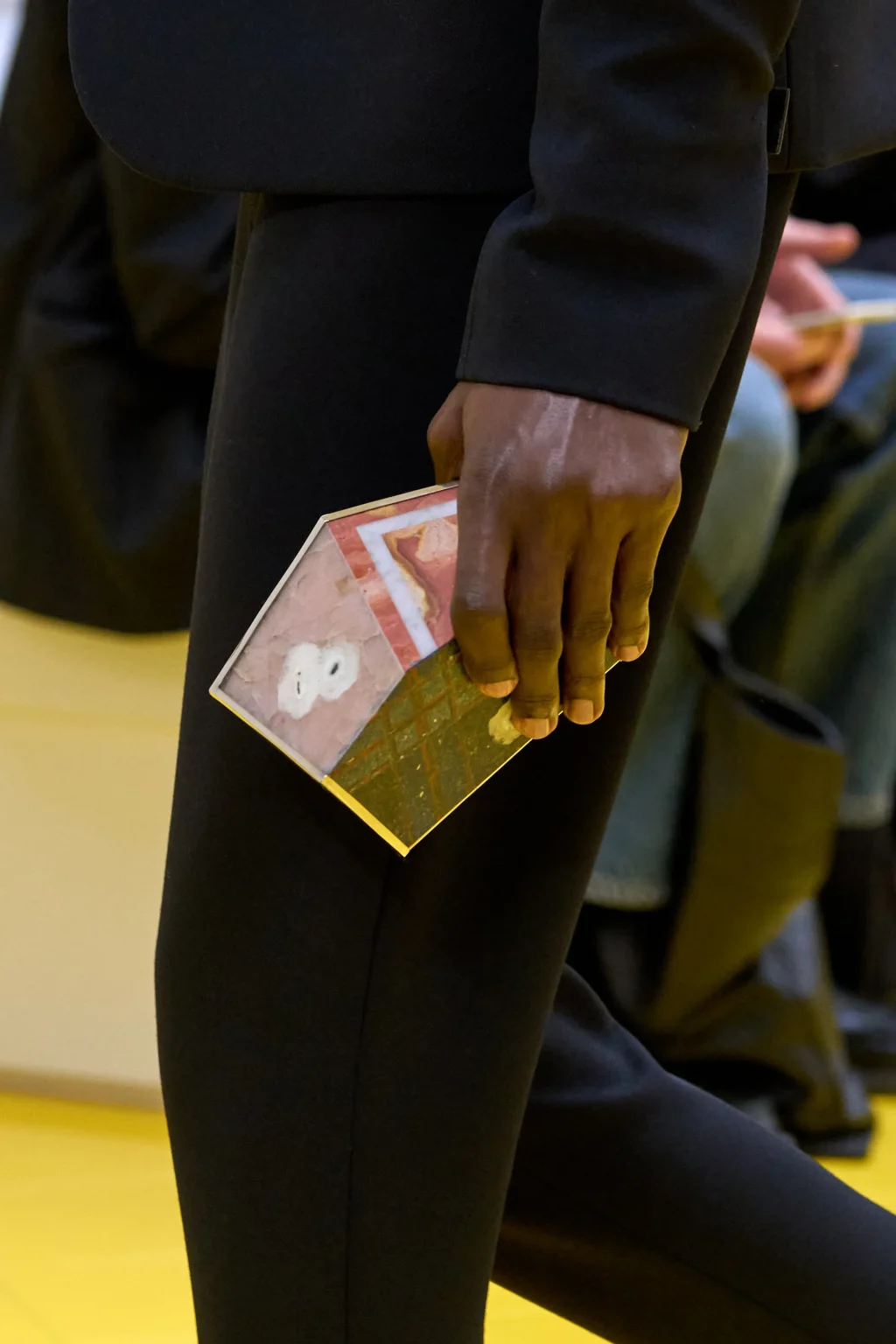
Rather than focusing on practicality, these bags function as concept accessories — objects designed to provoke curiosity.
Their presence on the runway reflects Loewe’s broader interest in design culture, where the boundaries between fashion, art, and object design are deliberately blurred.
The Circular Tartan Pouch
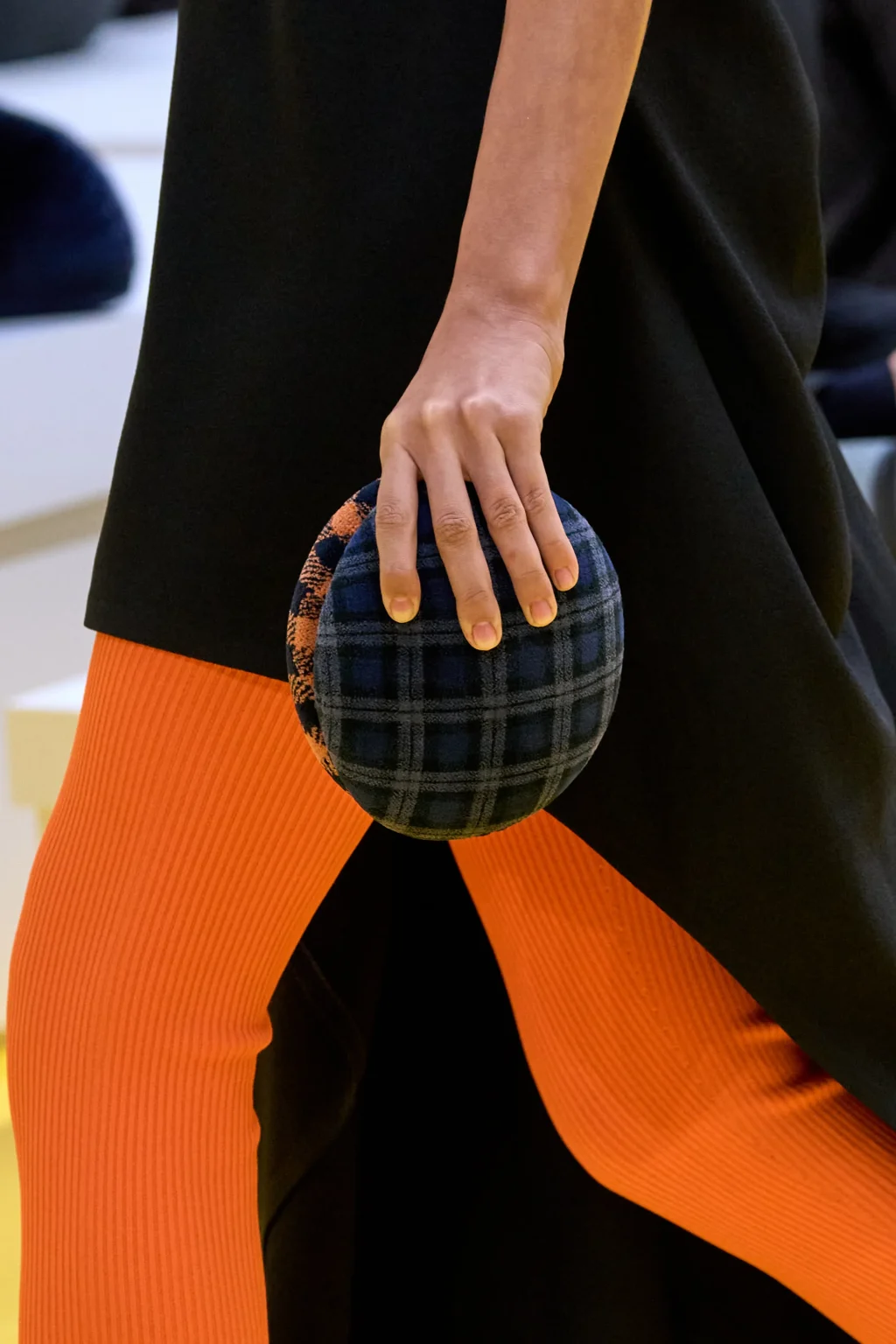
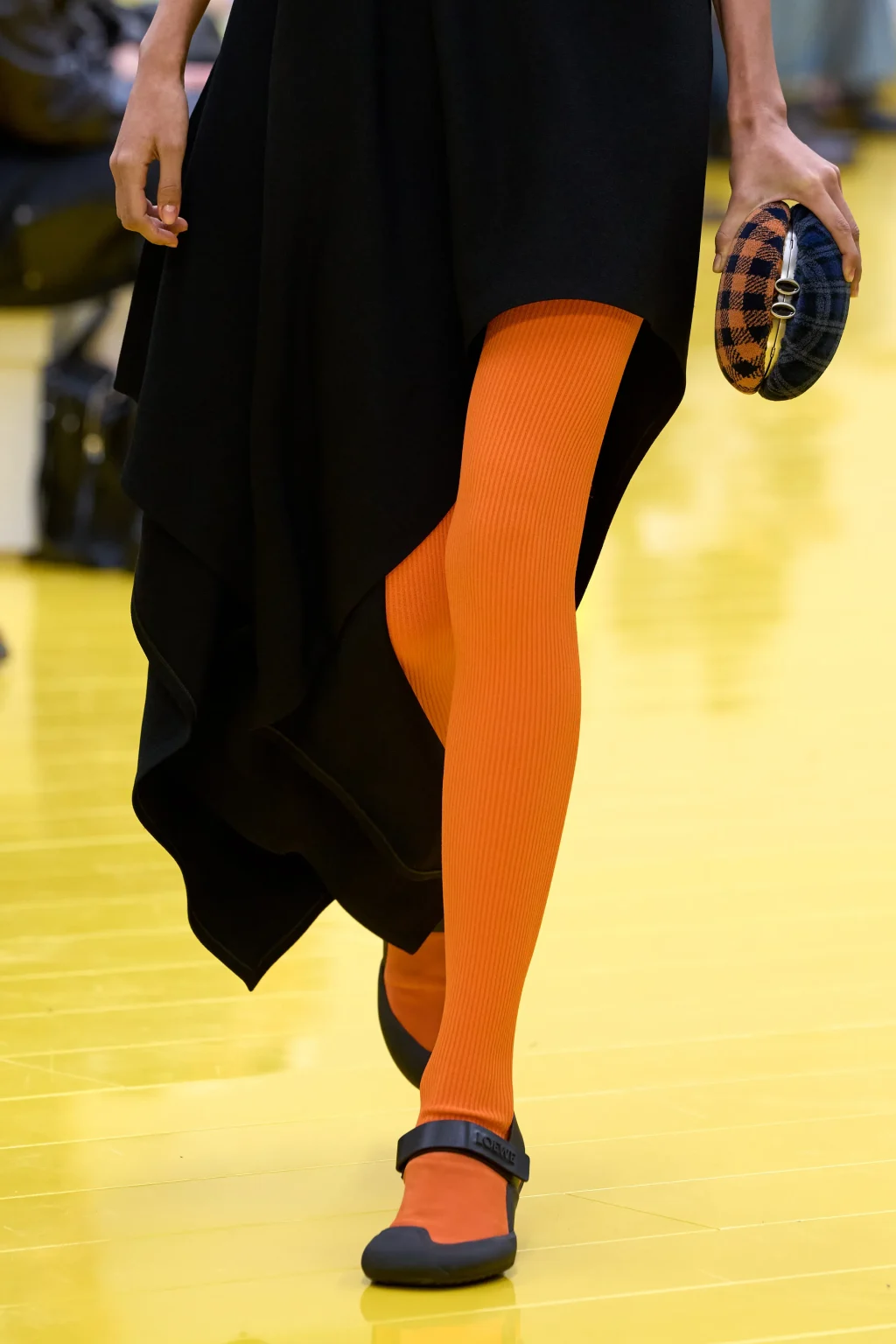
Another playful accessory introduced in the show is a round tartan pouch, carried like a compact clutch. The bag’s disc-shaped form gives it an almost toy-like quality, while the checkered textile surface references classic European fabrics. Its zipper runs across the middle of the circle, dividing the pouch into two halves.
Oversized Holdalls and Travel Bags
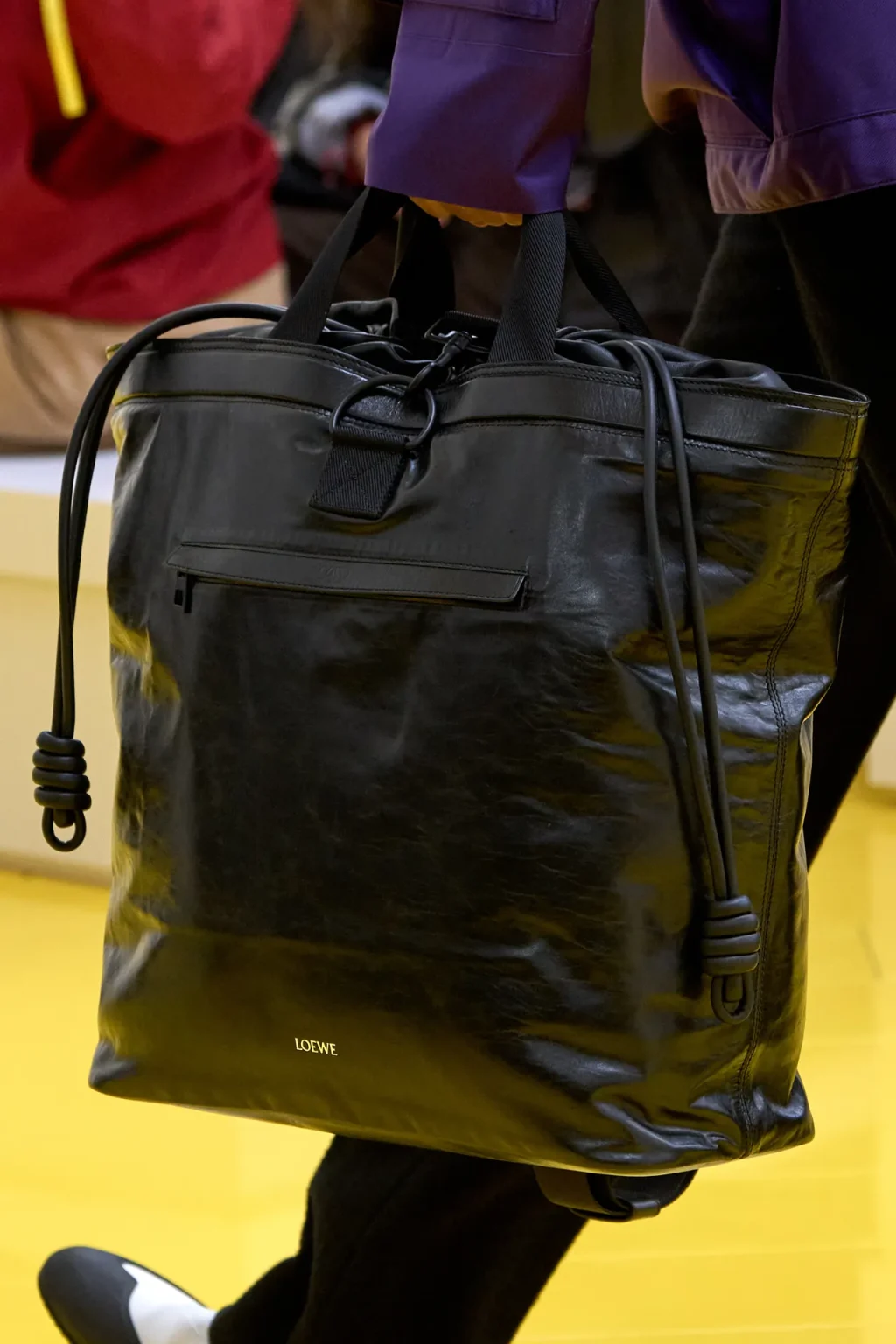
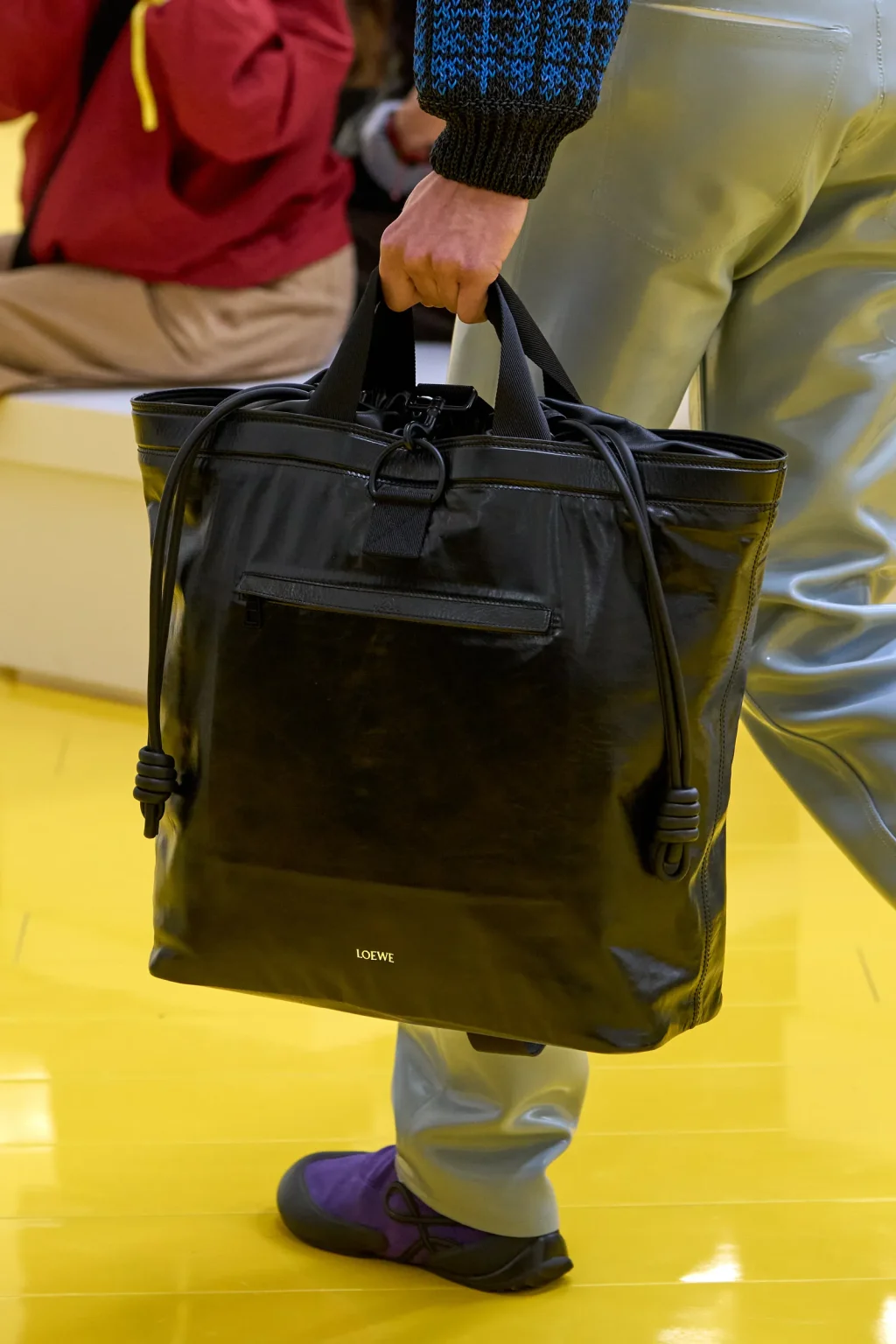
At the opposite end of the spectrum, the runway also introduced large leather holdalls. Shown in deep brown and black leather, the bags sit somewhere between a luxury briefcase and a weekender bag. Their generous scale suggests a more travel-oriented direction for Loewe accessories, aligning with the broader trend toward larger bags seen across recent menswear collections.
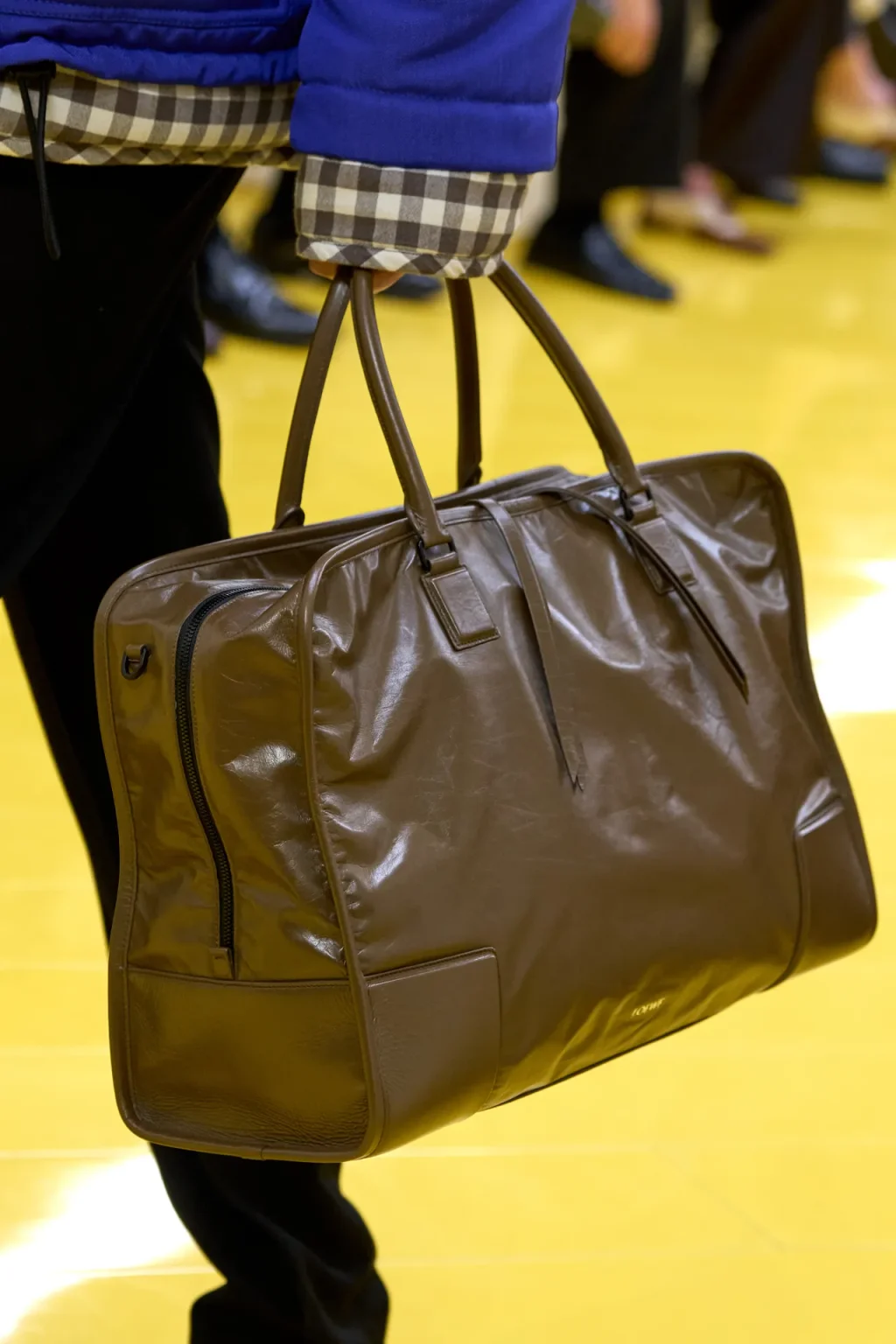
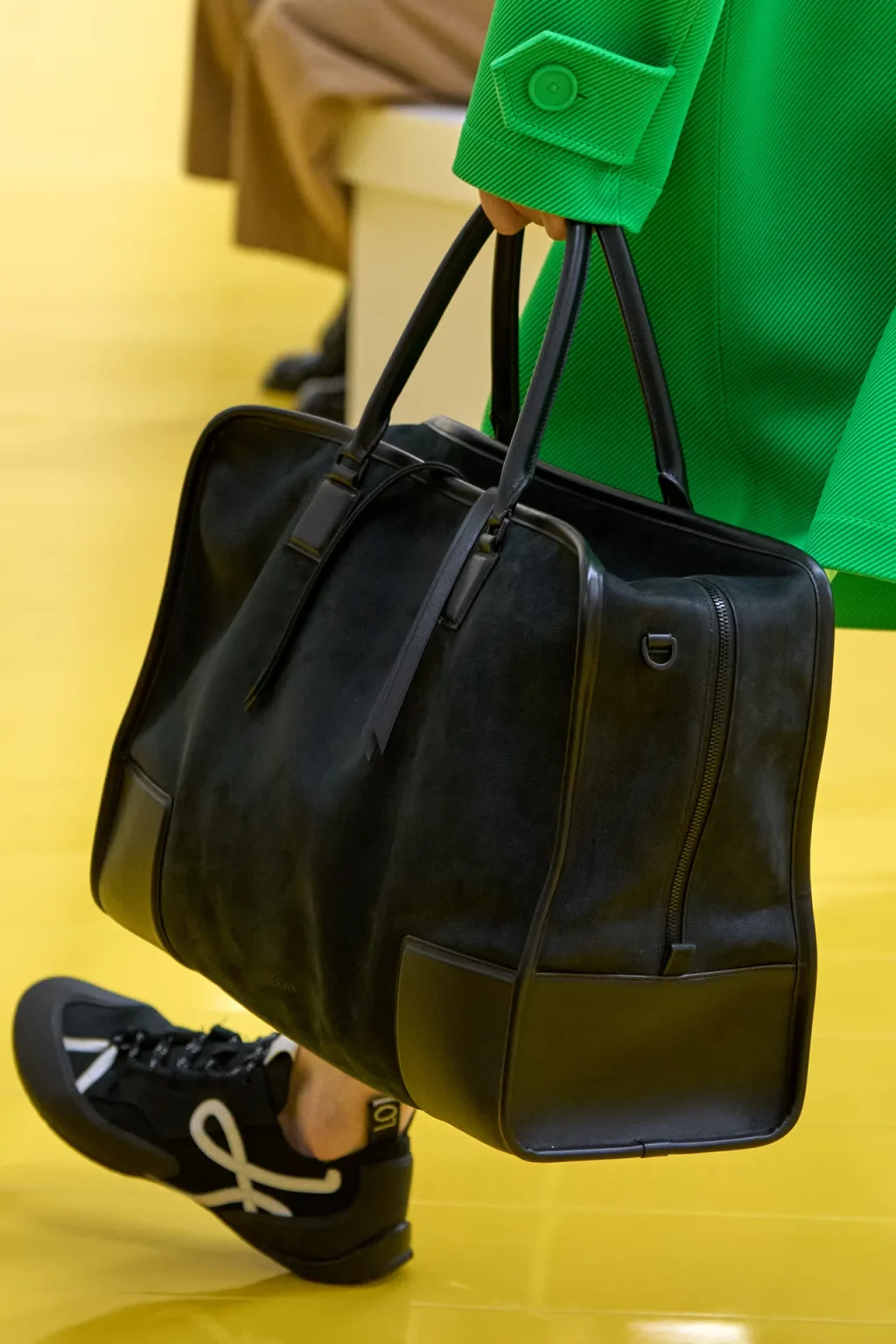
Some versions appear particularly suited for rainy city days, with smooth, almost coated leather surfaces that feel practical and resilient — the kind of bag that could easily accompany a commuter navigating wet pavements or a traveler moving through unpredictable weather. In that sense, the holdalls combine utility with Loewe’s refined approach to material.
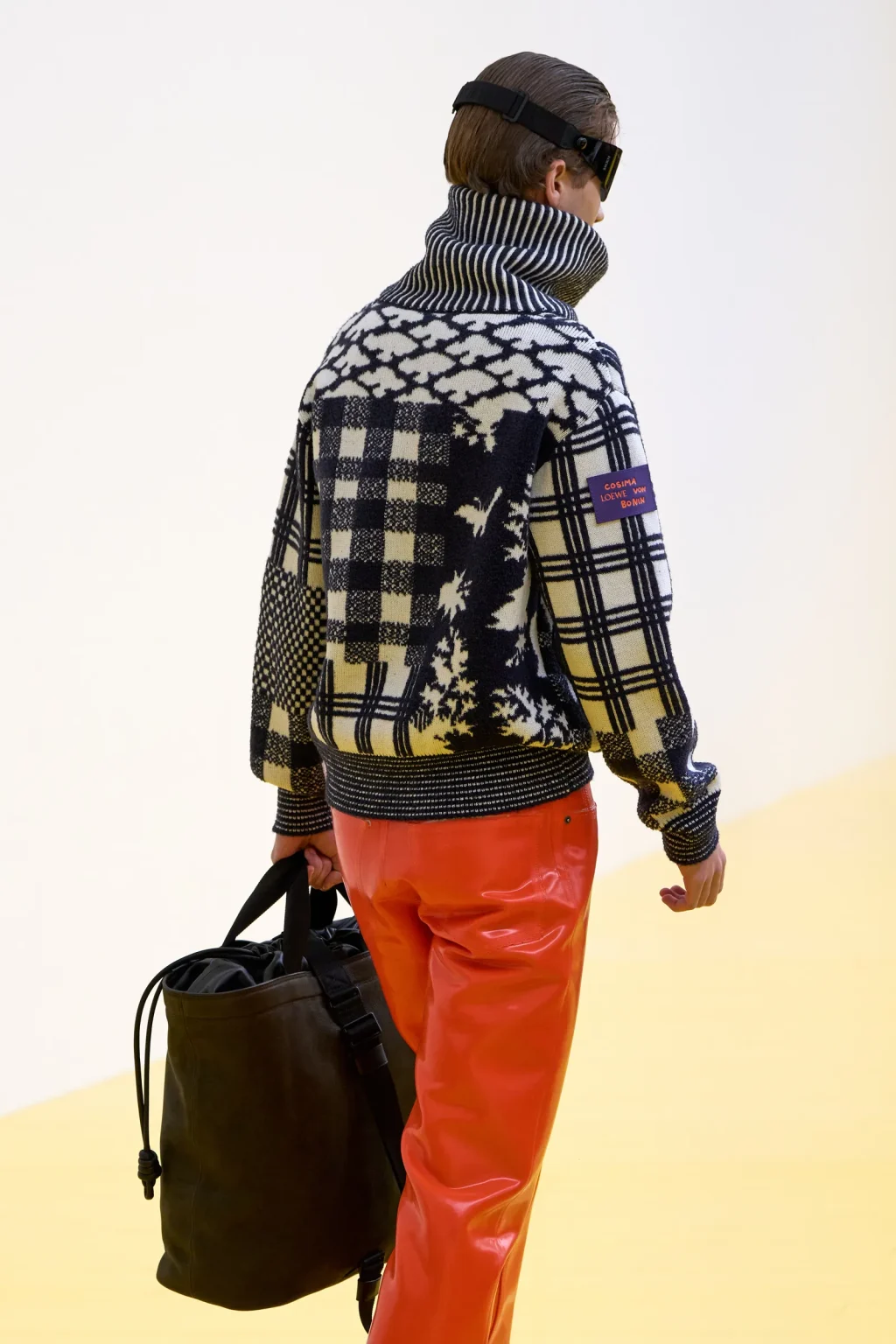
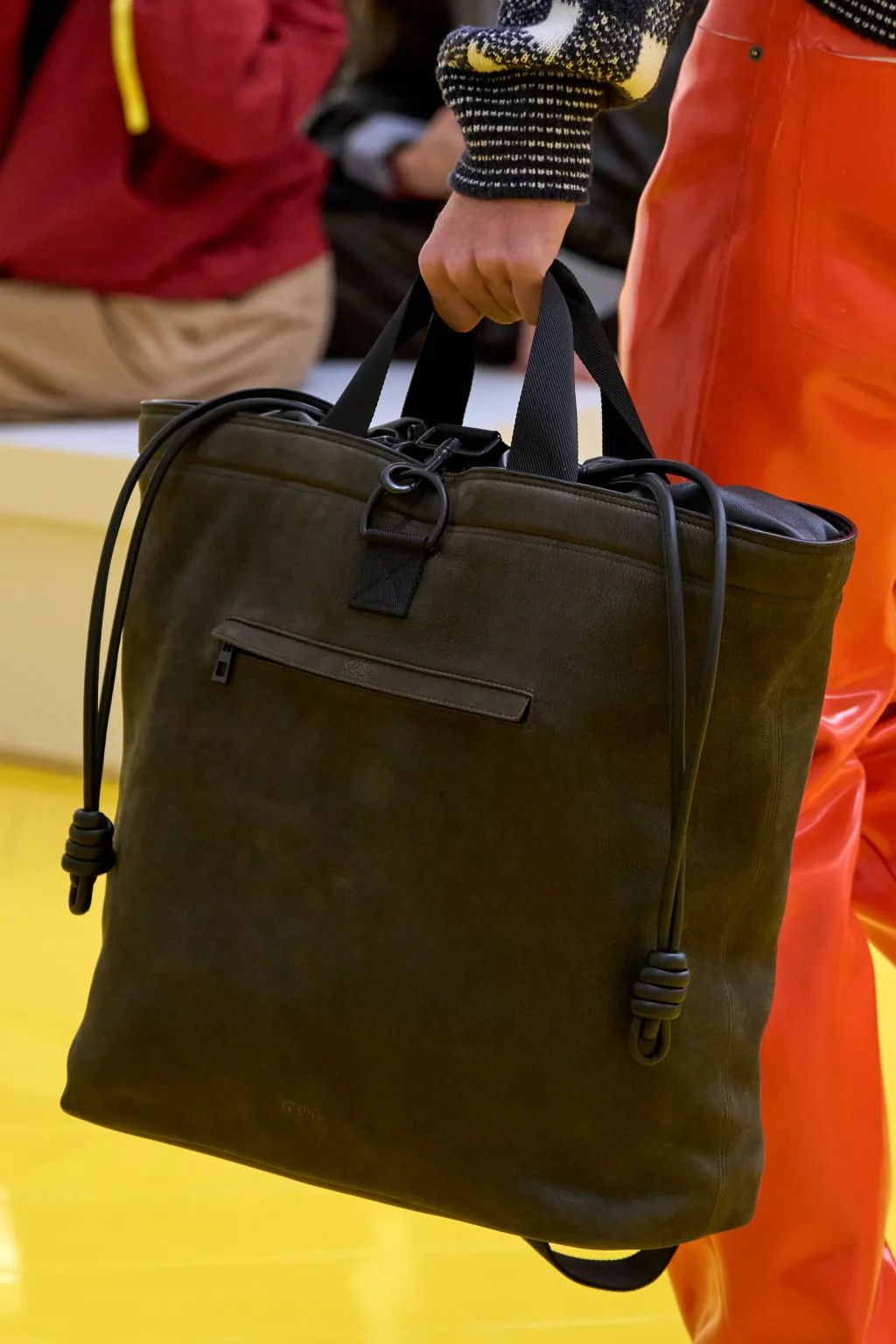
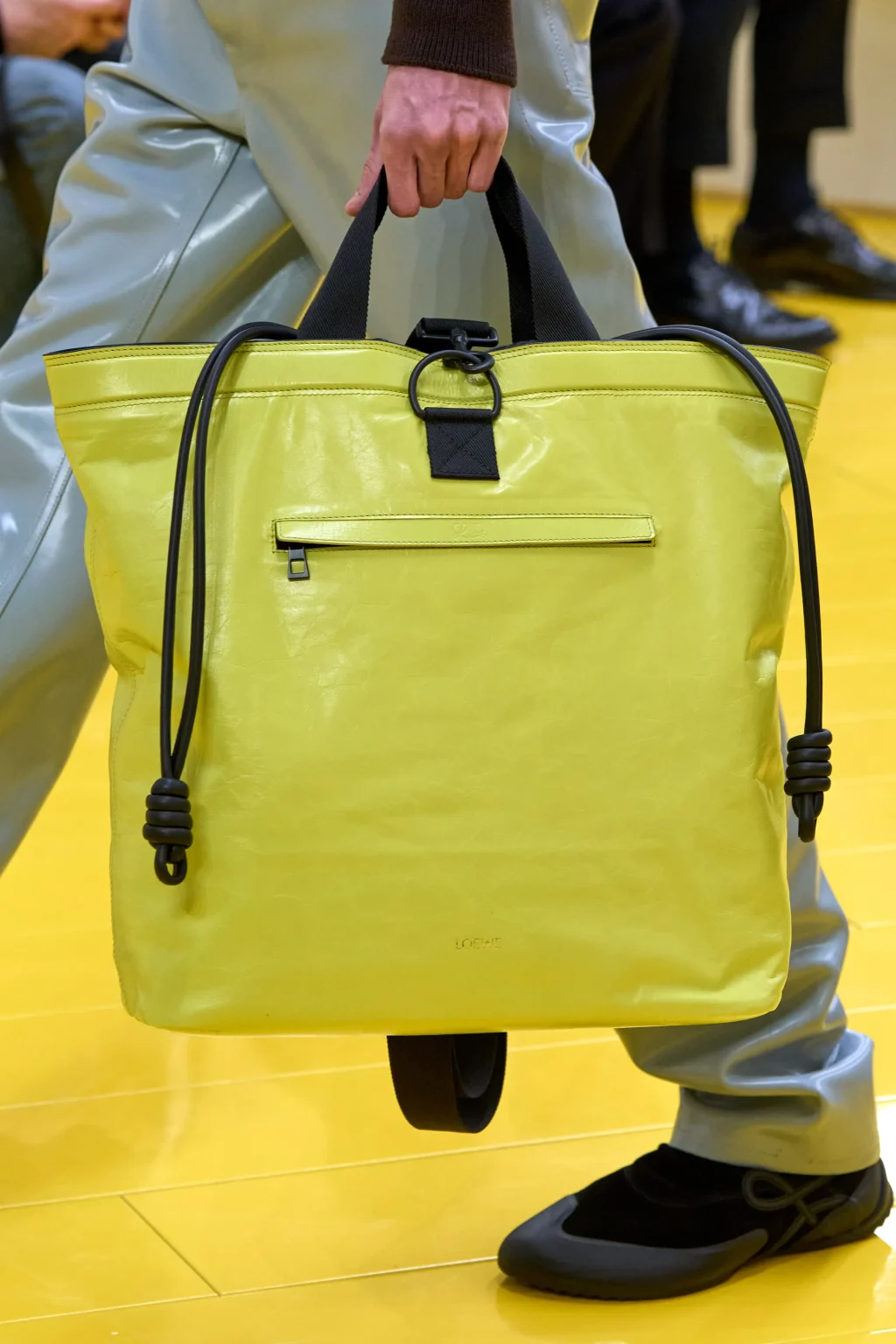
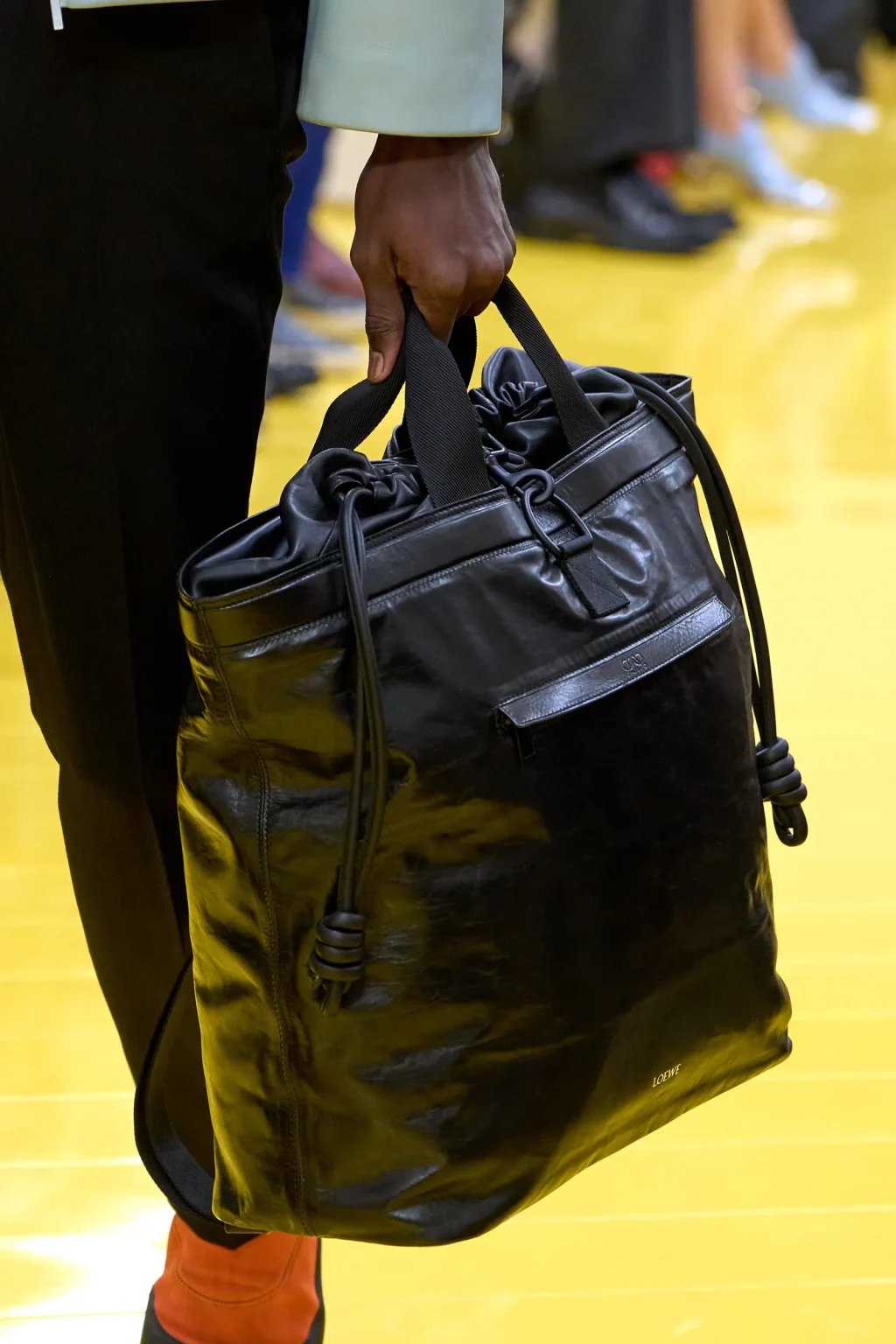
The slightly wrinkled leather surface adds a relaxed feel, contrasting with the sharper geometric pieces elsewhere in the show, while reinforcing the impression of a bag designed for real movement rather than purely decorative presence.
The Playful Spirit of Loewe Craft
Across the entire accessory lineup, the Loewe Fall-Winter 2026–2027 bags share one defining quality: they celebrate the act of making. Some bags are architectural and precise, like the Puzzle. Others are whimsical curiosities, like the geometric minaudières or the circular tartan pouch. Still others embrace practicality through generous proportions and soft leather construction.
Together, they demonstrate Loewe’s unique approach to luxury design — one that treats the handbag not just as a fashion item, but as a crafted object with its own personality.