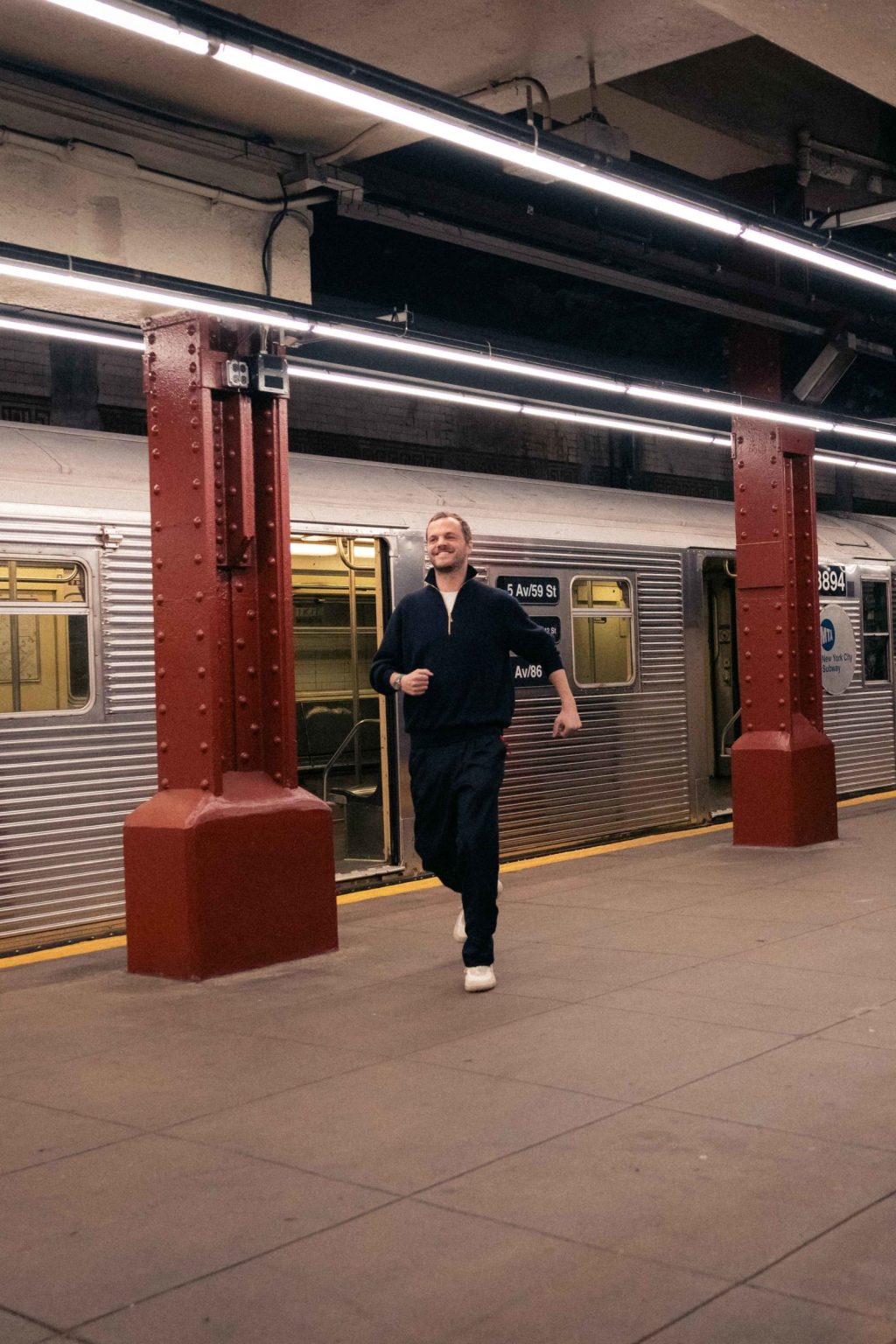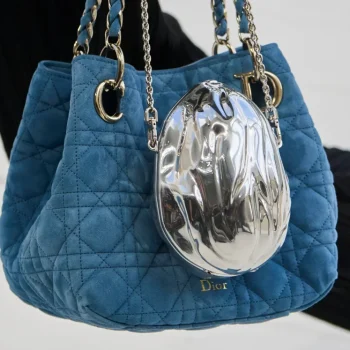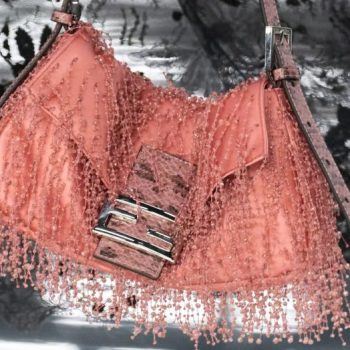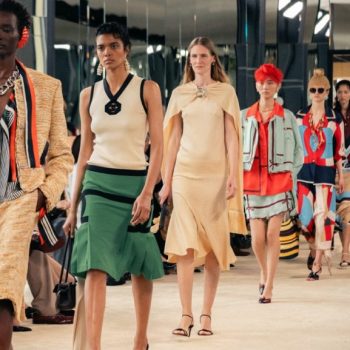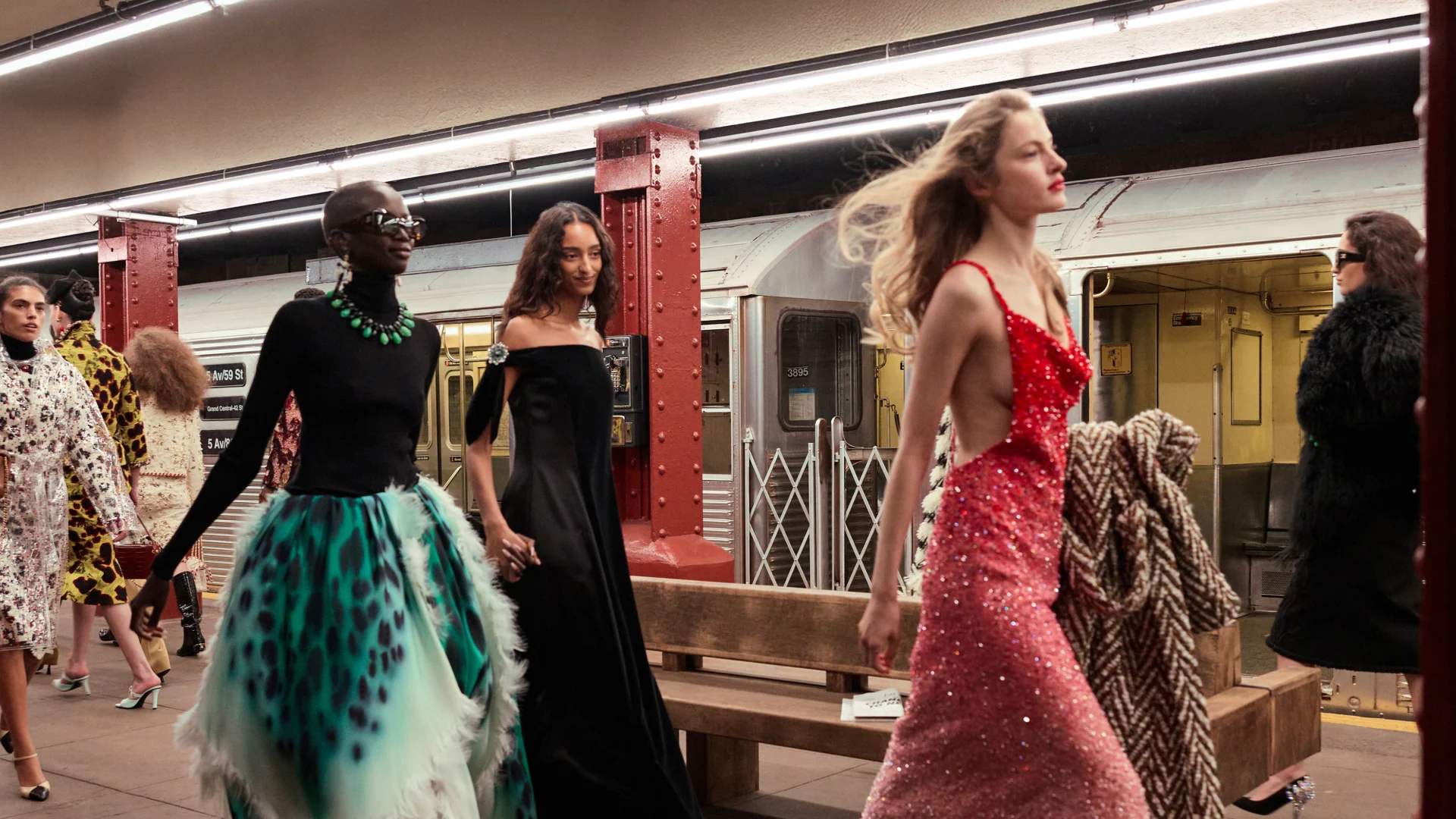
Matthieu Blazy’s first CHANEL Métiers d’Art 2026 outing in New York feels like a love letter written in motion. It reads as part city symphony, part character study and part technical flex. In this article, we dive into the Chanel Métiers d’Art 2026 ateliers in New York. We look at how le19M’s crafts turn the show into a filmic story, with craft and pop culture colliding on a subway platform.
To understand why this show matters beyond the obvious hype of a new creative era, it helps to zoom out. Since 2002, CHANEL has used the Métiers d’Art collections as an annual homage to its artisan ecosystem. They create an intentional pause in the fashion calendar, dedicated to the hands that make the fantasy possible. The brand itself describes this yearly rendezvous as a declaration of love to the artisans who contribute to the House’s creations all year long.
Blazy arrived at CHANEL after a widely watched appointment at the end of 2024. He took responsibility for the full fashion scope — haute couture, ready-to-wear and accessories — within the larger CHANEL structure. The company leadership emphasized his dedication to craftsmanship and materials, positioning him as a designer who can play with the house codes while staying in dialogue with the studio and the Maisons d’art. That framing matters because Métiers d’art is arguably where that dialogue becomes most visible, almost theatrical.
The New York stage as a thesis
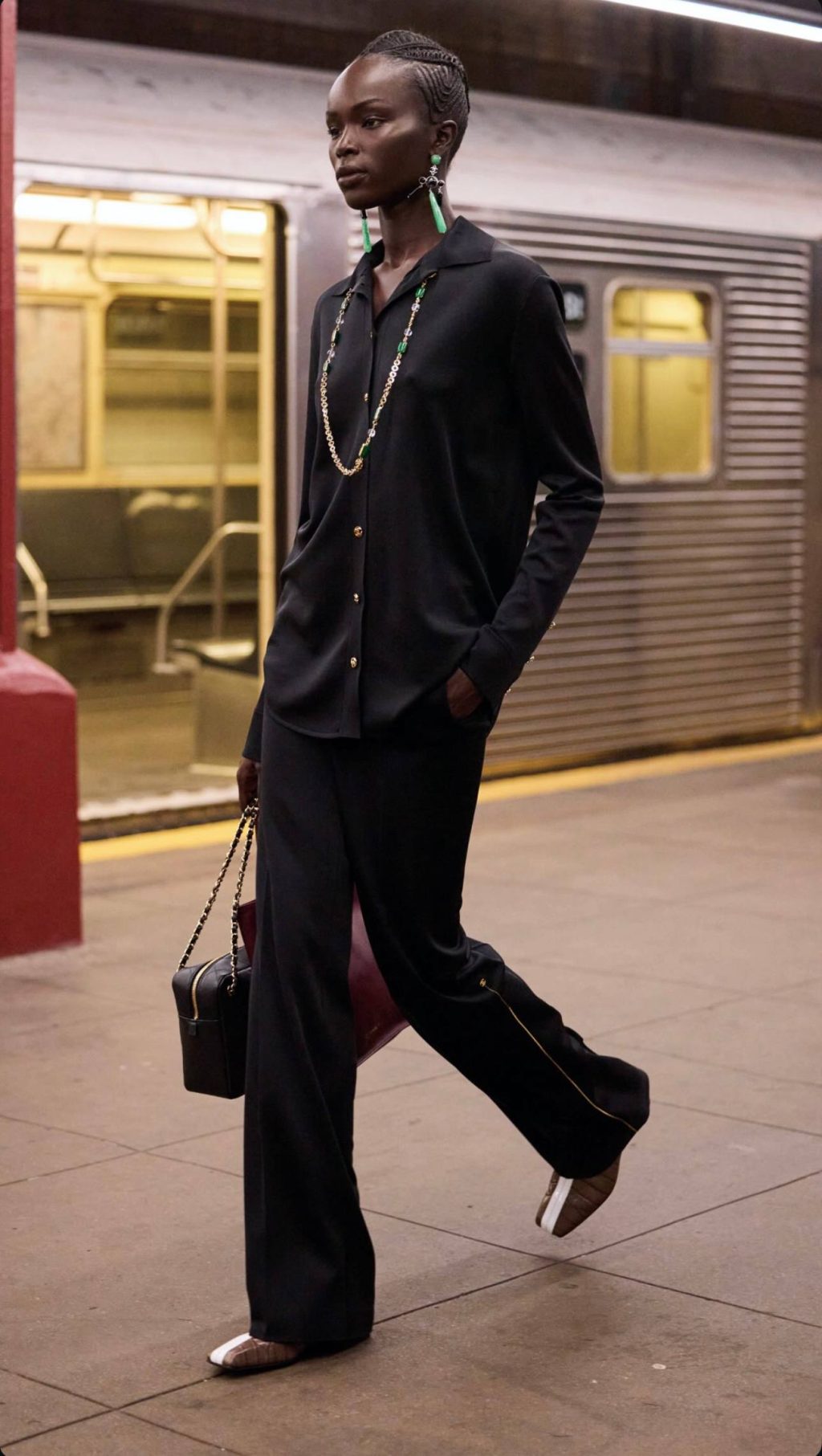
For Métiers d’art 2026, New York isn’t a postcard—it’s a system, a rhythm, a social cross-section. Blazy’s stated fascination with the subway as a space without hierarchy is the conceptual engine of the collection, a place where different archetypes pass through the same doors with the same urgency and radically different style instincts.
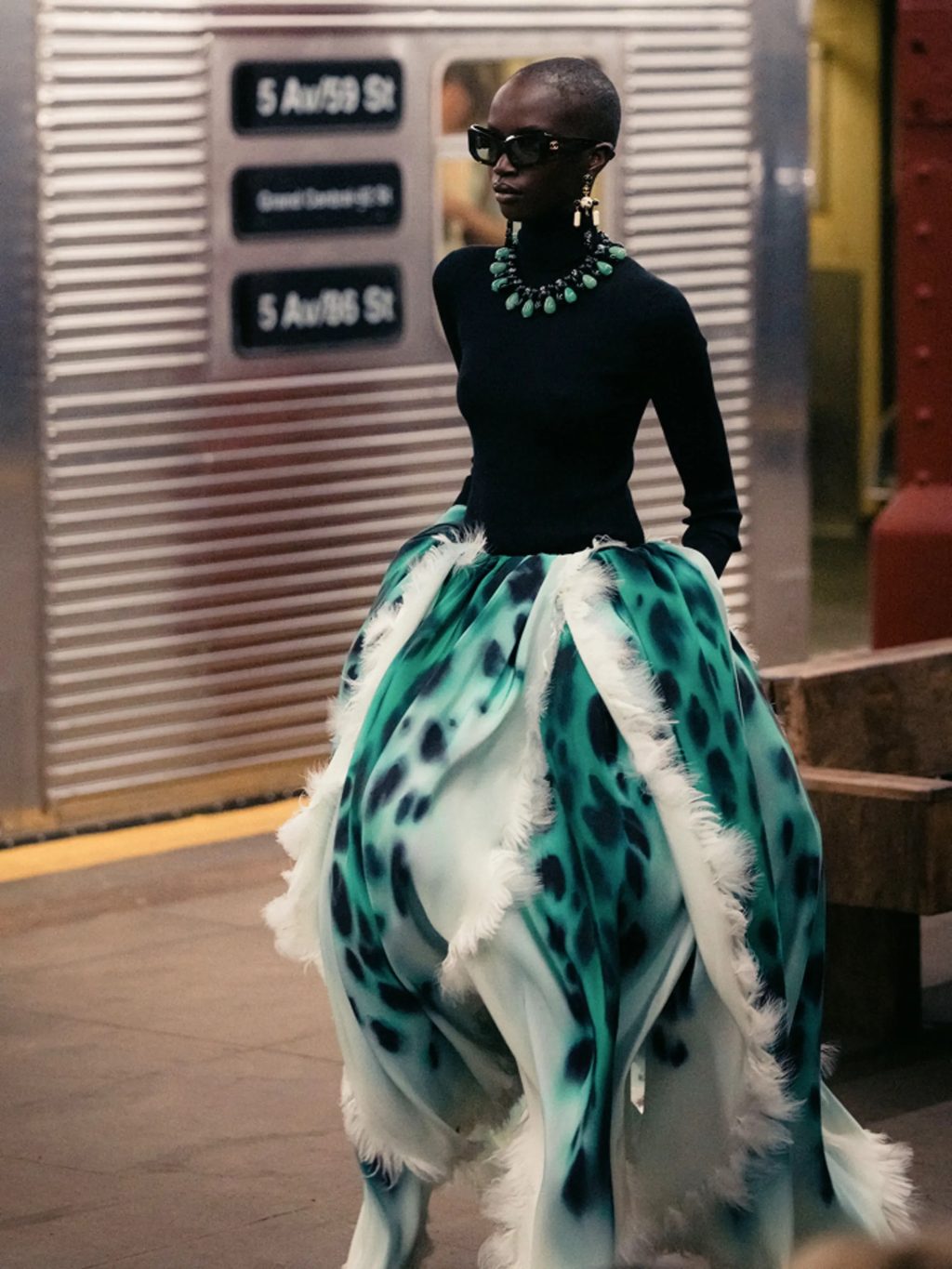
CHANEL staged the show at the decommissioned Bowery station, transforming industrial grit into an improbably polished set. Reports describe a runway animated by the station’s material memory—tiles, beams, the suggestion of trains, even the theatrical arrival of an actual train as part of the experience—turning commuting into choreography. This was not just location-as-backdrop; it was location-as-metaphor.
And there’s a neat historical echo: Gabrielle Chanel’s relationship with New York and American modernity has long haunted the house mythology. Blazy appears to treat that transatlantic flirtation as an invitation to remix rather than reenact—less museum, more movie.
le19M, the modern craft constellation
The gravitational center of the Métiers d’art narrative is le19M, CHANEL’s craft hub initiated in 2021 near Paris. It gathers 11 Maisons d’art and close to 700 artisans and experts, a living infrastructure designed to protect heritage skills while keeping them plugged into contemporary creation.
For this collection, CHANEL foregrounds six houses in particular: Lesage, Lemarié, Atelier Montex, Goossens, Massaro, and Maison Michel—all residents of le19M and all crucial to the show’s aesthetic pulse.
What makes Blazy’s approach feel fresh is how he lets these ateliers behave like characters themselves. Each contributes a specific register of emotion—glamour, wit, precision, mischief—so the clothes read as personalities rather than just silhouettes.
Lesage: tweed with a pulse and a memory
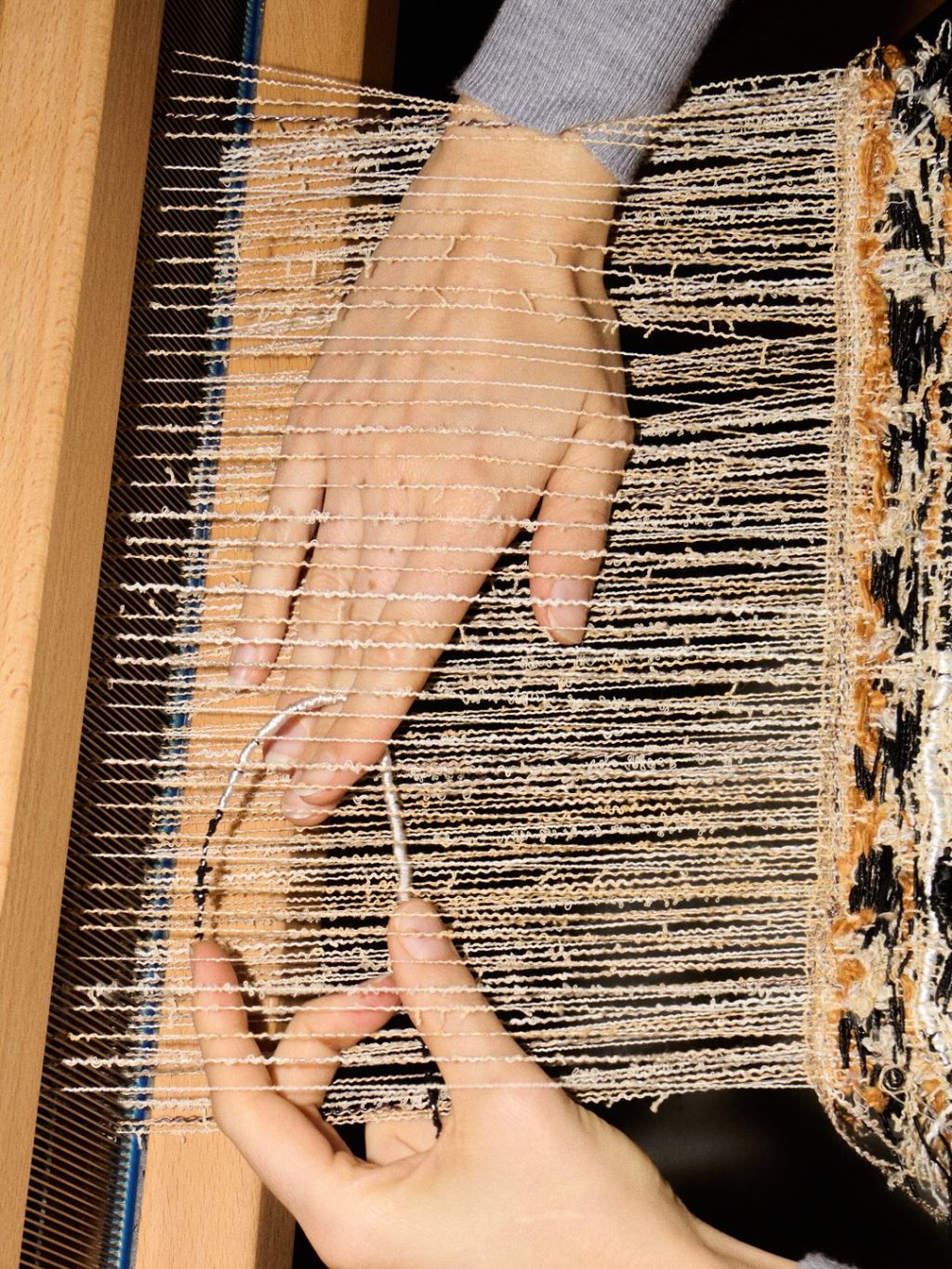
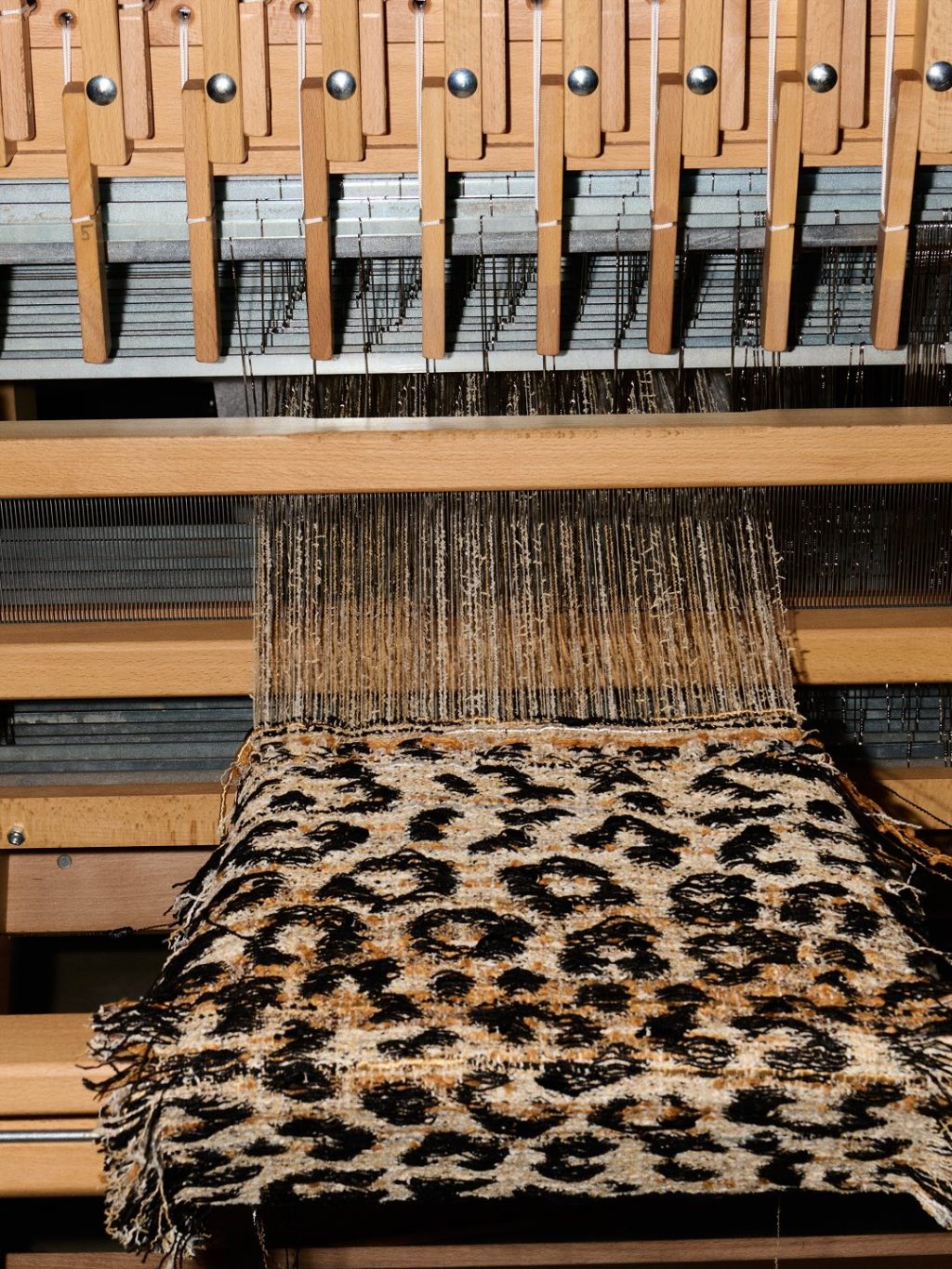
Lesage is often described as the house that can turn thread into architecture. Embroidery here demands hours of meticulous handwork and unmatched expertise: stitch by stitch, threads, pearls and sequins are transformed into true works of art. Heir to a unique savoir-faire yet constantly inventing new techniques, Lesage not only designs and embroiders sumptuous patterns, but since 1998 has also been reinventing the tweed so dear to CHANEL by splicing woollen yarns with the most unexpected materials.
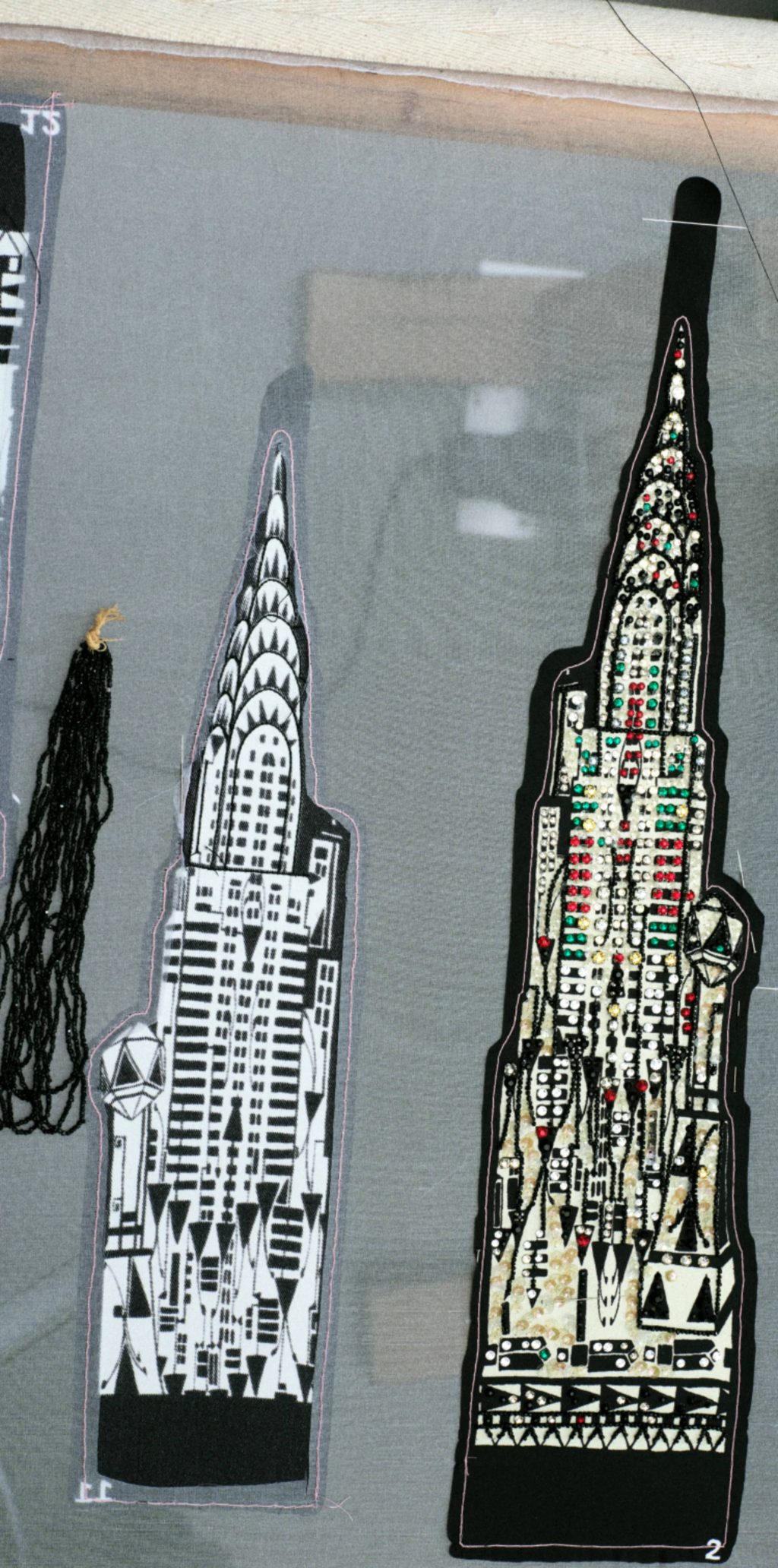
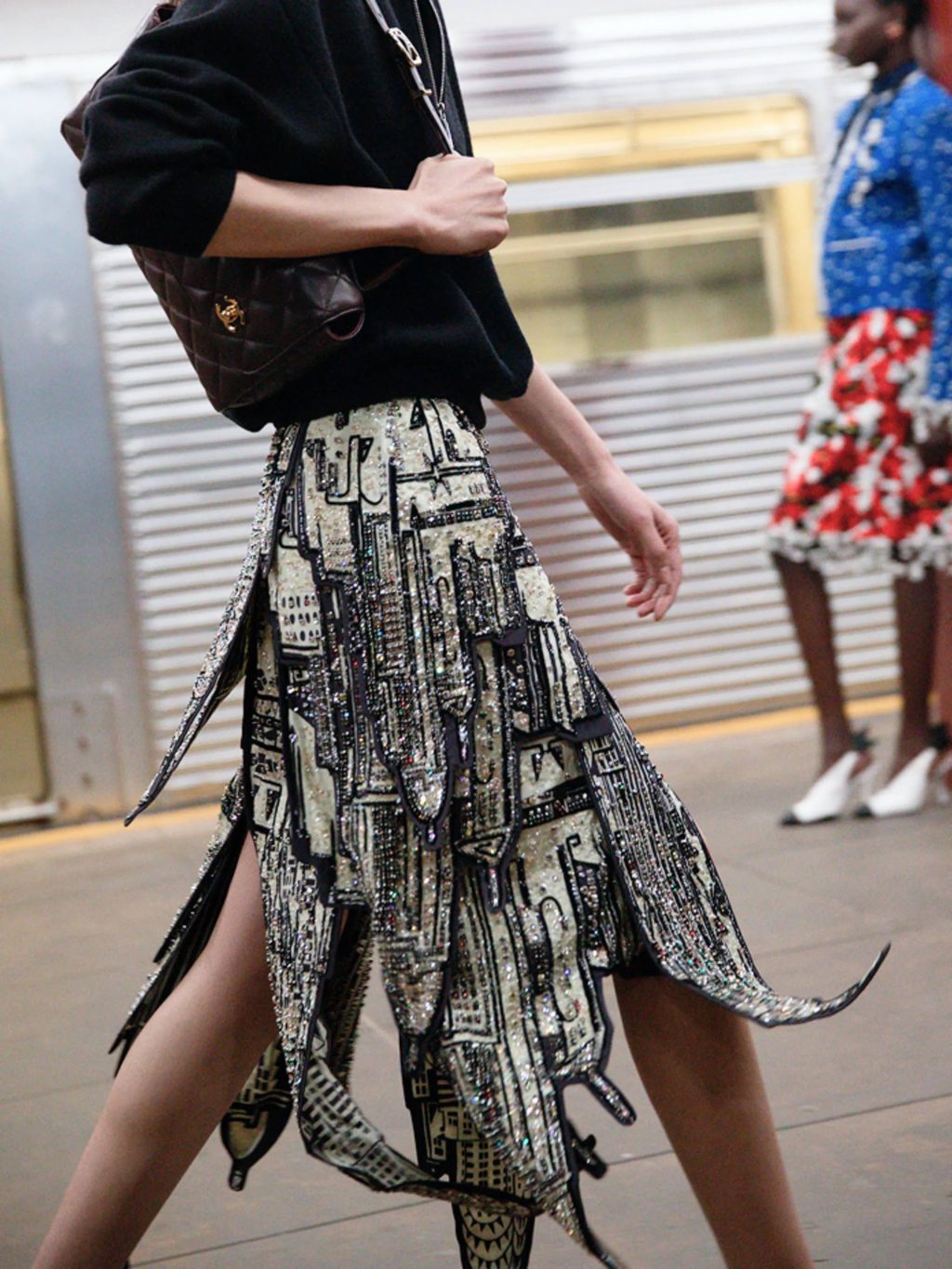
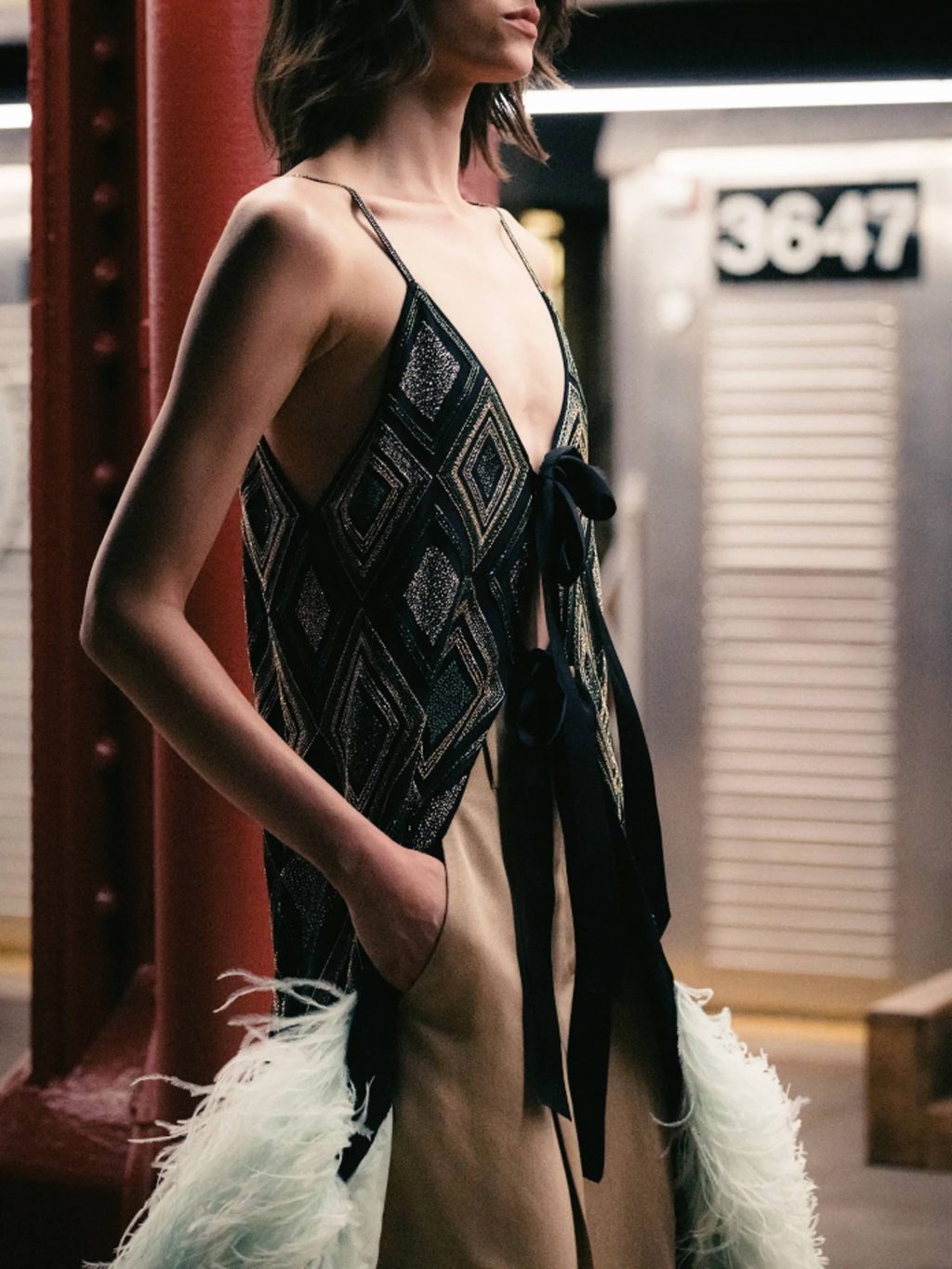
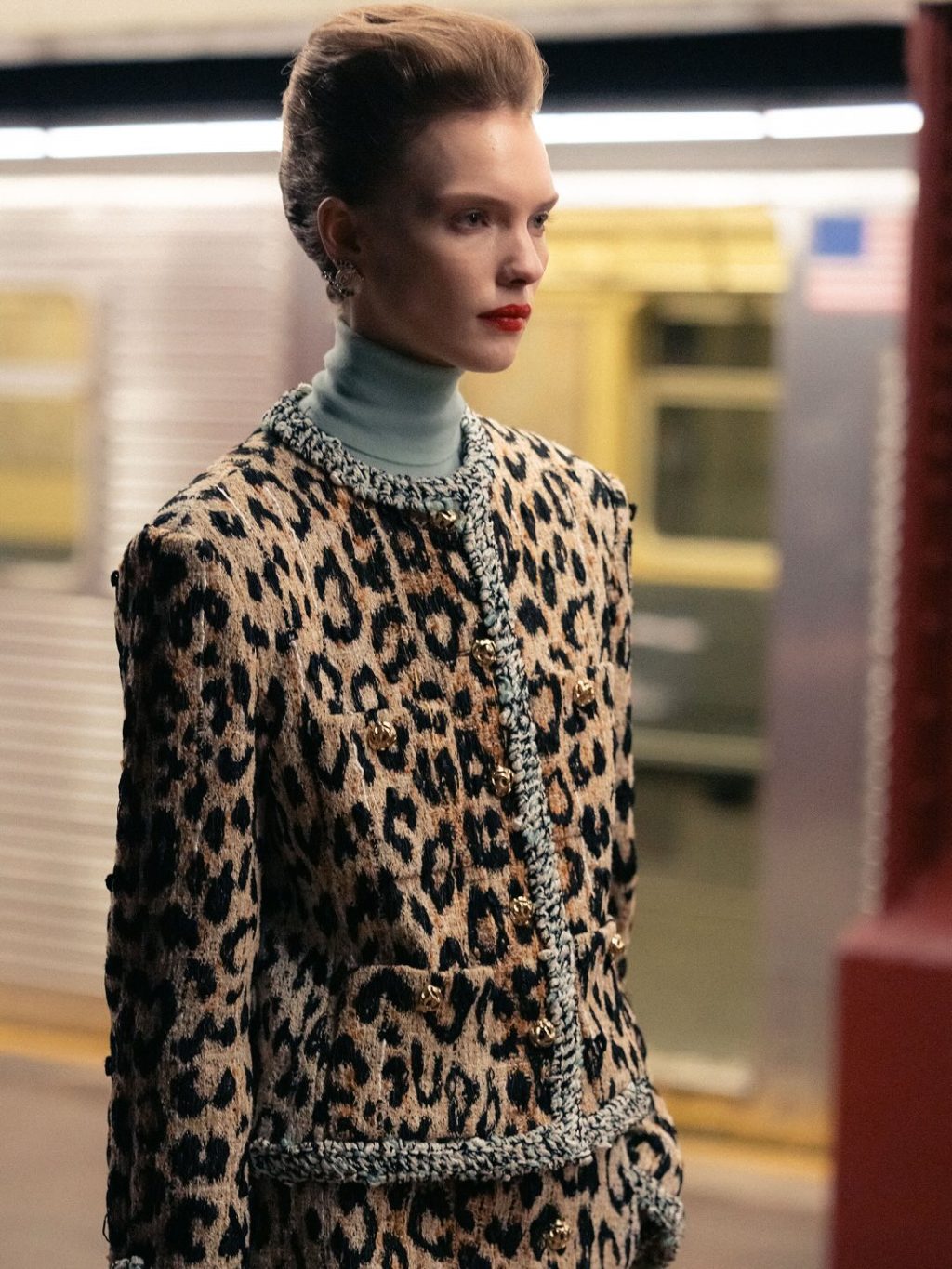
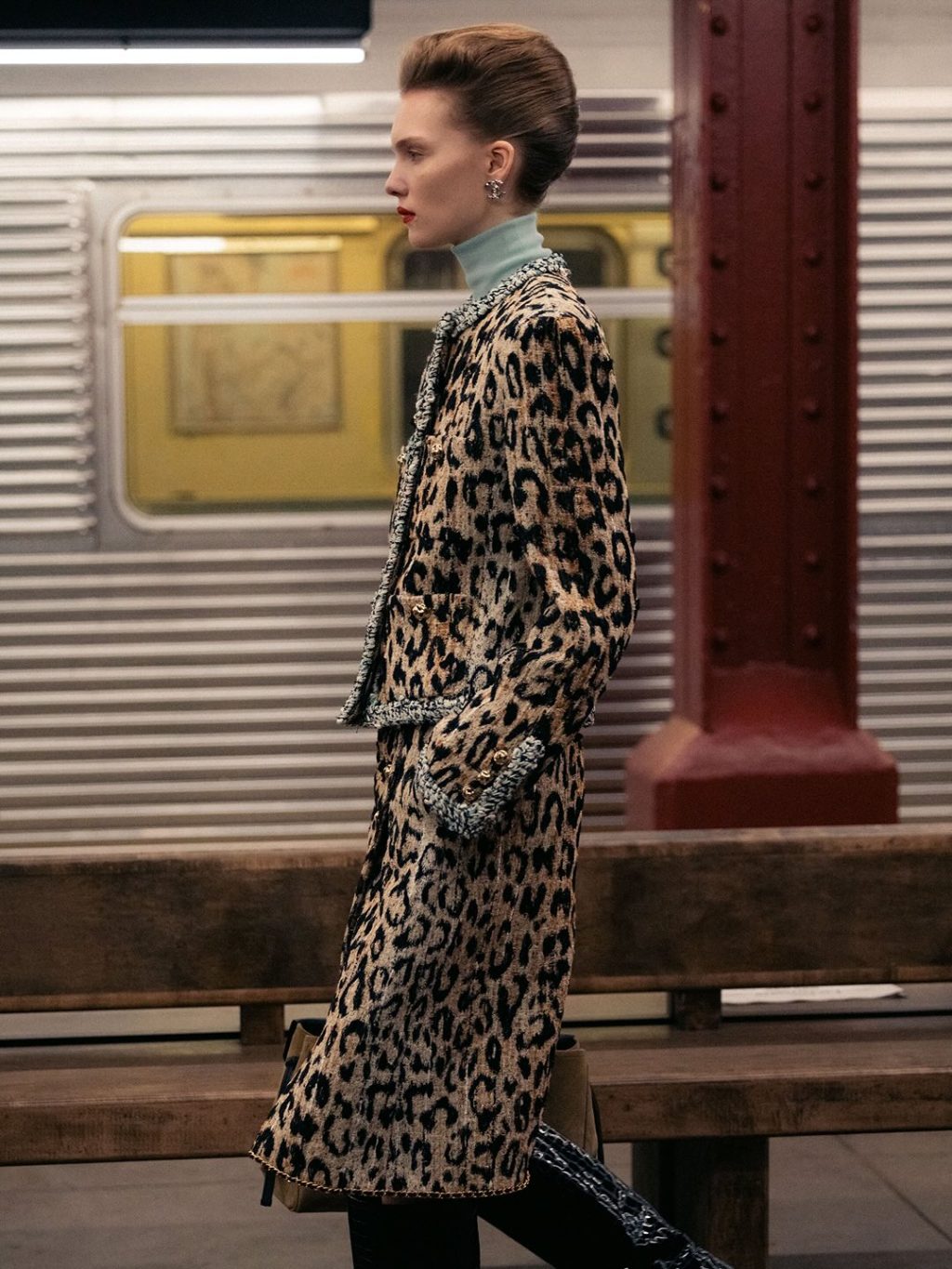
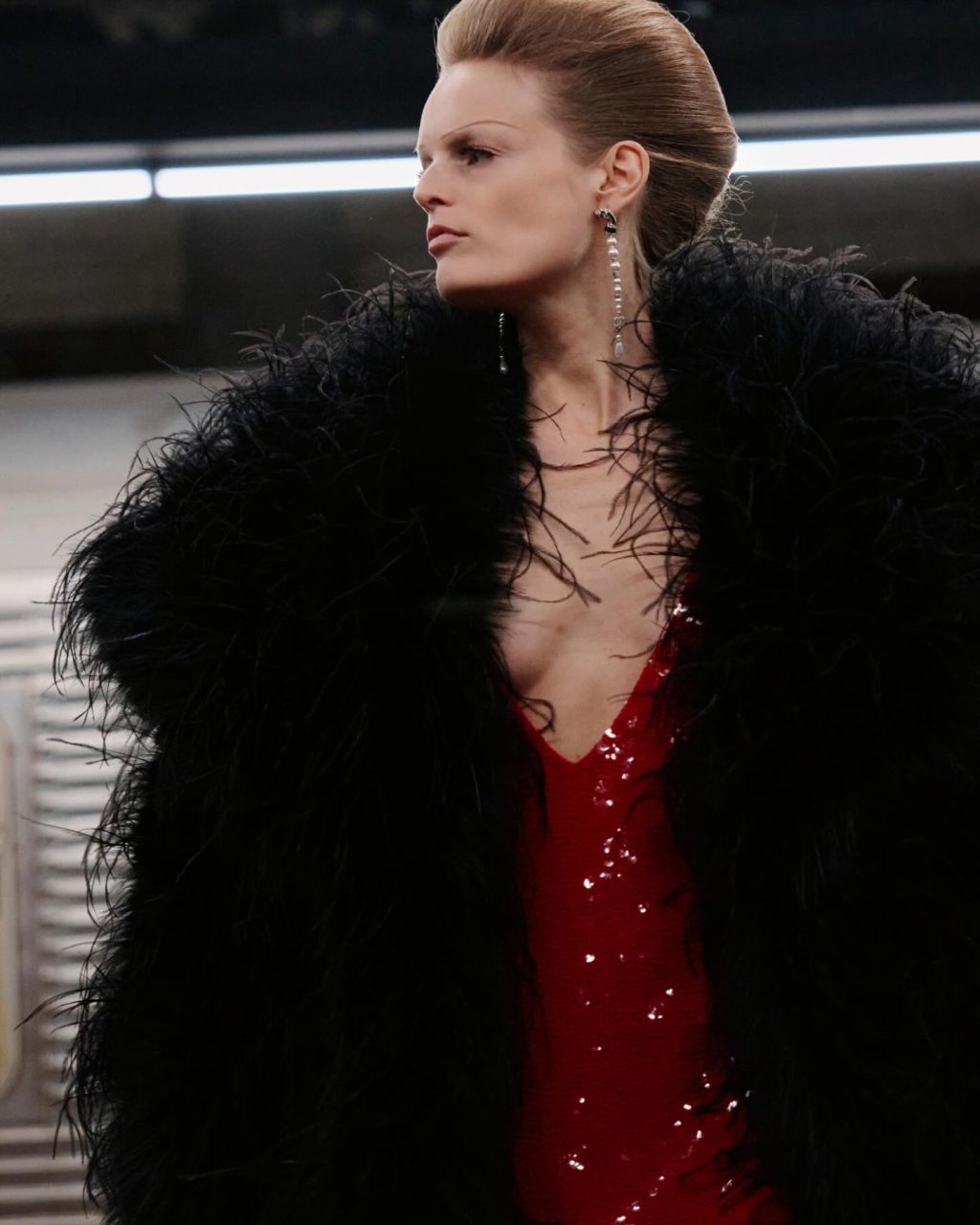
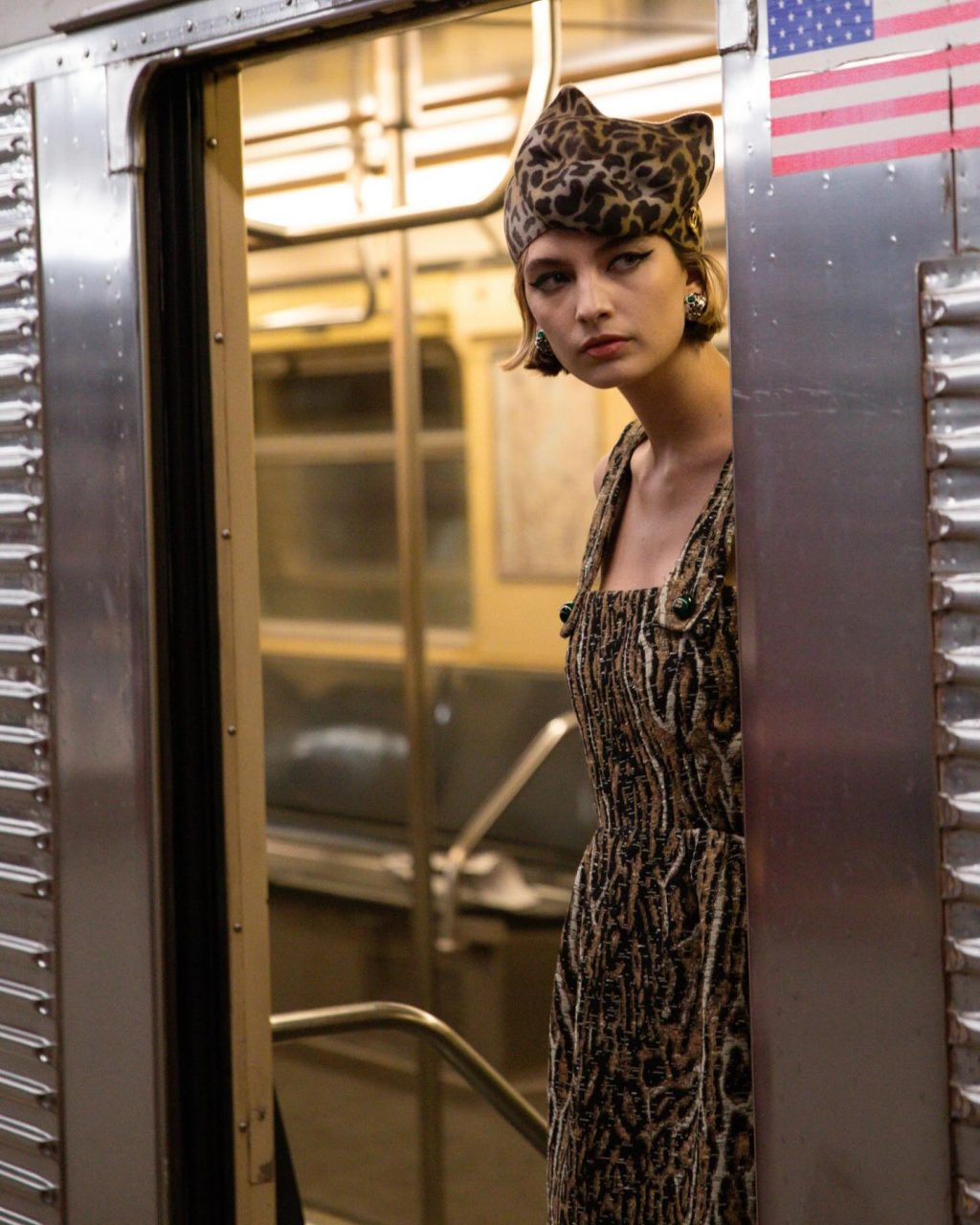
At le19M, the house brings together its ateliers, a unique collection of archival samples and its own school, where embroiderers quietly pass down the secrets of their craft to younger generations. A partner of CHANEL since 1983, Lesage officially joined the Fashion Métiers d’art in 2002. For the Métiers d’art 2026 collection, the house’s Art Deco-inspired embroideries and handwoven leopard tweed prove that “classic” at CHANEL is never meant to be static. In the subway context, Lesage’s work reads like the city’s own layering: history plus speed plus noise made elegant.
Atelier Montex: Art Deco as electric signal
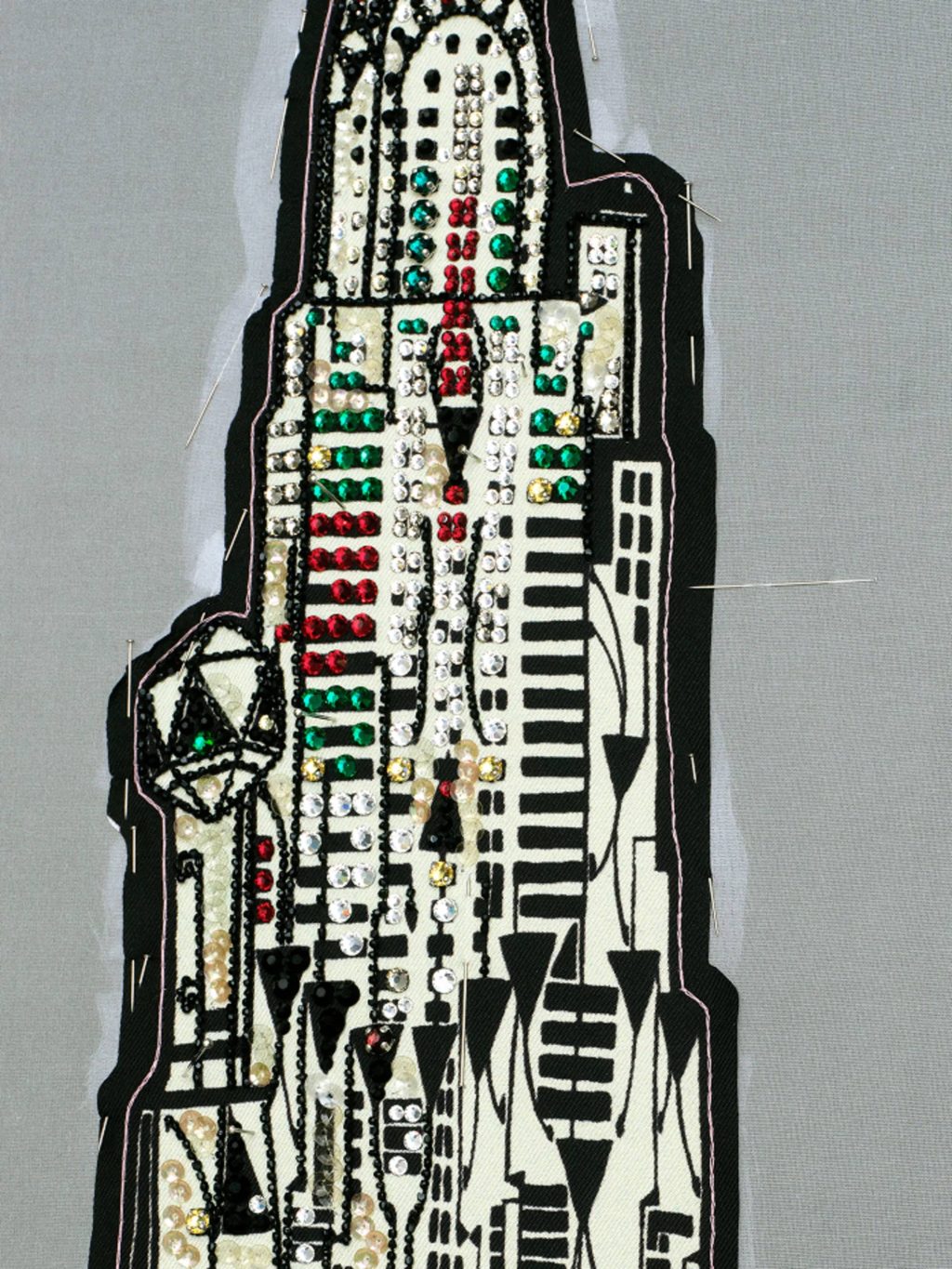
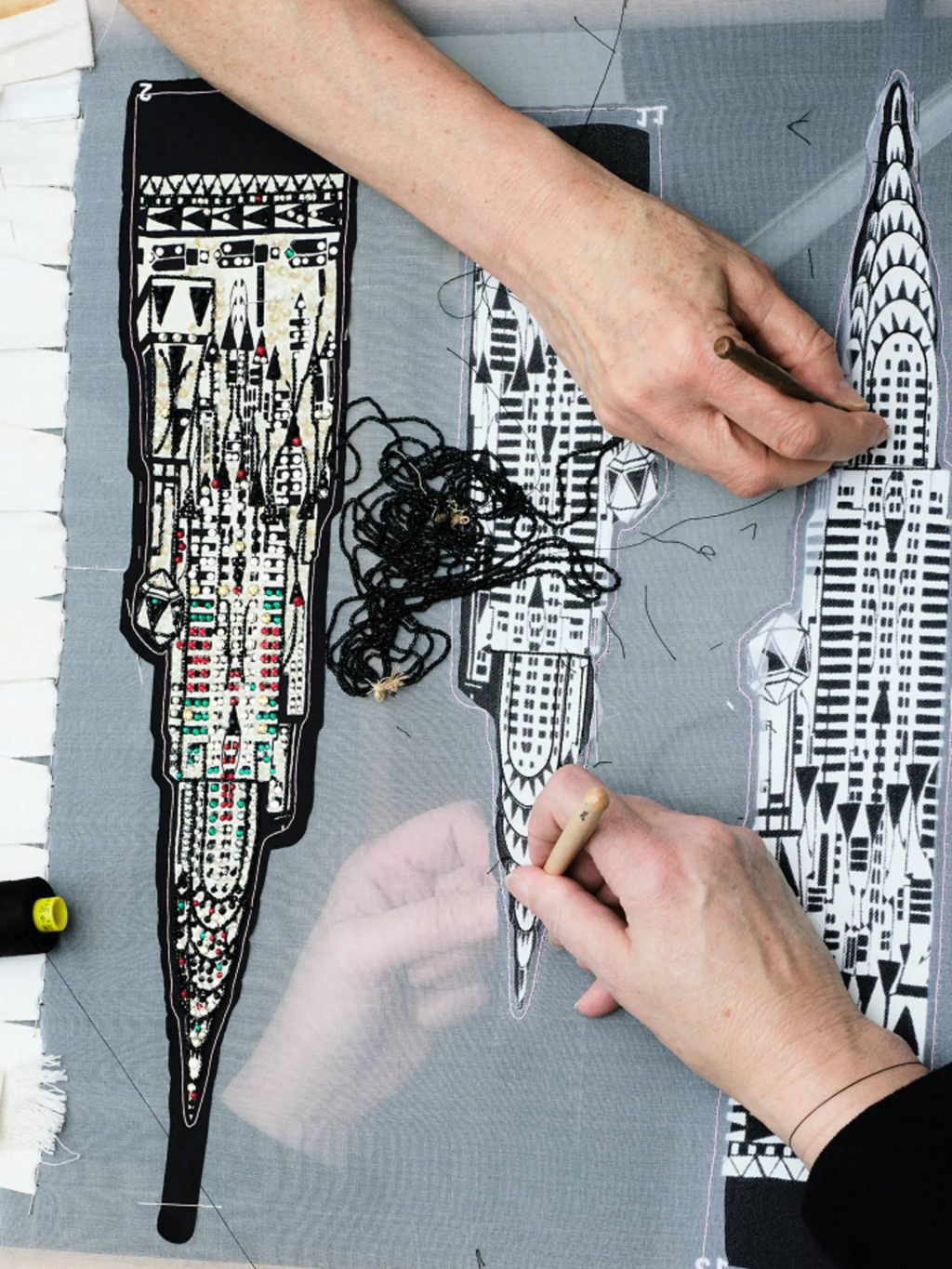
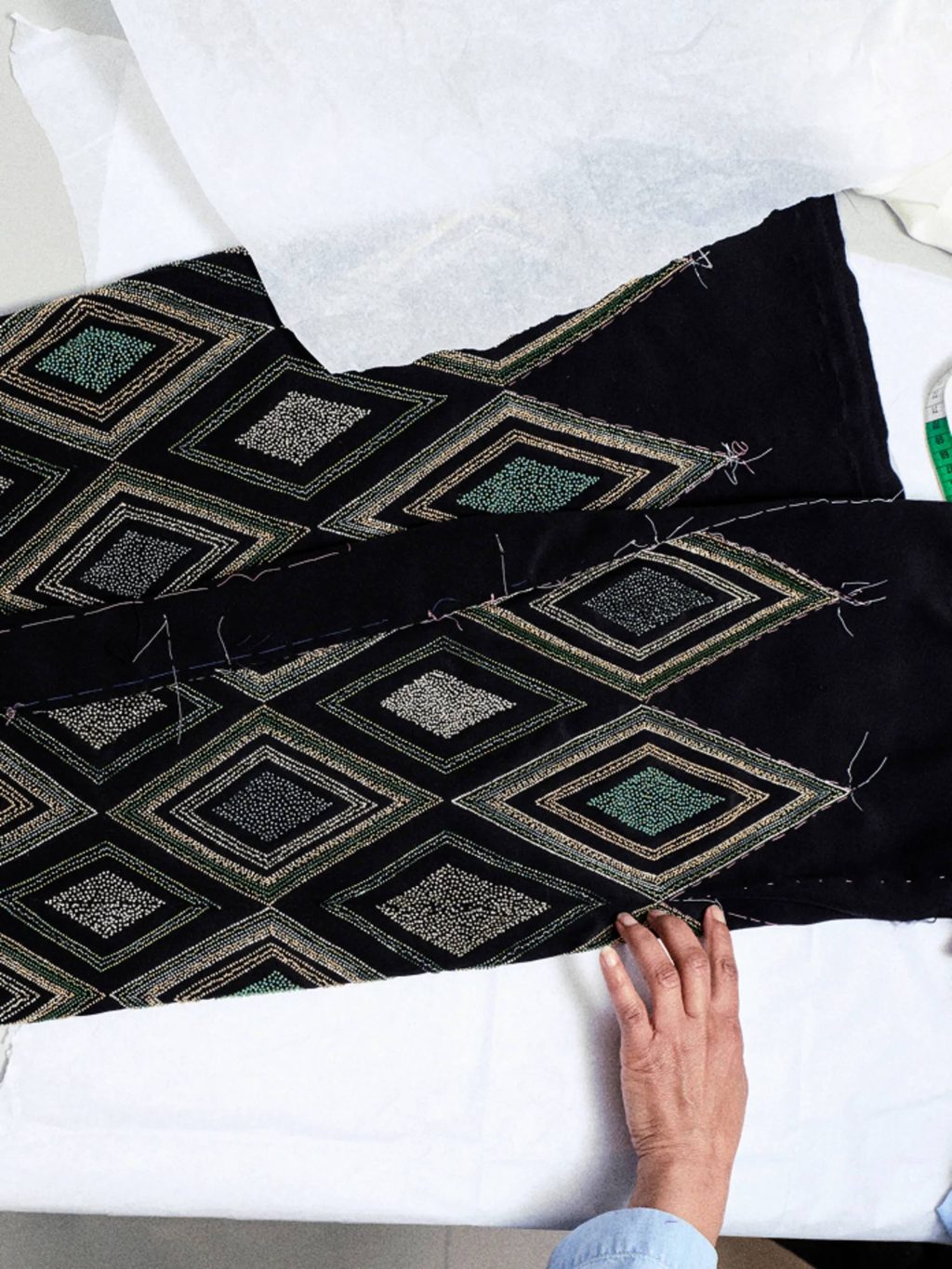
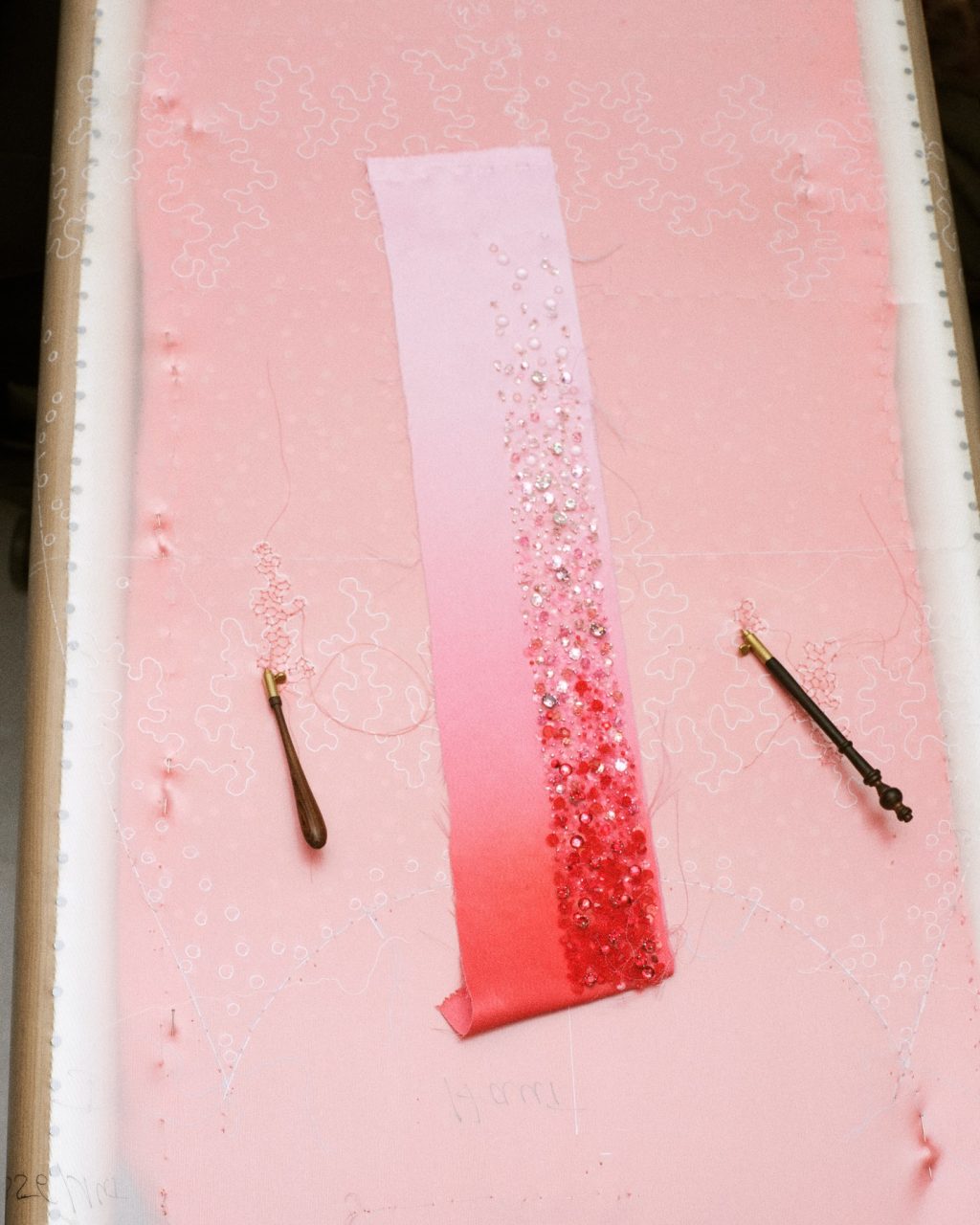
Montex brings a different kind of tempo. Working with needlework, the Lunéville crochet hook and the Cornely – a century-old embroidery machine guided entirely by hand – the atelier turns motifs into precise, almost graphic statements that still carry the warmth of the hand.
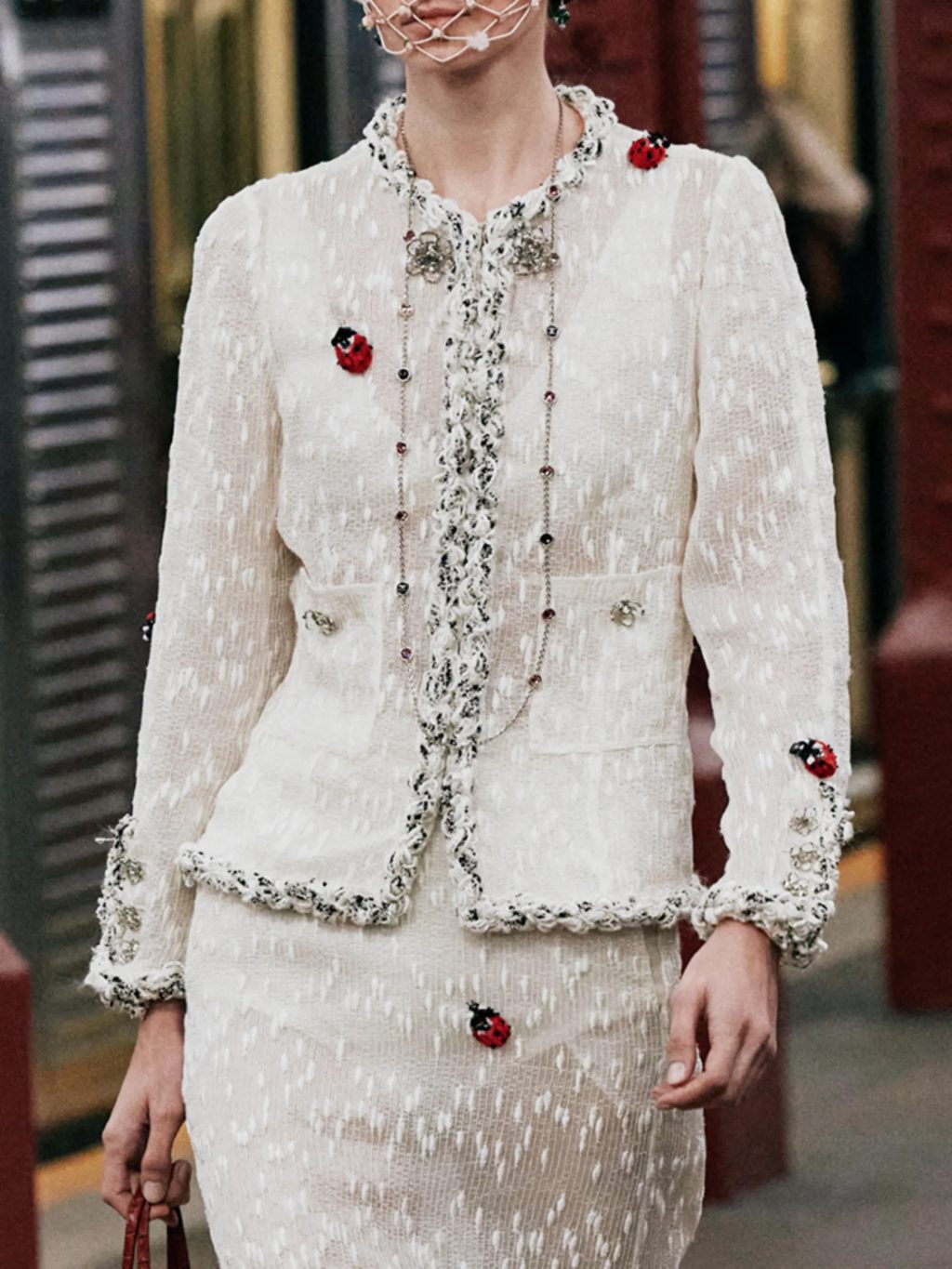
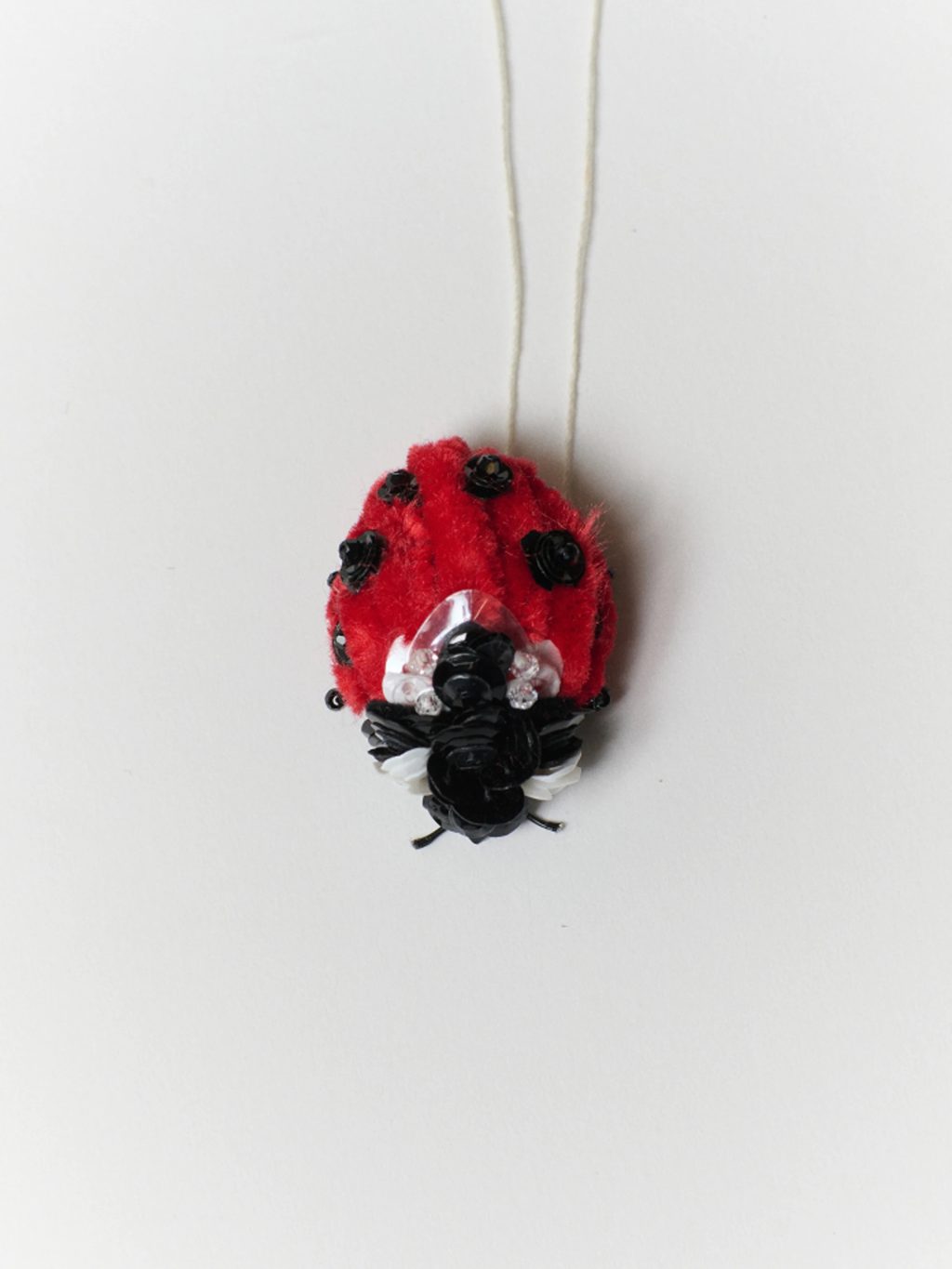
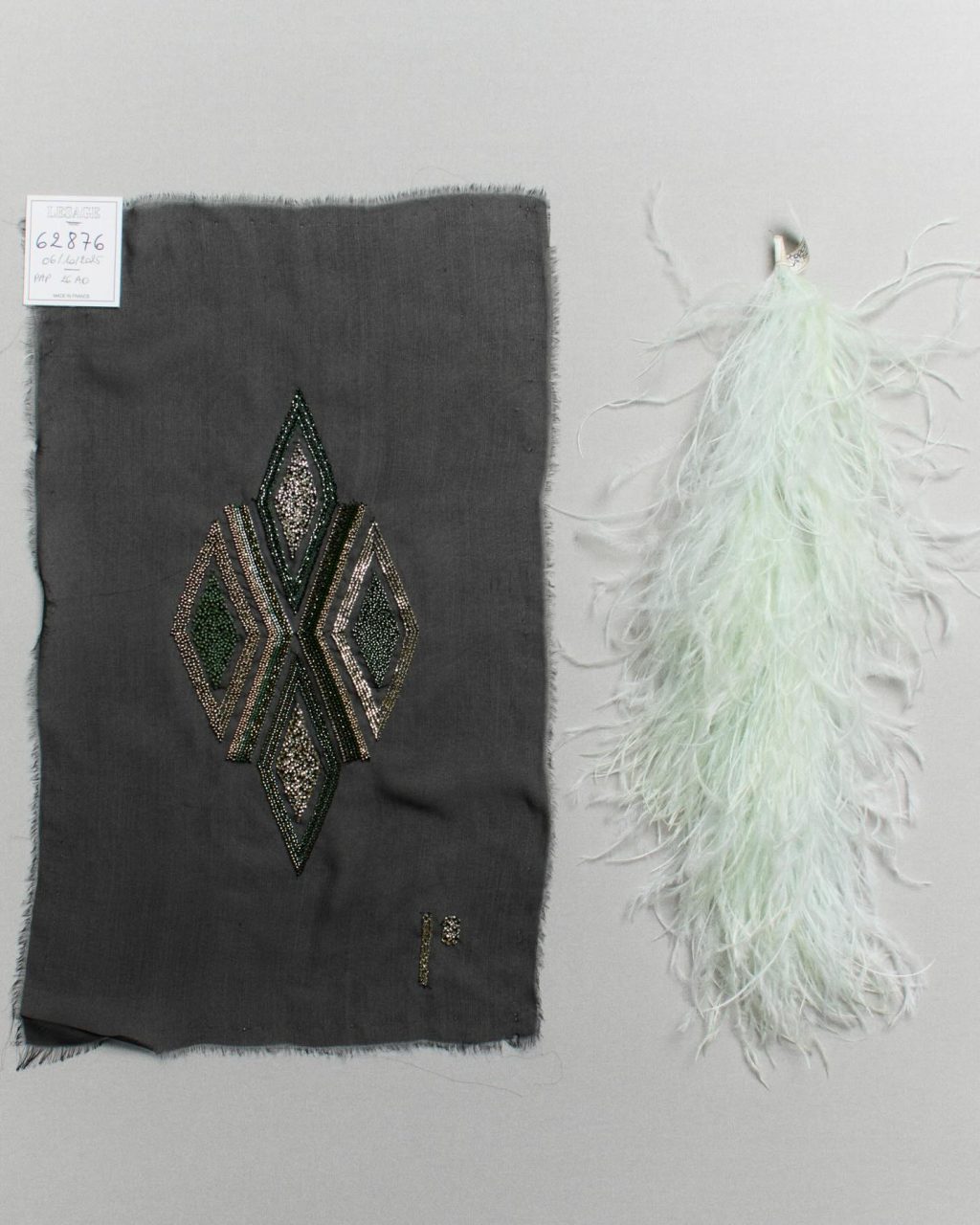
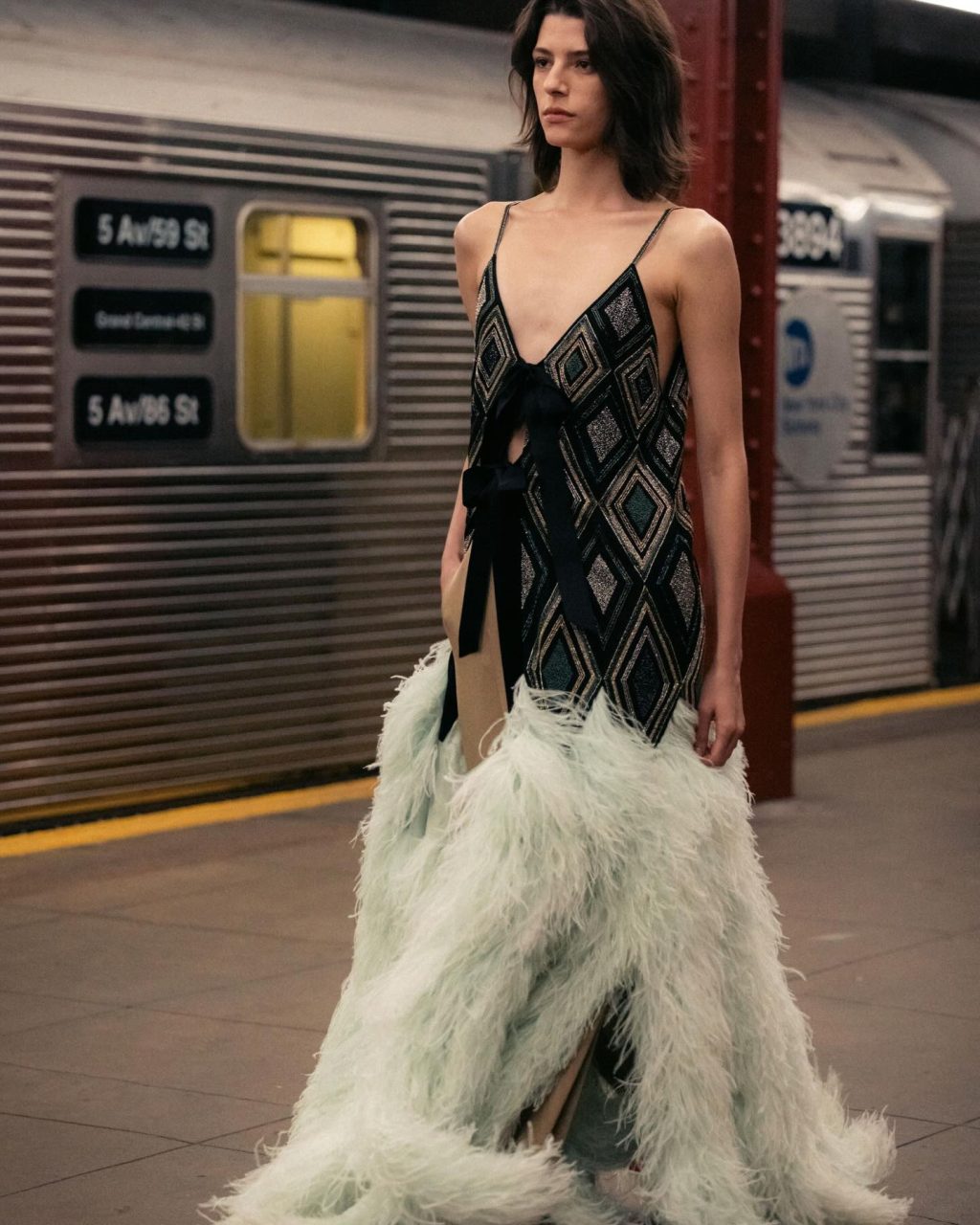
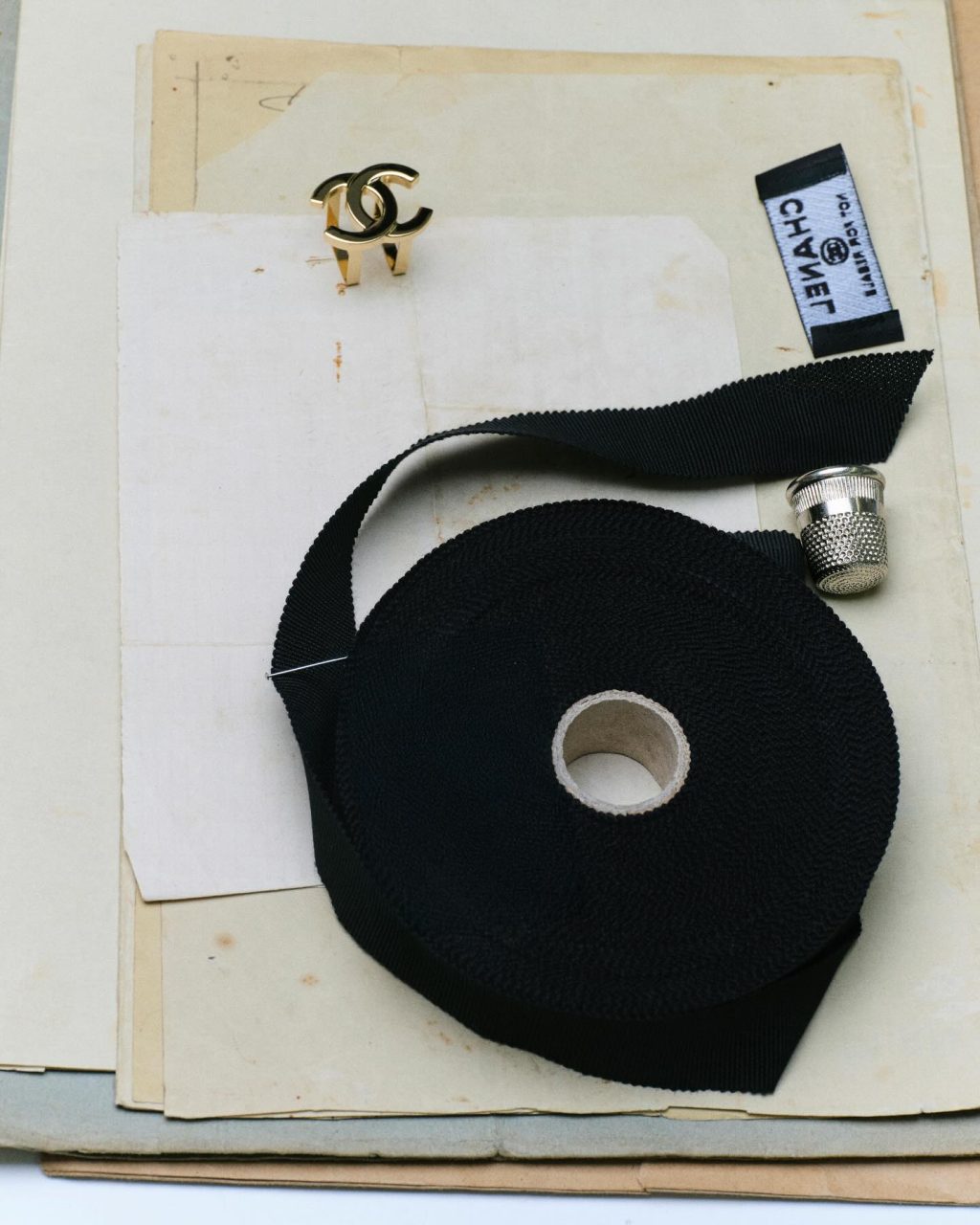
Each embroidery design begins in the most old-world way: tracing paper is pricked with a needle, then dusted with powder so the outline appears on the fabric, before artisans follow it through a choreography of precise, patiently practised movements, passed down from generation to generation. All of Montex’s work reflects an exceptional savoir-faire of the hand, where ancestral traditions meet creative innovation – this is the true magic of the Montex embroidery atelier. Montex joined CHANEL’s Fashion Métiers d’art in 2011 and, for this collection, delivers intricate Art Deco motifs that feel almost cinematic.
On the runway, these embroideries read like neon without the neon – an urban glow translated into thread.
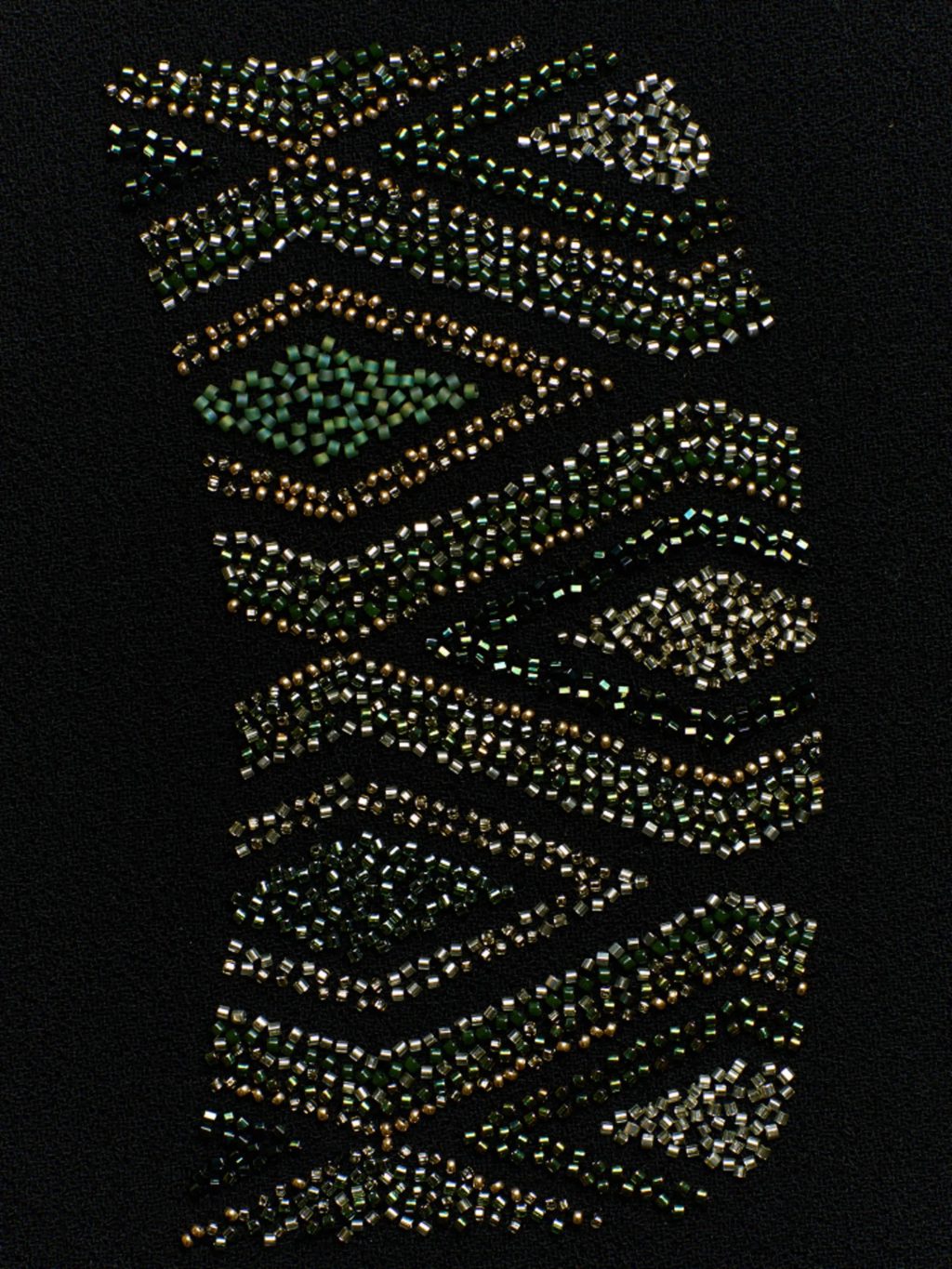
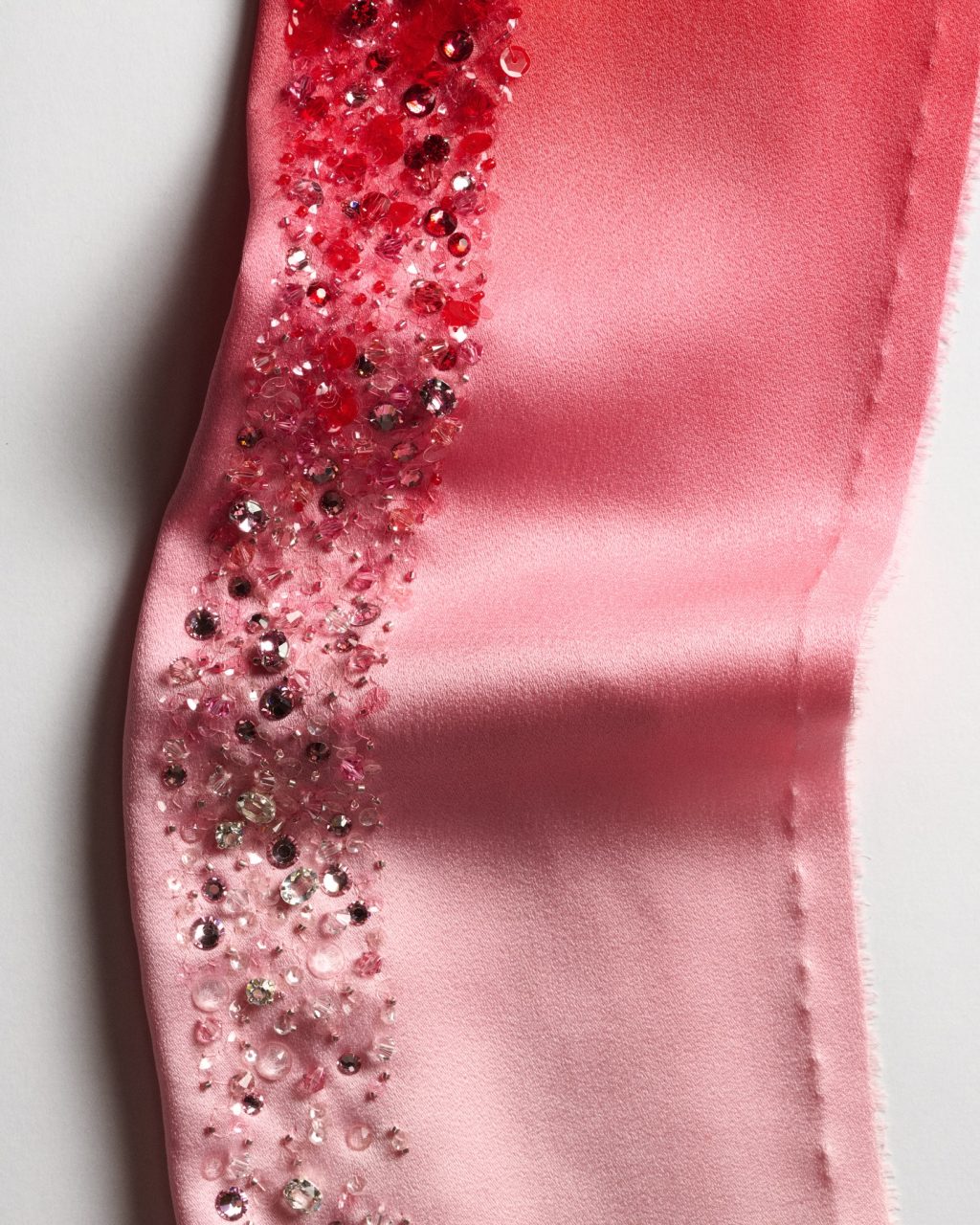
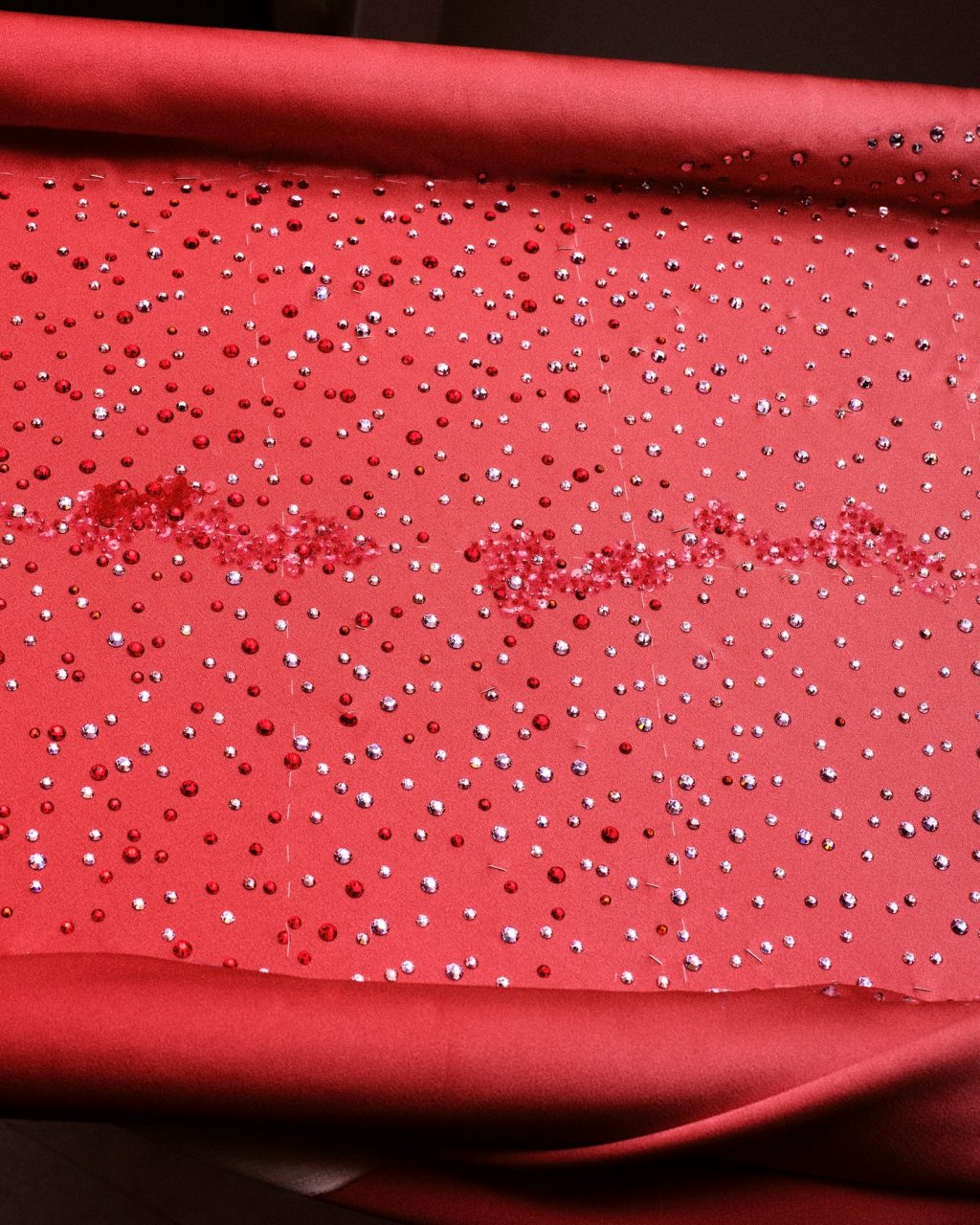
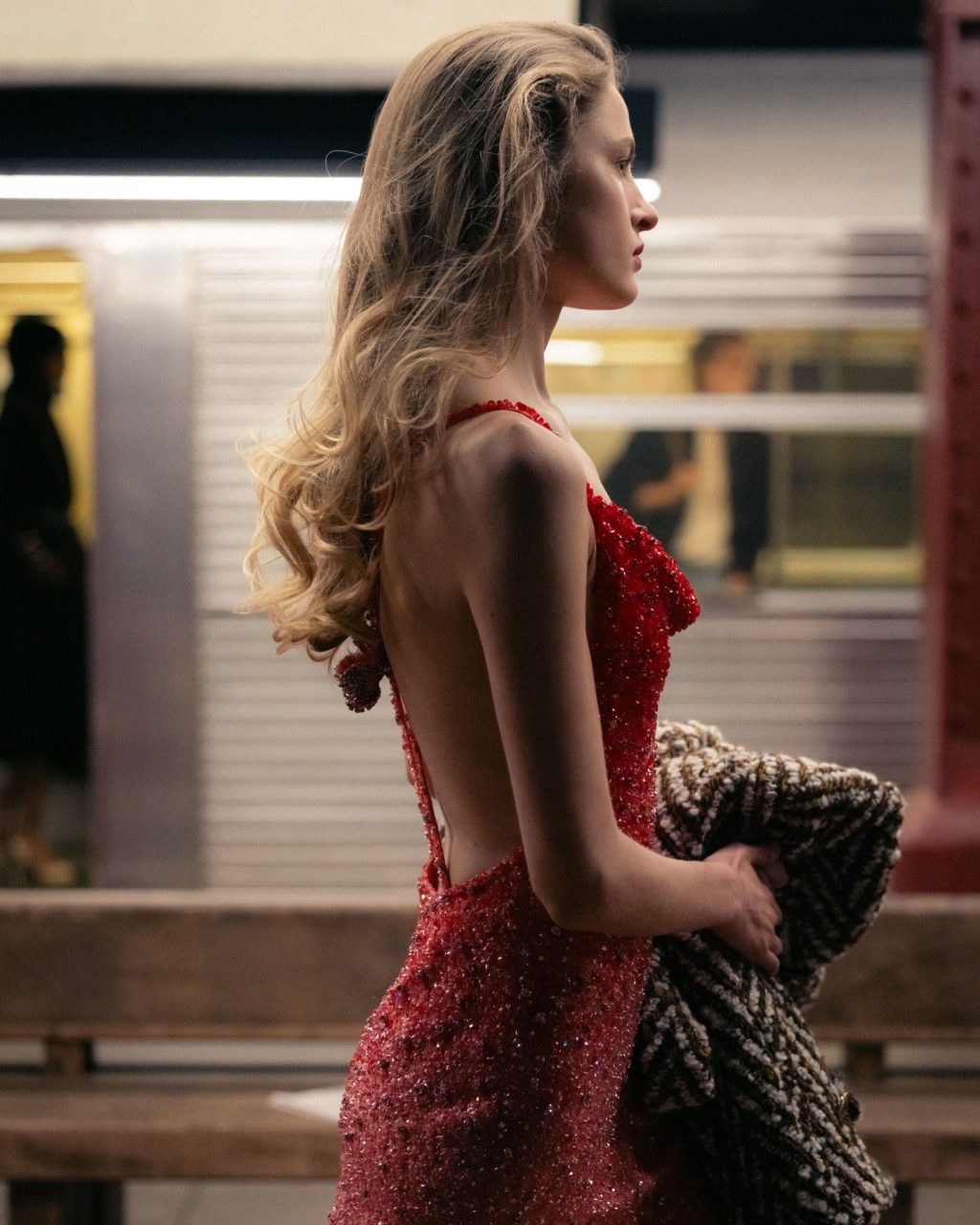
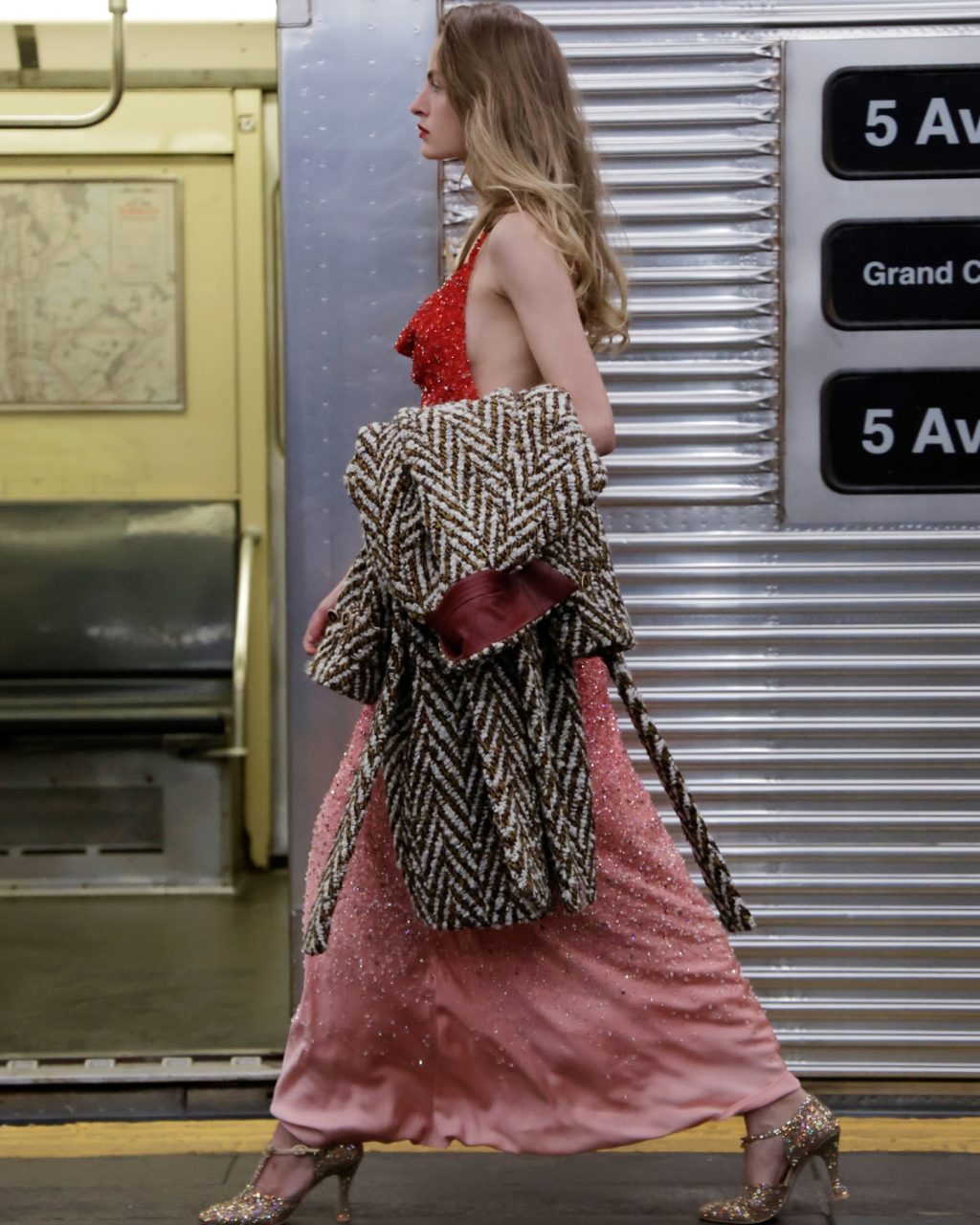
Montex’s savoir-faire appears in a series of standout looks. In one dress, a precious all-over gradient grenadine embroidery flows over the silhouette. Artisans build it on a base of heat-applied rhinestones, then work sequins and glass beads in vermicelli using the Lunéville crochet technique. Finally, they hand-stitch crystal jewels and faceted stones on top to create a textured granita effect.
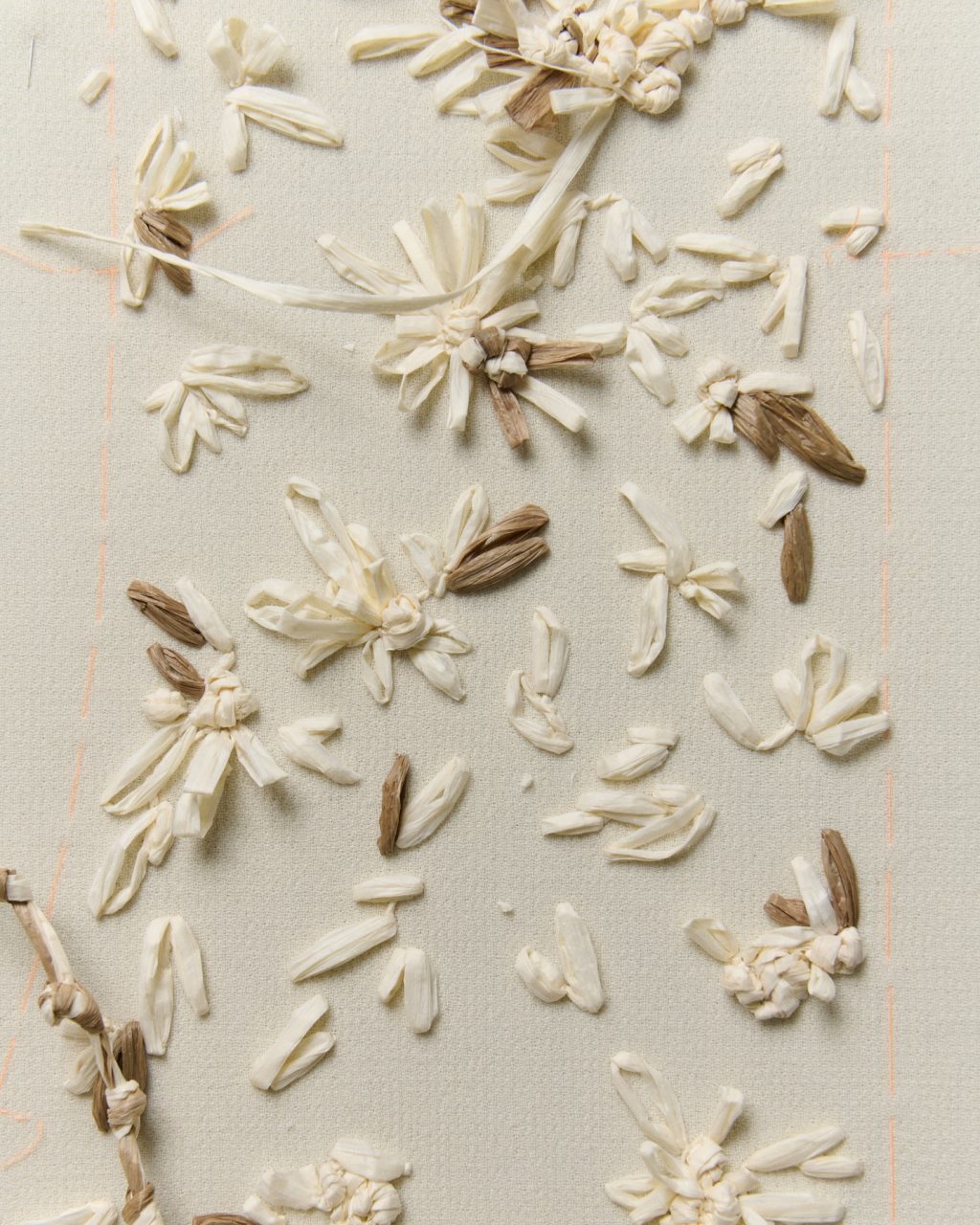
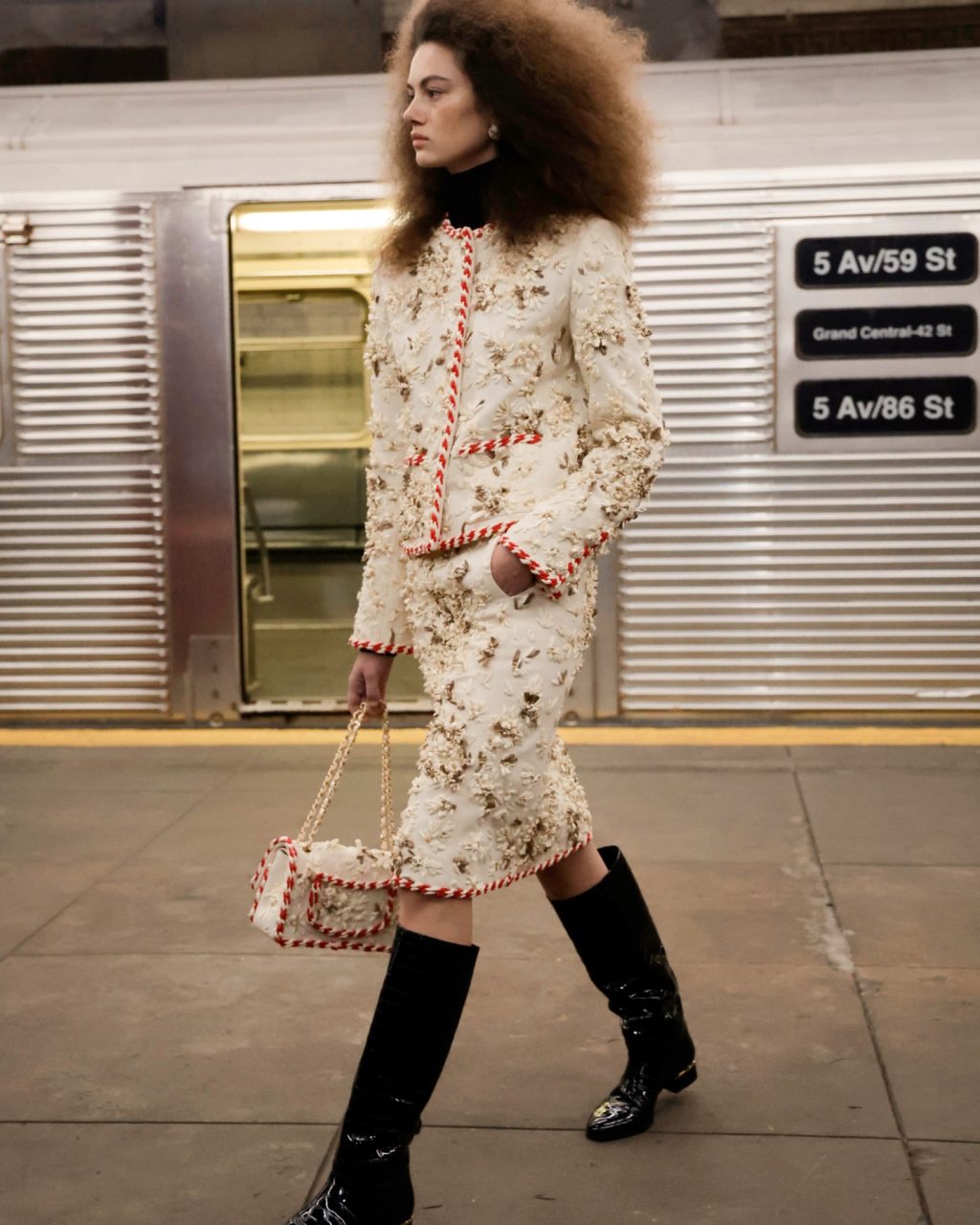
Another set is entirely hand-embroidered. Montex artisans use knot stitches and running stitches in raffia, punctuated with glass beads. The result is a surprising, popcorn-like surface that feels playful but still exquisitely crafted.
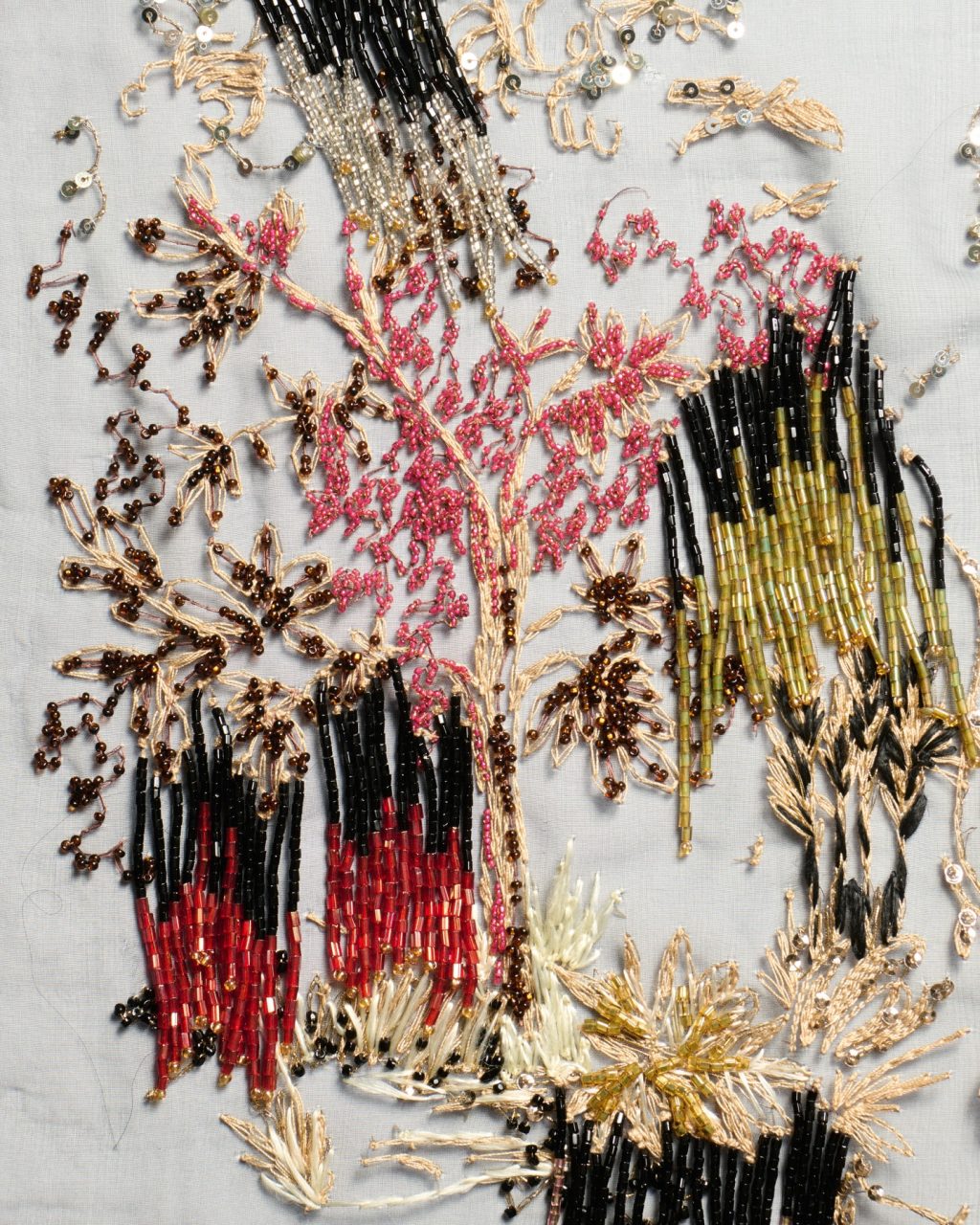
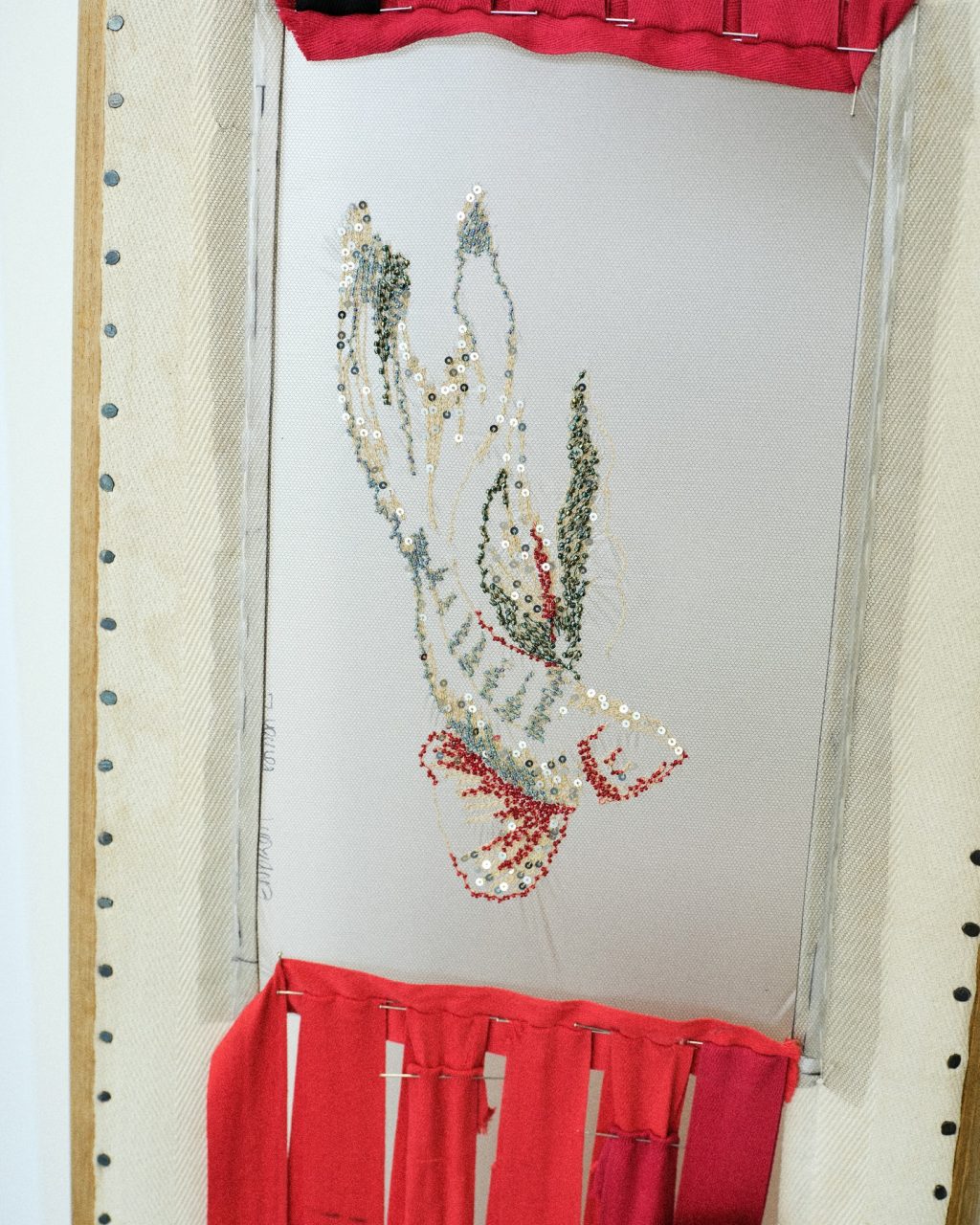
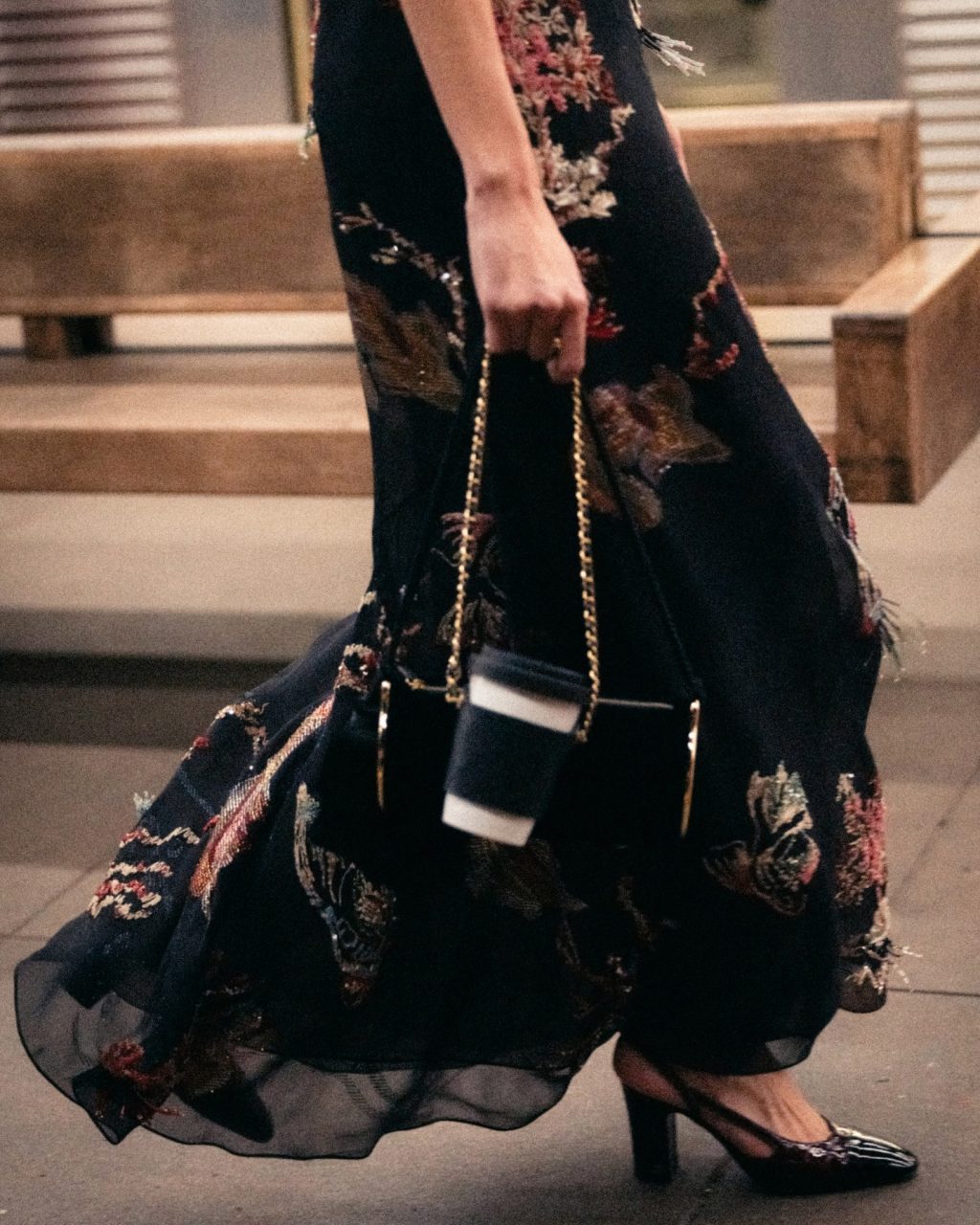
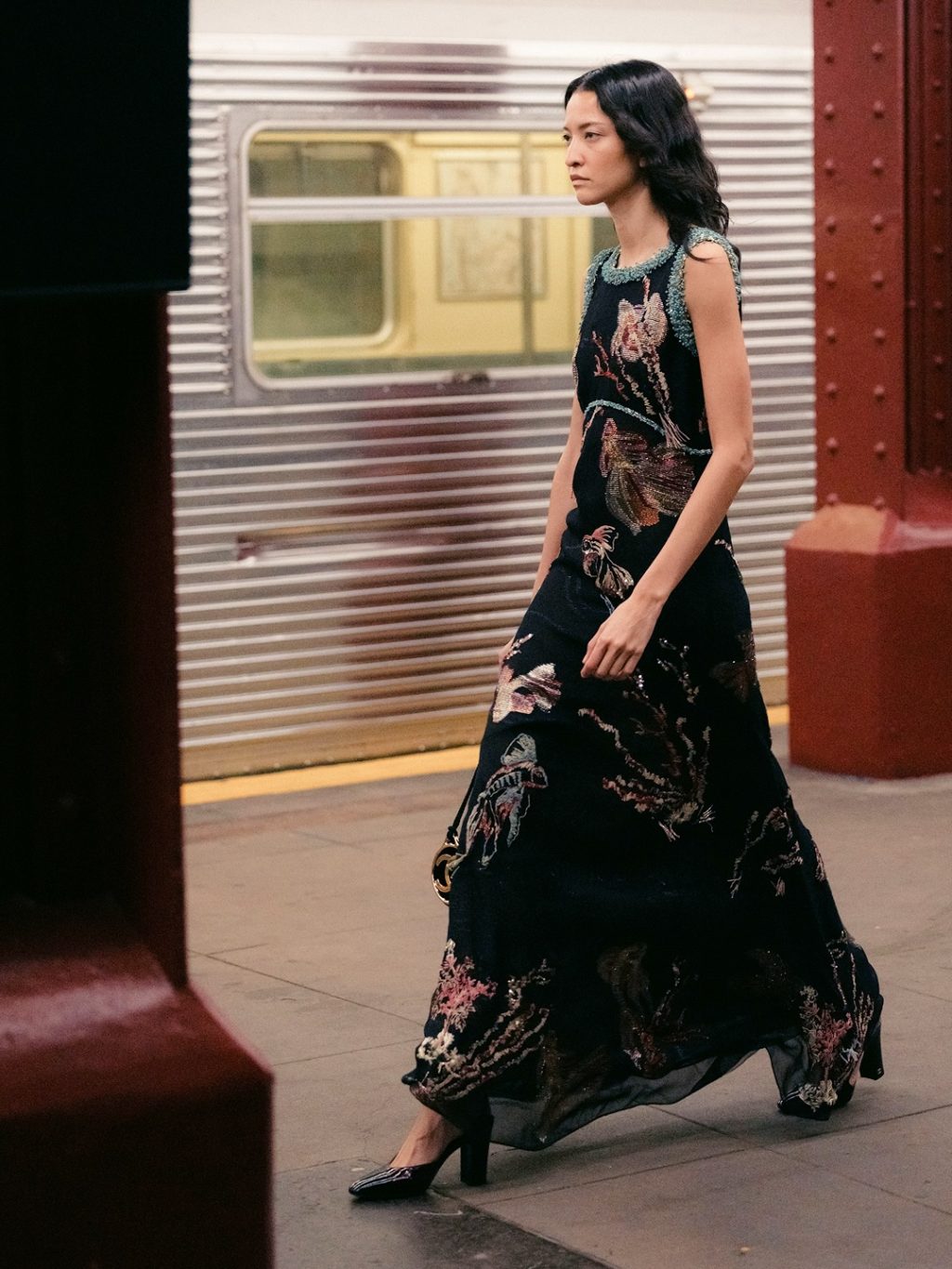
On a black muslin dress, they embroider naturalistic fish, seaweed and vegetation that echo the shimmering fish on the fabric. Reinterpreting an archive sample, the team uses chain stitches with the Cornely machine, then enriches the base with rocaille beads, sequins and metallic cups added with the Lunéville crochet. Some details are refined further with rayon satin stitch, while hand-added bead tassels in a 1920s spirit emphasise the movement of the motifs.
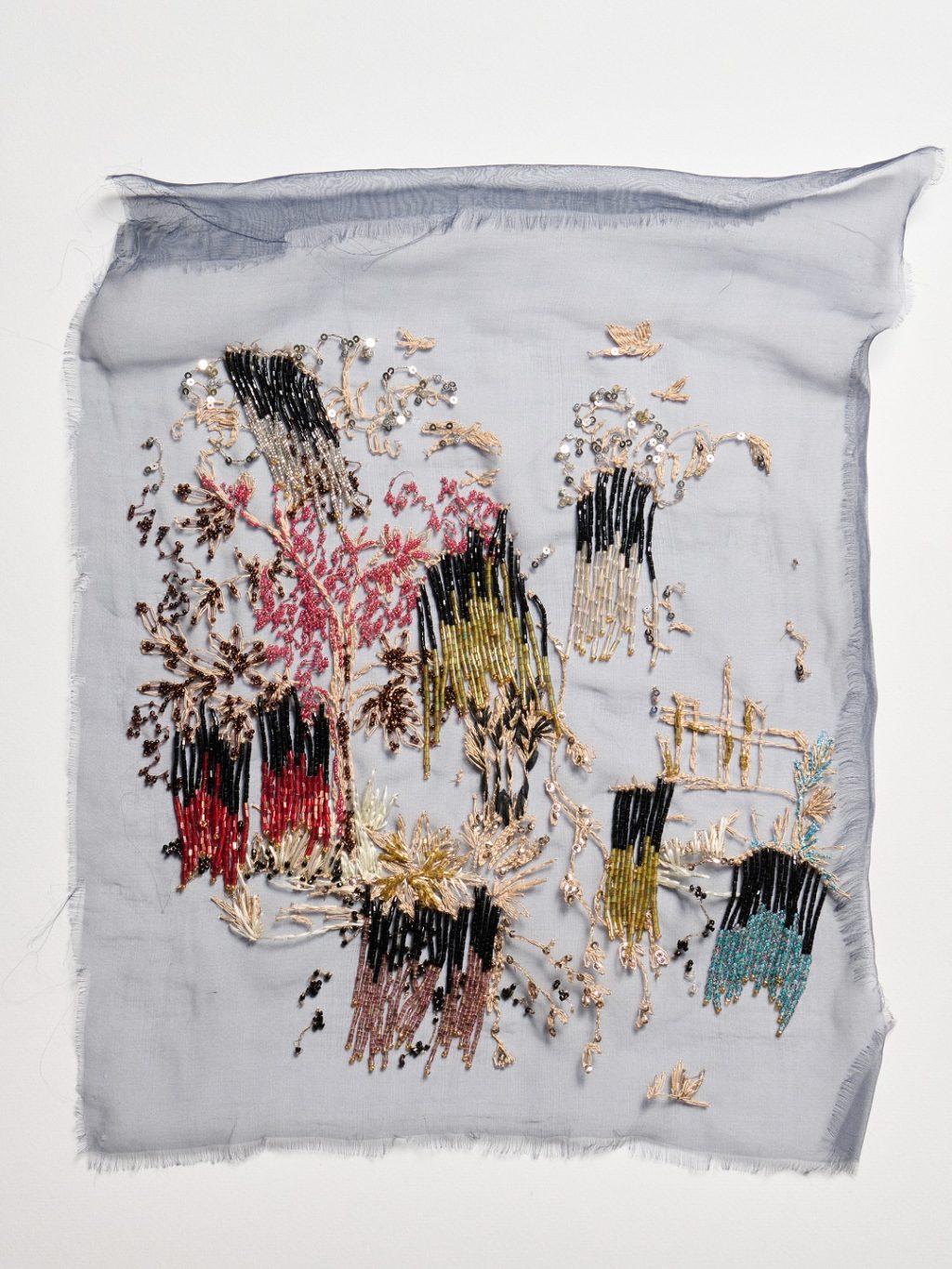
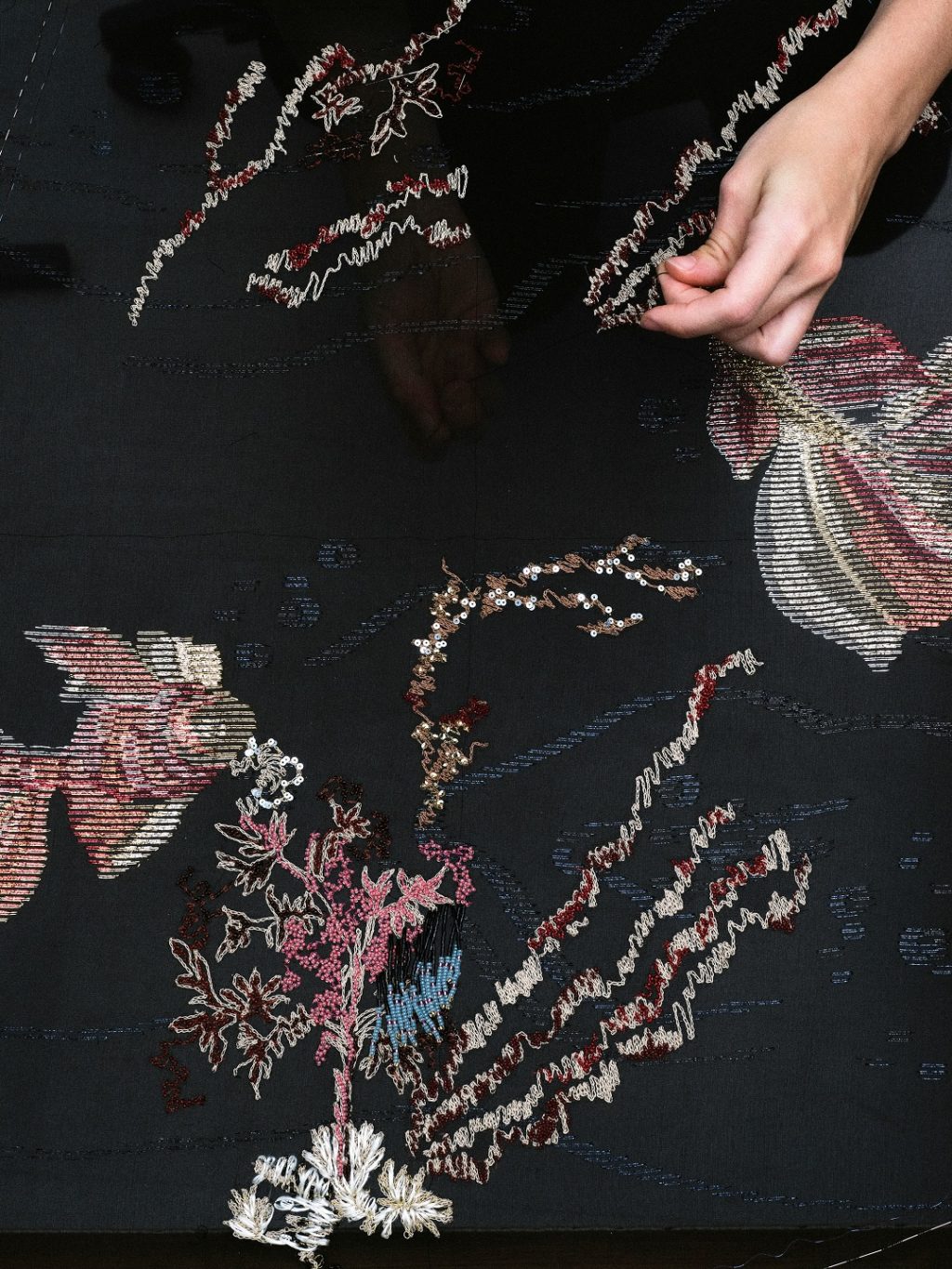
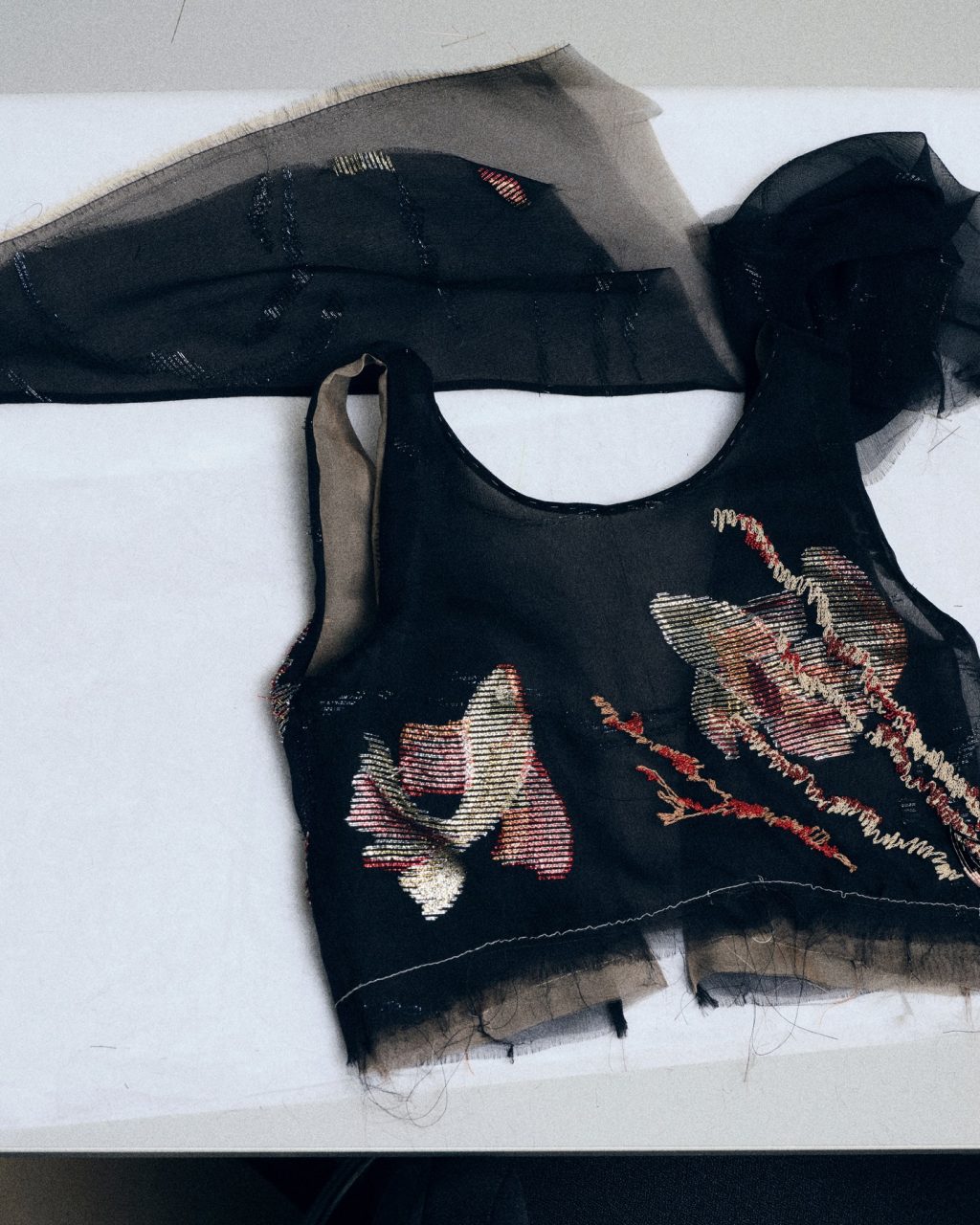
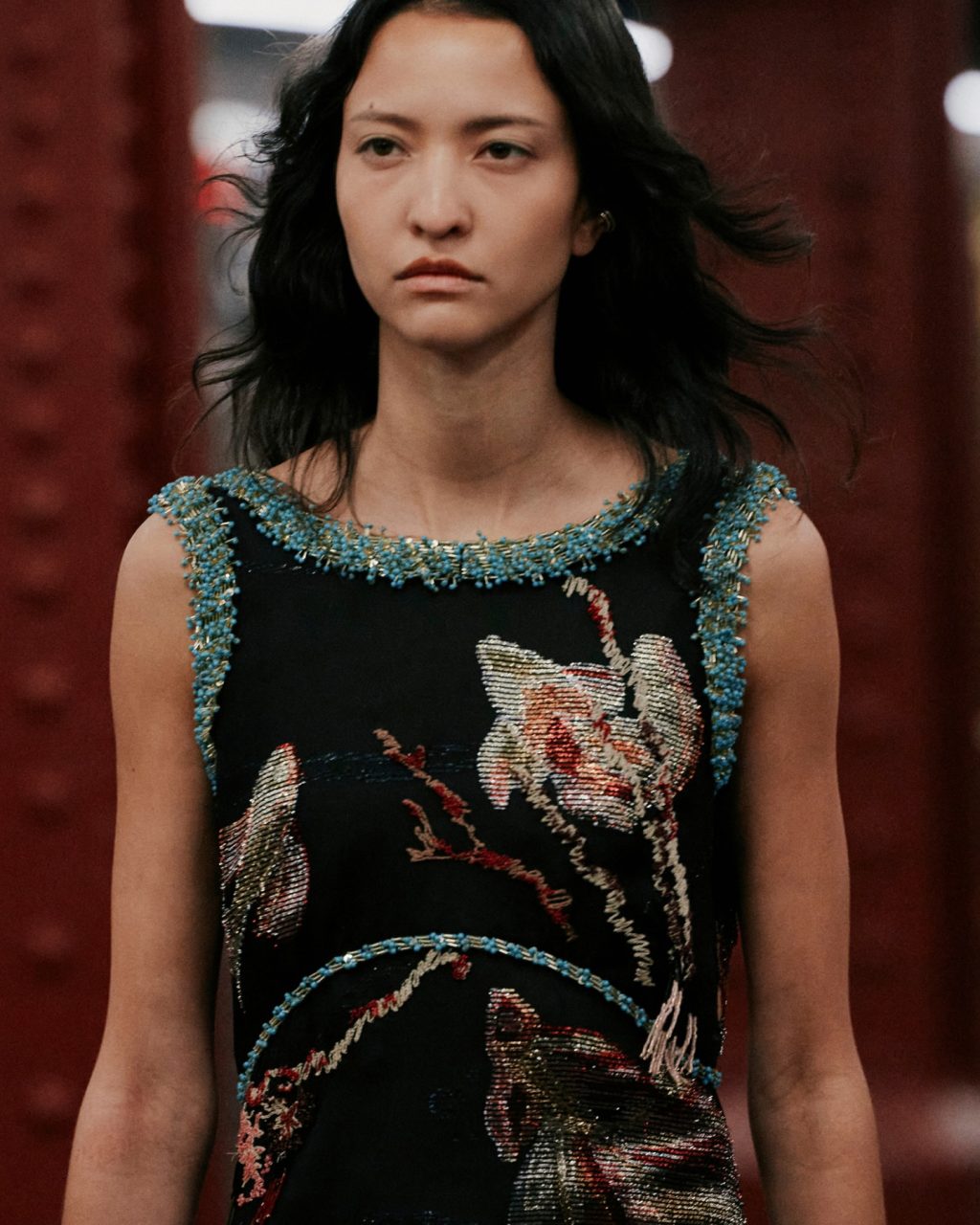
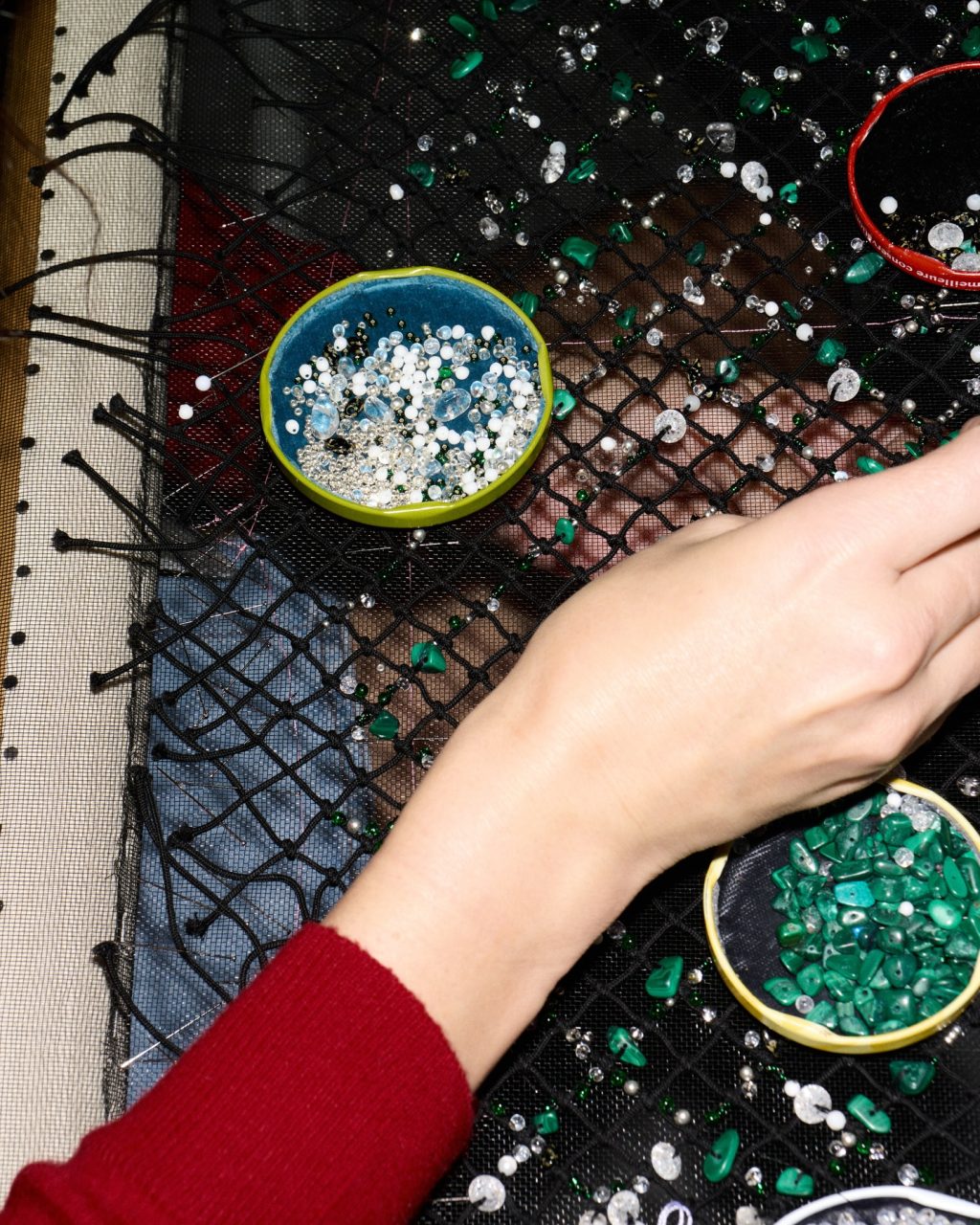
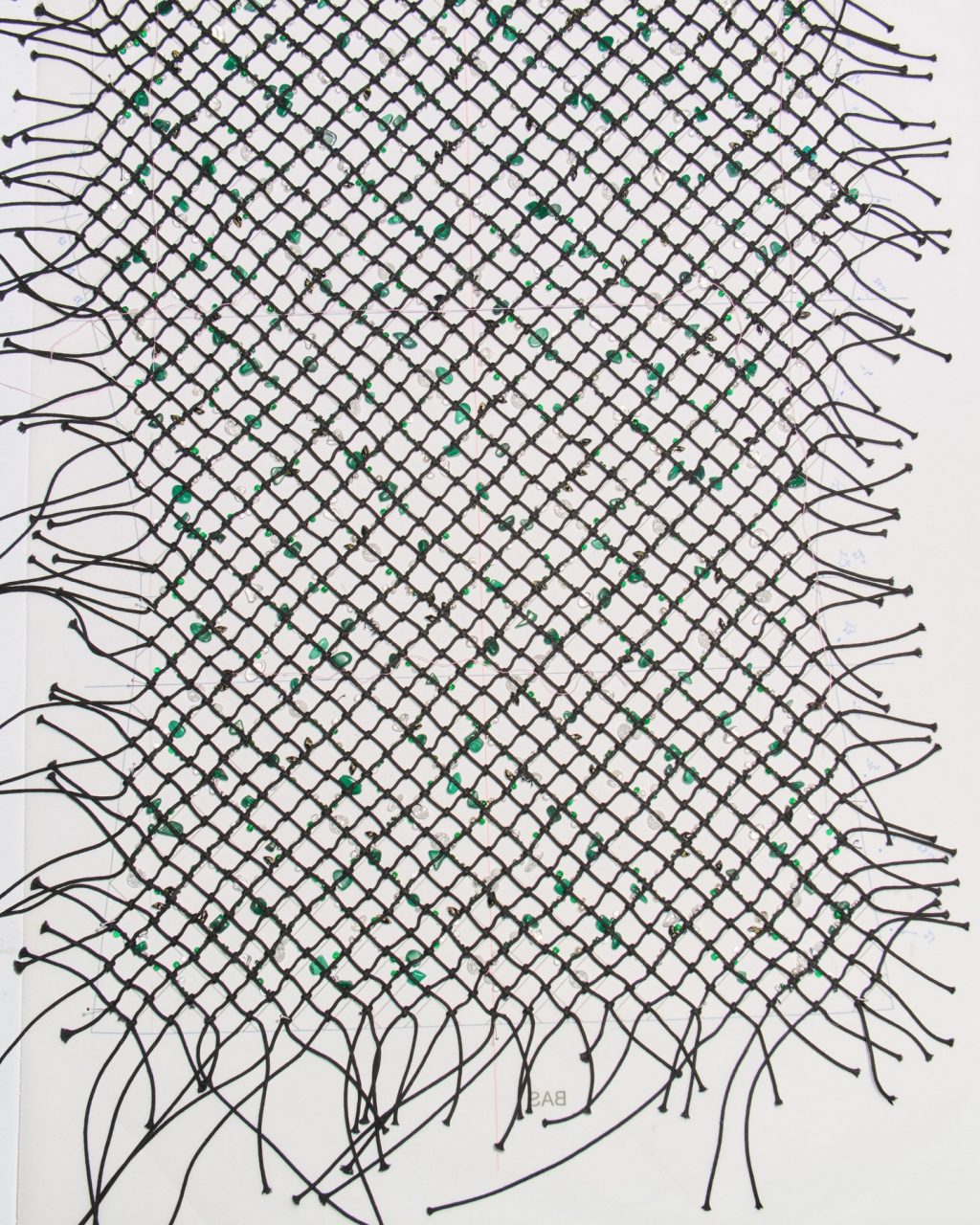
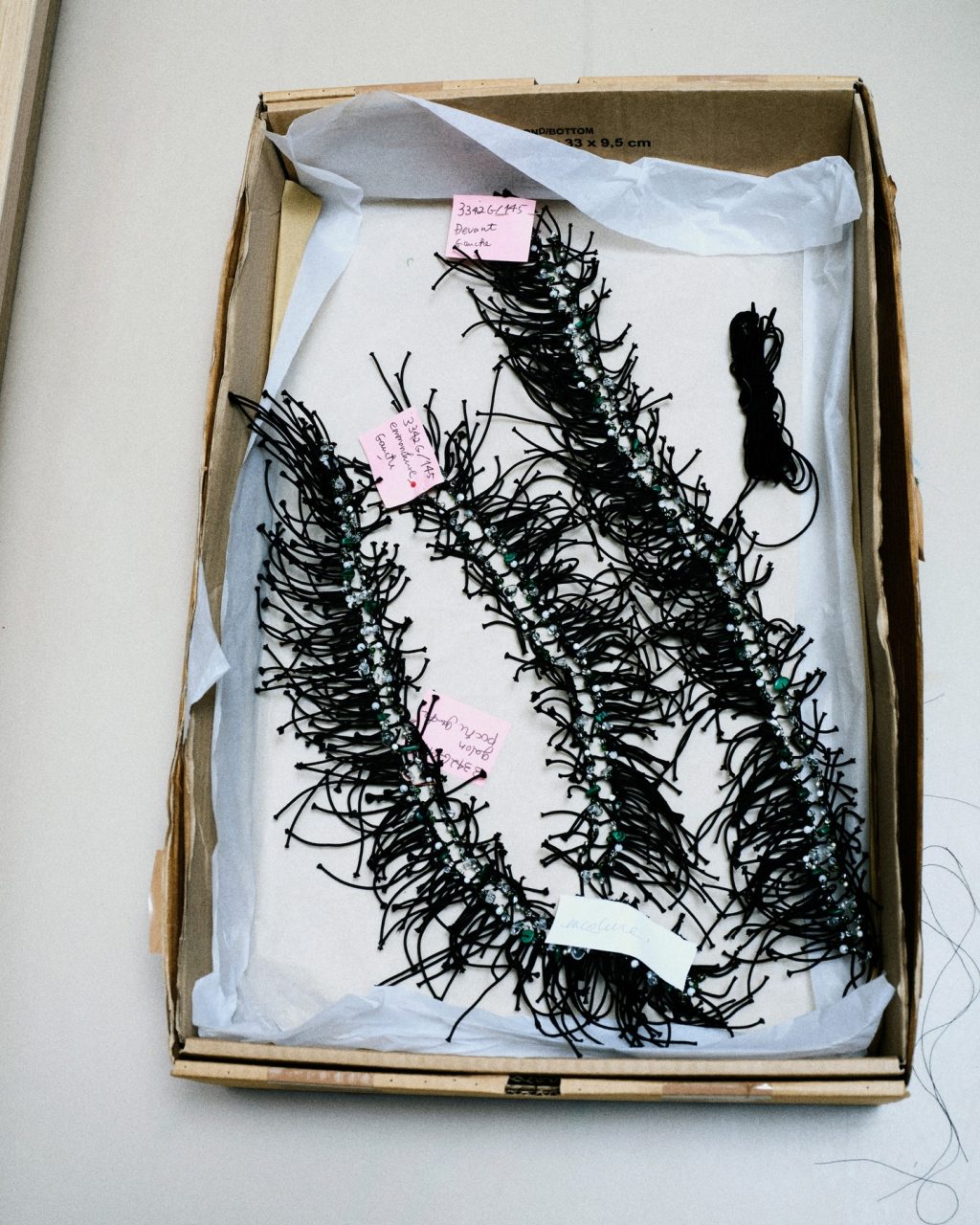
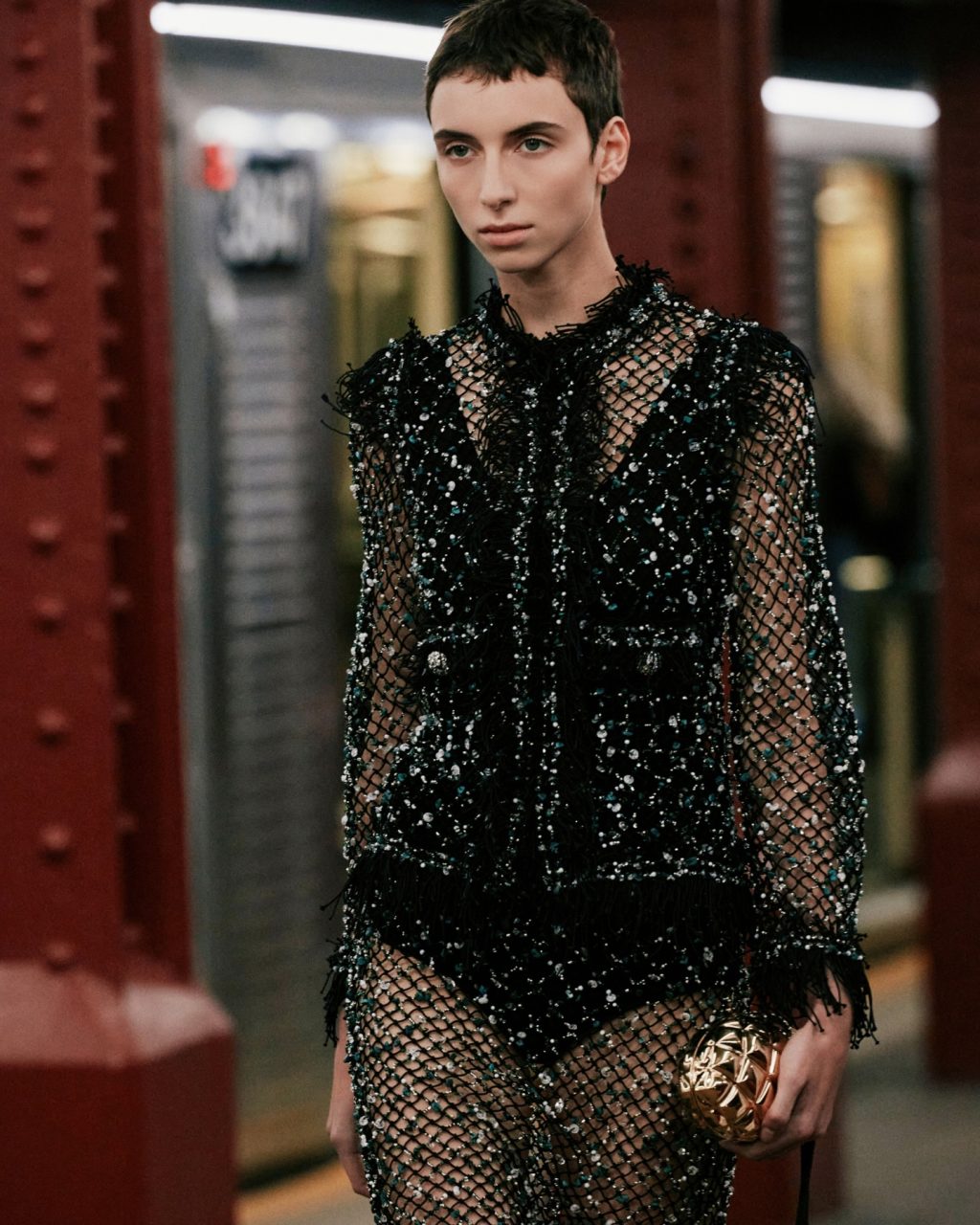
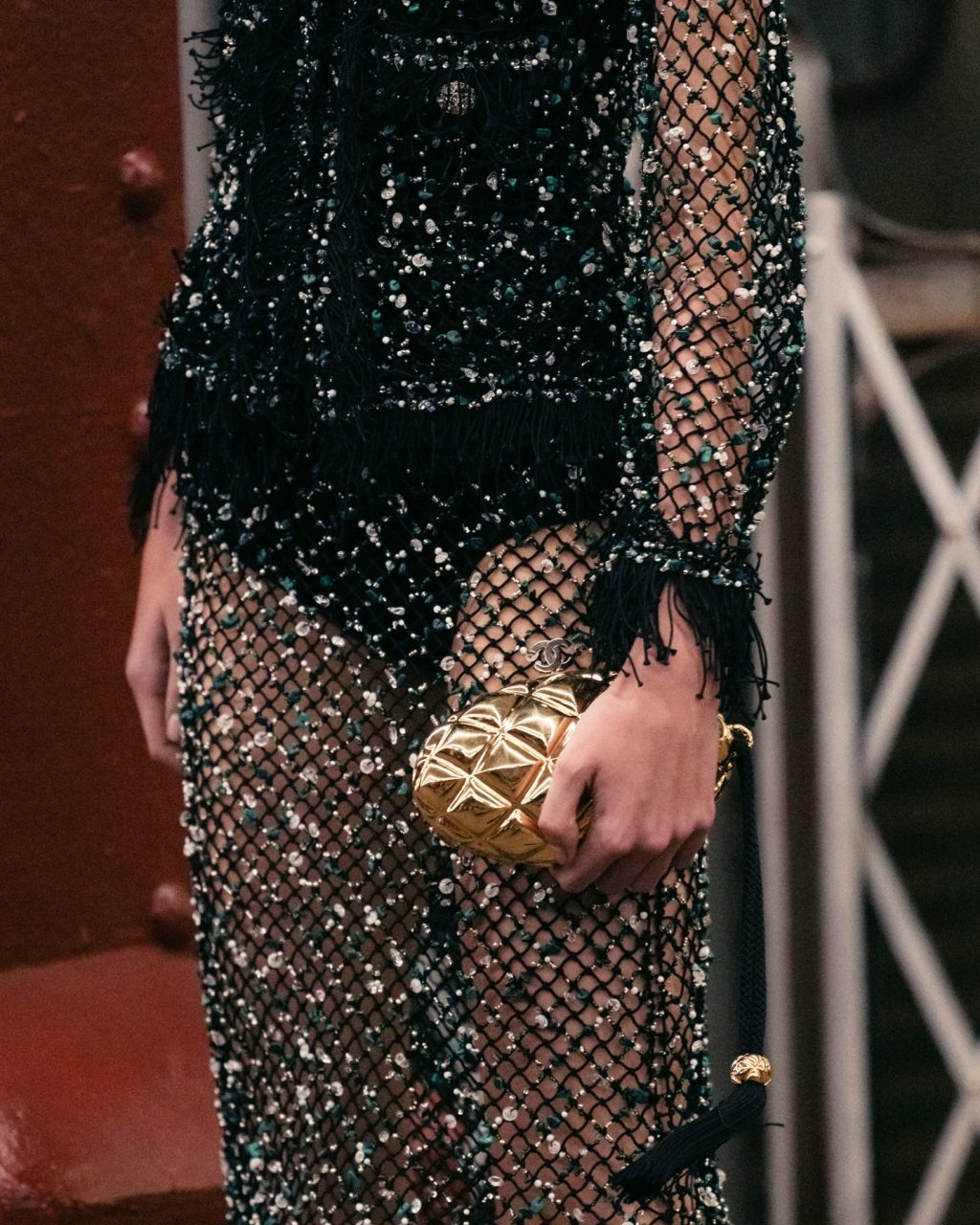
For another look, embroidery even escapes its usual textile base. Using a macramé technique, artisans knot black cotton cord to create an open structure, then add malachite, rock crystal and glass beads with the needle. Braids crafted in the same way trace and accentuate the design, turning the piece into a kind of wearable jewellery.
Lemarié (and Lognon): softness with engineering
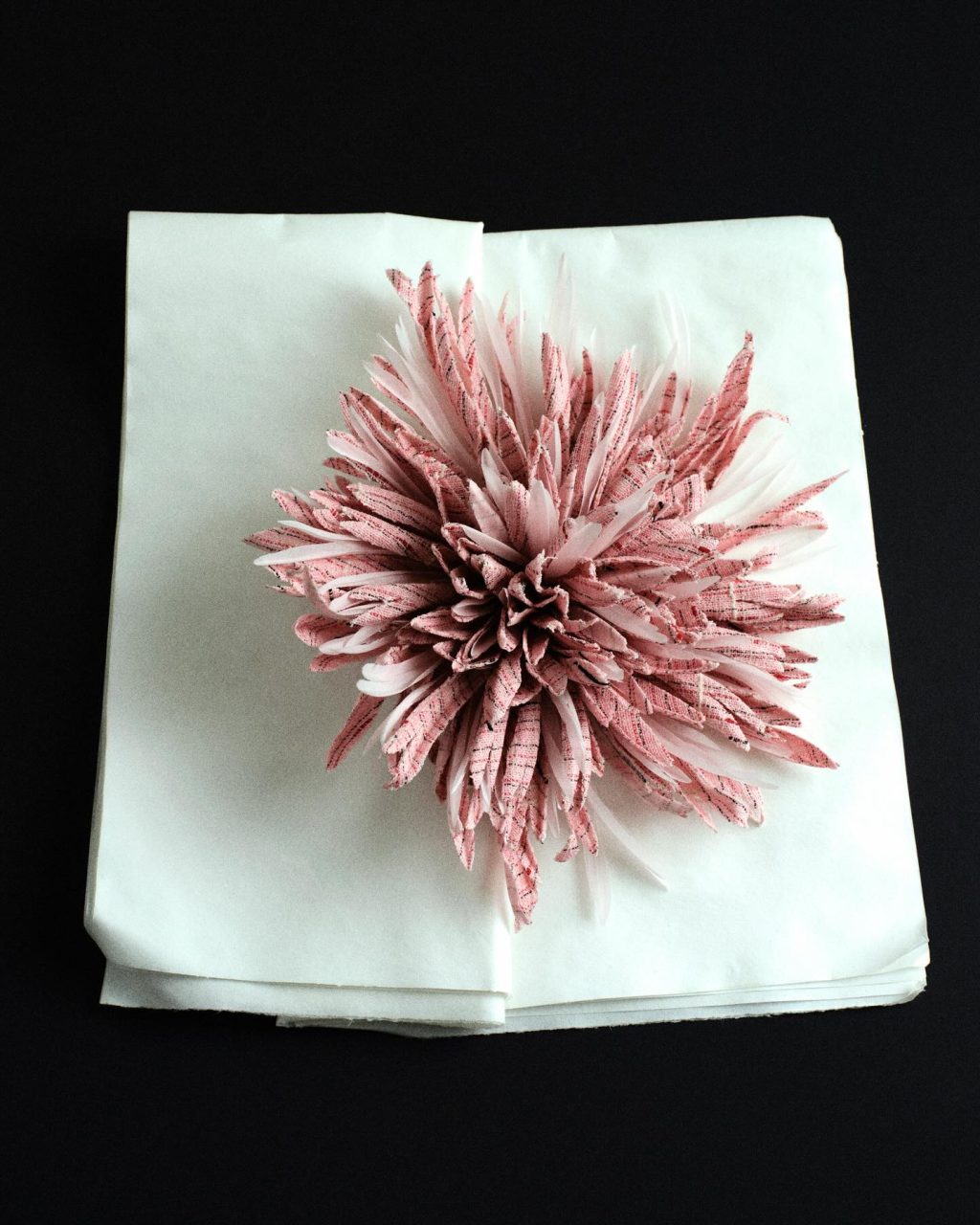
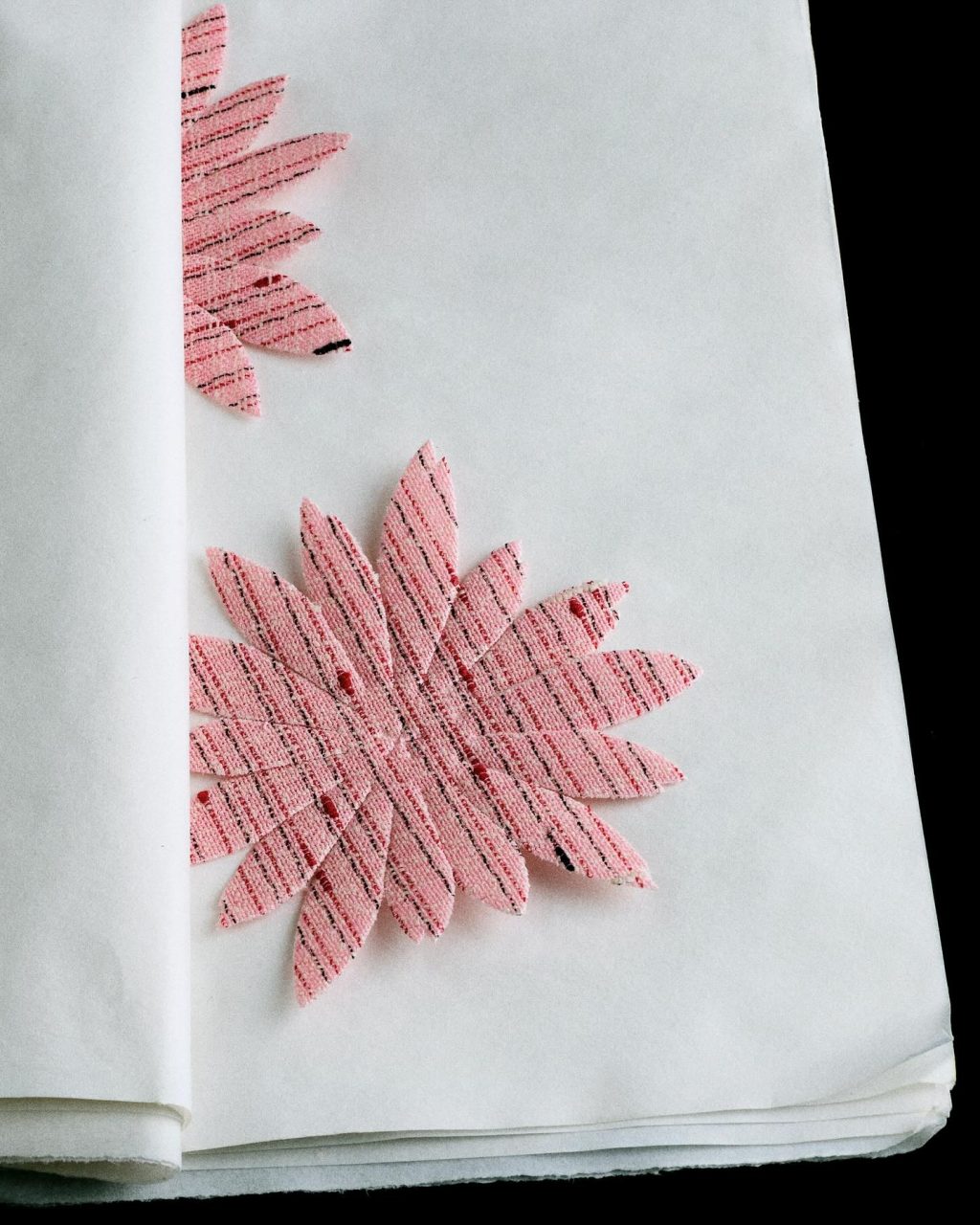
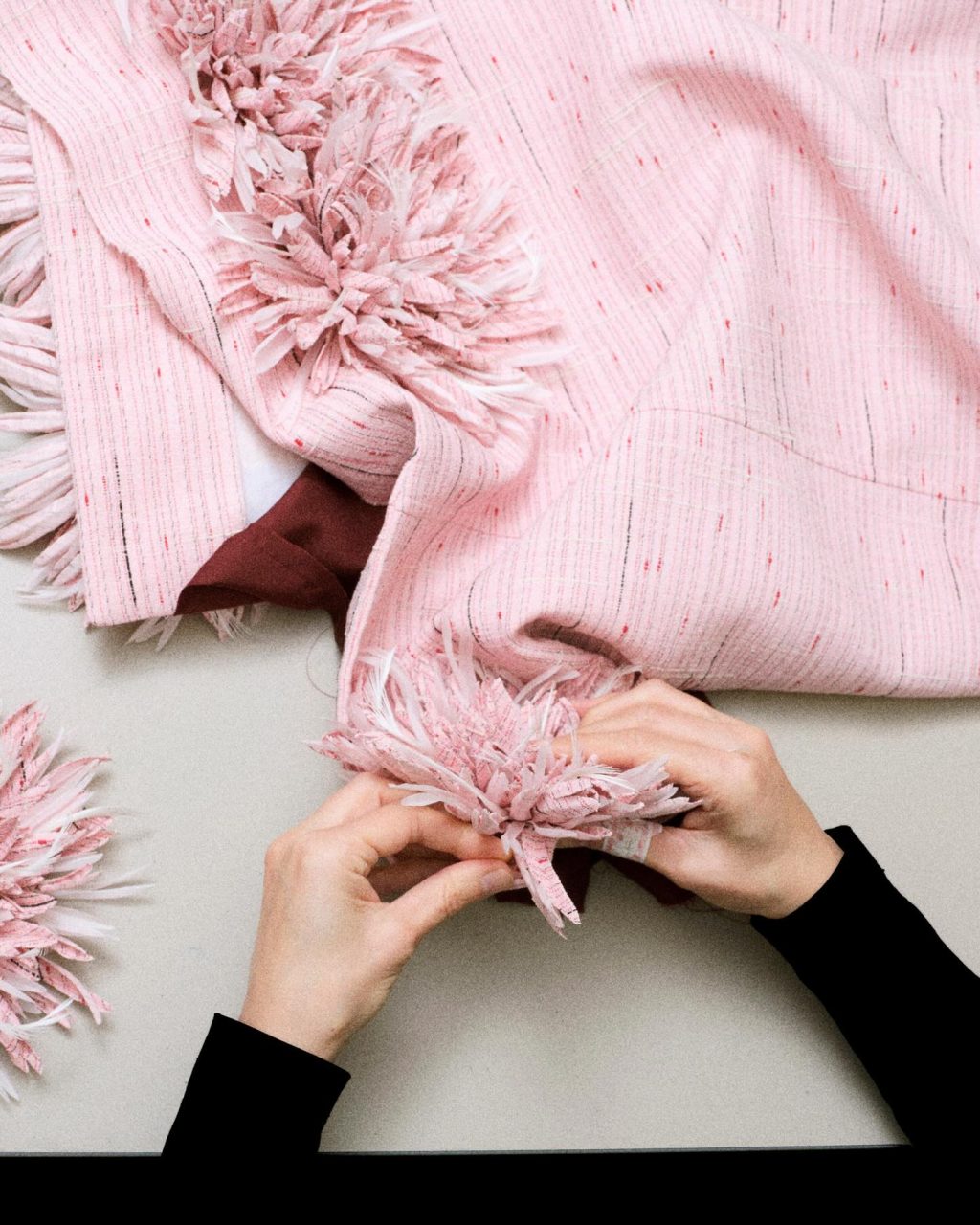
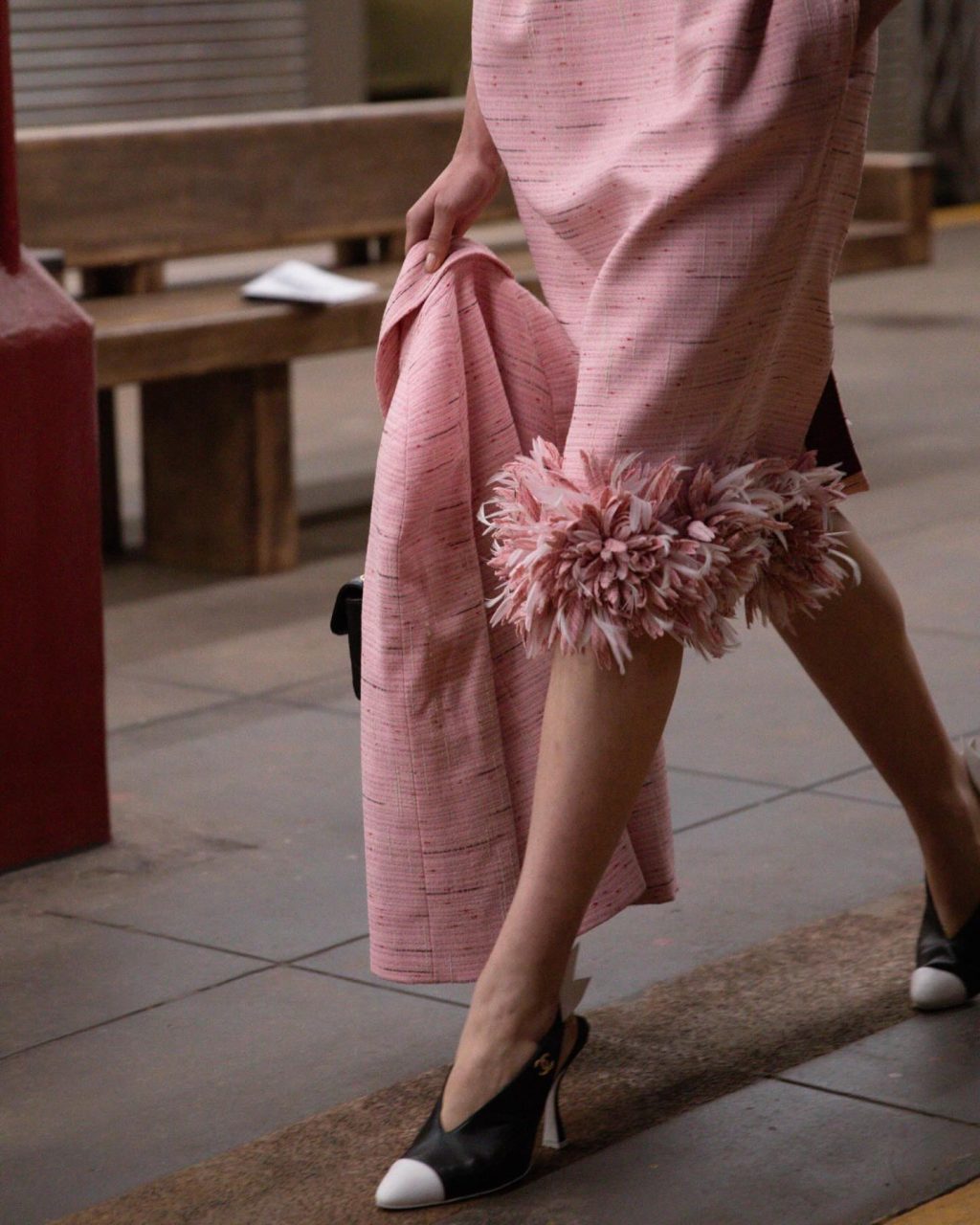
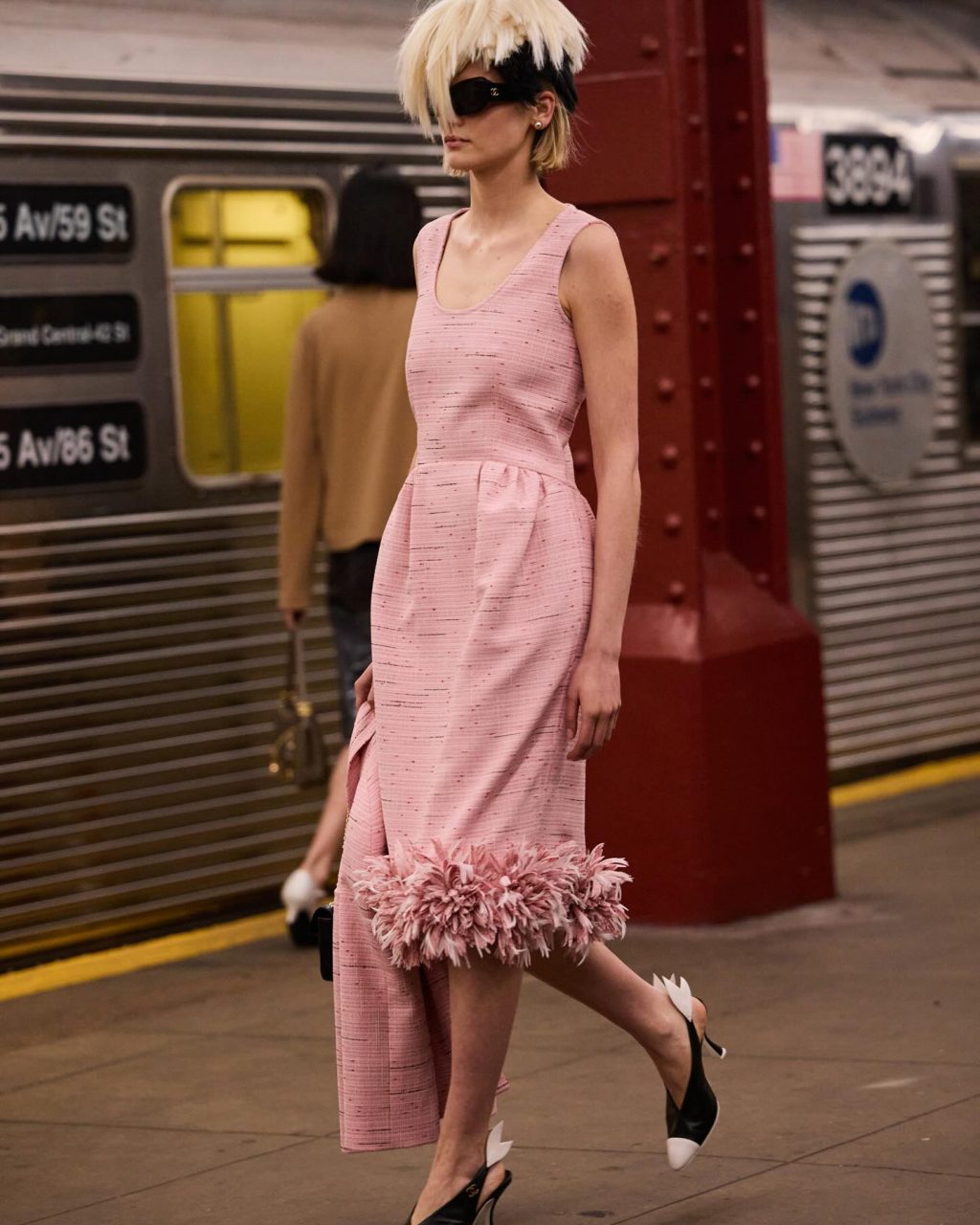
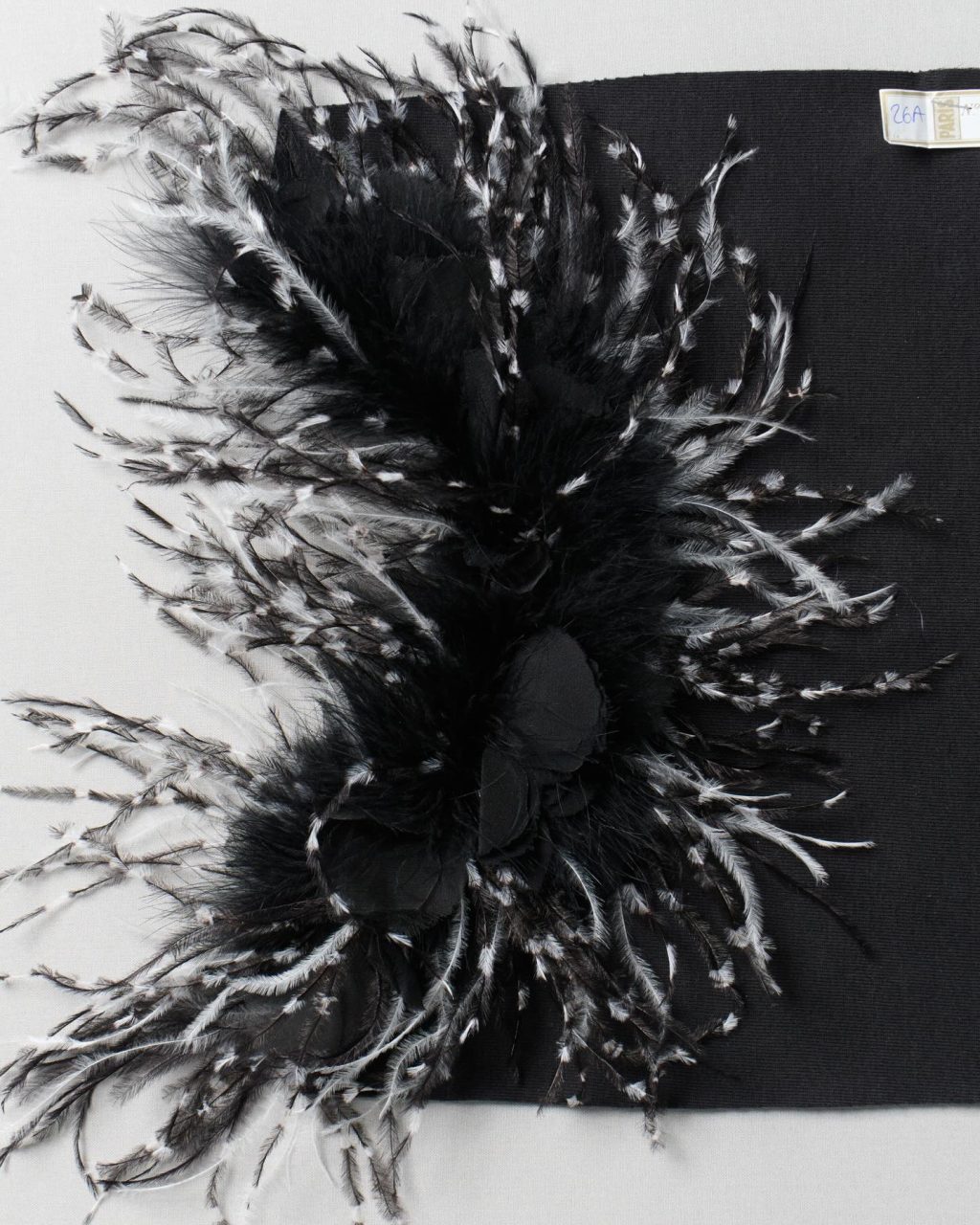
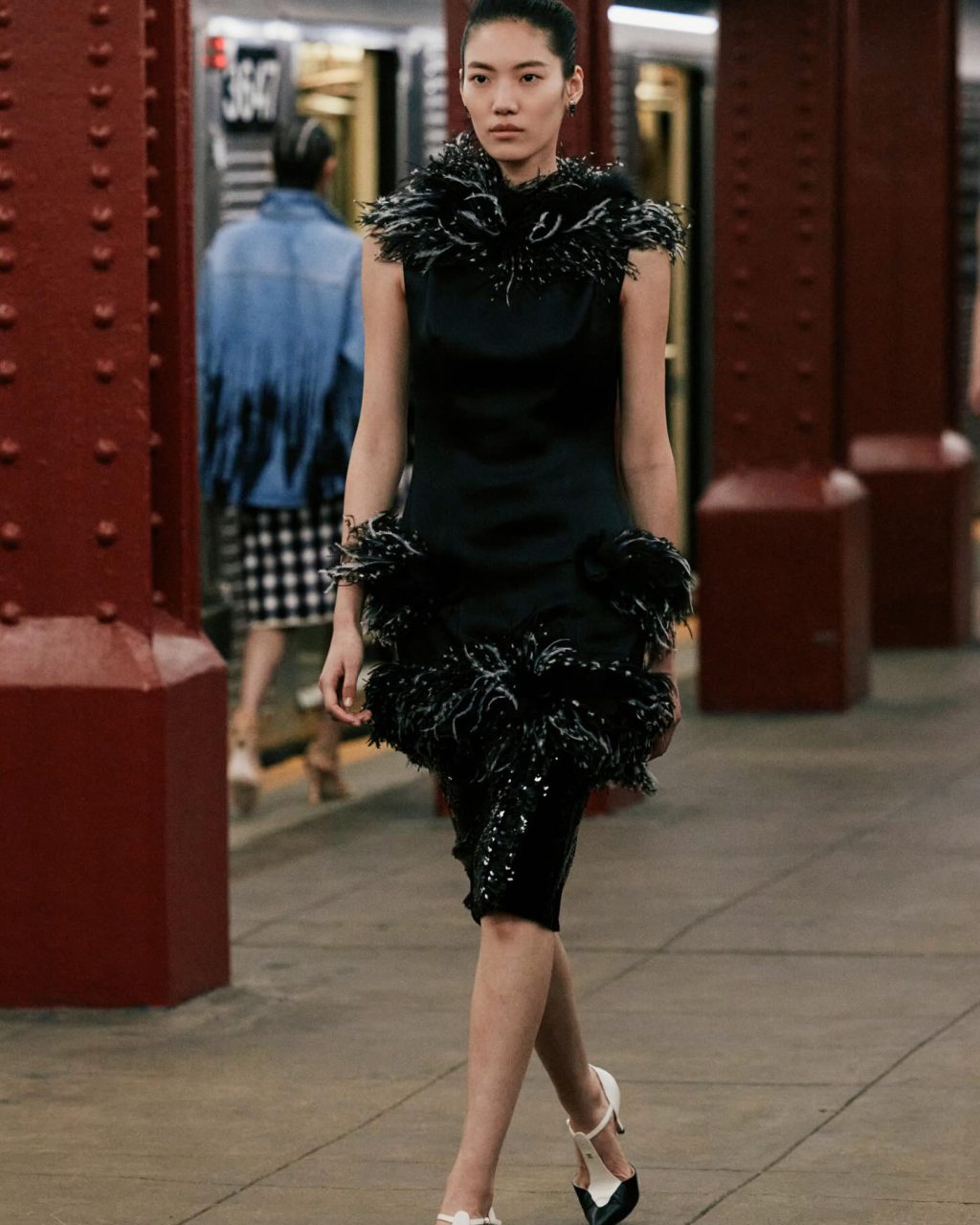
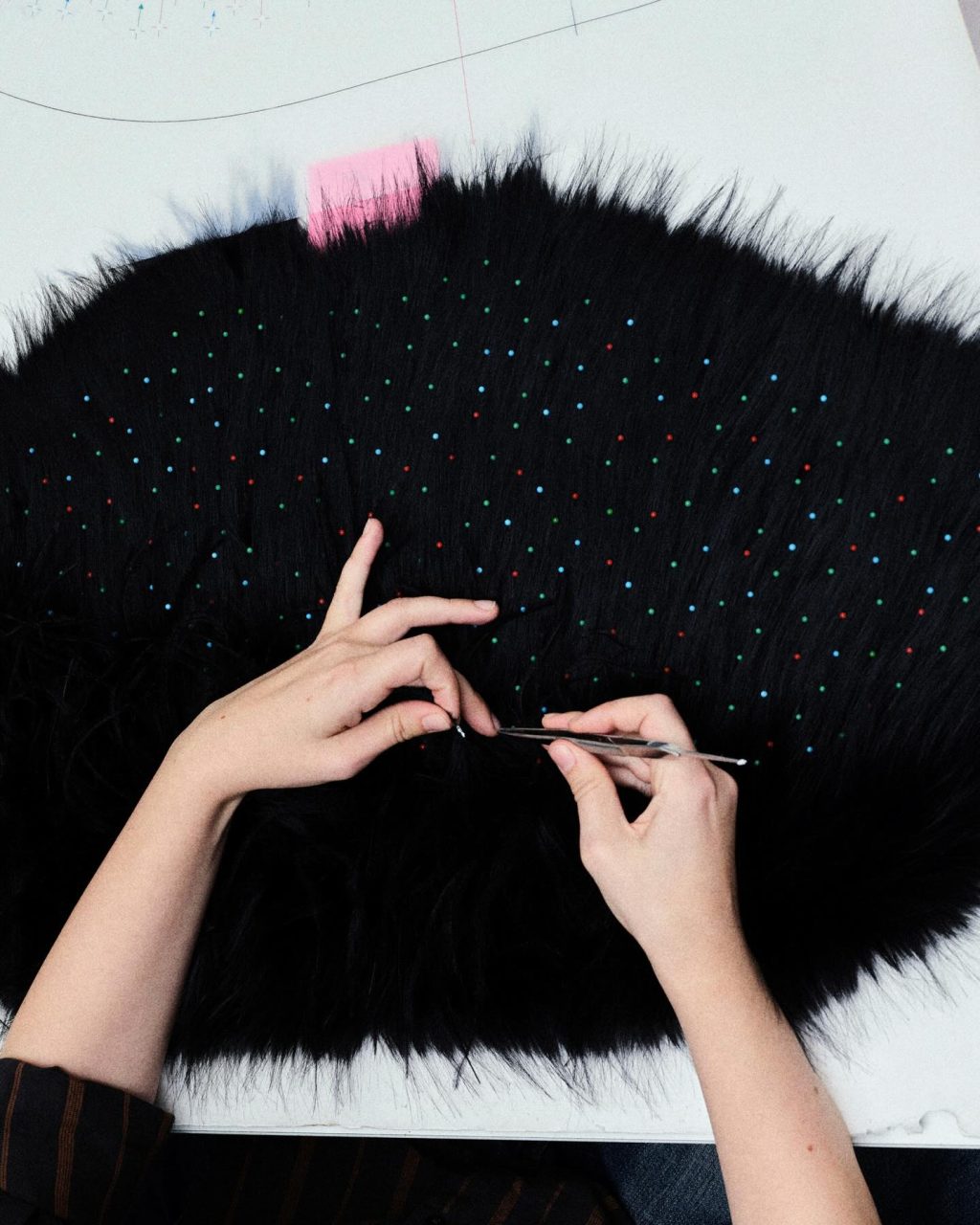
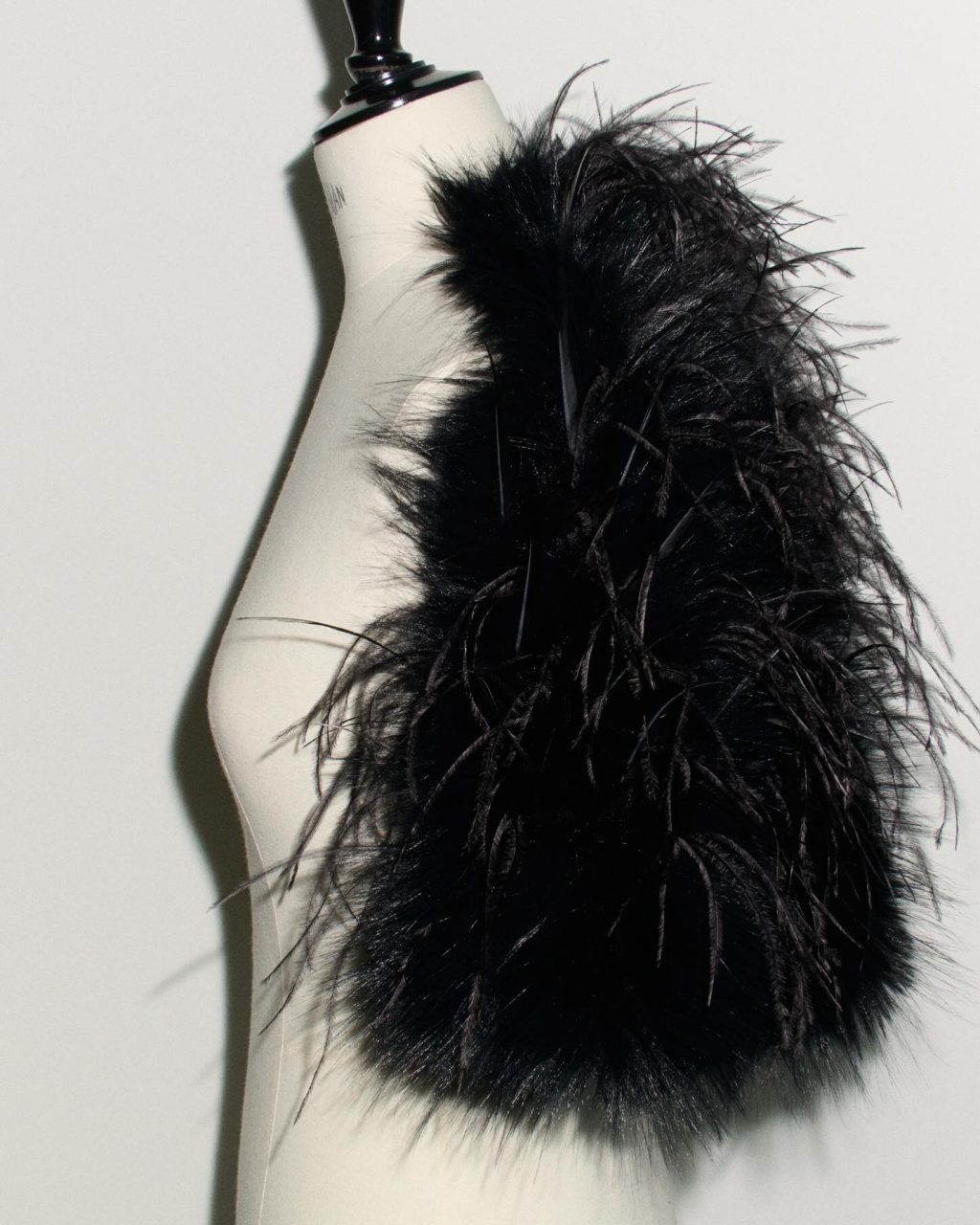
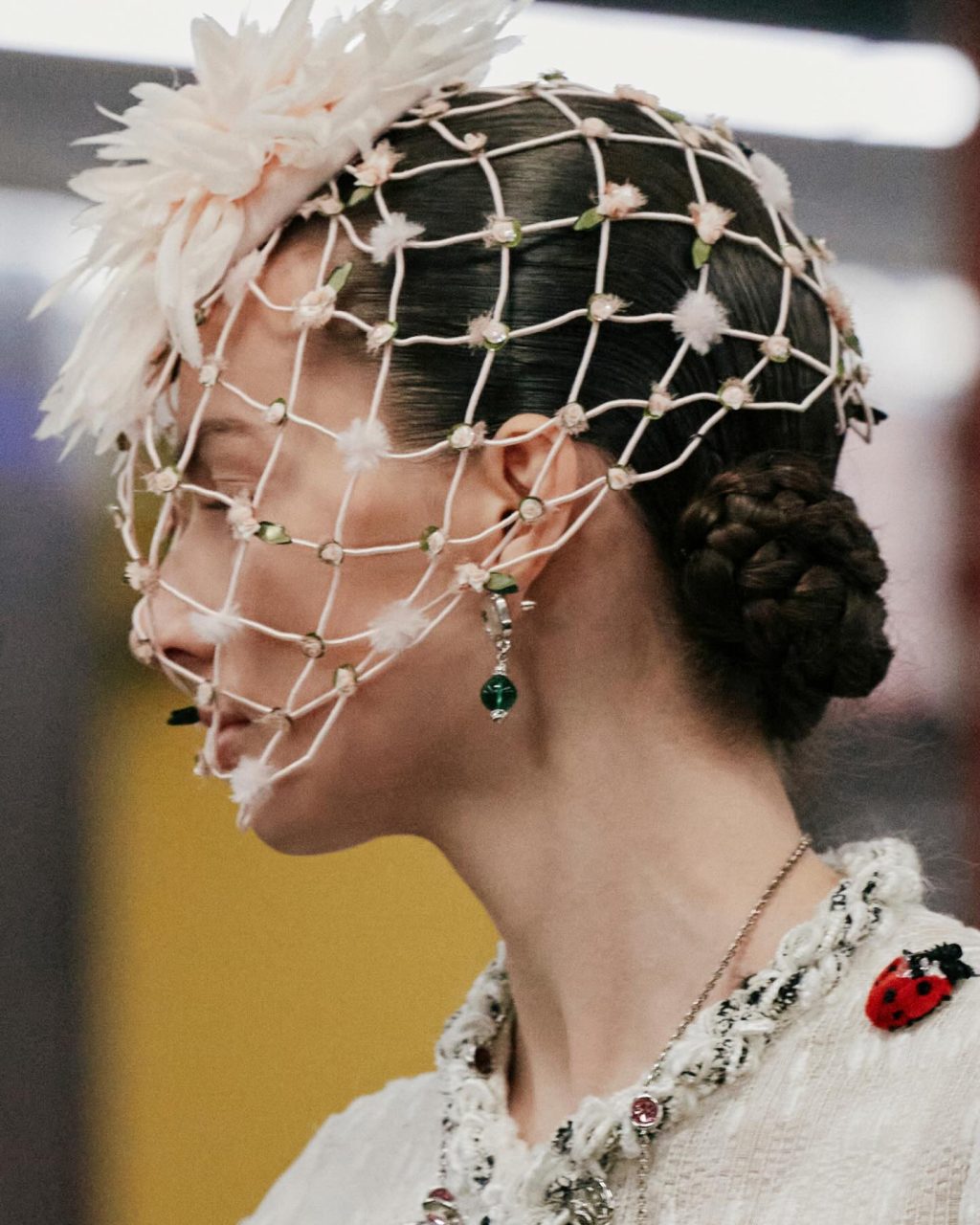
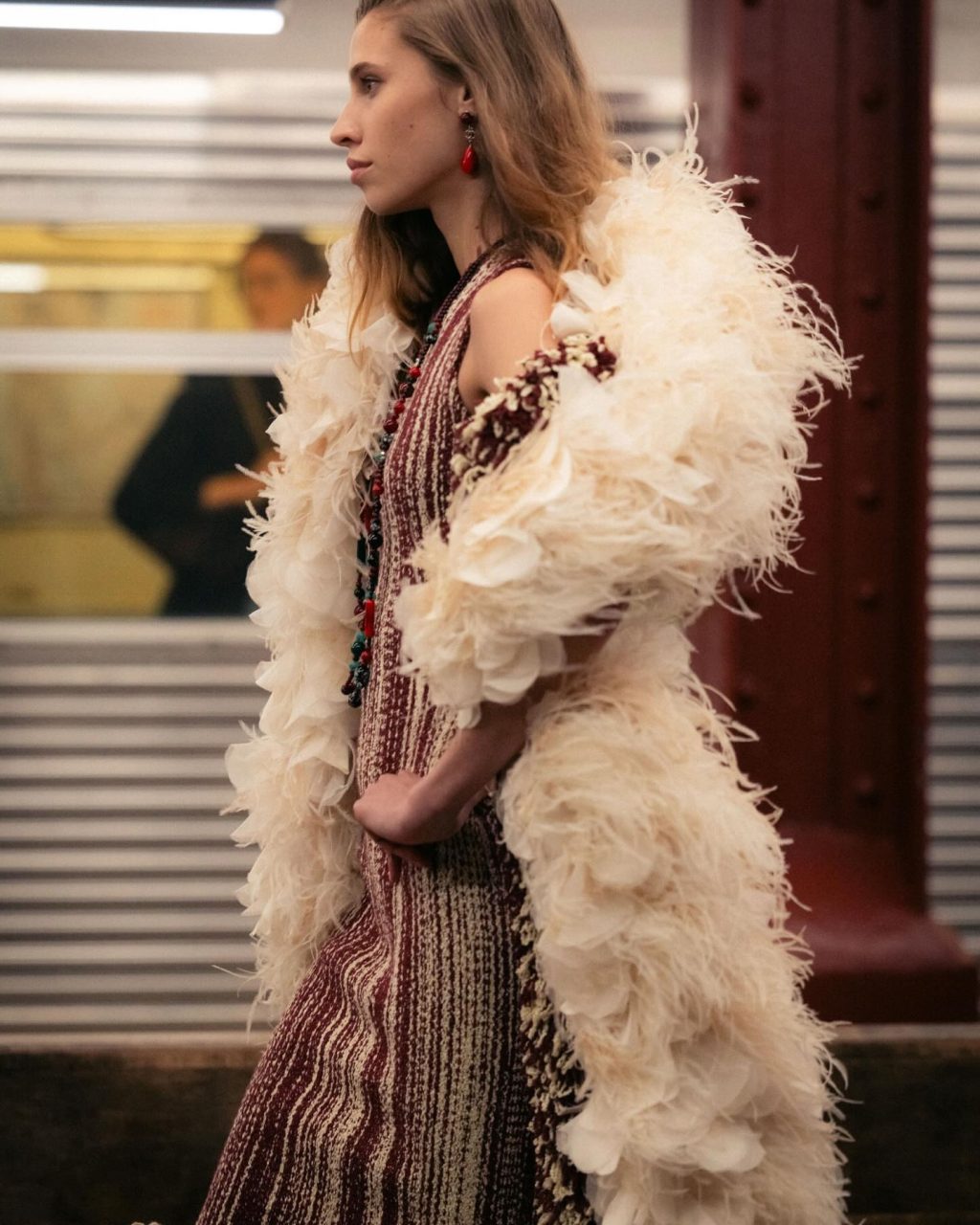
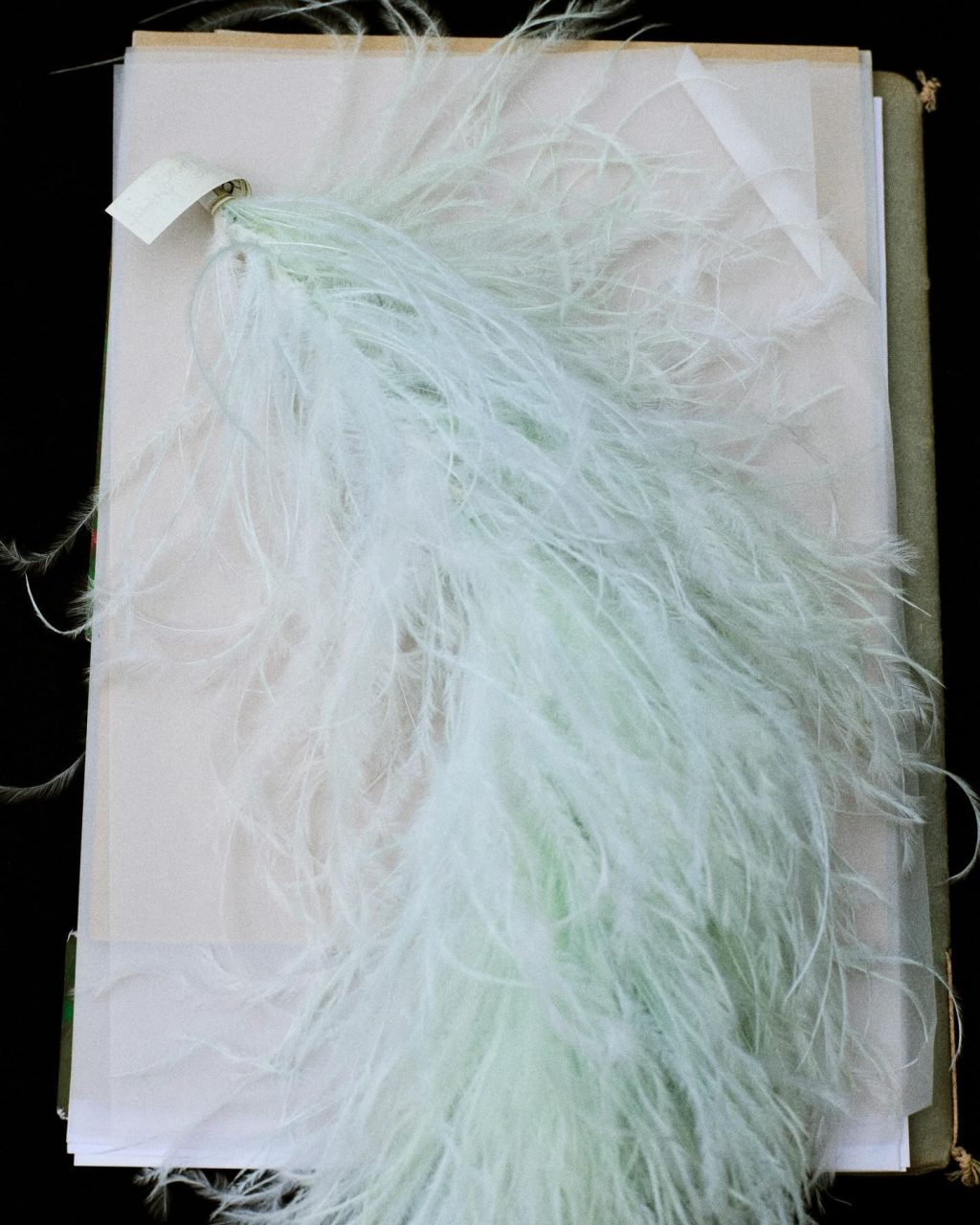
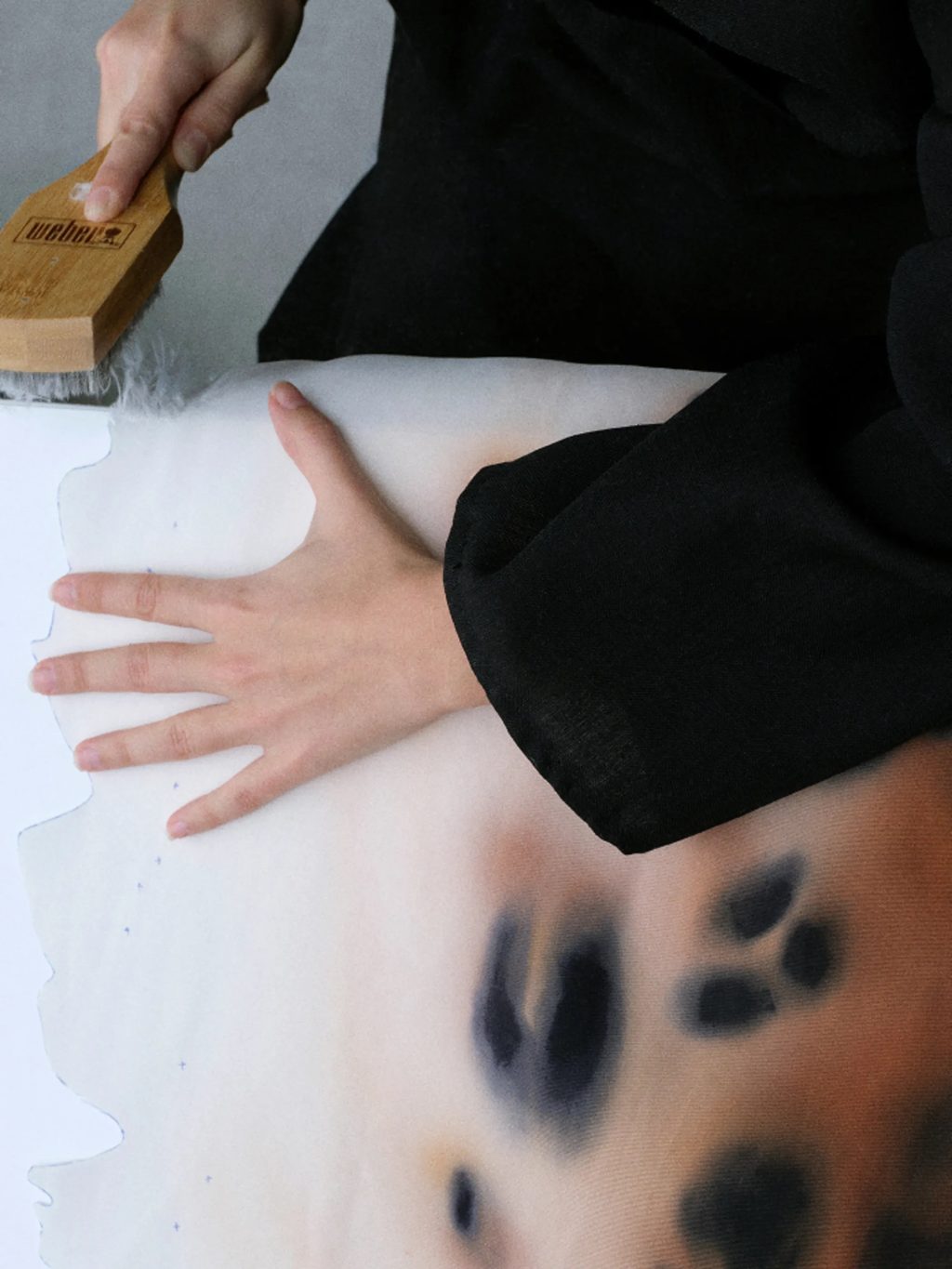
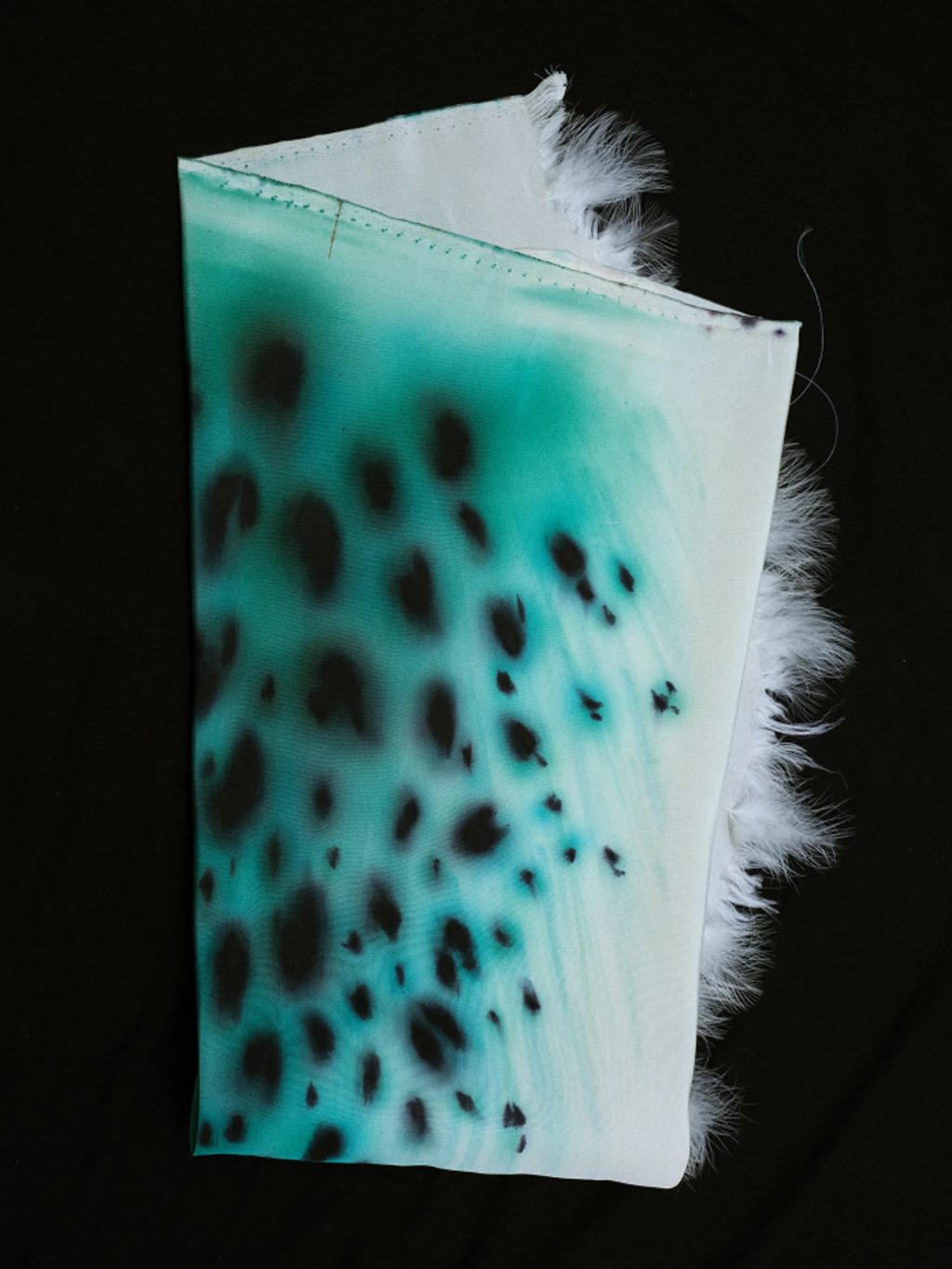
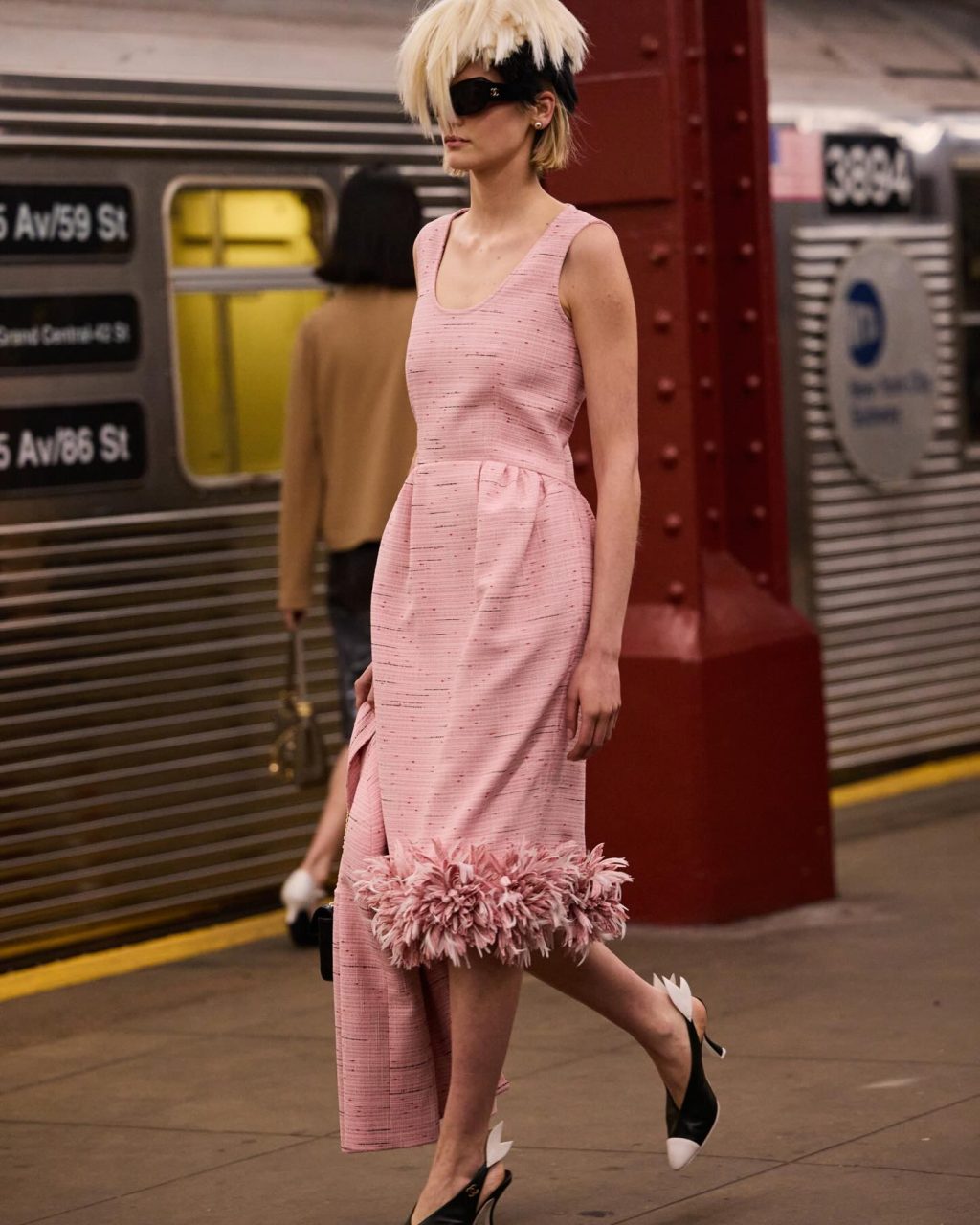
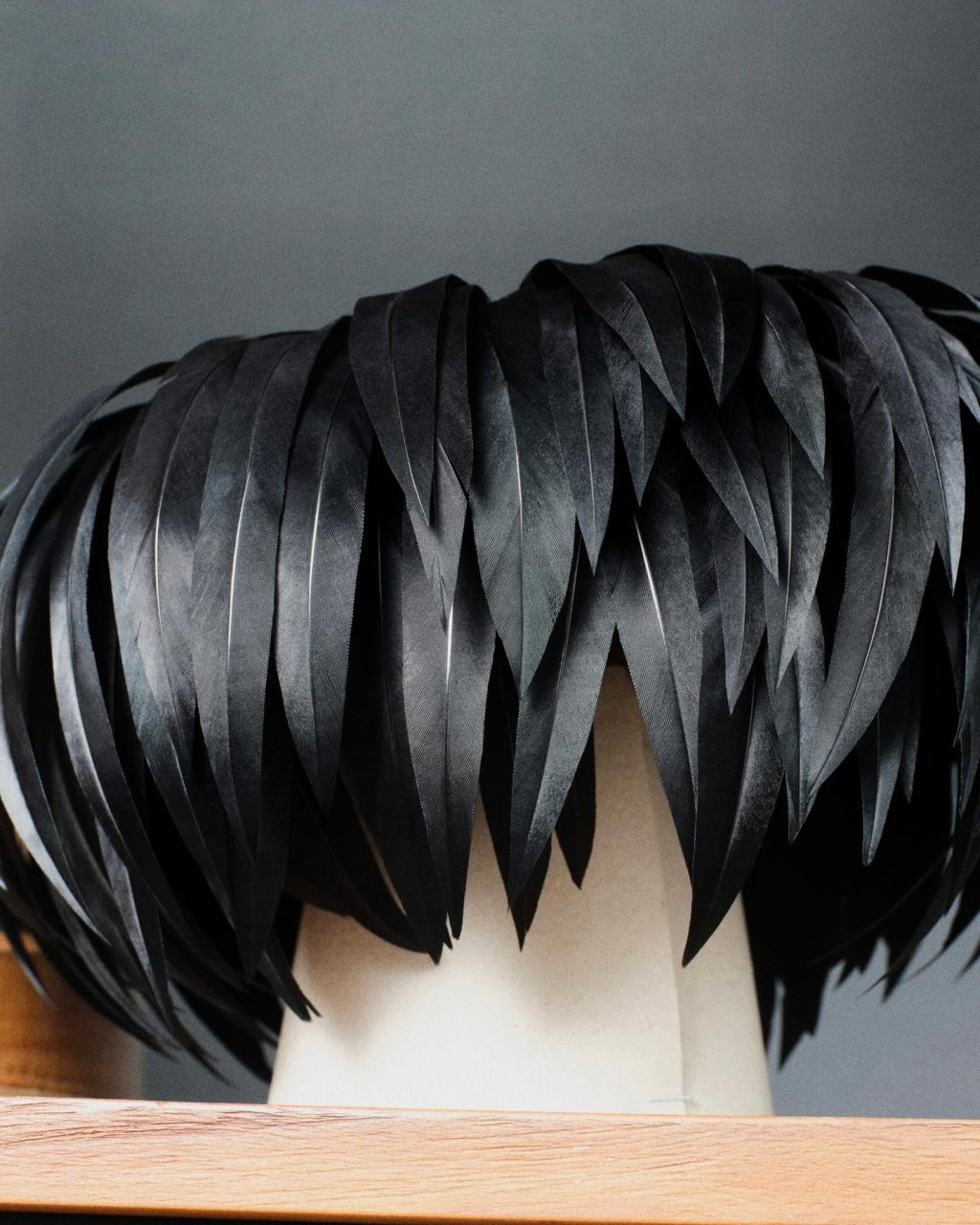
Lemarié’s ateliers operate at the intersection of fragility and control. In the flower workrooms, specialists shape each petal with an embossing ball before taking it through a succession of gestures — petals are embroidered, engraved, crushed or delicately frayed, then finally mounted into a bloom by hand. Meanwhile, in the feather ateliers, skilful artisans work plumes in a thousand different ways: crimped, tweezered, knife-worked, curled, embroidered into patterns or coloured with pigments until they become volumes that can be romantic, dramatic or wildly graphic.
A vital partner to CHANEL since 1962, Lemarié joined the Fashion Métiers d’art in 1996 and now also excels in textile embellishments and pleats, crafted by Atelier Lognon, which became part of Maison Lemarié in 2013. In a collection obsessed with movement and character, Lemarié offers the poetry of motion — feathers and petals that seem to catch the air of an arriving train.
Goossens: animal glamour and the CHANEL jewelry DNA
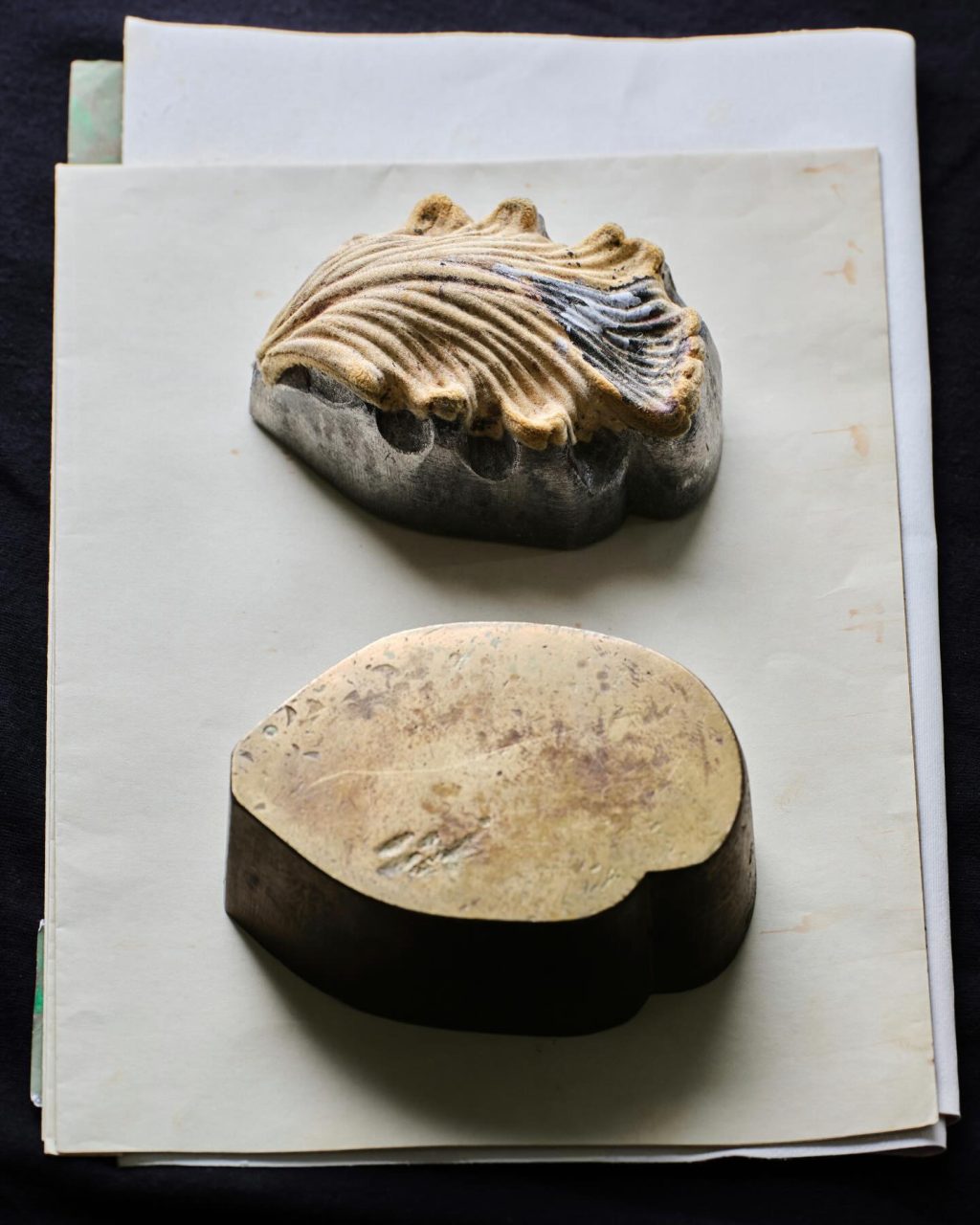
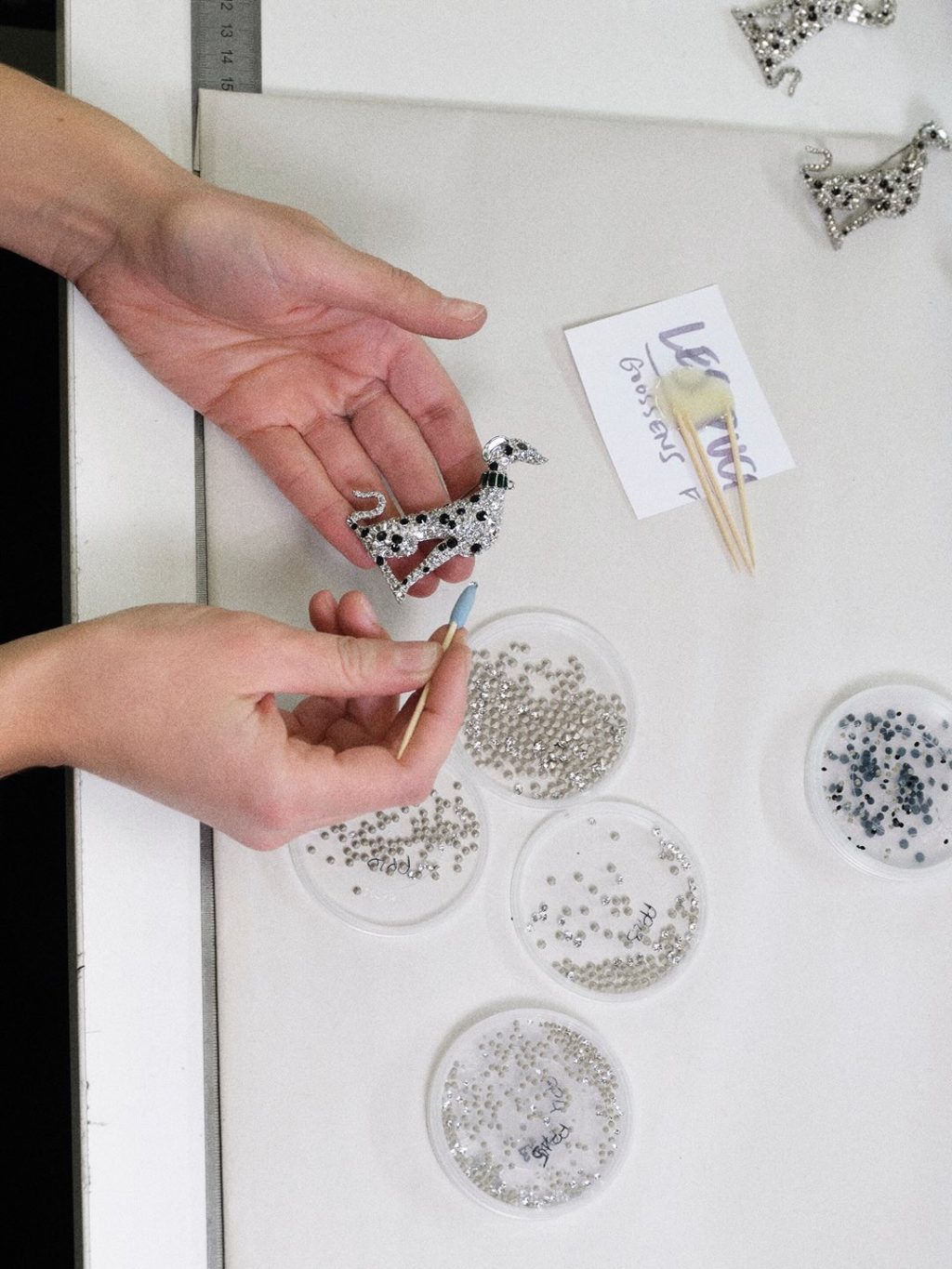
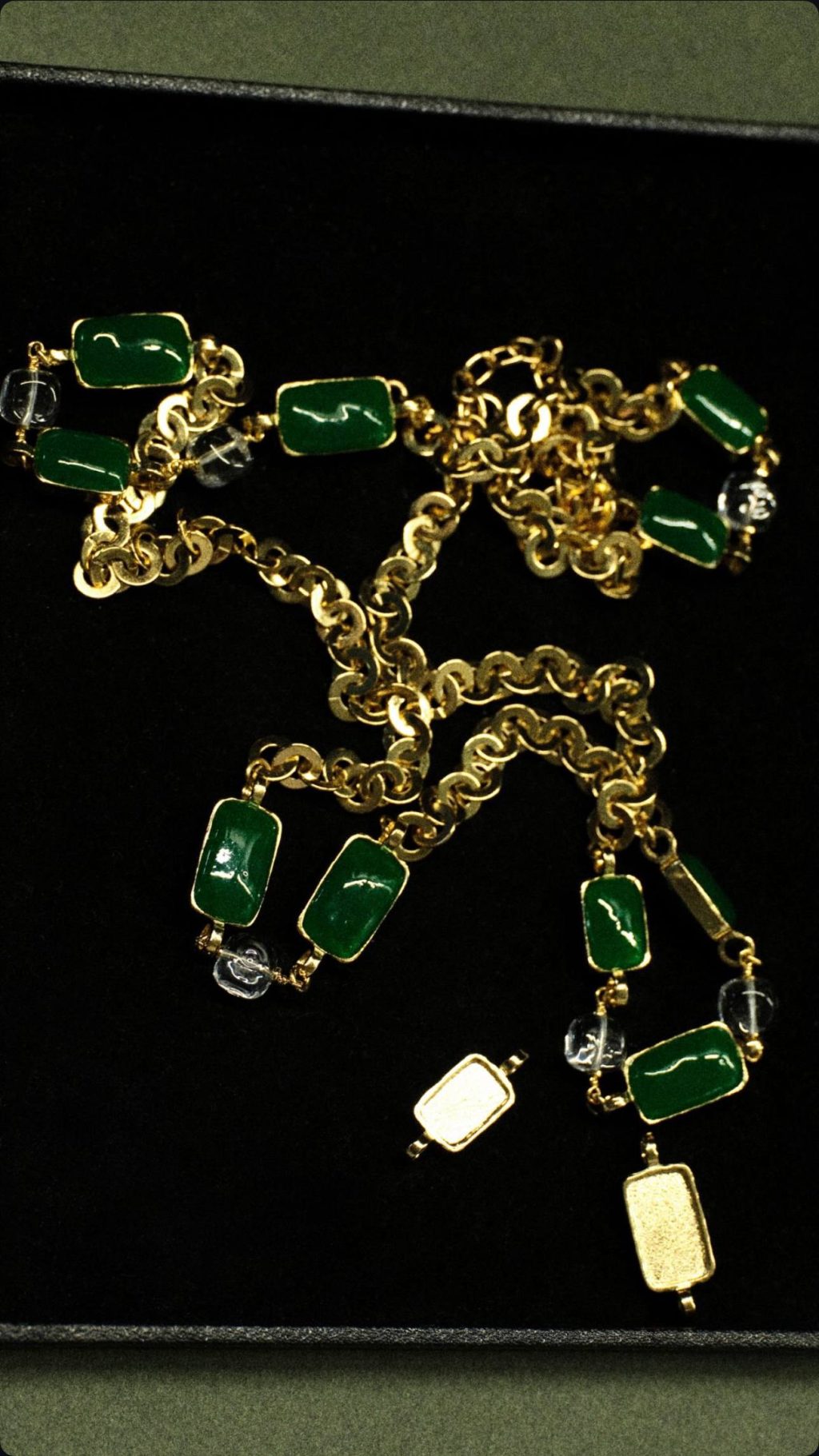
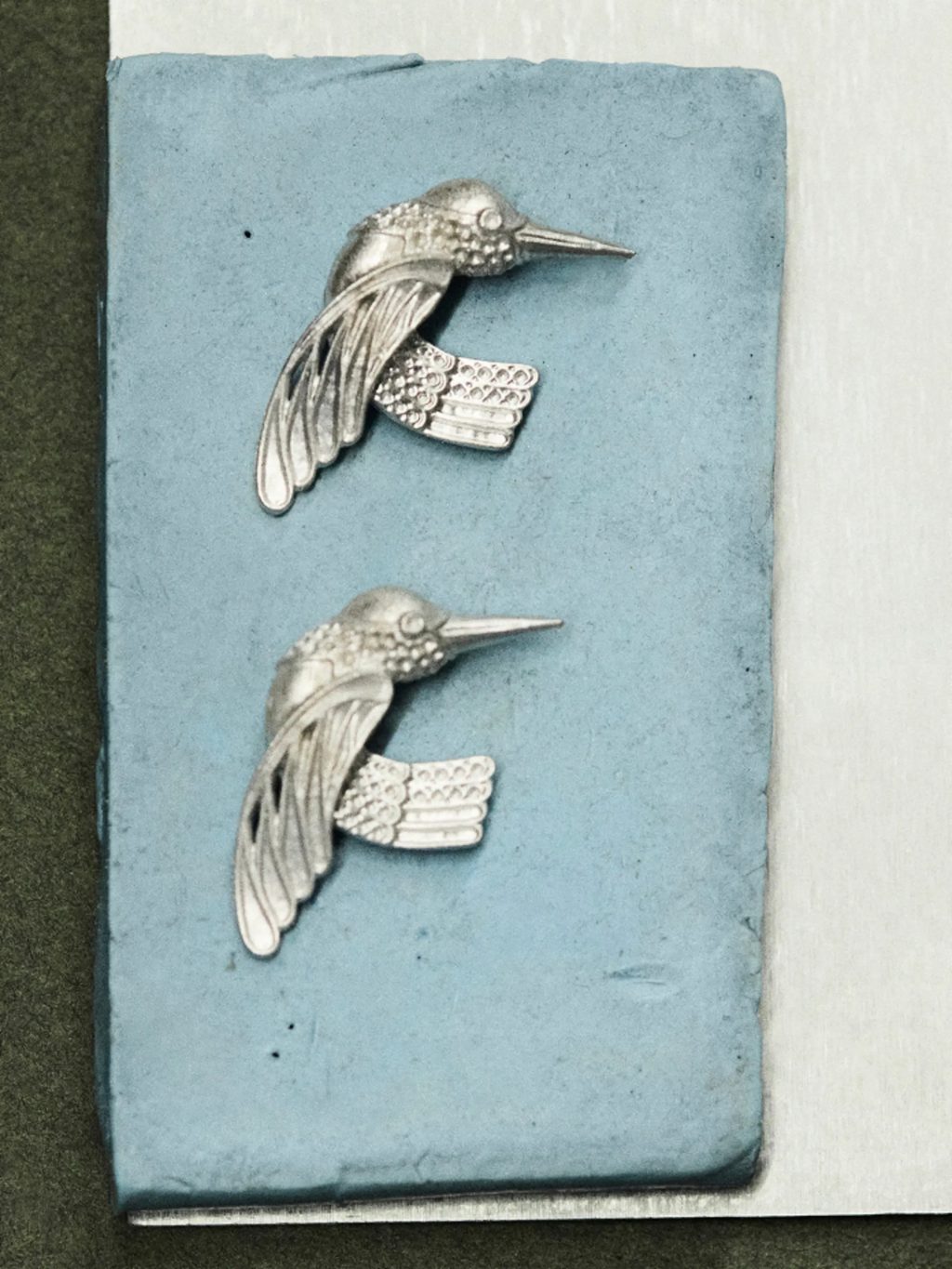
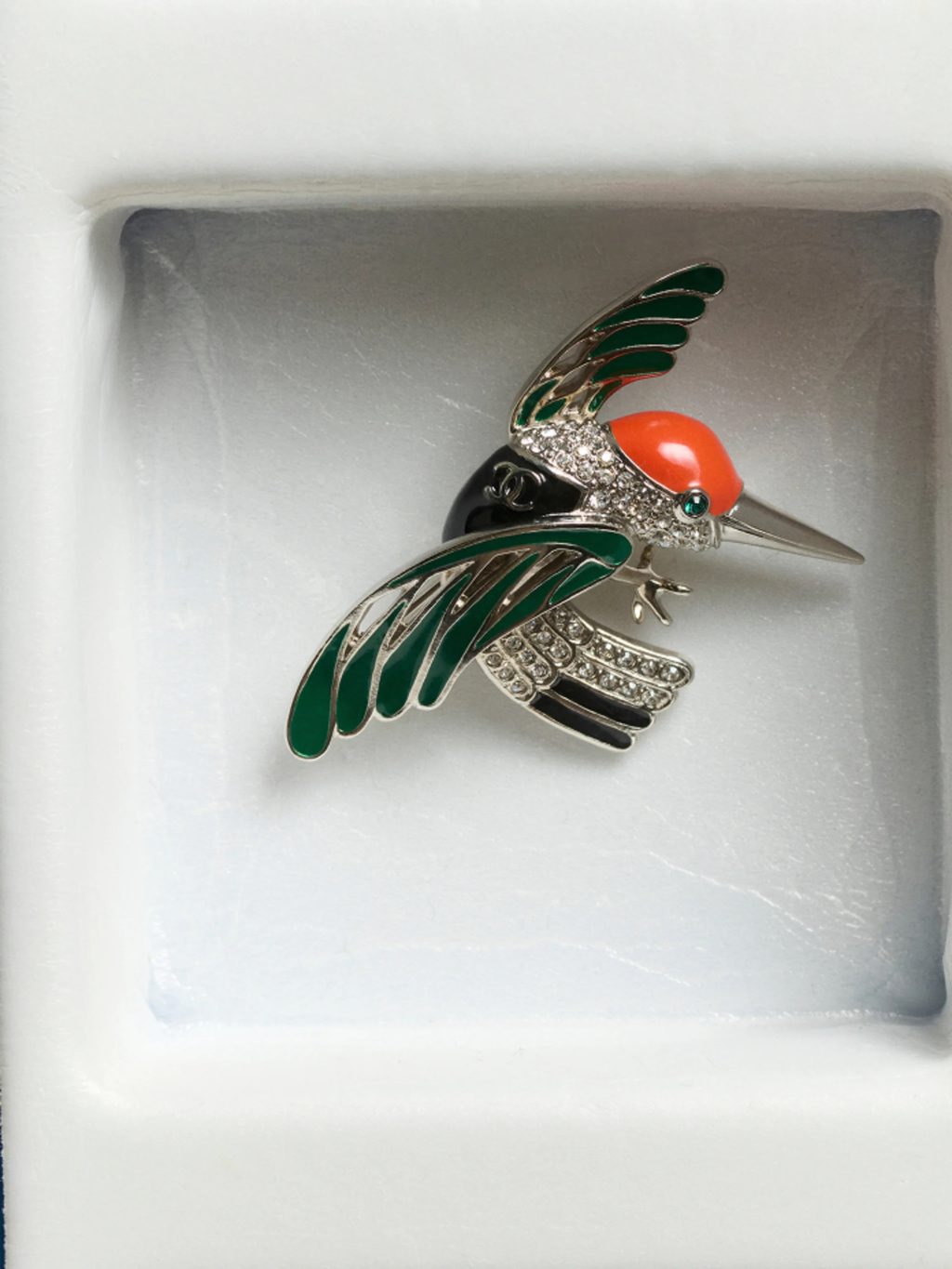
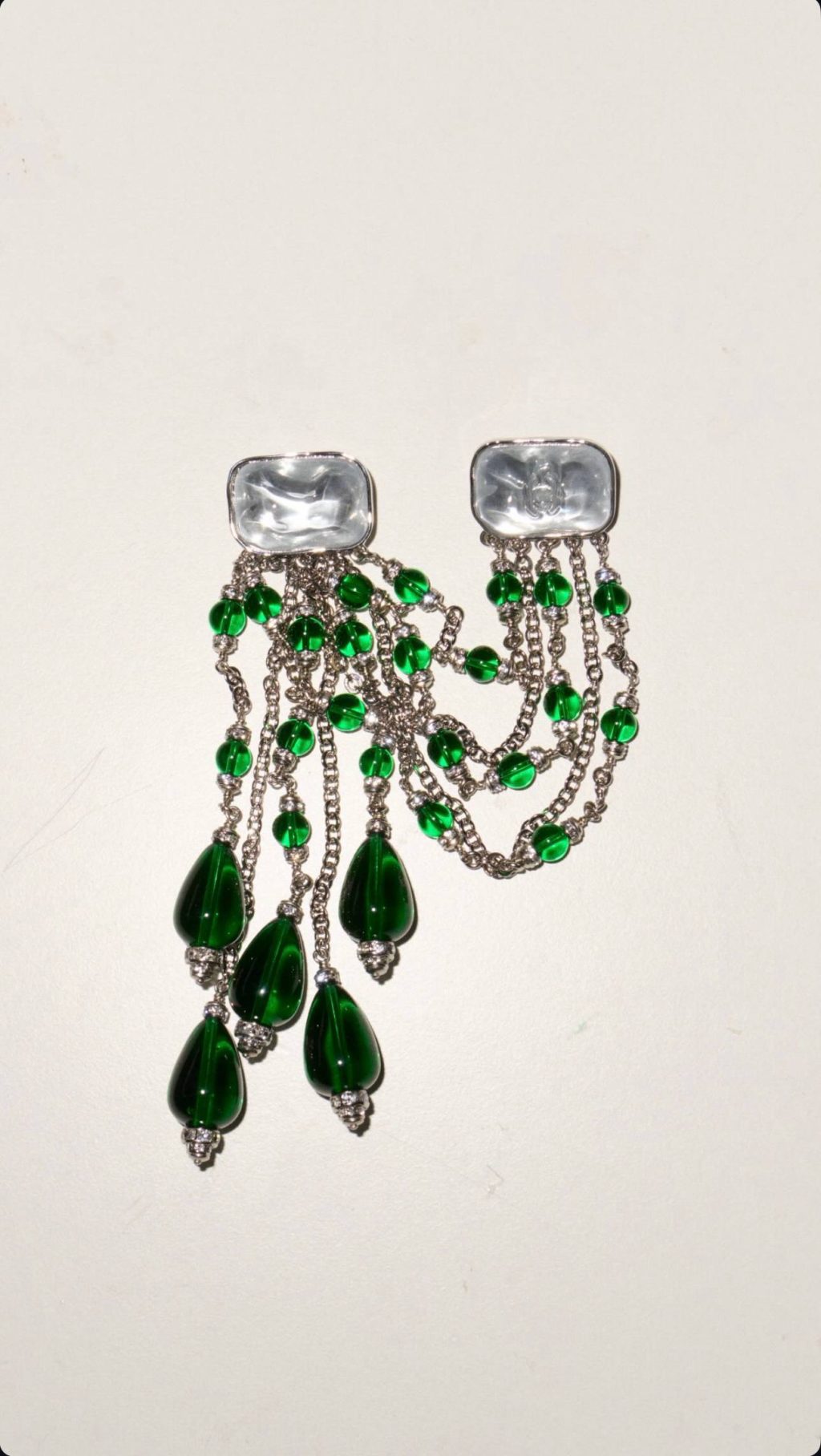
Goossens injects a jewel-like boldness that feels perfectly New York. In the jewellery and casting ateliers, metal is handmade, hammered, patinated and embellished with stones, crafted by the artisans with the same care as fine jewellery. Nurturing an ongoing dialogue between goldsmithing and art, the technical savoir-faire of the Goossens jewellers and paruriers has been responding to CHANEL’s imagination since 1954, when Robert Goossens conceived the first Byzantine pieces for Gabrielle Chanel. Goossens joined CHANEL’s Fashion Métiers d’art in 2005.
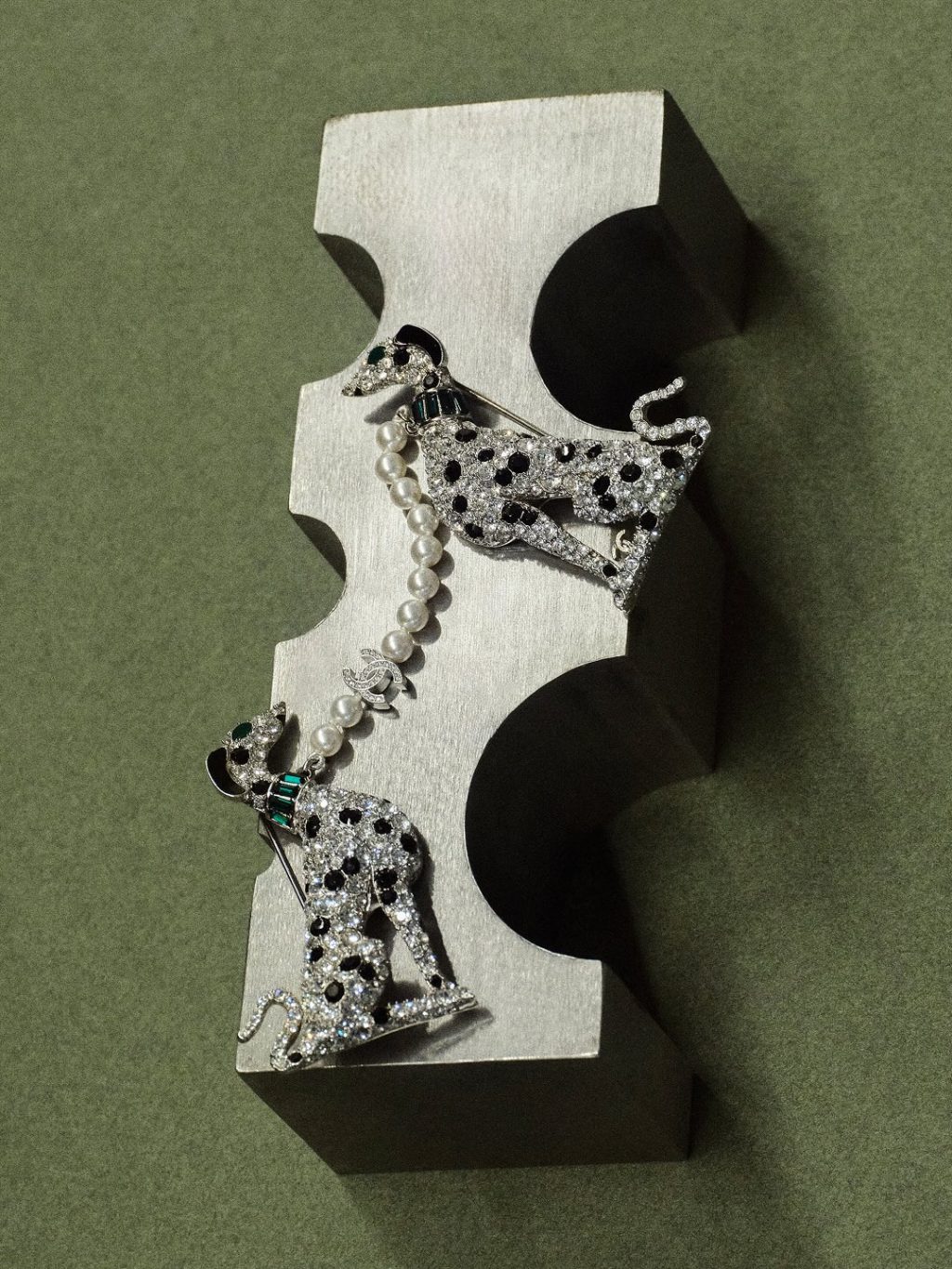
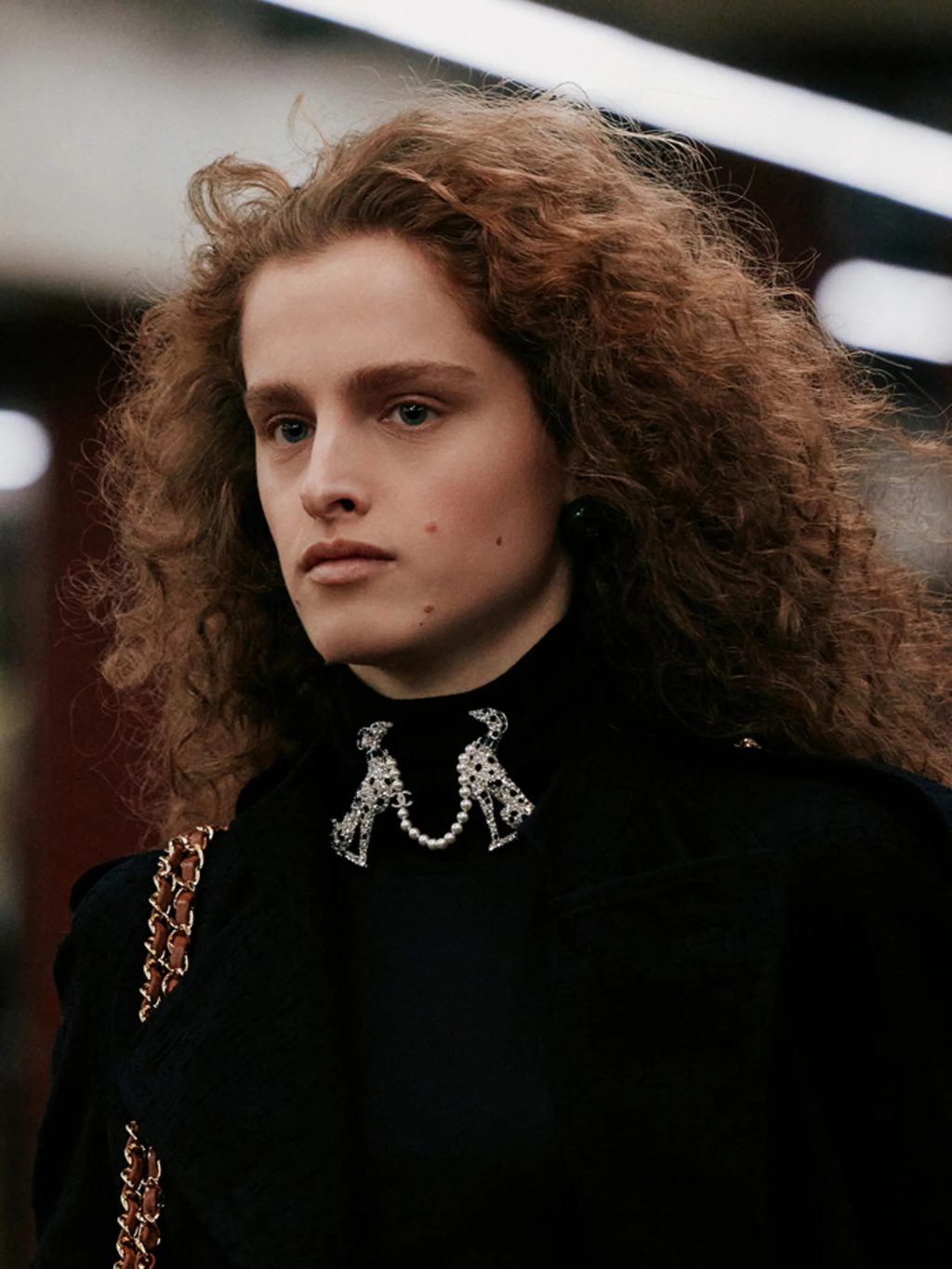
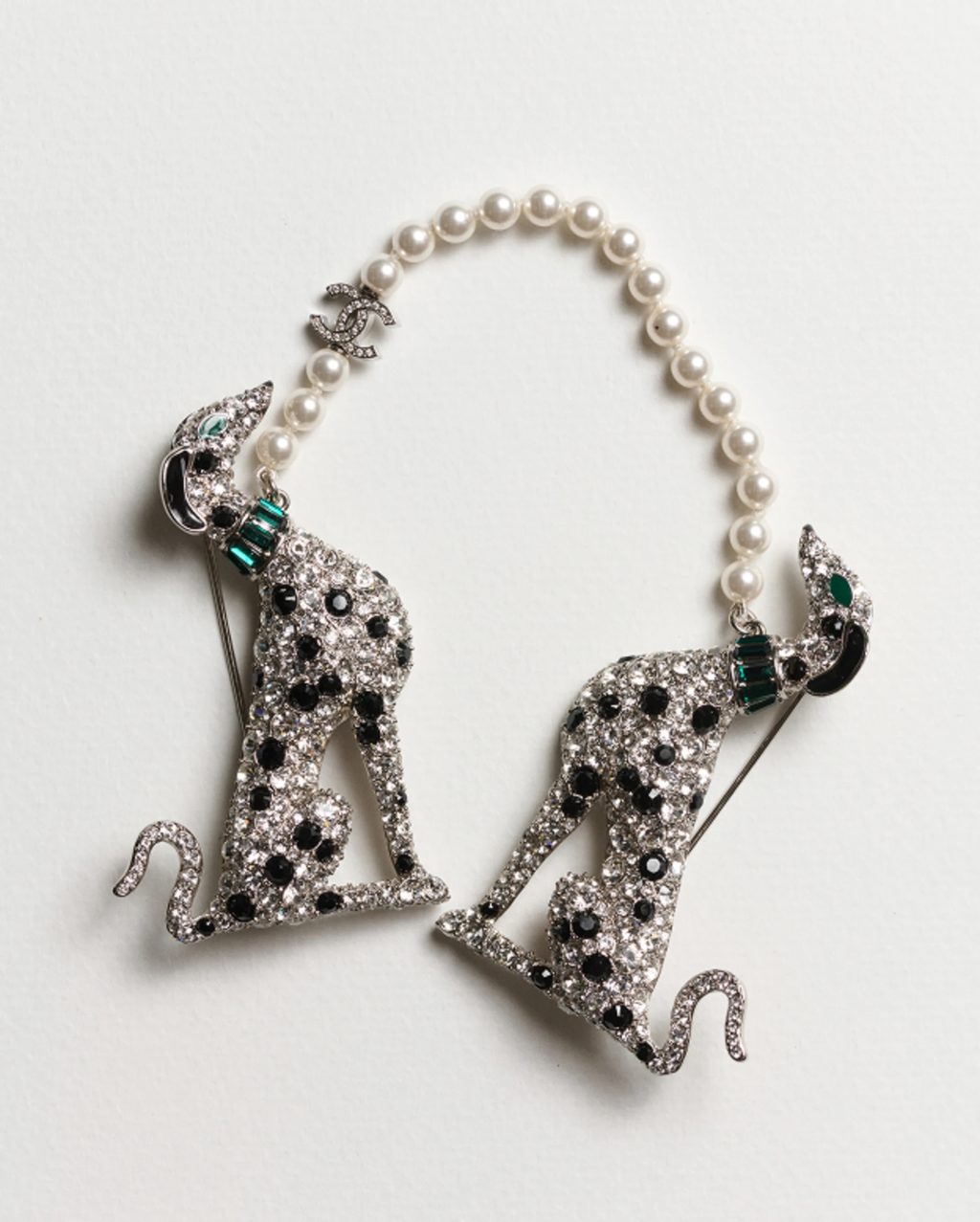
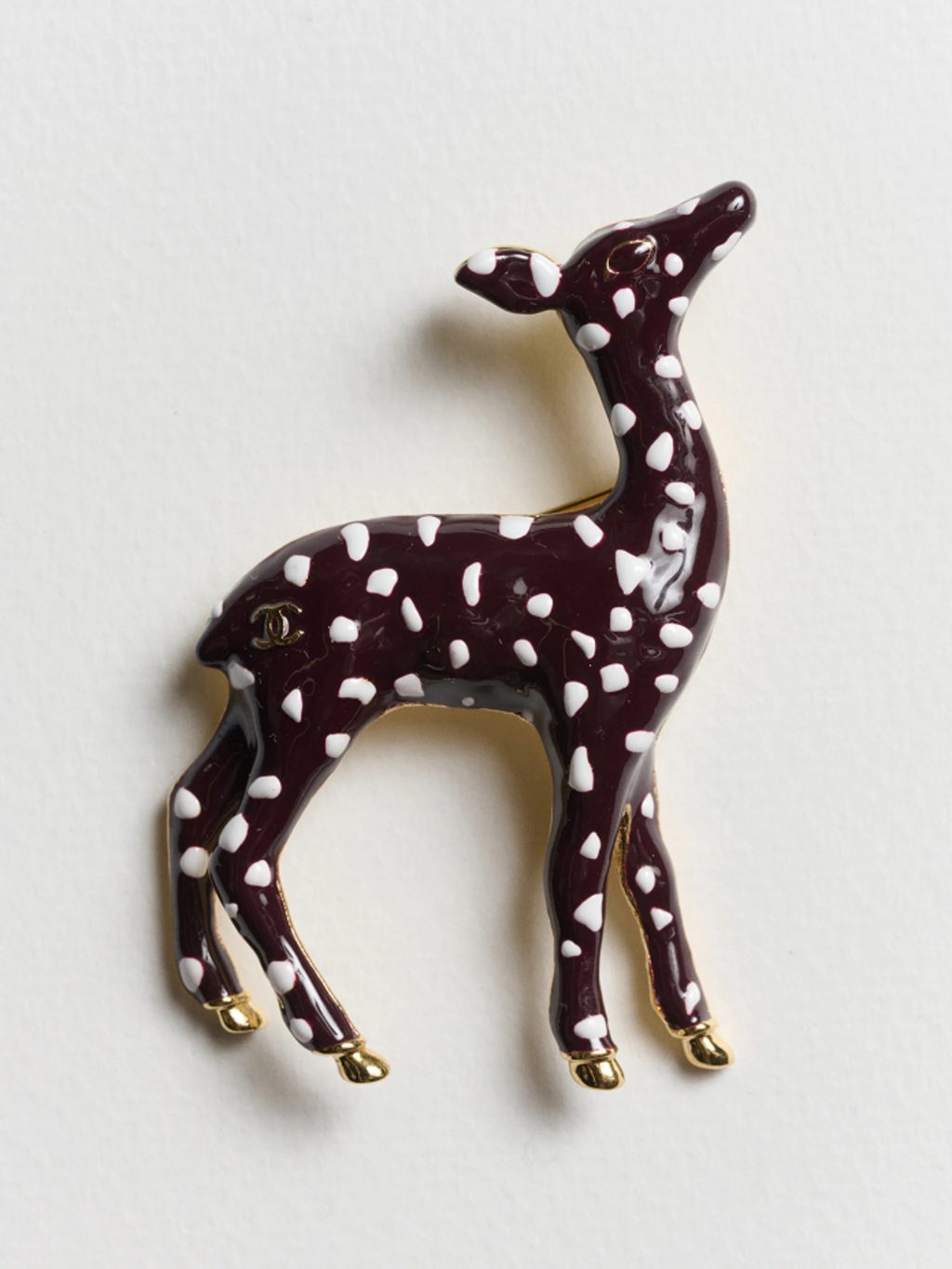
For the Métiers d’art 2026 collection, that dialogue takes on a playful, figurative turn: deer, hummingbirds and even dalmatian motifs are transformed into sculptural accessories and adornments — a kind of whimsical bravado that reads like a wink in a city that loves a strong supporting character.
Maison Michel: millinery as character punctuation
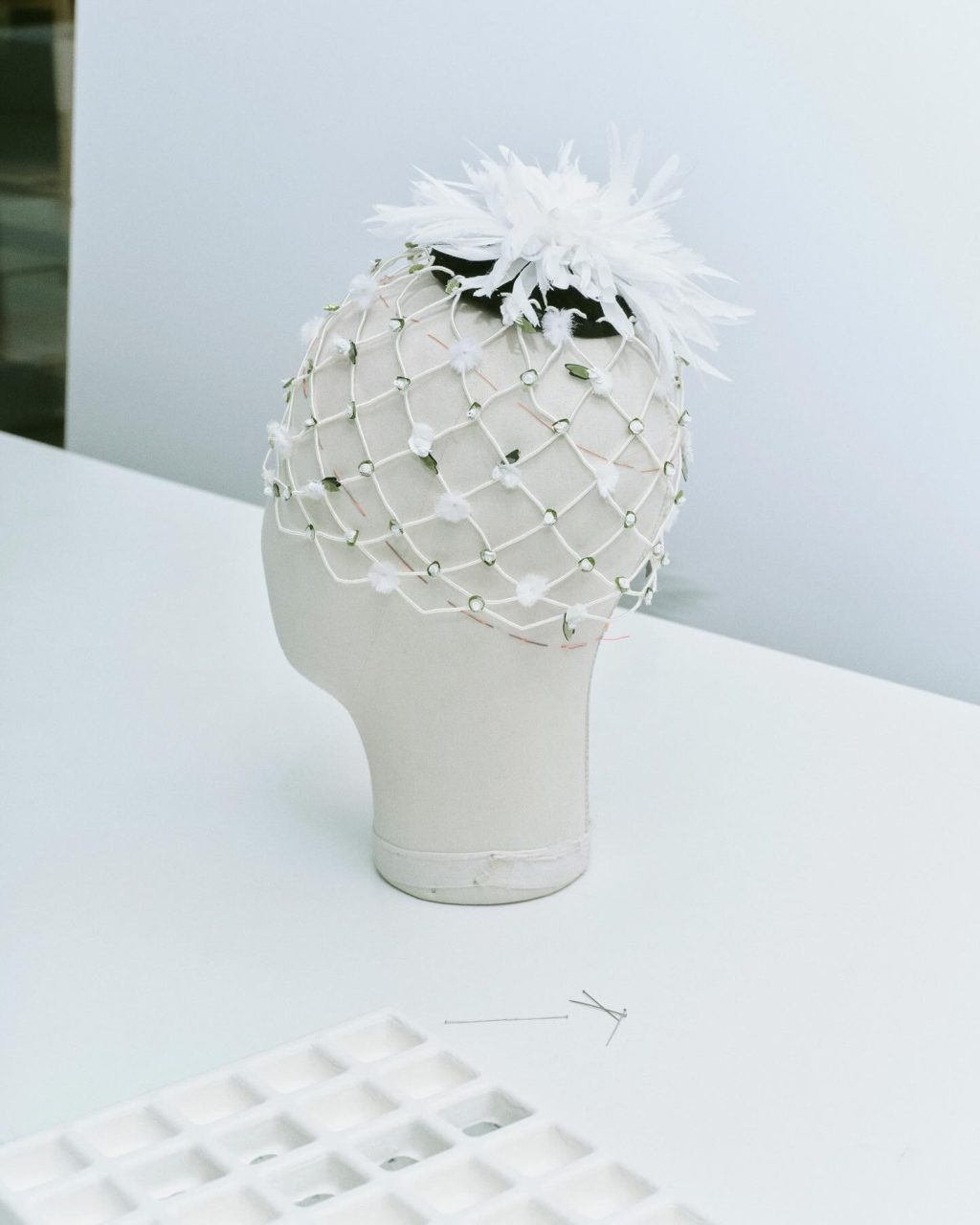
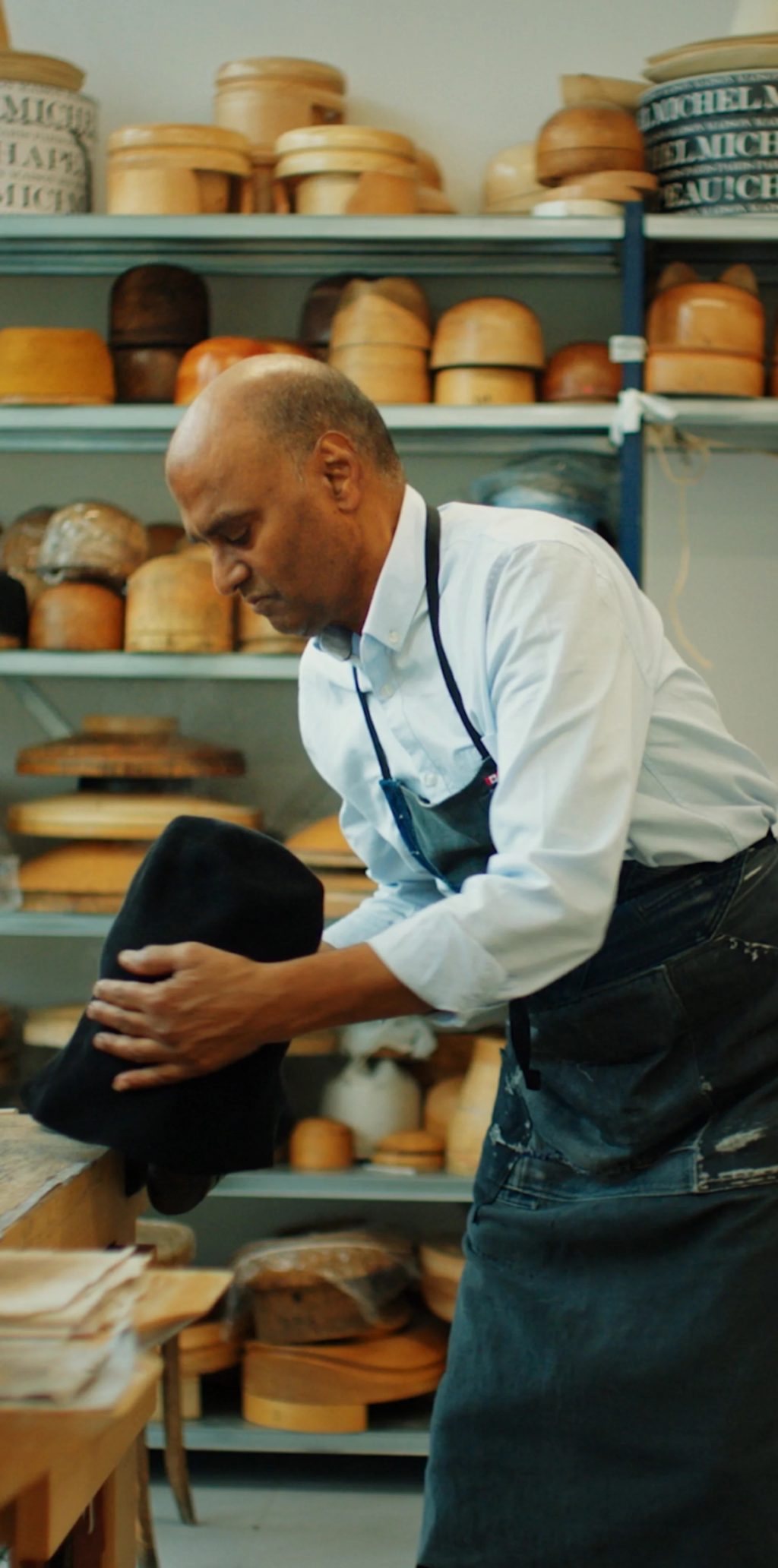
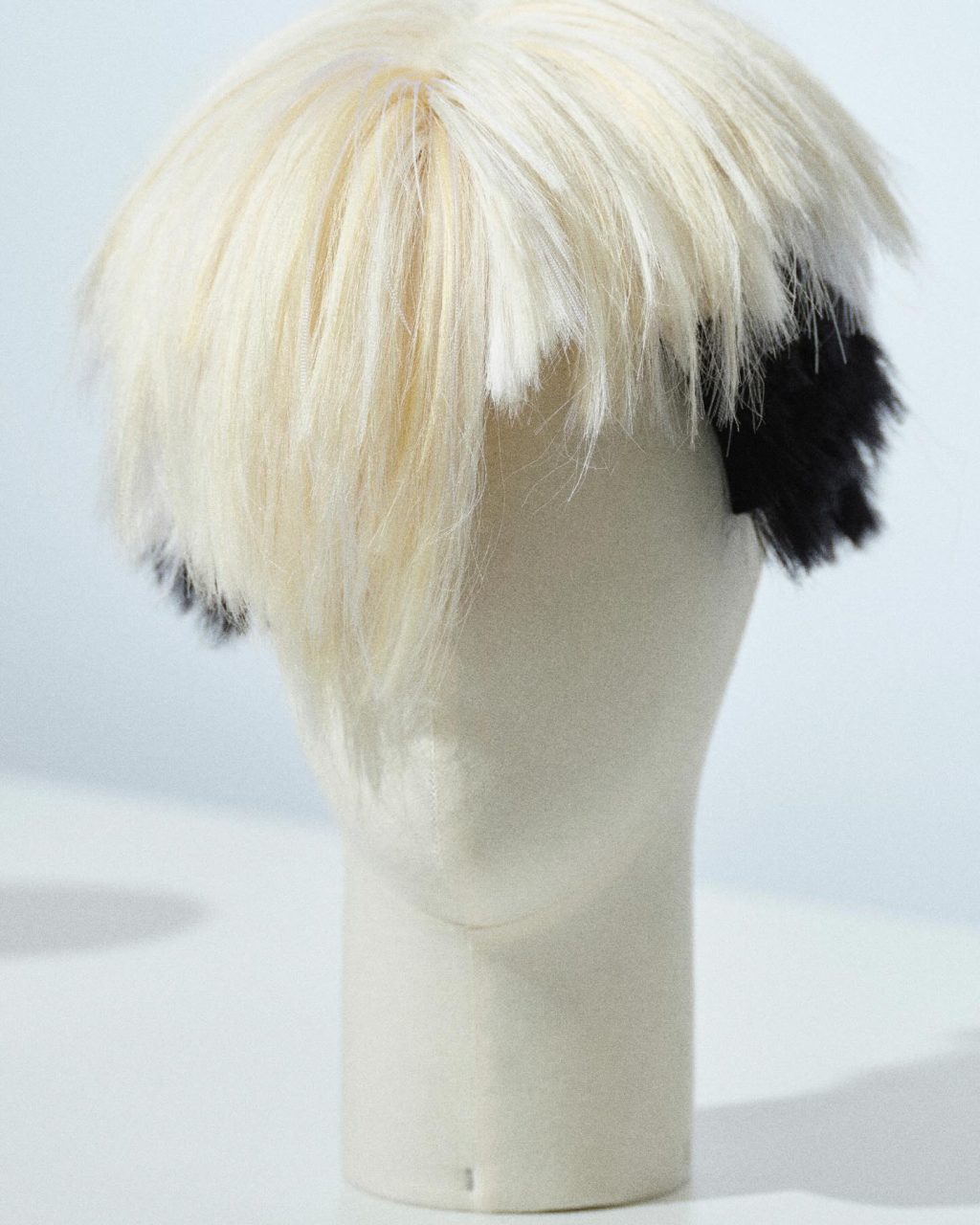
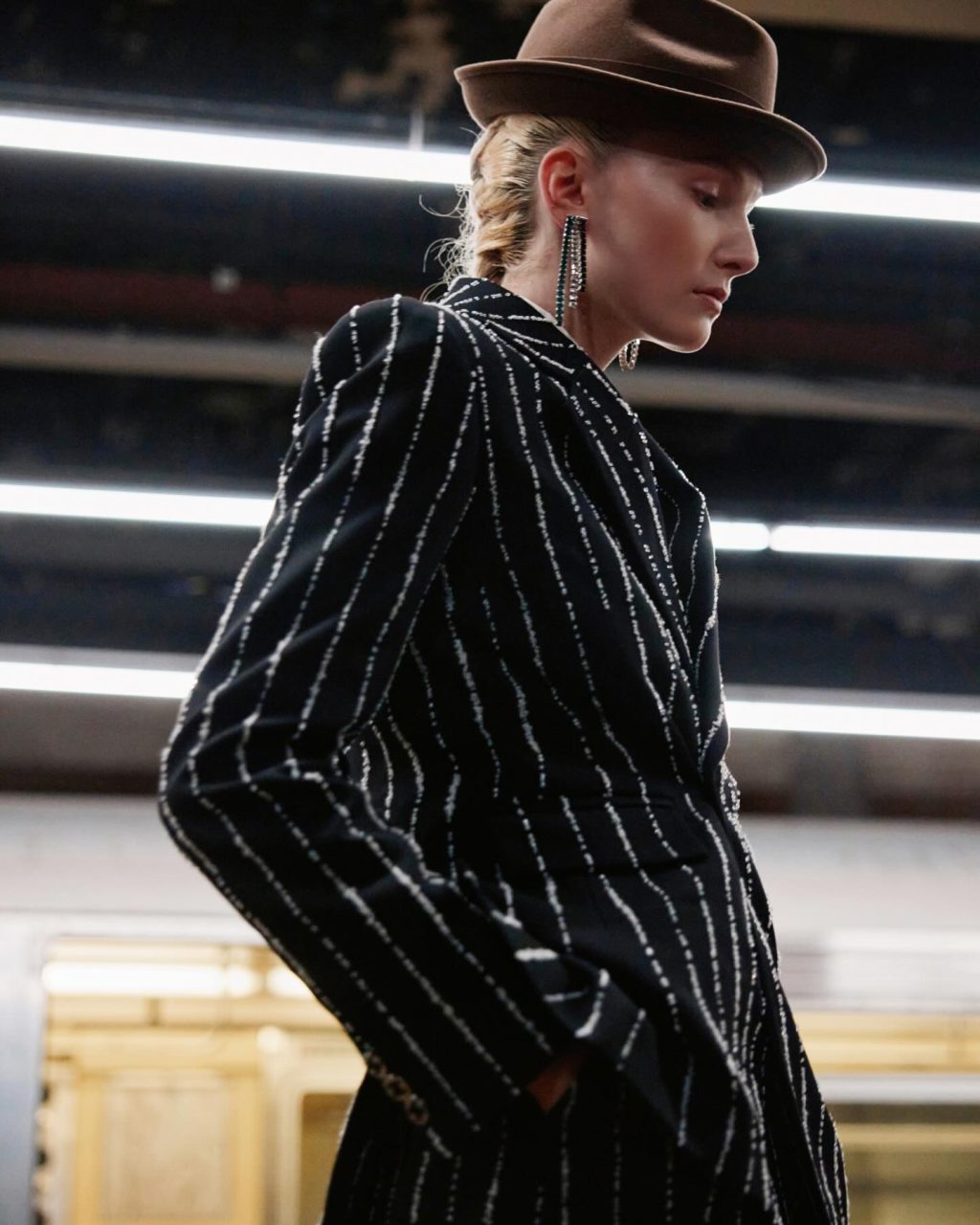
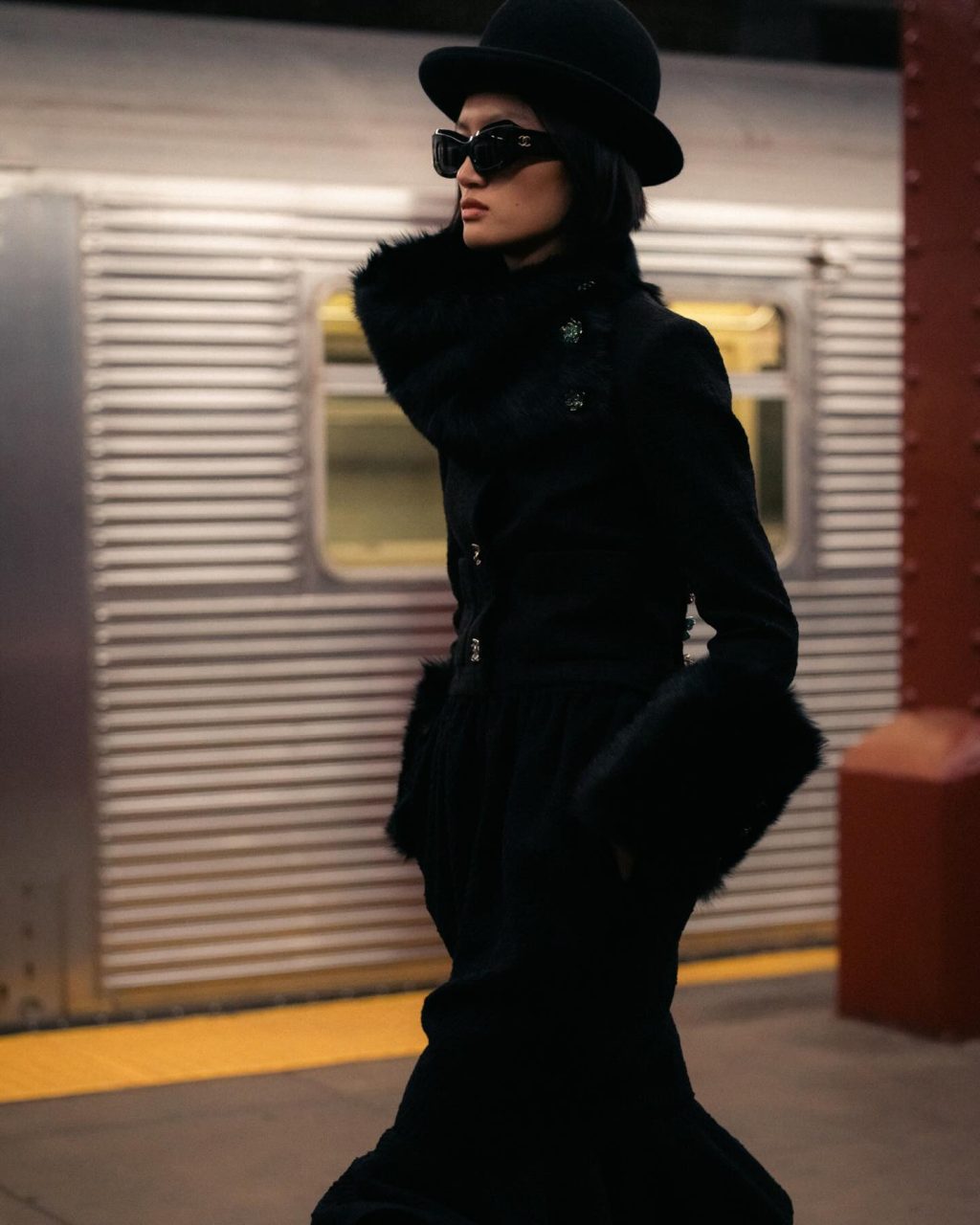
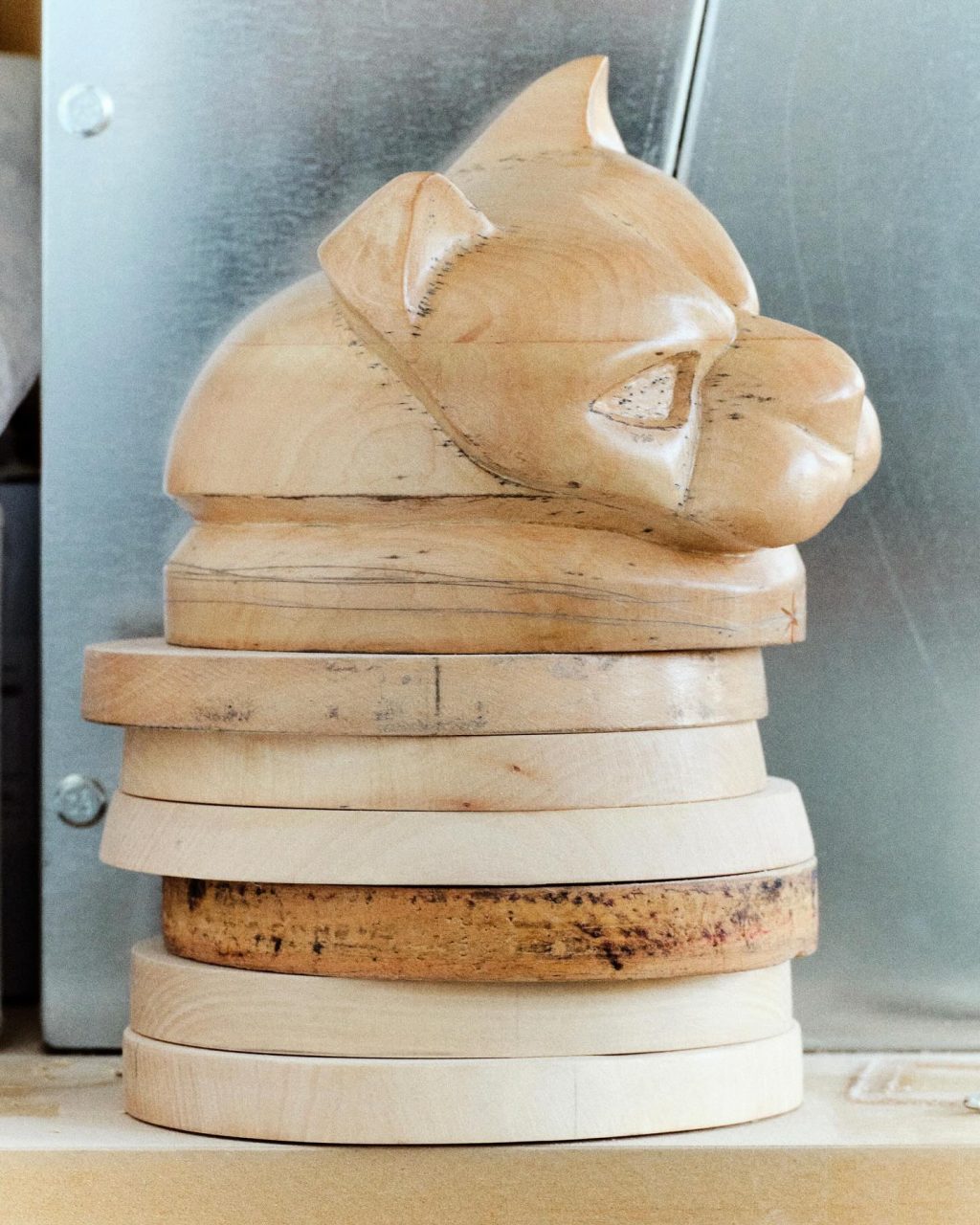
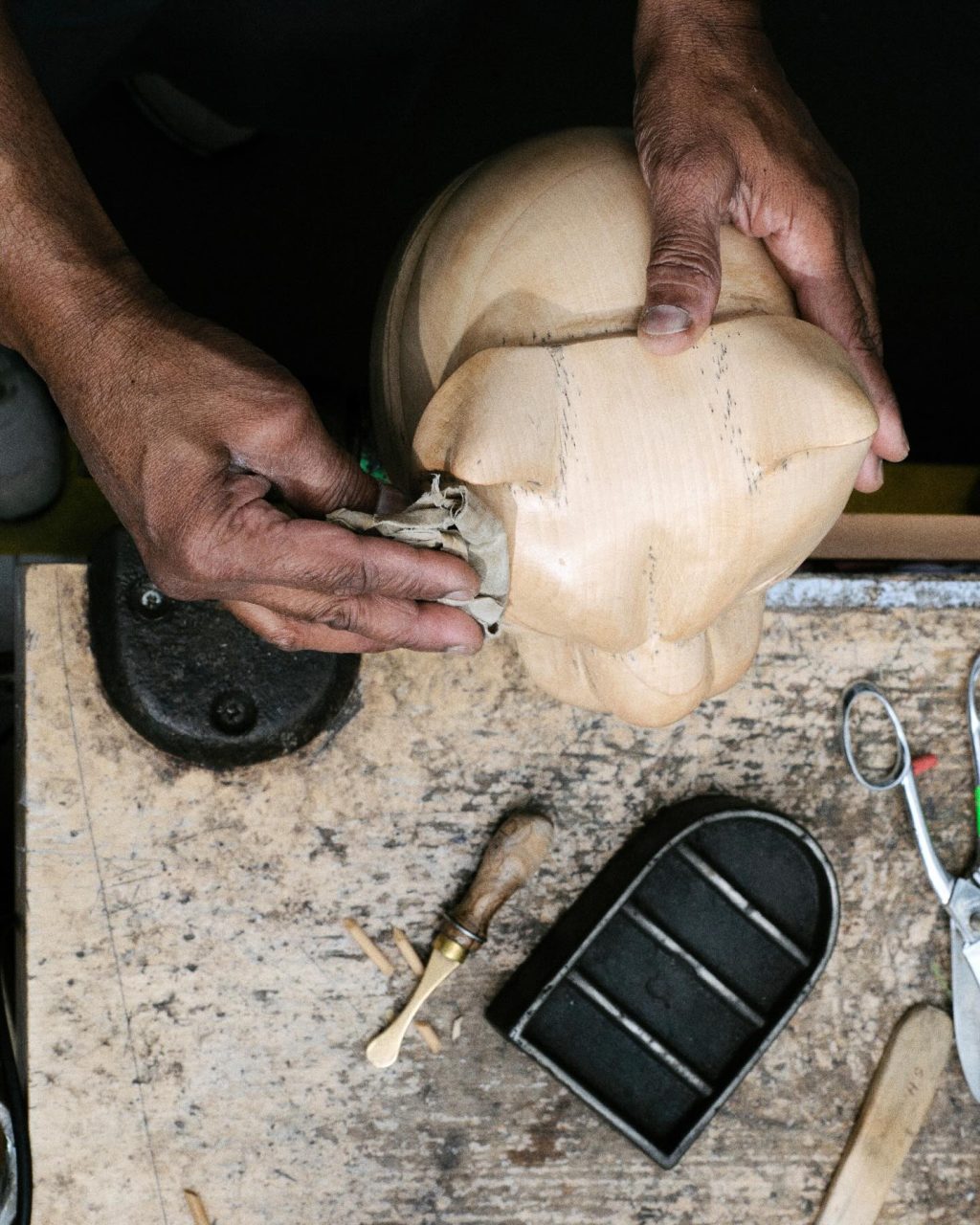
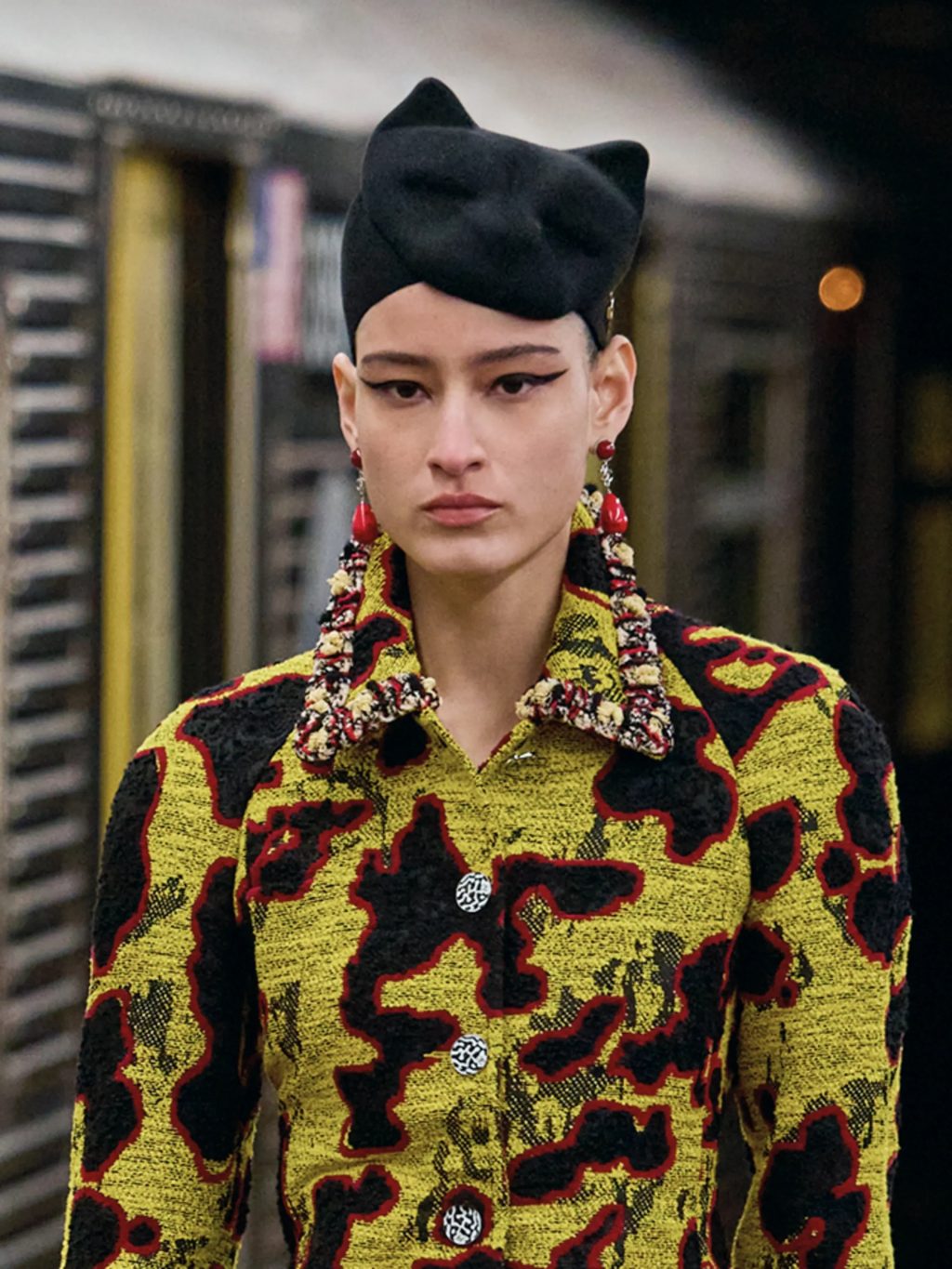
If the subway is full of strangers with distinct silhouettes, hats become a quick visual shorthand for identity. Maison Michel, heir to centuries of Parisian hat-making, contributes fascinators and sculptural pieces — like a feline-shaped black fascinator — using the classic crafts of carving hat shapes from wood, fabric stretching, molding, shaping and meticulous finishing. Heir to a hat-making savoir-faire established in Paris in the 14th century, the house not only preserves these secrets but passes them down from generation to generation in its ateliers.
For the Métiers d’art 2026 collection, Maison Michel hand-crafts black and white fascinators and graphic hats that punctuate the looks like exclamation marks. In Blazy’s hands, millinery feels less like occasionwear and more like storytelling — a small, sharp signature of who you are on any given platform.


Massaro: the two-tone legend, recharged
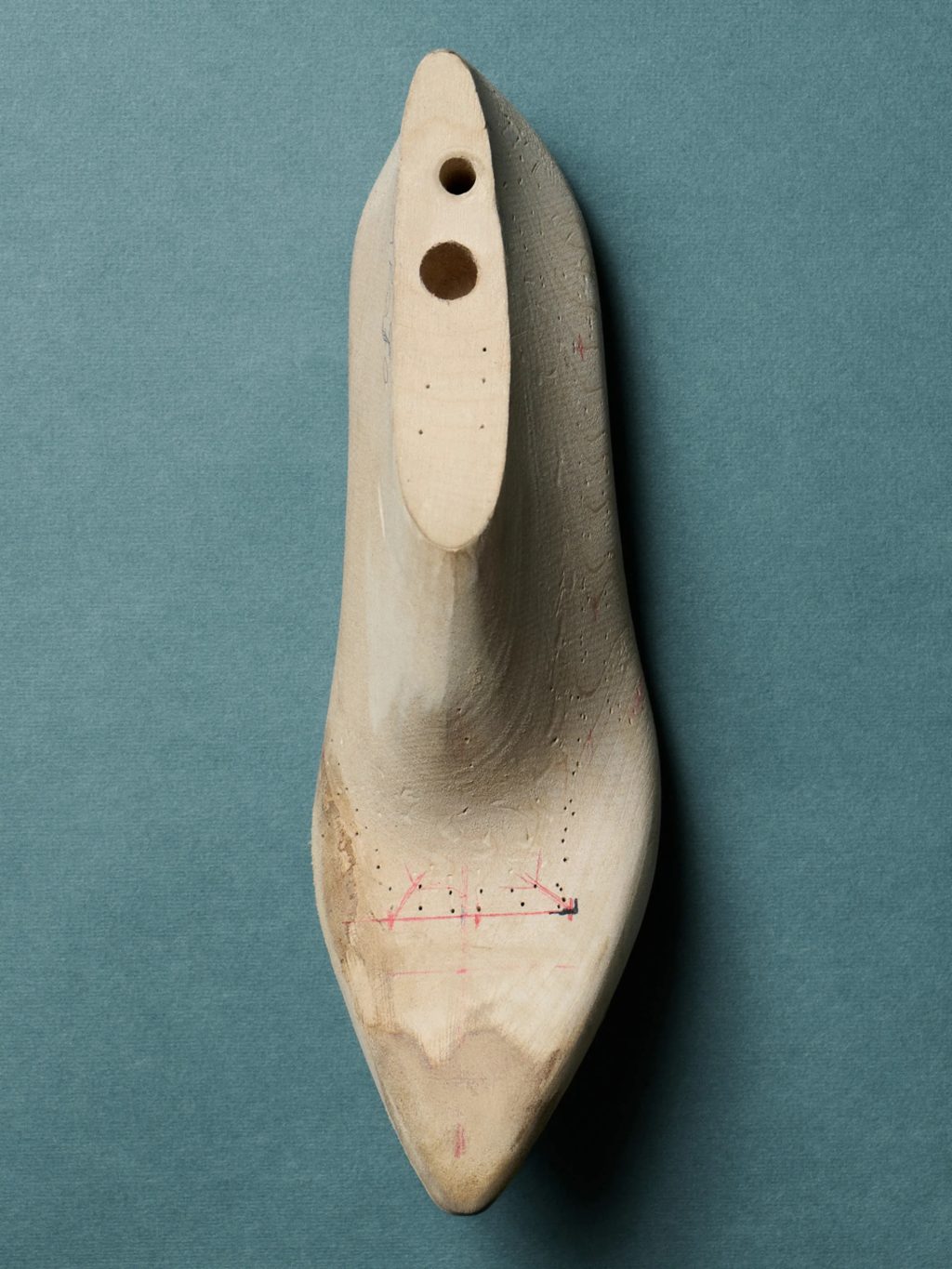
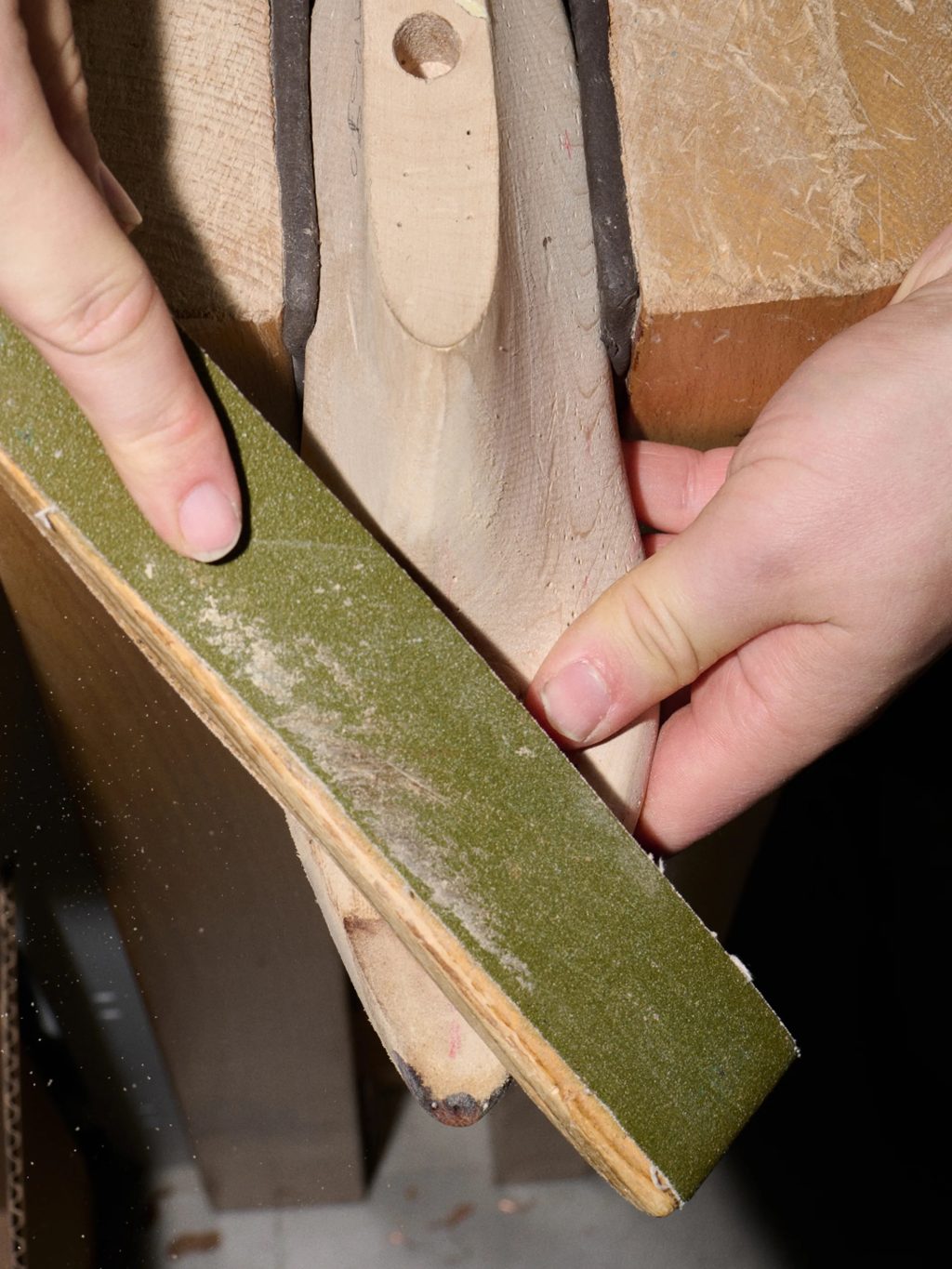
Massaro anchors the collection in CHANEL’s footwear mythology. The art of shoemaking here unfolds in a series of carefully orchestrated steps, each requiring its own specific savoir-faire. Every pair of shoes is the result of a collective effort — shoemakers, last makers, cutters, pattern makers, stitchers and finishers working together in an ecosystem within an ecosystem, where artisanal expertise meets innovative creativity.
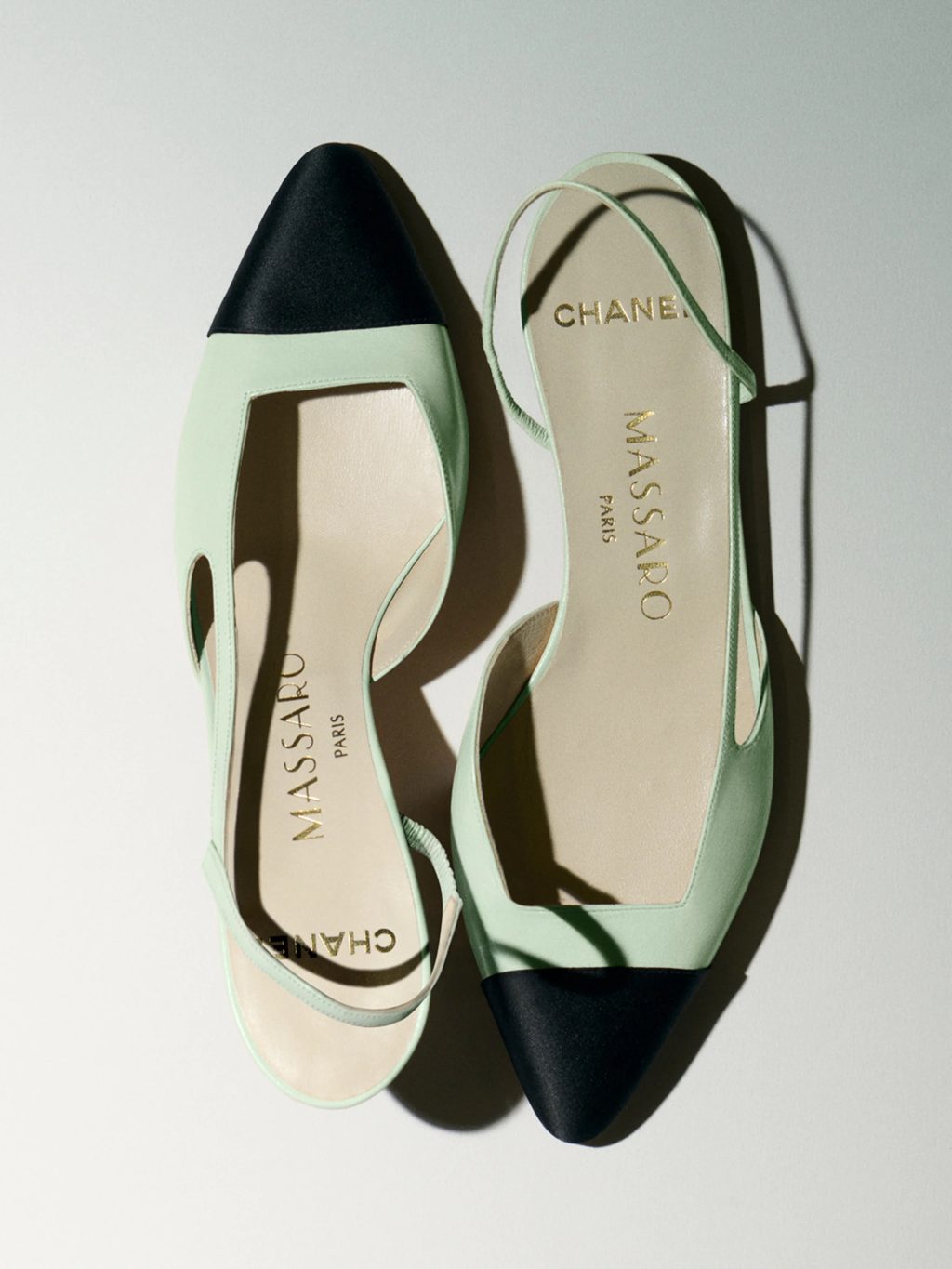
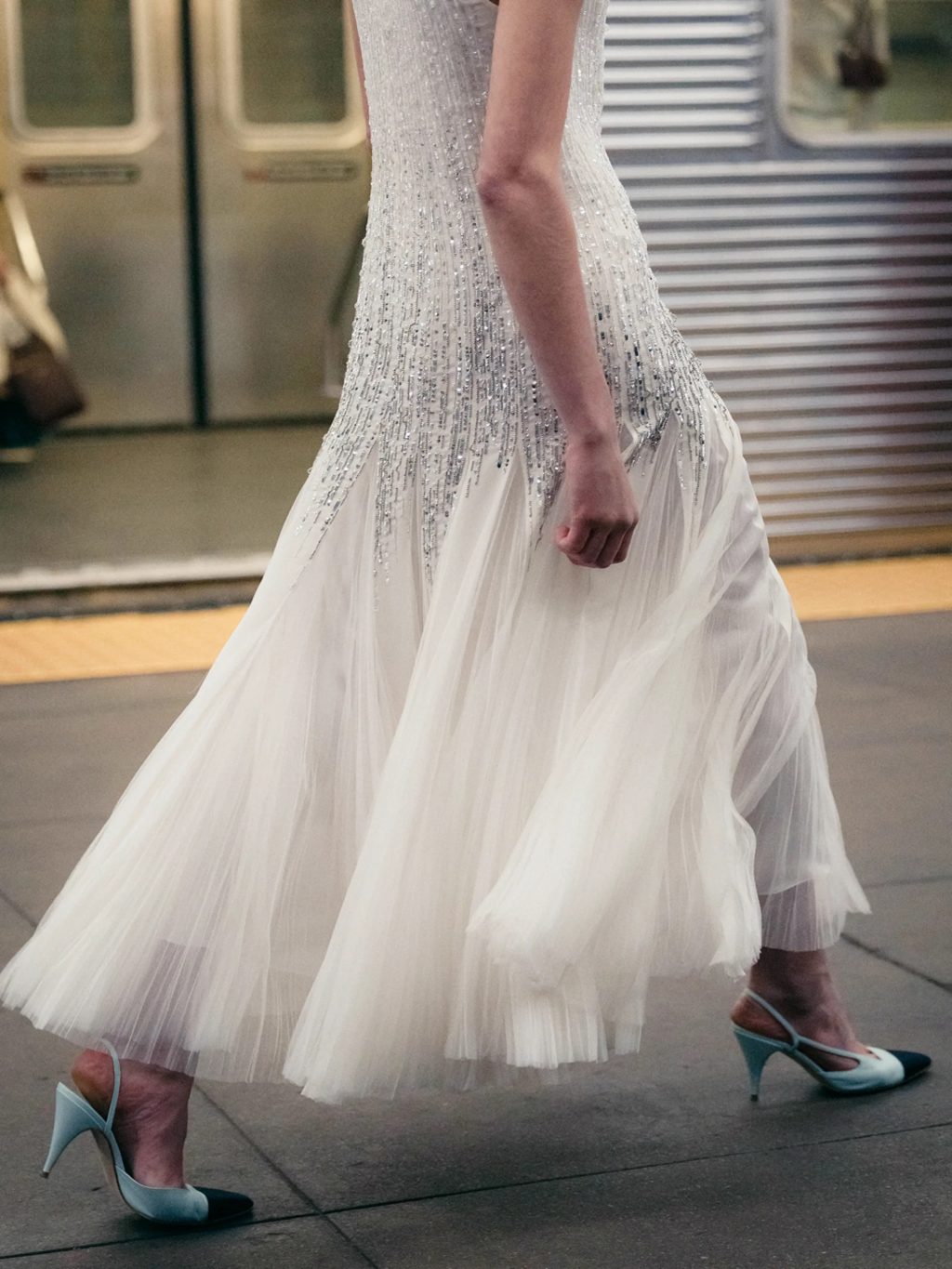
The collaboration between CHANEL and Massaro began in 1957 with Gabrielle Chanel’s emblematic two-tone shoe and has continued from collection to collection ever since, becoming a lasting symbol of the brand’s ergonomic elegance. Massaro joined CHANEL’s Fashion Métiers d’art in 2002. For the Métiers d’art 2026 collection, the iconic two-tone slingbacks return in soft pastel tones alongside embossed leather variations, suggesting that even a house icon can behave like a commuter: familiar, dependable, but never exactly the same day twice.
Craft meets archetype
What ties these ateliers together is not just excellence, but narrative utility. The collection’s line-up of looks is striking: dramatic black opera gowns, giant hand-painted floral skirts with feather fringes, trompe l’œil crocodile effects, elevated casual denim and leopard tweed worn with confident nonchalance. Together, they suggest a wardrobe designed for imagined protagonists.
Blazy appears to treat CHANEL’s codes as a casting brief:
- the tweed suit becomes the superhero uniform,
- Art Deco embellishment becomes a cinematic close-up,
- feathers and flowers become the emotional arc,
- jewelry becomes the sharp, witty line that lands at just the right moment,
- shoes become the rhythm that keeps the whole scene moving.
Why this Métiers d’art chapter feels distinct
Every Métiers d’art collection is, in theory, about preservation. But the most compelling ones are also about reinvention—about proving that heritage can generate new language rather than only protect old grammar.
Blazy’s New York chapter suggests a future where CHANEL’s craft houses at le19M are not simply suppliers of techniques, but co-authors of mood and meaning. By centering Lesage, Lemarié, Montex, Goossens, Massaro, and Maison Michel as the collection’s visible heartbeat, he doesn’t just celebrate savoir-faire—he turns it into narrative structure.
In that sense, Métiers d’art 2026 is not a detour from the main story of CHANEL under Blazy. It is the story: a reminder that in the age of speed, the most radical luxury might still be time—time to embroider, to pleat, to hammer, to mold, to weave, to perfect. And in the noisy democracy of the subway, that devotion to craft becomes its own kind of quiet power.