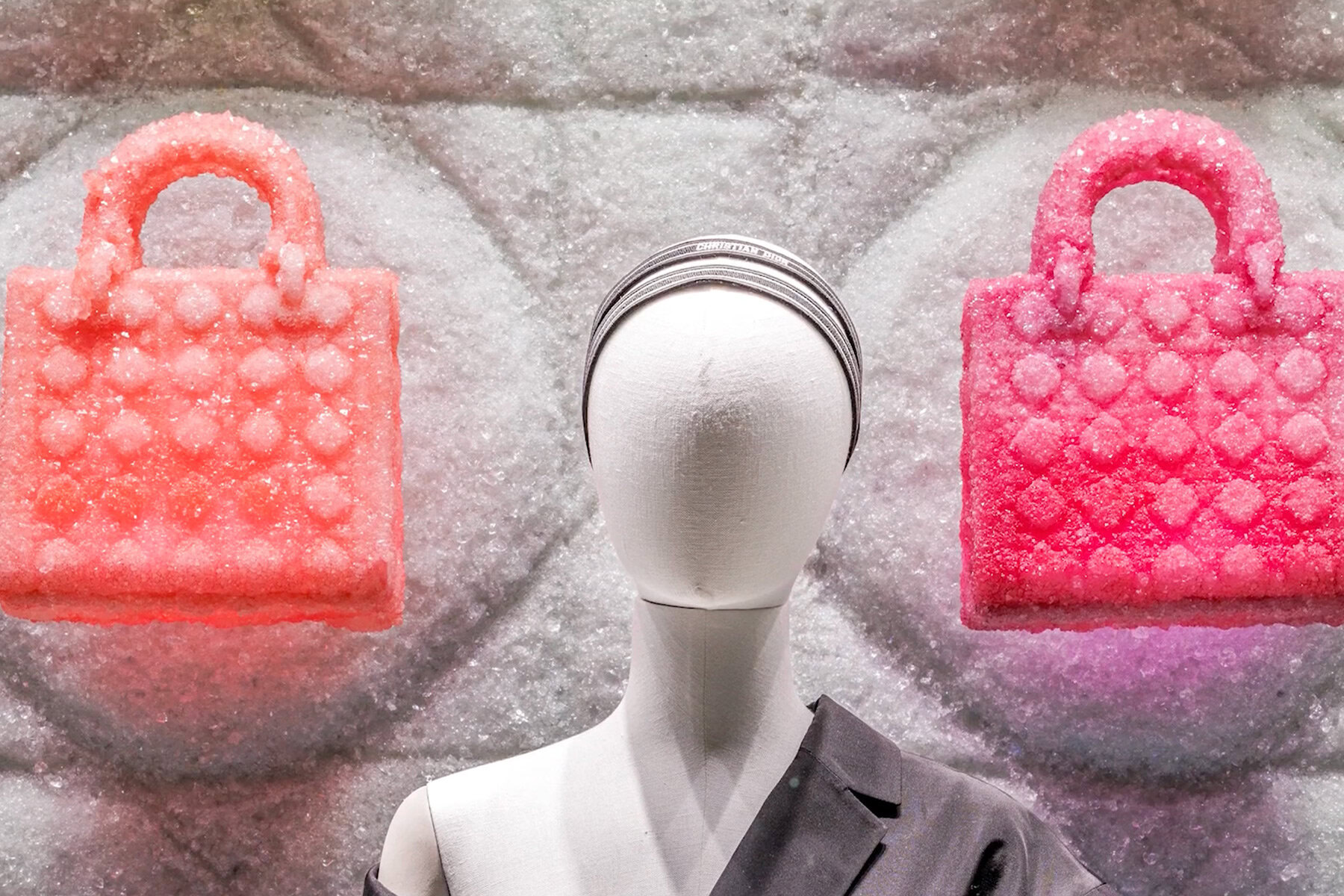
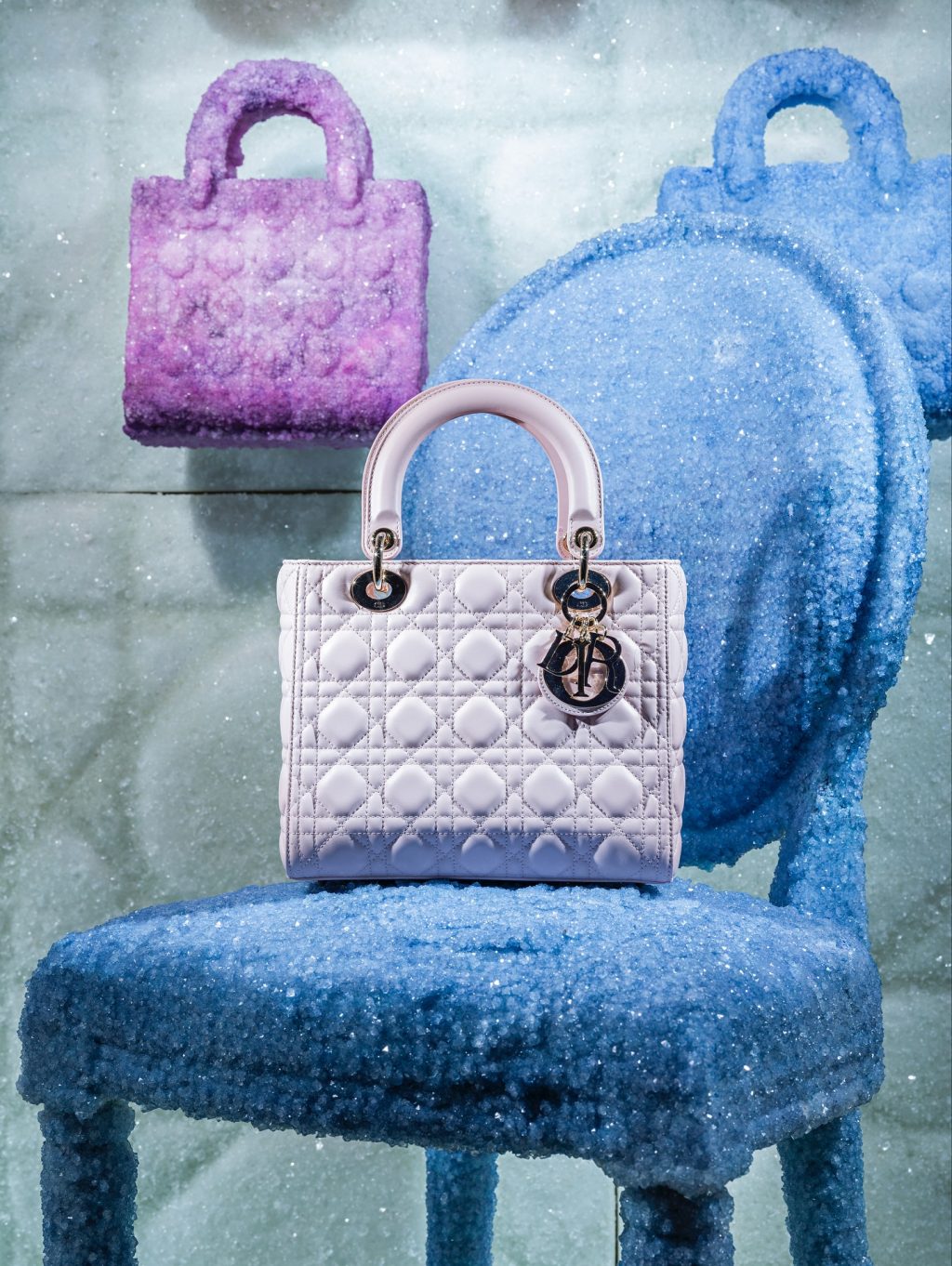
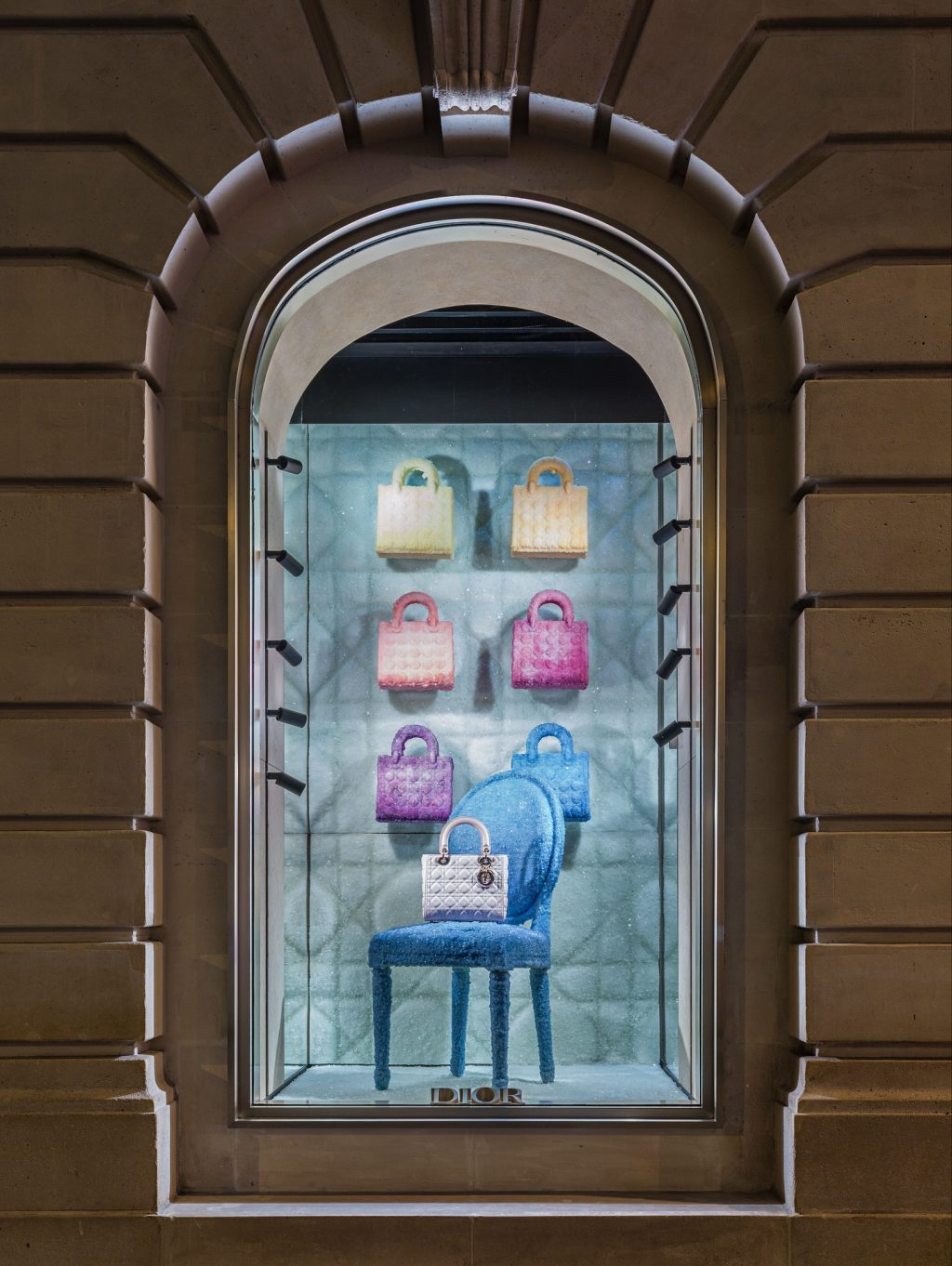
On a winter evening in Paris, the windows of Dior’s boutique on Avenue Montaigne read less like retail displays and more like a slice of geology cut open and lit from within. Against a field of crystalline textures, the silhouette of the Lady Dior appears not in leather but entirely encased in shimmering mineral growths. Nearby, the house’s historic Medallion chair — the neoclassical seat that once welcomed clients to Christian Dior’s couture salons — has been transformed into a sculptural object, its familiar oval back reimagined through the same crystalline skin.
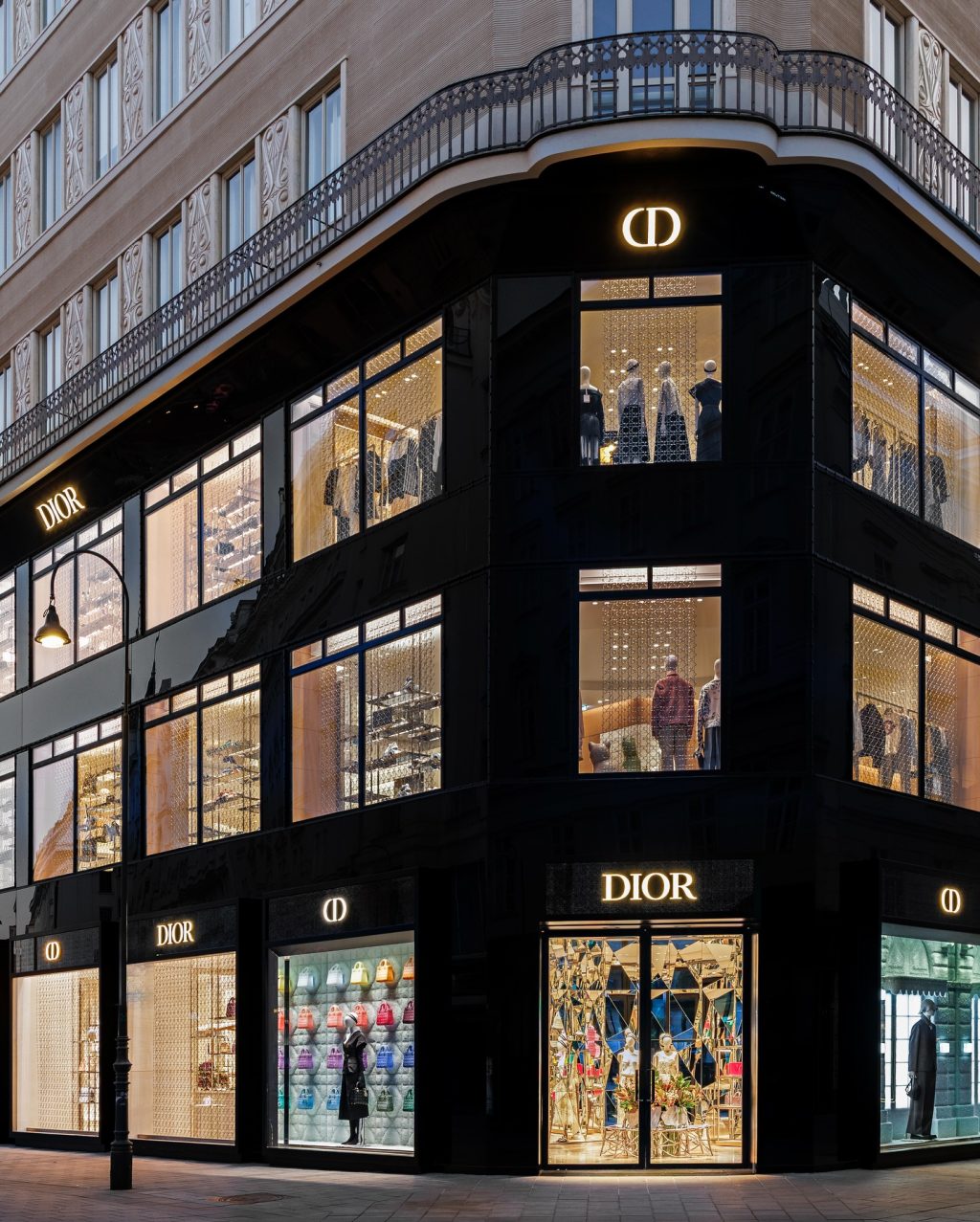
This is not a simple visual effect or a clever resin casting. It is the result of a slow, chemical process in which Belgian designer and artist Isaac Monté grows real crystals onto Dior’s most emblematic objects, using a technique he has spent more than a decade refining.
The collaboration between Monté and Dior stretches across cities and categories — from fine jewelry windows for the Gem Dior collection to crystallized versions of the Lady Dior handbag and the Medallion chair. Together, they map out a new territory where couture heritage, geology and experimental design converge.
Isaac Monté: From bio-art labs to Avenue Montaigne
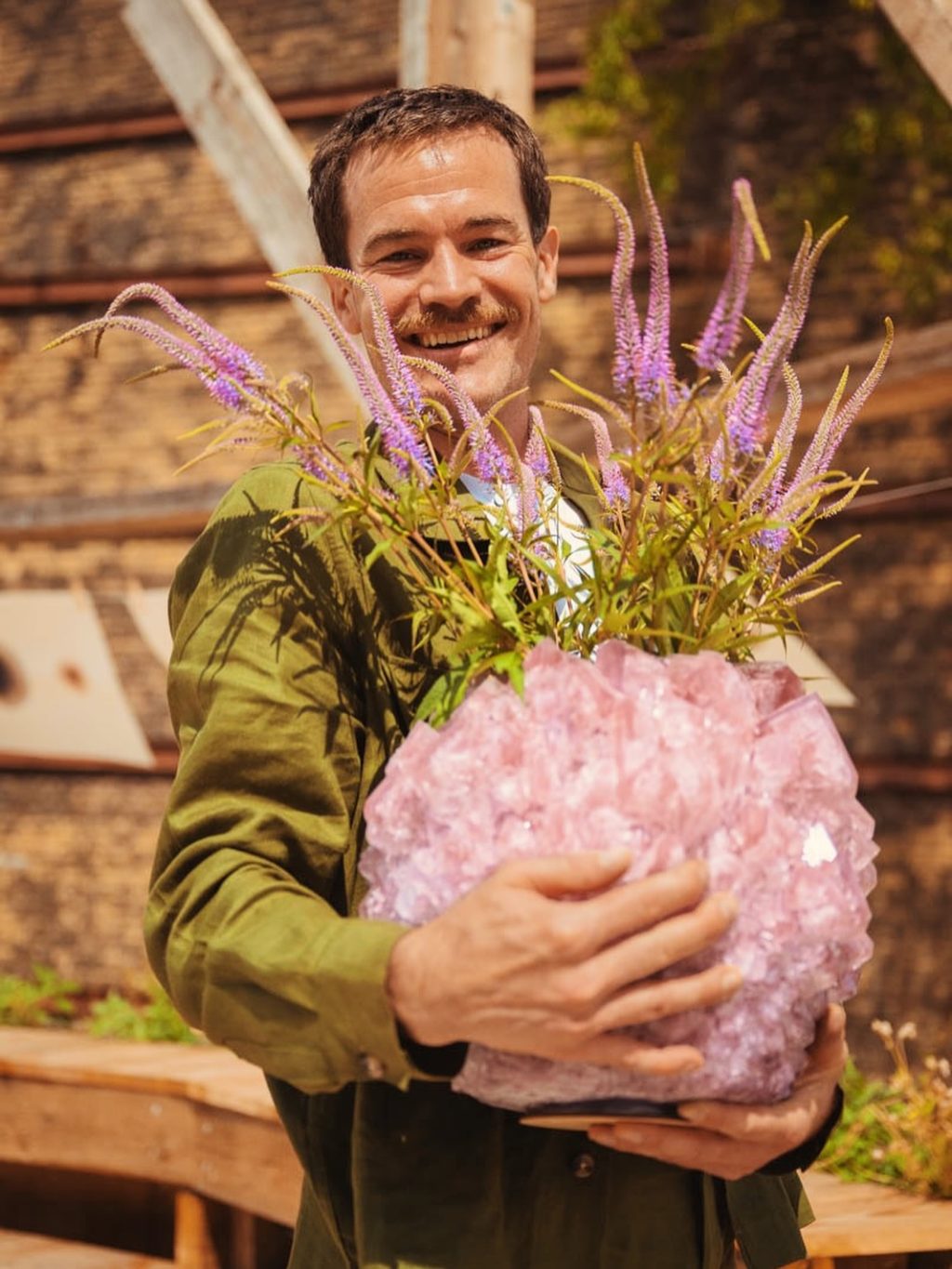
Born in Belgium and based in Rotterdam, Isaac Monté moves comfortably between product design, bio-art and gallery sculpture. He studied at art academies in Belgium, the Netherlands and Norway before graduating in product design from the Willem de Kooning Academy in Rotterdam in 2013.
Early in his career, Monté became known for projects that used unusual materials and waste streams as starting points. In Filter Factory (2013), he turned cigarette filters — both pollutant and shelter in bird nests — into a commentary on littering and urban ecology.
His breakthrough came with The Art of Deception (2015), created after winning the Bio Art & Design Award. Working with evolutionary biologist Toby Kiers, Monté decellularized discarded pig hearts and re-populated them using bio-art techniques, transforming them into translucent sculptural organs that questioned how far humans might go in redesigning the body in the pursuit of perfection.
Later projects, such as Prosthetic X — a data-organ that visualizes invisible information through a prosthetic form — and his investigations into bio-based 3D printing, continued this line of inquiry: What happens when design manipulates life-like processes rather than inert materials?
Seen against this background, Monté’s collaboration with Dior isn’t just another fashion artist tie-in. It’s the point where his experiments with growth, decay and synthetic nature meet a house whose very mythology is rooted in flowers, gardens and the power of metamorphosis.
The crystallized series: Time as a material
At the core of Monté’s work for Dior lies his ongoing Crystallized series, which began not with handbags but with vases and vessels. Represented by Brussels gallery Spazio Nobile, the series was born from research into stalagmites, those mineral formations that rise from cave floors over centuries as water deposits layer upon layer of material.
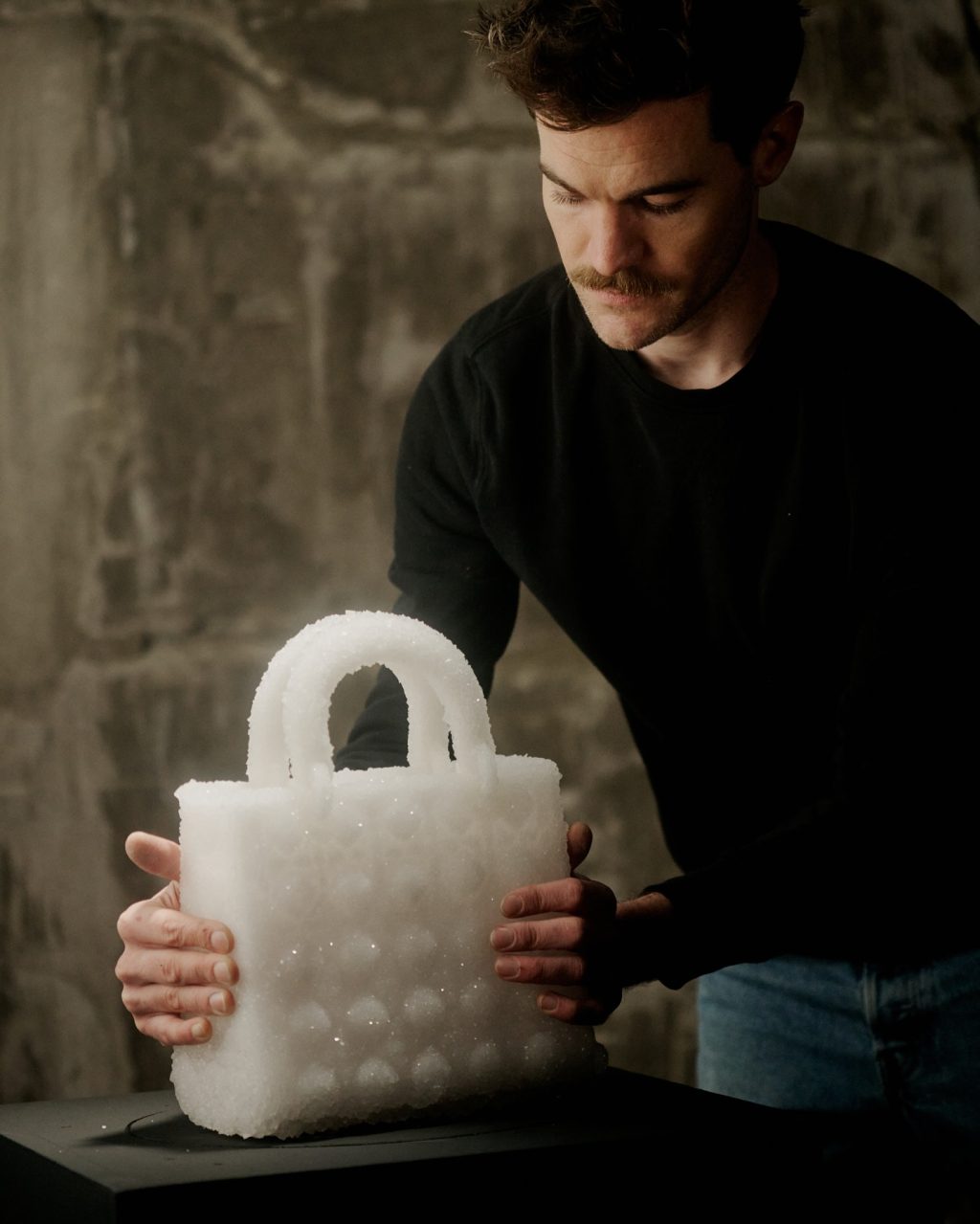
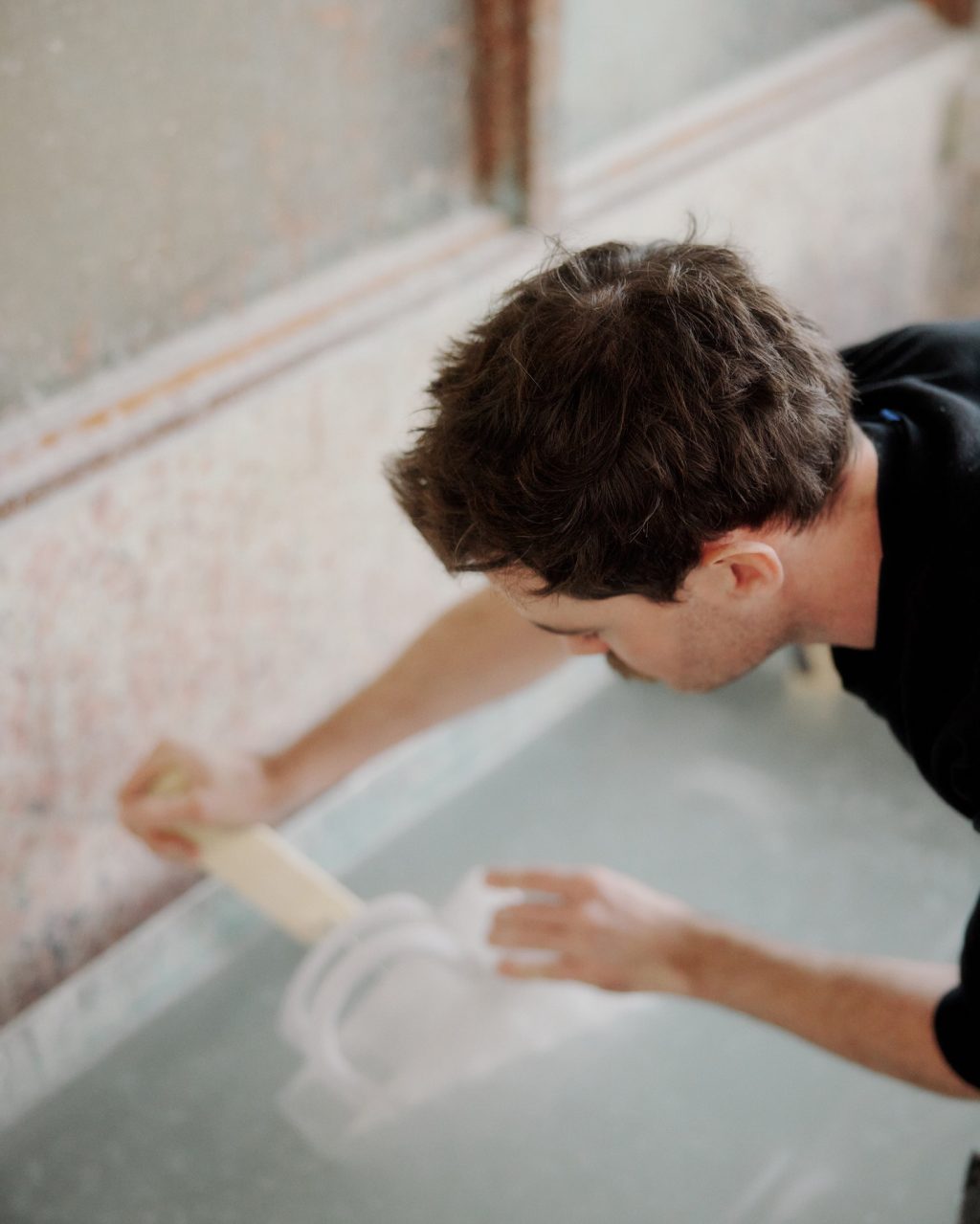
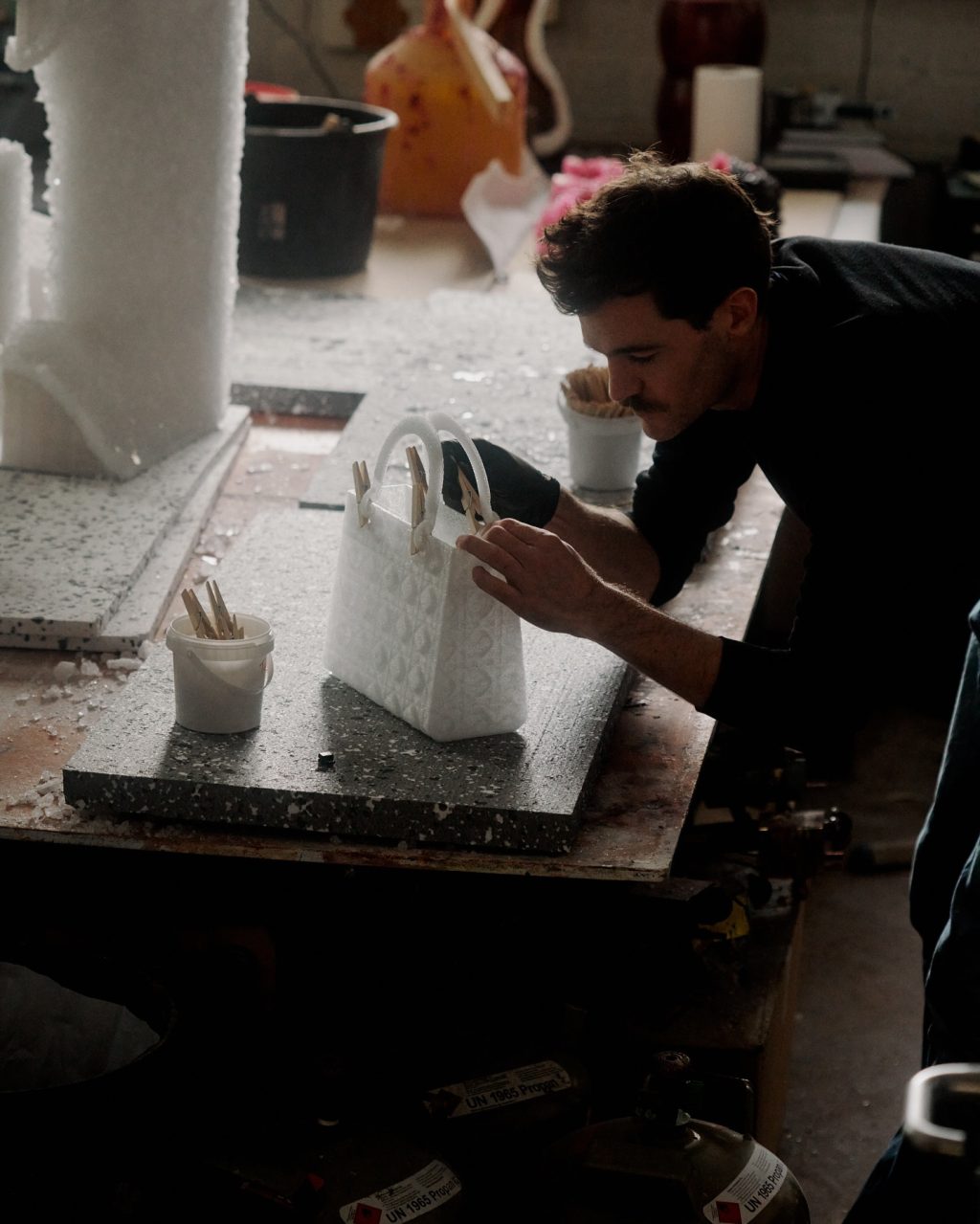
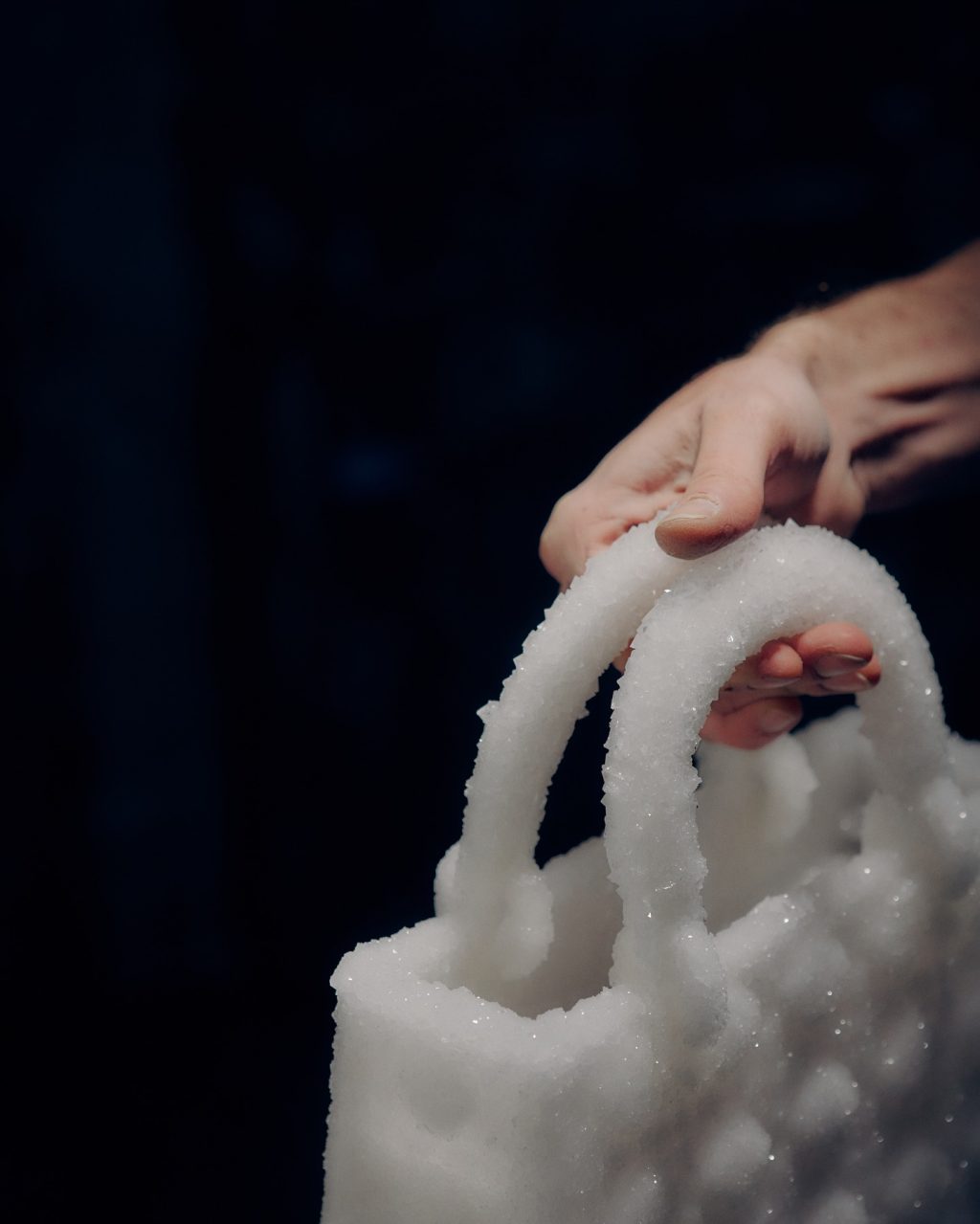
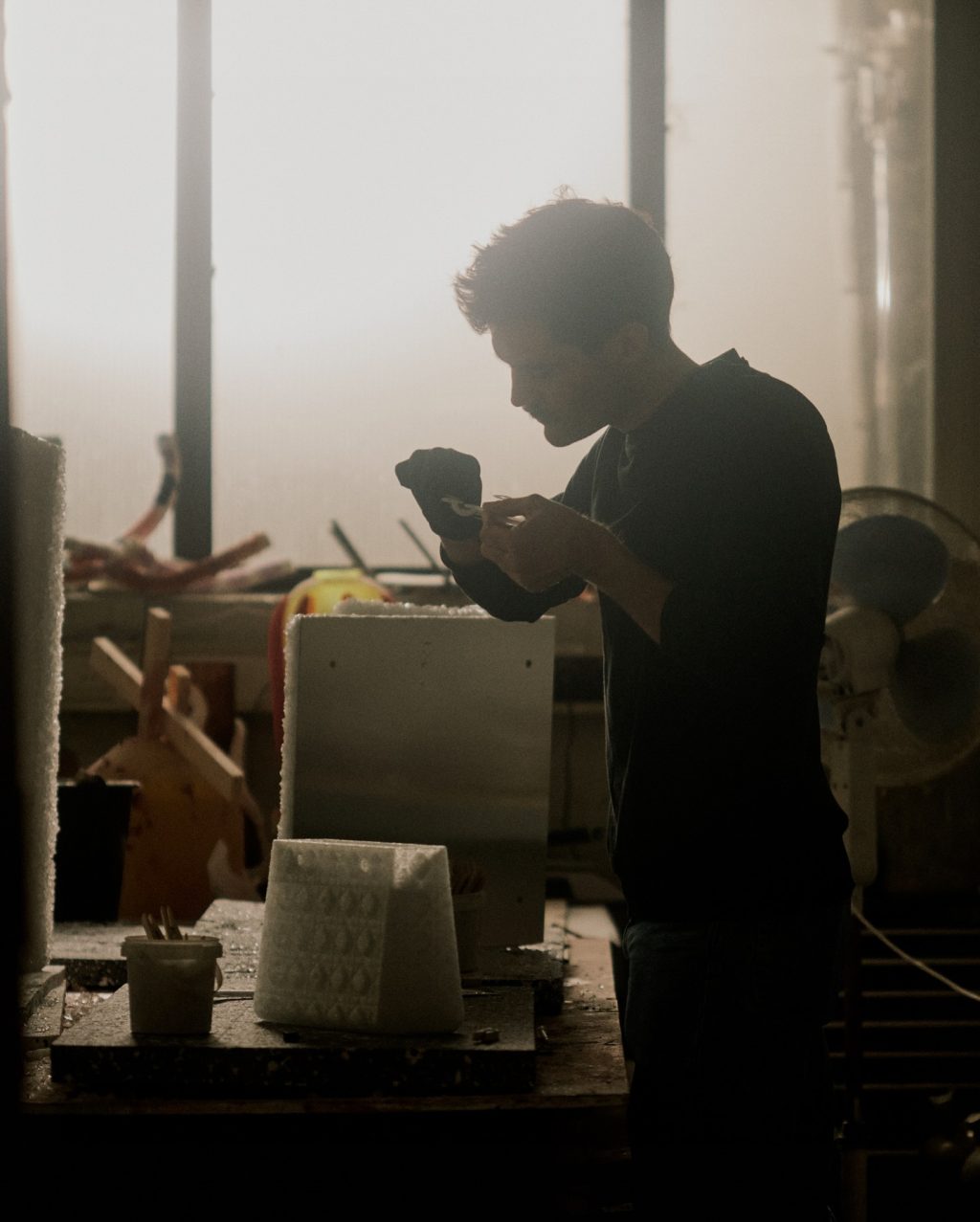
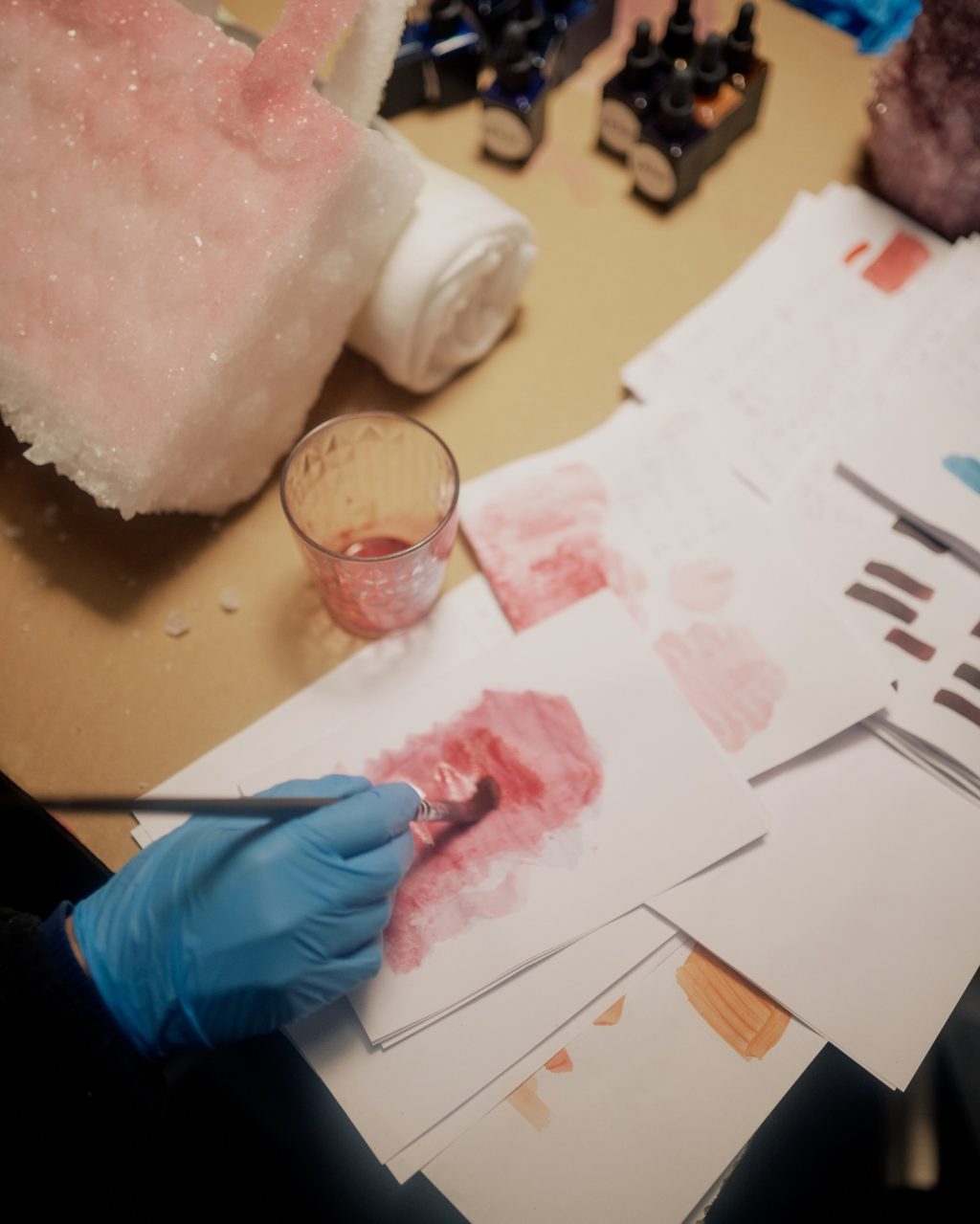
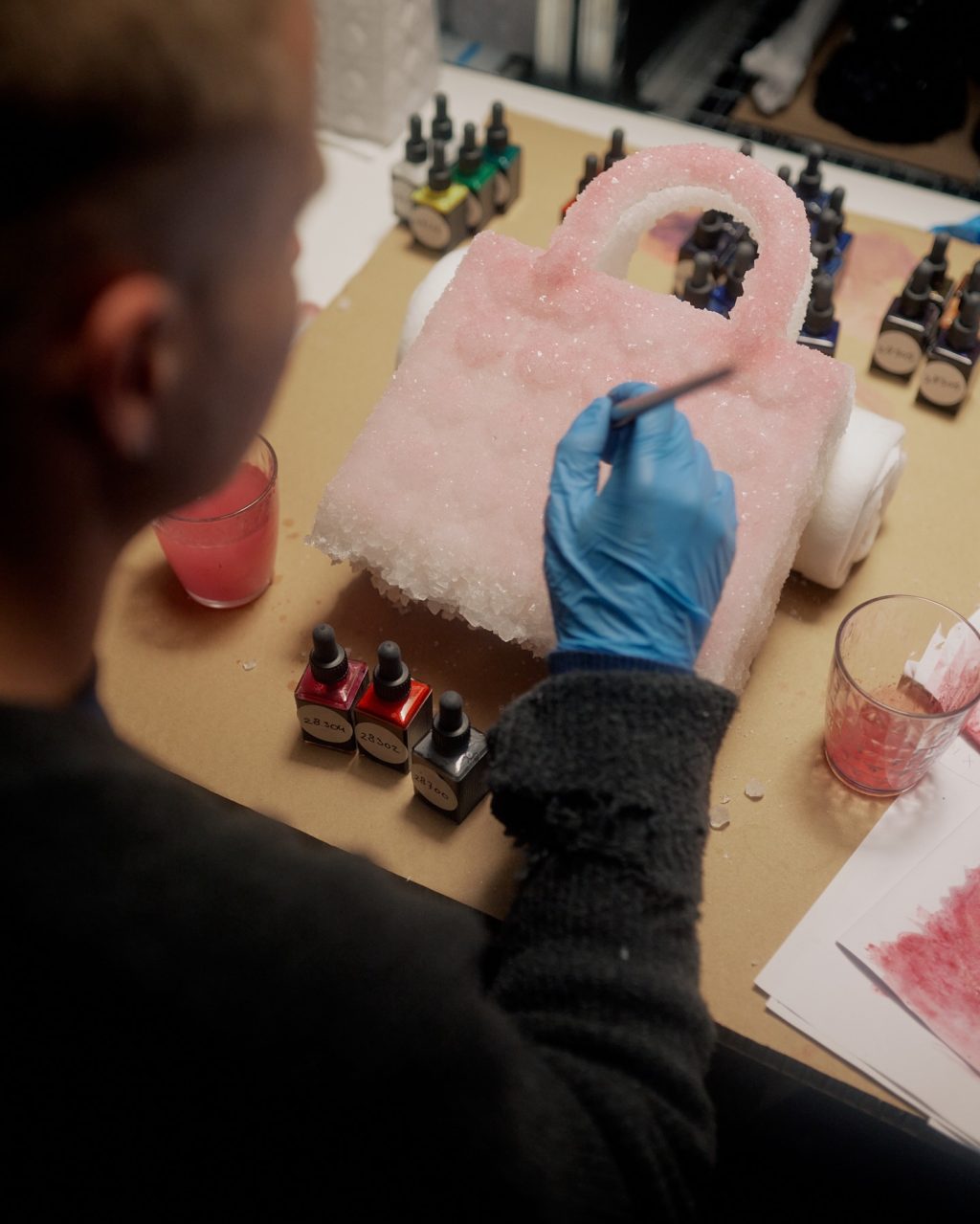
Monté adapts this logic of geological growth into a controlled studio process. Objects — initially ceramic forms, later Dior icons — become armatures on which he grows crystals by layering natural minerals and oxides in a saturated solution and carefully steering their crystallization over several weeks.
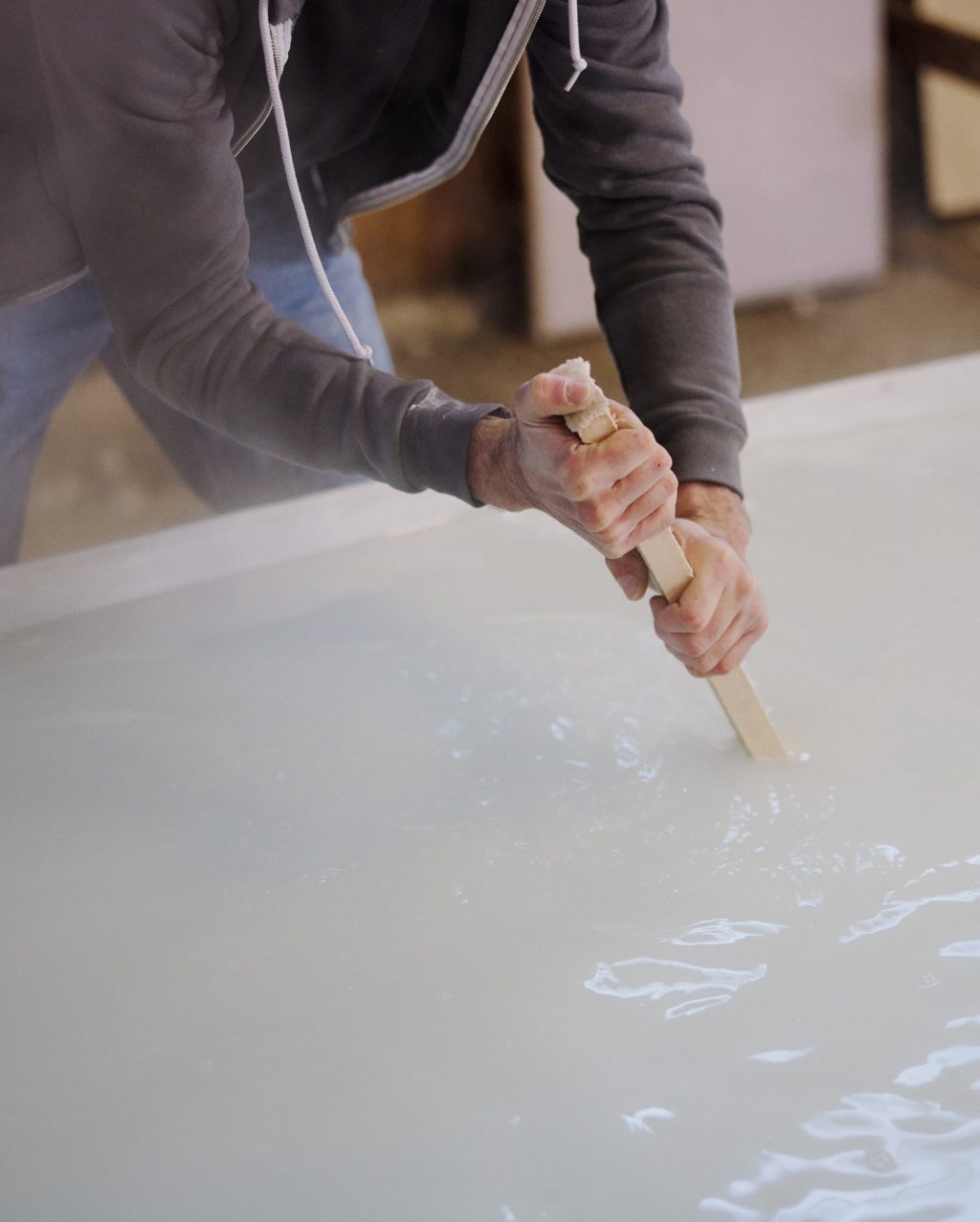
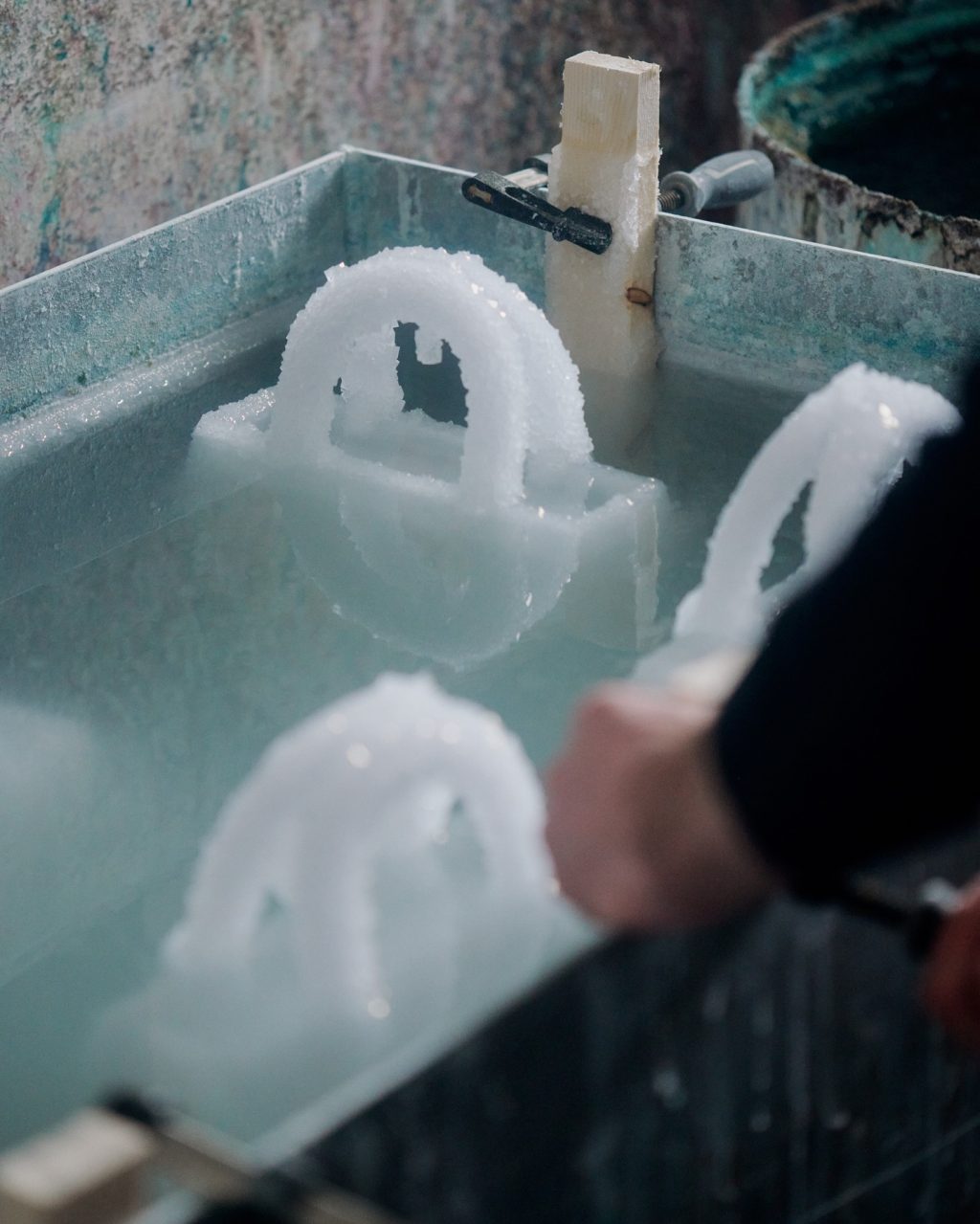
No two pieces are identical: slight differences in temperature, concentration or surface tension produce variations in color, density and crystal geometry. The surfaces oscillate between delicate frost and dense, almost coral-like clusters. Spazio Nobile describes each object as a unique chronicle of time, its crystalline skin recording the conditions of its own making.
This is the methodology Dior tapped into — a fusion of chance and control, nature and design — when the house invited Monté to reimagine its most emblematic forms.

Gem Dior and the Geode windows
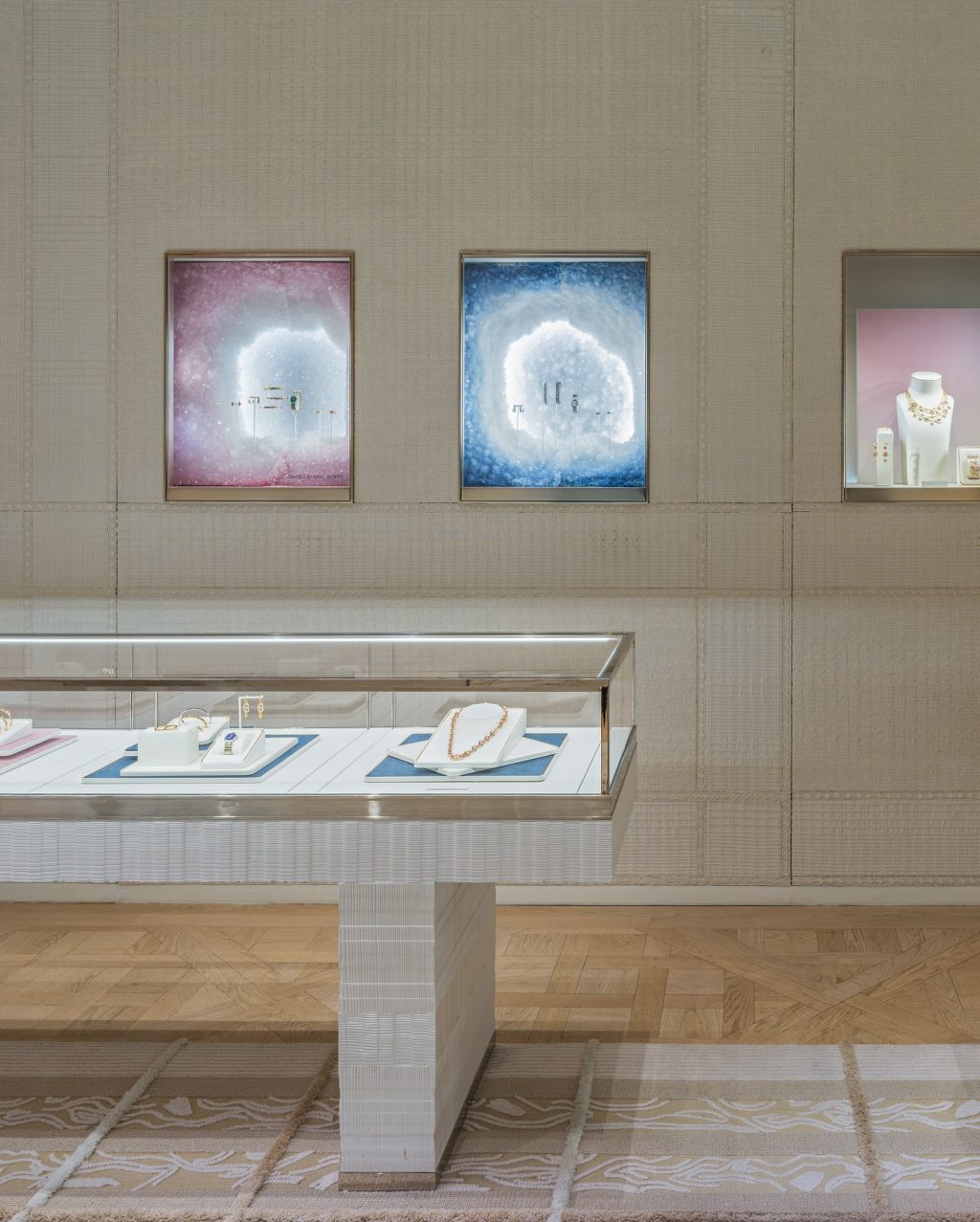
The first movement of the collaboration unfolded not around bags, but around fine jewelry. For the Gem Dior collection, conceived by Dior Fine Jewelry artistic director Victoire de Castellane, the house had already anchored its narrative in geology: the pieces reference slices of mineral strata, irregular facets and the abstract geometry of gemstone cuts.
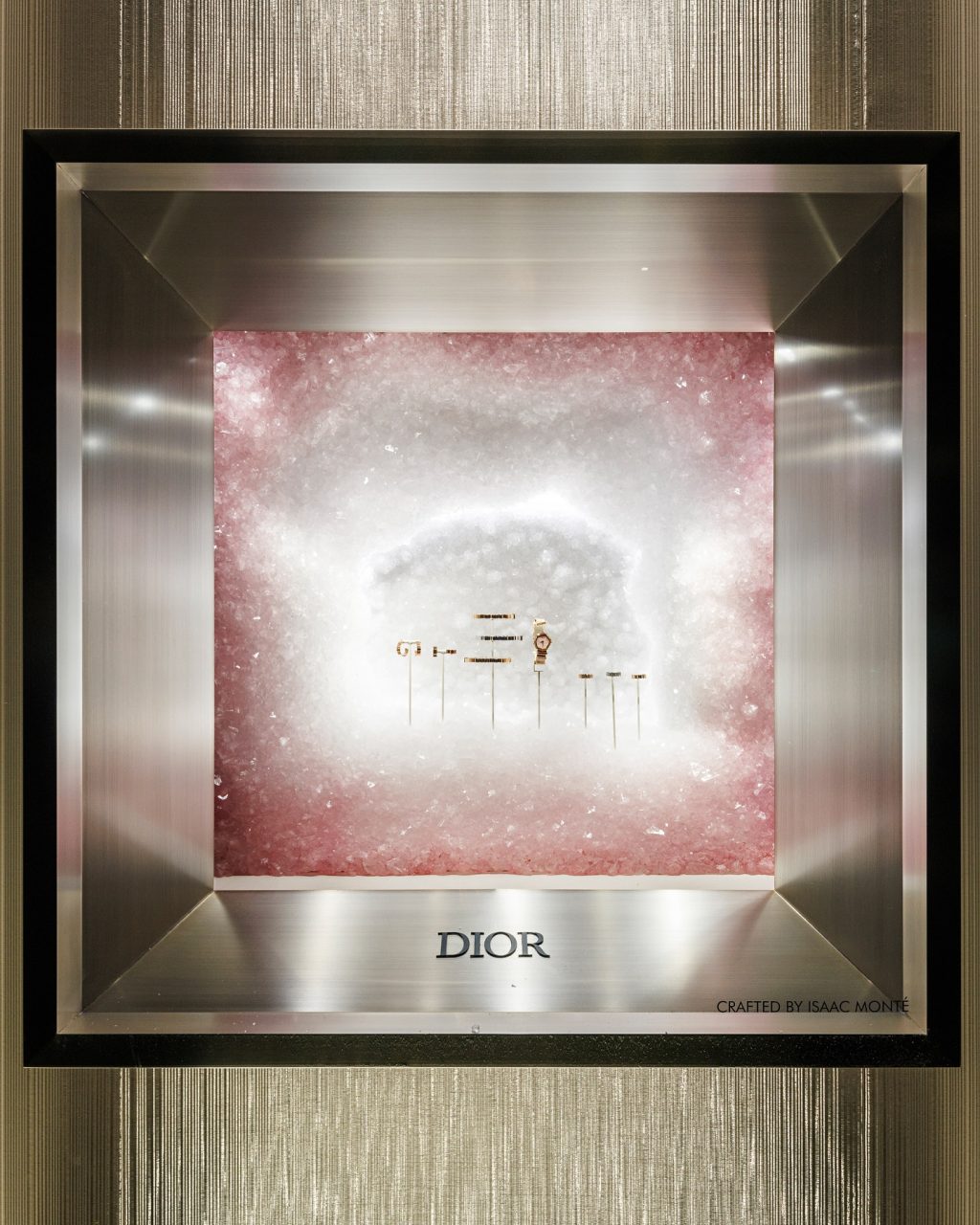
To extend that story into the windows, Dior developed a concept inspired by geodes — those ordinary-looking rocks that, when cut open, reveal a crystalline universe inside. Monté was commissioned to create bespoke crystalline backdrops that would make Gem Dior’s bracelets, rings and watches appear as if they were emerging directly from the heart of the earth.
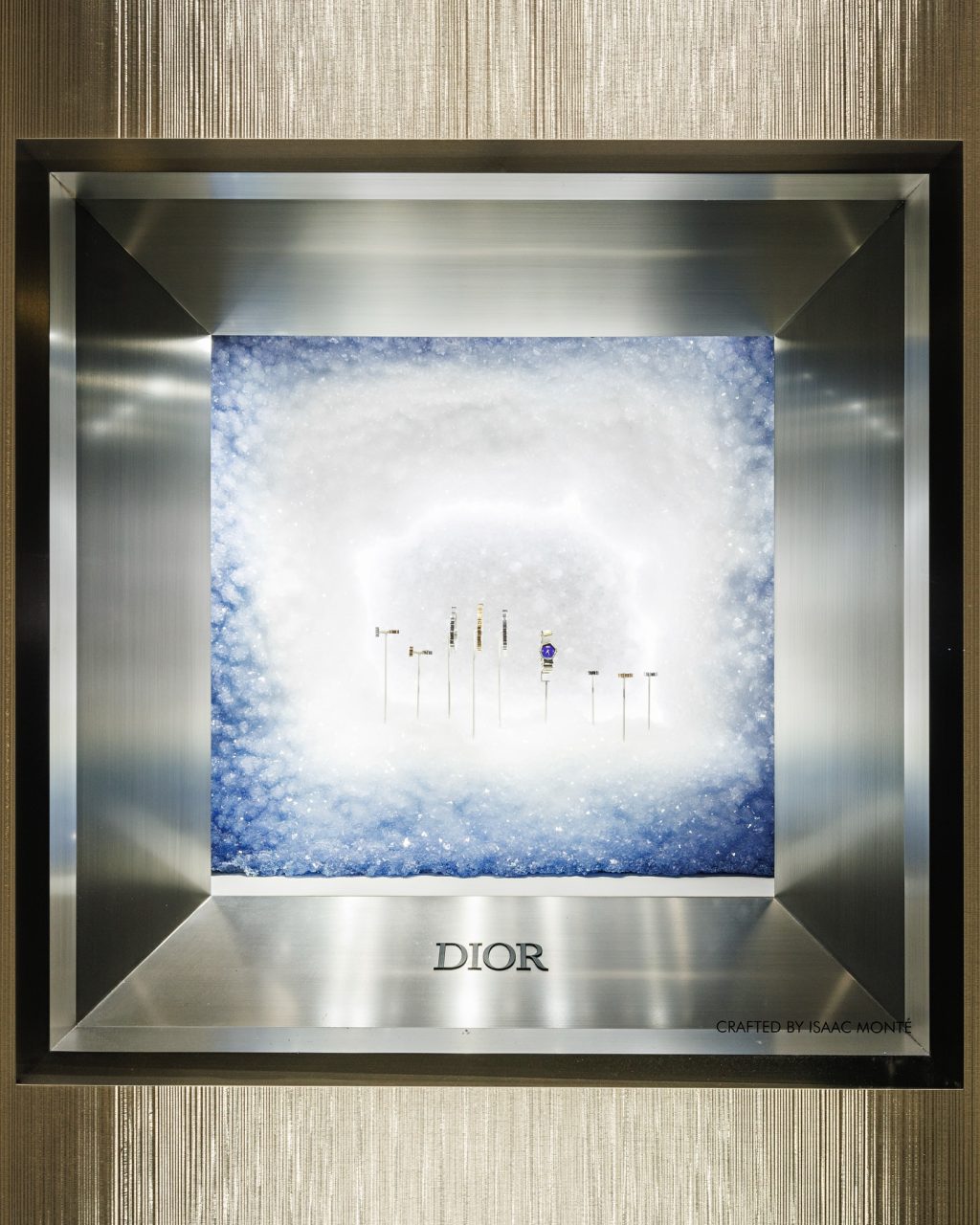
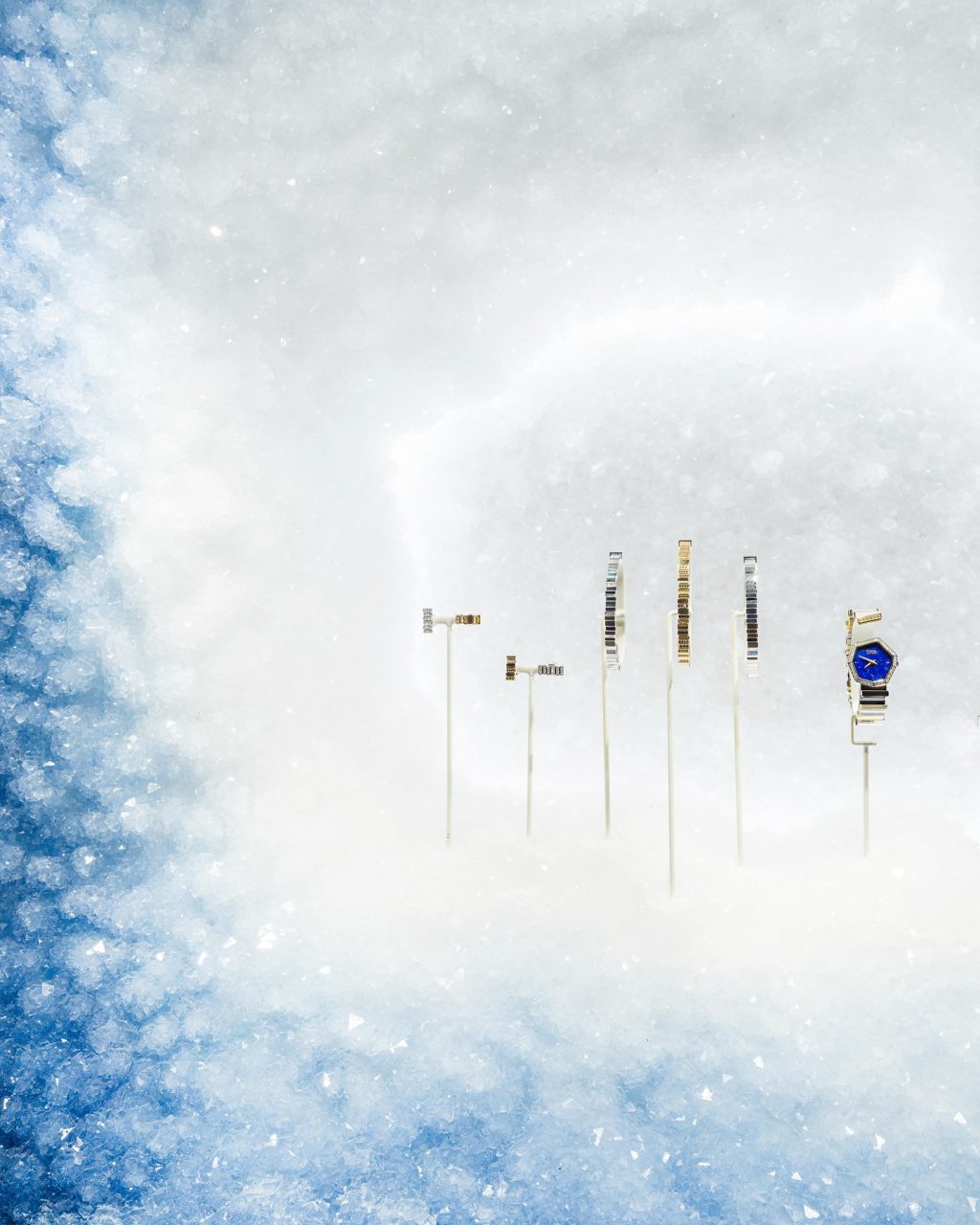
Using his decade-honed process, he transformed natural minerals and oxides into radiant crystal fields that line the interior of Dior’s jewelry vitrines. The result is a sort of inverted cave: the shopper stands on the outside, peering into a mineral world where jewels float in front of soft gradients of pink, lilac, ice-blue and smoky white. From Paris to Milan, London and Courchevel, these windows cast Gem Dior not just as a collection of objects but as a landscape carved from geological time.
For Monté, it was a natural extension: his Crystallized works had already been exhibited in galleries as sculptural environments. For Dior, the collaboration subtly rewritten the function of a luxury window — from a simple showcase to an immersive, almost cinematic tableau where jewelry becomes the protagonist of a mineral drama.
When the Lady Dior becomes a mineral artifact
If the Gem Dior windows used crystals as a backdrop, the next chapter pushed the experiment onto one of Dior’s most charged symbols: the Lady Dior handbag.
Created in the mid-1990s and famously carried by Princess Diana — who received one as a gift from France’s First Lady before the bag was renamed in her honor — the Lady Dior is both product and myth, combining its cannage quilting, rigid structure and top handles into one of fashion’s most recognizable silhouettes.
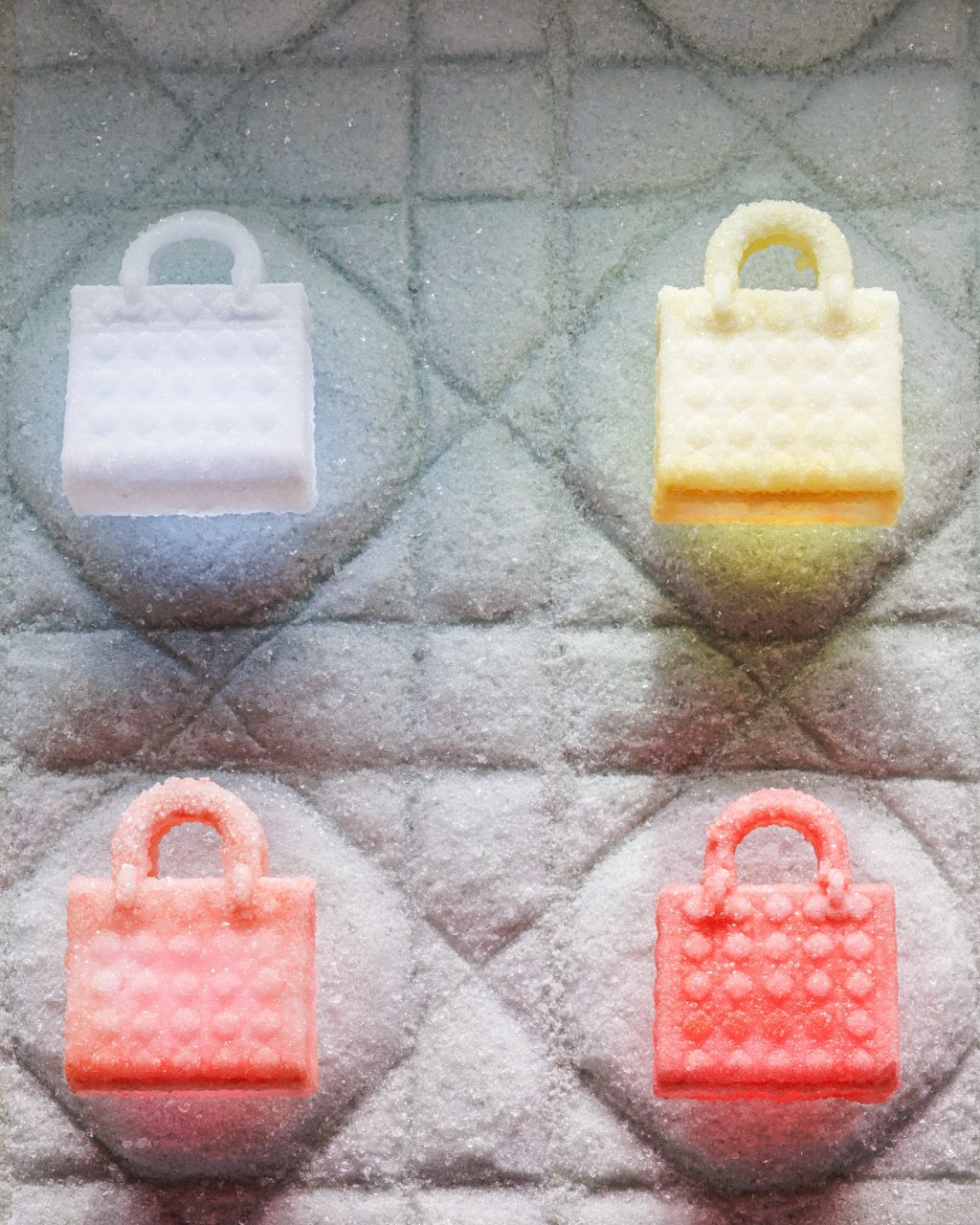
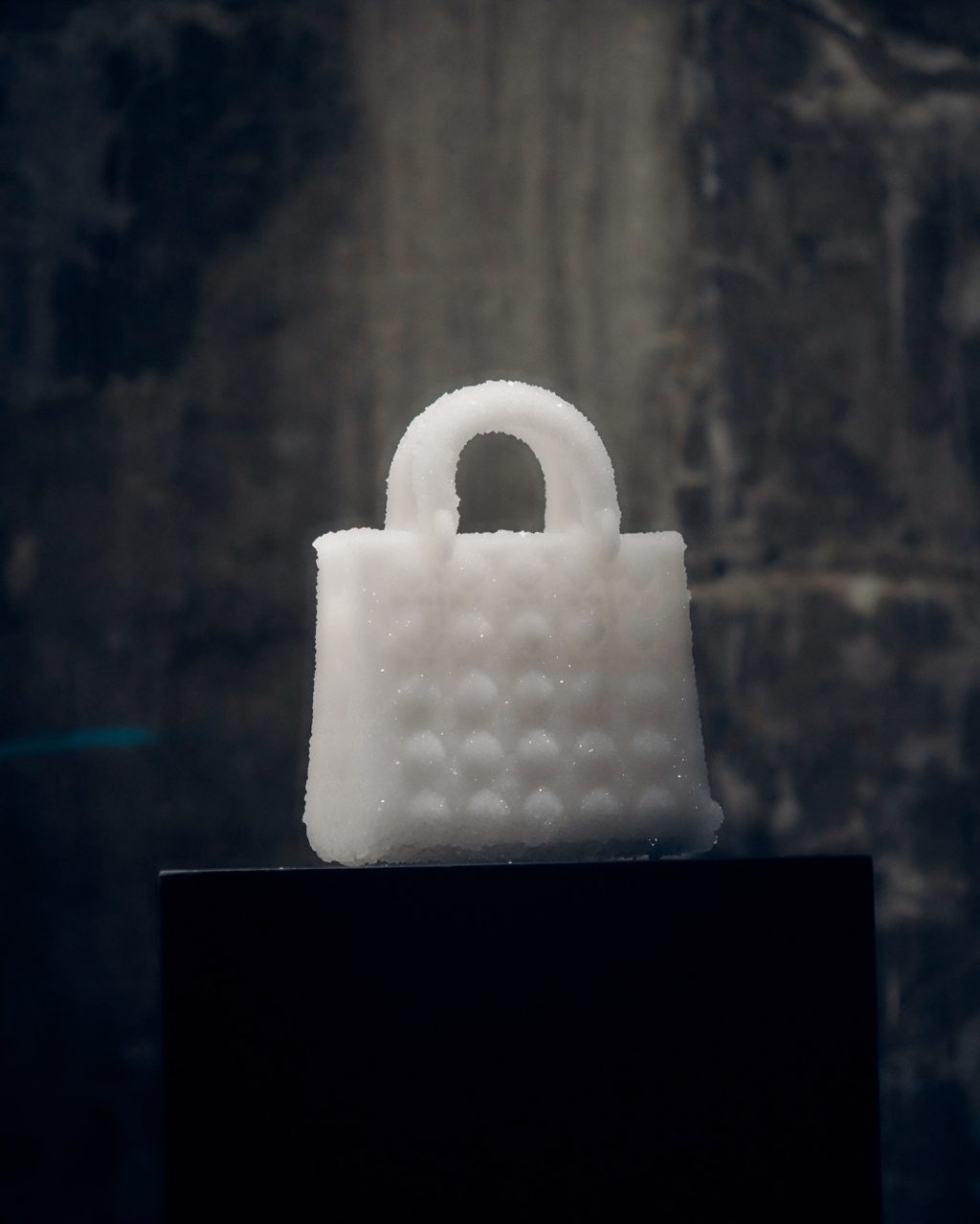
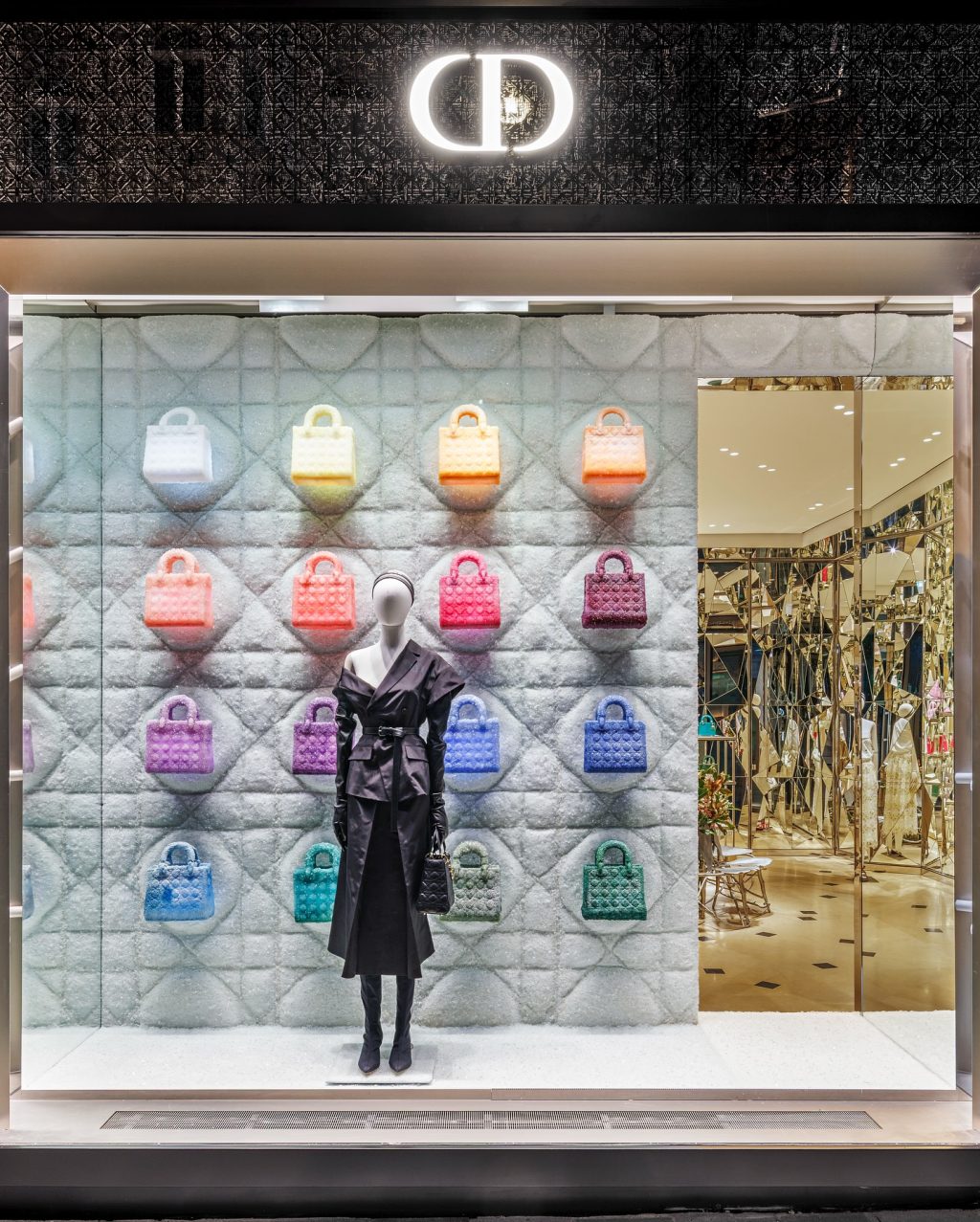
For the opening of Dior’s new flagship in Vienna, the house asked Monté to create a crystallized version of the Lady Dior as a window prelude to the store. The result, presented with Spazio Nobile, turned the bag into something between a relic and a futuristic specimen.
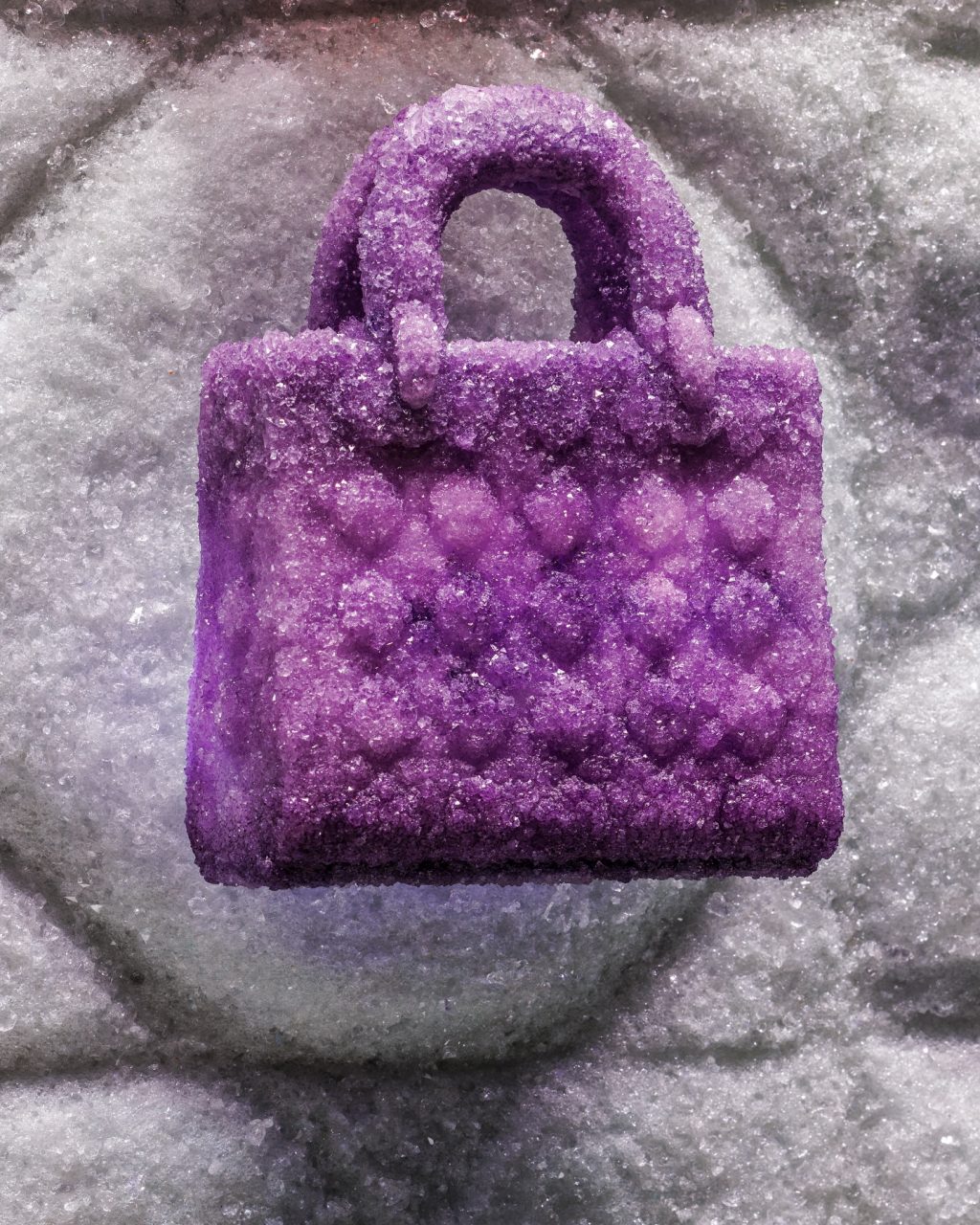
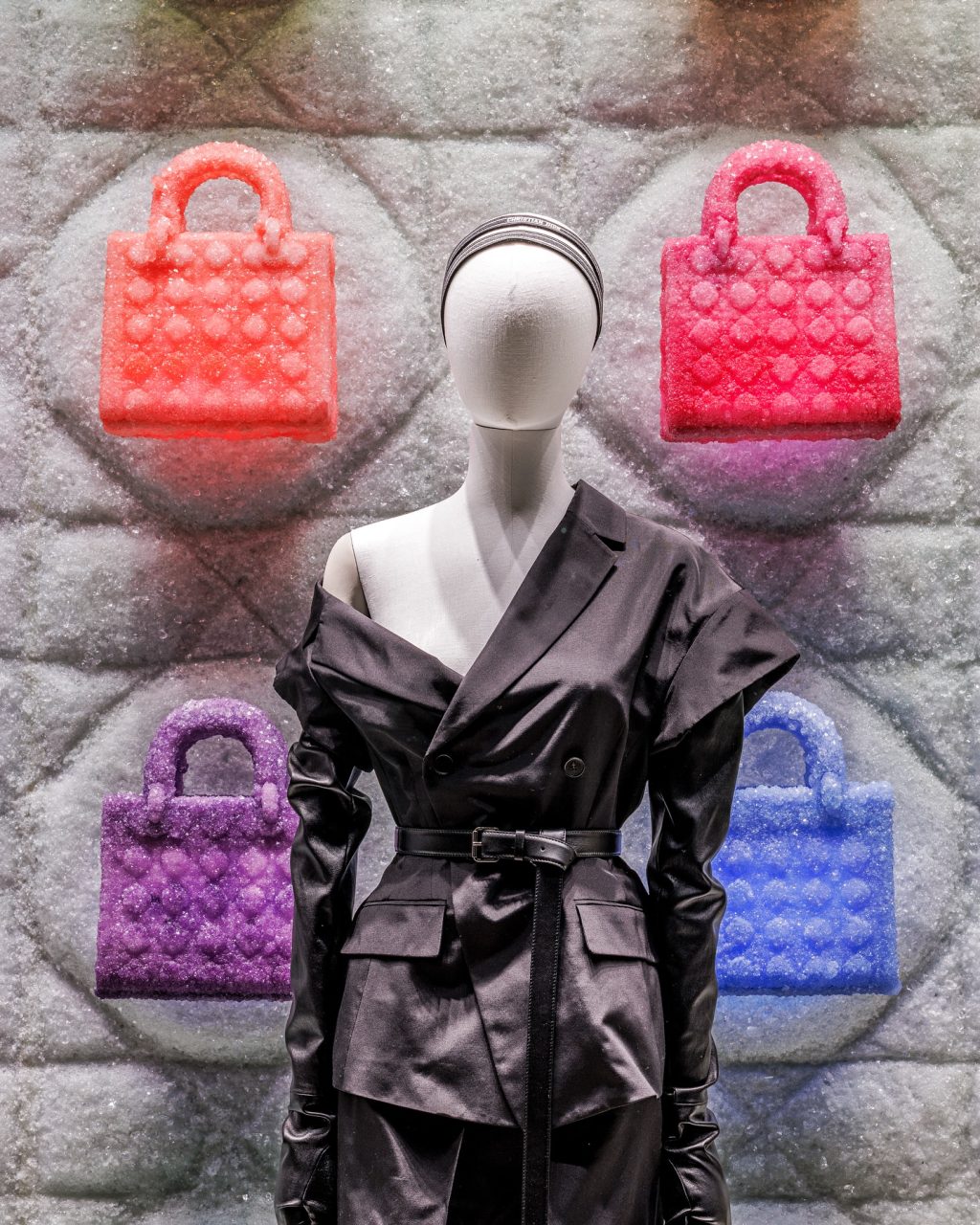
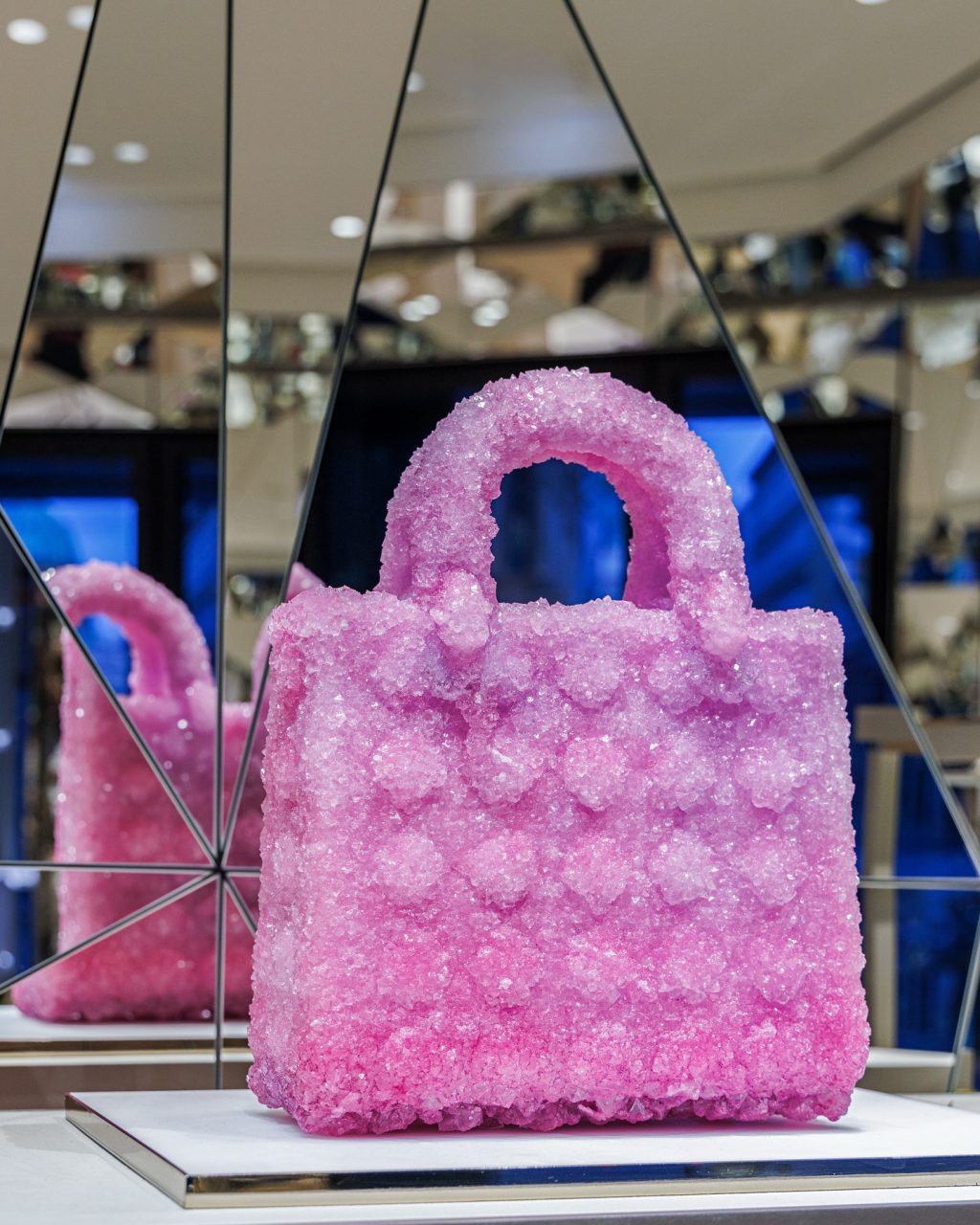
Displayed in multiples and in a spectrum of color — from sugar-white to saturated amethyst and sunrise pink — the crystallized Lady Dior bags maintain their architecture but lose all sign of leather, stitching or metal. The cannage becomes a topography under the crystals, visible only as a faint grid pressing through the mineral layer.
Monté’s own description of the project frames it as an exploration of the bag’s dual nature as symbol and legend. By encasing the Lady Dior in grown crystals, he effectively pulls it out of fashion’s seasonal timeline and places it into geological time. The bags look as if they’ve been recovered from a cave a thousand years in the future — their leather long gone, their outline preserved by crystallization.
Technically, the Vienna installation pushed his process into new territory. The Lady Dior is a complex object: handles, charms, seams and hardware create multiple zones for crystal growth. Achieving a coherent surface required a careful choreography of immersion, drying, re-immersion and re-seeding of mineral layers. The control is obsessive; the final appearance, intriguingly, still feels like something nature did on its own.
A dialogue between the Lady Dior and the Medallion Chair
The newest chapter in Monté’s collaboration with Dior returns to the house’s spiritual home: 30 Avenue Montaigne in Paris. For the boutique’s windows, he has crystallized not only the Lady Dior but also another piece of Dior DNA: the Medallion chair.
The Medallion chair is more than a prop in Dior’s story. Based on an 18th-century Louis XVI model with a round or oval back, it was chosen by Christian Dior in 1947 to seat guests at his first couture shows. Its clean, neoclassical lines became as emblematic of the house as the Bar jacket and the New Look silhouette.
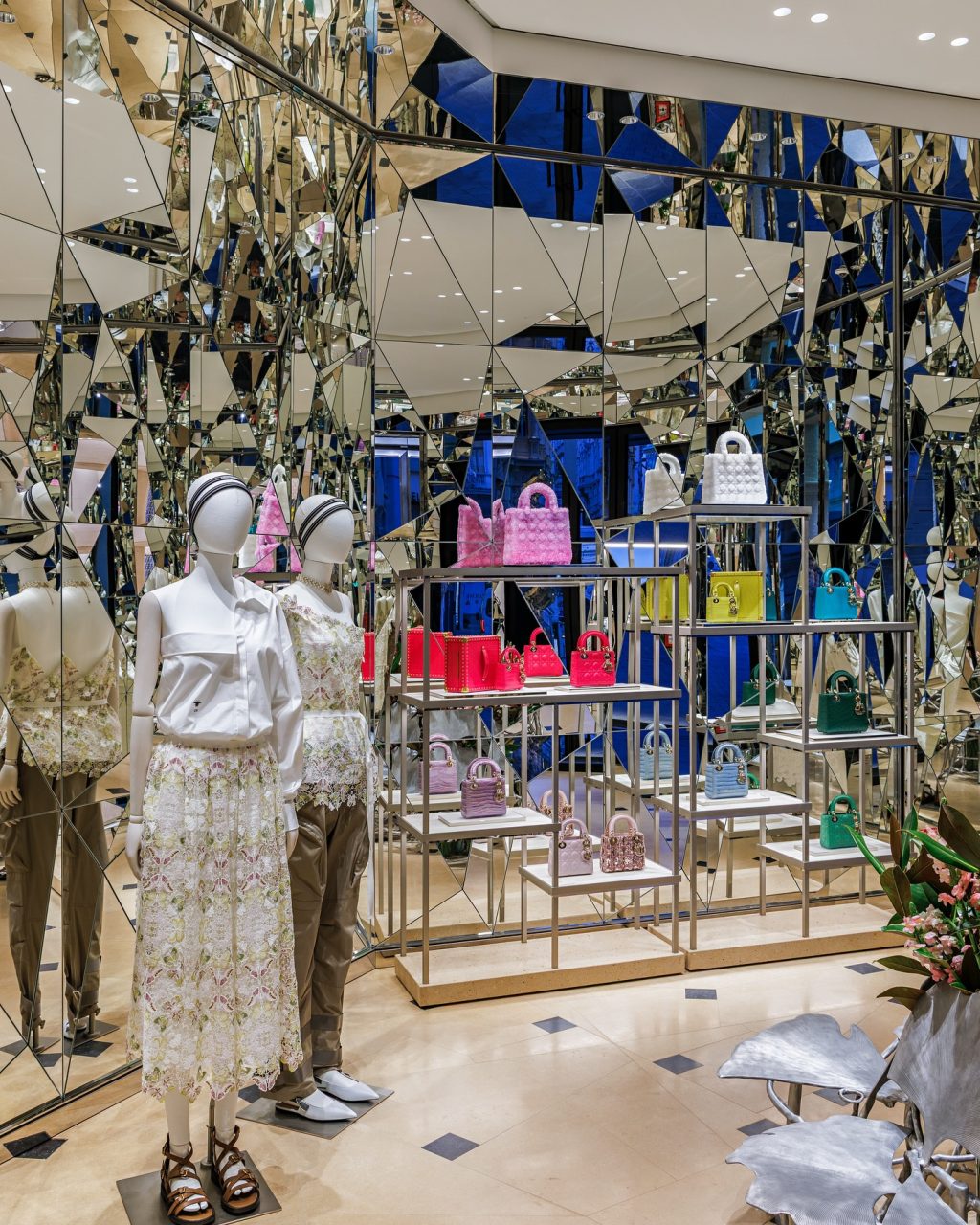
In recent years, Dior has invited designers and artists to reinterpret the chair at events like Salone del Mobile and Design Miami, reaffirming it as a design icon as much as a historical artifact.
Monté’s Paris commission goes a step further by treating the Medallion chair and Lady Dior as equal actors in the same crystalline drama. In the Avenue Montaigne windows, the chair appears as a sculptural silhouette encrusted with crystals, echoing the crystallized bags that accompany it. Together, they stage a dialogue between seating and accessory, between the salon and the street, between Dior’s past and its speculative future.
Conceptually, the pairing is sharp. The Lady Dior stands for the house’s relationship with the body in motion — carried on the arm, photographed on the go — while the Medallion chair evokes the static theater of the couture salon. By crystallizing both, Monté suspends them in a kind of mineral stillness. The windows become a freeze-frame of Dior’s history, caught at the moment where fabric, leather and wood begin to morph into another state.
Though Instagram captions describe the project in modest terms — a meeting of heritage and transformation, a new “material language” for Dior’s symbols — the gesture is quietly radical. It suggests that the emblems of luxury are not untouchable; they can be subjected to the same alchemical processes as ordinary objects, made strange again through the patient action of mineral growth.
A collaboration written in stone (almost)
Isaac Monté’s work with Dior is not about decorating luxury with a fashionable texture. It’s about taking the house at its word when it speaks of savoir-faire, transformation and the dialogue between nature and artifice — and then pushing those ideas to their literal limit.
By growing crystals onto Dior’s most recognizable forms, Monté collapses multiple timelines: the fast rhythm of fashion shows, the patient pace of geology, the speculative futures of bio-art. The result is a body of work that feels at once archival and avant-garde.
Standing in front of the Avenue Montaigne windows, where a crystallized Lady Dior and Medallion chair glow under Parisian light, it’s hard not to feel that you’re witnessing a quiet shift. Dior is still Dior. But its icons are now speaking another language — one written not in fabric or leather, but in crystal.