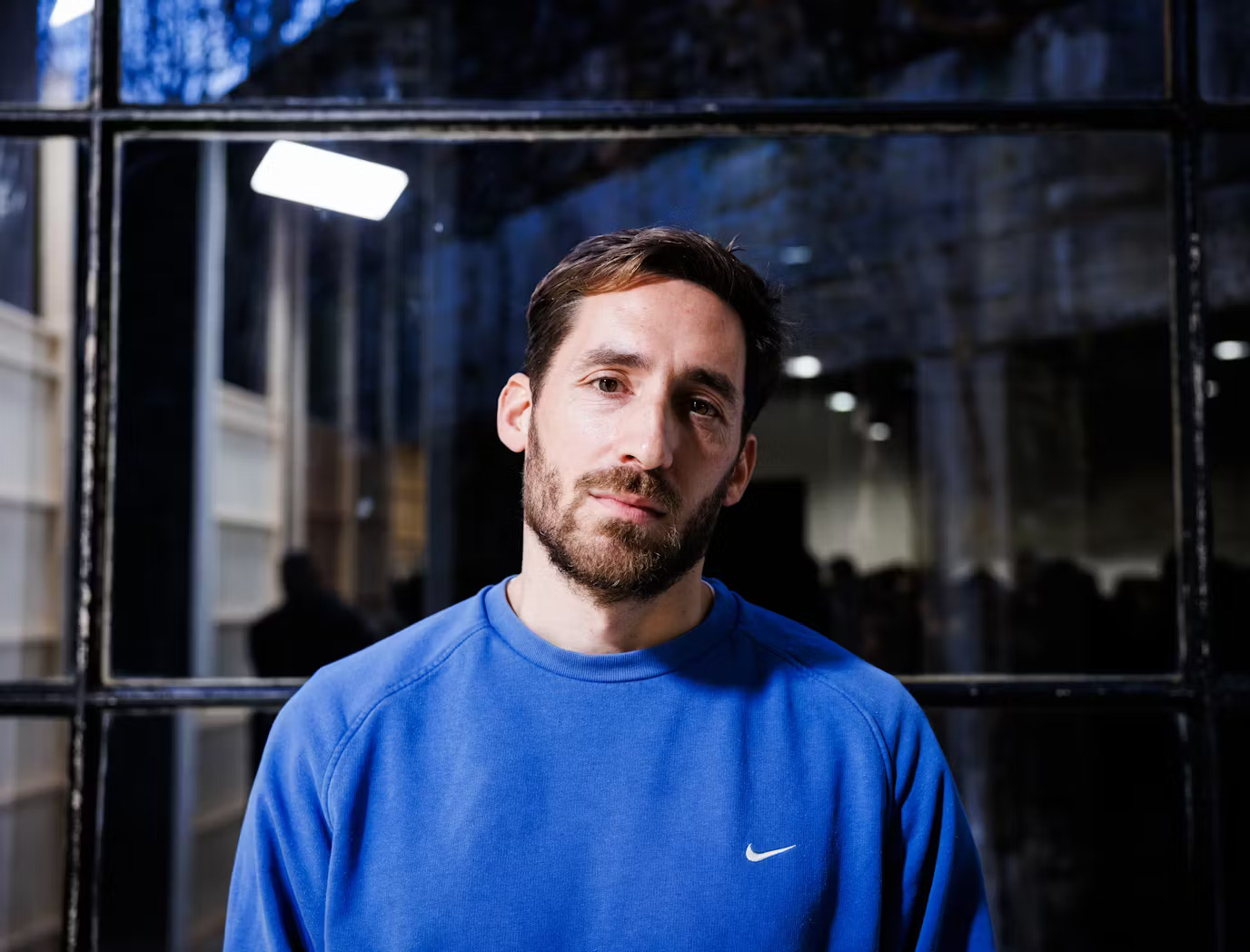
In November 2025, the storied French couture house Balmain announced the appointment of Antonin Tron as its new Creative Director, signalling a new chapter in the brand’s history.
After 14 years under Olivier Rousteing, the house appears poised to shift gears — from celebrity-fueled spectacle to craftsmanship-driven refinement. Let’s delve into the story of this designer: his roots, his vision, his trajectory, and how he might steer Balmain into its next era.
“I am deeply honoured to be joining Balmain, and grateful to Mr. Rachid and Matteo for entrusting me with this extraordinary House. I wish to express my gratitude to Olivier Rousteing for building Balmain into the global brand it is today.
Balmain has a truly inspiring history. At its heart, the House embodies savoir-faire, culture, sensuality, and elegance—fashion that is radiant, precise, and bold. This resonates deeply with me, and I feel privileged to have the opportunity to build on this incredible legacy.”
— Antonin Tron, Creative Director of Balmain
The designer at a glance
Starting in 2004, Antonin Tron studied at the Royal Academy of Fine Arts in Antwerp. During his studies he completed an internship at Vivienne Westwood in London and graduated in 2008. He then worked as an assistant to Olivier Rizzo until the end of 2008, before beginning an internship with Raf Simons. In September 2009 he joined Louis Vuitton’s menswear studio, working with Paul Helbers on the men’s collections.
In 2011, Tron moved to Givenchy as a womenswear designer alongside Riccardo Tisci. In January 2012 he was hired by Nicolas Ghesquière to work at Balenciaga. He later freelanced for Alexander Wang and Demna Gvasalia, experience that sharpened his eye for construction and drape.
In 2016, he founded Atlein, translating that technical rigor into a body-conscious label produced in France.
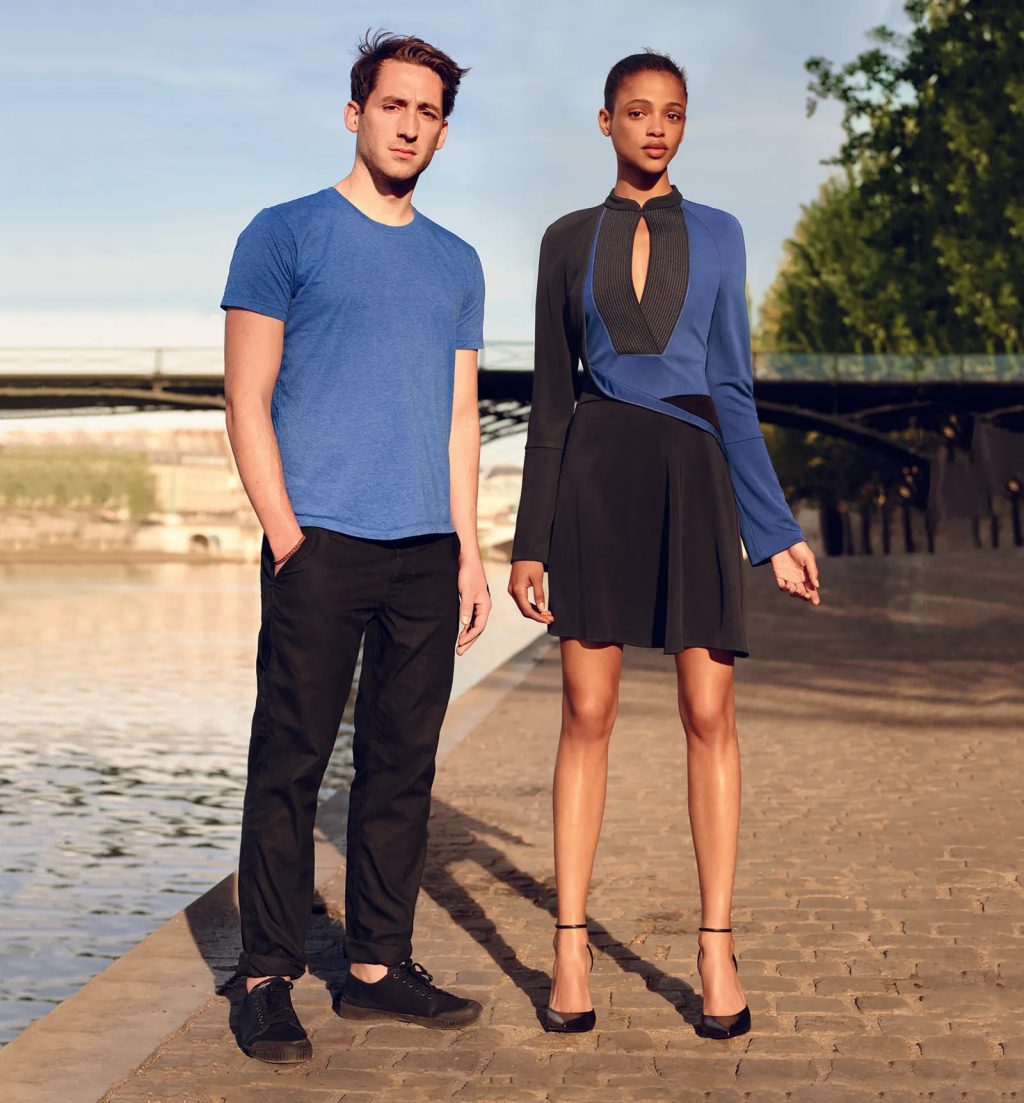
From the Atlantic to Atlein
Tron founded Atlein to explore the body in motion—the brand’s very name pays homage to the Atlantic Ocean and to the kinetic energy that has long shaped his design thinking (he’s an avid surfer). Atlein’s studio practice revolves around flou: draping and sculpting fabric directly on the body, privileging physical process over digital abstraction. Production remained rooted in France, aligning with the label’s sustainability ethos.
Within just a few seasons, Atlein’s jersey work—liquid, precise, never fussy—became a quiet cult among editors and women who wanted clothes that move. Tron’s interviews return again and again to the same core idea: construction should liberate, not restrain. (“Restrictive construction is something from another century,” he once quipped.)
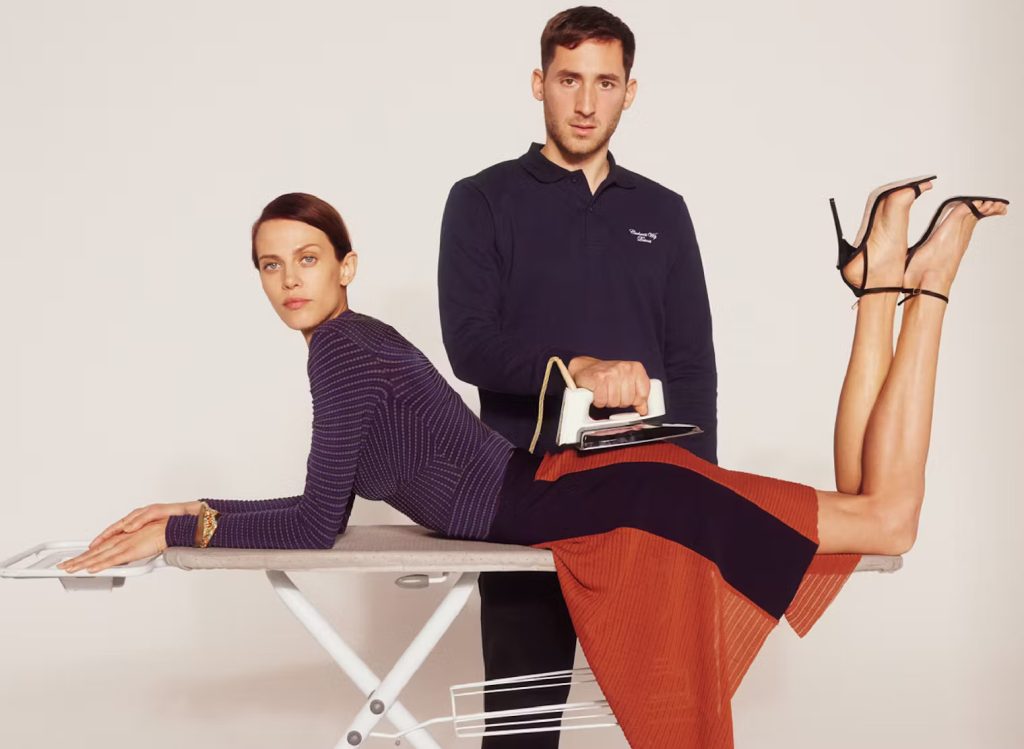
Prize-winning rigor
In 2016—the year he launched Atlein—Tron won ANDAM’s Prix des Premières Collections (€100,000) from the Association Nationale pour le Développement des Arts de la Mode. During his very first fashion show, Anna Wintour tweeted about his collection, attracting attention on the brand. This allowed Tron to sell his clothes at department stores such as Neiman Marcus, Nordstrom or Galeries Lafayett.
The momentum continued in 2017 with an LVMH Prize finalist nod, and in July 2018 he captured ANDAM’s Grand Prix (€250,000). Beyond financing growth, these honors validated a design language built on structure, stretch, and sculptural lines.
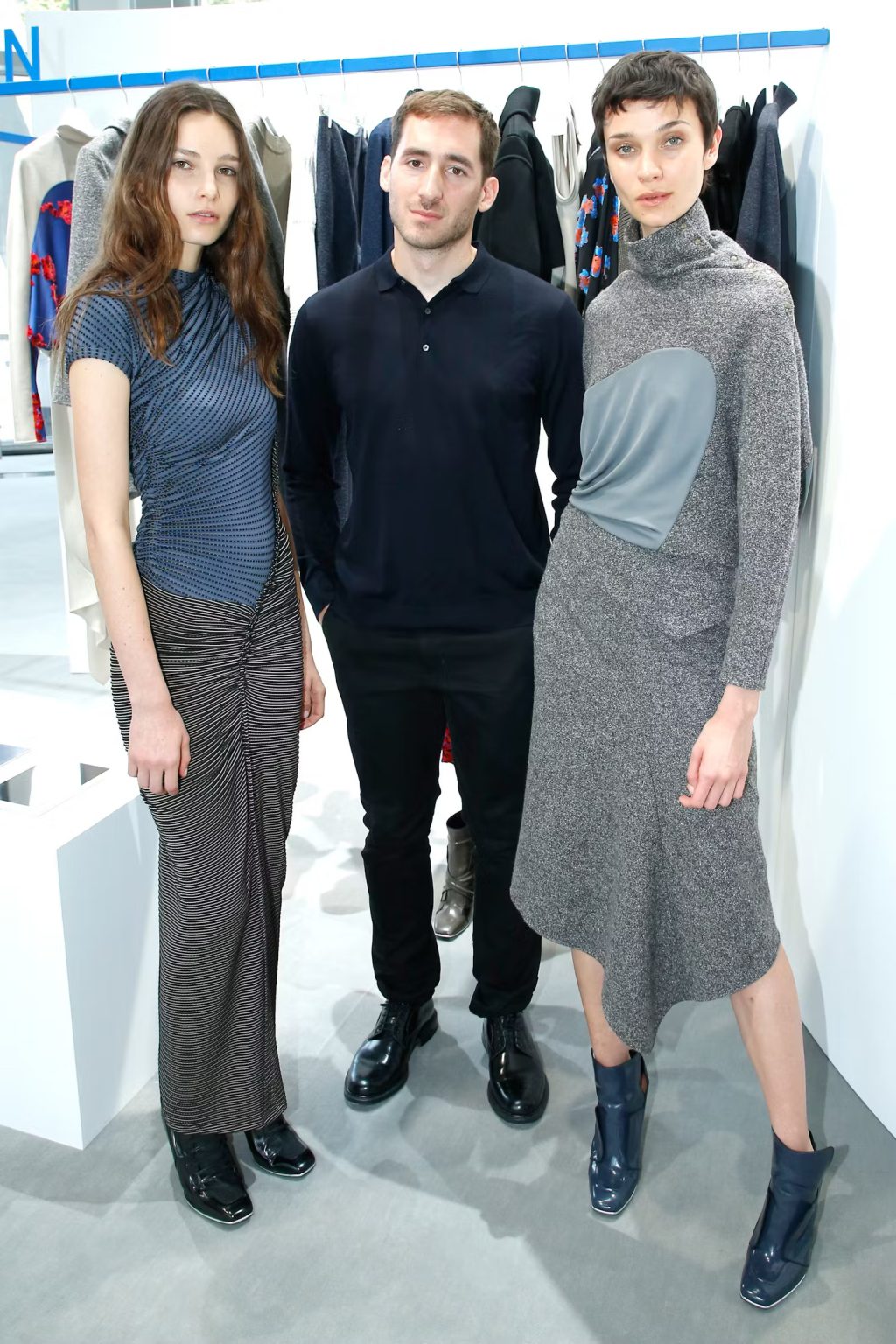
Why Balmain—and why now
Balmain’s owners at Mayhoola and CEO Matteo Sgarbossa are steering the maison into its next chapter after Rousteing’s era of maximal glamour and pop-cultural reach. Their pick of Tron reads as a strategic pivot: less sequined stadium show, more architecture-of-movement—a phrase Pierre Balmain himself loved. In announcing the hire, Sgarbossa highlighted Tron’s drape expertise and his view of fashion as “spatial art,” while the house framed the transition as a return to elegance, modernity, and savoir-faire.
“We are thrilled to welcome Antonin to the House of Balmain. Antonin’s approach to design, rooted in the art of draping and the physicality of fabric, marks a continuation of Pierre Balmain’s foundational belief that ‘dressmaking is the architecture of movement.’ Like Balmain, Antonin sees fashion as a spatial art, building around the human form with precision and emotion. Antonin will build on the House’s heritage of creativity, craftsmanship, elegance, and profound human values. We look forward to his first show for the house in Paris in March.”
— Matteo Sgarbossa, Chief Executive Officer of Balmain
As context, Rousteing’s departure closed a period that made Balmain a global headline generator—from the “Balmain Army” to the brand’s revived couture—and opened space for a new creative thesis.
“We are exceptionally pleased to welcome Antonin Tron to the Group and to Balmain. His thoughtful approach to design, rooted in craftsmanship and artistic sensitivity, makes him an exciting talent for the House. Together with CEO Matteo Sgarbossa, Antonin will lead Balmain into a compelling new future—one that honours its storied history while confidently shaping a future defined by creativity, modernity, and elegance.”
— Rachid Mohamed Rachid, Mayhoola CEO and Chairman of Balmain
A designer shaped by Antwerp—and his cohort
Tron’s Antwerp pedigree matters. The Royal Academy’s fashion program has long prized method as much as muse—cutting, prototyping, and the intellectual rigor behind why a garment moves the way it does. He studied there alongside designers like Demna and Glenn Martens, absorbing a culture that treats drape and construction as first principles rather than afterthoughts.
The Atlein toolkit he brings to Rue François-Ier
1) Draping as grammar. Expect Tron to treat Balmain’s famous shoulder and waist as load-bearing elements rather than decorative accents, using bias cuts and controlled stretch to build silhouette from the inside out. (Reviewers have consistently praised the way his seams trace the body with “mathematical” clarity.)
2) Movement over ornament. Where Rousteing embraced surface drama, Tron tends to engineer sensation through motion: knife-sharp flares, twisting seams, articulated jersey. This aligns with historic Balmain codes—“New French Style” polish and the maison’s couture backbone—translated for a contemporary wardrobe.
3) Material conscience. Tron has publicly engaged with sustainability’s practical limits (and possibilities), favoring local production and fabric choices that reward longevity. Balmain’s scale could amplify those instincts, even if the maison’s business needs demand red-carpet impact.
What changes at Balmain?
Industry watchers read the appointment as a move “from celebrity flash to fabric-first design.” In other words: less reliance on virality, more on cut, feel, and fit—the kinds of luxuries you notice in motion and touch. Yet this isn’t likely to mean a retreat from ambition. Under Mayhoola’s ownership (also the owner of Valentino), Balmain has the resources to back couture-level workmanship, accessories development, and global retail storytelling.
The debut and the runway calendar
Tron starts immediately; his first Balmain show is slated for March in Paris as part of the Fall/Winter 2026 presentations. Several outlets also report that Atlein will pause while he focuses on the maison—a typical arrangement when an independent designer takes the helm of a major heritage brand.
Reading Tron through Balmain’s archive
Pierre Balmain’s house DNA—sculpted jackets, wasp waists, embroidery executed with surgical finesse—offers ready intersections with Tron’s practice. Expect:
- Sharper tailoring with kinetic drape: broad but aerodynamically curved shoulders; jackets that “tilt” the torso forward; skirts split to stride. (This builds on Atlein’s bias-cut fluency.)
- Tactile embellishment over sheer sparkle: embroidery that reinforces seam architecture; relief-like textures that catch light while supporting the garment’s structure. (A couture-house way to do shine.)
- A quieter kind of sensuality: body-mapping seams, jersey engineered for lift rather than cling, and eveningwear that reads as movement study first, “look” second.
The business stakes
Rousteing’s era scaled Balmain’s visibility and diversified categories (from festival-style activations to couture and beauty). Tron inherits a global platform and the pressure to convert “craft talk” into product heat—especially in leather goods and footwear, where architectural construction can become a signature. Signals from leadership—placing drape, spatial design and human-form precision at the center—suggest that Balmain may seek distinct structural codes that translate across price points and categories.