The Schiaparelli Fall 2026 couture bags belong to a collection Daniel Roseberry titled “The Call of the Void” — a wardrobe of latex, silicone, and preserved flowers that opened Paris Couture Week on Monday, July 6, inside the Petit Palais. Guests took their seats around a mirrored runway, while a recorded soliloquy read by Roseberry played overhead; among them, Bad Bunny in a custom butter-yellow suit adapted from a Schiaparelli woman’s suit. The setting matched the premise: a designer who, by his own admission in the show notes, found this season only after abandoning the formula that produced the last one. The bags carry that surrender in miniature — three couture objects in which the house’s Secret silhouette is rebuilt in gold wire, sea sponge, and hand-set flowers.
READ ALSO From 1939 to 2026: The Inspiration Behind Schiaparelli’s Bird Feet Bag
The Call of the Void: the collection in brief
Roseberry’s notes describe a deliberate break from couture’s “noble” materials: latex, silicone, and pools of paint baked into sheets replaced the expected silks, satins, and wools. Even the iconic Schiaparelli jacket was demoted — or promoted — to the status of an accessory, embroidered and treated as a finishing gesture rather than the anchor of a look.
READ ALSO Schiaparelli Fall-Winter 2026–2027 Bags: Inside “The Sphinx”
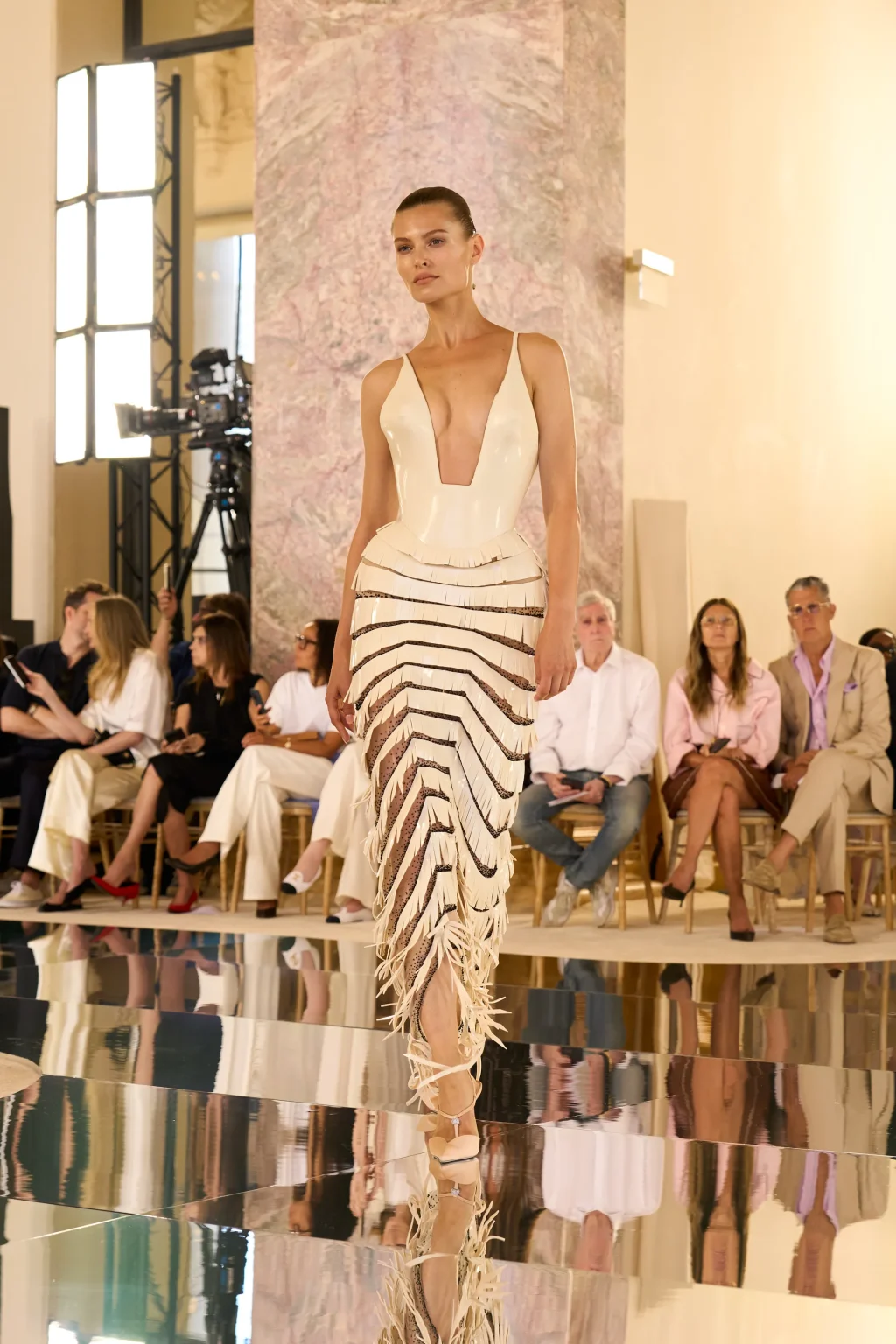
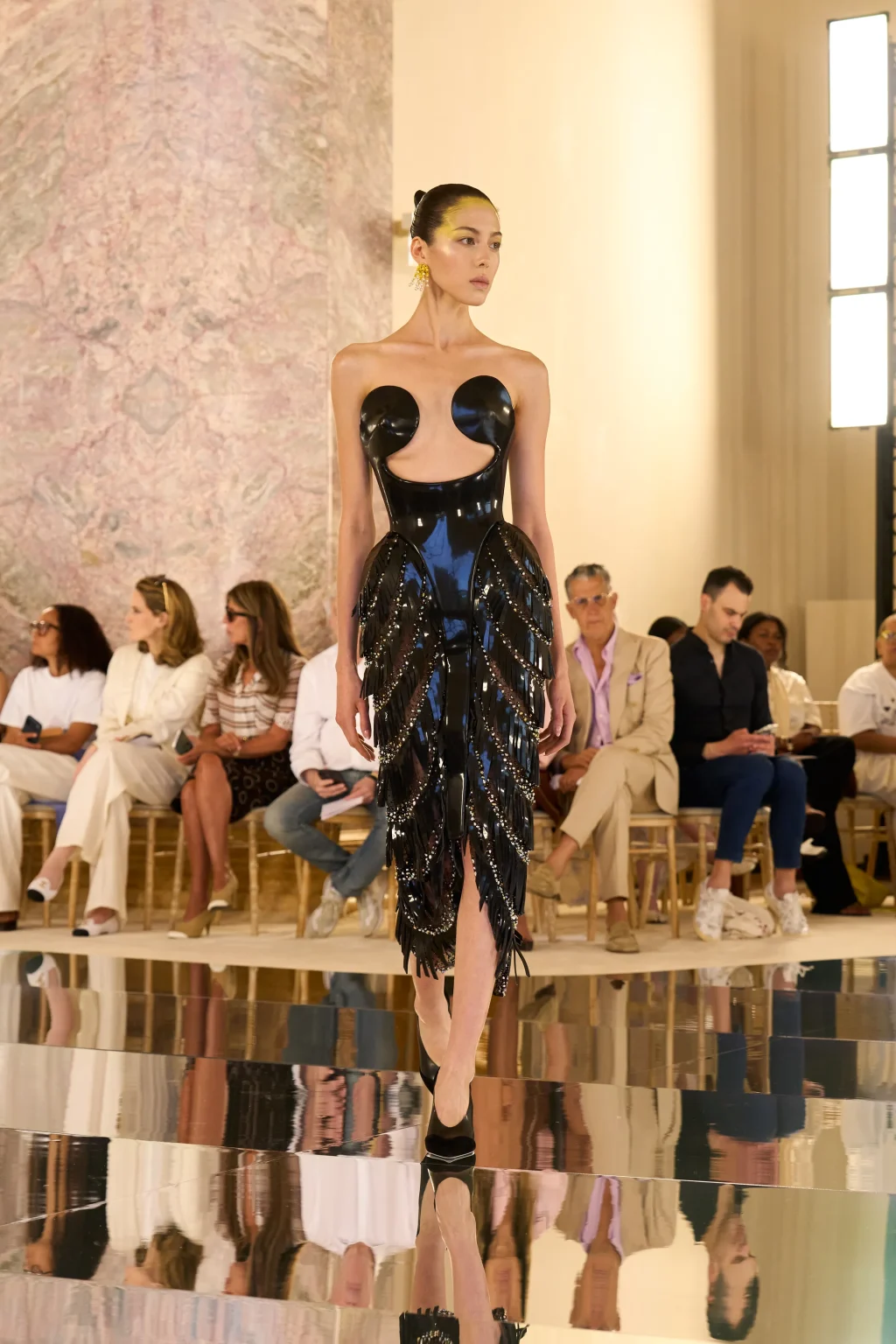
The palette drew on flora and sea fauna: lobster pink, violet, tangerine, saffron, and pale mint against high-gloss black, raw wax ecru, and the house’s signature gold.
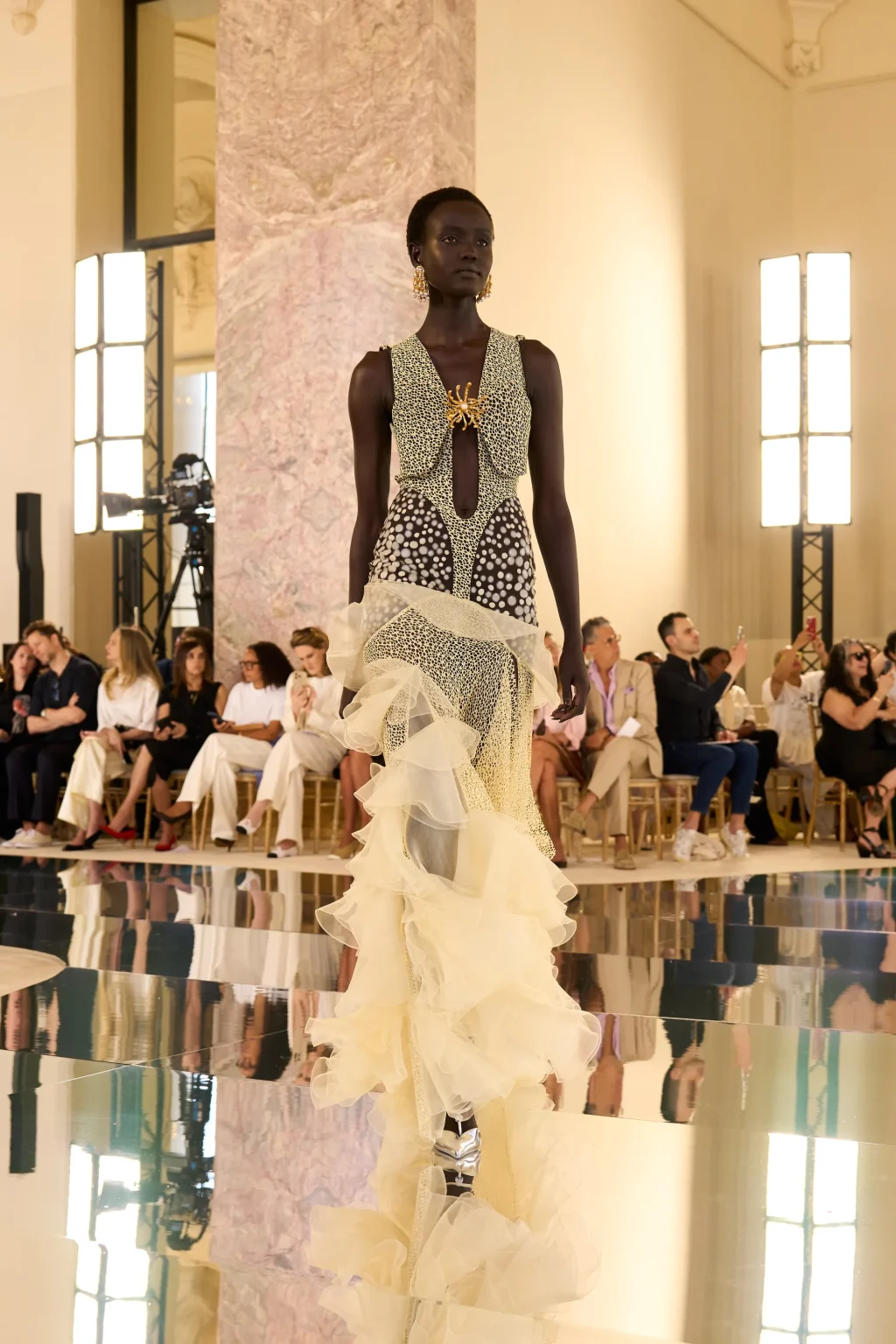
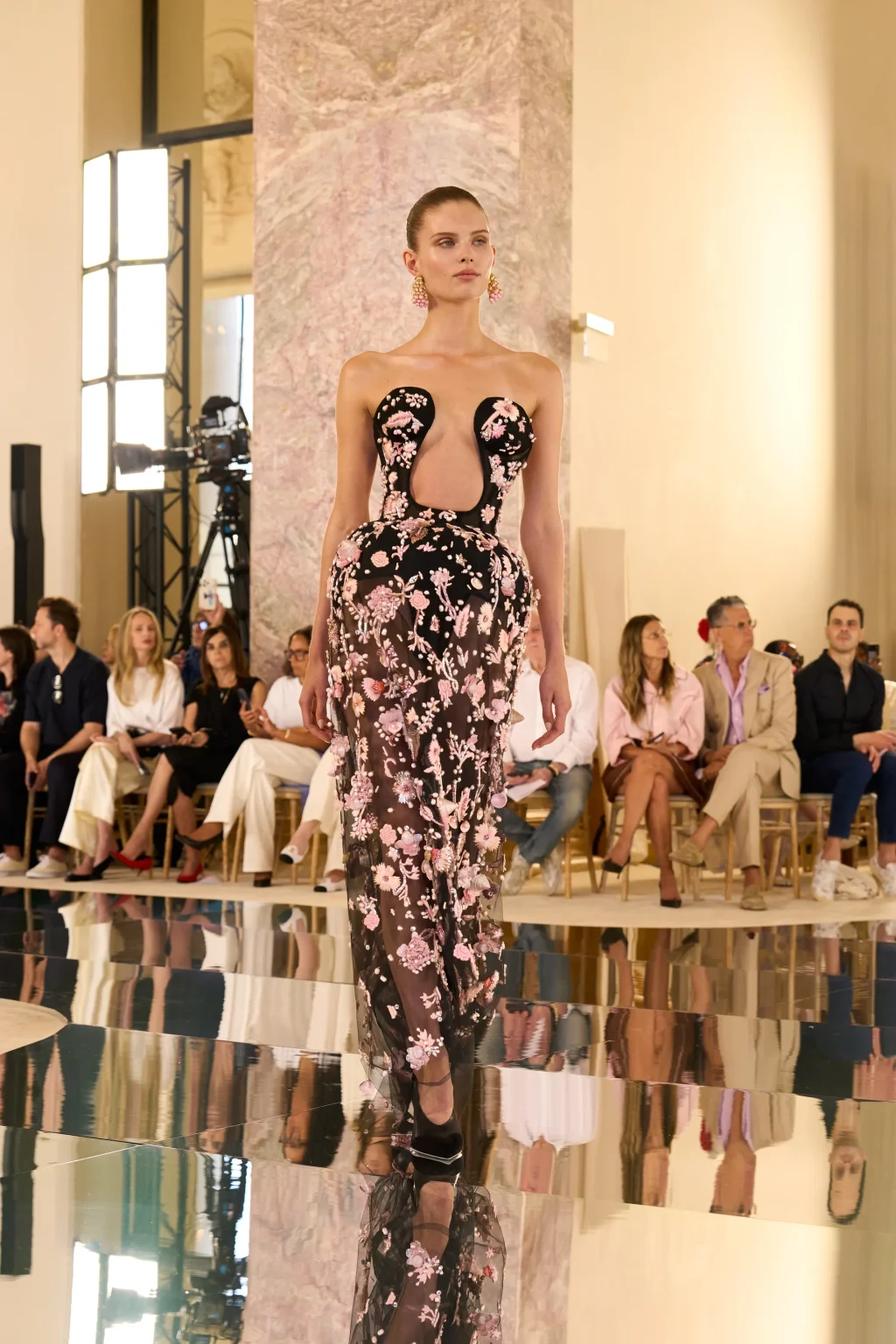
The finale look traveled fast: the closing dress was transported straight from the Petit Palais to Leicester Square, where Zendaya wore it that same afternoon for the world premiere of The Odyssey. Within this theatre, the accessories were written into the script, described in the notes as an extension of the collection’s “collision of lightness and kink.”
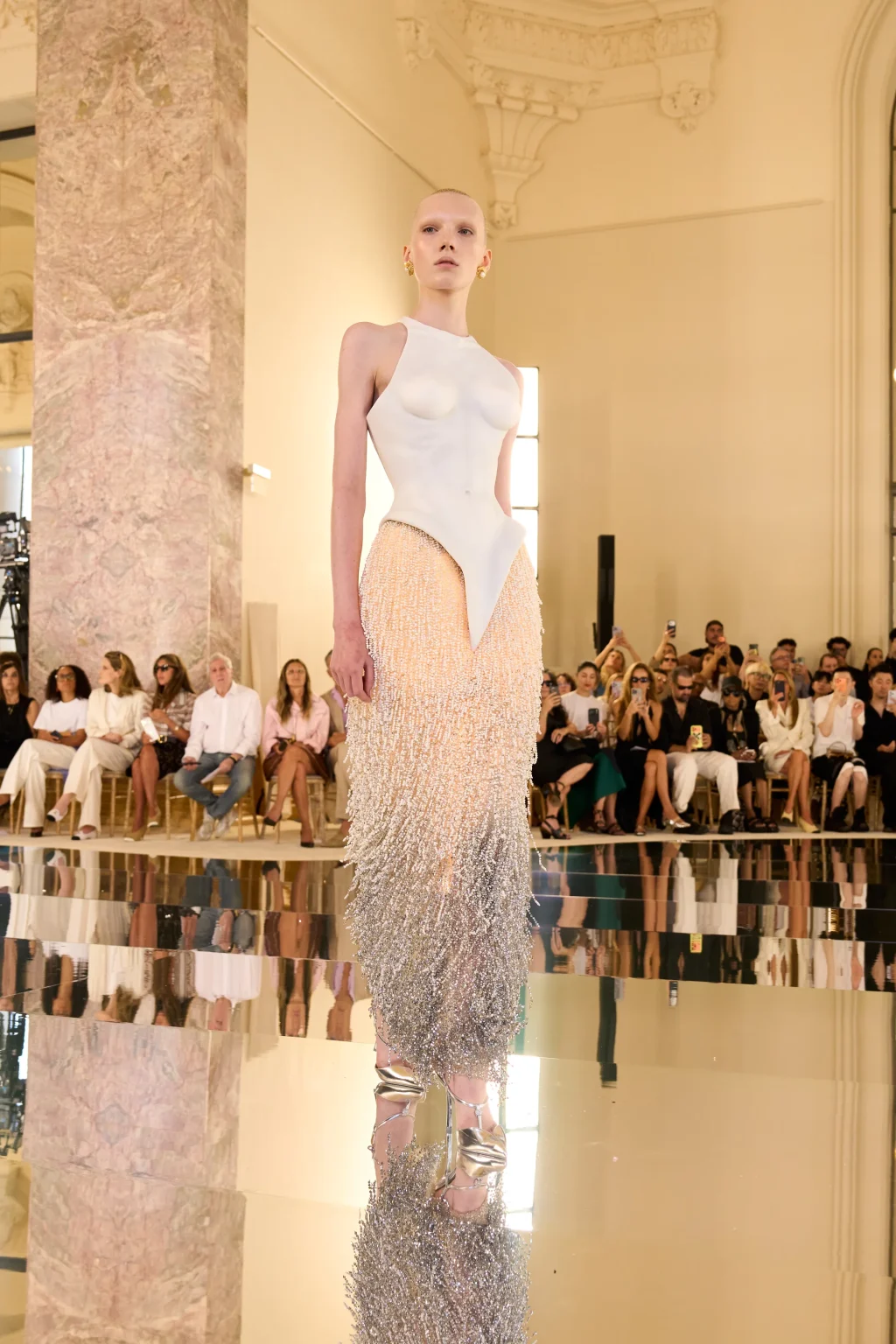
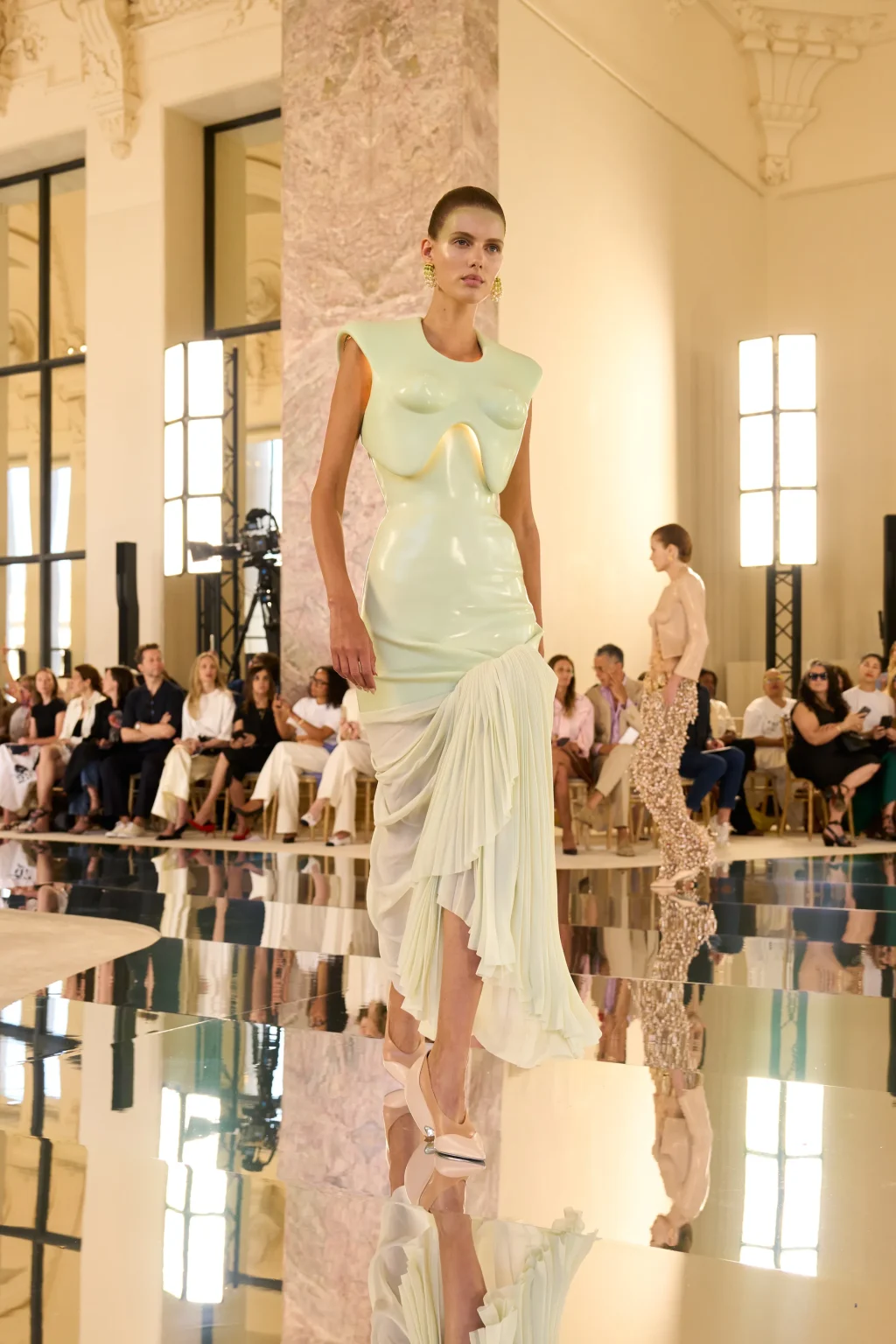
The gold wire Secret bag: jewelry with a handle
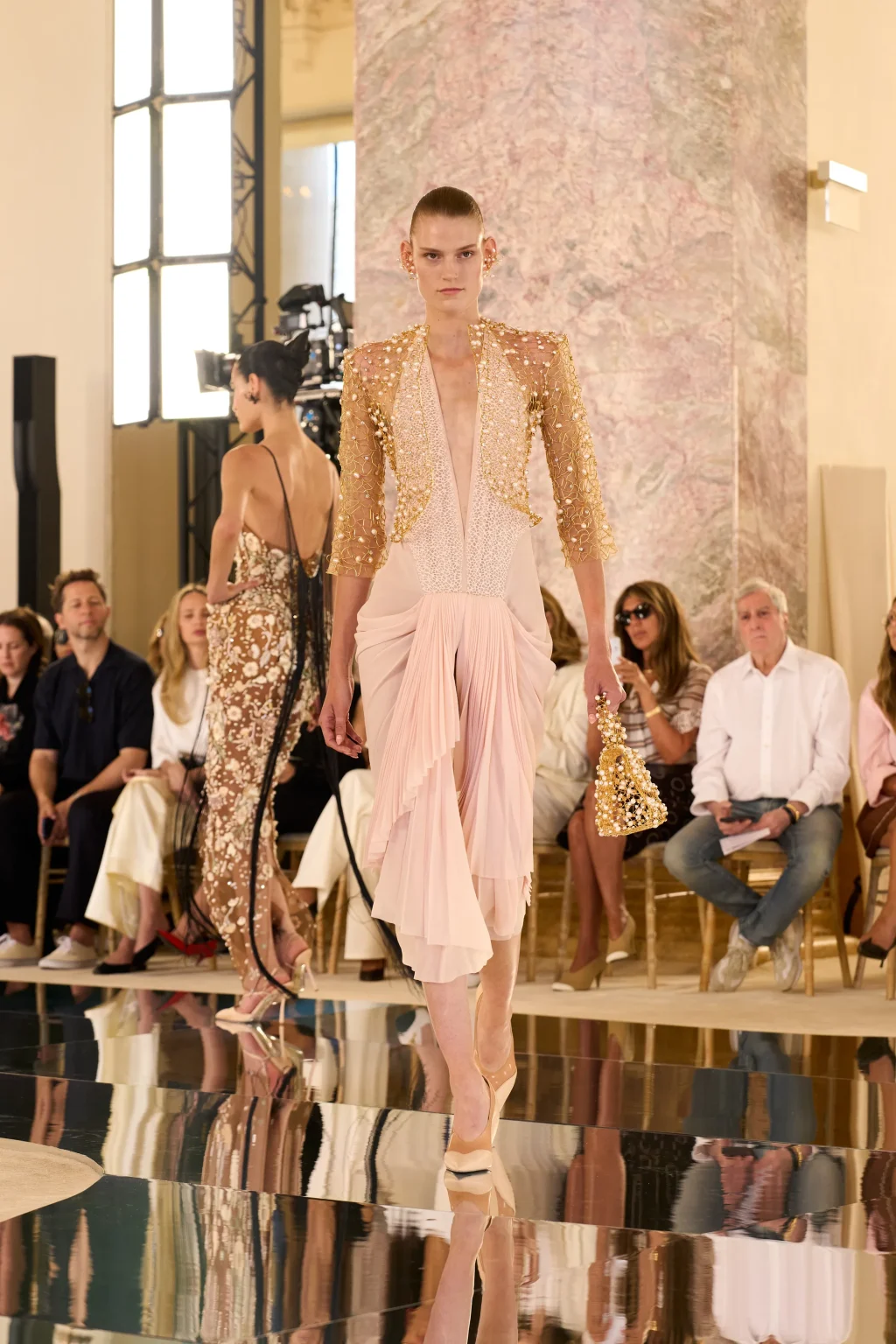
The most photographed of the season’s bags is a Secret top-handle rendered entirely in gilded wire — a tangled, coral-like lattice threaded with freshwater pearls in irregular baroque shapes and dotted with crystals.
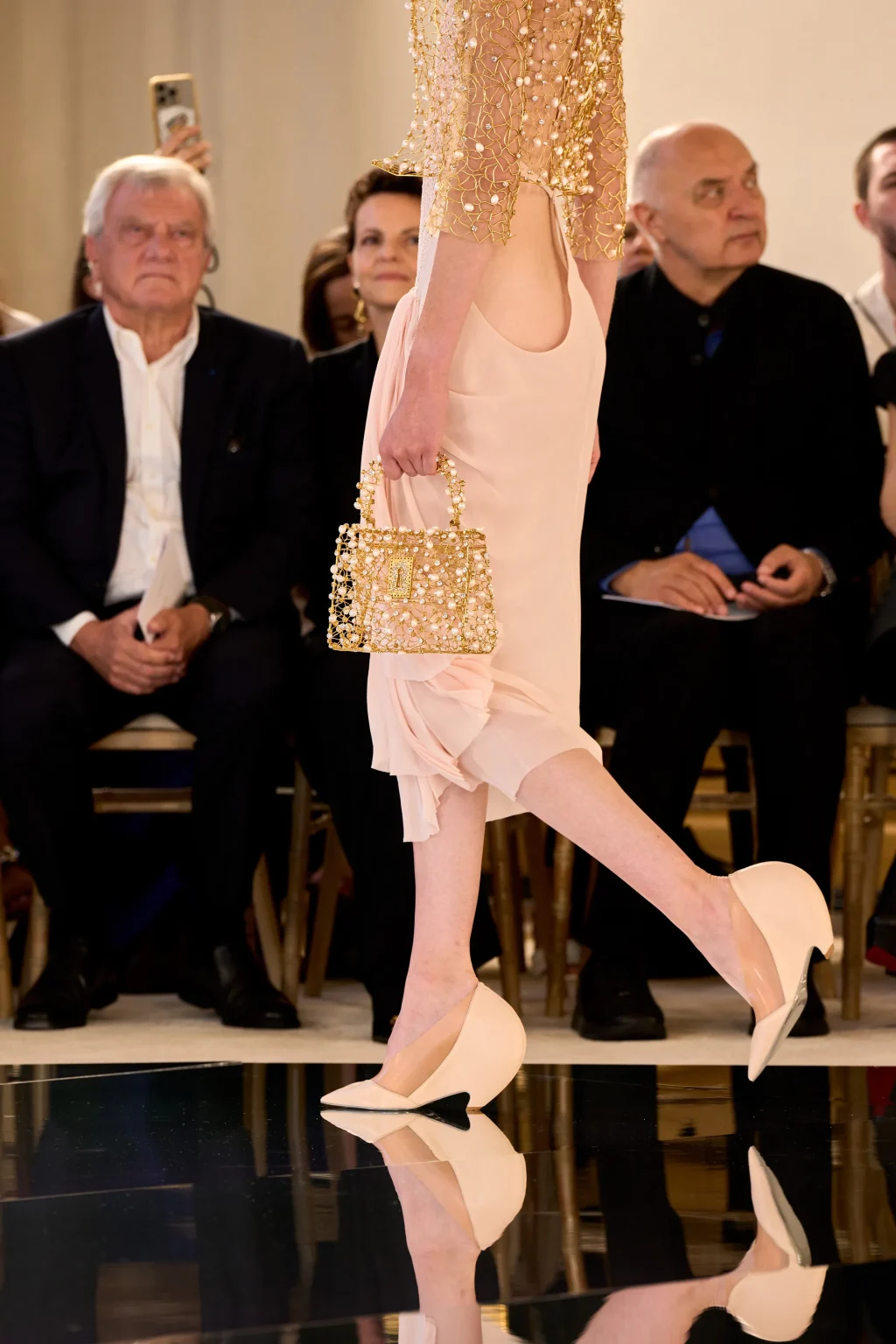
The construction reads as openwork jewelry scaled up to bag proportions: the structured flap silhouette of the Secret is still legible, but the body is transparent, its cage catching light with every step. The keyhole — Elsa Schiaparelli’s most loaded code — appears as a pavé-set plaque at the center of the flap, while the rigid top handle is wrapped in the same pearl-studded filament. On the runway it was paired look-for-look with a matching gold wire bolero embroidered with pearls and crystals over a blush chiffon dress, turning bag and jacket into a single continuous idea.
The sea sponge bag: texture as provocation
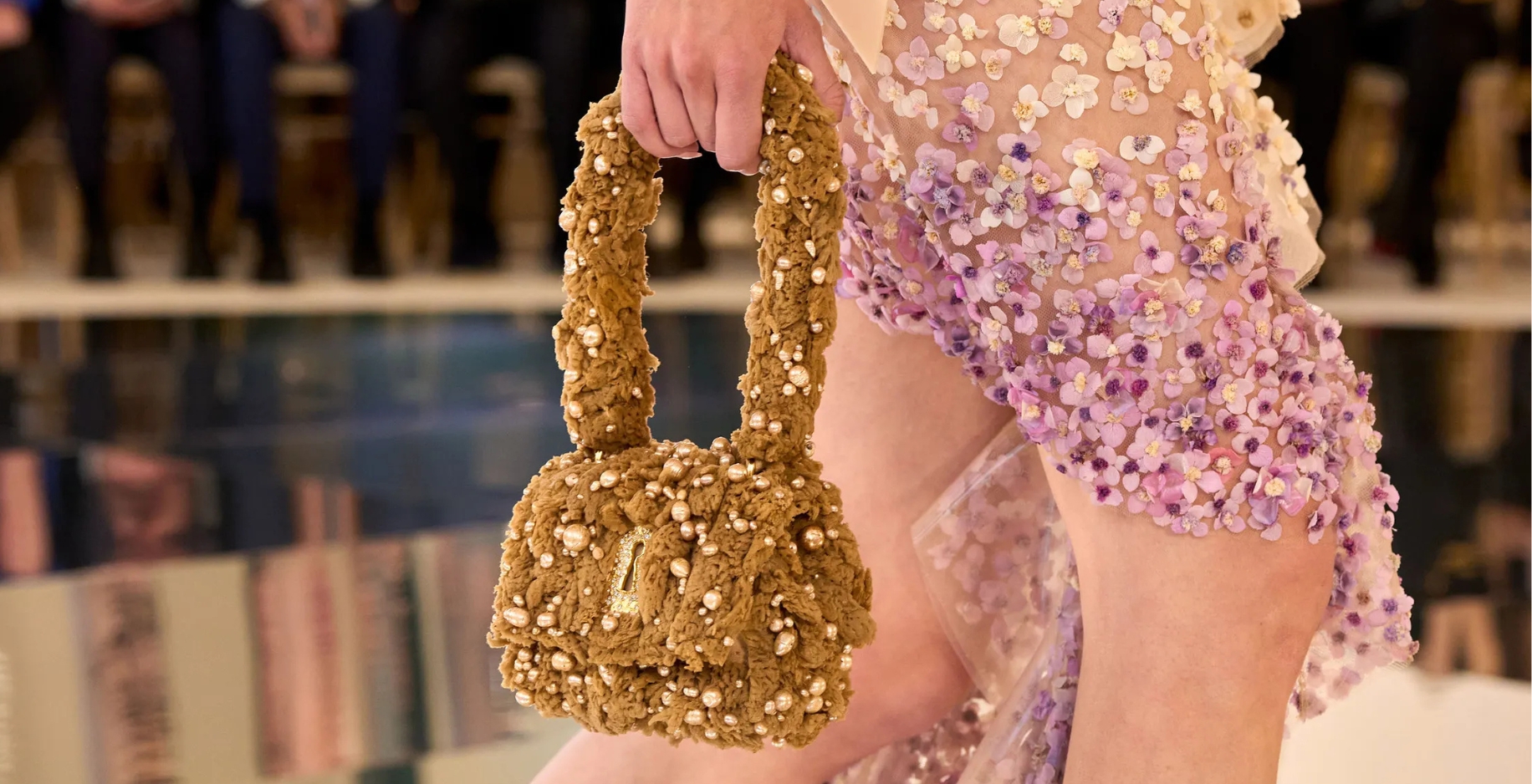
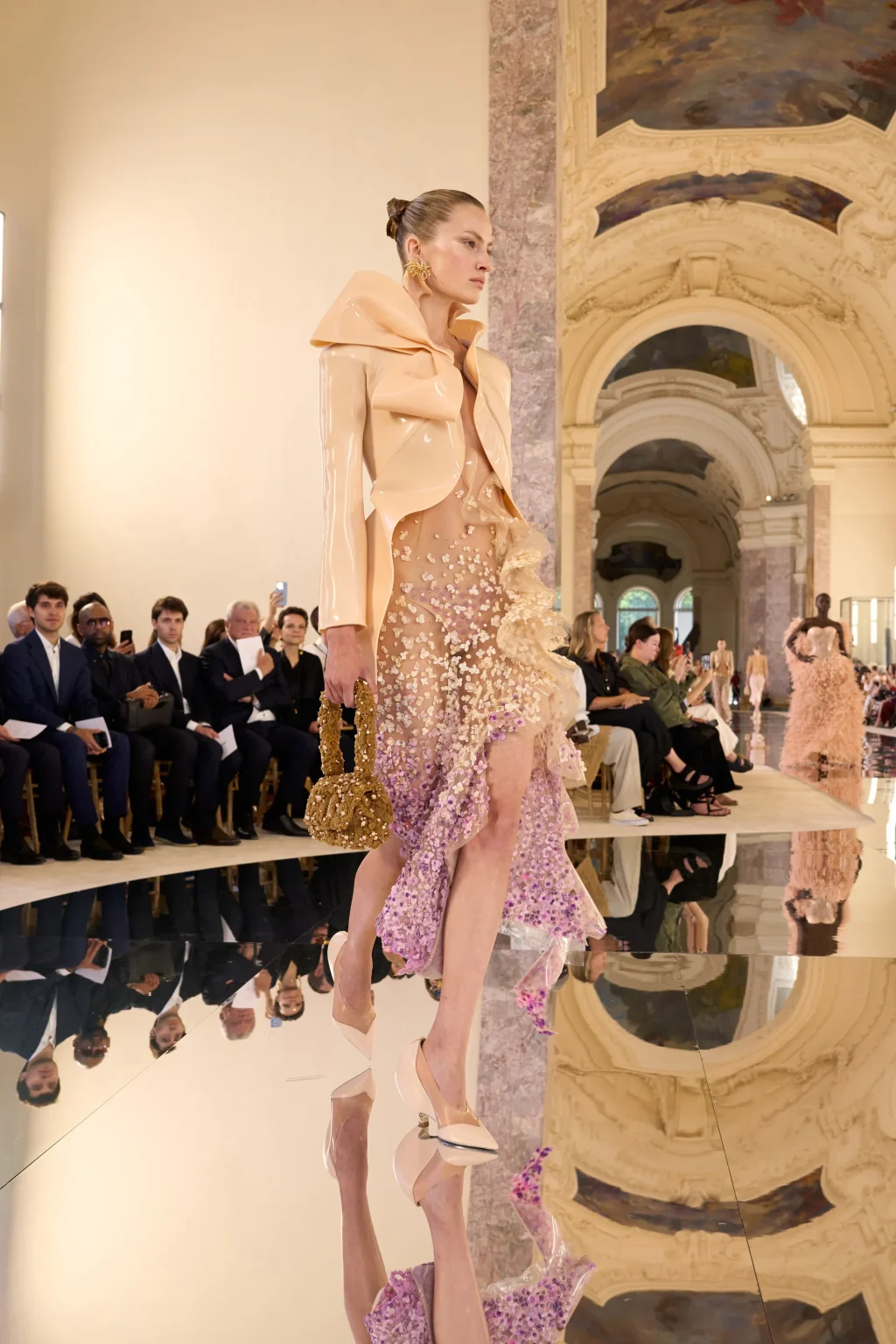
The second standout trades shine for touch. Carried against a cropped latex jacket with an oversized sculptural bow and a sheer skirt scattered with flowers fading from ivory into violet, this Secret variation looks lifted from the ocean floor: a dense, caramel-toned sponge texture studded throughout with lustrous pearls in graduated sizes.
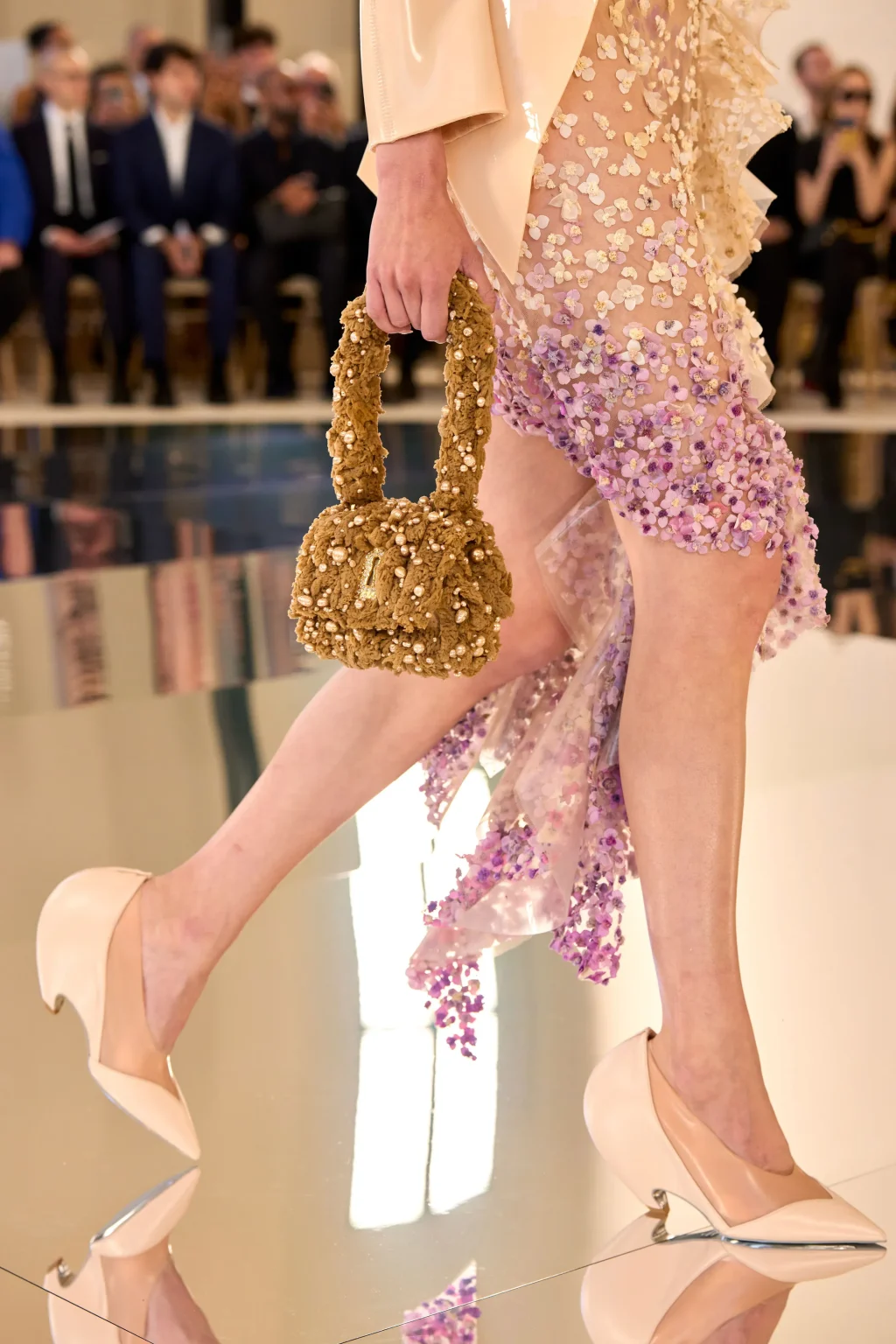
The chunky top handle is wrapped in the same material, and a slim gold keyhole clasp sits almost hidden in the surface. It is the collection’s aquatic obsession — the notes mention sea anemones, octopus tentacles, and shell forms across the jewelry — condensed into a single tactile object, and arguably the most Elsa-coded piece of the season: the familiar made genuinely unfamiliar.
The flower Secret bag: a garden you can carry
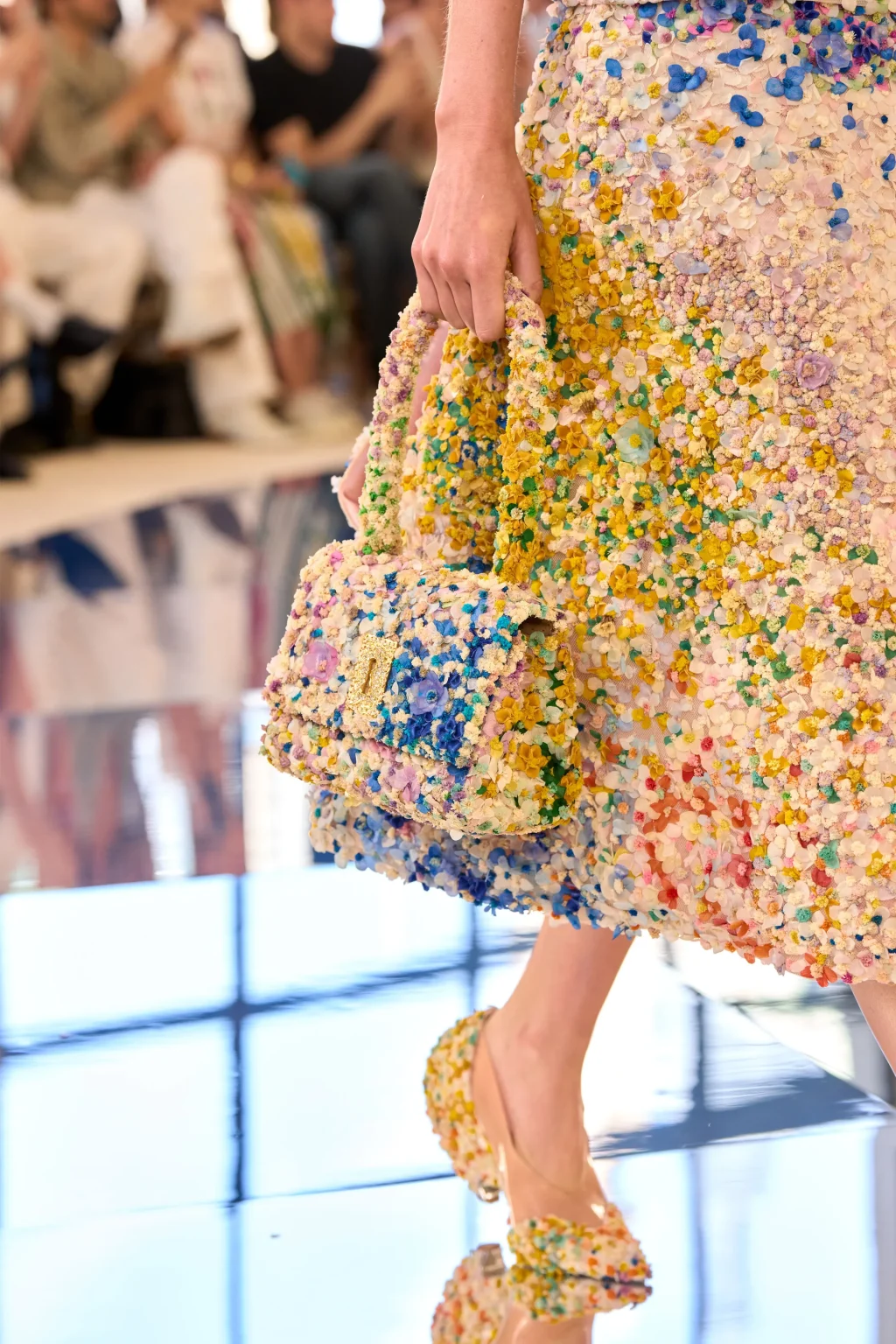
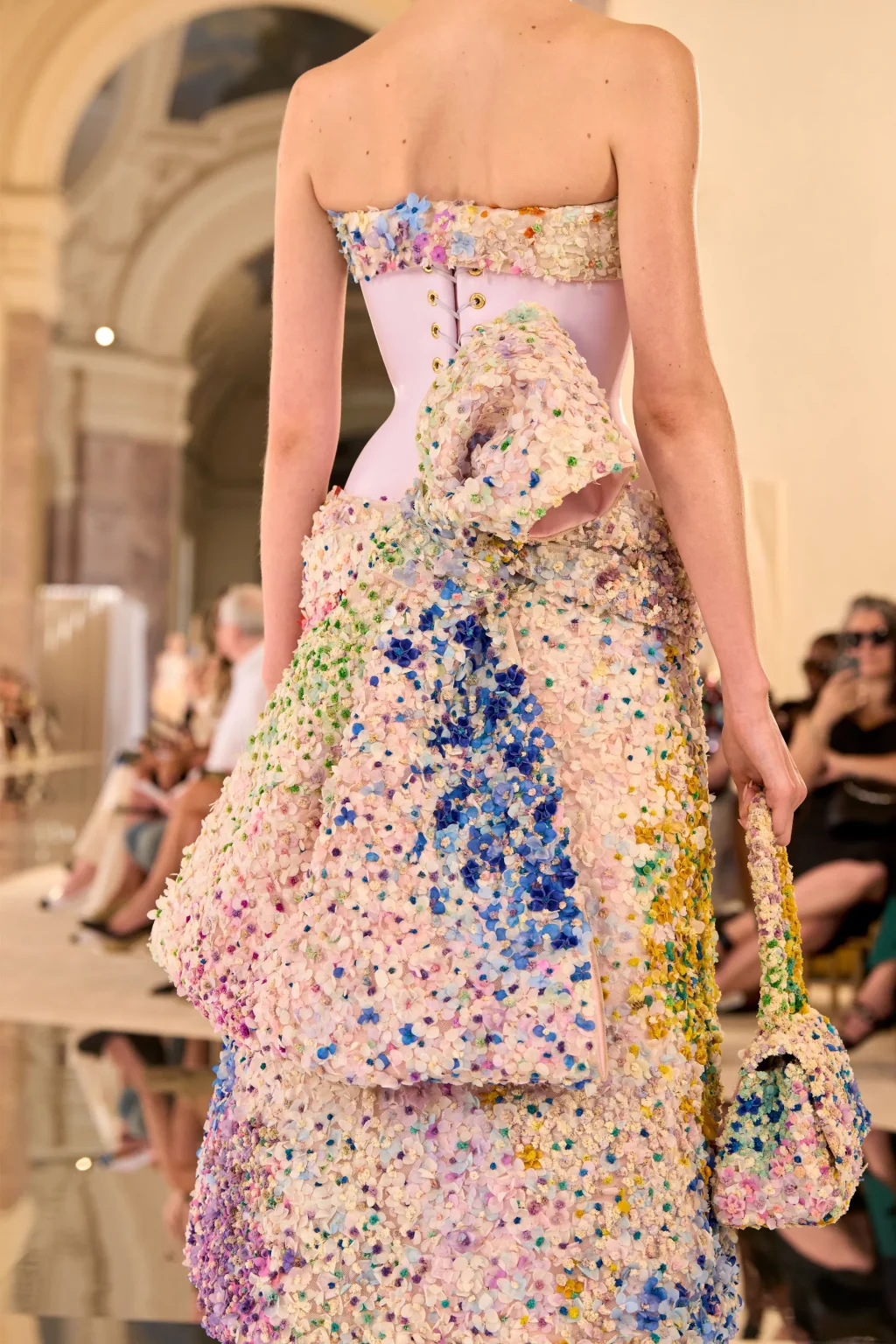
The third bag dissolves entirely into its look. Worn with a strapless dress built around a lacquered pale-pink corset and a full skirt encrusted with hundreds of miniature blooms — the notes cite real flowers, ribbon flowers, and blossoms rendered from hosiery stretched on metal wires — the flap bag is covered edge to edge in the same flora: cornflower blue, saffron yellow, mint, lilac, and cream.
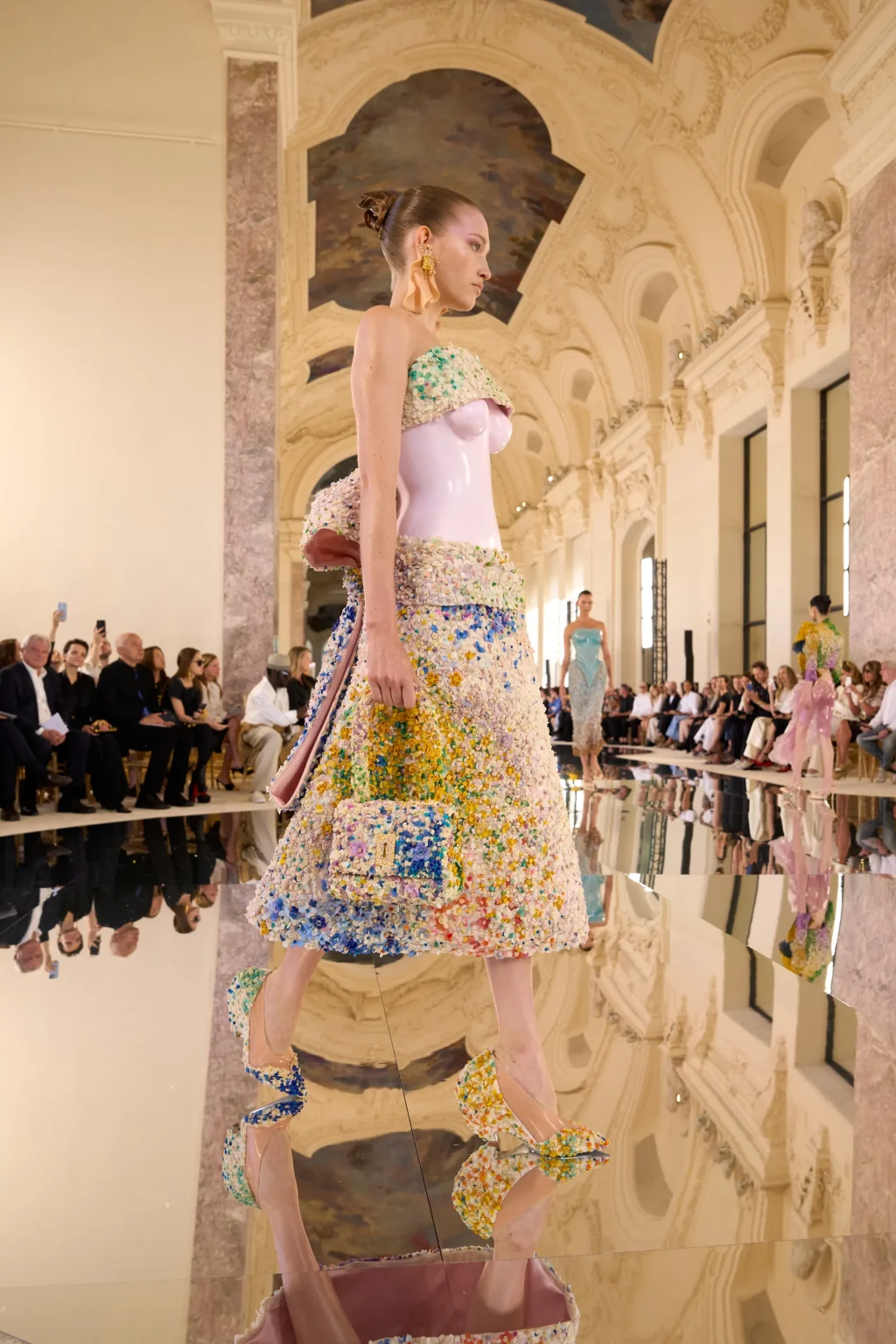
Both handles are petal-wrapped, and the gold rhinestone keyhole buckle is the only hard surface on the entire object. Matching flower-covered pumps complete the effect of a look that behaves like a single meadow.
Couture accessories often function as punctuation; here they carried argument. Each of the three bags translates the collection’s central question — whether beauty lives in the material or in the imagination that reinvents it — into something that fits in one hand. Wire instead of leather, sponge instead of satin, flowers instead of embroidery thread: the Secret bag became the smallest, clearest proof of Roseberry’s thesis.