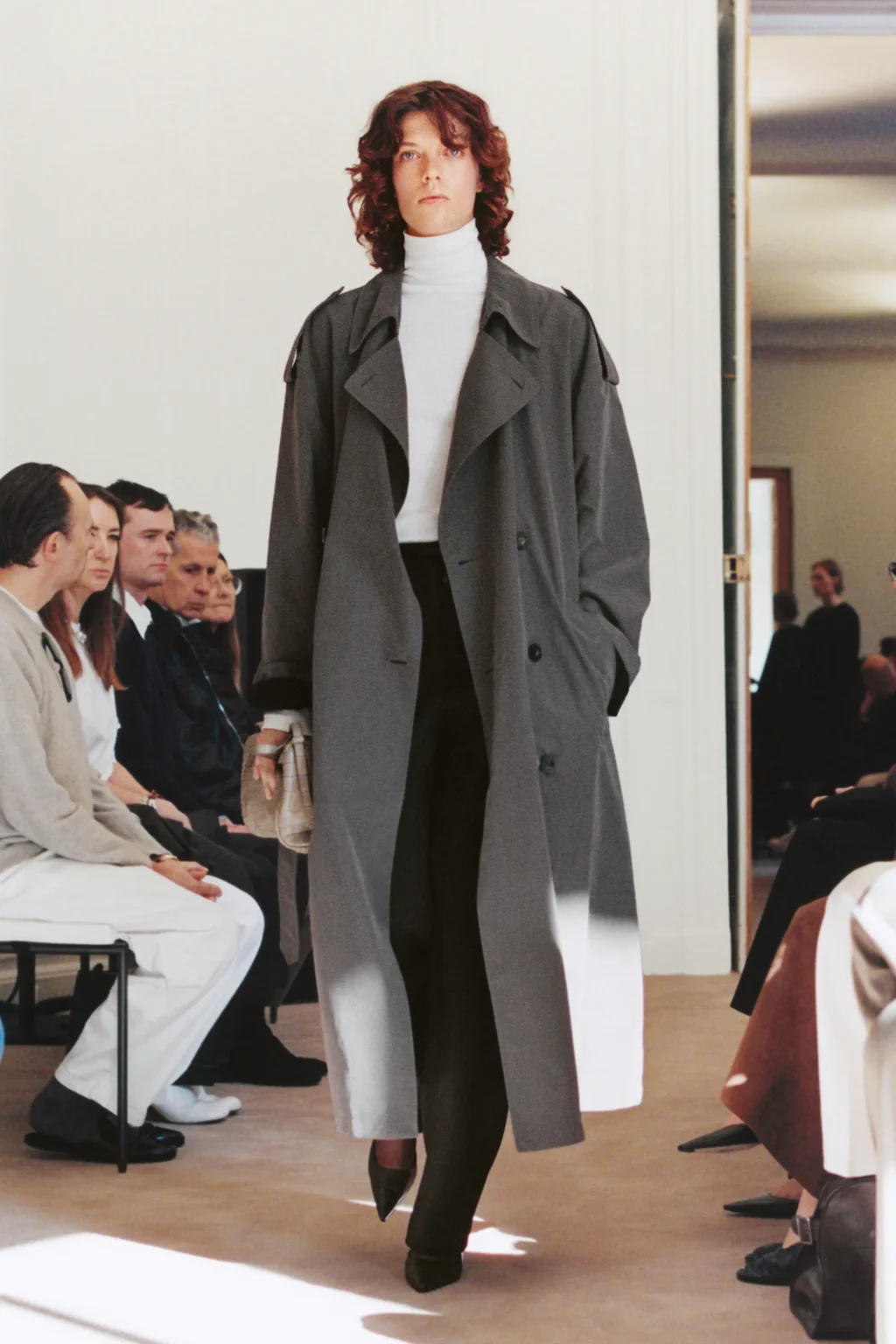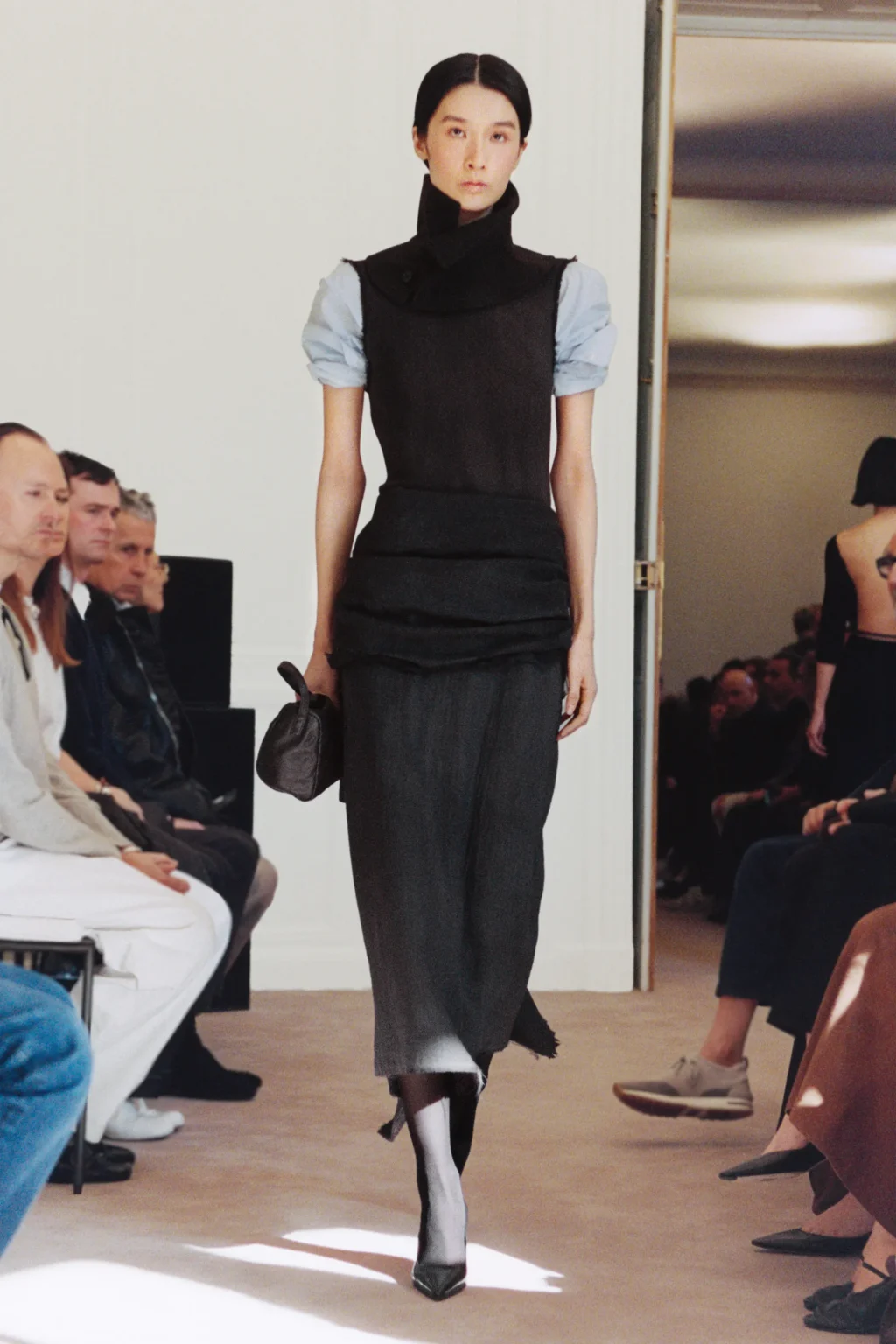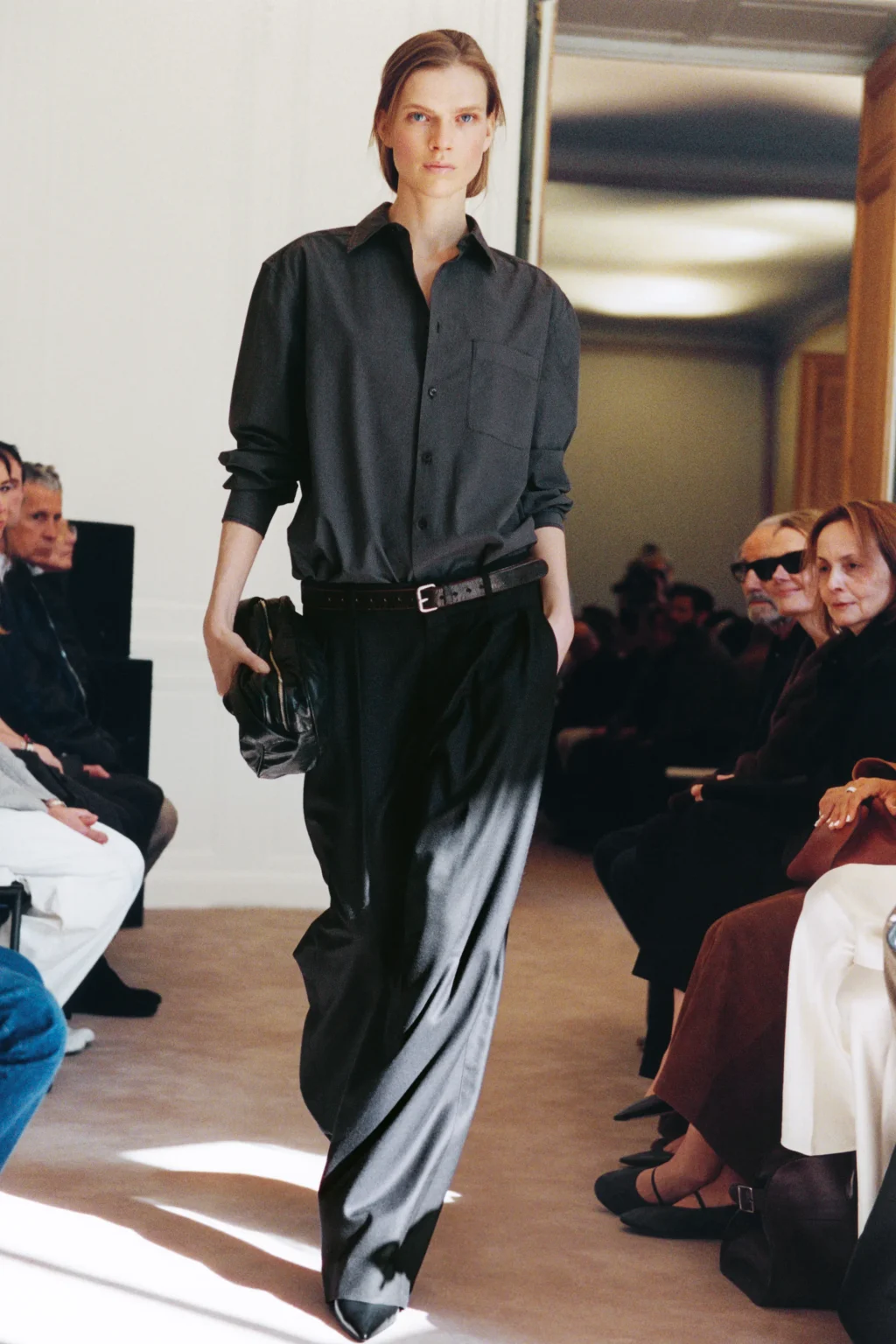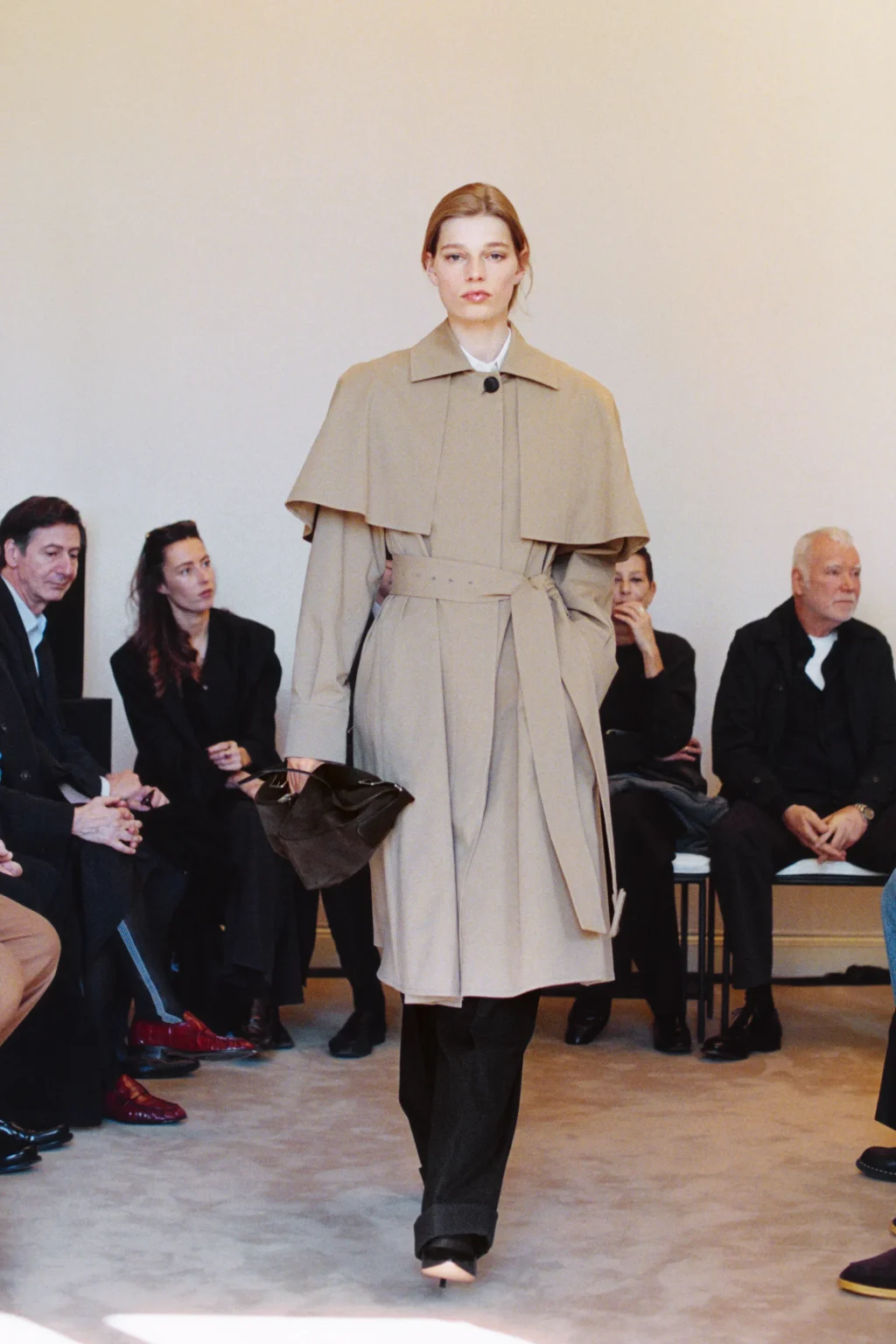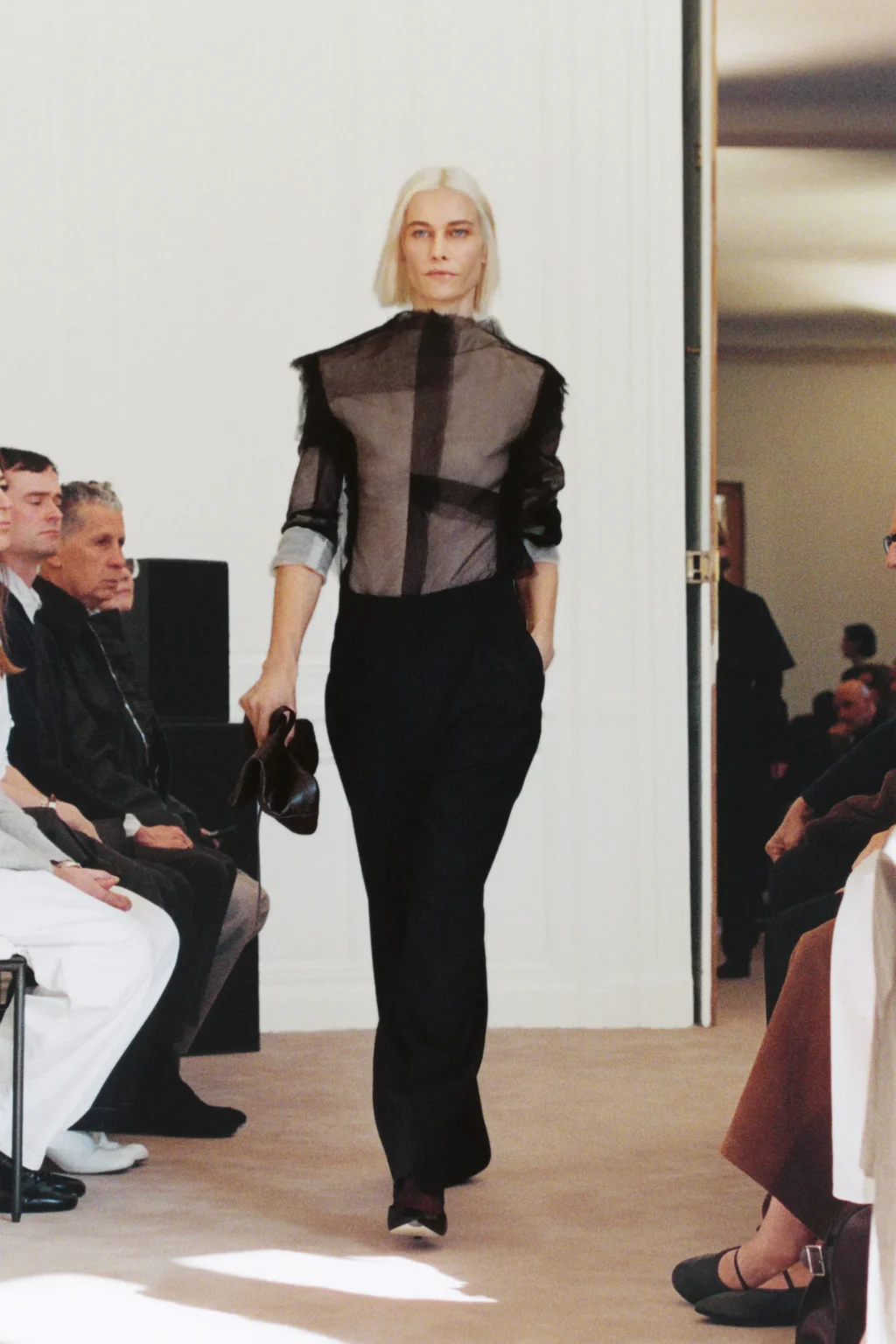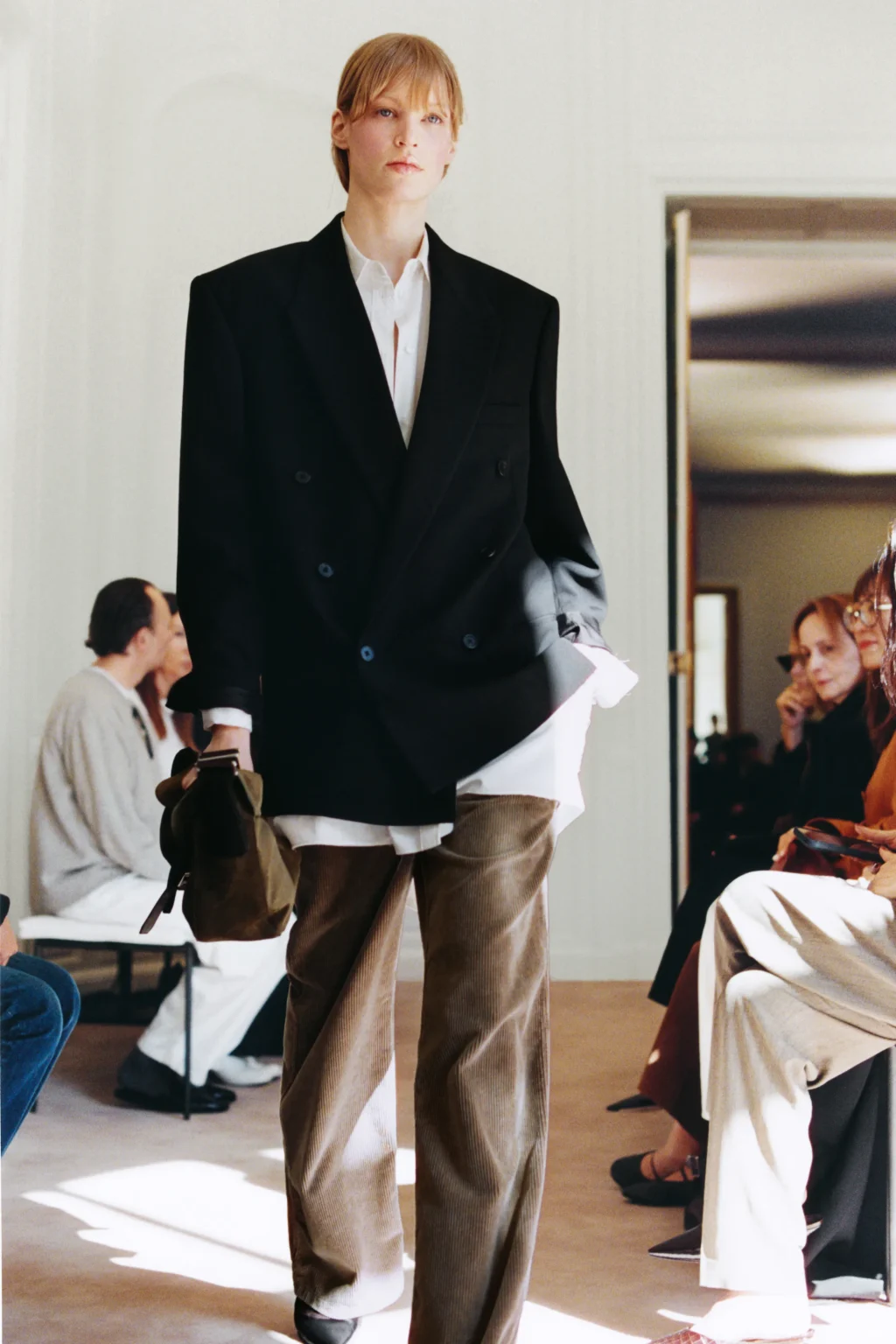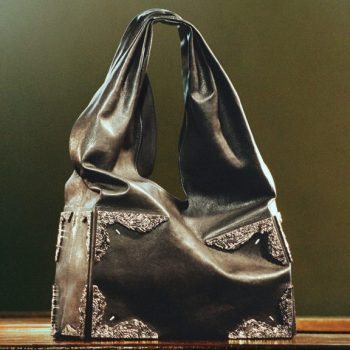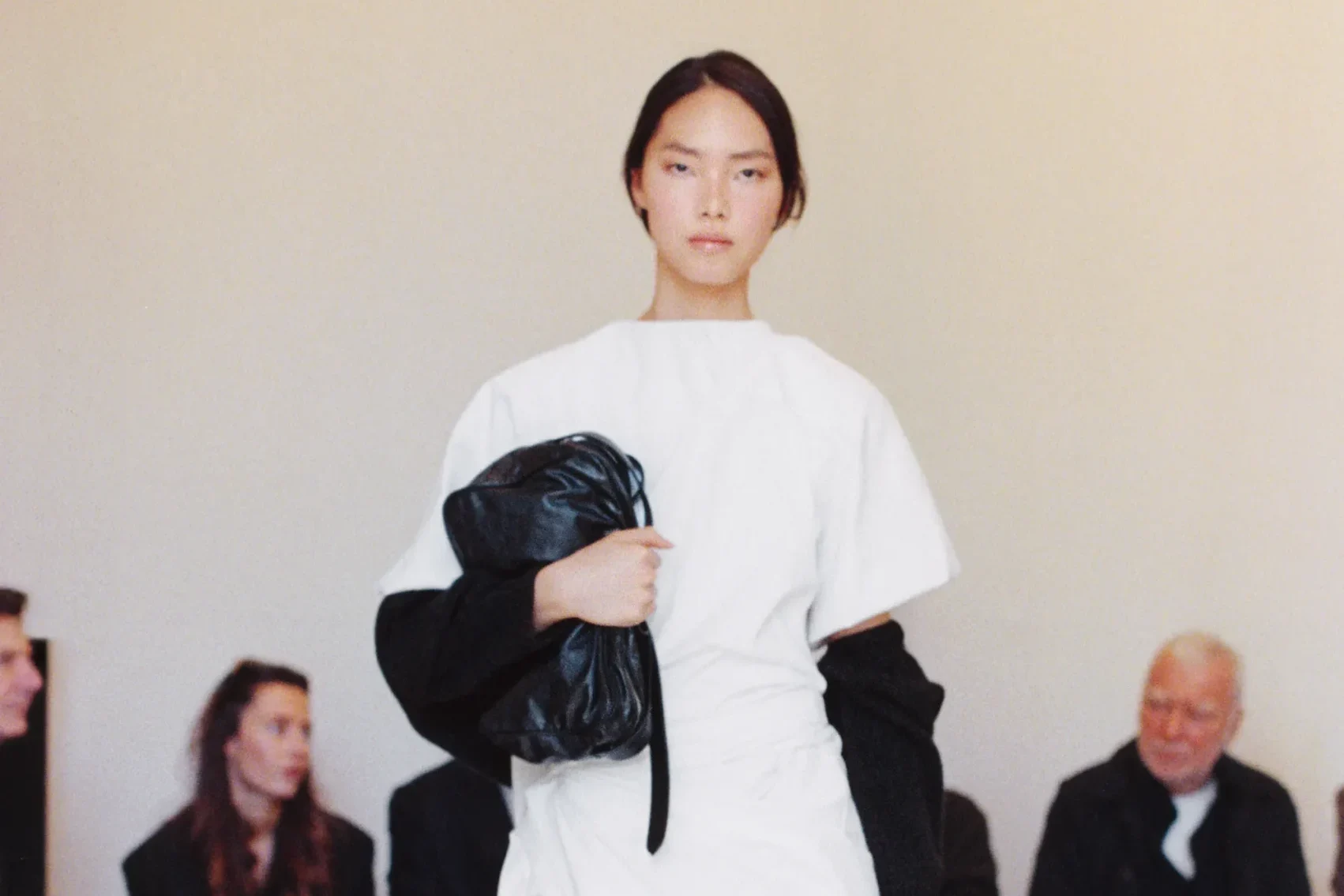
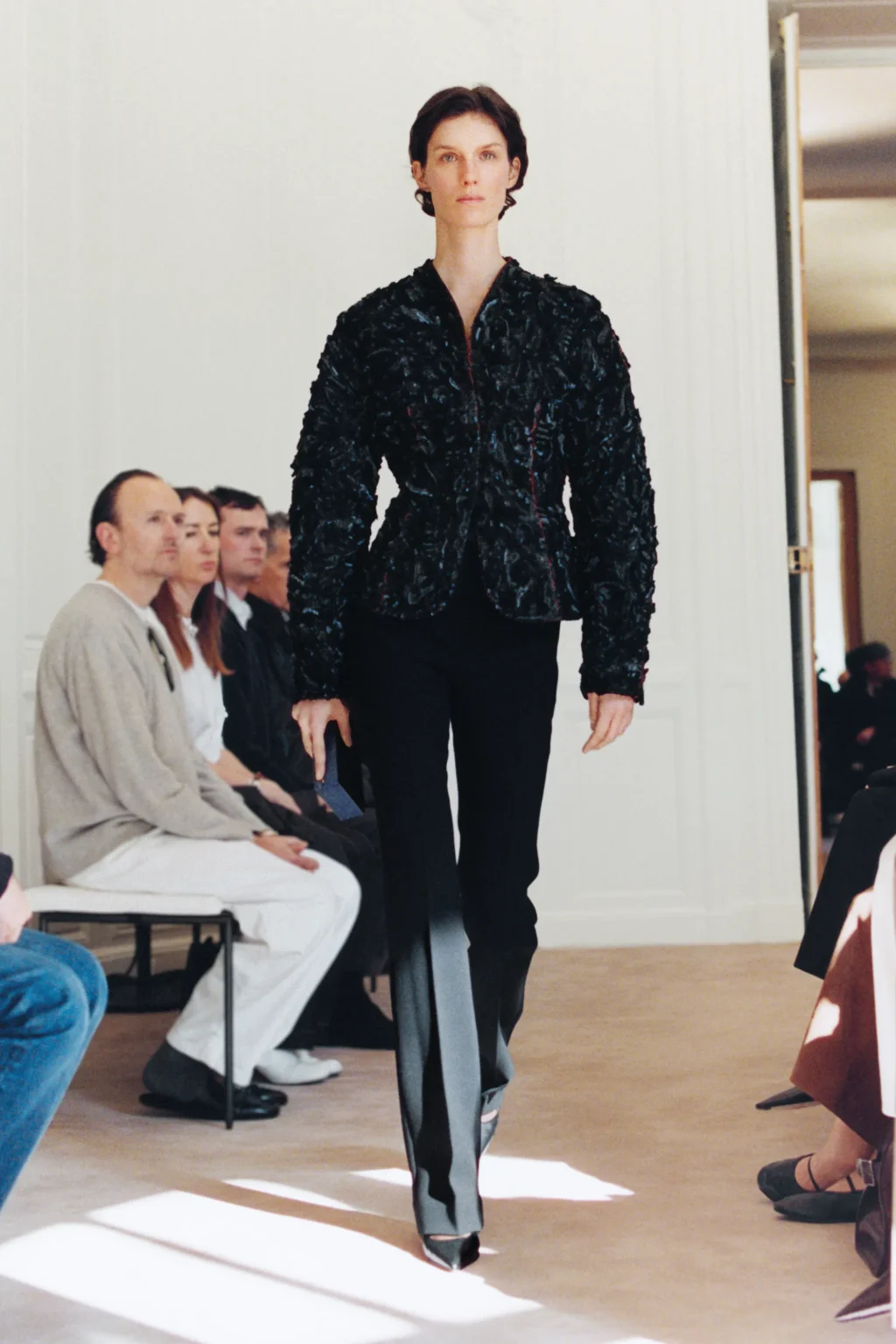
The Row Fall-Winter 2026–2027 bags were presented in Paris during Paris Fashion Week, in the brand’s intimate Rue des Capucines showroom, where daylight, restrained staging, and The Row’s strict no-phone policy reinforced the label’s signature atmosphere of privacy and control. Rather than turning handbags into overt runway statements, the presentation treated them as part of the silhouette: quiet, tactile, and deeply integrated into the clothes.
The bag offering focused on a concise set of shapes: soft gathered clutches, folded leather pouches, slim evening cases, discreet day bags, and a few larger supple carryalls that appeared only when the proportions of the look could absorb them.
Most were shown in black, deep brown, charcoal, or pale tonal shades, with the emphasis placed not on logos or hardware, but on surface, softness, and the way the bag sat close to the body. The result was a handbag lineup that felt precise, private, and unmistakably The Row.
Flat evening cases make restraint look severe, not delicate
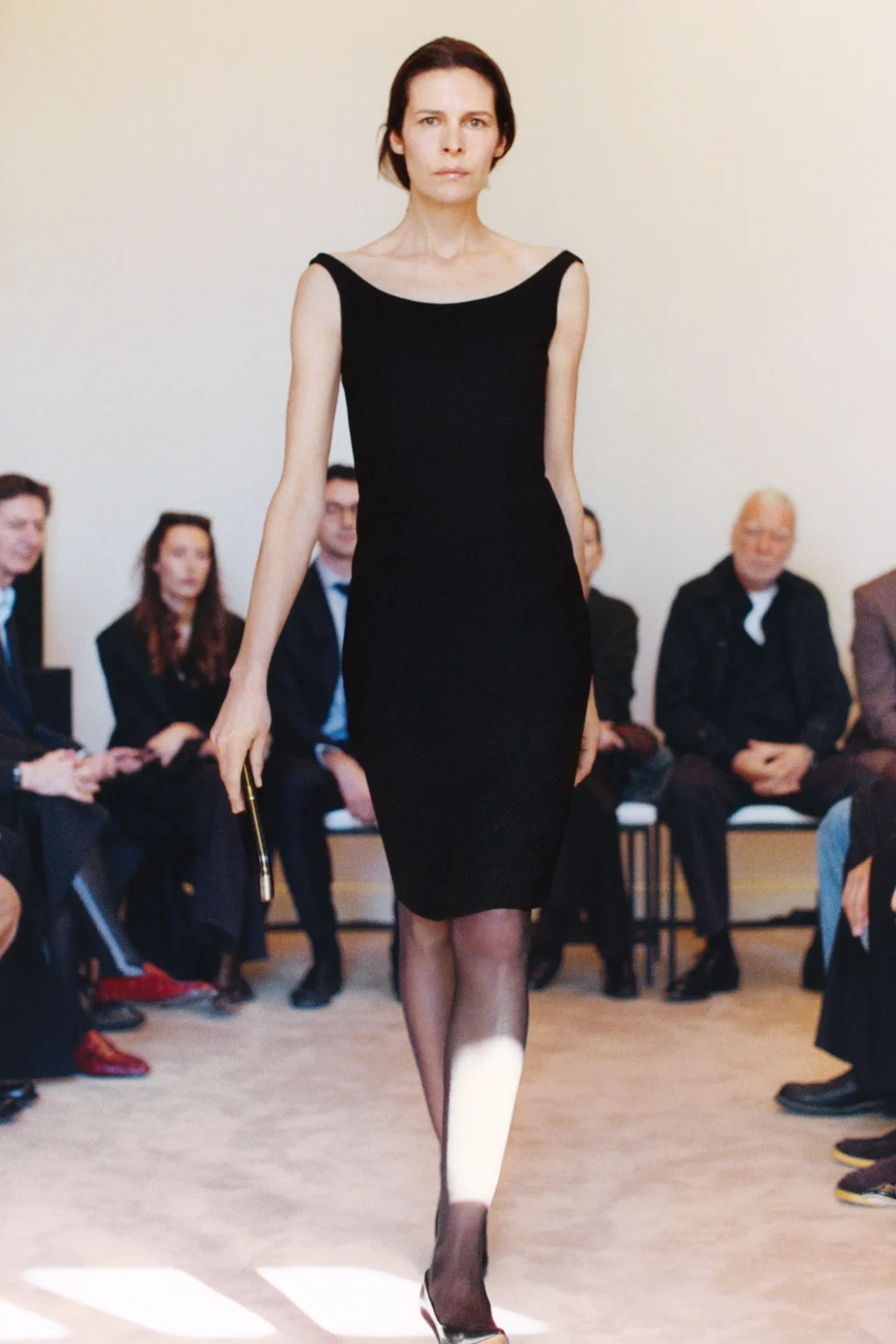
Alongside the soft pouches, the collection repeatedly introduces flat, slim clutches that sharpen the overall mood. These are not jewel-box minaudières, nor are they decorative evening bags in the traditional sense. They are closer to compact leather folios or envelope-like cases: narrow, disciplined, almost severe.
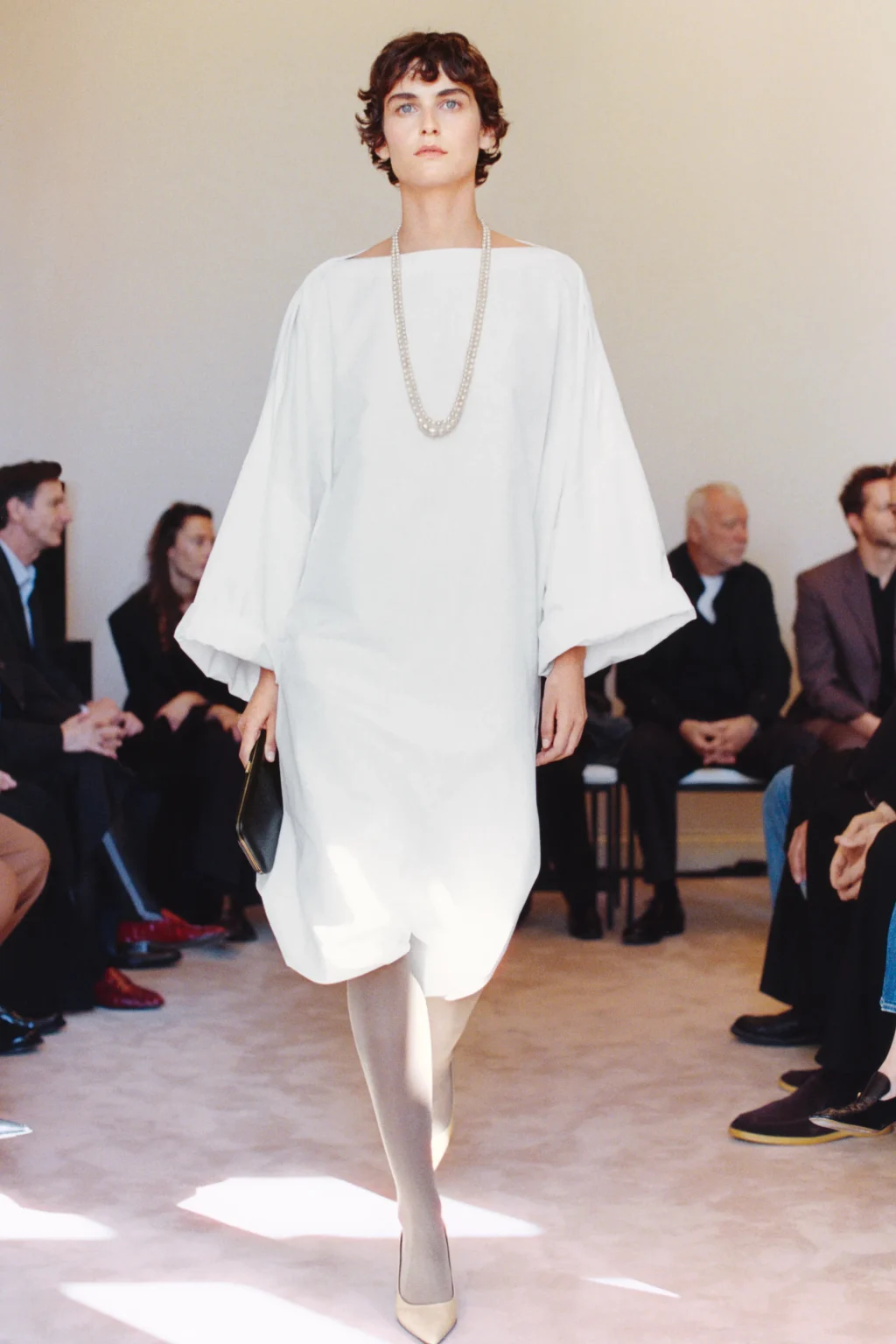
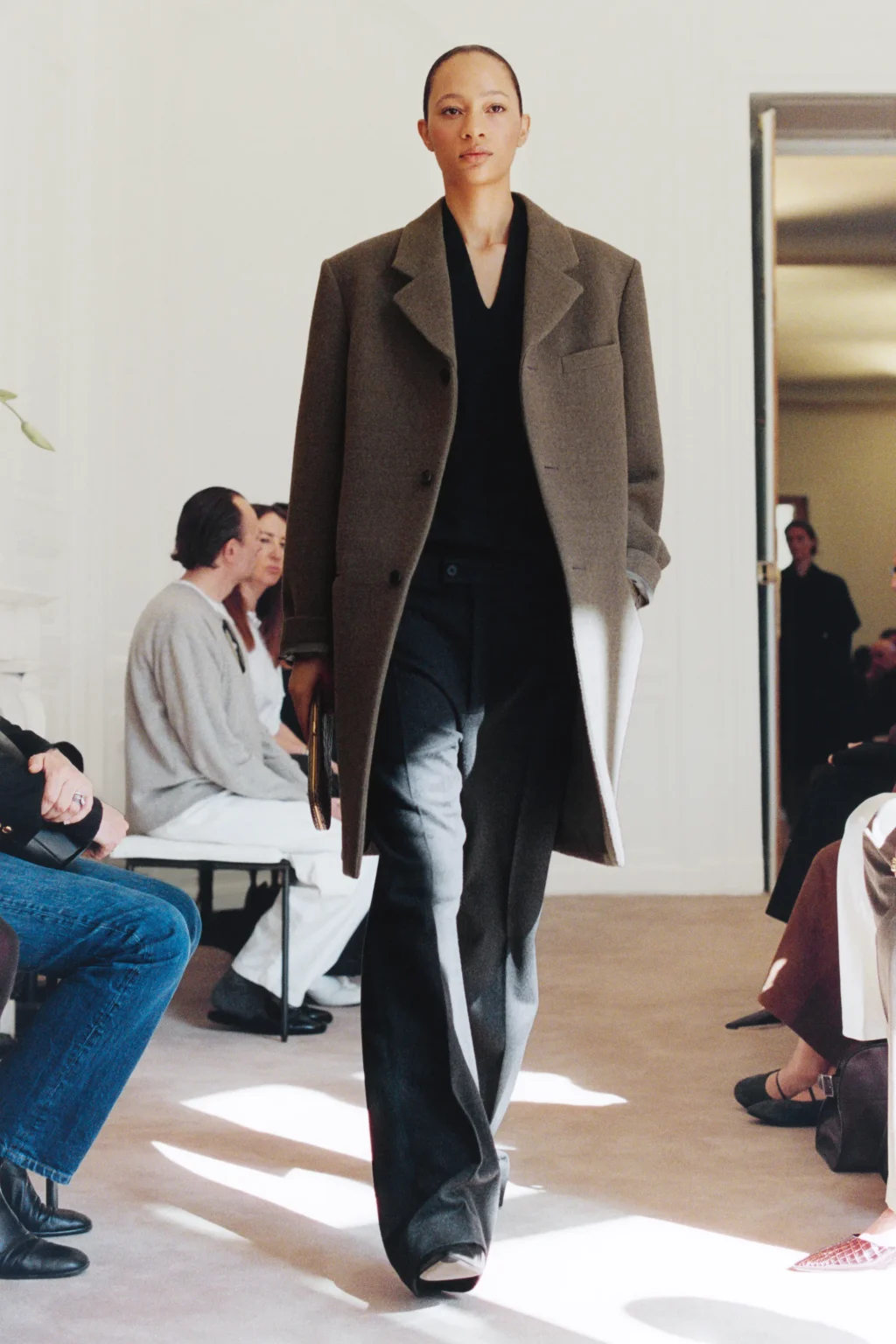
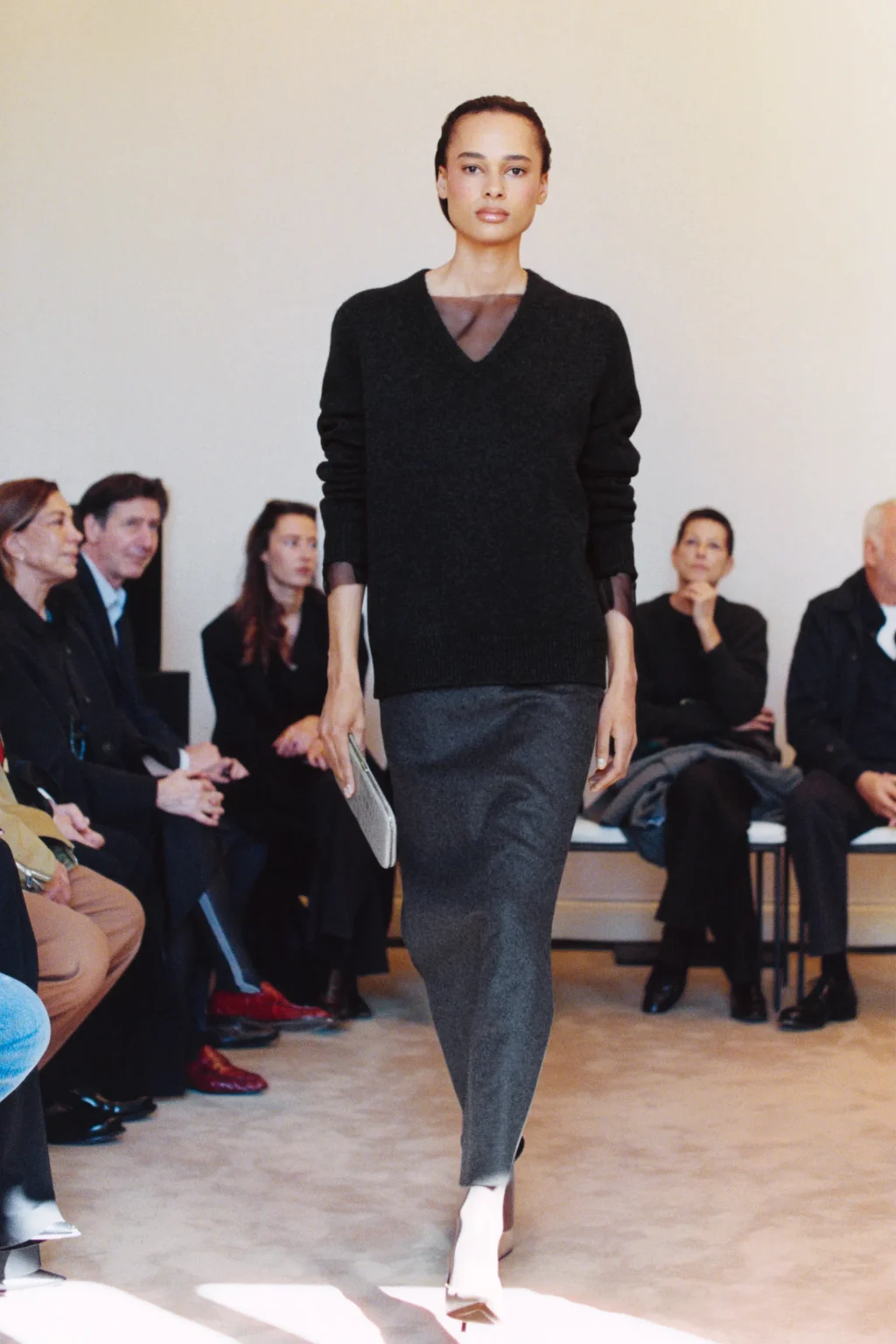
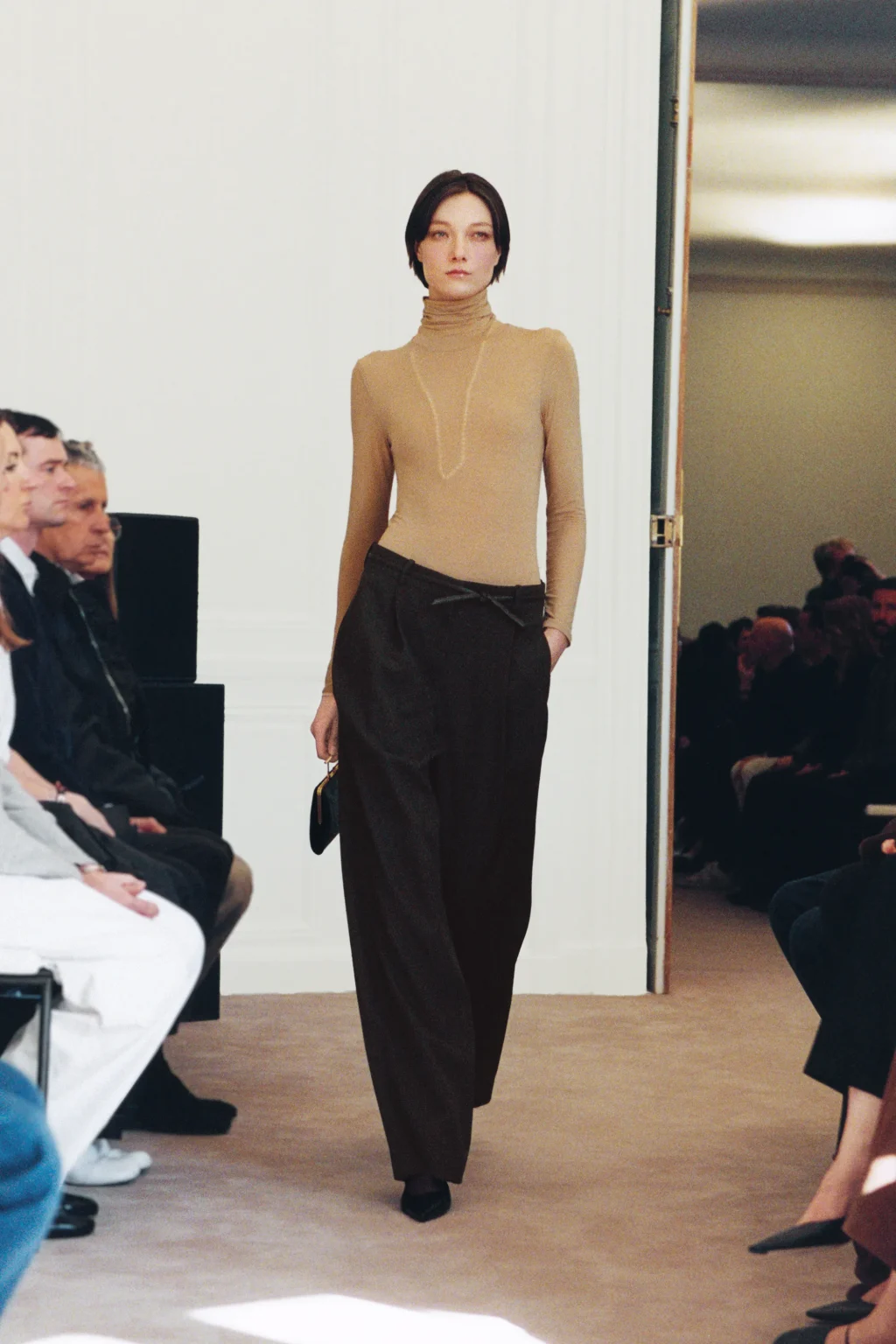
Large day bags appear only when the silhouette can absorb them
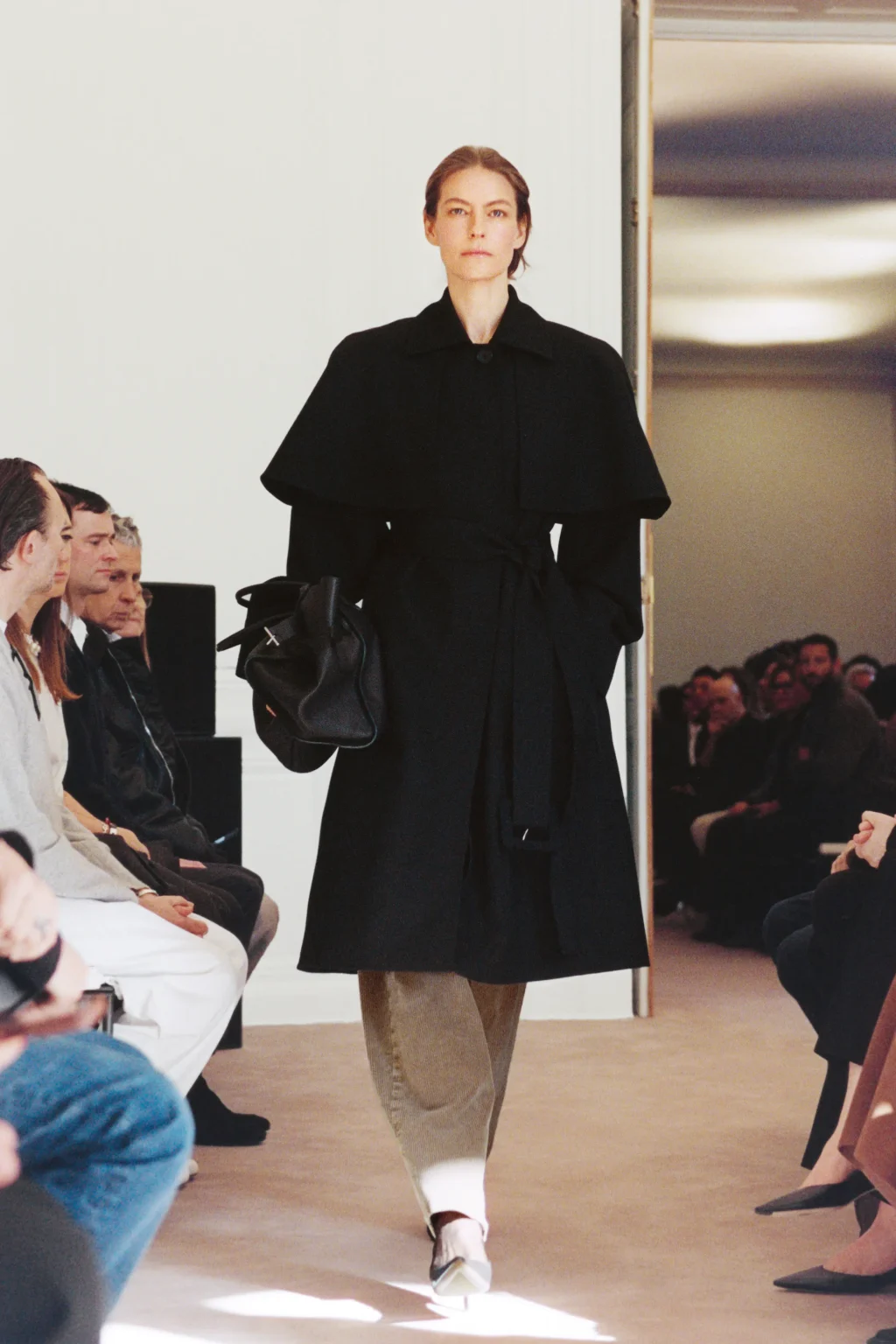
One of the defining strengths of The Row’s styling has always been knowing when a larger bag can enter the frame without disturbing the line. In this collection, the larger day bags are used sparingly and intelligently. When they appear, they tend to accompany coats, roomy tailoring, or fuller silhouettes that can absorb their weight.
Color is almost irrelevant because surface does all the work
The palette of the runway bags is striking precisely because it is so unsurprising. Black dominates. Dark espresso, smoke, charcoal, and occasional pale tonal counterparts appear where necessary. There is no obvious attempt to turn color into an event.
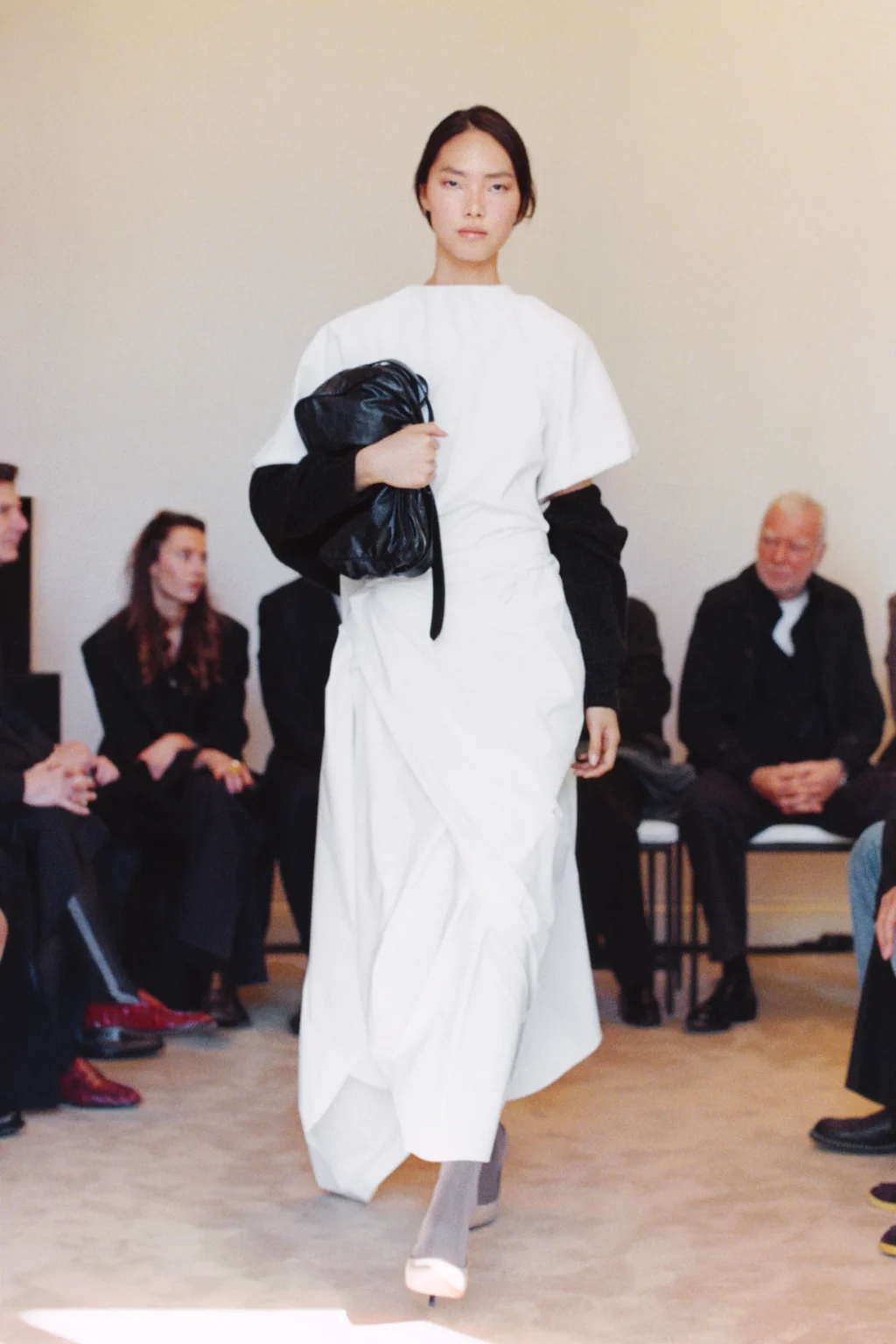
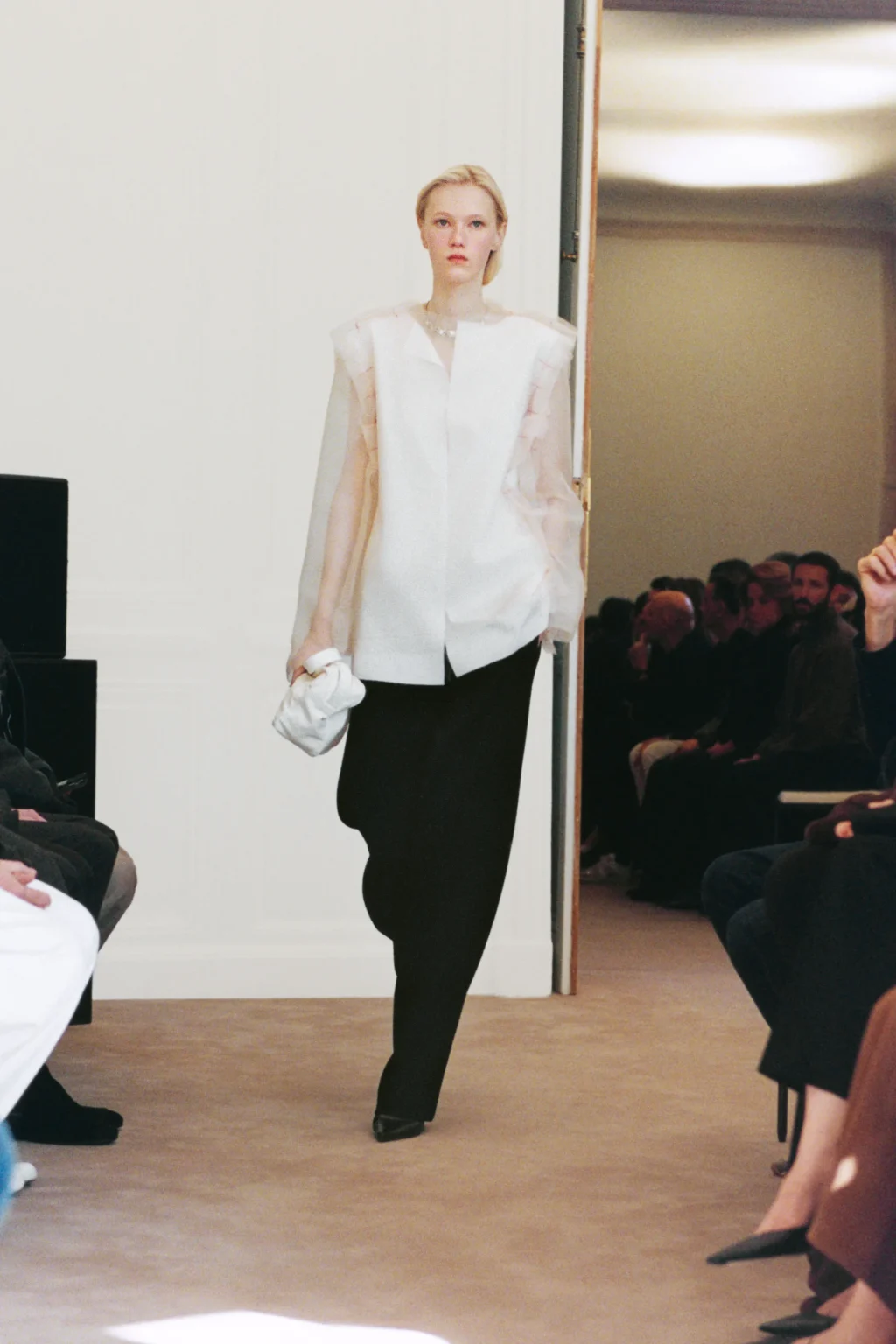
That is not a limitation. It is the whole point. The Row has never needed color to prove desirability. The emotional charge comes from surface: matte leather against sheer fabric, folded leather against a clean white tunic, a soft dark pouch against beige outerwear, a flat clutch against black tailoring. The bags derive their presence from texture, scale, and handling.
The Row’s bag styling is about proximity to the body
Another important point: these bags are styled close. They are held low, tucked in, compressed under the arm, or carried like private objects. That proximity matters because it reinforces The Row’s entire worldview. This is luxury that is meant to be experienced at short distance.
Which bag families the runway seems to echo most clearly
Without assigning official names where none have been confirmed, the runway suggests four strong bag directions.
First, there is the soft ruched or gathered clutch, the direction most closely associated with the Bourse sensibility: intimate, tactile, and understated.
Second, there is the flat, slim evening clutch, which feels closest in spirit to Peggy-like restraint: clean, compact, and severe.
Third, there is the supple day carryall or shoulder bag, which visually belongs in the Marlo-India-Alger orbit: quiet scale, practical luxury, and soft structure.
Fourth, there is the small discreet pouch, almost anti-bag in attitude, functioning less as product statement than as finishing weight within the silhouette.
Taken together, these directions suggest that The Row is not moving toward louder hero bags. It is moving deeper into nuance. The bag proposition is becoming more tactile, more private, more dependent on how the object moves with the body rather than how it photographs in isolation. That is a sophisticated evolution, and very few brands have the confidence to pursue it so consistently.
Final verdict on The Row Fall-Winter 2026–2027 bags
The Row Fall-Winter 2026–2027 bags are not designed to dominate the conversation in the usual way. They are designed to reward close attention. Their strength lies in what they refuse: refusal of overt branding, refusal of decorative distraction, refusal of unnecessary complexity, refusal even of the need to announce whether a bag is “new” in a conventional fashion-week sense.