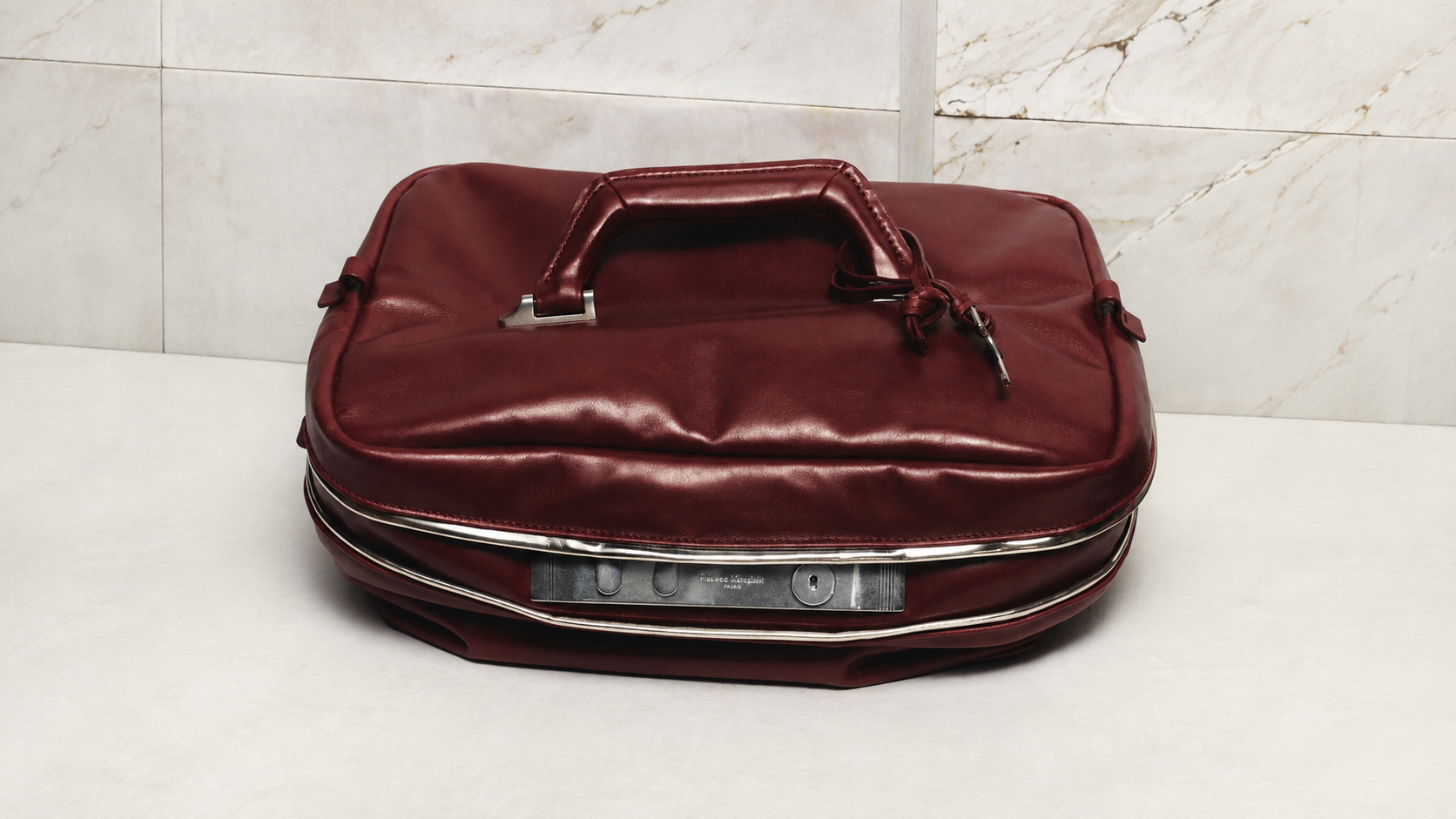
The Maison Margiela Spring-Summer 2027 bags carry the sharpest version of the idea Glenn Martens staged at the Élysée Montmartre in Paris on September 29, 2026. The collection, titled HARD and SOFT, studies the two halves of a couture atelier, and its bags take that study furthest. The new Ghost family turns the briefcase and the vanity case into slouching leather. The 5AC Soft is cut in leather supple enough to fold over itself, the Link is made in waxed and pleated suede, and the evening line pairs jewellery-box clutches with chatelaine purses worn on a finger ring. A Marché net, knotted from leather cord in party-string colours, completes the set.
Maison Margiela Spring-Summer 2027 show: date, venue and Glenn Martens’ first season at one house
Maison Margiela showed its Spring-Summer 2027 collection on the afternoon of Tuesday, September 29, 2026, at the Élysée Montmartre, the historic concert hall on boulevard de Rochechouart in the 18th arrondissement. It was one of the busiest afternoons of the Paris Fashion Week September 2026 schedule. Jonathan Anderson showed Dior the same day, and both houses wrote about flou, the draping side of the couture atelier, in their show notes.
This was the first Margiela season Martens designed with a single house to think about. A week earlier he had staged his final show for Diesel in Milan. Spring-Summer 2027 is his third ready-to-wear collection for Maison Margiela, after the Spring-Summer 2026 show with its children’s orchestra and the Box Bag, and the Fall-Winter 2026 presentation in Shanghai covered in our Maison Margiela Fall-Winter 2026 bags report.
The show ran to 62 numbered looks for women and men. Hair was by Tom Wright and make-up by Inge Grognard. Several models had the roots of their hair whitened, a small sign of time passing that matched the set.
The invitation and the four teaser films
The invitation was a flower kept as an object. The Impression described a single dried stem sealed in a clear plastic keepsake box; Dazed reported a small silver lapel pin holding three peonies. Both put the season’s subject in guests’ hands before the show: something alive, fixed so that it lasts.
In the days before, the house posted four short films on Instagram: a silver teapot crushed flat, a body caught in a fishing net, a single stem slowly decaying, and bouquets wrapped in cellophane. Each one was a clue. The teapot became a bodice of flattened silverware. The net became trompe-l’oeil net prints, second-skin knits and the Marché bag. The cellophane bouquets became the backdrop of the lookbook, shot against walls of wrapped flowers and stacked white florists’ boxes.
Mark Colle’s set: Raf Simons’ 2012 Dior flowers, left to age
Inside, the Belgian floral artist Mark Colle built a tribute to the set he made for Raf Simons’ first haute couture show at Dior. On July 2, 2012, five rooms of a private mansion on avenue d’Iéna were covered wall to ceiling in fresh flowers, around a million of them by AFP’s count. Fourteen years later, Colle filled the Élysée Montmartre with flowers that looked as if they had hung there ever since.
Milano Finanza walked the rooms in order: decomposing bunches first, then buds pushing out of walls of earth, then rooms carpeted in grass, then large nursery tubs. FASHIONSNAP counted cheap wrapped bouquets, potted plants, spent florists’ foam, boxed flowers and dried stems on a single wall. Models walked a herringbone parquet floor past browned roses and wilted greenery.
The show notes present the set “as if the flowers have undergone the effects of time” and tie the set to the house’s “on-going founding interest in replication.” Four Belgians stand behind the image: Colle, Simons, Martens and Martin Margiela, who founded the house. The same flowers return as prints across the collection, held at full bloom while the real ones dried on the walls.
HARD and SOFT: the collection concept behind the bags
The show notes, typed in Courier with the cadence of a school essay, as Wallpaper* pointed out, start from the way a Paris couture house divides its work. The Tailoring atelier builds hard, structured garments. The Flou atelier drapes and dresses. Martens took both practices into ready-to-wear and had each one do the other’s job.
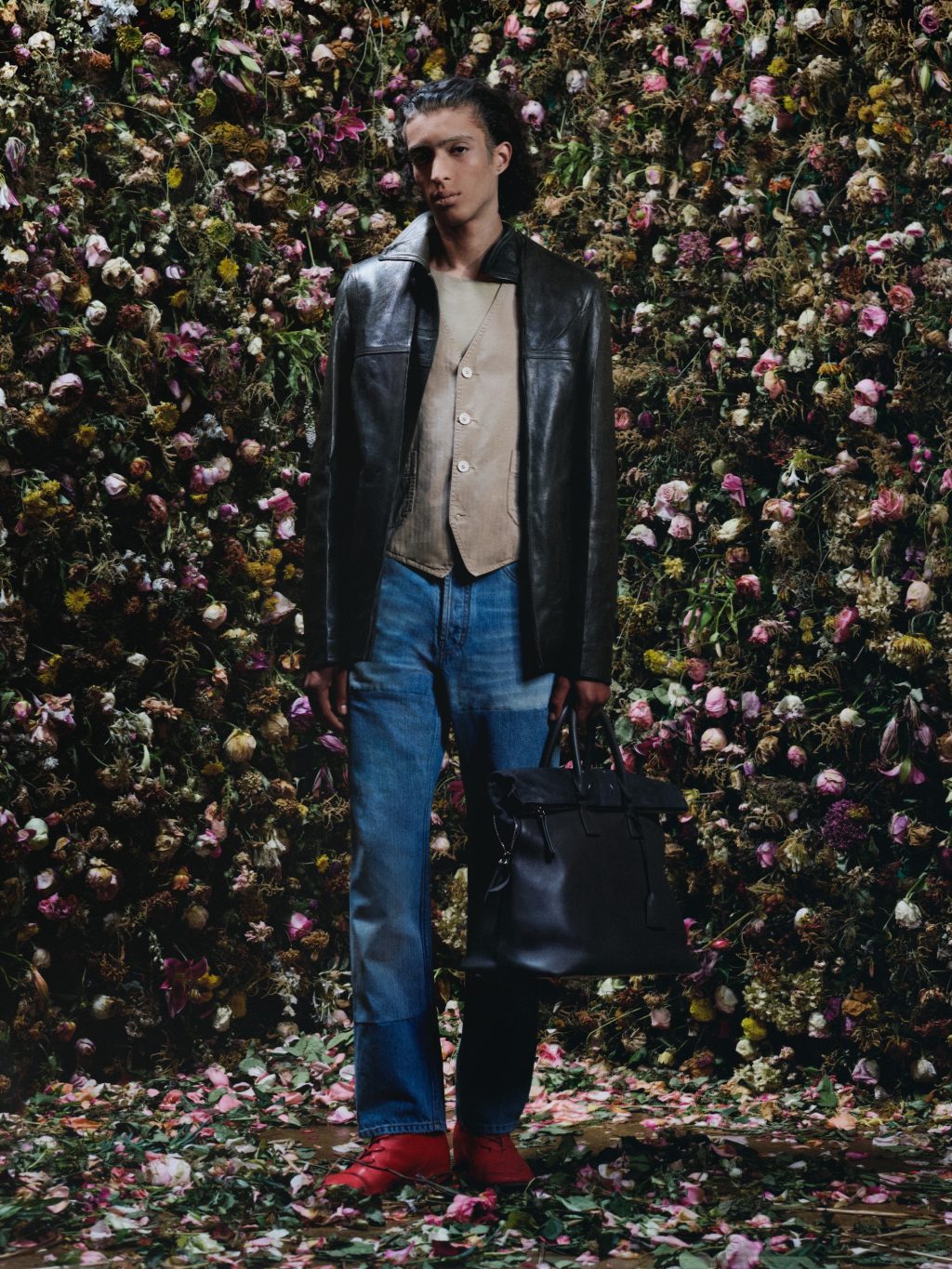
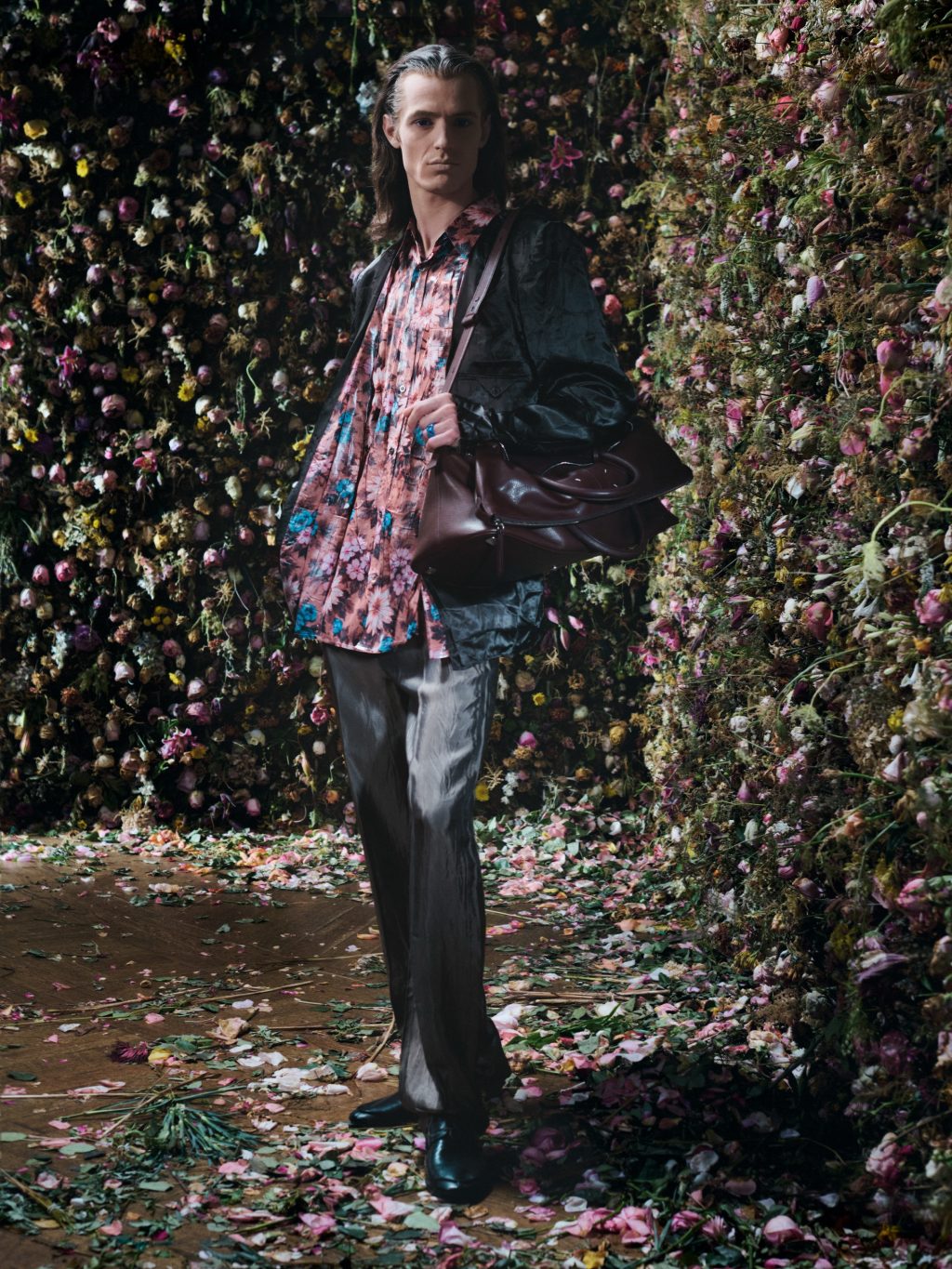
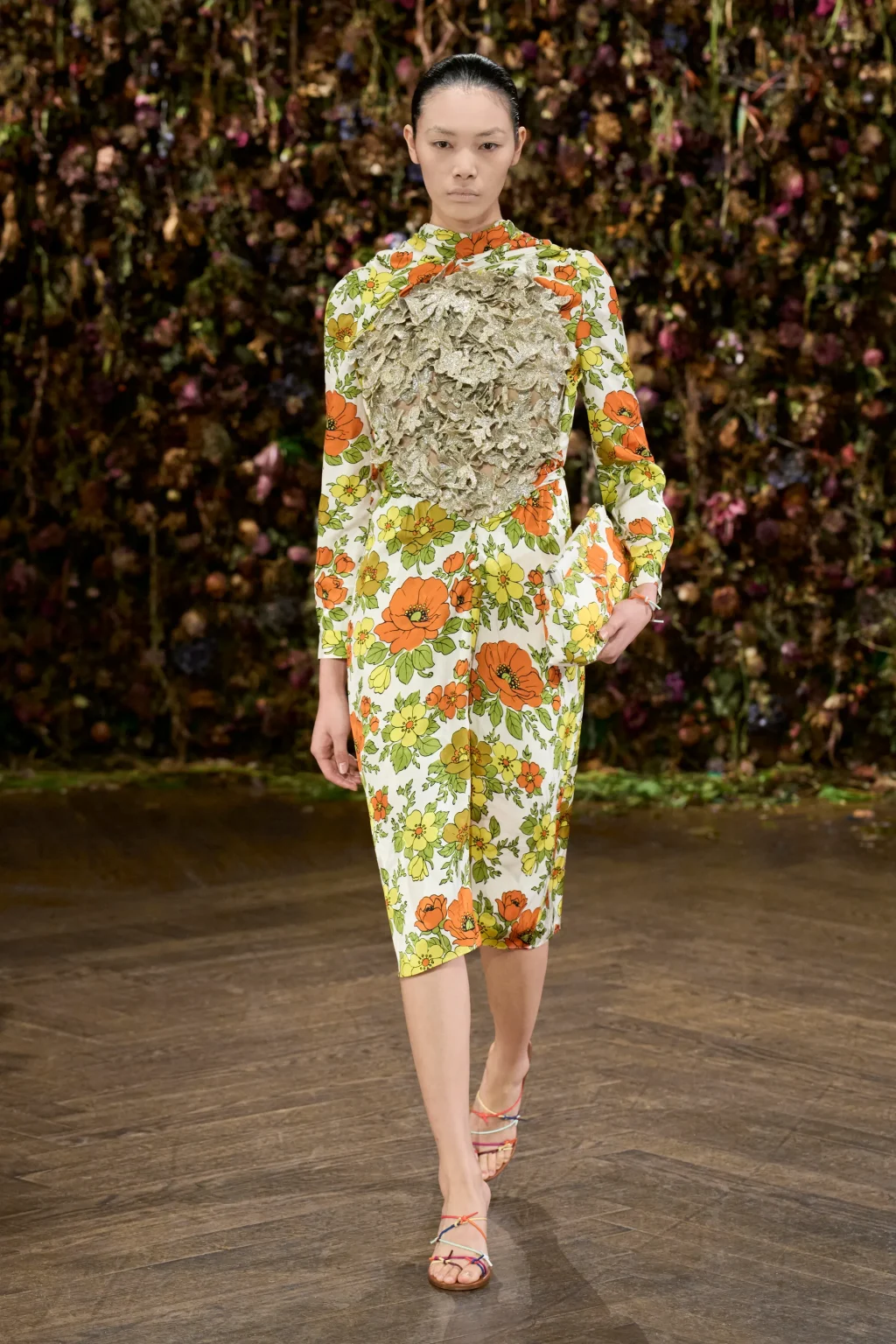
Trench coats took hardened panels at the waist or down both sides of the body. Jackets and waistcoats folded in on themselves to hide their buttons, with the creases fortified so the fold stays even when the jacket is buttoned normally. Jersey tops grew a curved “balcony” at the chest, the line of a corset with no constriction. Coat linings were stitched to floral dresses split open at the back, and one gown wore a breastplate of flattened silverware.
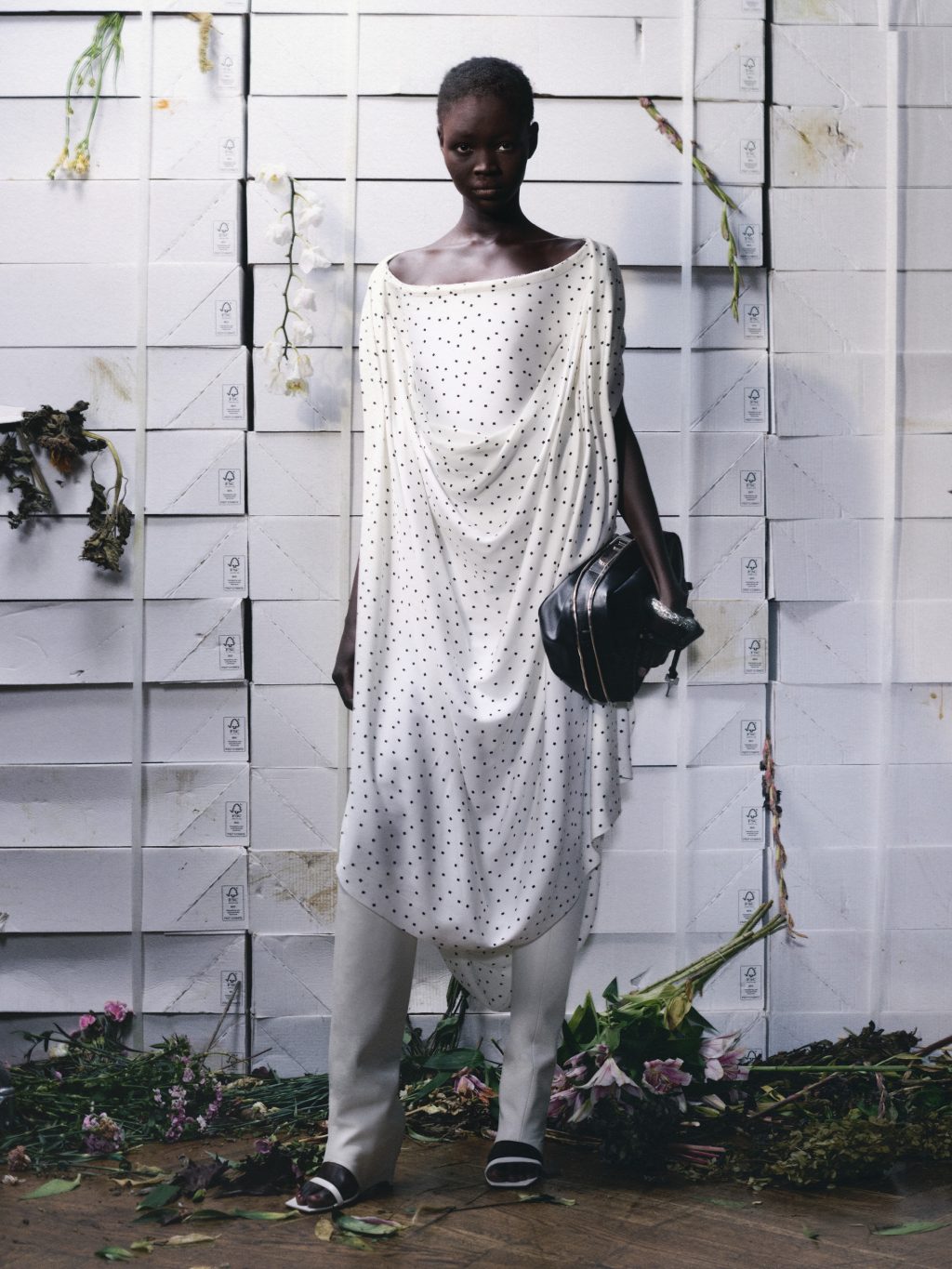
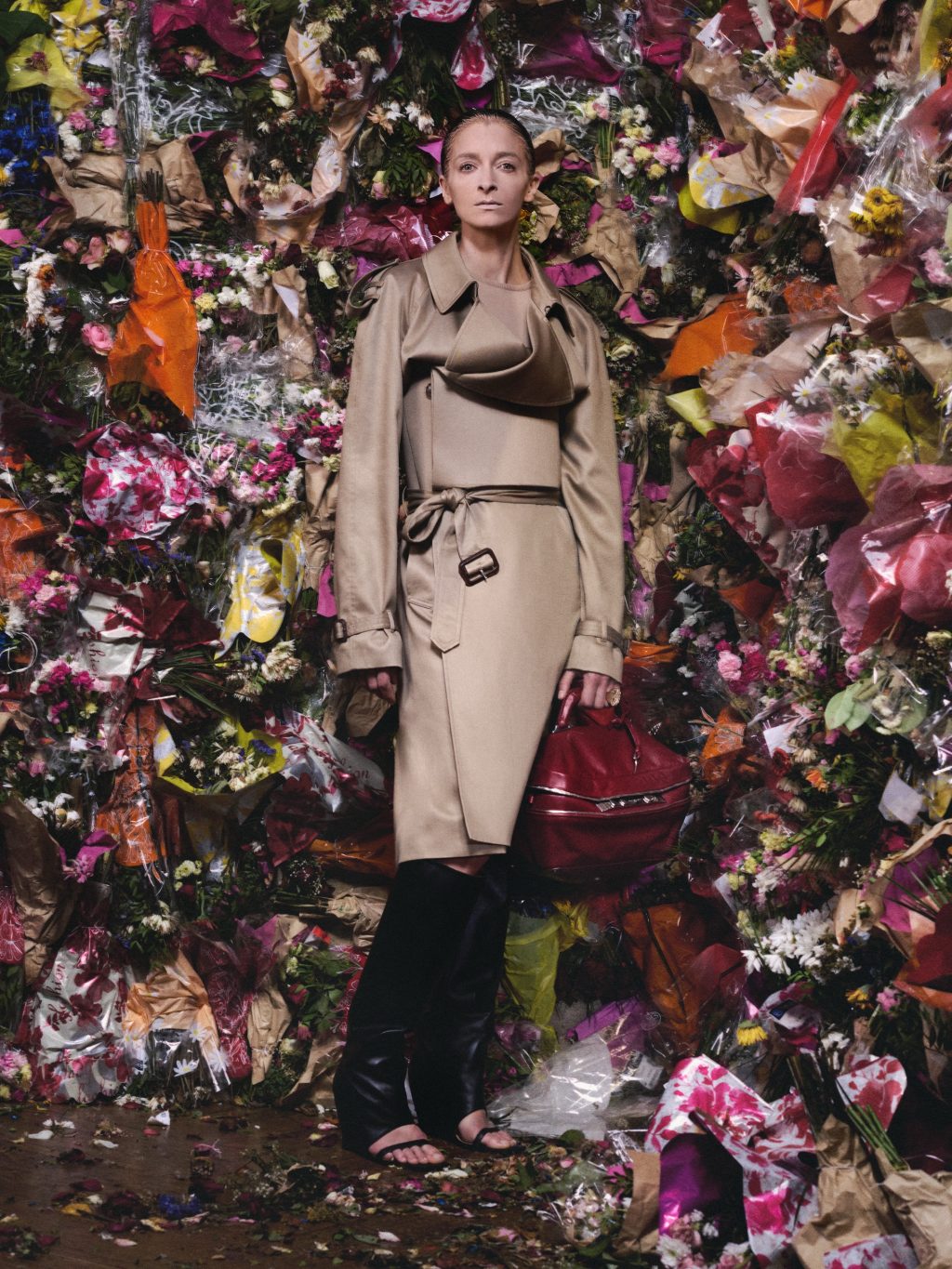
The bags run the same logic in reverse. Objects that are hard by definition, the briefcase and the vanity case, were made soft. The softest bag in the house, the 5AC, was made softer.
The Ghost bag: Maison Margiela’s soft briefcase and vanity case
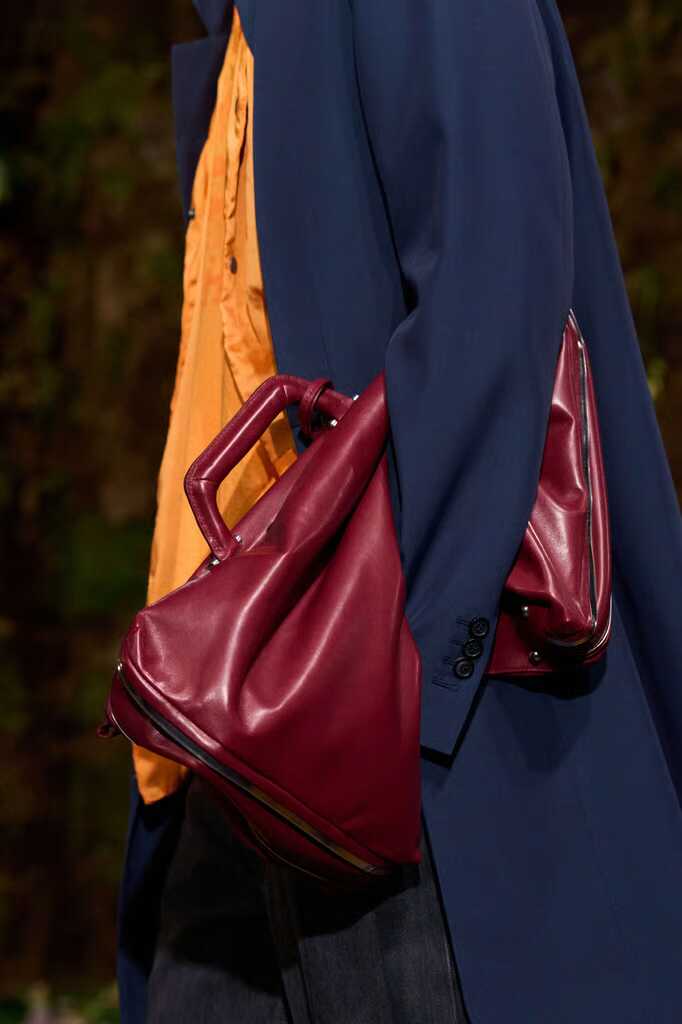
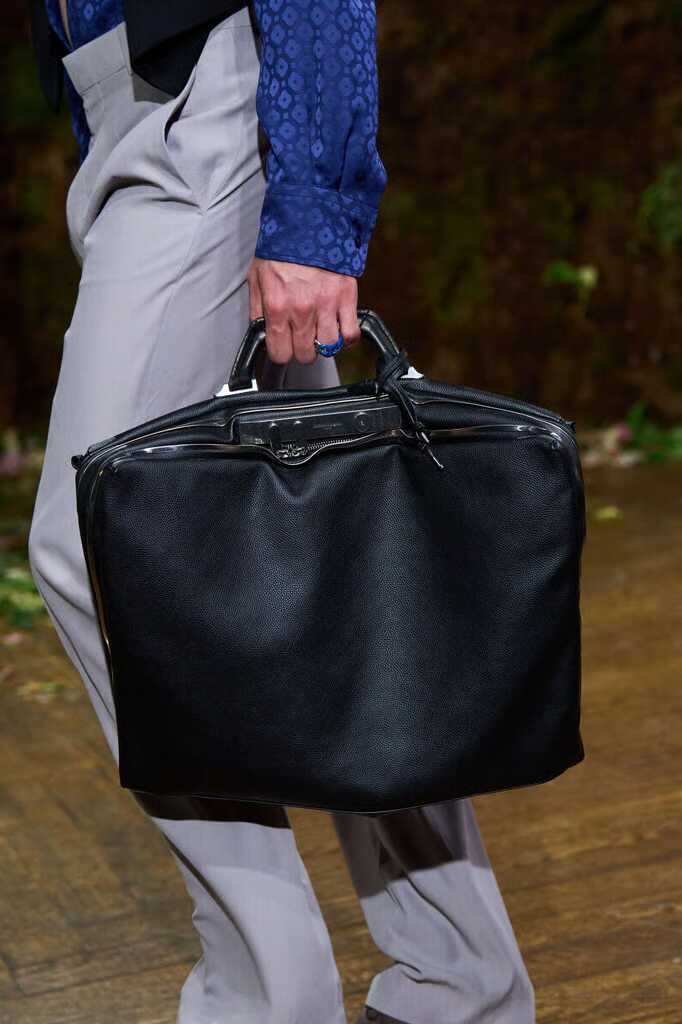
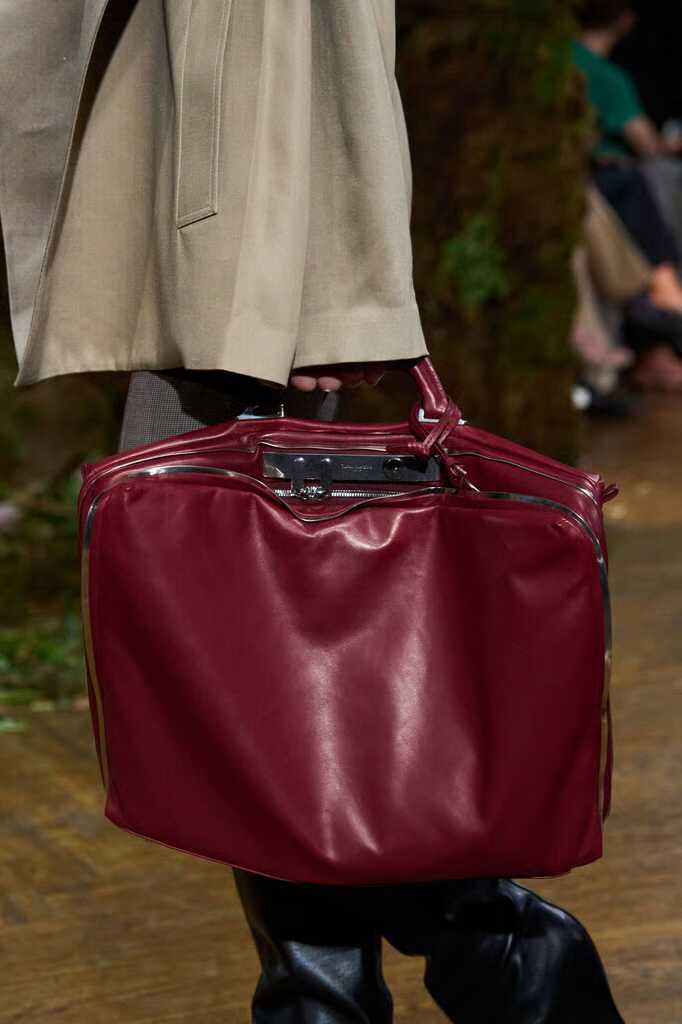
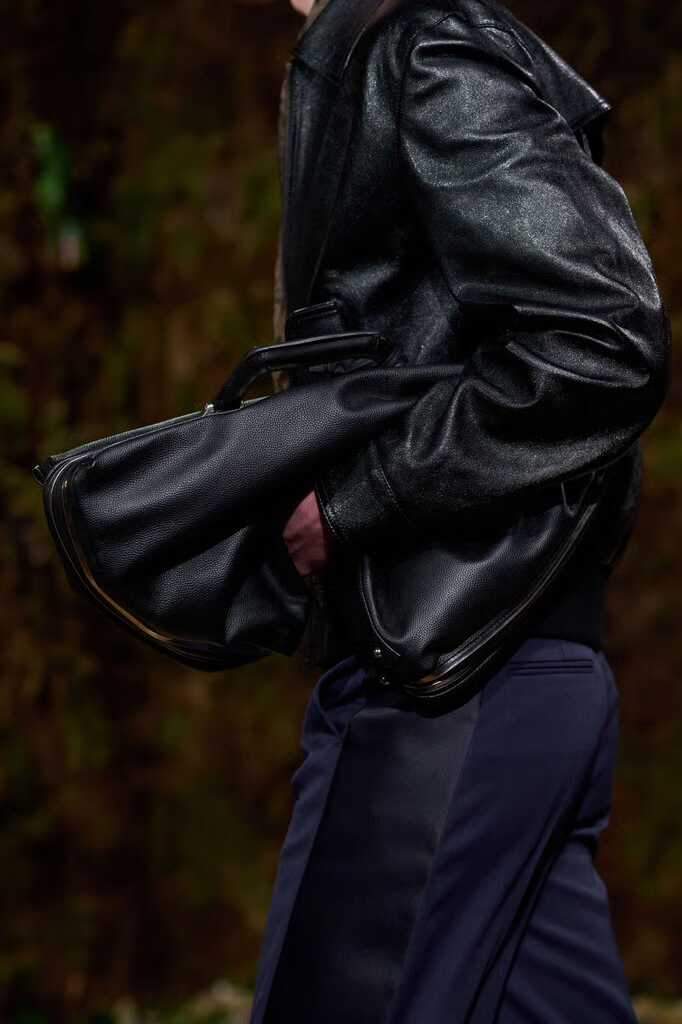
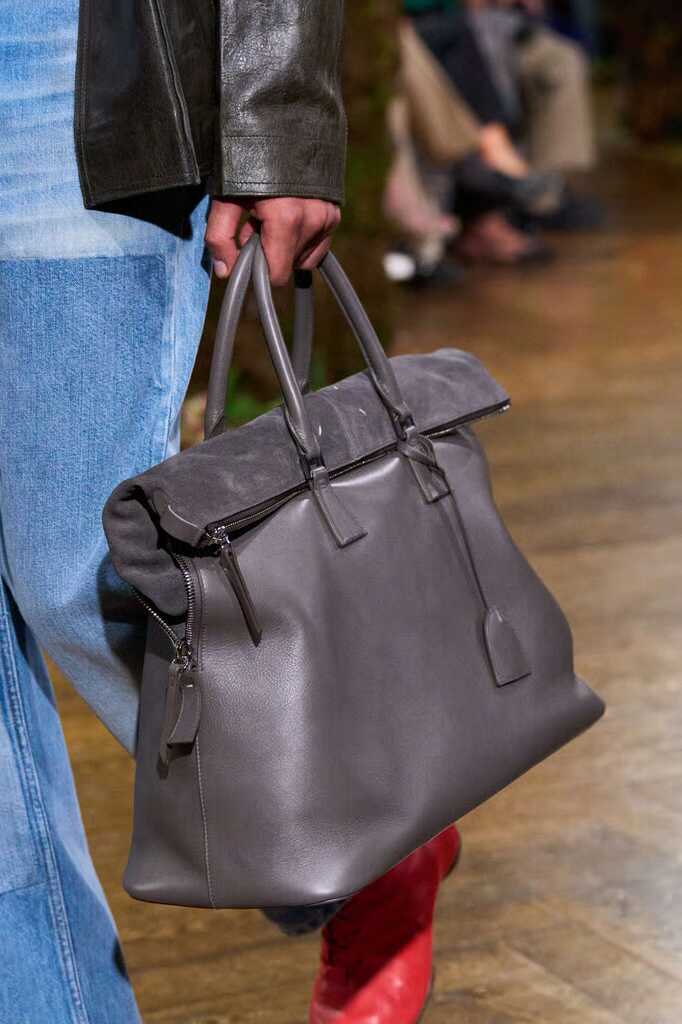
The Ghost is the headline bag of the season and the newest family in the line-up. The show notes describe archetypal cases (briefcases, weekenders, vanity cases) with their hard structures removed entirely and rebuilt in soft leather. The hardware stays authentic. A brushed-steel lock panel engraved “Maison Margiela Paris,” with two slide catches and a keyhole, sits on the front where it would sit on a rigid case. Polished metal rims run around the closure, the kind that hold the two halves of a hard shell together, and here they bend wherever the leather bends.
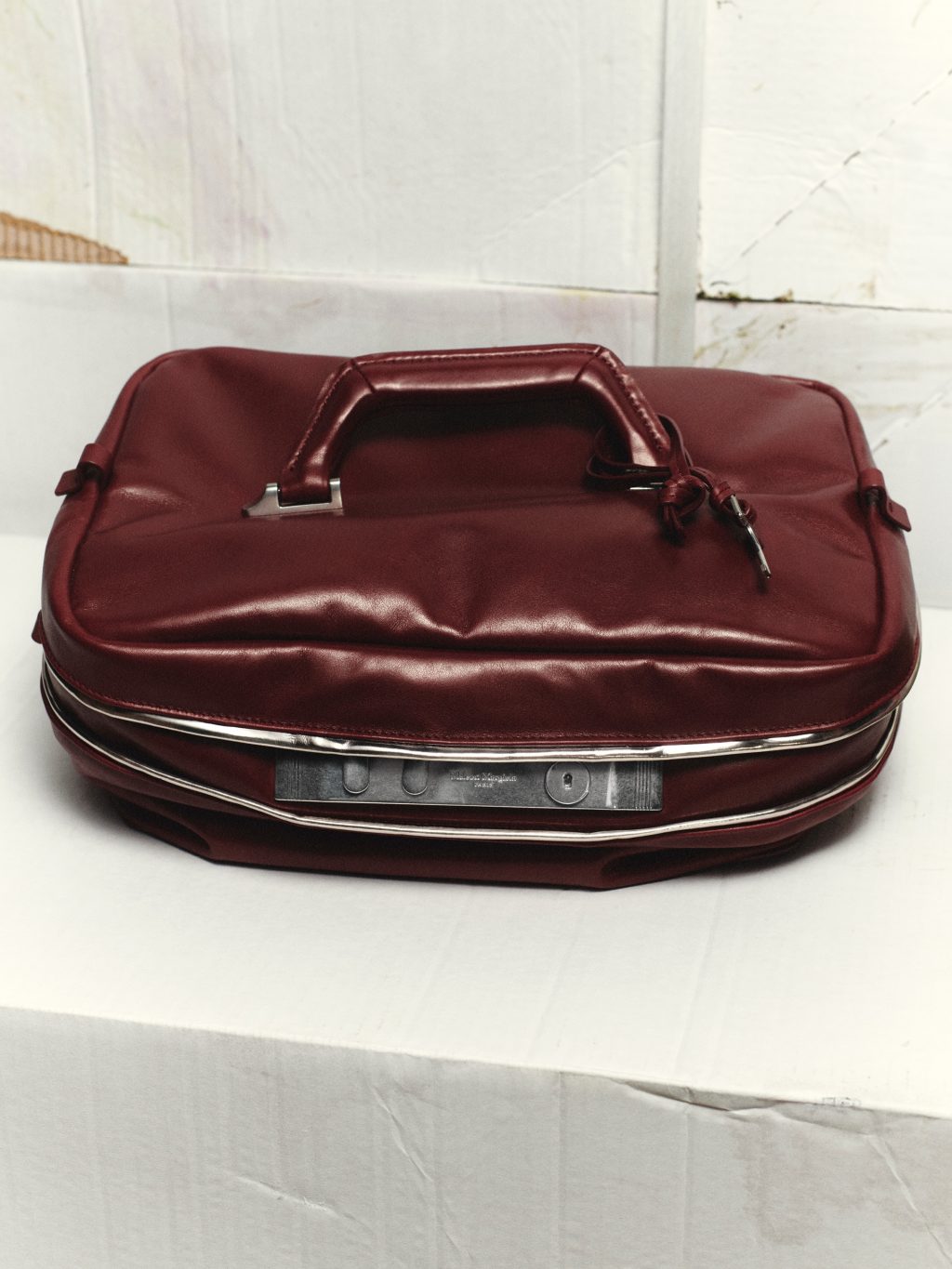
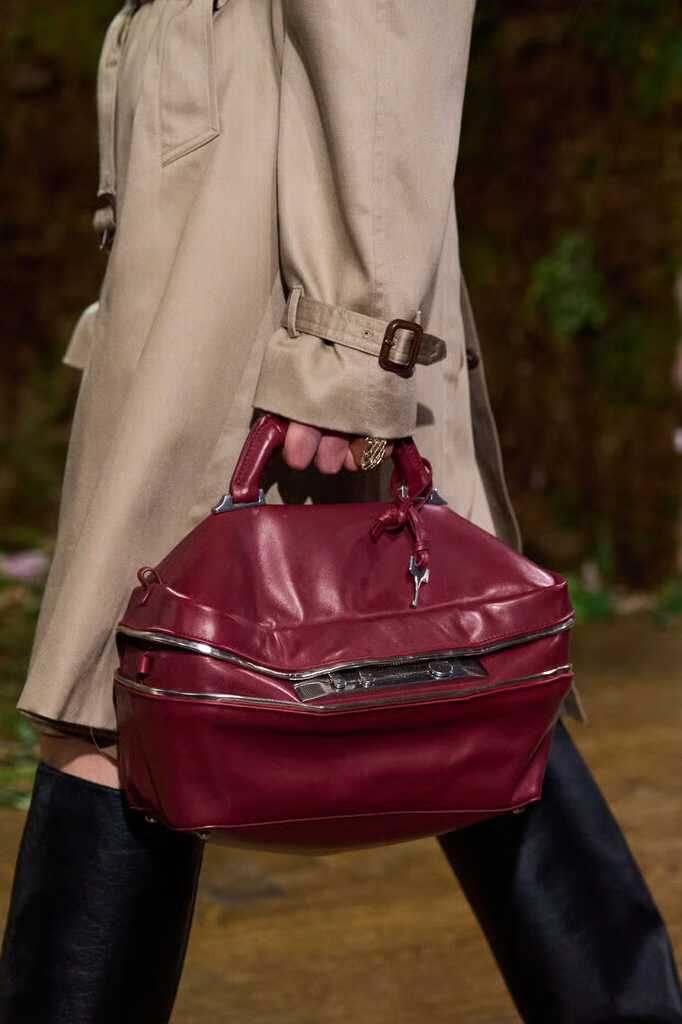
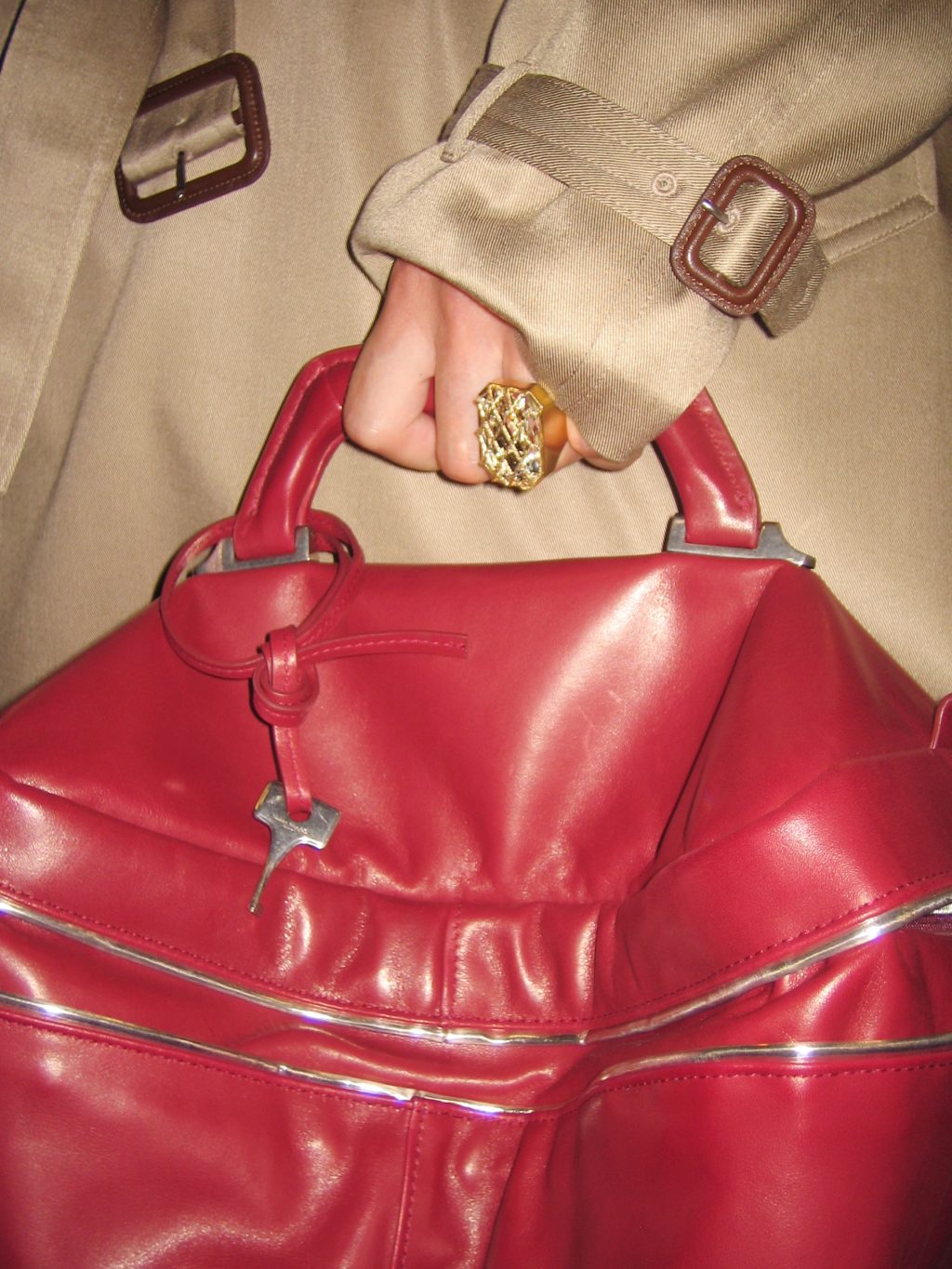
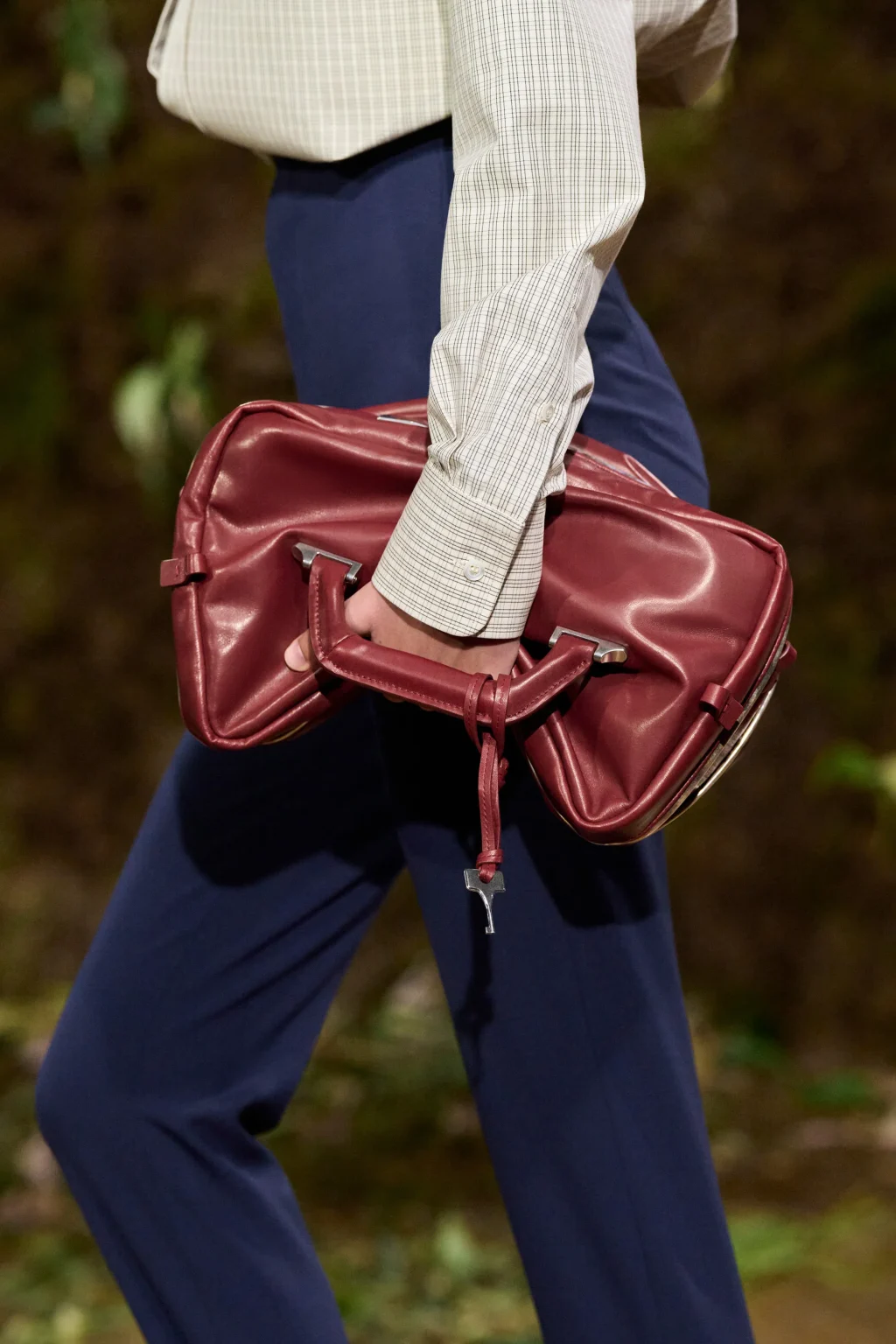
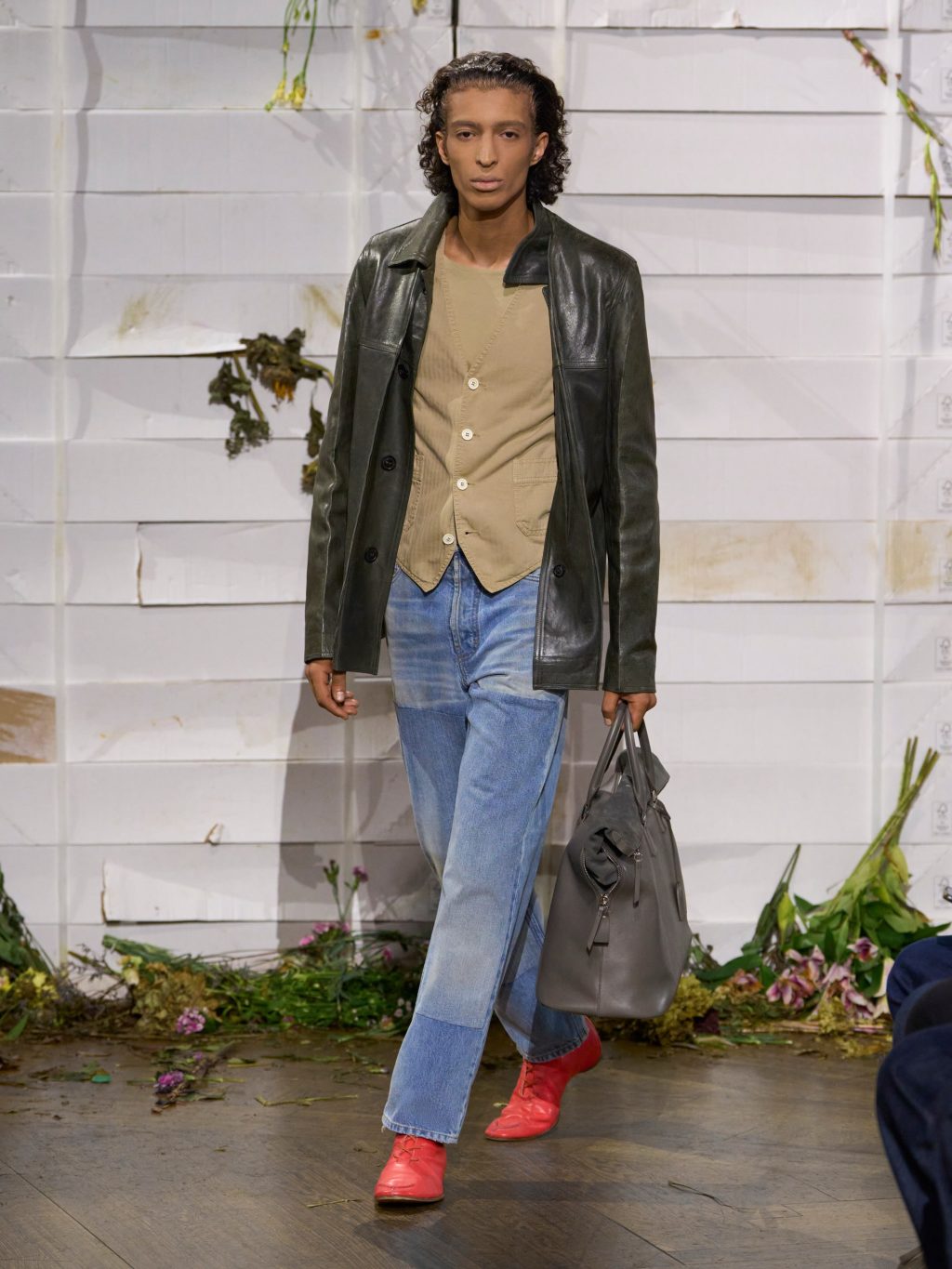
On the runway the Ghost came in two main shapes. The vanity case is compact and deep, with a padded top handle on angular steel mounts, leather tabs at each side and a small steel key tied to the handle with a knotted leather thong. The briefcase is wide and flat, closer to a portfolio, with the lock panel set high under the handle. Both appeared in glossy burgundy leather and in black grained leather.
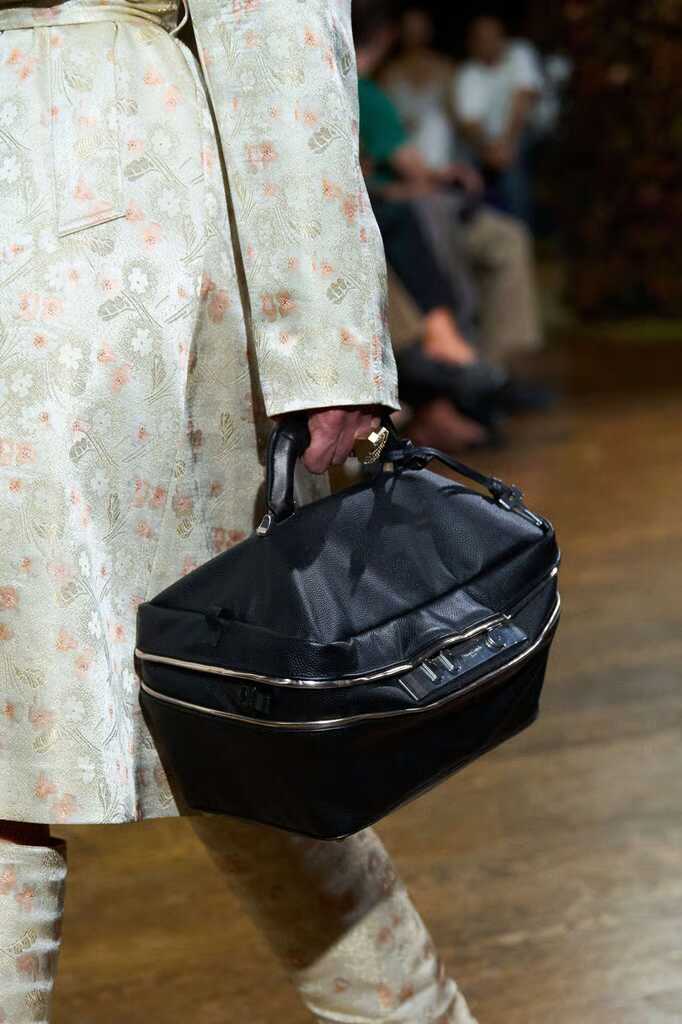
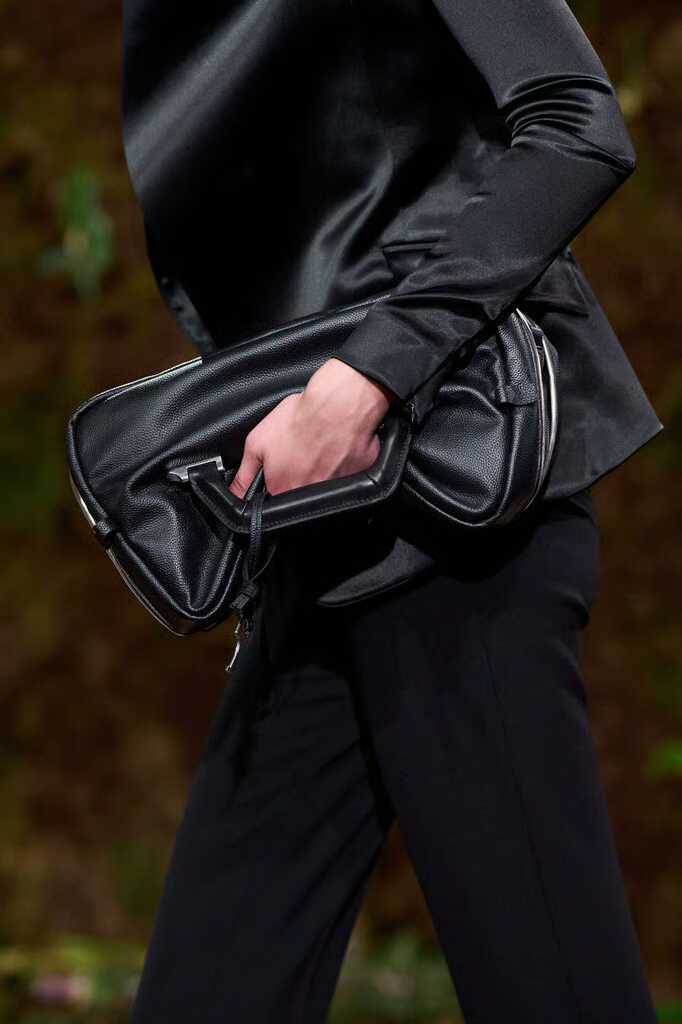
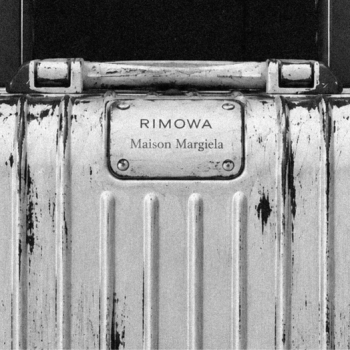
Models carried the Ghost the way soft leather asks to be carried: by the handle, slumping against the leg, or crushed under the arm with the metal rims pushed out of line. The name is accurate. What remains is the outline of a case, with the lock, the key and the metal edge still in place. Next to the aluminium shell of the RIMOWA x Maison Margiela collaboration, the Ghost reads as its soft-bodied opposite.
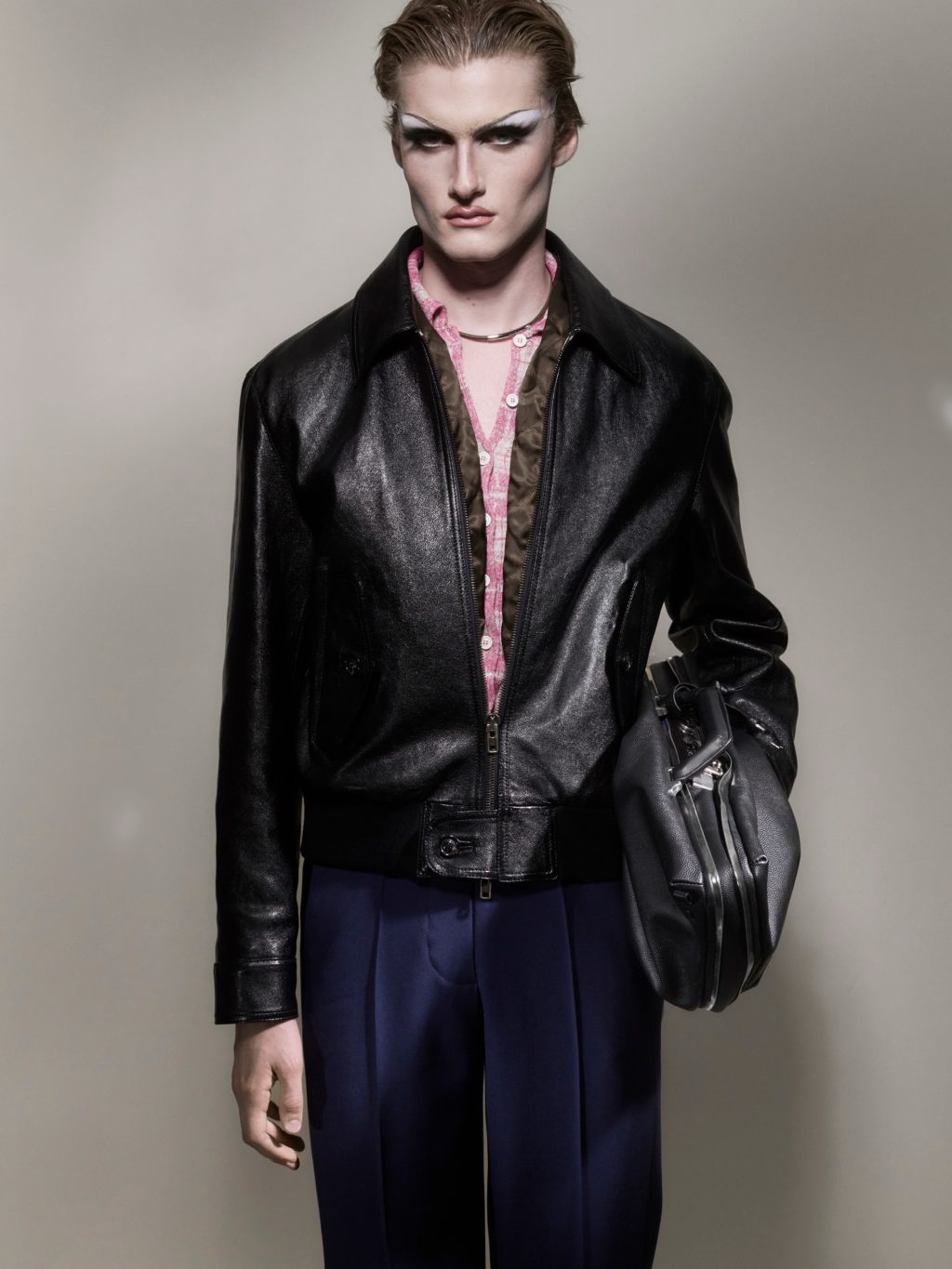
The 5AC Soft: Maison Margiela’s signature bag in its softest leather
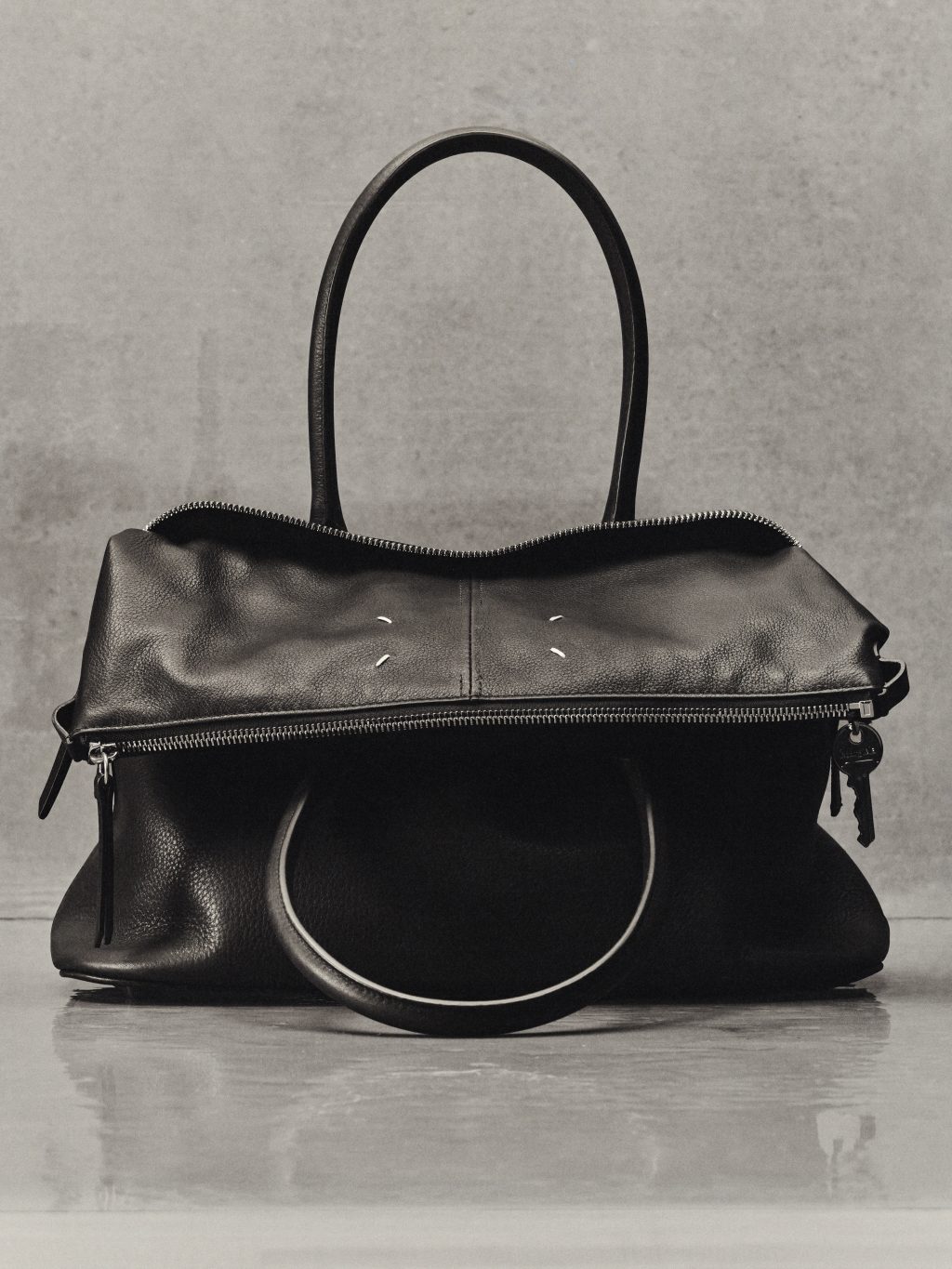
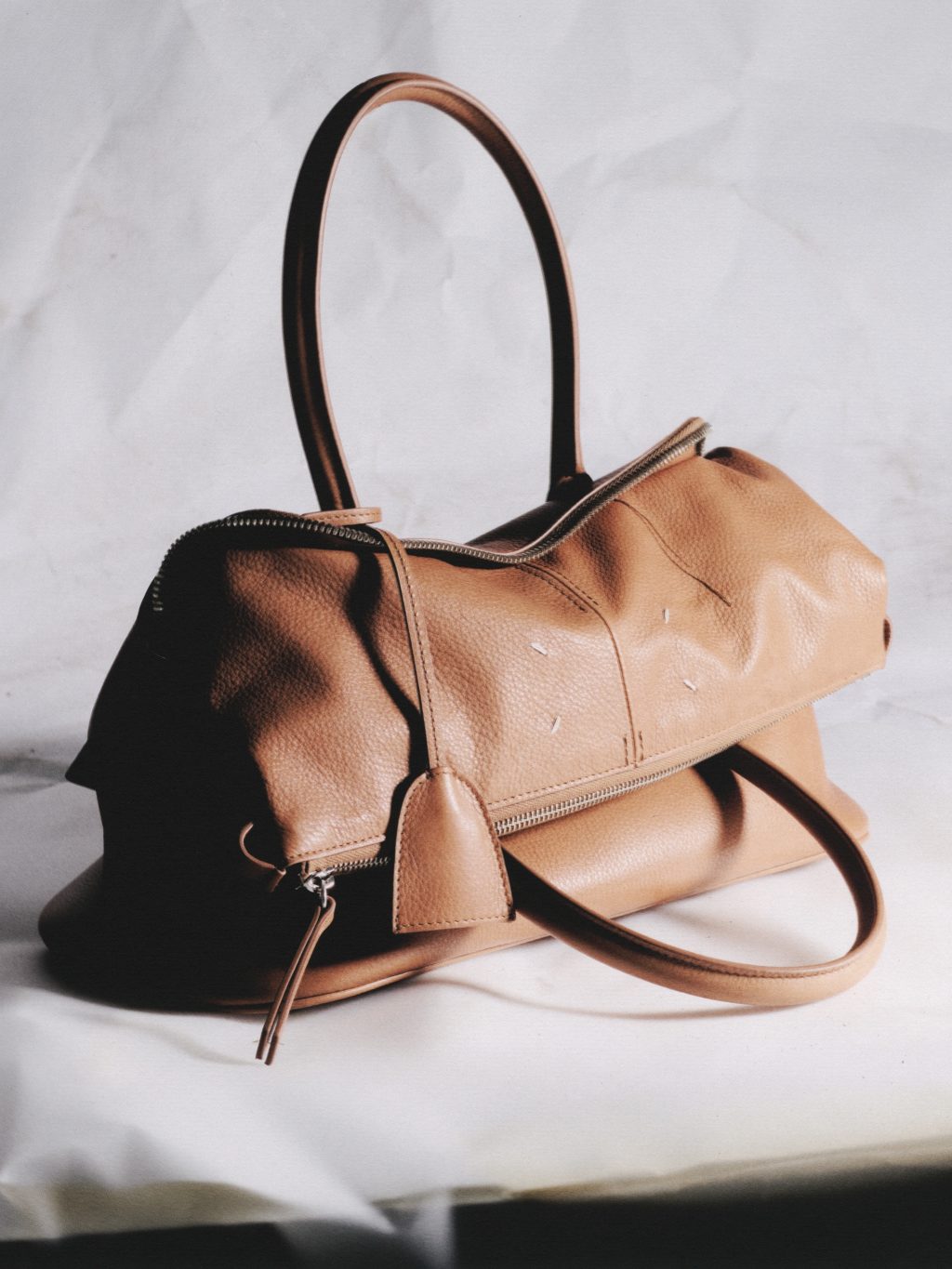
The 5AC is the house signature, its name taken from the French word sac. Every 5AC follows the house concept of the pulled-out lining: the inner layer seems drawn up out of the bag, then zipped to become its opening. For Spring-Summer 2027 the 5AC Soft keeps that construction and switches to a softened grained leather with a supple, natural feel. The pulled-out section is cut from the same leather.
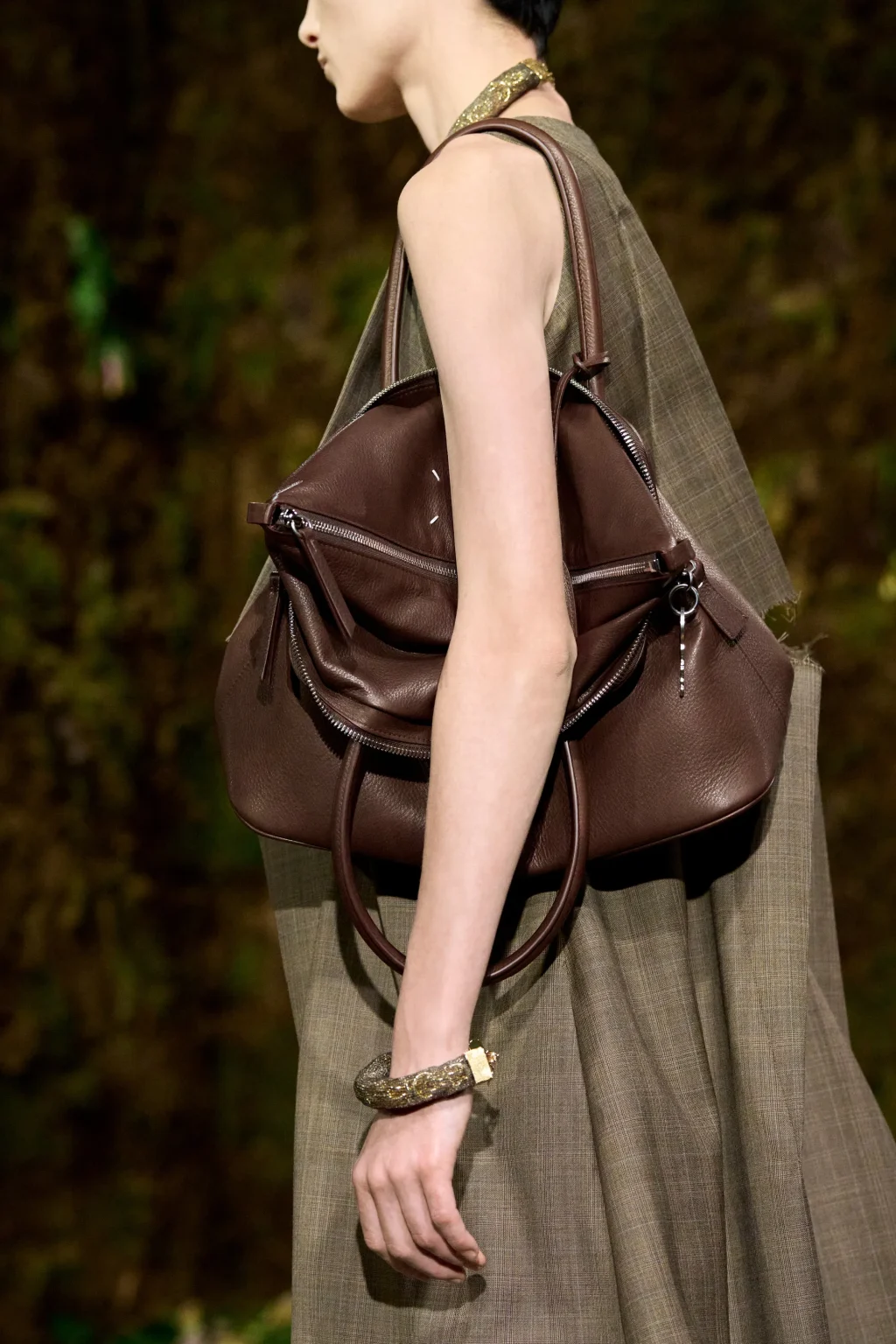
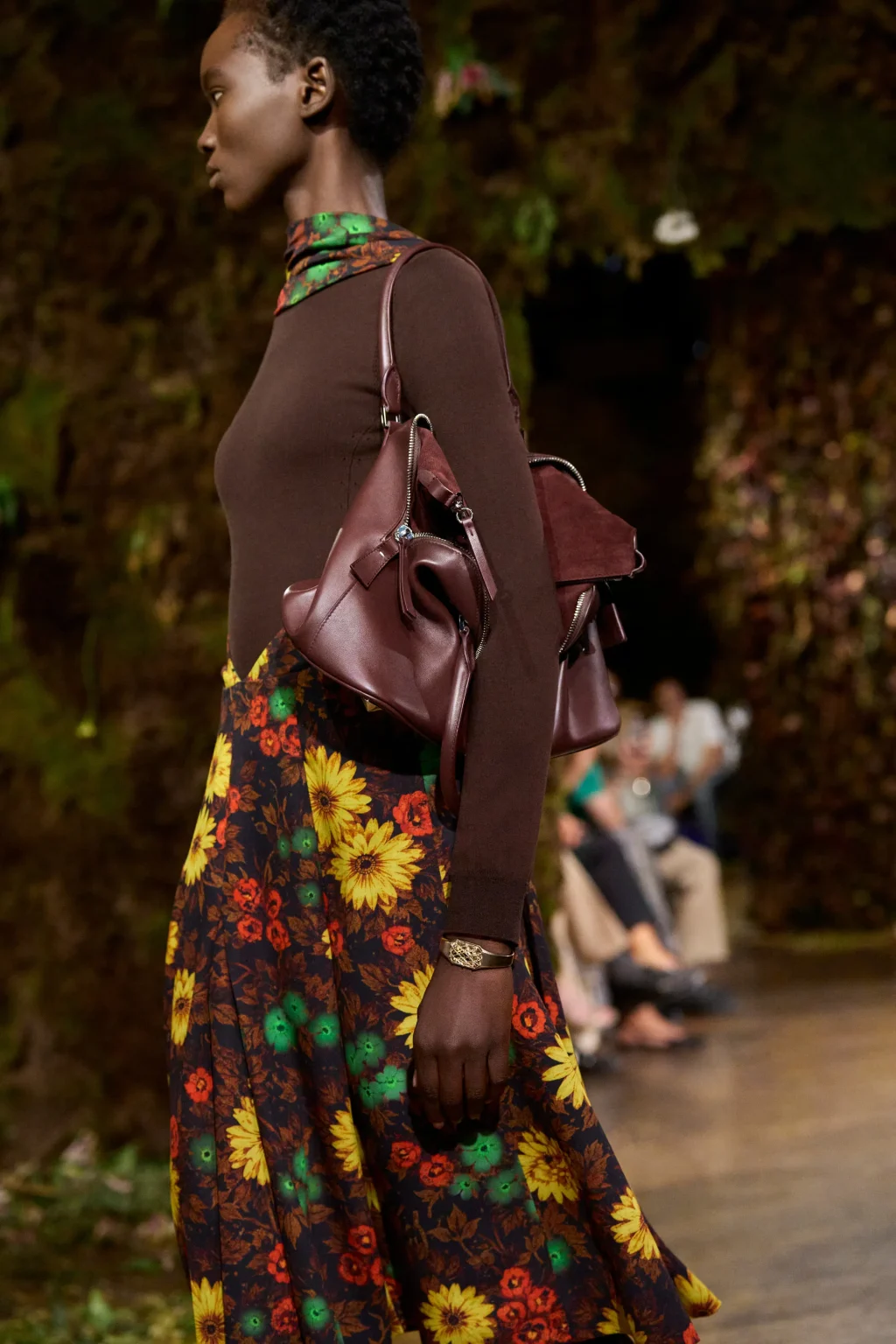
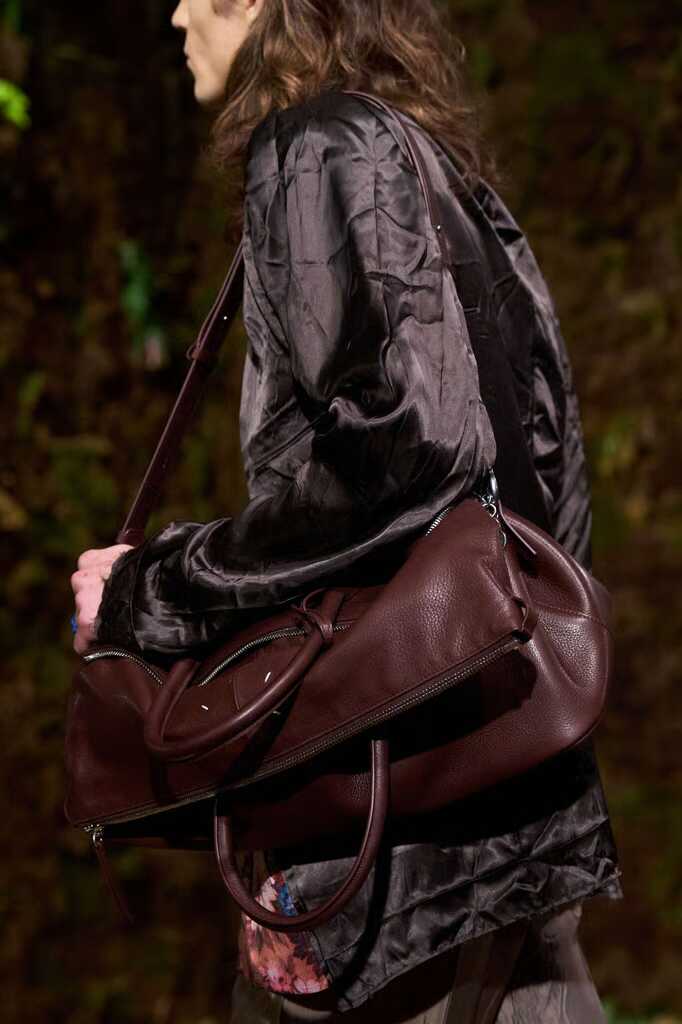
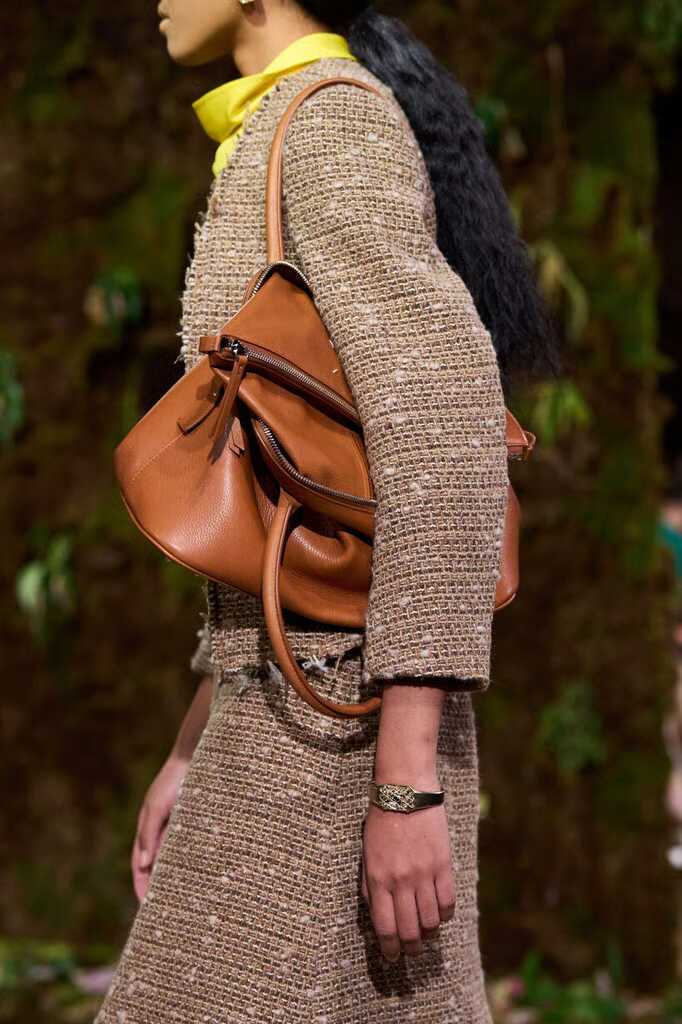
The result collapses gently. Empty, the top folds down over the body, the zip runs in a loose curve and the bag settles low, with a second pair of round handles looping underneath. Highsnobiety compared the brown version to a deflated football. The four white stitches stay on the front.
The runway and the still lifes showed it in black, camel, chocolate brown, plum and cognac, and the plum version adds a suede panel on the folded section. Sizes ran from a shoulder bag worn high under the arm, with a check shirt open at the back, to an oversized chocolate version on a long strap, worn crossbody over a floral shirt and a crumpled satin jacket. Several pieces carry a steel key on the zip ring, a detail shared with the Ghost.
The Link bag in suede and waxed pleated suede
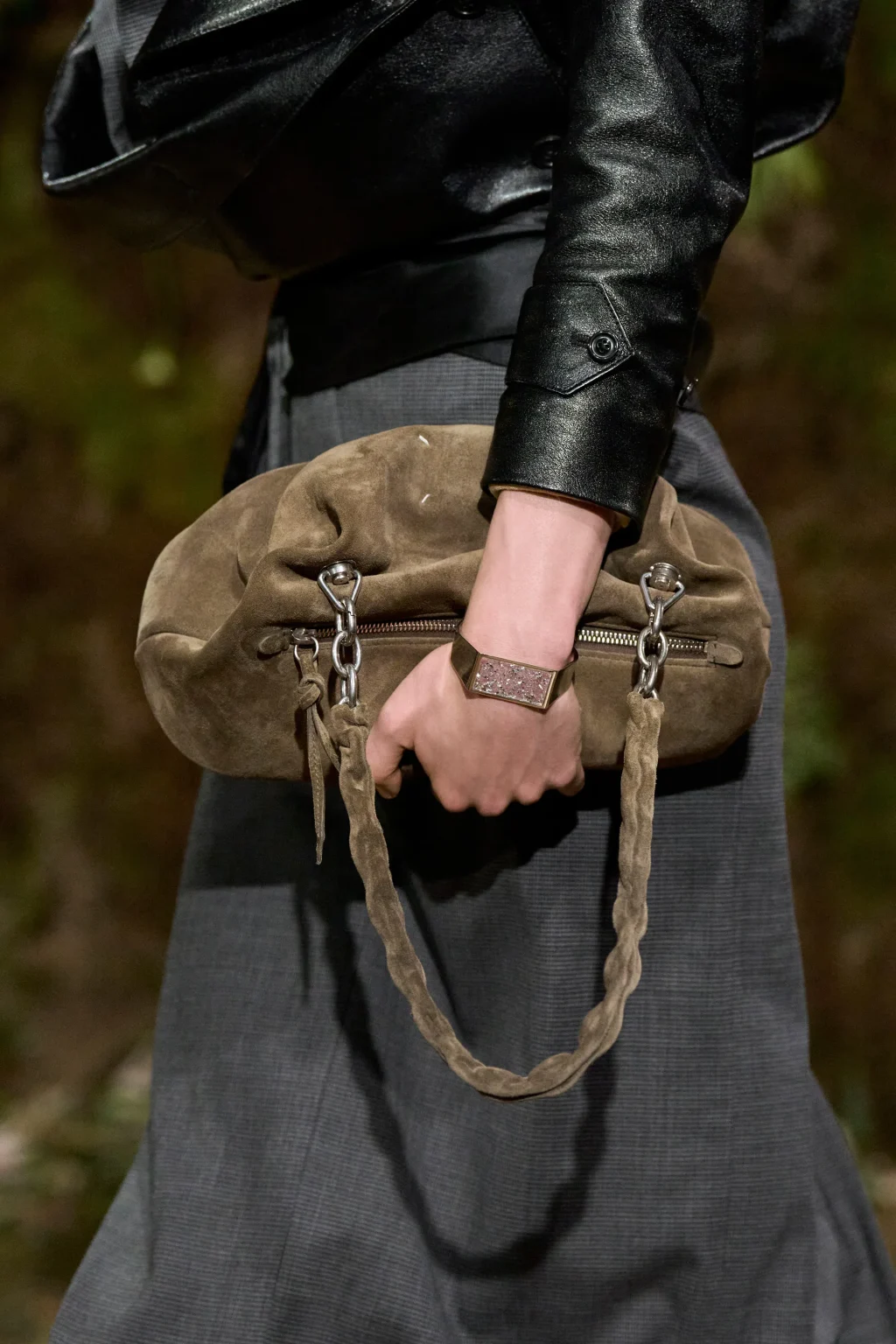
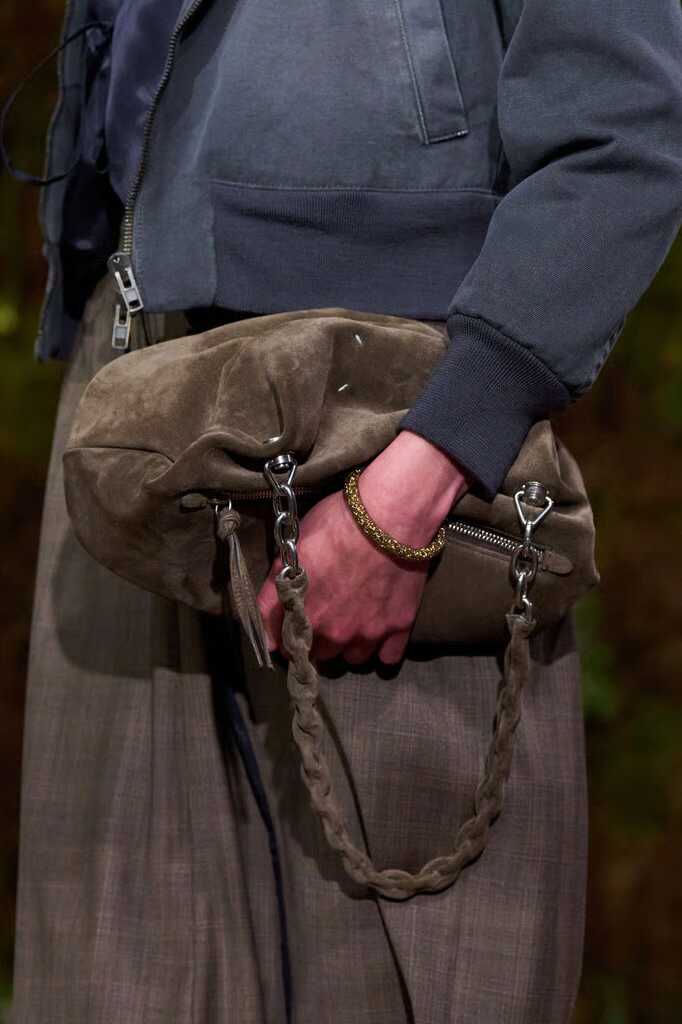
The Link takes its name from its chain: short lengths of silver chain join the body to the handle through swivel hardware. This season it is made in the house’s softest suede. The olive version has a gathered, cloud-shaped body, a zipped top, white four stitches and a handle of twisted, rolled suede that hangs in a loop below the hand.
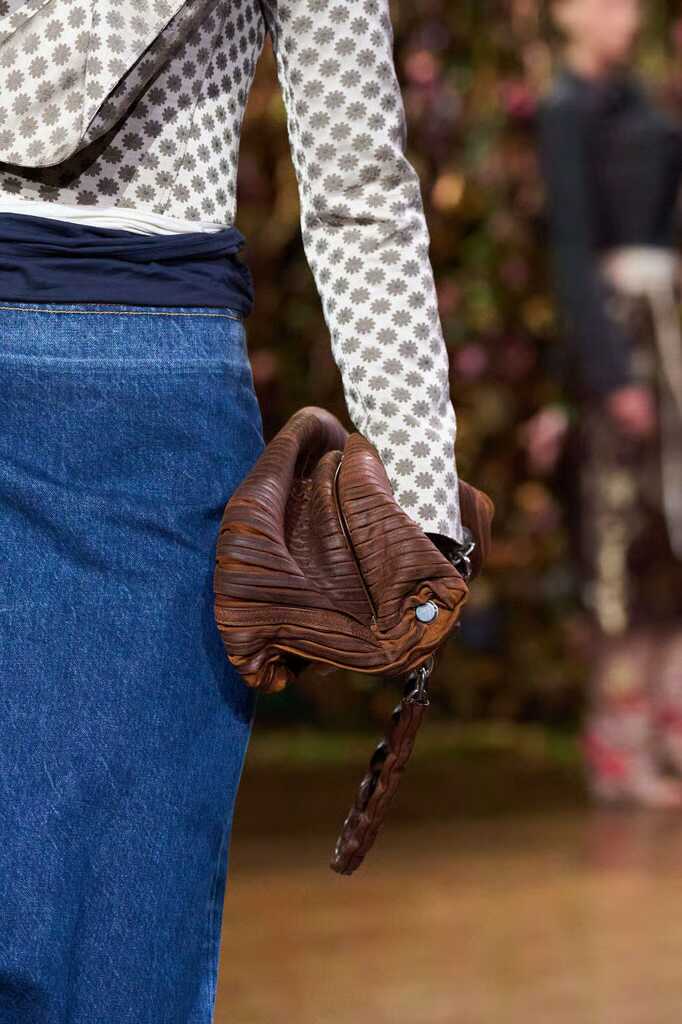
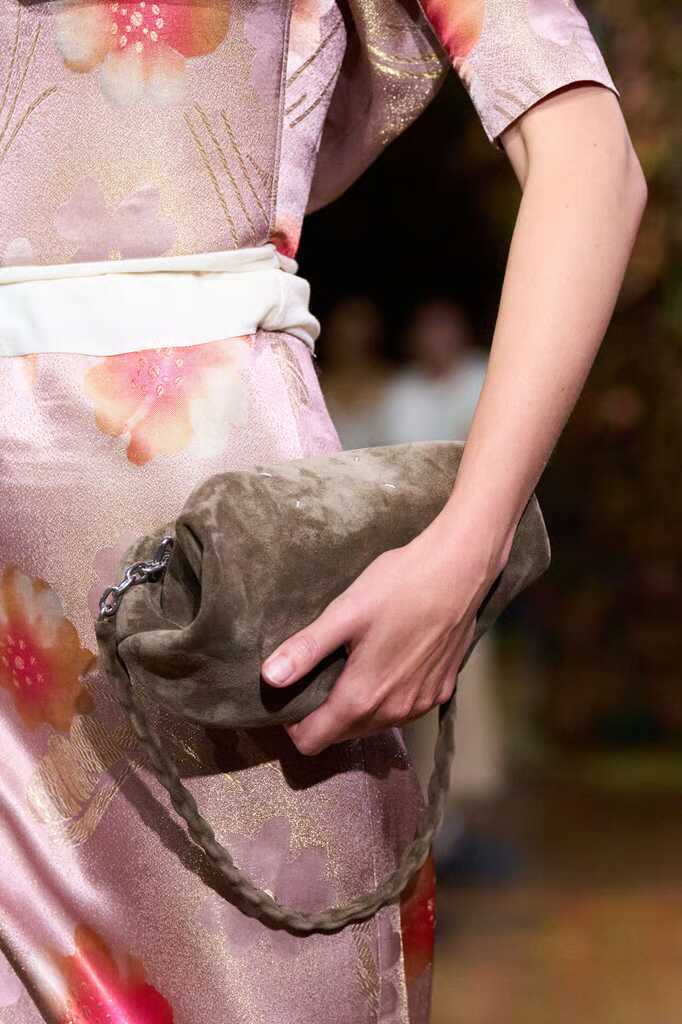
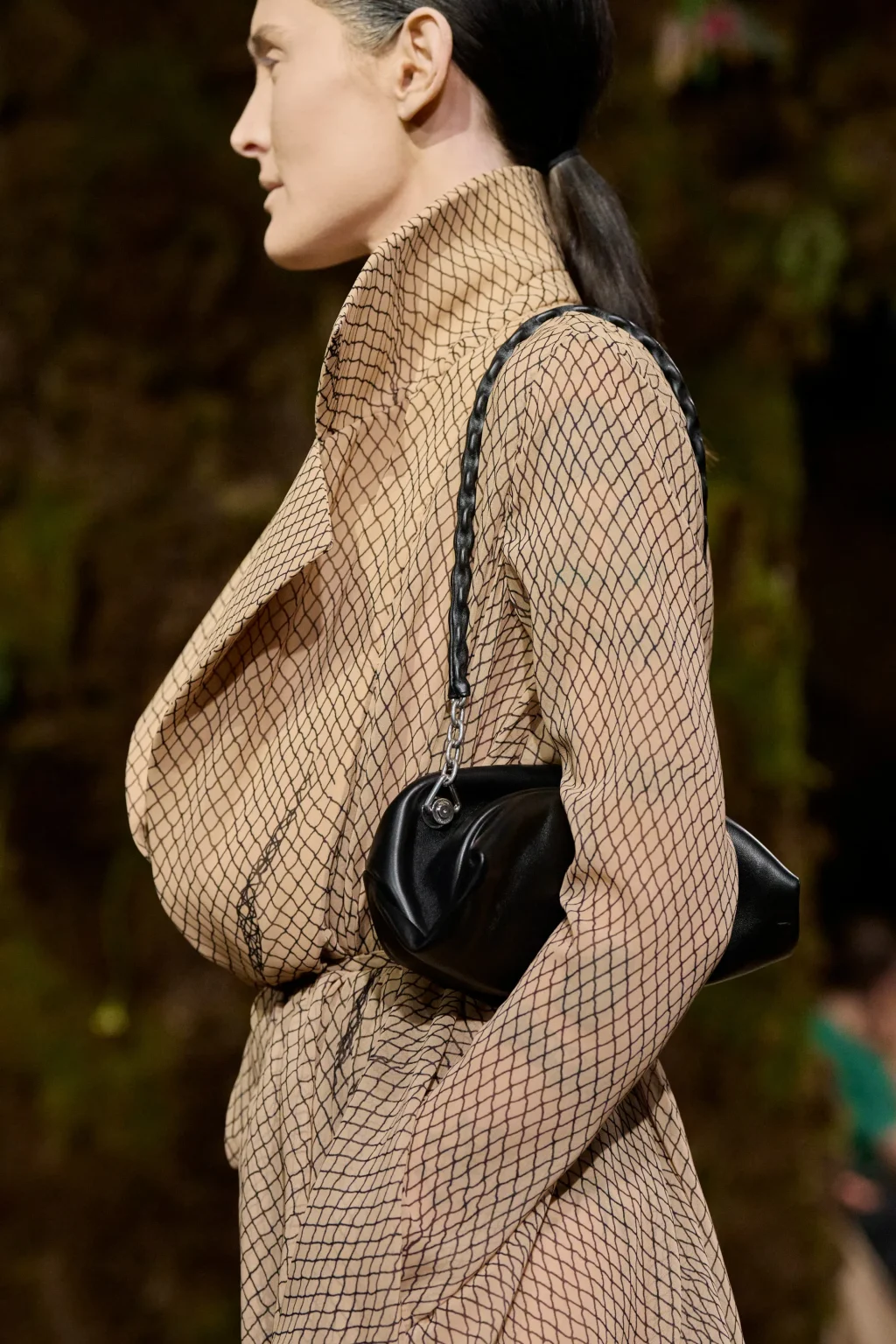
The second version uses pleated suede that has been waxed, which the house says is ready to age beautifully. In brown, the pleats run across the body in tight ridges, and the bag was worn at the wrist with jeans. The same chain-and-twisted-strap construction also appeared in smooth black leather, as a small pouch worn on the shoulder over a sheer trench printed with netting.
Jewellery-box clutches and chatelaine purses for evening
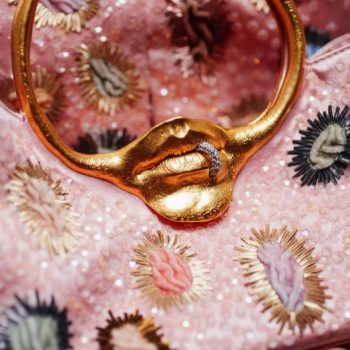
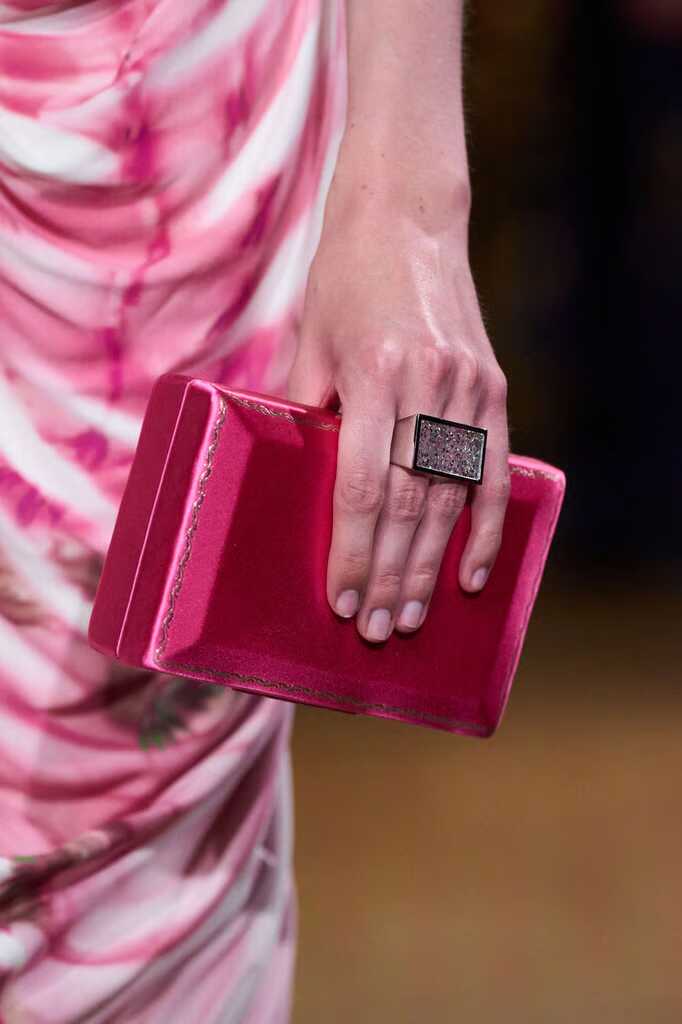
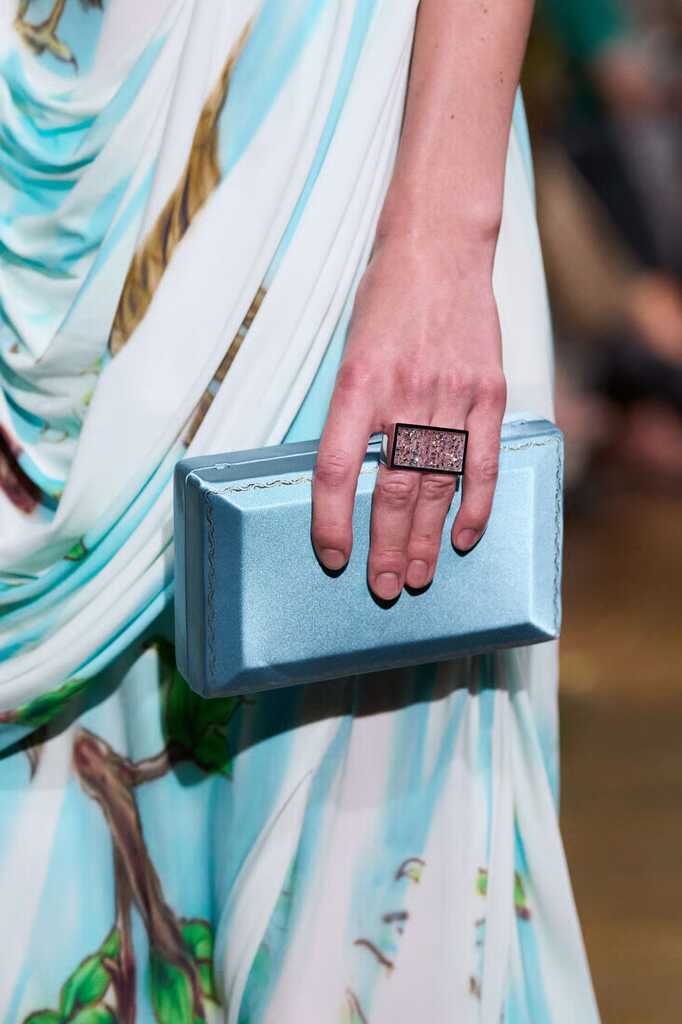
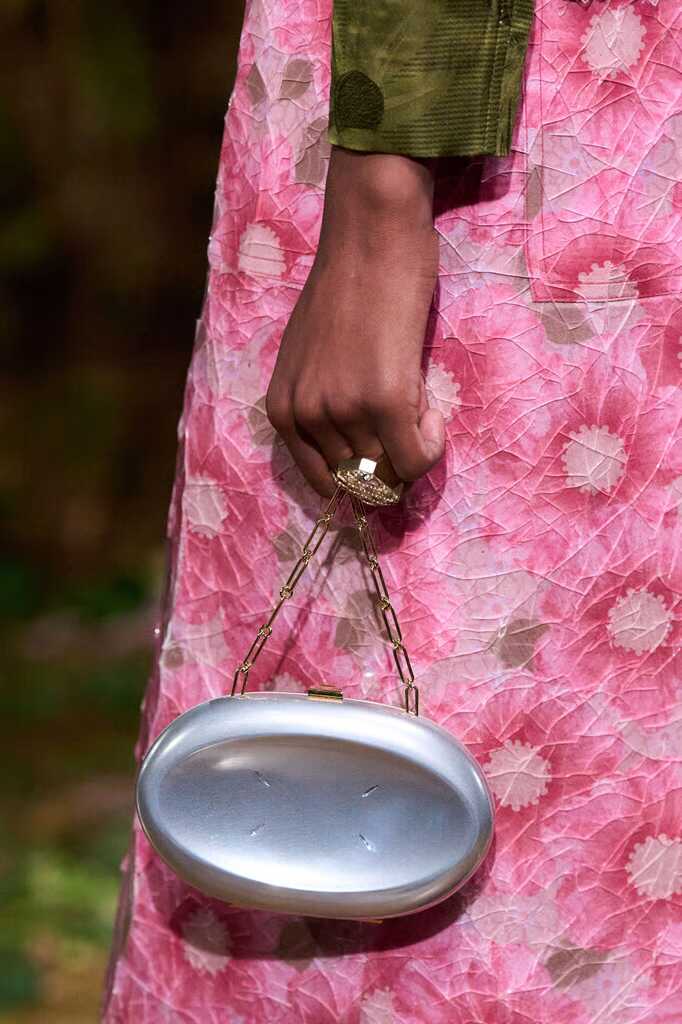
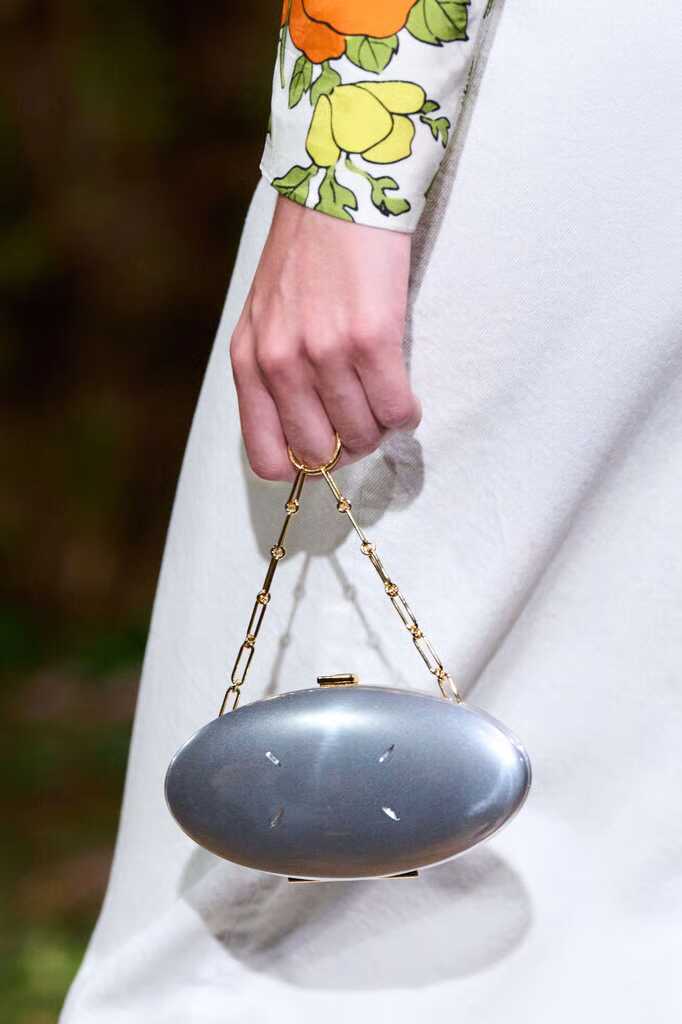
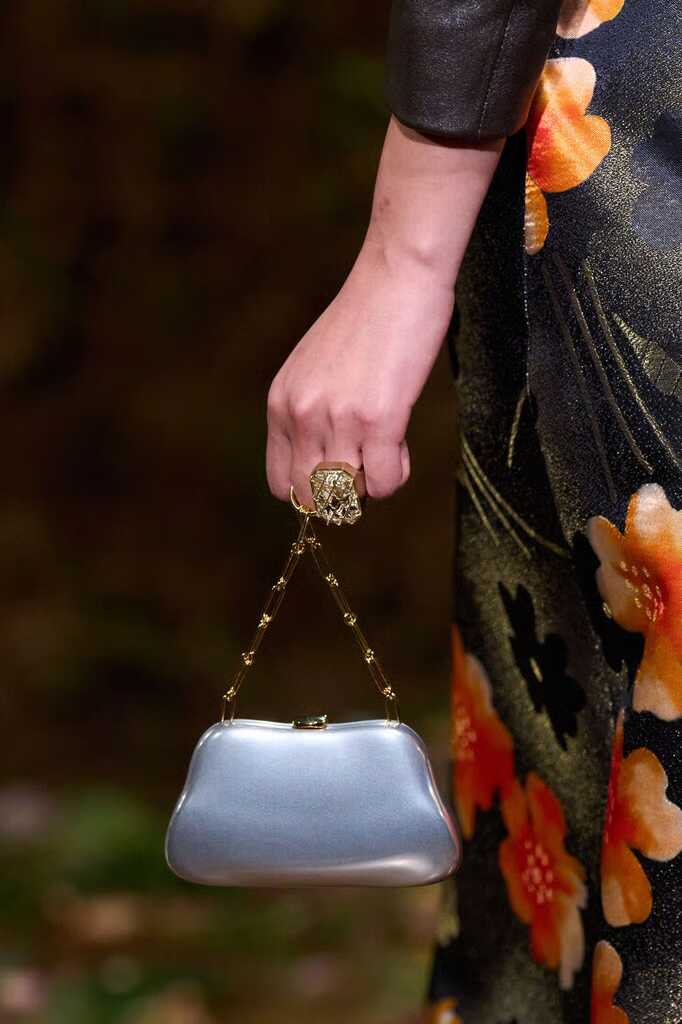
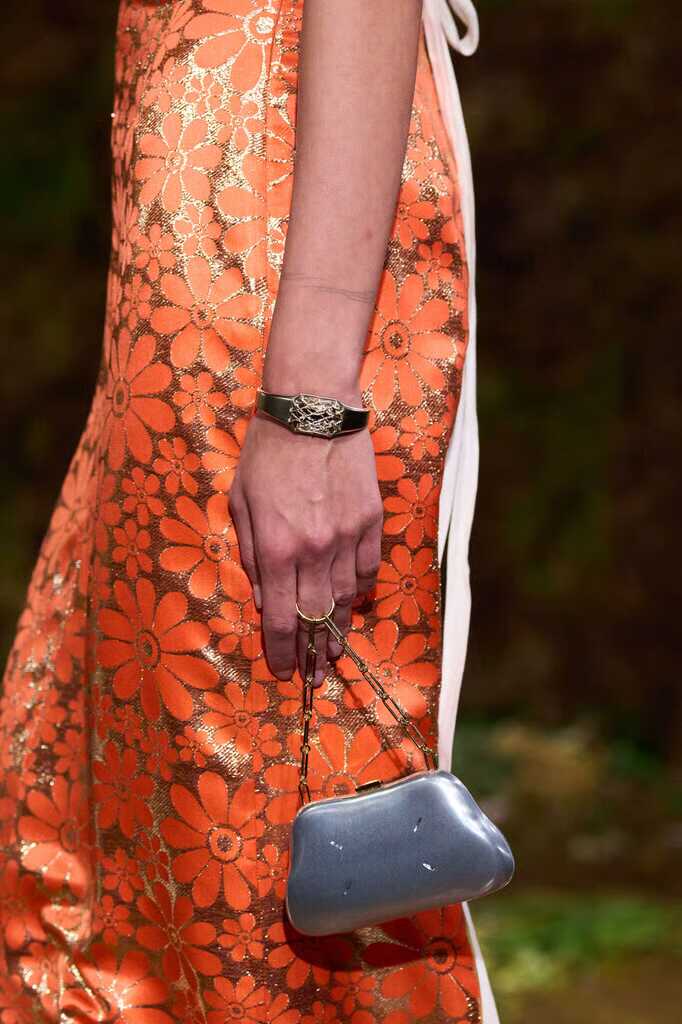
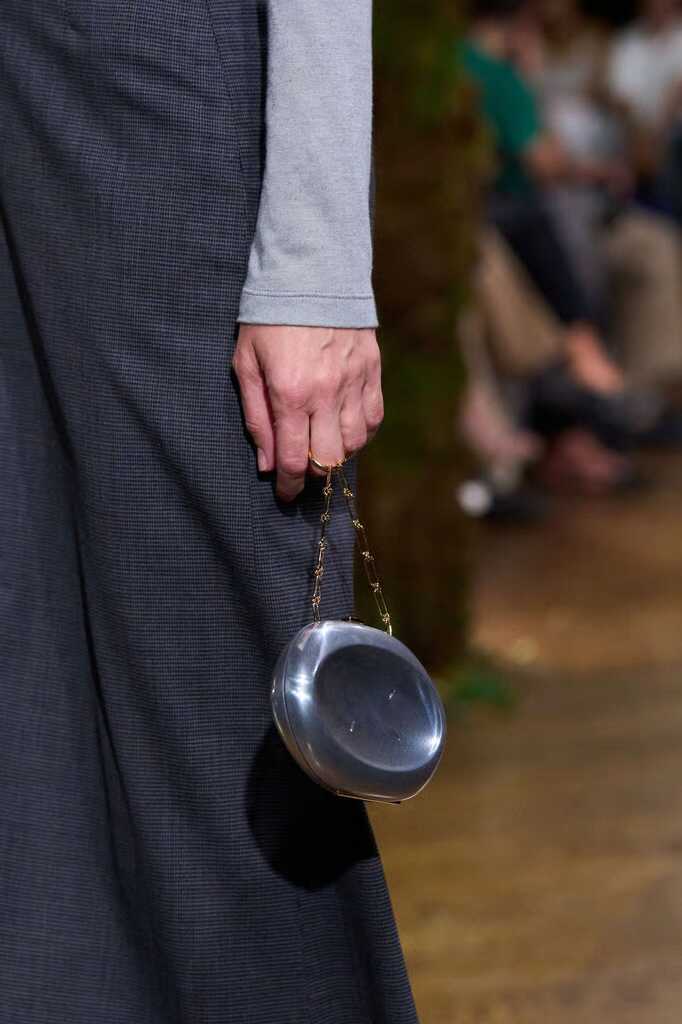
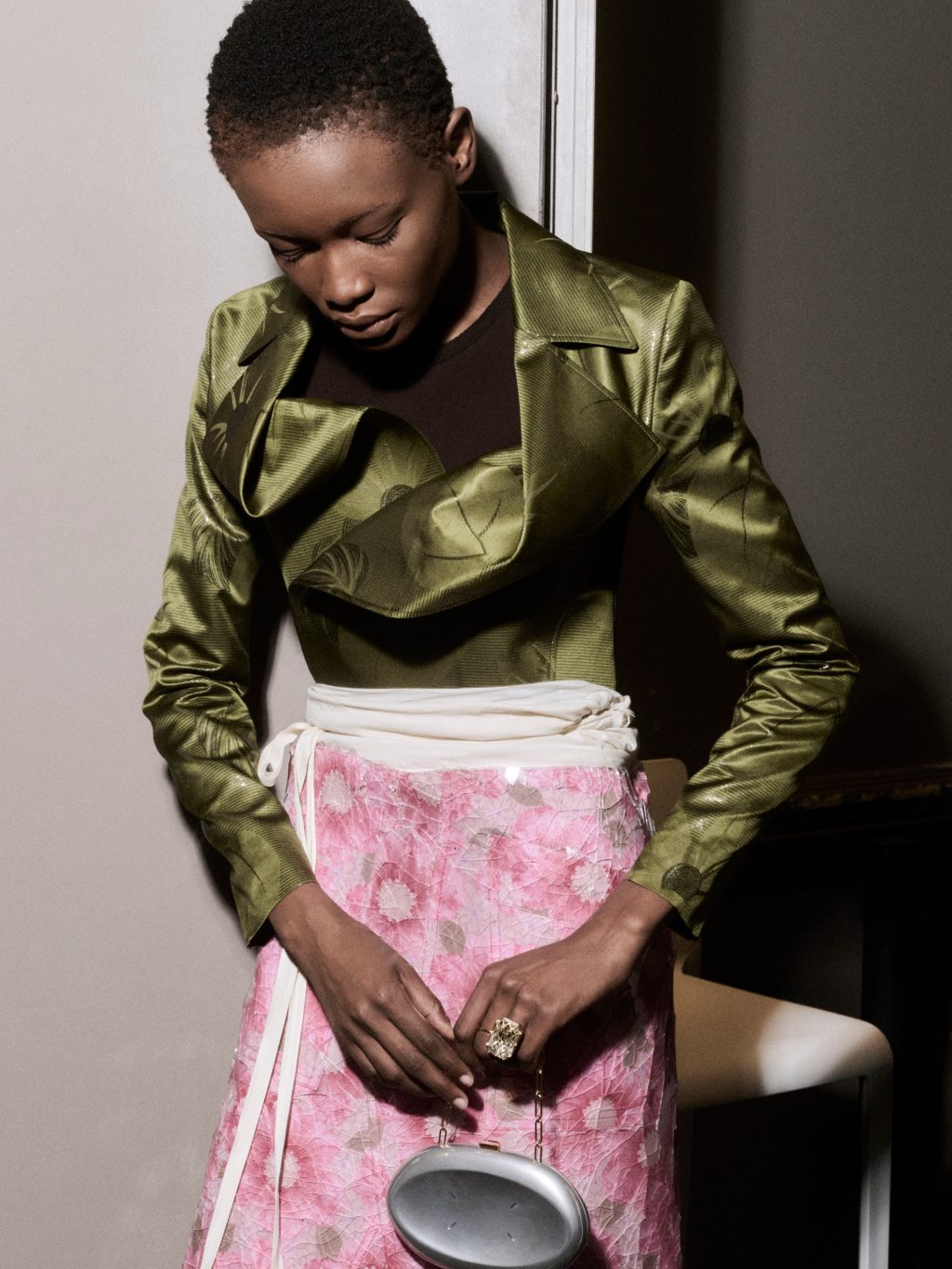
The evening bags take two forms. The first look like jewellery boxes: rigid rectangles with a bevelled lid line, carried flat in the hand in fuchsia satin, metallic powder blue and black. The second recall the small purse that once hung from a chatelaine, the ornamental clasp worn at the waist to carry keys and tools. Here the purse hangs on a gold chain from a ring worn on the finger.
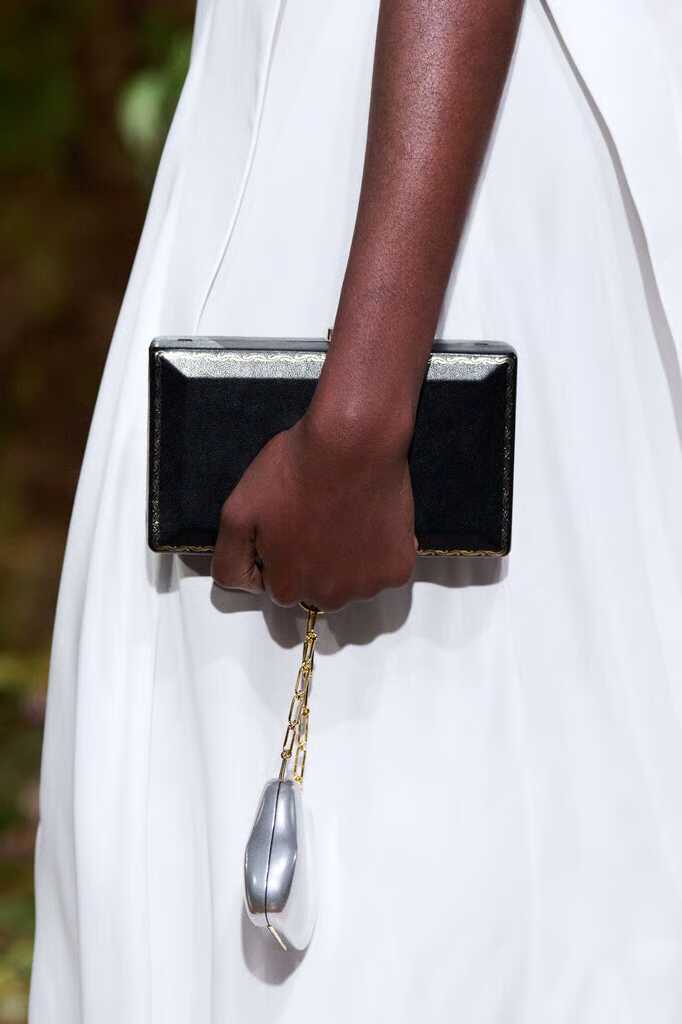
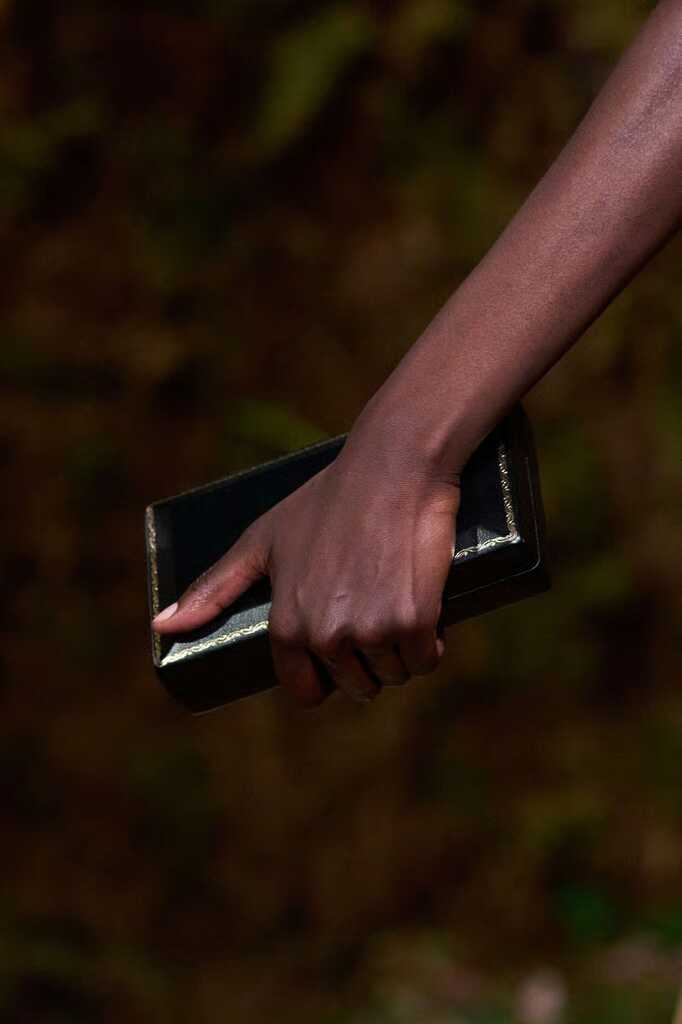
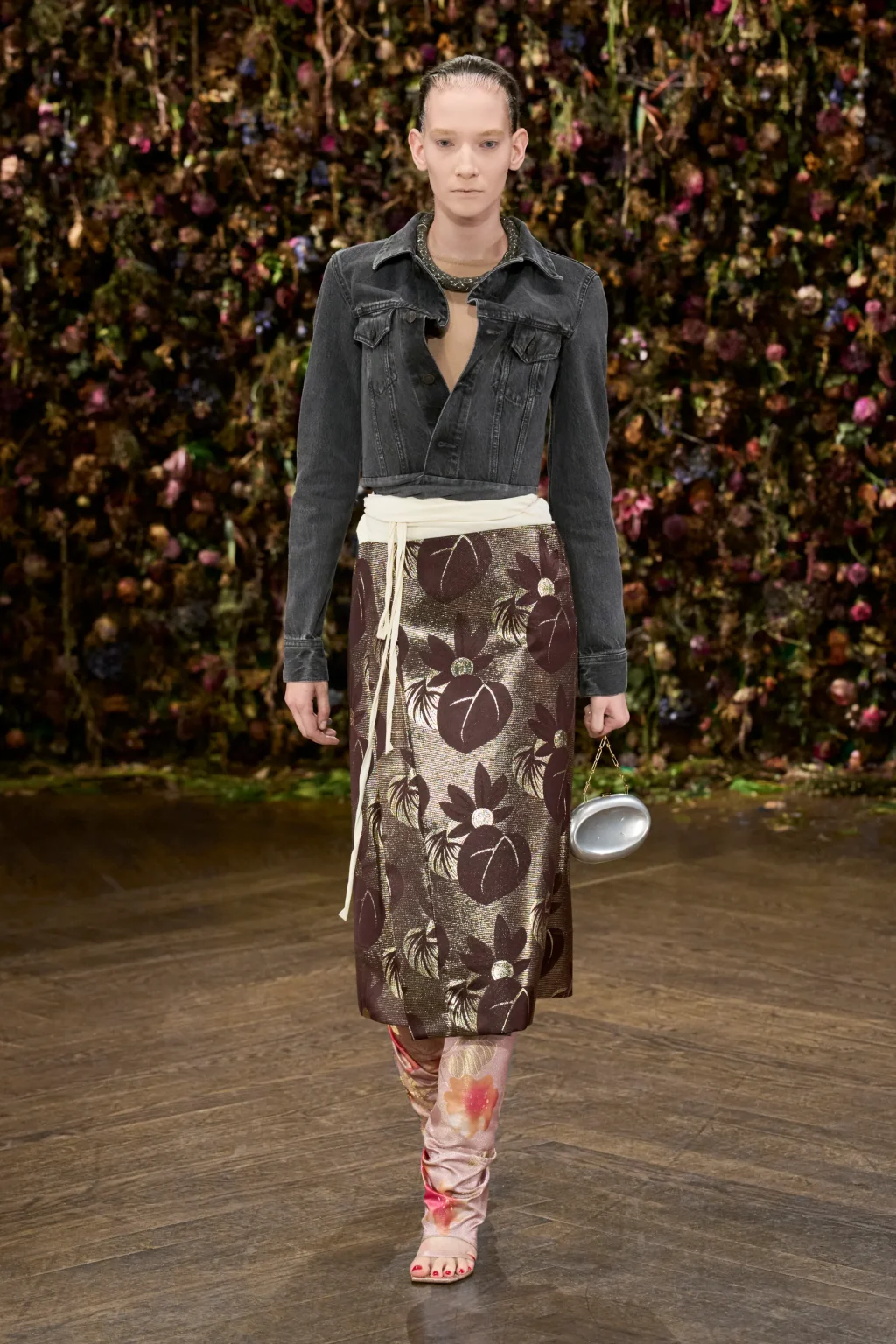
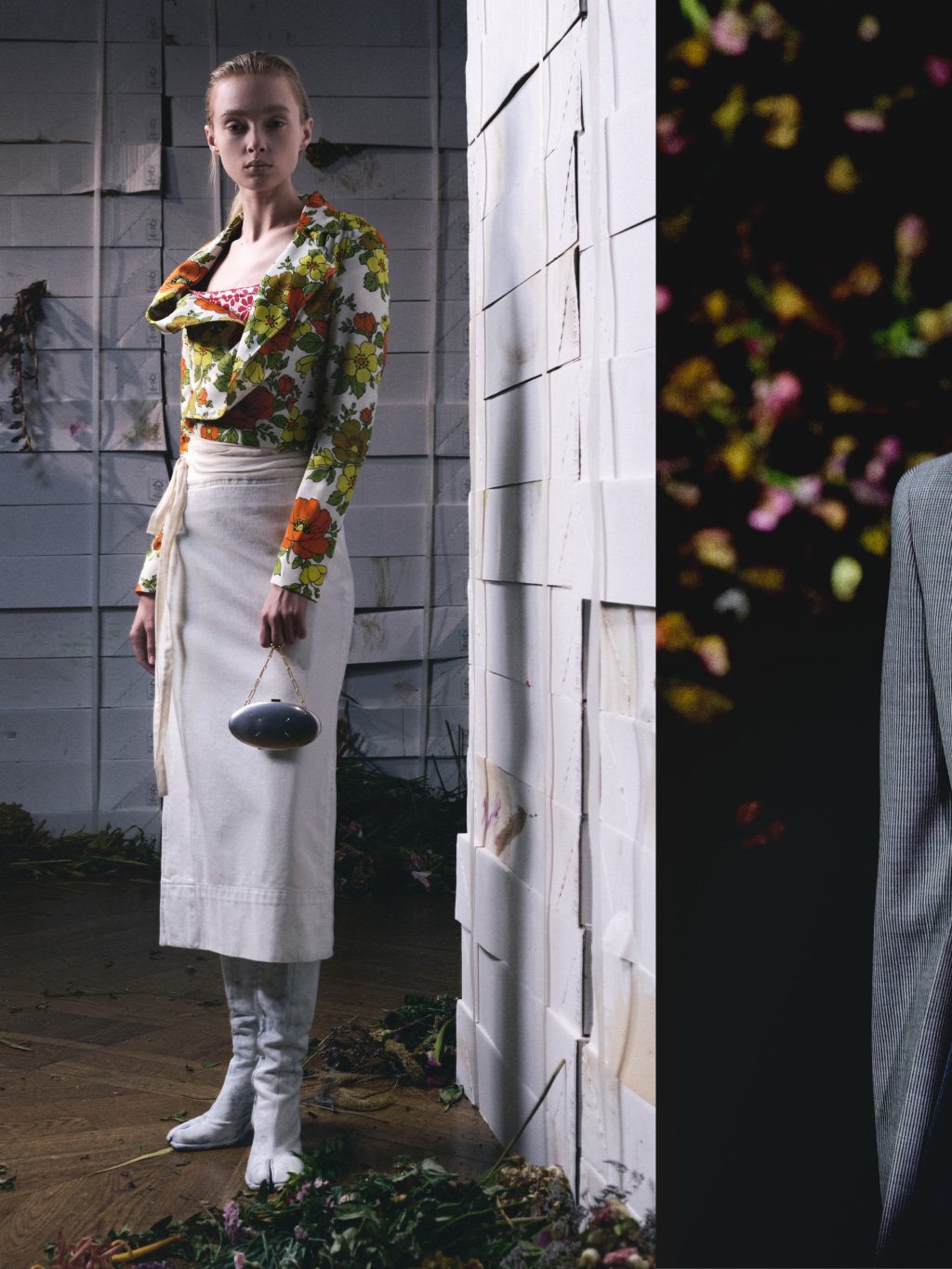
The chatelaine purses are silver: a smooth oval minaudière with the four stitches pressed into the metal, a smaller frame purse with a gold clasp, and a round compact. The show notes add that some purses are modular and slot together. One runway look showed the idea: a silver drop-shaped purse hanging by a gold chain beneath a black box clutch.
In a collection about making hard things soft, the evening bags are the ones that stay hard.
The Marché bag, knotted from leather party string
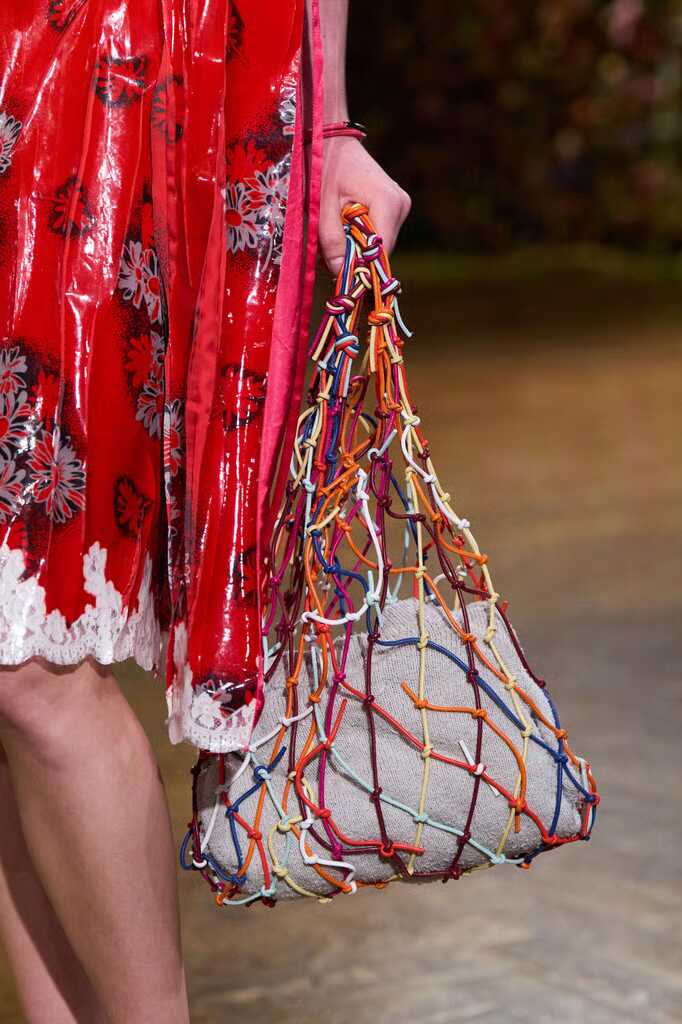
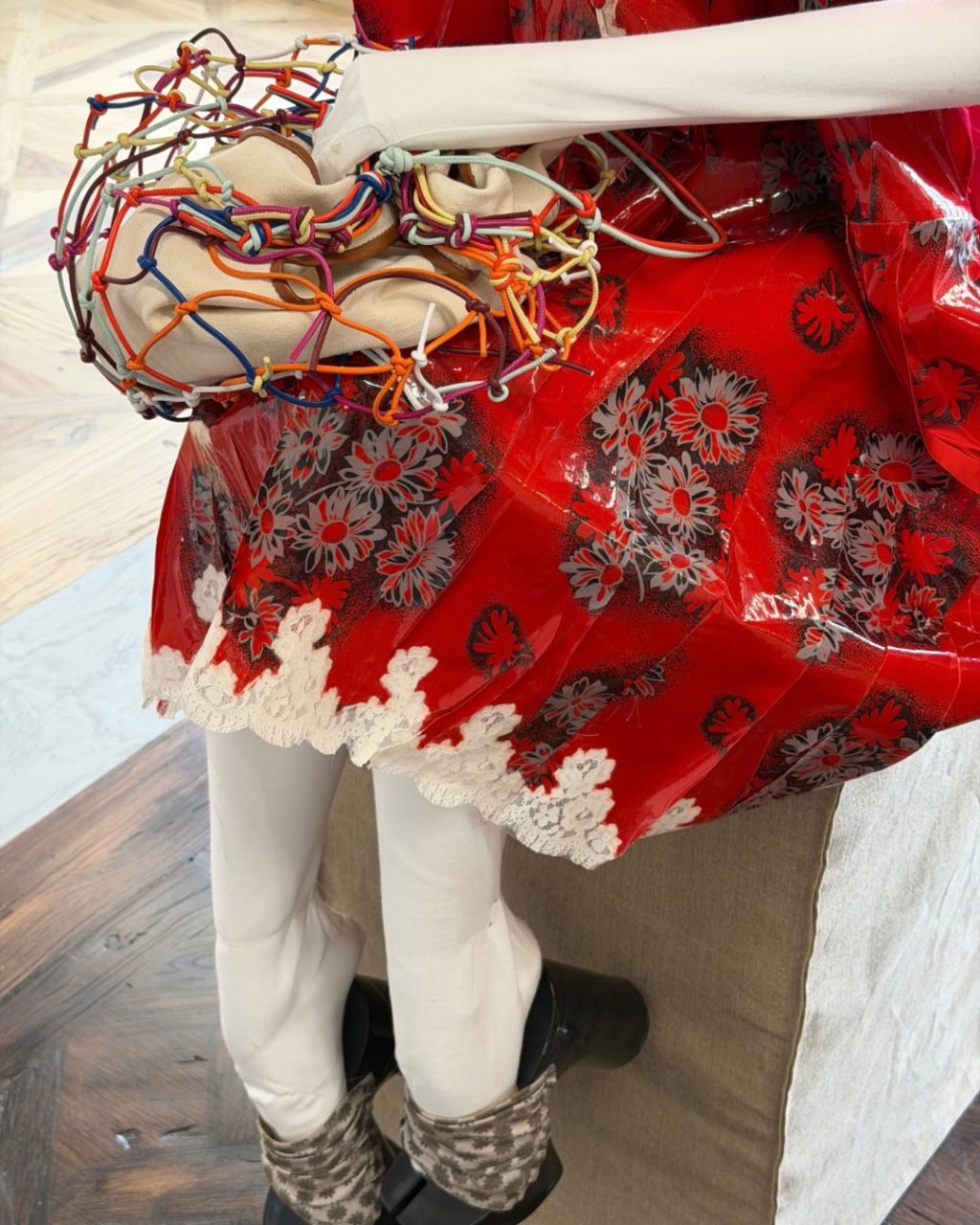
The Marché is a market net woven from leather cord that looks like party string, in red, orange, yellow, green, blue and white. On the runway the net was carried over a plain canvas pouch, so it reads as wrapping around a bag. The same colourful leather strips tie the new Slide mules to the foot, and the net answers one of the teaser films: the body caught in a fishing net.
Glam Slam in floral print and the other runway bags
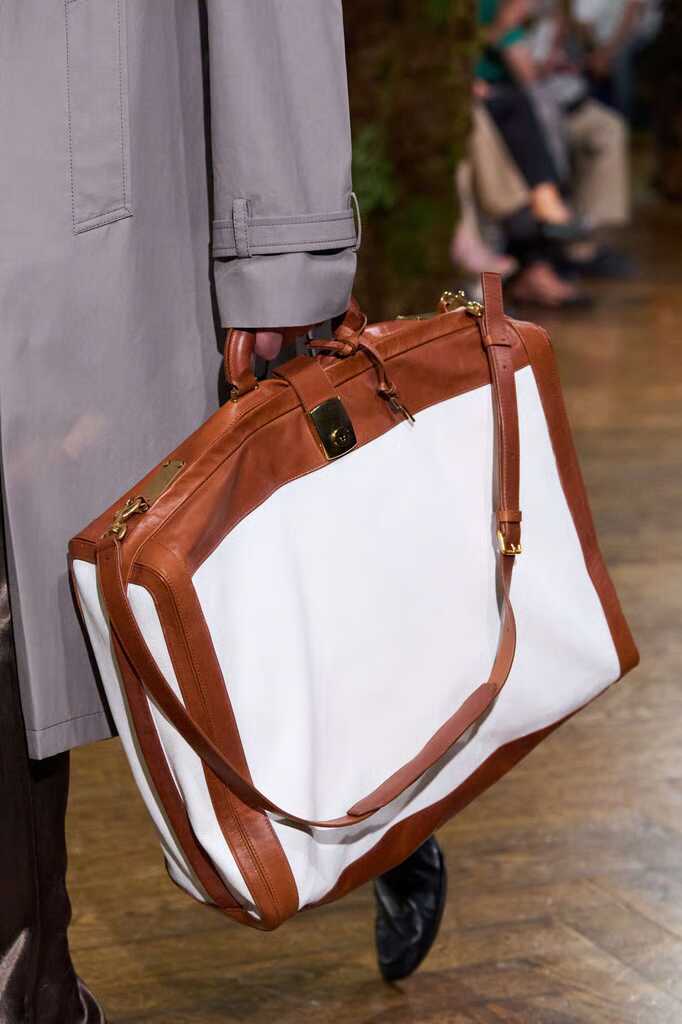
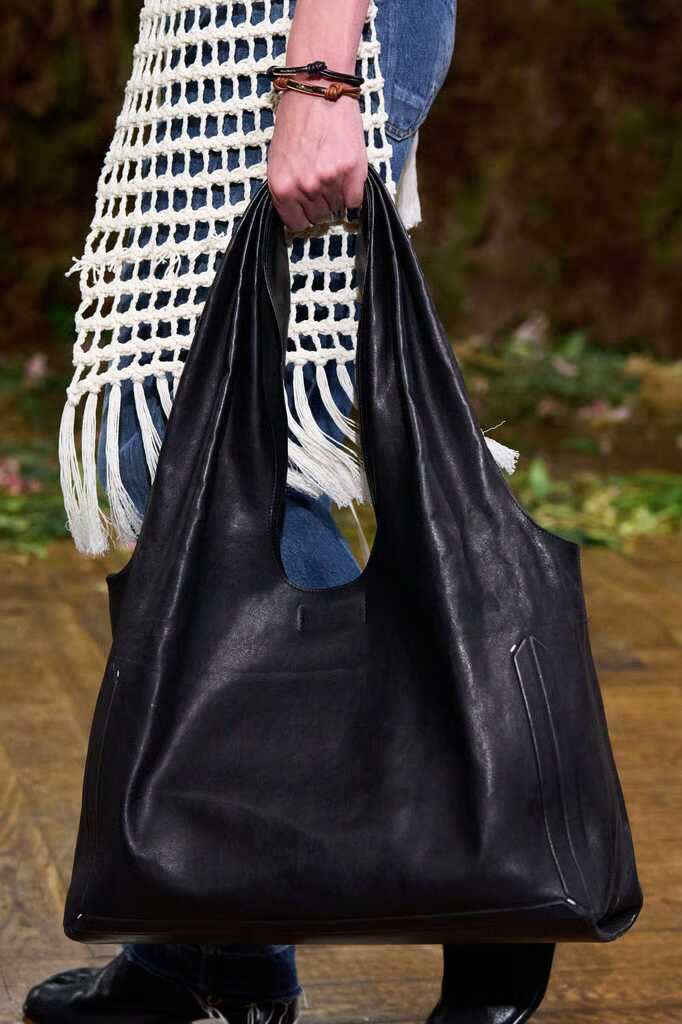
The Glam Slam, the house’s padded shoulder bag, takes the collection’s floral prints. Two more shapes stood out on the runway. A large black leather hobo, soft enough to sag from the hand, was carried with a crocheted net vest and jeans. A cream canvas weekender edged in cognac leather, with a brass lock, brought the luggage theme back to where the Ghost begins; Highsnobiety called it a doctor’s bag fit for a weekend away.