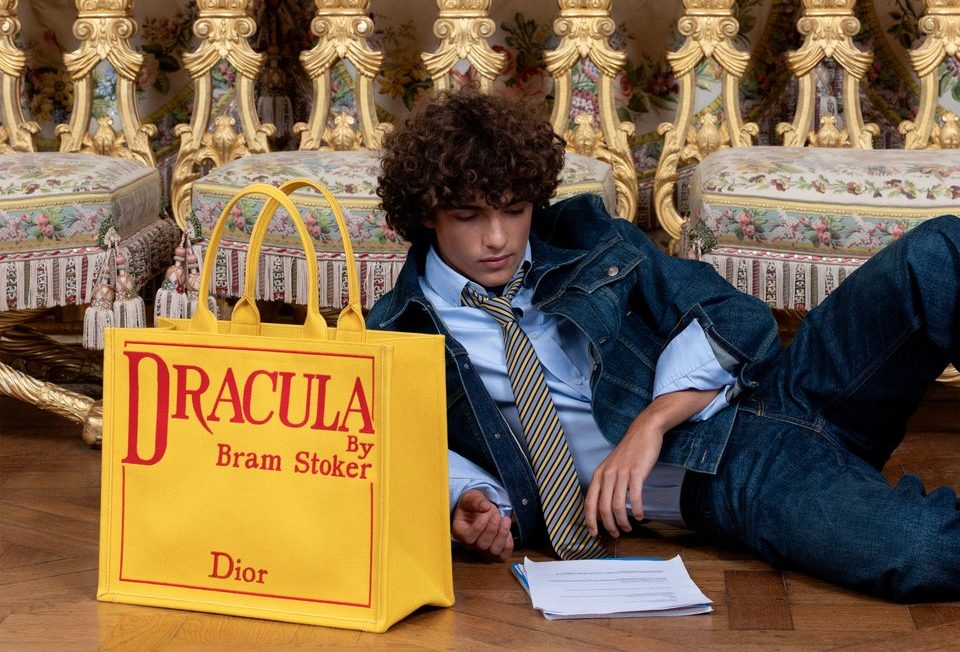
When Jonathan Anderson made his debut as creative director at Dior, the first thing to go viral wasn’t a ball gown or a radical Bar jacket. It was a tote bag that looked like a book.
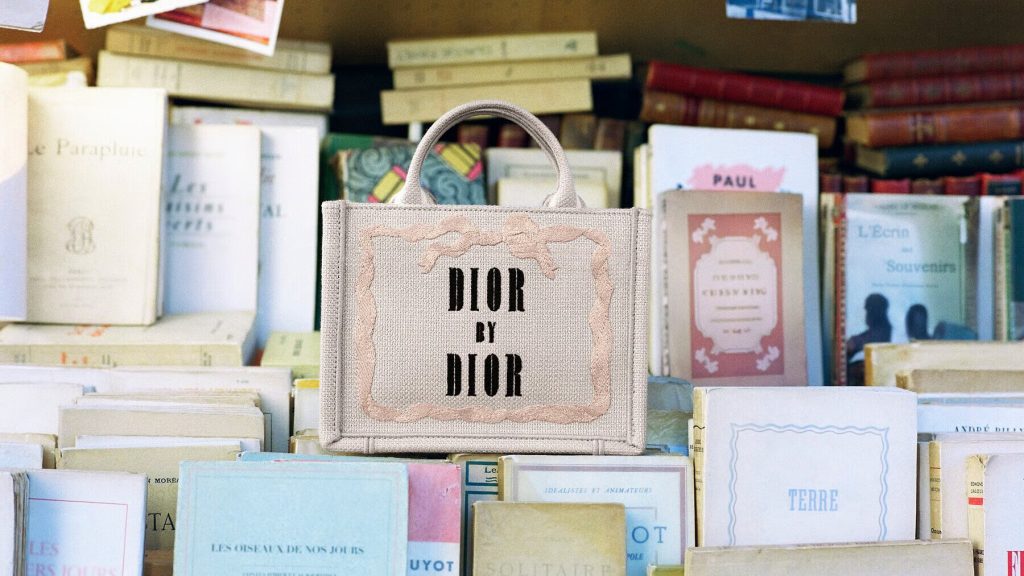
Ahead of his Spring/Summer 2026 menswear show in Paris, Dior quietly sent “close friends” on Instagram a series of images: a bright yellow tote bearing the cover of Dracula by Bram Stoker; a blush-pink version of Les Liaisons dangereuses; and a parchment-toned “Dior by Dior” framed in silky trompe-l’oeil ribbon.
By the time guests—Rihanna, A$AP Rocky, Daniel Craig and fashion’s inner circle—took their seats, it was clear that Anderson, already revered for his work at Loewe and his own label, had chosen to “rewrite” Dior through one of its most commercially important accessories: the Dior Book Tote.

On the runway, the idea exploded into a full library of bags, each one a facsimile of a beloved literary cover. It signalled not just a new It-bag moment, but a new intellectual, slightly eccentric direction for Dior.
Thinking of buying one of Anderson’s wearable “first editions”? Before you choose your cover, read our Dior Book Tote prices & sizes (2026) guide for the current Book Cover Collection price ladder, Dior’s exact measurements for mini/small/medium/large, and the small-but-important “medium twist” (two different dimension sets) that can change how the tote looks—and carries—in real life.
The Dior Book Tote, re-read
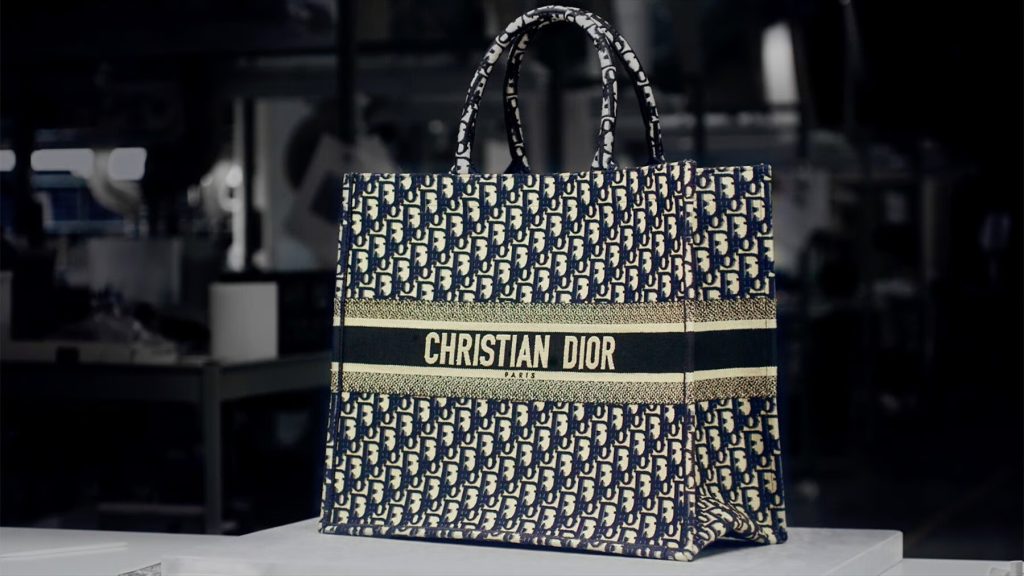
Maria Grazia Chiuri introduced the Book Tote for Spring/Summer 2018, reworking a 1967 Marc Bohan sketch into a rectangular, open-top carryall that quickly became a “seen everywhere” bag from Capri to Saint-Tropez.
Behind its deceptively simple shape lies serious craftsmanship: early embroidered versions reportedly required more than 37 hours of work and around 1.5 million stitches in a specialist Italian atelier.
Off the runway, Dior leaned into the “Book” in Book Tote with its Dior Book Tote Club videos, inviting actresses like Rosamund Pike and Natalie Portman to discuss their favourite novels while packing them into the capacious bag.
So when Anderson arrived and decided to turn the Book Tote into an actual book—cover, typography and all—it felt both inevitable and mischievous.
Jonathan Anderson’s Literary line-up
For his first collection at Dior, Anderson collaborated with French publisher Les Saints Pères (SP Books), known for deluxe and facsimile editions of literary classics. The Dior Book Totes borrow artwork from these editions, effectively turning each bag into a wearable first edition.
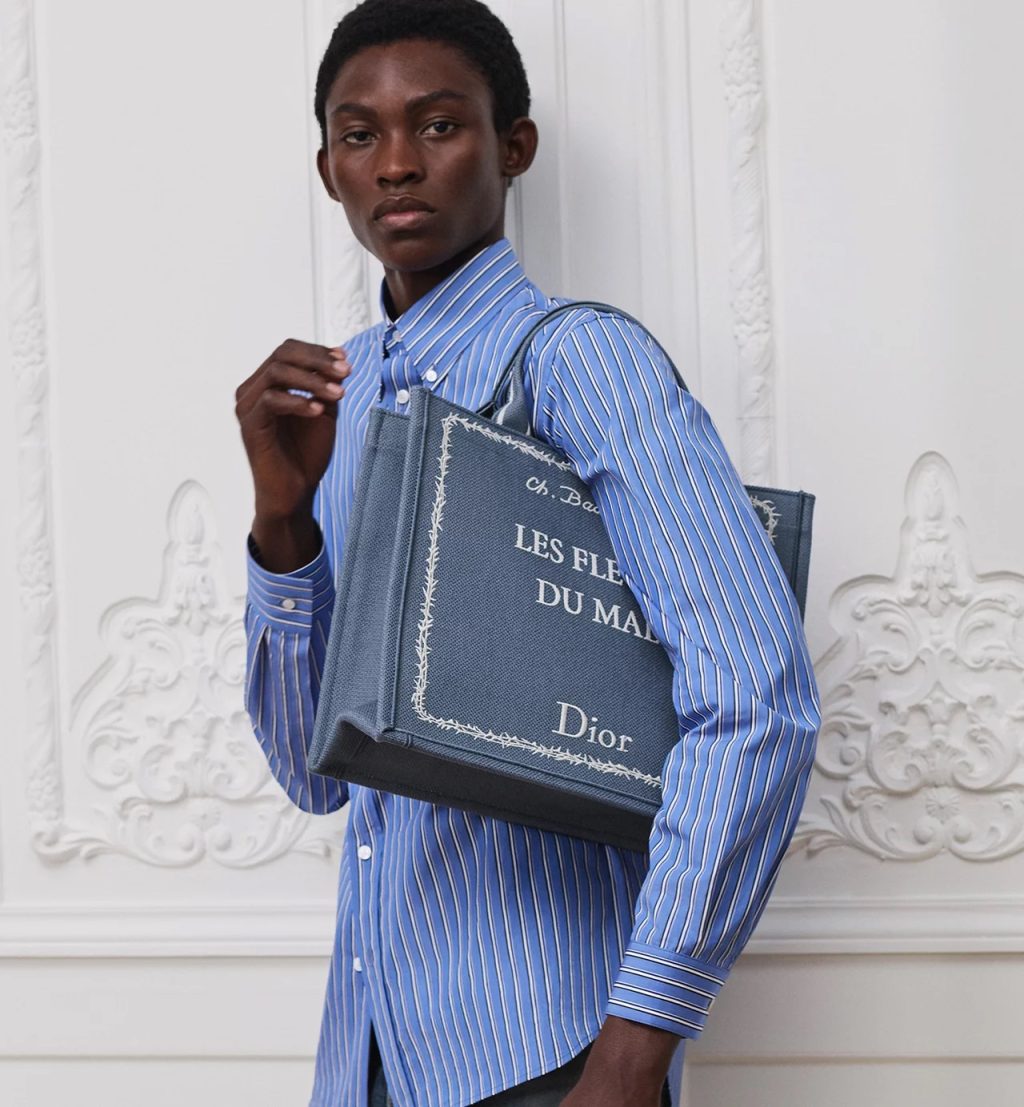
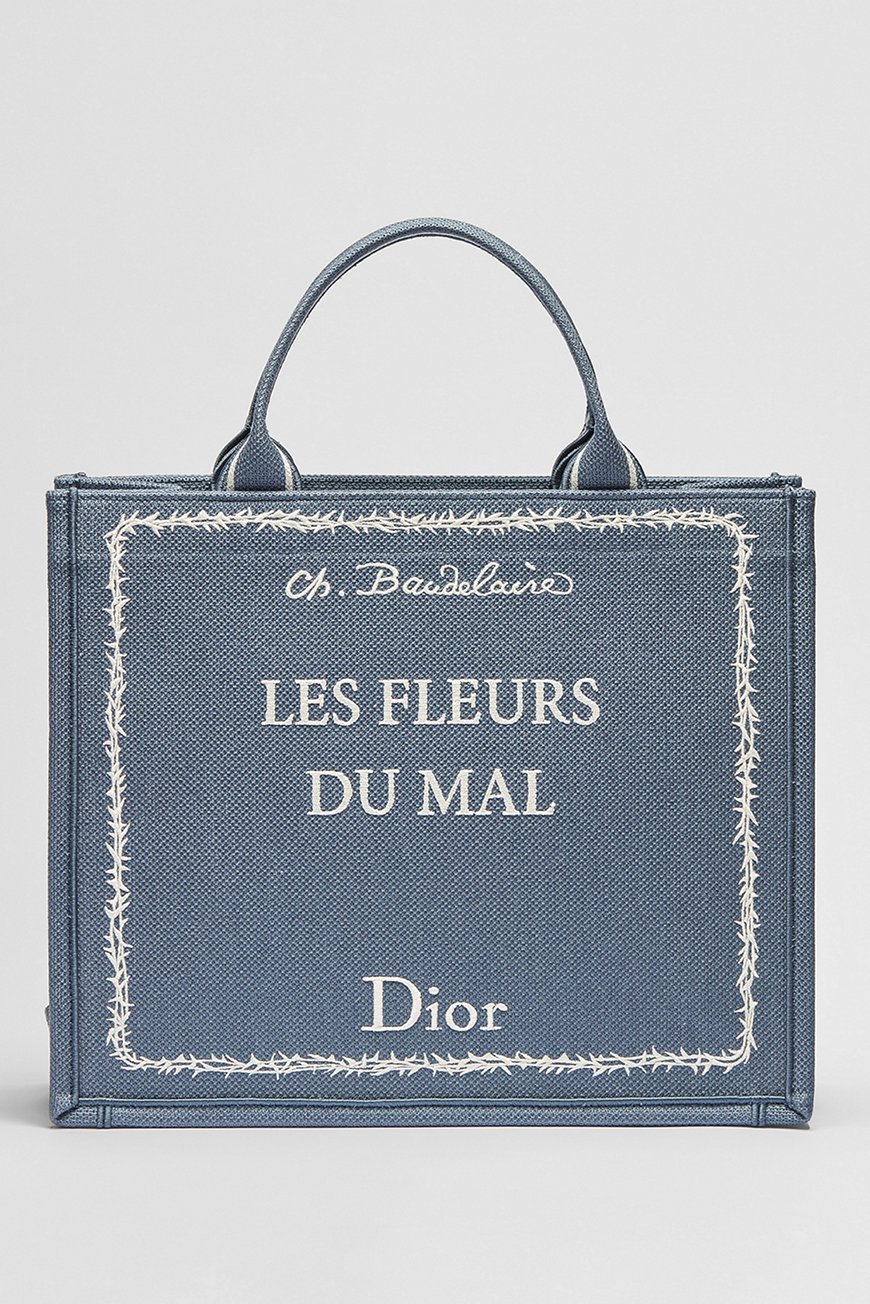
The initial runway edit centred on Les Fleurs du Mal by Charles Baudelaire and In Cold Blood by Truman Capote, whose SP Books covers were wrapped around the classic Book Tote silhouette, while Dracula appeared as a crossbody.
Beyond the show, the family of literary bags now spans an entire syllabus of cult texts:
Dracula by Bram Stoker
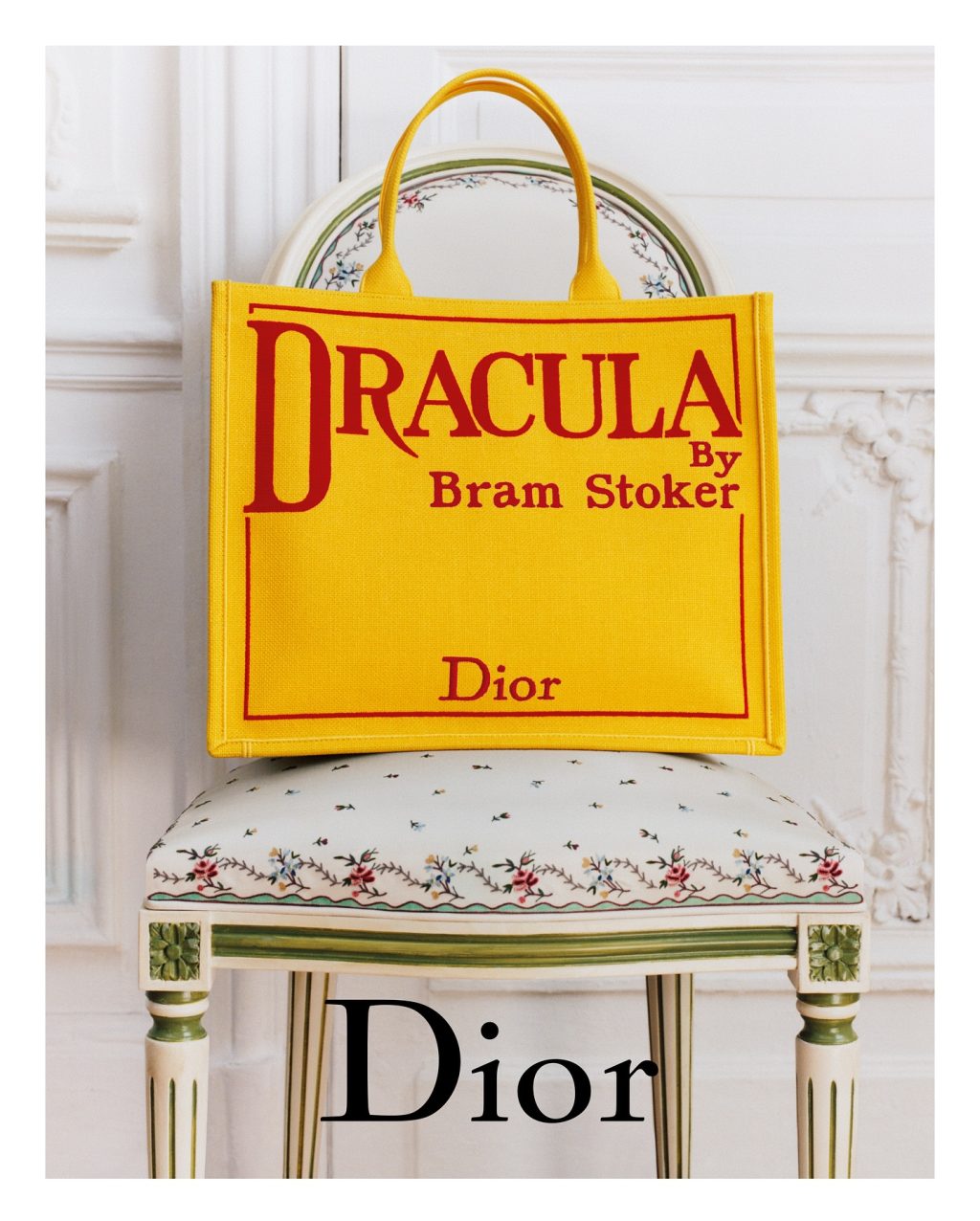
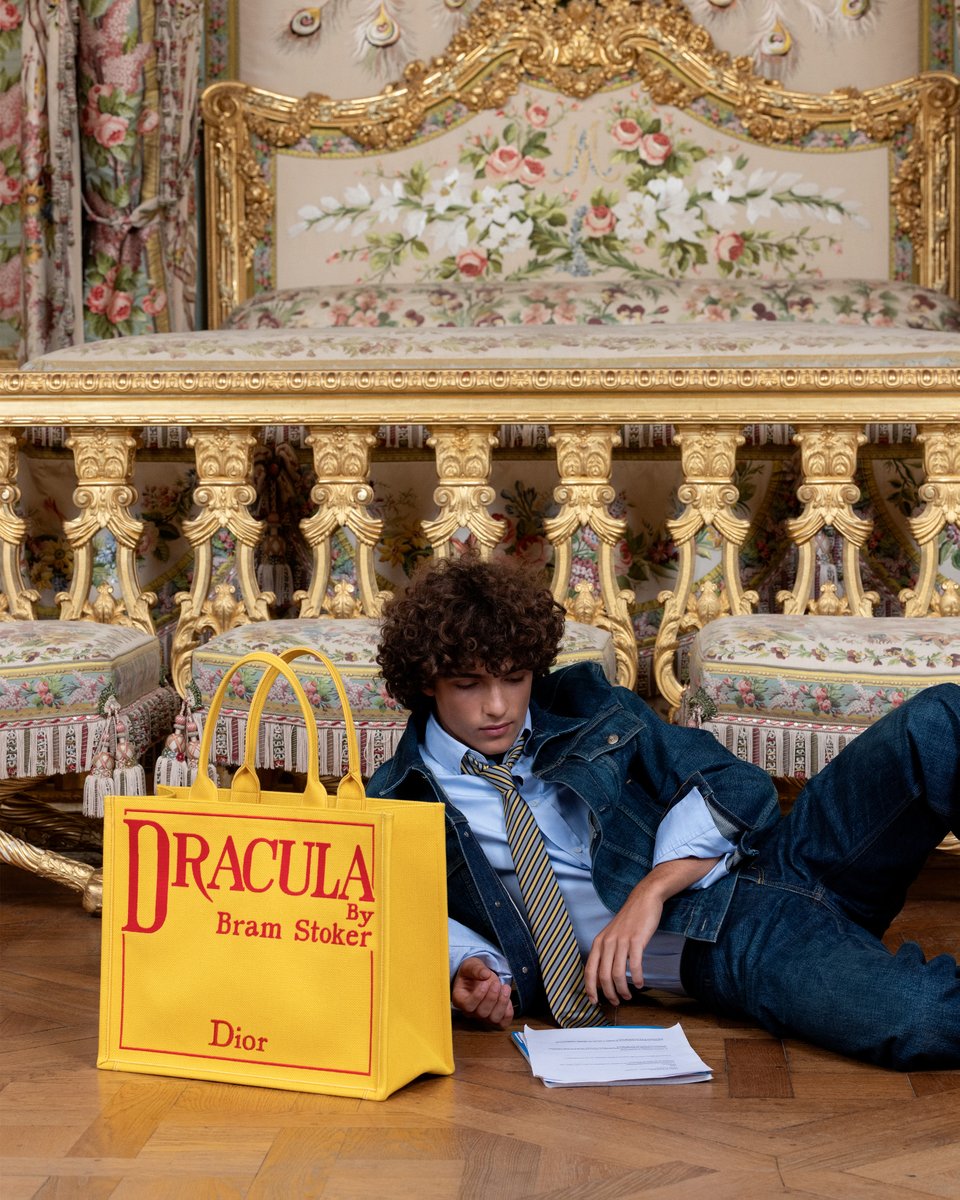
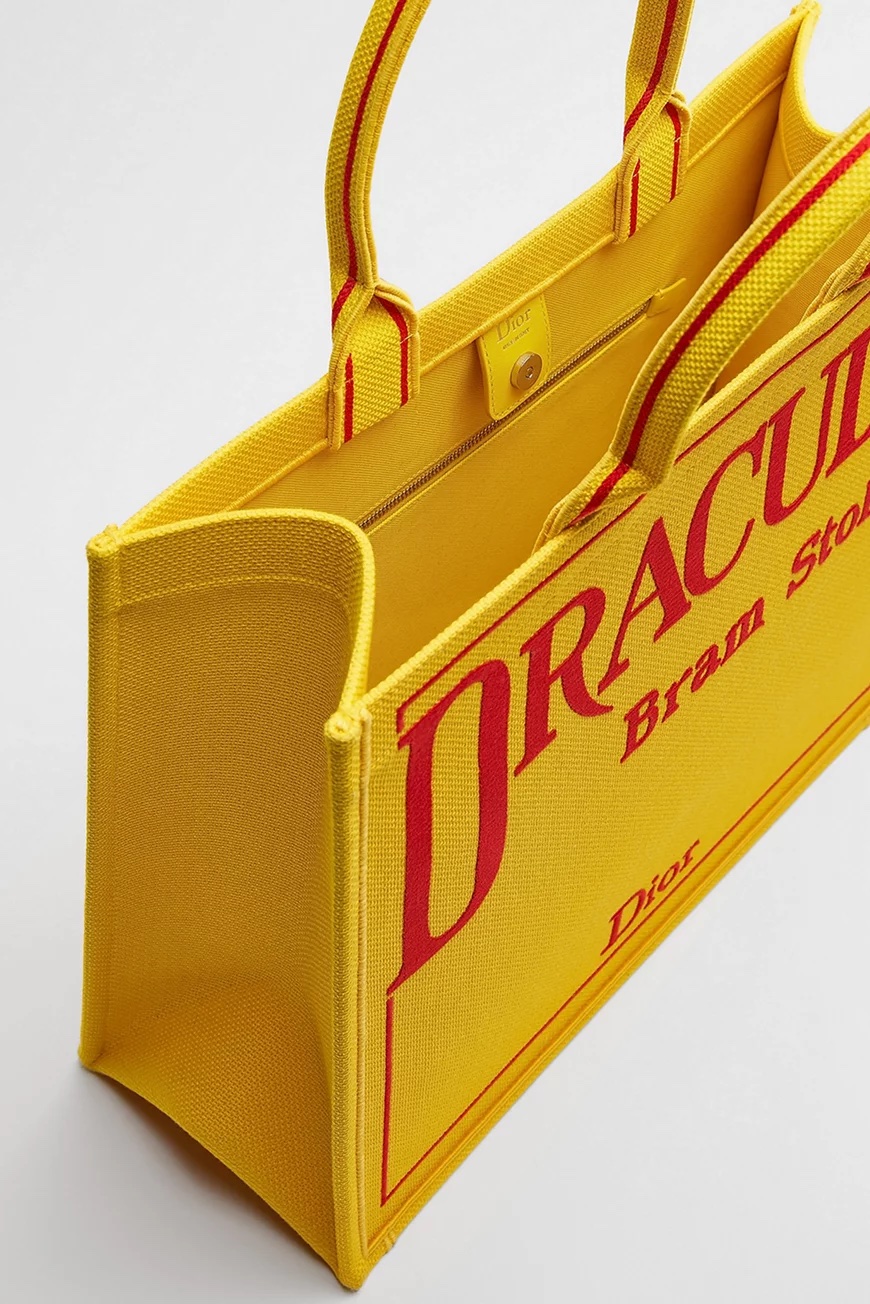
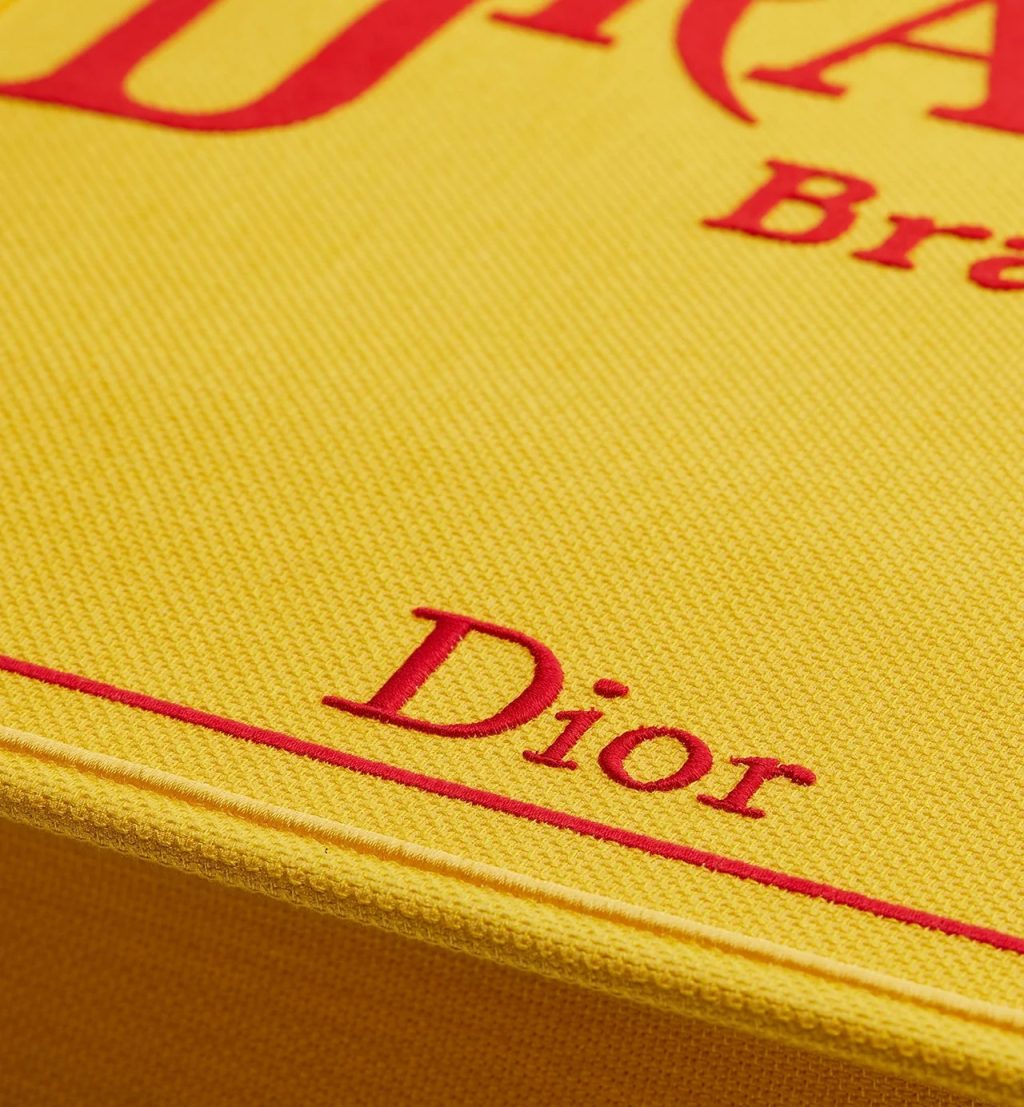
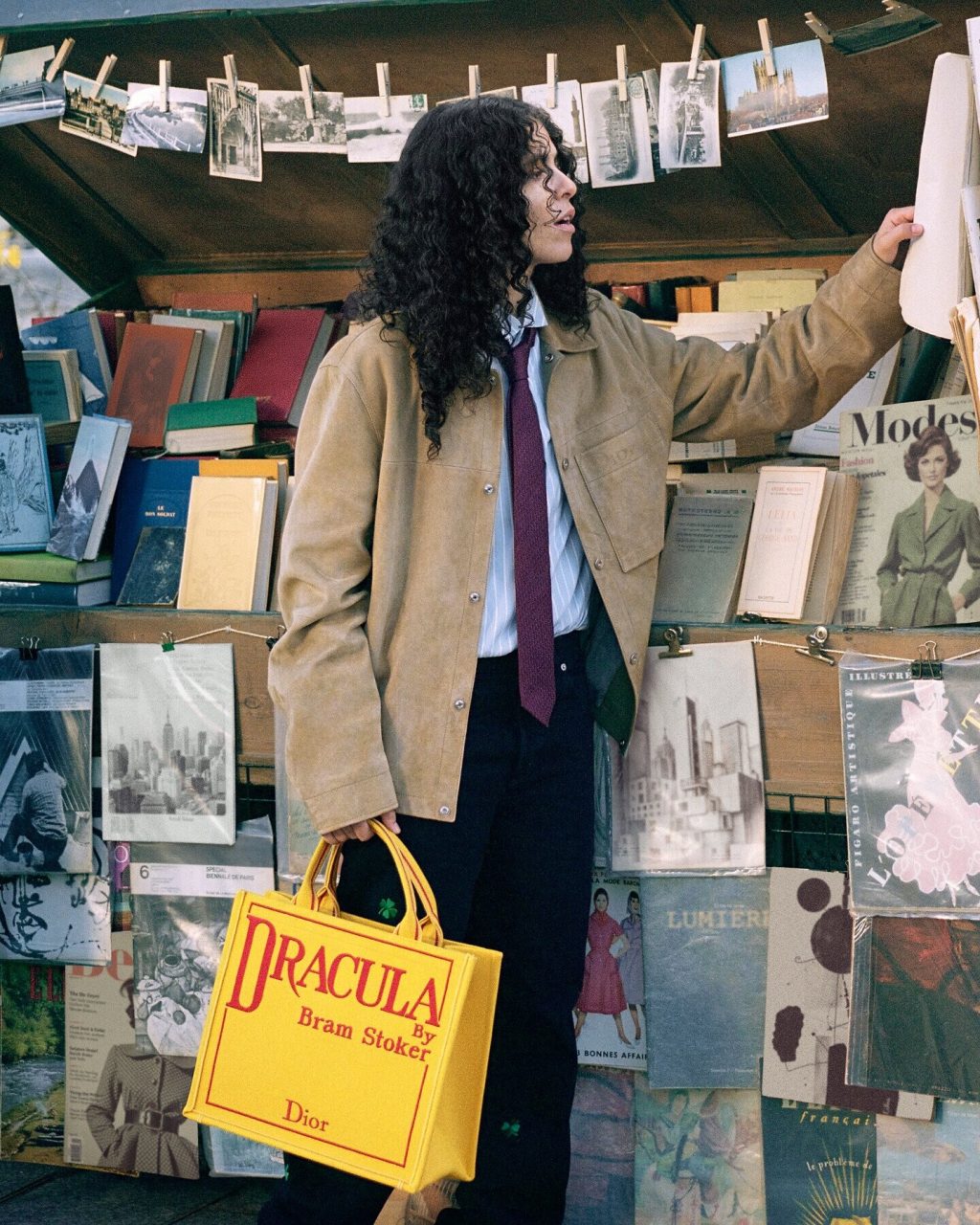
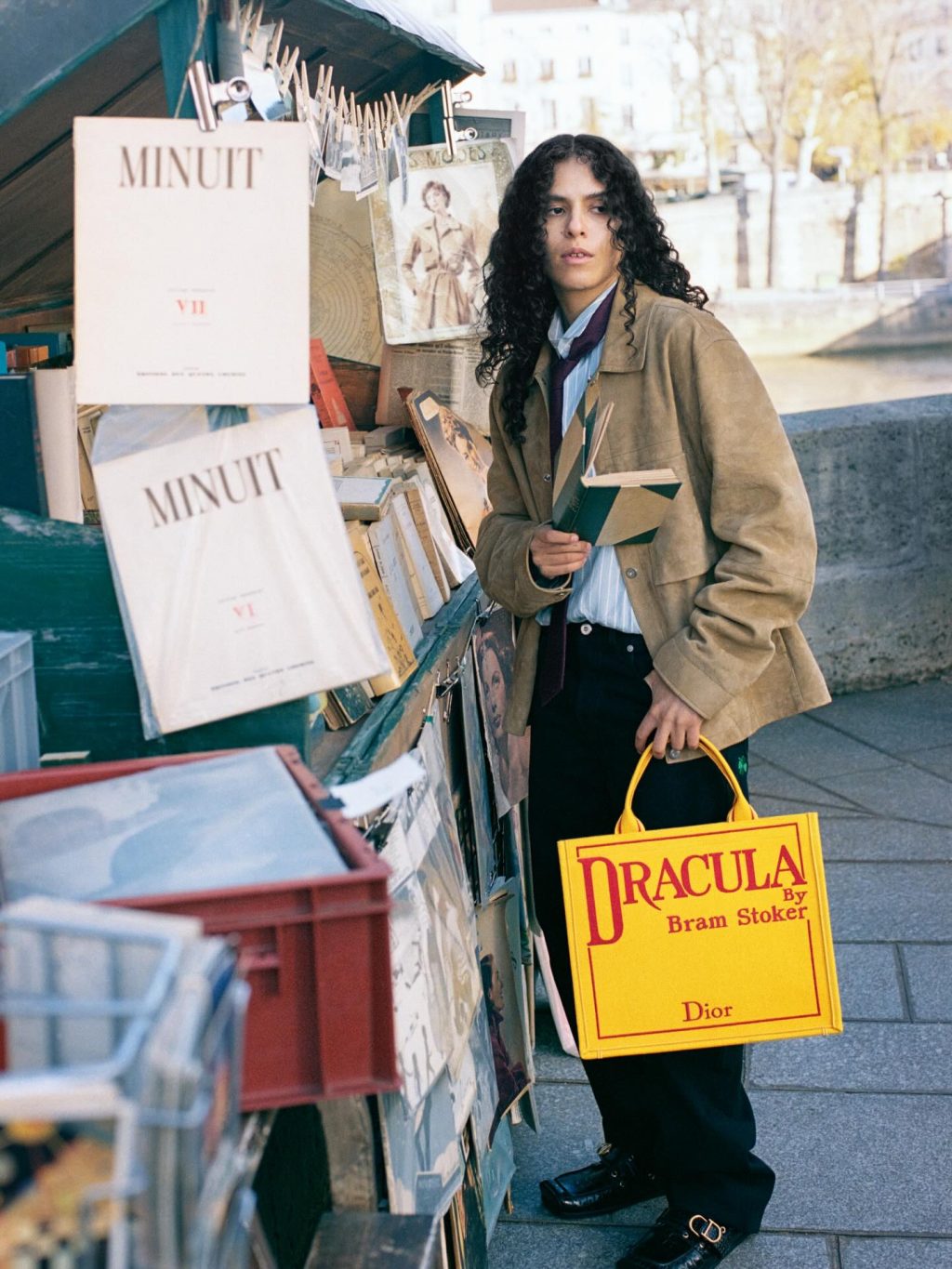
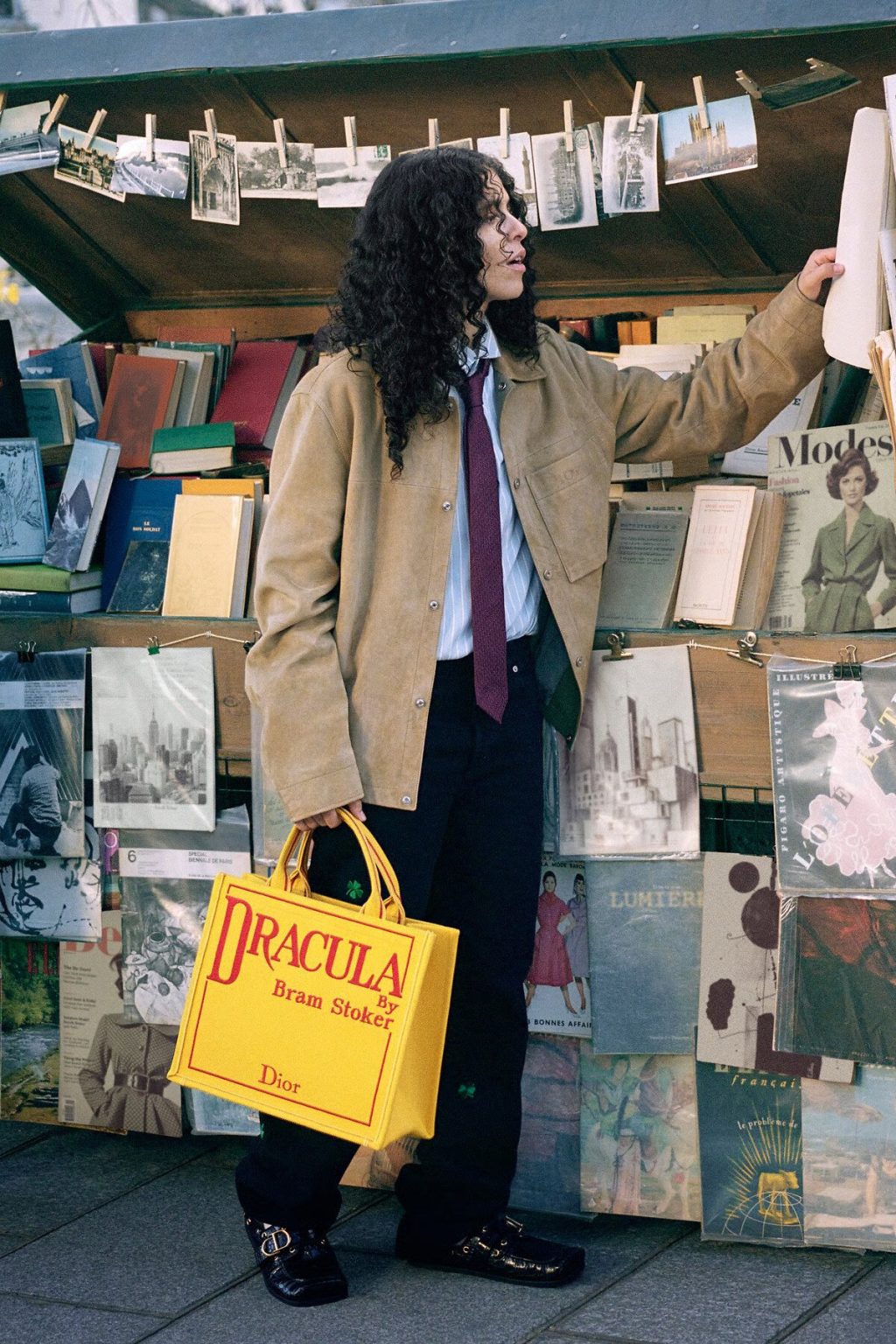
Perhaps the most instantly recognisable of the series, the Dracula tote is rendered in striking traffic-light yellow with blood-red lettering, echoing the 1897 first-edition cover.
For Anderson, the choice is deeply personal: Stoker—often misremembered as English—was, like him, Irish. In interviews he’s spoken about realising this relatively late, and about how Dracula’s vampire story doubles as a Victorian panic about the “foreign other,” making the book unexpectedly relevant in an era of heated immigration debates.
The result is a bag that reads as both camp and sharp social commentary: gothic horror, but in a joyful pop colour that undercuts the darkness.
Dior by Dior
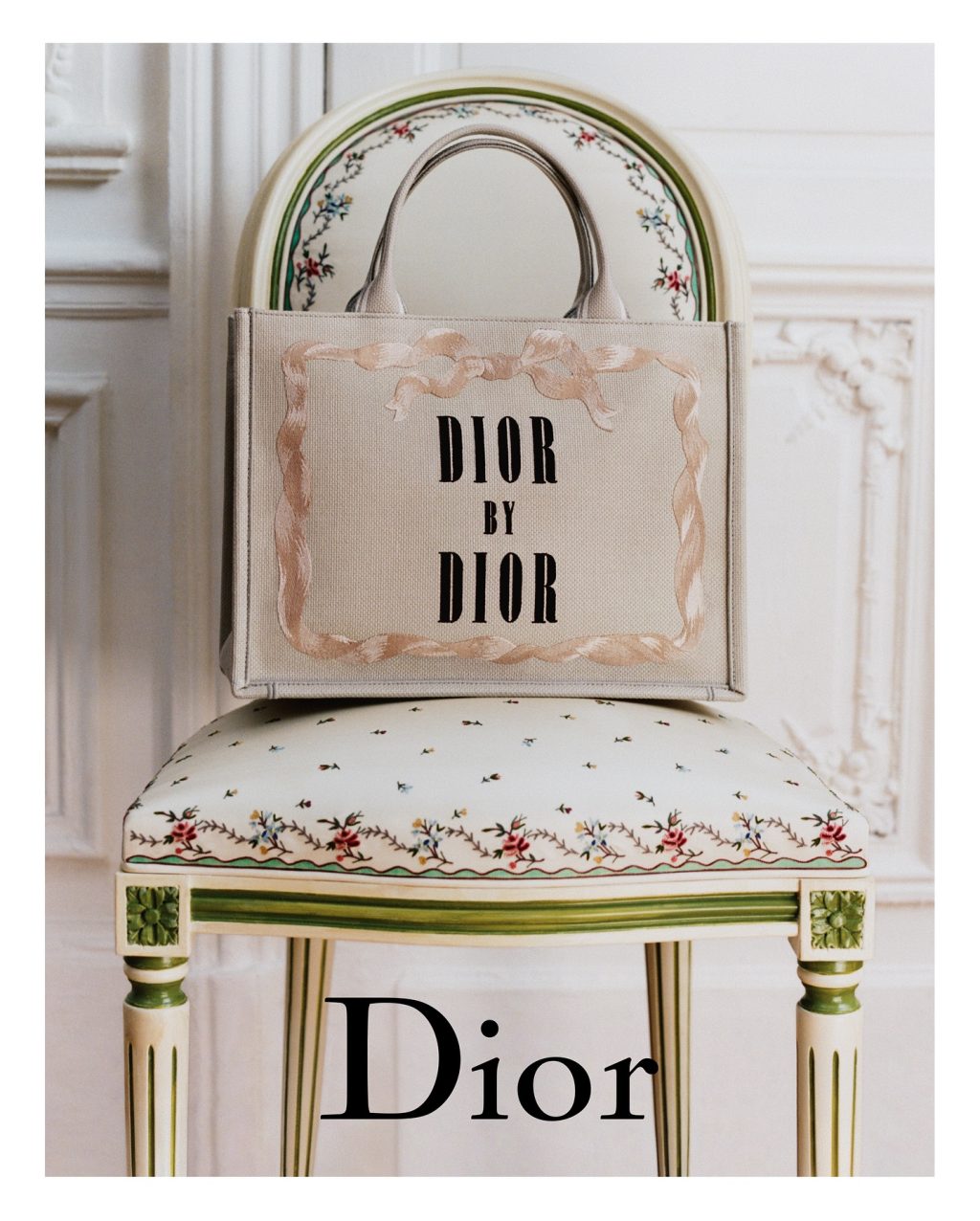
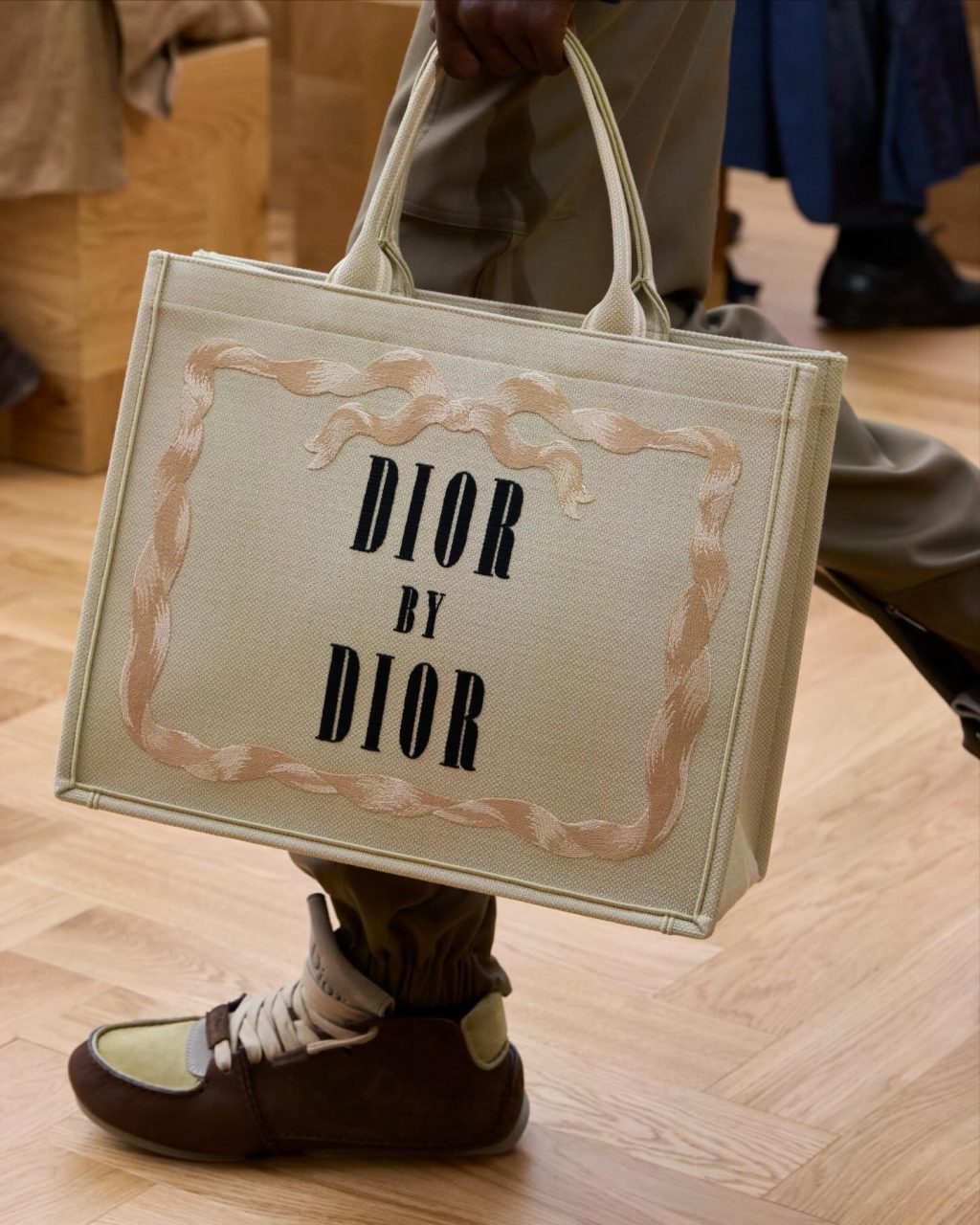
If Dracula is the memeable hit, Dior by Dior is the house manifesto. The tote reproduces the cover of Christian Dior’s 1956 autobiography, framed by champagne-coloured embroidered “ribbons” that look like hair or film strips swirling around the title.
Susie Lau, one of the first insiders to see the designs, called out how crucial this text is to understanding Dior’s codes—his dislikes, obsessions and rules of elegance. Marie Claire UK Translated into a bag, it becomes a meta object: a Dior bag about Dior’s own mythology.
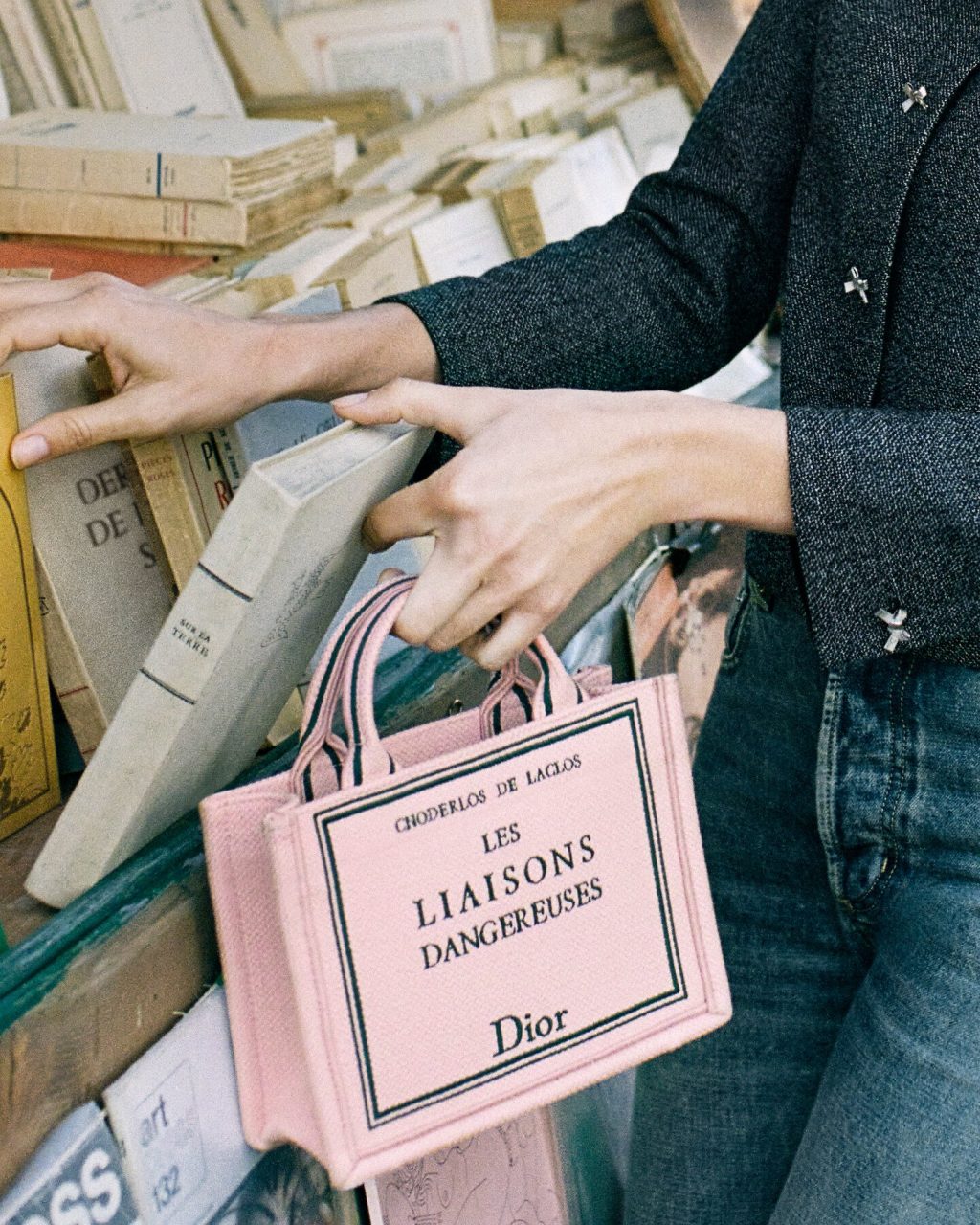
Les Liaisons dangereuses by Pierre Choderlos de Laclos
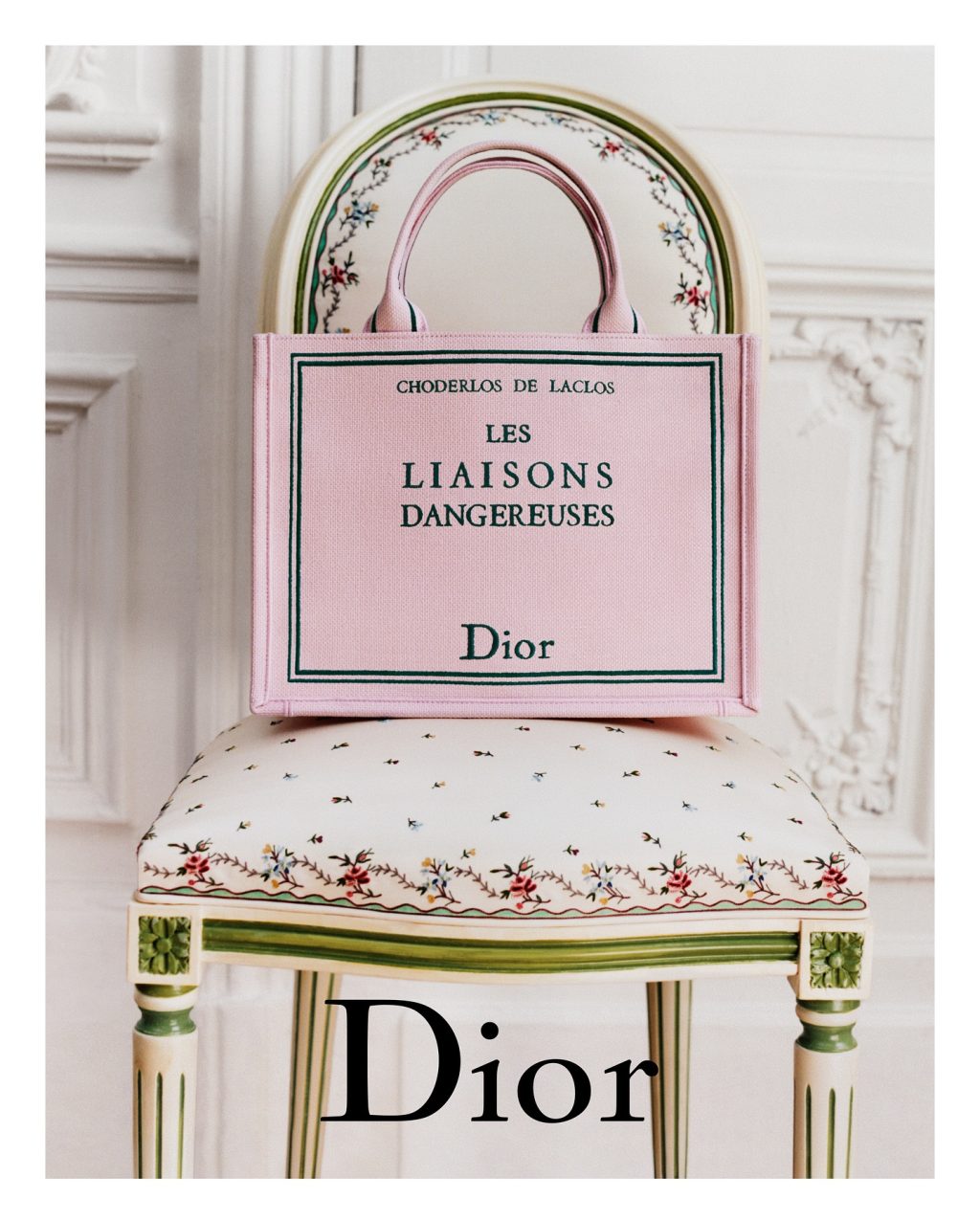
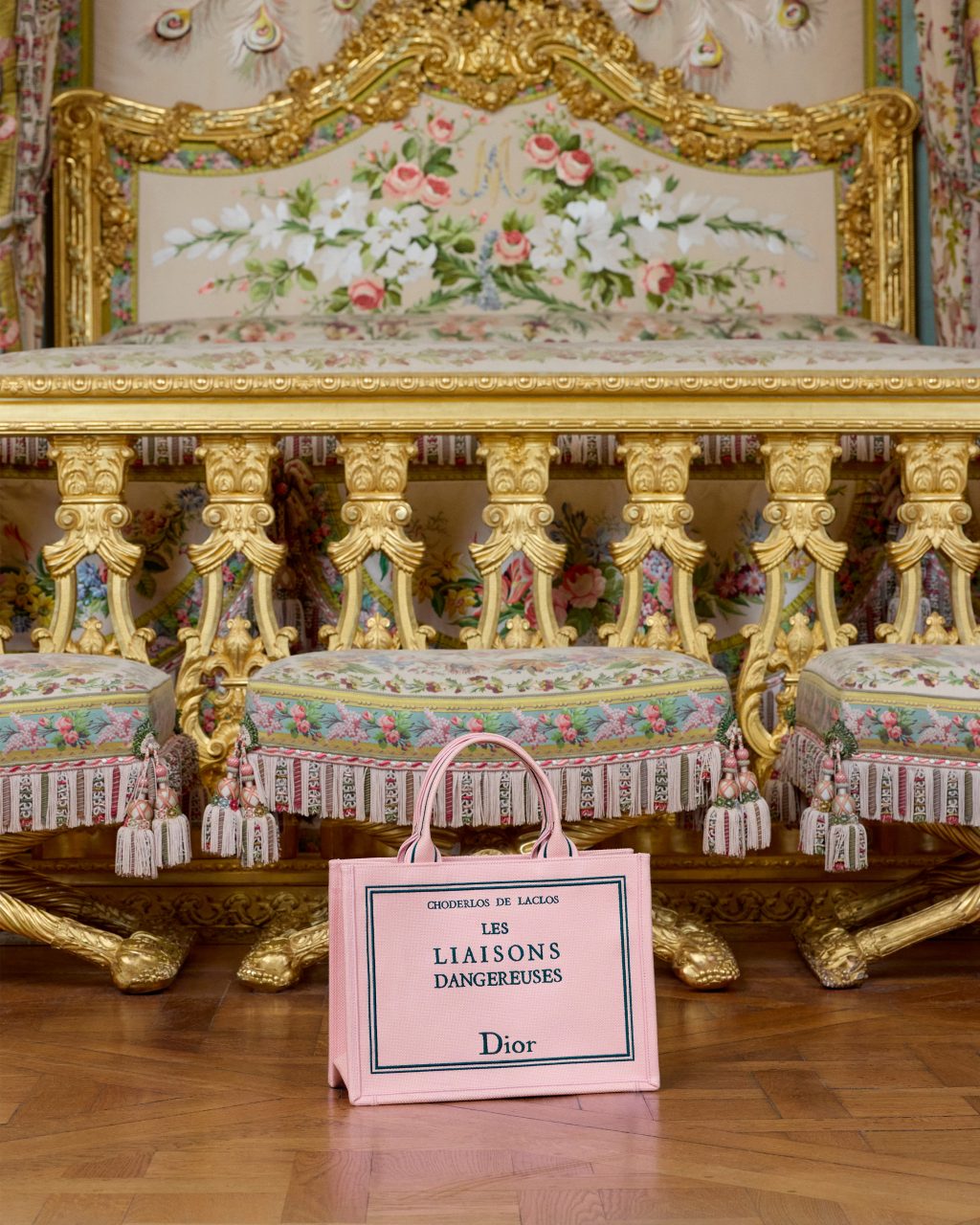
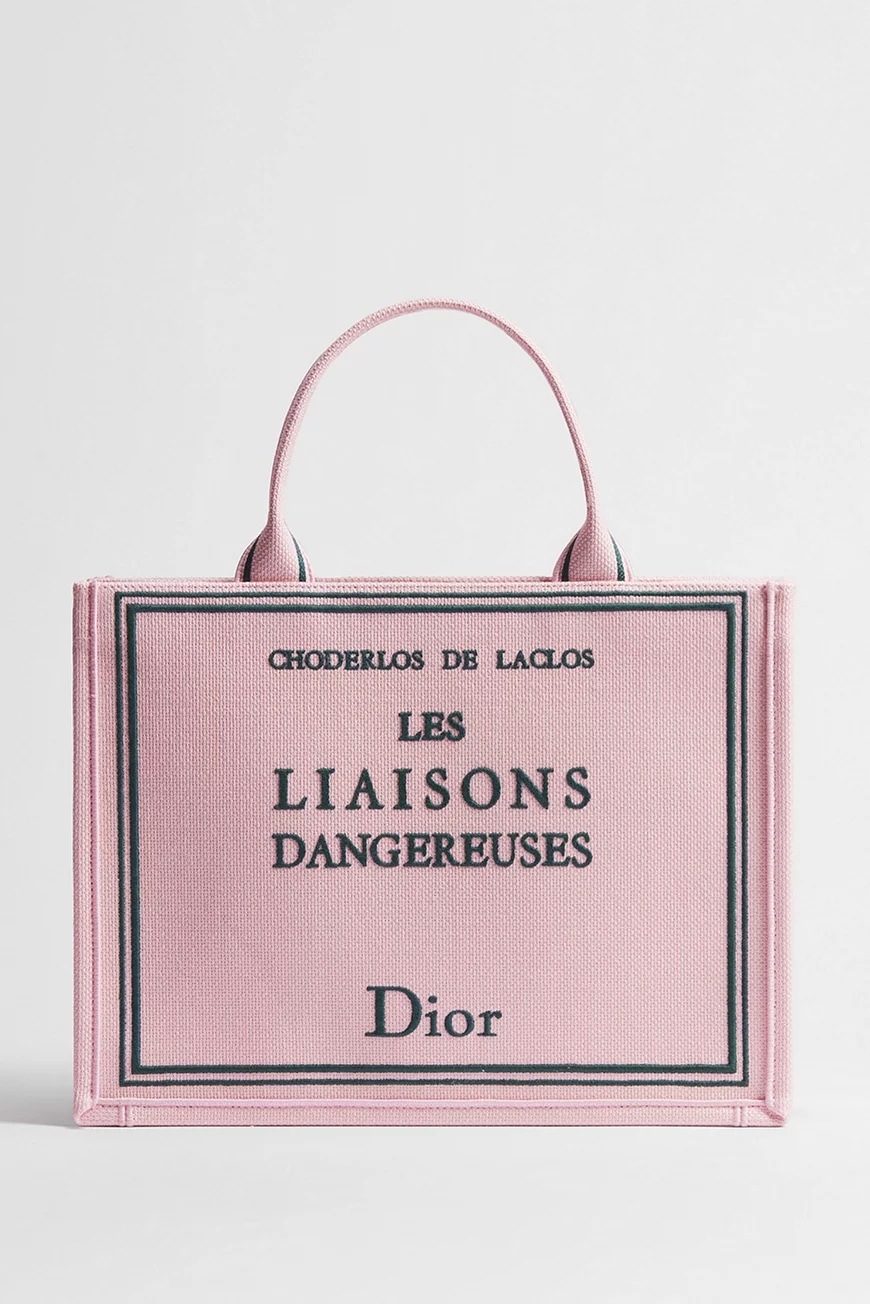
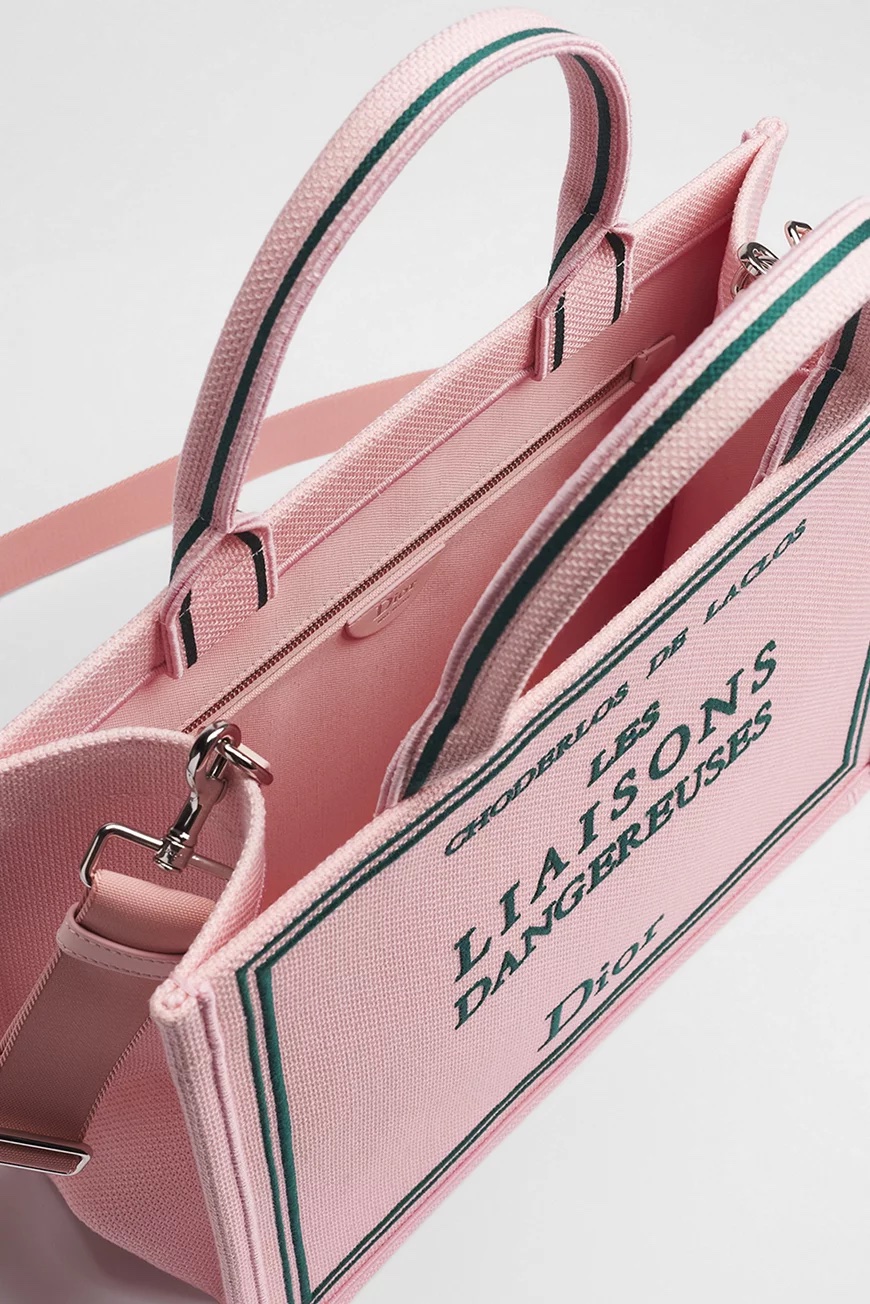
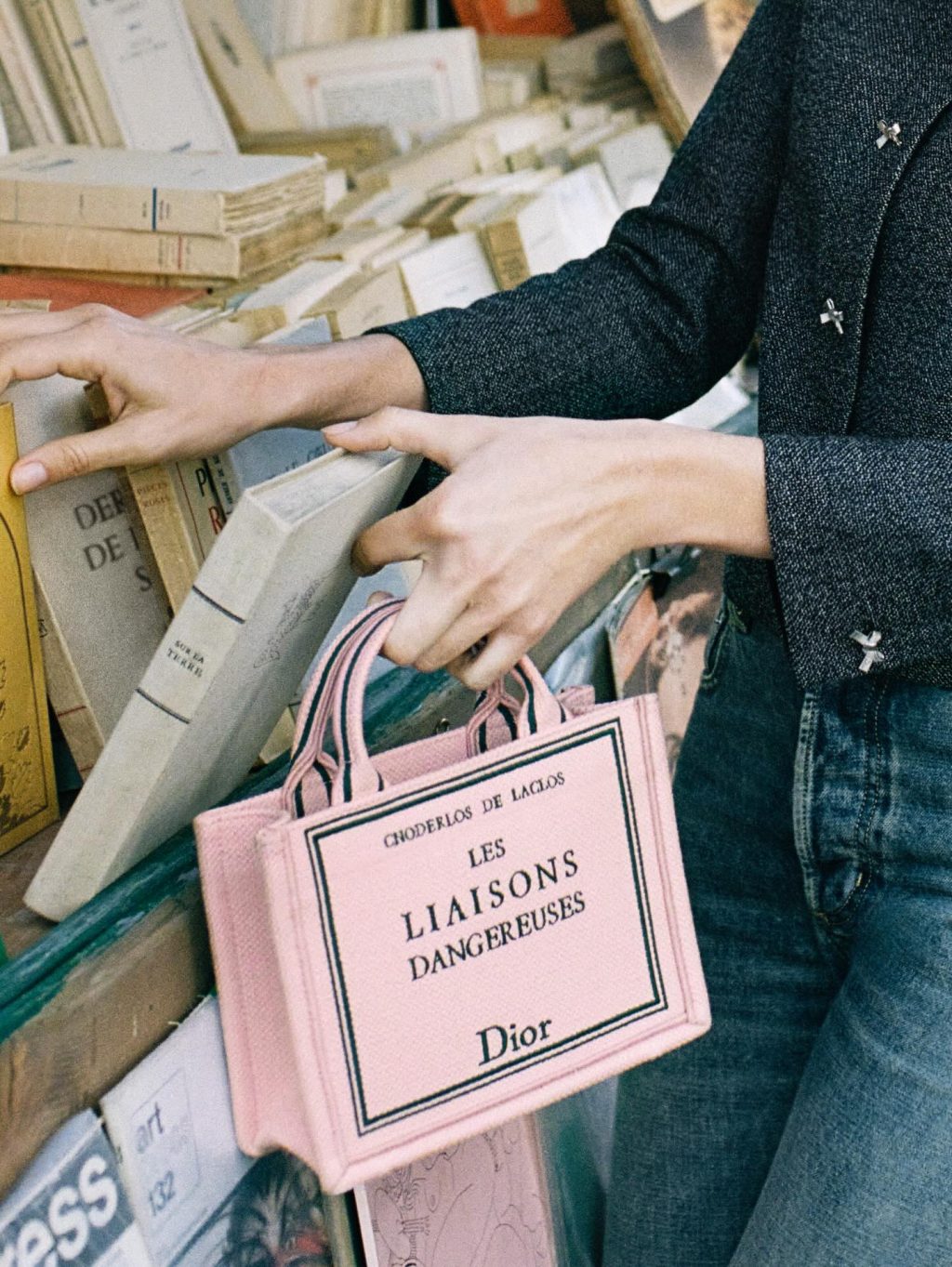
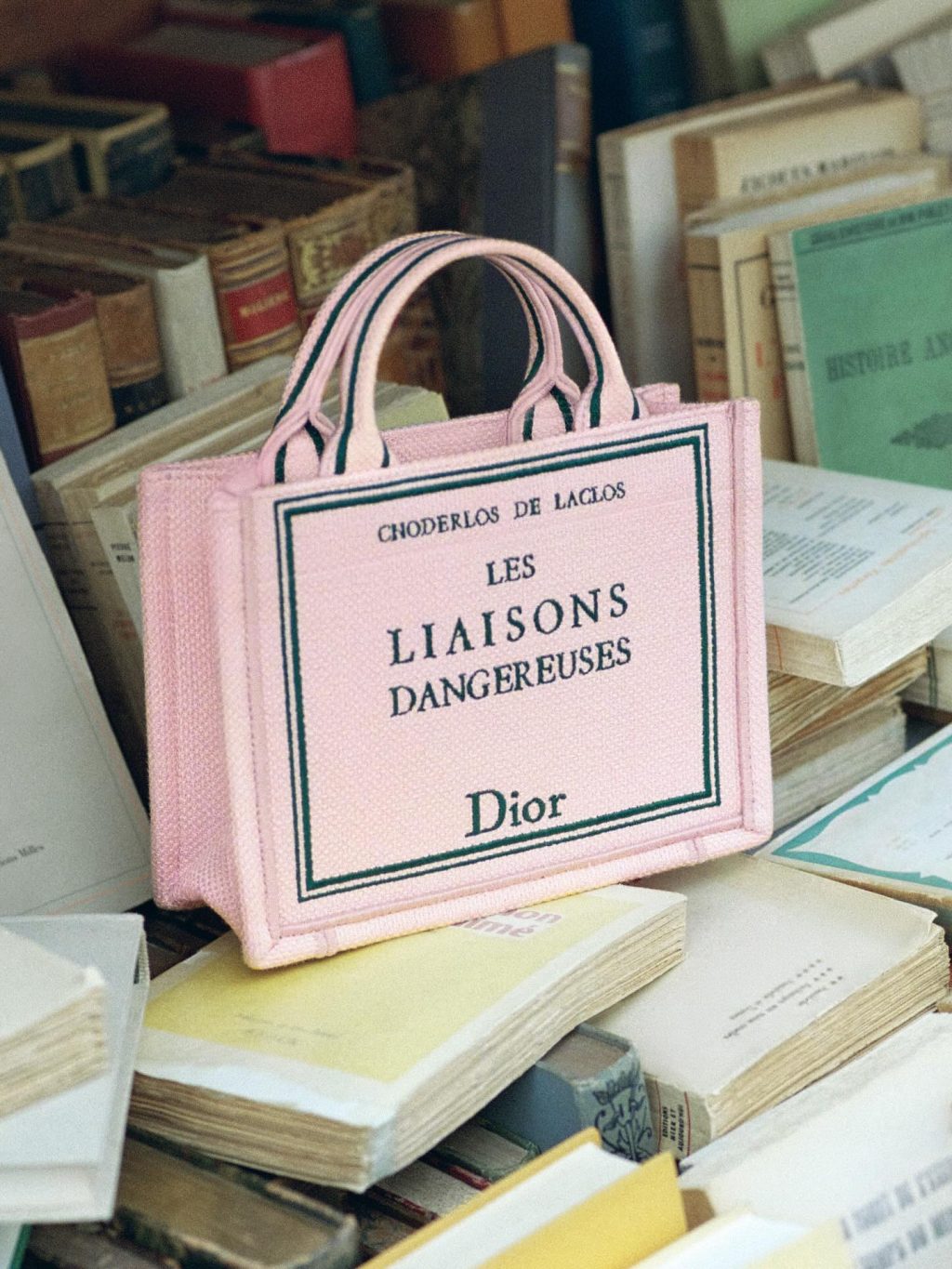
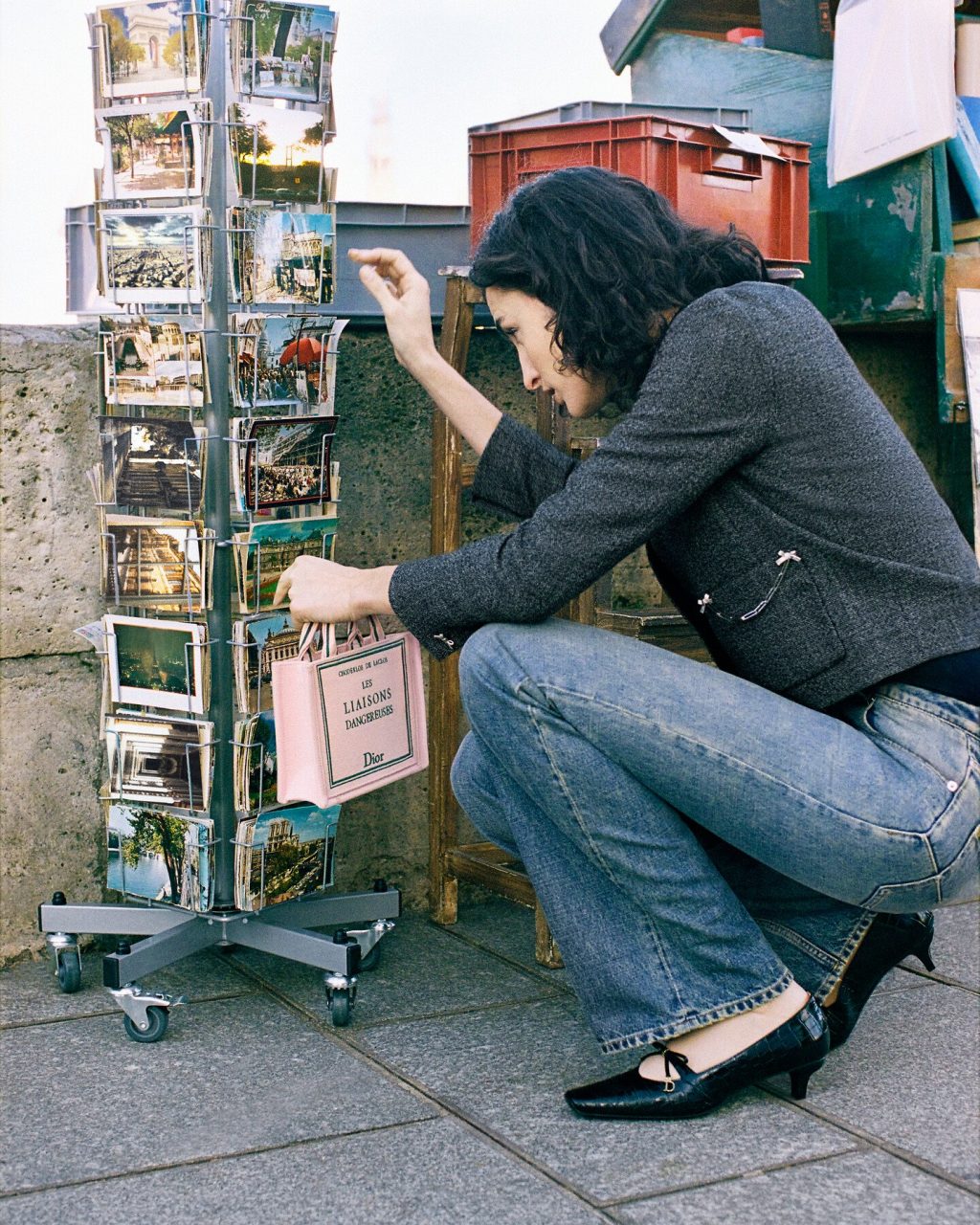
Rendered in powder-pink canvas with dark green borders, the Les Liaisons dangereuses tote channels 18th-century French decadence with a deceptively prim facade.
The novel itself is a scandalous epistolary tale of manipulation and erotic power games among the aristocracy—exactly the kind of subversive, morally ambiguous narrative that has consistently fascinated Anderson. The bag speaks to Dior’s French heritage while hinting that under the pastel surface, something wicked is always in play.
Les Fleurs du Mal by Charles Baudelaire
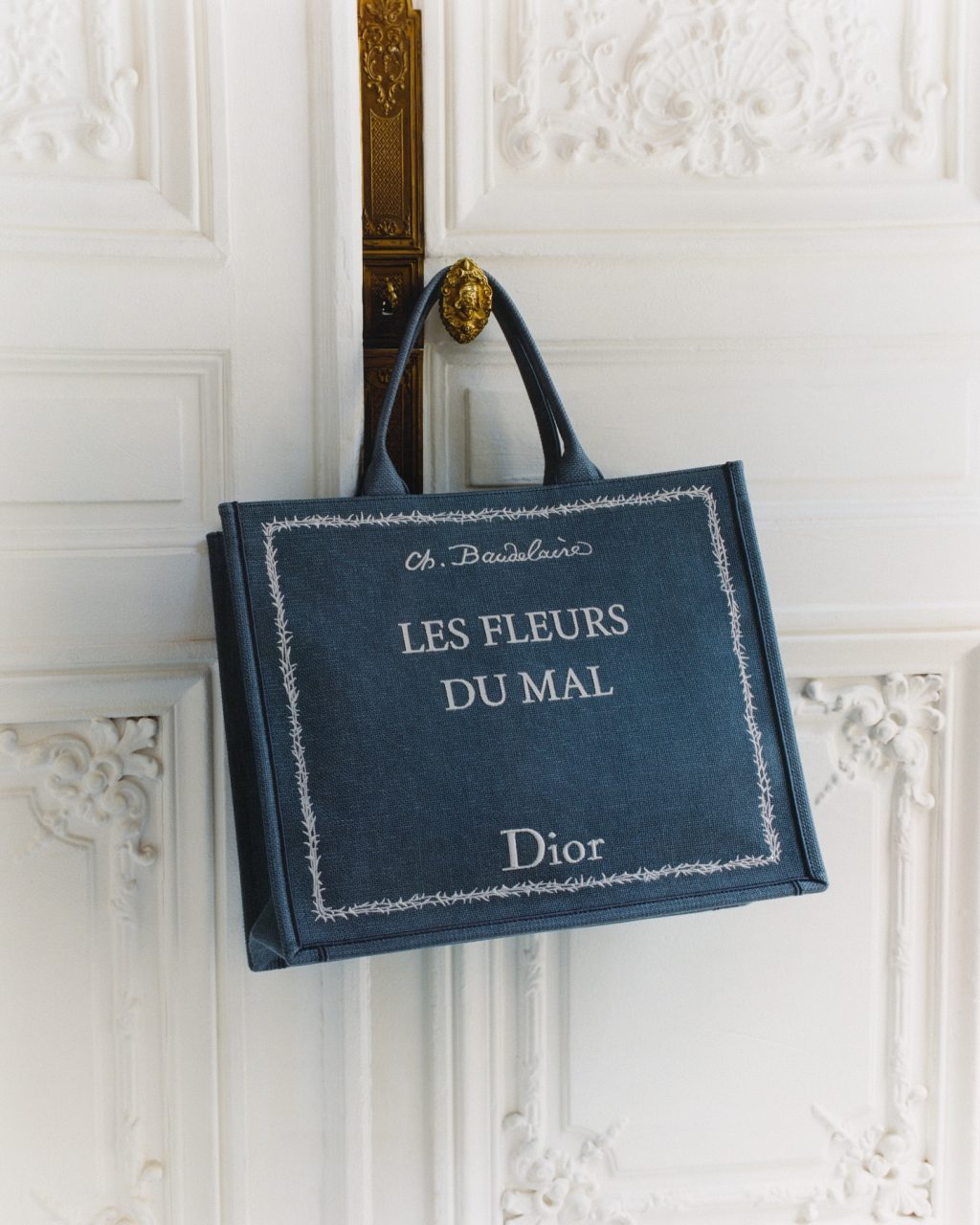
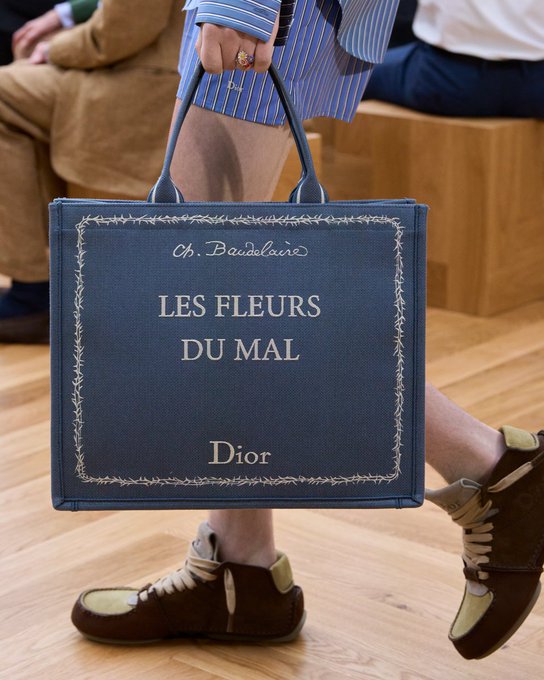
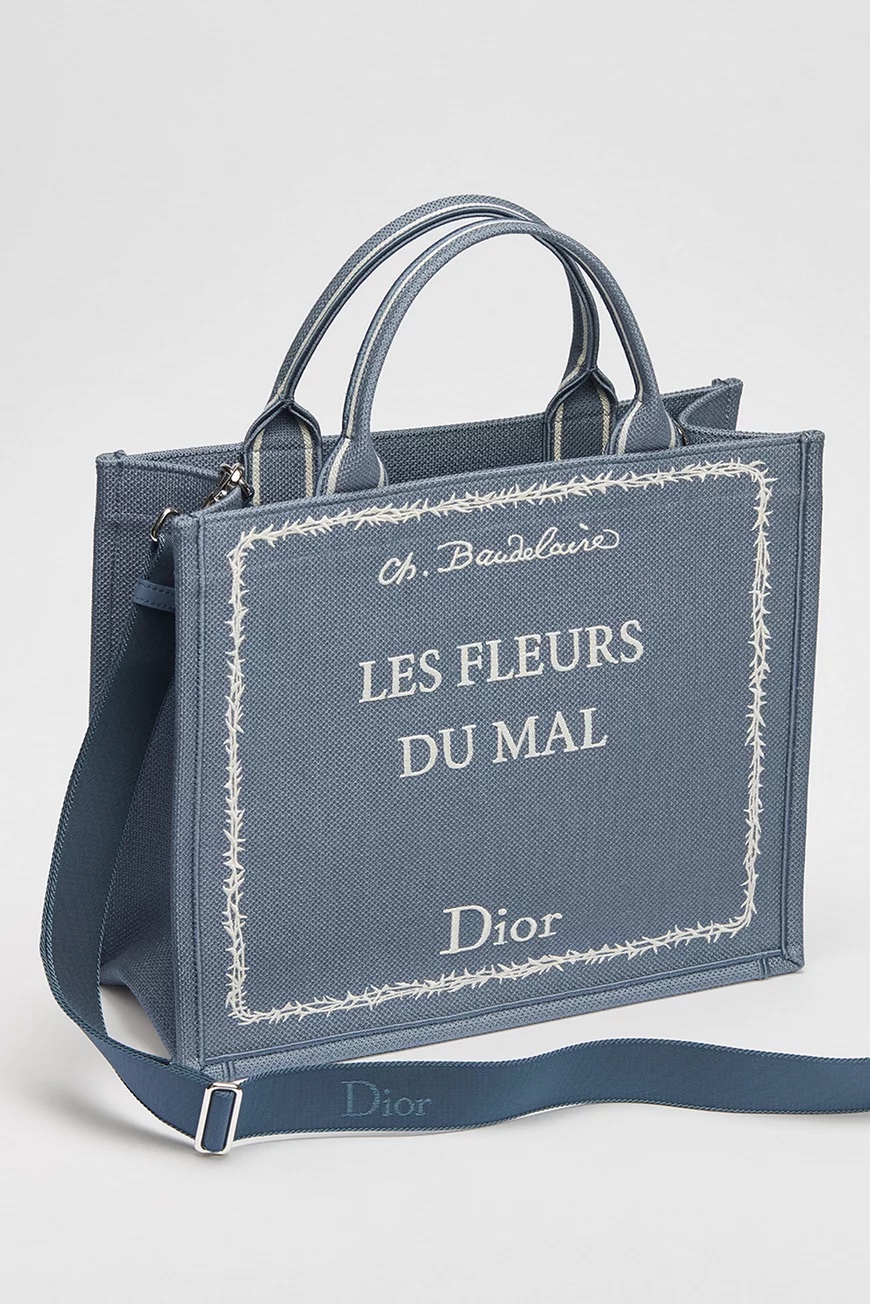
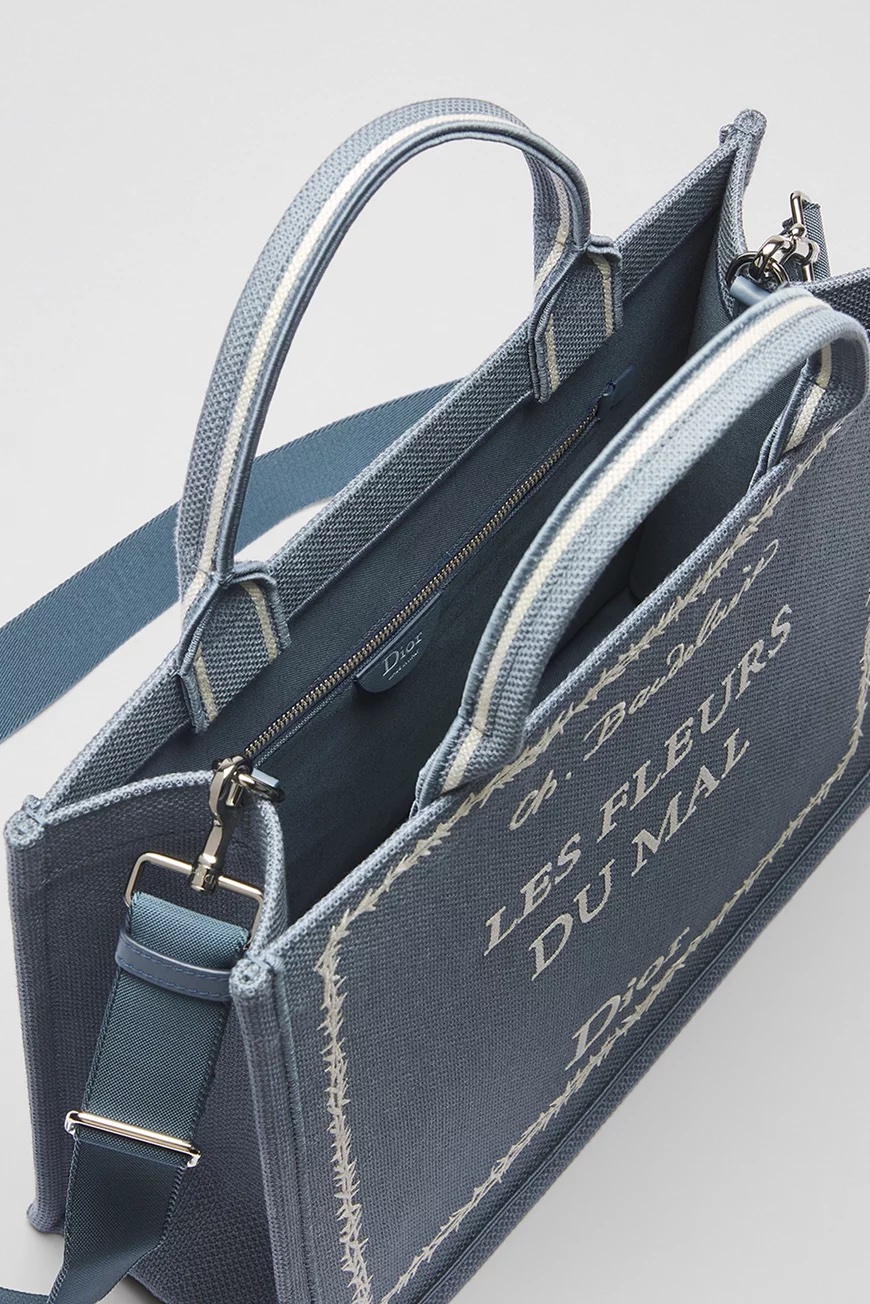
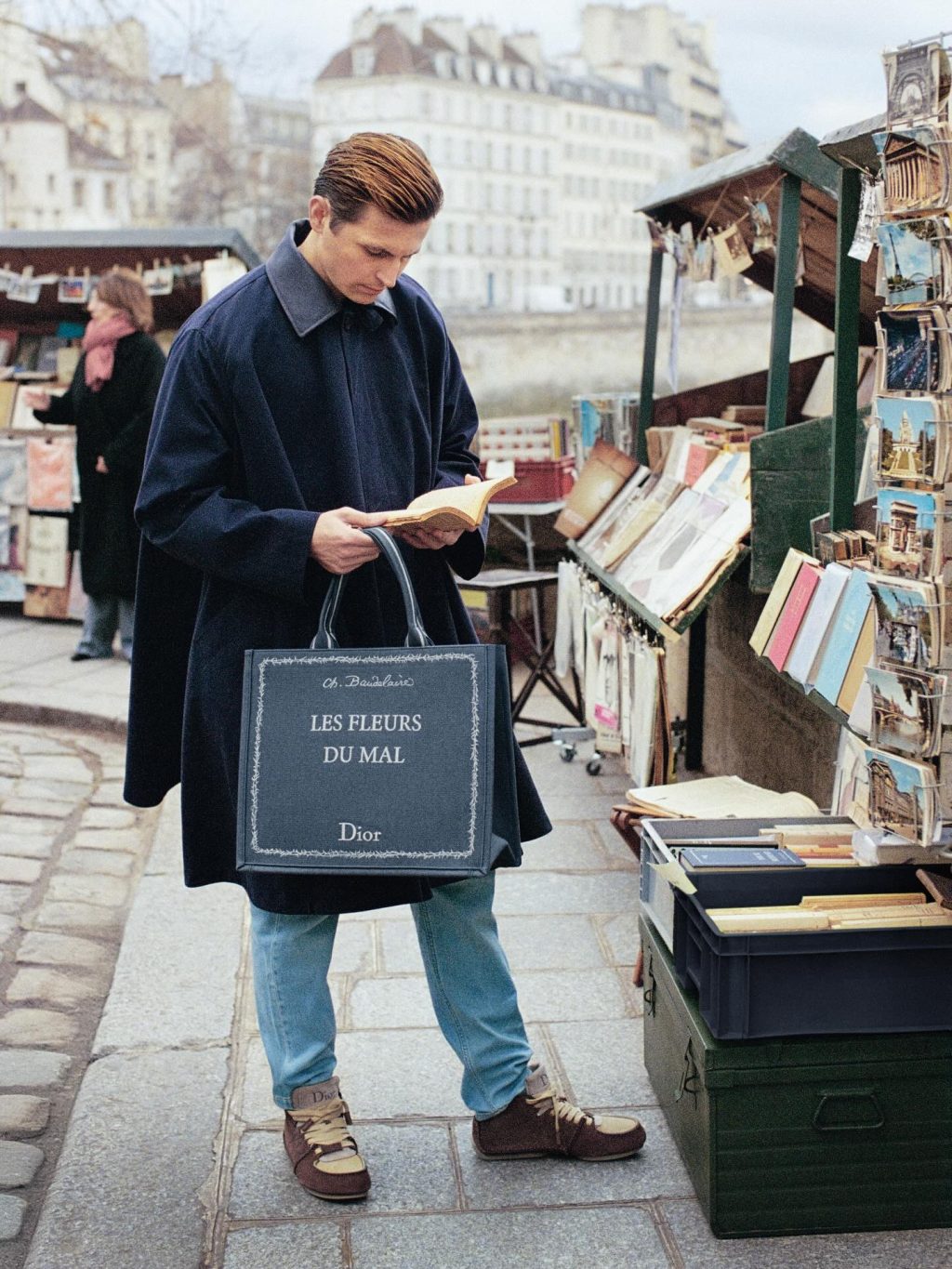
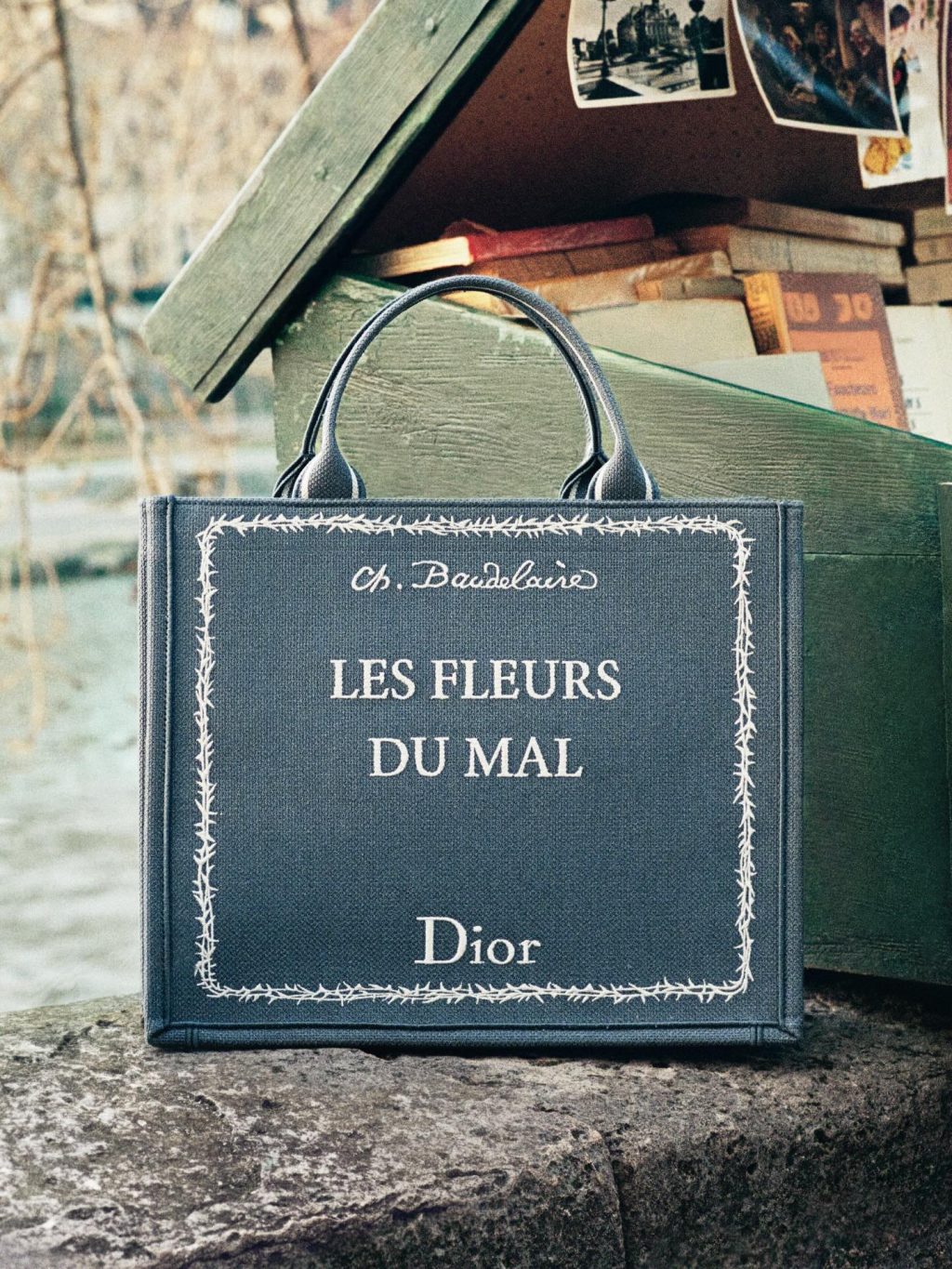
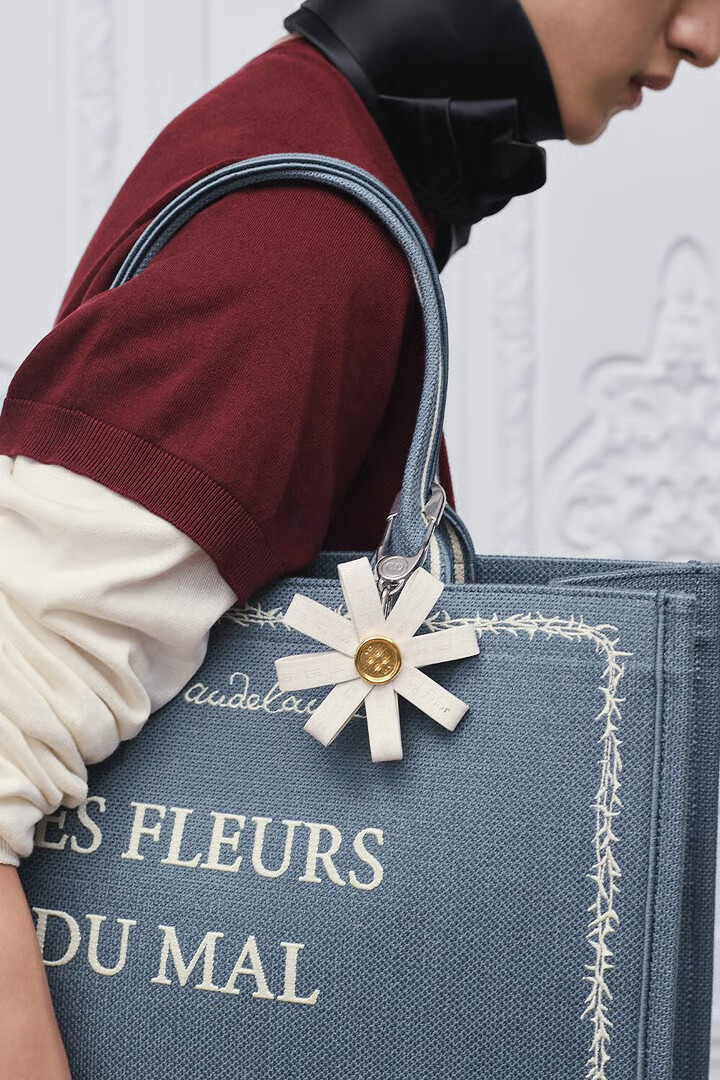
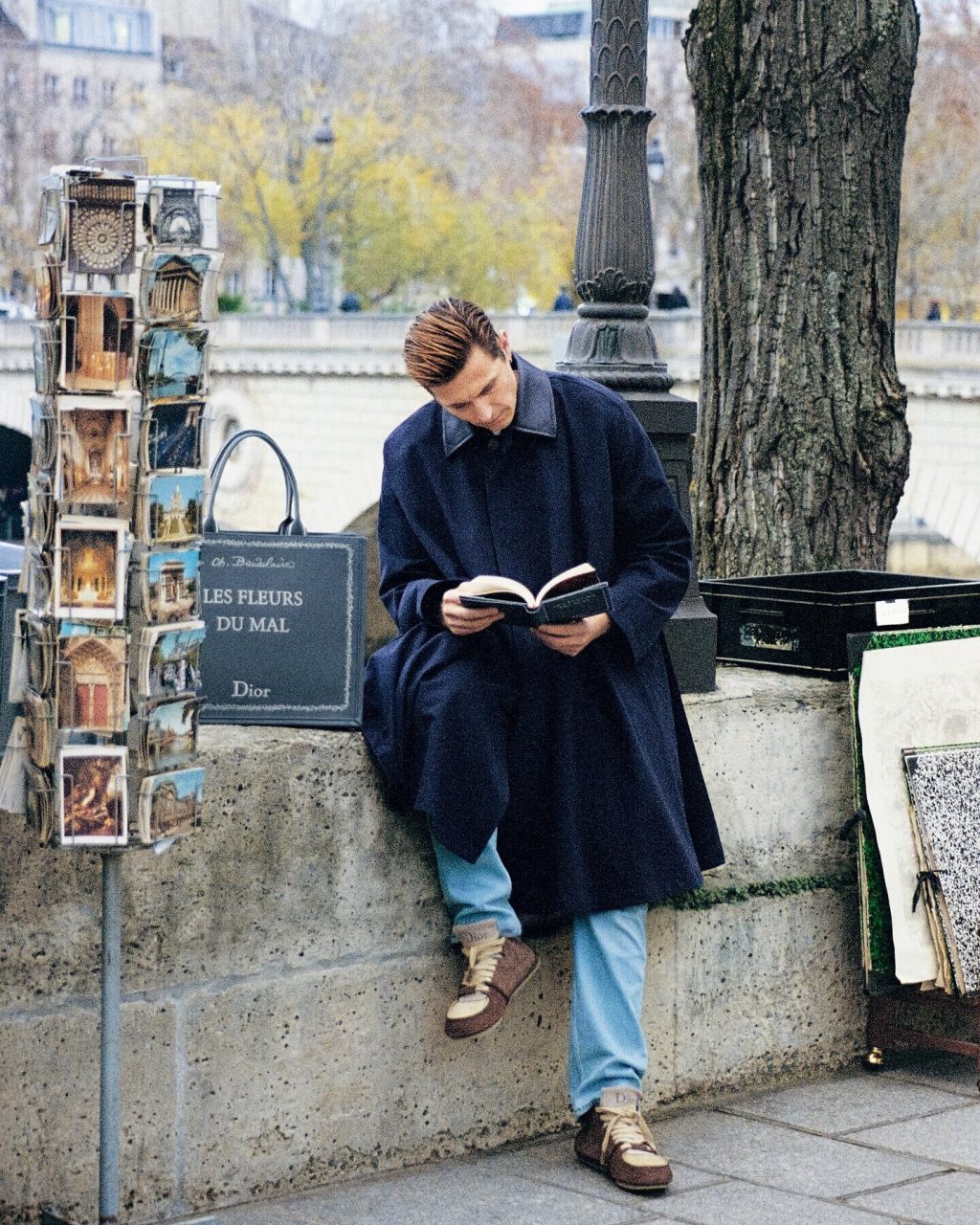
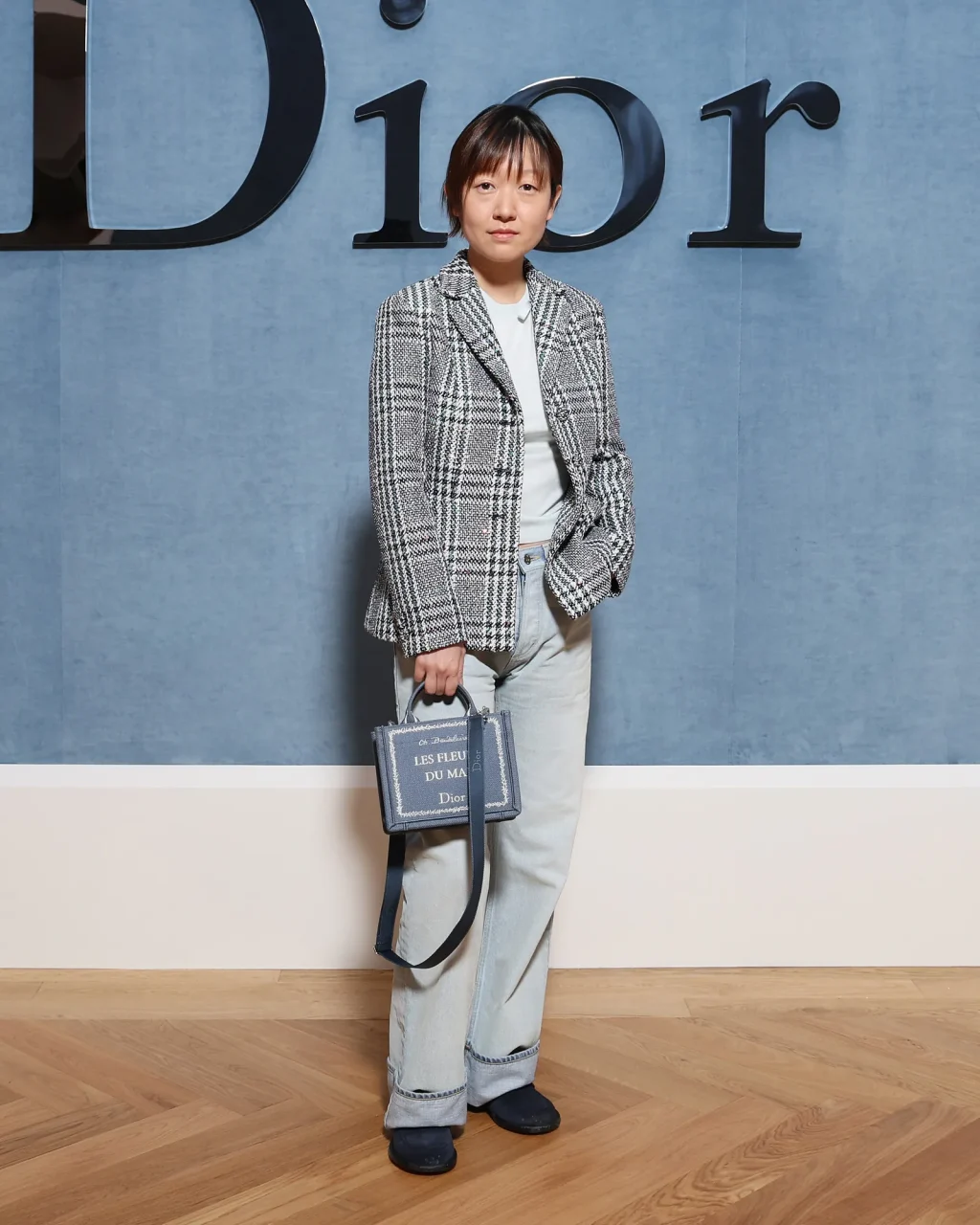
Baudelaire’s modernist poetry collection appears on a navy-blue Book Tote edged with thorn-like embroidery, a visual nod to its title, The Flowers of Evil. Dior’s own show notes underline that the Book Tote “gets book covers – including Saints Pères editions of Les Fleurs du Mal …” framing the bag as a literal extension of the text.
Director Celine Song was photographed carrying this version at Anderson’s show, cementing it as the intellectual insider’s choice—a poetic, slightly melancholic counterpoint to the louder Dracula tote.
Madame Bovary by Gustave Flaubert
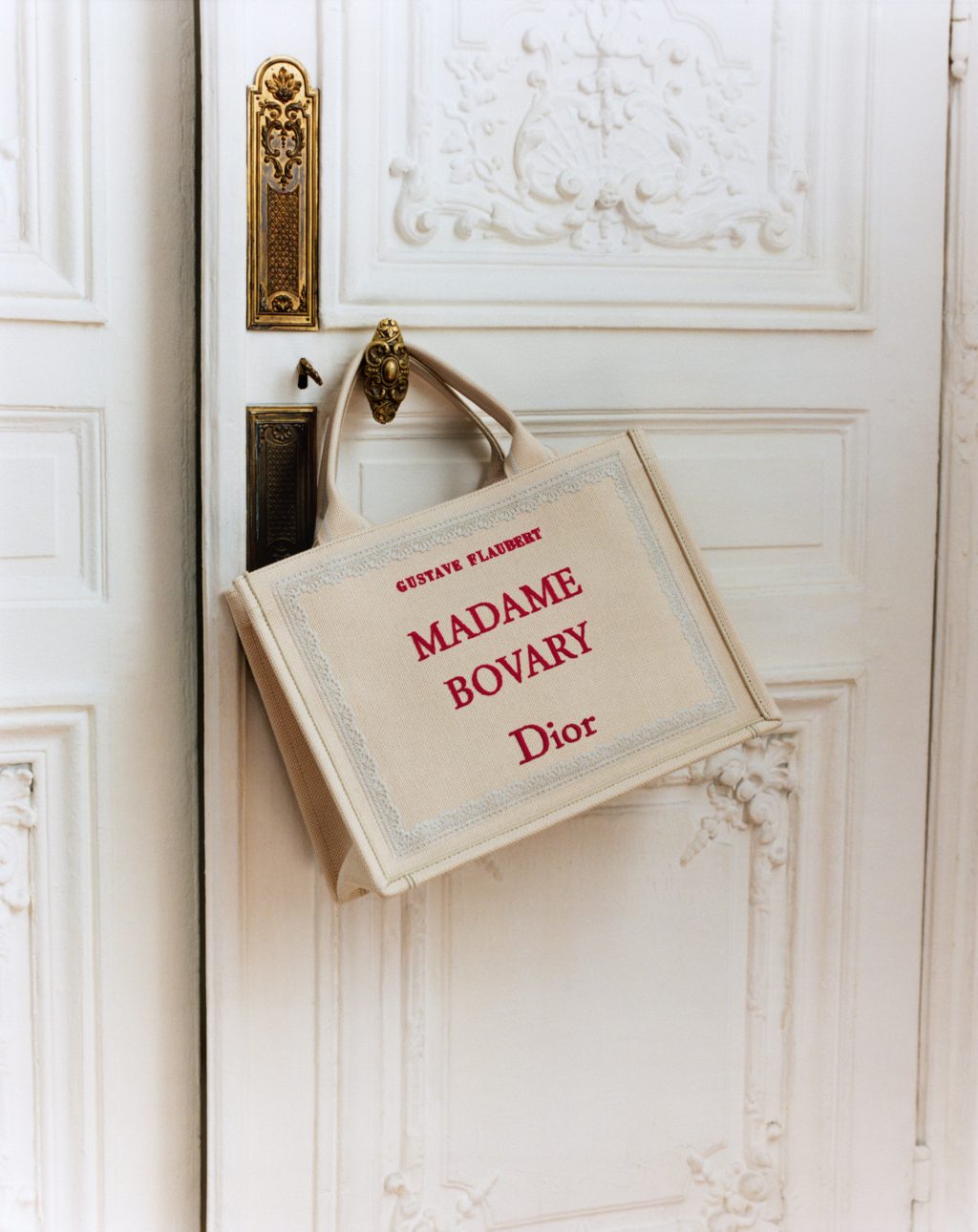
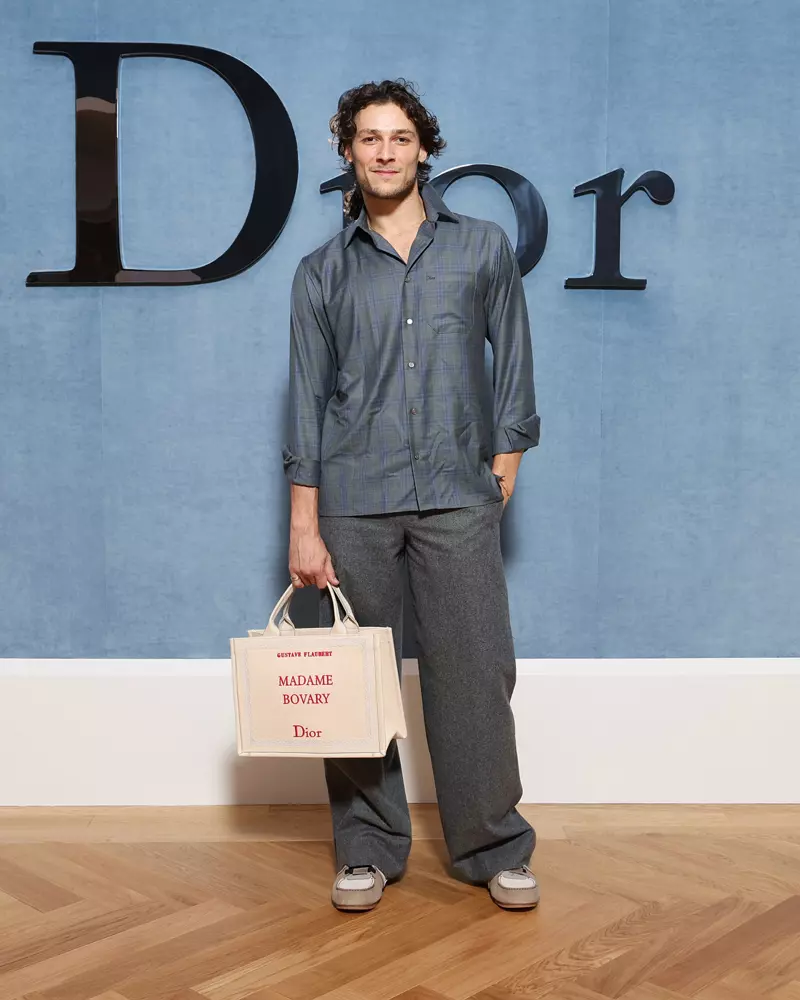
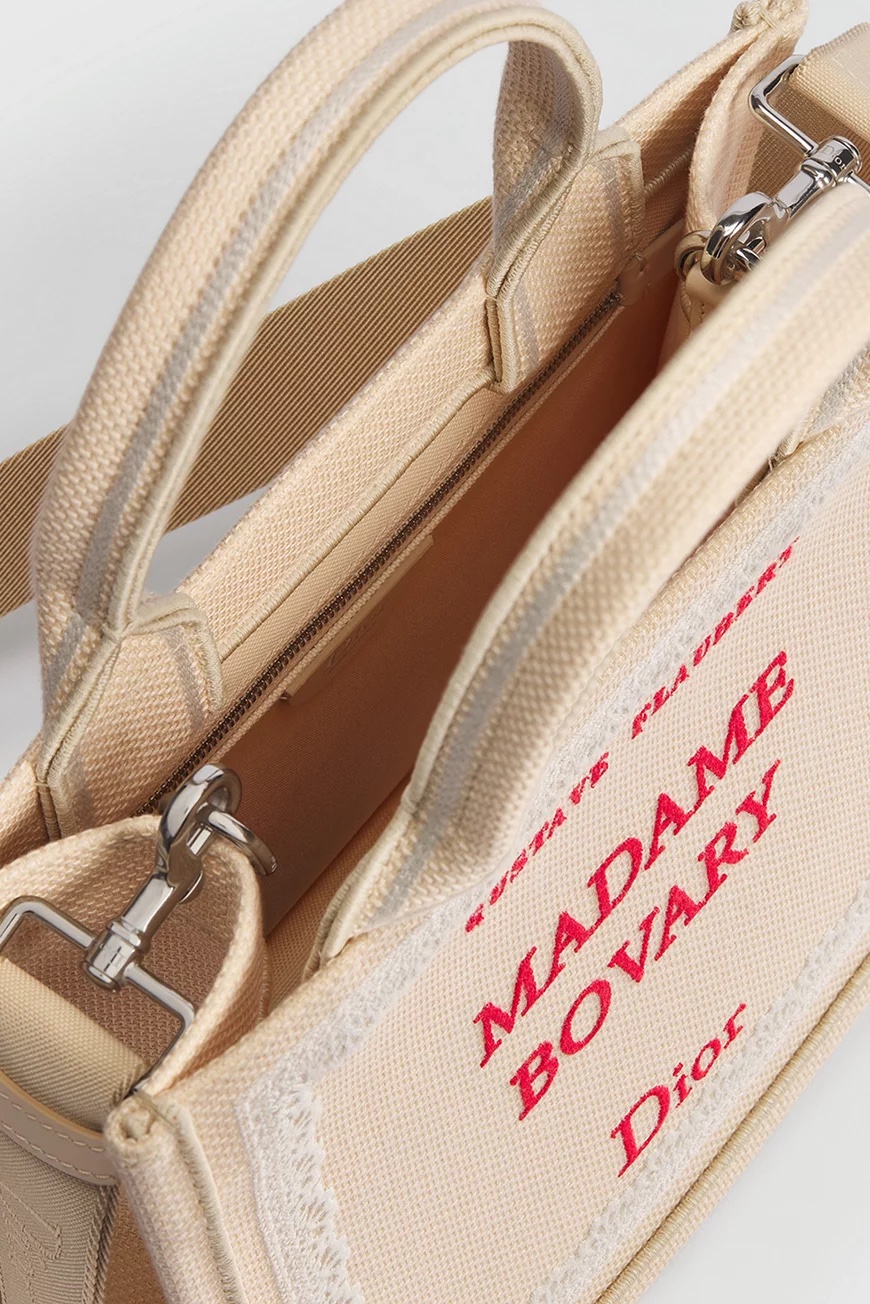
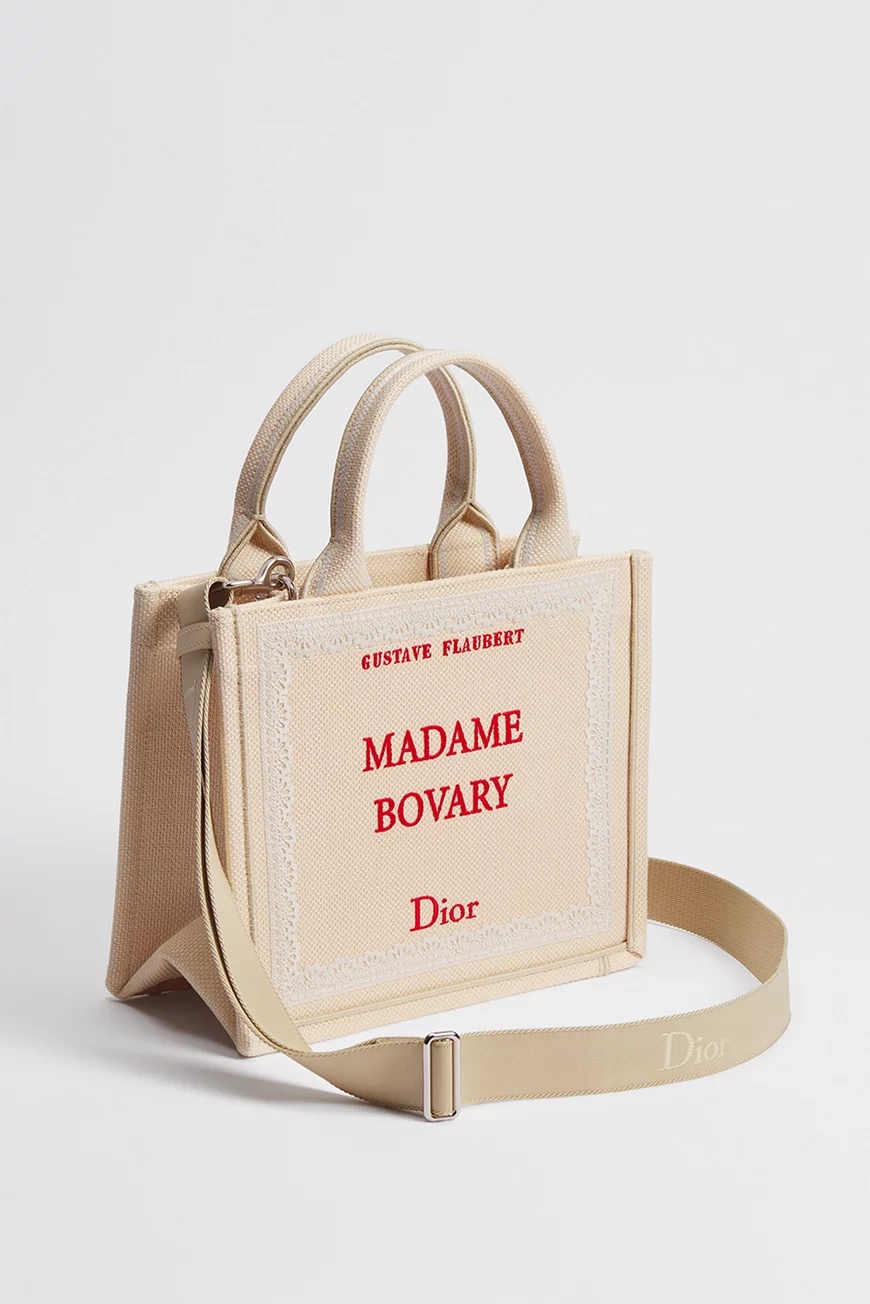
In creamy canvas with red type and pale grey borders, the Madame Bovary tote nods to Flaubert’s infamous heroine and to the bourgeois provincial boredom she tried—and failed—to escape.
The novel, tried for obscenity in 1857, helped define literary realism and the idea that a protagonist can be selfish, flawed and deeply compelling. On a tote, it becomes a sly emblem for restless romantics who secretly fear the dullness of a “perfect” life.
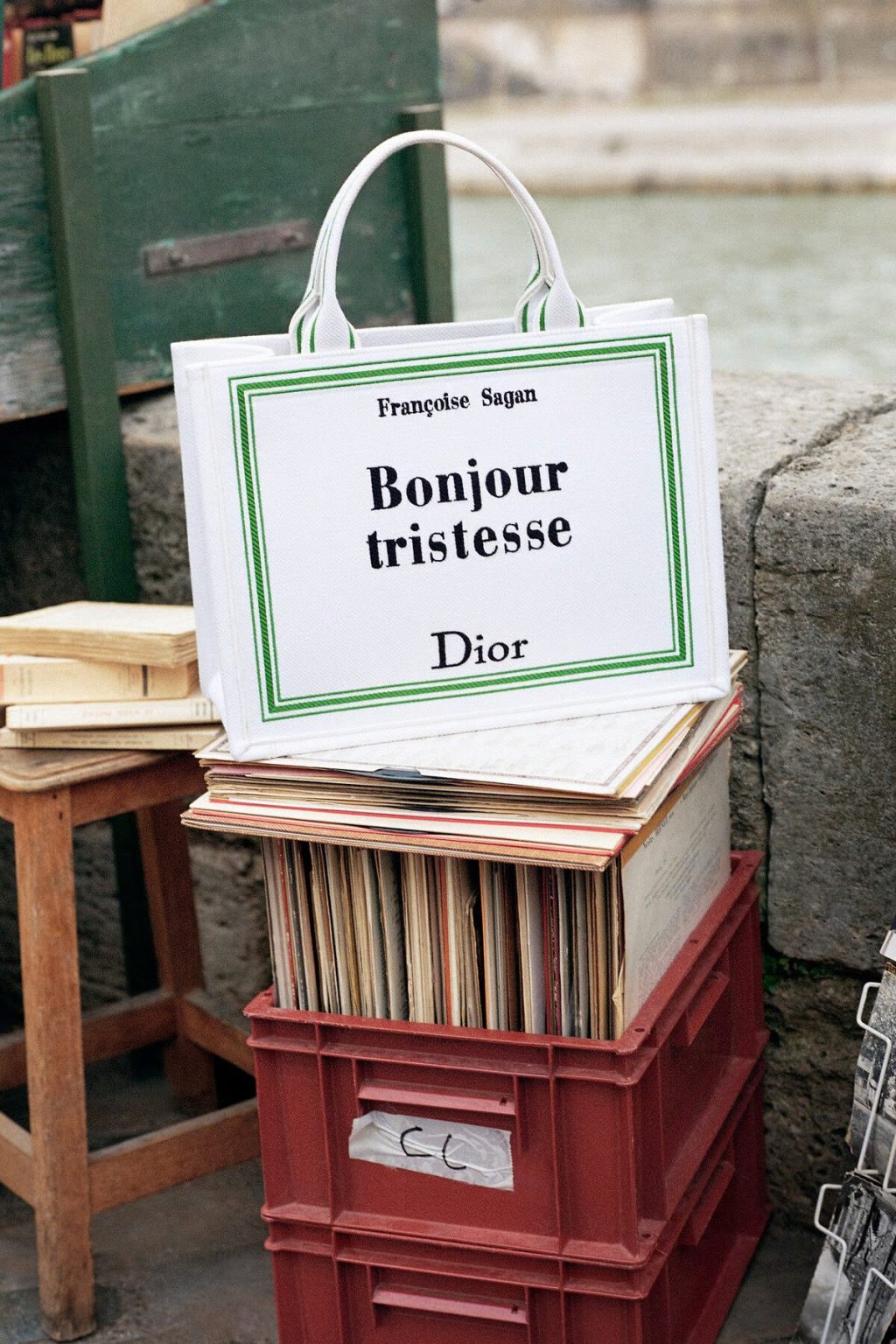
Bonjour Tristesse by Françoise Sagan
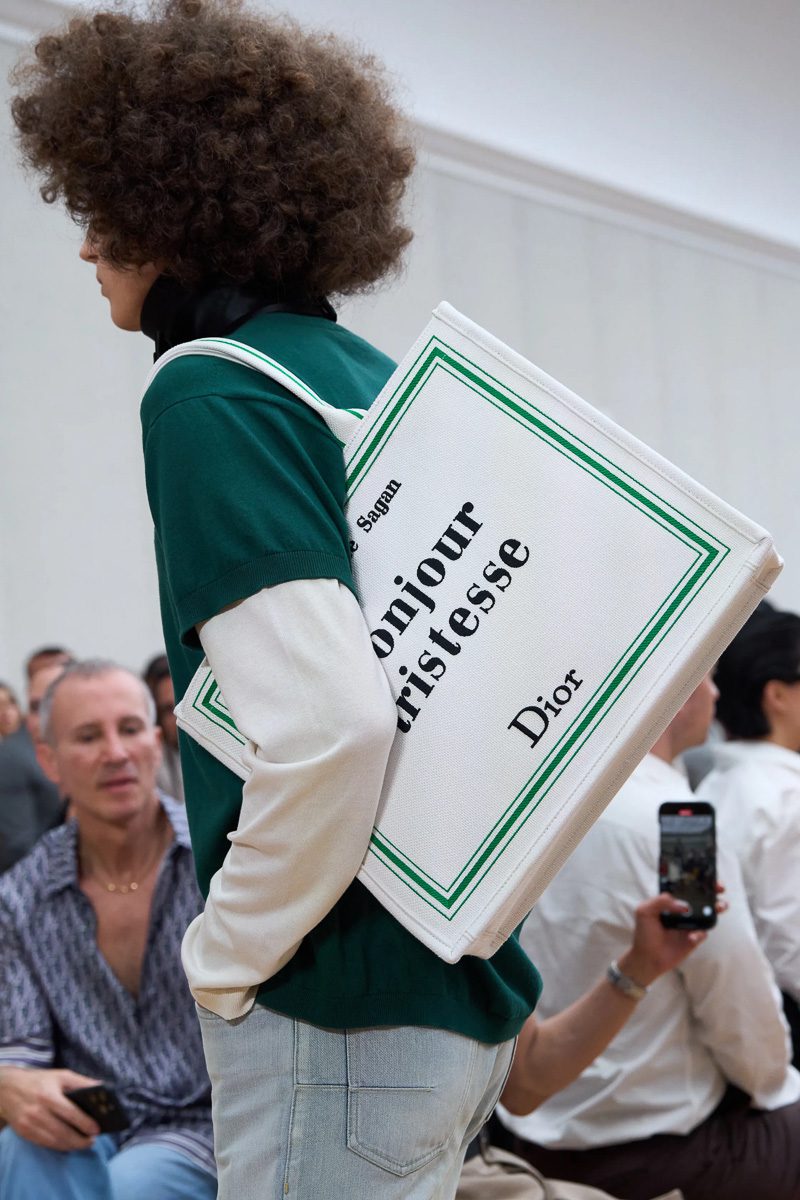
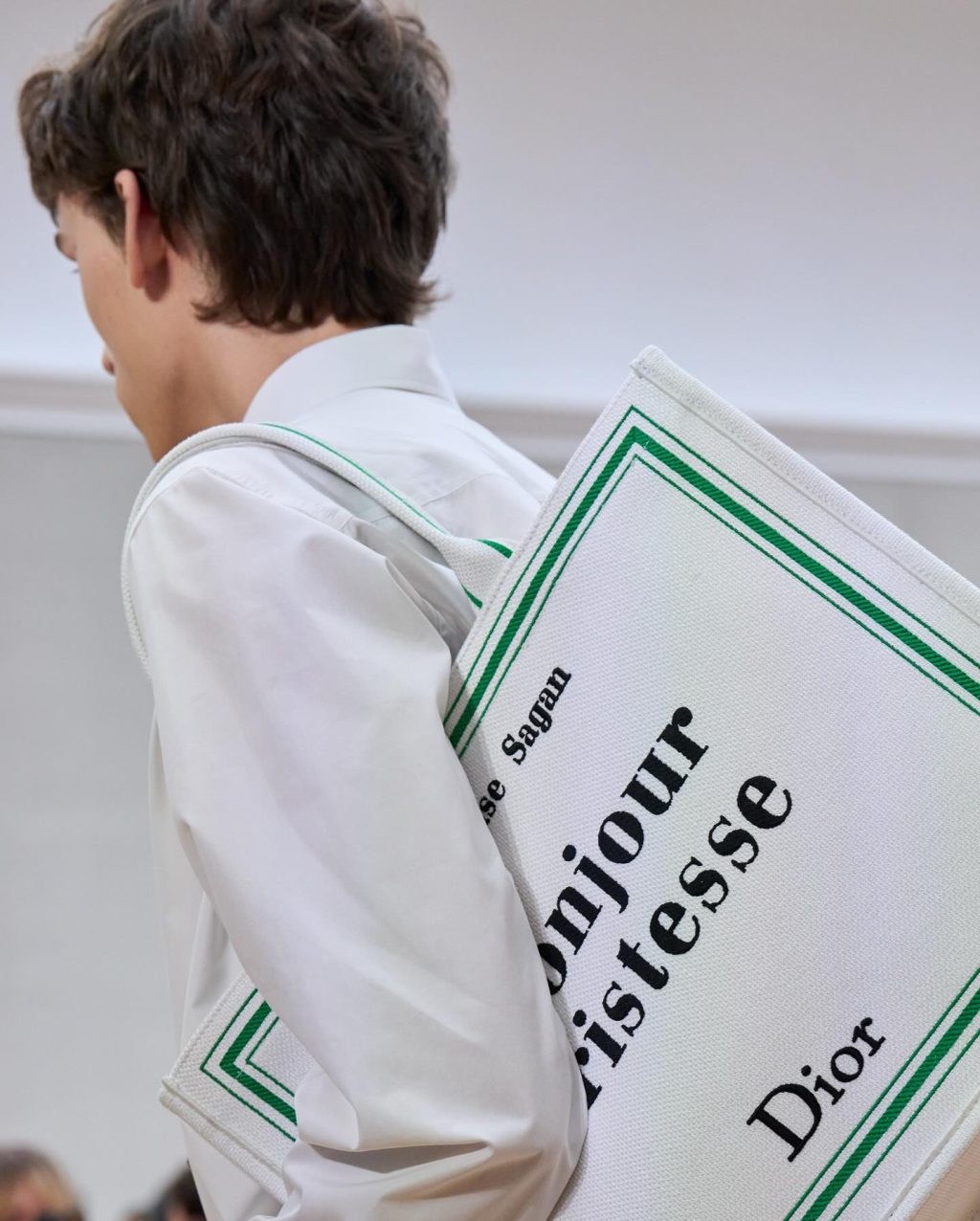
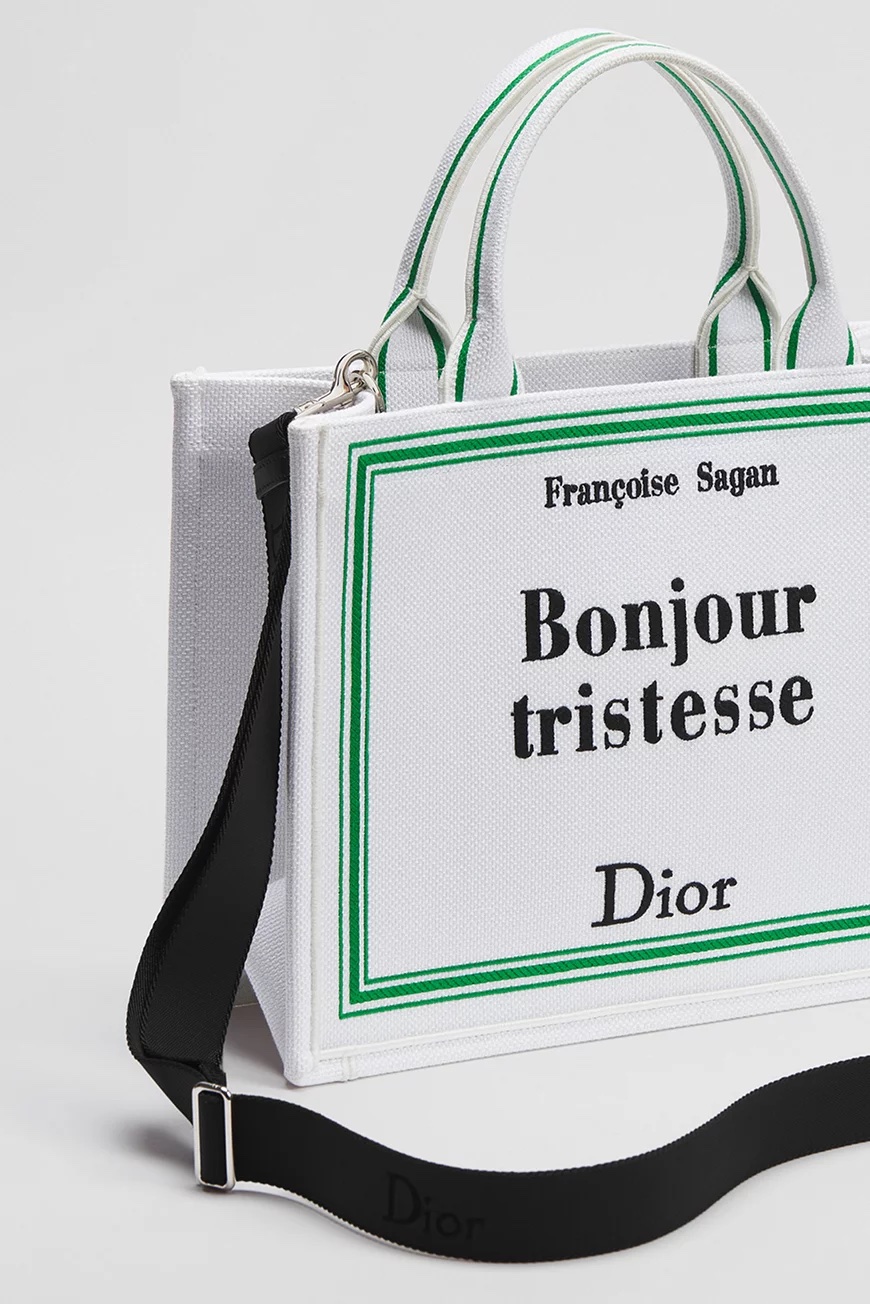
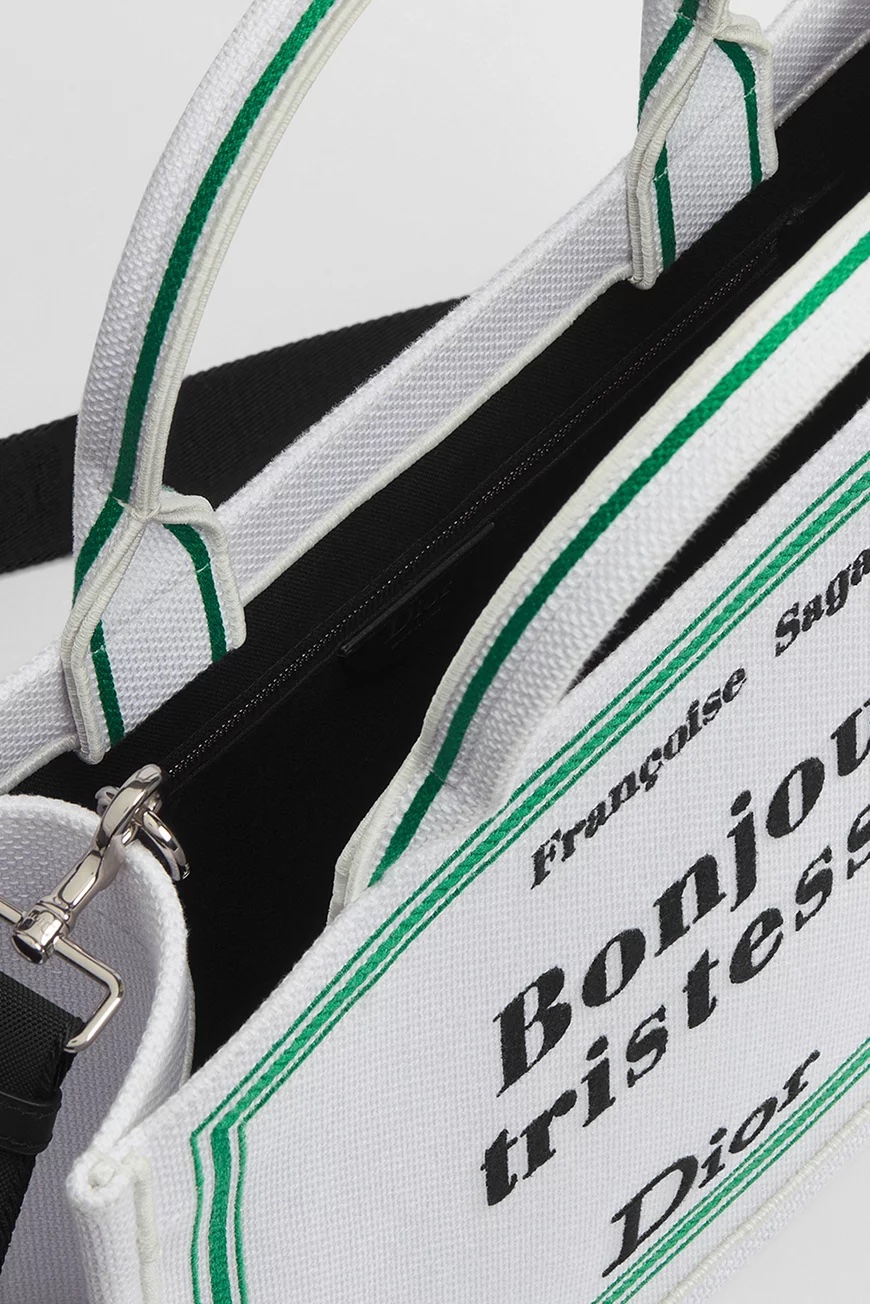
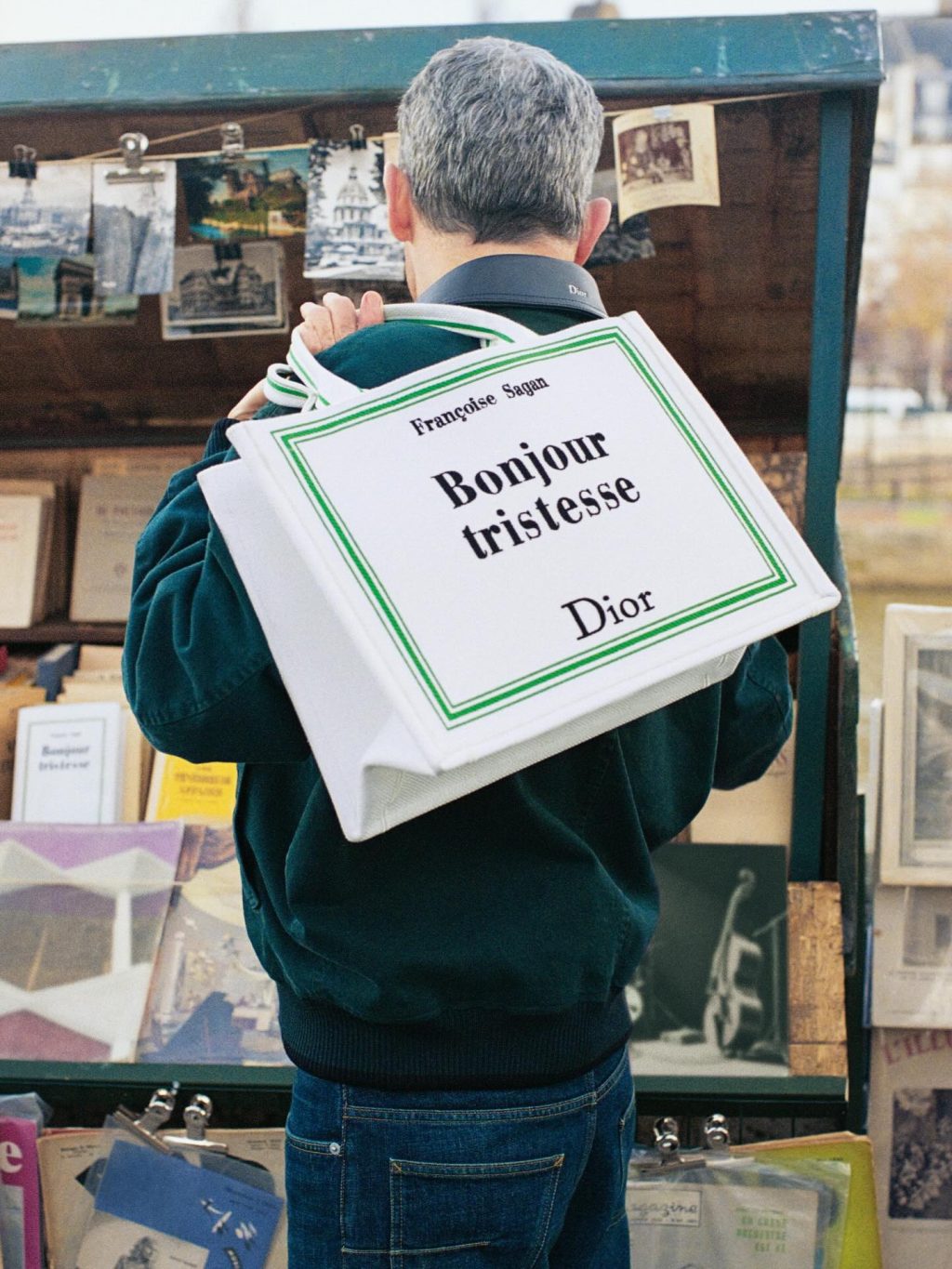
One of the more understated designs, the Bonjour Tristesse bag is framed by crisp green borders on white canvas, echoing mid-century paperback aesthetics.
Sagan wrote the novella at 18; its Côte d’Azur setting, languid mood and morally ambiguous teen heroine made her an instant literary star and scandal magnet. Anderson’s choice of Sagan inserts a youthful, summery, slightly amoral energy into the line-up—perfect for the Riviera-bound Dior client.

Ulysses by James Joyce
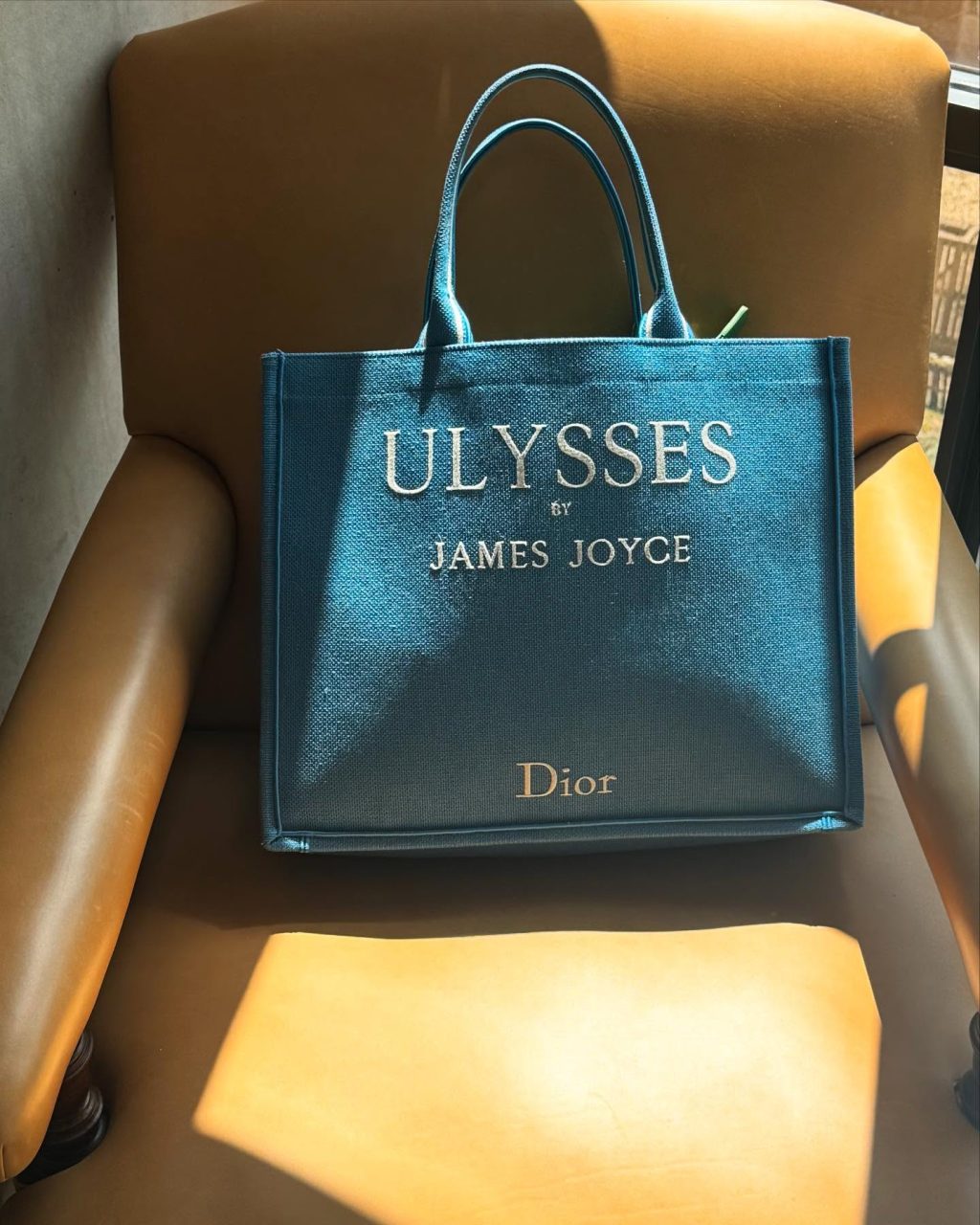
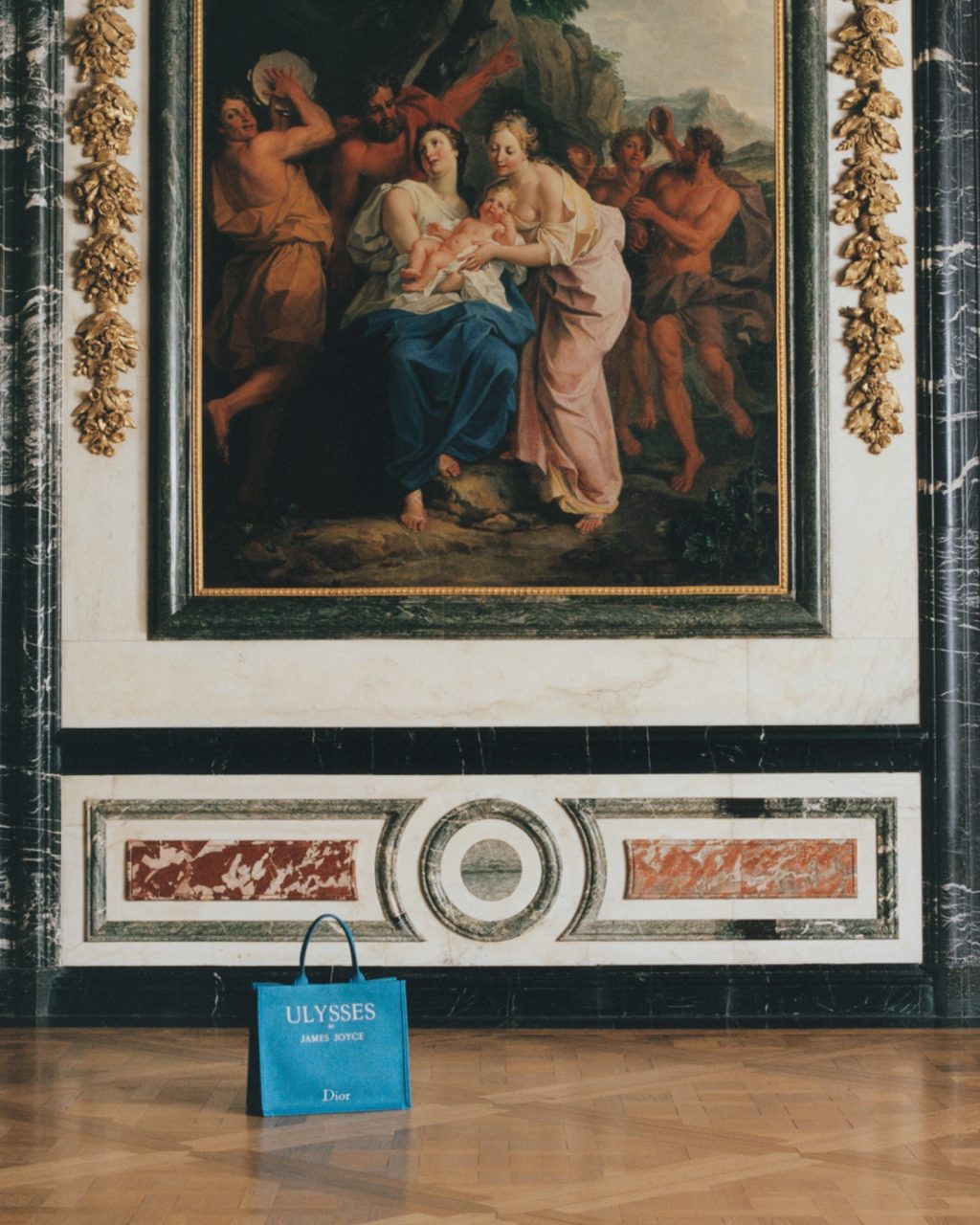
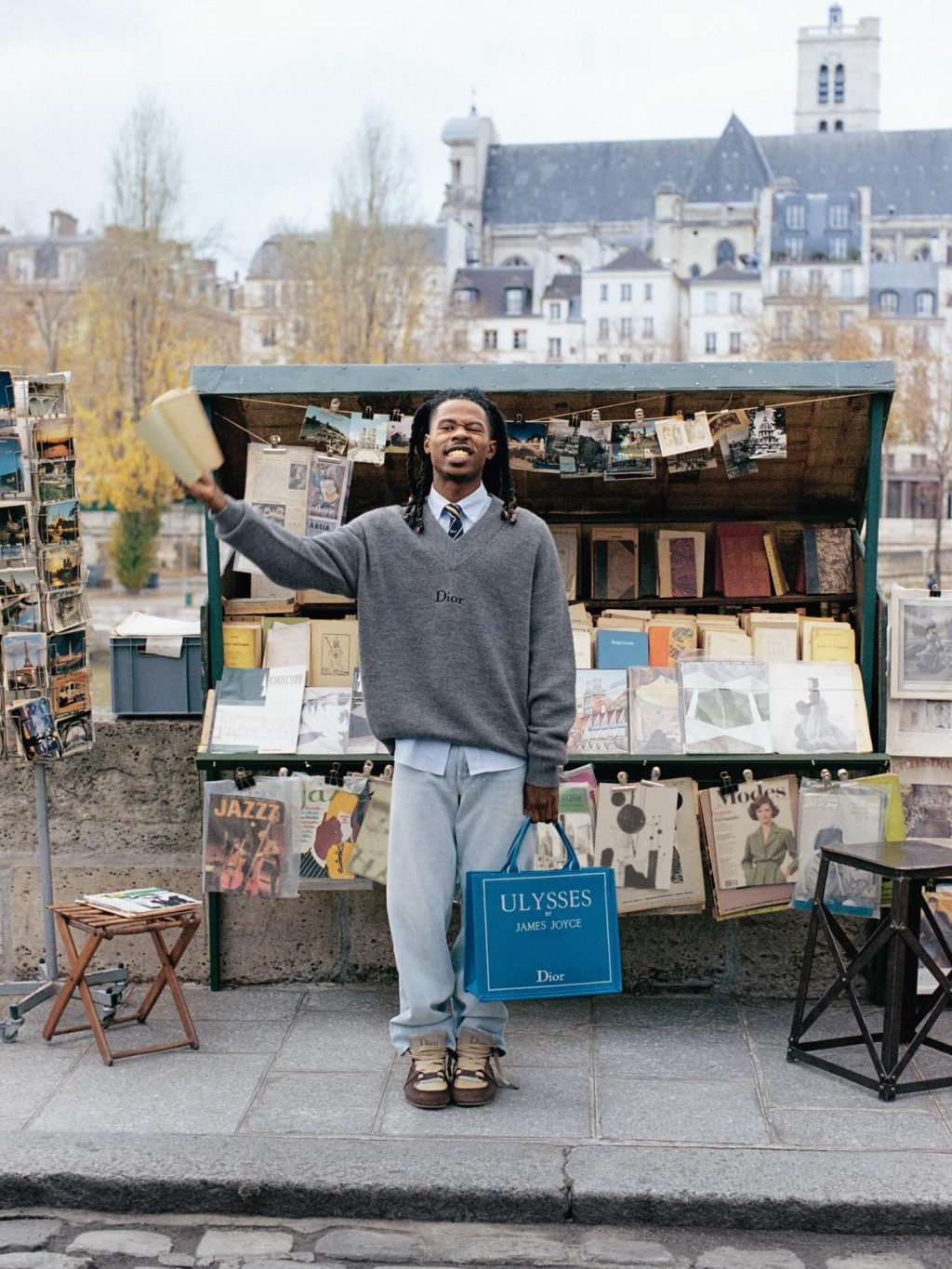
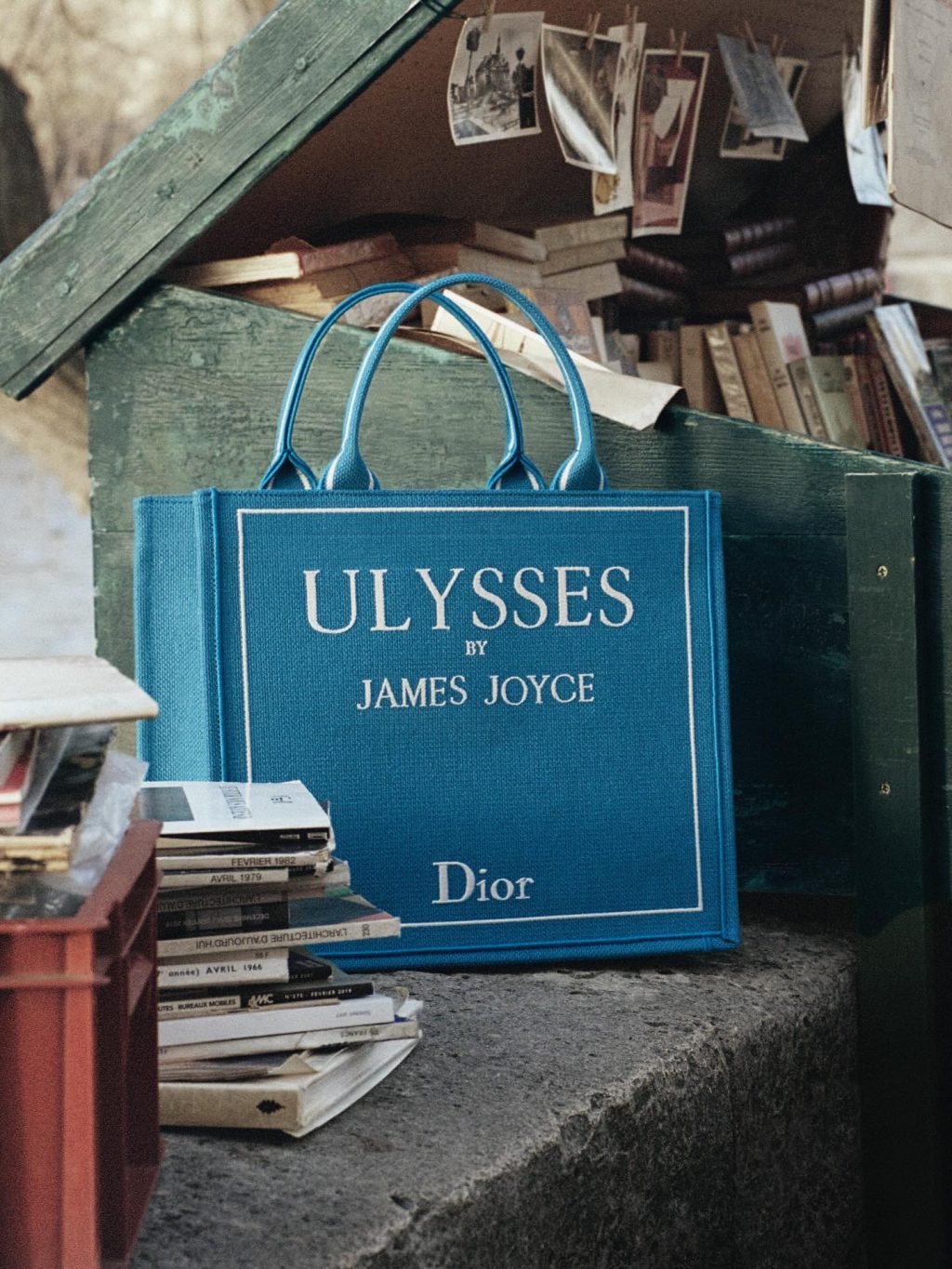
To complete his Irish axis, Anderson includes Joyce’s Ulysses, whose blue-and-white cover becomes one of the most quietly powerful totes in the range.
The modernist masterpiece famously took Anderson five years to finish, reading it slowly while battling dyslexia. Turning it into a bag is both a personal victory lap and a love letter to experimental storytelling.
In Cold Blood by Truman Capote
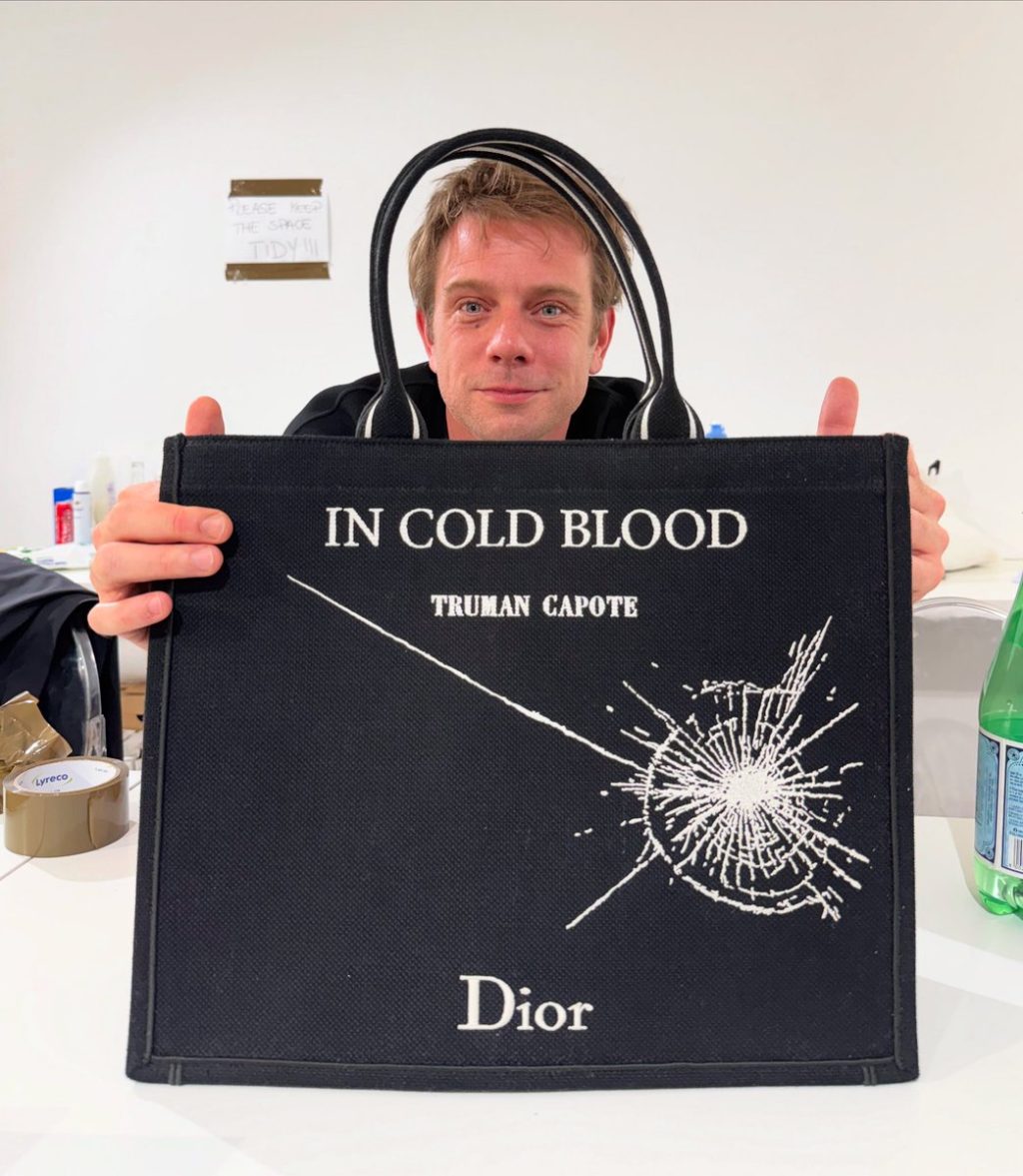
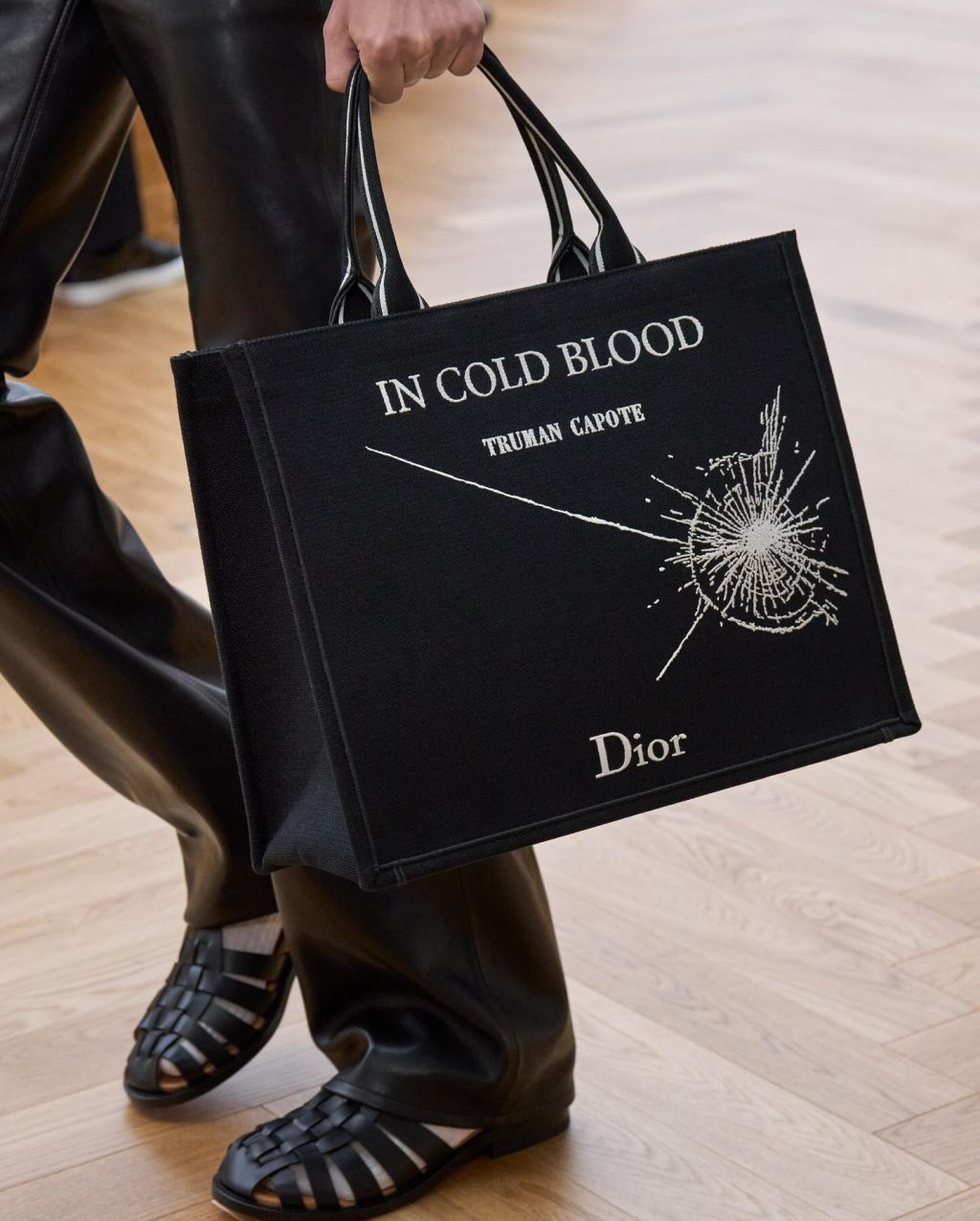
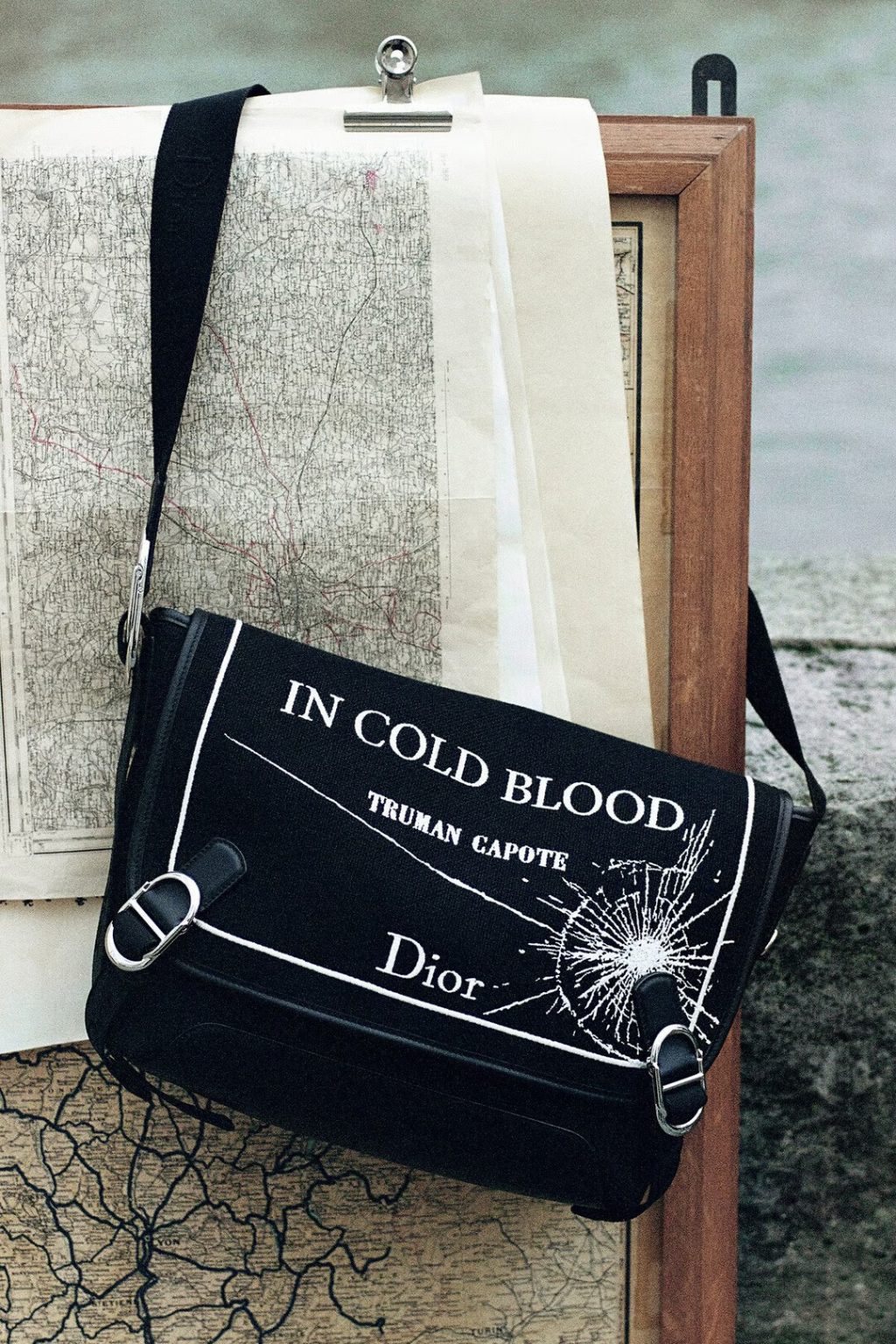
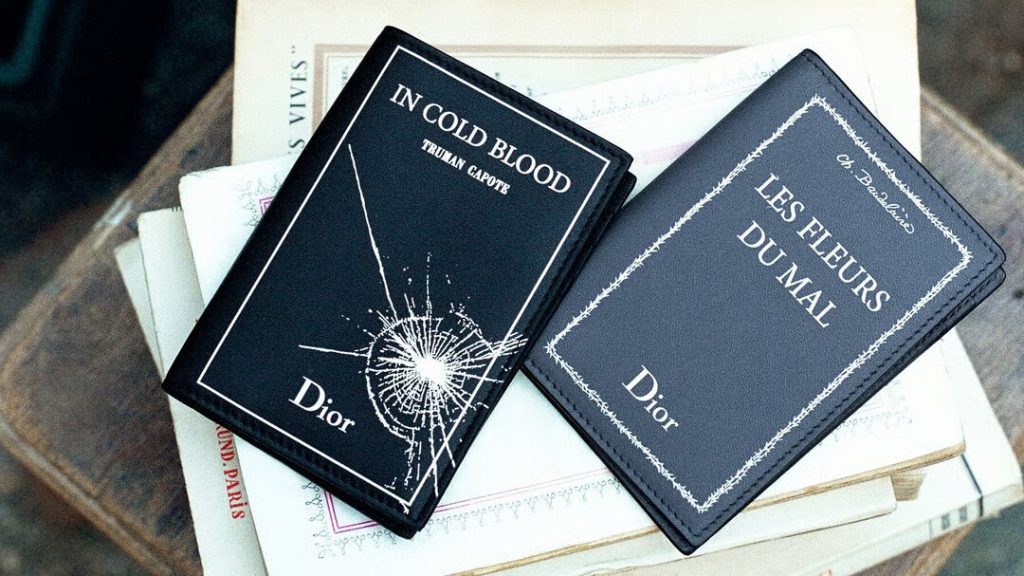
Perhaps the starkest design, the In Cold Blood Book Tote uses SP Books’ deluxe black edition, with a shattered-glass motif radiating across the front.
Capote’s 1966 “non-fiction novel” about the Clutter family murders essentially invented the true-crime genre, blending exhaustive reporting with novelistic flair. On a Dior tote, the image reads almost like a crime-scene photograph frozen in time—glamorous and chilling.
The Very Hungry Caterpillar by Eric Carle
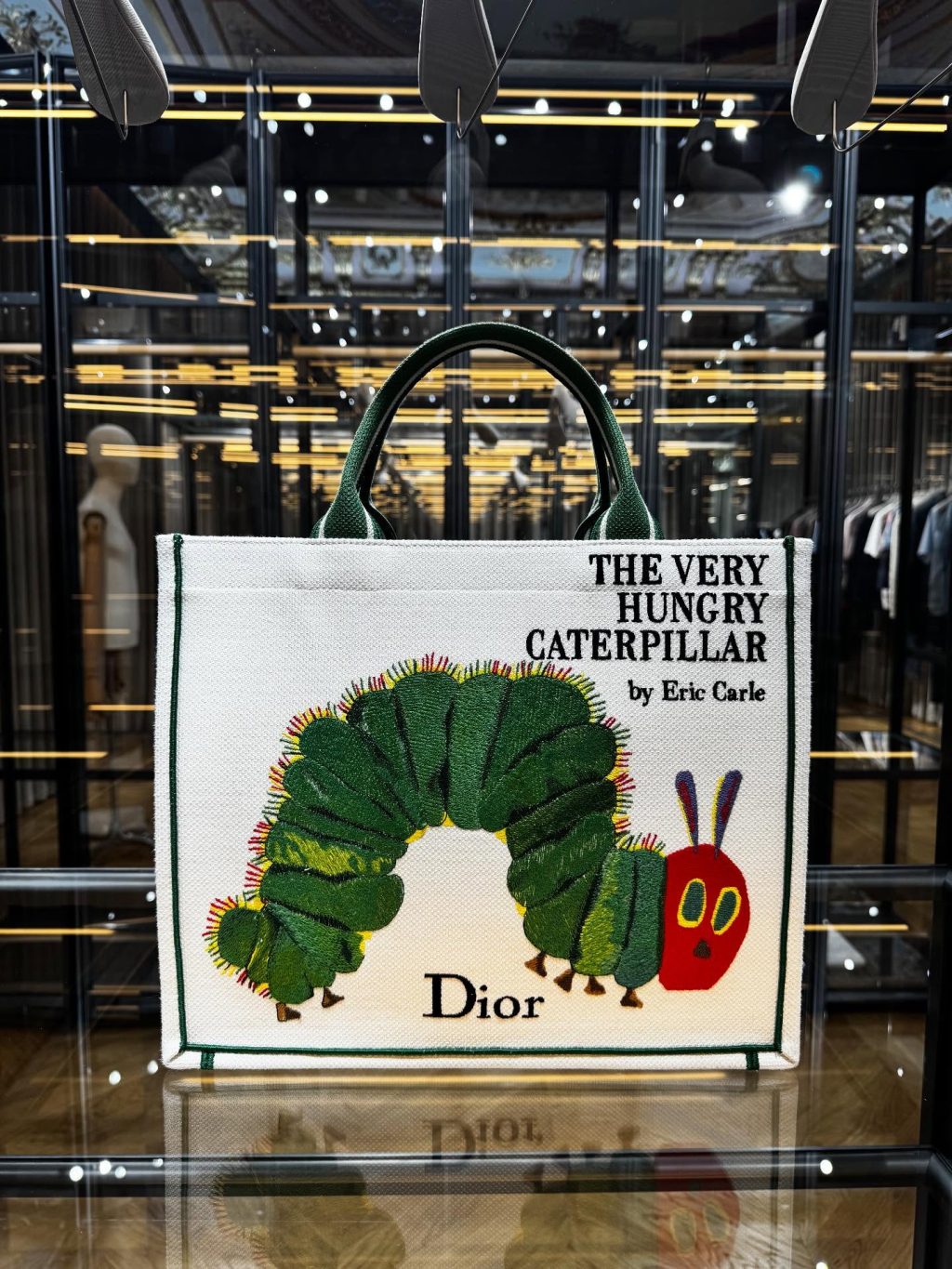
Just when the literary selection seems resolutely adult, Anderson flips the script with The Very Hungry Caterpillar—perhaps the most beloved children’s picture book of the late 20th century. Recent previews for Dior’s Pre-Fall 2026 offerings show the book’s iconic green caterpillar stretched across a white Book Tote, complete with Carle’s bold collage colours.
It’s a playful bridge between Dior’s ready-to-wear and its Baby Dior universe, but also a neat metaphor for transformation—fashion’s favourite theme.
Pride and Prejudice by Jane Austen
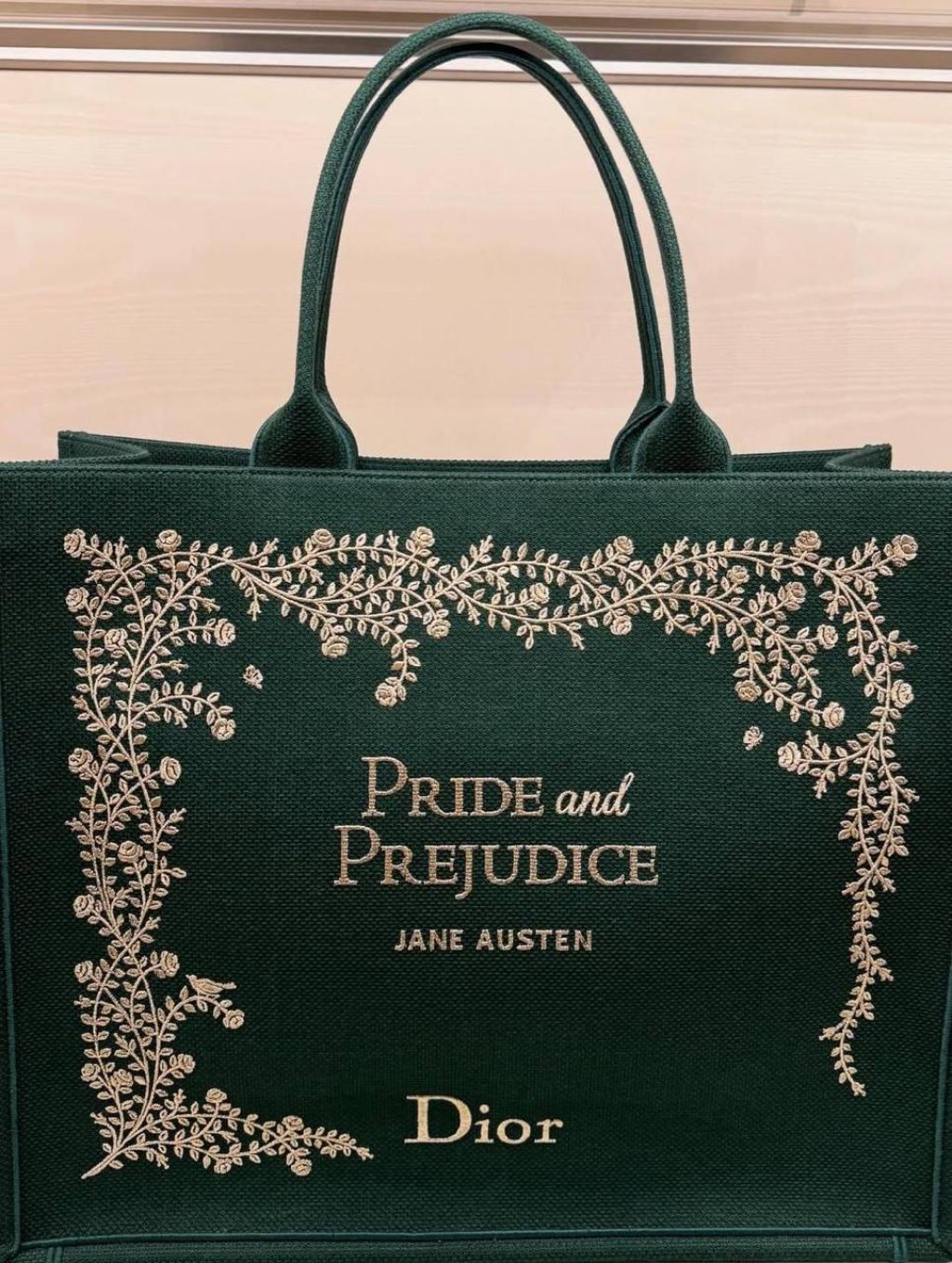
The newest addition to Anderson’s library might be the most classically “Dior” of them all. The Pride and Prejudice tote appears in deep bottle-green canvas, bordered by delicate champagne embroidery that curls like hedgerow vines around the title and Austen’s name. It instantly recalls the famous 1894 “Peacock edition” of the novel, whose gilt feathers fan out across a green cloth cover and have become one of the most collectible Austen designs in circulation.
Where the original book shimmered with Victorian ornament, the bag channels that same opulence through the house’s couture-level needlework, slotting perfectly into Dior’s long-standing Regency-coded aesthetic.
Savoir-faire meets first editions
Visually, these bags are almost shockingly simple: flat fronts, bold borders, familiar typography. The complexity lies in the translation. Dior’s Book Tote uses dense jacquard or embroidery techniques that can take dozens of hours to execute, with artisans mapping every line of type and every detail of the original artwork into threads.
Working with SP Books ensures that the covers are not just random graphics pulled from Google, but carefully licensed images from limited-edition facsimiles—essentially, book-nerd collector’s items in their own right. The result is a double collectible: a coveted Dior bag that is also, in spirit, a rare volume.
Dior’s standard medium Book Tote currently retails around $3,700 / €3,100 depending on market, with prices varying by embroidery complexity. Given the licensing, artisanal work and the buzz around Anderson’s debut, the literary series is poised to sit at the top end of the price spectrum—and on the wish list of every personal shopper and resale hunter.
Fashion, BookTok and the Rise of “Bookish Luxury”
These totes land at a moment when reading has become unexpectedly aspirational again. From BookTok to celebrity book clubs, literature is back in the social-media spotlight. Marie Claire has already framed Anderson’s designs within a wider wave of “bookishness” in fashion: Miu Miu’s reading pop-ups, Valentino sponsoring the Booker Prize, Saint Laurent’s Rive Droite bookstore, and even Loewe’s own reissued classics.
The Dior bags crystallise this trend. They’re not simply logo canvases but declarations of taste: choosing Dracula versus Bonjour Tristesse is the new choosing your band T-shirt. They invite conversations—What’s your favourite edition? Have you actually read it?—and reward those in the know.
At the same time, the collection plays with the tension between high culture and merchandise. First editions traditionally live behind glass; here they hang from subway straps and diner booths. Anderson collapses that distance, turning the reverent act of handling a rare book into the casual act of slinging a tote over your shoulder.
How to wear the literary Book Tote
Like its predecessors, the new Dior Book Tote is intentionally straightforward: a rectangular body, two top handles, no internal structure. It’s built to carry everything from a 15-inch laptop to a stack of real books, as Dior’s size charts like to remind us.
Anderson’s styling on the runway leans into that practicality. The totes accompany tailored shorts, Oxford shirts, leather trousers and low-key trainers, looking equally convincing next to a sharp tuxedo or a slouchy sweater.
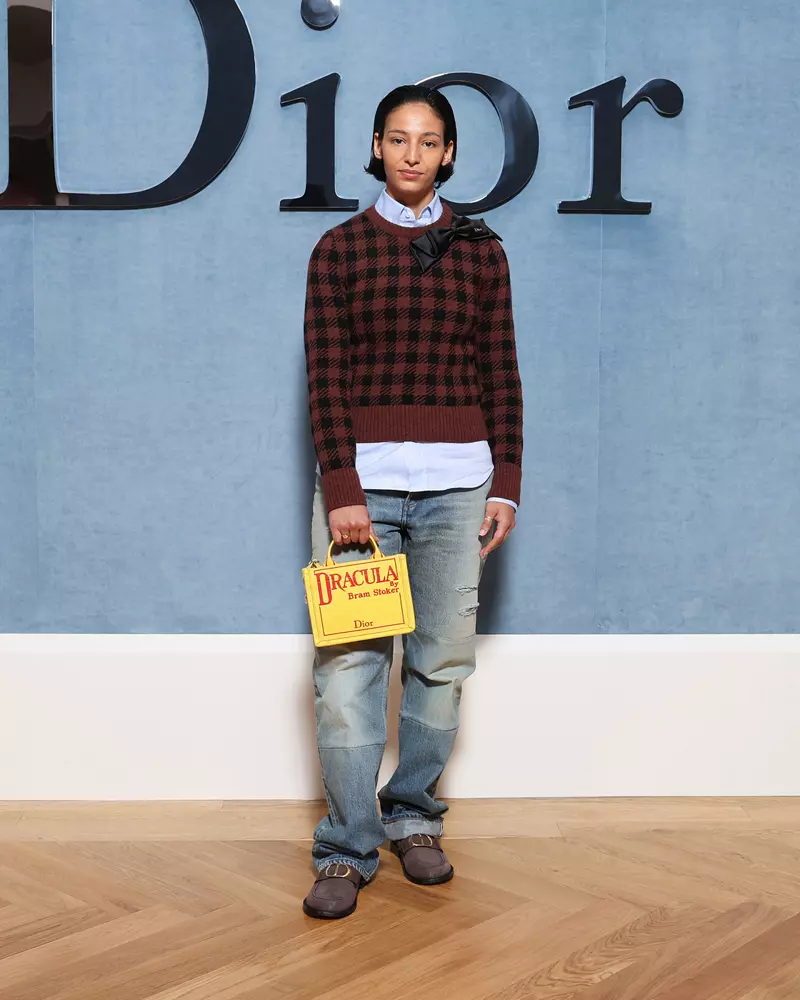
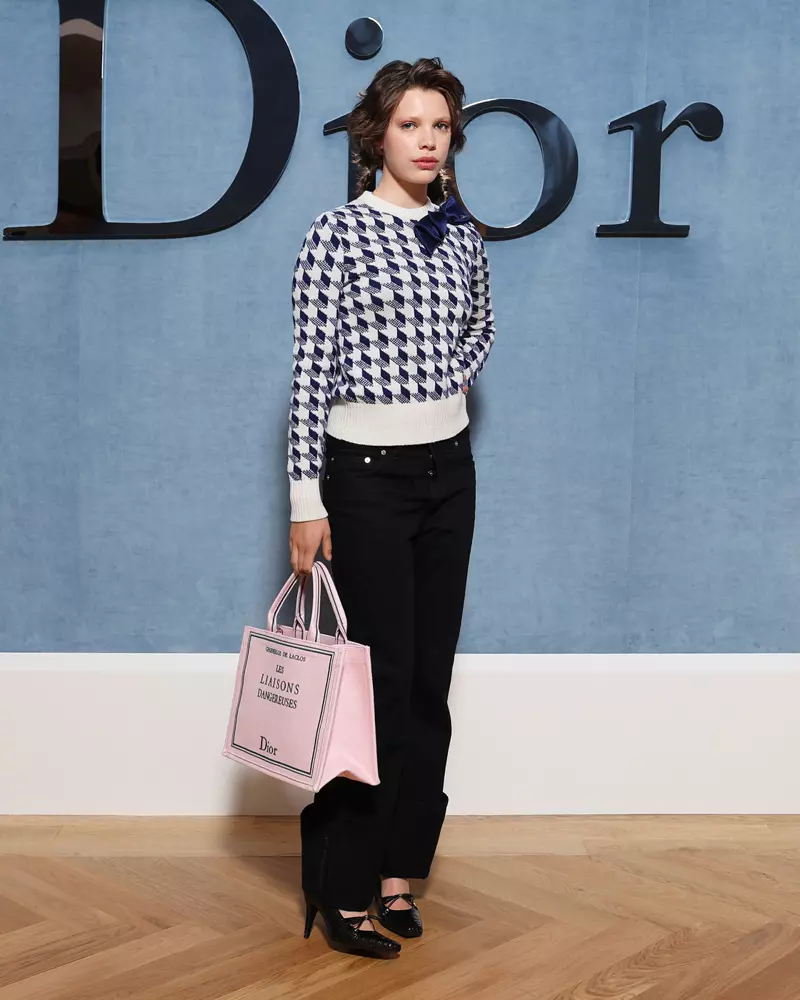
In real life, the literary prints do the heavy lifting. A Dracula tote electrifies an otherwise minimal black outfit. Les Fleurs du Mal works seamlessly with navy tailoring. The Very Hungry Caterpillar feels tailor-made for a weekend market run or a parent-and-child outing where the adults quietly flex their taste.
For collectors, the series functions almost like a reading list: a way to chart one’s evolving obsessions through bags. Today, you might be an Emma Bovary; next season, you graduate to Joyce.
Why these bags matter
On paper, the concept is so literal it’s almost a pun: a Book Tote that is literally a book. But that’s exactly why it works. Anderson has turned Dior’s most ubiquitous bag into a conversation about what we read, how we present ourselves, and how culture becomes commodity.
There’s also something disarmingly human about the choices. None of these titles are obscure; they’re books that have been loved, banned, reprinted and dog-eared across generations. By elevating them to couture status—embroidered, licensed, displayed under runway spotlights—Anderson suggests that intellectual life and luxury consumption aren’t mutually exclusive. You can be a bookworm and a bag person at the same time.
Most importantly, the literary Book Totes mark the beginning of Anderson’s Dior story. If his opening chapter is this witty, layered and collectible, fashion is already impatient for the sequels.