Gucci is not only a fashion house; it’s a shared cultural word—an adjective, a mood, a shorthand for desire and social signal. Demna’s first Gucci runway collection, titled Primavera, is built on that premise: Gucci as a spectrum of archetypes, not a single “look.” It’s a wardrobe ecosystem designed to speak to the people the house already reaches—and the ones it intends to recruit.
Presented at Milan Fashion Week, Primavera is also a strategic reset: Demna’s debut after his appointment as Gucci’s artistic director (taking over after Sabato De Sarno’s short tenure). The message is clear—speed, dynamism, and product-centered clarity, with a selection of pieces available immediately after the show (“see now, buy now” energy) ahead of the wider rollout later in 2026.
The Collection Concept of Primavera
Demna frames Primavera as a palette of dress codes—distinct “types” moving through the same world: the body-conscious club-to-daylight girl, the bourgeois Milanese lady, the slick tailoring customer, the Gen Z digital native, the old-Gucci sex appeal nostalgist, the horsebit loyalist. Reuters reported the show’s emphasis on variety and emotional resonance, positioning Gucci as something “lighter” and more agile, without losing its heritage gravity.
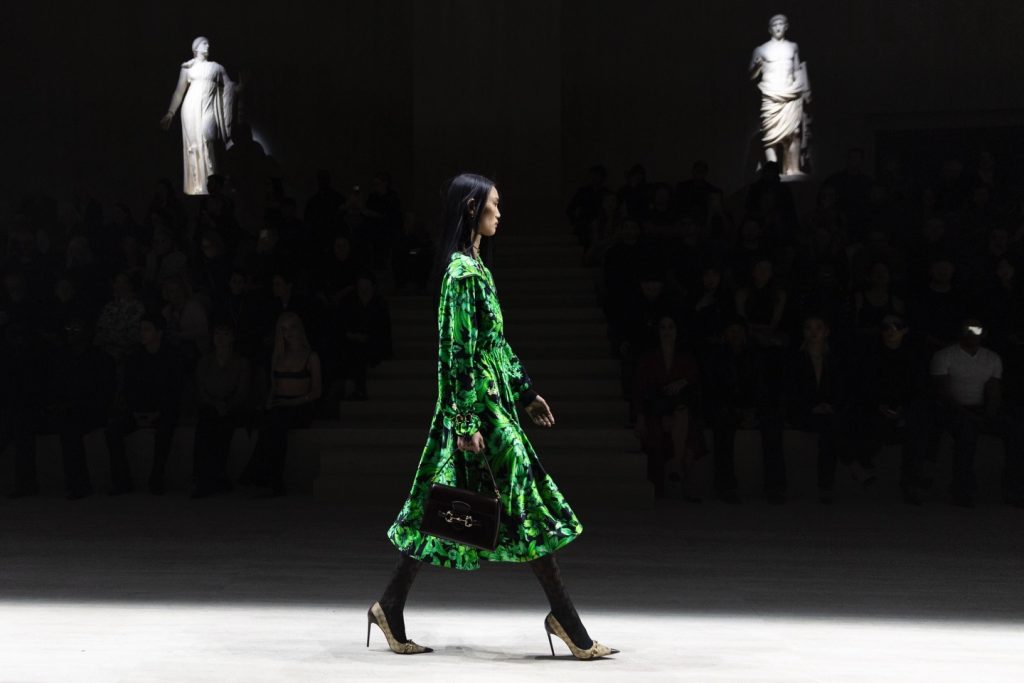
The collection’s most legible shift is body awareness: silhouettes that cling, compress, skim, or deliberately sharpen the body’s outline—less costume, more charge. That’s not Demna “dialing down,” it’s Demna re-anchoring the provocation in a commercial truth: Gucci’s core is leather goods, and the clothes are being engineered to carry them.
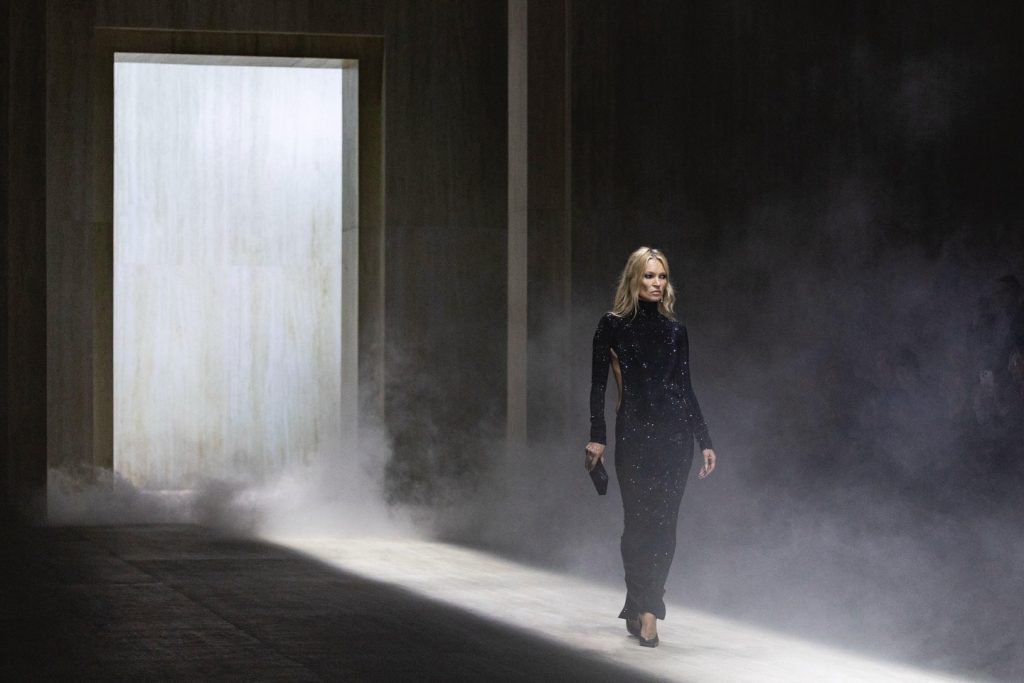
The Show Space
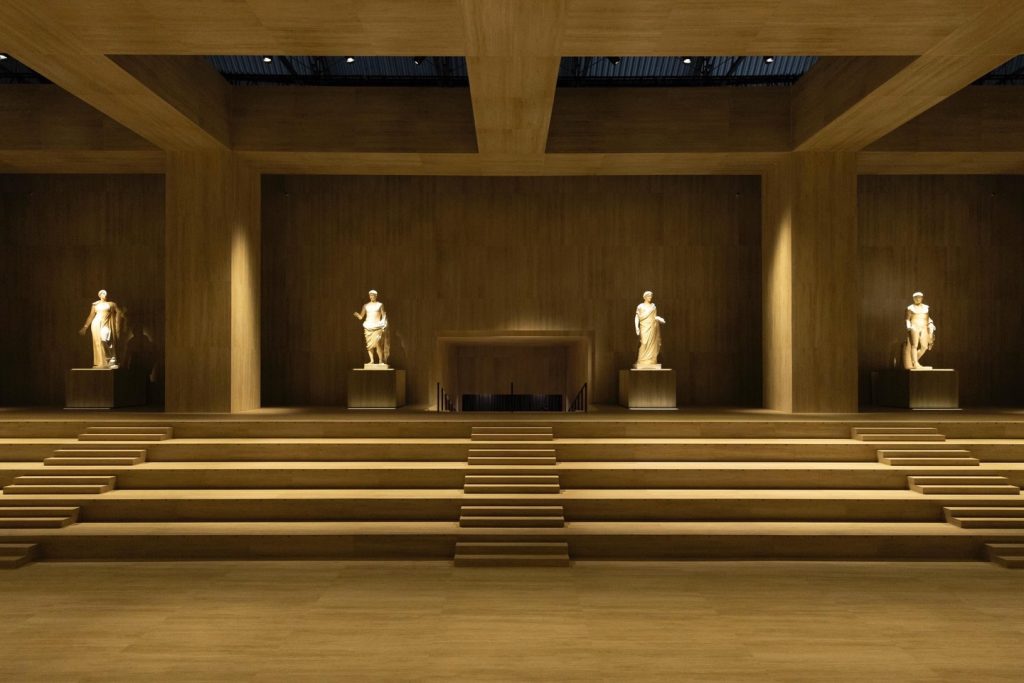
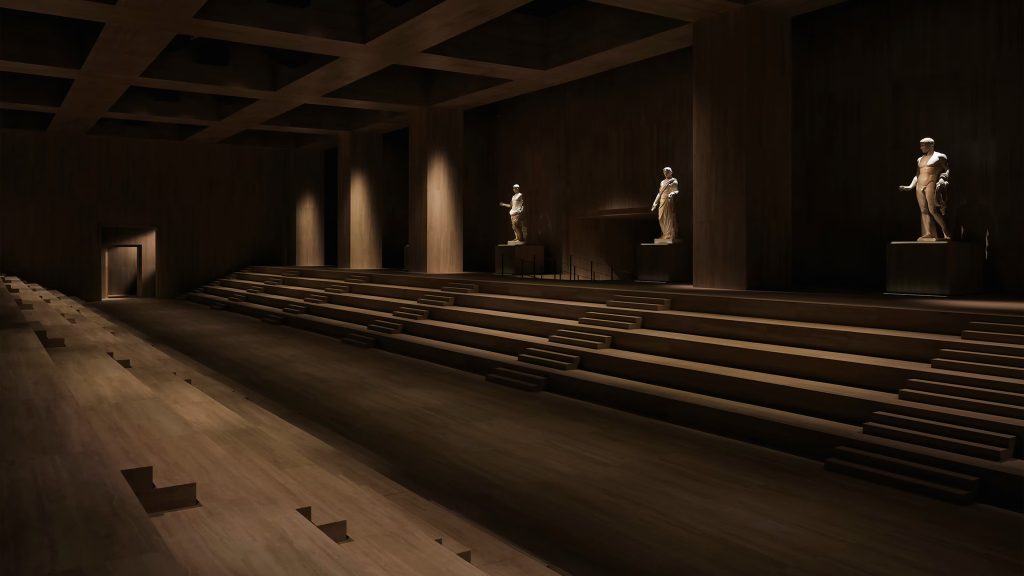
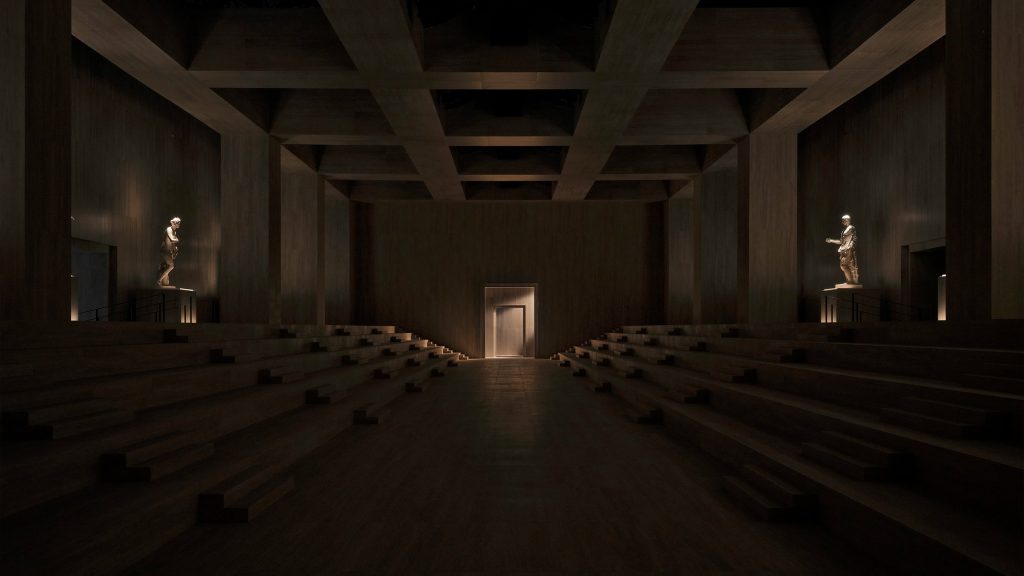
The staging did the heavy lifting of cultural positioning. Multiple outlets described a monumental, museum-like environment in Milan—an arena of broad, marble-clad steps with classical statuary looming over stadium seating, explicitly nodding to Florence’s Uffizi (and to Italian cultural patrimony more broadly).
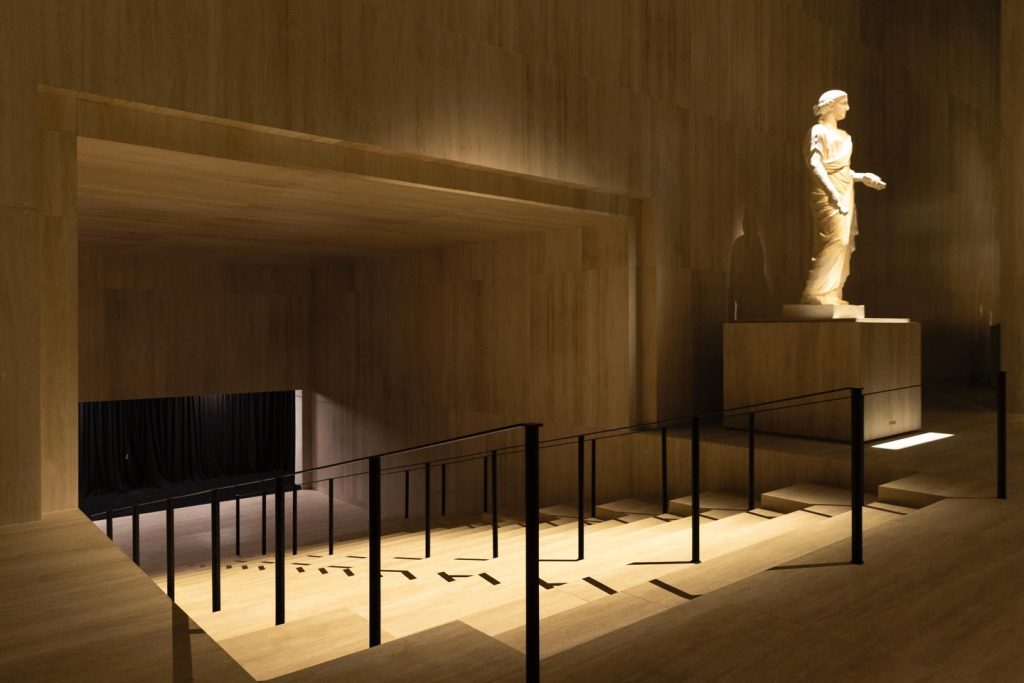
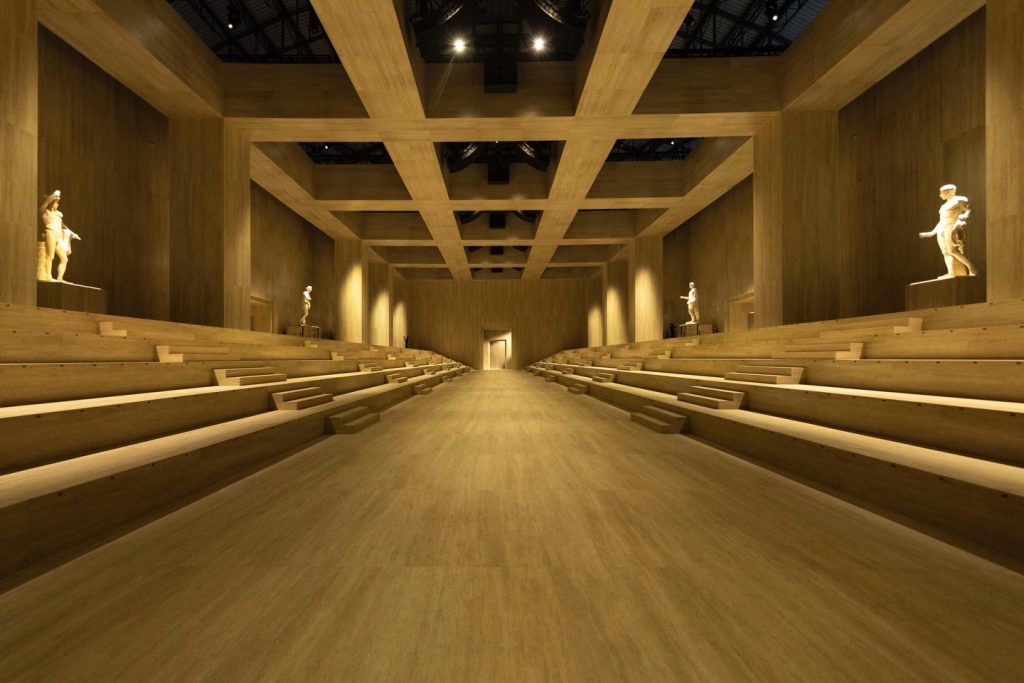
Crucially, the statues weren’t generic “classics.” They were presented as replicas tied to real institutions: the Uffizi and the Museo Archeologico Nazionale di Napoli, created through 3D scanning and then remade at monumental scale by artisans (treated to evoke marble). The point wasn’t set dressing—it was a thesis: Gucci belongs in the same sentence as Italy’s canonical art history, and the runway is the new gallery.
Runway Vocabulary: Heritage Codes, Re-tuned for Speed
Demna’s Gucci debut read as a controlled collision of codes:
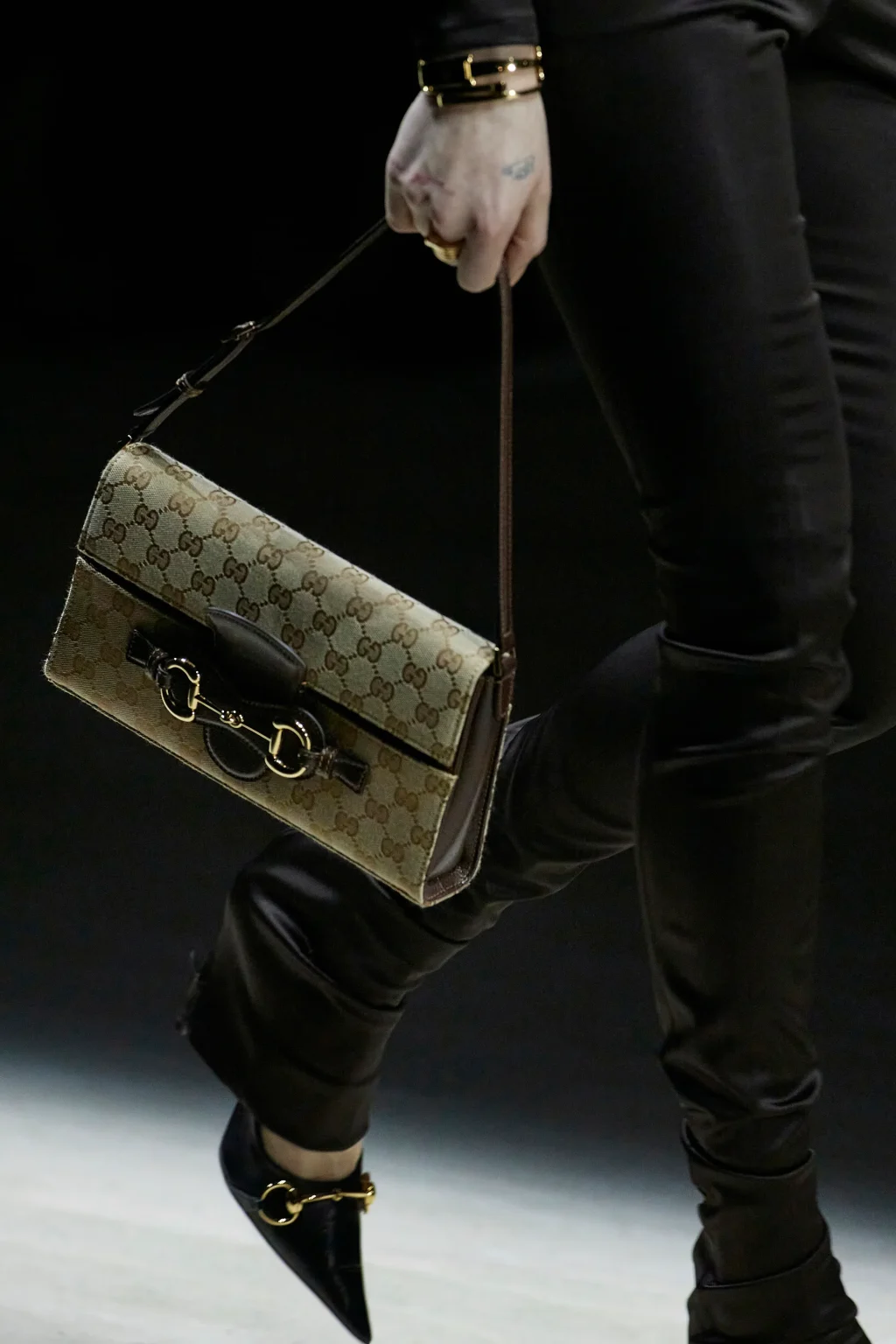
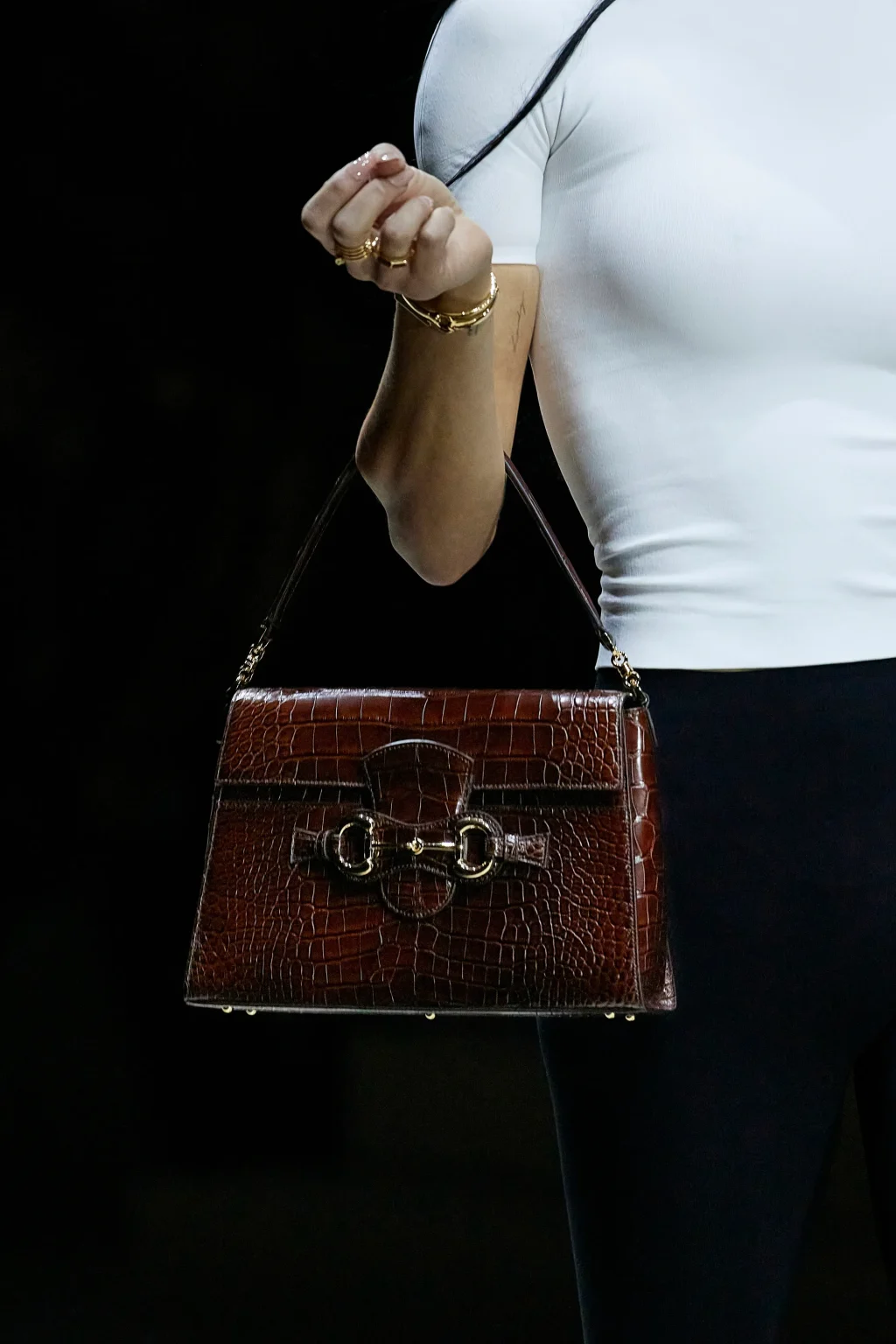
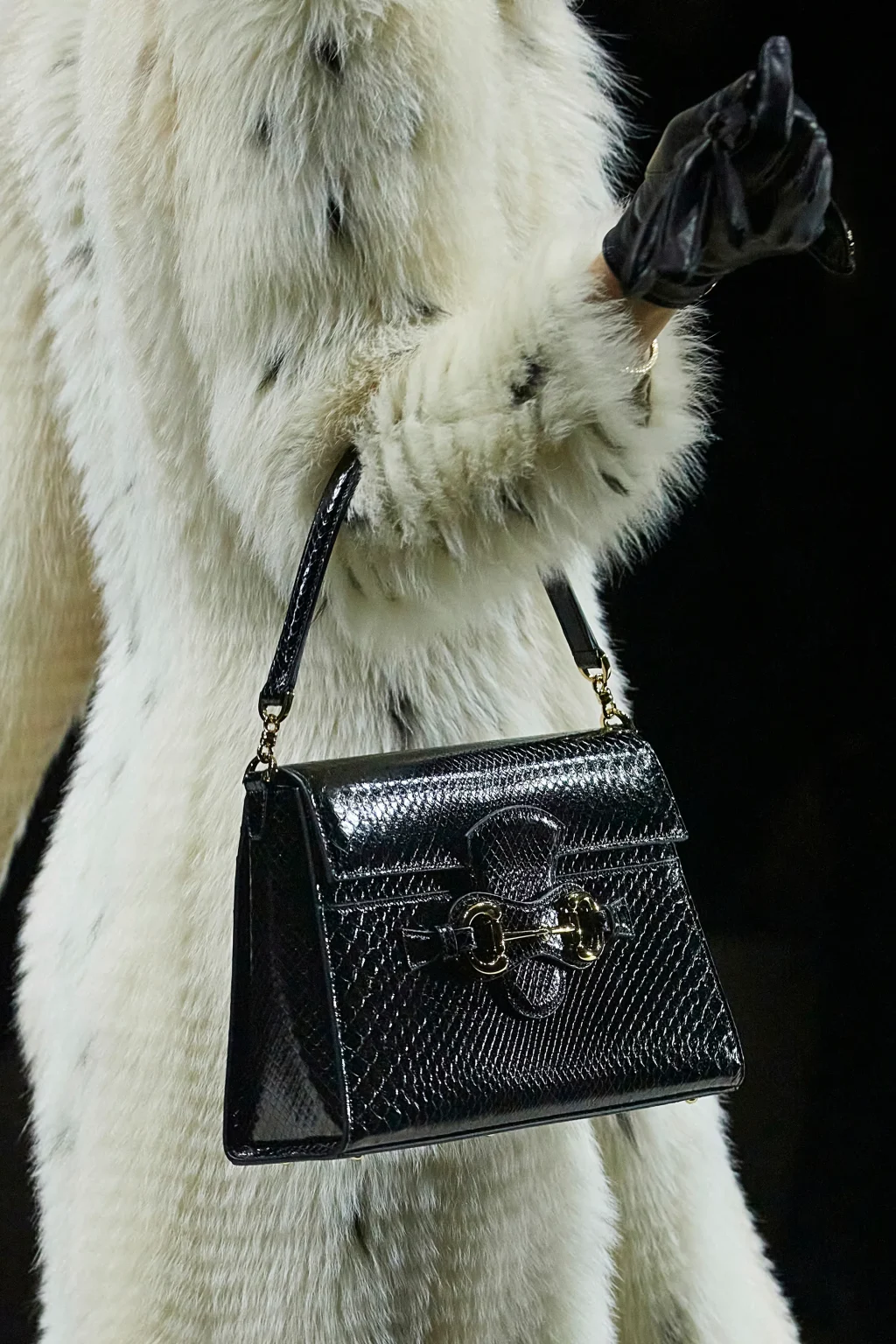
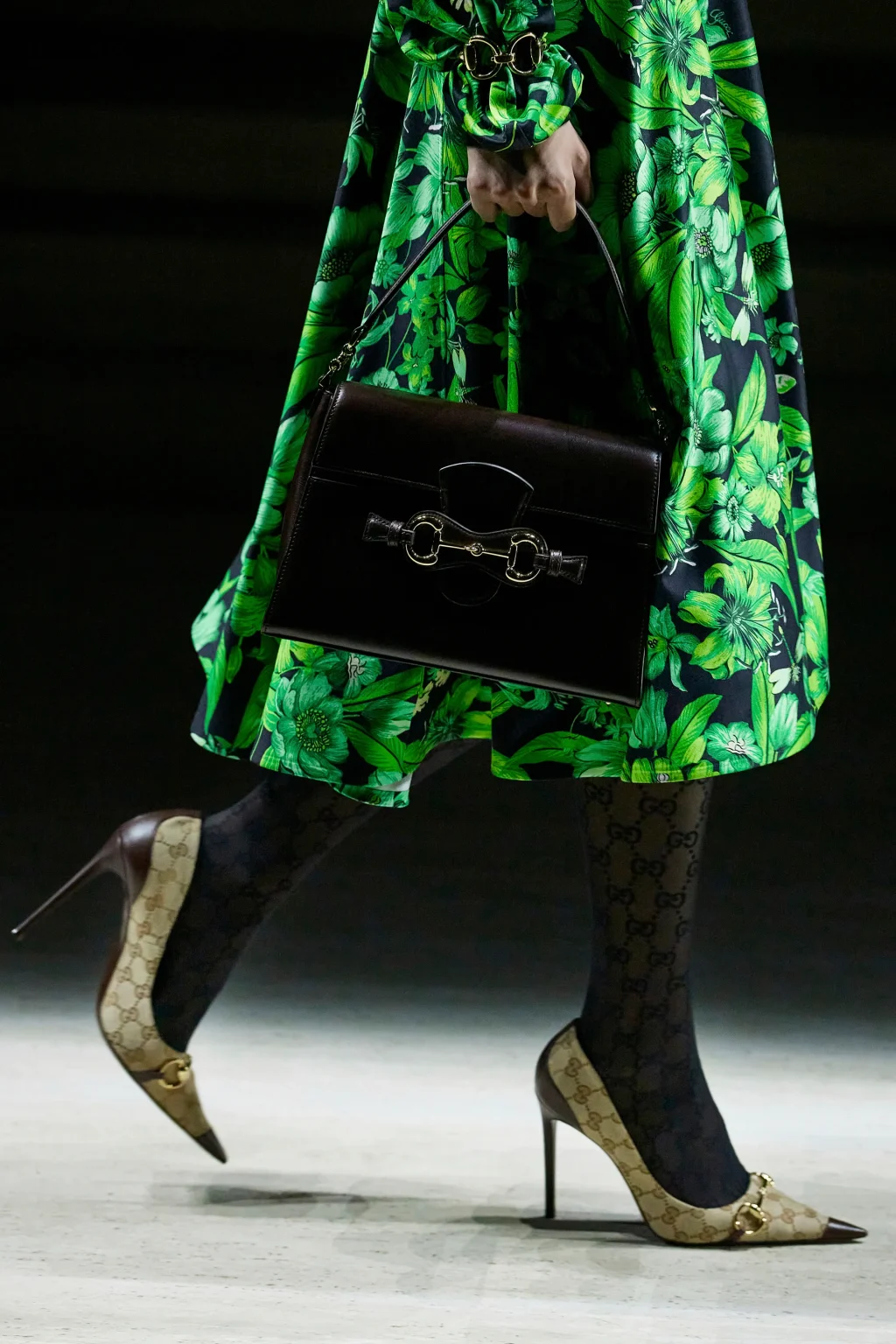
- Horsebit as an anchor hardware language (bag closures, dress hardware, styling cues).
- GG monogram as an omnipresent textile logic—less “logo mania,” more uniform.
- A Tom Ford-era echo (sex appeal, liquid tailoring, night life), cited as a visible reference point by show reports.
- A modern retail mechanism: selected pieces available immediately after the show, reinforcing a product-first cadence.
With that context set, the bags land as the collection’s clearest vocabulary—heritage silhouettes and codes, made lighter, less ceremonial, more wearable at speed.
The Bags: 8 Key Models from the Gucci Primavera / FW 2026–2027 Runway
1. Gucci Bamboo
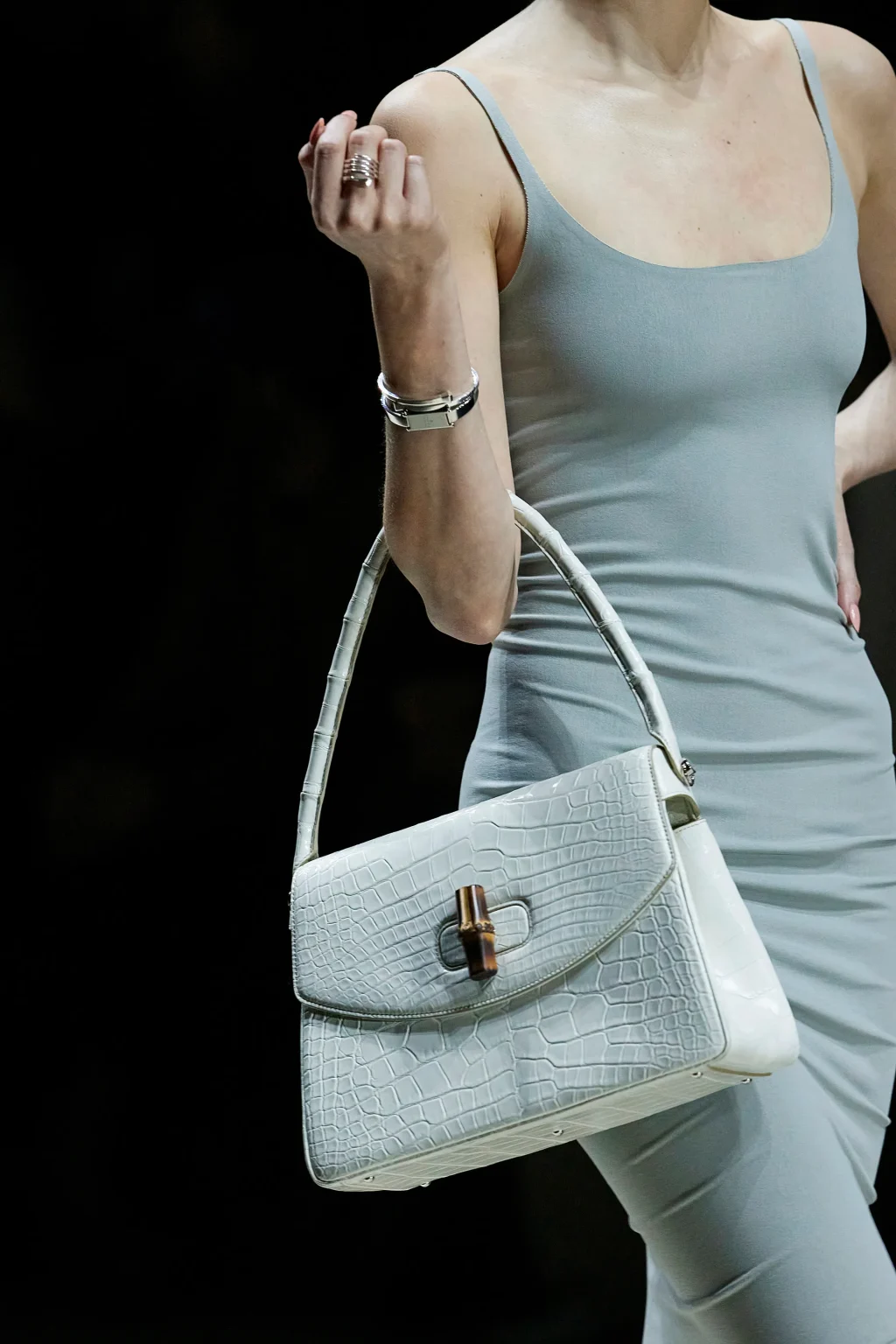
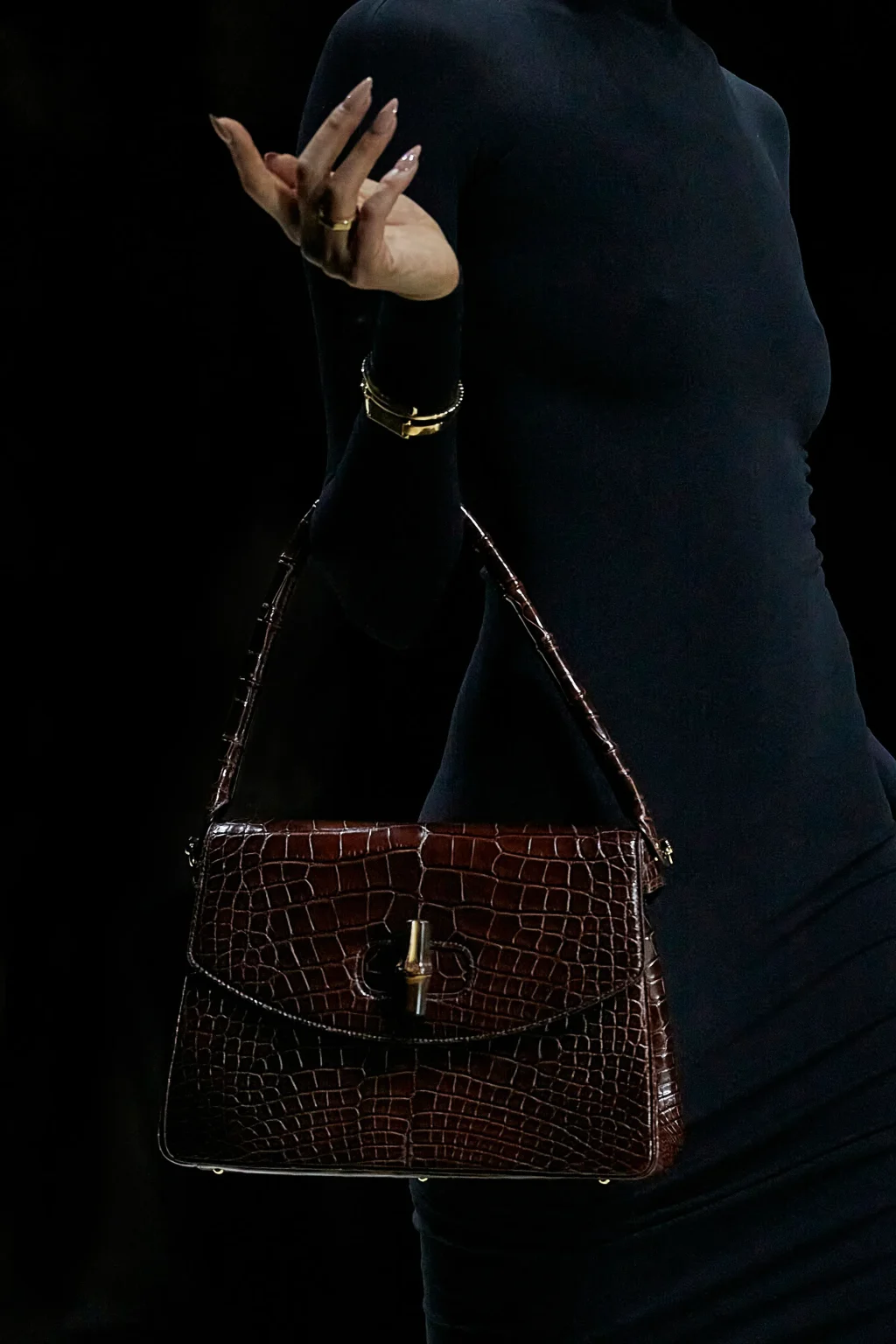
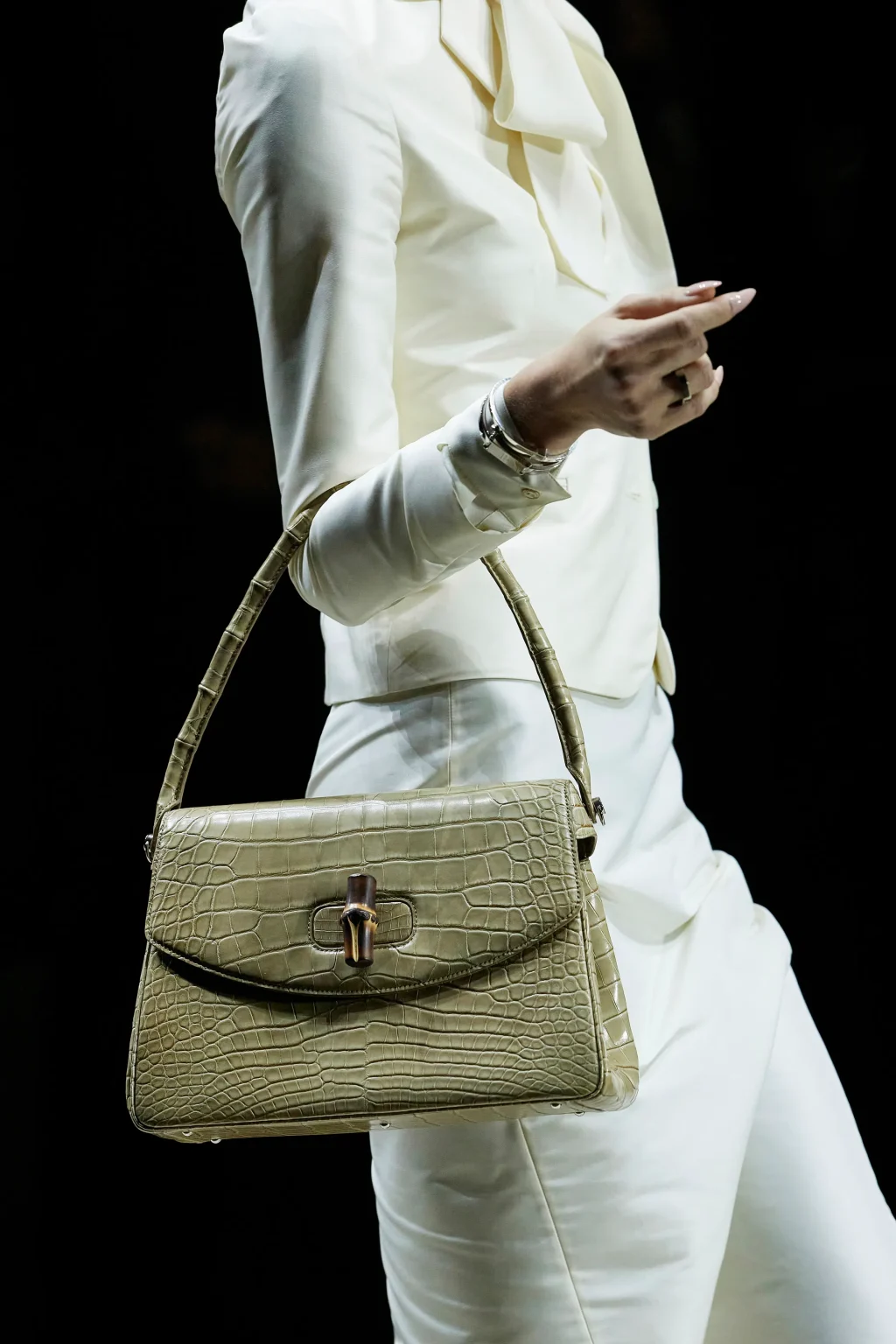
A sharp, structured shoulder bag that reads like Gucci heritage compressed into a clean rectangle: smooth leather, a curved flap line, and a bamboo-coded handle energy—even when the bamboo detail is treated subtly and the bag is styled with modern minimalism.
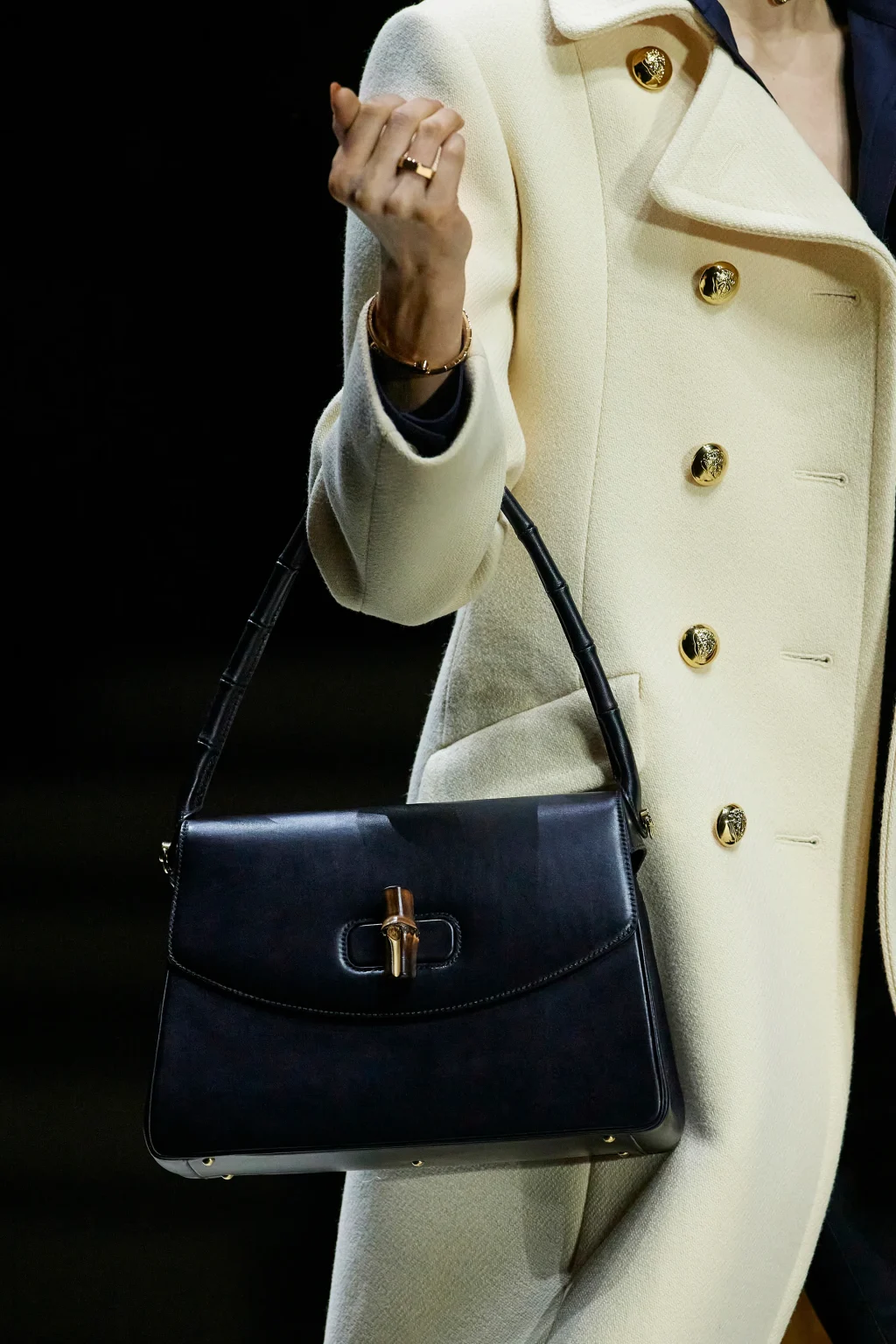
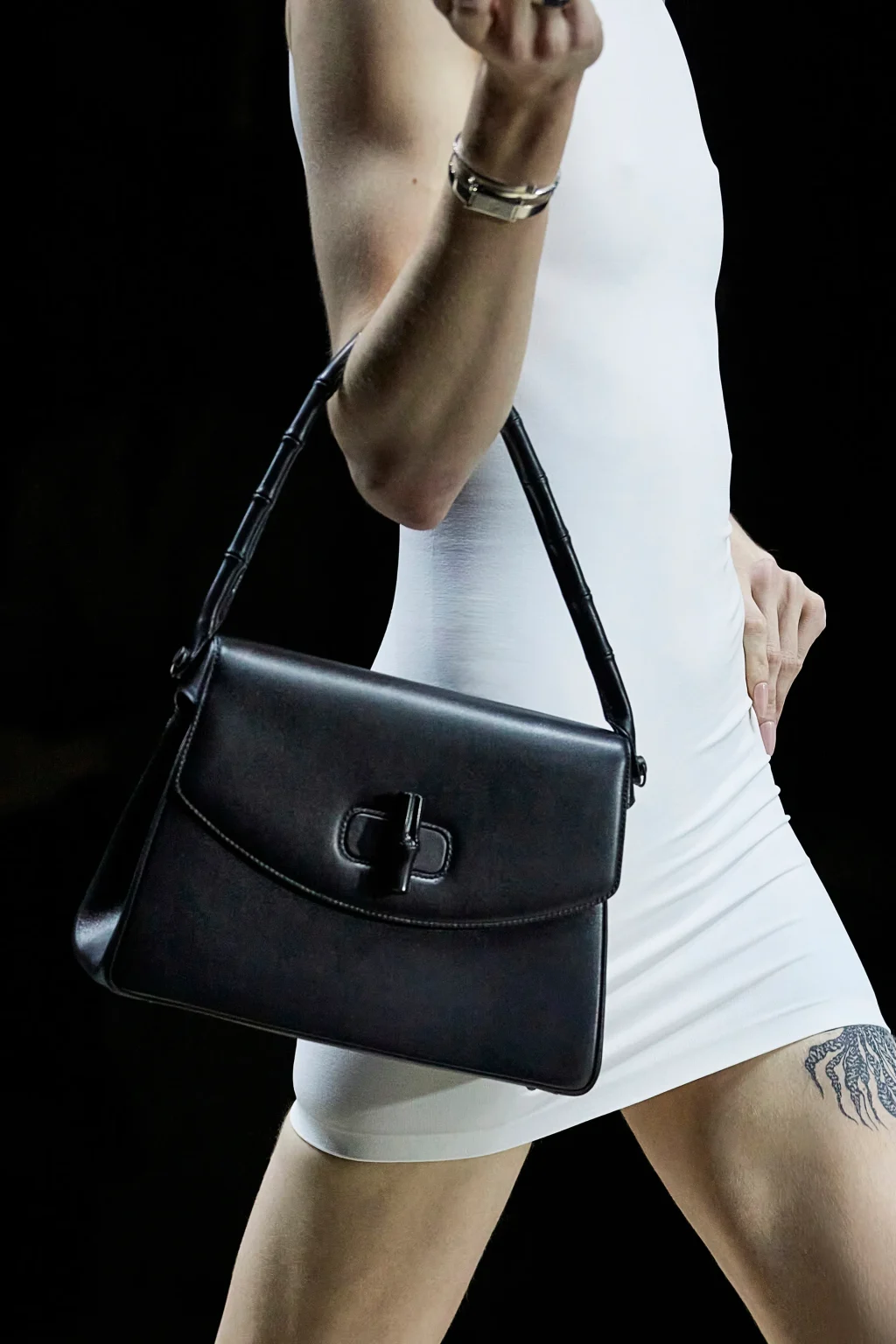
On the runway, it reads like an “adult” punctuation mark—the piece that sharpens a slip dress and gives a severe coat a finished, intentional edge rather than a styled-for-effect feel. It appears in slick black leather, then returns in a pale croc-embossed finish—same silhouette, different temperature—quietly proving its day-to-night range.
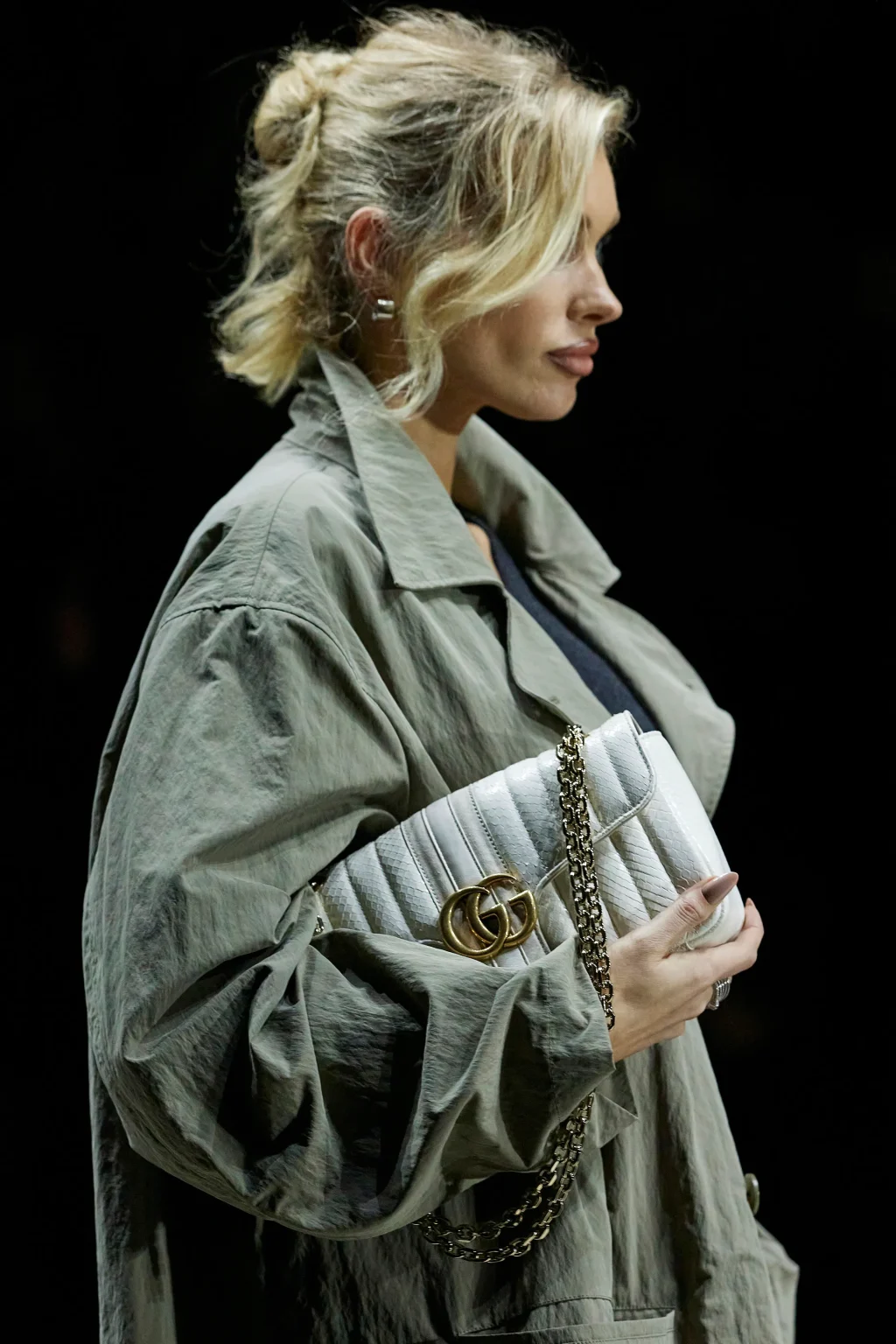
2. Gucci Marmont
The Marmont appears here as a soft-armed classic—quilted and chain-linked, carried close, like a piece of personal armor that doesn’t need to shout. In the context of Primavera, Marmont reads less like a throwback and more like a reassurance: a familiar Gucci icon brought into Demna’s new cast of archetypes. It’s also the collection’s clearest bridge between glamour and daily wear—the “I know exactly what I’m doing” bag in a lineup full of reinvention.
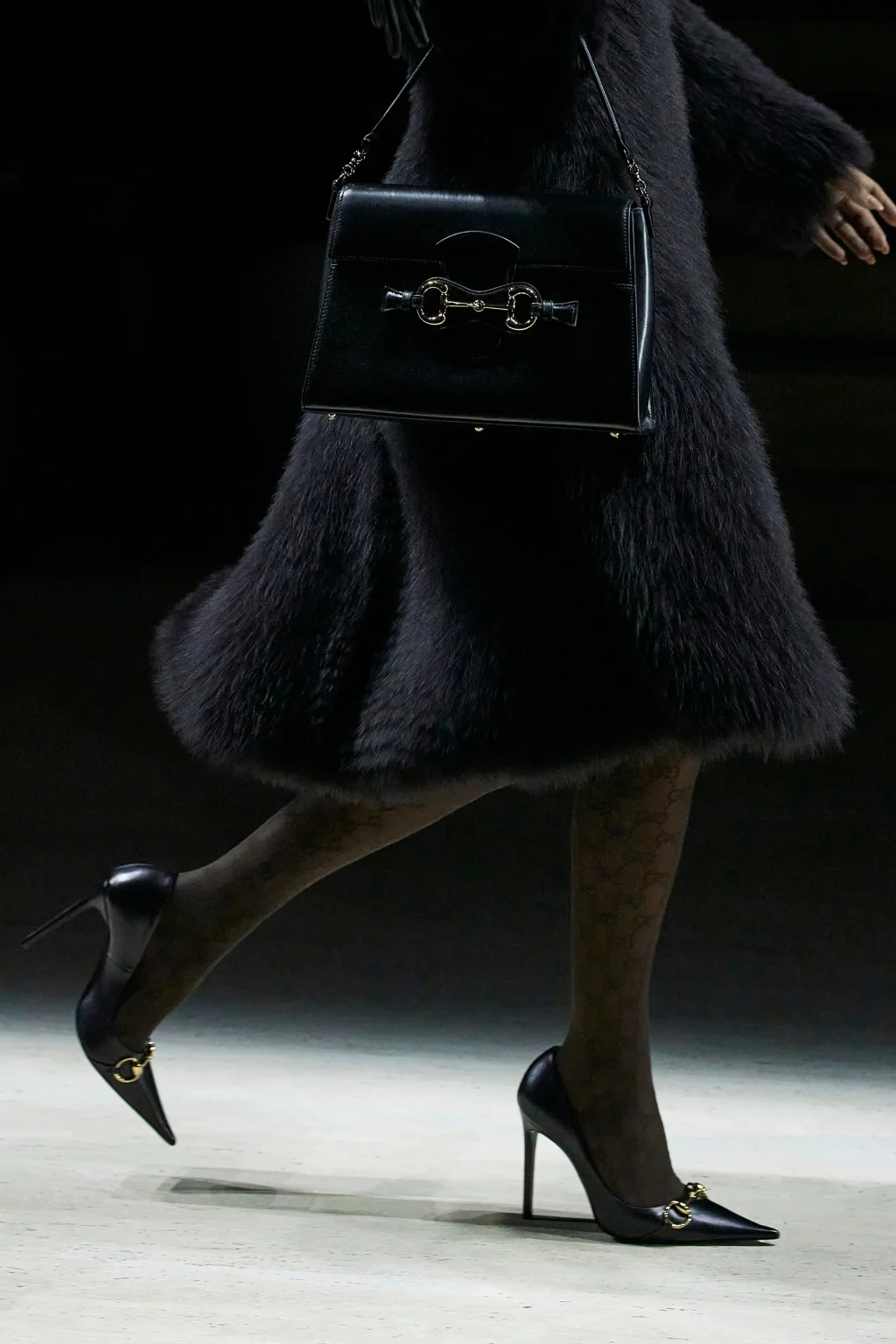
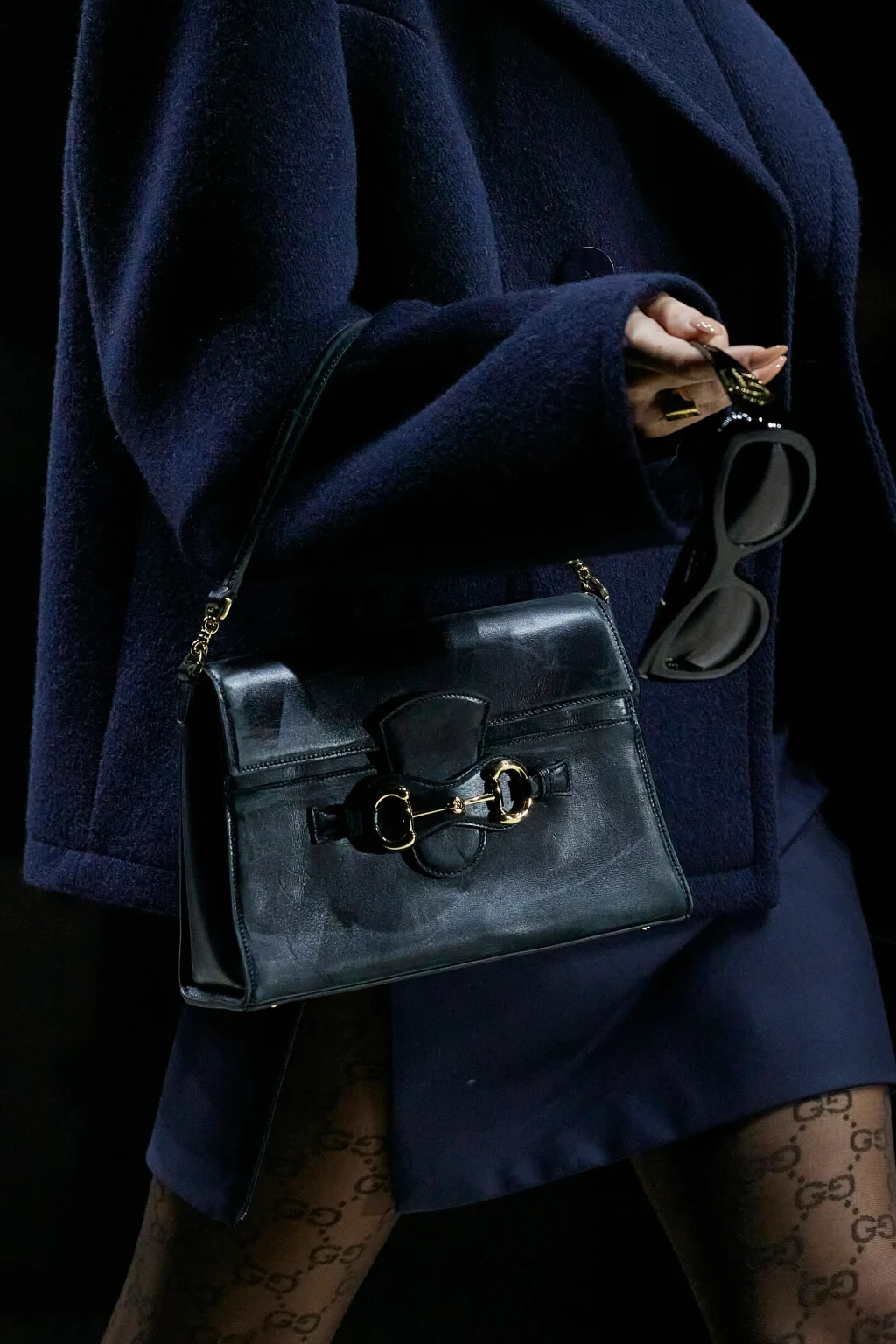
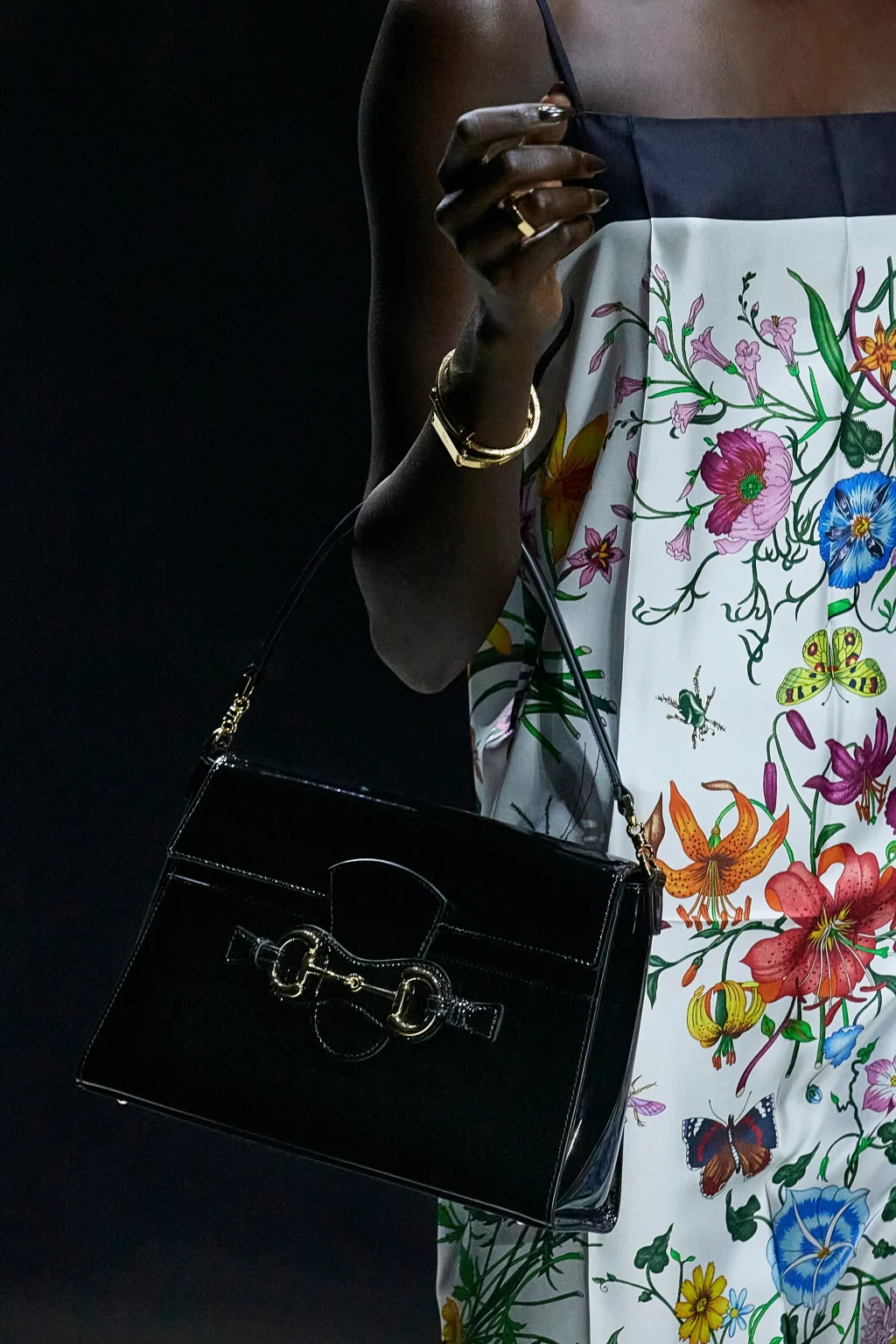
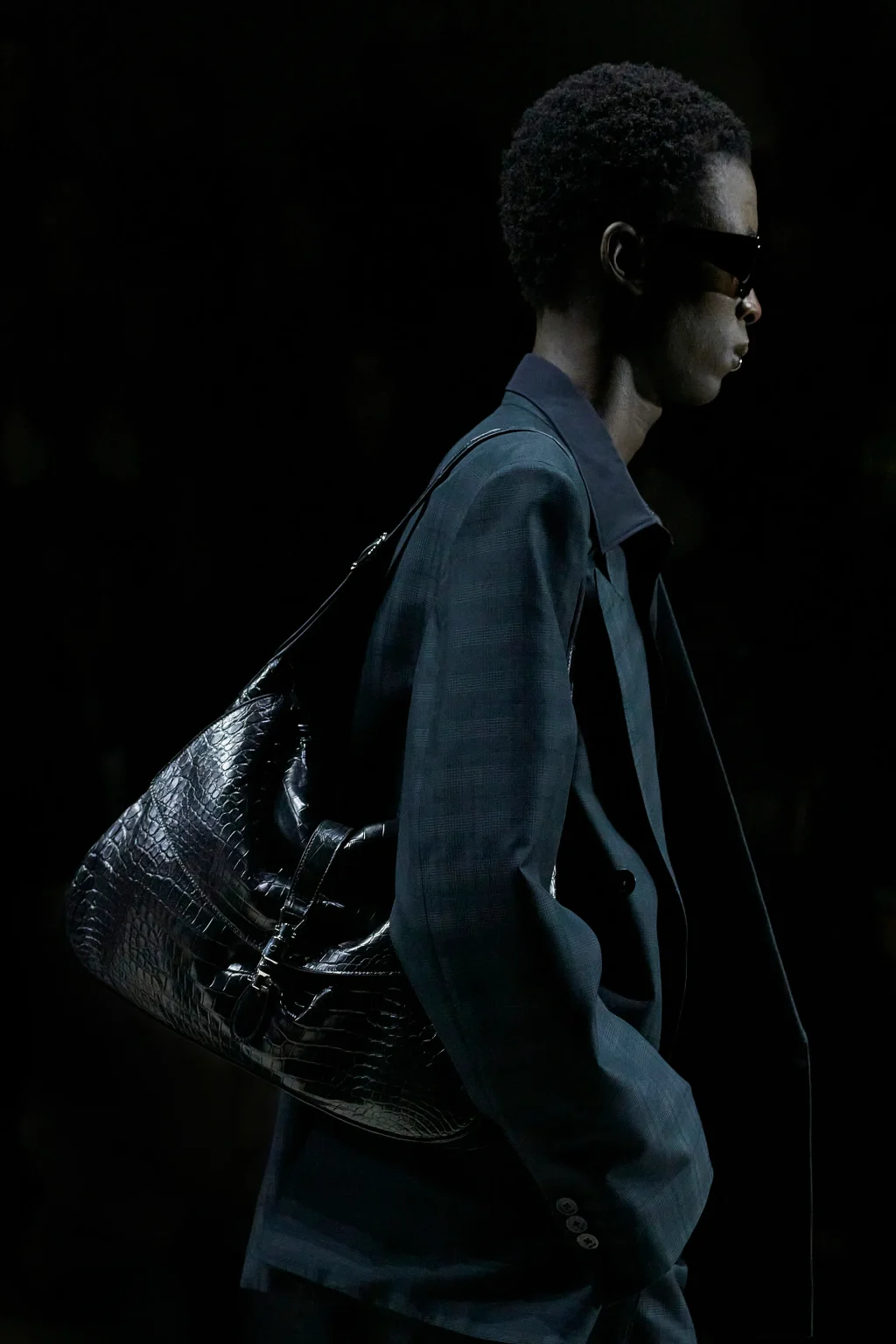
3. Gucci Horsebit Ristretto
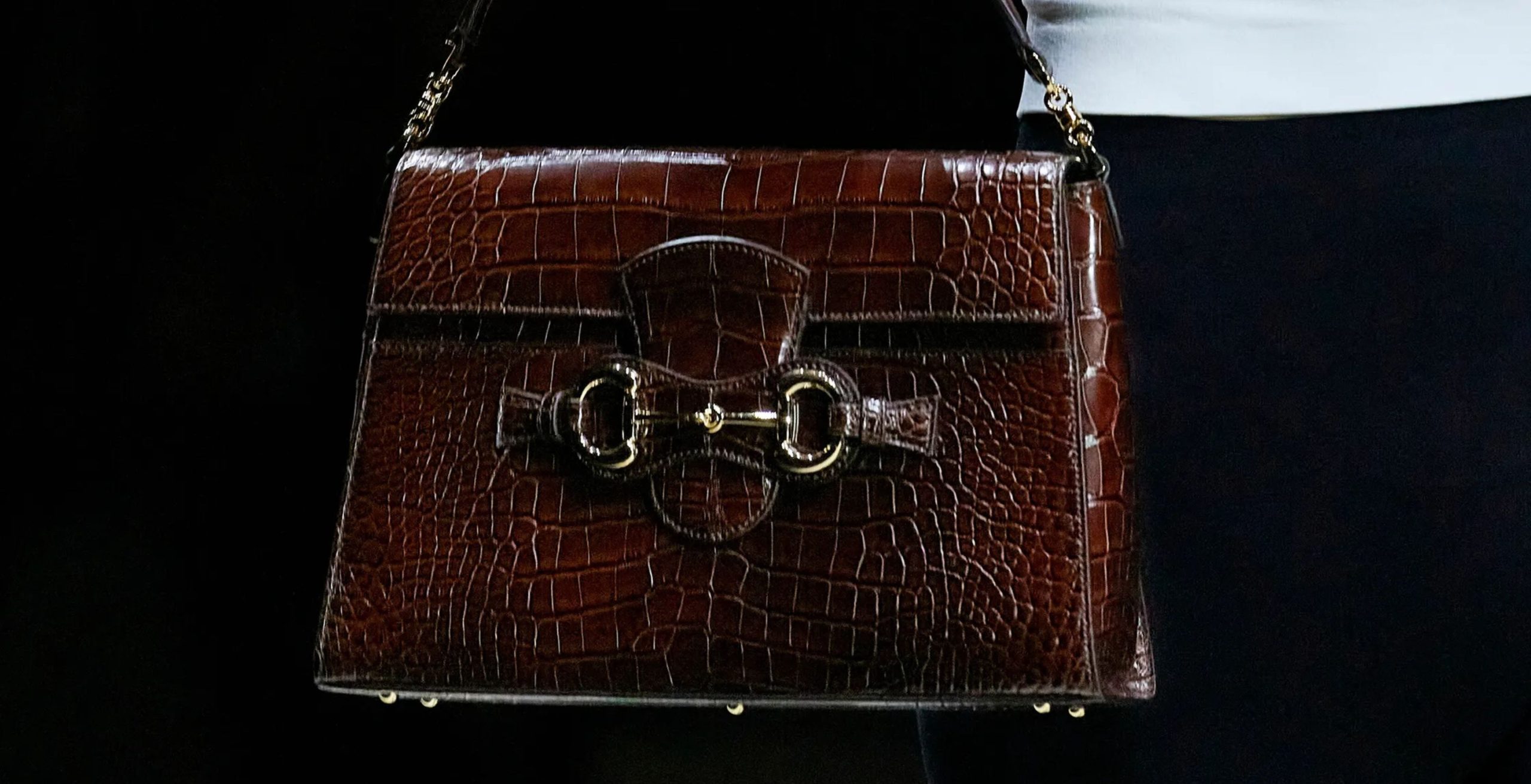
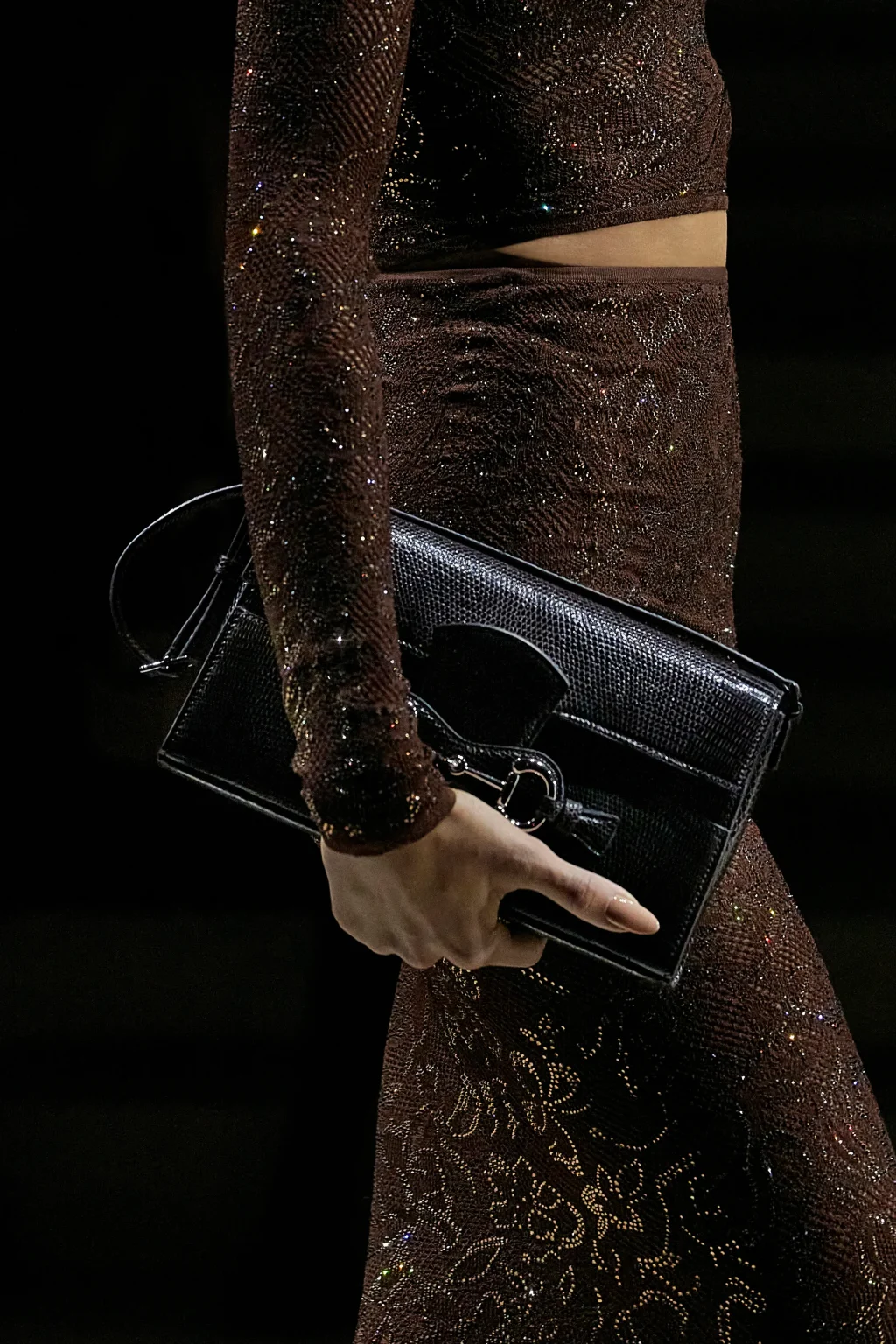
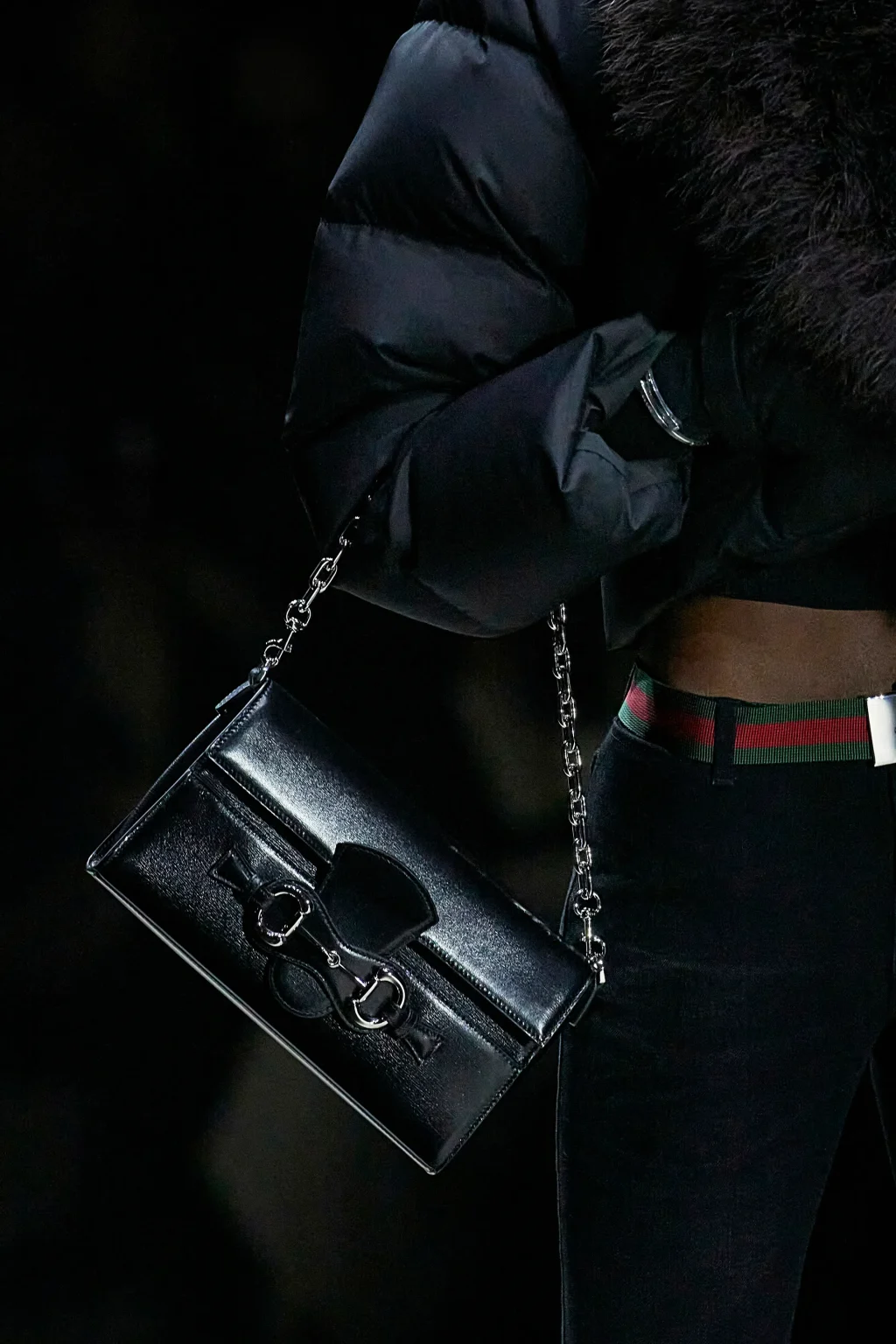
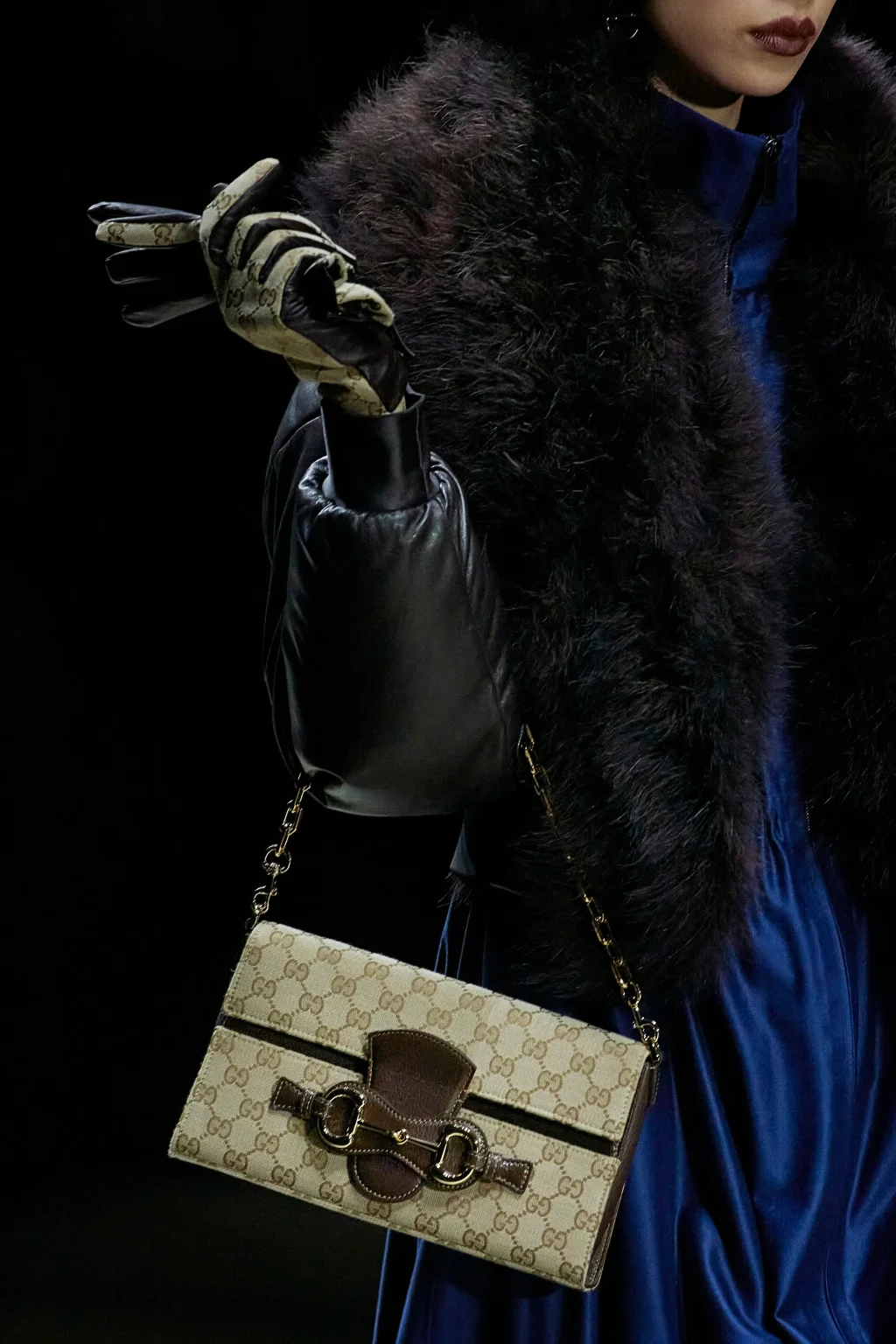
This is the collection’s hardware thesis in one object: a structured shoulder bag with an overscaled Horsebit closure placed as the center of gravity. It shows up in multiple finishes—croc-embossed, glossy exotic-like surfaces, GG canvas versions—suggesting the silhouette is meant to be a modular platform for materials. The name “Ristretto” fits the vibe: compact, concentrated, high-impact. It’s designed to read instantly in motion, which is exactly what Demna’s Gucci needs right now.
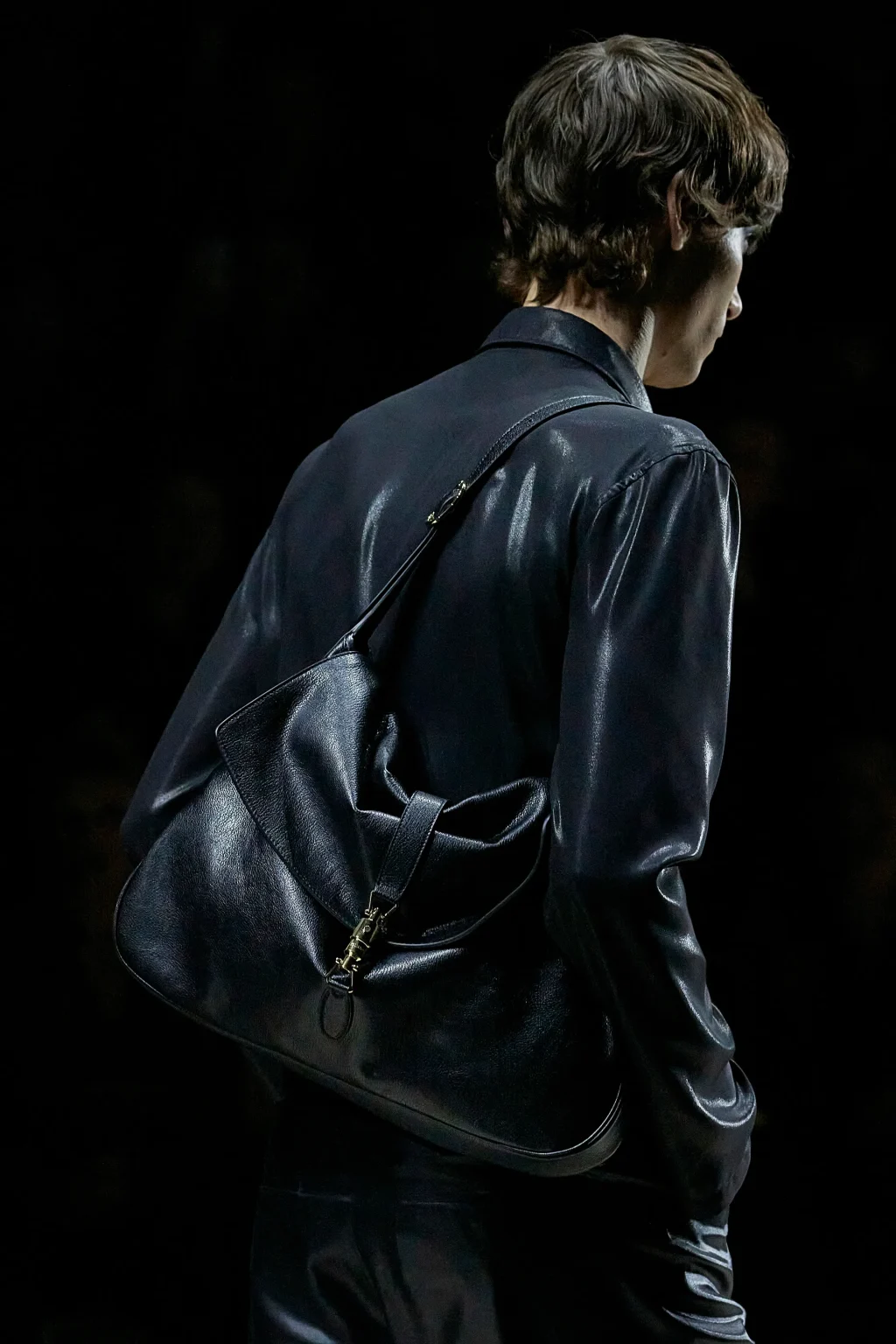
4. Gucci Jackie 1961
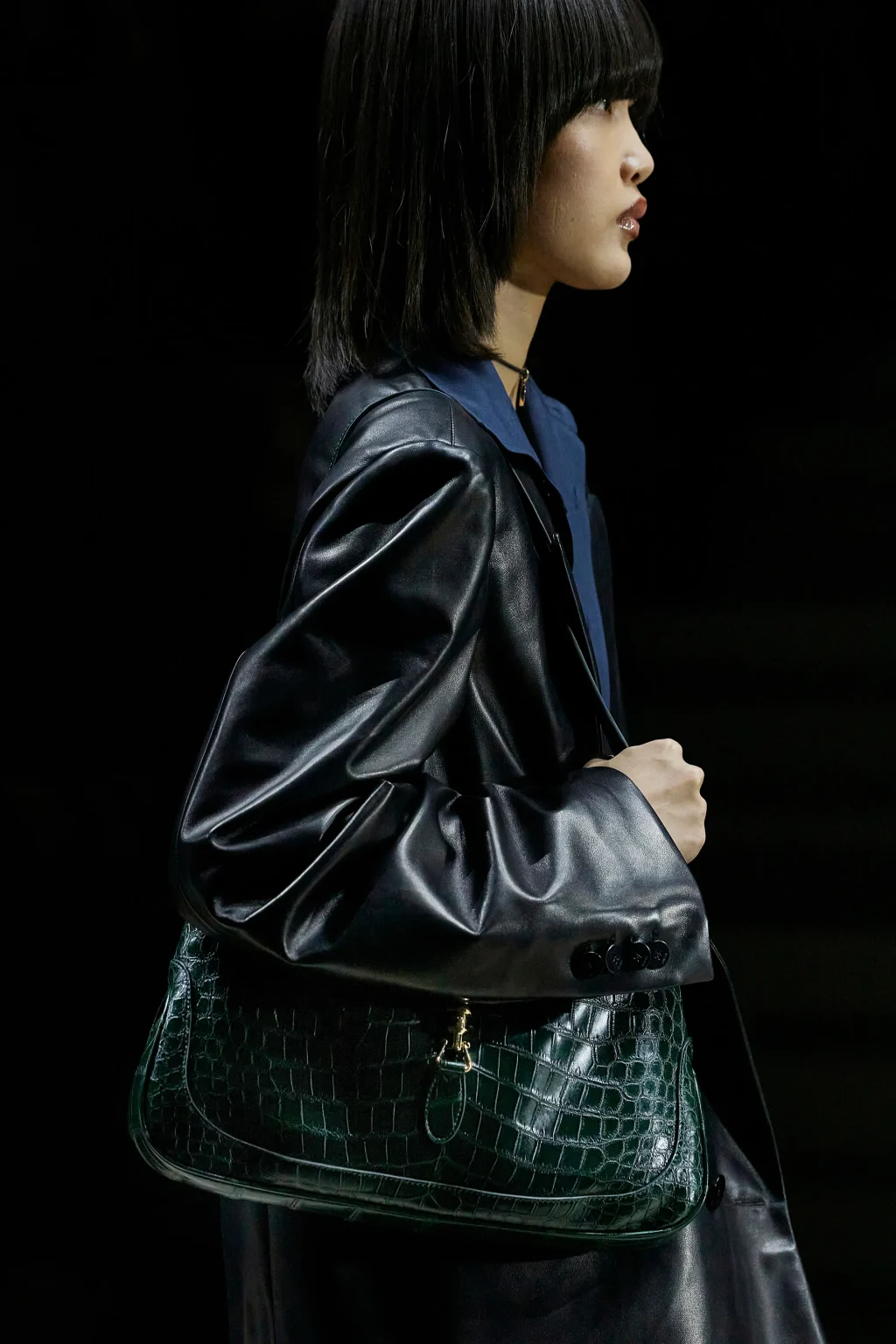
The Jackie is the clearest example of Demna’s “lighter, less formal” recalibration: the iconic crescent shoulder silhouette, but styled with a crushable, lived-in attitude rather than stiff reverence. Gucci itself positions the Jackie line around craftsmanship and the distinctive piston closure, but on this runway it’s the styling that redefines it—less museum piece, more everyday companion with edge.
5. Gucci Horsebit Hobo
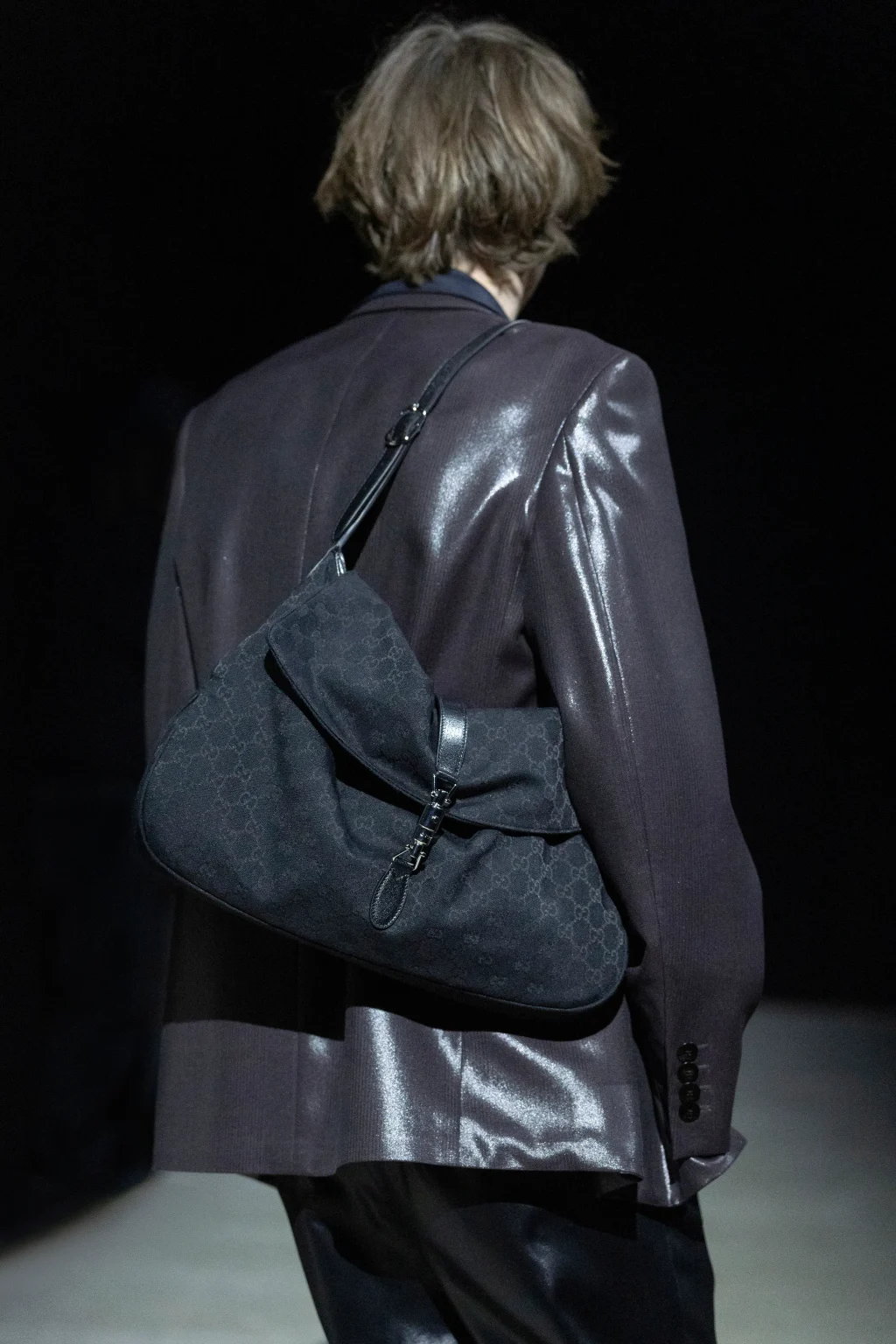
A bigger, slouchier Horsebit family member that leans into nonchalance: oversized volume, softened structure, and a closure detail that reads like a signature rather than decoration. It’s the bag for the “moving through the city” archetype—hands free, shoulders forward, real life implied. Visually, it’s the antidote to preciousness: the Horsebit made practical without losing its Gucci punctuation.
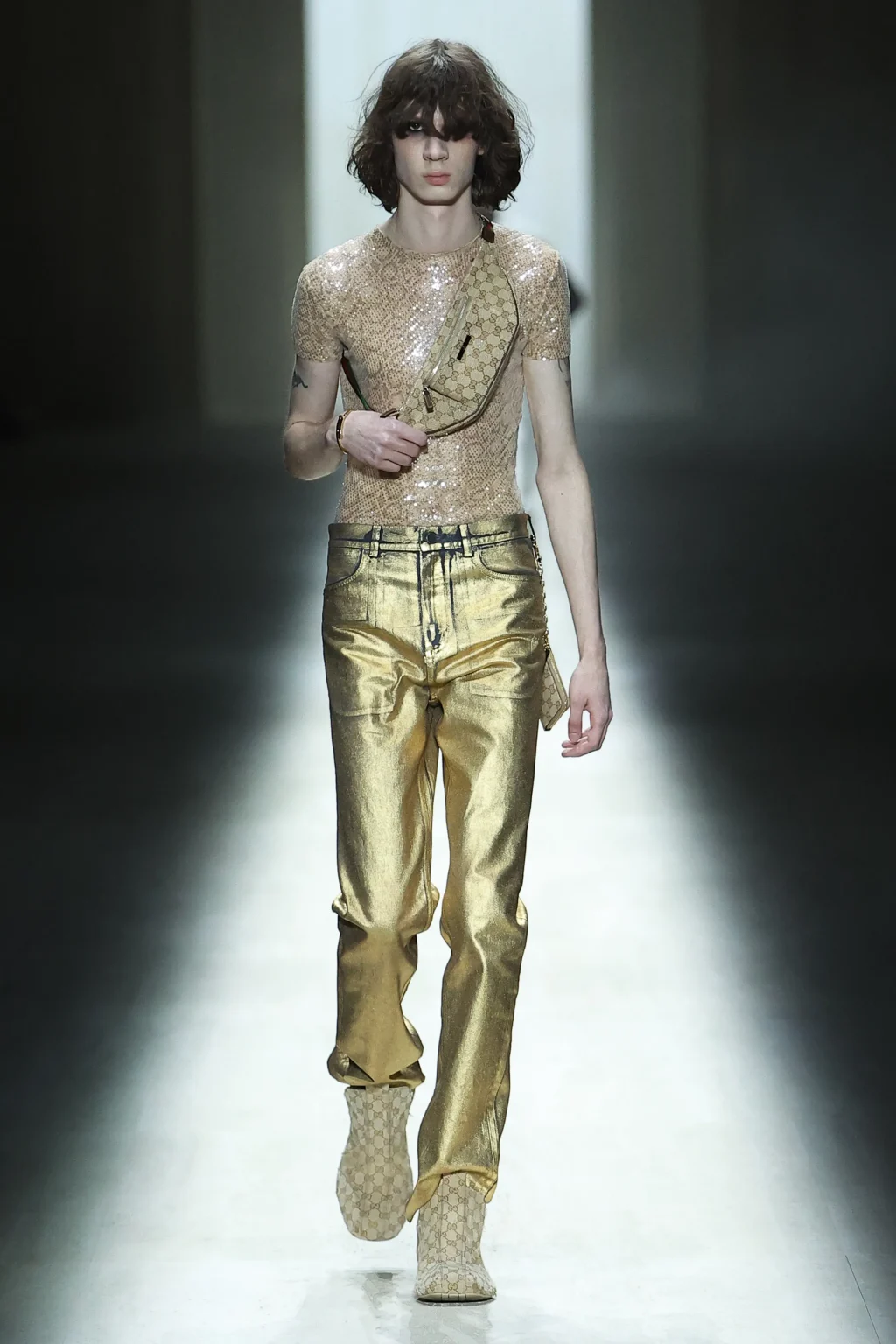
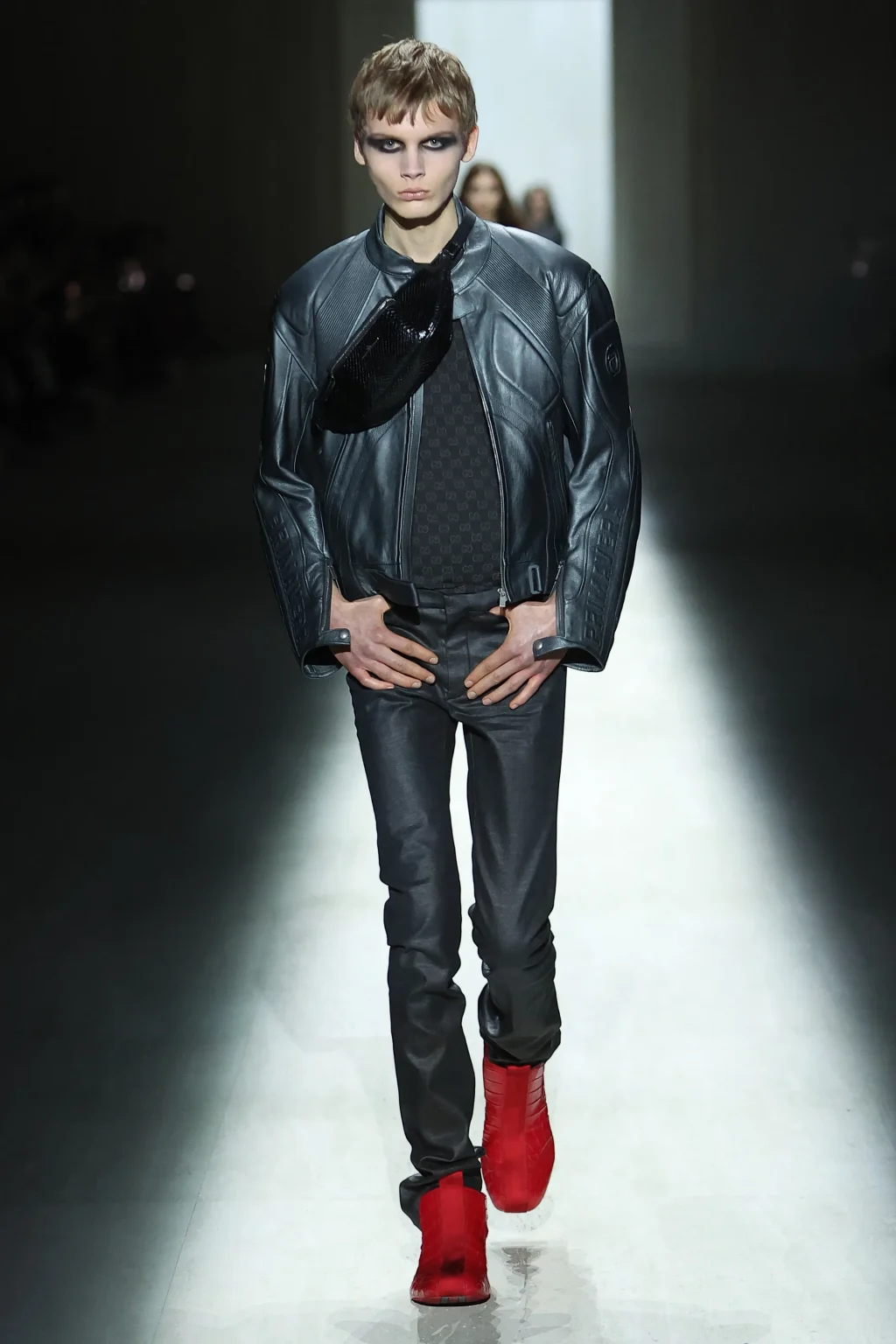
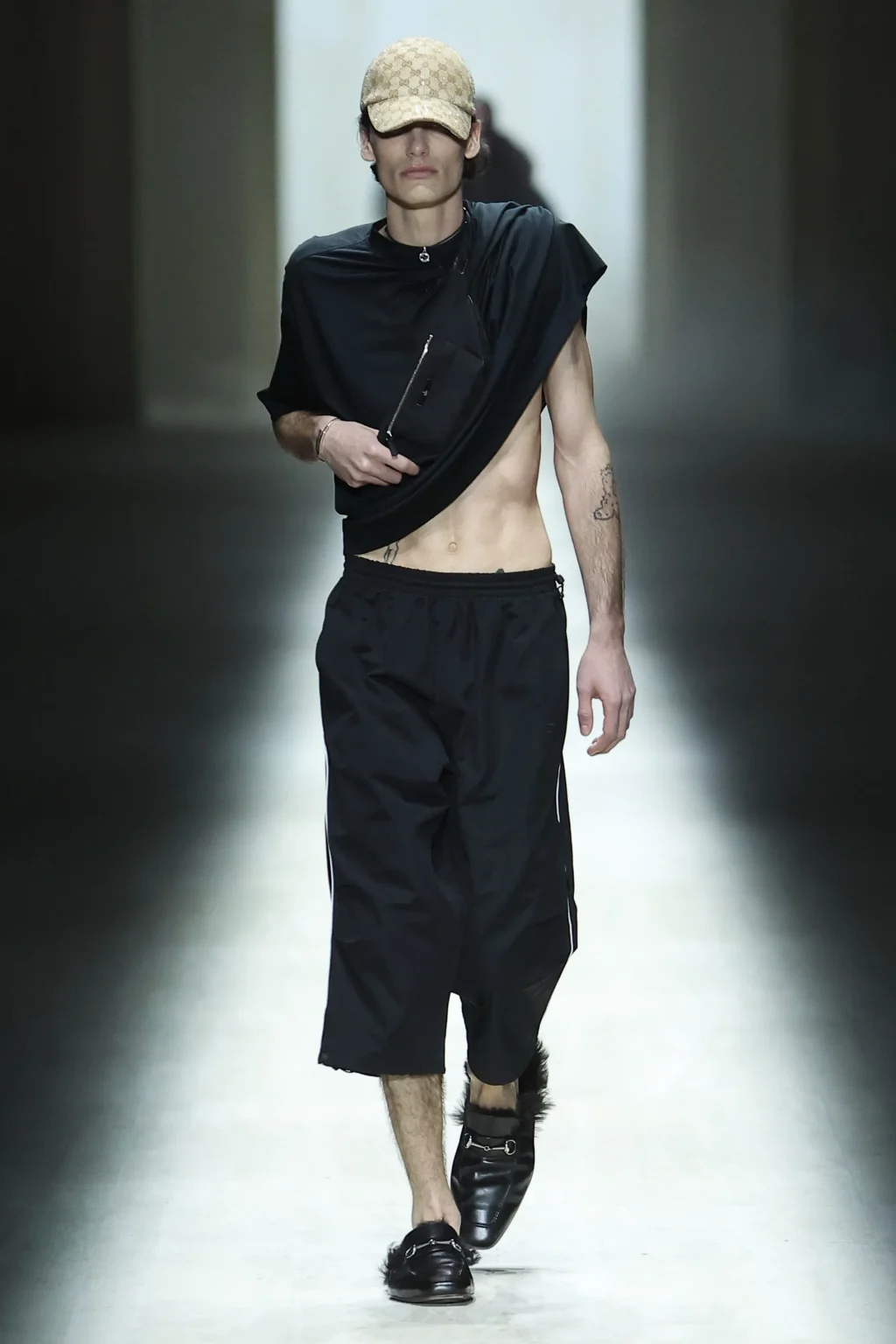
6. Gucci Tag Belt Bag
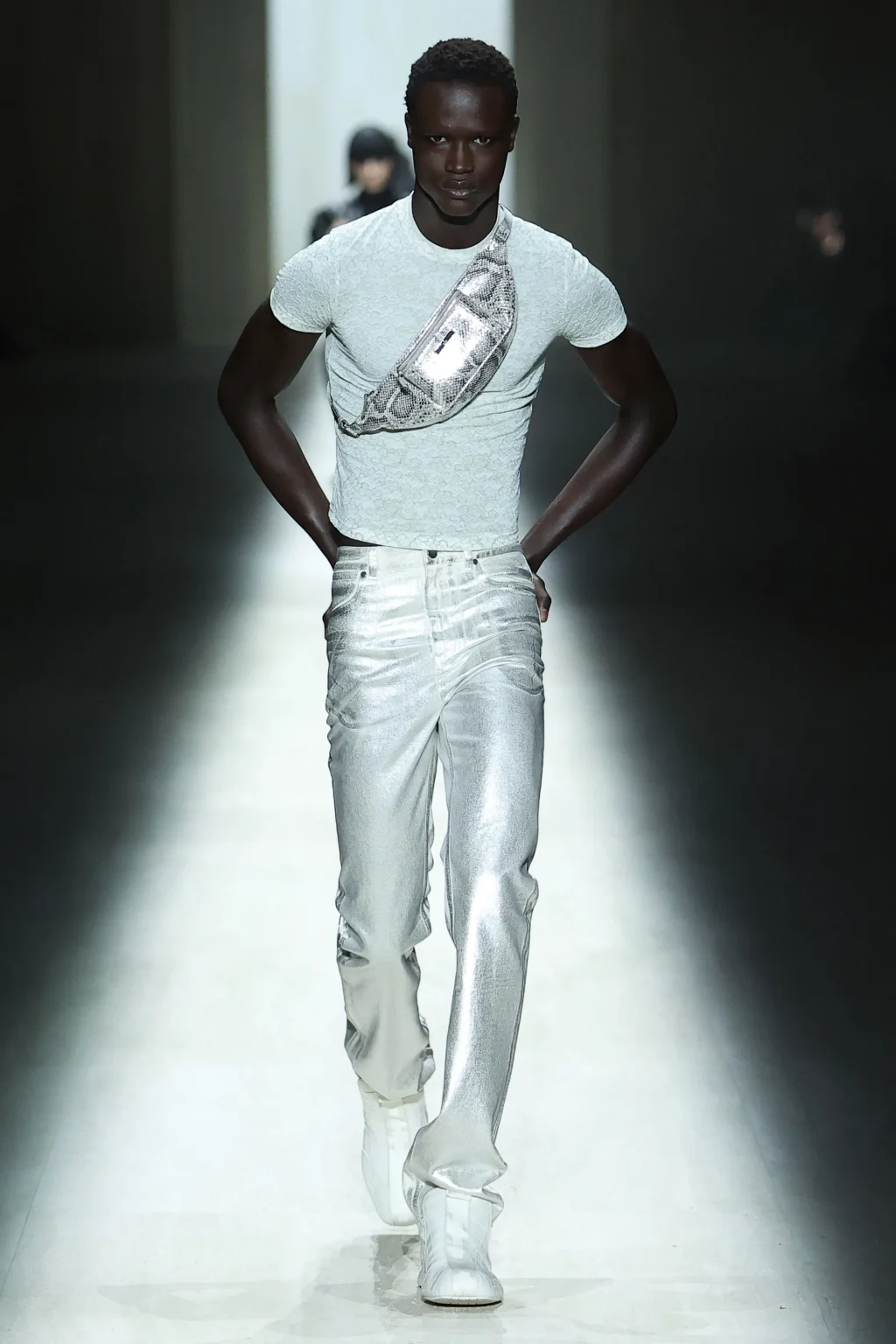
The belt bag becomes a character device in Primavera: a cross-body staple worn high and tight across the chest, in GG canvas and in darker variants, aligned with Demna’s Gen Z casting and digital-native energy.
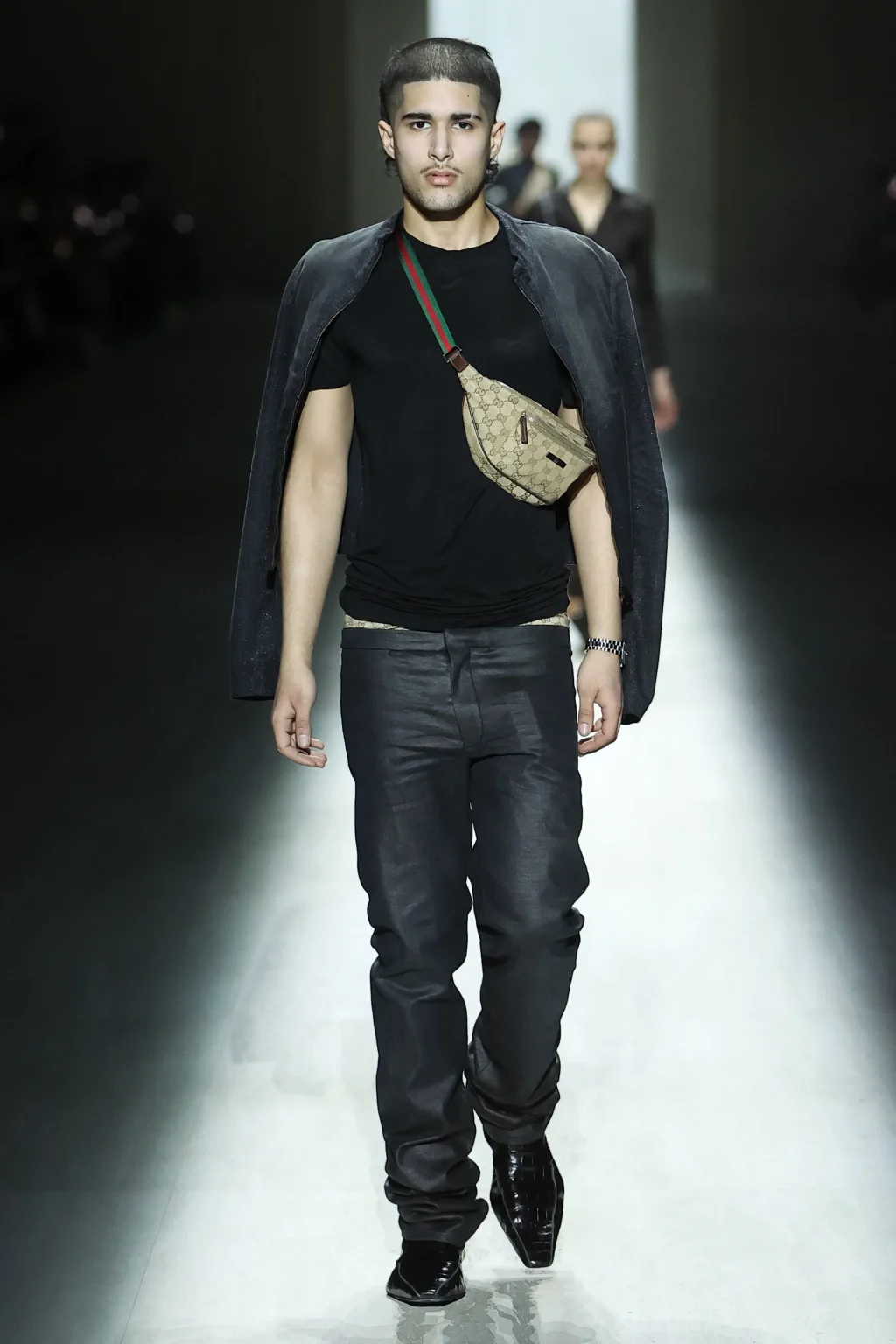
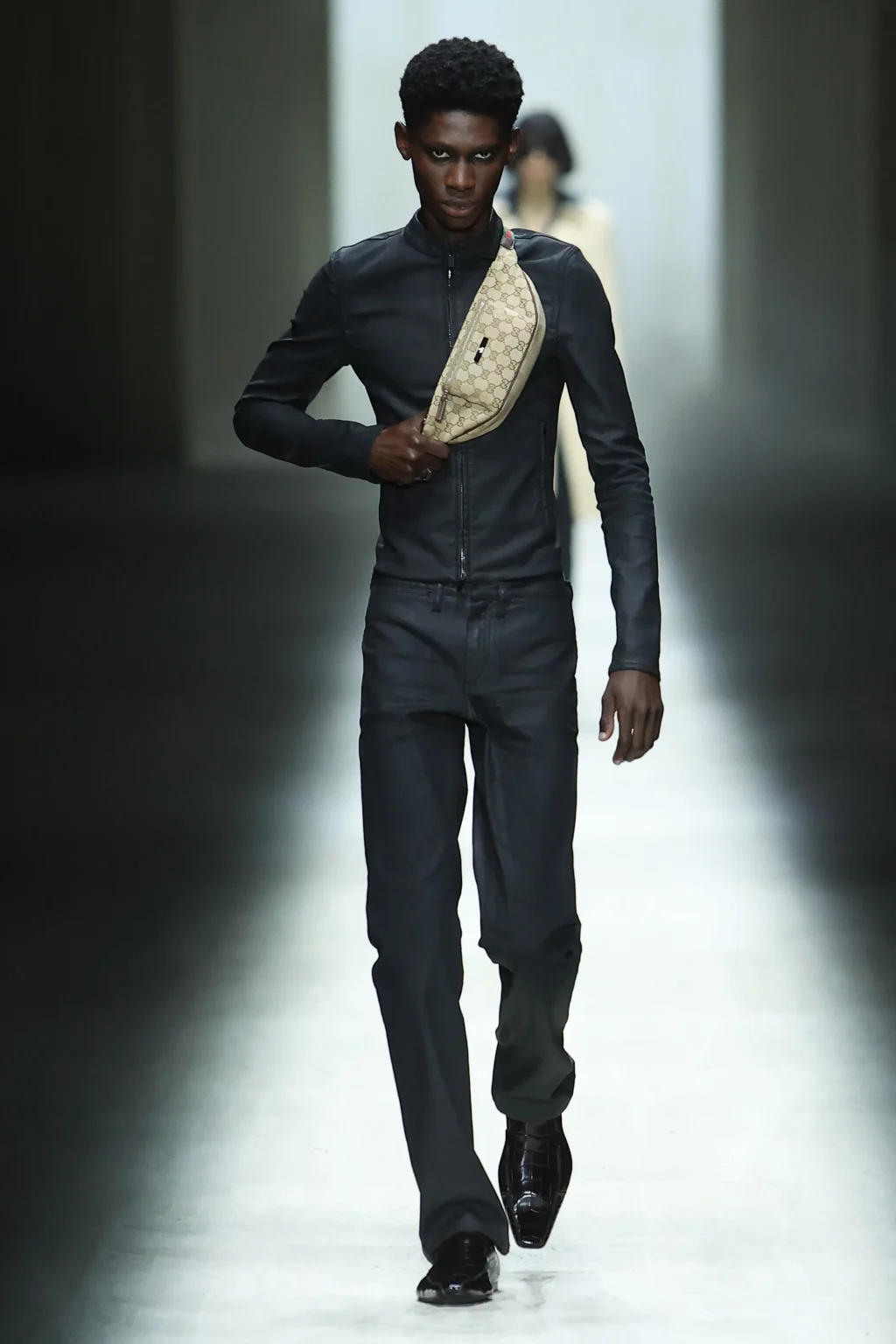
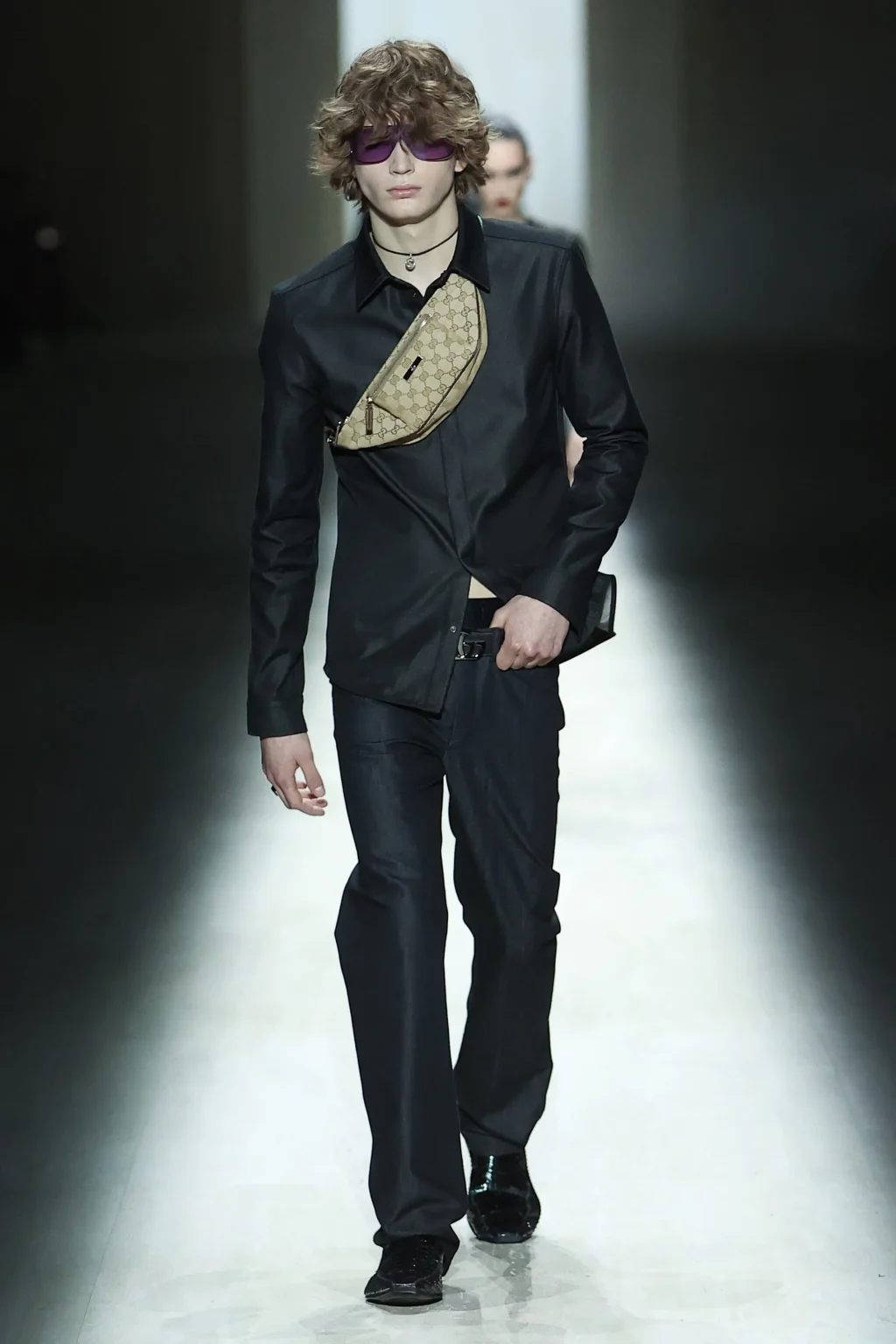
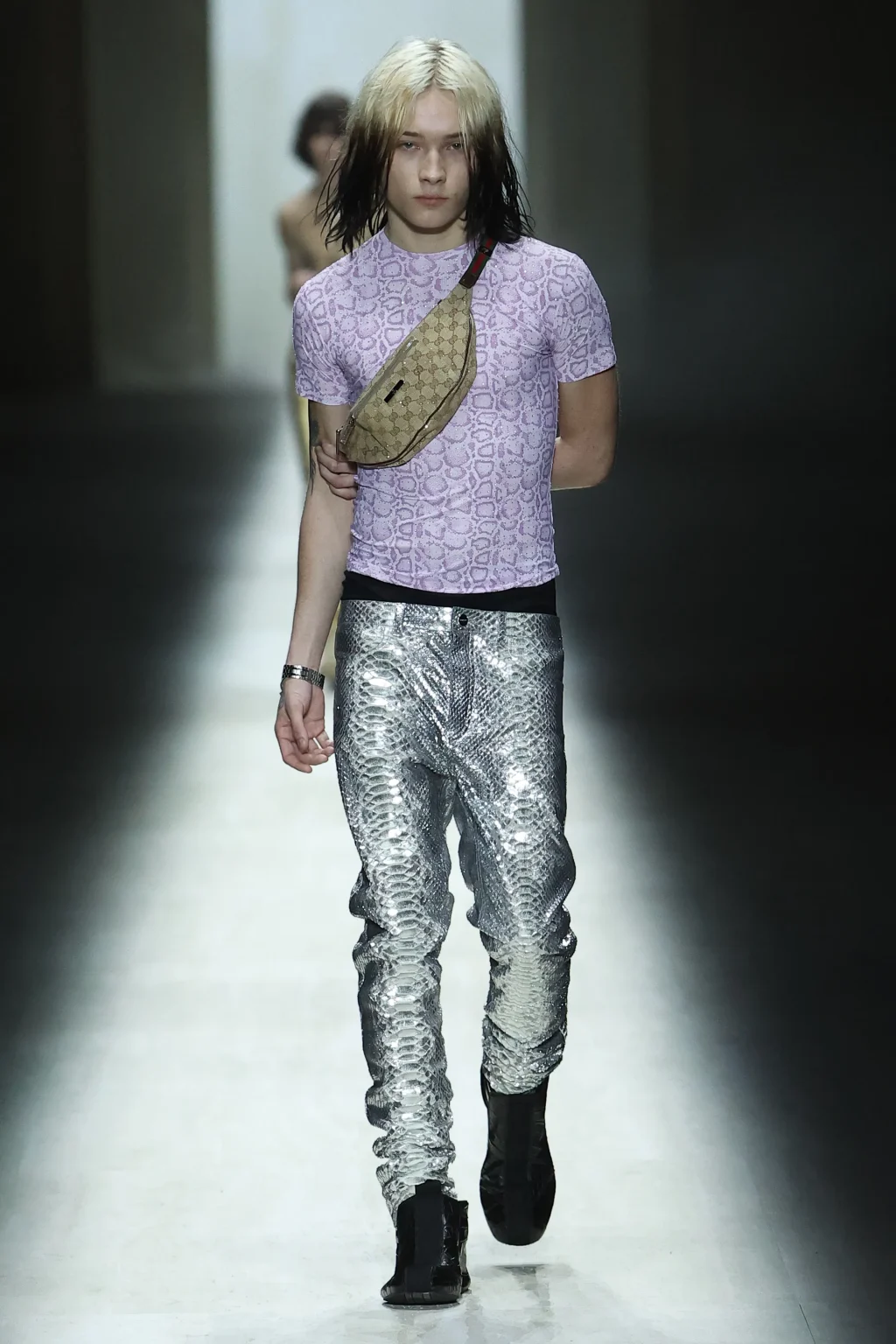
It’s also the most literal “speed” object in the collection—functional, immediate, and camera-readable. The show’s emphasis on archetypes and broad consumer language makes this bag feel intentionally central, not incidental.
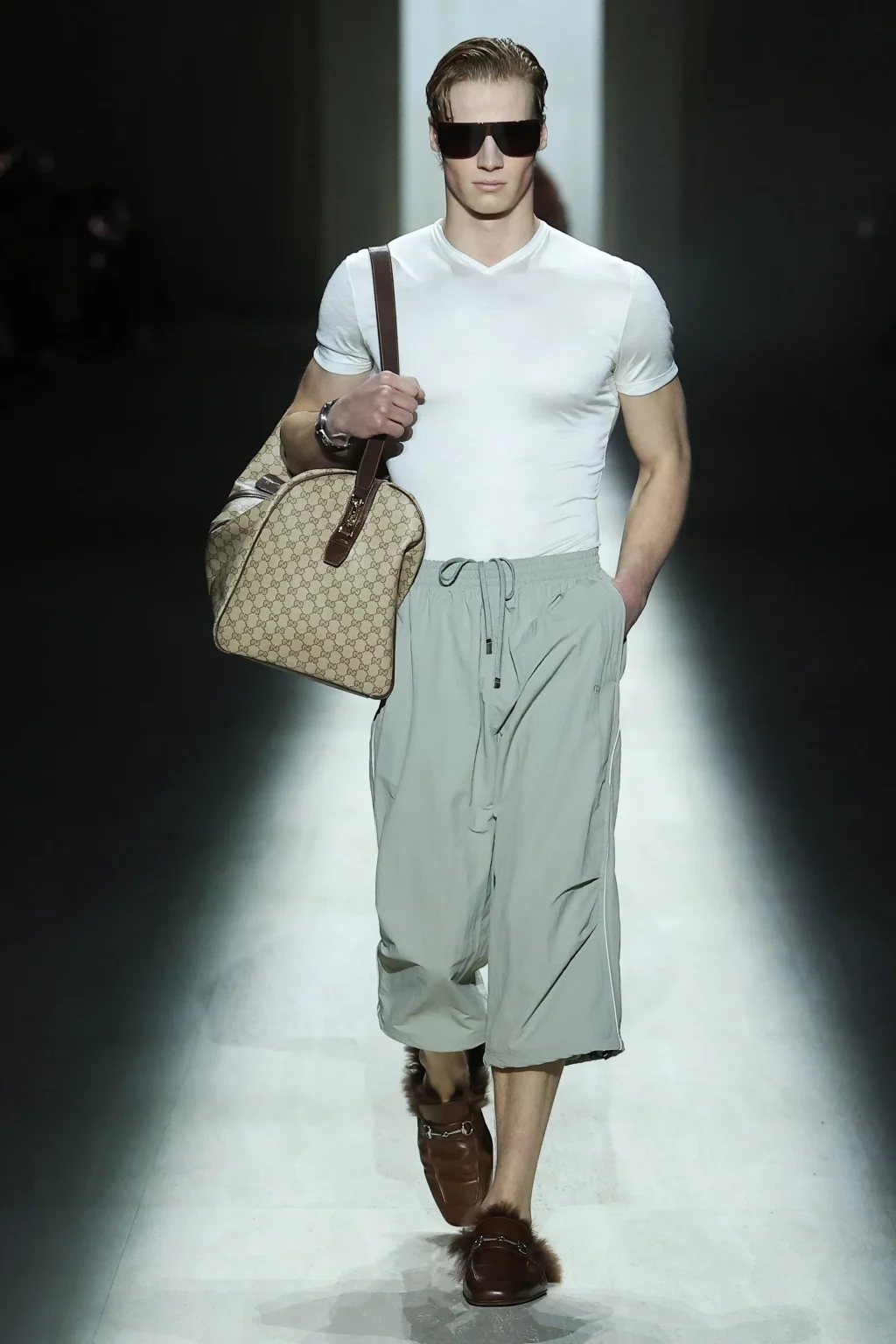
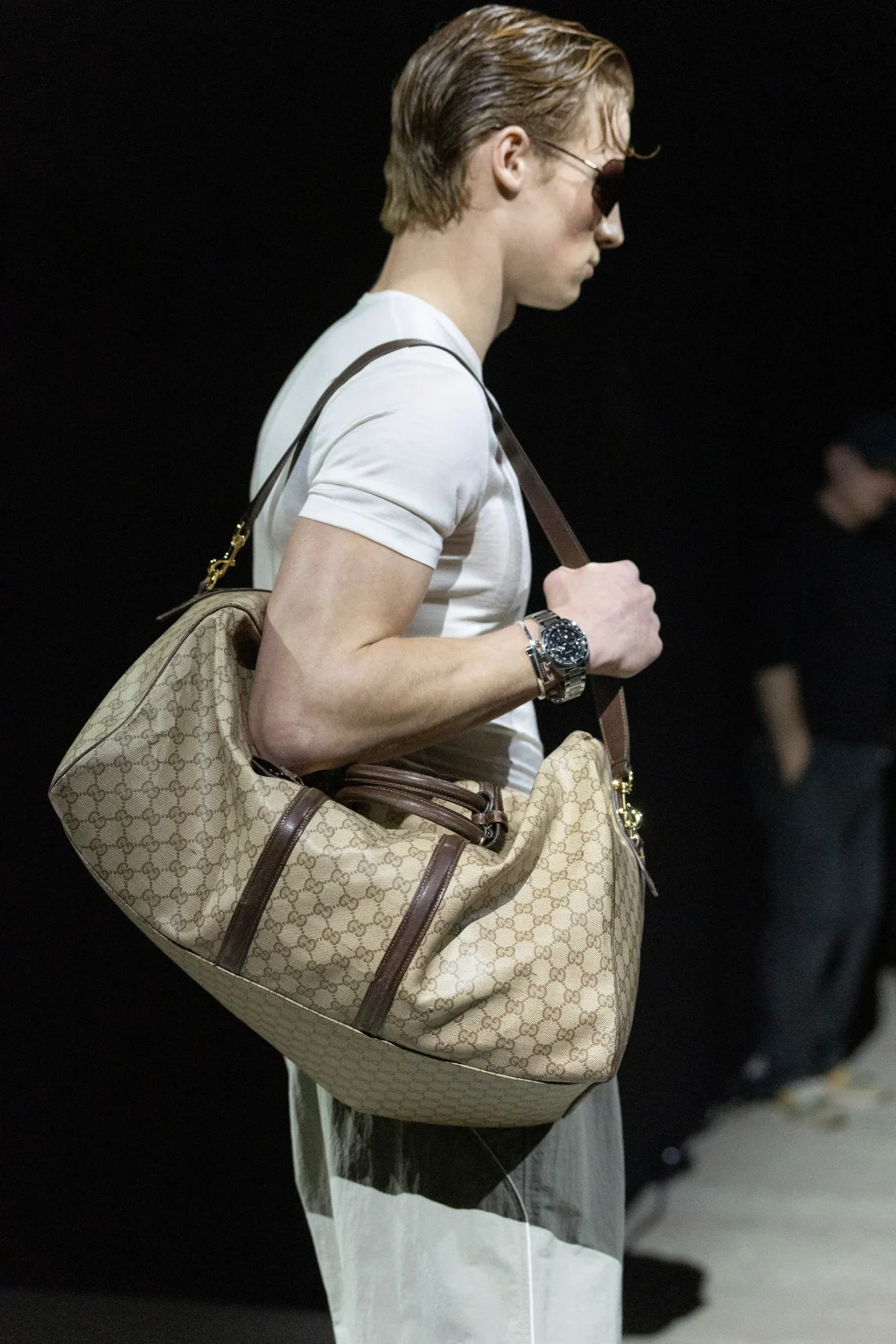
7. Gucci Duffle Bag
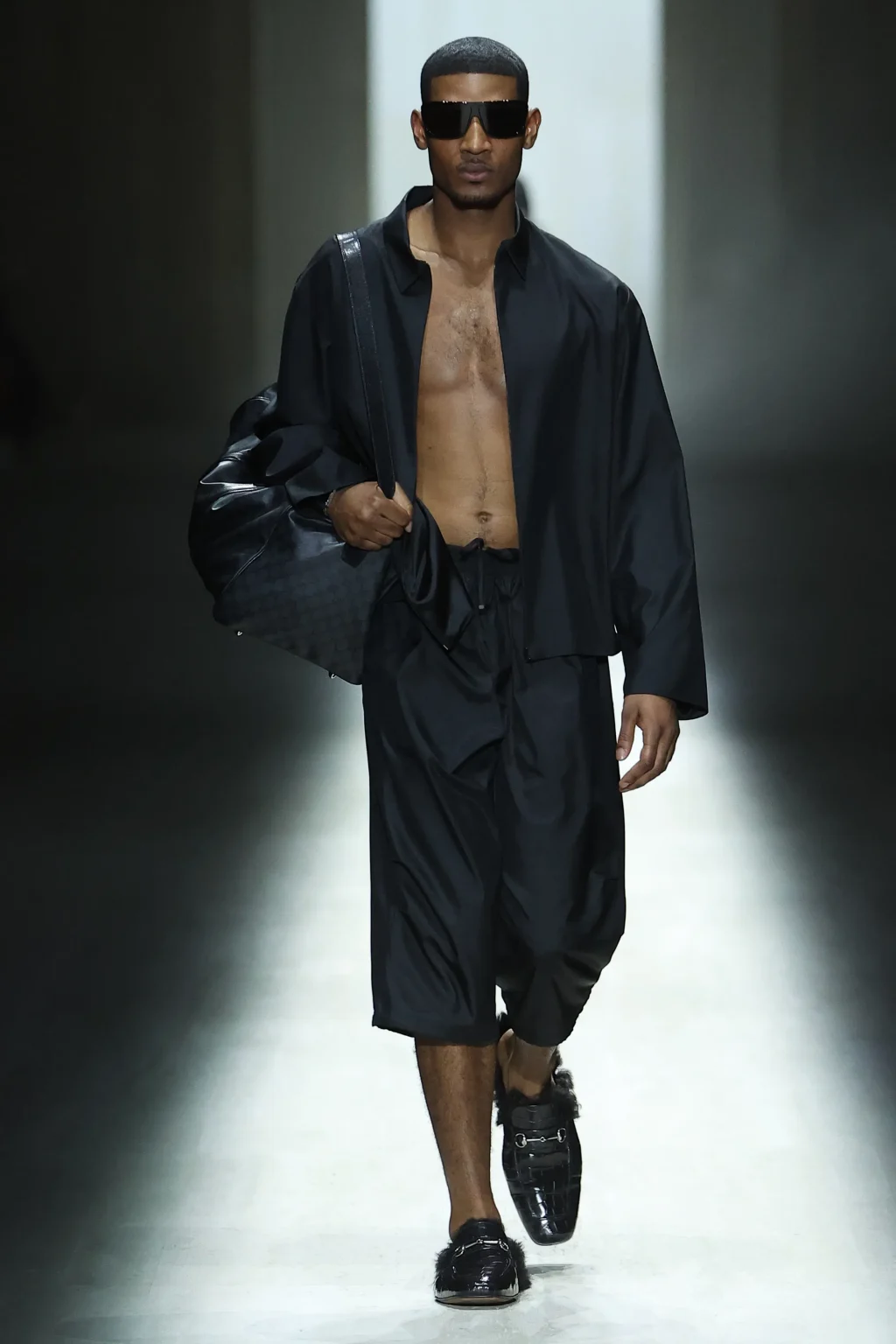
A monogram duffle carried with a long strap and real weight—Gucci’s travel DNA reframed as everyday masculinity and movement. In this collection, it reads less like “luggage” and more like a lifestyle signal: gym-to-airport-to-afterhours, with GG as the uniform print. It’s also a reminder of Gucci’s leather-goods business reality: the runway isn’t just fantasy; it’s merchandising with cinematic lighting.
8. Evening Bags
The evening pieces come in two clear directions:
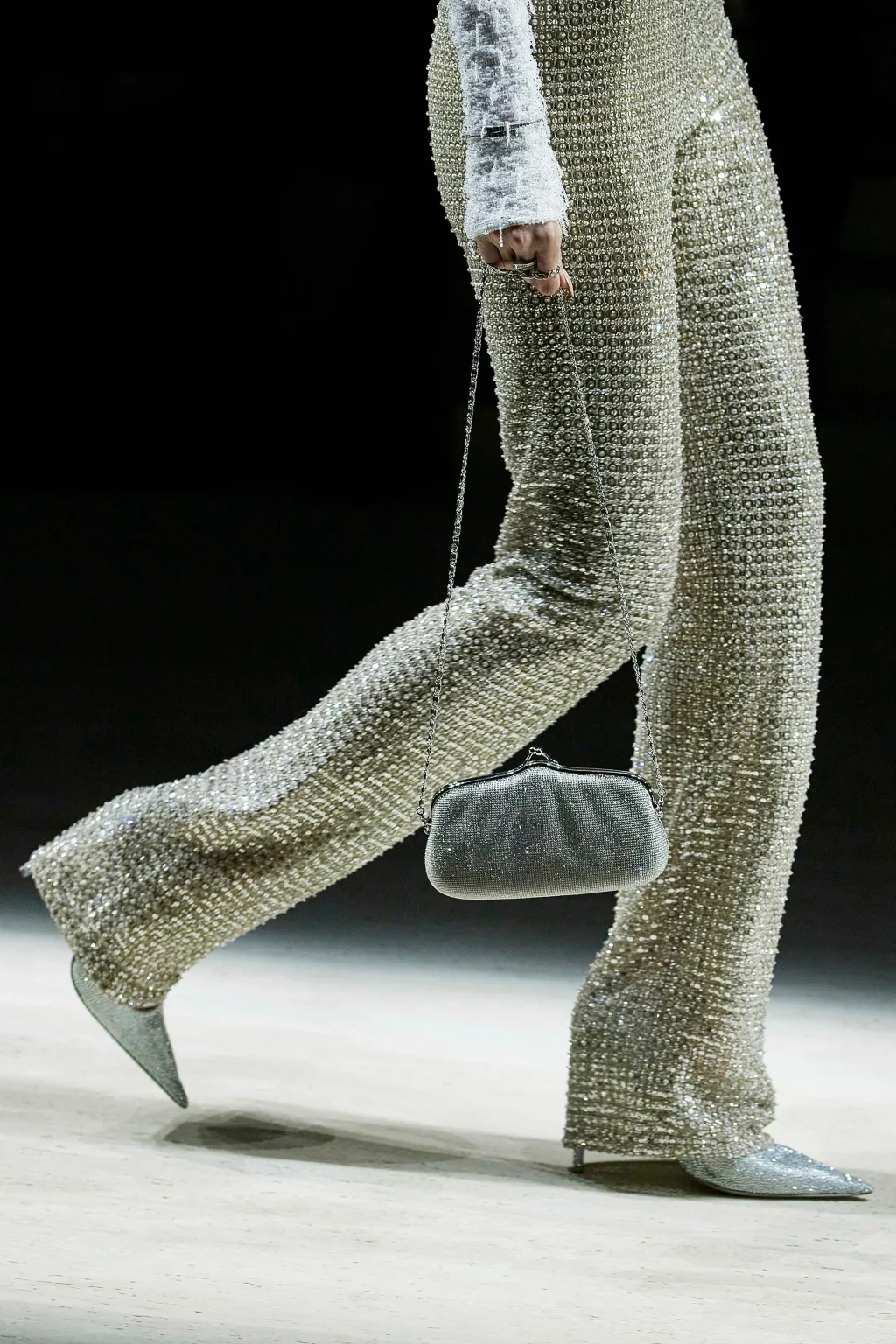
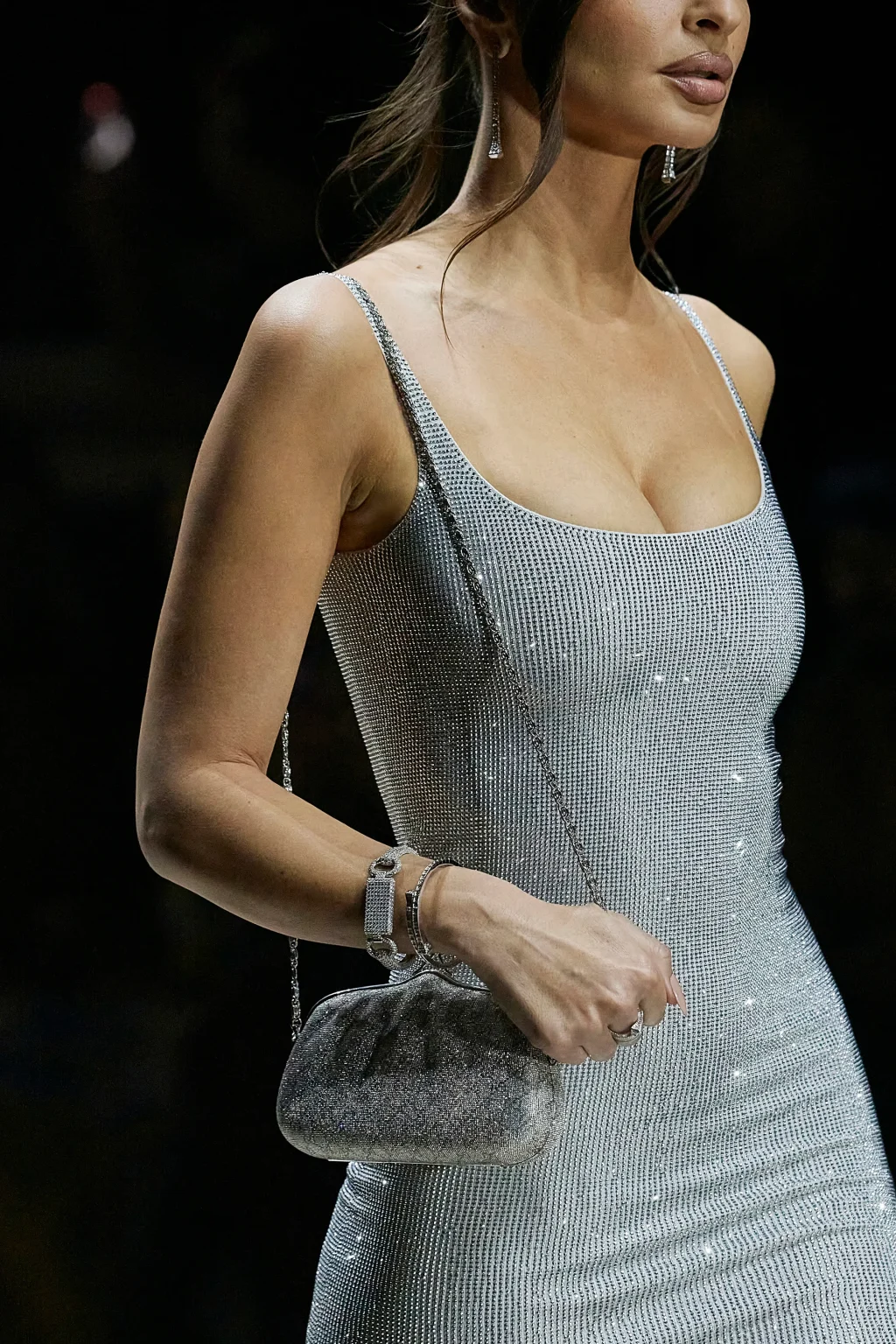
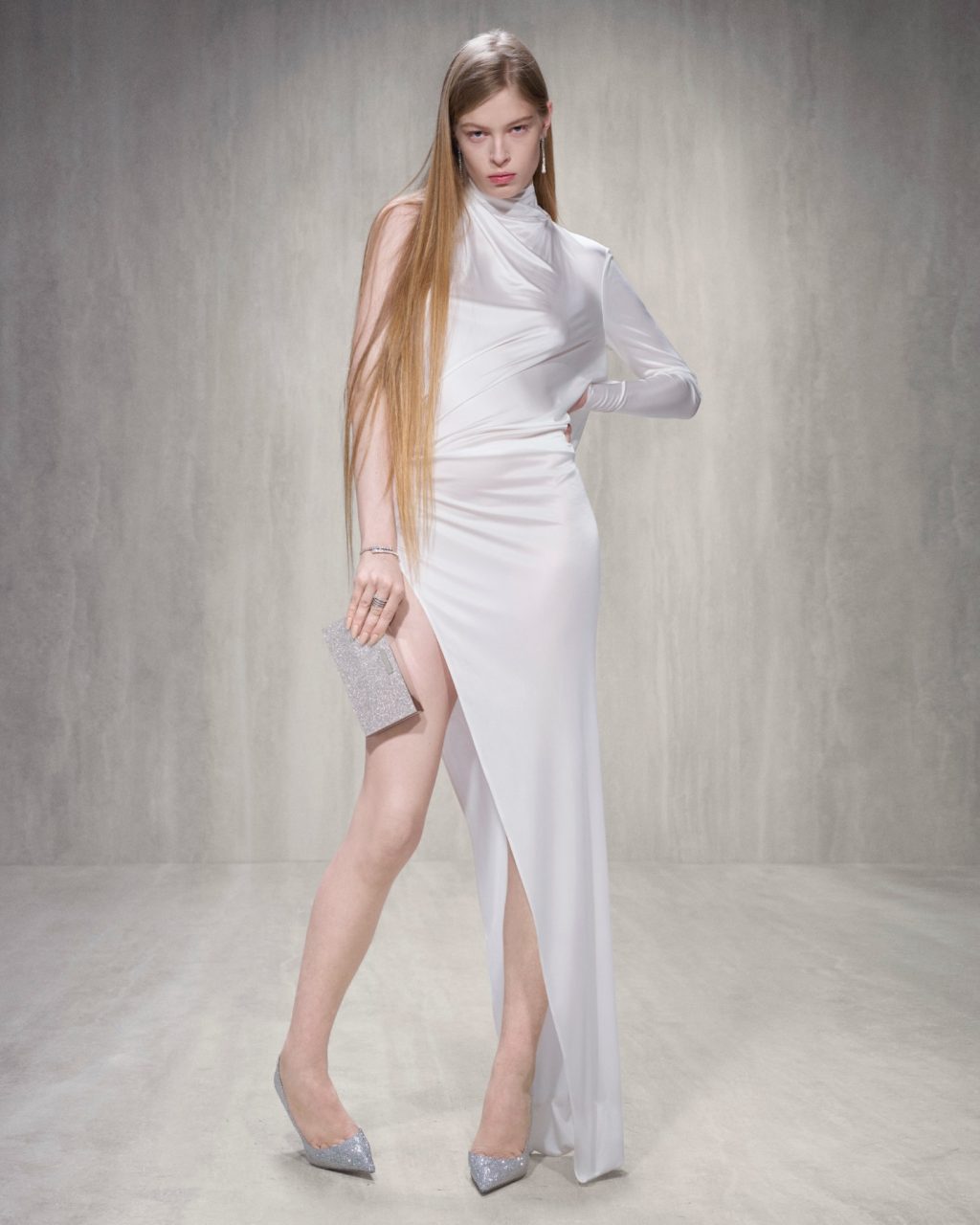
- Soft, glittering minaudières on delicate chains—silver-toned and light-catching—designed to hover against liquid dresses. The silhouette lands as a compact, gem-like pouch suspended on a fine chain, more jewelry than handbag in its effect.
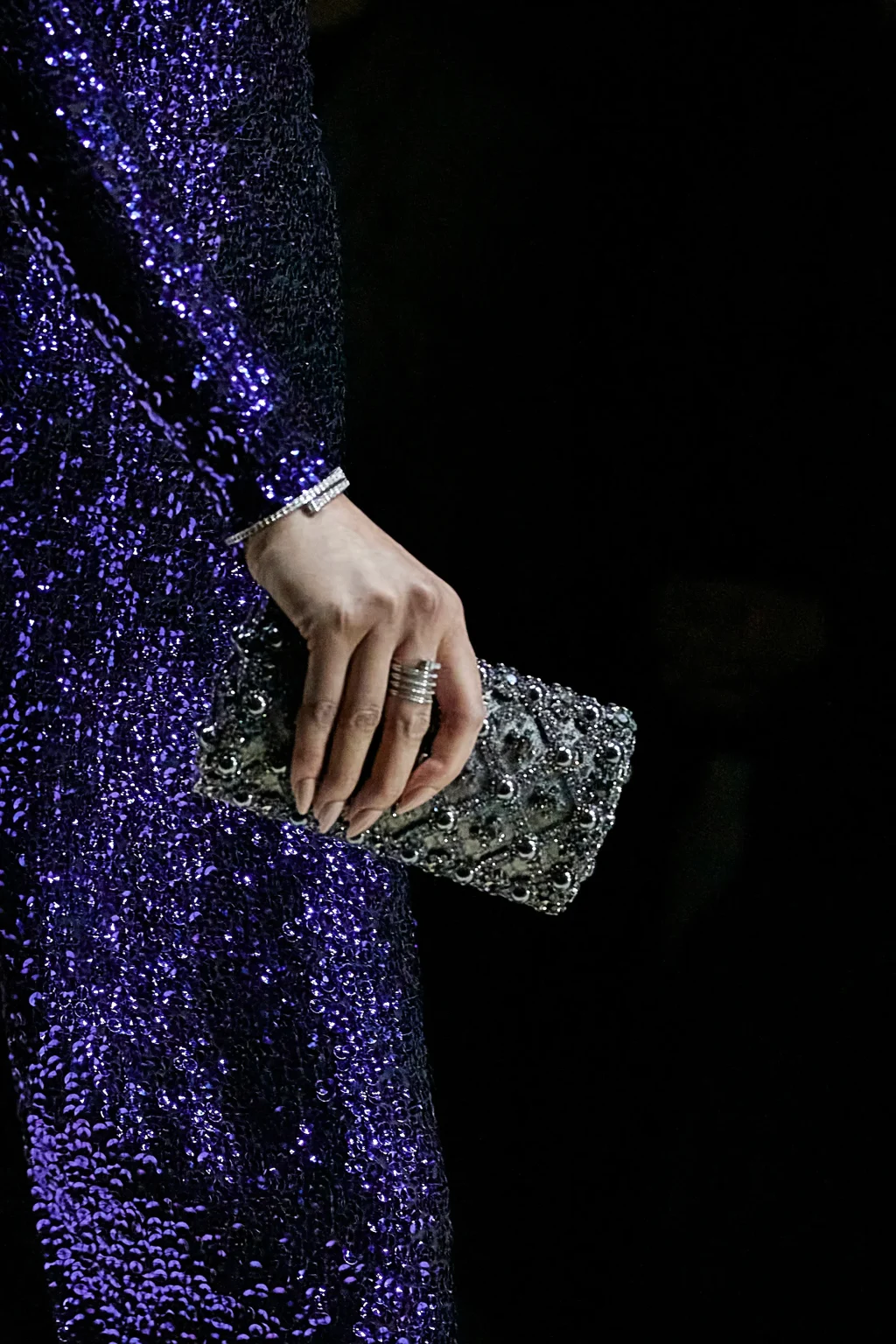
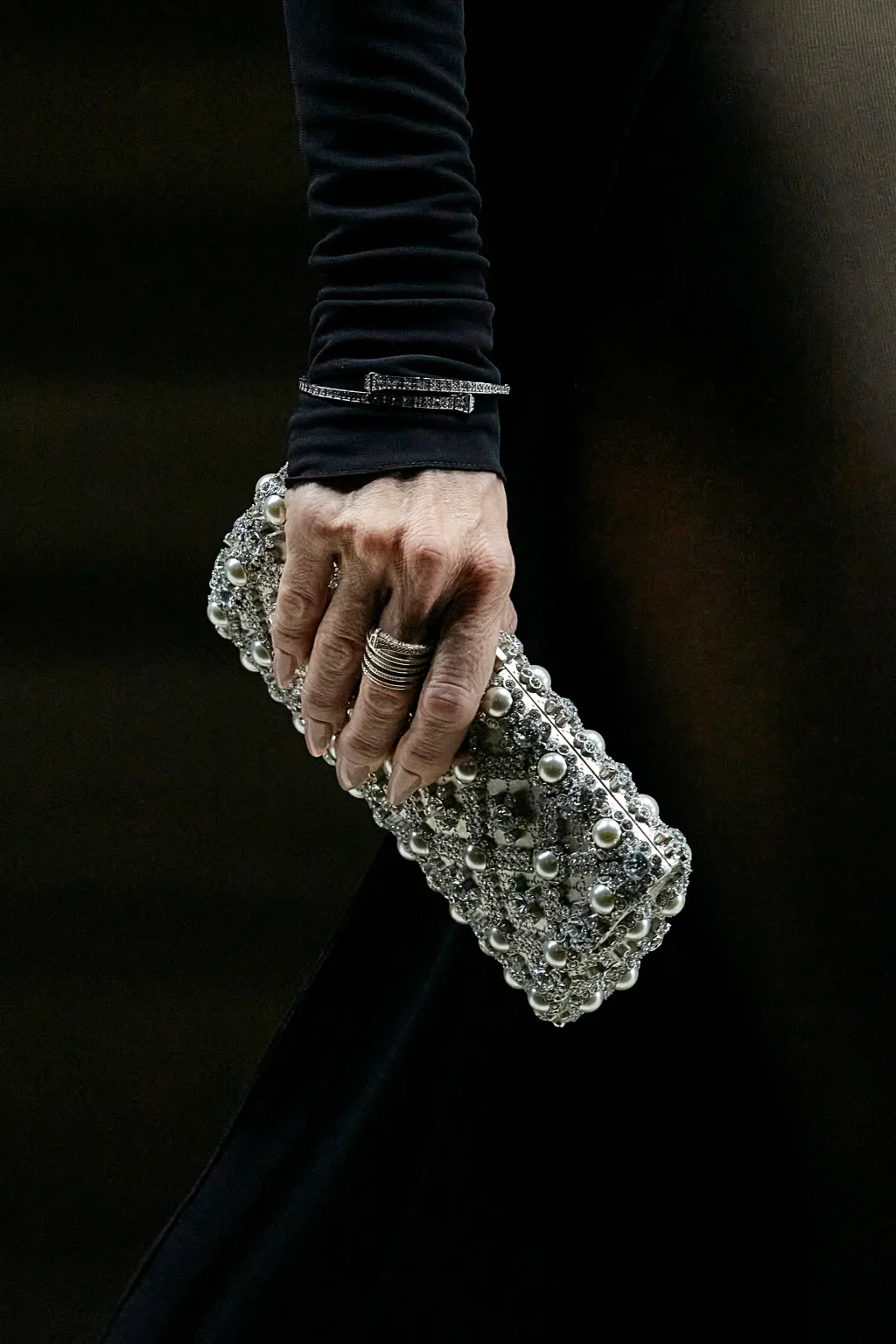
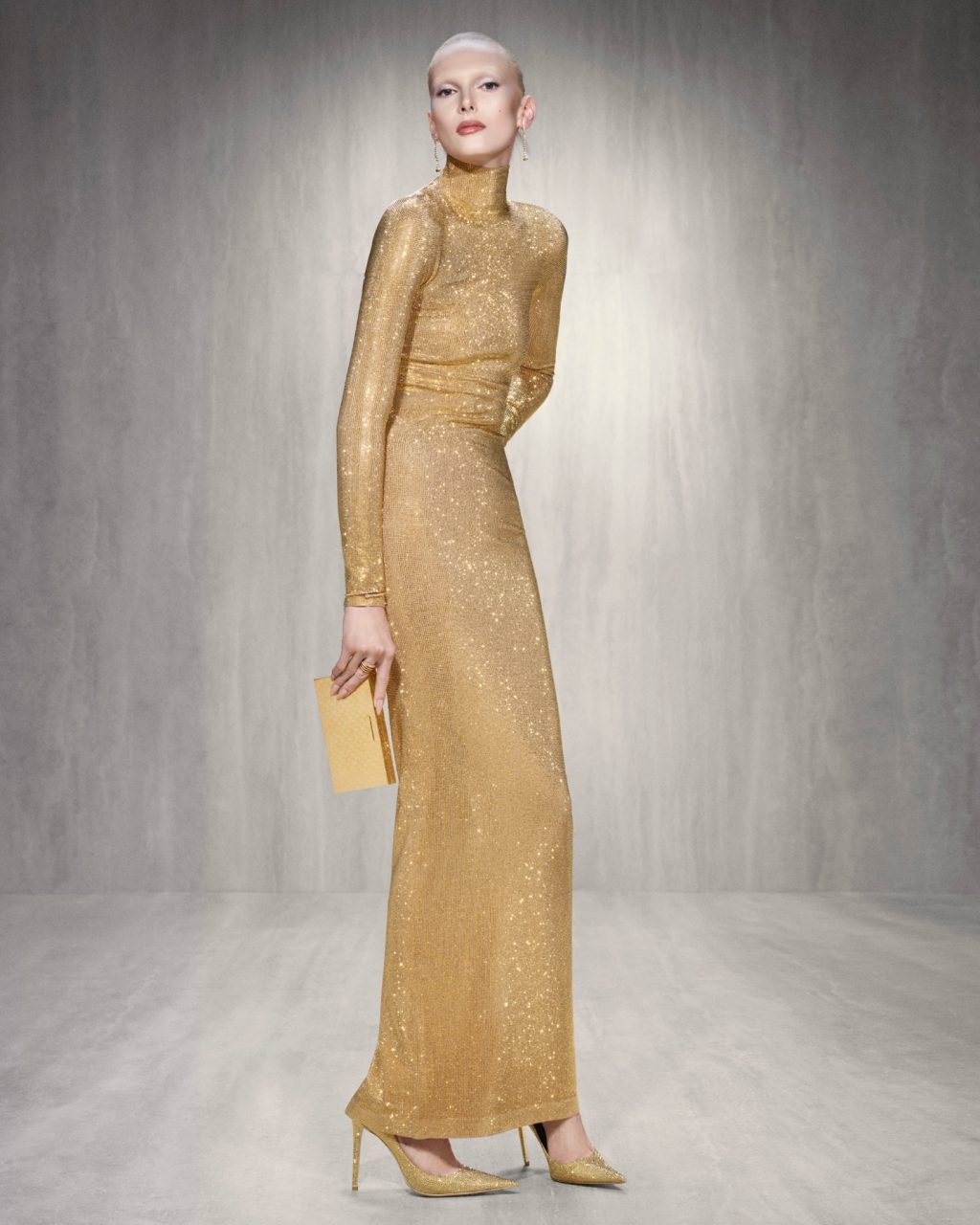
- Hard, boxy clutches—graphic rectangles that feel architectural in the hand, especially against full-length gowns.
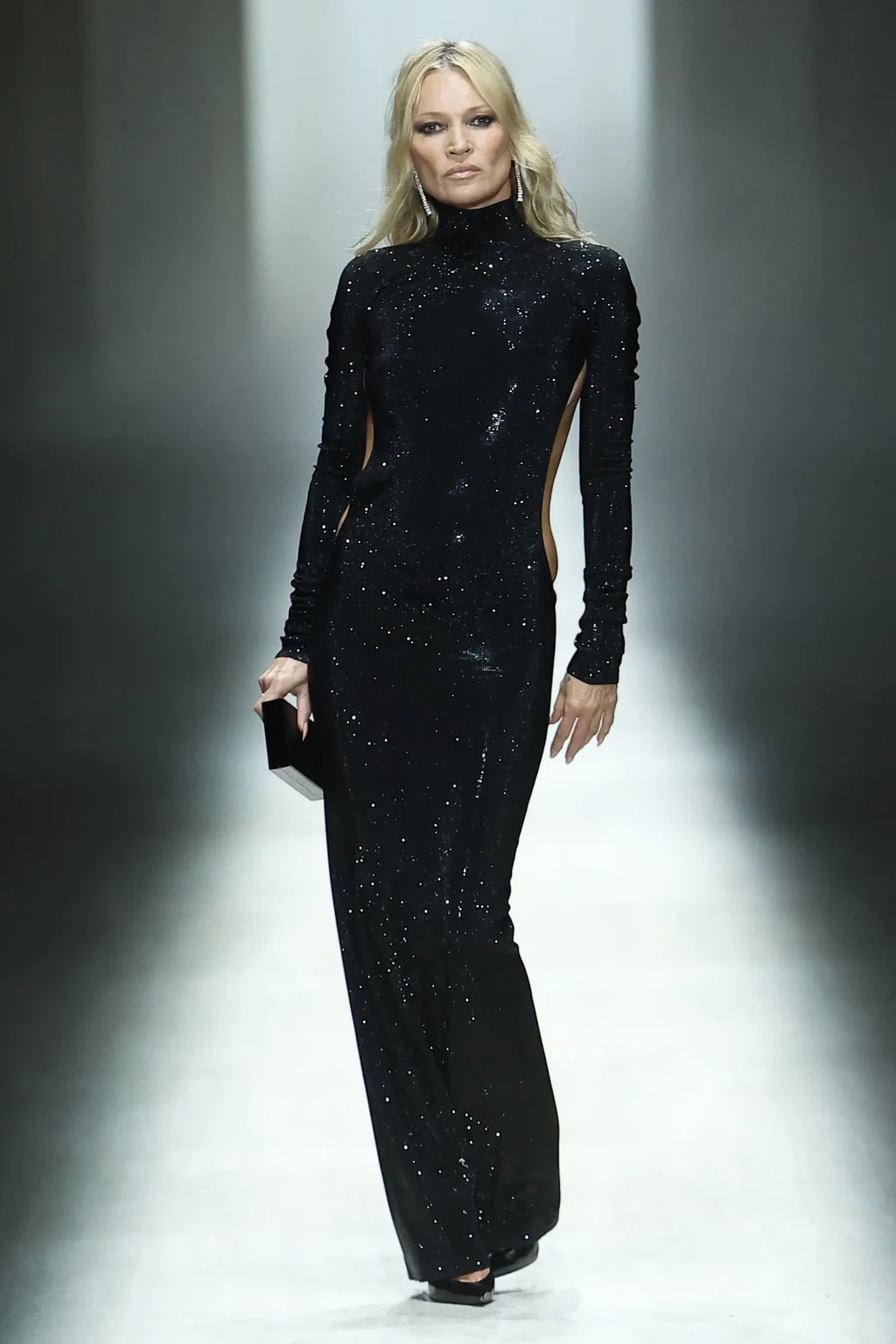
Together, they complete the show’s arc from day archetypes to after-dark fantasy, a transition also highlighted in post-show coverage describing shimmering, embellished looks and a high-glam finale energy.