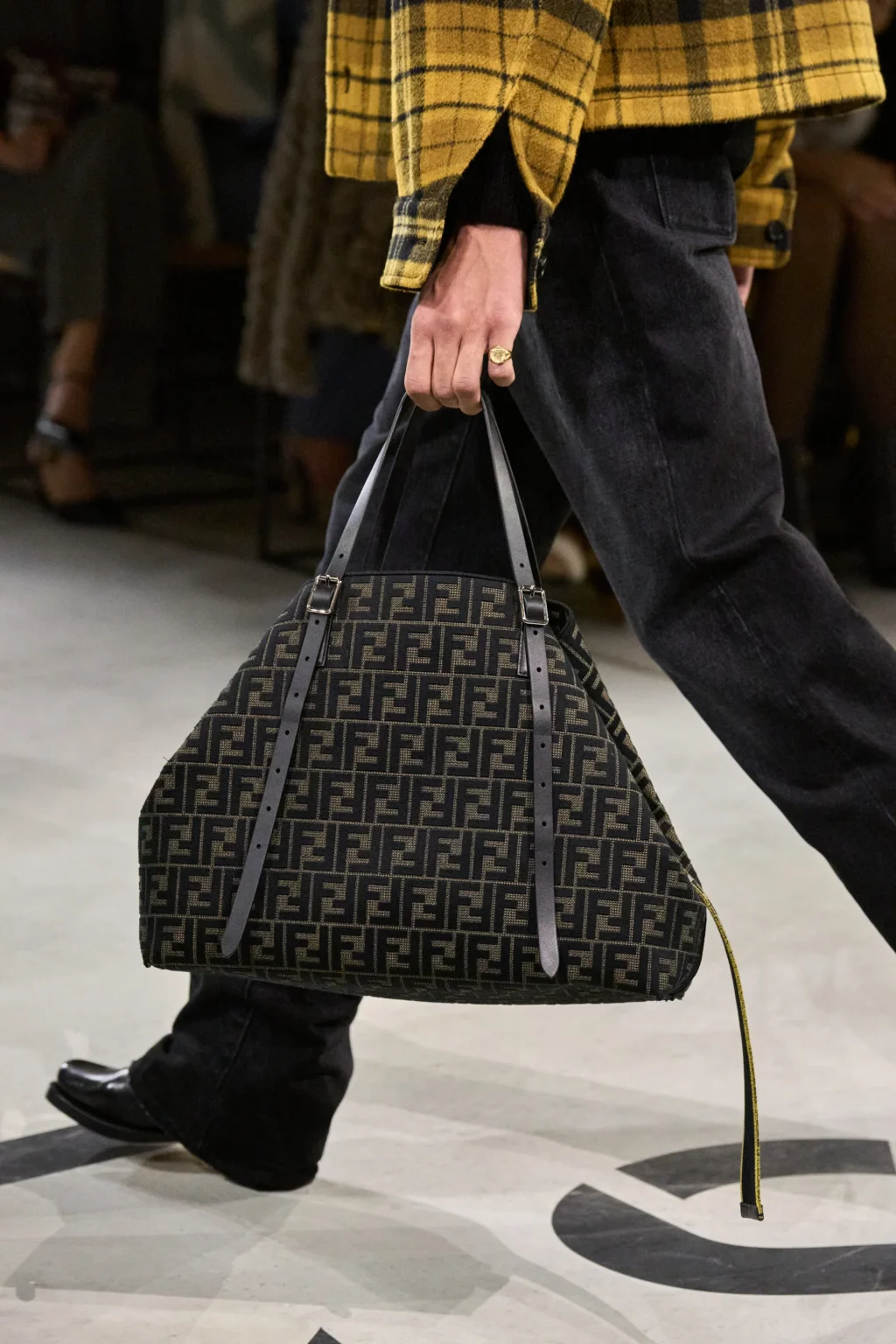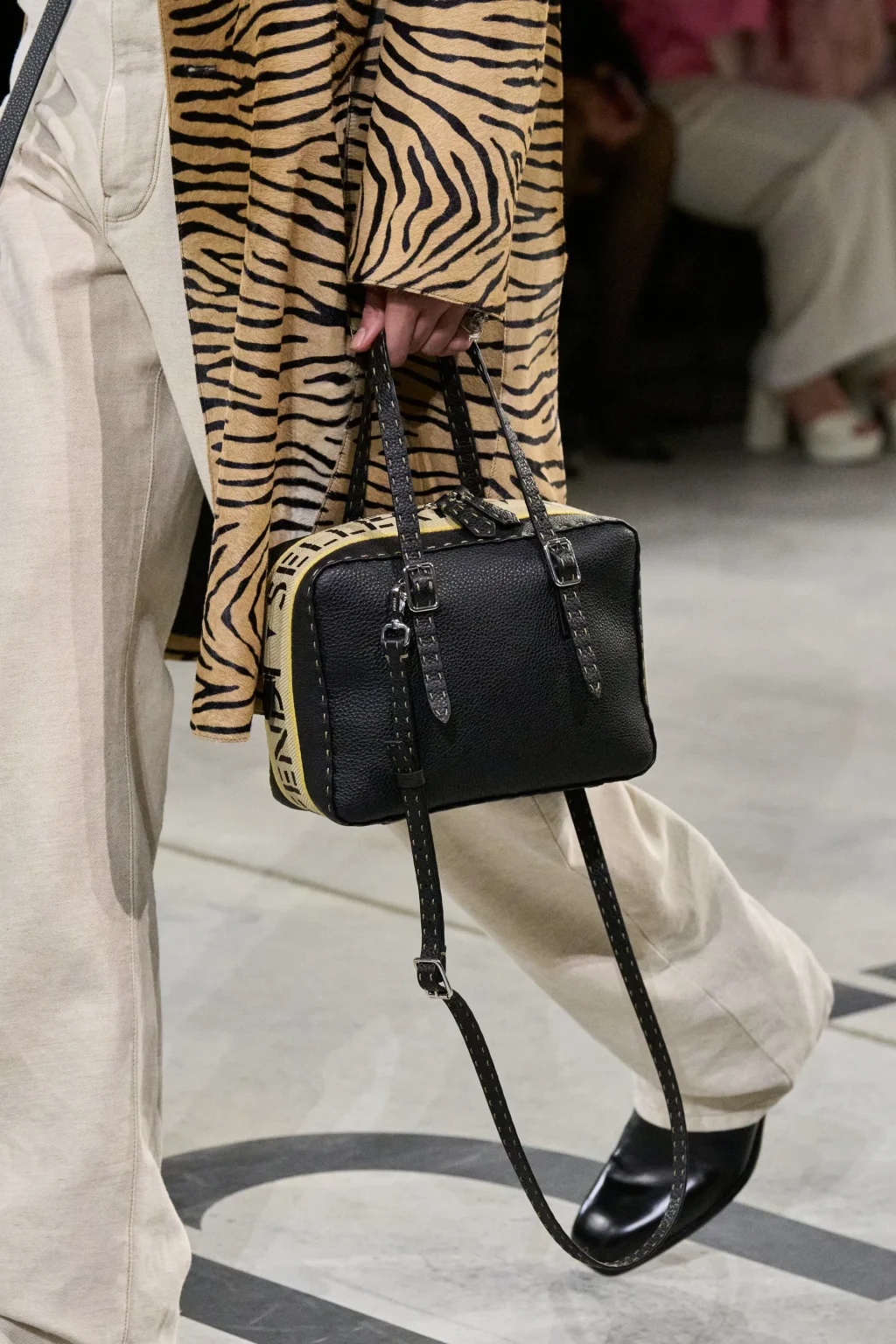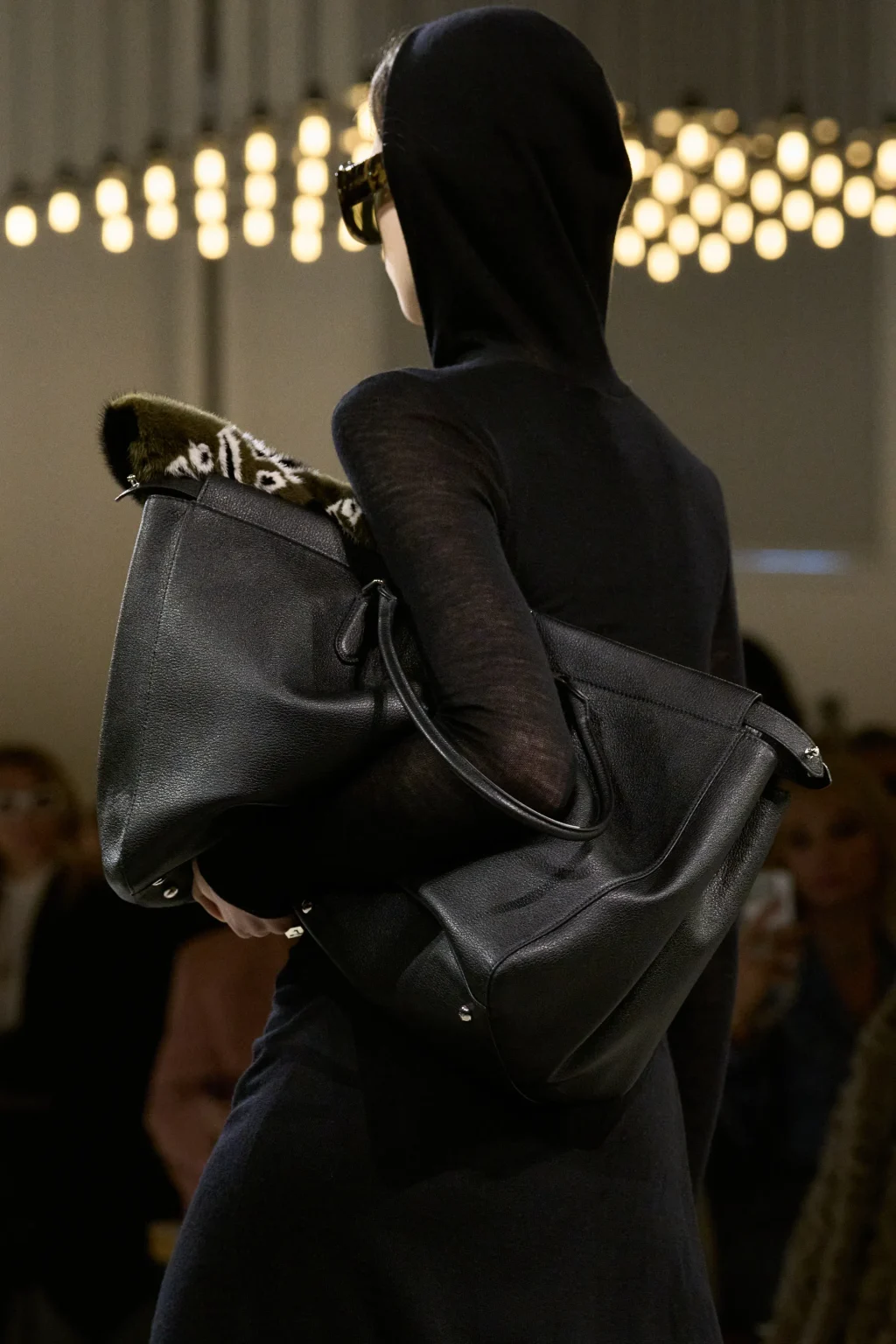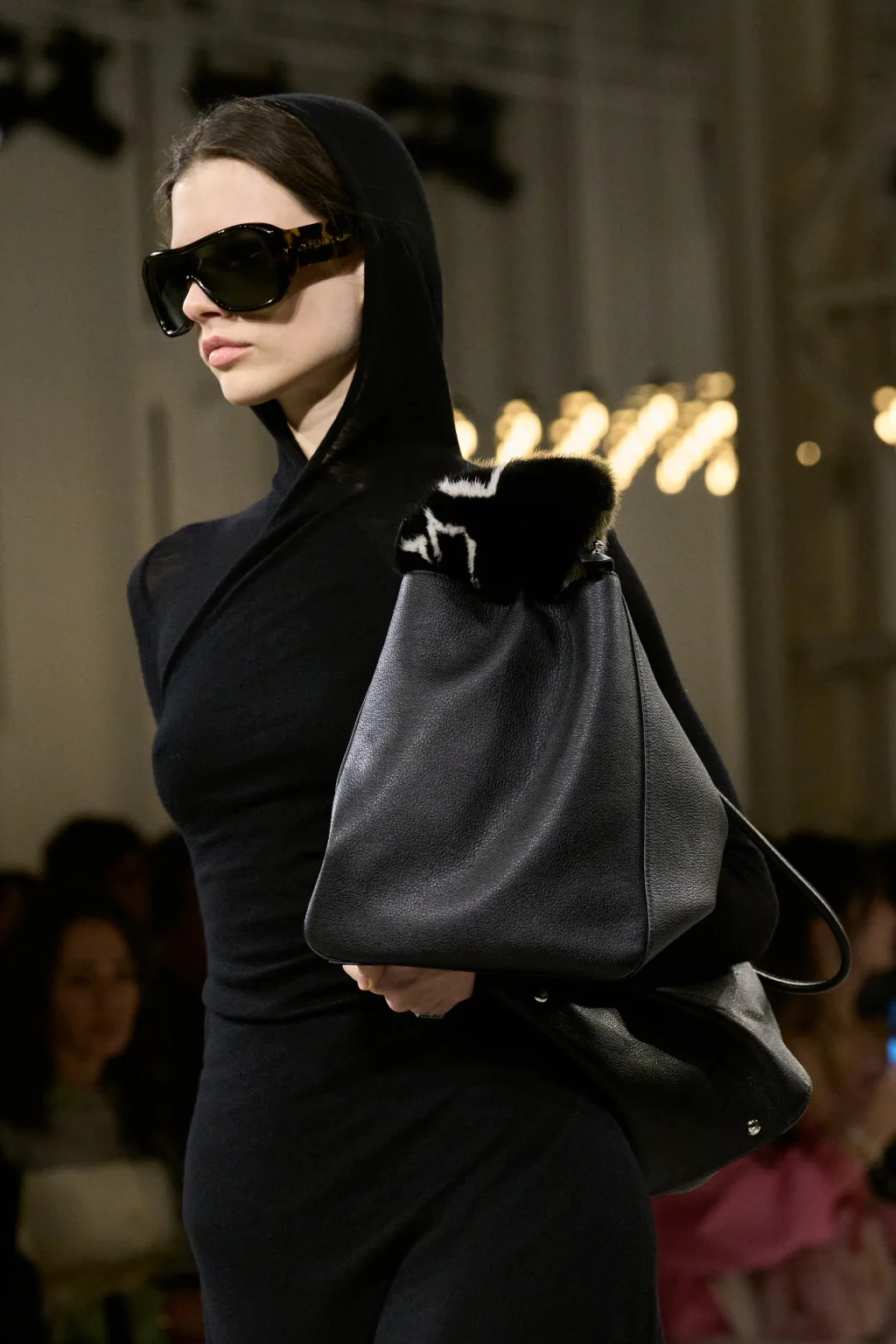
Fendi Fall-Winter 2026–27 isn’t just another Milan Fashion Week runway slot—it’s a structural reset. It’s Maria Grazia Chiuri’s debut as Chief Creative Officer, and it reads like a homecoming with intent: she began her career at Fendi as an accessories designer, inside the ecosystem that made the House’s leatherwork and icon-bag culture feel inevitable rather than marketed.
That history matters because Chiuri doesn’t arrive needing to “learn” Fendi. She arrives fluent in what Fendi has always been when it’s at its sharpest: a Roman Maison built on two pillars—fur and selleria—then made globally legible through accessories that turn craftsmanship into shorthand. Several early reactions framed the debut as disciplined, silhouette-driven, and unmistakably Chiuri, while still tethered to the Fendi matriarchal lineage and archives.
The Invitation as a Thesis: Trajan’s Column Text, Logos, and Roman Memory
Before the first look even walked, the invitation did what good invitations rarely manage: it explained the show. The tactile flip-book format reveals inscription-like Roman lettering—an explicit nod to Trajan’s Column—until, page by page, the text reduces into one final certainty: FENDI. The brand itself underlined the Trajan reference in its show materials.
You can literally watch that compression happen—the visual metaphor is clear. Rome isn’t used as scenery; it’s used as typography, as origin, as the brand’s DNA rendered into language and then distilled into logo. And the logo, Chiuri has said, is not an afterthought at Fendi—it’s a code the House historically treats with seriousness, which this invitation makes physical rather than performative.
The Set and the Message: “Less I, More Us” as a New House Grammar
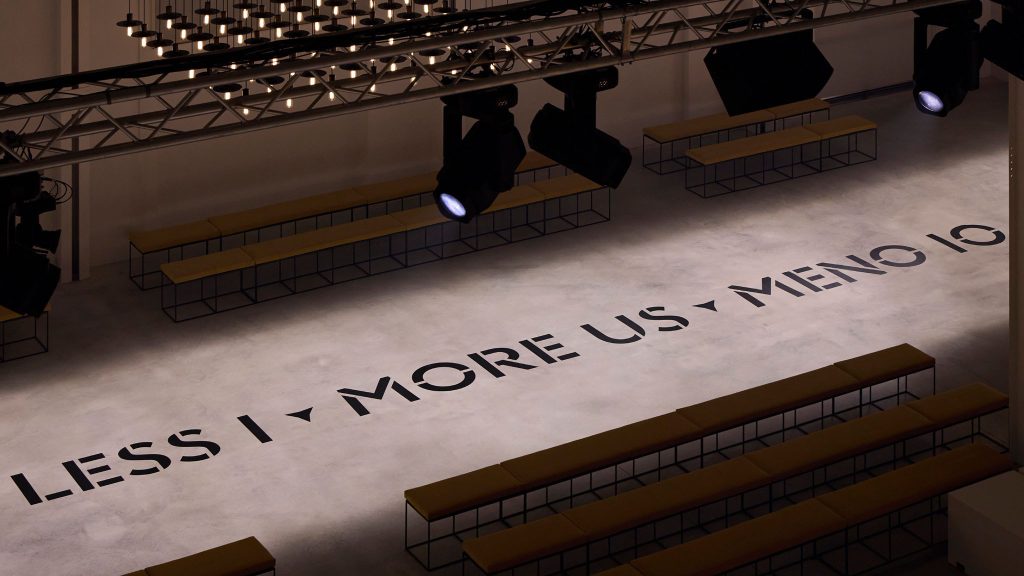
The runway slogan—“Less I, More Us”—wasn’t subtle, and it wasn’t meant to be. Multiple show reports note the phrase as the collection’s governing mantra, positioned as an argument for collaboration, shared wardrobe logic, and a less ego-driven definition of authorship.
Even the set concept backed up that thesis. On Fendi’s official show page, the Maison notes the staging was inspired by an exhibition of Karl Lagerfeld pieces for Fendi at Rome’s Galleria Nazionale d’Arte Moderna (1985)—a pointed reminder that Fendi’s modern identity has always been built through dialogues: family + atelier + designer + archive.
Fall-Winter 26-27 Show in Data: The Palette and the Materials That Dominate
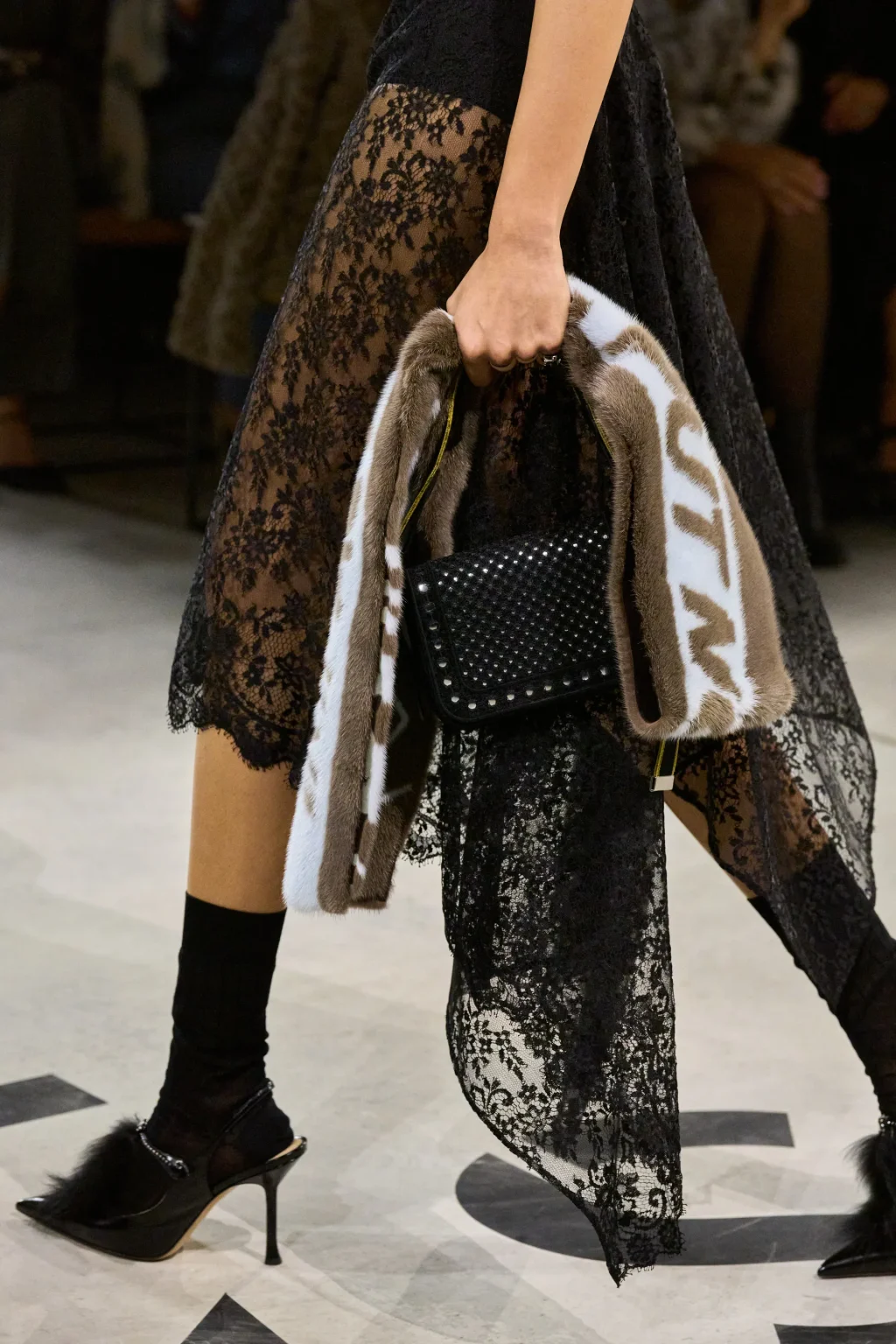
Tagwalk’s “in data” snapshot makes the aesthetic decision-making quantifiable: 86% black and 23% lace are the headline signals—less “mood,” more methodology—used to lock in silhouette and texture as the collection’s primary language.
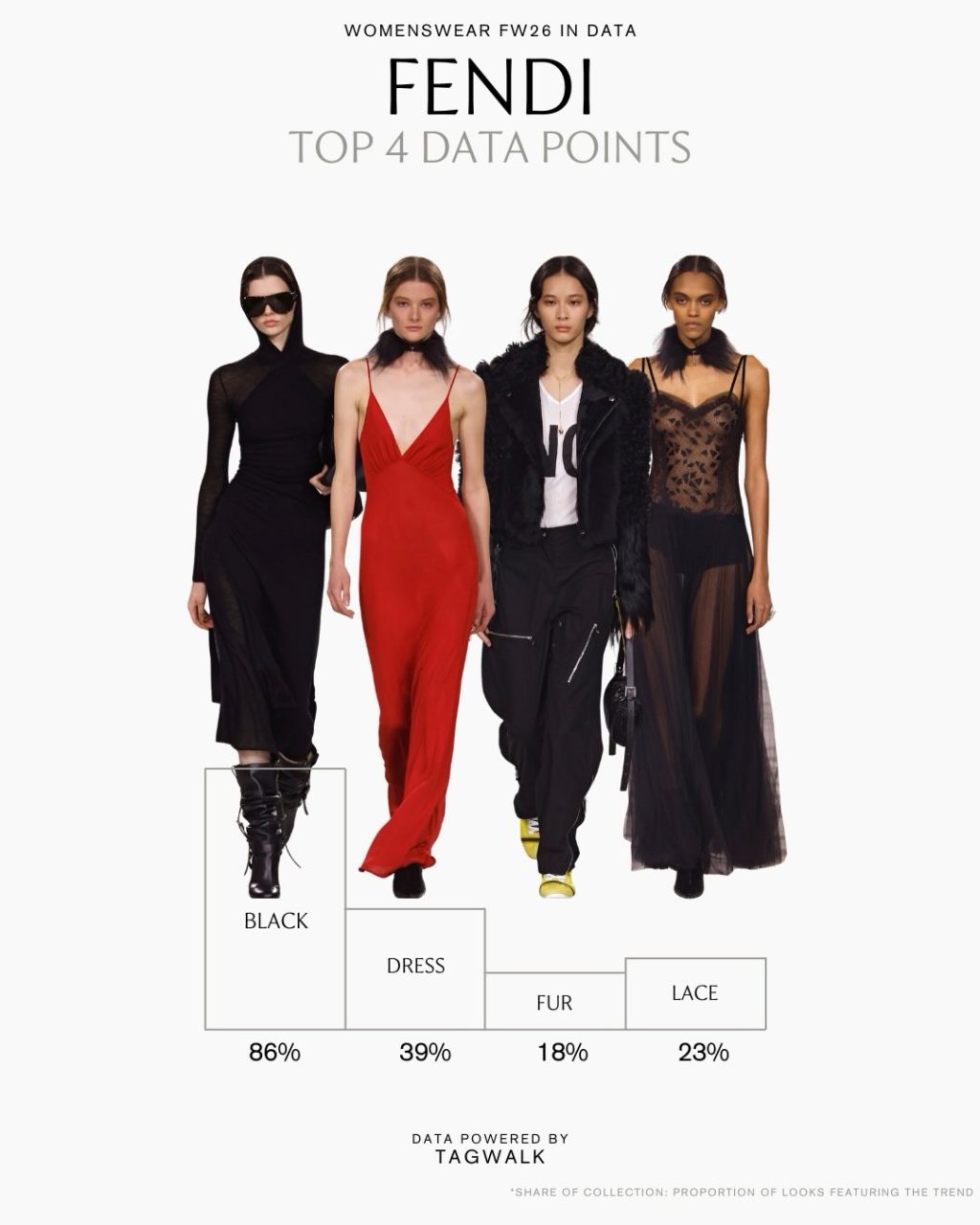
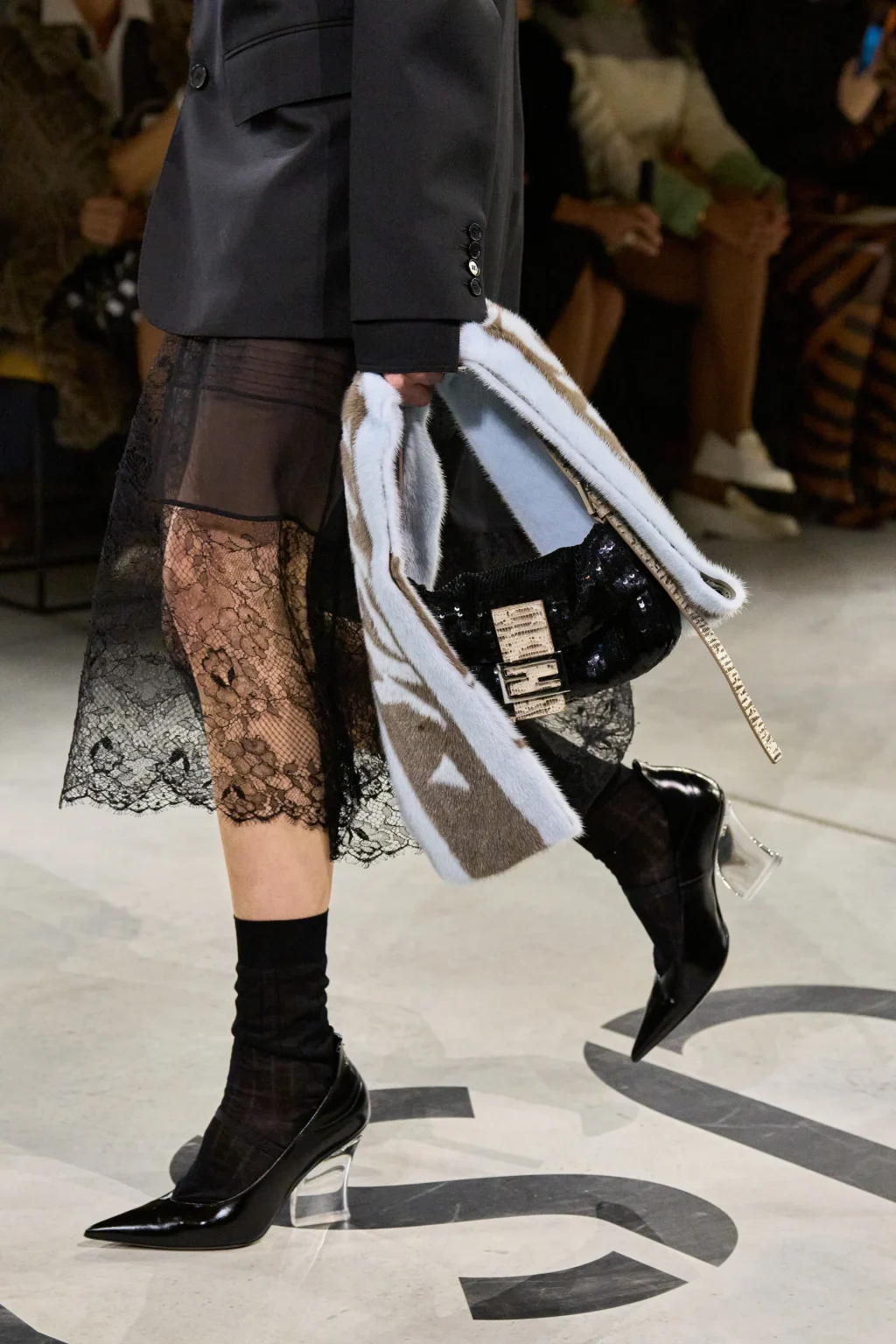
Black here doesn’t behave like mourning. It behaves like a blank studio wall: it lets you see cut, proportion, surface, and transparency without distraction. Lace, meanwhile, is deployed as a sensual counterpoint—less romantic cliché, more architectural negative space.
Where Fendi Starts: Fur + Selleria, Reasserted
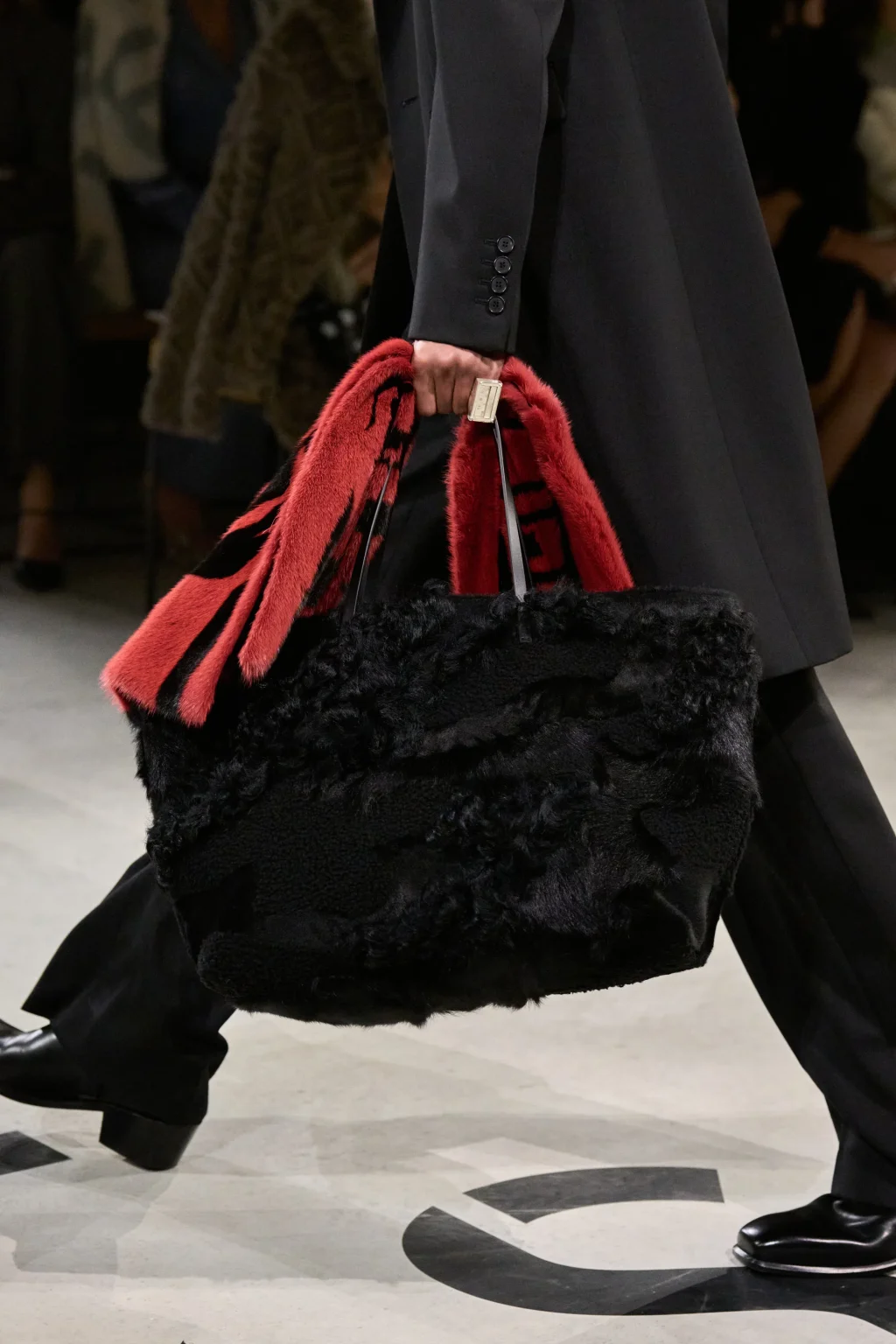
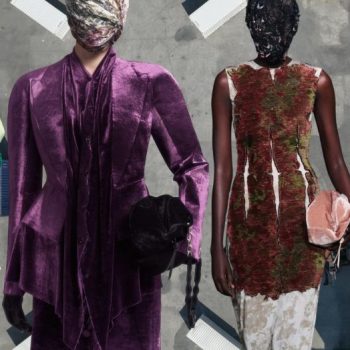
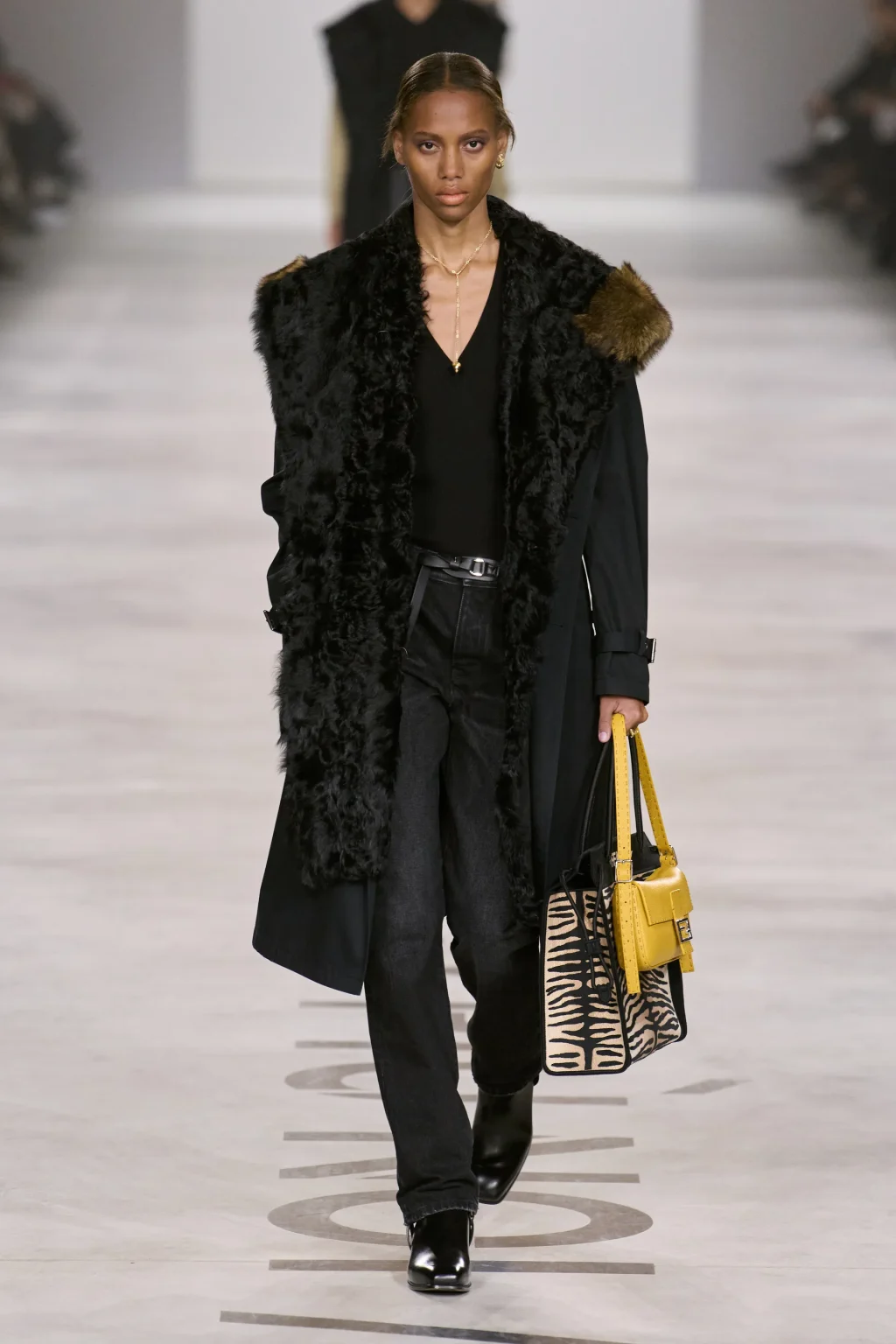
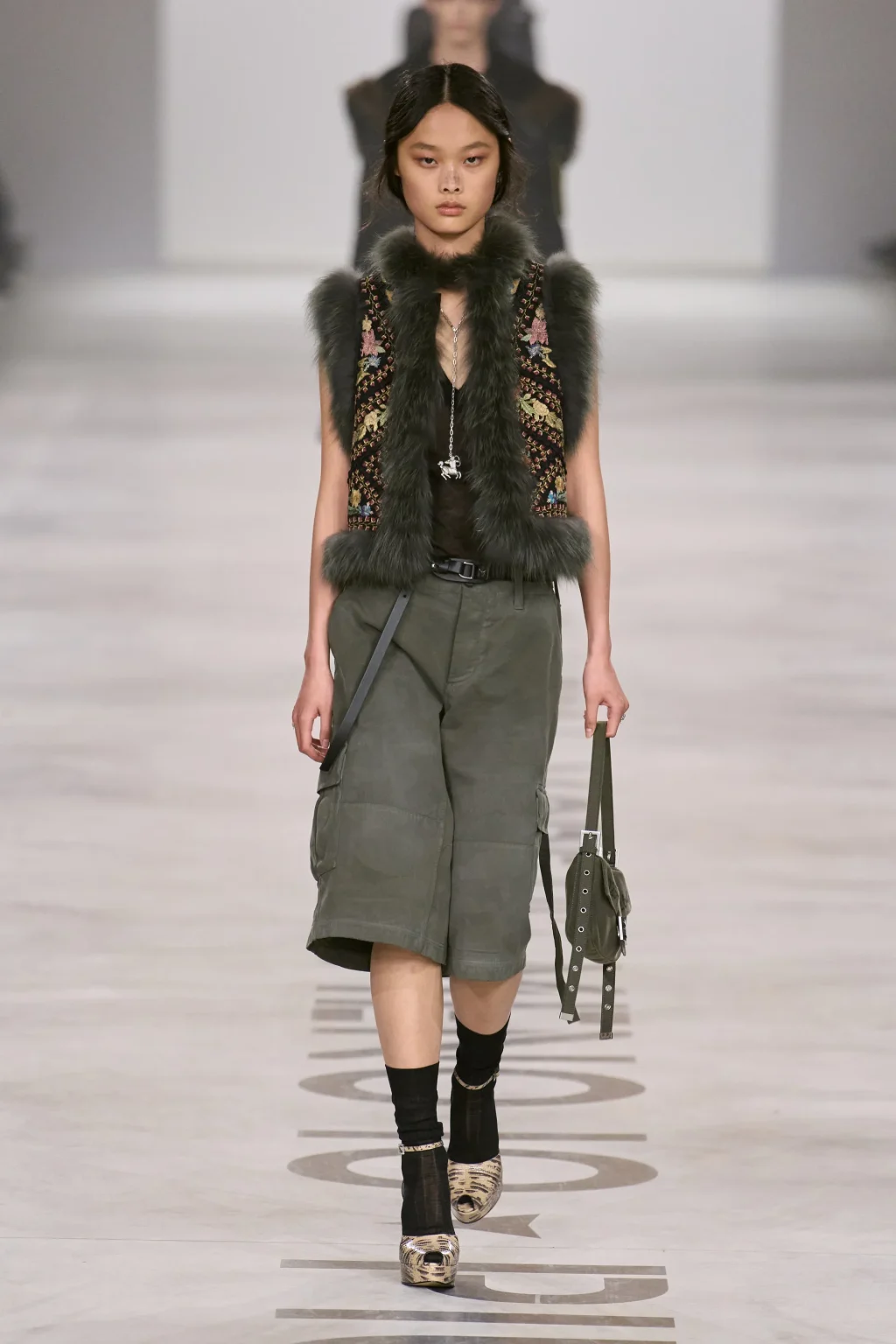
No one can talk about Fendi honestly without talking about fur. Reports from the debut emphasize a fur-forward direction—presented as heritage, controversy, and craft all at once—while also pointing to repurposing and archival use as part of the conversation around modern wearability and ethics.
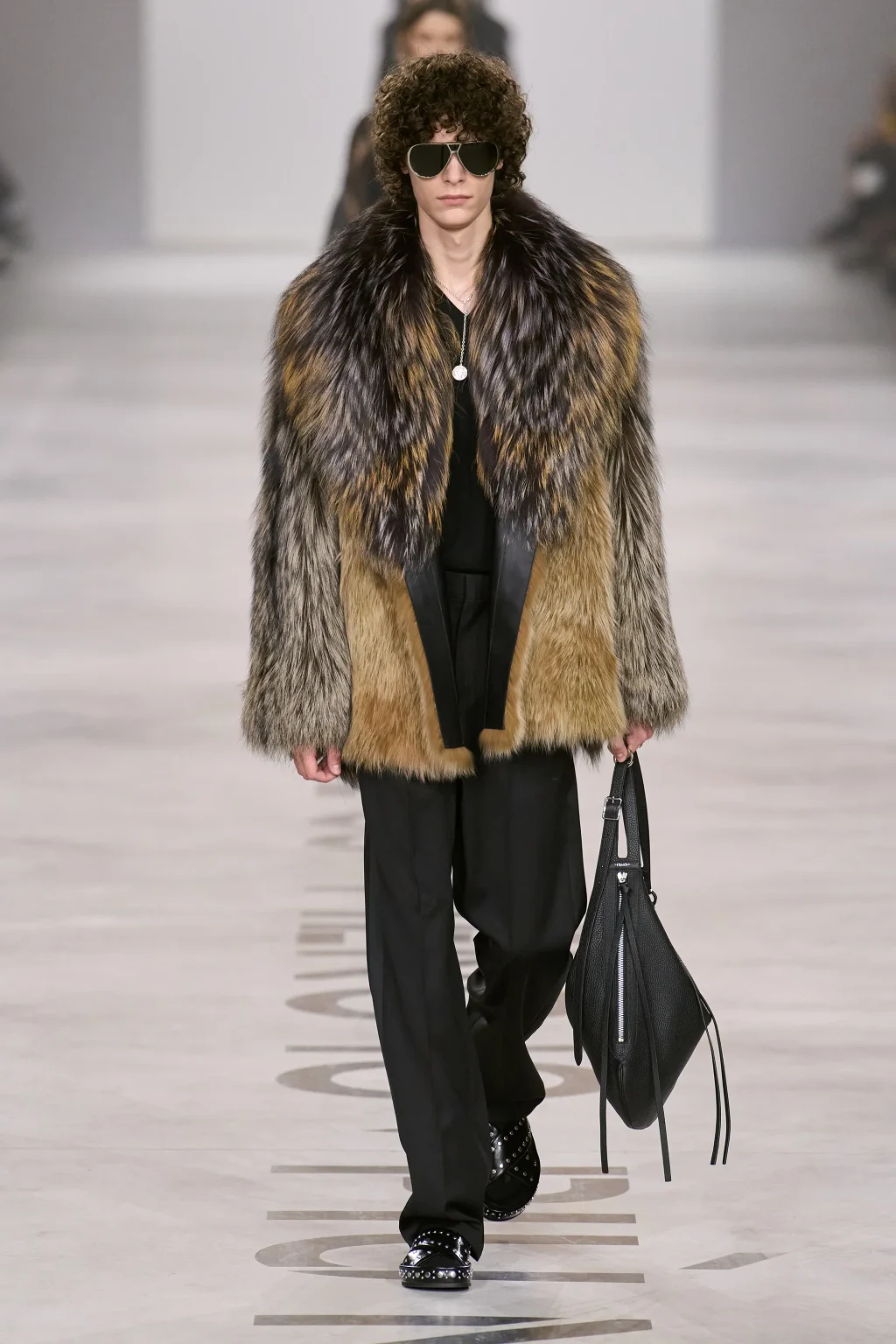
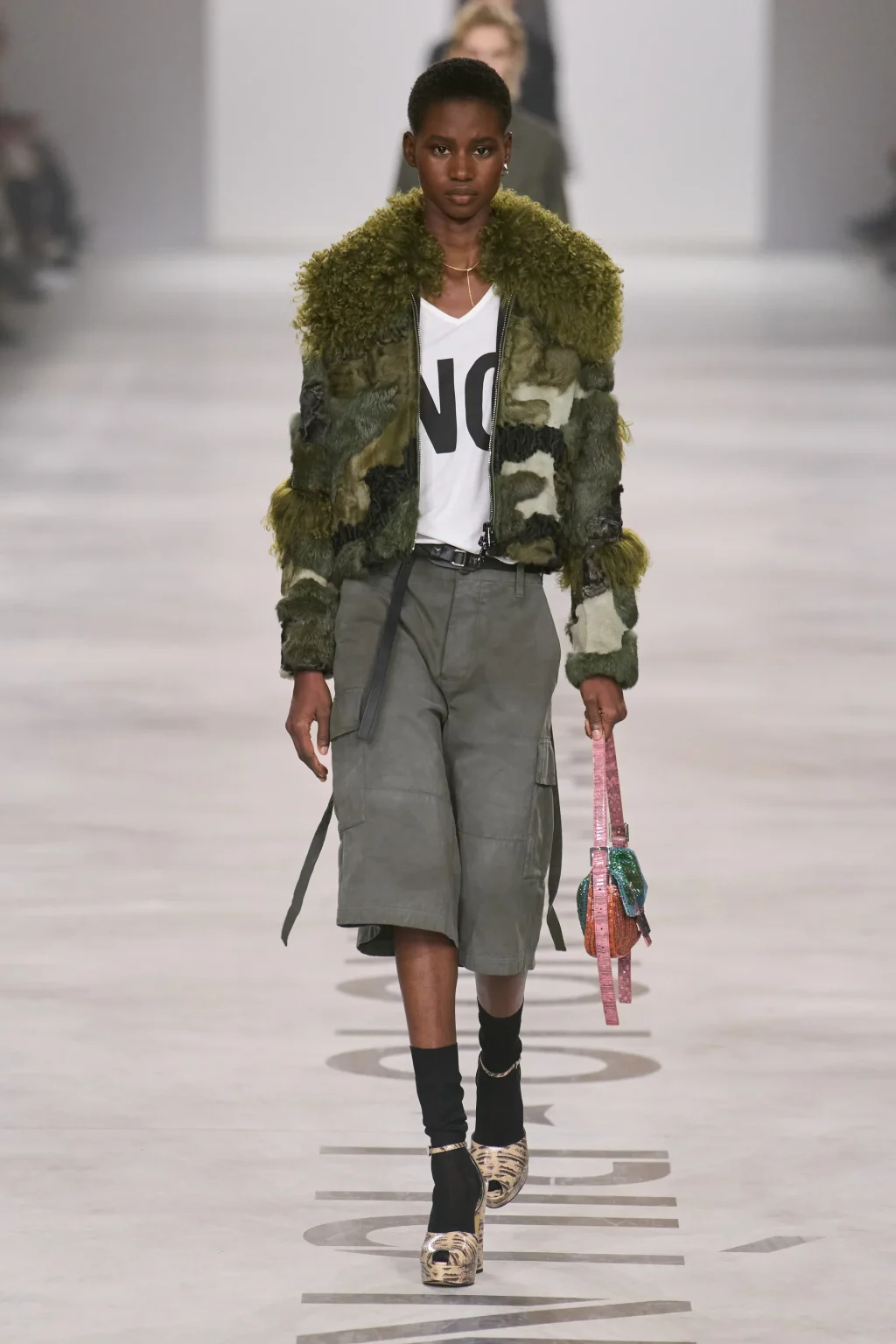
This is where Chiuri’s strategy looks particularly Fendi, not just “Chiuri.” She isn’t trying to erase the House’s provenance. She’s trying to turn provenance into a controlled, atelier-led proposition again—positioning fur not as disposable trend but as material with longevity, repair potential, and personal history.
The Bags: The Baguette Becomes the Lead Character Again
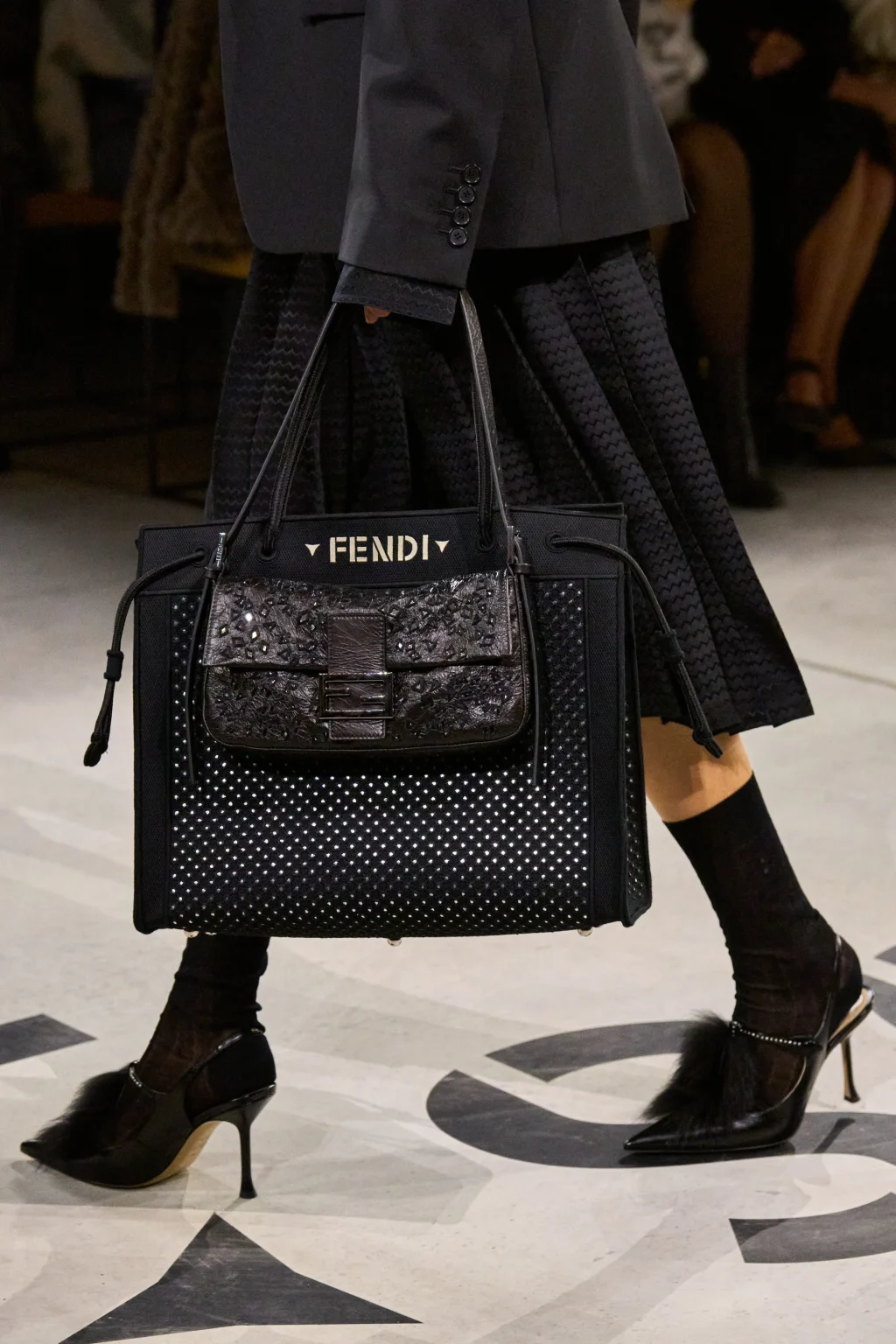
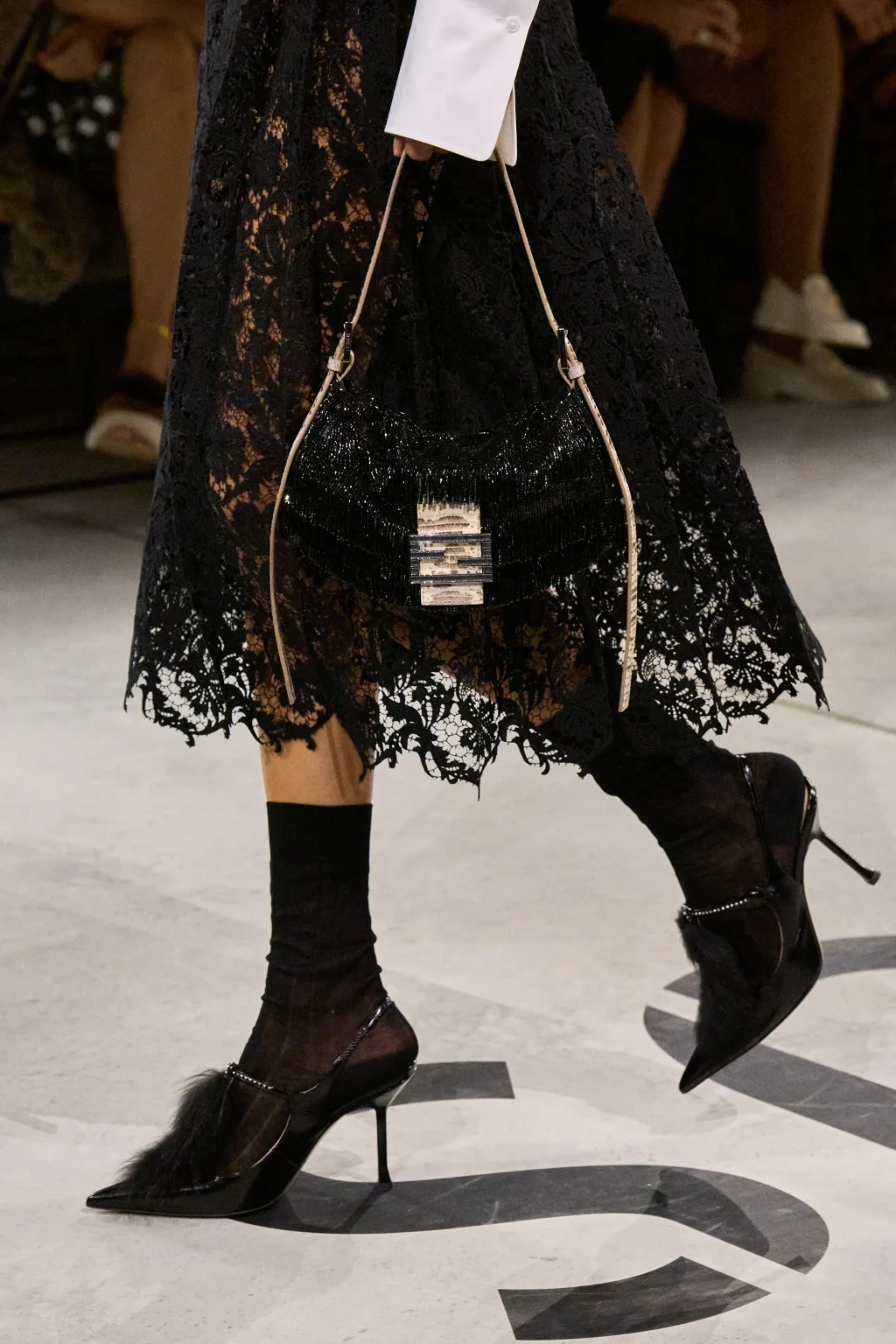
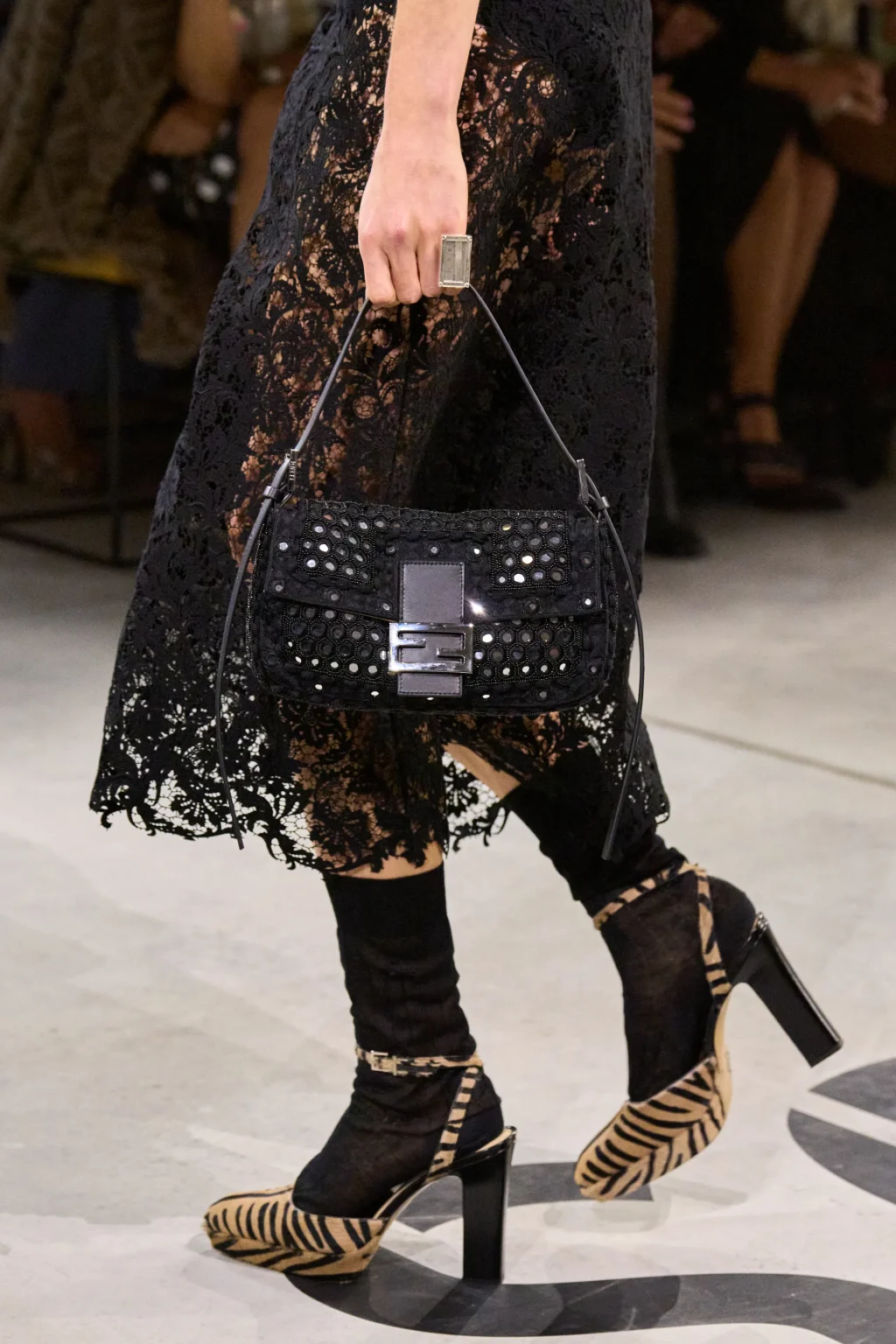
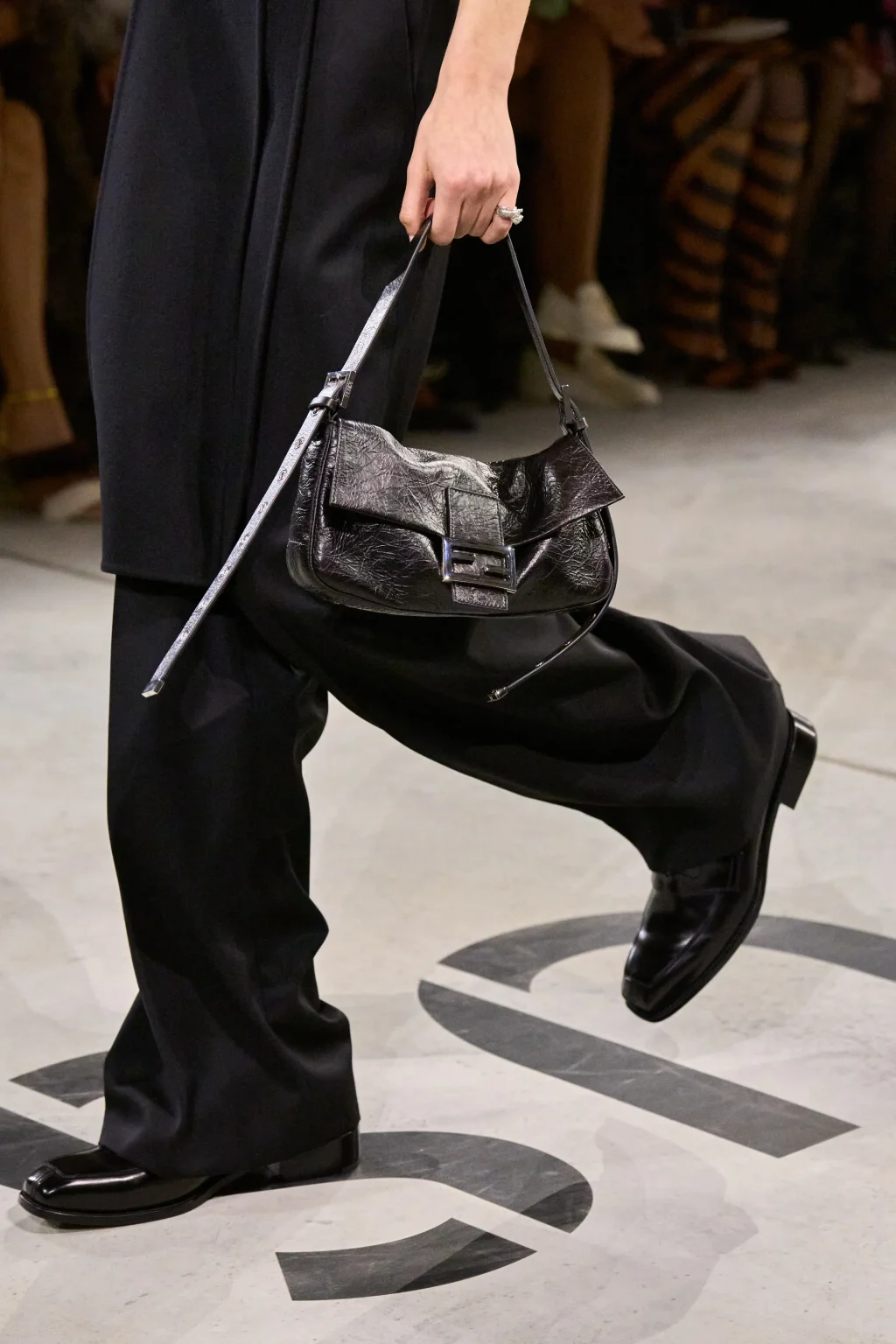
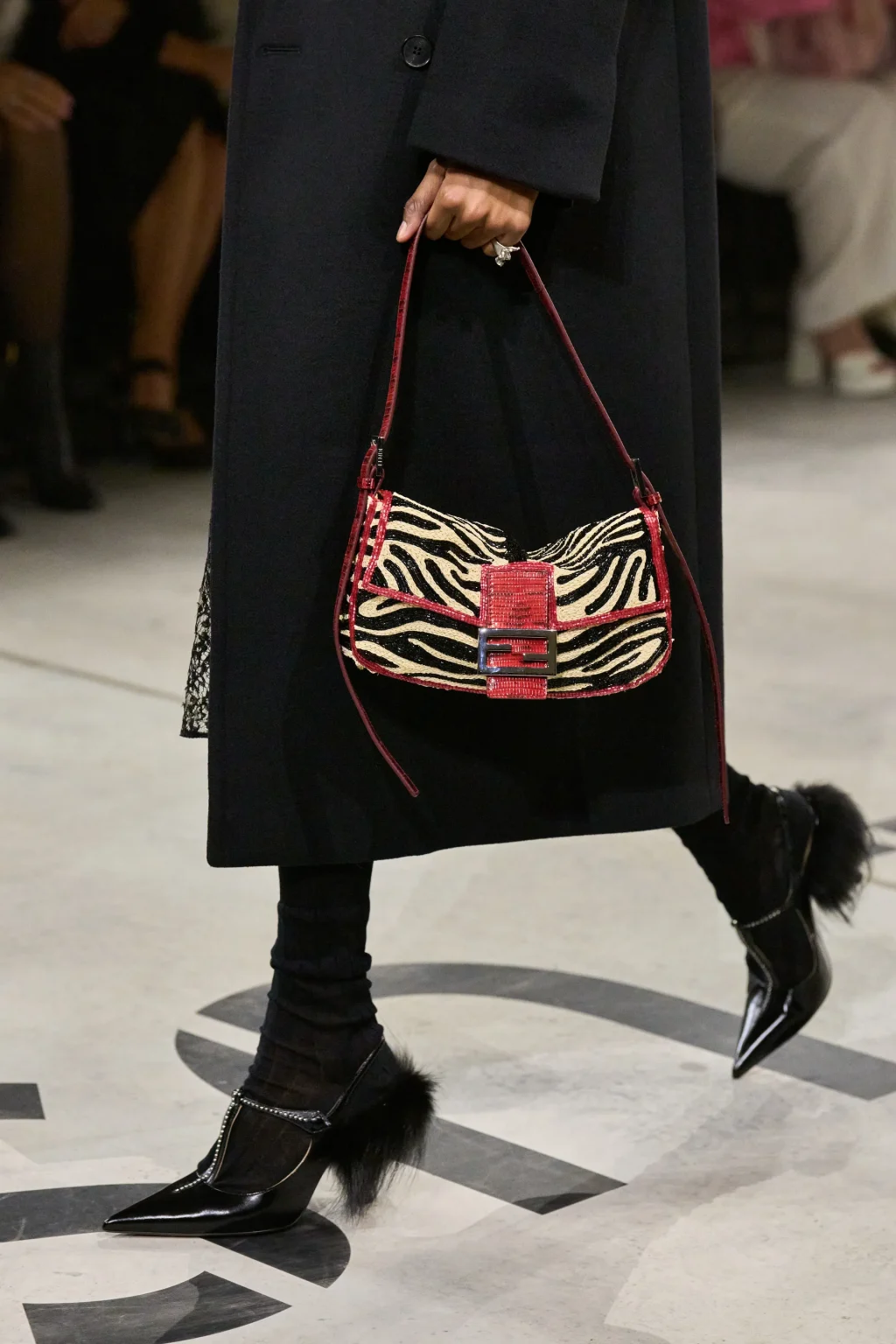
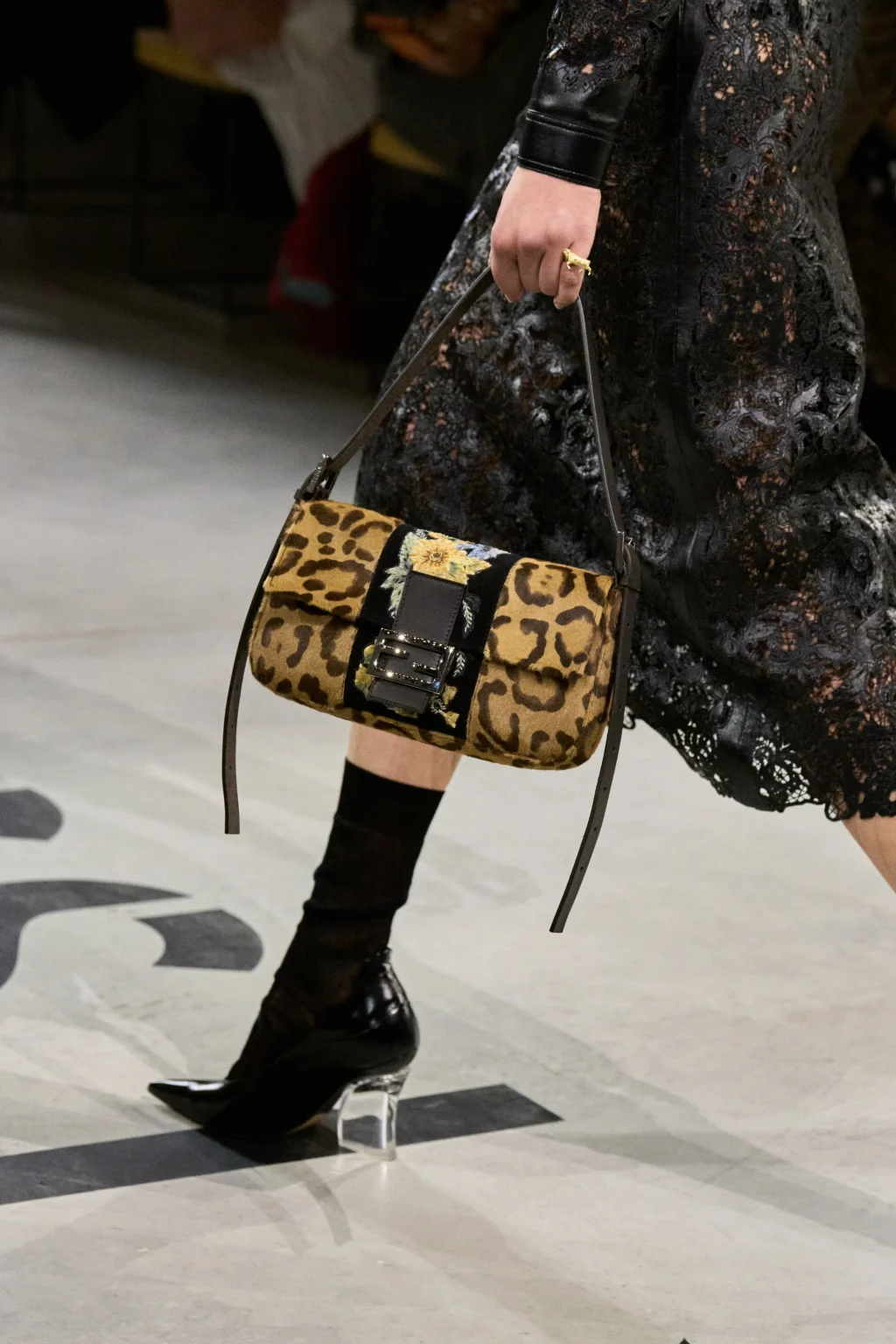
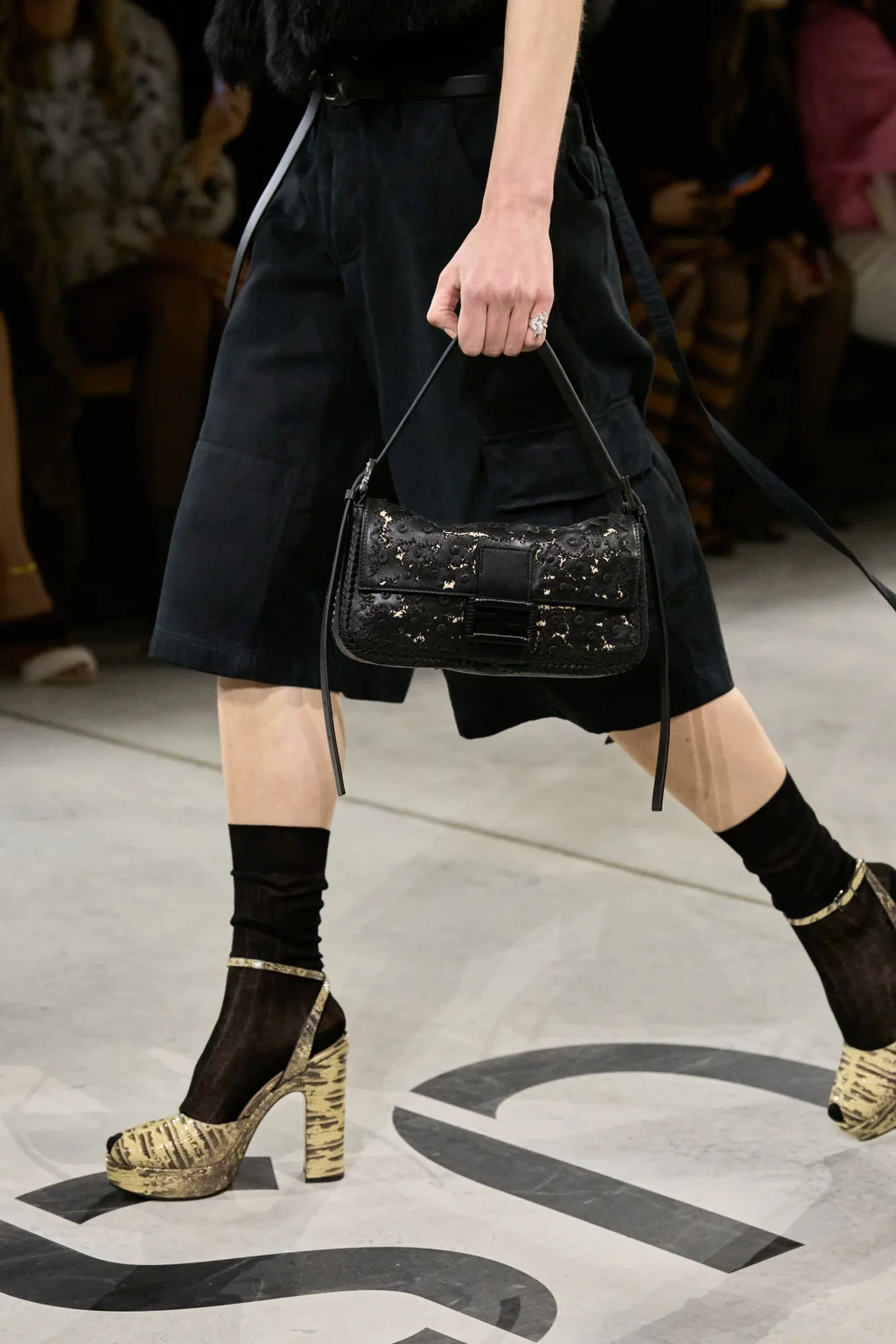
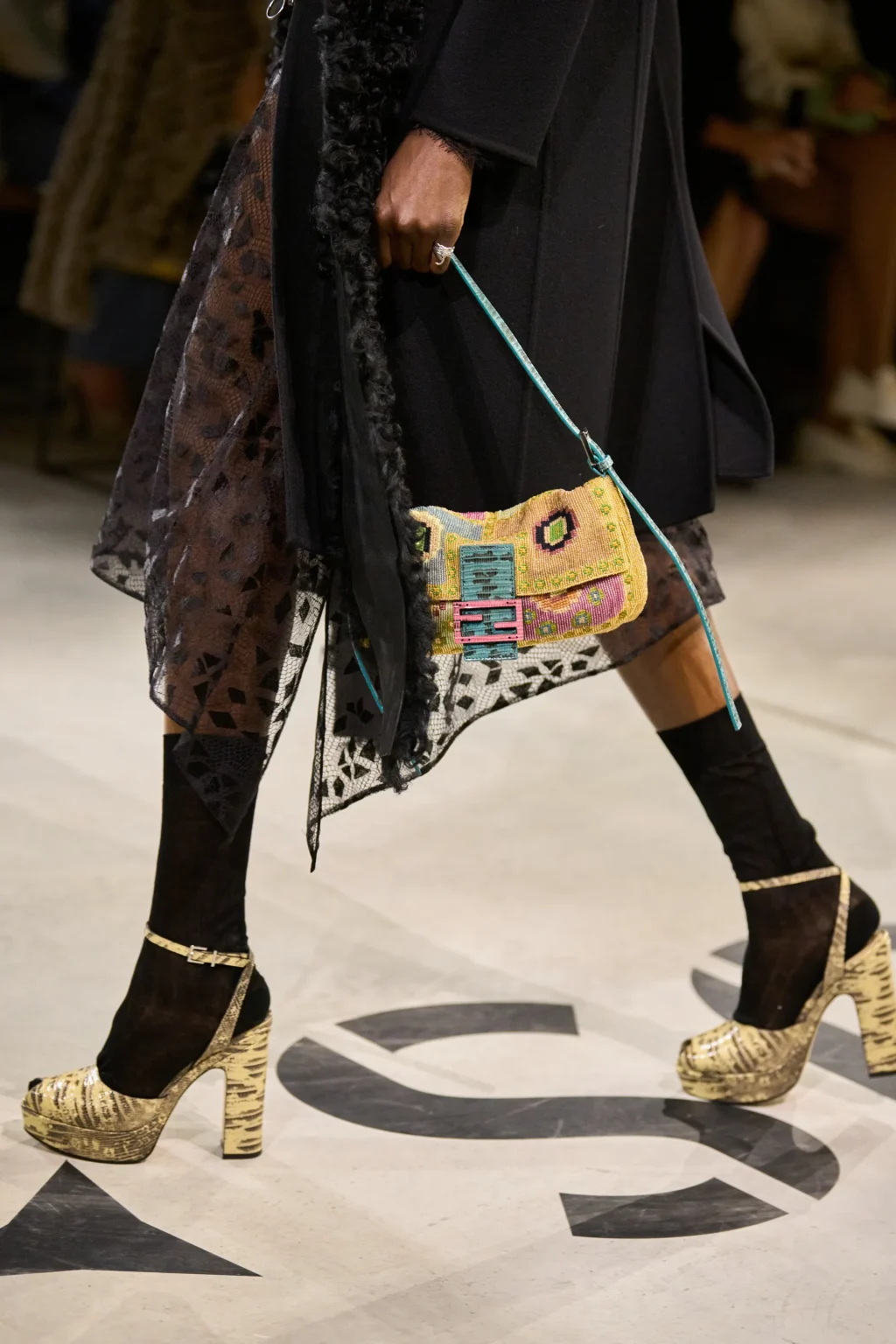
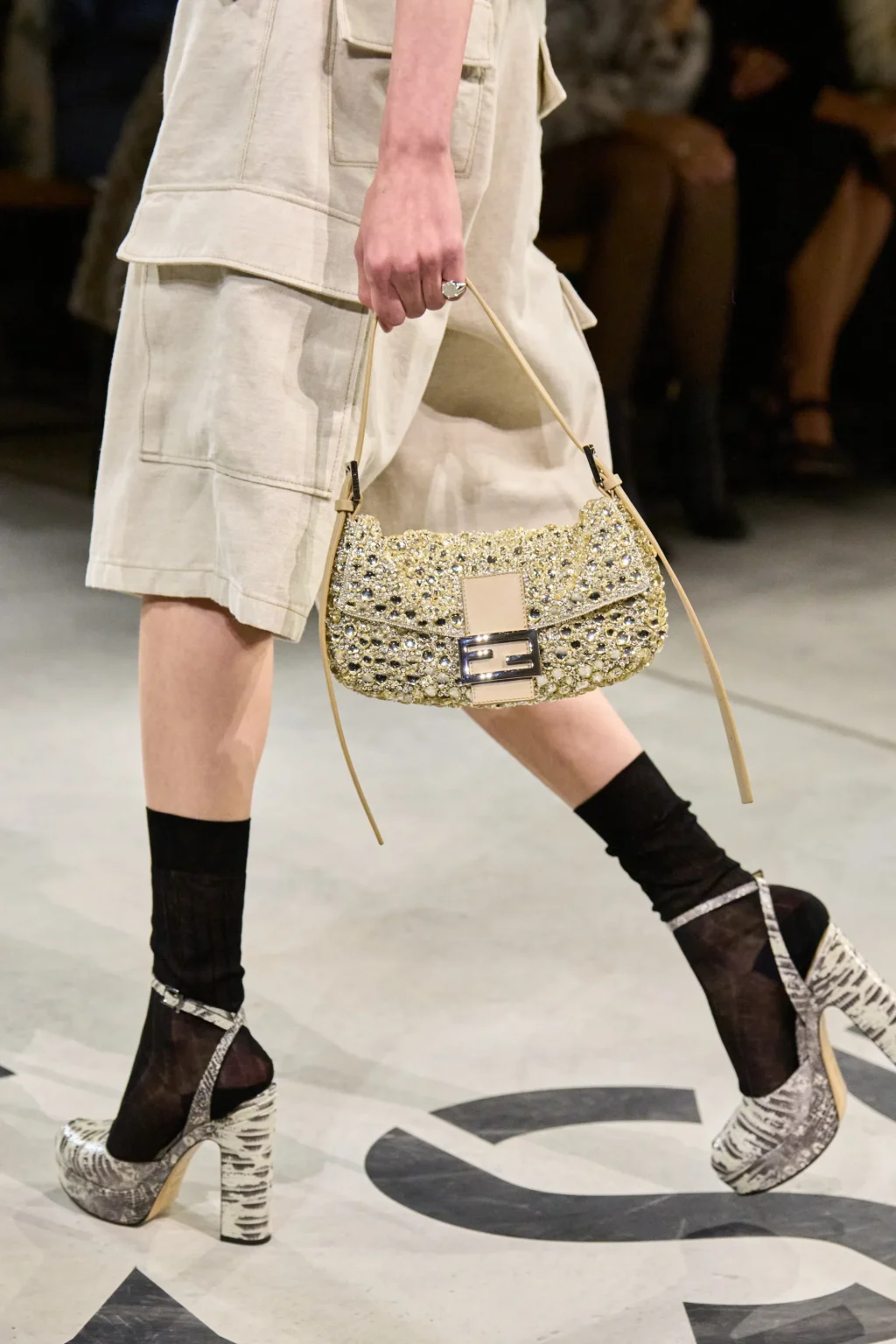
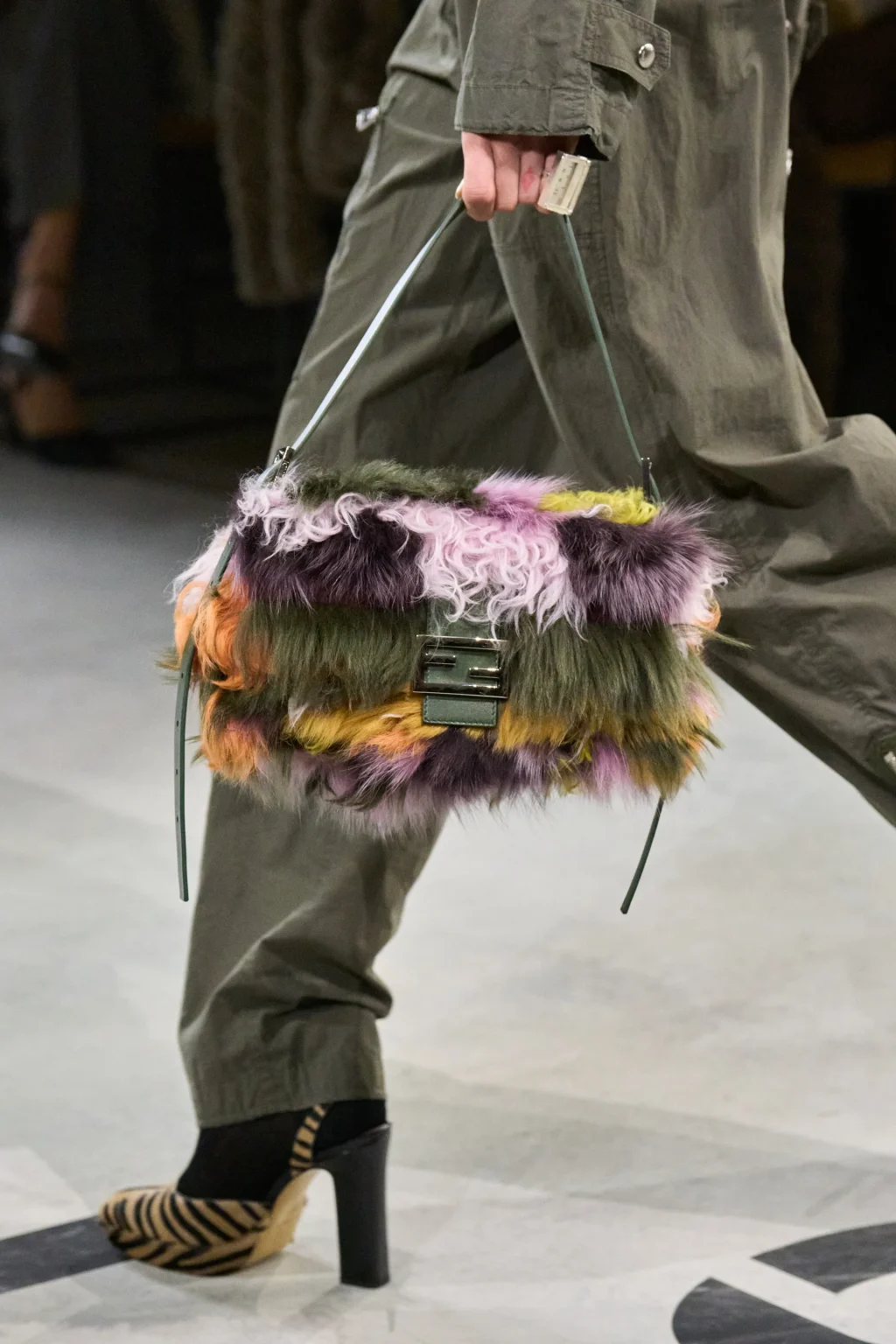
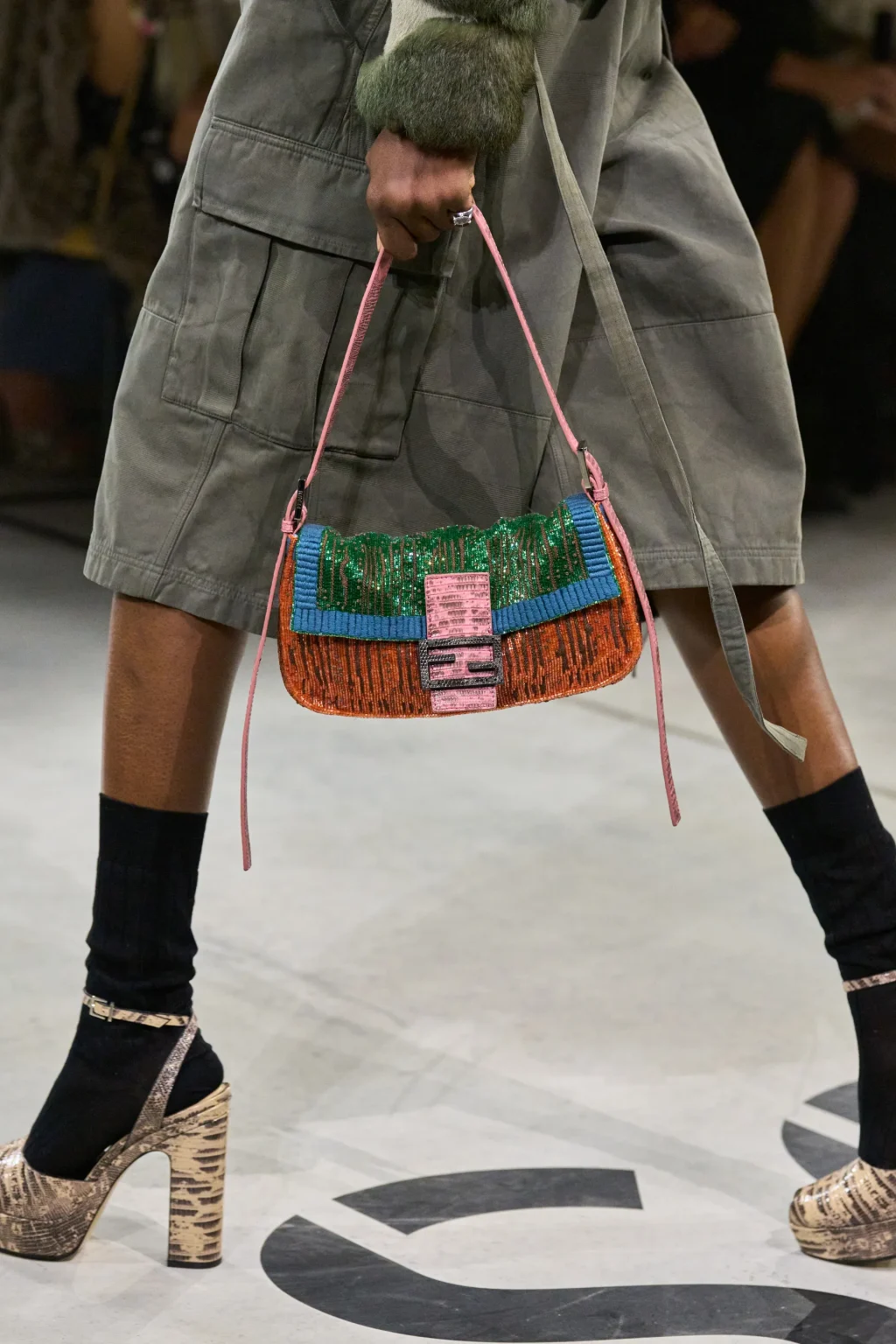
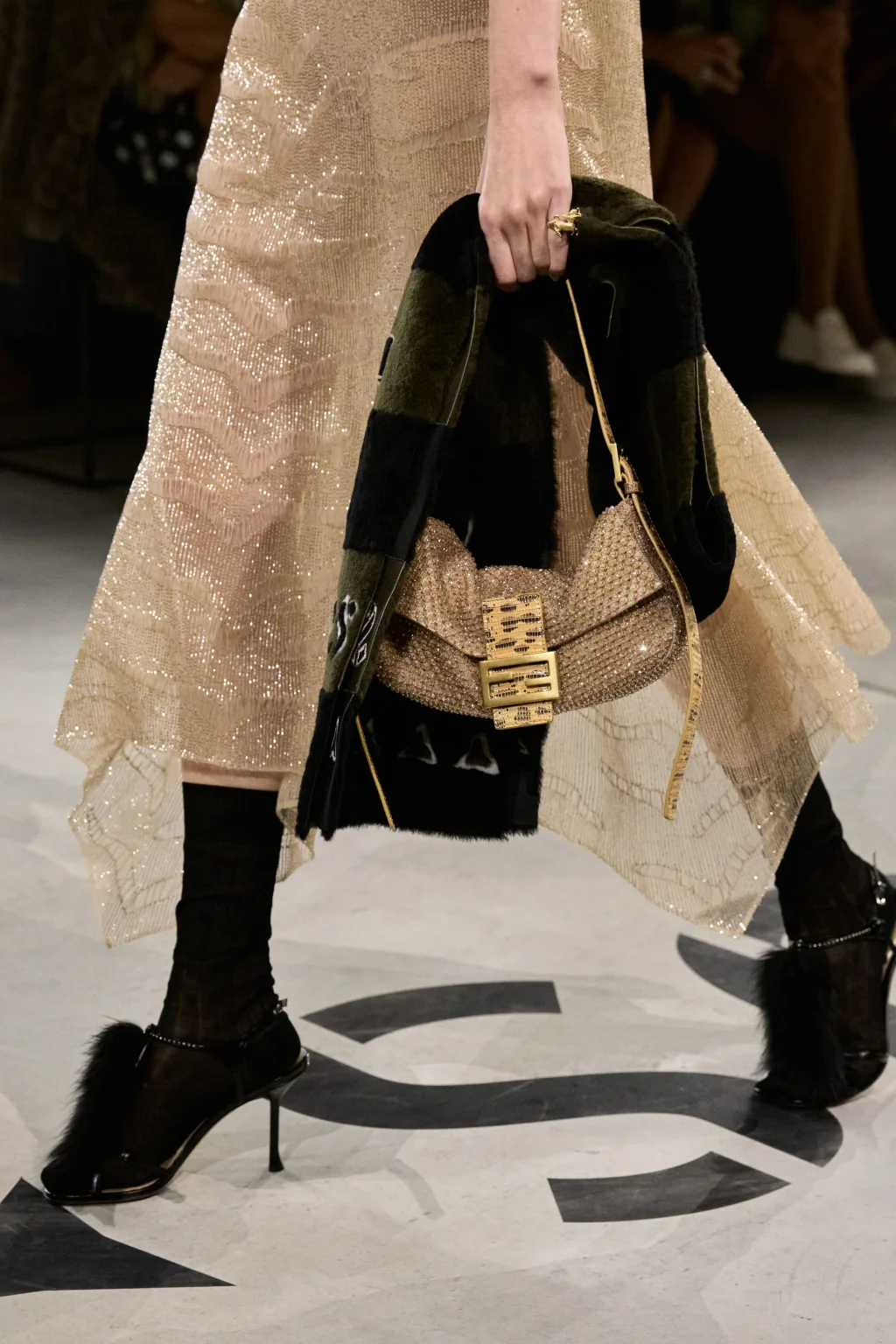
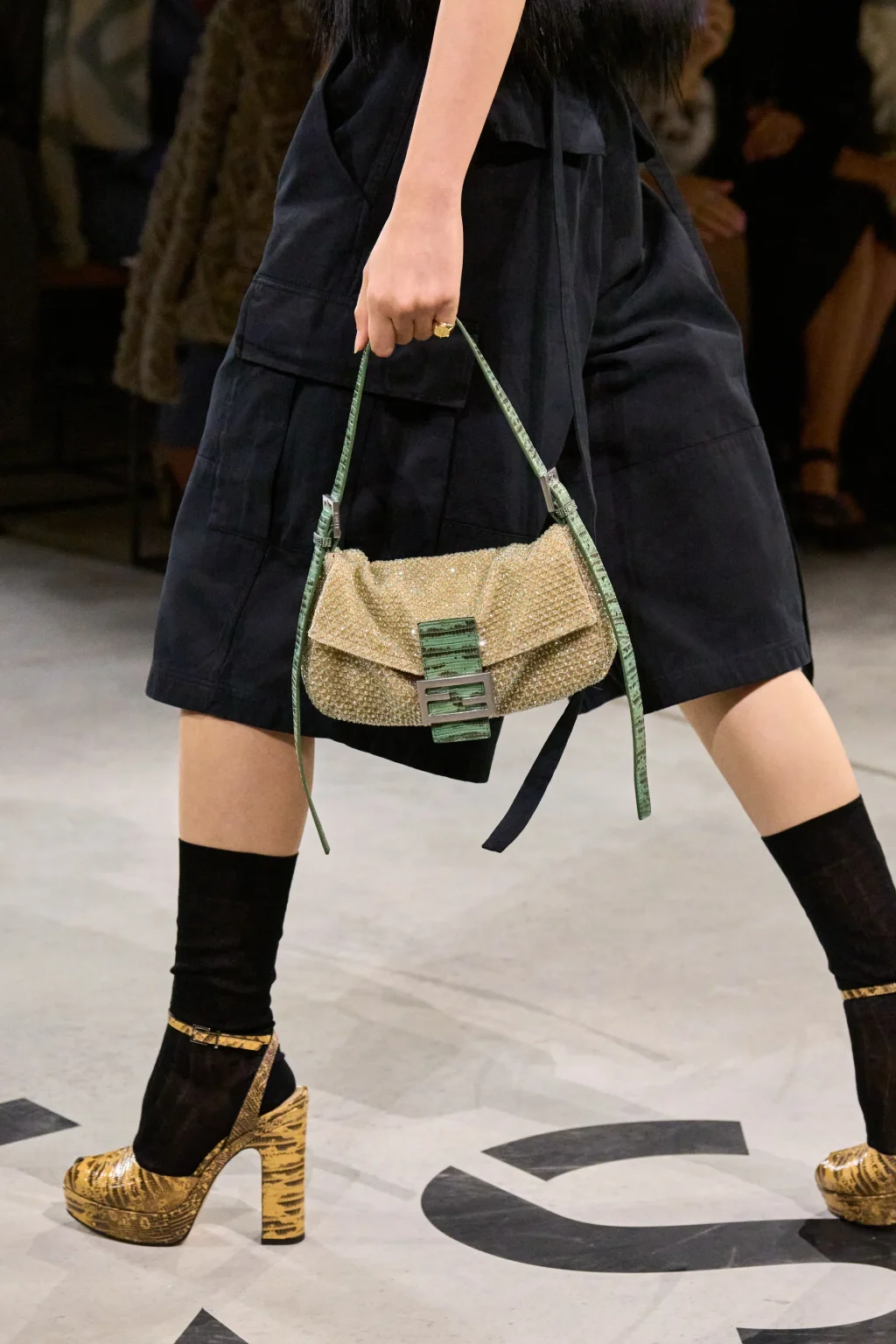
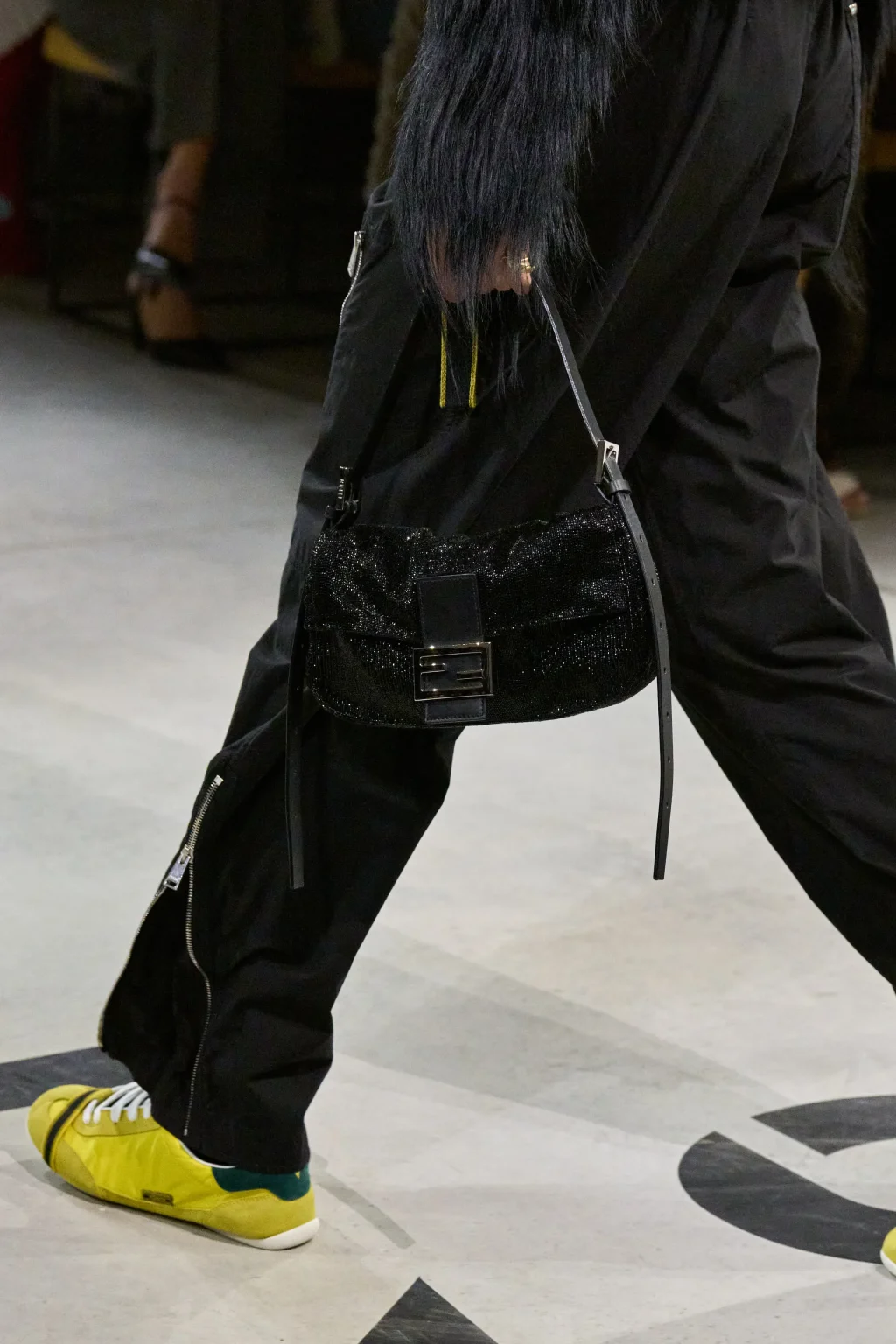
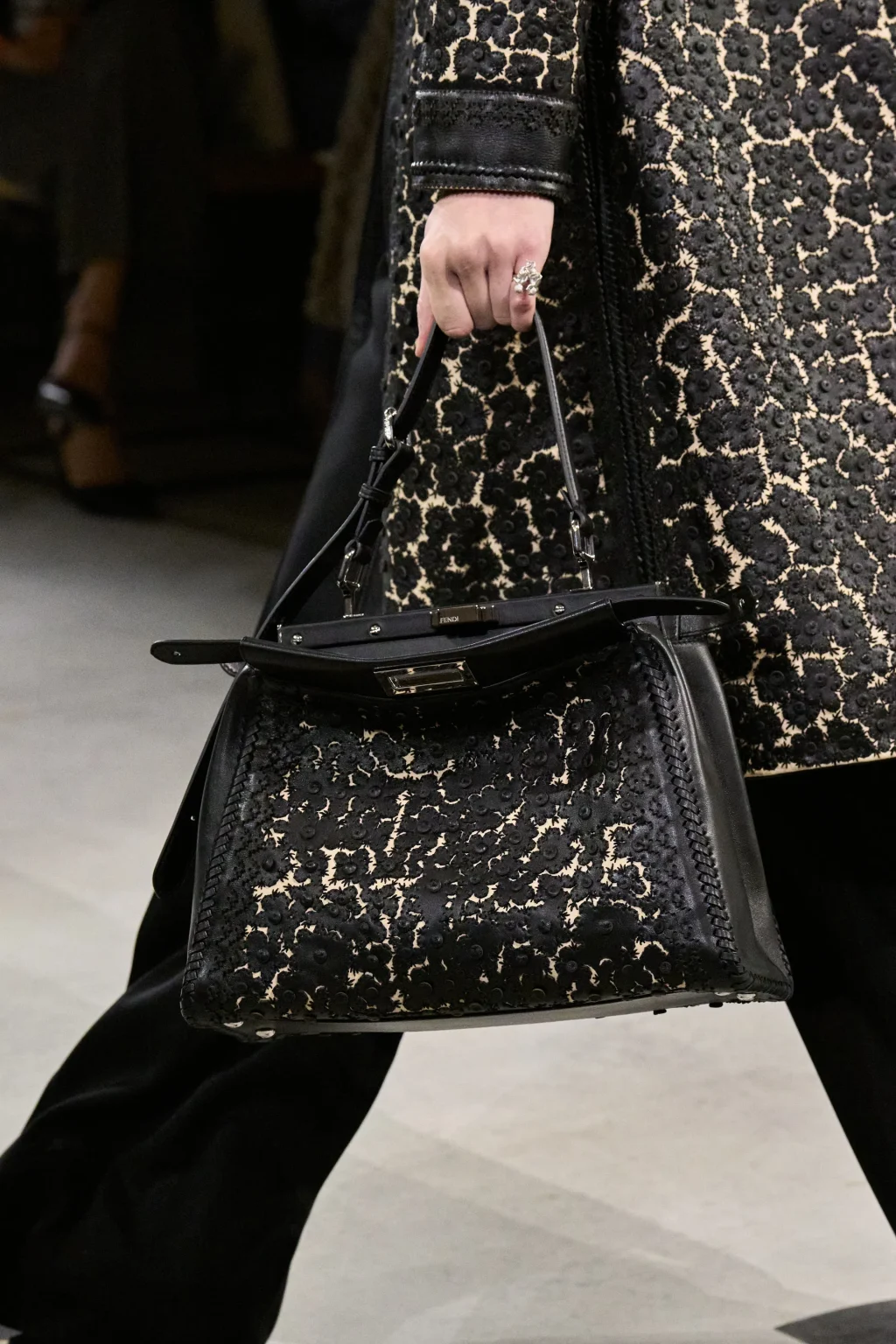
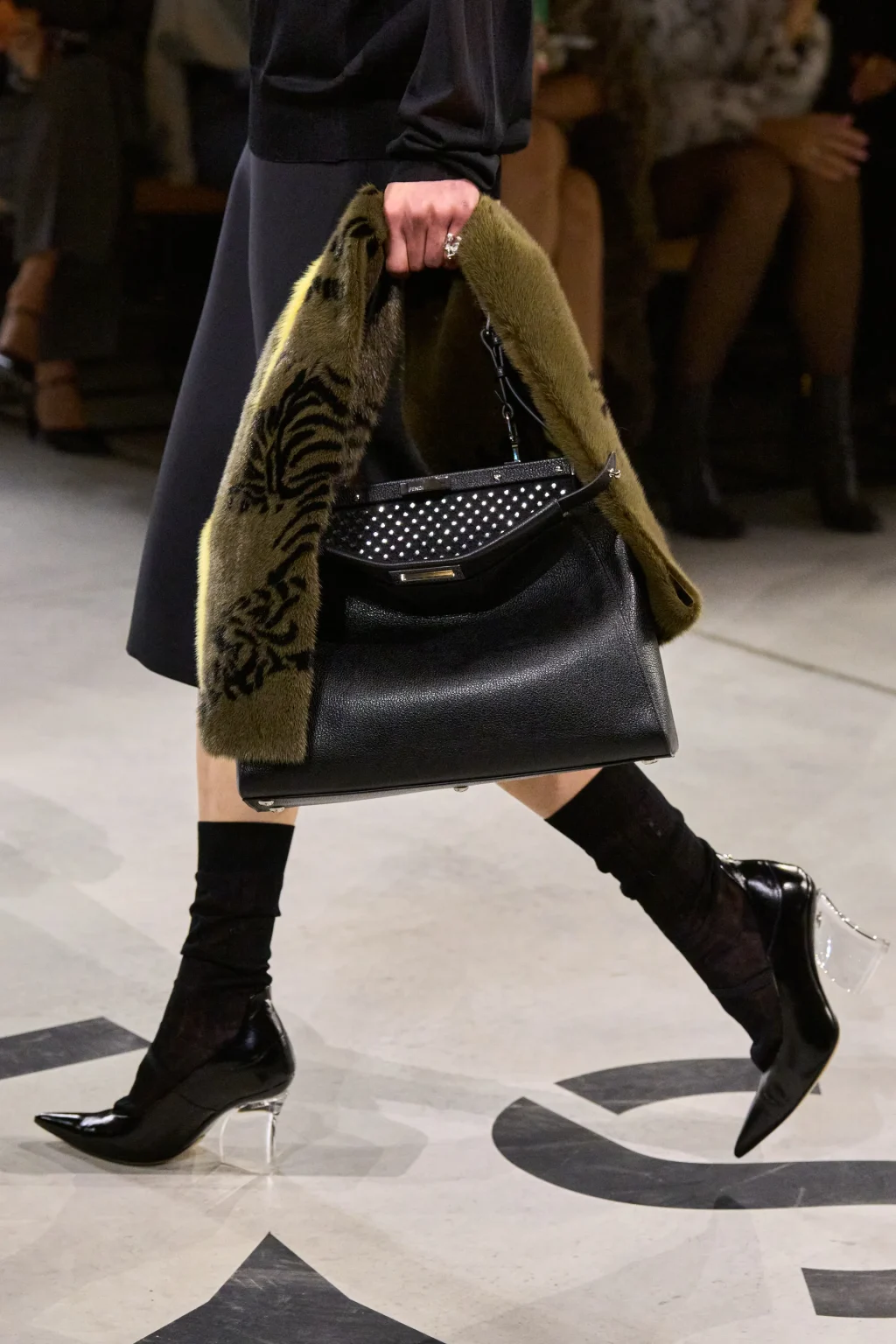
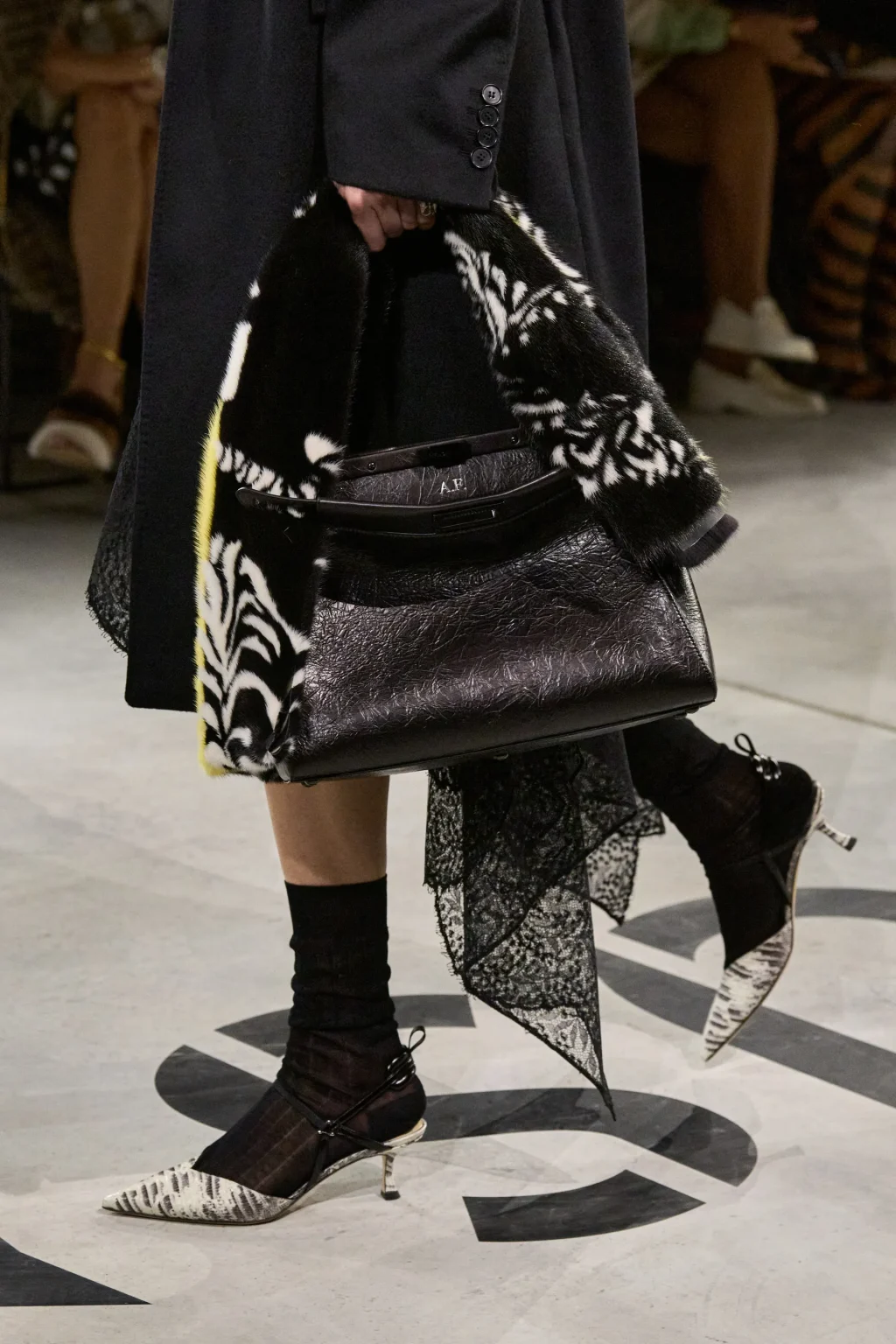
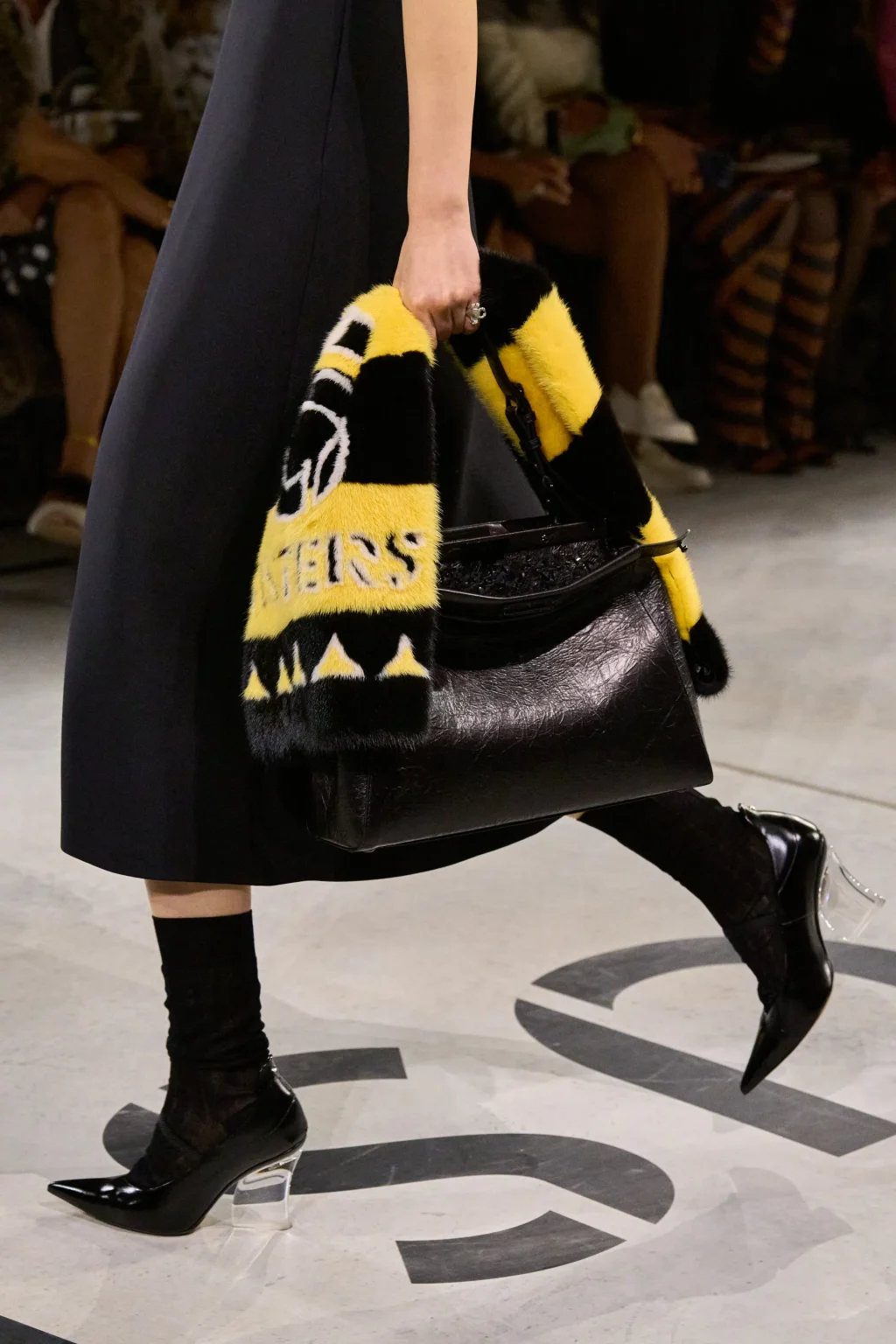
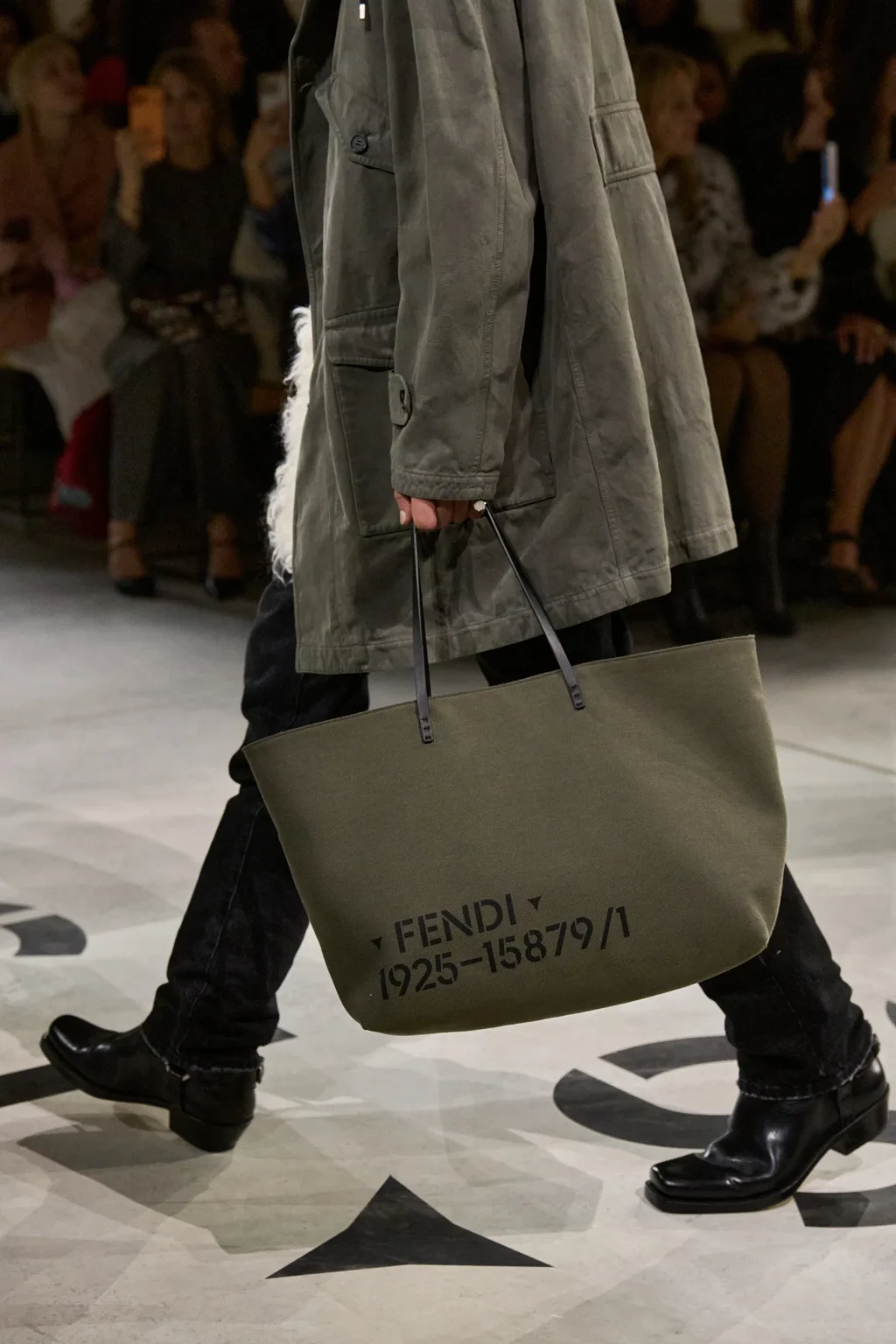
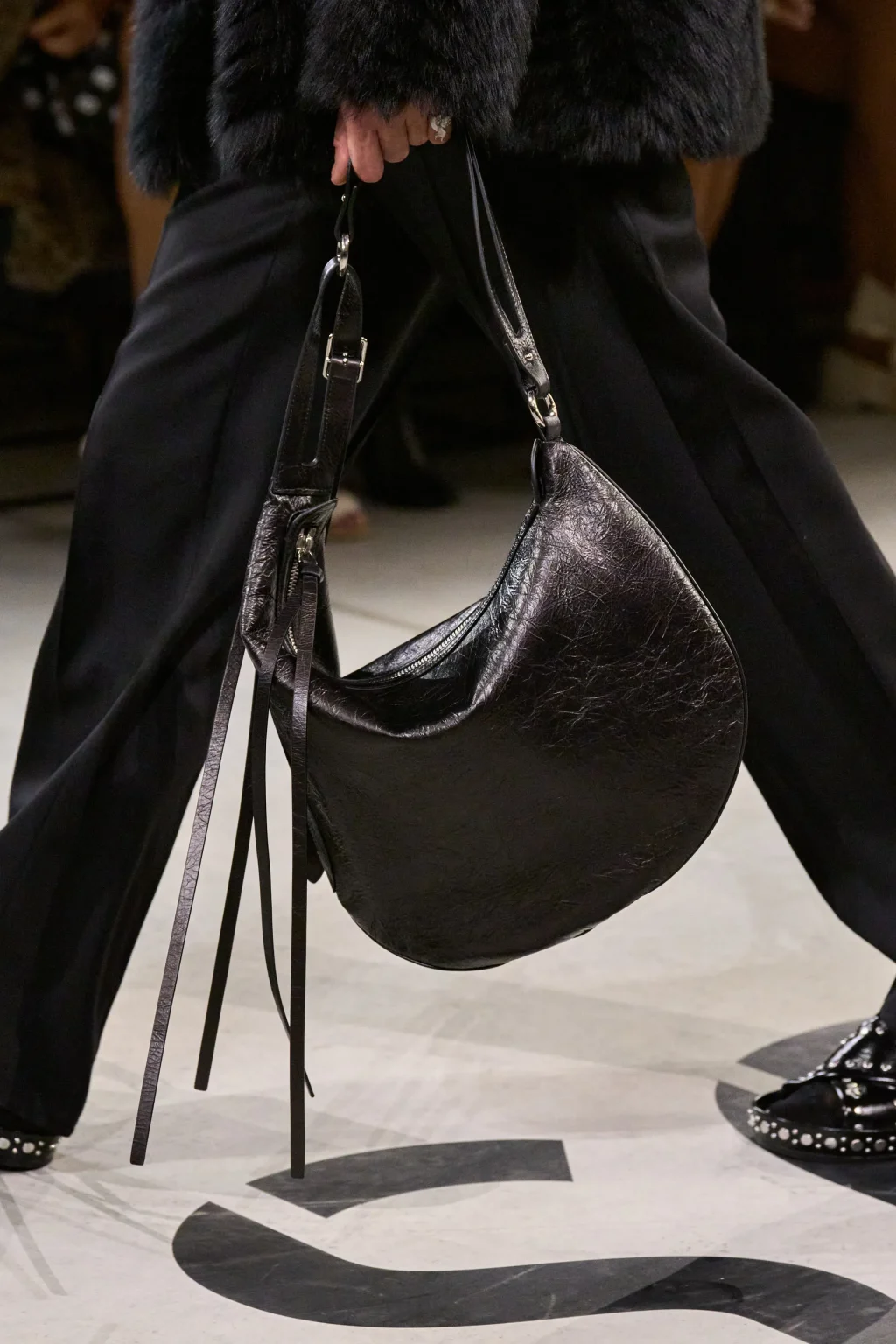
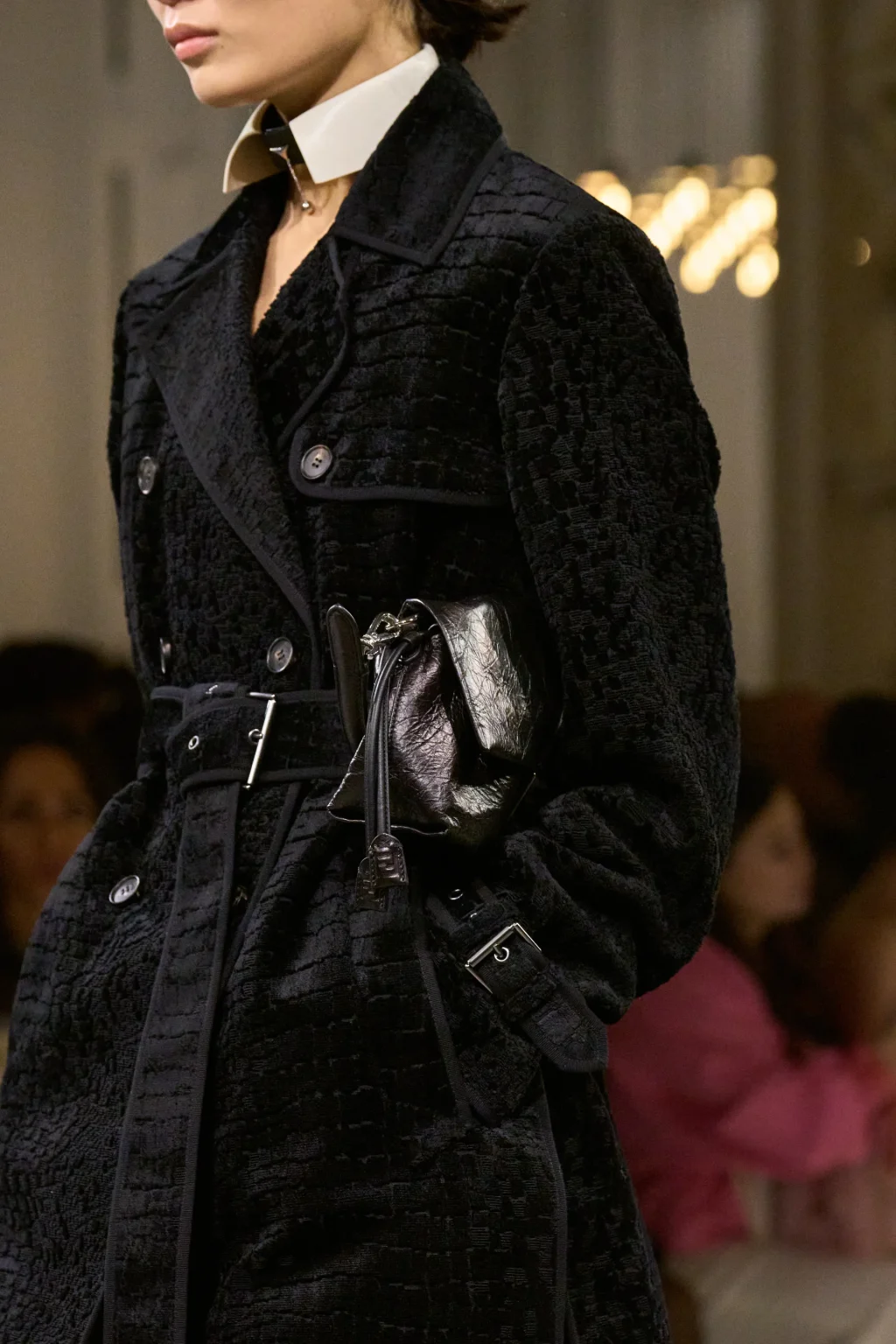
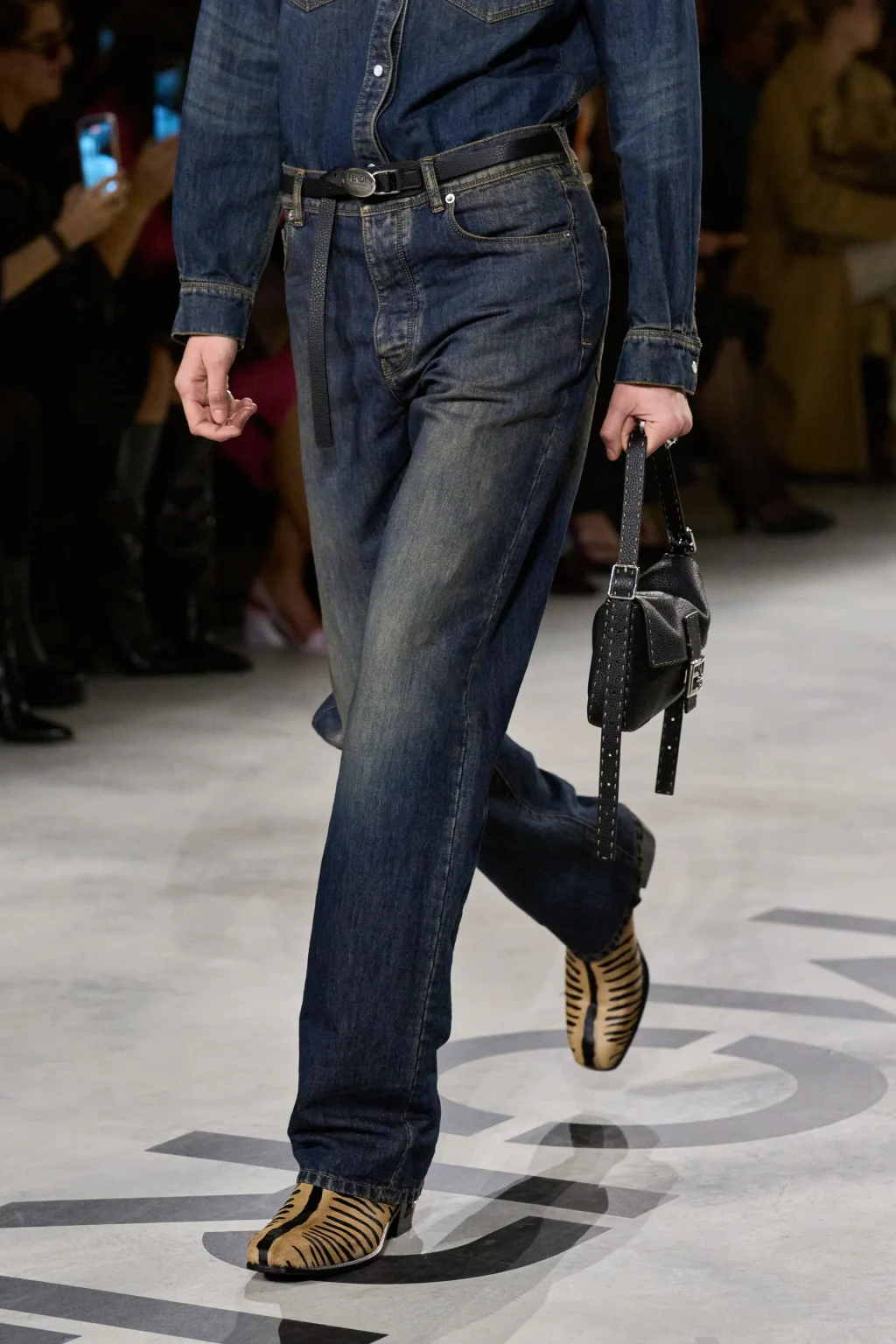
If the ready-to-wear is the manifesto, the bags are the proof of concept. Chiuri helped develop the Baguette in the 1990s; bringing it back into the center of the narrative is both sentimental and strategic. It tells the market: Fendi is returning to the thing it can claim with absolute authority—icon engineering.
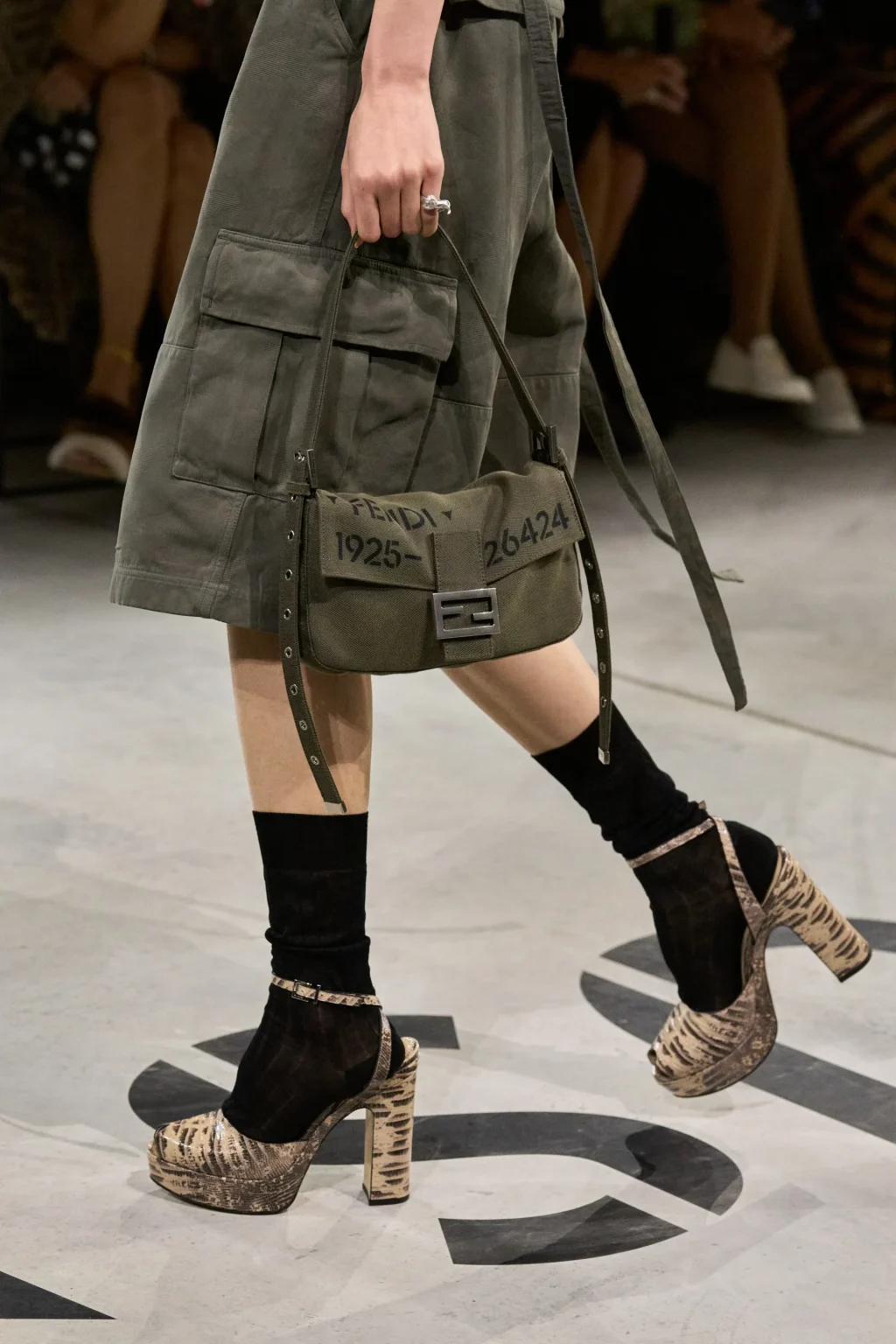
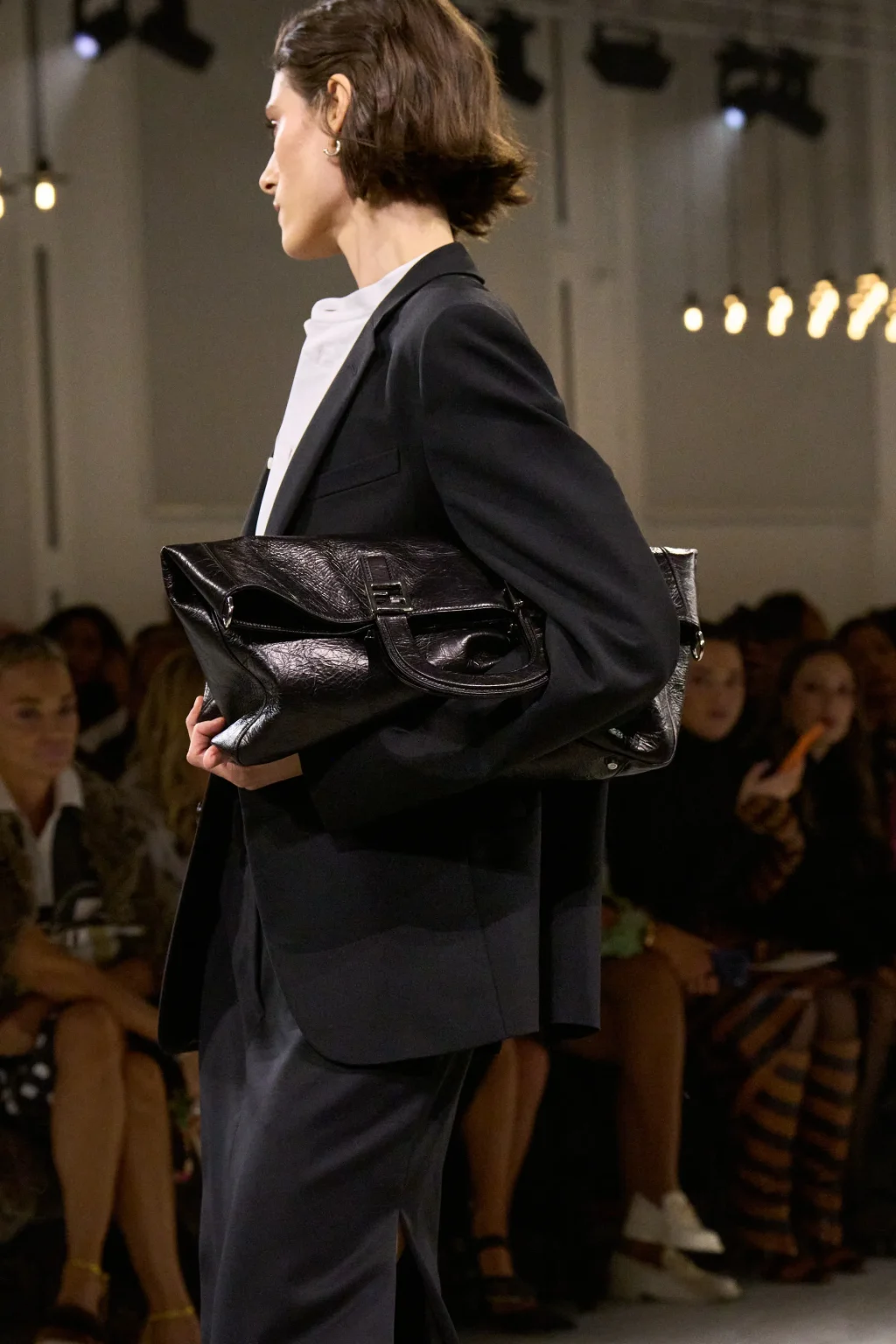
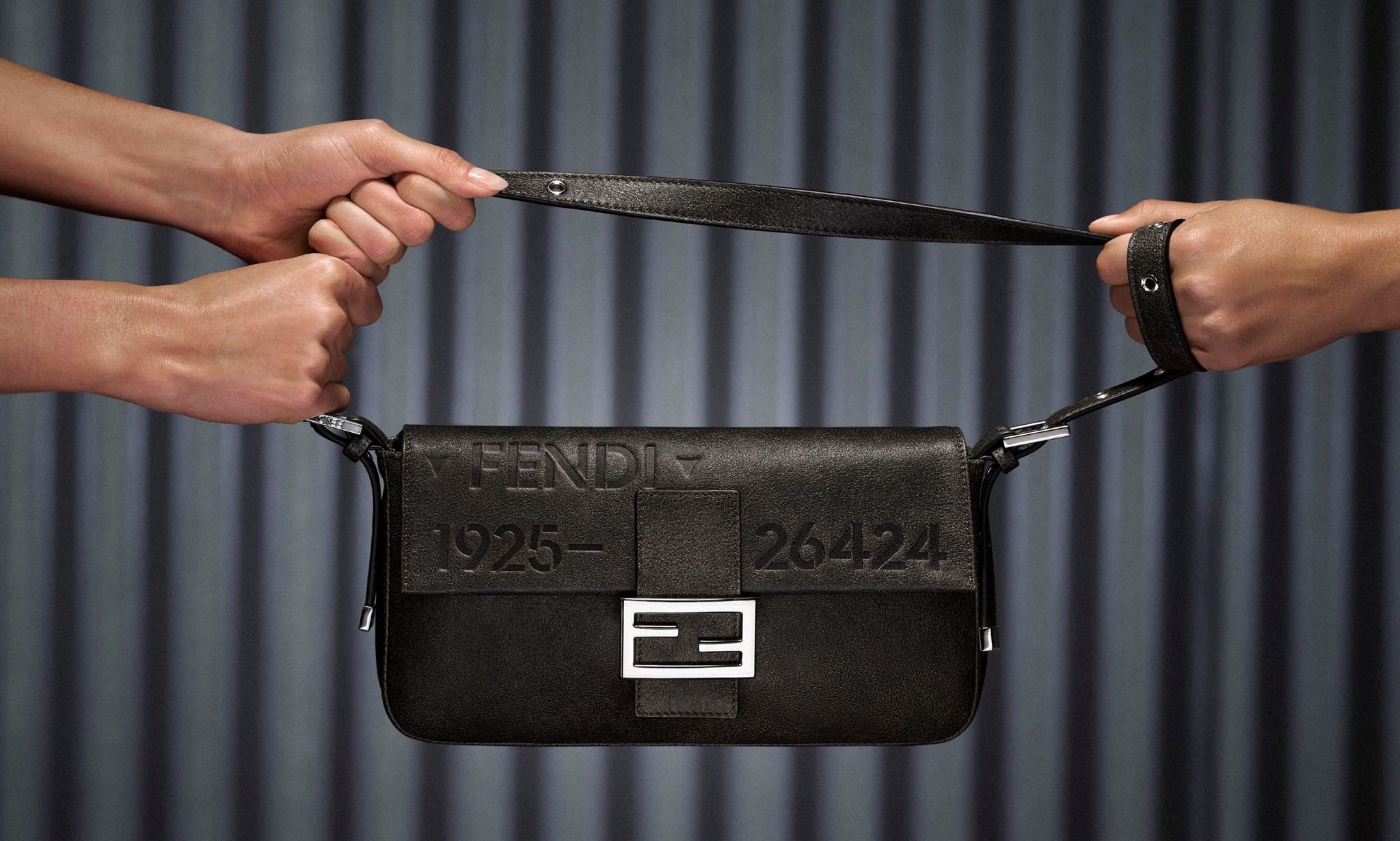
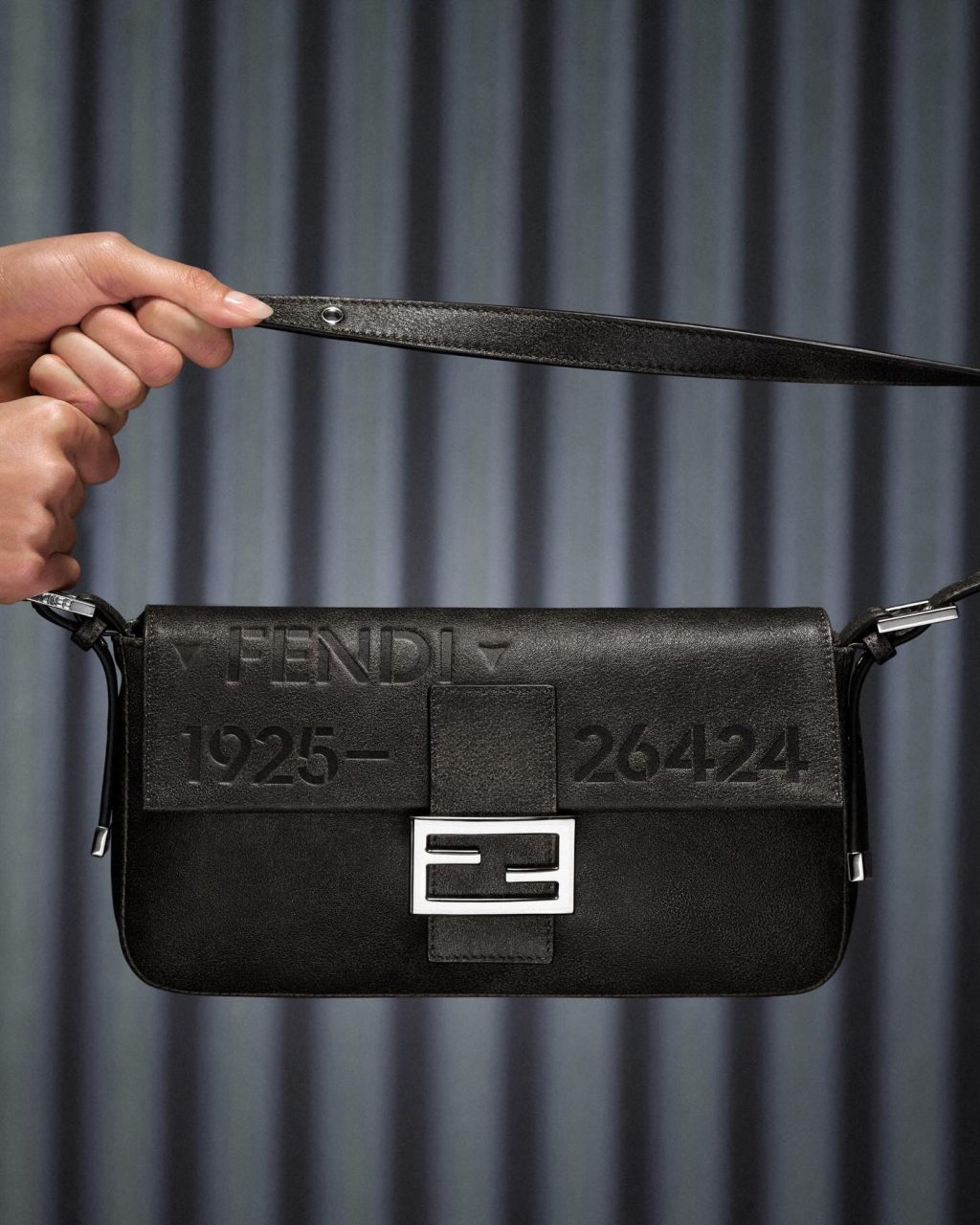
The clearest product expression of that is the Baguette® 26424, positioned by Fendi as a return to the icon’s original style code.
Icon of the House’s daring creativity since 1997, recreated according to the original style code, number 26424, for the Fall-Winter 2026-27 collection. Crafted in a black biker-effect calfskin with an embossed FENDI 1925-26424 print, the silhouette is characterized by a fully adjustable and removable handle and shoulder strap for ultimate versatility, and the signature FF buckle in an antique-silver finish. The front flap bag with magnetic closure is completed by a fully lined interior, internal zip pocket, and antique silver-finish metalware.
There’s also a subtext here that collectors will recognize immediately: “original code” isn’t just nostalgia—it’s authentication logic. When brands reissue from a specific reference point, they’re creating a tighter narrative chain that supports future resale clarity: edition, era, and build details become easier to pin down.
Key Bag Directions to Watch in Fendi Fall-Winter 26-27
1. The Baguette, re-tuned for 2026 reality
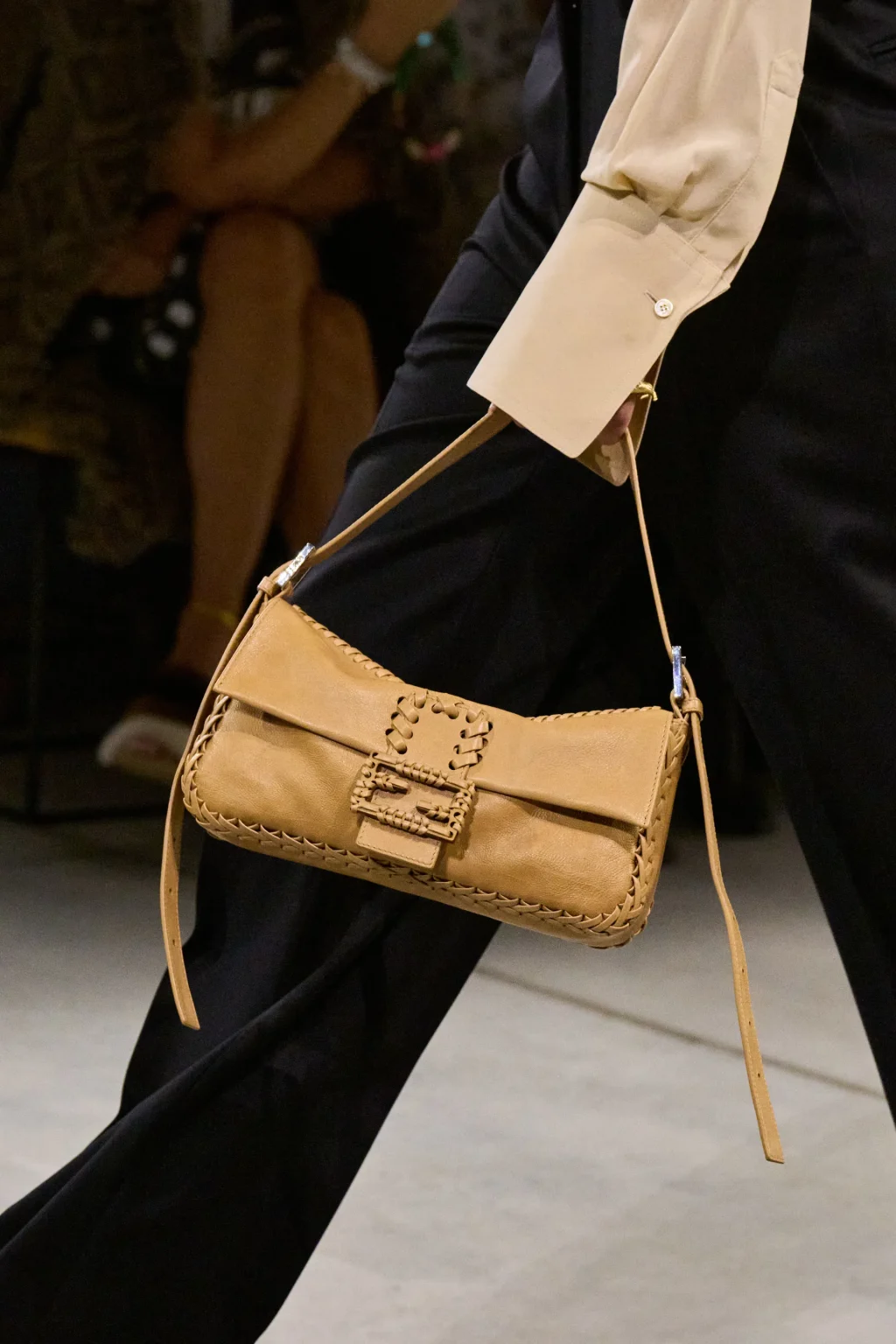
Expect the Baguette story to be less about novelty shapes and more about how it moves: strap options, crossbody functionality, and craft-driven surfaces that echo the House’s atelier vocabulary (leatherwork, fur, and tactile finishes). The Baguette® 26424 language points exactly there—original silhouette, modern versatility.
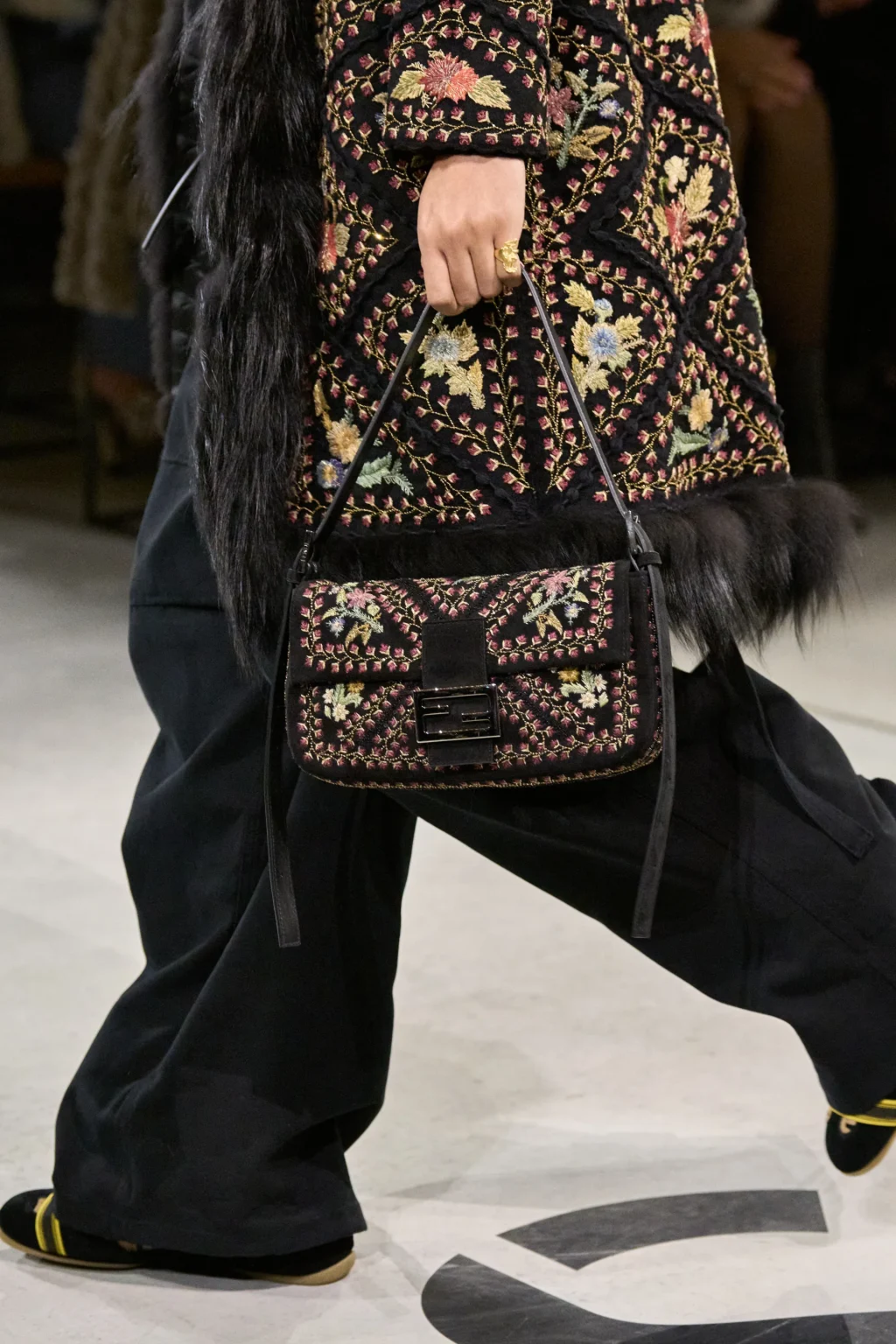
2. Double-bag styling as an identity cue
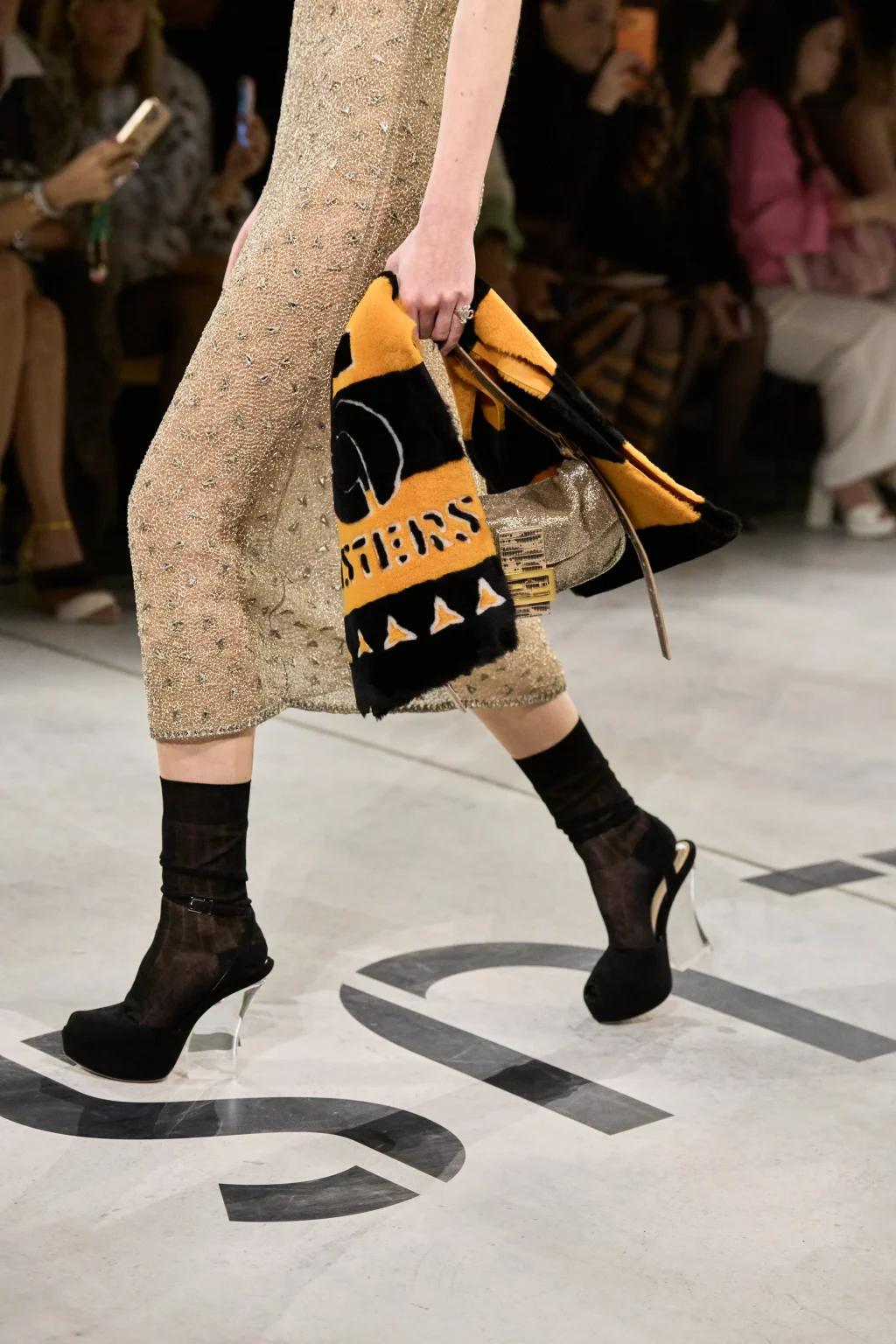
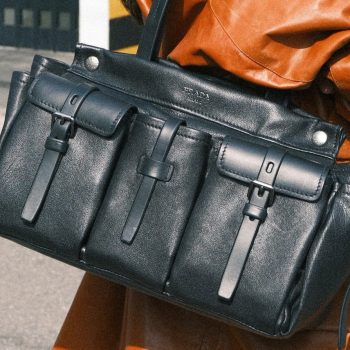
More than one review highlighted dual-bag styling as part of Chiuri’s portrayal of modern life—practicality as an aesthetic, not an apology. This matters for accessories because it changes what “day bag” means: you can pair an icon with a utility companion, making room for both symbolism and function.
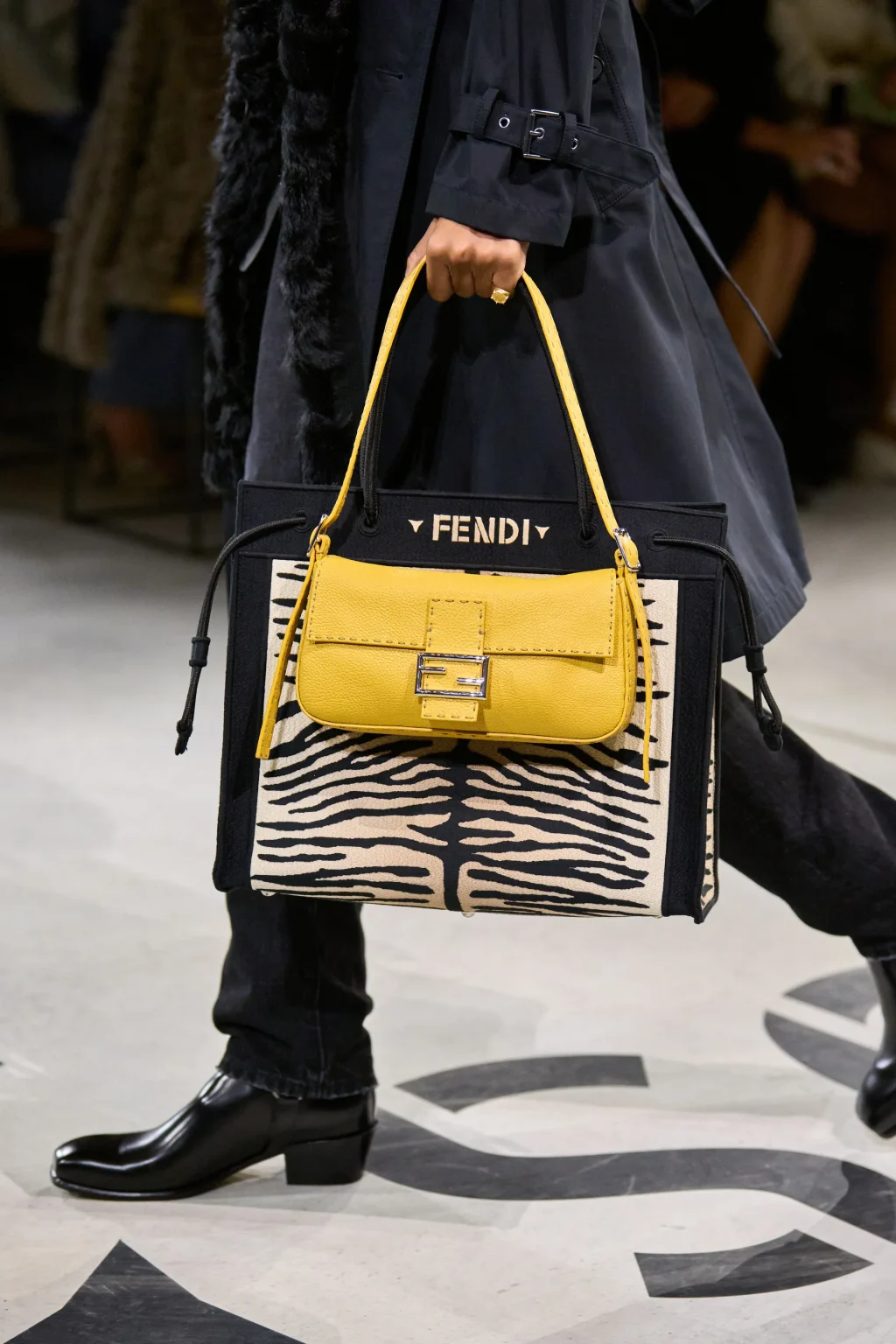
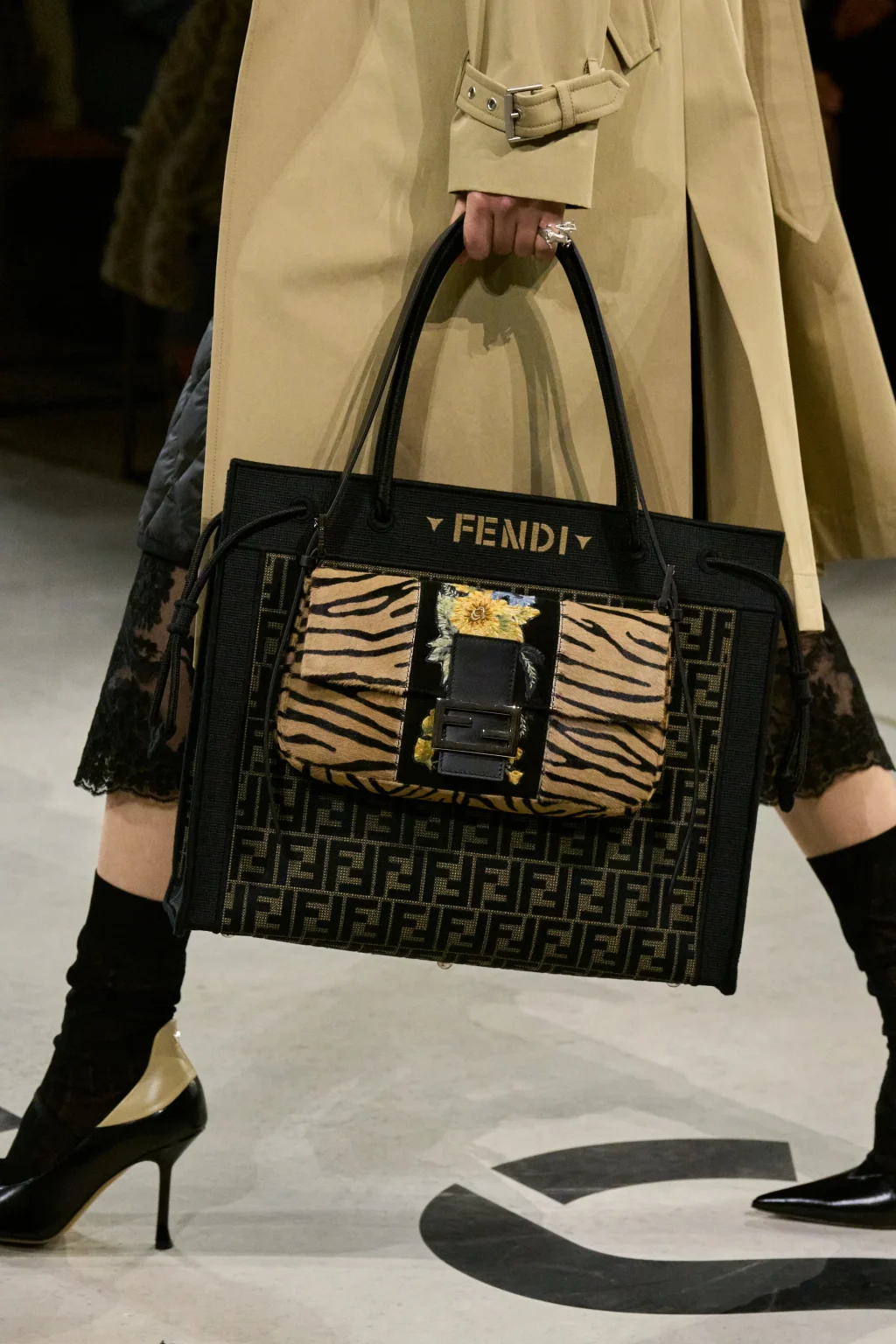
3. Black as the ultimate merchandising tool
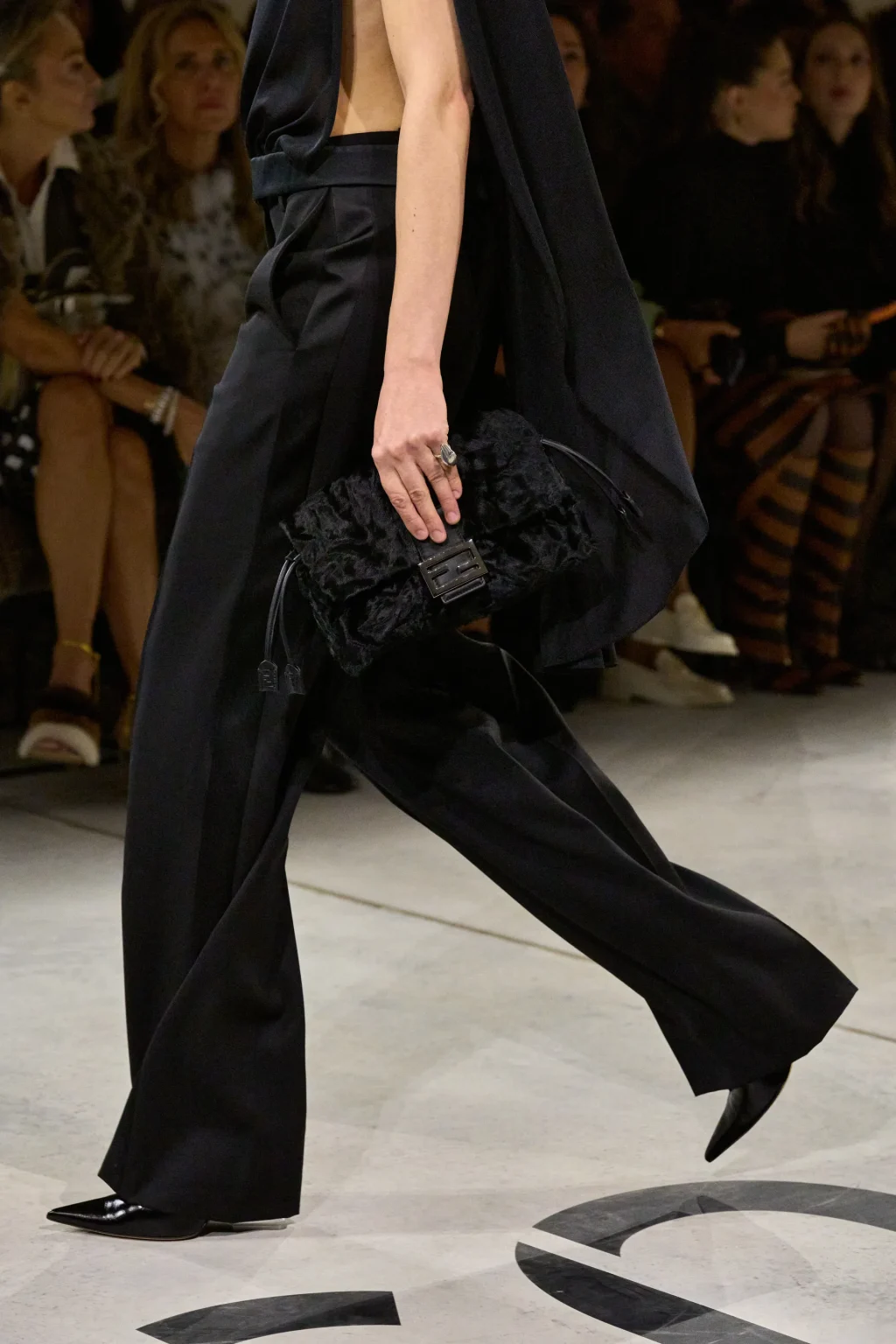
A black-dominant runway is also a retail argument: black bags photograph cleanly, age predictably, and feel timeless even when the styling is directional. Tagwalk’s data point supports the idea that Chiuri wanted this debut to read as coherent and instantly wearable.
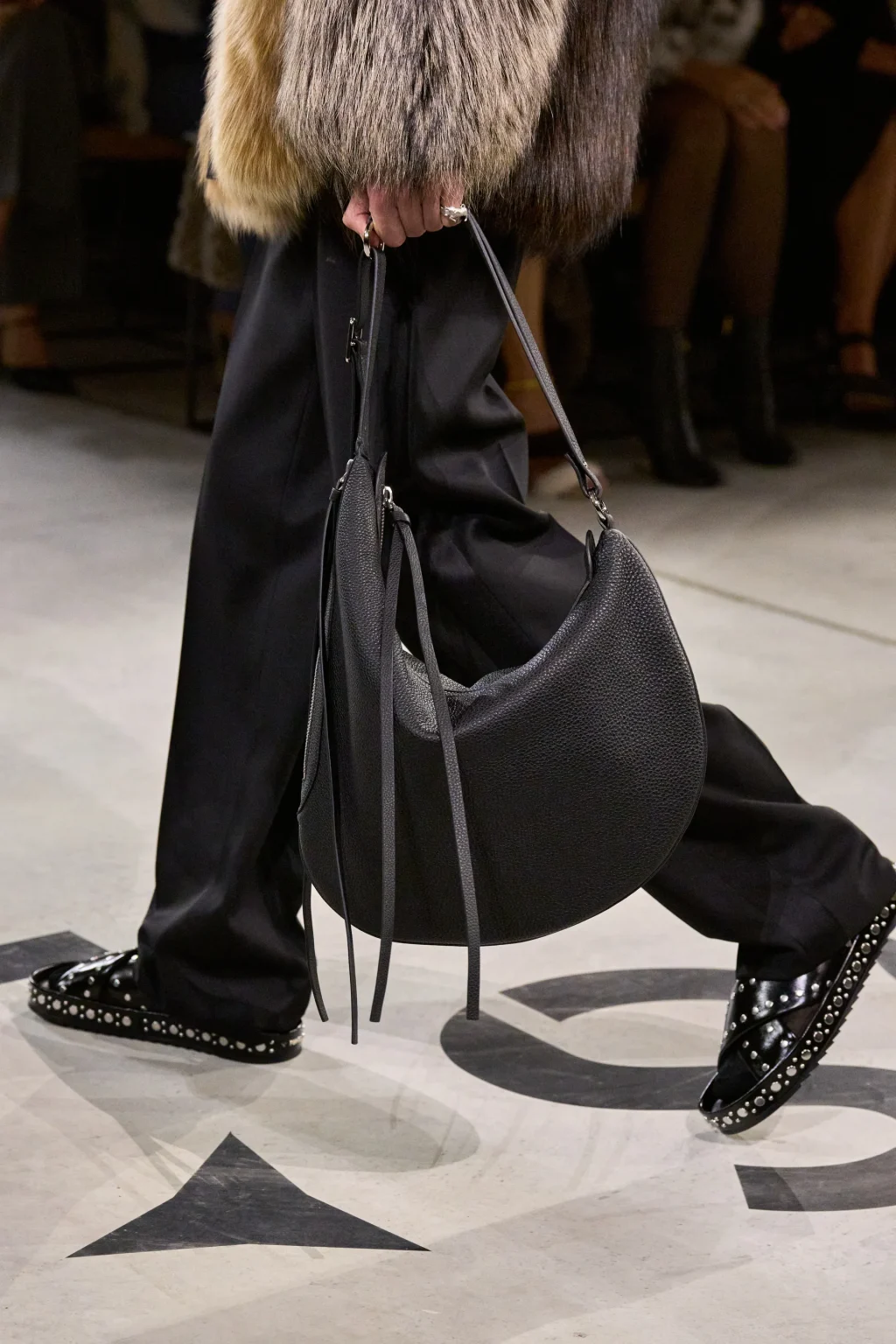
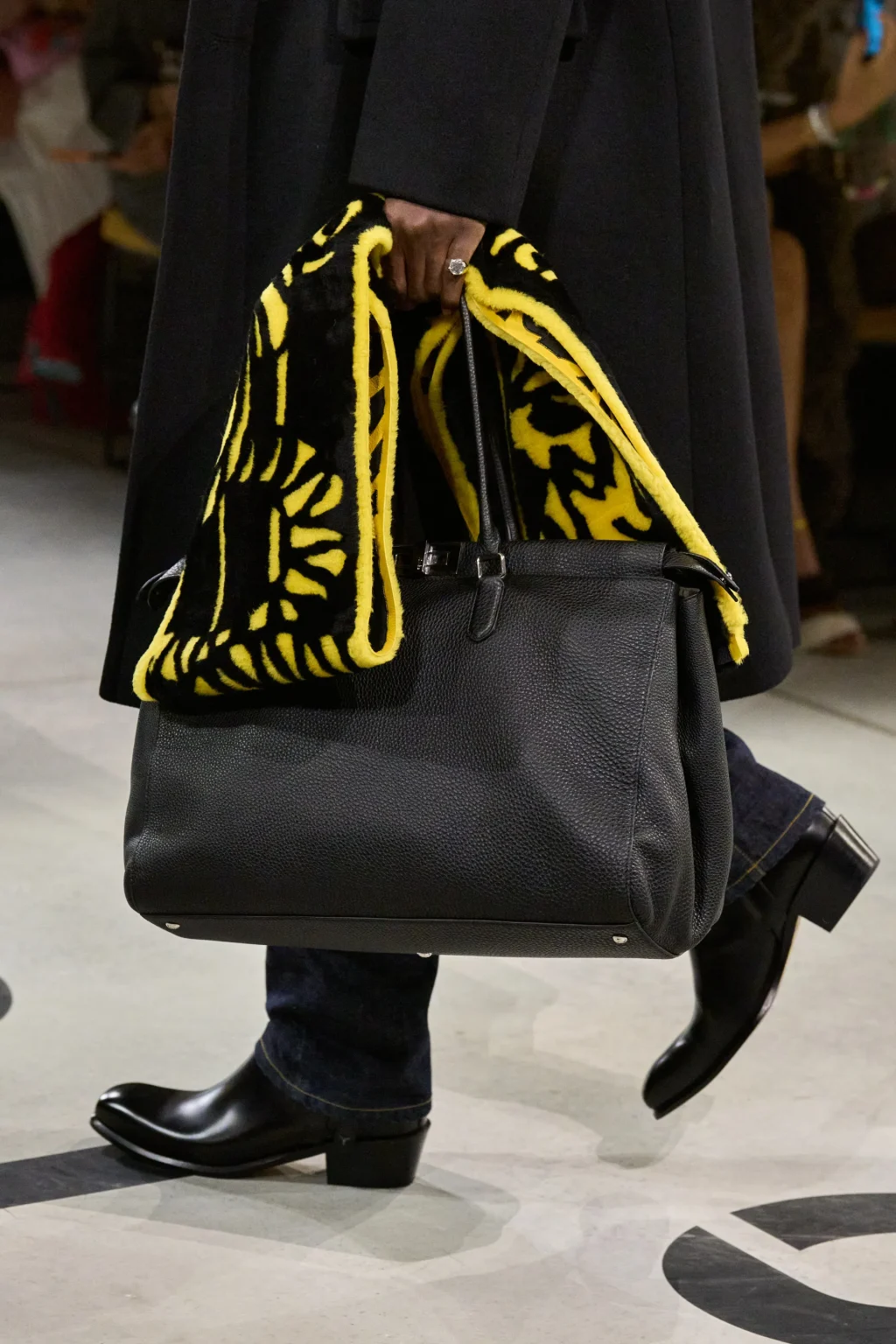
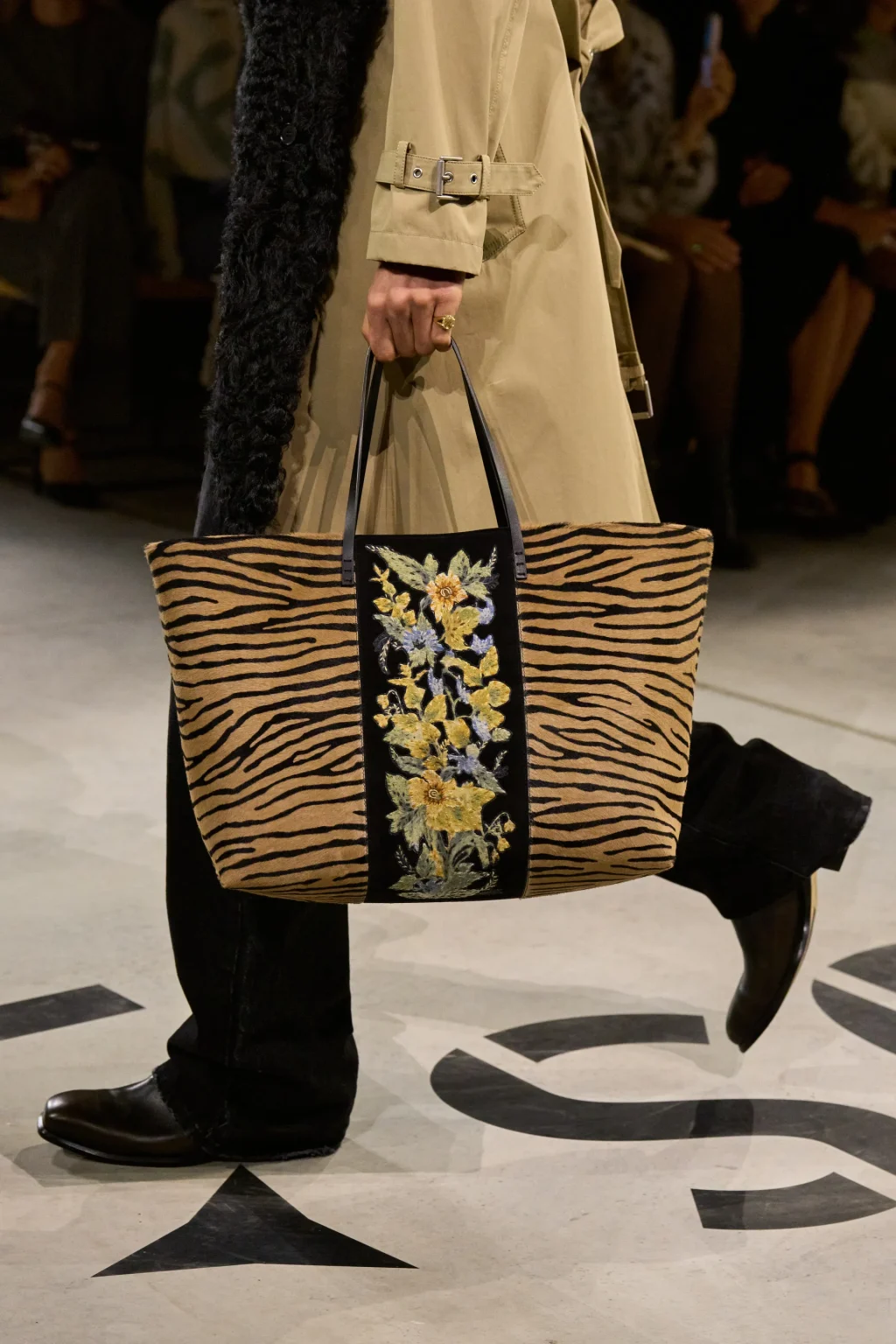
4. Texture wars: lace, fur, leather, and the space between
Even without your bag images yet, the show discourse makes one thing obvious: surface is a main character this season. Lace and fur aren’t “decorations”; they’re material ideologies—transparent vs tactile, fragile vs durable, intimacy vs armor.