Dior Fall–Winter 2026–2027 was staged where Paris rehearses itself: the Jardin des Tuileries, commissioned by Catherine de’ Medici and refined under Louis XIV—less a park than a social ritual. Anderson treated it as a city mechanism: the promenade, the glance, the silent ranking system of who is seen and how. The show didn’t land in the garden; it folded the garden into the show, building an imitation park inside the Tuileries so the boundary between the real stroll and the staged one blurred on purpose.

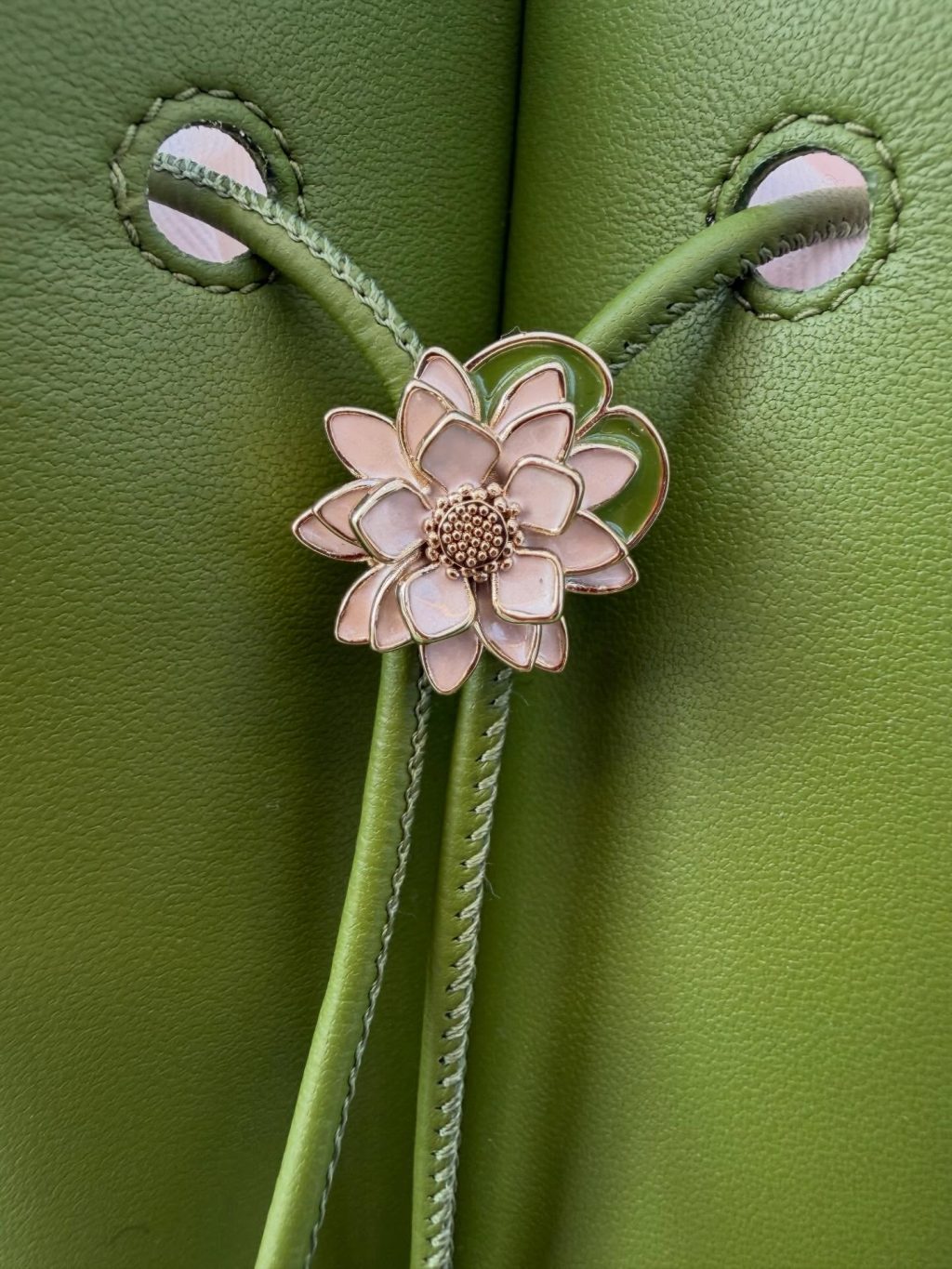
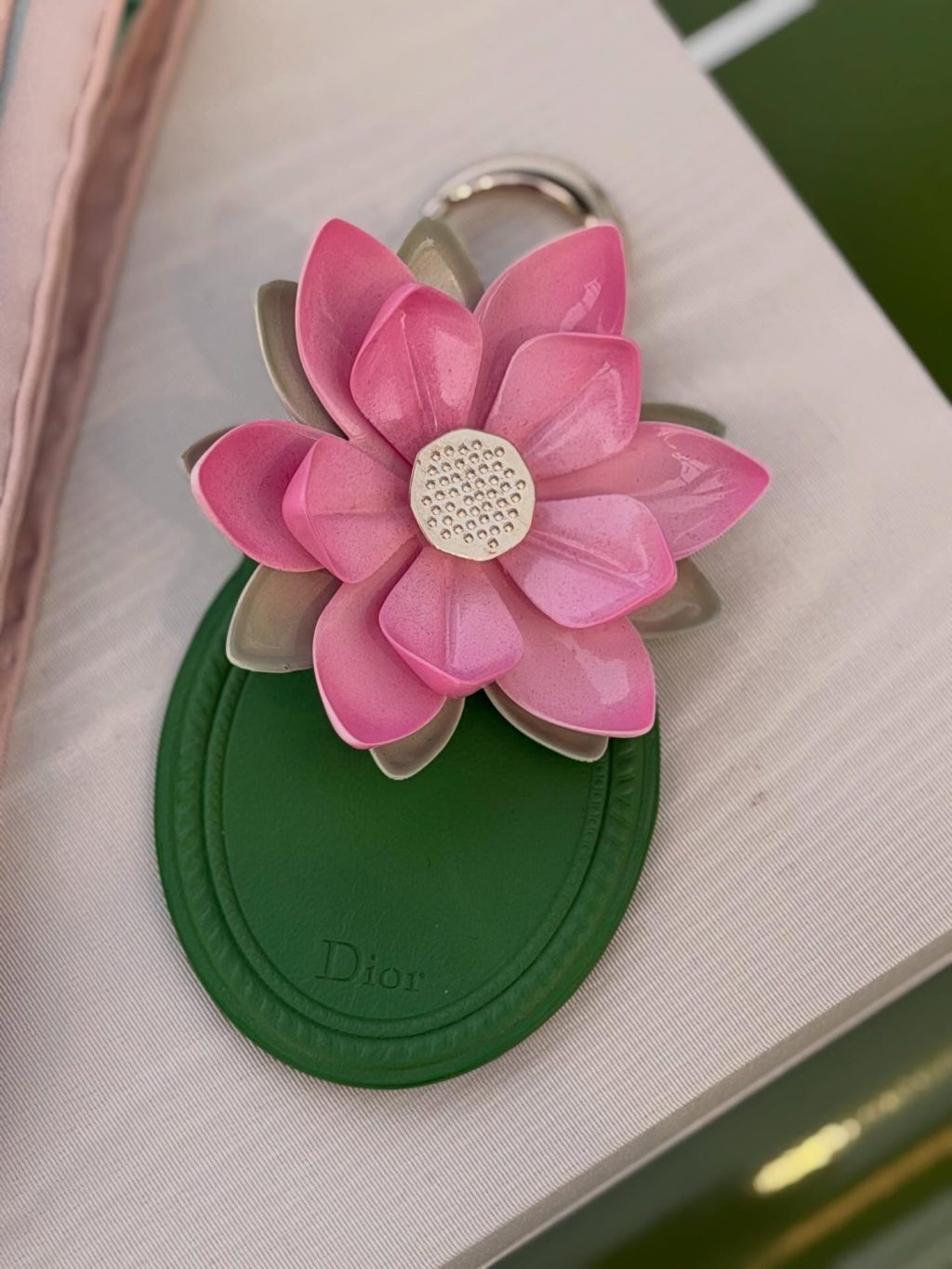
The show space mirrored this dynamic. An imitation park was constructed within the Tuileries itself, blurring the boundaries between the real and the unreal. Artificial water lilies were placed on the surface of the iconic Bassin Octogonal and floral prints on garments echoed the real flowers in the park beyond.
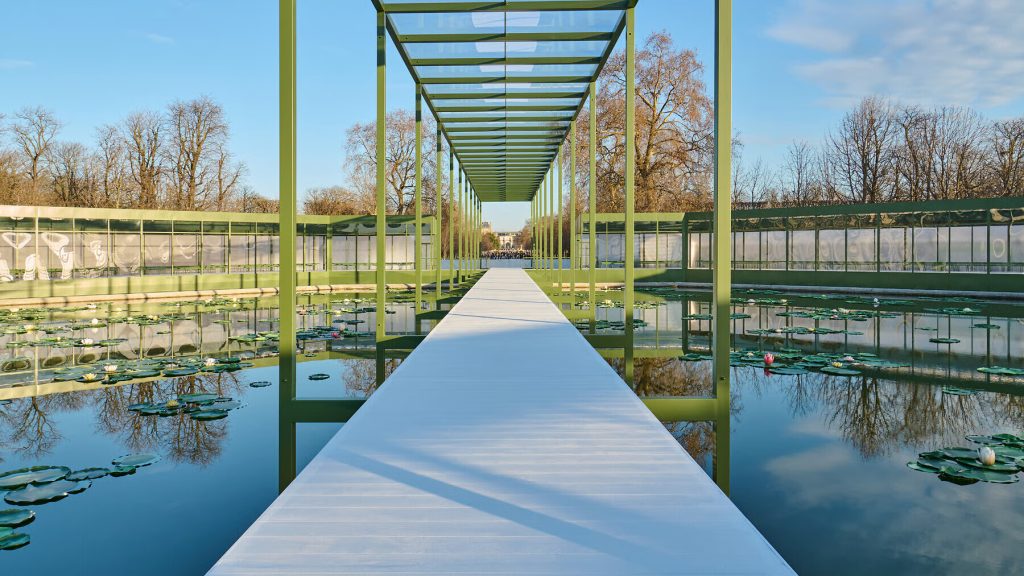
The set was designed like a diagram of Parisian life. The runway traced the perimeter of the Bassin Octogonal. Guests sat around the water, facing each other as much as the clothes—like the green Tuileries chairs, where strangers become a tableau and conversation is a form of performance. A bridge cut across the pond: a literal passage and a metaphor for Anderson’s Dior right now—linking codes people already know (Bar tailoring, florals, the idea of “Dior-ness”) with a newer, more observational mood.
“This collection is about the constant flow of ideas that is so typical of Parisian life, and the spectacle of the everyday.” Jonathan Anderson
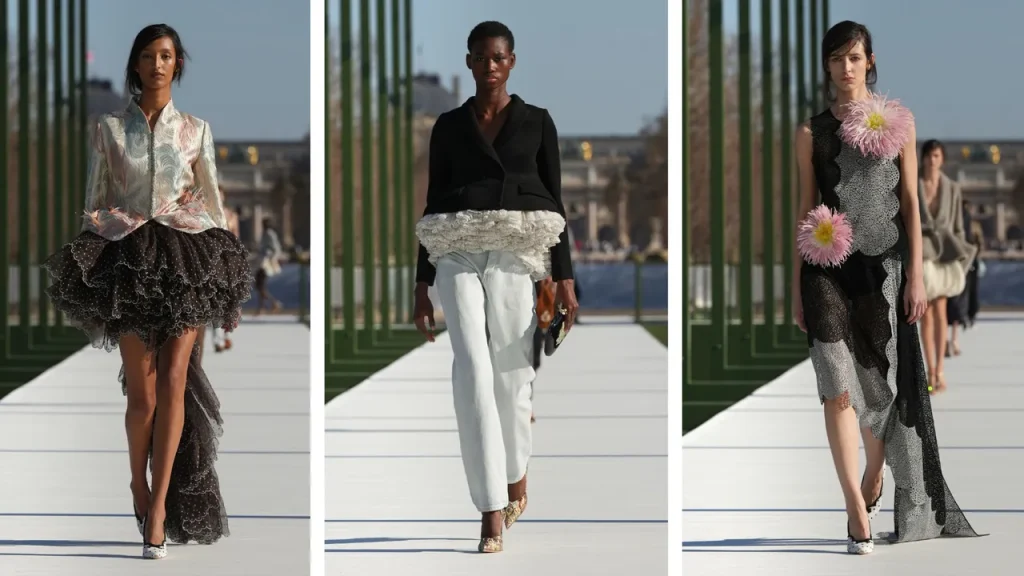
Anderson called it “the spectacle of the everyday,” but the point wasn’t everyday basics—it was everyday theater. The collection leaned into florals not as prettiness, but as a language of Paris: bouquets, corsage-scale earrings, petal constructions that flirt with couture memory, and a silhouette softened into movement—fabric that behaves like air when you walk, not like armor when you stand still. Even the timing—mid-afternoon—insisted on daylight clarity. This was Dior for being witnessed, not just photographed.
The invitation, properly treated
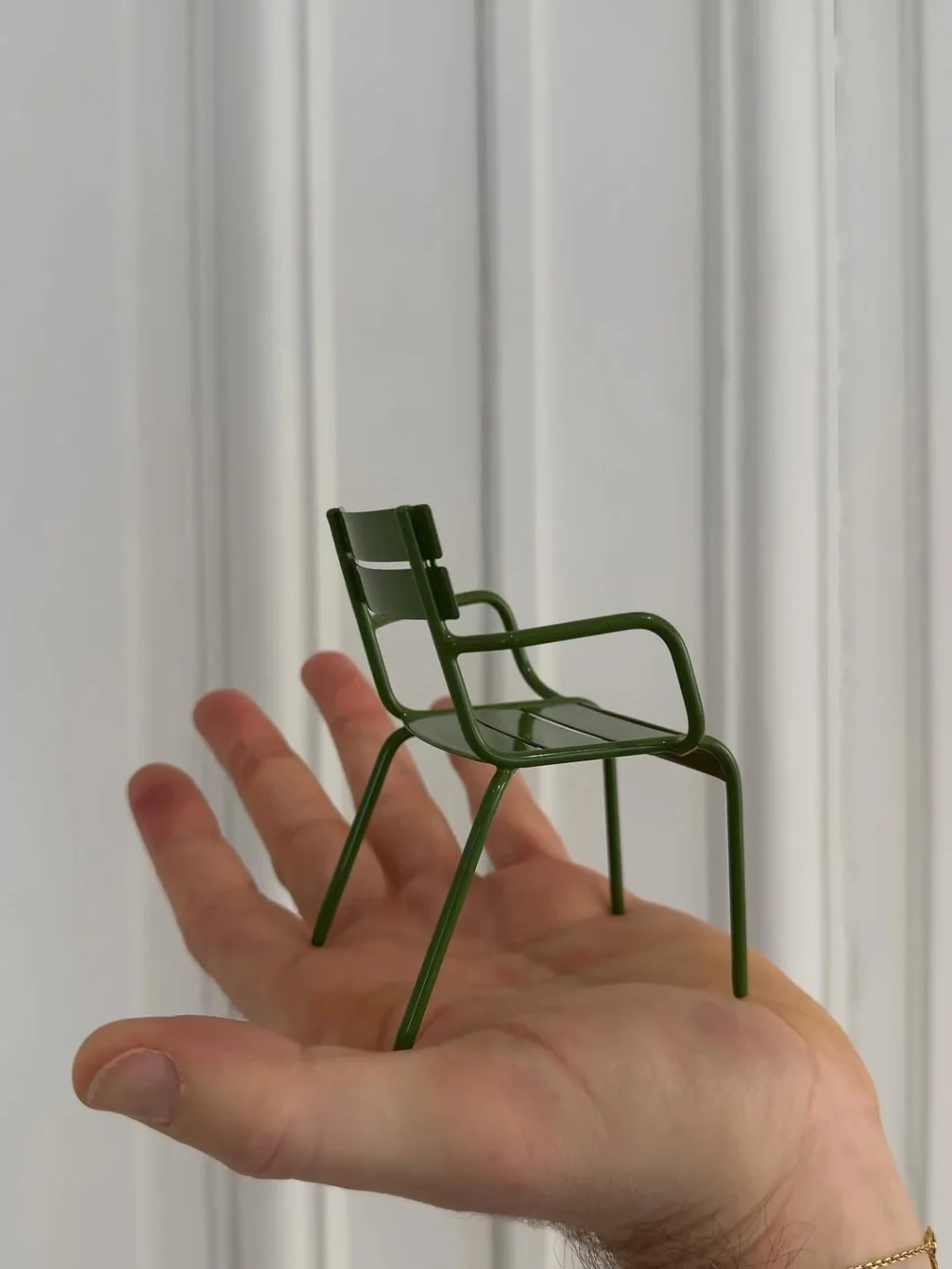
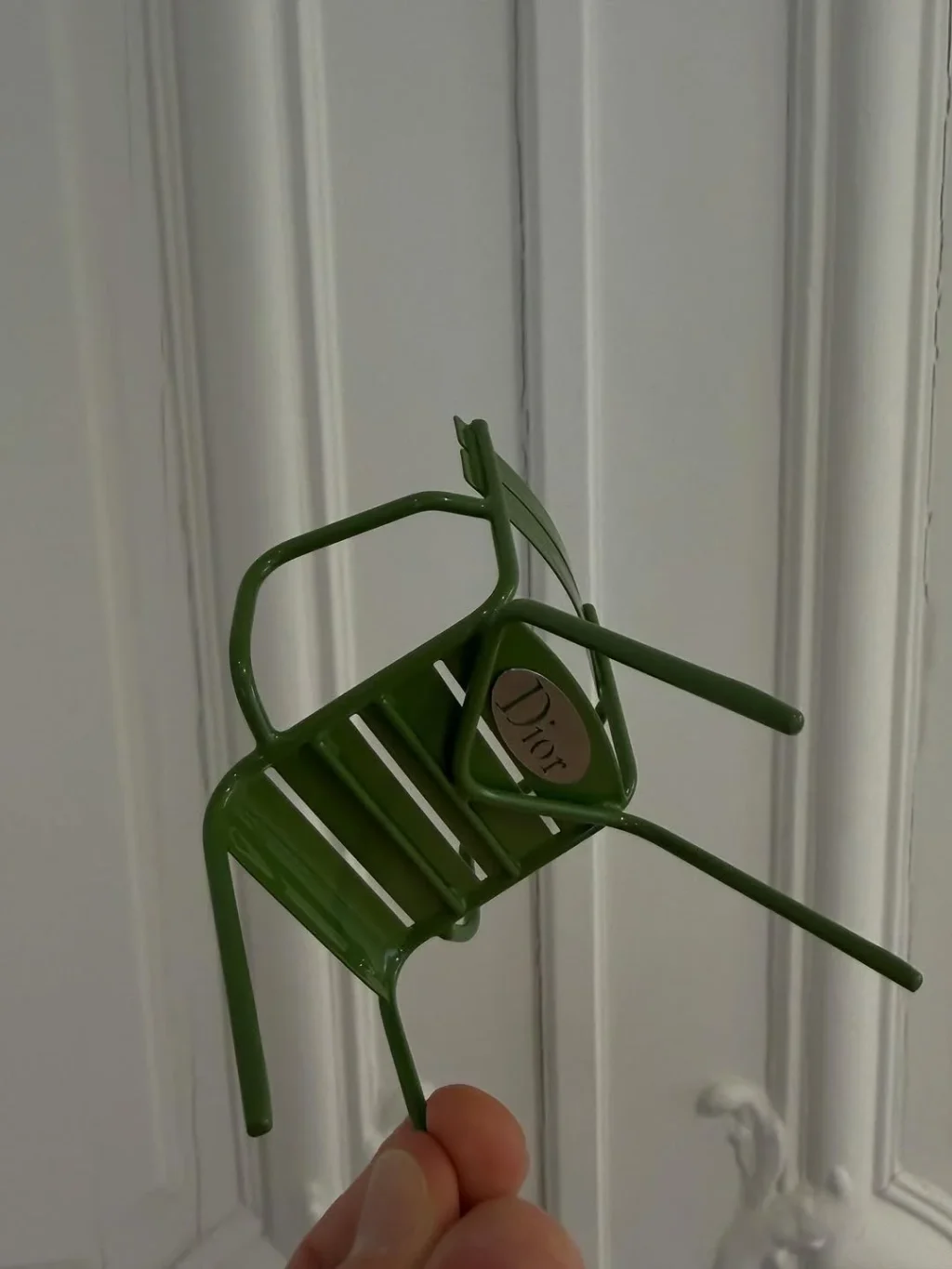
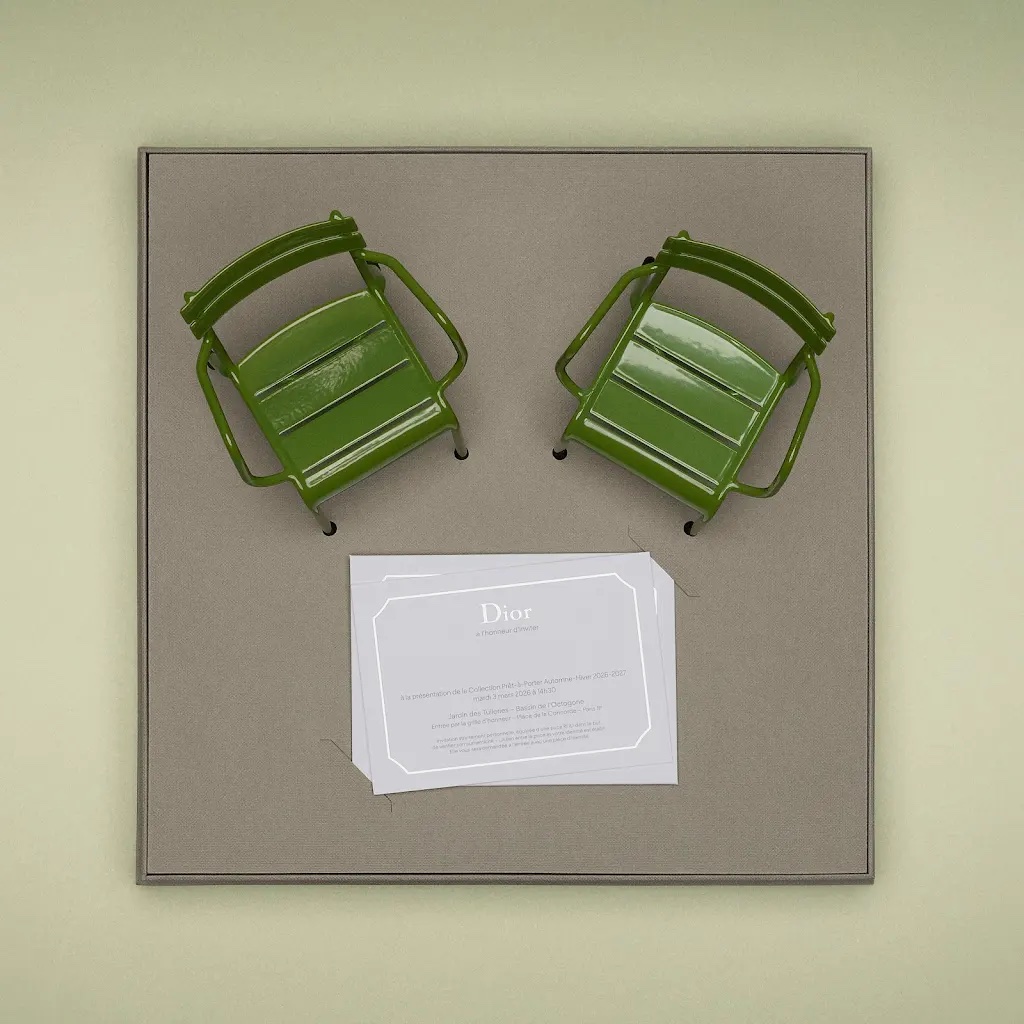
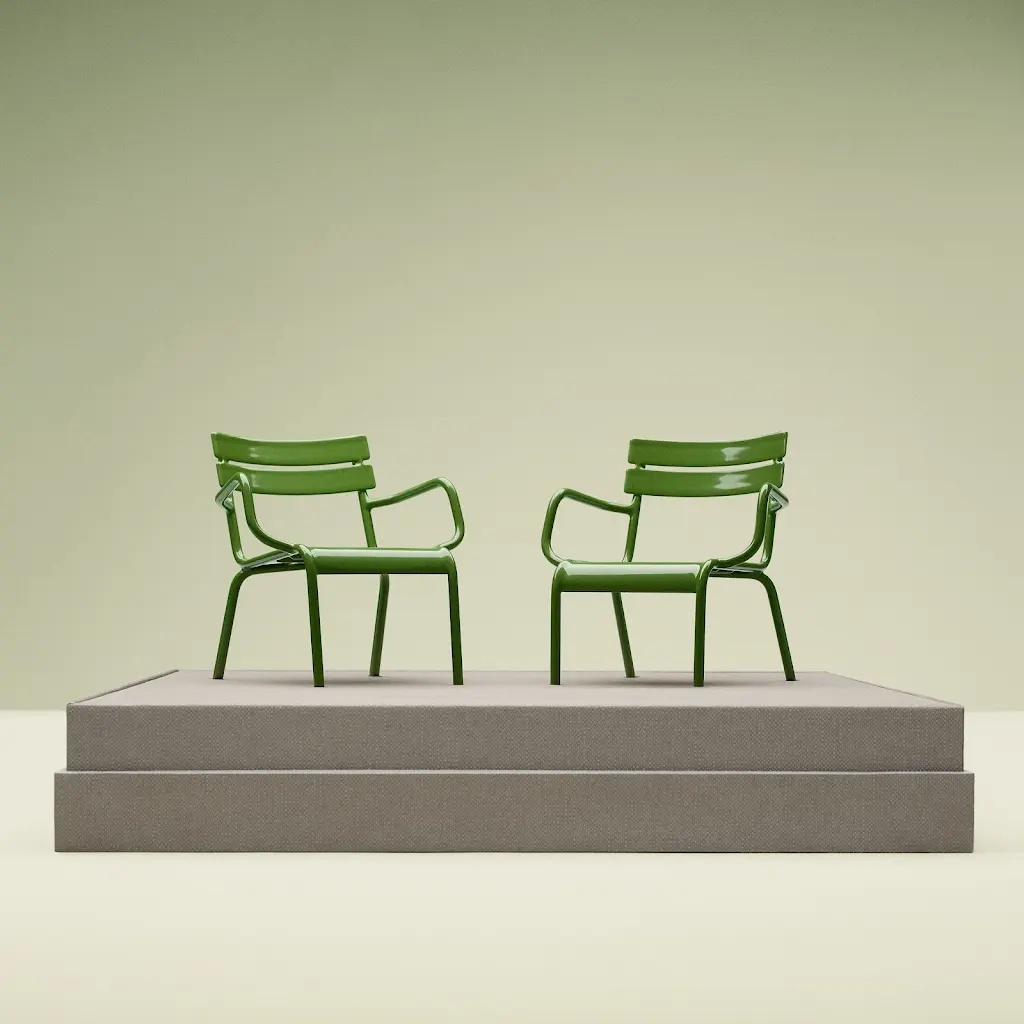
The invitation was the smartest kind of branding: not a logo, a prop. Miniature versions of the Tuileries chairs arrived as the invite—an object you could keep, a clue you could decode. It told guests the concept before a single look came out: this show is about sitting, watching, being watched—Paris as choreography.
The Bags: Dior Fall/Winter 2026–2027, Model by Model
Accessories at Dior FW26/27 weren’t treated as “add-ons”—they were styled as props for movement, the kind of bags you’d actually carry through the Tuileries: small enough to hold close, structured enough to read instantly, and designed to look good in motion, not just in still life. The show’s bag language split into two moods. On one side: architectural miniatures—wedge shapes, trapeze bodies, tight top handles, hardware placed like punctuation. These pieces felt intentionally composed, the way Parisian dressing often does: effortless at first glance, engineered on the second. On the other side: soft, tactile carriers—knit/bouclé messenger shapes and plush textures that introduced a “worn-in” note, like something you’ve owned for years but upgraded into Dior.
If you want the full Dior FW26 universe (beyond womenswear), my Dior Fall/Winter 2026 menswear bags guide breaks down the silhouettes, materials, and the sharper, more functional direction of the season.
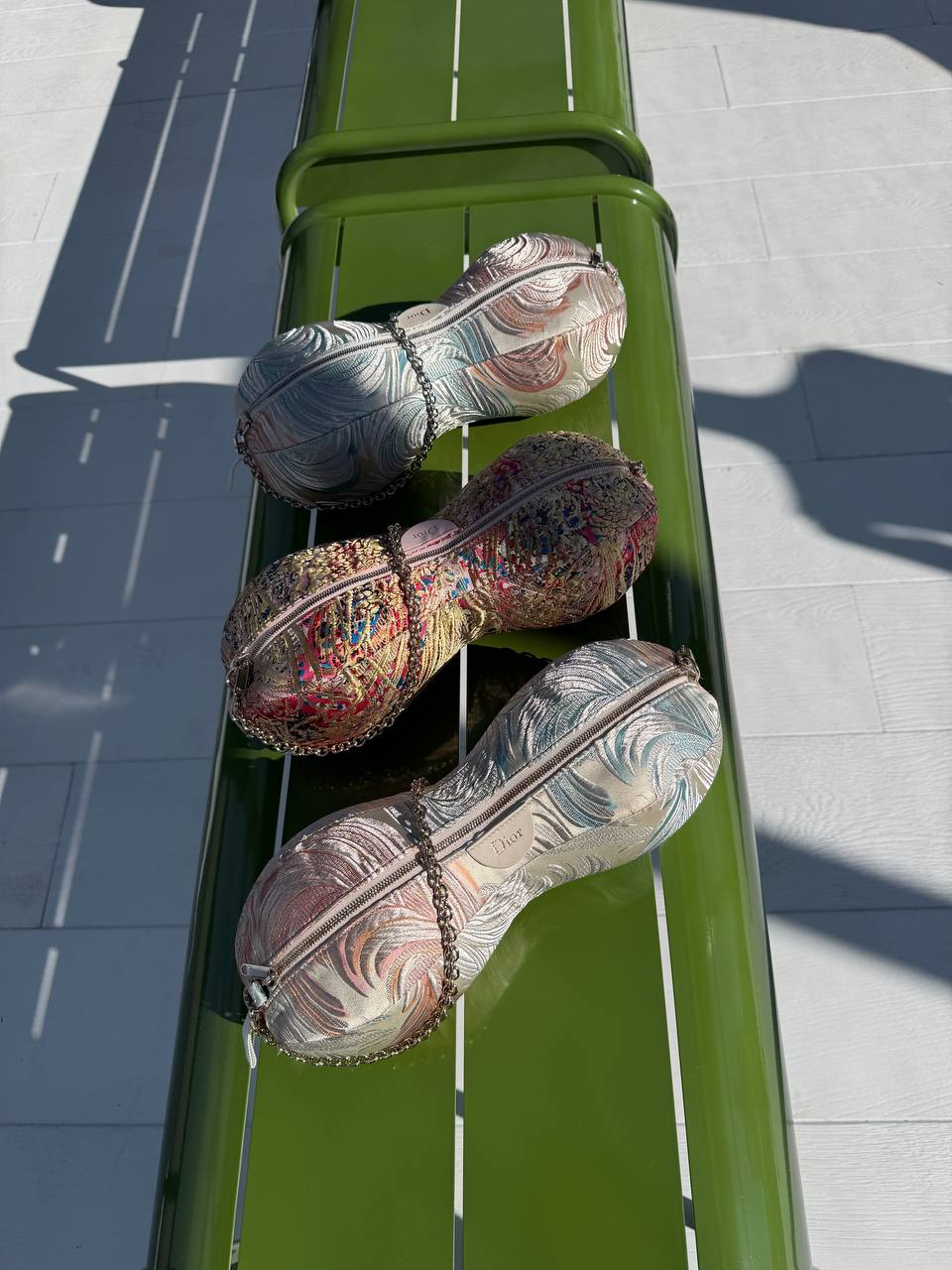
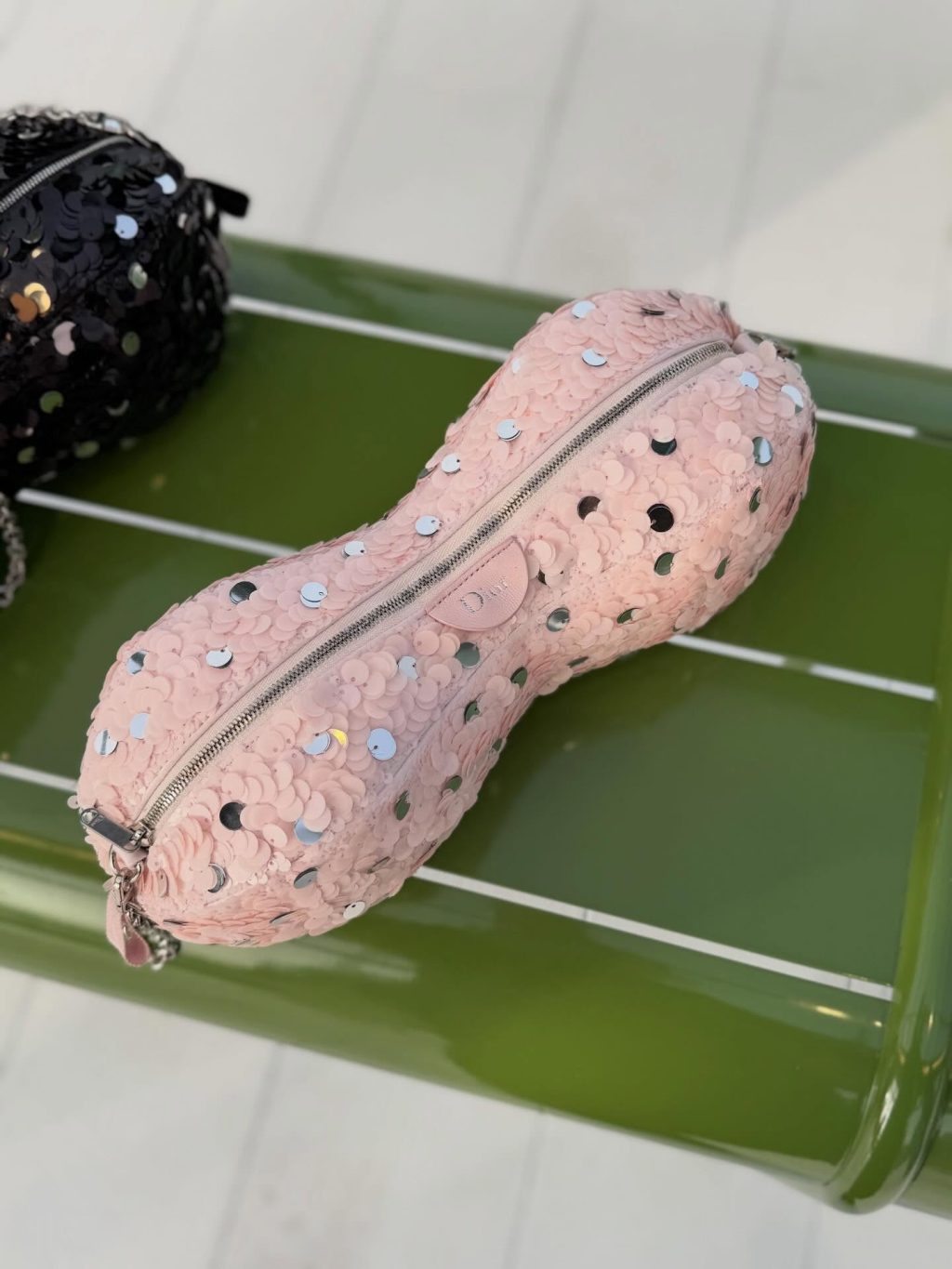
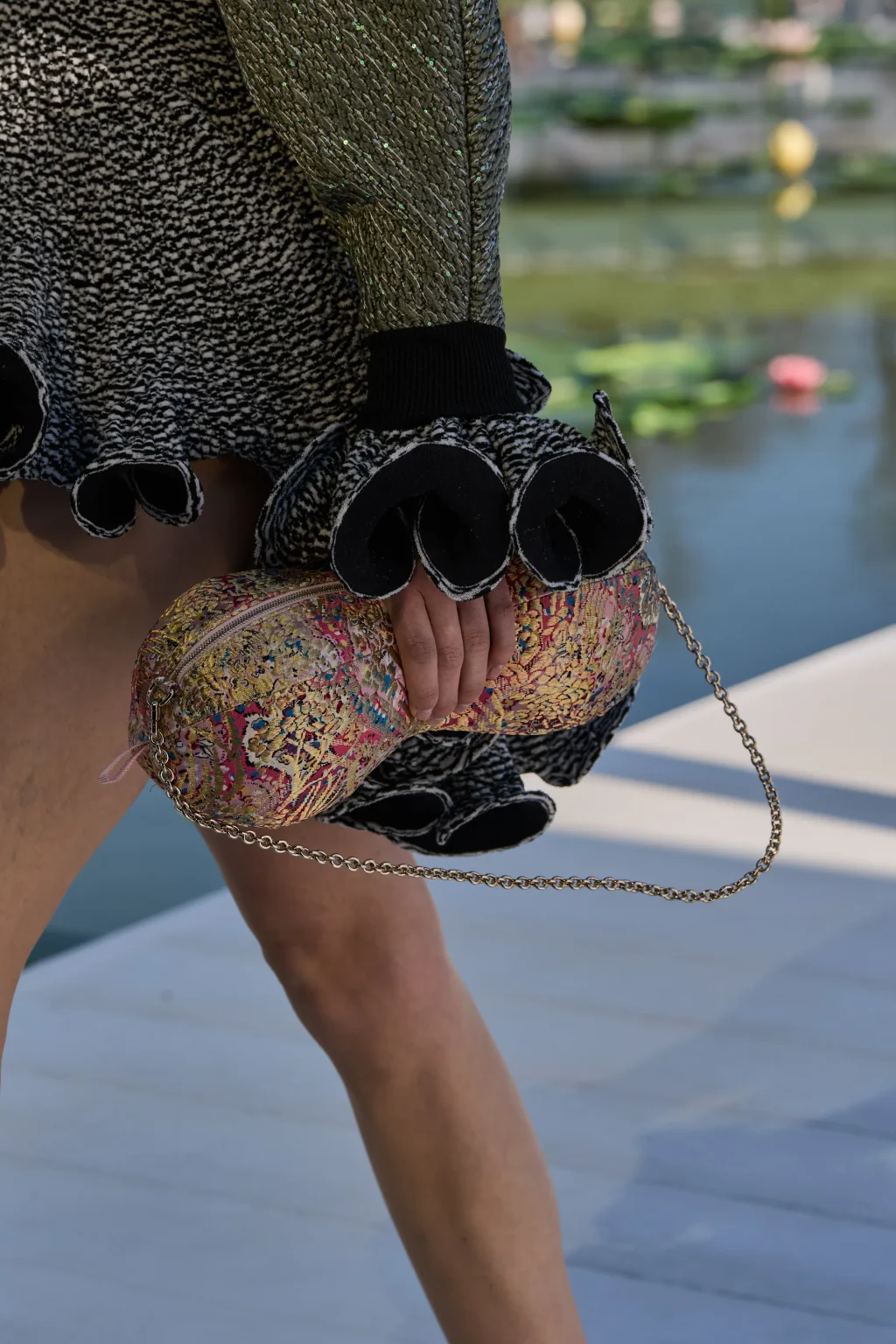
1. The Peanut Clutch
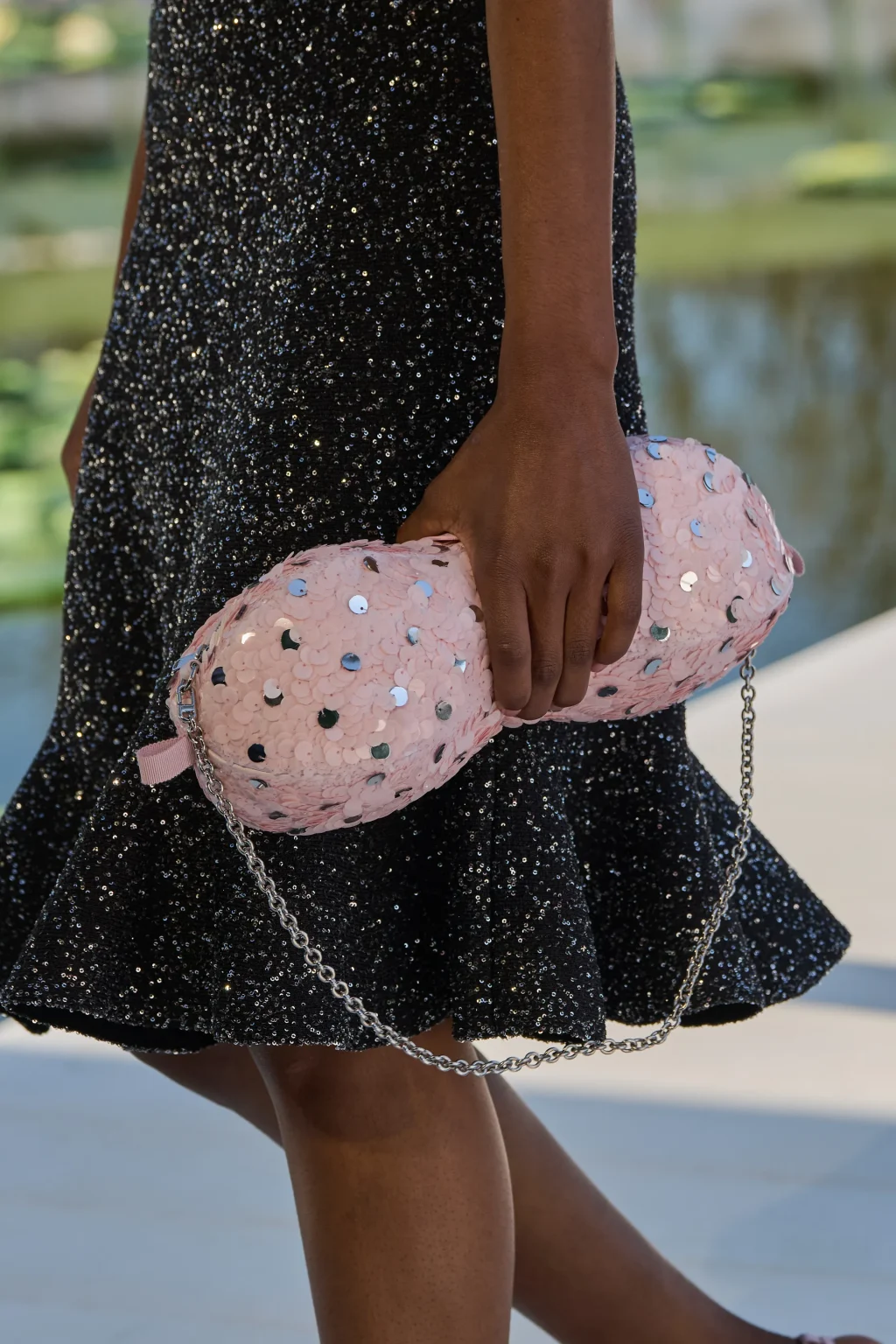
The season’s most viral object was also the least “Dior” on paper—which is exactly why it worked. Anderson introduced peanut-shaped clutches that felt like a surrealist pocket sculpture: humorous, tactile, and deliberately un-precious in silhouette. ELLE singled them out as a key accessory moment (the kind of detail that makes fashion feel like play again).
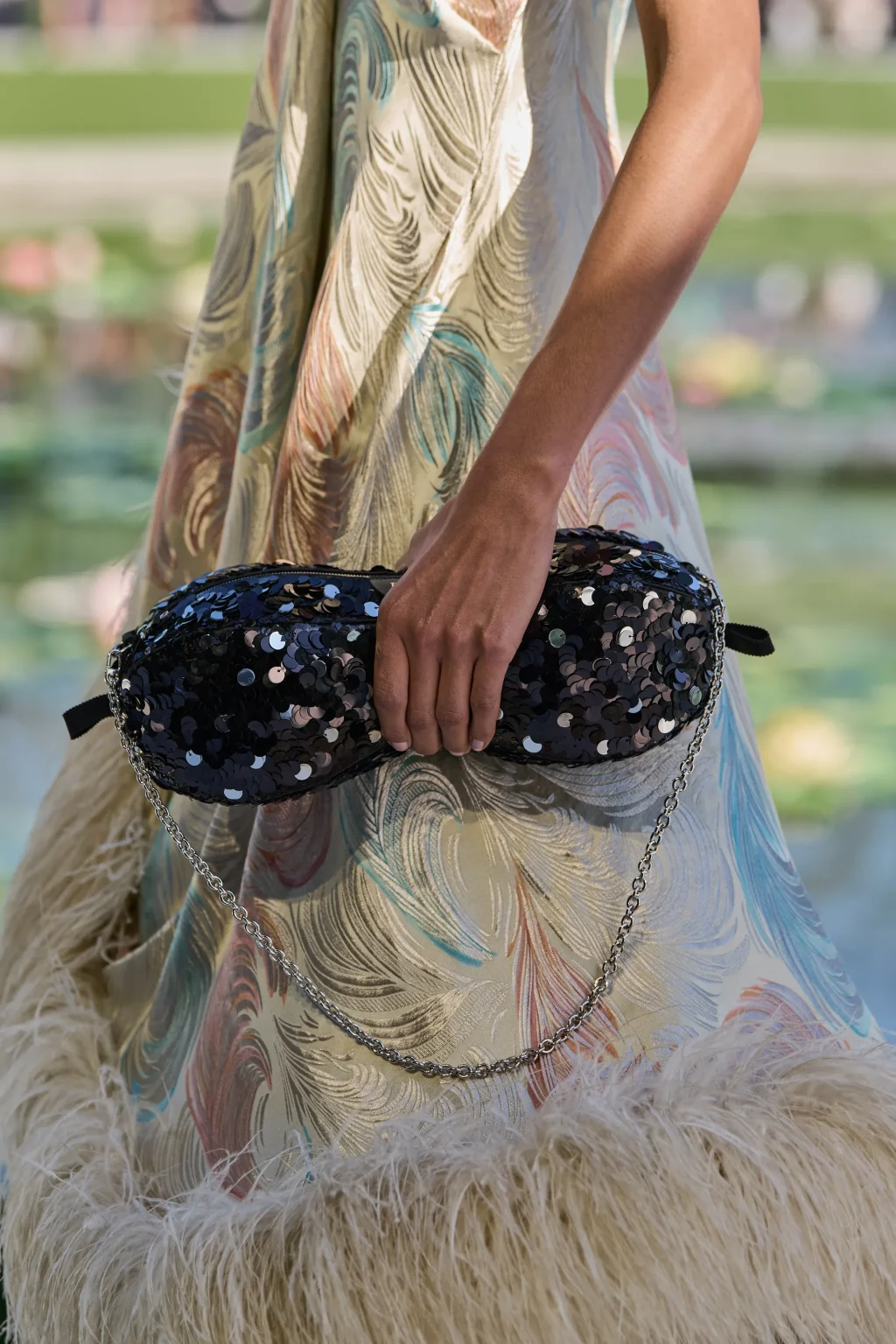
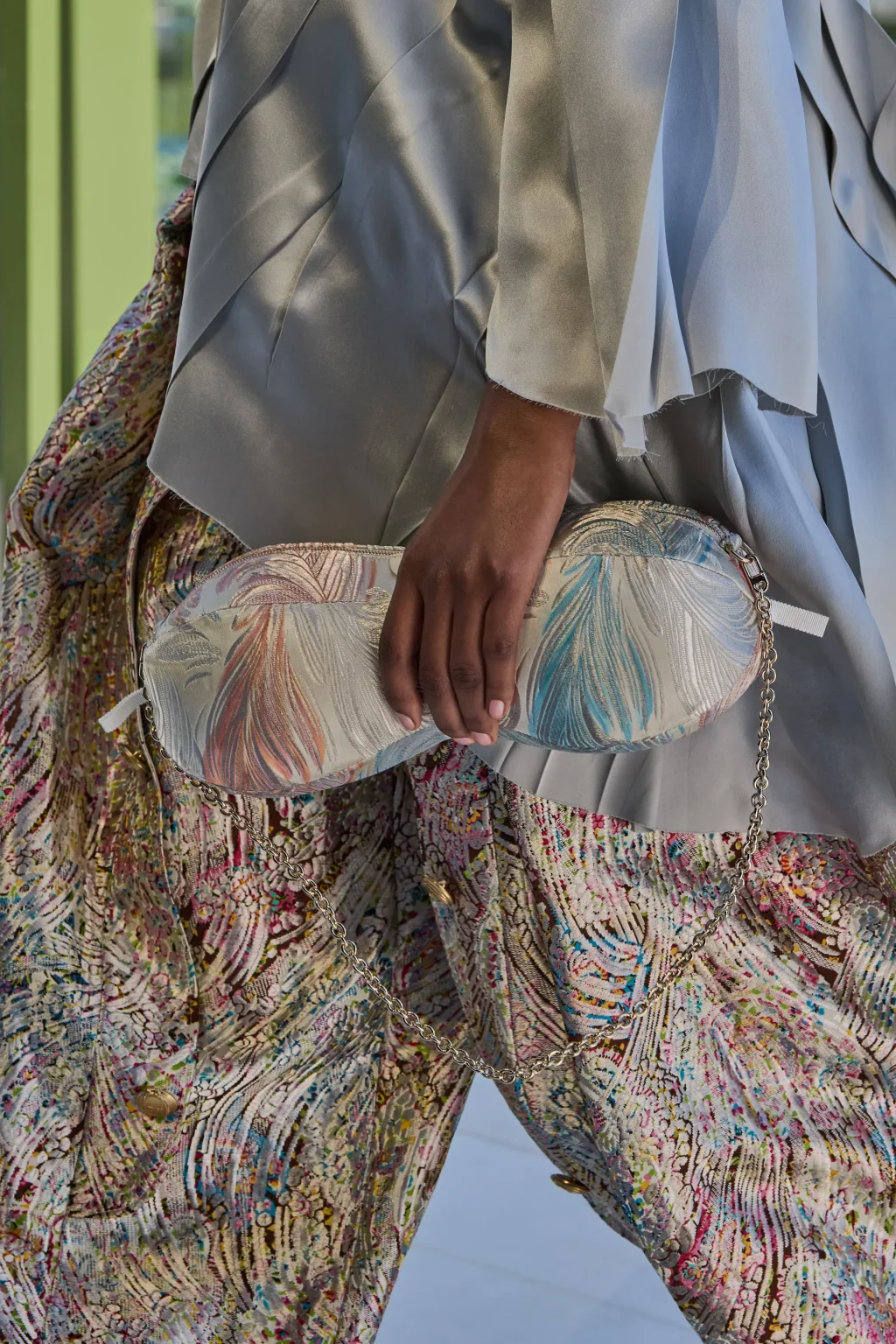
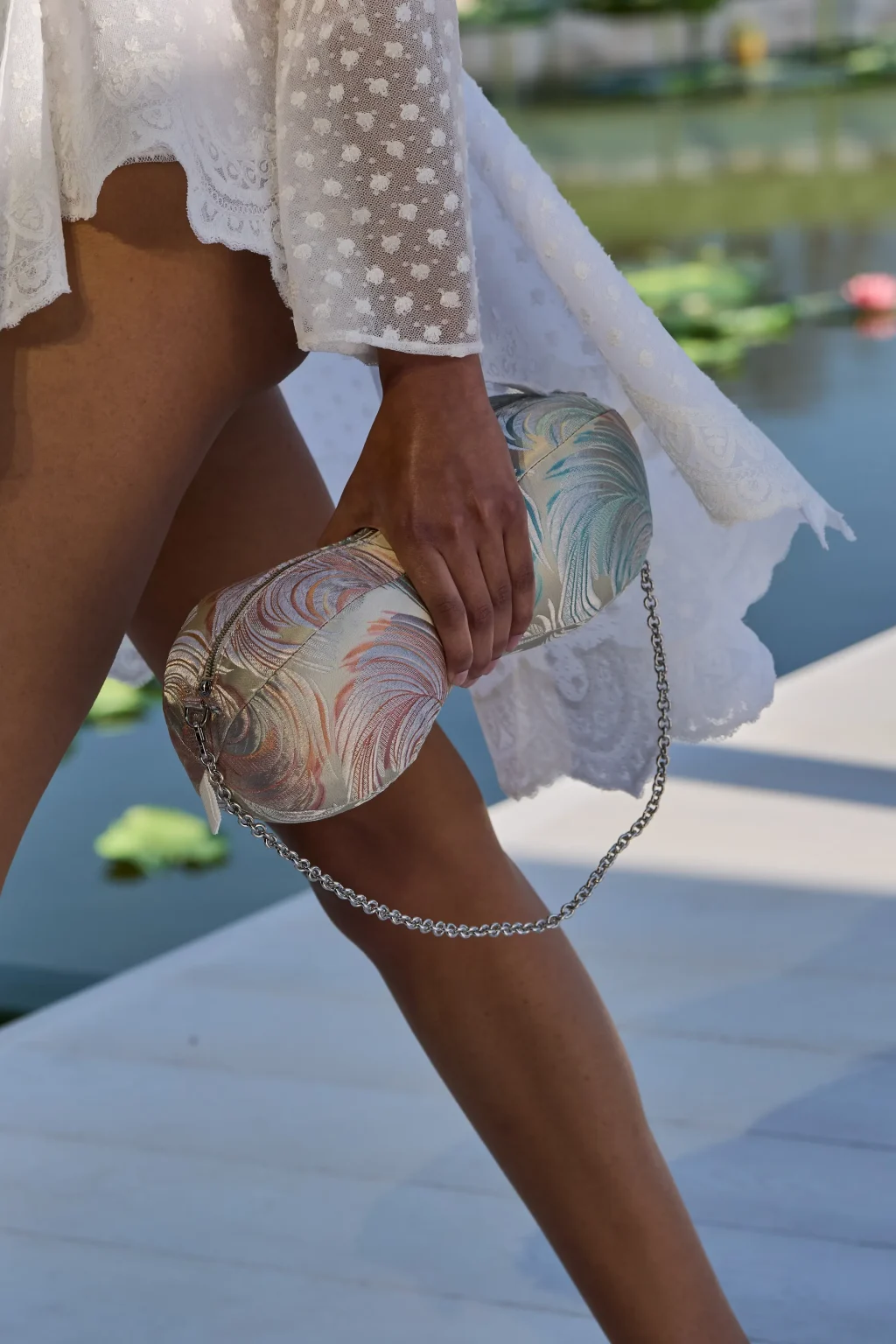
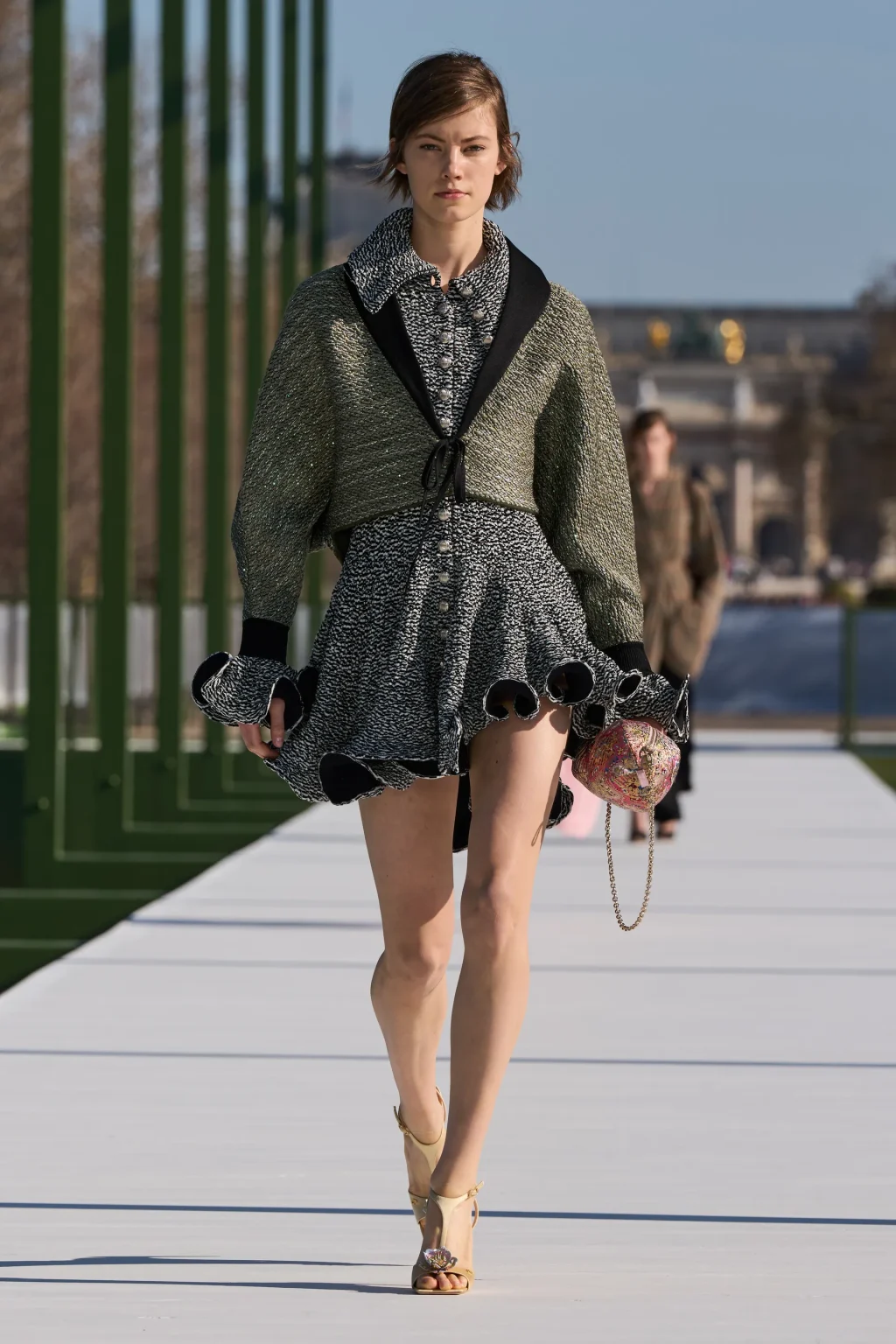
2. Cigale Bag
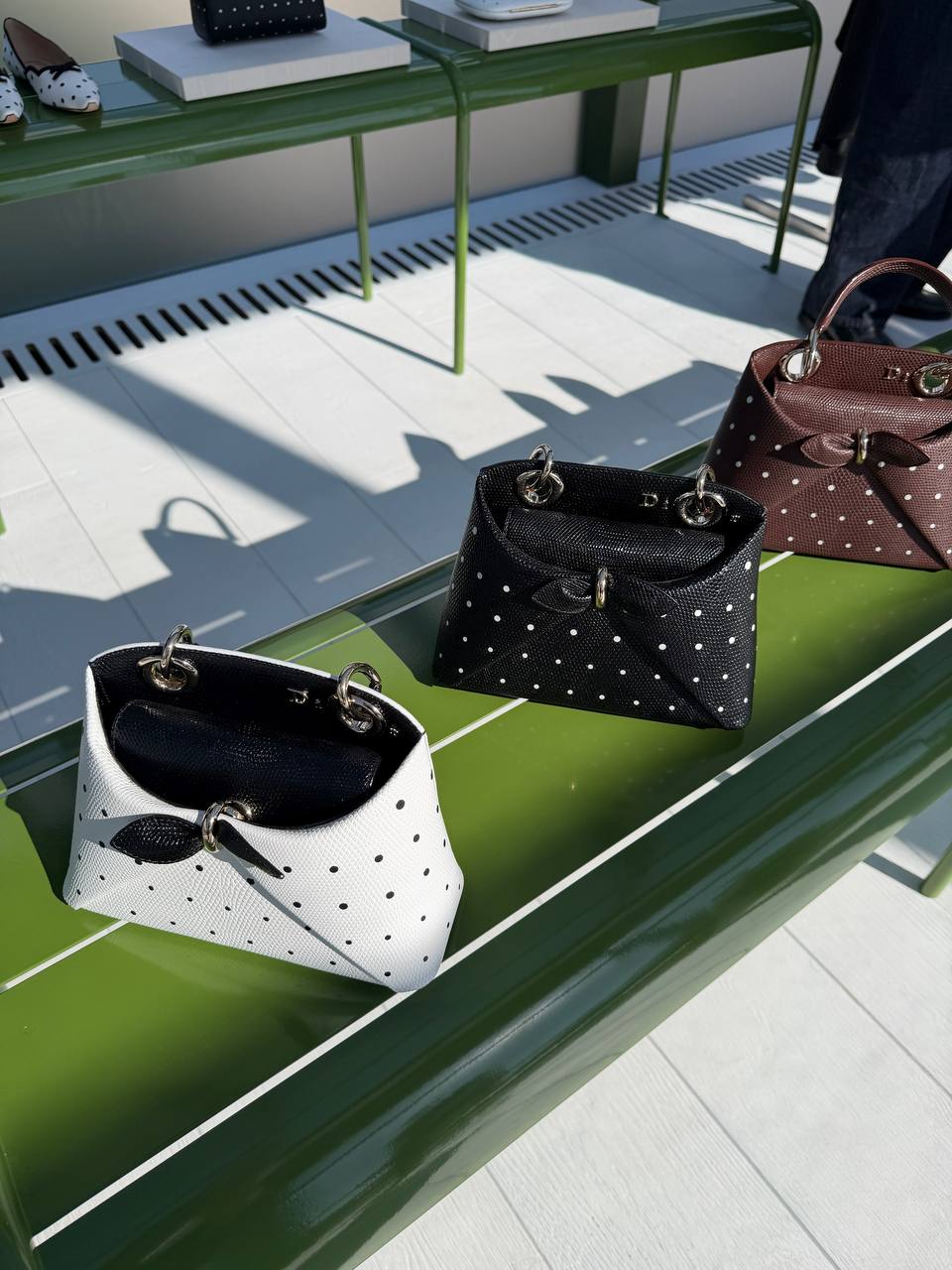
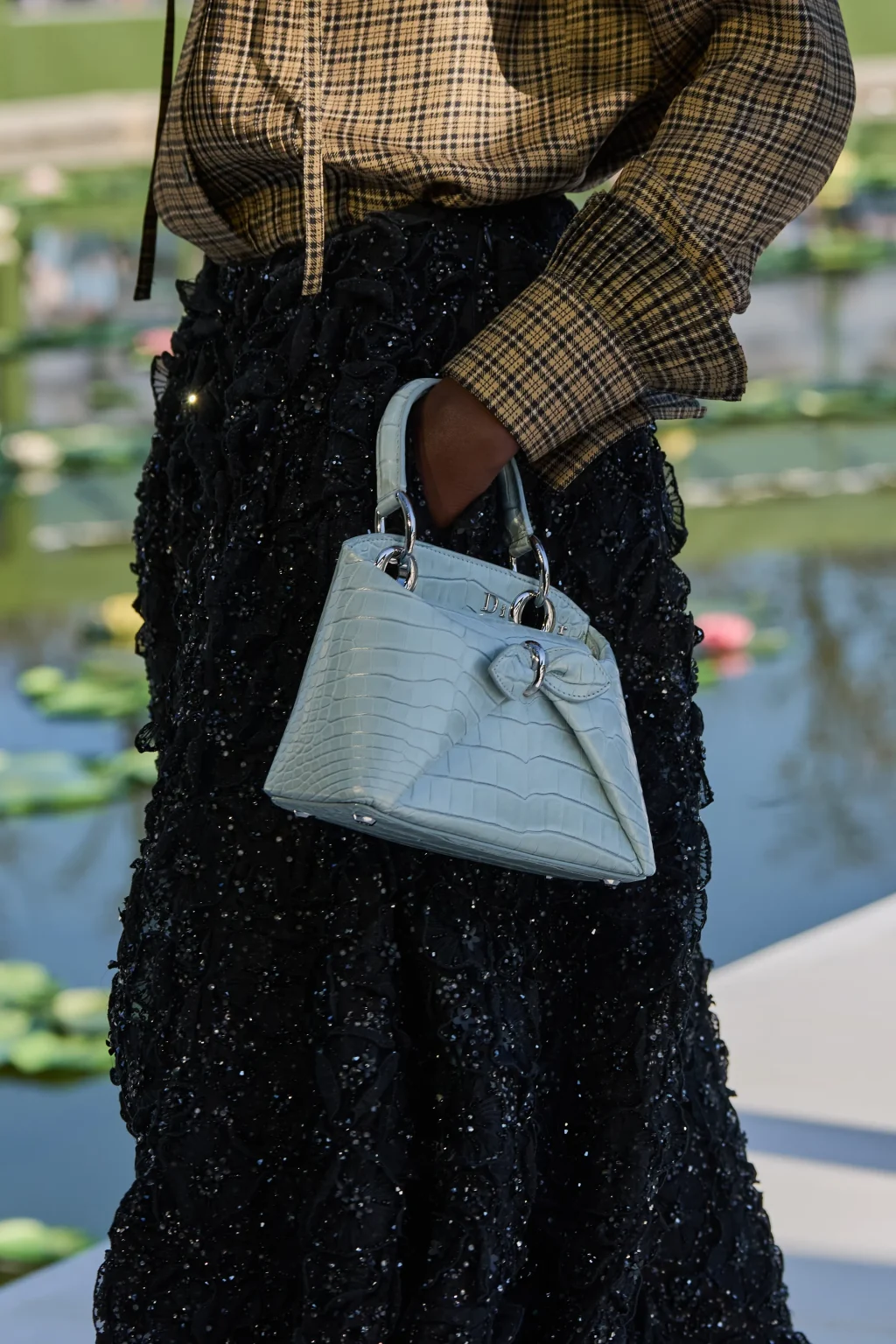
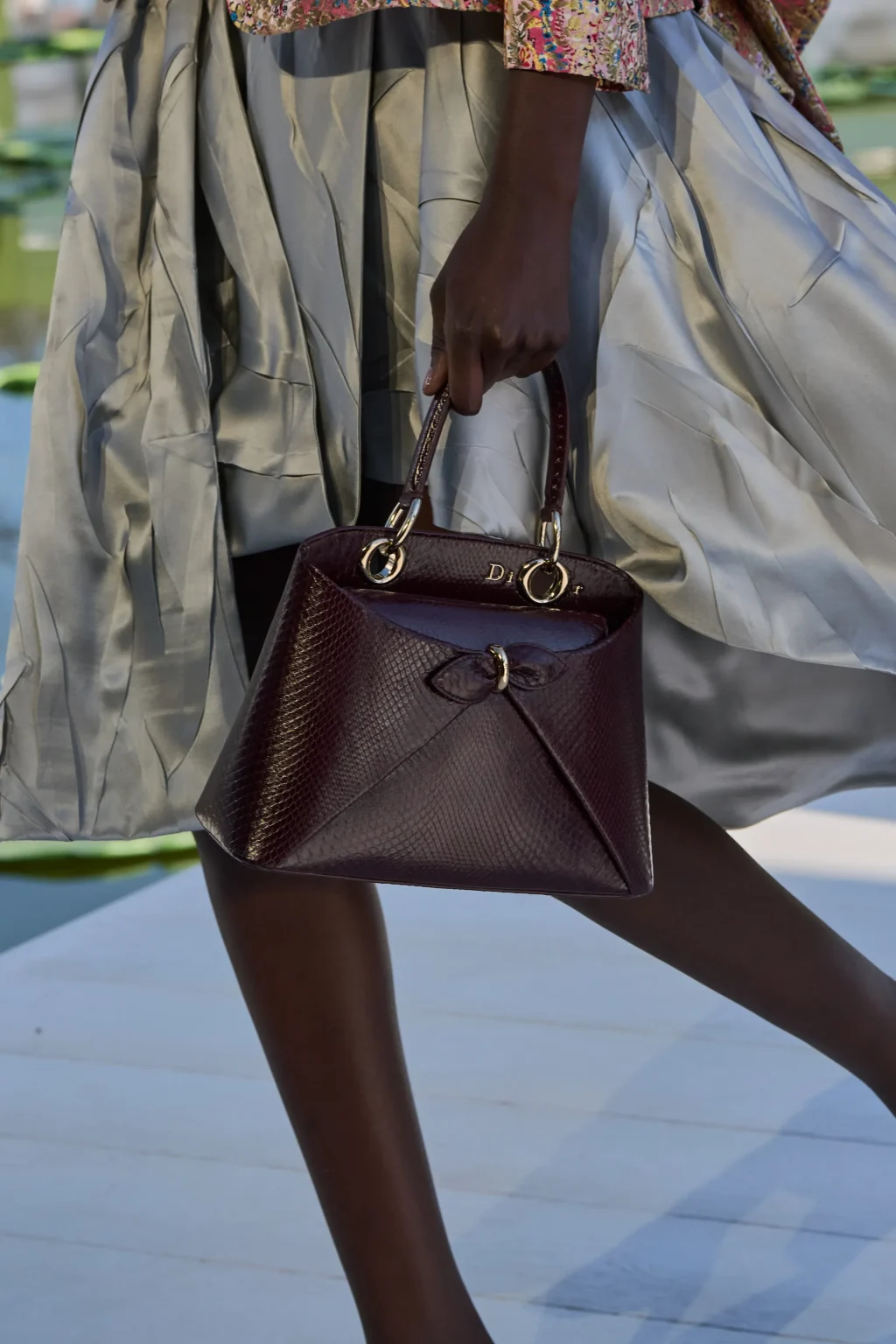
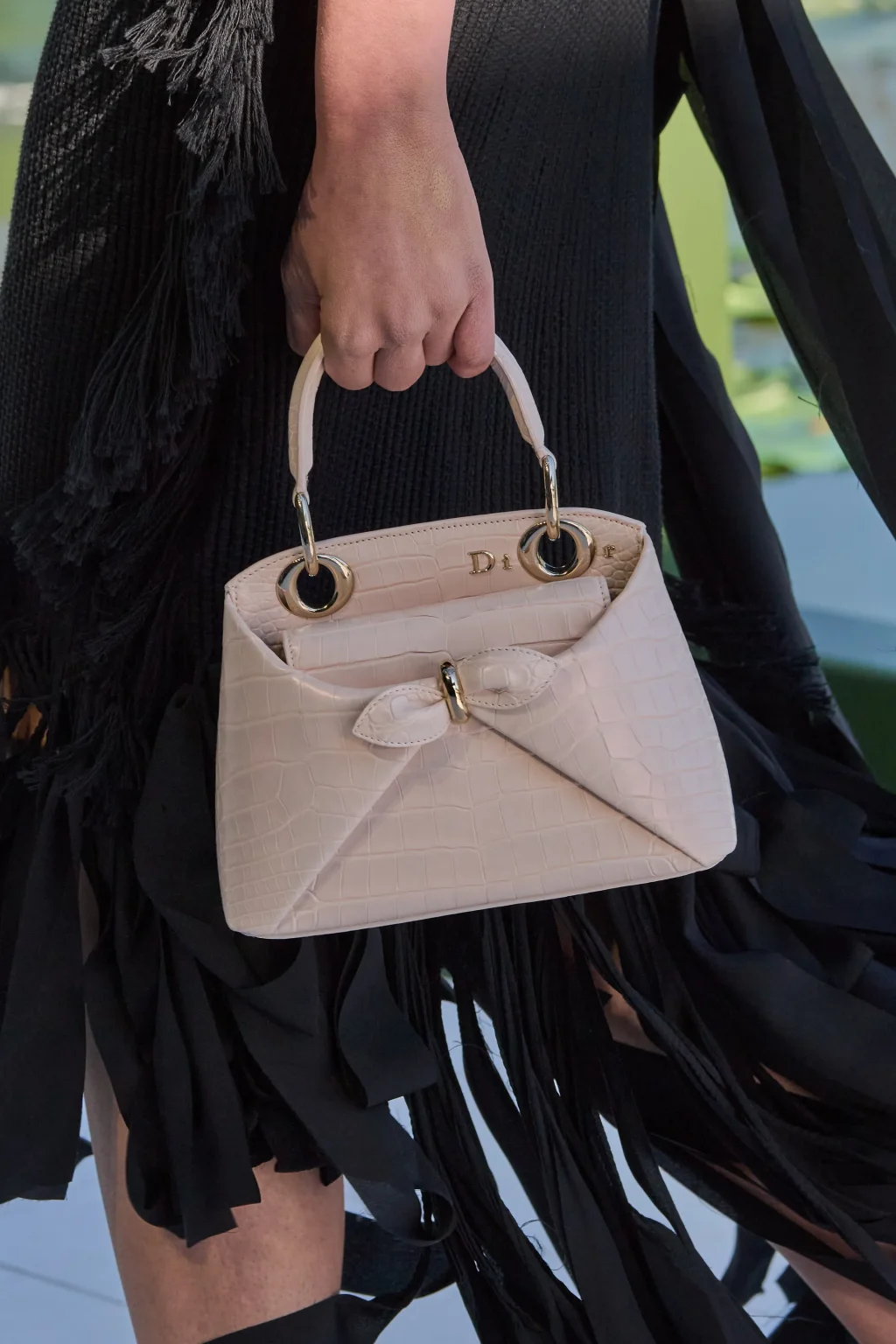
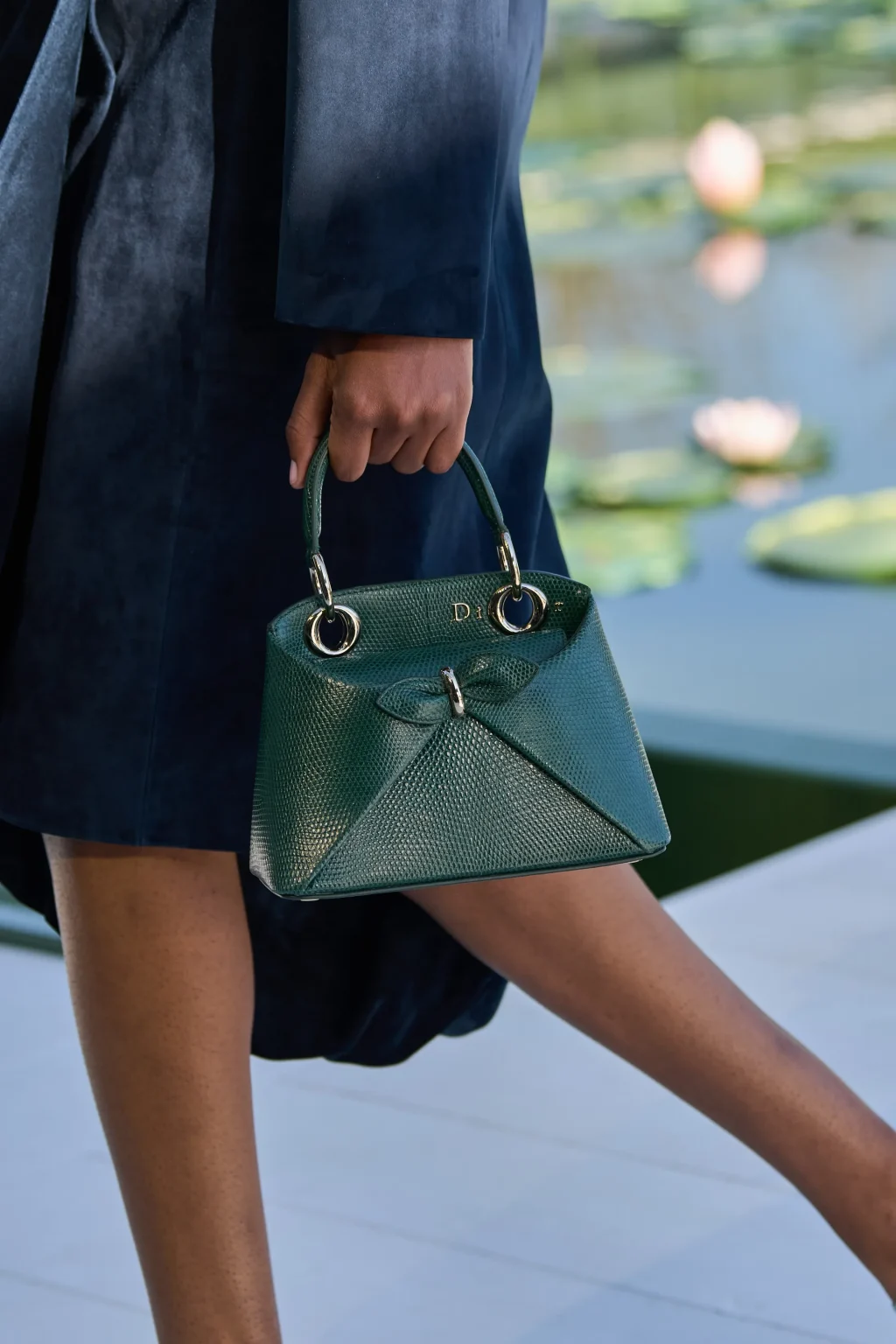
The Cigale Bag is Dior’s new “promenade” proposition: a compact, sculptural wedge silhouette that looks folded into place—almost origami—with crisp corners, a taut base, and a top line that stays clean even as it moves. It carries like an object, not an accessory: a short top handle anchored by oversized metal rings gives it that subtle, jewellery-grade flash, while the open, bucket-adjacent construction keeps it modern and unfussy.
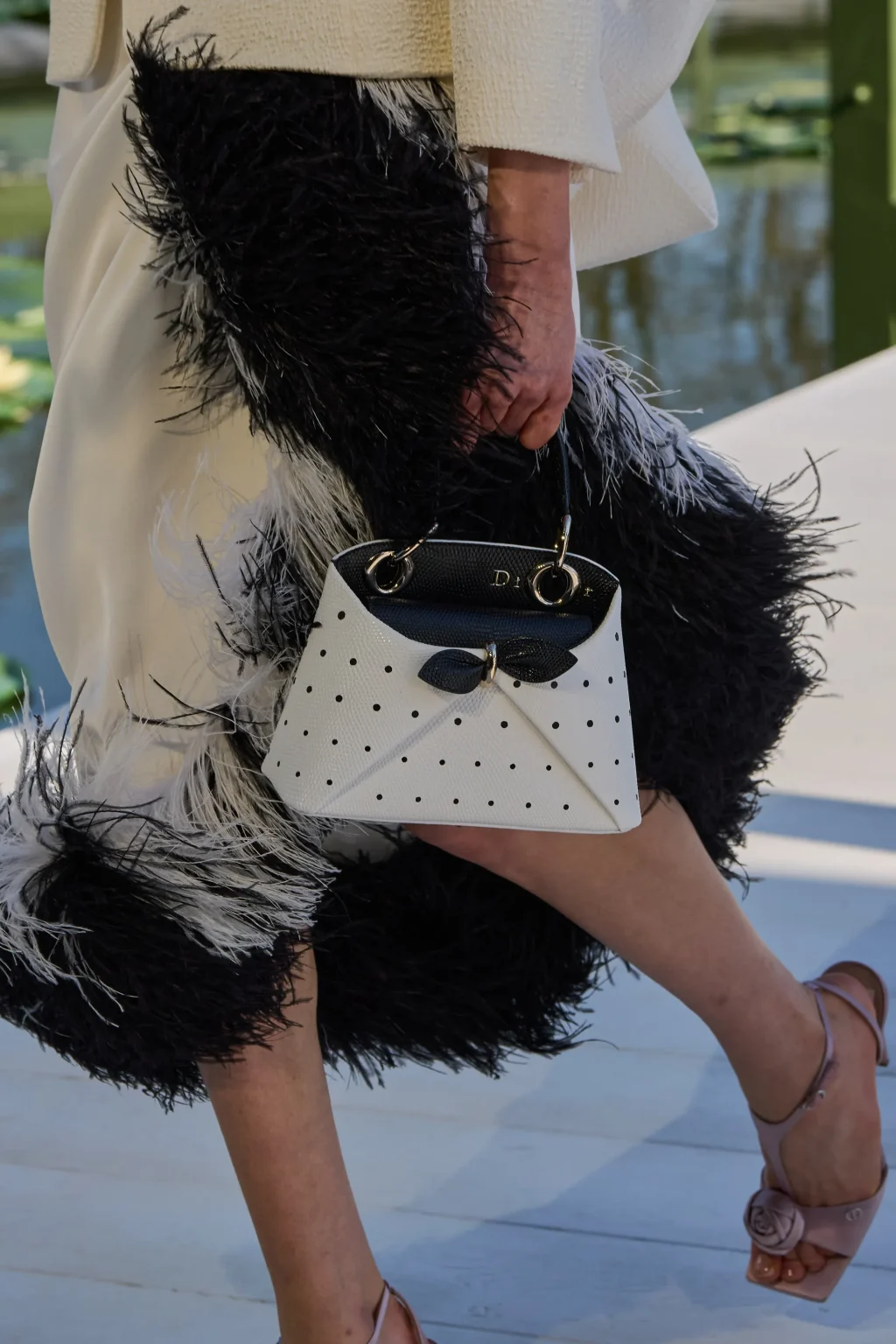
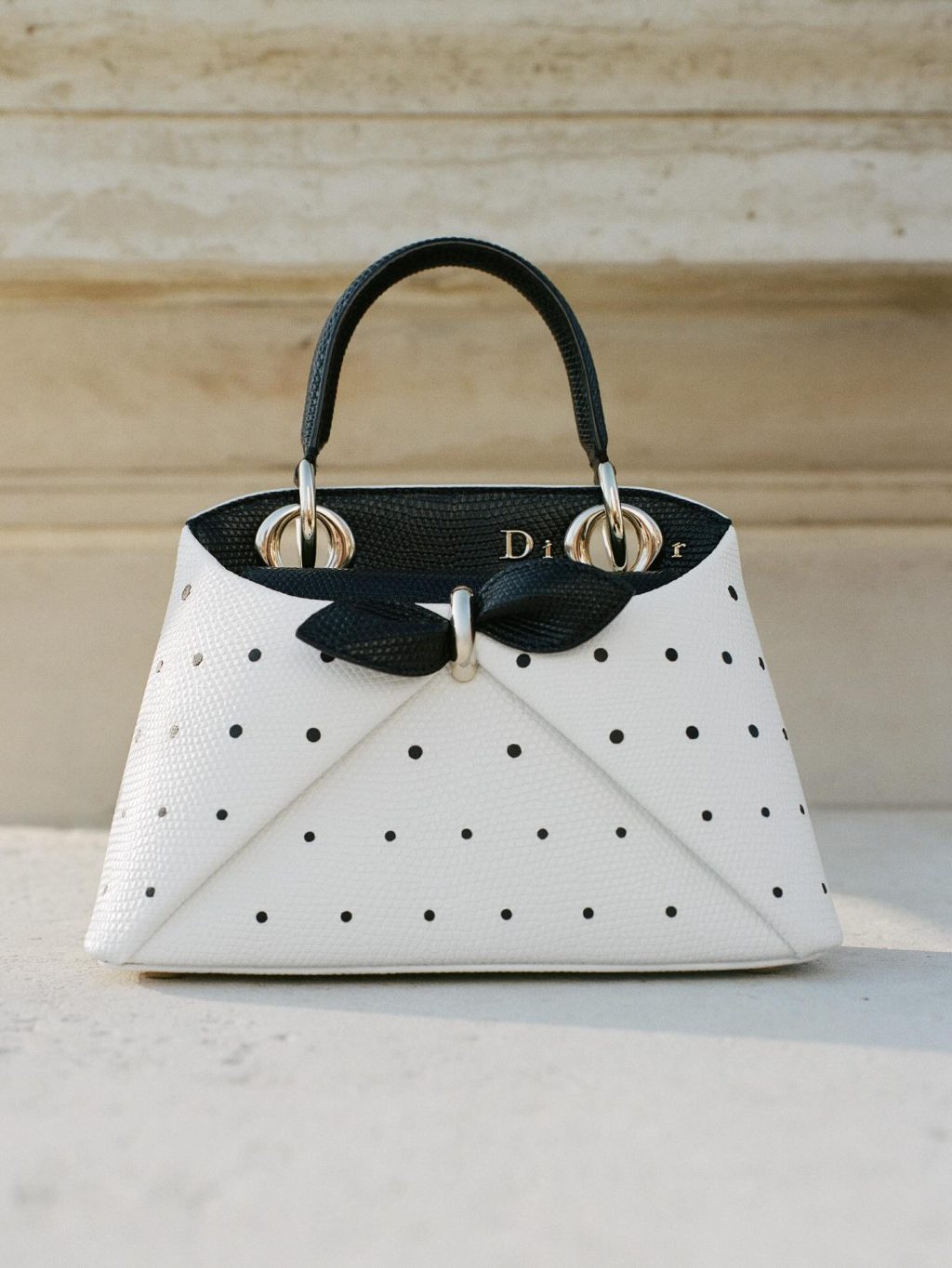
What makes it feel current is the way the same architecture shifts personalities through finish—croc-embossed versions read polished and grown-up; graphic polka-dot versions turn it cheeky and pop; and cool seasonal tones (icy blue, cream, burgundy, deep green) keep it in daylight territory. It’s small, but it’s not delicate—built to sit neatly, photograph sharply, and signal Dior from a distance without leaning on a loud logo.
If you want the craftsmanship story behind the season’s most talked-about new silhouette, here’s how the Dior Cigale bag is made—from construction details to finishing touches.
3. Cannage Tote
The Cannage Tote is the collection’s big, calm anchor—the kind of oversized, structured shopper that reads instantly against all the frill and flutter in the clothes. Shown in a rich green, couture-textured fabric (tweed-like, with a dense, tactile grain), it holds its shape with that Dior “architecture first” attitude: broad, clean panels, a generous open mouth, and a silhouette designed to sit flush against the body like a carried block of color.
The Cannage idea comes through as surface discipline—a controlled, house-coded texture that feels rooted in Dior’s interiors and heritage craft—while the scale makes it modern and practical: a day bag for the Tuileries storyline, meant to look elegant while doing the unglamorous work of carrying everything.
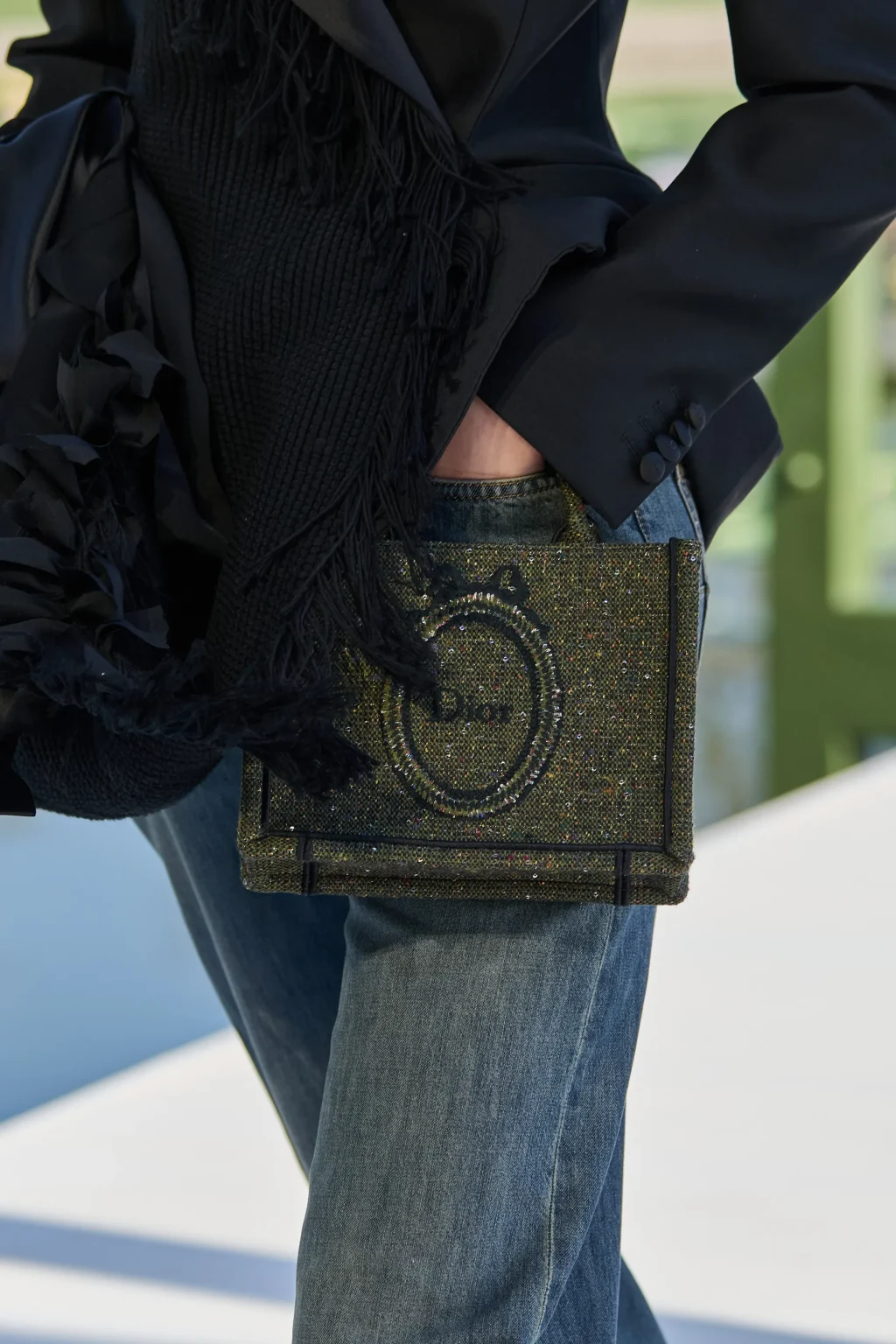
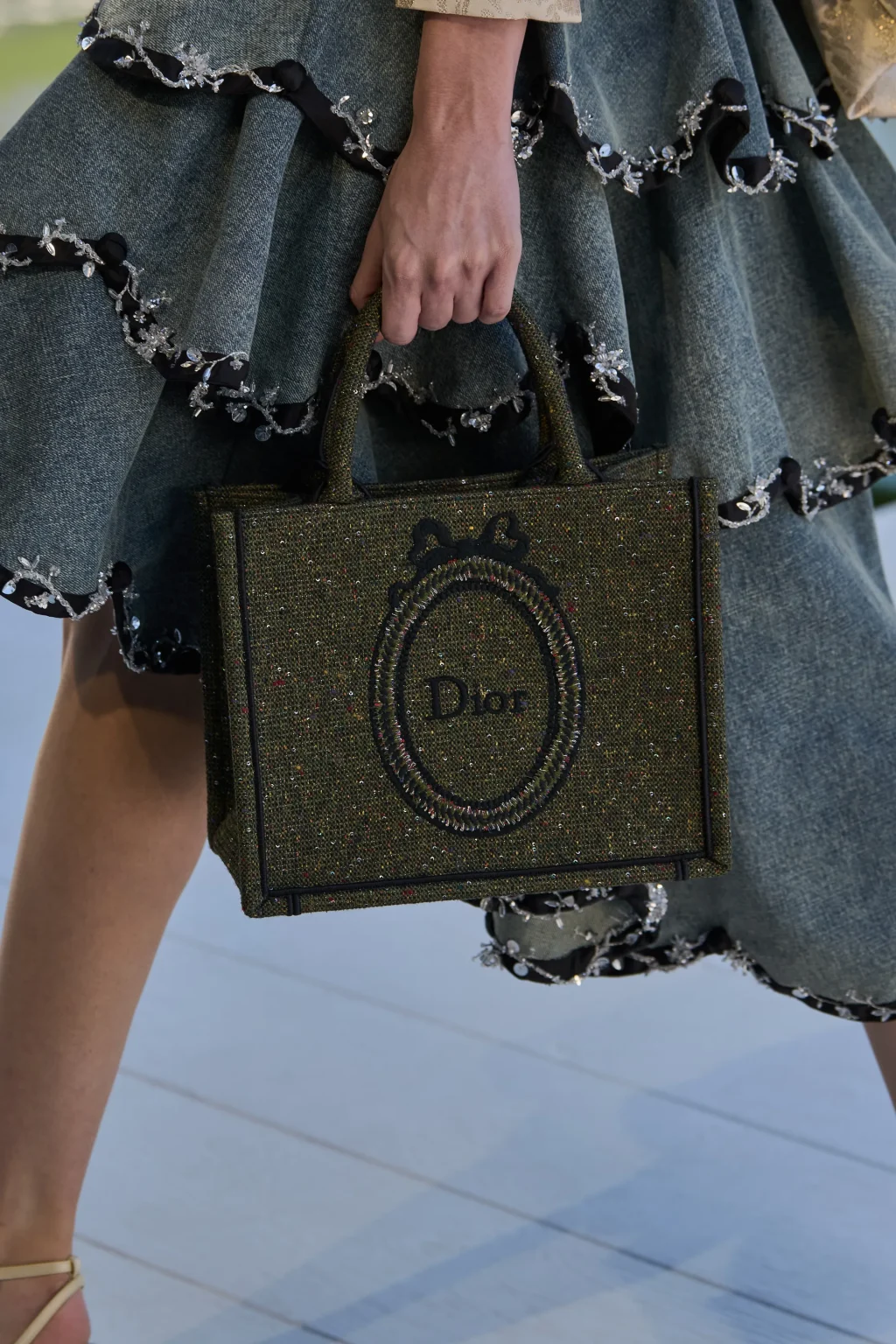
4. Book Tote
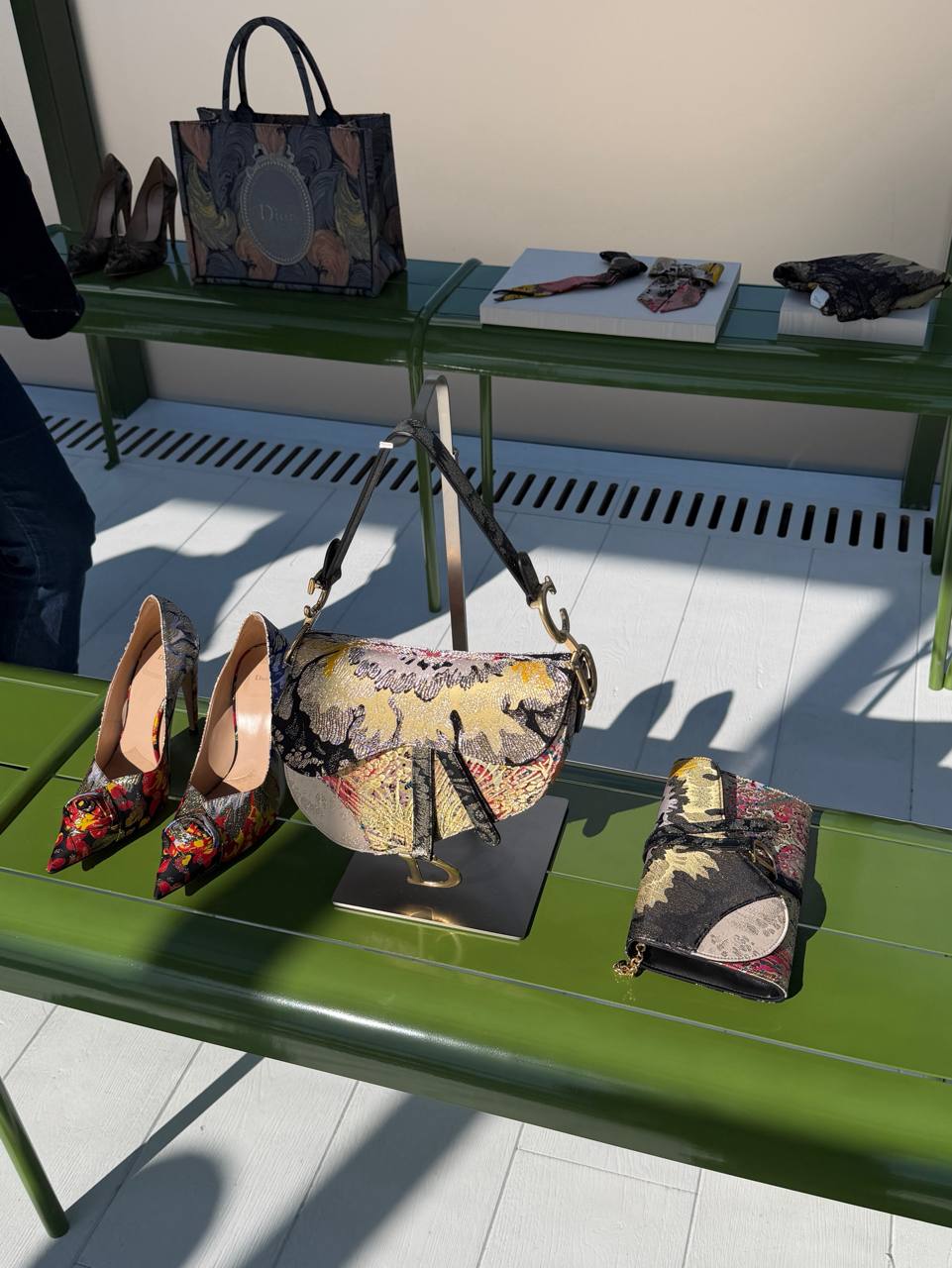
For FW 26-27, the Book Tote shows up as Dior’s most literal piece of “carryable culture”—still a clean, upright rectangular tote with short top handles, but treated like a textile cover rather than a logo surface. In these looks, the body reads darker and denser—almost like a woven, couture-grade canvas with a subtle shimmer—framed by crisp edges that keep the silhouette architectural even when it’s swung at the side.
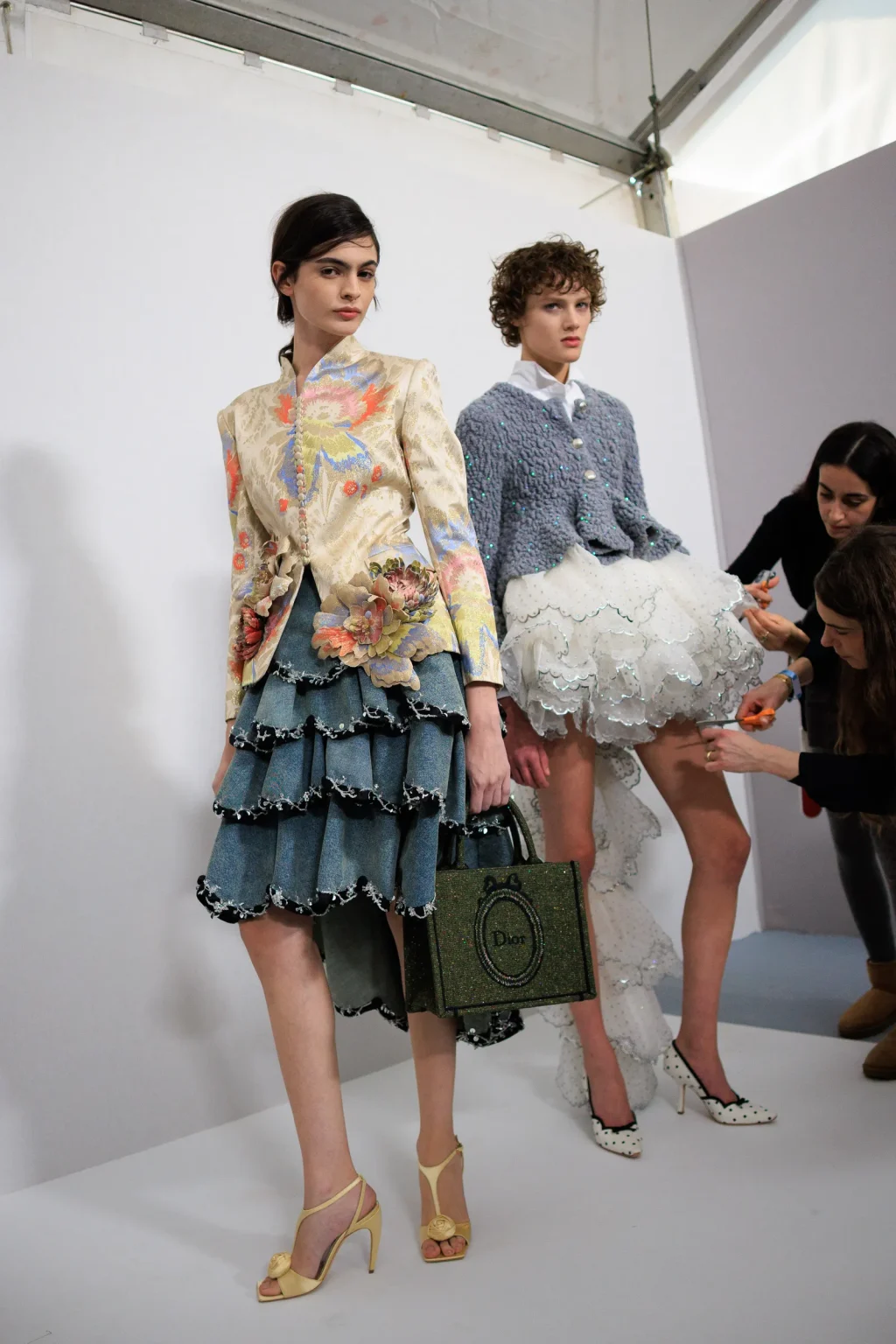
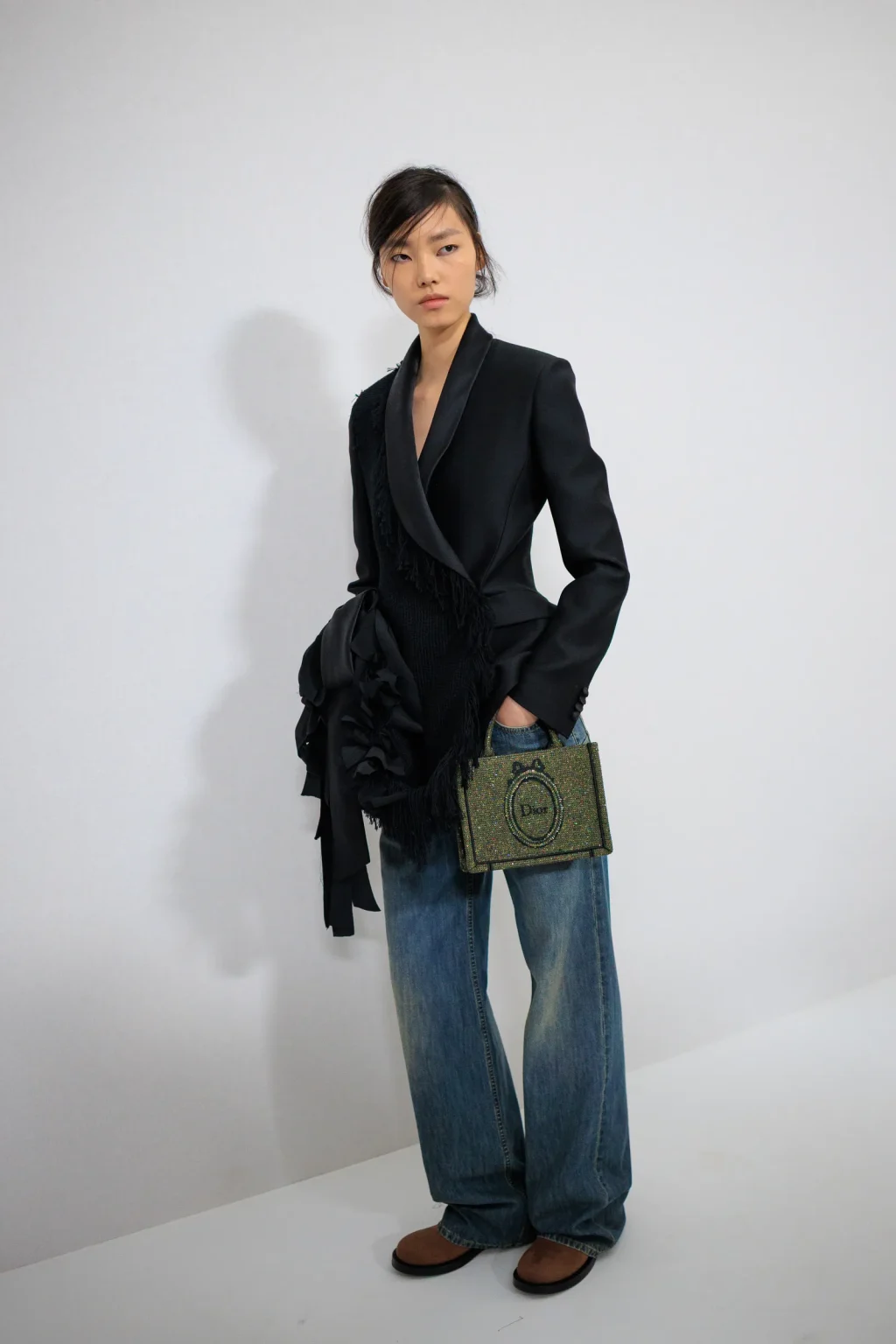
What makes this season’s version feel different is the medallion-style Dior crest panel on the front (a cameo effect, stitched and slightly raised), which shifts the tote from loud branding to heritage signifier: less billboard, more emblem. It’s still the practical “day bag” of the collection—big enough to ground the floaty silhouettes—but now it carries the mood of the show: Parisian, ornamental, and designed to be seen from across the garden.
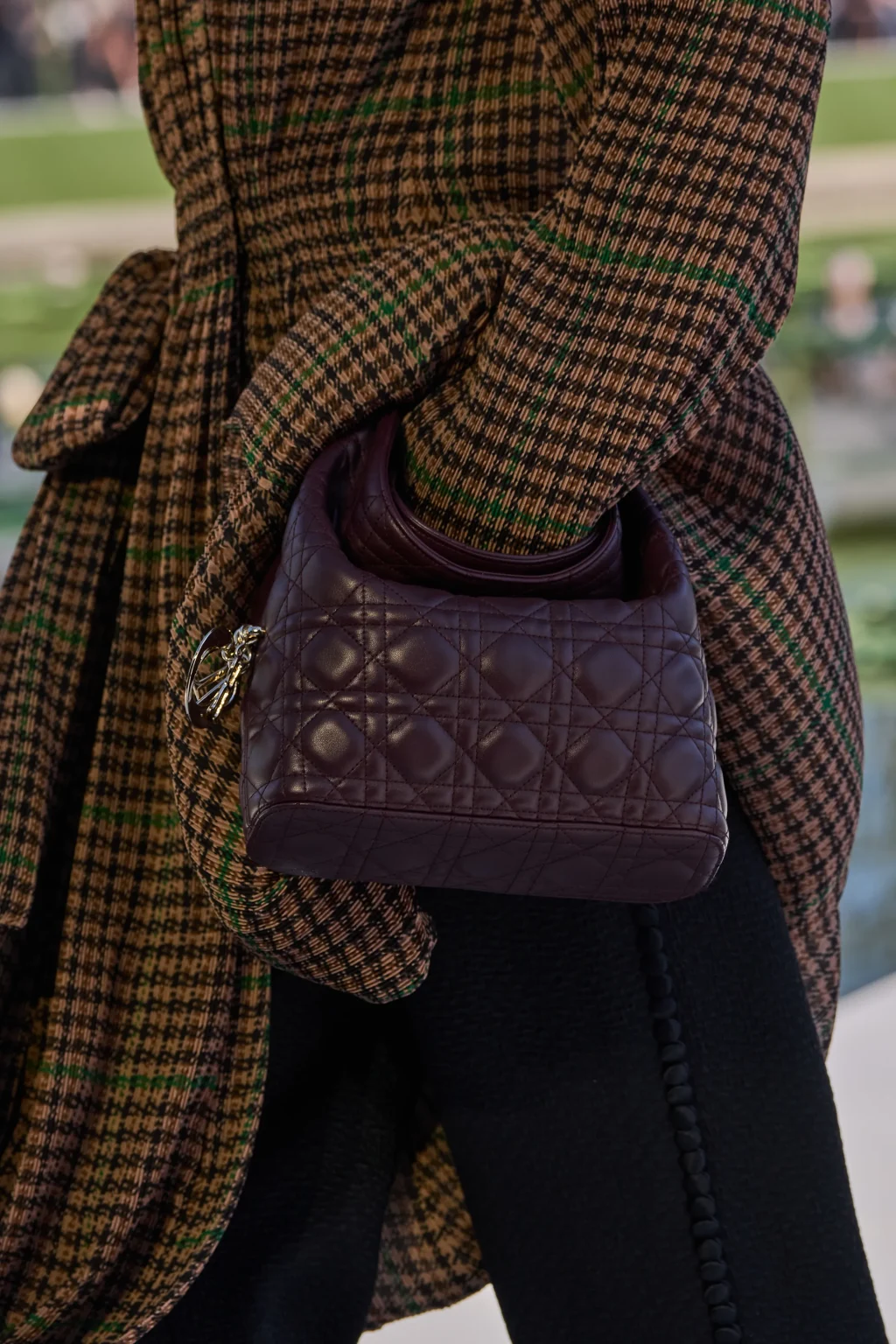
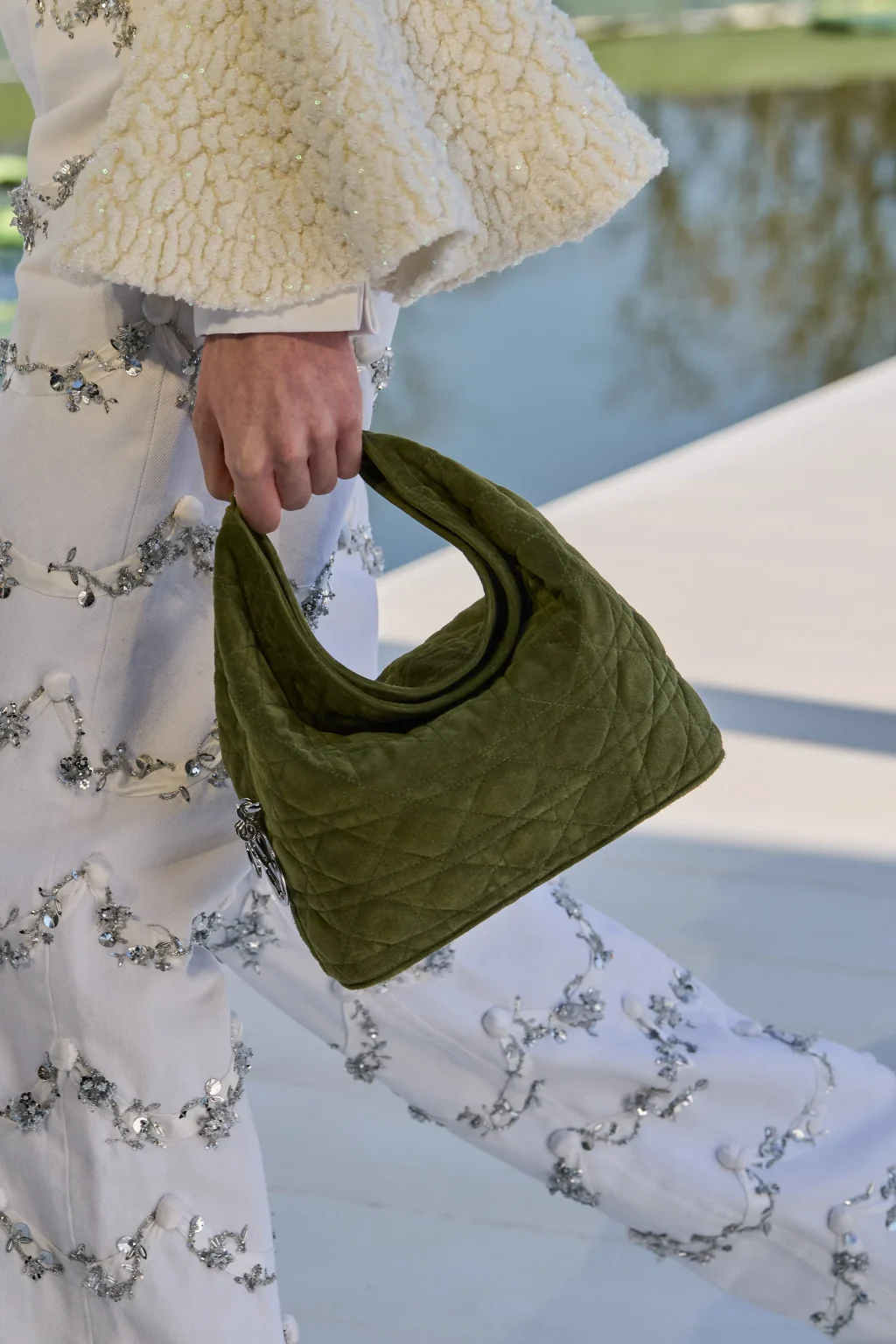
5. Toujours Bag
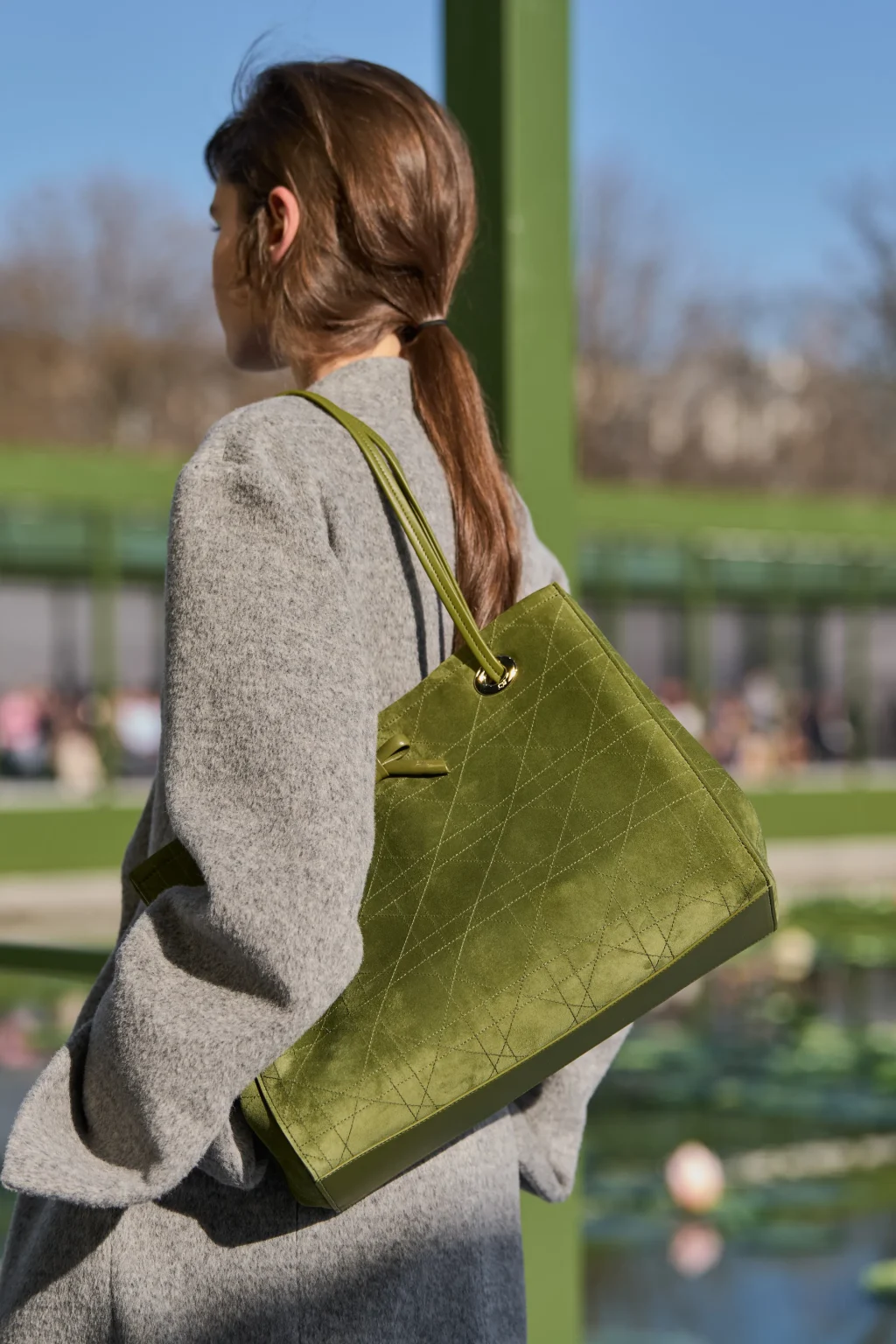
The Toujours Bag is Dior’s soft, streetwise counterweight to the season’s more architectural totes: a crescent / pouch-like hobo with Cannage quilting that gives it structure while keeping the silhouette relaxed and body-hugging.
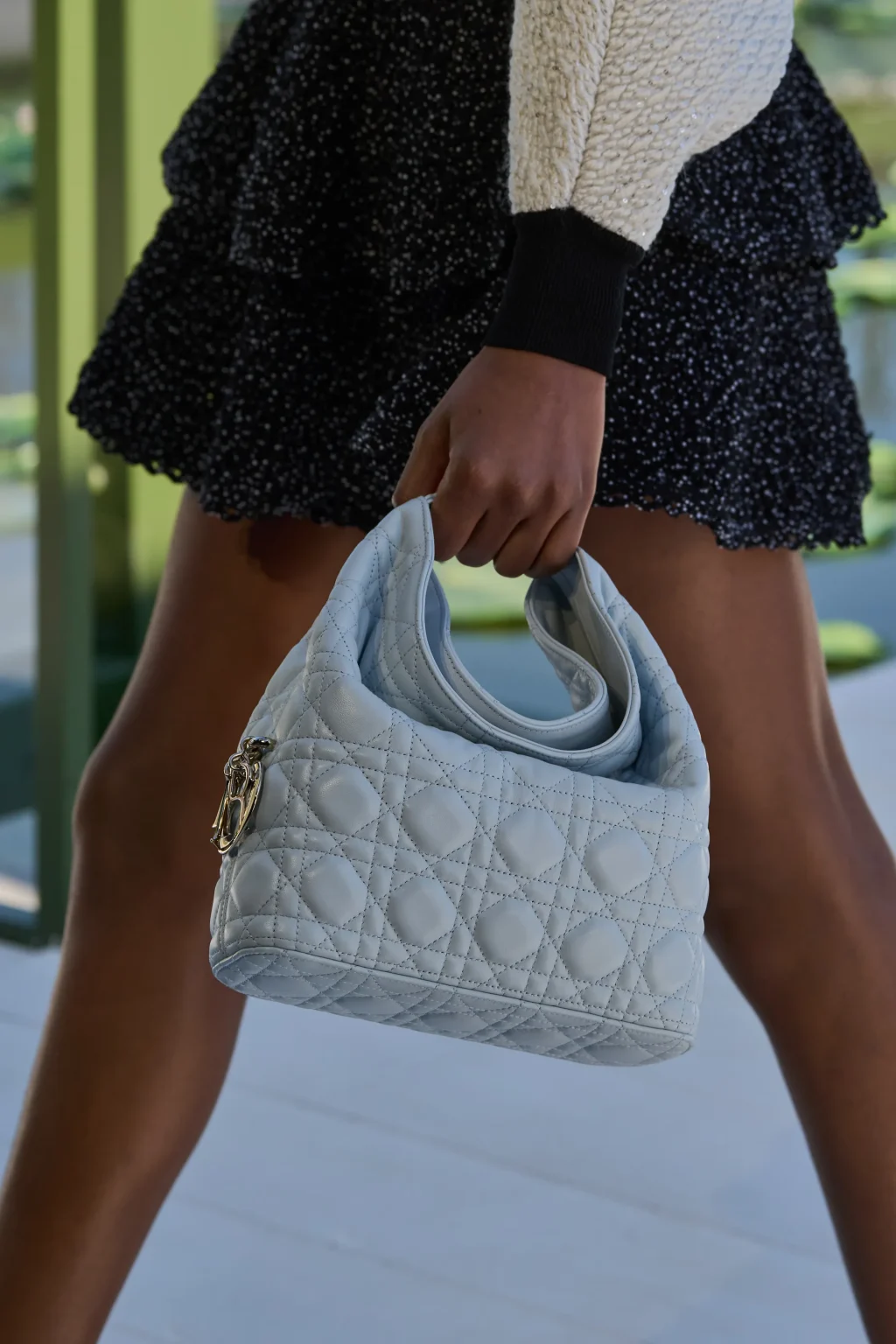
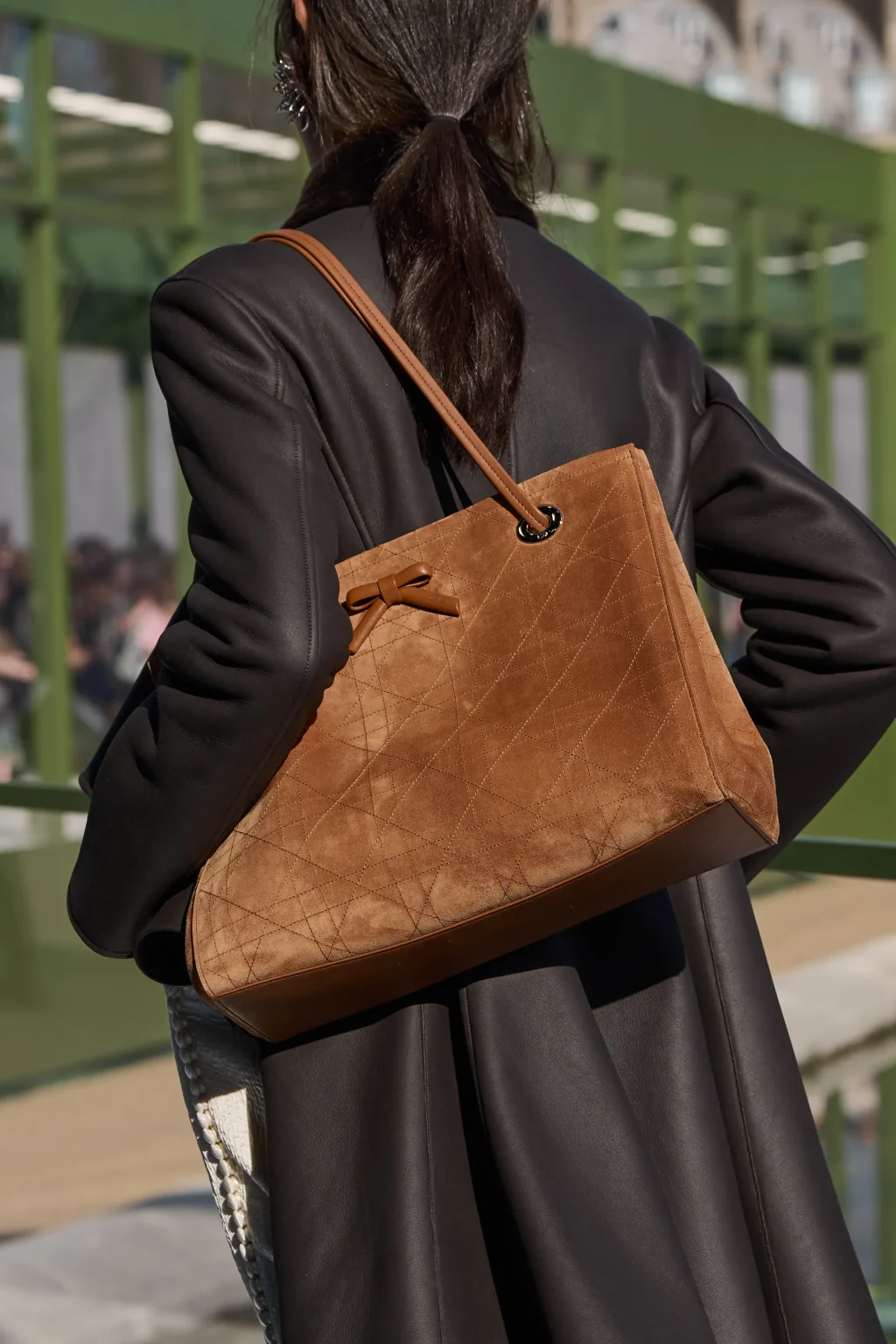
In the show it appears in tactile, autumnal finishes—olive velvet and warm tobacco suede—and the mood is deliberately “carried,” not “presented”: it sits tucked under the arm or gripped low by its short handle, collapsing slightly as it moves.
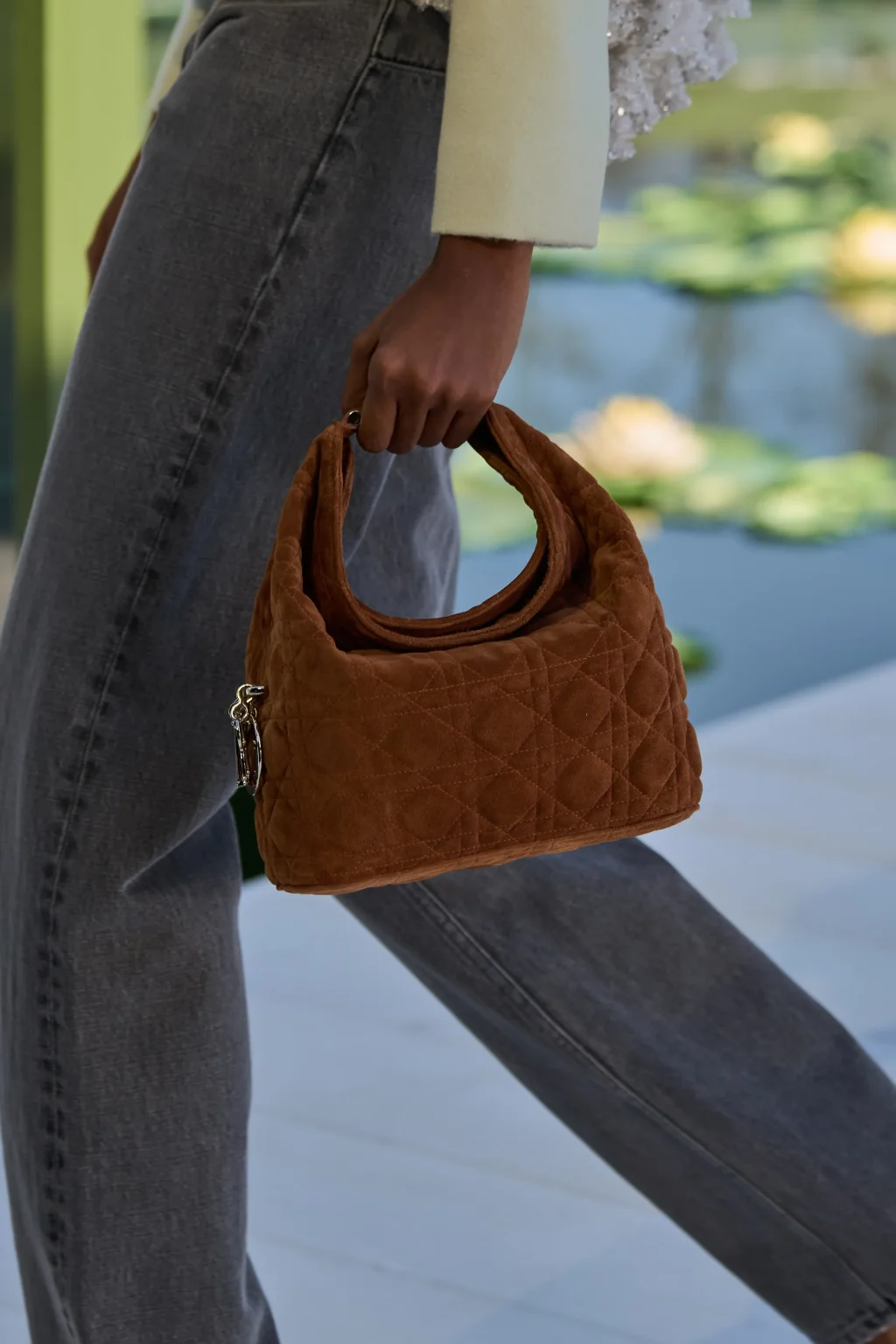
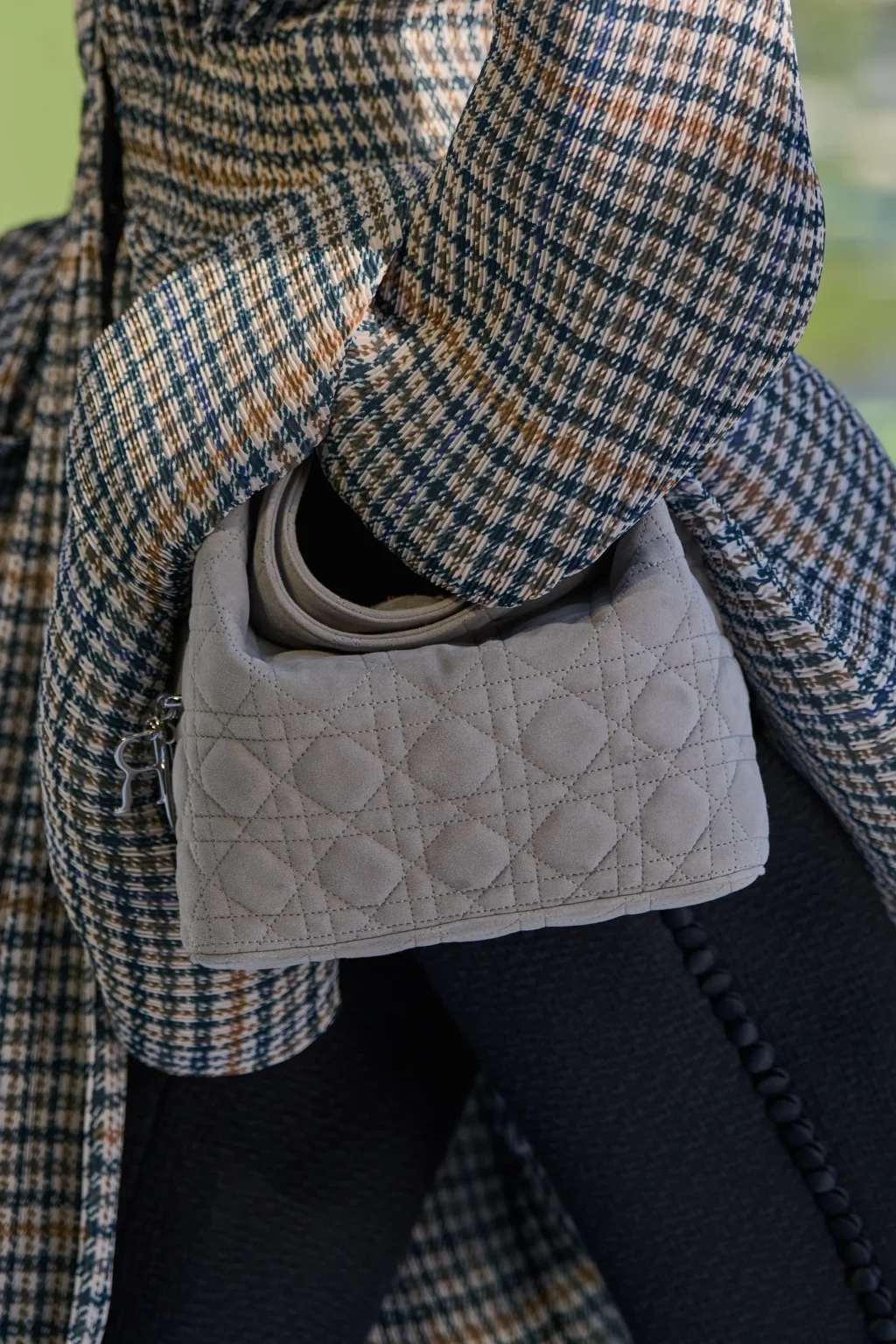
The signature detail is the oversized Dior charm hardware (a chunky, jewel-like toggle) that hangs at the base like a statement keyring—small enough to feel casual, bold enough to read instantly from a distance—making the bag feel both practical and decorative, exactly in line with the Tuileries idea of everyday life staged as spectacle.
6. Knitted Messenger Bag
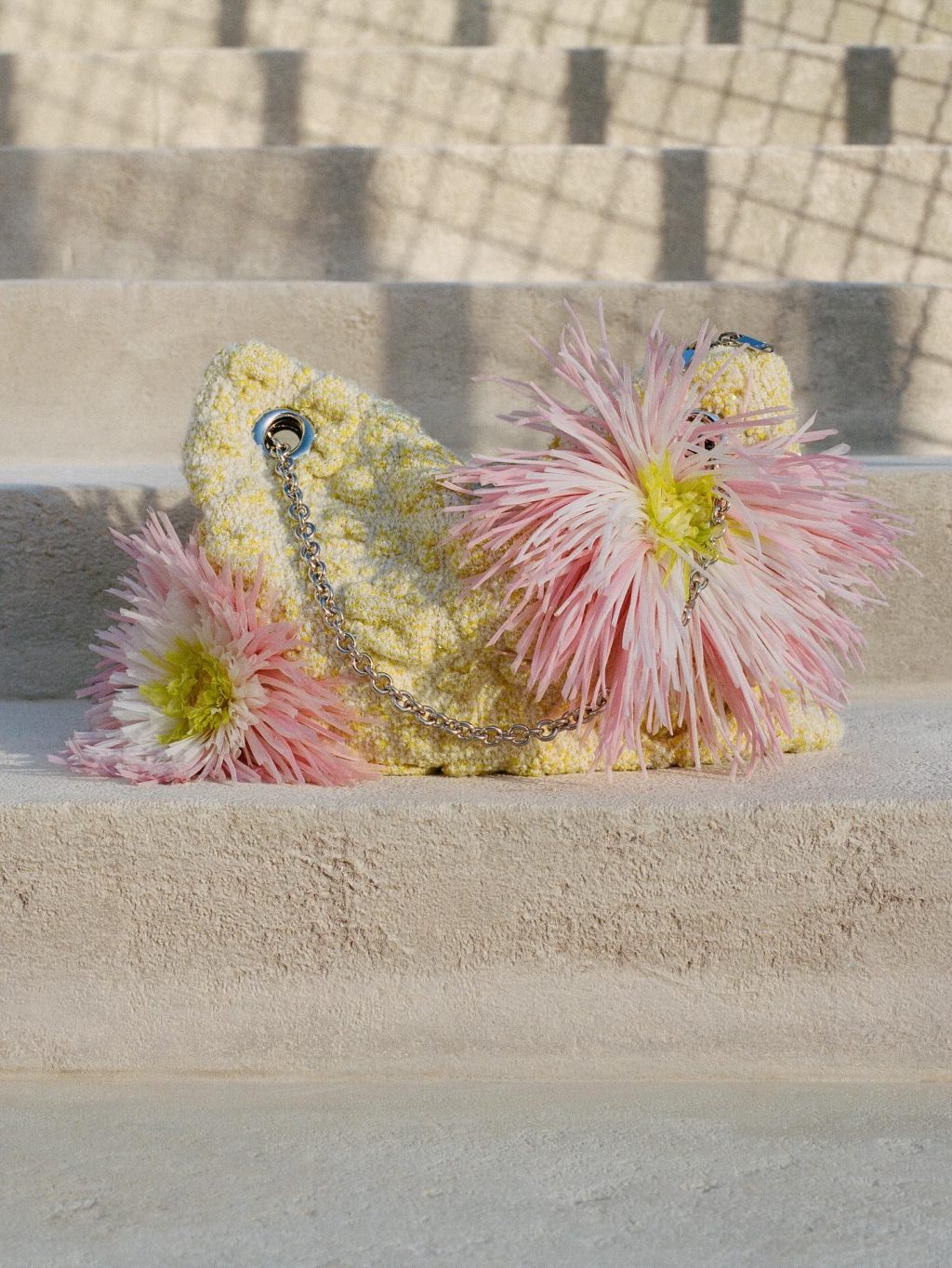
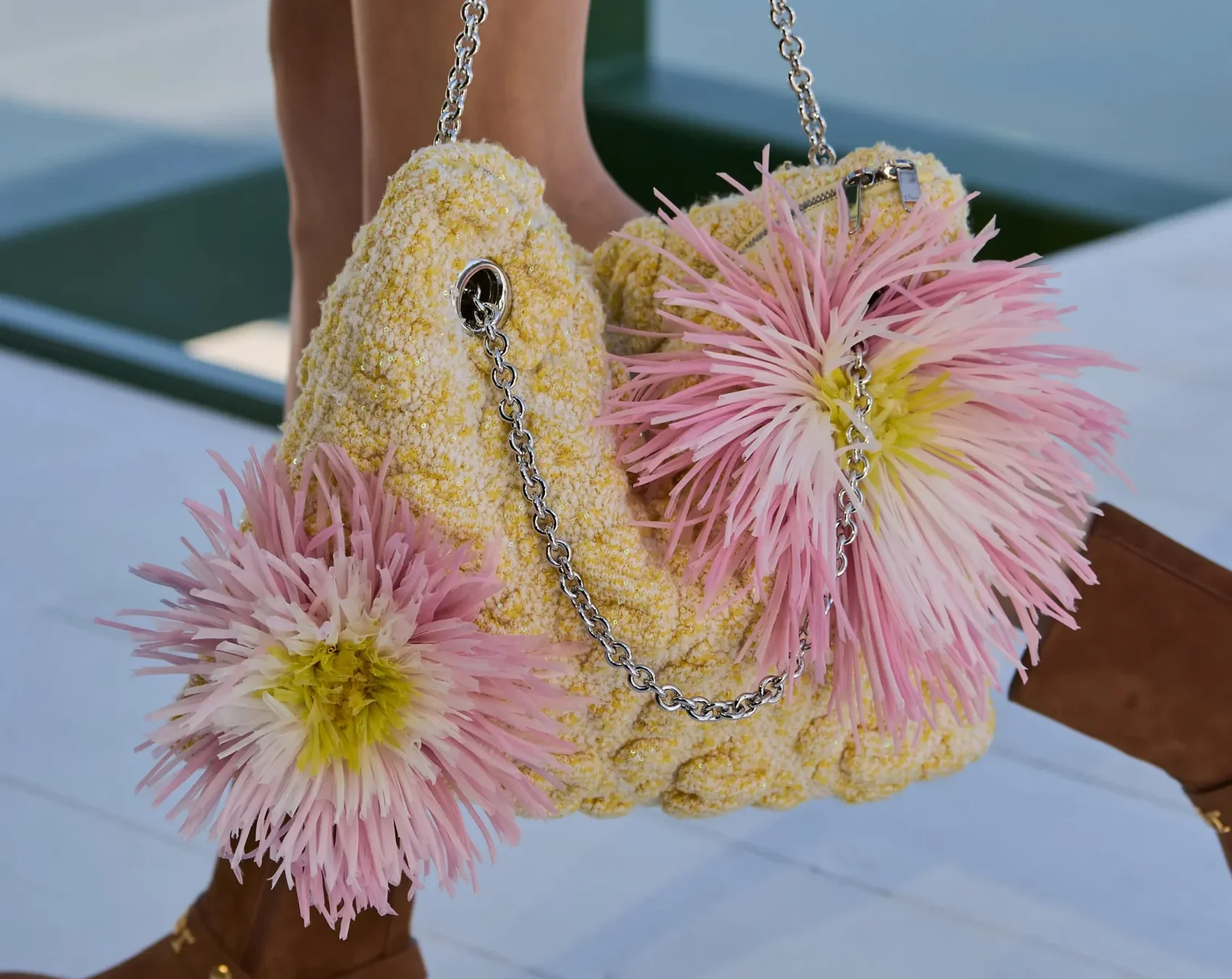
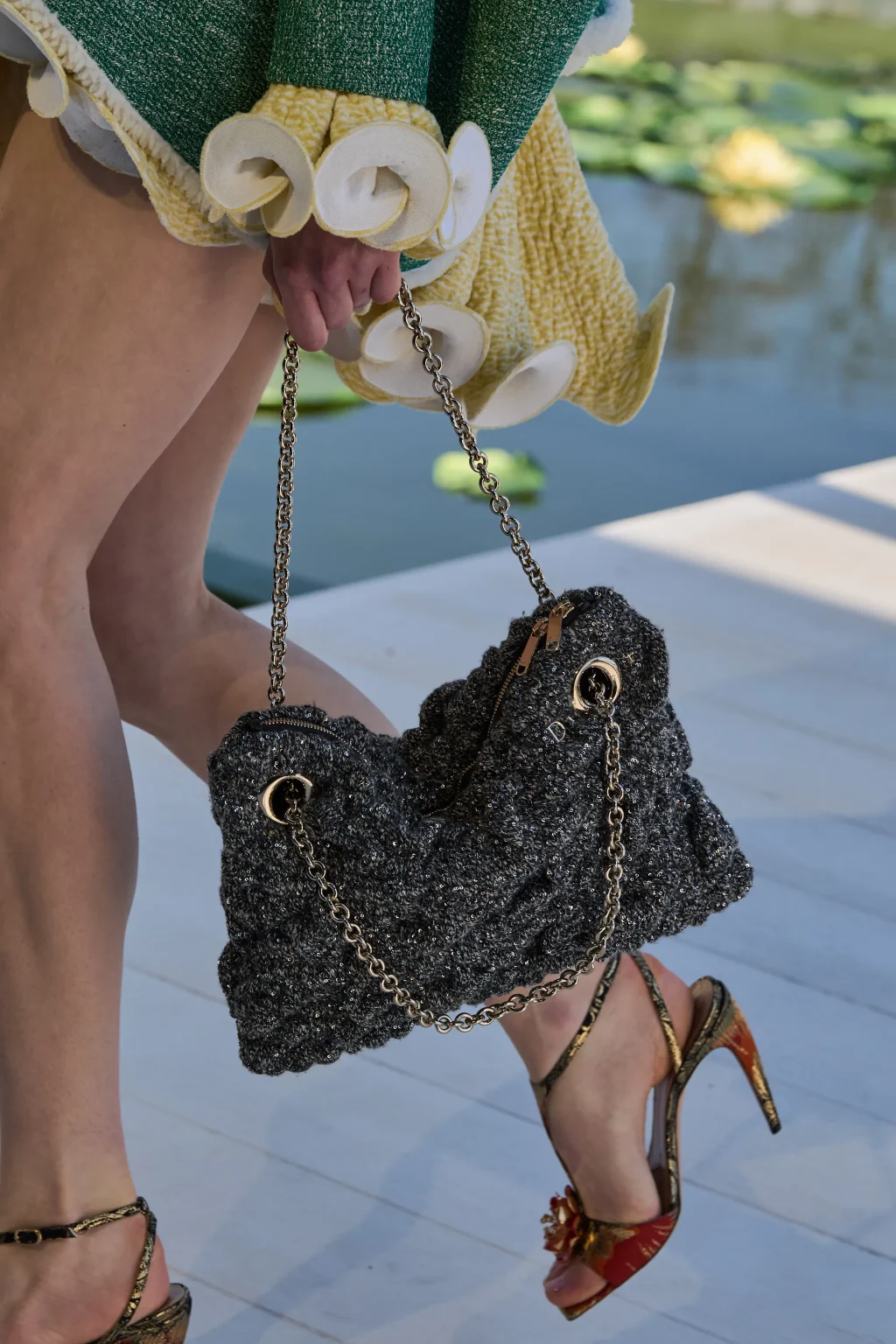
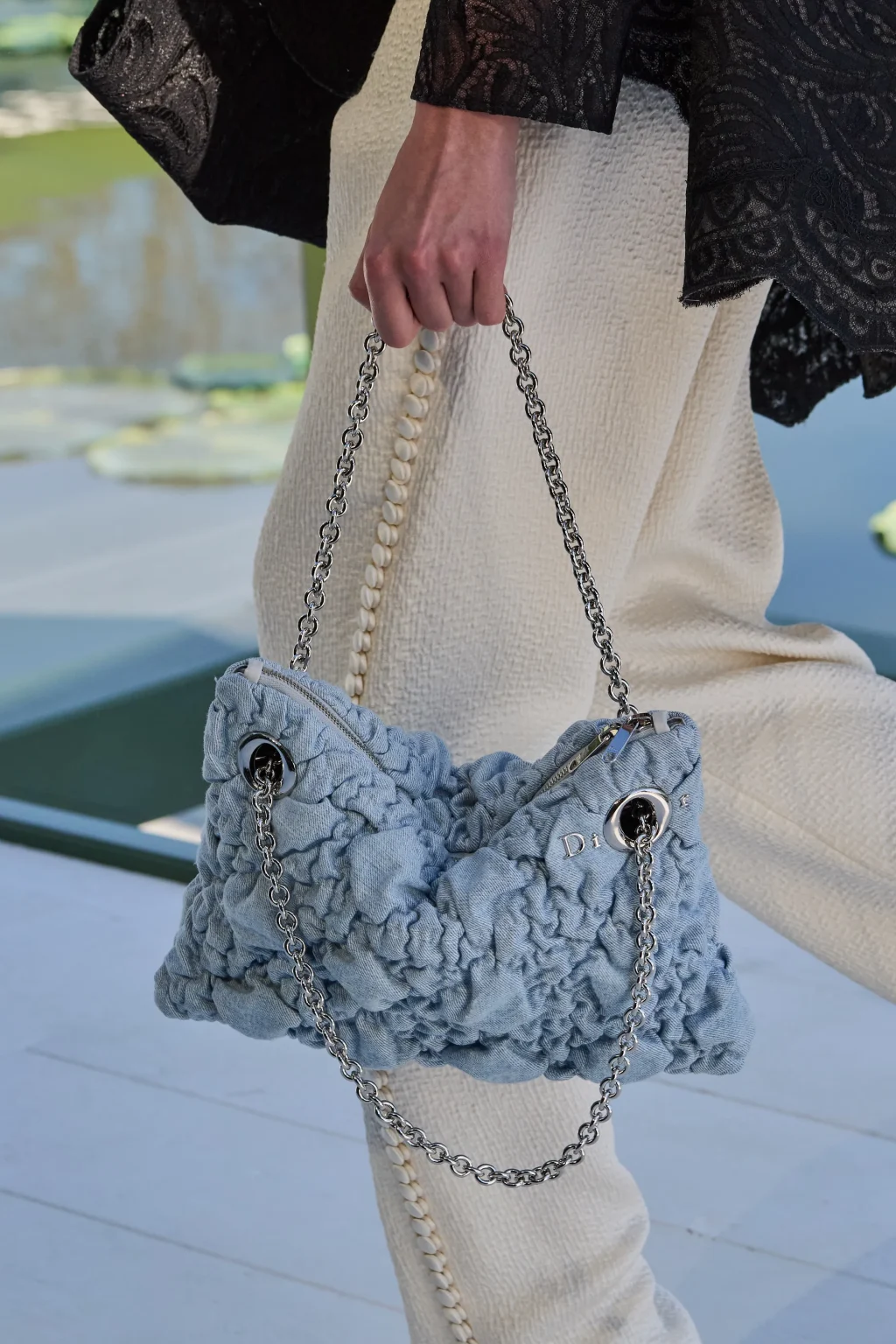
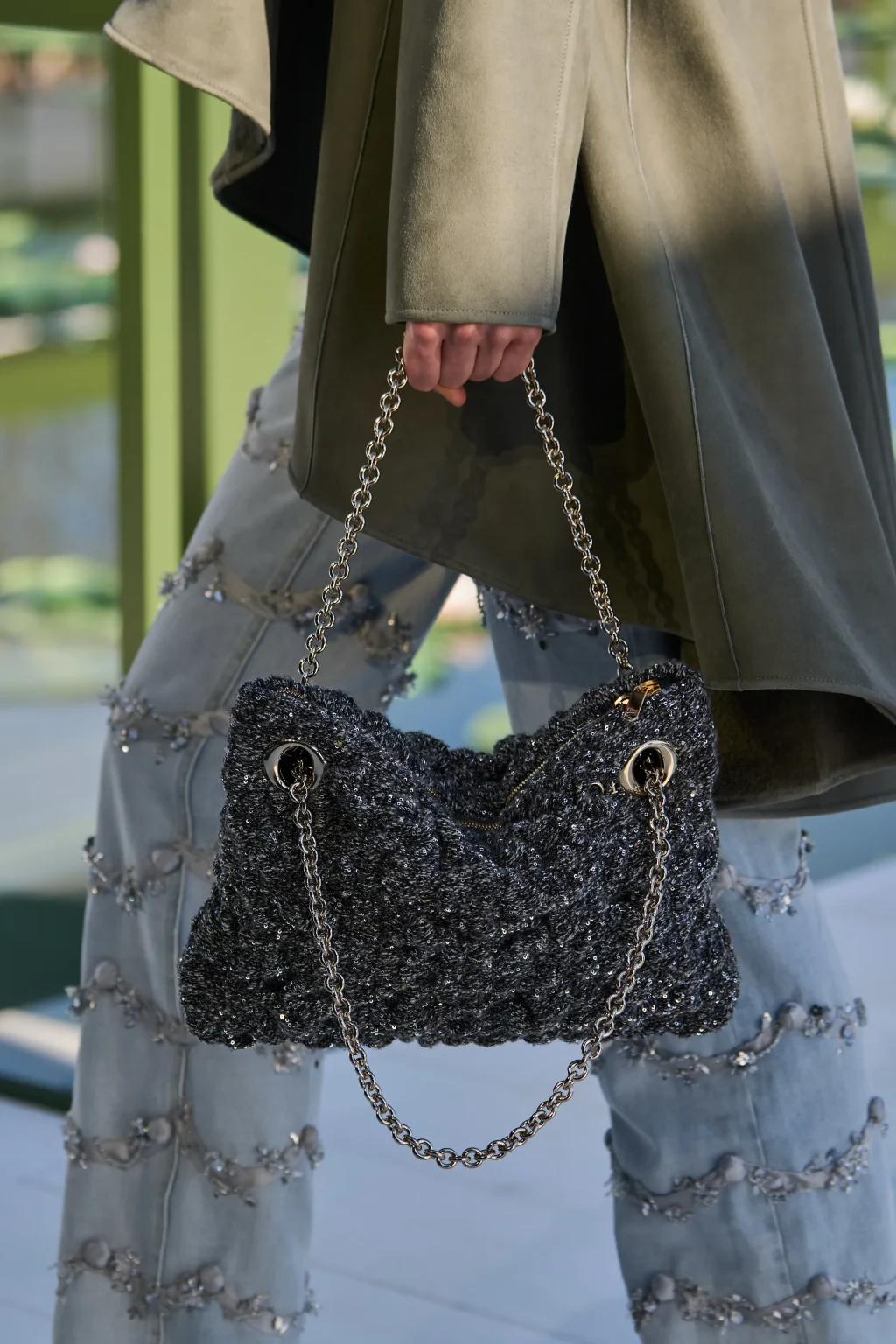
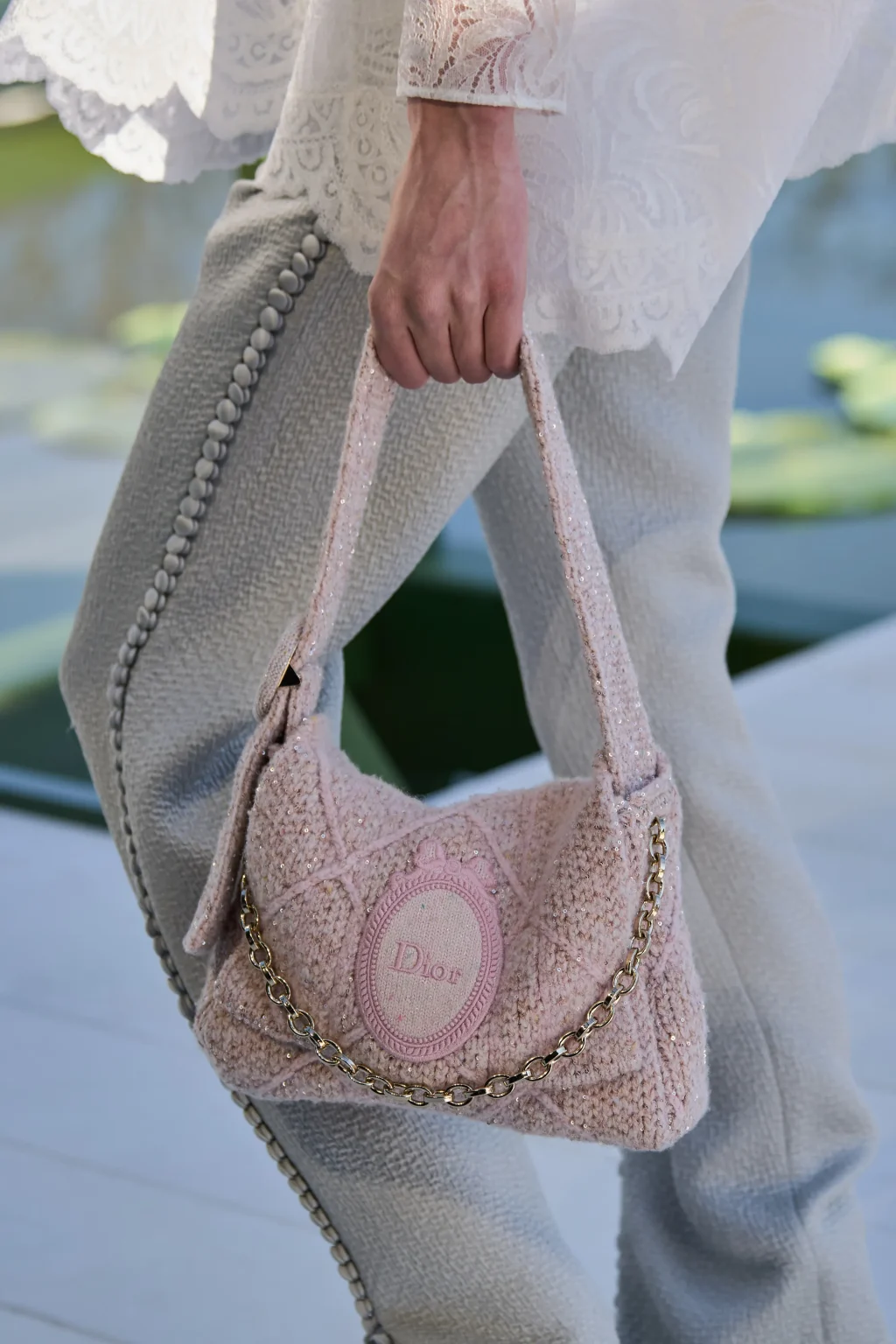
The Knitted Messenger Bag is Dior’s most tactile “everyday” statement this season: a soft, slouchy hobo-messenger shape rendered in bouclé-knit tweed (often shot through with a faint sparkle) that makes the bag feel like a garment, not an object. It’s built around a wide, cozy strap and a body that deliberately collapses and drapes, so it reads effortless on the runway—swung low, hugged close, never held stiffly.
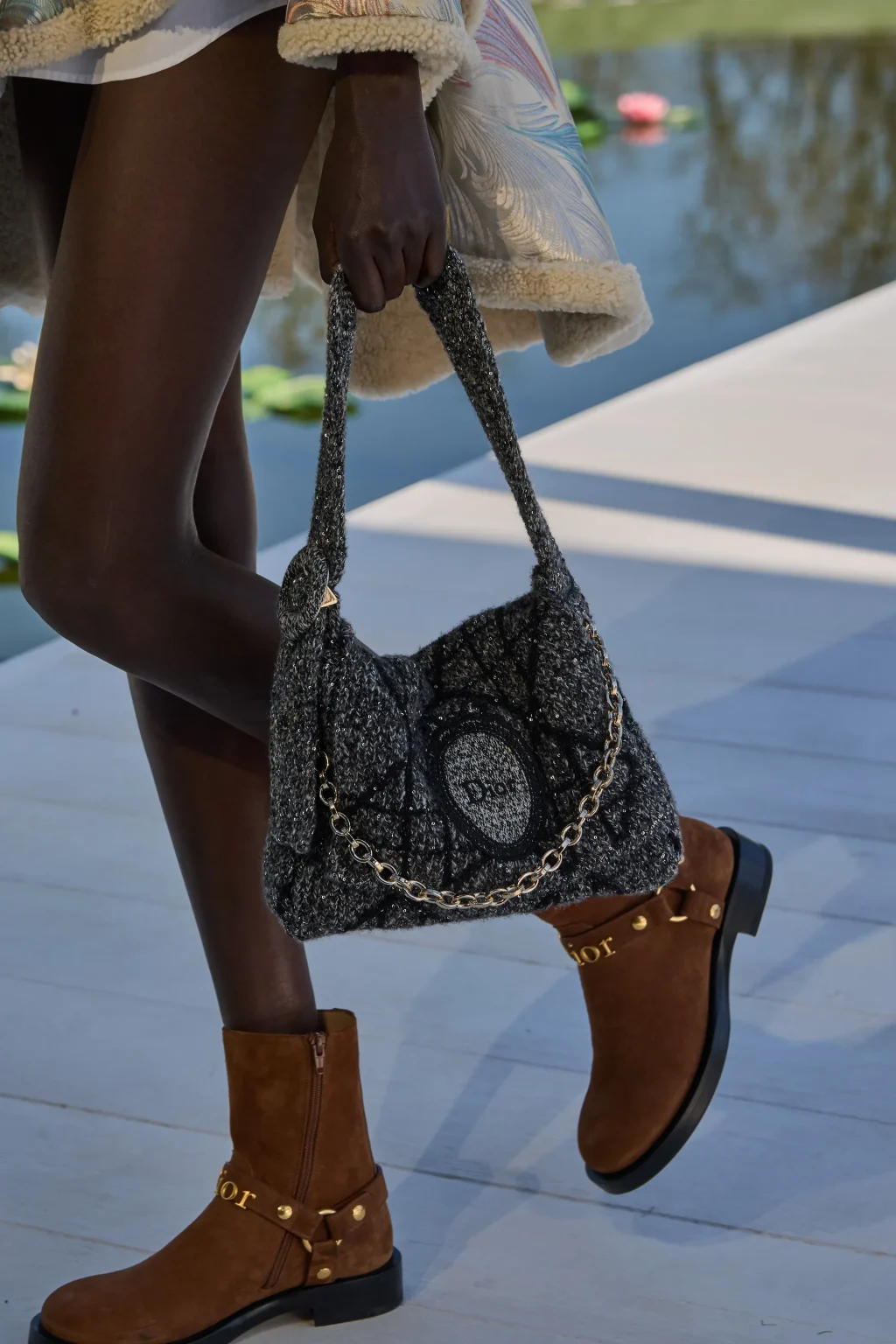
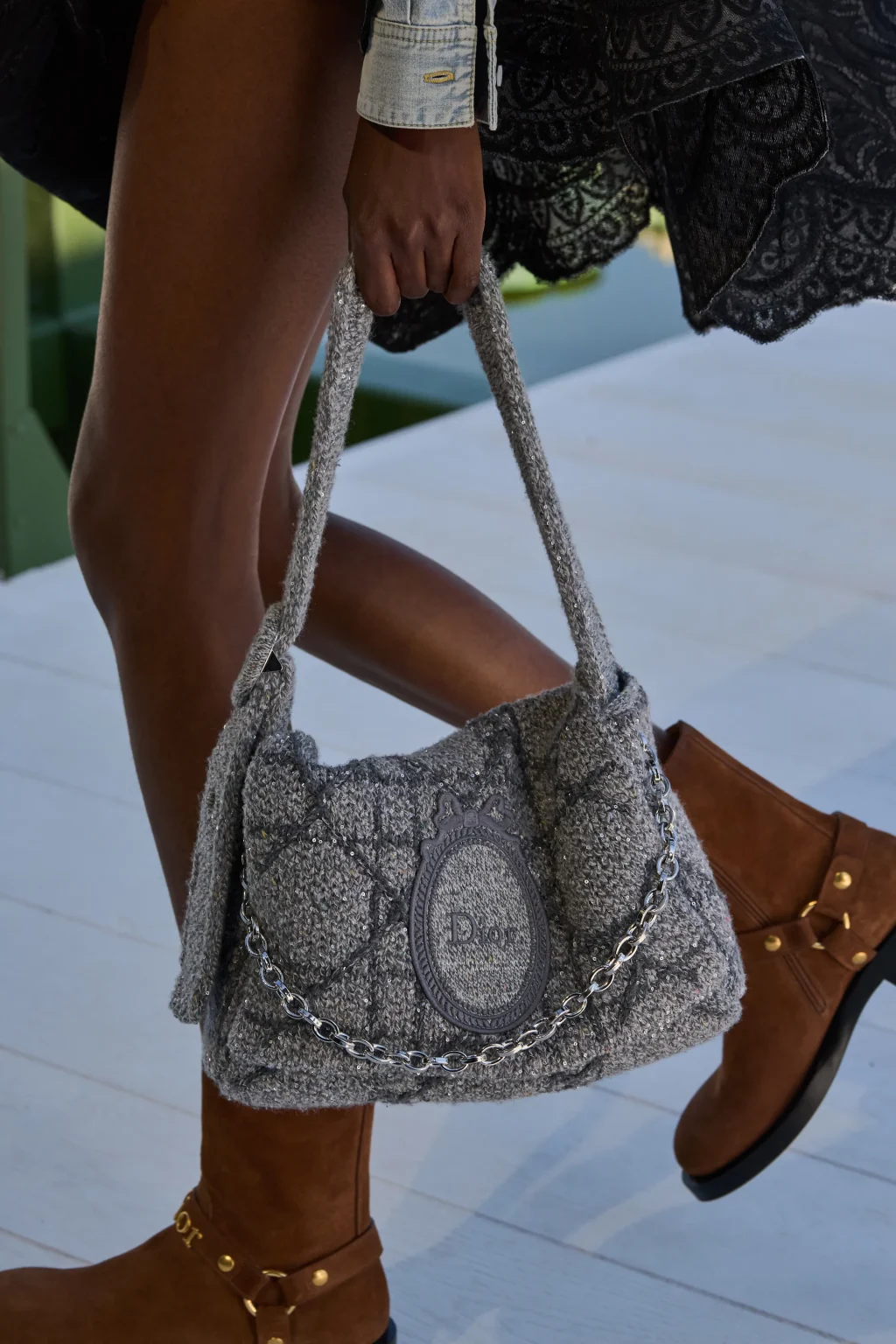
The signature codes do the heavy lifting: a raised oval Dior medallion patch on the front (cameo-like, heritage-flavored) and a draped metal chain that cinches the softness into something polished, like jewellery laid across fabric. In pale blush, marl grey, and deeper charcoal, it becomes Dior’s answer to casual luxury—textural, comfortable, and quietly expensive in motion.
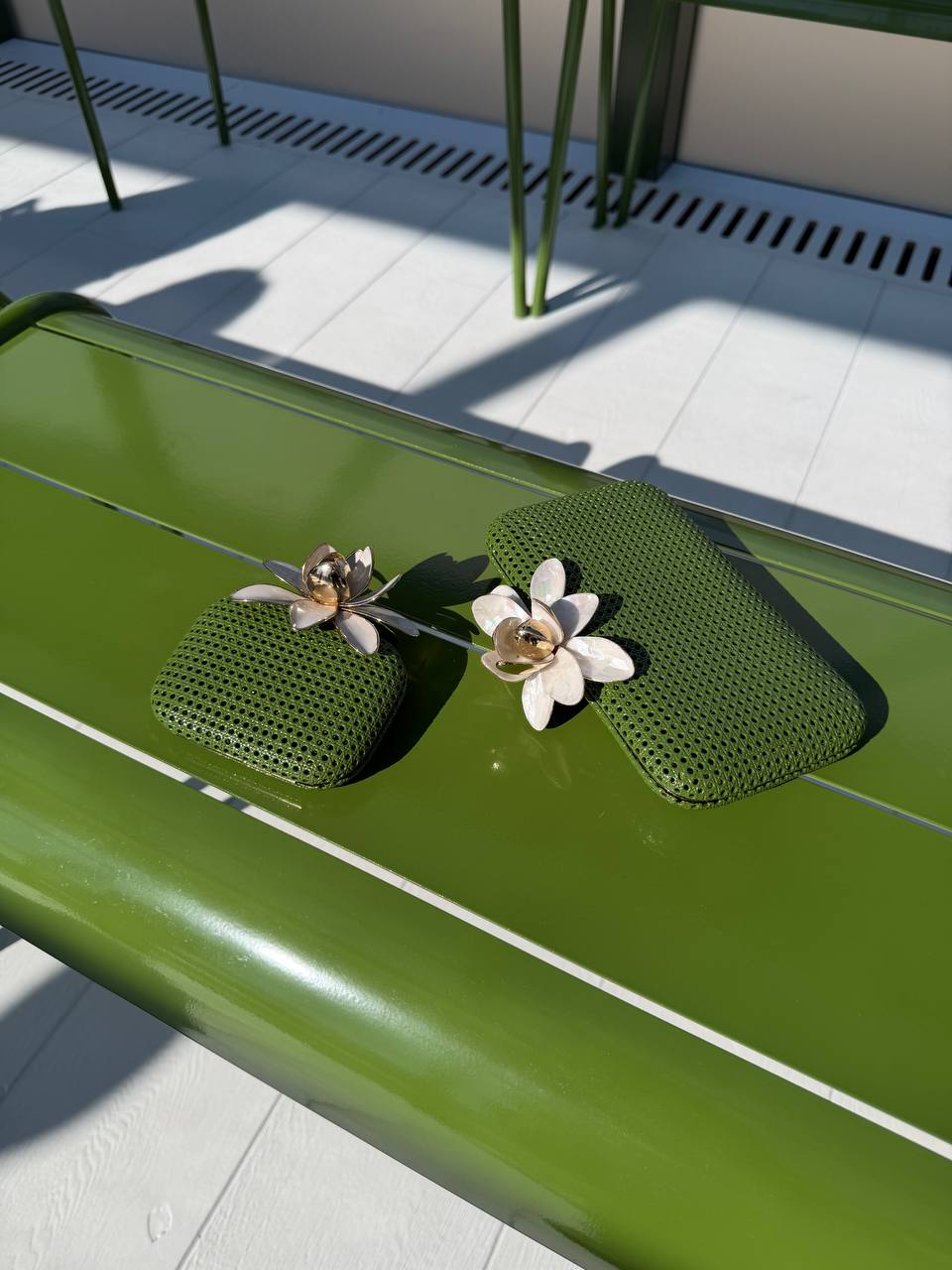
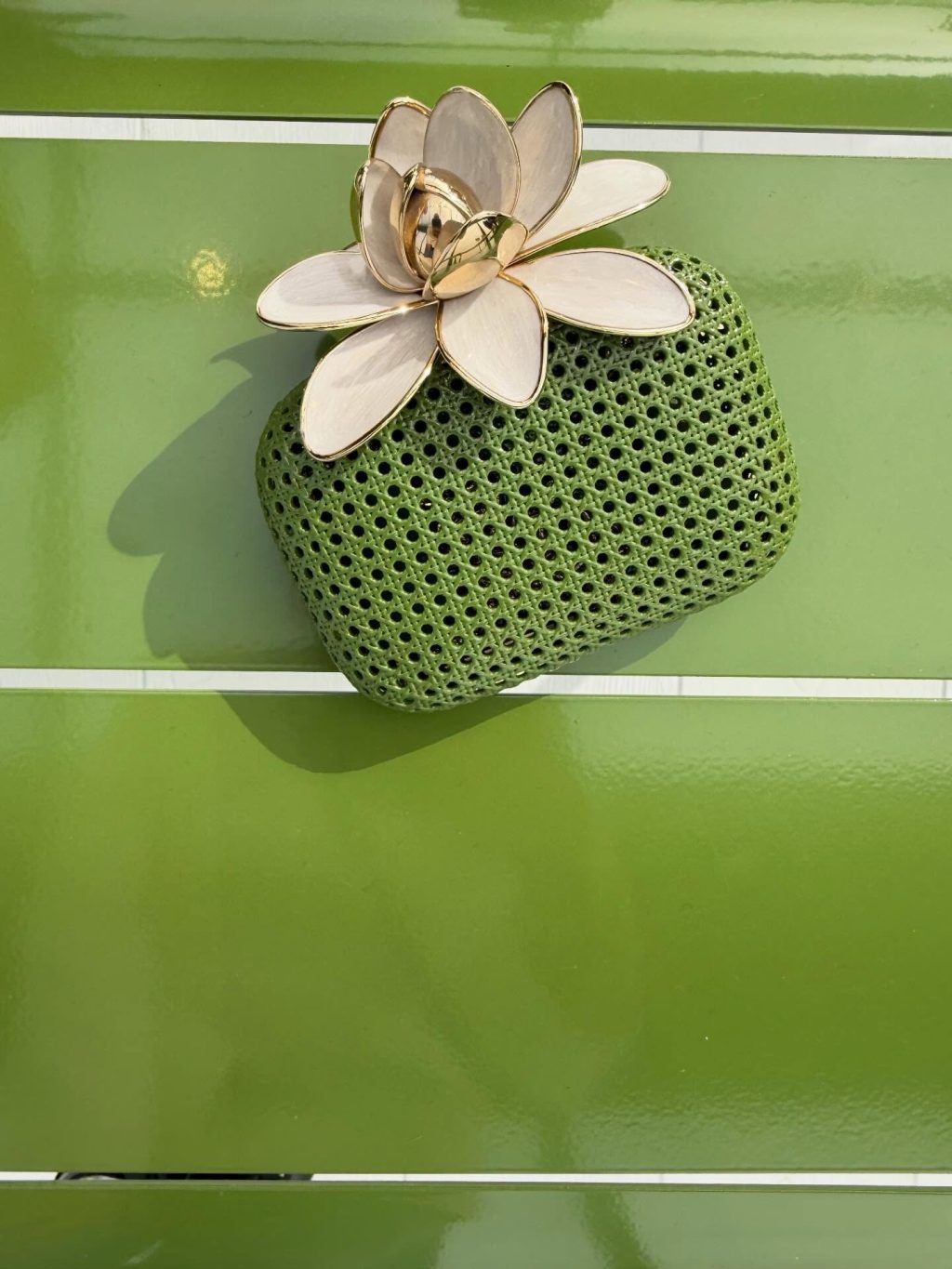
7. Clutches
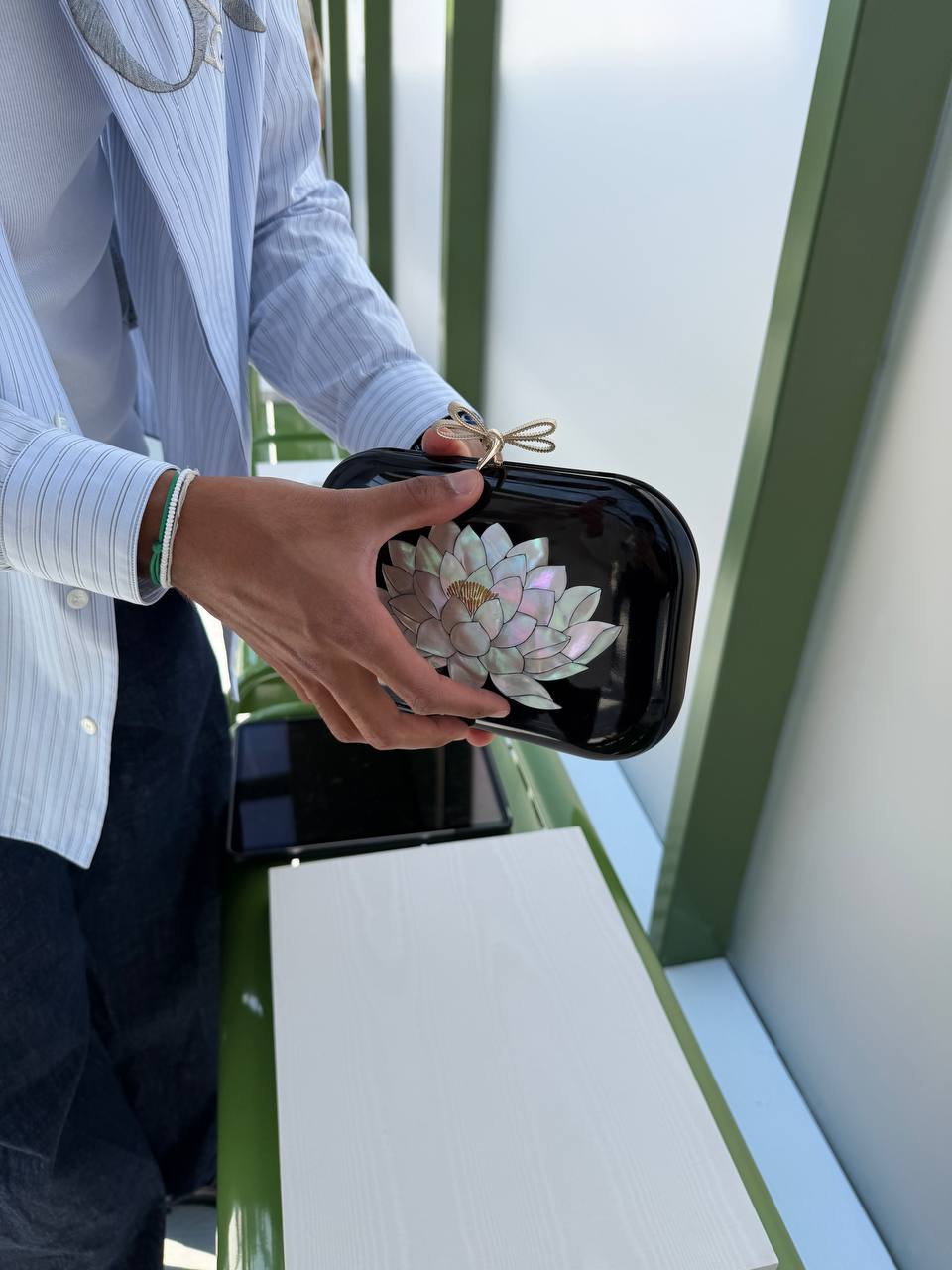
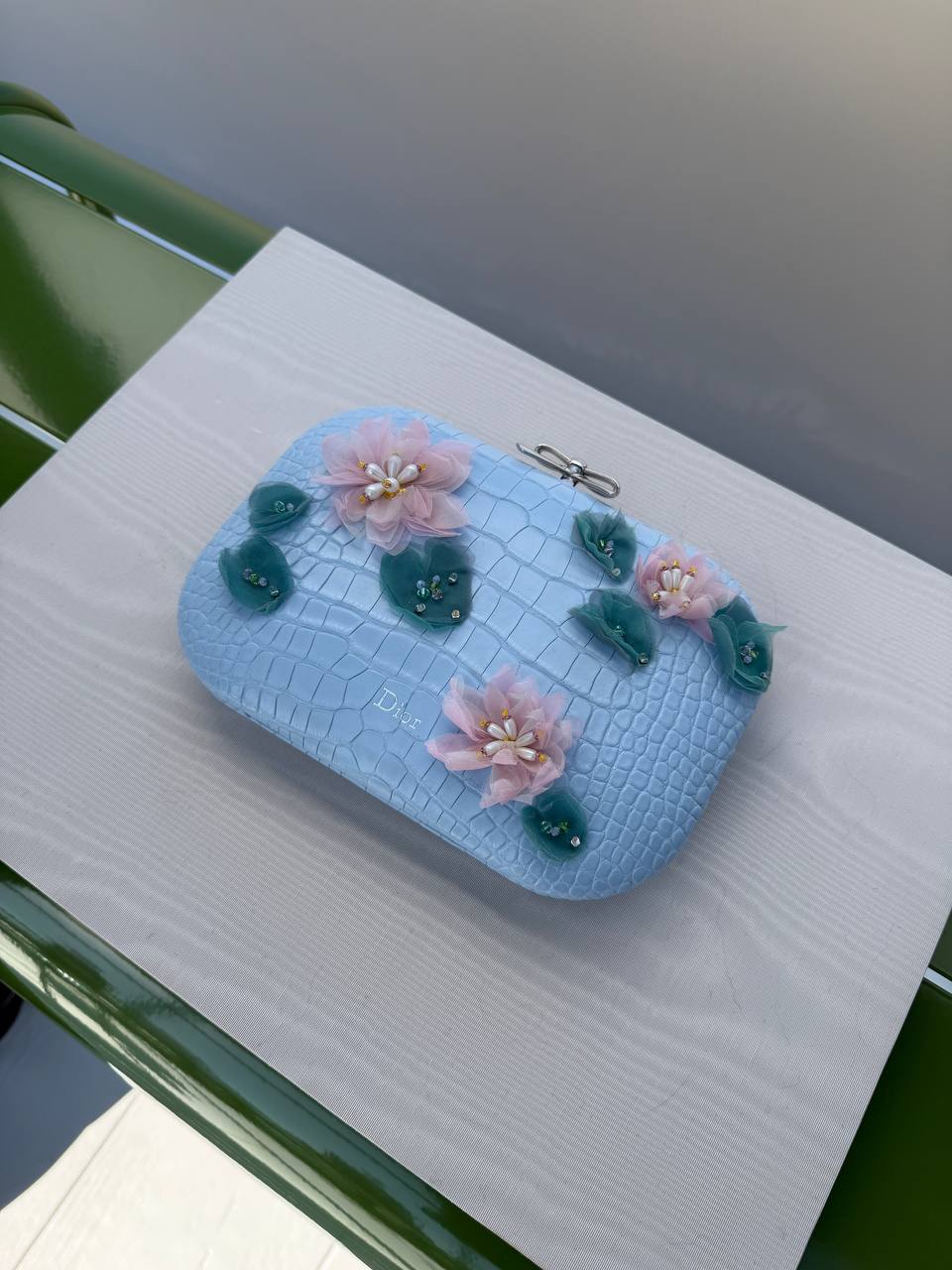
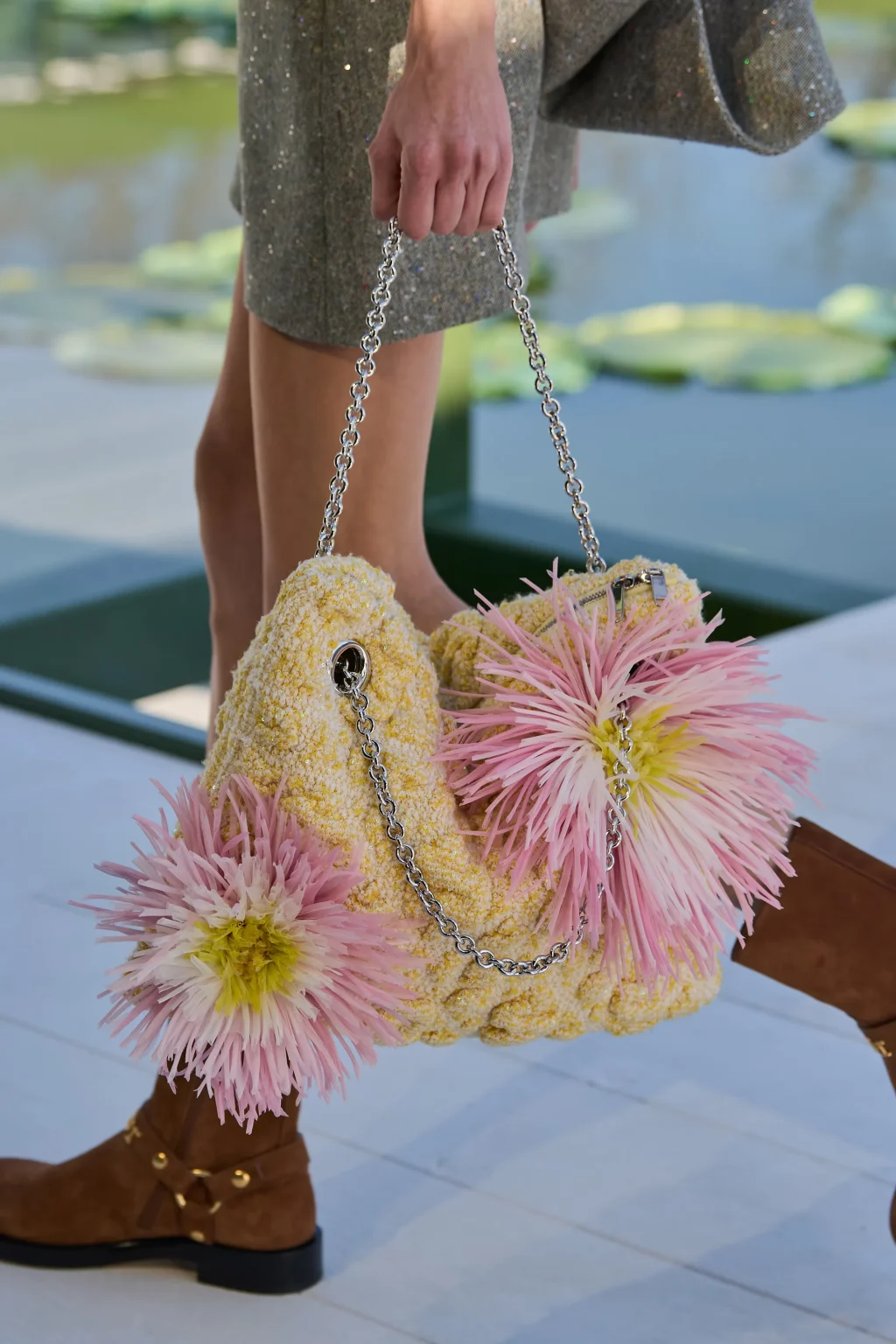
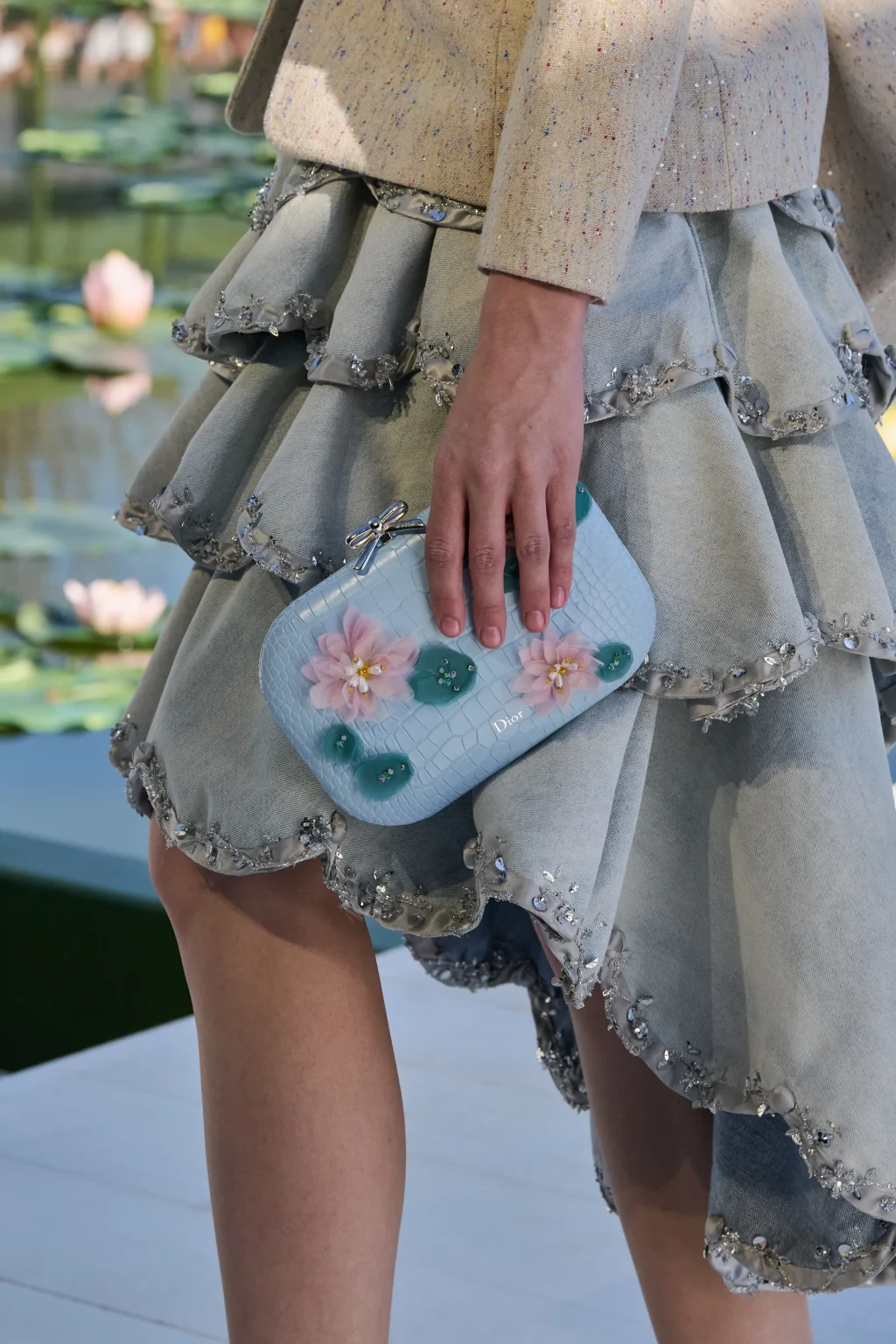
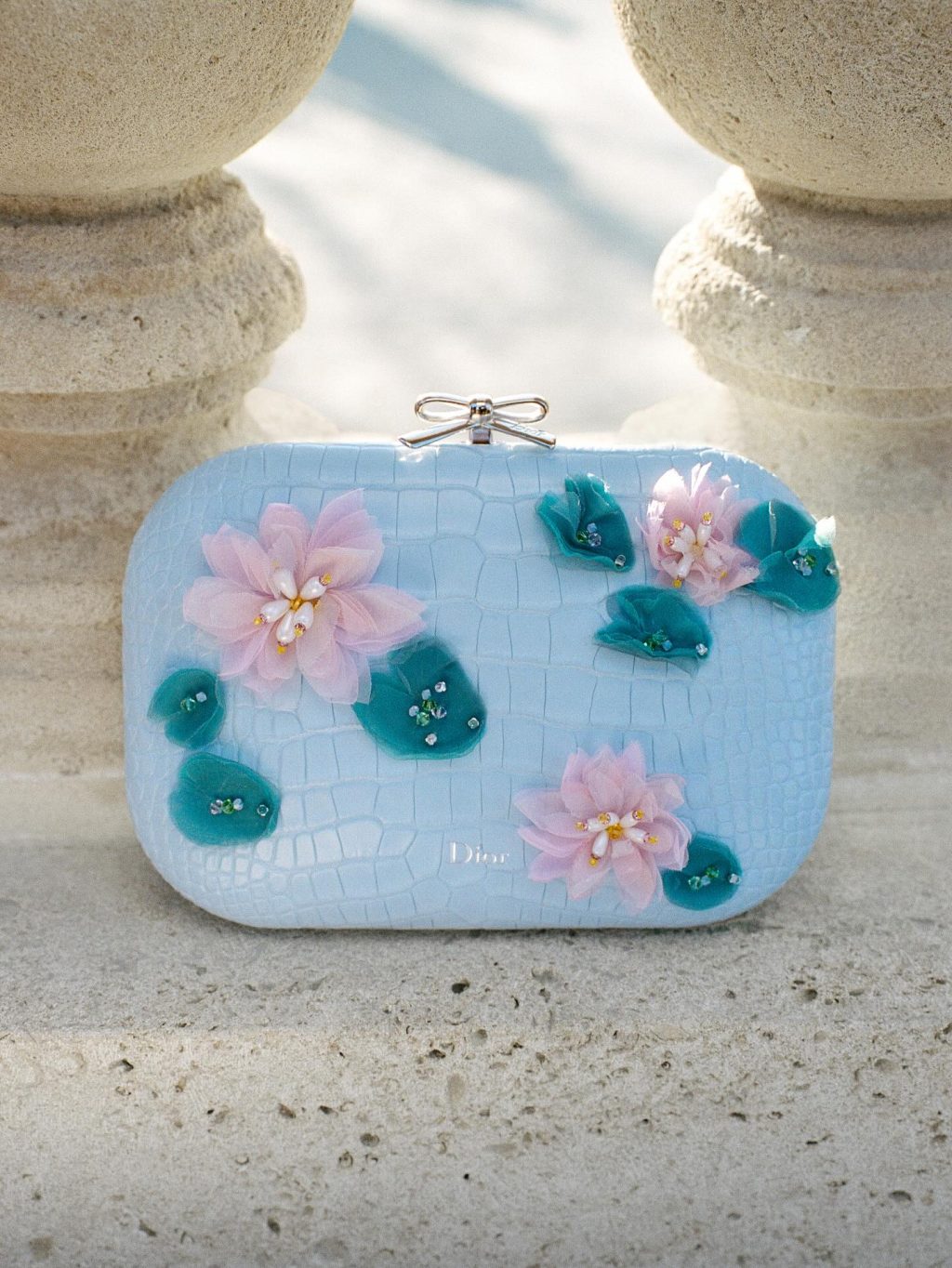
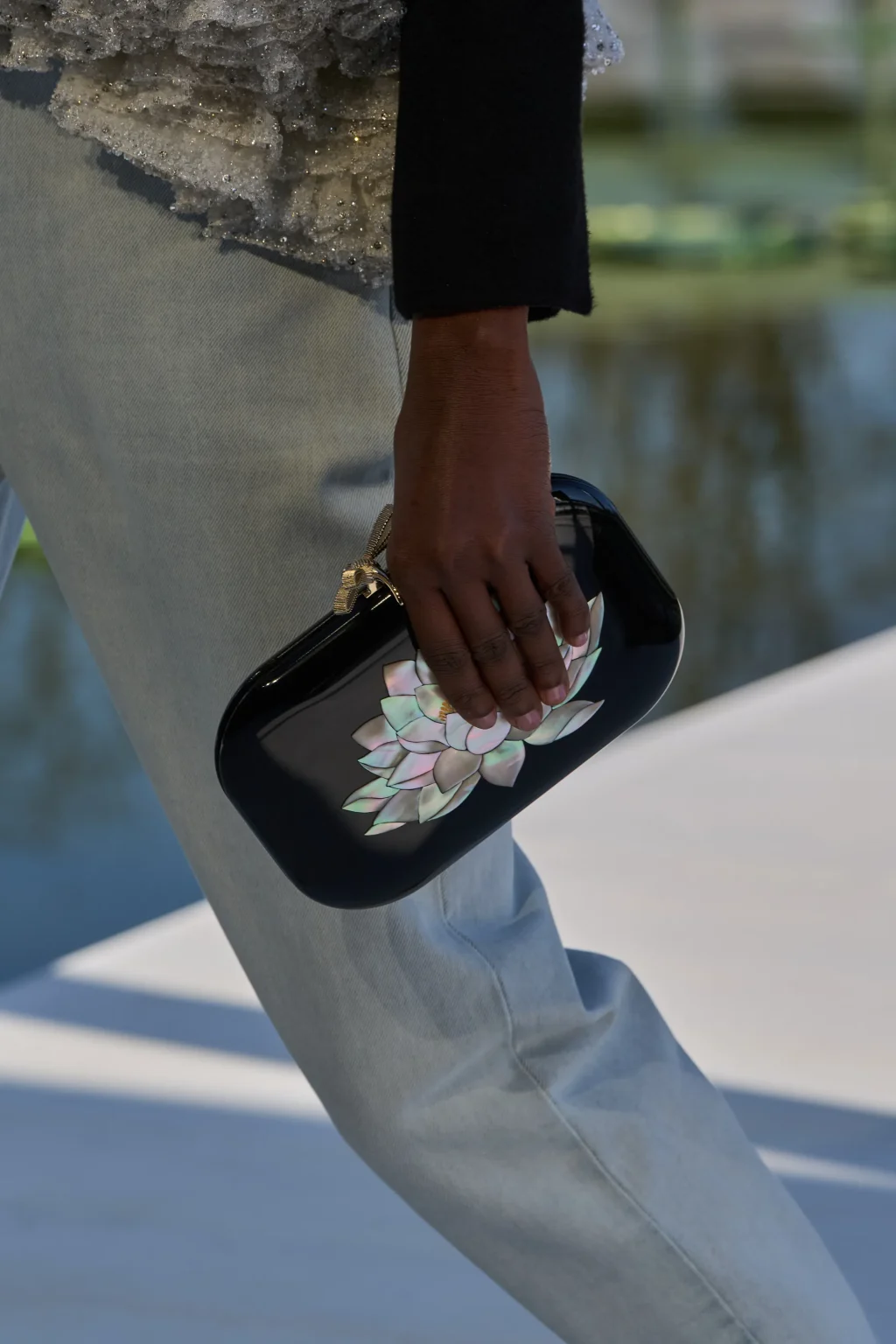
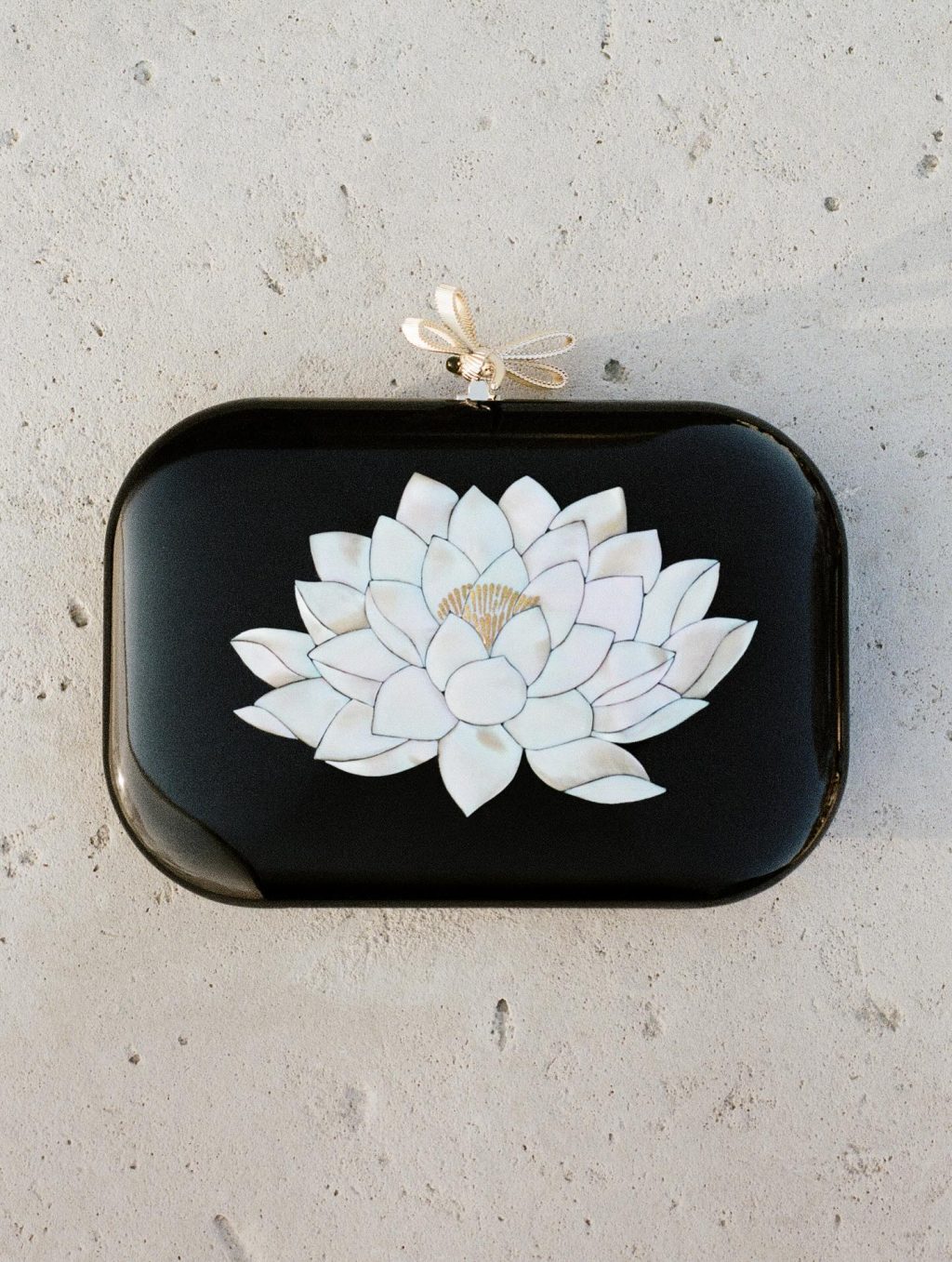
The clutches are designed like small, collectible objects—tight, polished shapes you hold rather than “wear,” which fits the show’s promenade logic: you’re seen in profile, mid-step, with something precious in hand. The dominant mood is floral and couture-coded: compact minaudière-style clutches in icy pastel tones (notably powder blue) with raised, appliqué-like blossoms that sit on the surface like pinned corsages, plus darker, lacquered versions that read more evening—sleek shells with a single statement bloom.
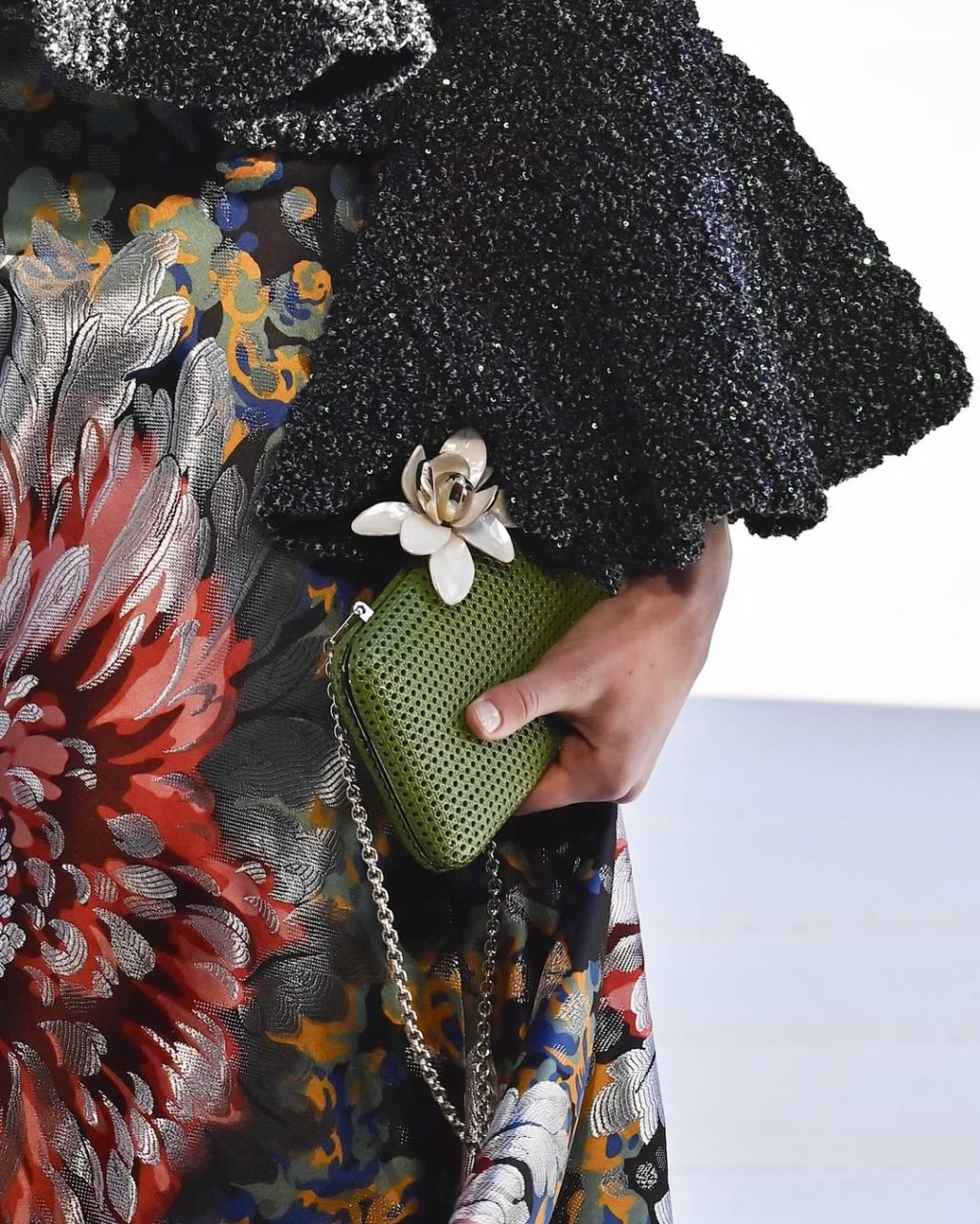
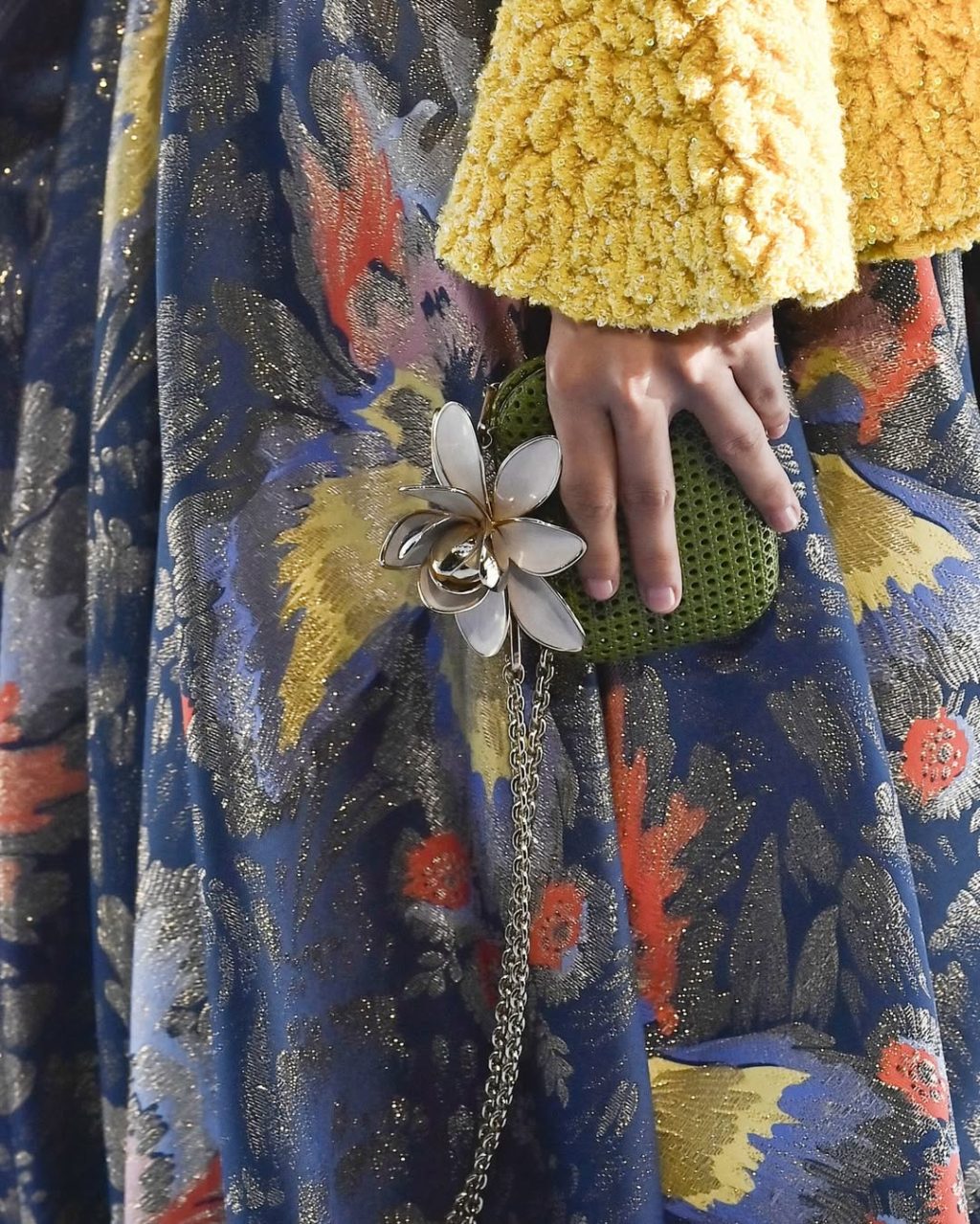
Hardware is minimal on purpose; the impact comes from finish and relief—petal textures, dimensional flowers, and a clean edge that keeps them modern instead of costume. Worn against tweed, jacquard, and ruffled hems, these clutches work as the collection’s “final punctuation”: small, bright, and unmistakably Dior when the rest of the look is already in motion.
8. Dior Frog Minaudière
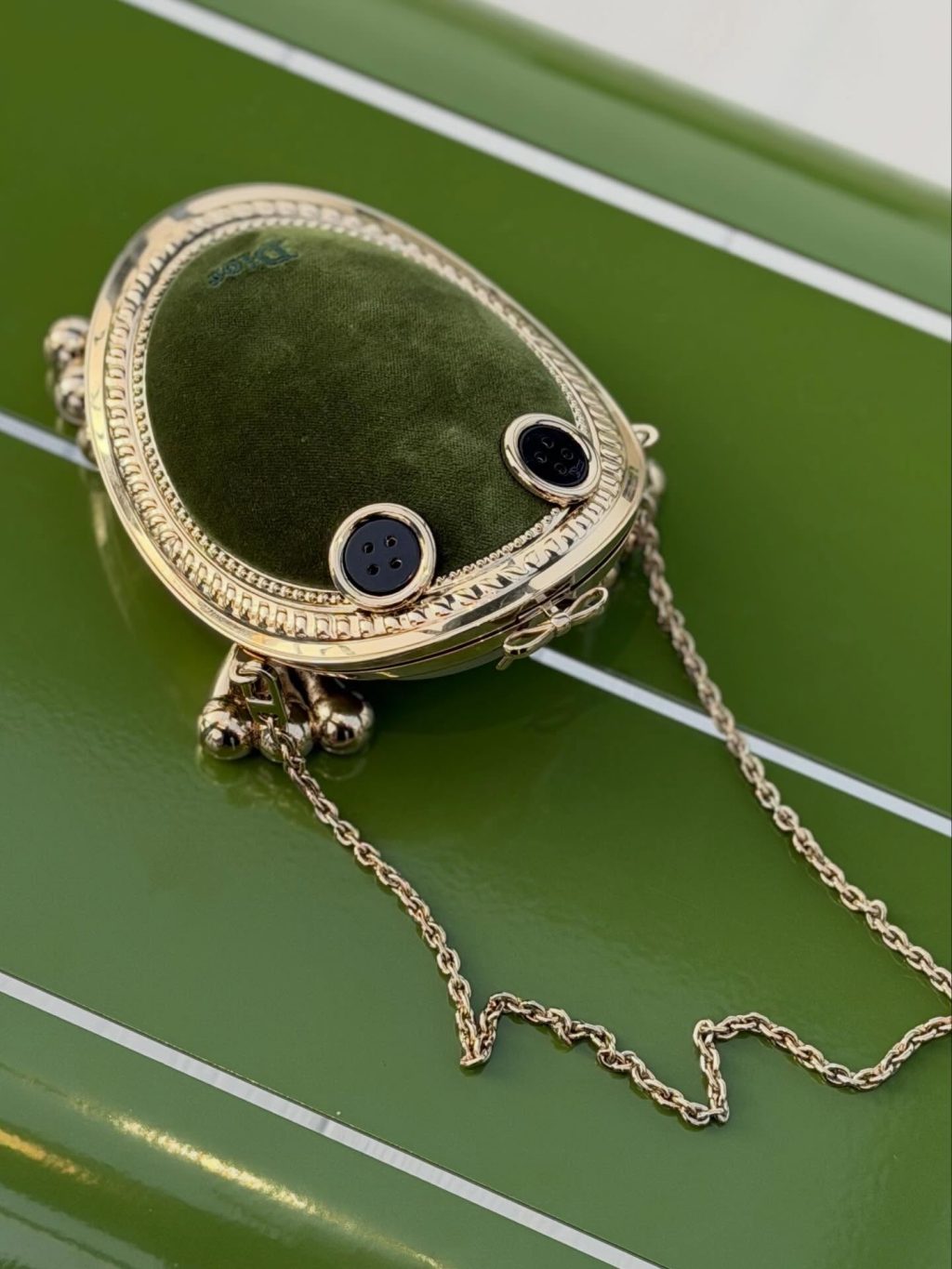
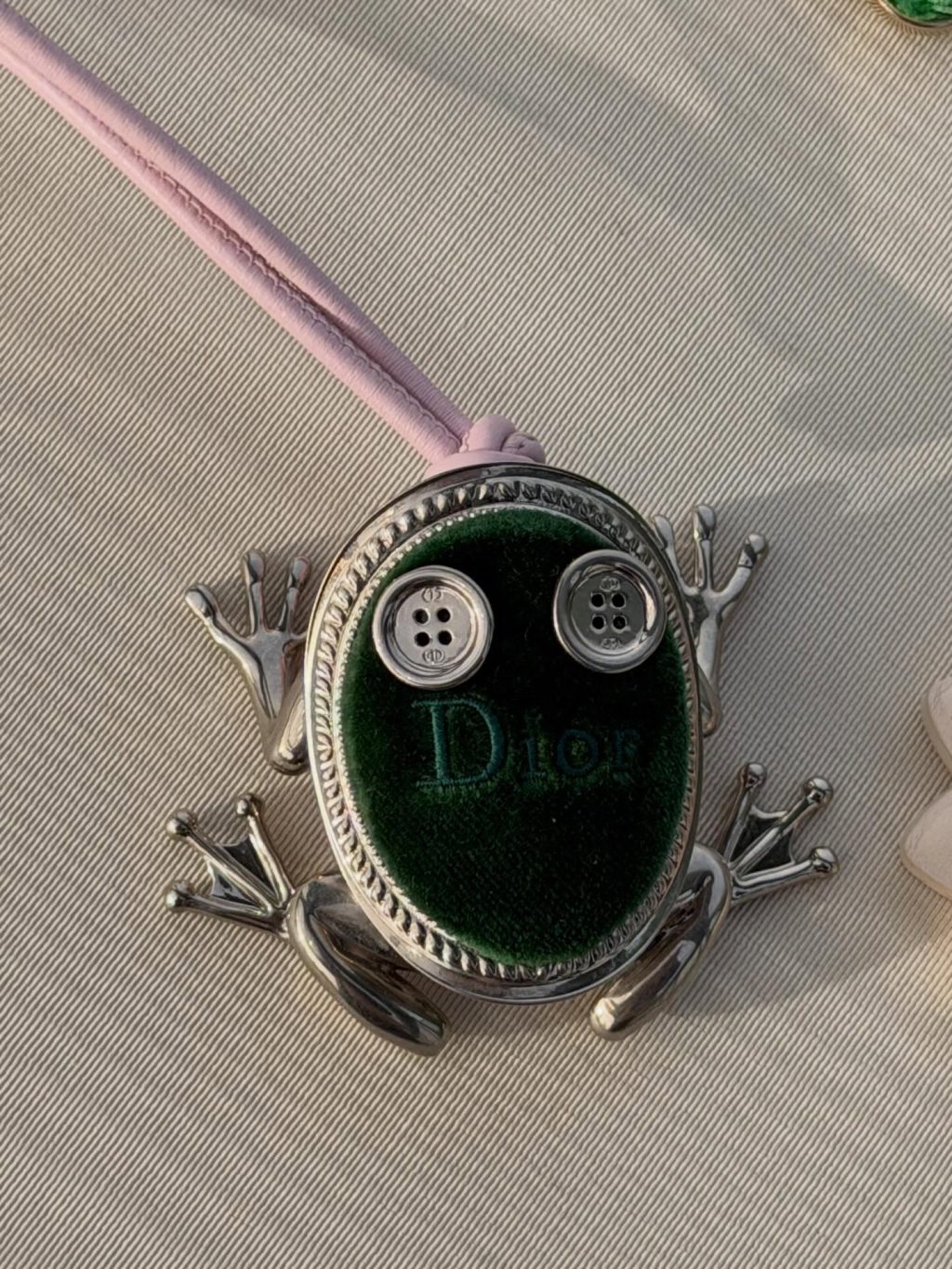
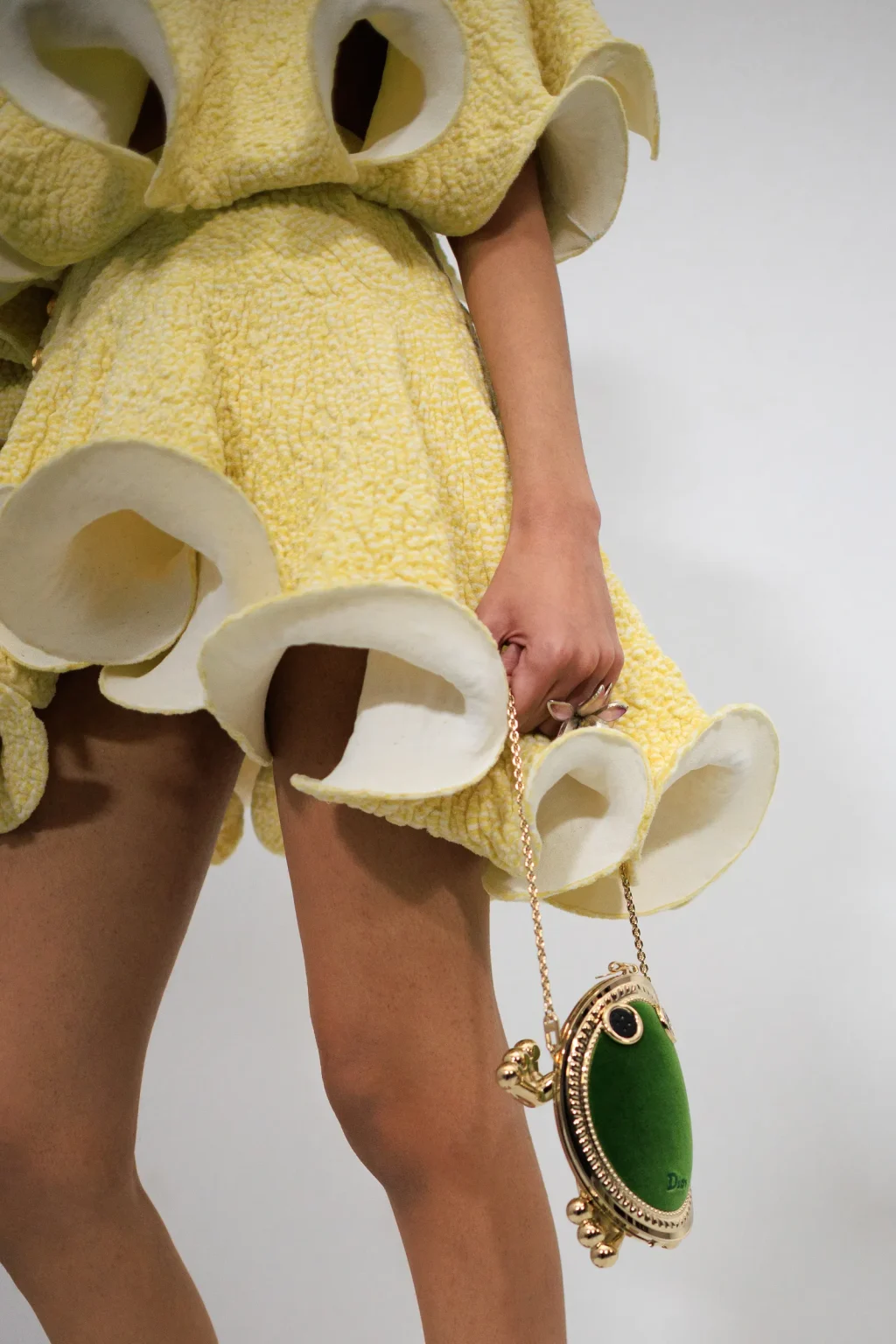
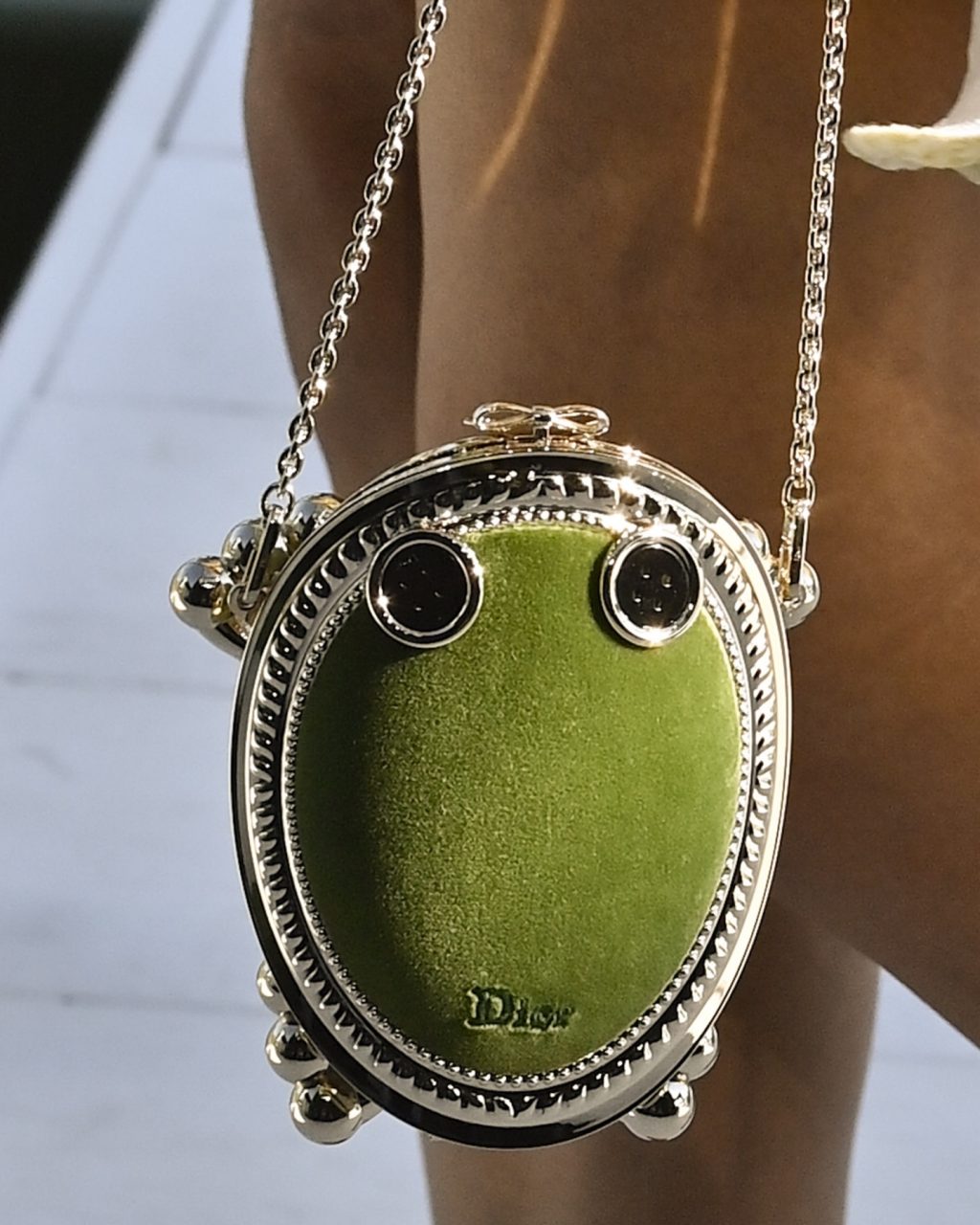
This “special” piece reads like Dior turning a clutch into a character: an oval, frog-like minaudière with a plush moss-green velvet face set inside a highly polished silver-toned frame that’s finished like vintage jewellery. The whimsy is precise, not cartoonish—two button-like circular studs sit high like eyes, a tiny bow clasp crowns the top like a hair accessory, and the perimeter is rimmed with beaded/coin-edge detailing plus little rounded metal “paws” along the sides that make it feel collectible, almost like a compact from another era.
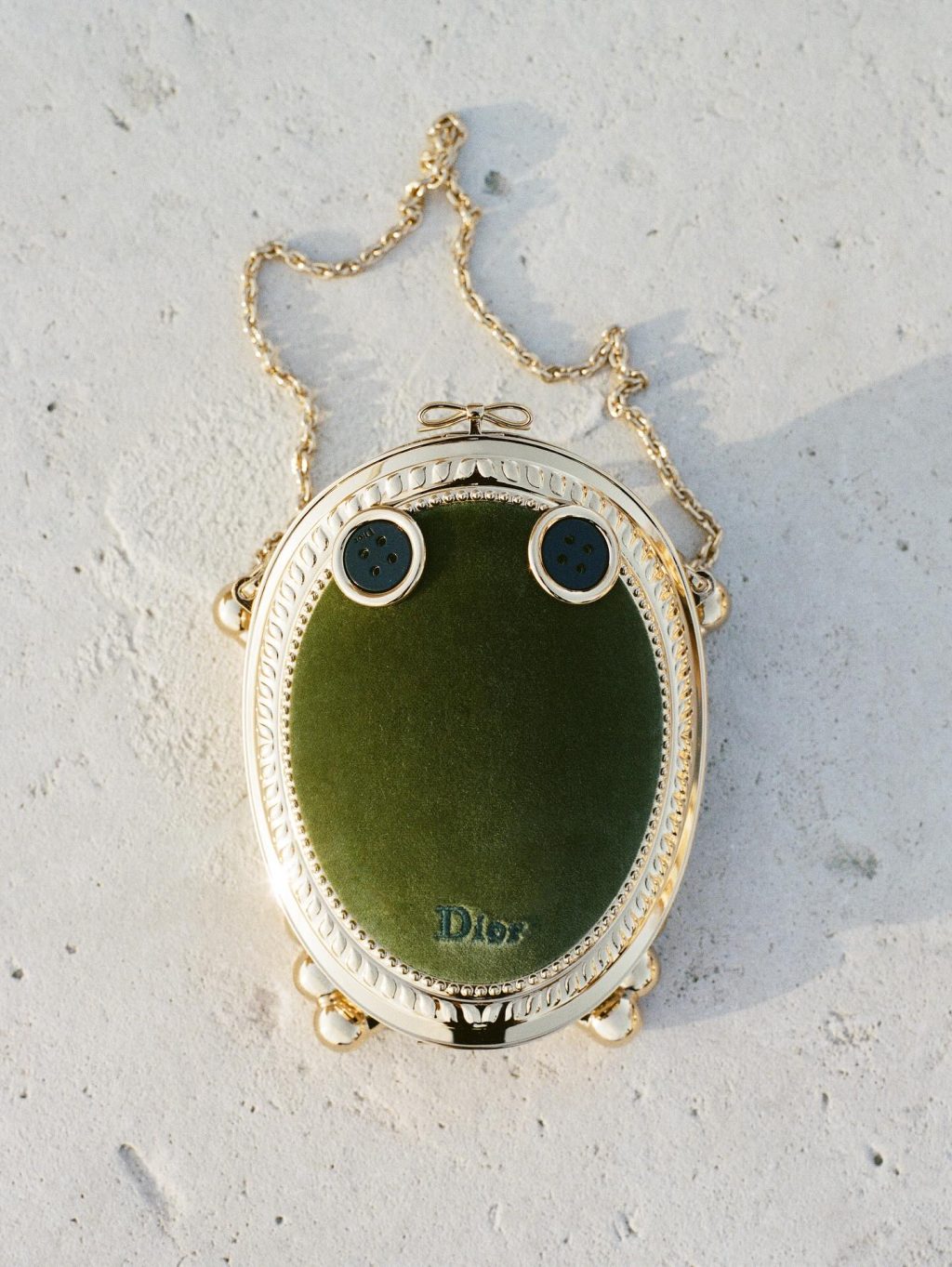
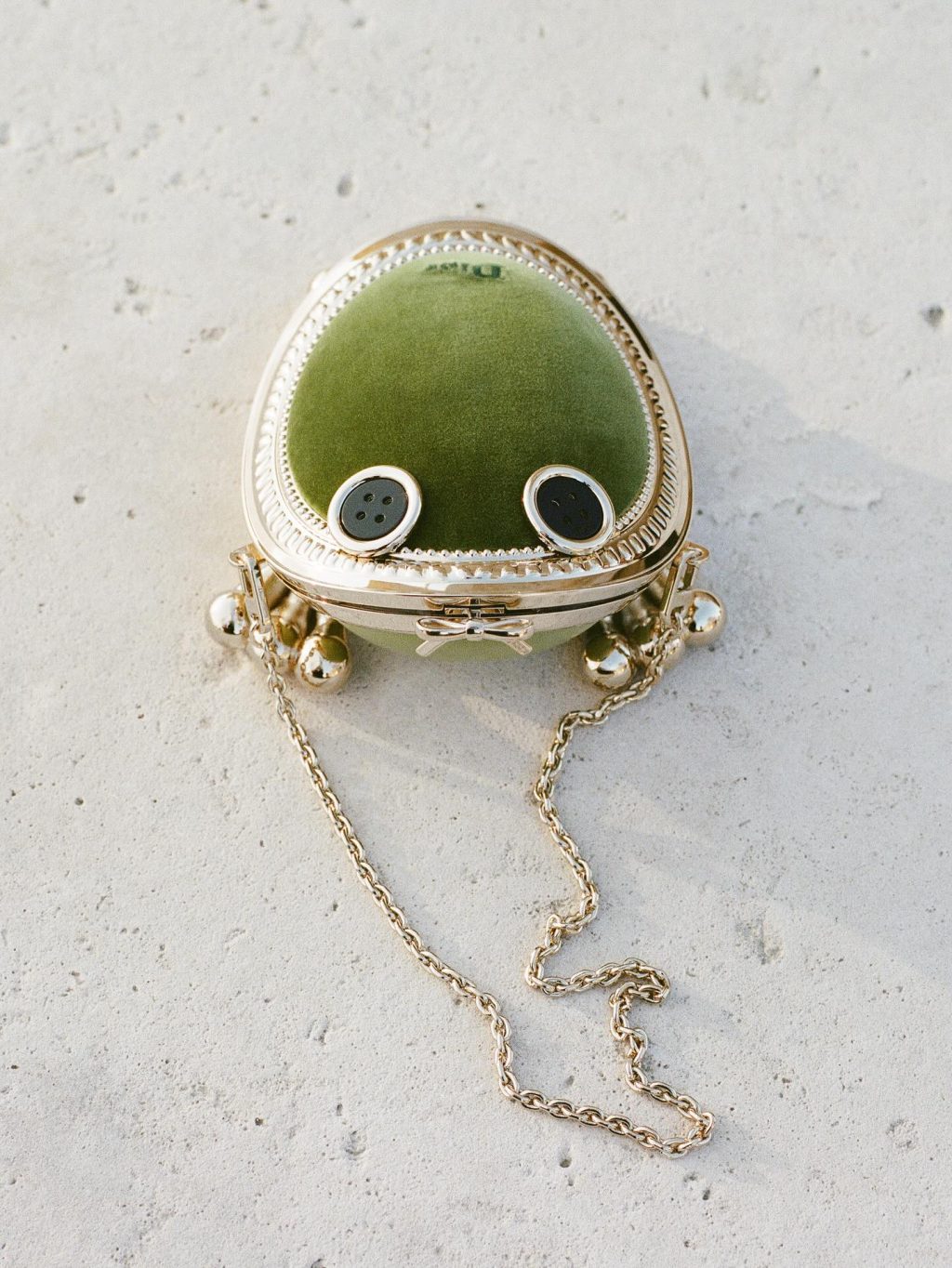
Suspended on a fine chain, it functions as a micro crossbody but behaves like a couture objet—an accessory you notice first, then decode—and yes, it neatly extends the animal-toy energy seen in Dior’s recent couture language, translated here into something you can actually carry.
For more context on where Dior’s most whimsical, object-like accessories started this year—especially the animal-inspired mini bags—see my Dior Haute Couture Spring/Summer 2026 bags guide.
9. Logo shoulder tote
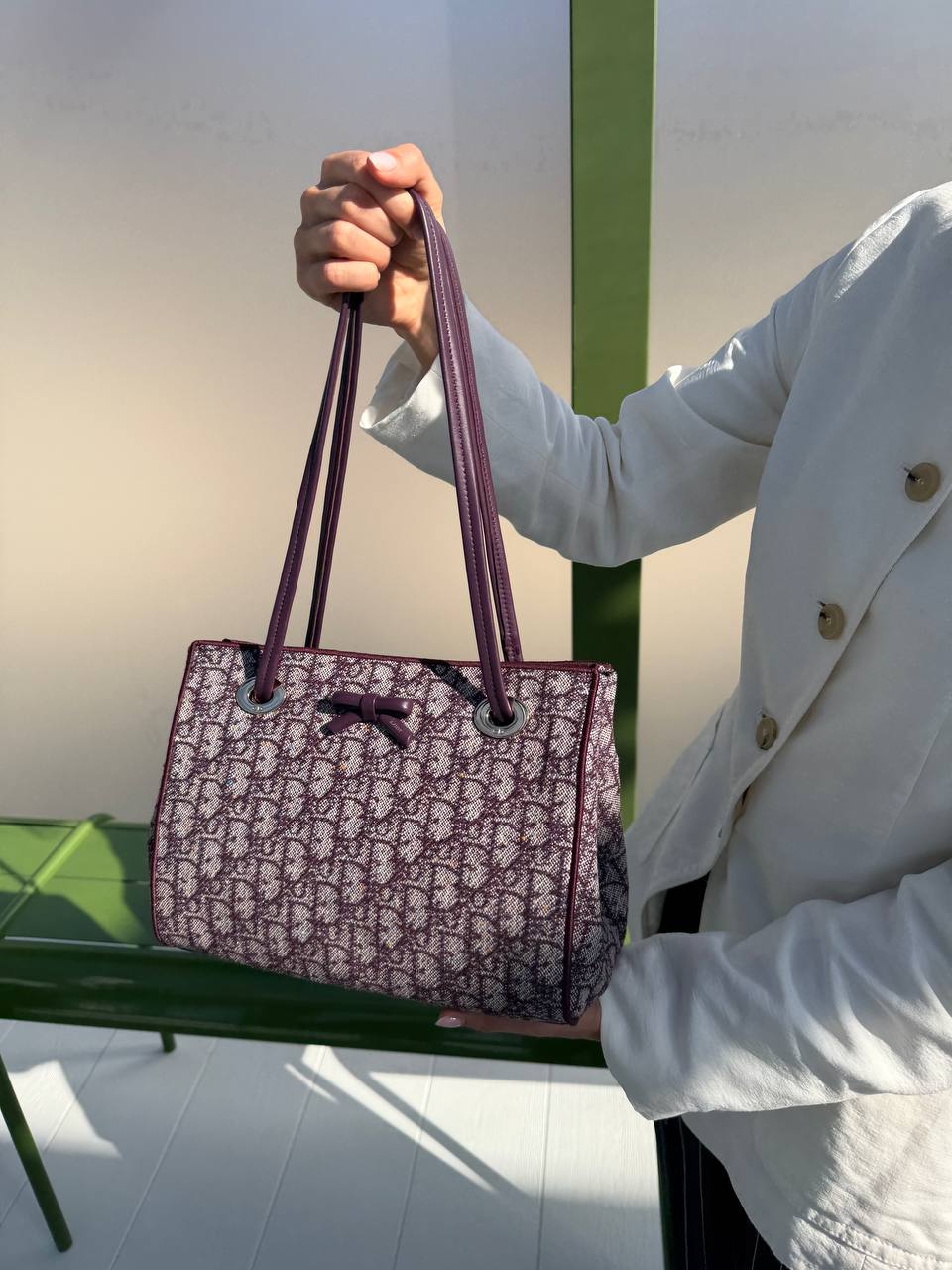
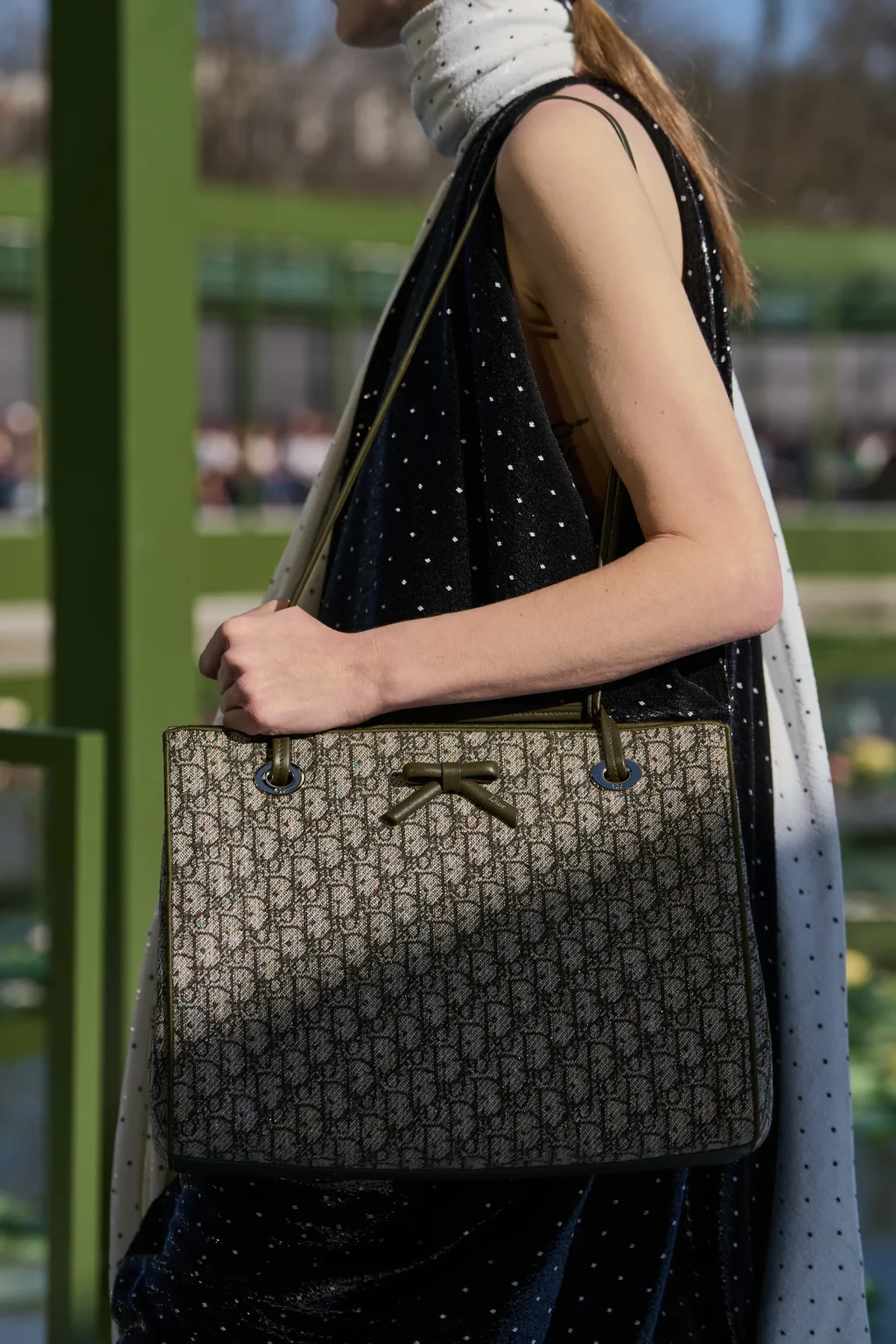
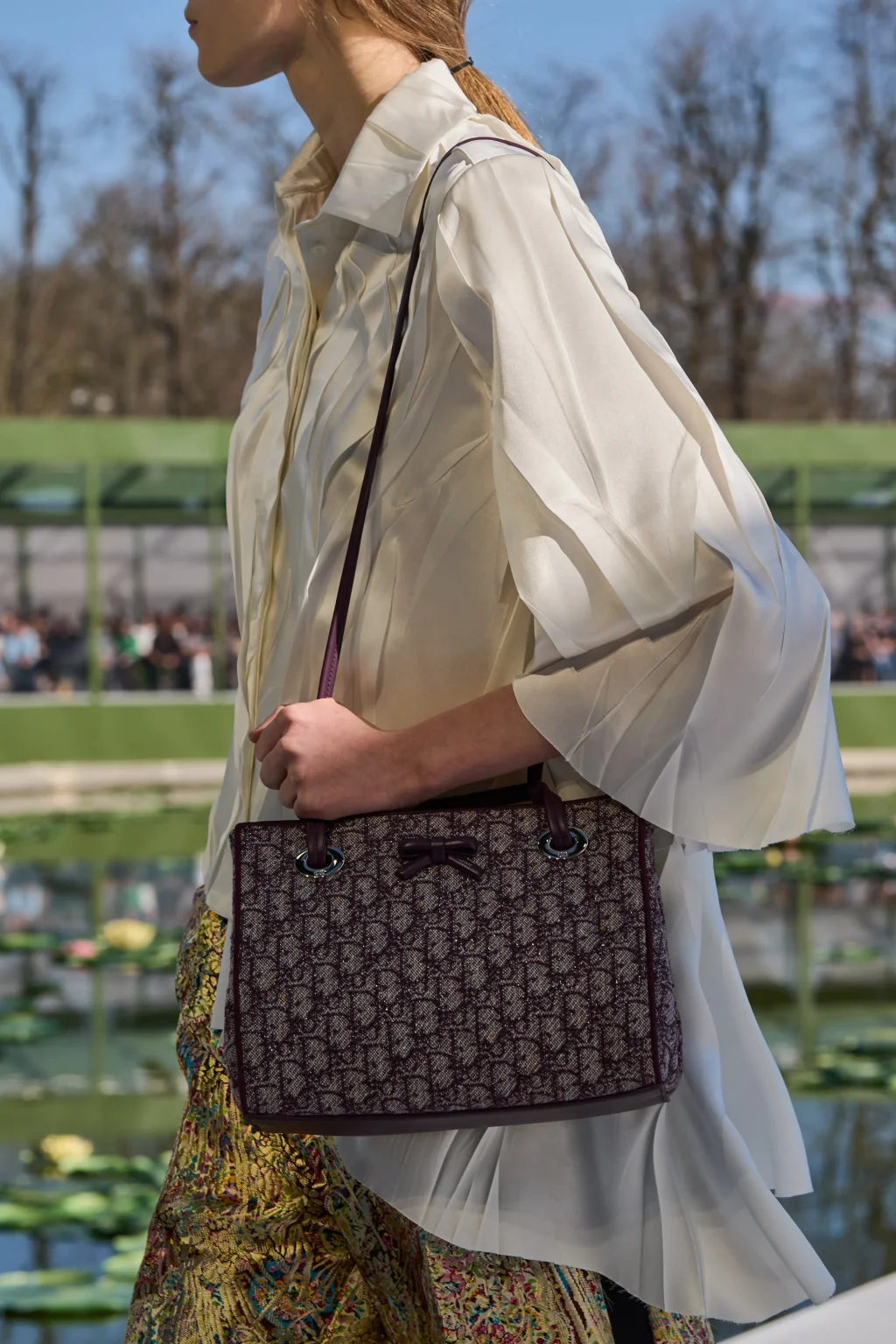
This logo shoulder tote is Dior’s quiet flex in FW26/27: a clean, structured everyday carryall wrapped in an all-over Dior monogram jacquard that reads graphic from a distance but textured up close, like upholstery made wearable. The silhouette sits between a tote and a satchel—slightly trapeze, firm at the base, generous through the body—designed to hang neatly on the shoulder via a long strap that keeps it hands-free for the “promenade” pacing of the show.
10. Diorly Bag
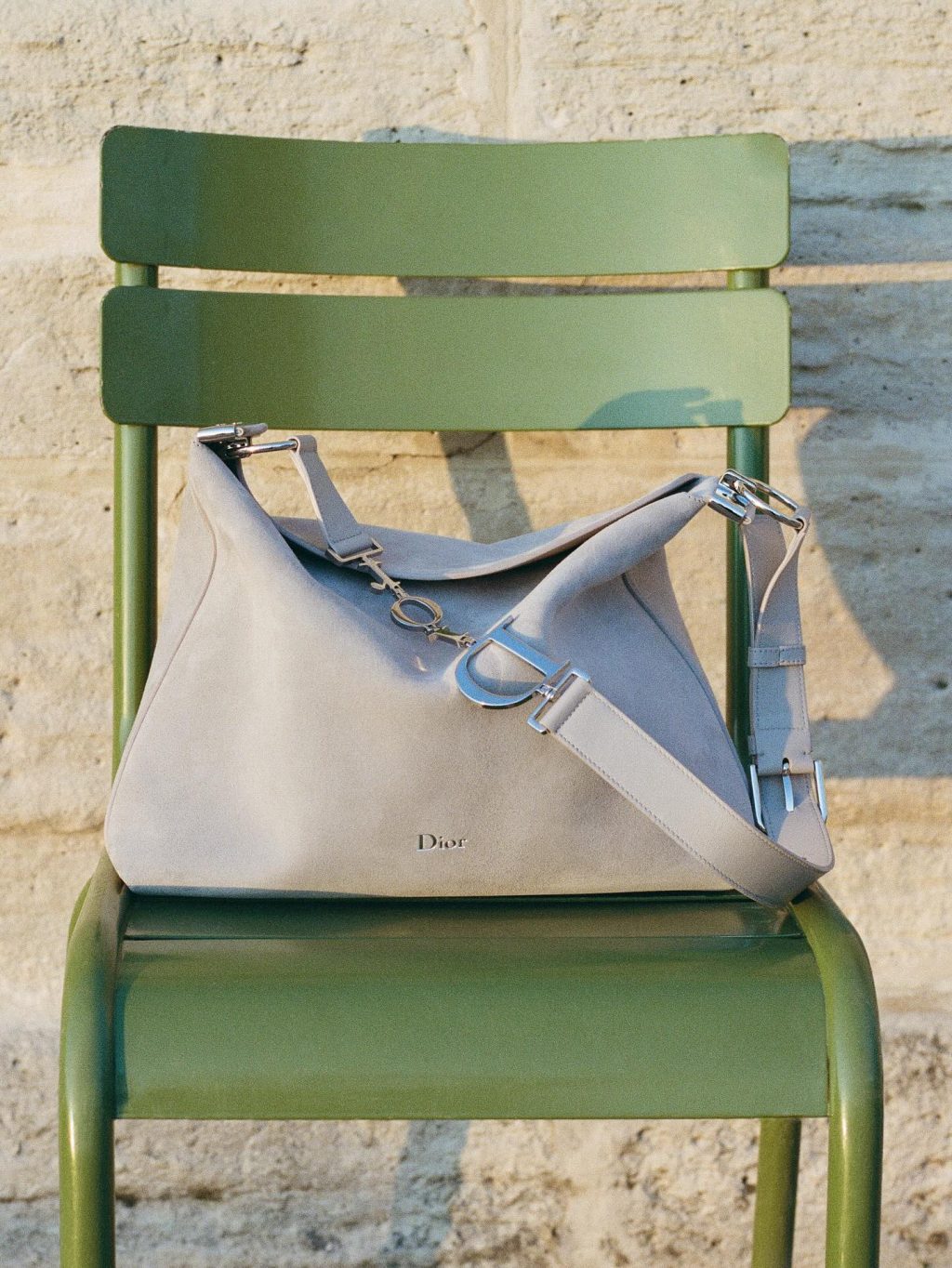
The Diorly Bag is one of the most quietly clever silhouettes in the FW26/27 lineup: a minimal, soft-structured shoulder pouch with a clean, slightly tapered body that sits flat against the torso and reads almost graphic from the front. What gives it identity is the strap—an elongated, hardware-led detail where the oversized “Dior” letter charms are integrated like a functional chain (part jewellery, part branding), turning the carry into the statement rather than the bag itself.
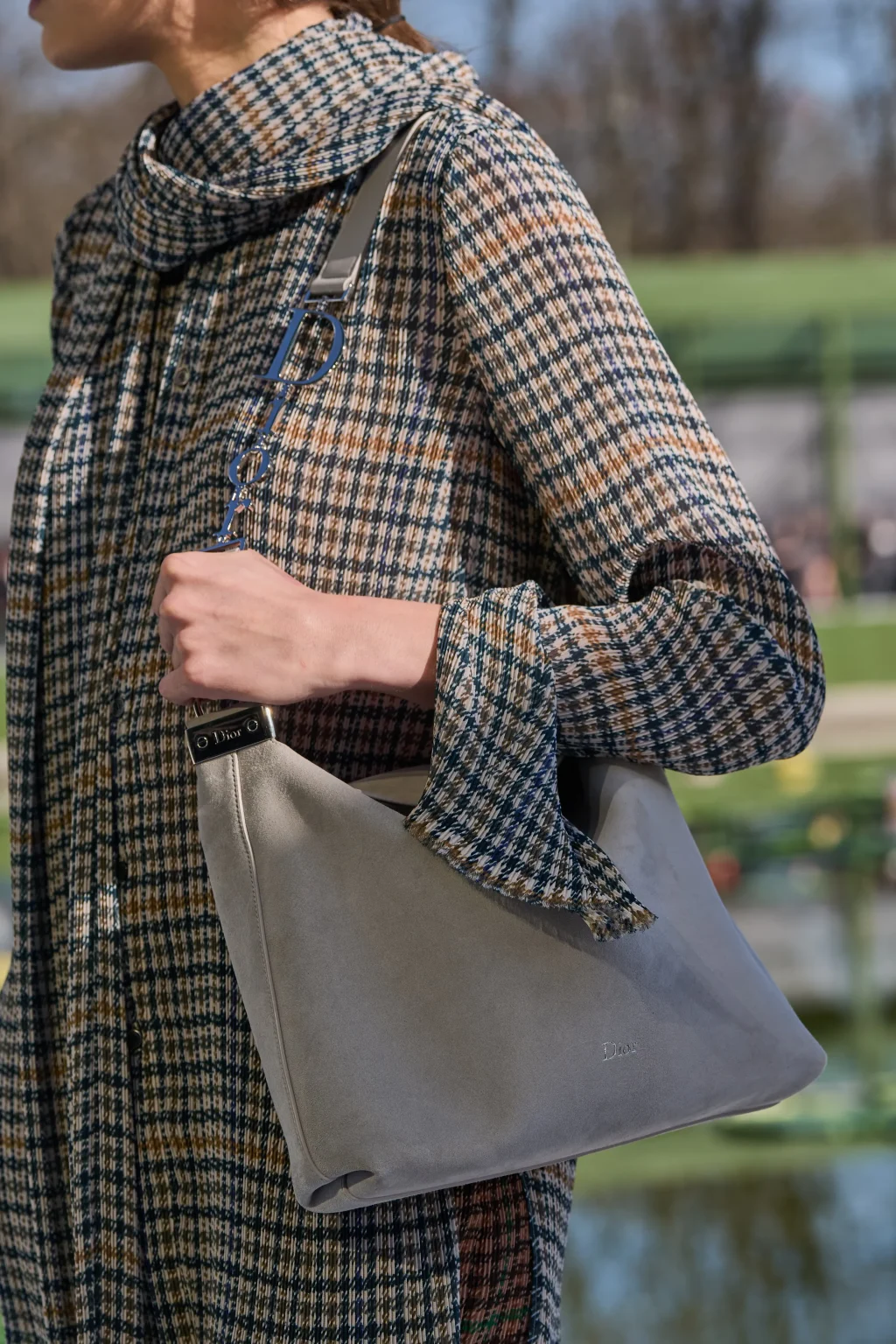
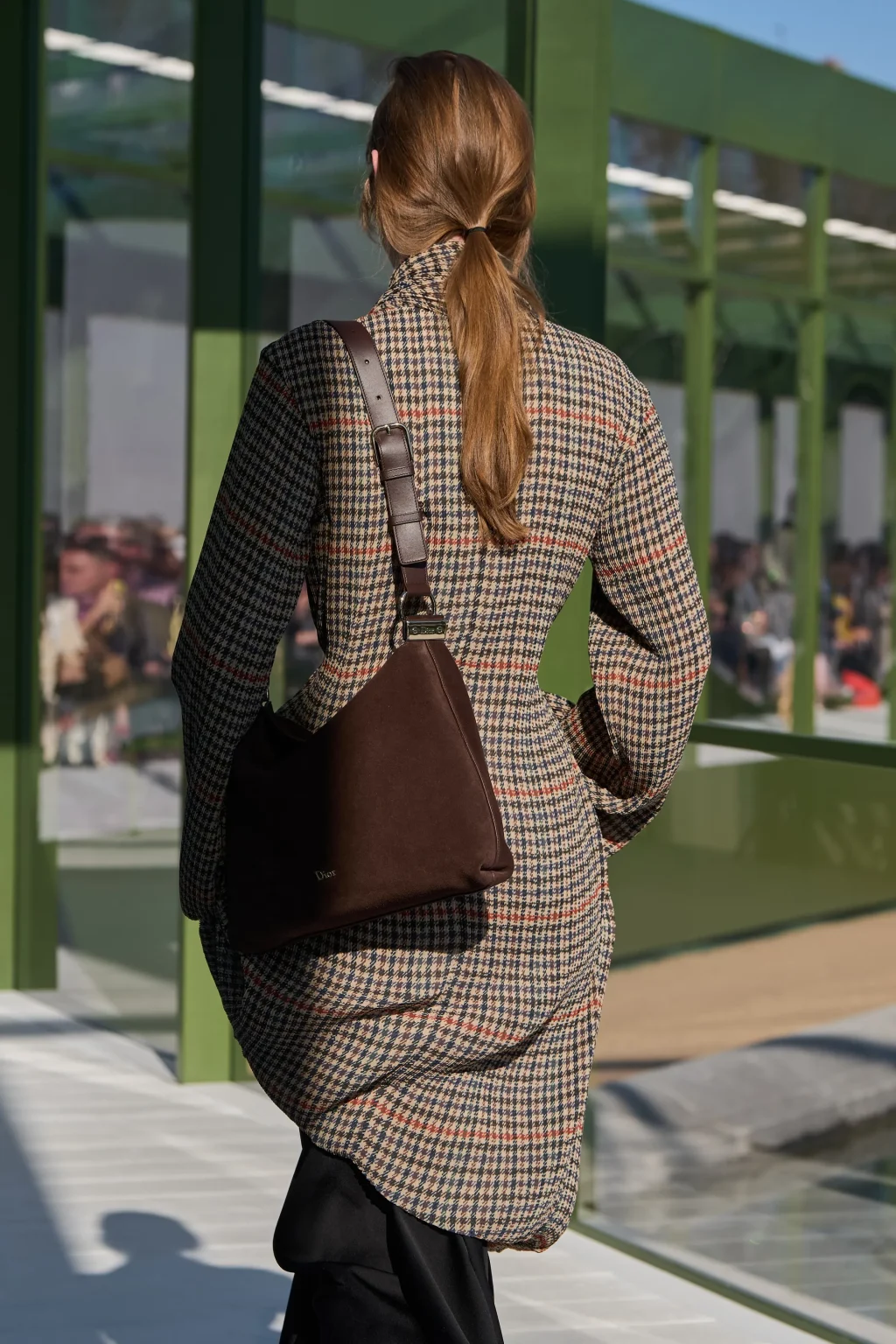
11. Suede bags
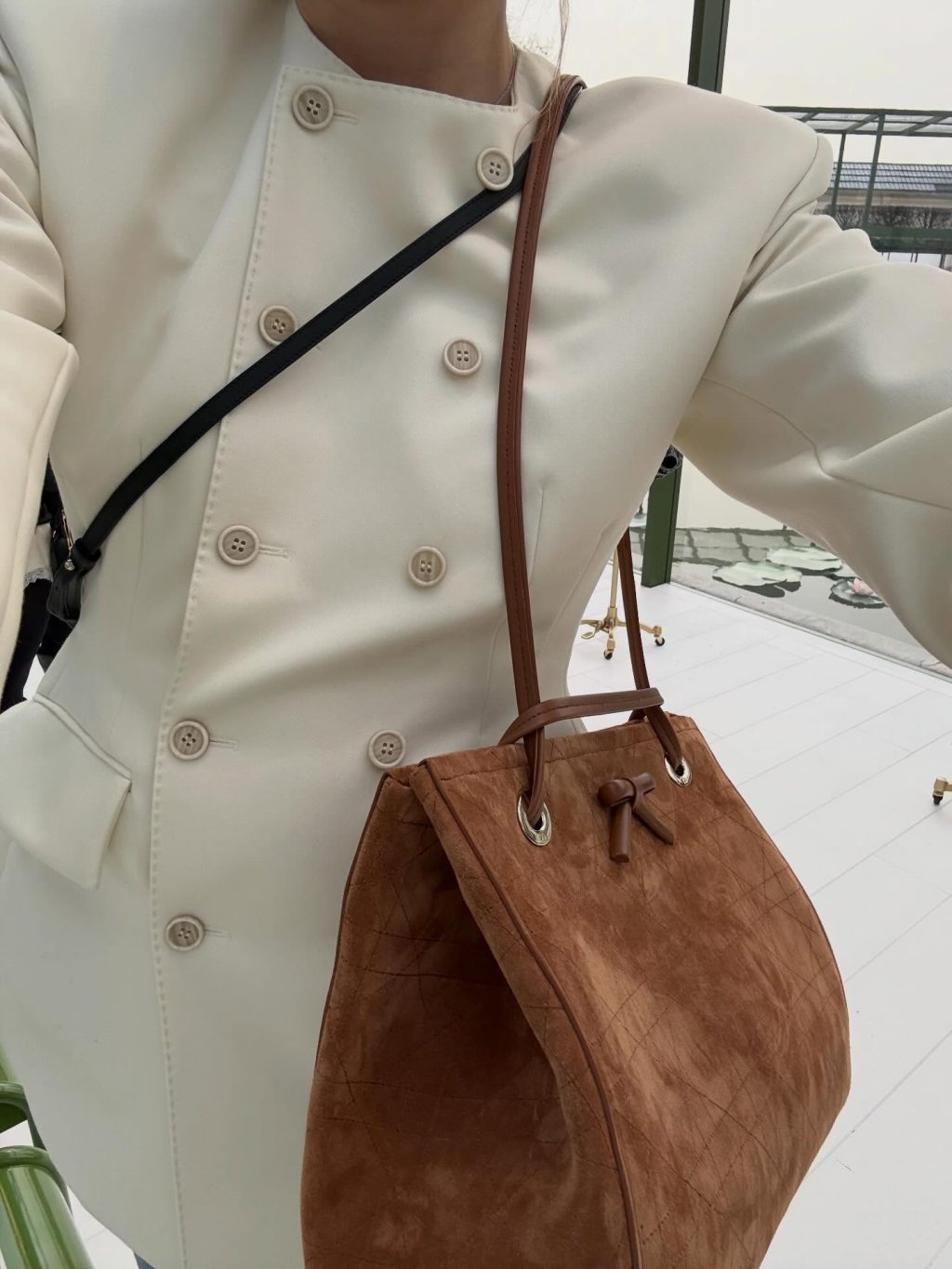
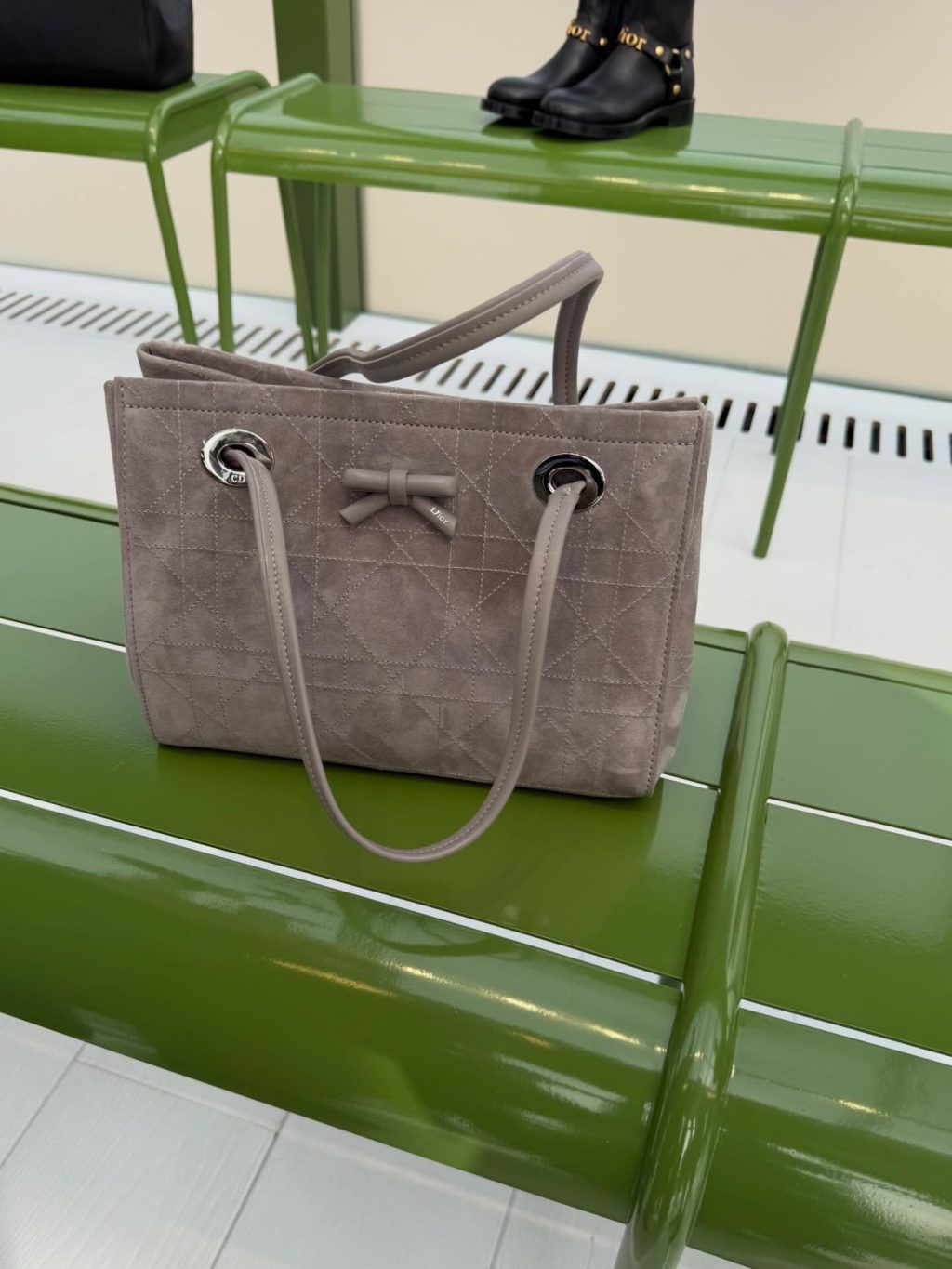
Soft, warm-toned pieces (caramel, chestnut, tobacco) that feel almost glove-like against the sharper tailoring and denim. The silhouettes stay deliberately simple—compact shoulder hobos and small pouch/satchel forms with a clean top line—so the focus lands on material: matte nap, subtle shading, and that “worn-in” depth suede gets in motion. What elevates them is the way Dior codes are handled: minimal hardware, a discreet attachment point, and occasionally a charm or slim strap detail that reads more like jewellery than branding.
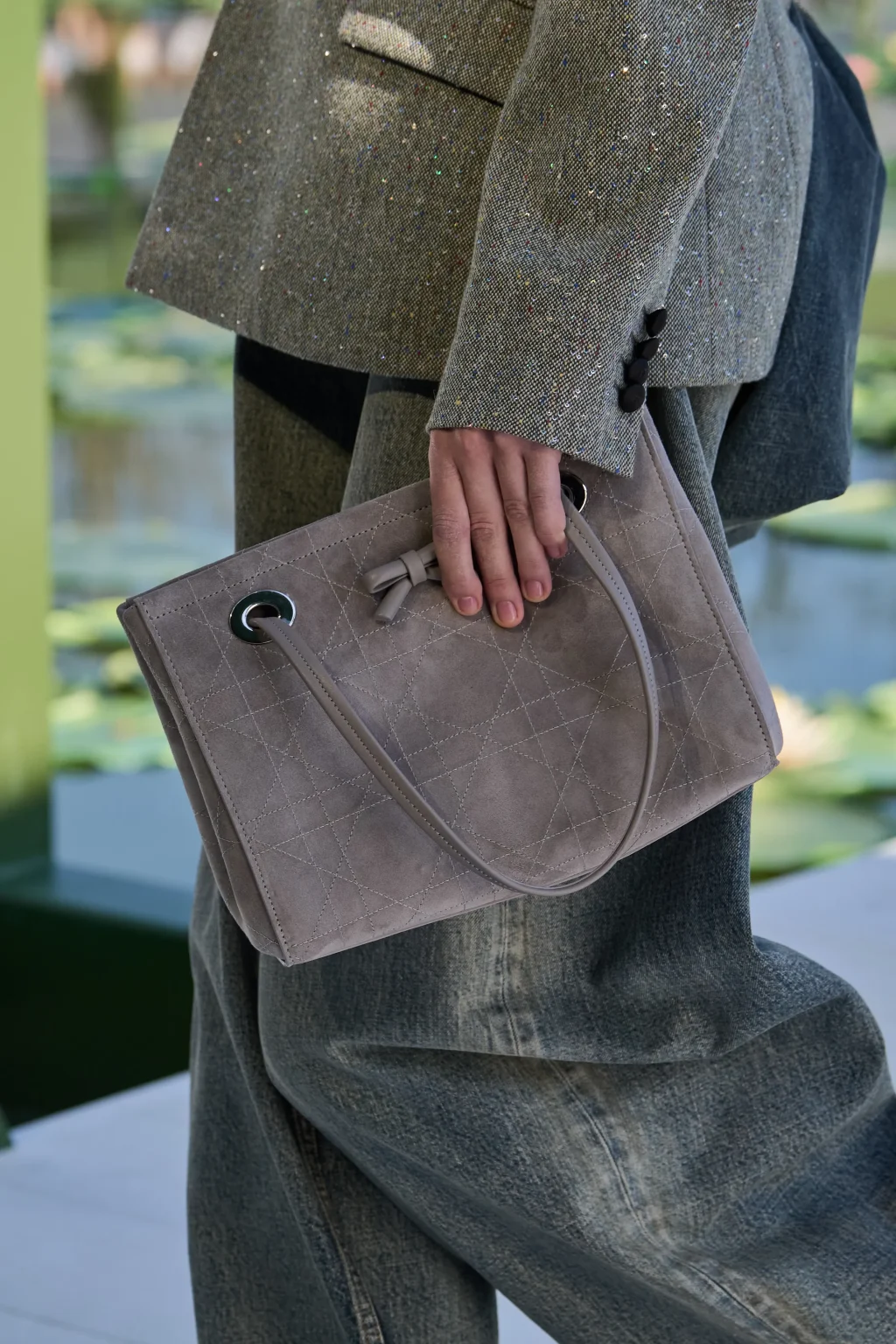
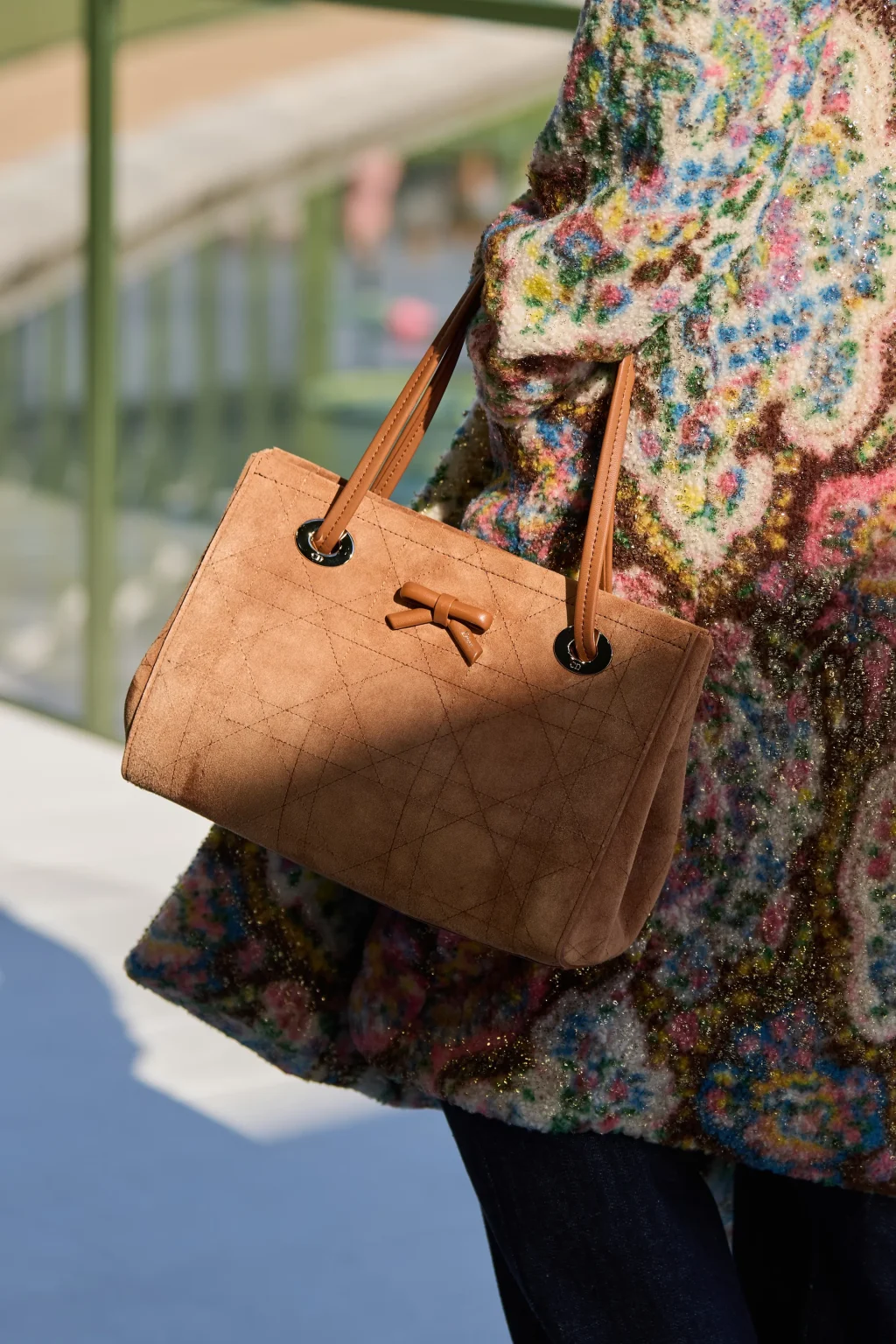
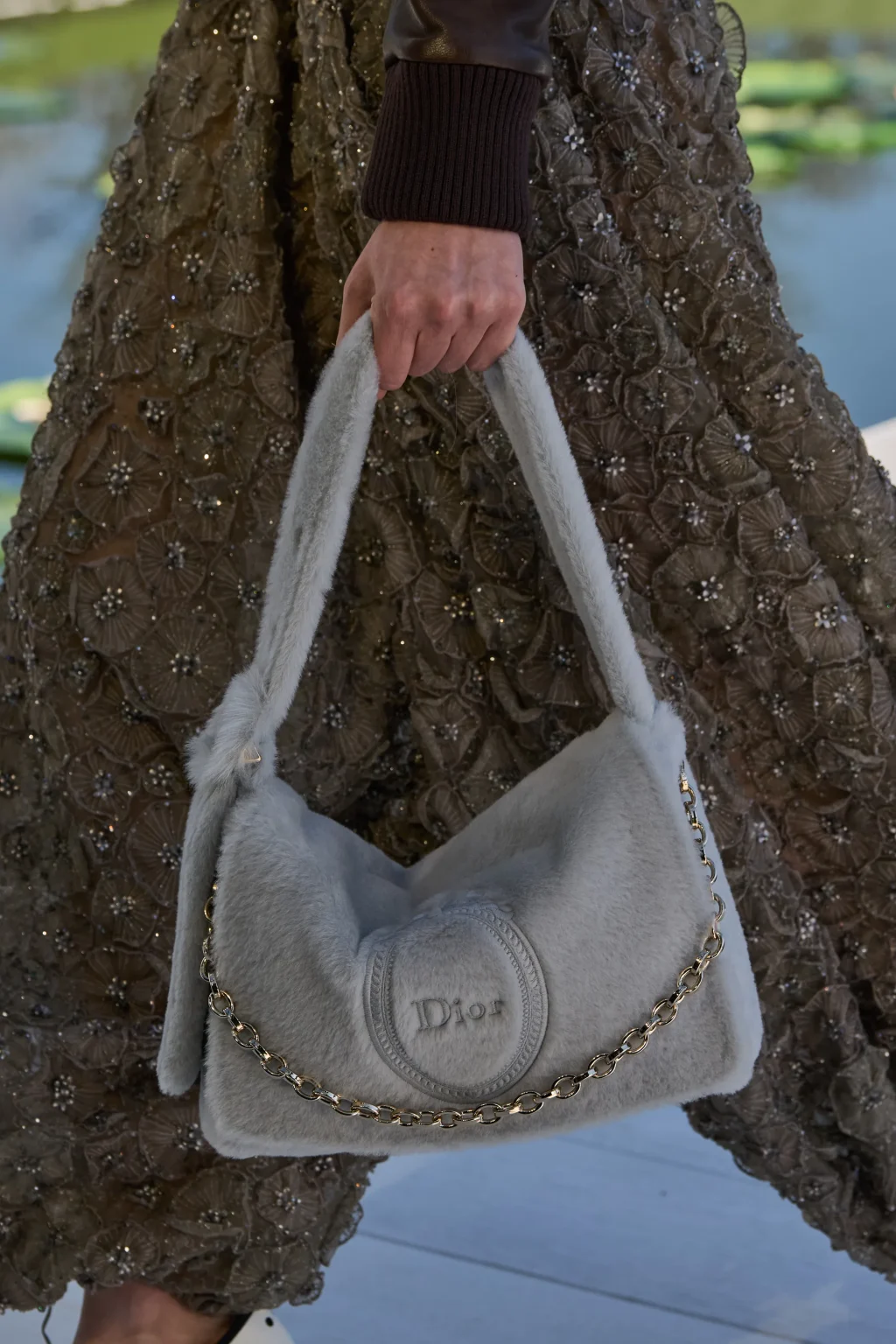
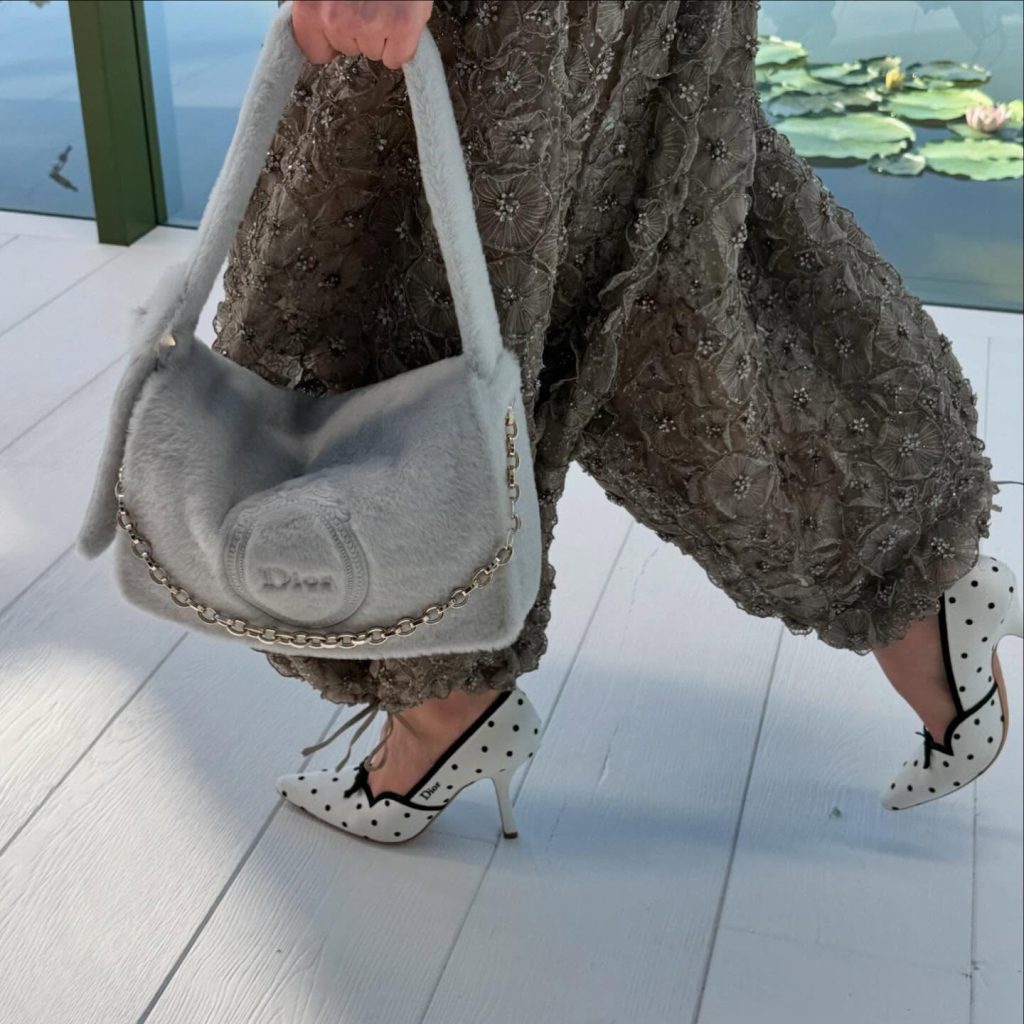
12. Fur bag
The silhouette is relaxed and slightly slouchy, with a deep, curved base that sits close to the body, while the strap is wrapped in the same fuzzy finish for a fully tonal, tactile effect. What gives it structure (and a hint of jewellery) is the delicate chain detail draped along the front—less “hardware” than a finishing line—plus the subtle oval Dior medallion patch that feels like a couture label stitched into something cozy.
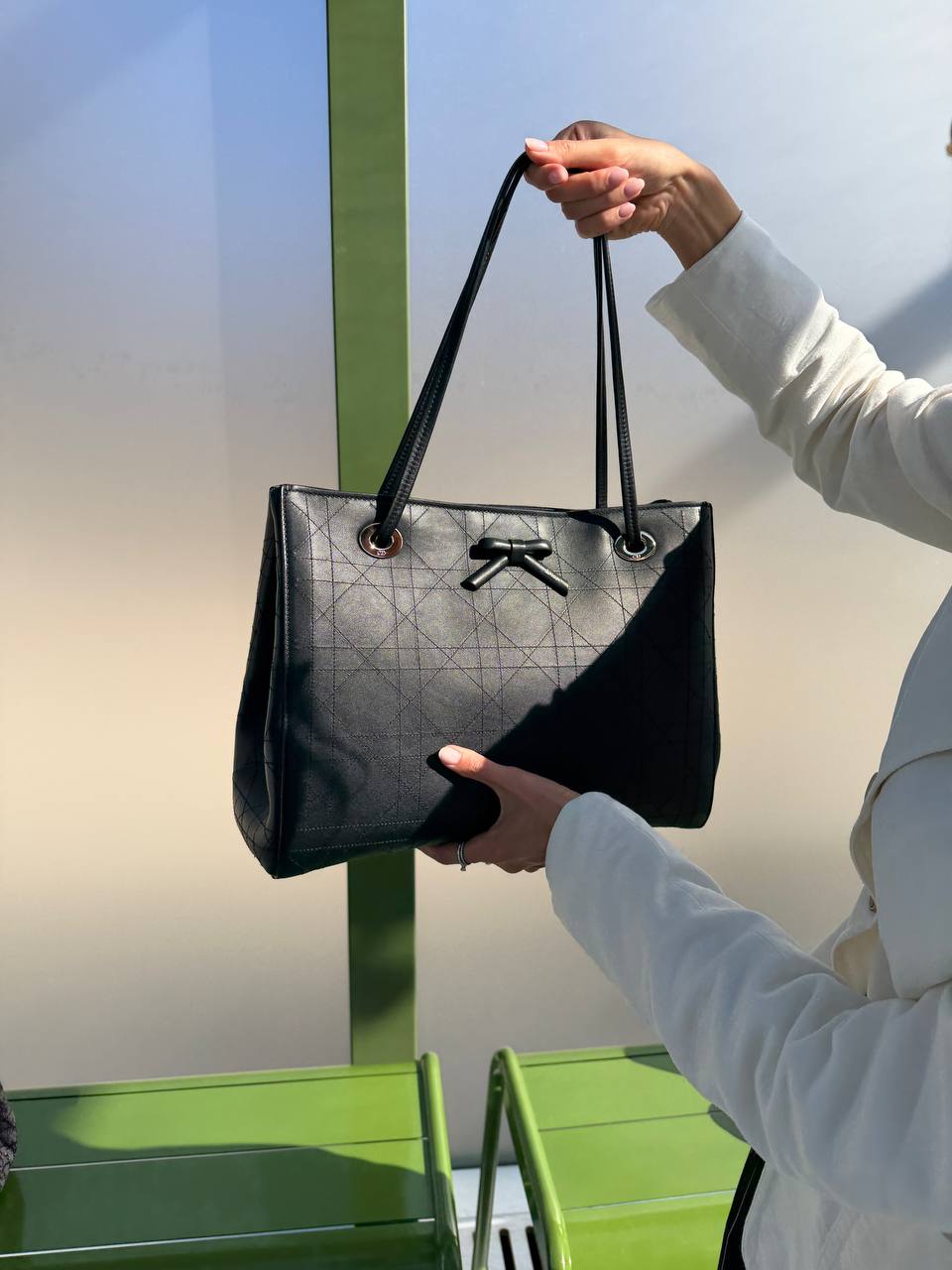
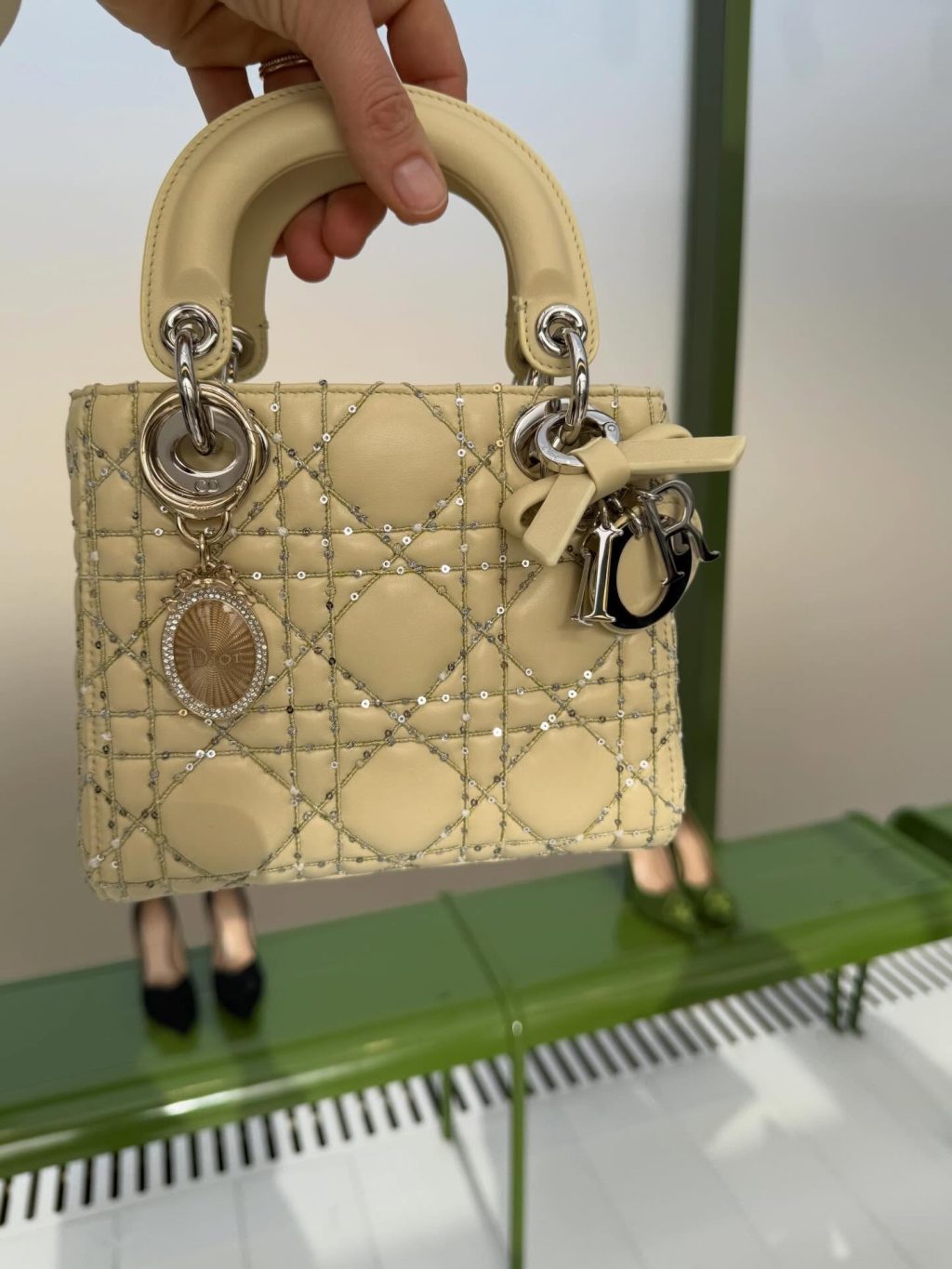
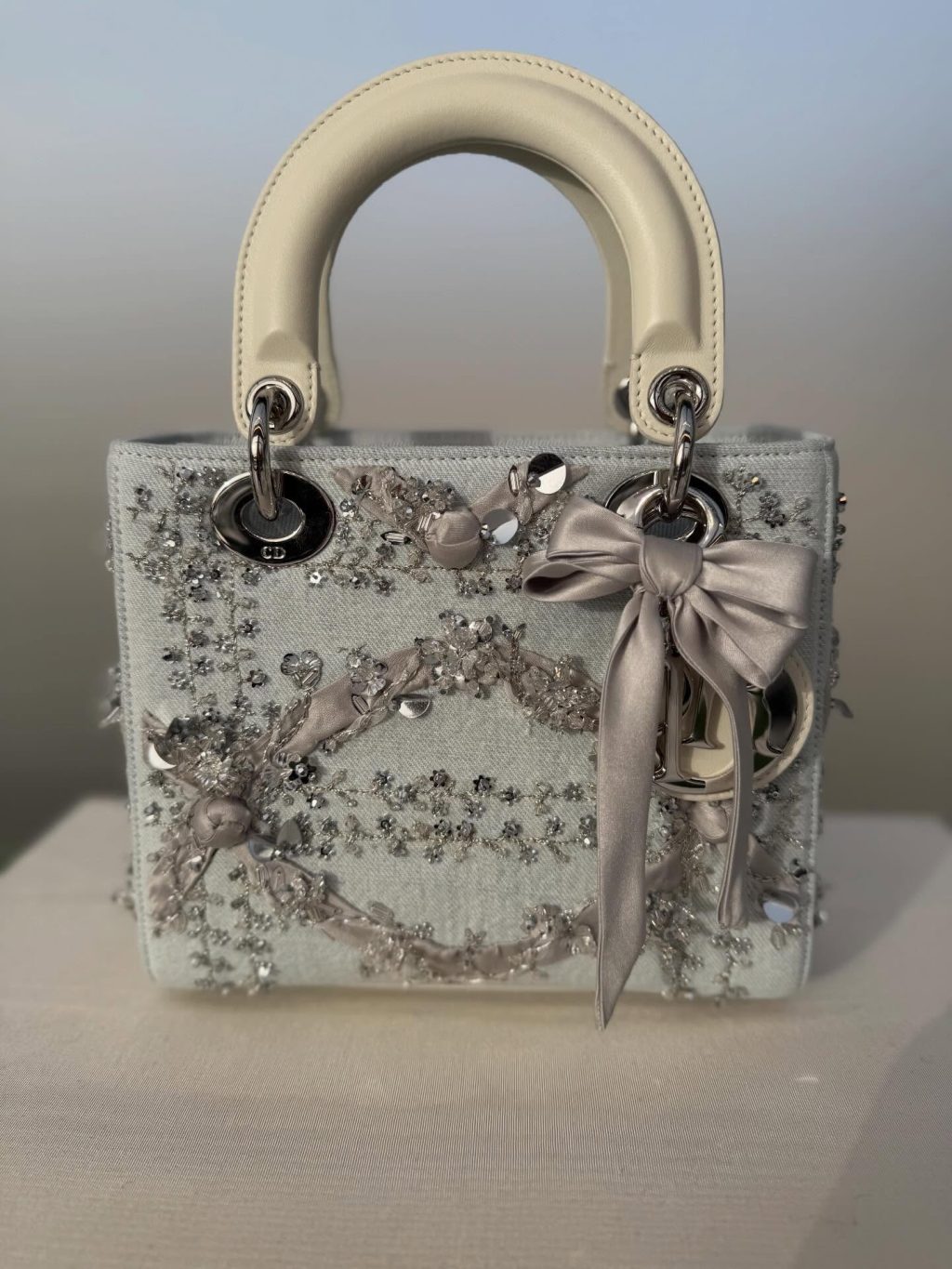
After the runway, the re-see offered a closer look at the Dior Fall/Winter 2026–2027 bags, allowing editors, buyers, and industry insiders to study the collection beyond the pace of the live show.
Seen up close, the bags revealed the nuances that can easily pass by on the runway: the structure of the frames, the richness of the materials, the finish of the hardware, and the precise styling details that shape the collection’s mood. The re-see confirmed that these were not simply supporting accessories, but key objects within the narrative of the season.