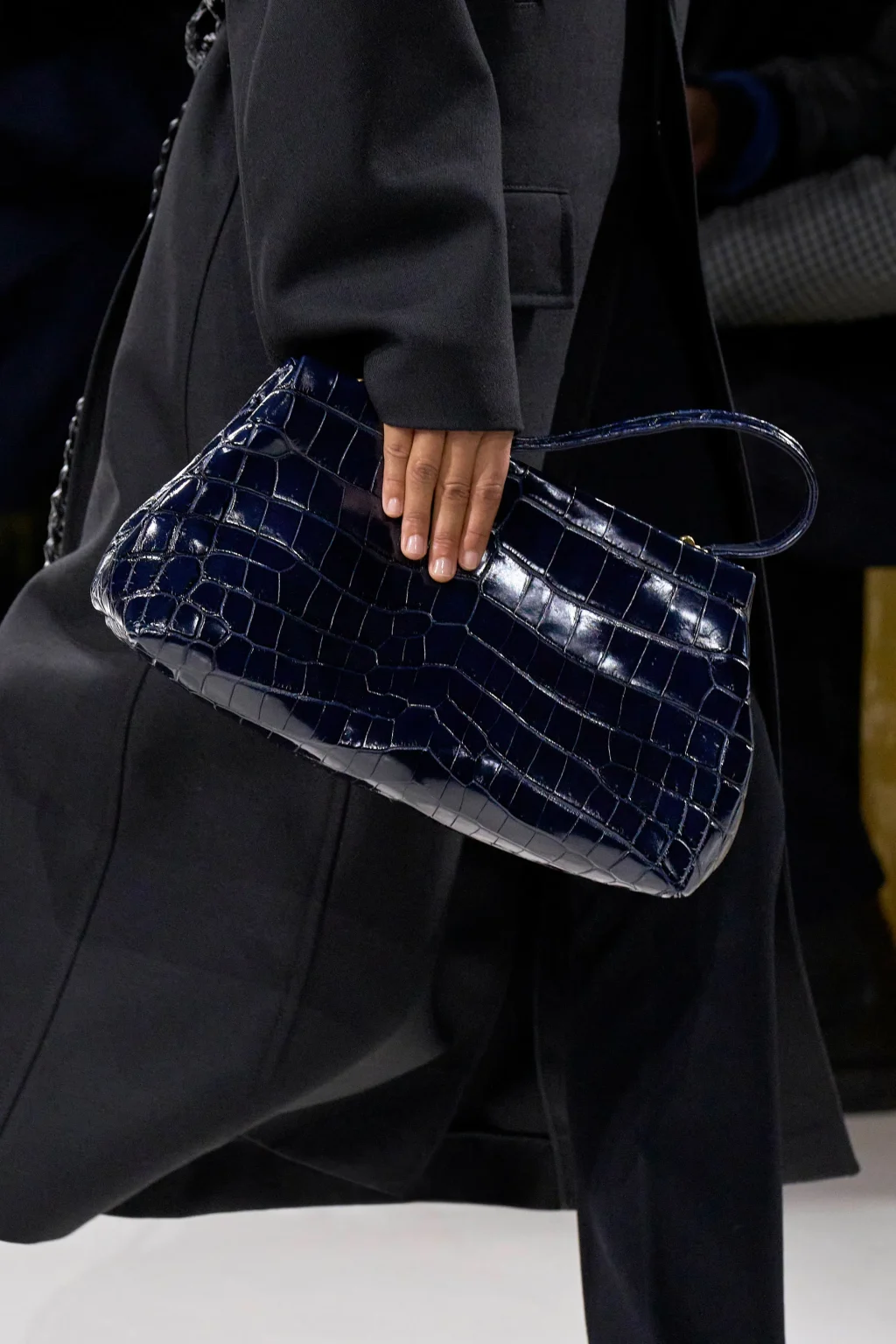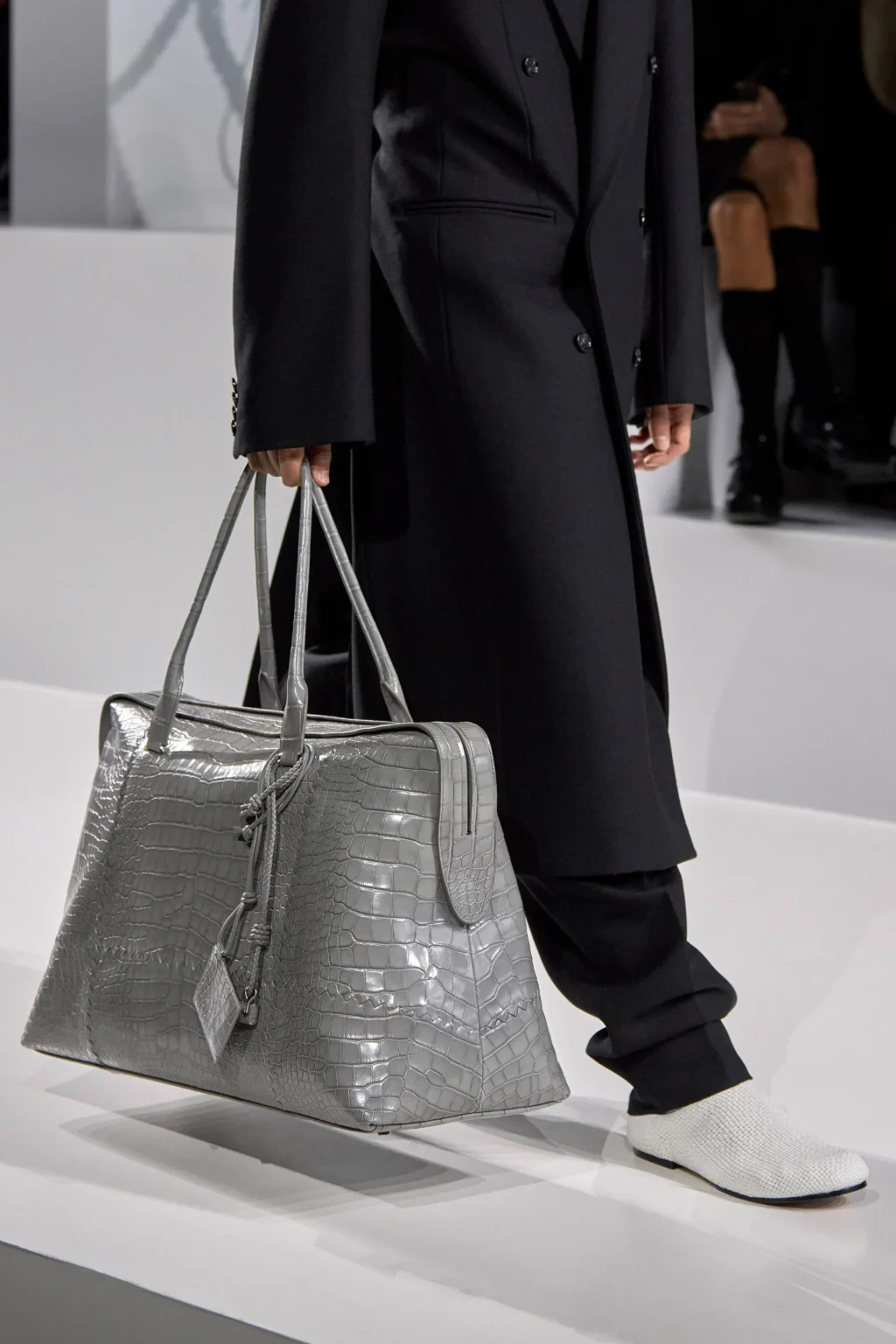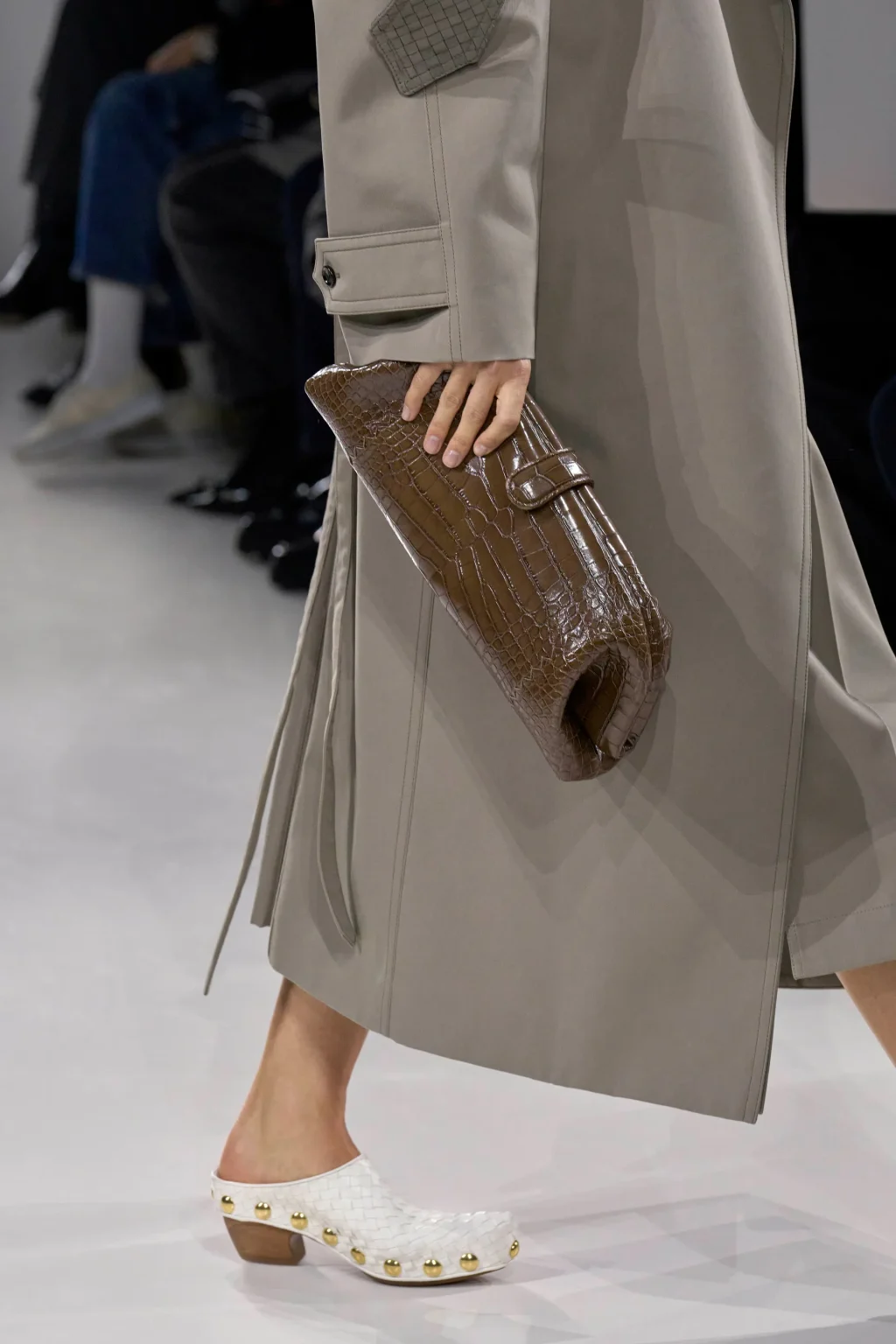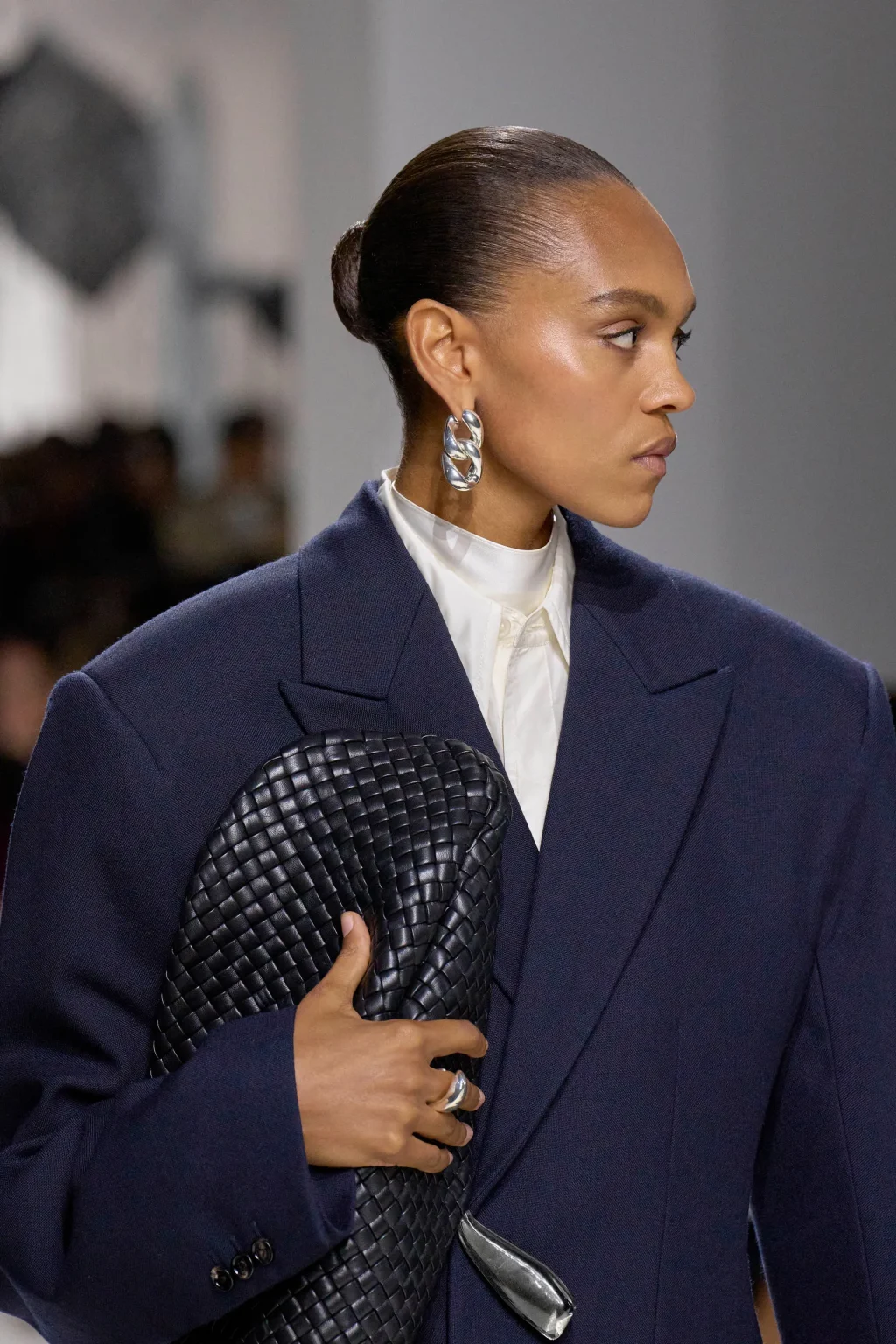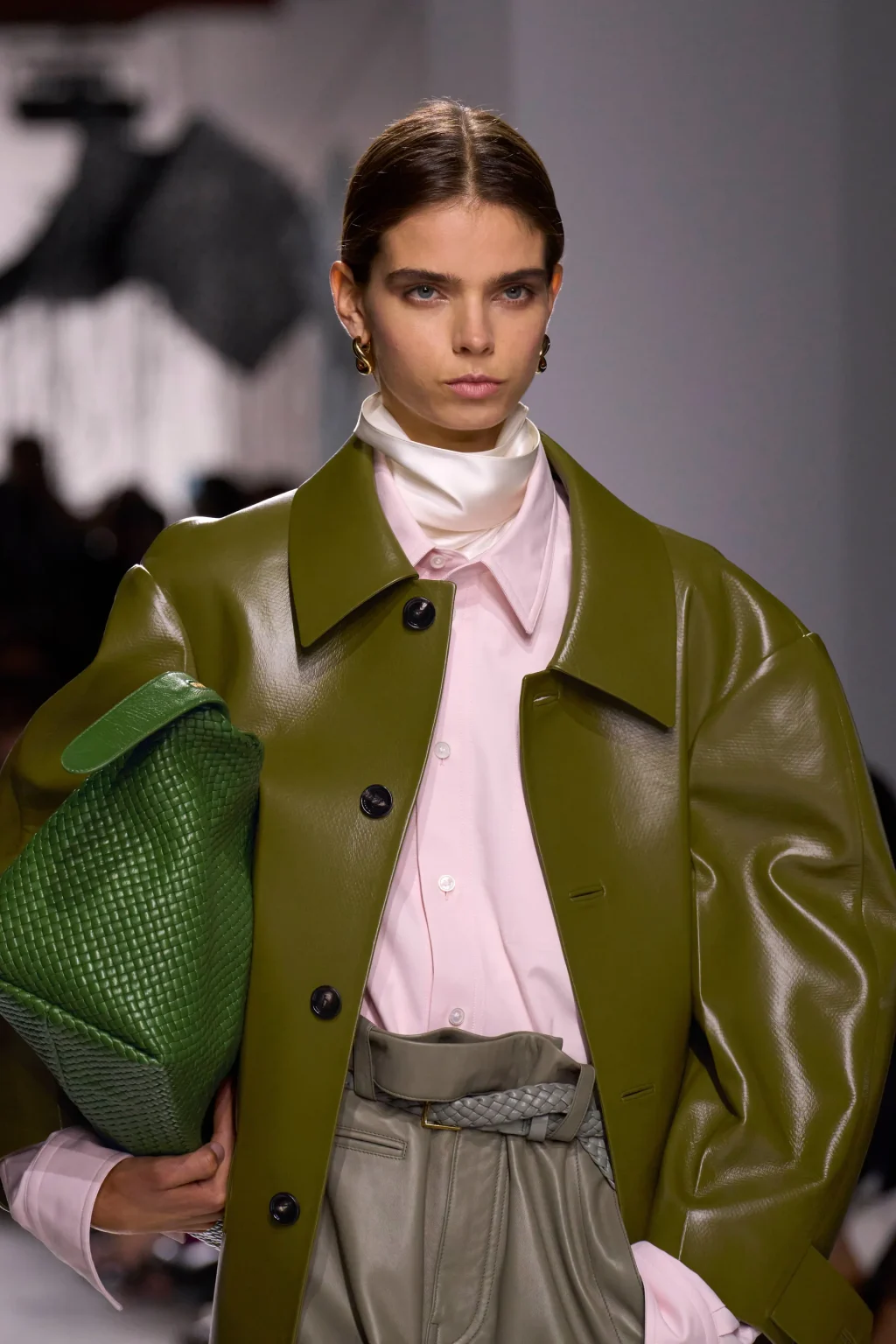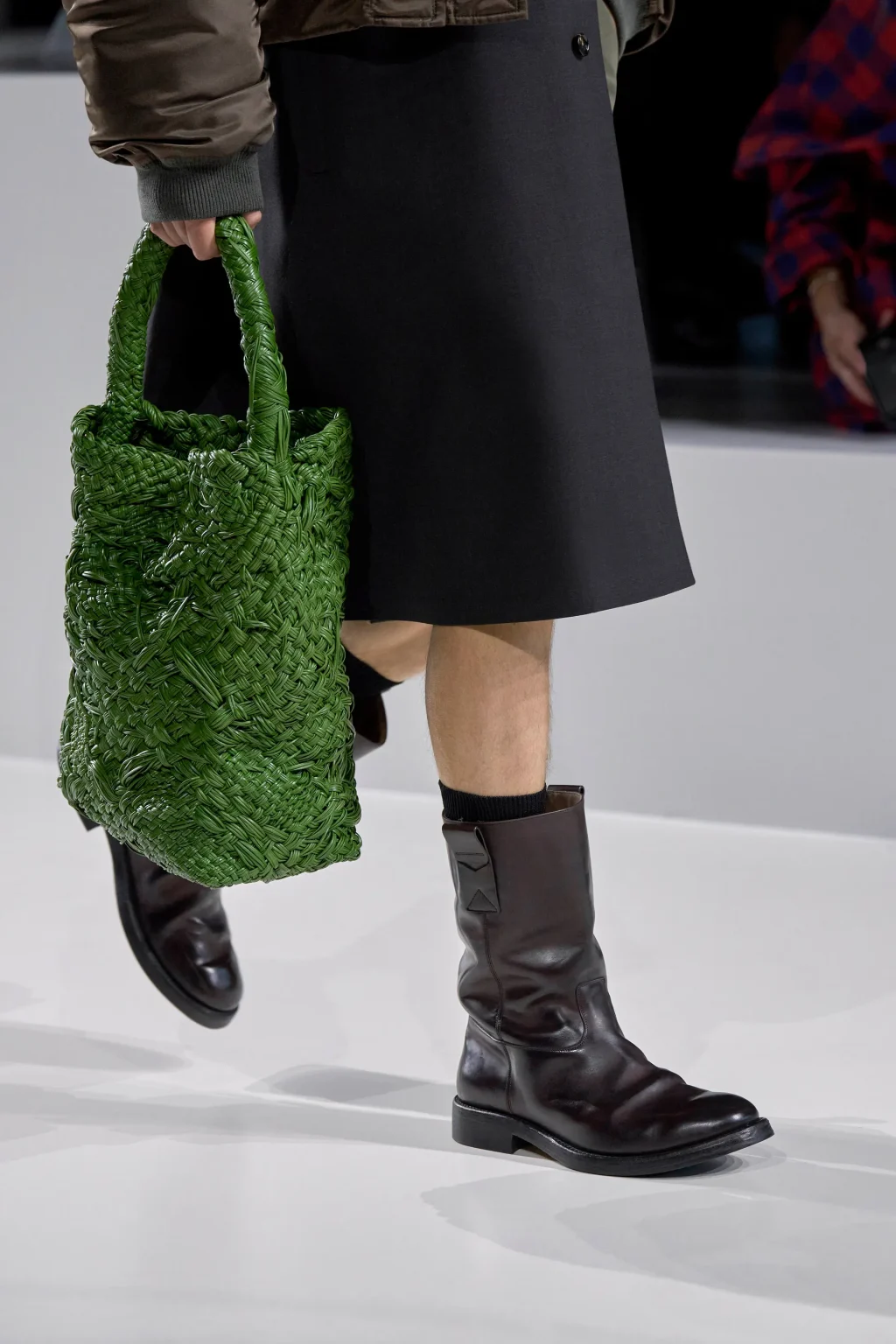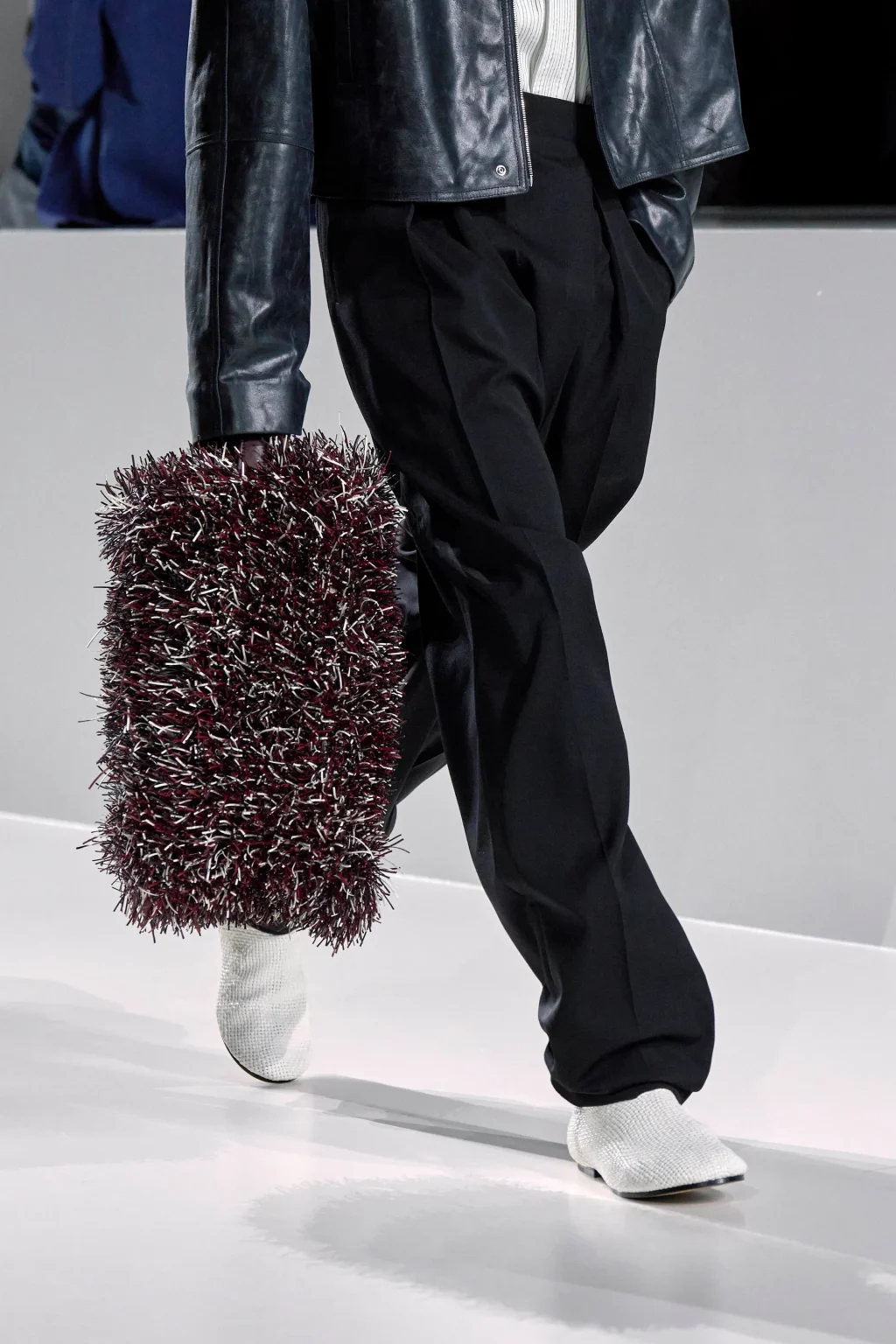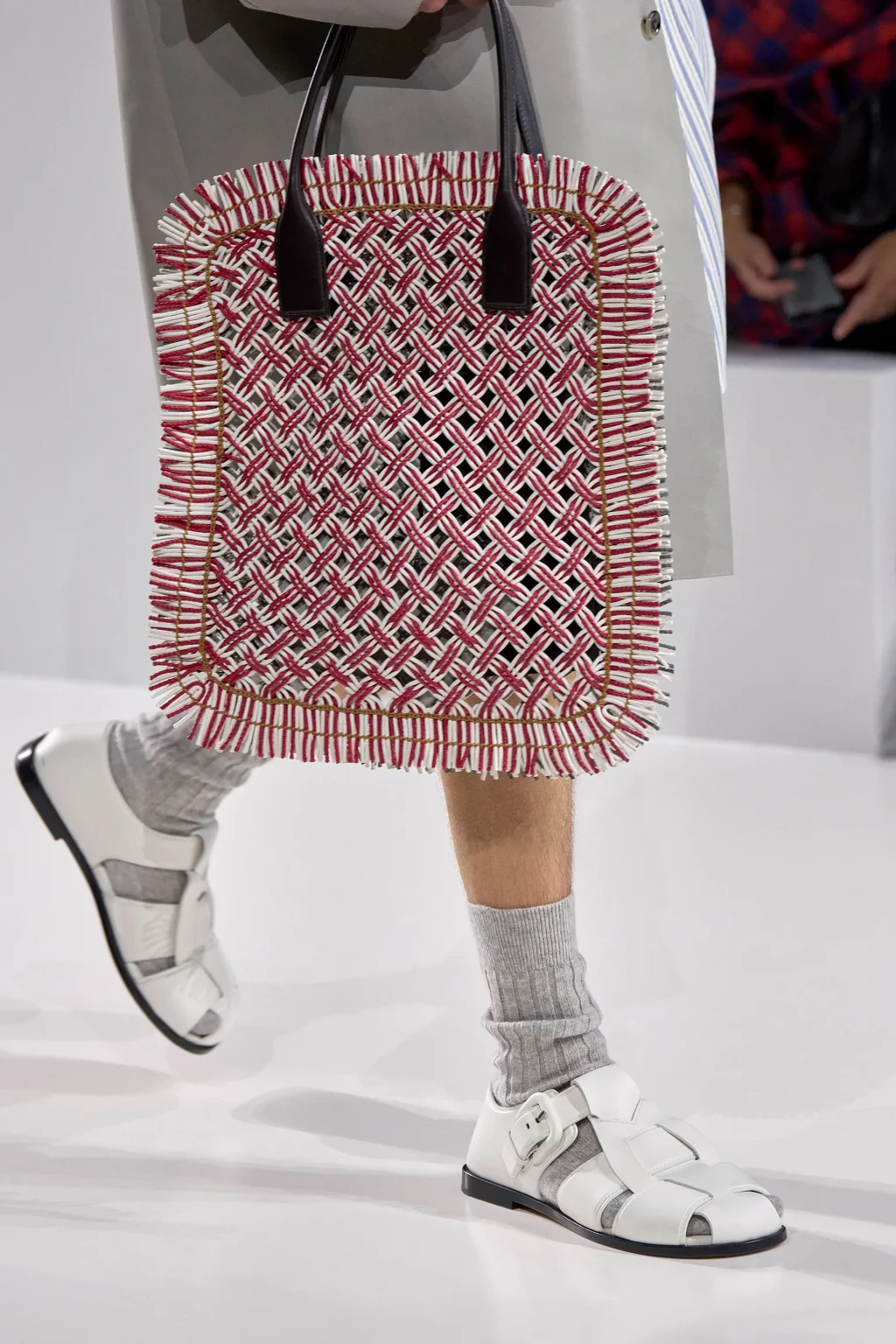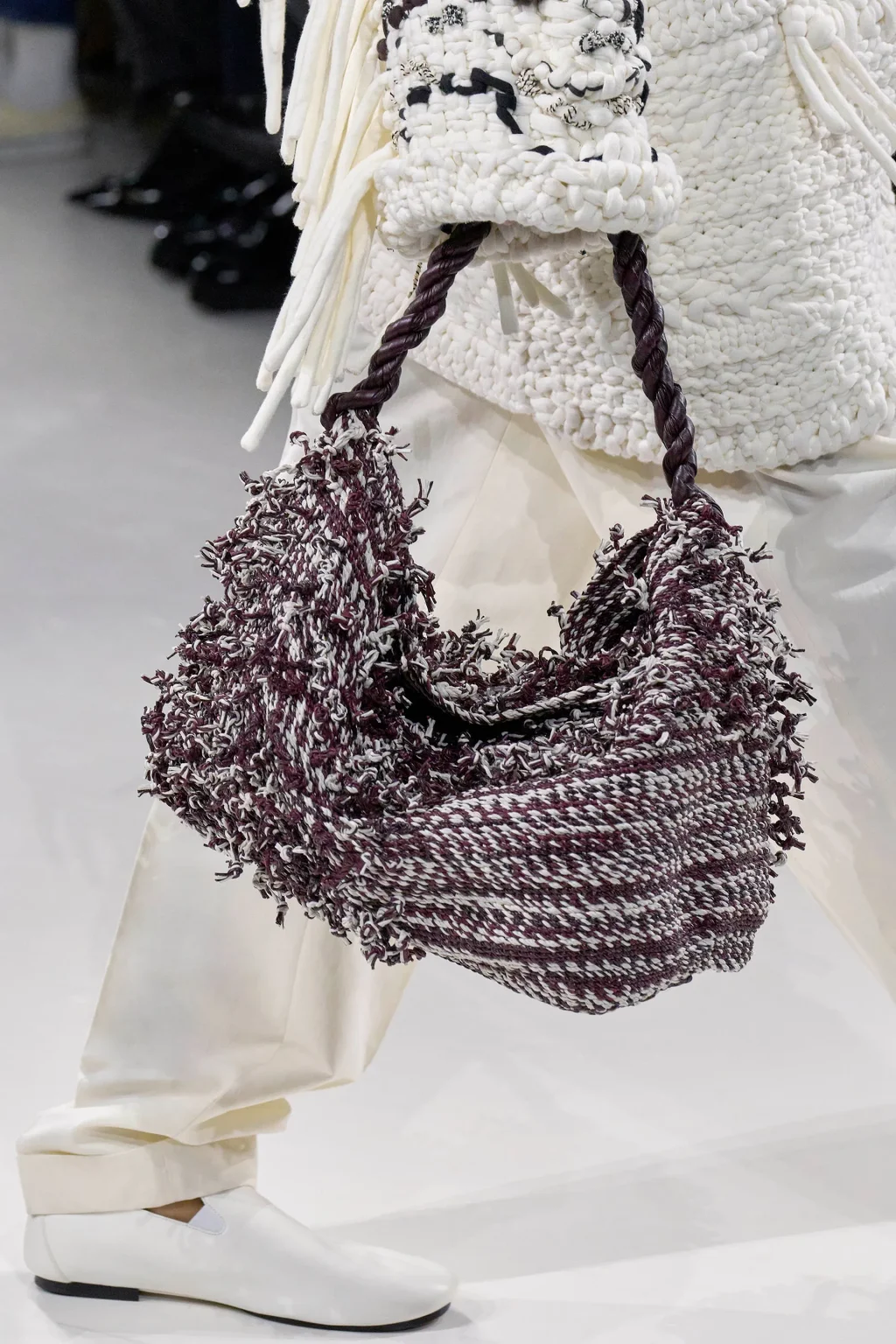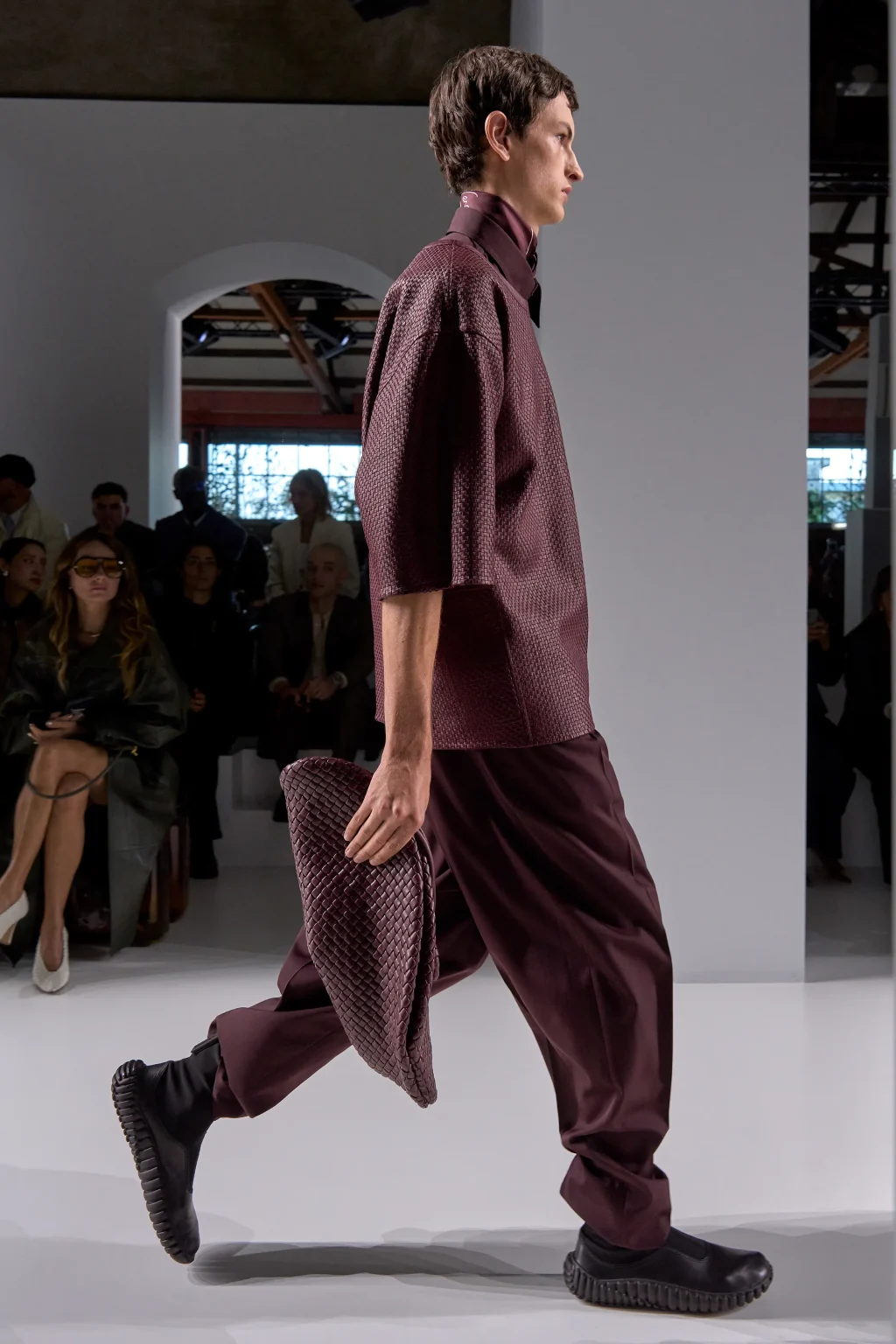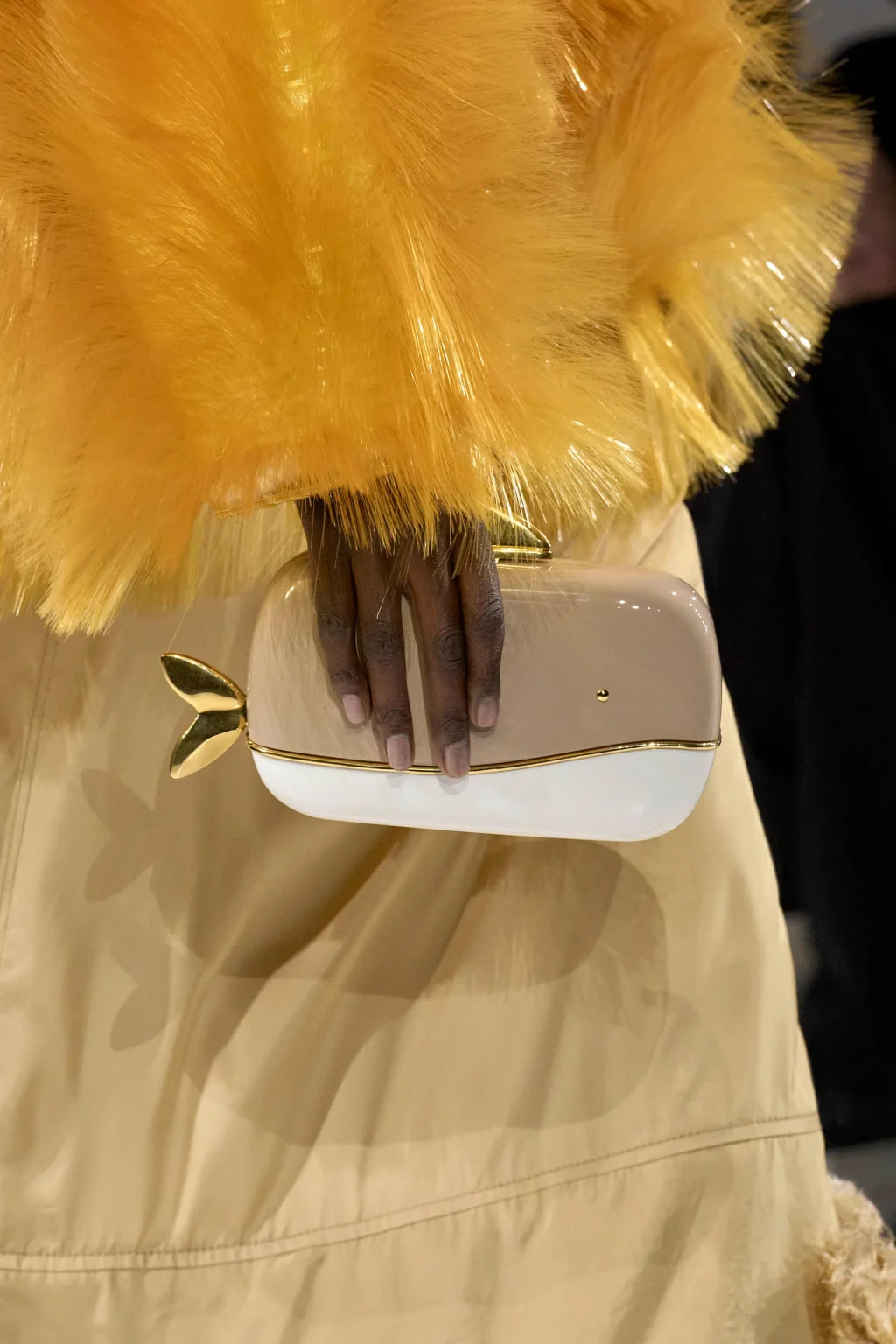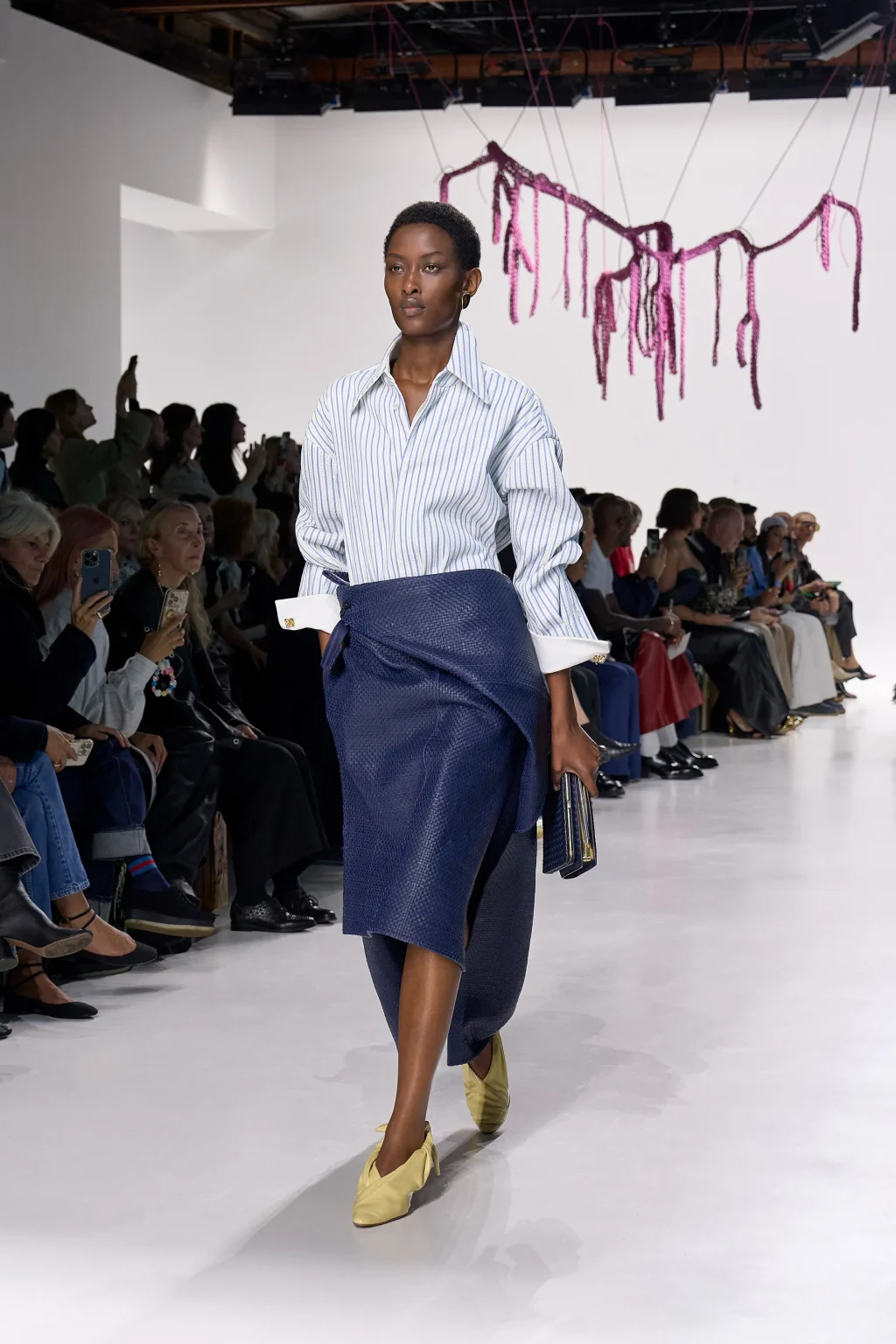
Bottega Veneta’s Spring/Summer 2026 show in Milan marked Louise Trotter’s first runway collection for the house—one of the season’s key debuts, arriving as multiple major brands reshuffled creative direction. The silhouettes signalled intent immediately: shoulders became the control point, moving from sharp and outward to softly inflated, then slipping off the décolletage—confidence expressed through shape, not noise.
What landed on the runway wasn’t a loud reinvention. It read more like a thesis on Bottega’s core idea—soft functionality—distilled through Intrecciato, not as a logo, but as a design language and a structural method.
Summer 2026 reimagines the soft functionality that is distilled in Bottega Veneta and its original Intrecciato weave. This signature approach connects the collection as a whole, from the exceptional to the everyday.
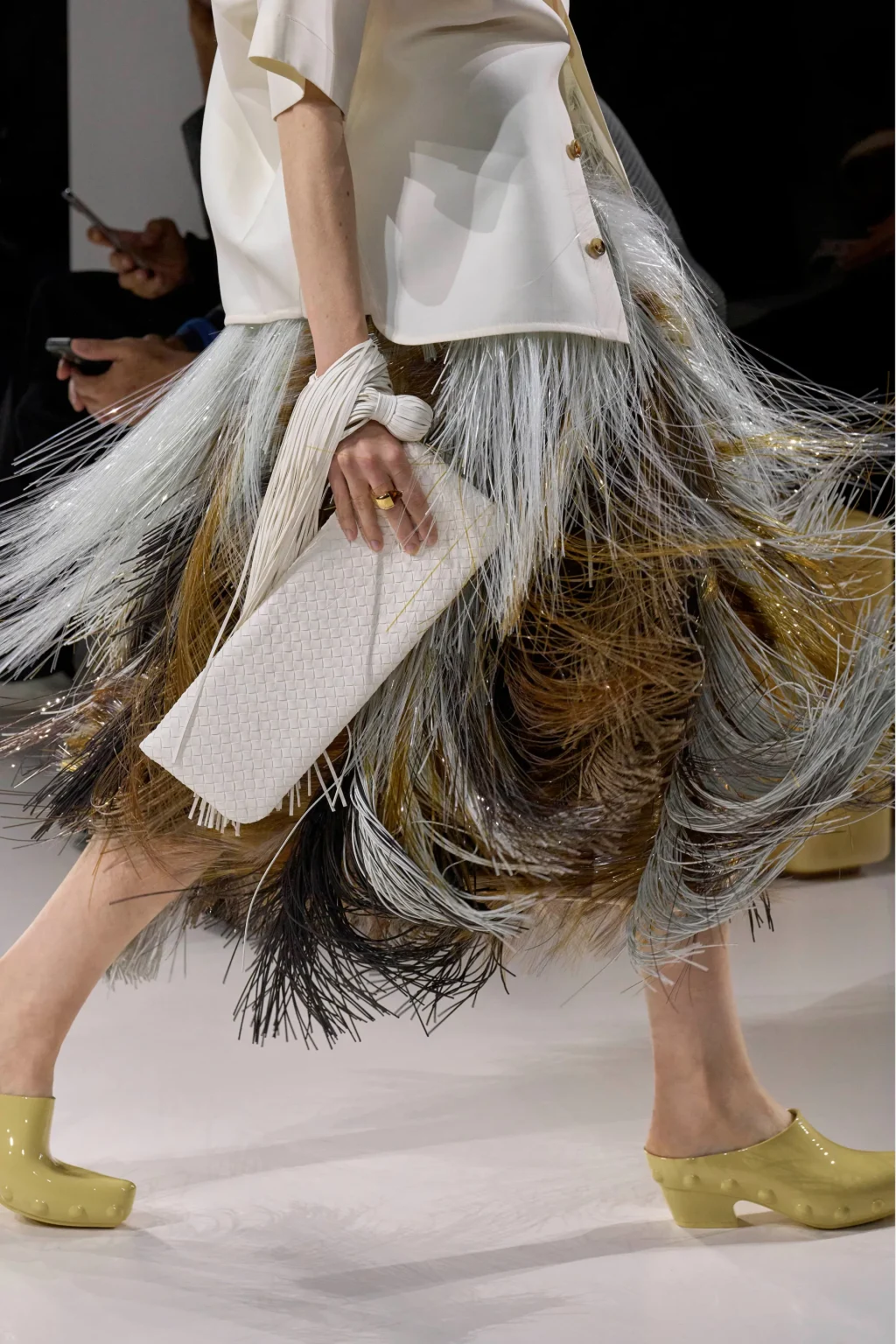
The collection exalts in Bottega Veneta’s innovative artisanship, with shimmying jackets and skirts in recycled fibreglass, and a fringed nappa cape that took 4000 hours to make.
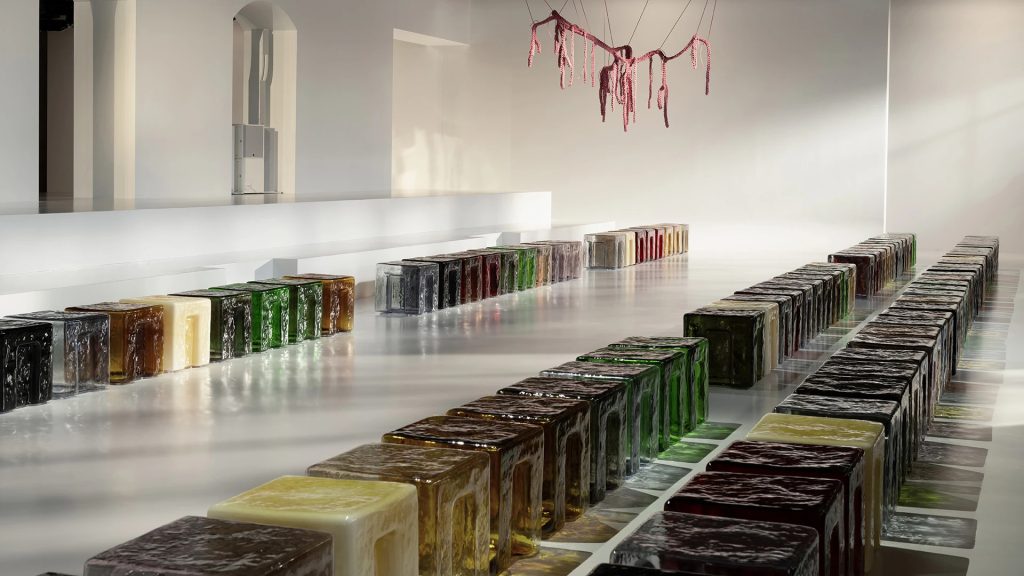
The setting amplified that balance between restraint and radiance. Reports place the show at the brand’s Milan headquarters in Piazza Castello, a location choice that reads almost corporate—until you remember Bottega’s obsession with the workshop, the bottega, and how the brand stages power as calm. Design culture folded into fashion culture via custom Murano-glass seating created with studio 6:AM—an elegant reminder that Bottega’s world is bigger than clothing.
There were also deliberate nods to Bottega’s own mythology. Vogue notes that Trotter began her accessories thinking with the bag immortalized by Lauren Hutton in American Gigolo, with Hutton herself in the front row—a living endorsement of Bottega’s long game. That reference matters because it reframes SS26 as continuity: quiet authority recalibrated, not replaced.
This is where the bags become the clearest way to read the season. As this was her first collection for Bottega Veneta, Trotter told Vogue she wanted to open “a dialogue between the heritage and my hand,” specifically evolving Lauren, Knot, Cabat, and Veneta—softness through construction, modernity through proportion.
In the sections below, we go bag by bag—identifying each runway style and translating the thesis into what actually matters: material, structure, carry, proportion, and the design choices that will date well once the runway adrenaline fades.
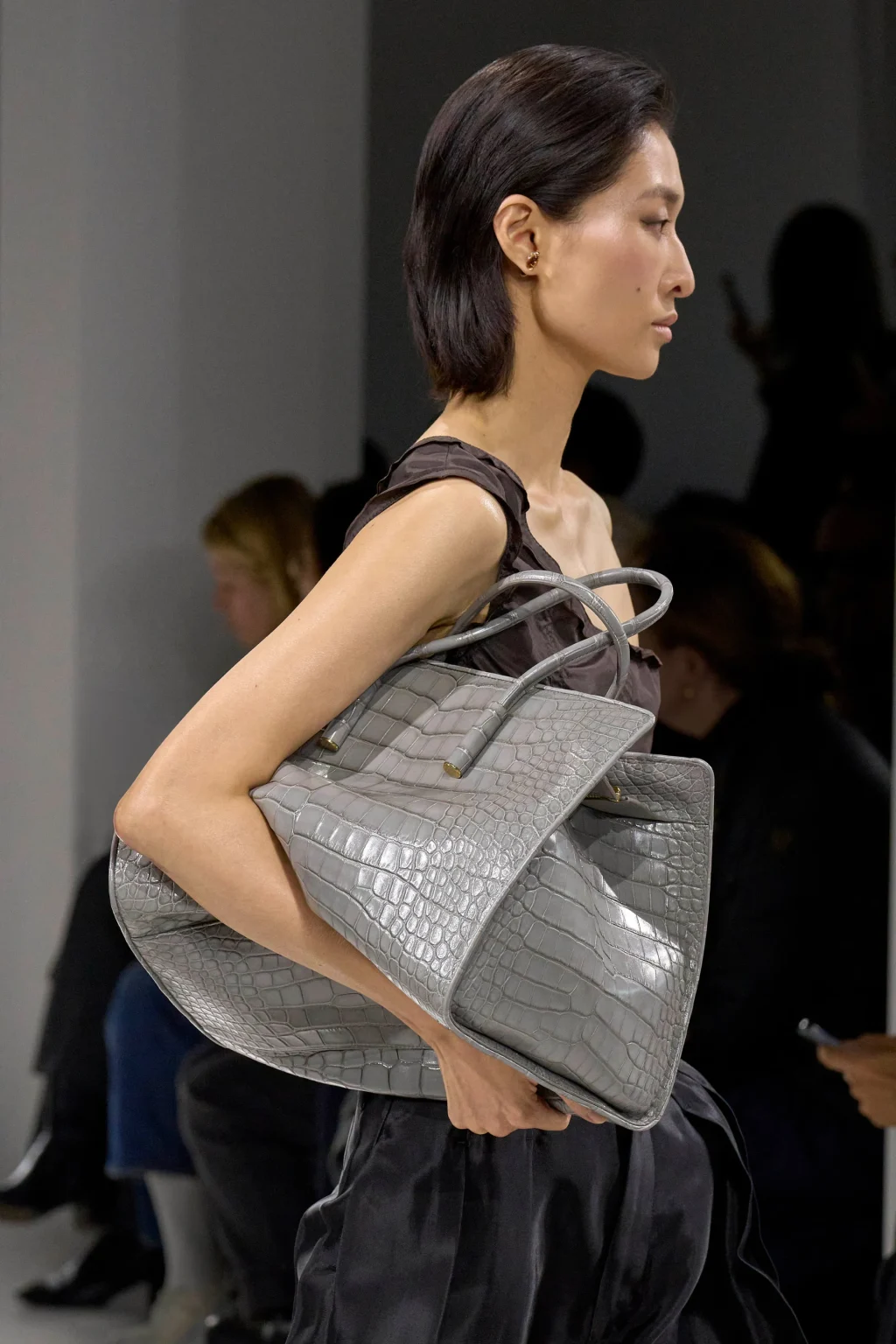
The Barbara Bag
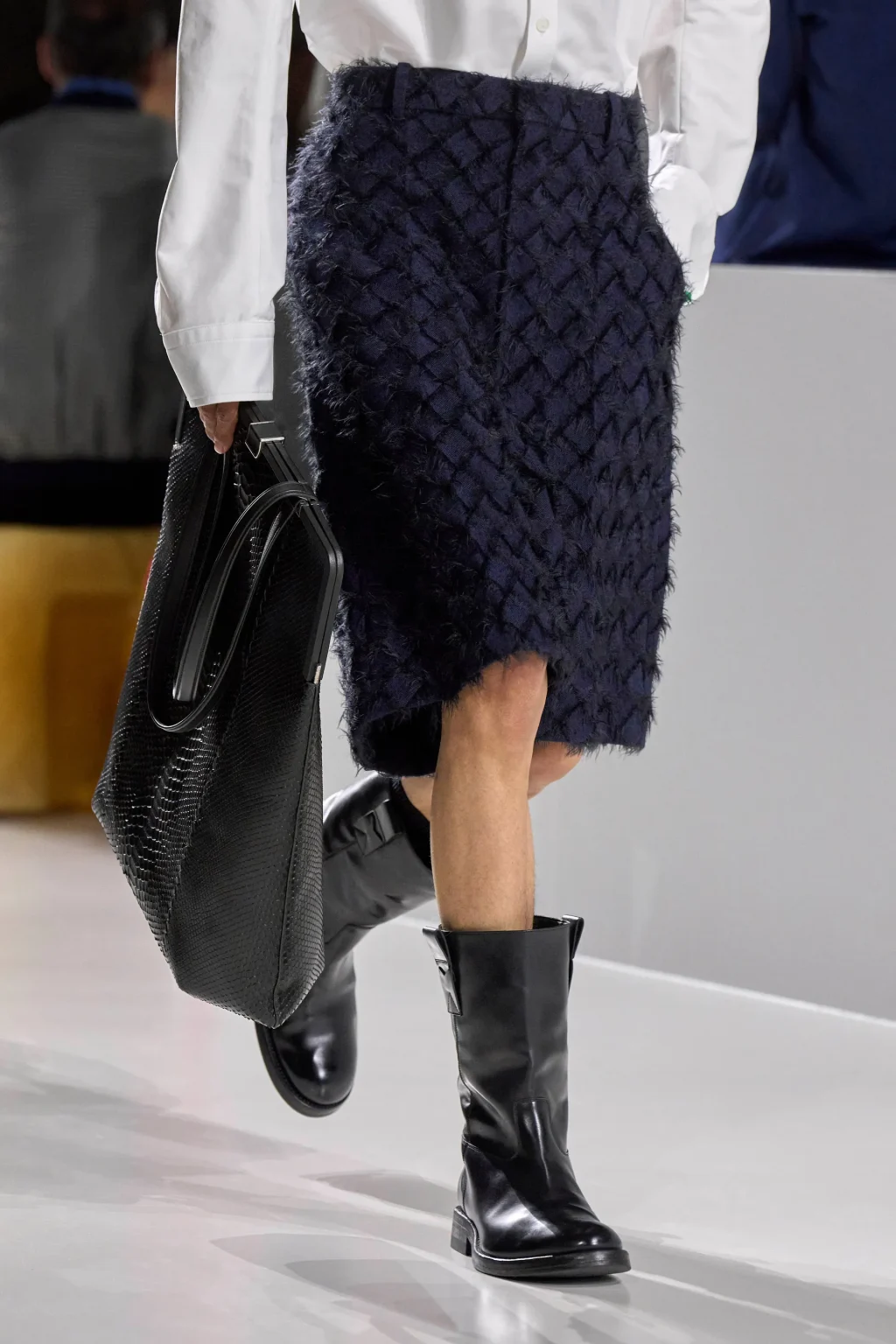
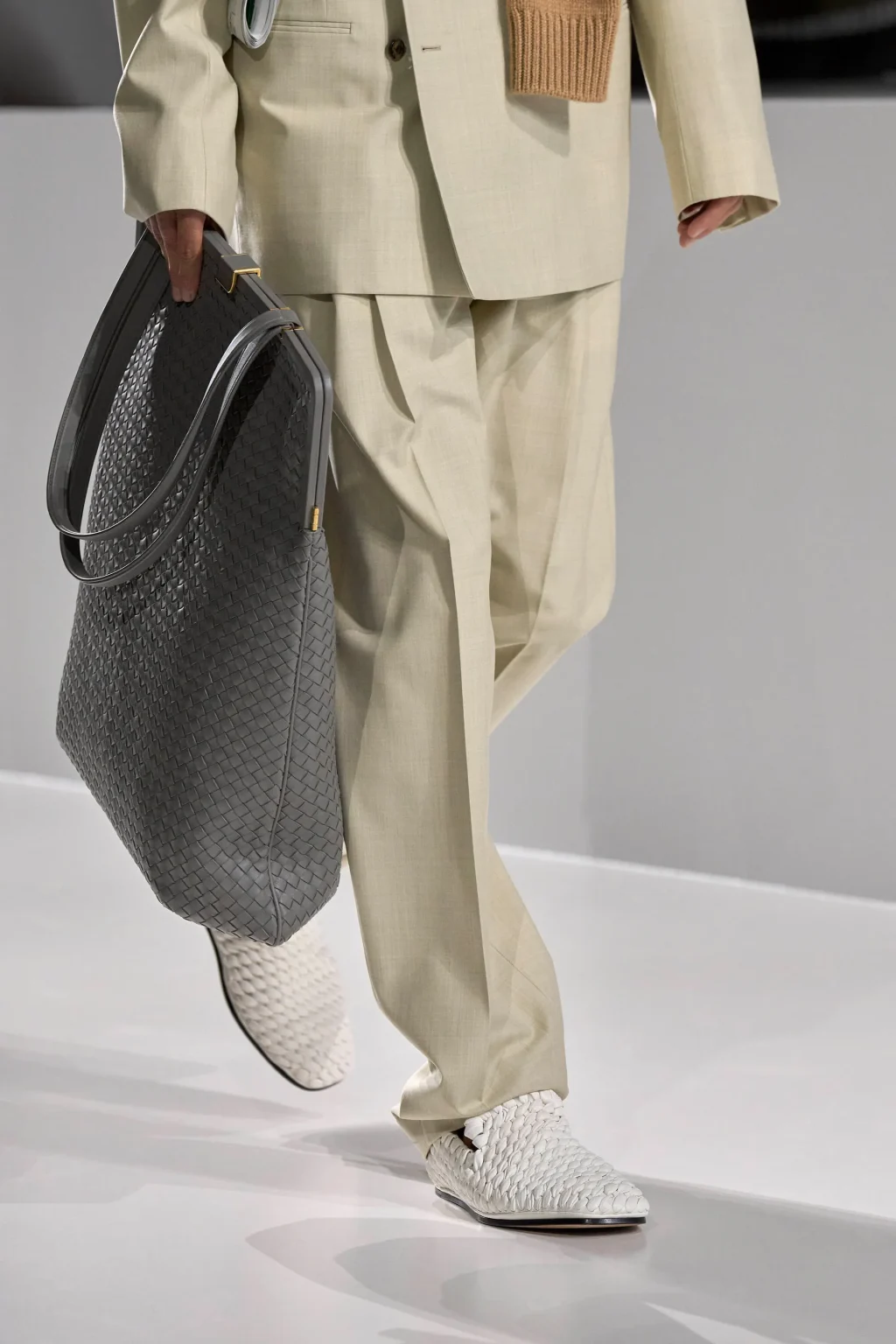
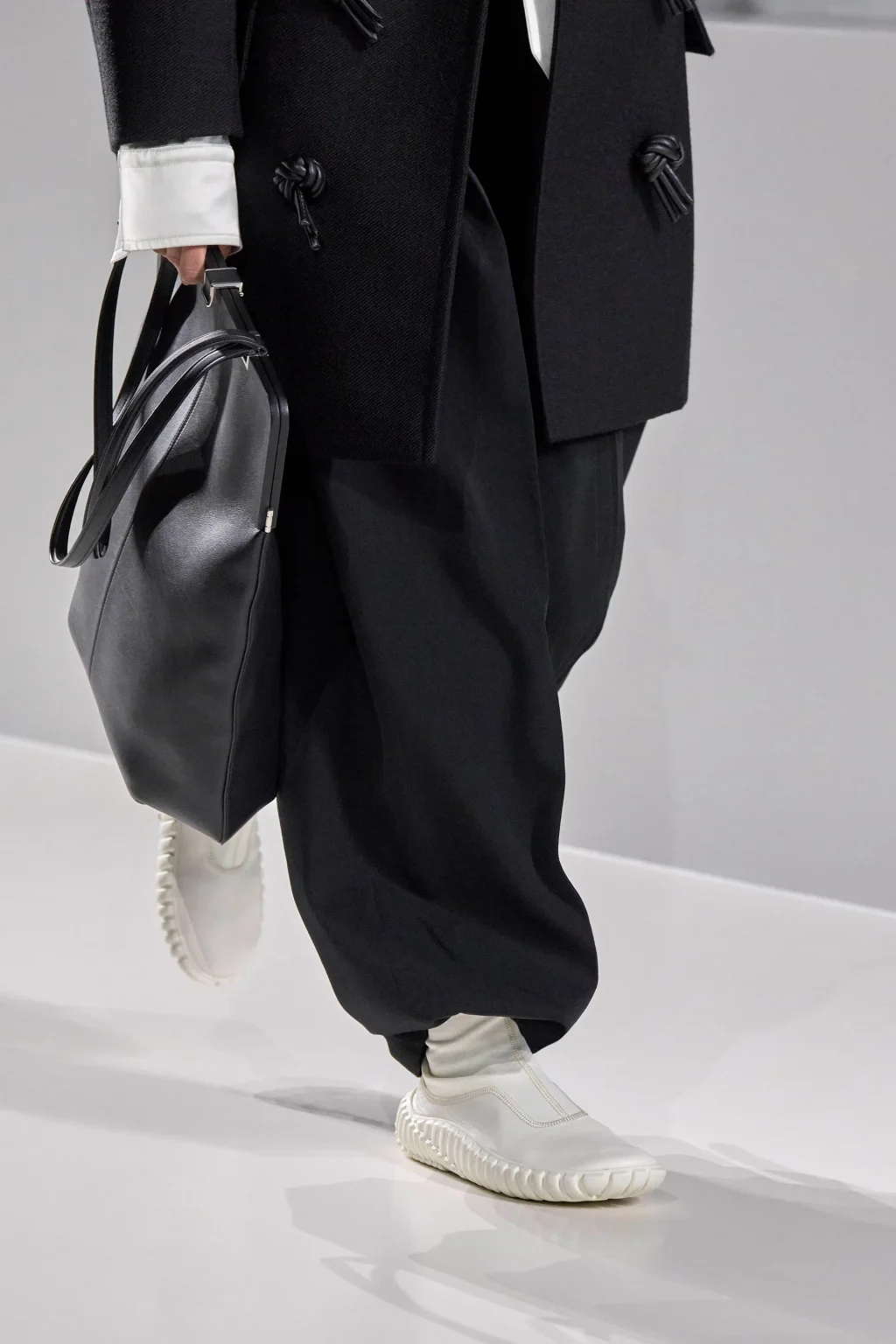
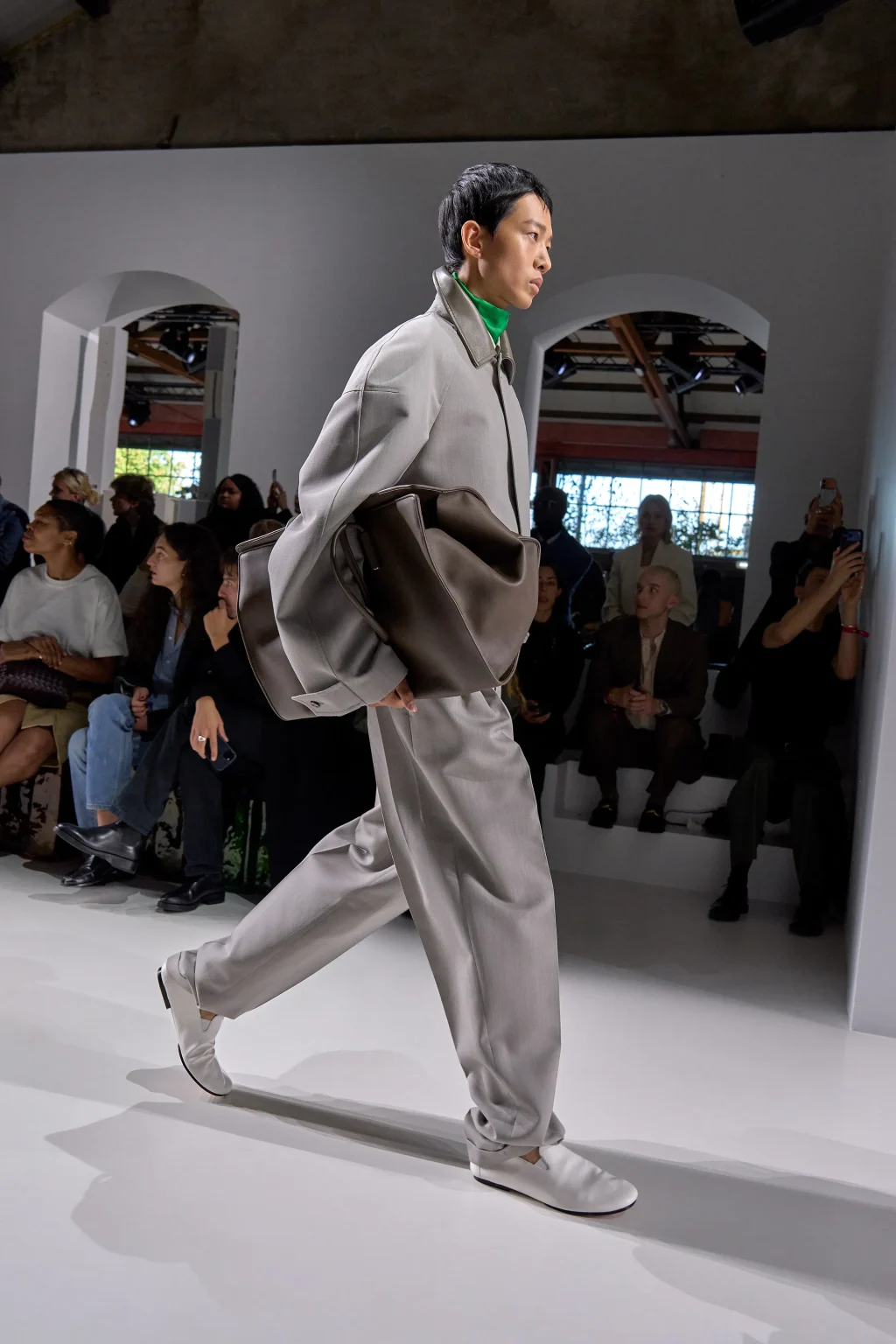
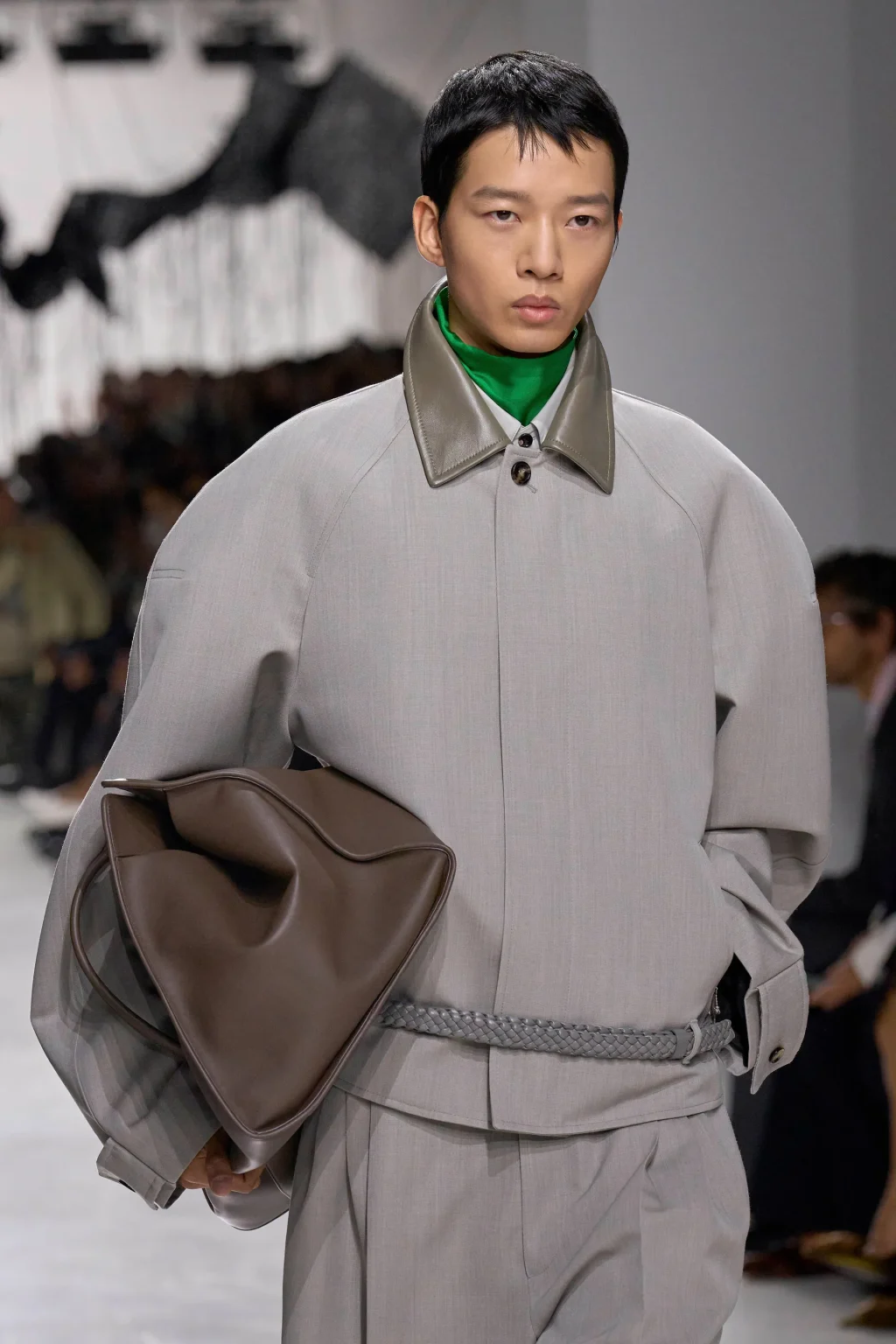
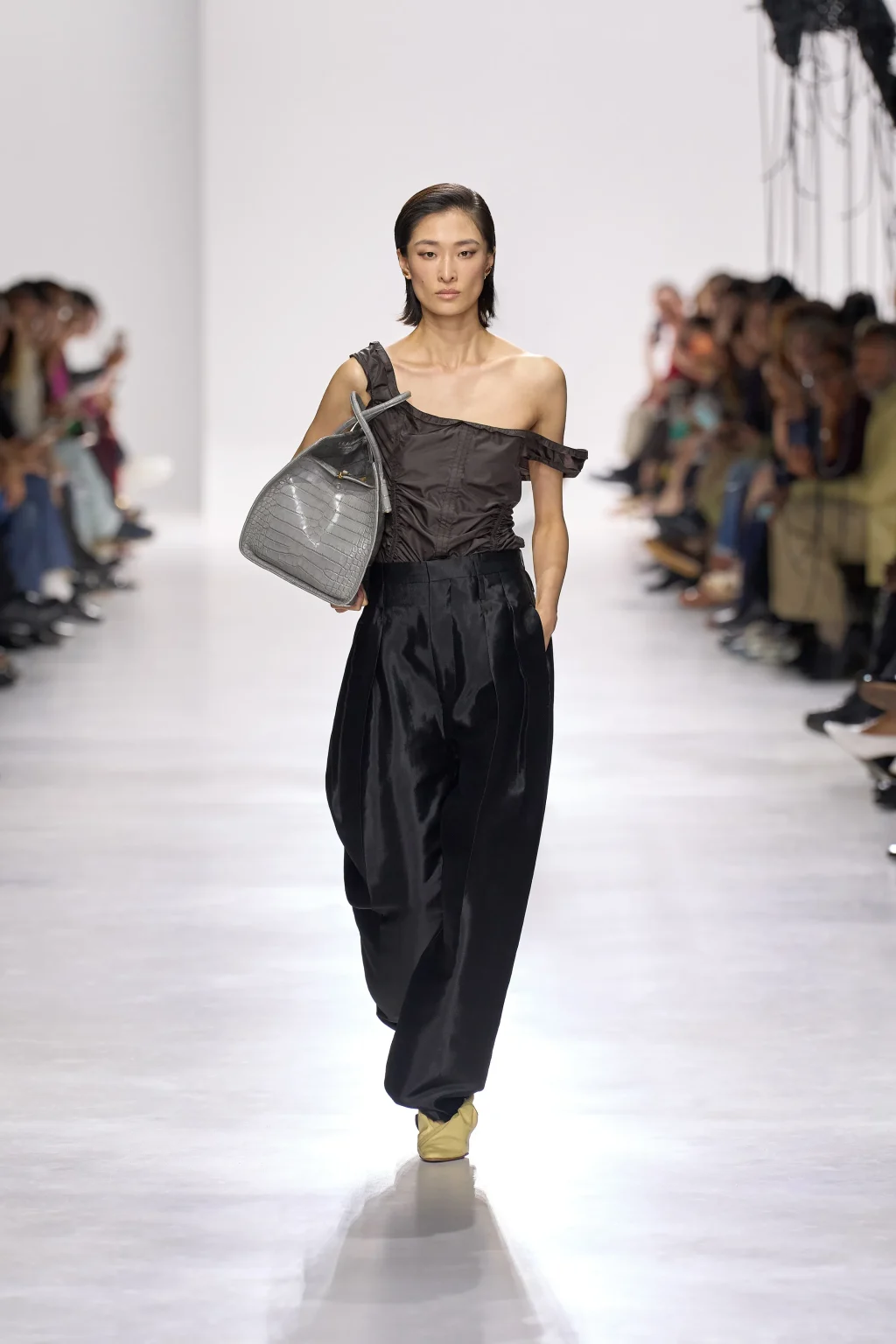
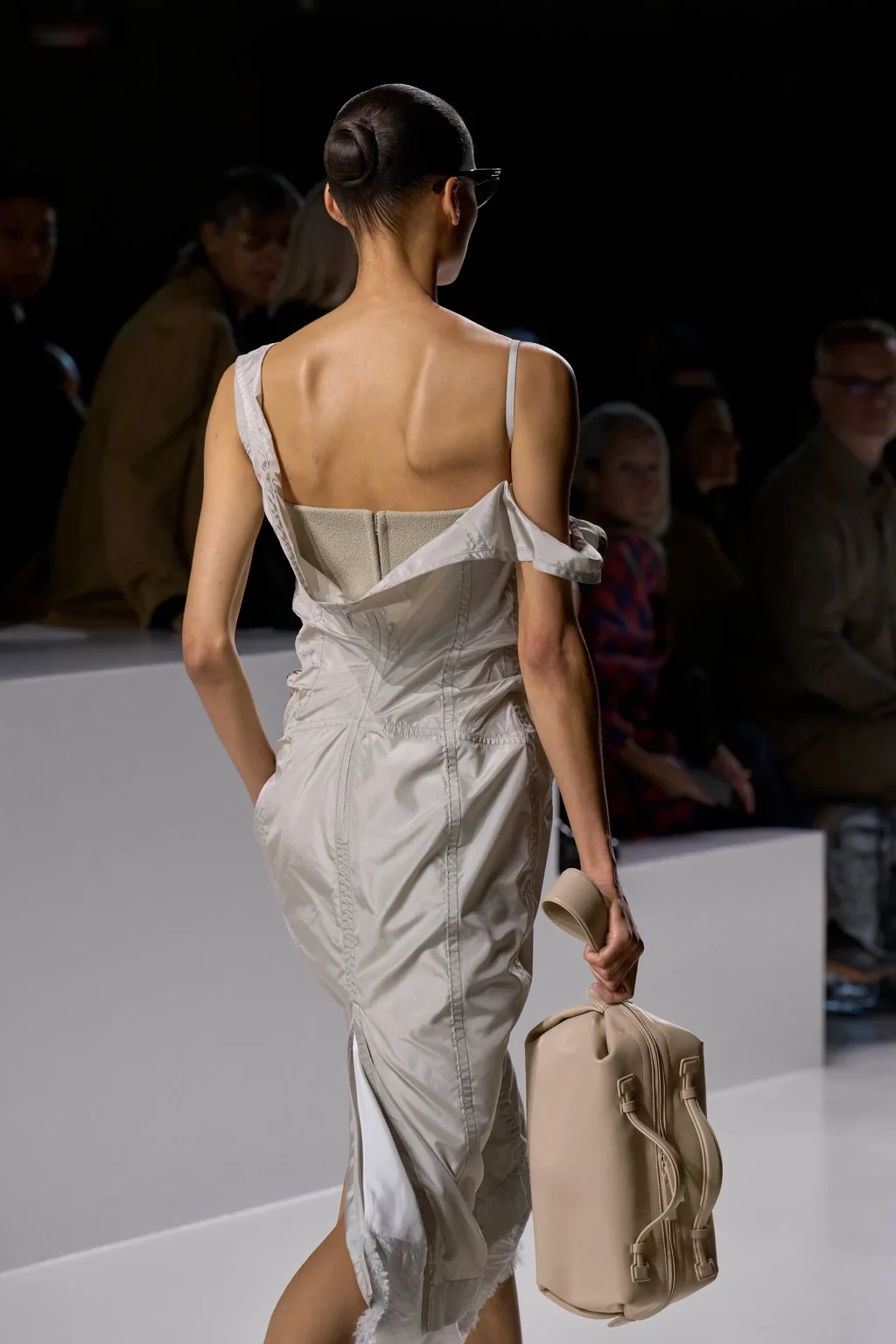
The Barbara Tote (€4,900) is Bottega’s SS26 tote thesis made tangible: a streamlined, architectural silhouette built in Intrecciato craft—not for show, but for structure—then softened via supple nappa lambskin so it reads polished without ever feeling rigid. It’s a zipped, single-compartment carry with a discreet interior logic (including snap-button attachments designed to work with Bottega’s Dustbag Organizer system), plus a small, intimate luxury detail—an internal hand mirror in a leather cover—that signals this bag was designed for real days, not just runway optics.
The Veneta bag
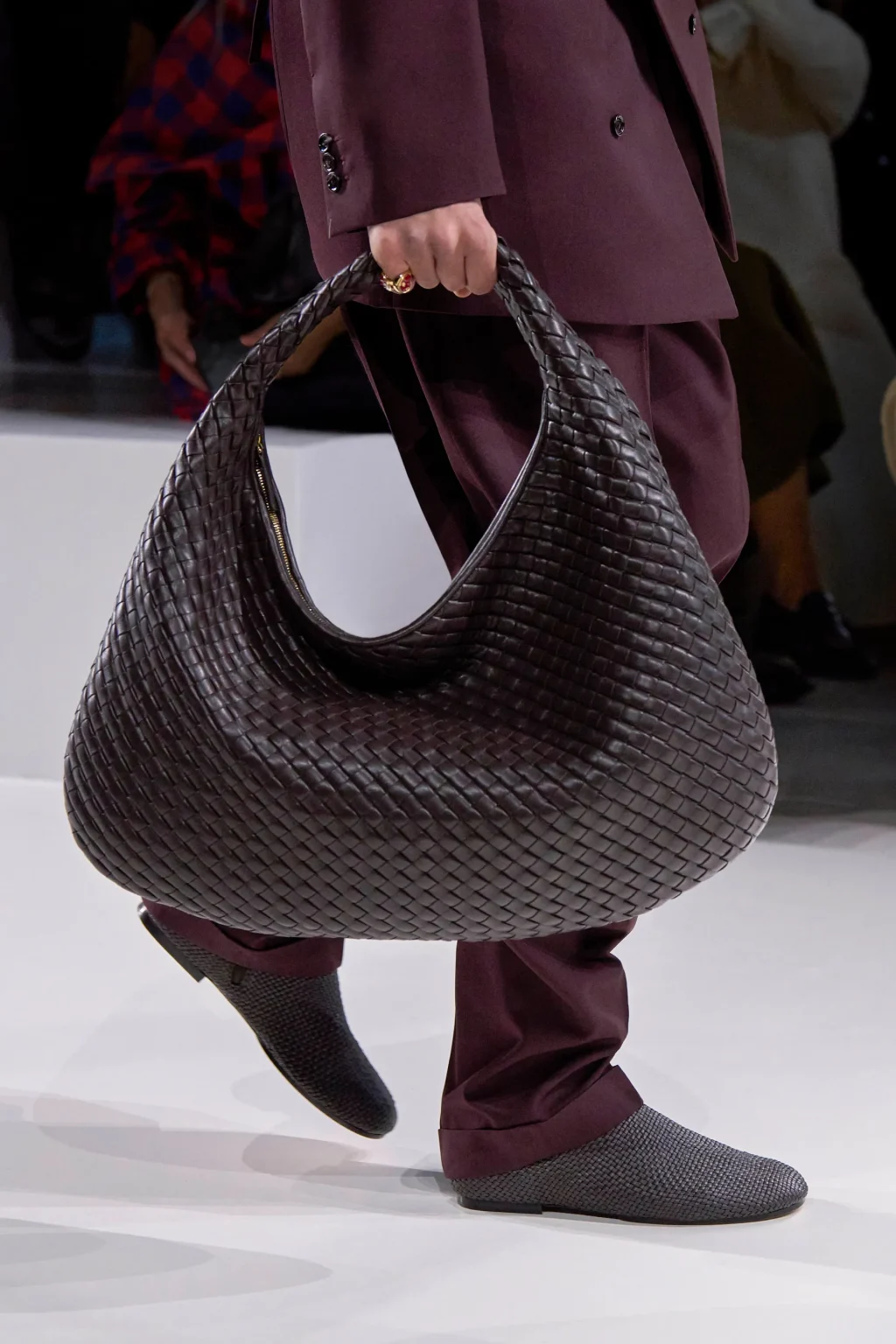
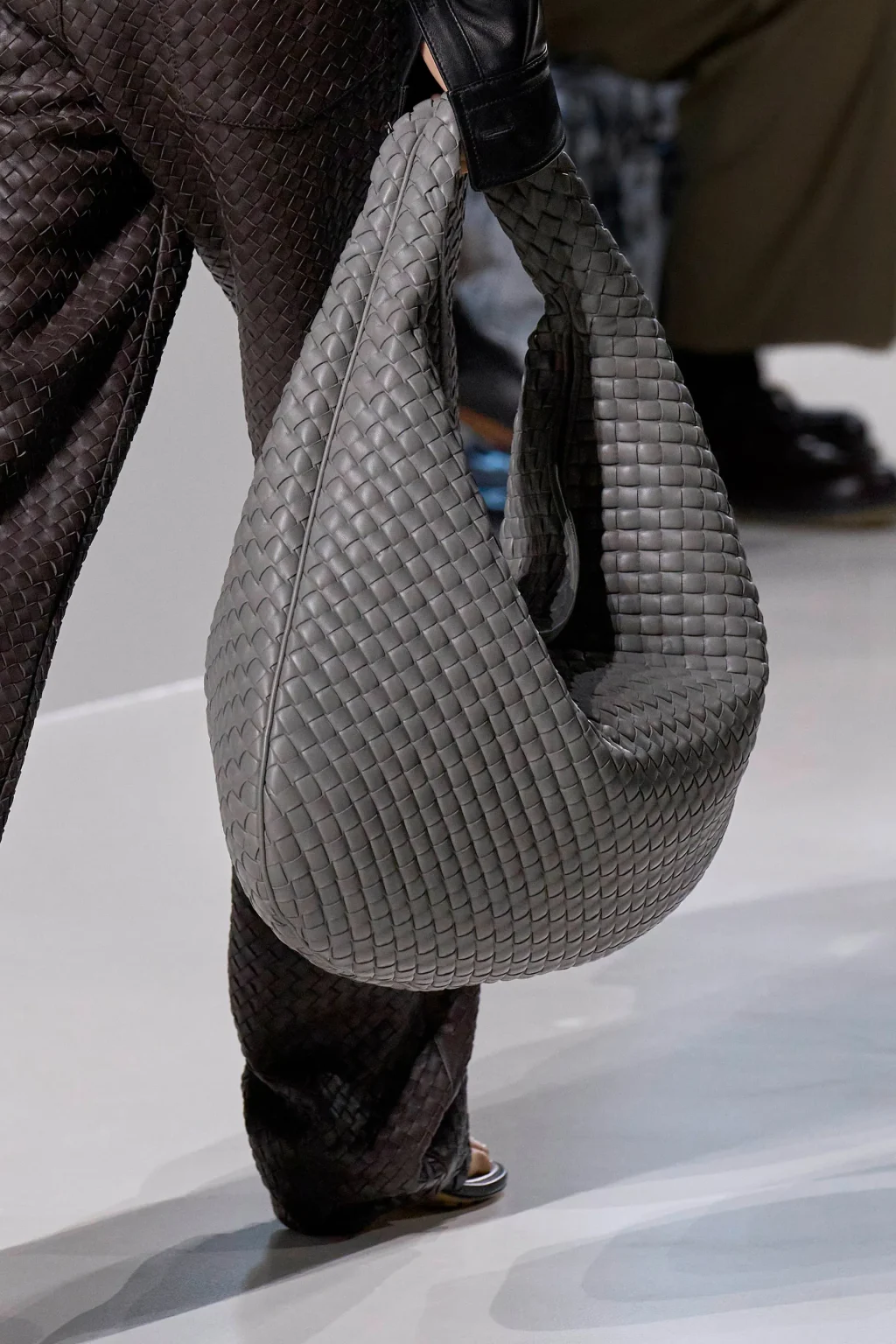
The Veneta is Bottega’s deliberate callback—with intent, not nostalgia. The house frames it as an icon first debuted in 2002, now reintroduced with refined construction and modern materials: unmistakable Intrecciato paired with supple, padded nappa leather, engineered into a seamless, sculptural silhouette that sits against the body like a soft object with discipline.
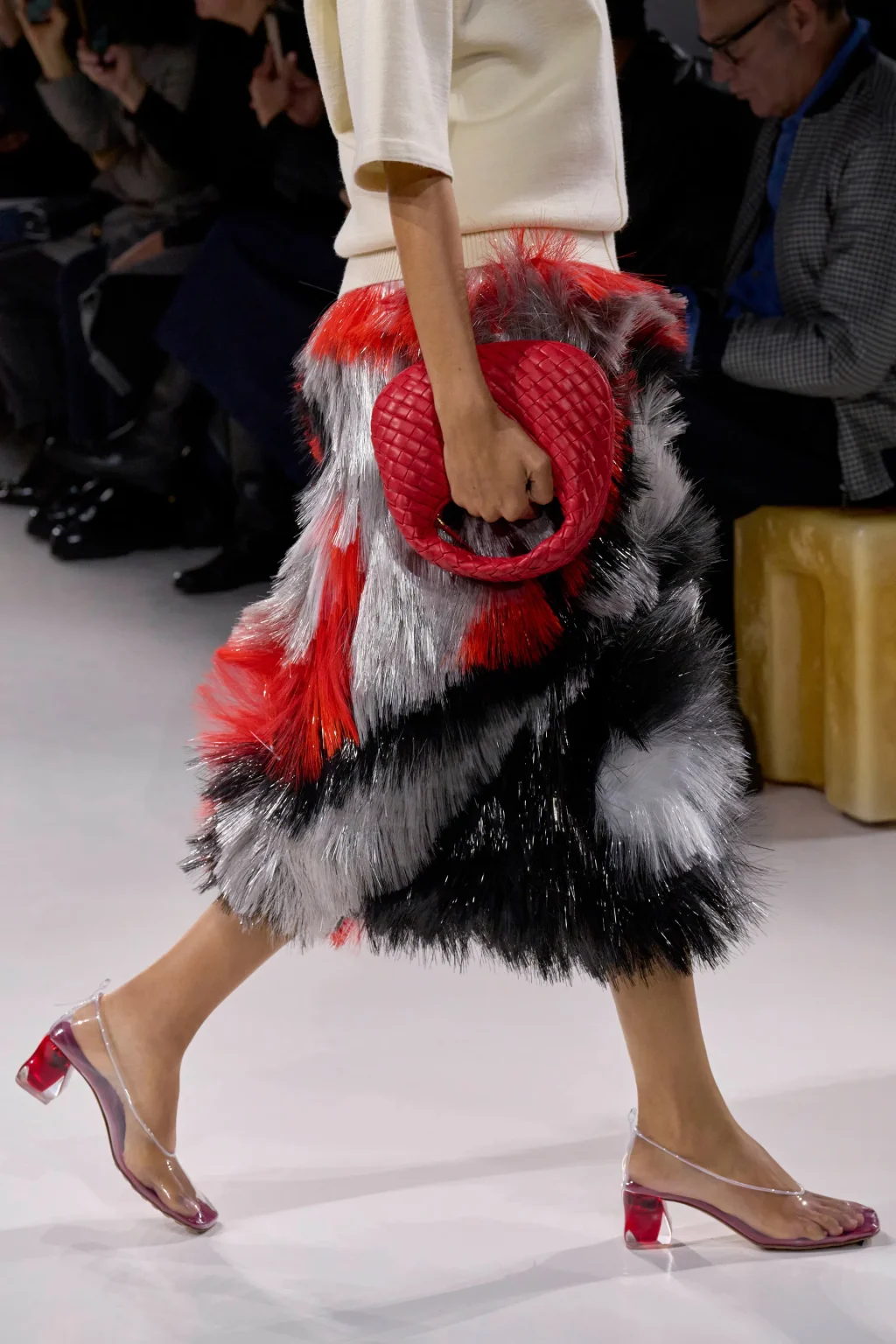
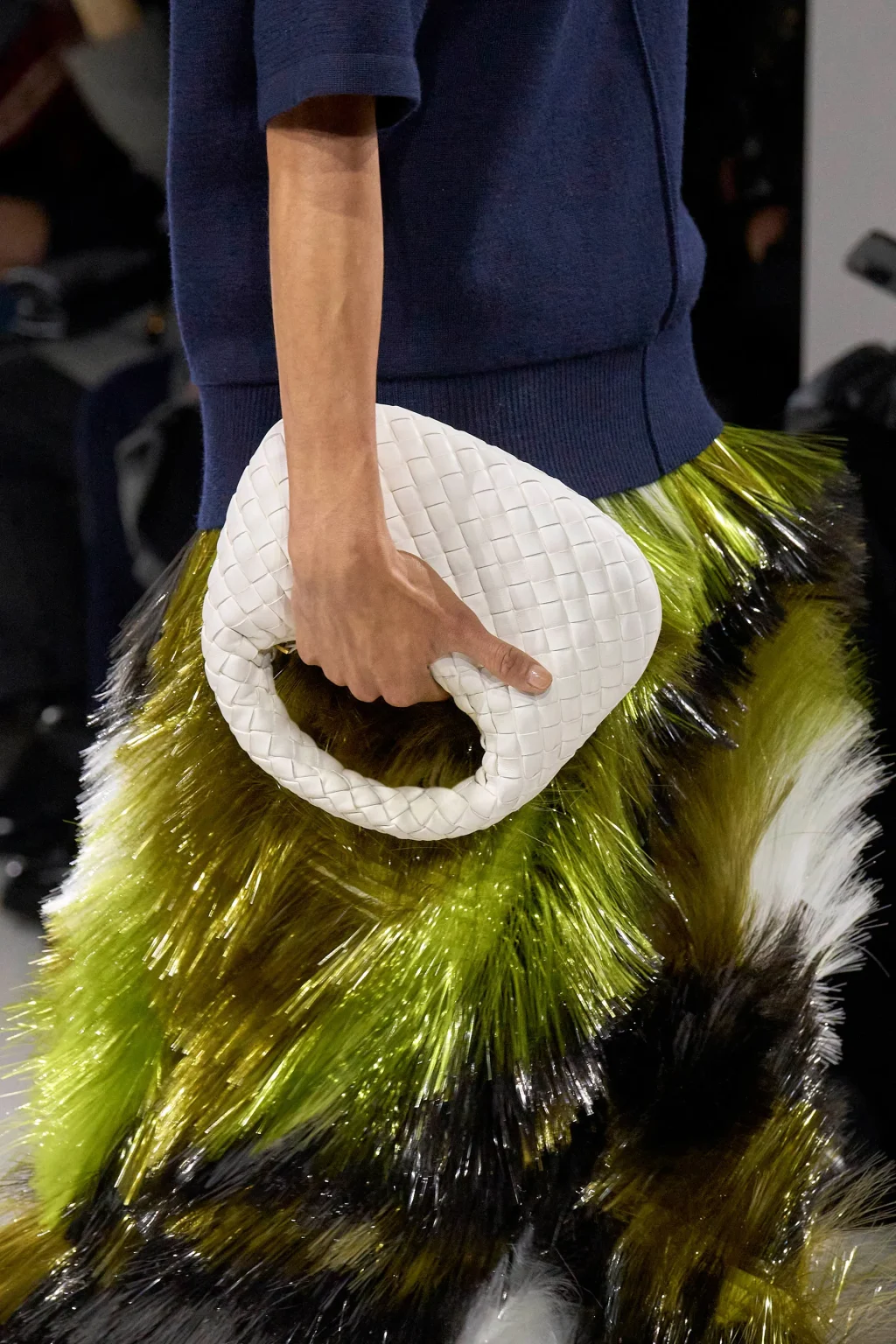
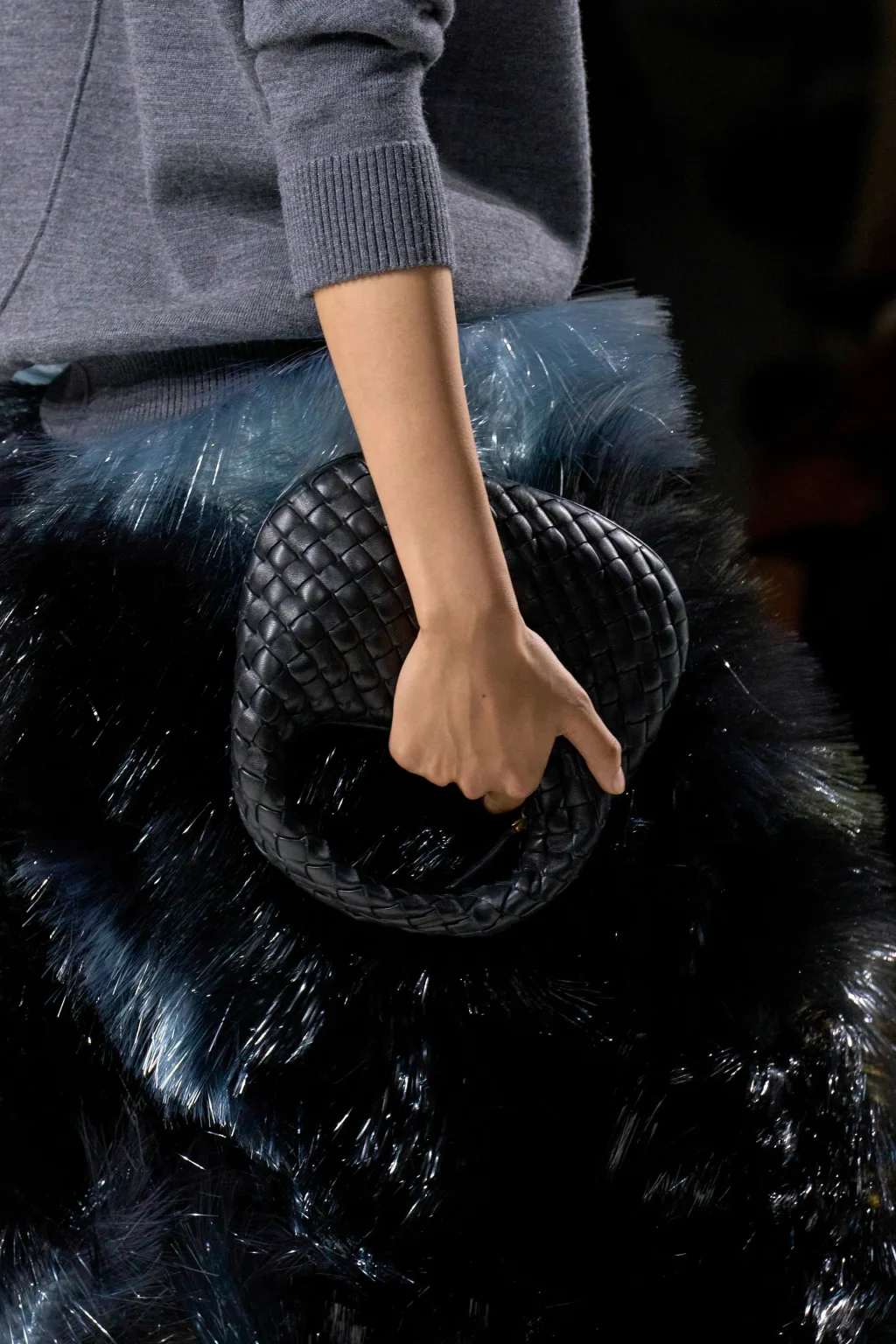
On the pricing and lineup, Bottega positions Veneta as a three-tier family: Baby Veneta (€2,600), Small Veneta (€3,600), and the core Veneta (€4,600), shown in a tight, modern palette (e.g., Black, Ecru, Deep Mahogany, Pickle for the main size; Blue Venezia, Sea Salt, Fondant, Lava Red for Small; Black, Cardinal, Nocciola, Alabaster for Baby).
The Lauren 1980 Alto bag
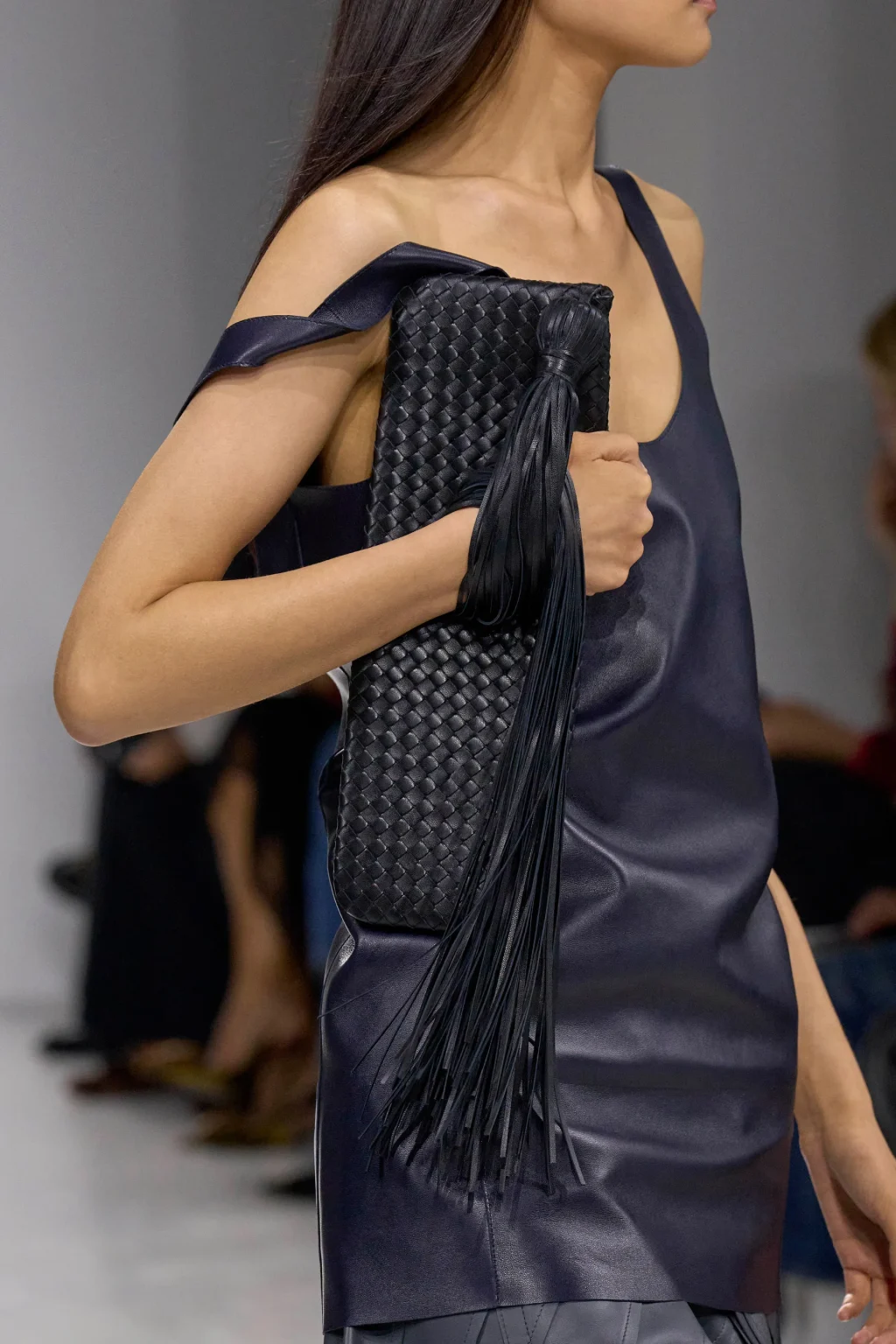
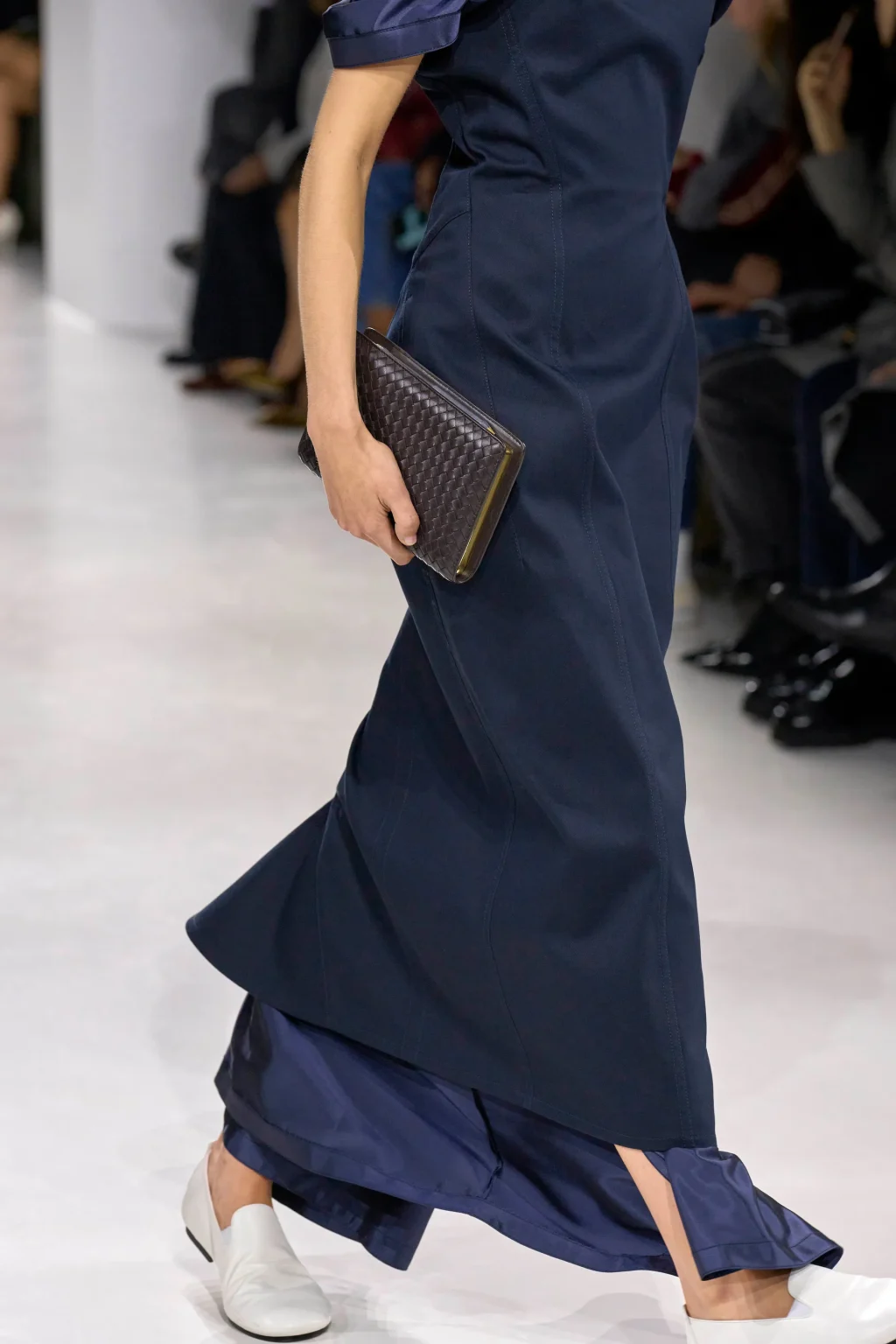
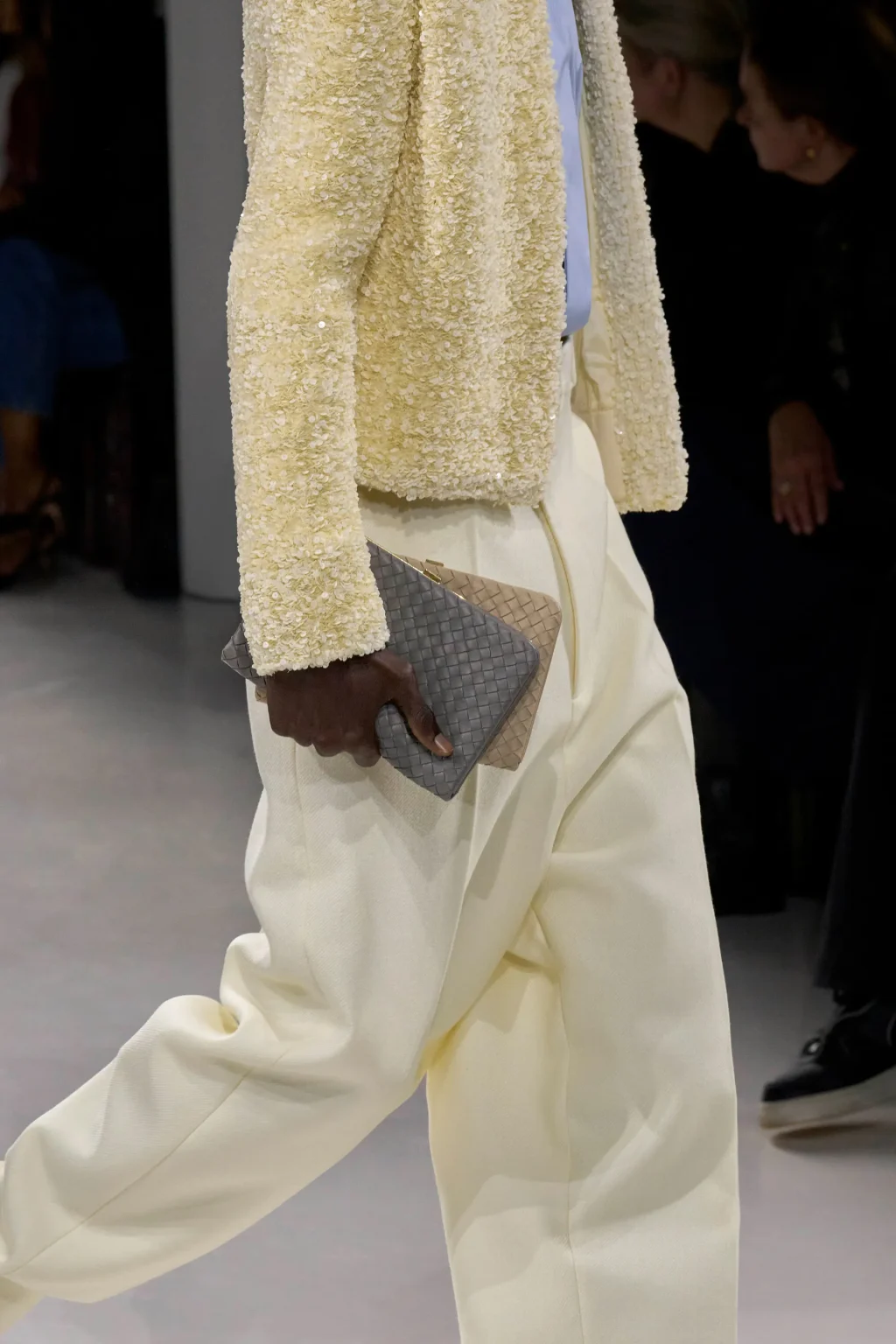
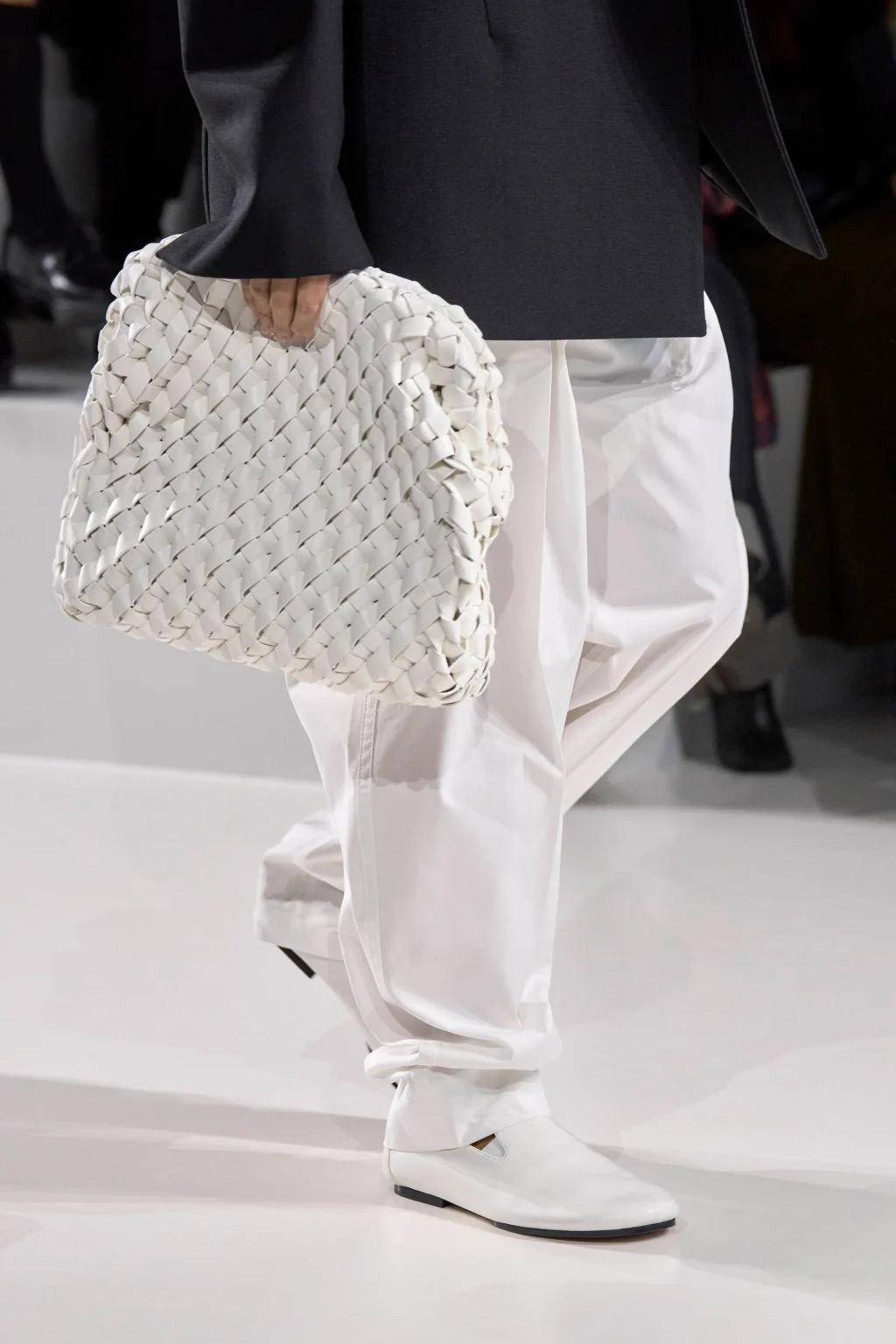
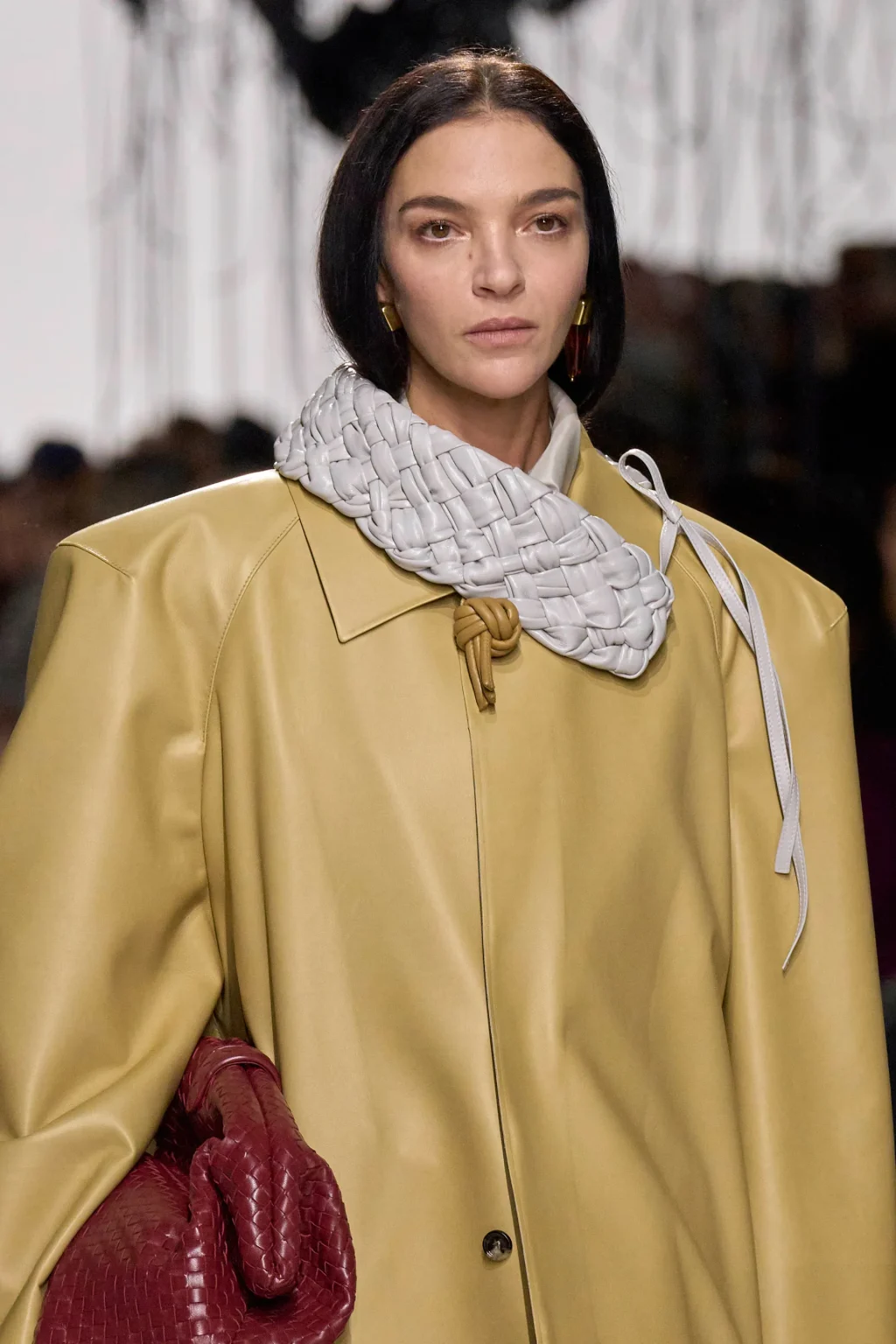
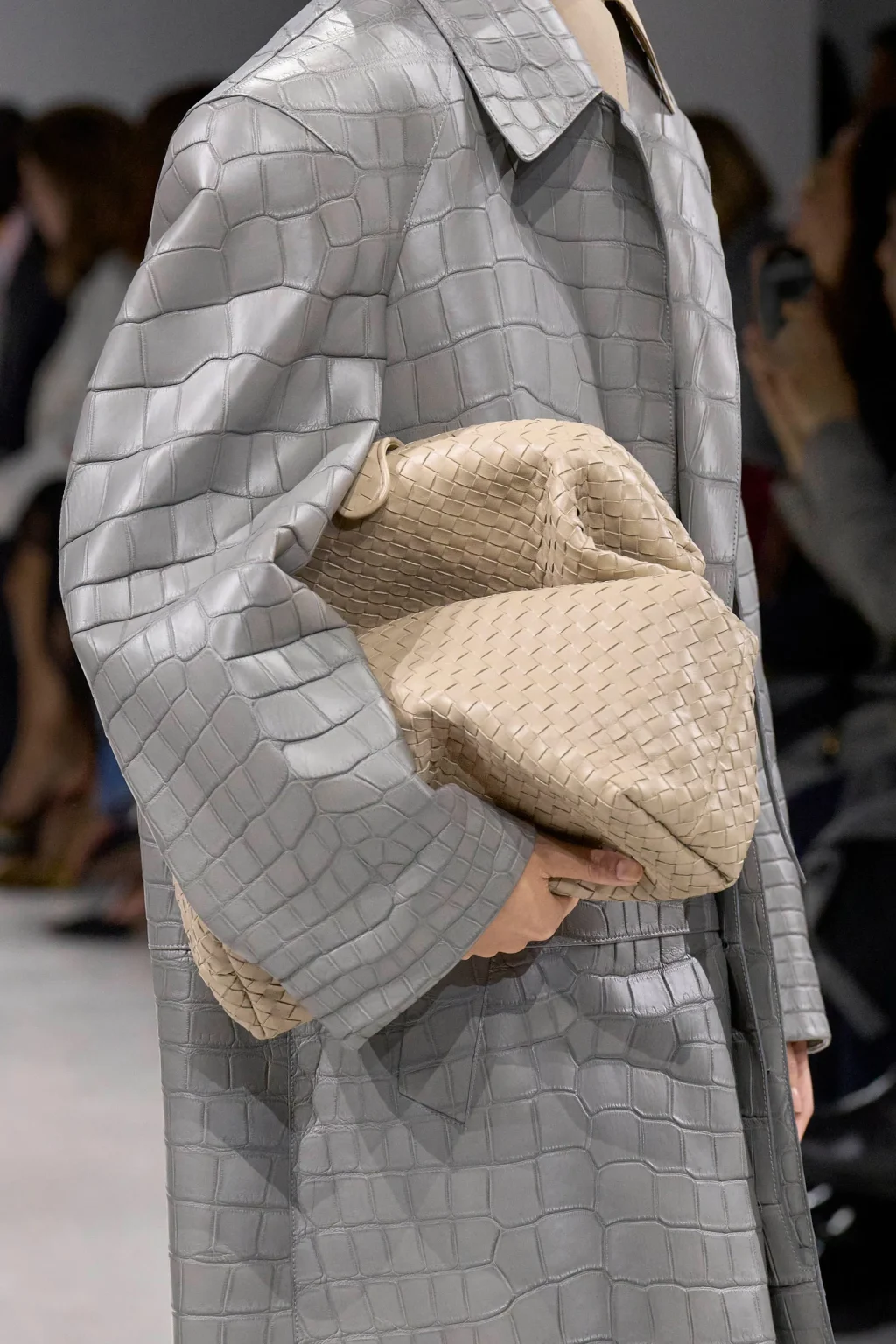
The Lauren 1980 Alto is Bottega’s statement clutch scaled up to runway volume: a vertical Intrecciato leather silhouette that reads almost like a soft, woven sculpture under the arm—minimal in hardware, maximal in presence. In Ecru, it leans into the house’s SS26 idea of “soft functionality” by making a formal shape feel tactile and lived-in, the kind of piece that looks quiet from afar but reveals complexity up close in the weave and proportion.
On the product page, the facts are crisp: it’s priced at €5,200 and described as an Intrecciato leather vertical clutch with a single compartment, one zip pocket, an internal hand mirror with leather cover, and a magnetic flap closure.
The Giorno bag
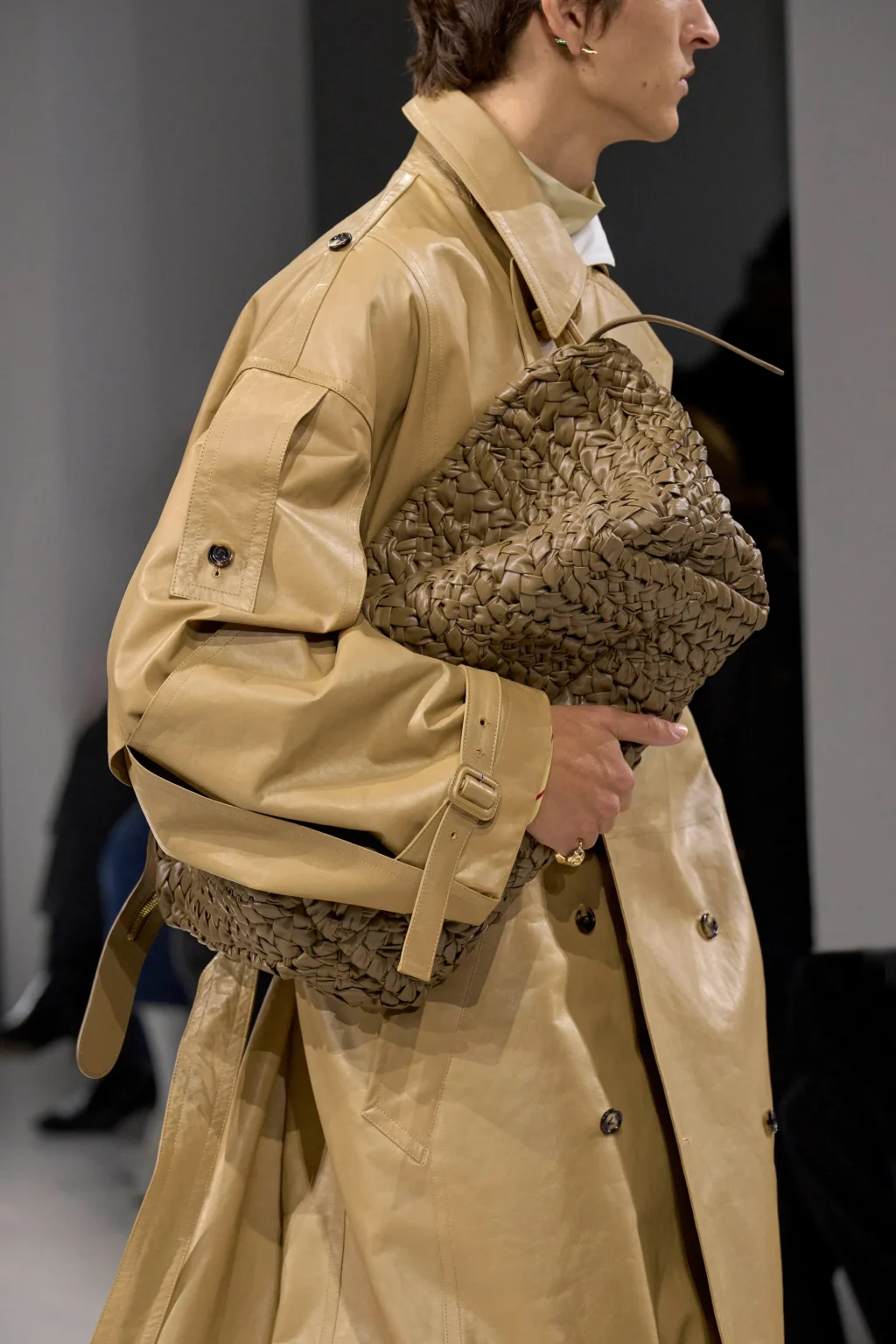
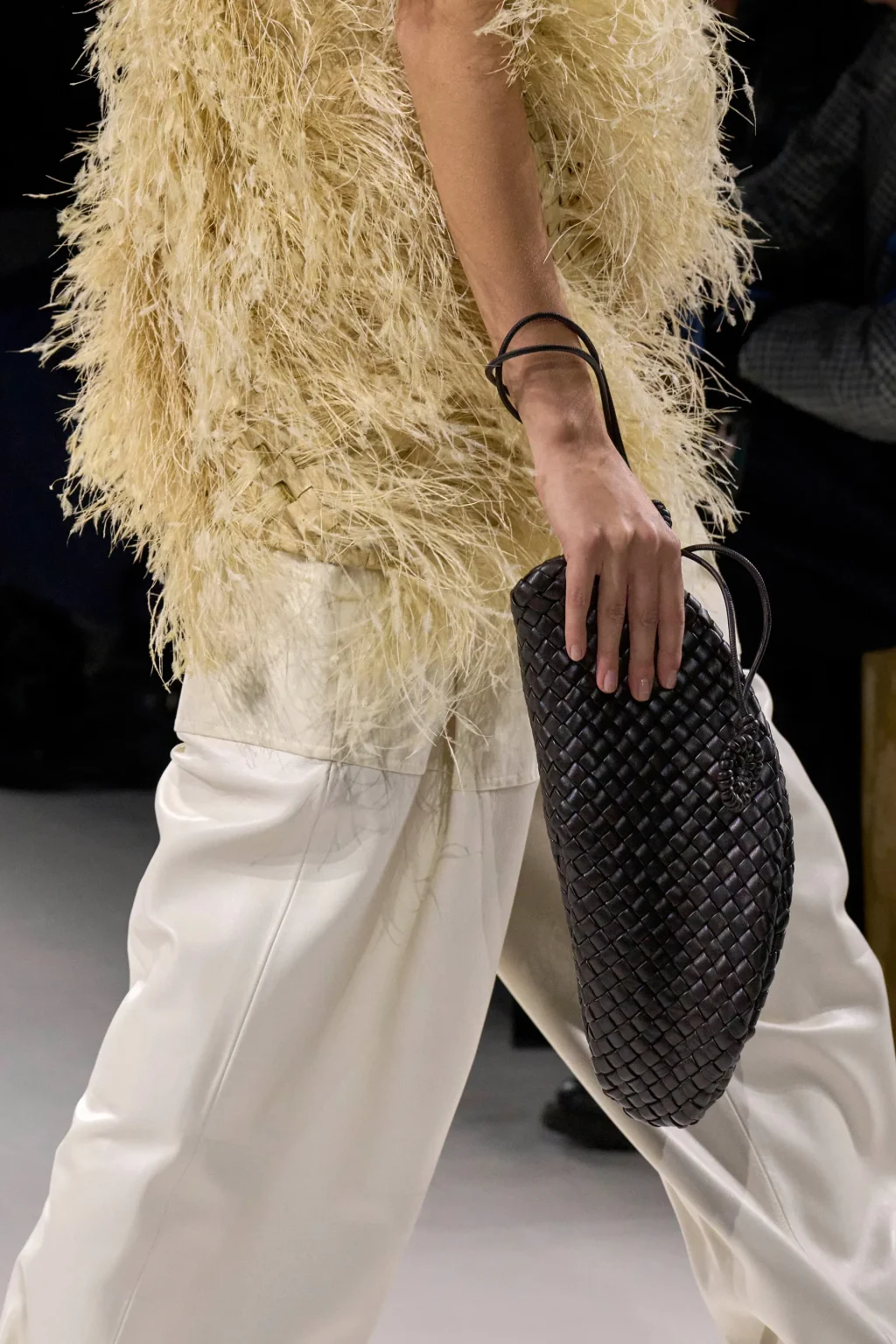
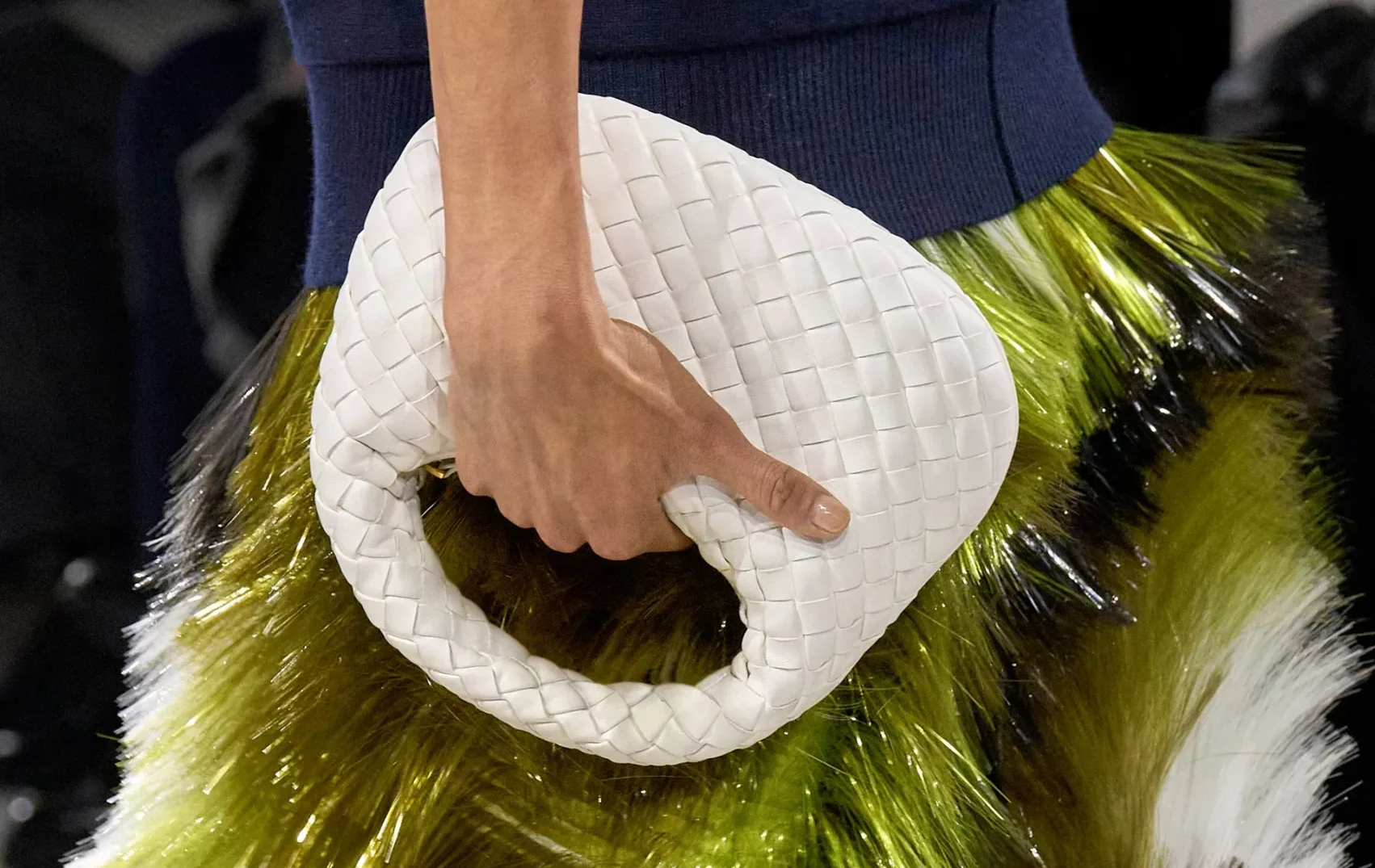
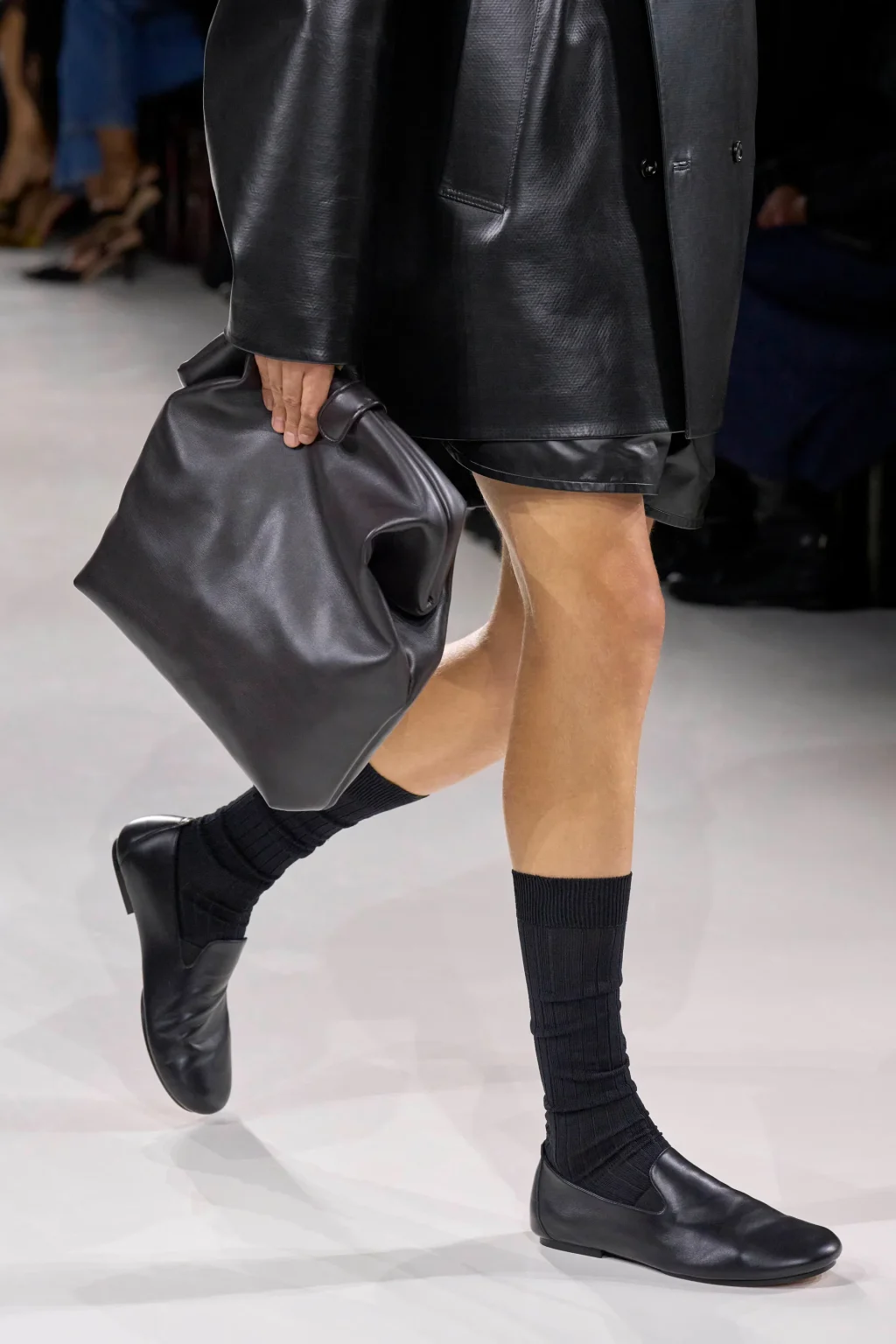
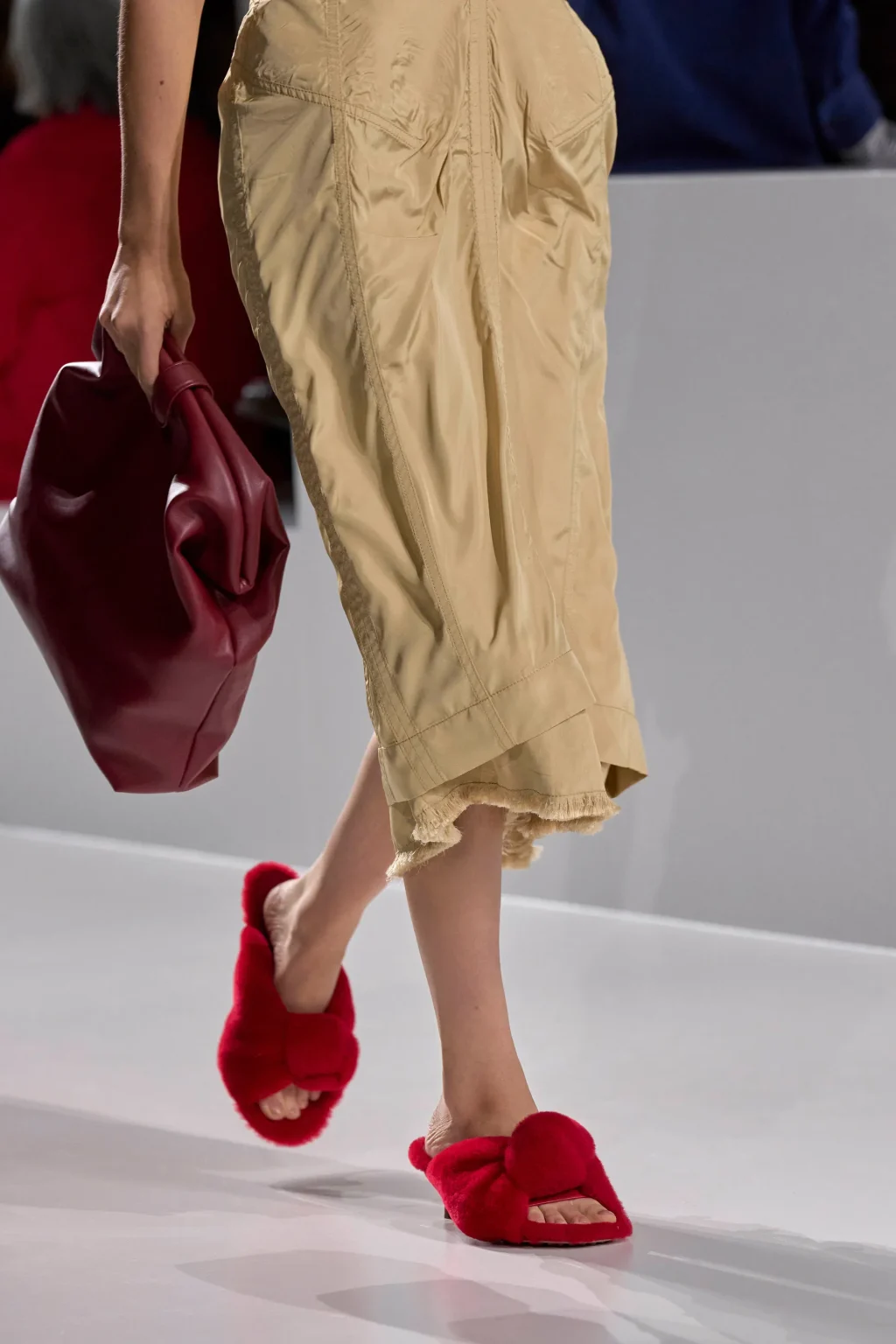
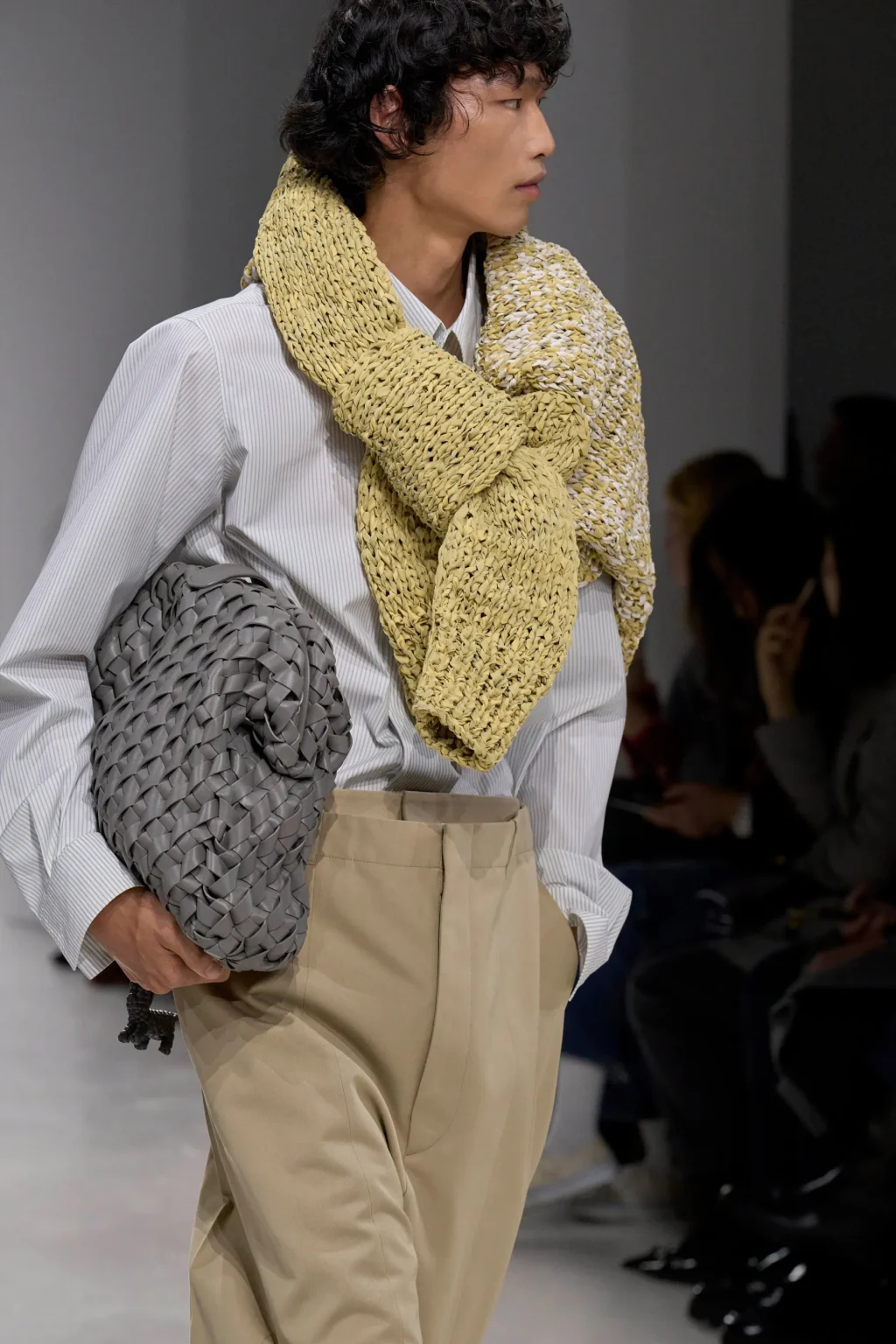
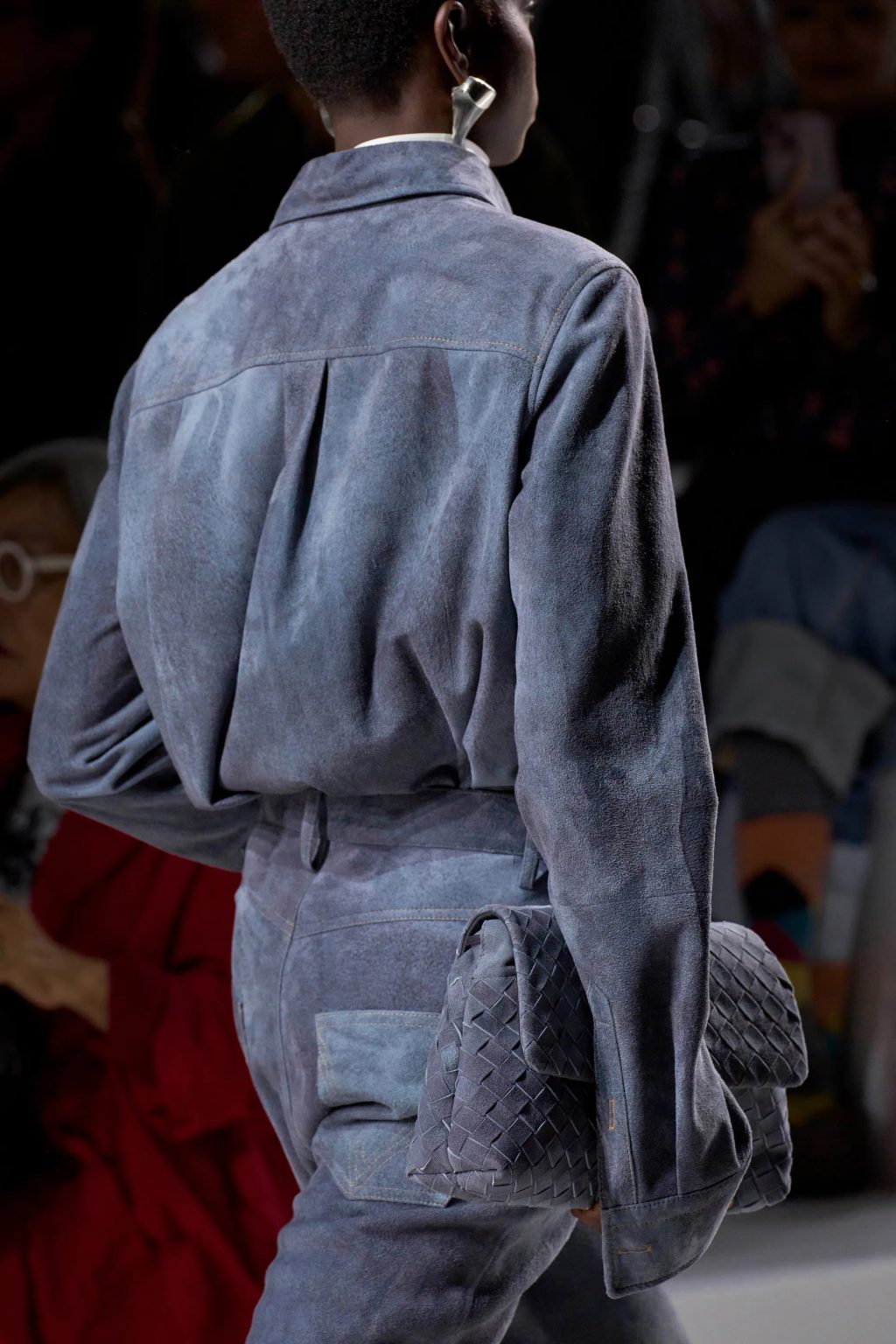
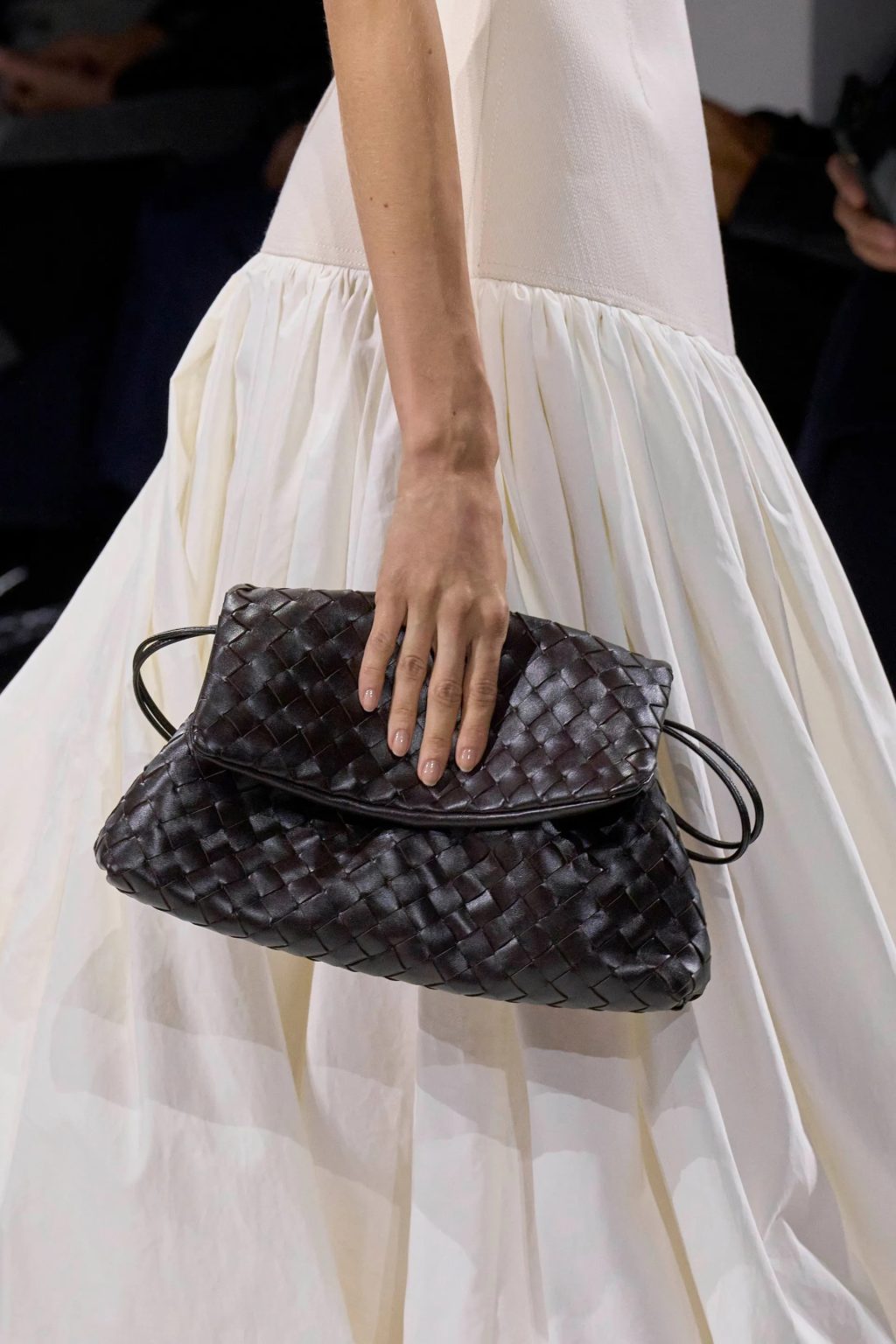
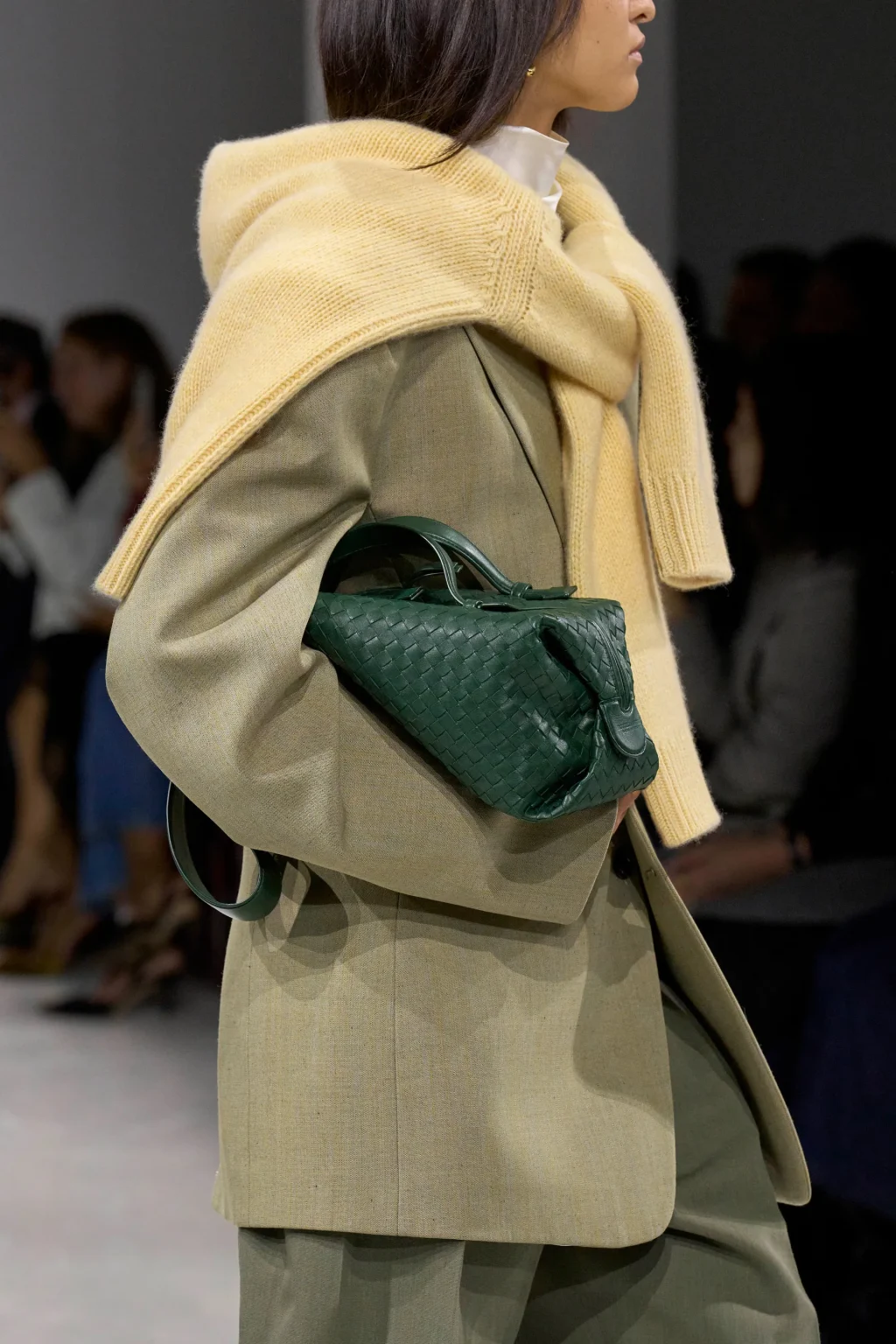
The Giorno reads like Bottega’s idea of a “day bag” stripped down to pure gesture: a softly structured Intrecciato pouch with a flap that collapses and reforms as you move, designed to be carried in-hand or hooked close to the body via a discreet leather loop attachment. In runway terms, it’s that perfect in-between—more tactile than a classic shoulder bag, more intentional than a clutch—because the silhouette isn’t rigidly defined; it’s shaped by touch, by how you fold it, and by the way the weave catches light at the corners.
On the product side, the Giorno is offered in two main moods that map neatly onto how it reads on the runway. One version leans textural and casual—a denim-effect Intrecciato suede in Cloudy Indigo/Gravel, priced at €3,000—while the other is cleaner and more classic, rendered in Intrecciato leather in Fondant, priced at €2,900. Both keep the same easy, day-to-night functionality: a simple flap silhouette with one main compartment, made in Italy, sized to sit close under the arm via a discreet loop attachment.
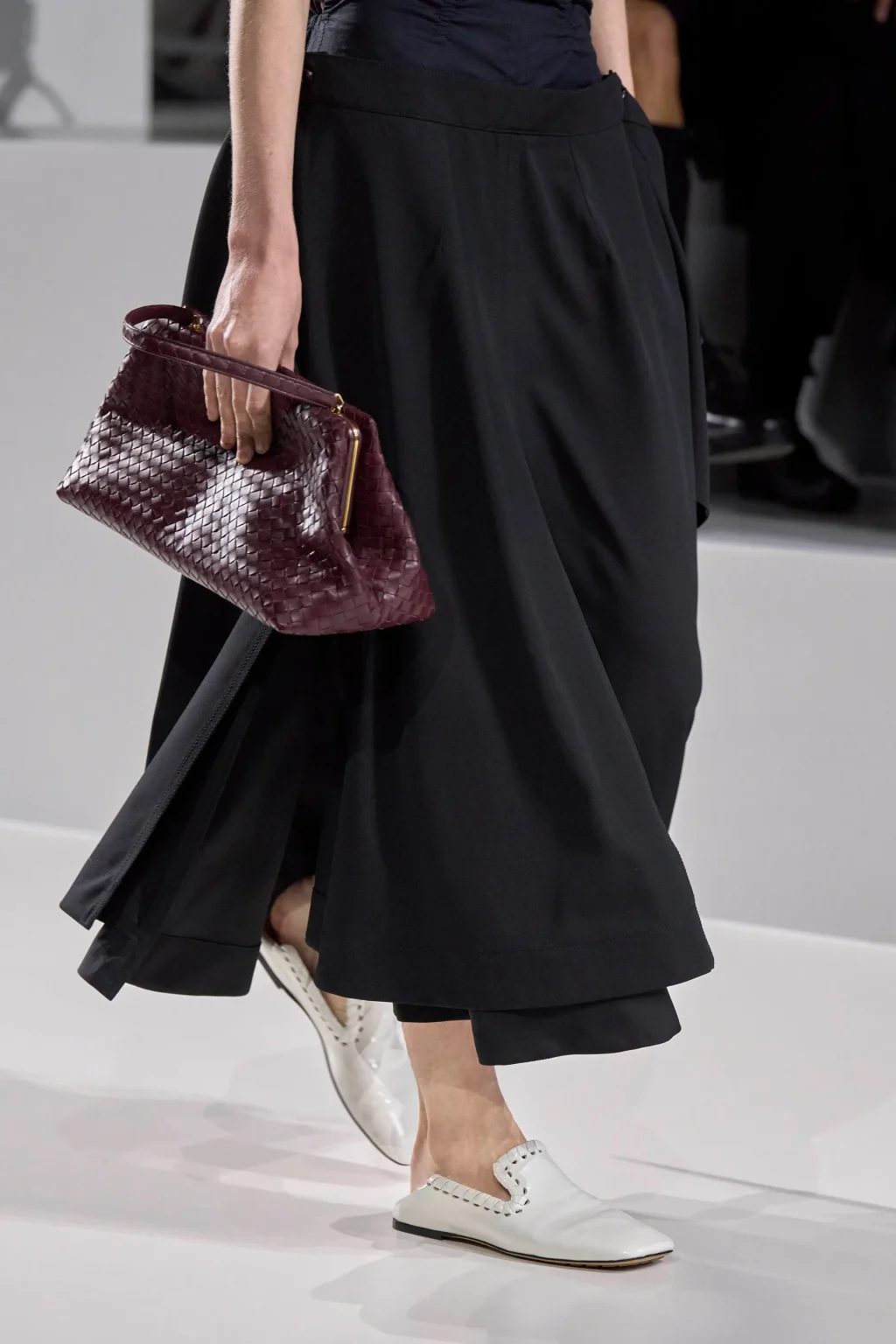
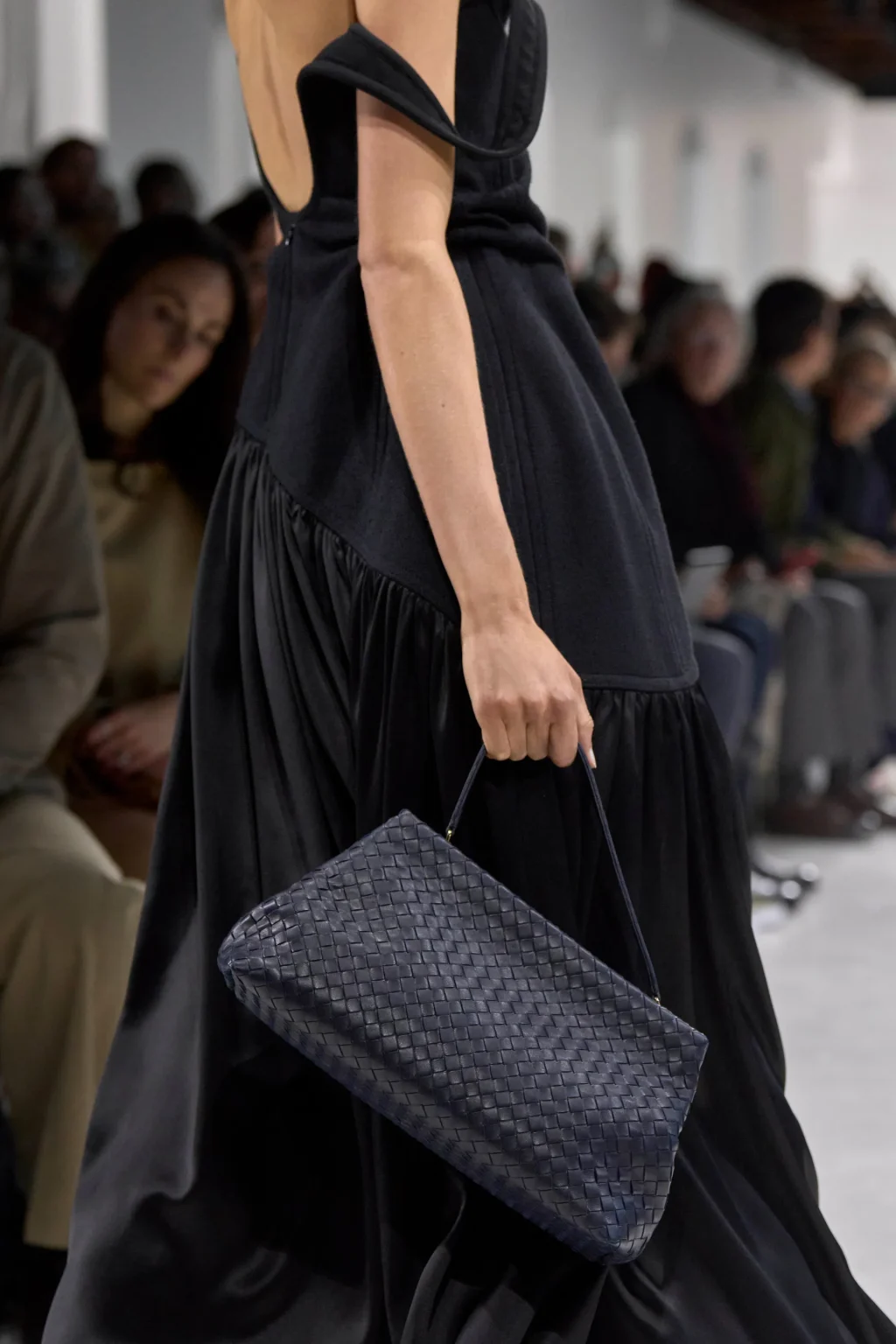
Intrecciato Zip Top-Handle Bag
This is the SS26 “quiet weapon” bag: a slim, elongated Intrecciato pouch with a minimal top handle and a single, clean zip line that runs down the side like a piece of jewellery. On the runway it shows up in two moods—deep burgundy (glossy, almost lacquered) and inky navy—and it’s styled to underline Trotter’s new Bottega grammar: rounded softness held inside a disciplined outline. It doesn’t try to be a new icon by shouting; it becomes one by being useful and sharp at the same time.
Intrecciato Zip Mini Holdall
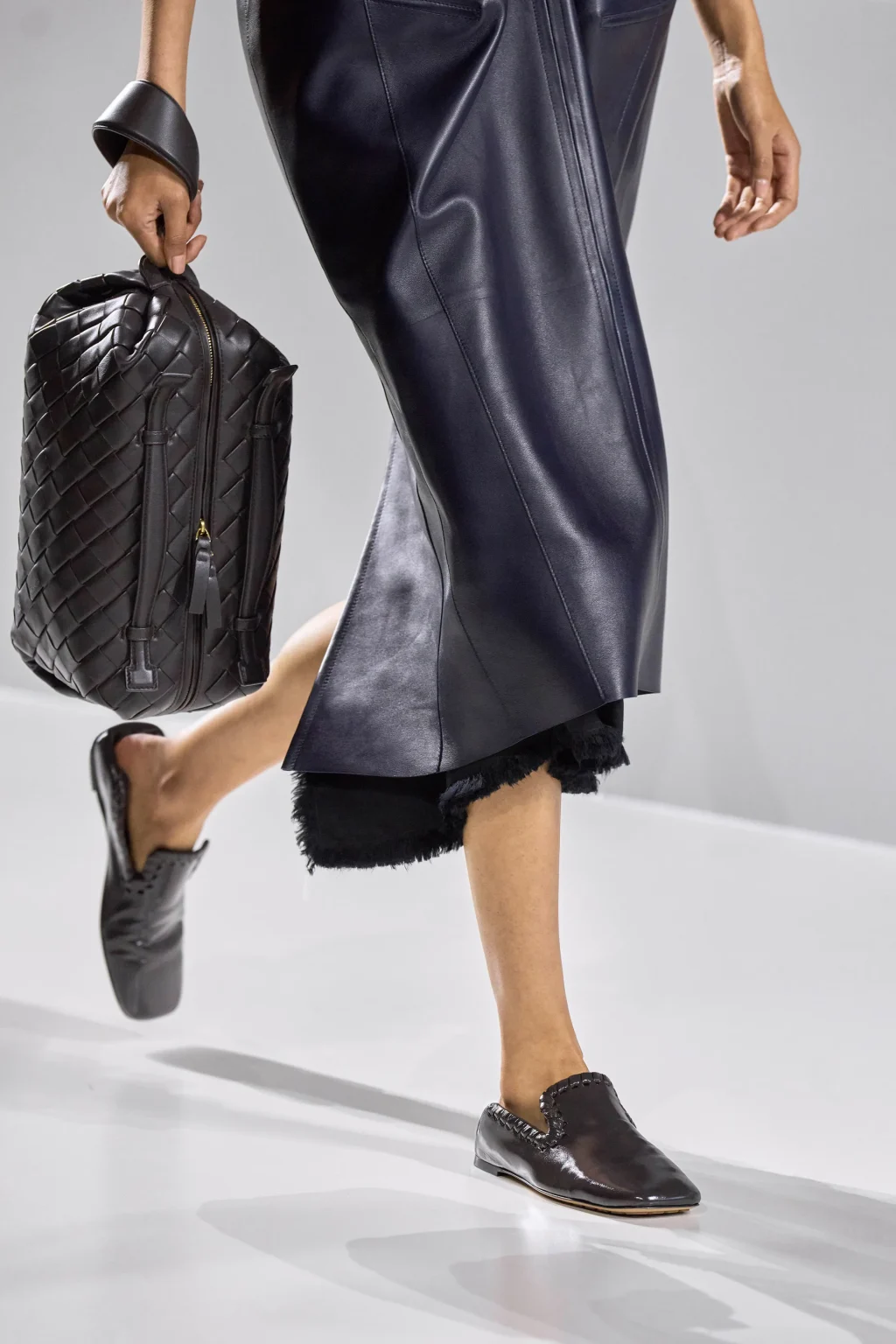
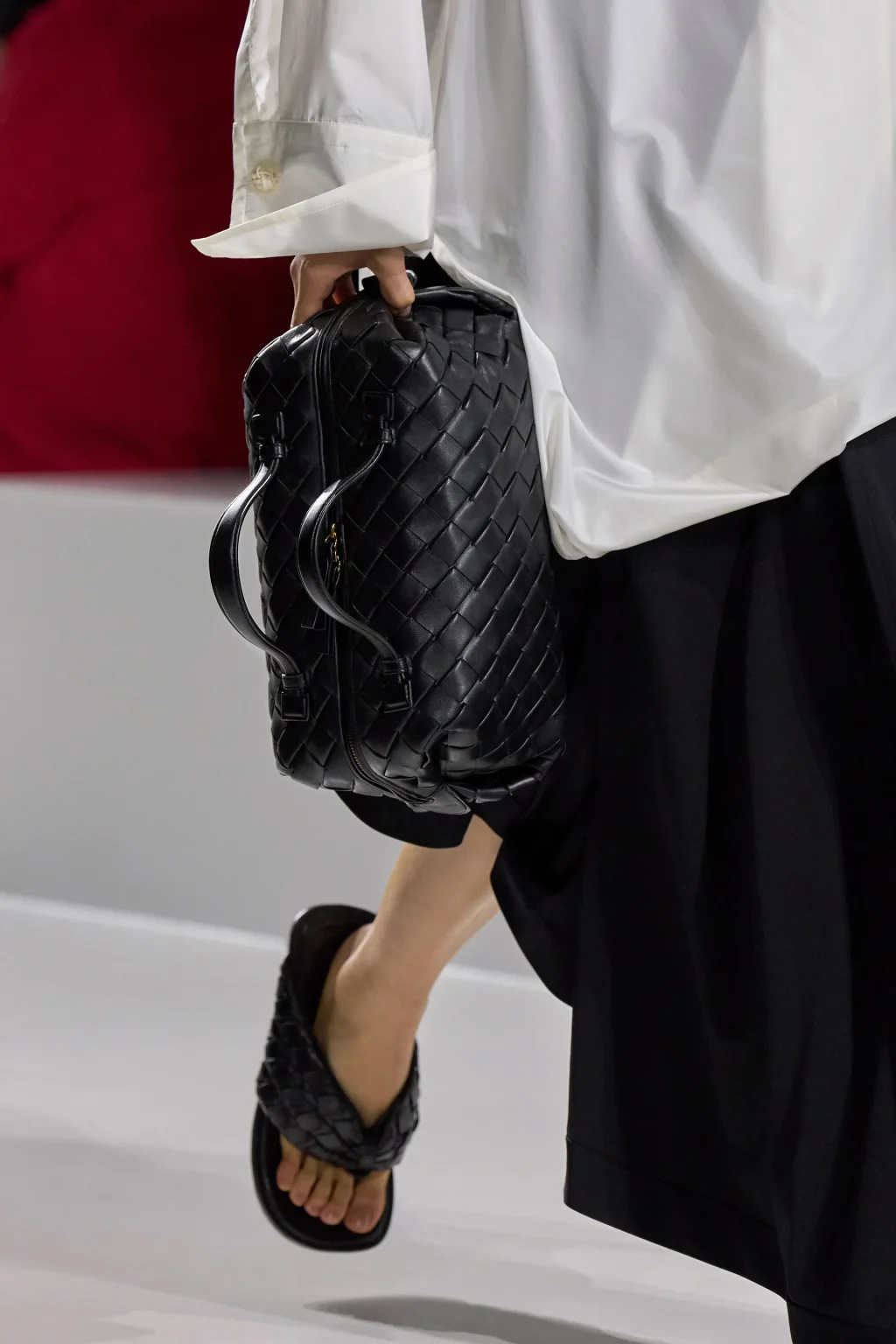
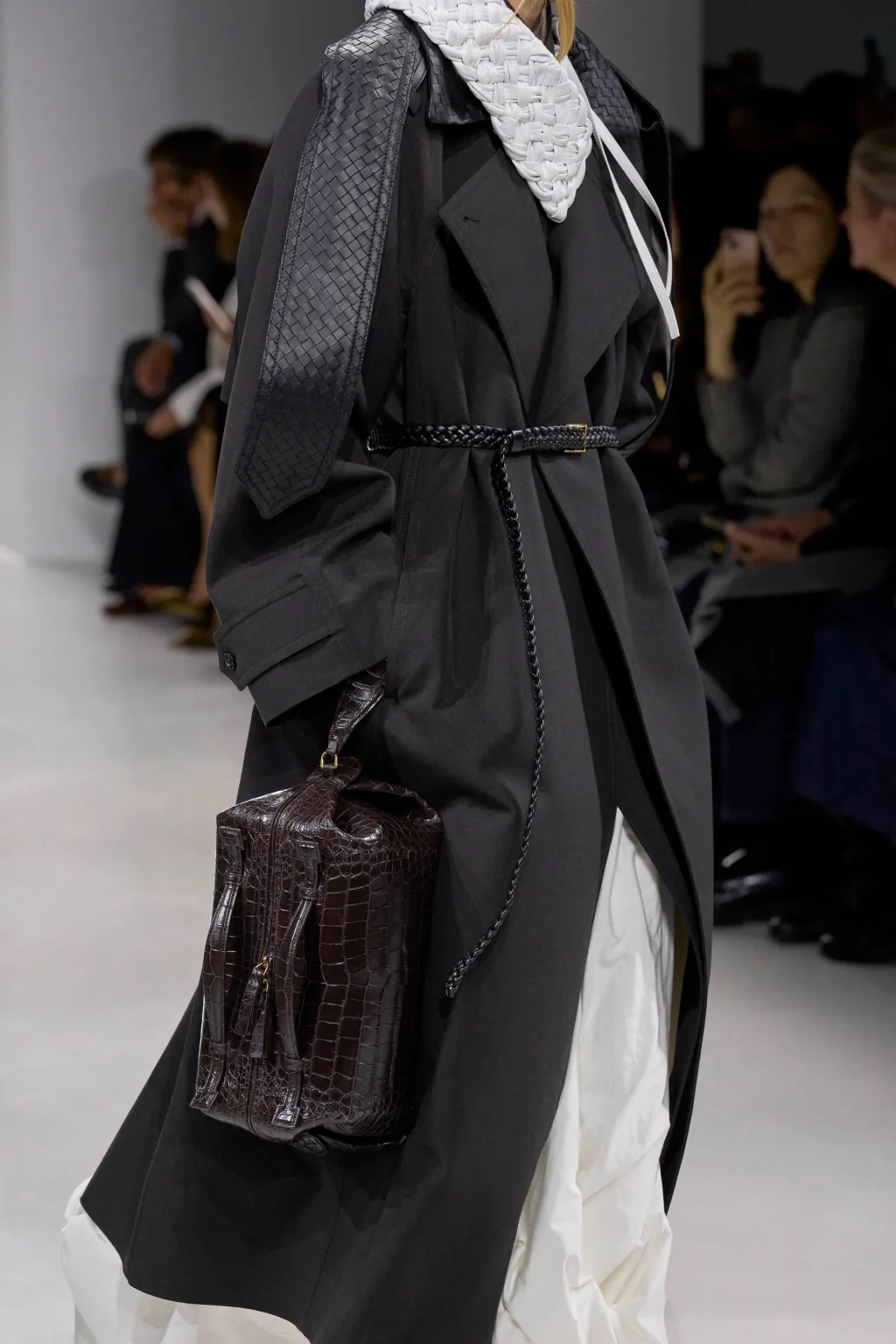
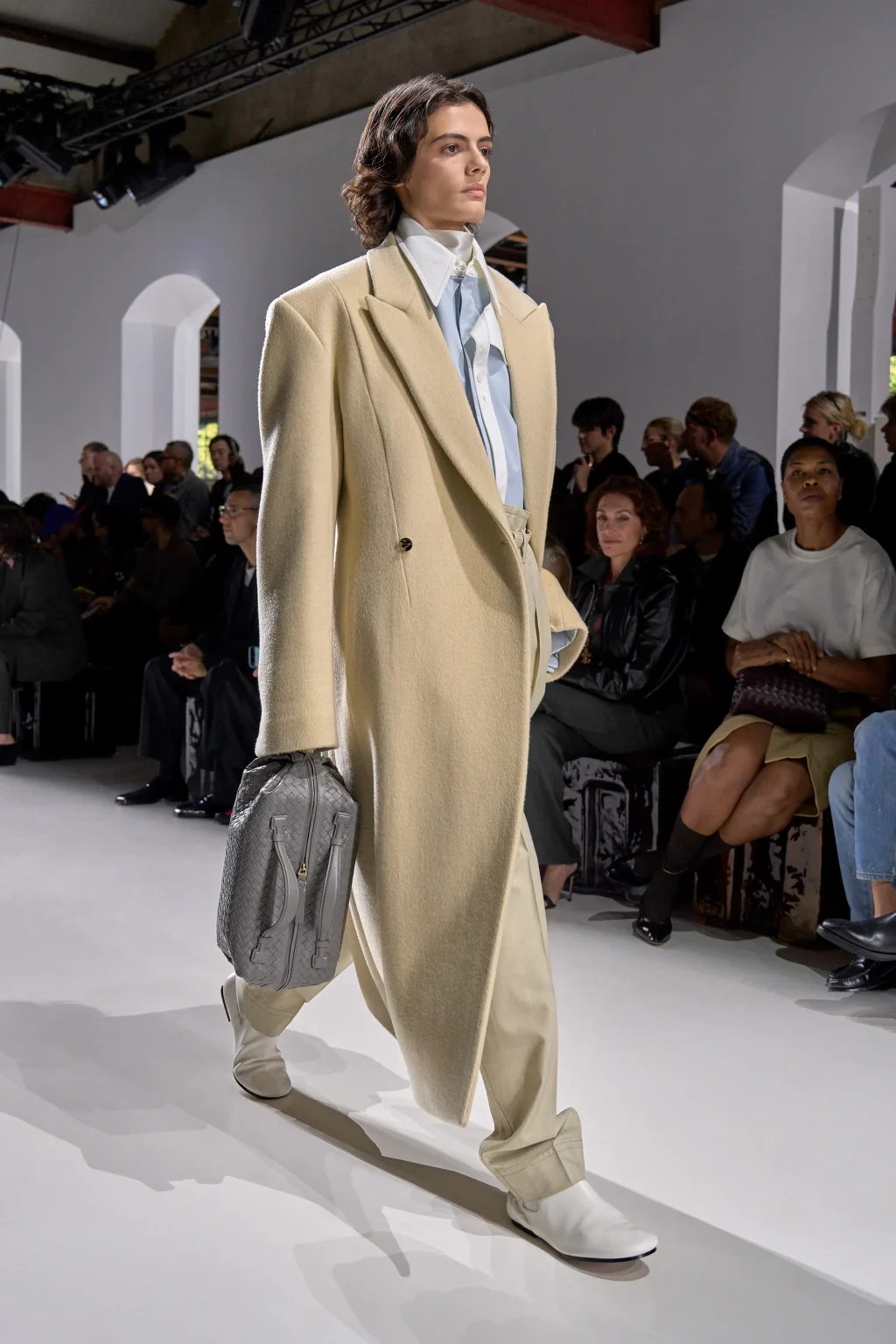
This runway model reads like a mini holdall engineered for speed—a compact, rectangular carryall built in overscale Intrecciato with a clean, structured spine and a full zip that gives it a real “go” attitude. In black, the weave looks almost padded—graphic, architectural—while the silhouette stays disciplined: rounded edges, a softly domed top, and that unmistakable Bottega tension between supple leather and controlled volume. It’s the kind of bag that feels deliberately “day” (secure, zipped, hands-on), yet still styled with evening-level polish because the weave does all the talking.
Bags with fringes
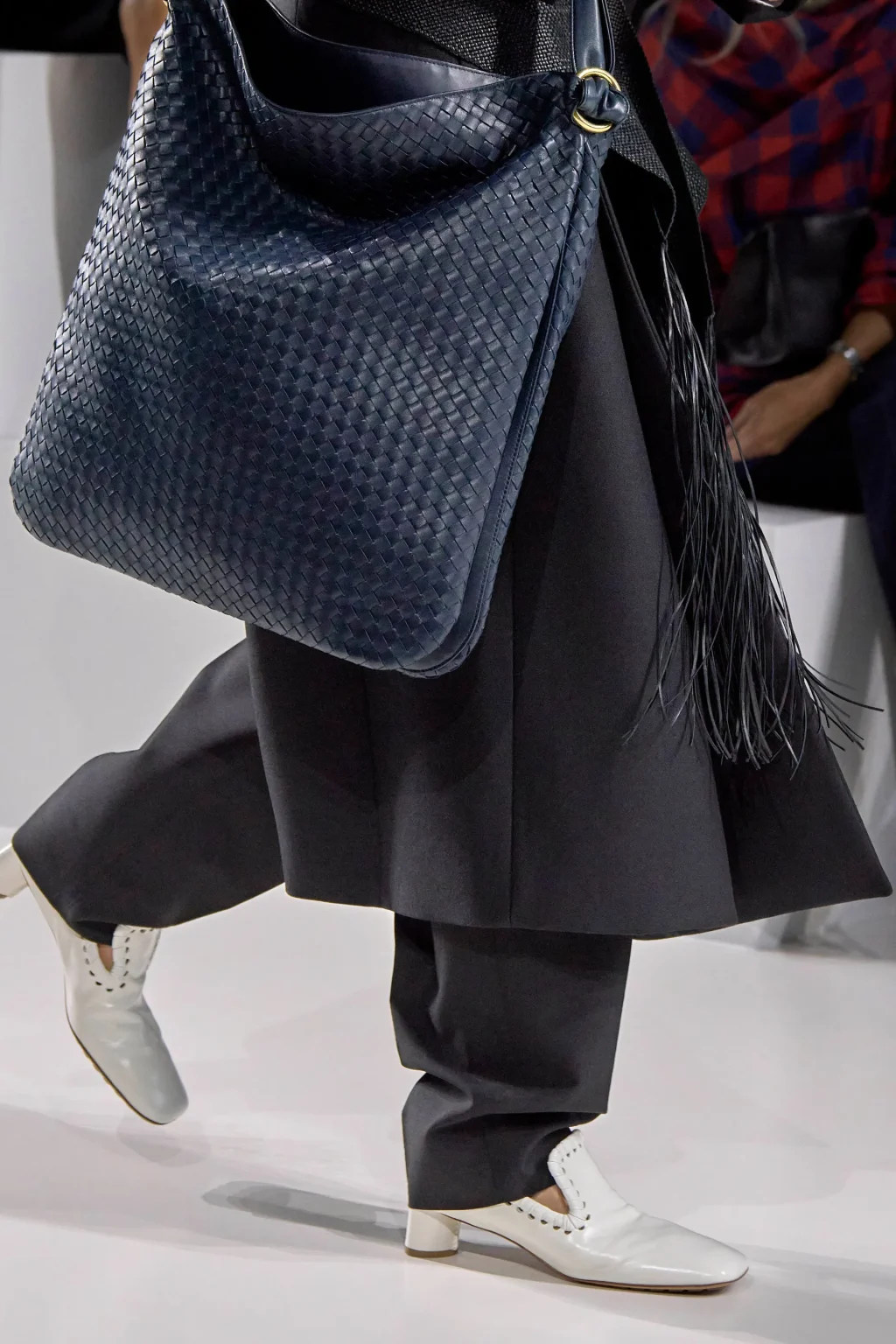
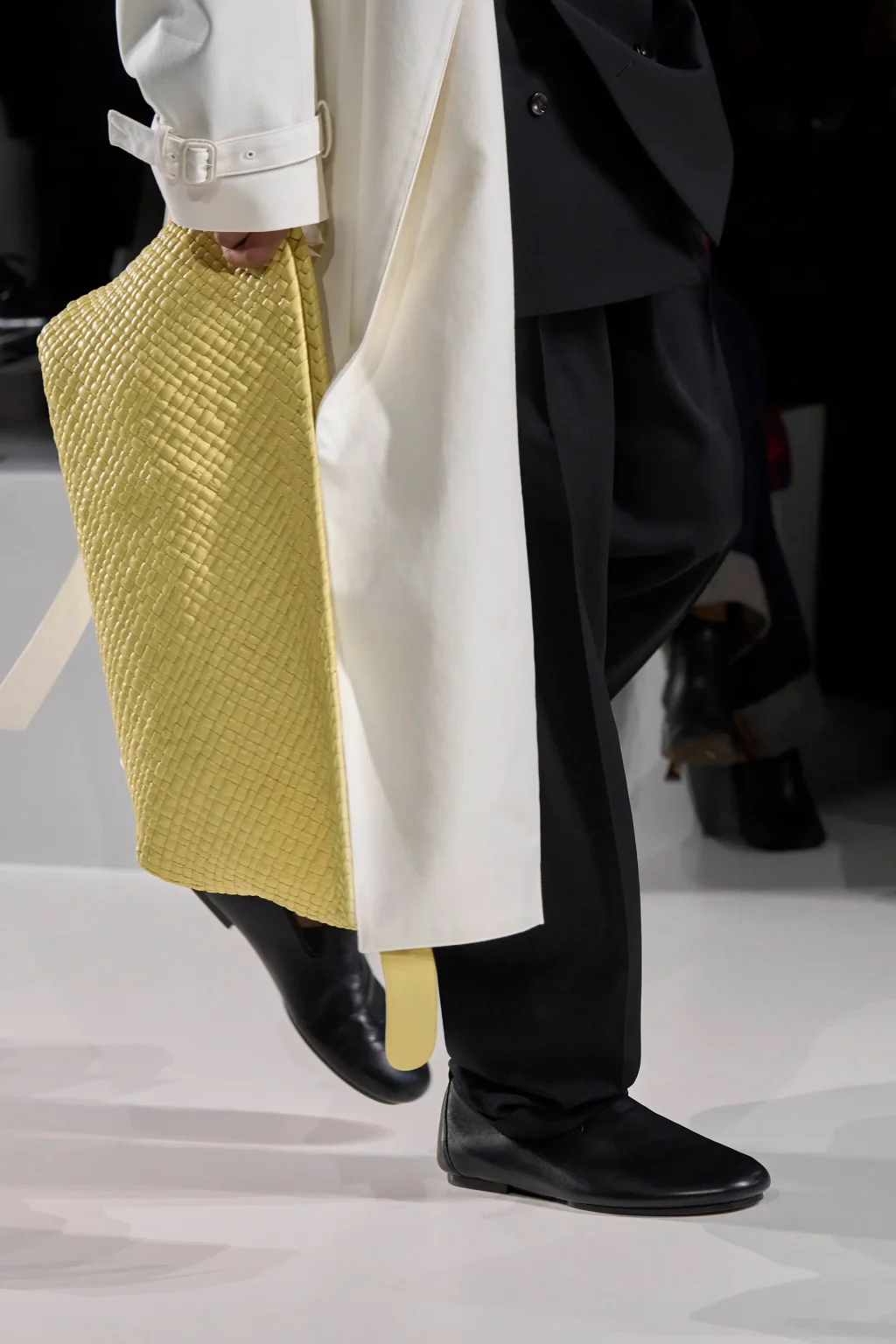
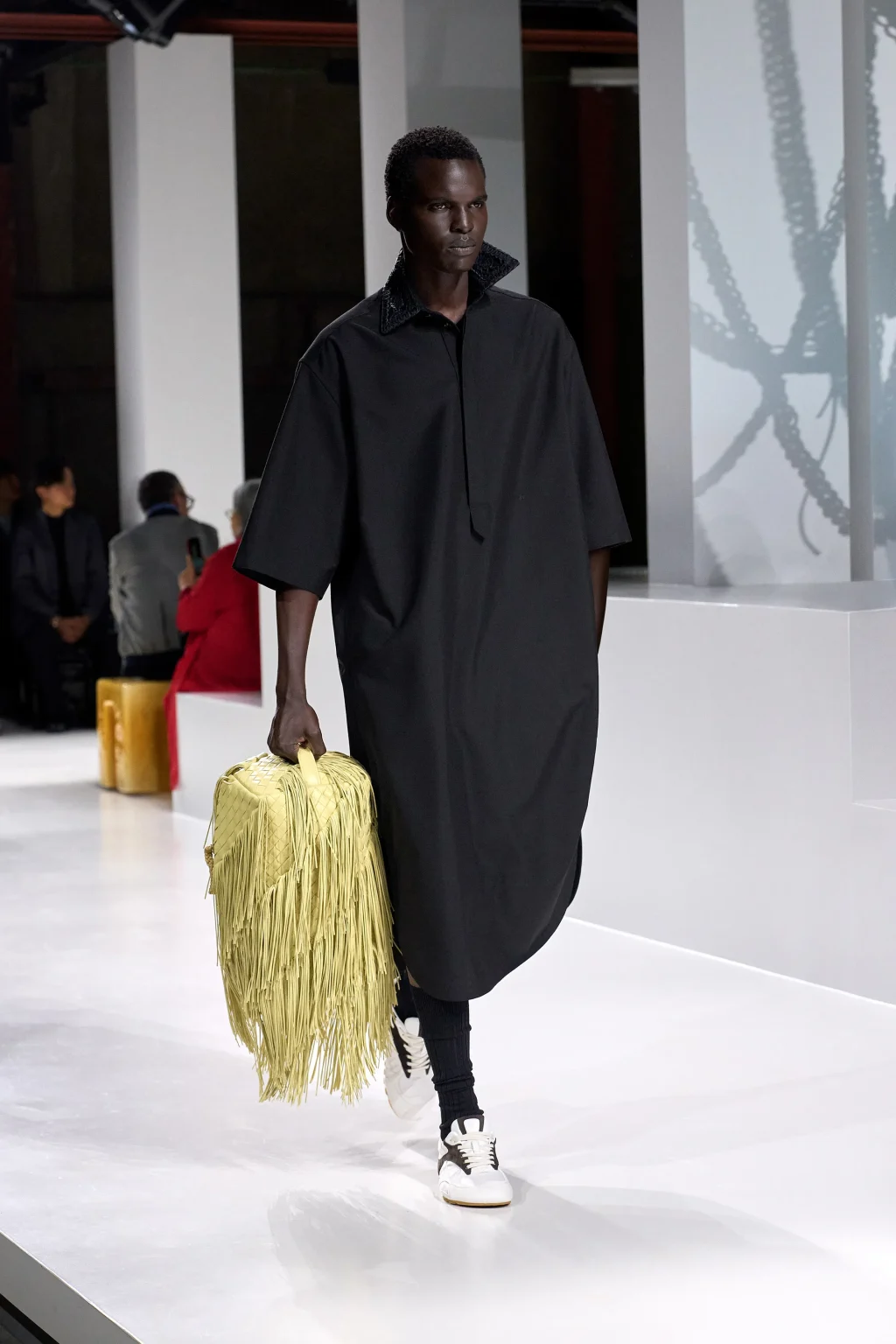
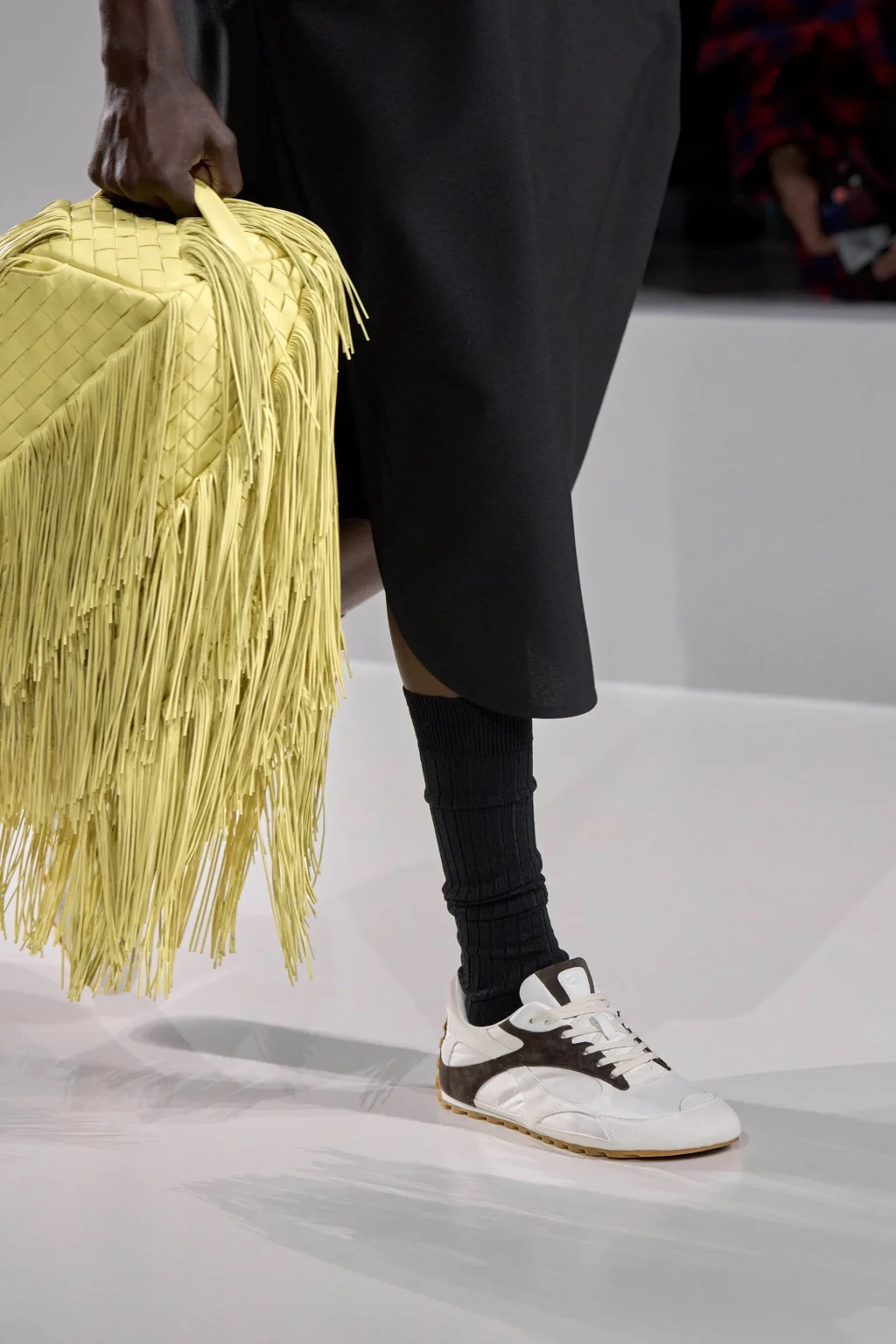
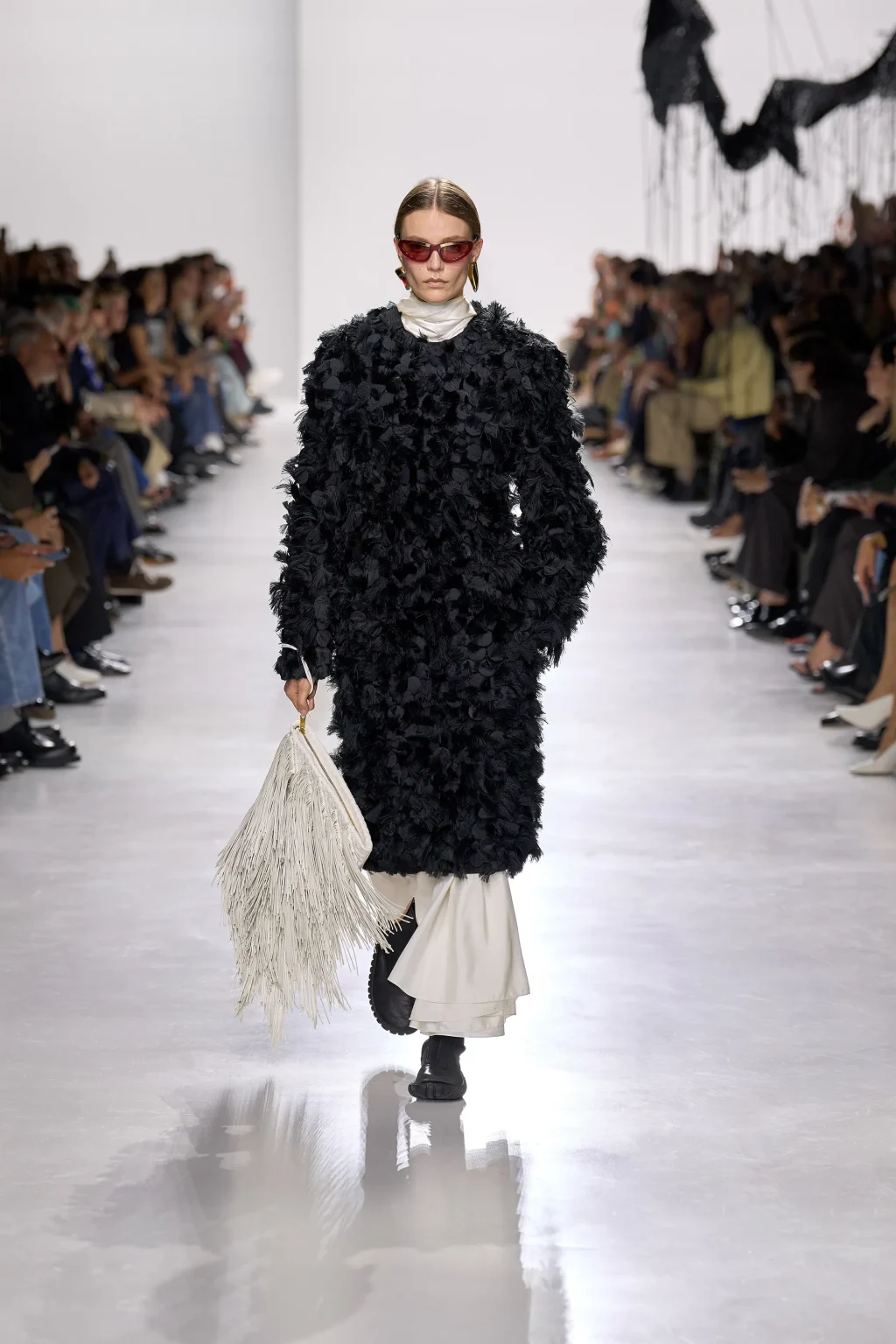
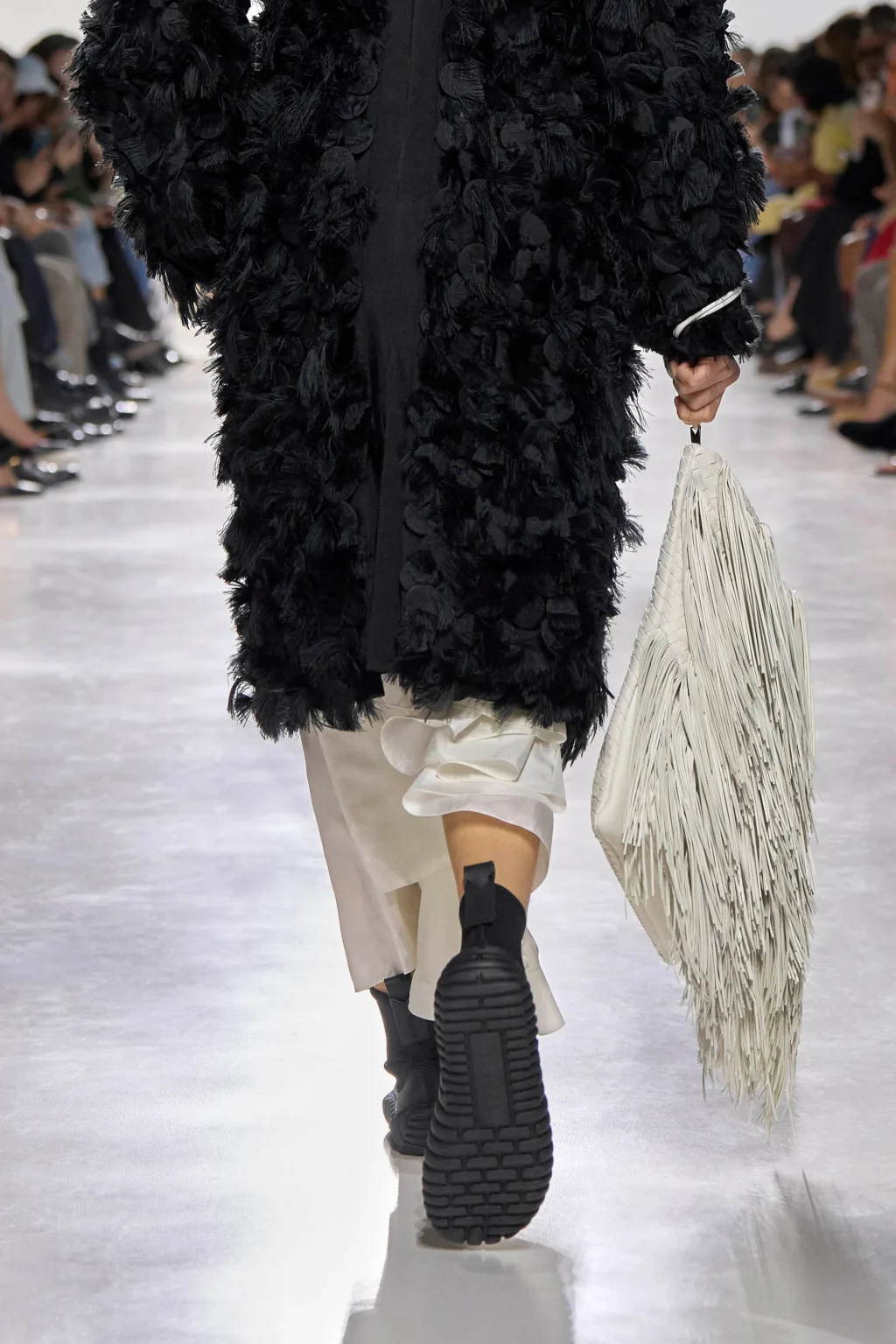
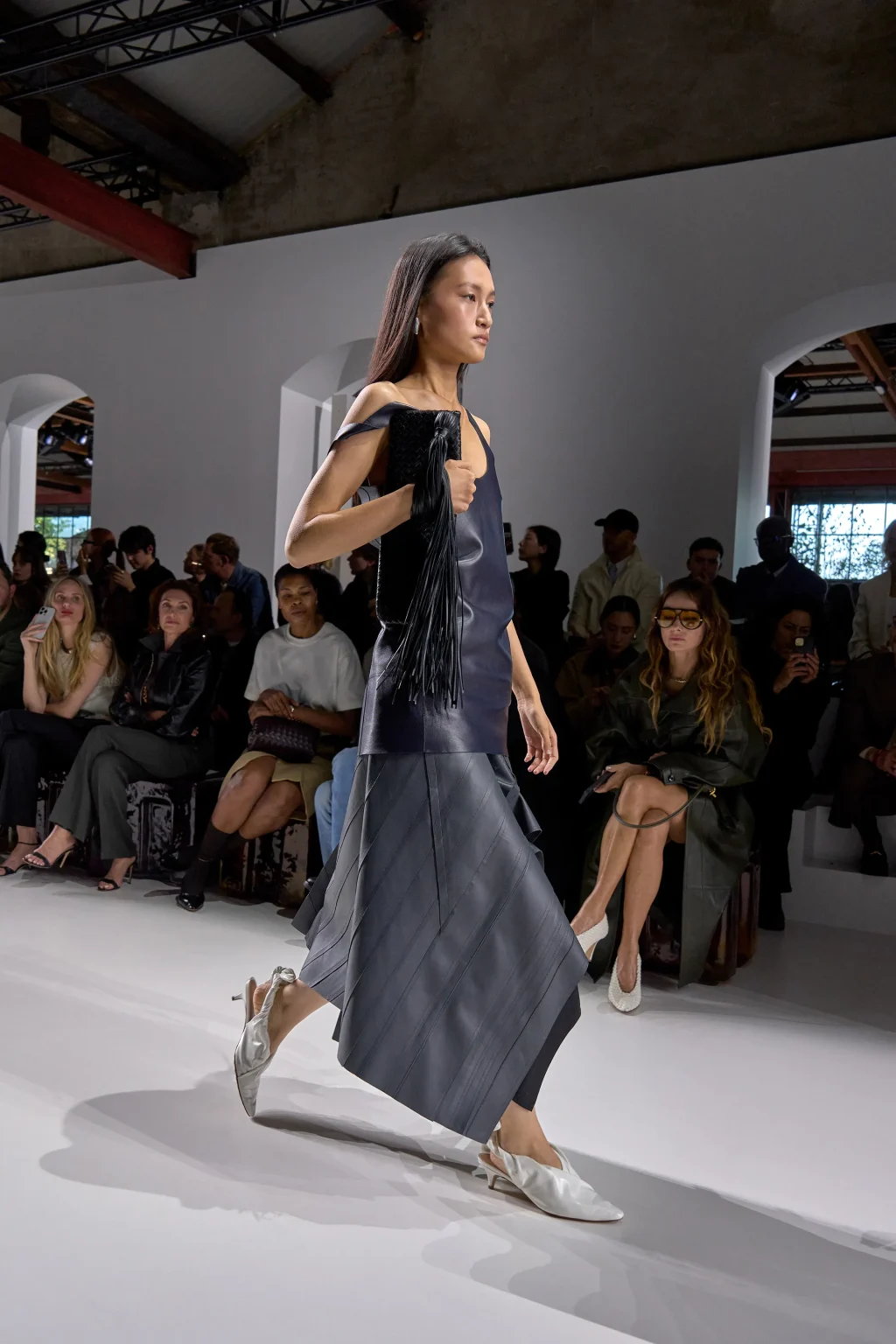
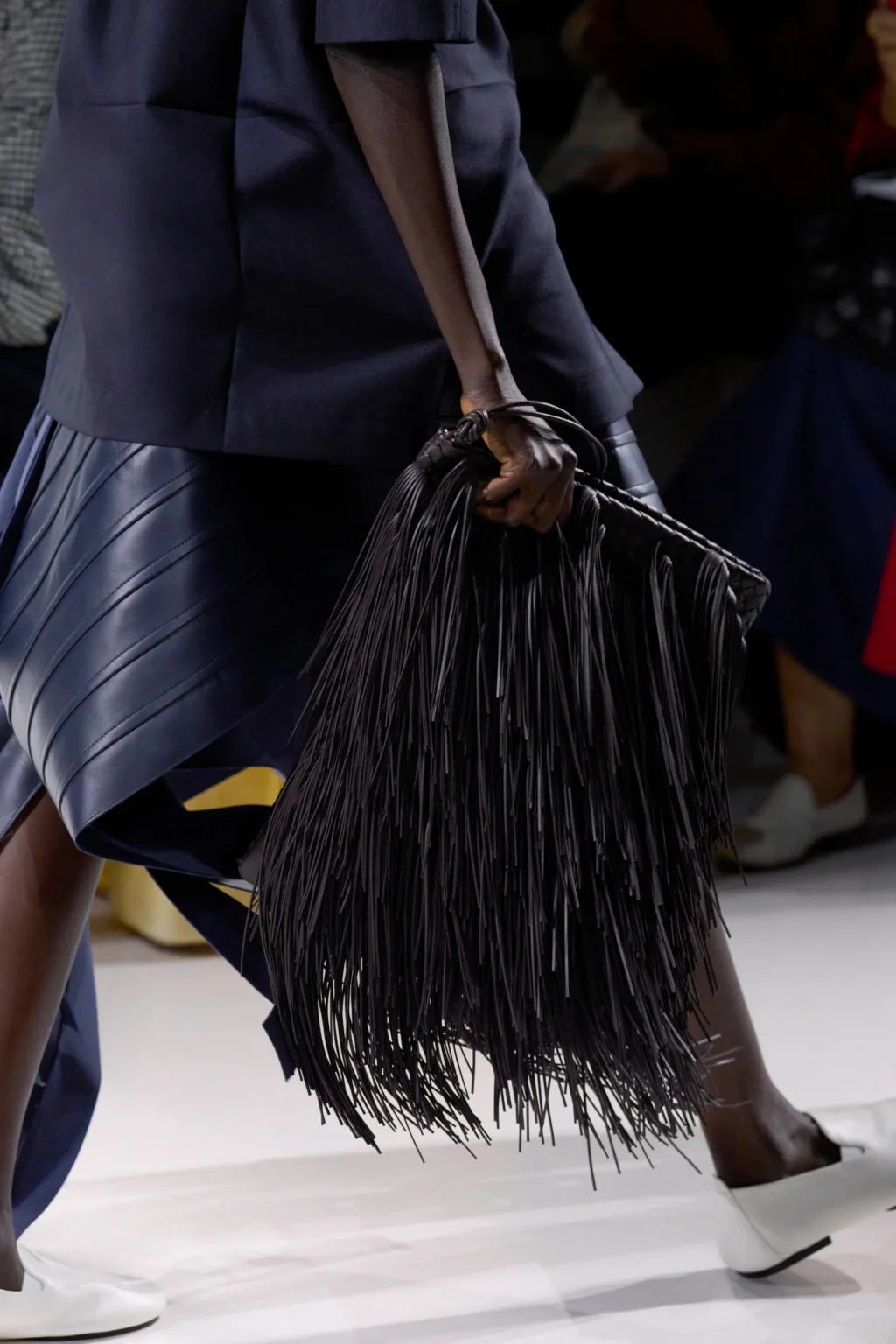
These fringe Intrecciato bags are the SS26 statement pieces: a flat, oversized square silhouette (portfolio-like) finished with long leather fringe that swings with every step. The base stays clean and structured, so the drama comes purely from movement—especially in ivory, where the fringe reads graphic against dark looks, and in acid yellow, where it becomes the loudest color accent of the lineup.
What makes them work is the clarity of the build: simple handle, simple body, maximum texture. They’re carried low like a tote or tucked closer like a clutch, and the fringe adds impact without turning the bag bulky—Bottega’s idea of statement, kept controlled.
The Cubo bag
The Cubo bag is a padded, cube-like Intrecciato clutch designed to be carried under the arm: compact, structured, and deliberately “pillow” in feel. Its signature detail is the wraparound leather band/zip line that defines the bag’s shape and gives it a clear front, while the rounded corners keep it soft-looking rather than boxy. On the runway it appears in pink, green, and yellow, showing how the same silhouette can read playful, sporty, or statement depending on color.
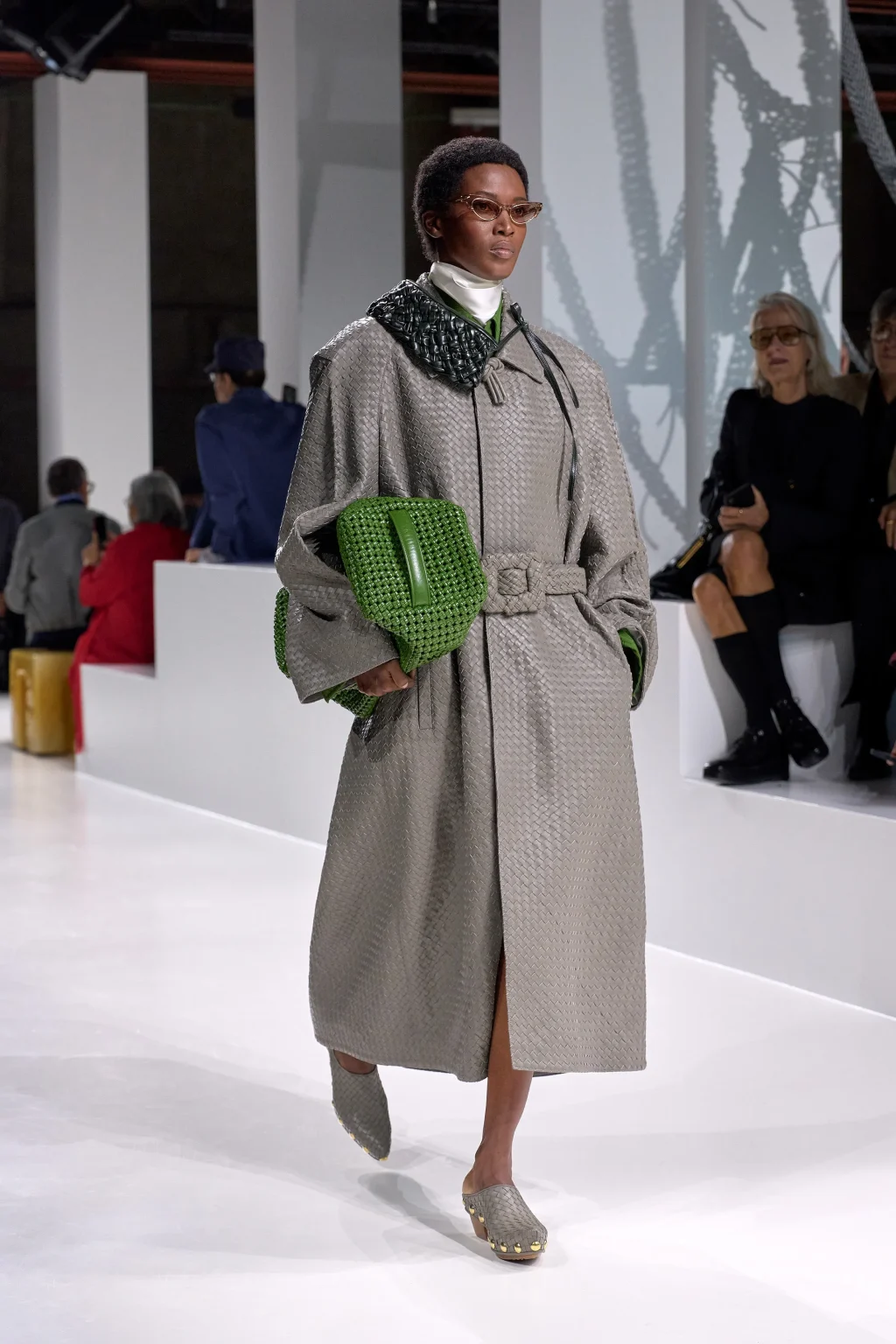
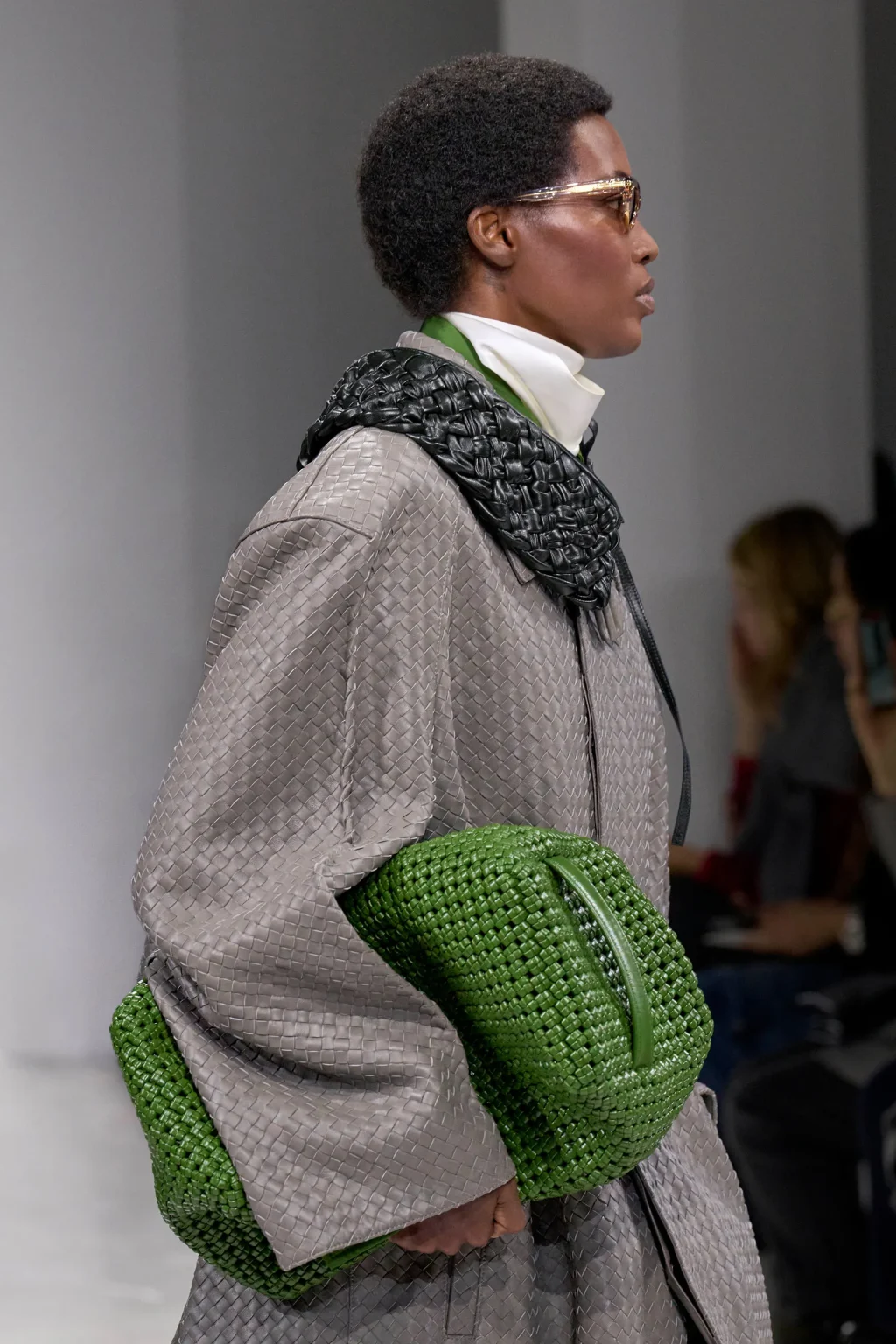
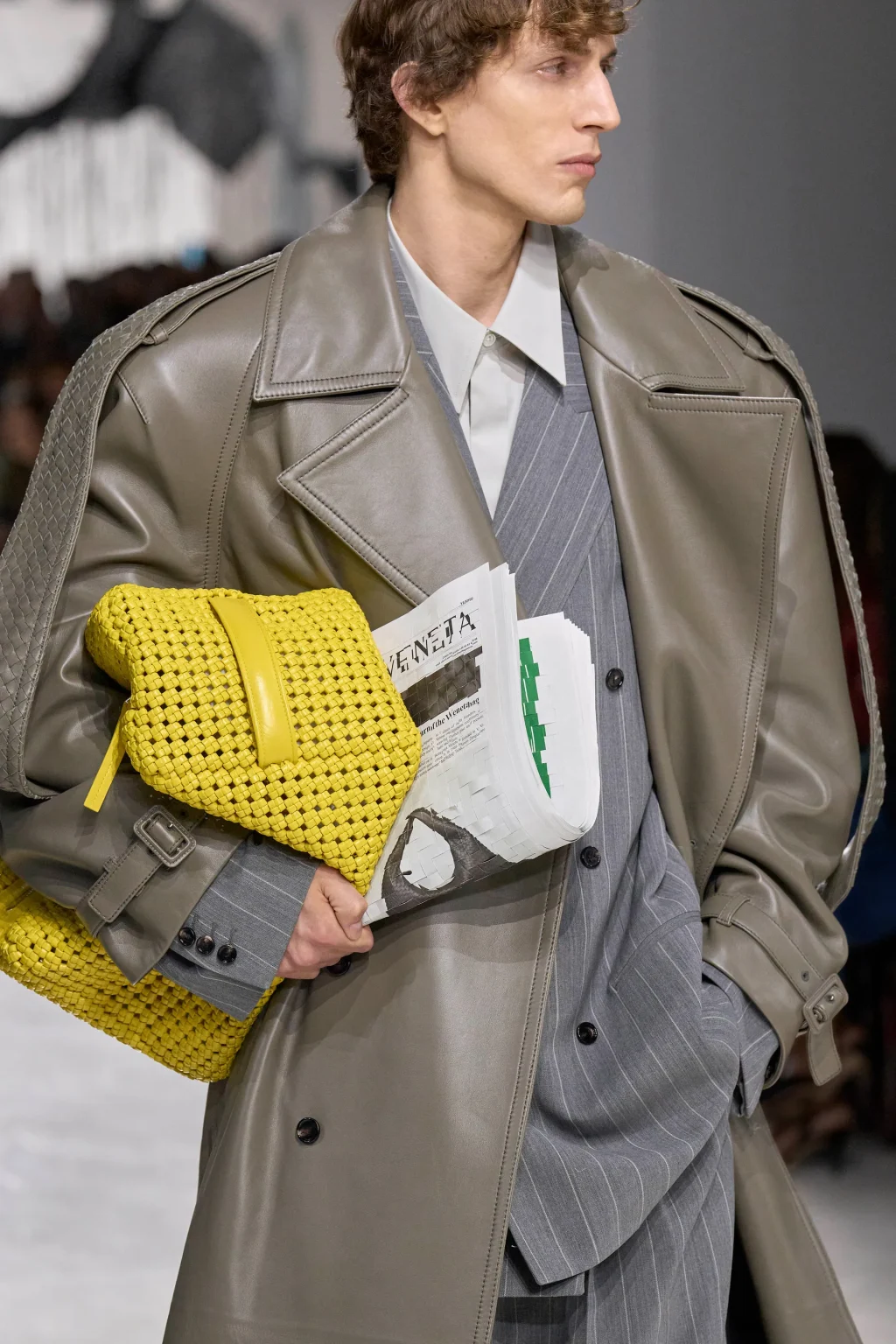
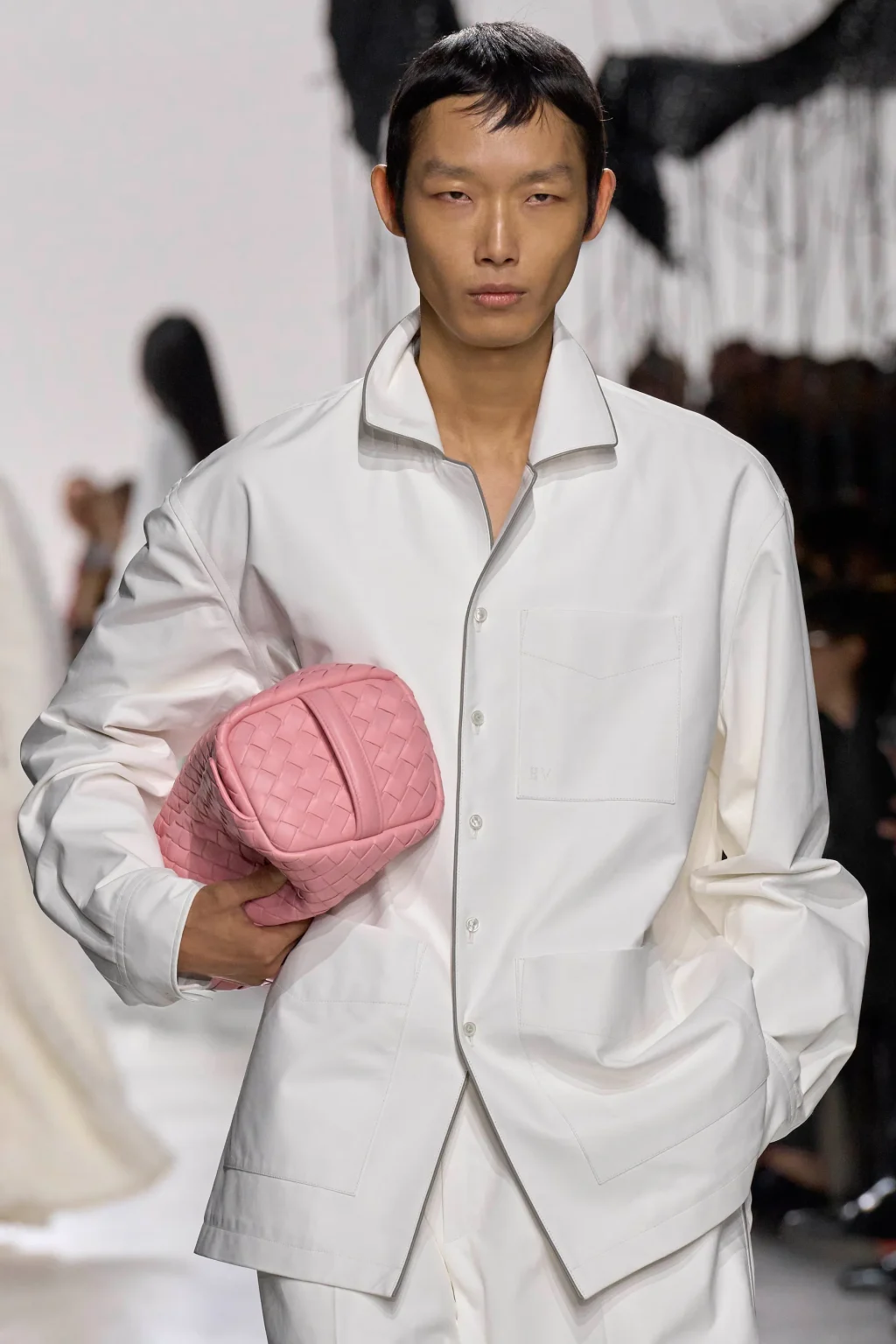
If you want one bag that will still look right in two years, start with Barbara: it’s the season’s clearest new tote proposition, with a silhouette that reads modern without relying on gimmickry. Veneta is the collector move—heritage rewritten through proportion—while Giorno is the stealth day bag: soft, foldable, and easy to wear in motion.
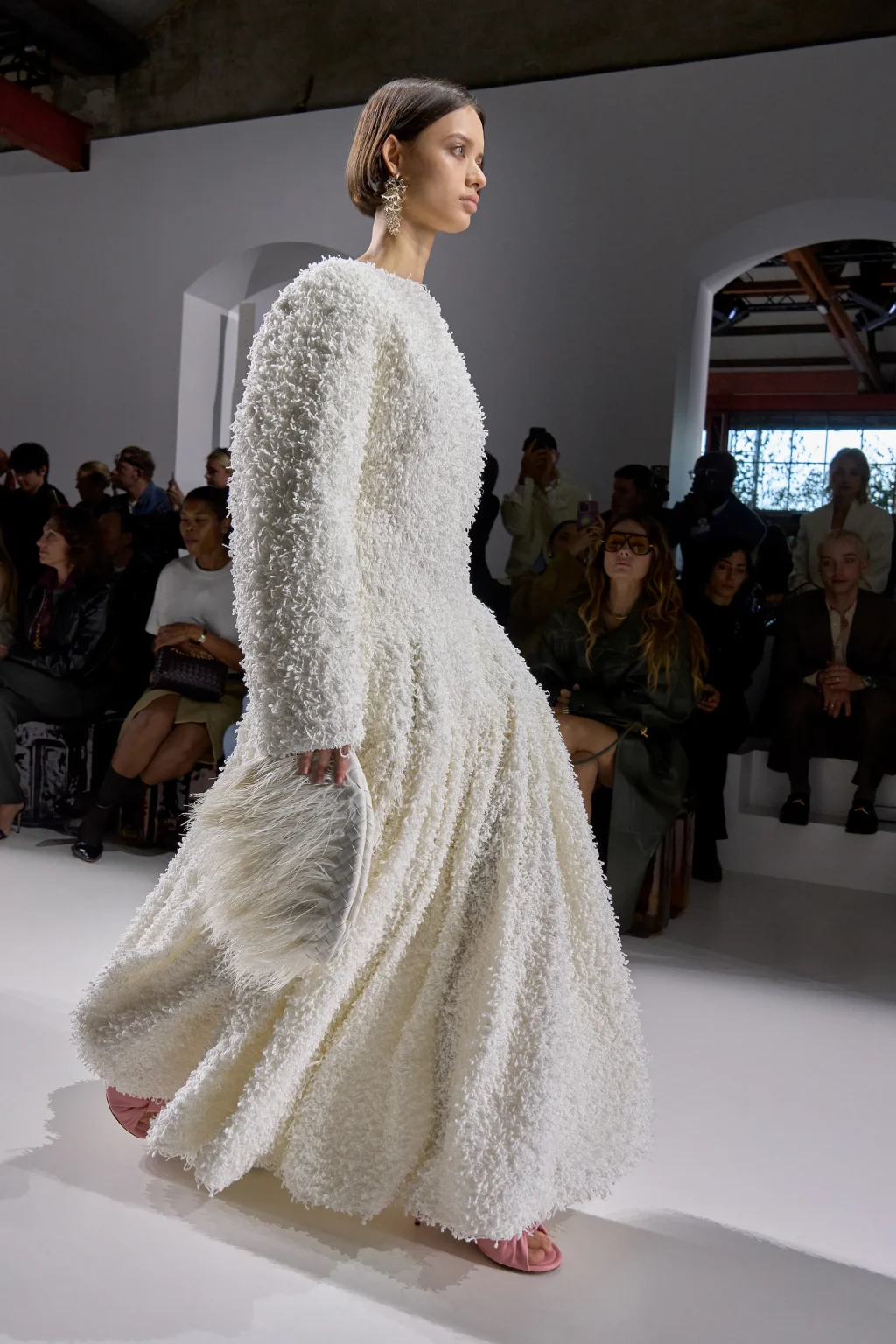
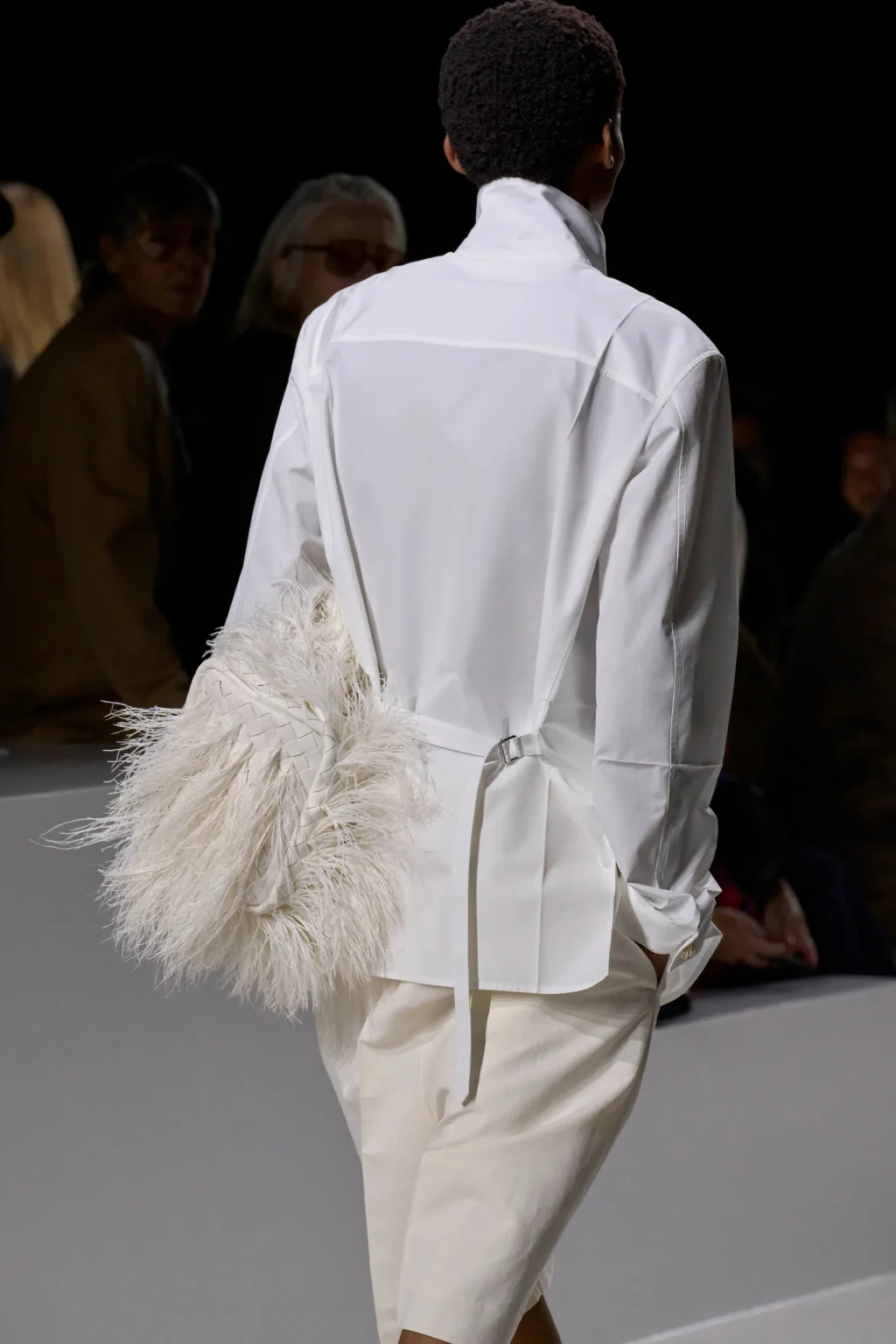
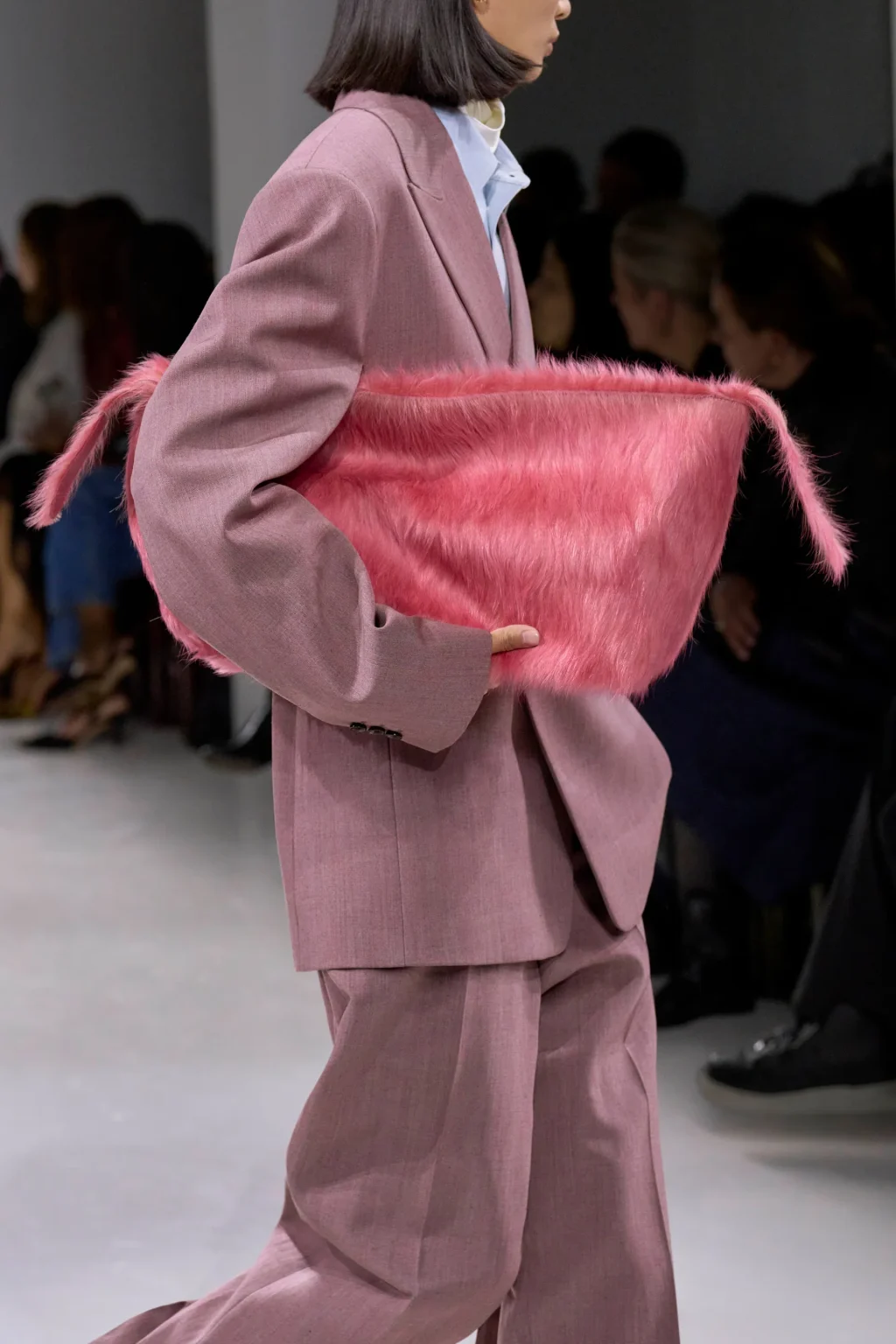
If you’re buying for impact, it’s the fringe pieces and the feather-trim pouches. They’re runway punctuation: designed to animate a look instantly. The trade-off is storage and wearability—these are the bags you choose when you want the room to notice texture first.