Authentication data from 2025 makes one thing very clear: the secondhand luxury market has never been more active — and the counterfeit economy has kept pace with every step of its growth. Millions of pieces passed through professional authentication this year. Some were genuine. Some were not. And the patterns that emerged tell a far more nuanced story than a simple list of brands to avoid.
This is not a scare piece. It’s a breakdown of what the data actually says, brand by brand, so that anyone buying a pre-owned luxury bag in 2025 — or 2026 — can make decisions grounded in real numbers rather than assumptions.
The Data Behind the Fakes
Every year, Entrupy — one of the largest AI-powered authentication platforms in the world — publishes its State of the Fake Report, drawing on millions of submissions processed through their verification technology. The 2026 edition, which reflects 2025 market activity, covers luxury handbags, small leather goods, and accessories across the major houses.
The dataset is significant. Across luxury goods alone, Entrupy processed items with a combined authenticated value exceeding $3 billion. Of all submissions, 91.9% came back authentic. The remaining 8.1% were flagged as unidentified — the platform’s term for items that could not be confirmed as genuine.
That 8.1% represents hundreds of millions of dollars in counterfeit exposure. And not all brands share that risk equally.
Volume vs. Risk — Two Very Different Problems
Before getting into brand specifics, one distinction matters more than any other in this dataset: volume and risk are not the same thing.
Volume tells you how many items from a given brand were submitted for authentication. High volume means high demand — which in turn means high counterfeit production. Louis Vuitton dominates here, as it has for years.
Risk tells you what percentage of submissions for a given brand came back unidentified. This is the number that matters to a buyer. A brand can have relatively low submission volume and still carry an extremely high risk of fakes — because counterfeiters have found it profitable and technically feasible to replicate.
The brands that should concern buyers most are often not the ones making headlines.
Louis Vuitton: The Biggest Target, by a Wide Margin
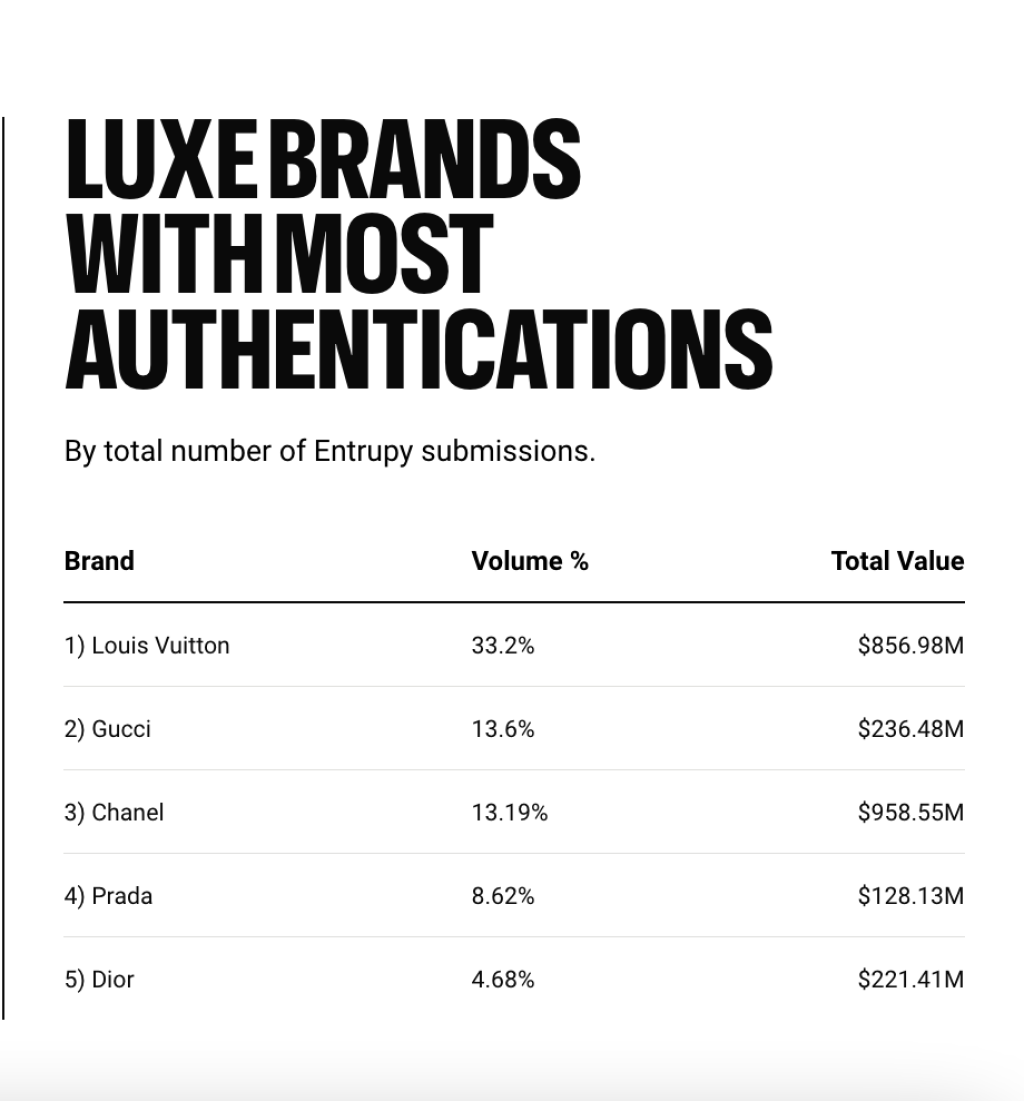
Louis Vuitton accounted for 33.14% of all luxury submissions processed through Entrupy in 2025 — more than twice the volume of Gucci, the second most-authenticated brand. The LV Monogram canvas alone generated over $37 million in detected counterfeits, the highest of any single material tracked.
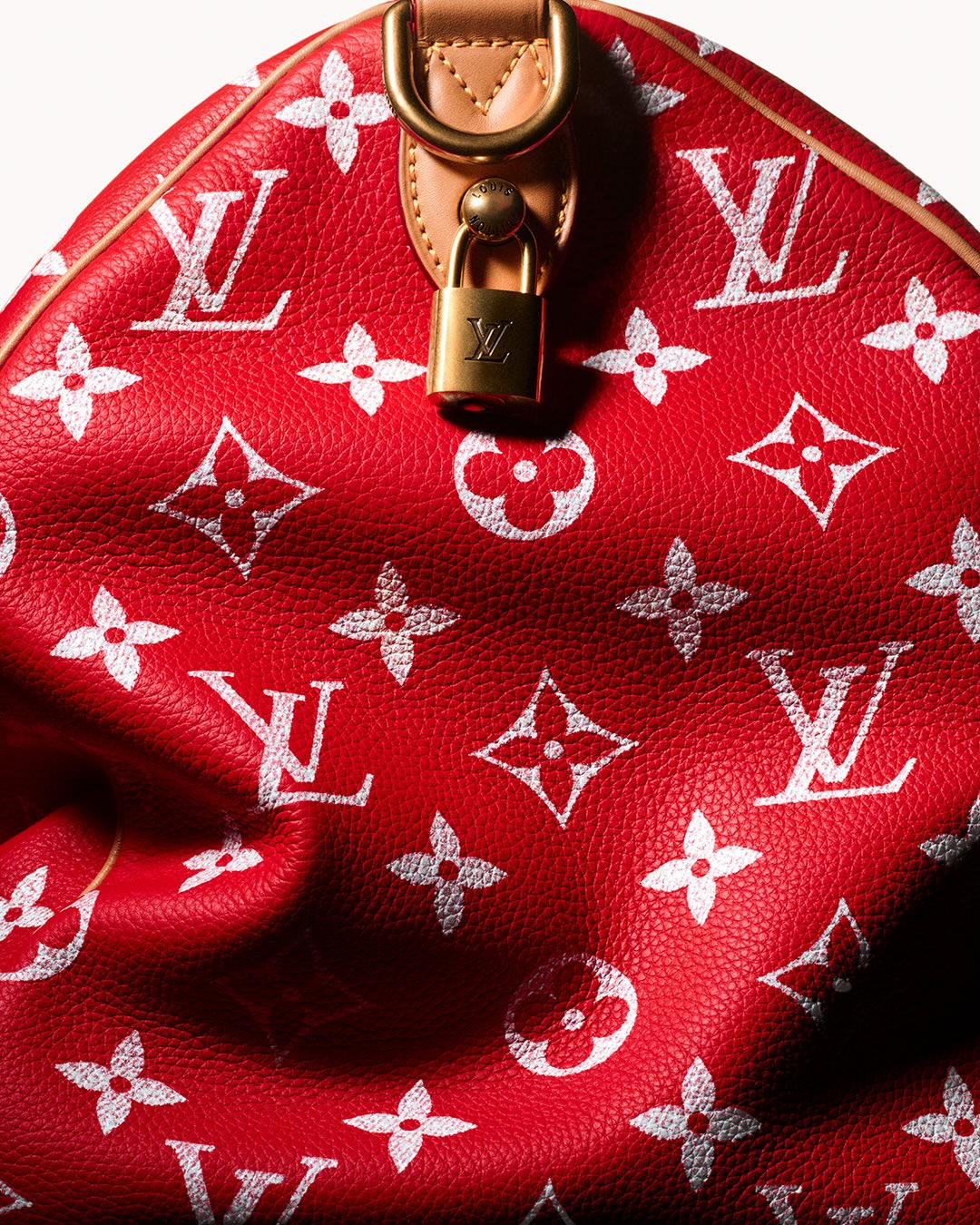
The brand’s dominance in the fake economy is not surprising. The monogram has been one of the most recognised patterns in fashion for over a century. Its cultural presence stretches from archival Audrey Hepburn moments to current drops and collaborations — and that visibility is precisely what makes it a counterfeiter’s preferred canvas. High demand, instant recognition, and a deeply established street-level market for accessible-looking replicas.
The unidentified rate for Louis Vuitton sits at 8.3%. That is moderate relative to the riskiest brands in the dataset, but the sheer scale of LV’s market means the absolute number of circulating fakes is larger than for any other house. The Neverfull, the Speedy, the Pochette Métis — all high-demand, all heavily targeted.
Chanel: The Most Valuable. And Surprisingly, Not the Riskiest.
Chanel produced some of the most striking numbers in the entire report. At $958 million in total authenticated value, it represented the highest value concentration of any brand in the dataset — ahead of Louis Vuitton ($856M) and Hermès ($723M). The average Chanel piece being authenticated is simply worth more.
And yet Chanel’s unidentified rate of 5.7% sits below the overall 8.1% average — lower than Louis Vuitton, lower than Goyard, lower than Prada or Dior.
The explanation is structural. Chanel’s strict retail controls, limited distribution, and consistently elevated price points create a buyer profile that tends toward formal authentication channels. The people buying and reselling Chanel are more likely to invest in professional verification. That infrastructure creates better authentication signals — and, paradoxically, a cleaner dataset than brands with broader market access.
This does not mean Chanel is safe from counterfeiting. Globally, it remains one of the most imitated brands. But within the professional authentication ecosystem, it performs better than its reputation might suggest.
What this means for buyers: The Chanel Classic Flap, 2.55, and Boy Bag remain among the highest-risk purchases by absolute value — a single fake can represent a five-figure loss. But the risk is concentrated in specific silhouettes and eras. Vintage pieces from the hologram era (pre-2021) carry particular complexity around serial number verification. Always authenticate through a platform or specialist with documented Chanel experience.
Goyard: Low Volume, Extreme Risk
Goyard is the most counterfeited brand in the dataset by relative rate. At 18.92% unidentified — nearly one in five submissions — it sits far ahead of every other house tracked. And it achieves this despite representing less than 1% of total submission volume.
The dynamics that create this situation are worth understanding. Goyard is deliberately inaccessible: no e-commerce, no department store wholesale, no resale authentication partnerships. The brand maintains a cultivated mystique that makes its pieces aspirational to a segment of the market that cannot access them through official channels. That exclusivity creates intense demand in the grey and secondhand market — and counterfeiters have followed.
The Goyardine canvas pattern is technically complex but visually consistent — the same chevron repeat across all pieces. High-grade replicas can be convincing to anyone who has not handled verified authentic pieces regularly. And because Goyard itself remains deliberately distant from the authentication ecosystem, there are fewer reference points to anchor a clear verdict.
What this means for buyers: Goyard is the single highest-risk luxury brand to buy pre-owned in the current market. The unidentified rate is not a statistical anomaly — it reflects a structural vulnerability that has only deepened as the brand’s cultural profile has grown. If you are buying a Saint Pierre tote, a Artois, or any Goyard piece on the secondary market, treat authentication as mandatory, not optional.
Prada: When a Trend Becomes a Liability
Prada holds the second-highest risk rate of any brand at 13.10% unidentified — and the reason is specific to material rather than brand-level exposure.
Nylon bags are easier to replicate than leather. The woven technical fabric that defines the Re-Edition, the Tessuto totes, and the Prada Triangle logo pieces requires no hand-stitching, no leather expertise, and no grain-matching. Industrial replication of nylon at scale is feasible for producers who would not attempt to fake a Bottega Veneta Jodie or a Hermès Kelly.
As Prada nylon silhouettes surged through the mid-2020s — driven by Y2K nostalgia, campaign momentum, and their position as a gateway entry into the Prada universe — counterfeiters followed. The result is a fake rate that disproportionately punishes buyers seeking what appears to be one of the more accessible pieces in the luxury market.
This pattern appears in APAC data specifically: Prada’s unidentified rate in the Asia-Pacific region sits at approximately 14.6%, above the regional average of 7.5% — one of the clearest examples in the report of a trend driving a counterfeit spike.
What this means for buyers: The classic leather pieces — Galleria, Cahier, older Saffiano totes — carry different risk profiles than the nylon range. If you are buying Prada nylon pre-owned, treat it with the same scrutiny you would apply to Goyard or Louis Vuitton canvas. Logo embossing, interior lining, zipper hardware, and fabric density are all points of comparison.
The Brands Buyers Overlook — But Shouldn’t
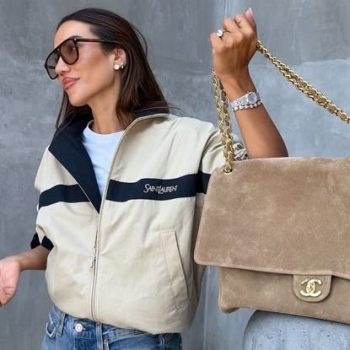
Saint Laurent sits third on the riskiest brands list at 10.50% unidentified — a rate that often surprises buyers who associate high counterfeiting risk primarily with LV or Chanel. The YSL monogram, the Loulou, and the Envelope clutch are all heavily targeted across the secondary market.
Dior rounds out the top five at 8.97% unidentified — notable because it represents just 4.68% of total submission volume. That disproportionate fake rate relative to market share signals active counterfeiting focus, not just the by-product of broad demand.
Meanwhile, three brands showed sharp growth in authentication volume in 2025 — signalling rising demand that will likely attract increasing counterfeiter attention in 2026:
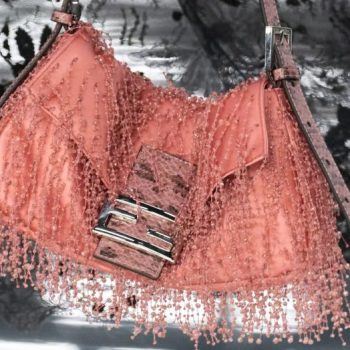
- Fendi (+49% year-over-year): driven by the Baguette’s sustained cultural resurgence and ongoing collaborations
- Loewe (+45%): the Puzzle Bag and Hammock have become genuine resale darlings, with strong value retention
- Bottega Veneta (+45%): the intrecciato weave and logoless positioning haven’t slowed demand — if anything, the quiet luxury shift accelerated it
These are brands where the authentication infrastructure is still developing relative to the pace of secondhand demand. Buyers entering the Loewe or Fendi pre-owned market now are navigating a market where fakes are increasing but scrutiny tools have not yet fully caught up.