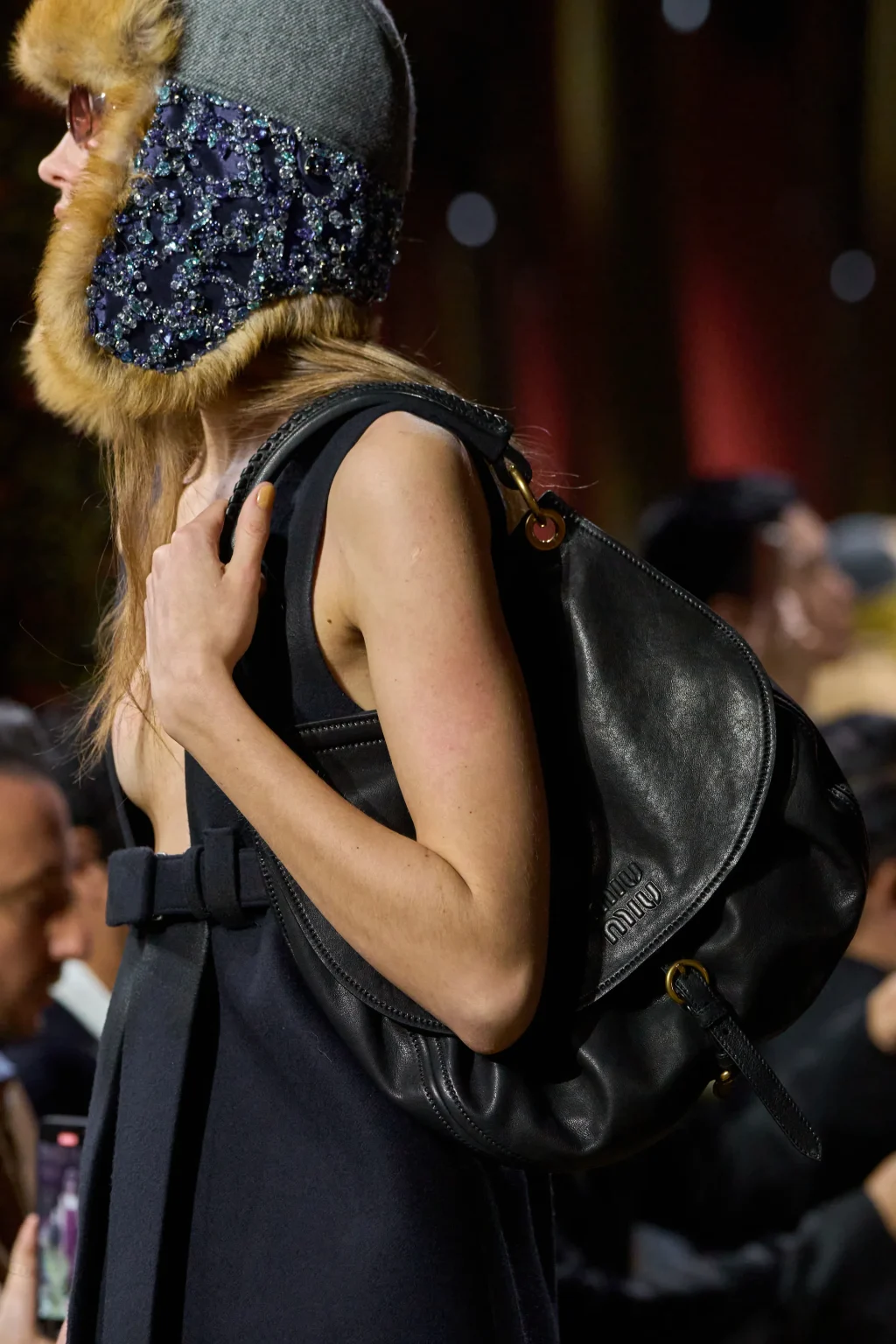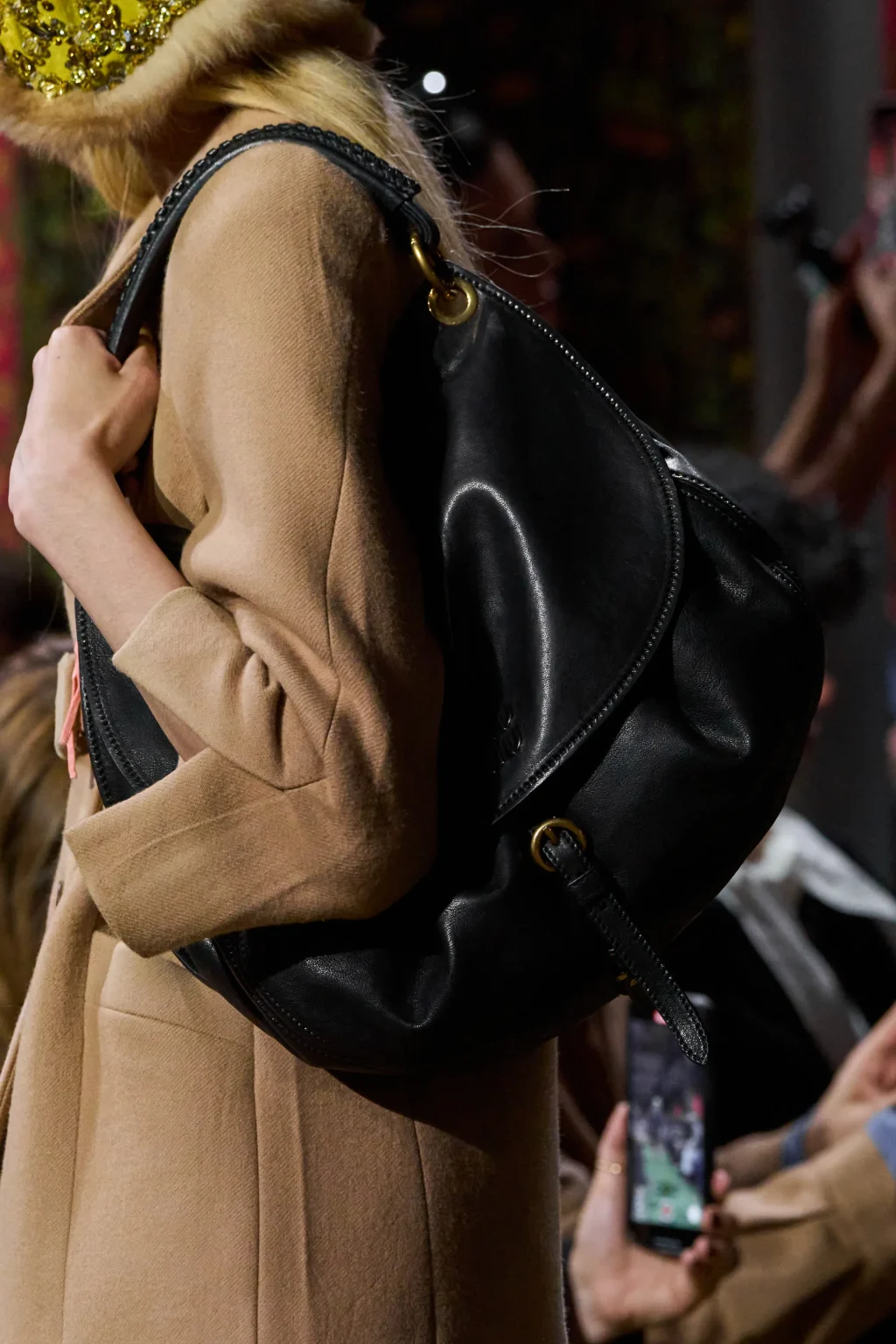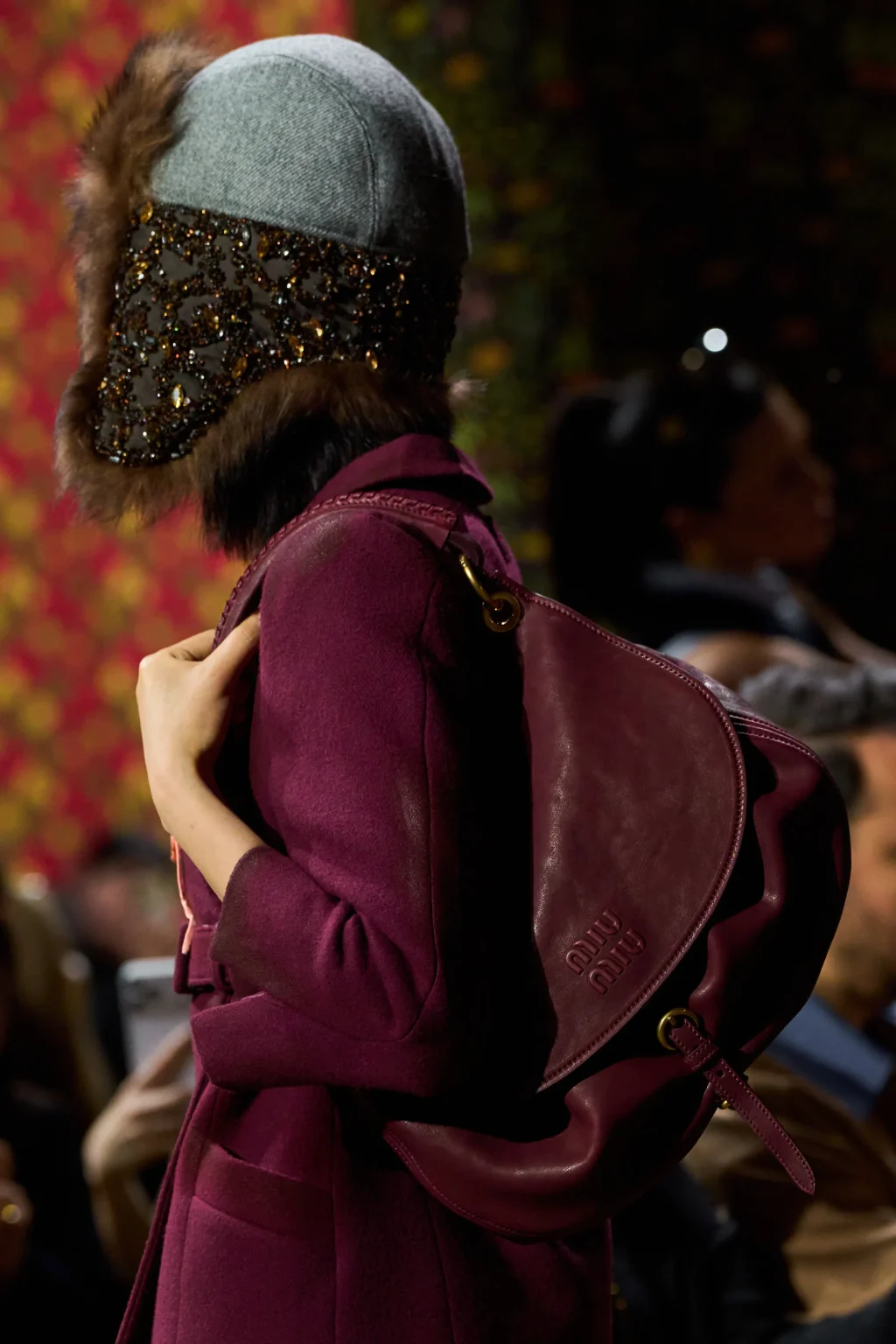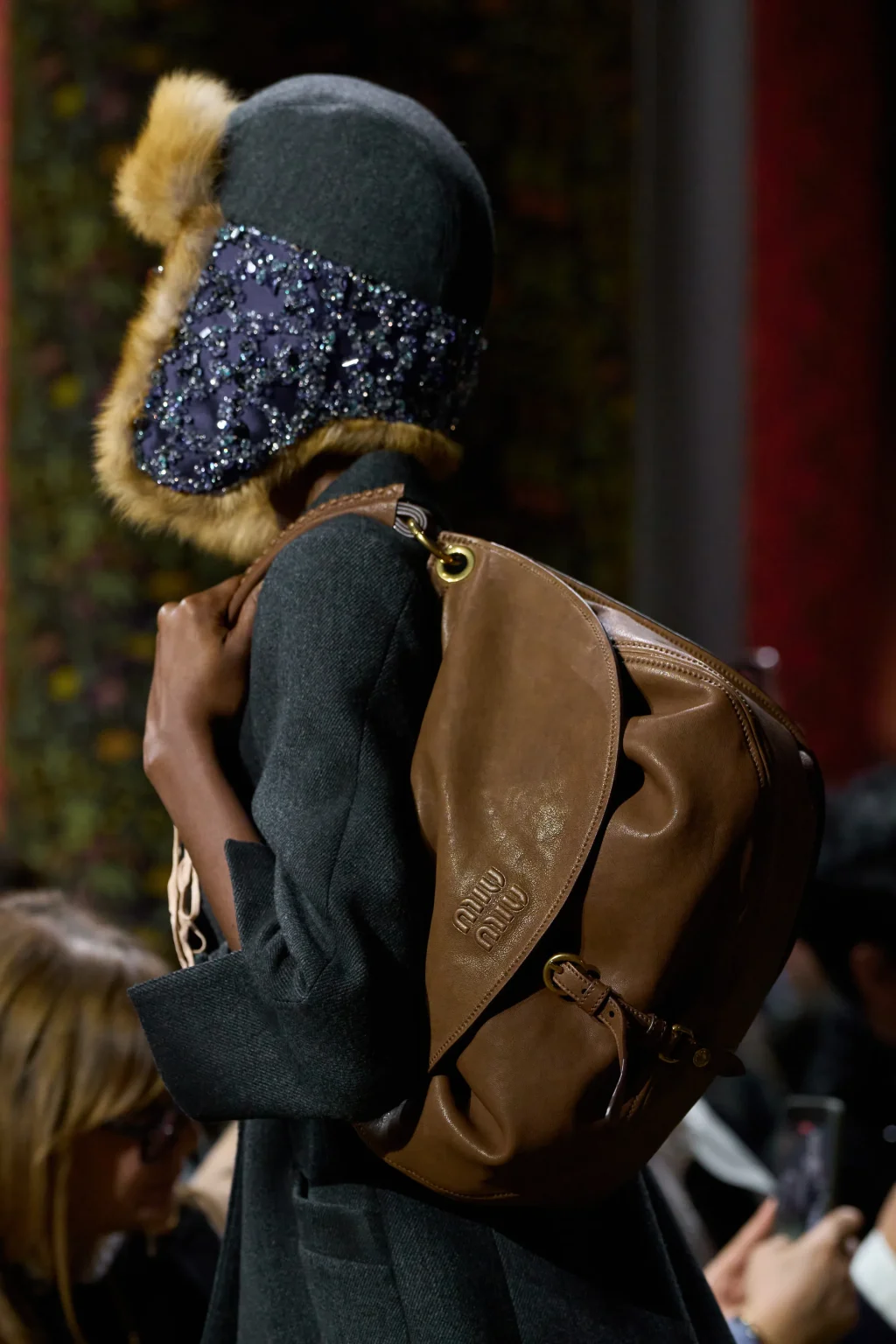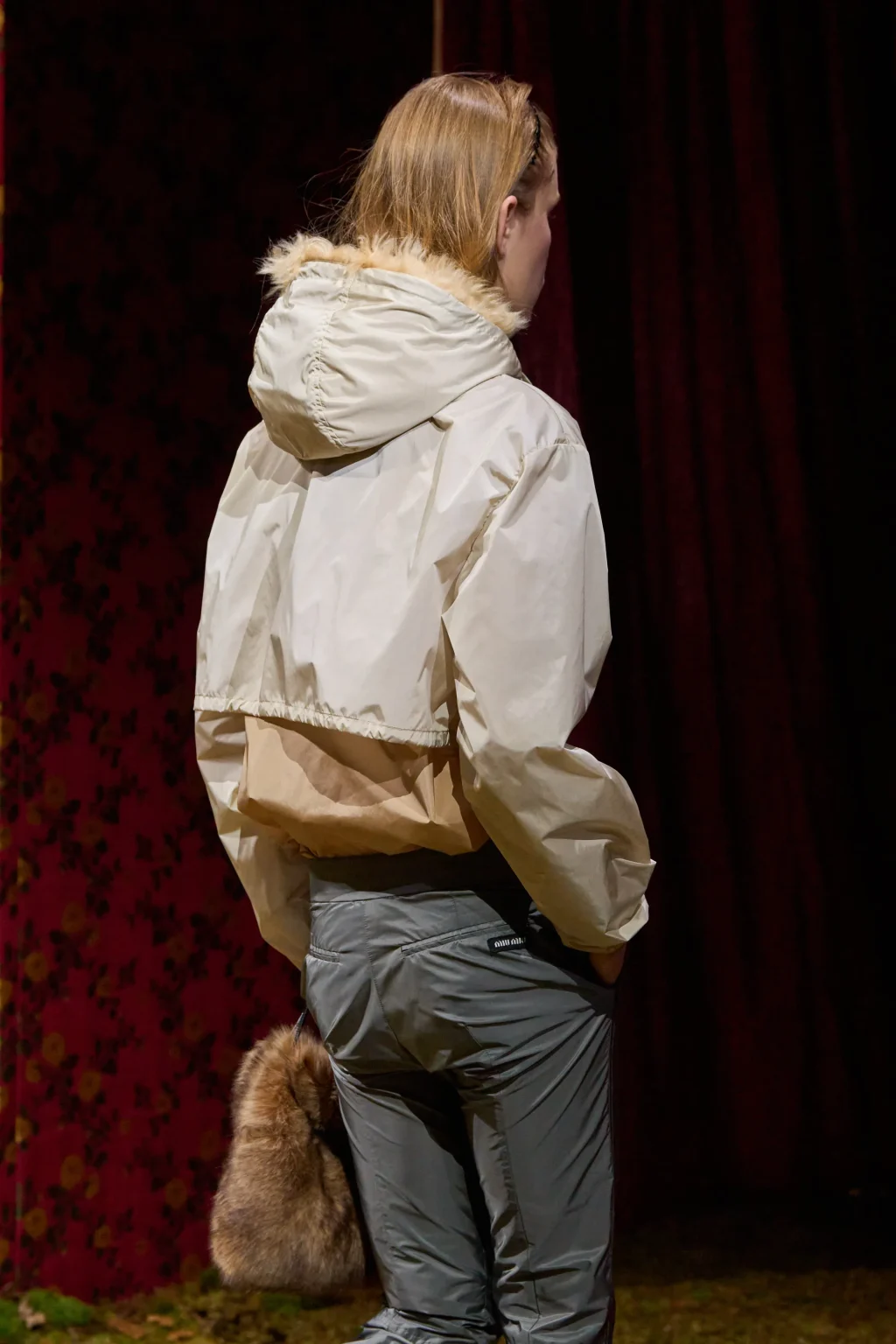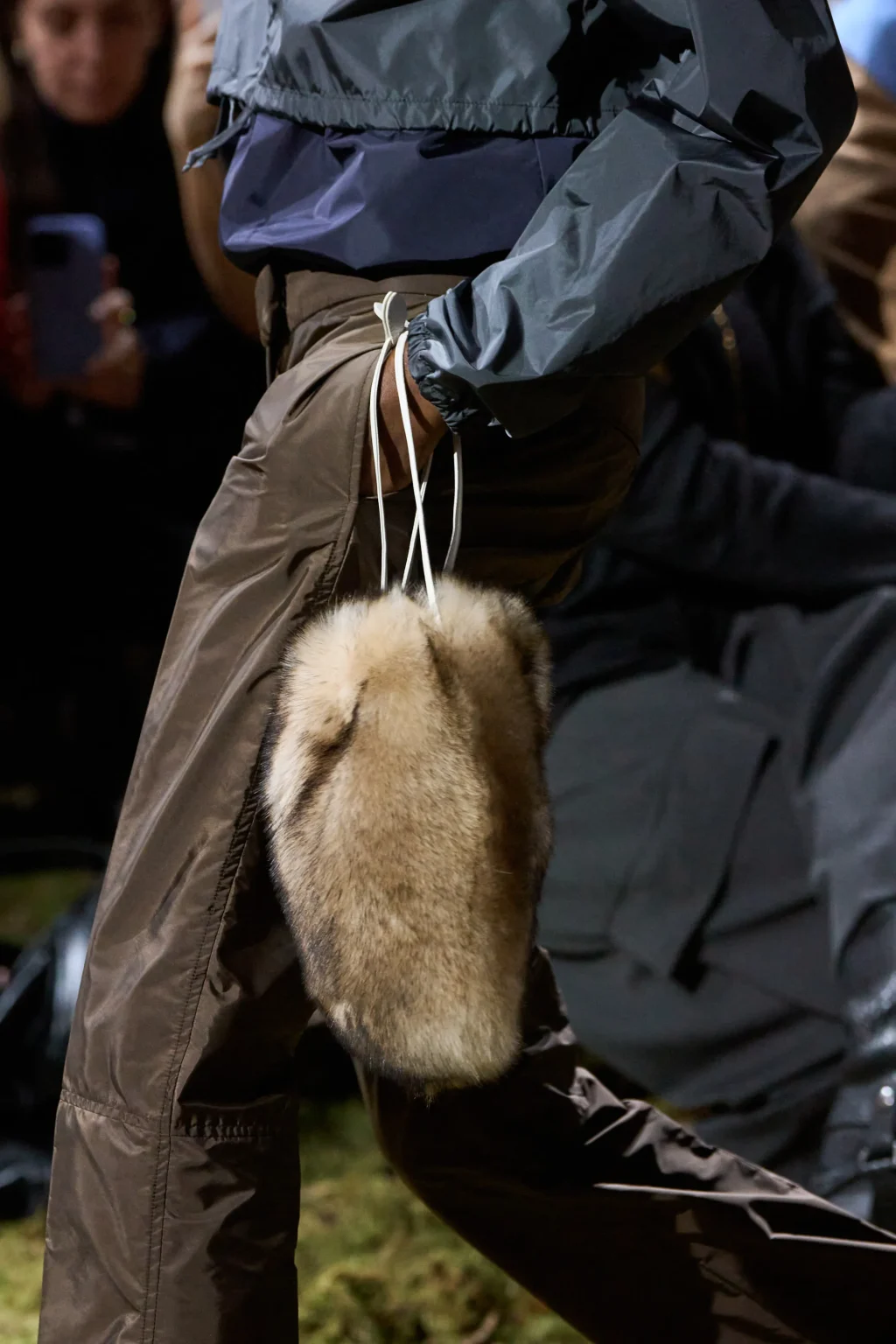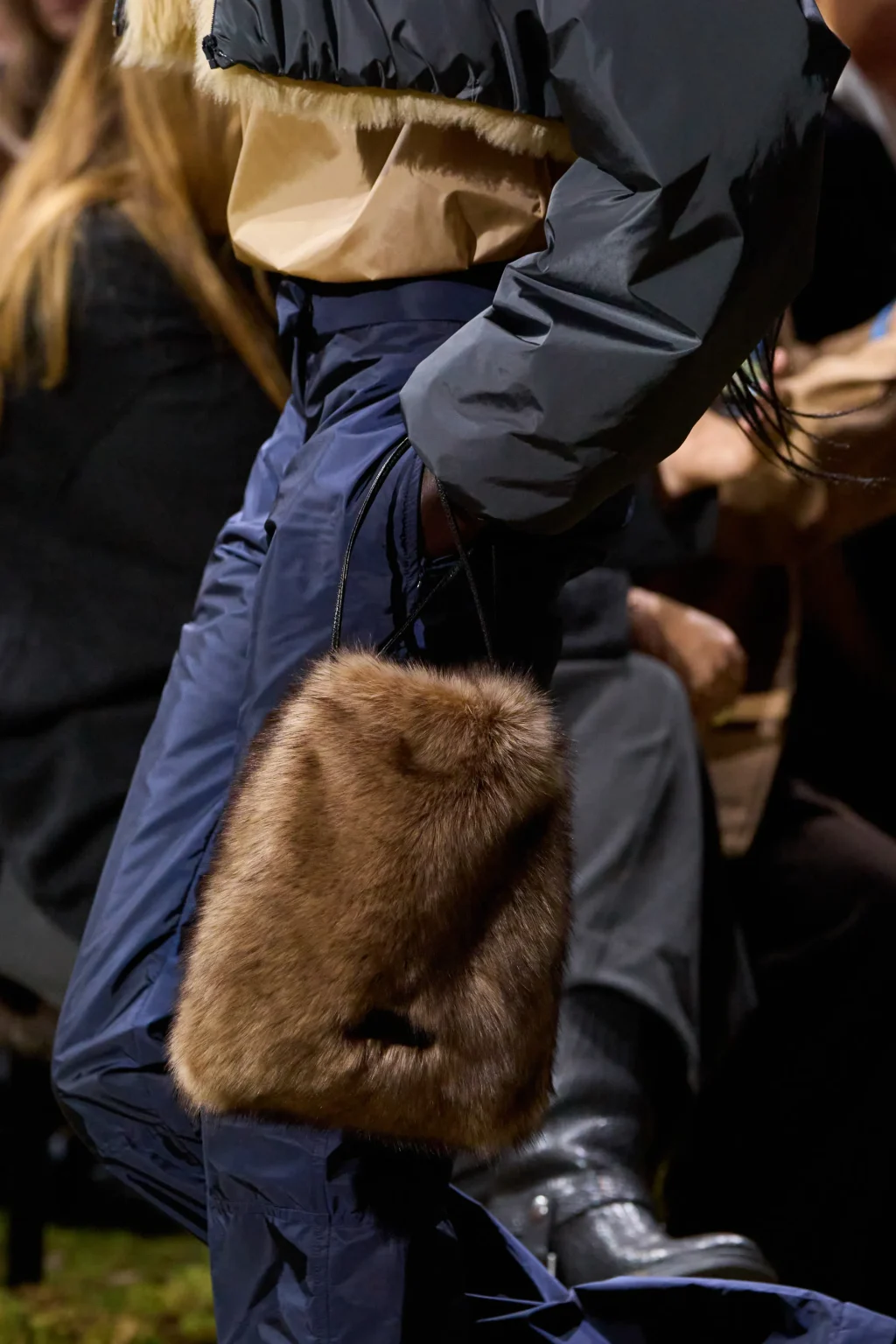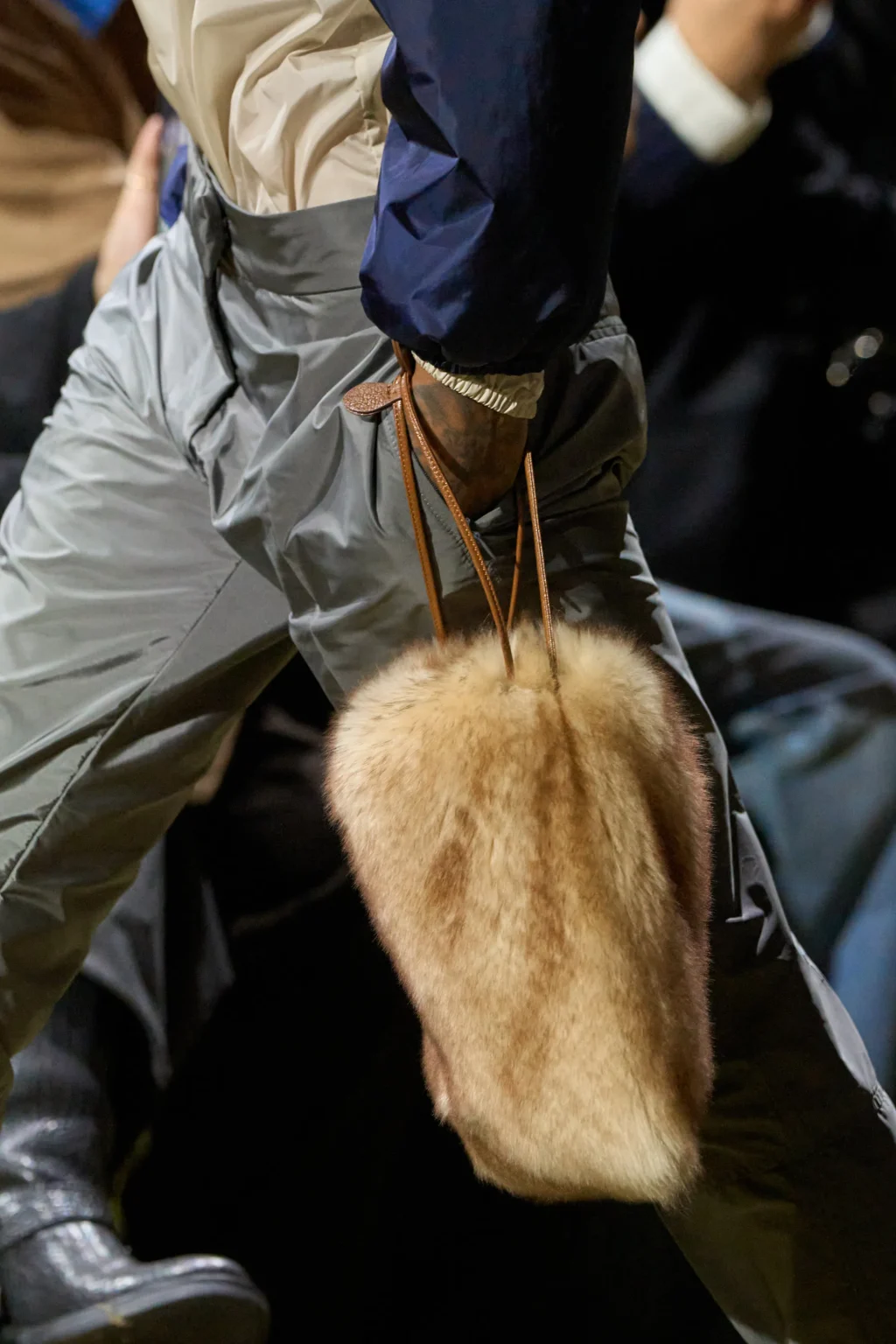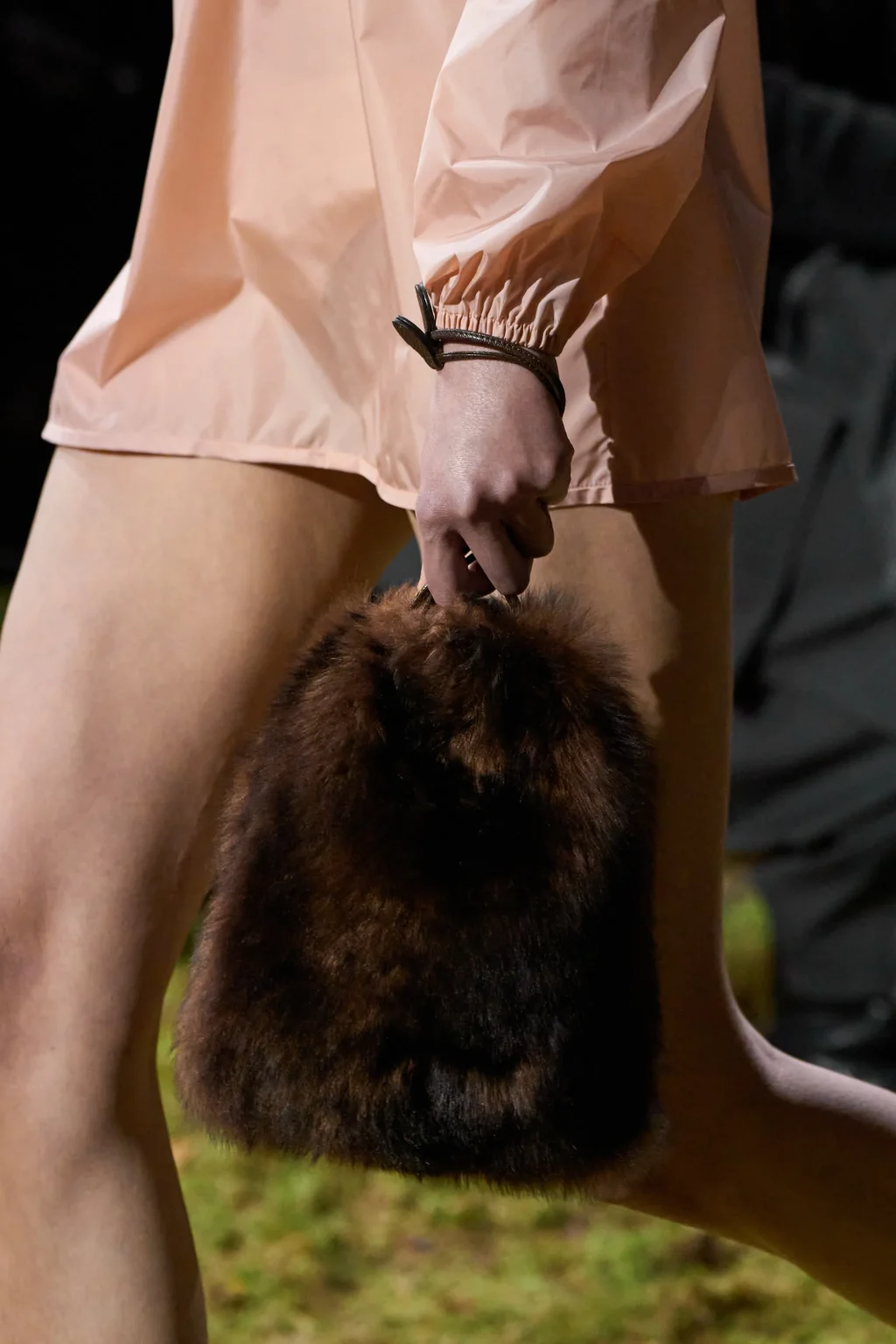
The Miu Miu Fall/Winter 2026 bags didn’t walk out onto a polished marble floor or a pristine white runway. They arrived on a dirt-packed track — a churned, twig-strewn surface inside the Auguste Perret-designed rotunda of the Palais d’Iéna in Paris, the floor custom-installed and deliberately unglamorous, carrying the faint, real scent of soil.
Miuccia Prada titled her collection “Mindful Intimacy,” and every single object on that runway — from the crinkled cashmere coats to the carried-in-the-crook-of-the-arm handbags — was in service of one quietly radical idea: that the most powerful thing you own is your own body, your own mind, and the few things you choose to keep closest to you.
Tender, loving, care. Garments embrace the body, prioritizing and valuing that inside. Pulled close to the skin, washed fabrications give a gentleness and feeling, affording a sensuality to cloth, and a sense of human experience. The idea of the antique is not about the passage of history, but about existing within times.
An ownership and agency of your own body, your own self and value – a warm sensuality, a warm sexuality. A focus on our bodies, our minds, ourselves, to which we must dedicate attention.
Inside the Palais d’Iéna: A Wild Forest Within a Palazzo
On March 10, 2026, on the final day of Paris Fashion Week, Miu Miu presented Fall/Winter 2026 inside the Palais d’Iéna, one of the season’s most architecturally charged venues. But the set did not rely on monumentality alone. According to the official show statement, it was conceived as “a space which alludes to vastness”: a wild forest within a palazzo, a deliberate collision of the untamed and the formal, of intimacy and immensity.
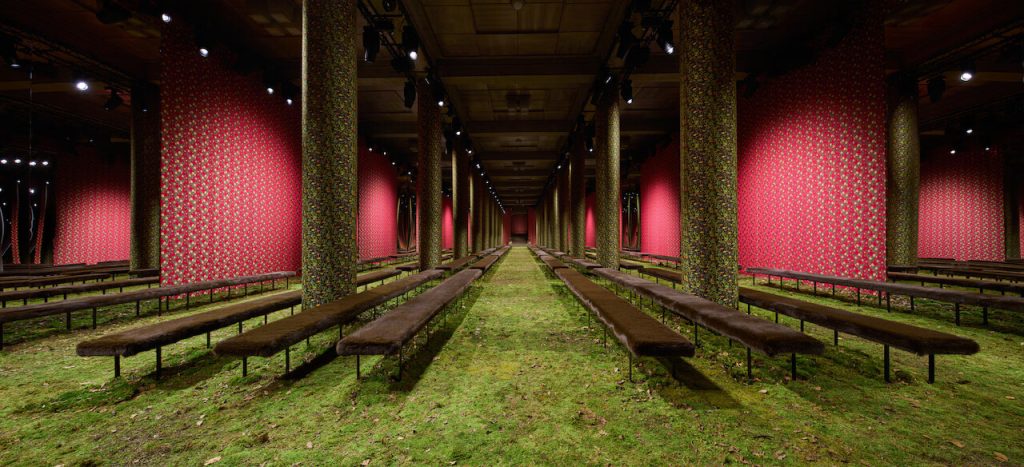
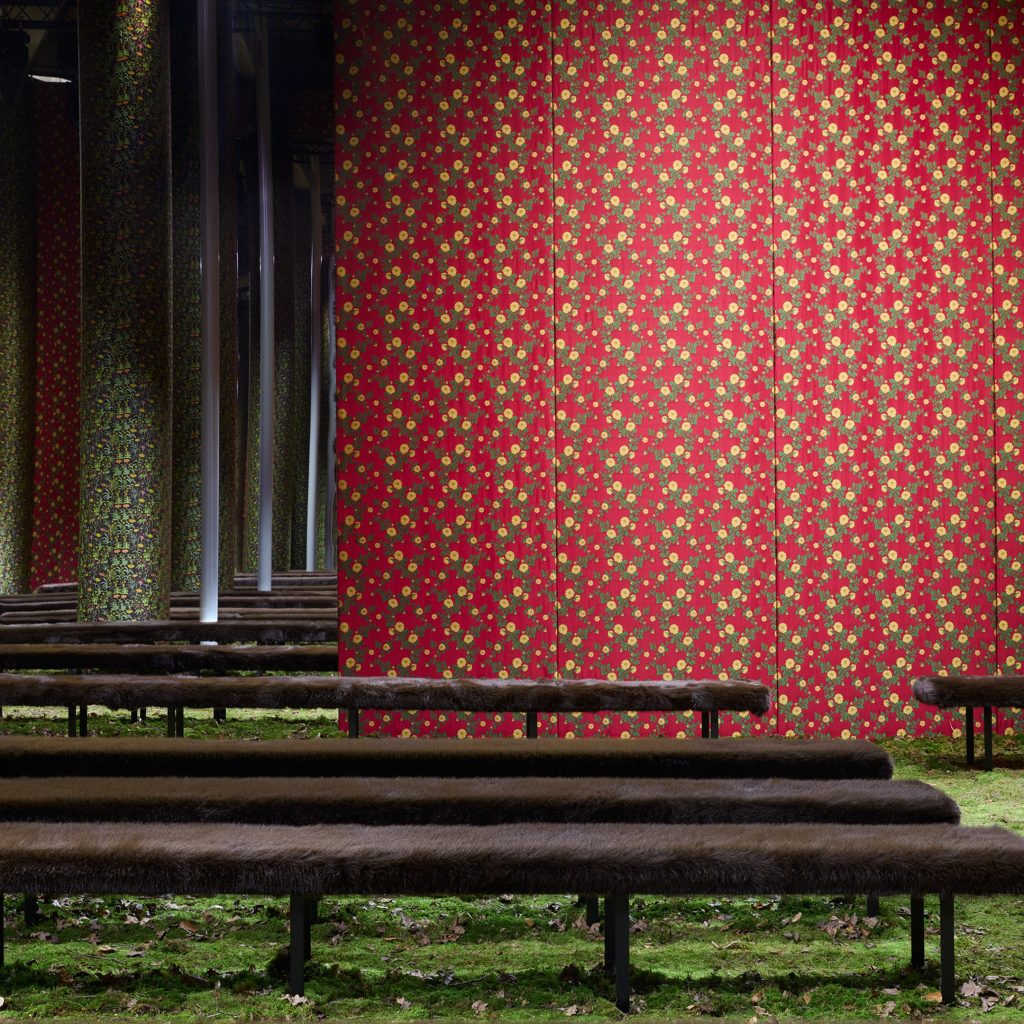
That tension shaped the way the collection was read. The scenography was not treated as a passive backdrop, but as what the house described as “a confrontation, an active context and frame for these people.” Earth, branches, and undergrowth disrupted the polished codes of interior refinement, turning the space into something emotionally charged rather than merely theatrical. Like the clothes, the environment emphasized individuality, the presence of the body, and the psychological force of moving through a world larger than oneself.
The Vivant Bag: Born in Spring, Ready for Fall
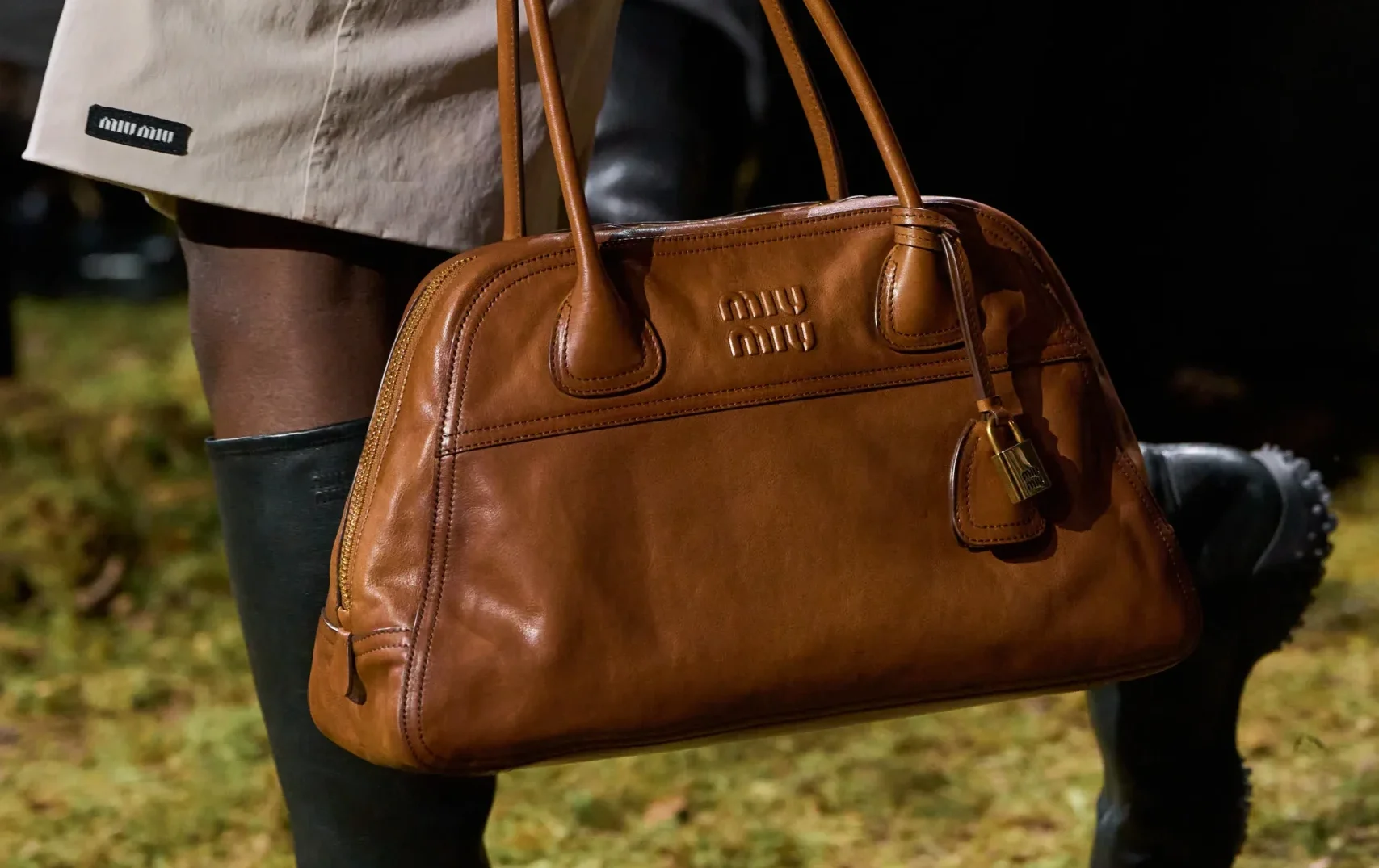
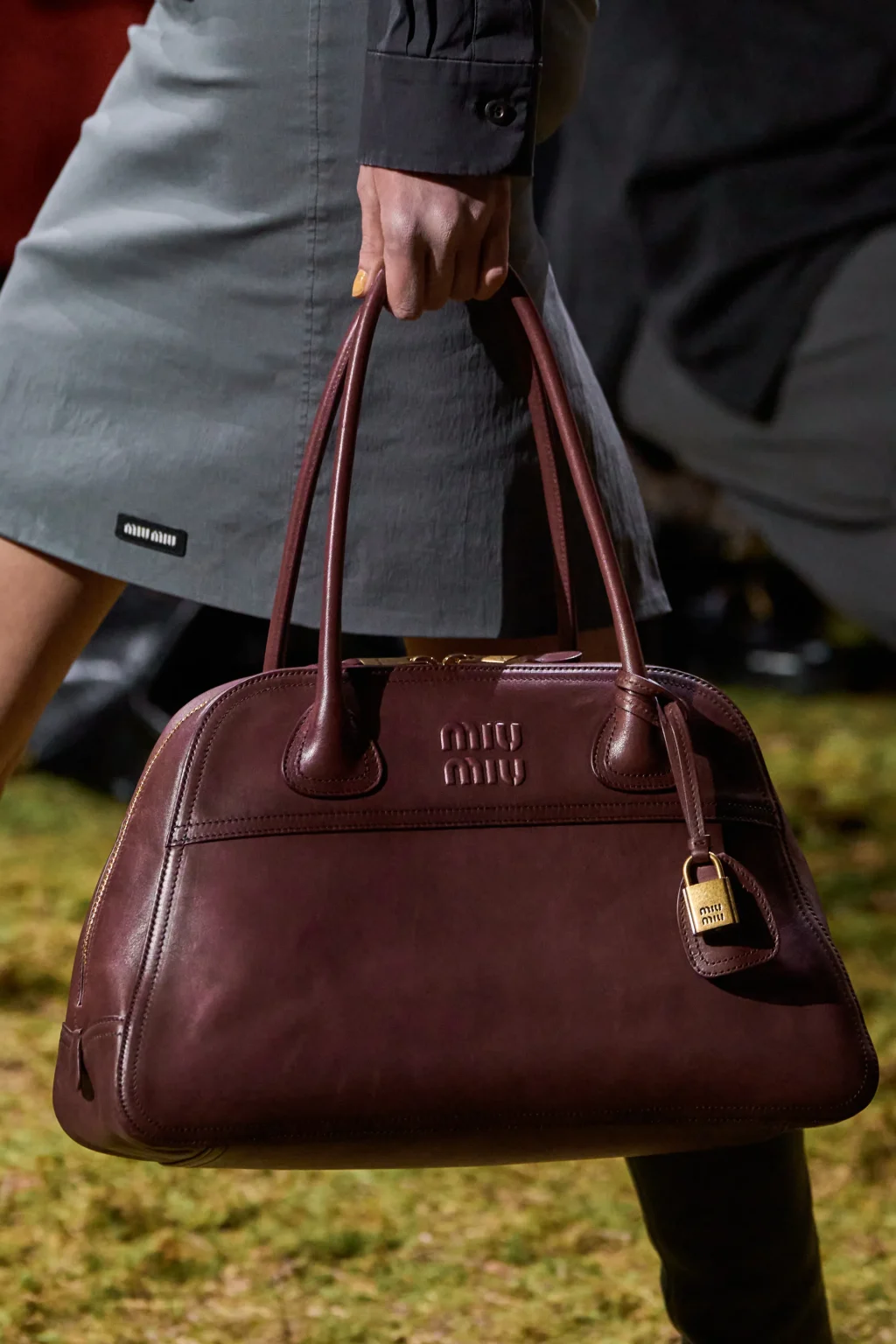
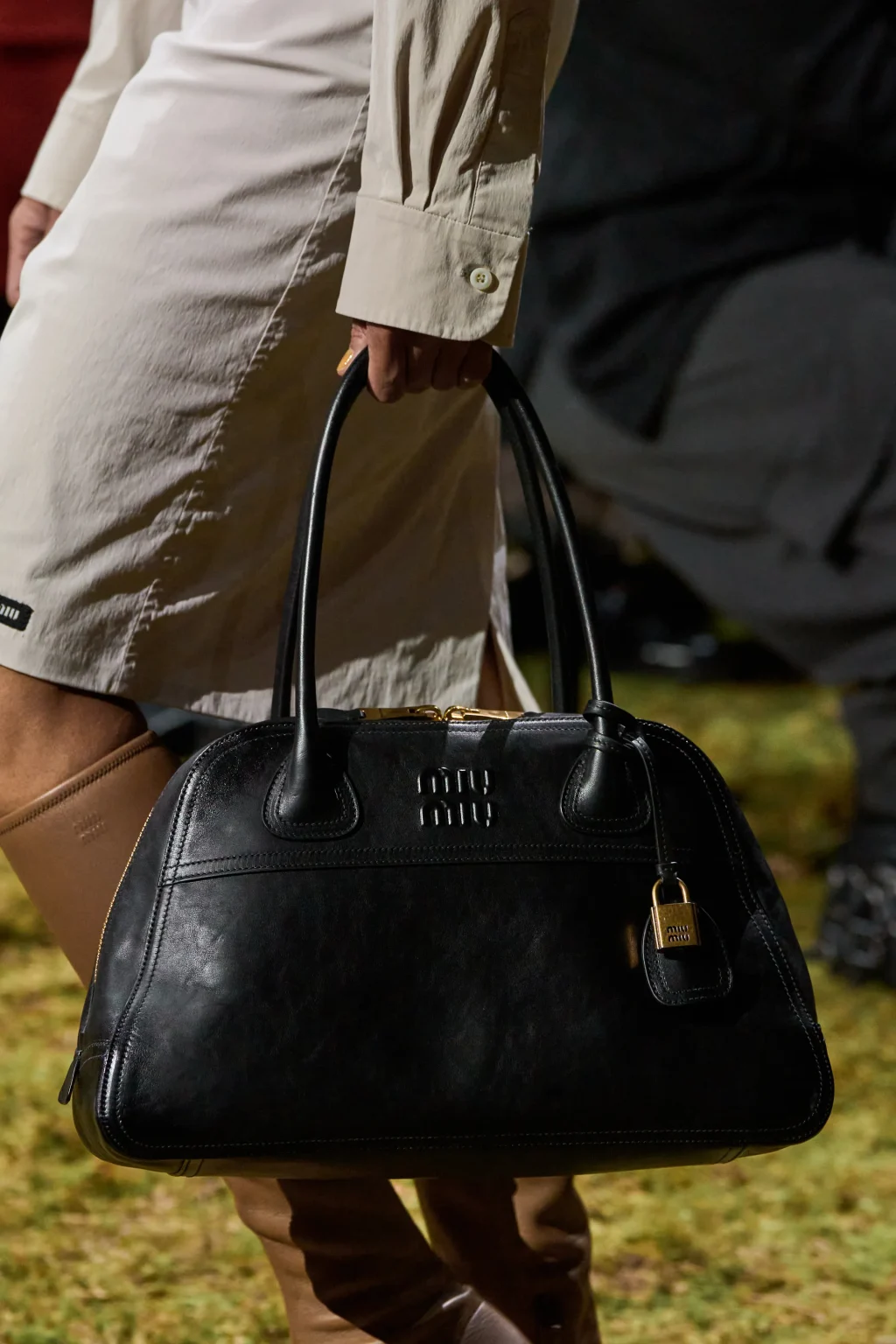
The bag that carries the clearest line between Miu Miu’s Spring-Summer 2026 collection and this Fall-Winter 2026-2027 season is the Vivant.
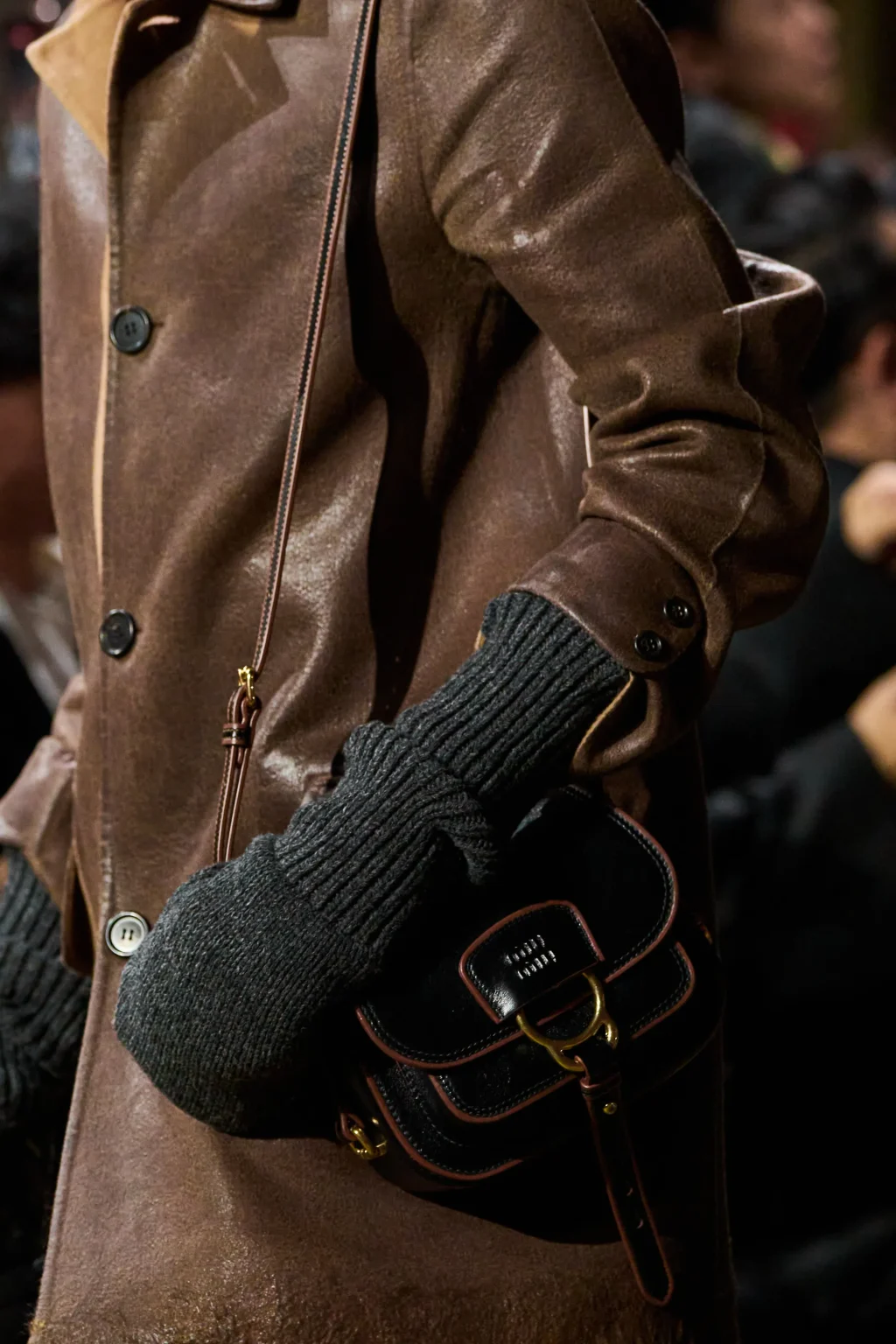
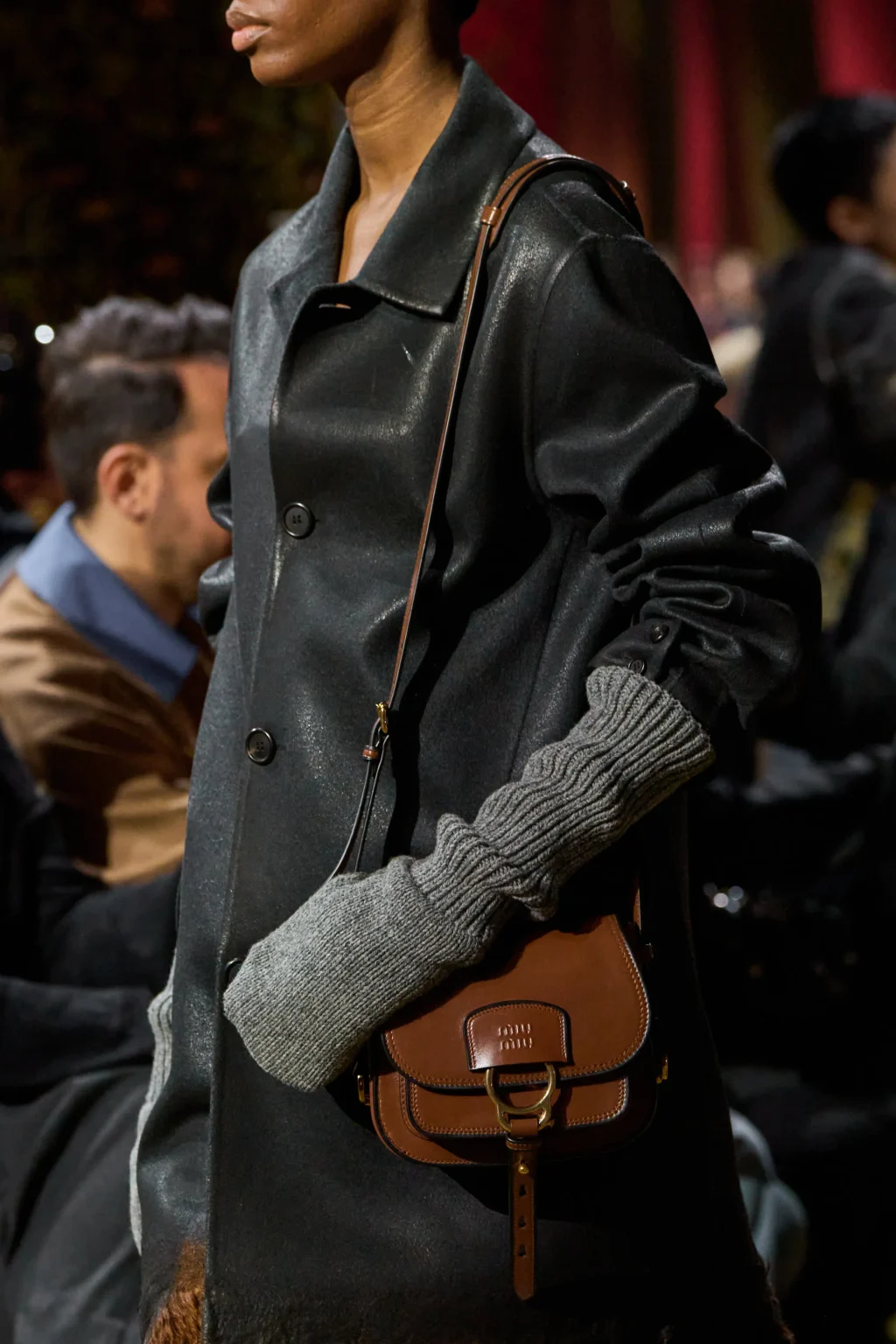
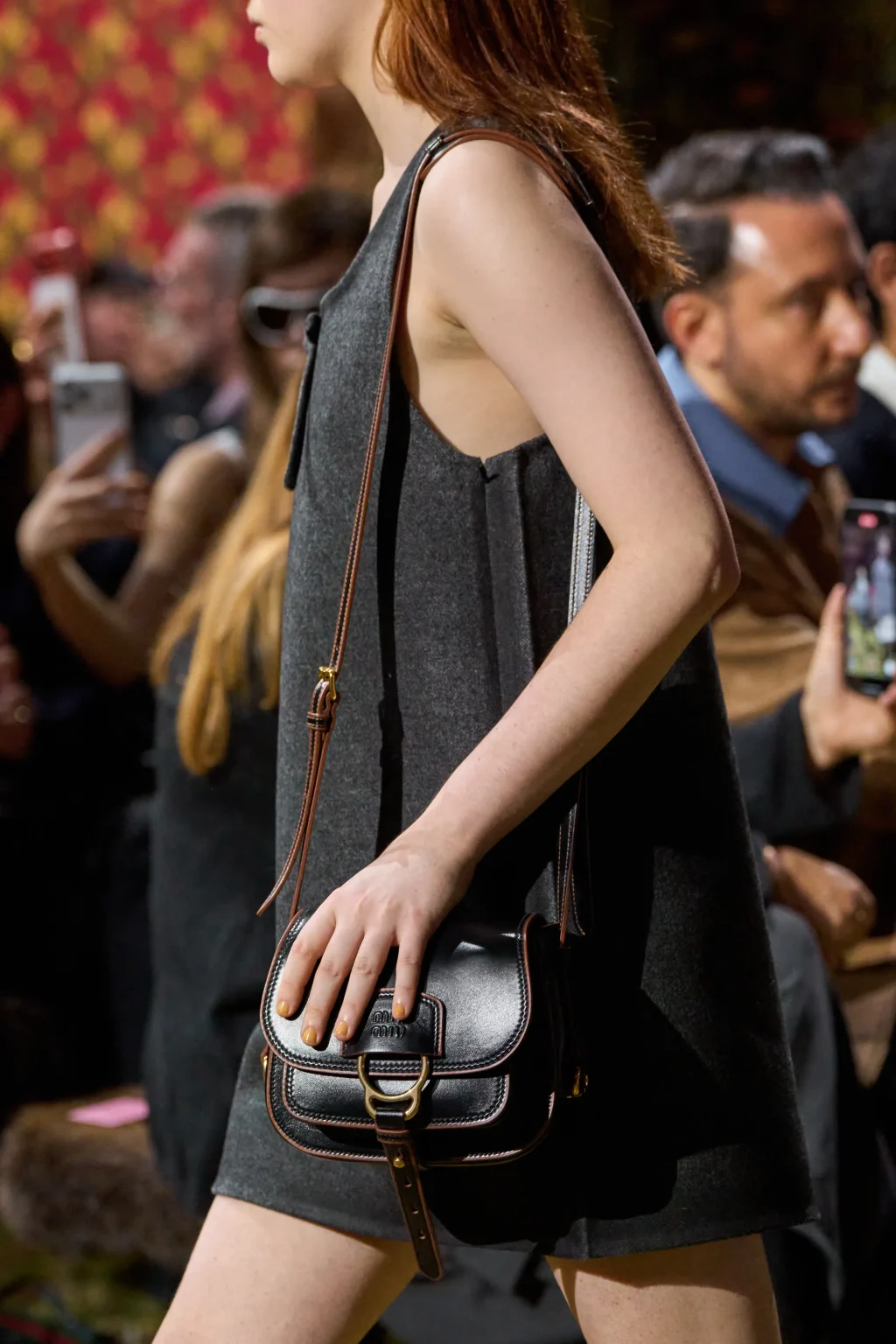
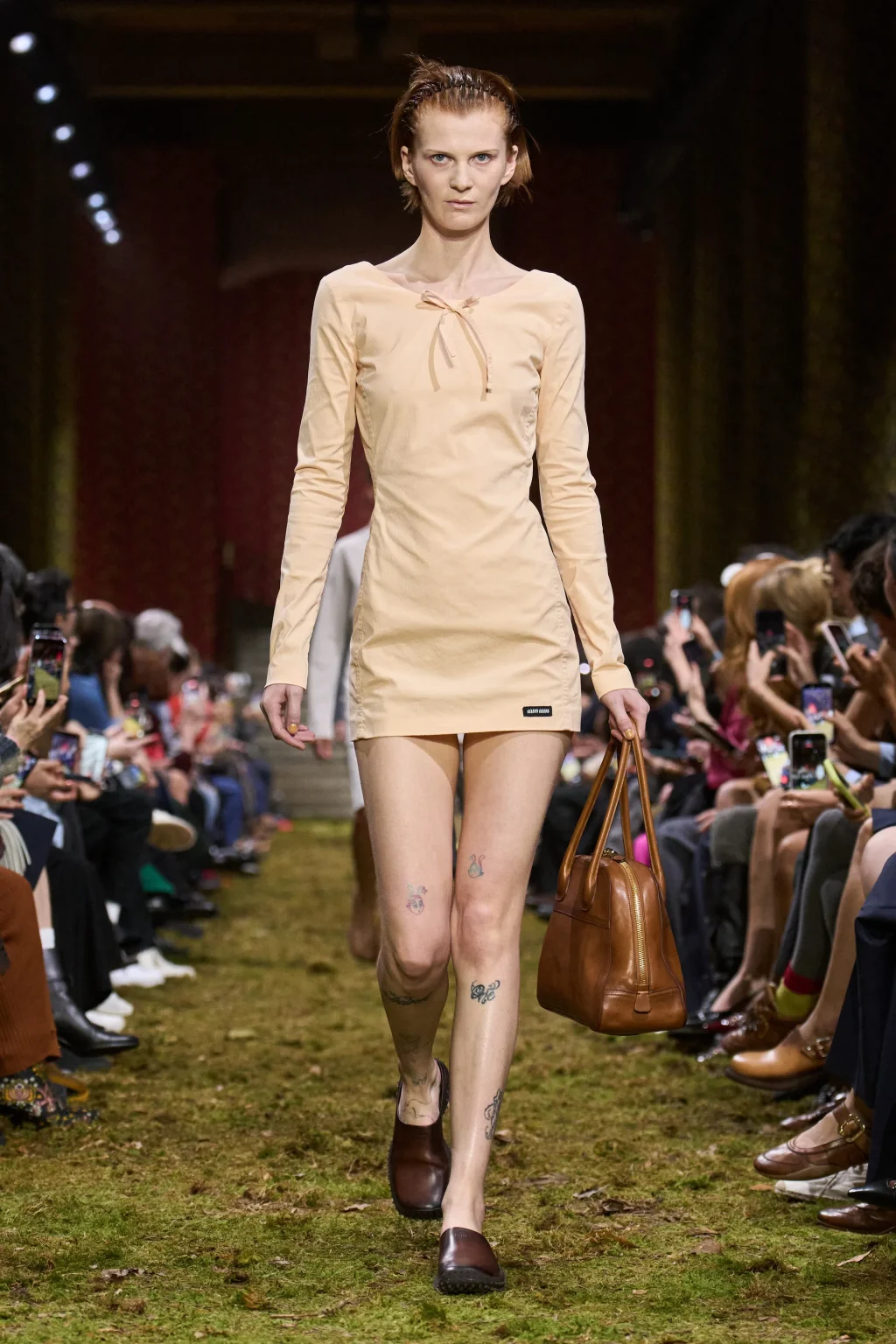
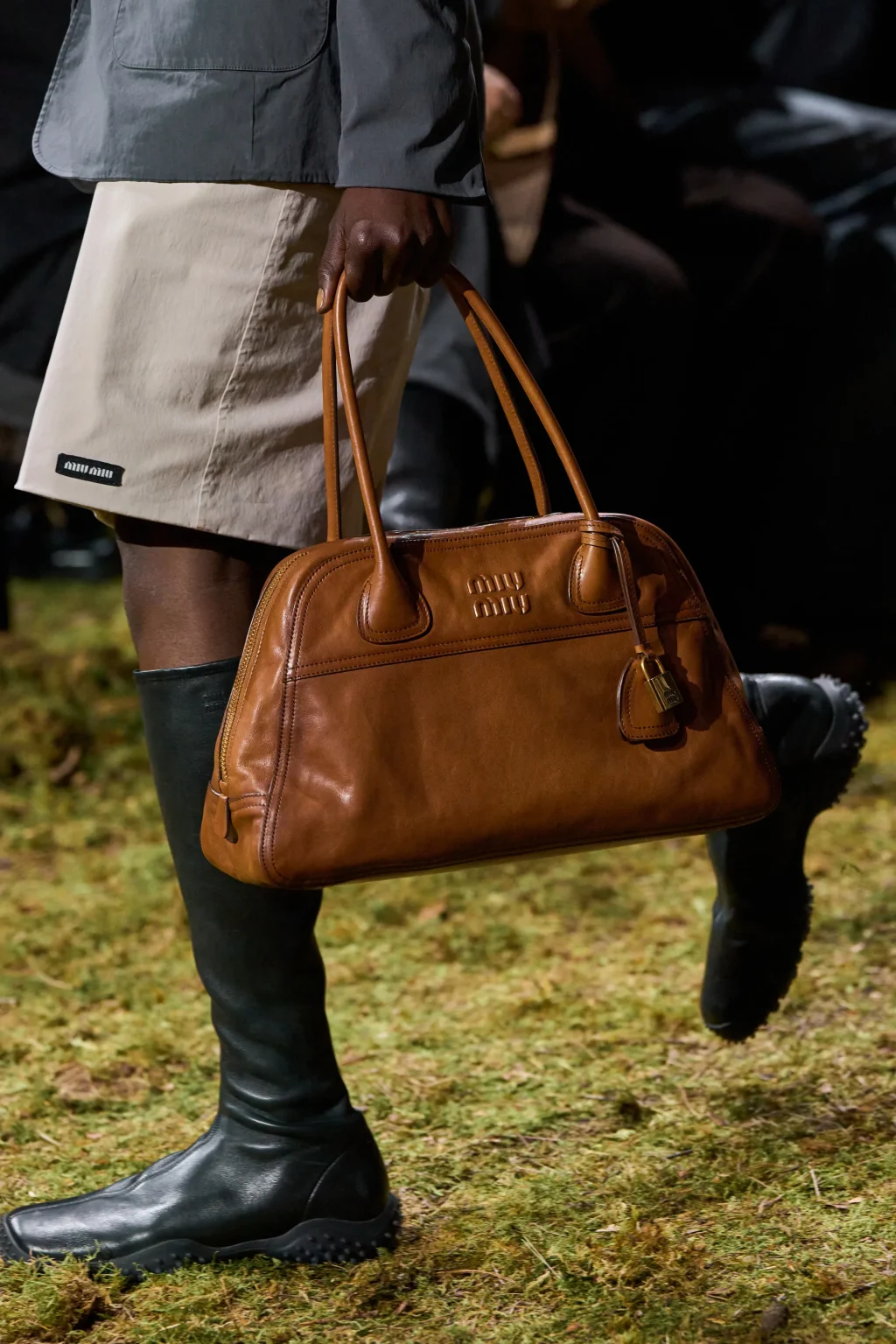
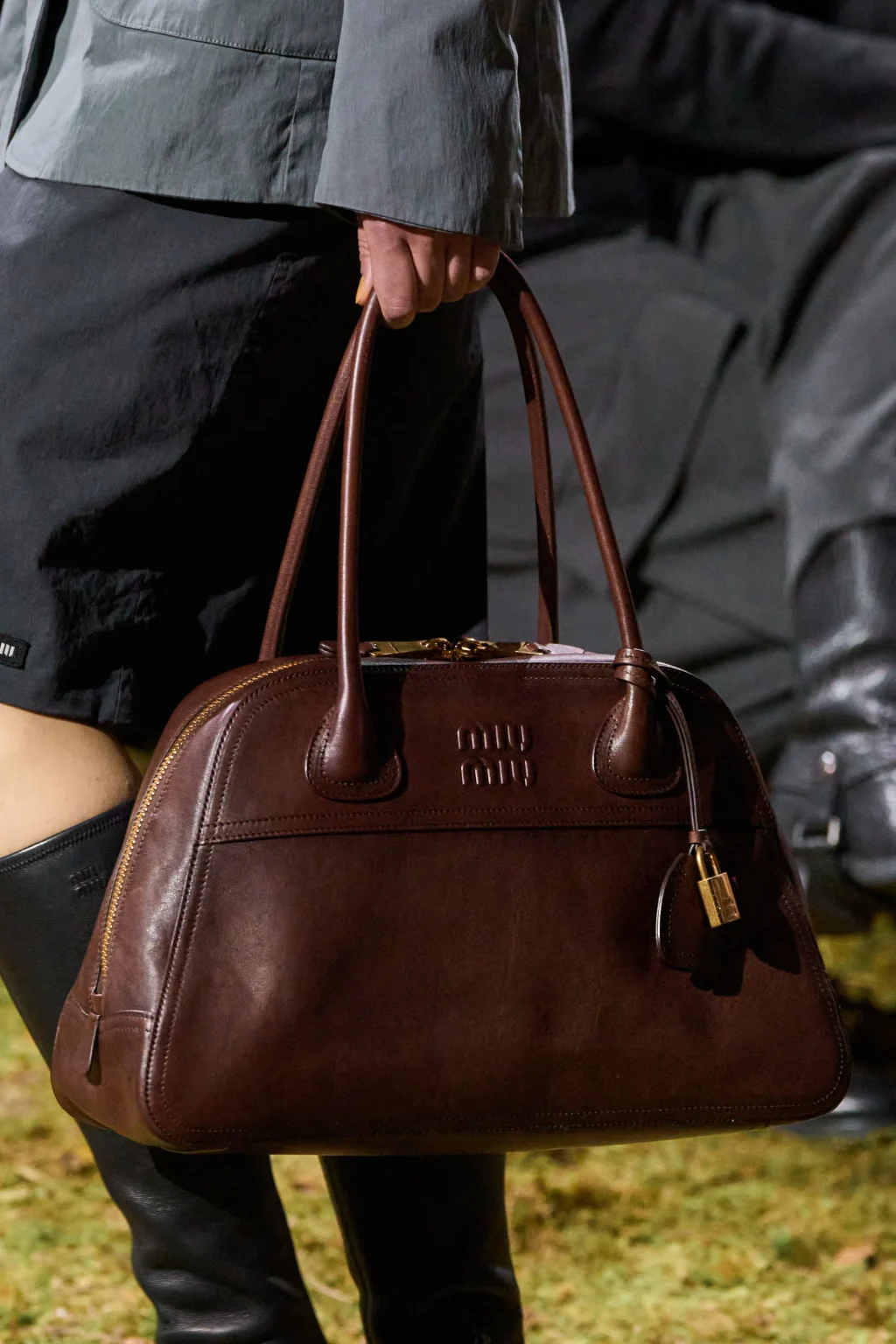
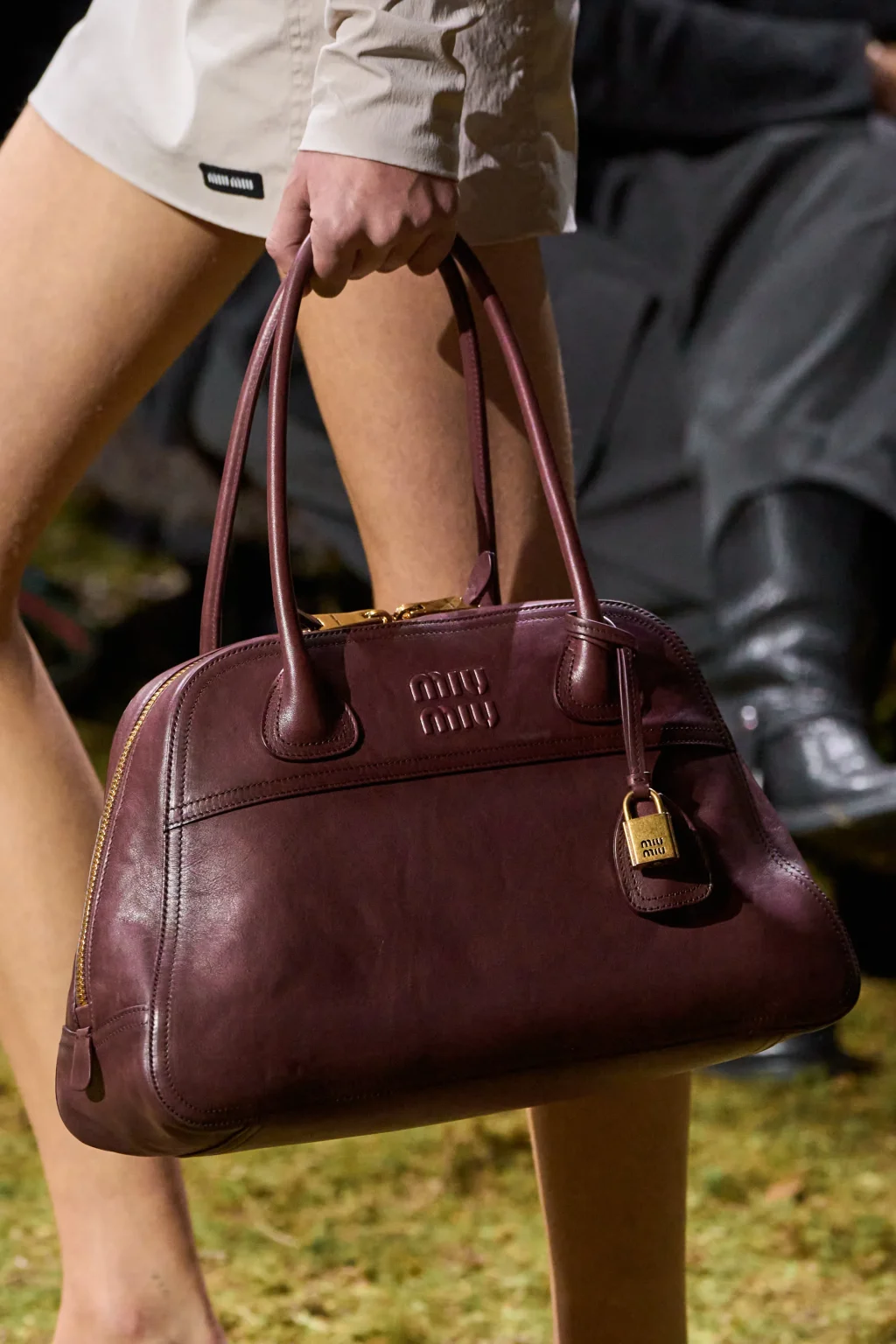
The silhouette is trapezoidal and roomy, with elongated top handles that allow it to be carried in the hand or hooked into the elbow — the latter being a very specific Miu Miu gesture, equal parts patrician and nonchalant. Crafted in vitello antic, the bag uses a soft, weathered calfskin that is hand-finished at the edges, folds, and handles, so each piece develops its own slight irregularity. In suede, it reads softer and more intimate; in vitello antic, it feels like something with a history.
Both are finished in aged silver hardware, and both sit within a palette of understated neutrals and warm earth tones — nothing that announces itself, everything that rewards proximity.
Arcadie returned in a sharper, studded mood
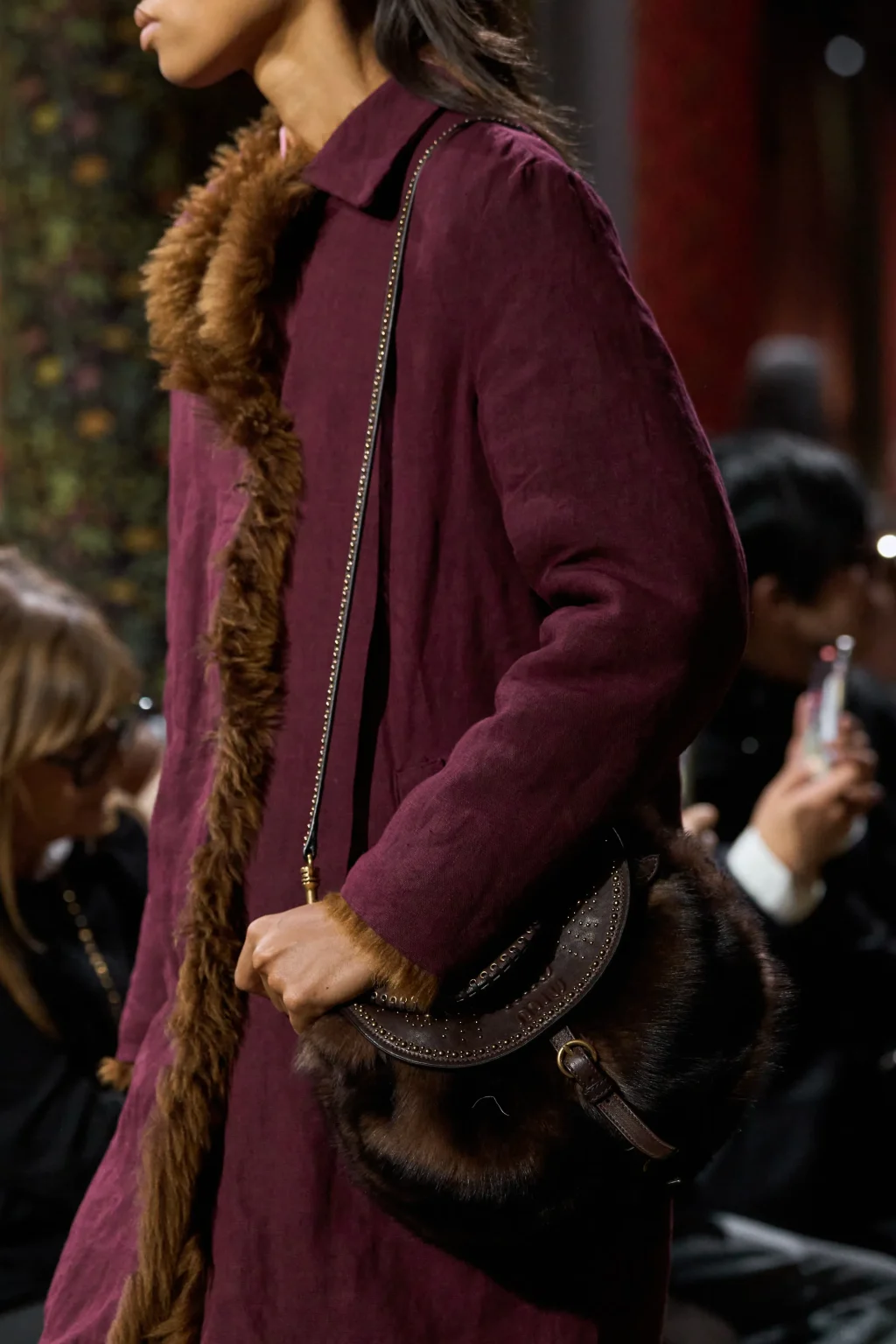
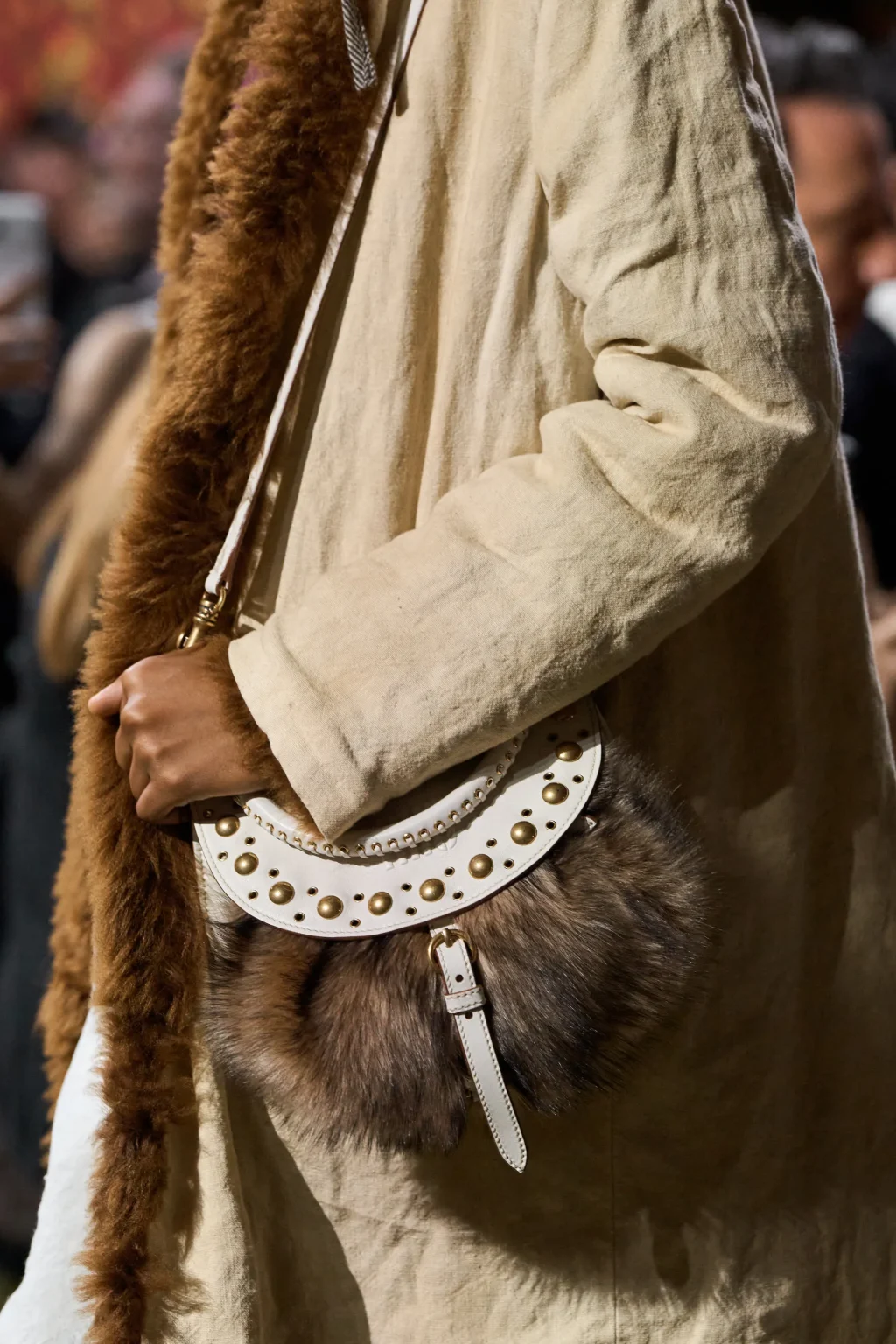
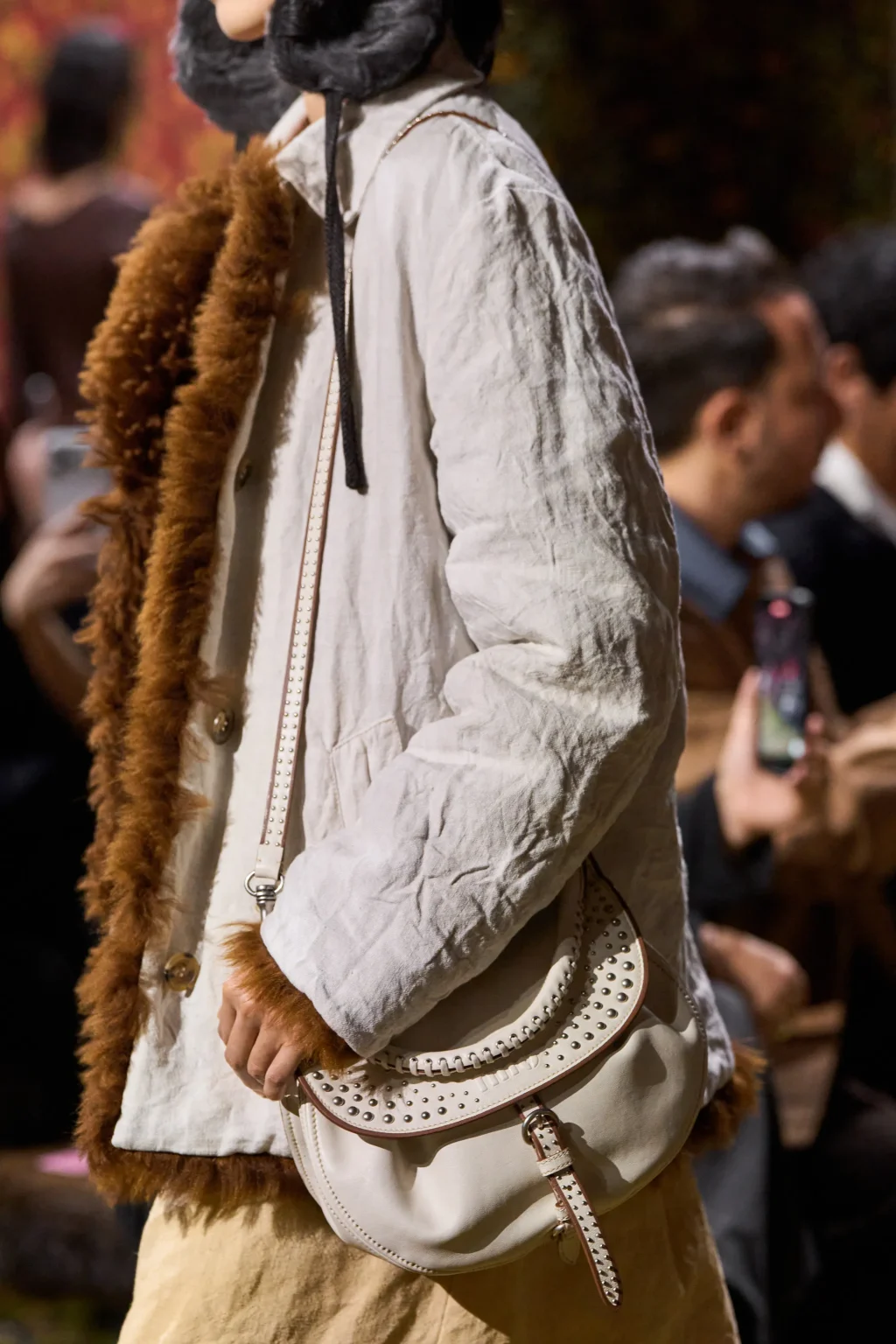
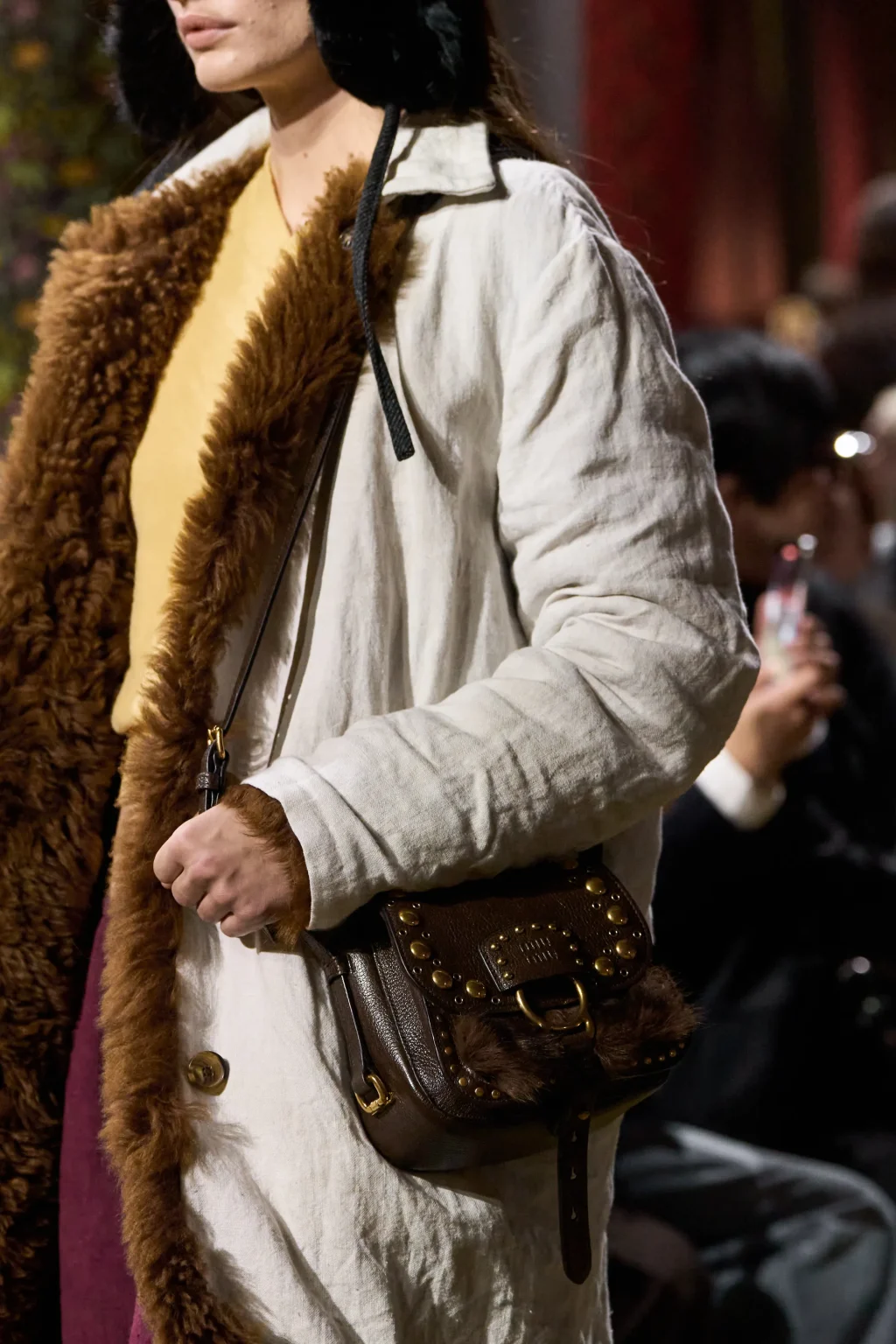
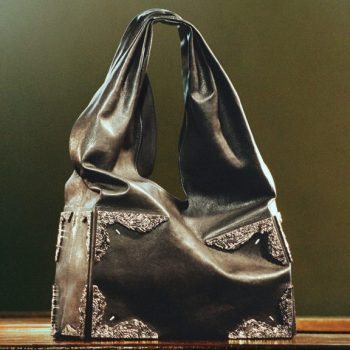
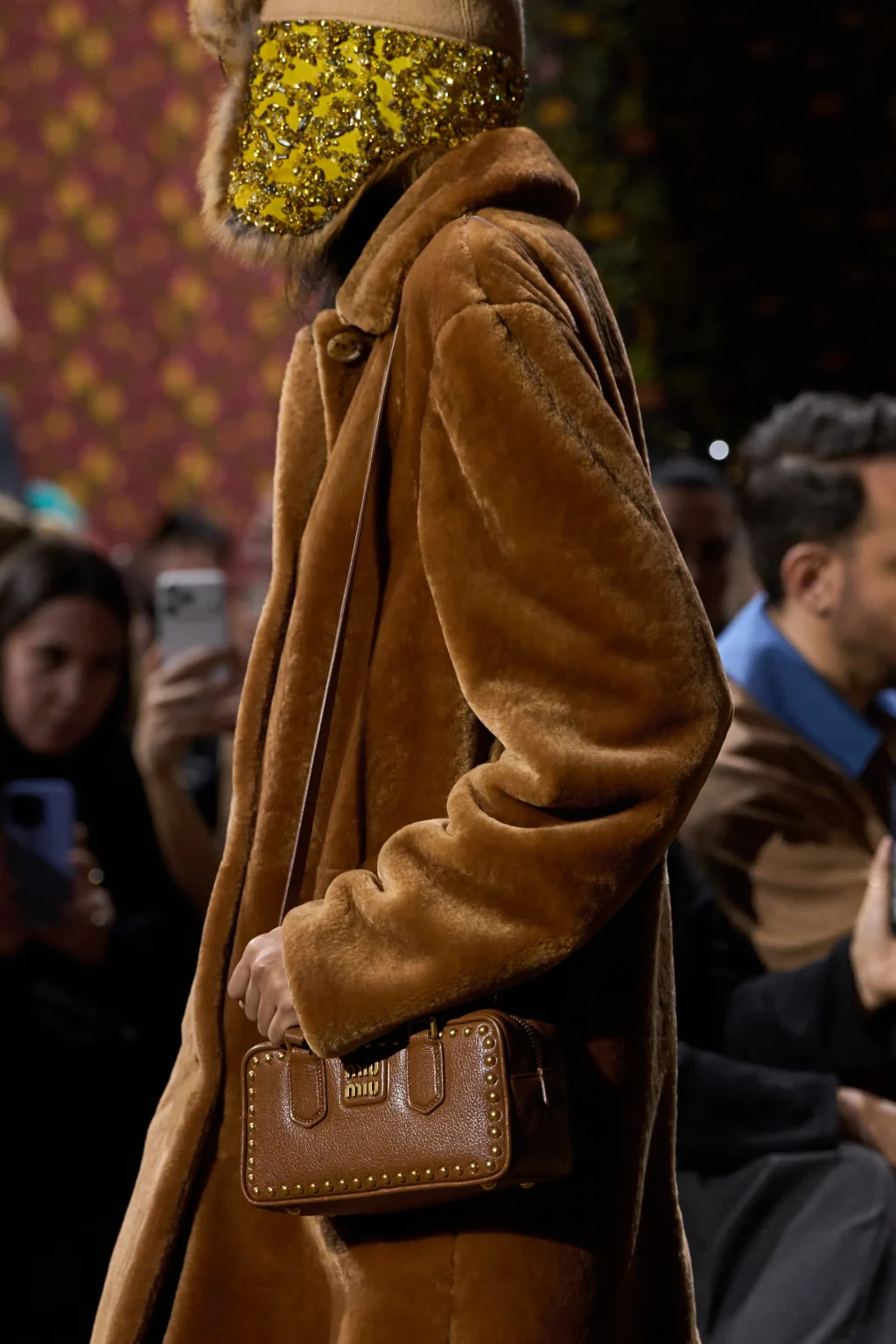
The Arcadie was the other clearly identifiable bag on the runway, but here it appeared in a sharper mood. Officially, Arcadie remains one of Miu Miu’s core families, also tied to the bowling bag silhouette. On the Fall/Winter 2026 runway, however, its proportions and finish shifted the tone decisively.
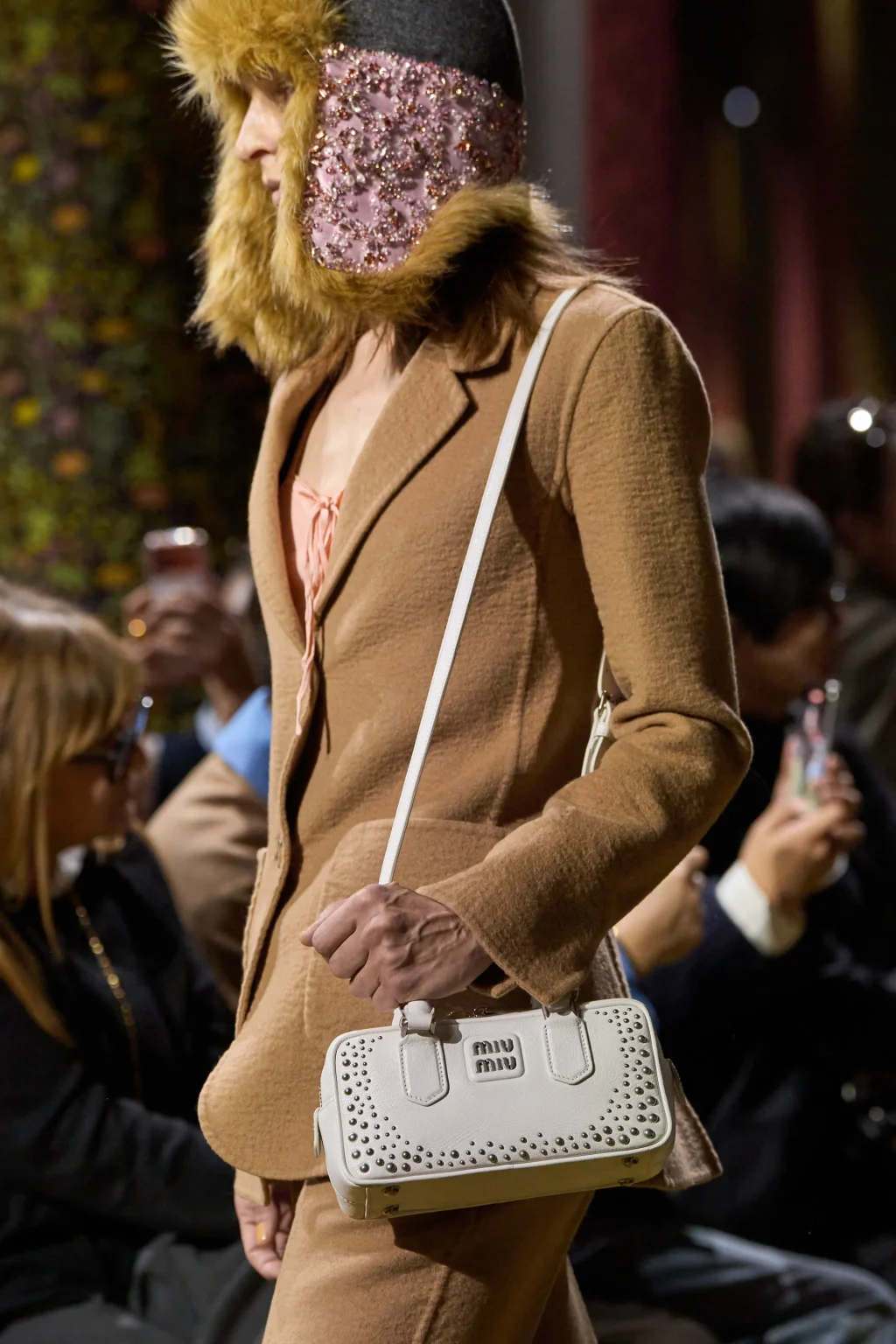
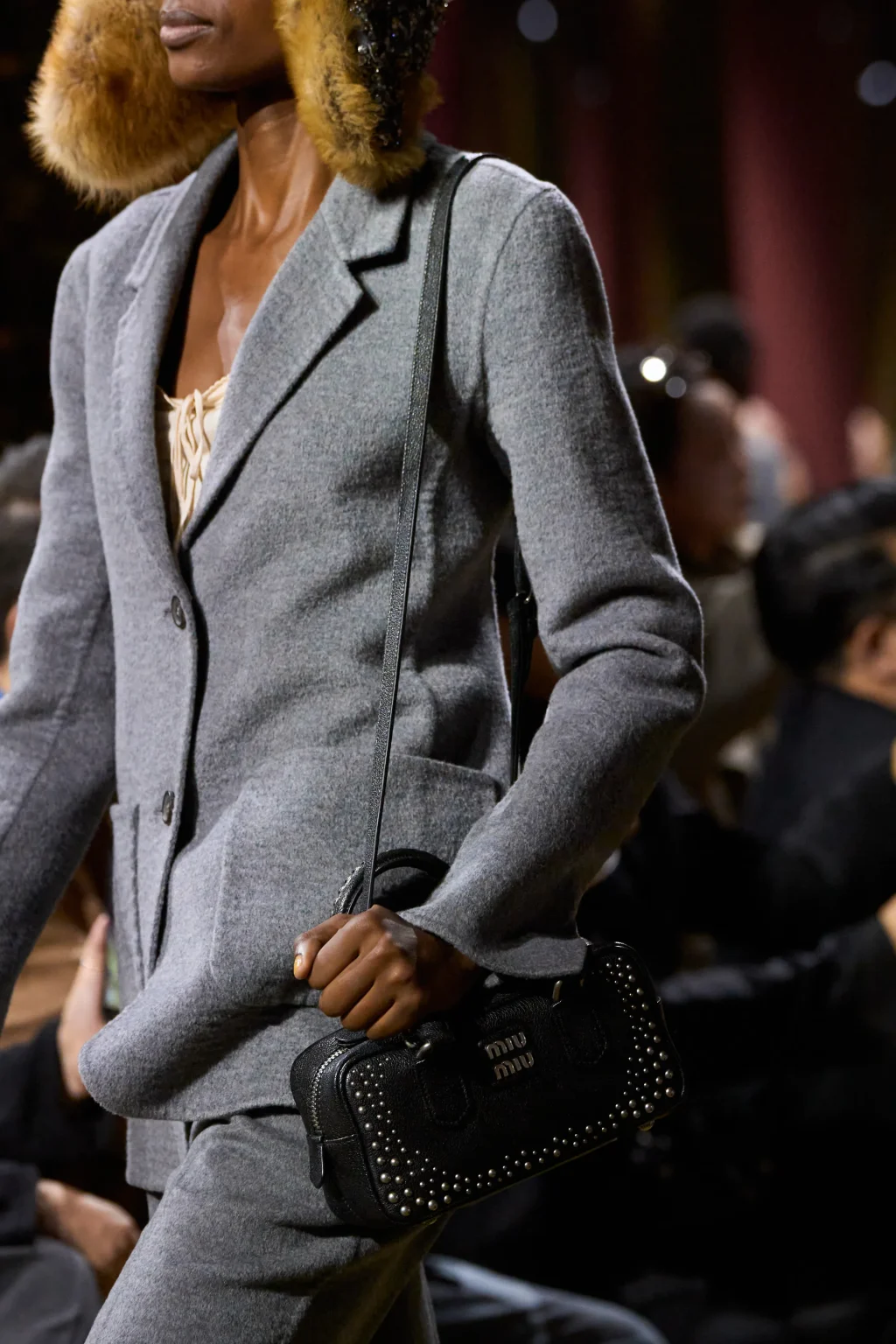
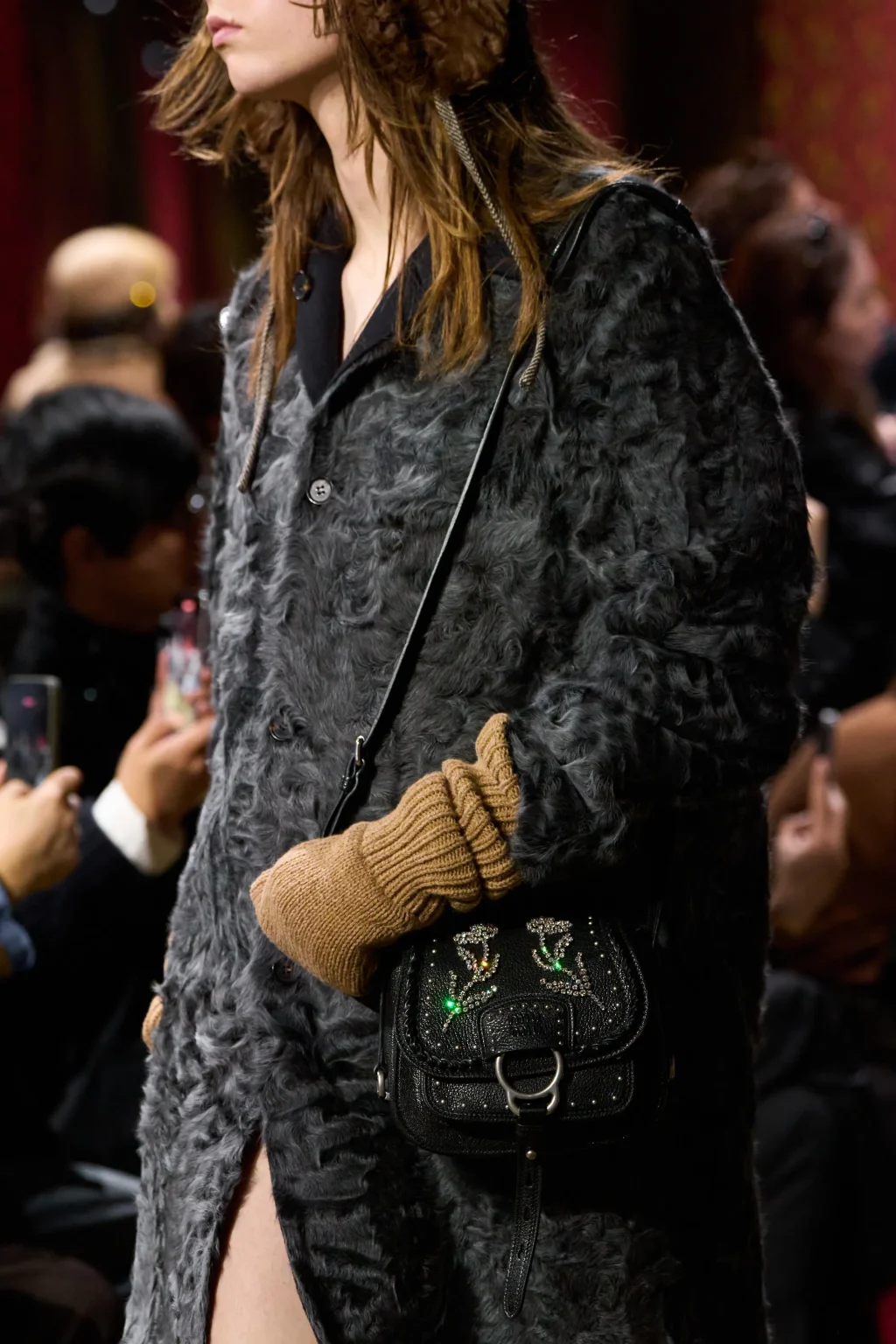
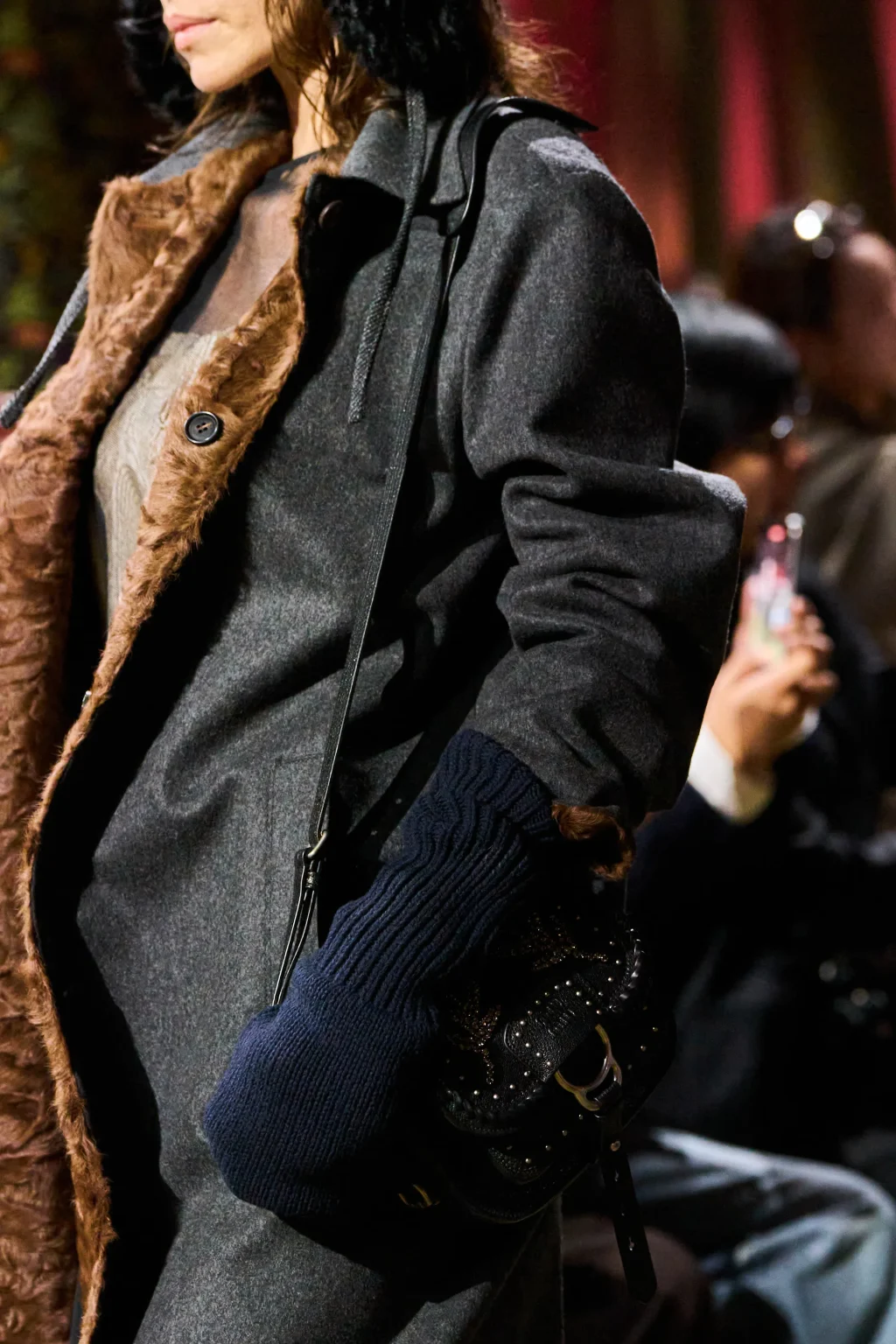
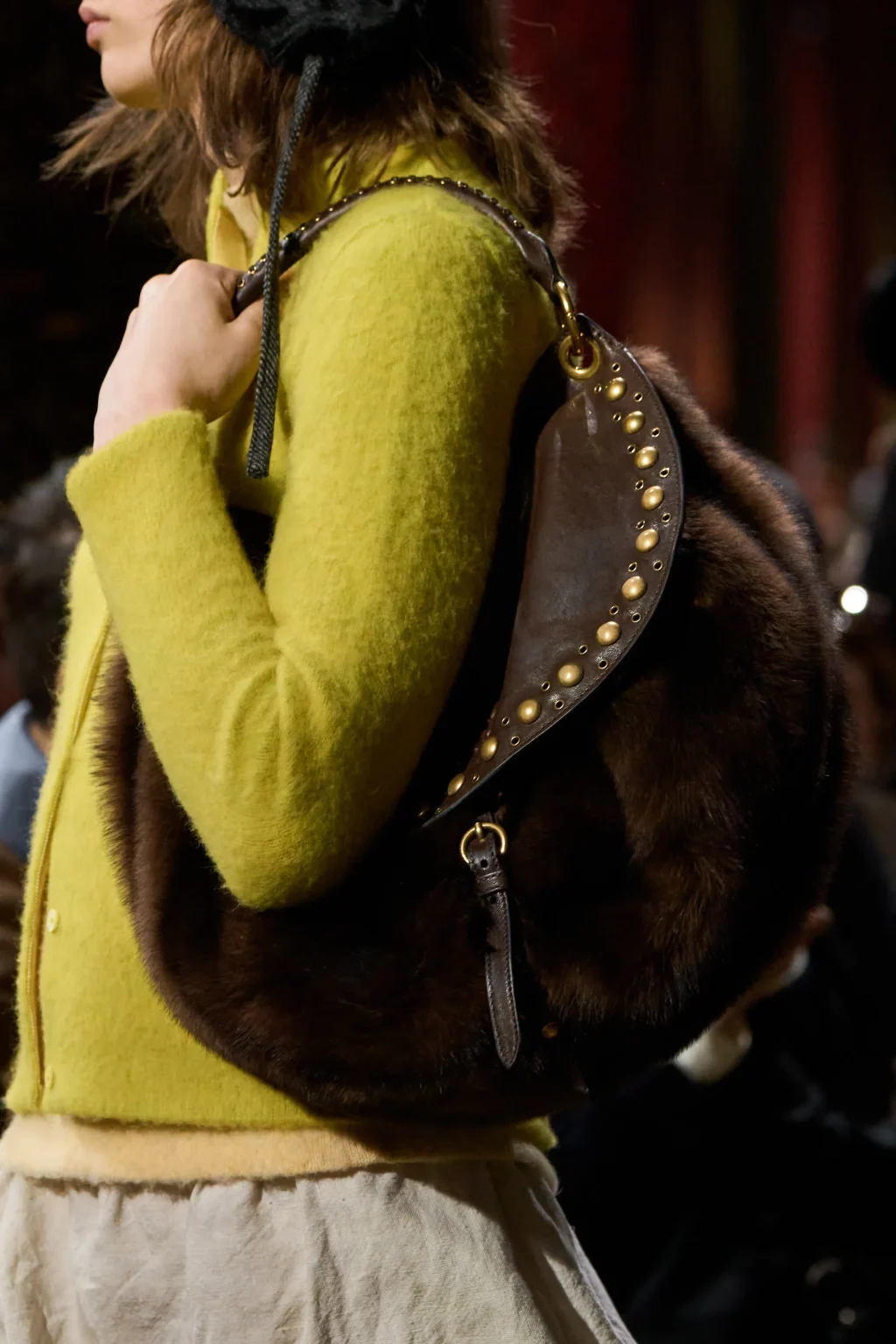
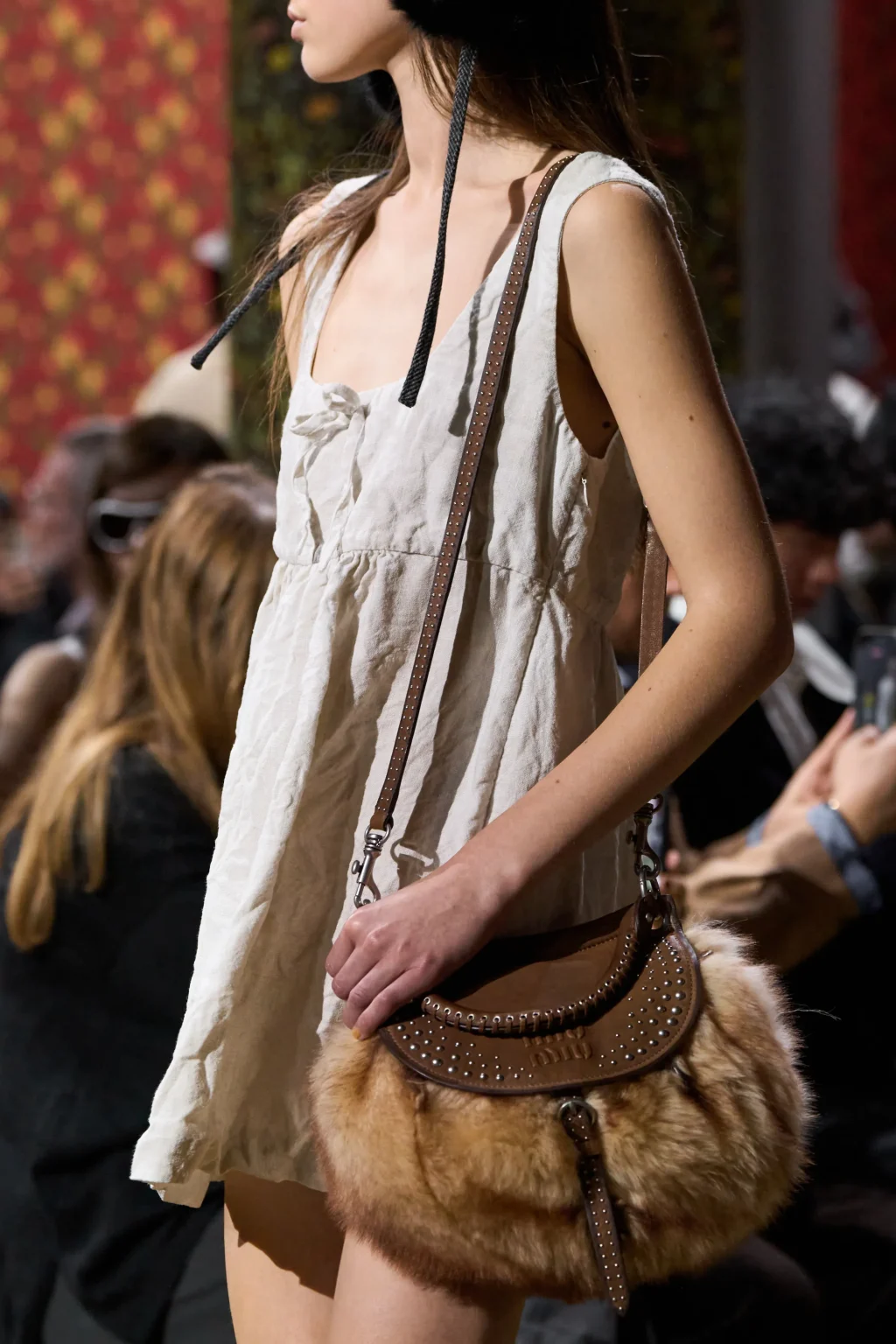
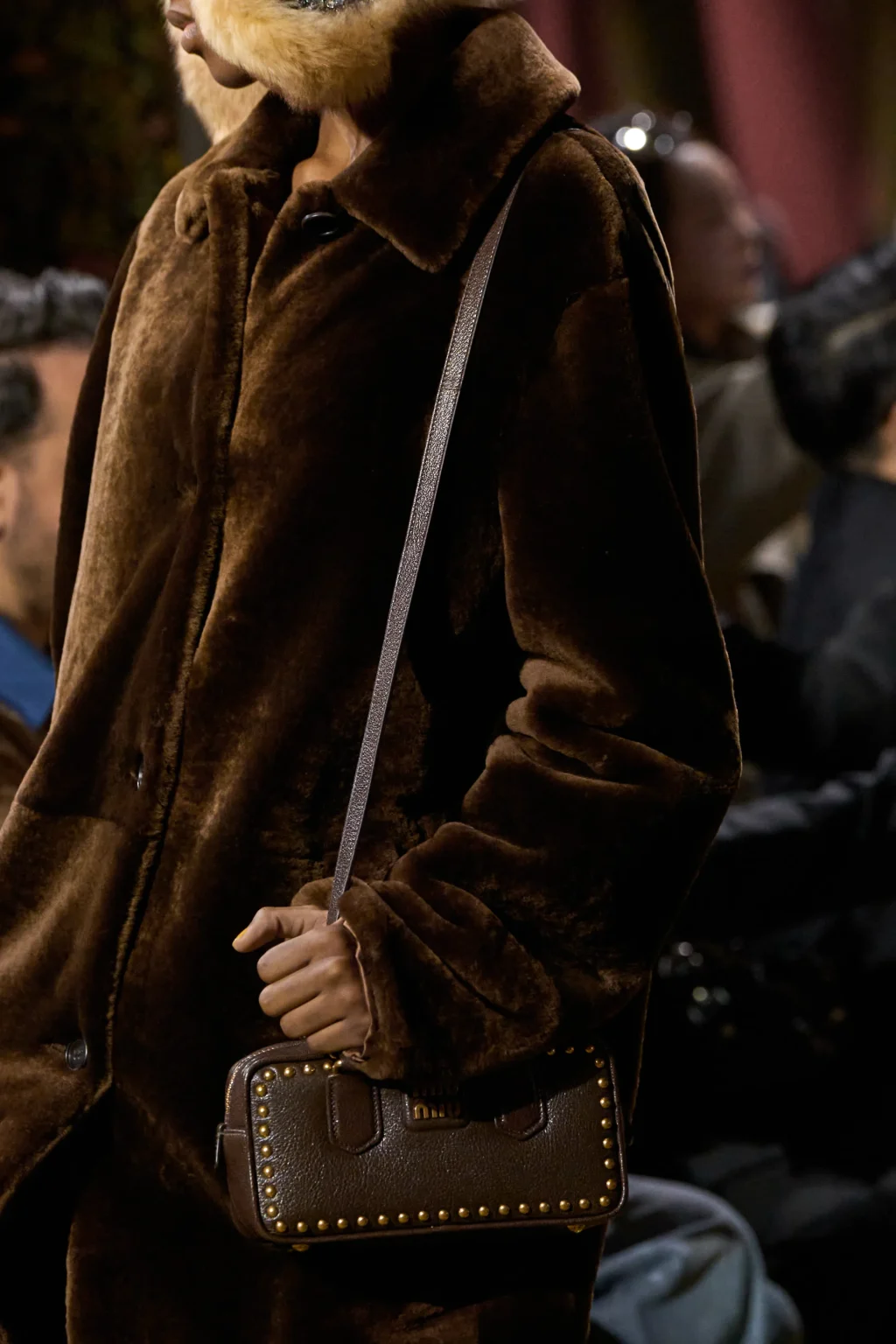
Instead of relying on softness alone, this version emphasized contour. Studding traced the edges and reinforced the shape, giving the bag a more graphic perimeter and a more compact, deliberate presence. It felt closer to a jewel-box carryall than to a relaxed day bag. In darker tones, that studding suggested urban hardness. In white, it made the bag feel more decorative and more distinctly runway.
The real story was the leather vocabulary
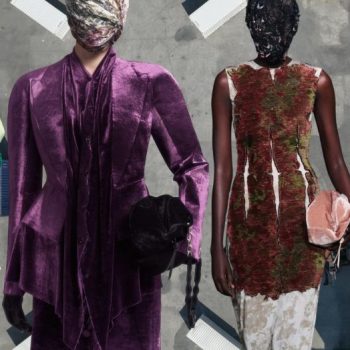
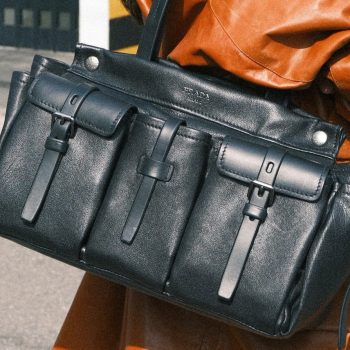
One of the clearest ways to understand the handbags in Miu Miu Fall/Winter 2026 is to look first at the ready-to-wear. Shrunken washed leather jackets, substantial coats with deliberately roughened hems, and slim outerwear polished to an almost reflective sheen established a visual language that felt tactile, intimate, and slightly aged. The bags followed that same logic closely.
This is also where the collection rose above the usual conversation around distressed leather. In many cases, wear can feel cosmetic — a styling device rather than a real idea. Here, it carried meaning. Miu Miu’s official show text describes washed fabrications as giving “a gentleness and feeling, affording a sensuality to cloth, and a sense of human experience.” That sentiment extended naturally to the handbags, which felt less distressed than quietly lived in.
That distinction mattered. Nothing about the leather suggested damage or affectation. Instead, the softened shine, creased surfaces, and antiqued finishes gave the impression of familiarity — of pieces shaped by use, touch, and time. Rather than losing identity through wear, these bags seemed to gain it.
Color played an equally important role. The palette remained tightly controlled, moving through brown, black, tobacco, oxblood-adjacent shades, and occasional pale neutrals. That restraint gave the bags emotional depth. Without the interruption of novelty color, attention stayed on finish, proportion, and the way each bag related to the body.
Brown was especially effective throughout the collection. On the Vivant, it reinforced the bag’s sense of warmth and memory. On the studded Arcadie, it added gravity. On the larger utility-led shapes, it made the silhouettes feel grounded and quietly substantial. Black brought sharper definition, while lighter tones allowed the hardware and construction to stand out more clearly.
That is one of the reasons the accessories felt so persuasive overall. Miu Miu was not presenting luxury as something pristine and untouched. It was presenting beauty as something shaped by life — softened through wear, deepened by use, and made more compelling by time.