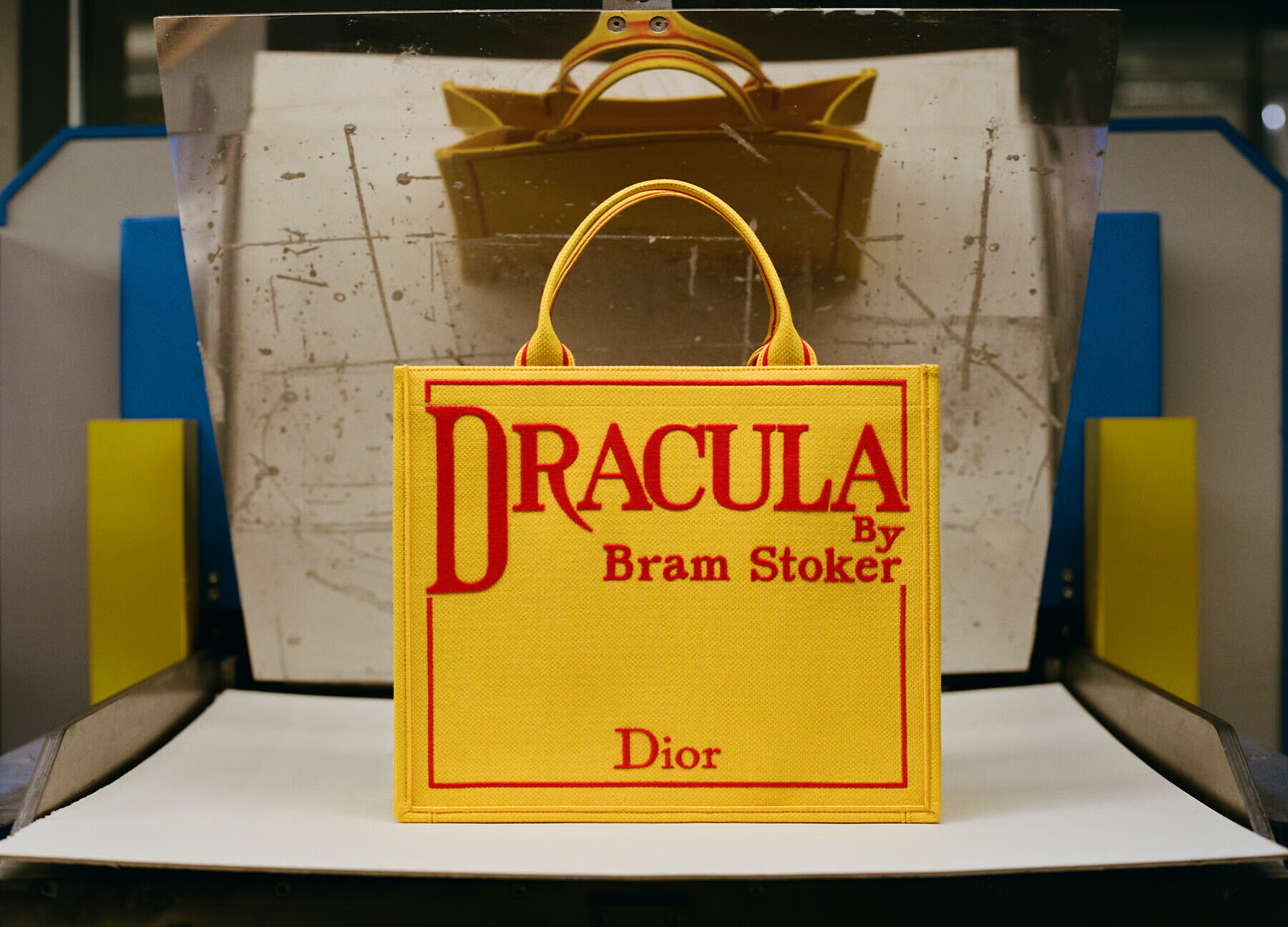
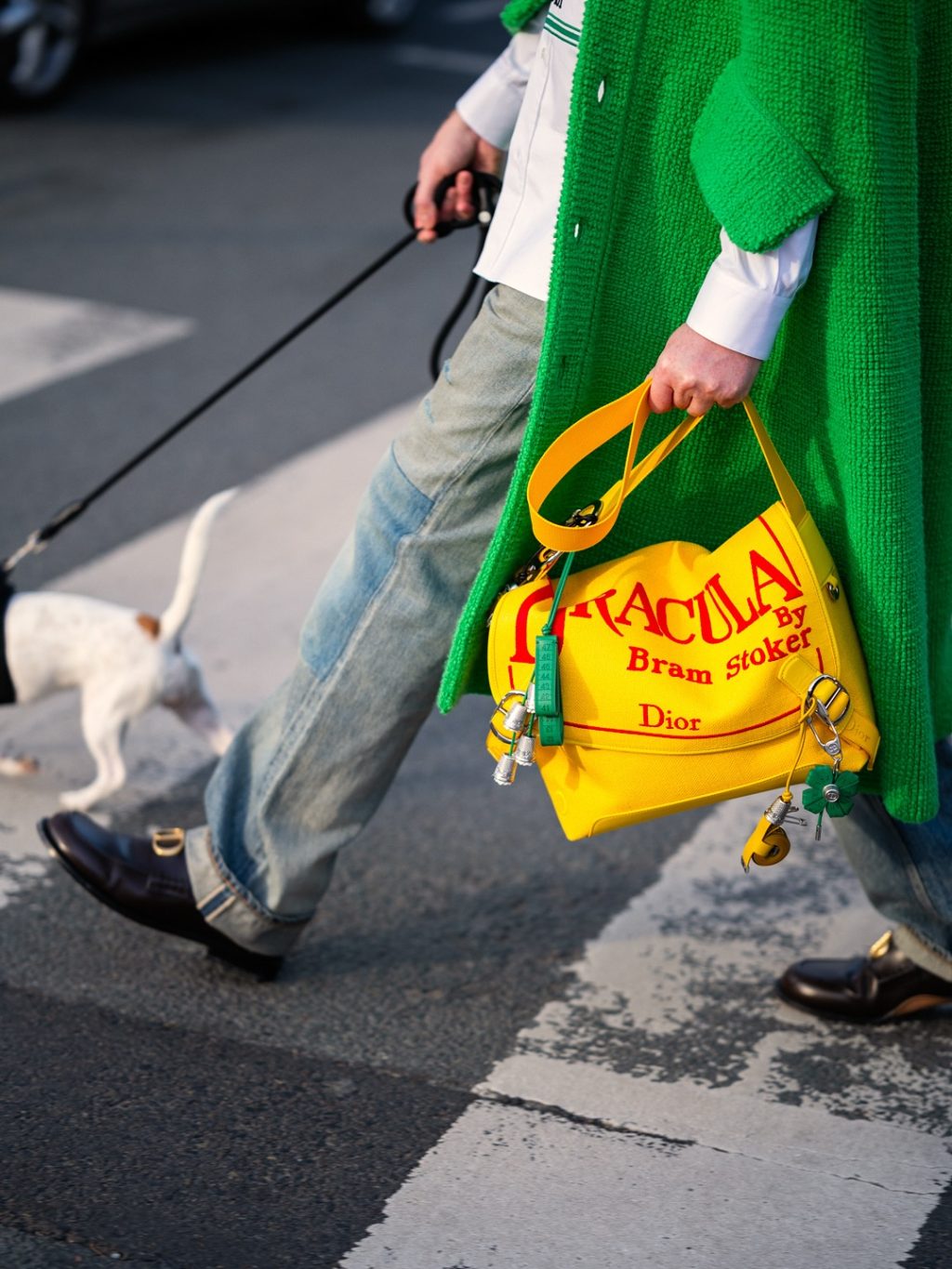
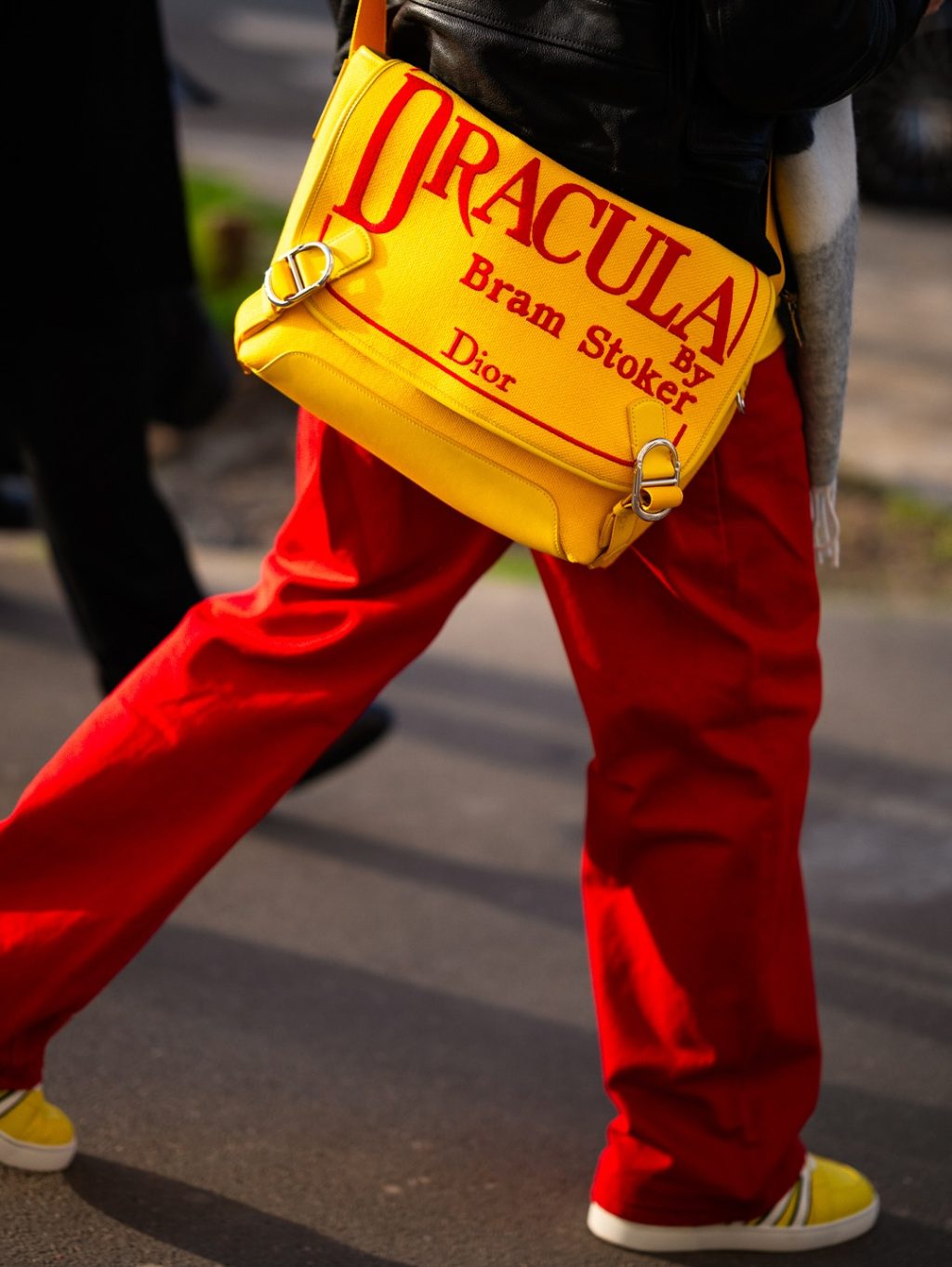
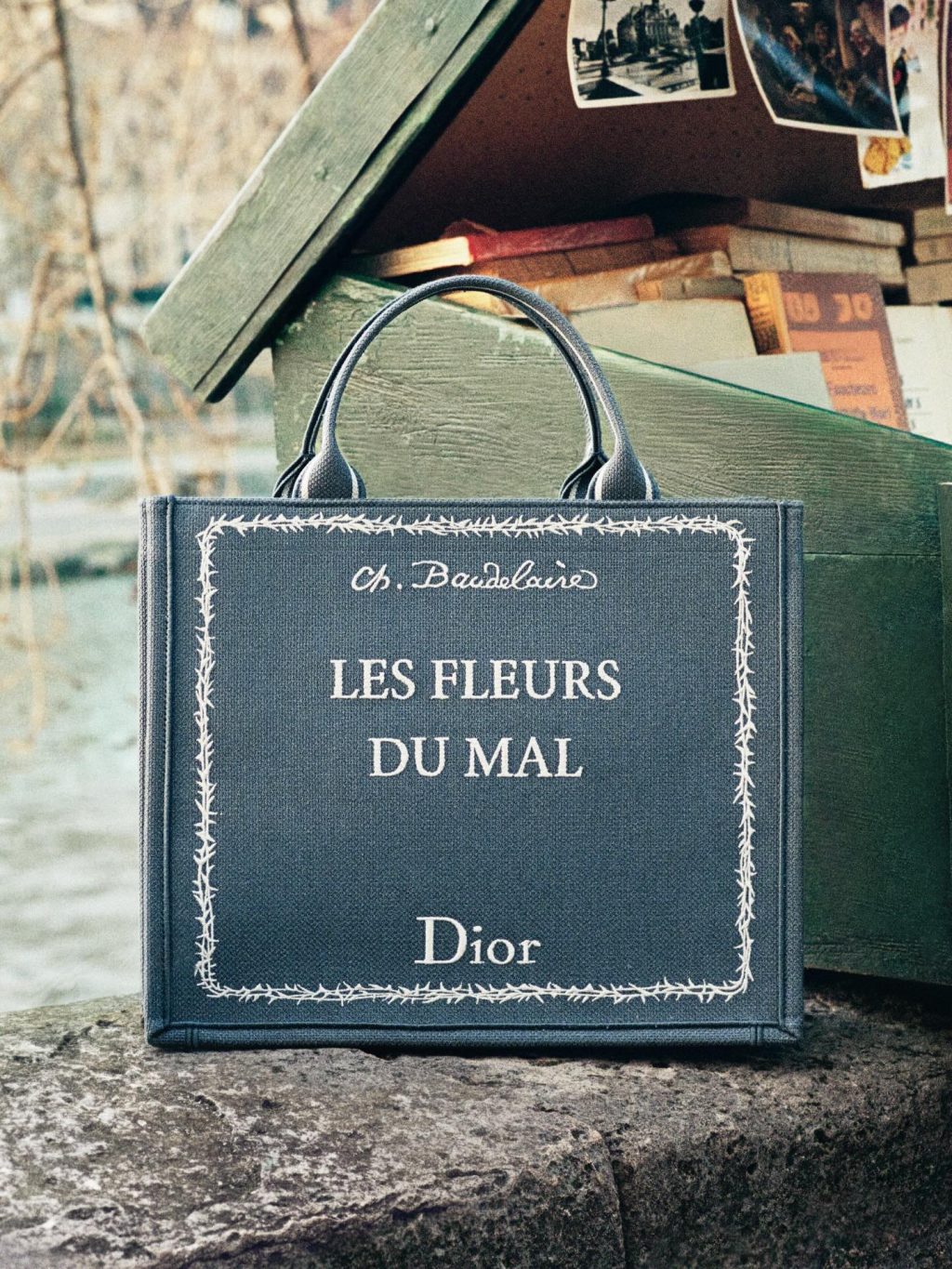
The Dior Dracula Book Cover Tote reads like a first edition—only scaled to handbag proportions. Instead of a repeating monogram, Dior builds the front panel as a “cover”: oversized DRACULA typography, “By Bram Stoker,” a framed border, and a discreet Dior signature anchoring the composition. It’s graphic, legible from across a room, and intentionally flat in concept—because the depth is in the making.
What is the Dior Dracula Book Cover Tote?
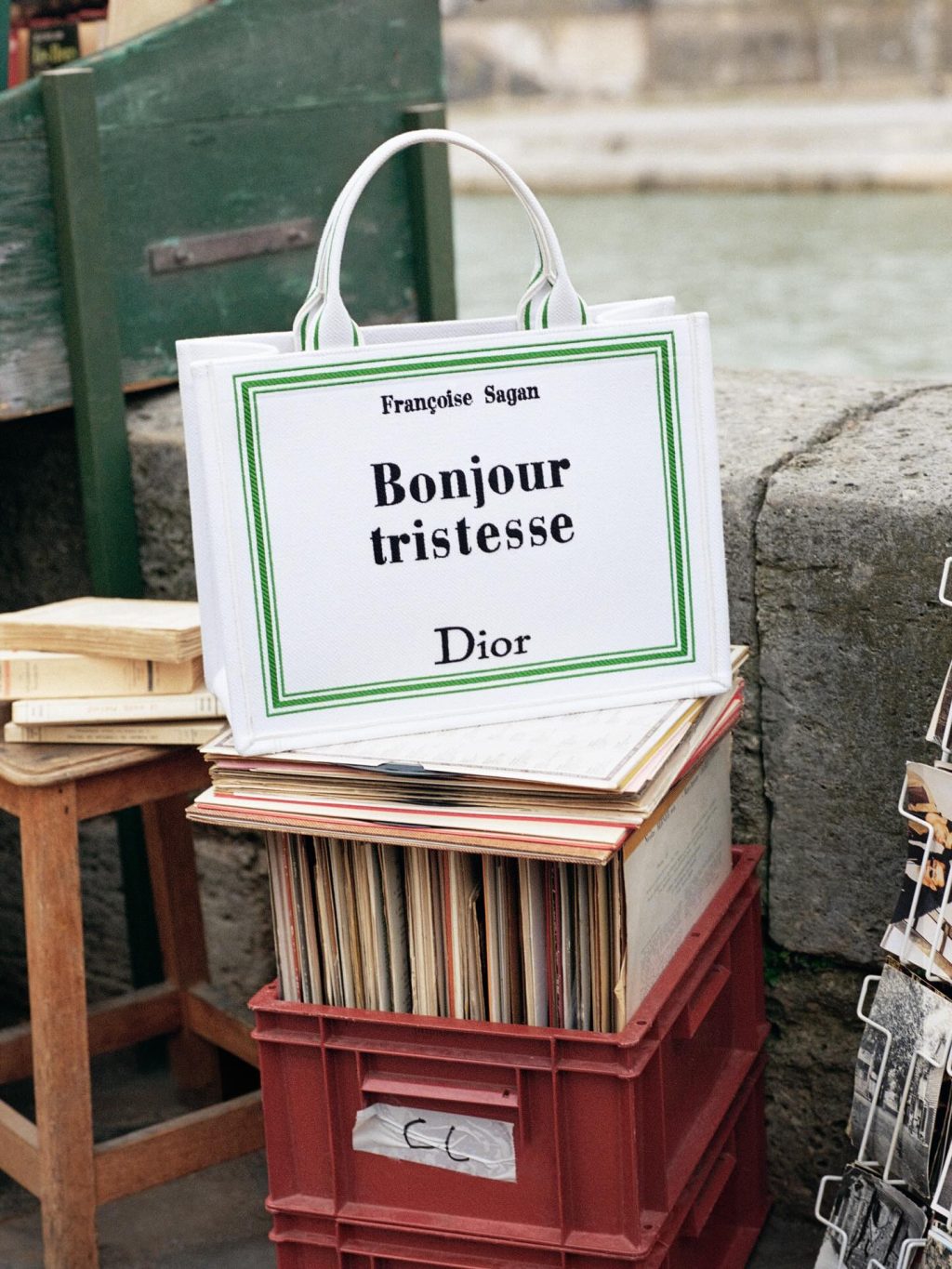
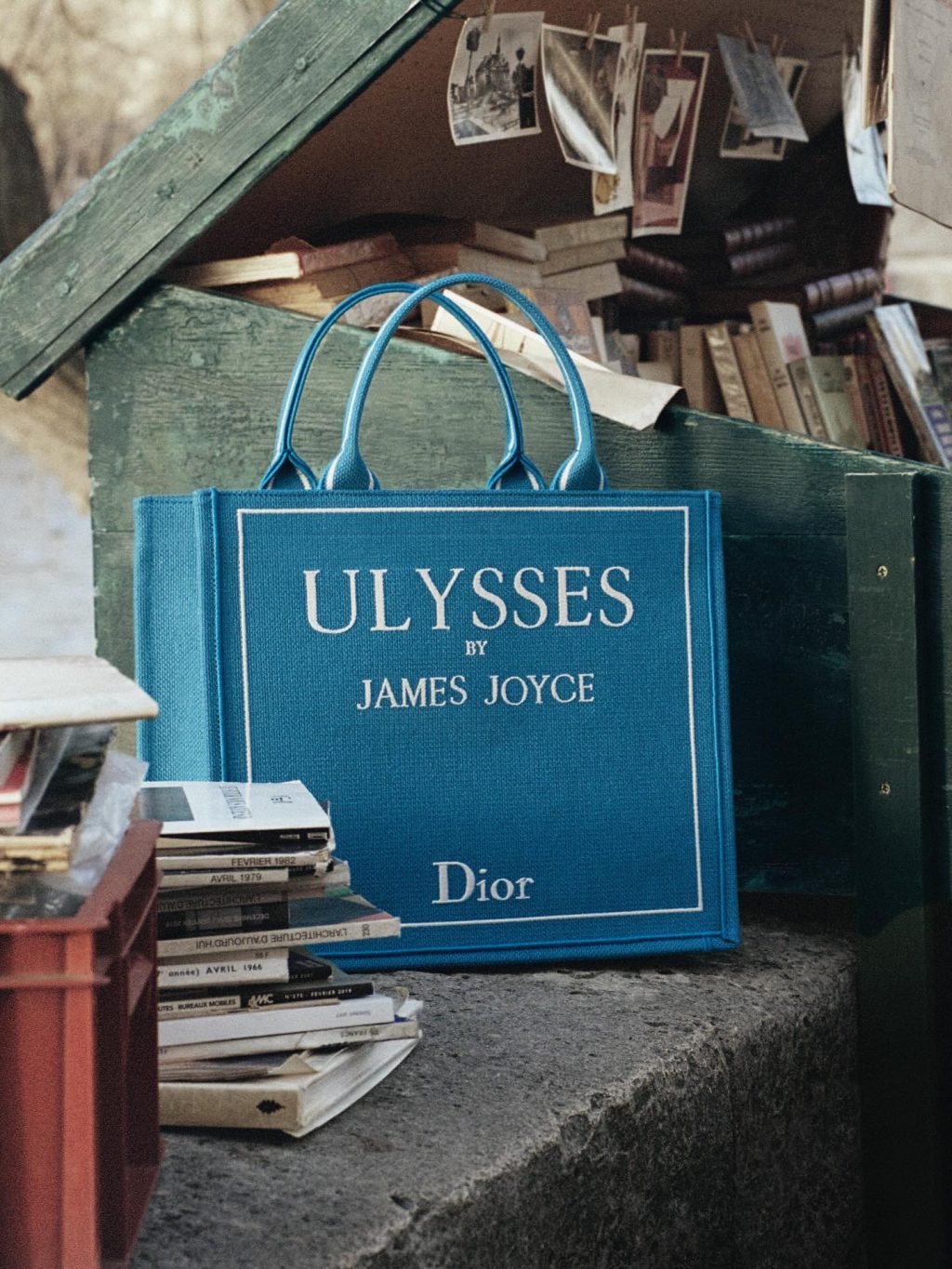
This piece sits within Dior’s Book Cover Collection, a branch of the Book Tote family that treats literature as surface design—less souvenir, more collectible object. The silhouette stays faithful to the Book Tote’s appeal: a structured, upright tote with clean planes and a strong front face designed to be “seen” while carried. Where classic Book Totes lean on all-over pattern, the Dracula version is about placement, proportion, and the tension between heritage craft and a pop-cultural title that needs no introduction.
The “dream library” idea—and why it signals a new Dior chapter
What makes the Dracula tote feel timely isn’t only the title—it’s the framing. Dior positions this as part of a “dream library,” a move that turns the Book Tote into something closer to a portable archive: cultured, slightly theatrical, and built for collectors who like their fashion with references you can actually read. In the context of a new creative era, that literate emphasis lands as a clear direction: icon bags that behave like objects of taste, not just accessories.
Materials and construction at a glance
This is not a delicate evening piece pretending to be practical. The Book Tote format is designed to work: an open, architectural body, dense textile construction, and finishing that makes the tote stand upright instead of collapsing into a soft slouch.
Key build elements you should know:
- Embroidered textile body engineered for structure (the “cover” is the visual center of gravity).
- Top handles designed for hand-carry, with enough drop to sit comfortably in the crook of the arm.
- Strap options on select sizes (a real advantage if you use your tote as a commuter bag).
- Closure and pockets depending on size—because Dior understands this is often a daily carry, not a display-only piece.
The typography and border—why this looks like a cover, not a logo tote
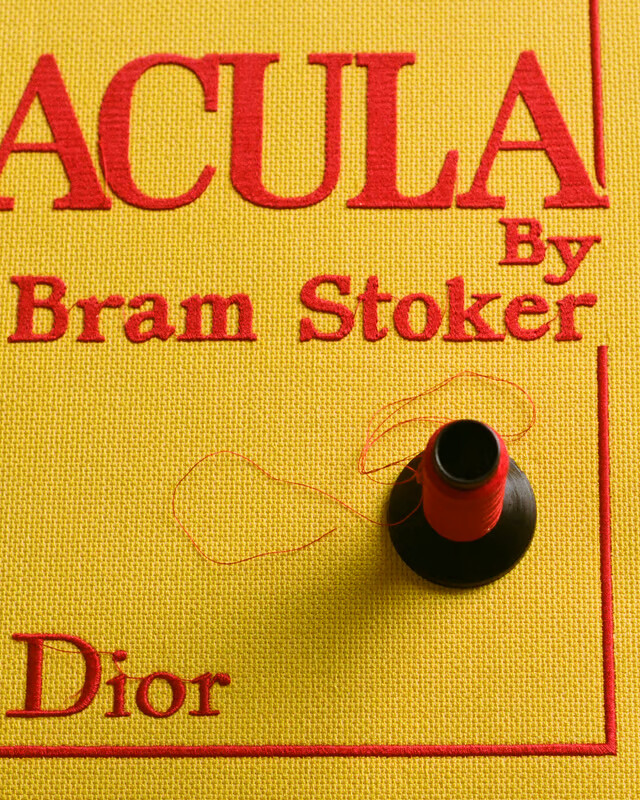
Look closely and you’ll see the design logic: the border frames the bag like a book jacket frame; the title is scaled to feel editorial; the author line adds authenticity to the “cover” illusion. This is why the tote photographs so sharply—your eye reads it the way it reads print. It’s also why alignment matters: the piece only works if the typography sits clean and balanced on the panel.
Inside the making: from thread to finished tote
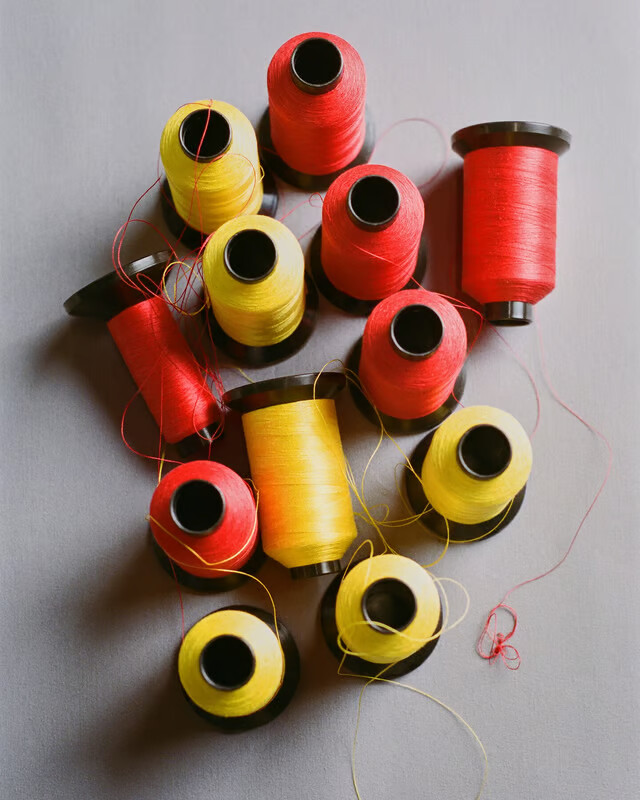
Dior’s behind-the-scenes imagery tells the story in materials, not marketing. You see it immediately in the palette: spools of saturated red and yellow thread; a tight, industrial embroidery setup; and the slow, meticulous finishing that turns “machine embroidery” into luxury.
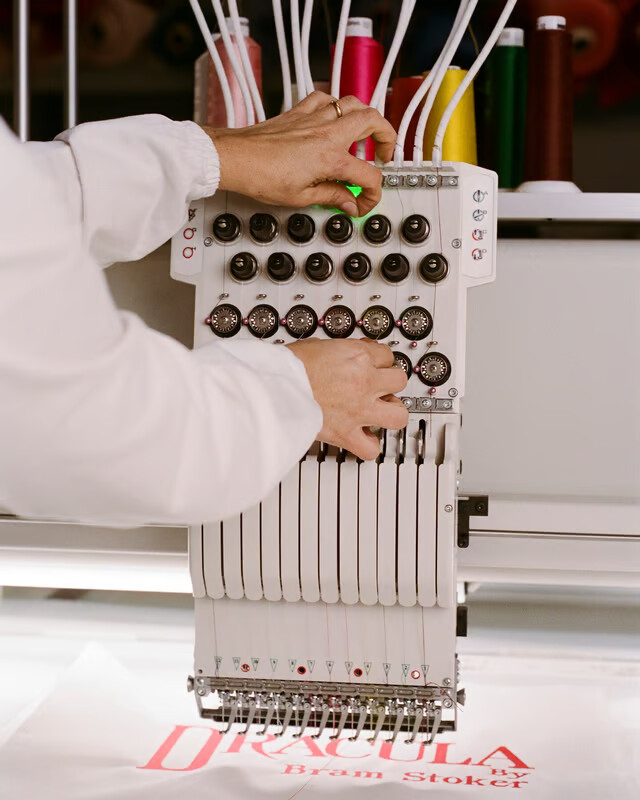
First comes the thread choreography—multiple cones of red and yellow, staged like paint tubes for a canvas. Then the panel hits a multi-needle embroidery machine, where the title and border are stitched with controlled density. The effect isn’t simply decorative; it functions like reinforcement, giving the front panel a firmness that keeps the “cover” crisp rather than wavy.
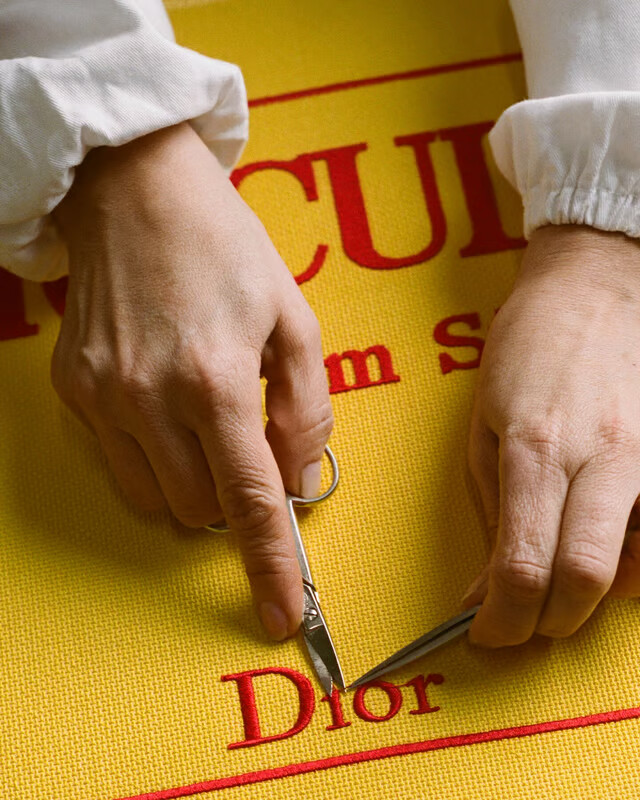
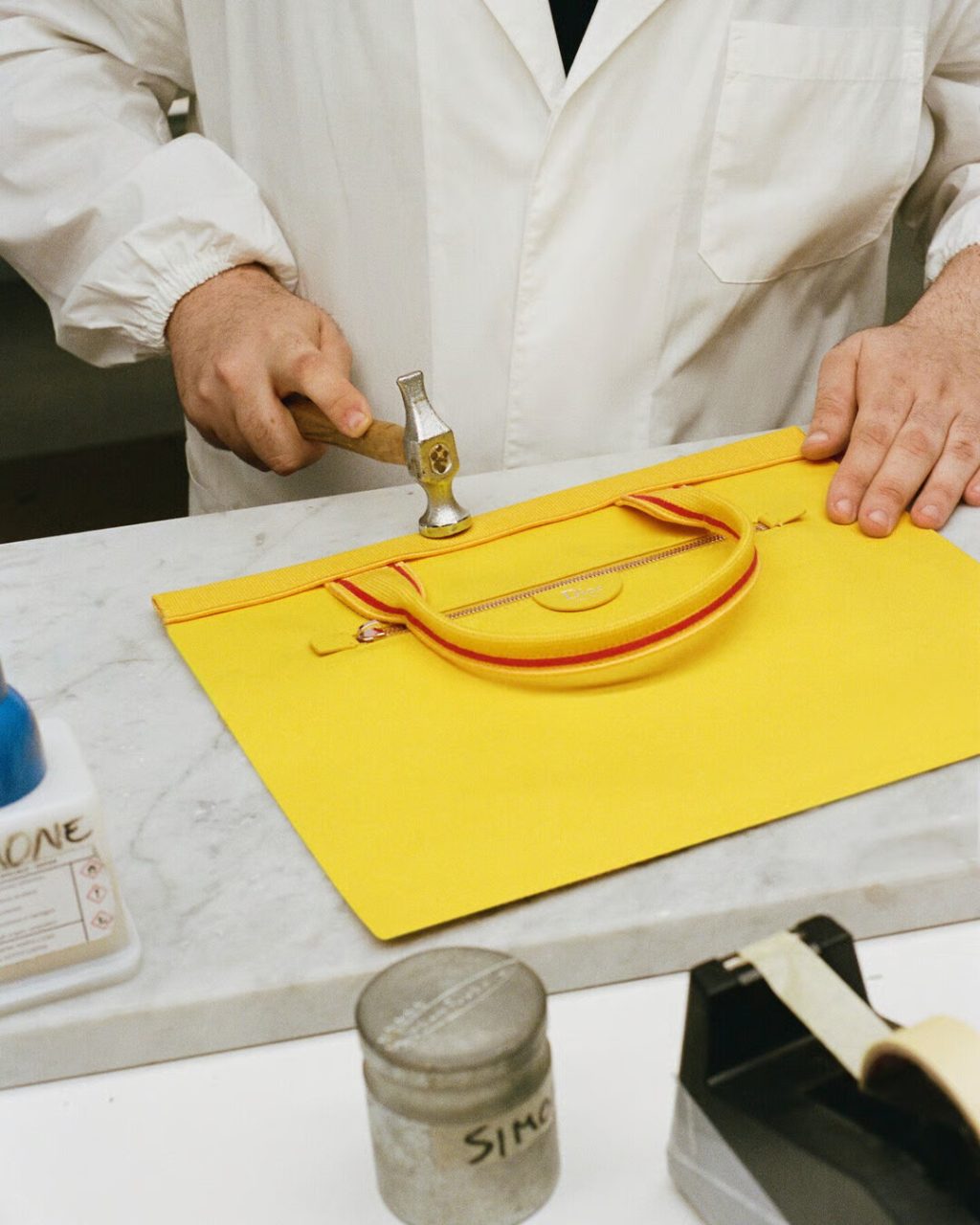
After embroidery, the bag enters its most human phase: trimming and refinement. Hands clip loose threads close to the surface so the letters read sharp, not fuzzy. Edges are checked. The typography is inspected like typesetting—because any irregularity would be obvious at this scale.
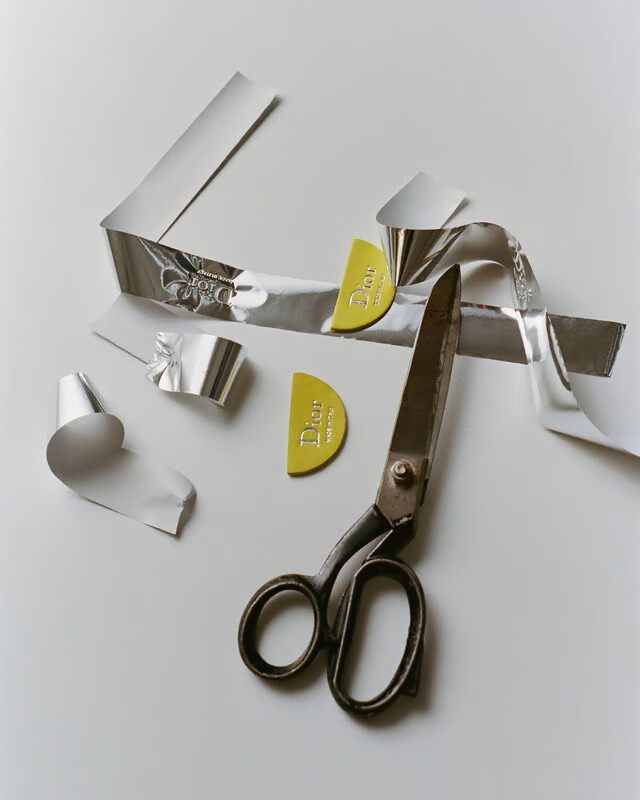
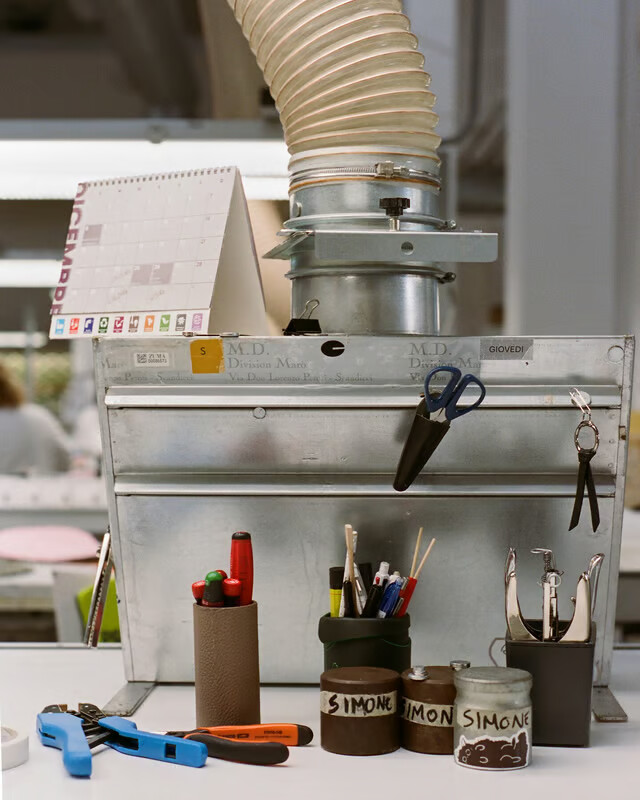
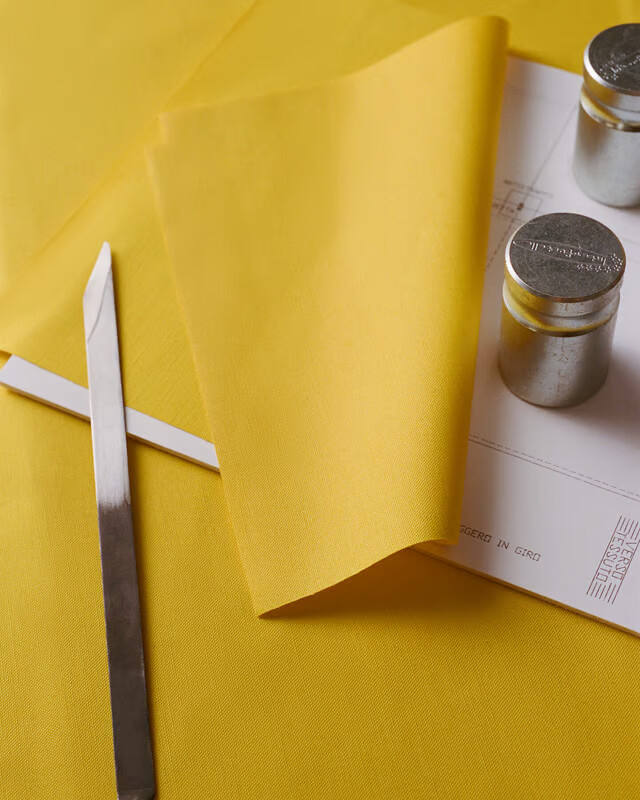
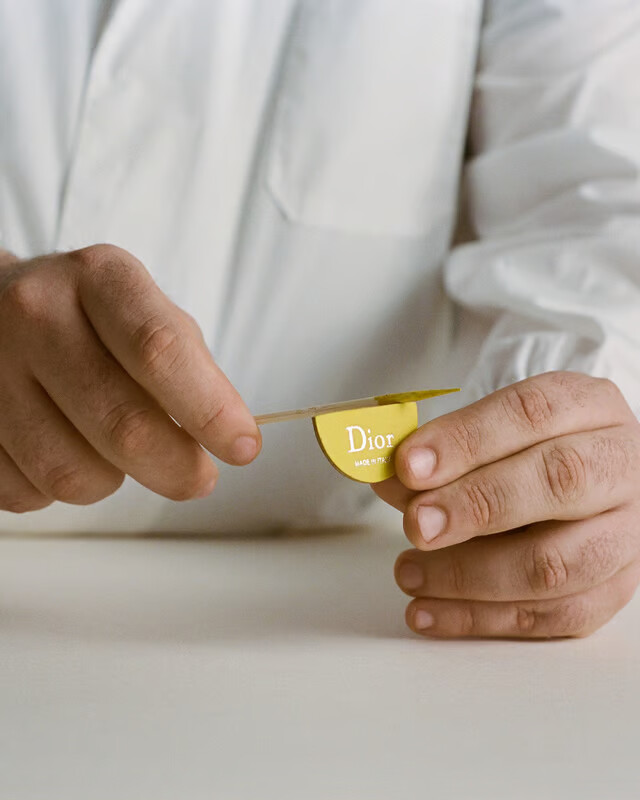
You also see the quiet, unglamorous tools of making: scissors, rulers, metal weights on textile, and the workbench clutter that signals repetition and precision. Luxury here is not mystery; it’s labor, repeated until the result looks inevitable.

Sizes, carry options, and what fits
The Dracula tote isn’t one bag—it’s a format offered in sizes that behave very differently in real life. If you’re deciding between them, start with how you actually move.
Mini is for essentials and impact. It keeps the “cover” concept concentrated and works best as a statement piece when you don’t need to carry a laptop.
Medium is the sweet spot for daily use—large enough for a full day, still controlled on the body. If you commute, travel light, or want the book-cover idea without the full luggage-scale tote, this is typically the most wearable choice.
Large is the full fantasy—and the most functional if you treat the Book Tote like an elevated carry-on. It’s the size that makes the typography feel like a billboard in the best way, but it’s also the size that will show wear first if you’re hard on corners.
Alternatives if you love the idea but not “Dracula”
If the concept is what you want—the graphic “cover,” the readable front panel—explore other Book Tote directions that shift the mood:
- Dior’s classic Book Tote embroideries for a softer, pattern-led look.
- Oblique for a more coded, heritage-heavy statement.
- Toile de Jouy for collectors who want narrative illustration without headline typography.
- Other pieces from the Book Cover Collection if you prefer a different literary energy.

FAQs
Is the Dracula Book Cover Tote limited edition?
It’s positioned as a collection design rather than a permanent staple. Availability can change quickly by size and region—treat it as time-sensitive.
Will the embroidery snag?
It can, like any dense stitched textile. Be mindful with rings, sharp nails, and rough surfaces.
Is it heavy?
Structured, embroidered totes carry more “presence” than plain canvas. Choose size based on how long you’ll carry it.
Can it be cleaned?
Proceed carefully. Gentle spot-cleaning is safer than deep cleaning that may disturb threads or structure.
Conclusion
The Dior Dracula Book Cover Tote is proof that the Book Tote can still surprise: not by changing its silhouette, but by turning the front panel into a readable artifact—typography as craftsmanship, literature as luxury signal. If you buy it, treat it like the object it’s trying to be. Store it upright, protect the corners, and support the interior so the “cover” stays crisp—because the most collector-minded thing you can do is preserve the shape you paid for. A well-fitted bag pillow is a quiet, practical way to keep that structure intact between wears.