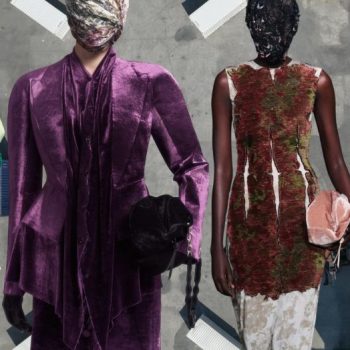
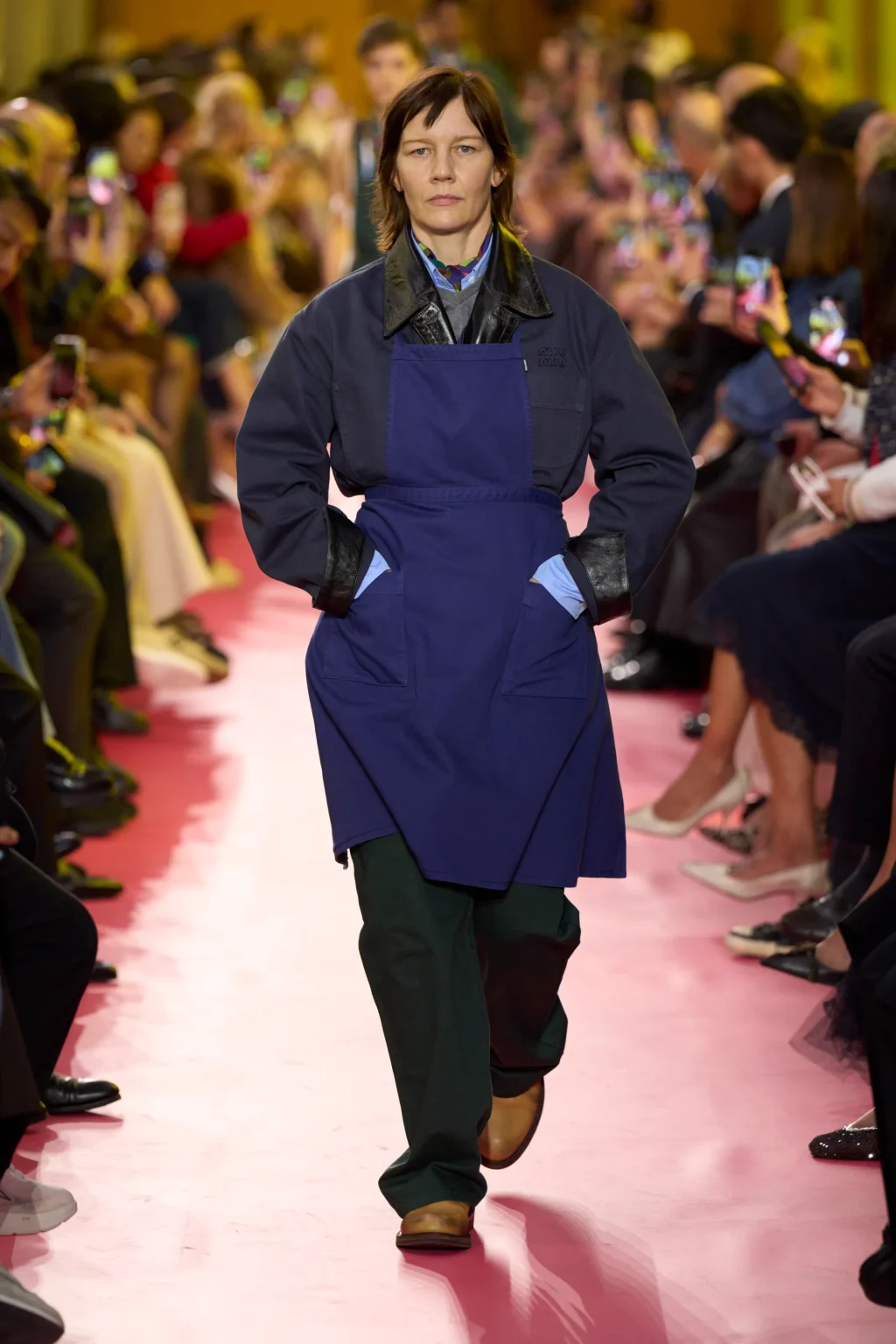
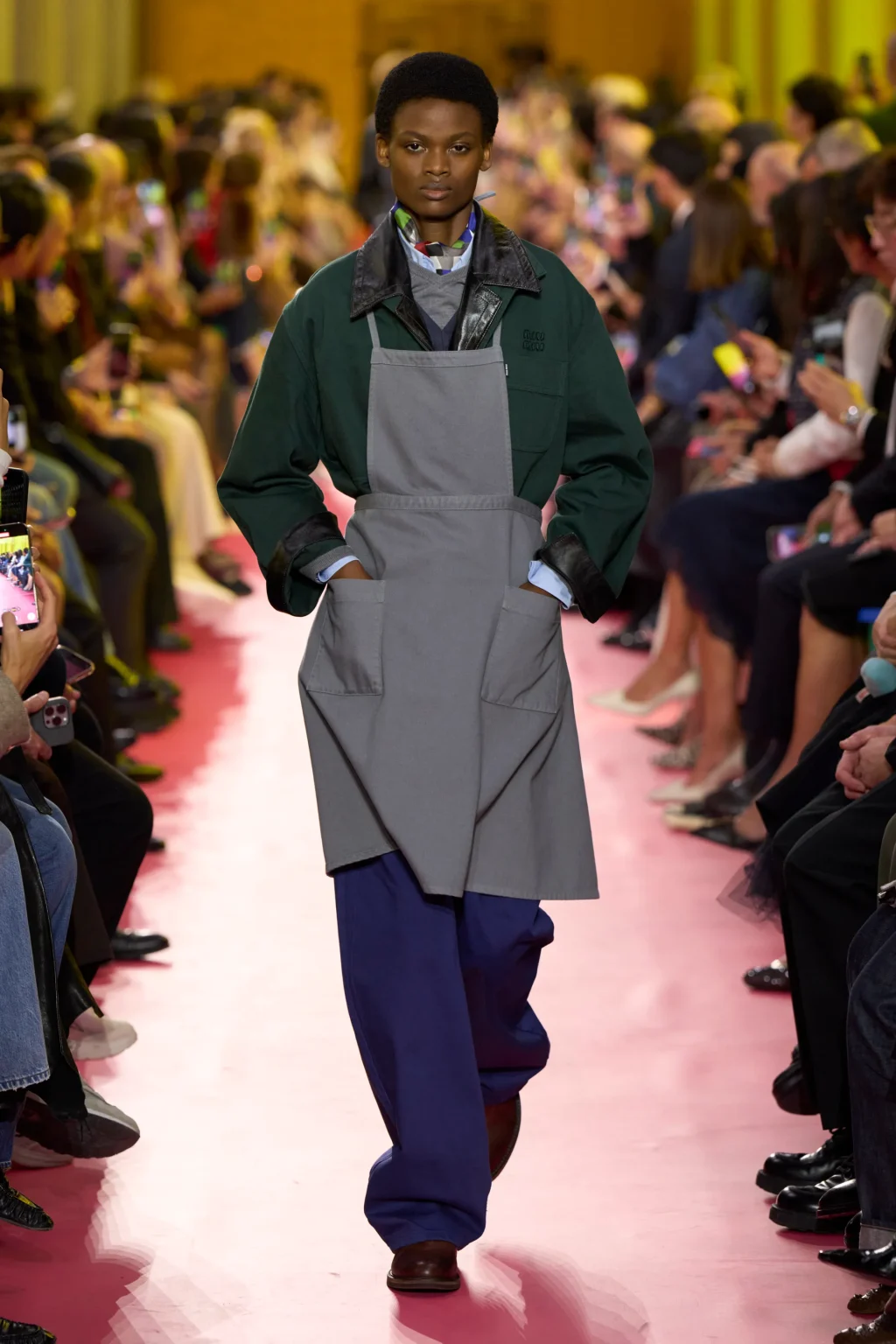
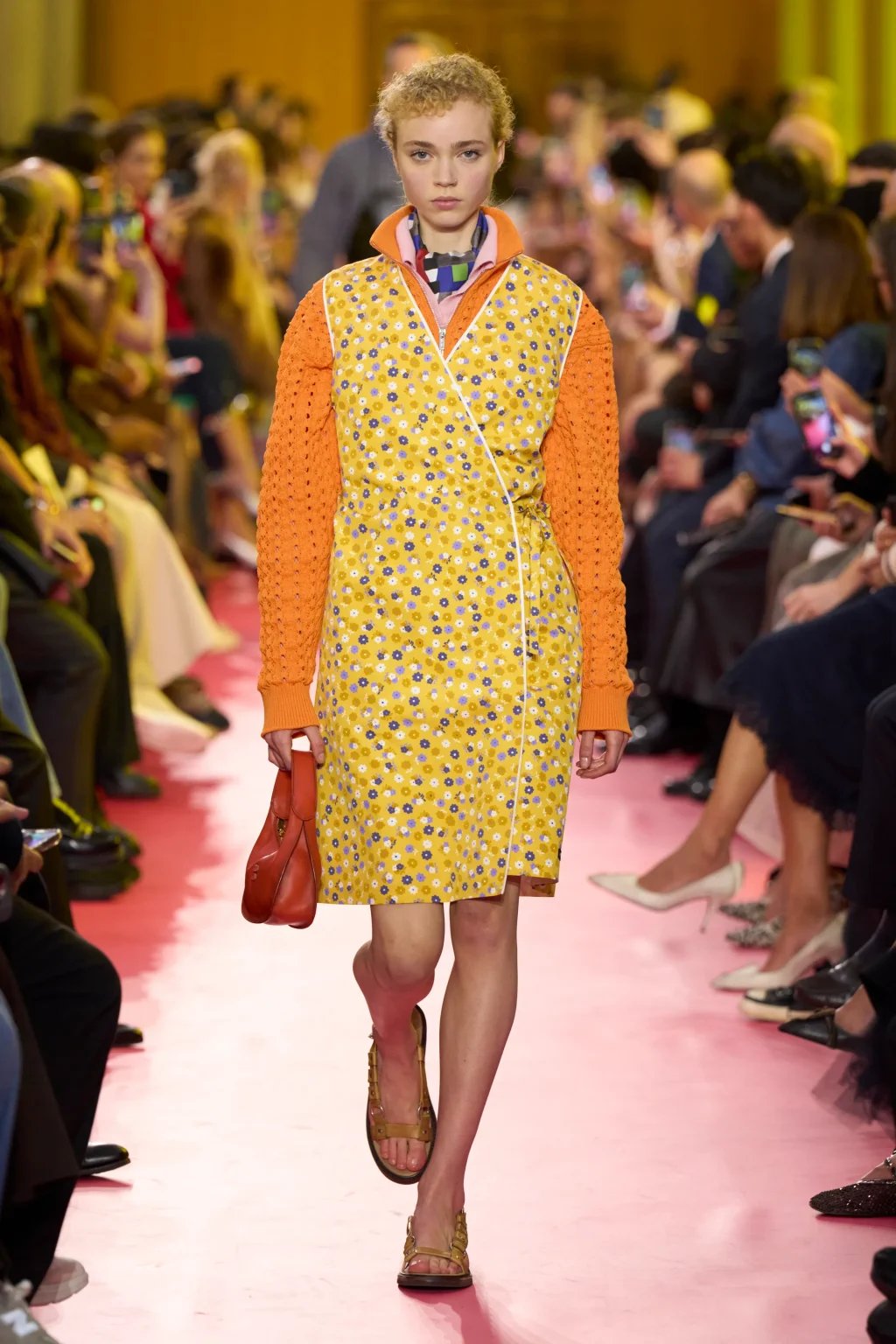
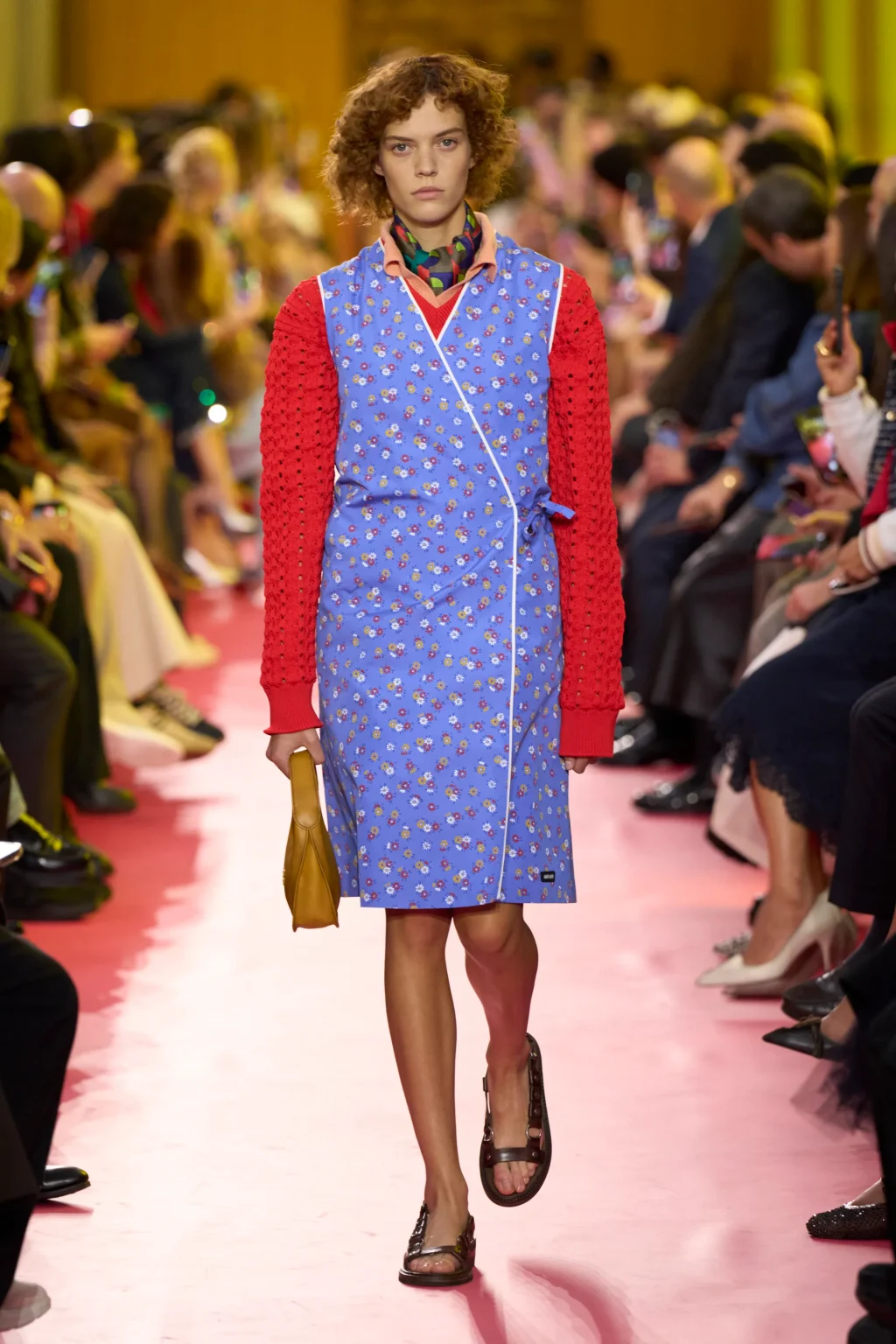
Miu Miu’s Spring/Summer 2026 show show arrived at Paris Fashion Week on October 6, 2025, staged at the Palais d’Iéna—a venue whose institutional weight sharpened the collection’s argument. Miuccia Prada built the season around the apron, not as a whimsical styling cue but as a charged symbol of women’s work: care, protection, effort, and the uneasy visibility of labor once it’s reframed as luxury. The casting reinforced that “working wardrobe” thesis, moving from sober, uniform-like silhouettes into florals and leather that deliberately complicated the message rather than softening it..
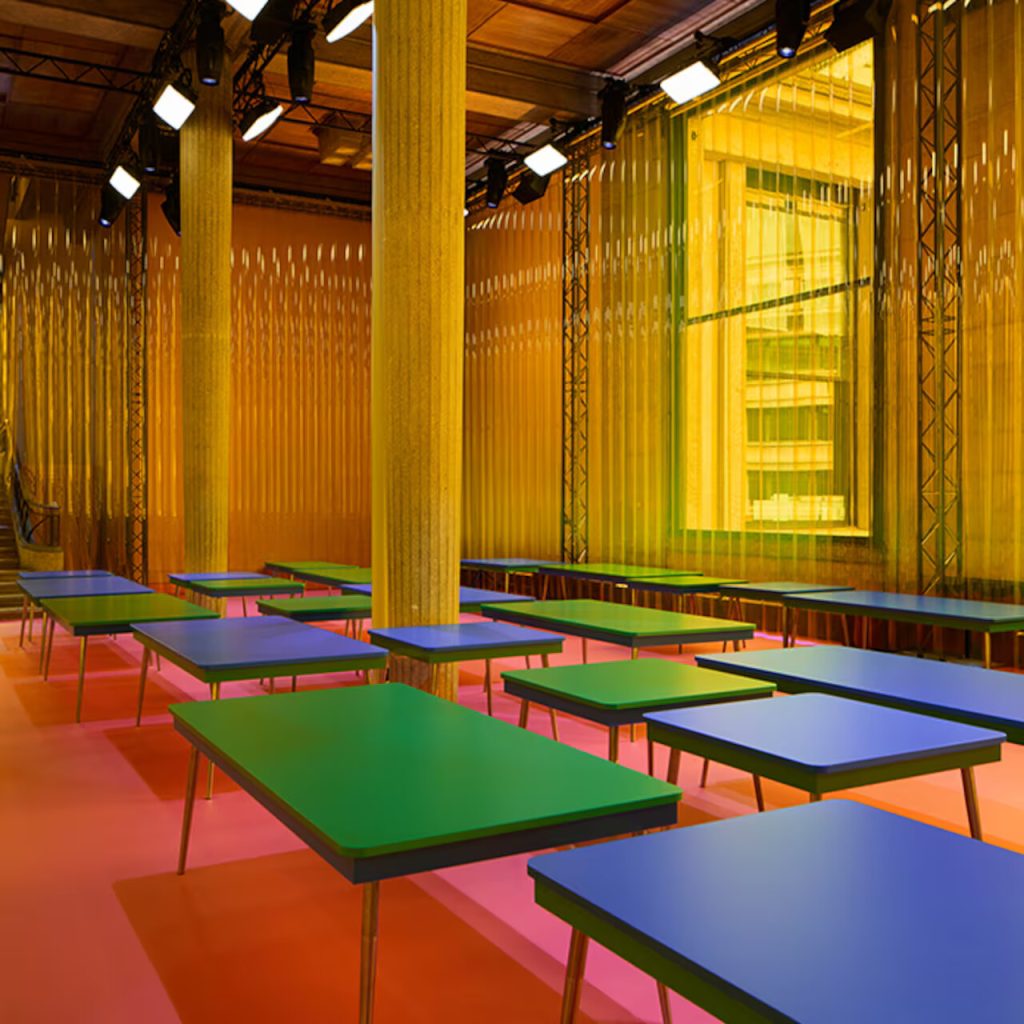
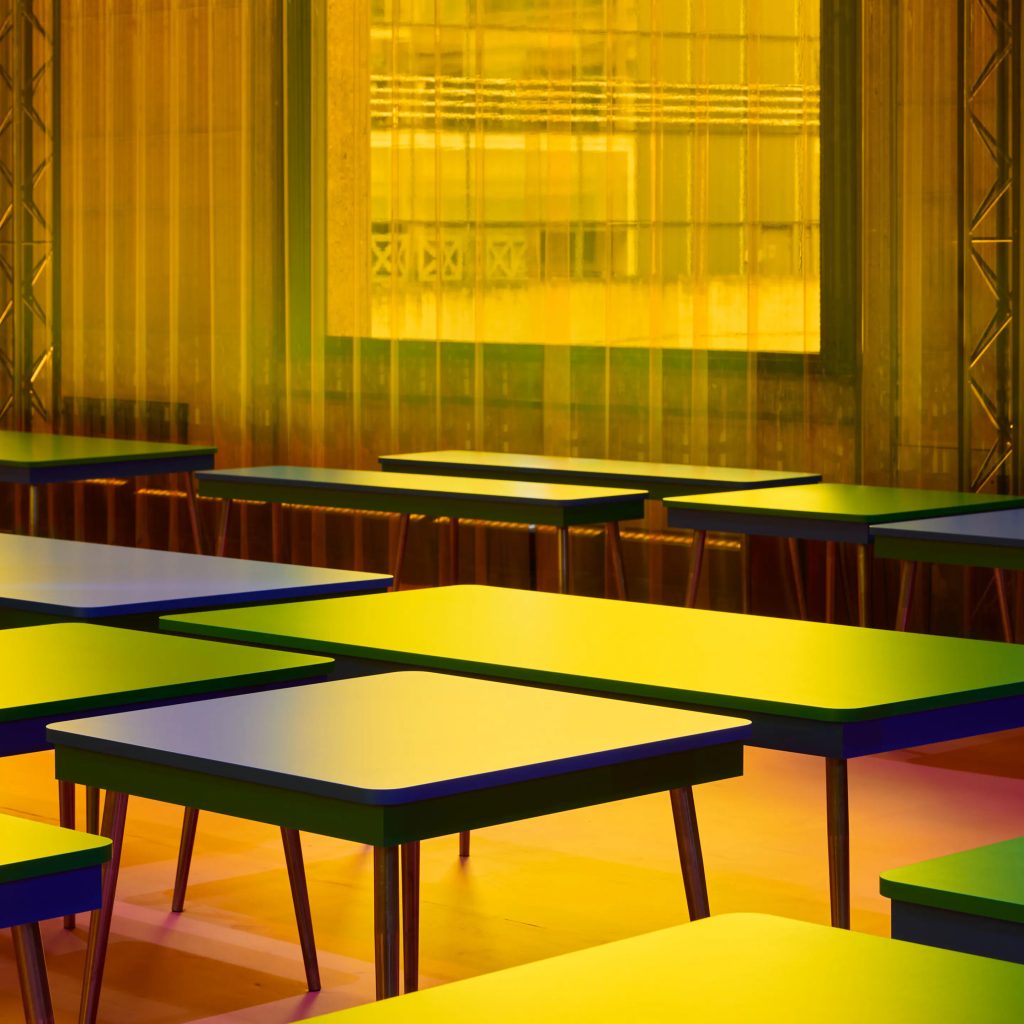
The show scenography transforms the hypostyle of the Palais d’Iéna – itself a place of work into an abstraction of everyday domestication. It is punctuated by field of Formica tables in contrasting shades.
The Washington Post linked the collection’s thinking to Helga Paris’s portrait book Women at Work, and the casting underlined that “working wardrobe” thesis—actress Sandra Hüller opened in a machinist-like wrapper, setting a sober, purposeful tone before the show pivoted through floral pinafores, sharper leather iterations, and flirtier takes that deliberately complicated the message.
The importance of work. Its significance, its relevance and meaning. The Spring/Summer 2026 Miu Miu collection by Miuccia Prada is a consideration of the work of women – their challenges, adversity, experience. Its invisibility is confronted and addressed, recognized and valorized.
Work as an expression of effort. Work as a symbol of care and love. Work as a reflection of independence, a means of agency. The apron, as a universal symbol of work, is afforded a nobility and respect. A reflection on function and purpose, the apron can be simultaneously utilitarian and decorative. Cultural meanings of this garment can shift radically according to changes in materialization and form – from domiciliary to clinical to industrial, physical labor to care-giving, primary and tertiary industries and the domestic sphere. A single garment containing multitudes.
Reception, predictably, split along the tension Prada was prodding: the internet’s sensitivity to runway appropriation of workwear versus the more interesting read—an intentionally uncomfortable meditation on aspiration, class signals, and what “looking rich” even means right now.
Moving between these inherited aesthetic citations, sentiments transpose. An observation of factory work in the documentary photography of Dorothea Lange (1895-1965) and Helga Paris (1938-2024) provides a perspective on a reality of clothes. Industrial drill and leather, cotton poplin, silk cloqué, lace, raw canvas embroidered. Shoes, handbags, accessories reflect, in muscular leathers, a notion of robustness and utility, an industrial beauty. Ruffles – the most basic symbol of the feminine – have a transformative effect. Toughness and sweetness. A challenge and inversion of societal definitions, ramifications and expectations.
Miu Miu Spring/Summer 2026 bags at a glance
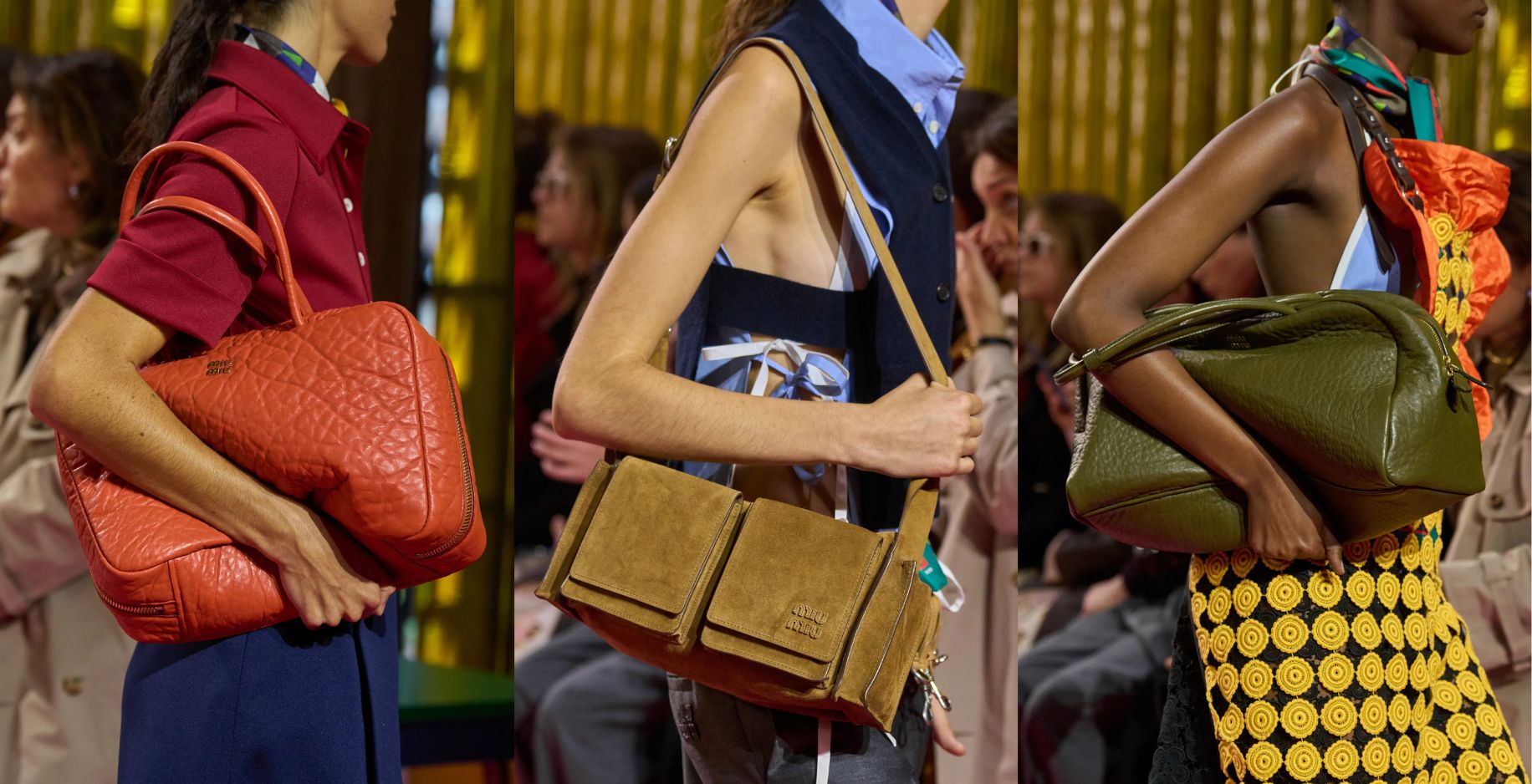
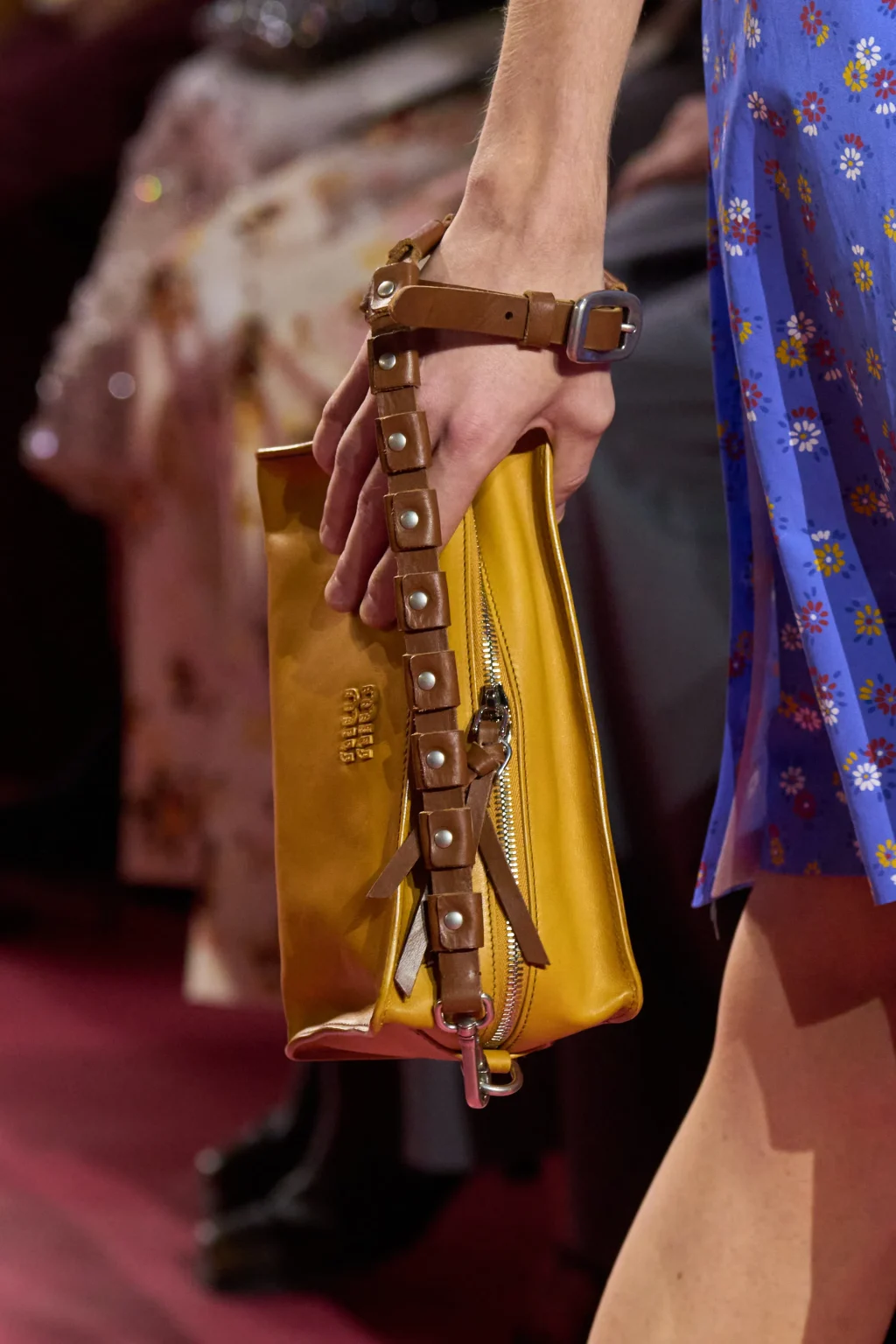
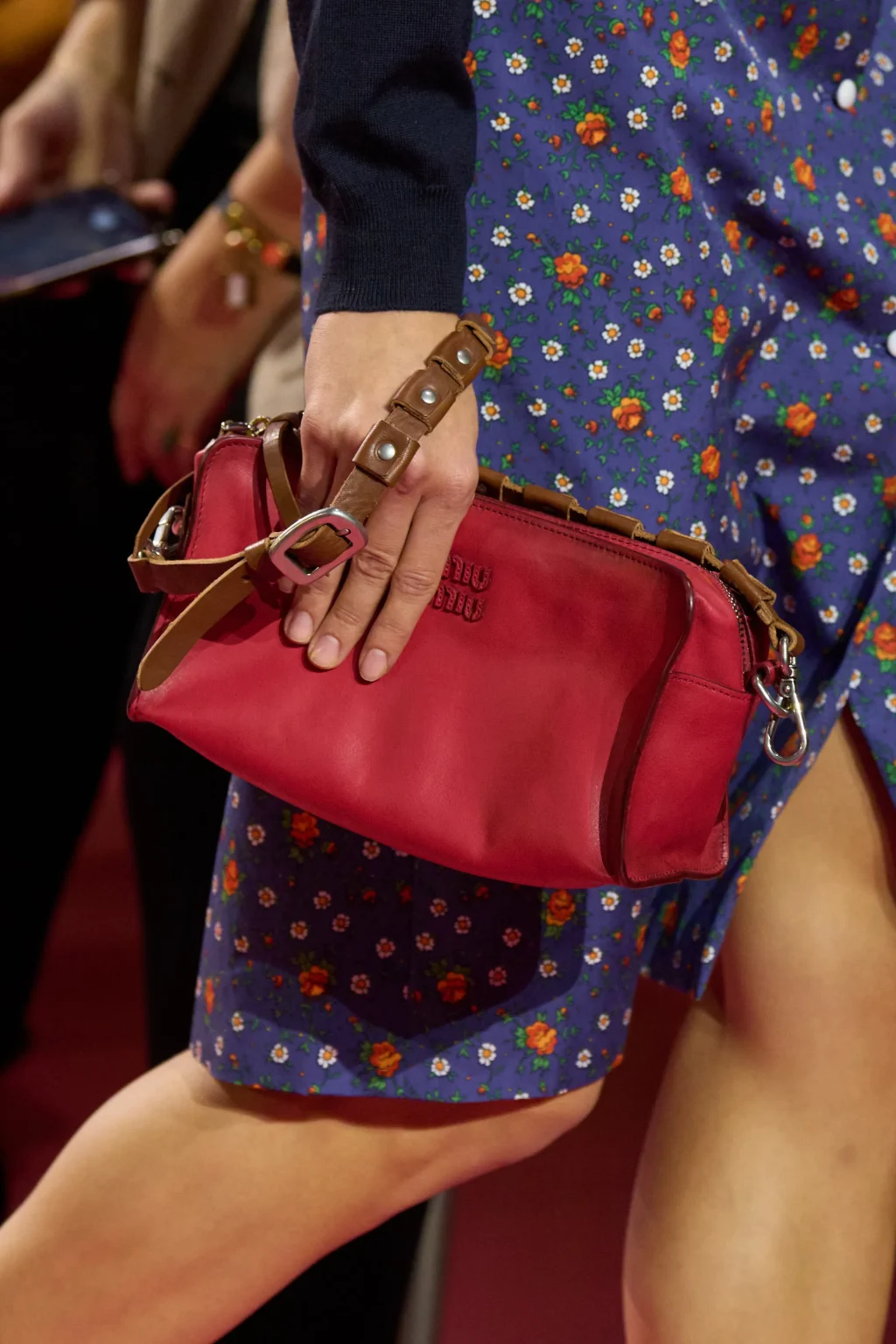
Across the runway edit, three ideas repeat. First: zip-top, bowling/holdall shapes in saturated, almost “stored-in-a-drawer” tones—mustard, oxblood, olive, ink-black—carried like real life is expected to happen. Second: compact clutches and pouches that don’t rely on logo for impact; they rely on grip systems (wrist cuffs, harness straps) that turn the hand into part of the silhouette. Third: top-handle forms whose handles are the story—belted, riveted, segmented constructions that read less “handbag trim” and more “functional rigging.”
Important! Miu Miu has not publicly itemized every runway bag with final retail names/prices in the show materials available online. This guide is built from the brand’s published show notes plus runway close-ups and reviews, clearly separating verified details from observed design cues.
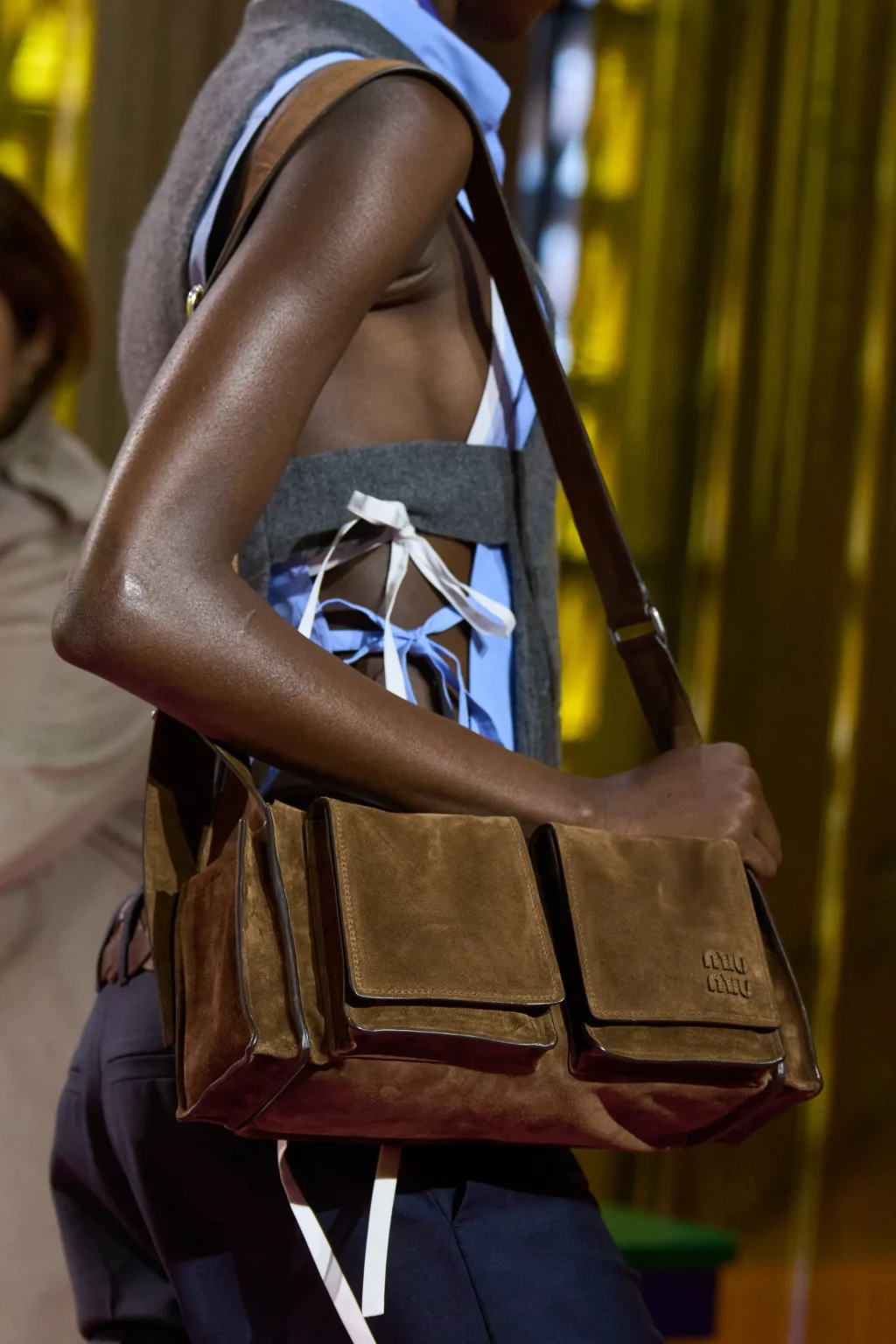
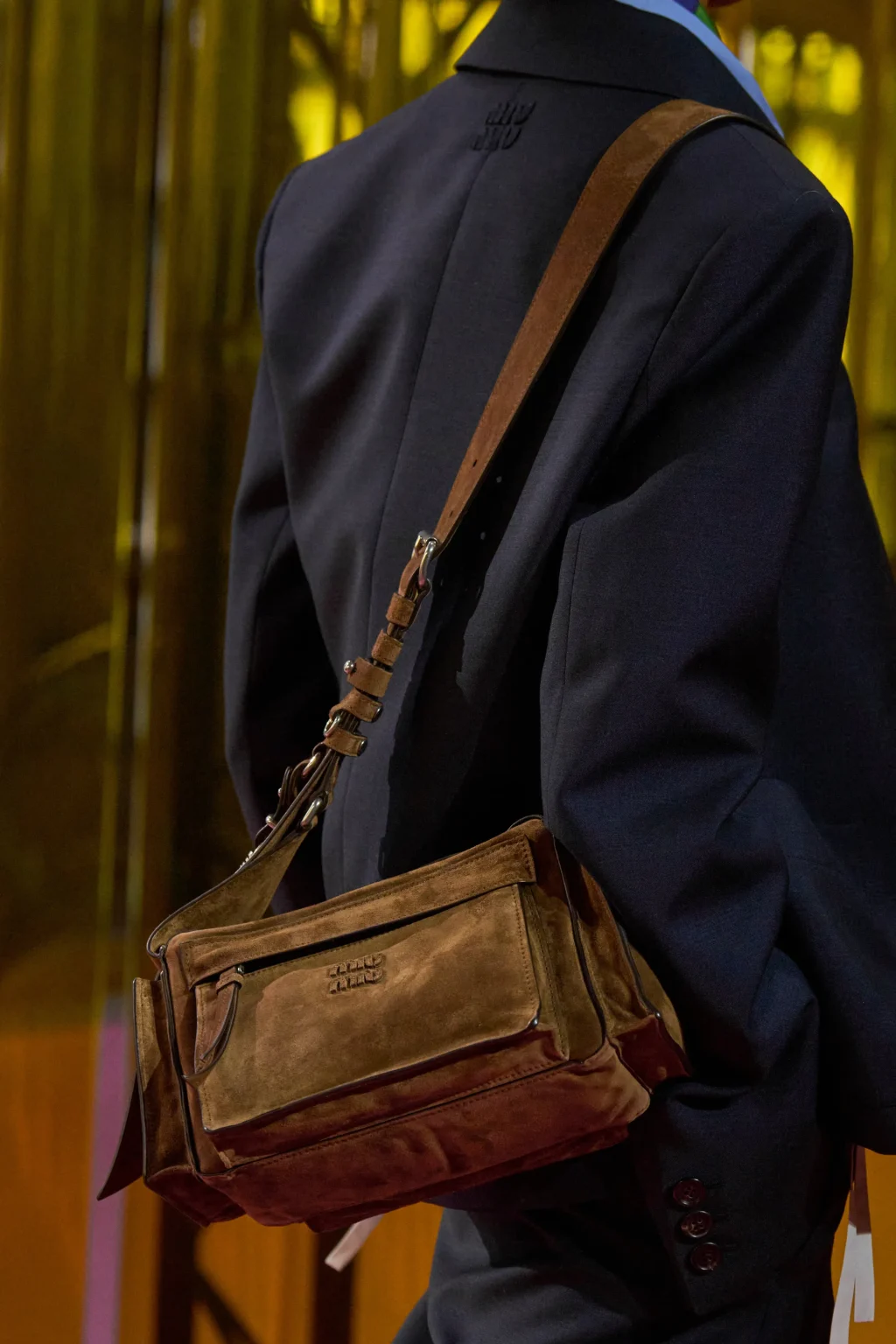
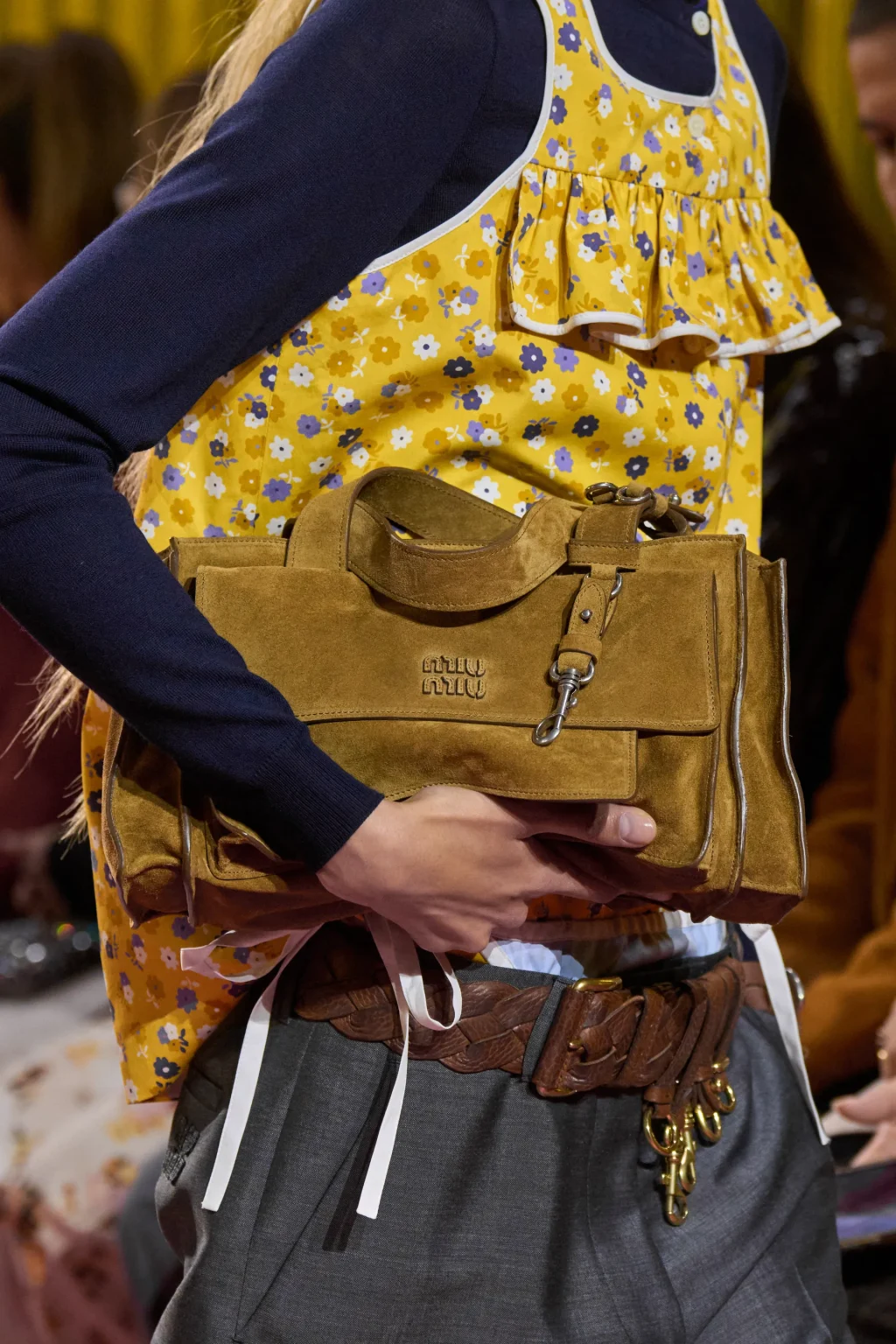
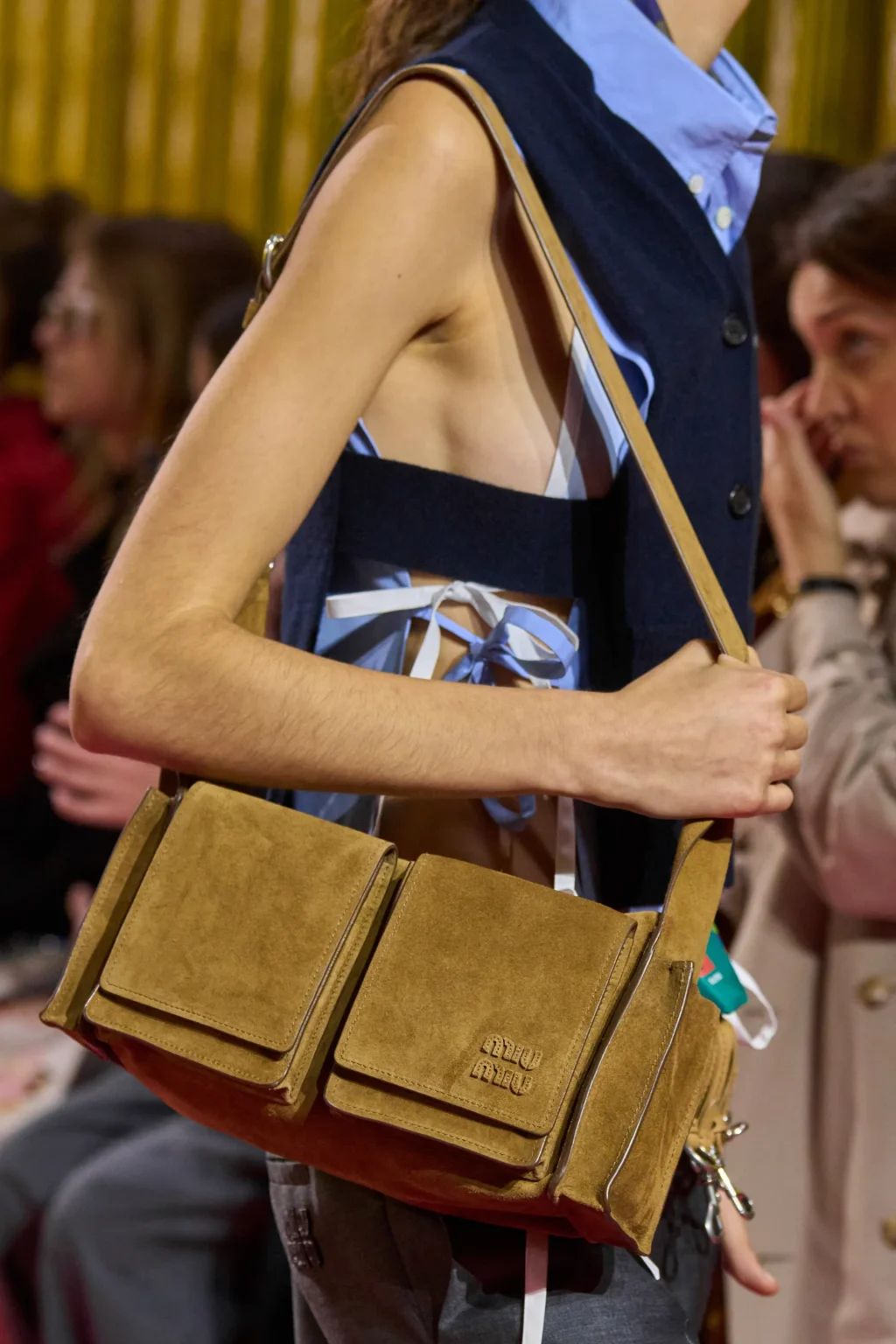
1. Utilitaire bag
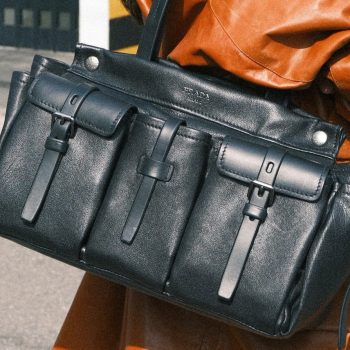
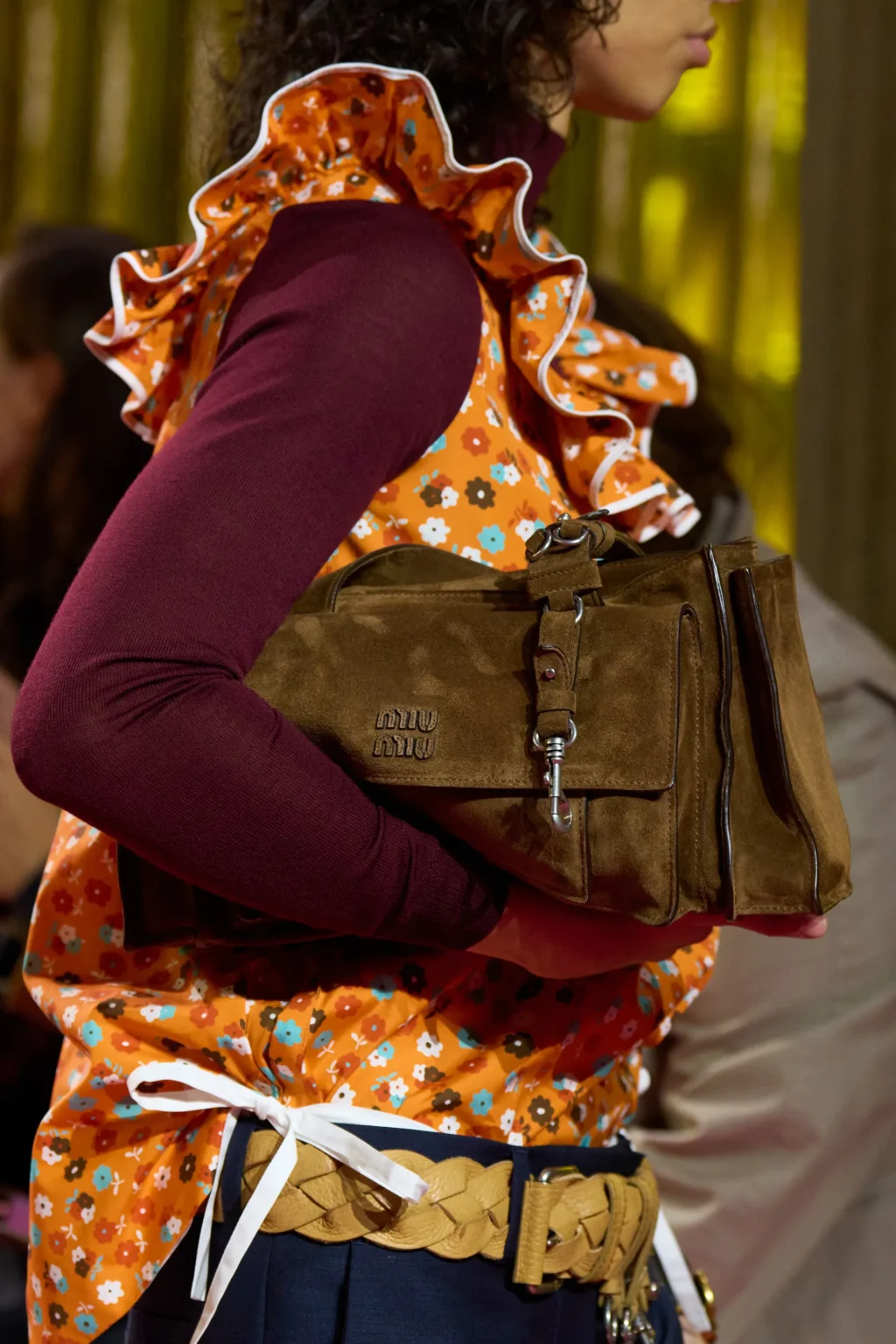
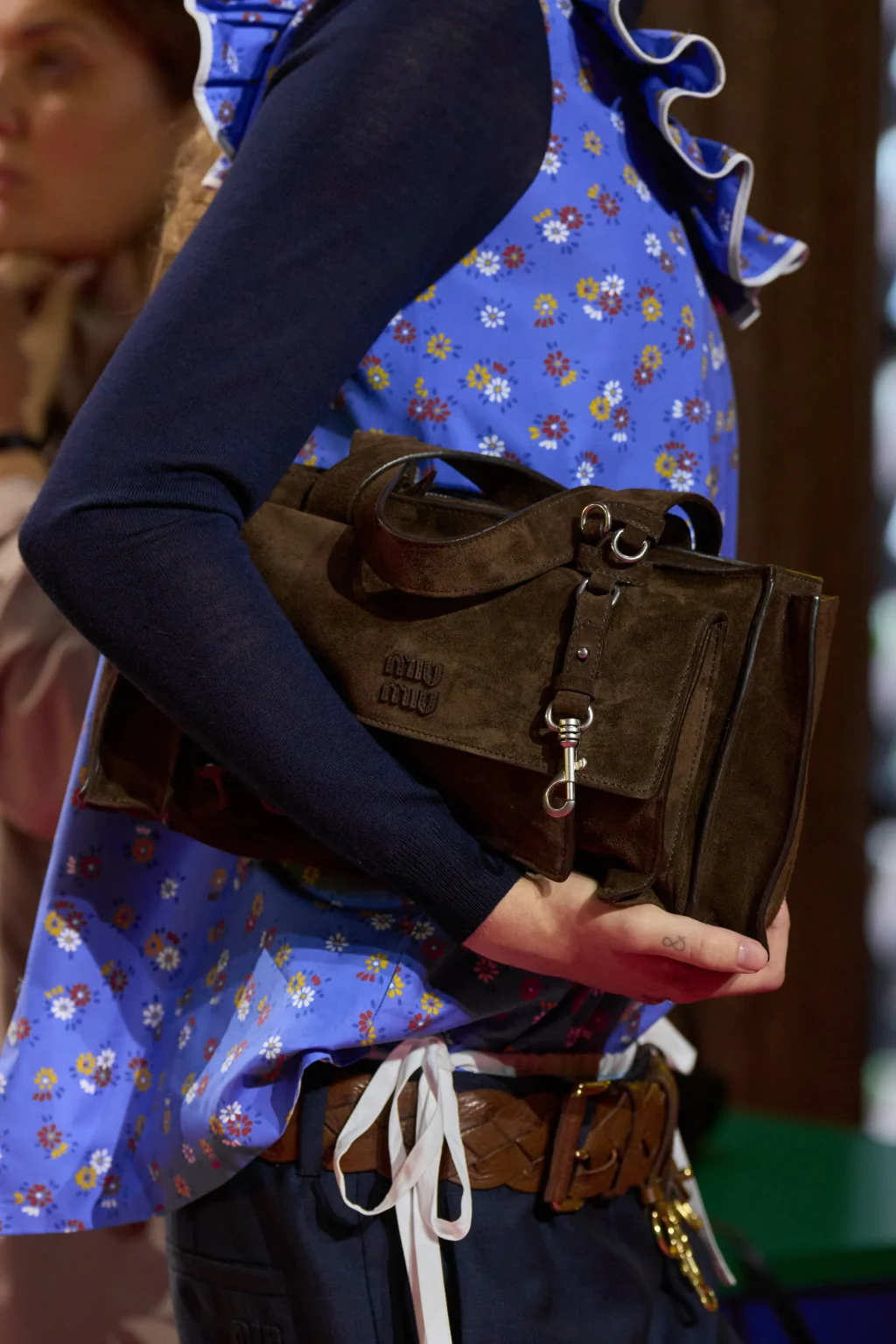
The Utilitaire is Miu Miu’s clearest expression of “work bag, elevated”—a pocketed, modular front that reads almost gear-like, but executed with polish rather than heaviness. The structure is relaxed instead of rigid, designed to sit close to the body rather than hold a hard box shape, which makes it feel more capable than “quiet luxury.” It’s not trying to be discreet; it’s trying to look useful, and that’s exactly the point.
Material does the styling here. In suede (calfskin), the bag turns soft and artisanal—nap-driven, tactile, slightly nostalgic. In nappa (lambskin) with an antiqued finish, it becomes more surface-forward: depth, texture, and that worn-in suggestion without actual damage. As listed on Miu Miu’s US site at the time of writing, the shoulder size is priced at $3,450 and the shopping size at $3,700 (pricing and colors vary by material).
2. Aventure bag
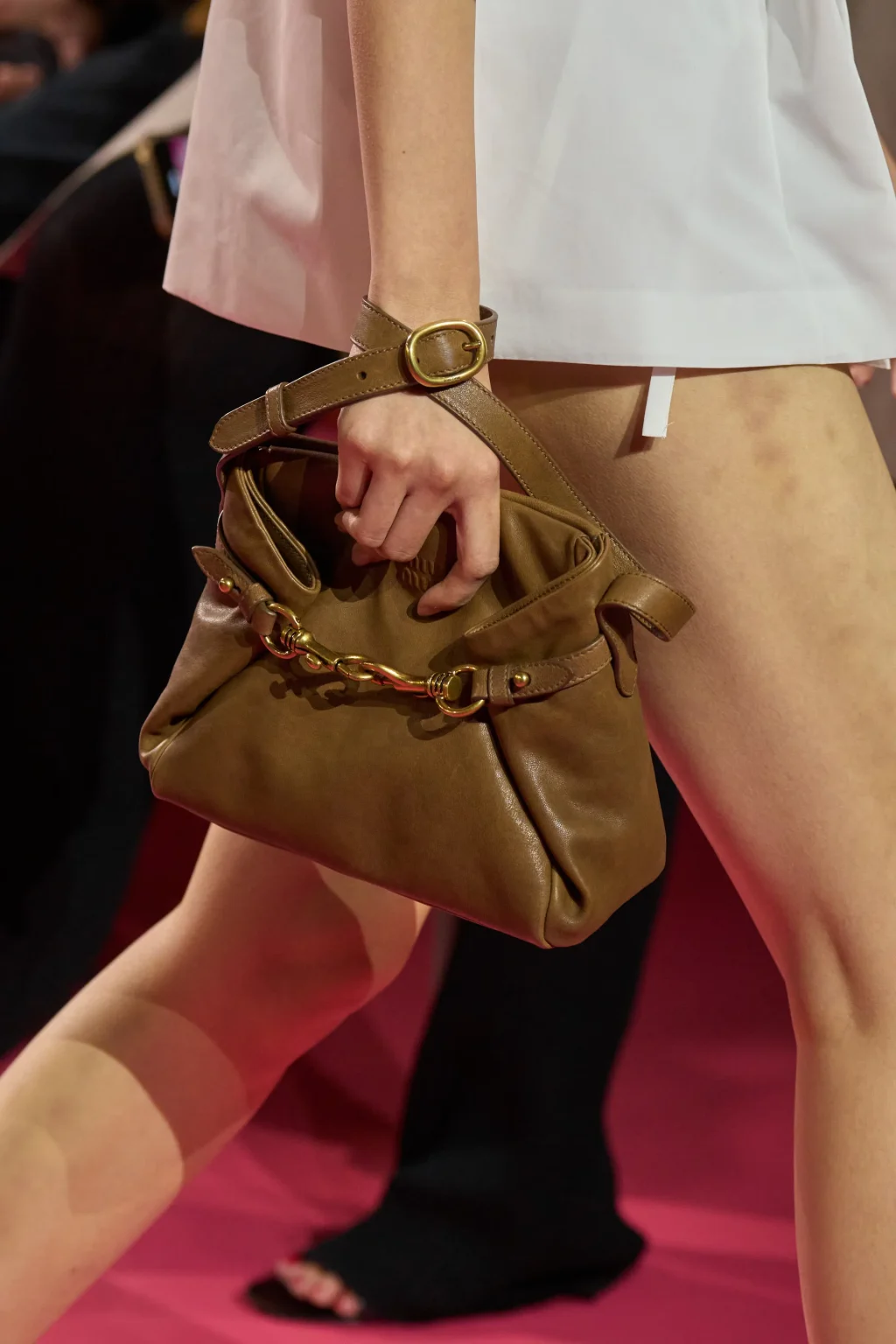
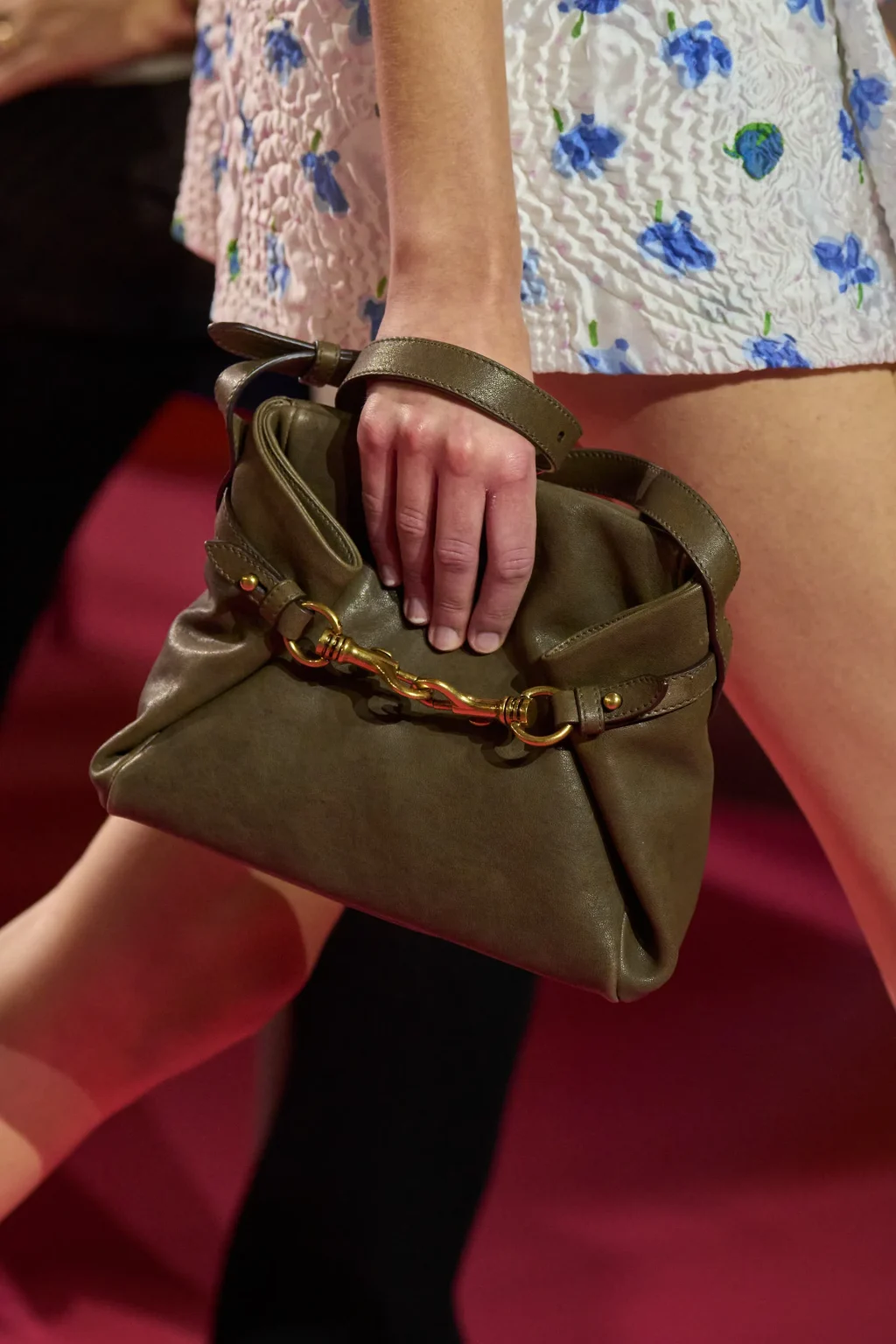
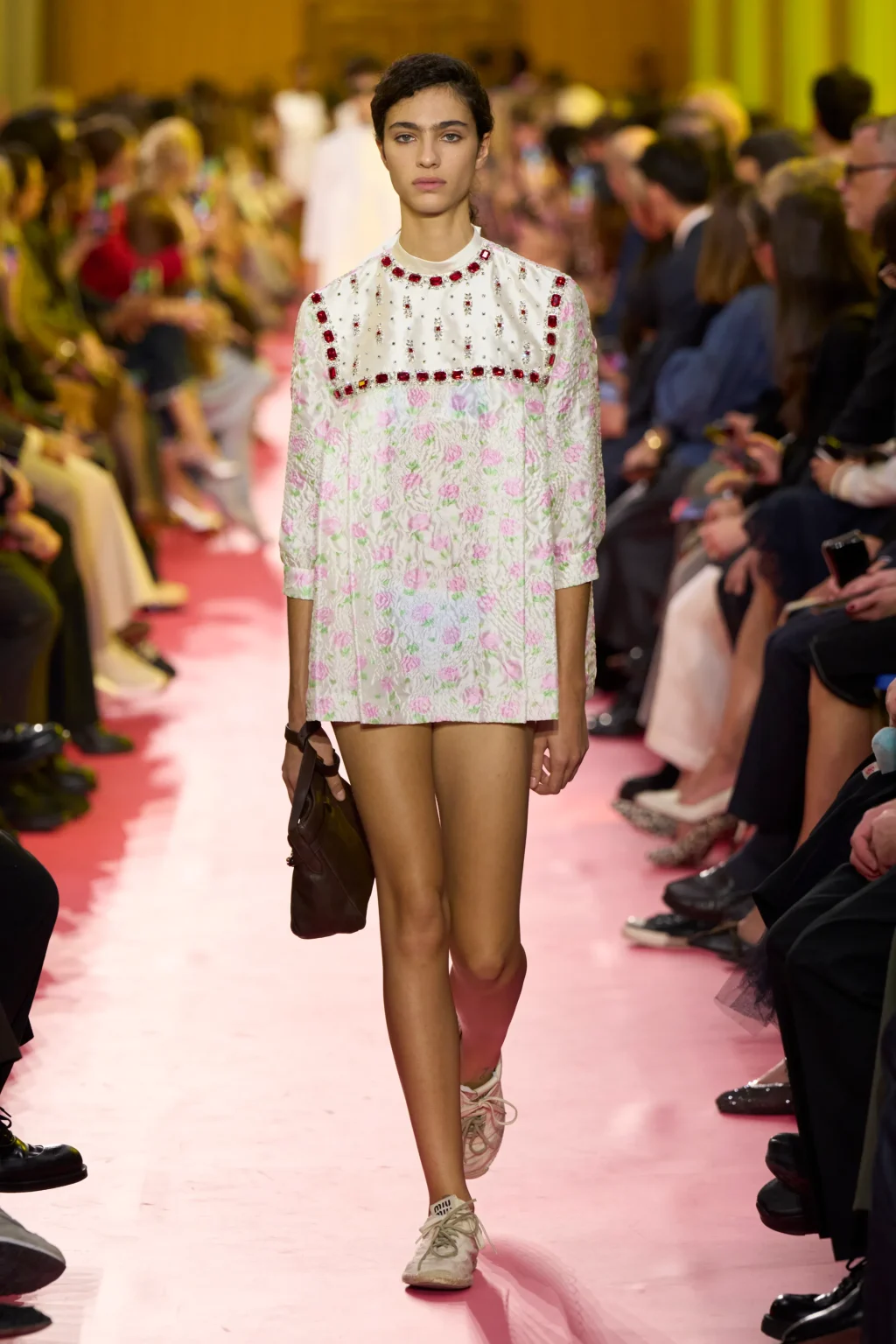
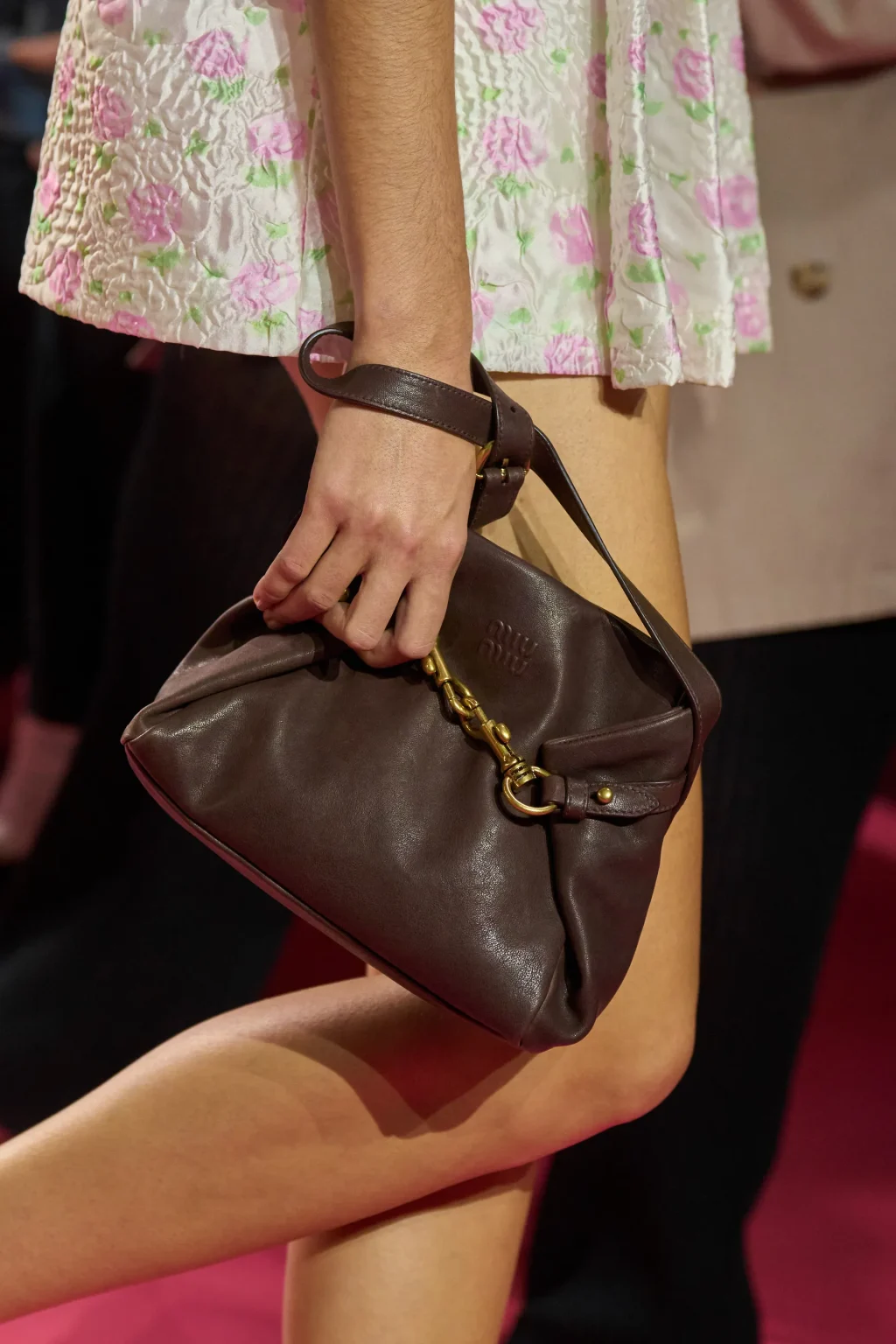
Aventure is Miu Miu’s grown-up utility moment—an archive-anchored silhouette that sits in the sweet spot between “serious bag” and “cool bag.” The house positions it as a staple with sleek lines and refined metal hardware, designed to read timeless rather than trend-chasing. But the SS26 runway styling is what makes it feel newly sharp: suede that looks already lived-in, pockets that sit proudly on the body, and closures that feel engineered instead of decorative.
Its identity is in hardware logic. Aventure isn’t “just another flap”; it’s defined by snap-hook closure energy, strap-and-clasp construction, and an old-luggage, slightly equestrian sensibility—polished through Miu Miu’s controlled, ironic lens. The brand explicitly connects the silhouette to a 2009-inspired design, and SS26 leans into that “found-in-an-attic” romance: warm browns, suede texture, and function you can actually use.
3. Wander
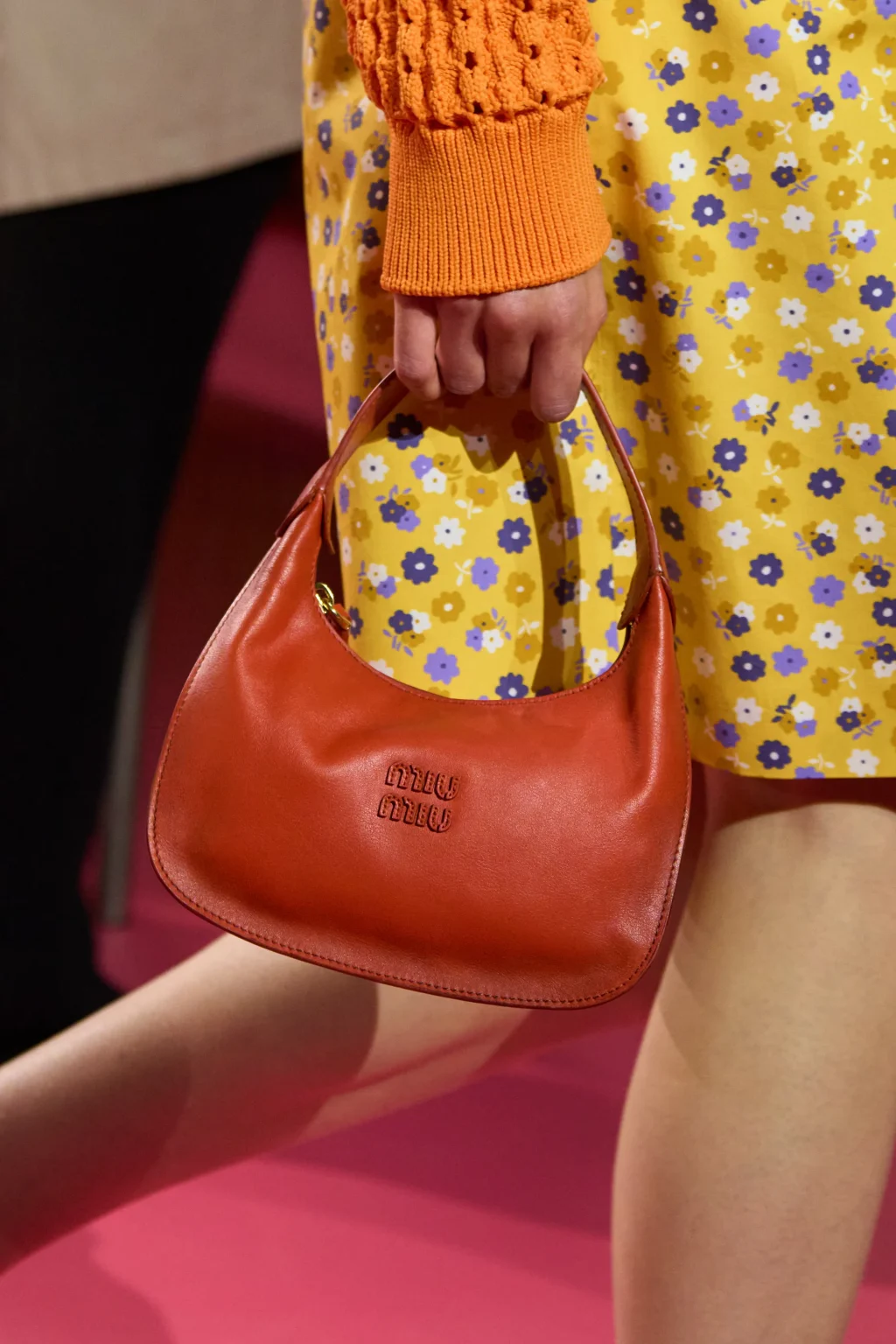
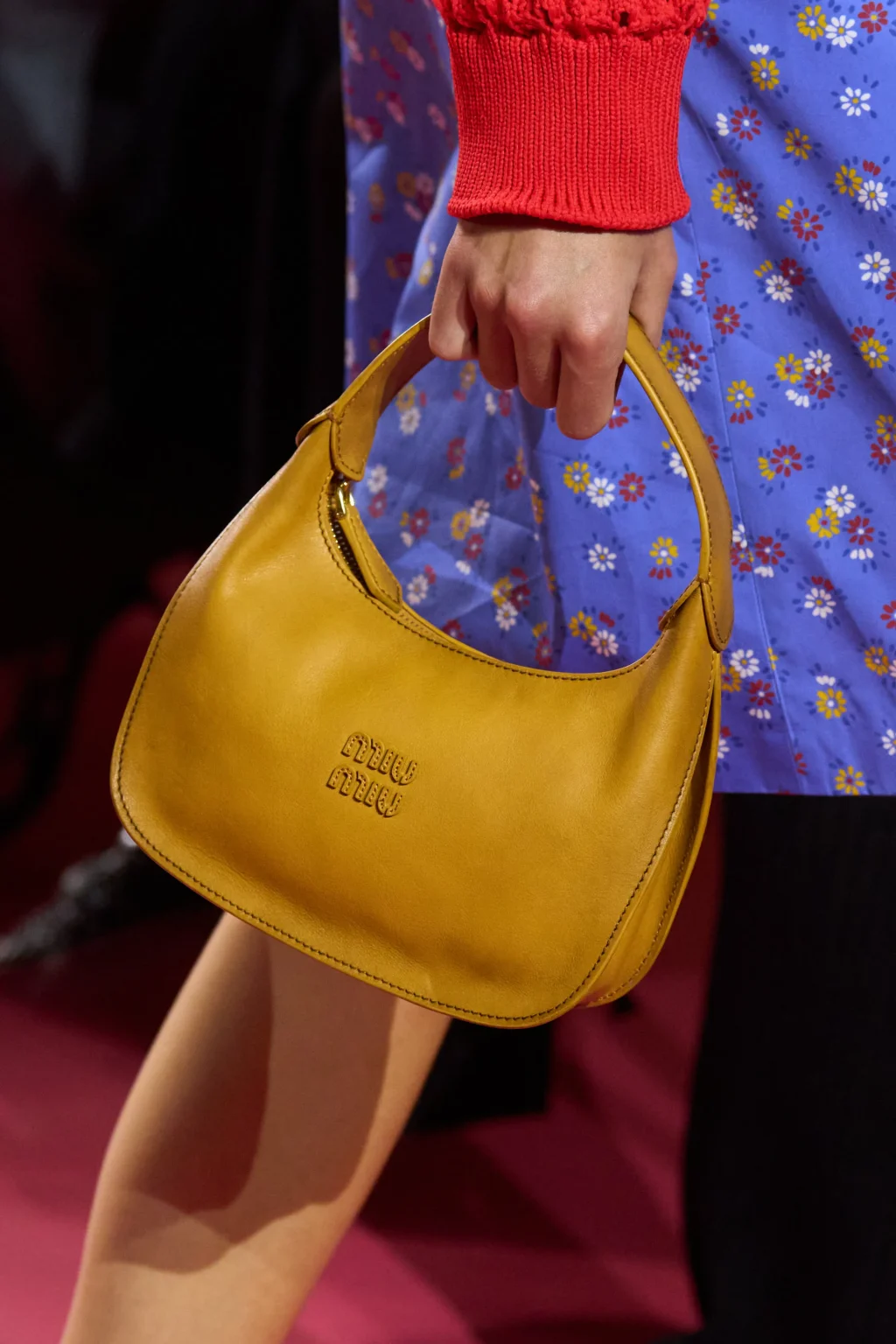
Wander remains Miu Miu’s signature hobo: a compact crescent with a soft curve and a point of view—playful, but finished like a proper leather piece. In the SS26 show, it works as clean punctuation. While the season’s bigger bags flirt with excess volume and “equipment” energy, Wander is the small, intentional counterpoint: rounded enough to soften the look, crisp enough to keep it from tipping into costume.
On the runway, the appeal is how easily it reads in a single glance. Carried in hand, it has that modern “little bag” photogenic charm, but the shape still behaves like a daily staple: a silhouette that’s familiar, refined, and wearable, especially when the color goes saturated and the curve becomes the styling.
4. Solitaire bag
Solitaire is an explicit archive callback—linked by Miu Miu to 2006—then sharpened into something cleaner and more contemporary. It’s structured through the top line and branding, but the leather is what makes it feel alive: soft, slightly glossy nappa (lambskin) that creases and collapses in the hand. That tension—disciplined outline, undone surface—is exactly where SS26 lives.
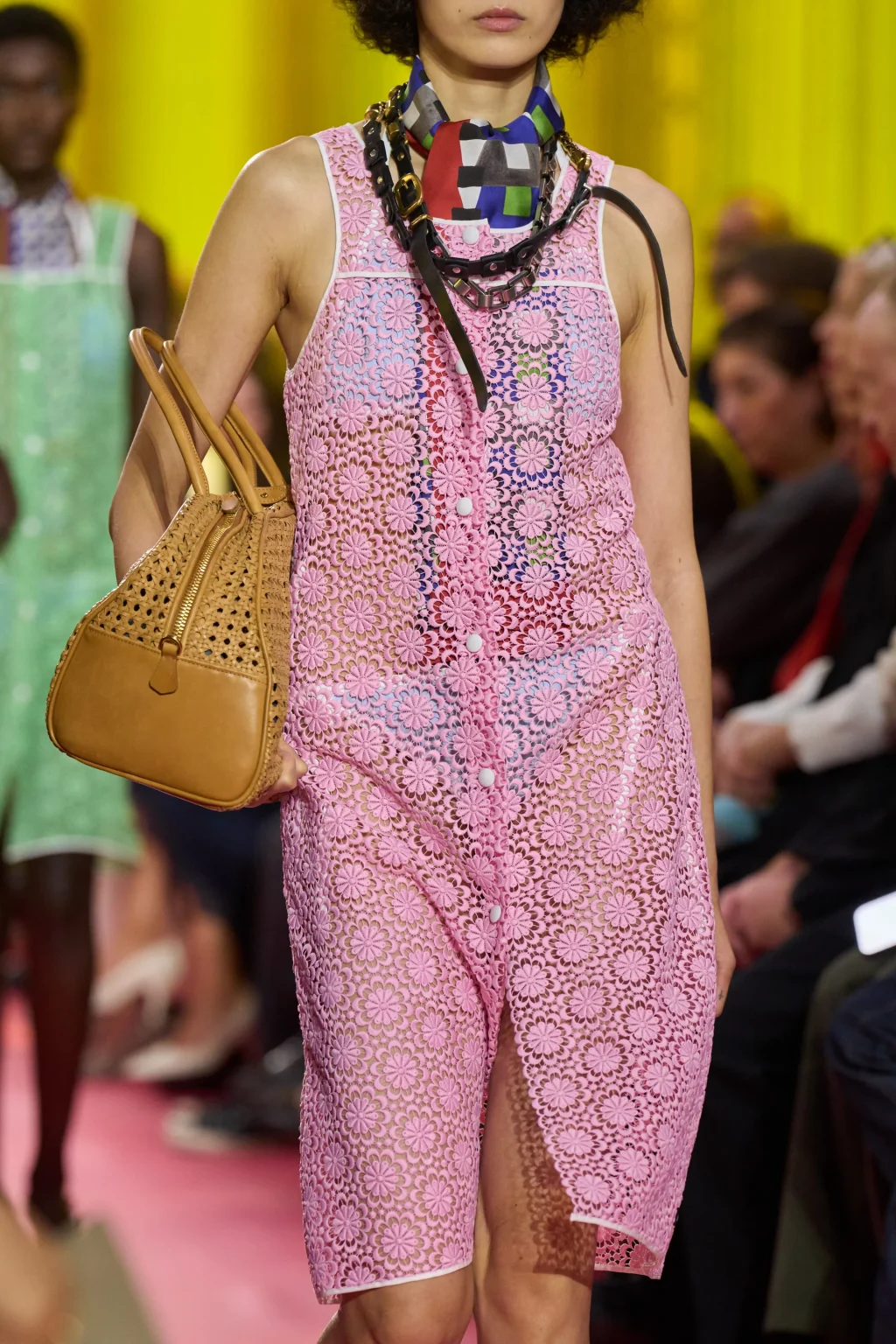
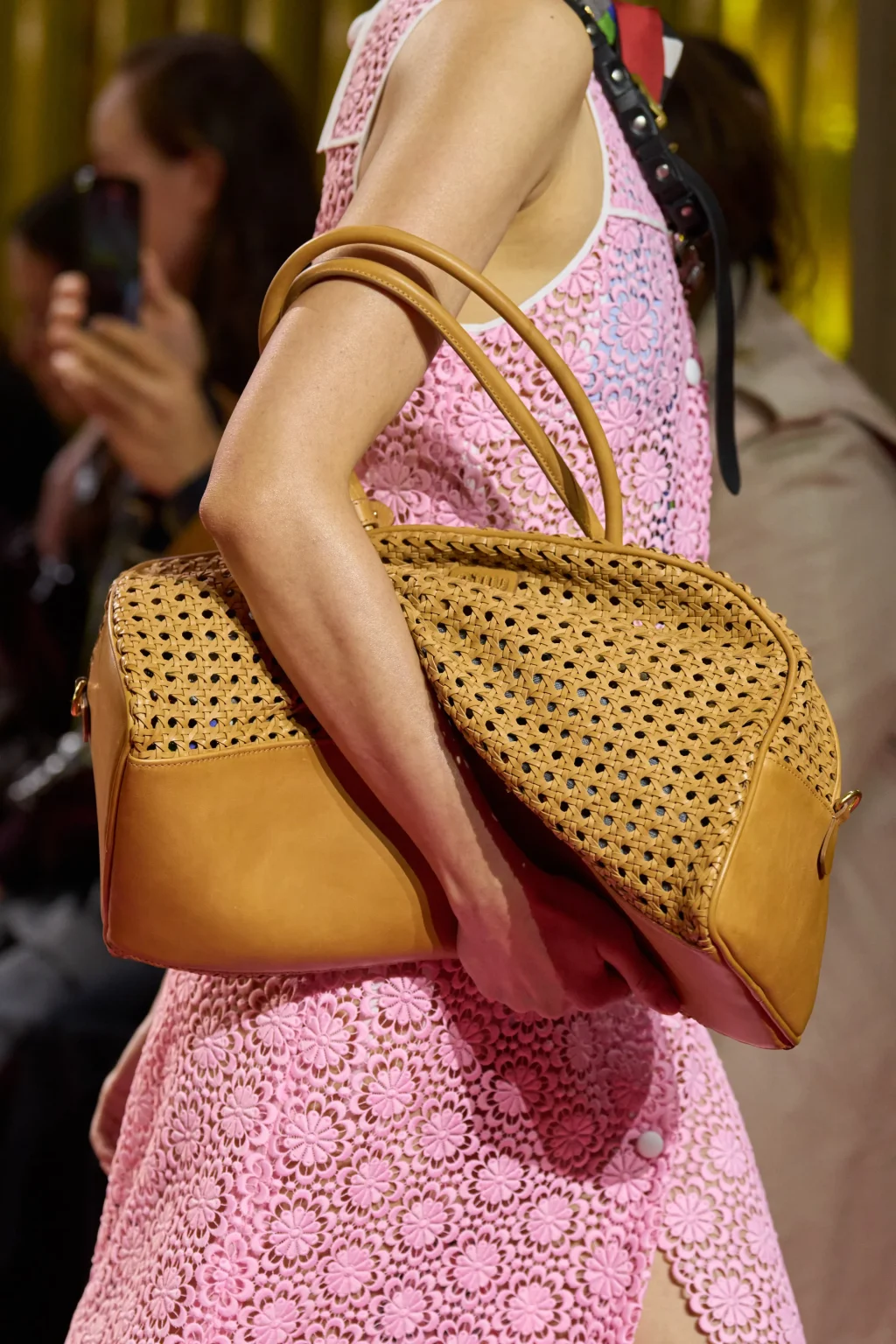
One of the most compelling SS26 texture plays lands here too: woven, basket-like surfaces that make “summer” feel intentional rather than beachy. The weave reads artisanal and irregular—more craft object than polished logo-bag—often framed by smooth leather panels and finished with crisp piping so the silhouette stays clean even when the surface is porous and tactile. It’s light in feeling, substantial in presence: an airy material story, kept firmly in Miu Miu’s engineered lane by structure and hardware.
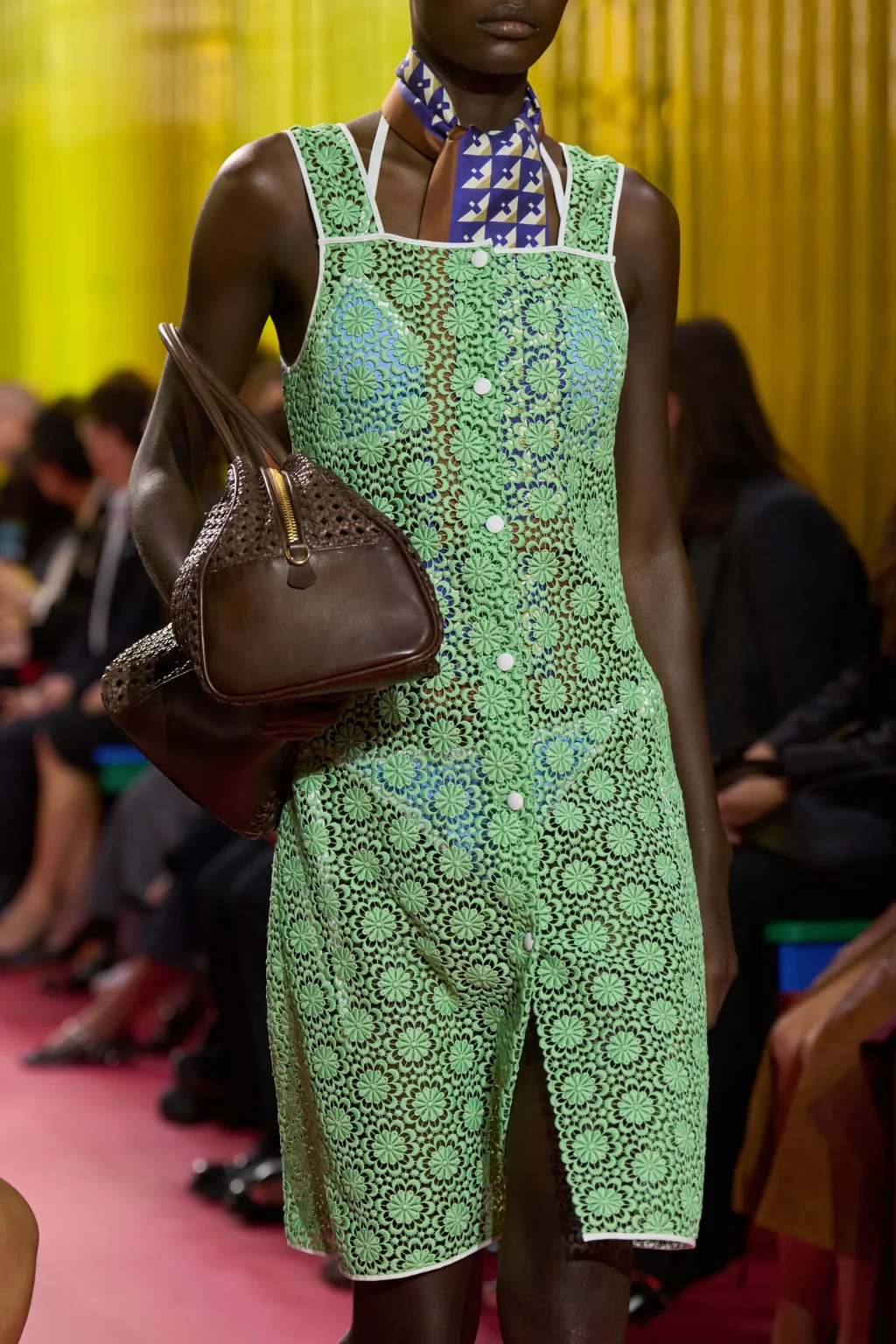
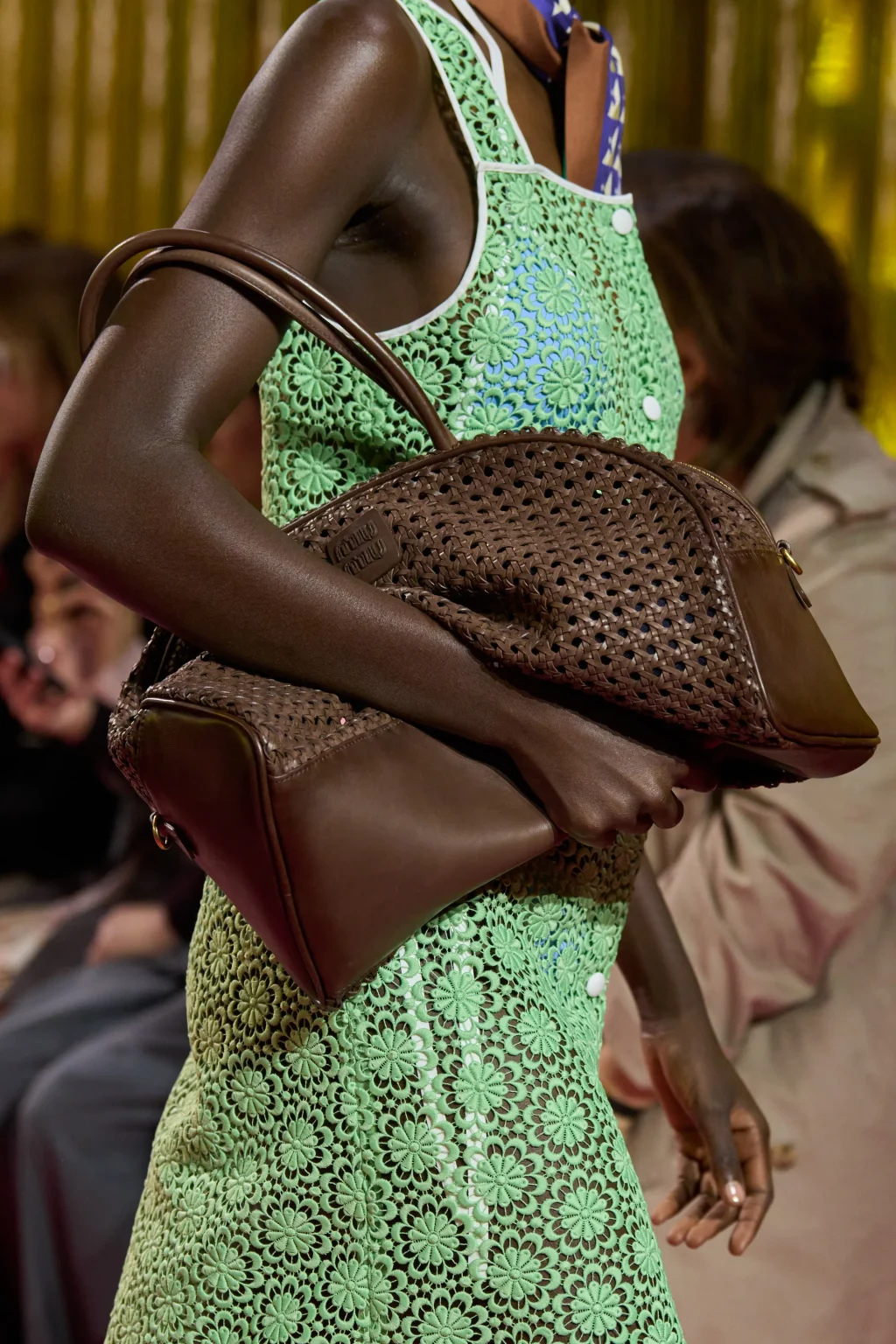
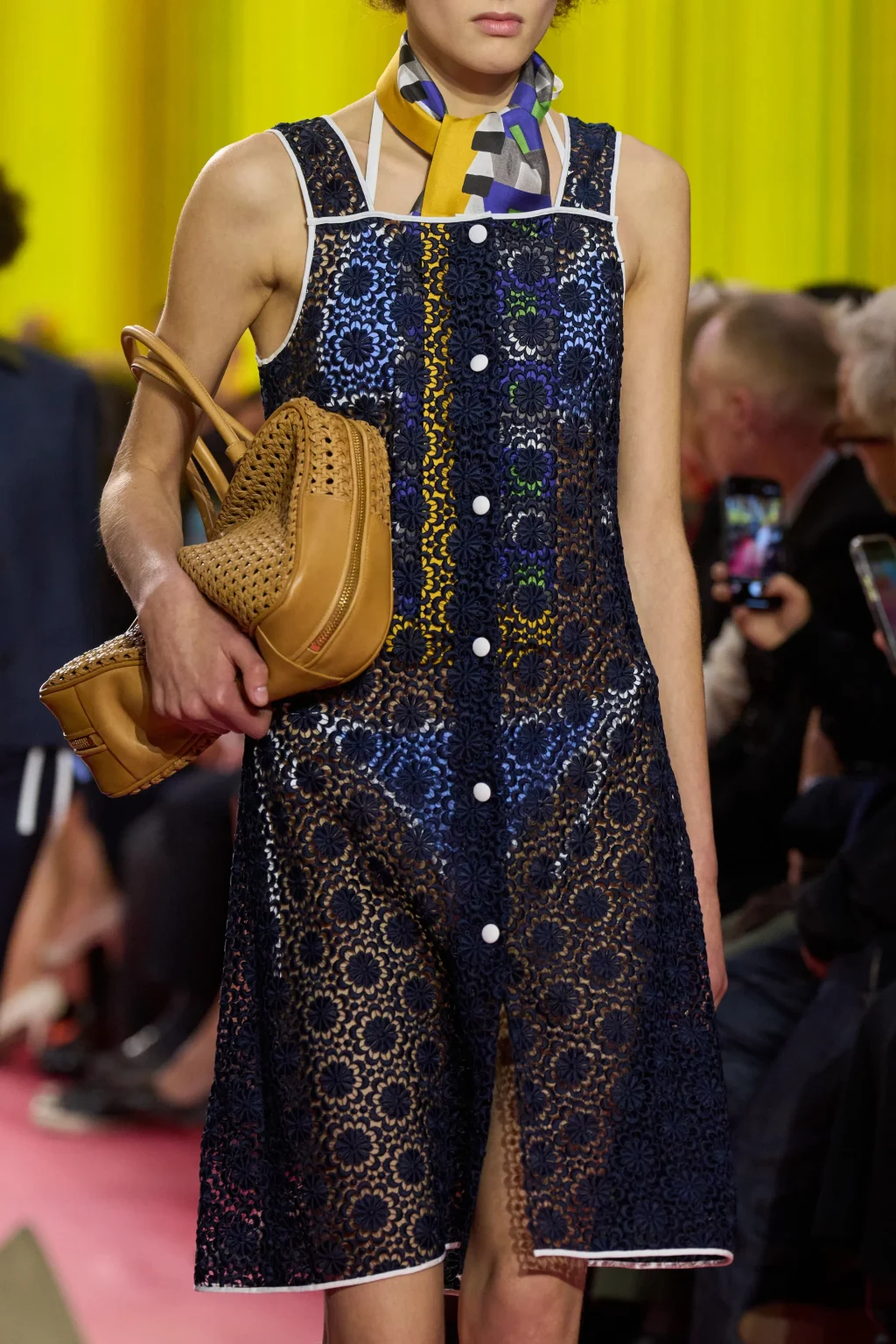
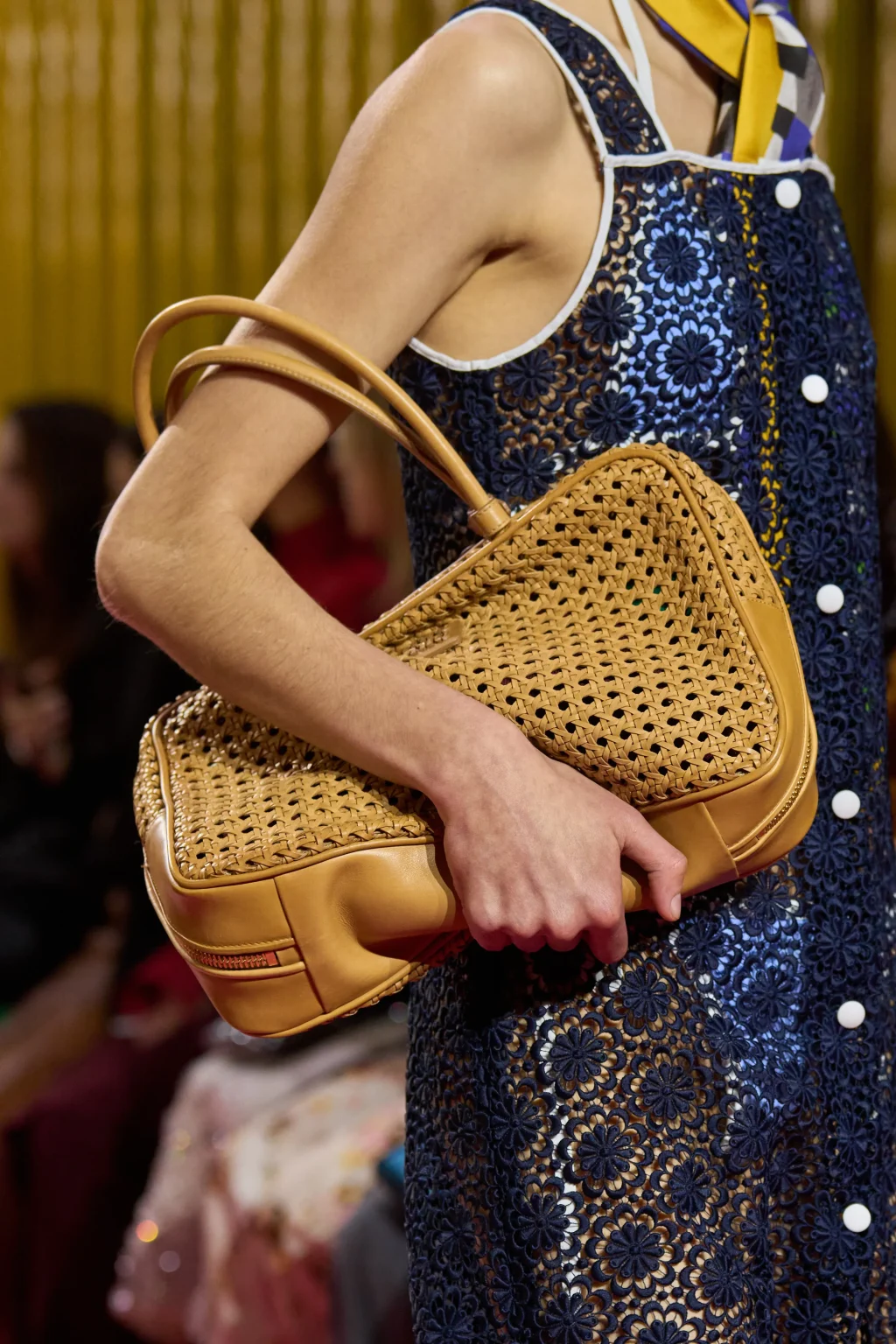
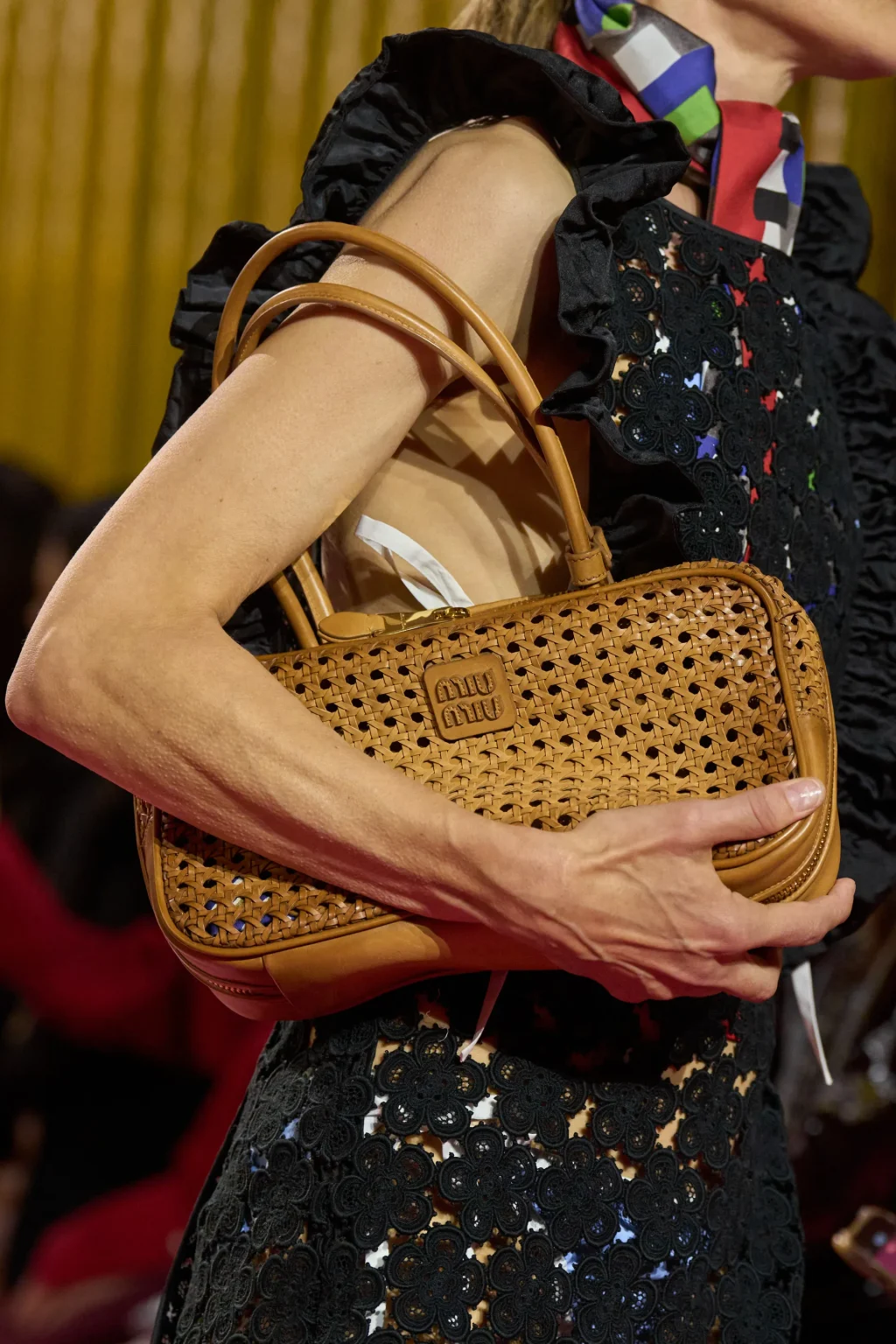
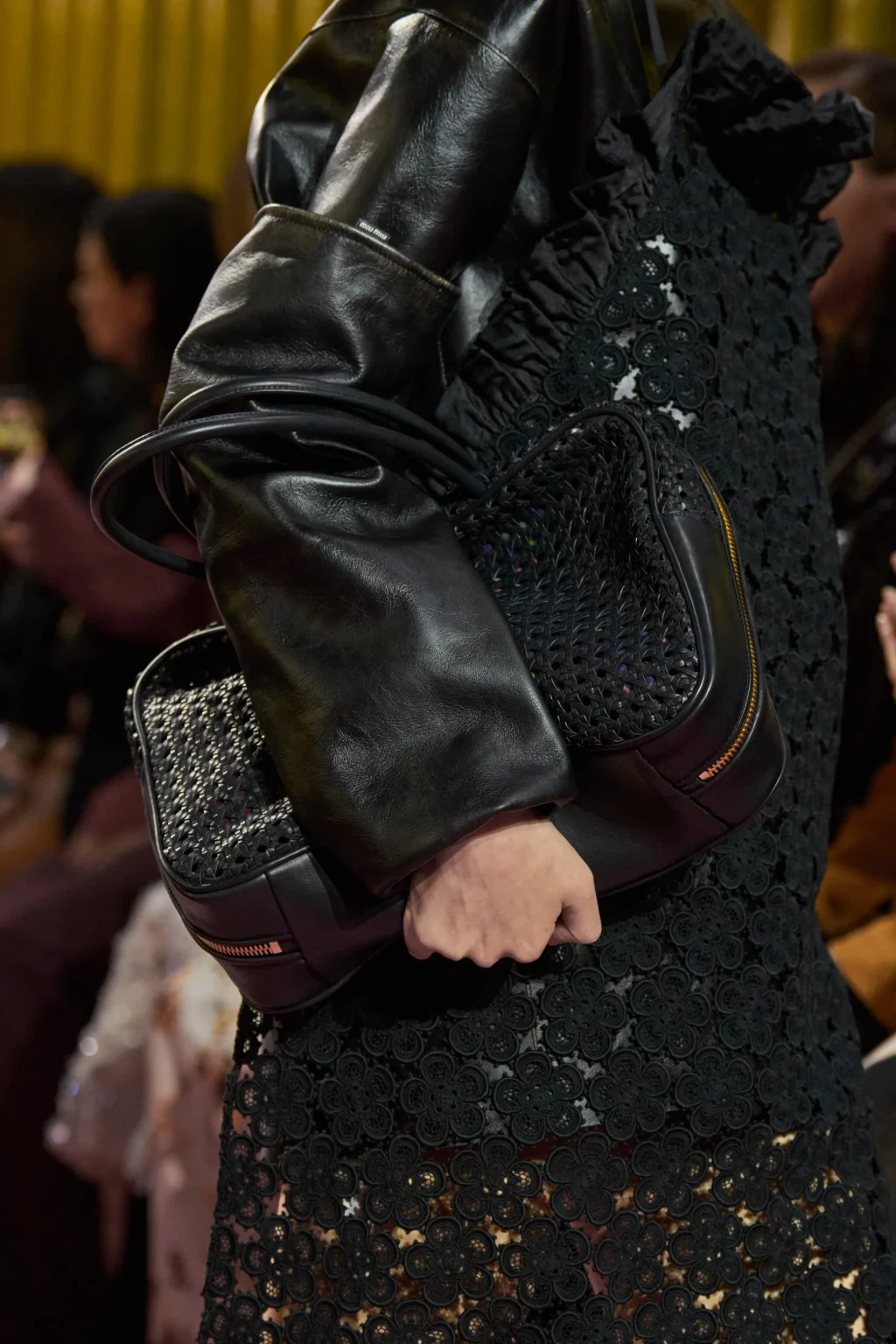
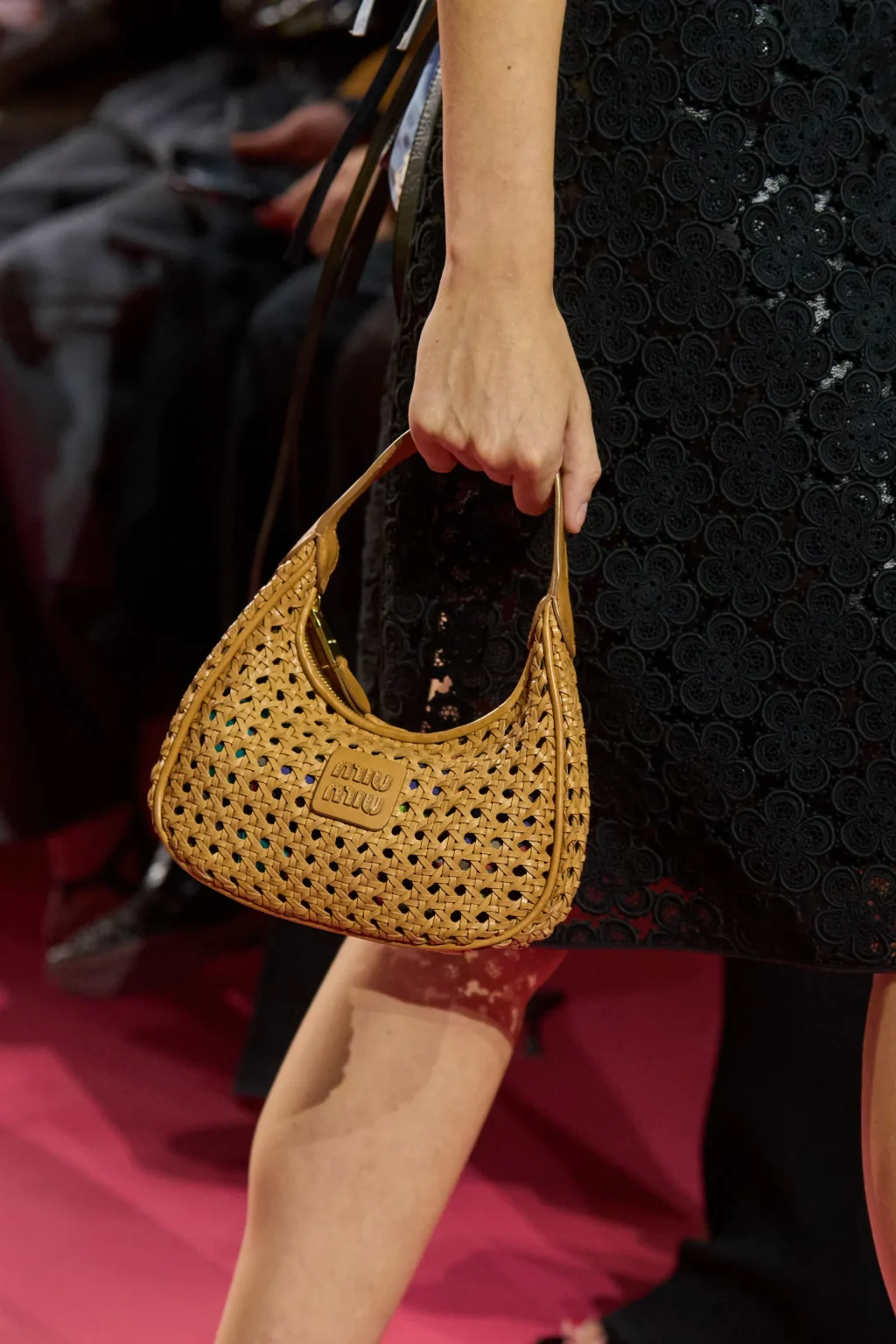
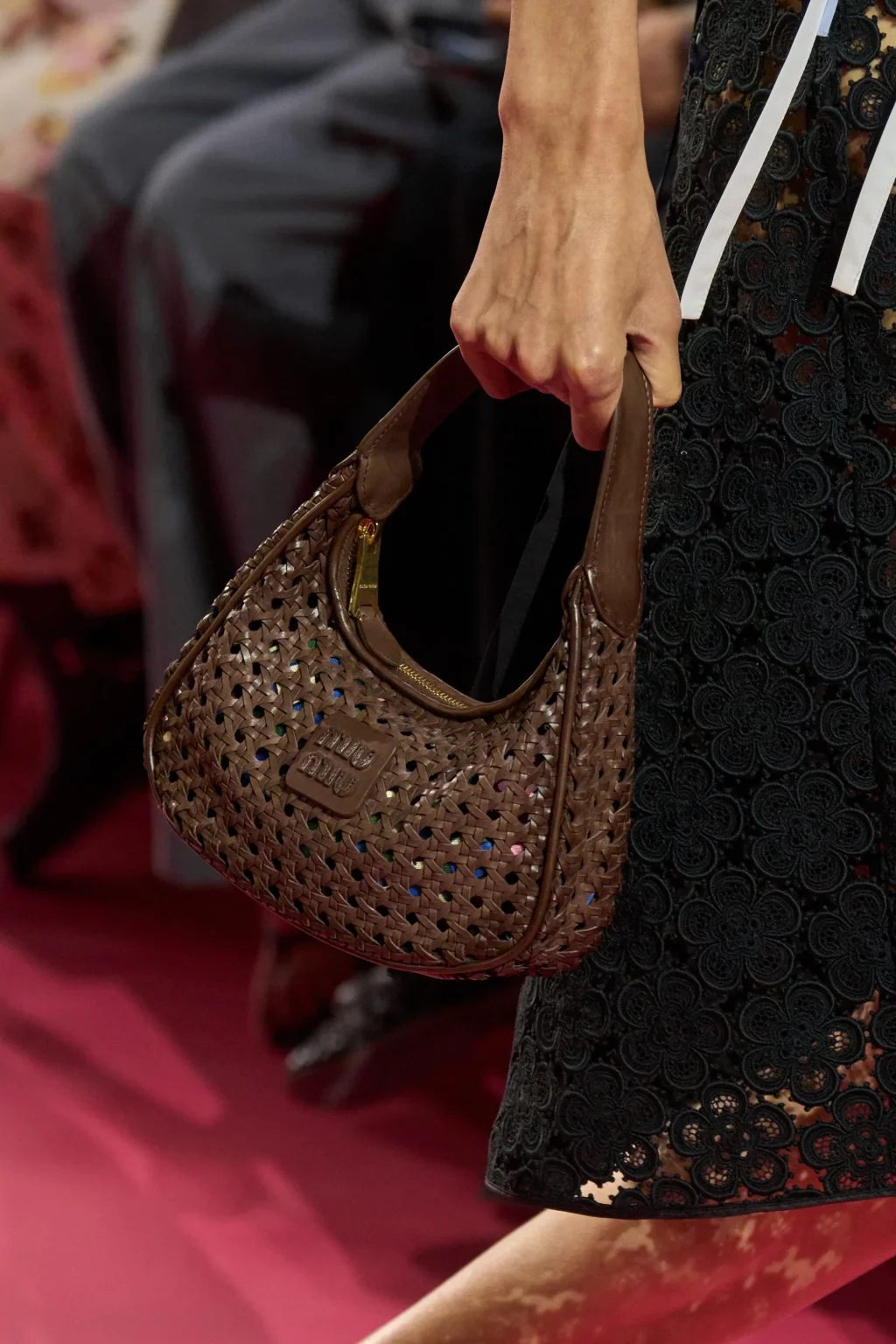
The belted-handle motif: when the handle becomes the message
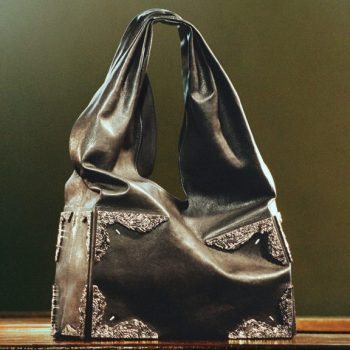
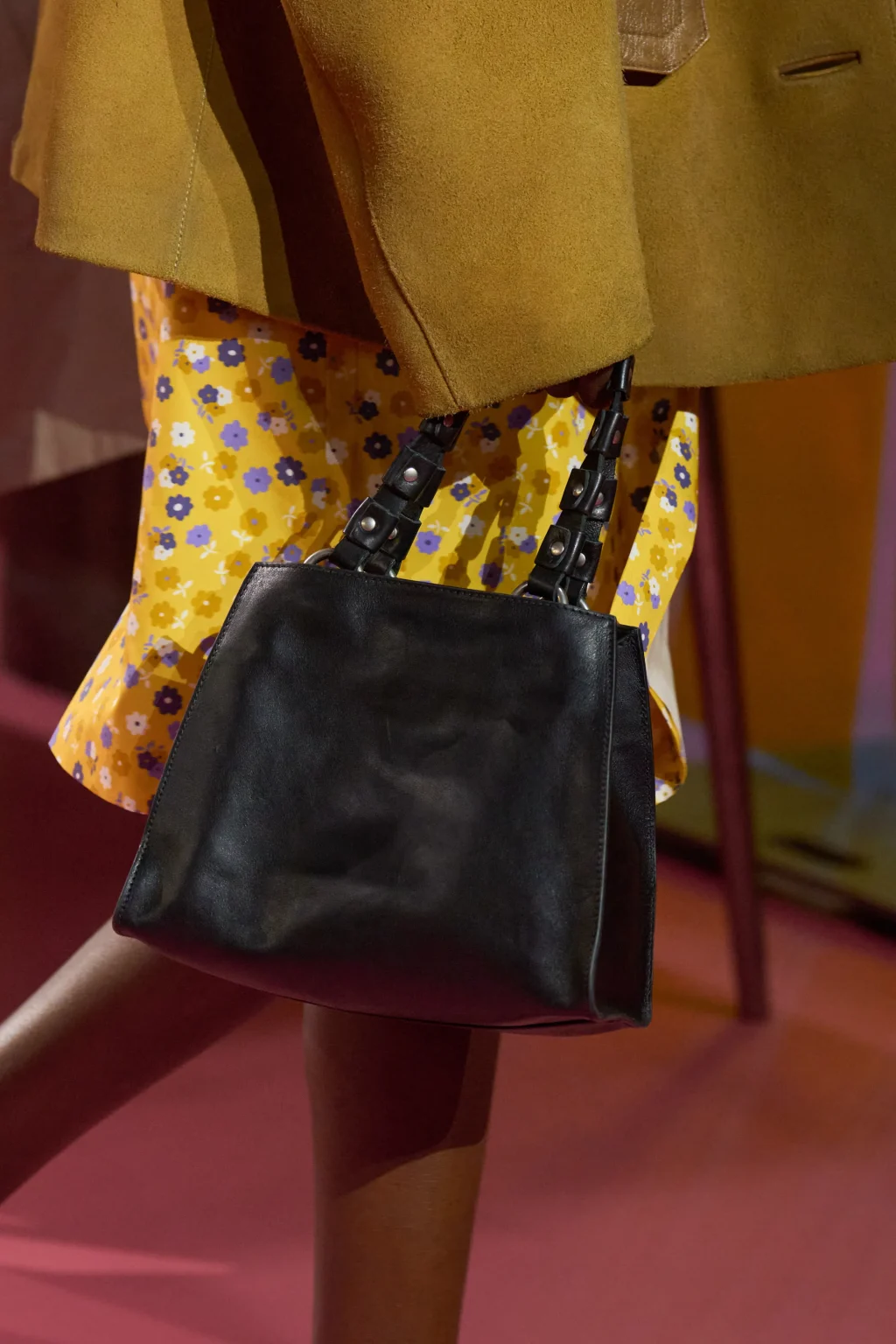
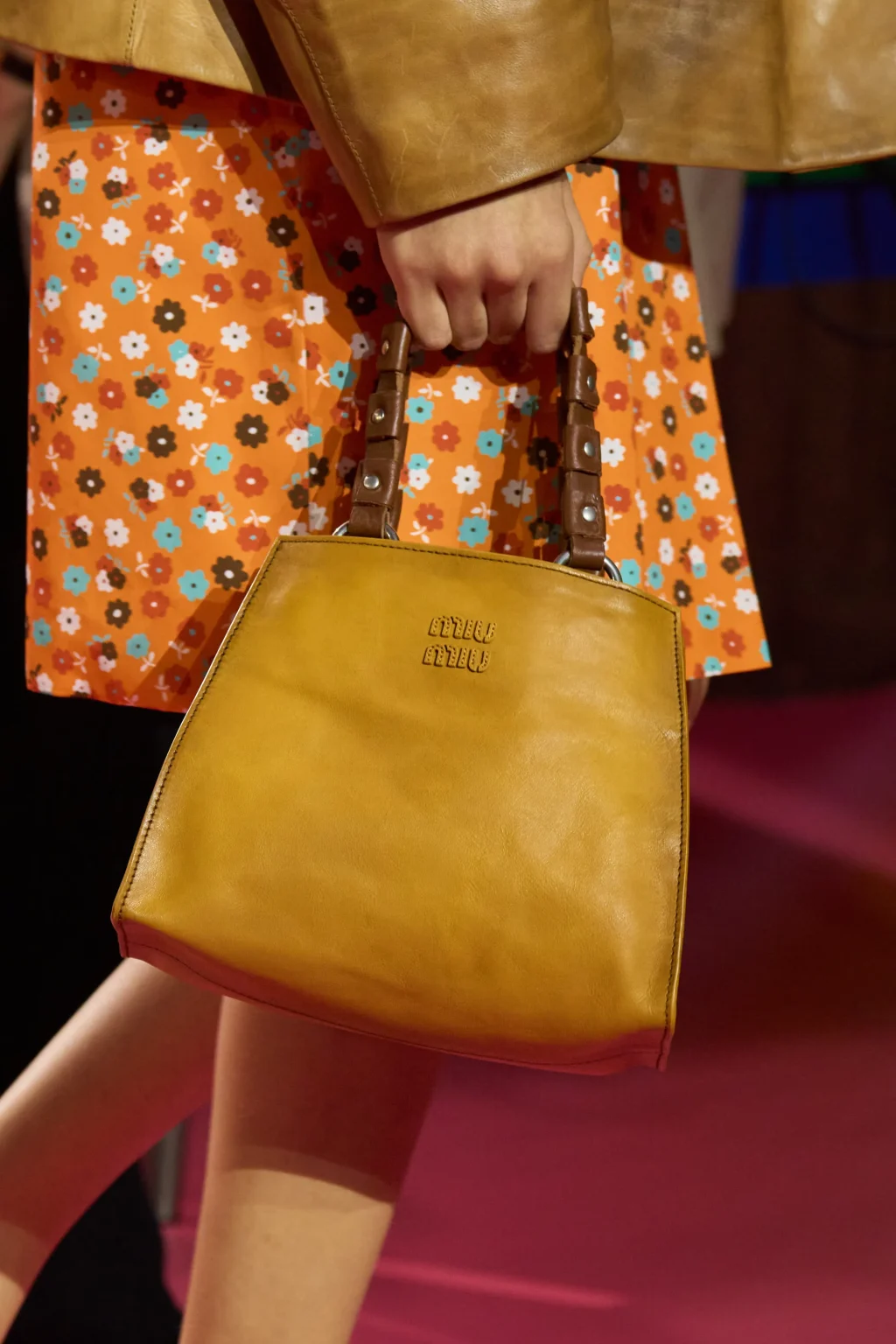
Across the SS26 accessories edit, Miu Miu keeps returning to one unifying gesture: a belted, rivet-studded handle that looks less like traditional handbag finishing and more like hardware lifted from a vintage satchel. The construction—segmented leather tabs, exposed studs, buckle logic—adds an “engineered” edge that turns even simple silhouettes into objects with grip, structure, and attitude.
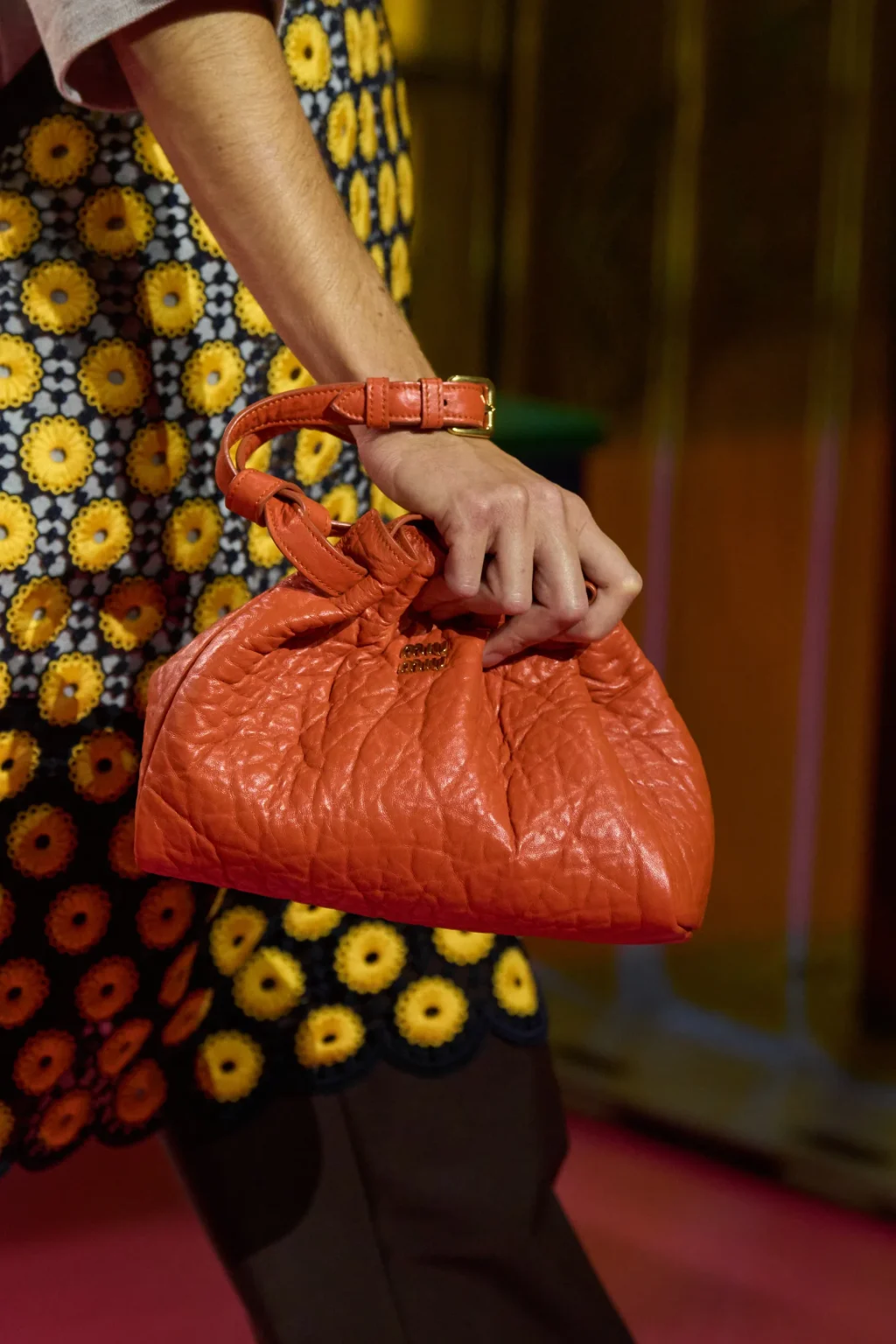
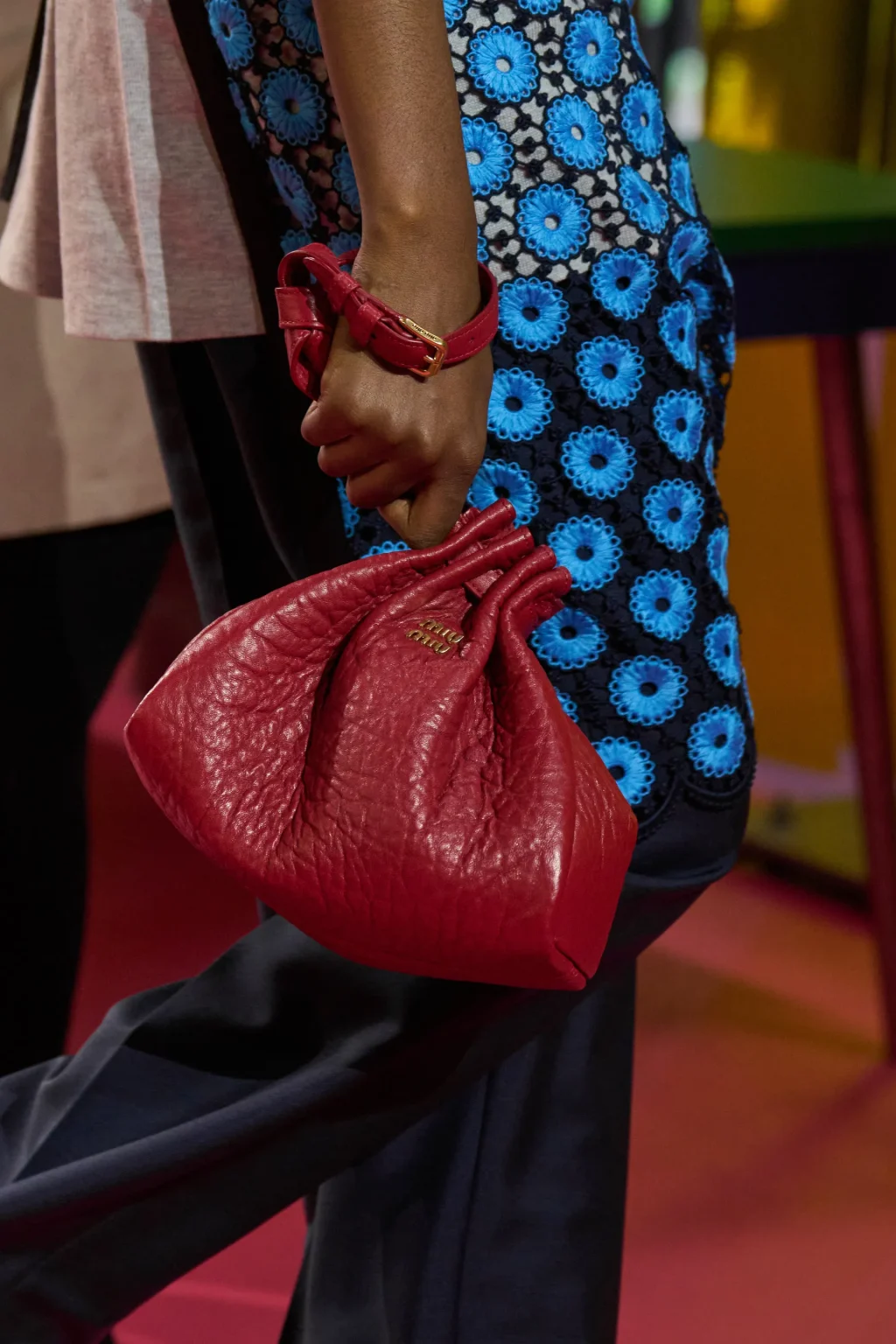
On smaller zip-top shapes, that idea becomes a hand-harness: a buckled band that wraps the hand, with a riveted ladder of leather anchoring the bag like functional equipment rather than decoration. On larger tote-like forms, the motif scales into short top handles with the same modular rhythm—details designed to age, crease, and look better once they’ve been lived with.
The final run: it’s not the silhouette—it’s the skin
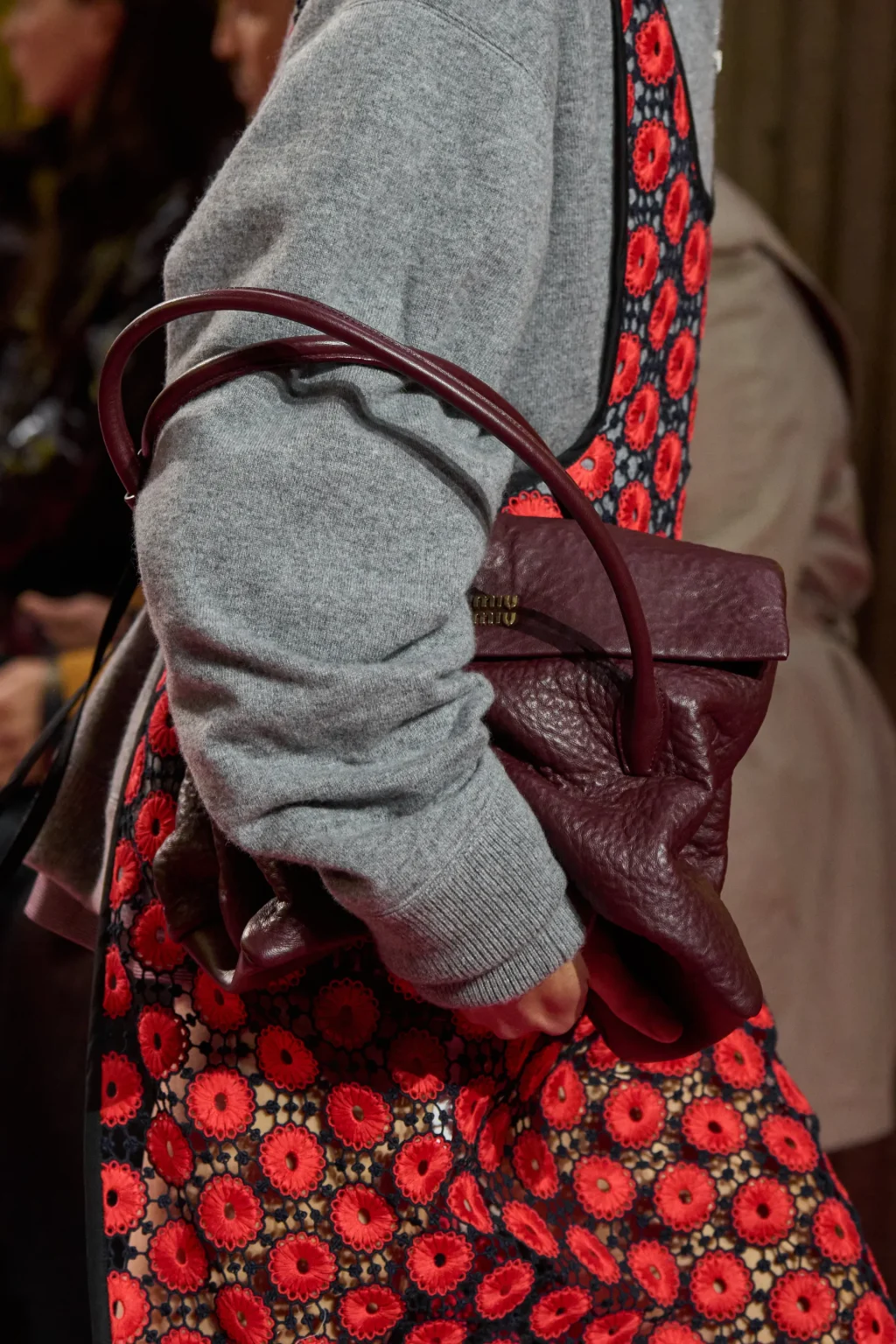
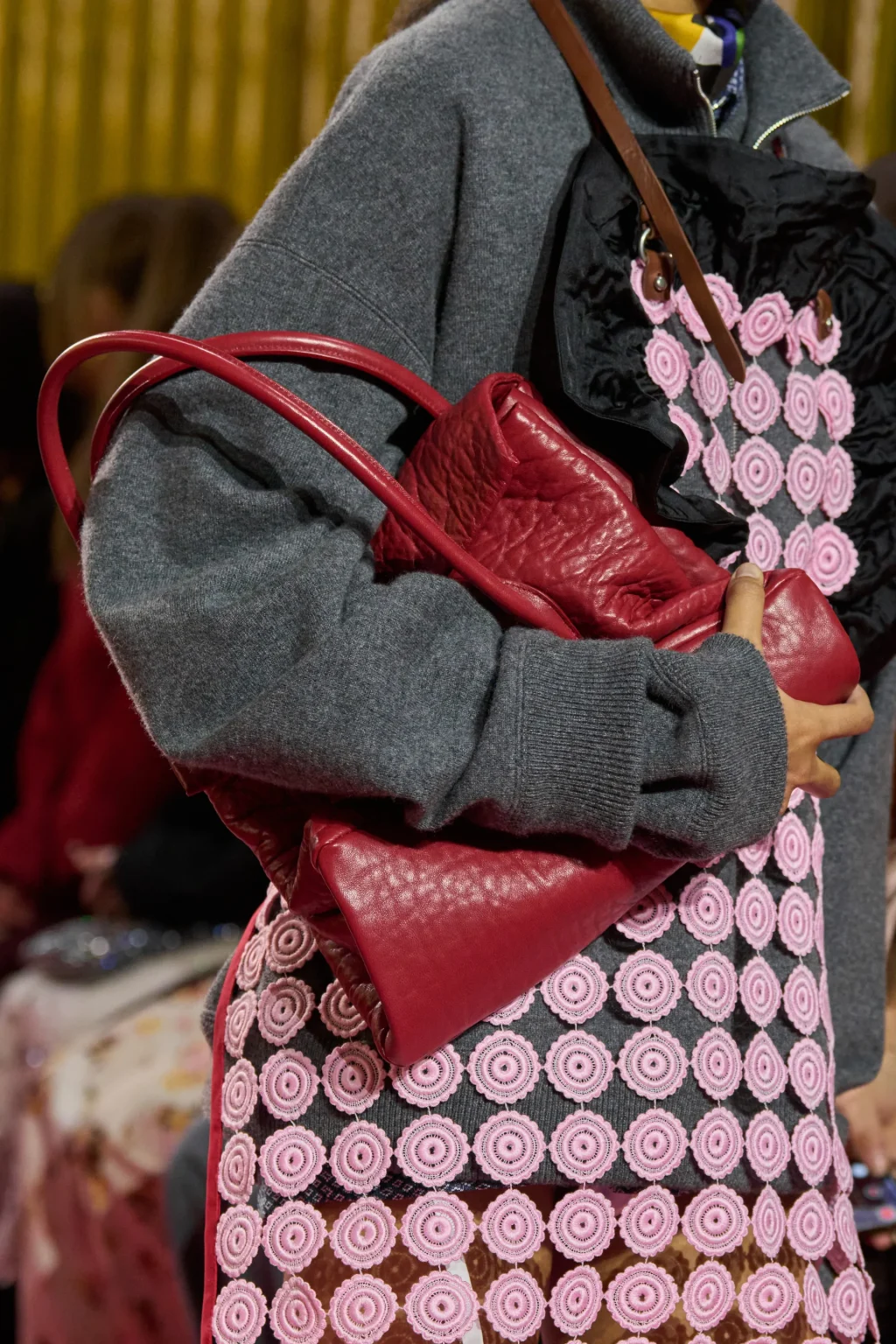
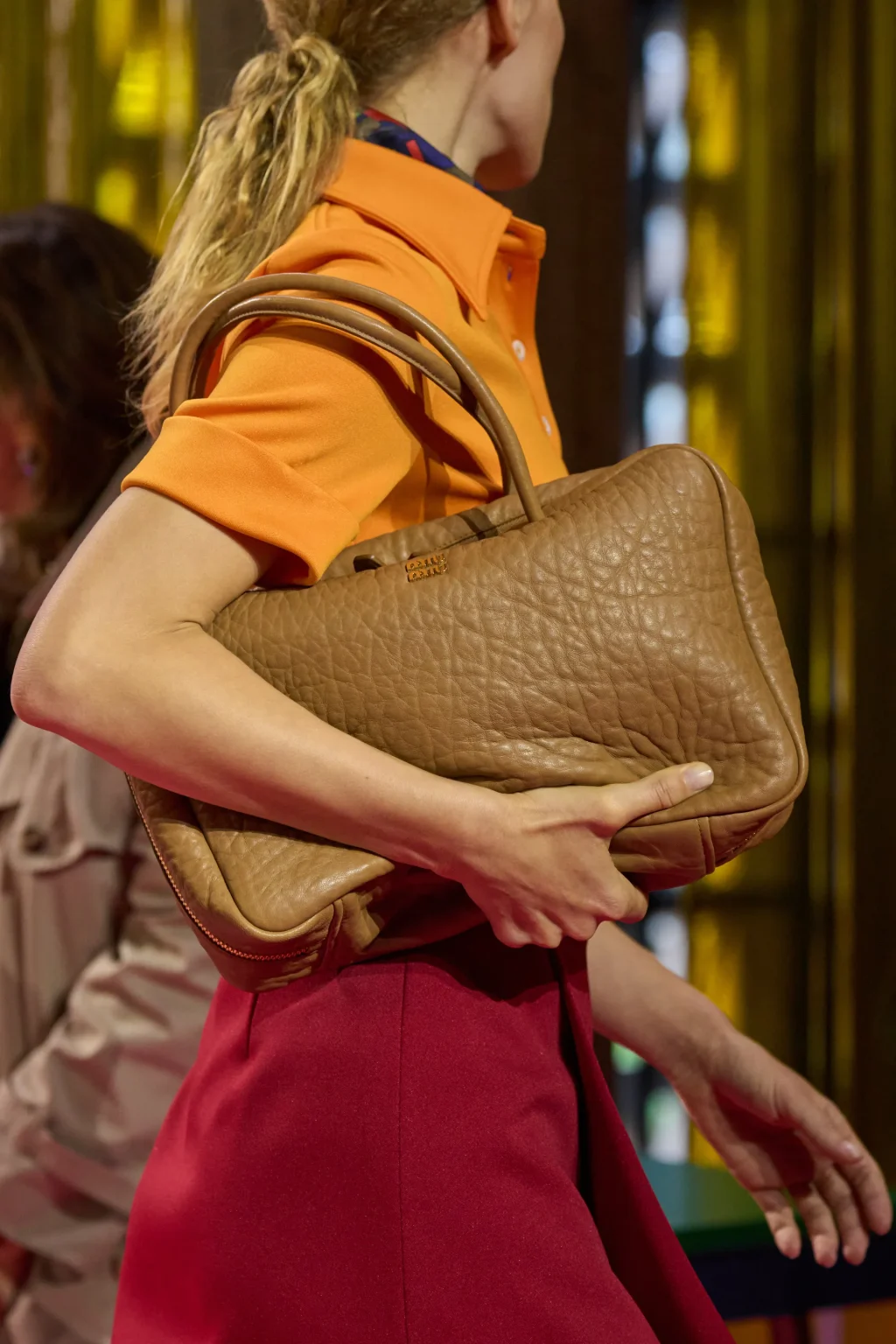
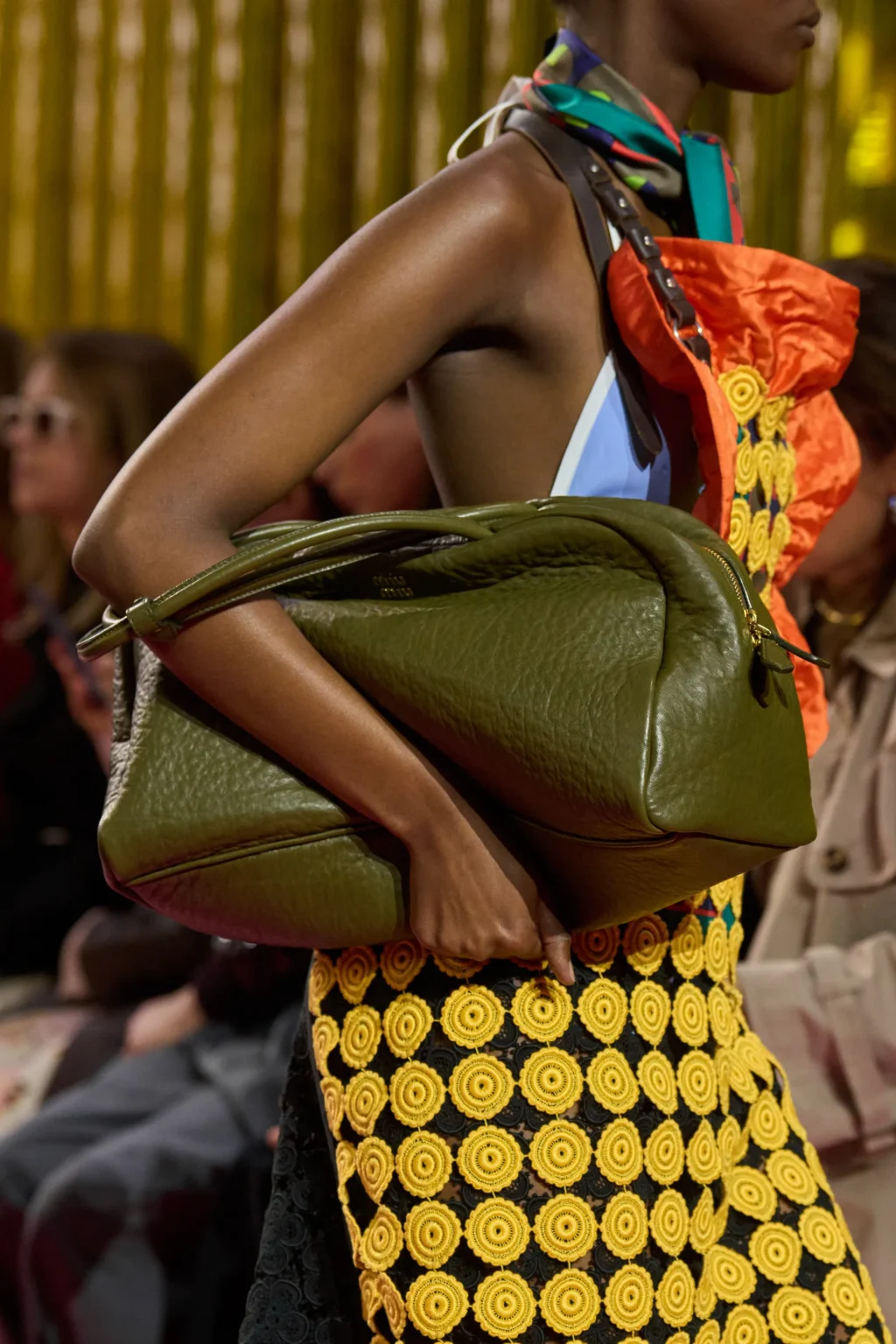
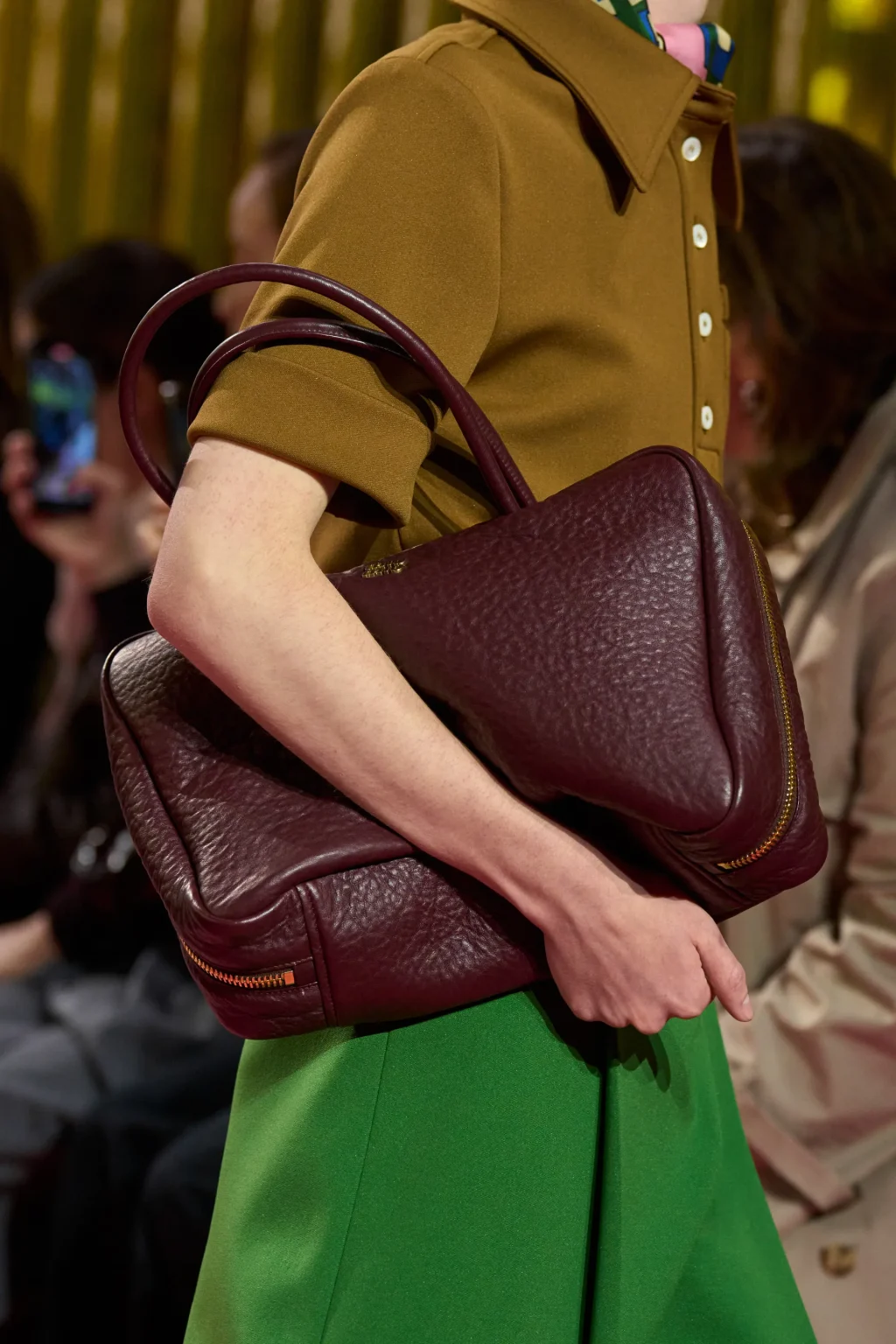
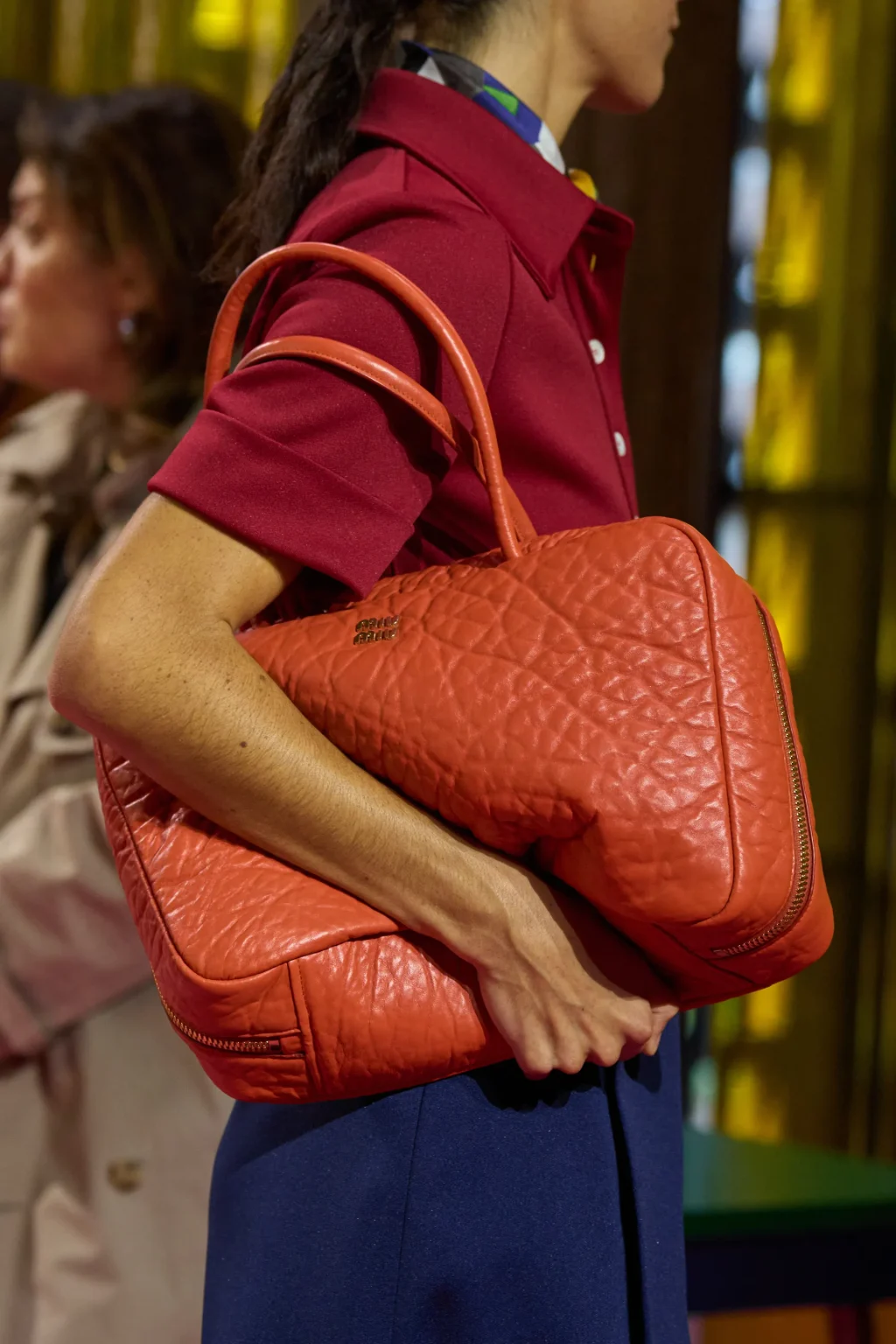
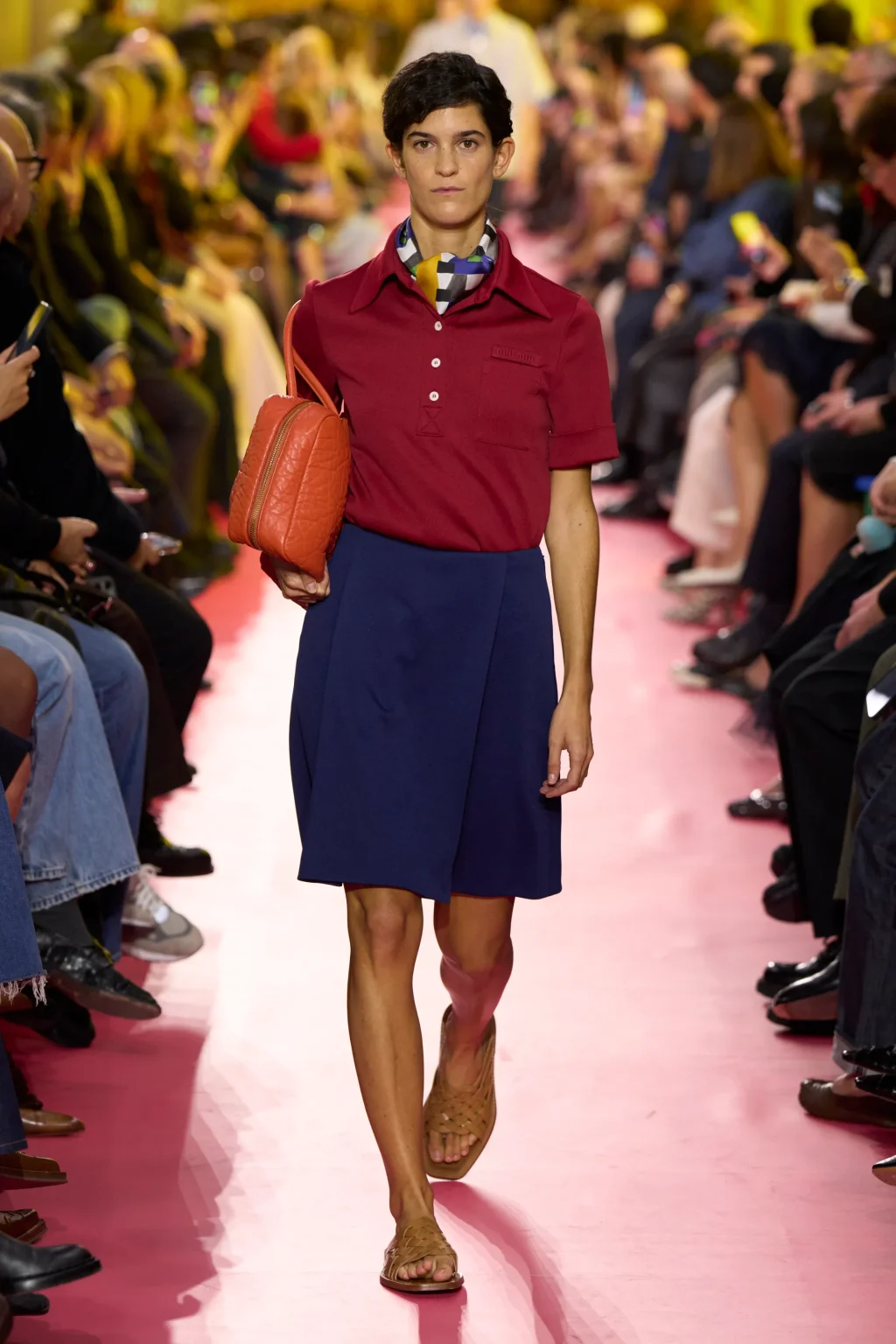
In this last batch of runway bags, the story isn’t shape; it’s leather. The surfaces read deliberately lived-in: tumbled, pebbled, swollen grain that catches light like quilting even when there’s no stitching. It’s a texture that registers from across the room because it makes the bag look softly compressed—cushioned, handled, remembered.
That grain changes the wear proposition, too. This isn’t precious, mirror-polished calf that demands perfection; it’s leather that forgives fingerprints, disguises micro-scuffs, and looks better the more it relaxes. In saturated shades—oxblood, olive, rust, deep brown—the texture becomes three-dimensional, turning simple volume into an object with presence.
Care and shape-preservation (the resale-value angle)
Soft silhouettes are seductive—and also the quickest to slump if stored carelessly. The goal is to keep the bag’s architecture intact so it wears as “lived-in” rather than “collapsed.”
Two habits make a measurable difference:
- Store with gentle internal support (this is where bag pillows earn their keep), especially for oversized duffles and wrist-strap pouches that can crease at the fold lines. A well-fitted insert helps preserve structure and, by extension, perceived value—exactly the kind of quiet maintenance collectors don’t skip.
- Avoid overloading—even Miu Miu’s current product guidance on leather bags emphasizes mindful handling and maintenance.
Miu Miu didn’t make SS26 bags that beg for a glass case. It made bags that look better the more your life touches them—rumpled leather, warm hardware, and shapes that flirt with disorder without tipping into chaos.