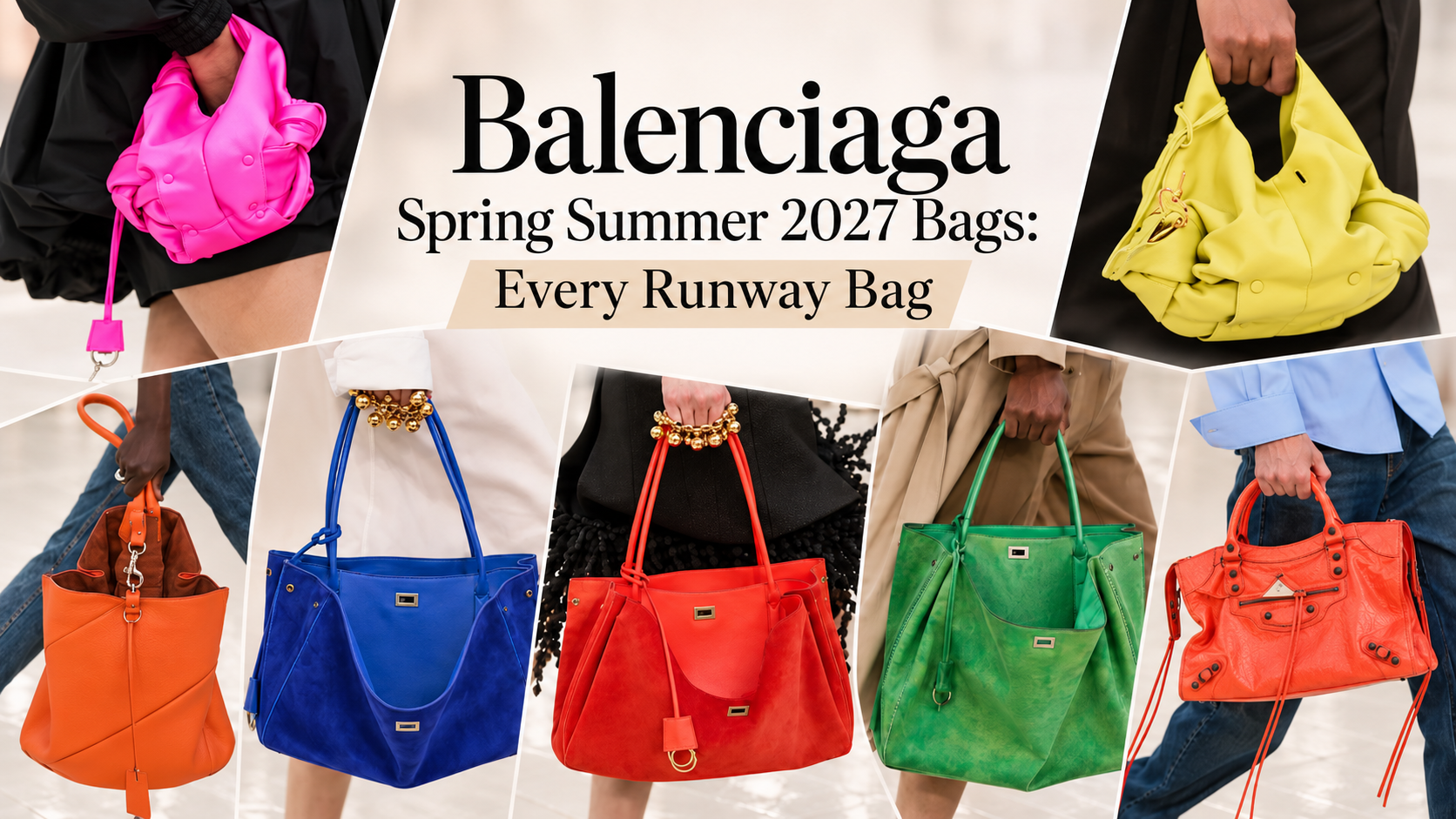
The Balenciaga Spring Summer 2027 bags lean soft, slouchy and hand-shaped, and they belong to Pierpaolo Piccioli’s final runway collection for the house. He presented it on 1 October 2026 at the Tennis Club de Paris under the title Les Coraux de la Liberté. Two new shapes lead the line-up: the Nodo, a leather hobo gathered into knots at both sides, and the Silhou Tote, cut on the bias like the season’s jeans and shirts. Around them sit three versions of the Rodeo, Le City in cobalt, coral and black, a suede saddle bag with a metal-tipped frame and an openwork bucket bag in studded leather.
The Balenciaga Summer 27 Show at the Tennis Club de Paris
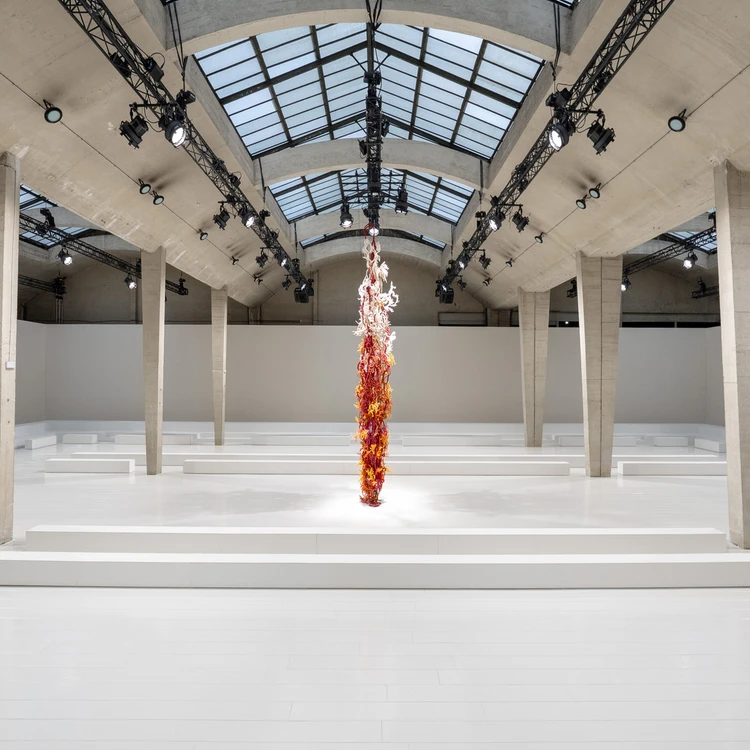
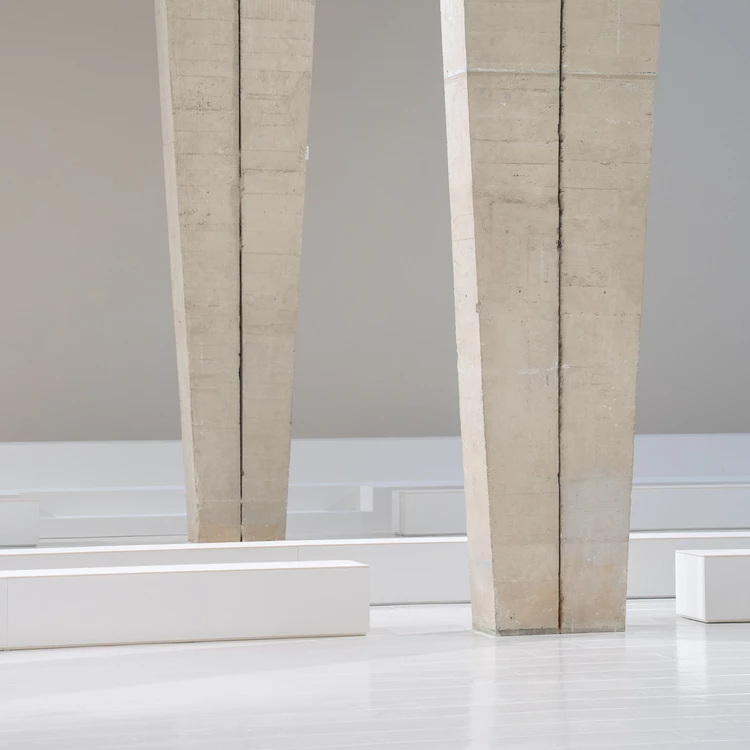
Balenciaga, which calls the season Summer 27, staged the show on Thursday, the fourth day of Paris Fashion Week, inside the Tennis Club de Paris in the 16th arrondissement. The courts had disappeared under white walls and white wooden floorboards, with two symmetrical runs of white benches set beneath the club’s glass roof. It was Piccioli’s third ready-to-wear collection for Balenciaga and his fourth show for the house, counting the couture collection he presented in July.
Guests found a personal note from the designer on every seat. “No one shines alone,” it read. The note argued that ideas need protection and exchange to grow. The soundtrack opened on the vocal of the Fugees’ “Ready or Not” laid over an orchestral arrangement, a choice made sharper by Lauryn Hill sitting in the front row. Isabelle Huppert, Law Roach, Lola Tung, Sarah Pidgeon, Shailene Woodley and Gemma Chan were in the room too.
Five weeks later, the note read differently. On 5 November, Kering confirmed that Piccioli was leaving Balenciaga after 16 months. The next day it named Martine Rose, who previously worked alongside Demna at the house, as creative director from 16 November 2026. Summer 27 is the last collection Piccioli showed for Balenciaga, which makes the Nodo and the Silhou Tote the closing statement of his tenure on the runway.
The Set: Aude Franjou’s Les Coraux de la Liberté
At the centre of the room hung Les Coraux de la Liberté (2025), a textile sculpture by the French artist Aude Franjou that also gave the collection its name. Franjou builds her forms from wrapped linen, and the piece rises almost to the ceiling in branches that move from pale yellow through orange, magenta and red, turning white at the top.
The work has a Paris history. Franjou first showed it in September 2025, during Paris Design Week, inside the Colonne de Juillet on Place de la Bastille, where the linen climbed from the vaults to the top of the monument. The column, completed in 1840 to honour the July Revolution of 1830, is crowned by the gilded Génie de la Liberté, a fitting home for a work with liberty in its title.
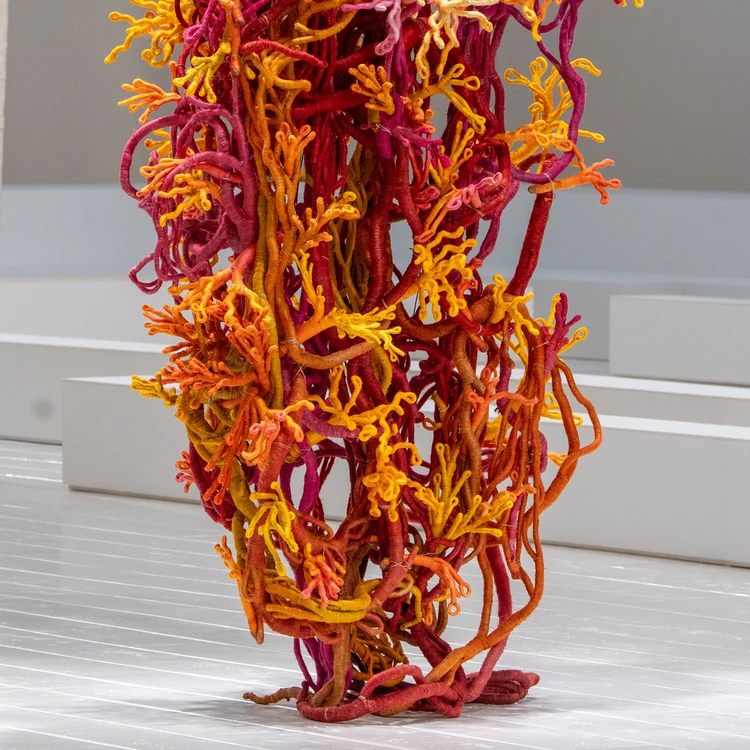
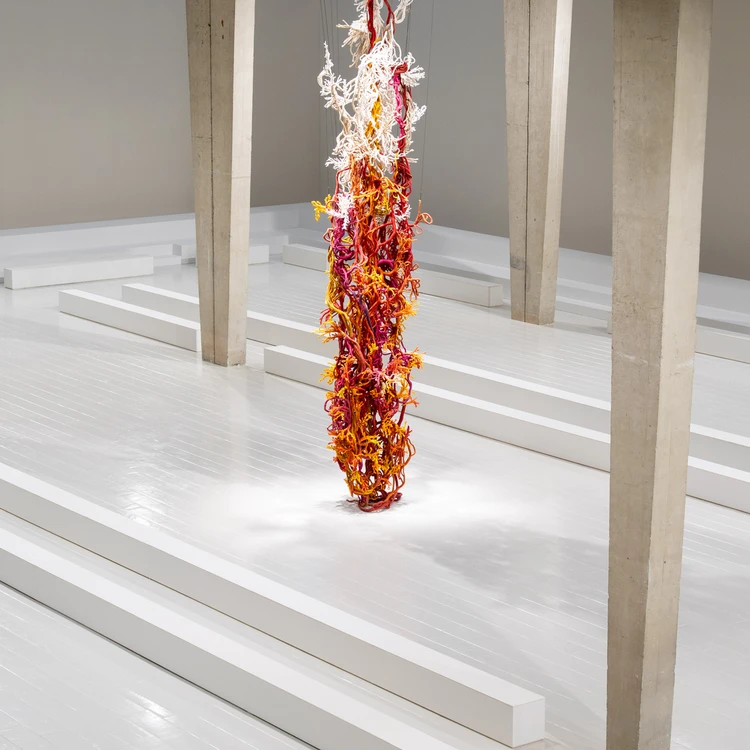
Balenciaga’s notes treat the sculpture as an analogy for a couture house as an entire ecosystem rather than a building: “living, breathing, alive.” The reference point is red Mediterranean coral, Corallium rubrum, which grows only a few millimetres a year and never repeats a branch. Its layered form also recalls the coral necklaces Piccioli wears every day. For anyone watching the bags, the sculpture worked as a colour chart. The coral of Le City, the orange of the Silhou Tote and the fuchsia and lime of the mini Nodo all echoed those linen branches.
The Collection Concept: Couture Techniques on Everyday Clothes
At a preview, Piccioli said the collection was “born” alongside the 55th Balenciaga Couture Collection, his only couture show for the house, presented in July 2026. The notes describe couture as a working method, and Summer 27 applied it to the clothes people already own: jeans, T-shirts, shirts, bombers, leather jackets and men’s suiting.
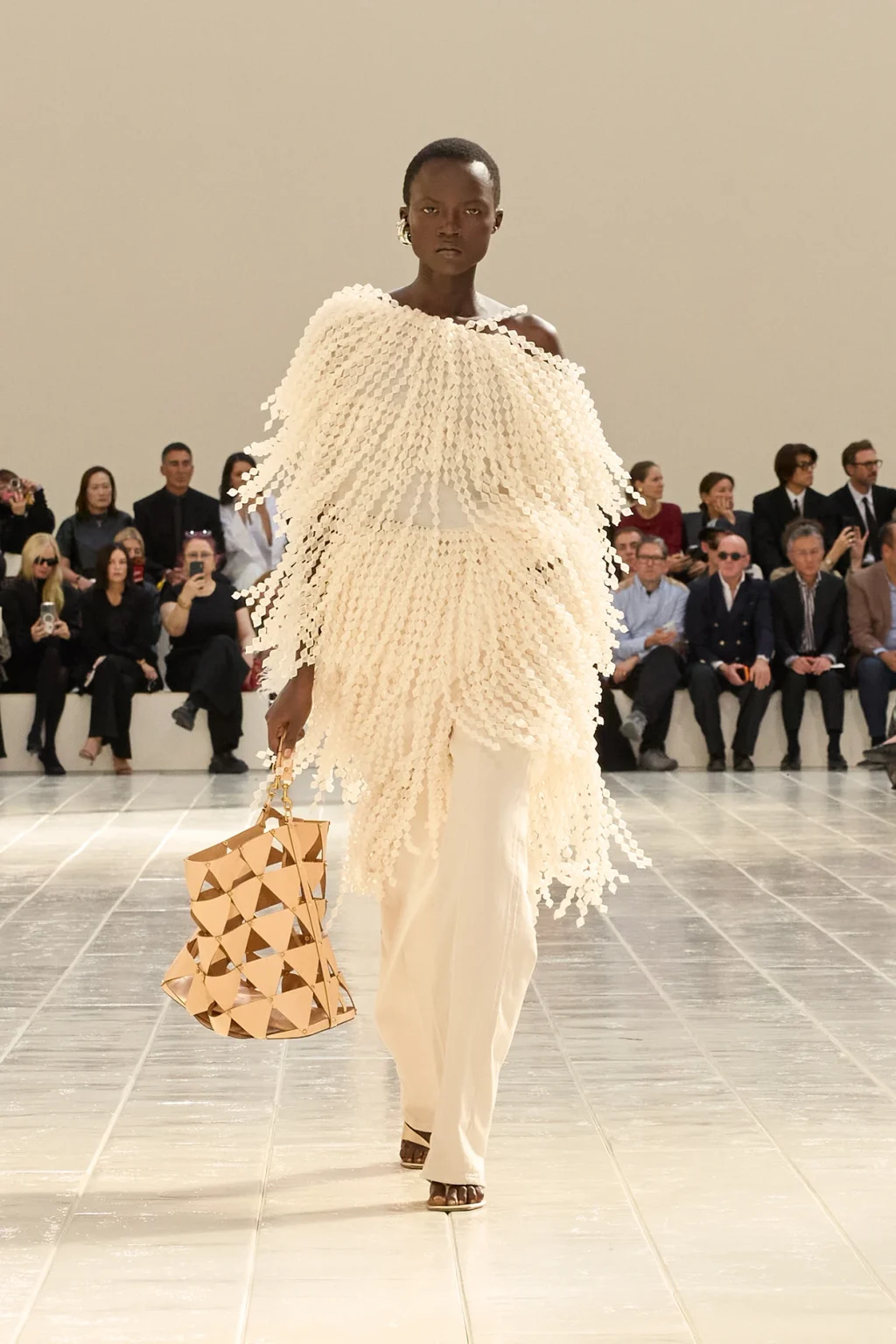
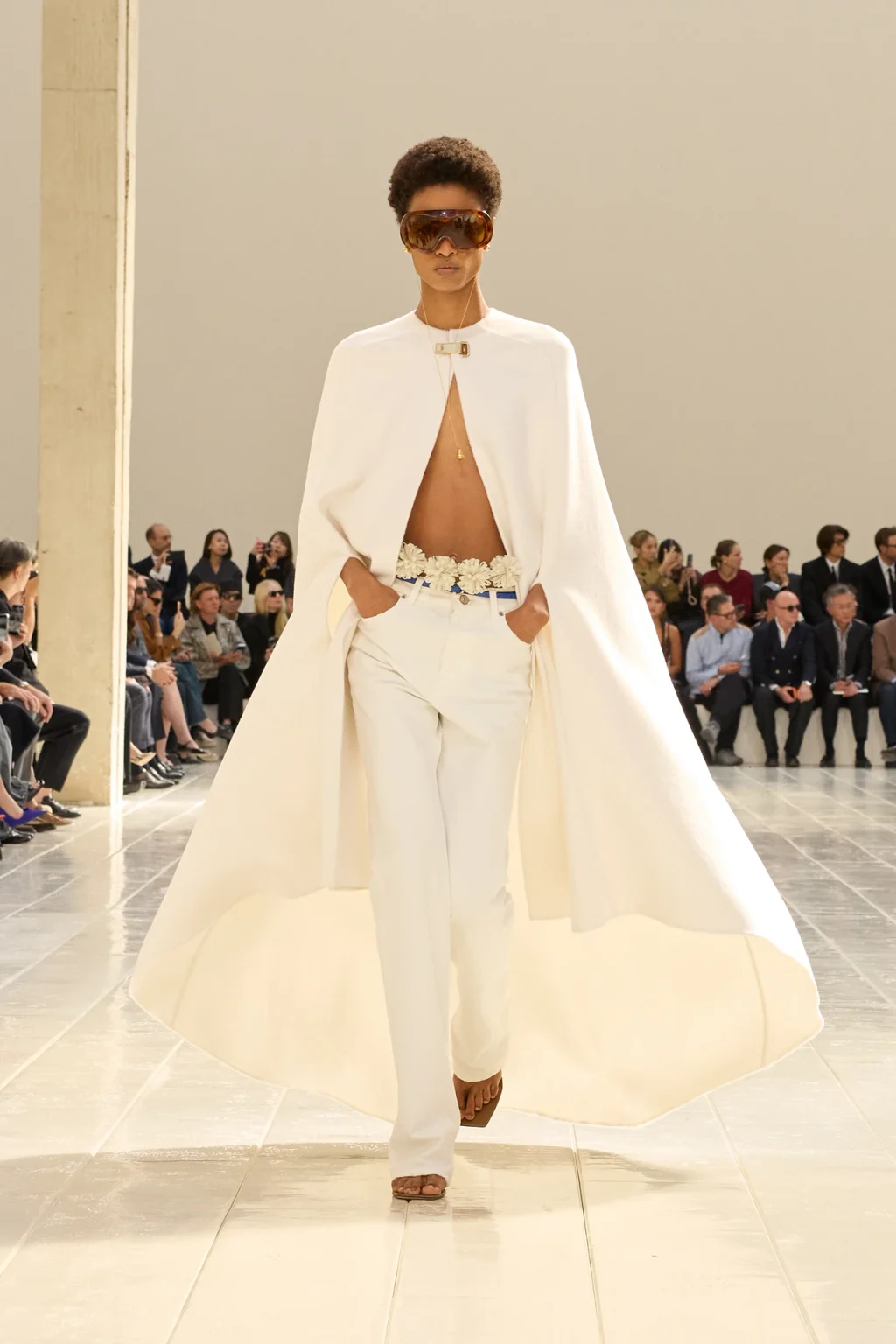
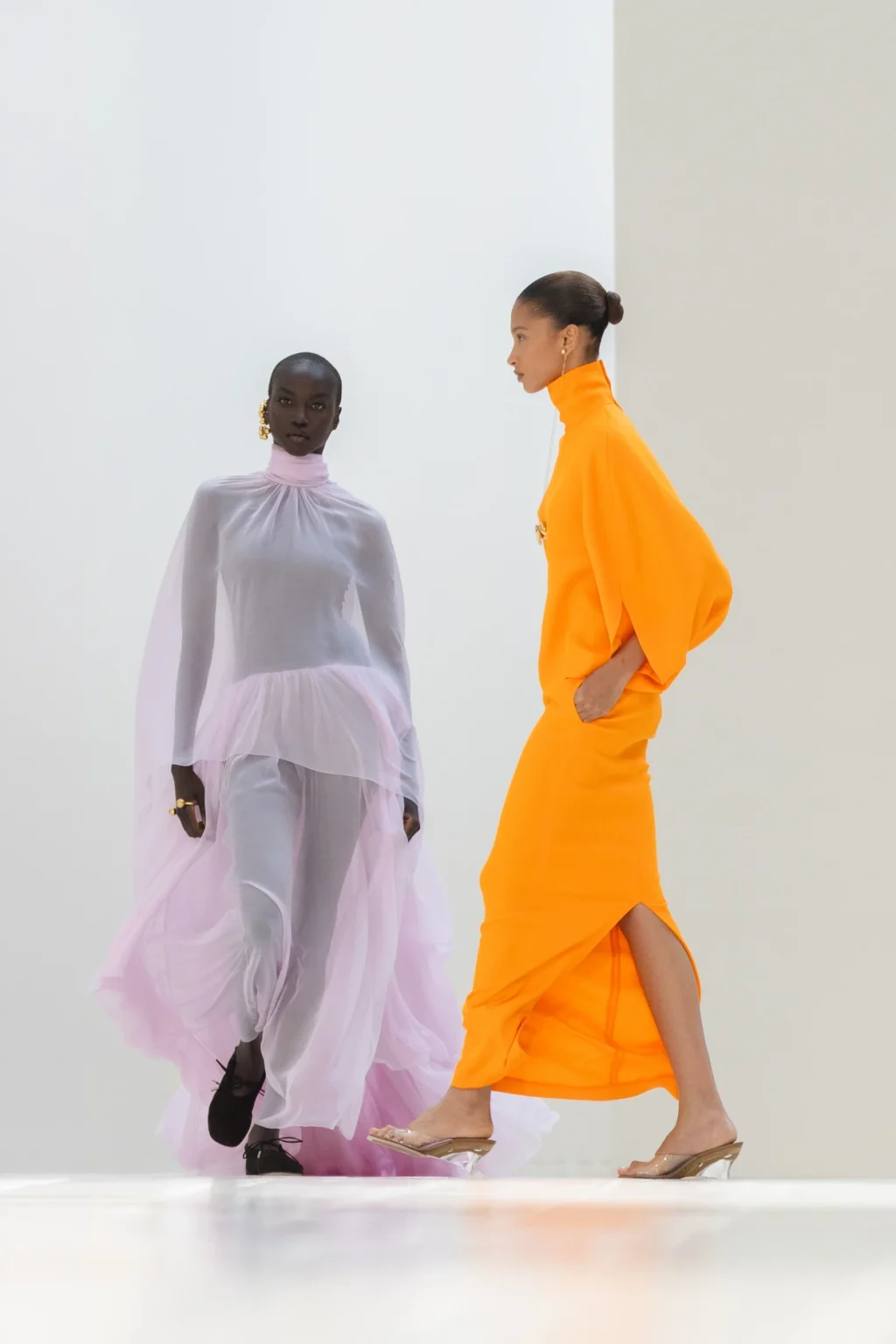
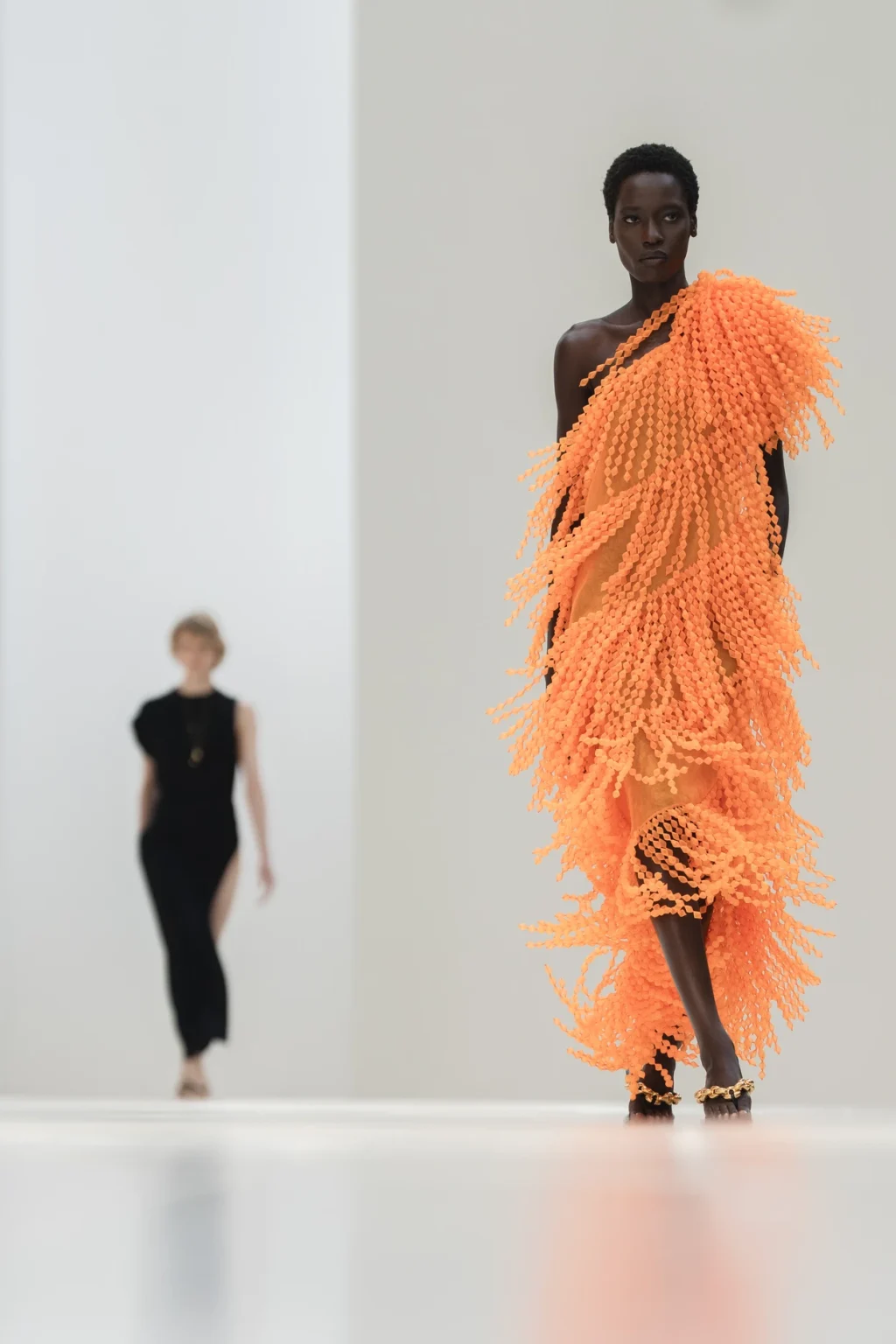
Bias cutting carried much of the idea. Cut on the diagonal grain, denim and tailoring loosened and followed the body, a technique Piccioli said the house had rarely used. A corset-style stitch, normally hidden inside tailored lapels, moved to the outside of leather jackets and T-shirts. Calais lace and cutwork opened windows onto the skin as structure rather than ornament, and abstract organza flowers were filled with compressed air. “Decoration is never in service of artifice. It functions,” the notes read.
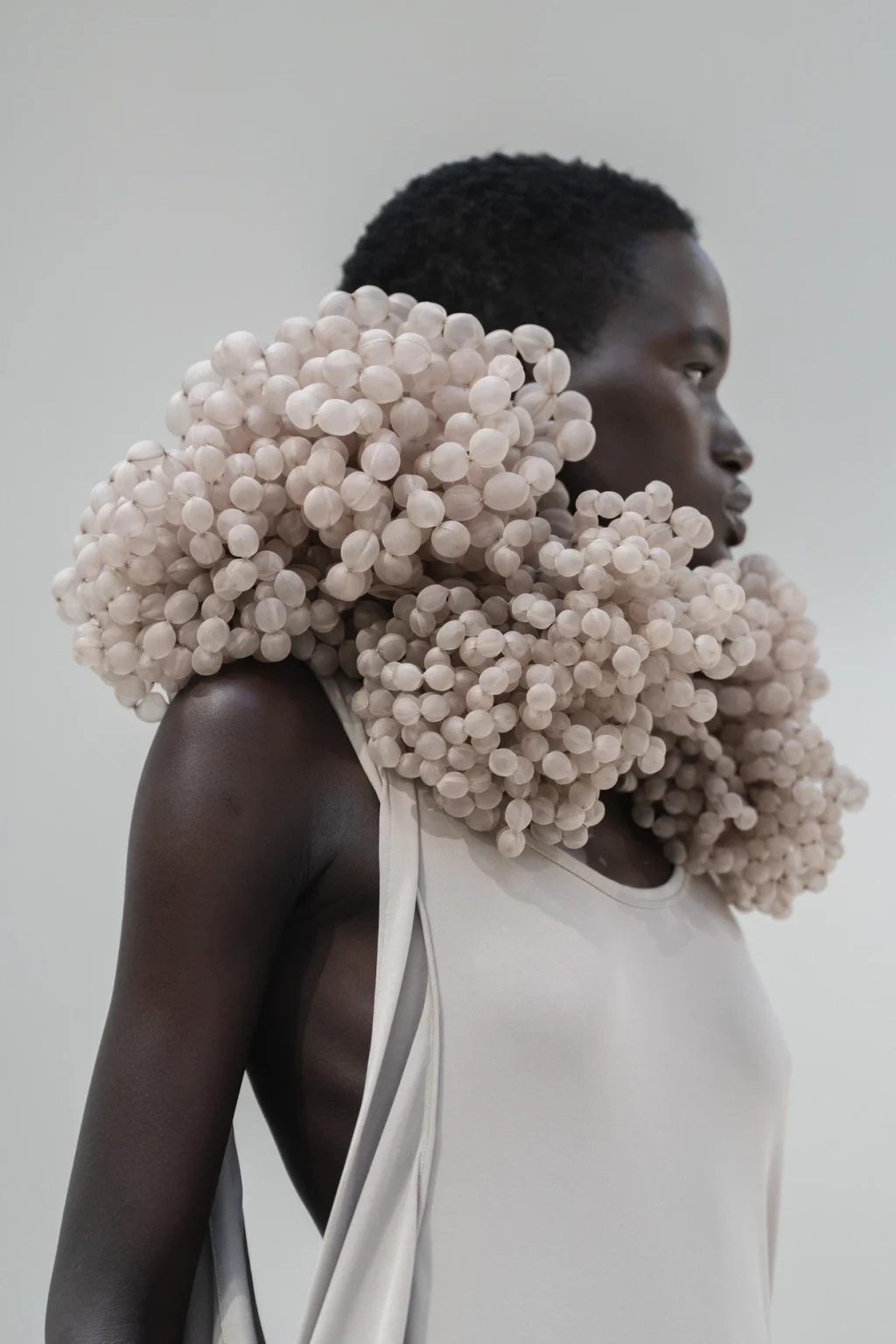
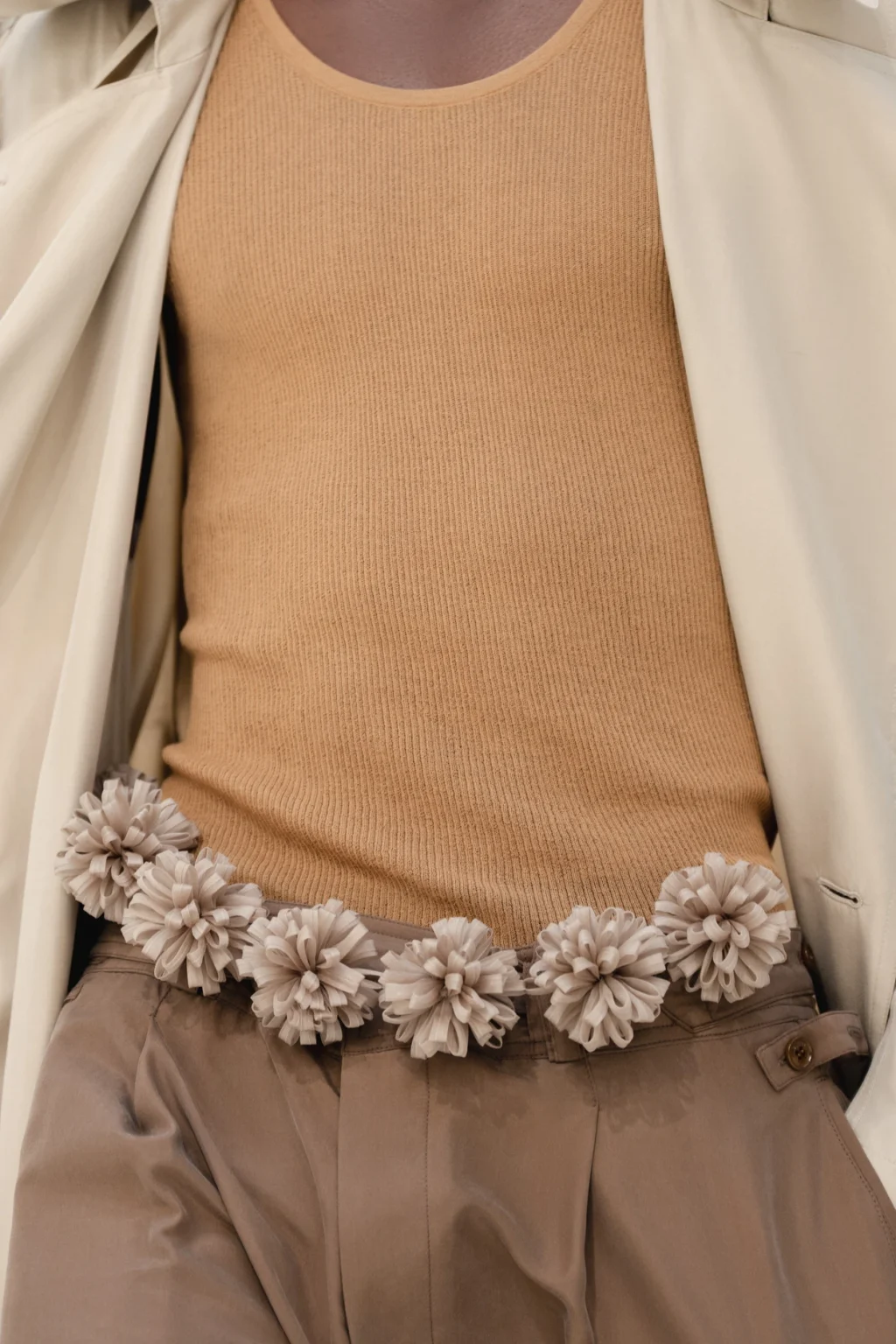
The accessories follow the same logic. The notes single out two bags, the Nodo and the Silhou Tote, as “supple, executed in leather, shaped and draped by hand.” Every other bag in the line-up softened to match.
The Balenciaga Nodo Bag: A Hobo Knotted by Hand
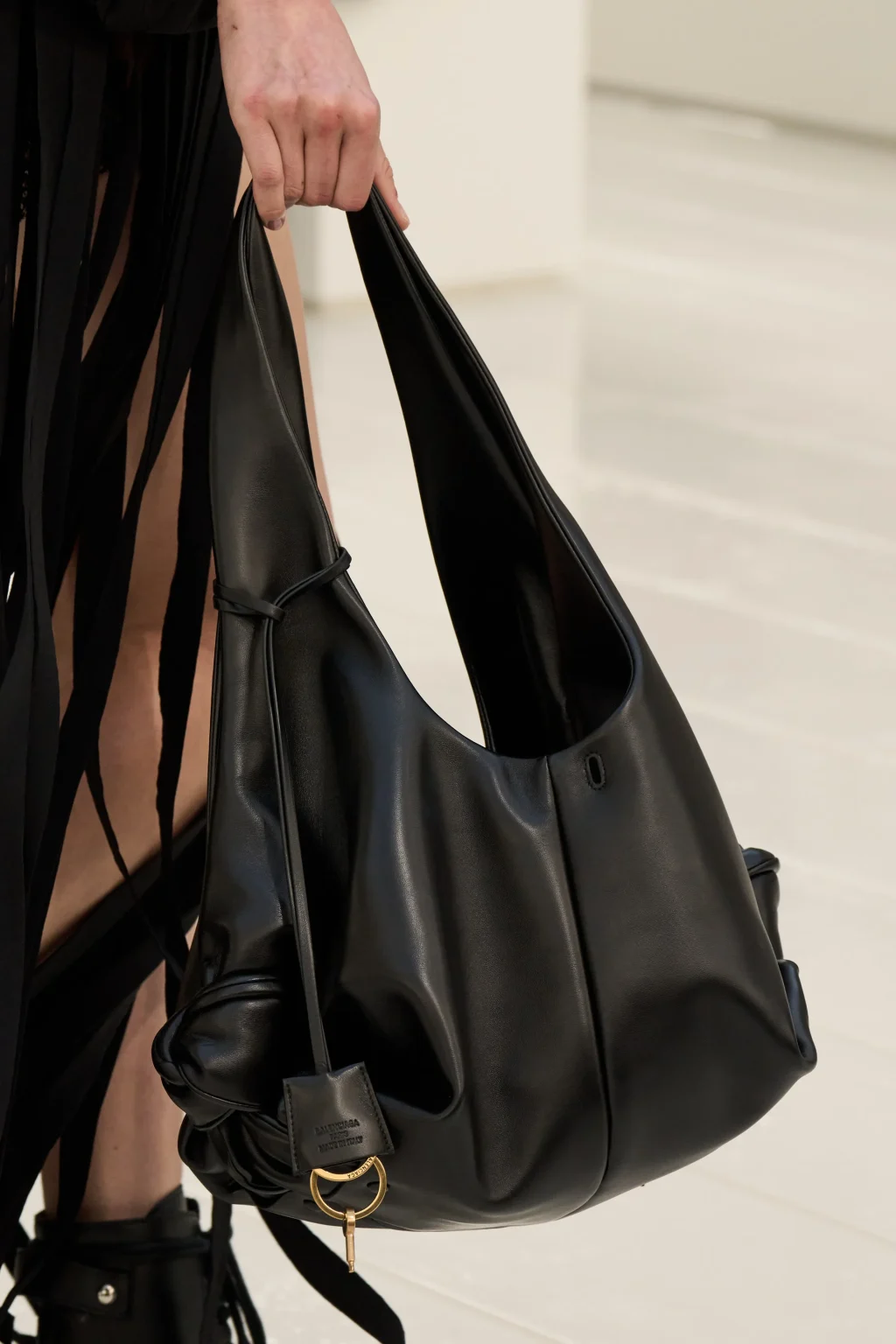
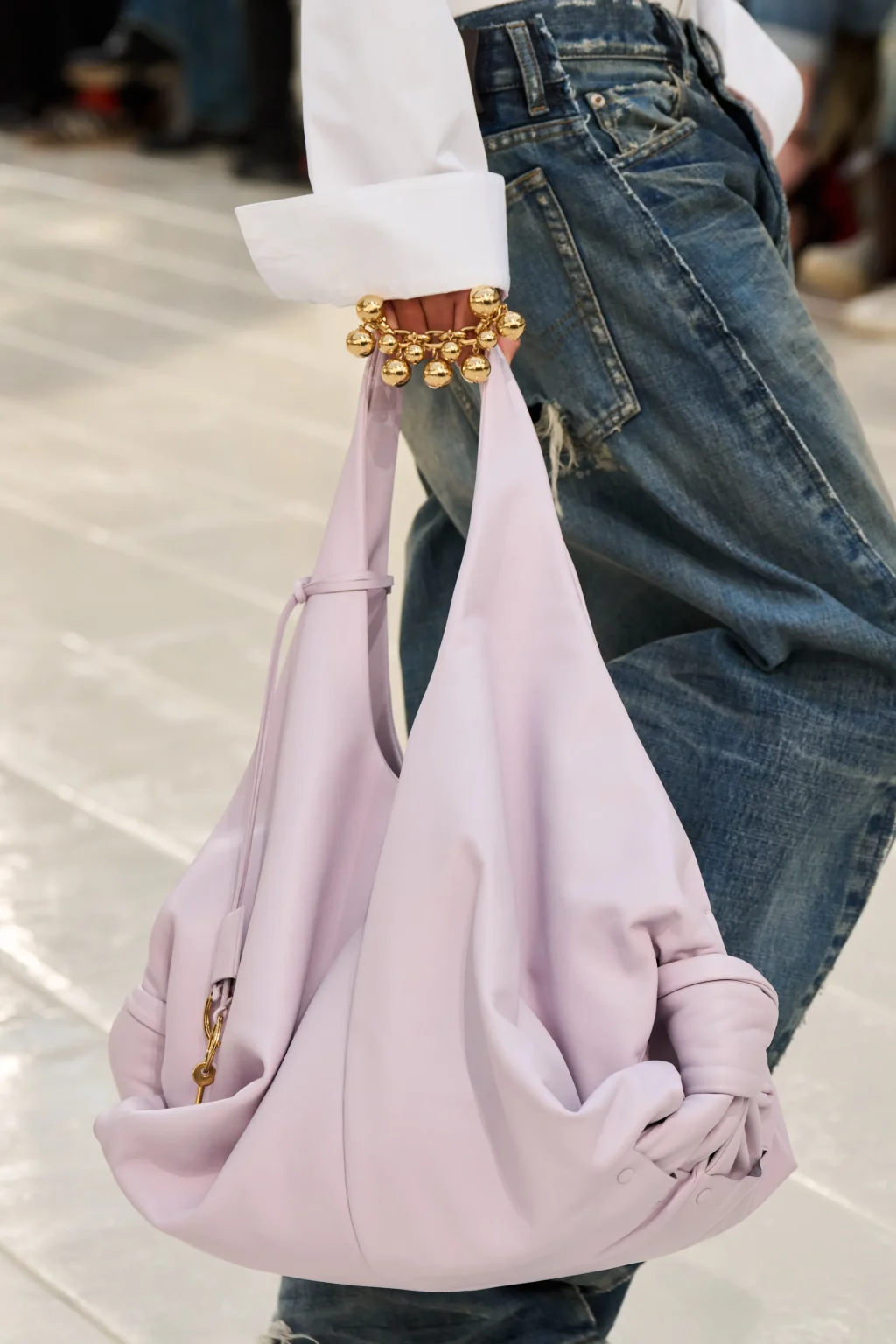
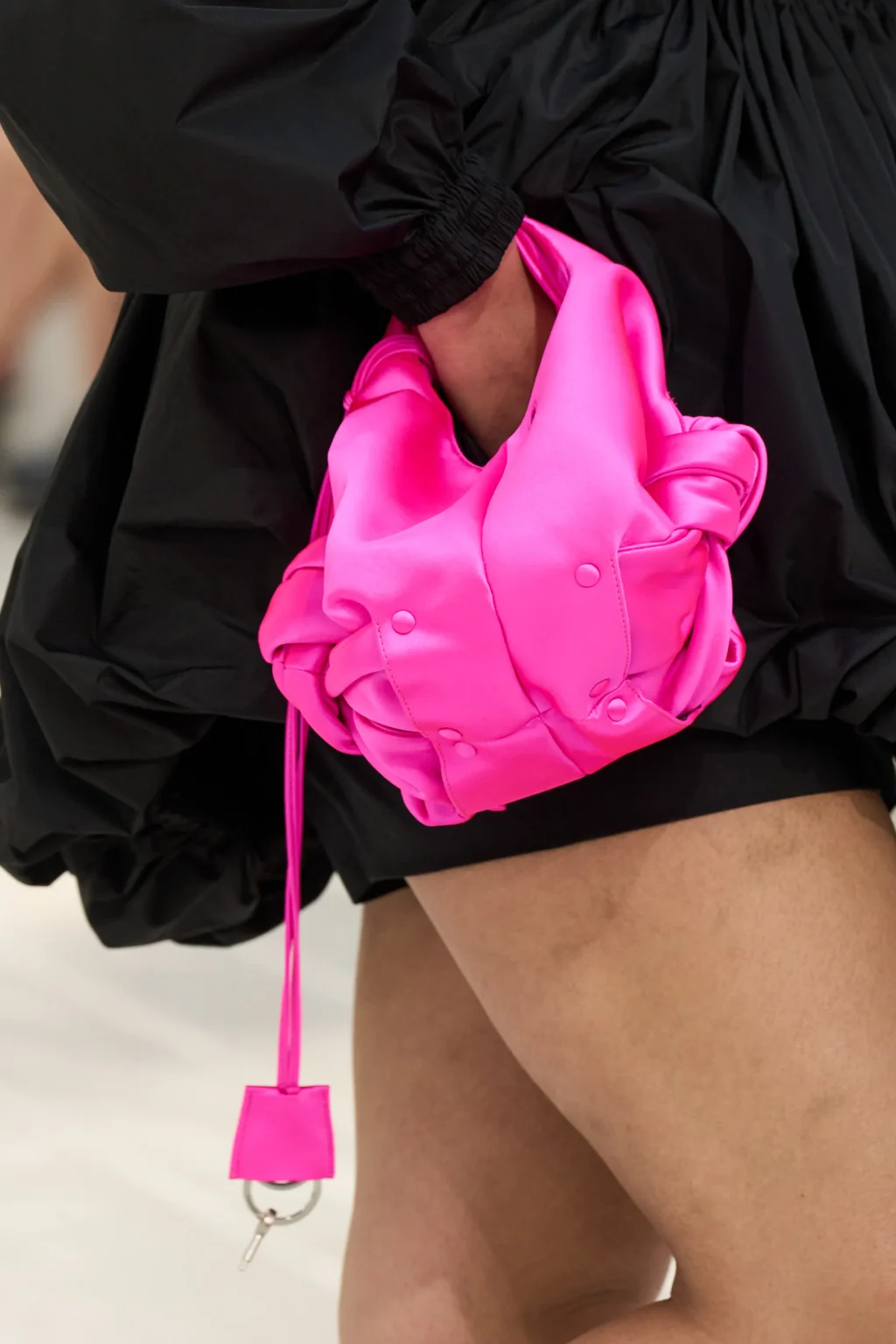
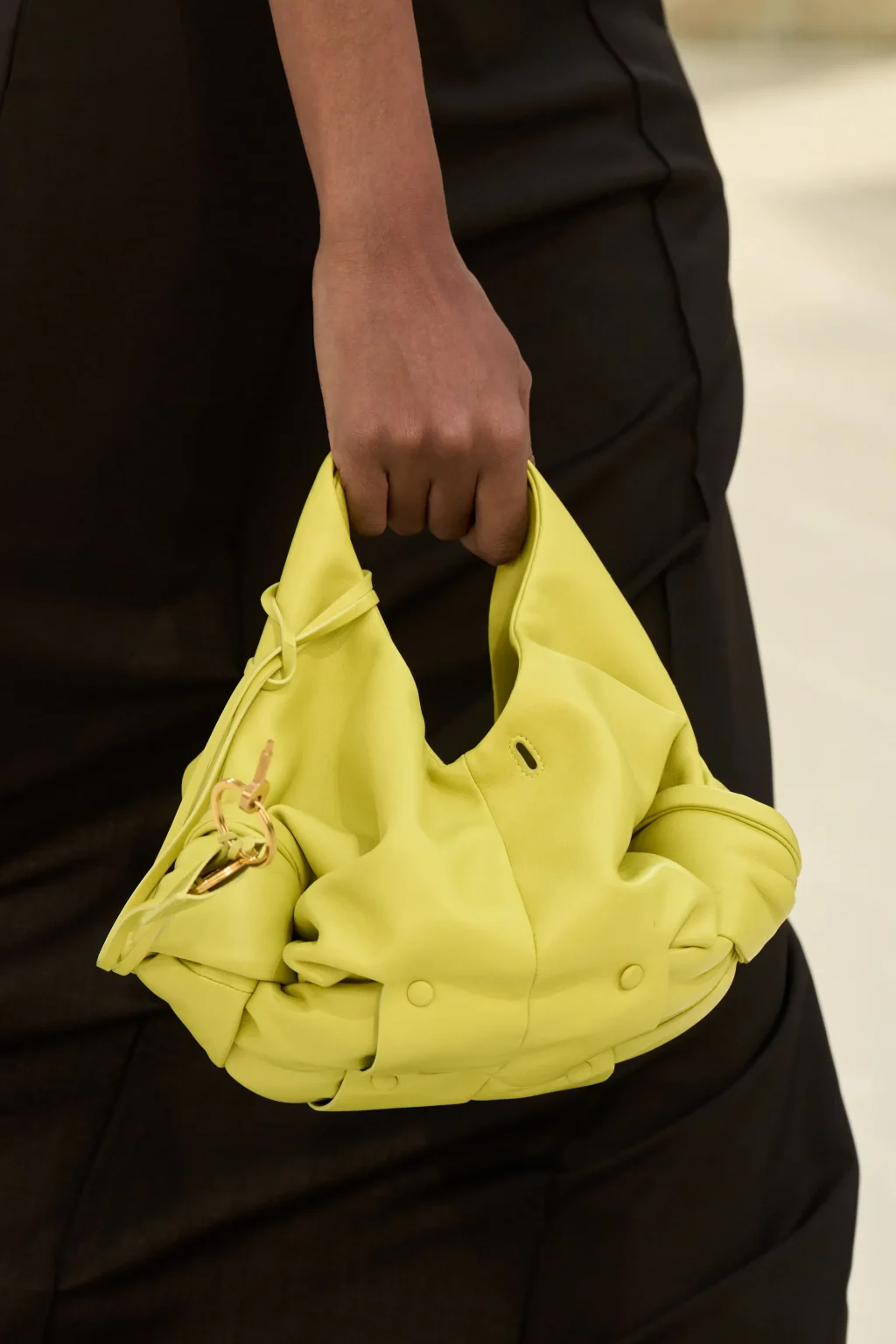
The Nodo leads the season. Its name is Italian for “knot”, and the construction explains it. Artisans pinch and fold soft, finely grained leather by hand, then gather the lower corners into fat knots that sit at both sides of the bag. Snap studs hold the gathers along the base and keep it rounded. The opening is a deep U with a small stitched slot at the centre front, and a wide strap cut from the body itself goes over the shoulder or into the hand.
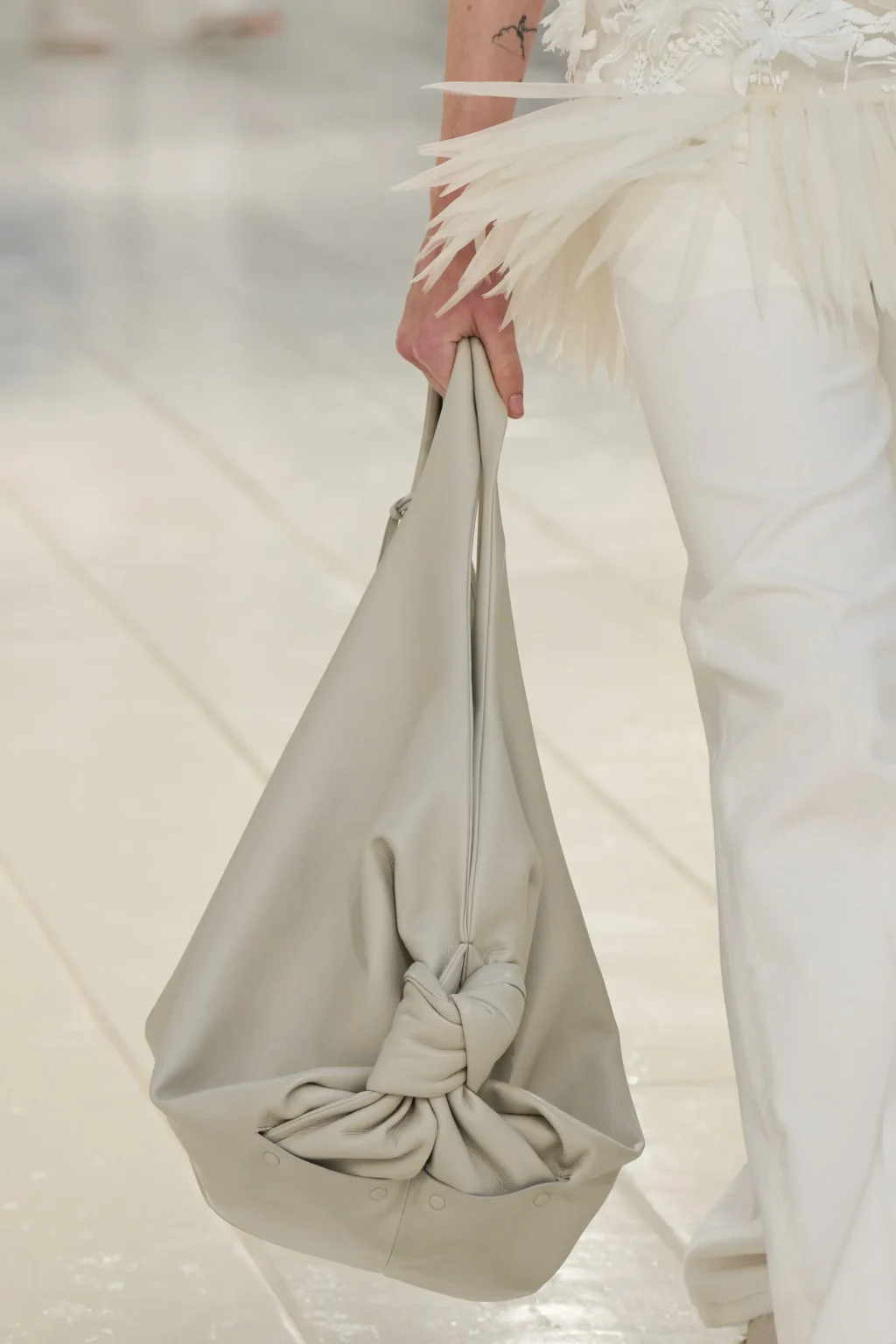
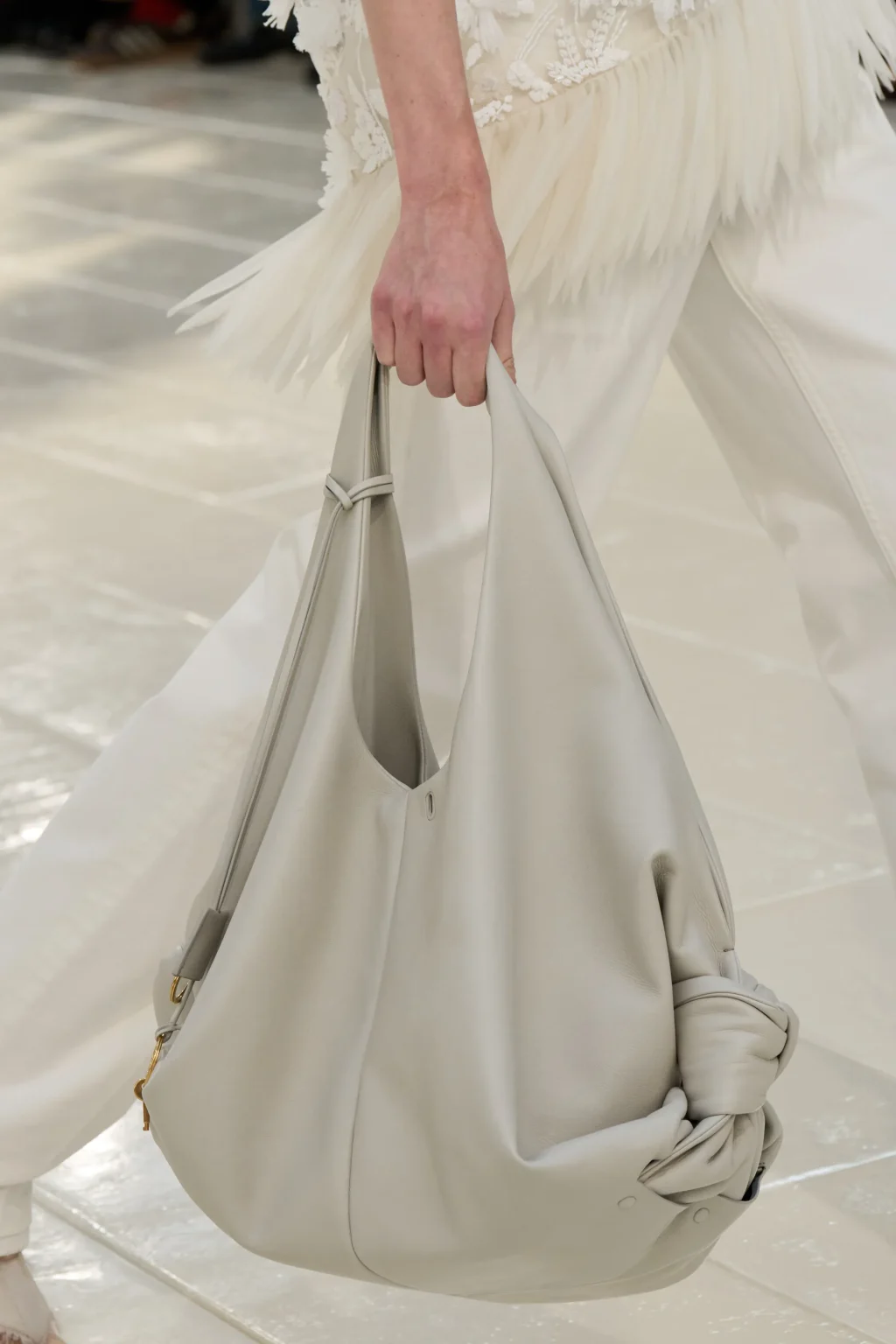
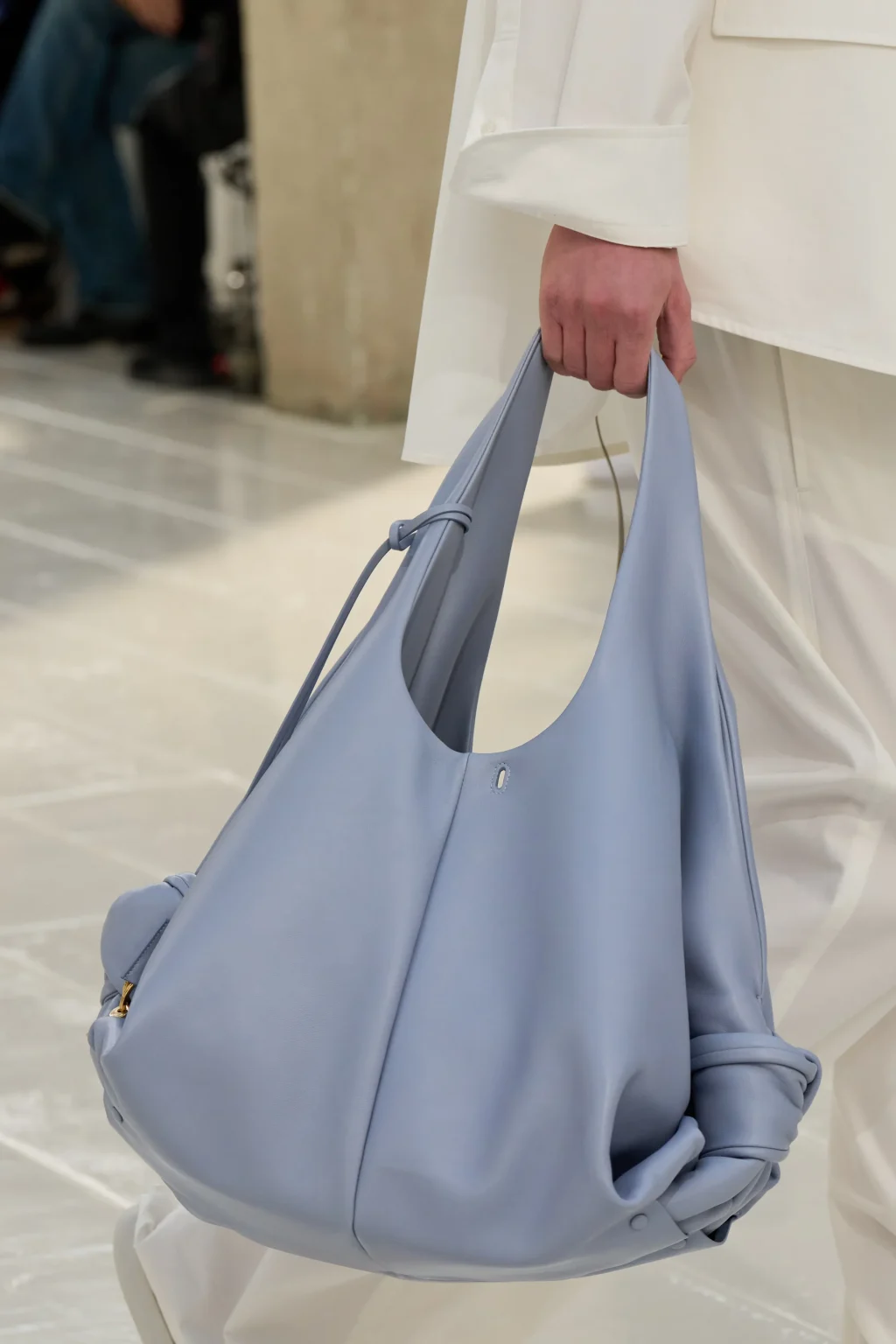
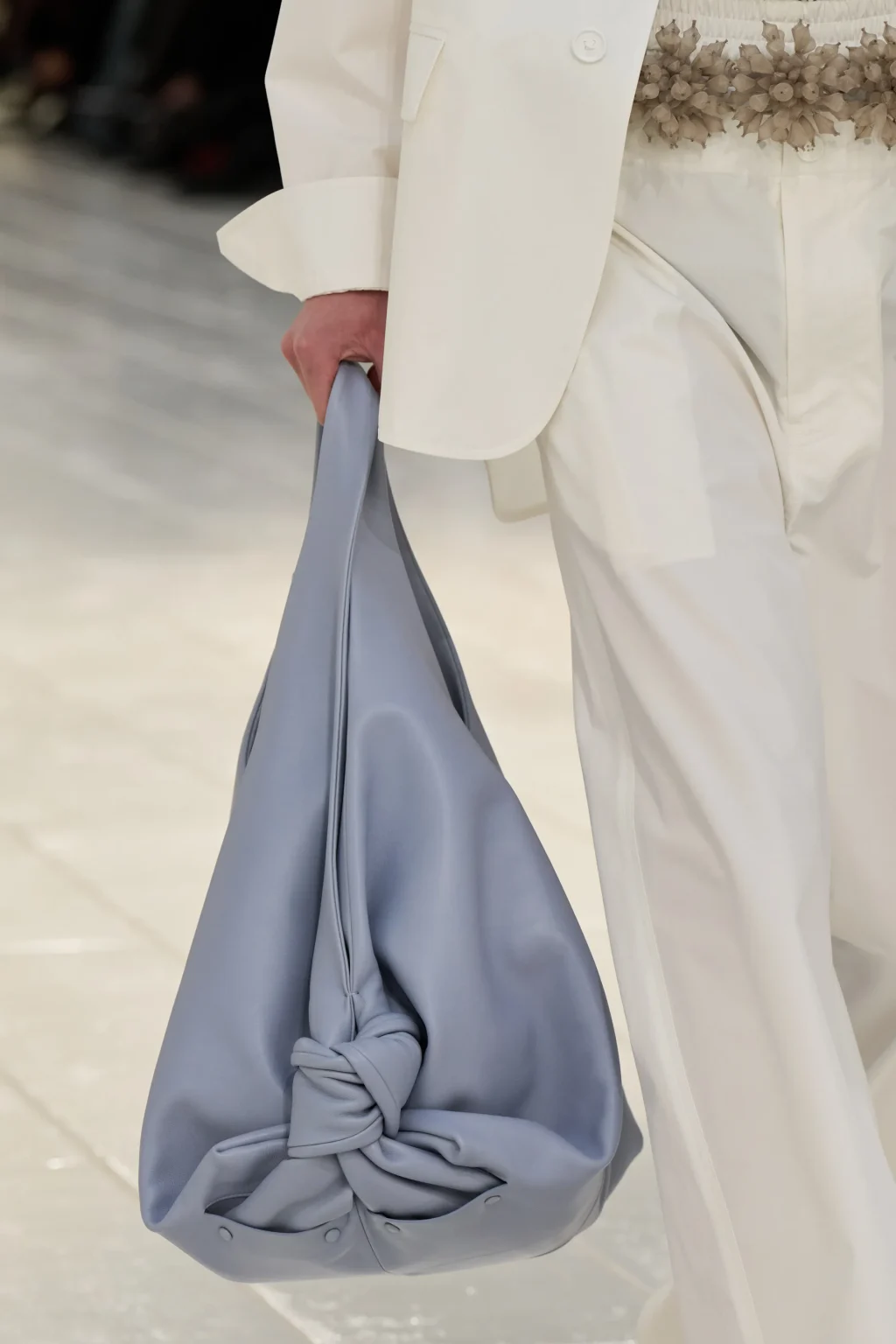
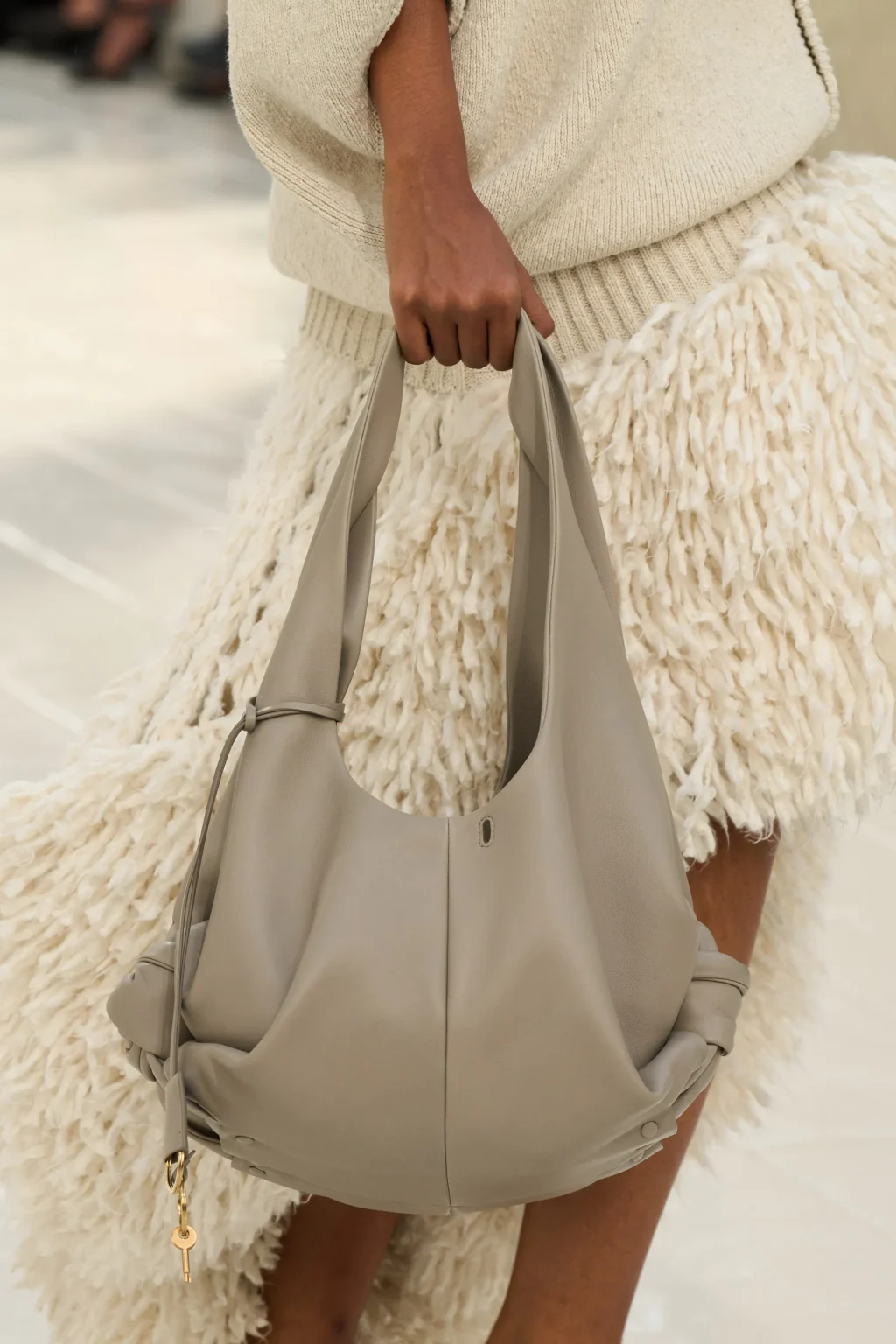
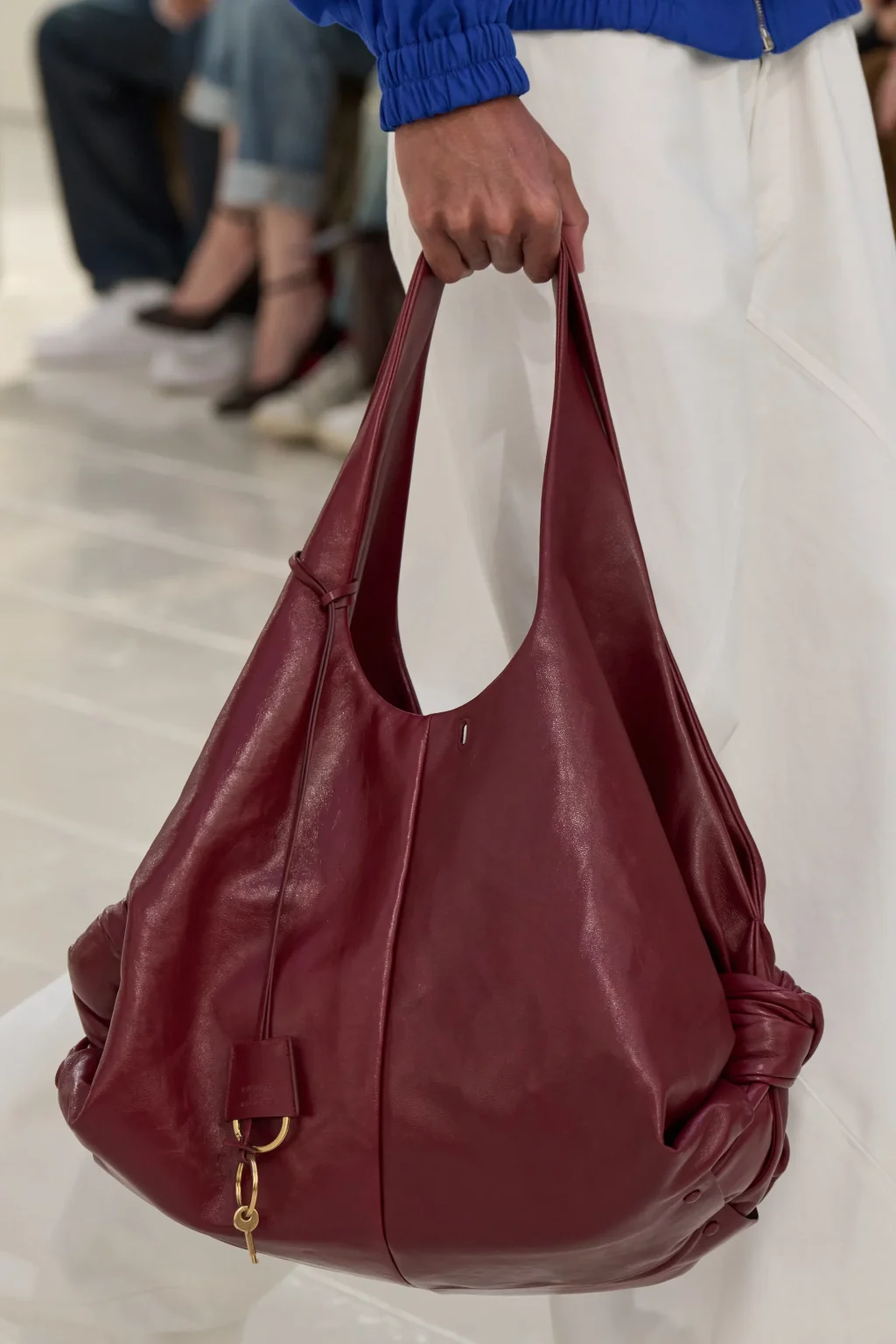
A thin leather cord ties around the strap and drops to a clochette stamped “Balenciaga Paris, Made in Italy”, finished with two key rings and a key, in gold or silver to match the bag. On the runway the large Nodo appeared in ivory, powder blue, grey-taupe, burgundy, black and pale lilac, carried by men and women alike. The ivory version came with a feathered white top, the burgundy with a cobalt bomber and white jeans, and the lilac with a gold bauble bracelet looped over the strap.
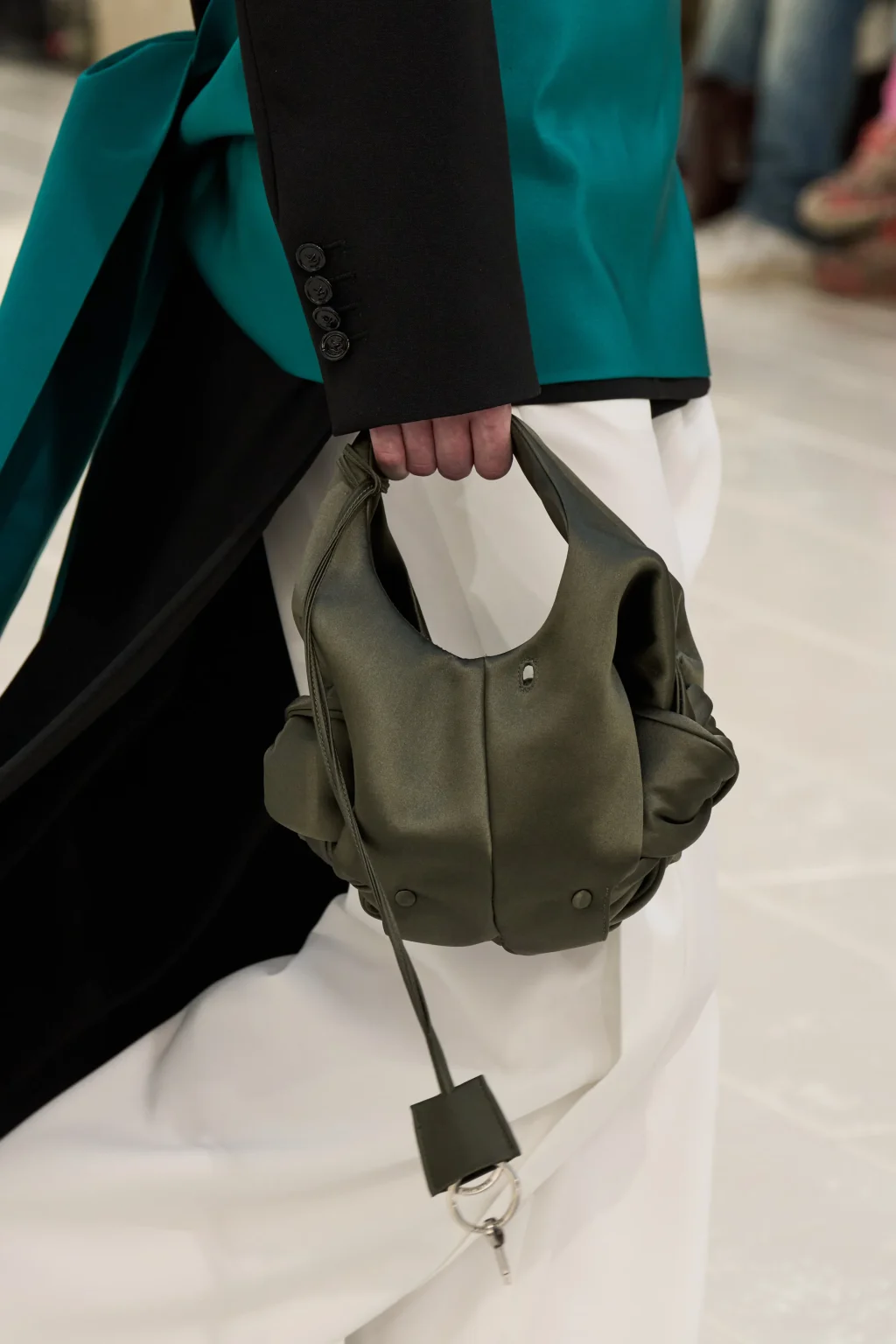
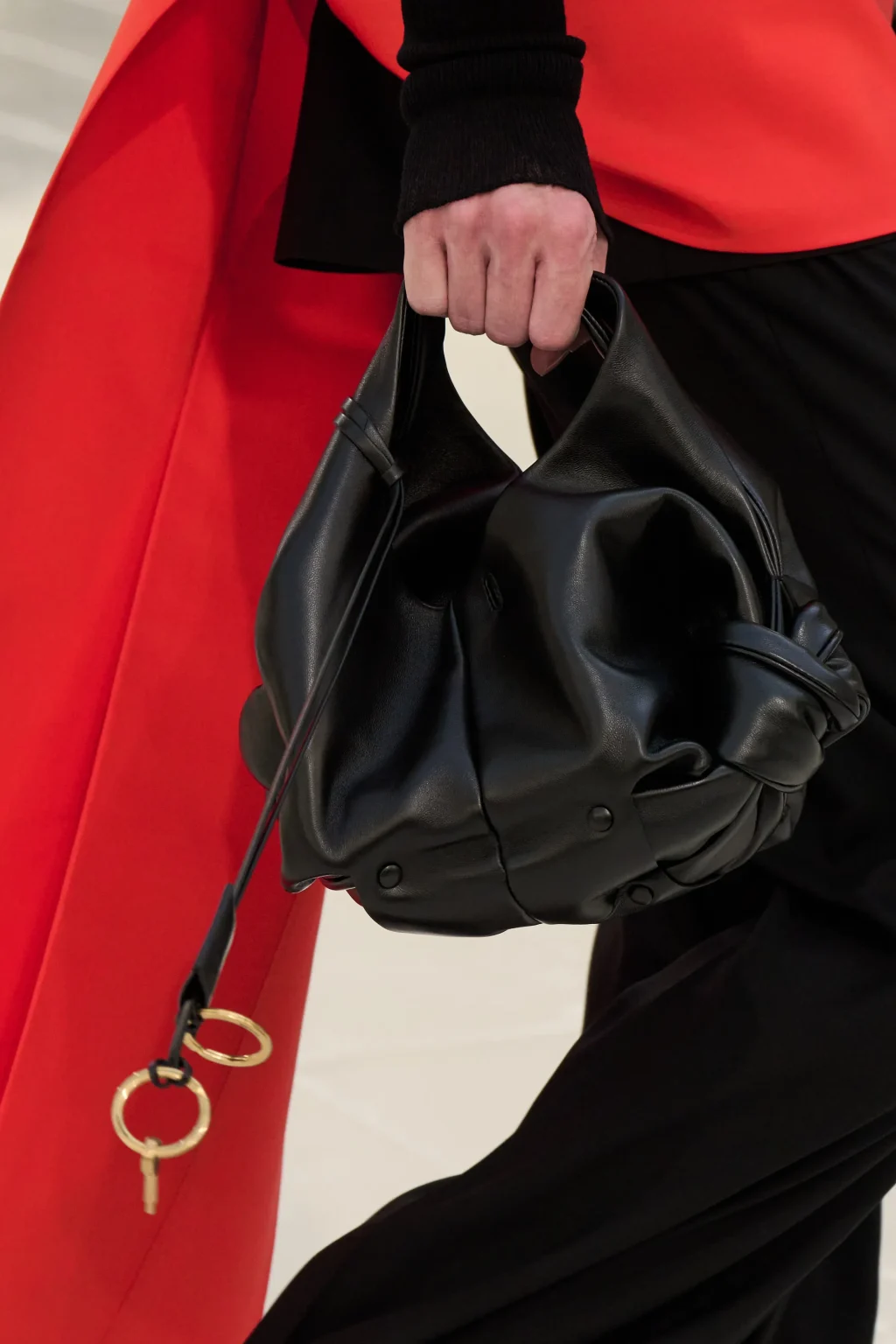
The mini Nodo is a hand-held pouch with the same knots pressed closer together. Balenciaga made it in glossy satin, olive and fuchsia, and in leather, black and lime. On the black one, a brass turn-lock shows inside the opening, a hardware detail shared with the Rodeo.
The Balenciaga Silhou Tote: Bias-Cut Leather
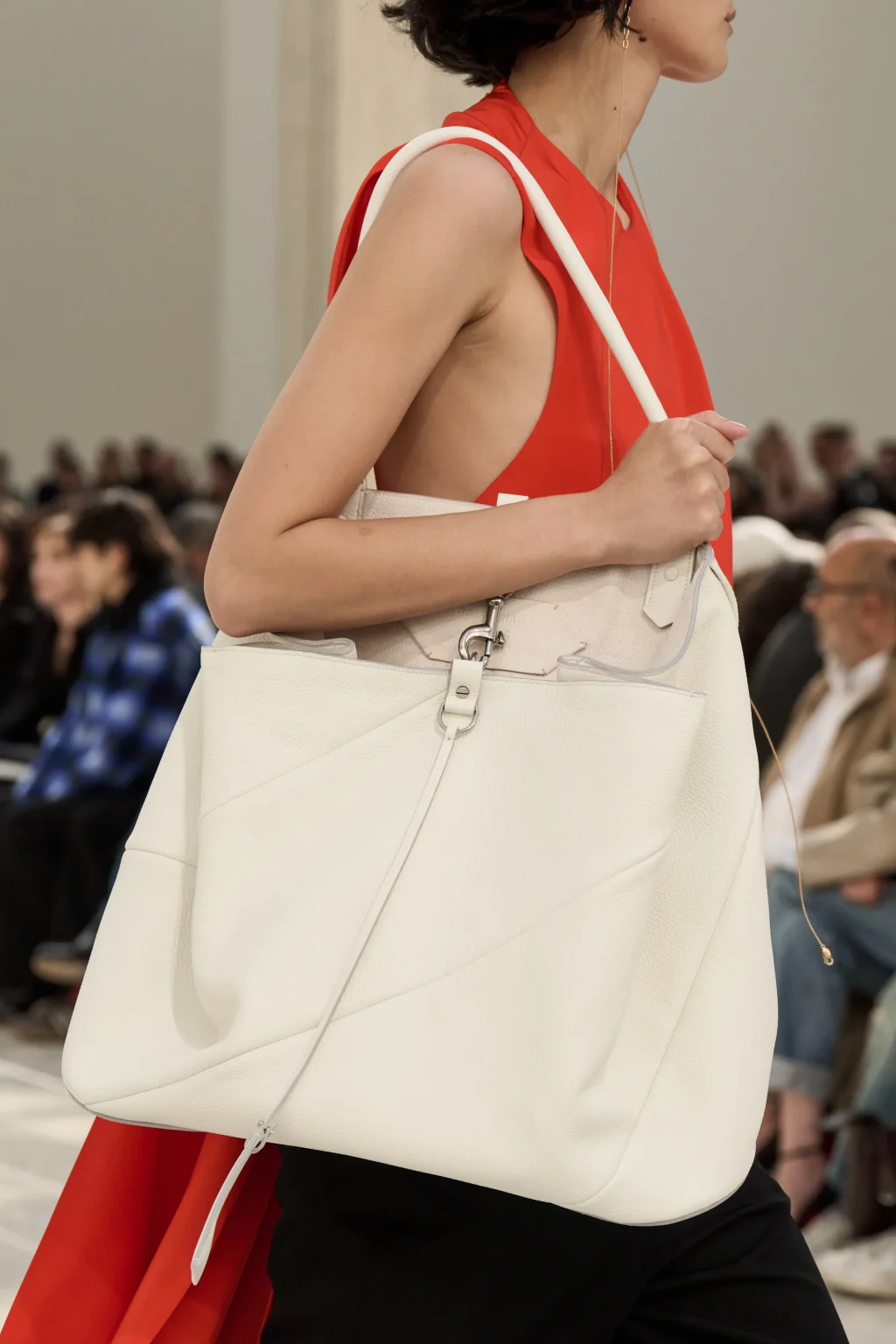
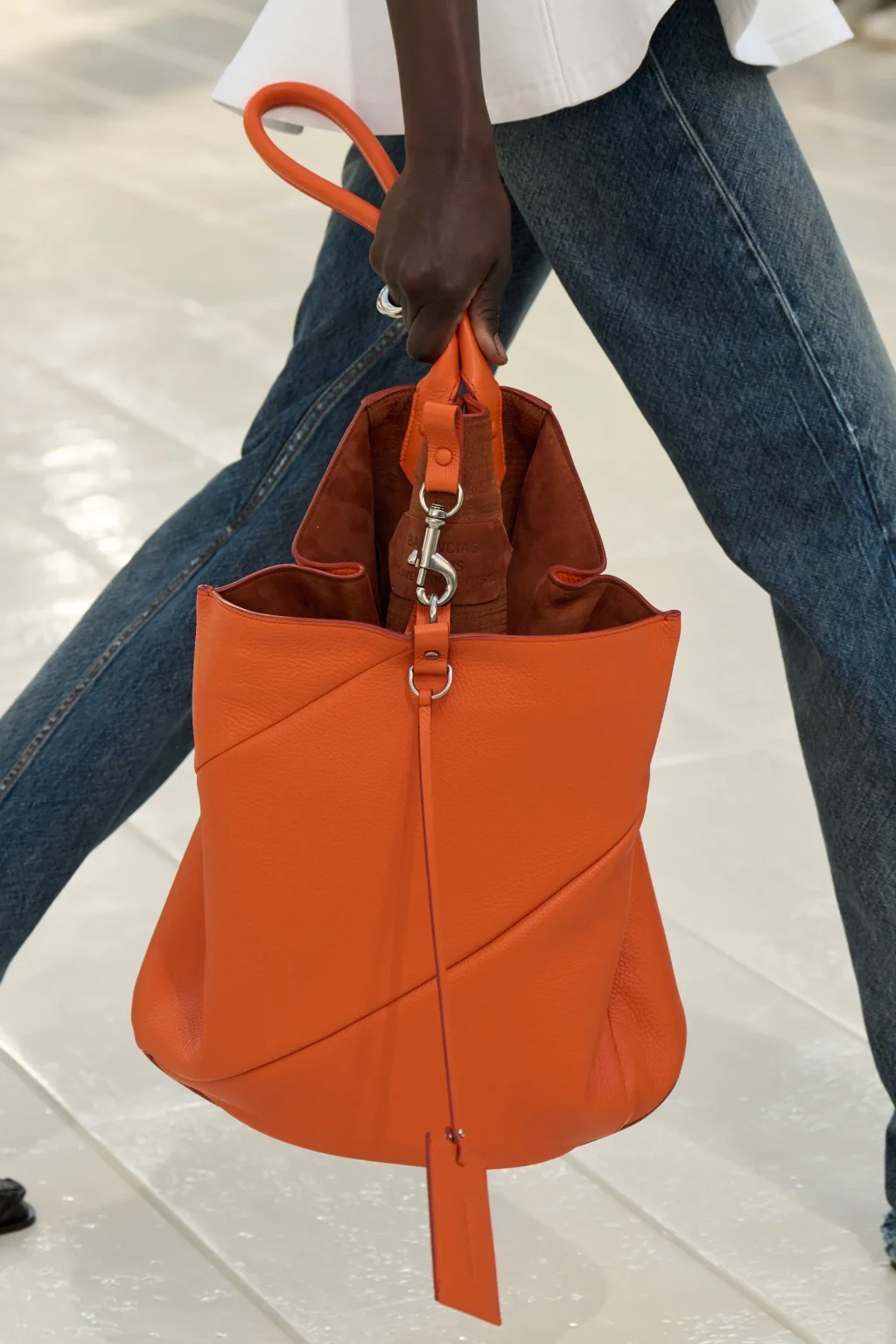
The Silhou Tote applies the season’s main technique to a bag. Its grained leather is cut on the bias, and diagonal seams wrap the body, so the leather falls into soft folds as it hangs. A single rolled handle works over the shoulder or in the hand. The visible fastening is a single silver snap hook that clips the two sides together at the centre, and a long flat leather tab hangs from the same D-ring to below the base. Inside, a suede panel stamped Balenciaga Paris lines the opening. The name reads as shorthand for silhouette.
It appeared twice on the runway: ivory, worn on the shoulder against a red sleeveless top, and orange, carried by its handle with a white peplum T-shirt and washed jeans.
The Balenciaga Rodeo: Rodeo Tote, Classic Rodeo and a New Belt Bag
Demna introduced the Rodeo in early 2024, named it after Rodeo Drive and watched it sell out in its first season. Piccioli kept it and loosened it further for Summer 27, in three versions.
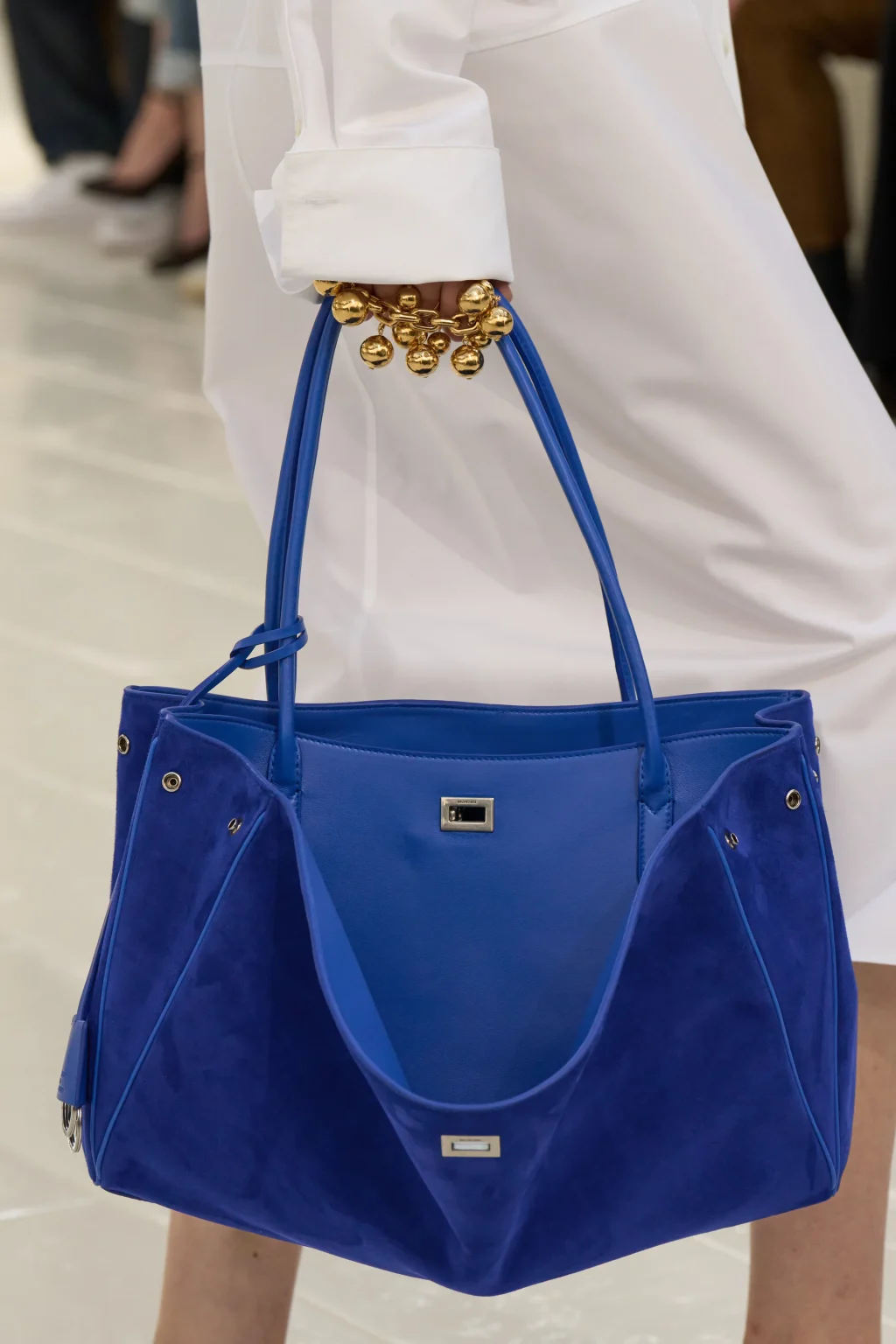
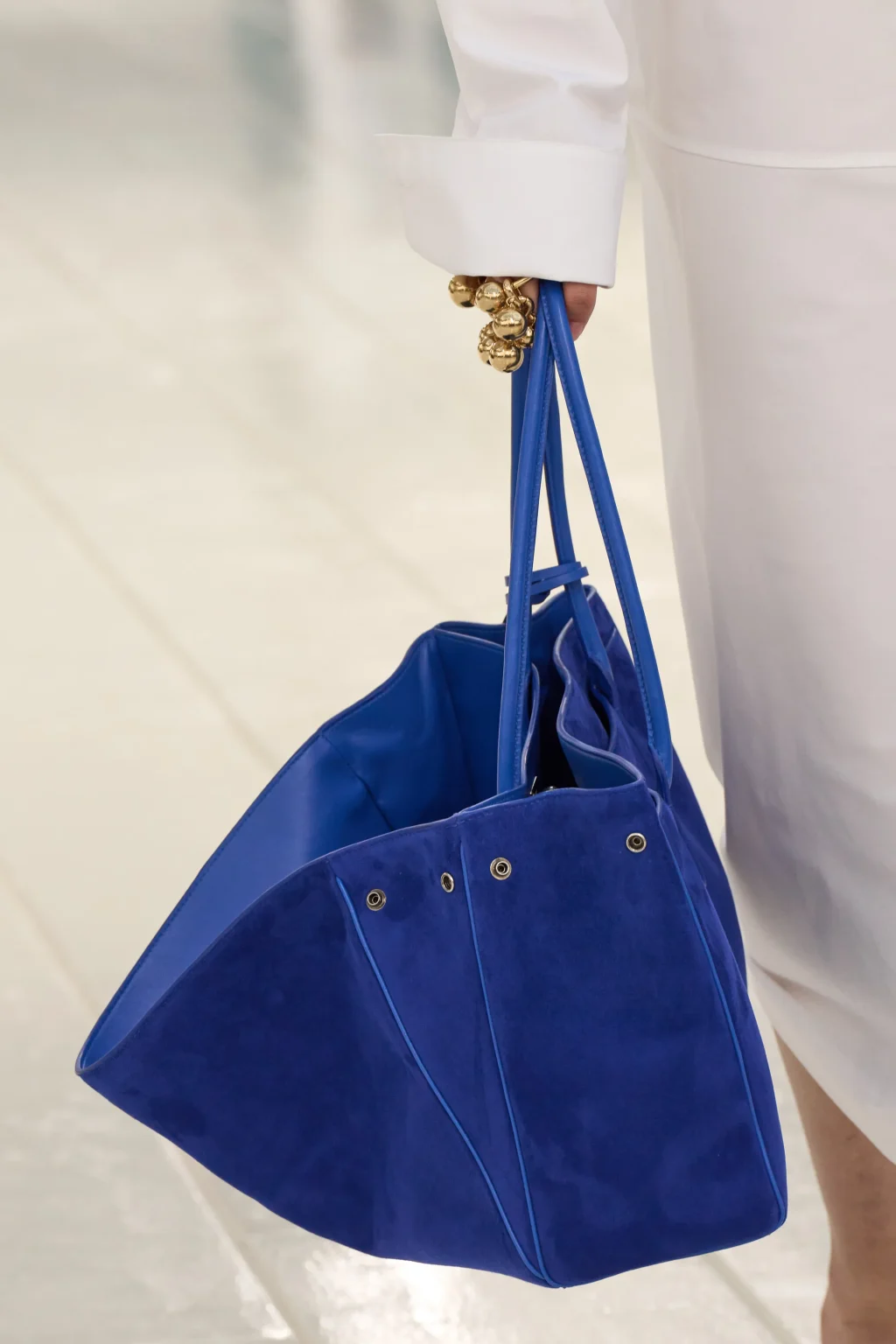
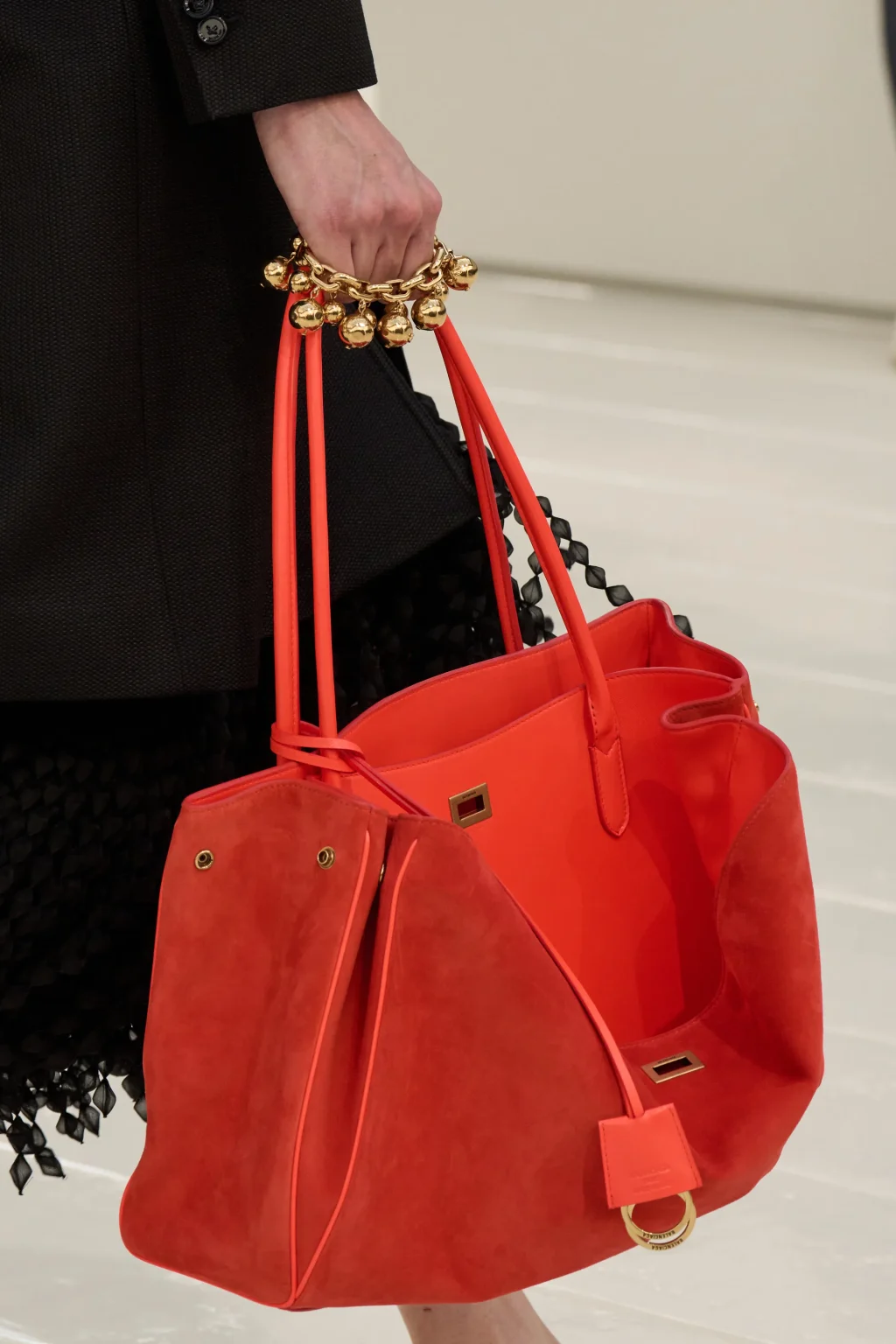
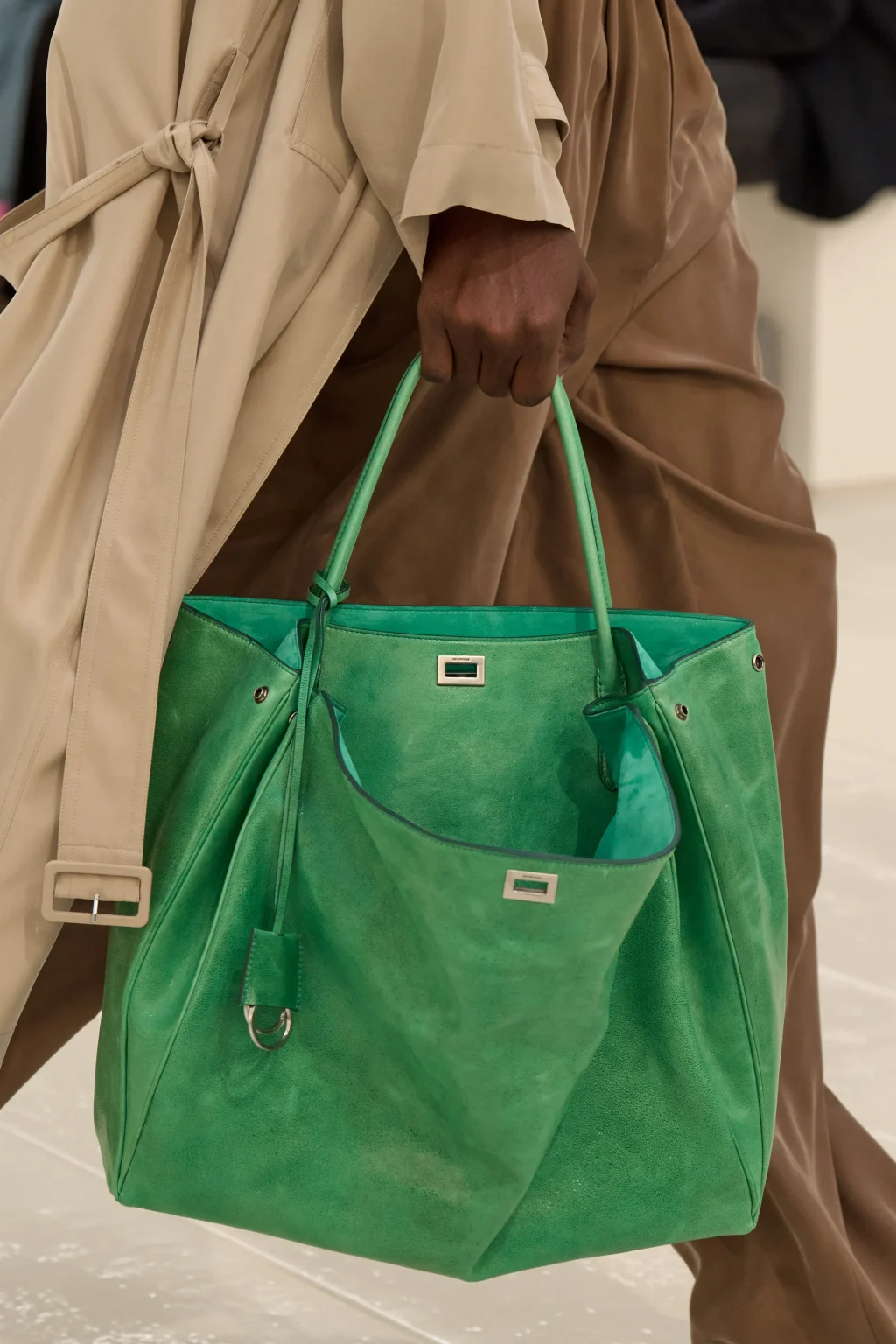
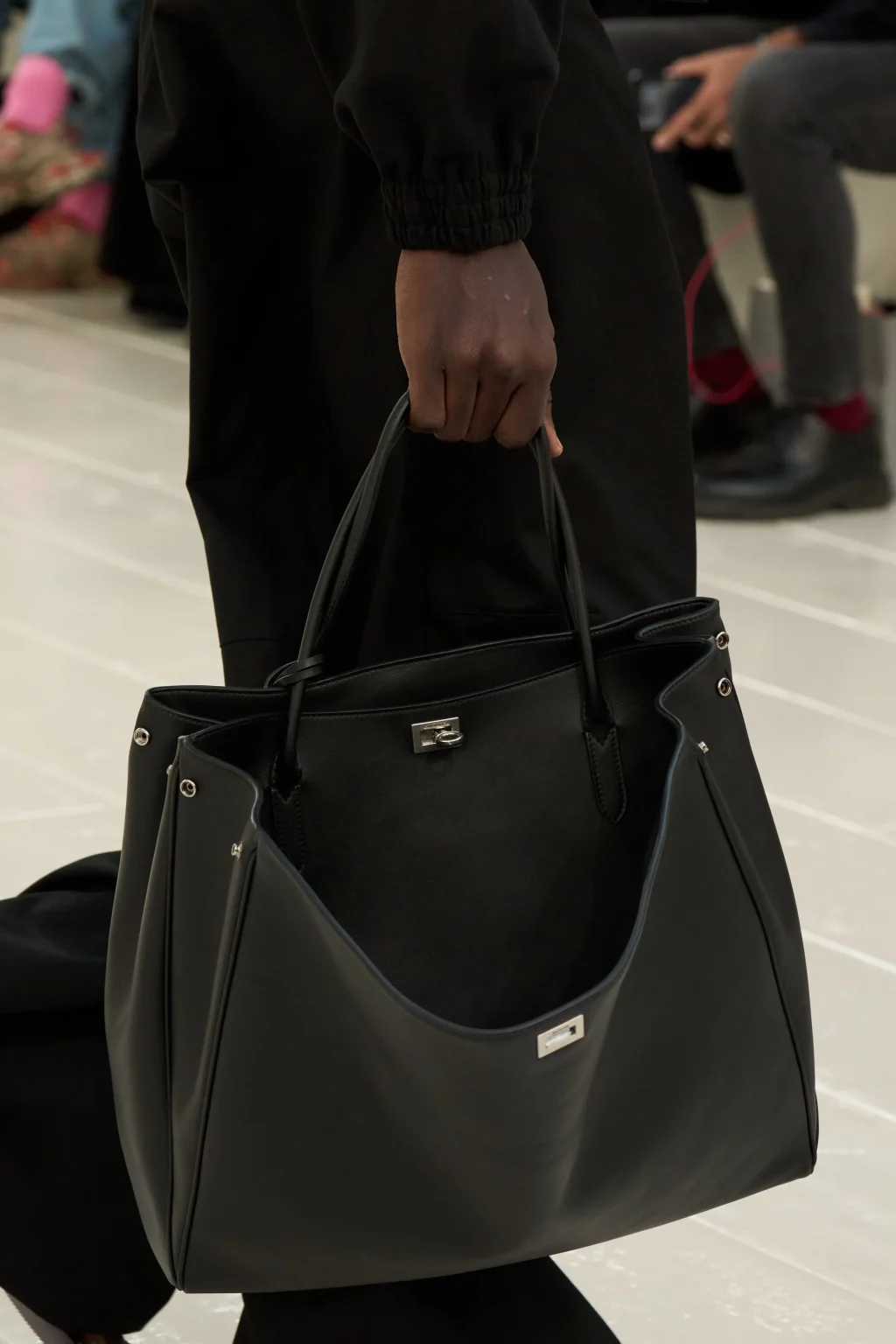
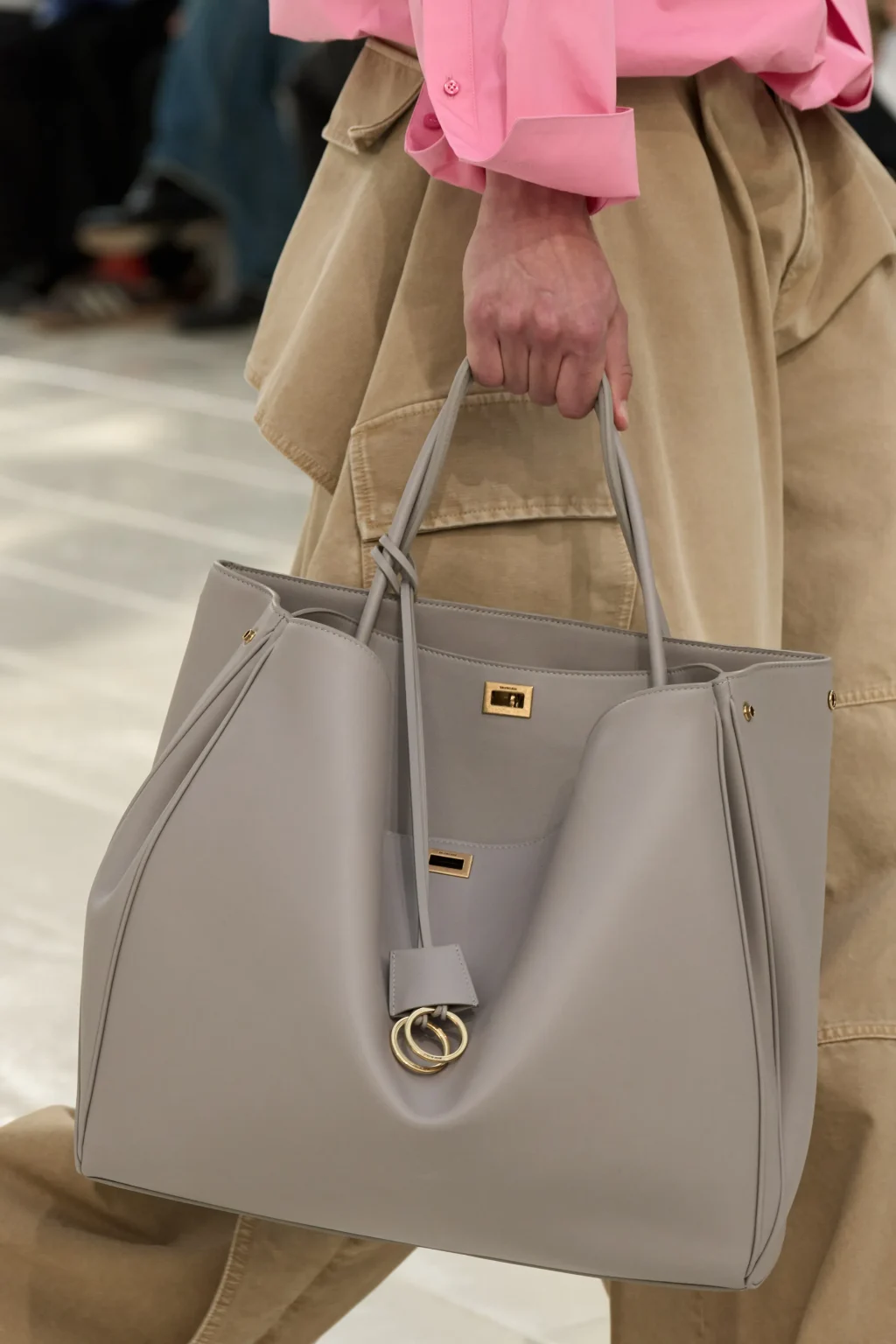
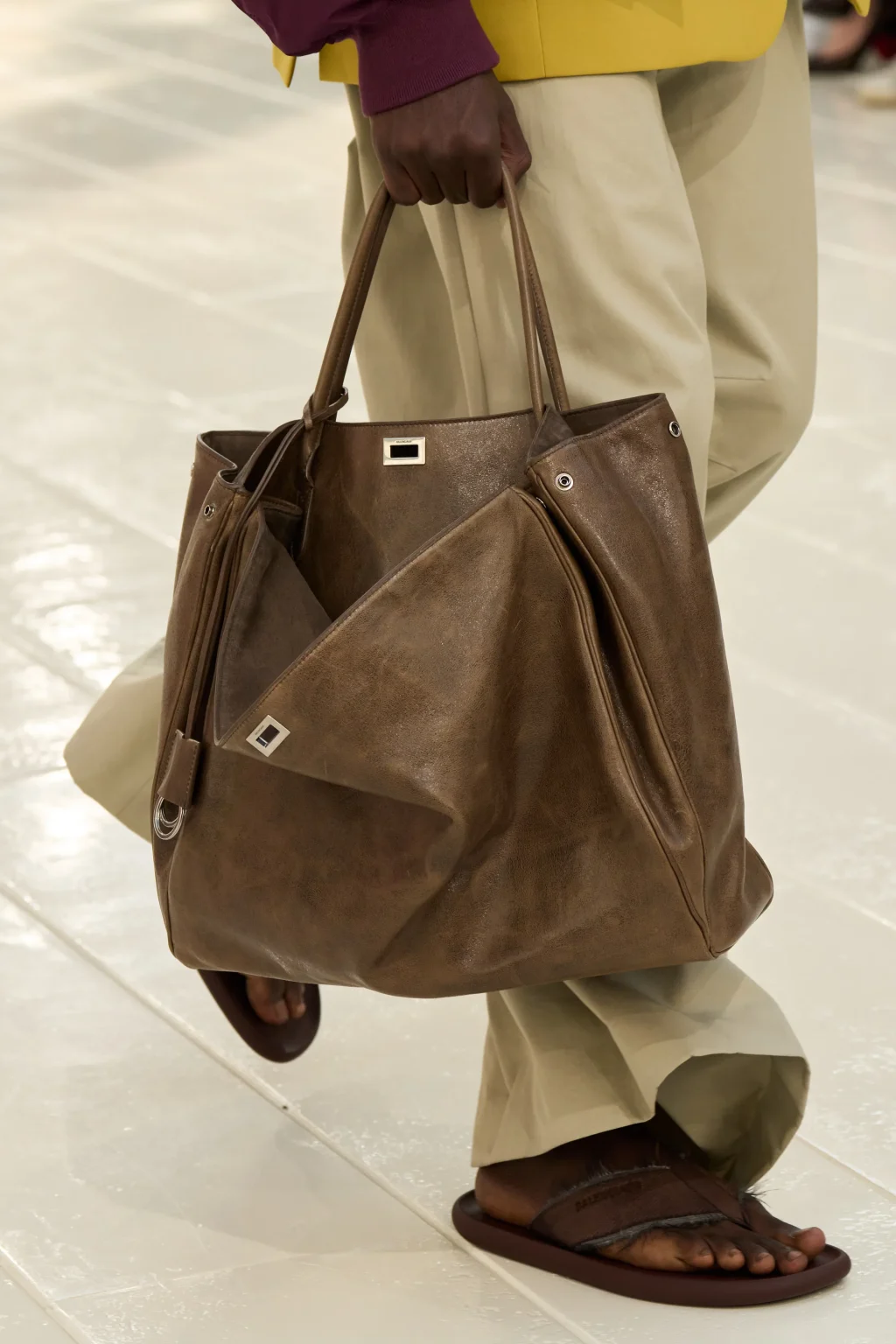
The Rodeo Tote is the open-top version. It has two rolled handles, side snaps and a front panel that collapses forward into a deep fold, showing the lining and a rectangular turn-lock on the inner wall. A second lock plate sits on the dropped panel. One handle carries the Rodeo’s knotted leather tie and a clochette with two key rings engraved Balenciaga. Piccioli showed it in suede lined in smooth leather, cobalt with silver hardware and coral with gold, and in aged leather in green and brown. Smooth calfskin versions came in black with silver hardware and grey with gold. The cobalt and coral totes were styled with the same gold bauble bracelet worn over the handles, against a white shirt dress and a black coat with a fringed skirt.
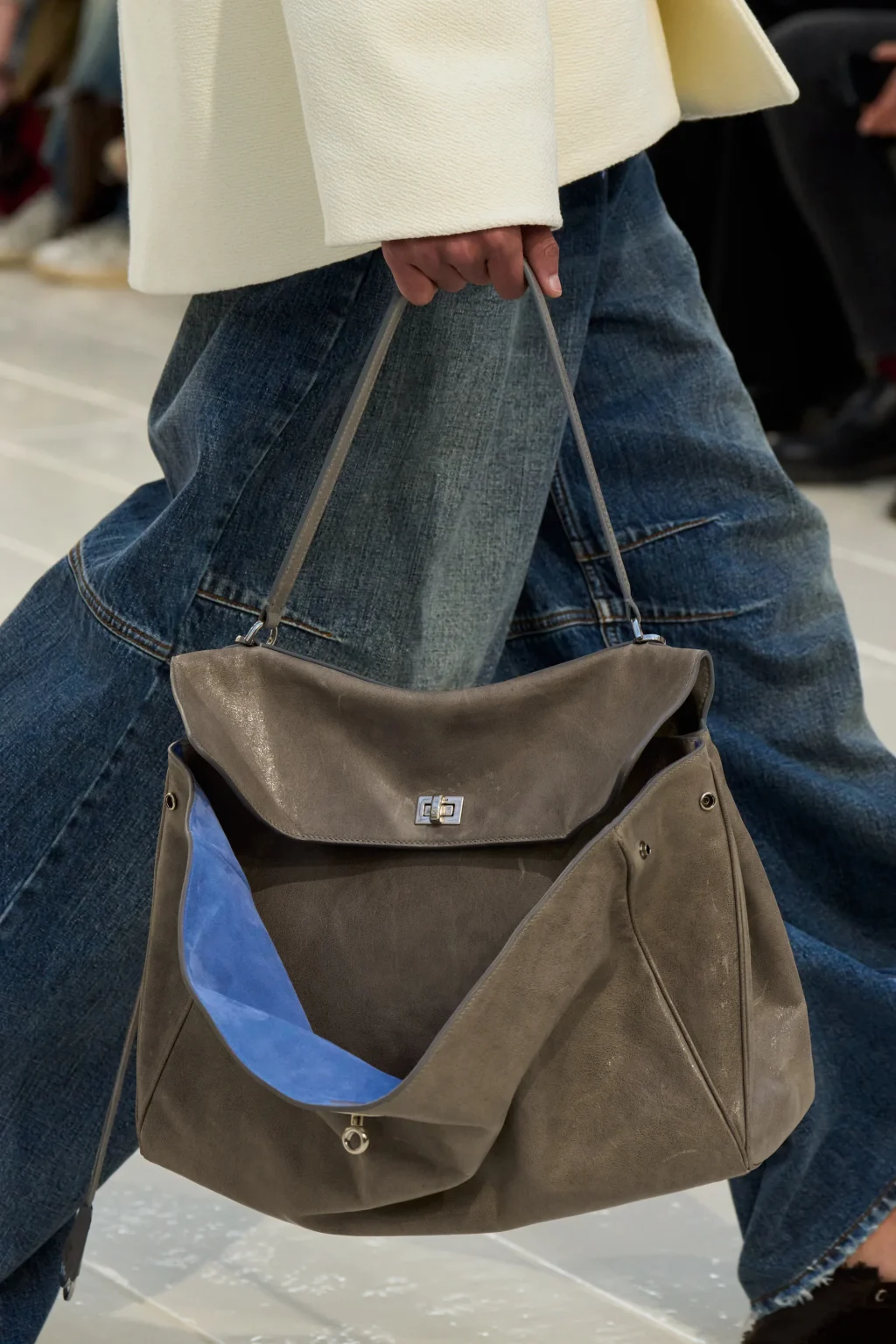
The Classic Rodeo keeps its flap and turn-lock and now opens wide. In grey aged leather, the front falls away to show a periwinkle suede lining, and the bag hangs from a single shoulder strap. It walked with a cream textured jacket and very wide jeans.
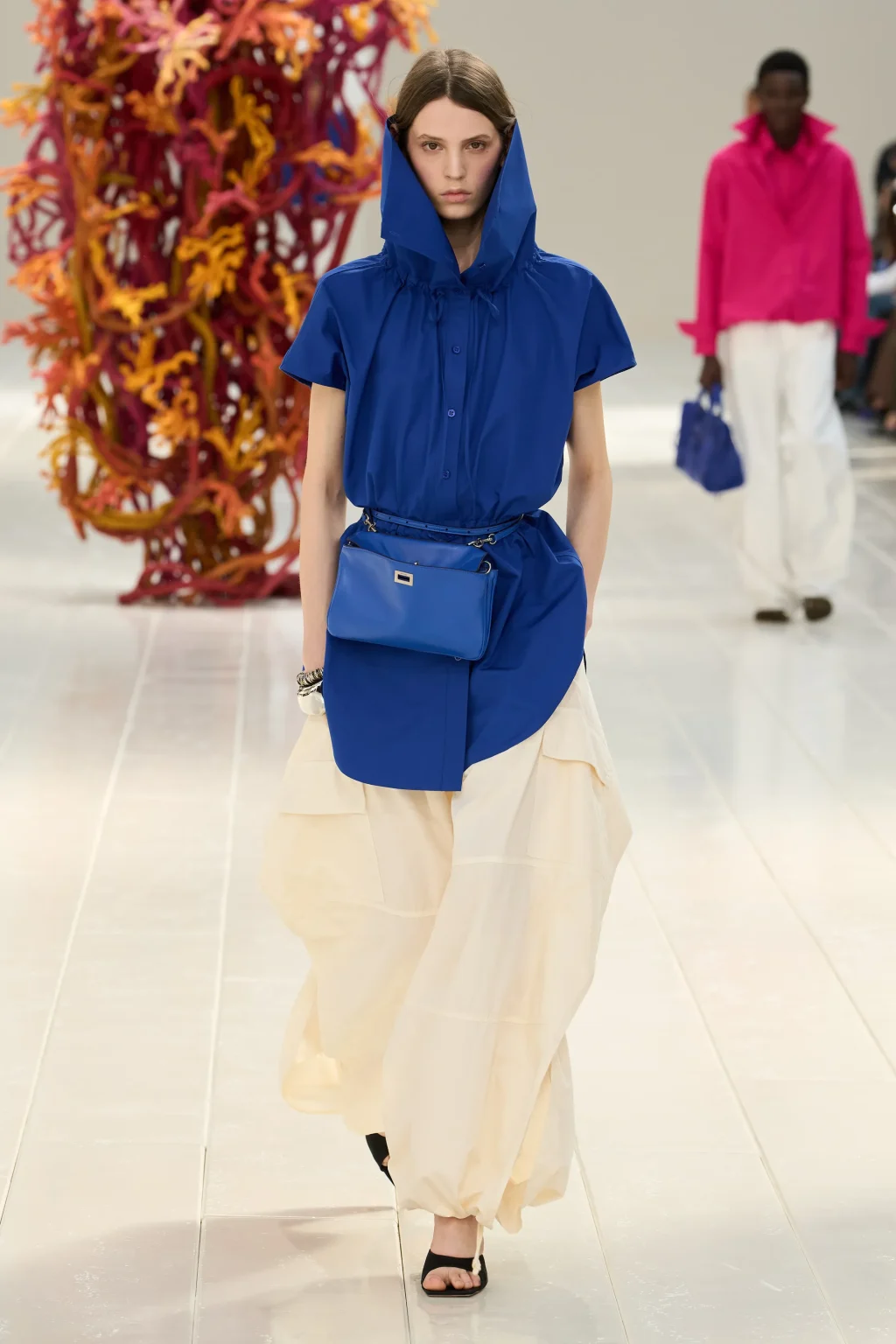
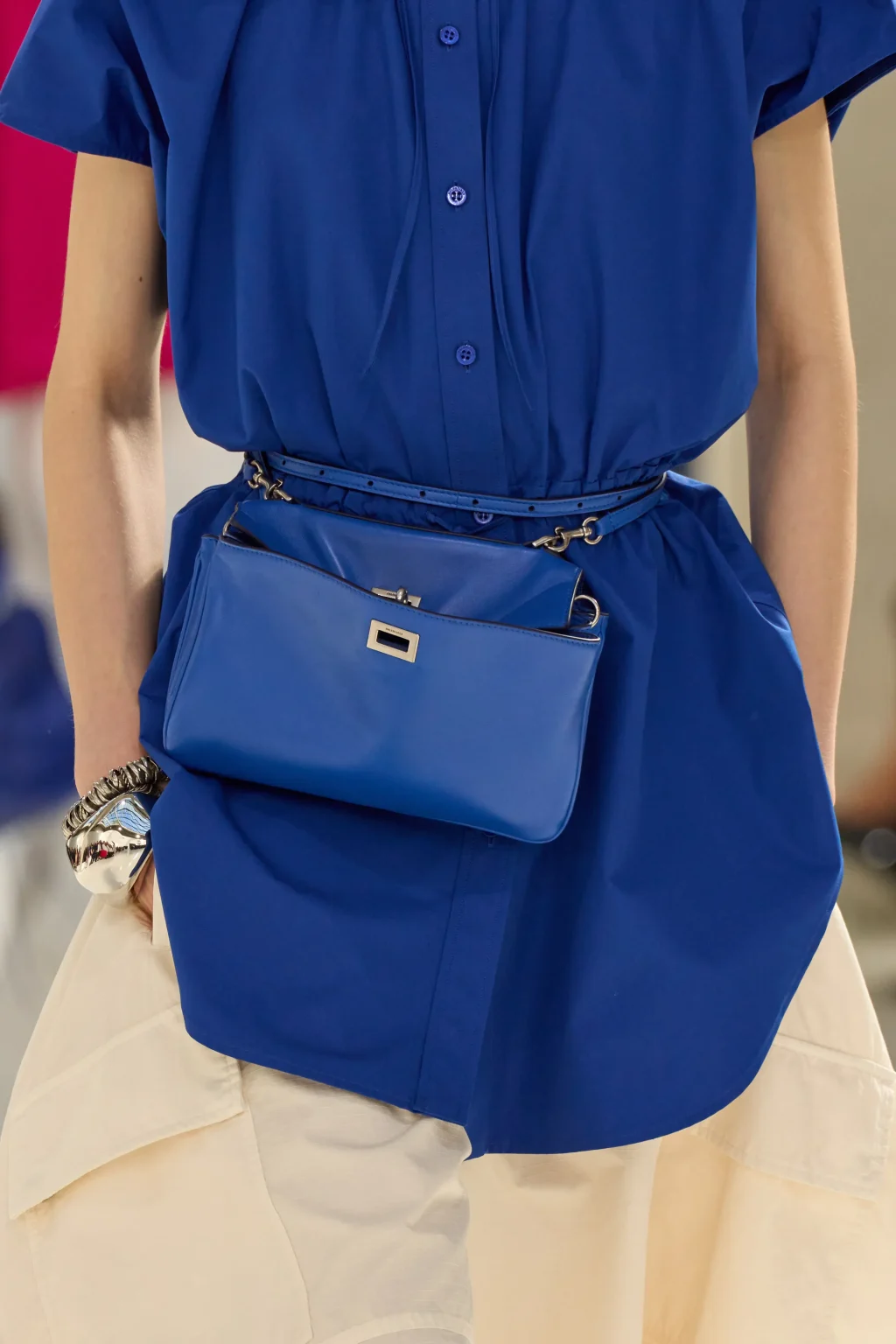
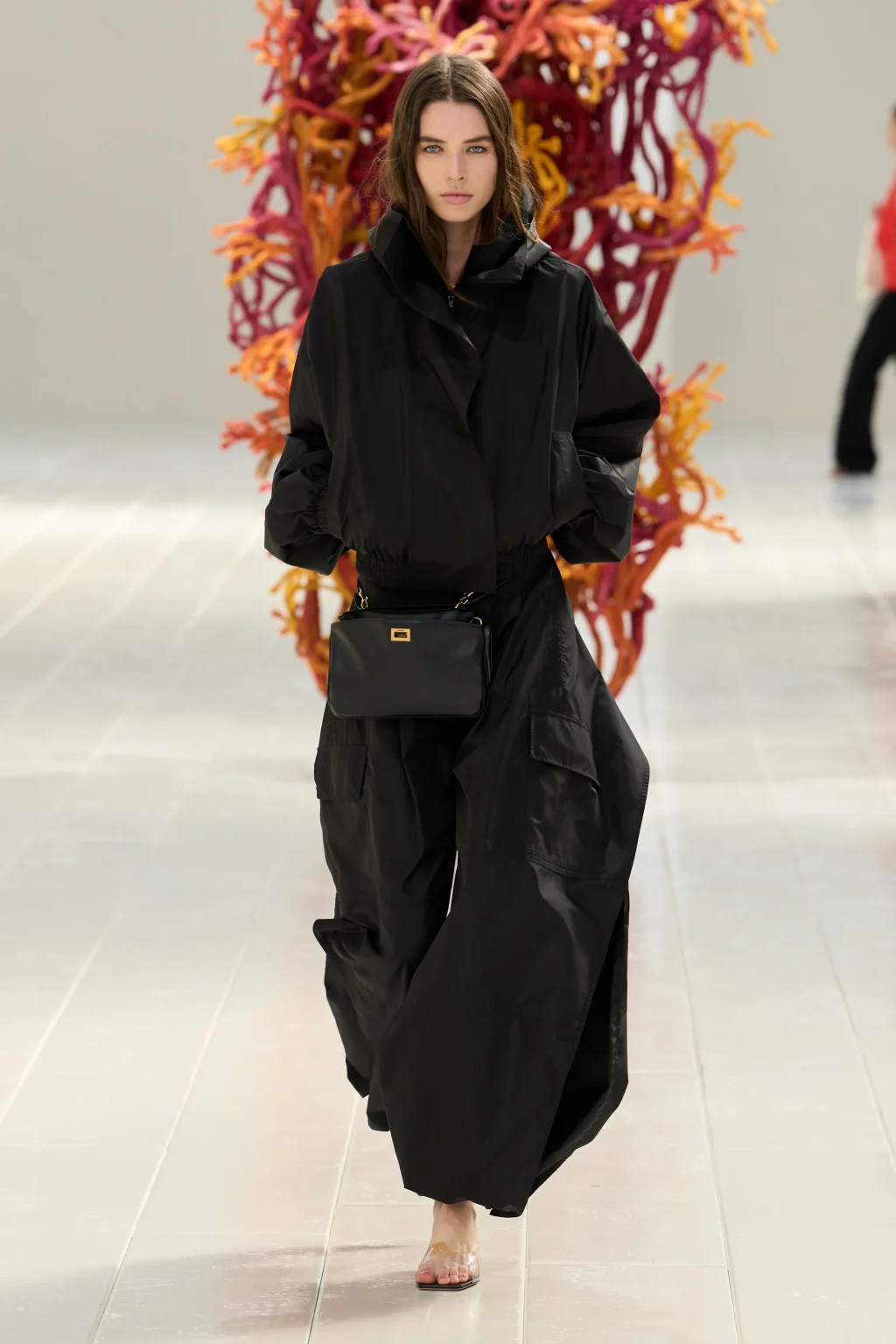
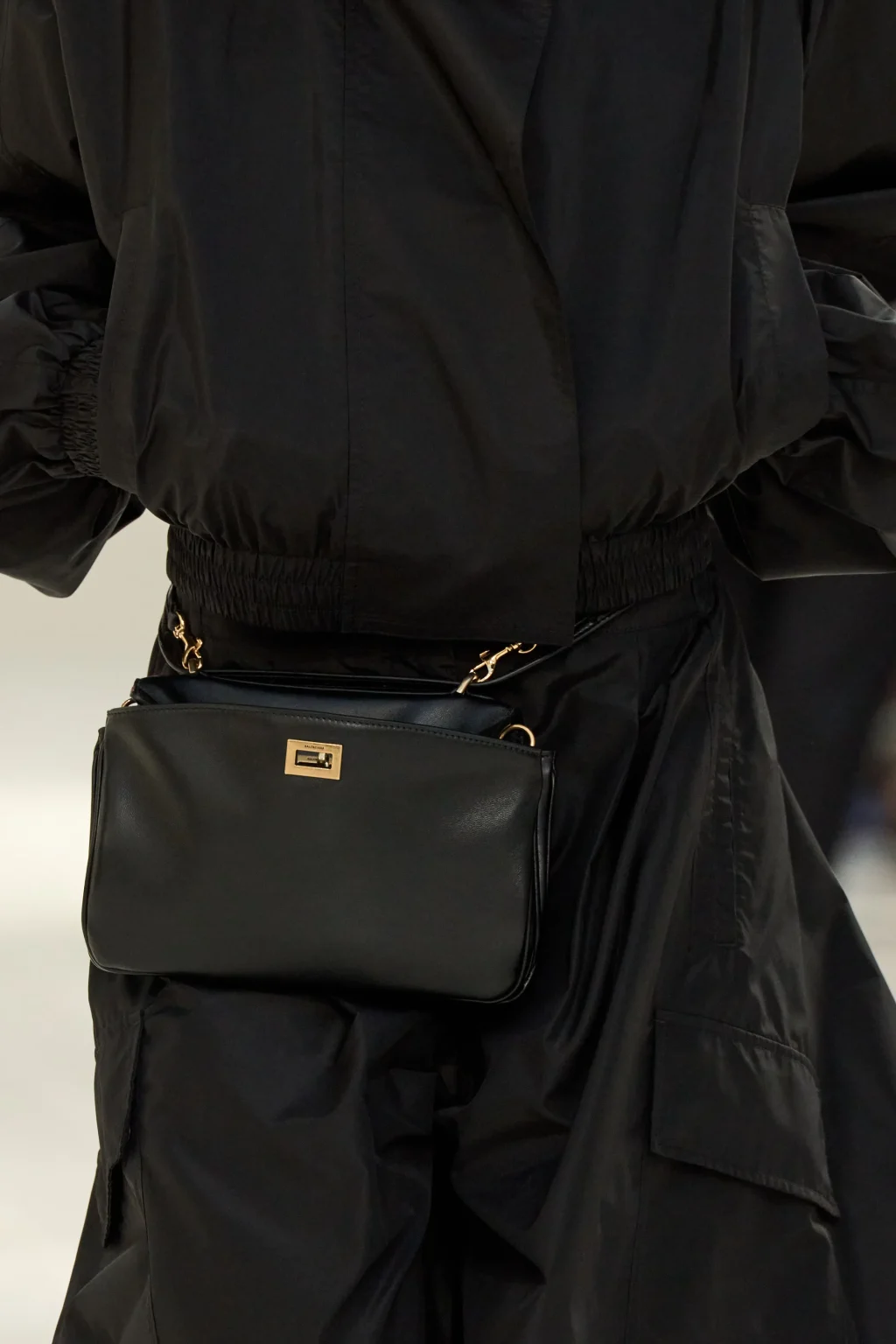
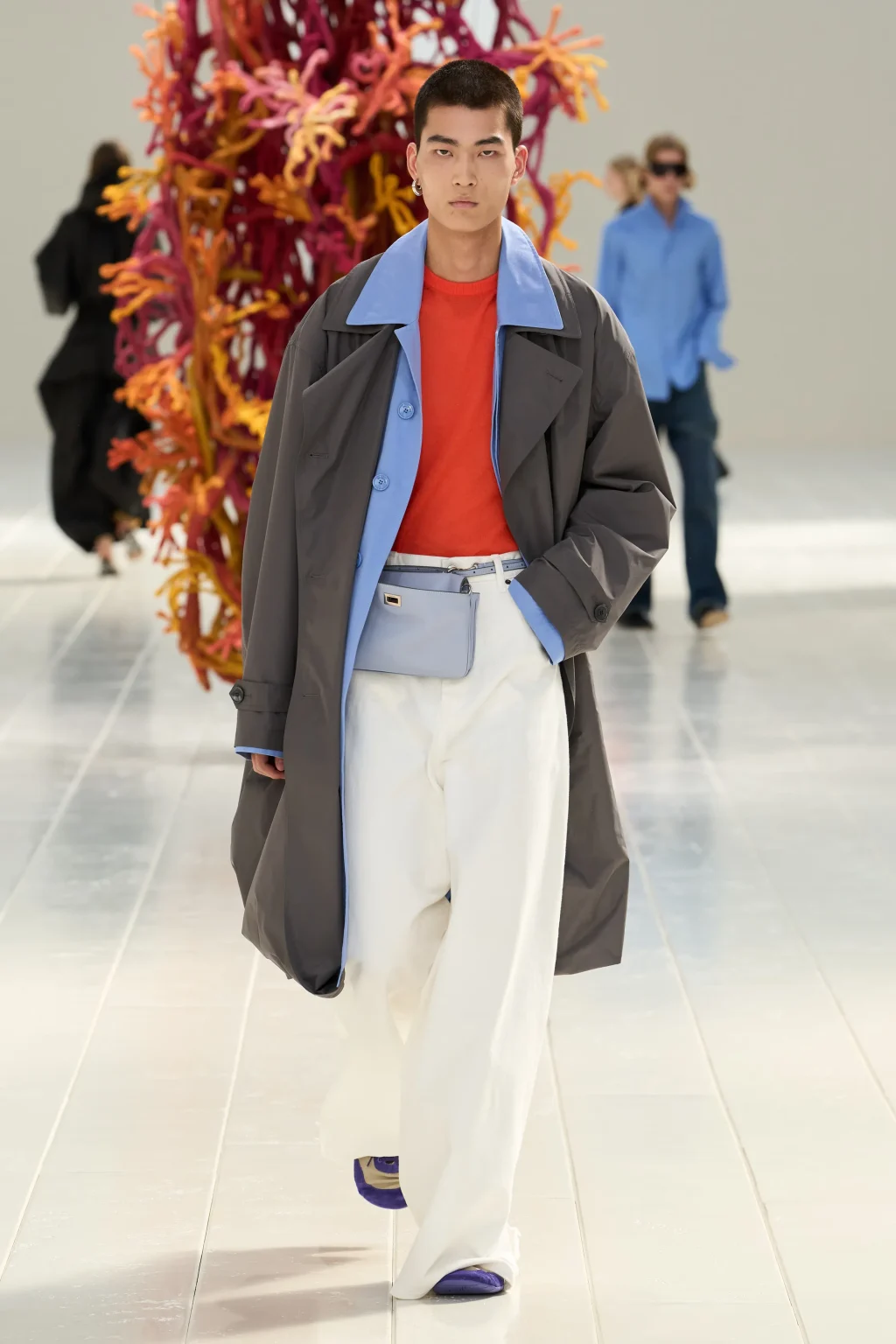
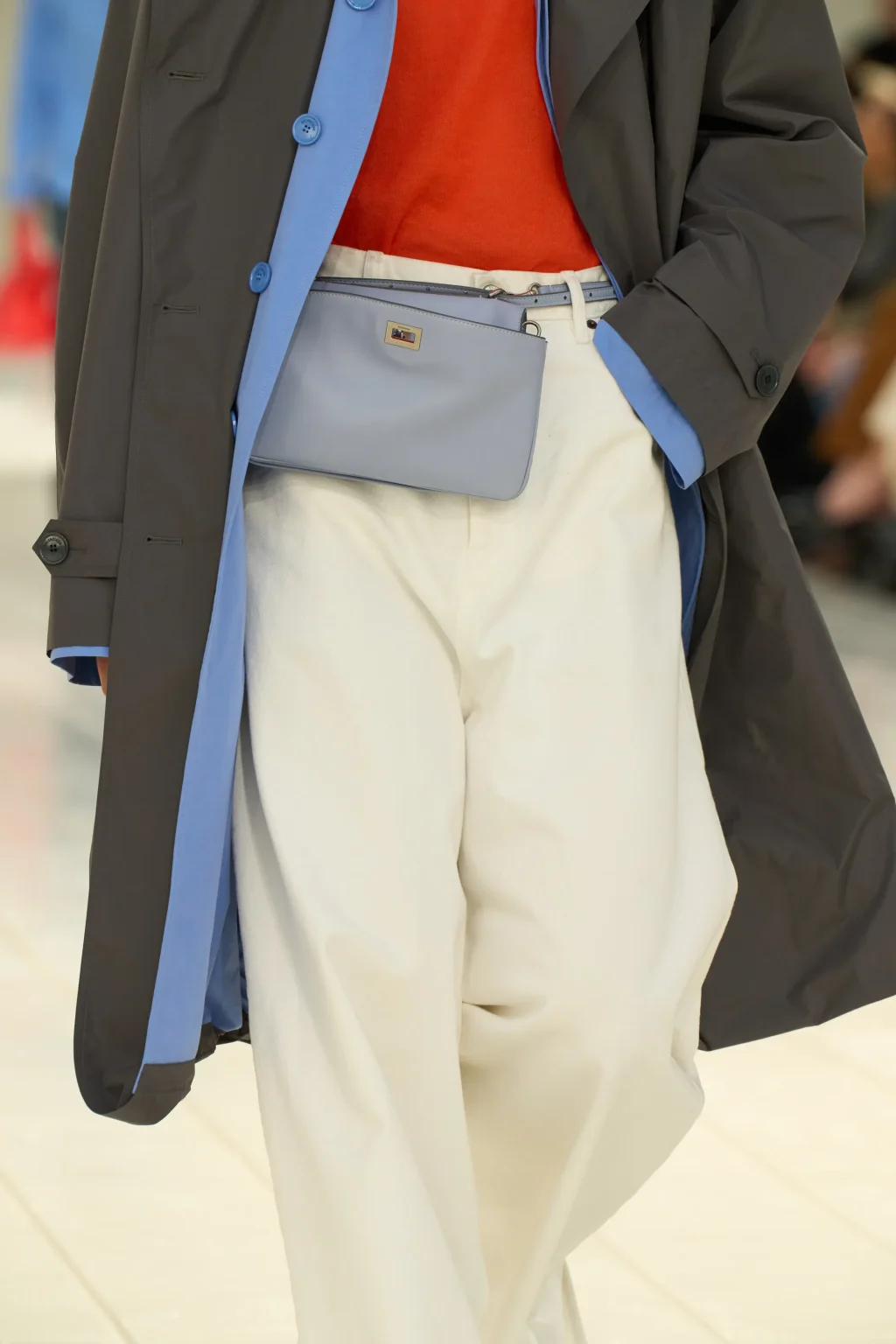
The Rodeo belt bag is new. A slim leather pouch with the Rodeo’s rectangular turn-lock hangs from a thin leather belt on two snap hooks and sits at the hip. It came in cobalt over a matching cobalt shirt dress, in black with gold hardware, and in powder blue over white jeans and a grey trench.
Balenciaga Le City in Cobalt, Coral and Black
Le City has appeared in each of Piccioli’s runway shows, and Summer 27 keeps it close to the 2001 original by Nicolas Ghesquière. The leather is crinkled, glossy lambskin. The hardware is matte black, from the studs and buckles to the braided handles and the long tassels on every zip, and a small mirror peeks from the front zip pocket. Three colours walked: cobalt with a fuchsia shirt and white trousers, coral with a sky-blue shirt and dark jeans, and black with a leather peplum top and wide black trousers.
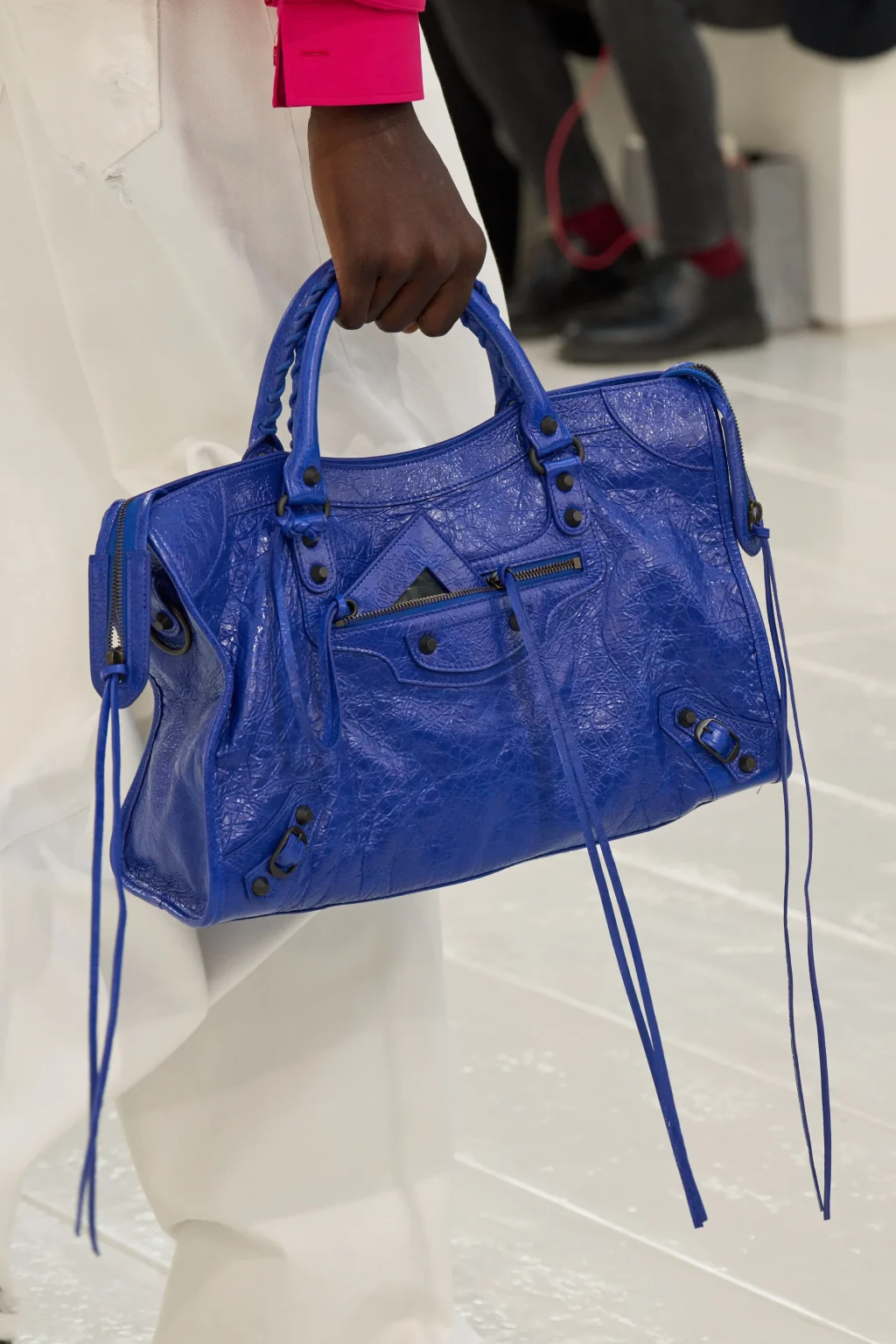
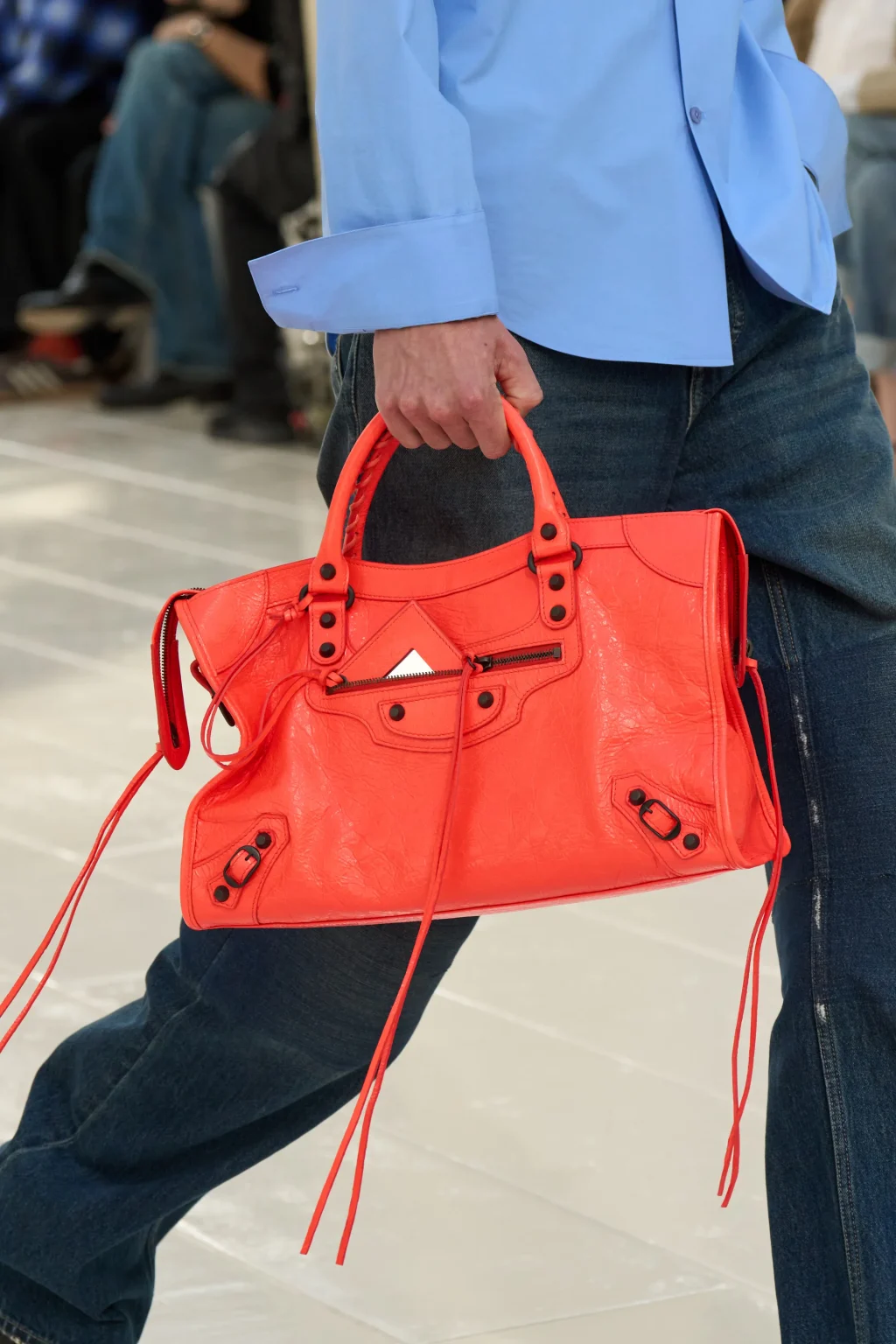
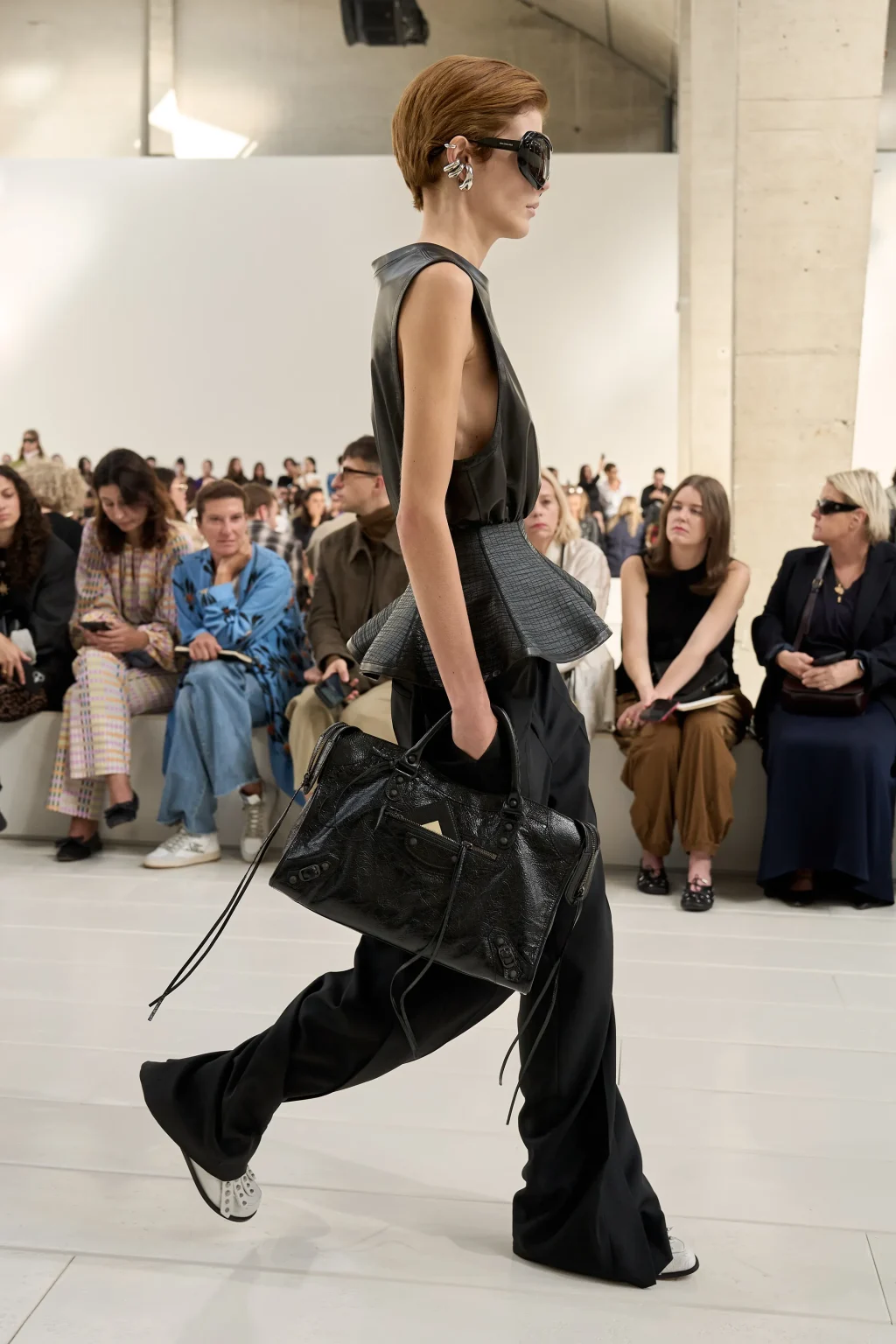
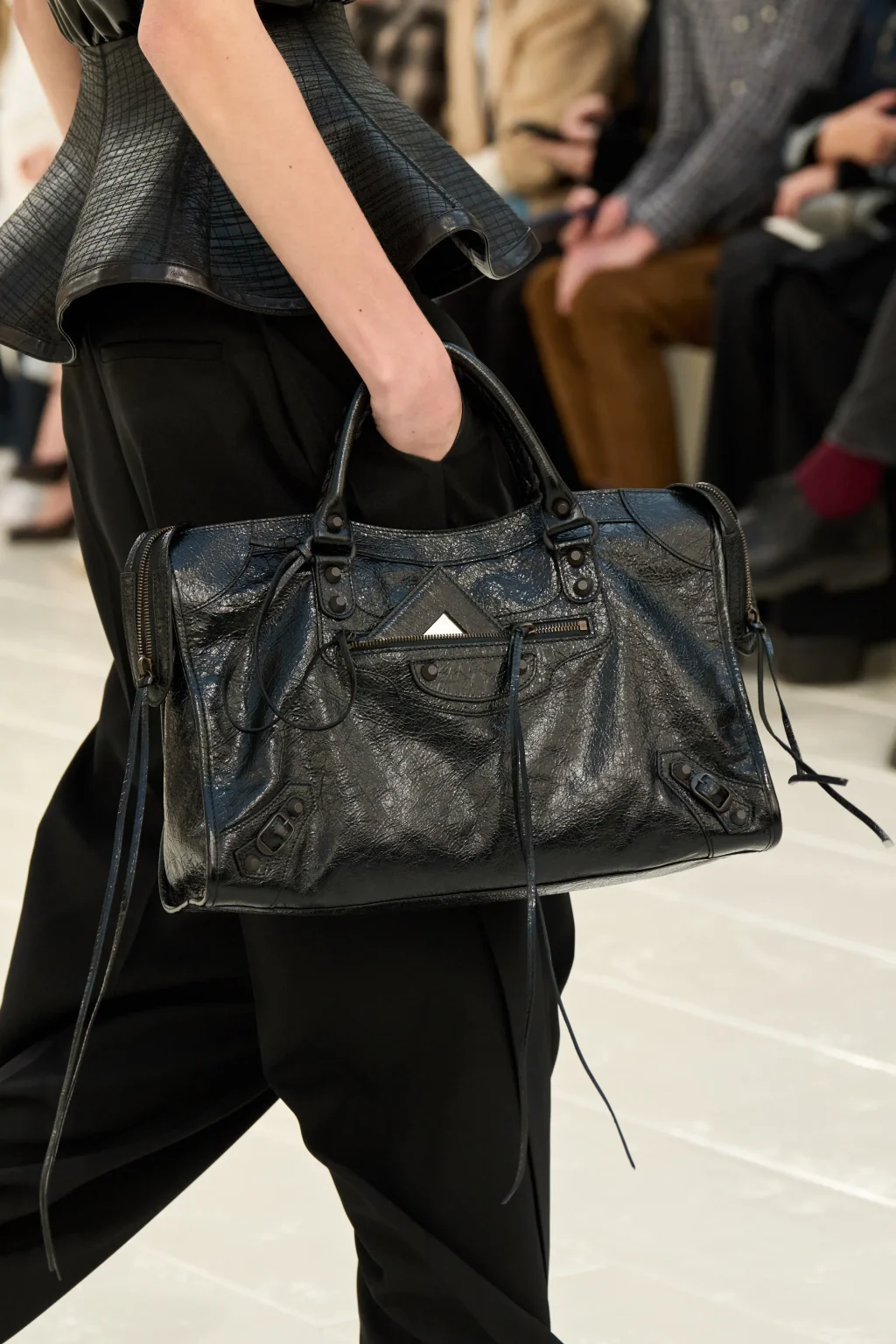
The bag turned 25 this year, which Balenciaga marked with a Damien Hirst collaboration on Le City. Piccioli had already reworked it for the Fall 2026 Couture collection.
The Frame Saddle Bag and the Openwork Bucket Bag
Two more shapes complete the line-up, and neither carries a name in the coverage so far.
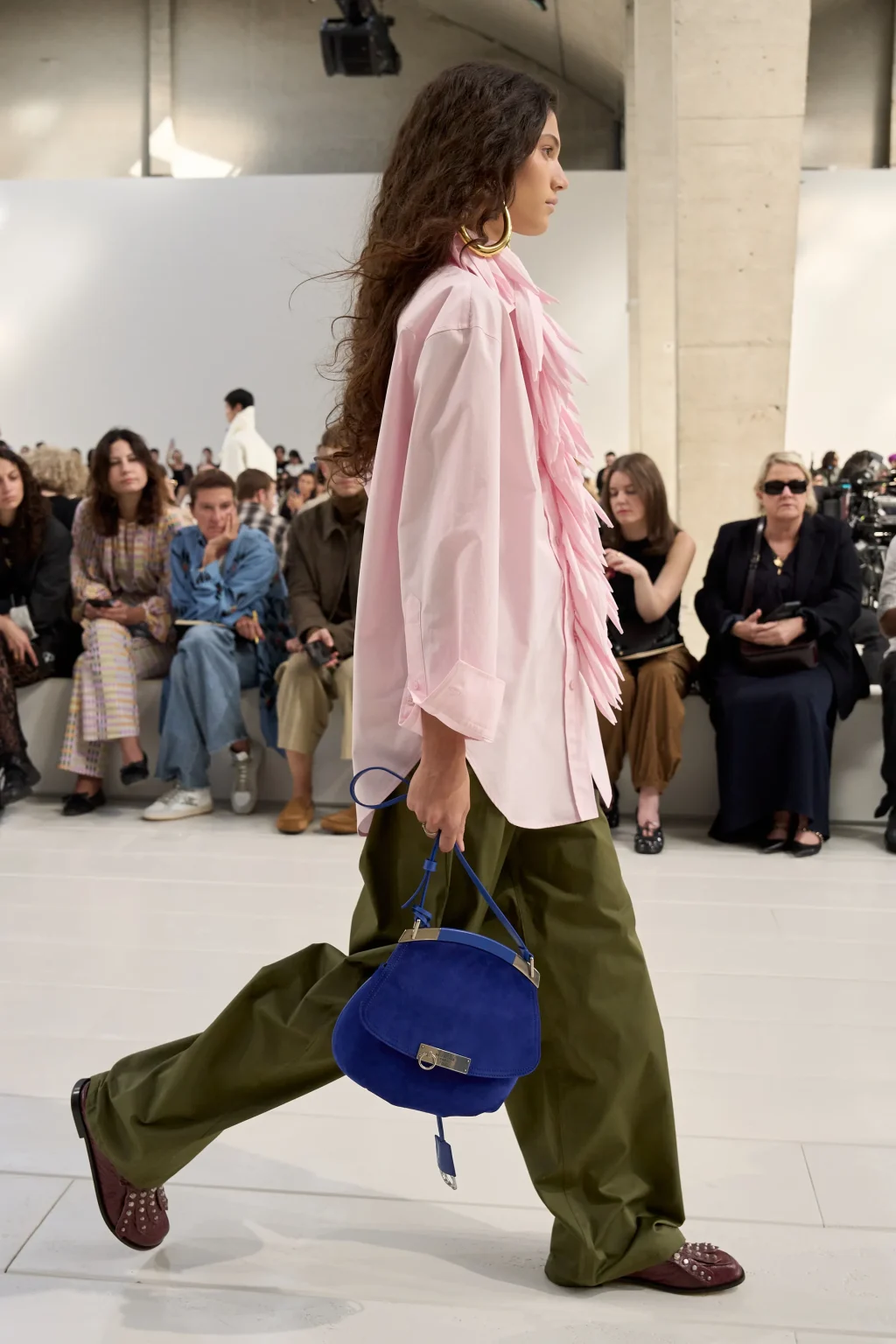
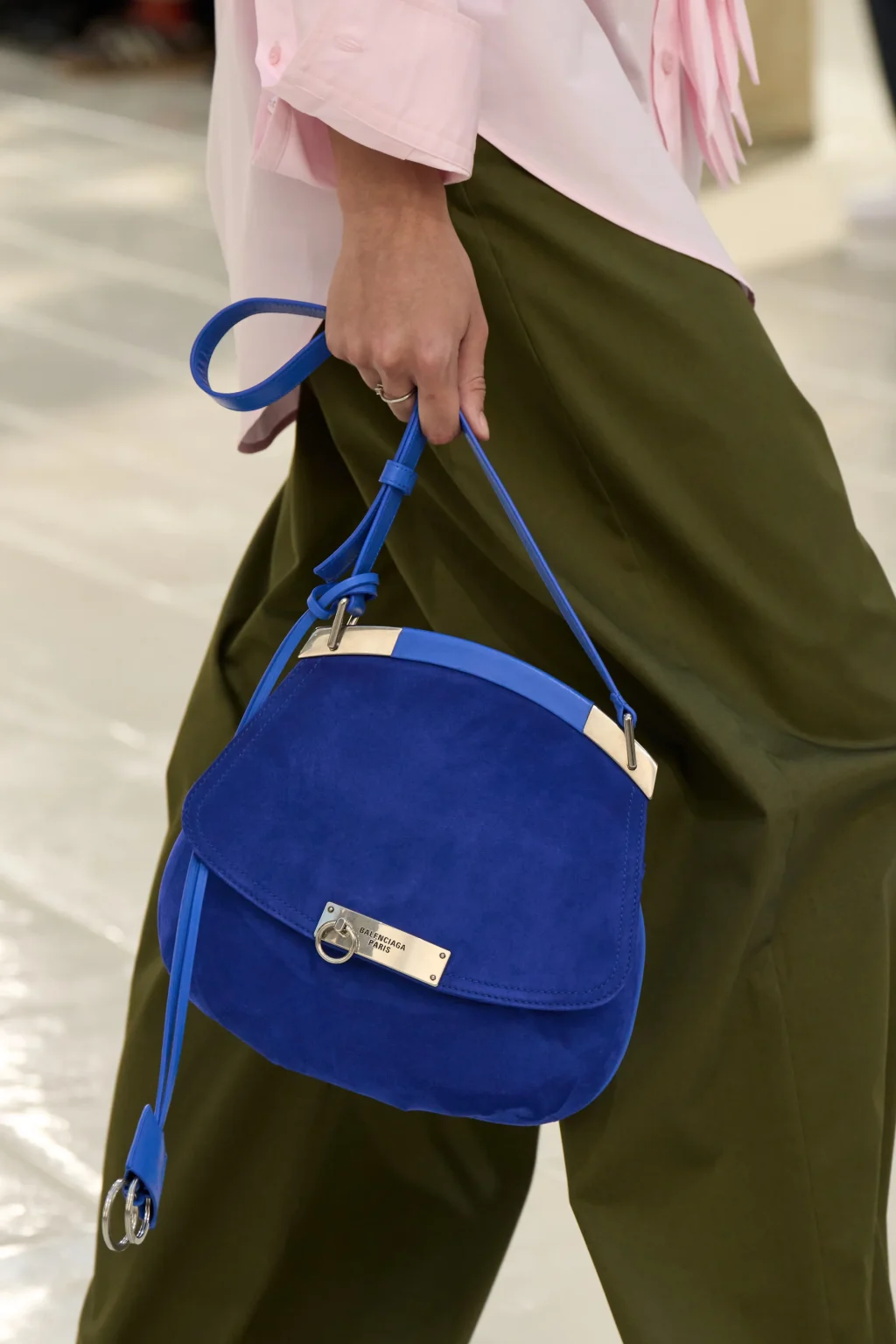
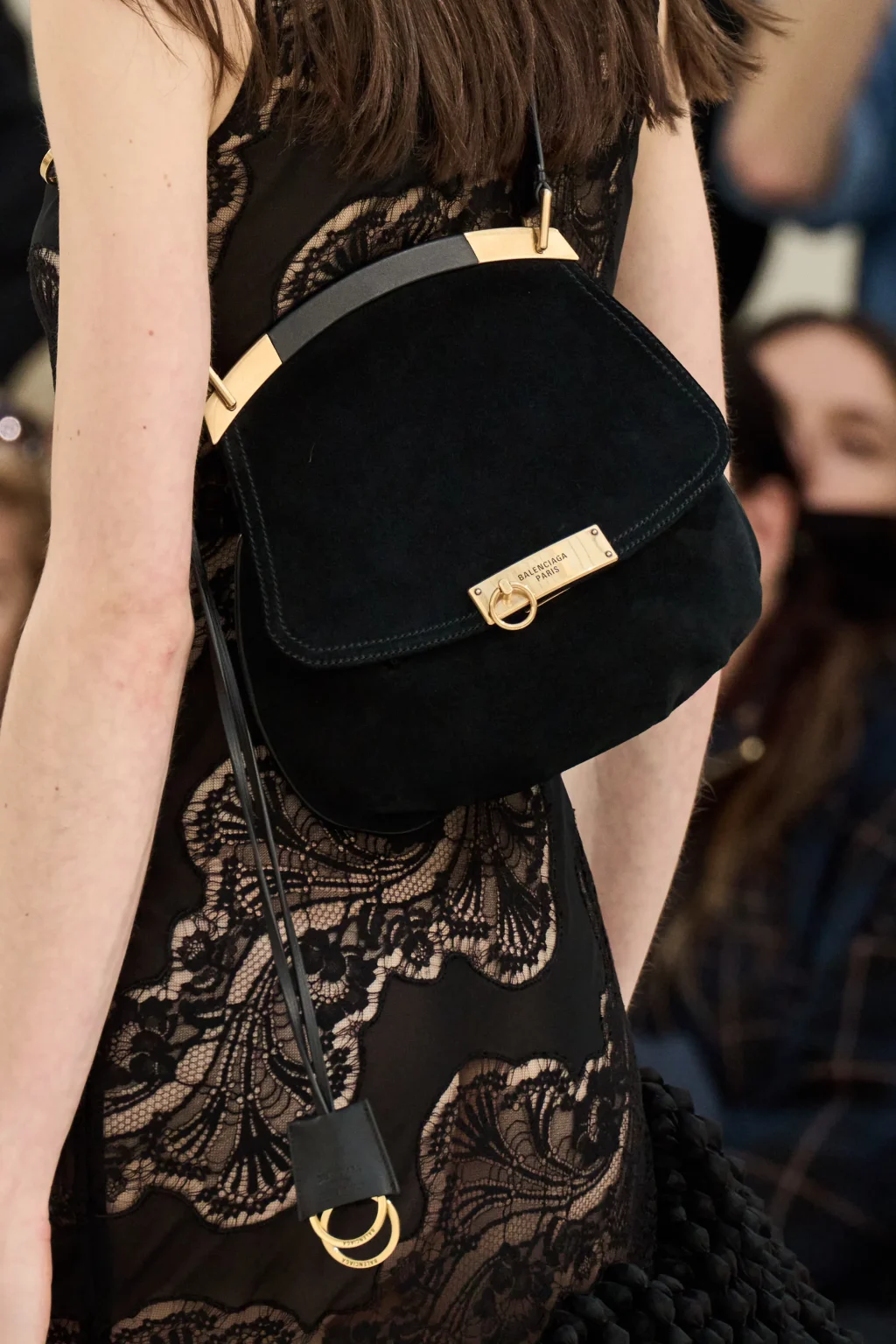
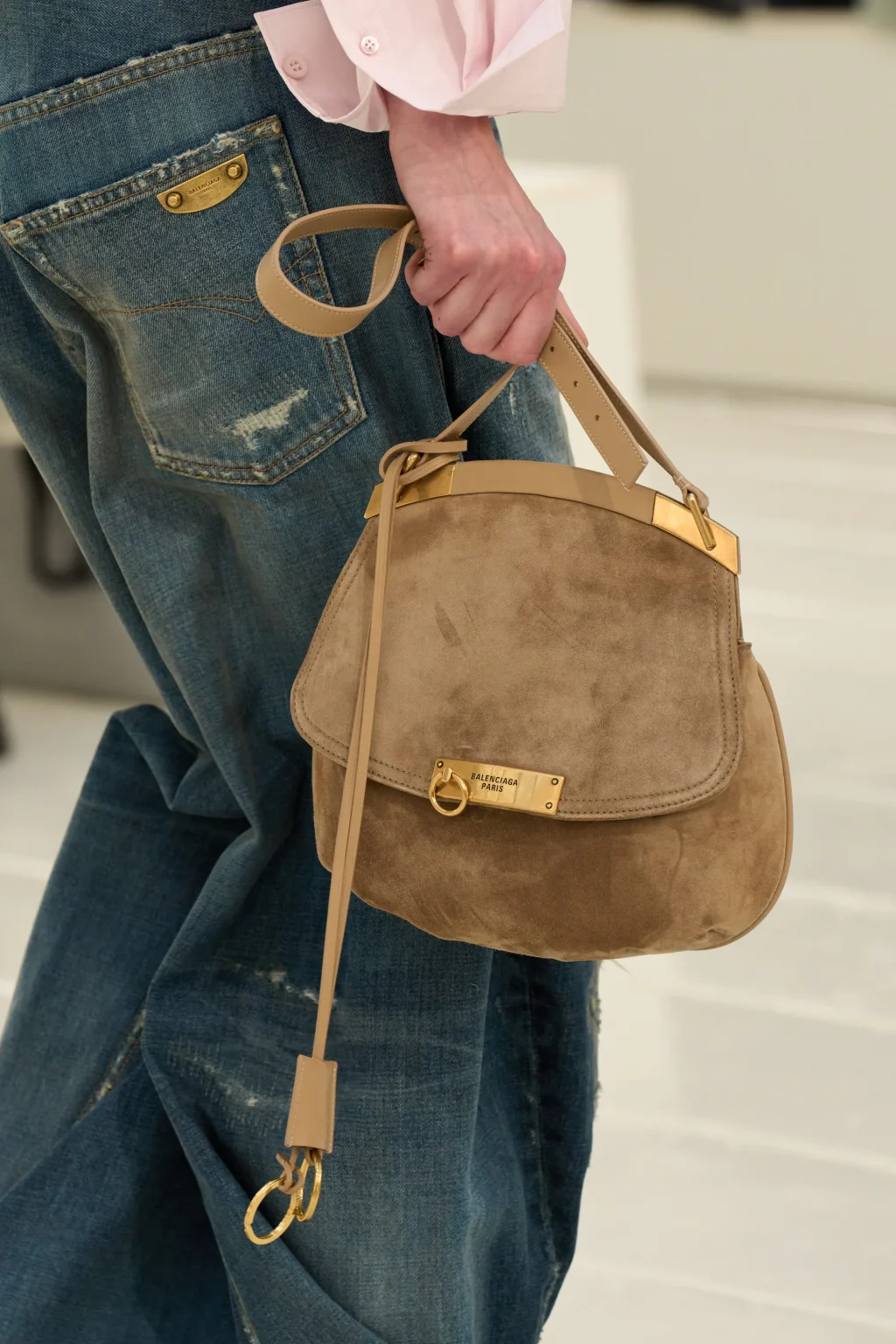
The frame saddle bag is a rounded suede crossbody with a flap. Its top edge is a leather-wrapped bar finished with metal end caps, where the strap attaches, and the flap closes with a plaque engraved Balenciaga Paris and a ring pull. A clochette with two engraved key rings hangs from the strap. Black suede with gold hardware was worn across a lace dress. Cobalt with silver hardware came with a pale pink shirt and olive trousers, and camel with gold hardware with a pink shirt and flared, distressed jeans.
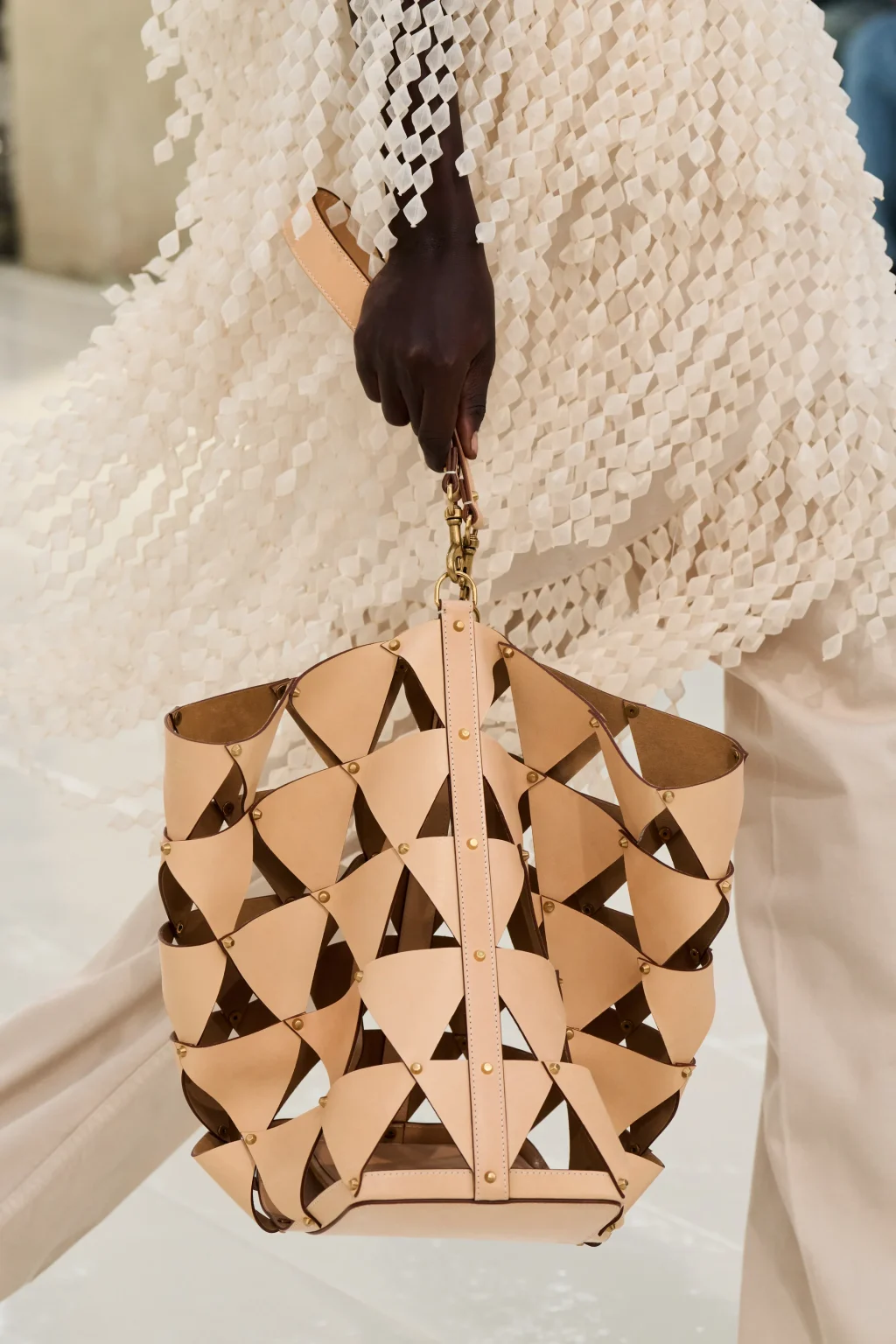
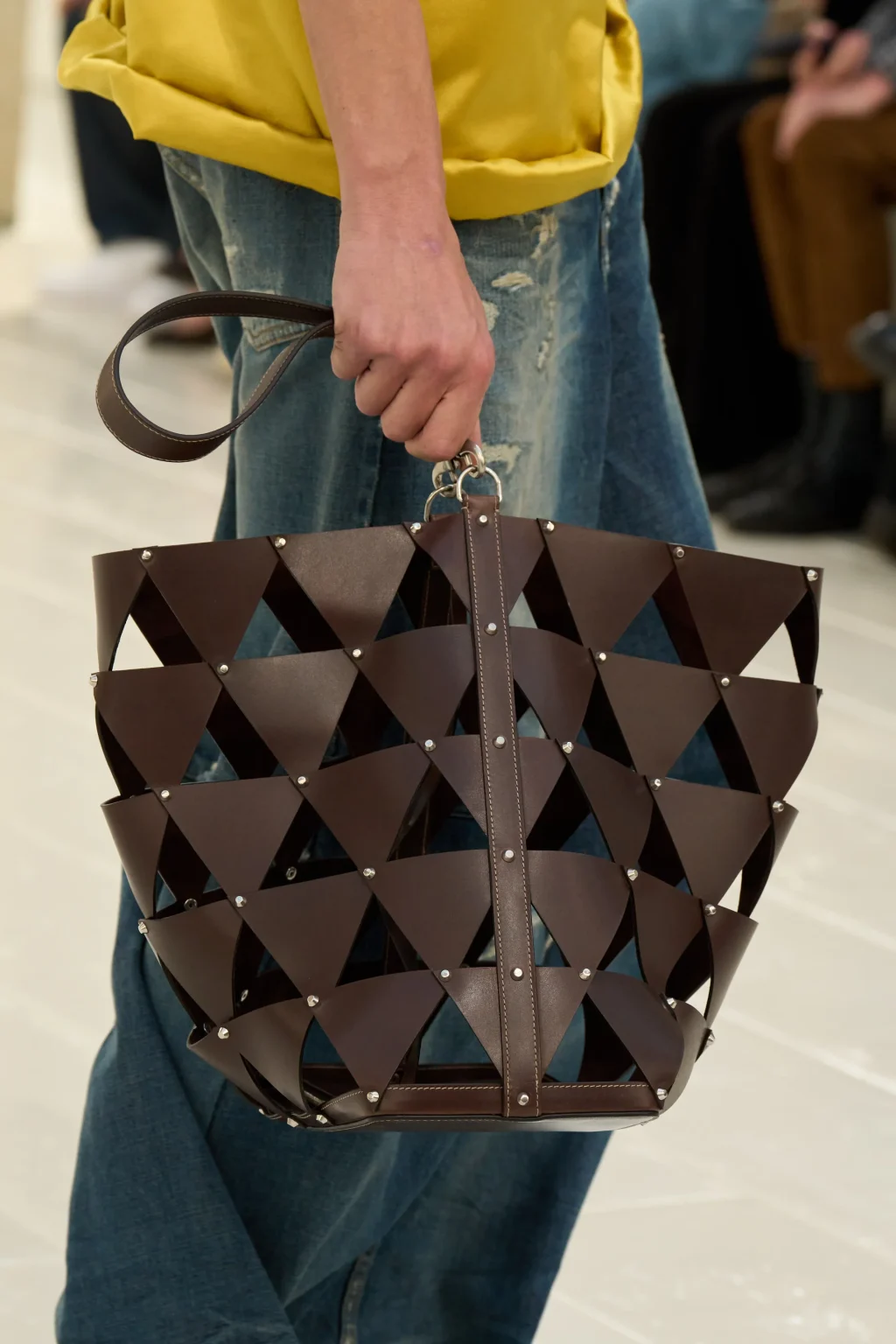
The openwork bucket bag is built from leather triangles riveted into a lattice around a central leather spine, so it reads as coral or as armour depending on the angle. It hangs from swivel hooks, with a wrist strap looped alongside. Natural tan leather with brass studs walked with a white coat of translucent fringe. Chocolate brown with silver studs came with a yellow satin T-shirt and wide jeans.