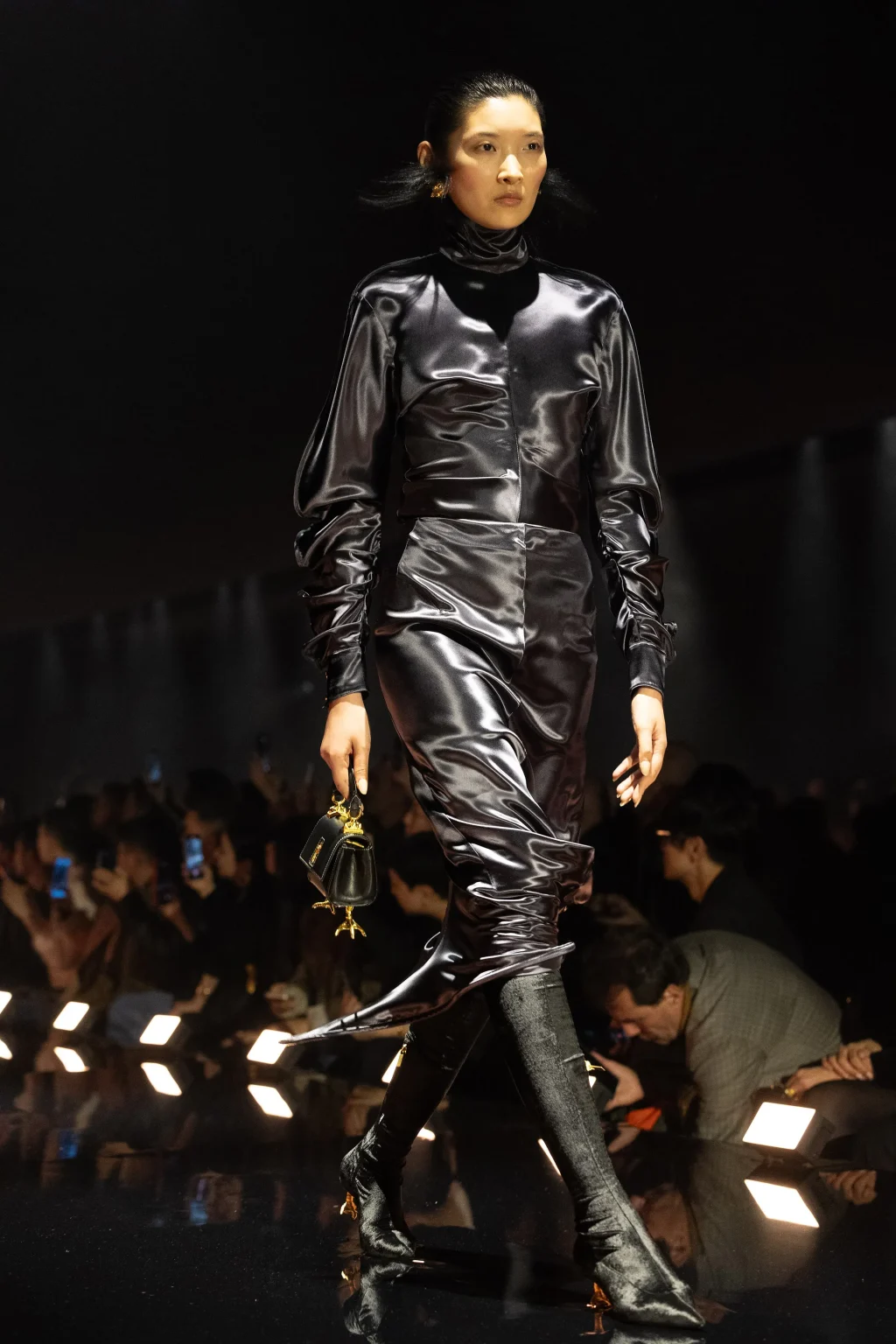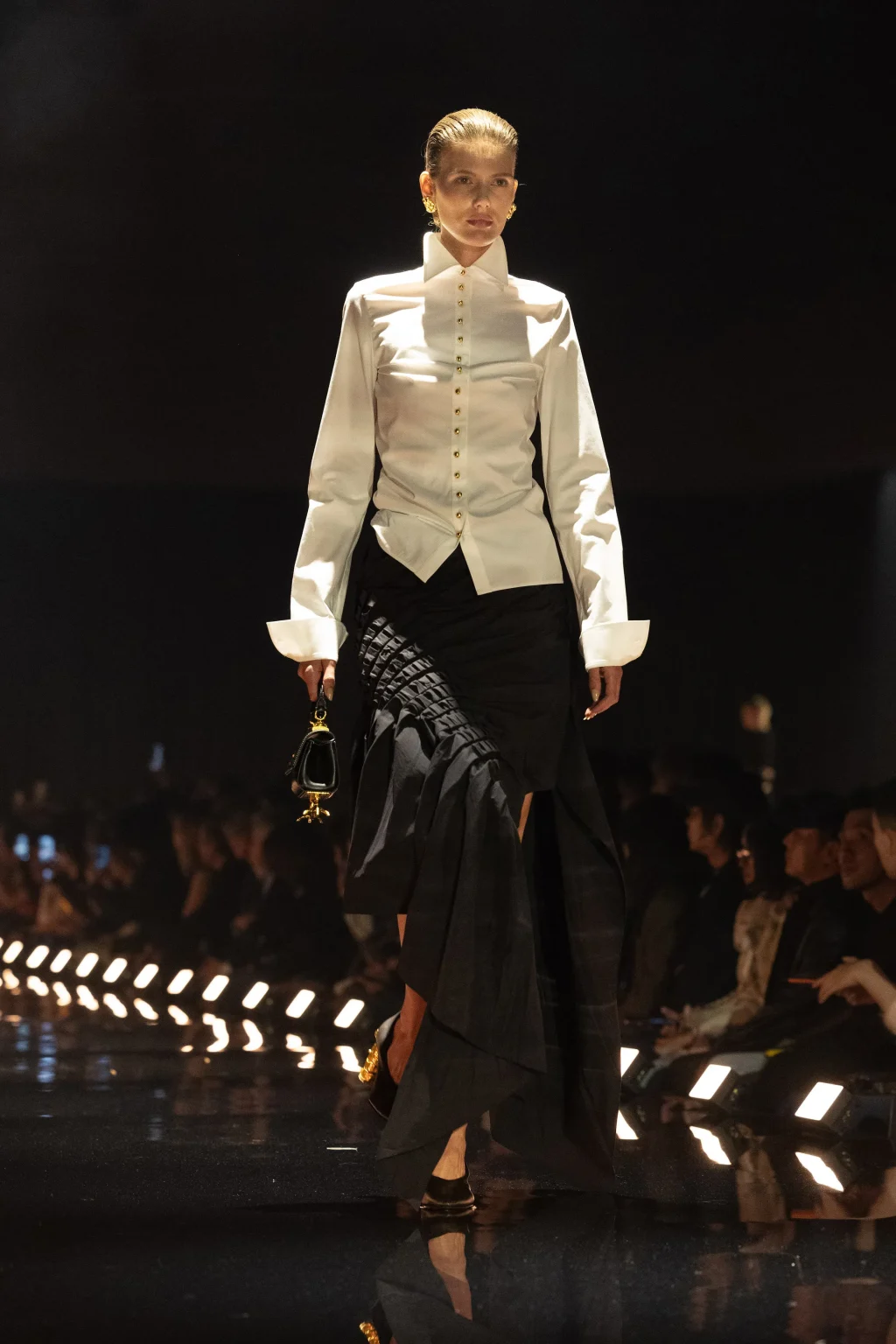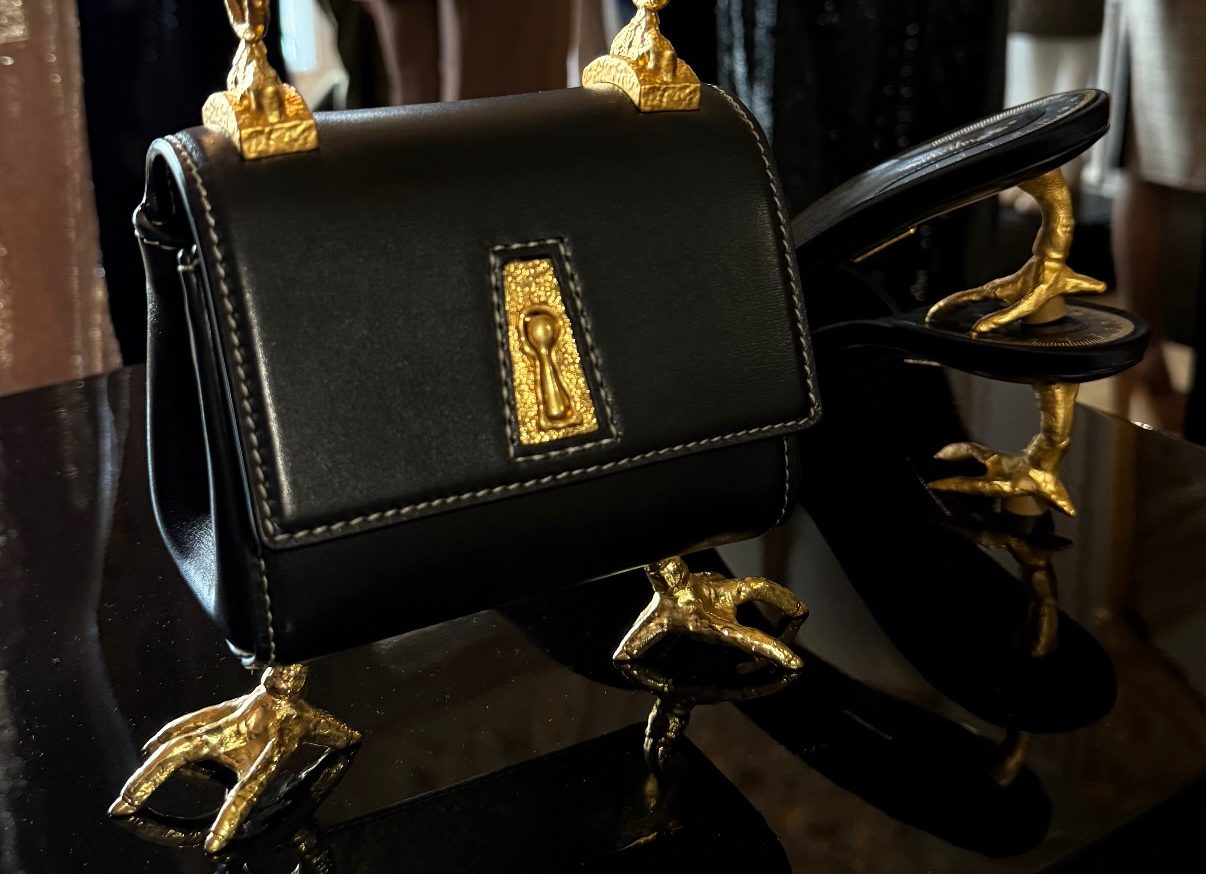
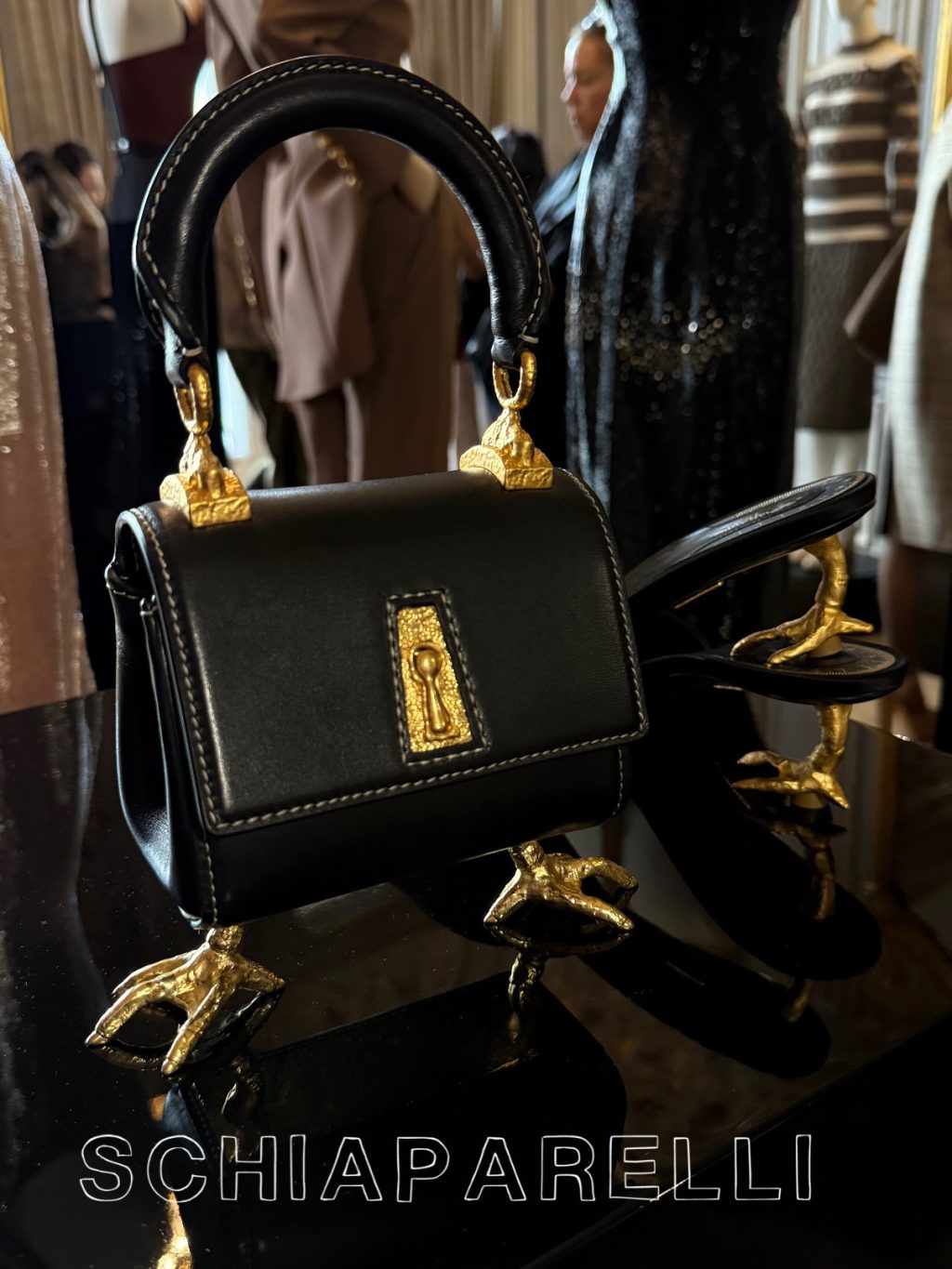
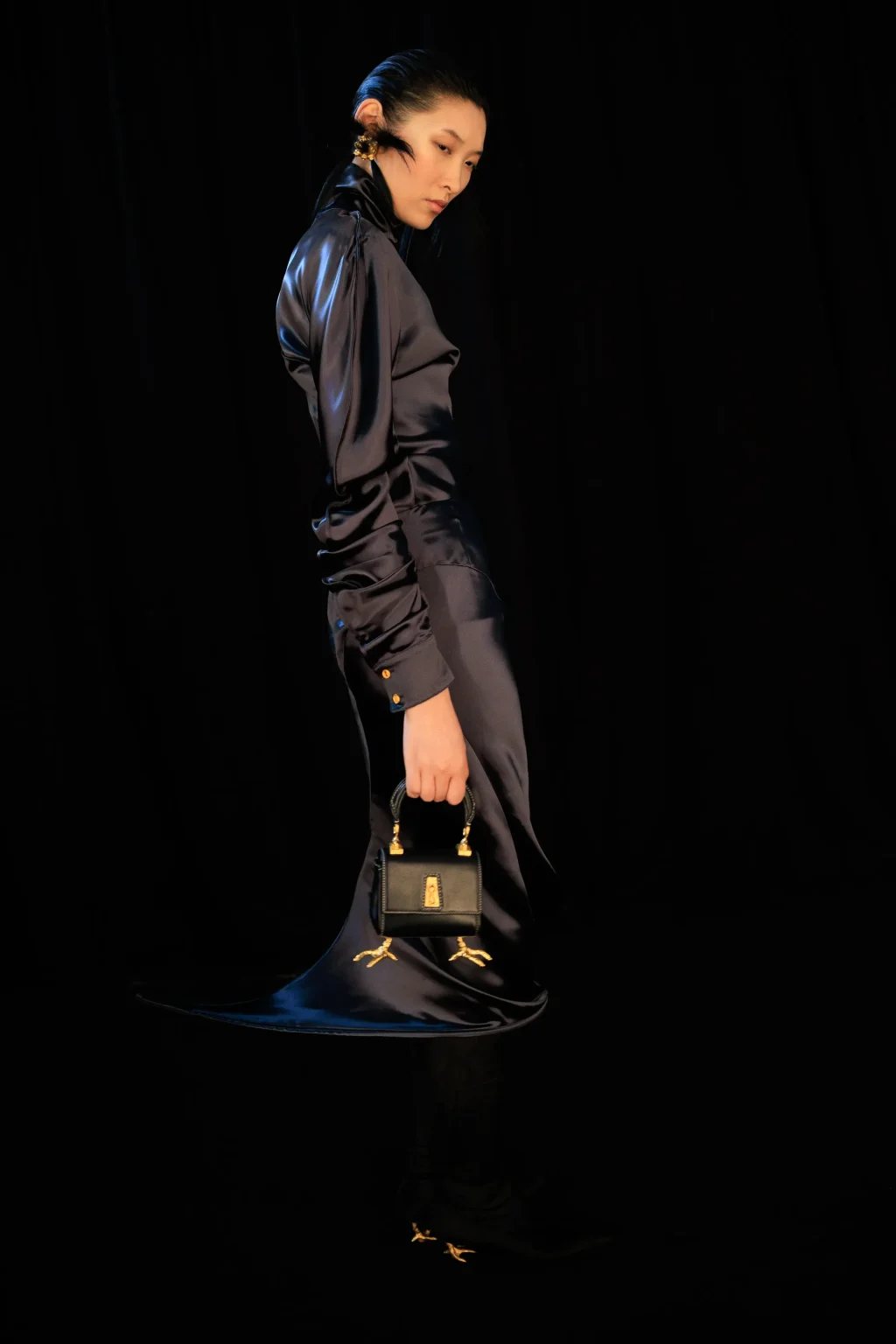
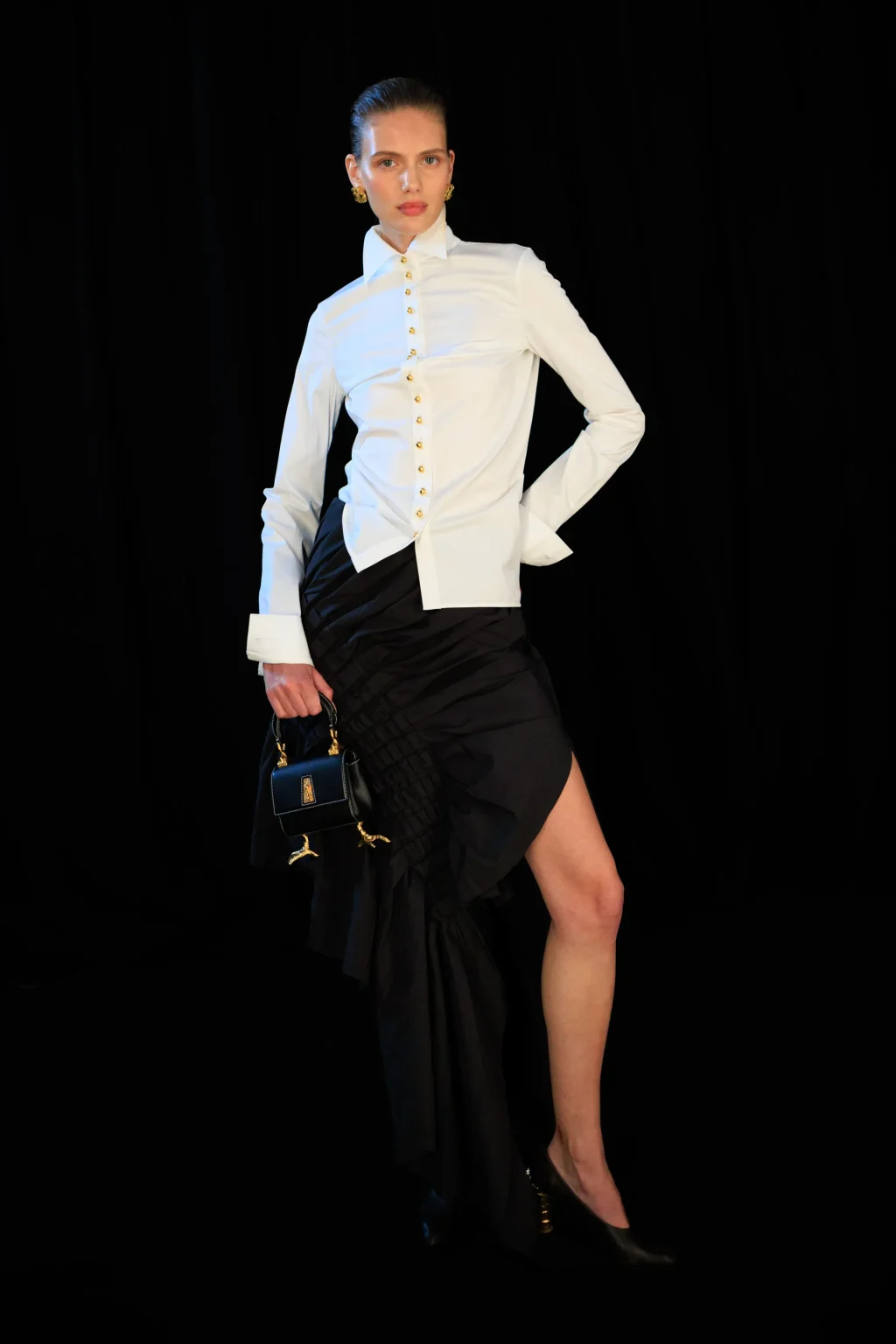
The Schiaparelli bird feet bag from the house’s Fall/Winter 2026–2027 ready-to-wear collection is one of those rare runway accessories that does more than complete a look. It carries an idea. Presented by Daniel Roseberry as part of “The Sphynx,” the bag translates a Surrealist object into fashion, turning a small top-handle silhouette into something witty, unsettling, elegant, and unmistakably Schiaparelli. Its most striking detail is not the body of the bag itself, but the gilded clawed feet beneath it—an accessory detail that clearly recalls Meret Oppenheim’s 1939 “Table with Bird’s Feet,” one of the most memorable objects to emerge from the Surrealist orbit around Elsa Schiaparelli.
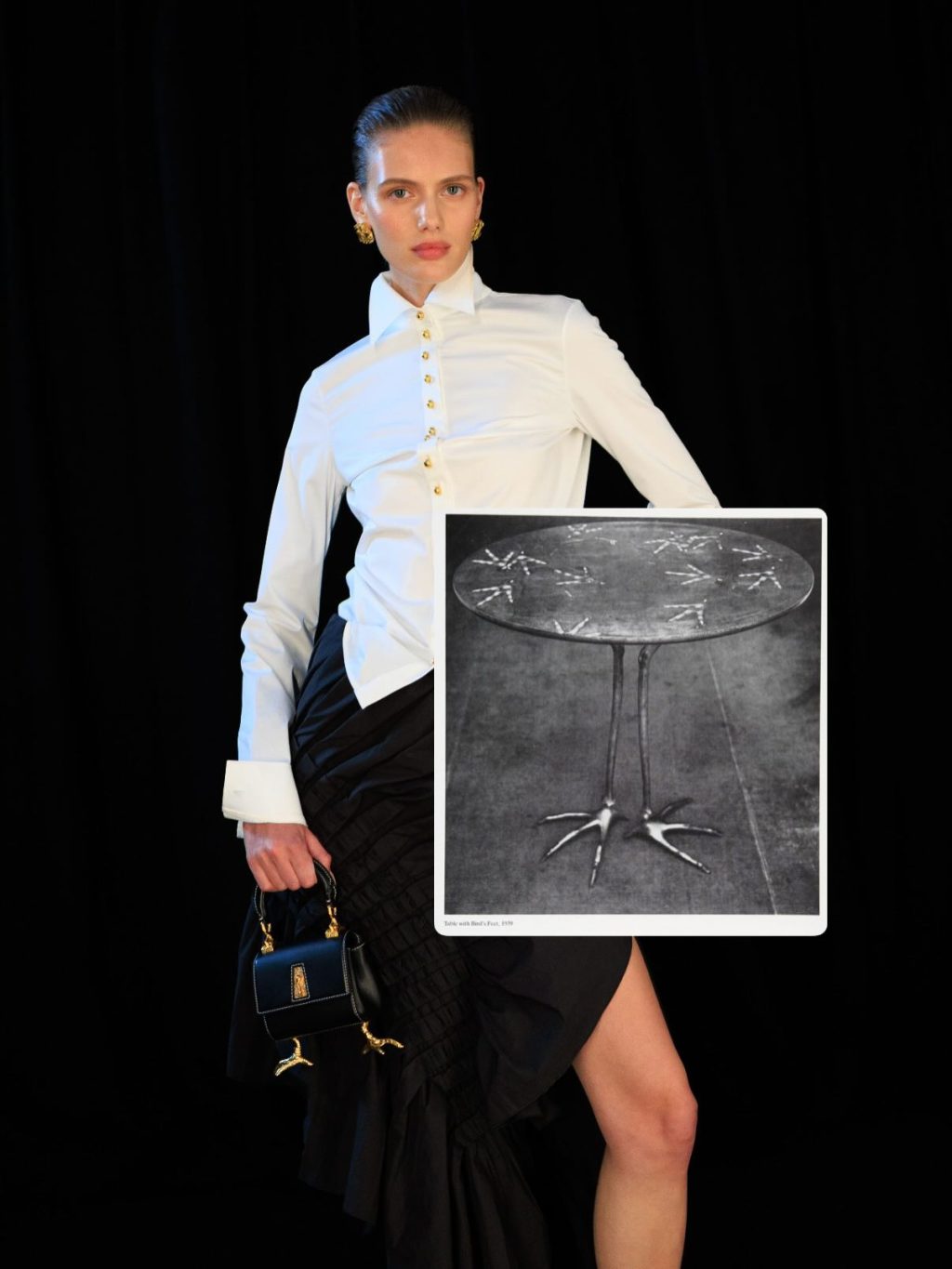
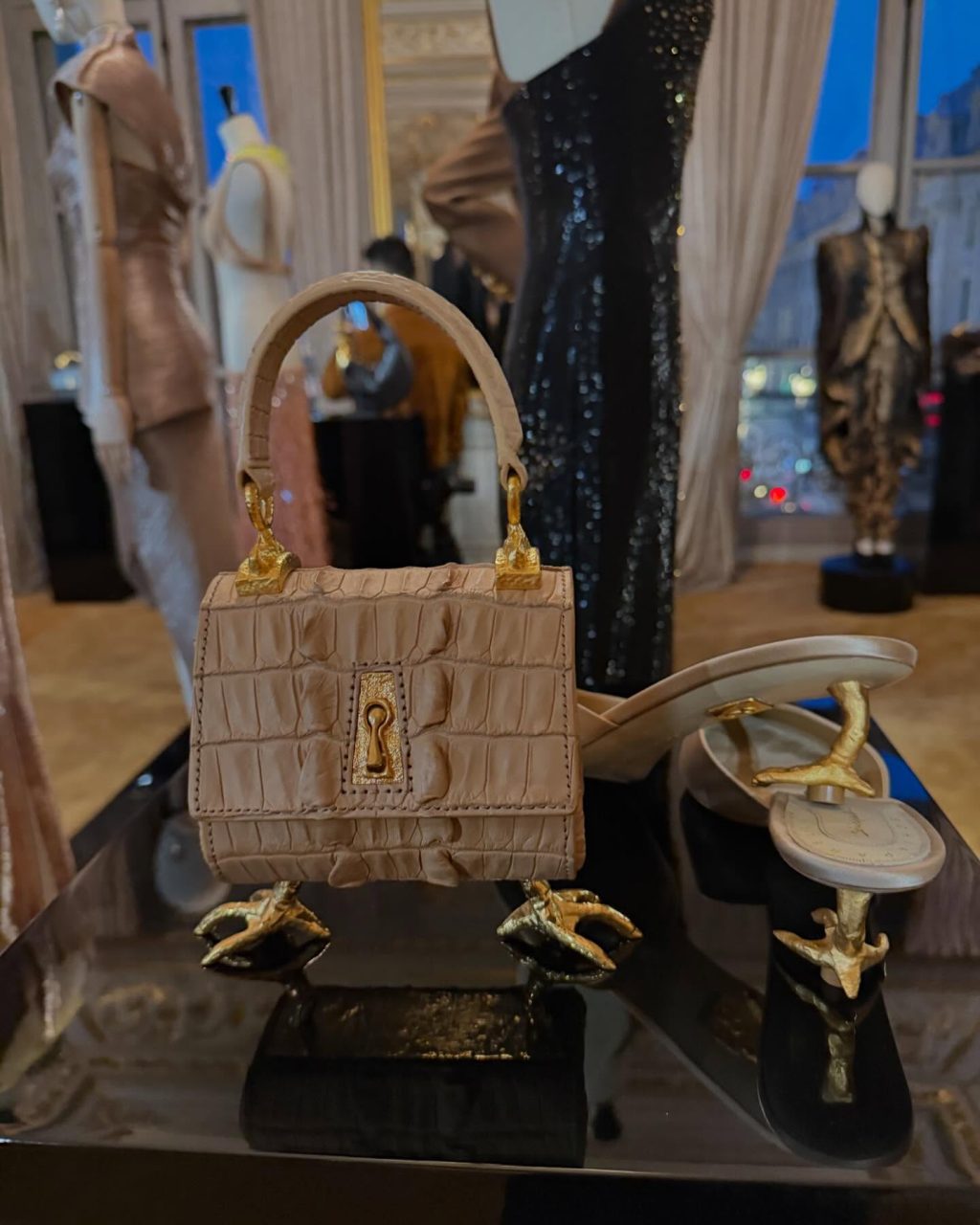
What makes the piece interesting is that Roseberry did not treat the historical reference as costume. He converted it into a functional luxury object. The result is a compact bag with a structured body, a top handle, Schiaparelli’s keyhole code on the flap, and sculptural gold bird claws that act almost like a base, transforming the bag into a walking Surrealist object. In visual terms, it is absurd and refined at once—exactly the tension that has always defined the house.
The reference: Meret Oppenheim’s Table with Bird’s Feet
The most direct inspiration for the bag is Meret Oppenheim’s “Table with Bird’s Feet,” first exhibited in Paris in 1939 in an avant-garde furniture exhibition organized by René Drouin and Leo Castelli. The work transformed an ordinary table into something strange and animate: an oval tabletop marked with bird footprints, balanced on slim legs ending in cast bronze claws. It was a classic Oppenheim move—taking a familiar domestic object and introducing fantasy, displacement, and a slight sense of menace.
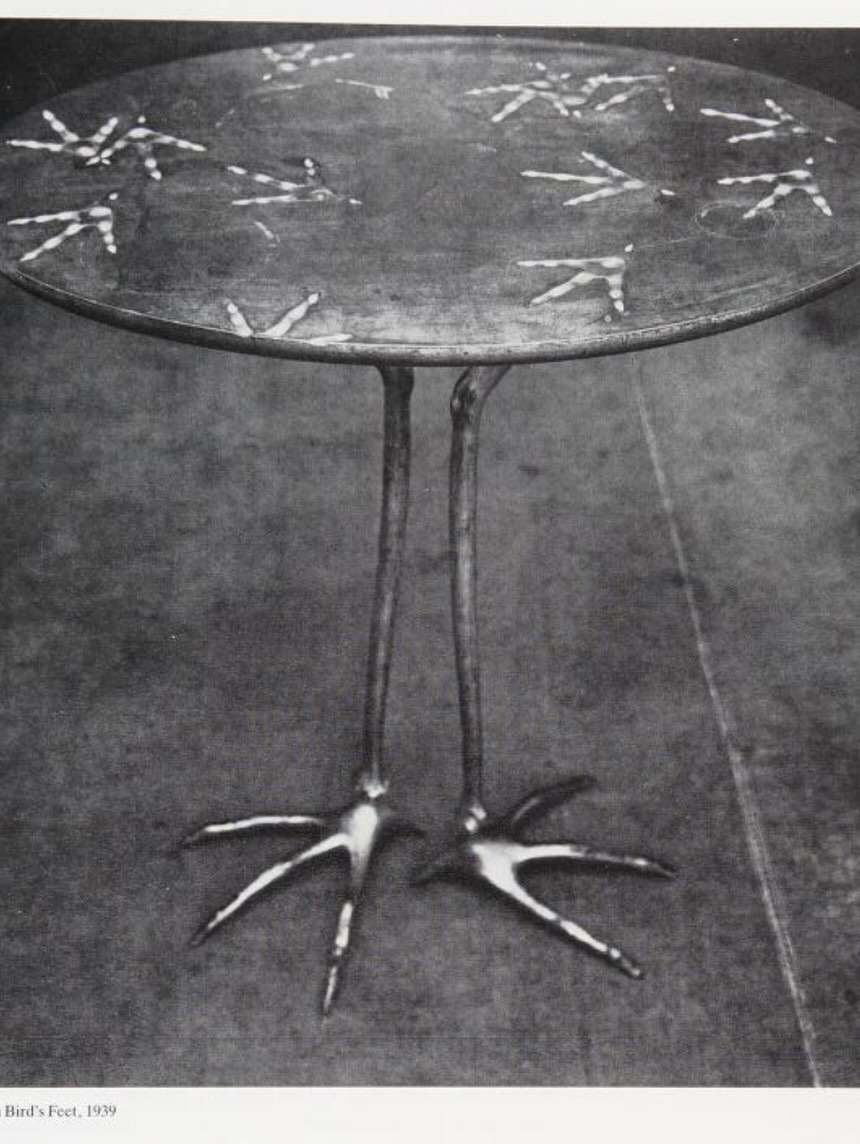
Later, under Oppenheim’s supervision, the design entered limited production in the early 1970s. The National Museum of Women in the Arts notes that the table was manufactured in a limited edition of thirty copies in 1973, while Cassina describes the design as part of the afterlife of Oppenheim’s “Bird Leg Table” concept and its later commercial reinterpretation.
That matters because Roseberry’s bag does not simply borrow a decorative bird motif. It borrows the logic of Oppenheim’s object. In both cases, the bird is not printed onto the surface. It physically supports the object. The claws become structure. That is why the bag feels sharper than a novelty accessory. It is a fashion translation of a Surrealist design principle.
Why Meret Oppenheim belongs in the Schiaparelli story
Oppenheim was not an arbitrary art reference for Schiaparelli. She was part of Elsa Schiaparelli’s world. In 1936, the Swiss-German artist offered Schiaparelli the design for a fur bracelet, which Schiaparelli produced and included in her winter collection. On the house’s own historical page, Schiaparelli notes that the meeting between the two women became a meaningful crossover between fashion and art. The same source also recounts the well-known Café de Flore episode with Picasso, often linked to the chain of ideas surrounding Oppenheim’s fur works.
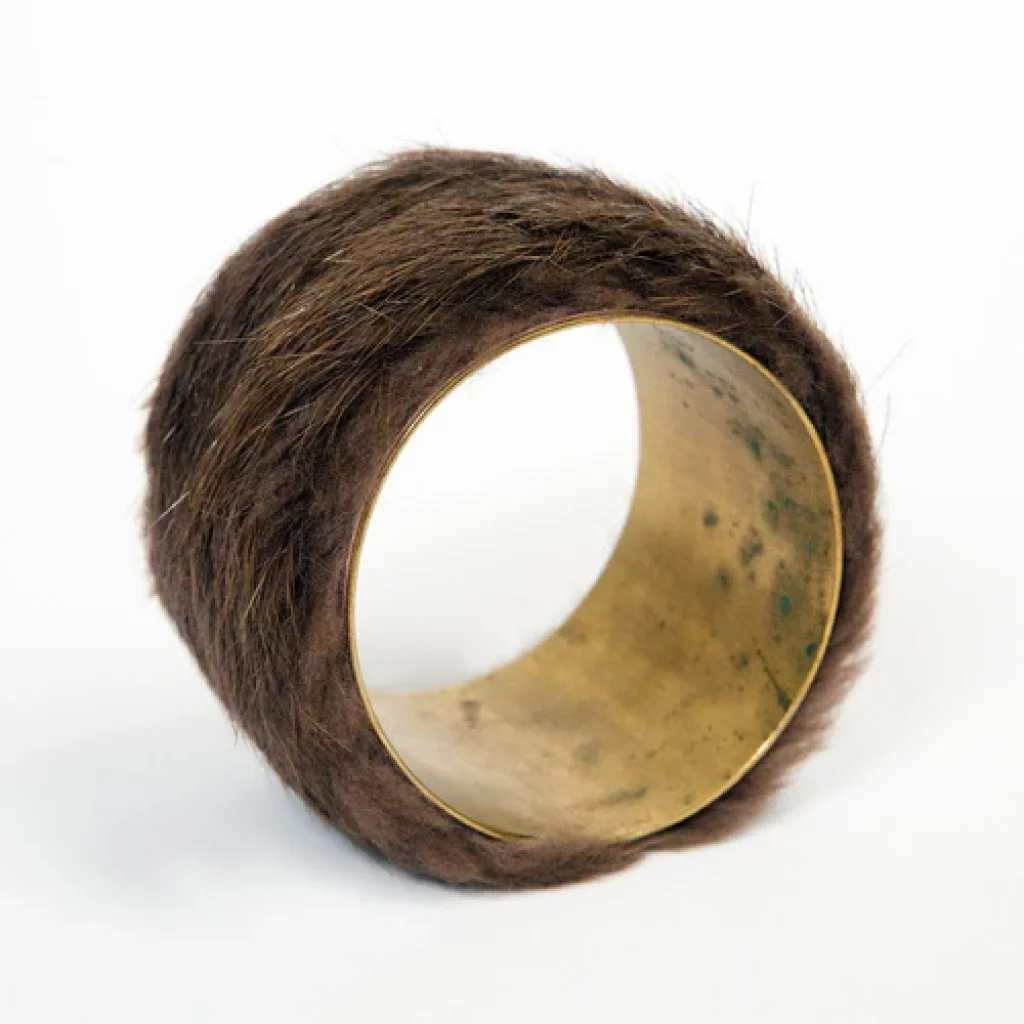
Meret Oppenheim,
Courtesy Clo and Marcel Fleiss, Paris. Photo: DR. © Adagp Paris, 2016
Additional museum material supports that Oppenheim also produced sketches for gloves and jewelry for Schiaparelli, reinforcing that hers was not a distant art-historical association but an actual working relationship with the maison’s founder.
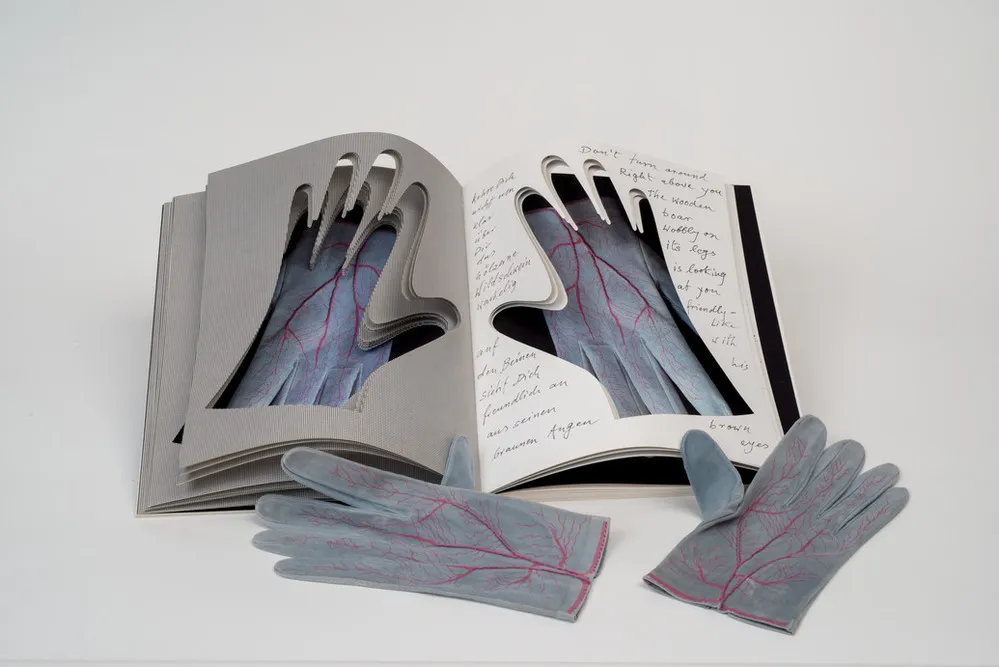
This context is essential. Roseberry’s bird-feet bag is not just inspired by Surrealism in a vague mood-board sense. It reconnects Schiaparelli to one of the artists who genuinely contributed to the house’s interwar visual universe.
A runway bag, but also an object
Seen on the runway, the Schiaparelli bird-feet bag was styled with sharply cut tailoring, liquid dark dresses, and evening looks that intensified its tension between polish and strangeness. In showroom and close-up imagery, the bag reads even more clearly as an object piece: a miniature architectural box perched on gilt claws, with hardware that feels closer to small sculpture than standard handbag trim.
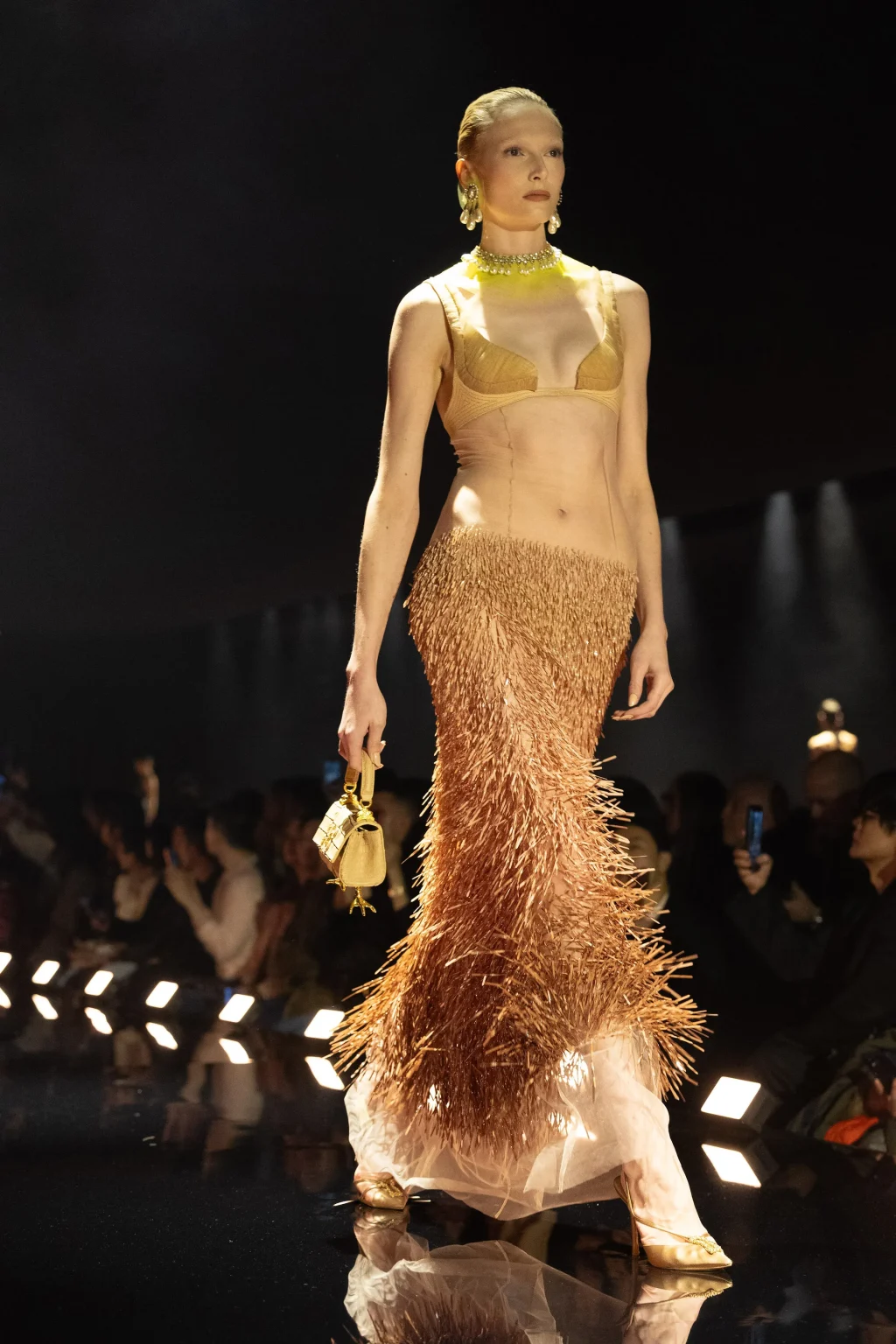
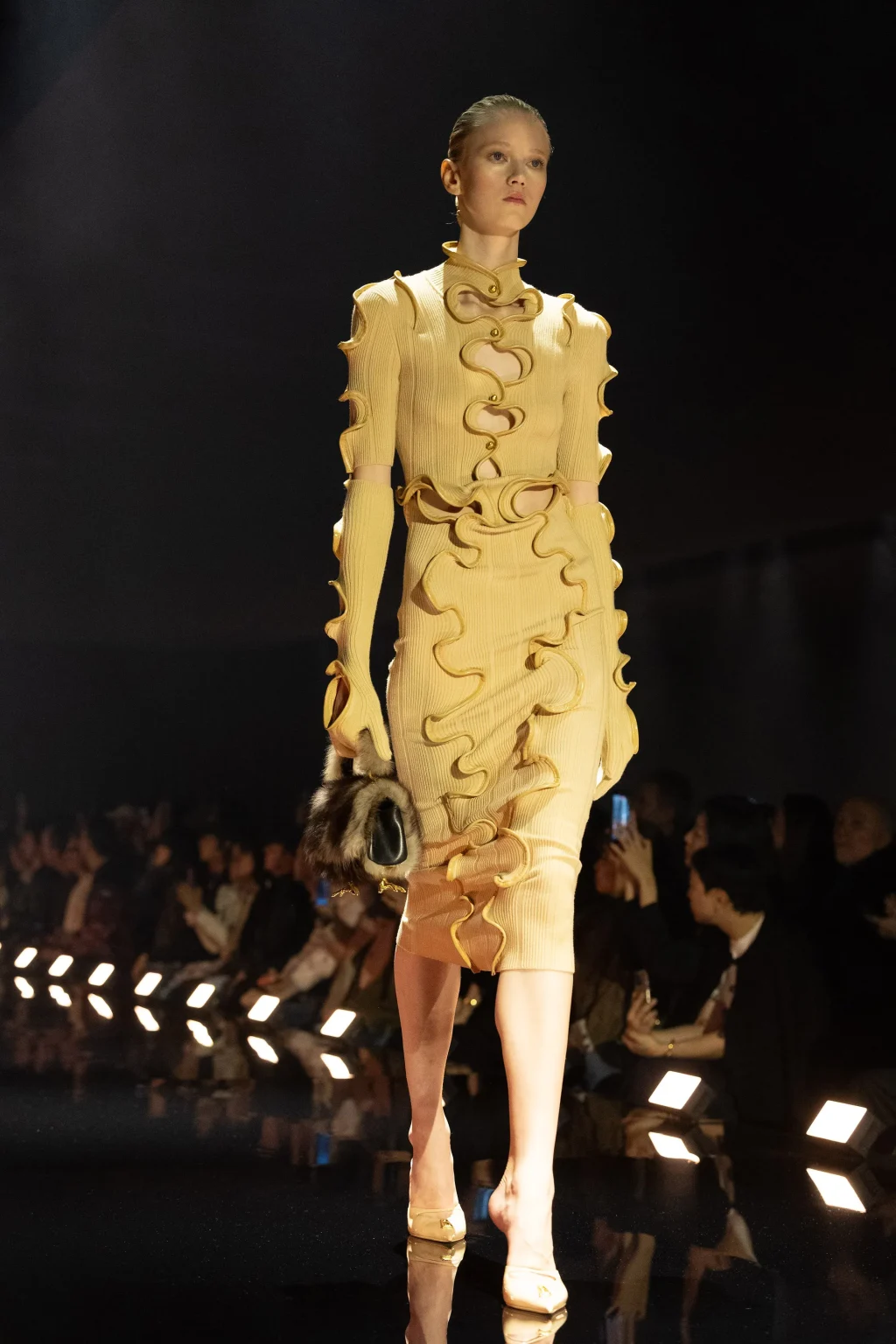
That is the real success of the design. Many “viral” bags flatten once the first visual shock passes. This one holds because it has a proper lineage. It can be read through accessory design, through Surrealist furniture, through Schiaparelli house codes, and through Roseberry’s ongoing effort to make fashion operate again as image, idea, and provocation at once.