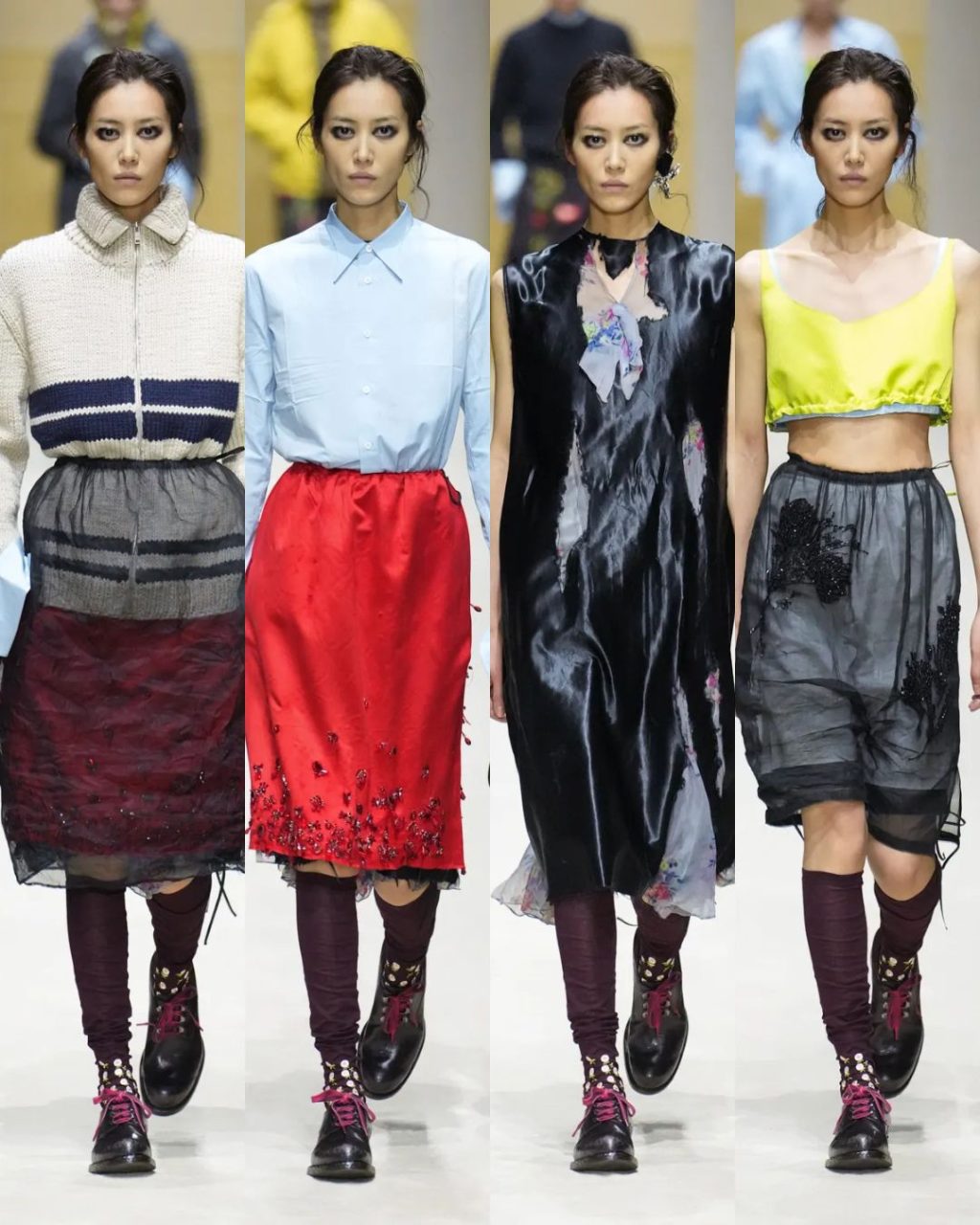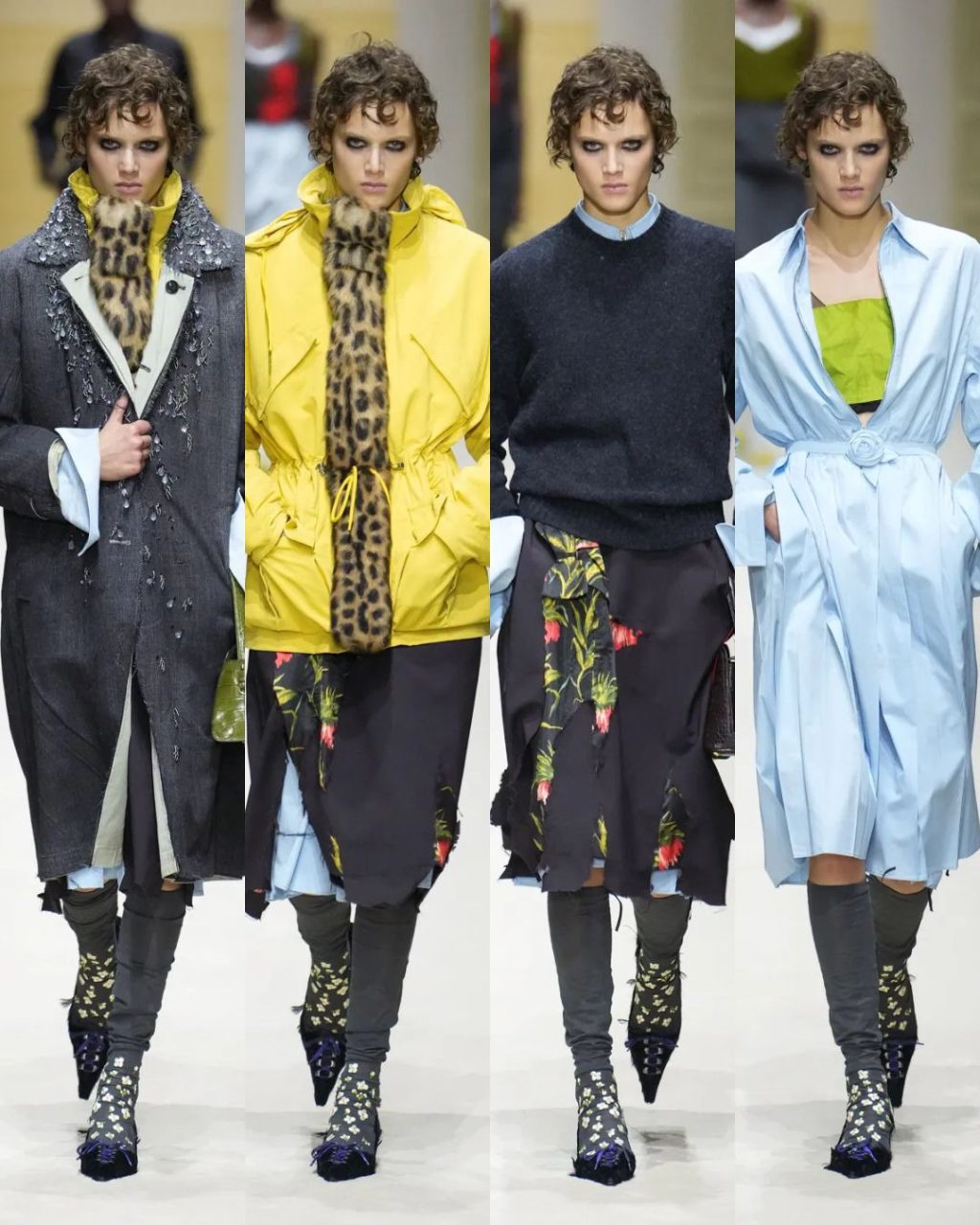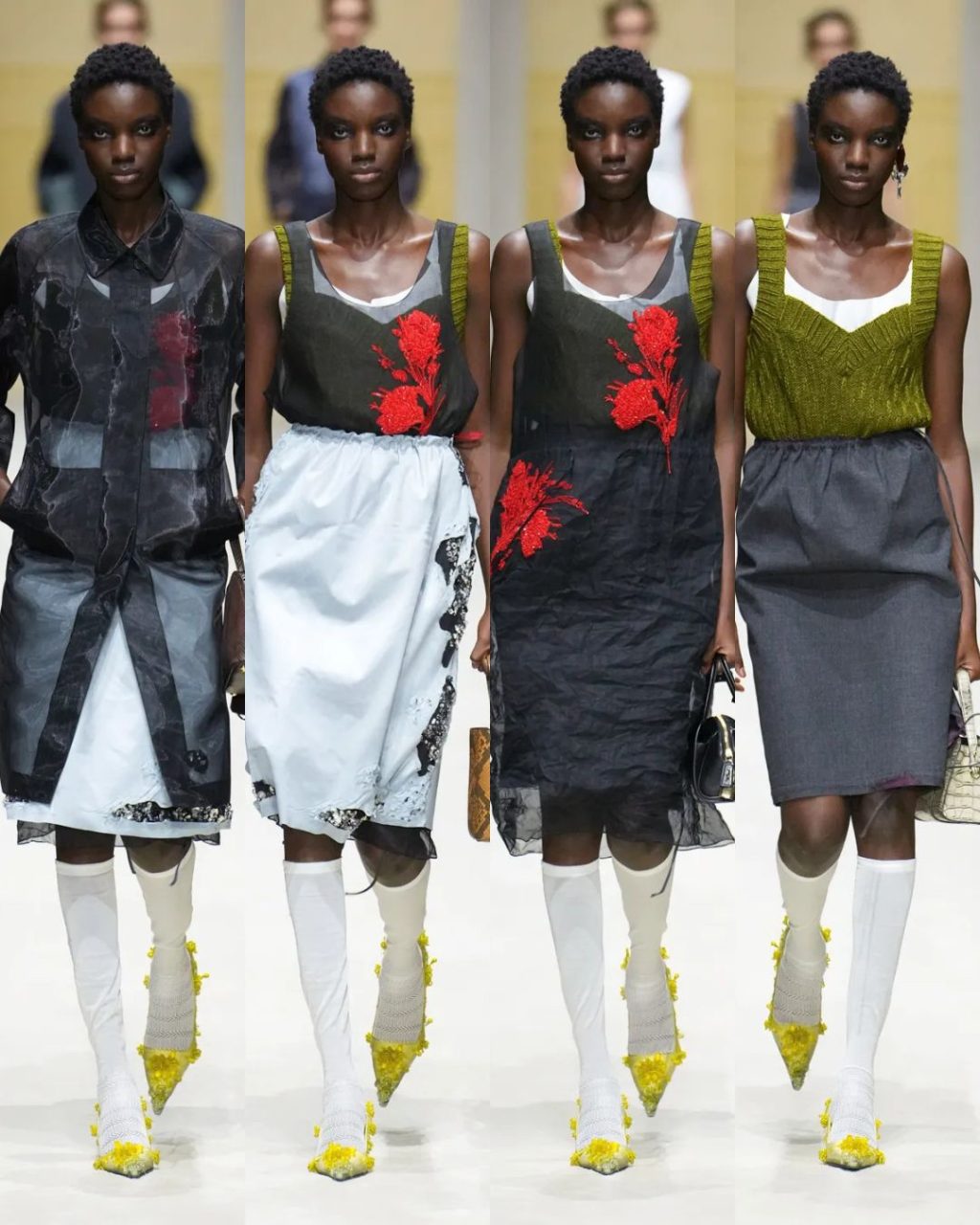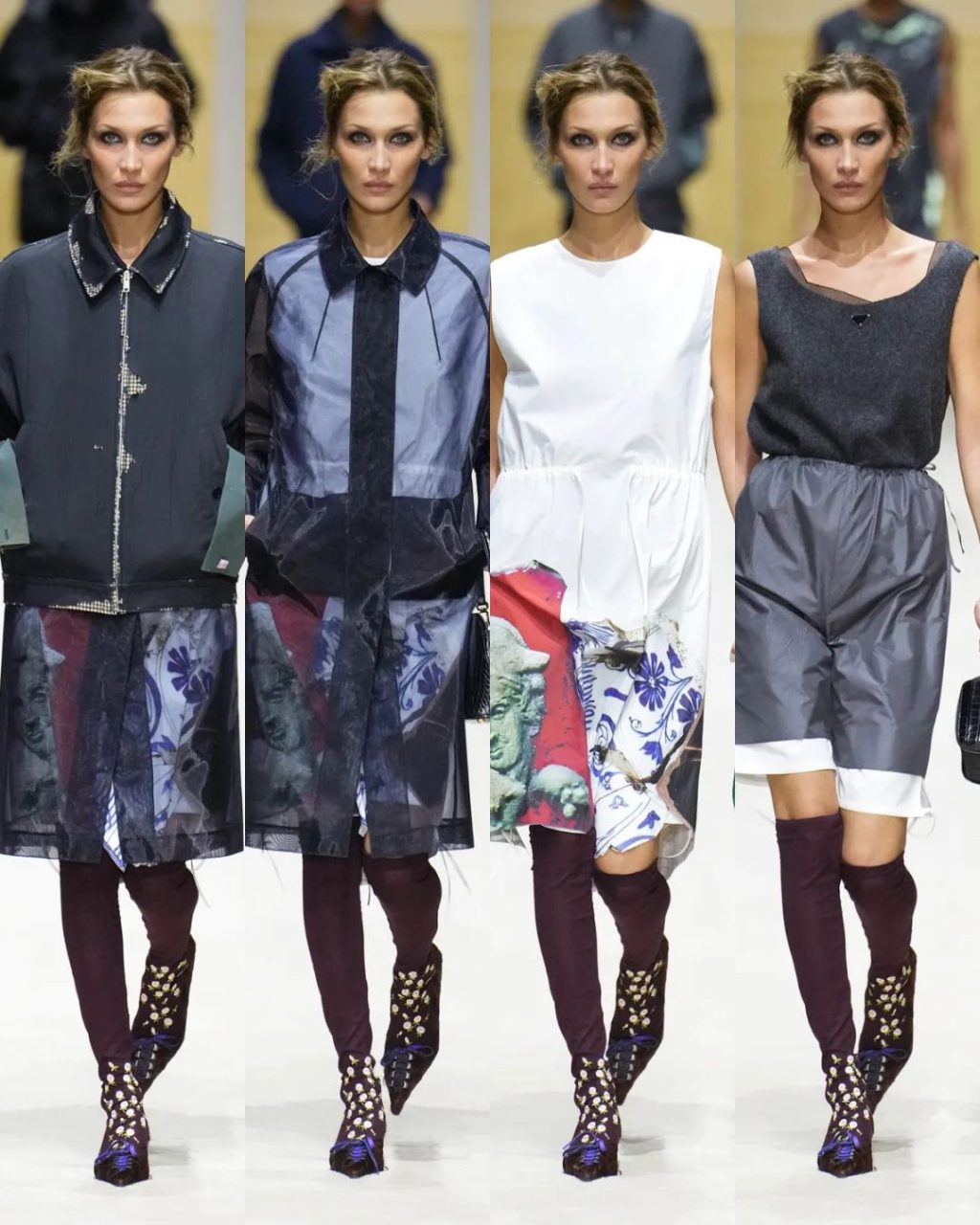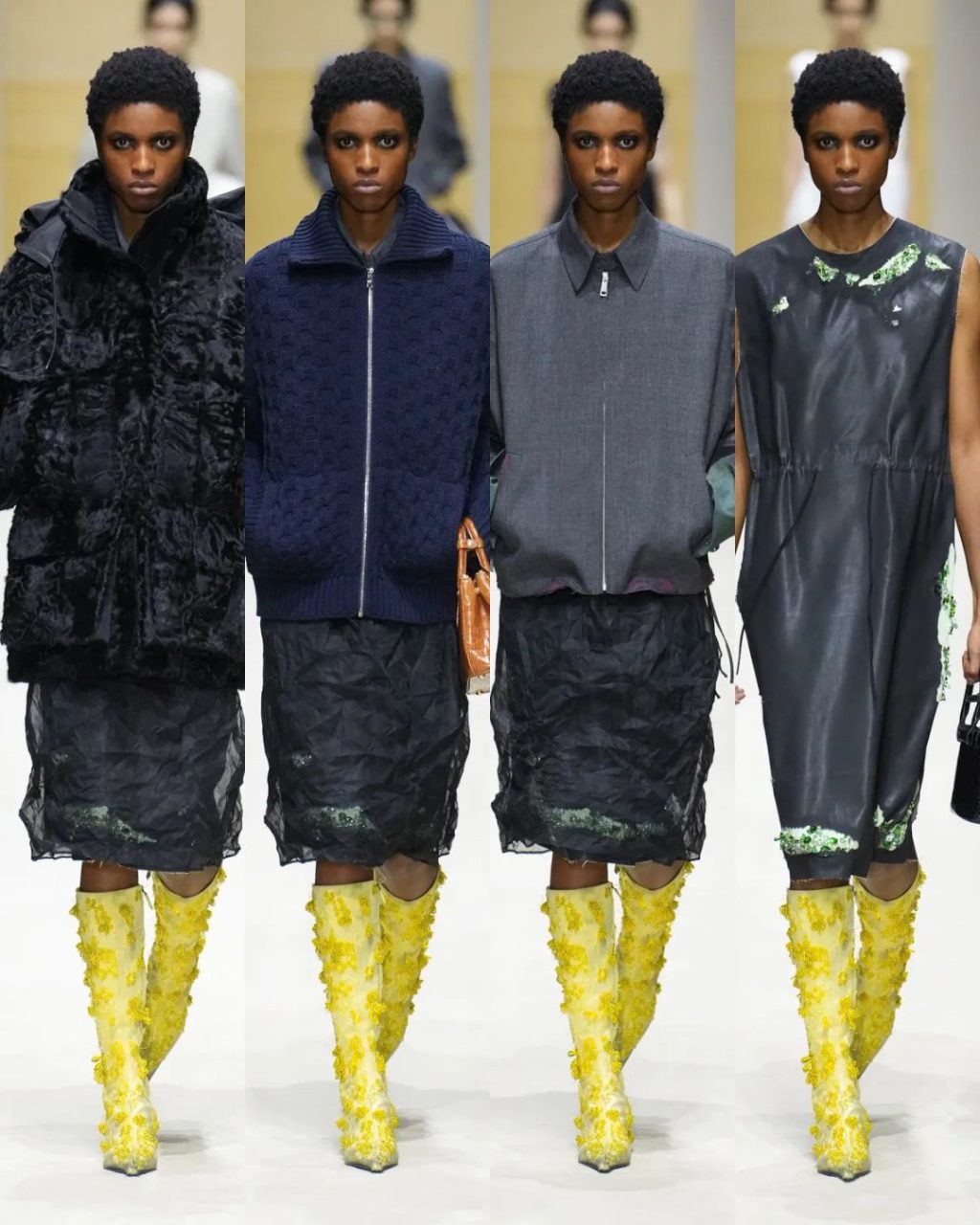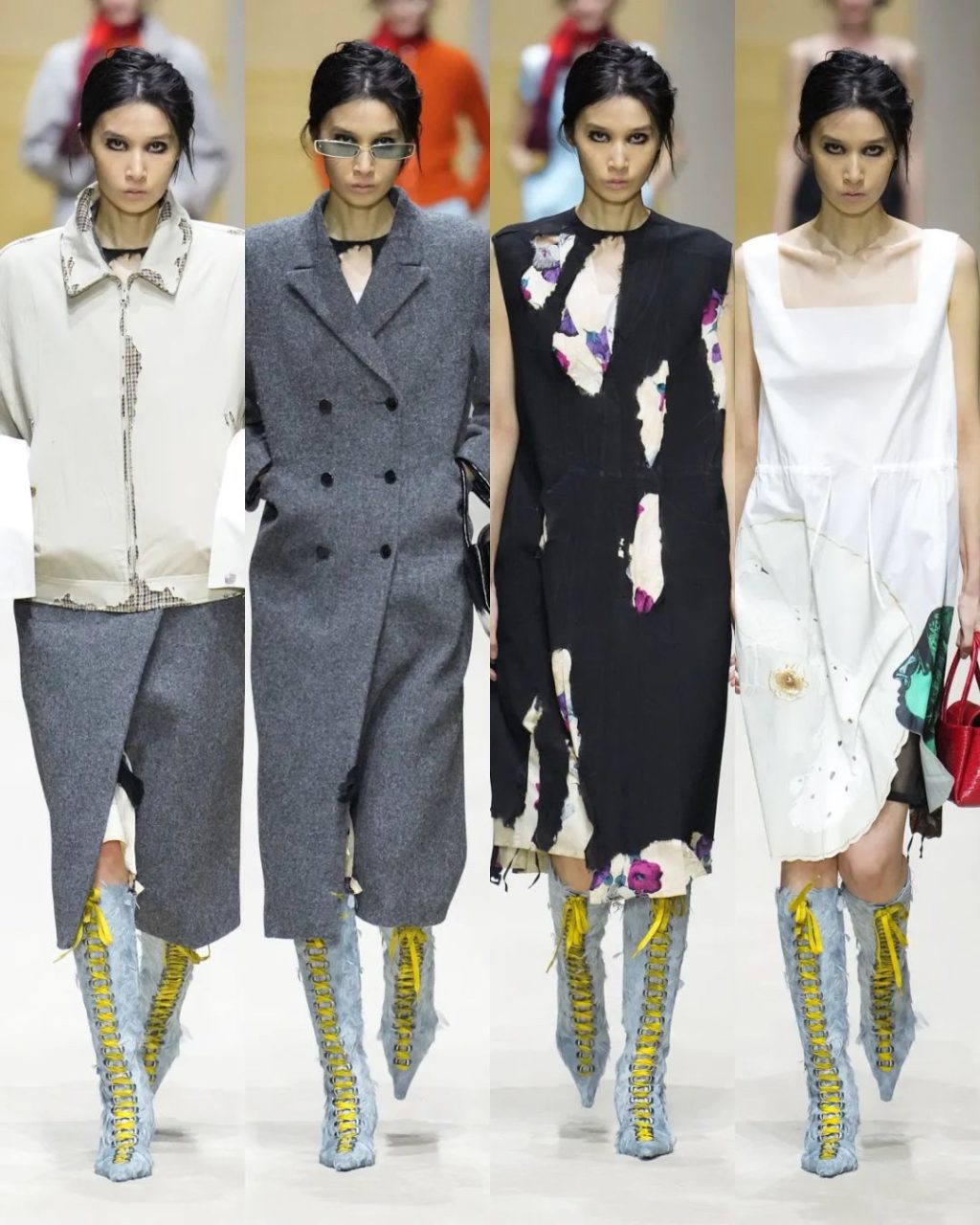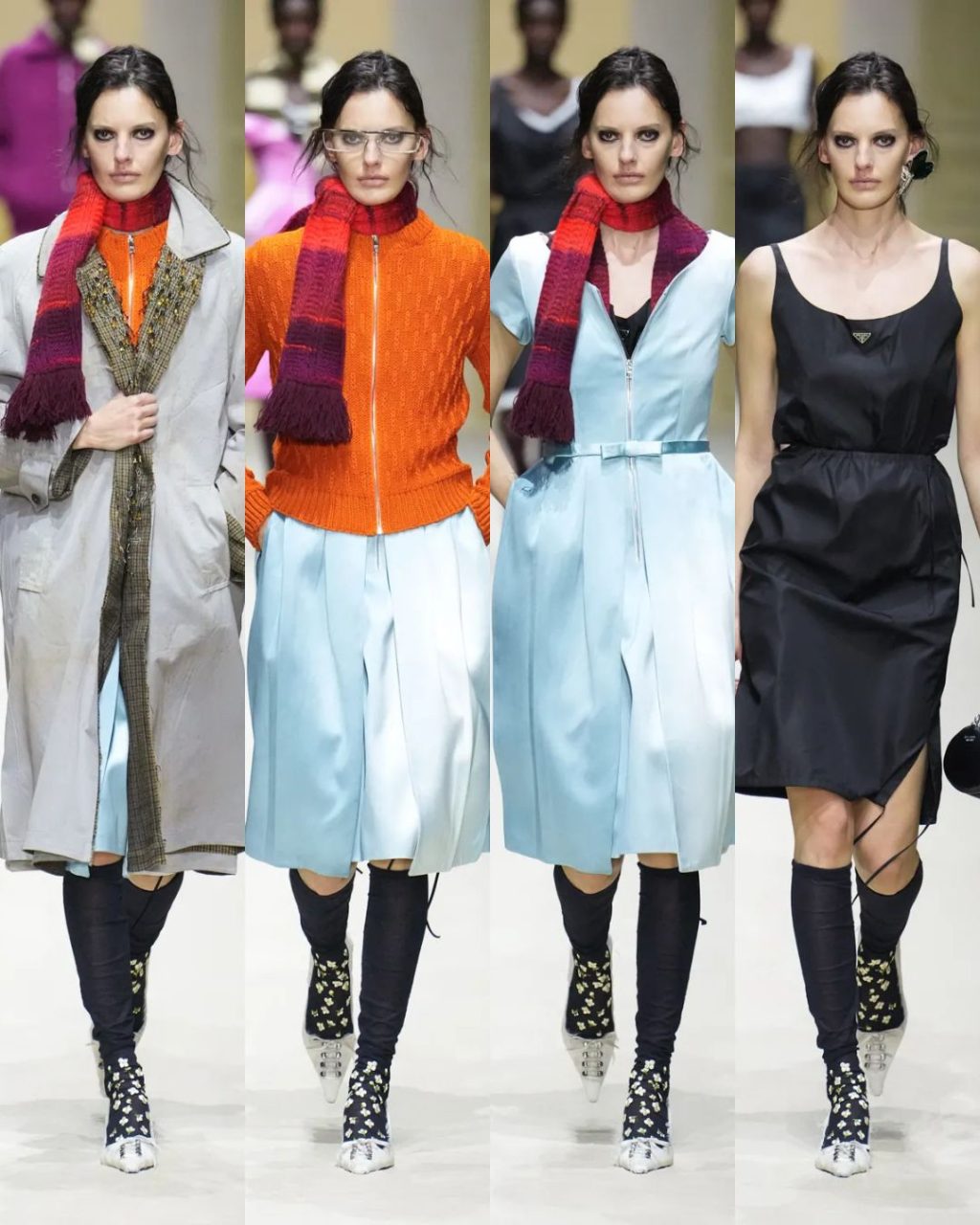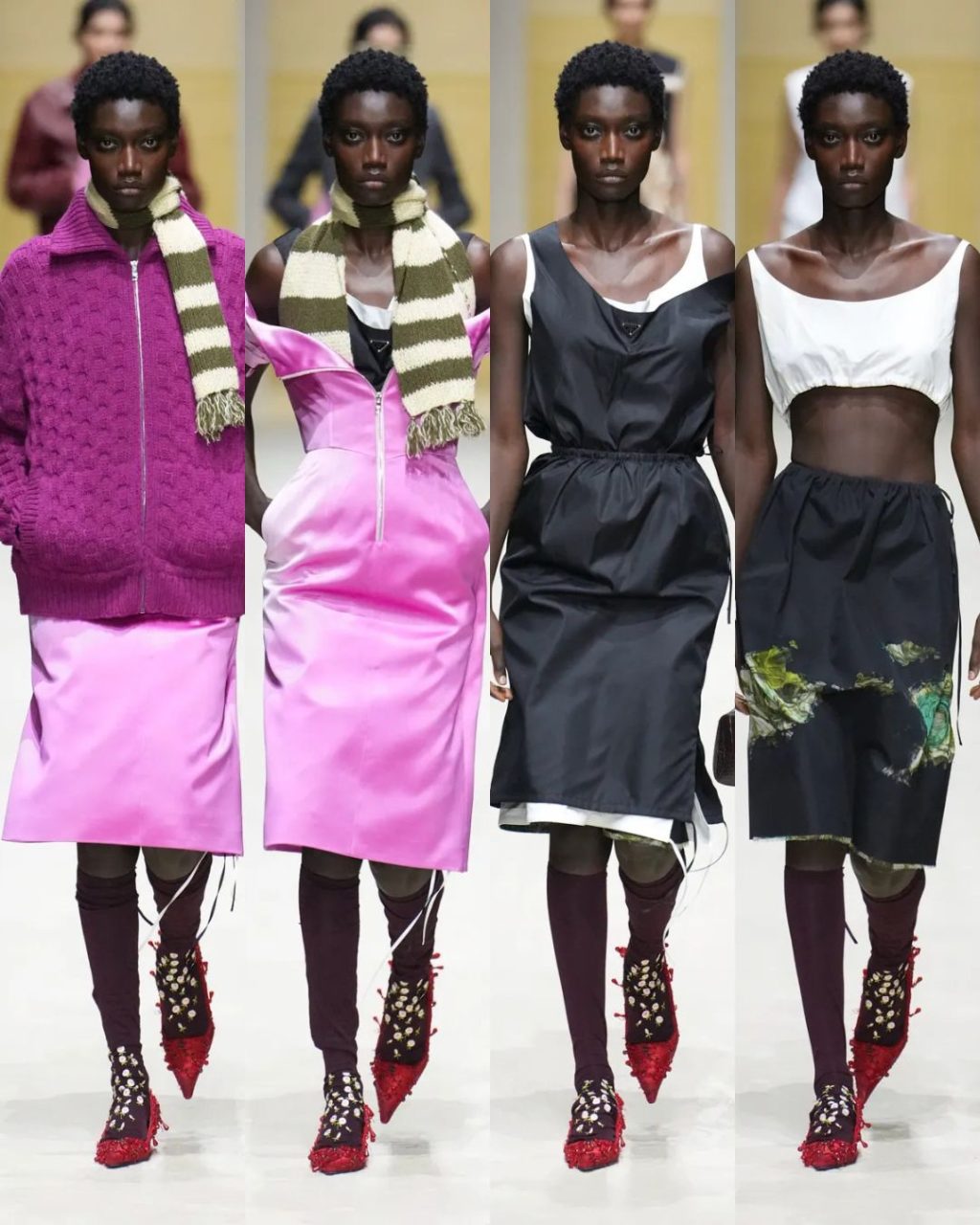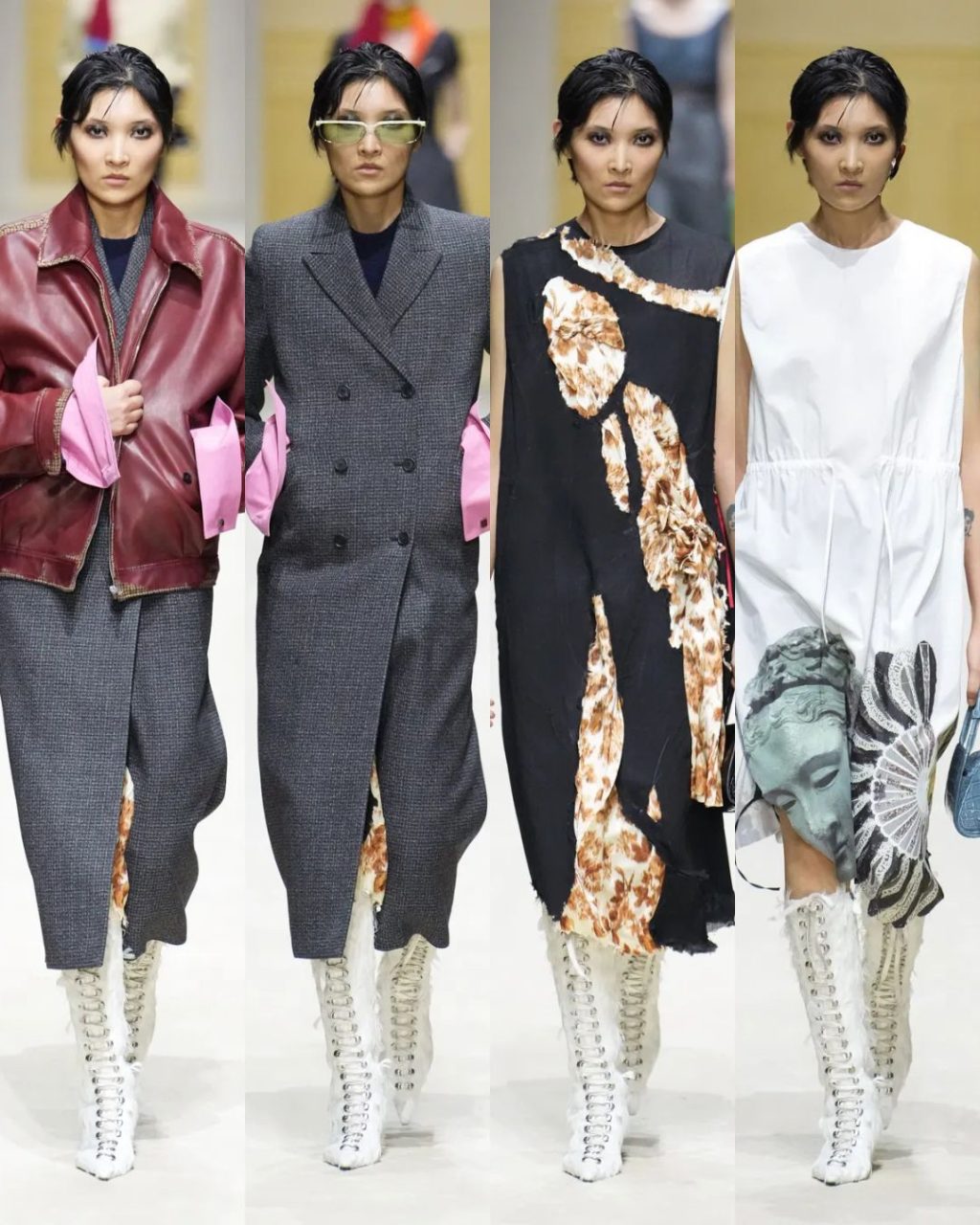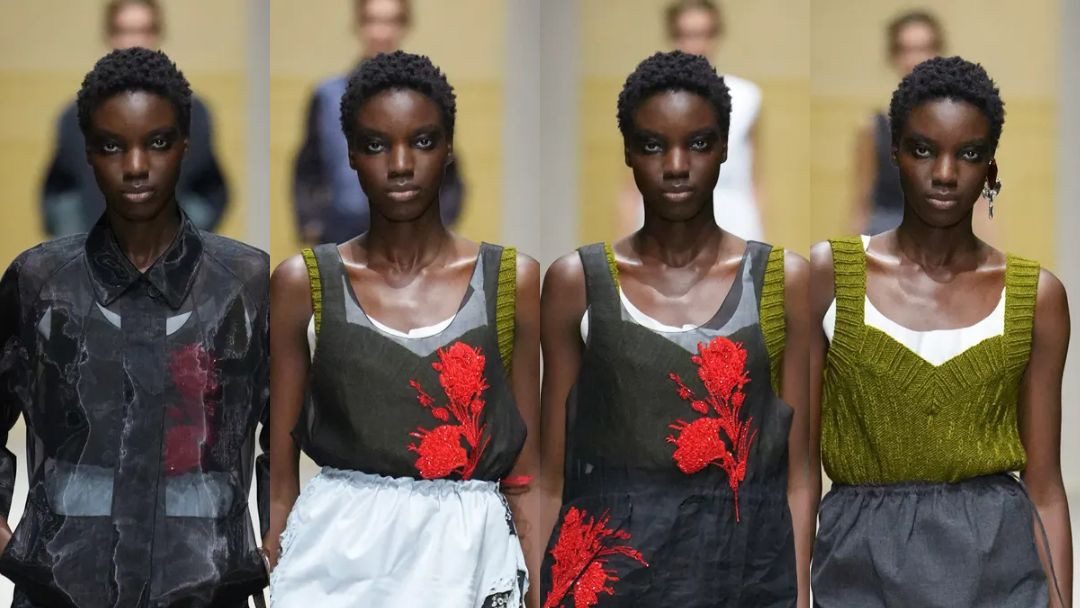
Prada Fall-Winter 2026-27 womenswear show did something deceptively radical: it compressed the runway to a cast of just 15 models, and then expanded the idea of the collection by having each model walk four times, creating 60 evolving “moments” in total.
Read also: Prada Fall-Winter 2026–2027 Bags Guide
The show notes framed the concept with unusual clarity—“transforming through the day, through your clothes”—and the runway executed it as a real-time lesson in how women actually dress: not as a single, fixed look, but as a sequence of adjustments—layers added, removed, rebalanced—depending on time, temperature, context, and mood.
What makes this structure feel Prada (rather than gimmick) is that it doesn’t chase spectacle. It builds meaning through repetition, calibration, and friction: a controlled cast, a disciplined system, and then the messy humanity of clothes being worn, lived in, and “figured out” on the body—one layer at a time.
The Concept: One Woman, Many Days—Revealed in Four Walks
In Prada’s hands, “layering” is never just styling. In FW26 it becomes a narrative device: each return to the runway acts like a chapter, where the silhouette shifts because one element is subtracted, slipped off, or replaced, and suddenly the personality of the look changes.
The show notes connect this to “pluralities”—the idea that a woman is not one thing, but an accumulation of roles, memories, and contradictions. The cast size matters here: with only 15 women, your attention doesn’t scatter. You notice the micro-edits—how a look moves from protective to exposed, from strict to intimate, from utilitarian to strangely precious—without changing the person inside it.
This is the key paradox Prada articulates directly: simplification (fewer models, clearer structure) can be the best way to communicate complexity.
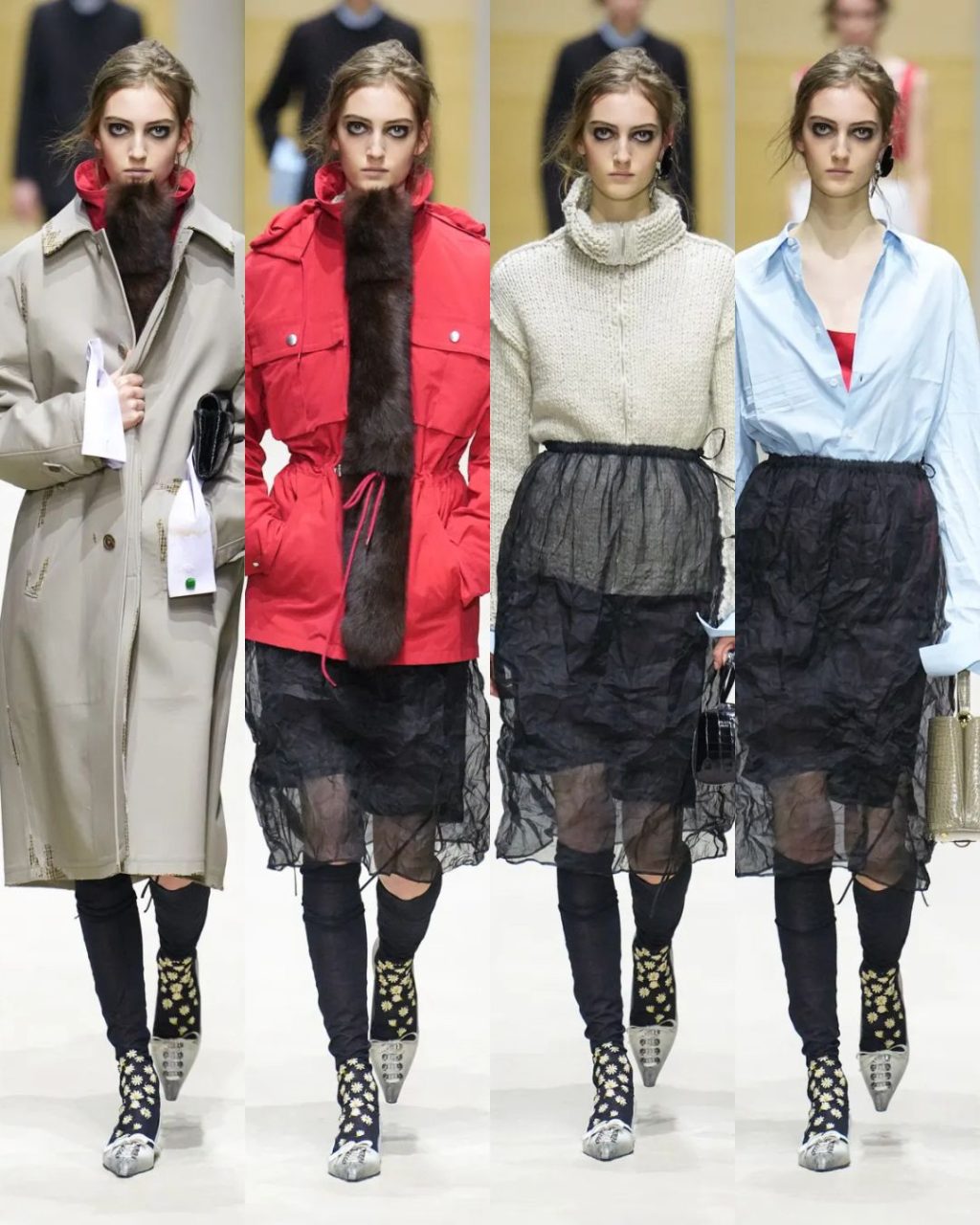
Why the “15 Models” Choice Changes How the Collection Reads
A normal runway floods the eye. Prada FW26 restricts the input—then uses that restriction to increase depth.
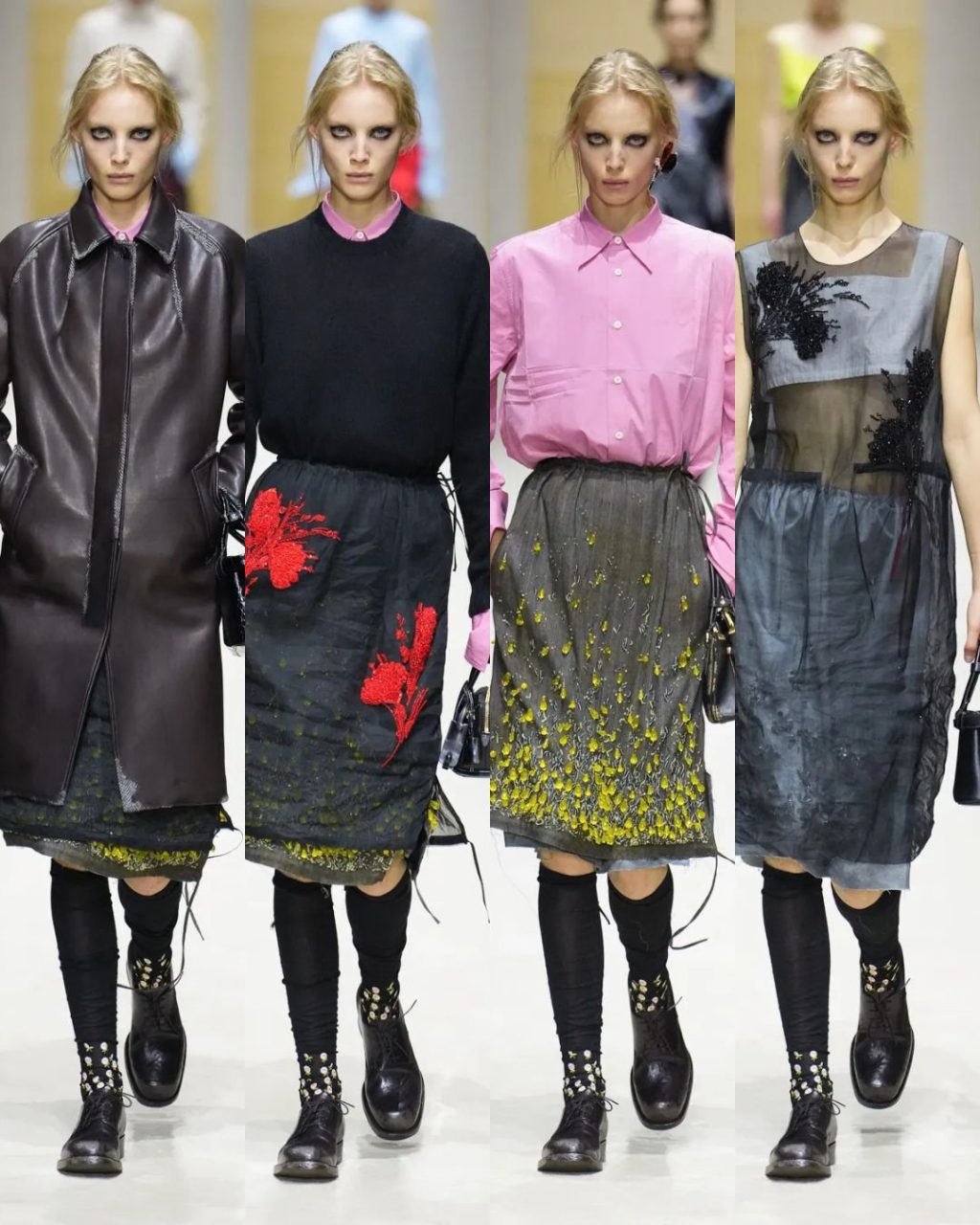
With 15 models walking four times each, the audience is prompted to compare rather than simply consume. You track how the same wearer carries different garment “types”—tailoring, sportswear, embroidered dresses—without hierarchy, as if a day’s wardrobe is a non-linear collage. The result is less “final look” and more “wardrobe intelligence.”
It also reframes the Prada woman as an ongoing construction. She doesn’t arrive fully styled. She becomes legible through iteration.
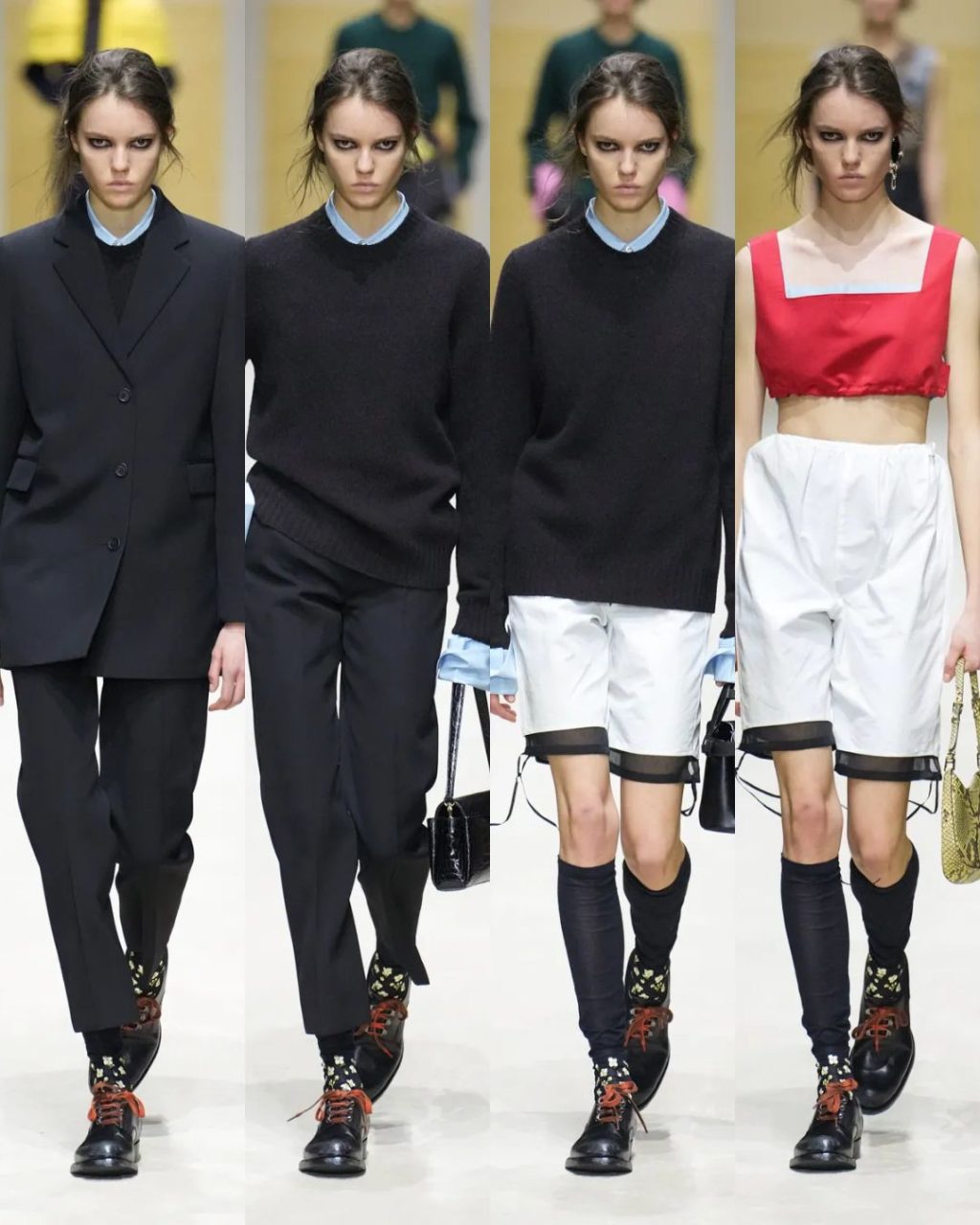
A Masterclass in Prada Layering: Tailoring, Sportswear, Dresses—All in the Same Sentence
The show notes explicitly name the collection’s ingredients—tailoring, sportswear, embroidered satin dresses—and the runway confirms Prada’s signature talent: making contradictions feel like a native language.
Across the looks you uploaded, that language is immediate:
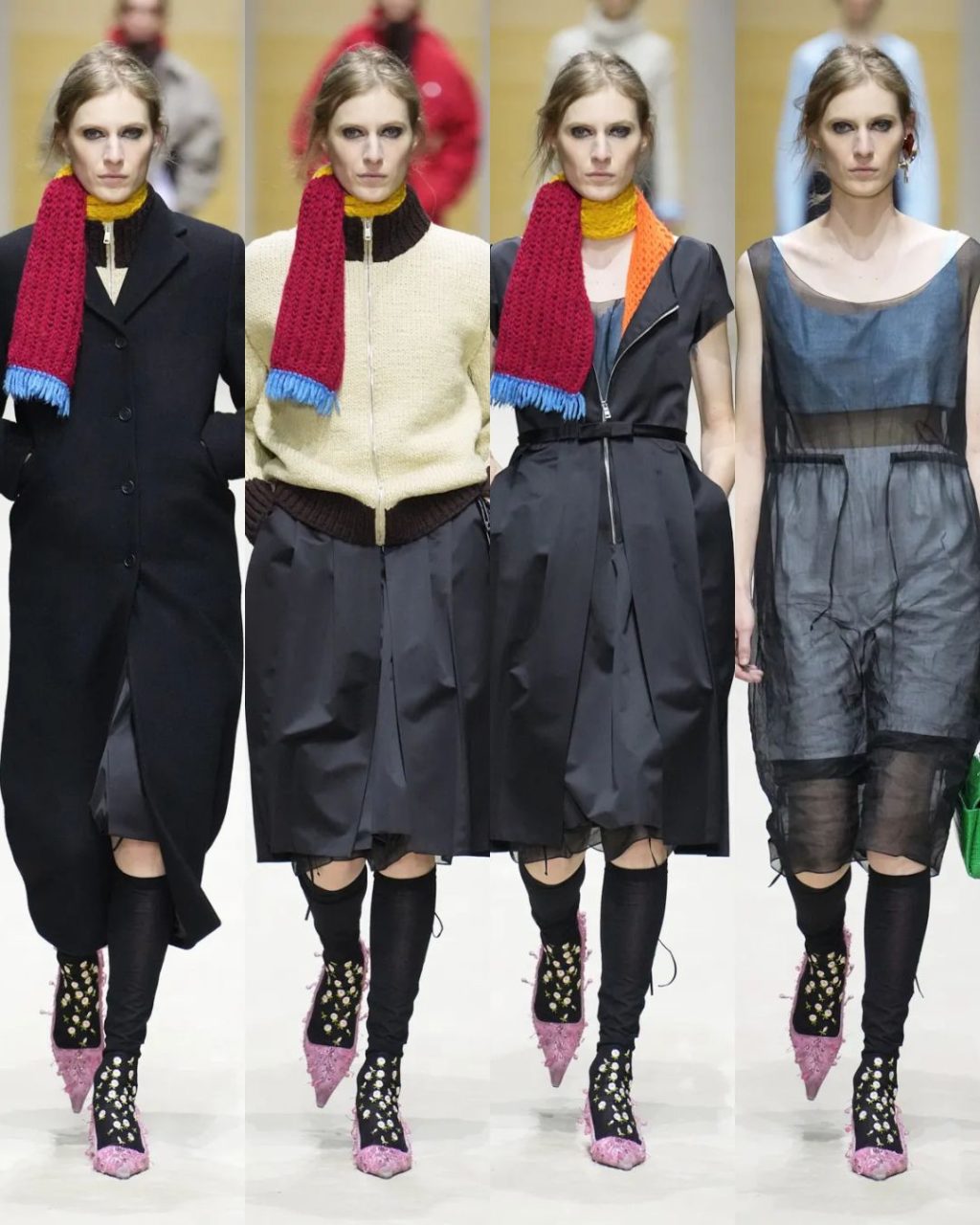
- Tailoring as armor: black suiting and disciplined coats that feel almost severe—then softened by what sits underneath (a sheer layer, a dress, a knit).
- Sportswear spliced into “proper” clothing: zip-up knits, utilitarian jackets, and nylon-adjacent pragmatism that interrupt any idea of polite femininity.
- The sheer truth layer: translucent skirts and dresses that read like the final, most exposed “state” of the outfit—an insistence that modern dressing is always negotiated, never pure.
- Color as punctuation, not palette: saturated scarves and sharp pops (red, orange, acid yellow, ice blue, pink) used like editorial marks—inserted, then removed, then reintroduced elsewhere.
This is why the show feels like a lesson rather than a parade: you can almost diagram the outfits. A structured piece on top. A contradictory piece beneath. A fragile, transparent layer that makes the whole thing feel human.
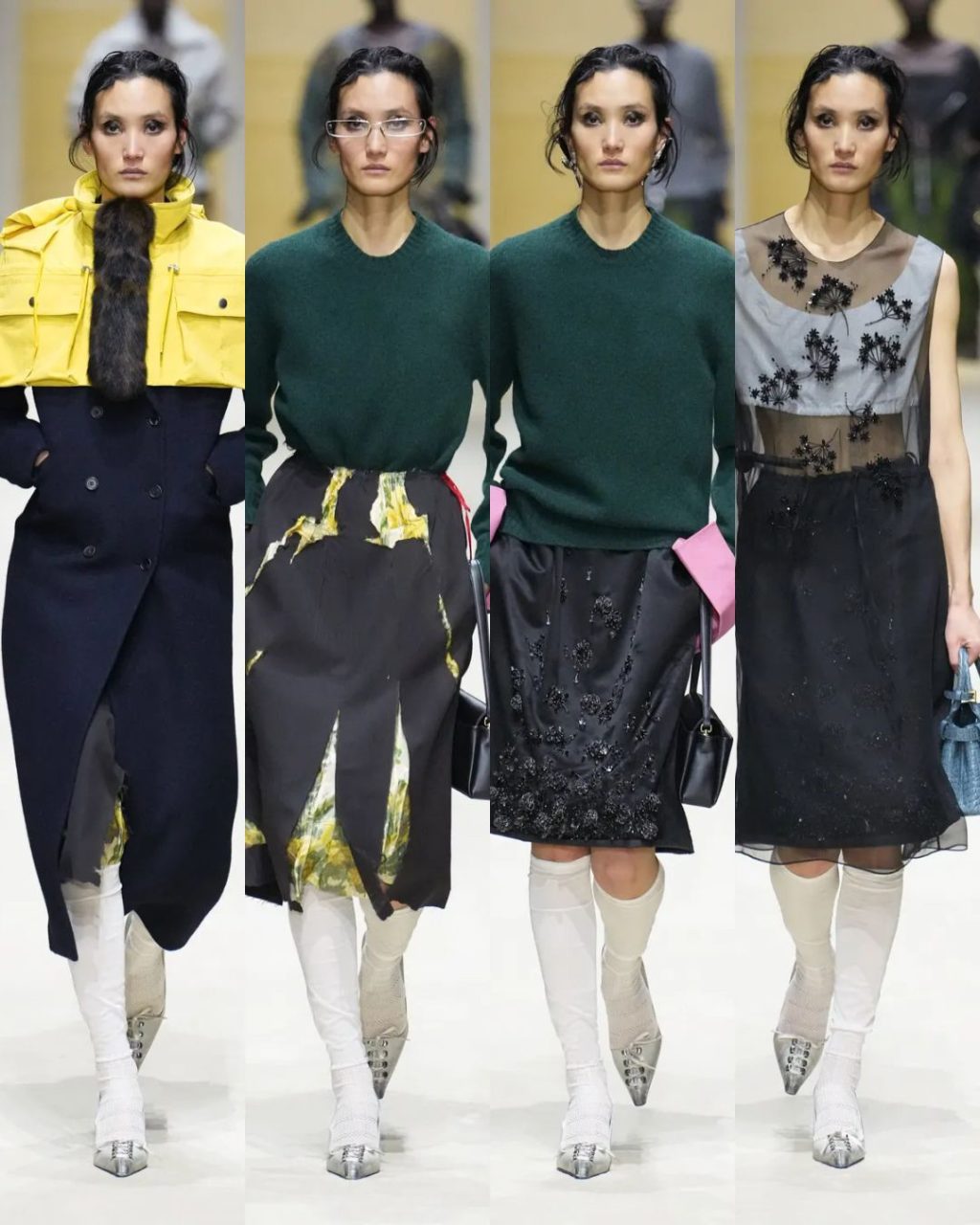
The Prada Woman, “Lived-In”: Patina, Fading, and Clothes That Have a Past
One of FW26’s most interesting claims is that decoration doesn’t have to look “new.” The show notes talk about patinating, intentional fading, embroideries that appear aged—clothes with the feeling of having lived.
That matters because it pushes against the clean, aspirational fantasy of luxury. Prada has long been interested in the intellectual tension of “ugly-pretty,” and FW26 updates that tension as reality-pretty: garments that feel worn-in, slightly distressed, psychologically credible. The layering then becomes emotional, not just functional—histories embedded within clothing, personal and collective.
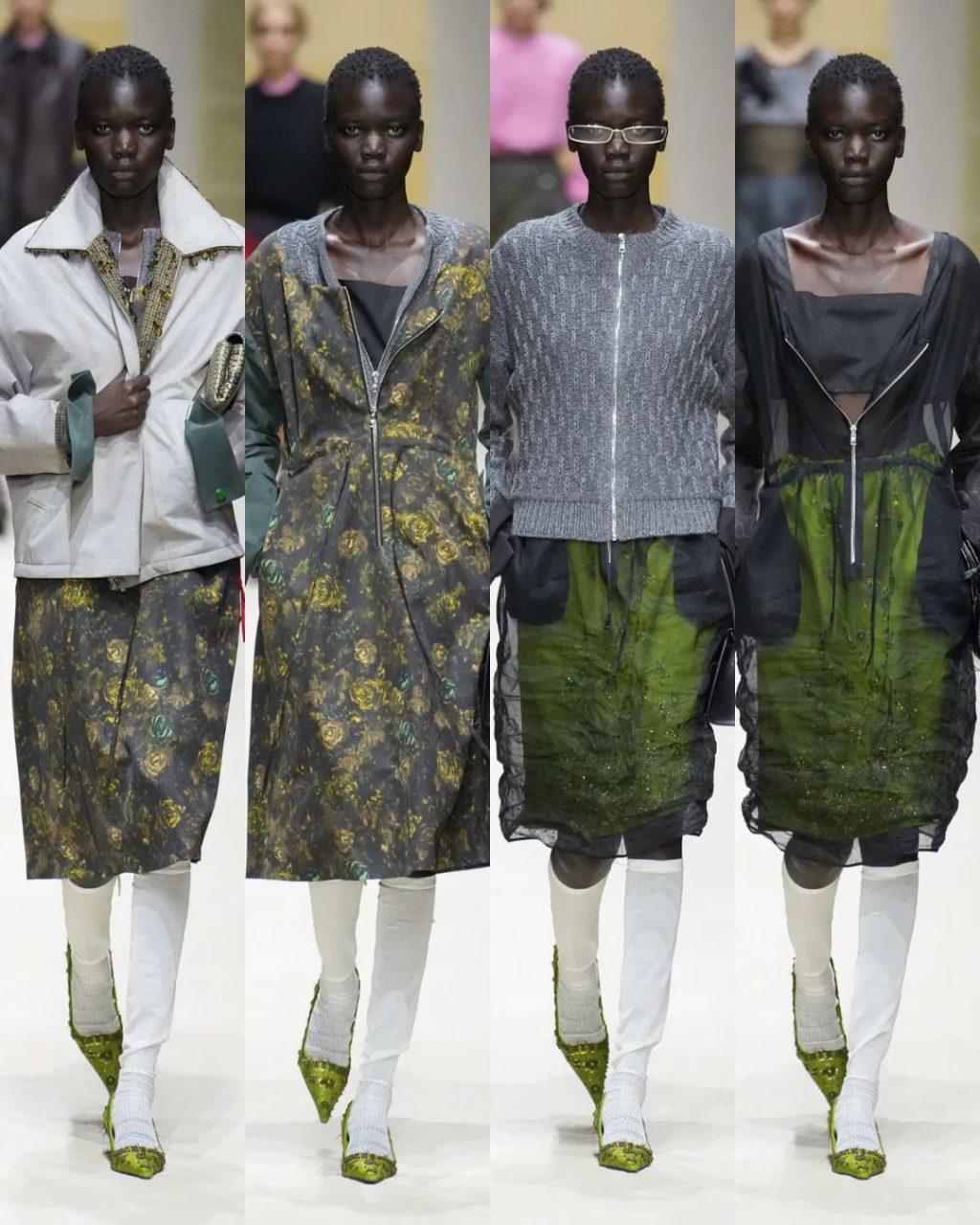
The Accessories Tell the Same Story: Repetition, Consistency, Identity
When a model walks four times, styling becomes character-building. Shoes and socks turn into continuity cues—visual anchors across changing garments. In several runway reports, this consistency is highlighted through repeated accessories across multiple walks.
In your image set, the footwear reads as deliberately “off”: pointed shapes, embellished textures, and a slightly stubborn refusal to be conventionally elegant. It’s Prada’s favorite kind of polish—intelligent, a bit perverse, impossible to flatten into a generic trend.
Why This Collection Will Matter Beyond the Runway
Prada FW26 isn’t trying to produce one viral silhouette. Its innovation is structural: it turns dressing into choreography and makes “wardrobe logic” the main event.
It’s also a quiet corrective to runway inflation. The show implies that more looks, more models, more noise doesn’t necessarily produce more meaning. Here, 60 looks land harder precisely because they’re built from 15 women you can actually remember.
And that is the real Prada proposition for Fall/Winter 2026: not fantasy, not costume, not singular transformation—but the kind that happens every day, in the mirror, when you remove one layer and become someone slightly different.