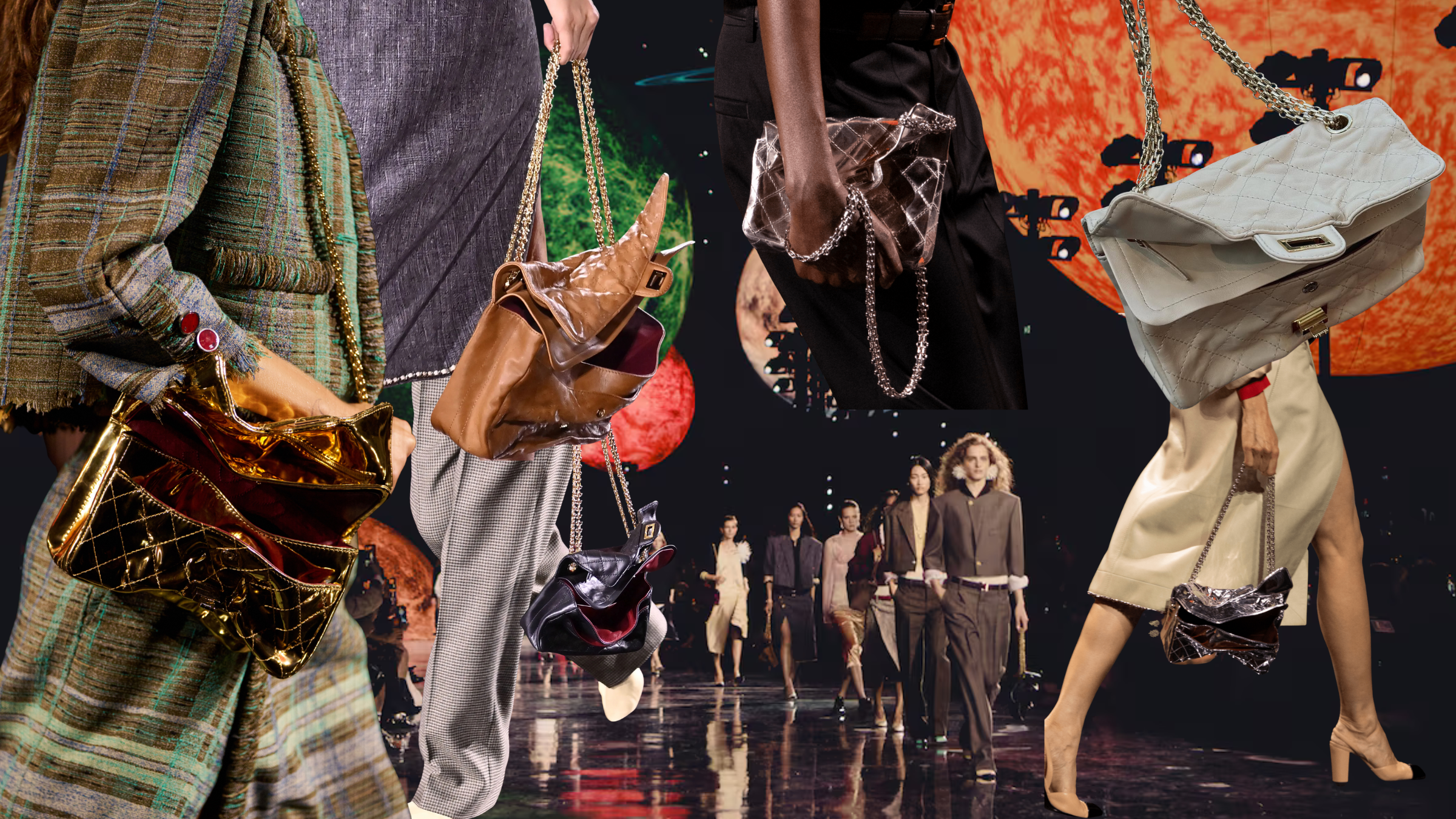
Matthieu Blazy’s first season at Chanel was never going to be quiet. The Matthieu Blazy Chanel 2.55 reinterpretation instantly became the conversation of Paris Fashion Week—a bold revival of a house icon reimagined for modern life. The designer, long celebrated for his forensic eye for materiality and for giving tradition a visceral modernity, arrived at the rue Cambon mothership with a brief both daunting and delicious: honor the codes; make them breathe. His Spring–Summer 2026 debut delivered exactly that, recentering Chanel’s foundational handbag, the 2.55, as a living archive piece—one that could be “crashed and cherished,” softened yet structured, and newly charged with movement. The result wasn’t a gimmick or a glossy reboot; it was a considered act of design archaeology in motion—a conversation between memory and use.
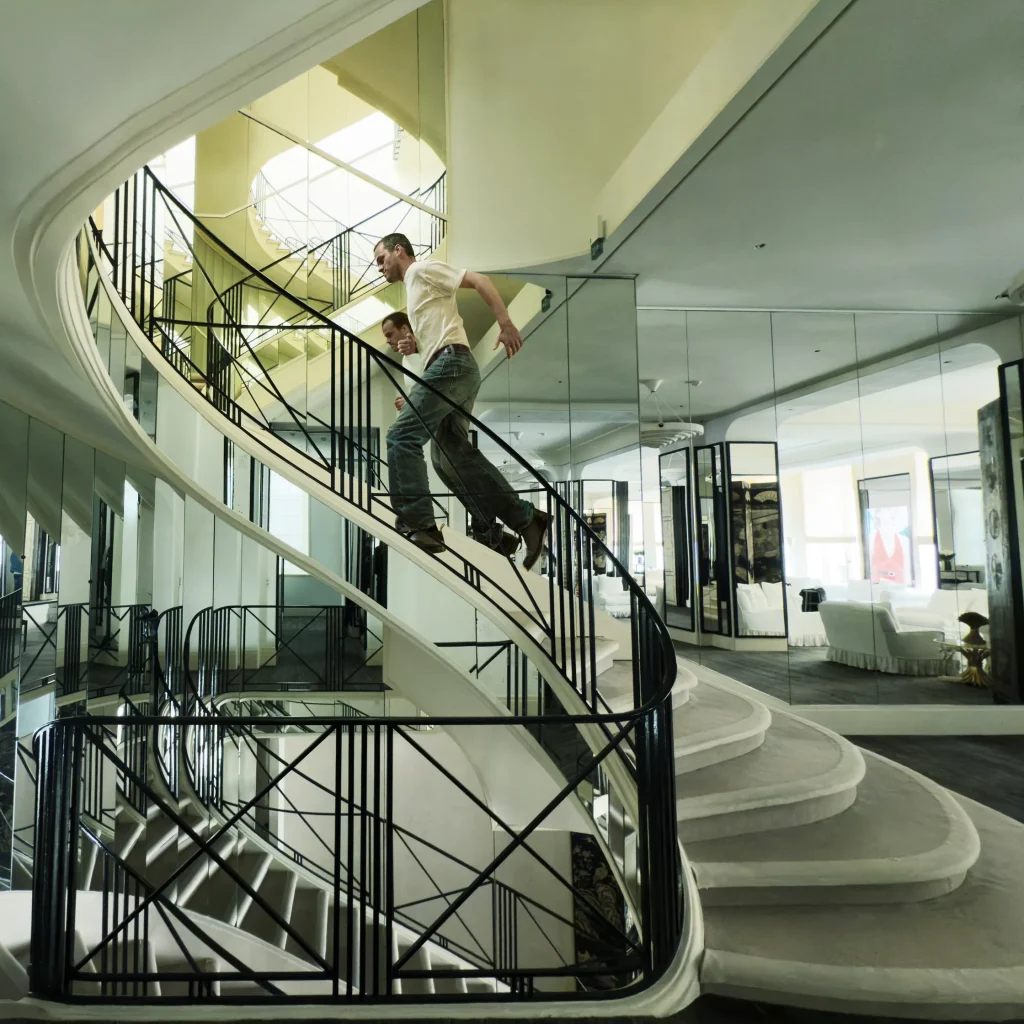
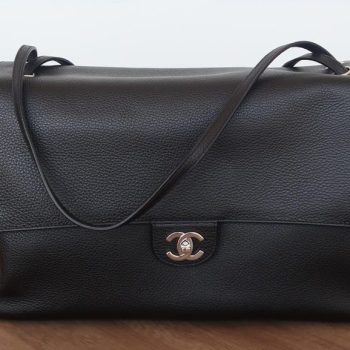
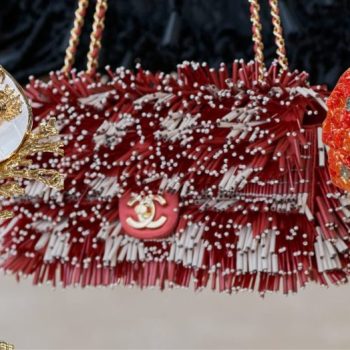
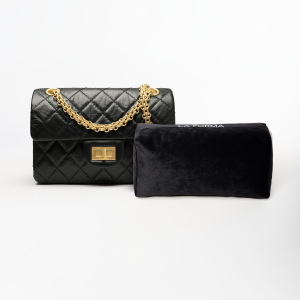
Few bags carry cultural voltage like the 2.55. Born in February 1955—hence the name—the design was Coco Chanel’s audacious answer to the hands-free life: a shoulder-carried rectangle, quilted like a jockey’s jacket, with a slender all-metal chain that liberated women from the daintiness of top-handles. Inside, the deep bordeaux lining and zip-pocket were personal signatures; outside, the “Mademoiselle” lock kept things elegantly anonymous. This year, the Chanel 2.55 celebrates its 70th anniversary—a milestone that reaffirms its enduring relevance and timeless design. In 2005, the house reissued the original architecture for its 50th anniversary, even as Karl Lagerfeld’s 11.12 (the “Classic Flap,” with interlocking-C turnlock and leather-laced chain) continued its parallel mythology. The 2.55 is history you can sling on your shoulder—an object that codified modern luxury decades before we called it that.
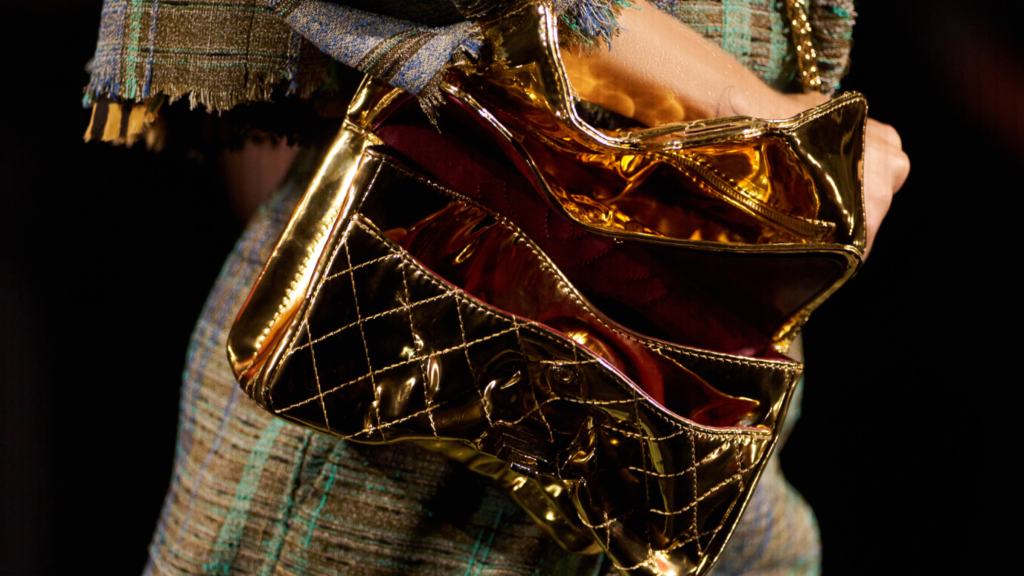
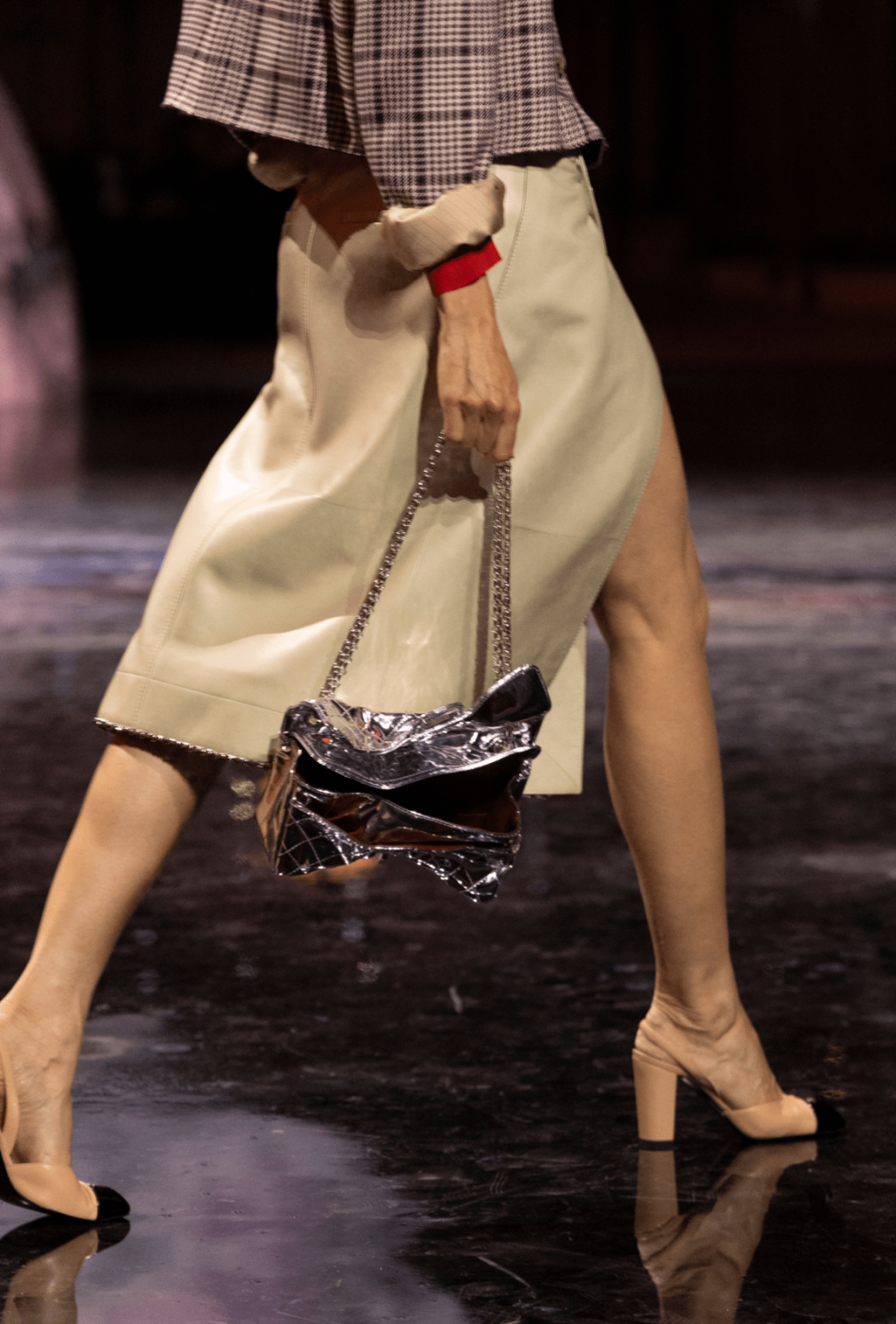
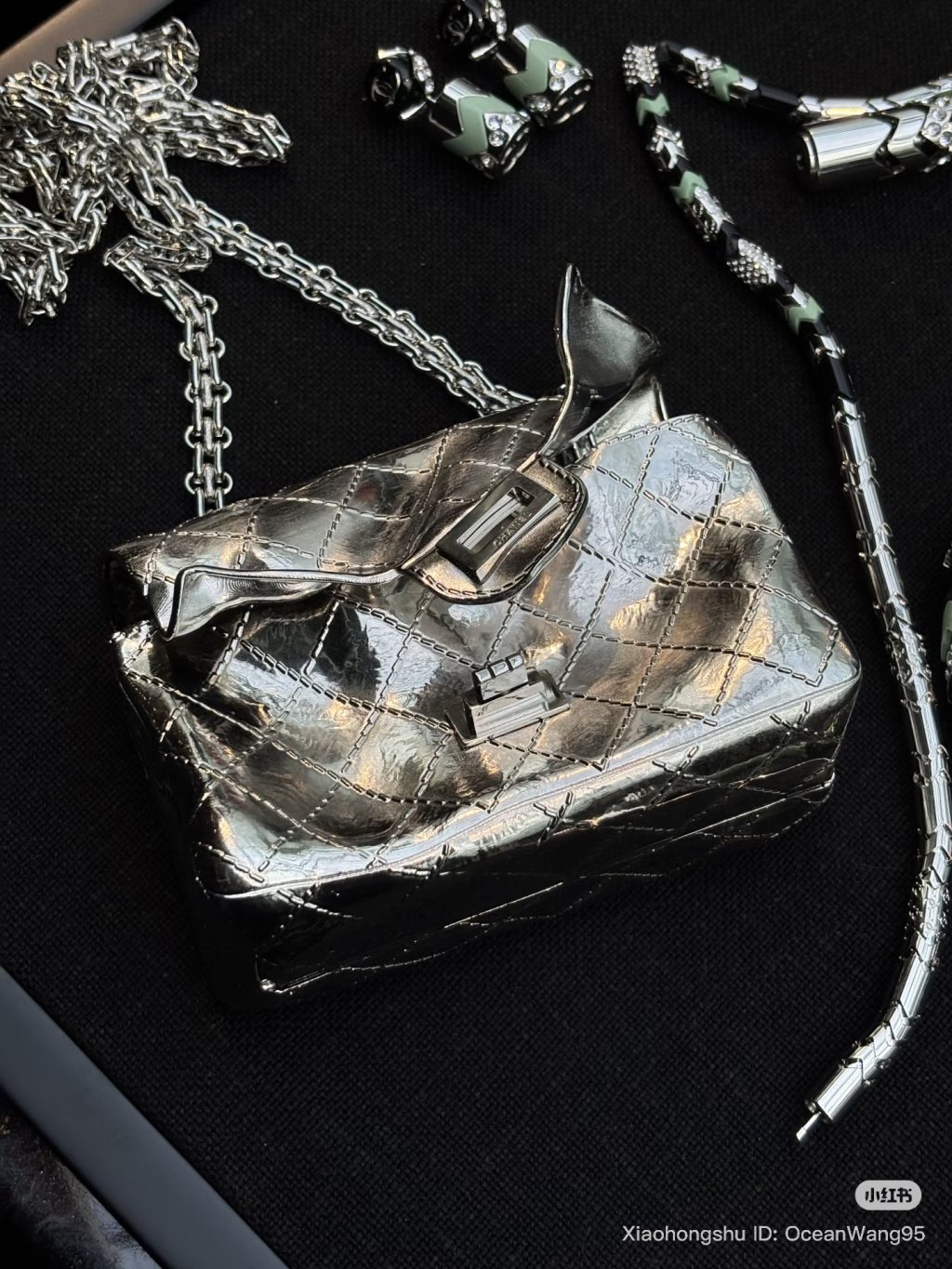
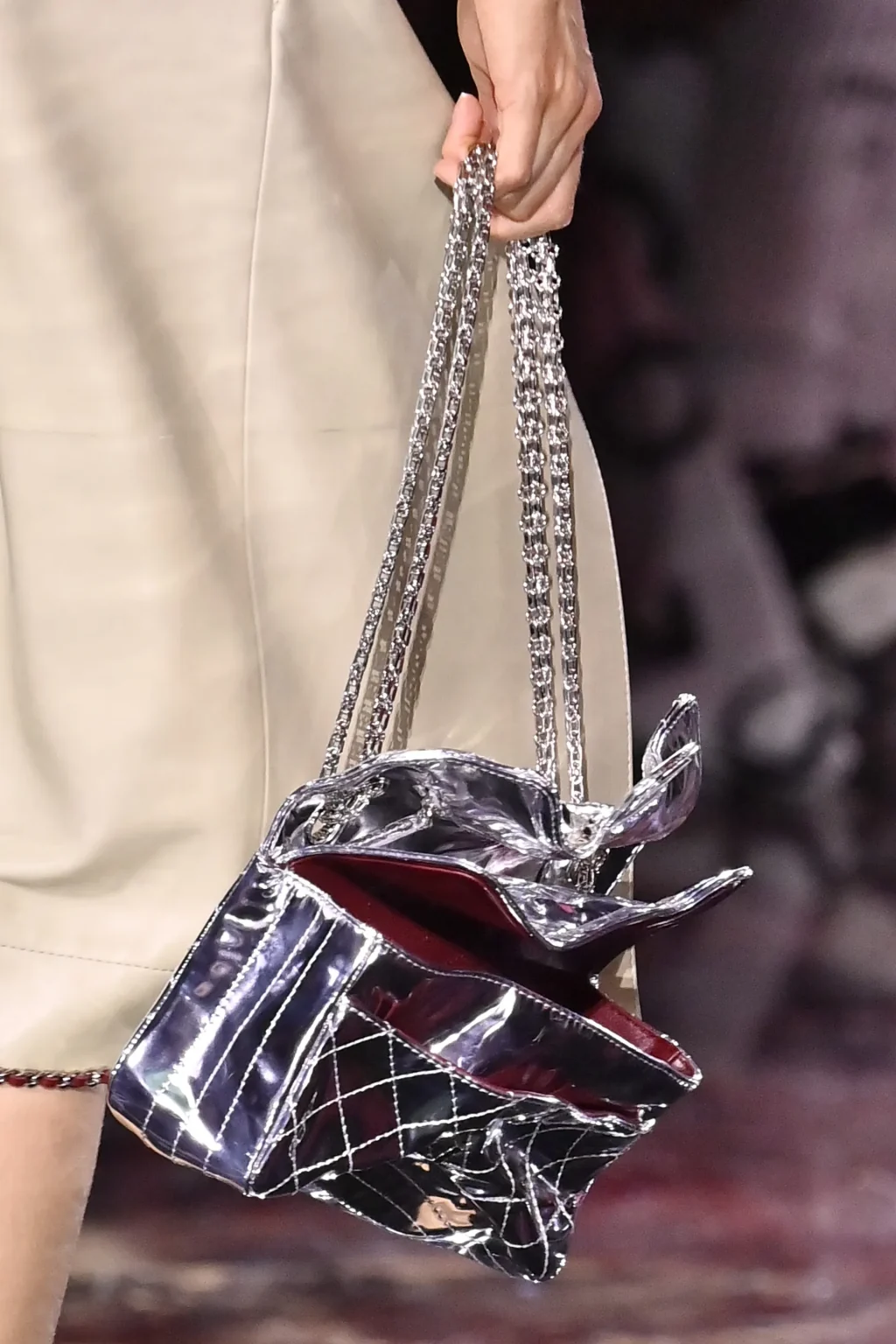
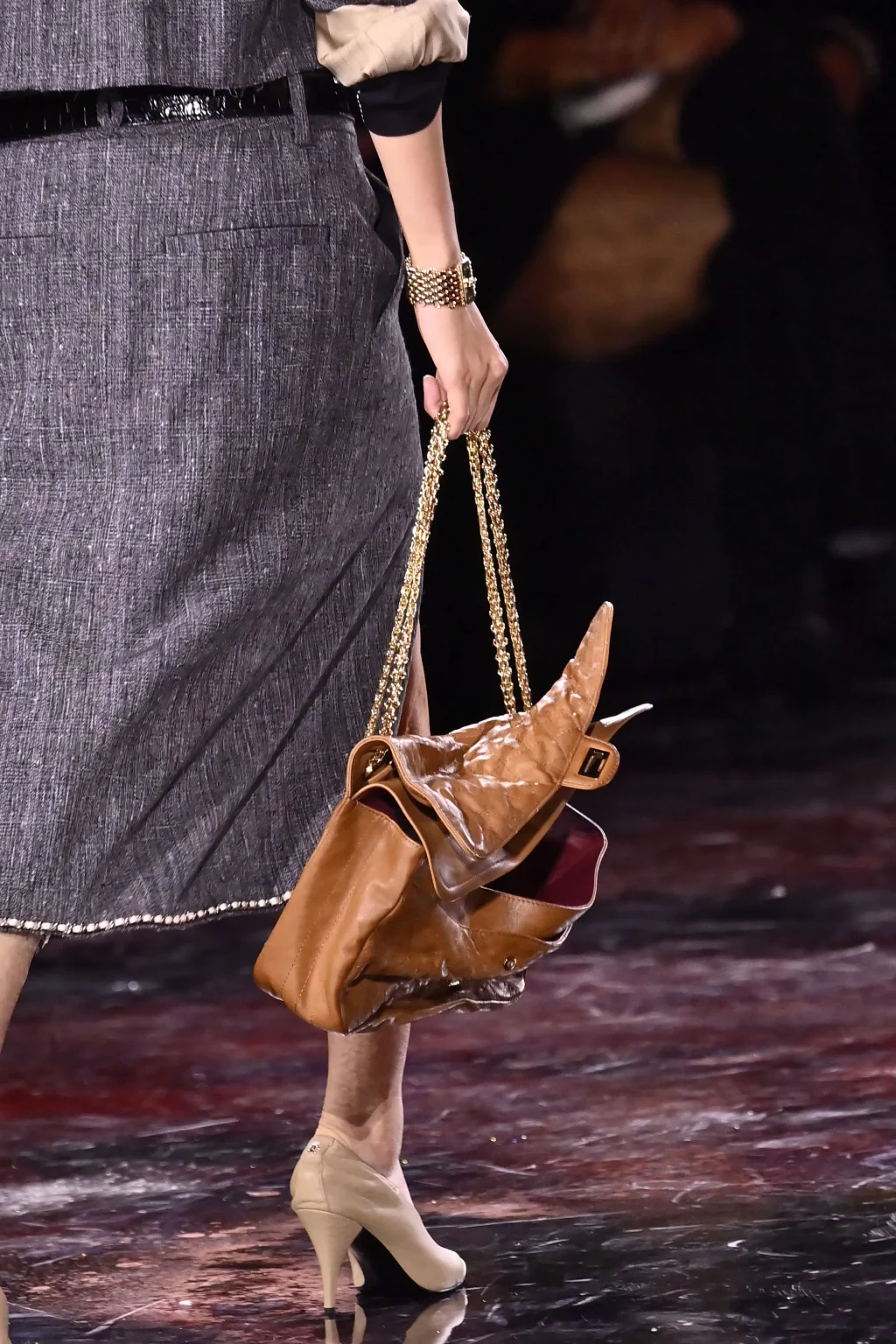
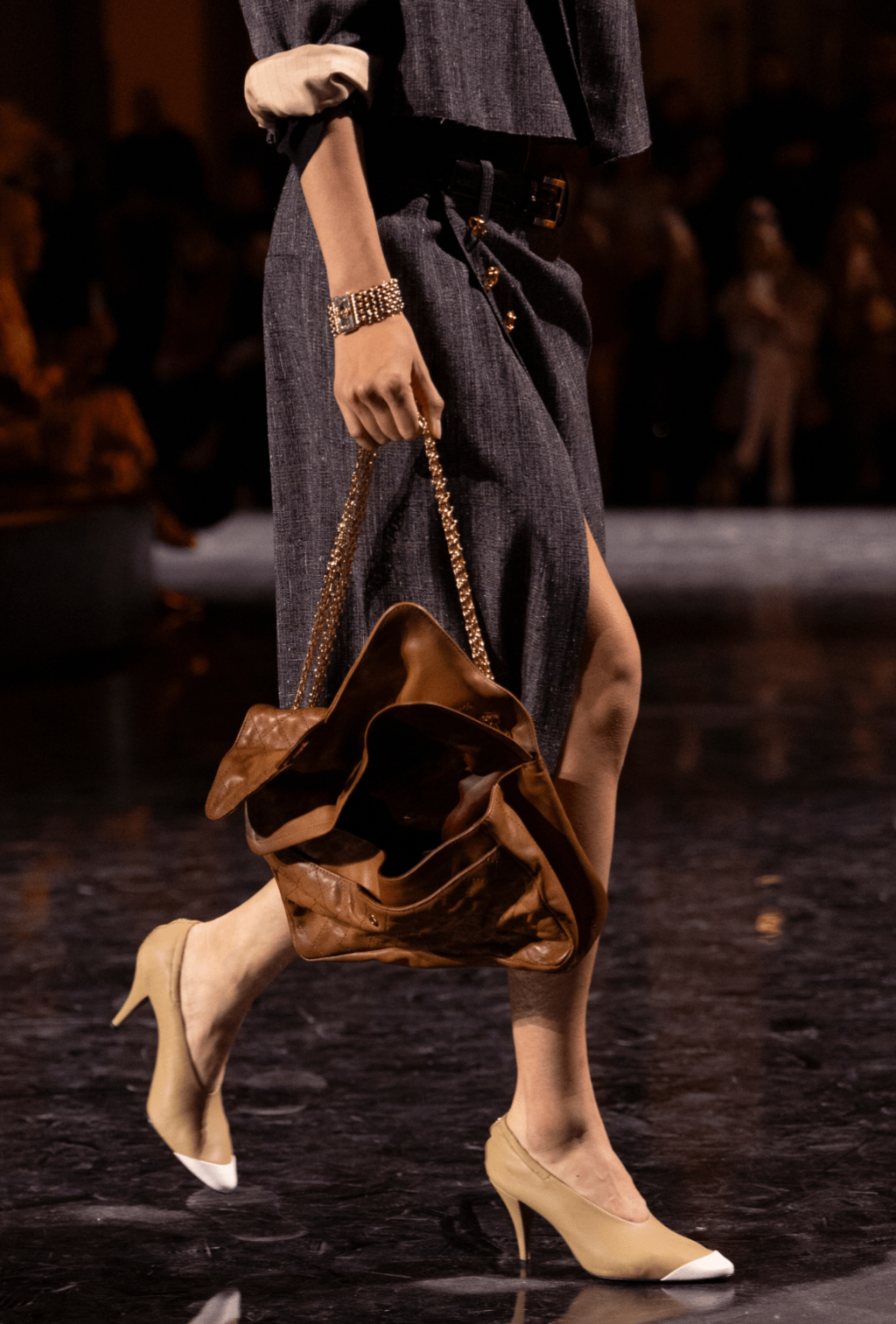
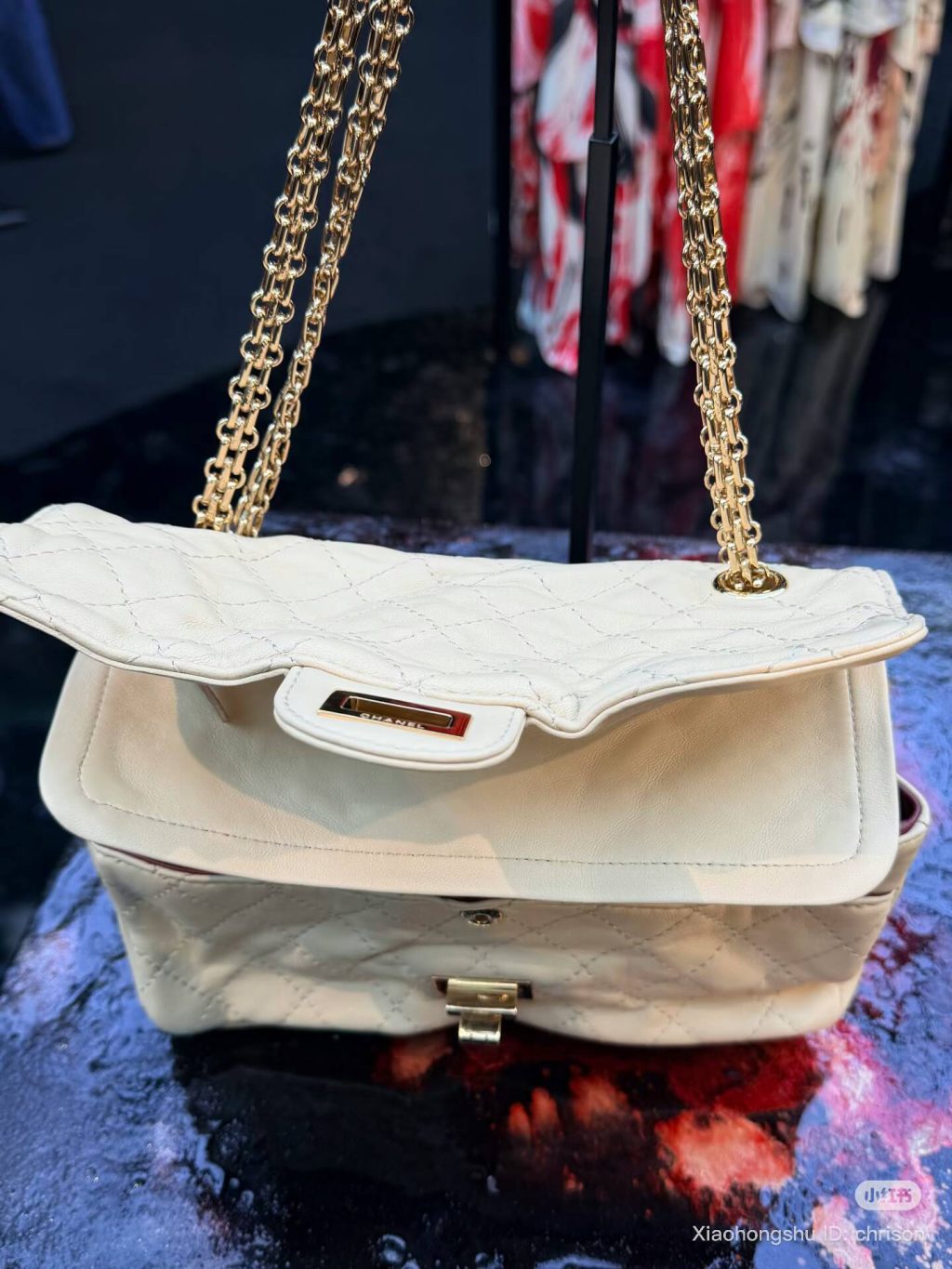
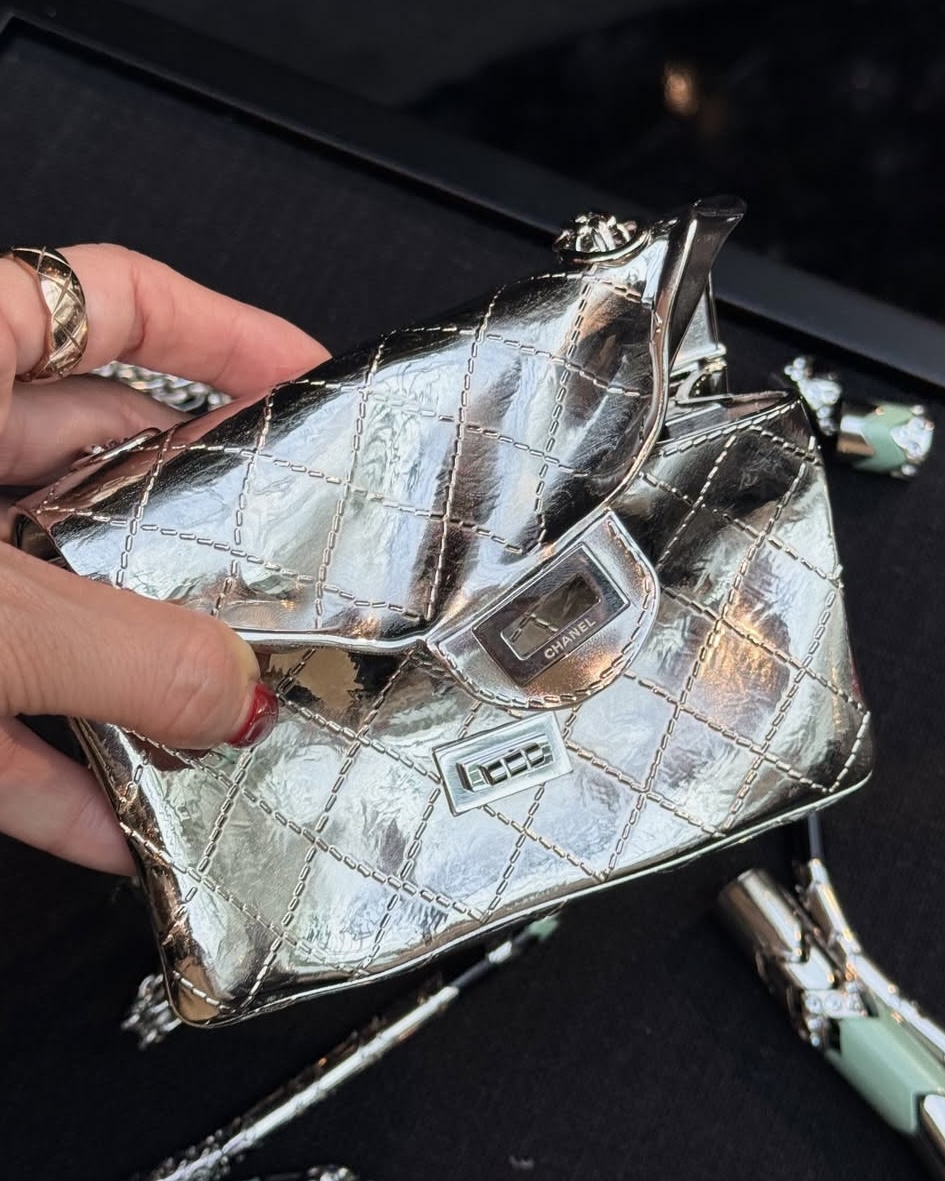
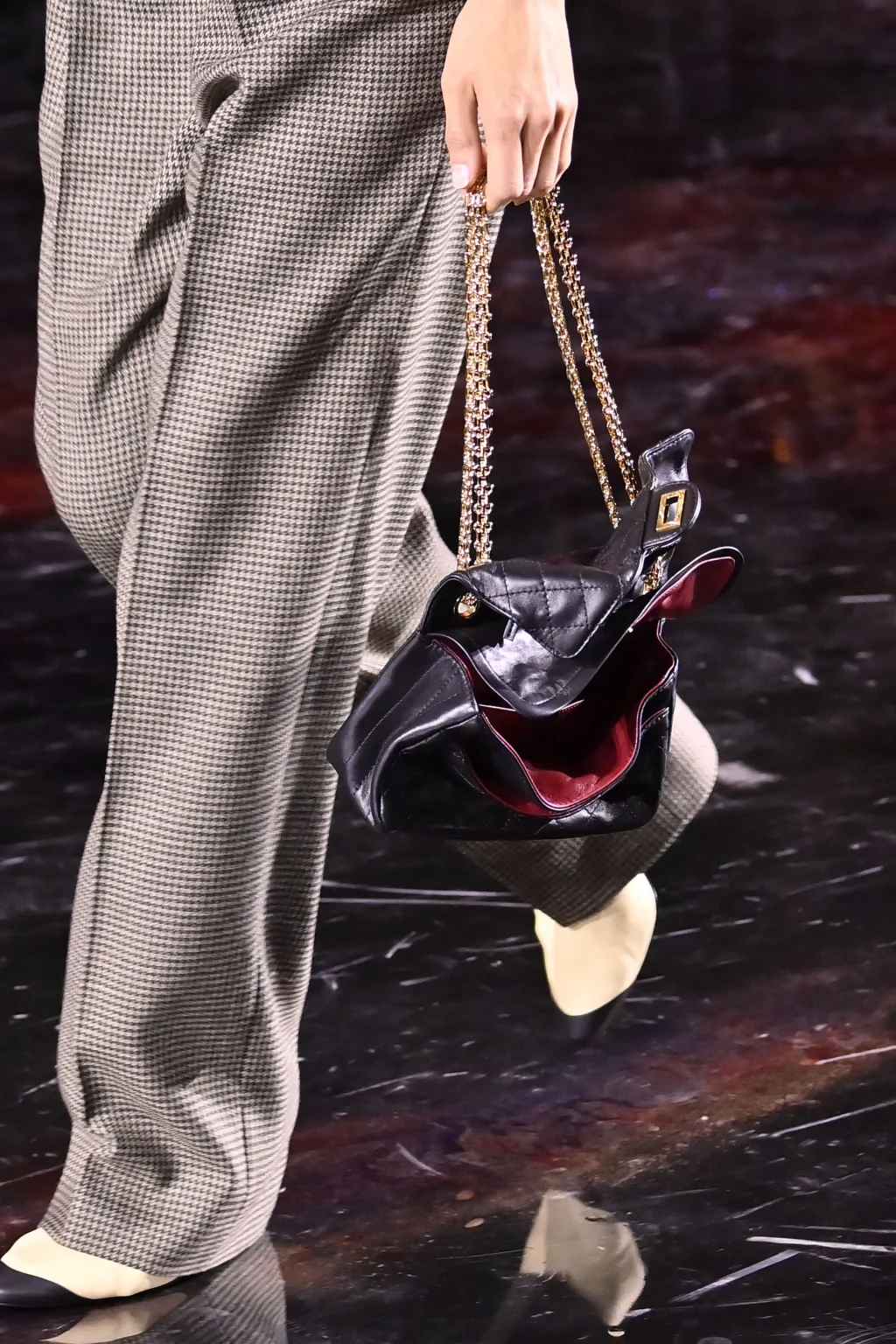
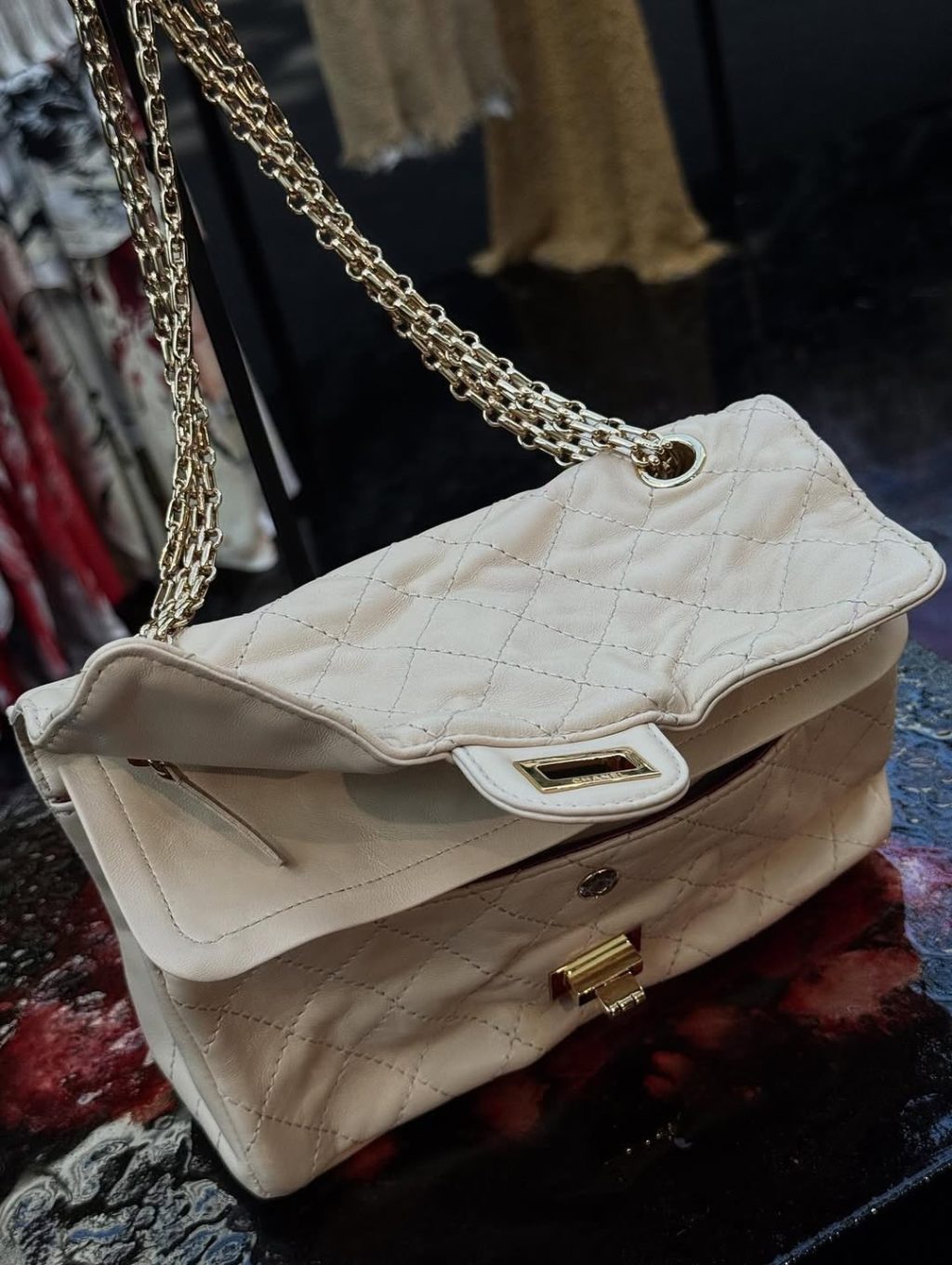
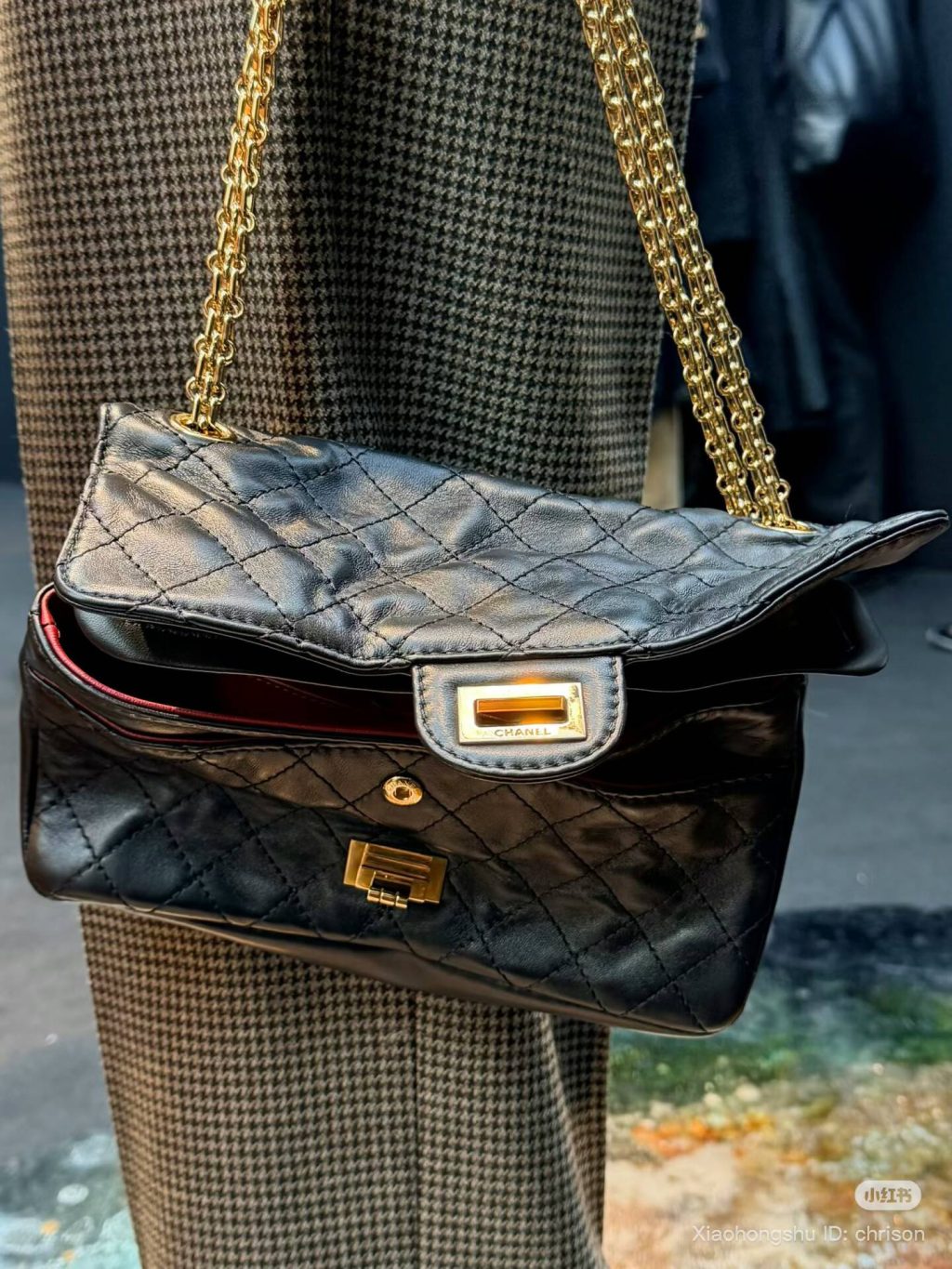
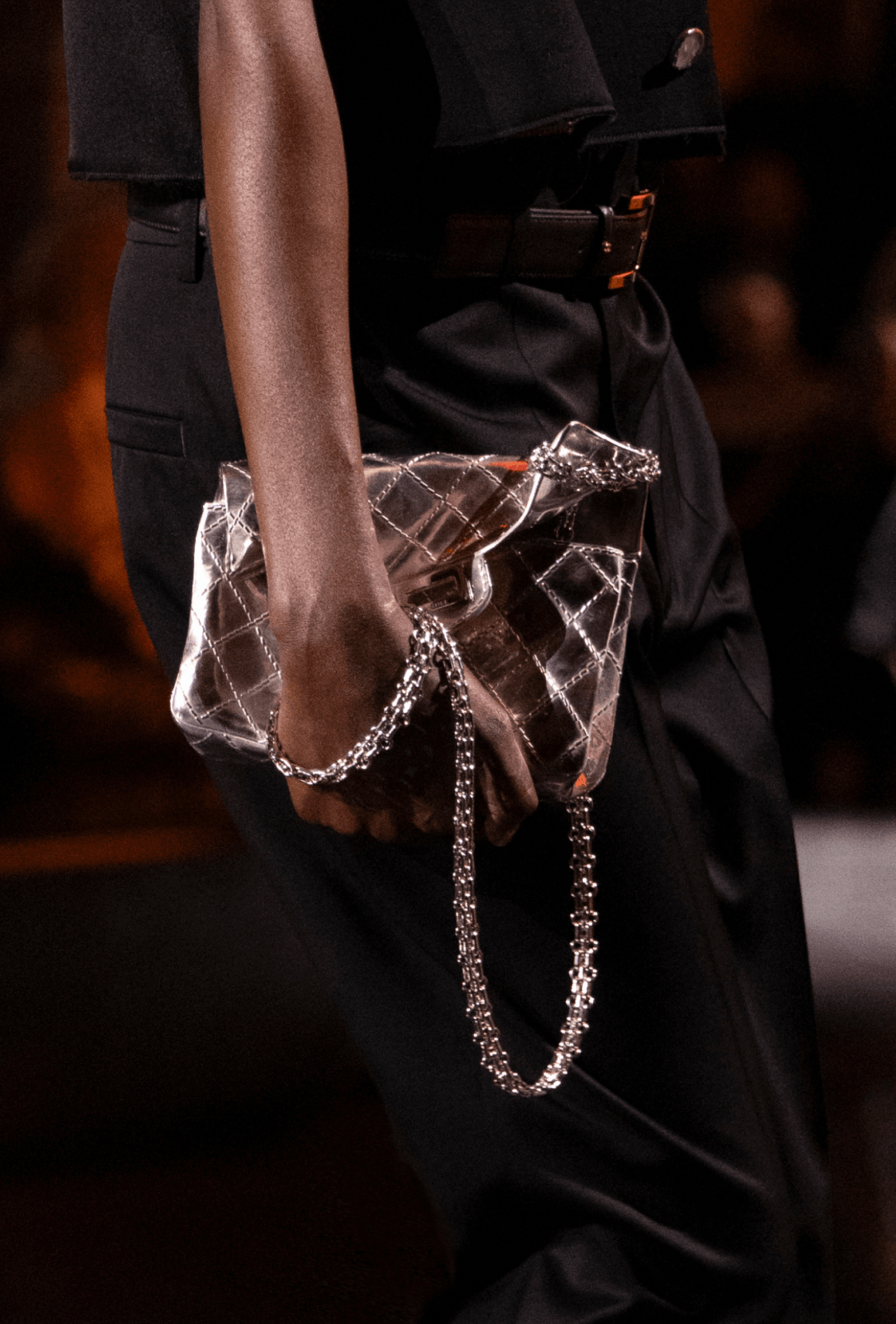
In Blazy’s reinterpretation, the classic 2.55 bag was fitted with pliable metal within the stitching, allowing it to be scrunched and bent into new, ragged forms. “They look like John Chamberlain. They look like car crashes. They’re lived-through-life bags,” Blazy told reporters after the show—an image both raw and poetic that perfectly encapsulated his approach: not pristine luxury, but experienced beauty. The pliable construction gives the bag an architectural elasticity; it can hold its form yet yield to touch, embodying the tension between couture precision and human imperfection that runs through Blazy’s work.
Why the 2.55 matters—still
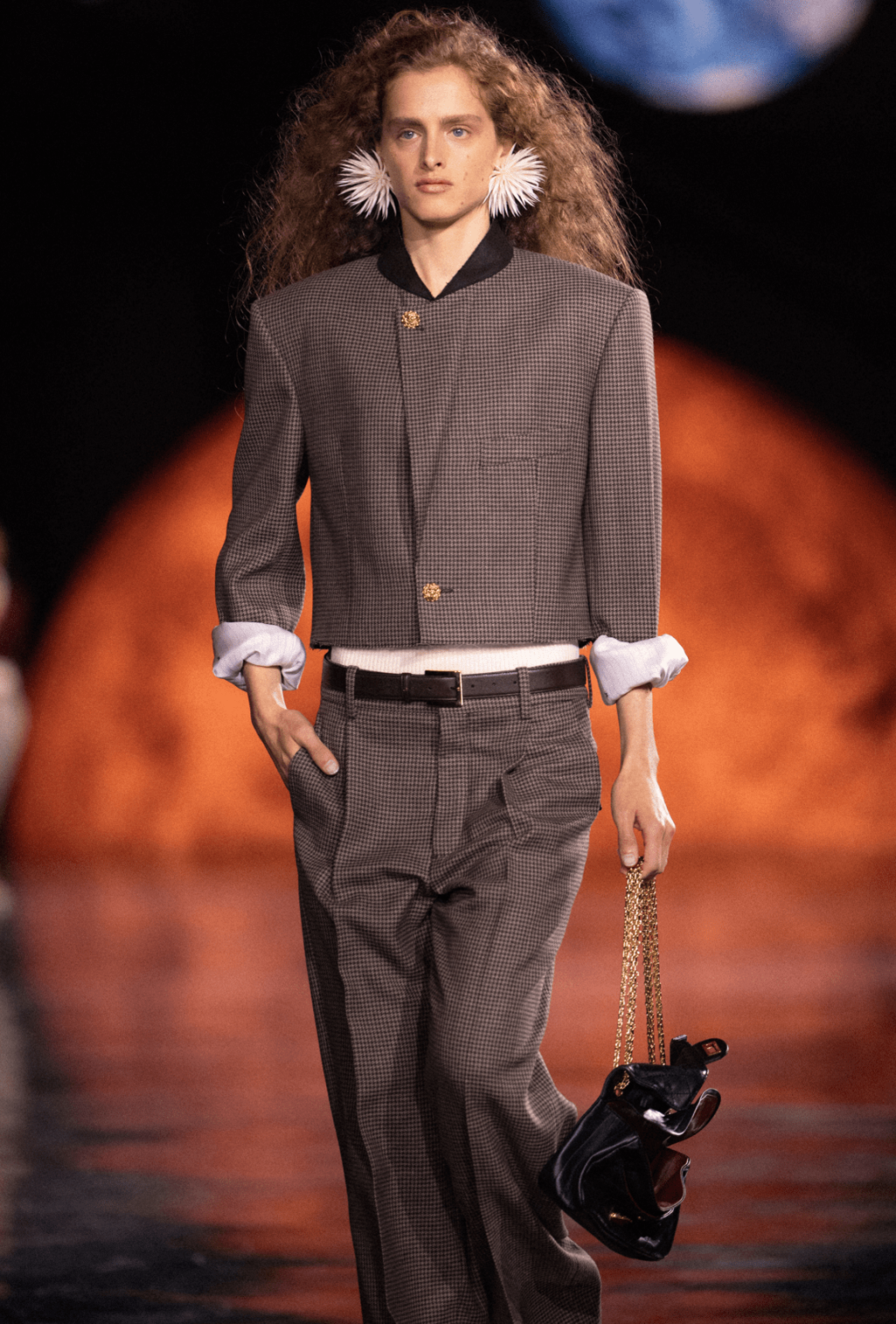
Blazy’s central gesture was to tilt the 2.55 from untouchable icon to cherished companion. On the runway, bags appeared purposefully “worn-in” yet rigorously engineered: double flaps styled ajar, surfaces subtly crinkled, gussets molded as if shaped by years of bodies and books. It’s an aesthetic paradox—intentional entropy with couture-level control—that reads as pure Blazy: deconstruction not for shock, but to reveal care, habit, and human time. Multiple critics noted the “crashed and cherished” quality, a language that reframed patina as poetry rather than decline, and made the bag feel immediately personal.
Structure you feel, not just see
The genius here is technical. To make a bag look “lived-in” without sacrificing longevity, you must choreograph the break: temper, not collapse. Think micro-quilting calibrations to invite flex where the hand naturally meets the flap; think edge-binding softened but reinforced; think new batting densities that remember, faintly, the curve of an elbow. Blazy’s team has a track record for such feats, and Chanel’s leather ateliers—where artisans routinely execute more than 180 hand operations per bag—are uniquely equipped to translate that theory into practice.
Codes, rephrased—not replaced
Blazy didn’t strip the 2.55 of its DNA; he re-phrased the sentences.
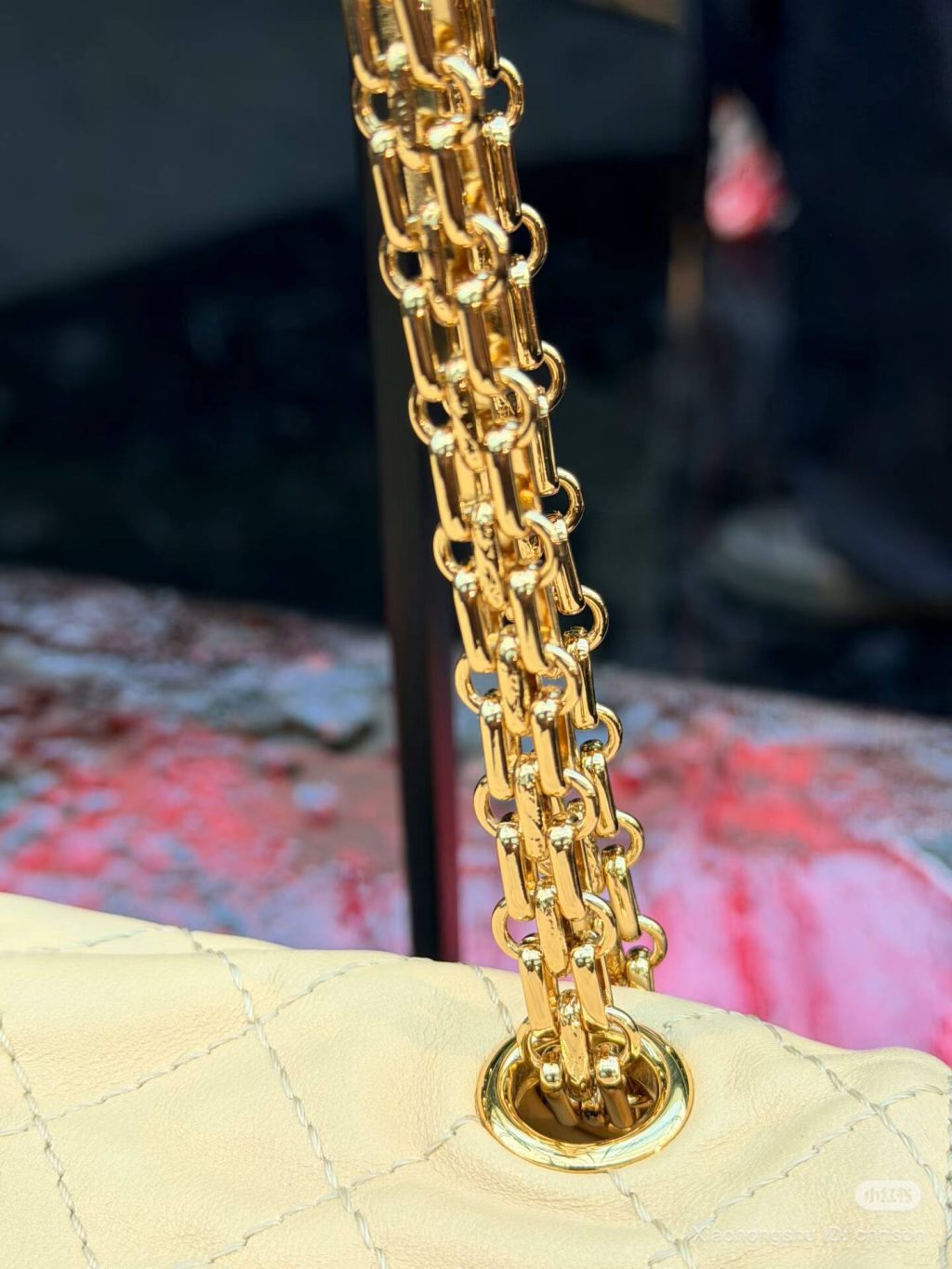
- The Chain: The straight, all-metal chain—one of Chanel’s most quietly radical inventions—returns with subtle shifts in gauge and finish that catch light differently on the move. Rather than the 11.12’s leather-threaded familiarity, this reads cooler, slightly severe, and gloriously modern.
- The Quilting: Instead of puffed perfection, quilting flattens just enough to suggest use. It’s less “museum vitrine” and more “apartment at golden hour,” where shape meets life.
- The Flap: Styling the double flap ajar suggests intimacy—the bag as diary again—without functionally compromising closure.
- Hardware & Finish: Finishes play across the spectrum—from high-polish gleam to velvety, light-absorbing matte—so a black bag can narrate five different moods under street lamps.

Proportions, with personality
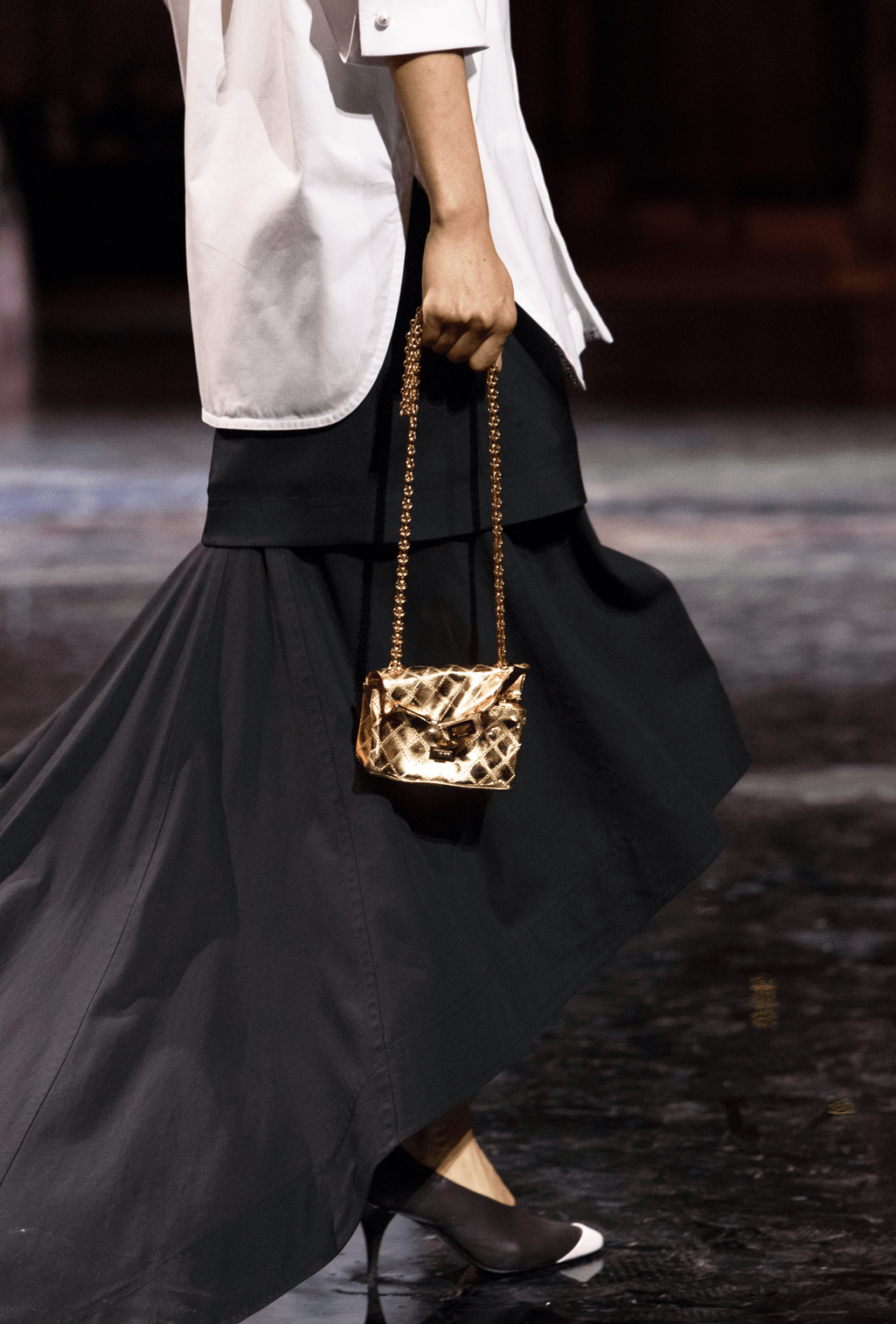
Blazy’s 2.55 family reads like a casting call: each size has a role. There’s a “city maxi” that swallows an iPad with nonchalance and an almost-square petite that lands between jewelry and object. The point isn’t novelty for novelty’s sake; it’s rhythm. If the original 2.55 was a sentence, Blazy writes in stanzas—pauses, crescendos, asides—so the range feels orchestrated rather than multiplied.
Material intelligence
What counts as “aged” today? Not just distressing. Blazy’s bags feel cultivated, more cello than sandpaper: calfskins with a drawn-out temper; suede that blurs at the edge like charcoal; patent that remembers a fingerprint for a second, then forgets. In runway imagery, you could see how a softer structure invited daylight into the seams, how camellia-adjacent folds in other accessories mirrored the bag’s relaxed geometry—house codes cross-pollinating across categories.
Color narratives: The chromatic acts of Blazy’s 2.55
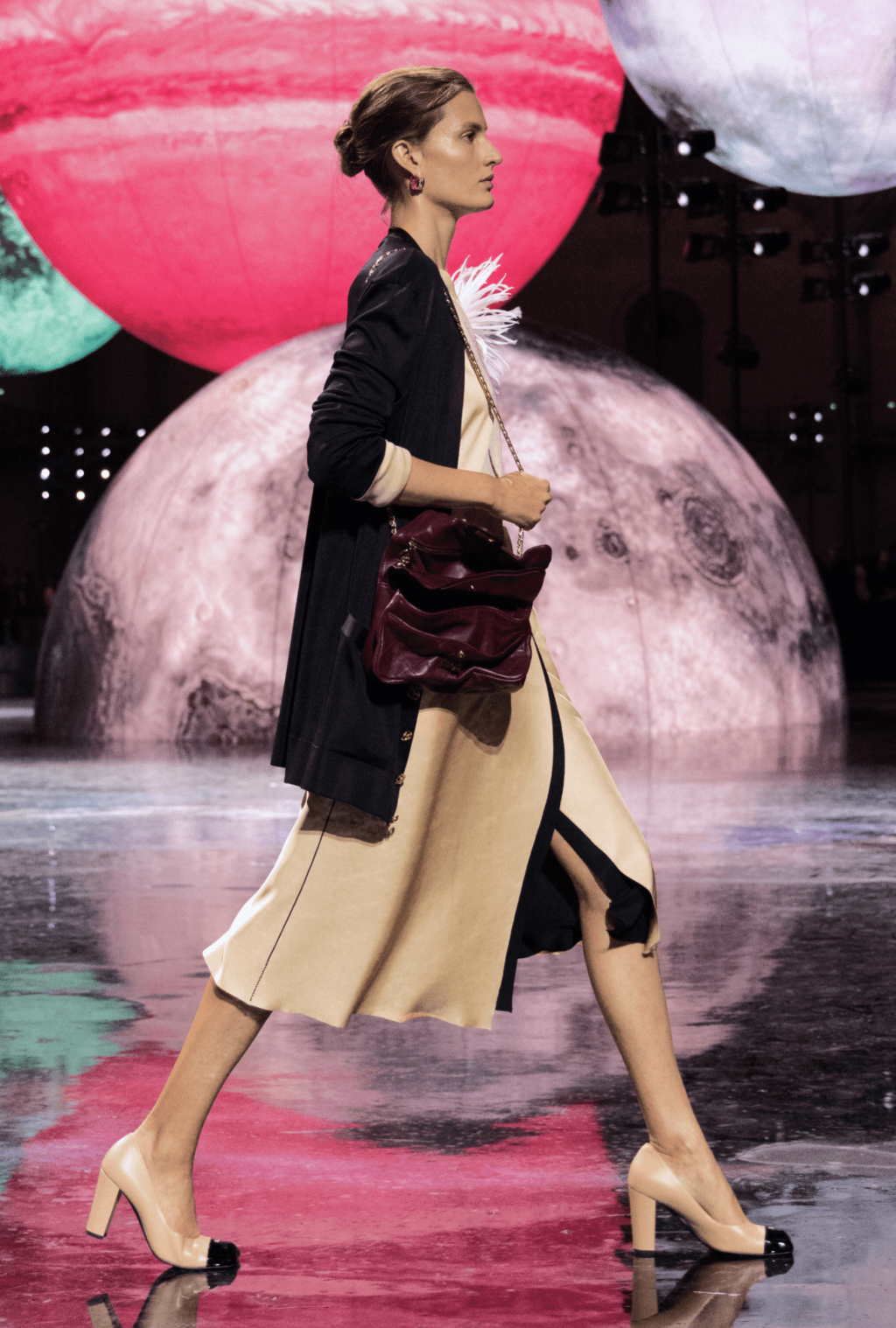
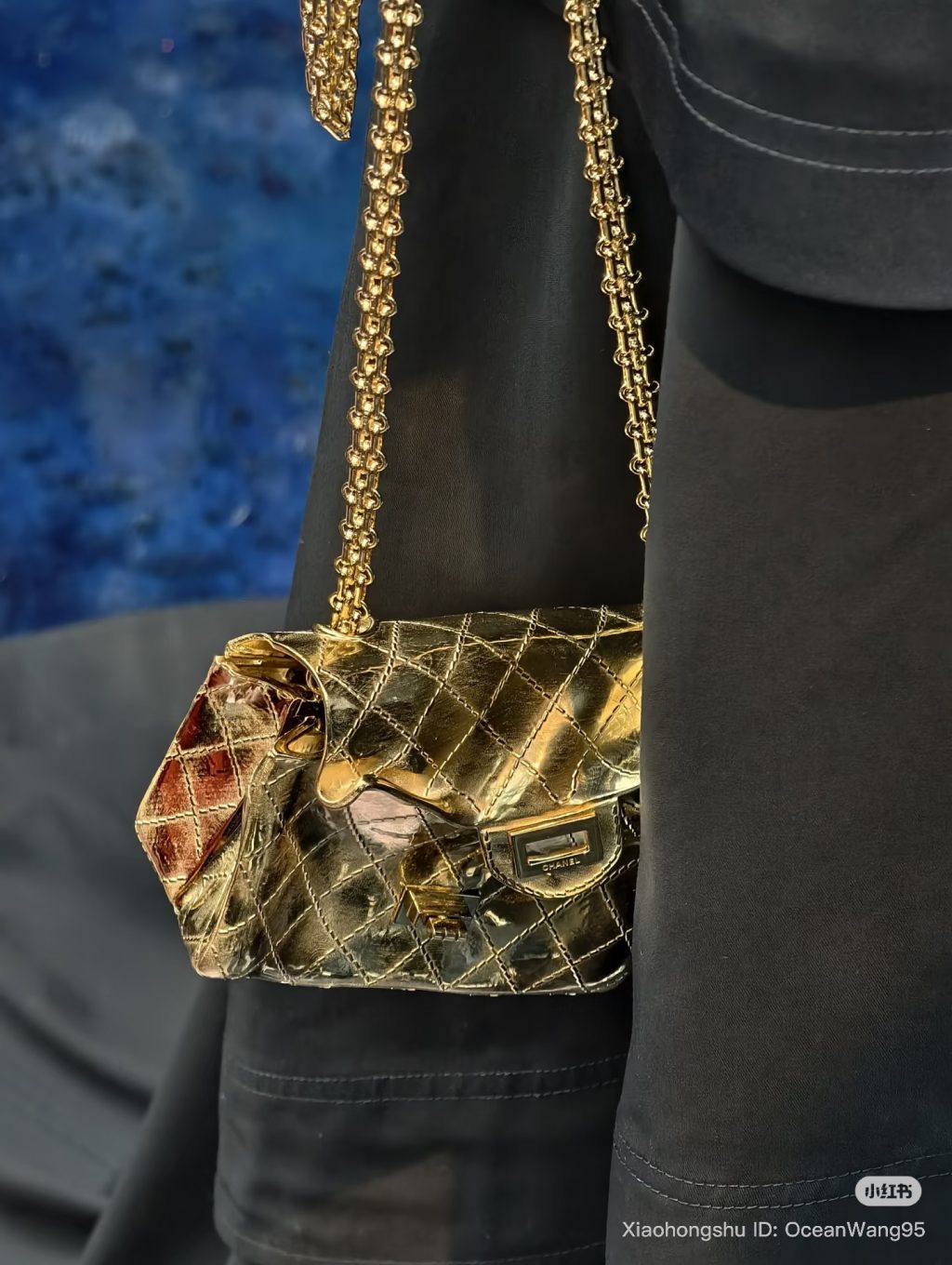
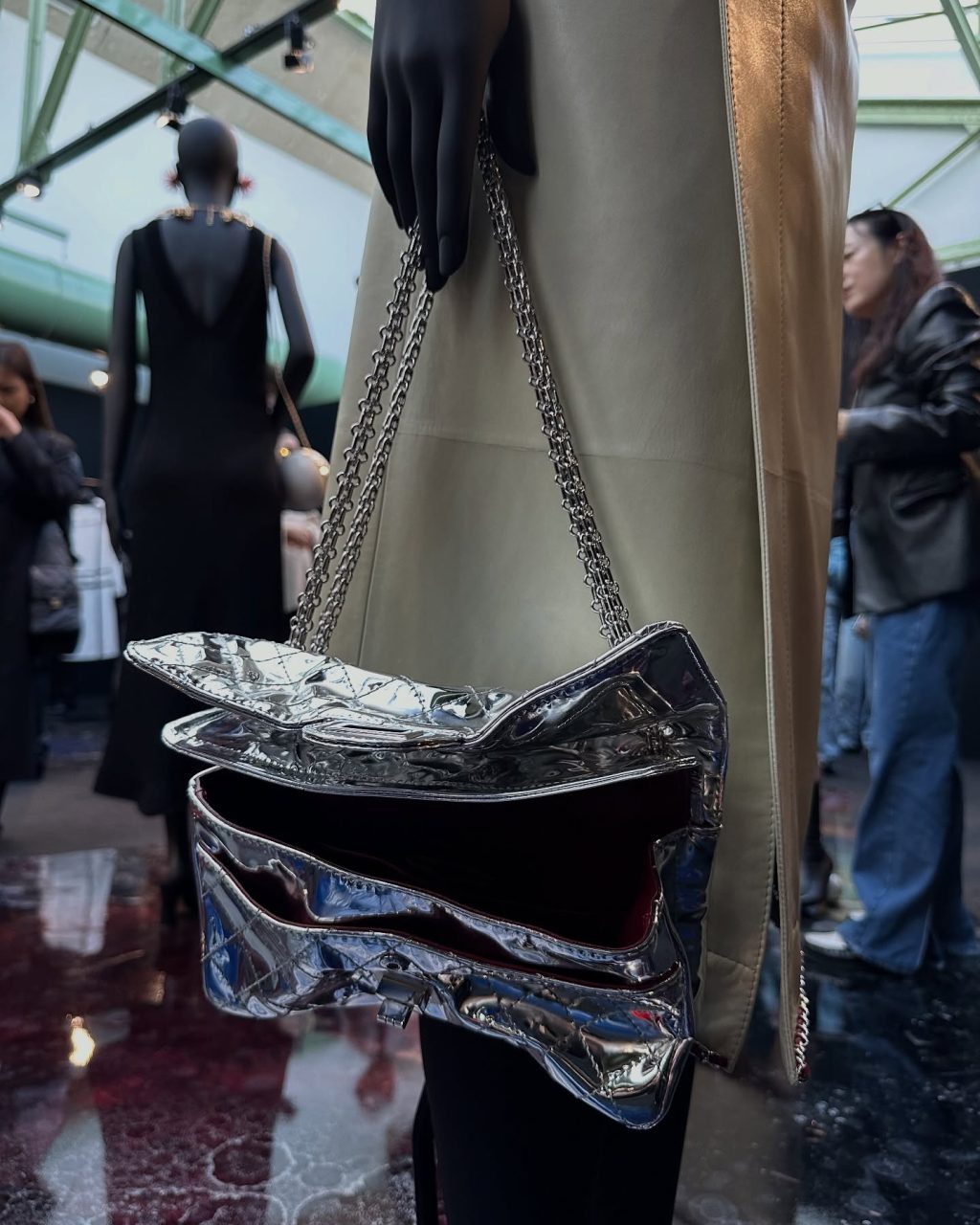
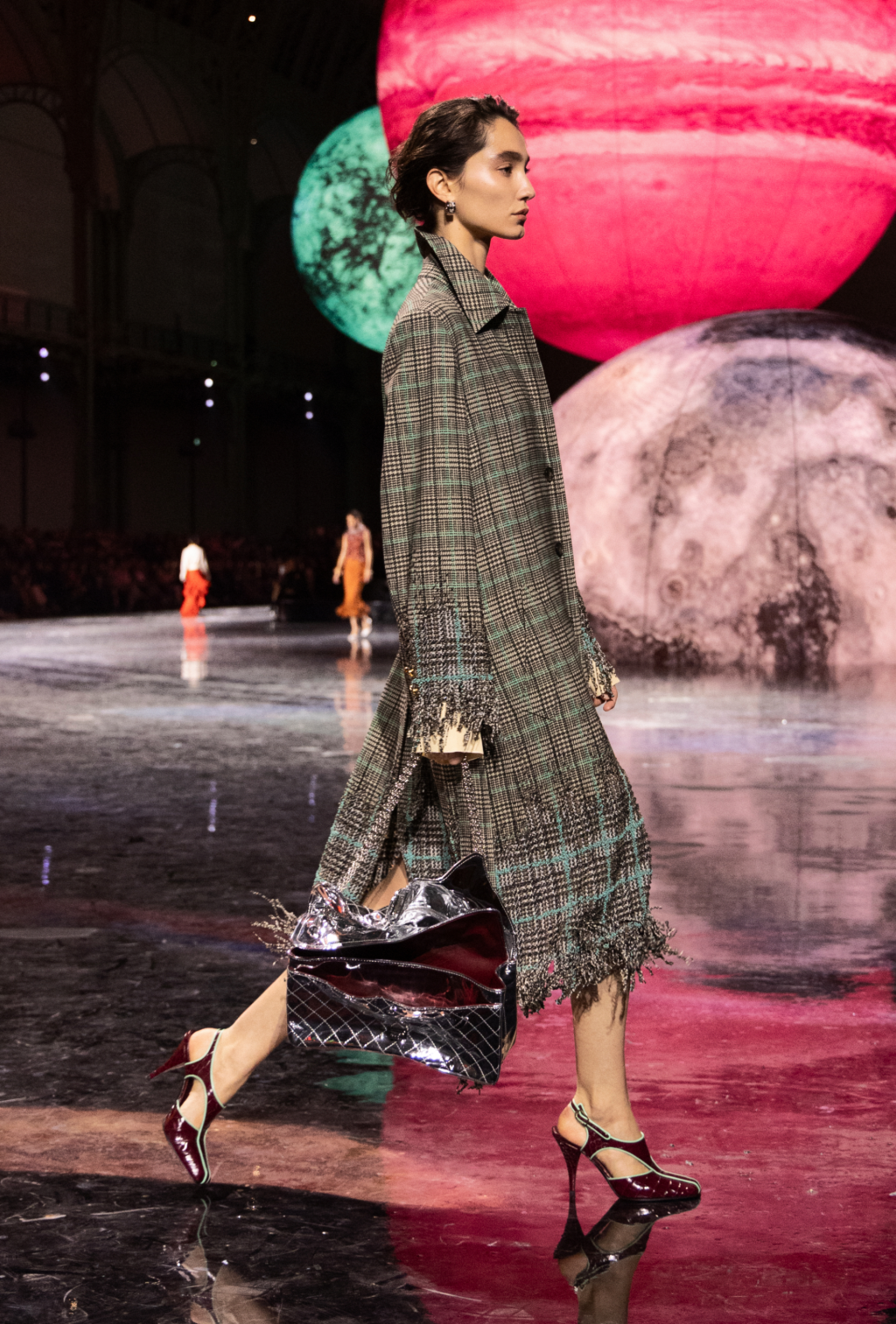
In Blazy’s debut, the 2.55 reappeared in a restrained yet expressive palette—less a technicolor spectacle than a whisper of mood, light, and shadow. On the runway, the bag was shown in jet black (the classic, elemental noir), often crushed and softened so that the sheen of leather catches light in subtle folds. It also appeared in ivory / off-white, lending the silhouette a poetic minimalism against darker looks. In select looks, metallic interpretations were introduced—silver / brushed steel-tone hardware and subtly gunmetal chains that tracked light as the wearer moved. Further moments hinted at soft champagne-gold accents, especially in clasps or chain links, giving tonal warmth without overt glamour. In one or two instances the leather showed a pale taupe / dove grey hue, almost like the memory of a bag once black but now softened by years. Notably, the interior’s signature burgundy lining (a house constant) was left exposed in parts, a deliberate reveal that tied the color story back to the original 2.55 heritage.
These color choices function as modulations on identity: no loud novelty, but calibrated nuance. Black anchors the tradition; white suggests possibility and blank page; silver and gold touches underscore the house’s craft and light; taupe/grey gestures toward wear and time. Leaving interior burgundy in view is a reminder that newness and memory coexist in Blazy’s vision.
The archive, unlocked—but kept honest
The temptation with icons is to lacquer them into eternity. Blazy argues the opposite: that an icon becomes truth once it’s lived with. By encouraging the 2.55 to look “already yours,” he taps the sentimental luxury of patina—those micro-histories of use that money alone can’t buy—while guaranteeing the bones are bombproof. It’s a subtle rebuke to fast, frictionless “newness,” and a love letter to the idea that a woman’s life leaves beautiful marks.
The human factor: Cambon to Verneuil-en-Halatte
Chanel has been unusually transparent about the labor behind its leather goods, opening the doors of its Verneuil-en-Halatte workshops to the press and underscoring artisan training cycles that stretch for years. Understanding Blazy’s 2.55 means acknowledging that invisible scaffold: pattern-makers who “listen” to a new batting spec, stitchers who can micro-ease a corner so it creases the way the designer imagined twenty wears from now. In 2025, the house reiterated that each bag constitutes a ballet of dozens upon dozens of hand steps—evidence that craft, not nostalgia, is the true point of difference.
What this signals for Chanel
Recasting the 2.55 as a study in lived elegance signals a broader pivot. The Blazy Chanel woman moves. She prefers the story her things tell after the first scratch. She isn’t collecting icons to preserve under glass; she’s adopting companions. That psychology reframes investment purchasing from trophy to toolkit, from “owning Chanel” to “being Chanel” in motion.
The cultural echo
Fashion cycles are full of archival reveries, but the strongest ones now pair heritage with humane modernity—the kind that acknowledges real lives and granular habits. That’s where Blazy’s 2.55 lands: not as a stunt or a swerve, but as a deeply literate reading of what the bag has always promised—freedom—and what women now require from luxury—honesty, longevity, and intimacy with use.
Will purists argue for the immaculate, untouched Reissue? Of course, and Chanel will always serve that client. But Blazy’s proposition broadens the circle. In 2026, a 2.55 can be an heirloom that already knows your shoulder—less a pedestal piece than a partner in crime. That, ultimately, is the most Coco move imaginable: elegance that works.