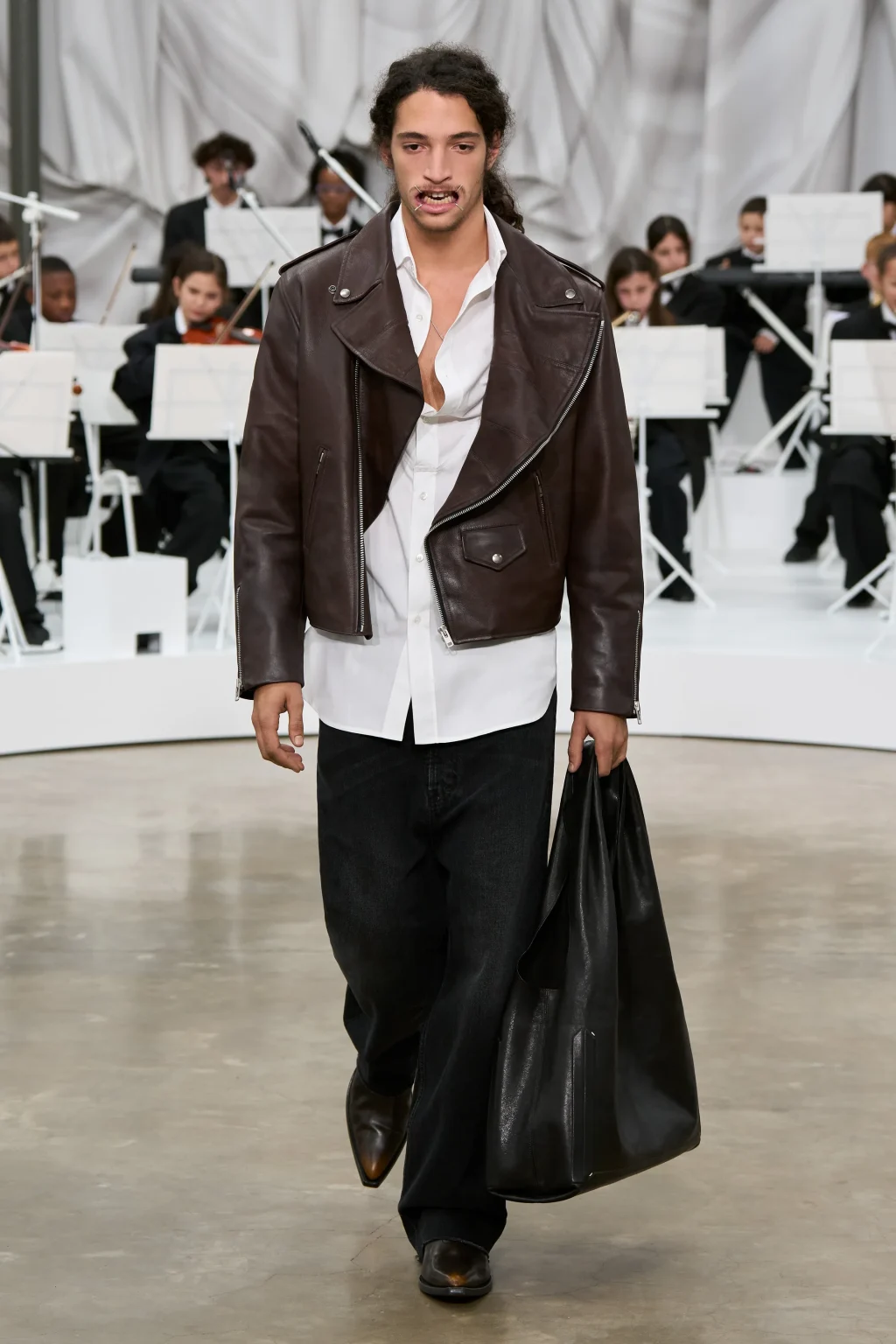
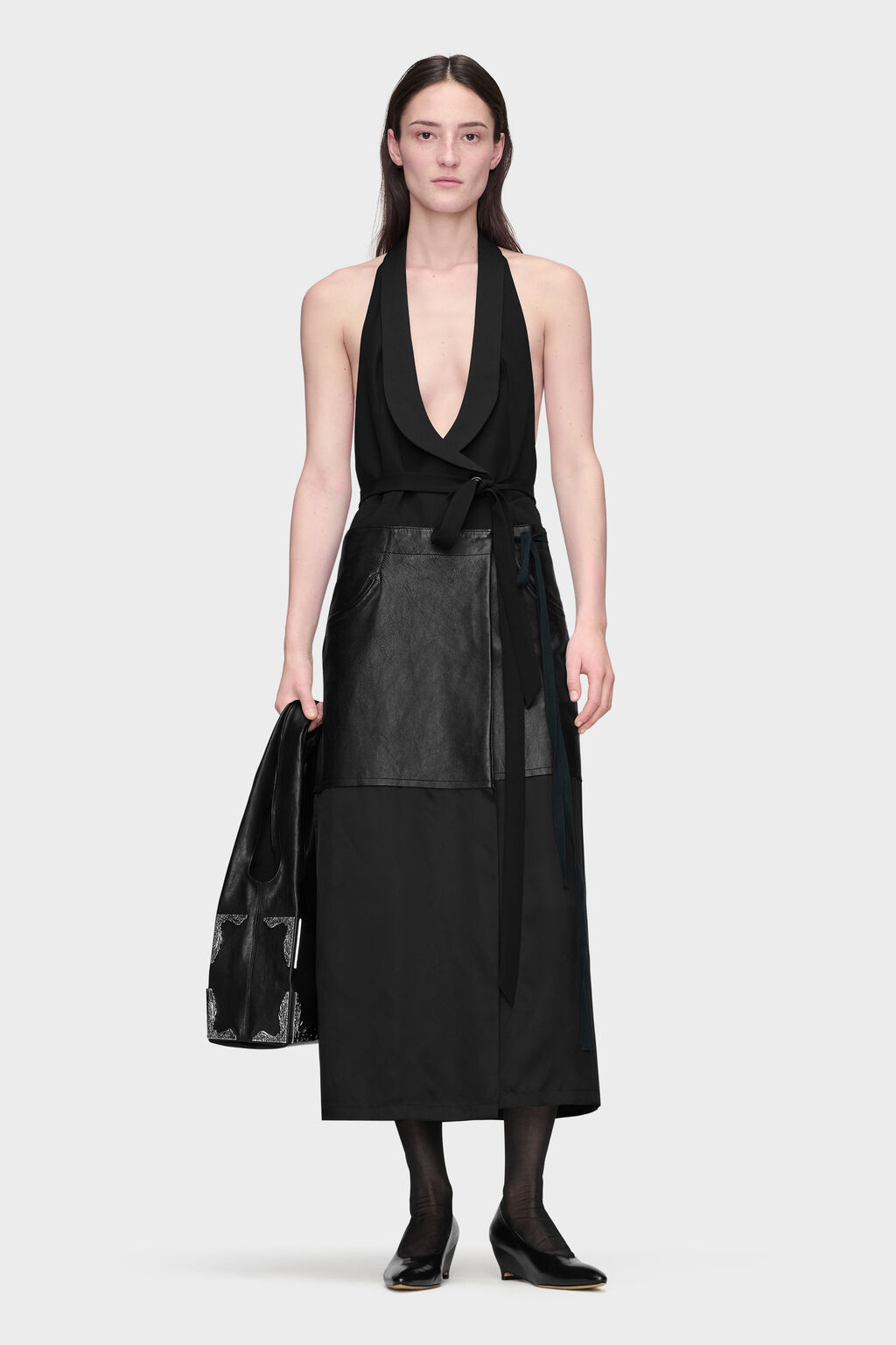
The Maison Margiela Box Bag arrived at the Spring Summer 2026 co-ed show as the house’s first entirely new bag silhouette of the Glenn Martens era — and it made its case quietly, carried at arm’s length by models walking to the tentative notes of a children’s orchestra.
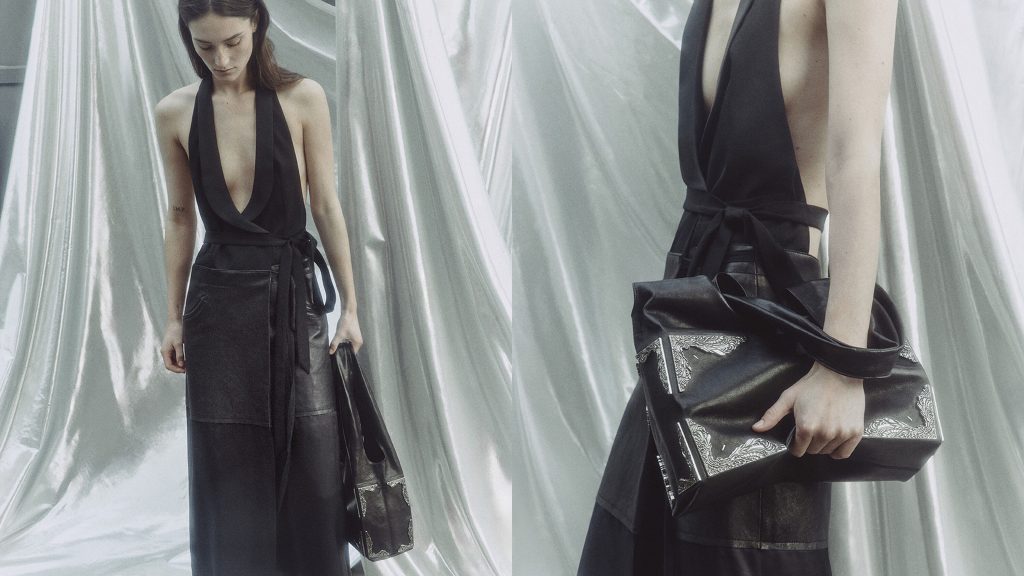
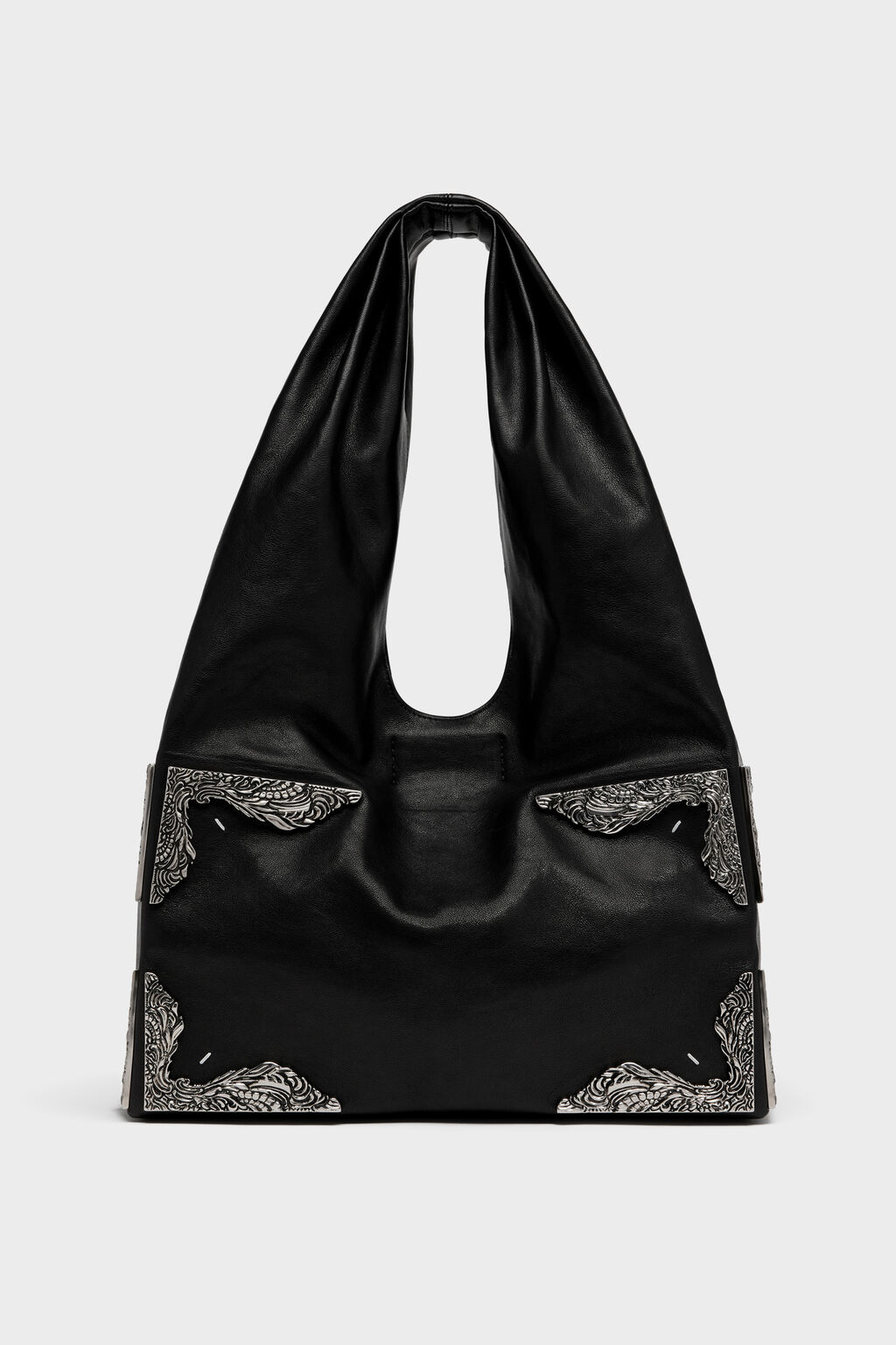
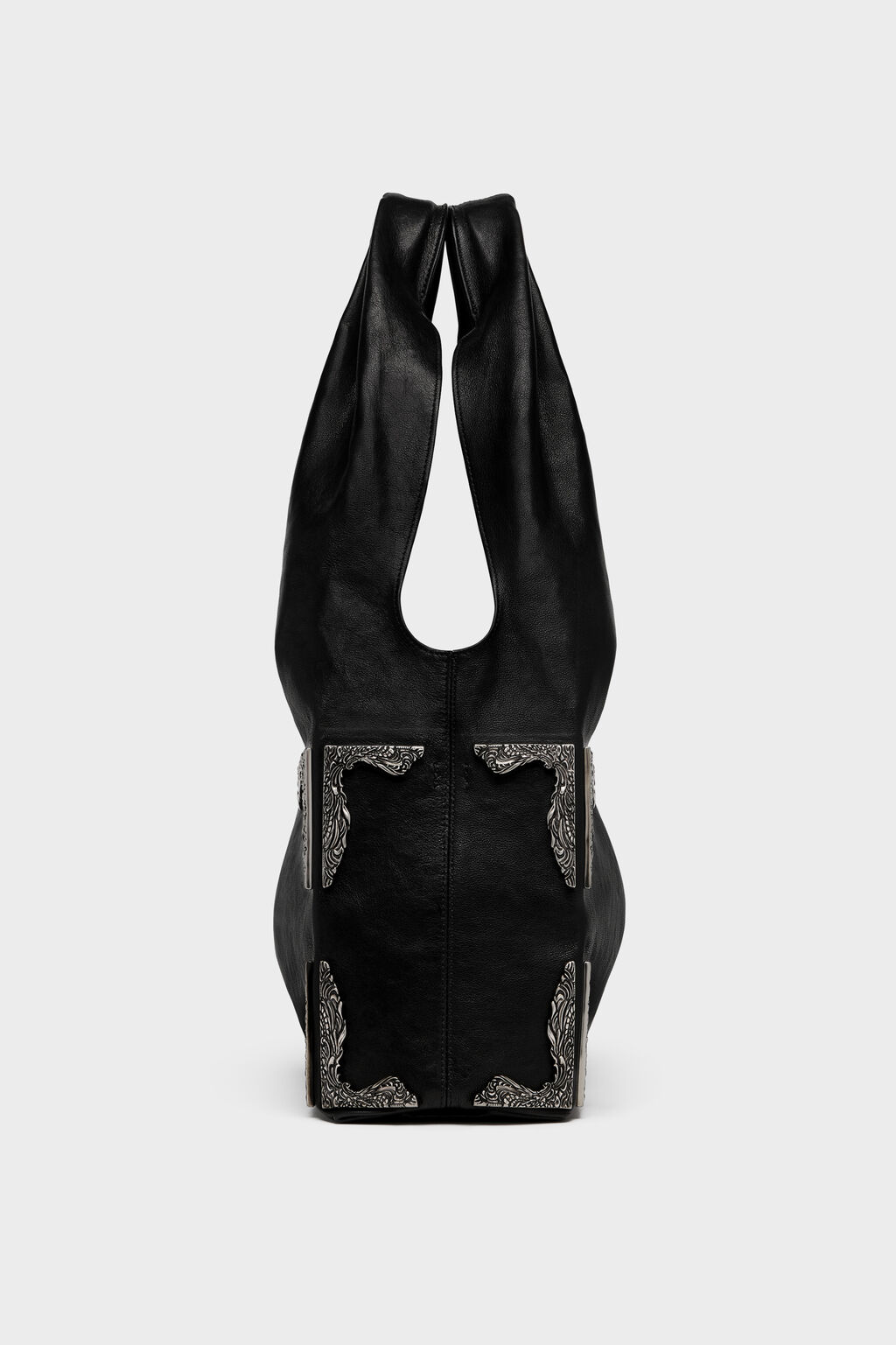
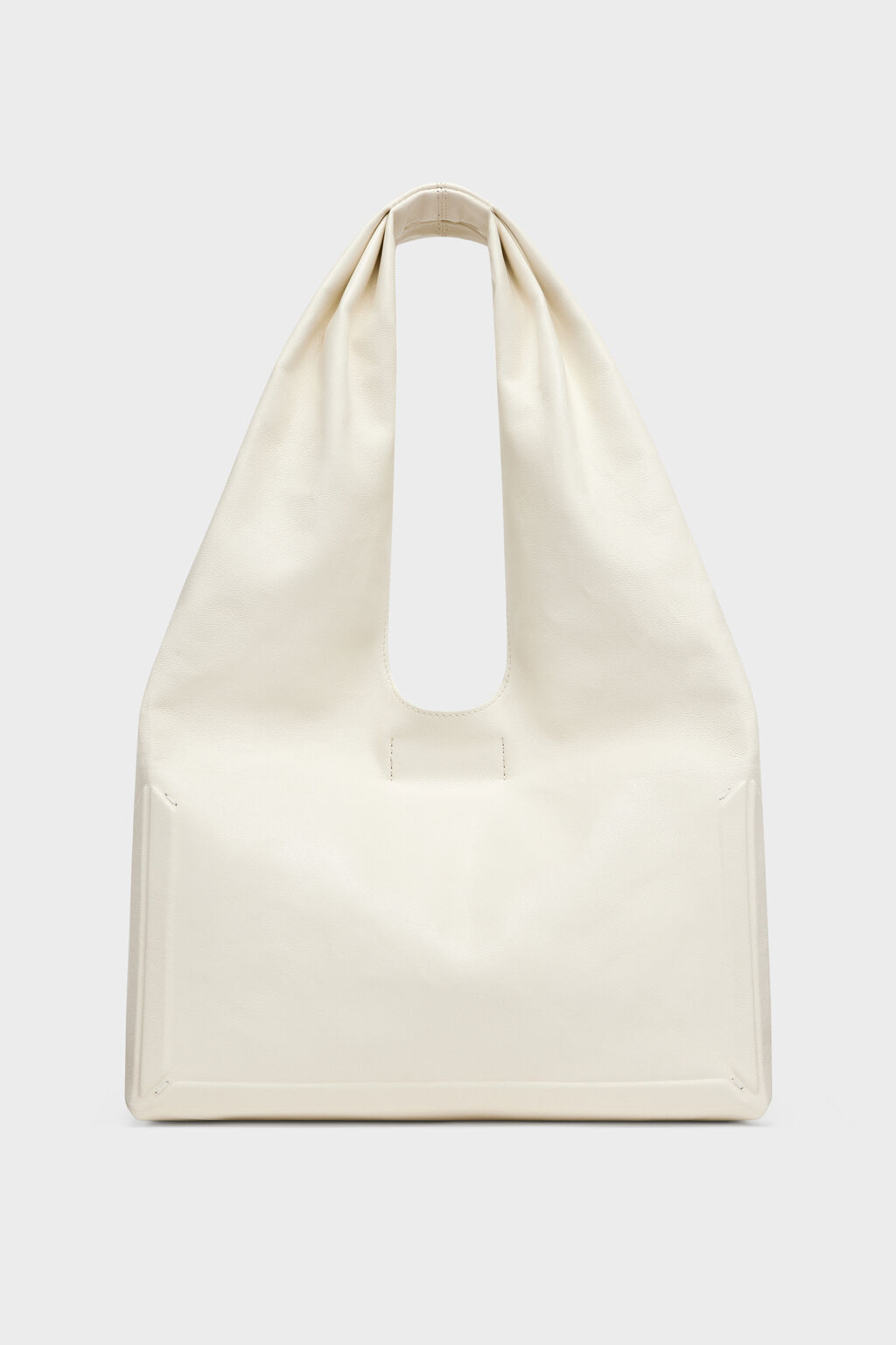
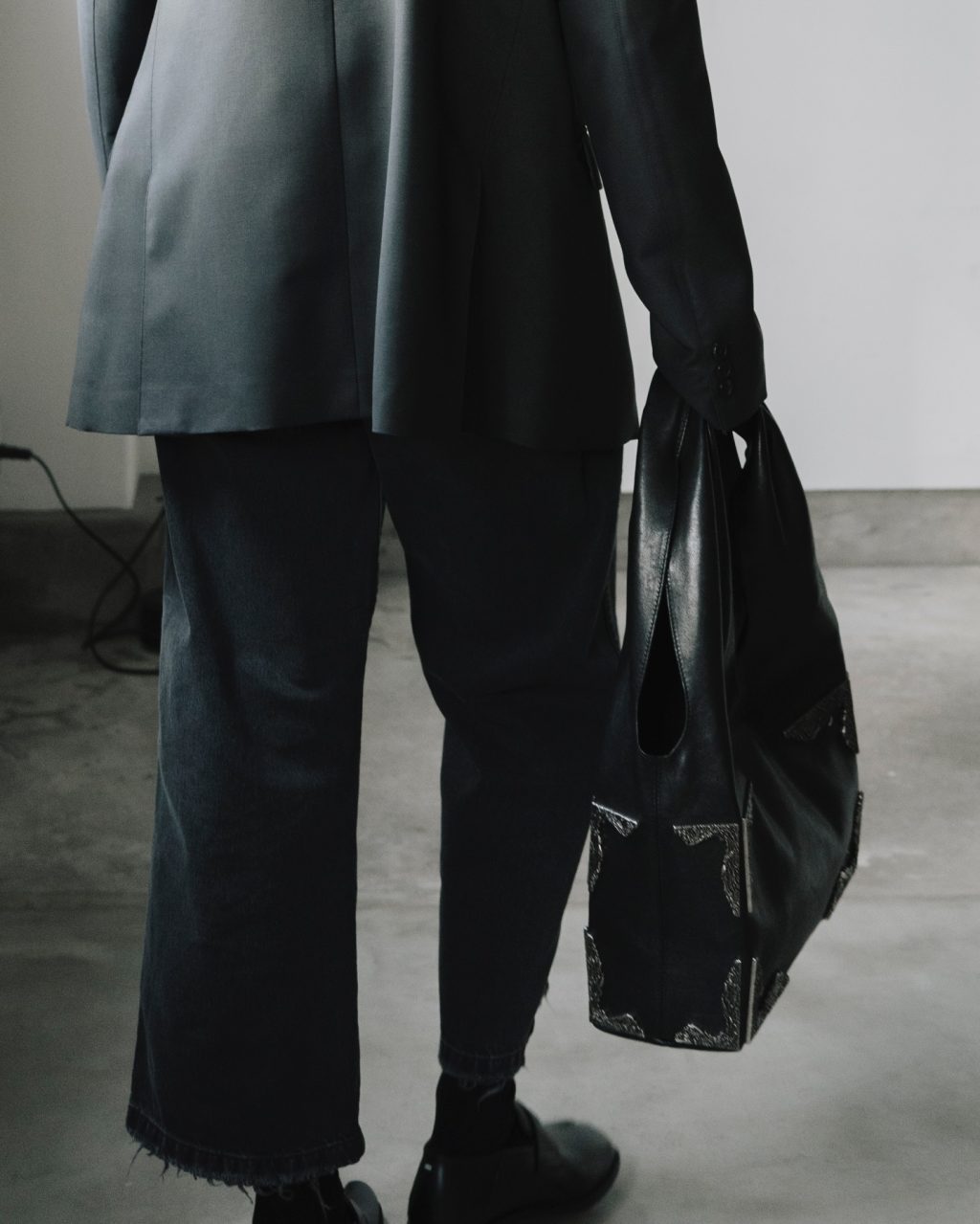
Constructed from smooth sheepskin leather through a thermoforming process that reinforces the edges without stiffening the body, the Box Bag holds its architectural form while remaining pliable in the hand.
Read also: Maison Margiela Fall-Winter 2026 Bags and the Shanghai Show
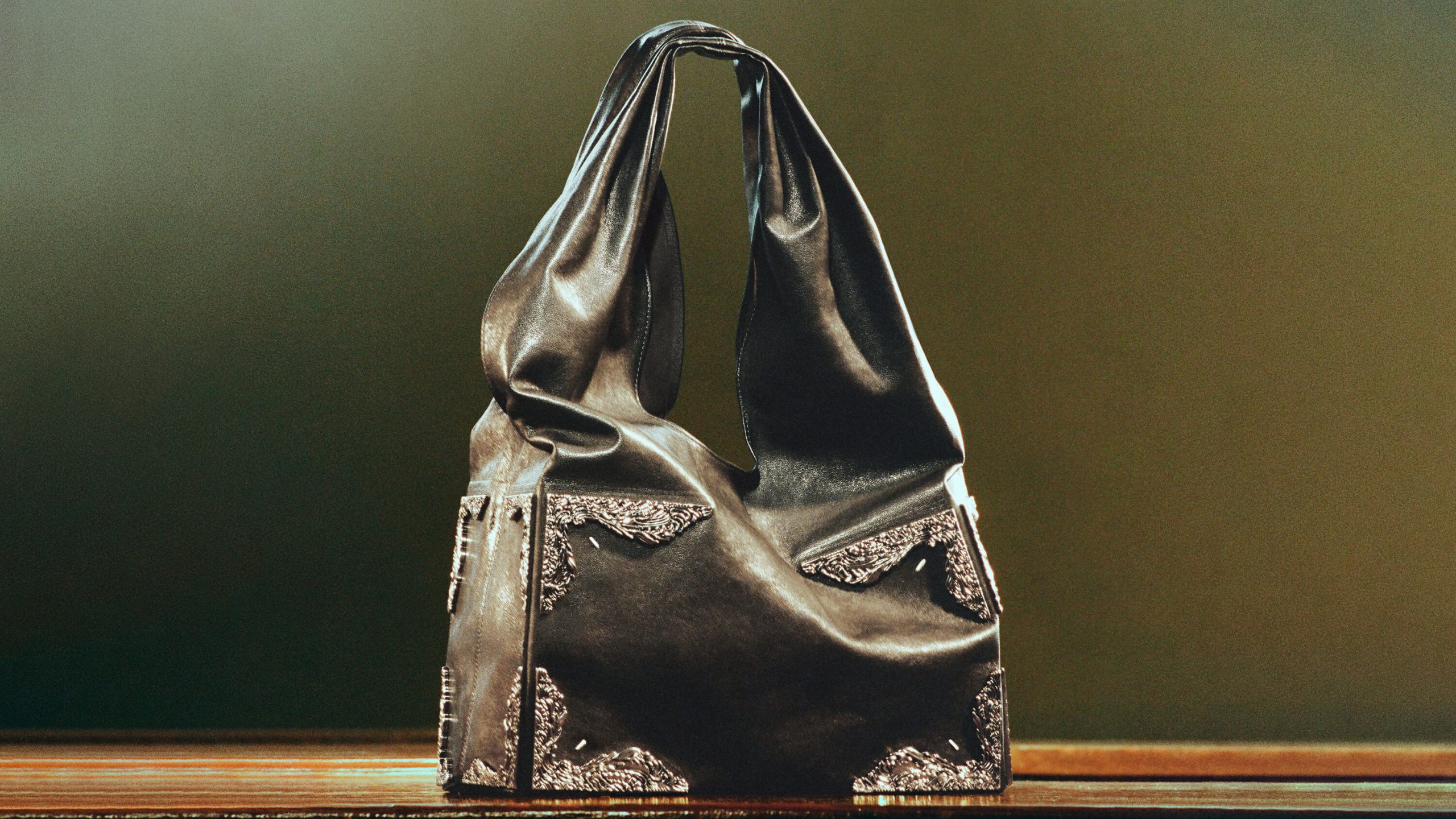
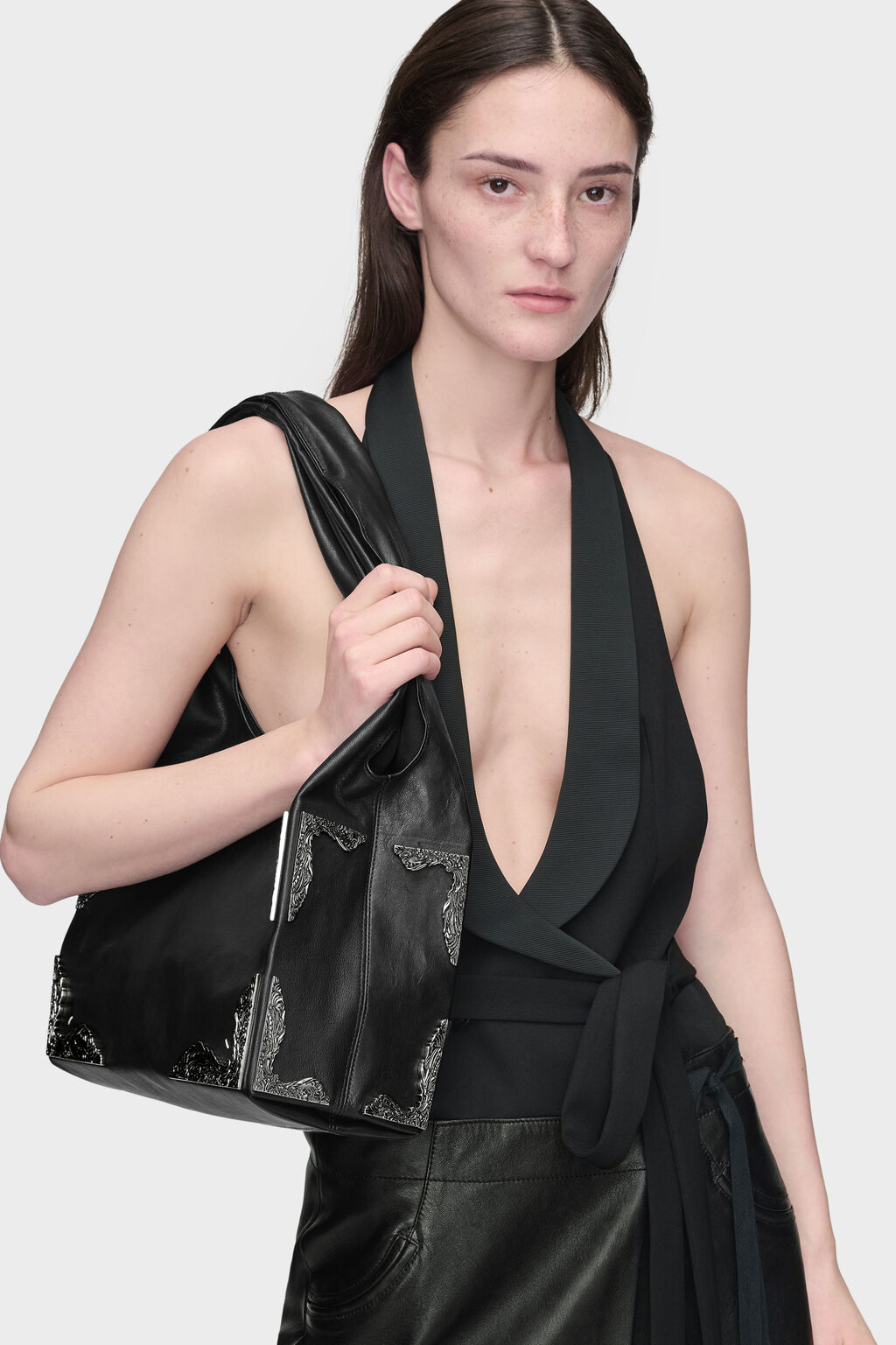
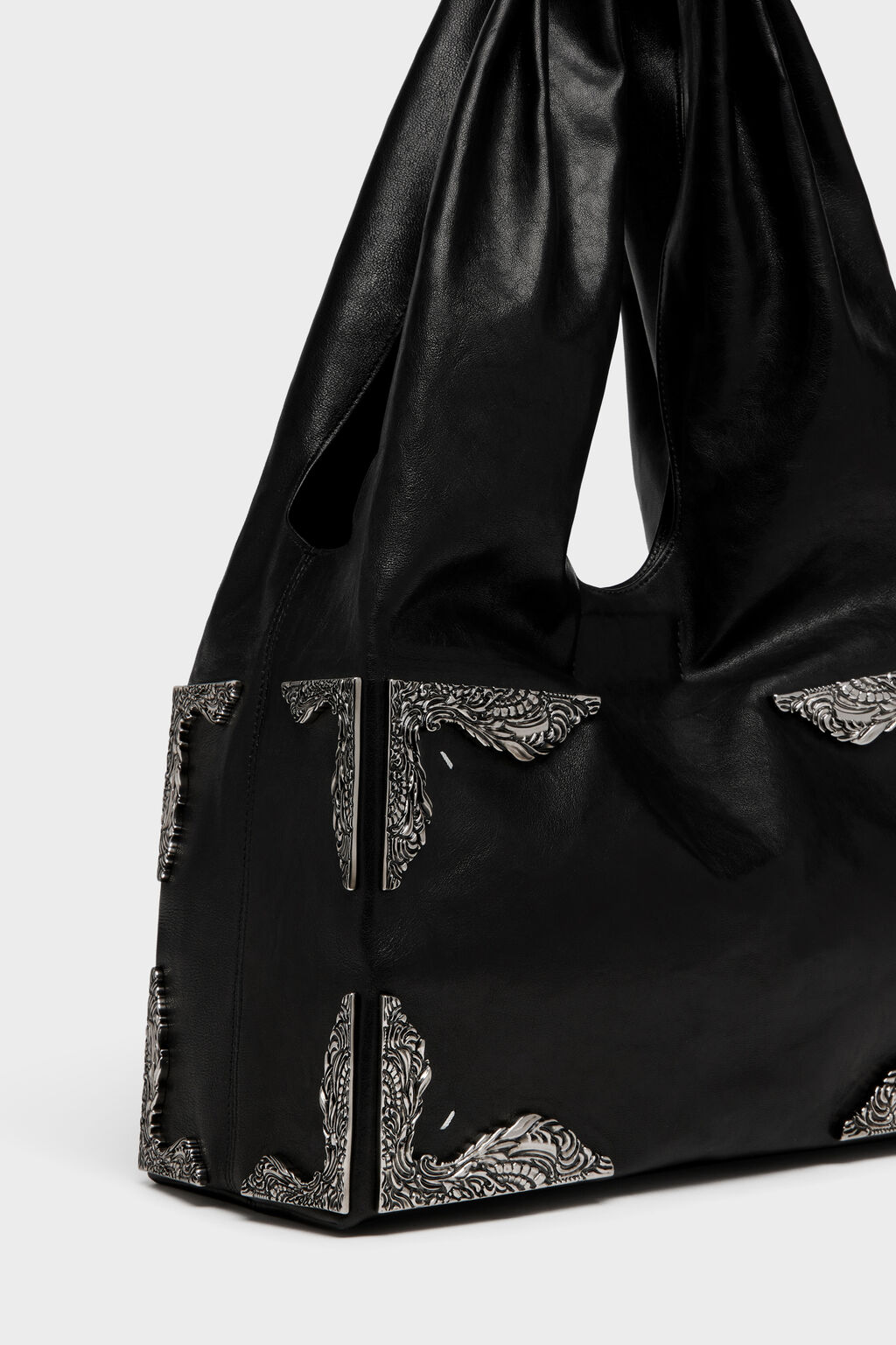
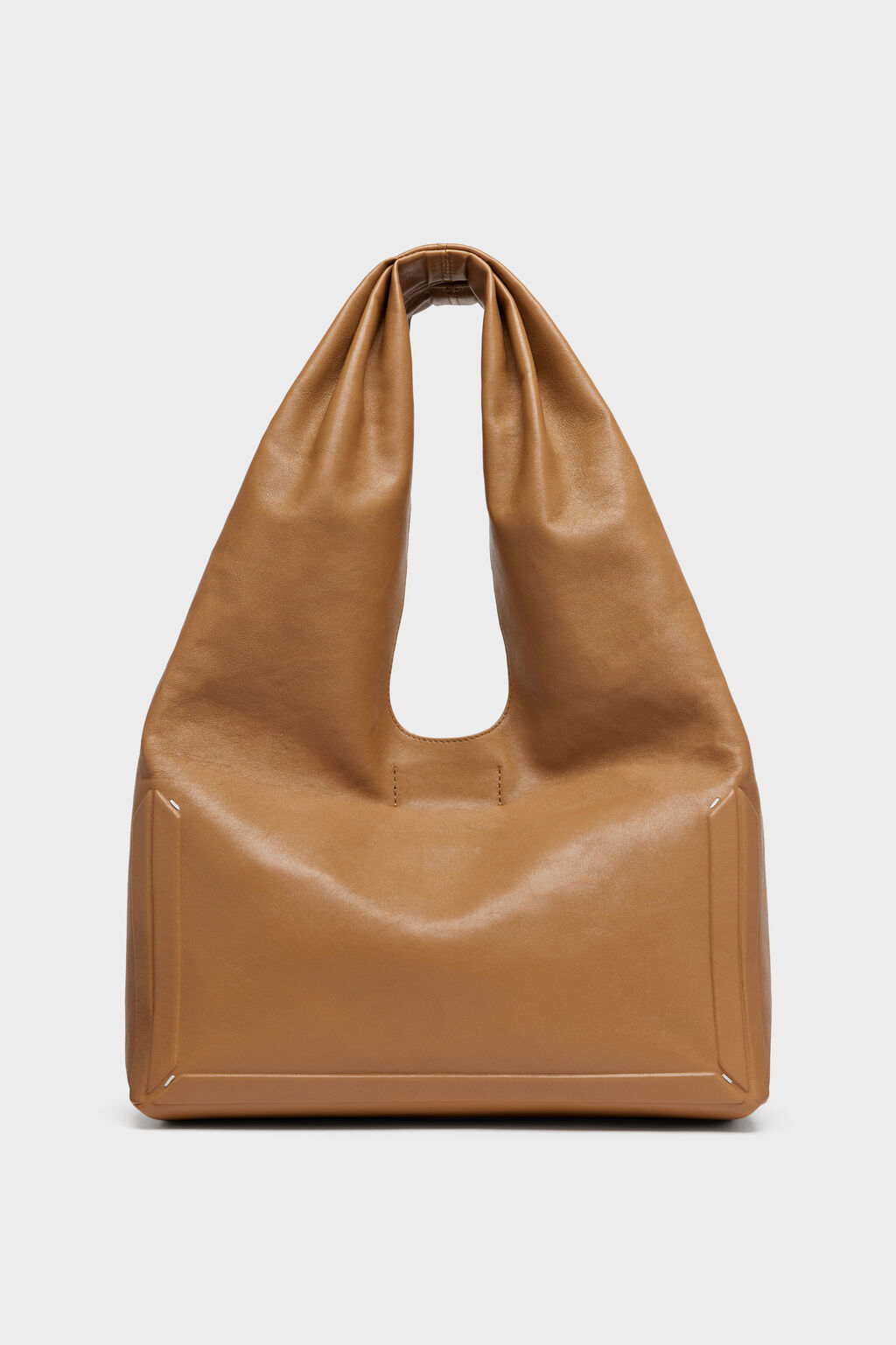
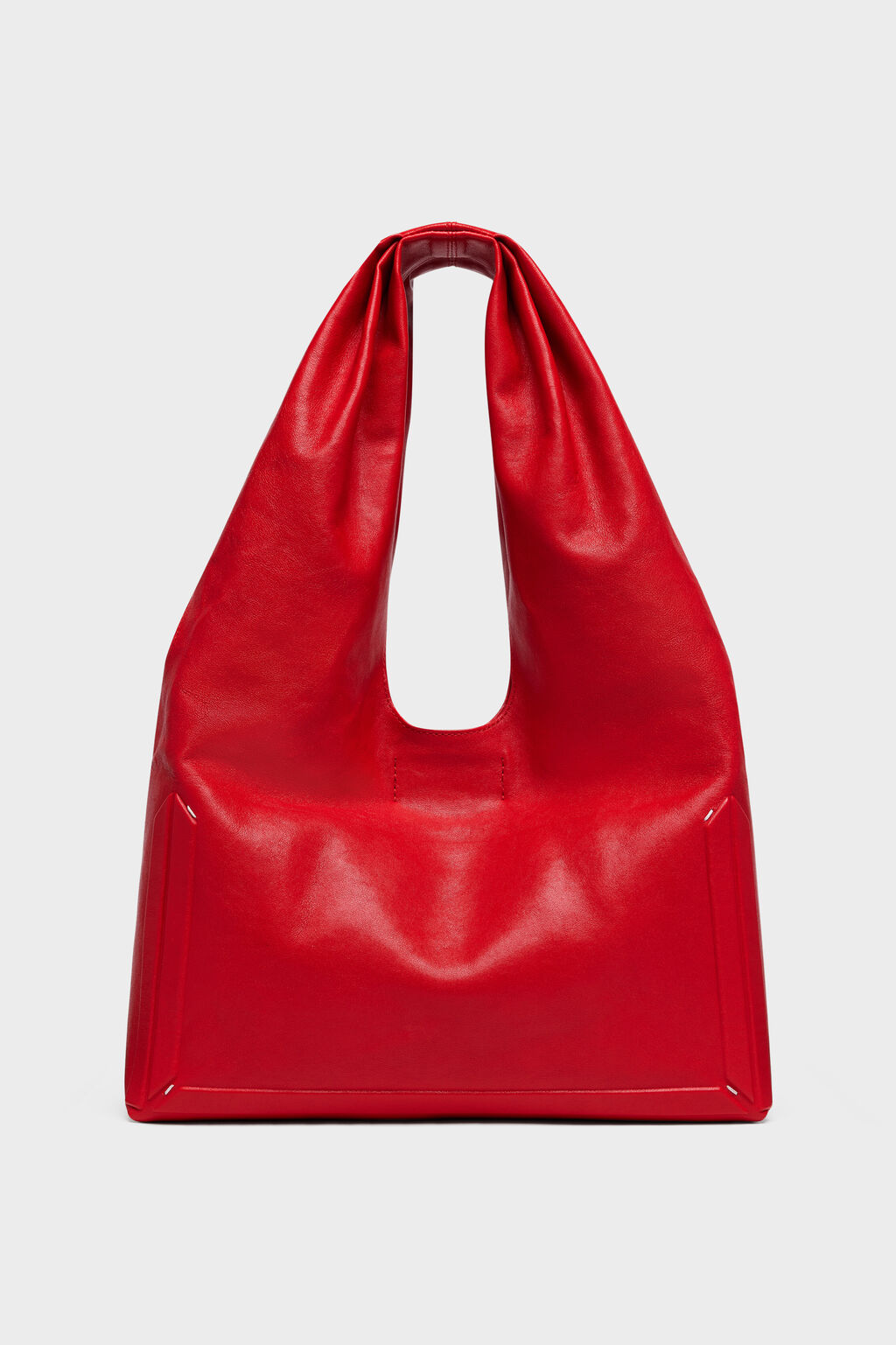
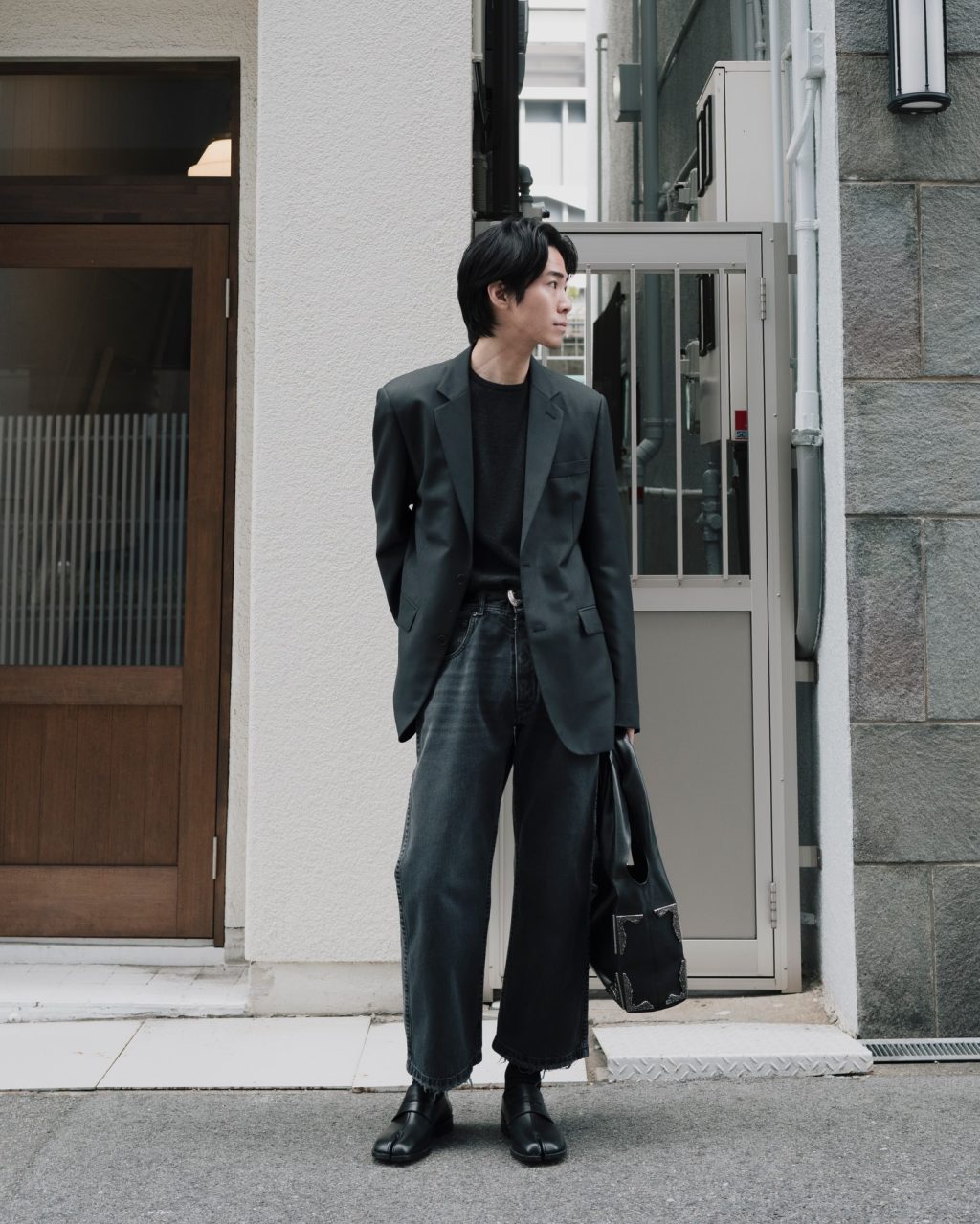
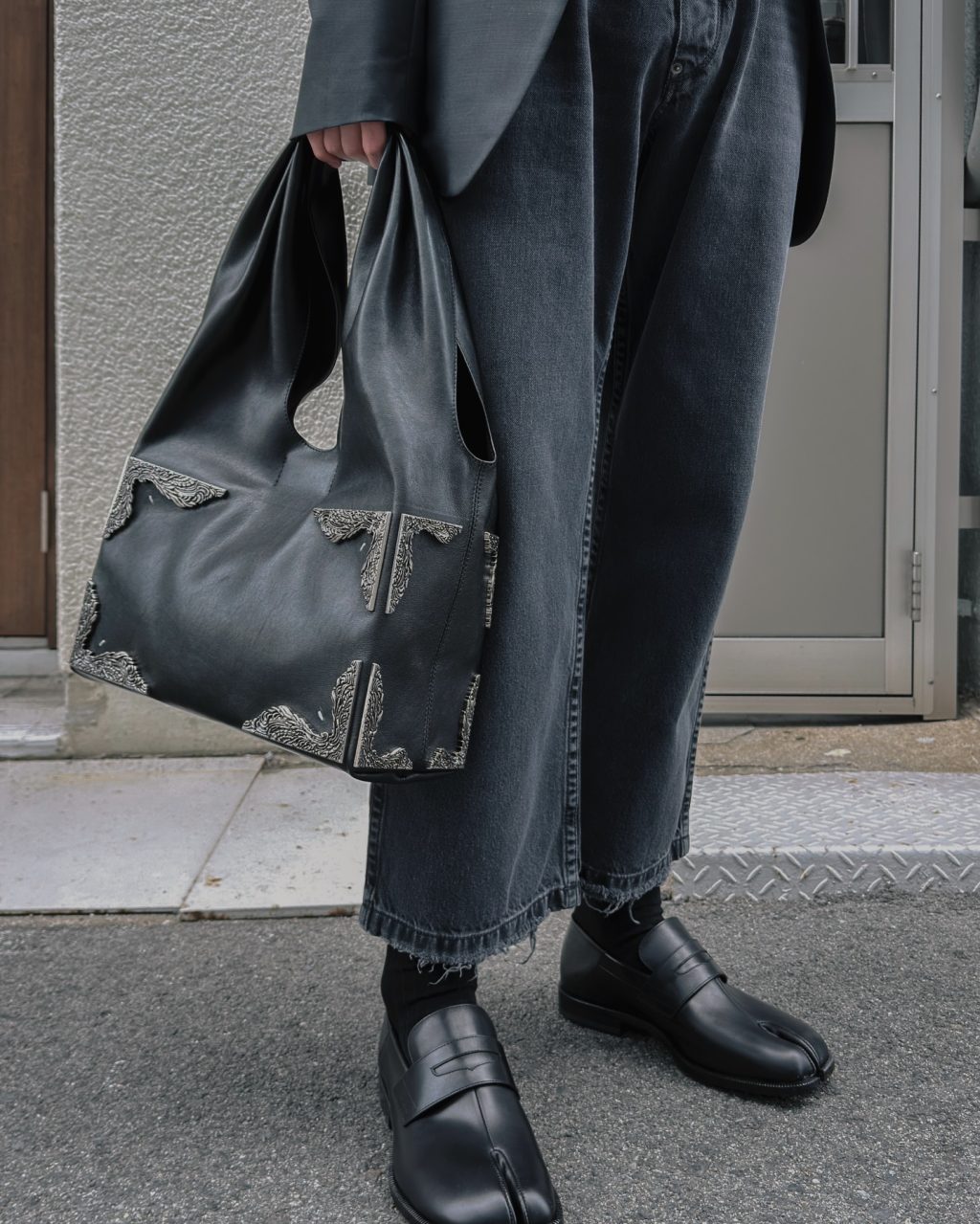
It comes in two expressions: a clean version in four colourways (black, white, camel, red) priced at €1.550, and a metallic-trim version where gothic-embossed zama corners frame the silhouette in something closer to armour for €4.500. Both are made in Italy. Both carry Margiela’s four stitches at the back — the signature that functions, in the house’s own words, as the opposite of a label.
A New Bag Born in a Concert Hall
The Spring-Summer 2026 collection debuted in Paris in October 2025 with sixty-one young musicians from Romilly-sur-Seine playing Strauss and Prokofiev in a cavernous white space. The setting was deliberate: Glenn Martens, in his first co-ed ready-to-wear outing for the house, built a show around the coexistence of precision and imperfection — immaculate tailoring cut against slip dresses bonded in plastic tape, leather biker jackets worn over tuck-in collars, trenchcoats with their lapels excised and replaced with silk scarves fused at the neckline.
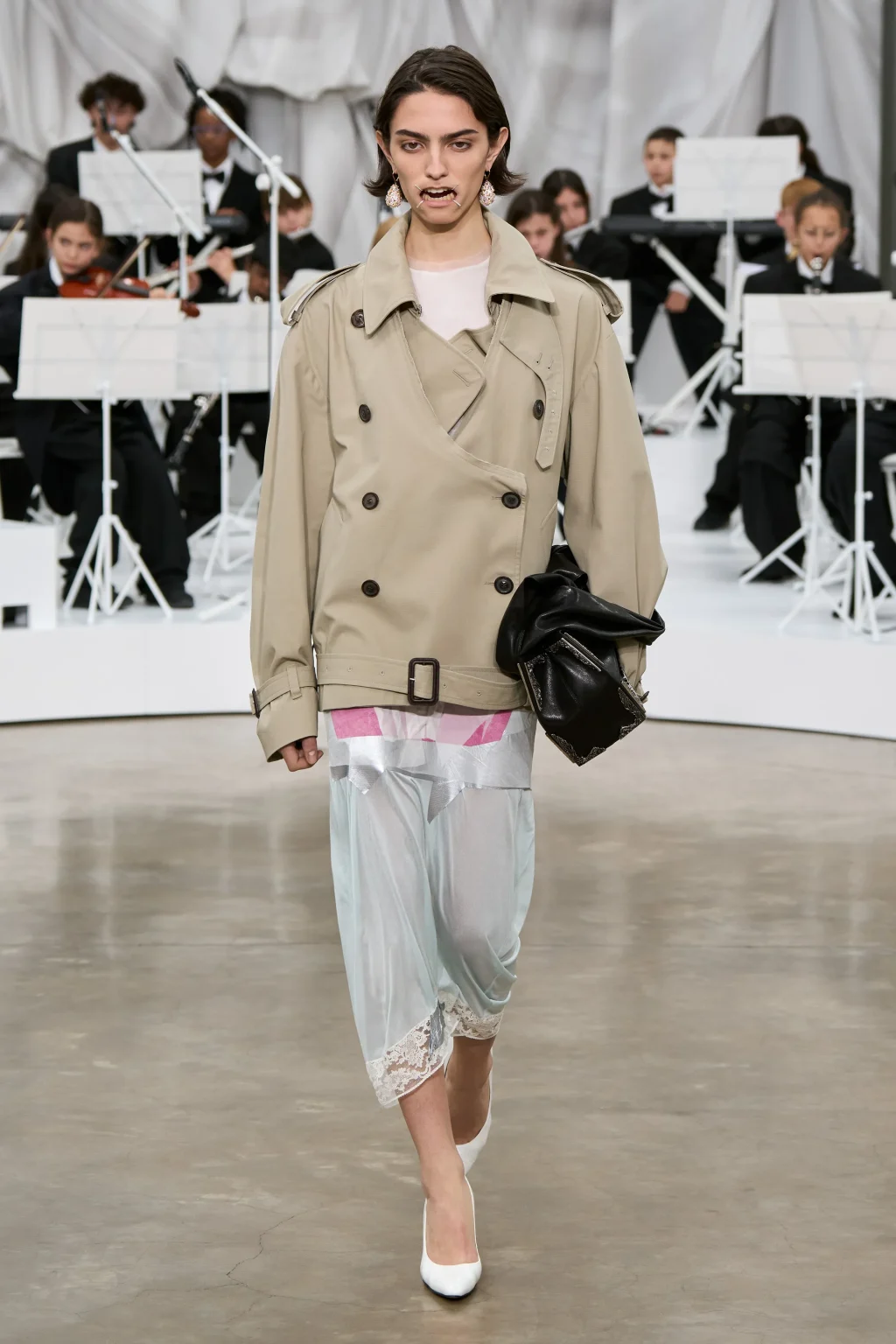
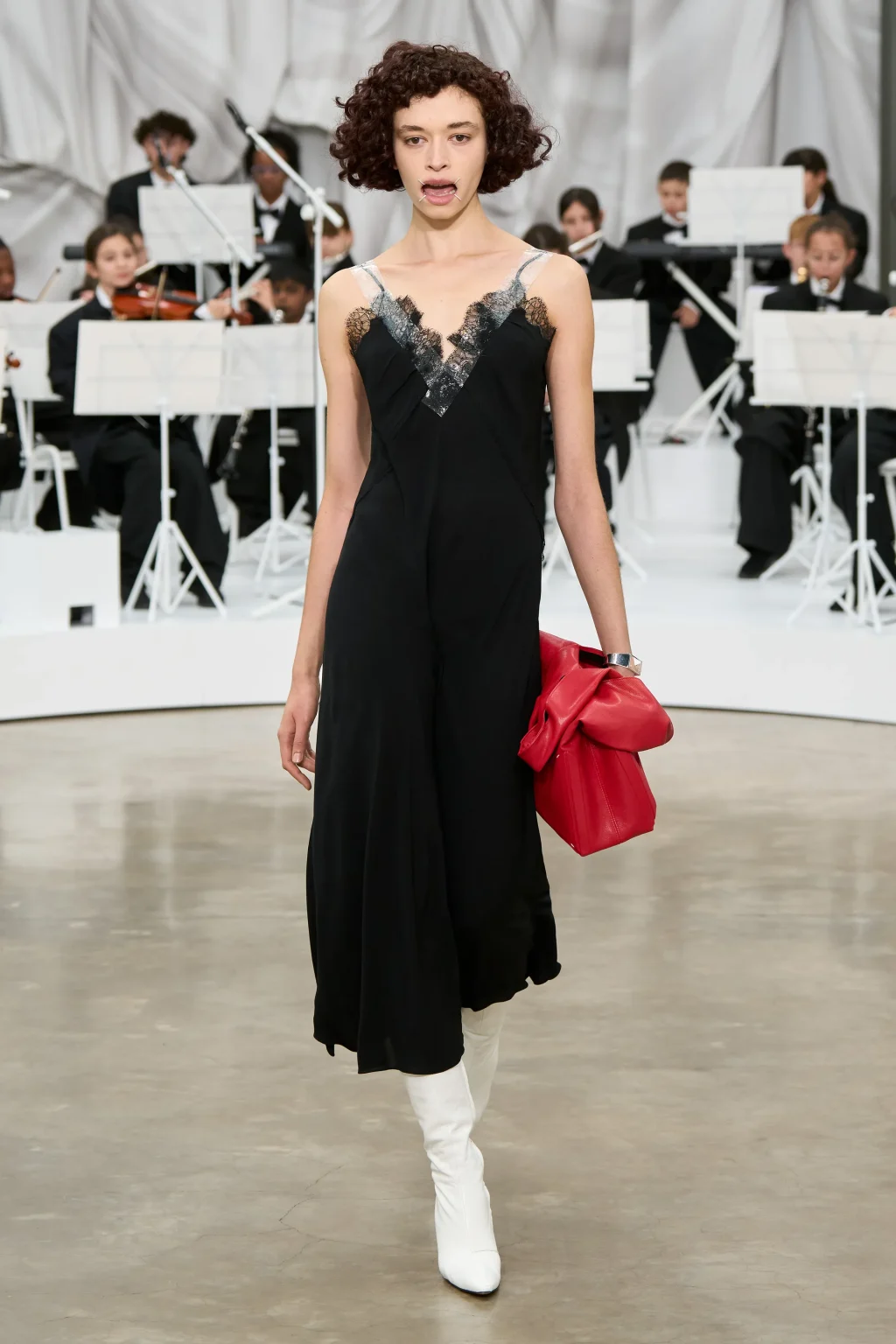
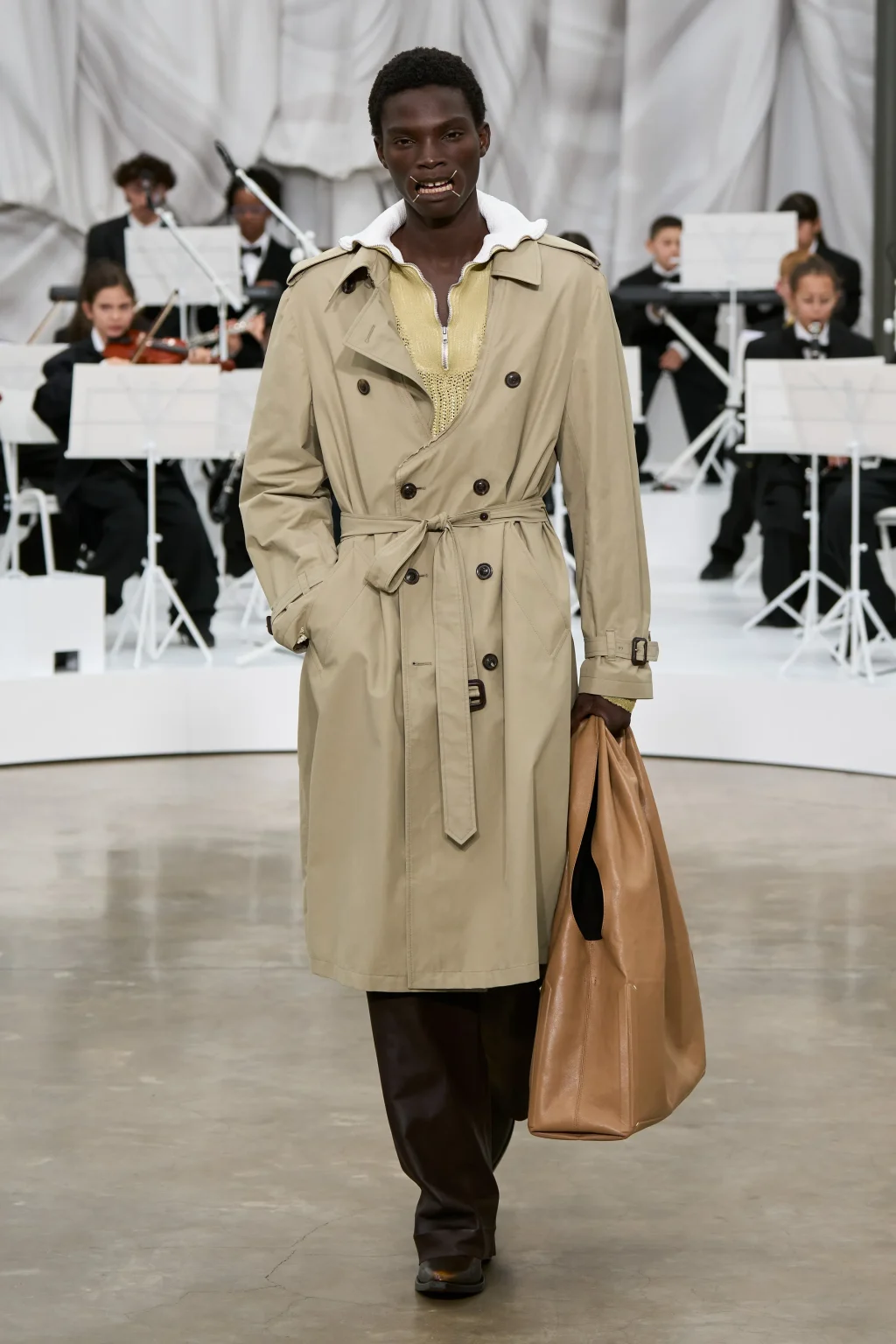
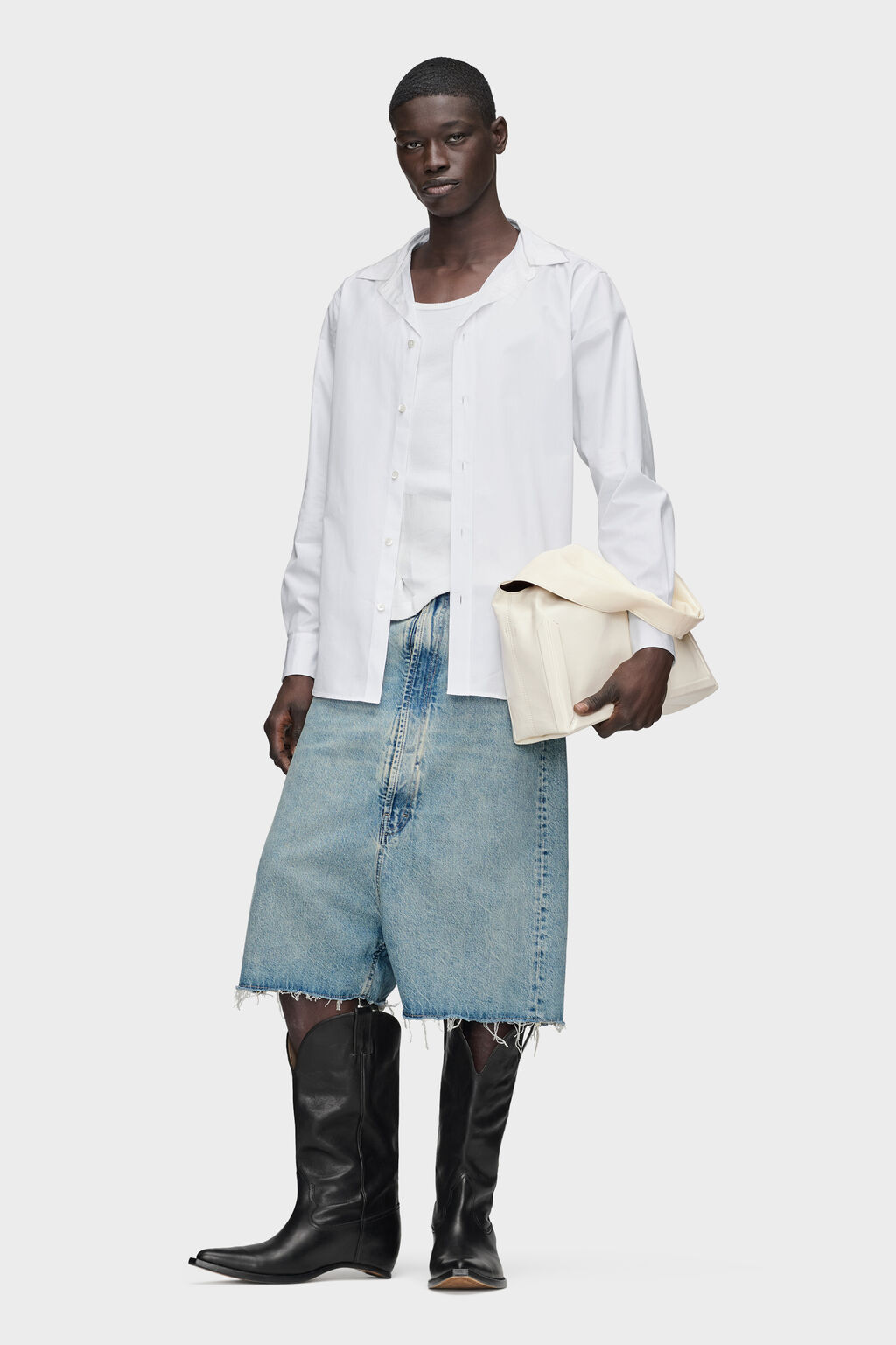
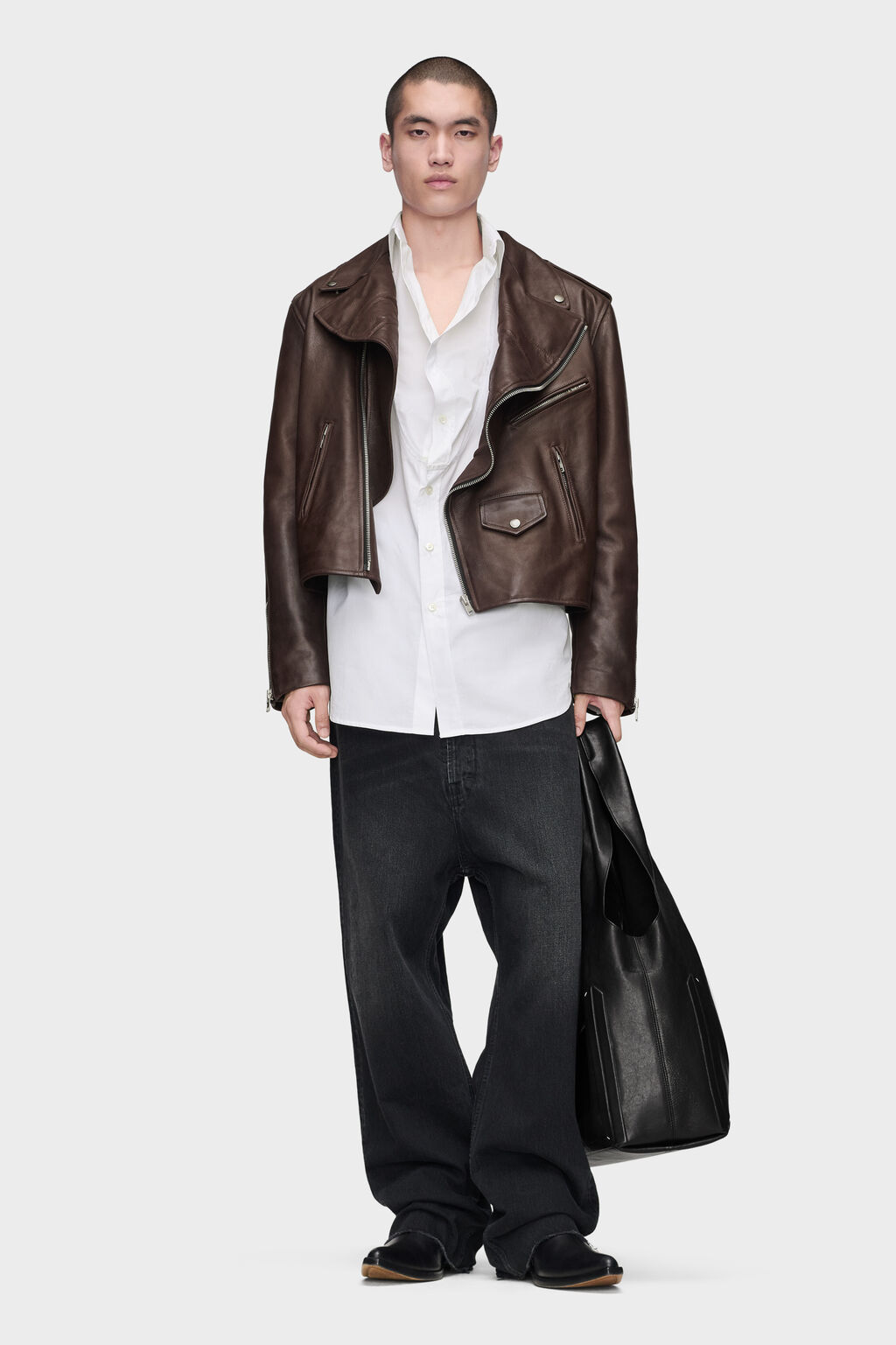
The Box Bag appeared across multiple looks on that runway: in black, clutched close; in camel, swinging at the side; in oxblood, held like a prop more than a vessel. Its scale felt calibrated — generous enough to function, structured enough to read as a considered object. The metallic-trim version showed later in campaign imagery, understood in the context of the collection’s gothic undercurrent, where Margiela’s Artisanal DNA from July 2025 continued to push through into ready-to-wear.
What Thermoforming Actually Does to a Leather Bag
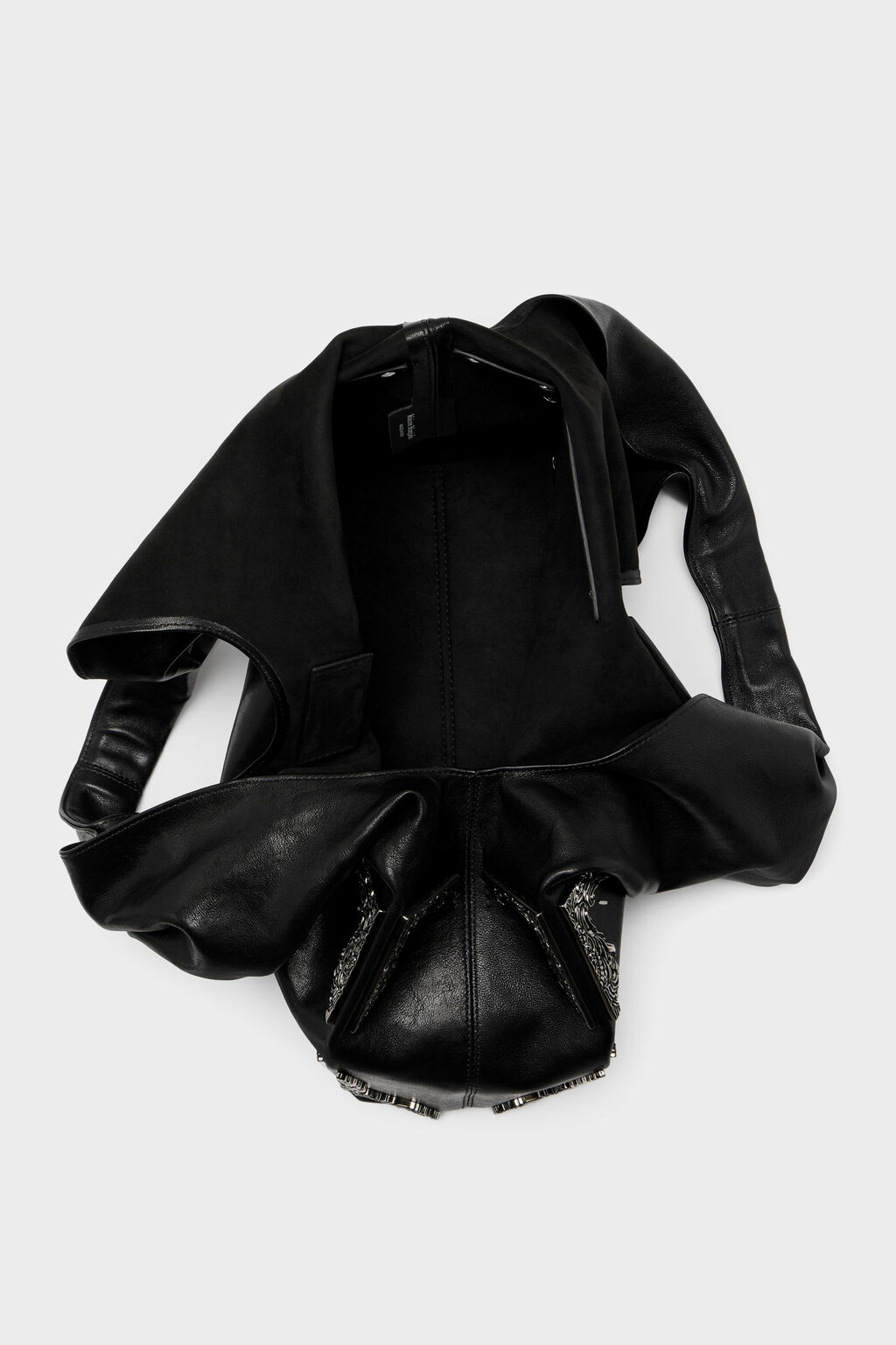
Thermoforming — the application of heat and pressure to permanently shape a material — is primarily an industrial technique, more common in plastic and composite manufacturing than in leather goods. Its use here is not incidental. Margiela applies the process specifically to the edges of the Box Bag, creating clean, reinforced corners and a defined perimeter that keeps the bag from collapsing under its own weight without the need for an internal frame or rigid base plate.
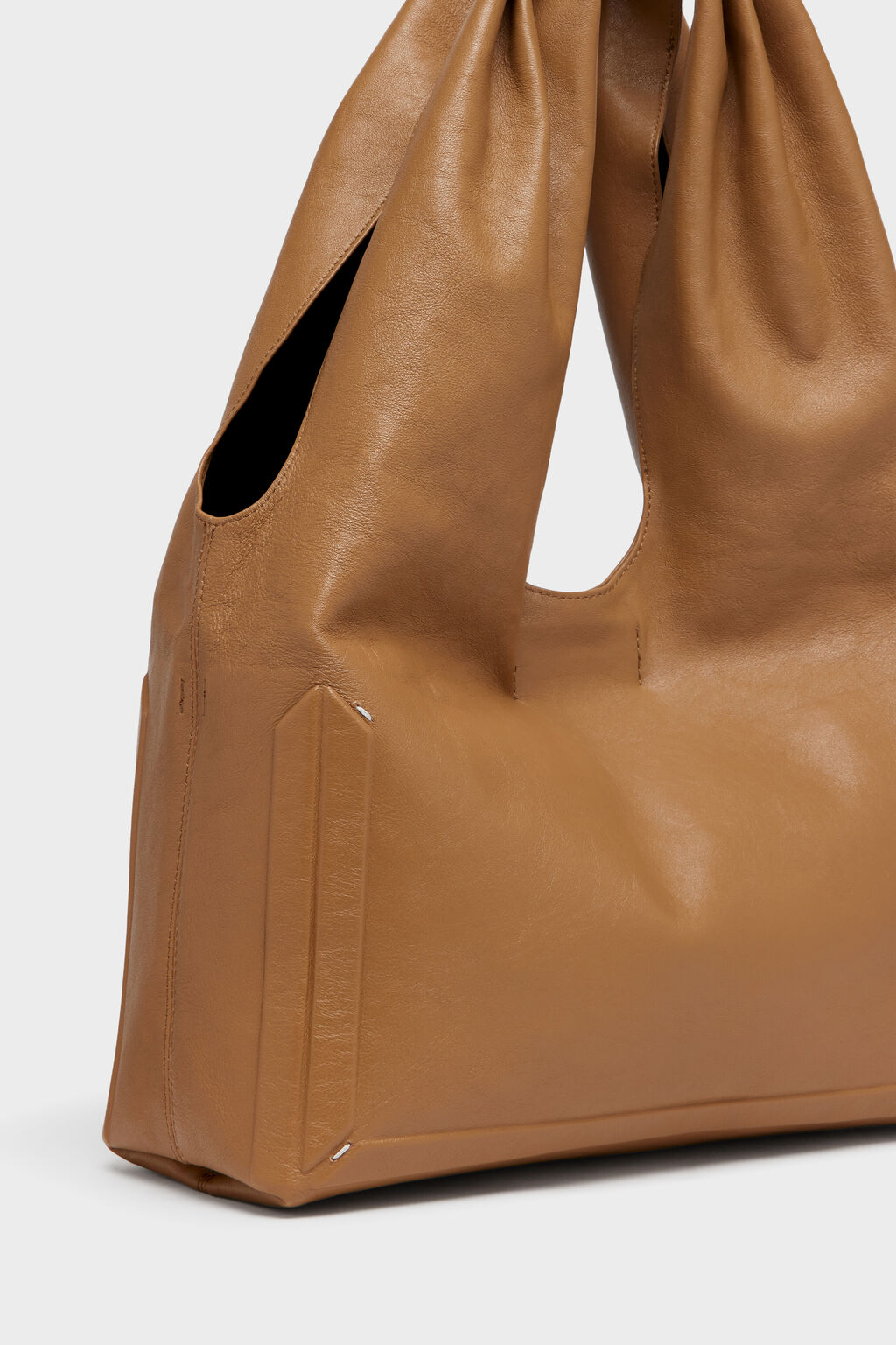
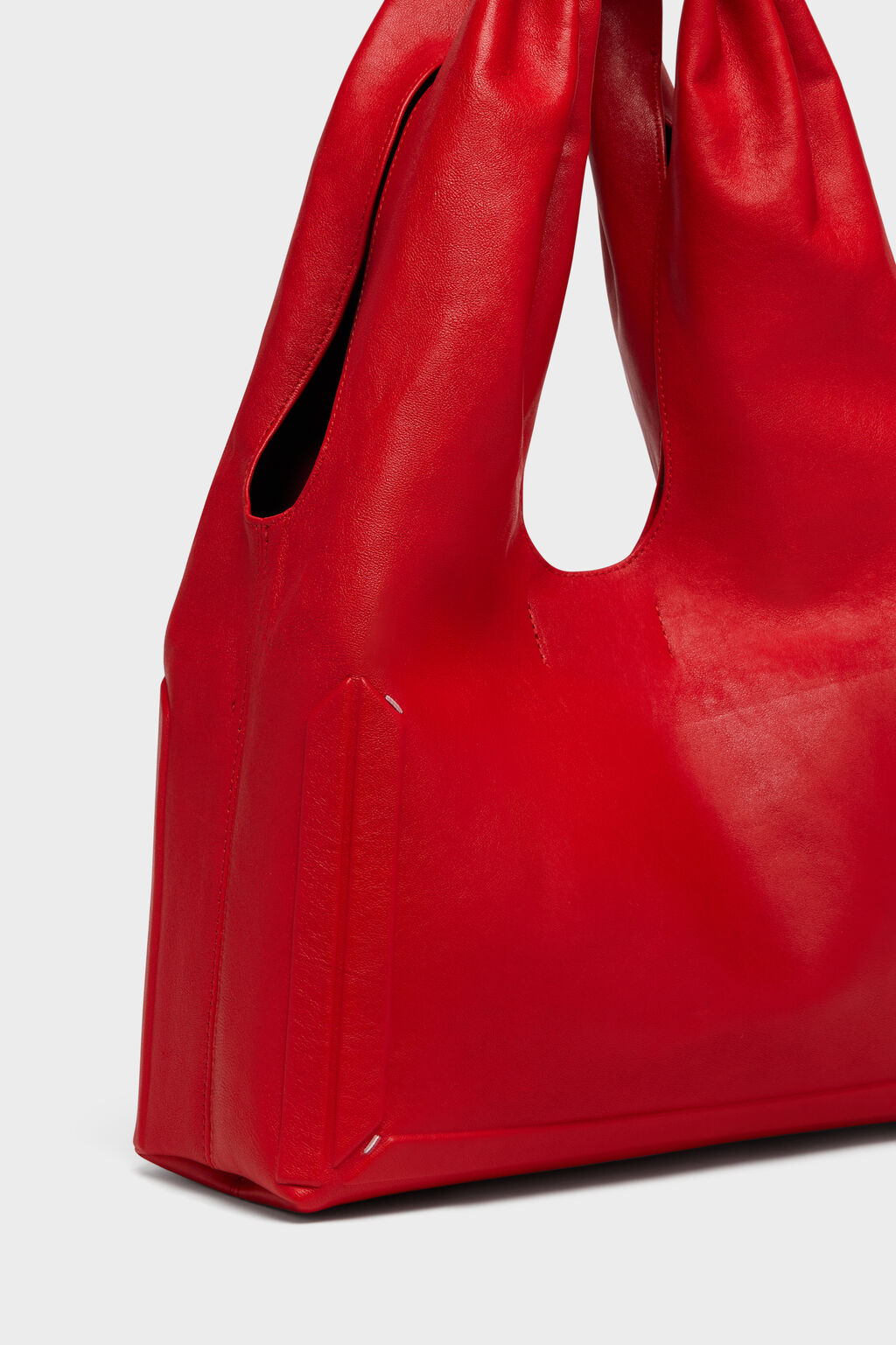
The result is a bag that reads as structured from the outside — almost architectural — but gives and yields in the hand like soft luggage.
The sheepskin body (100% ovine leather, designated in both the exterior and interior specification) has none of the stiffness typically associated with structured bags. The construction sits somewhere between an oversized clutch and a tote: the top handles allow shoulder carry, and the bag can be collapsed into a box-shaped clutch configuration. This three-way versatility is built into the proportions.
The Metallic-Trim Version: Gothic Ornamentation as Structure
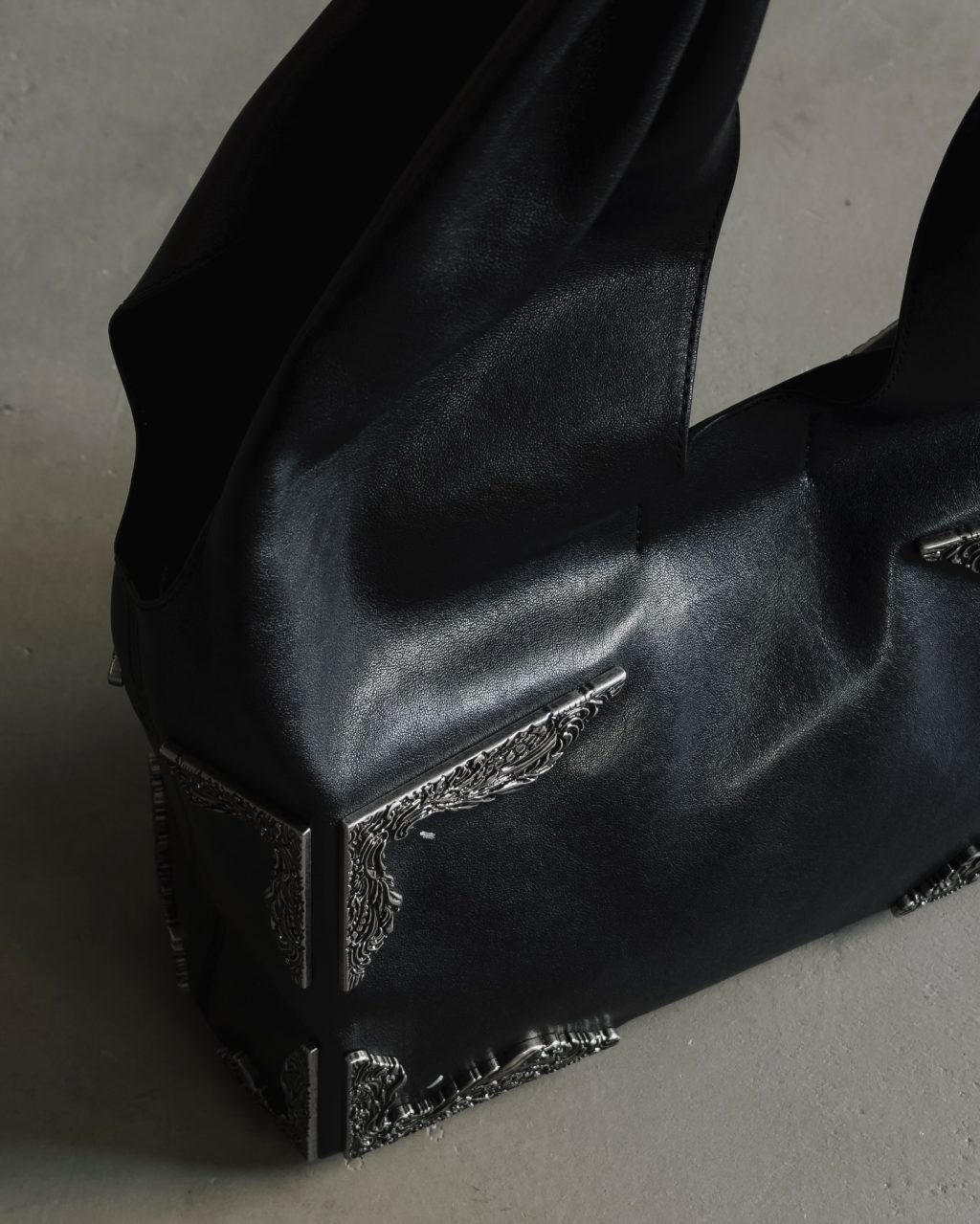
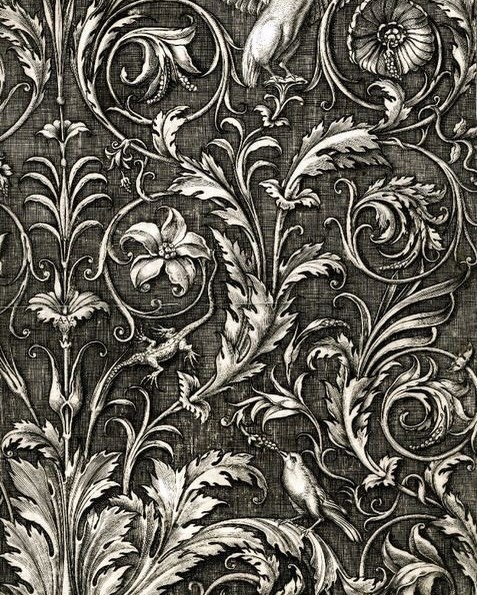
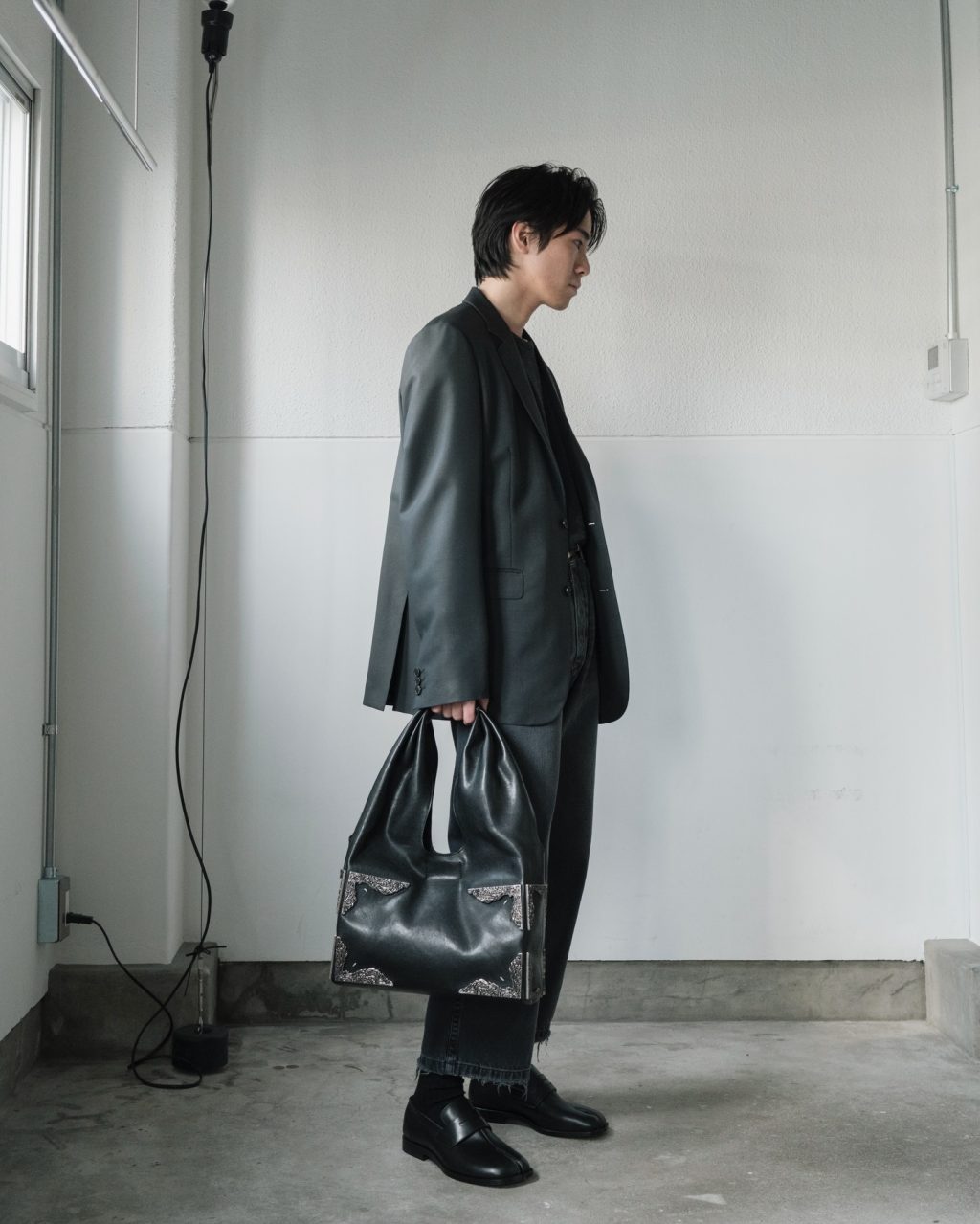
The second expression of the Box Bag adds ornamental metal corners in zama — a zinc-based alloy used in precision casting, chosen here for the fidelity it allows in reproducing fine detail. The embossing draws on gothic ornamentation: dense floral scrollwork pressed into the metal surface, the kind of decorative vocabulary found on antique book bindings, ecclesiastical objects, or Victorian jewellery cases. The result is a bag that functions simultaneously as a leather object and as a display of metalwork craft.
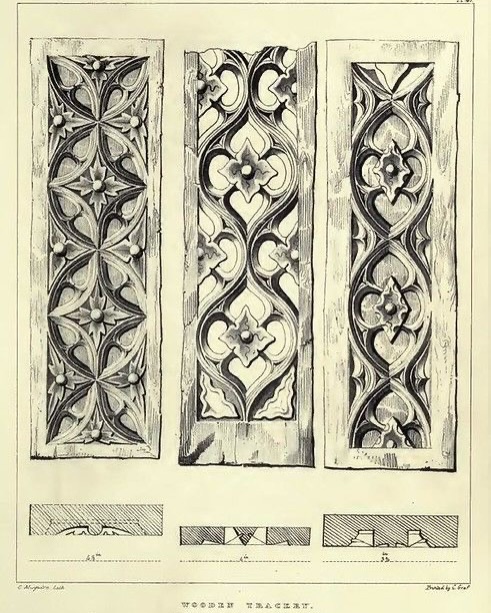
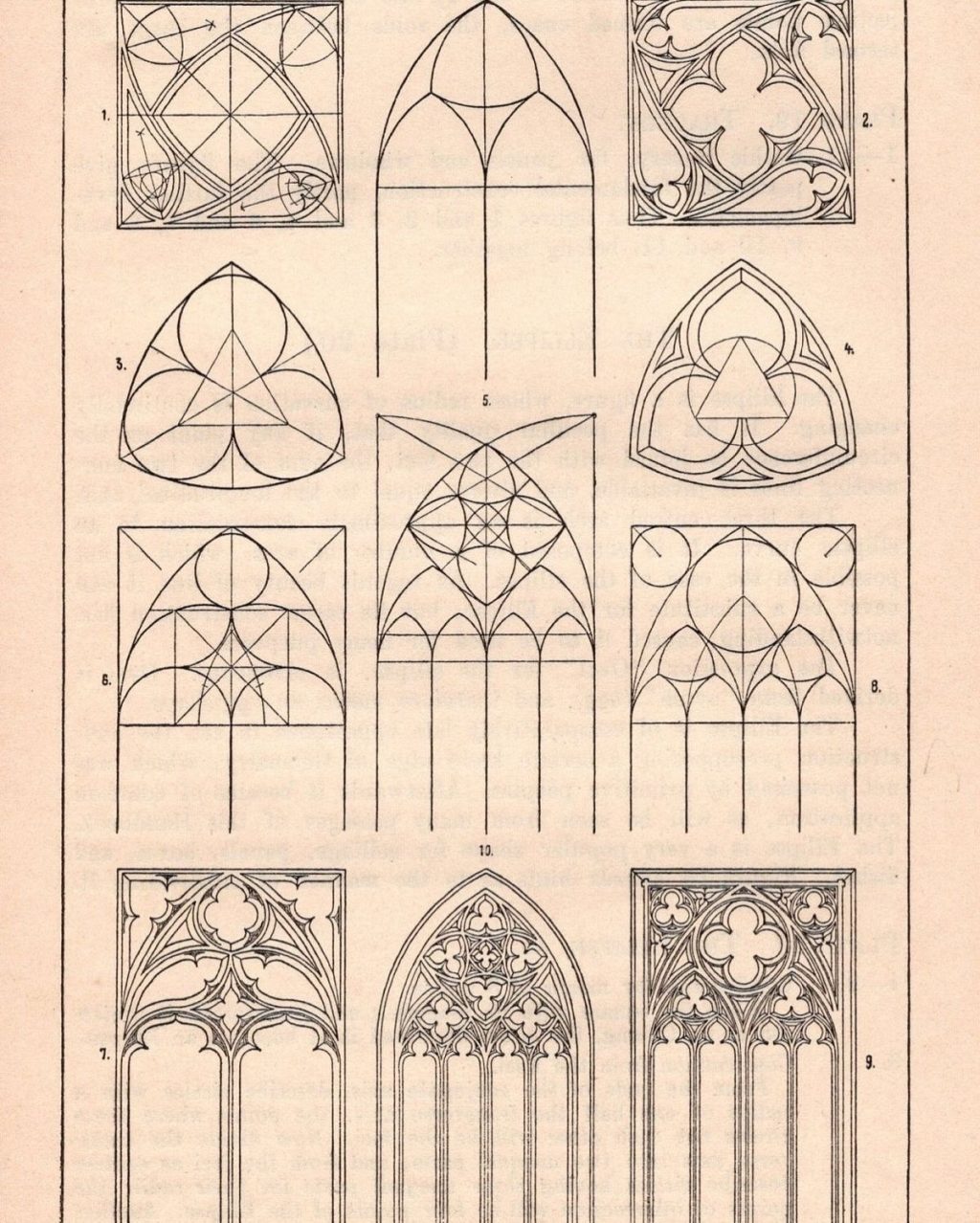
The hardware components are split across two material specifications: steel for structural parts, zama for the decorative casting. This matters in terms of weight and longevity — zama is denser than aluminium and resists tarnishing, while steel provides the tensile strength where it is needed mechanically. The combination, presented in a dark silvered finish against the black sheepskin, is at once formal and slightly confrontational. The bag looks like something a Renaissance banker might have commissioned and Glenn Martens might have found satisfying.
The Four Stitches: Margiela’s Anti-Logo
On both versions of the Box Bag, the four white stitches appear at the back — a horizontal line of tacking thread that has served as Margiela’s authentication mark since the house’s founding in 1988. The original logic was elegant: rather than a printed or embossed logo, the house marked garments with the stitches used to attach labels, then removed the label itself. What remained was the trace of authorship without the claim of it.
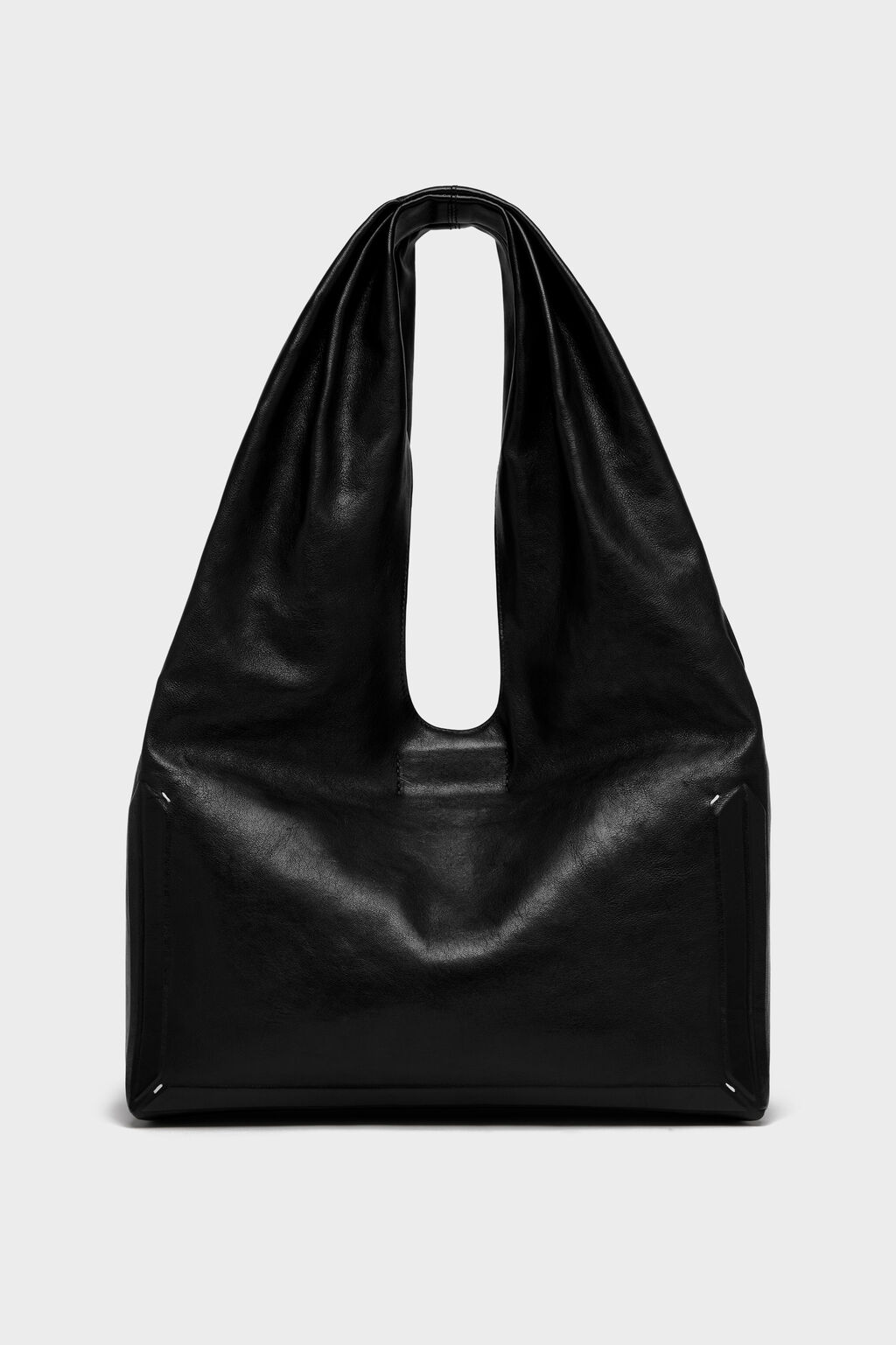
On the Box Bag, the four stitches appear at the back of the body, discrete enough to function as insider knowledge. The house’s language around this device — ‘the opposite of a label’ — has not changed under Martens. If anything, the restraint reads more pointedly now, in a market where monogram density has become a standard declaration of value. The Box Bag says nothing from the front. From the back, it says enough.
Sizes, Colourways and Where to Buy
The Box Bag currently exists in three proportions, all available at maisonmargiela.com and in Maison Margiela boutiques globally.
Box Bag Medium — the subject of this piece. Smooth sheepskin leather, thermoformed edges, available in four colourways: black, white, camel and red. Retail price: $2,050 / €1,550. The full colourway selection is available directly at maisonmargiela.com
Box Bag Metallic Trim — the gothic-cornered version in black sheepskin, with ornamental zama casting at the corners and steel structural hardware. The embossed floral detailing lifts this into a different register entirely: part bag, part decorative object. Retail price: $5,890 / €4,550 (verify at checkout, pricing may vary by region). Available at: → maisonmargiela.com
Box Bag XL — a larger format in the same sheepskin and thermoforming construction, with the same four-stitch signature. Suited to those who carry more or simply want more presence. Retail price: $2,650 / €2,000 . Available at: → maisonmargiela.com
The collection has been available since 11 March 2026, both online and in boutiques worldwide. As preorder pieces, delivery timelines vary by region — exact estimates are confirmed at checkout.
The ‘Joy’ Campaign: Max Richter, a Youth Orchestra, and the Bag as Prop
The SS26 campaign film, titled ‘Joy’, was shot at the Théâtre de la Villette in Paris and directed around composer Max Richter — Oscar-nominated for his score to the film Hamnet — performing an original composition at the harpsichord alongside 43 young musicians from Association Orchestre à l’École, the French non-profit dedicated to bringing orchestral practice into state schools.
The Box Bag appears throughout the campaign as a central accessory, shot in still life and as a carry piece within the film’s performance environment. The art direction positions the bag in the same register as the Heel-less pump — both are foregrounded as the season’s two key new objects, new design alongside archival revival. The still-life photography, particularly the image of the metallic-trim version behind clear acetate, gives the bag an almost museological gravity.
The Box Bag Returns: Fall Winter 2026, Shanghai
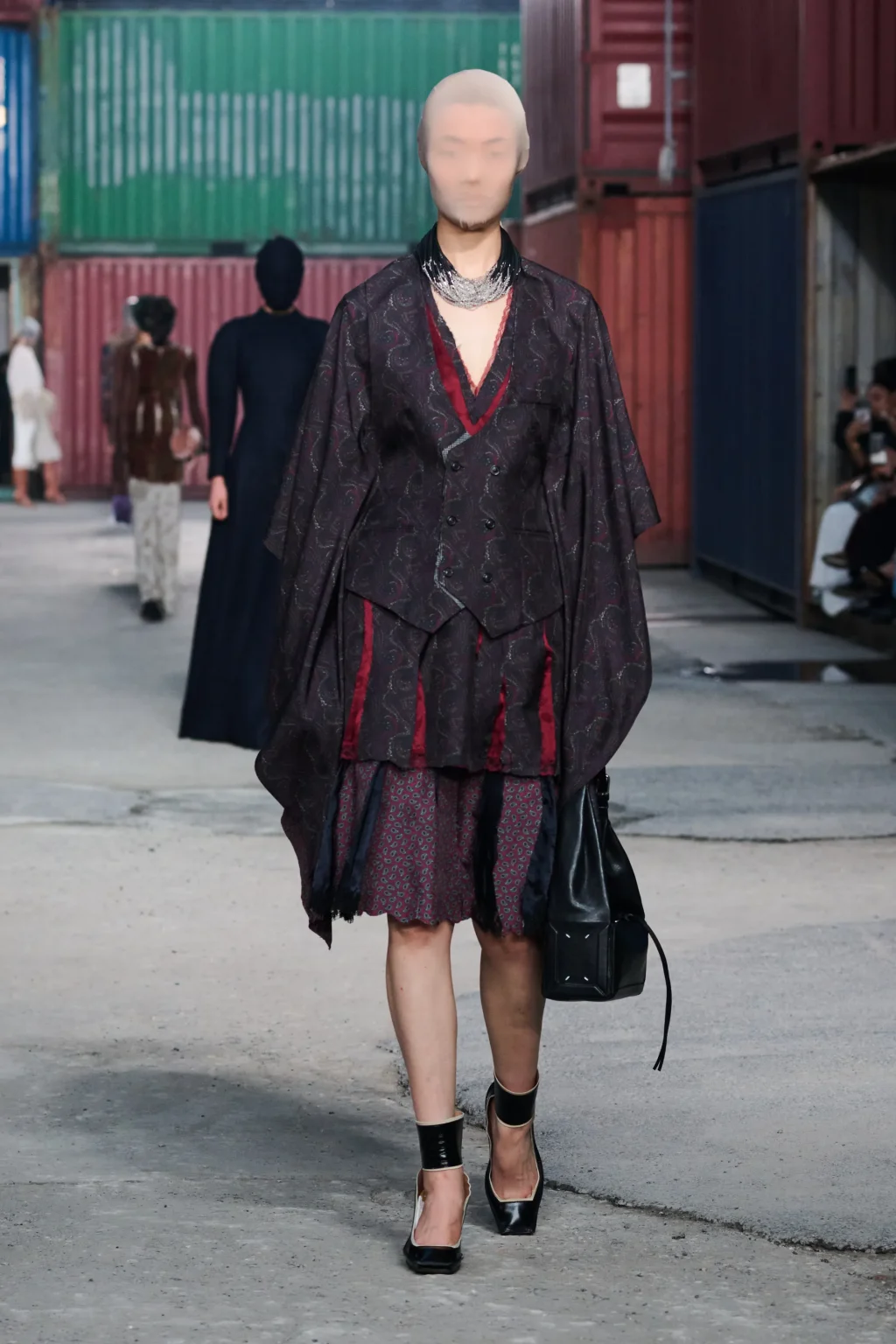
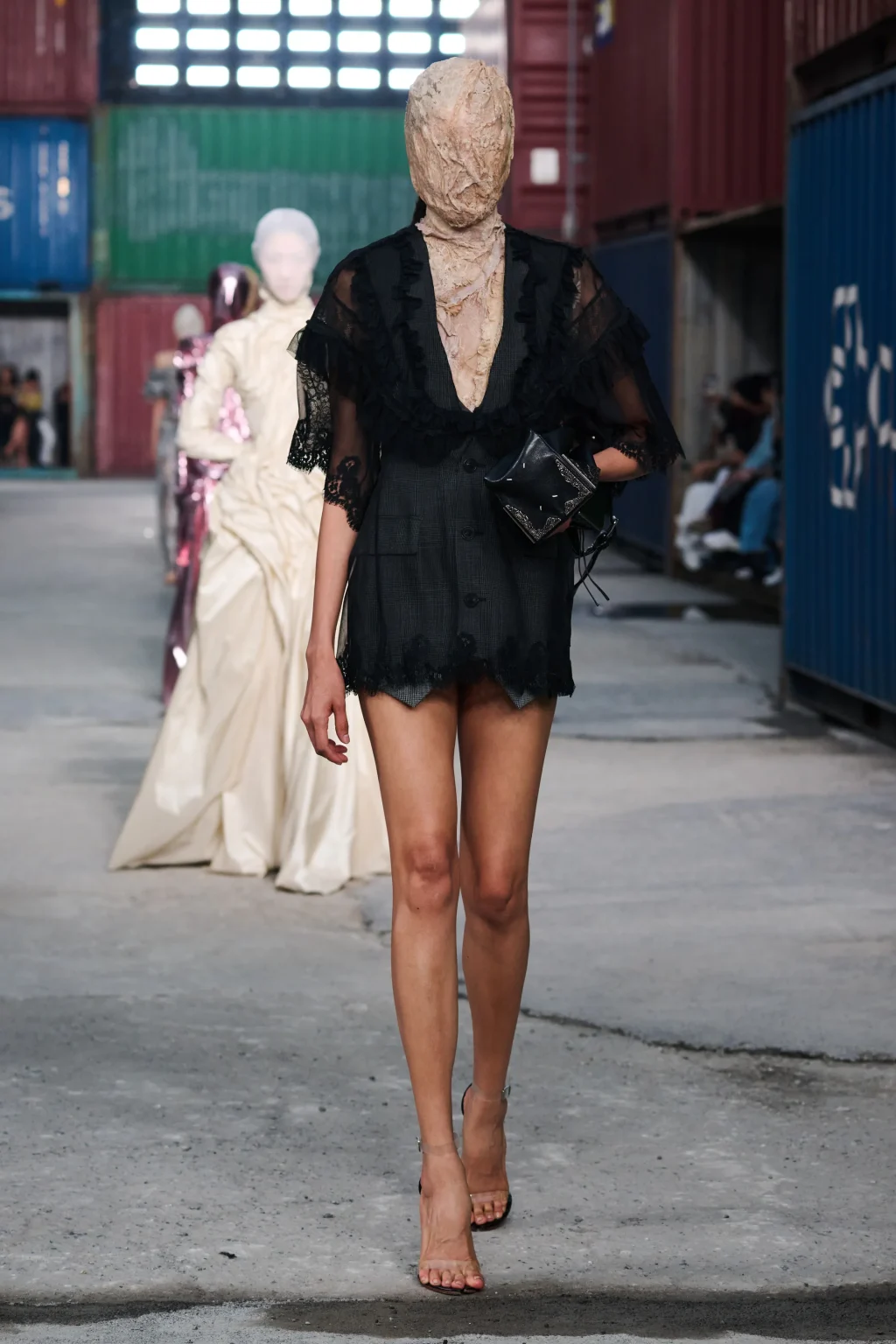
Six months after its debut on the Spring-Summer 2026 Paris runway, the Box Bag reappeared in Shanghai — this time inside a working shipyard on the outskirts of the city, against a backdrop of stacked freight containers and 76 looks that mixed ready-to-wear with Artisanal couture. Glenn Martens staged Maison Margiela’s first-ever runway show in China as a hybrid event, and the Box Bag moved through it in multiple iterations, confirming what the SS26 season had suggested: this is a shape the house intends to develop.
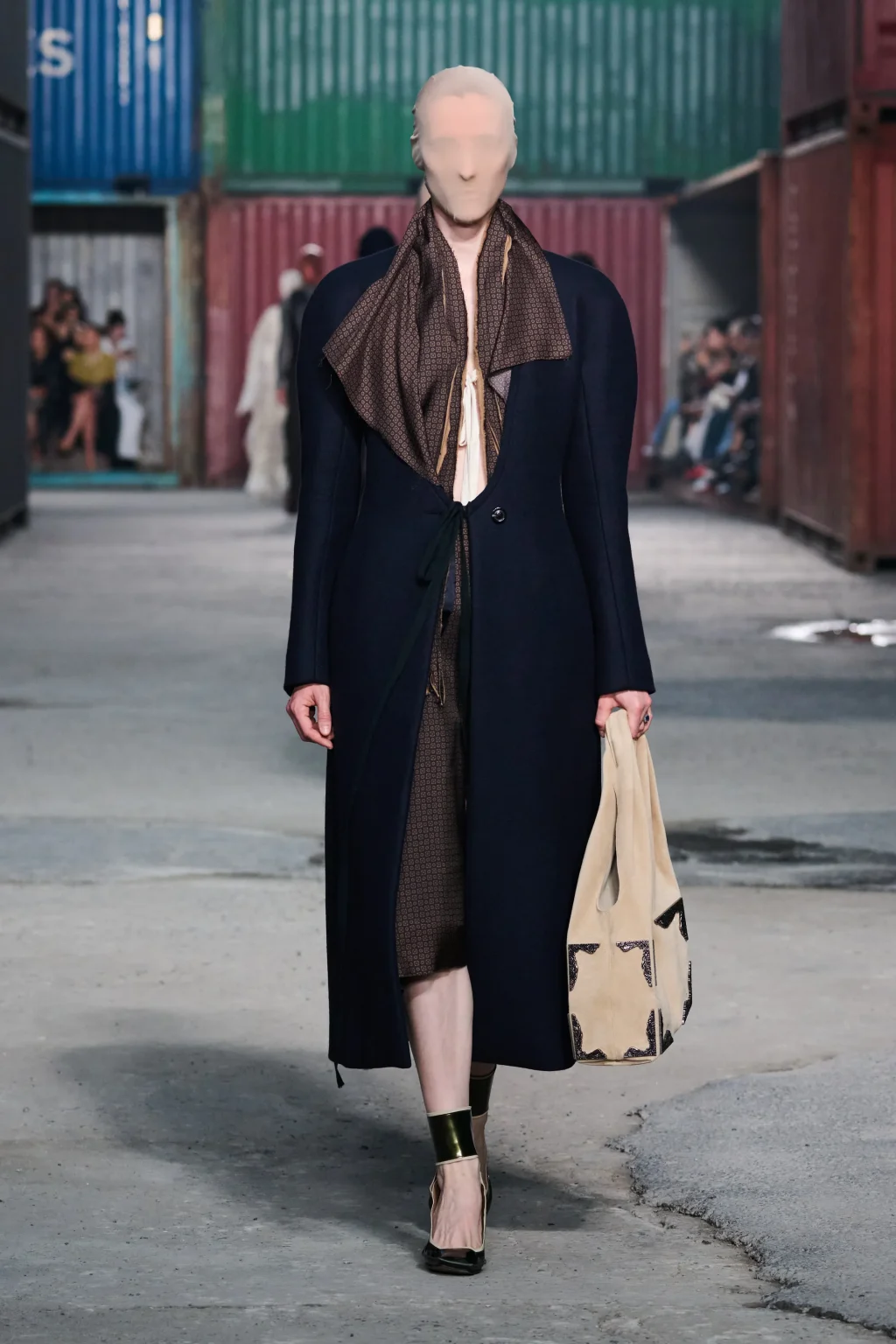
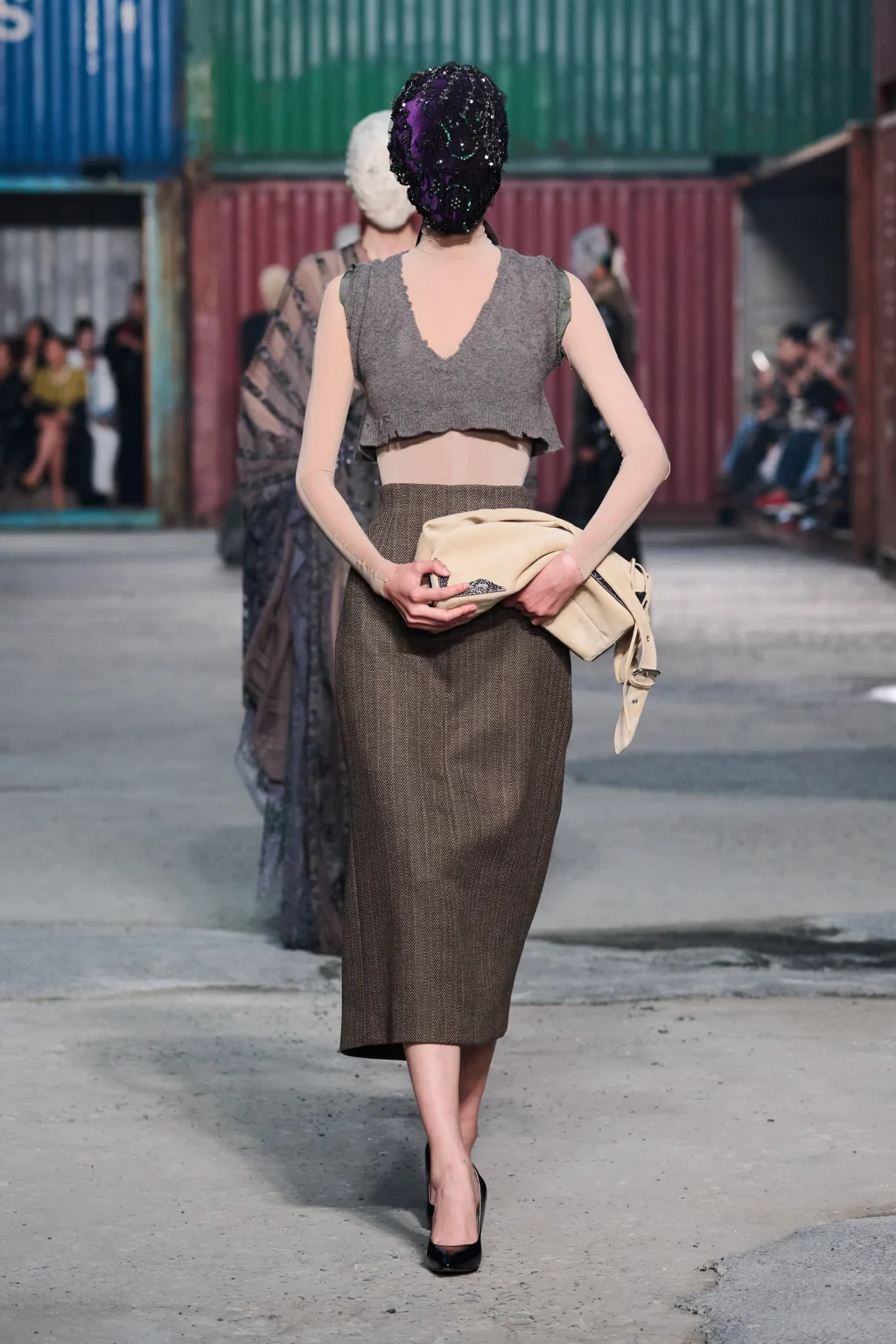
The FW26 collection introduced two significant material expansions for the bag. Suede replaced sheepskin on several looks, softening the silhouette while preserving the thermoformed edge structure.
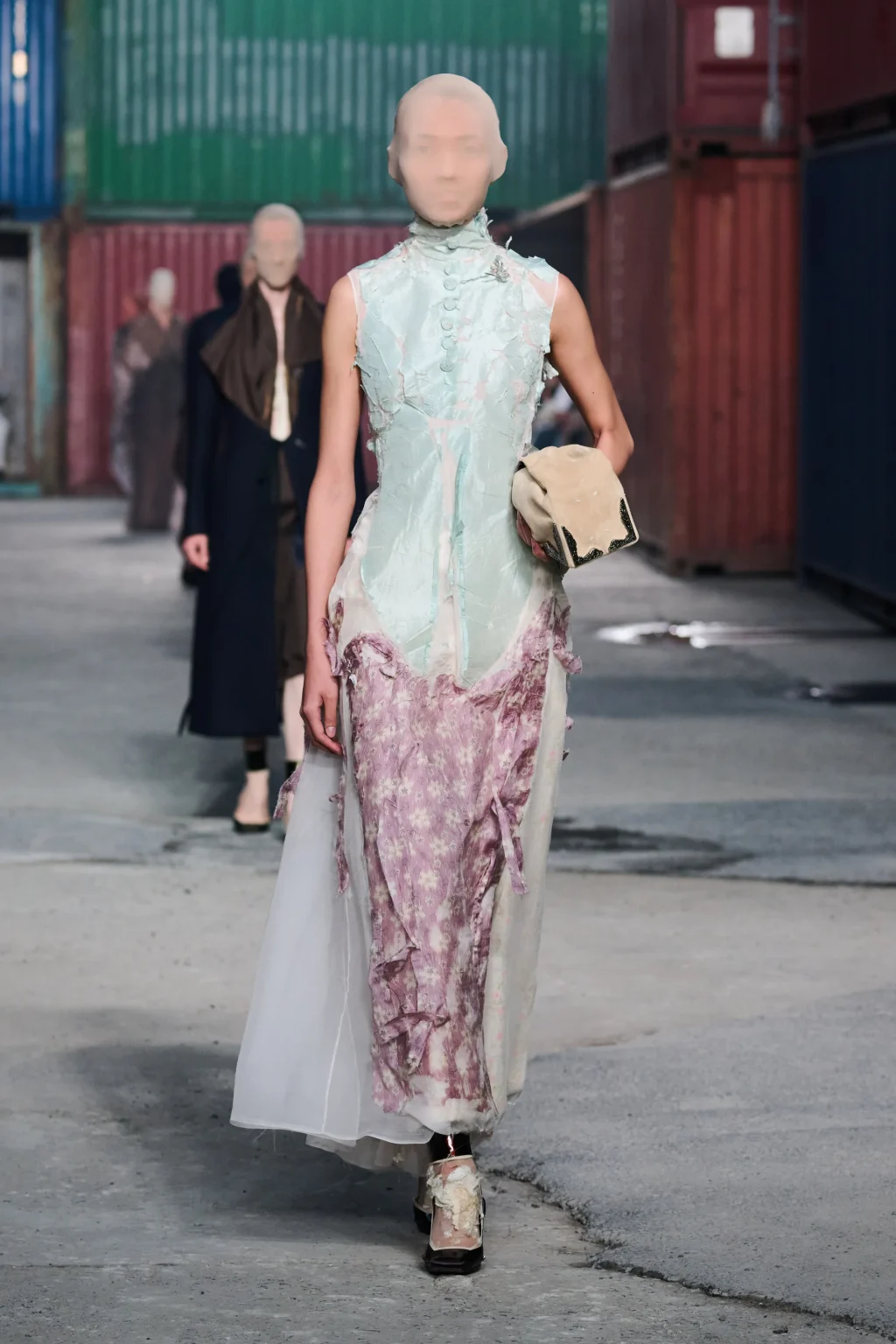
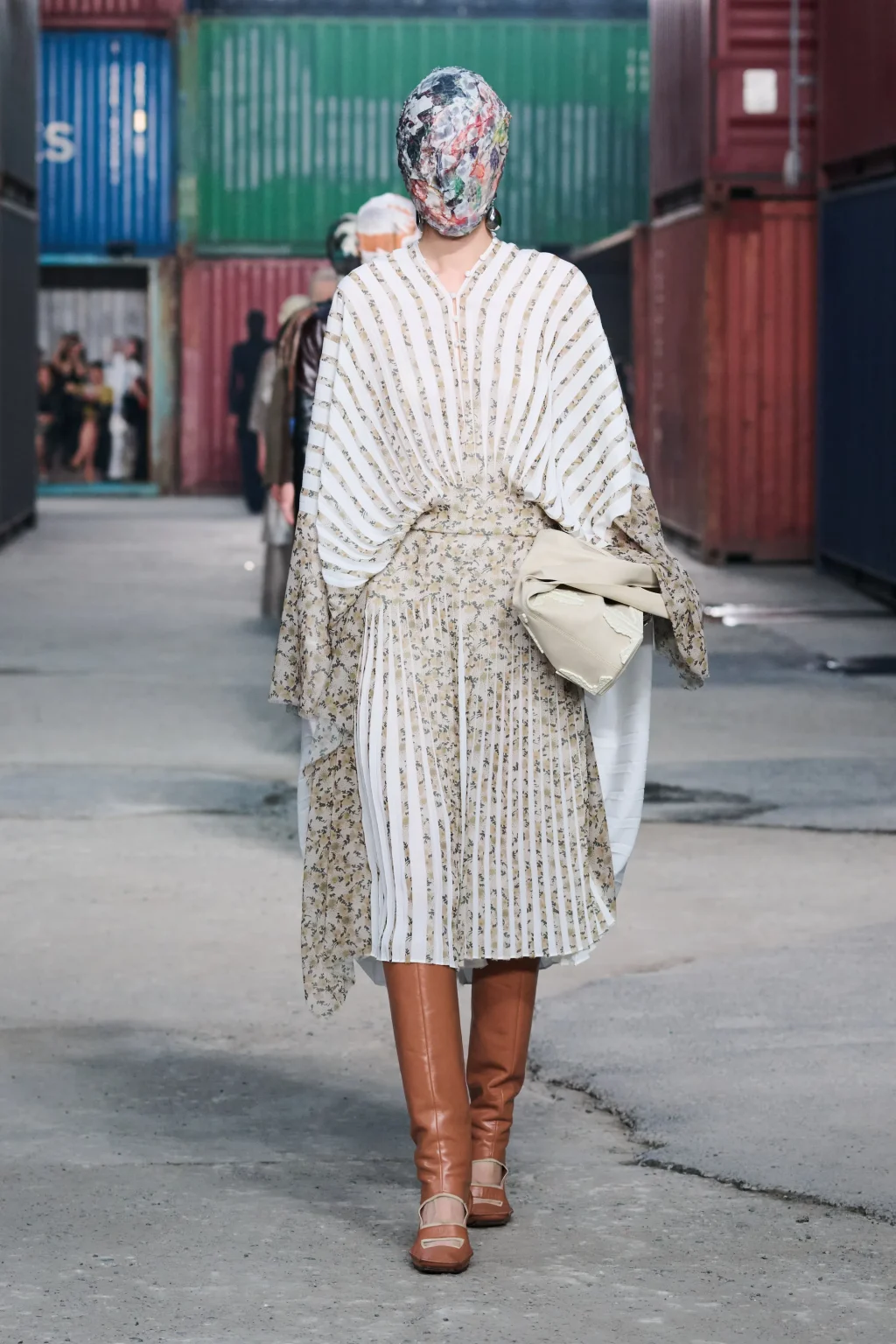
And porcelain — one of the season’s defining references, drawn from Edwardian dolls and their decaying patina — appeared as trim on at least one iteration of the bag, extending the collection’s central material vocabulary directly into accessories.
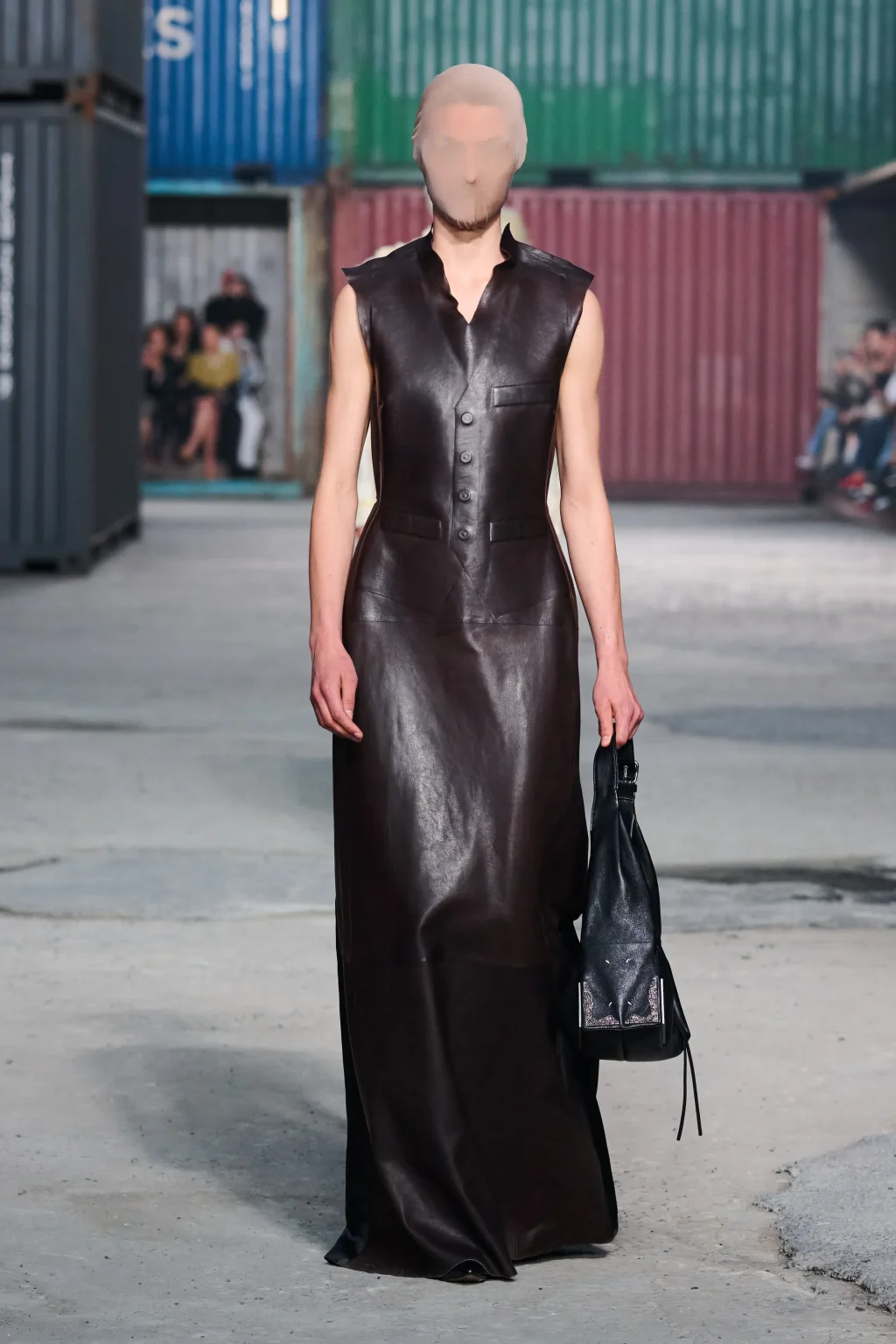
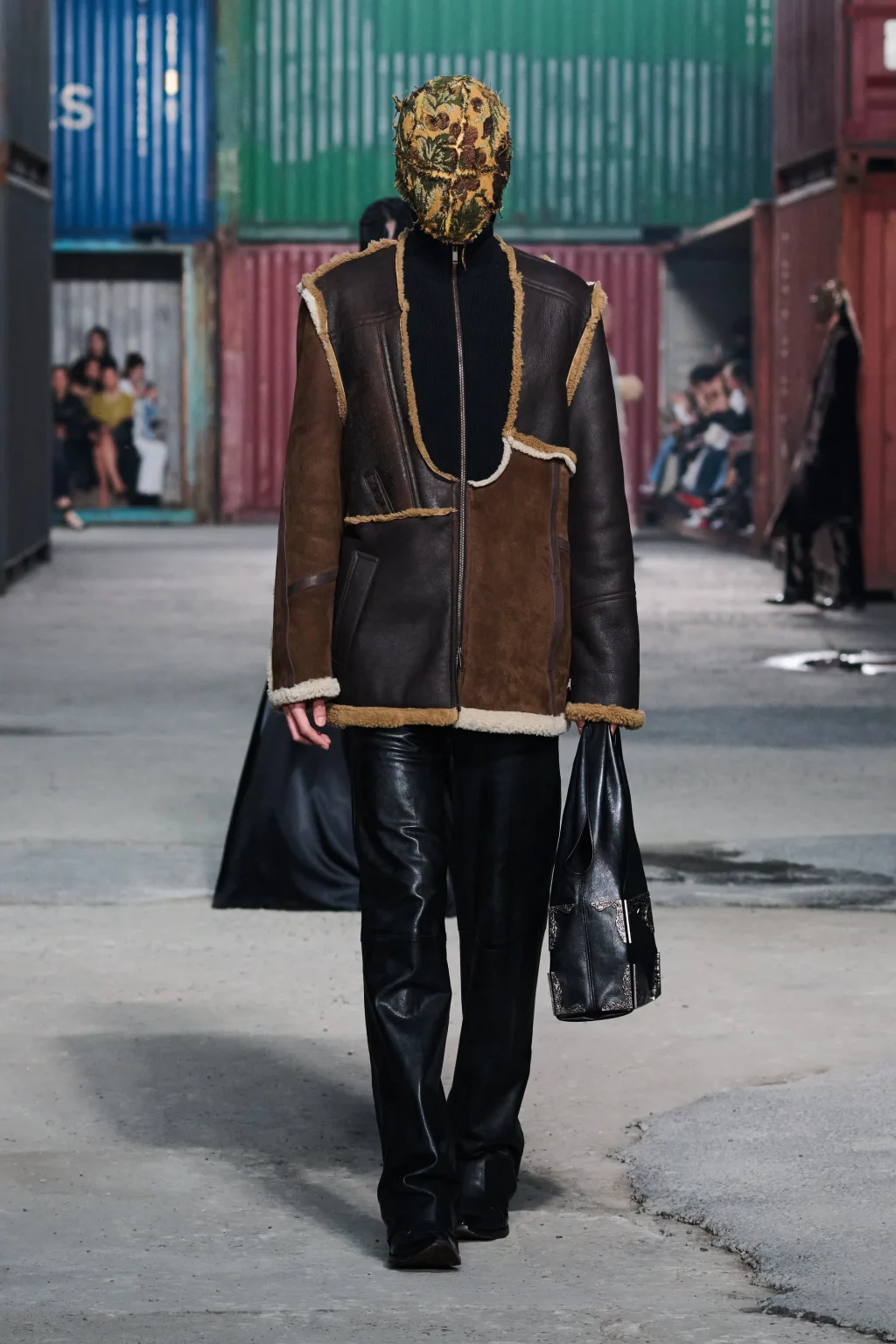
Across SS26 and now FW26, the Box Bag has appeared on more looks than any other new accessory introduced under Martens – six times. The suede and porcelain iterations suggest that future seasons will continue to push the construction into new materials, while keeping the thermoformed edge and four-stitch signature intact.