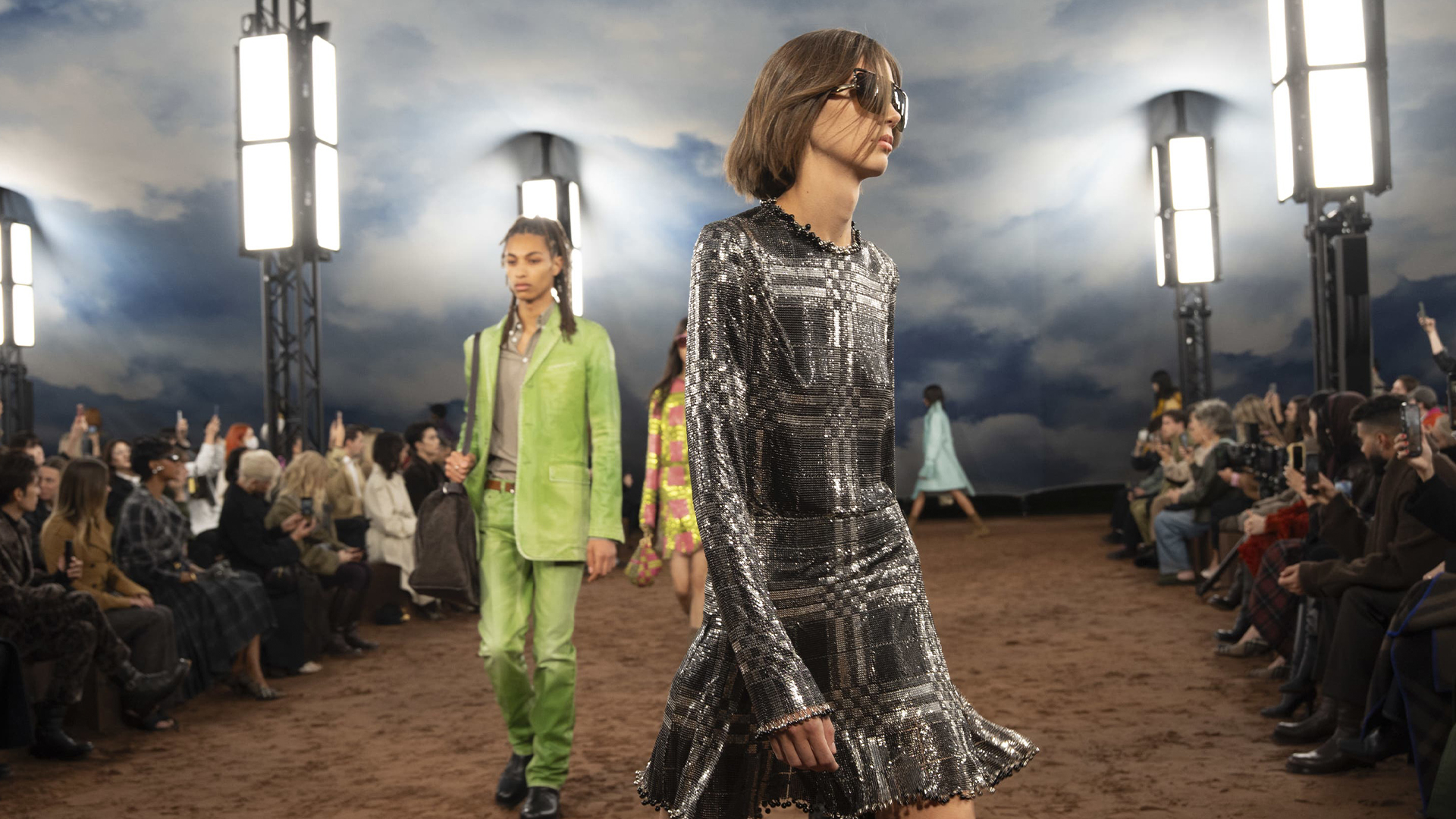
In fashion, silence has always been overrated. This season, fashion runway soundtracks SS 2026 didn’t just accompany the collections—they defined them. From Schiaparelli’s sultry R&B pulse to Dior’s poetic stillness, from Chanel’s celestial orchestrations to Sandy Liang’s pop nostalgia, sound became the narrative thread connecting couture and emotion. Each show turned its runway into a stage where rhythm, mood, and material moved together.
If the visual storytelling of sets defined the atmosphere of the Spring/Summer 2026 runways, as explored in our feature on the best runway sets of the season, then sound was the invisible architecture shaping emotion. These weren’t playlists; they were emotional blueprints—each note stitching a dialogue between culture and craft.
For fashion editors, PR directors, and creative strategists, these soundtracks offer more than musical inspiration. They serve as frameworks for building atmosphere, identity, and storytelling through sound.
1. Schiaparelli – “Rock the Boat” by Aaliyah
When Schiaparelli unveiled its Spring/Summer 2026 collection, Daniel Roseberry set the mood before the first model appeared. The opening notes of Aaliyah’s “Rock the Boat” rippled through the venue, filling it with sensual rhythm. The track—a 2001 R&B classic produced by Eric Seats and Rapture Stewart—has become legendary for its hypnotic groove and smooth motion.
Choosing it was both bold and brilliant. The song’s fluid tempo echoed the movement of fringe, sequins, and satin across the runway. It wasn’t just background music—it became the show’s bloodstream.
Roseberry’s vision blended craftsmanship with emotion. He drew inspiration from antique ribbons from Lyon and a concept he called Icarus. The soundtrack mirrored that flight between structure and fantasy. As Aaliyah’s voice flowed through the space, one could almost see fabric breathing, sculpted suede shifting, and tulle catching light in time with the beat.
What made this pairing exceptional was its symbolism. The “boat” became a metaphor for beauty in motion; the music embodied the idea of travel, escape, and balance. Fashion and sound were perfectly synchronized, each enhancing the other.
In short, Schiaparelli didn’t stage a runway—it orchestrated an experience. The collection moved to the rhythm of desire, earning “Rock the Boat” its place as one of the season’s most unforgettable soundtracks.
2. Chanel – “Rhythm Is a Dancer” by SNAP! (Berlin Orchestra version)
For Chanel’s Spring/Summer 2026 presentation, Matthieu Blazy didn’t just deliver a collection—he staged a cosmic performance. The Grand Palais became a galaxy of orbiting lights, floating spheres, and a circular runway that mirrored the movement of planets. See Chanel’s Spring/Summer 2026 Bags.
As the lights dimmed, the Berlin Orchestra’s rendition of SNAP!’s “Rhythm Is a Dancer” filled the air. The 1992 Euro-dance anthem—once made for the club—transformed into a symphonic spectacle. The familiar pulse of the track met sweeping strings and crescendos, turning energy into elegance.
This was no ordinary remix. It was a dialogue between past and present, between the body and the cosmos. The orchestral rhythm set the models in motion like celestial figures—gliding, pivoting, orbiting the audience.
Blazy’s tailoring leaned on structure and grace, and the soundtrack gave it propulsion. The balance between dance-floor energy and Parisian precision felt deliberate. Moreover, it reminded us that fashion is no longer linear. Shows have evolved into immersive journeys, where sound design defines emotional tone as much as silhouette.
By merging club culture with couture, Chanel bridged two worlds that rarely meet. The soundtrack made the show unforgettable—not only for its garments but for the atmosphere it created. It was a perfect alignment of rhythm and refinement.
3. Prada – “Moments In Love” by The Art of Noise
When Prada’s models stepped onto the runway, the energy shifted on purpose. Instead of a loud opener, the room filled with “Moments in Love”—the haunting 1985 composition by The Art of Noise. Its delicate synths and whispered motifs drifted like perfume, setting an intimate pace.
This choice spoke directly to Miuccia Prada and Raf Simons, who co-lead the house. Their partnership favors clarity over noise: intellectual rigor from Miuccia, radical minimalism from Raf. The soundtrack mirrored that alliance. It slowed time, encouraged focus, and drew eyes to cut, texture, and gesture.
Rather than chase spectacle, the show explored the “everyday, elevated.” The track’s measured pulse let silhouettes breathe and fabrics speak. In contrast to Schiaparelli’s sensual surge or Chanel’s orchestral lift, Prada chose restraint—and made it powerful.
Moreover, the reference carried weight. “Moments in Love” remains one of electronic music’s most sophisticated works. Using it signaled trust in an audience that values nuance over volume. As a result, the music felt less like accompaniment and more like architecture.
Ultimately, the soundtrack became part of the set: a quiet system that held the collection in place. Under Miuccia and Raf, stillness read as intent, and the memory it left was indelible.
4. Burberry – “N.I.B.” by Black Sabbath
While other houses embraced softness, Burberry went in the opposite direction. The British label surprised audiences by opening its show with “N.I.B.” by Black Sabbath—a 1970 anthem built on heavy guitar riffs and raw intensity.
The choice was shocking but strategic. It reintroduced edge to a brand often associated with classic heritage and refinement. Under the roar of Tony Iommi’s guitar, models marched with attitude through an industrial set lined with steel and light.
This was a message: Burberry is done playing safe. The music didn’t simply accompany the show; it challenged the audience to see the brand differently. The clash of metal and trench coats created tension—a deliberate friction that spoke of reinvention.
From a cultural angle, the soundtrack hinted at a broader shift. Luxury fashion is absorbing subculture again, embracing risk and rebellion. Burberry’s embrace of Black Sabbath proved that sound can rebrand mood faster than a campaign.
It may not have been the most polished pairing of the season, but it was one of the boldest. And in fashion, courage still counts for more than perfection.
5. Christian Dior – “She Walks in Beauty” by Marianne Faithfull & Warren Ellis
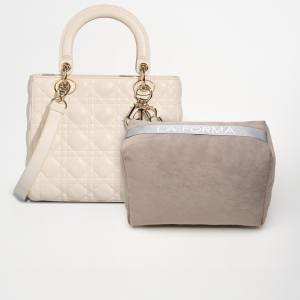
A hush always precedes a Dior show. This season, that silence filled not with percussion but with poetry. “She Walks in Beauty,” performed by Marianne Faithfull and Warren Ellis, reimagined Lord Byron’s 1814 poem as an elegy of grace and restraint. Read also: Dior SS26 Bag Guide
Jonathan Anderson, in his debut as Dior’s creative director, traded volume for vulnerability. Faithfull’s gravelly voice and Ellis’s haunting strings gave the collection a sacred intimacy. The soundtrack felt like a whisper rather than a declaration—proof that Anderson’s Dior would be built on emotion, not excess.
The clothes reflected that same sensitivity: corseted jackets loosened just enough to breathe, skirts that moved like light, and fabrics that shimmered between shadow and reflection. As Faithfull murmured Byron’s verse—“She walks in beauty, like the night”—the models drifted through chiaroscuro, poised between strength and surrender.
Anderson’s choice of spoken poetry instead of a conventional score became a manifesto. It signaled his intent to turn fashion into language—to make sound an act of storytelling, not spectacle. In a season filled with noise, Dior’s quiet show became the loudest statement of all.
6. Alaïa – “The Light in Your Eyes” by Gustave Rudman
At Alaïa, Pieter Mulier proved that emotion can be tailored. His chosen score—Gustave Rudman’s “The Light in Your Eyes”—wasn’t a pop hit. It was a cinematic composition written to reveal tension, release, and reflection.
The show opened with close-up projections of eyes shimmering across a white runway. The sound began as a single sustained note before swelling into violins and electronic pulses. It felt less like music and more like breath.
Mulier often describes fashion as “architecture for the body,” and this soundtrack embodied that idea. Every crescendo aligned with the curve of fabric or the swing of a hem. The result was intimate yet monumental.
Unlike louder shows that chased spectacle, Alaïa built emotion through restraint. The soundtrack turned perception itself into a theme—how beauty looks back at us. That subtle focus made the presentation one of the season’s most haunting and elegant experiences.
7. Balenciaga – “Can’t Take My Eyes Off of You” by Lauryn Hill
Pierpaolo Piccioli, the new creative director at Balenciaga, chose Lauryn Hill’s 1998 cover of “Can’t Take My Eyes Off of You”. The original Frankie Valli tune—long a romantic staple—was reframed under Piccioli’s direction into something richer and more self-aware.
The venue, a dim wooden hall reminiscent of an abandoned theatre, amplified Hill’s velvet-rich vocals to haunting effect. Models moved slowly, their oversized tailoring and sculptural denim pacing each lyric. Yet the mood wasn’t simply romantic. Piccioli’s vision at Balenciaga centres on the act of being seen. The lyric “I love you baby” came across less as confession and more as interrogation—reflecting the fashion world’s obsession with the gaze.
As a soundtrack, this choice captured duality—tenderness and tension, nostalgia and critique—and in doing so encapsulated Balenciaga’s new chapter.
8. Coach – “Goodbye Yellow Brick Road” by Elton John
In New York, Coach ended its Spring/Summer 2026 show with Elton John’s “Goodbye Yellow Brick Road.” Few songs could capture post-pandemic emotion more perfectly.
The 1973 ballad, lush and melancholy, reflected creative director Stuart Vevers’s vision of Americana nostalgia filtered through modern sensitivity. The first piano notes filled the warehouse space like sunlight through dust.
Models walked in metallic knits and worn leather boots—fragile yet strong. The song’s line “Maybe you’ll get a replacement” floated through the air, turning pop melody into quiet protest. Beneath the surface, it challenged fast fashion’s cycle of disposability.
As the lights dimmed, the audience swayed softly, united in the song’s bittersweet honesty. In that moment, Coach stopped chasing coolness and found something rarer: authenticity. The soundtrack turned sentiment into critique, proving that nostalgia, when sincere, still moves us.
9. Sandy Liang – “What Dreams Are Made Of” by Hilary Duff
If Schiaparelli was sensual and Dior was solemn, Sandy Liang was pure joy. Her soundtrack—Hilary Duff’s “What Dreams Are Made Of” from The Lizzie McGuire Movie—sparked instant delight.
The pop anthem, once dismissed as bubblegum, became a millennial hymn. Liang understands that nostalgia can be powerful when treated with care. She doesn’t parody adolescence—she honors it.
As Duff’s chorus rose, models drifted down the parquet runway in pastel slip dresses, veils, and ballet flats. The mood was dreamlike yet grounded, playful yet poised. The song’s lyric “Hey now, this is what dreams are made of” felt less cheesy and more radical—a manifesto for softness and sincerity.
In a fashion world obsessed with irony, Liang dared to be earnest. Her soundtrack transformed the runway into a collective memory of youth, belief, and hope. It reminded everyone in the room that joy, too, can be couture.