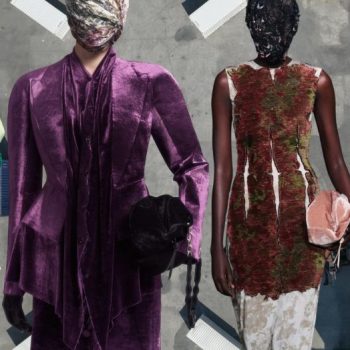
Jonathan Anderson’s first Dior Haute Couture collection arrived with the compressed intensity of a debut that refuses to behave like an introduction. Staged in Paris at the Musée Rodin, it landed barely a week after he presented a menswear show in the same setting—an audacious scheduling choice that made the couture feel less like a separate “ceremonial” universe and more like the next chapter in a single, fast-evolving Dior language.
This guide breaks down the Dior Haute Couture Spring-Summer 2026 bags in runway order—icons, oddities, and the collectible objects that made Anderson’s debut feel like a cabinet of wonders.
If you’re tracking Anderson’s Dior across categories, read our Dior Fall/Winter 2026 menswear bags guide and Dior Spring–Summer 2026 bags guide next.
What distinguished the collection was not a single headline silhouette, but a philosophy: couture as research, as object-making, as an ecosystem of craft where nature isn’t copied for decoration, but studied as a system—always adapting, never concluding. “When you copy nature, you always learn something,” the show notes read, positioning couture as a living laboratory rather than a museum of perfect endings.
And because Anderson thinks in objects as much as he thinks in clothes, the accessories were not a supporting cast. They were artifacts—miniature sculptures, relics, talismans, and sly provocations—carried like evidence that the atelier can still produce wonder on demand.
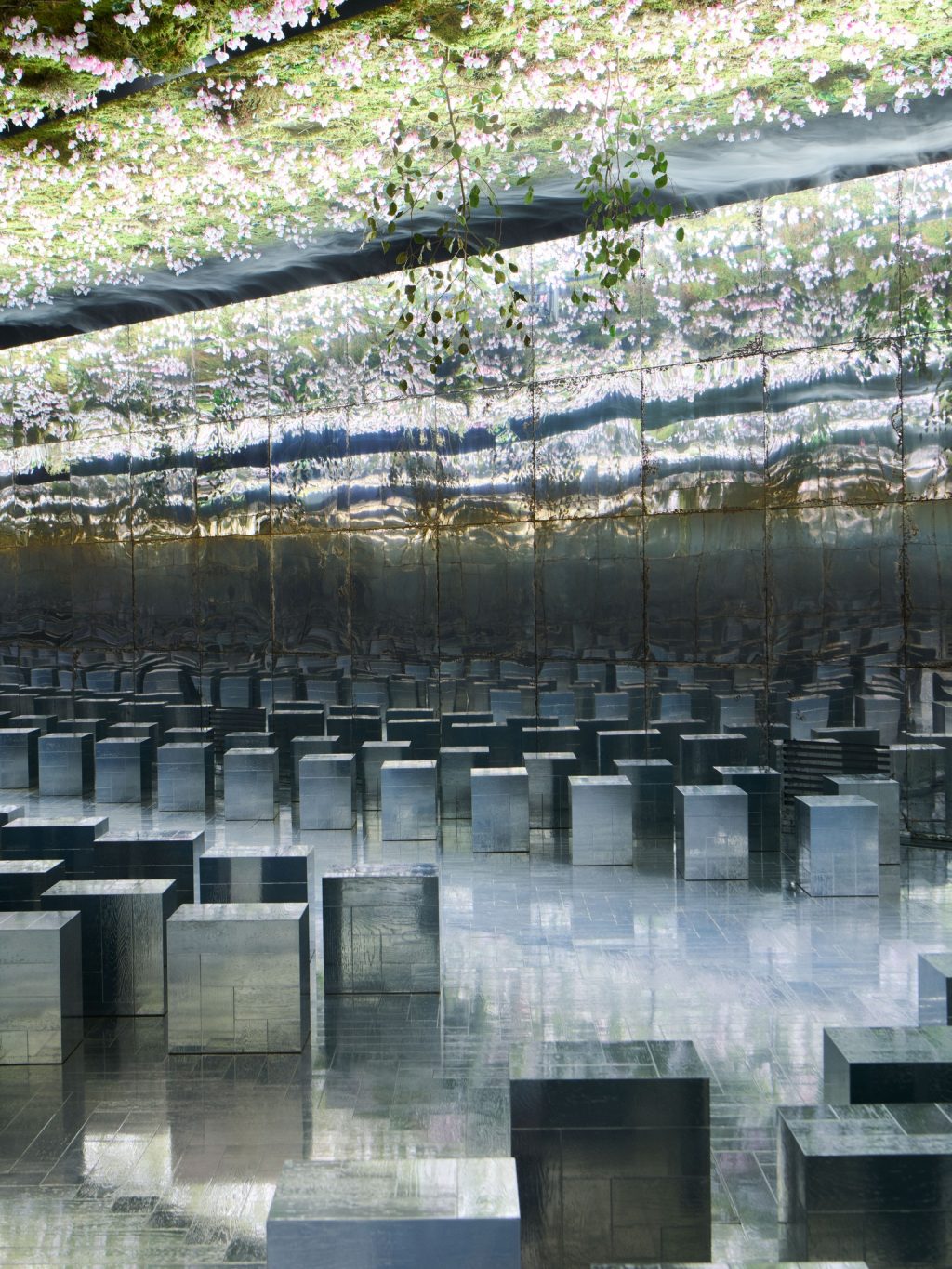
The Musée Rodin was more than a venue; it was a narrative device. A mirrored runway and a ceiling animated by florals created the sense of walking inside an arranged memory—half greenhouse, half hall of reflections. The effect wasn’t “garden party,” but something stranger: nature curated, suspended, and staged as an atmosphere you move through.

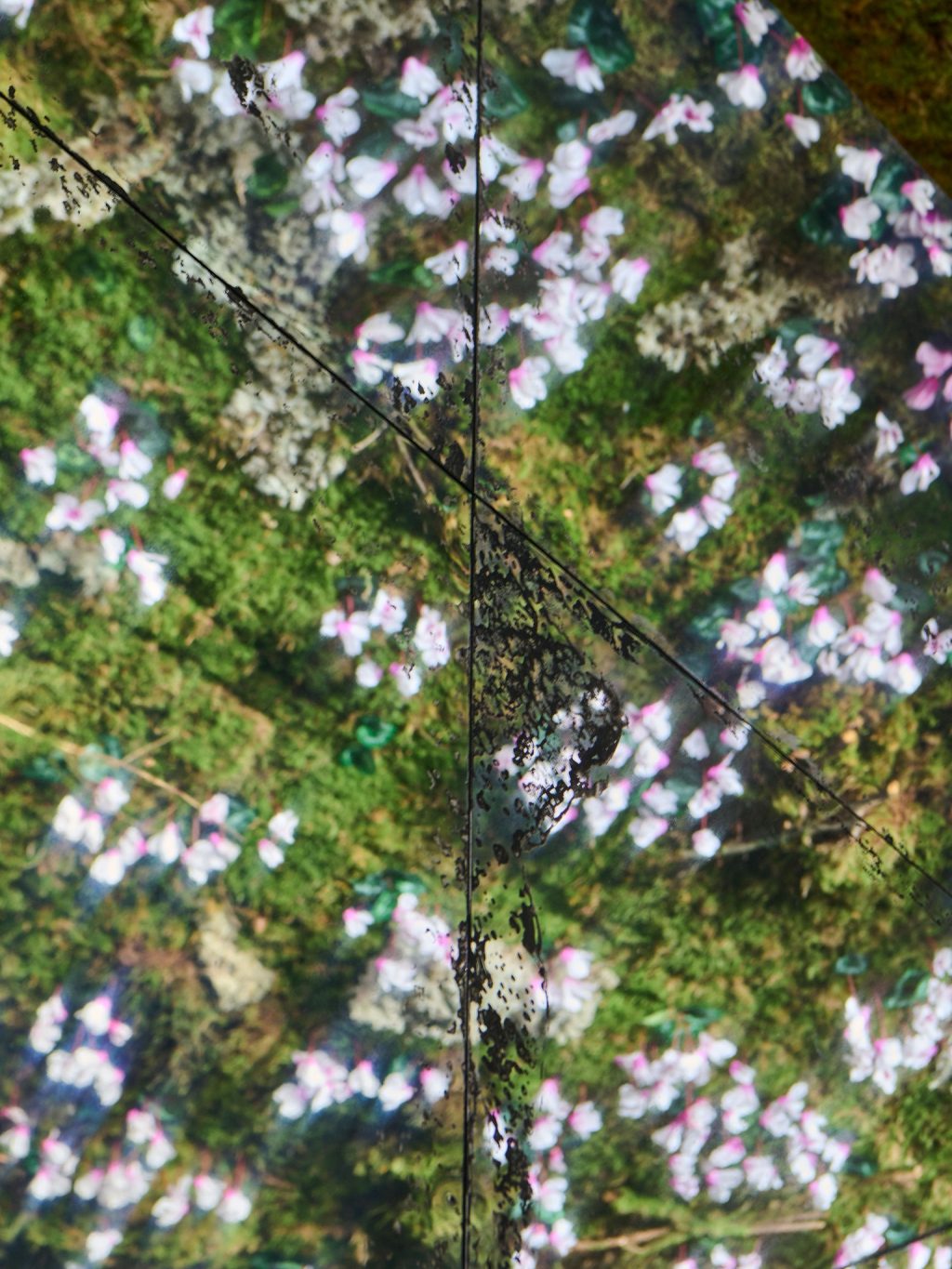
Before anyone sat down, the invitation had already started the story. Reports described guests receiving a small nosegay—paired with a chocolate thimble—while the digital invitation leaned into a field of cyclamen, making the flower motif feel intimate and oddly practical, like a charm you can keep in a pocket.
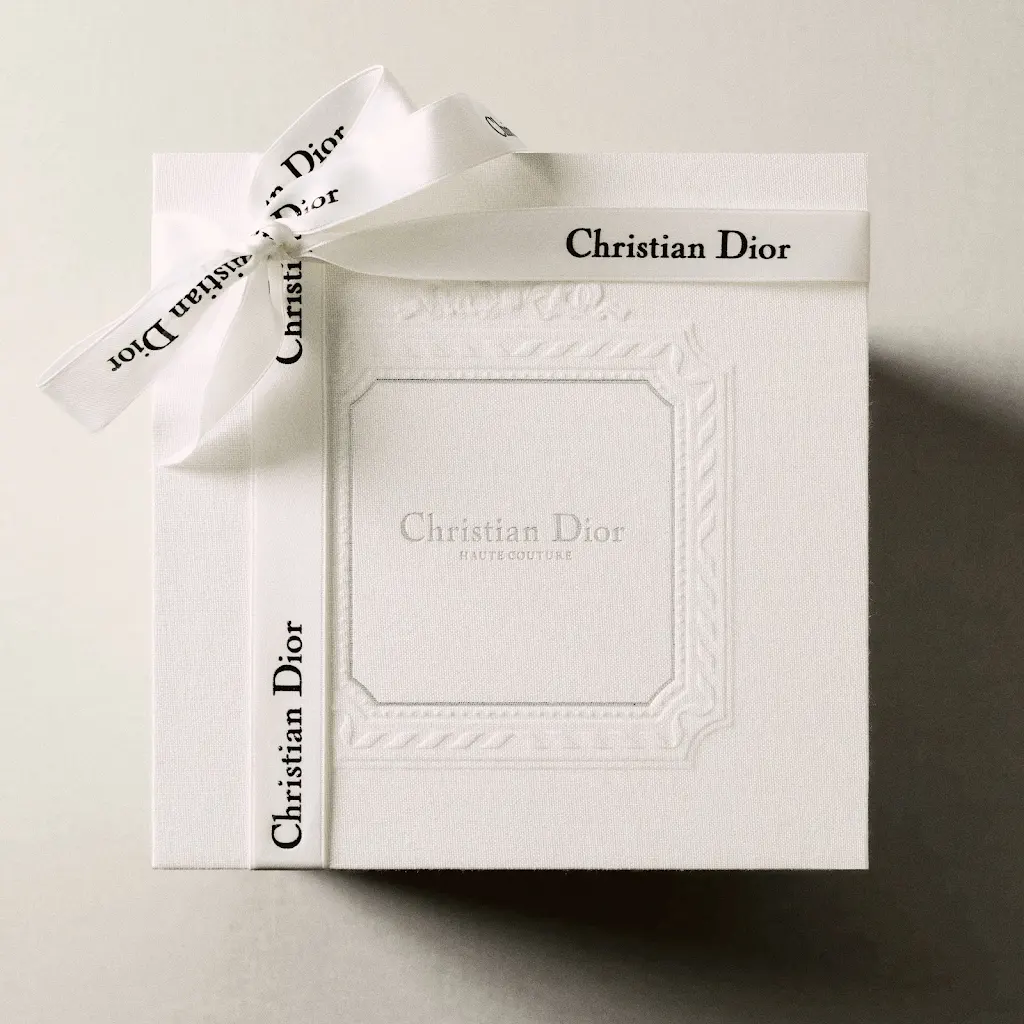
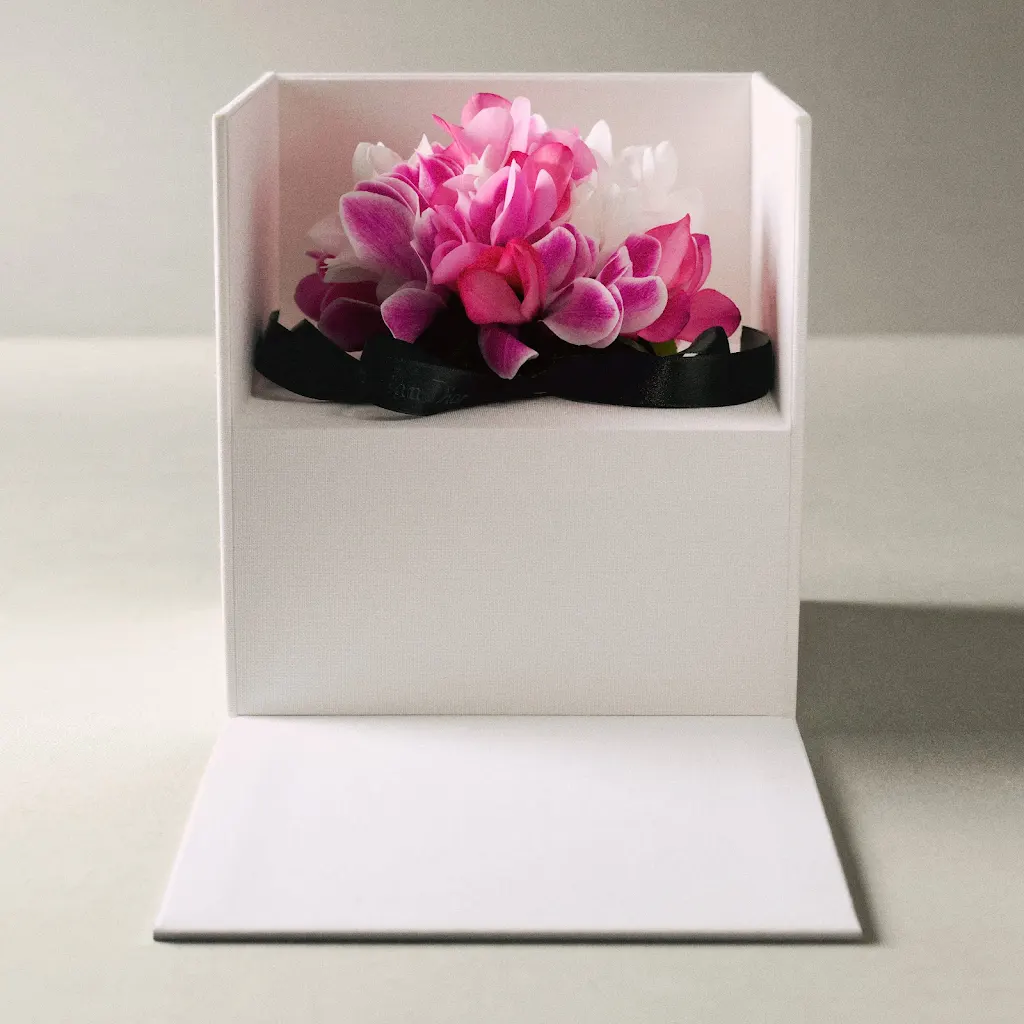
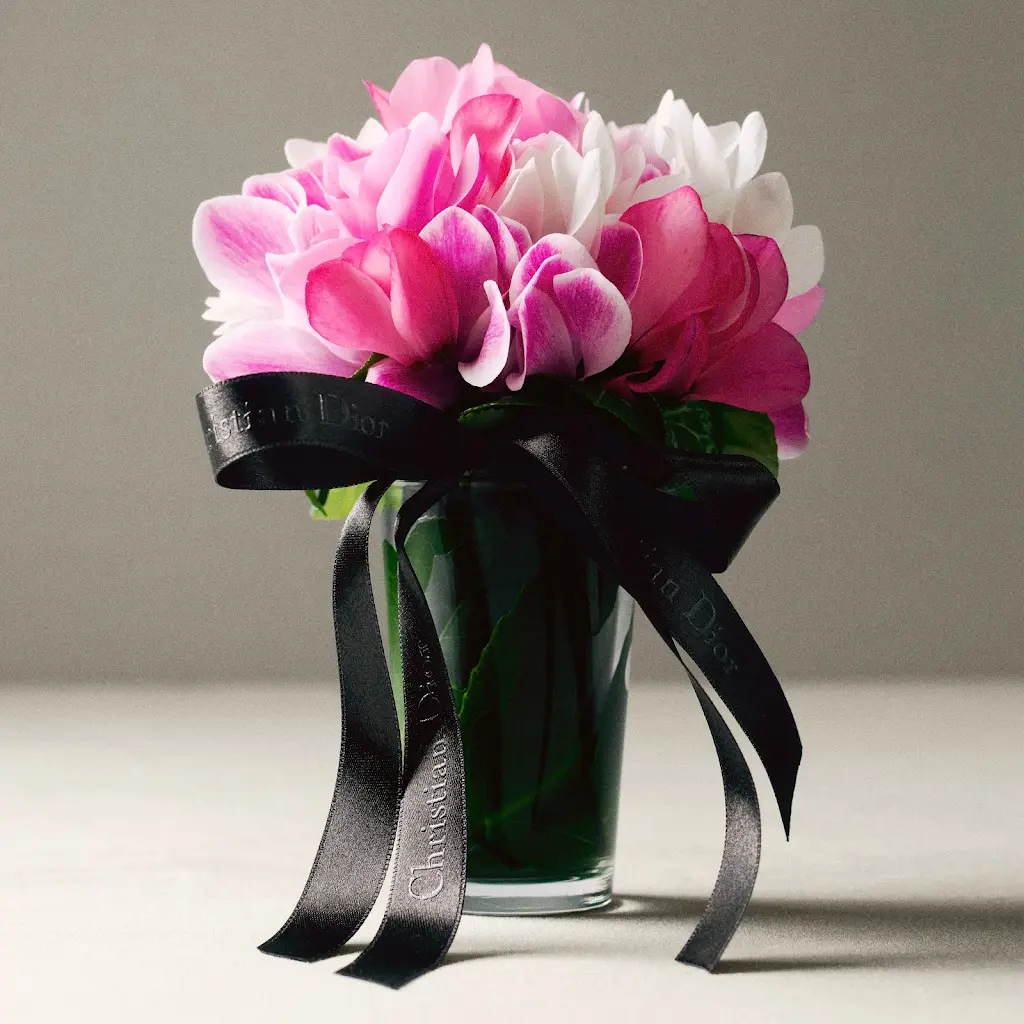
Cyclamens weren’t chosen for easy symbolism; they were chosen because they were personal. Multiple accounts traced the flower back to John Galliano—who visited Anderson during the making process and brought cyclamens tied with ribbon (and, memorably, sweets for the team).
Anderson turned that gesture into a couture-level refrain: flowers overhead, flowers at the ear, flowers as the emotional “starter culture” for everything that followed.
A Couture “Wunderkammer” built like living knowledge
Anderson structured the couture like a cabinet of curiosities—a wunderkammer where objects spark emotion first, and meaning arrives later. That framing matters for the bags, because many of them behave like found pieces: some feel “collected,” others feel “grown,” and several feel as if they were molded rather than sewn.
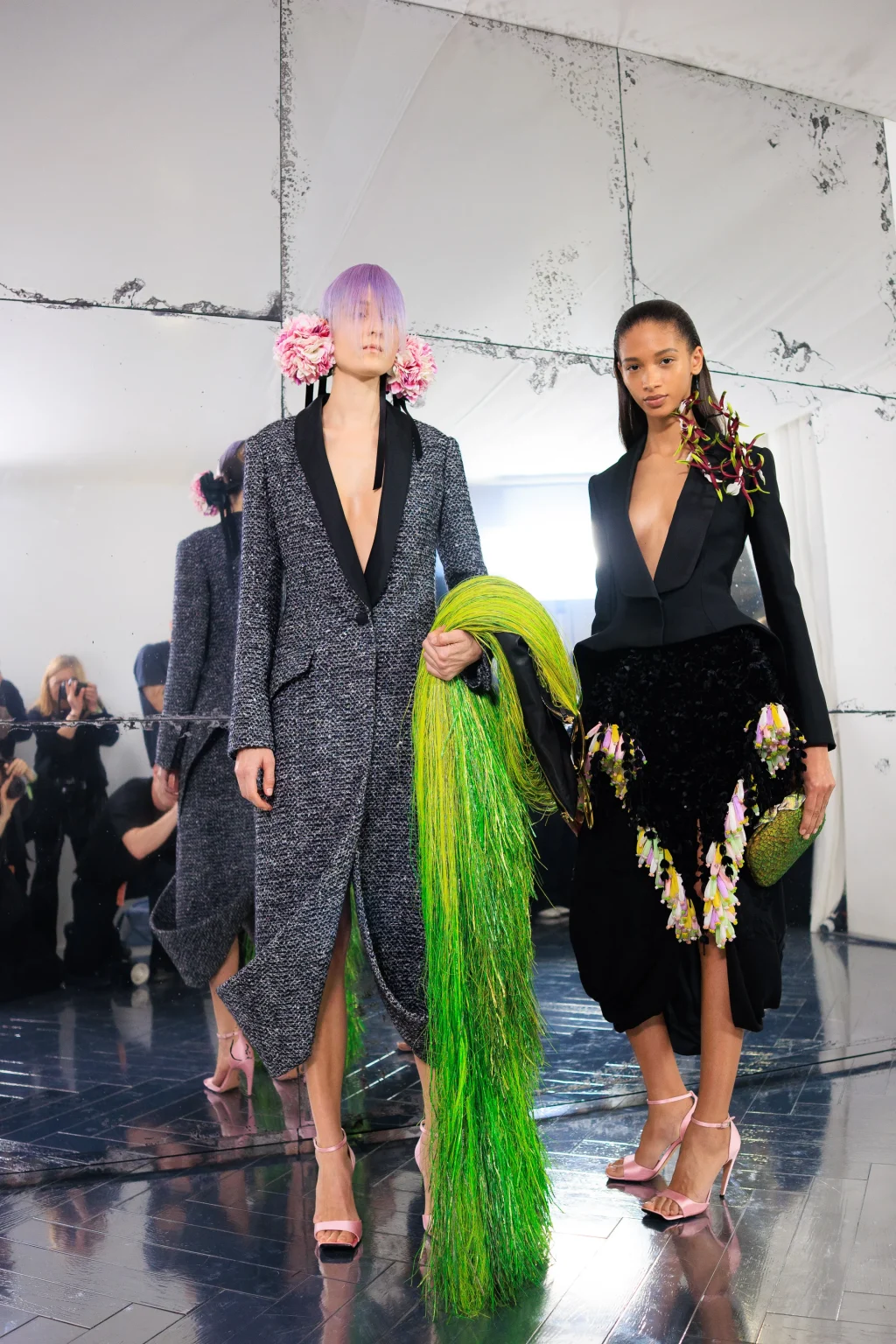
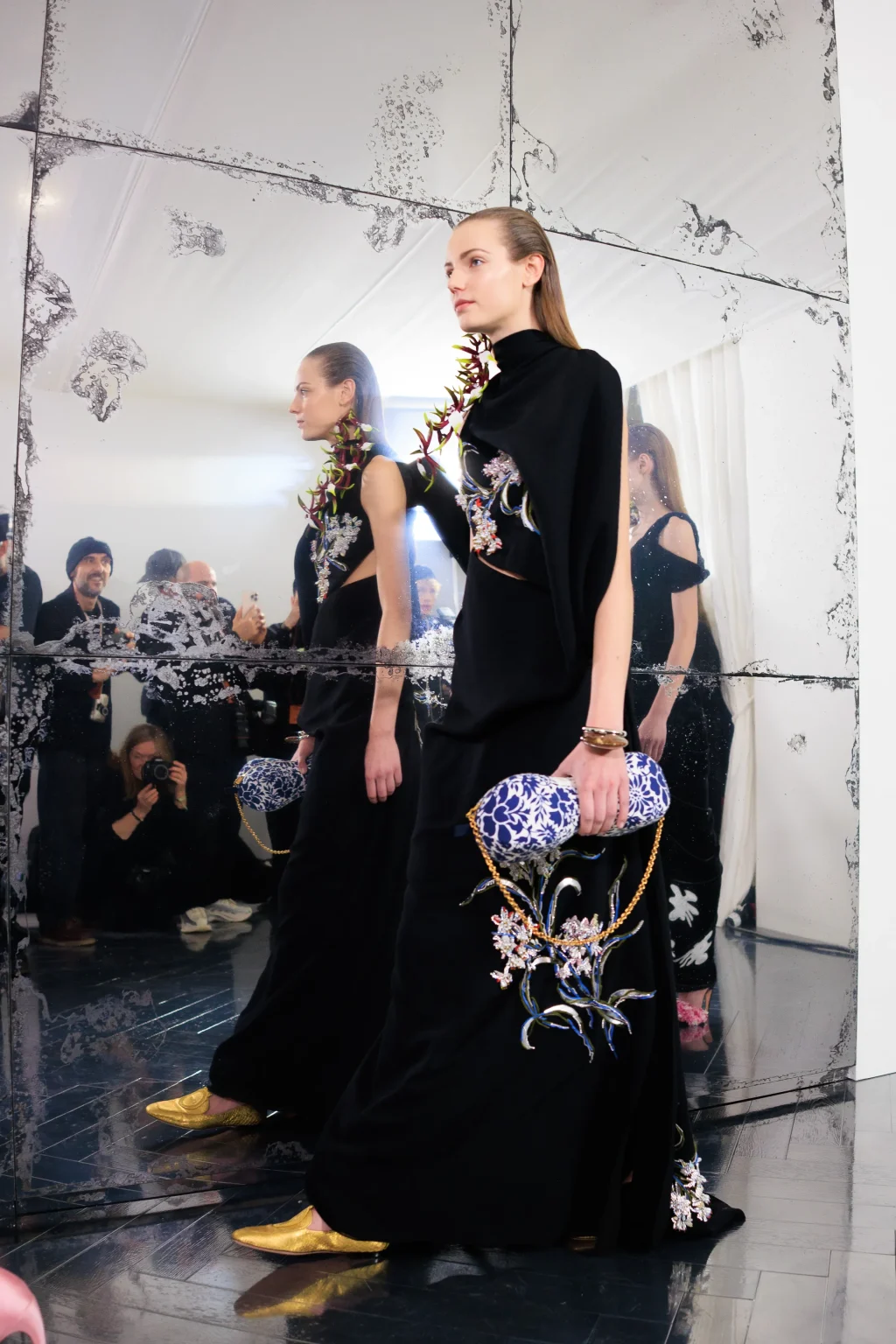
TheIndustry’s reporting made the accessory thesis explicit: handbags sprouted green cascades as if rooted in the garments; animal-headed purses and insect-like minaudières appeared; shell forms and other nature-coded clutches pushed the idea that couture accessories can be as imaginative—and as sellable—as the dresses.
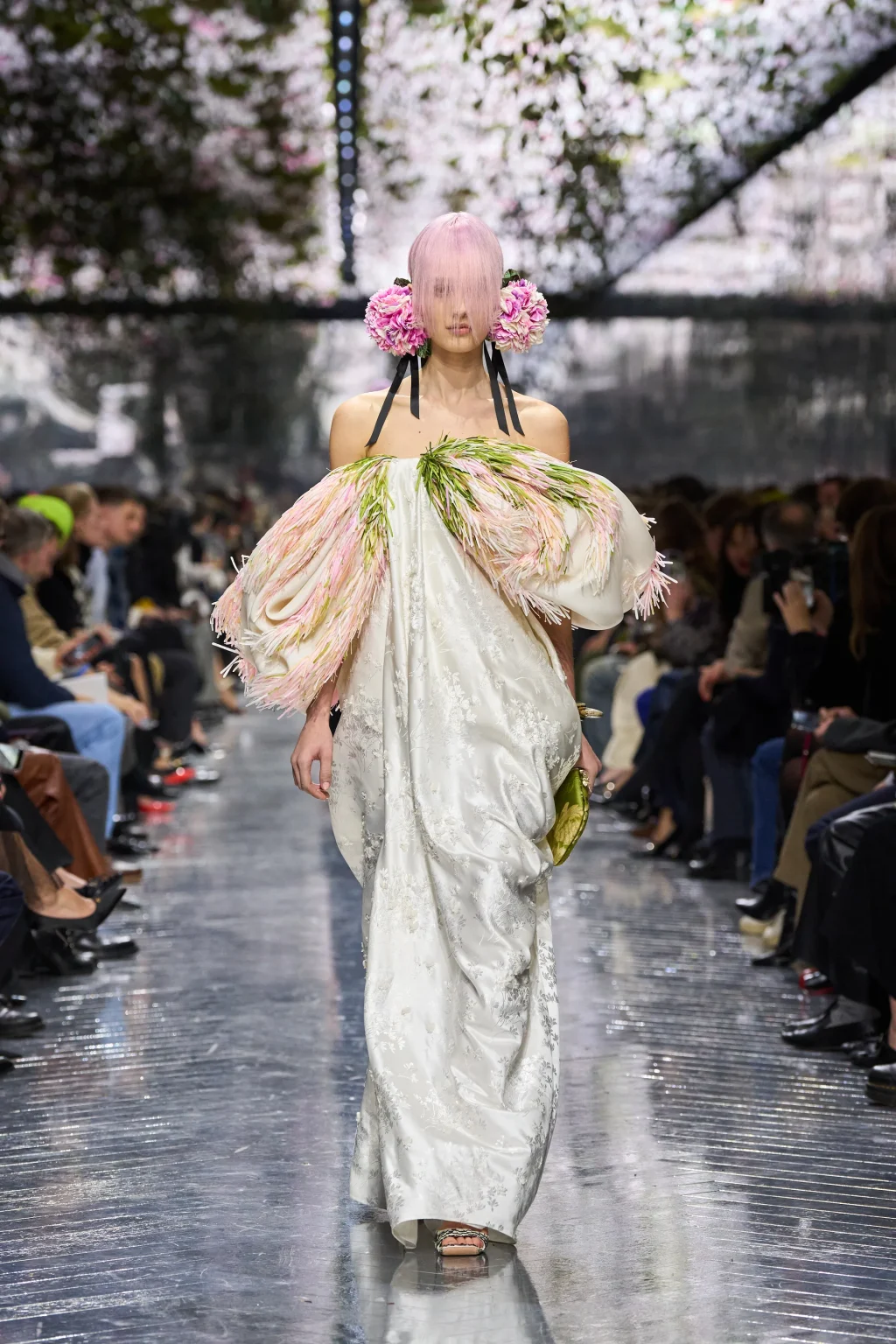
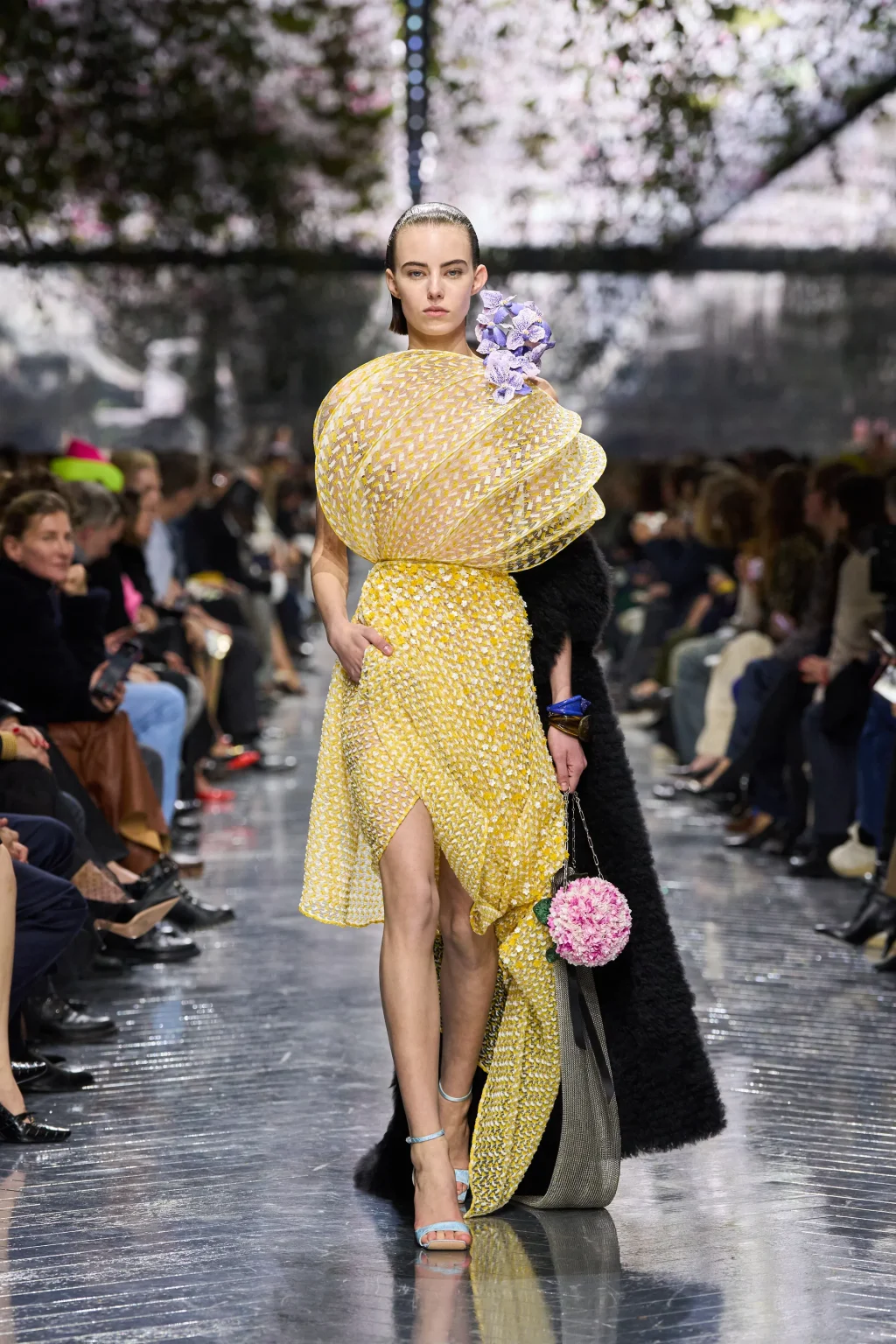
What follows is the complete bags edit, kept in runway order. Where Dior didn’t publish an official name for a couture piece, we’ve assigned a consistent editorial title—clear, searchable, and easy to reference.
The bags, in runway order
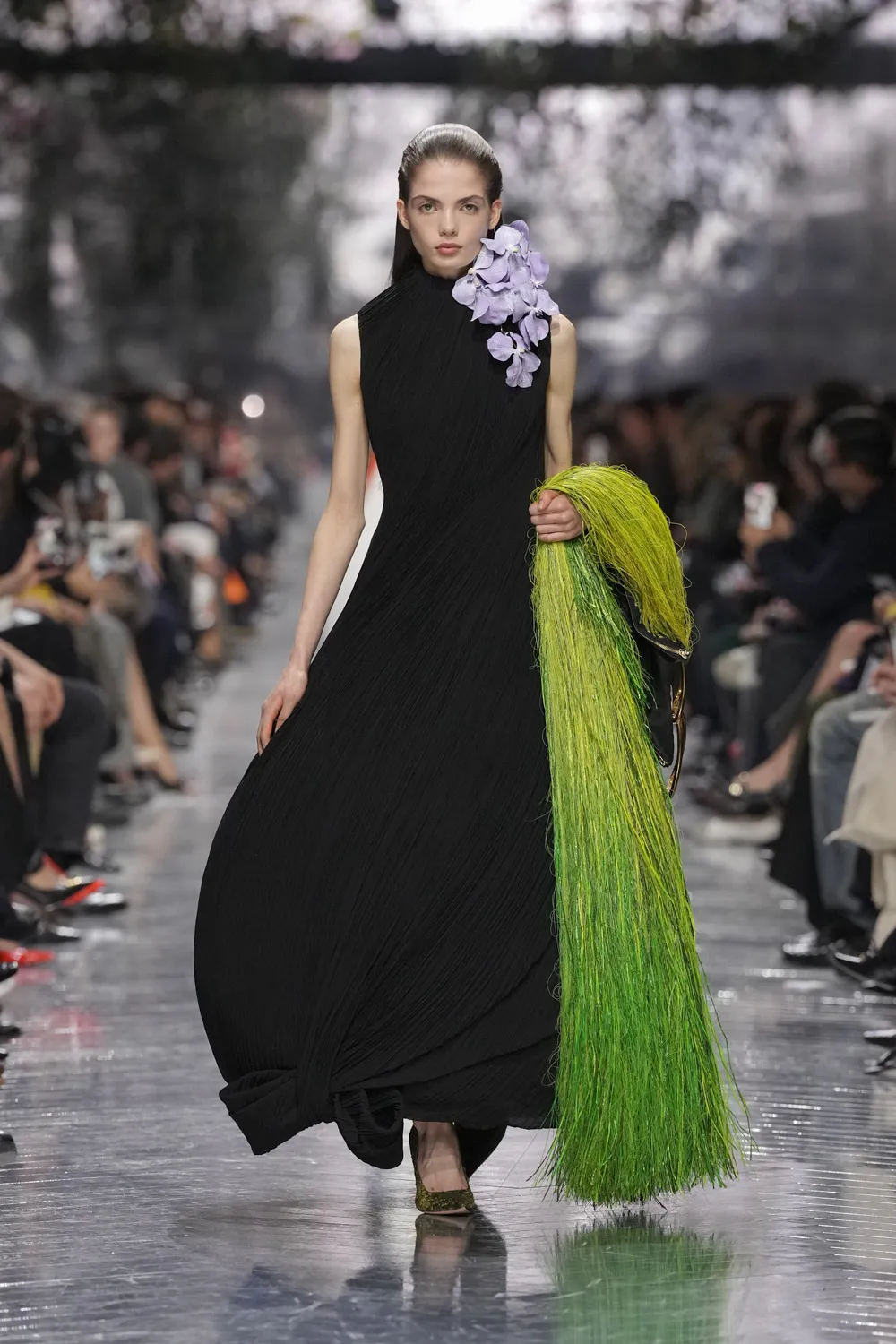
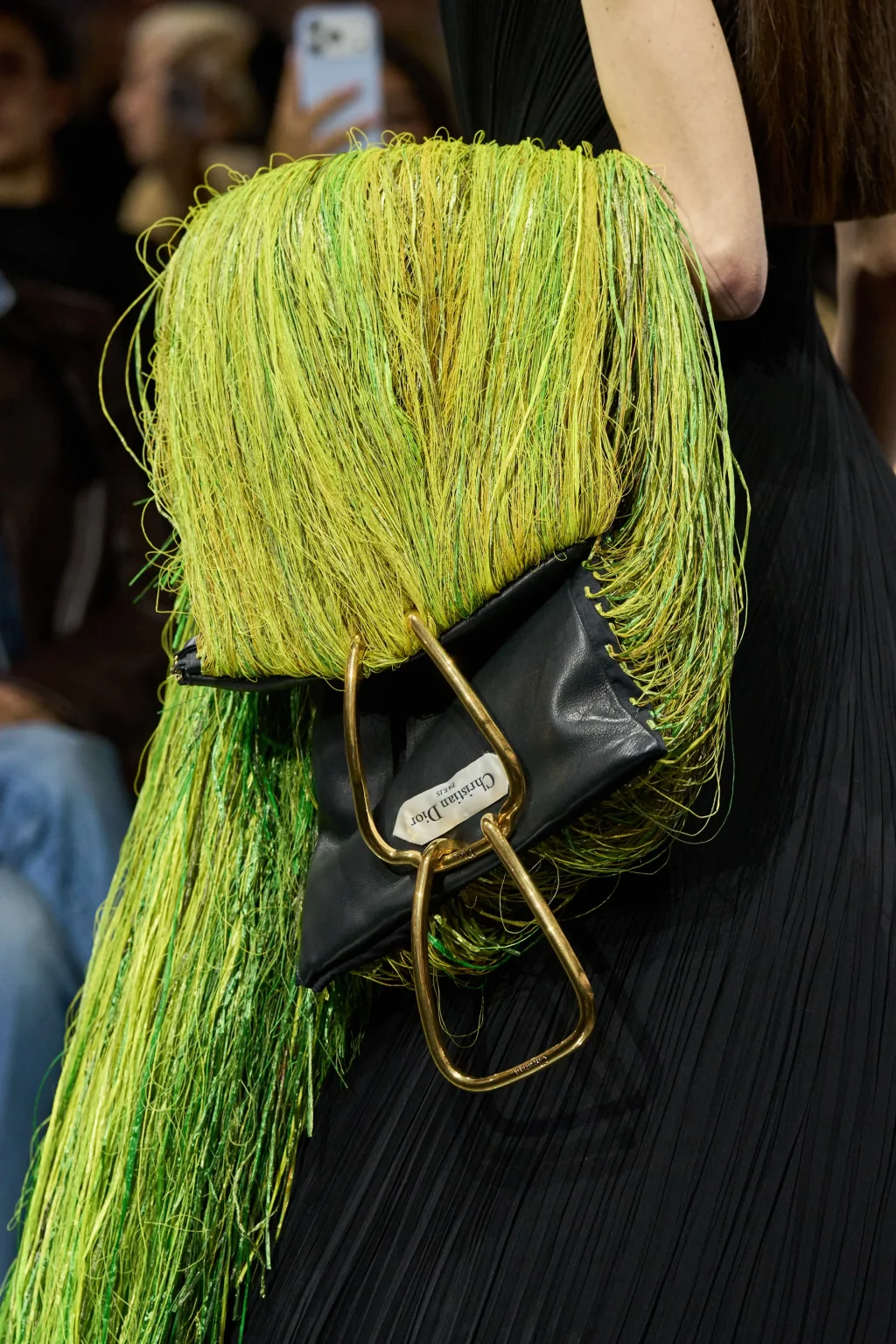
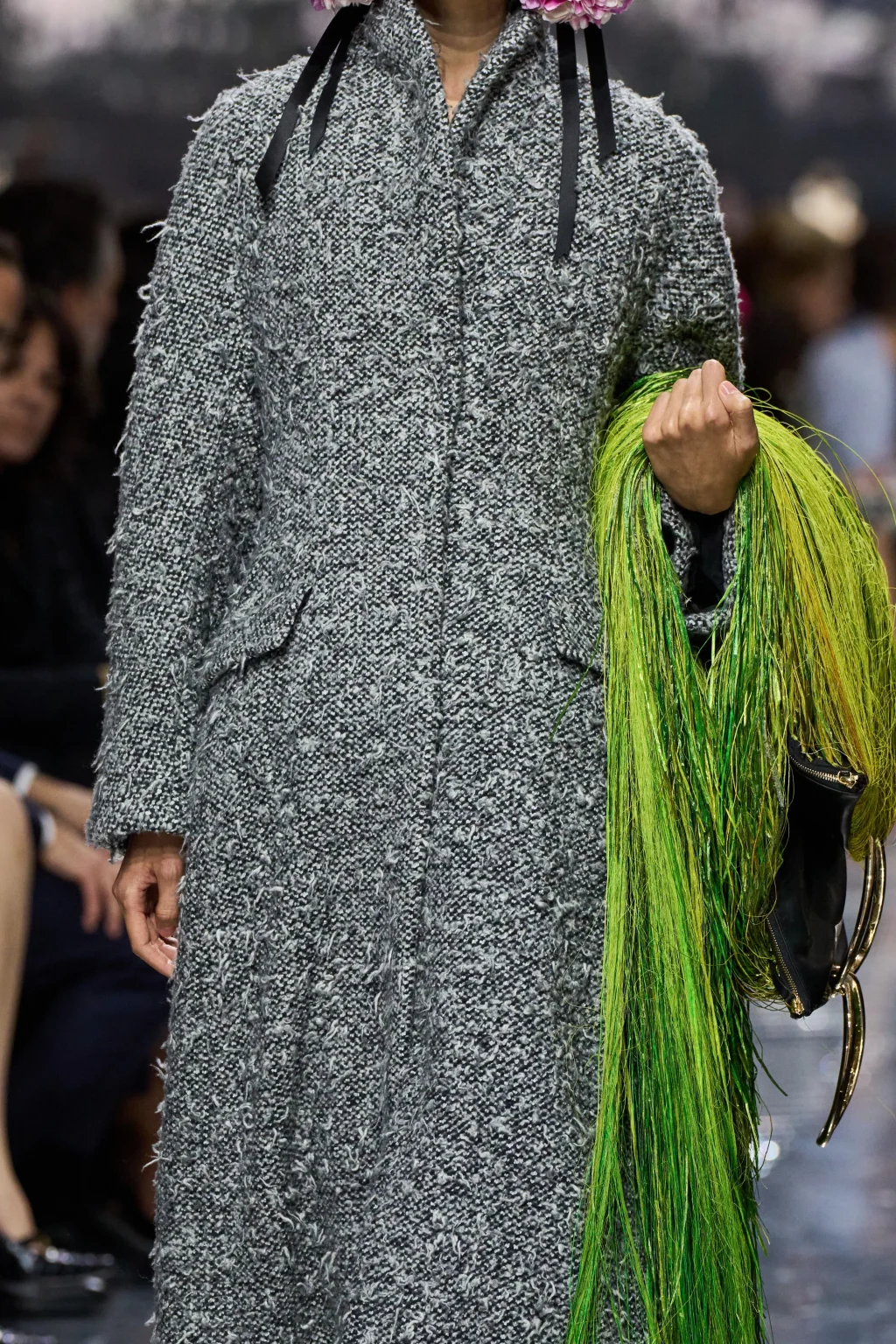
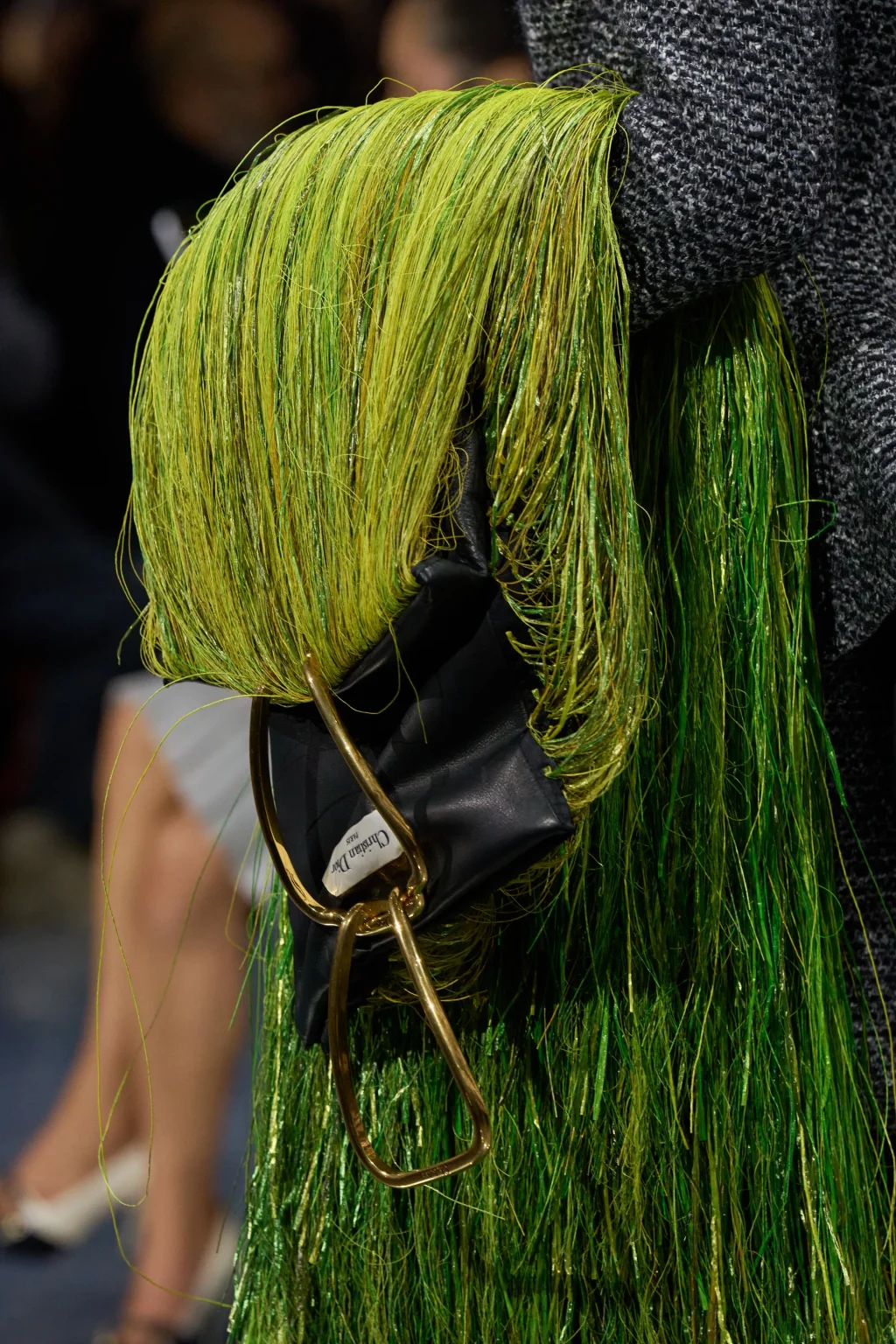
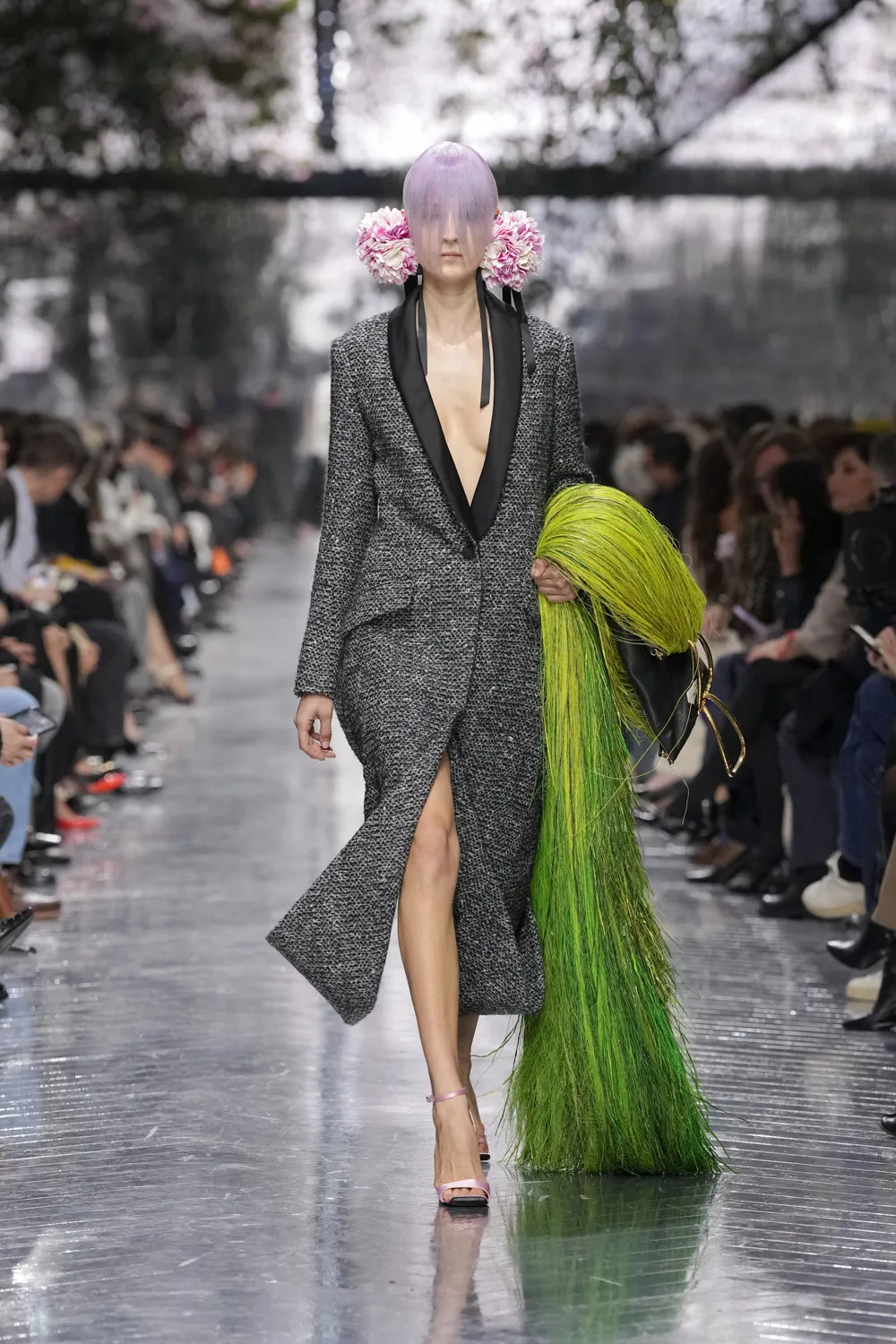
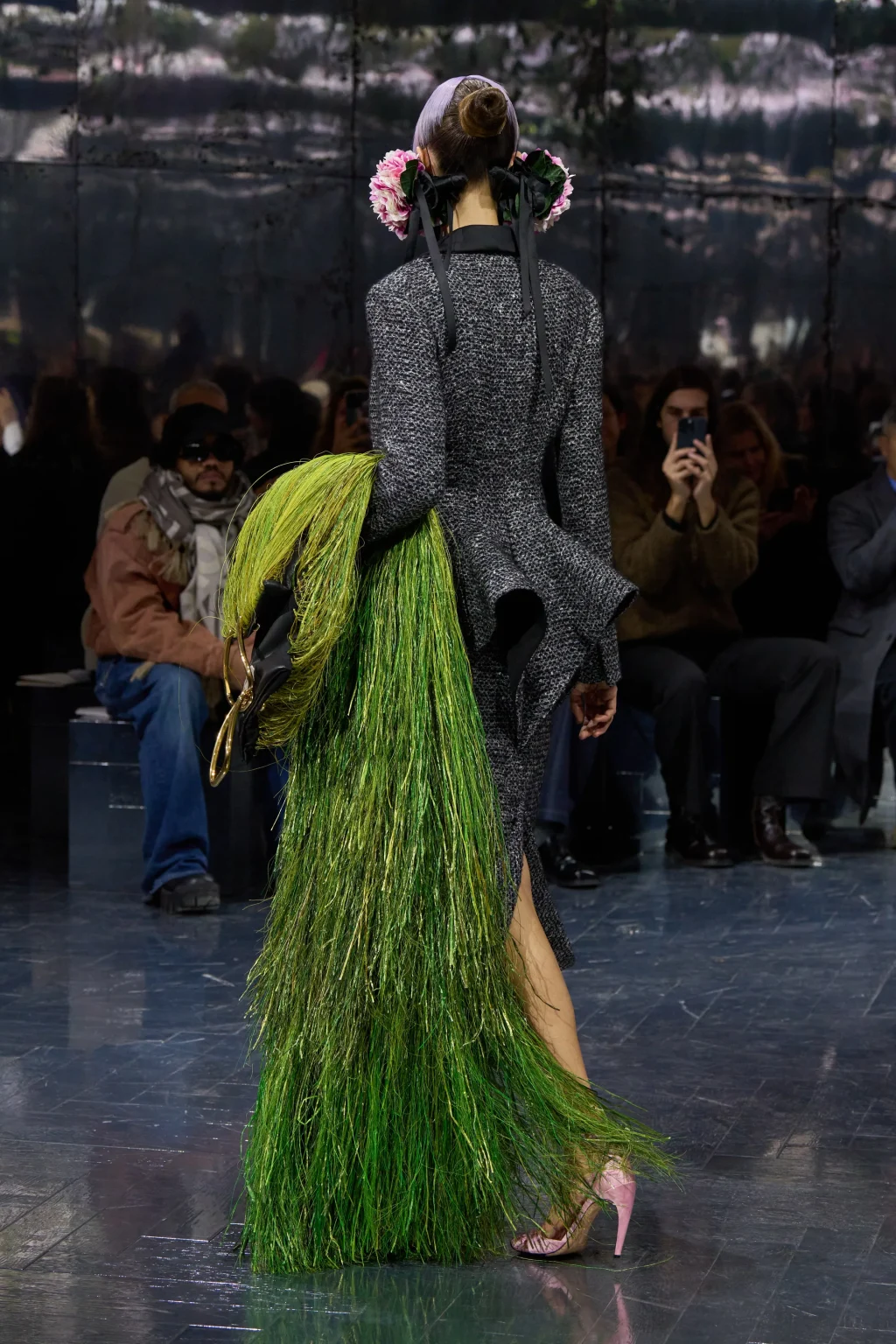
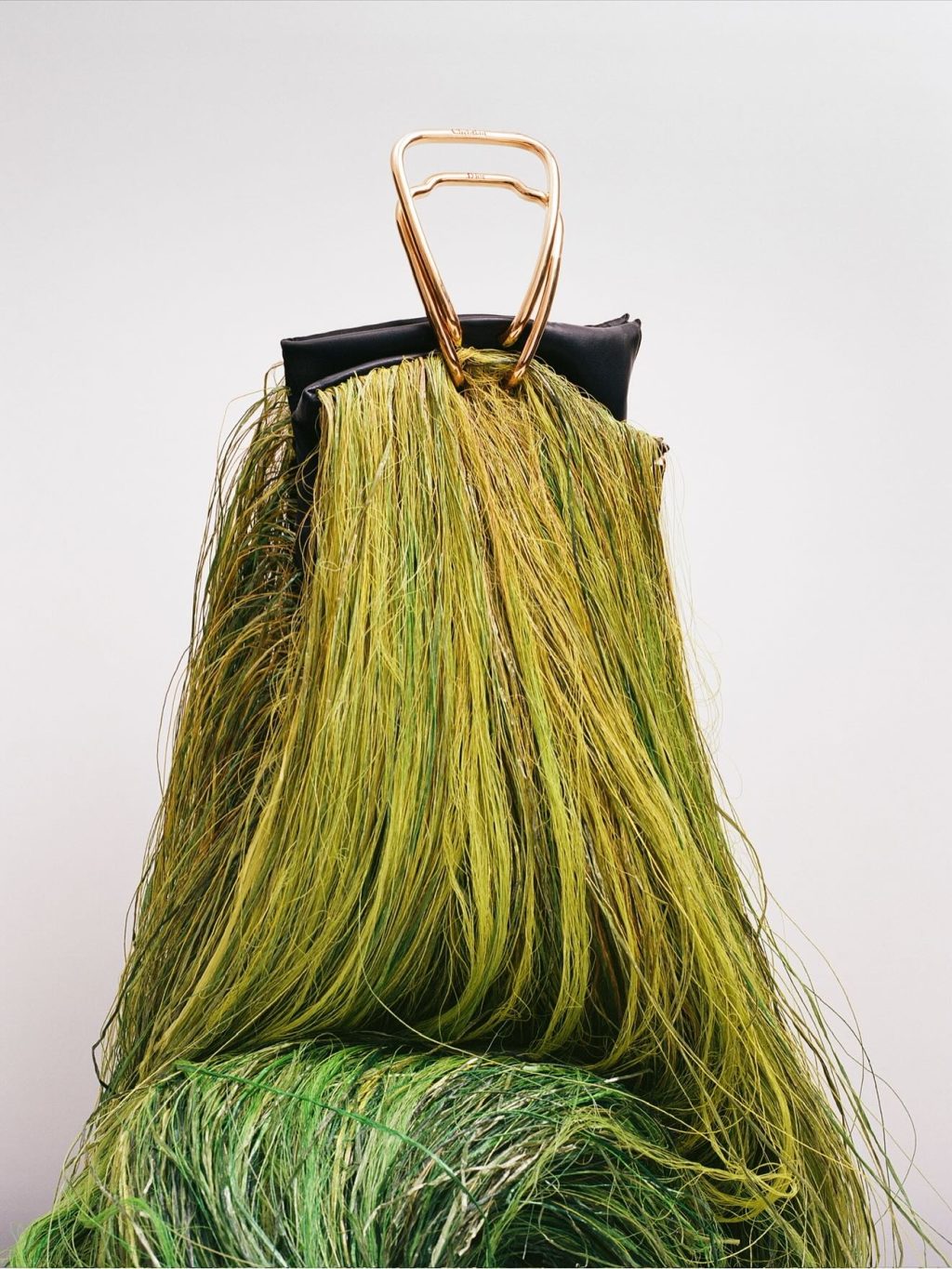
1. The Grass-Cascade “Garment Bag” Pouch
This is couture accessory-making at its most theatrical: a black leather core nearly swallowed by a waterfall of lime “grass” fringe, finished with exaggerated gold-toned, hanger-like handles that read as functional sculpture. In motion, the fringe becomes an aura—less “bag” than portable terrain—echoing the show’s recurring tension between the natural and the made.
What makes it feel distinctly Anderson is the subversion of expected luxury signals. The label is visible, the hardware is assertive, and the surface is deliberately unruly—like couture refusing to be polished into silence.
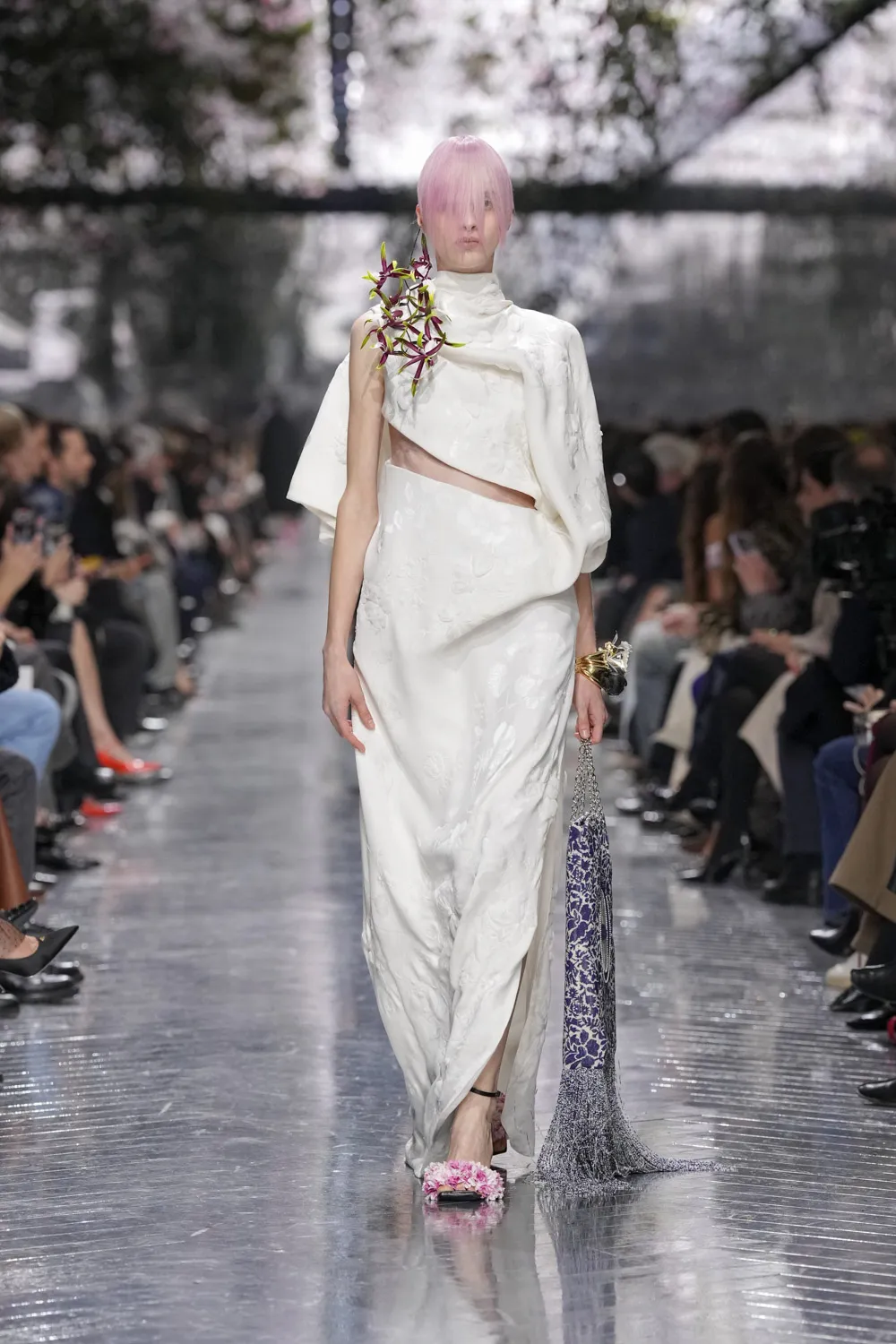
2. The Chainmail Drape Bag
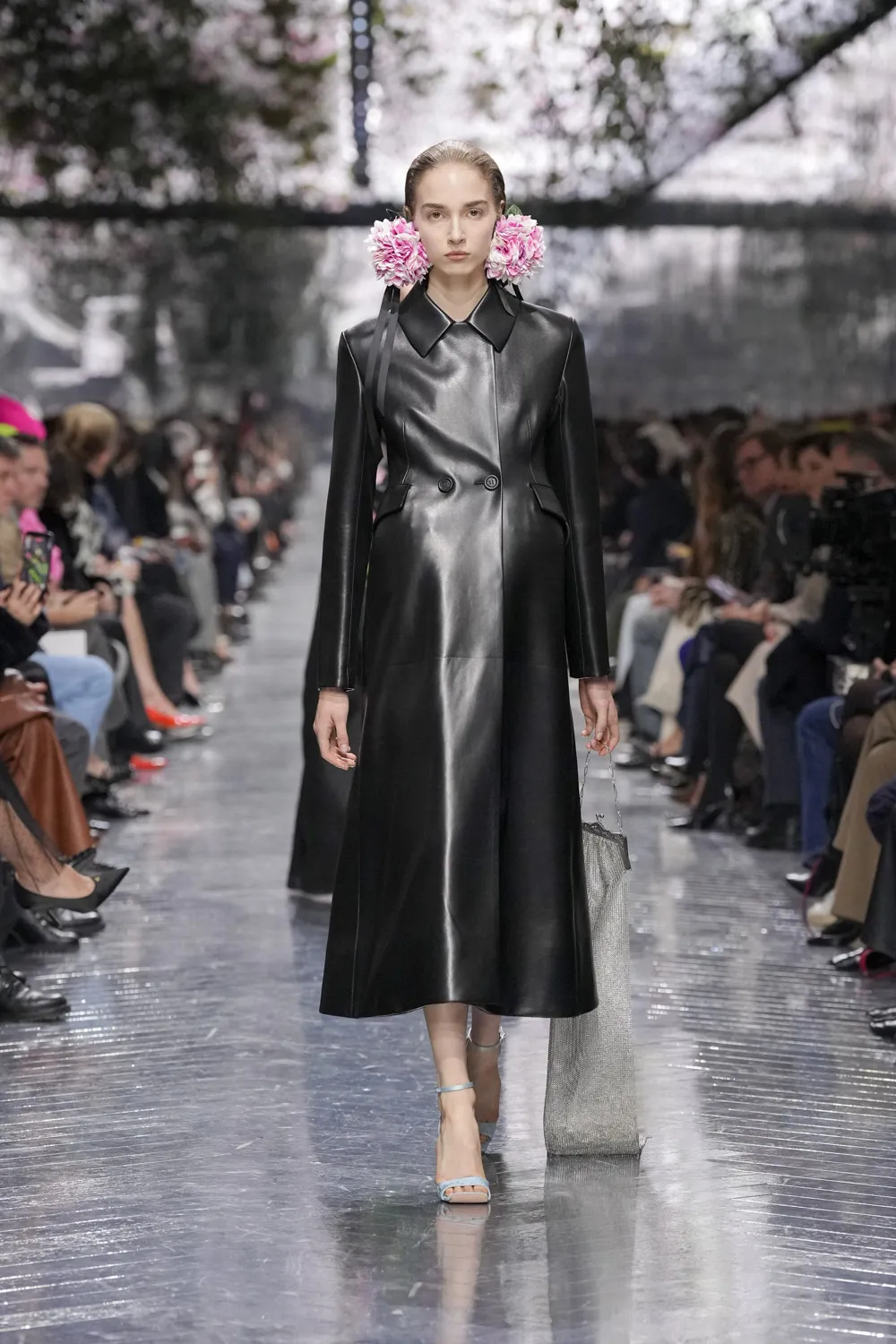
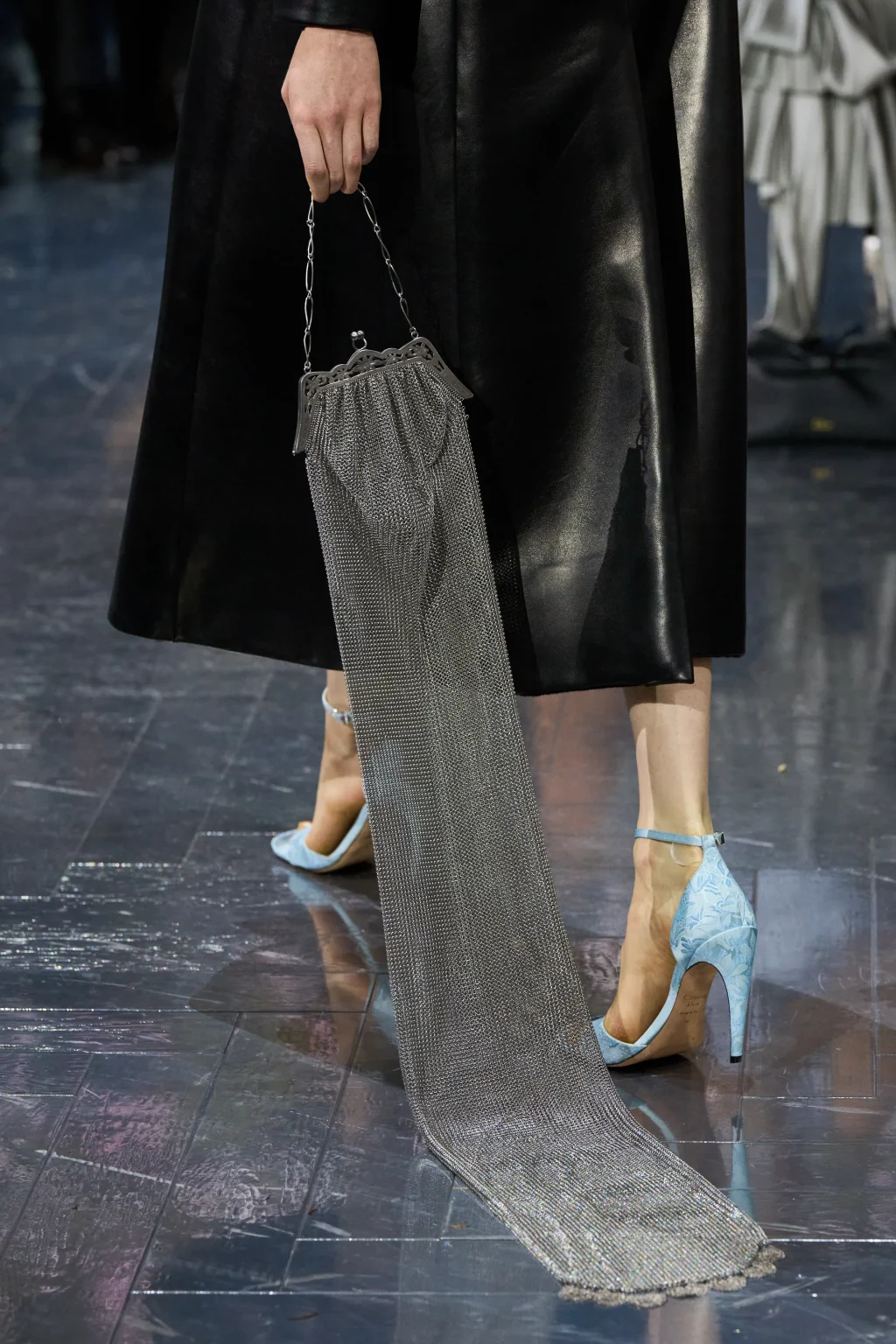
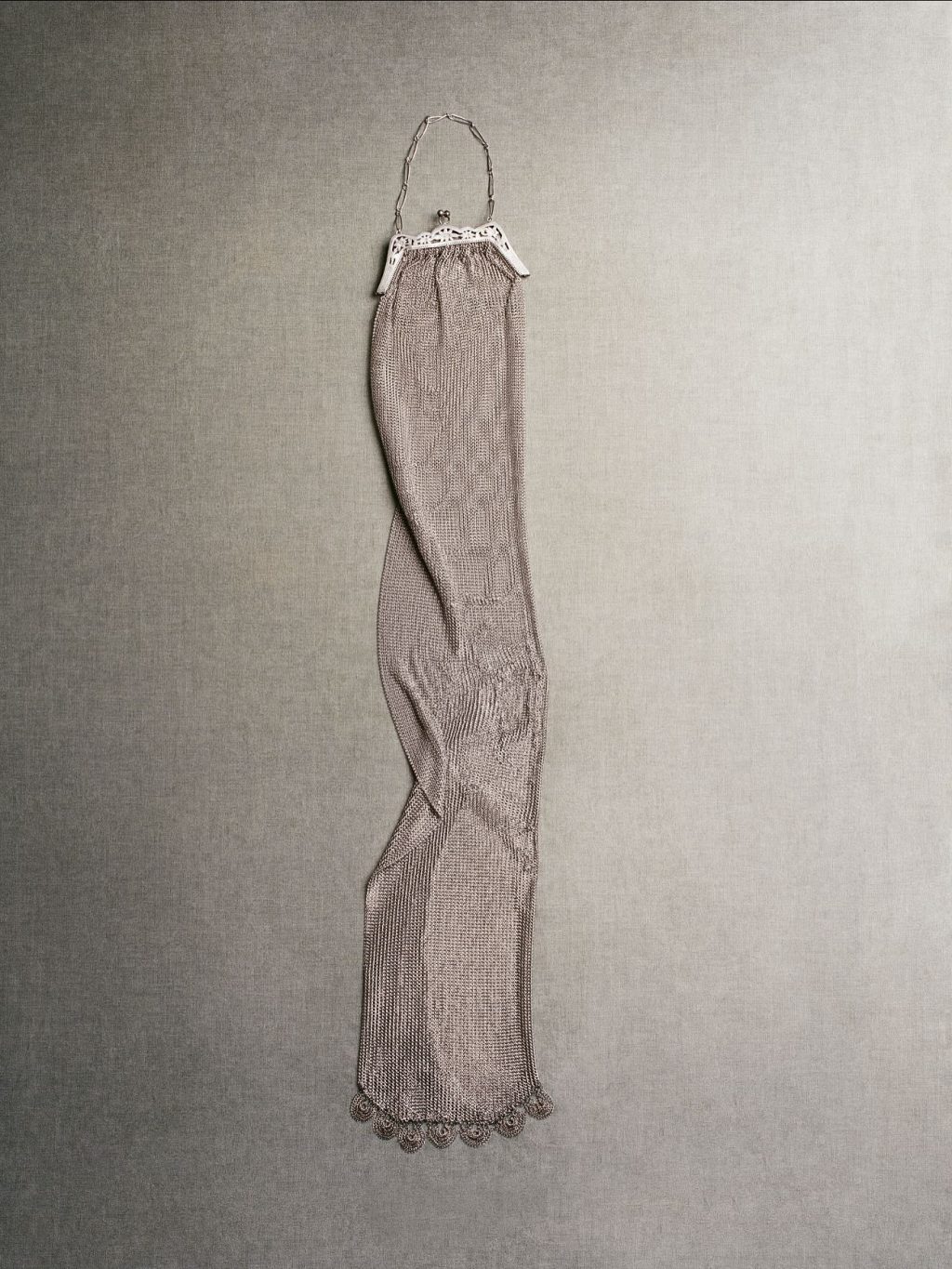
A bag that behaves like fabric: a long, metal-mesh column that trails behind the model, turning the act of carrying into choreography. It’s eveningwear logic taken literally—if couture is “flou” and movement, why should the bag stay rigid?
It also serves as a bridge between eras: it nods to vintage mesh purses, but its scale is contemporary and slightly absurd, as if the atelier enlarged a precious object until it became architectural.
3. The Metallic “Bumblebee” Orb Minaudière
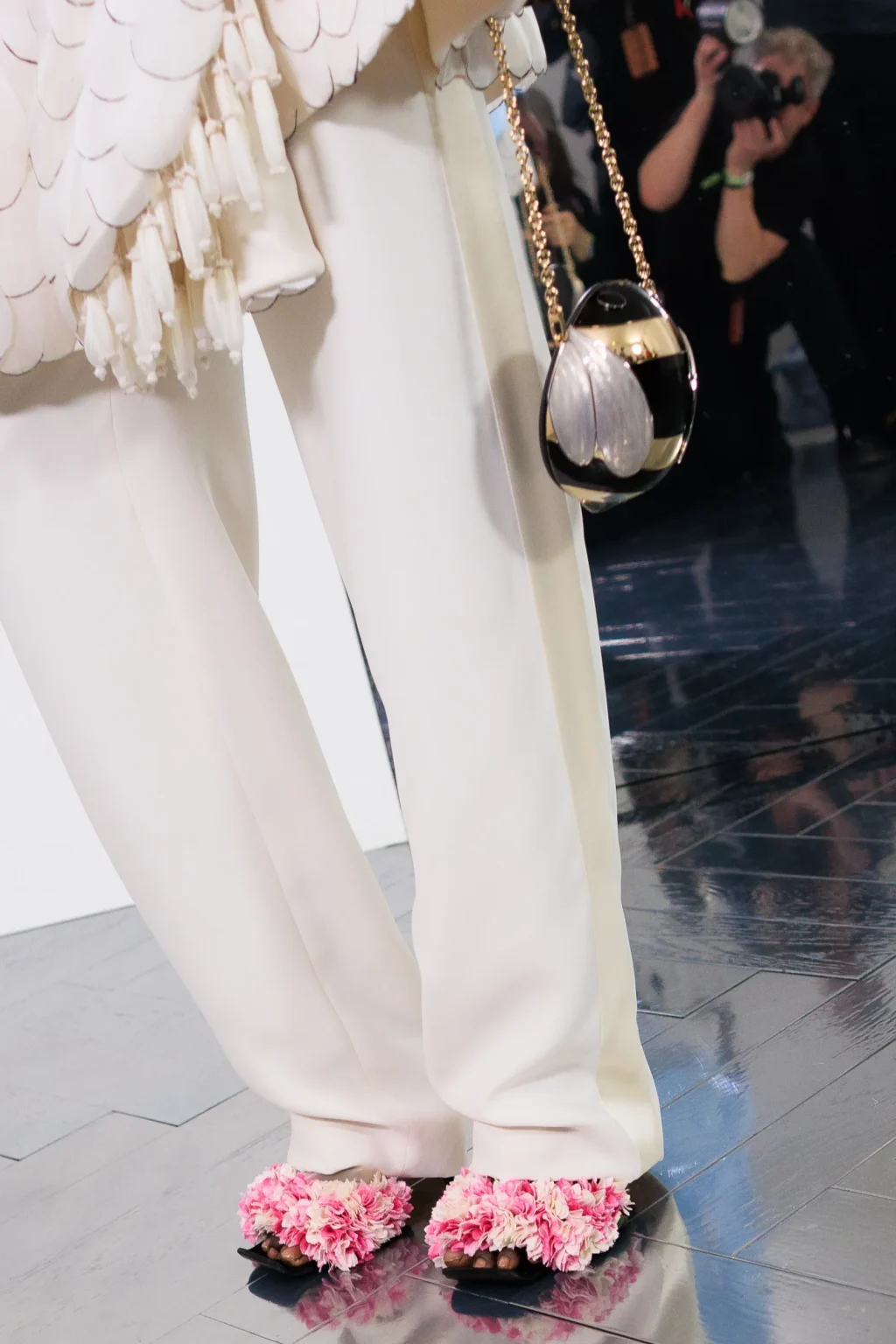
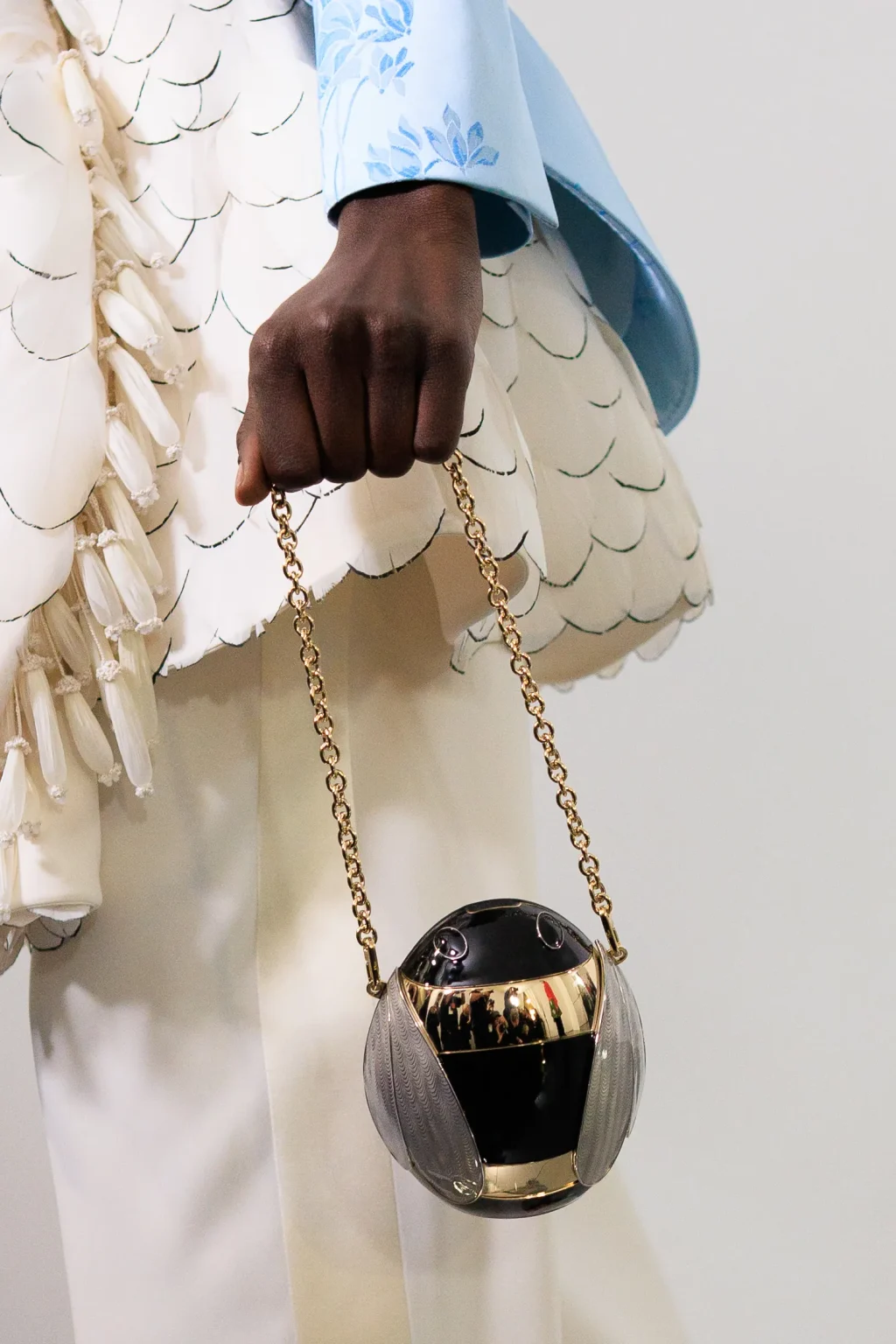
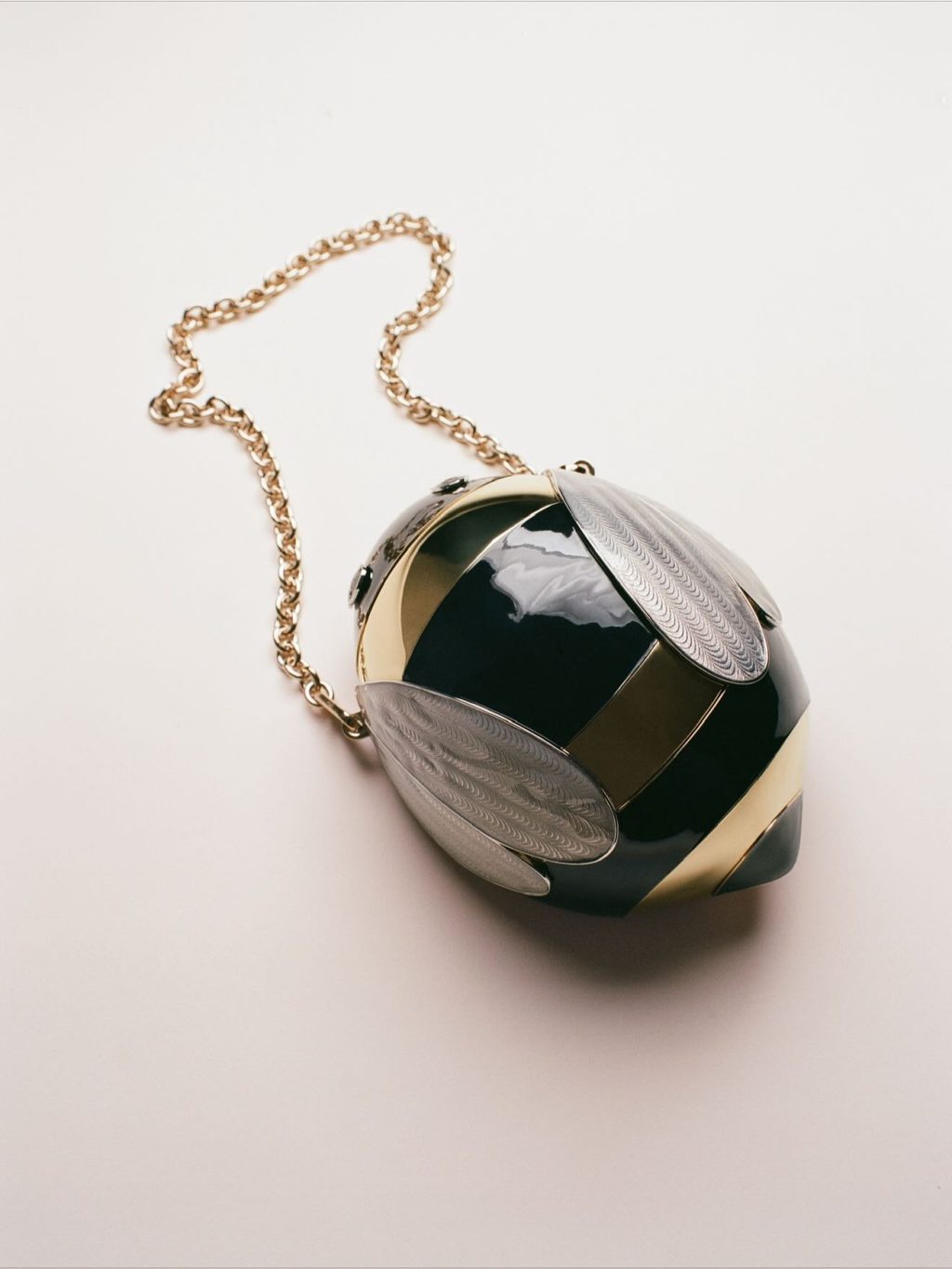
A glossy, rounded minaudière with a wing-like accent and a chain strap—part insect, part jewel, part future reliquary. The humor is subtle but real: couture seriousness punctured by something that could have escaped from a collector’s drawer.
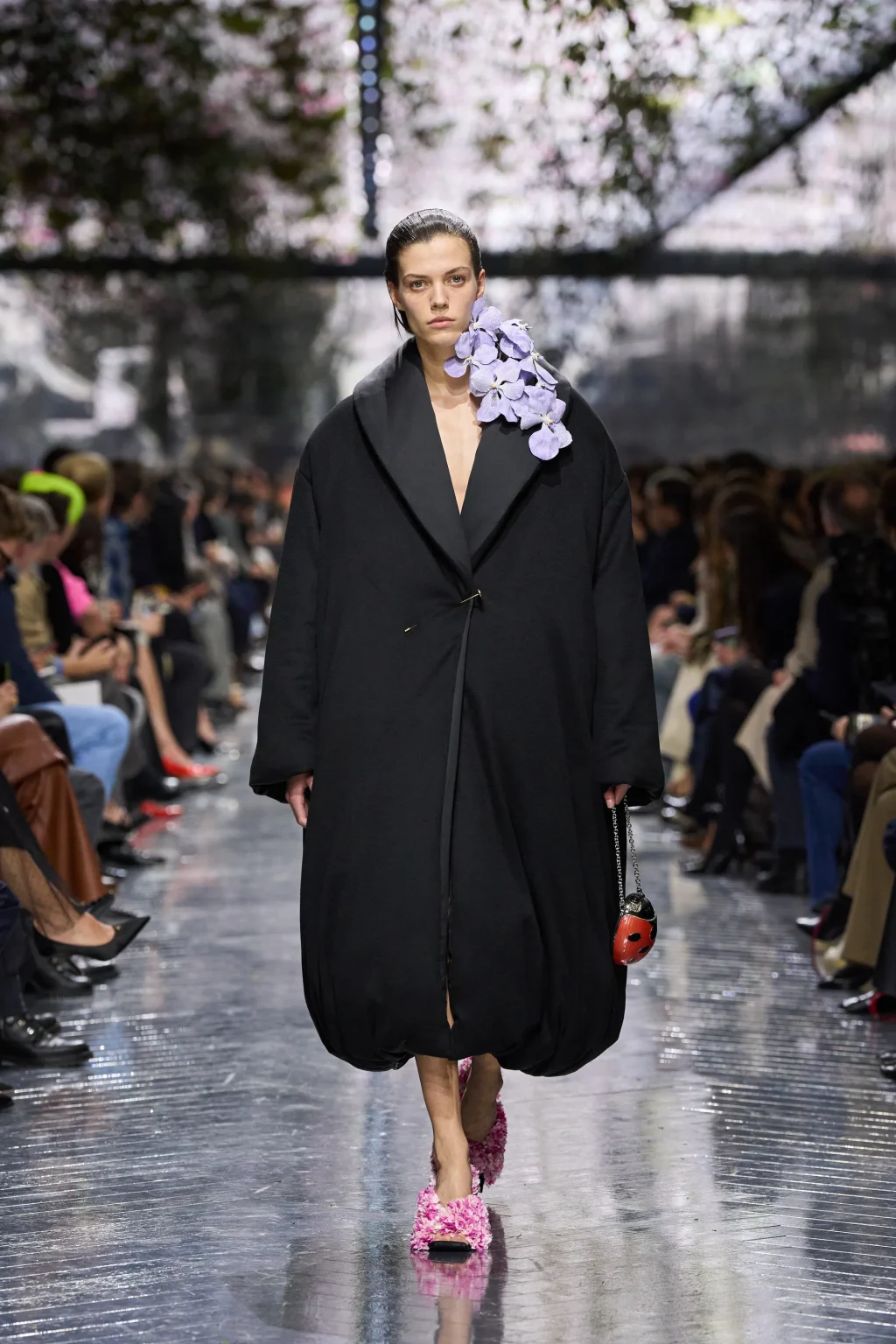
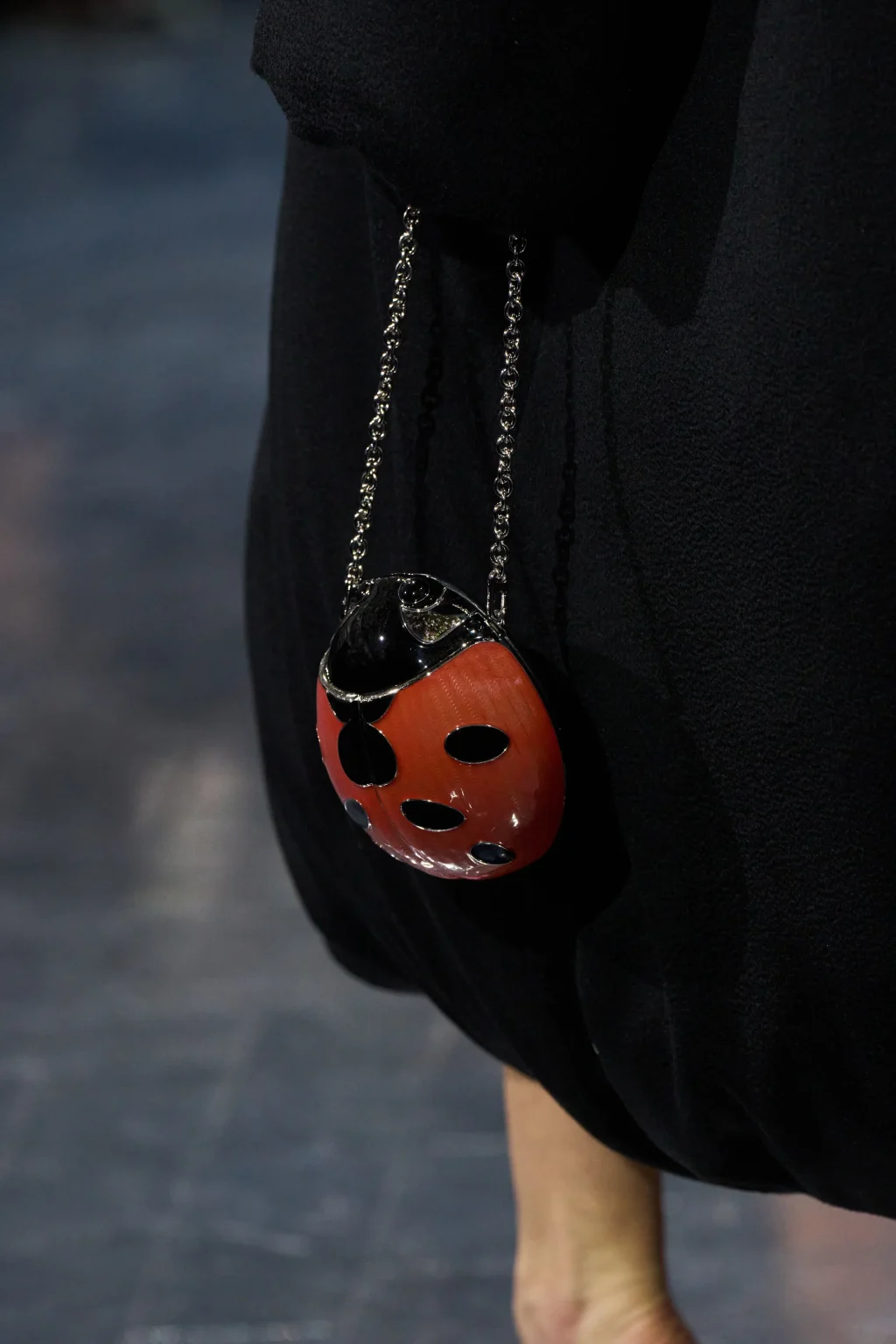
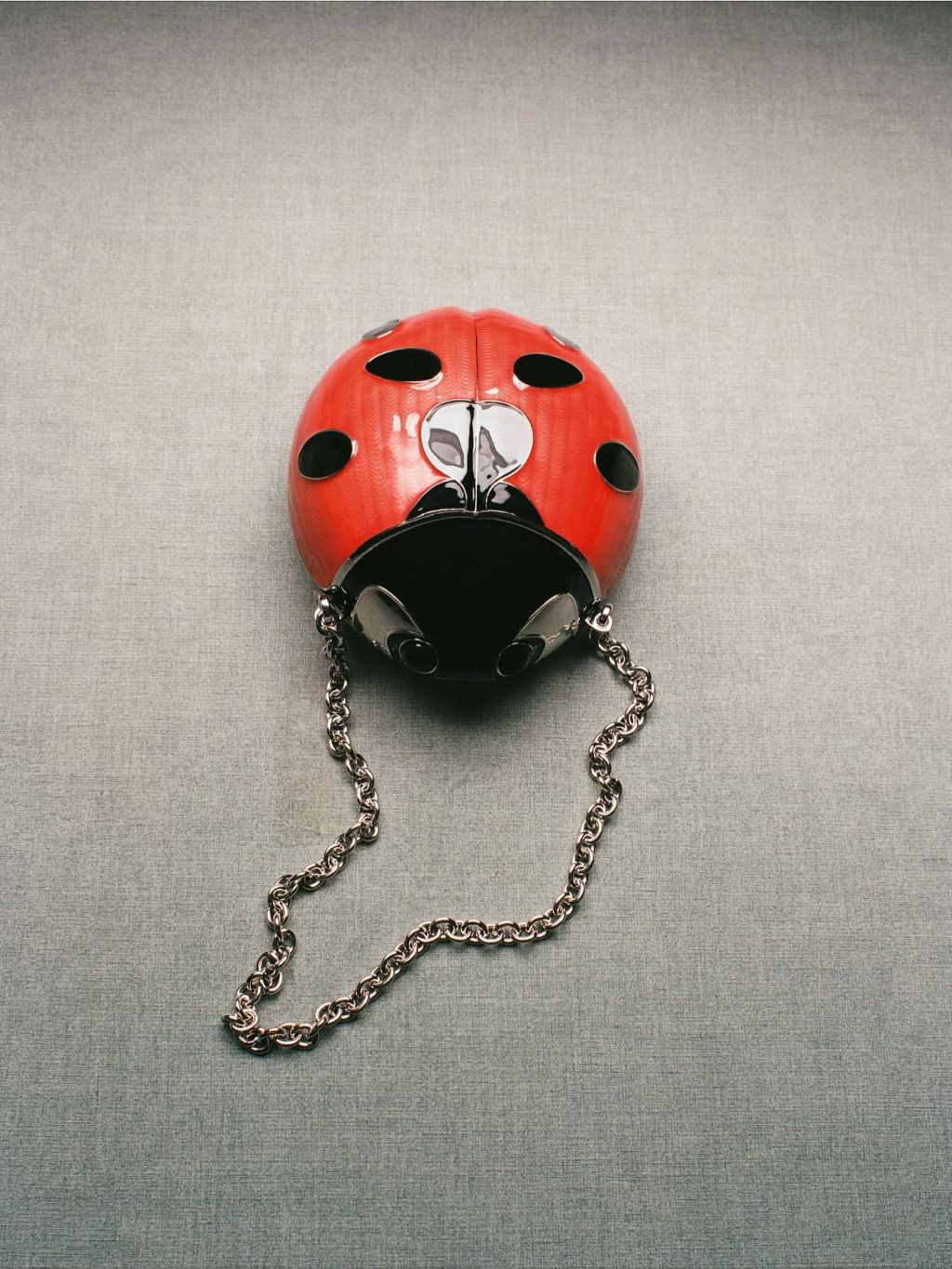
4. The Ladybird (Ladybug) Orb Minaudière
The same “specimen” idea, but in a clearer symbol: ladybird/ladybug coding that reads like a lucky charm. ELLE explicitly called out ladybug minaudières as part of the show’s nature-driven accessories vocabulary, reinforcing that these weren’t random novelties—they were intentional talismans.
5. The Crystal-Fringe Triangle Bag
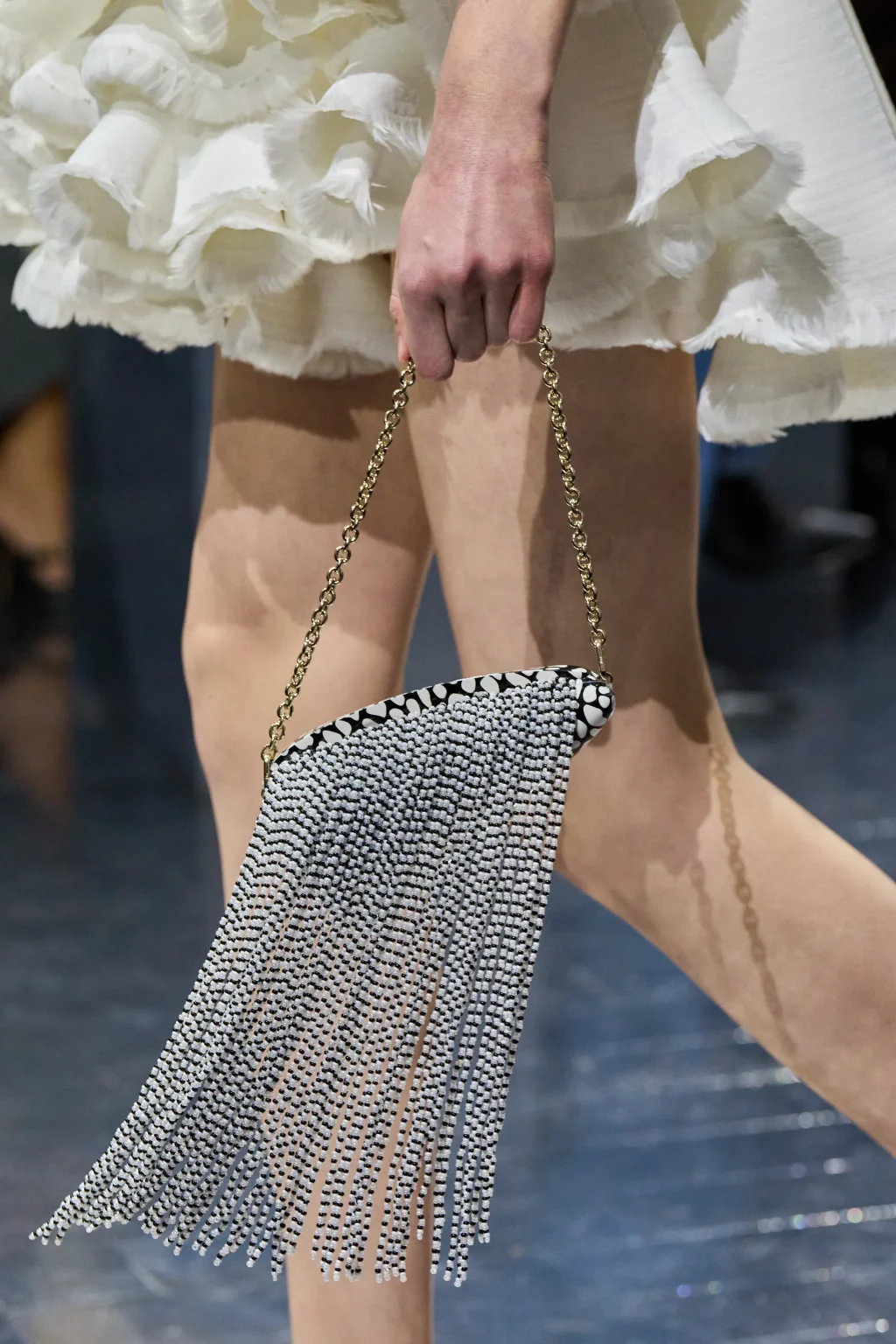
A triangular, jewel-like top finished with a long curtain of crystal fringe—made to move, catch light, and deliver “soundless” drama with every step. It’s less about storage than punctuation: the accessory as a shimmering underline beneath the silhouette. In silver, it reads like ice and spotlight; in copper/terracotta, the same idea turns warmer and more ember-like, proving how color alone can change the emotional temperature of a couture piece—an “edition” mindset where one concept is reissued in a different atmosphere.
6. The Toile “Dior” Banner Tote
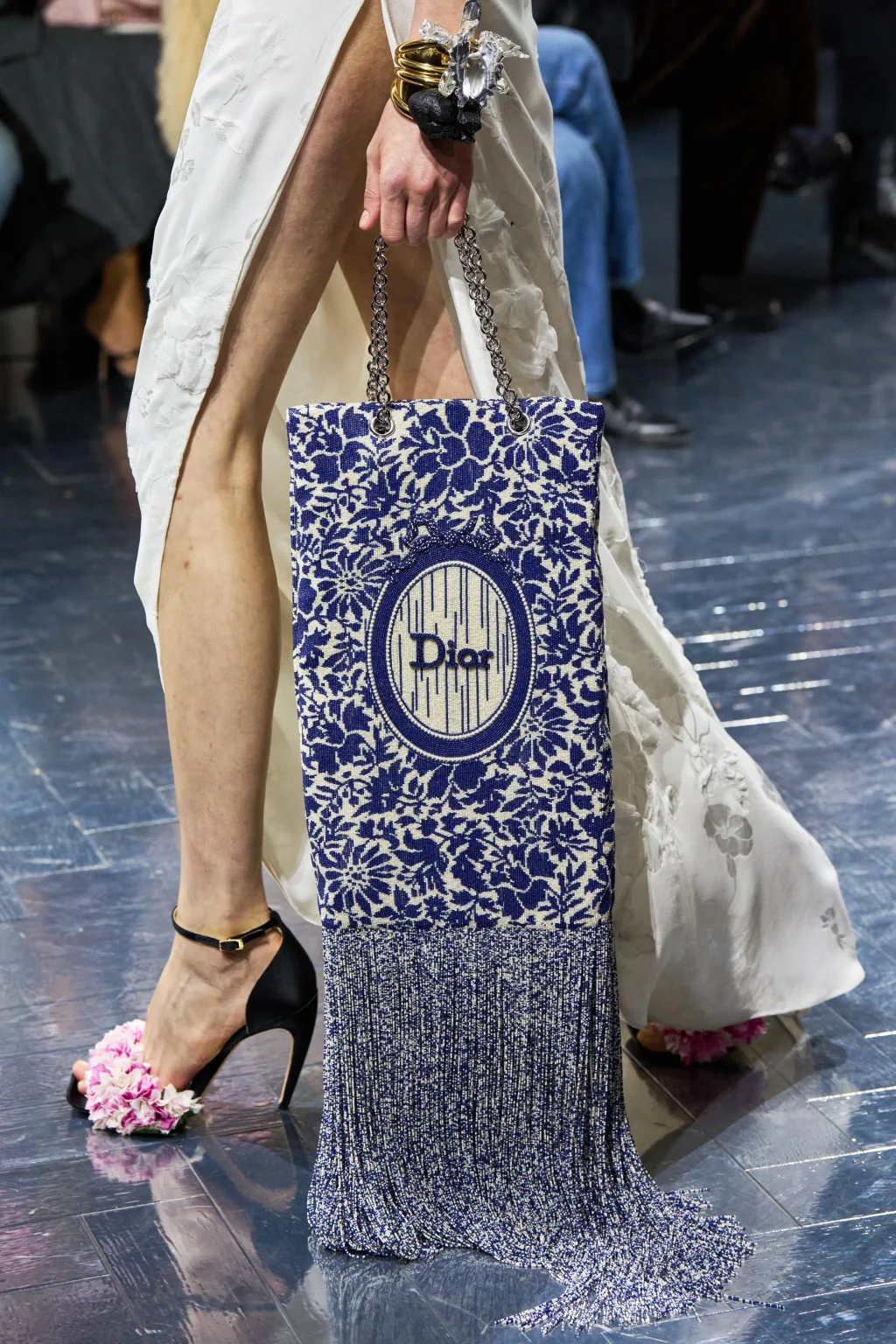
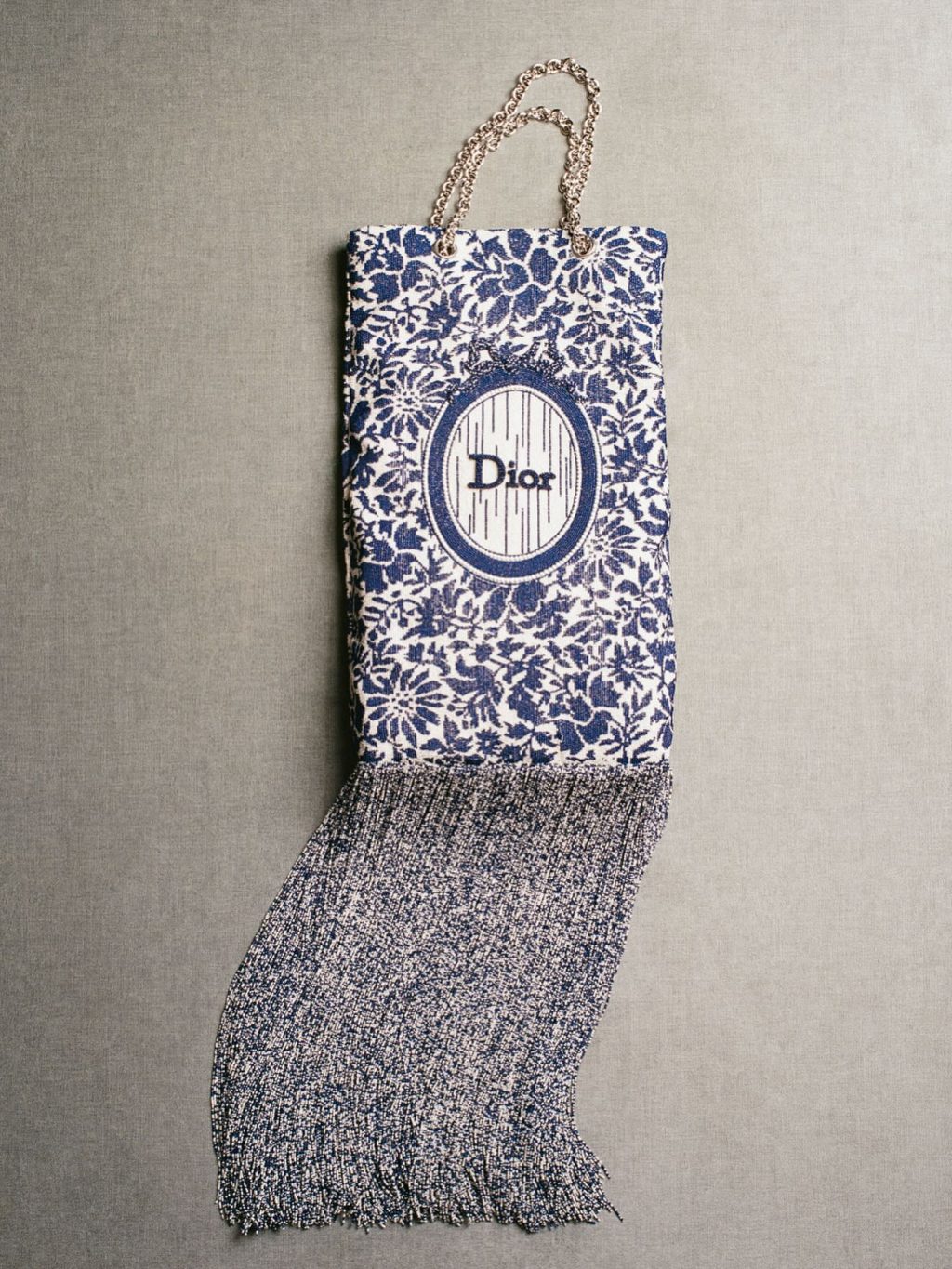
A flat, graphic tote with a circular “Dior” medallion and a fringe base that pools slightly on the floor—like a piece of décor turned portable. It reads as a couture souvenir from an imagined exhibition: part textile panel, part carried signifier.
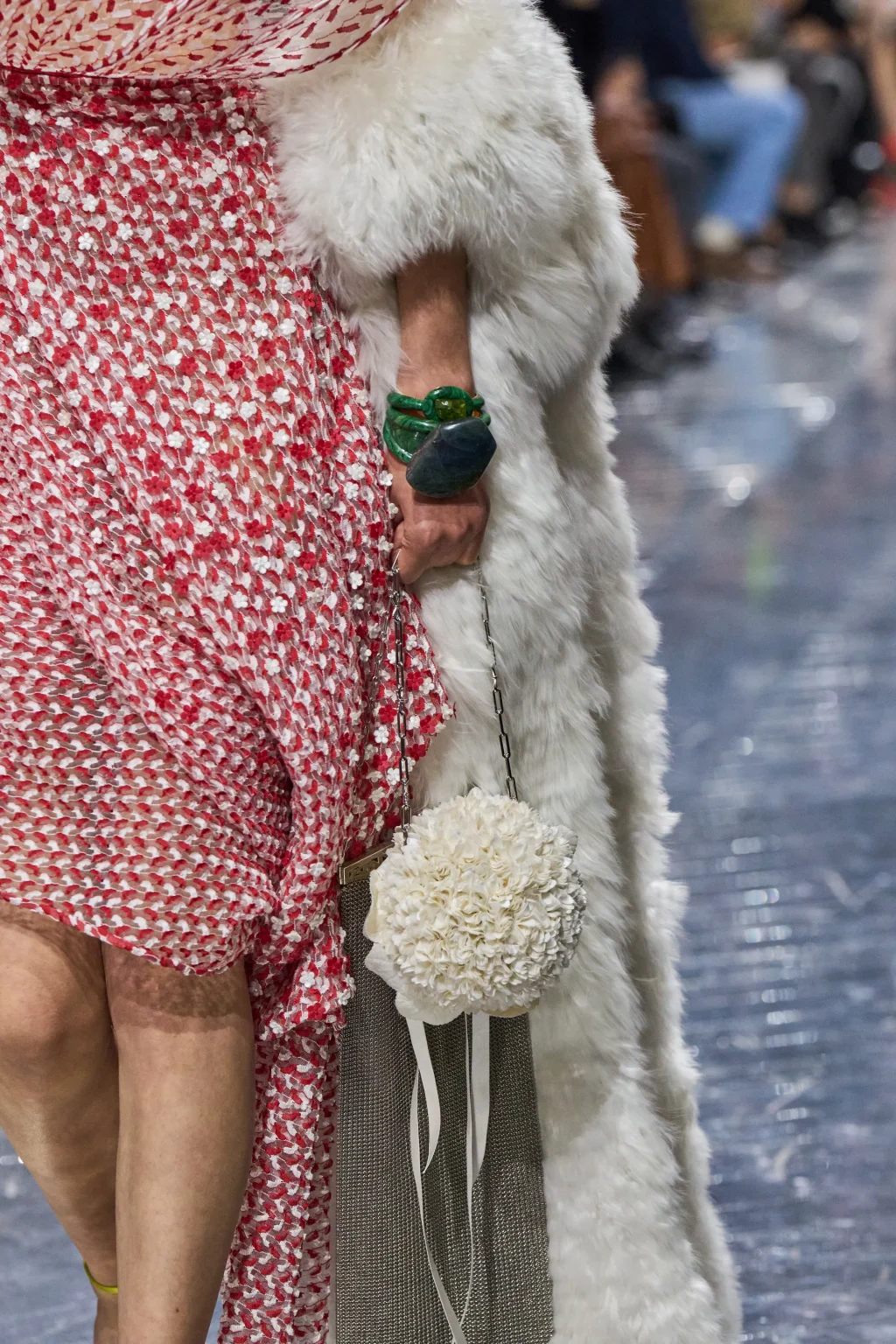
7. The Cyclamen Pom-Pom + Chainmail Column
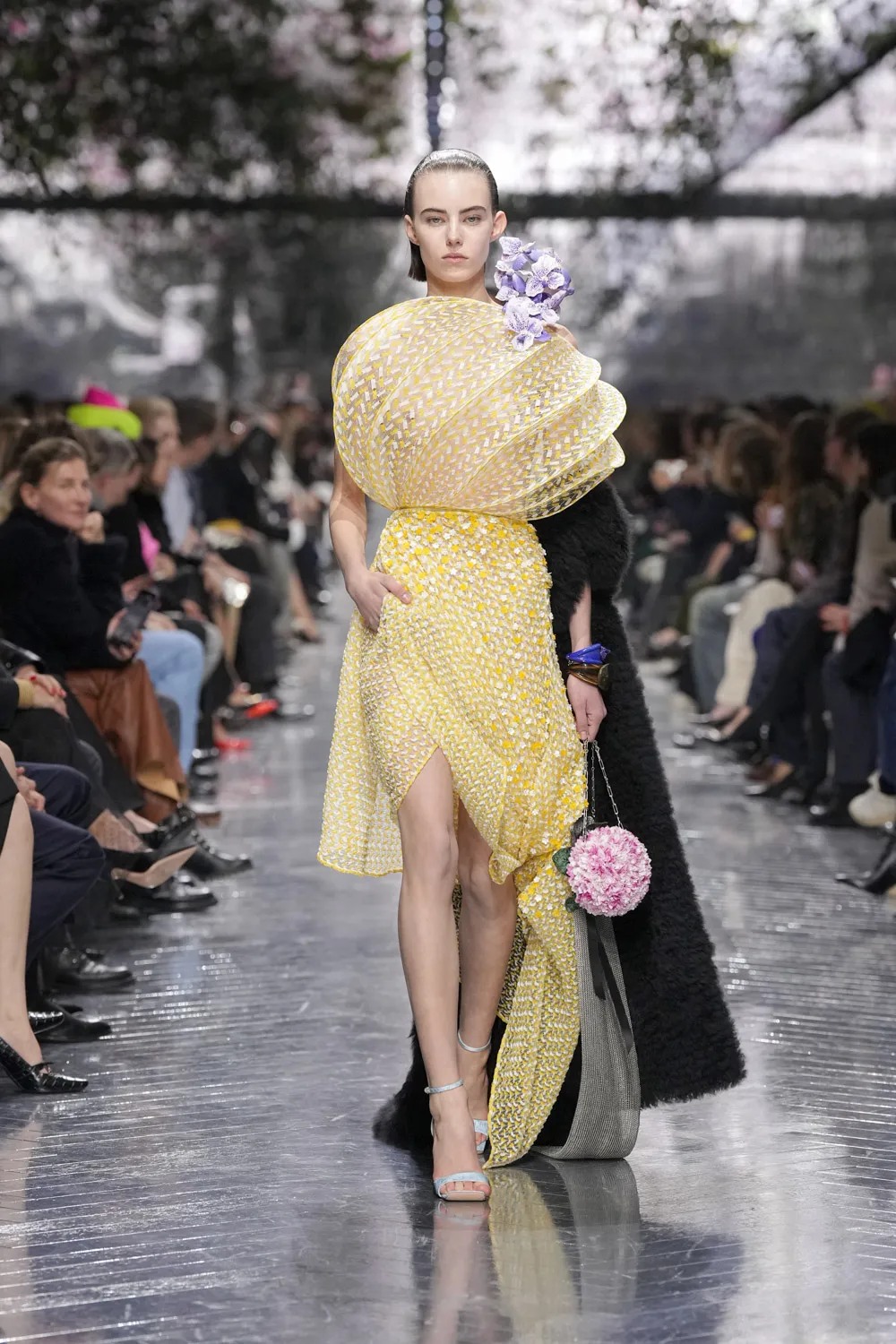
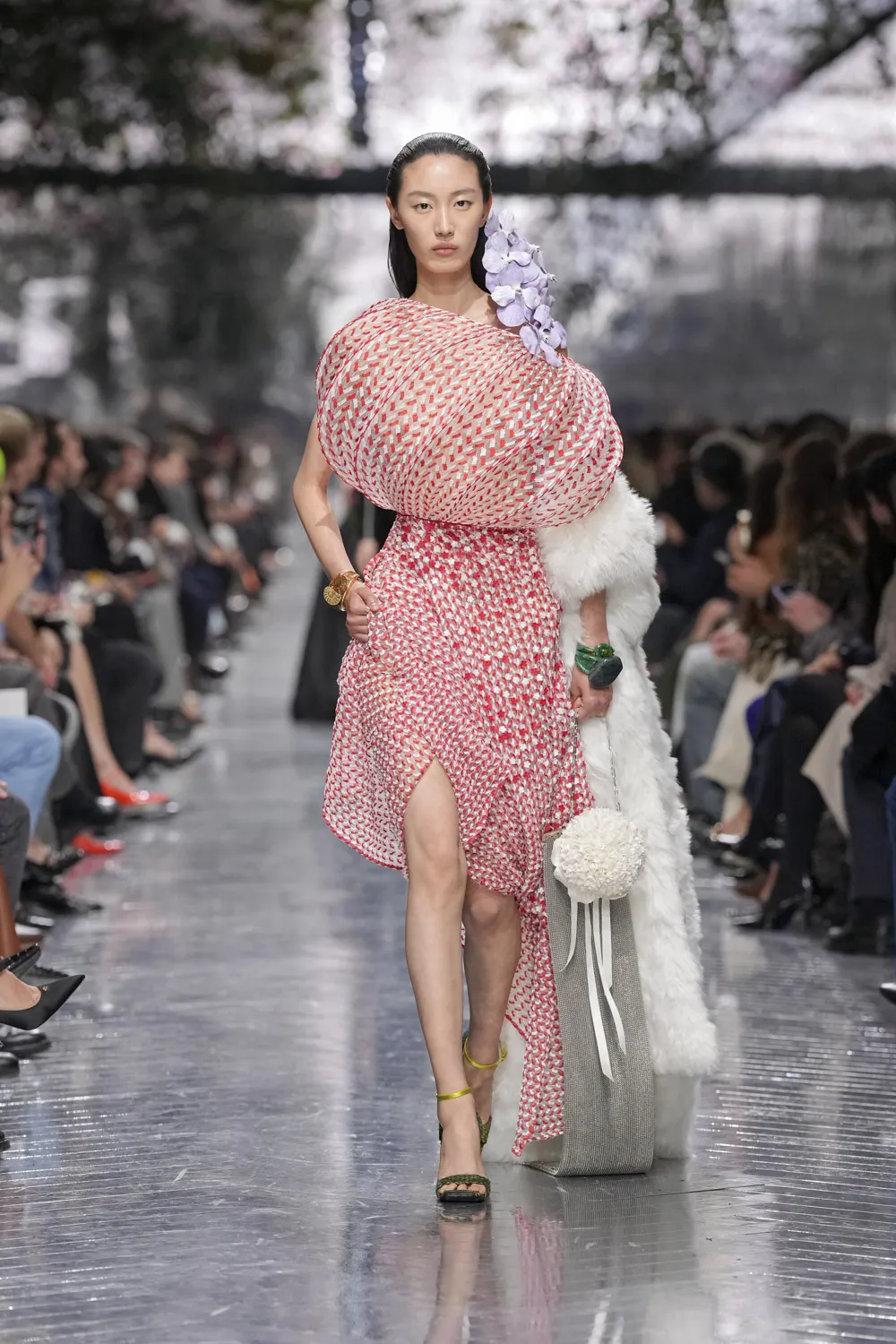
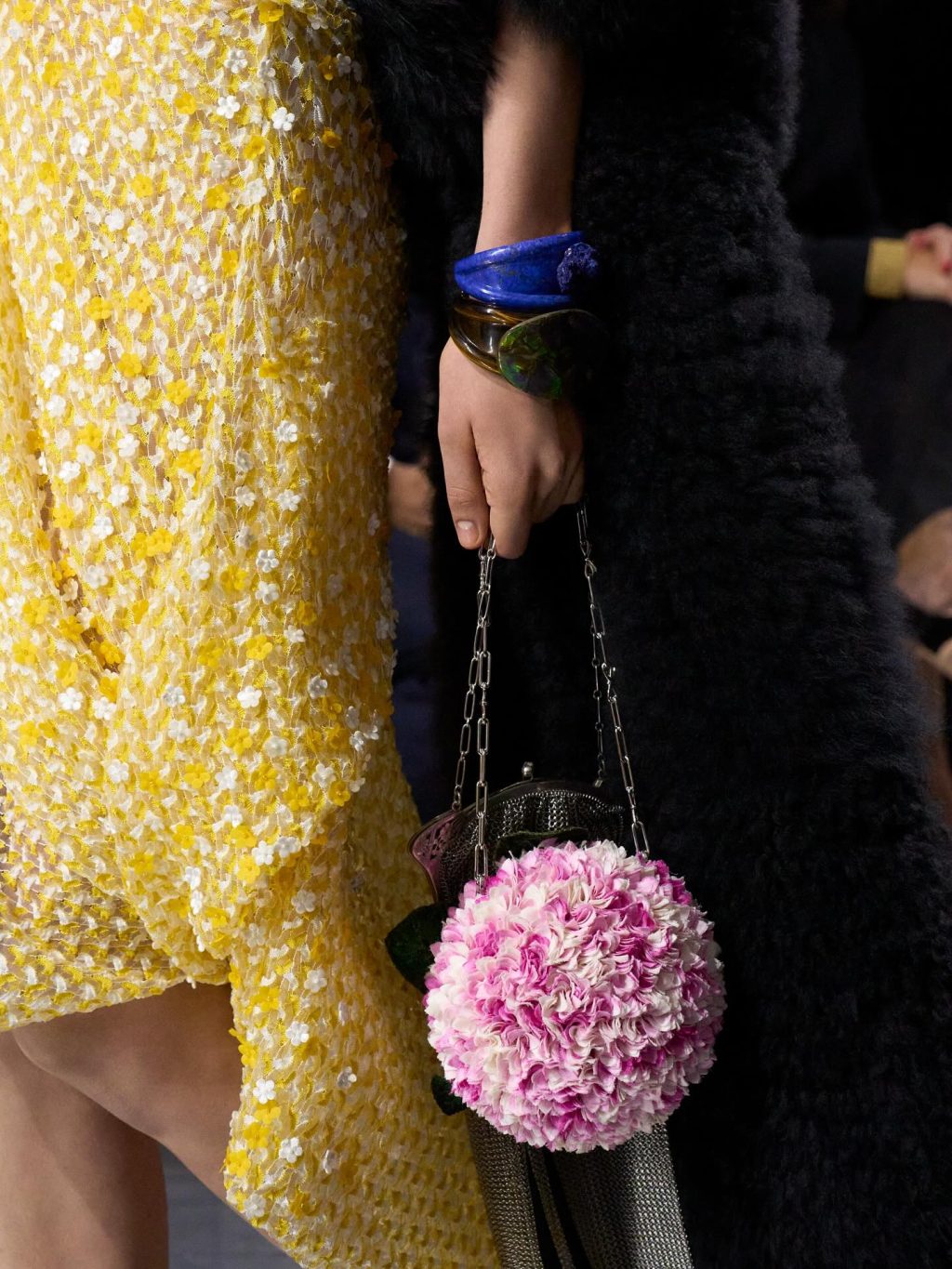
Here, the long metal mesh returns—now softened (or teased) by a flower-sphere charm with trailing ribbons. The effect is witty: couture hardness (metal mesh) “pollinated” by something plush and petal-like, tying back to the cyclamen storyline that haunted the room and the ears.
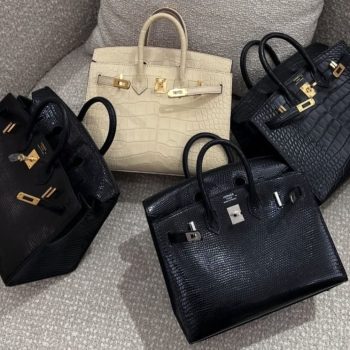
8. Lady Dior Micro in Crocodile
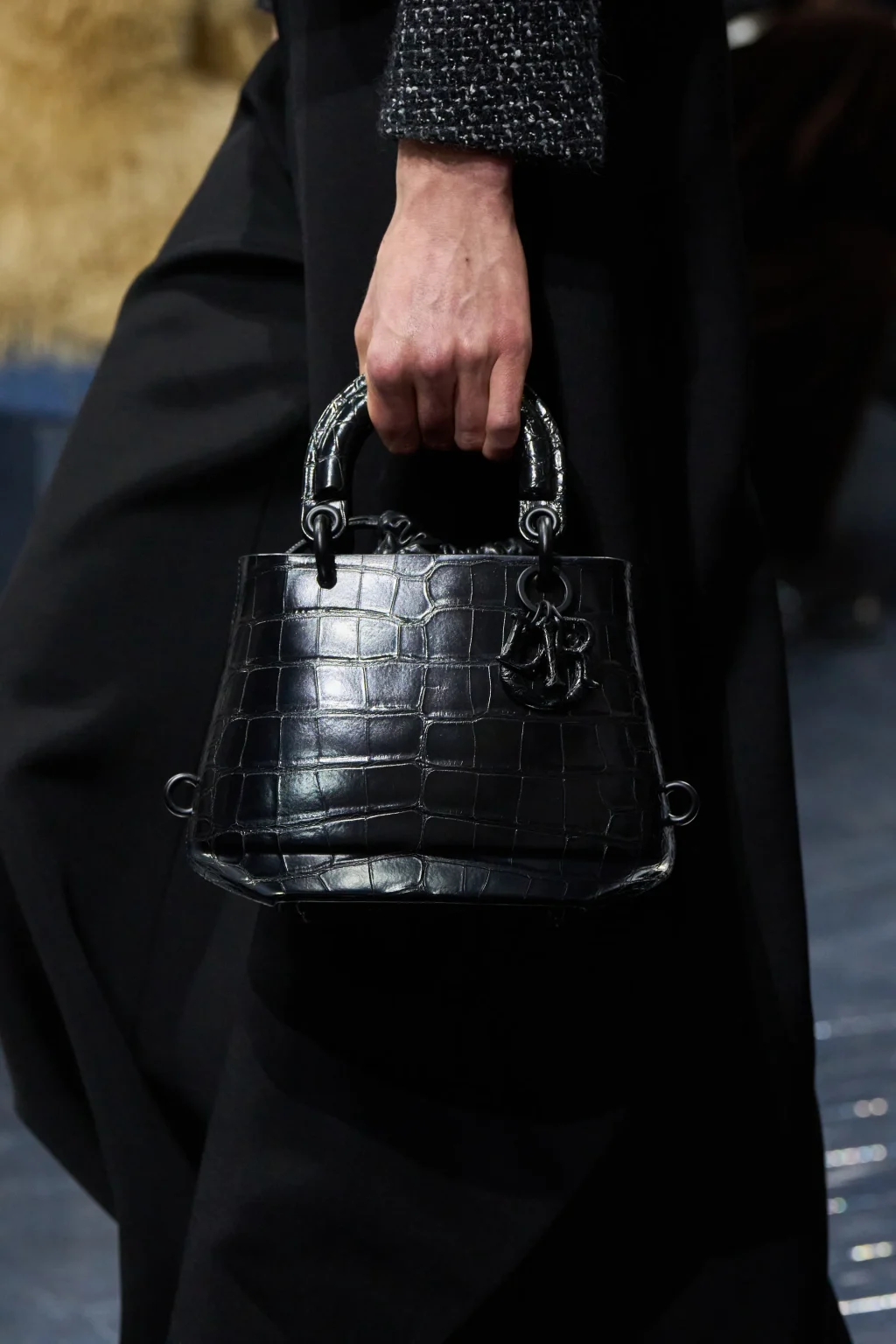
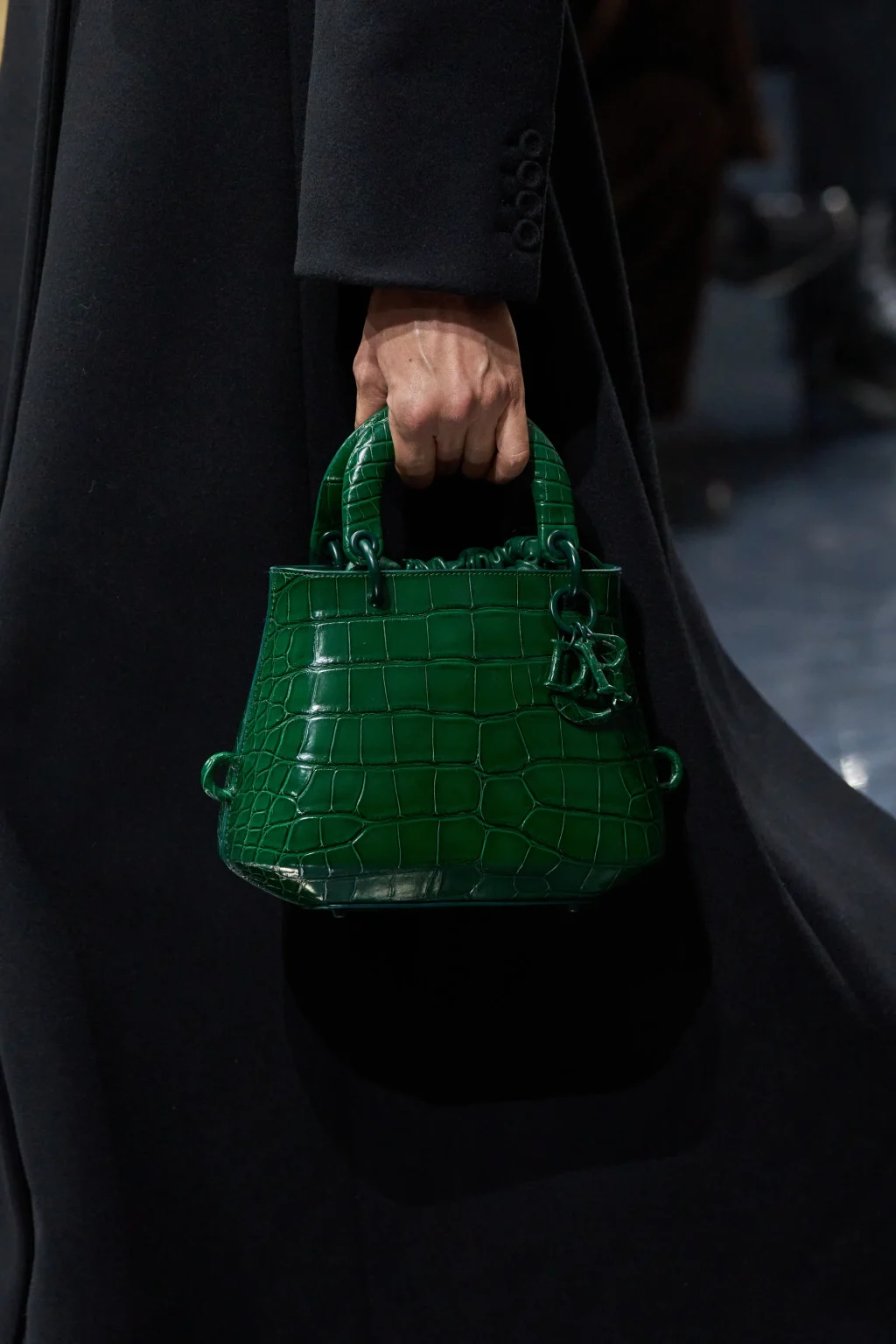
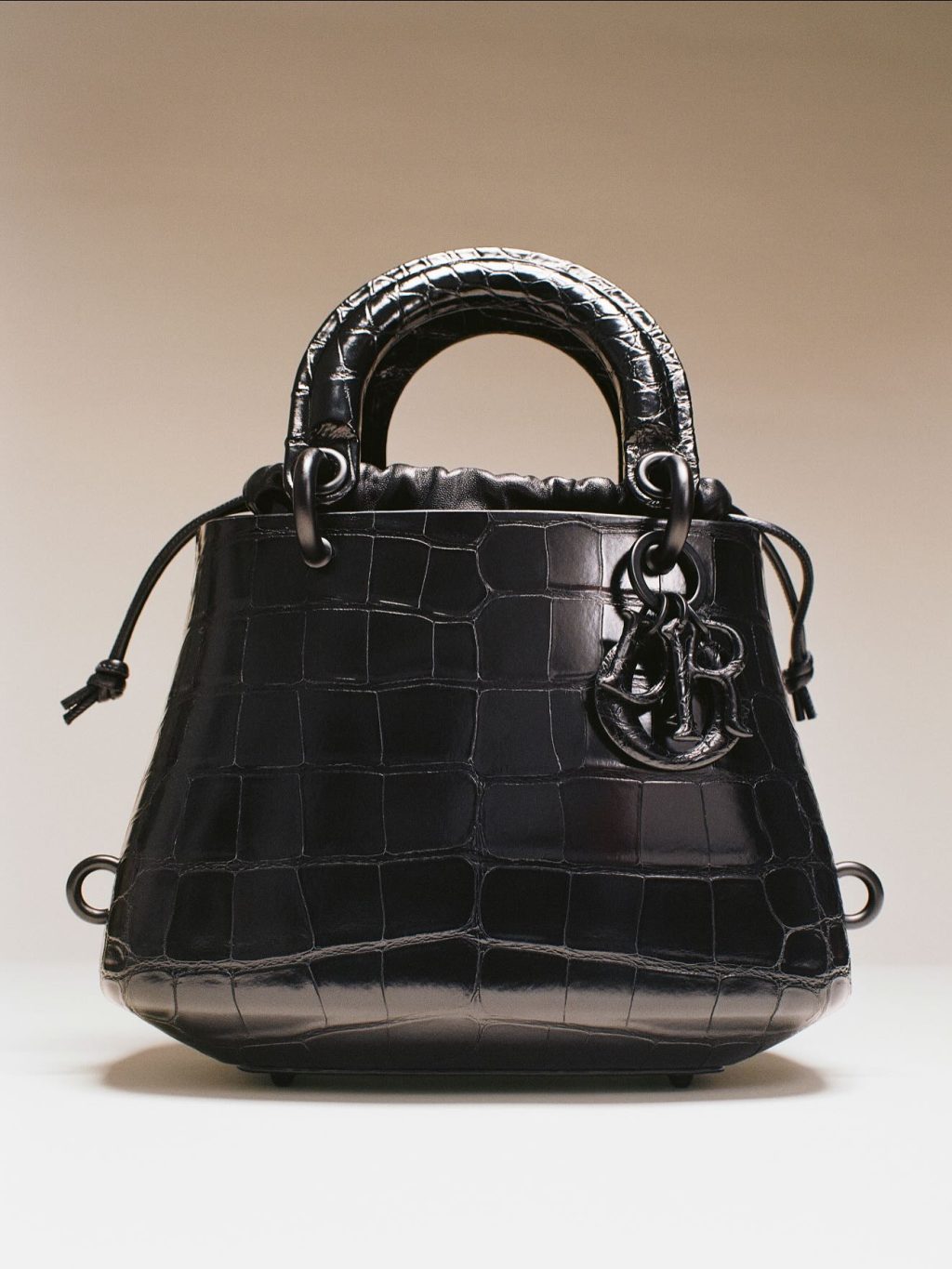
An unmistakable anchor in a lineup full of couture oddities: the Lady Dior Micro, rendered in crocodile and used almost like a punctuation mark—proof the house can still deliver an icon without irony. In black croc, the silhouette turns maximally severe, all architecture and authority; in emerald croc, the same structure takes on new energy, shifting from classic to almost botanical—green not as a seasonal accent, but as a couture statement that aligns with Anderson’s wider idea of nature as palette, texture, and attitude.
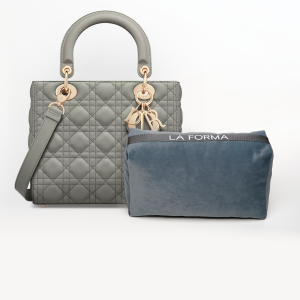
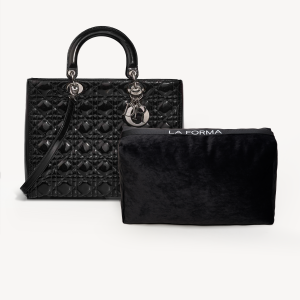
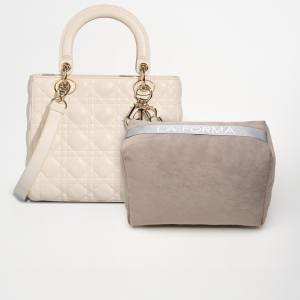
If you own a Lady Dior, here’s our Lady Dior storage guide (plus why a properly fitted bag pillow matters).
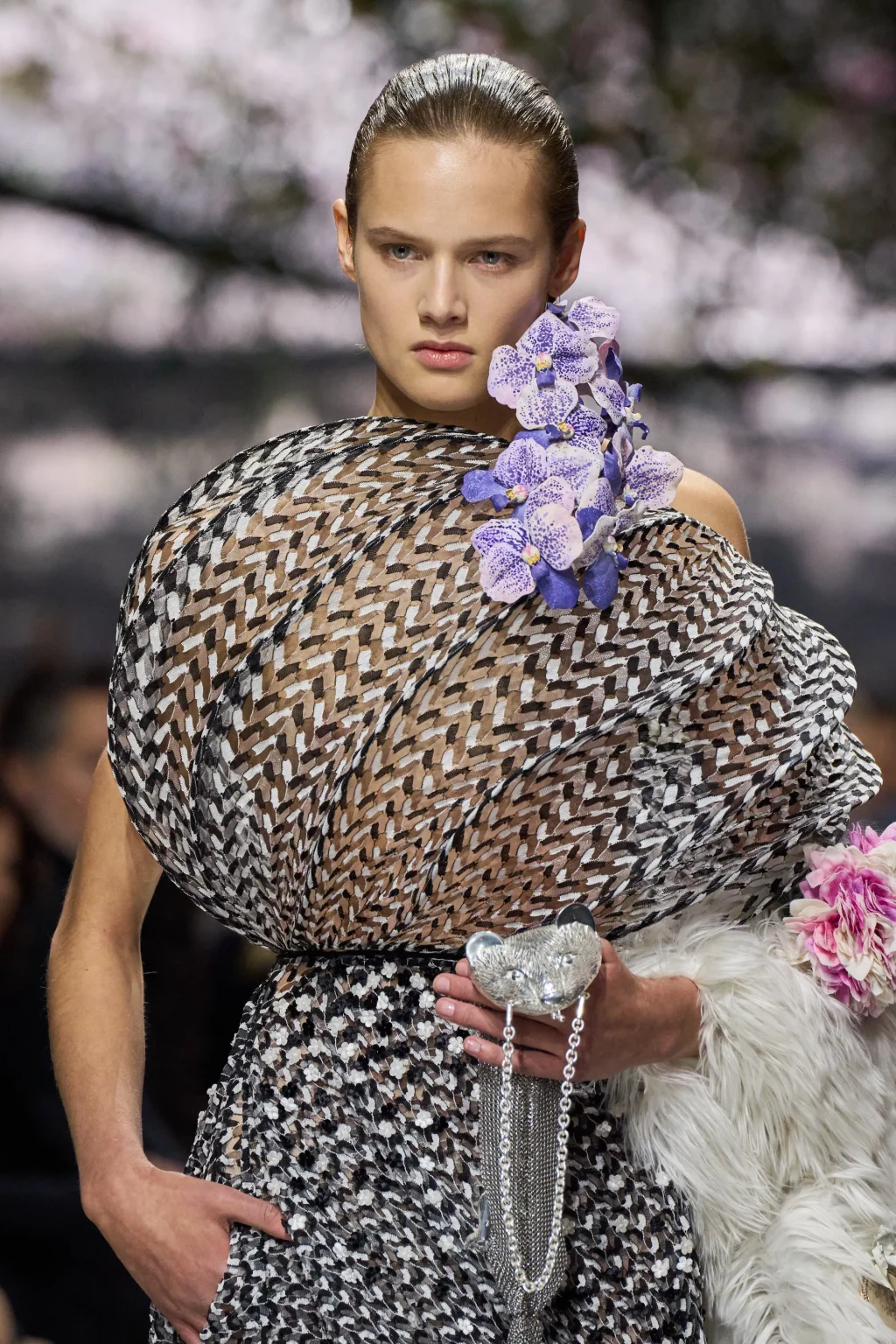
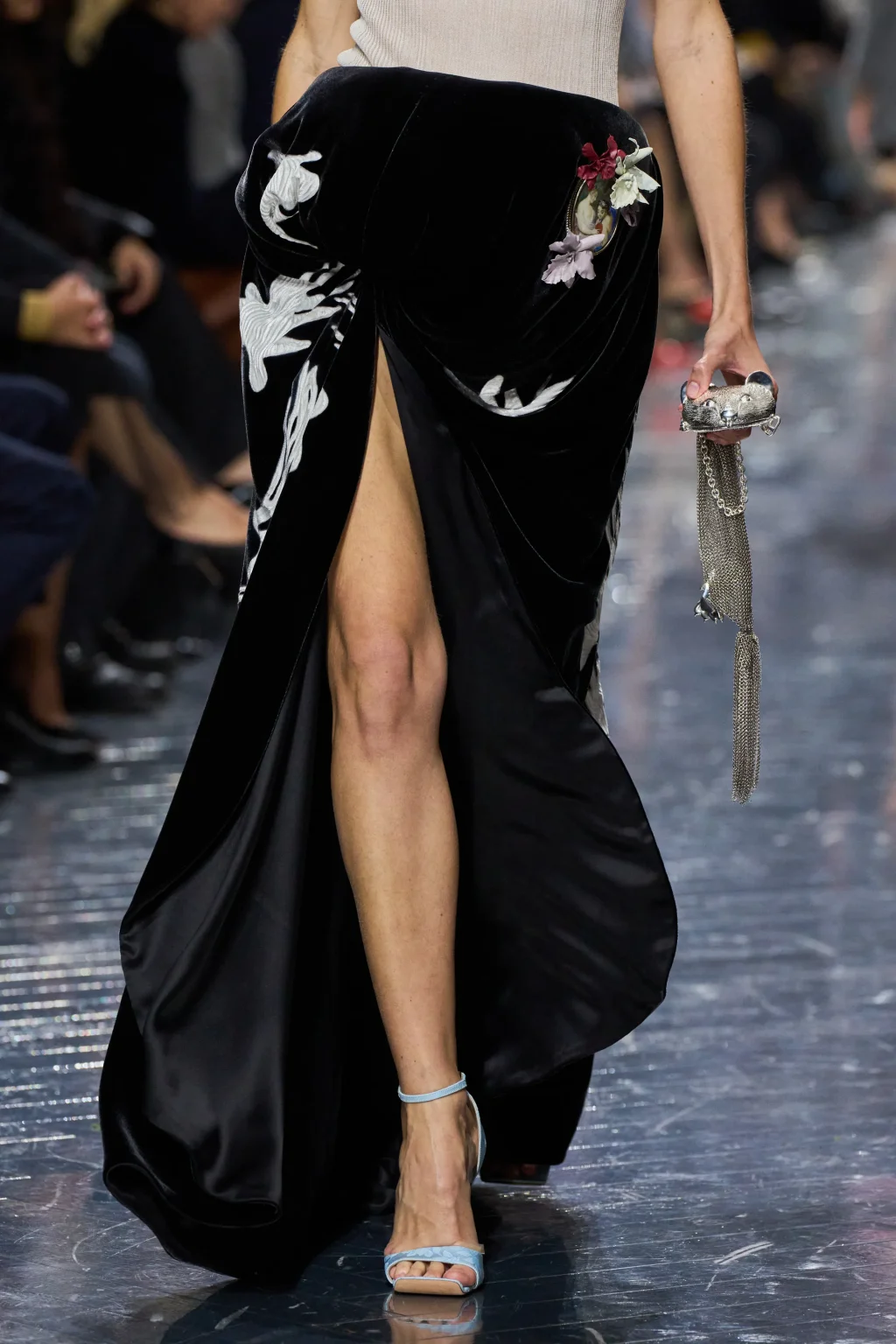
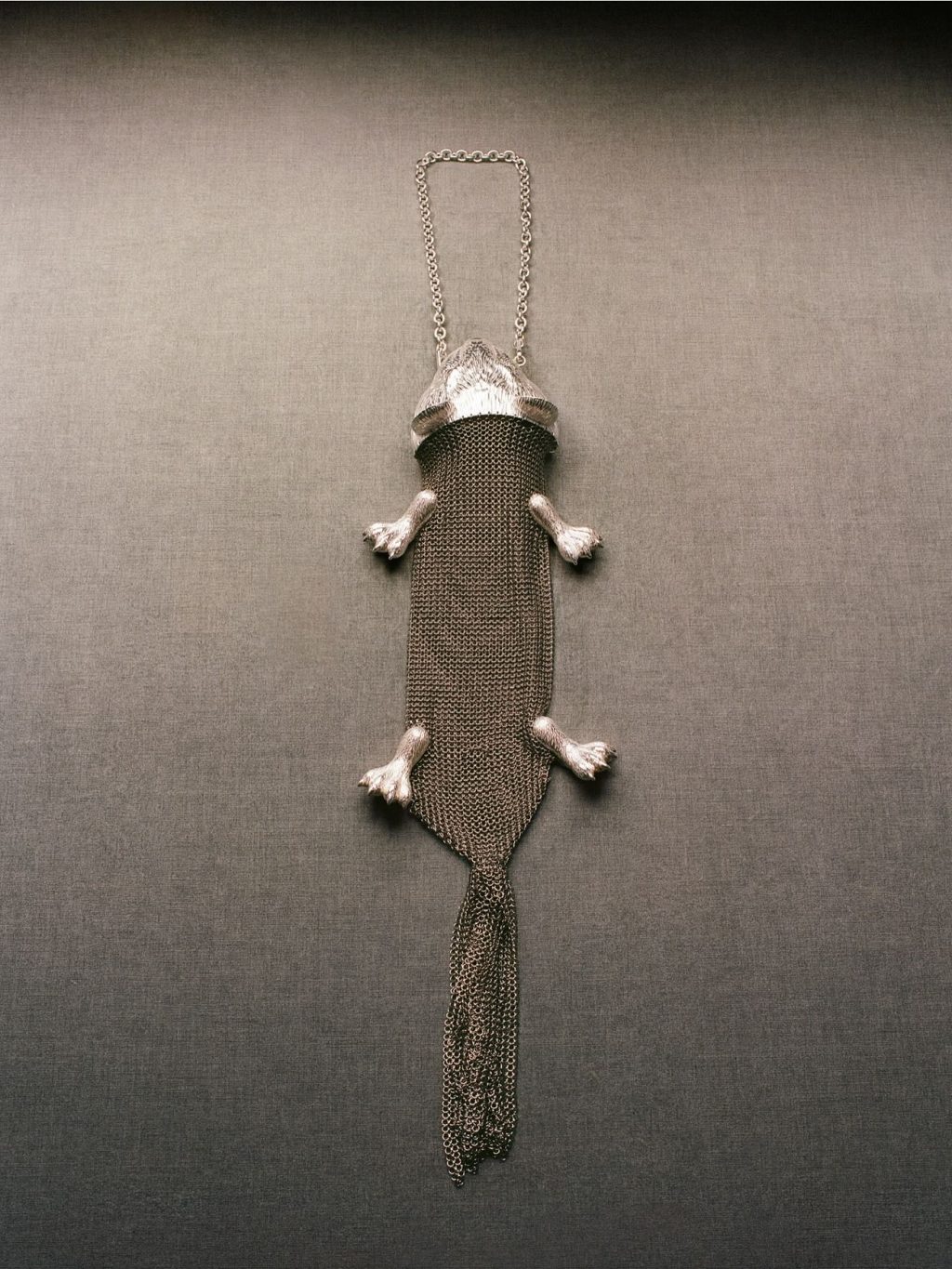
9. The Silver Mouse Minaudière with Chainmail Tail
This is the wunderkammer made literal: an animal-headed miniature object paired with a trailing chain/mesh “tail,” turning whimsy into wearable craft. TheIndustry’s coverage referenced animal-headed purses and, notably, shell-shaped clutches in the same breath as the green-cascade bags—positioning this as part of a deliberate bestiary of couture accessories.
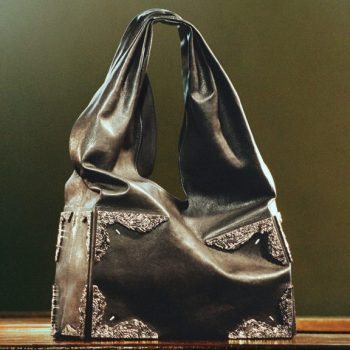
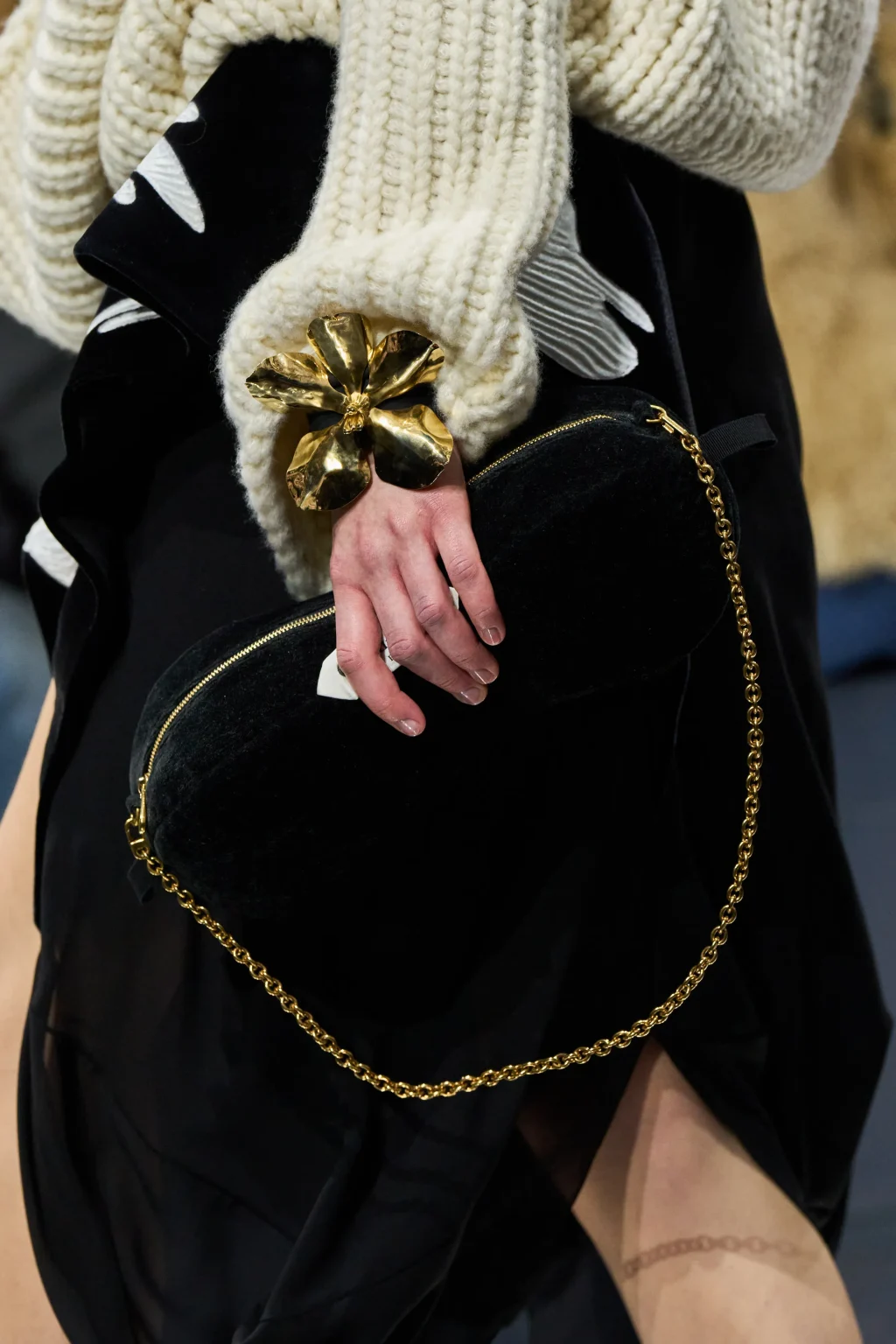
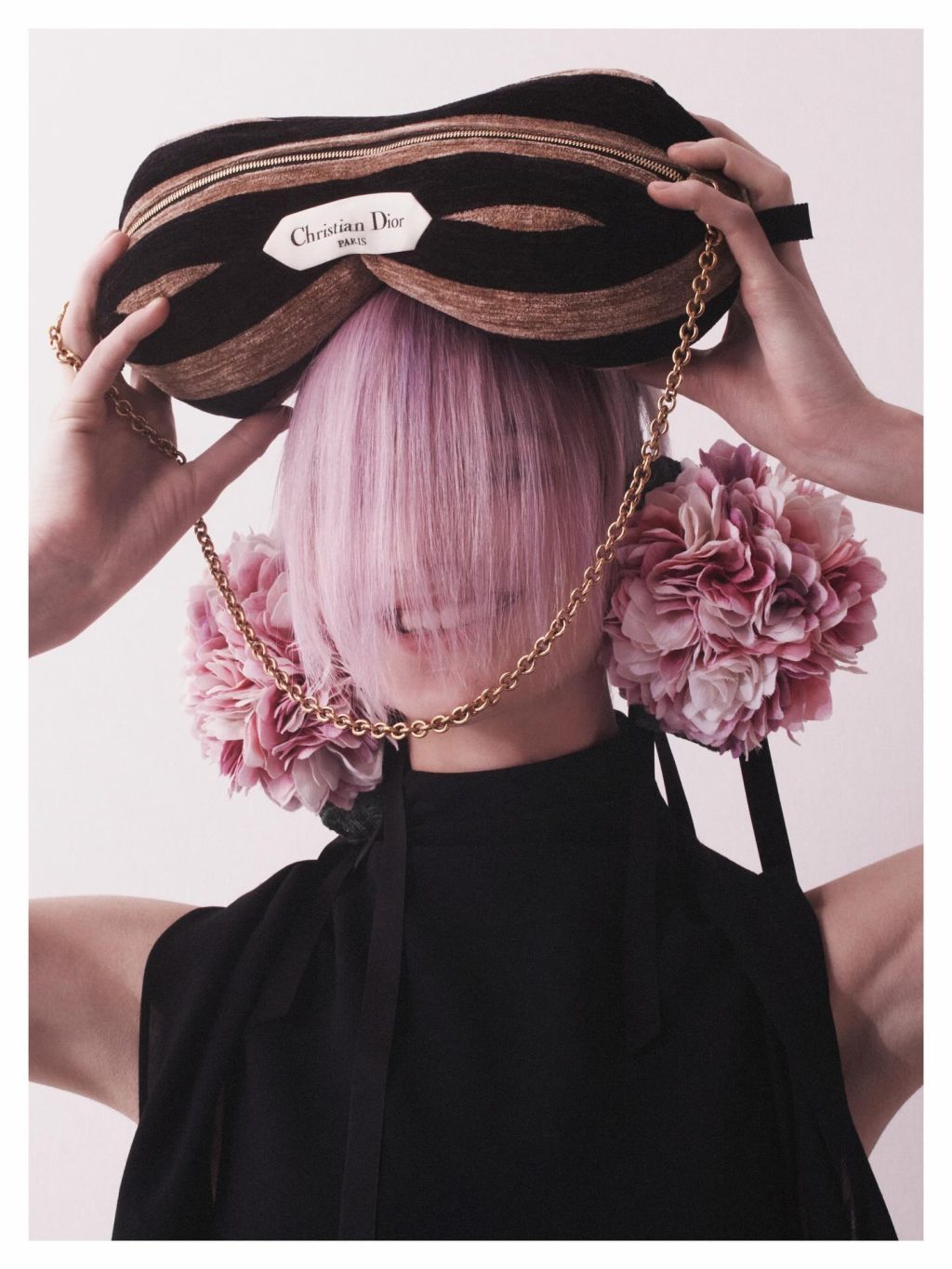
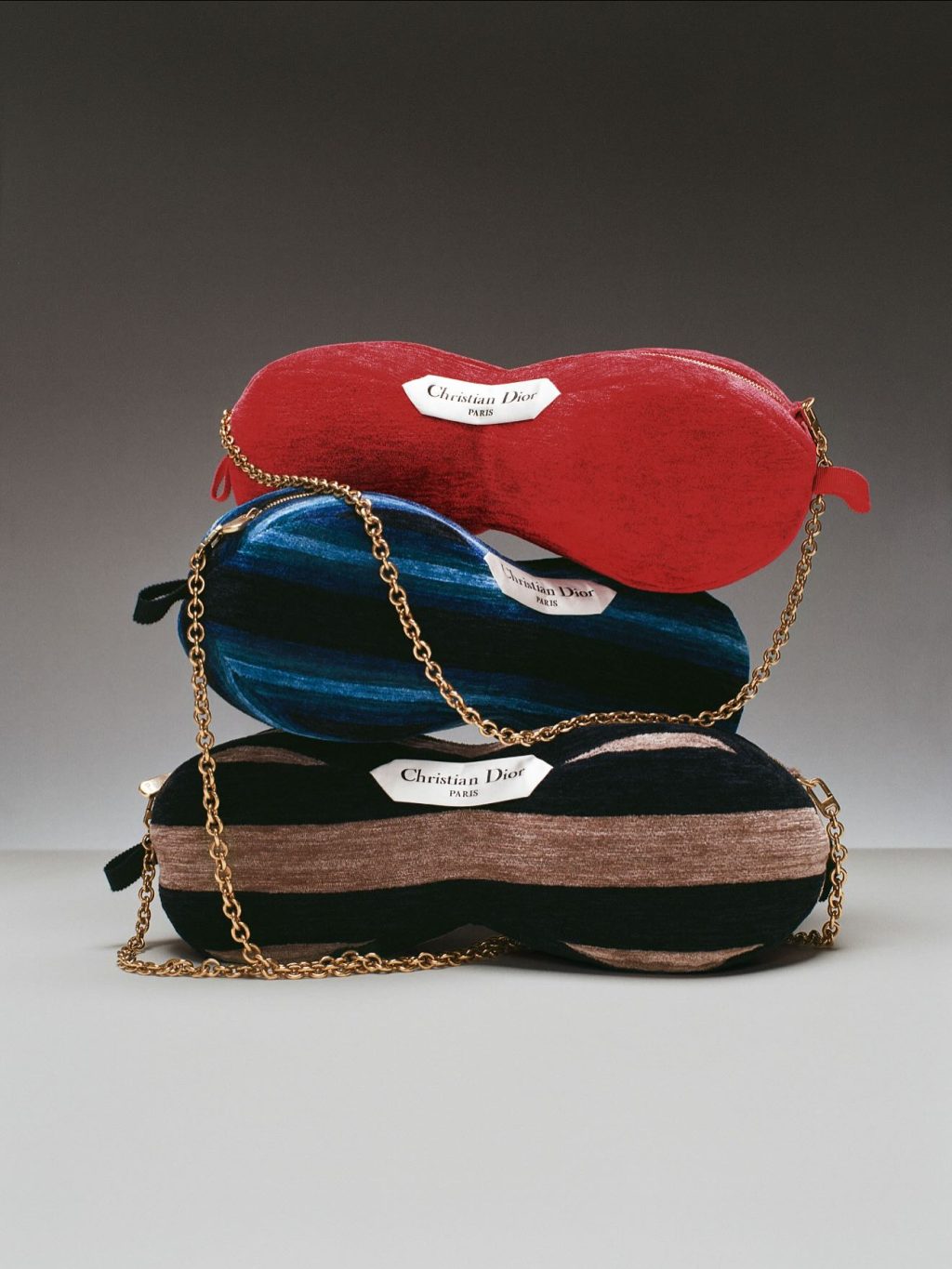
10. Chenille shoulder bag
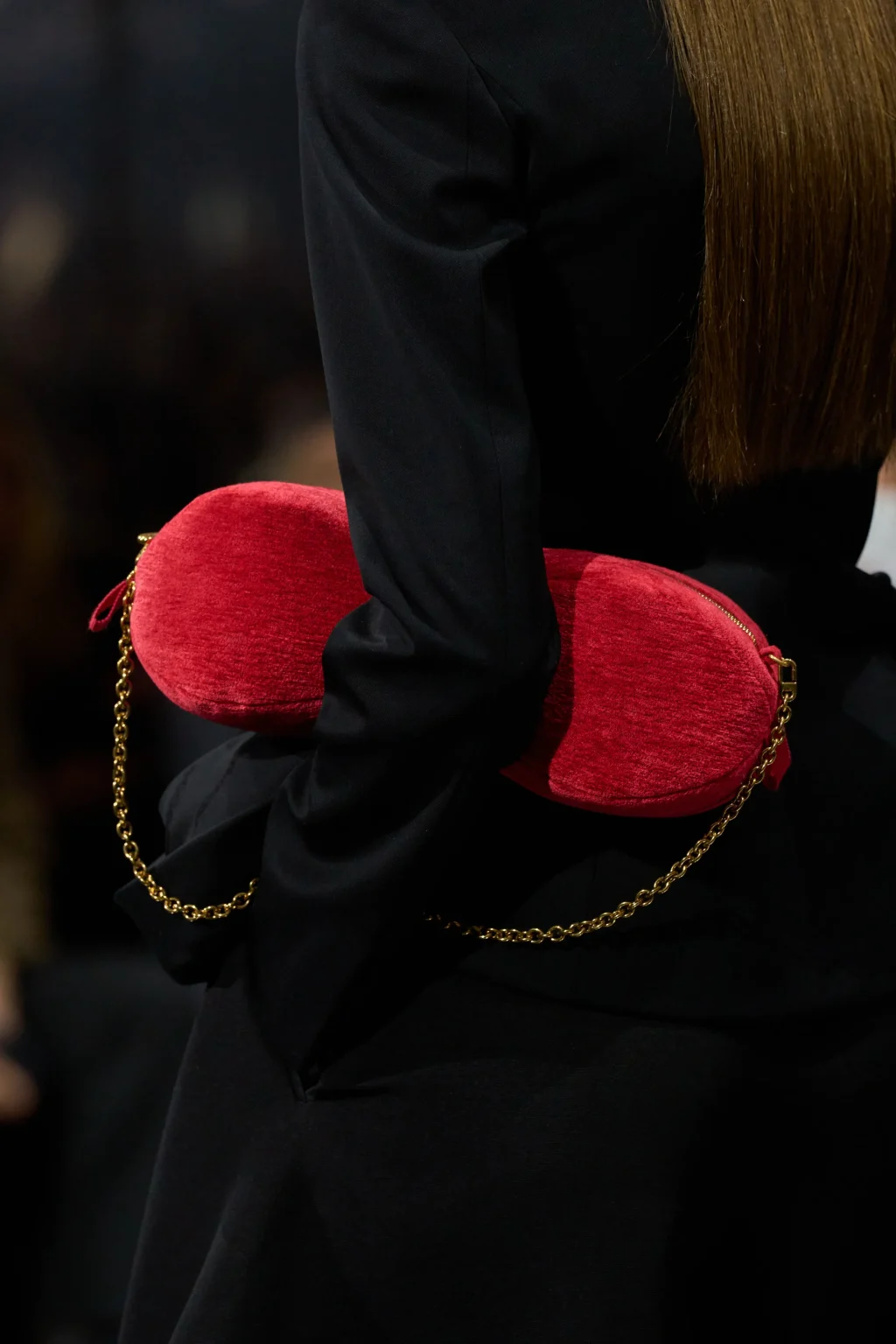
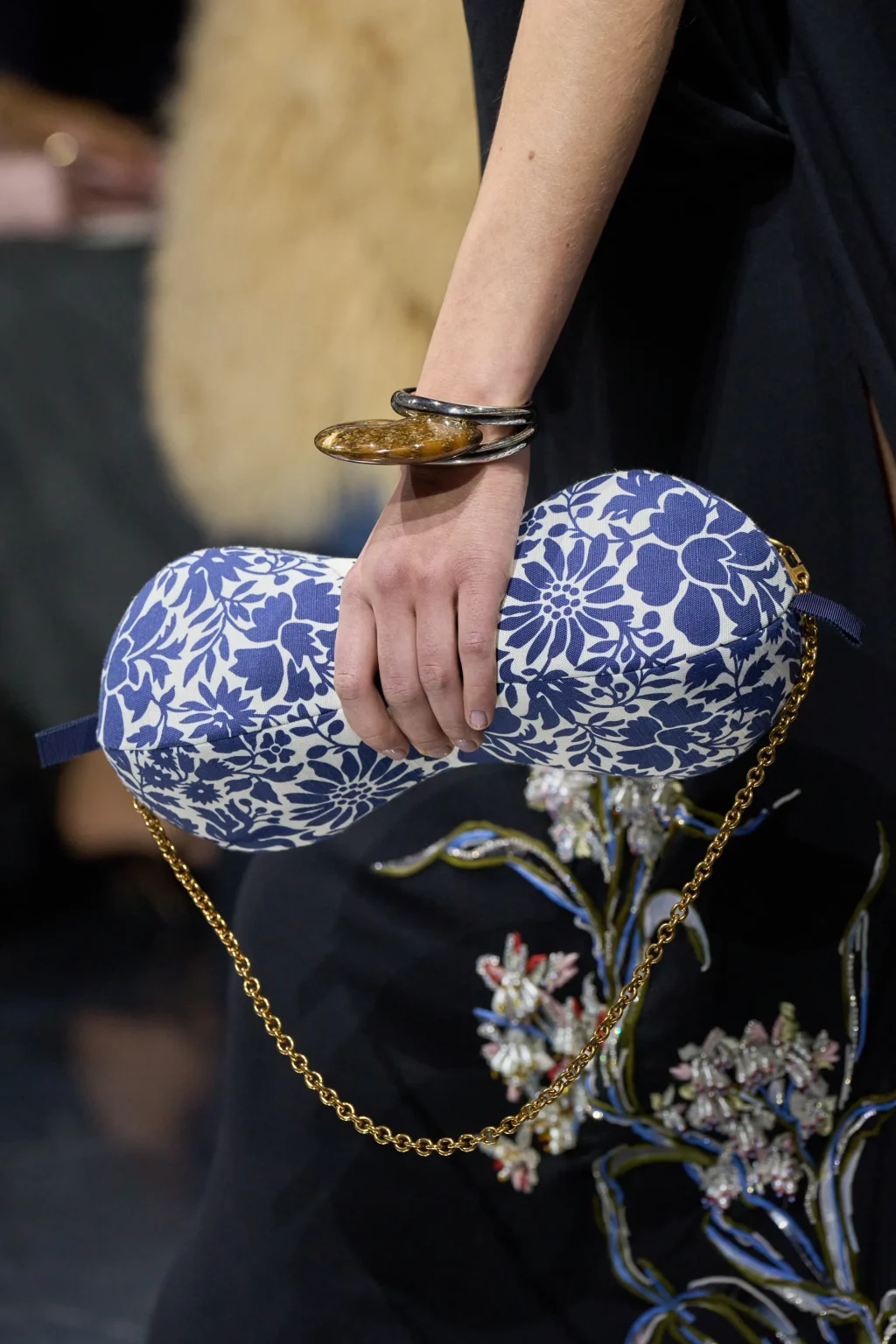
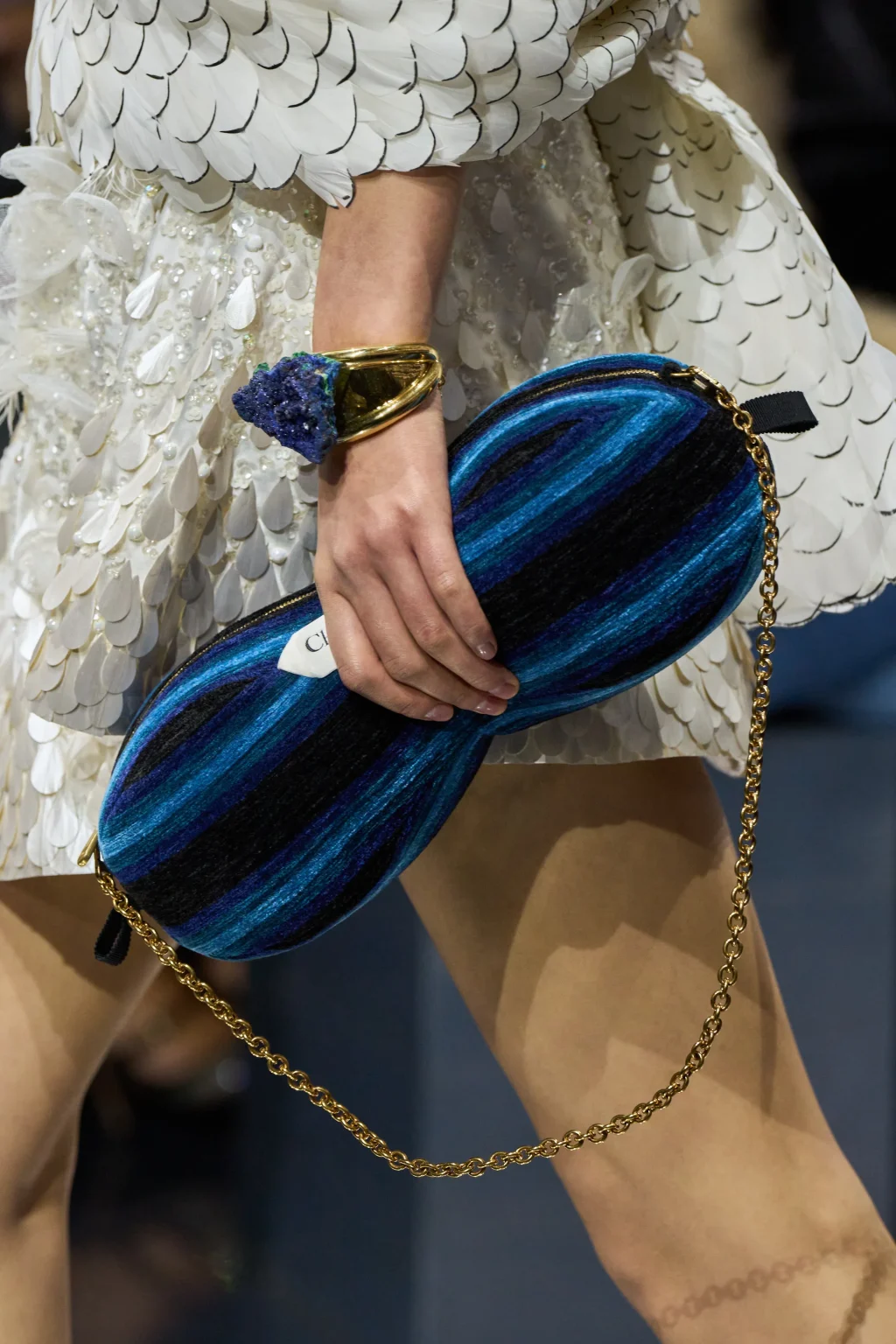
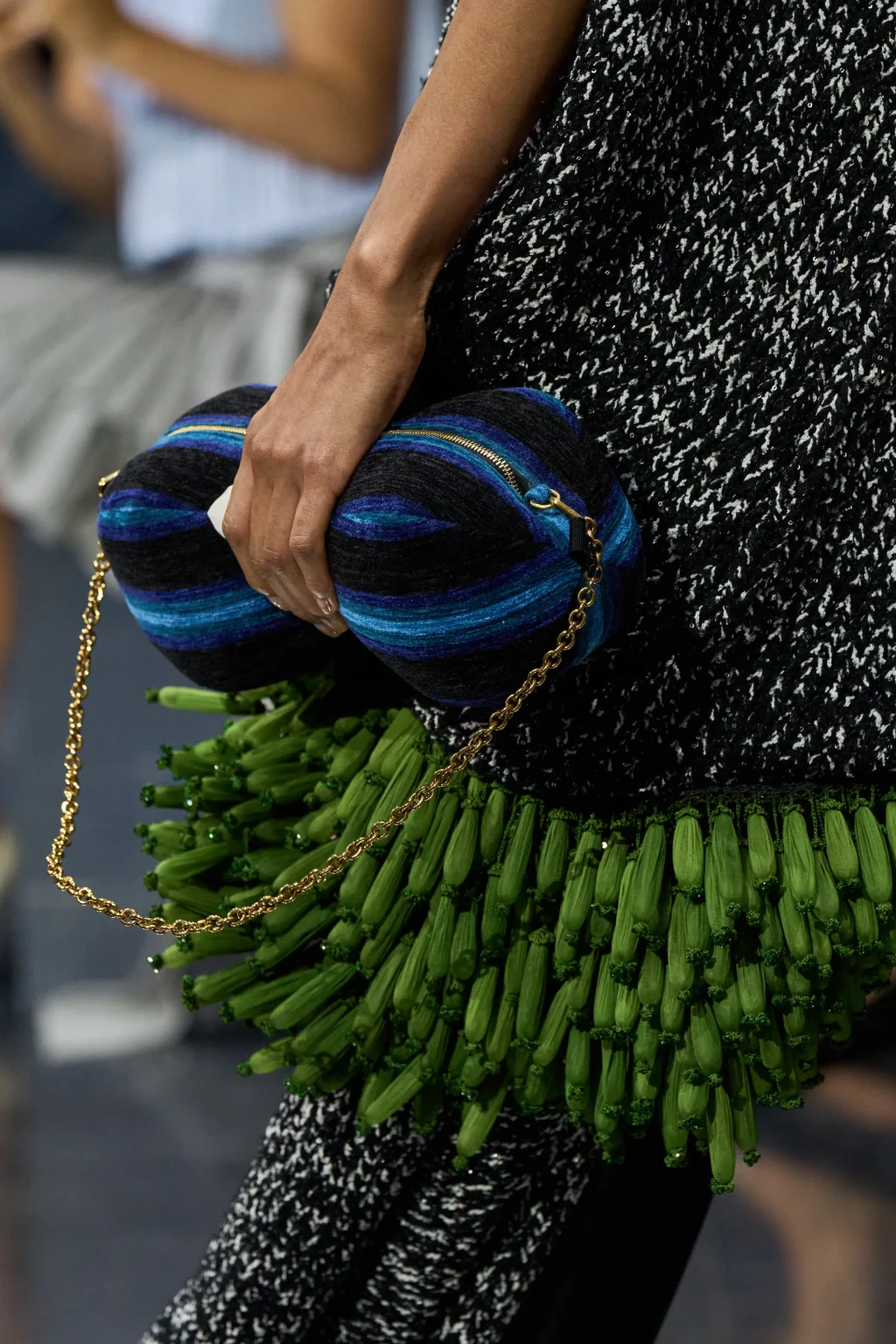
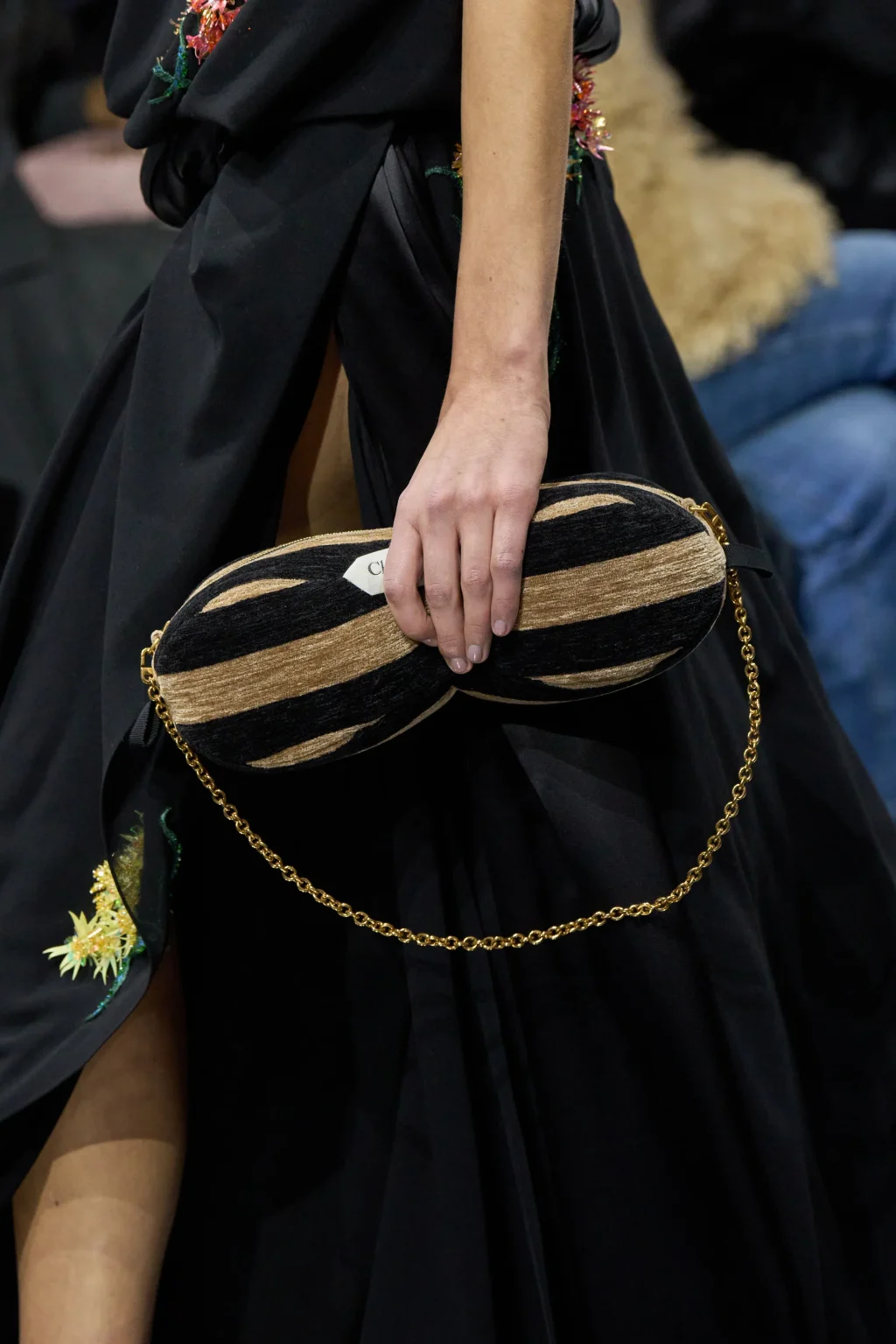
This is Anderson at his most collector-minded: taking bedroom-adjacent, almost domestic textures and upgrading them into couture artifacts. The chenille shoulder bag feels lifted straight from interior décor—plush, tactile, and slightly decadent, like upholstery reimagined for the body. Worn tucked under the arm, it turns softness into structure: not a “pretty” bag, but a sensory object, designed to be touched as much as seen.
Across the variations, the same silhouette shifts mood through surface and scale. A midnight-blue striped version reads nautical and modern; black-and-gold makes the texture feel almost ceremonial, like a relic from an invented archive; blue-and-white toile pushes it closer to a fragment of wallpaper or a bedroom screen—domestic logic translated into accessory, reinforcing the collection’s “private contemplation” atmosphere; and an oversized black iteration strips it down to pure statement, where minimalism and volume do the work: couture can be quiet, but it still refuses to be small.
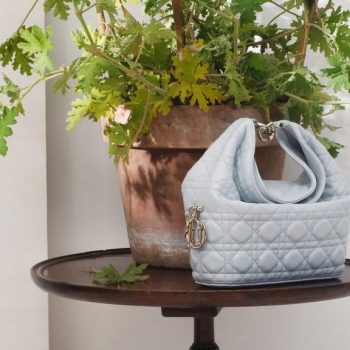
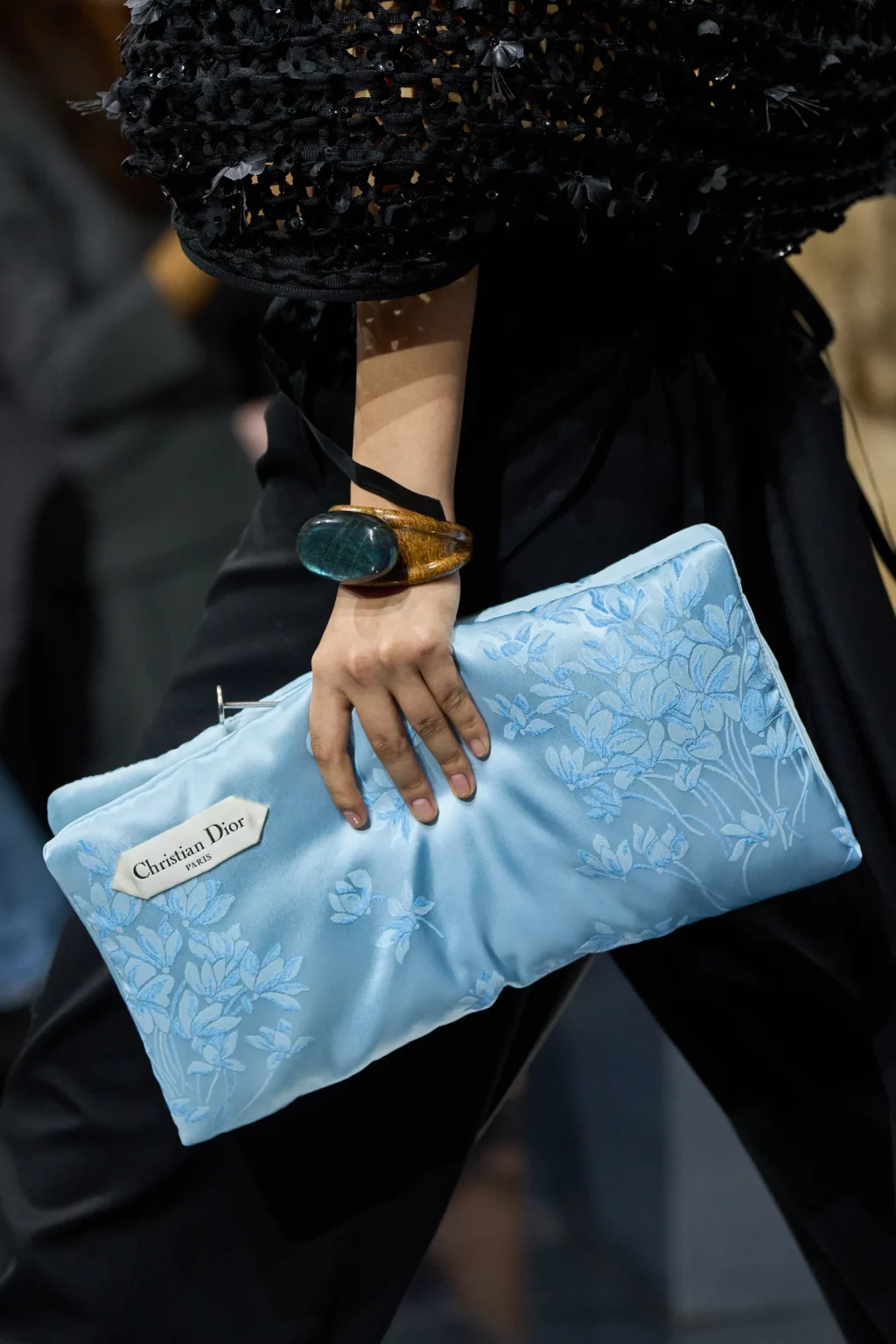
11. The Satin “Couture Pillow” Clutch
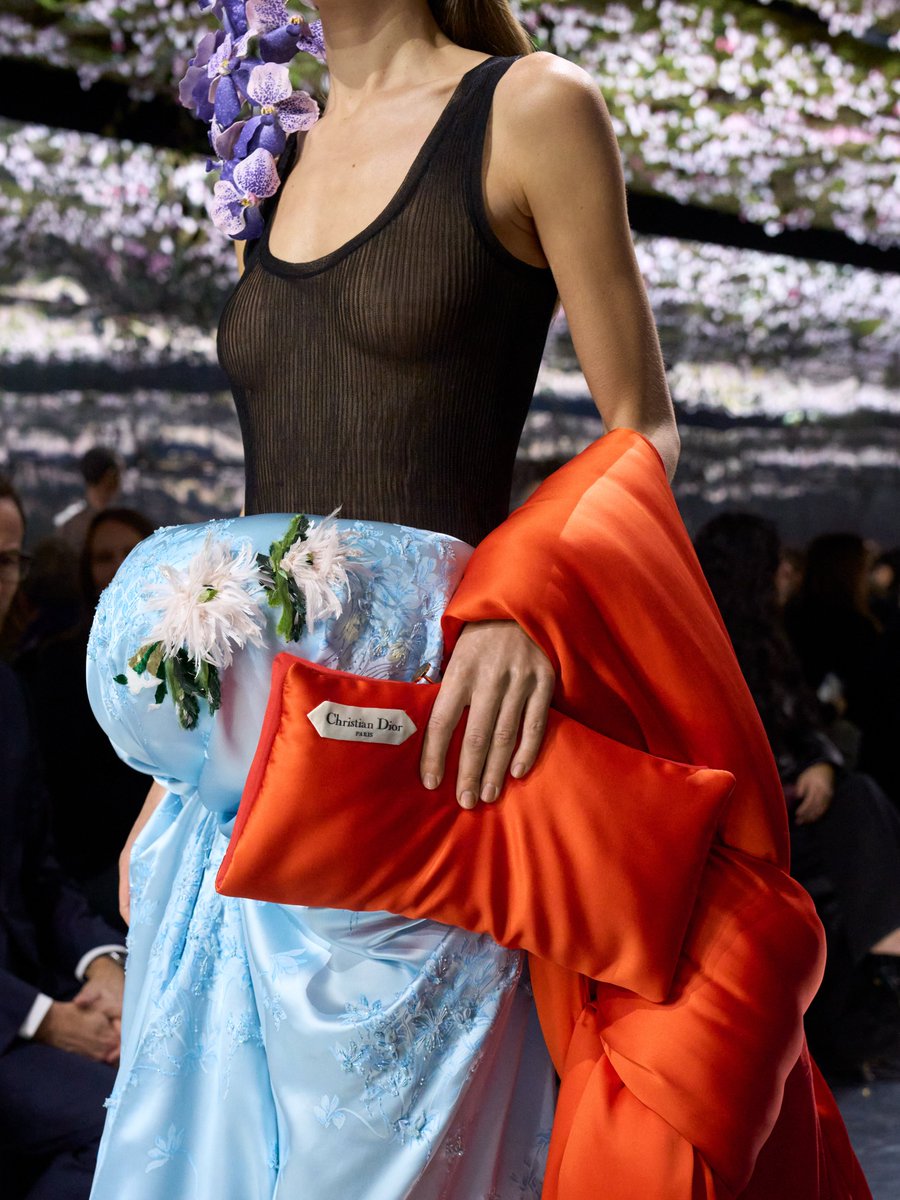
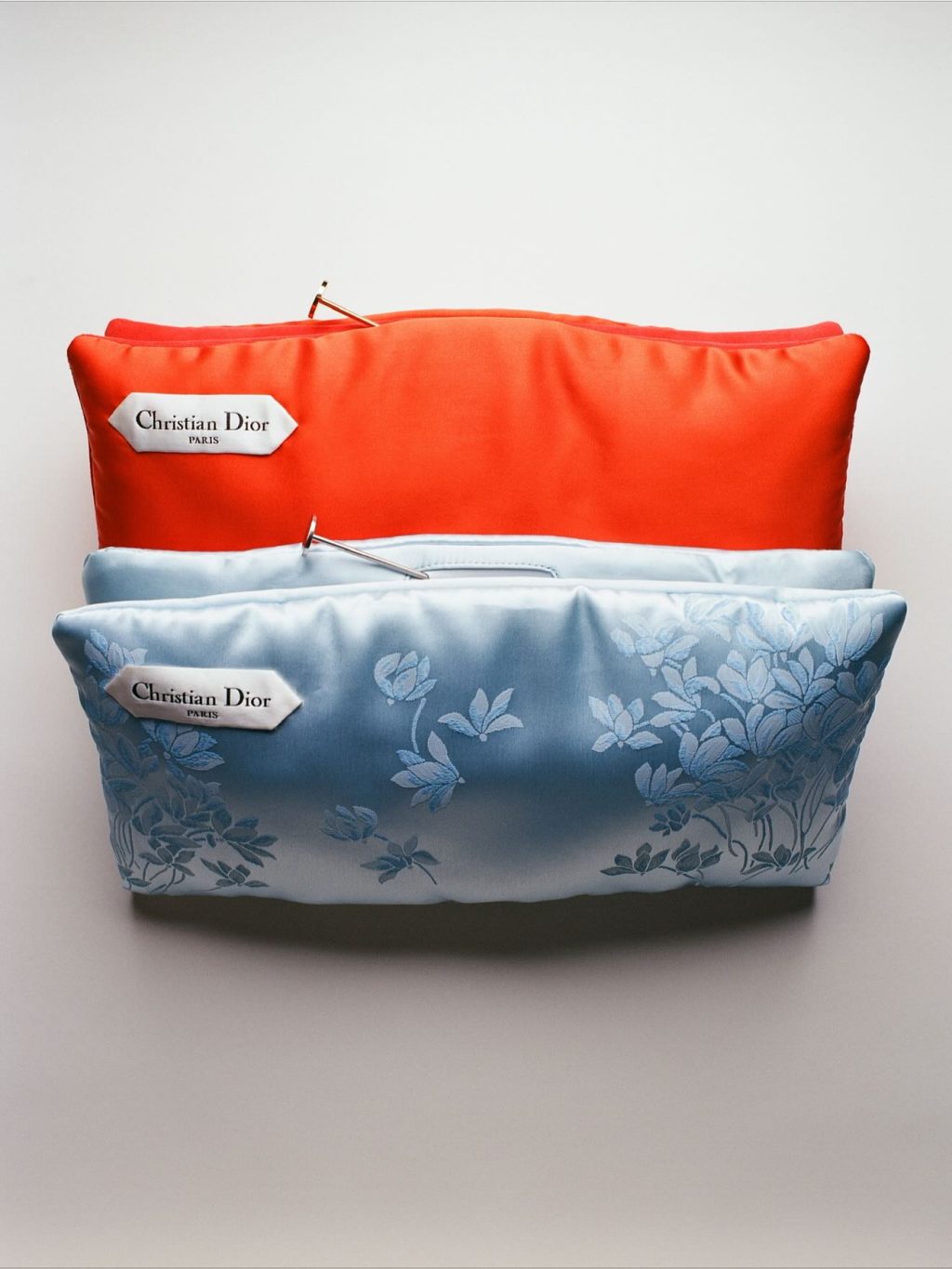
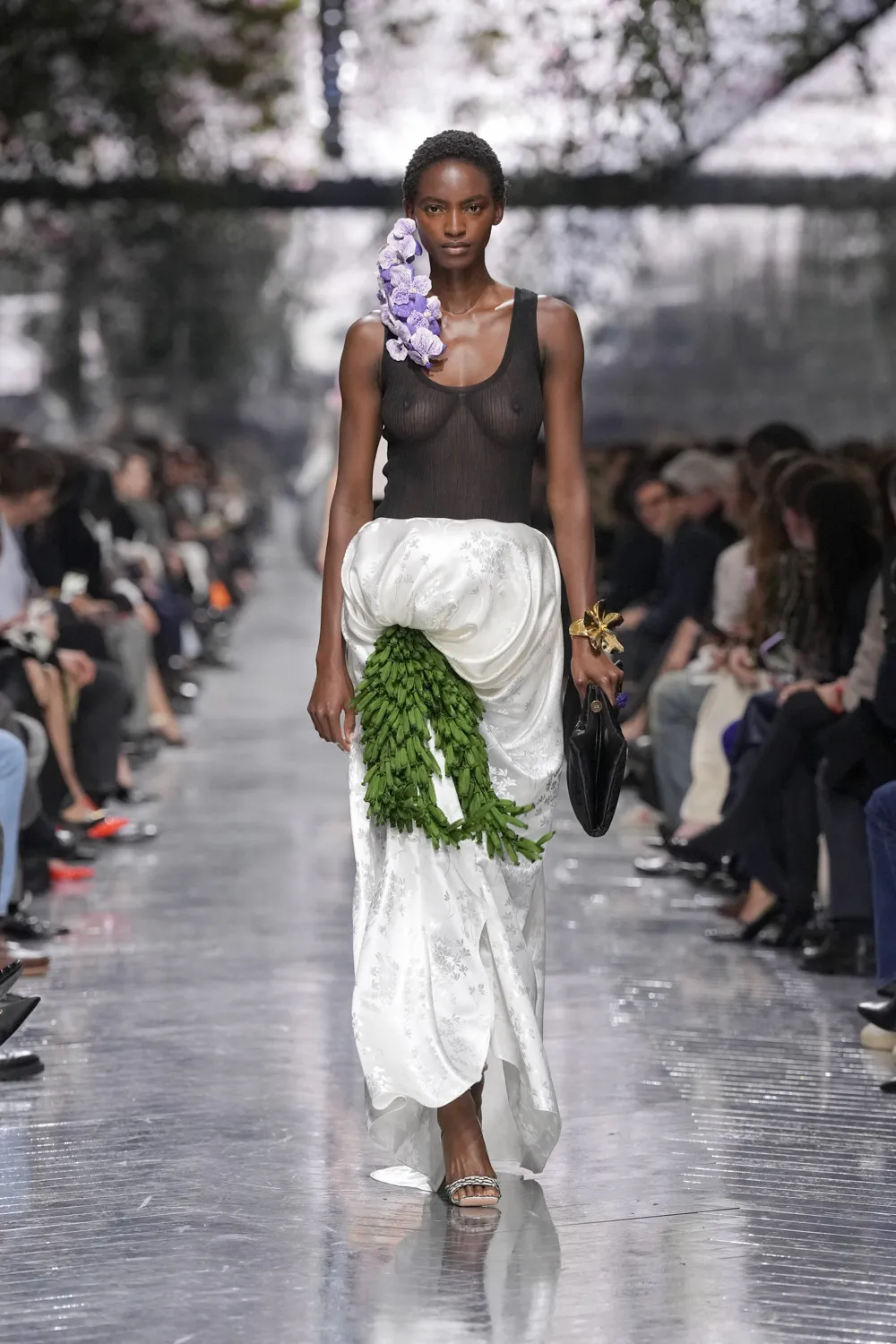
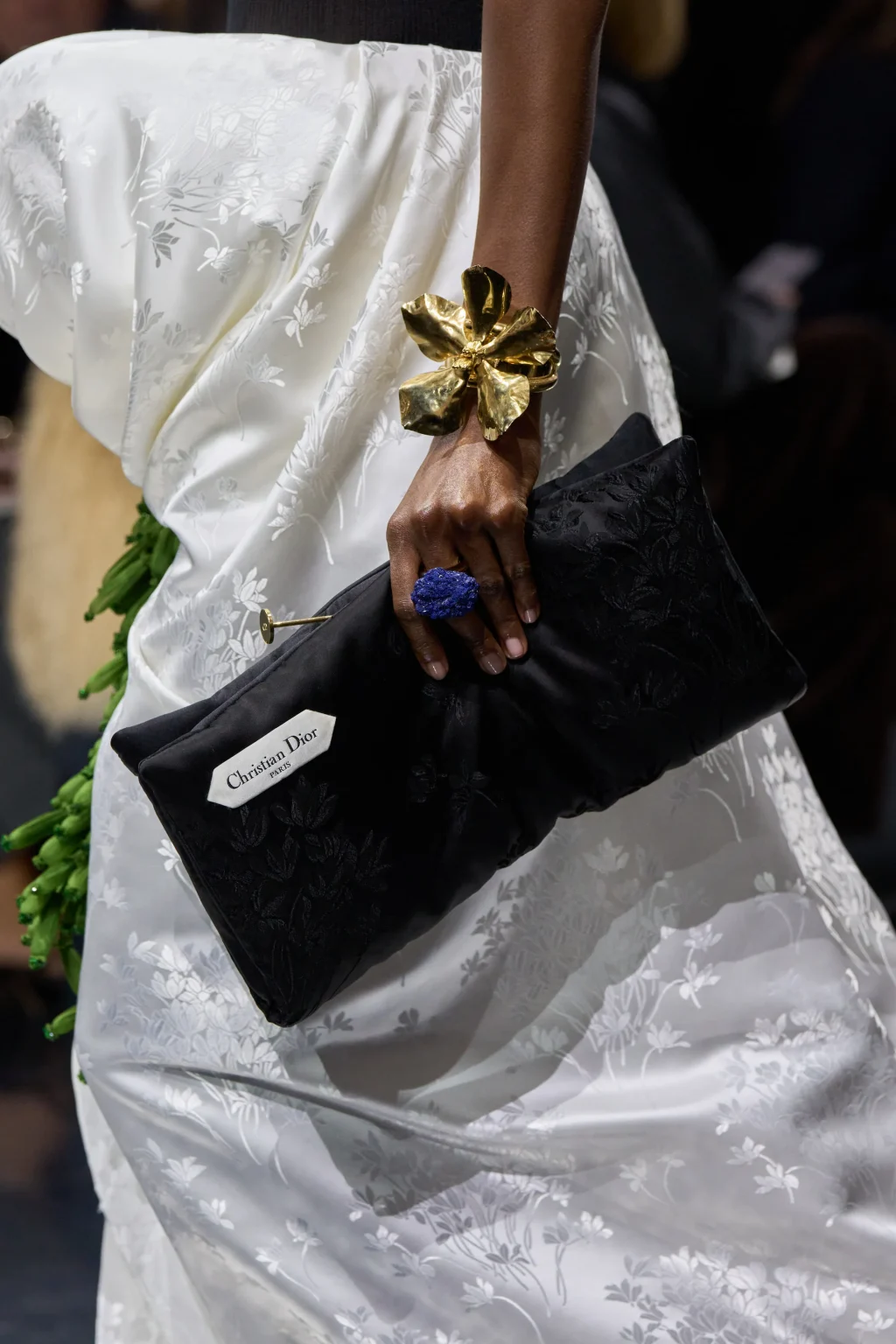
A pillow-like clutch that turns silk into a literal comfort object—soft, plush, and intentionally unstructured, as if couture decided it didn’t need a rigid frame to feel precious. In sky-blue satin, finished with delicate floral embroidery, it reads like a keepsake piece (the kind of pastel silk that kept resurfacing across the collection), gentle and almost intimate in tone. In vivid orange, the exact same idea flips into something hotter and more assertive—like warmth trapped in satin—carried as a soft sculpture, half clutch and half stole, for a client who doesn’t need hardware to telegraph authority.
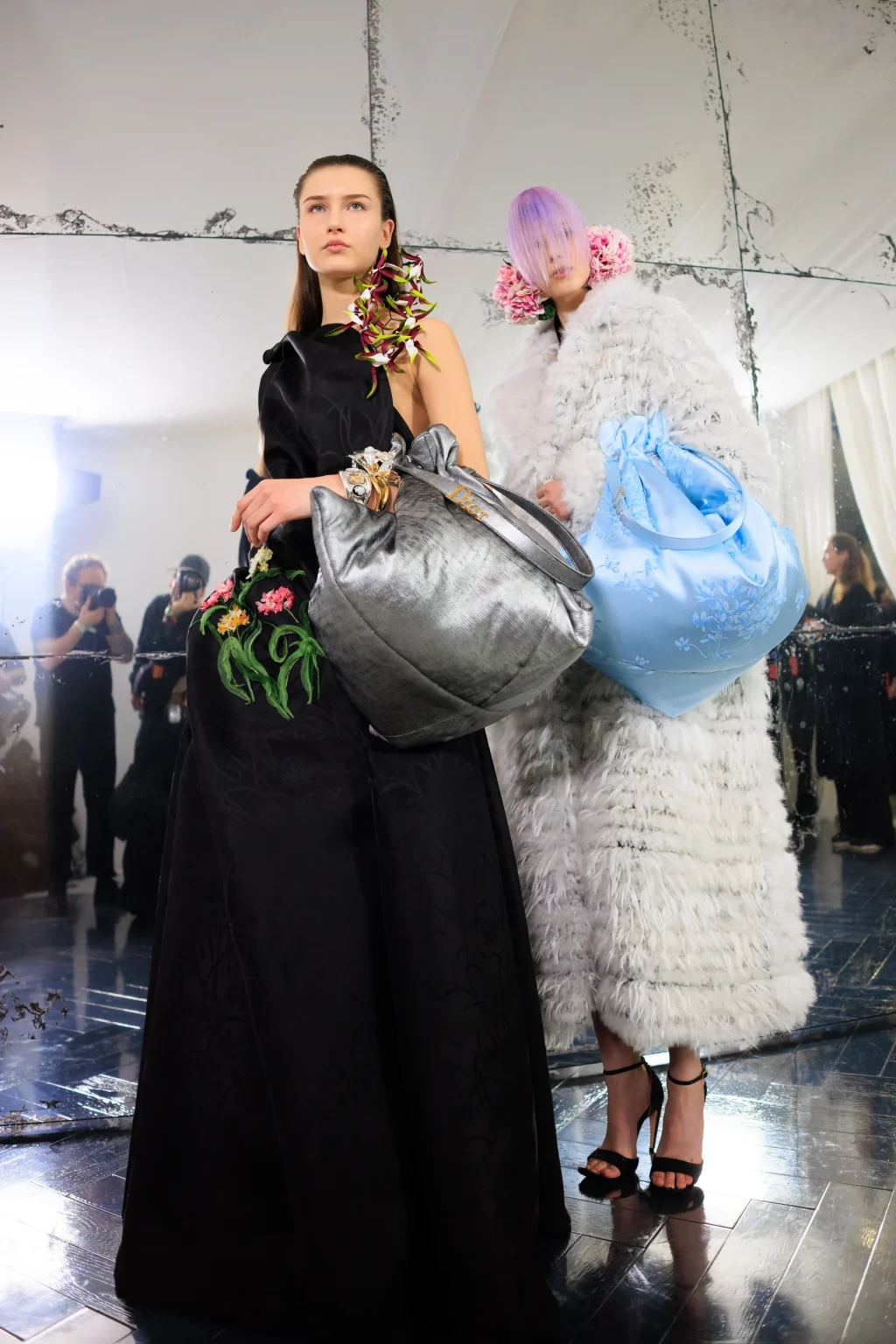
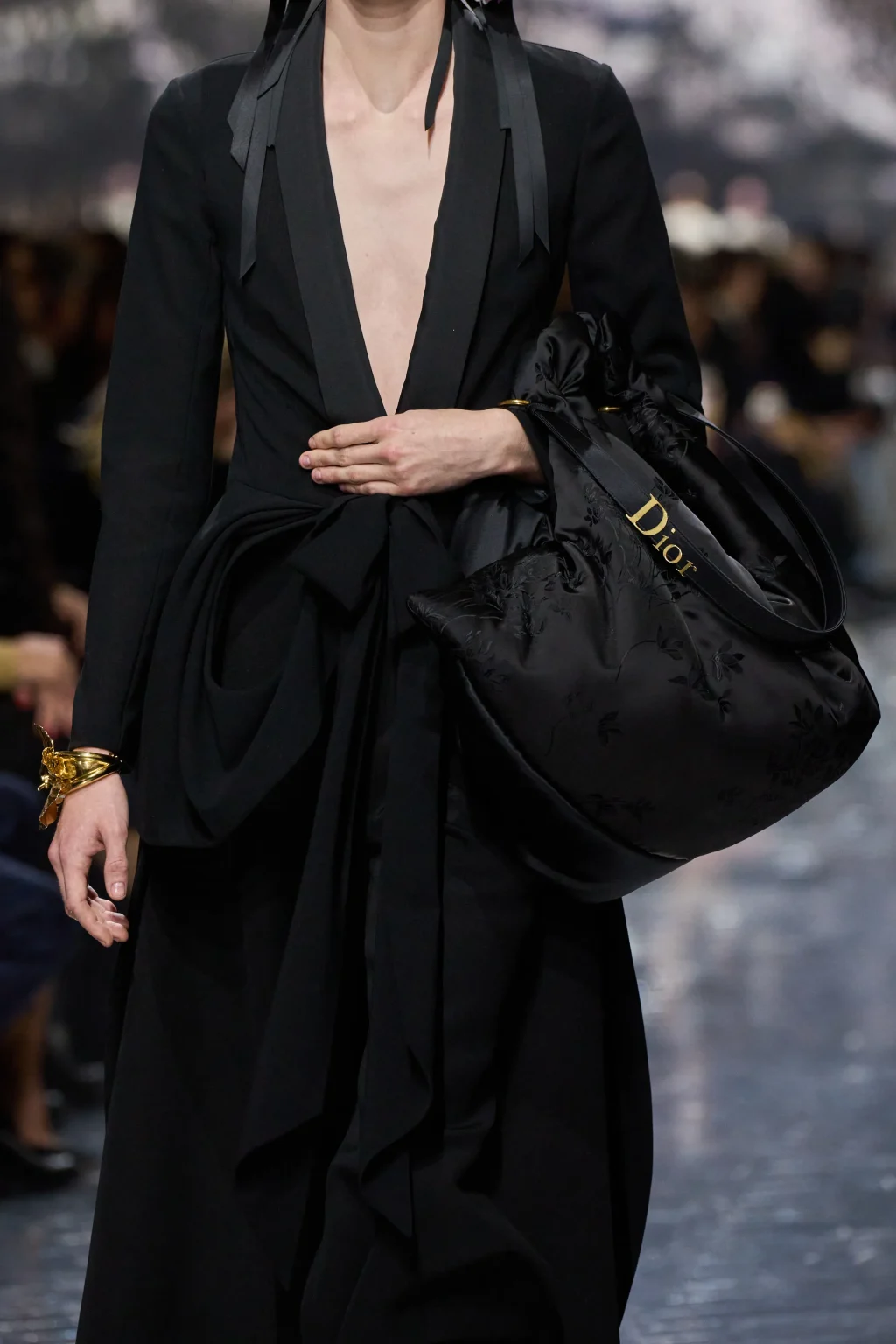
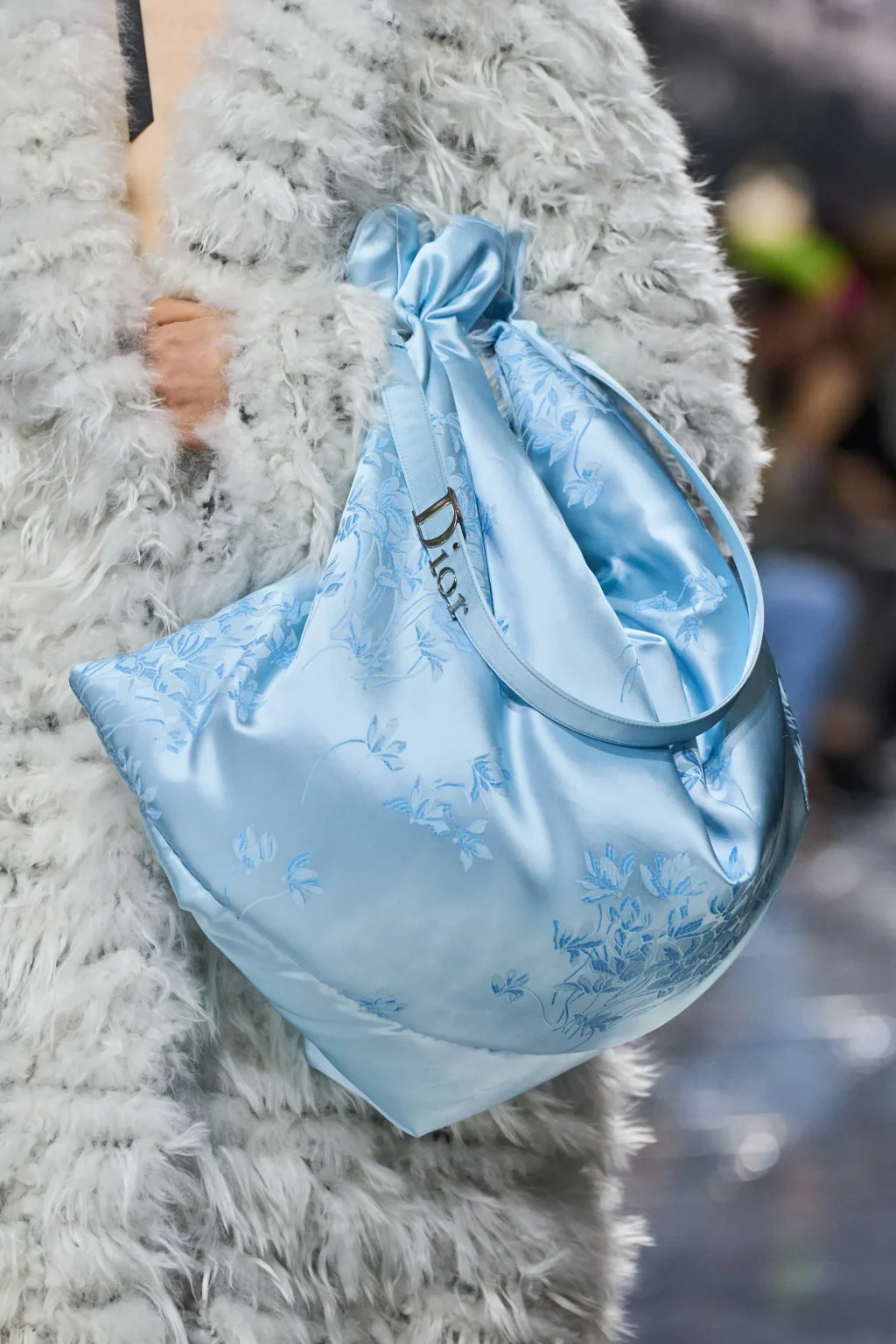
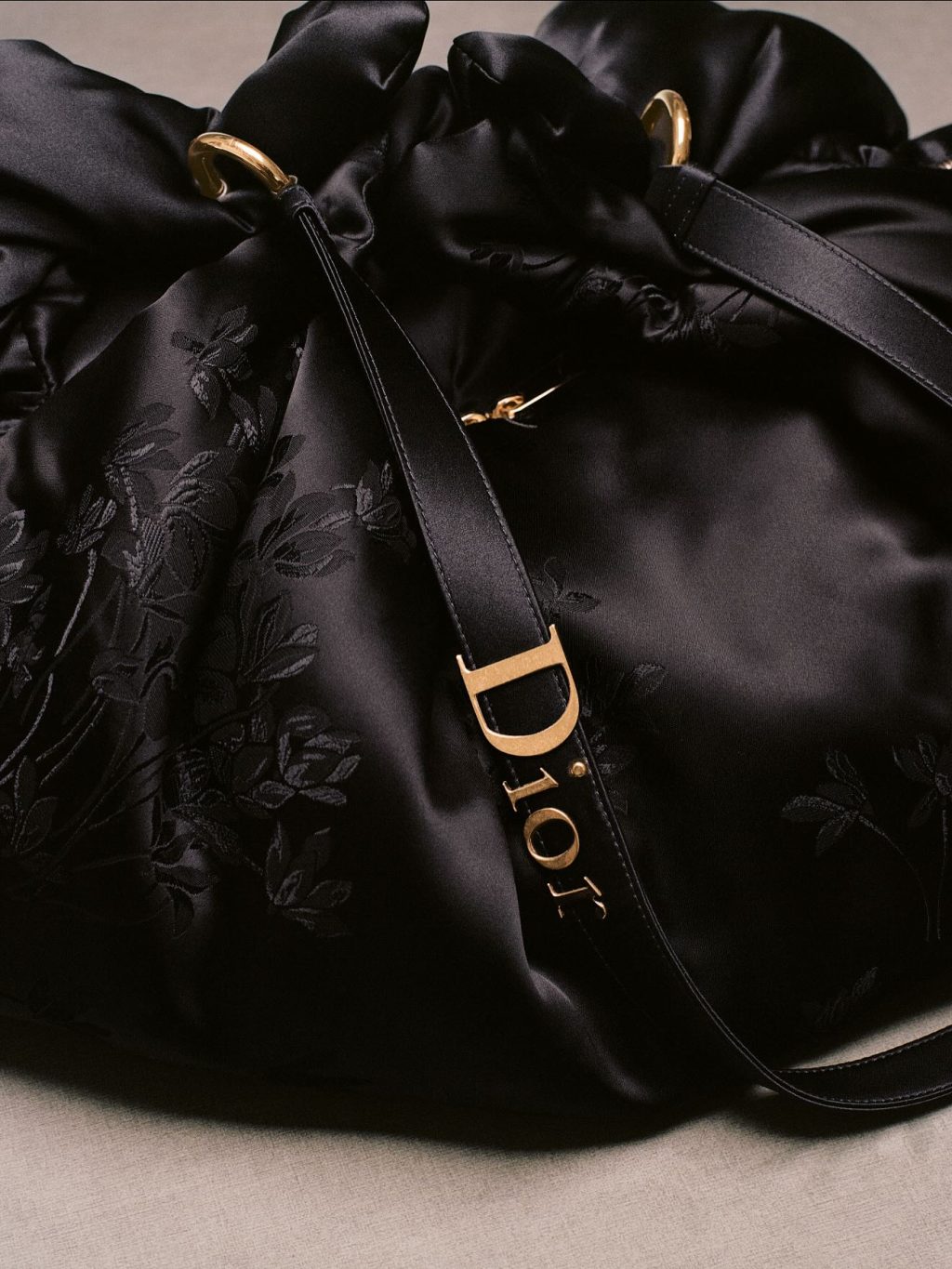
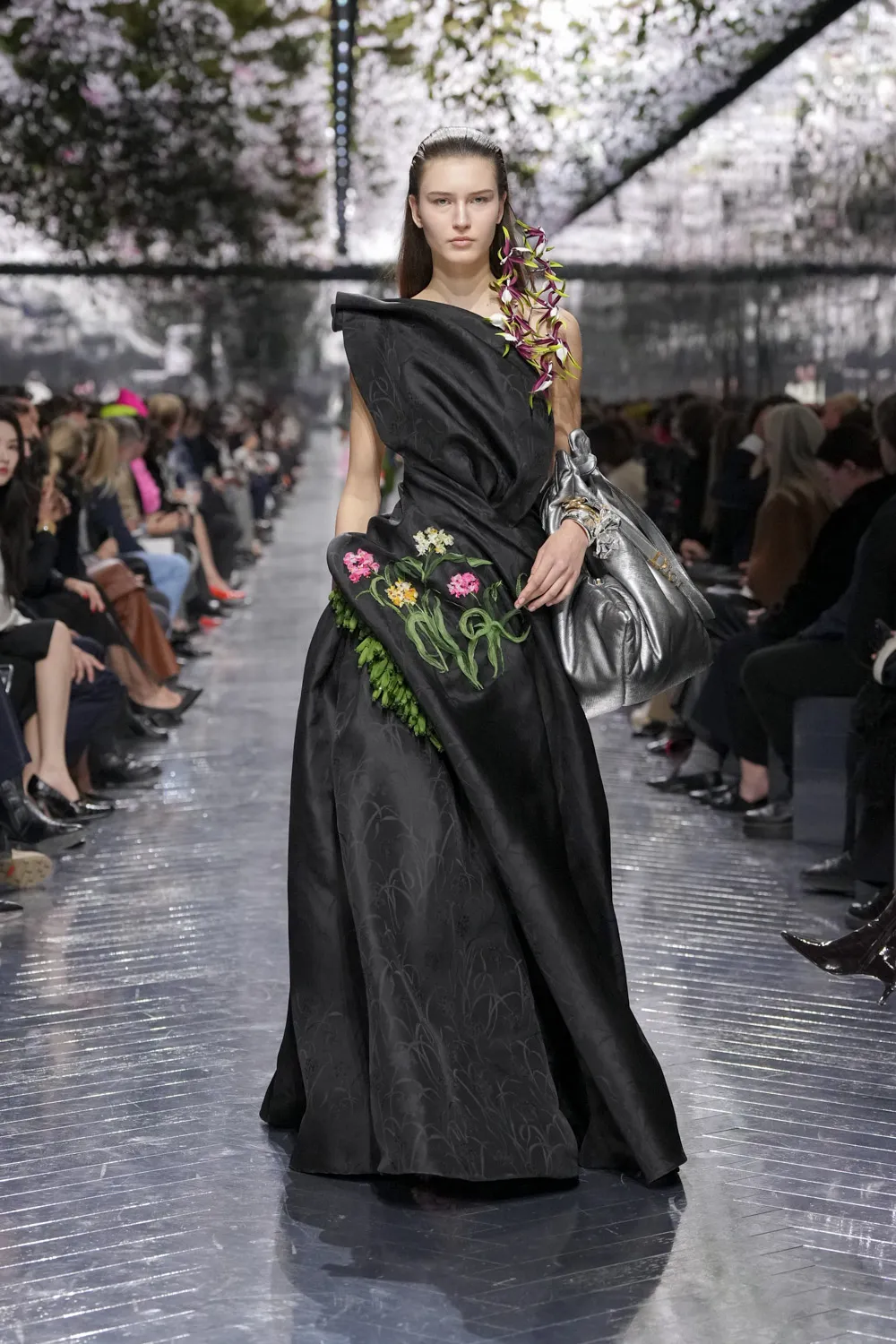
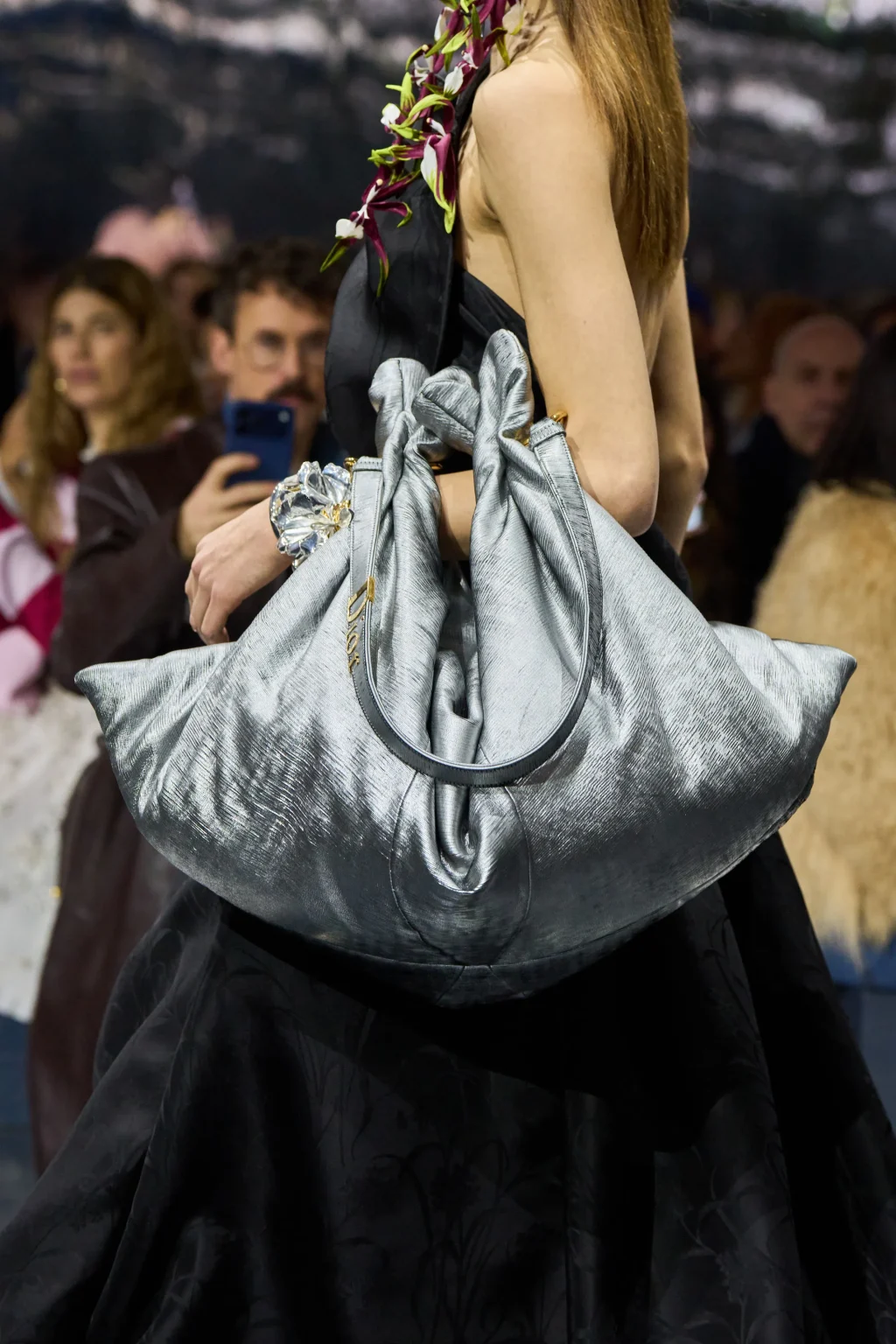
12. The Knotted Dior “Pillow Tote”
A large, slouching tote cinched into a deliberate top-knot, finished with a Dior-branded strap that reads like a label turned handle. The elegance is in the contradiction: it looks casually improvised—almost as if you simply tied a length of couture fabric into a carryall—yet the silhouette is clearly engineered to hold that exact drape and volume without losing its sculptural intent.
Across the three finishes, the same form changes temperament. Powder-blue satin makes it feel intimate and boudoir-soft, like a comfort-object rendered in couture silk; silver lamé turns the folds into pure light-play, a moving highlight made to “talk” to the mirrored setting; and black jacquard is the most severe, black-on-black with the strap as a controlled reveal—arguably the most wearable translation, still couture in construction but emotionally aligned with a client who lives in black.
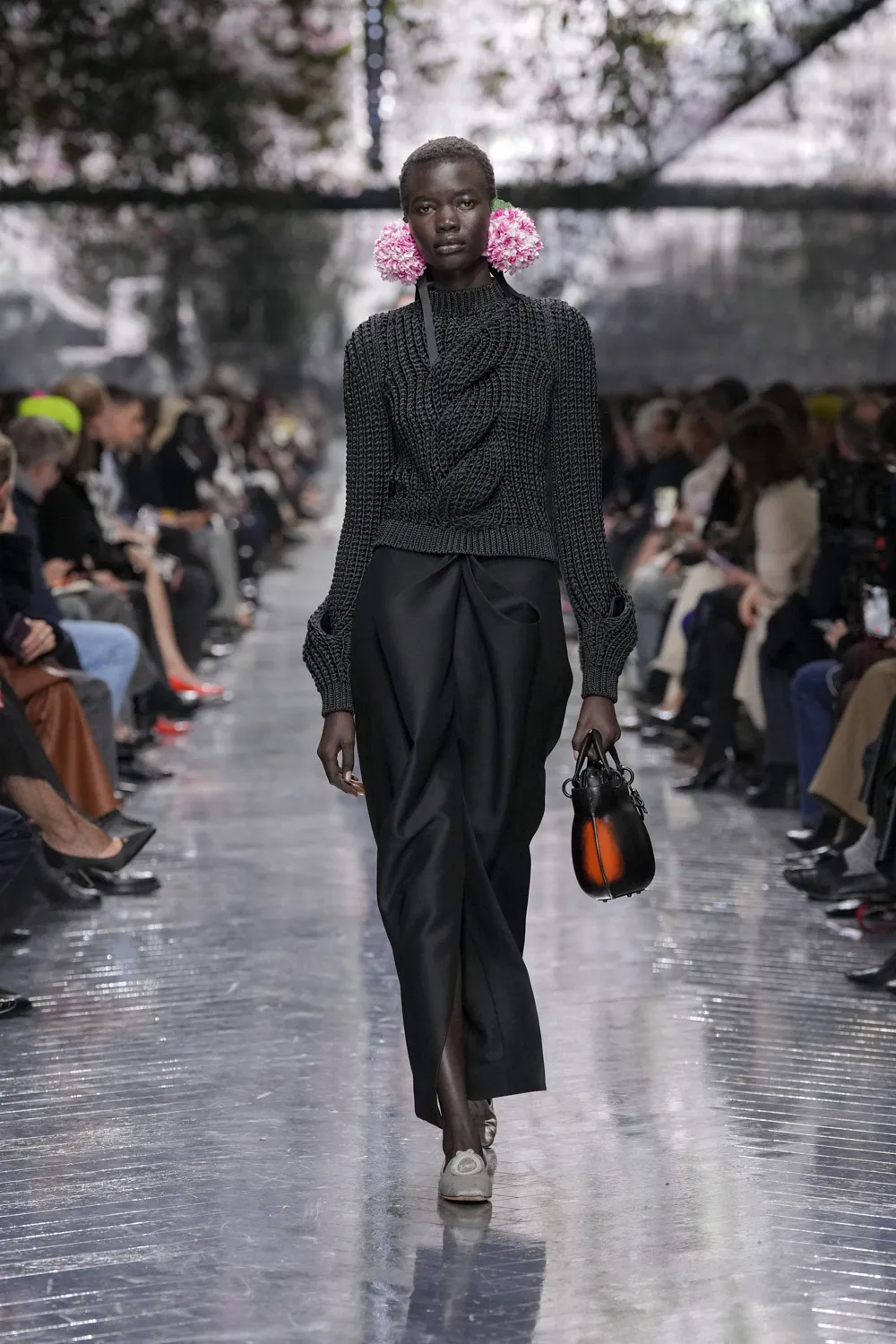
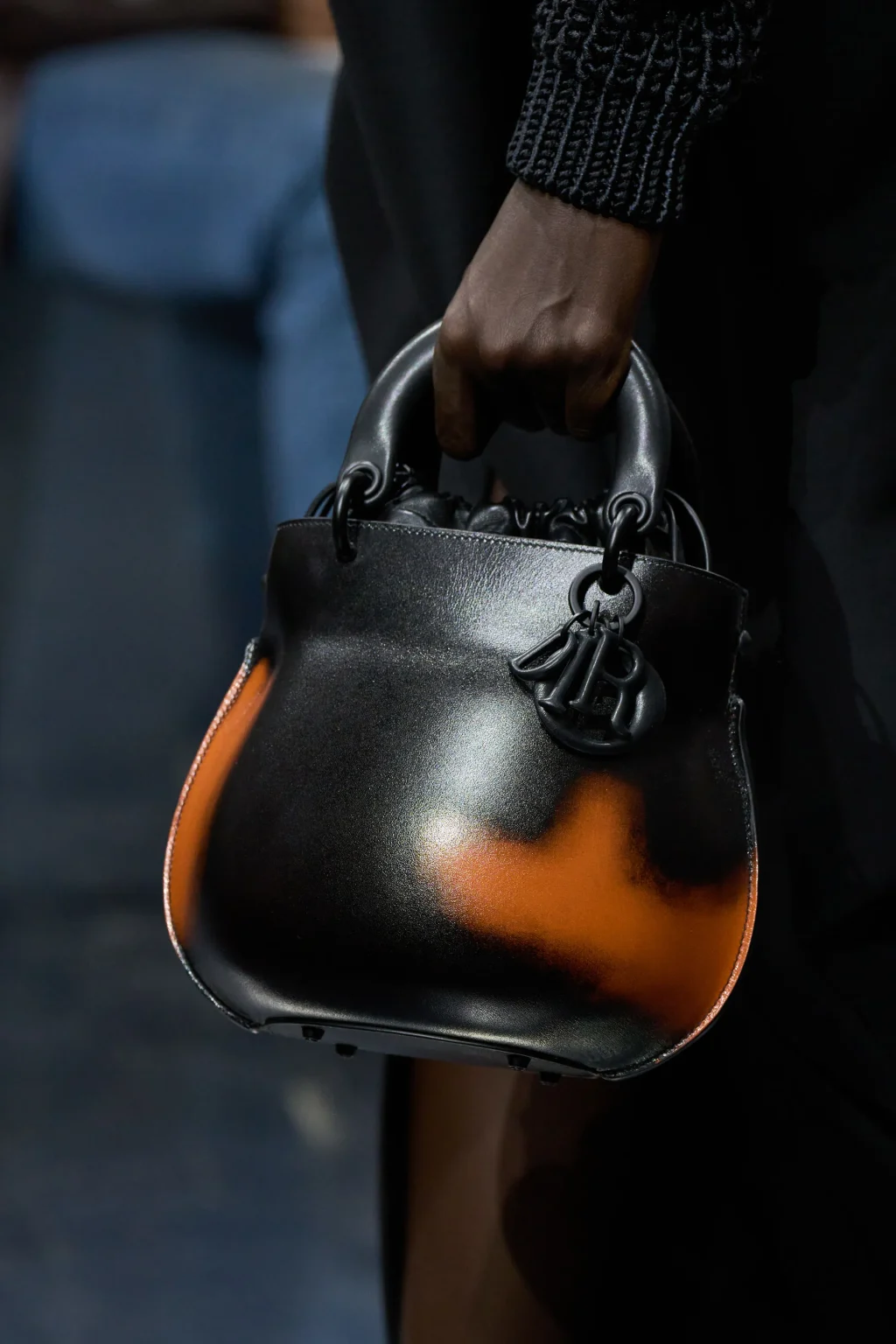
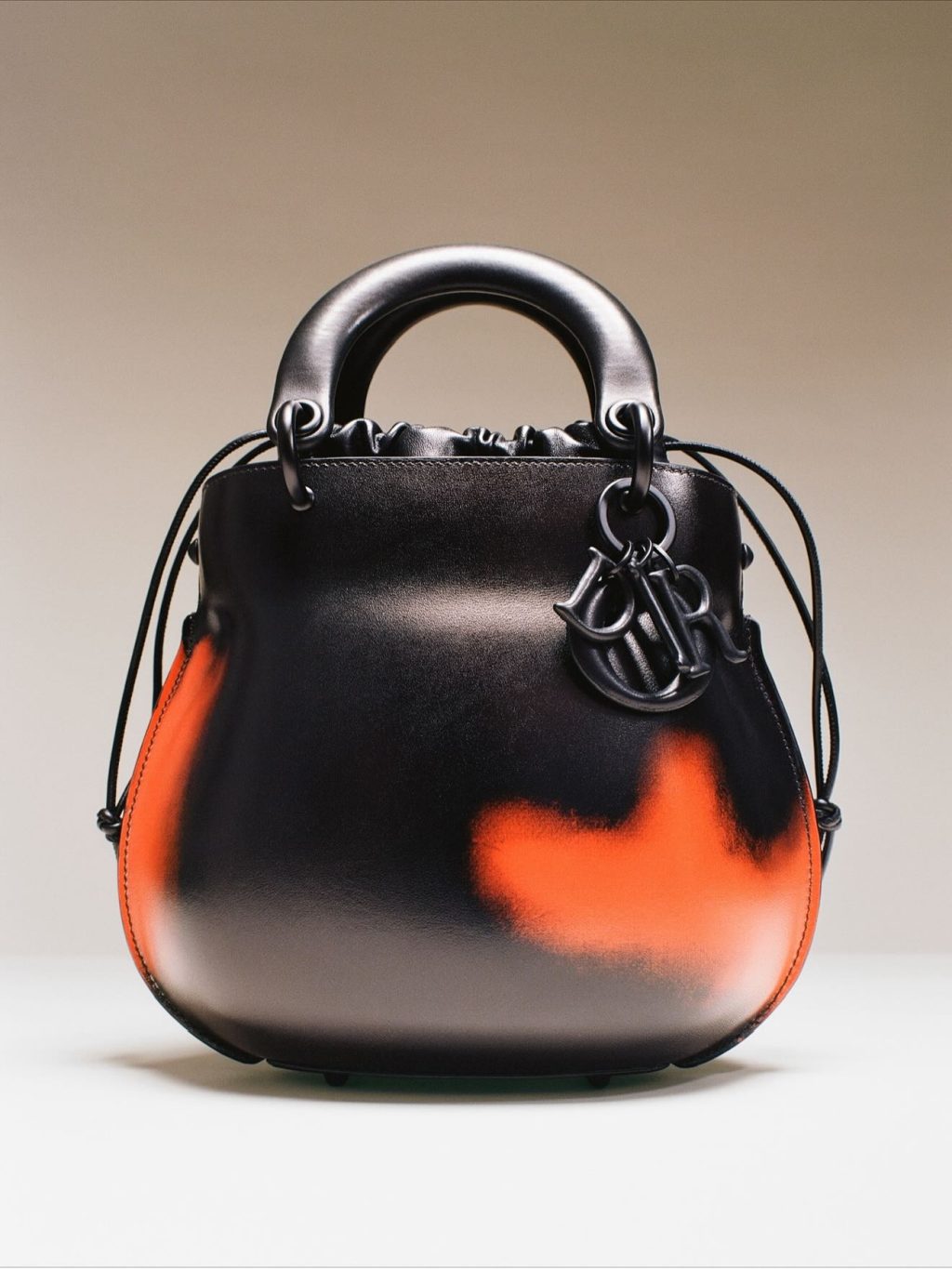
13. Lady Dior, Airbrushed Black-to-Orange
Here, the Lady Dior becomes a canvas: black leather disrupted by an orange bloom, like heat-map couture. The finish feels almost industrial—spray, shadow, burnish—contrasting with the flower-soft narrative elsewhere.
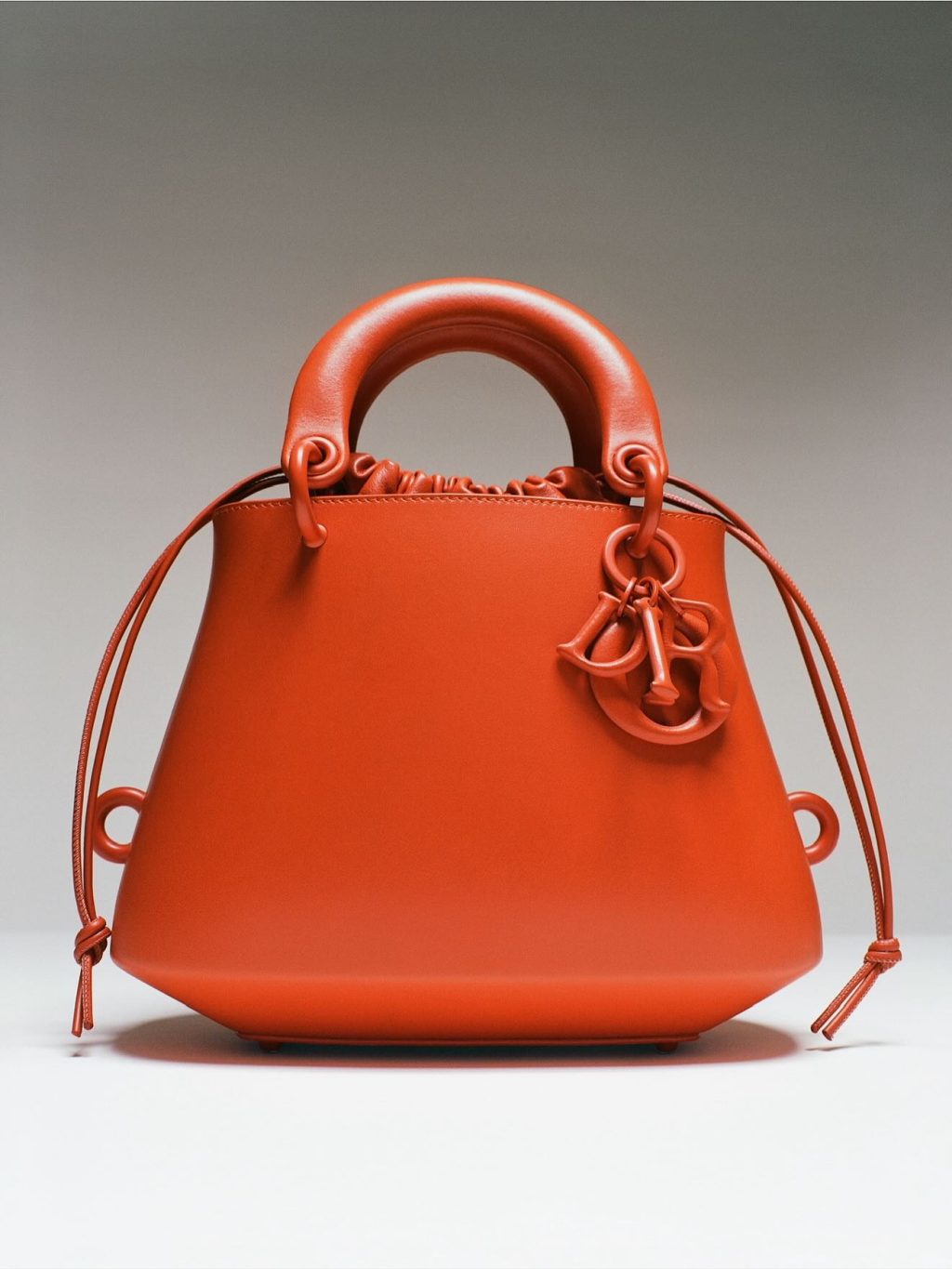
14. Reimagined Lady Dior
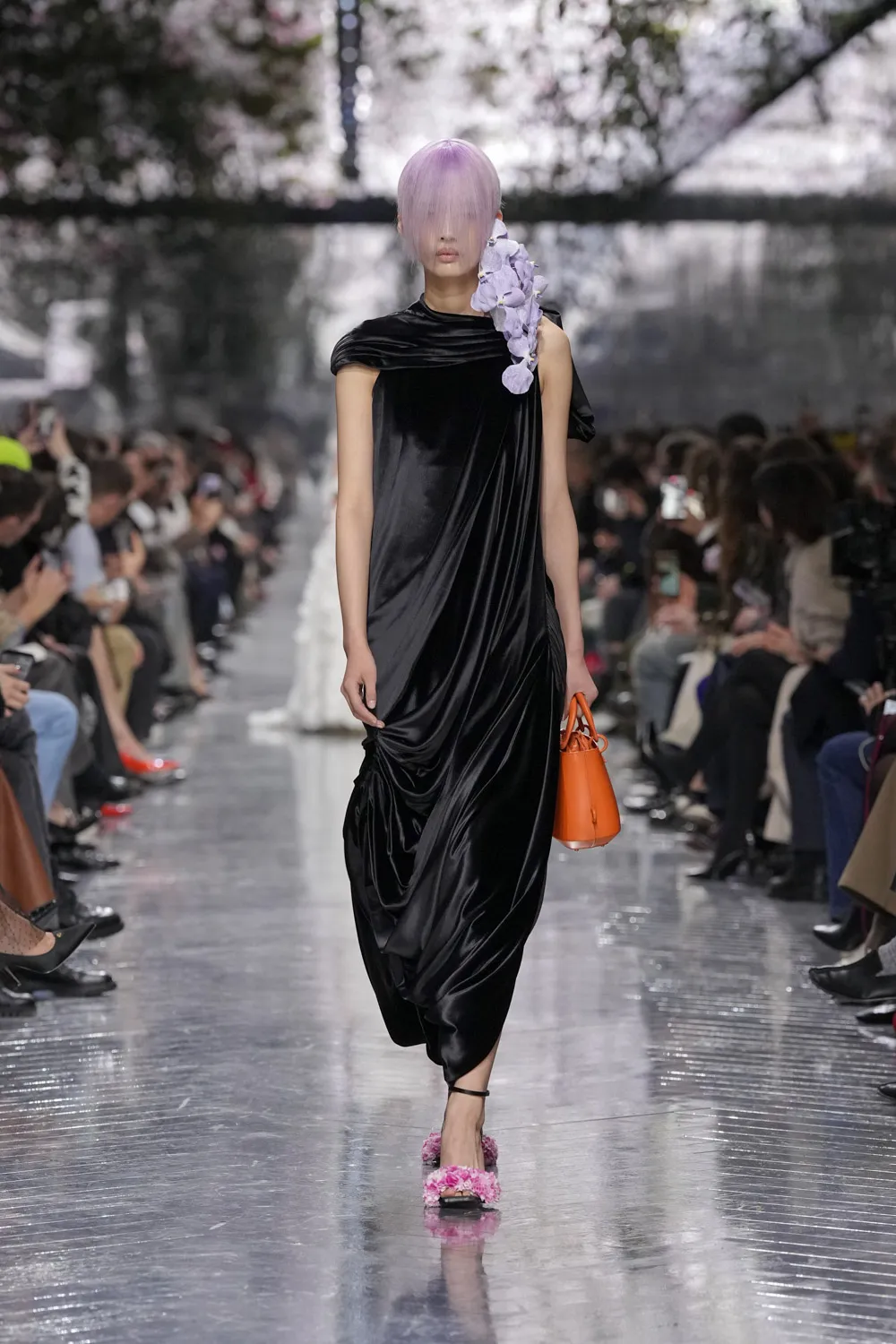
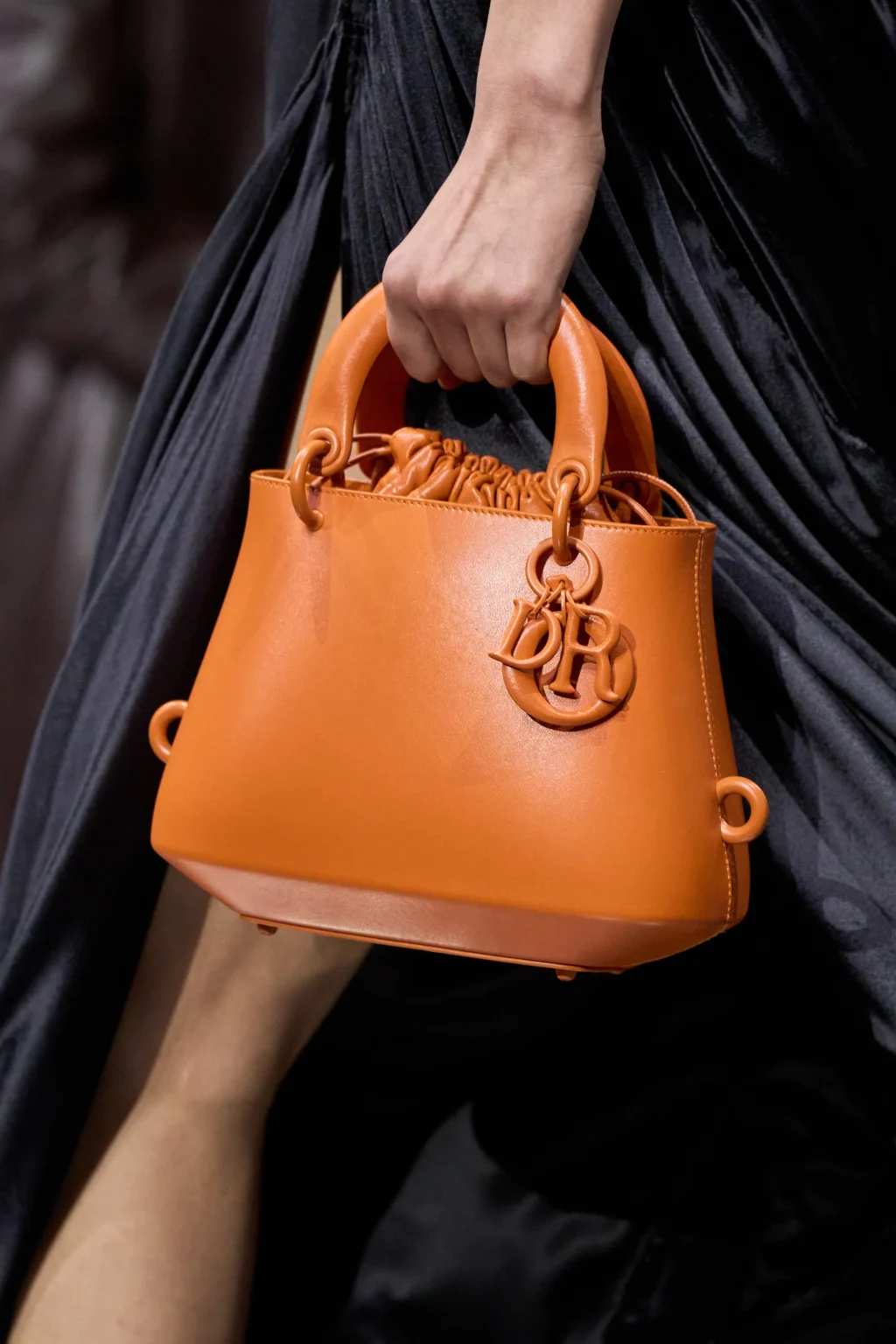
A pure color moment. The saturated orange pushes the Lady Dior into pop territory without losing its formality—proof that the icon can absorb Anderson’s bolder palette without breaking character.
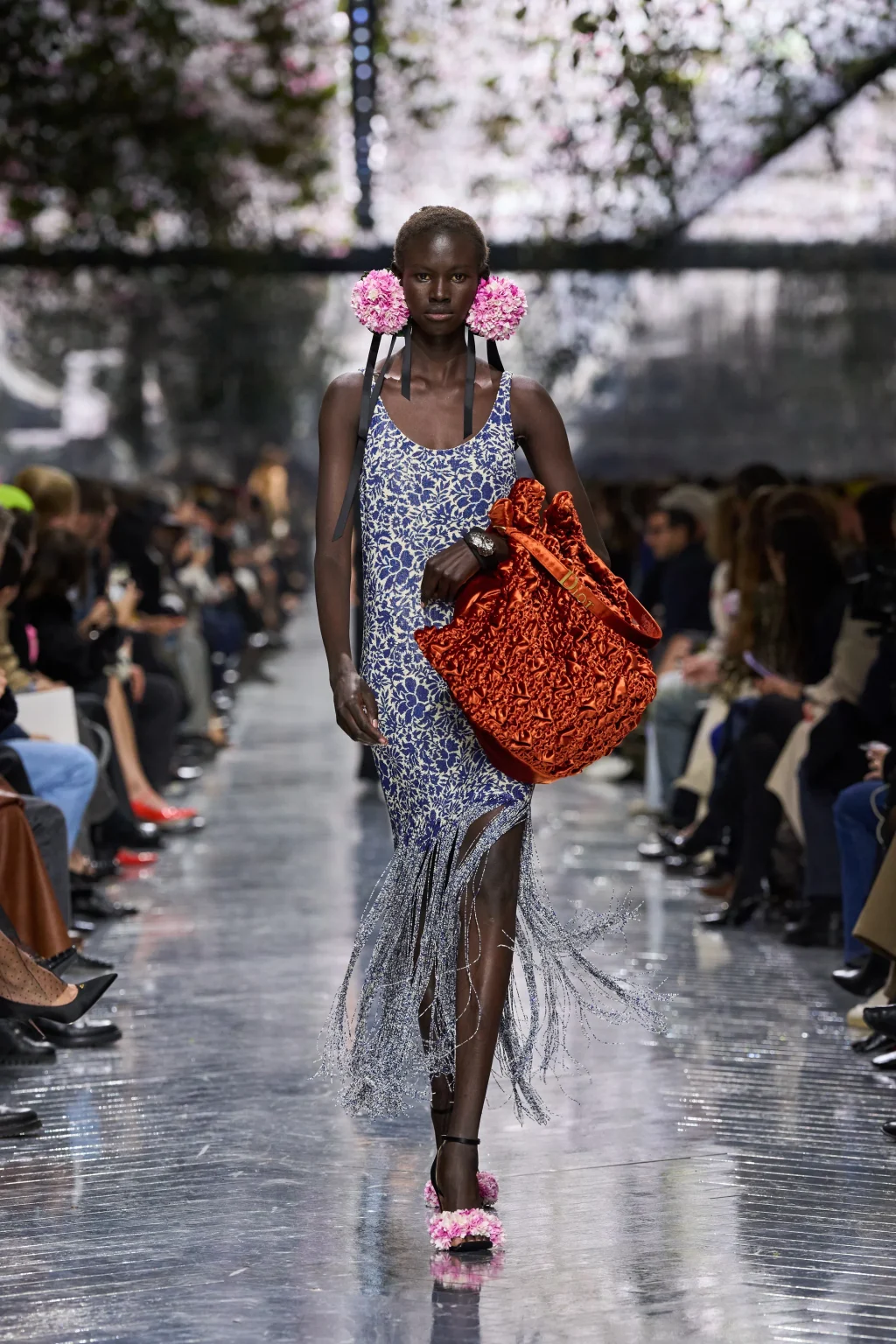
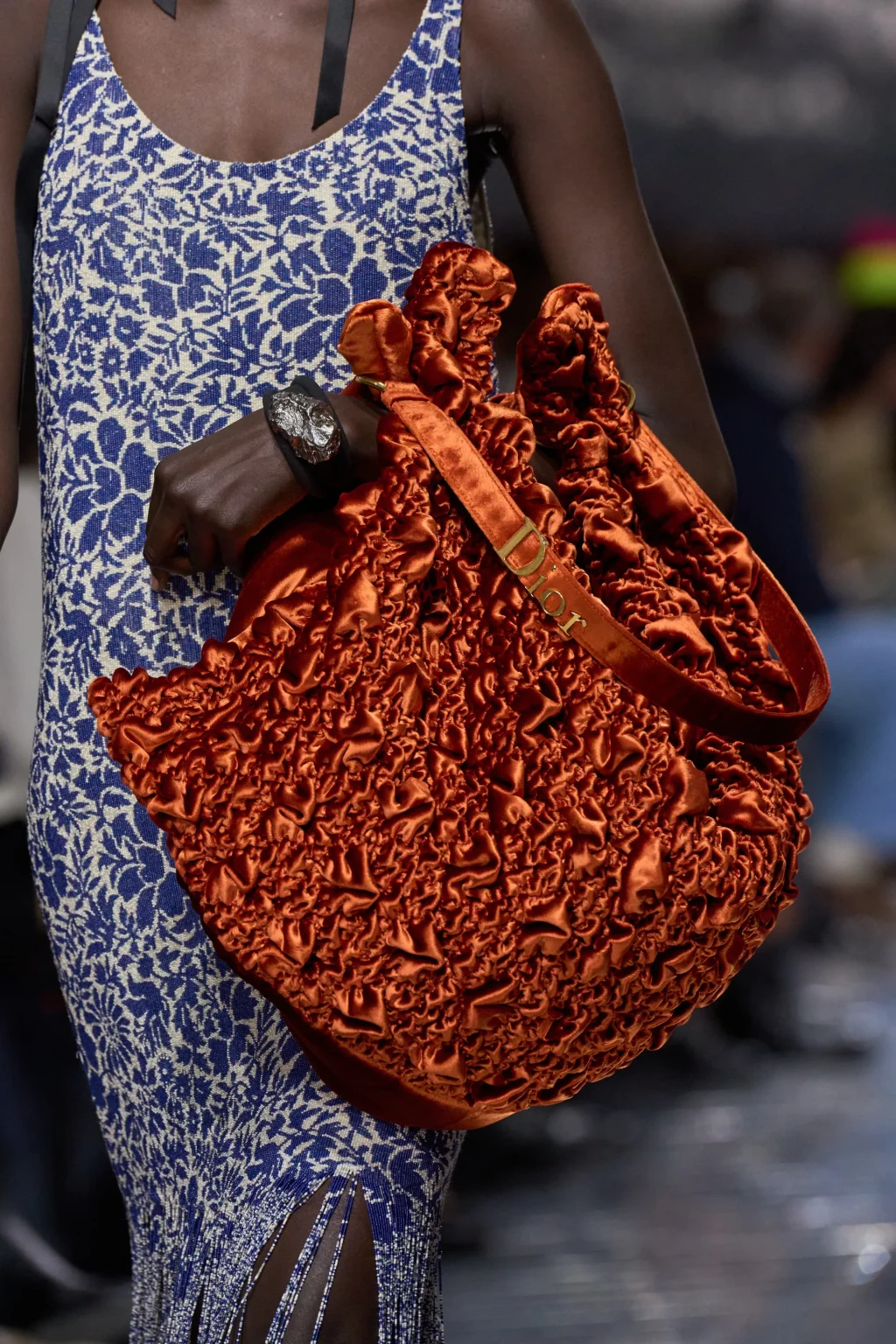
15. The Ruched Orange “Cloud” Tote
A giant, ruffled, almost coral-like tote carried backstage like an emotional support sculpture. It’s maximal not because it’s loud, but because it’s tactile—an object you want to touch, and that’s very much the point of couture as “living knowledge” made visible.
16. The Turquoise “Molded Stone” Clutch
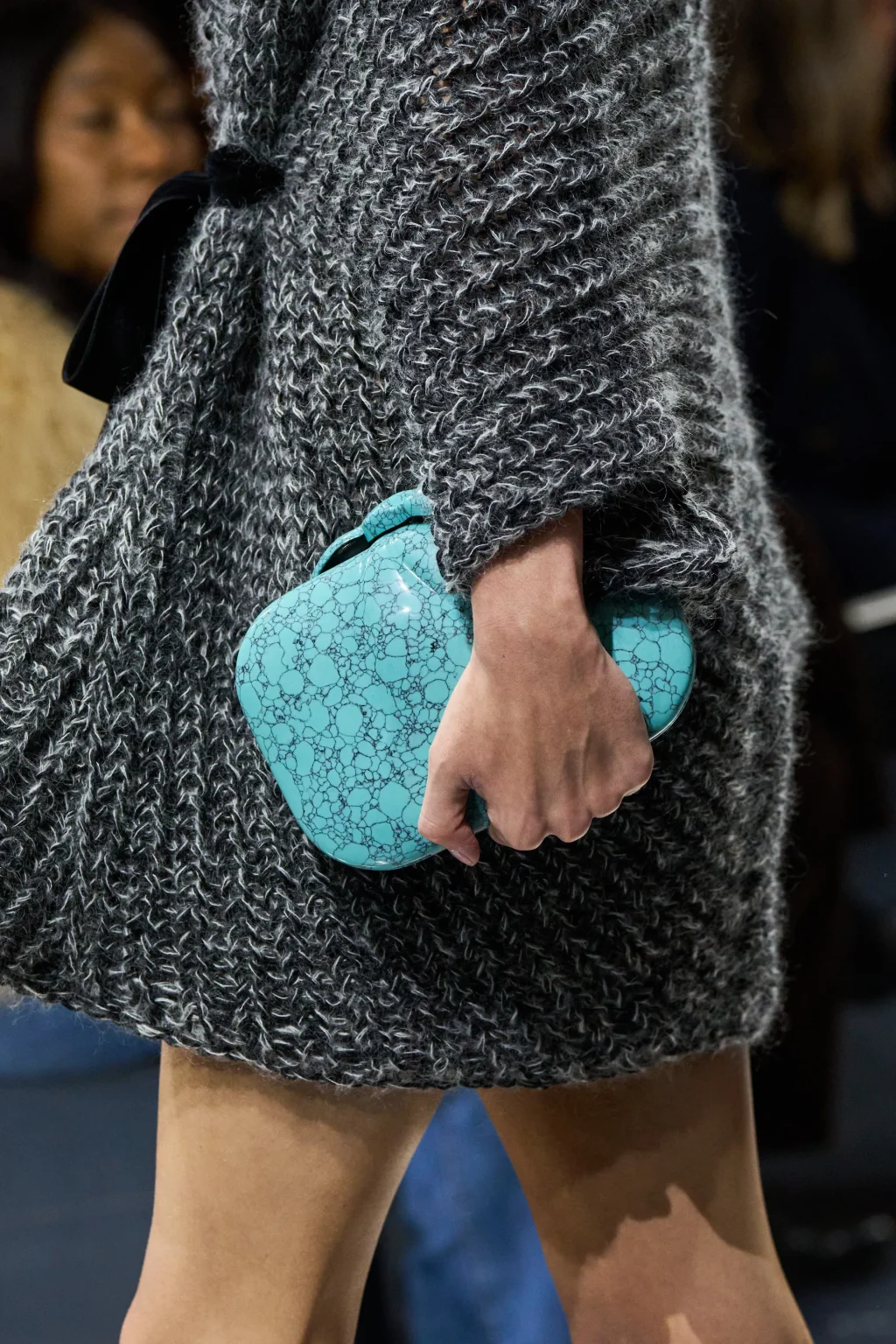
A compact, oval hard-case clutch with a turquoise-green, mineral-like crackle surface—an accessory that feels cast rather than sewn, like a polished stone lifted from a cabinet of curiosities. Minimal in shape, maximal in texture, it brings the collection’s nature-as-material idea into the palm of the hand.
17. Shibori Embroidery Clutch
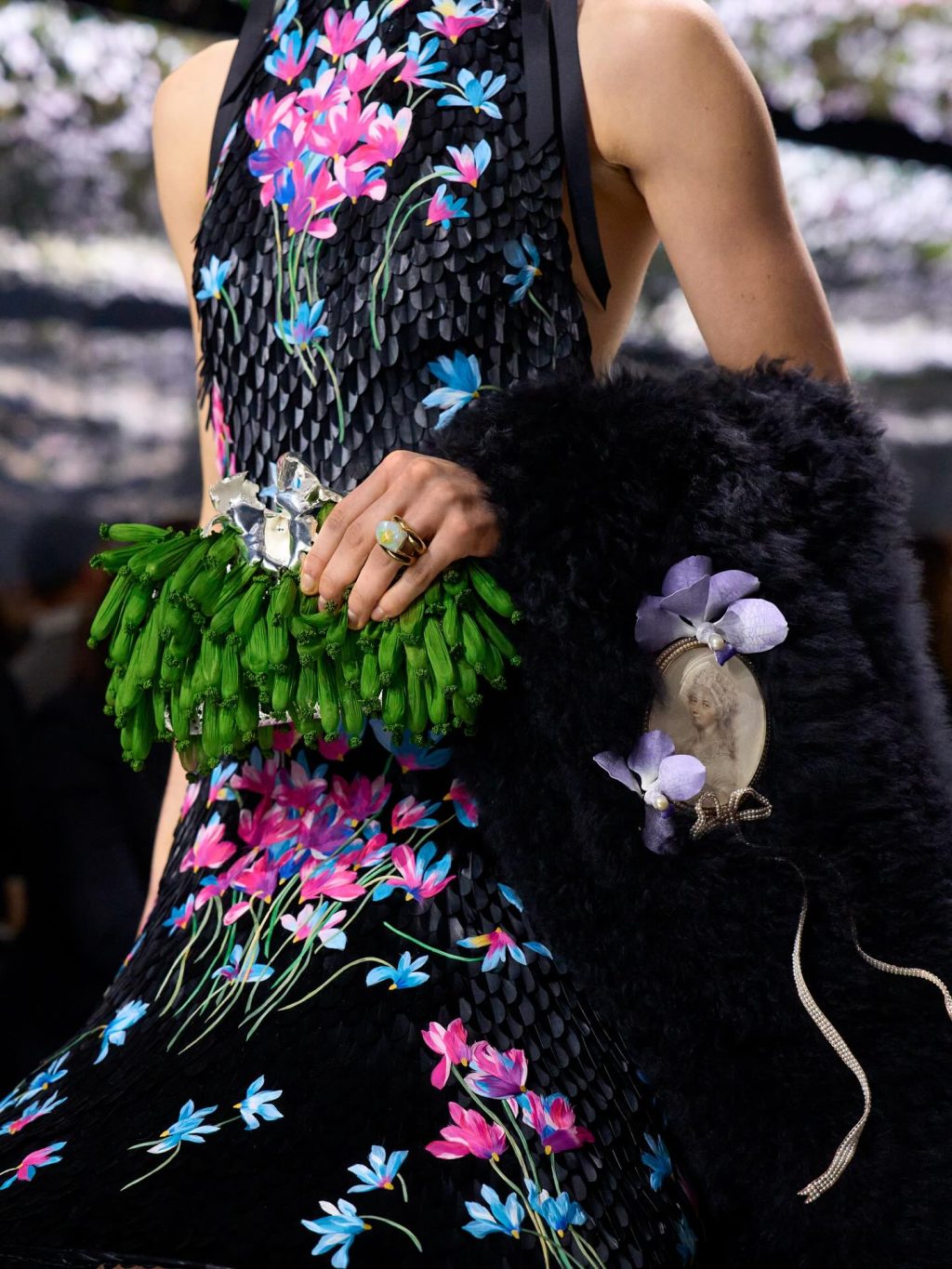
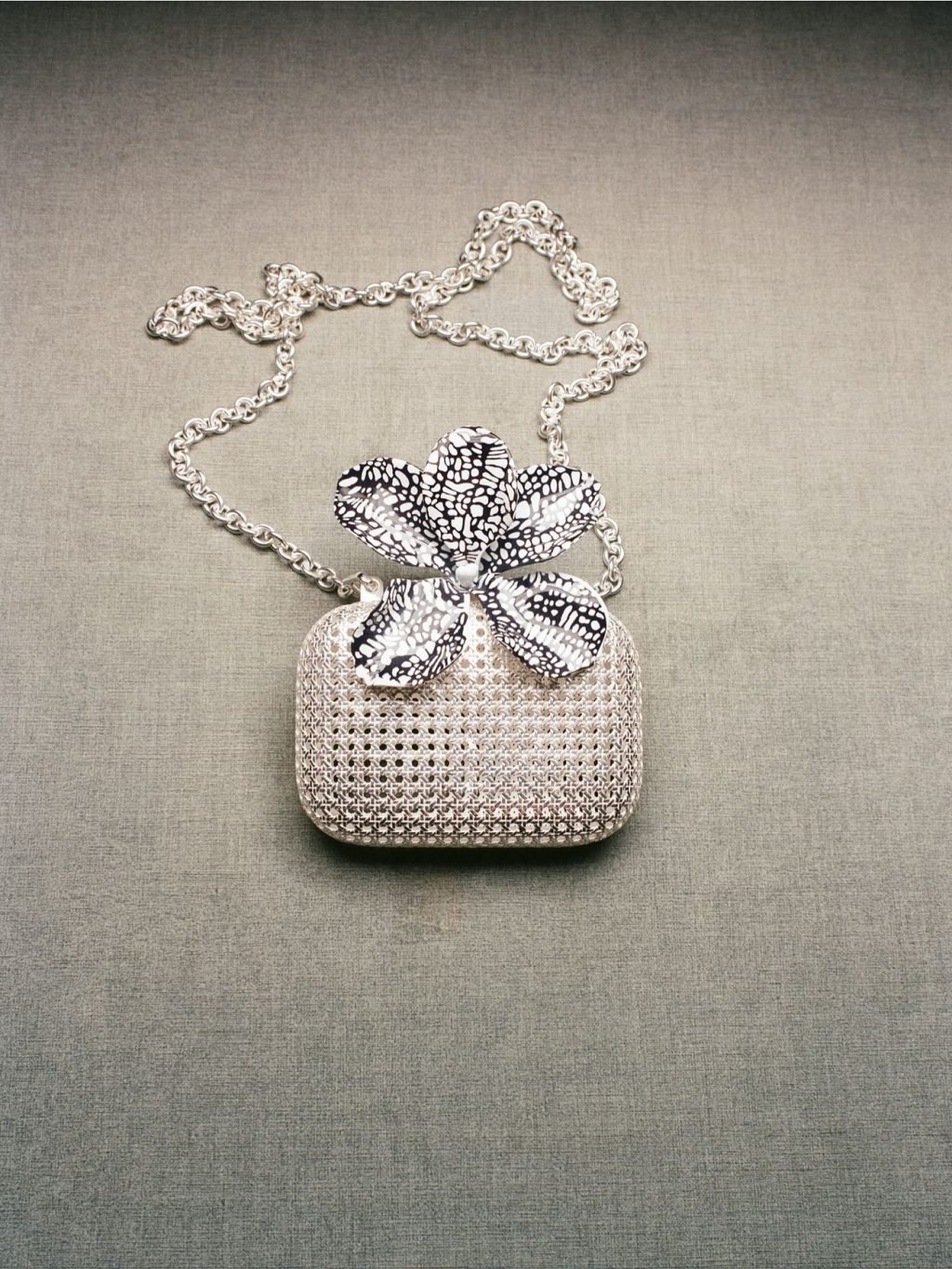
A couture clutch conceived like a tiny specimen from Anderson’s “cabinet of wonders”: a rigid, sculpted base—reading almost like metal mesh or perforated armor—is overgrown with dense clusters of shibori embroidery, rising and hanging in tactile rows so the surface feels vegetal, dimensional, and slightly surreal. At the top, a hammered silver flourish—part flower, part jewelry—acts like a clasp and a focal point, sharpening the contrast between nature’s irregularity and the atelier’s engineered precision.
In green, it feels freshly cut, like a bouquet distilled into an object; in black, the same form turns nocturnal and graphic, closer to an artifact than an arrangement. Either way, it’s less “evening bag” than portable sculpture—carried like a small wonder rather than an accessory that disappears into the look.
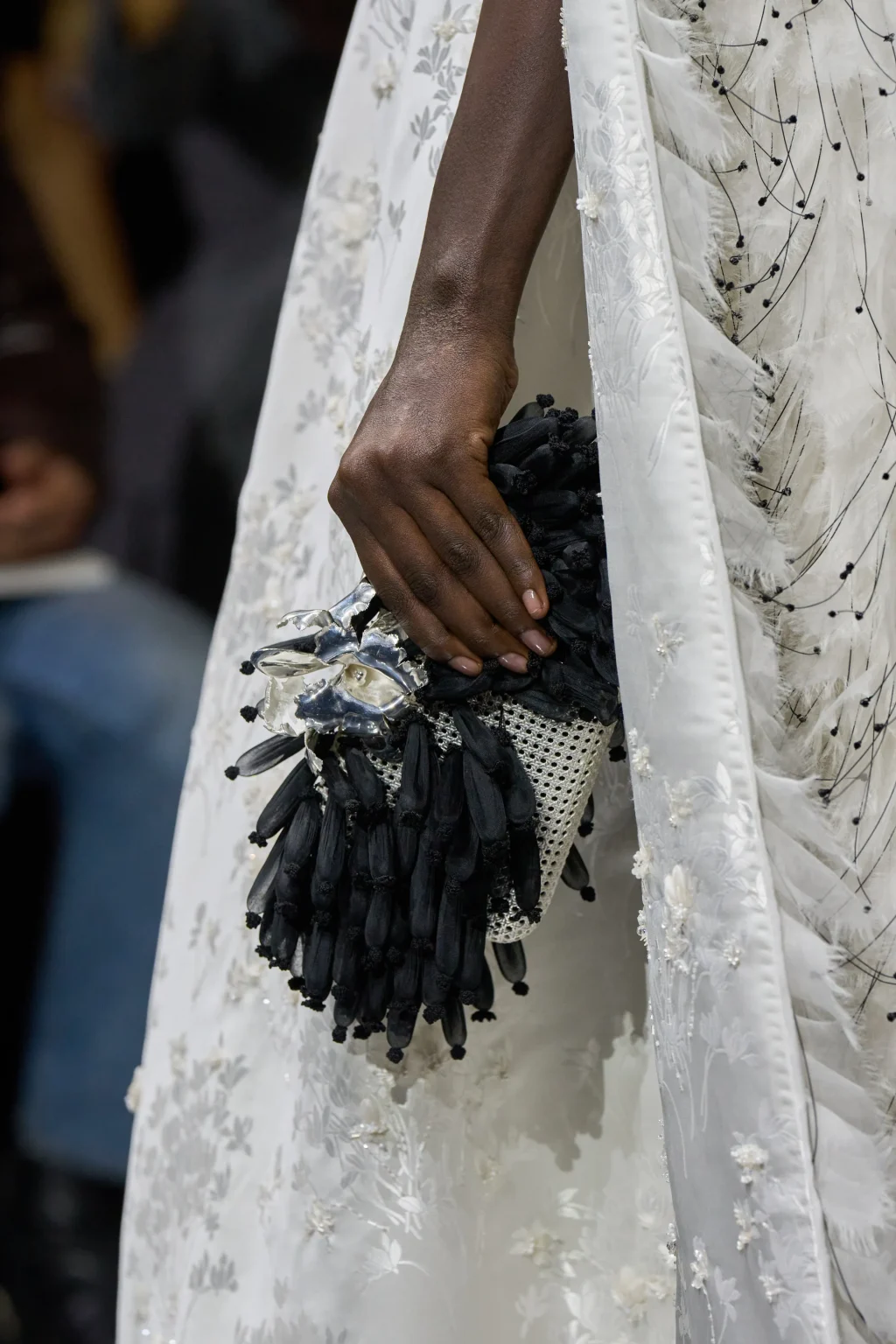
18. The Silver Butterfly Minaudière
A small, bright metal minaudière with a butterfly detail—an engineered little object that sits between jewelry and bag. It complements the collection’s broader taste for small wonders: accessories as artifacts rather than add-ons.
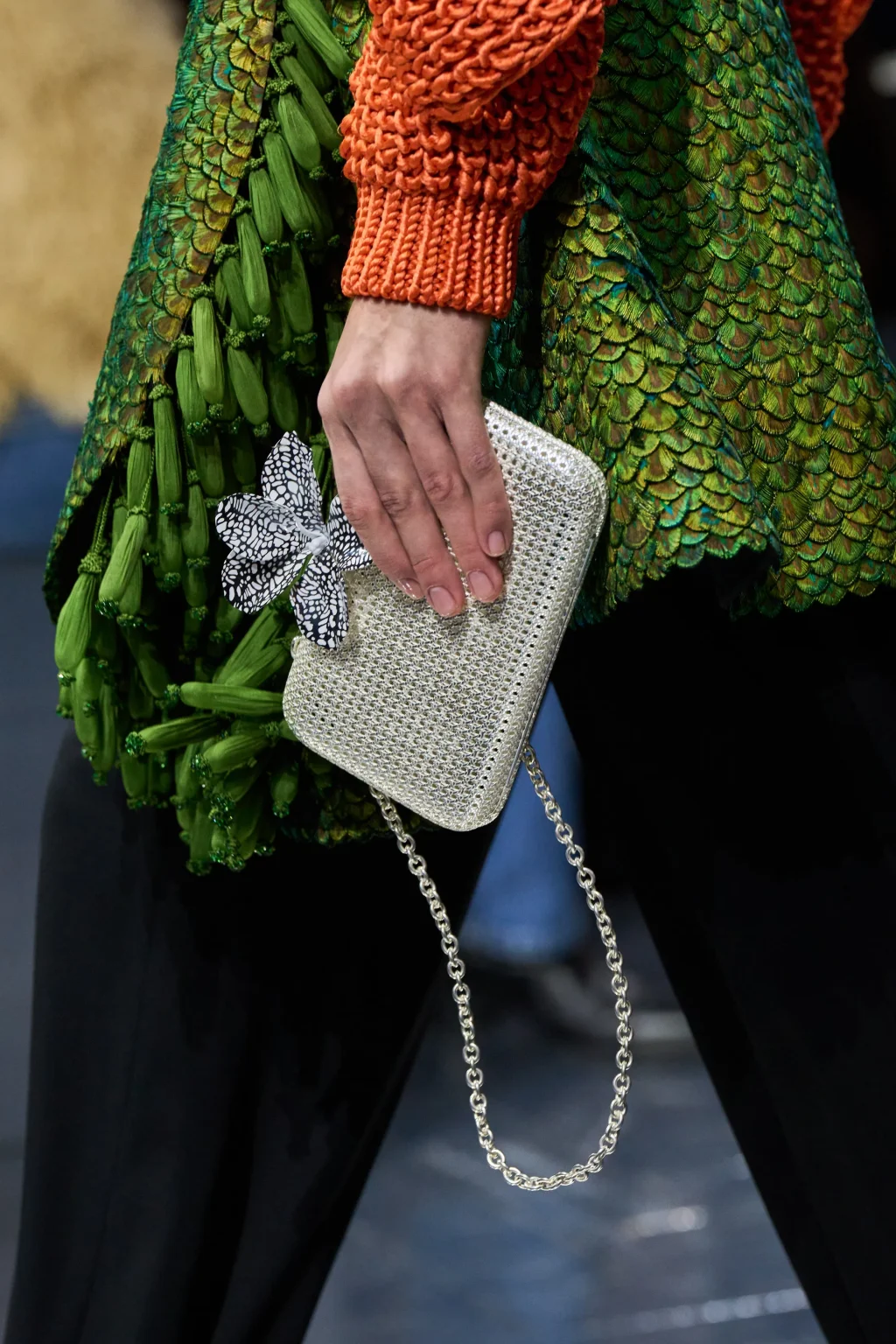
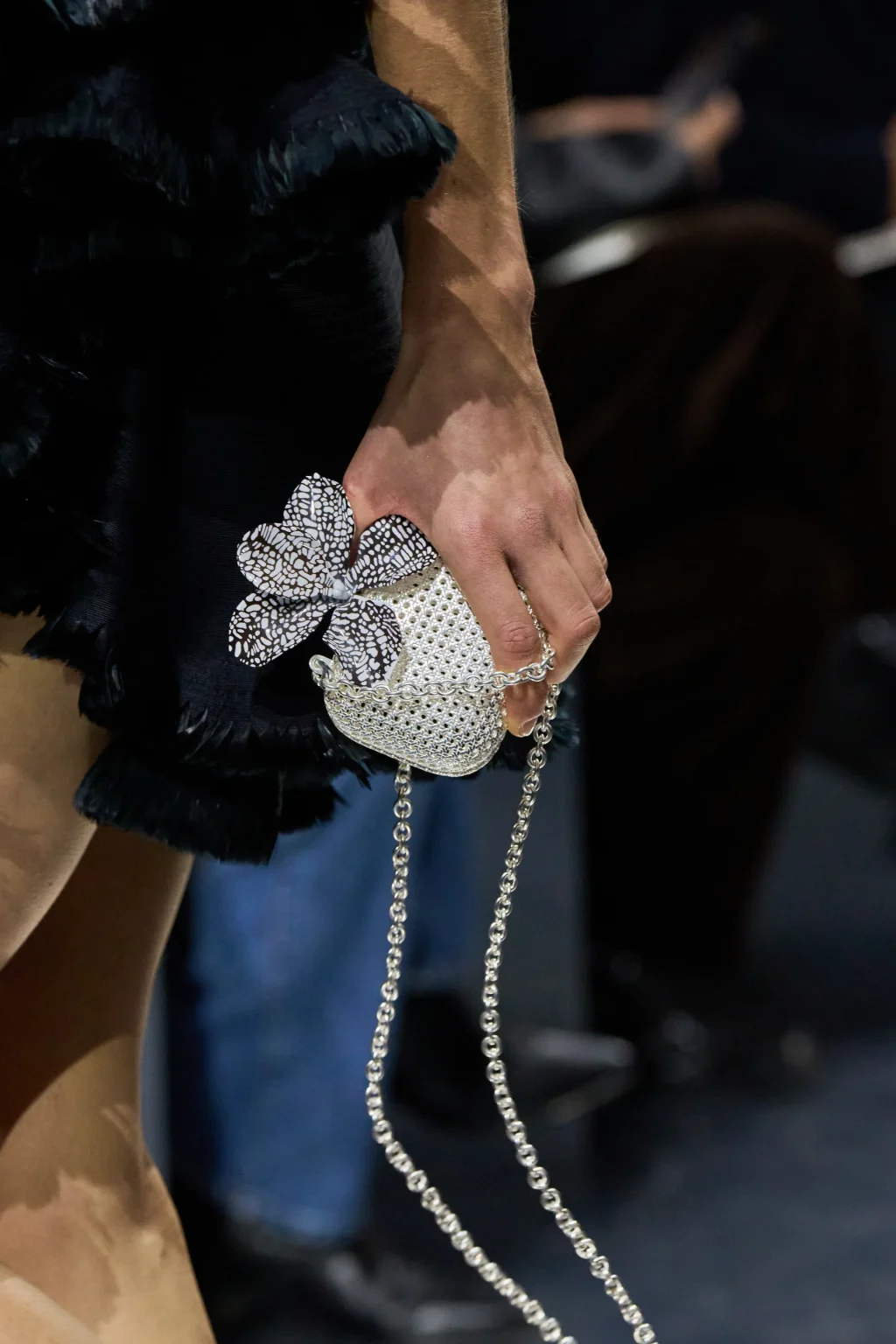
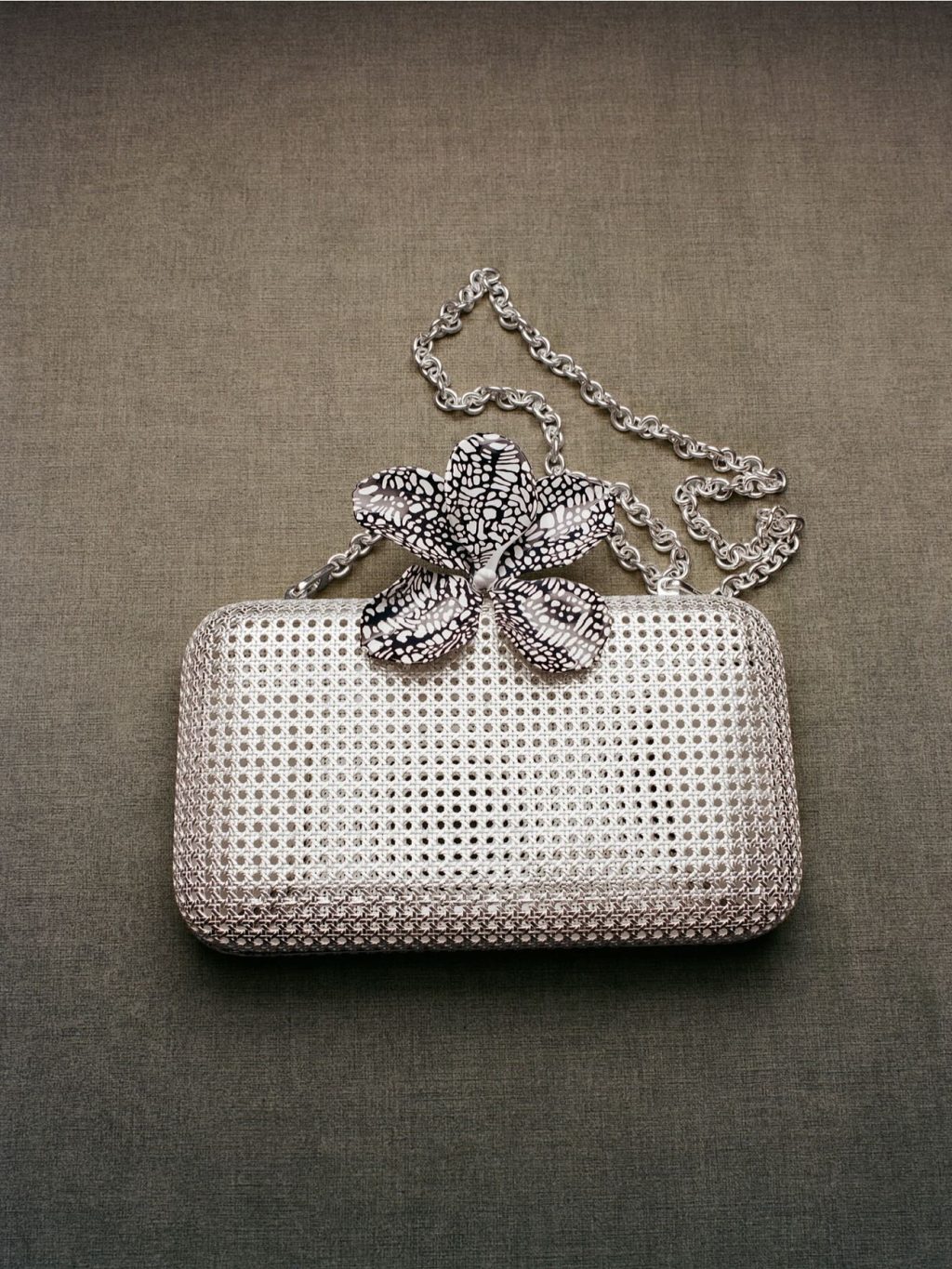
19. The “Bloom” Minaudières
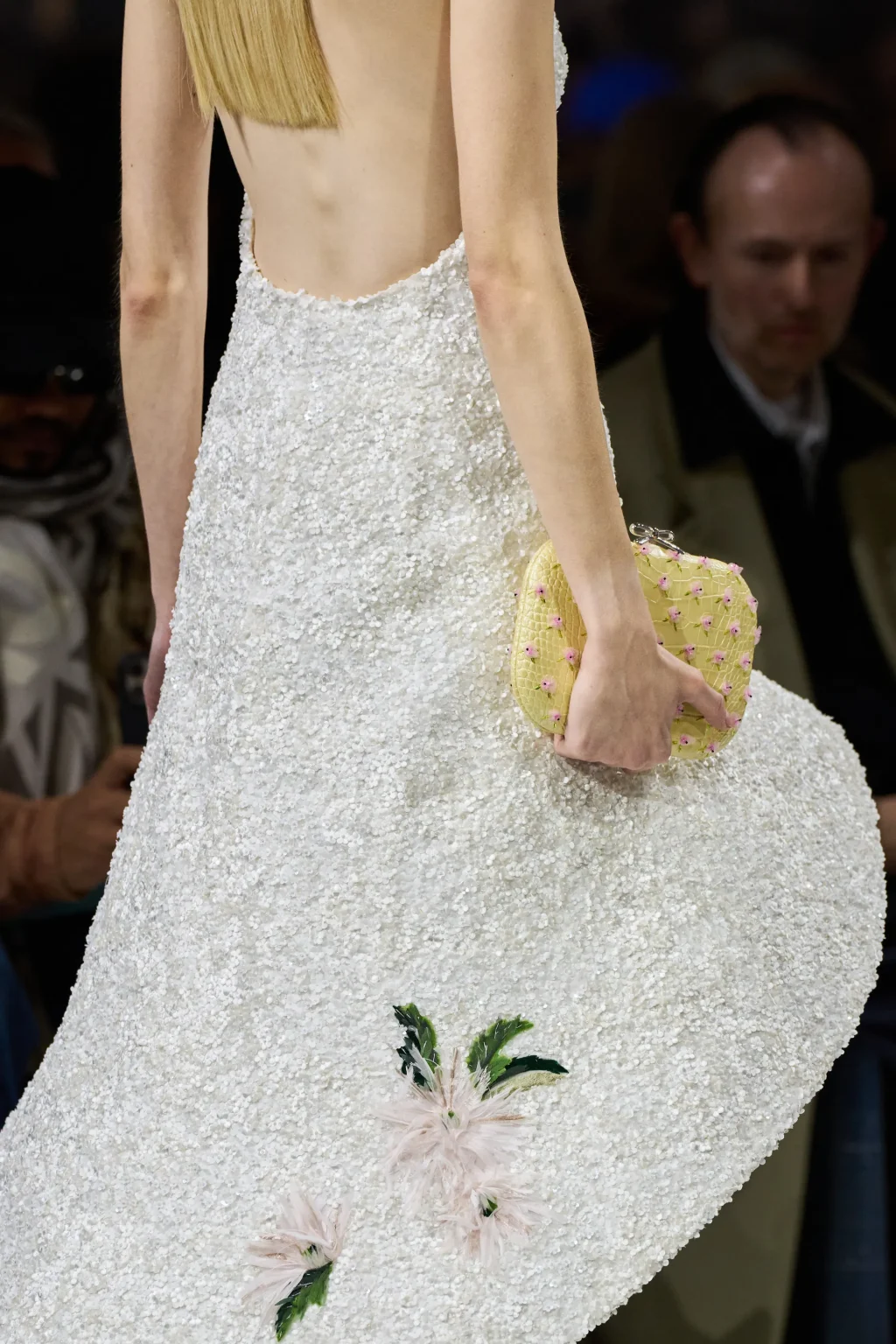
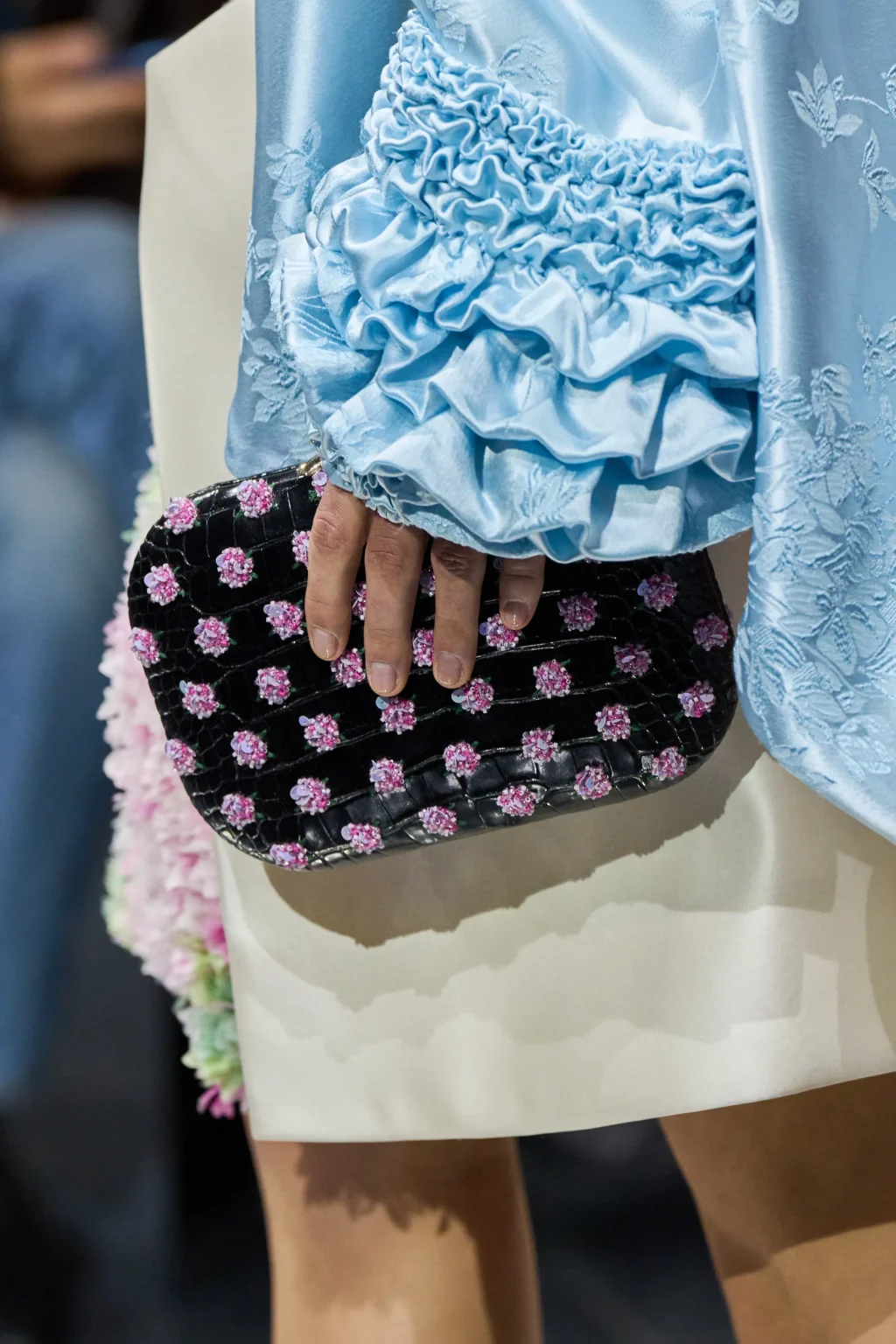
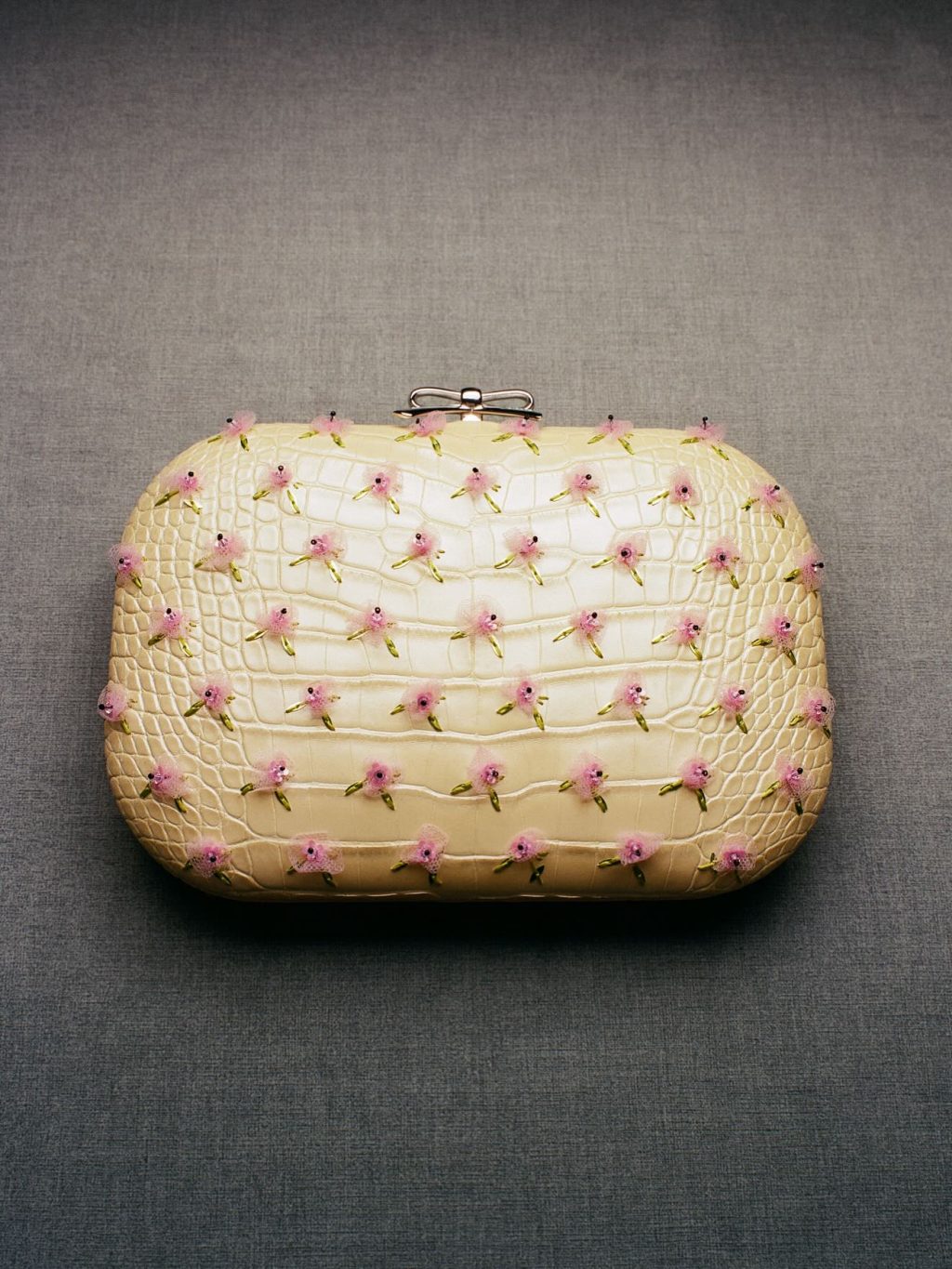
Two small evening pieces built on the same idea—a couture surface “sprinkled” with tiny pink blossoms—but executed in completely different temperatures.
The black version is an oval, hard minaudière in glossy croc, with pink floral studs that read like a night sky dotted with miniature blooms: polished, graphic, and quietly playful.
The yellow clutch flips the mood into daylight—warm chartreuse, densely beaded, and punctuated with the same pink details like pollen or confetti, optimistic and slightly eccentric, with the kind of meticulous handwork that makes the decoration feel grown rather than applied.
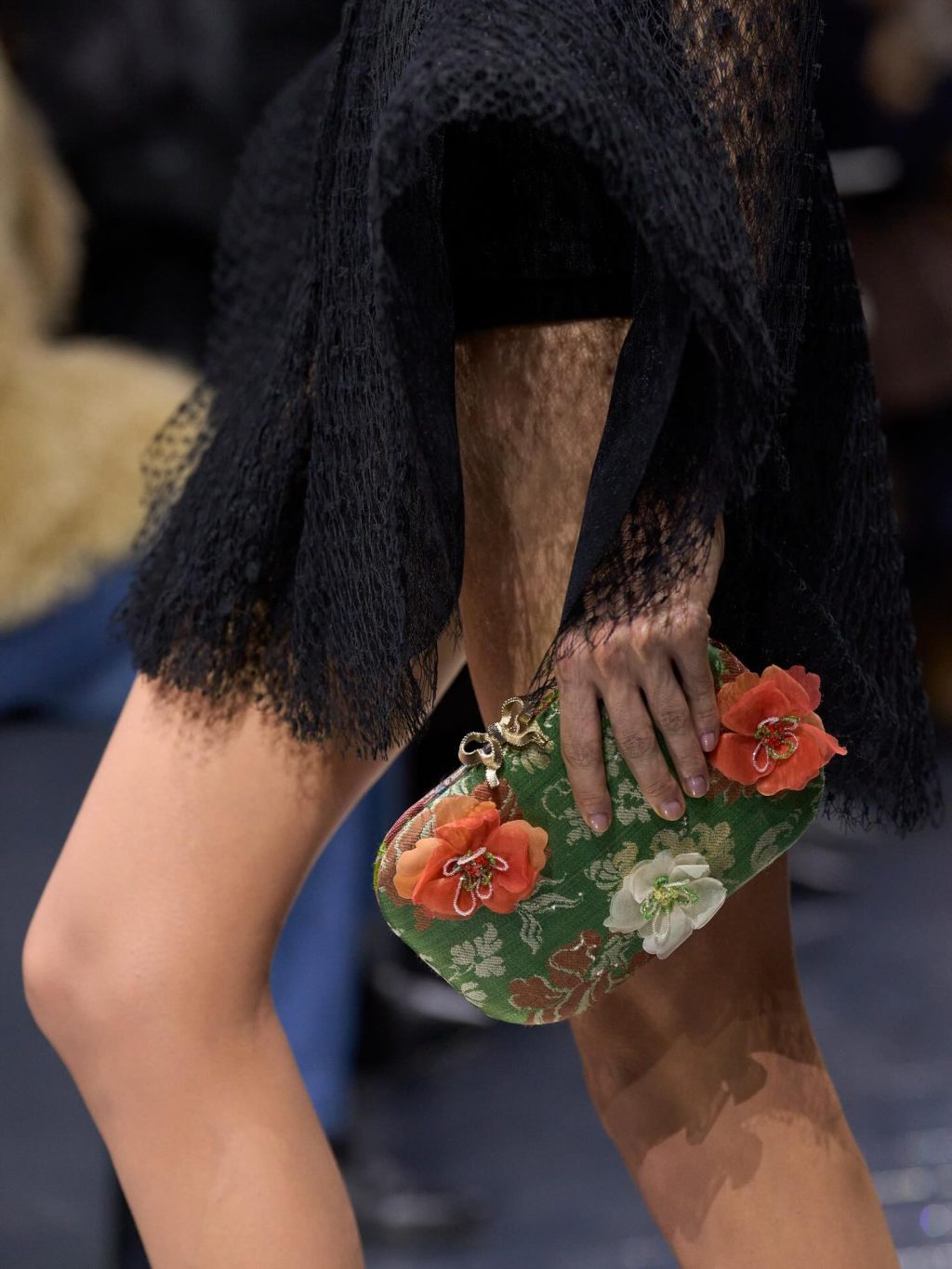
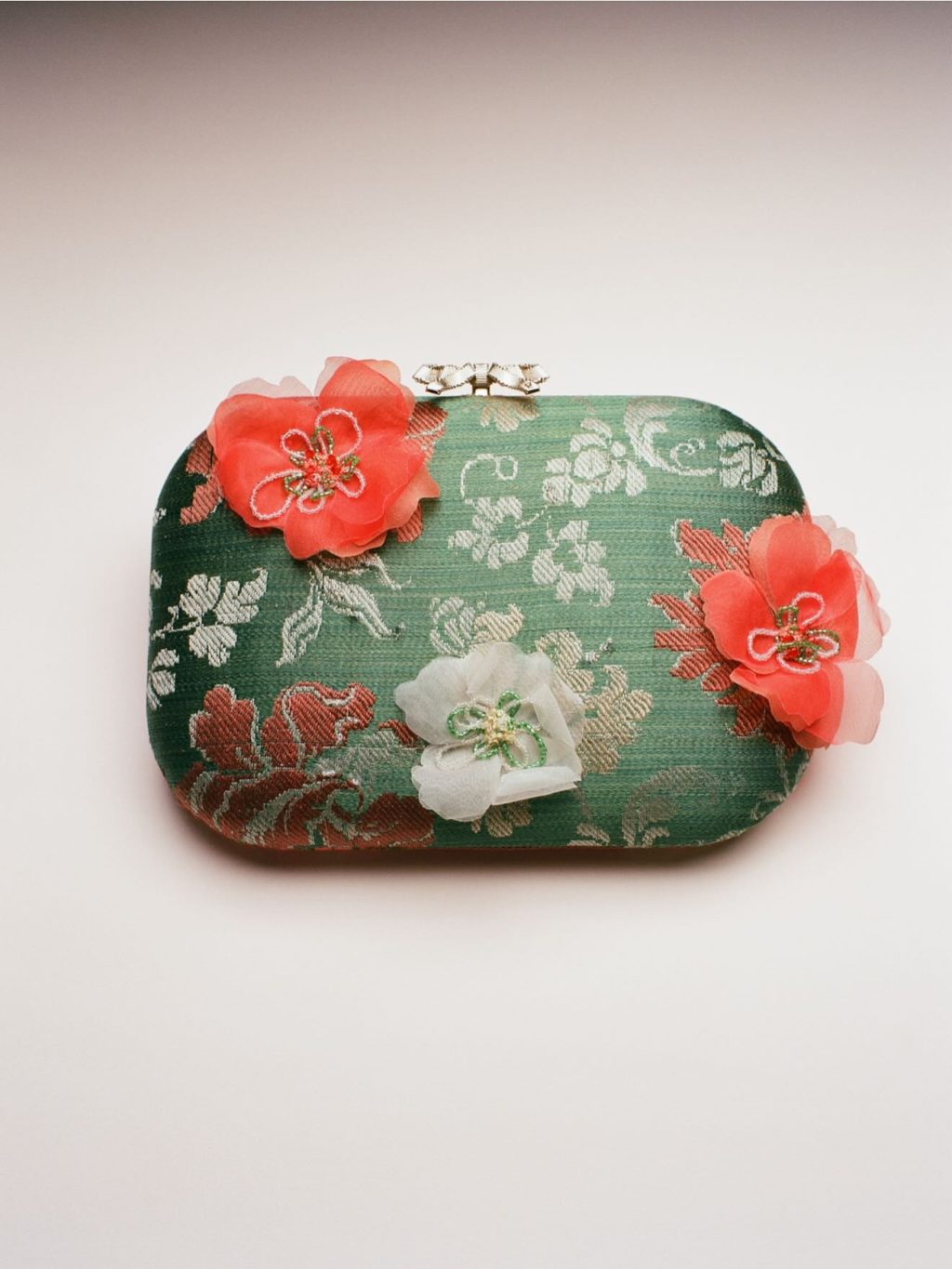
20. The Green Floral Brocade Pouch
A structured pouch in green brocade with raised floral appliqués—orange and white blooms that feel half botanical illustration, half jeweled corsage. It’s a couture garden you can hold.
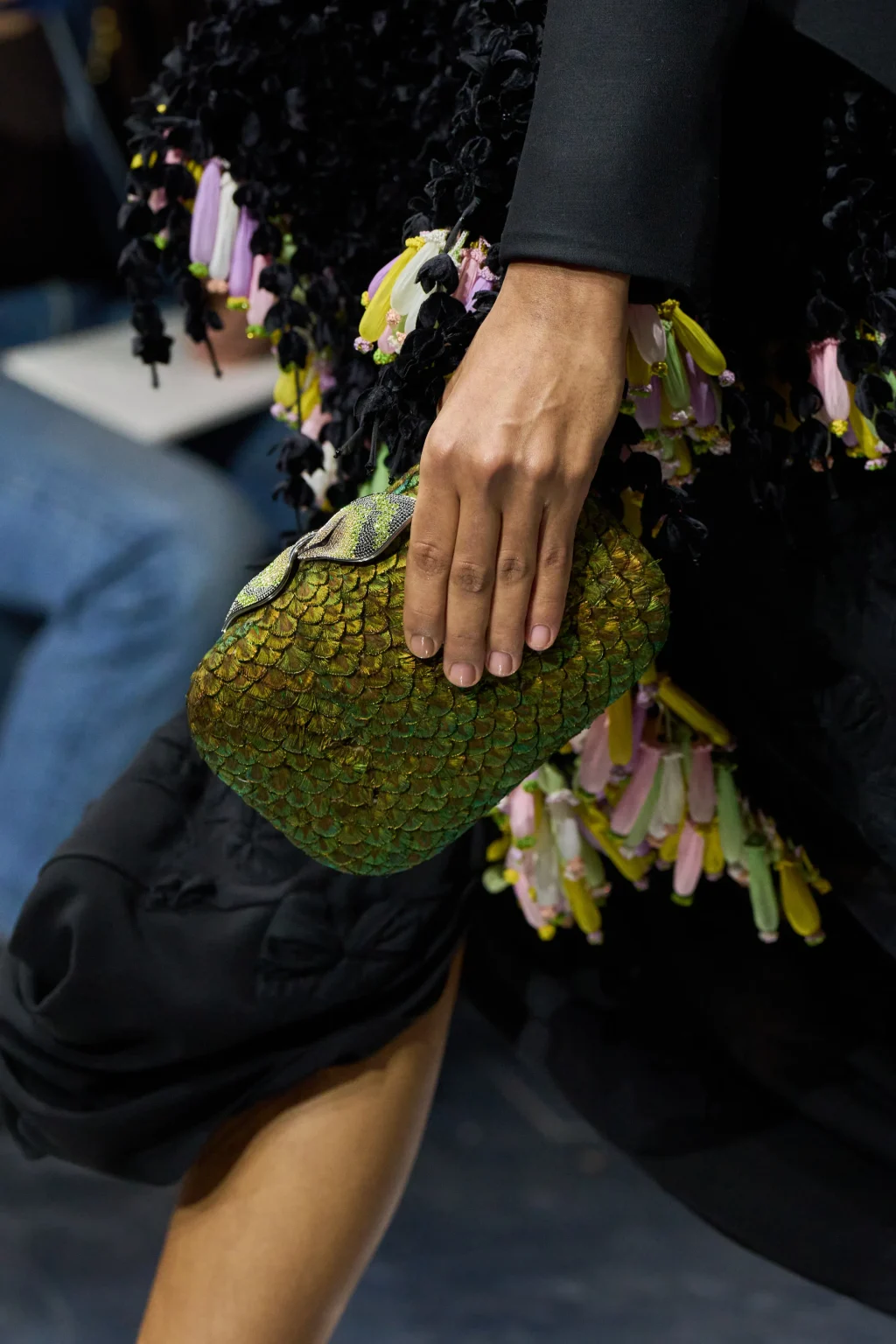
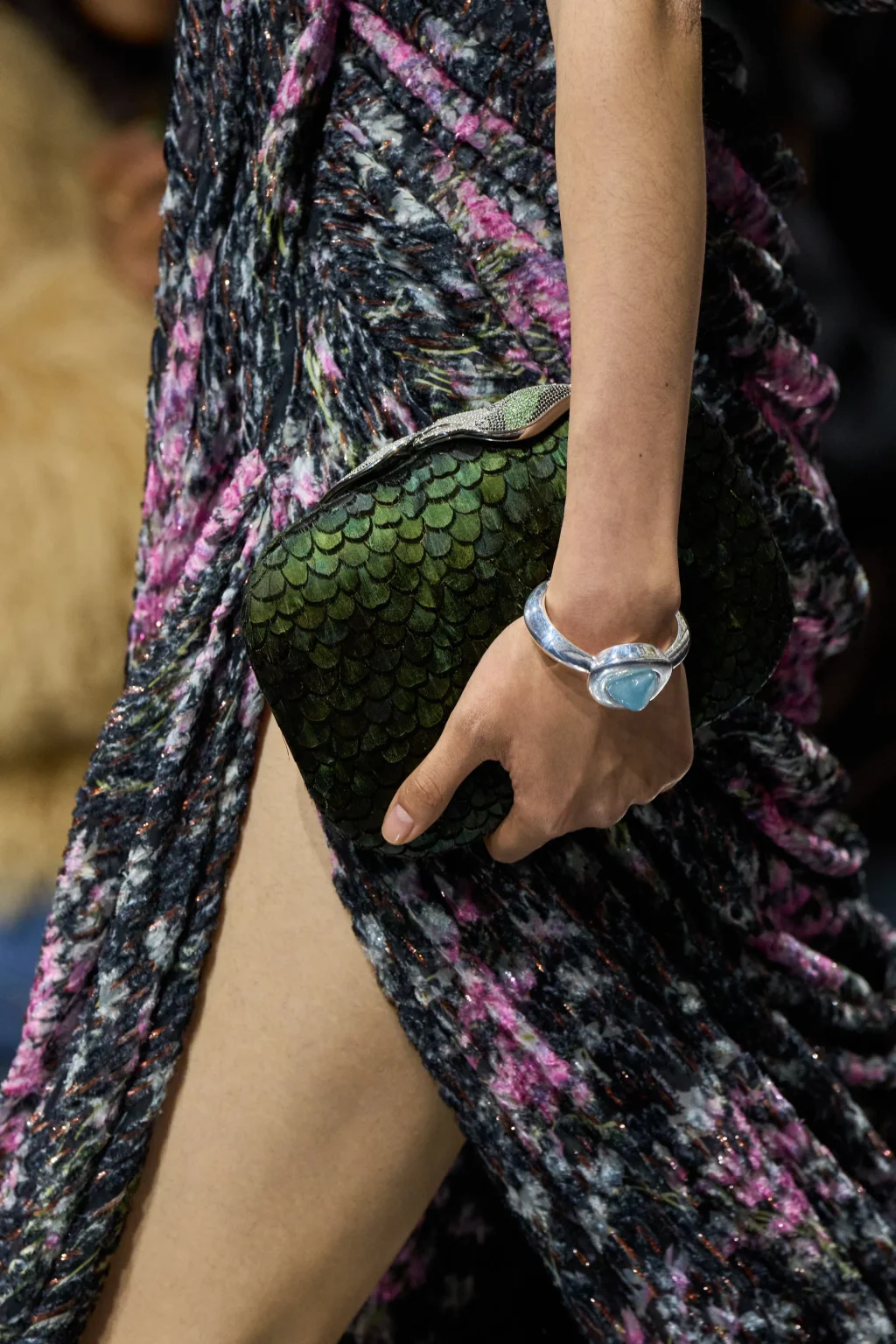
21. The Scale Clutch
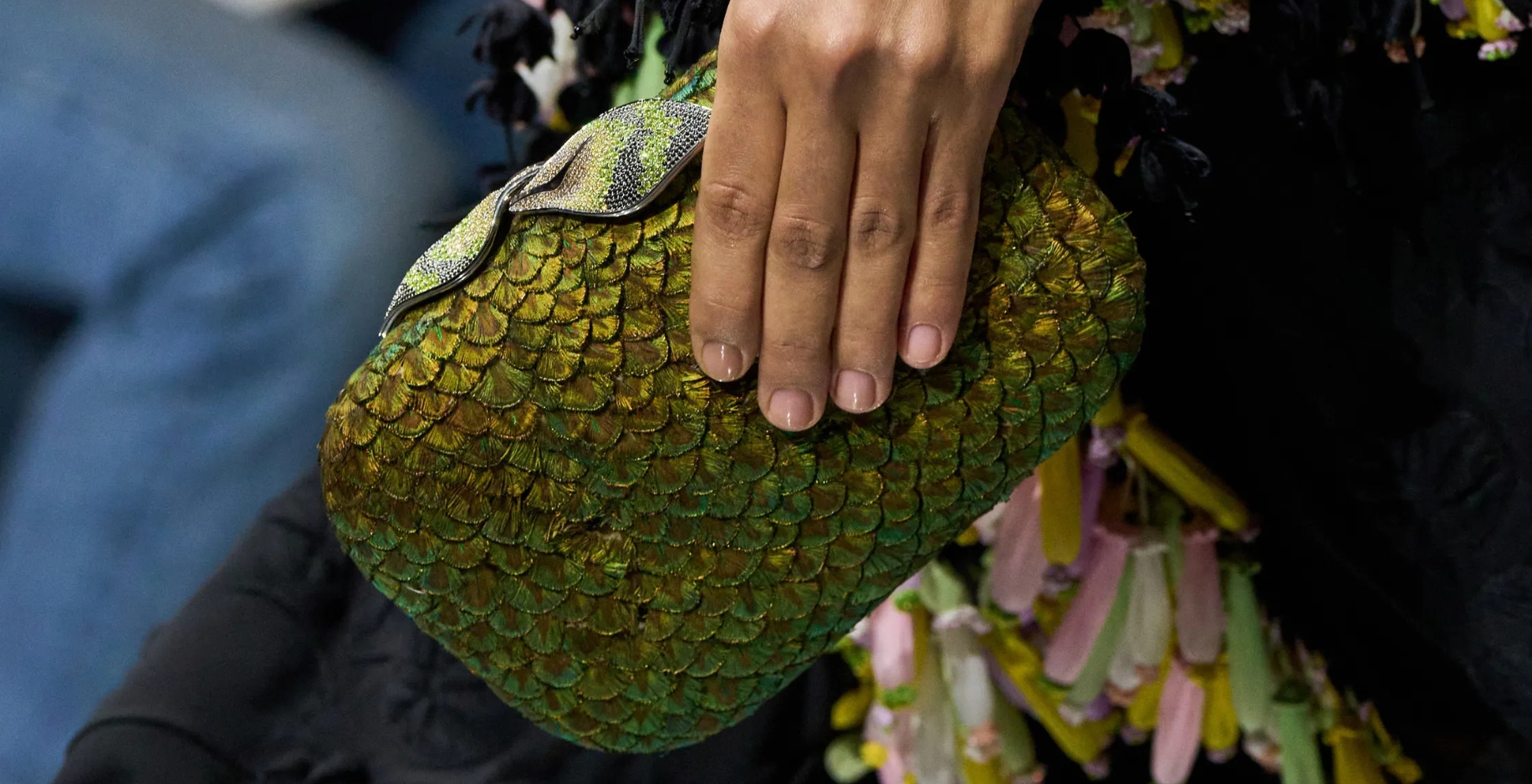
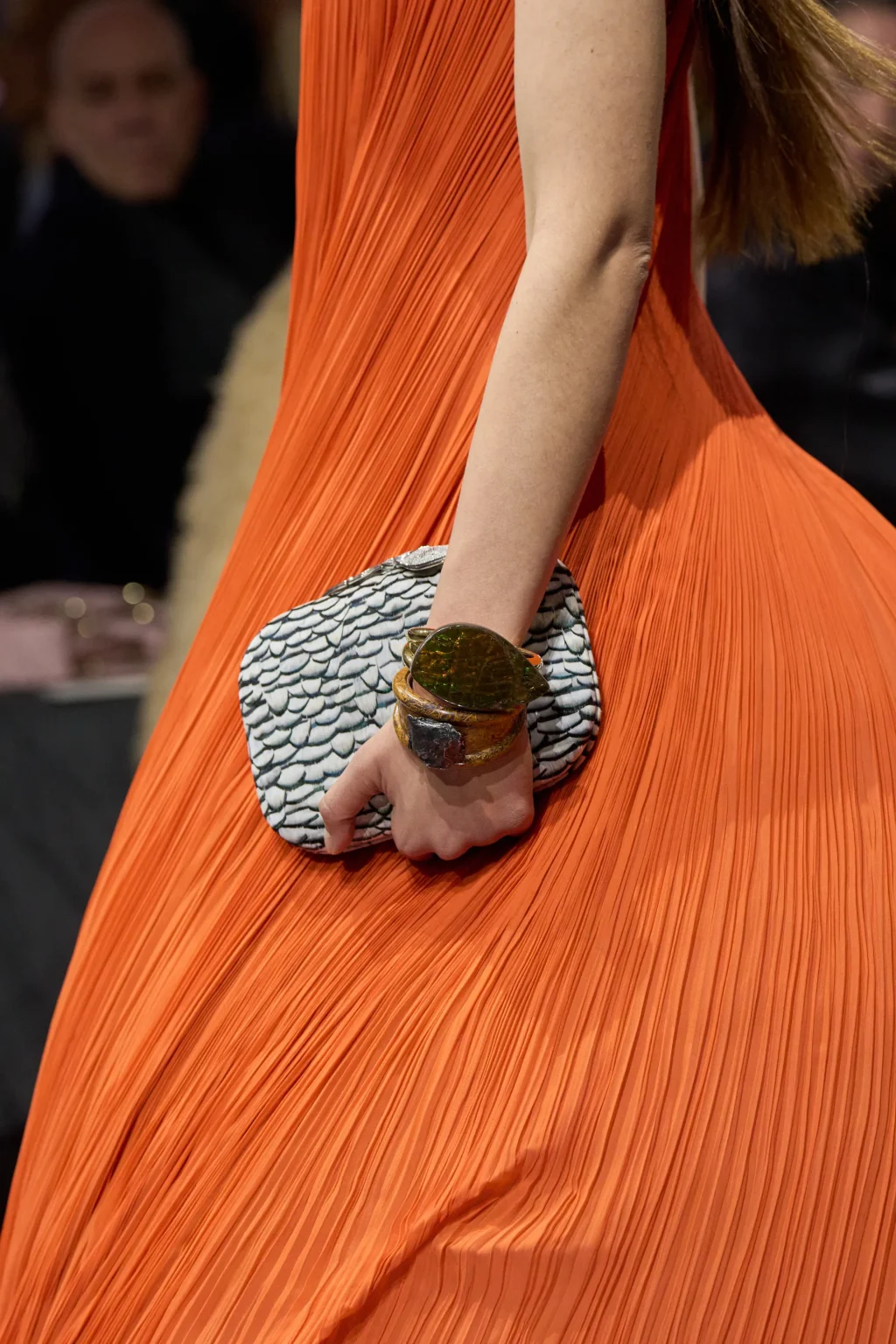
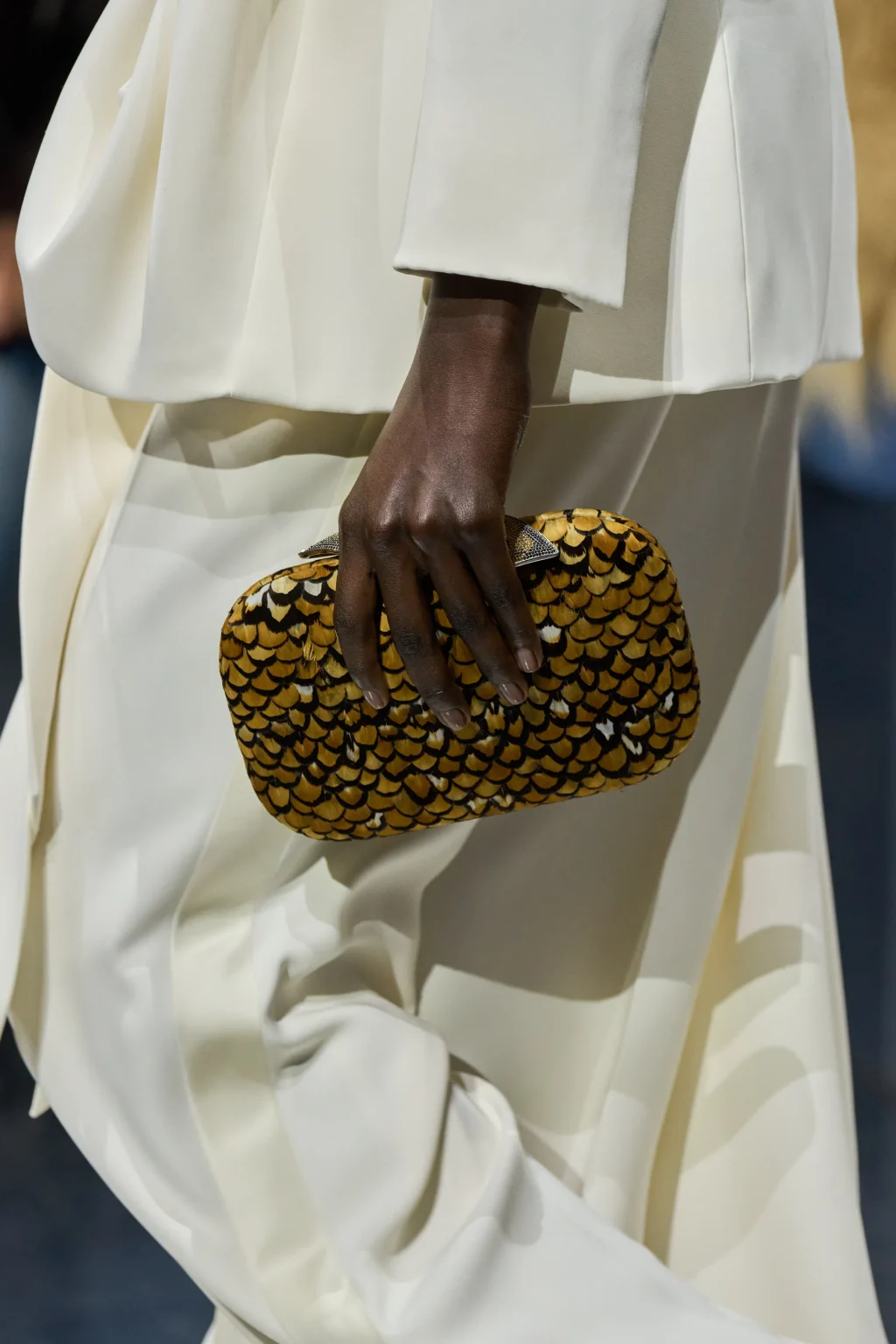
A sculptural clutch whose surface is built like a second skin: overlapping “scales” that sit somewhere between feather rows and armour plating, catching the light the way plumage does when a bird turns in motion. The silhouette stays clean and compact so the texture can dominate—each scale creating a soft relief that feels grown rather than applied.
Seen through the lens of the specific references in your images, the material shifts into three distinct “avian editions.” One reads as Reeves’s pheasant, with warm golden scallops punctuated by dark markings; another evokes Lady Amherst’s pheasant, where crisp black-and-white feather banding becomes graphic and couture-sharp; and the green-gold version carries the peacock idea—iridescent, metallic, and jewel-toned, like tail-feathers translated into a polished object. Different birds, same mood: tactile, protective, slightly mythical—less accessory than artefact, carried like a small piece of wearable nature.
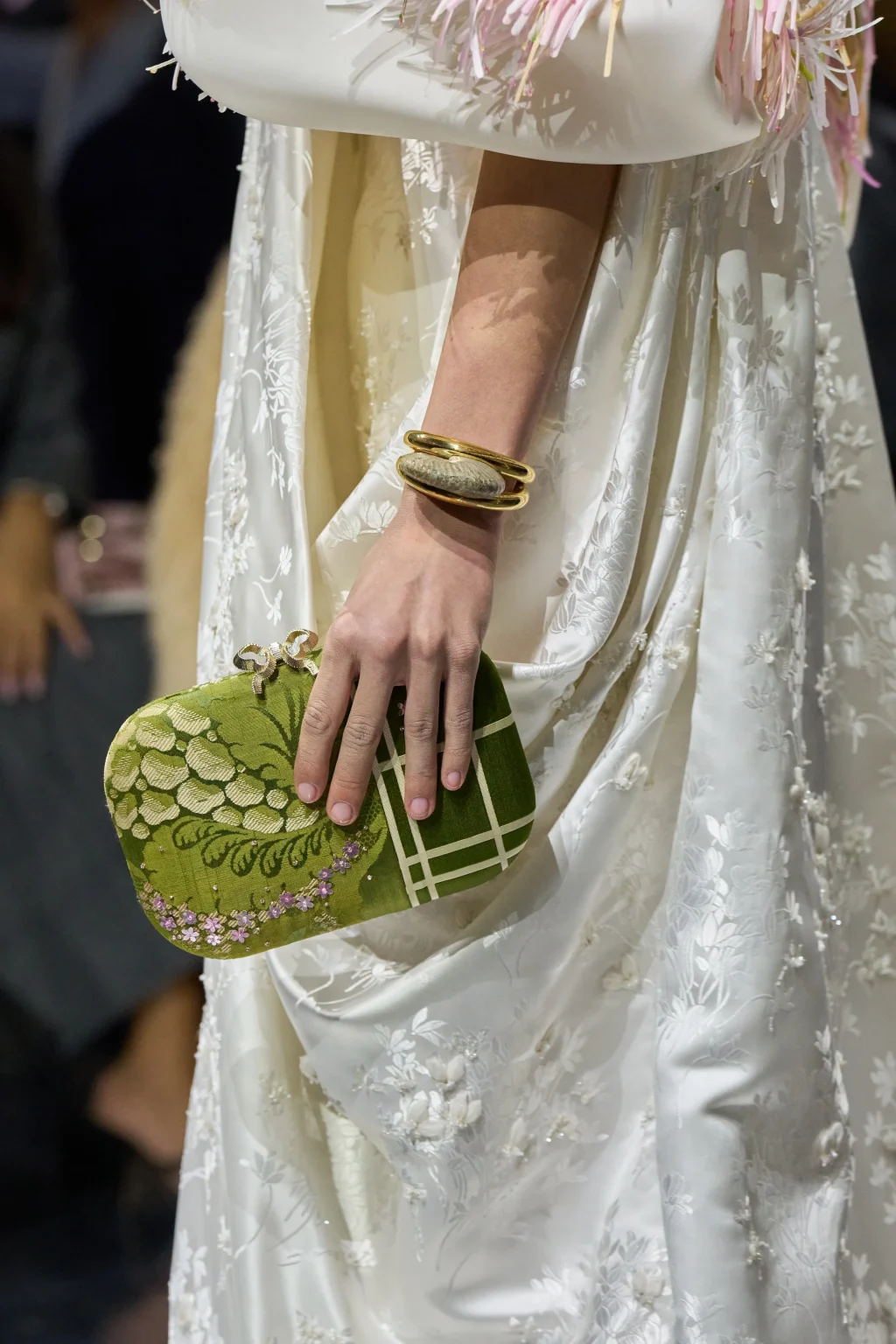
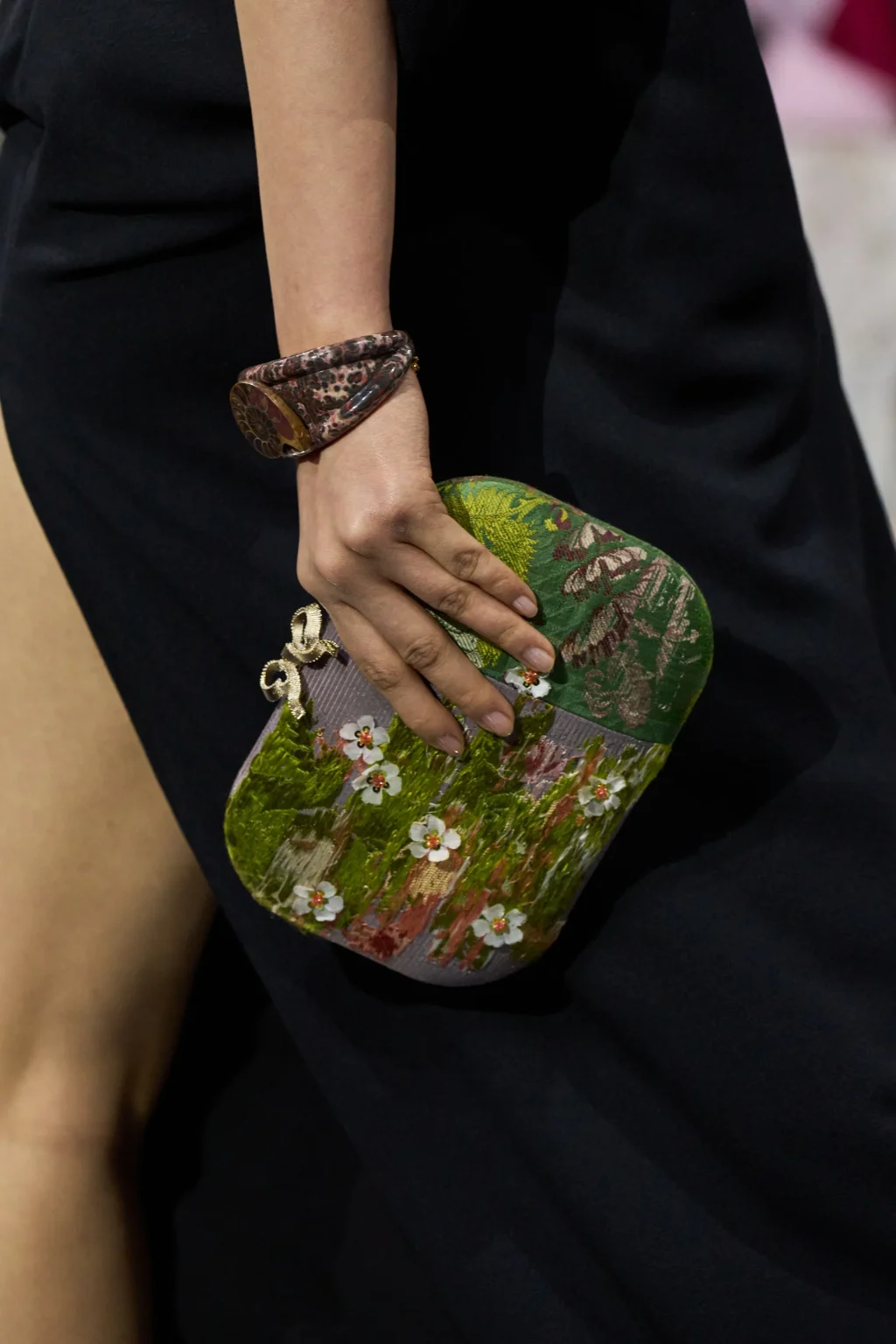
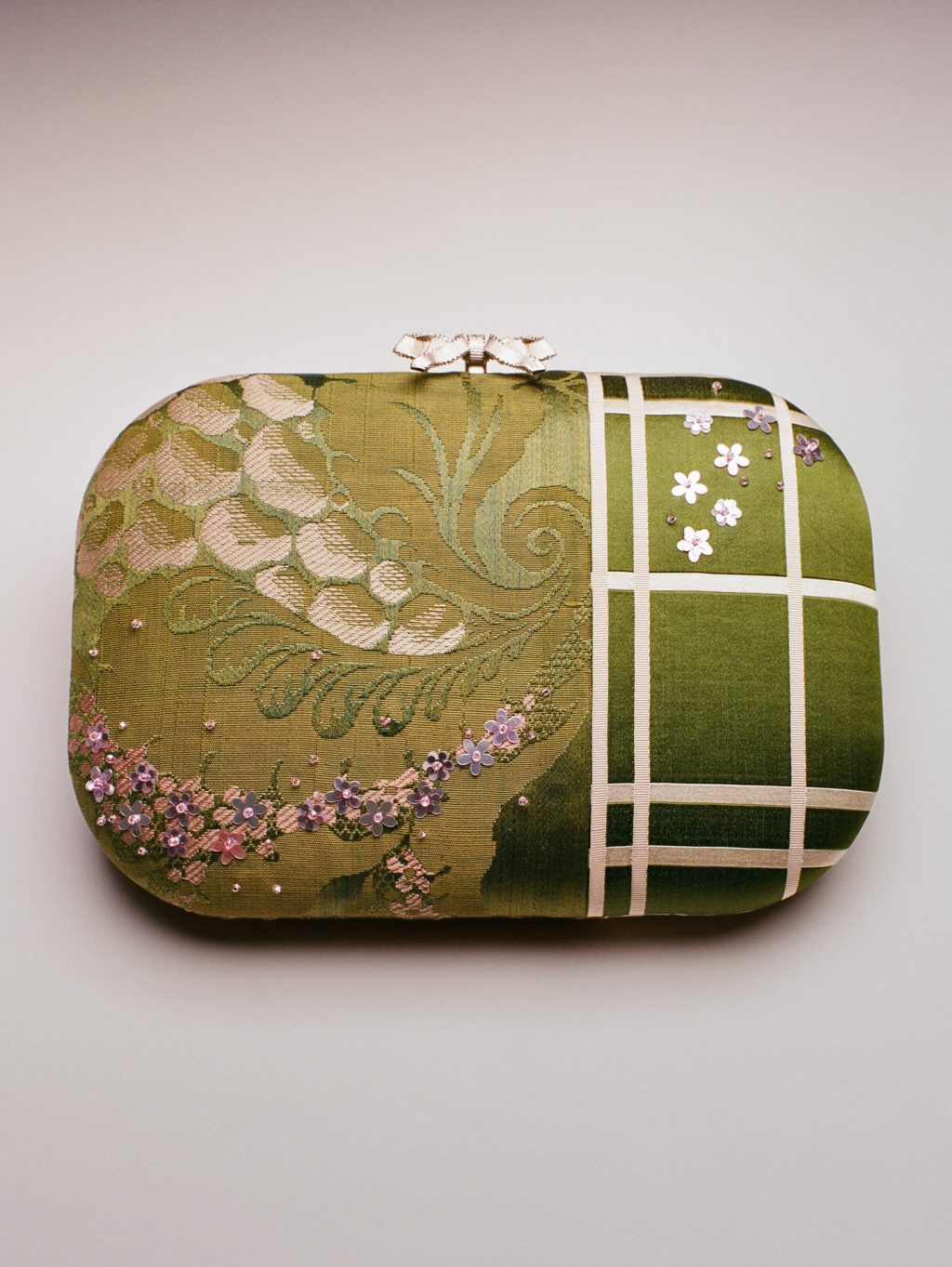
22. The XVIII Anthology Clutches (rare 18th-century French silks)
Introduced under the name “The XVIII Anthology,” these clutches feel like couture archaeology made wearable. Each piece re-energises precious remnants of the past—rare 18th-century French silks, woven with techniques that have largely vanished—then reassembled into something unexpectedly modern. Some panels appear reversed, with the “wrong” side deliberately facing out; others are combined, re-embroidered, or reworked with new motifs, so the final object reads as both archive and invention.
In the hand, the effect is intimate and collectible: not a trend bag, but a one-off artefact—a small, structured frame built to carry history forward, re-contextualised for the present.
And if you love Dior “collector objects,” you’ll also want our guide to Jonathan Anderson’s literary Dior Book Totes.
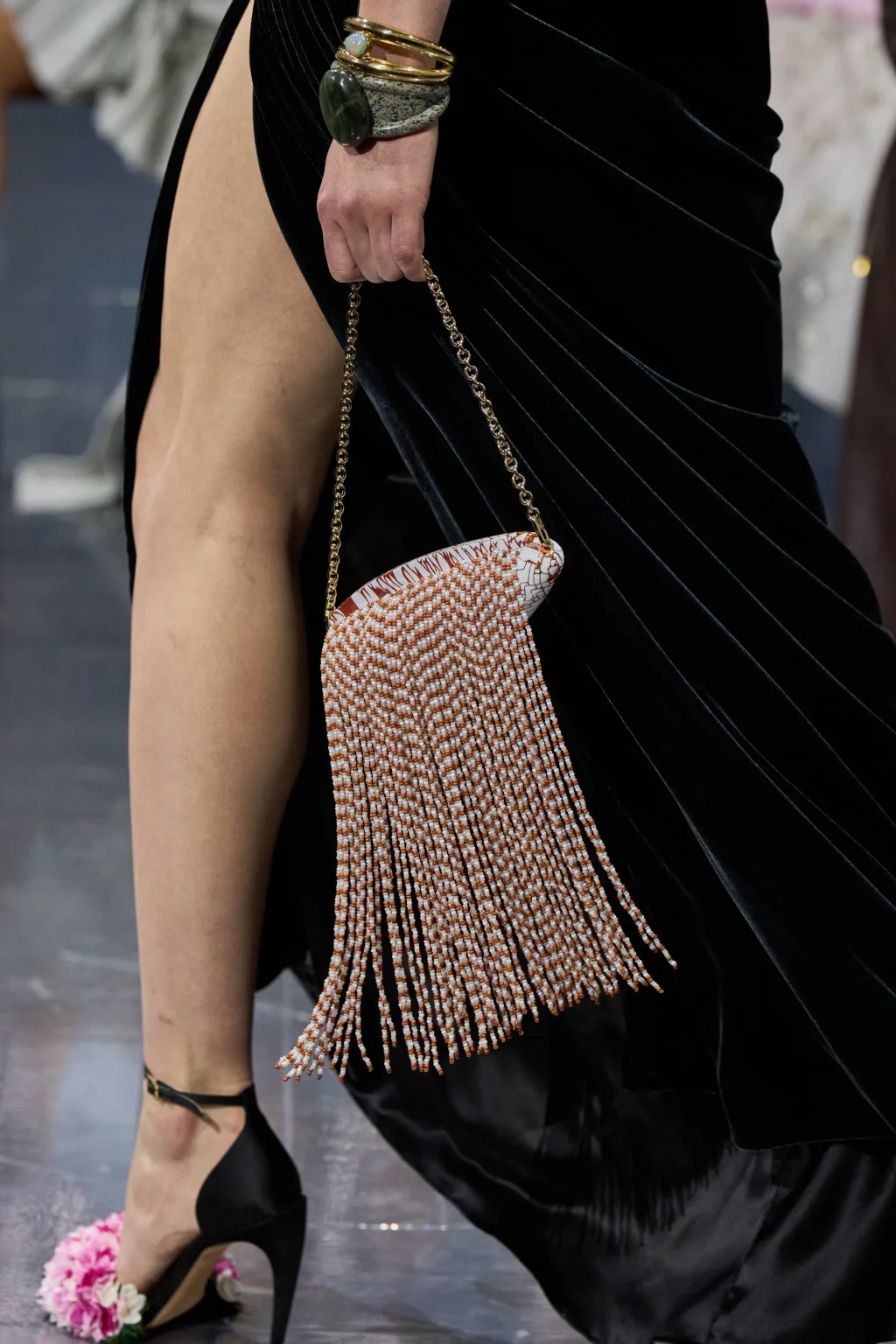
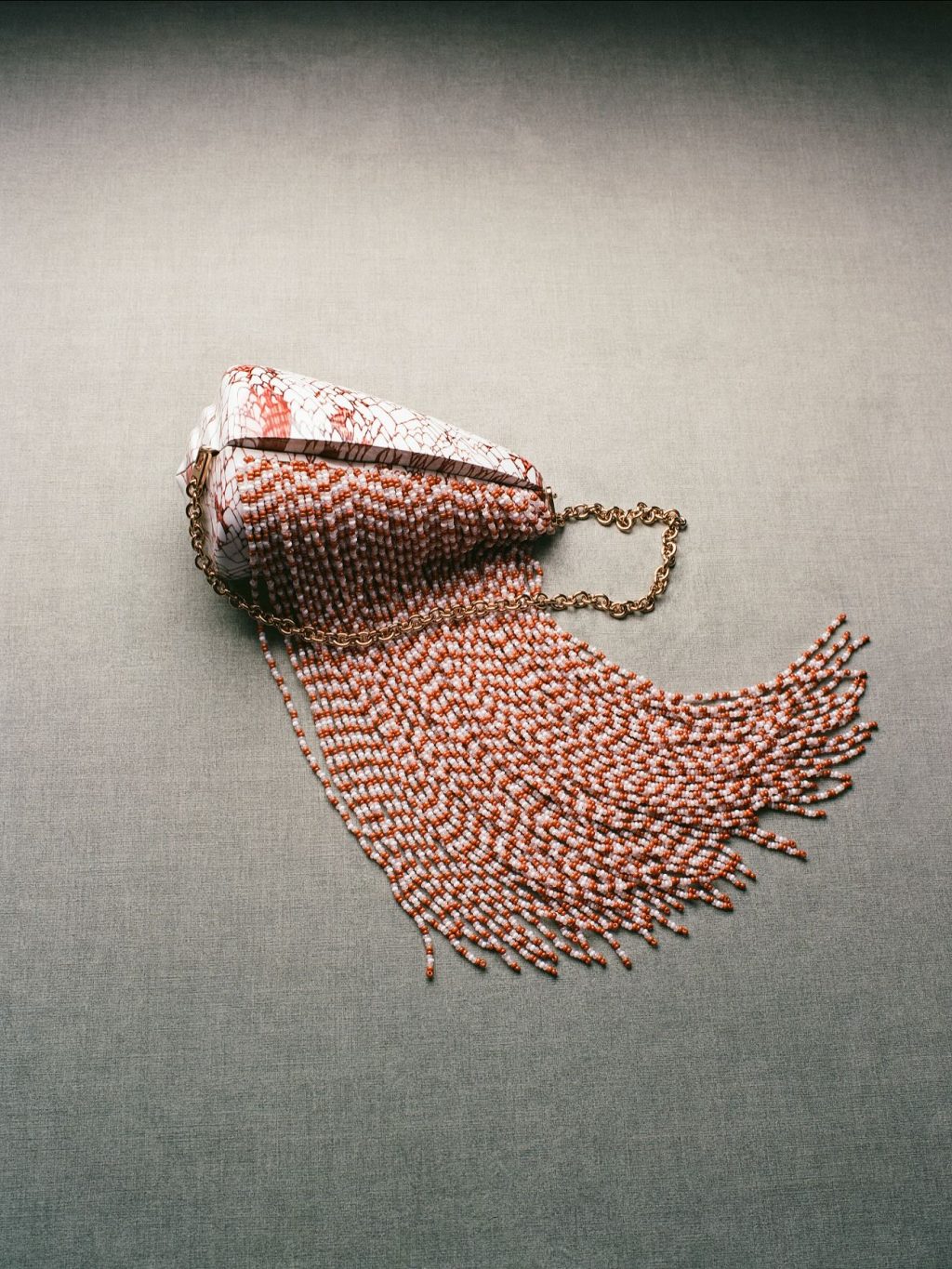
23. The Shell & Stone Clutches
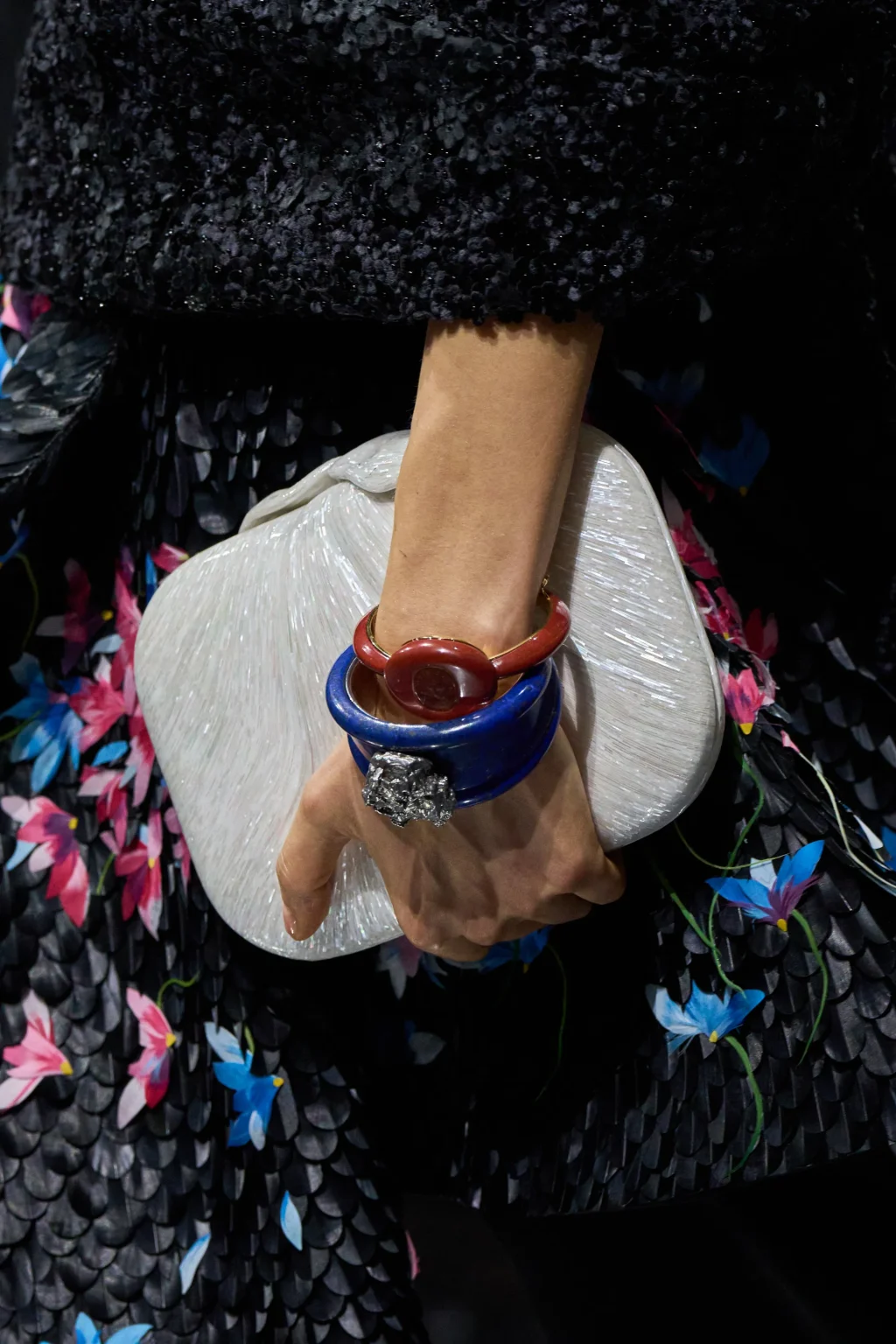
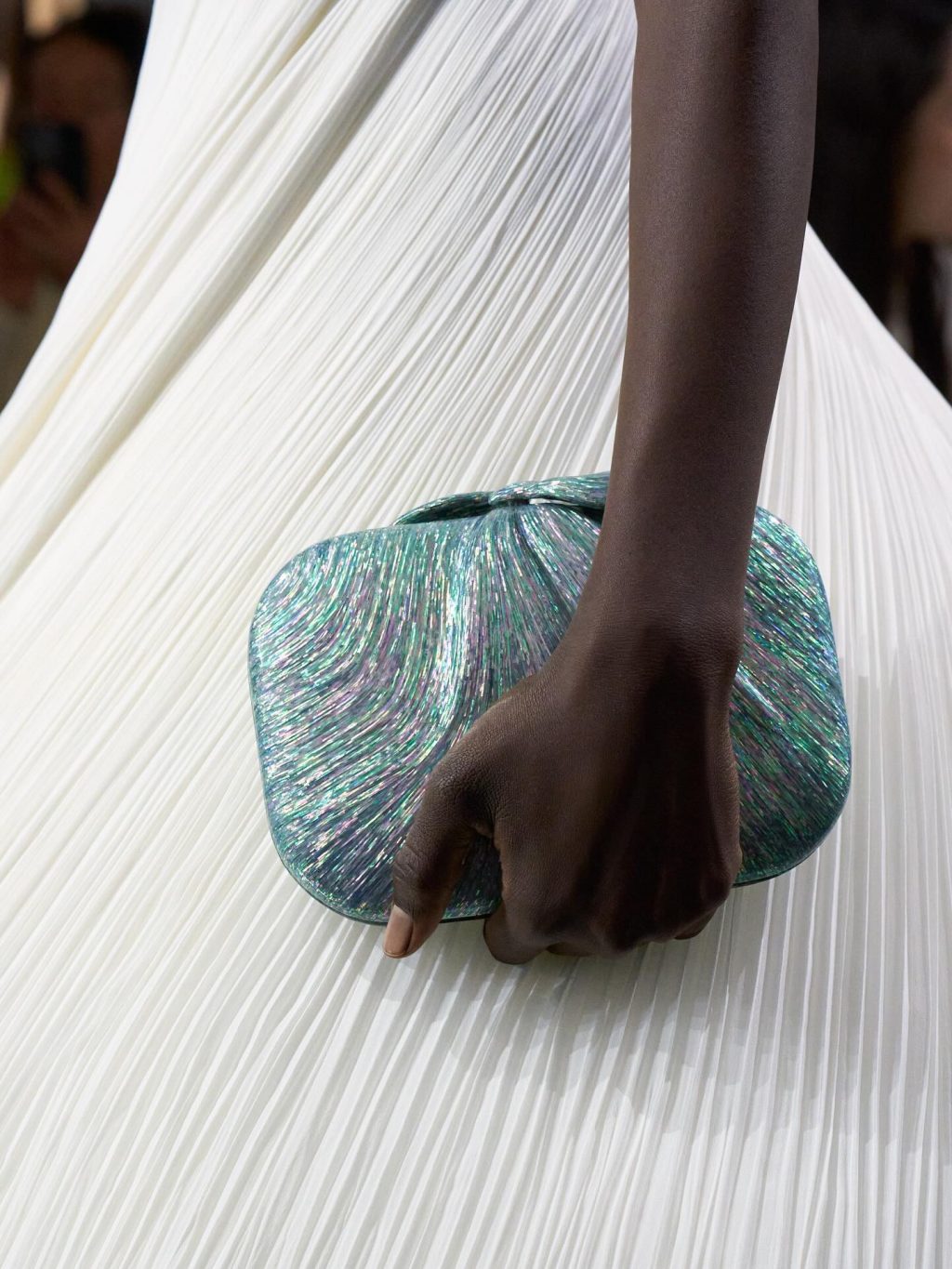
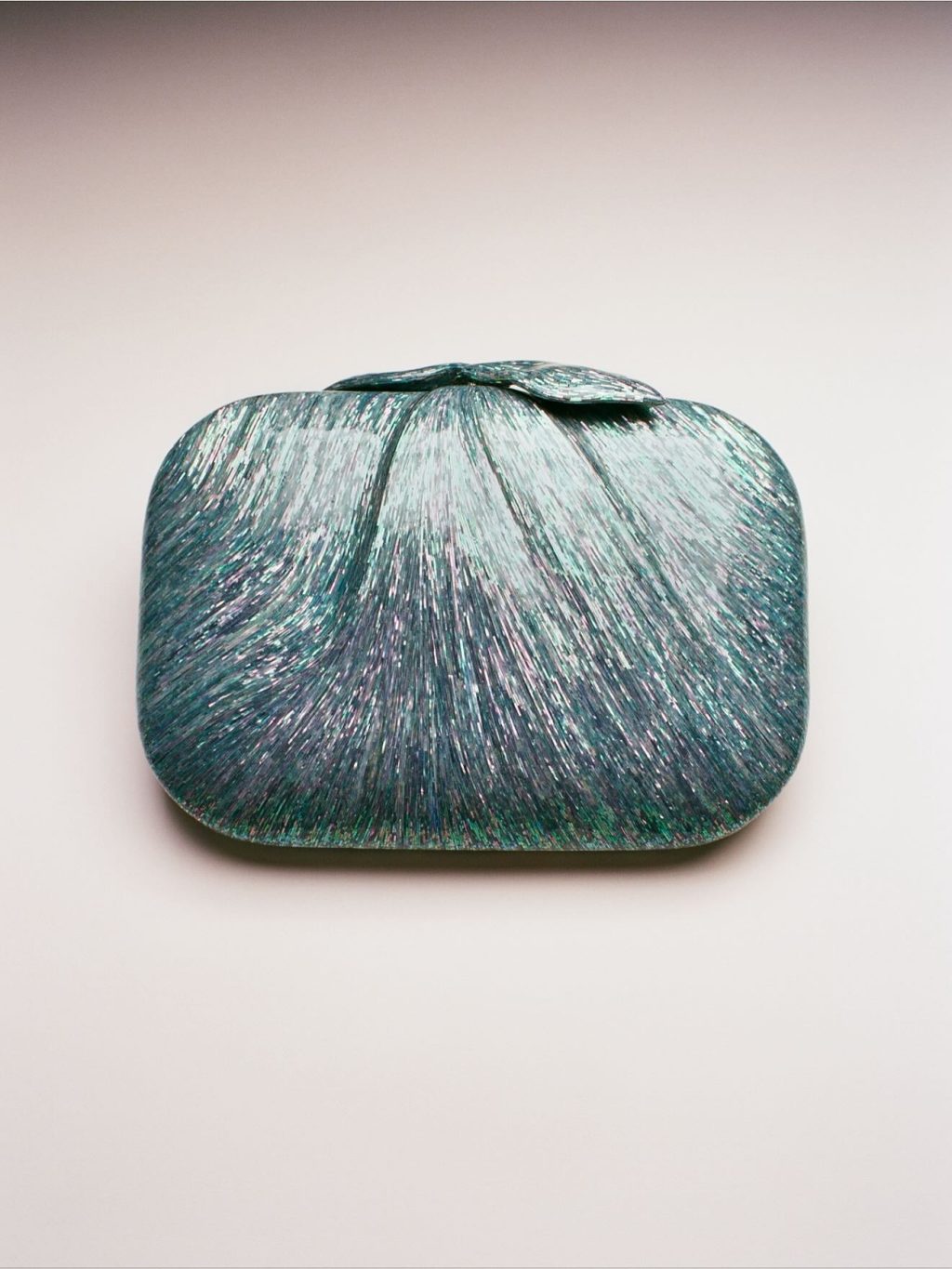
A pair of couture clutches conceived as polished fragments of nature—less “bags” than carried artefacts. One reads as a shell-like form with softly ridged contours; the other as a compact mineral hard-case in turquoise, its surface cracked like glazed stone. Held in the hand, both feel like fossils made functional: couture’s obsession with time, texture, and patient craft condensed into tactile talismans—objects you carry for their presence as much as their purpose.
24. The Beaded “Bloom” Clutch
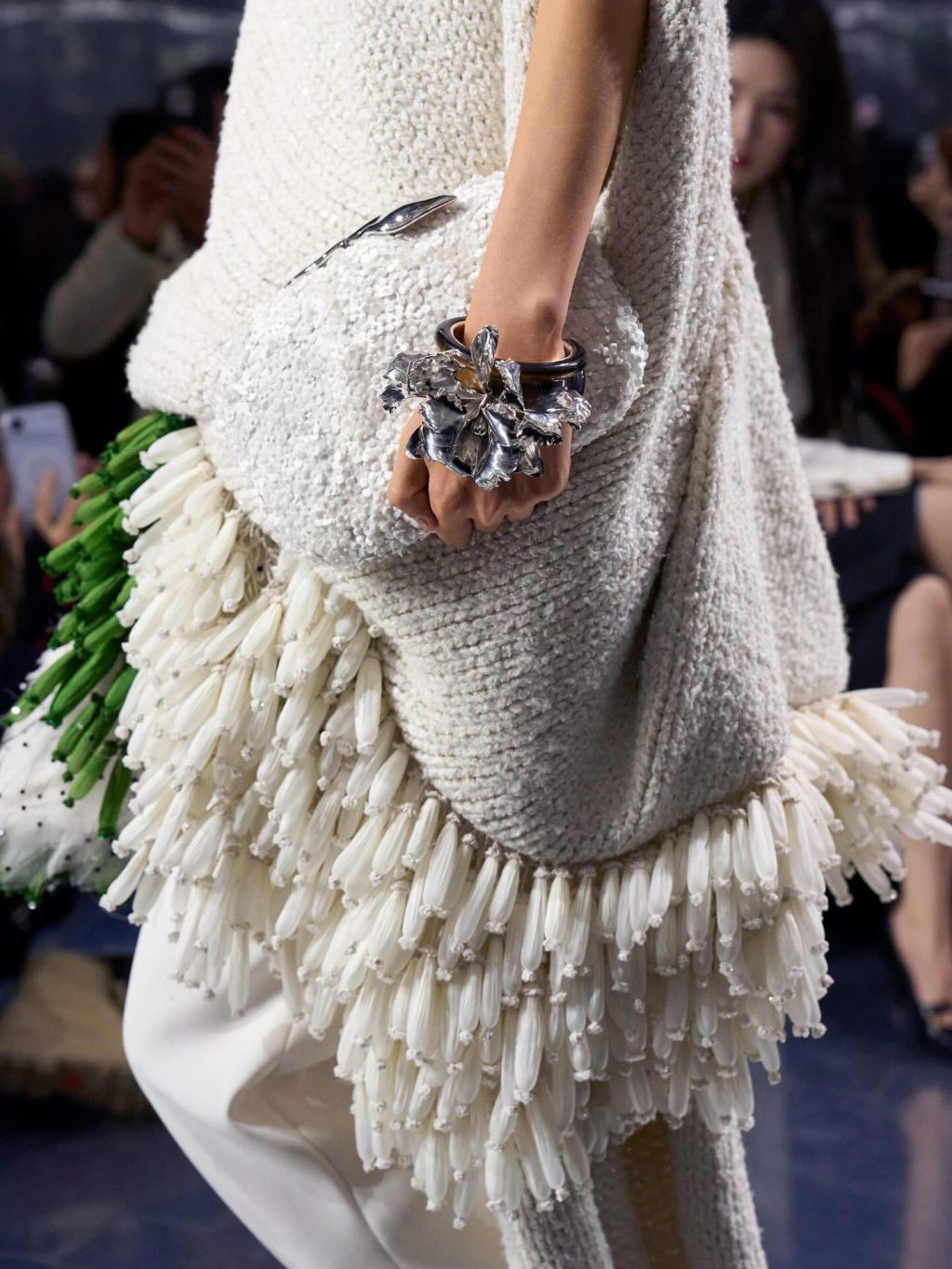
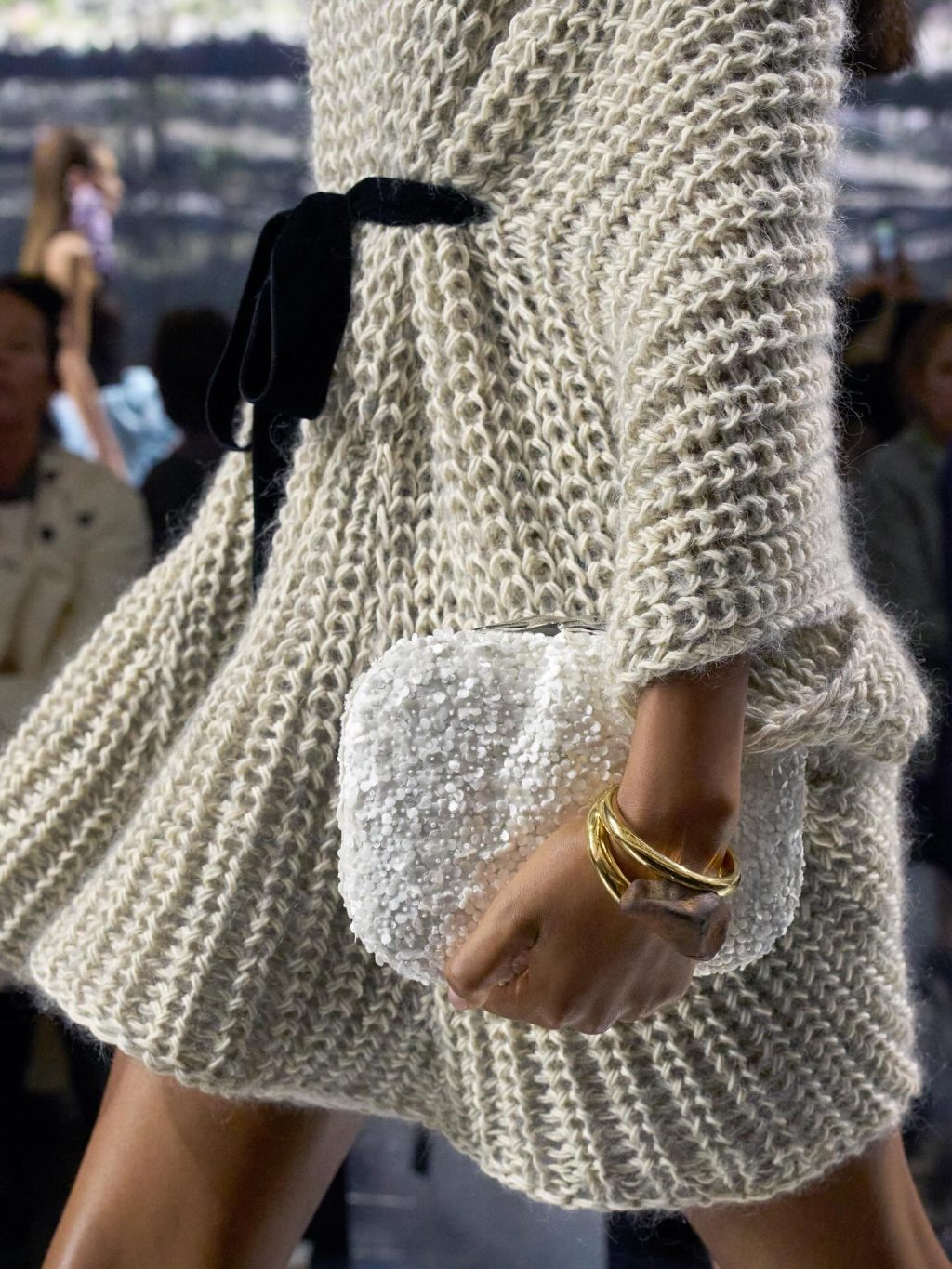
A compact, rigid couture clutch that reads like a jewel-box wrapped in dense beadwork—its surface shimmering between ivory and pale chartreuse depending on the light. The silhouette stays deliberately minimal, letting the texture do the talking: a meticulous, all-over “bloom” effect that feels pollen-dusted rather than simply embellished. Finished with a small, metal, jewel-like clasp, it sits perfectly in that in-between space Dior couture does so well here—part accessory, part precious object, carried like a miniature artefact rather than a conventional evening bag.
What These Accessories Say About Anderson’s Dior
Taken together, these bags reveal how Anderson approaches couture: not as ‘more precious ready-to-wear,’ but as object-making—emotion engineered through form, texture, and restraint. Some pieces are intentionally impractical (the floor-length chainmail drape), others gently commercial (the Lady Dior variations), and a few exist purely to make you look twice.
The cyclamen thread is the quiet glue: a personal tribute that became a formal system—flowers as invitation, décor, jewelry, and accessory attitude. It’s rare to see couture symbolism that isn’t just decorative; here it’s narrative, and it’s anchored in a real gesture of continuity.
How to Store and Preserve Couture-Level Bags
Several of these pieces—especially the velvet “pillow” clutches/totes, the knotted totes, and the structured minaudières—are the kind of accessories that crease, slump, or lose their intended silhouette quickly if stored casually.
From a care perspective, the soft ‘pillow’ clutches and knotted totes should be gently supported from the inside to prevent fold memory, while embellished minaudières deserve separation (dust bag + soft padding) so stones, metalwork, and appliqués don’t abrade.