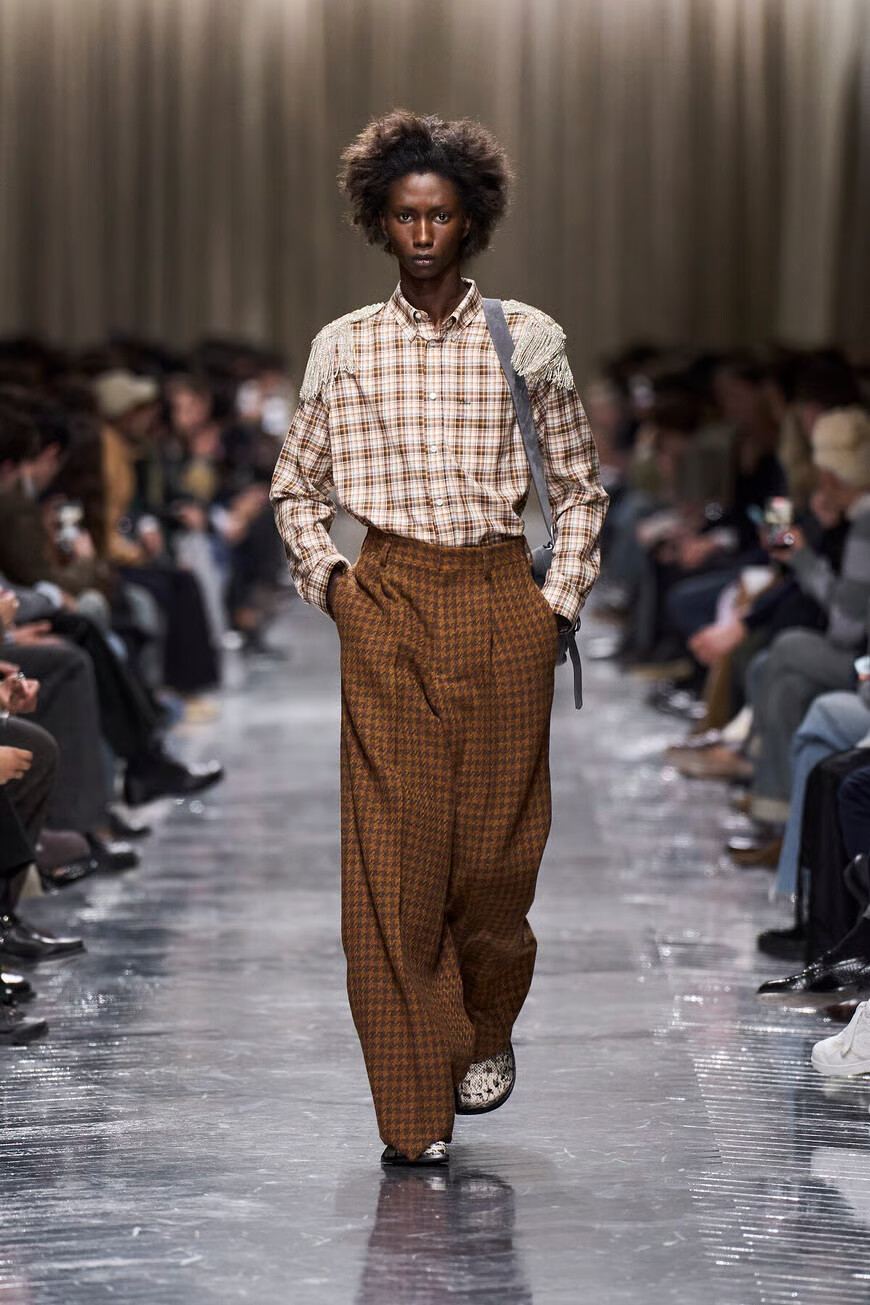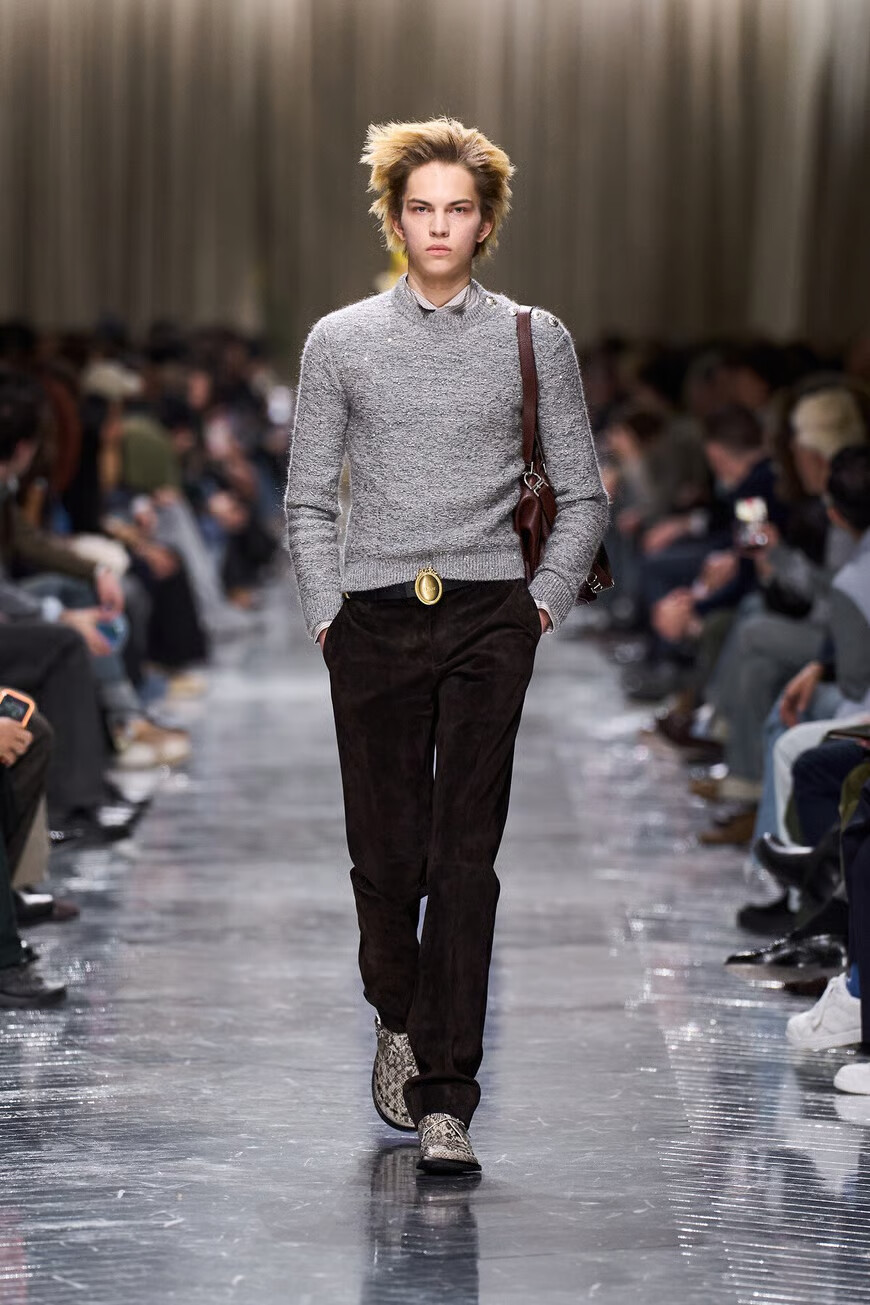
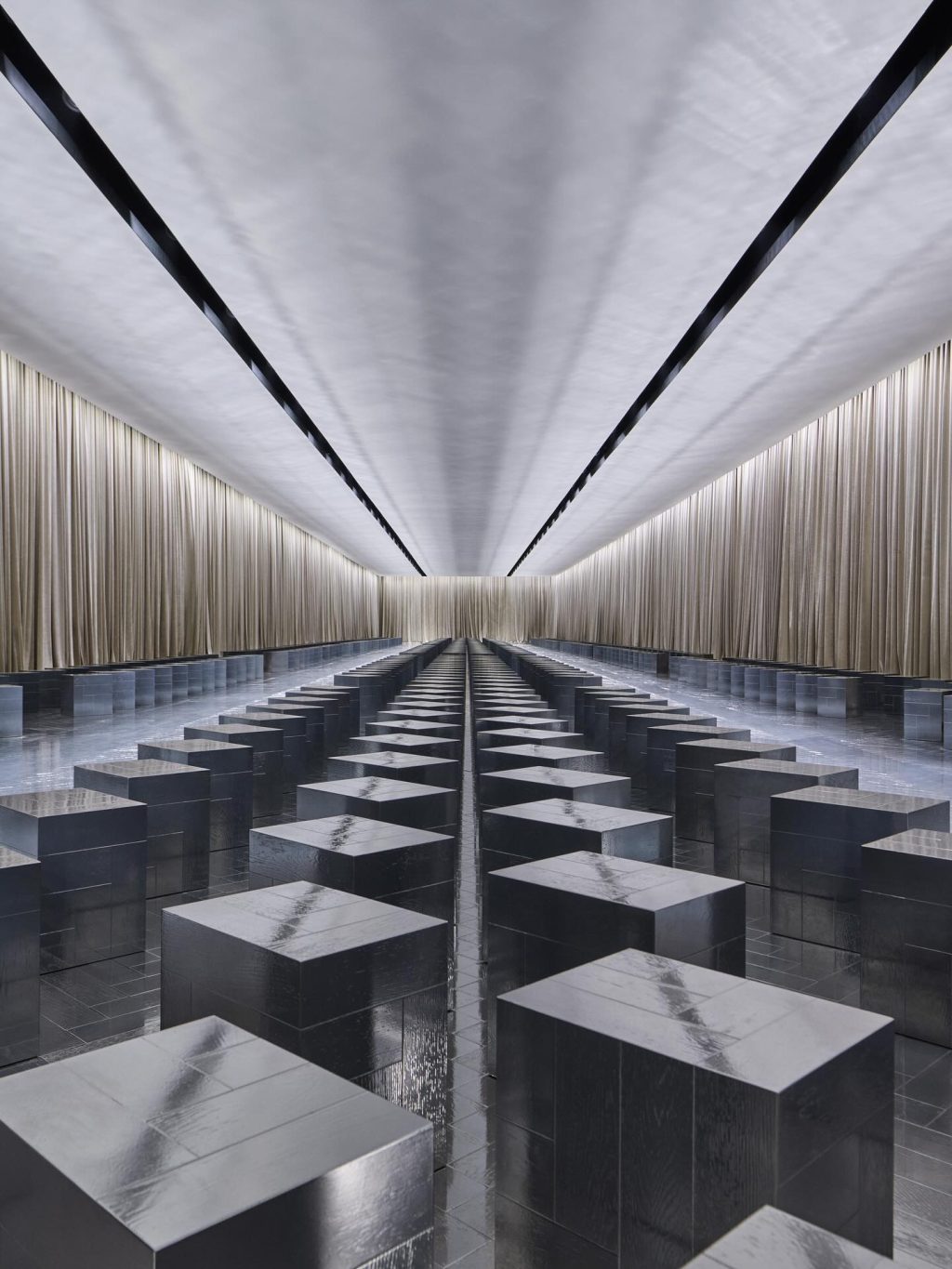
Dior FW26 menswear bags took center stage at the House’s Winter 2026–2027 men’s show at the Musée Rodin in Paris on January 21, a setting that always sharpens the idea of “heritage”—not as a museum label, but as a living argument. What matters, this season, is the way Jonathan Anderson continues to frame Dior’s past as something you can move through rather than stand in front of: the “new aristocracy” he proposes isn’t about inherited status, but about the self-invented eccentricity of a modern flâneur.
And in that worldview, bags stop being mere accessories. They become the most honest proof of the collection’s thesis. Clothes can perform. Bags have to behave—on a shoulder, against a coat, through a day. If Anderson’s Summer 2026 introduced a playful collision of formality and spontaneity, Winter 2026–2027 absorbs that energy and tightens the language: refined tailoring, opulent textiles, and “joy” used as an instinct rather than a slogan. If you want the first chapter of this accessories language, start with our Dior women’s Spring–Summer 2026 — Handbags, decoded, then come back for how winter tightens the vocabulary.
Below, the FW26 bag story—decoded through the runway silhouettes and the details that actually signal a new Dior era.
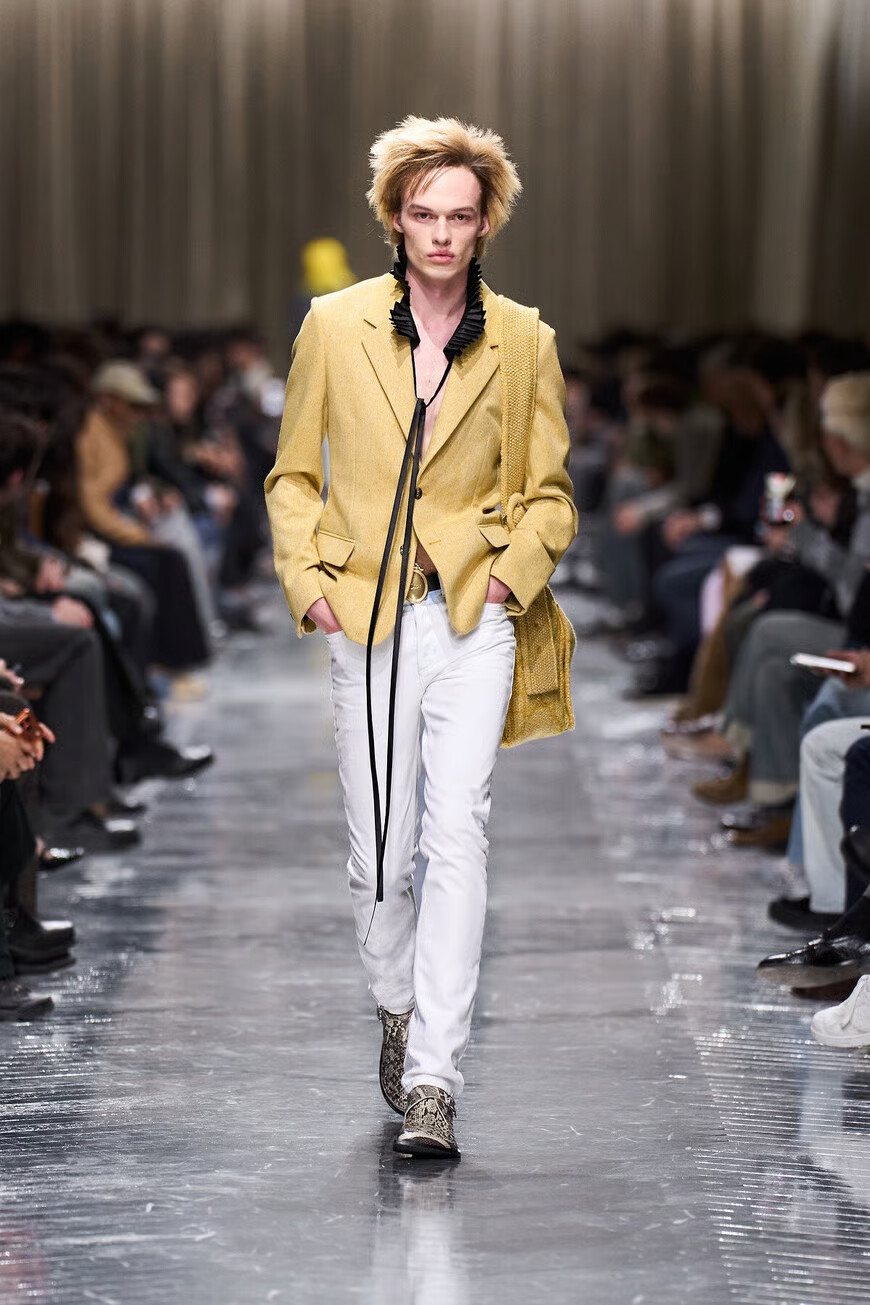
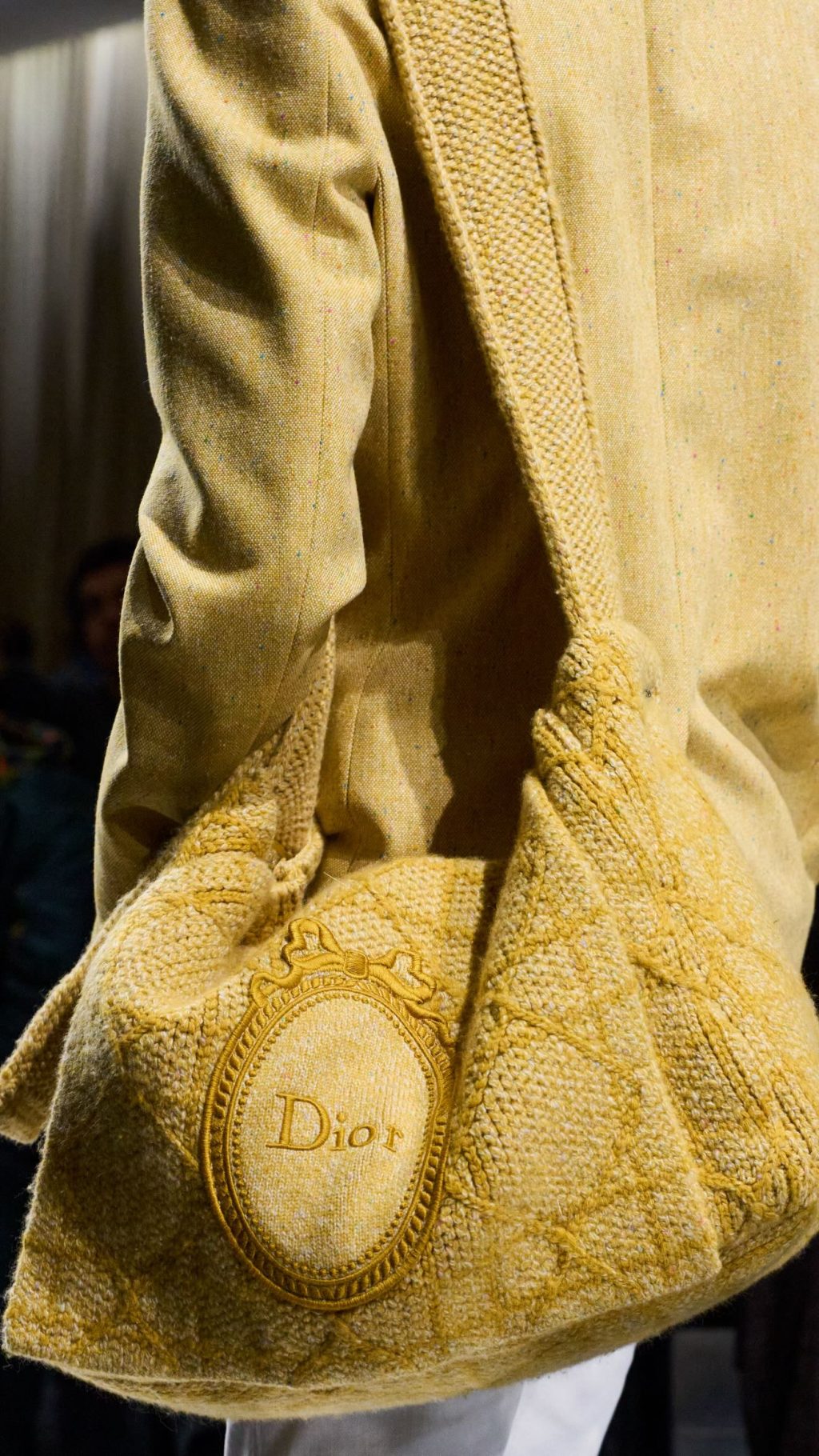
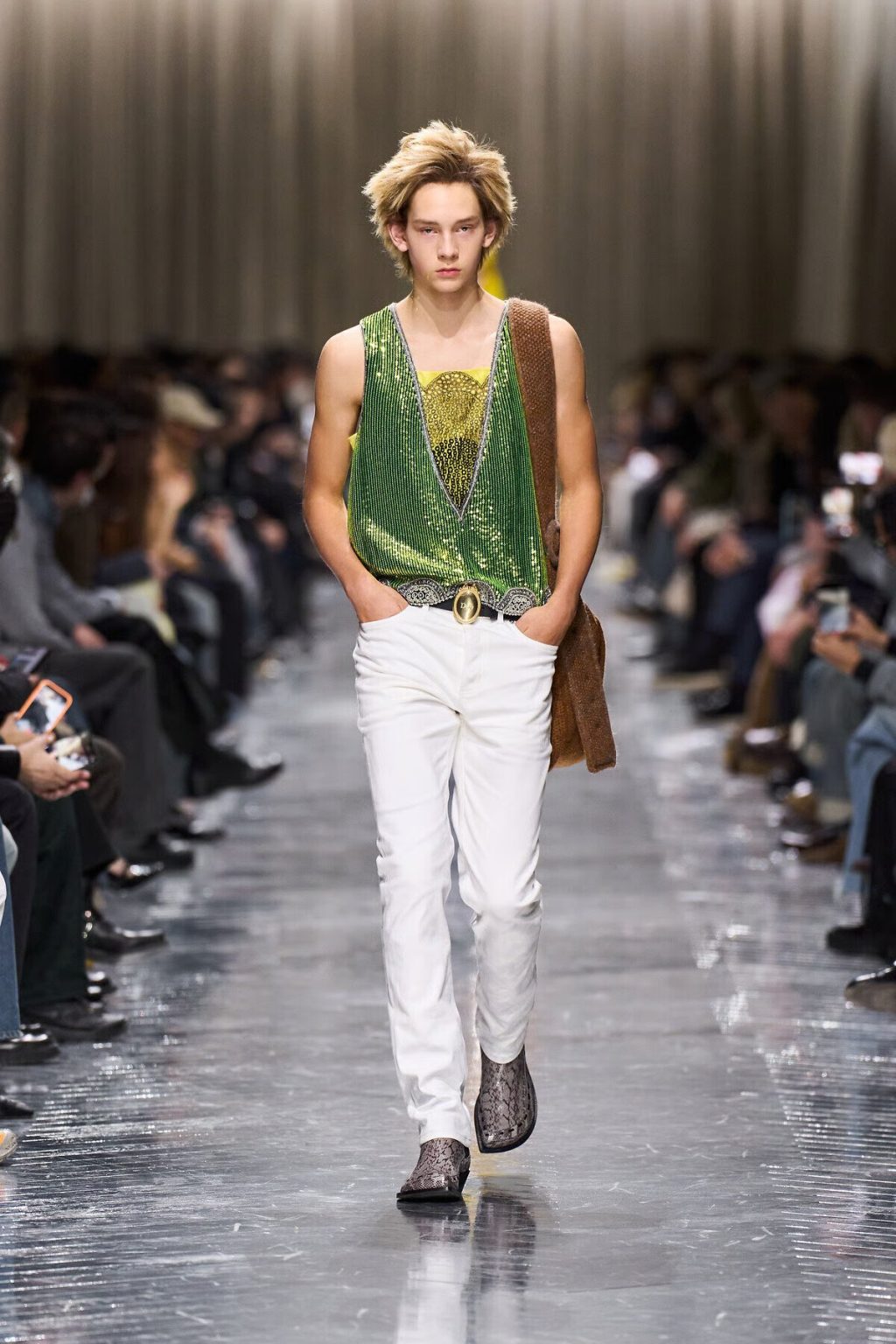
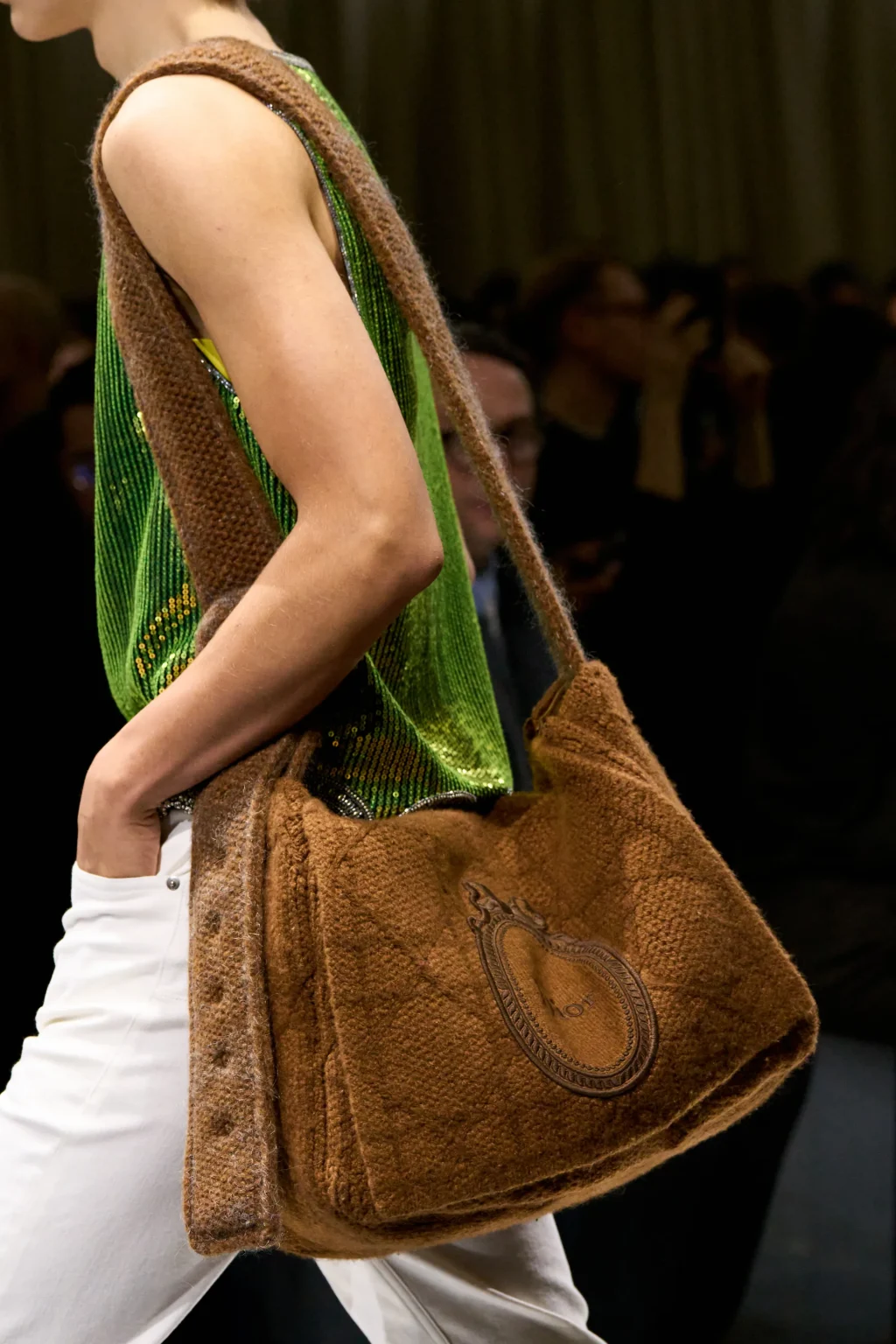
The Medallion tote/holdall
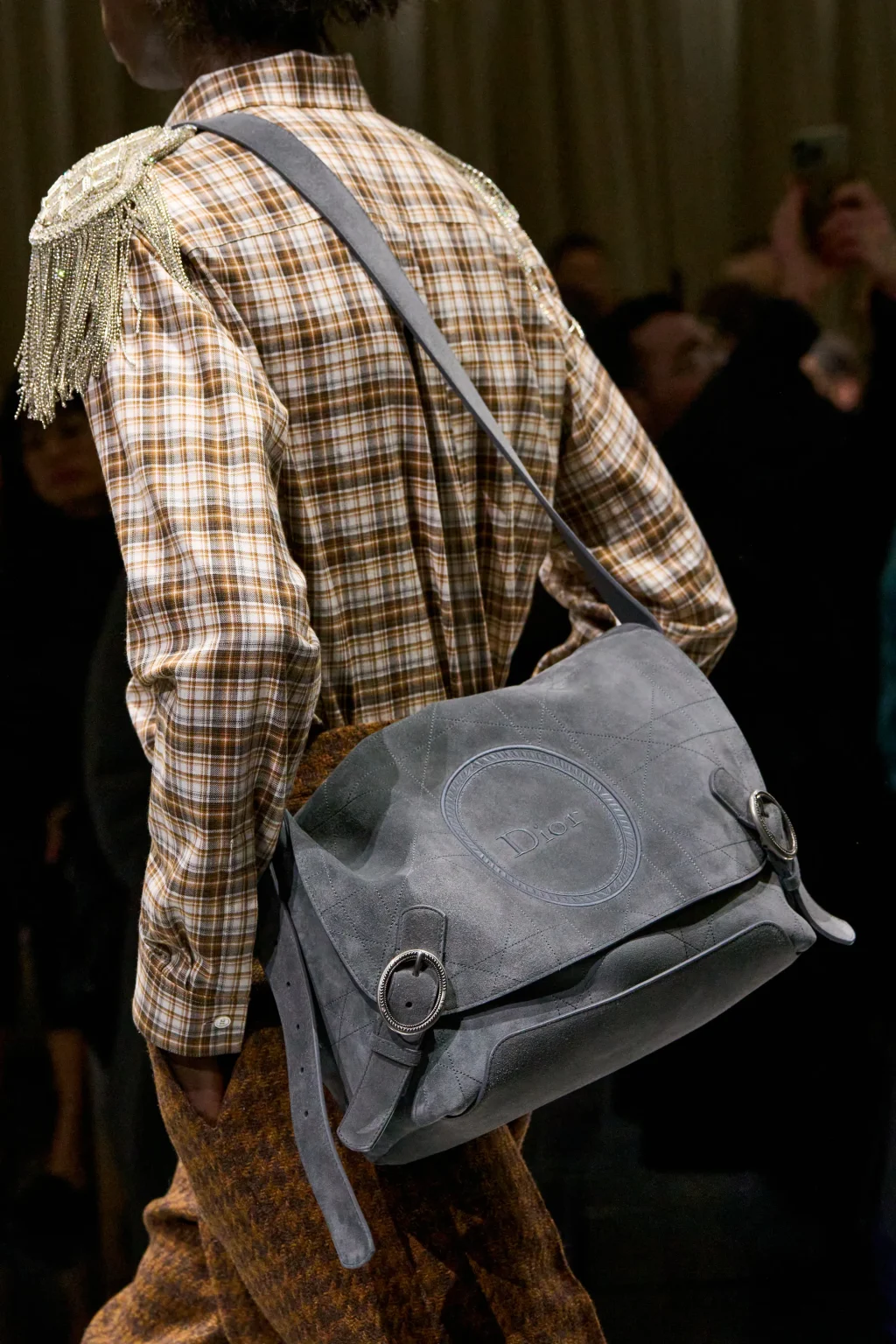
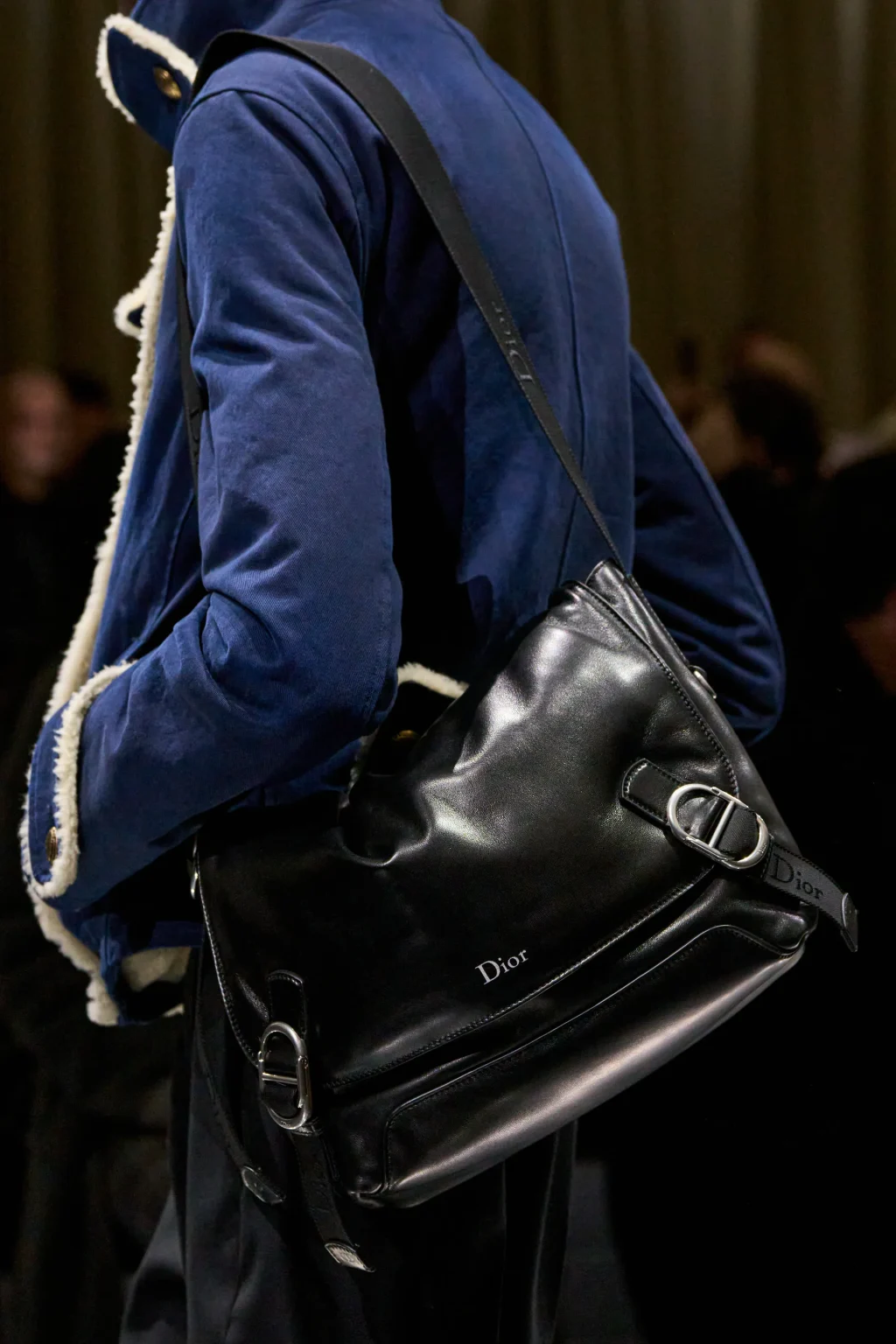
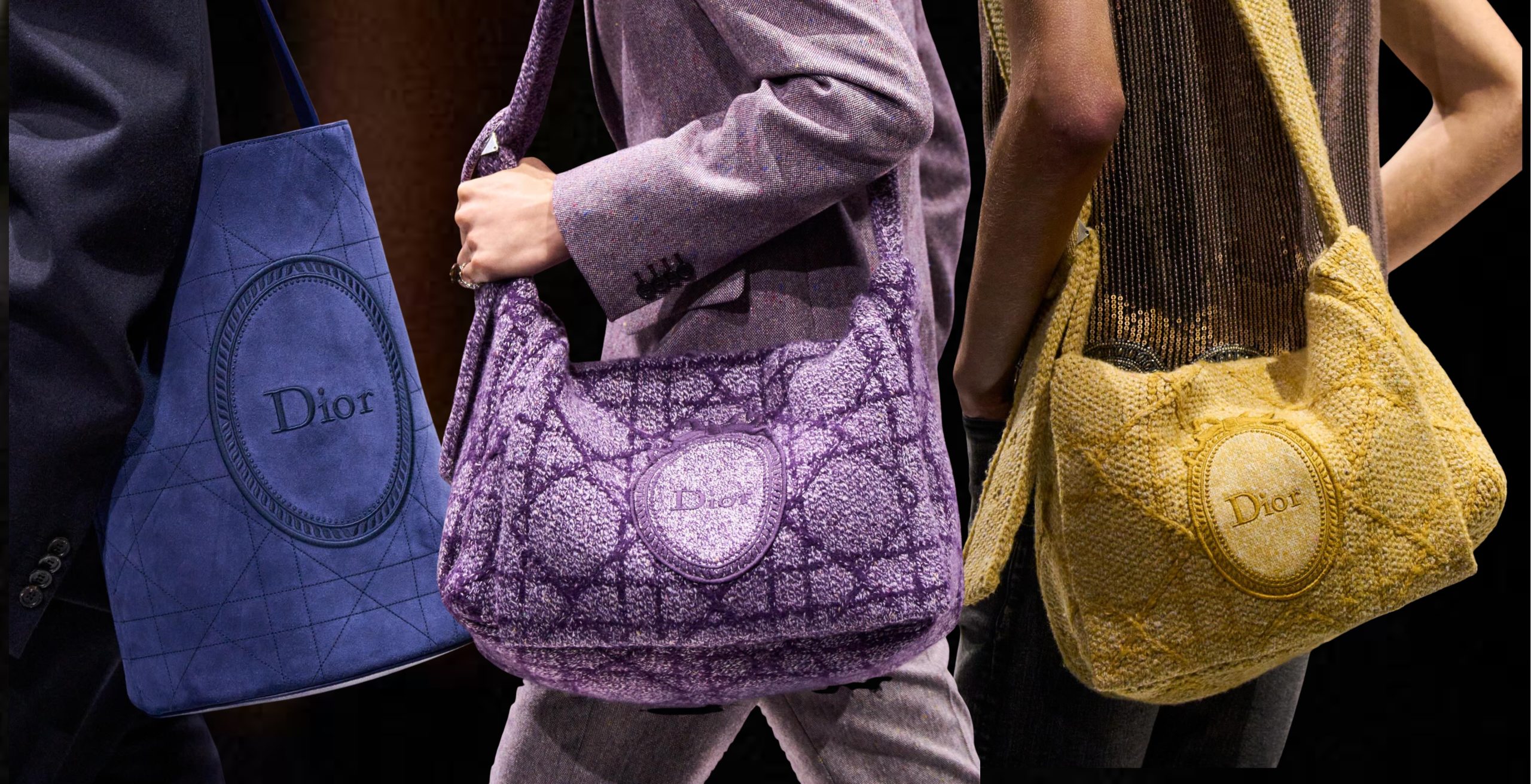
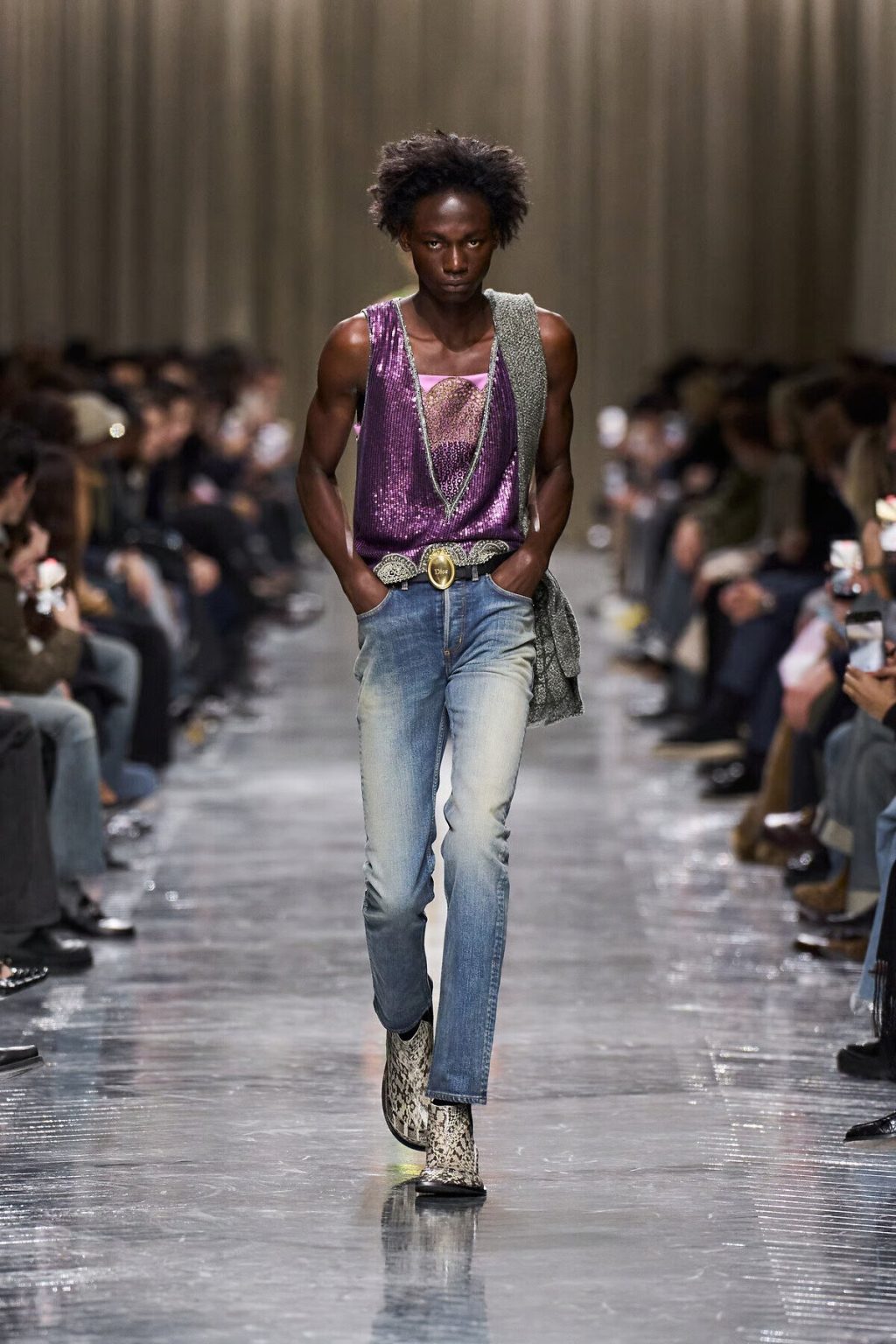
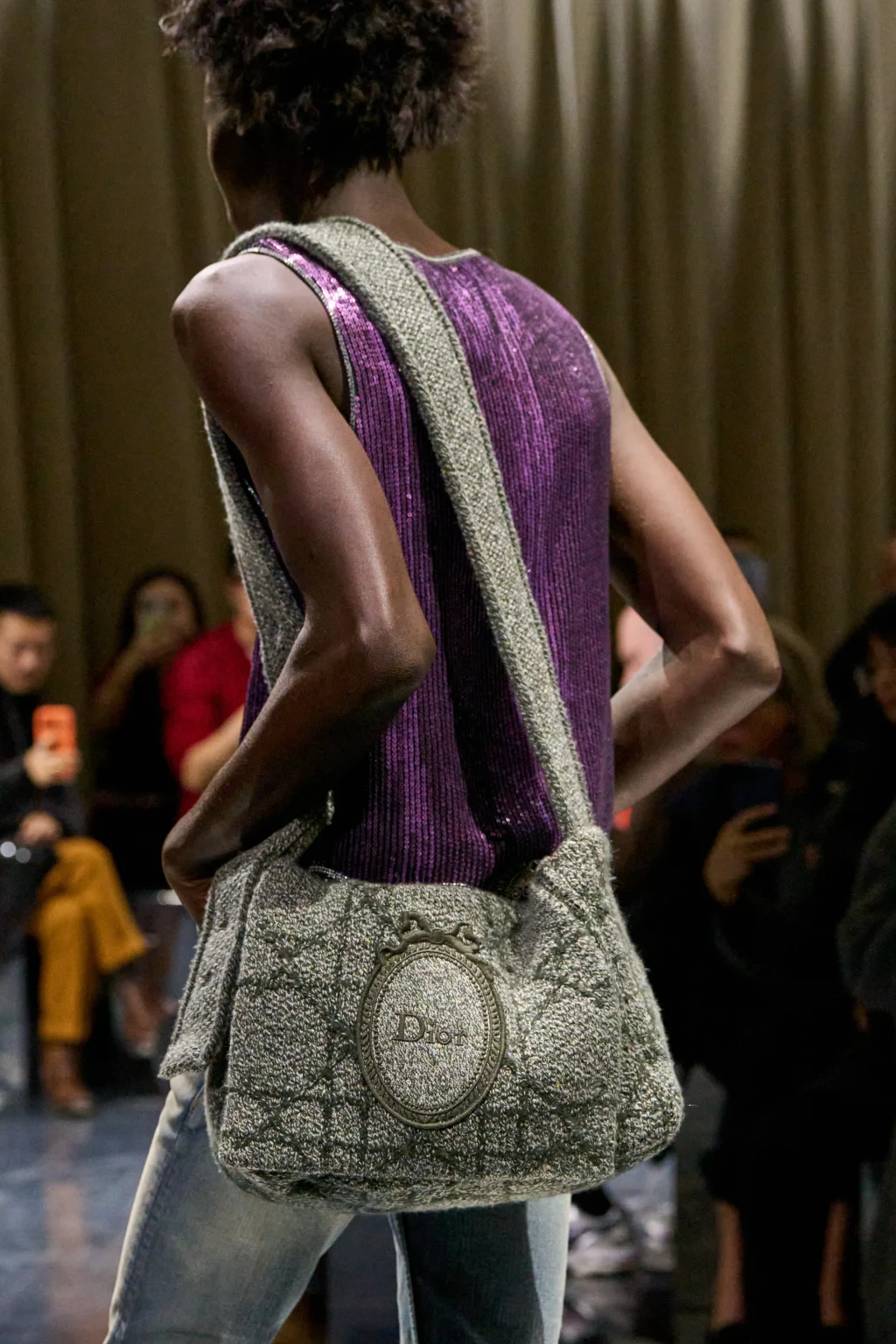
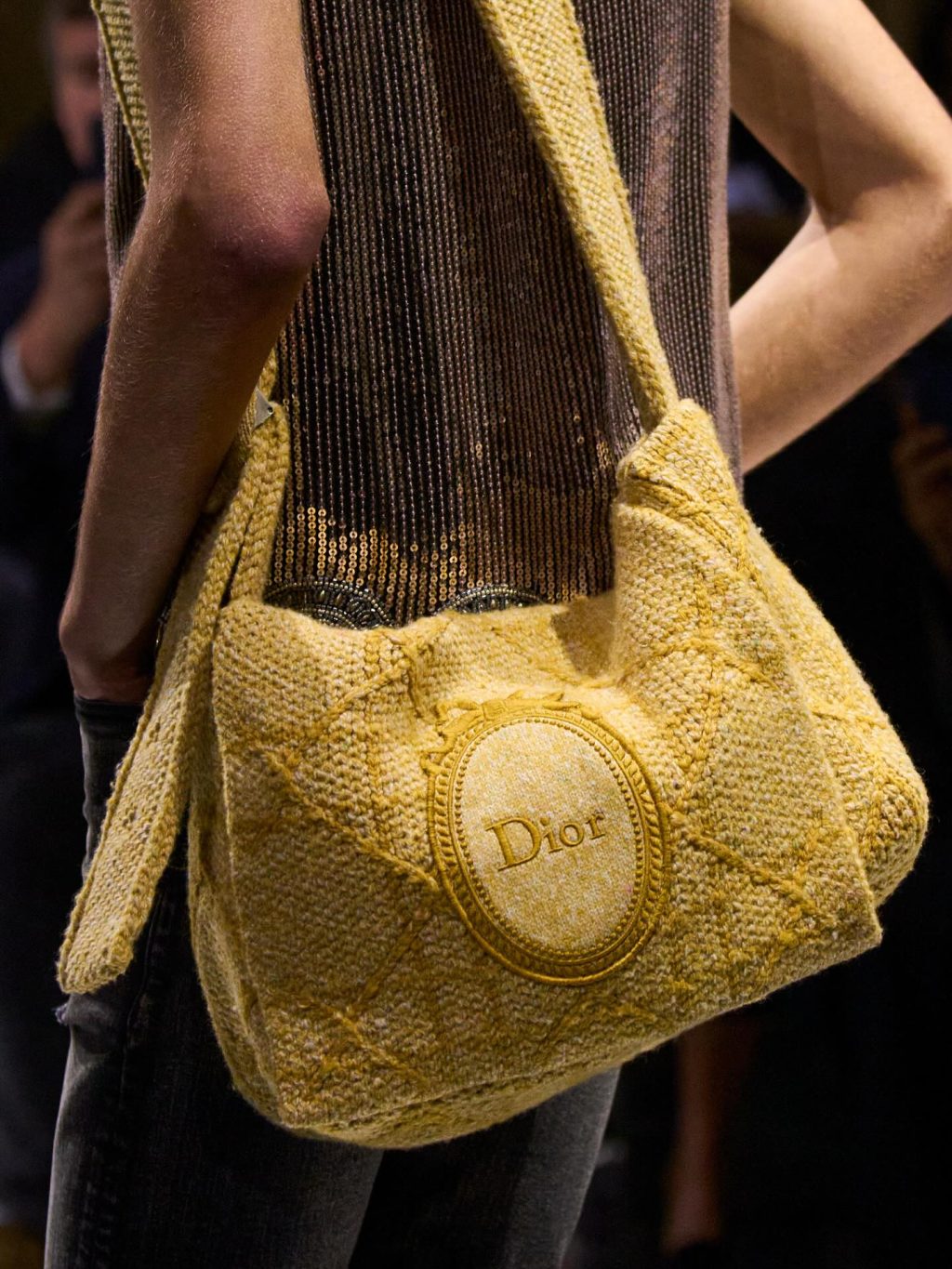
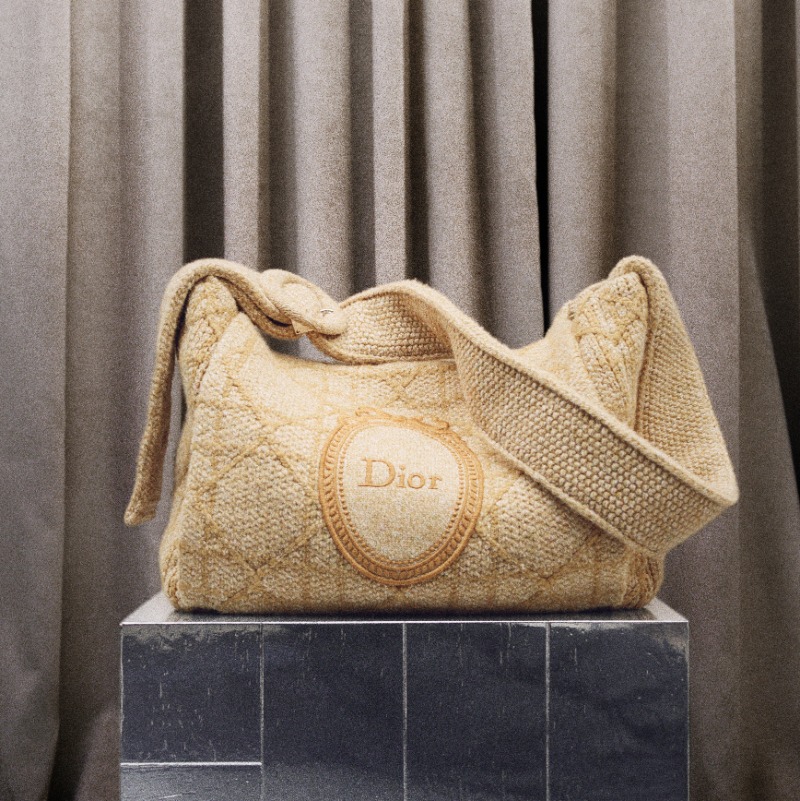
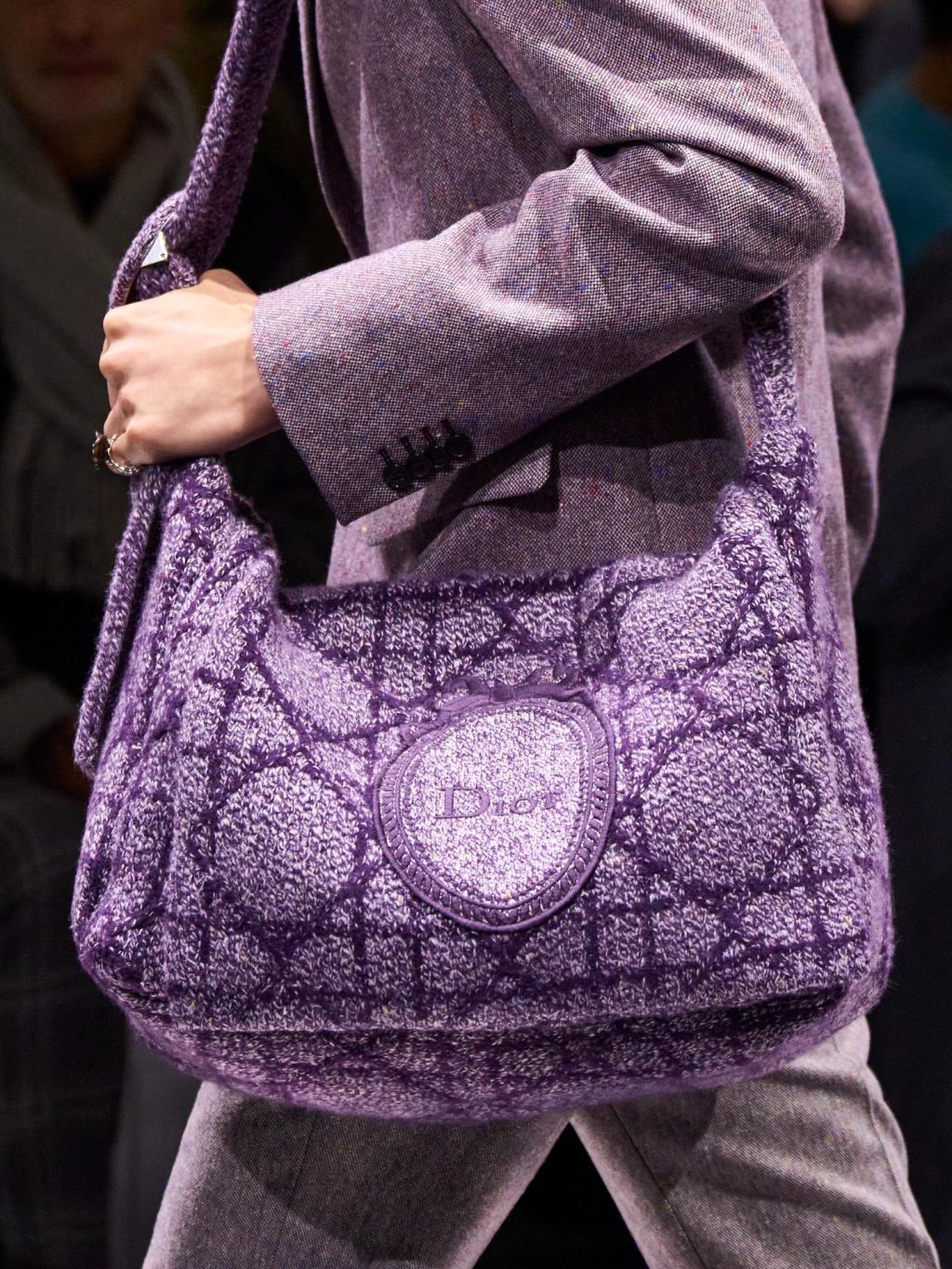
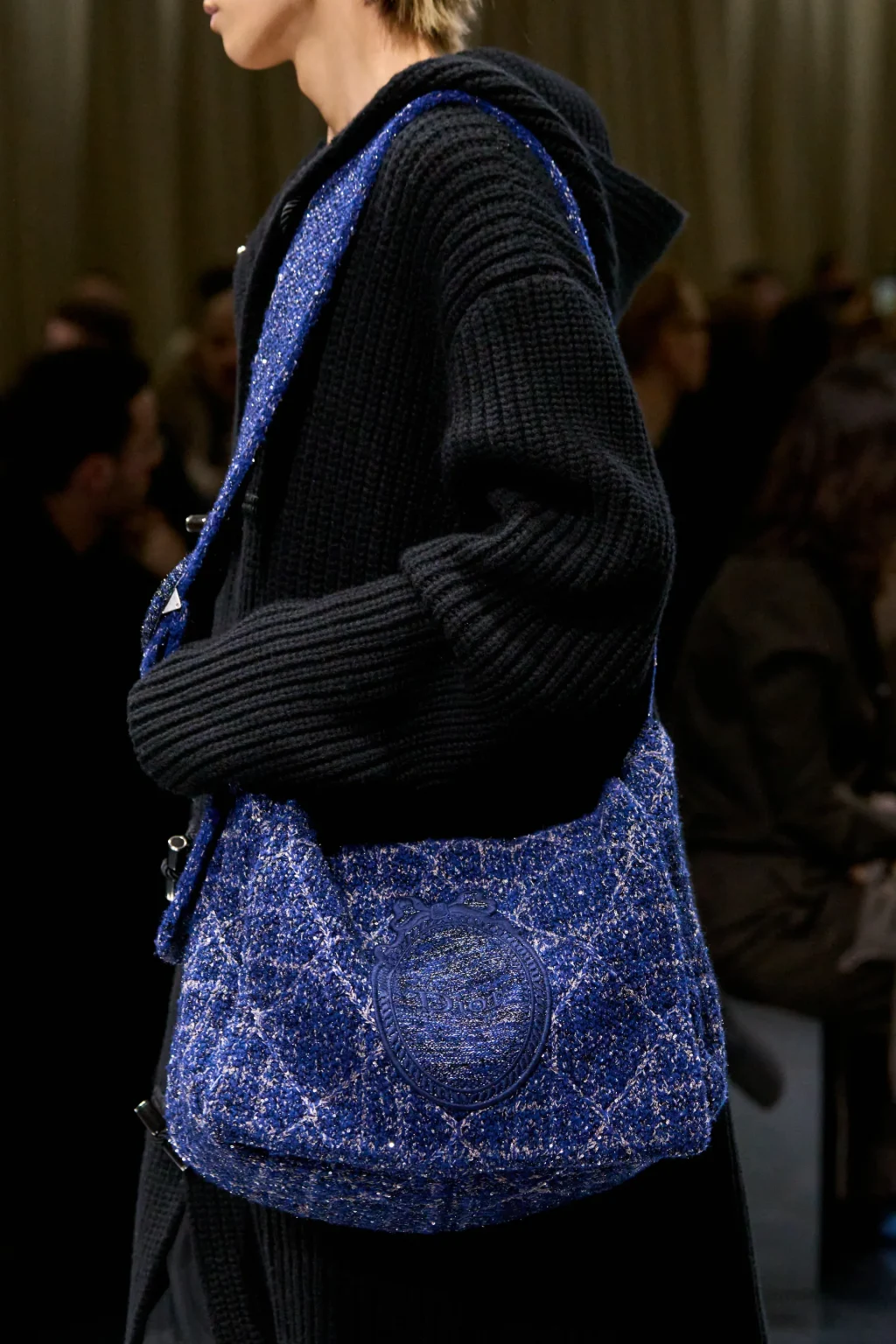
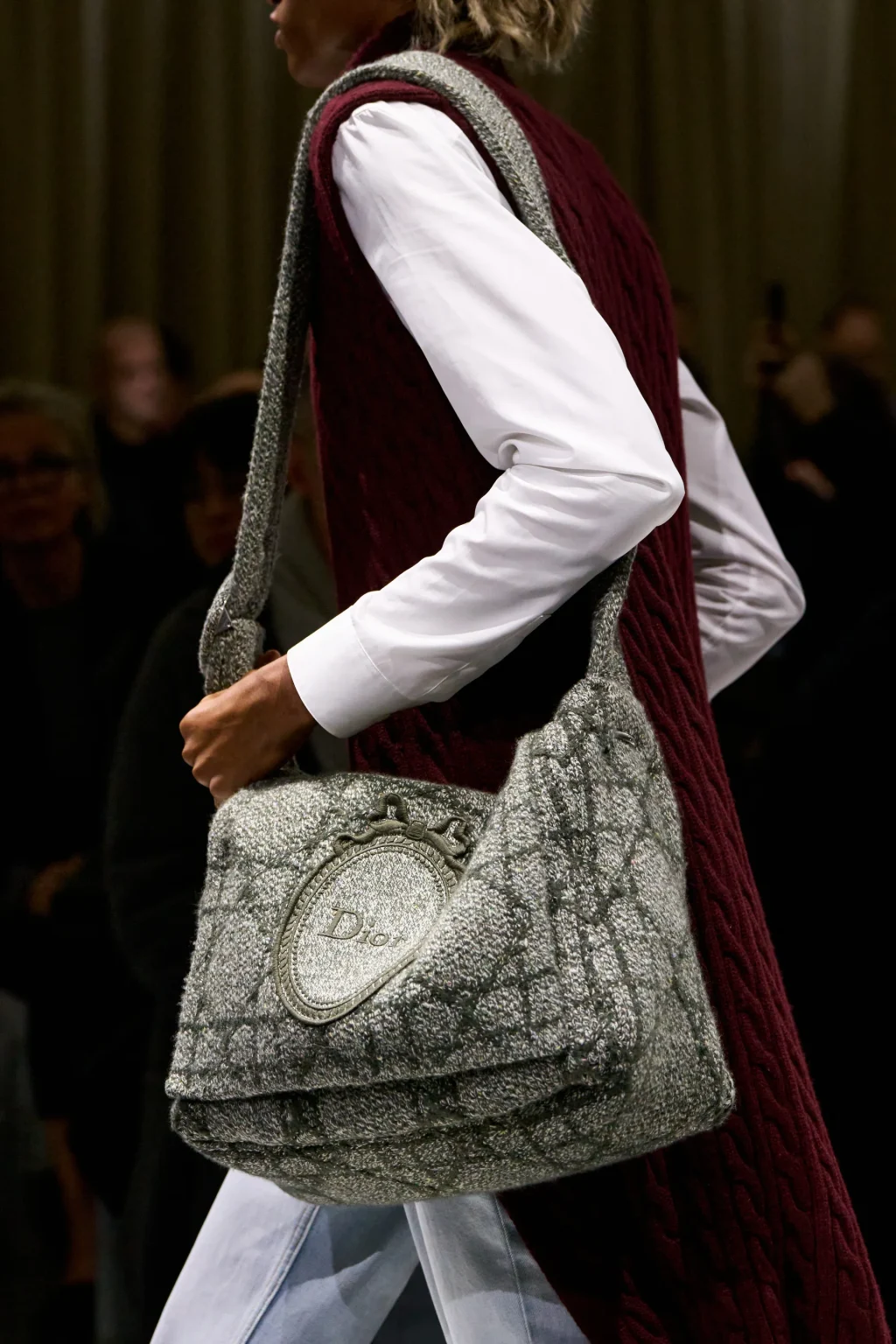
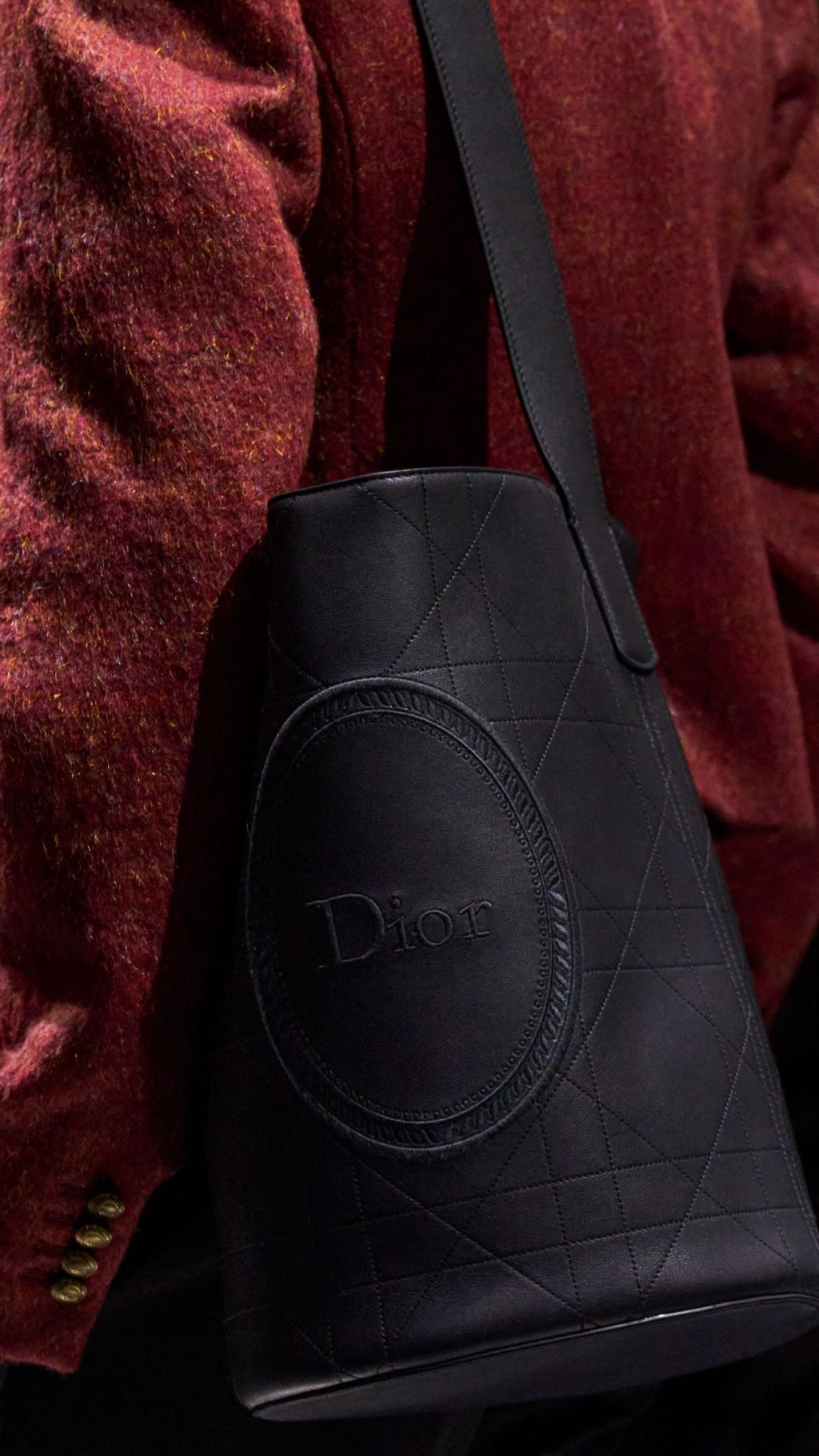
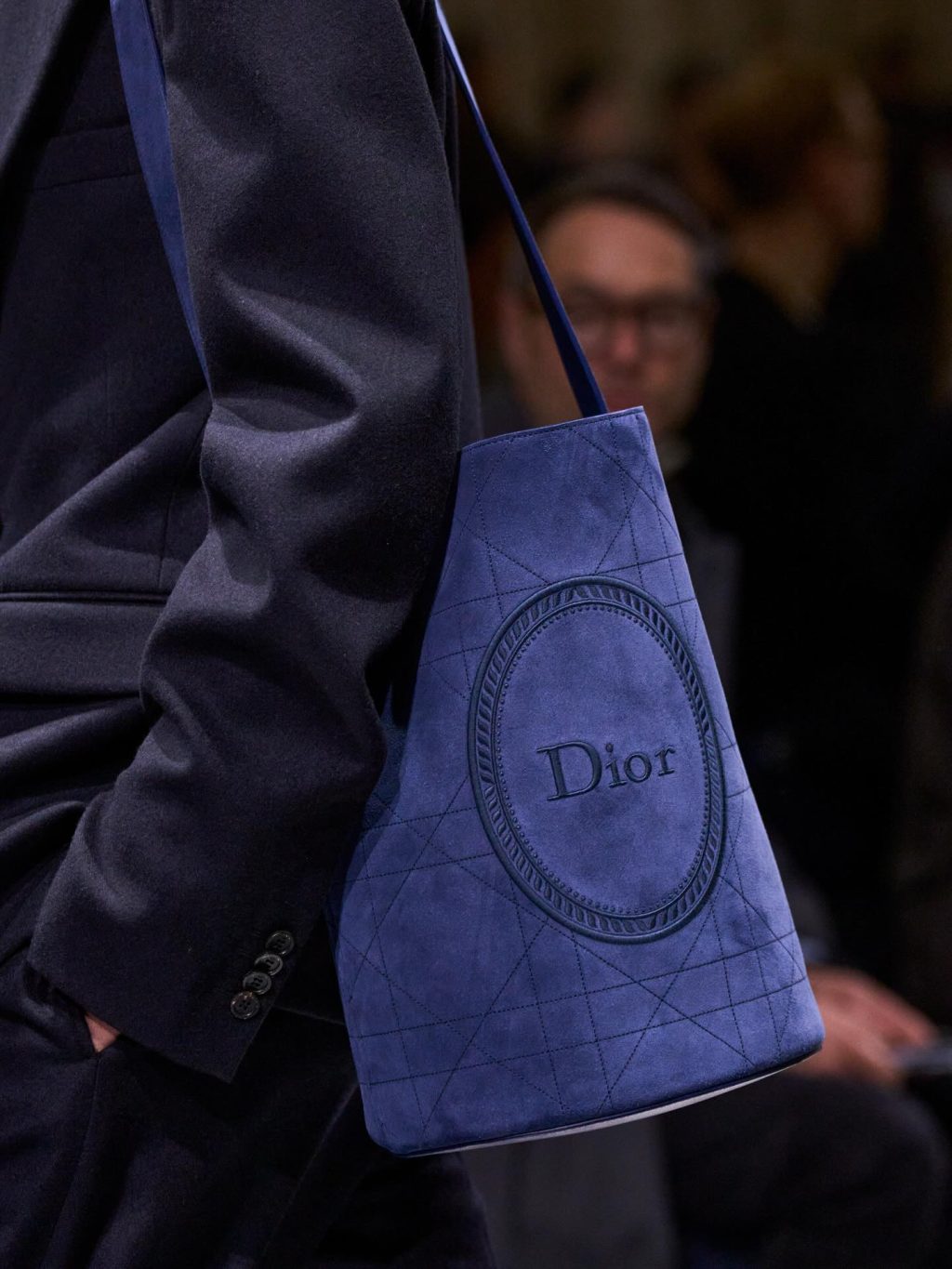
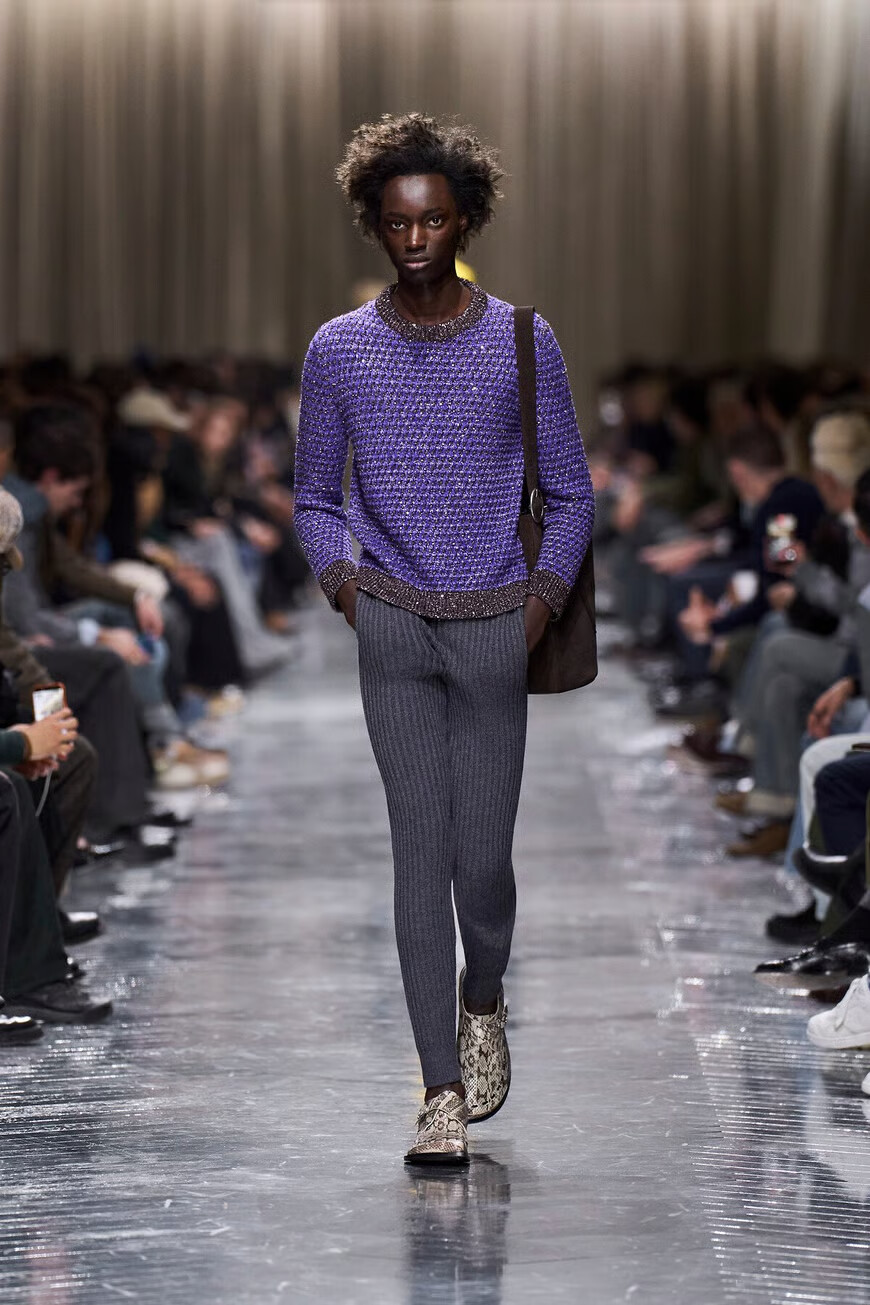
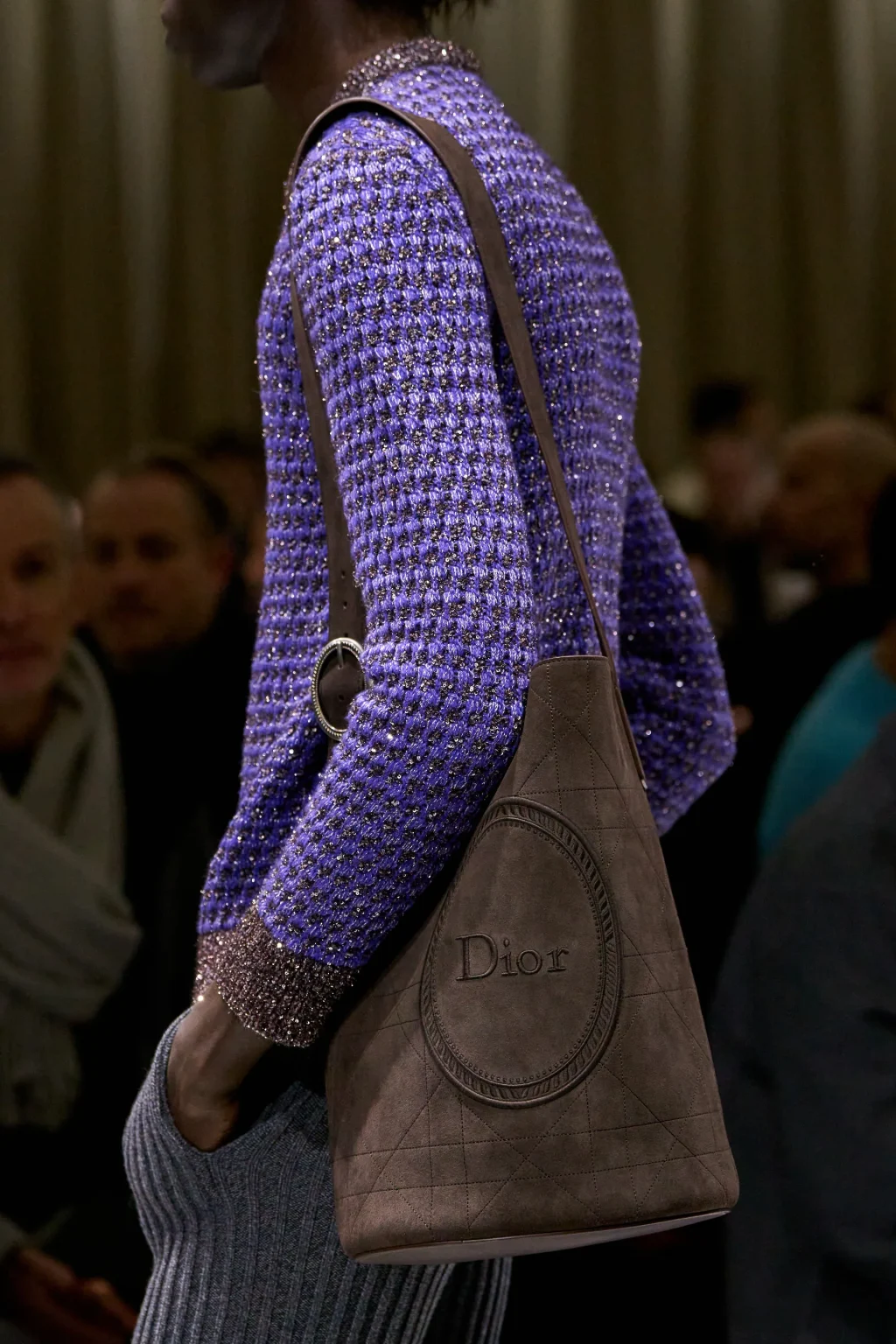
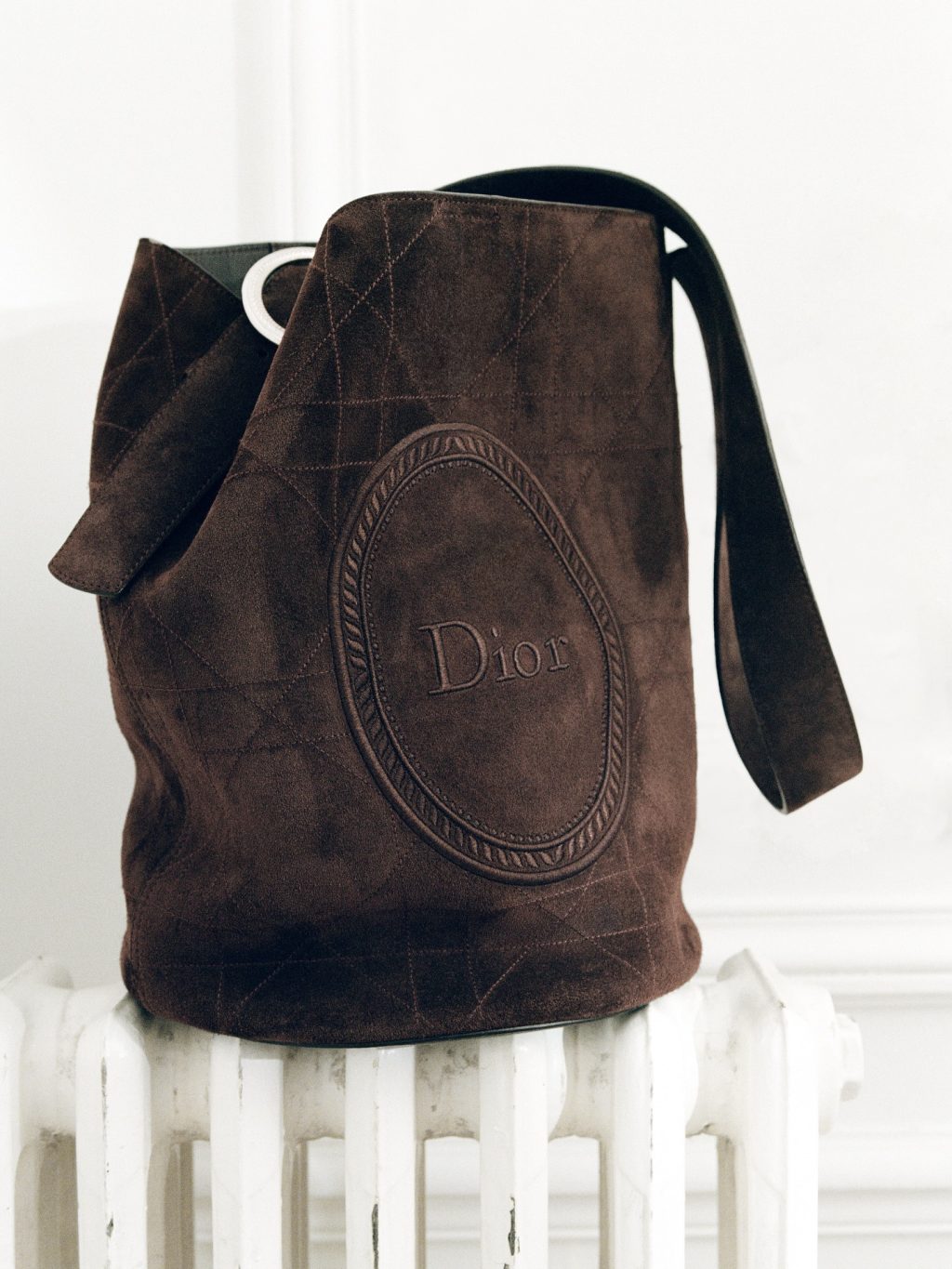
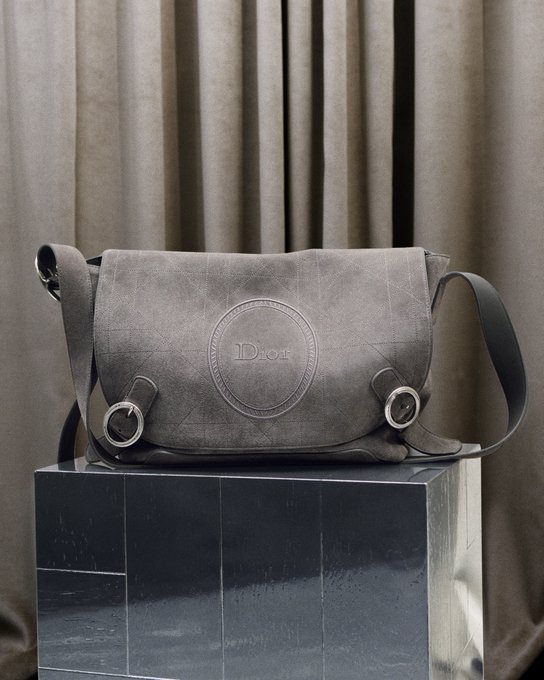
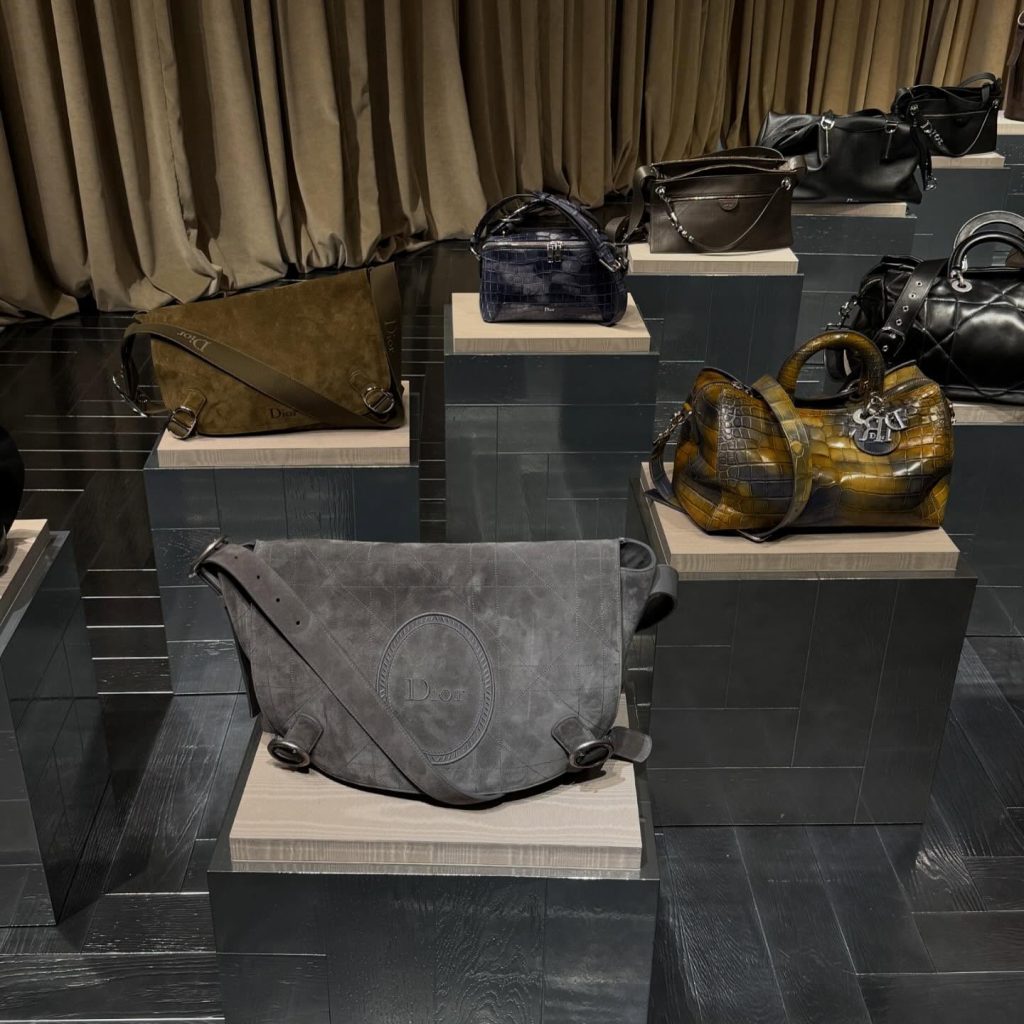
The most striking new signature is not an all-over monogram or a loud logo. It’s an oval medallion—an emblem that reads like a heritage cameo, but deployed with modern confidence. On the runway, it appears as a centered patch bearing the Dior name, framed like a crest. The effect is deliberate: aristocratic codes without the stiffness, lineage without nostalgia.
You can see the same Anderson logic—codes turned into structure—playing out in the Dior Cigale Bag, where an archive idea becomes a portable silhouette.
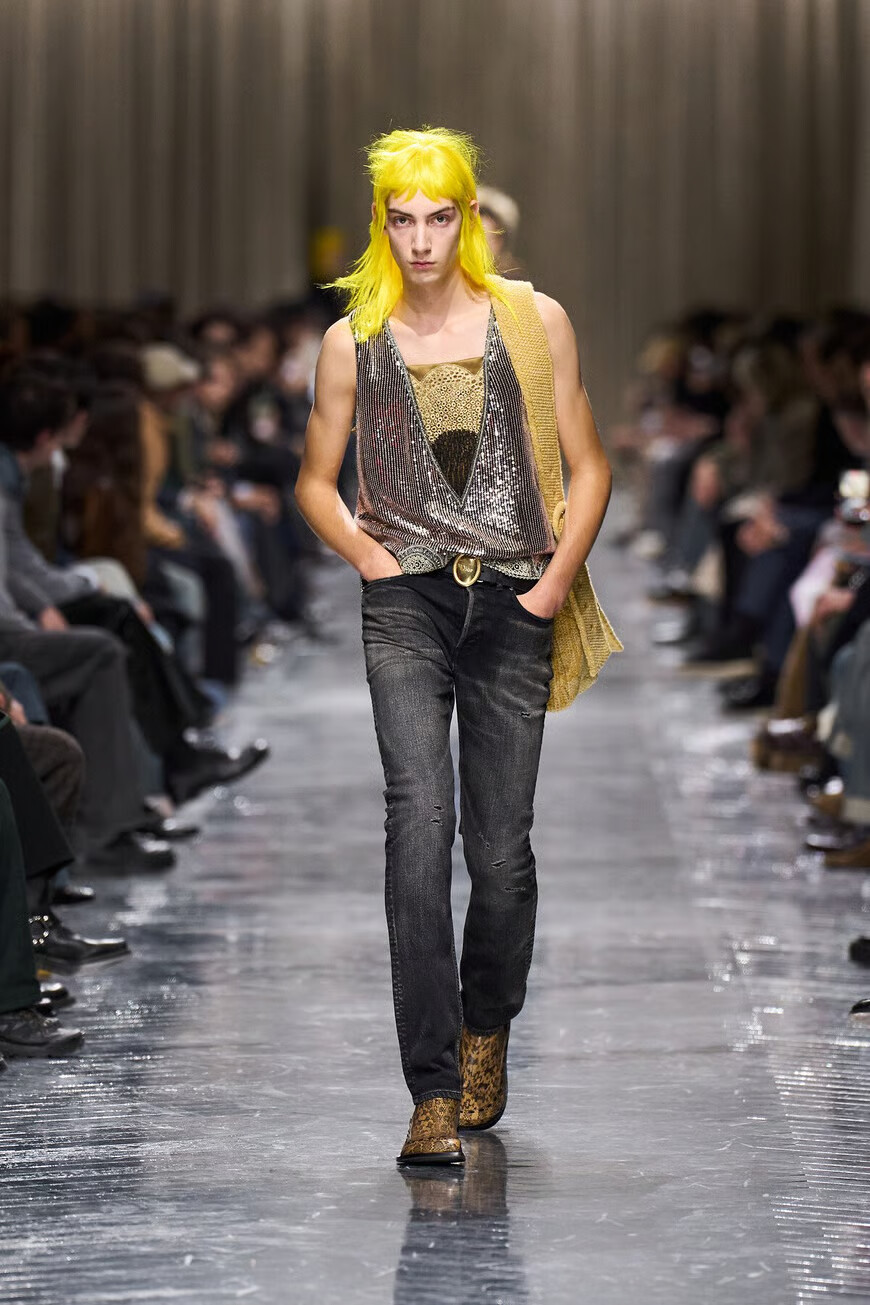
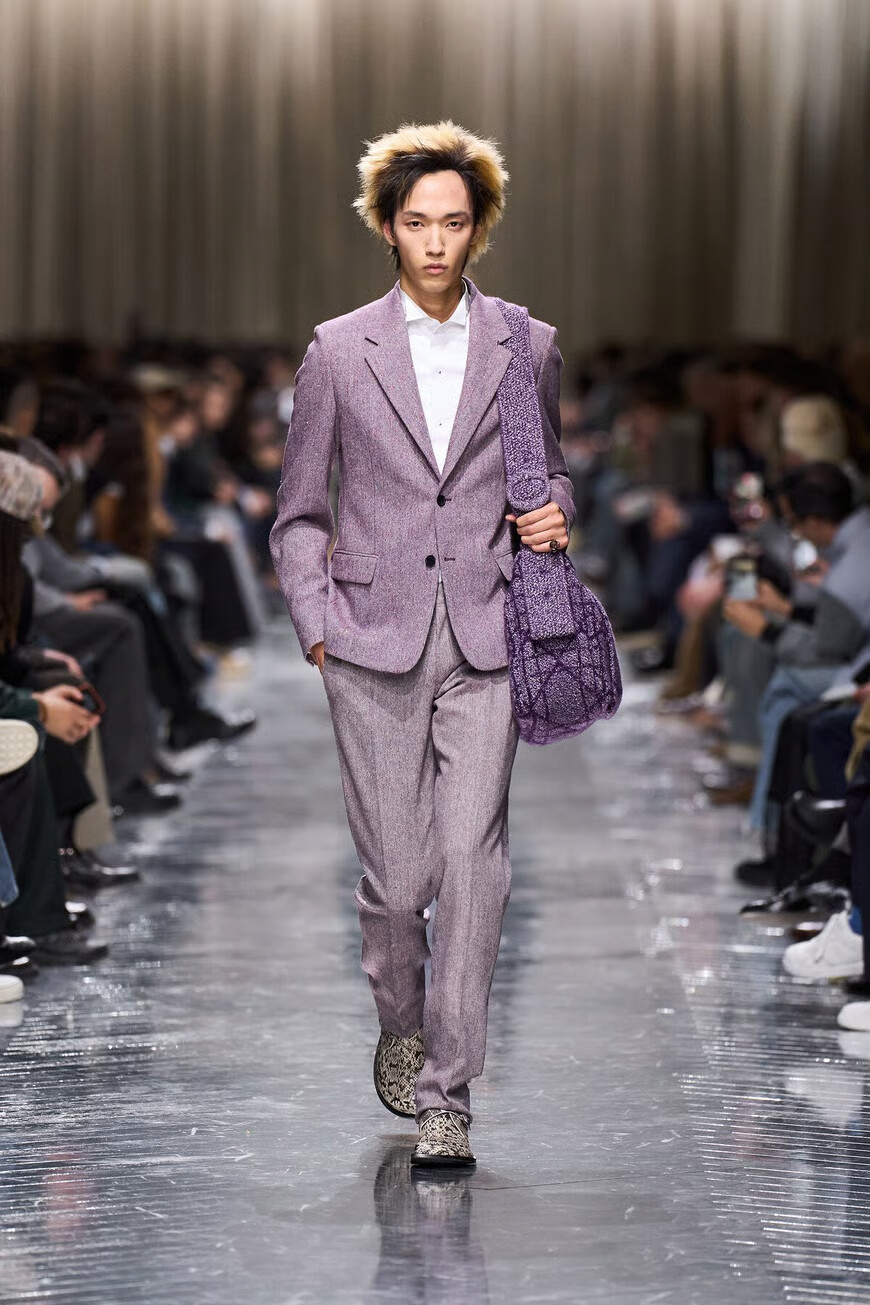
What makes these pieces feel genuinely new is the scale and softness. The holdalls in the runway images are oversized—closer to day-trip duffles than classic totes—constructed in richly textured, bouclé-like surfaces (purple, sandy beige, and a warm, buttered yellow). Their volume is generous and pliable, the kind of bag that collapses slightly against the body, suggesting ease rather than armor. This is Dior saying: status is not a hard shell; it’s a tactile presence.
There’s also a subtle styling intelligence here. In a collection built on elongated jackets, precise shoulders, and controlled lines, the soft holdall creates counterpoint. It introduces movement. It makes the look feel lived-in—flâneur energy, not costume.
Quilting, but not Cannage
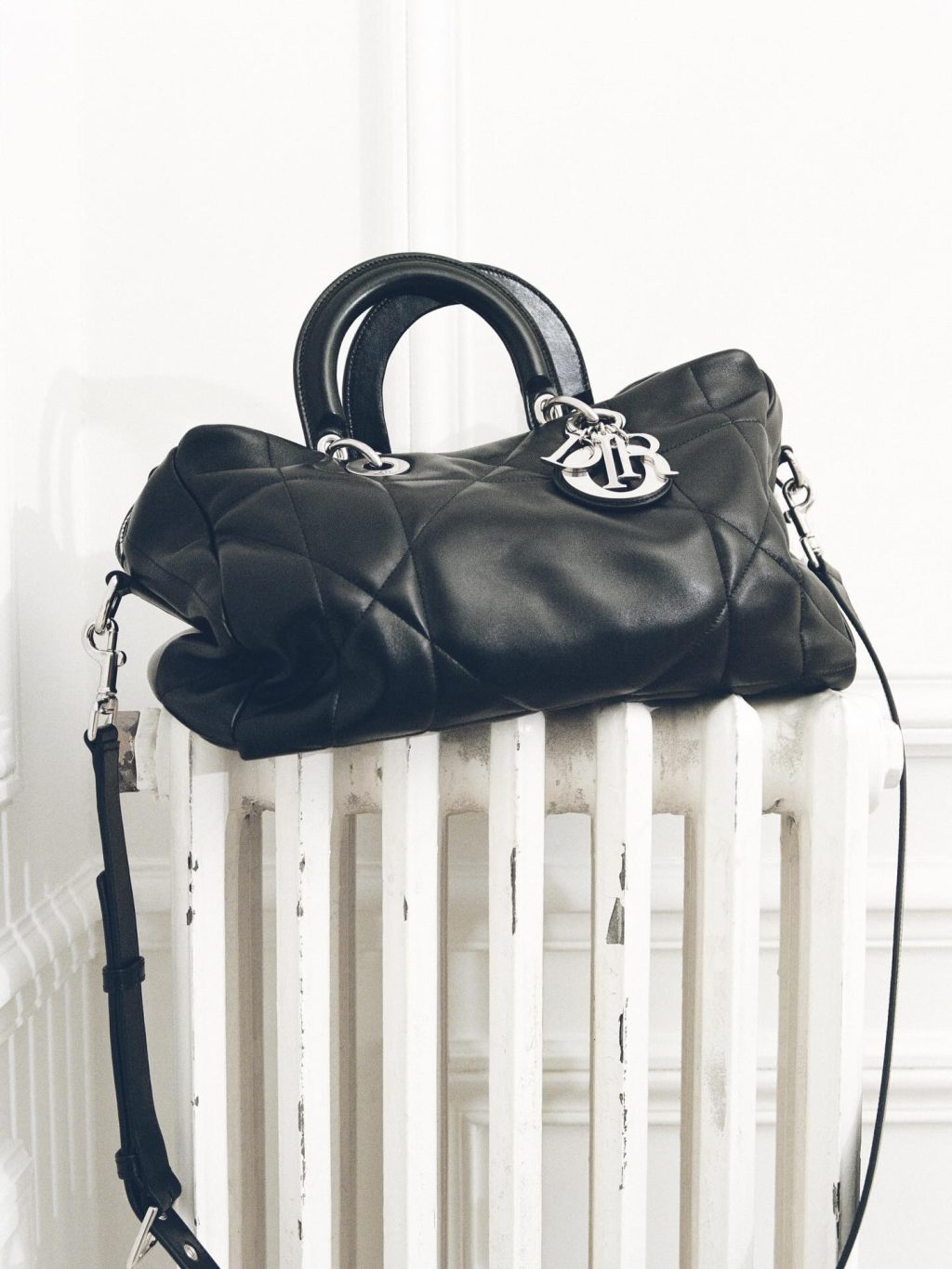
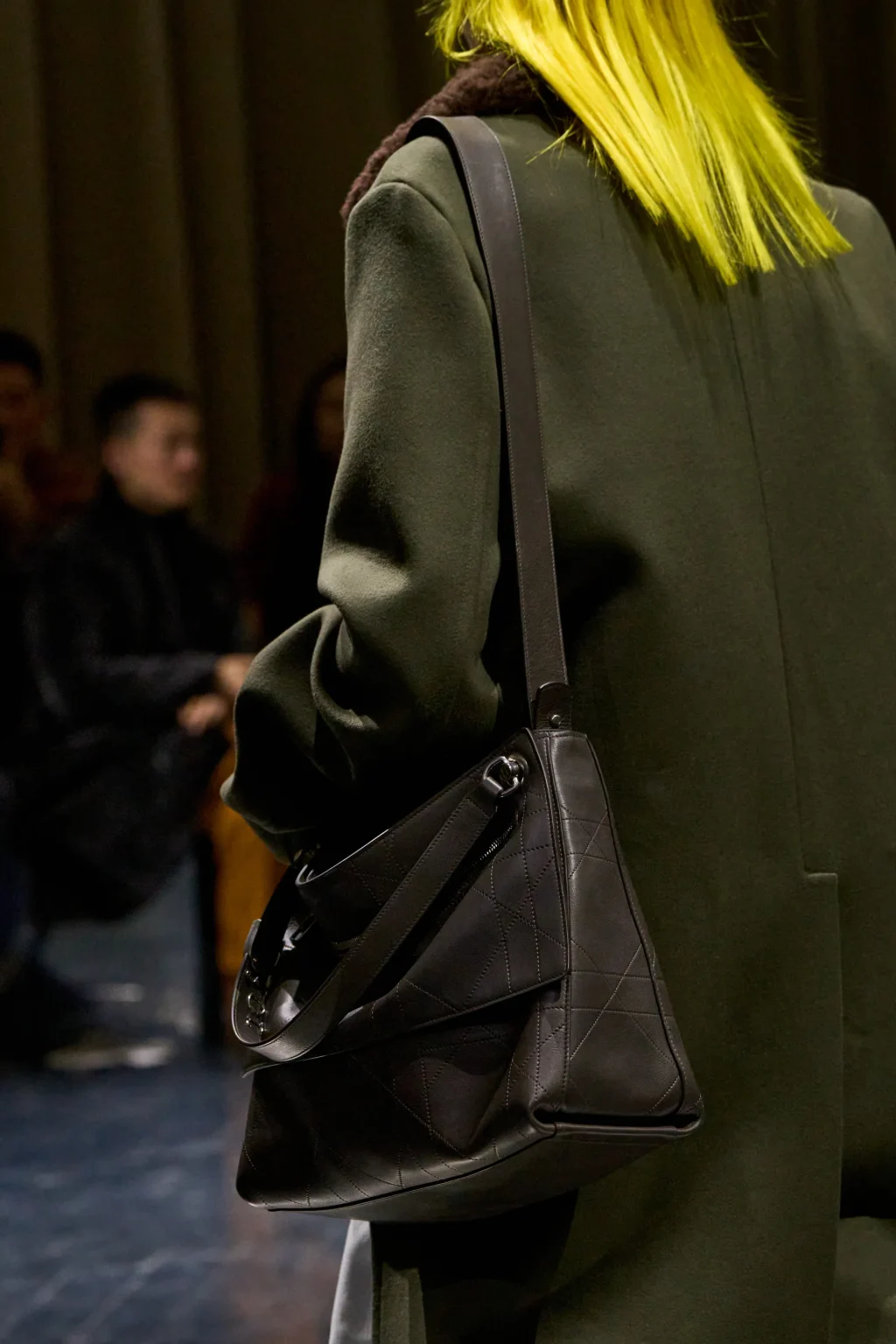
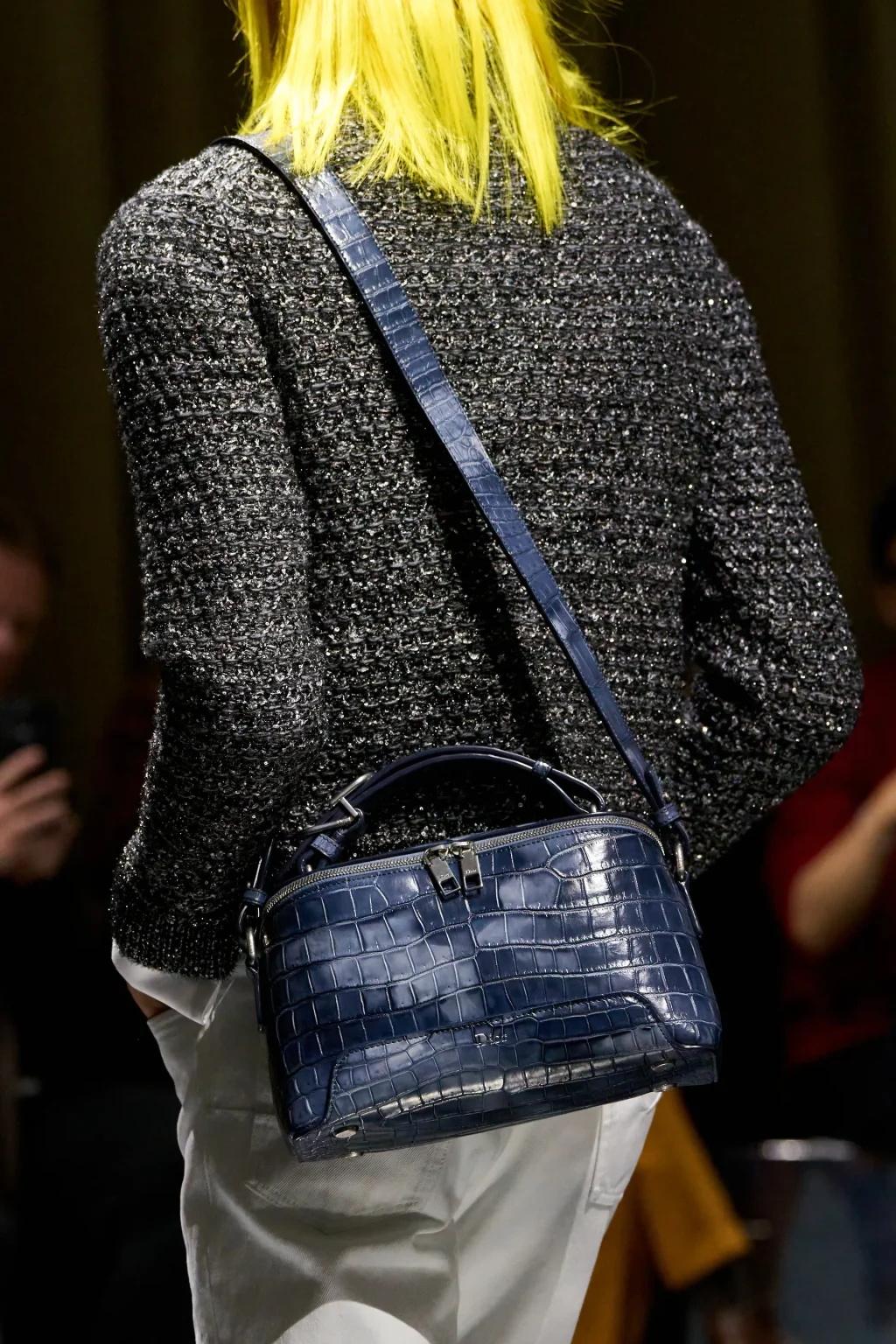
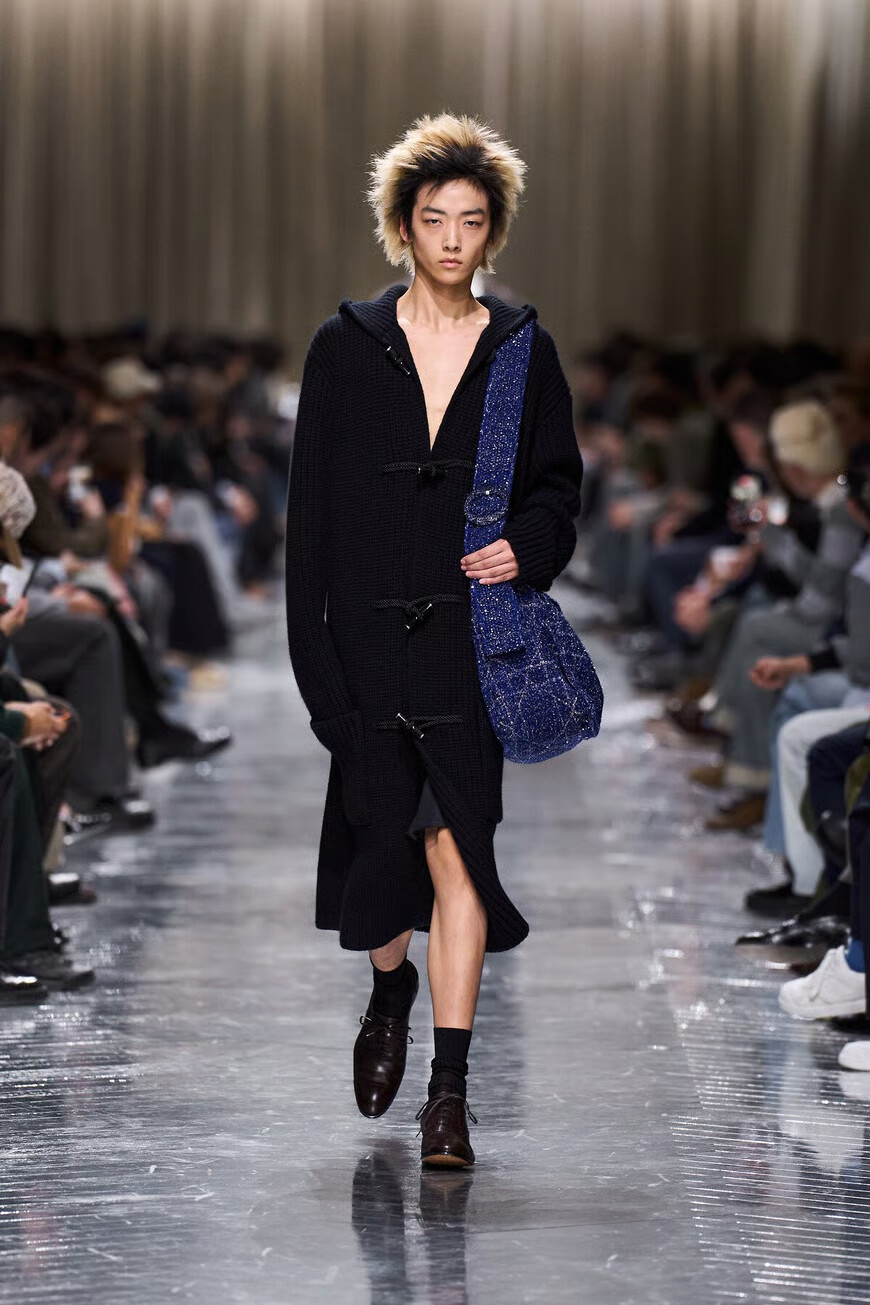
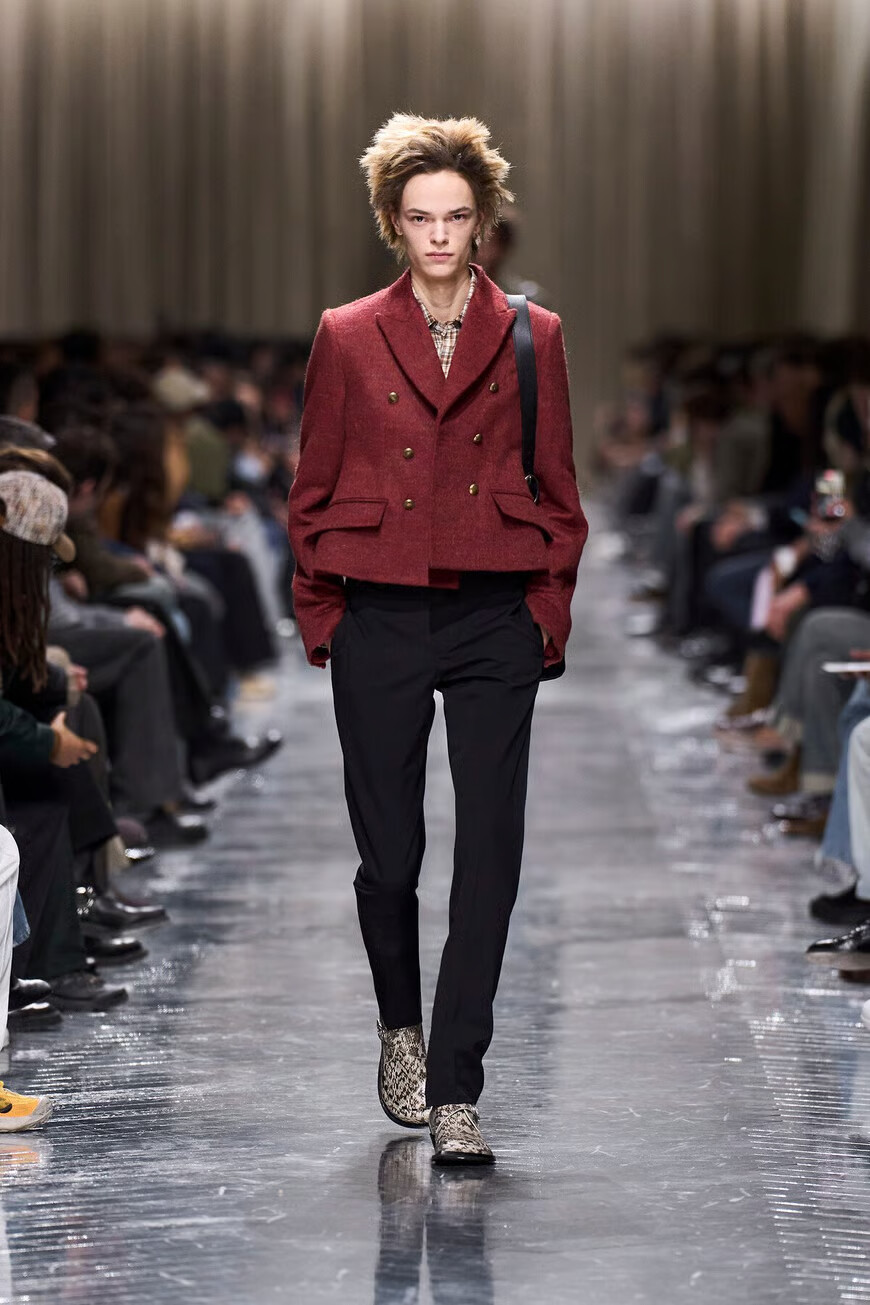
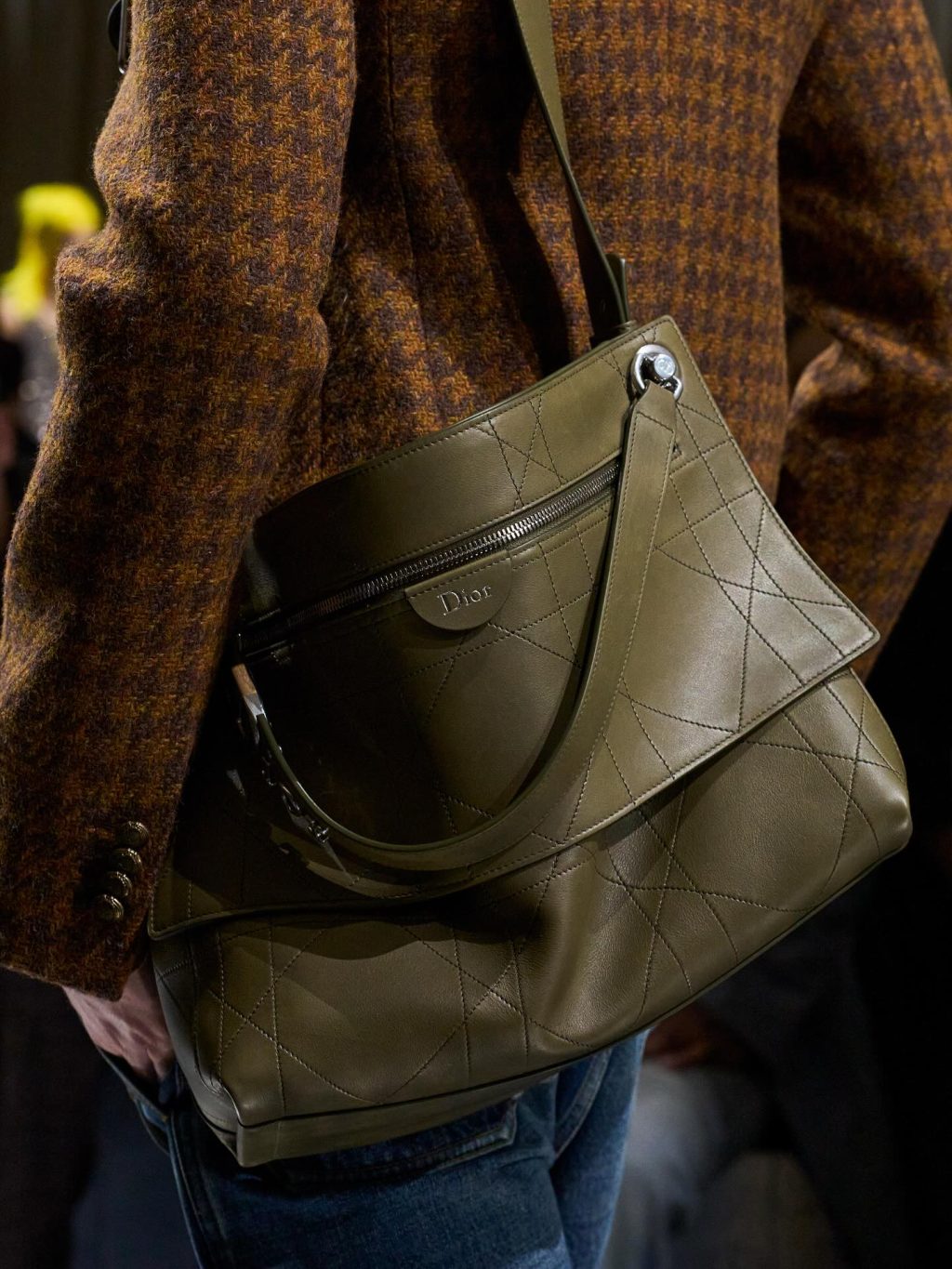
Dior’s Cannage is one of the house’s most recognizable surface codes, and Anderson seems less interested in repeating it than in re-drawing the idea of a structured grid. The quilted pieces—especially the bucket silhouettes—use an irregular, sketch-like diamond pattern that feels hand-considered rather than mechanically perfect.
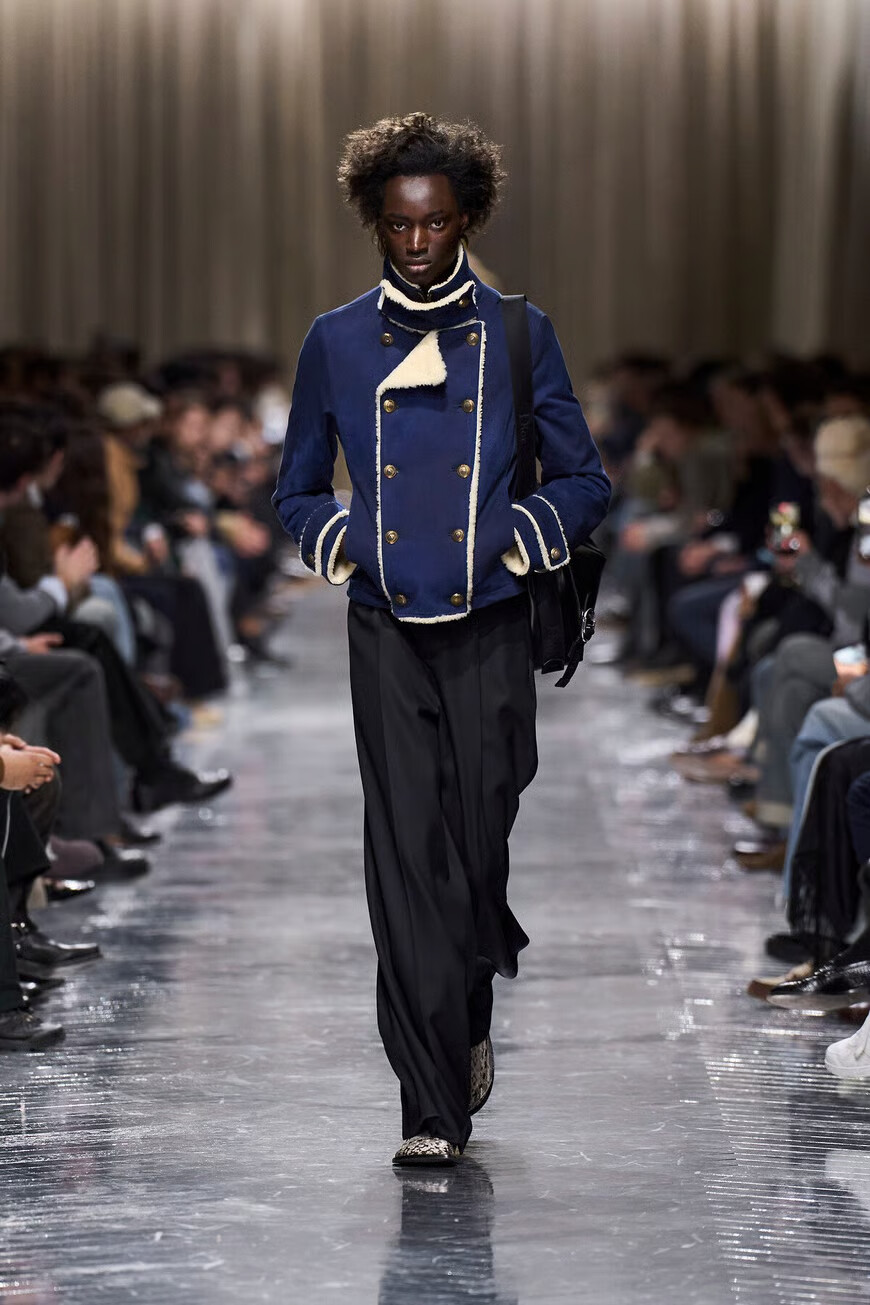
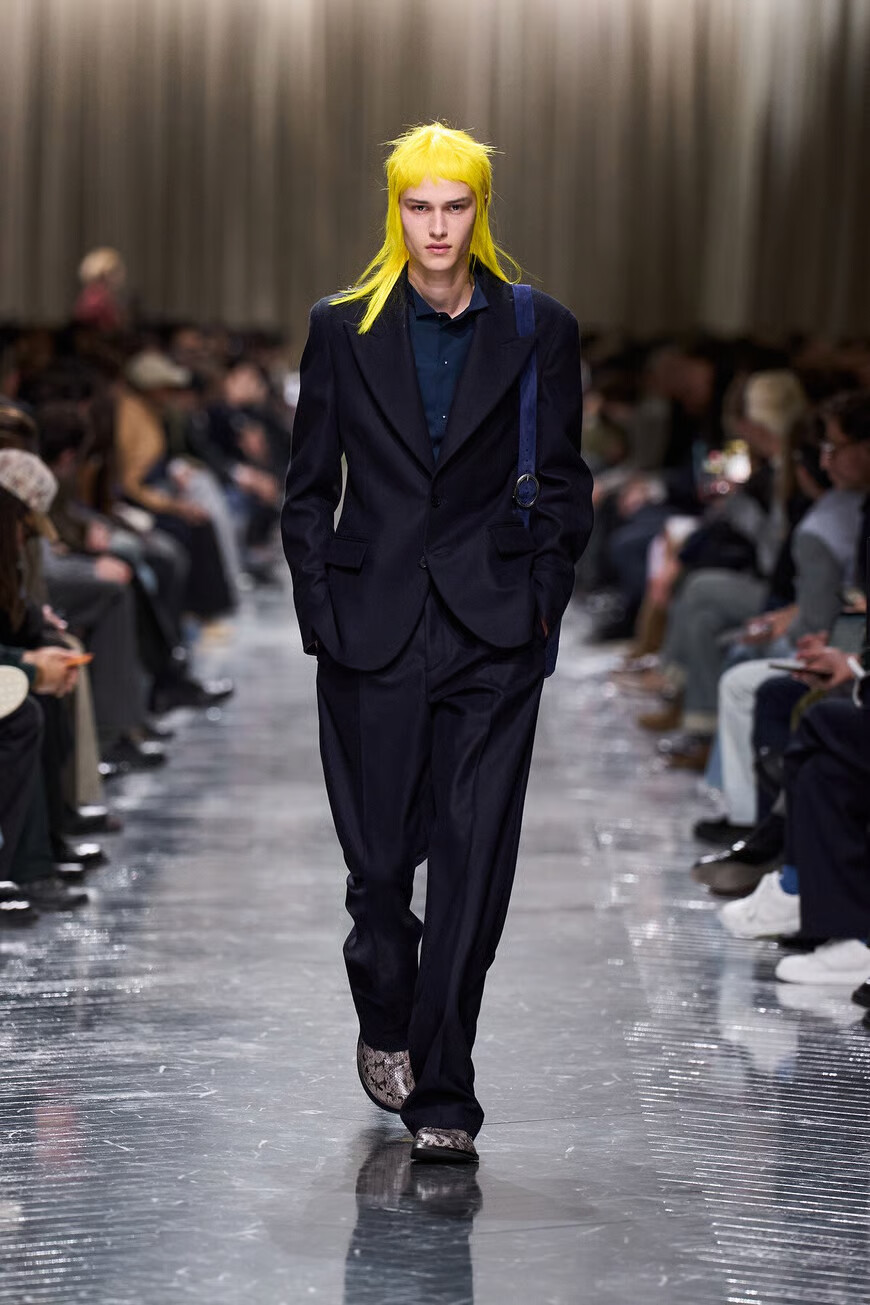
The bucket bags are the quiet standouts: suede-forward, saturated in deep blue or rendered in black leather, each stamped with that oval medallion signature. The shape is architectural but calm—tall enough to feel modern, wide enough to carry real life, and finished with straps that keep the line clean. Think of it as Dior formality translated into an everyday object: still precise, but no longer precious.
This matters because it signals how Anderson wants Dior bags to work: recognizable at close range, not from across the street. The logo becomes a detail you discover, not a billboard you wear.
On the womenswear side, that “re-drawing” impulse becomes even more literal in the Dior Bow Bag, where the bow stops being decoration and becomes the architecture.
The tailored shoulder bags
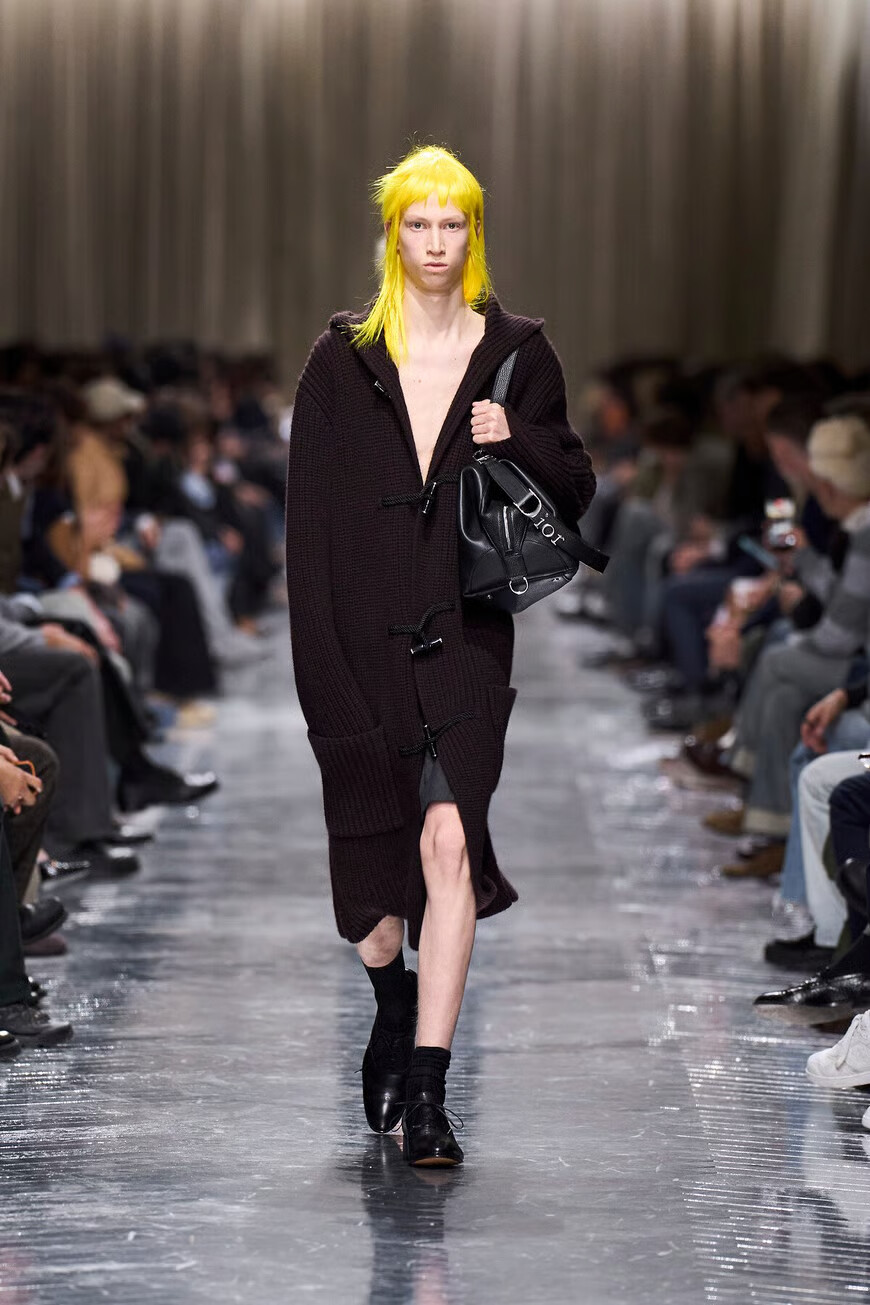
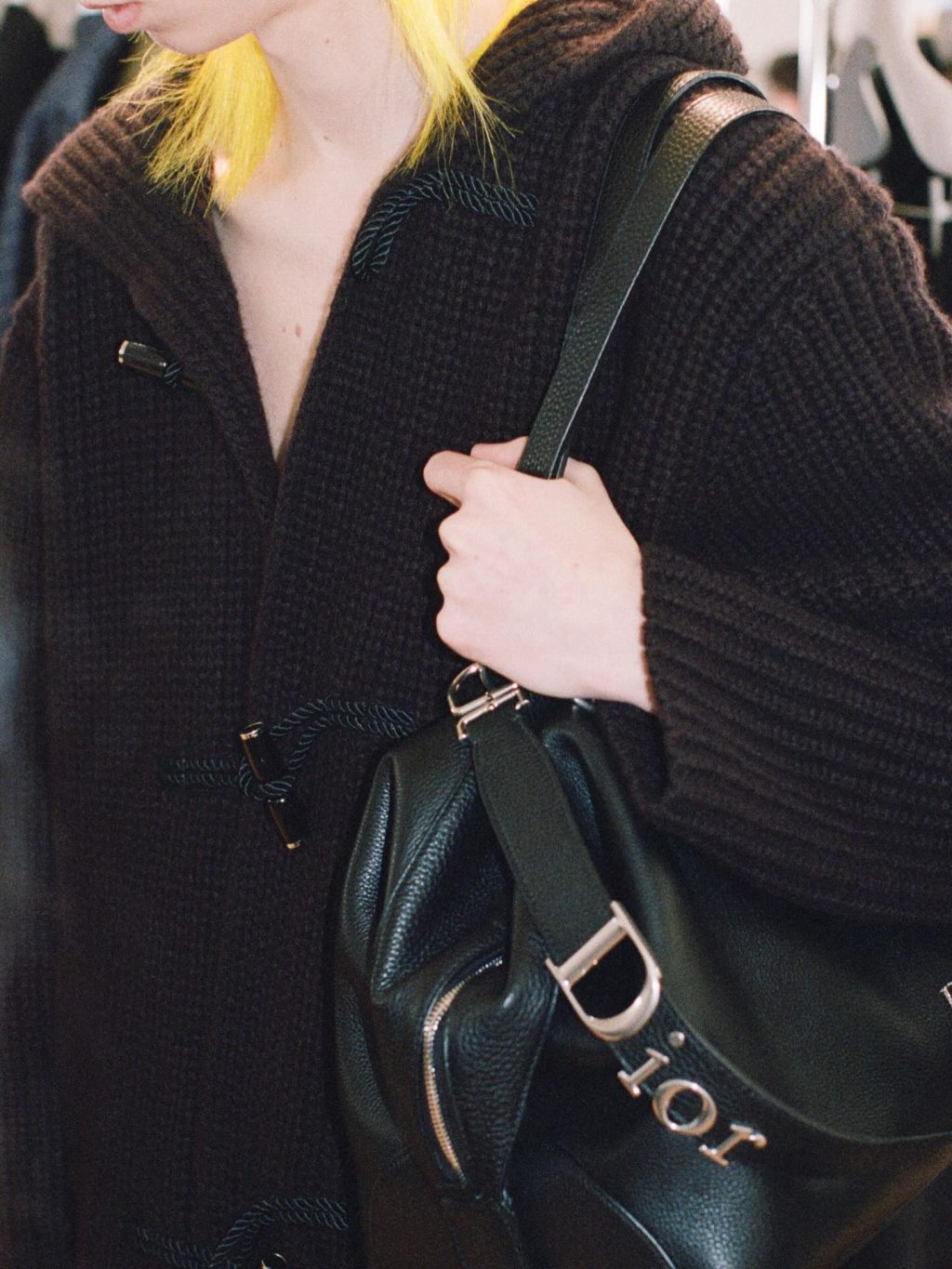
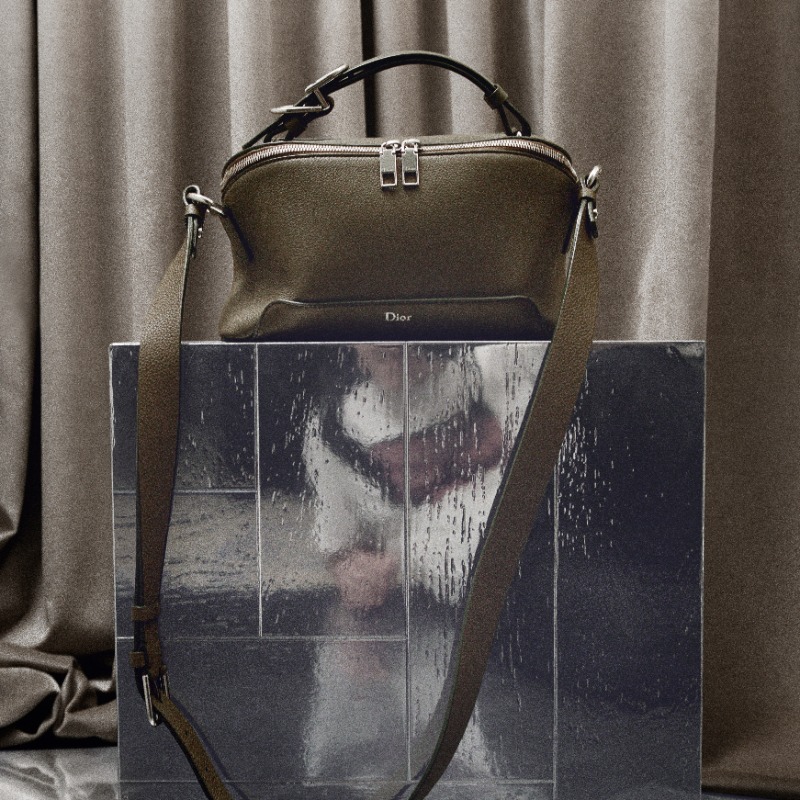
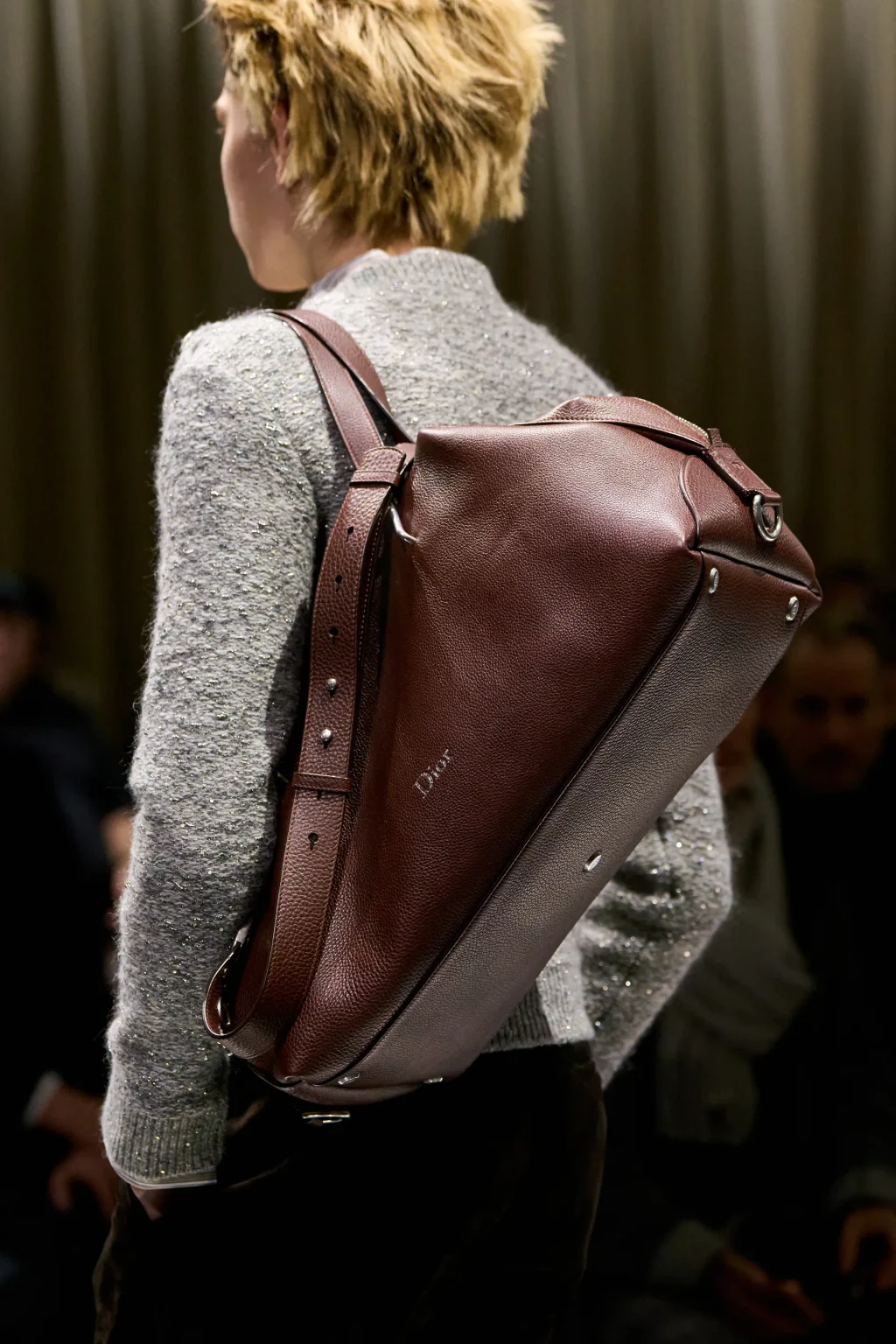
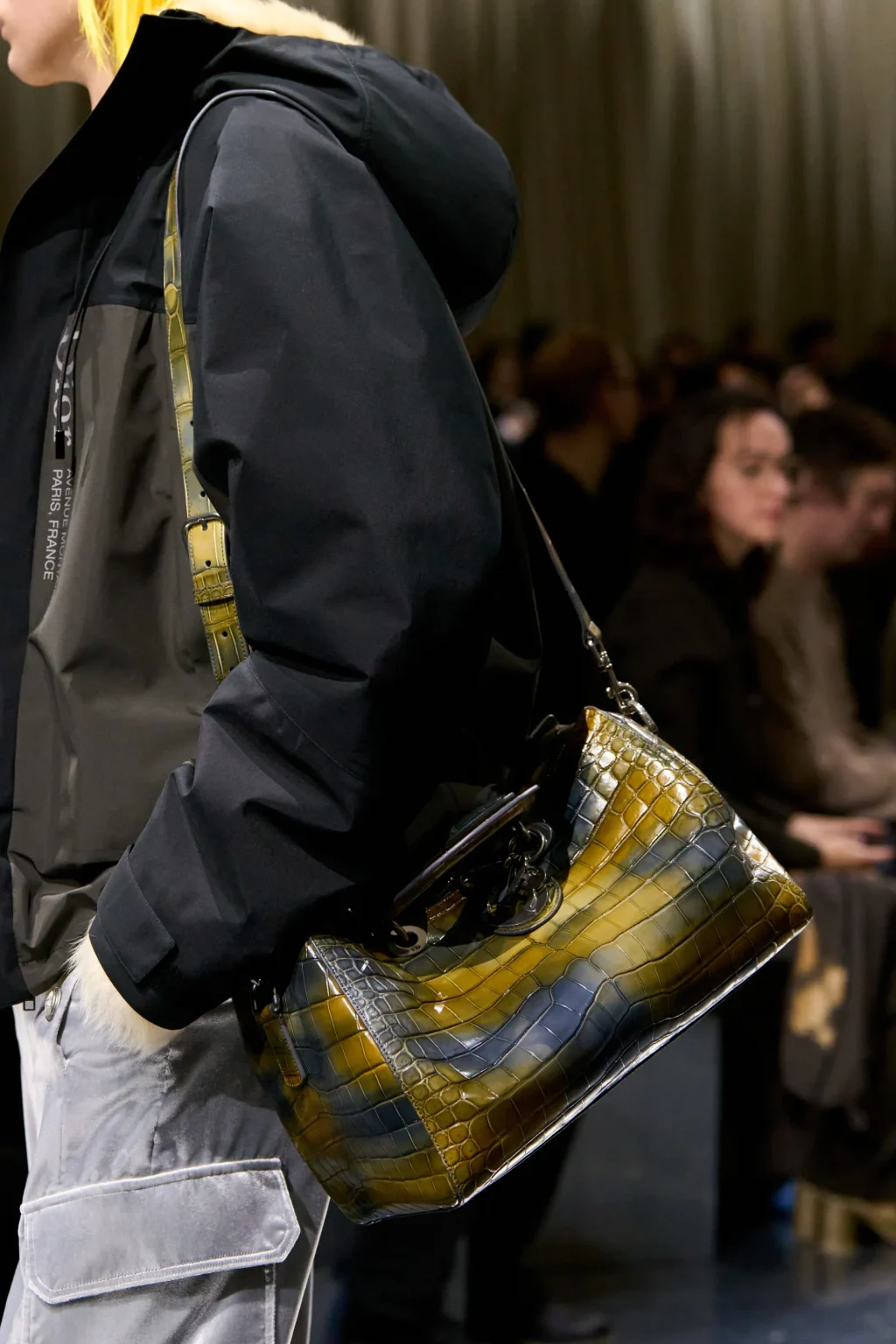
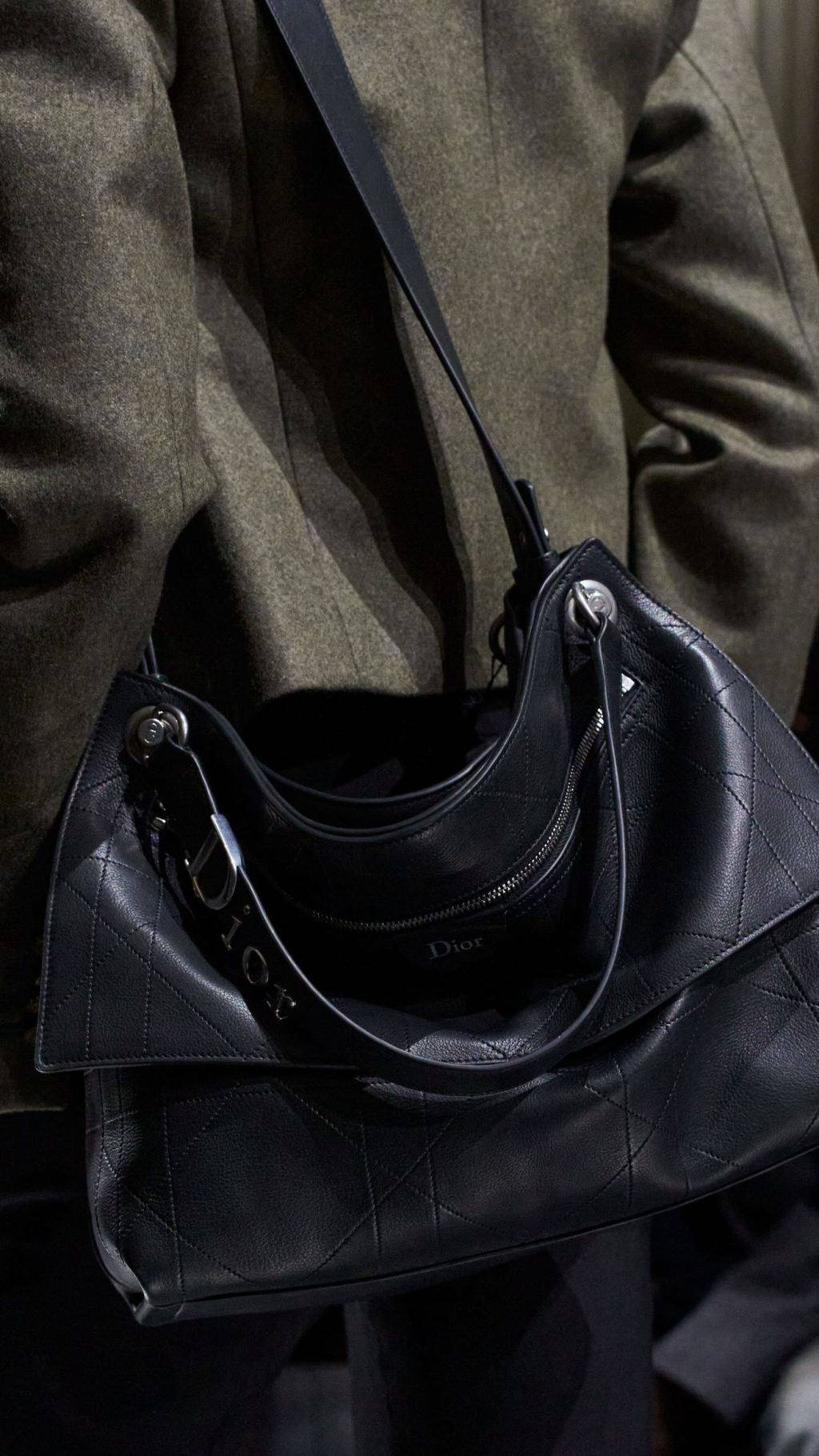
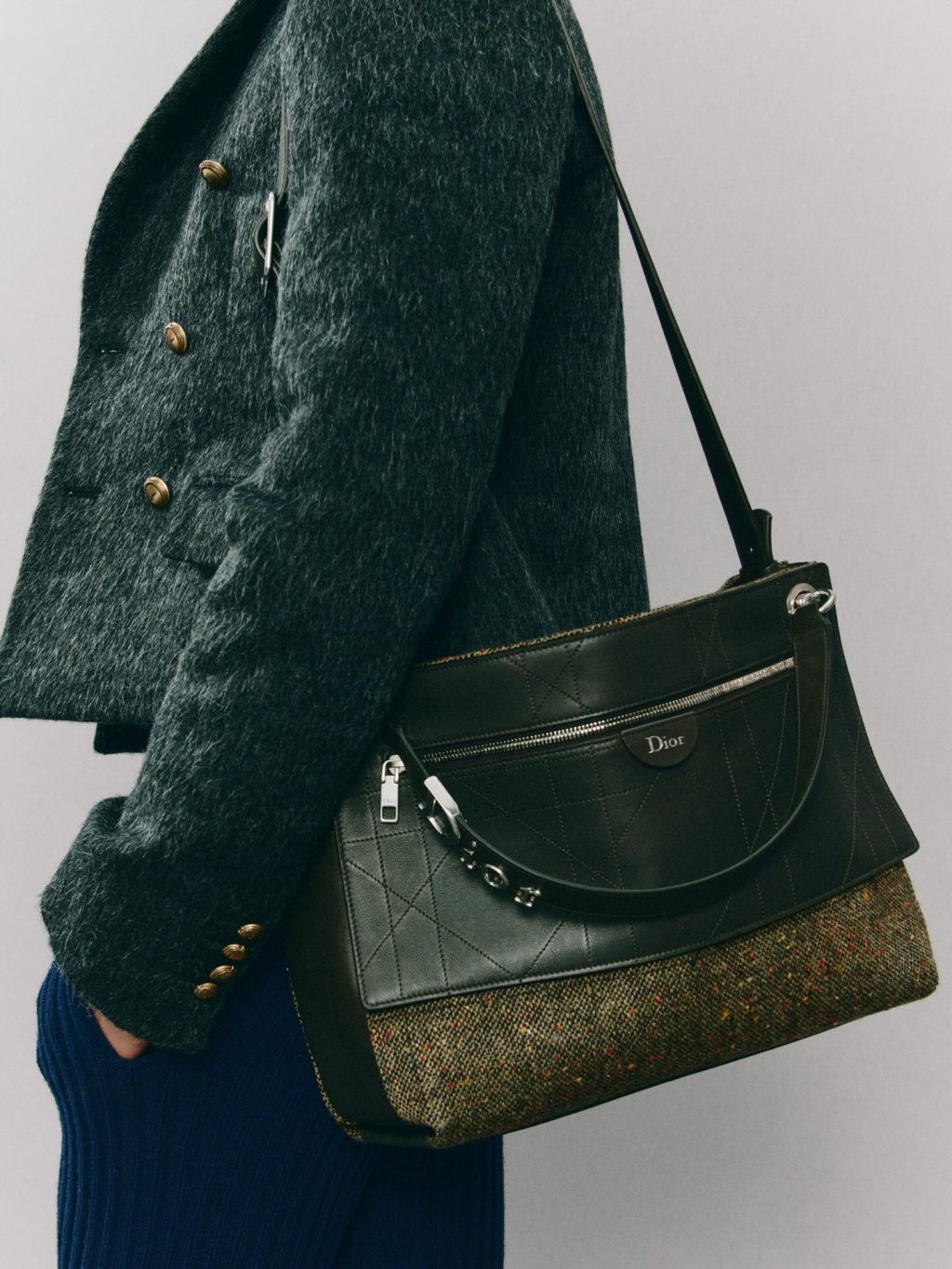
While the medallion totes supply the season’s romance, the shoulder bags deliver the discipline. One of the most compelling is the structured, leather-forward shoulder silhouette. It combines a smooth upper section with a more textured lower band—almost like a garment hem translated into a bag. A curved zipper and a small Dior tab give it a utilitarian cadence, while hardware (including dangling charms) adds that flash of “affluence” without tipping into noise.
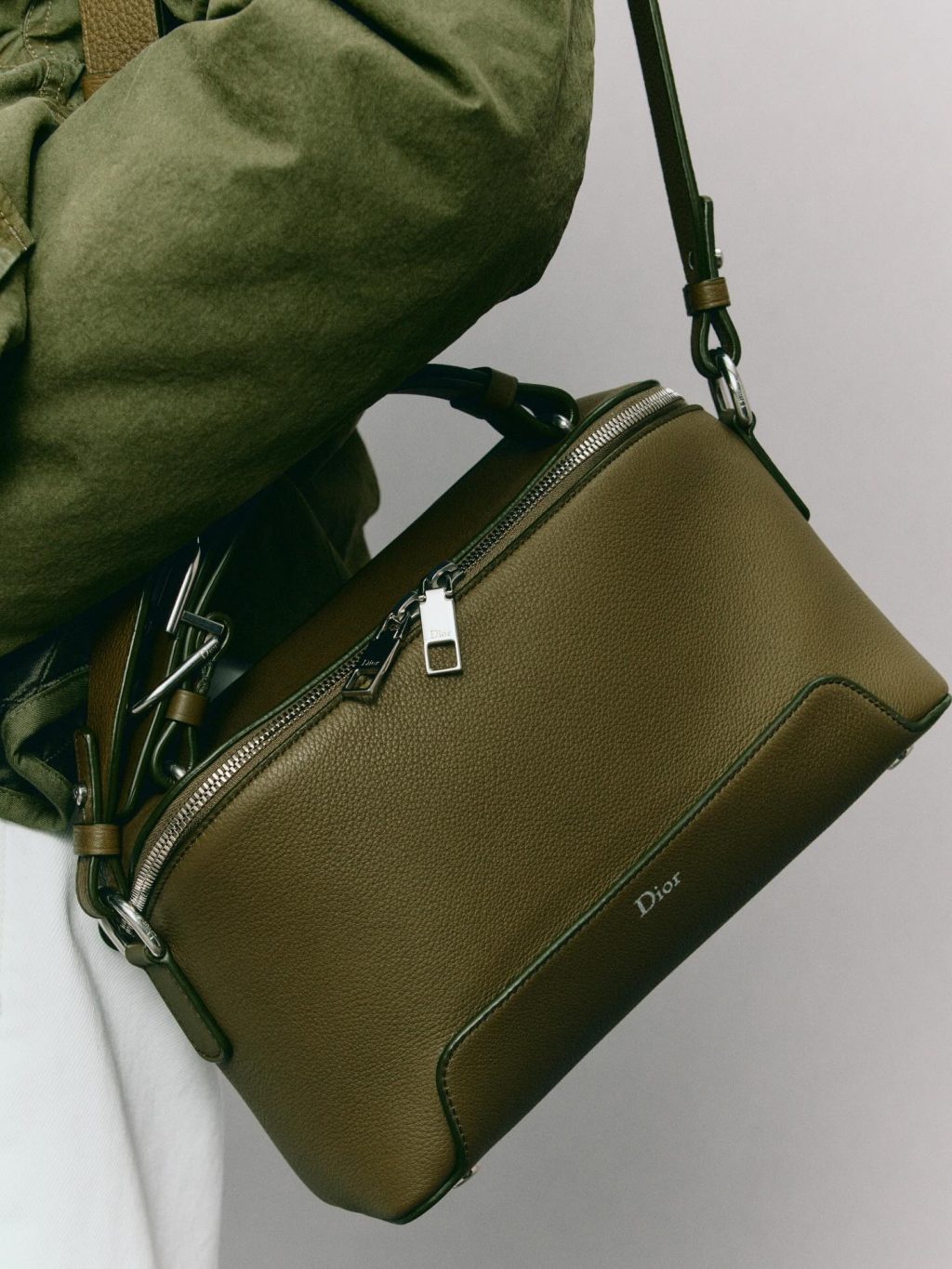
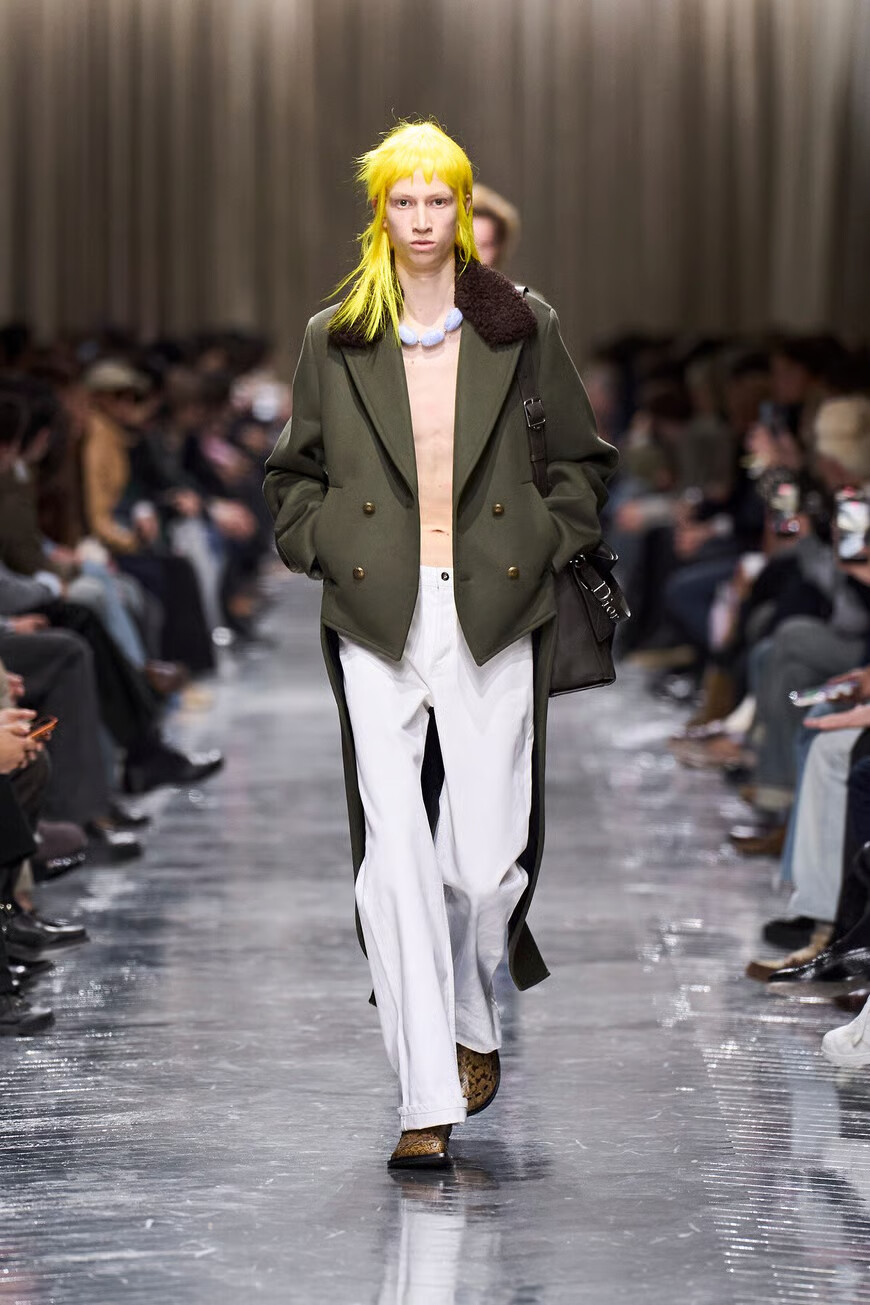
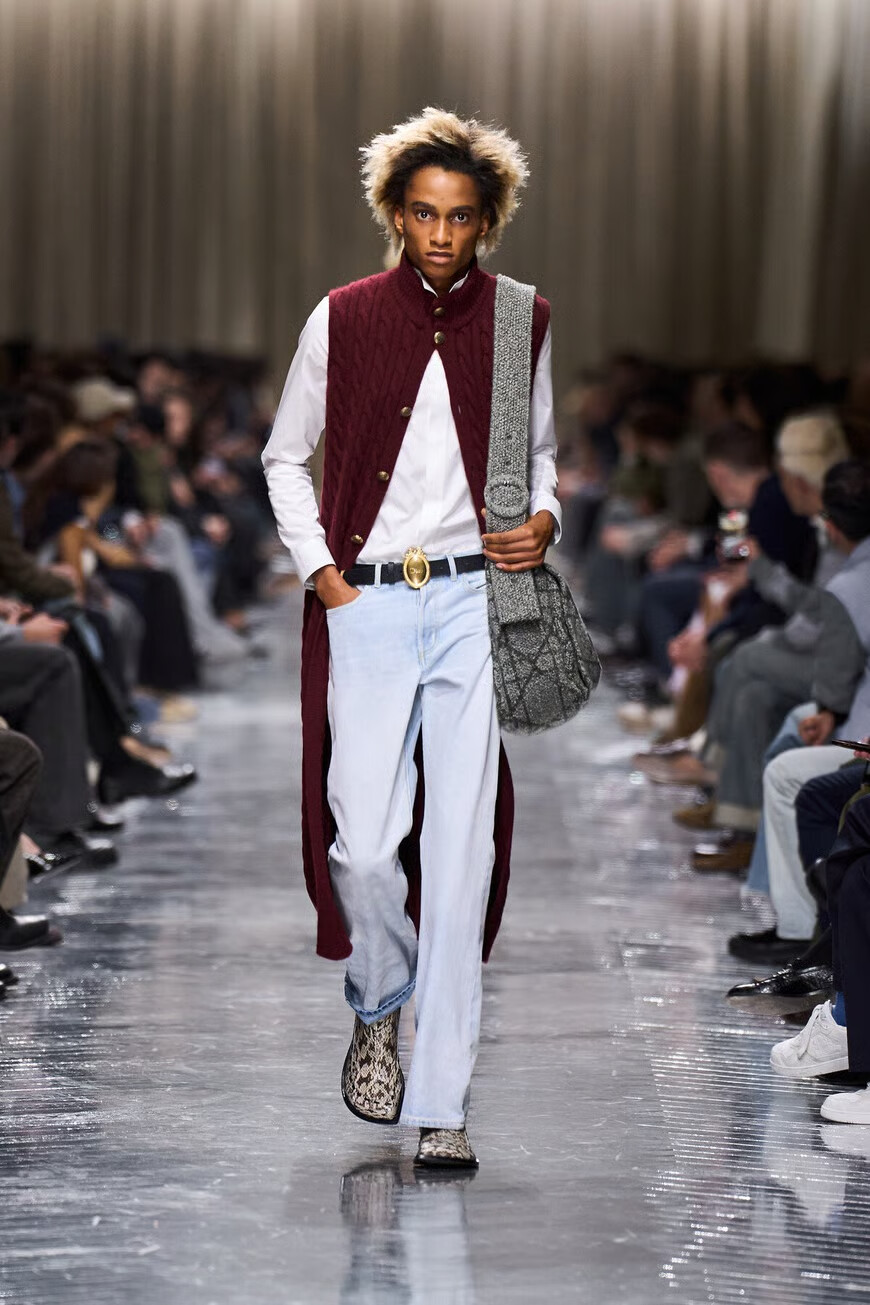
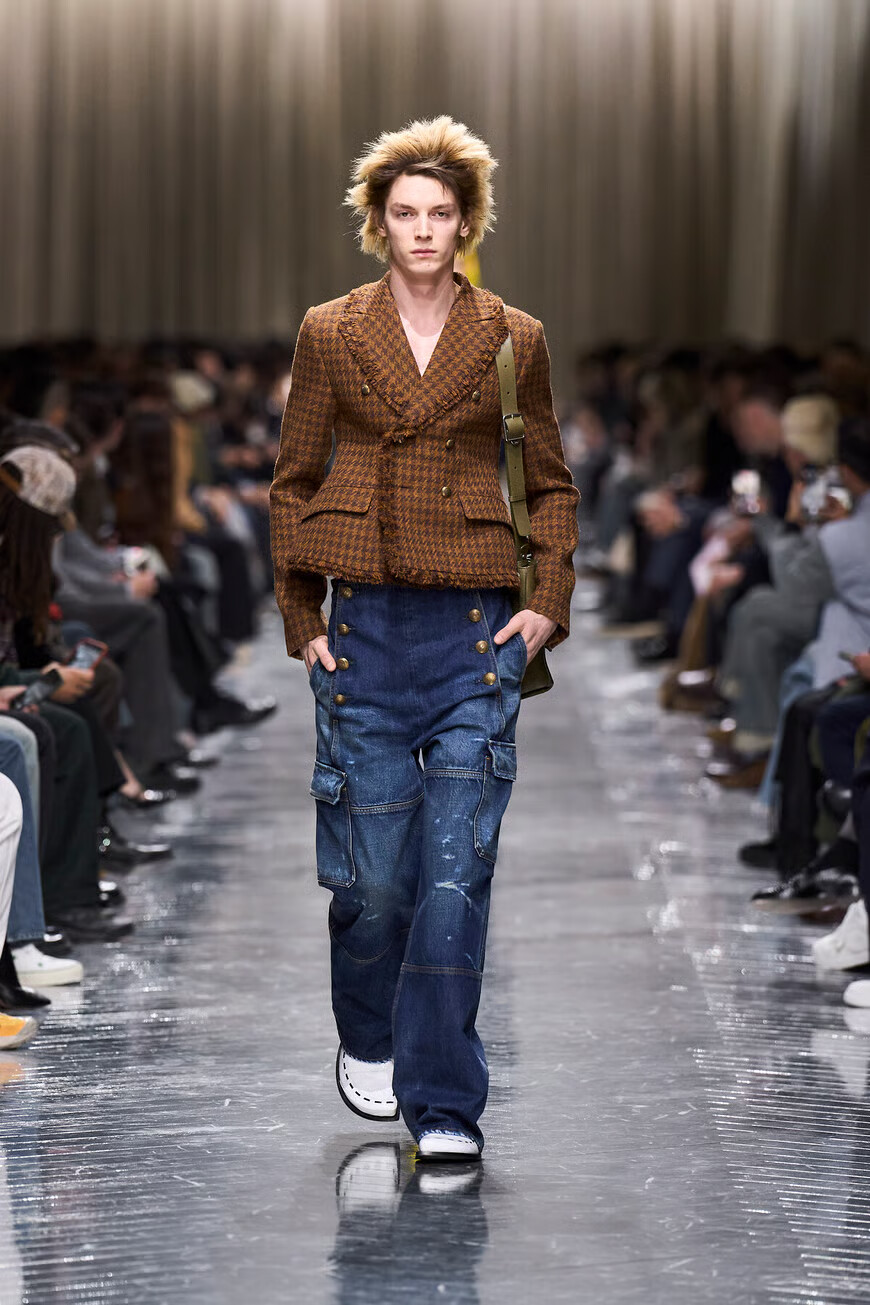
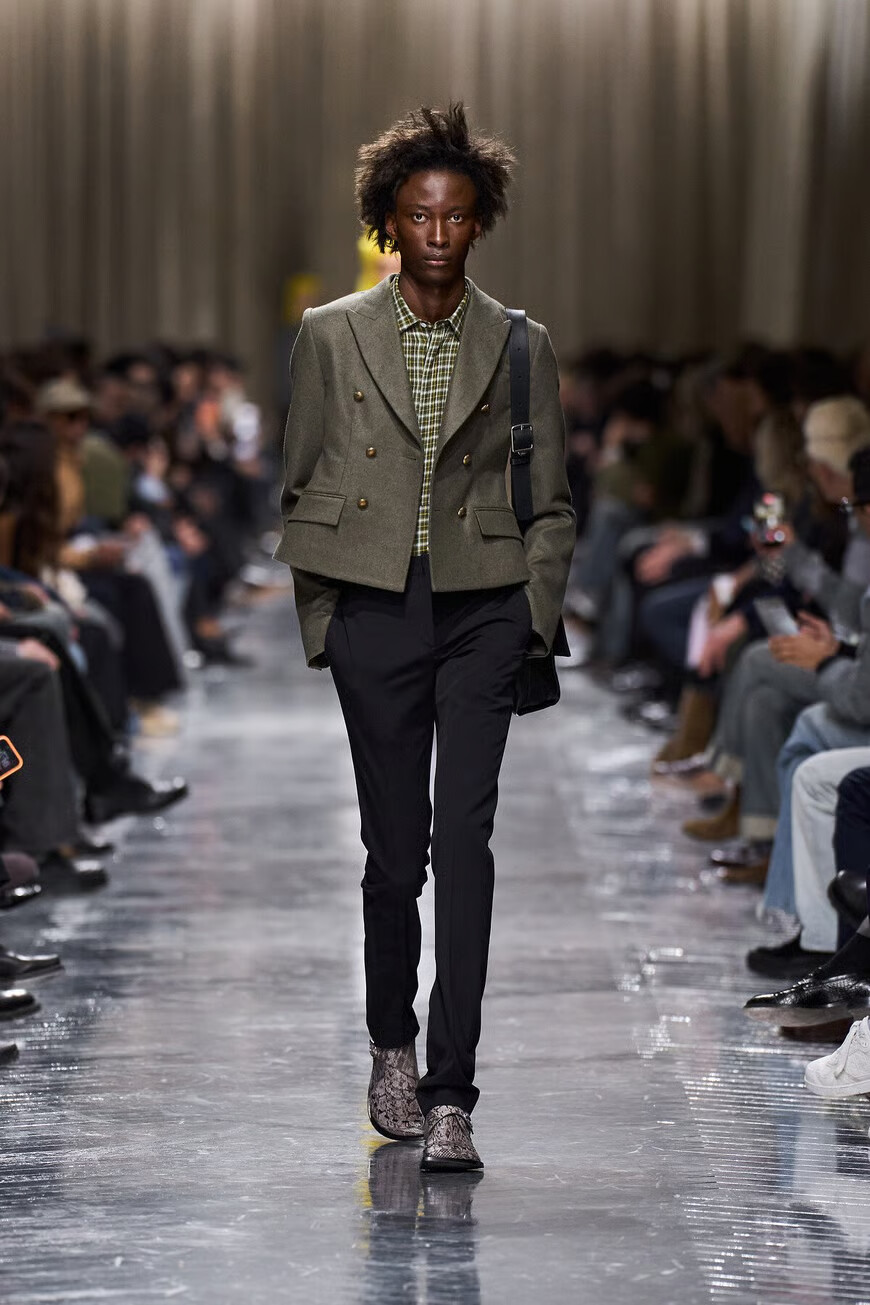
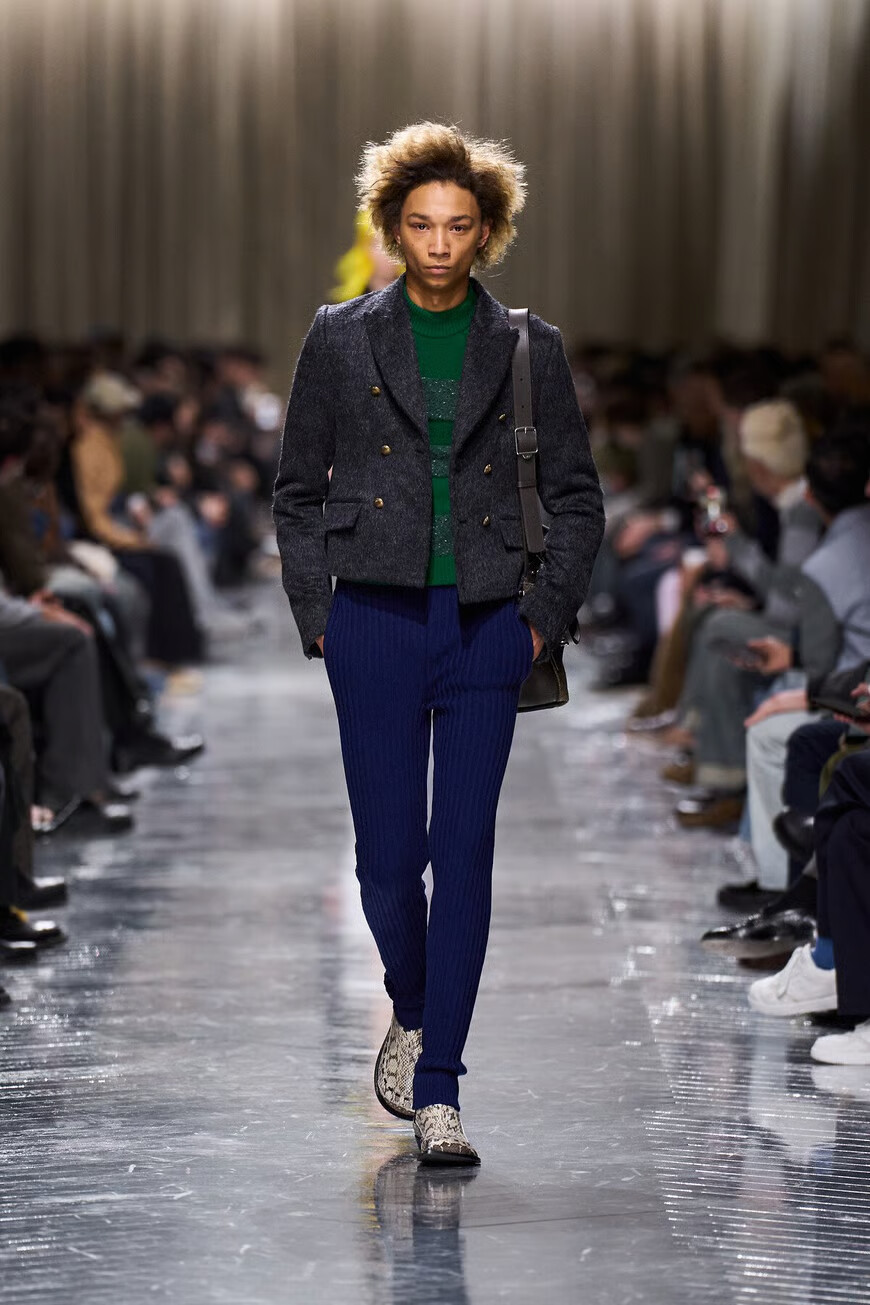
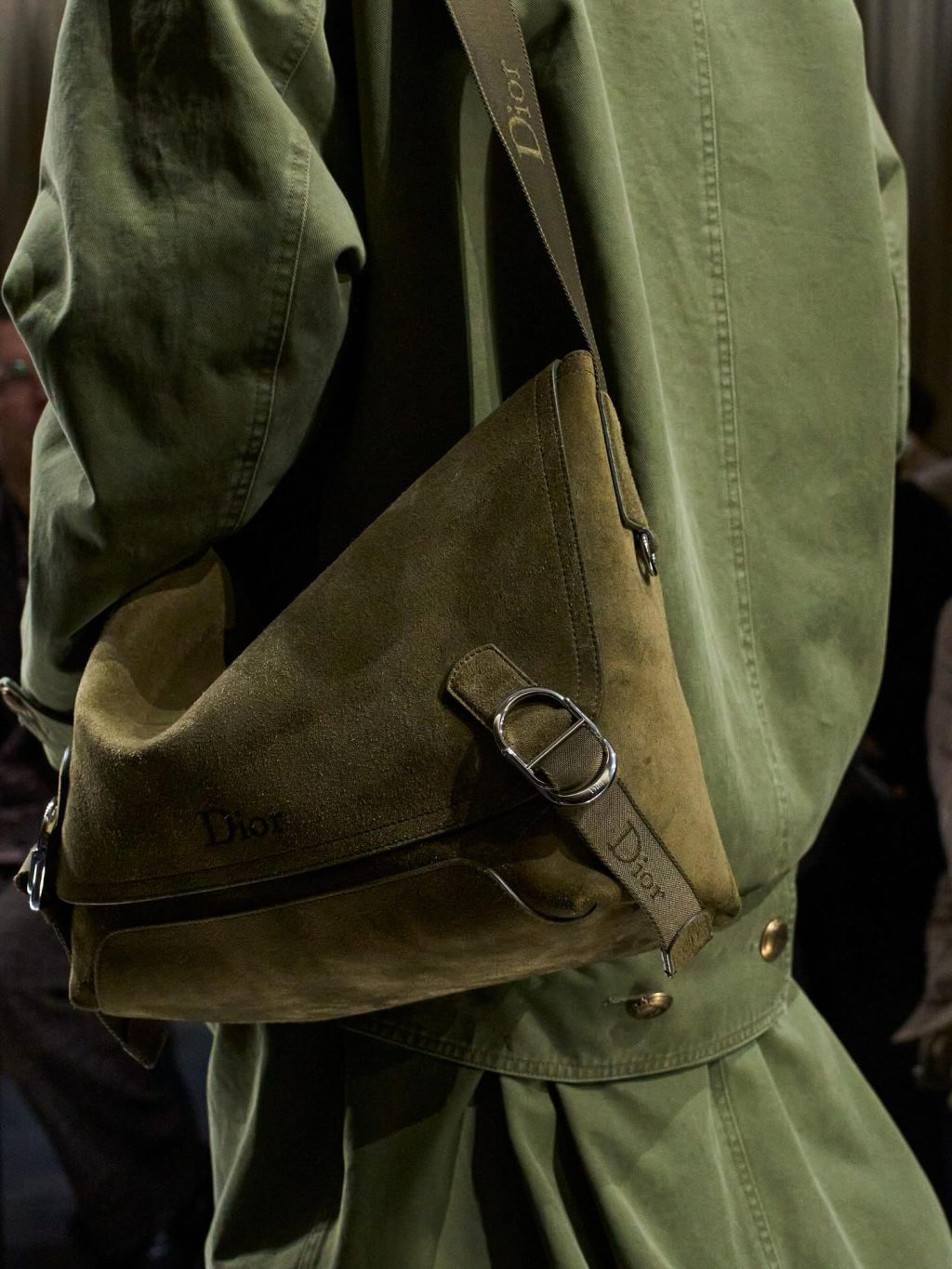
Then there’s the olive-toned quilted style—worn crossbody with a folded, architectural panel and metal ring hardware—where the construction itself becomes the design. It’s the bag equivalent of Anderson’s tailoring logic: slender, functional, and quietly unusual. It doesn’t compete with the clothes; it reinforces the mood of pragmatic elegance.
Across these shapes, the recurring idea is control. The bags look engineered, not merely decorated—an approach that aligns with the show’s emphasis on precision silhouettes and outerwear that fuses technical function with opulence.
Material: the bags follow the clothes
Winter 2026–2027 is obsessed with touch: tweeds, velvets, jacquards, embroidery—textures that imply craft and time. The smartest thing Anderson does is let the bags participate in that material narrative rather than sitting outside it.
The textile-heavy holdalls mirror the collection’s tactile richness, while the tweed-trimmed shoulder bag echoes the Donegal-like mood of the suiting. Even the quilted pieces feel like they belong to the same universe—softened, human, wearable.
This is what separates a “runway bag moment” from a future icon. Icons don’t just look good; they look inevitable next to the clothes.
Color as attitude
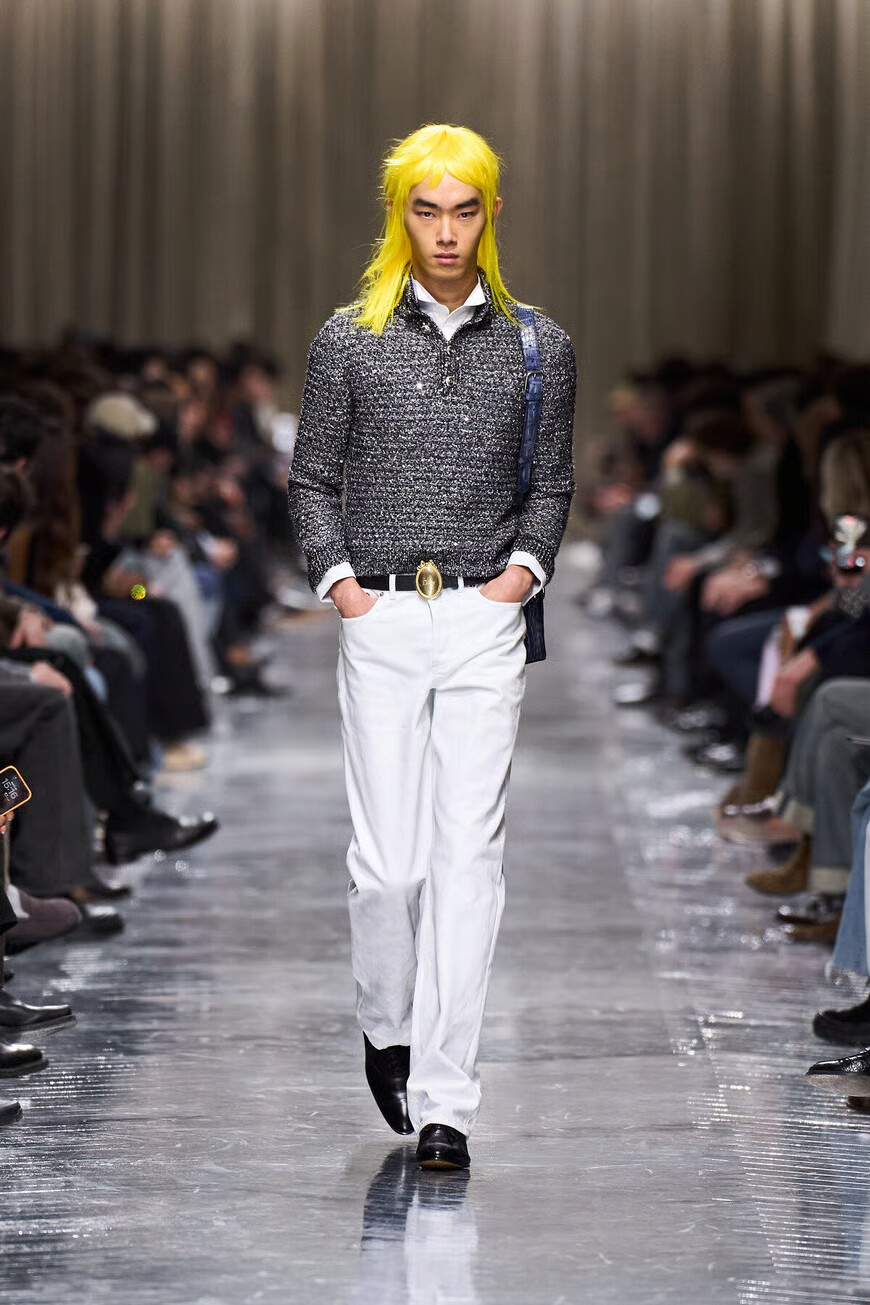
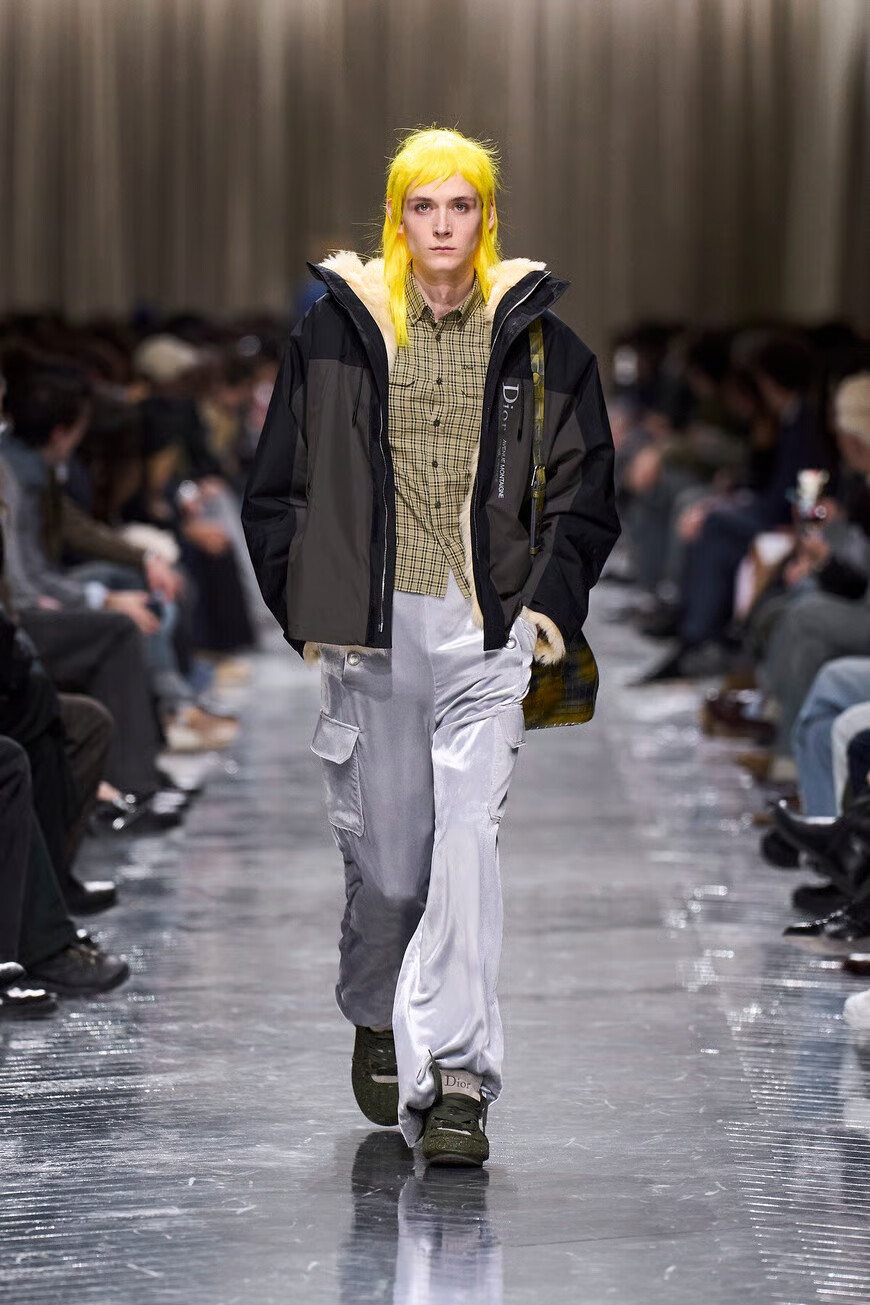
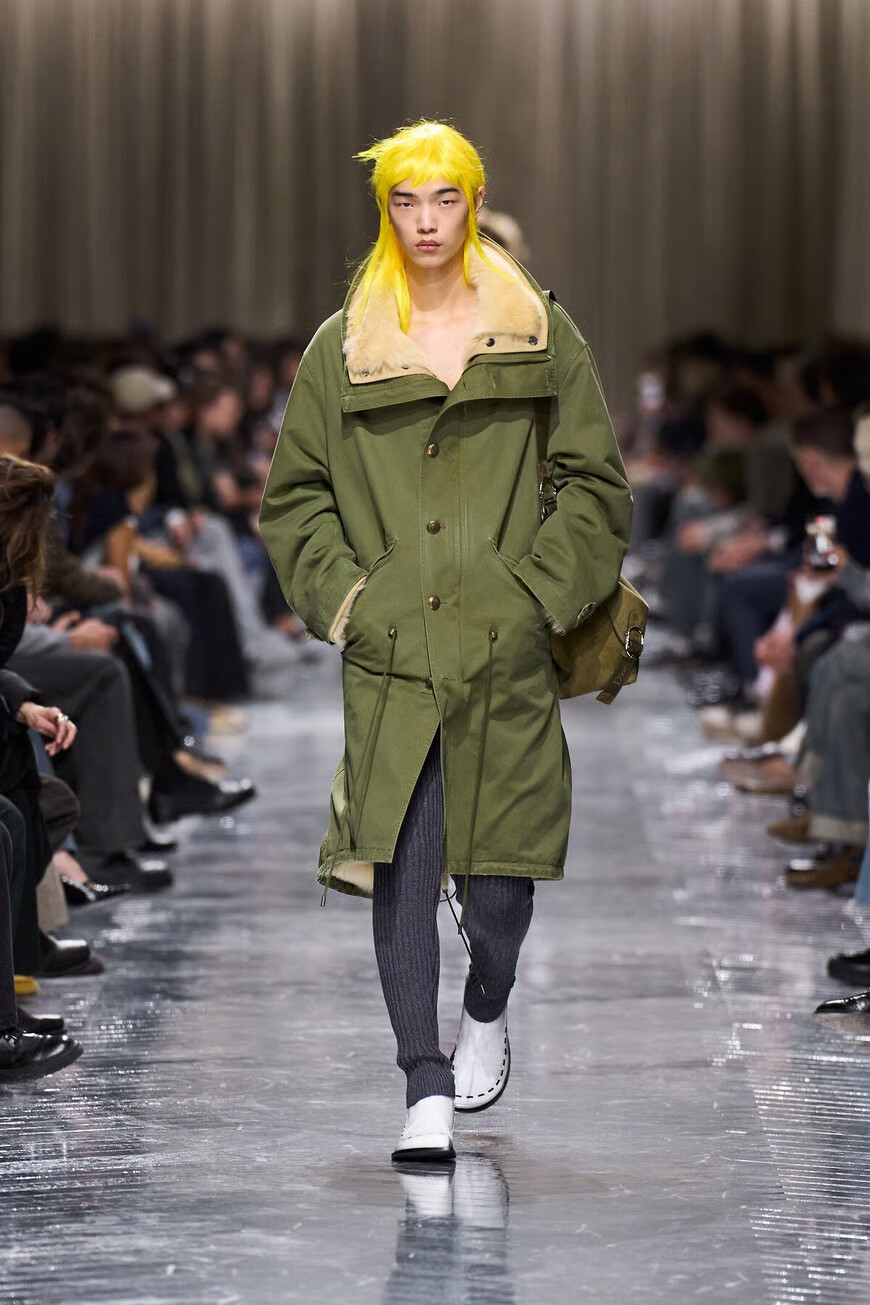
The palette reads controlled—deep neutrals, earthy tones, shadowed blues—yet the show’s emotional register keeps puncturing that restraint with signs of spontaneity (the now-discussed flashes of eccentric styling, including bright hair moments).
The bags follow suit. Most silhouettes stay grounded, but the color choices (that saturated purple, that bold butter yellow) work like punctuation marks—proof that “joy” here is not childish brightness, but a confident refusal to be purely serious.
Final take
What makes the Dior FW26 bag lineup compelling is that it doesn’t scream “new era” in a single gimmick. It builds a vocabulary—medallions, softened volume, reimagined quilting, and hardware used like punctuation—then lets that vocabulary travel across silhouettes.
In other words: this isn’t fashion as costume. It’s fashion as discourse—proposed, argued, and made tangible through objects you can carry out of the Musée Rodin and into real Paris.