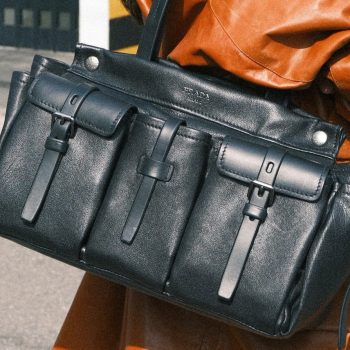
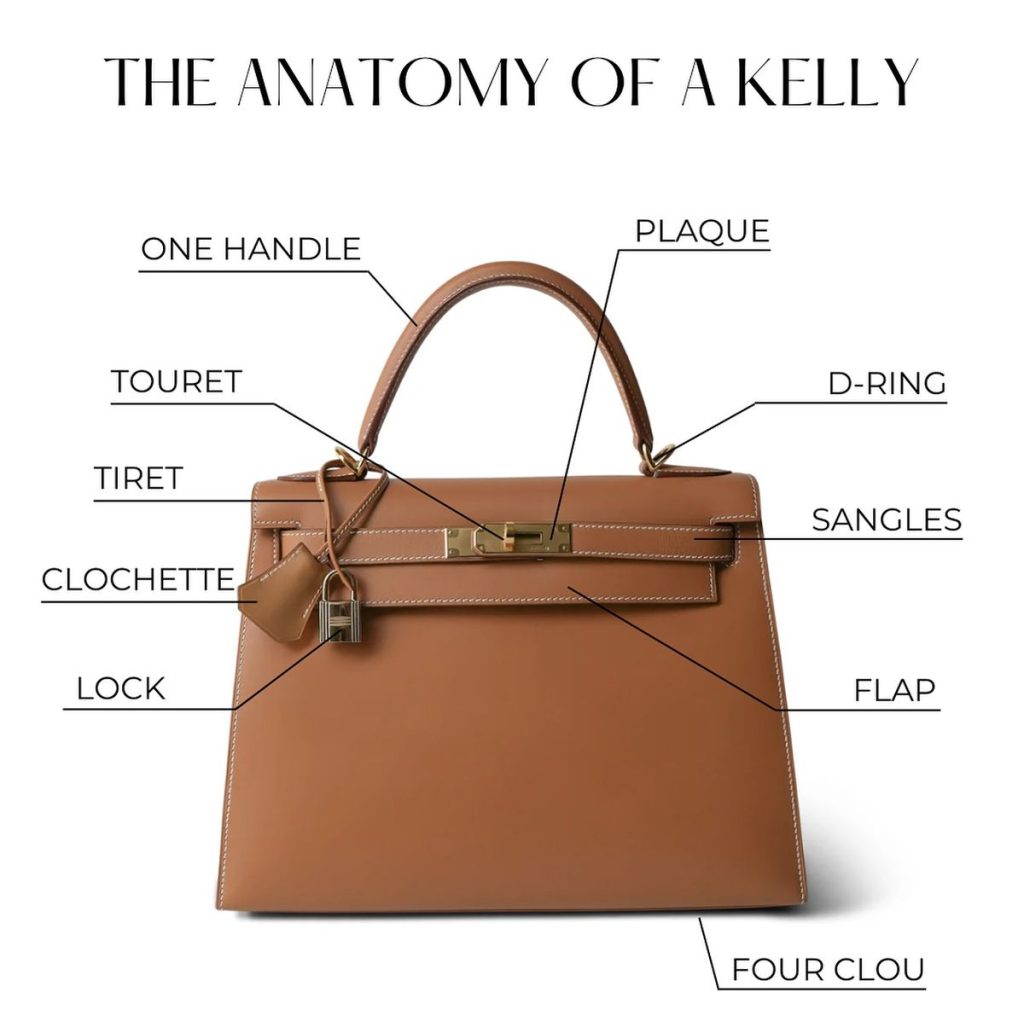
The anatomy of the Hermès Kelly bag is instantly recognisable: a sharp little trapezoid, a single handle, a straight flap and that discreet glint of hardware at the center. What looks minimal at first glance is actually a very refined piece of engineering.
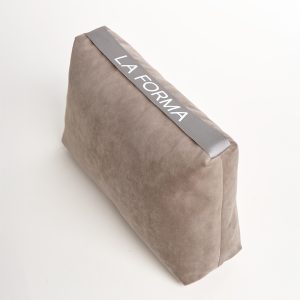
In this guide to the anatomy of the Hermès Kelly bag, we break down every visible (and invisible) element so that when you look at one again, you’ll see it like a collector or an Hermès artisan – not just as “a pretty bag”. And because we specialise in protecting this architecture from the inside, you’ll also see why a made-to-measure La Forma bag pillow for Hermès Kelly is one of the simplest ways to preserve its shape and support the structure whenever your Kelly is resting at home.
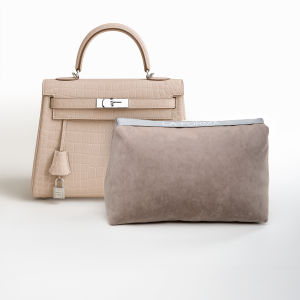
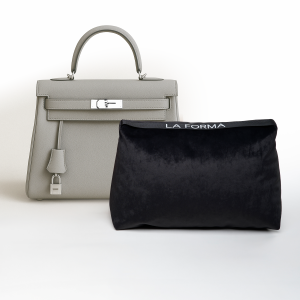
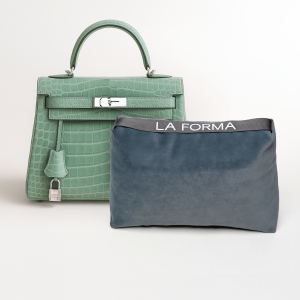
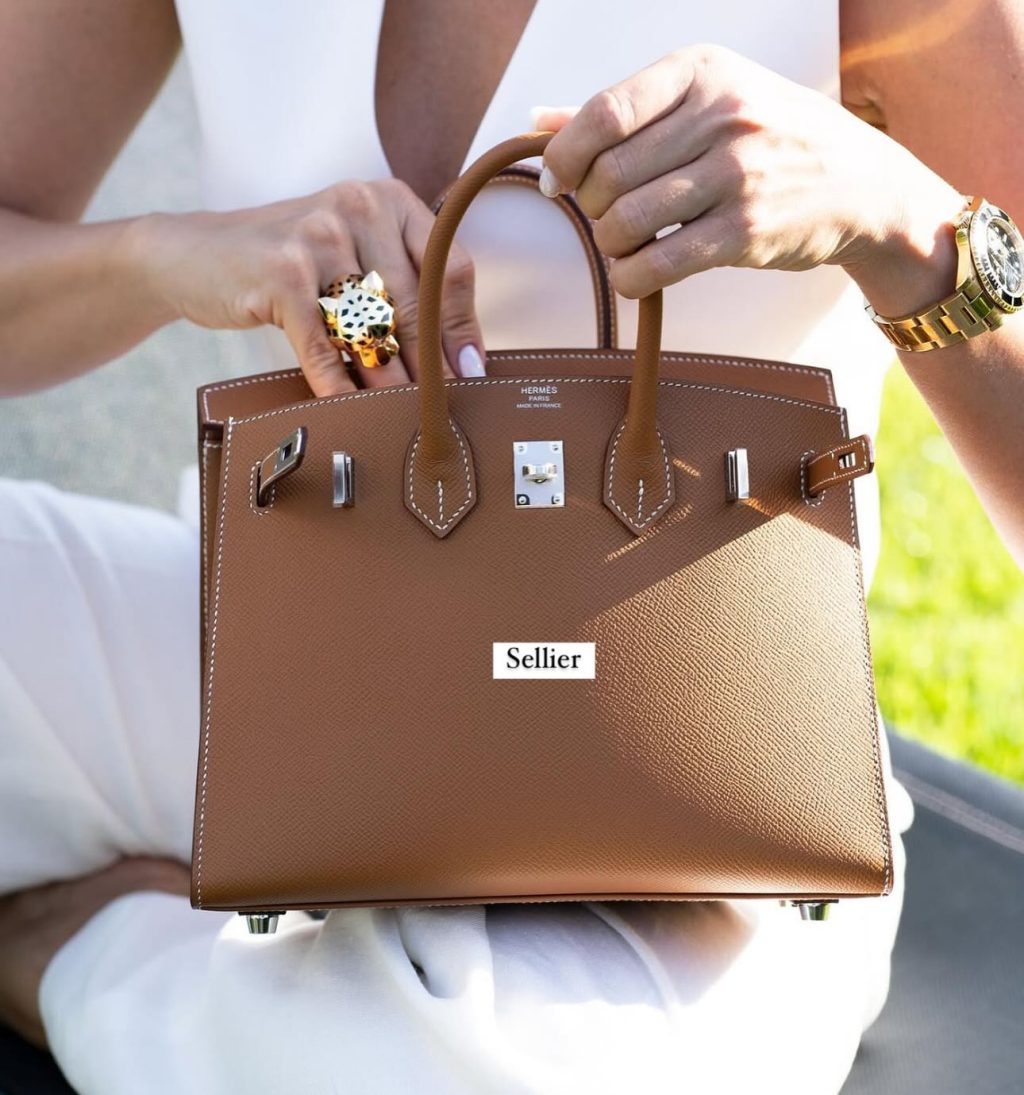
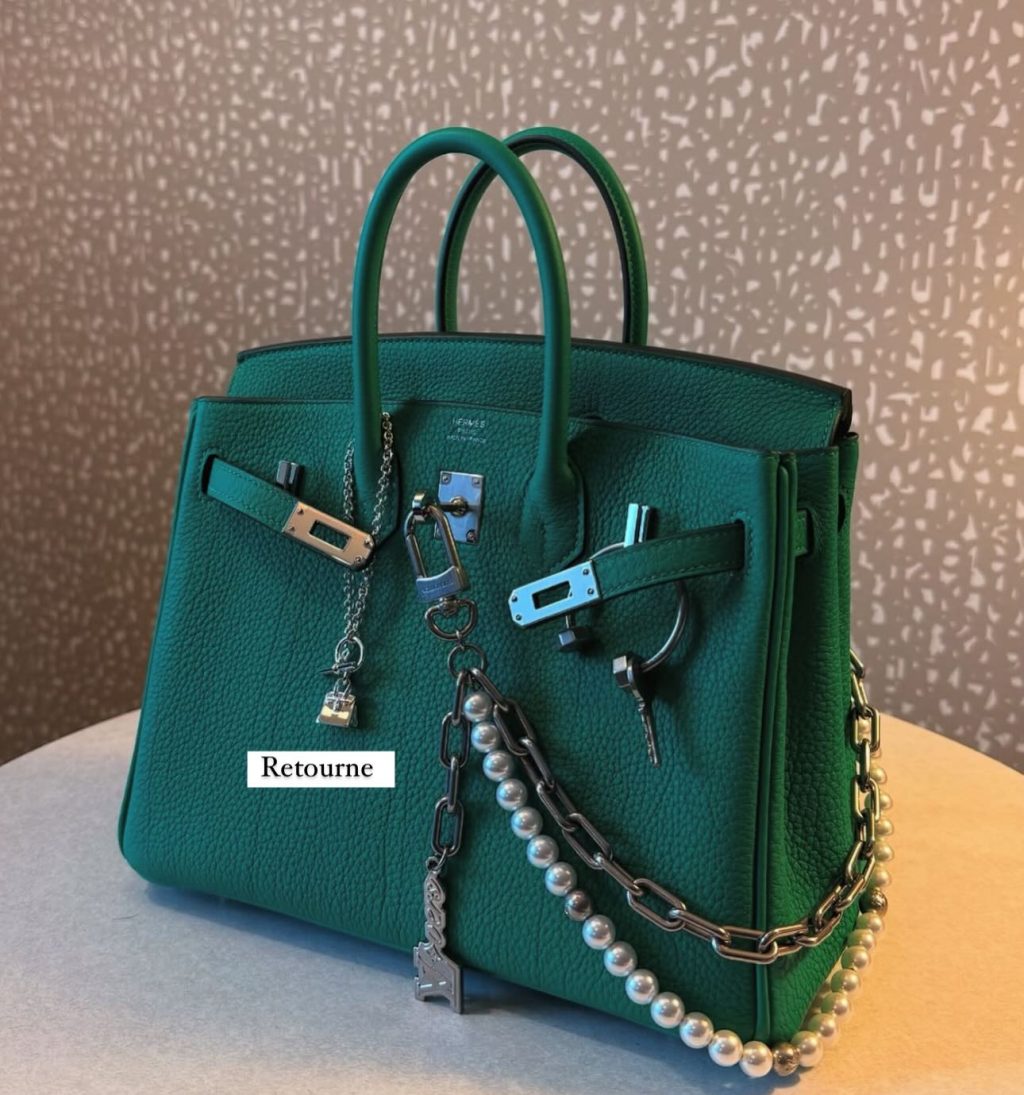
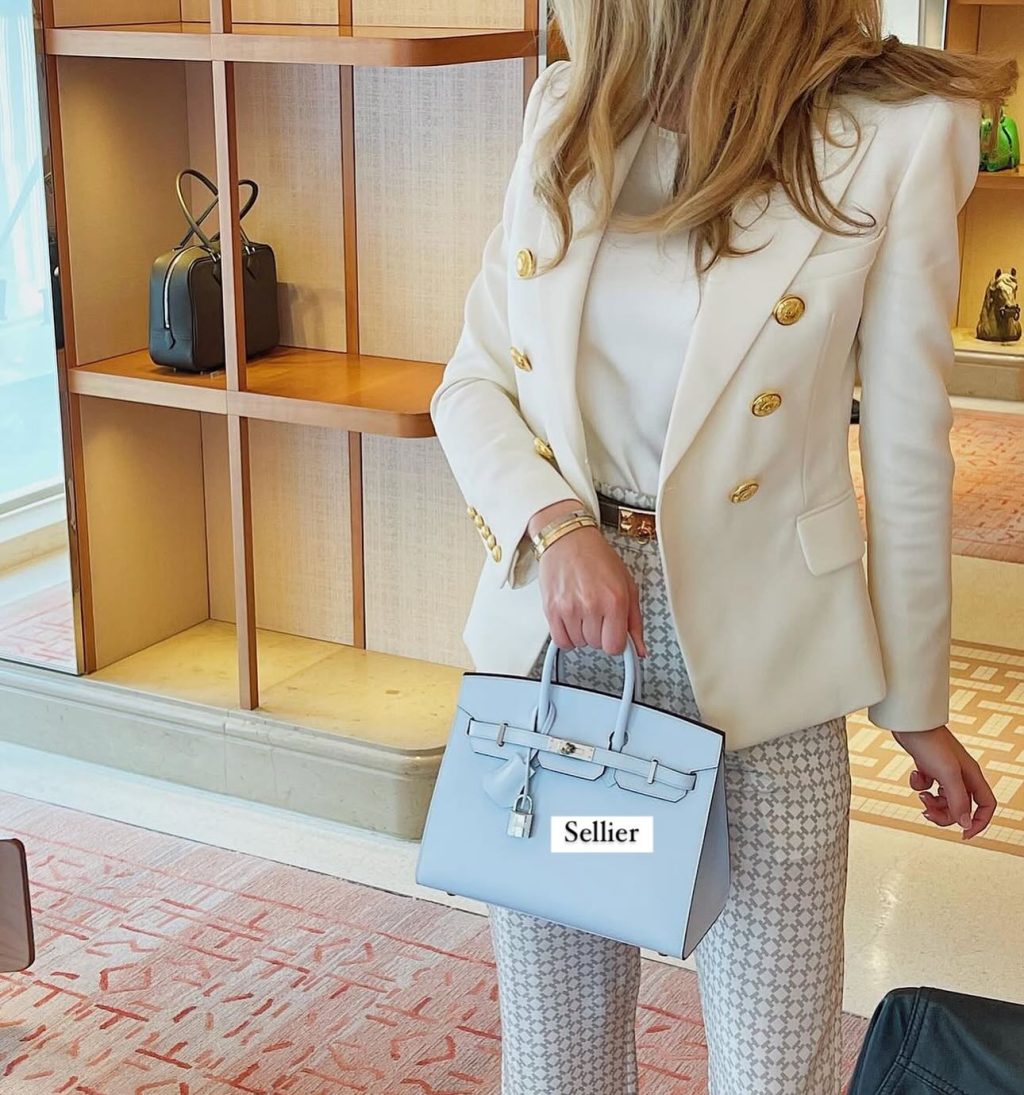
The silhouette: Sellier or Retourne
At its core, the Kelly is a trapezoid that narrows towards the top, built on a rectangular base. The sides are folded in so the top can close tightly, but open wide when you unfasten the straps.
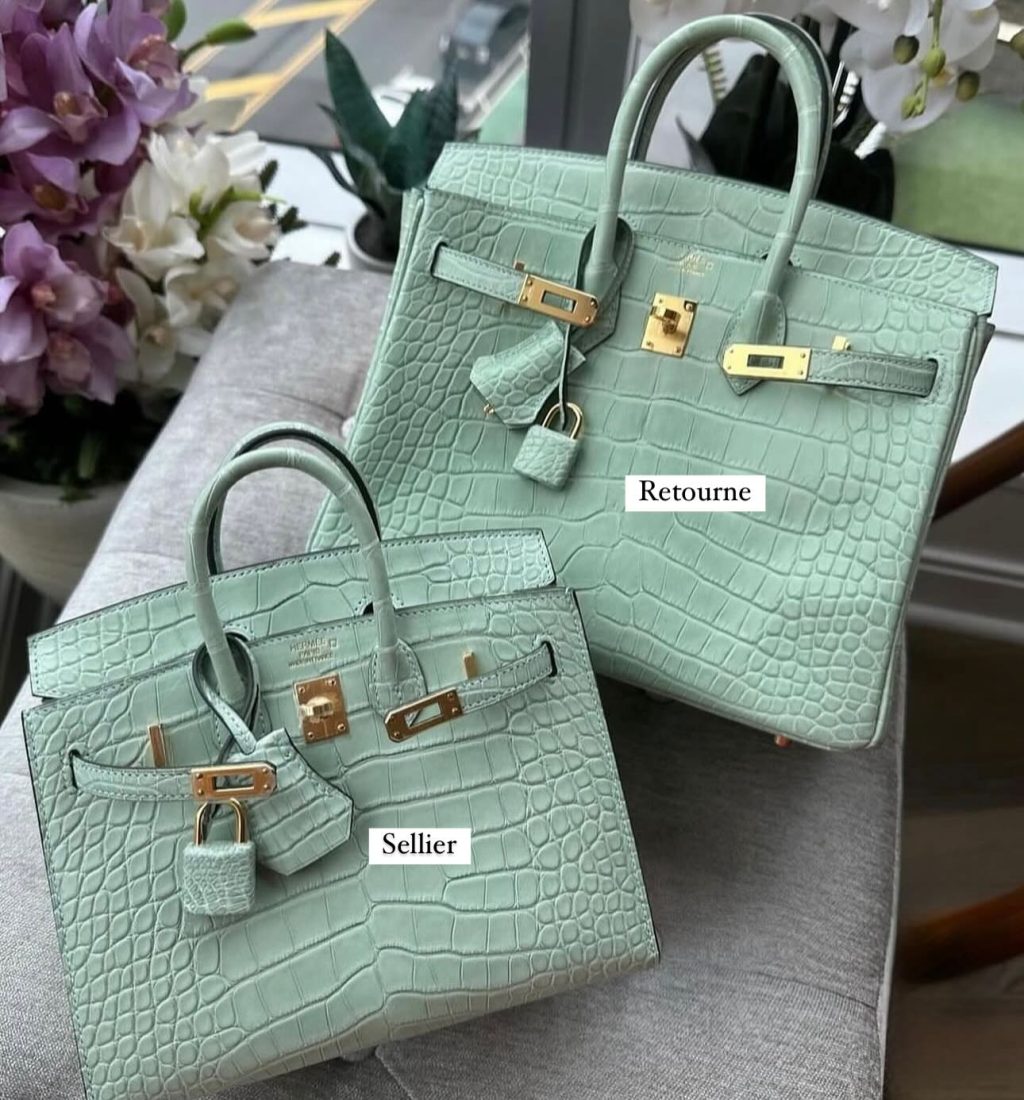
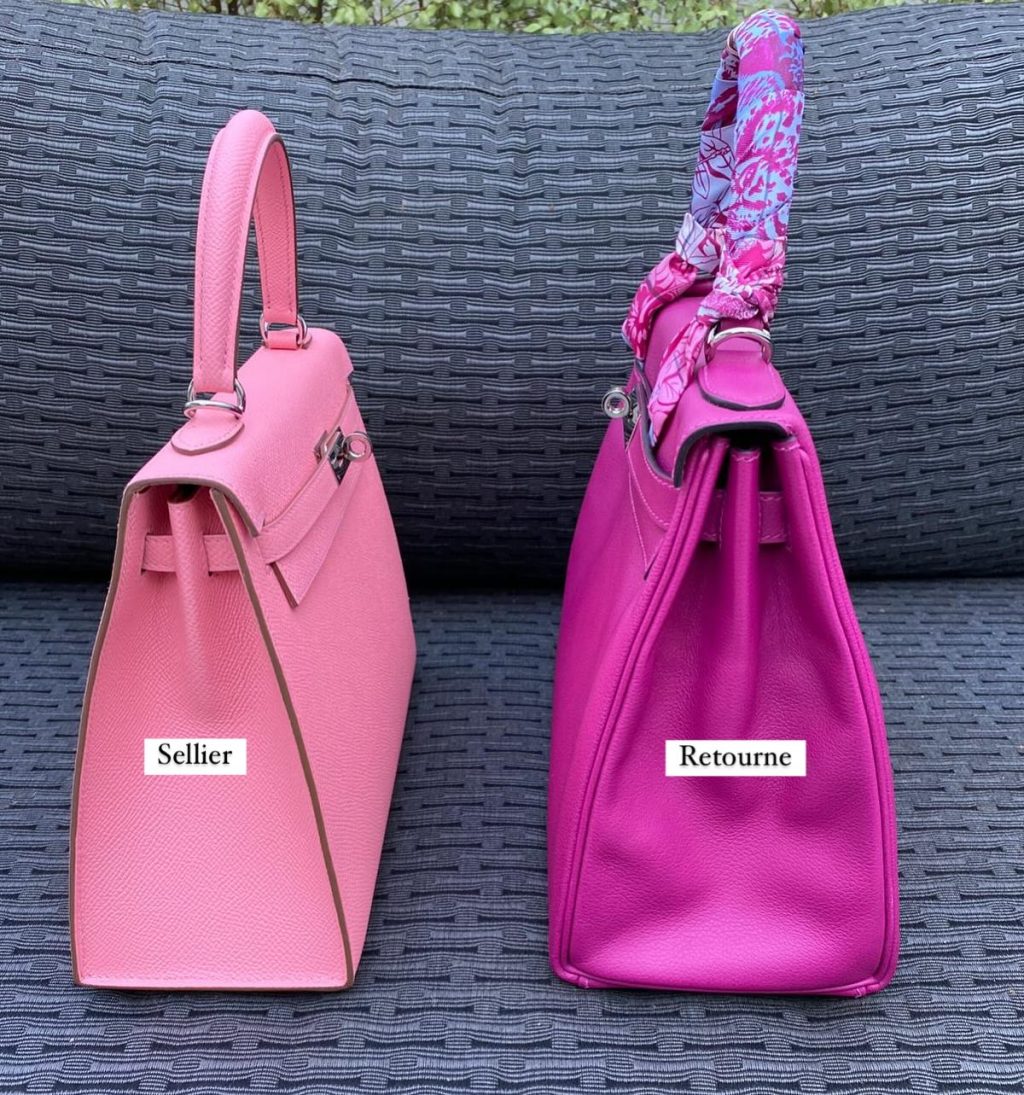
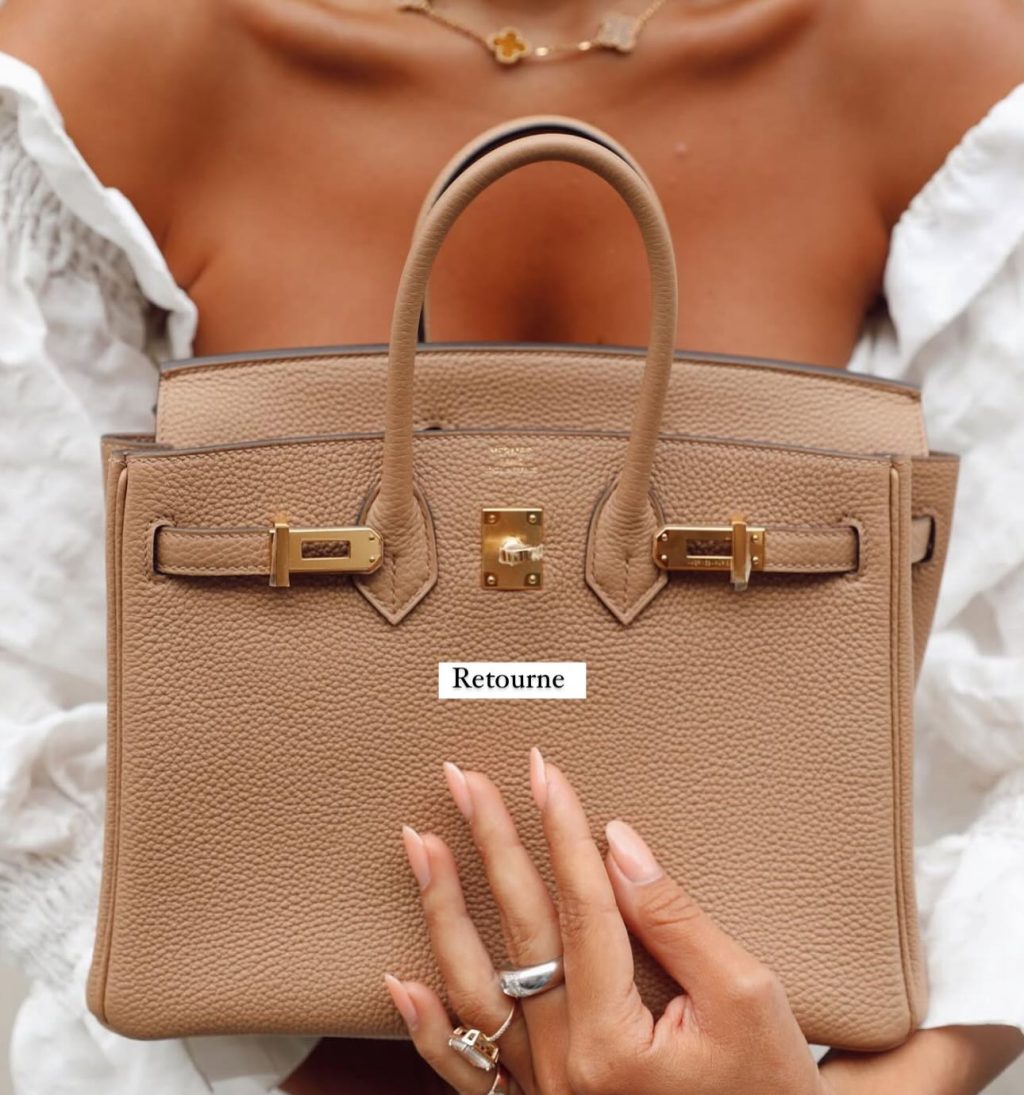
Two constructions are possible:
- With the seams turned outwards and visible (Sellier)
- With the seams turned inwards and hidden (Retourne)
In both cases, the bag is designed to stand on its own. The bottom is usually built from multiple layers of leather and reinforced so it won’t sag, even when loaded. Four metal feet – clous – lift the leather slightly off the surface when you put the bag down, protecting it from moisture and scratches.
Think of the Kelly as a small piece of architecture: a base (the floor), two side walls, a back wall, a front “façade” and a roof that folds over as a flap.
The flap: the “roof” that defines the face
The flap is one of the easiest ways to distinguish a Kelly from a Birkin. On the Kelly, the flap runs straight across the bag and is cut out in small rectangular notches at both sides, so the leather straps (sangles) can pass over it cleanly.
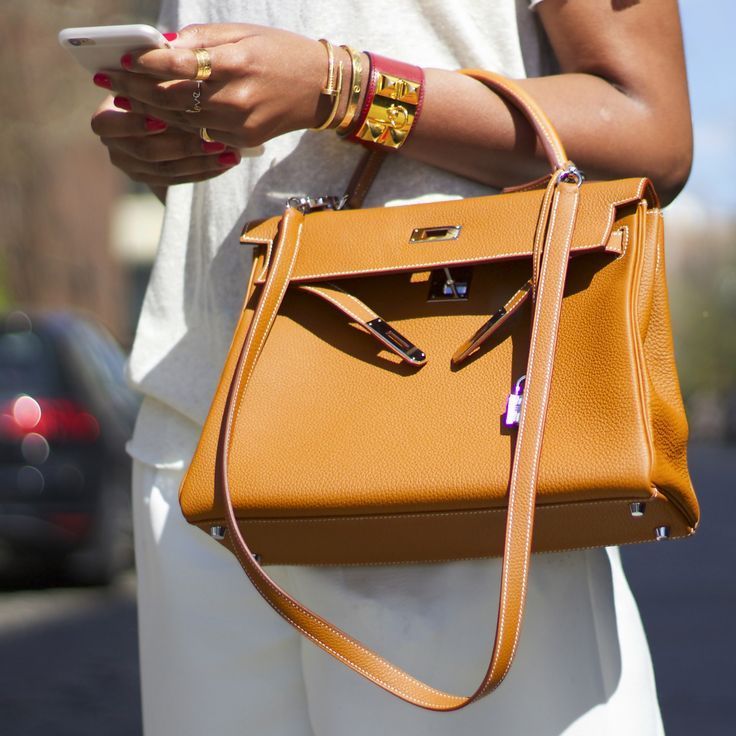
It has three key roles:
- Protection – it covers the opening completely when the bag is closed.
- Structure – it keeps the top line precise and the sides aligned.
- Aesthetic balance – it echoes the shape of the base, so the eye reads one coherent geometry.
Because the Kelly is usually carried closed, the flap is always “on stage”. Any warping, creasing or collapse here is instantly visible – this is one of the first areas collectors inspect on a vintage piece.
Sangles, touret and plaque: the closure “mechanism”
The Kelly’s closure looks simple, but there’s a whole vocabulary behind it:
- Sangles – the two slim leather straps that run from the back of the bag, through the side gussets, and across the front. They keep the flap in place and anchor the hardware.
- Plaques – the small metal plates at the ends of the sangles. One is engraved “Hermès Paris” and is meant to sit on top when the bag is correctly closed (left over right).
- Touret – the central metal stem with an eyelet that protrudes from the front plate. You twist it to lock or unlock the straps and, if you wish, to secure the padlock through it.
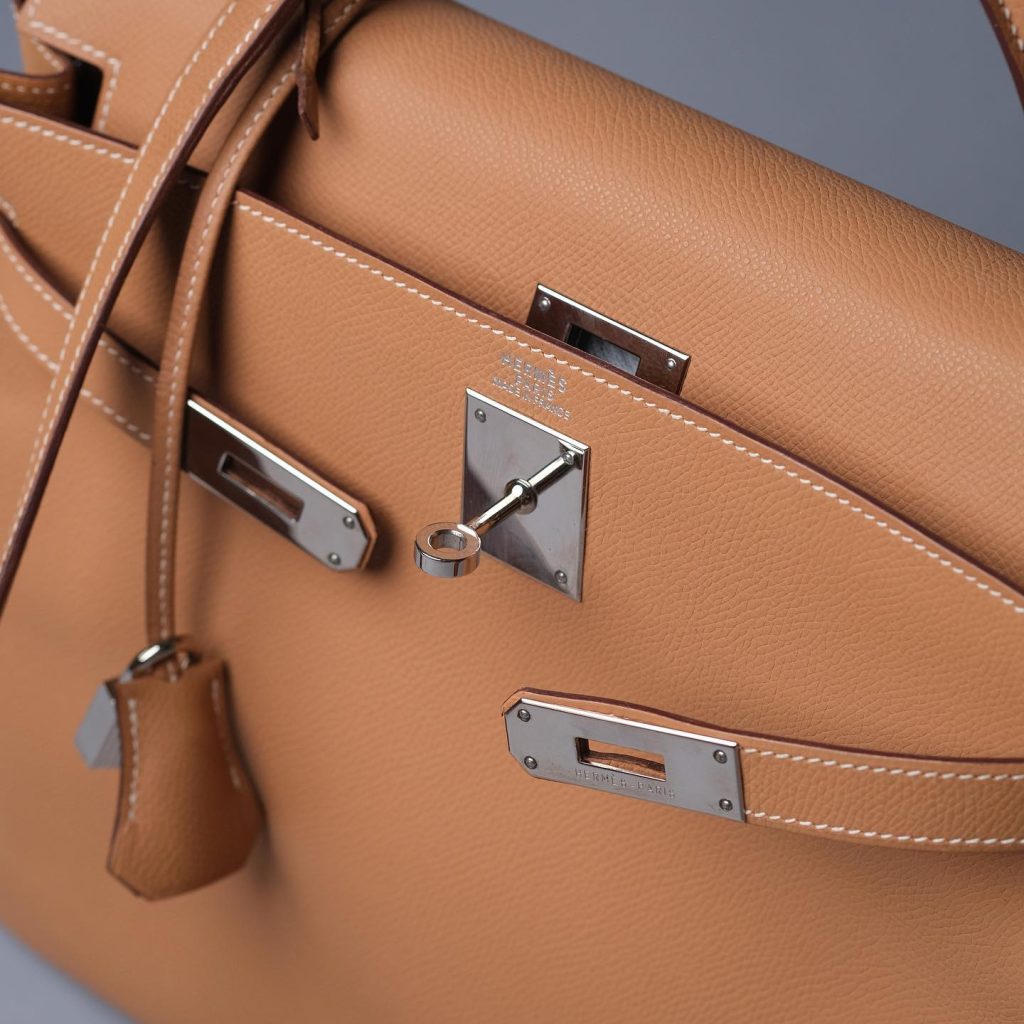
Functionally, here’s what happens:
- You place the flap over the opening.
- You slide each sangle over the flap towards the center.
- The plaques slip over the touret, one on each side.
- You turn the touret horizontally or vertically to “trap” the plaques.
- Optional: you slide the padlock through the touret eyelet.
From an artisan’s point of view, this zone is where precision must be perfect: the sangles need to line up symmetrically, the plaques must sit flat, and the touret can’t wobble or feel loose. A misaligned closure will throw off the entire face of the bag.
The lock, clochette and tiret
Every Kelly comes with a small padlock, two keys and a distinctive leather key cover called a clochette (“little bell”).
- The lock matches the hardware of your bag (gold, palladium, etc.), sometimes even wrapped in leather for special editions. In theory, it can be used to secure the bag by locking through the touret – in practice, most owners use it decoratively only, to avoid scratching the plaque.
- The clochette hides the keys and hangs from a thin leather strip called a tiret, which is looped around the handle.
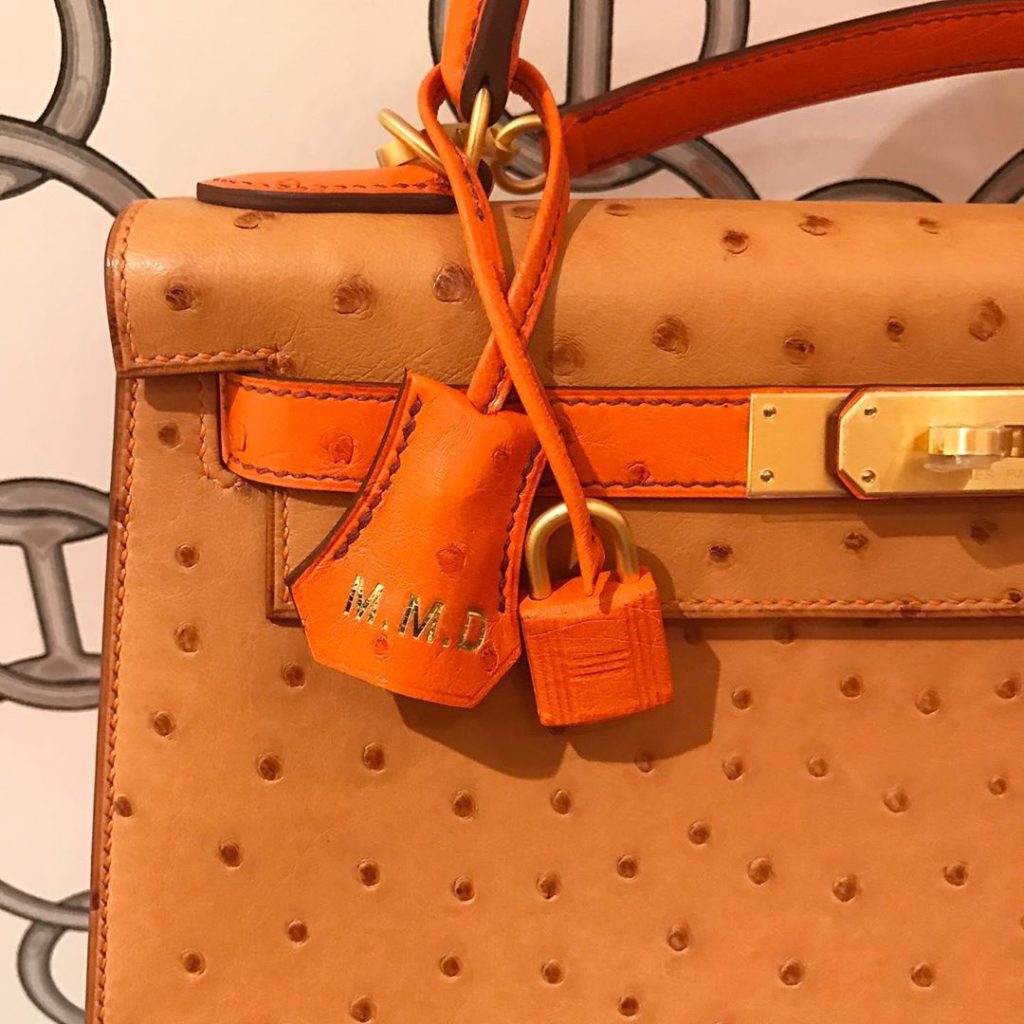
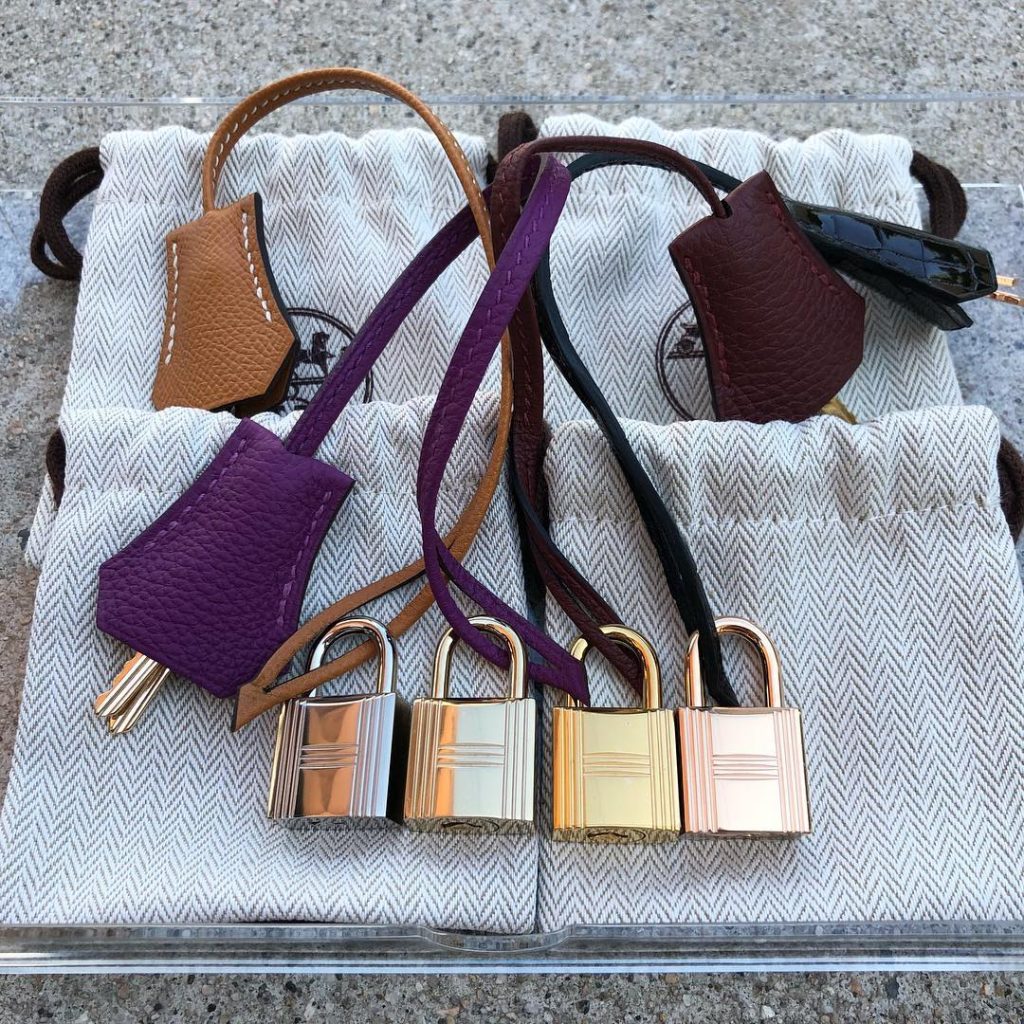
Collectors often read this trio like jewellery:
- Some prefer a very clean look and remove the lock and clochette when storing or wearing the bag.
- Others love the soft movement and very quiet clink of the lock against the leather – it’s part of the Kelly’s “soundtrack”.
- On high-value exotics, owners sometimes store the lock separately to avoid micro-scratches on the plaques.
From a practical standpoint, this whole cluster is optional. You can carry a Kelly perfectly well with the lock and clochette removed – they don’t affect the structure of the bag.
The handle and D-rings
Pick up a Kelly and the first thing you truly feel is the handle. It looks simple, but it’s one of the most technically demanding parts of the bag.
The Kelly’s handle is:
- Single and rolled – a padded leather tube, firmly packed so it doesn’t collapse.
Perfectly arched – high enough for your fingers to slide through comfortably, low enough to keep the profile sleek. - Balanced – when the bag is empty, it should sit upright without the handle leaning dramatically forward or backward.
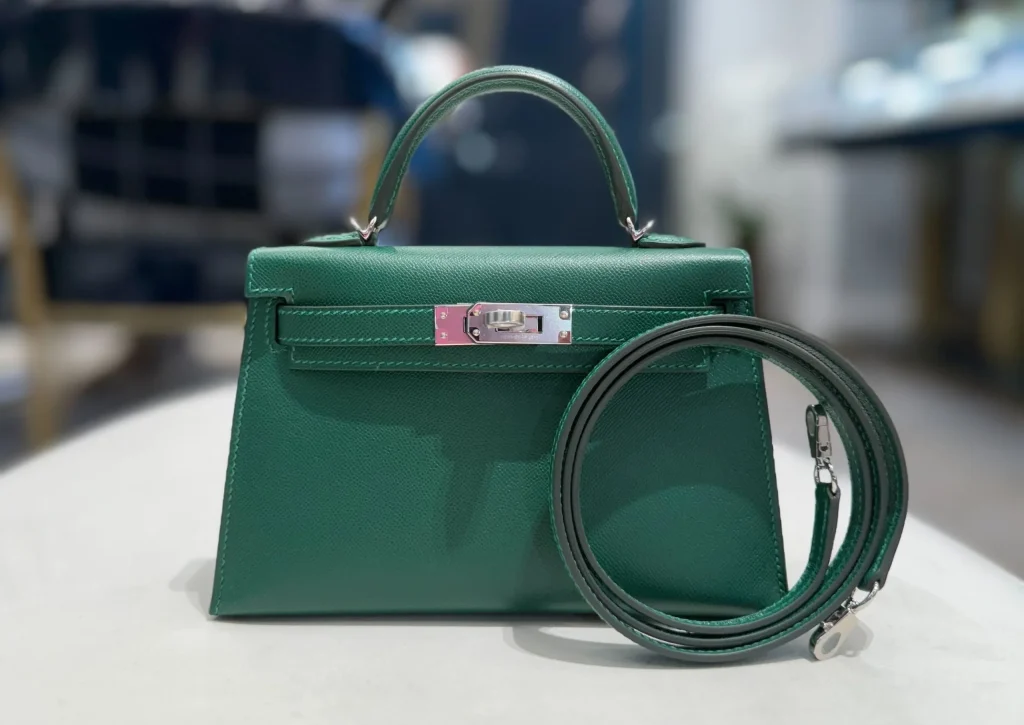
The handle is attached to the body via two leather tabs and metal D-rings on each side. On modern Kelly bags, each side has a double ring:
- one ring holds the handle
- the other is reserved for the shoulder strap
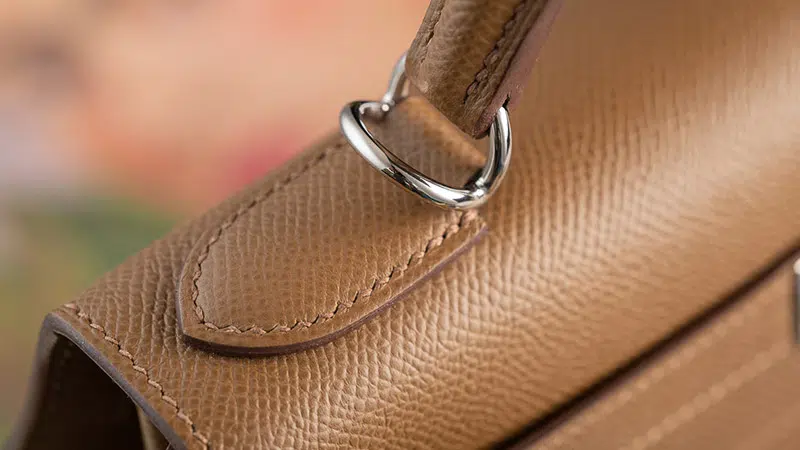
On older, vintage Kellys you’ll often find a single ring per side, which can make strap use less comfortable and is a quick visual clue to age.
For collectors, the handle and D-rings are a health check:
- A good handle feels dense and springy, not hollow or squashed.
- The stitching around the leather tabs is tight and regular, with no stretched holes.
- The D-rings sit snugly against the leather, with no gaps, bending or distortion.
If the Kelly is the “face” of the bag, the handle is the handshake – you can tell a lot from it in a few seconds.
The strap: making a classic hands-free
The detachable strap is what makes the Kelly feel surprisingly modern, despite its 1930s roots.
It’s a simple, straight strip of leather with a metal hook at each end that clips onto the side rings. No big logos, no chain, no drama – just a clean line that lets the bag move with you instead of being something you constantly have to hold.
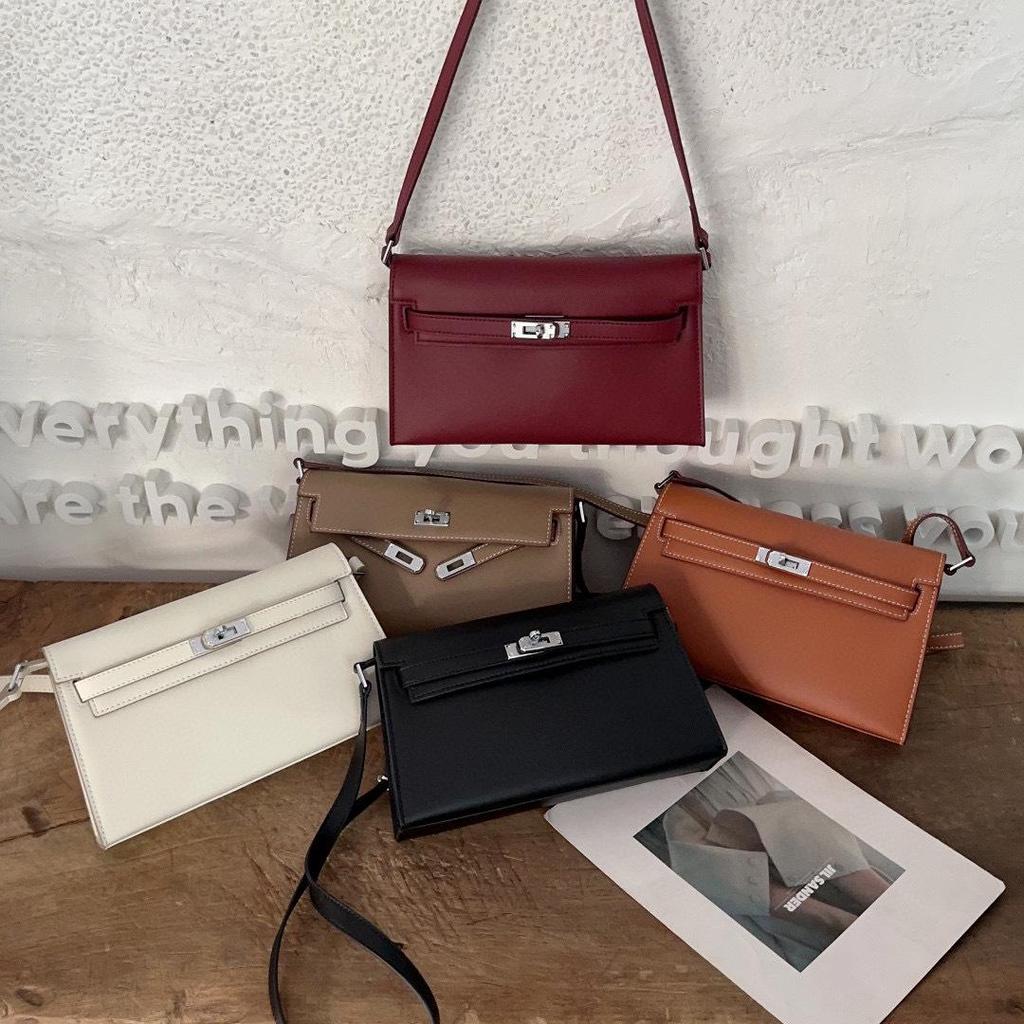
How it wears in real life:
- On a Mini Kelly or Kelly 20, the strap is usually long enough to wear crossbody, especially if you’re taller or prefer a higher fit.
- On a Kelly 25 or 28, many people use it as a shoulder strap – perfect for city days, coffee runs, airport queues.
- On a Kelly 32 and up, the strap gives you some shoulder comfort, but the bag still reads as a structured, almost briefcase-like piece.
Style-wise, the strap is what lets the Kelly move between worlds:
- Without it, carried by the handle, the bag looks formal, almost ceremonial.
With it, worn on the shoulder, it suddenly becomes practical and a bit nonchalant.
This double personality is one of the reasons so many people end up reaching for the Kelly more often than the Birkin in daily life.
The body: panels, gussets and the way it holds shape
If you look at a Kelly from the side, you can really see the engineering. The bag isn’t a single box of leather; it’s a puzzle of precisely cut panels:
- Front panel – the “face” with the hardware and logo.
- Back panel – usually cleaner, with the handle attachments and strap rings.
- Side gussets – the triangular pieces that fold in and out, controlling how wide the bag opens.
- Base – the reinforced rectangle that supports everything above it.
Where those pieces meet, you see the biggest visual difference between the two constructions:
- Sellier Kelly
- Seams are sewn from the outside.
- Edges are sharp and inked, like a leather box.
- The bag looks more graphic, more “tailored”, and keeps its lines almost perfectly.
- Retourne Kelly
- Panels are sewn inside-out, then turned right side out.
- Seams sit inside, edges look rounded and slightly softer.
- The bag drapes a bit more over time and feels more relaxed.
On both versions, edge finishing is an art in itself: multiple layers of edge paint are applied, sanded and reapplied to create a smooth, rounded, almost glassy border. Clean edges are one of the first things connoisseurs check on a pre-loved bag.
The base and clous
Turn the Kelly upside down and you’ll find a surprisingly serious construction:
- A rigid base panel, often built from several layers to stay flat.
- Four small metal feet (clous) set near the corners.
The clous serve three very practical purposes:
- They lift the leather off any surface you place the bag on – café tables, airport floors, the back seat of a taxi.
- They take the scratches instead of the leather. Over time, the metal will show wear while the base stays relatively protected.
- They help the bag stand perfectly upright, reinforcing that “mini architecture” feeling.
However, even the best base will eventually respond to gravity and weight. Heavy contents – water bottles, tech, bulky wallets – can push down on the floor of the bag from the inside. That’s why serious Kelly owners pay attention not only to the outside but to how the bag is supported from within (we’ll come back to that in the care & storage chapter).
The interior: quiet luxury, no clutter
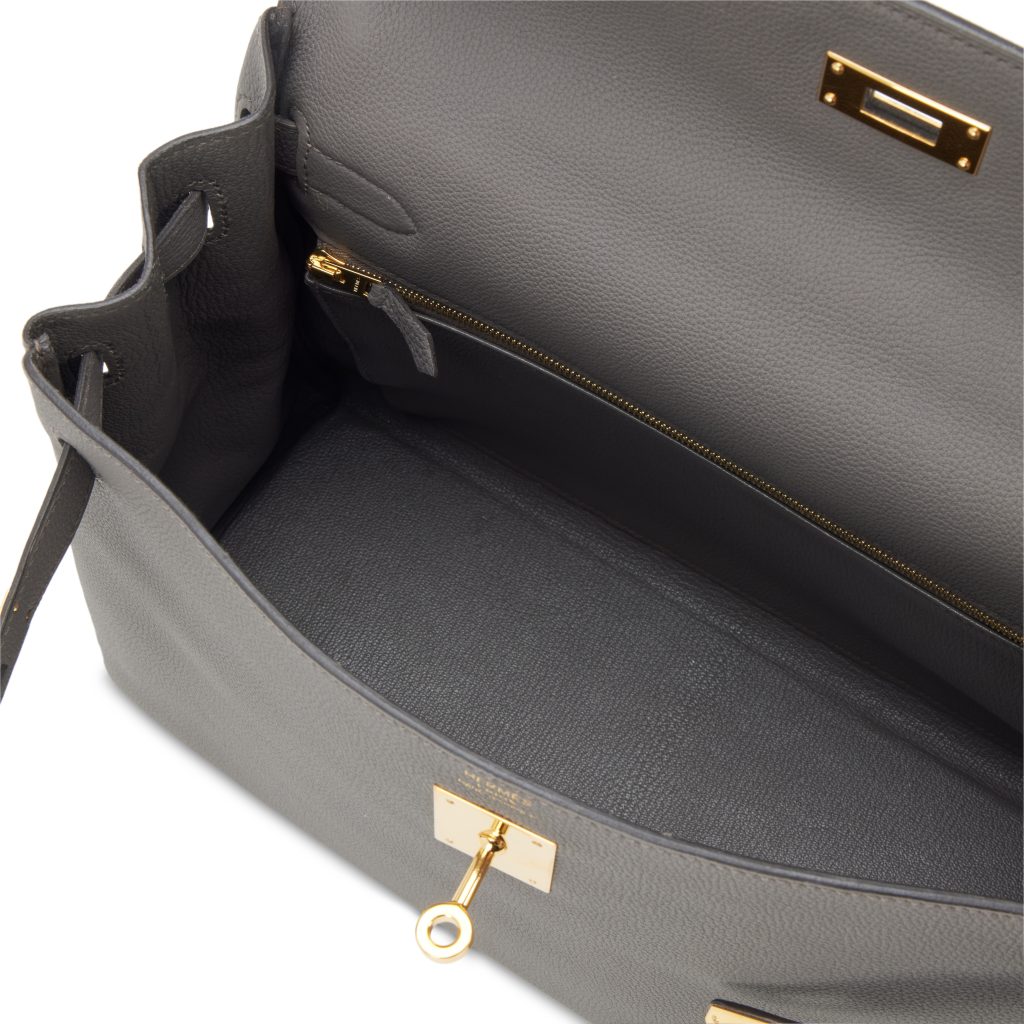
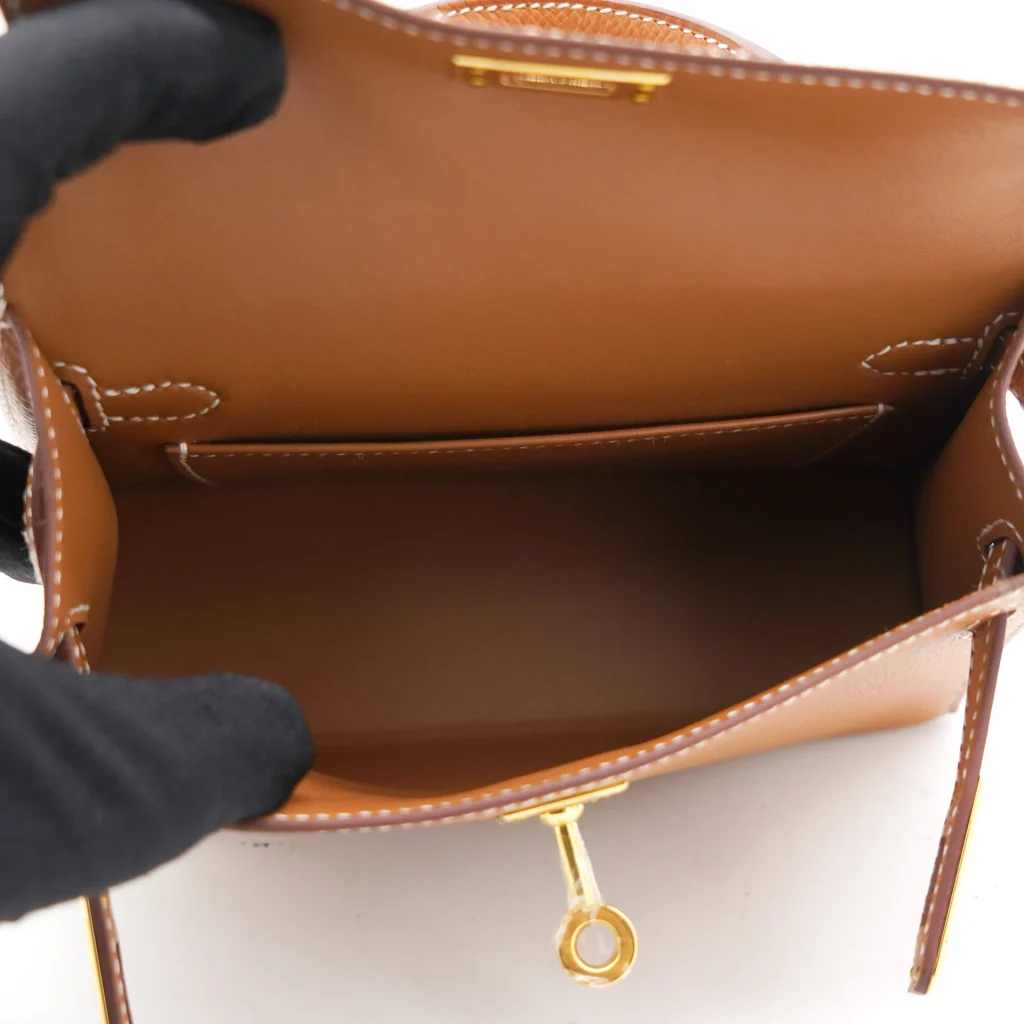
Open a Kelly and the first impression is clean and calm. There are no fabric linings, no logos repeated a hundred times, no extra compartments shouting for attention.
Typically, you’ll find:
- A single main compartment, lined in leather (often chèvre, swift or a leather that harmonises with the exterior).
- On the back wall, one slip pocket and one zip pocket for smaller items.
All the branding is minimal and precise:
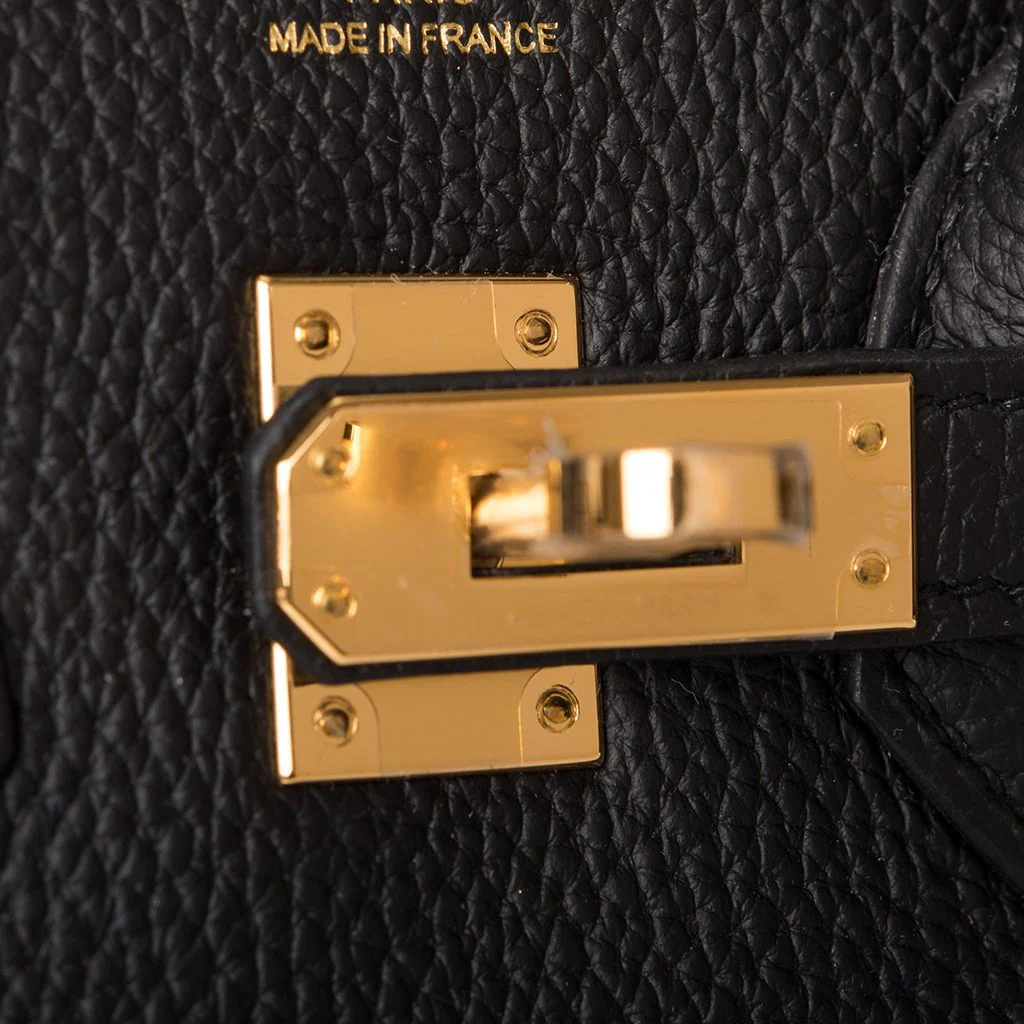
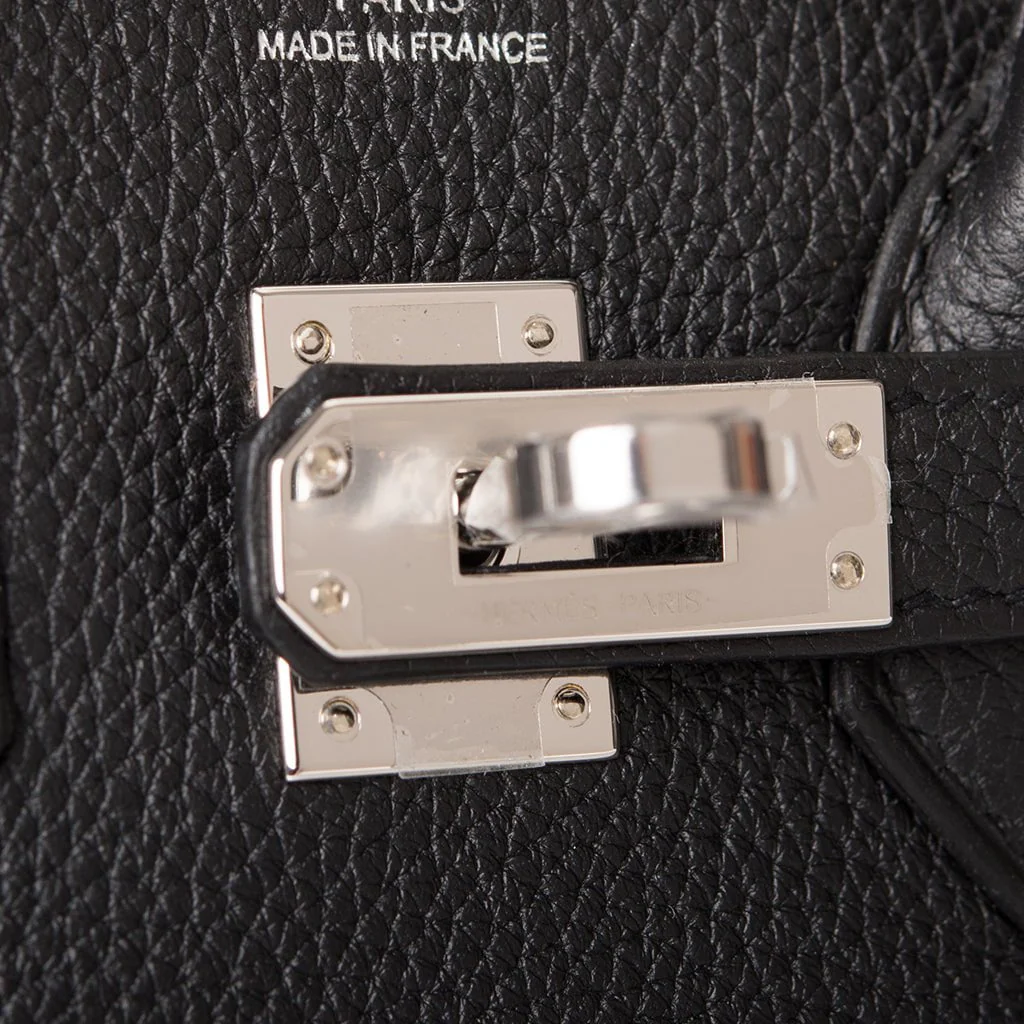
- The heat-stamped “Hermès Paris, Made in France” sits just above the turn-lock on the exterior.
- A small craft stamp/date code is tucked inside – visible to those who know where to look, but never front and centre.
This pure leather interior is beautiful, but it also means:
- Keys, pens, sharp corners of cardholders and metal makeup components can leave marks.
- Repeatedly throwing things in and out can create surface scuffs and dents.
- Weight sits directly on the leather base unless you use internal support.
In other words: the inside is as luxurious as the outside – and deserves the same level of care.
Hardware finishes
Although the Kelly’s design is quite minimal, the hardware acts like jewellery – a small amount of metal used very intentionally.
The core elements are:
- The touret (turn-lock stem) and its surrounding plate
- The plaques on the sangles
- The padlock and keys
- The clous on the base
- The D-rings and strap hooks
Standard finishes are:
- Gold-tone hardware – warm, classic, glamorous; beautiful on black, rich browns, reds, creams.
- Palladium-tone hardware – cool and modern; sharp on greys, blues, bright colours and many exotics.
On top of that, Hermès plays with:
- Brushed metals
- Darker, gunmetal-style finishes
- Special shades like permabrass
- High jewellery variations with diamond-set locks and plaques on ultra-rare Kellys
The effect is dramatic: the same Kelly in Black Togo can look completely different with gold vs palladium hardware. One feels old-world Parisian, the other feels sleek and almost minimalist.
How to “read” a Kelly like a pro
Once you understand the anatomy, looking at a Kelly becomes a bit like reading a book. In a few seconds, your eye can scan for key signs of quality, age and wear:
- Handle & D-rings – Is the handle still round and firm? Are the rings straight and tight?
- Sangles & plaques – Do the straps lie straight? Are the plaques and engraving crisp and centred?
- Edges – On a Sellier, are the inked edges smooth and intact? On a Retourne, are the curves still clean, without collapsed corners?
- Base & clous – Does the bag stand flat? Are the feet scratched (normal) but the leather around them still healthy?
- Interior – Are there major pen marks, deep dents or stretching of the leather walls?
These small observations help you:
- Judge the condition of a vintage or pre-loved bag
Spot poor restorations or non-Hermès repairs - Monitor how your own Kelly is aging and when it might need a rest, a spa treatment or better internal support
In the next chapter, we’ll move from what the Kelly is made of to how it comes to life: step by step at the workbench, from selecting the hide to the final polish on the lock – and why one Kelly can represent more than 20 hours of a single artisan’s time.